EP4582089A2 - Partikelvermittelte freisetzung von biologischen stoffen - Google Patents
Partikelvermittelte freisetzung von biologischen stoffen Download PDFInfo
- Publication number
- EP4582089A2 EP4582089A2 EP25162913.5A EP25162913A EP4582089A2 EP 4582089 A2 EP4582089 A2 EP 4582089A2 EP 25162913 A EP25162913 A EP 25162913A EP 4582089 A2 EP4582089 A2 EP 4582089A2
- Authority
- EP
- European Patent Office
- Prior art keywords
- particle
- mir
- composition
- mrna
- rna
- Prior art date
- Legal status (The legal status is an assumption and is not a legal conclusion. Google has not performed a legal analysis and makes no representation as to the accuracy of the status listed.)
- Pending
Links
Images









Classifications
-
- A—HUMAN NECESSITIES
- A61—MEDICAL OR VETERINARY SCIENCE; HYGIENE
- A61K—PREPARATIONS FOR MEDICAL, DENTAL OR TOILETRY PURPOSES
- A61K31/00—Medicinal preparations containing organic active ingredients
- A61K31/70—Carbohydrates; Sugars; Derivatives thereof
- A61K31/7088—Compounds having three or more nucleosides or nucleotides
- A61K31/7105—Natural ribonucleic acids, i.e. containing only riboses attached to adenine, guanine, cytosine or uracil and having 3'-5' phosphodiester links
-
- A—HUMAN NECESSITIES
- A61—MEDICAL OR VETERINARY SCIENCE; HYGIENE
- A61K—PREPARATIONS FOR MEDICAL, DENTAL OR TOILETRY PURPOSES
- A61K47/00—Medicinal preparations characterised by the non-active ingredients used, e.g. carriers or inert additives; Targeting or modifying agents chemically bound to the active ingredient
- A61K47/30—Macromolecular organic or inorganic compounds, e.g. inorganic polyphosphates
- A61K47/36—Polysaccharides; Derivatives thereof, e.g. gums, starch, alginate, dextrin, hyaluronic acid, chitosan, inulin, agar or pectin
-
- A—HUMAN NECESSITIES
- A61—MEDICAL OR VETERINARY SCIENCE; HYGIENE
- A61K—PREPARATIONS FOR MEDICAL, DENTAL OR TOILETRY PURPOSES
- A61K48/00—Medicinal preparations containing genetic material which is inserted into cells of the living body to treat genetic diseases; Gene therapy
-
- A—HUMAN NECESSITIES
- A61—MEDICAL OR VETERINARY SCIENCE; HYGIENE
- A61K—PREPARATIONS FOR MEDICAL, DENTAL OR TOILETRY PURPOSES
- A61K48/00—Medicinal preparations containing genetic material which is inserted into cells of the living body to treat genetic diseases; Gene therapy
- A61K48/0008—Medicinal preparations containing genetic material which is inserted into cells of the living body to treat genetic diseases; Gene therapy characterised by an aspect of the 'non-active' part of the composition delivered, e.g. wherein such 'non-active' part is not delivered simultaneously with the 'active' part of the composition
- A61K48/0025—Medicinal preparations containing genetic material which is inserted into cells of the living body to treat genetic diseases; Gene therapy characterised by an aspect of the 'non-active' part of the composition delivered, e.g. wherein such 'non-active' part is not delivered simultaneously with the 'active' part of the composition wherein the non-active part clearly interacts with the delivered nucleic acid
- A61K48/0041—Medicinal preparations containing genetic material which is inserted into cells of the living body to treat genetic diseases; Gene therapy characterised by an aspect of the 'non-active' part of the composition delivered, e.g. wherein such 'non-active' part is not delivered simultaneously with the 'active' part of the composition wherein the non-active part clearly interacts with the delivered nucleic acid the non-active part being polymeric
-
- A—HUMAN NECESSITIES
- A61—MEDICAL OR VETERINARY SCIENCE; HYGIENE
- A61K—PREPARATIONS FOR MEDICAL, DENTAL OR TOILETRY PURPOSES
- A61K48/00—Medicinal preparations containing genetic material which is inserted into cells of the living body to treat genetic diseases; Gene therapy
- A61K48/0075—Medicinal preparations containing genetic material which is inserted into cells of the living body to treat genetic diseases; Gene therapy characterised by an aspect of the delivery route, e.g. oral, subcutaneous
-
- A—HUMAN NECESSITIES
- A61—MEDICAL OR VETERINARY SCIENCE; HYGIENE
- A61K—PREPARATIONS FOR MEDICAL, DENTAL OR TOILETRY PURPOSES
- A61K9/00—Medicinal preparations characterised by special physical form
- A61K9/0012—Galenical forms characterised by the site of application
- A61K9/0019—Injectable compositions; Intramuscular, intravenous, arterial, subcutaneous administration; Compositions to be administered through the skin in an invasive manner
-
- A—HUMAN NECESSITIES
- A61—MEDICAL OR VETERINARY SCIENCE; HYGIENE
- A61K—PREPARATIONS FOR MEDICAL, DENTAL OR TOILETRY PURPOSES
- A61K9/00—Medicinal preparations characterised by special physical form
- A61K9/06—Ointments; Bases therefor; Other semi-solid forms, e.g. creams, sticks, gels
-
- A—HUMAN NECESSITIES
- A61—MEDICAL OR VETERINARY SCIENCE; HYGIENE
- A61K—PREPARATIONS FOR MEDICAL, DENTAL OR TOILETRY PURPOSES
- A61K9/00—Medicinal preparations characterised by special physical form
- A61K9/10—Dispersions; Emulsions
- A61K9/127—Synthetic bilayered vehicles, e.g. liposomes or liposomes with cholesterol as the only non-phosphatidyl surfactant
-
- A—HUMAN NECESSITIES
- A61—MEDICAL OR VETERINARY SCIENCE; HYGIENE
- A61K—PREPARATIONS FOR MEDICAL, DENTAL OR TOILETRY PURPOSES
- A61K9/00—Medicinal preparations characterised by special physical form
- A61K9/48—Preparations in capsules, e.g. of gelatin, of chocolate
-
- A—HUMAN NECESSITIES
- A61—MEDICAL OR VETERINARY SCIENCE; HYGIENE
- A61K—PREPARATIONS FOR MEDICAL, DENTAL OR TOILETRY PURPOSES
- A61K9/00—Medicinal preparations characterised by special physical form
- A61K9/48—Preparations in capsules, e.g. of gelatin, of chocolate
- A61K9/50—Microcapsules having a gas, liquid or semi-solid filling; Solid microparticles or pellets surrounded by a distinct coating layer, e.g. coated microspheres, coated drug crystals
- A61K9/51—Nanocapsules; Nanoparticles
- A61K9/5107—Excipients; Inactive ingredients
- A61K9/513—Organic macromolecular compounds; Dendrimers
- A61K9/5161—Polysaccharides, e.g. alginate, chitosan, cellulose derivatives; Cyclodextrin
-
- A—HUMAN NECESSITIES
- A61—MEDICAL OR VETERINARY SCIENCE; HYGIENE
- A61P—SPECIFIC THERAPEUTIC ACTIVITY OF CHEMICAL COMPOUNDS OR MEDICINAL PREPARATIONS
- A61P43/00—Drugs for specific purposes, not provided for in groups A61P1/00-A61P41/00
-
- A—HUMAN NECESSITIES
- A61—MEDICAL OR VETERINARY SCIENCE; HYGIENE
- A61P—SPECIFIC THERAPEUTIC ACTIVITY OF CHEMICAL COMPOUNDS OR MEDICINAL PREPARATIONS
- A61P9/00—Drugs for disorders of the cardiovascular system
-
- C—CHEMISTRY; METALLURGY
- C07—ORGANIC CHEMISTRY
- C07H—SUGARS; DERIVATIVES THEREOF; NUCLEOSIDES; NUCLEOTIDES; NUCLEIC ACIDS
- C07H21/00—Compounds containing two or more mononucleotide units having separate phosphate or polyphosphate groups linked by saccharide radicals of nucleoside groups, e.g. nucleic acids
- C07H21/02—Compounds containing two or more mononucleotide units having separate phosphate or polyphosphate groups linked by saccharide radicals of nucleoside groups, e.g. nucleic acids with ribosyl as saccharide radical
-
- C—CHEMISTRY; METALLURGY
- C07—ORGANIC CHEMISTRY
- C07H—SUGARS; DERIVATIVES THEREOF; NUCLEOSIDES; NUCLEOTIDES; NUCLEIC ACIDS
- C07H21/00—Compounds containing two or more mononucleotide units having separate phosphate or polyphosphate groups linked by saccharide radicals of nucleoside groups, e.g. nucleic acids
- C07H21/04—Compounds containing two or more mononucleotide units having separate phosphate or polyphosphate groups linked by saccharide radicals of nucleoside groups, e.g. nucleic acids with deoxyribosyl as saccharide radical
-
- C—CHEMISTRY; METALLURGY
- C12—BIOCHEMISTRY; BEER; SPIRITS; WINE; VINEGAR; MICROBIOLOGY; ENZYMOLOGY; MUTATION OR GENETIC ENGINEERING
- C12N—MICROORGANISMS OR ENZYMES; COMPOSITIONS THEREOF; PROPAGATING, PRESERVING, OR MAINTAINING MICROORGANISMS; MUTATION OR GENETIC ENGINEERING; CULTURE MEDIA
- C12N15/00—Mutation or genetic engineering; DNA or RNA concerning genetic engineering, vectors, e.g. plasmids, or their isolation, preparation or purification; Use of hosts therefor
- C12N15/09—Recombinant DNA-technology
- C12N15/11—DNA or RNA fragments; Modified forms thereof; Non-coding nucleic acids having a biological activity
- C12N15/113—Non-coding nucleic acids modulating the expression of genes, e.g. antisense oligonucleotides; Antisense DNA or RNA; Triplex- forming oligonucleotides; Catalytic nucleic acids, e.g. ribozymes; Nucleic acids used in co-suppression or gene silencing
-
- C—CHEMISTRY; METALLURGY
- C12—BIOCHEMISTRY; BEER; SPIRITS; WINE; VINEGAR; MICROBIOLOGY; ENZYMOLOGY; MUTATION OR GENETIC ENGINEERING
- C12N—MICROORGANISMS OR ENZYMES; COMPOSITIONS THEREOF; PROPAGATING, PRESERVING, OR MAINTAINING MICROORGANISMS; MUTATION OR GENETIC ENGINEERING; CULTURE MEDIA
- C12N15/00—Mutation or genetic engineering; DNA or RNA concerning genetic engineering, vectors, e.g. plasmids, or their isolation, preparation or purification; Use of hosts therefor
- C12N15/09—Recombinant DNA-technology
- C12N15/87—Introduction of foreign genetic material using processes not otherwise provided for, e.g. co-transformation
- C12N15/88—Introduction of foreign genetic material using processes not otherwise provided for, e.g. co-transformation using microencapsulation, e.g. using amphiphile liposome vesicle
-
- C—CHEMISTRY; METALLURGY
- C12—BIOCHEMISTRY; BEER; SPIRITS; WINE; VINEGAR; MICROBIOLOGY; ENZYMOLOGY; MUTATION OR GENETIC ENGINEERING
- C12N—MICROORGANISMS OR ENZYMES; COMPOSITIONS THEREOF; PROPAGATING, PRESERVING, OR MAINTAINING MICROORGANISMS; MUTATION OR GENETIC ENGINEERING; CULTURE MEDIA
- C12N15/00—Mutation or genetic engineering; DNA or RNA concerning genetic engineering, vectors, e.g. plasmids, or their isolation, preparation or purification; Use of hosts therefor
- C12N15/09—Recombinant DNA-technology
- C12N15/11—DNA or RNA fragments; Modified forms thereof; Non-coding nucleic acids having a biological activity
- C12N15/111—General methods applicable to biologically active non-coding nucleic acids
-
- C—CHEMISTRY; METALLURGY
- C12—BIOCHEMISTRY; BEER; SPIRITS; WINE; VINEGAR; MICROBIOLOGY; ENZYMOLOGY; MUTATION OR GENETIC ENGINEERING
- C12N—MICROORGANISMS OR ENZYMES; COMPOSITIONS THEREOF; PROPAGATING, PRESERVING, OR MAINTAINING MICROORGANISMS; MUTATION OR GENETIC ENGINEERING; CULTURE MEDIA
- C12N2320/00—Applications; Uses
- C12N2320/30—Special therapeutic applications
- C12N2320/32—Special delivery means, e.g. tissue-specific
Definitions
- one aspect of this document features a method for improving cardiac function.
- the method includes, or consists essentially of, administering a particle encapsulating an mRNA encoding a polypeptide useful for regenerating cardiac function and/or tissue to a mammal, thereby improving cardiac function of the mammal.
- the polypeptide can be NAP -2, TGF-a, ErBb3, VEGF, IGF-1, FGF-2, PDGF, IL-2, CD19, CD20, and/or CD80/86.
- the mammal can be a human.
- the human can have undergone percutaneous coronary intervention for ST-elevation myocardial infarction.
- the administering can be an arterial administration.
- the particle can include alginate.
- RNA and/or microvesicles e.g., RNA and/or microvesicles
- a particle e.g., an alginate gel
- encapsulate and variations thereof is used broadly to refer to any method by which a biologic is housed within a particle or bound, directly or indirectly, to the outer surface of a particle.
- the particle can be nanoparticulate or microparticulate in scale.
- a particle e.g., an alginate gel
- a particle described herein can store inhibitory RNA within its interior, and release (e.g., deliver) the inhibitory RNA to a tissue (e.g., heart tissue) where the inhibitory RNA inhibits or reduces expression of a protein.
- one or more particles containing one or more inhibitory RNAs can be used to decrease expression of one or more of the following polypeptides: eotaxin-3, cathepsin-S, Dickopf-1 (DK -1), follistatin, suppression of tumorigenicity-2 (ST-2), GRO- ⁇ , interleukin-21 (IL-21), nephroblastoma overexpressed (NOV), transferrin, tissue inhibitor of metallopeptidase-2 (TIMP-2), tumor necrosis factor receptor- 1 and -2 (TNF ⁇ RI and II), angiostatin, chemokine ligand-25 (CCL25), angiopoietin like-4 (ANGPTL4), and matrix metalloproteinase-3 (MMP-3).
- polypeptides eotaxin-3, cathepsin-S, Dickopf-1 (DK -1), follistatin, suppression of tumorigenicity-2 (ST-2), GRO- ⁇ , interleukin-21 (IL-21),
- An alginate in a particle that can be used to encapsulate one or more biologics as described herein can be from any appropriate source (e.g., seaweeds such as those in the genera Phaeophyceae, Rhodophyceae, Chlorophyceae, Macrocystis, and Laminaria, or bacteria such as those in the genera Pseudomonas and Azotobacter).
- An alginate in a particle that can be used to encapsulate one or more biologics as described herein can be an alginate salt (e.g., sodium alginate, potassium alginate, and/or calcium alginate) or alginic acid.
- An alginate gel can include a calcium solution (e.g., a calcium salt solution or another appropriate positively charged ionic solution).
- a calcium solution e.g., a calcium salt solution or another appropriate positively charged ionic solution.
- Examples of calcium salts that can be used in a calcium solution to form an alginate gel that can be used to encapsulate one or more biologics as described herein include, without limitation, calcium chloride, magnesium chloride, potassium chloride, and iron-based solutions.
- the ratio of alginate to calcium salt can be used to control the viscosity of the alginate gel that can be used to encapsulate one or more biologics as described herein.
- the amount of alginate can be from about 0.05 percent to about 1.0 percent of the amount of calcium salt.
- the ratio of alginate to calcium salt can be can be from about 2:1 to about 10:1 (e.g., from about 2:1 to about 9:1, from about 2:1 to about 8:1, from about 2:1 to about 7:1, from about 2:1 to about 6:1, from about 2:1 to about 5:1, from about 3:1 to about 10:1, from about 4:1 to about 10:1, from about 5:1 to about 10:1, from about 6:1 to about 10:1, from about 7:1 to about 10:1, or from about 8:1 to about 10:1).
- Examples of appropriate alginate/calcium ratios include, without limitation, those set forth in Table 1.
- An alginate gel encapsulating a biologic (e.g., mRNA) described herein can be made by any appropriate method.
- an alginate gel can be made by hydrolyzing an alginate salt (e.g., sodium alginate) using a soluble calcium salt solution (e.g., calcium chloride) as a crosslinking agent.
- alginate salt e.g., sodium alginate
- a soluble calcium salt solution e.g., calcium chloride
- Table 1 Examples alginate/calcium concentrations. alginate concentration calcium concentration alginate: calcium 0.2% 0.1% 2:1 1% 0.1% 10:1 2% 0.5% 4:1 2% 0.25% 8:1
- a particle that can be used to encapsulate one or more biologics as described herein can be in the form of a liposome, an aggregate (e.g., a nano-aggregate), a capsule (e.g., a nanocapsule), a sphere (e.g., a nanosphere), a polymersome, or a micelle.
- a particle that can be used to encapsulate one or more biologics as described herein that is an alginate gel can be in the form of polymerized sphere.
- a particle that can be used to encapsulate one or more biologics as described herein can be a liposome.
- a liposome is composed of phospholipids such as phosphatidic acid (phosphatidate; PA), phosphatidylethanolamine (cephalin; PE), phosphatidylcholine (lecithin; PC), phosphatidylserine (PS), phosphoinositides (e.g., phosphatidylinositol (PI), phosphatidylinositol phosphate (PIP), phosphatidylinositol bisphosphate (PIP2), and phosphatidylinositol triphosphate (PIP3)), ceramide phosphorylcholine (sphingomyelin; SPH), ceramide phosphorylethanolamine (sphingomyelin; Cer-PE), ceramide phosphoryllipid, or any combination thereof.
- phospholipids such as phosphatidic acid (phosphatidate; PA), phosphatidylethanolamine (cephalin; PE), phosphatidylcholine (lecithin
- liposomes examples include, without limitation, those set forth in Table 2.
- a liposome encapsulating a biologic (e.g., mRNA) described herein can be made by any appropriate method.
- a liposome can be made by sonicating a dispersion of amphipatic lipids, such as phospholipids, in water. Table 2. Examples of liposome components.
- liposome component MW (kDa) Concentration Charged Poly(lactide-co -glycolide) (PLGA) about 46 3-300 mg 1,2-Dioleoyl- sn -glycero-3-phosphoethanolamine (DOPE) about 744 20 ⁇ g - 1 mg N-[1-(2,3-dioleoyloxy)propyl]-N,N,N-trimethylammonium methylsulfate (DOTAP) about 774 20 ⁇ g - 3 mg L- ⁇ -Phosphatidylethanolamine, dioleoyl about 744 20 ⁇ g - 3 mg 1, 2-Distearoyl-sn-glycero-3-phosphoethanolamine-Poly(ethylene glycol) (DSPE- PEG) about 770 20 ⁇ g - 3 mg Poly(vinyl-alcohol) (PVA) about 78 1-5% per total volume
- DOPE 1,2-Dioleoyl- sn -gly
- a particle that can be used to encapsulate one or more biologics as described herein can be any size suitable for the selected delivery method.
- a particle that can be used to encapsulate one or more biologics as described herein can be from about 0.3 ⁇ m to about 12 ⁇ m (e.g., from about 0.5 ⁇ m to about 11.5 ⁇ m, from about 1 ⁇ m to about 11 ⁇ m, from about 2 ⁇ m to about 10.5 ⁇ m, or from about 4 ⁇ m to about 10 ⁇ m) in diameter (or as measure across the longest dimension).
- a particle that can be used to encapsulate one or more biologics as described herein can be from about 4.5 ⁇ m to about 7.5 ⁇ m in diameter (or as measure across the longest dimension).
- a particle (e.g., an alginate gel) encapsulating one or more biologics described herein also can include one or more additional molecules in order to achieve a desired property.
- a particle encapsulating one or more biologics described herein can include one or more scaffold proteins.
- scaffold proteins include, for example, matrix proteins (e.g., collagen (e.g., collagen I/II/III/IV)), basement membrane proteins, structural proteins, gelatin, and/or fibrin) can be incorporated into a particle to provide the particle with sustained release properties.
- an alginate gel encapsulating one or more biologics described herein can include alginate and gelatin, alginate and collagen, alginate and fibrin, or any other appropriate combination of alginate with one or more natural basement membrane proteins.
- stimuli-sensitive molecules can be incorporated into a particle to provide the particle with drug release properties under specific stimuli (e.g., pH-sensitive particles and osmolarity/osmolality sensitive particles).
- dioleoylphosphatidylethanolamine can be incorporated into a particle to provide a pH-sensitive particle that maintains stability at physiological pH (about pH 7.4), but destabilize under acidic conditions (e.g., about pH 3.5 to about pH 9) leading to the release of the encapsulated RNA in acidic environments.
- DOPE dioleoylphosphatidylethanolamine
- a particle encapsulating one or more biologics described herein can be an amorphous particle having two or more distinct physical states.
- an amorphous particle can be administered as a liquid and form a gel upon arriving at a target tissue.
- a particle (e.g., an alginate gel) encapsulating one or more biologics described herein can be a biphasic particle (sometimes referred to as a Janus particle) having two or more distinct physical properties (e.g., surface chemistry) occurring on different portions of the particle surface.
- a biphasic particle can have two or more portions that differ in hydrophilic/hydrophobic properties, polarization, solubility properties, volume percent or density of the particle composition, the presence/absence of an additional molecule (e.g., a compound providing sustained release properties), and/or the presence/absence of a tail.
- a biphasic particle can be a spherical particle having hydrophilic portions and hydrophobic portions.
- a biphasic particle can be designed to have a hydrophilic core and a hydrophilic coating.
- a biphasic particle can be designed to have a hydrophilic core and a hydrophilic coating.
- a biphasic particle can be a spherical particle having differential density.
- a biphasic particle can be designed to have increased volume percent of an encapsulated biologic at one end of the particle.
- a biphasic particle can be a spherical particle having a coating.
- a biphasic particle can be designed to have a porous coating.
- a biphasic particle can be a spherical particle having differential solubility.
- a biphasic particle can be designed to have a first side that readily dissolves in certain physiological conditions and a second side that dissolves slowly in the same physiological conditions.
- a biphasic particle can be a spherical particle having a tail extending from one portion of the particle surface.
- a biphasic particle can be designed to guide particles in the blood flow.
- a biphasic particle can be designed to have a first (e.g., leading) side that readily dissolves in certain physiological conditions and a second side that dissolves slowly in the same physiological conditions and includes a tail to guide particles in the blood flow.
- a biphasic particle encapsulating one or more biologics described herein can be made using any appropriate method.
- a biphasic particle can be made using stabilizer technology (e.g., including dry water approaches).
- stabilizer technology e.g., including dry water approaches.
- two or more separate soft liquid cores e.g., two liquids having different hydrophobicity such as a hydrophobic entity and hydrophilic entity, or two liquids having different solubility such as water and an oil
- a biphasic particle can be made using melt combination and fusion technology.
- two or more separate streams can be merged (e.g., injected into a single stream) to form a biphasic particle.
- a biphasic particle can be made using 3D-printer technology.
- two or more coatings e.g., two wax coatings having different properties
- a particulate internal structural element e.g., a particle of polystyrene foam such as STYROFOAM TM
- the particulate internal structural element can be removed (e.g., by acetone elimination) and replaced with one or more biologics.
- a biphasic particle can be made use other appropriate technologies.
- other appropriate methods can include, without limitation, interfacial emulsification, acorn and dumbbell shaped formation, use of magnetic fields to shape and manipulate particles during fabrication, and direct surface coating deposition.
- differential density can be achieved using organogels with varied density.
- differential porosity can be achieved using salts at a particular surface of the particle.
- differential solubility can be achieved using salts and/or using two or more different polymers (e.g., PEGs) having different solubilities.
- the size of the particle can be used to direct delivery of a particle to a target tissue (e.g., cardiac infarct bed).
- a target tissue e.g., cardiac infarct bed.
- Human capillaries measure about 5 ⁇ m to 10 ⁇ m in diameter.
- a particle described herein having a diameter of from about 0.3 ⁇ m to about 12 ⁇ m can enter a capillary via the bloodstream, but be limited from exiting the capillary, where the biologics and/or an expressed polypeptide can diffuse into the capillary bed of a tissue (e.g., heart, dermal, lung, solid tumor, brain, bone, ligament, connective tissue structures, kidney, liver, subcutaneous, and vascular tissue).
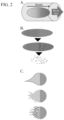
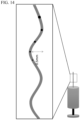
- Exemplary methods for delivery of one or more biologics using a biphasic particle described herein are shown in FIG. 2 .
- different amounts of porosity can help deliver particles within the blood vessel and alter the pattern of delivery.
- the differential solubility can orient the particle in the blood flow to direct the particle in an appropriate orientation for delivery of one or more encapsulated biologics.
- the tail can orient the particle within a blood vessel to direct the particle into a capillary.
- a biphasic particle can be designed to have a tail to orient the particle within a blood vessel and direct the particle into a blood vessel (e.g., a capillary) where the encapsulated biologic can be delivered.
- a particle (e.g., an alginate gel) described herein can be used to encapsulate one or more polypeptides.
- a particle described herein can be used to encapsulate one or more polypeptides useful to treat a mammal experiencing a major adverse cardiac event (e.g., acute myocardial infarction) and/or a mammal at risk of experiencing a major adverse cardiac event (e.g., patients who underwent PCI for STEMI).
- a particle encapsulating a biologic described herein can encapsulate one or more polypeptides useful for regenerating cardiac function and/or tissue or a nucleotide that encodes such a polypeptide.
- a particle e.g., an alginate gel
- a particle can be used to encapsulate one or more mRNAs useful to treat a mammal experiencing a major adverse cardiac event (e.g., acute myocardial infarction) and/or a mammal at risk of experiencing a major adverse cardiac event (e.g., patients who underwent PCI for STEMI).
- a particle encapsulating a biologic described herein can encapsulate one or more mRNAs encoding a polypeptide useful for regenerating cardiac function and/or tissue can be encapsulated within a particle described herein.
- a human Nap-2 polypeptide can have the amino acid sequence set forth in, for example, National Center for Biotechnology Information (NCBI) Accession No. NP_002695.1 (GI No. 5473) and can be encoded by the nucleic acid sequence set forth in NCBI Accession No.
- a human TGF- ⁇ polypeptide can have the amino acid sequence set forth in NCBI Accession No. NP_003227.1 (GI No. 7039) and can be encoded by the nucleic acid sequence set forth in NCBI Accession No. NM_003236 (GI No. 7039).
- a human ErBb3 polypeptide can have the amino acid sequence set forth in NCBI Accession No. NP_001005915.1 or NP_001973.2 (GI No. 2065) and can be encoded by the nucleic acid sequence set forth in NCBI Accession No. NM_001005915.1 or NM_001982.3 (GI No. 2065).
- a human VEGF can have the amino acids set forth in NCBI Accession Nos. AAA35789.1 (GI: 181971), CAA44447.1 (GI: 37659), AAA36804.1 (GI: 340215), or AAK95847.1 (GI: 15422109), and can be encoded by the nucleic acid sequence set forth in NCBI Accession No. AH001553.1 (GI: 340214).
- a human IGF-1 can have the amino acid sequence set forth in NCBI Accession No. CAA01954.1 (GI: 1247519) and can be encoded by the nucleic acid sequence set forth in NCBI Accession No. A29117.1 (GI: 1247518).
- a human FGF-2 can have the amino acid sequence set forth in NCBI Accession No. NP_001997.5 (GI: 153285461) and can be encoded by the nucleic acid sequence set forth in NCBI Accession No. NM_002006.4 (GI: 153285460).
- a human PDGF can have the amino acid sequence set forth in NCBI Accession No. AAA60552.1 (GI: 338209) and can be encoded by the nucleic acid sequence set forth in NCBI Accession No. AH002986.1 (GI: 338208).
- a human IL-2 can have the amino acid sequence set forth in NCBI Accession No.
- AAB46883.1 (GI: 1836111) and can be encoded by the nucleic acid sequence set forth in NCBI Accession No. S77834.1 (GI: 999000).
- a human CD19 can have the amino acid sequence set forth in NCBI Accession No. AAA69966.1 (GI: 901823) and can be encoded by the nucleic acid sequence set forth in NCBI Accession No. M84371.1 (GI: 901822).
- a human CD20 can have the amino acid sequence set forth in NCBI Accession No. CBG76695.1 (GI: 285310157) and can be encoded by the nucleic acid sequence set forth in NCBI Accession No. AH003353.1 (GI: 1199857).
- a human CD80 can have the amino acid sequence set forth in NCBI Accession No. NP_005182.1 (GI: 4885123) and can be encoded by the nucleic acid sequence set forth in NCBI Accession No. NM_005191.3 (GI: 113722122), and a human CD86 can have the amino acid sequence set forth in NCBI Accession No. AAB03814.1 (GI: 439839) and can be encoded by the nucleic acid sequence set forth in NCBI Accession No. CR541844.1 (GI: 49456642).
- a polypeptide that can be useful for regenerating cardiac function and/or tissue can be an antibody directed against TNF- ⁇ , mitochondrial complex-1, or resolvin-D1.
- a particle encapsulating a biologic described herein can encapsulate one or more mRNAs encoding NAP-2 and/or TGF- ⁇ .
- a particle e.g., an alginate gel
- a particle can be used to encapsulate one or more inhibitory RNAs useful to treat a mammal experiencing a major adverse cardiac event (e.g., acute myocardial infarction) and/or a mammal at risk of experiencing a major adverse cardiac event (e.g., patients who underwent PCI for STEMI).
- a major adverse cardiac event e.g., acute myocardial infarction
- a mammal at risk of experiencing a major adverse cardiac event e.g., patients who underwent PCI for STEMI.
- a particle described herein can encapsulate one or more inhibitory RNAs inhibiting and/or reducing expression of one or more of the following polypeptides: eotaxin-3, cathepsin-S, DK -1, follistatin, ST-2, GRO- ⁇ , IL-21, NOV, transferrin, TIMP-2, TNF ⁇ RI, TNF ⁇ RII, angiostatin, CCL25, ANGPTL4, MMP-3, and polypeptides described in WO 2015/034897 .
- a human eotaxin-3 polypeptide can have an amino acid sequence set forth in, for example, NCBI Accession No: No. NP_006063.1 (GI No.
- a human cathepsin-S can have the amino acid sequence set forth in NCBI Accession No. NP_004070.3 (GI No. 1520) and can be encoded by the nucleic acid sequence set forth in NCBI Accession No. NM_004079.4 (GI No. 1520).
- a human DK -1 can have the amino acid sequence set forth in NCBI Accession No. NP_036374.1 (GI No. 22943) and can be encoded by the nucleic acid sequence set forth in NCBI Accession No. NM_012242 (GI No. 22943).
- a particle e.g., an alginate gel
- a particle described herein can be used to encapsulate one or more nucleotides that modulate (e.g., mimic or inhibit) microRNAs involved in cardiac regenerative potency.
- a particle described herein can be used to encapsulate one or more agomiRs that mimic one or more miRNAs to augment cardiac regenerative potency.
- a particle described herein can be used to encapsulate one or more antagomiRs that inhibit one or more miRNAs to augment cardiac regenerative potency.
- a particle (e.g., an alginate gel) described herein also can include one or more additional therapeutic molecules.
- a therapeutic molecule can be conjugated to a particle, embedded within a particle, encapsulated within a particle, or any combination thereof.
- therapeutic agents include, without limitation, stem cells (e.g., mesenchymal stem cells, cardiac stem cells, and bone marrow), pharmaceuticals (e.g., statins, analgesics, chemotherapeutics, beta blockers, antibiotics, and nutrients (e.g., carbohydrates, fats, vitamins, and minerals).
- a particle e.g., an alginate gel
- encapsulating one or more biologics described herein can be used to encapsulate one or more nucleotides useful for treating other diseases and/or conditions.
- Microencapsulated modified mRNA (M 3 RNA)
- M 3 RNA is a unique platform by which to induce rapid expression of encoded genes into a broad array of tissues.
- M 3 RNA refers to modified microencapsulated mRNA; naked modified RNA (unencapsulated) is referred to as M 2 RNA.
- M 3 RNA is well suited for generating antibodies against new infectious threats. Intrinsic to this technological platform is the ability to rapidly scale within a short timeframe and simultaneously deliver multiple gene constructs. Due to the use of mRNA as the driving biologics within this platform, there is no integrative or mutation risk with therapy. Furthermore, unlike AAV and other viral gene-delivery technologies, the M 3 RNA platform avoids risk of immune reaction to the delivery system allowing its repetitive use with different constructs. M 3 RNA can be readily evolved into an M 3 RNA-Ig delivery system allowing efficient, rapid and sustained expression of antibodies against putative pathogens following delivery.
- M 3 RNA has been tested to deliver several reporter and therapeutic gene constructs in both in vitro and in vivo models. Further, M 3 RNA can accommodate multi-gene therapeutic capability. M 3 RNA can simultaneously deliver, for example, several cardioregenerative genes in the setting of acute myocardial infarction.
- M 3 RNA-Ig platform Specific to the transformation of M 3 RNA towards an M 3 RNA-Ig platform, is the demonstration of simultaneous delivery of reporter genes that emulate the size of IgG heavy and light chains in the form of GFP/mCherry mRNA (720bp) and Firefly Luciferase (FLuc) mRNA (1653bp). The system has been scaled to a three-gene delivery platform in vivo demonstrating similar penetrance for all reporter genes tested.
- microencapsulated modified messenger RNA achieves rapid and robust protein expression within multiple cell lines and primary cells (human dermal fibroblasts, human cardiac fibroblasts, HEK293 cells, HL-1 cardiomyocytes, HUVAC cells, neonatal rat cardiomyocytes, and neonatal rat skeletal muscle cells). Furthermore, microencapsulating M 3 RNA using, for example, PEGylated charged nanoparticles induce rapid (within two hours) in vivo expression following direct injection into multiple organ systems (including both skeletal and cardiac muscle) in murine and porcine models.
- the M 3 RNA platform is compatible with "hard-to-transfect" primary cell phenotypes such as, for example, neonatal rat cardiomyocytes.
- Neonatal primary cardiomyocytes were isolated and plated yielding synchronous beating pattern of cardiomyocytes in the dishes.
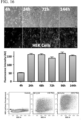
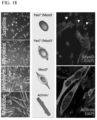
- Cardiomyocytes were transfected with mCherry M 3 RNA and fluorescence images were acquired starting at four hours post-transfection for six days days. Representative images for multiple time periods are shown in FIG. 17A , indicating rapid, robust, and sustained protein expression within primary cardiomyocytes. Quantification of the fluorescence intensity within these primary cardiomyocytes revealed that maximum expression occurred at 24 hours and was sustained, but declining, for up to six days ( FIG. 17B ).
- Transfection efficiency within these primary cardiomyocytes was furthermore assessed using flow cytometry at four hours and 24 hours by transfecting the cells with mCherry mRNA with scatter plot analysis demonstrating a transfection efficiency of 43% at 24 hours ( FIG. 17C ). Transfection of primary cardiomyocytes the M 3 RNA platform did not alter the structural or functional characteristics of cardiomyocytes.
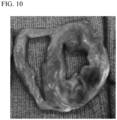
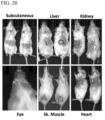
- the M 3 RNA platform was tested in a broad array of tissues including intrahepatic, intrarenal, intraocular, intramuscular and intramyocardial delivery ( FIG. 20 ). In every instance, FLuc expression could be demonstrated within the injected area within two hours following delivery and sustained for more than 72 hours.
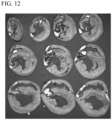
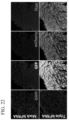
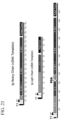
- mice were then sacrificed and the heart was excised to assess expression by immunohistochemistry in histological sections confirming overlapping GFP, mCherry, and FLuc protein expression within the combined gene-M 3 RNA injected mice (lower panels) when compared to mock M 3 RNA mice (upper panels) ( FIG. 22 ).
- the M 3 RNA technology can be evolved to achieve a delivery platform for rapid creation of highly potent therapeutics.
- biofunctionalized M 3 RNA can form the foundation of an M 3 RNA-Ig Delivery System (MIDS) capable of rapidly integrating new genetic sequences to target novel pathogens (e.g., viral pathogen such as, for example, Zika virus and H7N9).
- MIMS M 3 RNA-Ig Delivery System
- Design of the M 3 RNA-Ig vector can involve consideration of one or more of the following: (1) whether to join the heavy and light chain genes on a single transcript with a P2A ribosomal skipping sequence versus synthesis as separate transcripts; (2) the length/introduction of the 3'poly(A) tail; (3) the type of 5'm7G cap; (4) selection of modified nucleotides; (5) IRES and pseudoknot modification of the 5' and 3' UTR, respectively, to diminish rate of degradation; and/or (6) nanoparticle-mediated microencapsulation to identify an appropriate stoichiometry for in vivo skeletal muscle delivery.
- the vector can include a suitable promoter (e.g., T7), the heavy chain and light chain coding regions, and 300 nucleotide poly(T) tract will serve as the backbone template for mRNA transcription.
- a suitable promoter e.g., T7
- the heavy chain and light chain coding regions e.g., T7
- 300 nucleotide poly(T) tract will serve as the backbone template for mRNA transcription.
- Vectors can be designed as two separate versions to accommodate large variances in the C-regions of new antibodies identified. The initial design can assume an unchanging C-region in prospective antibodies identified. Accordingly, the multi-cloning site in the heavy chain and light chain vectors can allow rapid parallel introduction of the V sequence into this region and initiation of the M 3 RNA-Ig manufacturing process.
- M 3 RNA-Ig may be generated using CAP-1 as an approach to avoid any innate immune responses that may be mediated using CAP-0.
- a design including CAP-1 can include post-transcriptional modifications using a Vaccinia Capping System followed by a CAP 2' O-Methyltransferase.
- a CAP-dependent approach can involve interaction of the poly(A) binding protein (PABP), which can add significant length to the construct and thereby limit creativity at the 3' site to further limit RNA degradation ( FIG. 24 , top).
- PABP poly(A) binding protein
- the M 3 RNA-Ig system can include an integral ribosomal entry site (IRES) within the 5'UTR, eliminating the need for PABP interaction ( FIG. 24 , bottom).
- the 3' pseudoknot mediates a frameshift read-through by the ribosomal complex, thereby knocking UPF-1 complexes off of the 3'UTR, resulting in mRNA stability ( FIG 25 , Pseudoknot).
- the RNA stability element serves as a decoy, directly blocking UPF-1 interaction with the 3'UTR, and thereby stabilizing mRNA against decay ( FIG. 25 , RNA Stability Element).
- Poly(A) stem loop structures also can increase mRNA stability by inhibiting exosome-mediated mRNA degradation ( FIG. 25 , Stem Loop).
- Chitosan exhibits a cationic polyelectrolyte nature and therefore provides a strong electrostatic interaction with negatively charged DNA or RNA molecules. Moreover, chitosan carries primary amine groups that makes it a biodegradable, biocompatible, and non-toxic biopolymer that provides protection against DNase or RNase degradation.
- a mammal at risk of experiencing a major adverse cardiac event can be treated by administering a particle encapsulating an inhibitory RNA targeting eotaxin-3, cathepsin-S, DK -1, follistatin, ST-2, GRO- ⁇ , IL-21, NOV, transferrin, TIMP-2, TNF ⁇ RI, TNF ⁇ RII, angiostatin, CCL25, ANGPTL4, and/or MMP-3 to decrease the level of eotaxin-3, cathepsin-S, DK -1, follistatin, ST-2, GRO- ⁇ , IL-21, NOV, transferrin, TIMP-2, TNF ⁇ RI, TNF ⁇ RII, angiostatin, CCL25, ANGPTL4, and/or MMP-3 polypeptide expression.
- a decrease in the level of one or more of these polypeptides can be used to reduce scar size and tissue remodeling and to improve cardiac function.
- Any type of mammal experiencing a major adverse cardiac event e.g., acute myocardial infarction
- a mammal at risk of experiencing a major adverse cardiac event e.g., a mammal who underwent PCI for STEMI
- a major adverse cardiac event e.g., a mammal who underwent PCI for STEMI
- humans and other primates such as monkeys experiencing a major adverse cardiac event and/or at risk of experiencing a major adverse cardiac event can be treated with biologics as described herein.
- dogs, cats, horses, cows, pigs, sheep, rabbits, mice, and rats can be treated with biologics as described herein.
- the patient can be administered or instructed to self-administer one or more particles encapsulating a molecule (e.g., a biologic) as described herein.
- a major adverse cardiac event e.g., acute myocardial infarction
- a major adverse cardiac event e.g., acute myocardial infarction
- the patient can be administered or instructed to self-administer one or more particles encapsulating a molecule (e.g., a biologic) as described herein.
- a molecule e.g., a biologic
- the major adverse cardiac event can be any major adverse cardiac event.
- major adverse cardiac events include, without limitation, myocardial infarction (e.g., acute myocardial infarction), heart failure, recurrent myocardial infarction, repeat hospitalization for cardiac-related events, and ischemic heart disease.
- myocardial infarction e.g., acute myocardial infarction
- heart failure e.g., heart failure
- recurrent myocardial infarction e.g., repeat hospitalization for cardiac-related events
- ischemic heart disease ischemic heart disease.
- the major adverse cardiac event treated as described herein can be myocardial infarction, such as acute myocardial infarction.
- particle-mediated delivery of one or more molecules (e.g., biologics) to a mammal as described herein can be used to improve cardiac function.
- improved cardiac function include, without limitation, increased survivorship, reduced hospitalization, symptom-free tolerance of physical activity, improved global physical fitness, improved cardiac ejection fraction, improved cardiac output, improved stroke volume, improved cardiac mass index, and reduced scar size.
- particle-mediated delivery of one or more biologics to a mammal as described herein can be used to increase expression of one or more (e.g., one, two, three, or more) polypeptides useful for regenerating cardiac function and/or tissue.
- polypeptides that can be useful for regenerating cardiac function and/or tissue include, without limitation, NAP-2, TGF- ⁇ , ErBb3, VEGF, IGF-1, FGF-2, PDGF, IL-2, CD19, CD20, CD80/86, and polypeptides described in WO 2015/034897 .
- An increase in the level of one or more of these polypeptides can be used to reduce scar size and tissue remodeling and/or improve cardiac function.
- Methods for increasing expression of a polypeptide useful for regenerating cardiac function and/or tissue in cells can include contacting the cells with one or more particles encapsulating, for example, an mRNA encoding the polypeptide.
- One or more particles encapsulating an mRNA encoding the polypeptide can be contacted with the cells by any appropriate method.
- the term "increased expression" as used herein with respect to the level of a polypeptide is any level that is greater than (e.g., at least about 10, 15, 20, or 25 percent greater than) a reference level for that polypeptide.
- reference level as used herein with respect to a polypeptide is the level of expression of that polypeptide typically observed by healthy humans or humans with a low risk of experiencing a major adverse cardiac event.
- levels of NAP-2, TGF- ⁇ , and ErBb3 expression with respect to healthy humans or humans with a low risk of experiencing a major adverse cardiac event can be as described elsewhere (e.g., WO 2015/034897 ).
- particle-mediated delivery of one or more biologics e.g., mRNA
- a mammal as described herein can be used to increase expression of NAP-2 and/or TGF- ⁇ .
- particle-mediated delivery of one or more biologics to a mammal described herein can be used to decrease expression of one or more (e.g., one, two, three, four, five, six, seven, eight, nine, ten, or more) of the following polypeptides: eotaxin-3, cathepsin-S, DK -1, follistatin, ST-2, GRO- ⁇ , IL-21, NOV, transferrin, TIMP-2, TNF ⁇ RI, TNF ⁇ RII, angiostatin, CCL25, ANGPTL4, MMP-3, and polypeptides described in WO 2015/034897 .
- one or more biologics e.g., inhibitory RNA
- a decrease in the expression level of one or more of these polypeptides can be used to reduce scar size and tissue remodeling and/or improve cardiac function.
- Methods for decreasing expression of one or more of eotaxin-3, cathepsin-S, DK -1, follistatin, ST-2, GRO- ⁇ , IL-21, NOV, transferrin, TIMP-2, TNF ⁇ RI, TNF ⁇ RII, angiostatin, CCL25, ANGPTL4, and MMP-3 in cells can include contacting the cells (e.g., cardiomyocytes) with one or more particles encapsulating, for example, an inhibitory RNA.
- One or more particles encapsulating an inhibitory RNA can be contacted with the cells by any appropriate method.
- a particle encapsulating an inhibitory RNA described herein can be used to decrease expression of a human eotaxin-3, a human cathepsin-S, a human DK -1, a human follistatin, a human ST-2, a human GRO- ⁇ , a human IL-21, a human NOV, a human transferrin, a human TIMP-2, a human TNF ⁇ RI, a human TNF ⁇ RII, a human angiostatin, a human CCL25, a human ANGPTL4, a human MMP-3, or any combination thereof.
- a particle e.g., an alginate gel
- the one or more additional therapies can be performed at the same time or independently of the administration of one or more particles encapsulating one or more biologics described herein.
- the one or more alginate gels encapsulating one or more biologics described herein can be administered before, during, or after the one or more additional therapies are performed.
- a pharmaceutically acceptable composition including a particle (e.g., an alginate gel) encapsulating one or more molecules (e.g., biologics) described herein can be administered locally or systemically.
- a composition containing a particle encapsulating one or more biologics described herein can be administered systemically by venous or oral administration to, or inhalation by a mammal (e.g., a human).
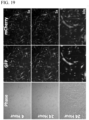
- Alginate gel delivery resulted in sustained release of mCherry mRNA ( FIG. 13 ).
Landscapes
- Health & Medical Sciences (AREA)
- Chemical & Material Sciences (AREA)
- Life Sciences & Earth Sciences (AREA)
- General Health & Medical Sciences (AREA)
- Engineering & Computer Science (AREA)
- Medicinal Chemistry (AREA)
- Pharmacology & Pharmacy (AREA)
- Animal Behavior & Ethology (AREA)
- Public Health (AREA)
- Veterinary Medicine (AREA)
- Epidemiology (AREA)
- Genetics & Genomics (AREA)
- Molecular Biology (AREA)
- Organic Chemistry (AREA)
- Bioinformatics & Cheminformatics (AREA)
- Biochemistry (AREA)
- Biotechnology (AREA)
- Biomedical Technology (AREA)
- Zoology (AREA)
- General Engineering & Computer Science (AREA)
- Wood Science & Technology (AREA)
- Physics & Mathematics (AREA)
- Dermatology (AREA)
- Biophysics (AREA)
- Plant Pathology (AREA)
- Microbiology (AREA)
- Inorganic Chemistry (AREA)
- Dispersion Chemistry (AREA)
- Optics & Photonics (AREA)
- Nanotechnology (AREA)
- Chemical Kinetics & Catalysis (AREA)
- General Chemical & Material Sciences (AREA)
- Nuclear Medicine, Radiotherapy & Molecular Imaging (AREA)
- Cardiology (AREA)
- Heart & Thoracic Surgery (AREA)
- Medicines That Contain Protein Lipid Enzymes And Other Medicines (AREA)
- Medicinal Preparation (AREA)
- Medicines Containing Material From Animals Or Micro-Organisms (AREA)
- Medicines Containing Antibodies Or Antigens For Use As Internal Diagnostic Agents (AREA)
- Pharmaceuticals Containing Other Organic And Inorganic Compounds (AREA)
Applications Claiming Priority (4)
| Application Number | Priority Date | Filing Date | Title |
|---|---|---|---|
| US201662426090P | 2016-11-23 | 2016-11-23 | |
| EP21205388.8A EP3973955B1 (de) | 2016-11-23 | 2017-11-22 | Partikelvermittelte freisetzung von inhibitorischer rna |
| PCT/US2017/063060 WO2018098312A2 (en) | 2016-11-23 | 2017-11-22 | Particle-mediated delivery of biologics |
| EP17873643.5A EP3544591B1 (de) | 2016-11-23 | 2017-11-22 | Partikelvermittelte freisetzung von biologika |
Related Parent Applications (3)
| Application Number | Title | Priority Date | Filing Date |
|---|---|---|---|
| EP17873643.5A Division EP3544591B1 (de) | 2016-11-23 | 2017-11-22 | Partikelvermittelte freisetzung von biologika |
| EP21205388.8A Division EP3973955B1 (de) | 2016-11-23 | 2017-11-22 | Partikelvermittelte freisetzung von inhibitorischer rna |
| EP21205388.8A Division-Into EP3973955B1 (de) | 2016-11-23 | 2017-11-22 | Partikelvermittelte freisetzung von inhibitorischer rna |
Publications (2)
| Publication Number | Publication Date |
|---|---|
| EP4582089A2 true EP4582089A2 (de) | 2025-07-09 |
| EP4582089A3 EP4582089A3 (de) | 2025-07-30 |
Family
ID=62195620
Family Applications (3)
| Application Number | Title | Priority Date | Filing Date |
|---|---|---|---|
| EP17873643.5A Active EP3544591B1 (de) | 2016-11-23 | 2017-11-22 | Partikelvermittelte freisetzung von biologika |
| EP25162913.5A Pending EP4582089A3 (de) | 2016-11-23 | 2017-11-22 | Partikelvermittelte freisetzung von biologischen stoffen |
| EP21205388.8A Active EP3973955B1 (de) | 2016-11-23 | 2017-11-22 | Partikelvermittelte freisetzung von inhibitorischer rna |
Family Applications Before (1)
| Application Number | Title | Priority Date | Filing Date |
|---|---|---|---|
| EP17873643.5A Active EP3544591B1 (de) | 2016-11-23 | 2017-11-22 | Partikelvermittelte freisetzung von biologika |
Family Applications After (1)
| Application Number | Title | Priority Date | Filing Date |
|---|---|---|---|
| EP21205388.8A Active EP3973955B1 (de) | 2016-11-23 | 2017-11-22 | Partikelvermittelte freisetzung von inhibitorischer rna |
Country Status (6)
| Country | Link |
|---|---|
| US (3) | US20190275071A1 (de) |
| EP (3) | EP3544591B1 (de) |
| JP (4) | JP7121005B2 (de) |
| CA (1) | CA3044703A1 (de) |
| ES (2) | ES3035746T3 (de) |
| WO (1) | WO2018098312A2 (de) |
Families Citing this family (5)
| Publication number | Priority date | Publication date | Assignee | Title |
|---|---|---|---|---|
| JP2021524462A (ja) * | 2018-05-23 | 2021-09-13 | メイヨ・ファウンデーション・フォー・メディカル・エデュケーション・アンド・リサーチ | マイクロカプセル化した修飾したポリヌクレオチド組成物及び方法 |
| CN108753726B (zh) * | 2018-06-11 | 2020-10-09 | 西南医科大学 | 一种含有ECRG4 mRNA的外泌体及其制备方法和应用 |
| US12492379B2 (en) | 2018-09-28 | 2025-12-09 | Mayo Foundation For Medical Education And Research | Making and using cardiopoietic cells |
| WO2021184020A1 (en) * | 2020-03-13 | 2021-09-16 | Codiak Biosciences, Inc. | Methods of treating neuroinflammation |
| CN114984184A (zh) * | 2021-03-02 | 2022-09-02 | 上海交通大学医学院附属上海儿童医学中心 | 增强tbx1表达在修复心脏组织损伤中的用途 |
Citations (1)
| Publication number | Priority date | Publication date | Assignee | Title |
|---|---|---|---|---|
| WO2015034897A1 (en) | 2013-09-03 | 2015-03-12 | Mayo Foundation For Medical Education And Research | Reducing the risk of major adverse cardiac events |
Family Cites Families (29)
| Publication number | Priority date | Publication date | Assignee | Title |
|---|---|---|---|---|
| US7608262B2 (en) | 1996-02-16 | 2009-10-27 | The Kennedy Institute Of Rheumatology | Methods of preventing or treating thrombosis with tumor necrosis factor antagonists |
| EP1021549A2 (de) * | 1997-09-19 | 2000-07-26 | Sequitur, Inc. | Sense mrna therapie |
| US20040063654A1 (en) * | 2001-11-02 | 2004-04-01 | Davis Mark E. | Methods and compositions for therapeutic use of RNA interference |
| JP5489462B2 (ja) * | 2005-10-24 | 2014-05-14 | ユニバーシティ オブ マサチューセッツ | 骨病状の遺伝子治療のための組成物およびそれらの使用法 |
| WO2007136439A2 (en) | 2006-02-21 | 2007-11-29 | Avrum Belzer | Hyperpolarization methods, systems and compositions |
| US20100092572A1 (en) * | 2007-01-29 | 2010-04-15 | Peter Kaeuper | Chitosan-based colloidal particles for rna delivery |
| US9822364B2 (en) * | 2008-03-11 | 2017-11-21 | Yale University | Compositions and methods for controlled delivery of inhibitory ribonucleic acids |
| WO2009114614A2 (en) * | 2008-03-11 | 2009-09-17 | Yale University | Compositions and methods for controlled delivery of inhibitory ribonucleic acids |
| RS58405B1 (sr) * | 2009-12-01 | 2019-04-30 | Translate Bio Inc | Stereoidni derivati za isporuku irnk u humanim genetskim oboljenjima |
| CA2807552A1 (en) * | 2010-08-06 | 2012-02-09 | Moderna Therapeutics, Inc. | Engineered nucleic acids and methods of use thereof |
| KR20140051161A (ko) | 2011-03-29 | 2014-04-30 | 베타-셀 엔브이 | 캡슐화된 치료제의 제조 방법 및 이의 용도 |
| JP2014511694A (ja) | 2011-04-03 | 2014-05-19 | ザ ジェネラル ホスピタル コーポレーション ドゥーイング ビジネス アズ マサチューセッツ ジェネラル ホスピタル | 修飾型rna(mod−rna)を使用する効率的なインビボタンパク質発現 |
| WO2012145801A1 (en) * | 2011-04-29 | 2012-11-01 | Jagat Rakesh Kanwar | Nanoparticle |
| SMT201900445T1 (it) | 2011-06-08 | 2019-09-09 | Translate Bio Inc | Composizione di nanoparticelle lipidiche e metodi per il rilascio di mrna |
| JP2013018844A (ja) * | 2011-07-08 | 2013-01-31 | National Institute Of Advanced Industrial Science & Technology | アルギン酸塩と無機塩からなる微粒子、生体高分子を内包するアルギン酸塩と無機塩からなる微粒子、およびそれら微粒子の製造方法 |
| RU2649364C2 (ru) | 2011-12-16 | 2018-04-02 | Модерна Терапьютикс, Инк. | Составы на основе модифицированного нуклеозида, нуклеотида и нуклеиновой кислоты |
| AU2013243954A1 (en) * | 2012-04-02 | 2014-10-30 | Moderna Therapeutics, Inc. | Modified polynucleotides for the production of cosmetic proteins and peptides |
| CA2882248A1 (en) * | 2012-08-15 | 2014-02-20 | The University Of Chicago | Exosome-based therapeutics against neurodegenerative disorders |
| HRP20220607T1 (hr) | 2012-11-26 | 2022-06-24 | Modernatx, Inc. | Terminalno modificirana rna |
| EP2929035A1 (de) | 2012-12-07 | 2015-10-14 | Shire Human Genetic Therapies, Inc. | Lipidnanopartikel zur freisetzung von mrna |
| JP6525435B2 (ja) * | 2013-10-22 | 2019-06-12 | シャイアー ヒューマン ジェネティック セラピーズ インコーポレイテッド | メッセンジャーrnaの送達のための脂質製剤 |
| EP3060303B1 (de) | 2013-10-22 | 2018-11-14 | Translate Bio, Inc. | Mrna-therapie für argininosuccinat-synthase-mangel |
| RS58337B1 (sr) * | 2014-03-24 | 2019-03-29 | Translate Bio Inc | Irnk terapija za lečenje očnih oboljenja |
| EP3542825A1 (de) | 2014-11-10 | 2019-09-25 | Ethris GmbH | Induktion von osteogenese durch bereitstellung von bmp-codierender rna |
| EP3229783A4 (de) * | 2014-12-09 | 2018-08-08 | Belmont University | Pharmazeutische halbfeste gele mit eingeschlossenen calciumphosphatnanopartikeln |
| US10568970B2 (en) * | 2015-02-20 | 2020-02-25 | Trustees Of Boston University | Theranostic compositions and uses thereof |
| CA2980337A1 (en) * | 2015-04-03 | 2016-10-06 | University Of Massachusetts | Oligonucleotide compounds for targeting huntingtin mrna |
| CA2997811C (en) * | 2015-10-01 | 2021-09-21 | University Of Ottawa | Exosome packaging of nucleic acids |
| JP2021524462A (ja) * | 2018-05-23 | 2021-09-13 | メイヨ・ファウンデーション・フォー・メディカル・エデュケーション・アンド・リサーチ | マイクロカプセル化した修飾したポリヌクレオチド組成物及び方法 |
-
2017
- 2017-11-22 EP EP17873643.5A patent/EP3544591B1/de active Active
- 2017-11-22 EP EP25162913.5A patent/EP4582089A3/de active Pending
- 2017-11-22 EP EP21205388.8A patent/EP3973955B1/de active Active
- 2017-11-22 ES ES21205388T patent/ES3035746T3/es active Active
- 2017-11-22 JP JP2019527832A patent/JP7121005B2/ja active Active
- 2017-11-22 WO PCT/US2017/063060 patent/WO2018098312A2/en not_active Ceased
- 2017-11-22 ES ES17873643T patent/ES2912270T3/es active Active
- 2017-11-22 US US16/463,053 patent/US20190275071A1/en not_active Abandoned
- 2017-11-22 CA CA3044703A patent/CA3044703A1/en active Pending
-
2022
- 2022-01-03 US US17/567,482 patent/US12036232B2/en active Active
- 2022-08-02 JP JP2022123472A patent/JP7469397B2/ja active Active
-
2024
- 2024-04-04 JP JP2024060735A patent/JP2024086785A/ja active Pending
- 2024-05-31 US US18/680,011 patent/US20240390409A1/en active Pending
-
2025
- 2025-12-25 JP JP2025281578A patent/JP2026040663A/ja active Pending
Patent Citations (1)
| Publication number | Priority date | Publication date | Assignee | Title |
|---|---|---|---|---|
| WO2015034897A1 (en) | 2013-09-03 | 2015-03-12 | Mayo Foundation For Medical Education And Research | Reducing the risk of major adverse cardiac events |
Non-Patent Citations (2)
| Title |
|---|
| "NCBI", Database accession no. NM 001039667.1 |
| MOZAFFARIAN ET AL., CIRCULATION, vol. 131, no. 4, 2015, pages 29 - 322 |
Also Published As
| Publication number | Publication date |
|---|---|
| WO2018098312A2 (en) | 2018-05-31 |
| EP4582089A3 (de) | 2025-07-30 |
| US12036232B2 (en) | 2024-07-16 |
| CA3044703A1 (en) | 2018-05-31 |
| US20190275071A1 (en) | 2019-09-12 |
| JP2026040663A (ja) | 2026-03-09 |
| EP3973955B1 (de) | 2025-05-21 |
| EP3544591B1 (de) | 2022-04-20 |
| JP2020500857A (ja) | 2020-01-16 |
| EP3544591A4 (de) | 2020-10-07 |
| JP2022140640A (ja) | 2022-09-26 |
| JP7121005B2 (ja) | 2022-08-17 |
| US20220152084A1 (en) | 2022-05-19 |
| ES2912270T3 (es) | 2022-05-25 |
| ES3035746T3 (en) | 2025-09-08 |
| WO2018098312A3 (en) | 2018-07-05 |
| EP3973955A2 (de) | 2022-03-30 |
| US20240390409A1 (en) | 2024-11-28 |
| EP3544591A2 (de) | 2019-10-02 |
| EP3973955A3 (de) | 2022-06-15 |
| JP7469397B2 (ja) | 2024-04-16 |
| JP2024086785A (ja) | 2024-06-28 |
Similar Documents
| Publication | Publication Date | Title |
|---|---|---|
| US12036232B2 (en) | Particle-mediated delivery of biologics | |
| Hahm et al. | Strategies to enhance extracellular vesicle production | |
| CN107427466B (zh) | 从细胞膜衍生的纳米囊泡及其用途 | |
| JP2022542389A (ja) | 拘束された脂質を含むナノ材料およびその使用 | |
| WO2021031839A1 (zh) | 一种靶向多肽修饰的载药脂蛋白纳米递药系统及其制备和应用 | |
| CN108451929B (zh) | 一种包载固相内核的重组脂蛋白及其制备和应用 | |
| Hadjizadeh et al. | Polymeric scaffold based gene delivery strategies to improve angiogenesis in tissue engineering: a review | |
| JP7646729B2 (ja) | 核酸導入キャリア、核酸導入キャリアセット、核酸導入組成物及び核酸導入方法 | |
| CN107867677B (zh) | 一维磷酸钙纳米/微米材料及其制备方法和应用 | |
| HK40068453A (en) | Particle-mediated delivery of inhibitory rna | |
| HK40068453B (en) | Particle-mediated delivery of inhibitory rna | |
| HK40015094B (en) | Particle-mediated delivery of biologics | |
| HK40015094A (en) | Particle-mediated delivery of biologics | |
| US20220031633A1 (en) | Poly(amine-co-ester) polymeric particles for selective pulmonary delivery | |
| US20210205229A1 (en) | Microencapsulated modified polynucleotide compositions and methods | |
| Faria | Relatórios de Estágio e Monografia Intitulada “Stem Cell Membrane-Coated Nanosystems for Biomedical Applications” | |
| Jhunjhunwala | Nucleic Acid Nanotherapeutics |
Legal Events
| Date | Code | Title | Description |
|---|---|---|---|
| PUAI | Public reference made under article 153(3) epc to a published international application that has entered the european phase |
Free format text: ORIGINAL CODE: 0009012 |
|
| STAA | Information on the status of an ep patent application or granted ep patent |
Free format text: STATUS: REQUEST FOR EXAMINATION WAS MADE |
|
| REG | Reference to a national code |
Ref country code: DE Ref legal event code: R079 Free format text: PREVIOUS MAIN CLASS: A61K0031708800 Ipc: A61K0009127000 |
|
| PUAL | Search report despatched |
Free format text: ORIGINAL CODE: 0009013 |
|
| 17P | Request for examination filed |
Effective date: 20250311 |
|
| AC | Divisional application: reference to earlier application |
Ref document number: 3544591 Country of ref document: EP Kind code of ref document: P Ref document number: 3973955 Country of ref document: EP Kind code of ref document: P |
|
| AK | Designated contracting states |
Kind code of ref document: A2 Designated state(s): AL AT BE BG CH CY CZ DE DK EE ES FI FR GB GR HR HU IE IS IT LI LT LU LV MC MK MT NL NO PL PT RO RS SE SI SK SM TR |
|
| AK | Designated contracting states |
Kind code of ref document: A3 Designated state(s): AL AT BE BG CH CY CZ DE DK EE ES FI FR GB GR HR HU IE IS IT LI LT LU LV MC MK MT NL NO PL PT RO RS SE SI SK SM TR |
|
| RIC1 | Information provided on ipc code assigned before grant |
Ipc: A61K 9/127 20250101AFI20250625BHEP Ipc: A61K 9/48 20060101ALI20250625BHEP Ipc: A61K 48/00 20060101ALI20250625BHEP Ipc: C12N 15/11 20060101ALI20250625BHEP Ipc: C07H 21/04 20060101ALI20250625BHEP Ipc: A61P 9/00 20060101ALI20250625BHEP Ipc: A61K 31/7088 20060101ALI20250625BHEP |
|
| REG | Reference to a national code |
Ref country code: HK Ref legal event code: DE Ref document number: 40127251 Country of ref document: HK |