EP4580309A2 - Ressourcenanzeigeverfahren und -vorrichtung - Google Patents
Ressourcenanzeigeverfahren und -vorrichtung Download PDFInfo
- Publication number
- EP4580309A2 EP4580309A2 EP25158987.5A EP25158987A EP4580309A2 EP 4580309 A2 EP4580309 A2 EP 4580309A2 EP 25158987 A EP25158987 A EP 25158987A EP 4580309 A2 EP4580309 A2 EP 4580309A2
- Authority
- EP
- European Patent Office
- Prior art keywords
- resource
- frame
- station
- access point
- mapping
- Prior art date
- Legal status (The legal status is an assumption and is not a legal conclusion. Google has not performed a legal analysis and makes no representation as to the accuracy of the status listed.)
- Pending
Links
Images





Classifications
-
- H—ELECTRICITY
- H04—ELECTRIC COMMUNICATION TECHNIQUE
- H04W—WIRELESS COMMUNICATION NETWORKS
- H04W72/00—Local resource management
- H04W72/04—Wireless resource allocation
-
- H—ELECTRICITY
- H04—ELECTRIC COMMUNICATION TECHNIQUE
- H04W—WIRELESS COMMUNICATION NETWORKS
- H04W72/00—Local resource management
- H04W72/04—Wireless resource allocation
- H04W72/044—Wireless resource allocation based on the type of the allocated resource
- H04W72/0446—Resources in time domain, e.g. slots or frames
-
- H—ELECTRICITY
- H04—ELECTRIC COMMUNICATION TECHNIQUE
- H04W—WIRELESS COMMUNICATION NETWORKS
- H04W72/00—Local resource management
- H04W72/12—Wireless traffic scheduling
- H04W72/1263—Mapping of traffic onto schedule, e.g. scheduled allocation or multiplexing of flows
-
- H—ELECTRICITY
- H04—ELECTRIC COMMUNICATION TECHNIQUE
- H04W—WIRELESS COMMUNICATION NETWORKS
- H04W72/00—Local resource management
- H04W72/20—Control channels or signalling for resource management
- H04W72/23—Control channels or signalling for resource management in the downlink direction of a wireless link, i.e. towards a terminal
-
- H—ELECTRICITY
- H04—ELECTRIC COMMUNICATION TECHNIQUE
- H04W—WIRELESS COMMUNICATION NETWORKS
- H04W88/00—Devices specially adapted for wireless communication networks, e.g. terminals, base stations or access point devices
- H04W88/08—Access point devices
Definitions
- the present invention relates to the communications field, and in particular, to a resource indication method and an apparatus.
- multi-user transmission has become a hotspot in development of a wireless local area network, for example, an MU-MIMO (Multi-User Multiple Input Multiple Output, multi-user multiple-input multiple-output) system and an OFDMA (Orthogonal Frequency Division Multiple Access, orthogonal frequency division multiple access) system.
- MU-MIMO Multi-User Multiple Input Multiple Output, multi-user multiple-input multiple-output
- OFDMA Orthogonal Frequency Division Multiple Access, orthogonal frequency division multiple access
- an access point indicates resources to users/user groups in a station one by one, so as to indicate information about a resource block that is used when the station sends a MAC (Media Access Control, Media Access Control) frame to the access point or receives a MAC frame sent by the access point.
- MAC Media Access Control, Media Access Control
- a resource indicator for a single user may include: a PAID (Partial Association ID, partial association identifier) that is used to identify a station, a DL (Downlink, downlink)/UL (Uplink, uplink) type (type) that is used to indicate whether a resource block belongs to a downlink frame or an uplink frame, an MCS (Modulation and Coding Scheme, modulation and coding scheme) that is used to indicate a modulation and coding scheme, an NSTS (Number of Space-Time Stream, number of space-time streams) that is used to indicate a quantity of space-time streams that are used, LDPC (Low-Density-Parity-Check, low-density parity-check code) that is used to indicate whether an LDPC coding manner is used, an STBC (Space Time Block Code, space time block code) that is used to indicate whether STBC is used, and the like.
- a PAID Partial Association ID, partial association identifier
- DL Downlink, downlink
- the access point needs to use 60 bits (bit) to indicate a resource to a single user, and needs to use 84 bits to indicate a resource to a user group.
- Embodiments of the present invention provide a resource indication method and an apparatus, so as to resolve a problem that overheads are extremely large when an access point indicates a resource to each station, and improve resource utilization in resource indication.
- an embodiment of the present invention provides a resource indication method, including:
- each resource indicator is further used to indicate a transmission parameter.
- the present invention provides a resource indication method, including:
- the present invention provides a resource indication method, including:
- the present invention provides a resource indication method, including:
- the present invention provides an access point, including:
- each mapping segment included in the first resource allocation unit is further used to indicate a quantity of stations that need to send a frame corresponding to a frame type associated with the mapping segment.
- each resource indicator included in the first resource allocation unit is further used to indicate a transmission parameter.
- the present invention provides an access point, including:
- the present invention provides a station, including:
- the present invention provides a station, where the station includes a processor and a communications interface connected to the processor, where
- the access point before sending a downlink frame to the station, the access point further needs to send a resource indicator to the station, so as to notify the station of how to specifically use an indicated resource to receive the downlink frame sent by the access point.
- the station may receive, according to a downlink frame receiving rule indicated by the resource indicator and at a resource location indicated by the resource indicator, the downlink frame sent by the access point.
- the station before sending an uplink frame to the access point, the station also needs to receive a resource indicator sent by the access point, so as to learn, according to the resource indicator, a rule according to which the station specifically sends the uplink frame to the access point and a resource location at which the station specifically sends the uplink frame to the access point.
- the station sends the uplink frame to the access point according to the resource indicator, and the access point receives, according to an uplink frame receiving rule indicated by the resource indicator and at a resource location indicated by the resource indicator, the uplink frame sent by the station.
- a MAC frame is used as an example (when an access point sends a MAC frame to a station, the MAC frame is a downlink frame; when a station sends a MAC frame to an access point, the MAC frame is an uplink frame), the MAC frame may be classified into a management frame, a control frame, and a data frame according to a type identifier, and each type of frame may be further classified into multiple frames of subtypes according to a subtype identifier.
- Type identifier Type description Subtype identifier Subtype description 00 (Management frame) 0000 Association Request (association request) 0001 Association Response (association response) Management 0010 Reassociation Request (reassociation request) 0011 Reassociation Response (reassociation response) 0100 0101 Probe Request (probe request) ... Probe Response (probe response) ... 01 (Control frame) 0100 Beamforming Report Poll (beamforming report poll) Control ... 1011 ... 1100 RTS (request to send) 1101 CTS (clear to send) ... ACK (acknowledgement) ... 10 (Data frame) 0000 Data (data) Data ... ... 1000 QoS Data (quality of service data) ... ... 1110 QoS CF-Poll (no data) (quality of service contention-free poll (no data)) ... ... ...
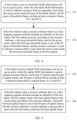
- This embodiment of the present invention provides a resource indication method. As shown in FIG 1 , the method includes the following steps.
- the BA frame mapping segment includes a station identifier field (or a station group identifier field) and a transmission parameter field, and the transmission parameter field is used to indicate one or more of a resource block location, LDPC, an STBC, BF (Beamforming, beamforming), an MCS, or an NSTS.
- Table 2 Downlink MAP information BA frame mapping segment Data frame mapping segment Uplink MAP information BA frame mapping segment RAR frame mapping segment Data frame mapping segment
- content of the data frame mapping segment is similar to the content of the foregoing BA frame mapping segment.
- the data frame mapping segment is used to indicate a resource to multiple stations that need to receive a data frame.
- the data frame mapping segment may also include multiple resource indicators, each resource indicator is associated with a station, and each resource indicator is used to indicate, to an associated station, one or more of LDPC, an STBC, BF, an MCS, an NSTS, or a resource block location at which the associated station receives a data frame.
- the data frame mapping segment in the downlink MAP information is similar to the data frame mapping segment in the uplink MAP information.
- the data frame mapping segment in the downlink MAP information may further include a BA frame mapping segment of an uplink BA frame. In this way, the access point does not need to send a resource indicator of the uplink BA frame to the station again.
- specific content of the BA frame mapping segment included in the data frame mapping segment in the downlink MAP information is as follows:
- specific content of the RAR frame mapping segment in the uplink MAP information is as follows:
- each mapping segment in the MAP information may further include frame type information corresponding to the mapping segment. For example, when frame type information is 01, it indicates that a field is a BA frame mapping segment; when frame type information is 11, it indicates that a field is a data frame mapping segment.
- frame type information when frame type information is 01, it indicates that a field is a BA frame mapping segment; when frame type information is 11, it indicates that a field is a data frame mapping segment.
- the access point when generating the MAP information, the access point does not need to generate multiple mapping segments according to a preset frame type sequence. Instead, the access point flexibly indicates a location of each mapping segment in the MAP information by using frame type information.
- this embodiment of the present invention further provides another method for generating resource mapping information.
- an access point does not divide resource mapping information generated by the access point into mapping segments.
- the resource mapping information may include multiple resource indicators, and each resource indicator is used to indicate a resource allocated to a station in a frame corresponding to a frame type.
- a resource indicator of each type of frame corresponding to each station may be flexibly configured in the foregoing resource mapping information.
- Each resource indicator includes frame type information, a station identifier field (or a station group identifier field), and a transmission parameter field that are corresponding to the resource indicator.
- Table 3 BA frame resource indicator of a station 1 Data frame resource indicator of a station 1 BA frame resource indicator of a station 2 RAR frame resource indicator of a station 1
- the access point generates the resource mapping information, and the resource mapping information includes a resource indicator of each type of frame of multiple stations or station groups.
- Embodiment 2 a method for generating resource mapping information when an access point indicates a resource of a to-be-sent downlink frame to a station and a method for generating resource mapping information when an access point indicates an uplink frame to be received by the access point to a station are specifically described. Therefore, details are not described herein.
- the access point sends the resource mapping information.
- the access point may generate a separate downlink frame according to the resource mapping information, and send the downlink frame to each station, so that each station determines, according to a resource indicator in each mapping segment in the resource mapping information, a resource allocated by the access point to the station.
- the access point may add the resource mapping information to a signaling field of a downlink data frame sent to each station or a Media Access Control layer of the downlink data frame.
- each station receives the resource mapping information at the same time of receiving the downlink data frame, so as to reduce signaling overheads of the station.
- a first station may perform the following step 300 and step 400, so as to determine a resource allocated by the access point to the first station.
- the first station may be any one of the foregoing multiple stations.
- the first station receives the resource mapping information from the access point.
- the first station receives downlink resource mapping information. If the first station reads a station identifier of the first station in a first resource indicator in a first mapping segment, the first station receives, according to content of the first resource indicator, a first-type downlink frame sent by the access point. For example, the first station determines, according to the content of the first resource indicator, a transmission parameter such as initial guidance for a resource block used for receiving the first-type downlink frame, a resource block size, LDPC, an STBC, BF, an MCS, or an NSTS.
- a transmission parameter such as initial guidance for a resource block used for receiving the first-type downlink frame, a resource block size, LDPC, an STBC, BF, an MCS, or an NSTS.
- the first-type downlink frame is a downlink frame of a frame type corresponding to the first mapping segment, and the first resource indicator is used to indicate information about a resource that is used when the access point sends the first-type downlink frame to the first station.
- an access point generates resource mapping information for multiple stations.
- the resource mapping information includes multiple mapping segments, each mapping segment is associated with a frame type, each mapping segment includes multiple resource indicators, and each resource indicator is used to indicate a resource allocated to a station in a frame corresponding to a frame type associated with a mapping segment to which the resource indicator belongs. Therefore, the station determines, according to the received resource mapping information, a specific resource allocated by the access point to the station. In this way, the access point may deliver resource indicators of multiple types of frames to the multiple stations at the same time, and the access point determines a corresponding resource indicator for each type of frame. Therefore, a problem of extremely large overheads that is caused because the access point indicates a resource to each station without distinguishing frame types is resolved, and transmission efficiency of resource indication is improved.
- This embodiment of the present invention provides a resource indication method.
- an access point indicates a resource of a to-be-sent downlink frame to a station.
- the method includes the following steps.
- the access point collects statistics about a quantity of first-type downlink frames to be sent to N stations, where the first-type downlink frame is one of M types of downlink frames, the M types of downlink frames include at least a response frame, N>0, and M>0.
- step 101 and step 102 Repeatedly perform step 101 and step 102 until the access point obtains M mapping segments corresponding to the M types of downlink frames, and then, generate downlink resource mapping information (that is, downlink MAP information) according to the M mapping segments, where the downlink MAP information is used to indicate resources that are separately used when the access point sends the M types of downlink frames.
- downlink resource mapping information that is, downlink MAP information
- the access point sends the downlink MAP information to the N stations and sends downlink frames to the N stations according to the downlink MAP information, so that each station in the N stations receives, according to the downlink MAP information, the downlink frame sent by the access point.
- the access point collects statistics about the quantity of first-type downlink frames to be sent to the N stations.
- the first-type downlink frame is one of the M types of downlink frames, the M types of downlink frames include at least the response frame, N>0, and M>0.
- all downlink frames to be sent to the N stations may be classified into a management frame, a control frame, and a data frame, and the first-type downlink frame is any one of the management frame, the control frame, or the data frame.
- all downlink frames to be sent to the N stations may be classified into a response frame (such as a BA frame or an ACK frame) and a data frame, and the first-type downlink frame is either the response frame or the data frame.
- the access point may determine, according to the quantity of first-type downlink frames, each resource indicator in the mapping segment corresponding to the first-type downlink frame.
- a first resource indicator is used as an example.
- the first resource indicator is used to indicate information about a resource that is used when the access point sends the first-type downlink frame to a first station, and the first station is any one of the N stations.
- the access point may determine a BA frame mapping segment according to a quantity of BA frames. That is, specific downlink MAP information is designed for the two BA frames, so that the three stations subsequently receive, according to the BA frame mapping segment, a BA frame sent by the access point.
- the access point when generating the first resource indicator, the access point needs to determine a station identifier (PBAID, Partial BA ID) of a station (the first station) that requests the first-type downlink frame, and determine a transmission parameter that is used when the first station receives the first-type downlink frame.
- the transmission parameter includes at least one or more of a resource block location, LDPC, an STBC, BF, an MCS, or an NSTS.
- the access point may generate the first resource indicator for the first-type downlink frame, to indicate a resource that is used when the access point sends the first-type downlink frame.
- the first resource indicator in the BA frame mapping segment is specifically as follows:
- a station identifier of a station that needs to transmit the BA frame For the PBAID, if there are N stations that transmit the BA frame, an index of only log 2 N bits needs to be provided for a station identifier of a station that needs to transmit the BA frame. Specifically, if there are four stations that transmit the BA frame and the four stations specifically include two single-user stations and an MU group that includes two stations, station identifiers of the four stations that request the BA frame are separately: a single-user STA 2 (00), a first user STA 3 (01) in the MU group, a second user STA 4 (10) in the MU group, and a single-user STA 1 (11). It may be learned that the access point needs only 2 bits to identify the four stations that request the BA frame.
- the access point may transmit a BA by using a 0-bit default value and by using a correspondence between an MCS of the BA frame and an MCS of a required response frame (such as a data frame).
- MCS BA max(MCS Data -2, 0)
- MCS Data is an MCS of the data frame
- max(A, B) refers to a larger value between A and B.
- the examples in step 101 and step 102 are still used, and the first-type downlink frame is a BA frame.
- the access point indicates a resource by using a transmission parameter of a default value
- the first resource indicator generated by the access point may be reduced to only 3+3 bits. In comparison with the prior art in which 60 bits are required to indicate a resource to a single user, overheads in indicating a resource by the access point are significantly reduced.
- the first resource indicator generated by the access point may further carry an uplink resource indicator of a BA frame that needs to be returned after the station receives the data frame.
- the first resource indicator is specifically as follows:
- the access point further indicates a resource to each station to indicate how to send a BA frame according to the data frame. This further reduces resource overheads in indicating a resource to the station by the access point, and improves transmission efficiency of resource indication.
- step 103 because there may be M types of downlink frames to be sent by the access point to the N stations, and only the first-type downlink frame is used as an example for description in step 101 and step 102, the access point may repeatedly perform step 101 and step 102 until the access point obtains the M mapping segments that are in one-to-one correspondence with the M types of downlink frames.
- the access point may first repeatedly perform step 101 to respectively collect statistics about quantities of the M types of downlink frames to be sent to the N stations, and then repeatedly perform step 102 to respectively determine the M mapping segments that are in one-to-one correspondence with the M types of downlink frames.
- the access point may perform step 101 and step 102 in a circulating manner until the access point obtains the M mapping segments that are in one-to-one correspondence with the M types of downlink frames. This is not limited in the present invention.
- the access point may generate the downlink MAP information according to the M mapping segments, and the downlink MAP information is used to indicate information of the resources that are separately used when the access point sends the M types of downlink frames.
- the access point may combine the obtained M mapping segments into the downlink MAP information according to a preset sequence of M mapping segments in downlink MAP information.
- the downlink MAP information includes M mapping segments of each station in the N stations, and each station may read the downlink MAP information according to the preset sequence of M mapping segments in downlink MAP information.
- one or several types of resource indicators may be empty in the M mapping segments. Table 4 First mapping segment ... M th mapping segment
- the access point may separately determine frame type information of K (K ⁇ M) mapping segments to be sent to the N stations, and the K mapping segments are information that is not empty in the M mapping segments.
- the access point may generate, according to the frame type information of the K mapping segments and the K mapping segments, downlink MAP information shown in Table 5.
- the access point may flexibly configure an indication sequence of the K mapping segments, and the station may read a corresponding mapping segment according to frame type information of each type of downlink frame.
- Table 5 Frame type information First mapping segment ...
- N MAP M SU , 1 + M SU , 2 + ⁇ + M SU , N SU + M MU , 1 + MU MU , 2 + ⁇ + M MU , N MU
- the access point may generate totally N MAP resource indicators for all stations, and further the access point generates, according to the N MAP resource indicators and frame type information corresponding to each resource indicator, downlink MAP information shown in Table 6. Locations and a sequence of all types of resource indicators of all stations are not fixed, and there are totally N MAP resource indicators.
- Table 6 Frame type information First resource indicator ... Frame type information N MAP th resource indicator
- the M-BA information includes the information in the several BA frames to be received by the multiple stations, when a resource of the M-BA frame is to be indicated, identifier information of the station does not need to be indicated (identifier information of each user is in a field of an M-BA frame sent by the access point).
- specific content of the M-BA MAP information is as follows:
- the access point sends the downlink MAP information to the N stations, and the access point sends the M types of downlink frames to the N stations according to the downlink MAP information.
- each station in the N stations reads the downlink MAP information according to the preset sequence of M types of the downlink frames in downlink MAP information. That is, each station first reads the first resource indicator (it is assumed that the first resource indicator is a resource indicator that is used when the first station receives a BA frame) in the first mapping segment.
- the first station may receive, according to a transmission parameter in the first resource indicator, a BA frame sent by the access point, then read multiple resource indicators in remaining M-1 mapping segments, and receive, according to corresponding resource indicators, different types of downlink frames sent by the access point.
- This embodiment of the present invention provides a resource indication method.
- an access point indicates a resource of a to-be-received uplink frame to a station.
- the method includes the following steps:
- the access point collects statistics about the quantity of first-type uplink frames that need to be sent by the N stations, where the first-type uplink frame is one of the M types of uplink frames, the M types of uplink frames include at least the response frame and/or the request frame, the request frame is an uplink frame in which the access point requests information from at least one station in the N stations, N>0, and M>0.
- step 101 A difference from step 101 is that the M types of uplink frames in step 201 refer to different types of uplink frames that are sent by the N stations and that are to be received by the access point.
- the M types of uplink frames in step 201 refer to different types of uplink frames that are sent by the N stations and that are to be received by the access point.
- a method for determining the M types of uplink frames reference may be made to step 101, and therefore details are not described herein.
- the M types of uplink frames may further include the request frame in addition to the response frame, and the request frame is an uplink frame in which the access point requests information from at least one station in the N stations, for example, an RAR (Resource Allocate Request, resource allocate request) frame, a BAR (Block Acknowledge Request, block acknowledge request) frame, or the like.
- RAR Resource Allocate Request, resource allocate request
- BAR Block Acknowledge Request, block acknowledge request
- the access point may determine, according to the quantity of first-type uplink frames, multiple resource indicators in the mapping segment corresponding to the first-type uplink frame.
- a first resource indicator is used as an example.
- the first resource indicator is used to indicate a resource that is used when the first station sends the first-type uplink frame to the access point.
- the access point when generating the first resource indicator, the access point needs to determine a station identifier of a station (the first station) that sends the first-type uplink frame, and determine a transmission parameter that is used when the first station sends the first-type uplink frame.
- the transmission parameter includes at least one or more of a resource block location, LDPC, an STBC, BF, an MCS, or an NSTS.
- the access point may generate multiple resource indicators for the first-type uplink frame, and the multiple resource indicators form the mapping segment corresponding to the first-type uplink frame.
- the first-type uplink frame is an RAR frame.
- a first resource indicator in an RAR frame mapping segment is specifically as follows:
- the access point may indicate a resource by using a default value (0 bits). For example, when the station reads the first resource indicator of the RAR frame, if the first resource indicator does not clearly indicate a value of LDPC, an STBC, BF, an MCS, or an NSTS, the station sends an uplink frame according to a default uplink frame sending rule.
- the access point performs implicit RAR frame polling on the station by generating the RAR frame mapping segment. If the station reads the first resource indicator that is for the RAR frame, the station may further send request information according to a transmission parameter indicated by the first resource indicator.
- a wild card may be designed for a station identifier.
- all station identifiers are 0s, and in this case, the station identifier does not represent a specific station, but all stations or a group of stations are allowed to perform transmission in a contention manner.
- the access point indicates an interval such as [5, 10] to the station, and all stations generate random numbers after receiving such an indicator.
- the station may choose any one of resource blocks whose station identifiers are all 0s in the mapping segment of the RAR frame, so as to send the RAR frame.
- step 203 similar to step 103, because there may be M types of uplink frames to be sent by the N stations to the access point, and only the first-type uplink frame is used as an example for description in step 201 and step 202, the access point may repeatedly perform step 201 and step 202 until the access point obtains the M mapping segments corresponding to the M types of uplink frames.
- a method for obtaining, by the access point, the M mapping segments that are in one-to-one correspondence with the M types of uplink frames is similar to step 103.
- a difference from step 103 is that the M mapping segments in this embodiment may include a mapping segment of the request frame.
- the access point may collect, by using a bitmap (bitmap) algorithm, statistics about a quantity of each type of downlink (uplink) frames to be sent to the N stations, and indicate a station quantity to the N stations. In this way, the access point does not need 3 bits to indicate a station quantity to indicate a resource in each type of downlink (uplink) frame.
- bitmap bitmap
- the access point may use conversion from 1 to 0 or from 0 to 1 to indicate a frame type change. For example, the access point indicates, to the eight stations, that a quantity of stations that need to send uplink frames is: 11101111, where the first three digits 111 indicate that three stations send BA frames, the fourth digit 0 indicates that one station sends an RAR frame, and the last four digits 1111 indicate that four stations send data frames.
- the access point may use 0 to represent a frame type change, and use 1 to represent a station quantity.
- the access point indicates, to eight stations, that a quantity of stations that need to send uplink frames is: 1110101111, the first three digits 111 indicate that three stations send BA frames, the fourth digit 0 indicates a frame type change, the fifth digit 1 indicates that one station sends an RAR frame, the sixth digit 0 indicates a frame type change, and the last four digits 1111 indicate that four stations send data frames.
- the access point sends the uplink MAP information generated in step 203 to the N stations, so that each station in the N stations sends the M types of uplink frames to the access point according to the uplink MAP information.
- the access point also receives, according to a transmission parameter indicated by the uplink MAP information, the M types of uplink frames sent by the N stations, to ensure that the access point properly receives the M types of uplink frames.
- transmission may be performed in an OFDMA manner or an MU-MIMO manner. This is not limited in the present invention.
- step 506 after the first station receives the downlink MAP information sent by the access point, if the first station learns, by means of reading, that the first resource indicator in the first mapping segment in the downlink MAP information includes the identifier of the first station, the first station receives, according to the first resource indicator, the first-type downlink frame sent by the access point.
- the first station obtains totally two mapping segments of the BA frame and the data frame according to the downlink MAP information sent by the access point, and respectively receives, according to the two mapping segments, the BA frame and the data frame that are sent by the access point.
- each station in the N stations may receive, by using the foregoing method, the downlink MAP information sent by the access point, and receives, according to the downlink MAP information, the downlink frame sent by the access point.
- the access point may determine, according to the quantity of first-type uplink frames, multiple resource indicators in the mapping segment corresponding to the first-type uplink frame.
- a first resource indicator is used as an example, and the first resource indicator is used to indicate a resource that is used when the first station sends the first-type uplink frame to the access point.
- step 603 similar to step 503, because there may be M types of uplink frames to be sent by the N stations to the access point, the access point may repeatedly perform step 601 and step 602 until the access point obtains the M mapping segments that are in one-to-one correspondence with the M types of uplink frame.
- the access point separately collects statistics about a quantity of RAR frames to be sent by the three stations and a quantity of BA frames to be sent by the three stations, and separately generates mapping segments of the RAR frame and the BA frame.
- the access point may generate, for the two mapping segments according to frame type information of each type of uplink frame (for example, it is assumed that 0 represents an RAR frame, and 1 represents a BA frame), uplink MAP information shown in Table 9, and the uplink MAP information is used to indicate resources that are separately used when he three stations send the two types of uplink frames.
- First mapping segment 1 (BA frame type) Second mapping segment
- step 604 the access point sends the uplink MAP information generated in step 603 to the N stations, so that each station in the N stations sends an uplink frame to the access point according to the uplink MAP information.
- step 606 after the first station receives the uplink MAP information sent by the access point, if the first station learns, by means of reading, that the first resource indicator in the first mapping segment in the uplink MAP information includes the identifier of the first station, the first station sends the first-type uplink frame to the access point according to the first resource indicator.
- BA frames may be divided into an instant BA frame and a delay BA frame according to different sending moments
- the uplink MAP information may include both a resource indicator of a BA frame and a resource indicator of a BAR frame.
- a station After receiving the two types of resource indicators, a station sends a BA frame to the access point.
- a difference is: in the resource indicator of the BA frame, an instant BA frame is requested from the station, that is, the BA frame is instantly requested after a data frame is sent; in the BAR frame, a delay BA frame is requested from the station, that is, temporarily no frame is requested after a data frame is sent, and after a period of time, the access point centrally requests BA frames from the station by using the resource indicator of the BAR frame.
- the first station reads a resource indicator of a request frame in the uplink MAP information
- the first station sends request information to the access point according to a specific type of the request frame. For example, if the request frame is a BAR frame, the first station sends a BA frame (that is, a delay BA frame) to the access point according to a resource indicator of the BAR frame; or if the request frame is an RAR frame, the first station sends cache data to the access point according to a resource indicator of the RAR frame or sends cache information of the first station to the access point according to a resource indicator of the RAR frame.
- the cache information is used to indicate an attribute such as a cache data size.
- the first station also sends both cache data and cache information to the access point according to the resource indicator of the RAR frame. This is not limited in the present invention.
- step 607 similar to step 606, after sending the uplink MAP information, the access point receives, according to a transmission parameter indicated by each resource indicator in the M mapping segments in the uplink MAP information, each type of uplink frame sent by the first station.
- This embodiment of the present invention provides a resource indication method.
- An access point generates resource mapping information of multiple stations.
- the resource mapping information includes multiple mapping segments, each mapping segment is associated with a frame type, each mapping segment includes multiple resource indicators, and each resource indicator is used to indicate a resource allocated to a station in a frame corresponding to a frame type associated with a mapping segment to which the resource indicator belongs.
- the access point may deliver resource indicators of multiple types of frames to the multiple stations at the same time, and the access point determines a corresponding resource indicator for each type of frame. Therefore, a problem of extremely large overheads that is caused because the access point indicates a resource to each station without distinguishing frame types is resolved, and transmission efficiency of resource indication is improved.
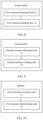
- This embodiment of the present invention provides an access point. As shown in FIG 8 , the access point includes:
- each mapping segment included in the first resource allocation unit 11 is further used to indicate a quantity of stations that need to send a frame corresponding to a frame type associated with the mapping segment.
- each resource indicator included in the first resource allocation unit 11 is further used to indicate a transmission parameter.
- This embodiment of the present invention provides an access point. As shown in FIG 9 , the access point includes:
- This embodiment of the present invention provides an access point.
- the access point generates resource mapping information of multiple stations.
- the resource mapping information includes multiple mapping segments, each mapping segment is associated with a frame type, each mapping segment includes multiple resource indicators, and each resource indicator is used to indicate a resource allocated to a station in a frame corresponding to a frame type associated with a mapping segment to which the resource indicator belongs.
- the access point may deliver resource indicators of multiple types of frames to the multiple stations at the same time, and the access point determines a corresponding resource indicator for each type of downlink frame. Therefore, a problem of extremely large overheads that is caused because the access point indicates a resource to each station without distinguishing frame types is resolved, and transmission efficiency of resource indication is improved.
- This embodiment of the present invention provides a station. As shown in FIG. 10 , the station includes:
- This embodiment of the present invention provides a station. As shown in FIG. 11 , the station includes:
- This embodiment of the present invention provides a station.
- An access point generates resource mapping information of multiple stations and sends the resource mapping information to the stations.
- the resource mapping information includes multiple mapping segments, each mapping segment is associated with a frame type, each mapping segment includes multiple resource indicators, and each resource indicator is used to indicate a resource allocated to a station in a frame corresponding to a frame type associated with a mapping segment to which the resource indicator belongs.
- the access point may deliver resource indicators of multiple types of frames to the multiple stations at the same time, and the access point determines a corresponding resource indicator for each type of downlink frame. Therefore, a problem of extremely large overheads that is caused because the access point indicates a resource to each station without distinguishing frame types is resolved, and transmission efficiency of resource indication is improved.
- FIG. 12 shows a schematic hardware diagram of an access point according to the present invention.
- the access point includes a processor 51, a communications interface 52, and a bus 53
- the processor 51 communicates with and is connected to the communications interface 52 by using the bus 53.
- the processor 51 is a control center of the access point, and the processor 51 performs various functions of the access point by processing data received by the communications interface 12 and invoking stored software or a stored program.
- the communications interface 52 may be implemented by an optical communications interface, an electrical communications interface, a wireless communications interface, or any combination thereof.
- the optical communications interface may be a small form-factor pluggable (English: small form-factor pluggable transceiver, acronym: SFP) communications interface (English: transceiver), an enhanced small form-factor pluggable (English: enhanced small form-factor pluggable, acronym: SFP+) communications interface, or a 10 Gigabit small form-factor pluggable (English: 10 Gigabit small form-factor pluggable, acronym: XFP) communications interface.
- the electrical communications interface may be an Ethernet (English: Ethernet) network interface controller (English: network interface controller, acronym: NIC).
- the wireless communications interface may be a wireless network interface controller (English: wireless network interface controller, acronym: WNIC).
- the access point may have multiple communications interfaces 52.
- the processor 51 is configured to generate resource mapping information, where the resource mapping information includes multiple mapping segments, each mapping segment is associated with a frame type, each mapping segment includes multiple resource indicators, and each resource indicator is used to indicate a resource allocated to a station in a frame corresponding to a frame type associated with a mapping segment to which the resource indicator belongs.
- the communications interface 52 is configured to send the resource mapping information generated by the processor 51.
- each mapping segment in the resource mapping information generated by the processor 51 is further used to indicate a quantity of stations that need to send a frame corresponding to a frame type associated with the mapping segment.
- each resource indicator in the resource mapping information generated by the processor 51 is further used to indicate a transmission parameter.
- the processor 51 is configured to generate resource mapping information, where the resource mapping information includes multiple resource indicators, and each resource indicator is used to indicate a resource allocated to a station in a frame corresponding to a frame type.
- the communications interface 52 is configured to send the resource mapping information generated by the processor 51.
- This embodiment of the present invention provides an access point.
- the access point generates resource mapping information of multiple stations.
- the resource mapping information includes multiple mapping segments, each mapping segment is associated with a frame type, each mapping segment includes multiple resource indicators, and each resource indicator is used to indicate a resource allocated to a station in a frame corresponding to a frame type associated with a mapping segment to which the resource indicator belongs.
- the access point may deliver resource indicators of multiple types of frames to the multiple stations at the same time, and the access point determines a corresponding resource indicator for each type of downlink frame. Therefore, a problem of extremely large overheads that is caused because the access point indicates a resource to each station without distinguishing frame types is resolved, and transmission efficiency of resource indication is improved.
- FIG. 13 shows a schematic hardware diagram of a station according to the present invention.
- the station includes a processor 61, a communications interface 62, and a bus 63
- the processor 61 communicates with and is connected to the communications interface 62 by using the bus 63.
- the processor 61 is a control center of the station, and the processor 61 performs various functions of the station by processing data received by the communications interface 62 and invoking stored software or a stored program.
- the communications interface 62 may be implemented by an optical communications interface, an electrical communications interface, a wireless communications interface, or any combination thereof.
- the optical communications interface may be a small form-factor pluggable (English: small form-factor pluggable transceiver, acronym: SFP) communications interface (English: transceiver), an enhanced small form-factor pluggable (English: enhanced small form-factor pluggable, acronym: SFP+) communications interface, or a 10 Gigabit small form-factor pluggable (English: 10 Gigabit small form-factor pluggable, acronym: XFP) communications interface.
- the electrical communications interface may be an Ethernet (English: Ethernet) network interface controller (English: network interface controller, acronym: NIC).
- the wireless communications interface may be a wireless network interface controller (English: wireless network interface controller, acronym: WNIC).
- the station may have multiple communications interfaces 62.
- the communications interface 62 is configured to receive resource mapping information from an access point, where the resource mapping information includes multiple mapping segments, each mapping segment is associated with a frame type, each mapping segment includes multiple resource indicators, and each resource indicator is used to indicate a resource allocated to a station in a frame corresponding to a frame type associated with a mapping segment to which the resource indicator belongs.
- the processor 61 is configured to determine, according to the resource mapping information received by the communications interface 62, a resource allocated by the access point to the station.
- the communications interface 62 is configured to receive resource mapping information from an access point, where the resource mapping information includes multiple resource indicators, and each resource indicator is used to indicate a resource allocated to a station in a frame corresponding to a frame type.
- the processor 61 is configured to determine, according to the resource mapping information received by the communications interface 62, a resource allocated by the access point to the station.
- This embodiment of the present invention provides a station.
- An access point generates resource mapping information of multiple stations and sends the resource mapping information to the stations.
- the resource mapping information includes multiple mapping segments, each mapping segment is associated with a frame type, each mapping segment includes multiple resource indicators, and each resource indicator is used to indicate a resource allocated to a station in a frame corresponding to a frame type associated with a mapping segment to which the resource indicator belongs.
- the access point may deliver resource indicators of multiple types of frames to the multiple stations at the same time, and the access point determines a corresponding resource indicator for each type of downlink frame. Therefore, a problem of extremely large overheads that is caused because the access point indicates a resource to each station without distinguishing frame types is resolved, and transmission efficiency of resource indication is improved.
Landscapes
- Engineering & Computer Science (AREA)
- Computer Networks & Wireless Communication (AREA)
- Signal Processing (AREA)
- Mobile Radio Communication Systems (AREA)
Priority Applications (1)
| Application Number | Priority Date | Filing Date | Title |
|---|---|---|---|
| EP25158987.5A EP4580309A3 (de) | 2015-02-02 | 2015-02-02 | Ressourcenanzeigeverfahren und -vorrichtung |
Applications Claiming Priority (4)
| Application Number | Priority Date | Filing Date | Title |
|---|---|---|---|
| EP15880697.6A EP3244676B1 (de) | 2015-02-02 | 2015-02-02 | Verfahren und vorrichtung zur ressourcenanzeige |
| EP25158987.5A EP4580309A3 (de) | 2015-02-02 | 2015-02-02 | Ressourcenanzeigeverfahren und -vorrichtung |
| EP20217415.7A EP3863350B1 (de) | 2015-02-02 | 2015-02-02 | Ressourcenanzeigeverfahren und -vorrichtung |
| PCT/CN2015/072122 WO2016123741A1 (zh) | 2015-02-02 | 2015-02-02 | 一种资源指示方法及装置 |
Related Parent Applications (3)
| Application Number | Title | Priority Date | Filing Date |
|---|---|---|---|
| EP20217415.7A Division EP3863350B1 (de) | 2015-02-02 | 2015-02-02 | Ressourcenanzeigeverfahren und -vorrichtung |
| EP20217415.7A Division-Into EP3863350B1 (de) | 2015-02-02 | 2015-02-02 | Ressourcenanzeigeverfahren und -vorrichtung |
| EP15880697.6A Division EP3244676B1 (de) | 2015-02-02 | 2015-02-02 | Verfahren und vorrichtung zur ressourcenanzeige |
Publications (2)
| Publication Number | Publication Date |
|---|---|
| EP4580309A2 true EP4580309A2 (de) | 2025-07-02 |
| EP4580309A3 EP4580309A3 (de) | 2025-07-30 |
Family
ID=56563291
Family Applications (3)
| Application Number | Title | Priority Date | Filing Date |
|---|---|---|---|
| EP20217415.7A Active EP3863350B1 (de) | 2015-02-02 | 2015-02-02 | Ressourcenanzeigeverfahren und -vorrichtung |
| EP15880697.6A Active EP3244676B1 (de) | 2015-02-02 | 2015-02-02 | Verfahren und vorrichtung zur ressourcenanzeige |
| EP25158987.5A Pending EP4580309A3 (de) | 2015-02-02 | 2015-02-02 | Ressourcenanzeigeverfahren und -vorrichtung |
Family Applications Before (2)
| Application Number | Title | Priority Date | Filing Date |
|---|---|---|---|
| EP20217415.7A Active EP3863350B1 (de) | 2015-02-02 | 2015-02-02 | Ressourcenanzeigeverfahren und -vorrichtung |
| EP15880697.6A Active EP3244676B1 (de) | 2015-02-02 | 2015-02-02 | Verfahren und vorrichtung zur ressourcenanzeige |
Country Status (8)
| Country | Link |
|---|---|
| US (5) | US10560936B2 (de) |
| EP (3) | EP3863350B1 (de) |
| JP (1) | JP6664404B2 (de) |
| KR (1) | KR102061123B1 (de) |
| CN (2) | CN106063350B (de) |
| ES (1) | ES2871040T3 (de) |
| MY (1) | MY192889A (de) |
| WO (1) | WO2016123741A1 (de) |
Families Citing this family (5)
| Publication number | Priority date | Publication date | Assignee | Title |
|---|---|---|---|---|
| WO2016186420A1 (ko) * | 2015-05-15 | 2016-11-24 | 주식회사 윌러스표준기술연구소 | 다중 사용자 상향 전송을 위한 무선 통신 단말 및 무선 통신 방법 |
| CN106879070B (zh) | 2015-12-11 | 2020-07-24 | 华为技术有限公司 | 一种无线局域网中触发帧的传输方法及装置 |
| US10776163B1 (en) * | 2018-03-16 | 2020-09-15 | Amazon Technologies, Inc. | Non-hierarchical management system for application programming interface resources |
| CN109152062B (zh) * | 2018-09-29 | 2023-08-15 | 北京小米移动软件有限公司 | 信标帧的处理方法及装置 |
| JP7498279B2 (ja) | 2020-01-07 | 2024-06-11 | 中興通訊股▲ふん▼有限公司 | データを送信するためのシステムおよび方法 |
Family Cites Families (31)
| Publication number | Priority date | Publication date | Assignee | Title |
|---|---|---|---|---|
| US8208364B2 (en) | 2002-10-25 | 2012-06-26 | Qualcomm Incorporated | MIMO system with multiple spatial multiplexing modes |
| CA2590856C (en) * | 2004-12-27 | 2013-06-11 | Lg Electronics Inc. | Allocating data bursts and supporting hybrid auto retransmission request in orthogonal frequency division multiplexing access radio access system |
| KR100896280B1 (ko) * | 2005-03-30 | 2009-05-08 | 엘지전자 주식회사 | 광대역 무선접속 시스템의 상향링크 구간 할당 정보 송수신방법 |
| KR100615139B1 (ko) | 2005-10-18 | 2006-08-22 | 삼성전자주식회사 | 무선통신 시스템에서 전송 시간 구간의 할당 방법과 장치및 그 시스템 |
| CN101288249B (zh) * | 2005-10-18 | 2012-06-20 | 三星电子株式会社 | 在无线通信系统分配传输时间段的方法和设备及其系统 |
| US9084277B2 (en) | 2007-05-04 | 2015-07-14 | Qualcomm Incorporated | Method and apparatus for UL ACK allocation |
| KR20090003086A (ko) * | 2007-06-28 | 2009-01-09 | 엘지전자 주식회사 | 신호 전송 방법, 자원 할당 방법 및 이를 위한 상향링크 맵구성 방법 |
| JP2009239541A (ja) * | 2008-03-26 | 2009-10-15 | Sanyo Electric Co Ltd | 通信方法およびそれを利用した無線装置 |
| US10771199B2 (en) * | 2008-04-02 | 2020-09-08 | Qualcomm Incorporated | Methods and apparatus for reverse link acknowledgement in a wireless local area network (WLAN) |
| KR101536773B1 (ko) * | 2008-07-31 | 2015-07-16 | 엘지전자 주식회사 | Vht 무선랜 시스템에서의 파워 세이브 멀티-폴 절차와이를 위한 psmp 프레임 포맷, 및 이를 지원하는스테이션 |
| JPWO2011004613A1 (ja) | 2009-07-10 | 2012-12-20 | パナソニック株式会社 | 端末装置、基地局装置、フィードバック方法及び再送制御方法 |
| DE112010004553T5 (de) | 2009-11-24 | 2012-09-06 | Electronics And Telecommunications Research Institute | Verfahren zum Senden eines Rahmens in einem Drahtloskommunikationssystem auf Mehrbenutzerbasis |
| US8982758B2 (en) * | 2010-03-29 | 2015-03-17 | Intel Corporation | Techniques for efficient acknowledgement for UL MU MIMO and uplink OFDMA in wireless networks |
| KR101771255B1 (ko) * | 2010-03-30 | 2017-08-25 | 엘지전자 주식회사 | 다중 반송파 시스템에서 반송파 지시 필드 설정 방법 |
| KR20130031892A (ko) * | 2010-06-18 | 2013-03-29 | 노키아 지멘스 네트웍스 오와이 | 시간 분할 듀플렉스 모드를 위한 개량된 물리적 업링크 제어 채널 포맷 자원 할당 |
| CN102202400B (zh) * | 2011-05-31 | 2013-10-16 | 电信科学技术研究院 | 一种资源占用方式的指示及处理方法及装置 |
| US9049155B2 (en) * | 2011-09-06 | 2015-06-02 | Qualcomm Incorporated | Dual interpretation of a length field of a signal unit |
| EP2820909B1 (de) | 2012-03-01 | 2017-09-06 | Interdigital Patent Holdings, Inc. | Paralleler kanalzugang für mehrere benutzer in wlan-systemen |
| MX338533B (es) * | 2012-04-24 | 2016-04-21 | Lg Electronics Inc | Metodo y aparato para transmitir y recibir tramas que contienen el identificador de asociacion parcial en sistema lan inalámbrico. |
| CN104039013B (zh) | 2013-03-06 | 2019-05-17 | 中兴通讯股份有限公司 | 资源分配信息处理方法及装置 |
| US9155109B2 (en) * | 2013-03-07 | 2015-10-06 | Nokia Technologies Oy | Method, apparatus, and computer program product for contention-free medium access within assigned access slots |
| US9961510B2 (en) * | 2013-11-01 | 2018-05-01 | Qualcomm Incorporated | Protocols for multiple user frame exchanges |
| JP6262852B2 (ja) * | 2013-11-07 | 2018-01-17 | エルジー エレクトロニクス インコーポレイティド | 無線lanにおけるマルチユーザアップリンク受信方法及び装置 |
| US20170005709A1 (en) * | 2014-02-25 | 2017-01-05 | Intel IP Corporation | Uplink or downlink mu-mimo apparatus and method |
| KR102550558B1 (ko) * | 2014-06-27 | 2023-07-05 | 주식회사 윌러스표준기술연구소 | 데이터 동시 전송을 위한 무선 통신 방법 및 이를 이용한 무선 통신 단말 |
| KR101863713B1 (ko) * | 2014-06-27 | 2018-06-01 | 후아웨이 테크놀러지 컴퍼니 리미티드 | 자원 지시 처리 방법 및 처리 장치, 액세스 포인트, 및 스테이션 |
| US10009922B2 (en) * | 2014-07-15 | 2018-06-26 | Marvell World Trade Ltd. | Channel frame structures for high efficiency wireless LAN (HEW) |
| US10128925B2 (en) * | 2014-08-22 | 2018-11-13 | Lg Electronics Inc. | Method for uplink multi-user transmission in wireless communication system and apparatus therefor |
| WO2016068571A2 (ko) * | 2014-10-27 | 2016-05-06 | 엘지전자 주식회사 | 무선랜 시스템에서 상향링크 다중 사용자 데이터에 대한 확인응답 신호 송수신 방법 및 이를 위한 장치 |
| CA2965807C (en) * | 2014-10-27 | 2019-07-09 | Lg Electronics Inc. | Method for transmitting and receiving multiple user block acknowledgement frame in wireless lan system, and apparatus therefor |
| WO2016105128A1 (ko) * | 2014-12-25 | 2016-06-30 | 엘지전자 주식회사 | 무선랜 시스템에서 상향링크 다중 사용자 데이터에 대한 확인응답 신호 송수신 방법 및 이를 위한 장치 |
-
2015
- 2015-02-02 EP EP20217415.7A patent/EP3863350B1/de active Active
- 2015-02-02 JP JP2017540716A patent/JP6664404B2/ja active Active
- 2015-02-02 EP EP15880697.6A patent/EP3244676B1/de active Active
- 2015-02-02 ES ES15880697T patent/ES2871040T3/es active Active
- 2015-02-02 KR KR1020177024322A patent/KR102061123B1/ko active Active
- 2015-02-02 CN CN201580003673.5A patent/CN106063350B/zh active Active
- 2015-02-02 WO PCT/CN2015/072122 patent/WO2016123741A1/zh not_active Ceased
- 2015-02-02 CN CN202010031803.9A patent/CN111031608B/zh active Active
- 2015-02-02 MY MYPI2017702821A patent/MY192889A/en unknown
- 2015-02-02 EP EP25158987.5A patent/EP4580309A3/de active Pending
-
2017
- 2017-08-02 US US15/667,157 patent/US10560936B2/en active Active
-
2020
- 2020-01-06 US US16/735,059 patent/US11284388B2/en active Active
-
2022
- 2022-02-15 US US17/672,437 patent/US11800501B2/en active Active
-
2023
- 2023-09-21 US US18/471,628 patent/US12213114B2/en active Active
-
2024
- 2024-12-16 US US18/982,537 patent/US20250119882A1/en active Pending
Also Published As
| Publication number | Publication date |
|---|---|
| JP6664404B2 (ja) | 2020-03-13 |
| CN106063350B (zh) | 2020-01-21 |
| US11800501B2 (en) | 2023-10-24 |
| US20220256537A1 (en) | 2022-08-11 |
| US20240080816A1 (en) | 2024-03-07 |
| CN111031608A (zh) | 2020-04-17 |
| US20200221457A1 (en) | 2020-07-09 |
| CN111031608B (zh) | 2024-04-26 |
| US20250119882A1 (en) | 2025-04-10 |
| WO2016123741A1 (zh) | 2016-08-11 |
| US20170339694A1 (en) | 2017-11-23 |
| EP4580309A3 (de) | 2025-07-30 |
| JP2018507638A (ja) | 2018-03-15 |
| EP3244676A4 (de) | 2018-01-24 |
| US11284388B2 (en) | 2022-03-22 |
| EP3863350A1 (de) | 2021-08-11 |
| KR20170109647A (ko) | 2017-09-29 |
| CN106063350A (zh) | 2016-10-26 |
| EP3244676A1 (de) | 2017-11-15 |
| US10560936B2 (en) | 2020-02-11 |
| ES2871040T3 (es) | 2021-10-28 |
| EP3244676B1 (de) | 2021-03-17 |
| KR102061123B1 (ko) | 2019-12-31 |
| MY192889A (en) | 2022-09-14 |
| EP3863350B1 (de) | 2025-04-09 |
| US12213114B2 (en) | 2025-01-28 |
Similar Documents
| Publication | Publication Date | Title |
|---|---|---|
| US12213114B2 (en) | Resource indication method and apparatus | |
| RU2763315C2 (ru) | Способ и устройство передачи информации | |
| KR102653421B1 (ko) | 송신 장치 및 송신 방법 | |
| EP4192074A1 (de) | Messverfahren und -vorrichtung | |
| US11818690B2 (en) | WLAN system resource indication method and apparatus | |
| EP4601233A2 (de) | Nulldatenpaketansagerahmenübertragungsverfahren und zugehörige vorrichtung | |
| EP4161189A1 (de) | Verfahren und vorrichtung zum senden/empfangen eines nulldatenpaketansagerahmens | |
| EP3075094A1 (de) | Uplink-mehrbenutzer-mimo für ein drahtloses lokalbereichsnetzwerk | |
| US10602503B2 (en) | Control information format processing method, base station, and user equipment | |
| US20160374114A1 (en) | Method and apparatus for indicating channel resource | |
| EP3379873B1 (de) | Verfahren und vorrichtungen zur übertragung eines auslöserrahmens in einem wlan | |
| US11871412B2 (en) | Data transmission method, apparatus, and system | |
| EP3629511A1 (de) | Verfahren zur übertragung von steuerinformationen, endgerätevorrichtung und netzwerkvorrichtung | |
| KR101512731B1 (ko) | 통신 장치 및 방법, 그리고 그를 이용한 액세스 포인트 | |
| EP3764710A1 (de) | Datenübertragungsverfahren, kommunikationsvorrichtung, speichermedium und programmprodukt | |
| CN114978430A (zh) | 数据发送方法及终端设备 | |
| CN107534956A (zh) | 资源指示方法、装置和设备 | |
| CN109495235B (zh) | 一种传输方法及传输节点 |
Legal Events
| Date | Code | Title | Description |
|---|---|---|---|
| PUAI | Public reference made under article 153(3) epc to a published international application that has entered the european phase |
Free format text: ORIGINAL CODE: 0009012 |
|
| STAA | Information on the status of an ep patent application or granted ep patent |
Free format text: STATUS: THE APPLICATION HAS BEEN PUBLISHED |
|
| REG | Reference to a national code |
Ref country code: DE Ref legal event code: R079 Free format text: PREVIOUS MAIN CLASS: H04W0088080000 Ipc: H04W0072230000 |
|
| PUAL | Search report despatched |
Free format text: ORIGINAL CODE: 0009013 |
|
| AC | Divisional application: reference to earlier application |
Ref document number: 3244676 Country of ref document: EP Kind code of ref document: P Ref document number: 3863350 Country of ref document: EP Kind code of ref document: P |
|
| AK | Designated contracting states |
Kind code of ref document: A2 Designated state(s): AL AT BE BG CH CY CZ DE DK EE ES FI FR GB GR HR HU IE IS IT LI LT LU LV MC MK MT NL NO PL PT RO RS SE SI SK SM TR |
|
| AK | Designated contracting states |
Kind code of ref document: A3 Designated state(s): AL AT BE BG CH CY CZ DE DK EE ES FI FR GB GR HR HU IE IS IT LI LT LU LV MC MK MT NL NO PL PT RO RS SE SI SK SM TR |
|
| RIC1 | Information provided on ipc code assigned before grant |
Ipc: H04W 72/23 20230101AFI20250624BHEP Ipc: H04W 88/08 20090101ALI20250624BHEP |
|
| STAA | Information on the status of an ep patent application or granted ep patent |
Free format text: STATUS: REQUEST FOR EXAMINATION WAS MADE |
|
| 17P | Request for examination filed |
Effective date: 20260130 |