EP4580248A2 - Vorrichtung und verfahren zur ganzheitlichen steuerung von stationen in einem drahtlosen netzwerk mit mehreren zugangspunkten - Google Patents
Vorrichtung und verfahren zur ganzheitlichen steuerung von stationen in einem drahtlosen netzwerk mit mehreren zugangspunkten Download PDFInfo
- Publication number
- EP4580248A2 EP4580248A2 EP25177474.1A EP25177474A EP4580248A2 EP 4580248 A2 EP4580248 A2 EP 4580248A2 EP 25177474 A EP25177474 A EP 25177474A EP 4580248 A2 EP4580248 A2 EP 4580248A2
- Authority
- EP
- European Patent Office
- Prior art keywords
- network
- wireless
- score
- predicted
- wireless stations
- Prior art date
- Legal status (The legal status is an assumption and is not a legal conclusion. Google has not performed a legal analysis and makes no representation as to the accuracy of the status listed.)
- Pending
Links
Images

Classifications
-
- H—ELECTRICITY
- H04—ELECTRIC COMMUNICATION TECHNIQUE
- H04W—WIRELESS COMMUNICATION NETWORKS
- H04W24/00—Supervisory, monitoring or testing arrangements
- H04W24/02—Arrangements for optimising operational condition
-
- H—ELECTRICITY
- H04—ELECTRIC COMMUNICATION TECHNIQUE
- H04W—WIRELESS COMMUNICATION NETWORKS
- H04W24/00—Supervisory, monitoring or testing arrangements
- H04W24/08—Testing, supervising or monitoring using real traffic
-
- H—ELECTRICITY
- H04—ELECTRIC COMMUNICATION TECHNIQUE
- H04W—WIRELESS COMMUNICATION NETWORKS
- H04W28/00—Network traffic management; Network resource management
- H04W28/02—Traffic management, e.g. flow control or congestion control
- H04W28/08—Load balancing or load distribution
- H04W28/086—Load balancing or load distribution among access entities
- H04W28/0861—Load balancing or load distribution among access entities between base stations
-
- H—ELECTRICITY
- H04—ELECTRIC COMMUNICATION TECHNIQUE
- H04W—WIRELESS COMMUNICATION NETWORKS
- H04W8/00—Network data management
- H04W8/02—Processing of mobility data, e.g. registration information at HLR [Home Location Register] or VLR [Visitor Location Register]; Transfer of mobility data, e.g. between HLR, VLR or external networks
-
- H—ELECTRICITY
- H04—ELECTRIC COMMUNICATION TECHNIQUE
- H04W—WIRELESS COMMUNICATION NETWORKS
- H04W84/00—Network topologies
- H04W84/005—Moving wireless networks
Definitions
- the present disclosure relates generally to wireless networks and in particular to wireless networks with multiple Access Points (APs).
- APs Access Points
- FIG. 1 illustrates an exemplary conventional wireless local area network (WLAN) 100 with a plurality of wireless Access Points (APs) 110, 120 and two wireless stations 130, 132.
- the WLAN can for example be a Wi-Fi network compatible with IEEE 802.11 or a Bluetooth ® network.
- the wireless stations 130, 132 can for example be a personal computer, a mobile phone (smartphone) or a tablet.
- each AP advantageously operates using a channel, i.e. frequencies, distinct from the channel of other network APs in order to avoid interference, the wireless stations 130, 132 each generally being wirelessly connected to a single AP, such as for example AP2 120.
- a single AP such as for example AP2 120.
- AP1 AP2 120.
- Reasons for handing over a wireless station include: load balancing between APs, signal strength problems owing to for instance movement of the wireless station.
- handover also called 'roaming'
- a WLAN controller 140 which as illustrated may be a standalone device, but which also may be implemented on one of the APs 110, 120.
- the WLAN 140 and the APs are generally connected in a wired or wireless network 150 illustrated by solid line in Figure 1 .
- One of the most important functions of the WLAN controller 140 is to steer, when needed, wireless stations to a better Basic Service Set (BSS), a BSS comprising an AP together with at least one associated wireless station.
- BSS Basic Service Set
- the WLAN controller Prior to steering a wireless station to a target AP, the WLAN controller should preferably detect suffering wireless stations - i.e. wireless stations with poor quality of service - and choose the best target AP to which a suffering station should be steered.
- Detecting wireless stations with poor quality of service can be done using various factors measurable or predictable for the wireless stations, for example signal strength (Received Signal Strength Indication, RSSI), so-called PHY rate (a measure of bandwidth), and medium available (i.e. the ratio, often expressed as a percentage, of time during which no wireless station uses the medium, which therefore is available for any wireless station to start transmitting).
- RSSI Received Signal Strength Indication
- PHY rate a measure of bandwidth
- medium available i.e. the ratio, often expressed as a percentage, of time during which no wireless station uses the medium, which therefore is available for any wireless station to start transmitting.
- the common conventional solution is to find the AP that is predicted to improve the most the quality of service of the wireless station to roam.
- a main disadvantage of the conventional solution is that each wireless station is handled separately to try to obtain the maximum benefit for that wireless station only. Steering a wireless station to an alternative AP without evaluation of the impact on the wireless stations already connected to the target AP can lead to new problems as the quality of service of these wireless stations can be degraded.
- Figure 1 illustrates two wireless stations and two APs.
- Wireless station 1 is connected to AP 1 and wireless station 2 to AP 2.
- the WLAN controller 140 may decide to roam wireless station 2 to AP 1.
- this may impact the quality of service for wireless station 1 as it after roaming has to share AP 1 with another wireless station.
- the present principles are directed to a device for steering wireless stations in a wireless network with a plurality of access points.
- the device comprises means for calculating, for each wireless station, a score based on at least an availability of the wireless network for the wireless station, means for combining the scores for the wireless stations into a current network score for a present configuration of the wireless network, means for calculating a plurality of predicted network scores corresponding to predicted network configurations with one wireless station moved to a different access point than in the present configuration, each predicted network score being a combination of the scores for wireless stations not moved in the predicted network configuration and a predicted score for the wireless station moved in the predicted network configuration, means for selecting one of the current network score and the plurality of predicted network scores that satisfies a criterion, and means for moving, in case a predicted network score is selected, a wireless station to match the corresponding network configuration.
- the present principles are directed to a method for steering wireless stations in a wireless network with a plurality of access points.
- At least one hardware processor of a device calculates, for each wireless station, a score based on at least an availability of the wireless network for the wireless station, combines the scores for the wireless stations into a current network score for a present configuration of the wireless network, calculates a plurality of predicted network scores corresponding to predicted network configurations with one wireless station moved to a different access point than in the present configuration, each predicted network score being a combination of the scores for wireless stations not moved in the predicted network configuration and a predicted score for the wireless station moved in the predicted network configuration, selects one of the current network score and the plurality of predicted network scores that satisfies a criterion, and in case a predicted network score is selected, moves a wireless station to match the corresponding network configuration.
- the present principles are directed to a computer program comprising program code instructions executable by a processor for implementing the steps of a method according to any embodiment of the second aspect.
- the present principles are directed to a computer program product which is stored on a non-transitory computer readable medium and comprises program code instructions executable by a processor for implementing the steps of a method according to any embodiment of the second aspect.
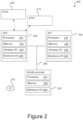
- FIG. 2 illustrates an exemplary system 200 according to an embodiment of the present principles.
- the system 200 includes a first wireless station (STA1) 210, a second wireless station (STA2) 220, a first access point (AP1) 230 and a second access point (AP2) 240 such as a gateway.
- the two access points 230, 240 are configured for wireless communication with wireless stations, e.g. using Wi-Fi according to IEEE 802.11.
- the system 200 further includes a wireless LAN (WLAN) controller 250.
- the APs 230, 240 and the WLAN controller 250 are connected by a connection 260, which preferably is wired but also can be wireless.
- the wireless stations 210, 220 can be any kind of conventional device - mobile phone, tablet, sensor, etc. - compatible with the wireless communications standard used by the APs.
- Each AP 230, 240 includes at least one hardware processing unit (“processor”) 231, 241, memory 232, 242 and at least one wireless communications interface 233, 243, in the example a Wi-Fi interface, configured to communicate with other wireless stations, and a backbone interface 234, 244 configured for communication with the other devices connected to the connection 260.
- processor hardware processing unit
- wireless communications interface 233, 243 in the example a Wi-Fi interface, configured to communicate with other wireless stations, and a backbone interface 234, 244 configured for communication with the other devices connected to the connection 260.
- Any suitable communication standard such as Wi-Fi (IEEE 802.11), Ethernet (IEEE 802.3), and PLC (power-line communication), could be used for the communication over the connection 260.
- the APs 230, 240 are configured to operate on different channels, i.e. different frequencies, so as to avoid interference.
- the channel allocation which preferably is dynamic, can be performed in any suitable conventional way.
- the WLAN controller 250 can include at least one hardware processing unit (“processor”) 251, memory 252 and a backbone interface 254 configured for communication with the other devices connected to the connection 260.
- the WLAN controller 250 can be a stand-alone devices but it may also be implemented on another device preferably connected to the connection 260 in the system 200, such as on an AP, or in an external network, or in the Cloud.
- the system could also include a gateway device (not shown) configured to connect the system 200 to an external network such as the Internet.
- the gateway device can be a stand-alone device, but it can also be implemented on one of the devices connected to the connection 260, for example an AP.
- the memories 232, 242, 252 which can be implemented as a plurality of memory circuits possibly of different types, are configured to store software instructions for execution by the respective processors 231, 241, 251, and also for various data necessary for performing the respective functions described herein.
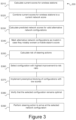
- Non-transitory storage media 270 stores instructions that, when executed by processor 251, perform the functions of the WLAN controller 250 as further described hereinafter with reference to Figure 3 .
- STA1 and STA2 are both connected to (i.e. associated with) AP2. Assuming for example that STA1 is located between AP1 and AP2 while STA2 is located far from AP1 but close to AP2. In case the WLAN controller 250 determines that ST2 is suffering, it is likely that it is not possible to relieve its suffering by roaming it to AP1, since AP1 is far away. Using the conventional solutions, STA2 will remain connected to AP2 and continue to suffer.
- WLAN controller 250 is configured to consider the network holistically, i.e. as a whole, rather than considering the wireless stations separately.
- the WLAN controller 250 can thus consider the possibility of roaming STA1 to AP1 in case it predicts improved quality of service for the wireless stations as a group, i.e. if a predicted quality of service after roaming is greater than the present quality of service, as will be described in detail hereinafter.
- the condition of a suffering wireless station can be improved only by steering another wireless station (which may experience perfect conditions) to an alternative AP.
- the WLAN controller 250 is thus configured to evaluate, preferably in a continuous manner, the quality of service of the wireless stations, as described hereinafter, and to evaluate (preferably all) possible steering actions to find the steering action that is predicted to improve the quality of service in the network the most.
- the quality of service of a wireless station can be calculated as a score calculated from at least one, preferably all, of the following metrics:
- the availability metric for a wireless station that is consuming half the medium available to it could be expressed as 50%, meaning that it can double the throughput without hitting its transmission limits.
- a wireless station that is consuming 1mbps out of a free channel with a maximum PHY rate of 400mbps would have an availability metric of close to 100, which means it has little or no need for improvement. In this case, even if the wireless station could roam to a better AP, this is not needed if it has a high availability metric.
- a dual-band wireless station connected to a 2.4 GHz radio with 100% medium available and 100% of the max PHY rate would not necessarily obtain an experience metric value of 100.
- the 5 GHz radio could provide a bandwidth many times higher, such as 130mbps vs. 866mbps. In this case, it could make sense to steer the wireless station to the 5 GHz radio.
- Another wireless station which is not dual band, that is connected to the same 2.4 GHz radio but cannot go to the 5 GHz radio should have an experience an experience metric value of 100 since its situation is as good as it can be in the network.
- the quality of service in the network is preferably obtained by combining the current scores for the quality of service of all the wireless stations in the network into a current network score.
- a predicted network score is calculated for each alternative network state (i.e. the network configuration after each evaluated steering action) by combining predicted scores for each wireless station in the network after the wireless station roams.
- a network score can be calculated by taking the average of the scores of the wireless stations 210, 220 in the network 200 and the complement of the standard deviation of the scores of the wireless stations.
- a predicted network score can be calculated using estimated scores for the mobile devices, the estimated scores being calculated from estimated metrics for each mobile device.
- the estimated metrics can be calculated as the measured metrics, but using predicted values, in themselves well-known in the art, instead of measured values.
- the estimated PHY rate can be calculated from the estimated RSSI (using for example a beacon report) and the estimated medium available based on the air-time prediction of the simulation of the roaming wireless station.
- a current network score can be calculated by combining current scores for STA1 connected to AP2 and STA2 connected to AP2 (i.e. the current configuration). Possible steering actions are: steering STA1 to AP1 and steering STA2 to AP1. Predicted network scores can thus be calculated for the following network configurations: STA1 connected to AP1 and STA2 connected to AP2, and STA1 connected to AP2 and STA2 connected to AP1.
- the WLAN controller can steer a wireless station to a new AP.
- the load balance in the network can be included in the network score. This enables the WLAN controller 250 to attempt to keep the allocated resources, i.e. the resources provided by the APs, balanced, which for example can make the network 200 more robust to changes.
- step S310 a current score is calculated, as already explained, for each wireless station in the network.
- step S320 the scores of the wireless stations are combined into a current network score, as already explained.
- step S360 the alternative network configuration with the highest ratio between improvement of the network score to risk is selected. Put another way, the ratio is calculated as Predicted network score ⁇ current network score risk
- any switches shown in the figures are conceptual only. Their function may be carried out through the operation of program logic, through dedicated logic, through the interaction of program control and dedicated logic, or even manually, the particular technique being selectable by the implementer as more specifically understood from the context.
- any element expressed as a means for performing a specified function is intended to encompass any way of performing that function including, for example, a) a combination of circuit elements that performs that function or b) software in any form, including, therefore, firmware, microcode or the like, combined with appropriate circuitry for executing that software to perform the function.
- the disclosure as defined by such claims resides in the fact that the functionalities provided by the various recited means are combined and brought together in the manner which the claims call for. It is thus regarded that any means that can provide those functionalities are equivalent to those shown herein.
Landscapes
- Engineering & Computer Science (AREA)
- Computer Networks & Wireless Communication (AREA)
- Signal Processing (AREA)
- Databases & Information Systems (AREA)
- Mobile Radio Communication Systems (AREA)
Priority Applications (1)
| Application Number | Priority Date | Filing Date | Title |
|---|---|---|---|
| EP25177474.1A EP4580248A3 (de) | 2017-12-21 | 2017-12-21 | Vorrichtung und verfahren zur ganzheitlichen steuerung von stationen in einem drahtlosen netzwerk mit mehreren zugangspunkten |
Applications Claiming Priority (3)
| Application Number | Priority Date | Filing Date | Title |
|---|---|---|---|
| EP17828787.6A EP3729858B1 (de) | 2017-12-21 | 2017-12-21 | Vorrichtung und verfahren zur vorhersage von metriken in einem drahtlosen netzwerk mit mehreren zugangspunkten |
| PCT/IL2017/051371 WO2019123443A1 (en) | 2017-12-21 | 2017-12-21 | Device and method for holistic steering of stations in a wireless network with multiple access points |
| EP25177474.1A EP4580248A3 (de) | 2017-12-21 | 2017-12-21 | Vorrichtung und verfahren zur ganzheitlichen steuerung von stationen in einem drahtlosen netzwerk mit mehreren zugangspunkten |
Related Parent Applications (1)
| Application Number | Title | Priority Date | Filing Date |
|---|---|---|---|
| EP17828787.6A Division EP3729858B1 (de) | 2017-12-21 | 2017-12-21 | Vorrichtung und verfahren zur vorhersage von metriken in einem drahtlosen netzwerk mit mehreren zugangspunkten |
Publications (2)
| Publication Number | Publication Date |
|---|---|
| EP4580248A2 true EP4580248A2 (de) | 2025-07-02 |
| EP4580248A3 EP4580248A3 (de) | 2025-08-27 |
Family
ID=60955377
Family Applications (2)
| Application Number | Title | Priority Date | Filing Date |
|---|---|---|---|
| EP25177474.1A Pending EP4580248A3 (de) | 2017-12-21 | 2017-12-21 | Vorrichtung und verfahren zur ganzheitlichen steuerung von stationen in einem drahtlosen netzwerk mit mehreren zugangspunkten |
| EP17828787.6A Active EP3729858B1 (de) | 2017-12-21 | 2017-12-21 | Vorrichtung und verfahren zur vorhersage von metriken in einem drahtlosen netzwerk mit mehreren zugangspunkten |
Family Applications After (1)
| Application Number | Title | Priority Date | Filing Date |
|---|---|---|---|
| EP17828787.6A Active EP3729858B1 (de) | 2017-12-21 | 2017-12-21 | Vorrichtung und verfahren zur vorhersage von metriken in einem drahtlosen netzwerk mit mehreren zugangspunkten |
Country Status (3)
| Country | Link |
|---|---|
| US (2) | US11368860B2 (de) |
| EP (2) | EP4580248A3 (de) |
| WO (1) | WO2019123443A1 (de) |
Families Citing this family (1)
| Publication number | Priority date | Publication date | Assignee | Title |
|---|---|---|---|---|
| EP4580248A3 (de) * | 2017-12-21 | 2025-08-27 | AirTies Belgium SPRL | Vorrichtung und verfahren zur ganzheitlichen steuerung von stationen in einem drahtlosen netzwerk mit mehreren zugangspunkten |
Family Cites Families (12)
| Publication number | Priority date | Publication date | Assignee | Title |
|---|---|---|---|---|
| US5724509A (en) * | 1996-04-22 | 1998-03-03 | Motorola, Inc. | Method and apparatus for synchronizing implementation of configuration information in a communication system |
| US7480264B1 (en) * | 2005-02-10 | 2009-01-20 | Sonicwall, Inc. | Centralized wireless LAN load balancing |
| US20080320108A1 (en) | 2007-06-20 | 2008-12-25 | Microsoft Corporation | Management Policies For Dense Wireless Access Point Infrastructures in Wireless Local Area Networks |
| WO2015019234A1 (en) * | 2013-08-05 | 2015-02-12 | Universidade De Aveiro | Method and apparatus for multi-network communication in vehicular networks |
| US10015737B2 (en) * | 2013-11-12 | 2018-07-03 | Taiwan Semiconductor Manufacturing Co., Ltd. | Network selection recommender system and method |
| CN105874839B (zh) * | 2014-08-31 | 2019-11-15 | 优倍快网络公司 | 用于监测及改善无线网络健康的方法和装置 |
| US10687226B2 (en) * | 2016-03-22 | 2020-06-16 | Cable Television Laboratories, Inc | System and method for access point coordination |
| US20190028909A1 (en) * | 2017-07-20 | 2019-01-24 | Cisco Technology, Inc. | Adaptive health status scoring for network assurance |
| EP4580248A3 (de) * | 2017-12-21 | 2025-08-27 | AirTies Belgium SPRL | Vorrichtung und verfahren zur ganzheitlichen steuerung von stationen in einem drahtlosen netzwerk mit mehreren zugangspunkten |
| US11006282B2 (en) * | 2018-04-12 | 2021-05-11 | Phantom Auto Inc. | Optimizing wireless networking using a virtual geographic information system overlay |
| US11553358B2 (en) * | 2018-05-31 | 2023-01-10 | Google Llc | Mobile device configuration for wireless networks |
| US11089534B2 (en) * | 2018-12-03 | 2021-08-10 | At&T Intellectual Property I, L.P. | Optimization of access technology search in multiple equivalent home public land mobile network (EHPLMN) deployments |
-
2017
- 2017-12-21 EP EP25177474.1A patent/EP4580248A3/de active Pending
- 2017-12-21 WO PCT/IL2017/051371 patent/WO2019123443A1/en not_active Ceased
- 2017-12-21 US US16/955,479 patent/US11368860B2/en active Active
- 2017-12-21 EP EP17828787.6A patent/EP3729858B1/de active Active
-
2022
- 2022-06-21 US US17/845,505 patent/US11917430B2/en active Active
Also Published As
| Publication number | Publication date |
|---|---|
| EP3729858B1 (de) | 2025-05-21 |
| EP3729858A1 (de) | 2020-10-28 |
| US11917430B2 (en) | 2024-02-27 |
| US20220394510A1 (en) | 2022-12-08 |
| US11368860B2 (en) | 2022-06-21 |
| WO2019123443A1 (en) | 2019-06-27 |
| EP4580248A3 (de) | 2025-08-27 |
| EP3729858C0 (de) | 2025-05-21 |
| US20200374714A1 (en) | 2020-11-26 |
Similar Documents
| Publication | Publication Date | Title |
|---|---|---|
| CN114514773B (zh) | 多接入点(ap)网络中基于简档的客户端引导 | |
| US10356681B2 (en) | Client roaming in a distributed multi-band wireless networking system | |
| CN109511156B (zh) | 一种选择prach资源的方法及装置 | |
| EP2868134B1 (de) | Vorrichtungen und verfahren für funkkommunikationsnetzgesteuerte verkehrsentlastung | |
| EP3348113B1 (de) | Übergabe einer aktiven kommunikationssitzung zwischen direkten und weitergeleiteten verbindungen | |
| US9392539B2 (en) | User equipment and method for feedback of user equipment performance metrics during dynamic radio switching | |
| EP3108691B1 (de) | Verkehrssteuerung in einem wlan auf der basis von sendeleistungssteuerung | |
| US9313697B2 (en) | Optimized offloading to WLAN in 3GPP-RAT mobility | |
| US9560584B2 (en) | Mobile device with cellular-WLAN offload using passive load sensing of WLAN | |
| RU2683483C2 (ru) | Система управления беспроводными ресурсами, беспроводная базовая станция, устройство ретрансляции, способ управления беспроводными ресурсами и программа | |
| US20180302832A1 (en) | Enhanced serving access point selection in a network having multiple access points | |
| WO2017065976A1 (en) | Quality of service aware access point and device steering | |
| CN108600951A (zh) | 接入网发现和选择 | |
| US10341891B2 (en) | User equipment adaptation of reporting triggers based on active set size | |
| EP3314946B1 (de) | Rücktransportbewusste optimierung von kleinzellen ausdehnung in heterogene netzwerke | |
| EP3089407A1 (de) | Verfahren und vorrichtung zur implementierung einer verteilten zusammenarbeit auf basis von benutzergerätedurchsatz | |
| WO2015150717A1 (en) | Access point selection depending on signal strength and load | |
| US11917430B2 (en) | Device and method for holistic steering of stations in a wireless network with multiple access points | |
| US9918282B1 (en) | Systems and methods for determining a power option for an access node | |
| US20210259041A1 (en) | System and method of radio resource management for radio access networks | |
| EP2437546B1 (de) | Verfahren zur Steuerung von Kommunikationstransferen mobiler Ausrüstungen zwischen drahtlosen Zugangsnetzwerken mit verschiedenen Zugangstechnologien basierend auf einem Lastausgleich | |
| US9414292B1 (en) | Controlling detection of an access node for wireless device communication | |
| EP3182757A1 (de) | Lastverteilungsverfahren und netzwerkseitige vorrichtung in einem heterogenen netzwerk | |
| US9742677B2 (en) | Methods and apparatus for managing communications network loading | |
| JP5421740B2 (ja) | 無線通信装置および無線通信方法 |
Legal Events
| Date | Code | Title | Description |
|---|---|---|---|
| PUAI | Public reference made under article 153(3) epc to a published international application that has entered the european phase |
Free format text: ORIGINAL CODE: 0009012 |
|
| STAA | Information on the status of an ep patent application or granted ep patent |
Free format text: STATUS: REQUEST FOR EXAMINATION WAS MADE |
|
| 17P | Request for examination filed |
Effective date: 20250519 |
|
| AC | Divisional application: reference to earlier application |
Ref document number: 3729858 Country of ref document: EP Kind code of ref document: P |
|
| AK | Designated contracting states |
Kind code of ref document: A2 Designated state(s): AL AT BE BG CH CY CZ DE DK EE ES FI FR GB GR HR HU IE IS IT LI LT LU LV MC MK MT NL NO PL PT RO RS SE SI SK SM TR |
|
| REG | Reference to a national code |
Ref country code: DE Ref legal event code: R079 Free format text: PREVIOUS MAIN CLASS: H04W0028086000 Ipc: H04W0024020000 |
|
| PUAL | Search report despatched |
Free format text: ORIGINAL CODE: 0009013 |
|
| AK | Designated contracting states |
Kind code of ref document: A3 Designated state(s): AL AT BE BG CH CY CZ DE DK EE ES FI FR GB GR HR HU IE IS IT LI LT LU LV MC MK MT NL NO PL PT RO RS SE SI SK SM TR |
|
| RIC1 | Information provided on ipc code assigned before grant |
Ipc: H04W 24/02 20090101AFI20250722BHEP Ipc: H04W 28/08 20230101ALI20250722BHEP |