EP3348113B1 - Übergabe einer aktiven kommunikationssitzung zwischen direkten und weitergeleiteten verbindungen - Google Patents
Übergabe einer aktiven kommunikationssitzung zwischen direkten und weitergeleiteten verbindungen Download PDFInfo
- Publication number
- EP3348113B1 EP3348113B1 EP16844974.2A EP16844974A EP3348113B1 EP 3348113 B1 EP3348113 B1 EP 3348113B1 EP 16844974 A EP16844974 A EP 16844974A EP 3348113 B1 EP3348113 B1 EP 3348113B1
- Authority
- EP
- European Patent Office
- Prior art keywords
- wireless device
- connection
- communication session
- performance
- primary
- Prior art date
- Legal status (The legal status is an assumption and is not a legal conclusion. Google has not performed a legal analysis and makes no representation as to the accuracy of the status listed.)
- Active
Links
Images



Classifications
-
- H—ELECTRICITY
- H04—ELECTRIC COMMUNICATION TECHNIQUE
- H04W—WIRELESS COMMUNICATION NETWORKS
- H04W36/00—Hand-off or reselection arrangements
- H04W36/24—Reselection being triggered by specific parameters
- H04W36/26—Reselection being triggered by specific parameters by agreed or negotiated communication parameters
-
- H—ELECTRICITY
- H04—ELECTRIC COMMUNICATION TECHNIQUE
- H04L—TRANSMISSION OF DIGITAL INFORMATION, e.g. TELEGRAPHIC COMMUNICATION
- H04L65/00—Network arrangements, protocols or services for supporting real-time applications in data packet communication
- H04L65/1066—Session management
- H04L65/1083—In-session procedures
-
- H—ELECTRICITY
- H04—ELECTRIC COMMUNICATION TECHNIQUE
- H04L—TRANSMISSION OF DIGITAL INFORMATION, e.g. TELEGRAPHIC COMMUNICATION
- H04L65/00—Network arrangements, protocols or services for supporting real-time applications in data packet communication
- H04L65/1066—Session management
- H04L65/1083—In-session procedures
- H04L65/1094—Inter-user-equipment sessions transfer or sharing
-
- H—ELECTRICITY
- H04—ELECTRIC COMMUNICATION TECHNIQUE
- H04L—TRANSMISSION OF DIGITAL INFORMATION, e.g. TELEGRAPHIC COMMUNICATION
- H04L65/00—Network arrangements, protocols or services for supporting real-time applications in data packet communication
- H04L65/80—Responding to QoS
-
- H—ELECTRICITY
- H04—ELECTRIC COMMUNICATION TECHNIQUE
- H04L—TRANSMISSION OF DIGITAL INFORMATION, e.g. TELEGRAPHIC COMMUNICATION
- H04L67/00—Network arrangements or protocols for supporting network services or applications
- H04L67/14—Session management
-
- H—ELECTRICITY
- H04—ELECTRIC COMMUNICATION TECHNIQUE
- H04L—TRANSMISSION OF DIGITAL INFORMATION, e.g. TELEGRAPHIC COMMUNICATION
- H04L67/00—Network arrangements or protocols for supporting network services or applications
- H04L67/14—Session management
- H04L67/148—Migration or transfer of sessions
-
- H—ELECTRICITY
- H04—ELECTRIC COMMUNICATION TECHNIQUE
- H04W—WIRELESS COMMUNICATION NETWORKS
- H04W36/00—Hand-off or reselection arrangements
- H04W36/03—Reselecting a link using a direct mode connection
- H04W36/035—Reselecting a link using a direct mode connection in self-organising networks
-
- H—ELECTRICITY
- H04—ELECTRIC COMMUNICATION TECHNIQUE
- H04W—WIRELESS COMMUNICATION NETWORKS
- H04W76/00—Connection management
- H04W76/20—Manipulation of established connections
- H04W76/23—Manipulation of direct-mode connections
-
- H—ELECTRICITY
- H04—ELECTRIC COMMUNICATION TECHNIQUE
- H04L—TRANSMISSION OF DIGITAL INFORMATION, e.g. TELEGRAPHIC COMMUNICATION
- H04L43/00—Arrangements for monitoring or testing data switching networks
- H04L43/08—Monitoring or testing based on specific metrics, e.g. QoS, energy consumption or environmental parameters
-
- H—ELECTRICITY
- H04—ELECTRIC COMMUNICATION TECHNIQUE
- H04W—WIRELESS COMMUNICATION NETWORKS
- H04W36/00—Hand-off or reselection arrangements
- H04W36/14—Reselecting a network or an air interface
- H04W36/144—Reselecting a network or an air interface over a different radio air interface technology
- H04W36/1446—Reselecting a network or an air interface over a different radio air interface technology wherein at least one of the networks is unlicensed
-
- H—ELECTRICITY
- H04—ELECTRIC COMMUNICATION TECHNIQUE
- H04W—WIRELESS COMMUNICATION NETWORKS
- H04W84/00—Network topologies
- H04W84/02—Hierarchically pre-organised networks, e.g. paging networks, cellular networks, WLAN [Wireless Local Area Network] or WLL [Wireless Local Loop]
- H04W84/10—Small scale networks; Flat hierarchical networks
- H04W84/12—WLAN [Wireless Local Area Networks]
-
- H—ELECTRICITY
- H04—ELECTRIC COMMUNICATION TECHNIQUE
- H04W—WIRELESS COMMUNICATION NETWORKS
- H04W88/00—Devices specially adapted for wireless communication networks, e.g. terminals, base stations or access point devices
- H04W88/02—Terminal devices
- H04W88/04—Terminal devices adapted for relaying to or from another terminal or user
Definitions
- the described embodiments relate generally to wireless communications using electronic devices, including systems and techniques for managing active communication sessions using a direct connection at a wireless device or a relayed connection to the wireless device via another wireless device.
- a user has multiple different active wireless devices available for communication, often at the same general location and at the same time.
- a user may also simultaneously have a headset, a tablet device, a laptop computer, a desktop computer, a portable media player, and/or one or more other wireless devices, each of which may be able to conduct wireless communications using one or more different radio access technologies (RATs).
- RATs radio access technologies
- the multiple different wireless devices can be associated with a common account, and the user can originate outgoing communication sessions or receive incoming communication sessions using one or more of the wireless devices alone or in tandem.
- a communication session can be anchored directly from a wireless device through a wireless network to a remote device, while for a relayed connection, the communication session can be anchored at a primary wireless device and relayed through a local connection to a secondary wireless device through which the user communicates.
- a communication session can be anchored directly from a wireless device through a wireless network to a remote device, while for a relayed connection, the communication session can be anchored at a primary wireless device and relayed through a local connection to a secondary wireless device through which the user communicates.
- one type of connection may provide better performance for the user.
- WO 2016/144468 A1 relates to an accessory device that may operate in a first mode, where the first radio of the accessory device is configured to perform cellular communication with a base station, or a second mode, where the second radio of the accessory device is configured to perform short-range communication with a companion device and utilize cellular functionality of the companion device to provide cellular communications through the companion device to the base station.
- the accessory device may operate to selectively transition between the first mode and the second mode based on one or more factors, such as signal strength of the short-range communication between the accessory device and the companion device, the relative batter level of the two devices, and/or a communications status of the companion device
- WO 2013/134668 A2 teaches a WLAN system.
- a mobile terminal device or STA may be connected via an access point AP or a relay device depending on the connection quality between the STA and AP.
- the relay may be selected by the STA from a plurality of relays.
- the embodiments set forth various systems and techniques for a wireless connection manager executing on a wireless device (or in conjunction with a wireless connection manager executing on another wireless device) to manage active communication sessions with remote devices to switch between different available connections based on performance criteria.
- the wireless connection manager(s) can be triggered to carry out wireless connection management operations in an automated manner (e.g., according to default, programmed, and/or user settings) or in a reactive manner (e.g., in response to receiving a user input).
- a wireless connection manager can operate by (1) monitoring an active communication session by a secondary wireless device to a remote device using a direct connection via a non-cellular wireless network, (2) detecting a degradation of performance in a local connection or in a backhaul connection of the non-cellular wireless network, (3) determining whether a primary wireless device is in proximity to the secondary wireless device, and (4) continuing the communication session using the direct connection or transferring the communication session to a relayed connection via the primary device based on availability of the primary wireless device and performance of local communication between the primary and secondary wireless devices.
- a wireless connection manager can also, or alternatively, operate by (1) monitoring an active communication session by a secondary wireless device to a remote device using a relayed connection through a primary wireless device; (2) detecting availability of a non-cellular wireless network; (3) determining whether performance of a local connection and a backhaul connection using the non-cellular wireless network satisfies a performance criterion for the communication session; and (4) continuing the communication session using the relayed connection through the primary wireless device or transferring the communication session to a direct connection to the secondary wireless device via the non-cellular wireless network based on the performance evaluation.
- transfer of the communication session between different connections occurs without user intervention.
- a user of the secondary wireless device is provided an indication of an option to transfer the communication session between different connection types and the transfer occurs based on user input.
- performance evaluation of the local connection and/or the backhaul connection via the non-cellular wireless network is performed by one or more of the secondary wireless device or the primary wireless device.
- the secondary wireless device and/or the primary wireless device obtains performance information for the local connection and/or the backhaul connection via the non-cellular wireless network from one or more additional associated wireless devices.
- Each wireless device of a plurality of associated wireless devices used for a communication session can be managed by a separate wireless connection manager internal to the respective wireless device.
- the primary and secondary wireless devices operate together to determine whether to transfer an active communication session between a relayed connection through the primary wireless device and a direct connection to the secondary wireless device or vice versa.
- the secondary wireless device determines whether to transfer the active communication session from a direct connection to the secondary wireless device to a relayed connection through the primary wireless device, and the primary wireless device executes the transfer by pulling the active communication session to the primary wireless device and relays associated packets to the secondary wireless device.
- the primary and/or the secondary wireless device determines whether to transfer an active communication session from a relayed connection through the primary wireless device to a direct connection at the secondary wireless device, where the primary wireless device pushes the active communication session to the secondary wireless device and/or the secondary wireless device pulls the active communication session from the primary wireless device to the secondary wireless device.
- Wireless devices often provide for a multiplicity of different wireless connections, e.g., wireless wide area network (WWAN) connections via cellular wireless networks (when the wireless device is so equipped), wireless local area network (WLAN) connections, and wireless personal area network (WPAN) connections.
- WWAN wireless wide area network
- WLAN wireless local area network
- WPAN wireless personal area network
- the relayed connection can include a local connection between the primary and secondary wireless devices while the primary wireless device provides a remote connection to a remote device, via a circuit-switched legacy wireless connection or via a packet-switched wireless connection, such as provided by voice over Long Term Evolution (VoLTE), by Wi-Fi calling, by Facetime® (video and/or audio), or similar connections.
- VoIP voice over Long Term Evolution
- Wi-Fi calling by Facetime® (video and/or audio), or similar connections.
- non-ccllular wireless connections such as Wi-Fi calling or Facetime, can terminate directly on the secondary wireless device.
- a user can choose to move an active communication session between the primary and secondary wireless devices, e.g., by interacting via a user interface of one or both of the primary and secondary wireless devices.
- a wireless connection manager in the primary wireless device and/or in the secondary wireless device can dynamically move an active communication session based on monitoring performance of the communication session.
- a wireless connection manager in the secondary wireless device can determine whether a relayed connection through a primary wireless device is possible and may provide a higher performance connection.
- the secondary wireless device can provide an indication to the primary wireless device to request transfer of the active communication session from a direction connection to a relayed connection.
- the primary wireless device in response, can "pull" the active communication session from the direct connection that terminates at the secondary wireless device to a relayed connection through the primary wireless device.
- the primary wireless device can establish a remote connection to a network-based server with which the active communication session is associated and also establish a local connection to the secondary wireless device in parallel.
- the active communication session can be transferred from the secondary wireless device to the primary wireless device, which can relay audio, video, and/or data packets for the active communication session to the secondary wireless device using the local connection.
- the new local connection established by the primary wireless device to the secondary wireless device can use a different path, e.g., through a WPAN connection such as a Bluctooth (classic or Low Energy) connection or an Apple Wireless Direct Link (AWDL) connection or through a direct WLAN connection established (or to be established) between the primary and secondary wireless devices, such as through a Wi-Fi direct connection or another ad hoc WLAN connection that does not require the use of a central access point.
- a WPAN connection such as a Bluctooth (classic or Low Energy) connection or an Apple Wireless Direct Link (AWDL) connection
- AWDL Apple Wireless Direct Link
- the new local connection between the primary wireless device and the secondary wireless device can use either a path through the wireless access point, e.g., by a WLAN connection, or a separate alternative path, such as by a supplemental WPAN or direct WLAN connection. Transferring the active communication session from the direct connection to the relayed connection when performance via the direct connection degrades can occur without user intervention or awareness, thereby maintaining continuity and quality for the active communication session using different communication paths as available. In some embodiments, performance required by a service and/or application that uses the active communication session can be accounted for when determining which connection type to use for the active communication session.
- an active communication session can also be transferred from a relayed connection to a direct connection, e.g., when such a direct connection becomes available and performance via the direct connection can be higher and/or preferred.
- Direct connection of a communication session can provide for lower latency and less (or no) transcoding of packets, which can provide for noticeable performance improvements to the user.
- Direct connection of a packet-based communication session can also use a different communication service than a relayed connection. For example, a direct connection can use a broadband service, while the relayed connection can use a cellular service. As such, depending on user preference, the direct connection can also be preferred due to cost or other reasons.
- An active communication session that is relayed through the primary wireless device to the secondary wireless device can be transferred to a direction connection to the secondary wireless device in response to determination of availability and satisfactory performance through a non-cellular wireless network, e.g., via a WLAN access point.
- the secondary wireless device and/or the primary wireless device can initiate transfer of the active communication session.
- the primary and/or secondary wireless devices can use measurements obtained by one or both of the primary and secondary wireless devices to ascertain whether a direct connection is possible and may provide performance that is satisfactory, e.g., based on satisfying a performance criterion.
- the primary and/or secondary wireless devices obtain performance information from one or more other associated wireless devices to determine whether a direct connection to the secondary wireless device can provide adequate performance for the active communication session.
- FIGS. 1 through 8 illustrate detailed diagrams of systems and methods that can be used to implement these systems and techniques.
- Wireless devices and mobile devices in particular, can incorporate multiple different radio access technologies (RATs) to provide connections through different wireless networks that offer different services and/or capabilities.
- a wireless device can include hardware and software to support a wireless personal area network ("WPAN") according to a WPAN communication protocol, such as those standardized by the Bluetooth® special interest group (“SIG”) and/or those developed by Apple referred to as an Apple Wireless Direct Link (AWDL).
- WPAN wireless personal area network
- SIG Bluetooth® special interest group
- AWDL Apple Wireless Direct Link
- the wireless device can discover compatible peripheral wireless devices and can establish connections to these peripheral wireless devices located in order to provide specific communication services through a WPAN.
- the wireless device can act as a communications hub that provides access to a wireless local area network ("WLAN”) and/or to a wireless wide area network (“WWAN”) to a wide variety of services that can be supported by various applications executing on the wireless device.
- WLAN wireless local area network
- WWAN wireless wide area network
- communication capability for a secondary wireless device can be extended using a local WPAN (or WLAN) connection to a primary wireless device that provides a WWAN connection.
- the secondary wireless device can also include wireless circuitry for a WLAN connection and can originate and/or terminate connections via a WLAN connection.
- Whether to use a direct connection or a relayed connection can depend on performance characteristics of one or more links of an active communication session between the secondary wireless device and a remote device. Fewer links (or hops) can provide for lower latency, and thus a direct connection can be preferred; however, unlike a legacy circuit-switched connection that provides a dedicated link, the direct connection via a WLAN can share bandwidth with other wireless devices on the same WLAN and/or with the backhaul connection from the access point that manages the WLAN. When performance on the local WLAN connection link and/or on the backhaul connection degrades, a relayed connection via a primary wireless device can be preferred. By monitoring performance of an active communication session and availability and capabilities of associated wireless devices (such as proximity to a primary wireless device), a secondary wireless device can request transfer of an active communication session between a direction connection and a relayed connection or vice versa.
- wireless communication device wireless device
- mobile device mobile station
- wireless station wireless access point
- station wireless access point
- access point user equipment
- any one of these consumer electronic devices may relate to: a cellular phone or a smart phone, a tablet computer, a laptop computer, a notebook computer, a personal computer, a netbook computer, a media player device, an electronic book device, a MiFi® device, a wearable computing device, as well as any other type of electronic computing device having wireless communication capability that can include communication via one or more wireless communication protocols such as used for communication on: a wireless wide area network (WWAN), a wireless metro area network (WMAN) a wireless local area network (WLAN), a wireless personal area network (WPAN), a near field communication (NFC), a cellular wireless network, a fourth generation (4G) LTE, LTE Advanced (LTE-A), and/or 5G or other present or future developed advanced cellular wireless networks.
- WWAN wireless wide area network
- WMAN wireless metro area network
- WLAN wireless local area network
- WPAN wireless personal area network
- NFC near field communication
- 4G fourth generation
- LTE LTE Advanced
- the wireless device can also operate as part of a wireless communication system, which can include a set of client devices, which can also be referred to as stations, client wireless devices, or client wireless devices, interconnected to an access point (AP), e.g., as part of a WLAN, and/or to each other, e.g., as part of a WPAN and/or an "ad hoc" wireless network, such as a Wi-Fi direct connection.
- AP access point
- the client device can be any wireless device that is capable of communicating via a WLAN technology, e.g., in accordance with a wireless local area network communication protocol.
- the WLAN technology can include a Wi-Fi (or more generically a WLAN) wireless communication subsystem or radio
- the Wi-Fi radio can implement an Institute of Electrical and Electronics Engineers (IEEE) 802.11 technology, such as one or more of: IEEE 802.11a; IEEE 802.11b; IEEE 802.11g; IEEE 802.11-2007; IEEE 802.11n; IEEE 802.11-2012; IEEE 802.11ac; or other present or future developed IEEE 802.11 technologies.
- IEEE Institute of Electrical and Electronics Engineers
- a multi-mode UE can be configured to prefer attachment to LTE networks offering faster data rate throughput, as compared to other 3G legacy networks offering lower data rate throughputs.
- a multi-mode UE may be configured to fall back to a 3G legacy network, e.g., an Evolved High Speed Packet Access (HSPA+) network or a Code Division Multiple Access (CDMA) 2000 Evolution-Data Only (EV-DO) network, when LTE and LTE-A networks are otherwise unavailable.
- a 3G legacy network e.g., an Evolved High Speed Packet Access (HSPA+) network or a Code Division Multiple Access (CDMA) 2000 Evolution-Data Only (EV-DO) network, when LTE and LTE-A networks are otherwise unavailable.
- HSPA+ Evolved High Speed Packet Access
- CDMA Code Division Multiple Access
- EV-DO Evolution-Data Only
- FIG. 1 illustrates a set of overlapping wireless networks for a wireless device illustrated in block diagram format.
- the wireless device 102 can include a combination of hardware and software to provide wireless connections using one or more different wireless networks alone, separately, or in combination, such as via the set of overlapping networks 100.
- the wireless device 102 can represent a device having wireless communications capabilities, such as a smart phone (e.g., an iPhone®), a tablet device (e.g., an iPad®), a wearable device (e.g., an Apple WatchTM), a portable media player (e.g., an iPod®), a laptop computer (e.g., a MacBook®), or a desktop computer (e.g., an iMac®), among other possible devices.
- a smart phone e.g., an iPhone®
- a tablet device e.g., an iPad®
- a wearable device e.g., an Apple WatchTM
- portable media player e.g., an iPod®
- laptop computer e.g
- Additional wireless devices which can connect to the wireless device 102 and provide audio, video, and/or data media interfaces can include a wireless headset, a vehicle sound system, a digital television, a digital media recorder, a wearable computing device or any other suitable wireless device capable of wireless communication and input/output capabilities.
- the wireless device 102 can include a combination of hardware, software, and/or firmware to provide communication using a WPAN 104, which can provide power efficient connections while operating over a limited distance.
- WPAN connections can typically provide for connecting the wireless device 102 to peripheral and associated wireless devices, such as headsets, carpicccs, supplemental display devices, and supplemental input/output devices, for example.
- WPAN connections can also be used to relay communication between the wireless device 102 and the peripheral wireless device through which the user can interact for a communication session.
- a representative WPAN 104 can operate in accordance with a communication protocol specified by the Bluetooth SIG, for example, and/or by Apple such as an Apple Wireless Direct Link (AWDL).
- AWDL Apple Wireless Direct Link
- the wireless device 102 can also include a combination of hardware, software, and/or firmware to provide communication using a WLAN 106 that can provide a higher data rate and a greater operating range than a WPAN 104.
- the wireless device 102 can include separate and/or shared hardware, software, and/or firmware elements for the WPAN 104 and the WLAN 106. Both the WPAN 104 and WLAN 106 can operate as "local" wireless networks.
- the wireless device 102 can also include additional hardware, software, and/or firmware to provide a WWAN 108 capability, such as to interconnect with one or more cellular wireless networks.
- the wireless device 102 can provide a multitude of services using one or more connections through its wireless networking capabilities.
- a primary wireless device can include WWAN 108 capability, while a secondary wireless device can not include WWAN 108 capability and instead only provide WLAN 106 and WPAN 104 communication capabilities.
- the secondary wireless device can communicate with a remote device via a WLAN 106, e.g., directly terminate a connection to the remote device, or the secondary wireless device can communicate with the remote device indirectly via a local WLAN 106 connection or a local WPAN 104 connection to a primary wireless device, which communicates with the remote device via a WWAN 108 connection.
- an active communication session between a secondary wireless device and a remote device can be transferred between a direct connection and a relayed connection through a primary wireless device with or without user intervention.
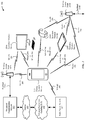
- FIG. 2 illustrates, in block diagram format, an exemplary system 200 including different wireless networks and wireless devices according to various embodiments of the present disclosure.
- System 200 includes a primary wireless device 210 that can be interconnected through several different wireless communication technologies to an external set of networks and to a set of one or more secondary wireless devices 220A, 220B, and 220C.
- the primary wireless device 210 can be a "central" device for WPAN purposes and/or can form direct WLAN connections, such as Wi-Fi direct links, to one or more of the secondary wireless devices 220A/B/C.
- the primary wireless device 210 can receive information from one or more packet-switched wireless networks and/or from one or more circuit-switched wireless networks.
- the primary wireless device 210 can connect via a WWAN connection 208 through a radio access network 207 and an enhanced packet core network 212, which can include an Internet Protocol (IP) Multimedia Subsystem (IMS) to manage packet connections such as for Voice over LTE (VoLTE).
- IP Internet Protocol
- IMS Internet Multimedia Subsystem
- the primary wireless device 210 can use the WWAN connection 208 to access a broad variety of services (e.g., voice calls, text messages, data access, video calls, multimedia messaging, and media streaming).
- services e.g., voice calls, text messages, data access, video calls, multimedia messaging, and media streaming.
- the primary wireless device 210 can use a WLAN connection 206 provided through a wireless access point 202A interconnected to a broadband communication network 203 via a backhaul connection 230A to access a similar wide range of services (or through wireless access point 202B interconnected via a backhaul connection 230B to the same (or another) broadband communication network 203.
- the broad set of services provided through the WWAN connection 208 and/or through the WLAN connection 206 can be extended to one or more secondary wireless devices 220 A/B/C through additional WLAN 206 or WPAN 204 connections, such that a WWAN connection 208 to the primary wireless device 210 can be relayed, e.g., audio, video, text, and/or other media packets can be communicated between the primary wireless device 210 and one or more secondary wireless devices 220A/B/C that provide input/output capabilities for a user.
- a WWAN connection 208 to the primary wireless device 210 can be relayed, e.g., audio, video, text, and/or other media packets can be communicated between the primary wireless device 210 and one or more secondary wireless devices 220A/B/C that provide input/output capabilities for a user.
- Each of the secondary wireless devices 220A, 220B, 220C illustrated in FIG. 2 can provide output display capabilities as well as input response capabilities to allow a user of the primary wireless device 210 to interact with various services or otherwise relay connections or communications, such as through one or both of a WLAN connection 206 or WPAN connection 204.
- any of secondary wireless devices 220A, 220B, 220C can provide call relay functionality for an incoming audio/video/interactive messaging connection or other applicable connection in conjunction with the primary wireless device 210, such that the user can accept an incoming connection or originate an outgoing connection at any of the secondary wireless devices 220A, 220B, or 220C.
- Such call relay functionality can be facilitated by way of WLAN connections to a host server (e.g., using an iCloud® service) via a common wireless access point 202A and/or 202B, or by the various WPAN connections 204 or direct WLAN connections 206, for example.
- a host server e.g., using an iCloud® service
- the various WPAN connections 204 or direct WLAN connections 206 for example.
- the secondary wireless devices 220A, 220B, 220C can be stand-alone independent wireless devices that are able to operate independently of the primary wireless device 210.
- the secondary wireless device 220A can be a desktop computing device
- the secondary wireless device 220B can be a wearable computing device, such as an electronic watch
- the secondary wireless device 220C can be a tablet device. It will be readily appreciated that other types and arrangements of wireless devices can be used, and that fewer or more than three such devices can be secondary wireless devices associated with the primary wireless device 210.
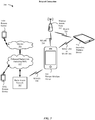
- FIG. 3 illustrates in block diagram format a relayed connection between a secondary wireless device 220 and a remote device 310A or 310B through a primary wireless device 210 via a non-cellular wireless network, e.g., via a WLAN 206 connection through wireless AP 202, via a WPAN 204 connection, or via a direct WLAN 206 connection between the primary wireless device 210 and the secondary wireless device 220.
- the relayed connection also includes a wireless wide area network (WWAN) 208 connection between the primary wireless device 210 and a cellular wireless network that includes a radio access network 207 and an enhanced packet core 212 connected to the Internet 205.
- WWAN wireless wide area network
- the primary wireless device 210 can serve as an anchor for a connection to the remote device 310A or 310B and relay audio, video, data, messaging, media, or other applicable communication packets to the secondary wireless device 220 through which the user can receive and/or generate input/output.
- the relayed connection can use either the WLAN connection 206 (via wireless AP 202 or direct) or the WPAN connection 204 to extend the connection between the primary wireless device 210 and the remote device 310A or 310B.
- the WPAN connection 204 can provide limited range, while the WLAN connections 206, either through the wireless access point (AP) 202 or direct, can provide a wider range (as well as higher throughput) for local connection between the primary wireless device 210 and the secondary wireless device 220.
- the active communication session can be transferred from the relayed connection to a directly terminated (also referred to as a direct) connection, e.g., to reduce latency and/or reduce an amount of transcoding required for the active communication session.
- the communication to and from remote device 310A or 310B can traverse one or more of the enhanced packet core 212, which can include an IMS network element, or the Internet 205.
- Both circuit-switched connections at a remote device 310A or 310B and packet-switched connections at a remote device 310A or 310B can be used for the communication session.
- packets for the communication session are managed by an IMS network element and/or by a network-based server knowledgeable of associations of the primary wireless device 210 with the secondary wireless device 220, e.g., an iCloud server.
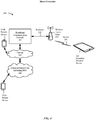
- FIG. 4 illustrates in block diagram format a direct connection between a secondary wireless device 220 and a remote device 310A or 310B through a wireless AP 202 that is connected via a backhaul connection 230 to a broadband communication network 203 that connects to the Internet 205.
- the direct connection between the secondary wireless device 220 via the WLAN connection 206 can provide for packet-switched services, such as Wi-Fi calling, Facetime video, Facetime audio, to the remote device 310A or 310B.
- the direct connection illustrated in FIG. 4 can require fewer links or hops that the relayed connection illustrated in FIG. 3 and thus can provide lower latency and less (or no) transcoding, resulting in better performance observable by a user of a service via the direction connection.
- the quality of service for the direct connection can be suboptimal.
- the secondary wireless device 220 (and the user thereof) can be mobile, e.g., the user of the secondary wireless device 220 moving outside the range of the wireless access point 202 or switching to a different (and poorer performing) wireless access point 202 (not shown), the quality provided by the WLAN connection 206 for the direct connection to the remote device 310 A or 310B can vary.
- the active communication session between the secondary wireless device 220 and the remote device 310A or 310B can be transferred to a relayed connection through a primary wireless device 210, if available and able to provide acceptable performance for the relayed connection.
- the secondary wireless device 220 includes a connection manager, which monitors performance of the active communication session as well as one or more possible wireless connections possible via one or more different radio access technologies available in the secondary wireless device 220.
- the connection manager can determine that a relayed connection through a primary wireless device 210 can provide (or is likely to provide) improved performance for the active communication session.
- the wireless connection manager evaluates a signal quality for the WLAN connection 206 between the secondary wireless device 220 and the wireless AP 202, e.g., a received signal strength indication (RSSI) or equivalent physical layer metric.
- RSSI received signal strength indication
- the wireless connection manager can also measure an application layer metric, e.g., a real-time transport protocol (RTP) packet loss rate for the active communication session and/or an average nominal jitter value for a buffer and compare the measured application layer metrics to applicable thresholds.
- RTP real-time transport protocol
- the wireless connection manager can determine whether a relayed connection via a primary wireless device 210 is available and can provide acceptable performance in place of the direct connection.
- audio quality for a Wi-Fi call can be evaluated by monitoring a physical layer metric, such as by comparing a running average of the Wi-Fi RSSI to a signal strength threshold value, e.g., -65 dBm, and by monitoring an application layer metric, such as by comparing an average RTP packet loss incurred during the Wi-Fi call to a packet loss threshold value, e.g., 20%, or by comparing an average nominal jitter buffer value of the Wi-Fi call to a jitter threshold value, e.g., 700 ms.
- a physical layer metric such as by comparing a running average of the Wi-Fi RSSI to a signal strength threshold value, e.g., -65 dBm
- an application layer metric such as by comparing an average RTP packet loss incurred during the Wi-Fi call to a packet loss threshold value, e.g., 20%, or by comparing an average nominal jitter buffer value of the Wi-Fi call to a jitter threshold value
- the wireless connection manager can determine that the local WLAN connection 206 between the secondary wireless device 220 and the wireless AP is weak and that a relayed connection via a direct WPAN connection 204 to the primary wireless device 210 can be preferred.
- the wireless connection manager can determine that the backhaul connection 230 (or another connection further upstream) does not provide acceptable performance and a relayed connection can be preferred.
- the relayed connection can use either the local WLAN connection 206 via the wireless AP 202 to relay packets between the primary wireless device 210 and the secondary wireless device 220 or a direct WPAN connection 204 between the the primary wireless device 210 and the secondary wireless device 220.
- the primary wireless device 210 can provide a WWAN connection 208 to the remote device 310 A/B for the secondary wireless device 220.
- the primary wireless device 210 and/or the secondary wireless device 220 can determine whether to use the WLAN connection 206 or the WPAN connection 204 for relaying packets based on a service being provided and bandwidth, throughput, or other quality of service requirements that the service of the active communication session requires.
- the primary wireless device 210 and/or the secondary wireless device 220 can use any combination of one or more physical layer metrics, e.g., signal strength, signal quality, signal-to-noise ratio, signal-to-interference-plus-noise ratio, interference levels, noise levels, bandwidth, throughput, achievable data rates, bit error rate, packet error rate, block error rate, channel quality indicators, modulation and coding schemes, rank indicators, multi-channel capability, etc. to evaluate a connection.
- physical layer metrics e.g., signal strength, signal quality, signal-to-noise ratio, signal-to-interference-plus-noise ratio, interference levels, noise levels, bandwidth, throughput, achievable data rates, bit error rate, packet error rate, block error rate, channel quality indicators, modulation and coding schemes, rank indicators, multi-channel capability, etc.
- the primary wireless device 210 and/or the secondary wireless device 220 can use any combination of one or more application layer metrics, e.g., end-to-end data throughput, packet loss rate, end-to-end jitter, audio quality, video quality, etc. to evaluate the connection.
- application layer metrics e.g., end-to-end data throughput, packet loss rate, end-to-end jitter, audio quality, video quality, etc.
- the secondary wireless device 220 can support direct termination of an active communication session, e.g., via the WLAN connection 206 through the wireless AP 202 and backhaul connection 230 to the broadband communication network 203 but does not have any fallback options available to use, such as a circuit-switched legacy cellular wireless network connection or a packet based cellular network connection (e.g., VoLTE), when the local WLAN connection 206 and/or the backhaul connection 230 deteriorates.
- the secondary wireless device 220 can support transfer of the active communication session to a relayed connection through the primary wireless device 210 when poor performance is observed.
- the secondary wireless dcvicc, 220 upon determination of the poor performance for the direct connection through the wireless AP 202, deregisters from an IMS core network element for a period of time, e.g., for at least thirty minutes, in order to ensure that subsequent communication sessions (after termination of the ongoing active communication session) avoid the use of direct connections and instead use relayed connections through an available primary wireless device 210 instead.
- the secondary wireless device 220 can re-evaluate the performance of the local WLAN connection 206 and/or the backhaul connection 230 (or obtain performance metrics from another associated wireless device or network element, e.g., a server) to determine whether to re-enable direct connections at the secondary wireless device 220 via the wireless AP 202.
- Using direct connections when available and satisfactory performance can be realized, can provide superior performance, e.g., higher rate audio and/or video connections and/or lower latency connections (fewer hops).
- the secondary wireless device 220 can also ensure connection reliability by transferring an active communication session between different connection types as required.
- a secondary wireless device 220 engaged in an active communication session with a remote device 310 A/B using a direct connection, such as the WLAN connection 206 to the wireless AP 202 can detect proximity of a primary wireless device 210 that can provide an alternative connection, e.g., a relayed connection.
- the secondary wireless device 220 can detect proximity of the primary wireless device 210 in response to determining performance degradation for the active communication session, or alternatively proactively upon establishment of or during the active communication session, to provide an option for a user of the secondary wireless device 220 whether to transfer the active communication session from the direct connection to a relayed connection through the primary wireless device 210.
- the secondary wireless device 220 can provide an indication to a user of the secondary wireless device, e.g., an audible and/or visual alert, that indicates actual (or probable) poor link quality and offers one or more options to transfer the active communication session, e.g., to an associated primary wireless device 210.
- the active communication session can either remain on the direct connection or be transferred to a relayed connection through the primary wireless device 210. The transfer of the active communication session can occur without interruption or dropping of the active communication session, thereby allowing for seamless transfer of the active communication session between different connections.
- the secondary wireless device 220 scans for proximity of a primary wireless device 210, e.g., by using peer-to-peer WLAN communication and/or using WPAN communication.
- the primary wireless device 210 can advertise one or more available radio access technologies, and in particular a radio access technology on which the primary wireless device 210 is presently camped, to any secondary wireless devices 220 in proximity to the primary wireless device 210.
- the information advertised can include one or more of a radio access technology type, such as GSM, UMTS, CDMA, LTE, LTE-A, etc., one or more media connection capabilities, e.g., VoLTE, CS voice, PS voice, CS video, PS video, SMS, MMS, iMessage, Wi-Fi calling, etc.
- a radio access technology type such as GSM, UMTS, CDMA, LTE, LTE-A, etc.
- media connection capabilities e.g., VoLTE, CS voice, PS voice, CS video, PS video, SMS, MMS, iMessage, Wi-Fi calling, etc.
- the secondary wireless device 220 can evaluated advertised information about radio access technologies and/or media connection capabilities of the primary wireless device 210 to ascertain whether the primary wireless device 210 can provide an alternative connection to the direct connection for the active communication session.
- the secondary wireless device 220 can determine whether the primary wireless device 210 is also subject to performance degradation, e.g., based on communication capabilities through a common congested wireless AP 202, or whether the alternative connection is able (or likely able) to provide superior performance to the present direct connection for the active communication session.
- the primary wireless device 210 does not offer an option for a better performance connection, the active communication session can remain directly connected at the secondary wireless device 220 until an alternative connection with superior performance becomes available.
- no suggestion of an option to move the active communication session is provided in this circumstance until a better alternative connection becomes available.
- information observed such as proximity of the primary wireless device 210 to the secondary wireless device 220 can be provided.
- an indication of expected performance for different connections can be provided.
- an option to transfer the active communication session can be provided, e.g., via an input/output interface of the secondary wireless device 220, permitting the user an opportunity to transfer the active communication session.
- the active communication session can be transferred to the primary wireless device 210 and continued through a newly established (at least in part) connection, e.g., using a circuit-switched connection and/or packet-switched connection to an intermediate server through which the active communication session traverse.
- the transfer of the active communication session can occur without interruption of the connection and without knowledge of the remote device 310 A/B.
- Providing an option for transfer of active communication session based on monitoring of performance and availability of alternative connections through a primary wireless device 210 can improve the call connection stability for active communication sessions, and permits a user options for selecting a best radio access technology available on a best wireless device available at any point in time during the active communication session. Packet loss can be reduced and/or voice/video quality can be maintained or improved by transferring the active communication session among available connections through different wireless devices associated with the secondary wireless device 220.
- primary wireless devices 210 and/or secondary wireless devices 220 include wireless connection management modules that can evaluate the availability and/or quality of actual, available, and/or potential connections to determine a best connection and/or best radio access technology to use for an existing active connection or for a connection to be established.
- a secondary wireless device 220 can be capable of forming a direct connection, such as a Wi-Fi call, or a relayed connection, such as a circuit-switched or VoLTE call through a primary wireless device 210 in proximity to the secondary wireless device 220.
- the secondary wireless device 220 and the primary wireless device 210 can be paired together as part of a set of associated wireless dcviccs, c.g., through a common iCloud account or another similar service.
- the secondary wireless device 220 can select between use of a direct connection or a relayed connection.
- a wireless connection manager of the secondary wireless device 220 can determine a preferred radio access technology or connection capability to use for a newly established connection.
- the wireless connection manager of the secondary wireless device 220 can switch between different connection types based on performance evaluations of existing and/or available connections.
- the wireless connection manager of the secondary wireless device 220 can determine whether a direct connection, e.g., via a wireless AP 202 can provide adequate quality for a direct connection to the secondary wireless device 220.
- a wireless connection manager of the primary wireless device 210 can determine whether to establish a connection using a cellular radio access technology, e.g., circuit-switched or VoLTE, or a connection using IMS through a WLAN connection.
- the wireless communication managers can use any combination of physical layer (radio) metrics and end-to-end application layer (transport) metrics to determine whether an existing or potential connection through a wireless AP 202 can provide adequate performance for an active (or to be established) communication session. Accuracy of the radio access technology evaluation by the wireless connection manager can vary based on a connection state of the wireless device.
- evaluation of the connection can be more accurate than when activity is infrequent or no active connection exists.
- the wireless device is idle or not connected in an active communication session or sleeping (e.g., in a power save state)
- measurements can occur less frequently with fewer packets (or other communication) available to evaluate the connection.
- accuracy of the evaluation of potential connections can be less accurate when a wireless device wakes from a sleep mode or otherwise uses idle mode measurements to determine which type of connection to use or recommend.
- a wireless connection manager on a wireless device can evaluate performance characteristics of an active communication session through one or more links used for the active communication session. For example, when the wireless device participates in a Wi-Fi call through the wireless AP 202, the wireless device can evaluate both the quality of the WLAN connection 206 between the wireless device and the wireless AP 202, as well as the performance characteristics of the backhaul connection 230 between the wireless AP 202 and the broadband communication network 203 (and/or as part of the end-to-end connection).
- the wireless device e.g., the secondary wireless device 220
- the secondary wireless device 220 communicates information about the performance characteristics of the WLAN connection 206 and/or of the backhaul connection 230 to additional wireless devices that are associated with the secondary wireless device 220, e.g., with any wireless devices that share the same wireless AP and/or the same service set identifier (SSID) and basic service set identifier (BSSID) pairs.
- SSID service set identifier
- BSSID basic service set identifier
- the wireless connection manager of the secondary wireless device 220 can communicate information about the physical layer metrics and/or the application layer metrics, such as a measured RSSI, an RTP packet loss rate, a nominal jitter buffer value, a transmit/receive packet error rate, a packet loss rate, etc.
- the wireless connection manager of the secondary wireless device 220 communicates measurements and/or a radio access technology recommendation with neighboring wireless devices using an out-of-band signaling mechanism, e.g., through a secondary connection and/or through a commonly accessible server, such as an iCloud server.
- the wireless connection manager evaluates downlink performance of an active communication session using a combination of physical layer metrics and application (transport) layer metrics as follows.
- a physical layer metric for the WLAN connection 206 exceeds a physical layer threshold, e.g., when a measured RSSI (instantaneous and/or average) exceeds a level, such as -65 dBm
- an application (transport) layer metric for the end-to-end connection exceeds an application layer threshold, e.g., average RTP packet loss exceeds 20%, or average nominal jitter buffer exceeds 700 ms
- the wireless connection manager can conclude that a backhaul connection 230 (and/or a link further upstream) does not provide adequate performance.
- the wireless connection manager of the wireless device e.g., the secondary wireless device 220, can notify additional wireless devices connected to the same wireless AP 202 (and/or connected to a set of wireless APs that form a common WLAN) of the performance and/or of a radio access technology recommendation for connections.
- the wireless connection manager can also conclude that the backhaul connection 230 (and/or a link further upstream) does not provide adequate performance and therefore notify associated wireless devices of the measured performance and/or radio access technology recommendation.
- the RX retry ratio can be defined as a number of RX packets that include a retry bit set divided by a total number of RX packets.
- the wireless connection manager evaluates uplink performance of an active communication session using a combination of physical layer metrics and application (transport) layer metrics as follows.
- the wireless connection manager of the wireless device e.g., the secondary wireless device 220, determines whether the backhaul connection 230 (or a link further upstream) does not provide adequate performance by evaluating whether the signal strength of the WLAN connection 206 between the wireless AP 202 and the secondary wireless device 220 exceeds a physical layer threshold, e.g., RSSI greater than -65 dBm, and for the same active communication session an average transmit (TX) packet error rate (PER) exceeds an application (transport) layer threshold, e.g., TX PER greater than 7%.
- a physical layer threshold e.g., RSSI greater than -65 dBm
- the wireless connection manager of the secondary wireless device 220 can conclude that the packet error rate above a threshold level indicates that the backhaul connection 230 or another link further upstream is impeding performance of the active communication session.
- the wireless connection manager evaluates performance metrics for the backhaul connection 230 during an active communication session that uses a transmission control protocol (TCP) as follows.
- TCP transmission control protocol
- the wireless connection manager determines whether e.g., the secondary wireless device 220, determines whether the backhaul connection 230 (or a link further upstream) does not provide adequate performance by evaluating whether the signal strength of the WLAN connection 206 between the wireless AP 202 and the secondary wireless device 220 exceeds a physical layer threshold, e.g., RSSI greater than -65 dBm, and for the same active communication session whether an application (transport) layer metric does not satisfy an application layer metric.
- a physical layer threshold e.g., RSSI greater than -65 dBm
- RX TCP packet loss rate exceeds an application (transport) layer threshold, e.g., RX TCP packet loss greater than X%, or whether an average round trip time (RTT) of the active communication session that uses TCP exceeds a time threshold, e.g., Y ms.
- RX TCP packet loss rate exceeds an application (transport) layer threshold
- RTT round trip time
- the RSSI value can be either averaged or instantaneous.
- the wireless connection manager evaluates performance based on whether a receive (RX) retry ratio falls below a threshold value, e.g., less than 5%, and either the average RX TCP packet loss exceeds a packet loss threshold value, e.g., X%, or an average RTT of the active communication session that sues TCP exceeds a time threshold, e.g., greater than Y ms.
- a receive (RX) retry ratio falls below a threshold value, e.g., less than 5%
- a packet loss threshold value e.g., X%
- an average RTT of the active communication session e.g., greater than Y ms.
- a wireless device can include a wireless connection manager that monitors one or more or physical layer metrics for local wireless (radio air interface) connections and application (transport) layer metrics for end-to-end device-to-device connections during one or more active communication sessions.
- the wireless device can share information about the monitored physical layer metrics and/or application/transport layer metrics with one or more other associated wireless devices. For example, neighboring wireless devices within a geographic proximity (such as within reach of a WPAN or WLAN) and/or wireless devices associated together through a common account or scrvicc, such as an iCloud account can obtain directly from the wireless device or indirectly through a network based server the information (or portions thereof) about the monitored metrics.
- the wireless device shares recommendations for radio access technology choices and/or particular connections to assist other wireless devices to select among one or more different available radio access technologies and/or particular connections to use for an existing or to be established connection by the "other" wireless device(s).
- a "crowd-based" collection of information from multiple wireless devices can be used to assess available radio access technologies and/or connections and to influence decisions, such as made by wireless connection managers of wireless devices, when selecting a wireless network to use for an existing or to be established connection.
- location information of the wireless devices and/or associated network equipment, such as wireless access points can be used in conjunction with measurements to provide information about prevailing and/or recent past conditions for connections that use different radio access technologies.
- a wireless device can assess whether one or more local connections are interference limited and/or whether one or more backhaul connections are limiting performance, and the wireless device can notify one or more neighboring wireless devices of the assessment, e.g., to assist in radio access technology and/or network and/or connection selection.
- a wireless device shares measurements, such as physical layer measurements and/or application (transport) layer measurements, with other wireless devices connected to a common local access point (AP) to assist the other wireless devices in link evaluation.
- AP local access point
- network evaluation, performance evaluation, network measurements, connection measurements, noise/interference measurements, signal strength measurements, delay/latency measurements, or other measurements useful for communication link evaluation are shared among multiple wireless devices to assist with current/future link selection, to assist with mitigation of coexistence interference, and/or to select among multiple radio access technologies.
- a wireless device co-located with one or more other wireless devices uses information gathered from at least one of the one or more other wireless devices to influence radio access technology selection, radio link selection, coexistence mitigation, network selection, and/or connection establishment decisions.
- the use of a combination of physical layer metrics and a combination of application layer metrics can be applied to a network that includes Internet of Things (IOT) applications.
- IOT Internet of Things
- several co-located wireless devices can work together to evaluate wireless connections for a preferred radio access technology, which can change over time, and whether a link is limited in the backhaul (or further upstream) or limited locally, e.g., due to poor signal strength, poor signal quality, high noise levels, high interference levels, etc.
- Each wireless device that participates in the IOT scenario can include the capability to share measurement information and when including wireless connection manager capabilities to share recommended radio access technologies and/or wireless connections, particularly when multiple different wireless connections and/or radio access technologies can be available.
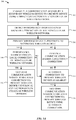
- FIG. 5A illustrates a flowchart 500 of an exemplary method performed by a connection manager for managing connections for an active communication session of a wireless device, e.g., a secondary wireless device 220.
- the secondary wireless device 220 engages in an active communication session with a remote device 310 A or 310B using a direct connection via a non-cellular wireless network, e.g., via a WLAN connection 206 through a wireless AP 202 and further via a backhaul connection 230.
- the secondary wireless device 220 detects a performance degradation of the backhaul connection 230 of the non-cellular wireless network.
- the secondary wireless device 220 determines whether a primary wireless device 210 is in proximity to the secondary wireless device 220.
- the active communication session can continue to use the direct connection, as indicated in block 510.
- the secondary wireless device 220 can determine whether performance via a local connection, e.g., the WLAN connection 206, is satisfactory (e.g., satisfies any combination of one or more physical layer metrics or other relevant metrics).
- the active communication session can be transferred from a direct connection that terminates on the secondary wireless device 220 to a relayed connection that terminates on the primary wireless device 210, where the primary wireless device 210 provides a relay of packets (e.g., audio, video, data, messaging, etc.) to the secondary wireless device 220 using the local connection of the non-cellular wireless network, c.g., via a WLAN connection 206 through the wireless AP 202.
- the secondary wireless device 220 determines proximity of the primary wireless device 210 by scanning using a WPAN radio access technology, e.g., Bluetooth (classic or Low Energy) or Apple Wireless Direct Link (AWDL).
- WPAN radio access technology e.g., Bluetooth (classic or Low Energy) or Apple Wireless Direct Link (AWDL).
- the secondary wireless device 220 requests that the primary wireless device 210 transfer the active communication session, by sending a request through an out-of-band signaling path, e.g., via a network-based server, such as provided as part of an iCloud service.
- the primary wireless device 210 pulls the active communication session from the direct connection to the relayed connection by establishing a connection with a network based server through which packets for the active communication session traverse.
- the secondary wireless device 220 determines that performance of the local connection of the non-cellular wireless network does not provide adequate performance for the active communication session, the secondary wireless device 220 can determine whether an alternate connection to the primary wireless device 210 is available, as indicated in block 514.
- the secondary wireless device 220 can determine if a WPAN connection 204 or a direct "peer-to-peer" WLAN connection 206 can be established between the secondary wireless device 220 and the primary wireless device 210. When no alternate connection is available to relay the active communication session, the secondary wireless device 220 can continue the active communication session using the direct connection. When an alternate connection is available, in block 516, the active communication session can be transferred from the direct connection that terminates on the secondary wireless device 220 to a relayed connection that terminates on the primary wireless device 210 and relays audio/video/data/messaging packets for the active communication session using the alternate connection.
- a wireless connection manager of the secondary wireless device 220 and/or a wireless connection manager of the primary wireless device 210 performs one or more actions to realize the exemplary method illustrated in FIG. 5A .
- FIG. 5B illustrates a flowchart 550 of another exemplary method performed by a connection manager for managing connections for an active communication session of a wireless device, e.g., a secondary wireless device 220.
- the secondary wireless device 220 engages in an an active communication session with a remote device 310 A or 310B using a connection via a non-cellular wireless network, e.g., via a WLAN connection 206 through a wireless AP 202 and further via a backhaul connection 230.
- the connection for the communication session terminates directly on the secondary wireless device 220.
- the secondary wireless device 220 determines performance of the non-cellular wireless network.
- the secondary wireless device 220 determines performance of the non-cellular wireless network by determining performance of a local connection of the secondary wireless device 220 to the non-cellular wireless network (e.g., via WLAN connection 206) and/or of a backhaul connection of the non-cellular wireless network (e.g., via backhaul connection 230). In block 556, the secondary wireless device 220 determines whether a primary wireless device 210 is in proximity to the secondary wireless device 220 and whether the performance of the non-cellular wireless network is satisfactory (e.g., satisfies a performance criterion) for the communication session.
- the communication session can continue to use the connection terminated on the secondary wireless device 220, as indicated in block 560.
- the secondary wireless device 220 can provide an indication to the primary wireless device 210 to cause the primary wireless device 210 to transfer the communication session to terminate on the primary wireless device 210 and to relay packets through the primary wireless device 210 to and from the secondary wireless device 220, e.g., to provide a relayed connection with the secondary wireless device 220 via the primary wireless device 210 for the communication session.
- the secondary wireless device 220 determines whether performance via a local connection, e.g., the WLAN connection 206 via the wireless AP 202 used for the communication session, is satisfactory (e.g., satisfies any combination of one or more physical layer metrics or other relevant metrics).
- the active communication session is transferred from a direct connection that terminates on the secondary wireless device 220 to a relayed connection that terminates on the primary wireless device 210, where the primary wireless device 210 provides a relay of packets (e.g., audio, video, data, messaging, etc.) to the secondary wireless device 220 using the local connection of the non-cellular wireless network, e.g., via a WLAN connection 206 through the wireless AP 202.
- the secondary wireless device 220 determines proximity of the primary wireless device 210 by scanning using a WPAN radio access technology, e.g., Bluetooth (classic or Low Energy) or Apple Wireless Direct Link (AWDL).
- WPAN radio access technology e.g., Bluetooth (classic or Low Energy) or Apple Wireless Direct Link (AWDL).
- the secondary wireless device 220 requests that the primary wireless device 210 transfer the active communication session, by sending a request through an out-of-band signaling path, e.g., via a network-based server, such as provided as part of an iCloud service.
- the primary wireless device 210 pulls the active communication session from the direct connection to the relayed connection by establishing a connection with a network based server through which packets for the active communication session traverse.
- the secondary wireless device 220 can determine whether an alternate connection to the primary wireless device 210 is available.
- the secondary wireless device 220 can determine if a WPAN connection 204 or a direct "peer-to-peer" WLAN connection 206 can be established between the secondary wireless device 220 and the primary wireless device 210. In some embodiments, when no alternate connection is available to relay the active communication session, the secondary wireless device 220 can continue the active communication session using the direct connection terminated on the secondary wireless device 220. In some embodiments, when an alternate connection is available, the active communication session can be transferred from the direct connection that terminates on the secondary wireless device 220 to a relayed connection that terminates on the primary wireless device 210 and relays audio/video/data/messaging packets for the active communication session using the alternate connection. In some embodiments, a wireless connection manager of the secondary wireless device 220 and/or a wireless connection manager of the primary wireless device 210 performs one or more actions to realize the exemplary method illustrated in FIG. 5B .
- FIG. 6 illustrates a flowchart 600 of another exemplary method performed by a connection manager for managing connections for an active communication session of a wireless device, e.g., a secondary wireless device 220.
- the secondary wireless device 220 engages in an an active communication session with a remote device 310 A/B using a direct connection via a non-cellular wireless network, e.g., via a WLAN connection 206 through a wireless AP 202 and further via a backhaul connection 230.
- the secondary wireless device 220 detects a performance degradation of a local connection of the non-cellular wireless network, e.g., the WLAN connection 206 to the wireless AP 202.
- the secondary wireless device 220 determines whether a primary wireless device 210 is in proximity to the secondary wireless device 220. When no primary wireless device 210 is in proximity to the secondary wireless device 220, the active communication session can continue to use the direct connection, as indicated in block 610. When a primary wireless device 210 is in proximity to the secondary wireless device 220 and the local connection performance is inadequate (as detected in block 604), the secondary wireless device 220 can determine whether an alternate connection to the primary wireless device 210 is available, as indicated in block 608. For example, the secondary wireless device 220 can determine if a WPAN connection 204 can be established between the secondary wireless device 220 and the primary wireless device 210.
- the secondary wireless device 220 can evaluate the WPAN connection 204 as part of detecting proximity of the primary wireless device 210. When no alternate connection is available to relay the active communication session, the secondary wireless device 220 can continue the active communication session using the direct connection as indicated in block 610. When an alternate connection is available, in block 612, the active communication session can be transferred from the direct connection that terminates at the secondary wireless device 220 to a relayed connection that terminates at the primary wireless device 210 and relays audio/video/data/messaging packets for the active communication session using the alternate connection.
- a wireless connection manager of the secondary wireless device 220 and/or a wireless connection manager of the primary wireless device 210 performs one or more actions to realize the exemplary method illustrated in FIG. 6 .
- FIG. 7 illustrates a flowchart 700 of a further exemplary method performed by a connection manager for managing connections for an active communication session of a wireless device, e.g., a secondary wireless device 220.
- the secondary wireless device 220 engages in an active communication session with a remote device 310 A/B using a relayed connection through a primary wireless device 210.
- the relayed connection in some embodiments, can be realized at least in part using a WPAN connection 204 directly between the primary wireless device 210 and the secondary wireless device 220 and/or indirectly via a WLAN connection 206 through a wireless AP 202 to which both the primary wireless device 210 and the secondary wireless device 220 arc conncctcd.
- the secondary wireless device 220 detects availability of a non-cellular wireless network through which a direct connection can be used for the active communication session.
- the non-cellular wireless network can include at least in part a WLAN network, such as provided by for the relayed connection.
- the secondary wireless device 220 alone or in conjunction with the primary wireless device 210, can determine whether performance via a local connection of the non-cellular wireless network and a backhaul connection of the non-cellular wireless network can provide adequate performance for the active communication session.
- the secondary wireless device 220 can account for the type of active communication session ongoing when evaluating the performance of the non-cellular wireless network.
- the active communication session can be transferred from a relayed connection via the primary wireless device 210 to a direct connection to the secondary wireless device 220.
- the primary wireless device 210 pushes the active communication session to the secondary wireless device 220, e.g., in conjunction with communication with one or more network-based servers, such as an IMS network element and/or an iCloud server.
- the secondary wireless device 220 pulls the active communication session over from the primary wireless device 210.
- the active communication session can continue using the relayed connection through the primary wireless device 210.
- the secondary wireless device 220 can re-evaluate performance of the non-cellular wireless network periodically or on demand (e.g., based on user input) to determine whether performance warrants transferring the active communication session from the relayed connection to a direct connection.
- the secondary wireless device 220 and/or the primary wireless device 210 can continue to monitor performance characteristics, such as physical layer attributes of local connections and/or application metrics for end-to-end links, to determine whether to transfer the active communication session between a relayed connection and a direct connection.
- FIG. 8 illustrates in block diagram format an exemplary computing device 800 that can be used to implement the various components and techniques described herein, according to some embodiments.
- the detailed view of the exemplary computing device 800 illustrates various components that can be included in the wireless device 102 illustrated in FIG. 1 .
- the computing device 800 can include a processor 802 that represents a microprocessor or controller for controlling the overall operation of computing device 800.
- the computing device 800 can also include a user input device 808 that allows a user of the computing device 800 to interact with the computing device 800.
- the user input device 808 can take a variety of forms, such as a button, keypad, dial, touch screen, audio input interface, visual/image capture input interface, input in the form of sensor data, etc.
- the computing device 800 can include a display 810 (screen display) that can be controlled by the processor 802 to display information to the user (for example, information relating to incoming, outgoing, or active communication session).
- a data bus 816 can facilitate data transfer between at least a storage device 840, the processor 802, and a controller 813.
- the controller 813 can be used to interface with and control different equipment through an equipment control bus 814.
- the computing device 800 can also include a network/bus interface 811 that couples to a data link 812. In the case of a wireless connection, the network/bus interface 811 can include wireless circuitry, such as a wireless transceiver and/or baseband processor.
- the computing device 800 also includes a storage device 840, which can comprise a single storage or a plurality of storages (e.g., hard drives), and includes a storage management module that manages one or more partitions within the storage device 840.
- storage device 840 can include flash memory, semiconductor (solid state) memory or the like.
- the computing device 800 can also include a Random Access Memory (“RAM”) 820 and a Read-Only Memory (“ROM”) 822.
- the ROM 822 can store programs, utilities or processes to be executed in a nonvolatile manner.
- the RAM 820 can provide volatile data storage, and stores instructions related to the operation of the computing device 800.
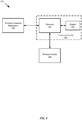
- FIG. 9 illustrates a block diagram of an example apparatus 900 that can be implemented in a wireless device 102, e.g., a primary wireless device 210 and/or a secondary wireless device 220 and/or to realize, at least in part, a wireless connection management mechanism, in accordance with some embodiments.
- a wireless device 102 e.g., a primary wireless device 210 and/or a secondary wireless device 220 and/or to realize, at least in part, a wireless connection management mechanism, in accordance with some embodiments.
- the components, devices or elements illustrated in and described with respect to FIG. 9 may not be mandatory and thus some may be omitted in certain embodiments. Additionally, some embodiments can include further or different components, devices or elements beyond those illustrated in and described with respect to FIG. 9 . Further, it will be appreciated that, in some embodiments, one or more components of the apparatus 900 can be distributed across a plurality of computing devices that can collectively provide the functionality for wireless connection management.
- the apparatus 900 can include processing circuitry 910 that is configurable to perform actions in accordance with one or more example embodiments disclosed herein.
- the processing circuitry 910 can be configured to perform and/or control performance of one or more functionalities of the apparatus 900 in accordance with various embodiments, and thus can provide means for performing functionalities of the apparatus 900 in accordance with various embodiments.
- the processing circuitry 910 can be configured to perform data processing, application execution and/or other processing and management services according to one or more embodiments.
- the apparatus 900 or a portion(s) or component(s) thereof, such as the processing circuitry 910 can include one or more chipsets, each of which can include one or more chips.
- the processing circuitry 910 and/or one or more further components of the apparatus 900 can therefore, in some instances, be configured to implement an embodiment on a chipset comprising one or more chips.
- the chipset can be capable of enabling a computing device(s) to operate wireless device in accordance with embodiments as disclosed herein.
- the processing circuitry 910 can include a processor 912 and, in some embodiments, such as that illustrated in FIG. 9 , can further include memory 914 (or another non-transitory storage medium).
- the processing circuitry 910 can be in communication with or otherwise control wireless circuitry 916 and/or a wireless connection management module 918.
- the processor 912 can be embodied in a variety of forms.
- the processor 912 can be embodied as various processing hardware-based means such as a microprocessor, a coprocessor, a controller or various other computing or processing devices including integrated circuits such as, for example, an ASIC (application specific integrated circuit), an FPGA (field programmable gate array), some combination thereof, or the like.
- ASIC application specific integrated circuit
- FPGA field programmable gate array
- the processor 912 can include a plurality of processors. The plurality of processors can be in operative communication with each other and can be collectively configured to perform one or more functionalities of the apparatus 900 as described herein.
- the plurality of processors can be implemented on a single computing device, or can be distributed across a plurality of computing devices that can collectively provide functionality of a wireless device, such as the primary wireless device 210 and/or the secondary wireless device 220.
- the processor 912 can be configured to execute instructions that can be stored in the memory 914 or that can be otherwise accessible to the processor 912. As such, whether configured by hardware or by a combination of hardware and software, the processor 912 can be capable of performing operations according to various embodiments while configured accordingly.
- the memory 914 can include one or more memory devices.
- the memory 914 can include fixed and/or removable memory devices.
- the memory 914 can provide a non-transitory computer-readable storage medium that can store computer program instructions that can be executed by the processor 912.
- the memory 914 can be configured to store information, data, applications, instructions and/or the like for enabling the apparatus 900 to carry out various functions in accordance with one or more embodiments.
- the plurality of memory devices can be implemented on a single computing device, or can be distributed across a plurality of computing devices that can collectively provide functionality of a wireless device.
- the memory 914 can be in communication with one or more of the processor 912, wireless circuitry 916, or wireless connection management module 918 via one or more busses for passing information among components of the apparatus 900.
- the apparatus 900 can further include wireless circuitry 916.
- the wireless circuitry 916 can include one or more interface mechanisms for enabling communication with other devices and/or networks.
- the wireless circuitry 916 can be configured to enable the apparatus 900 to communicate over one or more networks, such as the WWAN 108, the WLAN 106, and/or the WPAN 104.
- the apparatus 900 can include multiple sets of wireless circuitry 916, which can each provide communication in accordance with a wireless communication protocol.
- the wireless circuitry 916 can include, for example, an antenna (or multiple antennas) and supporting hardware and/or software for enabling communications with one or more wireless communication networks, such as a cellular network.
- the wireless circuitry 616 can be referred to as a communication interface(s) and include a combination of requisite hardware, software, or firmware to provide wireless communications in accordance with one or more wireless communication protocols, such as a Wi-Fi protocol, an IEEE 802.11 wireless communication protocol, a cellular wireless communication protocol, a WLAN protocol, a WPAN protocol, e.g., such as Bluetooth or Apple Wireless Direct Link (AWDL).
- wireless communication protocols such as a Wi-Fi protocol, an IEEE 802.11 wireless communication protocol, a cellular wireless communication protocol, a WLAN protocol, a WPAN protocol, e.g., such as Bluetooth or Apple Wireless Direct Link (AWDL).
- the apparatus 900 can further include a wireless connection management module 918.
- the wireless connection management module 918 can be embodied as various means, such as circuitry, hardware, a computer program product comprising computer readable program instructions stored on a non-transitory computer readable medium (for example, the memory 914) and executed by a processing device (for example, the processor 912), or some combination thereof.
- the processor 912 (or the processing circuitry 910) can include, or otherwise control the wireless connection management module 918.
- the wireless connection management module 918 can be configured to support management of transitions of between various wireless connections, e.g., direct connections and/or relayed connections in support of one or more example embodiments.
- the various aspects, embodiments, implementations or features of the described embodiments can be used separately or in any combination.
- Various aspects of the described embodiments can be implemented by software, hardware or a combination of hardware and software.
- the described embodiments can also be embodied as computer readable code on a computer readable medium.
- the computer readable medium is any data storage device that can store data which can thereafter be read by a computer system. Examples of the computer readable medium include read-only memory, random-access memory, CD-ROMs, DVDs, magnetic tape, hard storage drives, solid state drives, and optical data storage devices.
- the computer readable medium can also be distributed over network-coupled computer systems so that the computer readable code is stored and executed in a distributed fashion.
Landscapes
- Engineering & Computer Science (AREA)
- Computer Networks & Wireless Communication (AREA)
- Signal Processing (AREA)
- Multimedia (AREA)
- Business, Economics & Management (AREA)
- General Business, Economics & Management (AREA)
- Mobile Radio Communication Systems (AREA)
Claims (15)
- Verfahren zum Verwalten von Verbindungen für eine aktive Kommunikationssitzung zwischen einer sekundären drahtlosen Vorrichtung (220) und einer entfernten Vorrichtung (310), wobei das Verfahren umfasst:durch die sekundäre drahtlose Vorrichtung (220):Eingreifen in eine Kommunikationssitzung mit der entfernten Vorrichtung (310) über ein nicht zellulares drahtloses Netzwerk, wobei die Kommunikationssitzung direkt auf der sekundären drahtlosen Vorrichtung (552) terminiert;Bestimmen einer Leistung des nicht-zellularen drahtlosen Netzwerks (554); undwenn die Leistung des nicht zellularen drahtlosen Netzwerks ein Leistungskriterium nicht erfüllt und sich eine primäre drahtloses Vorrichtung (210) in der Nähe der sekundären drahtlosen Vorrichtung (556) befindet:Bereitstellen eines Hinweises an die primäre drahtlose Vorrichtung (210), um die primäre drahtlose Vorrichtung (210) zu veranlassen, die Kommunikationssitzung zu übertragen, so dass sie auf der primären drahtlosen Vorrichtung (210) terminiert, wobei Pakete für die Kommunikationssitzung von der primären drahtlosen Vorrichtung (210) an die sekundäre drahtlose Vorrichtung (558) und von dieser weitergegeben werden; undBlockieren einer direkten Terminierung von Kommunikationssitzungen über das nicht zellulare drahtlose Netzwerk an die sekundäre drahtlose Vorrichtung (220) für mindestens eine bestimmte Zeitspanne durch mindestens Deregistrieren von einem Internetprotokoll-Multimedia-Subsystem-, IMS-, Kernnetzwerkelement;nach Ablauf eines Zeitgebers, der mit der bezeichneten Zeitspanne verbunden ist, Neubewerten der Leistung der Verbindungen über das nicht-zellulare drahtlose Netzwerk; undwenn die Leistung der Verbindungen über das nicht zellulare drahtlose Netzwerk nach Ablauf des Zeitgebers das Leistungskriterium erfüllt, Ermöglichen einer direkten Terminierung von Kommunikationssitzungen über das nicht zellulare drahtlose Netzwerk an der sekundären drahtlosen Vorrichtung (220),wobei die aktive Kommunikationssitzung einen erweiterten Paketkern (enhanced packet core) eines zellularen drahtlosen Netzwerks durchläuft.
- Verfahren nach Anspruch 1, wobei das Bestimmen der Leistung des nicht-zellularen drahtlosen Netzwerks ein Bestimmen der Leistung umfasst von:einer lokalen Verbindung der sekundären drahtlosen Vorrichtung (220) mit dem nicht-zellularen drahtlosen Netzwerk, undeiner Backhaul-Verbindung des nicht zellularen drahtlosen Netzwerkes zu einem Breitband-Kommunikationsnetz.
- Verfahren nach Anspruch 2, wobei die Pakete für die Kommunikationssitzung zu und von der sekundären drahtlosen Vorrichtung (220) unter Verwendung der lokalen Verbindung des nicht-zellularen drahtlosen Netzwerks weitergeleitet werden, wenn die Leistung der lokalen Verbindung das Leistungskriterium für die Kommunikationssitzung erfüllt.
- Verfahren nach Anspruch 2, wobei die Pakete für die Kommunikationssitzung zu und von der sekundären drahtlosen Vorrichtung (220) unter Verwendung einer alternativen Verbindung zwischen der primären drahtlosen von (210) und der sekundären drahtlosen Vorrichtung (220) weitergeleitet werden, wenn die Leistung der lokalen Verbindung das Leistungskriterium für die Kommunikationssitzung nicht erfüllt.
- Verfahren nach einem der Ansprüche 1 bis 4, wobei die sekundäre drahtlose Vorrichtung (220) ferner feststellt, ob sich die primäre drahtlose Vorrichtung (210) in der Nähe der sekundären drahtlosen Vorrichtung (220) befindet.
- Verfahren nach Anspruch 2, wobei die sekundäre drahtlose Vorrichtung (220) die Leistung der Backhaul-Verbindung unter Verwendung einer beliebigen Kombination von einer oder mehreren Metriken der Anwendungsschicht bewertet.
- Verfahren nach Anspruch 2, wobei die sekundäre drahtlose Vorrichtung (220) die Leistung der lokalen Verbindung unter Verwendung einer beliebigen Kombination von einer oder mehreren Metriken der physikalischen Schicht bewertet.
- Verfahren nach Anspruch 1, wobei als Reaktion auf den Hinweis von der sekundären drahtlosen Vorrichtung (220) zum Veranlassen der primären drahtlosen Vorrichtung (210), die Kommunikationssitzung zu übertragen, die primäre drahtlose Vorrichtung (210) eine Verbindung zu einem netzwerkbasierten Server herstellt, der mit der Kommunikationssitzung assoziiert ist, um Pakete für die Kommunikationssitzung von einem Terminieren an der sekundären drahtlosen Vorrichtung (220) zu einem Terminieren an der primären drahtlosen Vorrichtung (210) zu übertragen.
- Verfahren nach Anspruch 1, ferner umfassend:
durch die sekundäre drahtlose Vorrichtung (220):
wenn die Leistung des nicht zellularen drahtlosen Netzwerks das Leistungskriterium nicht erfüllt und sich die primäre drahtlose Vorrichtung (210) in der Nähe der sekundären drahtlosen Vorrichtung (220) befindet:Anzeigen einer Option zum Übertragen der Kommunikationssitzung, um auf der primären drahtlosen Vorrichtung (210) zu terminieren; undals Reaktion auf eine Eingabe zum Übertragen der Kommunikationssitzung, Bereitstellen der Anzeige für die primäre drahtlose Vorrichtung (210), um die primäre drahtlose Vorrichtung (210) zu veranlassen, die Kommunikationssitzung zu übertragen. - Sekundäre drahtlose Vorrichtung (220), umfassend:eine Verarbeitungsschaltung (910) mit einem Prozessor und einem Speicher, der Anweisungen speichert, die, wenn sie von dem Prozessor ausgeführt werden, die sekundäre drahtlose Vorrichtung (220) veranlassen, ein Verfahren durchzuführen, das Folgendes umfasst:Eingreifen in eine Kommunikationssitzung mit einer entfernten Vorrichtung (310) über ein nicht zellulares drahtloses Netzwerk, wobei die Kommunikationssitzung direkt auf der sekundären drahtlosen Vorrichtung (552) terminiert;Bestimmen einer Leistung des nicht-zellularen drahtlosen Netzwerks (554); undwenn die Leistung des nicht zellularen drahtlosen Netzwerks ein Leistungskriterium nicht erfüllt und sich eine primäre drahtlose Vorrichtung (210) in der Nähe der sekundären drahtlosen Vorrichtung (556) befindet:Bereitstellen eines Hinweises an die primäre drahtlose Vorrichtung (210), um die primäre drahtlose Vorrichtung (210) zu veranlassen, die Kommunikationssitzung zu übertragen, um auf der primären drahtlosen Vorrichtung (210) zu terminieren, wobei Pakete für die Kommunikationssitzung von der primären drahtlosen Vorrichtung (210) an die sekundäre drahtlose Vorrichtung (558) und von dieser weitergegeben werden; undBlockieren eines direkten Terminierens von Kommunikationssitzungen über das nicht zellulare drahtlose Netzwerk an der sekundären drahtlosen Vorrichtung (220) für mindestens eine bestimmte Zeitspanne durch mindestens Deregistrieren von einem Internetprotokoll-Multimedia-Subsystem-, IMS-, Kernnetzwerkelement;nach Ablauf eines Zeitgebers, der mit der bezeichneten Zeitspanne verbunden ist, Neubewerten der Leistung der Verbindungen über das nicht-zellulare drahtlose Netzwerk; undwenn die Leistung der Verbindungen über das nicht-zelluläre drahtlose Netzwerk nach Ablauf des Zeitgebers das Leistungskriterium erfüllt, Ermöglichen eines direkten Terminierens der Kommunikationssitzungen über das nicht-zelluläre drahtlose Netzwerk an der sekundären drahtlosen Vorrichtung (220),wobei die aktive Kommunikationssitzung einen erweiterten Paketkern (enhances packet core) eines zellularen drahtlosen Netzwerks durchläuft.
- Sekundäre drahtlose Vorrichtung (220) nach Anspruch 10, wobei das Bestimmen der Leistung des nicht-zellularen drahtlosen Netzwerks ein Bestimmen der Leistung umfasst von:einer lokalen Verbindung der sekundären drahtlosen Vorrichtung (220) mit dem nicht-zellularen drahtlosen Netzwerk, undeiner Backhaul-Verbindung des nicht zellularen drahtlosen Netzwerks zu einem Breitband-Kommunikationsnetz.
- Sekundäre drahtlose Vorrichtung (220) nach Anspruch 11, wobei die Pakete für die Kommunikationssitzung zu und von der sekundären drahtlosen Vorrichtung (220) unter Verwendung der lokalen Verbindung des nicht-zellularen drahtlosen Netzwerks weitergeleitet werden, wenn die Leistung der lokalen Verbindung das Leistungskriterium für die Kommunikationssitzung erfüllt.
- Sekundäre drahtlose Vorrichtung (220) nach Anspruch 11, wobei die Pakete für die Kommunikationssitzung zu und von der sekundären drahtlosen Vorrichtung (220) unter Verwendung einer alternativen Verbindung zwischen der primären drahtlosen Vorrichtung (210) und der sekundären drahtlosen Vorrichtung (220) weitergeleitet werden, wenn die Leistung der lokalen Verbindung das Leistungskriterium für die Kommunikationssitzung nicht erfüllt.
- Sekundäre drahtlose Vorrichtung (220) nach Anspruch 11, wobei die sekundäre drahtlose Vorrichtung (220) die Leistung der Backhaul-Verbindung unter Verwendung einer beliebigen Kombination von einer oder mehreren Metriken der Anwendungsschicht bewertet.
- Sekundäre drahtlose Vorrichtung (220) nach Anspruch 11, wobei die sekundäre drahtlose Vorrichtung (220) eine Leistung der lokalen Verbindung unter Verwendung einer beliebigen Kombination von einer oder mehreren Metriken der physikalischen Schicht bewertet.
Applications Claiming Priority (2)
| Application Number | Priority Date | Filing Date | Title |
|---|---|---|---|
| US201562215706P | 2015-09-08 | 2015-09-08 | |
| PCT/US2016/050537 WO2017044480A1 (en) | 2015-09-08 | 2016-09-07 | Active communication session handover between direct and relayed connections |
Publications (3)
| Publication Number | Publication Date |
|---|---|
| EP3348113A1 EP3348113A1 (de) | 2018-07-18 |
| EP3348113A4 EP3348113A4 (de) | 2019-04-24 |
| EP3348113B1 true EP3348113B1 (de) | 2021-05-19 |
Family
ID=58189693
Family Applications (1)
| Application Number | Title | Priority Date | Filing Date |
|---|---|---|---|
| EP16844974.2A Active EP3348113B1 (de) | 2015-09-08 | 2016-09-07 | Übergabe einer aktiven kommunikationssitzung zwischen direkten und weitergeleiteten verbindungen |
Country Status (5)
| Country | Link |
|---|---|
| US (2) | US10142423B2 (de) |
| EP (1) | EP3348113B1 (de) |
| CN (1) | CN107950058B (de) |
| SG (1) | SG10201607482WA (de) |
| WO (1) | WO2017044480A1 (de) |
Families Citing this family (49)
| Publication number | Priority date | Publication date | Assignee | Title |
|---|---|---|---|---|
| US12034641B2 (en) * | 2005-11-14 | 2024-07-09 | Syntropy Network Limited | System and method for selecting data routing paths having reduced latencies in a distributed computer network |
| US9907006B2 (en) * | 2013-06-03 | 2018-02-27 | Avago Technologies General Ip (Singapore) Pte. Ltd. | Cross radio access technology access with handoff and interference management using communication performance data |
| WO2016060217A1 (ja) * | 2014-10-16 | 2016-04-21 | 京セラ株式会社 | ユーザ端末、中継装置、及びプロセッサ |
| DE102014221956A1 (de) * | 2014-10-28 | 2016-05-12 | Bayerische Motoren Werke Aktiengesellschaft | Vorrichtung, Fahrzeug, Verfahren und Computerprogramm für einen Relay-Sendeempfänger und eine Netzwerkkomponente |
| EP3348113B1 (de) | 2015-09-08 | 2021-05-19 | Apple Inc. | Übergabe einer aktiven kommunikationssitzung zwischen direkten und weitergeleiteten verbindungen |
| US10701739B2 (en) * | 2015-09-30 | 2020-06-30 | Lg Electronics Inc. | Call transmitting/receiving method in wireless communication system and device for same |
| CN105228213B (zh) * | 2015-09-30 | 2019-03-12 | 青岛海信移动通信技术股份有限公司 | 一种移动设备进行中继的方法和装置 |
| US9967884B2 (en) | 2015-11-10 | 2018-05-08 | Netgear, Inc. | Dedicated backhaul for whole home coverage |
| WO2017085978A1 (ja) * | 2015-11-19 | 2017-05-26 | ソニー株式会社 | 装置及び方法 |
| US9699684B1 (en) * | 2016-07-28 | 2017-07-04 | Blackfire Research Corporation | Low-latency multimedia using dual wireless adapters |
| WO2017199235A1 (en) | 2016-05-16 | 2017-11-23 | Koren Yoseph | System and method for privacy policy enforcement |
| US10700740B2 (en) * | 2016-06-29 | 2020-06-30 | Texas Instruments Incorporated | Communication-based physical media monitoring |
| US10356681B2 (en) | 2016-09-21 | 2019-07-16 | Netgear, Inc. | Client roaming in a distributed multi-band wireless networking system |
| US10575348B2 (en) * | 2016-10-03 | 2020-02-25 | Assa Abloy Ab | Online peer-to-peer communication for accelerated data transmission |
| US10039013B2 (en) * | 2016-12-27 | 2018-07-31 | T-Mobile Usa, Inc. | LTE cell level layer management auto optimization |
| CN106900021B (zh) * | 2017-02-20 | 2020-08-11 | 惠州Tcl移动通信有限公司 | 一种移动终端VoWiFi通话的处理方法及系统 |
| US10187128B2 (en) * | 2017-05-19 | 2019-01-22 | Assured Wireless Corporation | Extended range wireless inter-networking system and device |
| US11569872B2 (en) | 2017-05-19 | 2023-01-31 | Assured Wireless Corporation | Portable wireless access point |
| US11063853B2 (en) * | 2017-05-25 | 2021-07-13 | Lenovo (Singapore) Pte. Ltd. | Method and device to transfer to a virtual browser session based on responsiveness |
| CN108984334B (zh) * | 2017-06-02 | 2021-11-05 | 伊姆西Ip控股有限责任公司 | 用于管理会话的方法和设备 |
| US11122480B2 (en) | 2017-06-02 | 2021-09-14 | Qualcomm Incorporated | Multimedia session continuity and domain selection based on user equipment learning and history |
| US10772052B2 (en) * | 2017-06-16 | 2020-09-08 | Qualcomm Incorporated | Controlling coexistent radio systems in a wireless device |
| CN110505254B (zh) * | 2018-05-16 | 2020-11-06 | 华为技术有限公司 | 一种车辆编队行驶的通信方法、系统和终端 |
| US11196779B2 (en) * | 2018-05-30 | 2021-12-07 | T-Mobile Usa, Inc. | Transfer of a communications session to another user equipment |
| US10771188B2 (en) * | 2018-06-01 | 2020-09-08 | Apple Inc. | Reduction in latency for cellular handover in wearable devices |
| CN109257729A (zh) * | 2018-09-19 | 2019-01-22 | Oppo广东移动通信有限公司 | 消息传输方法、装置、终端及存储介质 |
| CA3117588A1 (en) | 2018-11-02 | 2020-05-07 | Assa Abloy Ab | Systems, methods, and devices for access control |
| US11153678B1 (en) * | 2019-01-16 | 2021-10-19 | Amazon Technologies, Inc. | Two-way wireless headphones |
| US11291067B2 (en) * | 2019-03-01 | 2022-03-29 | At&T Intellectual Property I, L.P. | Detection of failure in a backhaul communications link |
| AU2020247388B2 (en) | 2019-03-25 | 2023-03-09 | Assa Abloy Ab | Physical access control systems with localization-based intent detection |
| JP7241909B2 (ja) | 2019-03-25 | 2023-03-17 | アッサ アブロイ アーベー | アクセス制御読取機システム用の超広帯域装置 |
| US11382017B2 (en) * | 2019-05-03 | 2022-07-05 | Apple Inc. | Inter-device communication session continuity facilitated by a wireless audio output device |
| US10863397B2 (en) * | 2019-05-08 | 2020-12-08 | Apple Inc. | Opportunistic use of the cellular capabilities of a paired device |
| DE102020115333A1 (de) * | 2019-06-17 | 2020-12-17 | Silicon Works Co., Ltd. | Drahtloses Batterie-Verwaltungssystem, Knoten für drahtlose Kommunikation und Verfahren zur Datenübertragung |
| KR102659976B1 (ko) | 2019-09-26 | 2024-04-22 | 아싸 아브로이 에이비 | 물리적 액세스 제어 시스템을 위한 초광대역 안테나 구성 |
| CA3118991C (en) | 2019-10-01 | 2023-11-28 | Assa Abloy Ab | Connection and service discovery for fine ranging applications |
| EP4038582A1 (de) | 2019-11-07 | 2022-08-10 | Assa Abloy Ab | Architektur einer oberen schicht für ein ultrabreitband-aktiviertes gerät |
| CN111124332B (zh) * | 2019-11-18 | 2024-03-01 | 北京小米移动软件有限公司 | 设备呈现内容的控制方法、控制装置及存储介质 |
| US11129043B2 (en) * | 2019-11-25 | 2021-09-21 | Verizon Patent And Licensing Inc. | Systems and methods for client device roaming in a wireless network to provide lossless video transmission services |
| JP7453410B2 (ja) | 2020-04-10 | 2024-03-19 | アッサ アブロイ アーベー | アクセス制御システムにおける共連れ検出のための超広帯域レーダー |
| CN113630821B (zh) * | 2020-05-09 | 2023-03-10 | 华为技术有限公司 | 通信方法及装置 |
| CA3202168A1 (en) | 2020-12-14 | 2022-06-23 | Kapil Sachdeva | Trajectory and intent prediction |
| US11606281B2 (en) * | 2021-05-20 | 2023-03-14 | Schweitzer Engineering Laboratories, Inc. | Real-time digital data degradation detection |
| CN114172791B (zh) * | 2021-06-16 | 2023-06-02 | 荣耀终端有限公司 | 通道切换方法、电子设备及存储介质 |
| US20220407618A1 (en) * | 2021-06-22 | 2022-12-22 | Mediatek Inc. | Communication apparatus and methods for multimedia adaptation in a communication apparatus communicating with a network device in a wireless network via a communication link |
| US12309634B2 (en) * | 2022-03-18 | 2025-05-20 | Qualcomm Incorporated | Downlink congestion control optimization |
| US12477449B2 (en) * | 2022-06-01 | 2025-11-18 | Apple Inc. | Radio access technology management for wireless communications of multi-subscriber-identification-module (MSIM) low latency hotspot devices |
| US12418740B2 (en) | 2023-01-10 | 2025-09-16 | Bose Corporation | Latency-based primary bud role swap |
| US12341829B2 (en) * | 2023-03-30 | 2025-06-24 | Zoom Communications, Inc. | Using a peripheral device to transition between user devices within a video conference |
Family Cites Families (21)
| Publication number | Priority date | Publication date | Assignee | Title |
|---|---|---|---|---|
| US7813695B2 (en) | 2005-05-06 | 2010-10-12 | Telefonaktiebolaget L M Ericsson (Publ) | Mobile assisted relay selection in a telecommunications system |
| US8364148B2 (en) * | 2005-07-07 | 2013-01-29 | Qualcomm Incorporated | Methods and devices for interworking of wireless wide area networks and wireless local area networks or wireless personal area networks |
| CN101253738B (zh) * | 2005-07-07 | 2014-06-11 | 高通股份有限公司 | 用于无线广域网和无线局域网或无线个域网的交互工作的方法和装置 |
| JP5038426B2 (ja) * | 2006-09-28 | 2012-10-03 | クゥアルコム・インコーポレイテッド | 通信リンク品質を判定する方法及び装置 |
| US8195158B2 (en) * | 2007-07-05 | 2012-06-05 | Synchronica Plc | Maintaining IMS registration while disconnected from IP bearer |
| JP5298748B2 (ja) * | 2008-10-03 | 2013-09-25 | 富士通株式会社 | 無線中継装置、無線端末、および、プログラム |
| US8446856B2 (en) | 2008-12-19 | 2013-05-21 | Research In Motion Limited | System and method for relay node selection |
| KR101312205B1 (ko) | 2009-04-17 | 2013-09-27 | 닛본 덴끼 가부시끼가이샤 | 통신 제어 방법 및 이동 통신 단말기 |
| WO2011108886A2 (ko) * | 2010-03-05 | 2011-09-09 | 한국전자통신연구원 | 광대역 근거리 무선 통신 장치 및 방법 |
| US9680687B2 (en) * | 2010-12-03 | 2017-06-13 | Unify, Inc. | Method and apparatus for controlling sessions from one or more devices |
| CN104509164B (zh) | 2012-01-27 | 2019-07-19 | 华为技术有限公司 | 多宿主移动中继 |
| US20130235789A1 (en) * | 2012-03-08 | 2013-09-12 | Qualcomm Incoporated | Systems and methods for establishing a connection setup through relays |
| CN103442397B (zh) * | 2013-08-01 | 2016-04-27 | 西安交通大学 | Lte-a中继系统的基于辅助载波的协作切换方法 |
| US9749918B2 (en) * | 2013-12-06 | 2017-08-29 | Sony Corporation | Handover procedure for directly connecting a mobile terminal to a base station previously connected to the base station via a relay terminal |
| US9538356B2 (en) * | 2014-05-05 | 2017-01-03 | Intel IP Corporation | Method and apparatus for bluetooth-based general service discovery |
| US9712623B2 (en) | 2014-05-30 | 2017-07-18 | Apple Inc. | Answering a call with client through a host |
| US9801120B2 (en) | 2014-05-30 | 2017-10-24 | Apple Inc. | Client-initiated tethering for electronic devices |
| US9549337B2 (en) | 2014-09-05 | 2017-01-17 | Apple Inc. | Dynamic backoff in Wi-Fi calling |
| US9713066B2 (en) * | 2015-03-02 | 2017-07-18 | Qualcomm Incorporated | Mobile access point connection switching |
| US9860833B2 (en) | 2015-03-08 | 2018-01-02 | Apple Inc. | Accessory device which transitions between an autonomous mode and a companion device relay mode for cellular communication |
| EP3348113B1 (de) | 2015-09-08 | 2021-05-19 | Apple Inc. | Übergabe einer aktiven kommunikationssitzung zwischen direkten und weitergeleiteten verbindungen |
-
2016
- 2016-09-07 EP EP16844974.2A patent/EP3348113B1/de active Active
- 2016-09-07 CN CN201680050557.3A patent/CN107950058B/zh active Active
- 2016-09-07 WO PCT/US2016/050537 patent/WO2017044480A1/en not_active Ceased
- 2016-09-07 US US15/258,753 patent/US10142423B2/en active Active
- 2016-09-08 SG SG10201607482WA patent/SG10201607482WA/en unknown
-
2018
- 2018-11-26 US US16/200,507 patent/US10880379B2/en active Active
Non-Patent Citations (1)
| Title |
|---|
| None * |
Also Published As
| Publication number | Publication date |
|---|---|
| CN107950058A (zh) | 2018-04-20 |
| CN107950058B (zh) | 2020-11-17 |
| WO2017044480A1 (en) | 2017-03-16 |
| EP3348113A4 (de) | 2019-04-24 |
| US20190141137A1 (en) | 2019-05-09 |
| US10142423B2 (en) | 2018-11-27 |
| EP3348113A1 (de) | 2018-07-18 |
| SG10201607482WA (en) | 2017-04-27 |
| US20170070919A1 (en) | 2017-03-09 |
| US10880379B2 (en) | 2020-12-29 |
Similar Documents
| Publication | Publication Date | Title |
|---|---|---|
| US10880379B2 (en) | Active communication session handover between direct and relayed connections | |
| US10244418B2 (en) | Systems and methods for quality of experience measurement and wireless network recommendation | |
| US10595256B1 (en) | Dynamically managing relay nodes in a wireless network | |
| US9706448B2 (en) | Selective dual network mode for LTE devices | |
| US11582669B2 (en) | Performing handover between short-range and cellular wireless networks | |
| US10070339B2 (en) | Method and apparatus for MIMO WLAN power optimization | |
| US9661530B2 (en) | Data traffic bearer selection based on backhaul statistics | |
| US8879980B2 (en) | Mobile radio communication devices, mobile radio communication network devices, methods for controlling a mobile radio communication device, and methods for controlling a mobile radio communication network device | |
| EP3417645B1 (de) | Verfahren zur handhabung von datenstillstand in wlan | |
| US20160021673A1 (en) | Ims based wwan-wlan mobility | |
| US20190037468A1 (en) | Wireless Handovers Based on Device Movement | |
| EP2946599B1 (de) | Erhöhte integration zwischen wifi- und mobilkommunikationsnetzen | |
| KR20150129843A (ko) | 네트워크 상의 클라이언트의 분포 개선 | |
| US20170223597A1 (en) | Voice and/or video call continuity | |
| US9622137B2 (en) | Apparatus and method for selecting HO triggers | |
| US20180241450A1 (en) | Access point controlled steering of wireless stations | |
| US10292076B2 (en) | Network node and a method therein for determining a mobility criterion | |
| US9596638B2 (en) | Apparatus, systems and methods for improved link quality evaluation of mobile cellular systems | |
| US10320639B2 (en) | Method of controlling user equipment communication with a network and corresponding apparatus and computer program product | |
| US20180352486A1 (en) | Reducing ping-pong when observing mixed serving cell types | |
| US9742677B2 (en) | Methods and apparatus for managing communications network loading | |
| WO2014127797A1 (en) | Small cell deployment in communications | |
| WO2015117673A1 (en) | Traffic offloading when multiple carriers are used | |
| US20200374714A1 (en) | Device and method for holistic steering of stations in a wireless network with multiple access points | |
| US8537778B1 (en) | Methods and systems for initiating a handoff based on EV-DO DRCLock |
Legal Events
| Date | Code | Title | Description |
|---|---|---|---|
| STAA | Information on the status of an ep patent application or granted ep patent |
Free format text: STATUS: THE INTERNATIONAL PUBLICATION HAS BEEN MADE |
|
| PUAI | Public reference made under article 153(3) epc to a published international application that has entered the european phase |
Free format text: ORIGINAL CODE: 0009012 |
|
| STAA | Information on the status of an ep patent application or granted ep patent |
Free format text: STATUS: REQUEST FOR EXAMINATION WAS MADE |
|
| 17P | Request for examination filed |
Effective date: 20180308 |
|
| AK | Designated contracting states |
Kind code of ref document: A1 Designated state(s): AL AT BE BG CH CY CZ DE DK EE ES FI FR GB GR HR HU IE IS IT LI LT LU LV MC MK MT NL NO PL PT RO RS SE SI SK SM TR |
|
| AX | Request for extension of the european patent |
Extension state: BA ME |
|
| RAP1 | Party data changed (applicant data changed or rights of an application transferred) |
Owner name: APPLE INC. |
|
| DAV | Request for validation of the european patent (deleted) | ||
| DAX | Request for extension of the european patent (deleted) | ||
| RIC1 | Information provided on ipc code assigned before grant |
Ipc: H04W 24/08 20090101ALI20170330BHEP Ipc: H04W 76/04 20090101AFI20170330BHEP Ipc: H04W 88/04 20090101ALI20170330BHEP Ipc: H04W 76/02 20090101ALI20170330BHEP |
|
| A4 | Supplementary search report drawn up and despatched |
Effective date: 20190325 |
|
| RIC1 | Information provided on ipc code assigned before grant |
Ipc: H04W 36/00 20090101AFI20190319BHEP Ipc: H04W 84/12 20090101ALN20190319BHEP Ipc: H04W 88/04 20090101ALN20190319BHEP |
|
| REG | Reference to a national code |
Ref country code: DE Ref legal event code: R079 Ref document number: 602016058186 Country of ref document: DE Free format text: PREVIOUS MAIN CLASS: H04W0076040000 Ipc: H04W0036000000 |
|
| GRAP | Despatch of communication of intention to grant a patent |
Free format text: ORIGINAL CODE: EPIDOSNIGR1 |
|
| STAA | Information on the status of an ep patent application or granted ep patent |
Free format text: STATUS: GRANT OF PATENT IS INTENDED |
|
| RIC1 | Information provided on ipc code assigned before grant |
Ipc: H04W 88/04 20090101ALN20201104BHEP Ipc: H04W 84/12 20090101ALN20201104BHEP Ipc: H04W 36/00 20090101AFI20201104BHEP |
|
| INTG | Intention to grant announced |
Effective date: 20201202 |
|
| RIC1 | Information provided on ipc code assigned before grant |
Ipc: H04W 36/00 20090101AFI20201120BHEP Ipc: H04W 84/12 20090101ALN20201120BHEP Ipc: H04W 88/04 20090101ALN20201120BHEP |
|
| GRAS | Grant fee paid |
Free format text: ORIGINAL CODE: EPIDOSNIGR3 |
|
| GRAA | (expected) grant |
Free format text: ORIGINAL CODE: 0009210 |
|
| STAA | Information on the status of an ep patent application or granted ep patent |
Free format text: STATUS: THE PATENT HAS BEEN GRANTED |
|
| AK | Designated contracting states |
Kind code of ref document: B1 Designated state(s): AL AT BE BG CH CY CZ DE DK EE ES FI FR GB GR HR HU IE IS IT LI LT LU LV MC MK MT NL NO PL PT RO RS SE SI SK SM TR |
|
| REG | Reference to a national code |
Ref country code: GB Ref legal event code: FG4D |
|
| REG | Reference to a national code |
Ref country code: CH Ref legal event code: EP |
|
| REG | Reference to a national code |
Ref country code: DE Ref legal event code: R096 Ref document number: 602016058186 Country of ref document: DE |
|
| REG | Reference to a national code |
Ref country code: AT Ref legal event code: REF Ref document number: 1395204 Country of ref document: AT Kind code of ref document: T Effective date: 20210615 |
|
| REG | Reference to a national code |
Ref country code: IE Ref legal event code: FG4D |
|
| REG | Reference to a national code |
Ref country code: LT Ref legal event code: MG9D |
|
| REG | Reference to a national code |
Ref country code: AT Ref legal event code: MK05 Ref document number: 1395204 Country of ref document: AT Kind code of ref document: T Effective date: 20210519 |
|
| REG | Reference to a national code |
Ref country code: NL Ref legal event code: MP Effective date: 20210519 |
|
| PG25 | Lapsed in a contracting state [announced via postgrant information from national office to epo] |
Ref country code: LT Free format text: LAPSE BECAUSE OF FAILURE TO SUBMIT A TRANSLATION OF THE DESCRIPTION OR TO PAY THE FEE WITHIN THE PRESCRIBED TIME-LIMIT Effective date: 20210519 Ref country code: FI Free format text: LAPSE BECAUSE OF FAILURE TO SUBMIT A TRANSLATION OF THE DESCRIPTION OR TO PAY THE FEE WITHIN THE PRESCRIBED TIME-LIMIT Effective date: 20210519 Ref country code: BG Free format text: LAPSE BECAUSE OF FAILURE TO SUBMIT A TRANSLATION OF THE DESCRIPTION OR TO PAY THE FEE WITHIN THE PRESCRIBED TIME-LIMIT Effective date: 20210819 Ref country code: AT Free format text: LAPSE BECAUSE OF FAILURE TO SUBMIT A TRANSLATION OF THE DESCRIPTION OR TO PAY THE FEE WITHIN THE PRESCRIBED TIME-LIMIT Effective date: 20210519 Ref country code: HR Free format text: LAPSE BECAUSE OF FAILURE TO SUBMIT A TRANSLATION OF THE DESCRIPTION OR TO PAY THE FEE WITHIN THE PRESCRIBED TIME-LIMIT Effective date: 20210519 |
|
| PG25 | Lapsed in a contracting state [announced via postgrant information from national office to epo] |
Ref country code: PT Free format text: LAPSE BECAUSE OF FAILURE TO SUBMIT A TRANSLATION OF THE DESCRIPTION OR TO PAY THE FEE WITHIN THE PRESCRIBED TIME-LIMIT Effective date: 20210920 Ref country code: PL Free format text: LAPSE BECAUSE OF FAILURE TO SUBMIT A TRANSLATION OF THE DESCRIPTION OR TO PAY THE FEE WITHIN THE PRESCRIBED TIME-LIMIT Effective date: 20210519 Ref country code: NO Free format text: LAPSE BECAUSE OF FAILURE TO SUBMIT A TRANSLATION OF THE DESCRIPTION OR TO PAY THE FEE WITHIN THE PRESCRIBED TIME-LIMIT Effective date: 20210819 Ref country code: SE Free format text: LAPSE BECAUSE OF FAILURE TO SUBMIT A TRANSLATION OF THE DESCRIPTION OR TO PAY THE FEE WITHIN THE PRESCRIBED TIME-LIMIT Effective date: 20210519 Ref country code: RS Free format text: LAPSE BECAUSE OF FAILURE TO SUBMIT A TRANSLATION OF THE DESCRIPTION OR TO PAY THE FEE WITHIN THE PRESCRIBED TIME-LIMIT Effective date: 20210519 Ref country code: LV Free format text: LAPSE BECAUSE OF FAILURE TO SUBMIT A TRANSLATION OF THE DESCRIPTION OR TO PAY THE FEE WITHIN THE PRESCRIBED TIME-LIMIT Effective date: 20210519 Ref country code: GR Free format text: LAPSE BECAUSE OF FAILURE TO SUBMIT A TRANSLATION OF THE DESCRIPTION OR TO PAY THE FEE WITHIN THE PRESCRIBED TIME-LIMIT Effective date: 20210820 Ref country code: IS Free format text: LAPSE BECAUSE OF FAILURE TO SUBMIT A TRANSLATION OF THE DESCRIPTION OR TO PAY THE FEE WITHIN THE PRESCRIBED TIME-LIMIT Effective date: 20210919 |
|
| PG25 | Lapsed in a contracting state [announced via postgrant information from national office to epo] |
Ref country code: NL Free format text: LAPSE BECAUSE OF FAILURE TO SUBMIT A TRANSLATION OF THE DESCRIPTION OR TO PAY THE FEE WITHIN THE PRESCRIBED TIME-LIMIT Effective date: 20210519 |
|
| PG25 | Lapsed in a contracting state [announced via postgrant information from national office to epo] |
Ref country code: EE Free format text: LAPSE BECAUSE OF FAILURE TO SUBMIT A TRANSLATION OF THE DESCRIPTION OR TO PAY THE FEE WITHIN THE PRESCRIBED TIME-LIMIT Effective date: 20210519 Ref country code: DK Free format text: LAPSE BECAUSE OF FAILURE TO SUBMIT A TRANSLATION OF THE DESCRIPTION OR TO PAY THE FEE WITHIN THE PRESCRIBED TIME-LIMIT Effective date: 20210519 Ref country code: CZ Free format text: LAPSE BECAUSE OF FAILURE TO SUBMIT A TRANSLATION OF THE DESCRIPTION OR TO PAY THE FEE WITHIN THE PRESCRIBED TIME-LIMIT Effective date: 20210519 Ref country code: ES Free format text: LAPSE BECAUSE OF FAILURE TO SUBMIT A TRANSLATION OF THE DESCRIPTION OR TO PAY THE FEE WITHIN THE PRESCRIBED TIME-LIMIT Effective date: 20210519 Ref country code: RO Free format text: LAPSE BECAUSE OF FAILURE TO SUBMIT A TRANSLATION OF THE DESCRIPTION OR TO PAY THE FEE WITHIN THE PRESCRIBED TIME-LIMIT Effective date: 20210519 Ref country code: SM Free format text: LAPSE BECAUSE OF FAILURE TO SUBMIT A TRANSLATION OF THE DESCRIPTION OR TO PAY THE FEE WITHIN THE PRESCRIBED TIME-LIMIT Effective date: 20210519 Ref country code: SK Free format text: LAPSE BECAUSE OF FAILURE TO SUBMIT A TRANSLATION OF THE DESCRIPTION OR TO PAY THE FEE WITHIN THE PRESCRIBED TIME-LIMIT Effective date: 20210519 |
|
| REG | Reference to a national code |
Ref country code: DE Ref legal event code: R097 Ref document number: 602016058186 Country of ref document: DE |
|
| PLBE | No opposition filed within time limit |
Free format text: ORIGINAL CODE: 0009261 |
|
| STAA | Information on the status of an ep patent application or granted ep patent |
Free format text: STATUS: NO OPPOSITION FILED WITHIN TIME LIMIT |
|
| 26N | No opposition filed |
Effective date: 20220222 |
|
| REG | Reference to a national code |
Ref country code: CH Ref legal event code: PL |
|
| REG | Reference to a national code |
Ref country code: BE Ref legal event code: MM Effective date: 20210930 |
|
| GBPC | Gb: european patent ceased through non-payment of renewal fee |
Effective date: 20210907 |
|
| PG25 | Lapsed in a contracting state [announced via postgrant information from national office to epo] |
Ref country code: IS Free format text: LAPSE BECAUSE OF FAILURE TO SUBMIT A TRANSLATION OF THE DESCRIPTION OR TO PAY THE FEE WITHIN THE PRESCRIBED TIME-LIMIT Effective date: 20210919 Ref country code: MC Free format text: LAPSE BECAUSE OF FAILURE TO SUBMIT A TRANSLATION OF THE DESCRIPTION OR TO PAY THE FEE WITHIN THE PRESCRIBED TIME-LIMIT Effective date: 20210519 Ref country code: AL Free format text: LAPSE BECAUSE OF FAILURE TO SUBMIT A TRANSLATION OF THE DESCRIPTION OR TO PAY THE FEE WITHIN THE PRESCRIBED TIME-LIMIT Effective date: 20210519 |
|
| PG25 | Lapsed in a contracting state [announced via postgrant information from national office to epo] |
Ref country code: LU Free format text: LAPSE BECAUSE OF NON-PAYMENT OF DUE FEES Effective date: 20210907 Ref country code: IT Free format text: LAPSE BECAUSE OF FAILURE TO SUBMIT A TRANSLATION OF THE DESCRIPTION OR TO PAY THE FEE WITHIN THE PRESCRIBED TIME-LIMIT Effective date: 20210519 Ref country code: IE Free format text: LAPSE BECAUSE OF NON-PAYMENT OF DUE FEES Effective date: 20210907 Ref country code: GB Free format text: LAPSE BECAUSE OF NON-PAYMENT OF DUE FEES Effective date: 20210907 Ref country code: FR Free format text: LAPSE BECAUSE OF NON-PAYMENT OF DUE FEES Effective date: 20210930 Ref country code: BE Free format text: LAPSE BECAUSE OF NON-PAYMENT OF DUE FEES Effective date: 20210930 |
|
| PG25 | Lapsed in a contracting state [announced via postgrant information from national office to epo] |
Ref country code: LI Free format text: LAPSE BECAUSE OF NON-PAYMENT OF DUE FEES Effective date: 20210930 Ref country code: CH Free format text: LAPSE BECAUSE OF NON-PAYMENT OF DUE FEES Effective date: 20210930 |
|
| PG25 | Lapsed in a contracting state [announced via postgrant information from national office to epo] |
Ref country code: HU Free format text: LAPSE BECAUSE OF FAILURE TO SUBMIT A TRANSLATION OF THE DESCRIPTION OR TO PAY THE FEE WITHIN THE PRESCRIBED TIME-LIMIT; INVALID AB INITIO Effective date: 20160907 |
|
| P01 | Opt-out of the competence of the unified patent court (upc) registered |
Effective date: 20230523 |
|
| PG25 | Lapsed in a contracting state [announced via postgrant information from national office to epo] |
Ref country code: CY Free format text: LAPSE BECAUSE OF FAILURE TO SUBMIT A TRANSLATION OF THE DESCRIPTION OR TO PAY THE FEE WITHIN THE PRESCRIBED TIME-LIMIT Effective date: 20210519 |
|
| PG25 | Lapsed in a contracting state [announced via postgrant information from national office to epo] |
Ref country code: MK Free format text: LAPSE BECAUSE OF FAILURE TO SUBMIT A TRANSLATION OF THE DESCRIPTION OR TO PAY THE FEE WITHIN THE PRESCRIBED TIME-LIMIT Effective date: 20210519 |
|
| PG25 | Lapsed in a contracting state [announced via postgrant information from national office to epo] |
Ref country code: MT Free format text: LAPSE BECAUSE OF FAILURE TO SUBMIT A TRANSLATION OF THE DESCRIPTION OR TO PAY THE FEE WITHIN THE PRESCRIBED TIME-LIMIT Effective date: 20210519 |
|
| PGFP | Annual fee paid to national office [announced via postgrant information from national office to epo] |
Ref country code: DE Payment date: 20250702 Year of fee payment: 10 |