EP4580109A2 - Kommunikationsverfahren und drahtlose kommunikationsvorrichtung - Google Patents
Kommunikationsverfahren und drahtlose kommunikationsvorrichtung Download PDFInfo
- Publication number
- EP4580109A2 EP4580109A2 EP25158684.8A EP25158684A EP4580109A2 EP 4580109 A2 EP4580109 A2 EP 4580109A2 EP 25158684 A EP25158684 A EP 25158684A EP 4580109 A2 EP4580109 A2 EP 4580109A2
- Authority
- EP
- European Patent Office
- Prior art keywords
- state
- network
- wireless communications
- communications apparatus
- module
- Prior art date
- Legal status (The legal status is an assumption and is not a legal conclusion. Google has not performed a legal analysis and makes no representation as to the accuracy of the status listed.)
- Pending
Links
Images

Classifications
-
- H—ELECTRICITY
- H04—ELECTRIC COMMUNICATION TECHNIQUE
- H04L—TRANSMISSION OF DIGITAL INFORMATION, e.g. TELEGRAPHIC COMMUNICATION
- H04L5/00—Arrangements affording multiple use of the transmission path
- H04L5/003—Arrangements for allocating sub-channels of the transmission path
- H04L5/0048—Allocation of pilot signals, i.e. of signals known to the receiver
-
- H—ELECTRICITY
- H04—ELECTRIC COMMUNICATION TECHNIQUE
- H04W—WIRELESS COMMUNICATION NETWORKS
- H04W76/00—Connection management
- H04W76/30—Connection release
- H04W76/34—Selective release of ongoing connections
-
- H—ELECTRICITY
- H04—ELECTRIC COMMUNICATION TECHNIQUE
- H04L—TRANSMISSION OF DIGITAL INFORMATION, e.g. TELEGRAPHIC COMMUNICATION
- H04L5/00—Arrangements affording multiple use of the transmission path
-
- H—ELECTRICITY
- H04—ELECTRIC COMMUNICATION TECHNIQUE
- H04L—TRANSMISSION OF DIGITAL INFORMATION, e.g. TELEGRAPHIC COMMUNICATION
- H04L5/00—Arrangements affording multiple use of the transmission path
- H04L5/003—Arrangements for allocating sub-channels of the transmission path
- H04L5/0032—Distributed allocation, i.e. involving a plurality of allocating devices, each making partial allocation
-
- H—ELECTRICITY
- H04—ELECTRIC COMMUNICATION TECHNIQUE
- H04W—WIRELESS COMMUNICATION NETWORKS
- H04W48/00—Access restriction; Network selection; Access point selection
- H04W48/18—Selecting a network or a communication service
-
- H—ELECTRICITY
- H04—ELECTRIC COMMUNICATION TECHNIQUE
- H04W—WIRELESS COMMUNICATION NETWORKS
- H04W60/00—Affiliation to network, e.g. registration; Terminating affiliation with the network, e.g. de-registration
- H04W60/005—Multiple registrations, e.g. multihoming
-
- H—ELECTRICITY
- H04—ELECTRIC COMMUNICATION TECHNIQUE
- H04W—WIRELESS COMMUNICATION NETWORKS
- H04W68/00—User notification, e.g. alerting and paging, for incoming communication, change of service or the like
- H04W68/02—Arrangements for increasing efficiency of notification or paging channel
-
- H—ELECTRICITY
- H04—ELECTRIC COMMUNICATION TECHNIQUE
- H04W—WIRELESS COMMUNICATION NETWORKS
- H04W76/00—Connection management
- H04W76/10—Connection setup
- H04W76/15—Setup of multiple wireless link connections
-
- H—ELECTRICITY
- H04—ELECTRIC COMMUNICATION TECHNIQUE
- H04W—WIRELESS COMMUNICATION NETWORKS
- H04W76/00—Connection management
- H04W76/20—Manipulation of established connections
- H04W76/27—Transitions between radio resource control [RRC] states
-
- H—ELECTRICITY
- H04—ELECTRIC COMMUNICATION TECHNIQUE
- H04W—WIRELESS COMMUNICATION NETWORKS
- H04W76/00—Connection management
- H04W76/30—Connection release
-
- H—ELECTRICITY
- H04—ELECTRIC COMMUNICATION TECHNIQUE
- H04W—WIRELESS COMMUNICATION NETWORKS
- H04W88/00—Devices specially adapted for wireless communication networks, e.g. terminals, base stations or access point devices
- H04W88/02—Terminal devices
- H04W88/06—Terminal devices adapted for operation in multiple networks or having at least two operational modes, e.g. multi-mode terminals
-
- H—ELECTRICITY
- H04—ELECTRIC COMMUNICATION TECHNIQUE
- H04W—WIRELESS COMMUNICATION NETWORKS
- H04W68/00—User notification, e.g. alerting and paging, for incoming communication, change of service or the like
Definitions
- This application relates to the field of communications technologies, and in particular, to a communication method and a wireless communications apparatus.
- terminals with a dual registration function have been widely used.
- a type of terminal has a dual-receive single-transmit capability.
- the terminal may register with two networks at the same time, but can perform a data transmission service with only one network at a time. In other words, the terminal cannot perform the data transmission service with the two networks at the same time.
- the terminal having the dual-receive single-transmit capability registers with the two networks at the same time, if the terminal is in a connected state in a first network and is performing data transmission in the first network, when a second network pages the terminal, there is no corresponding specification in an existing standard on how the terminal simultaneously responds to a paging message of the second network and performs the data transmission with the first network. Therefore, in the prior art, the terminal that has the dual-receive single-transmit capability and that registers with the two networks at the same time cannot perform data transmission in the two networks at the same time. This may cause a failure to transmit data sent by a network side and cause a problem of resource waste.
- Embodiments of this application provide a communication method and a wireless communications apparatus, to resolve a problem of a failure to transmit data between a wireless communications apparatus and a network side and a problem of resource waste.
- an embodiment of this application provides a wireless communications apparatus.
- the wireless communications apparatus includes:
- the wireless communications apparatus when the wireless communications apparatus maintains the wireless connection between the first user and the first cell in the first network, and enables the second user to camp on the second cell in the second network, before the wireless connection between the second user and the second cell is established, the wireless connection between the first user and the first cell is released by using the first request message.
- the first cell determines a state of the wireless connection to the first user, and the first cell may no longer send downlink data, thereby avoiding a failure to transmit the downlink data and improving resource utilization.
- the wireless communications apparatus when the wireless communications apparatus maintains the wireless connection between the first user and the first cell in the first network, and enables the second user to camp on the second cell in the second network, before the wireless connection between the second user and the second cell is established, the wireless connection between the first user and the first cell is released by using the first request message.
- the first cell determines a state of the wireless connection to the first user, and the first cell may no longer send downlink data, thereby avoiding a failure to transmit the downlink data and improving resource utilization.
- the first user is in a connected state in the first cell
- the wireless communications apparatus may directly determine the state of the first user in the first cell based on the first state indication information, thereby reducing a state switching delay and improving system efficiency.
- the first user is in a connected state in the first cell; and the first request message includes second state indication information, and the second state indication information indicates an inactive state, a light connection state, or an idle state that the first user is to enter.
- the wireless communications apparatus indicates, by using the second state indication information, the state that the first user needs to maintain in the first cell, so that a network side can relatively quickly determine the state of the wireless communications apparatus in the first cell, thereby improving system efficiency.
- the first user is in a connected state in the first cell; and after the receiving module receives the response message from the first cell, the first communications module is further configured to enable the first user to switch to a preset state in the first network, where the preset state is an inactive state, a light connection state, or an idle state.
- an embodiment of this application provides a wireless communications apparatus, applied to a terminal.
- the wireless communications apparatus includes:
- the first request message includes a state switching request cause; and the state switching request cause is that the second user performs any one of the following services in the second network:
- a frequency of sending the first request message can be effectively controlled by starting the timing module, thereby avoiding a signaling storm and improving system resource utilization.
- the wireless communications apparatus further includes a counting module, and the processor is further configured to: increase a count value of the counting module by 1; the counting module is configured to count a quantity of sent first request messages; and the wireless communications apparatus stops sending the first request message when the value counted by the counting module is greater than N, where N is a maximum value of a quantity of times of sending the first request message, and N is an integer greater than 0.
- the first request message is user equipment assistance information signaling
- the first request message includes radio resource control RRC connection release request indication information
- the RRC connection release request indication information is used to request to release the wireless connection between the first user and the first cell.
- the wireless communications apparatus includes:
- the wireless communications apparatus includes:
- an embodiment of this application provides a communication method, where that a wireless communications apparatus enables a first user to attach to a first network and maintains a wireless connection to a first cell in the first network; and the wireless communications apparatus enables a second user to attach to a second network and camps on a second cell in the second network includes:
- the first user is in a connected state in the first cell
- the first user is in a connected state in the first cell; and the first request message includes second state indication information, and the second state indication information indicates an inactive state, a light connection state, or an idle state that the first user is to enter.
- the first request message includes a state switching request cause; and the state switching request cause is that the second user performs any one of the following services in the second network:
- the method further includes:
- the method further includes:
- the first request message is user equipment assistance information (UE Assistance Information) signaling
- the first request message includes radio resource control RRC connection release request indication information
- the RRC connection release request indication information is used to request to release the wireless connection between the first user and the first cell.
- the response message includes an uplink transmission resource configured for the wireless communications apparatus, and the uplink transmission resource is used to perform uplink data transmission when the first user restores transmission with the first network from the inactive state or the light connection state.
- the following is further included: if the wireless communications apparatus enables the first user to determine, before restoring the wireless connection to the first network, that the timing advance timer does not expire, the first user performs uplink data transmission by using the stored uplink timing value, or performs uplink data transmission by using a current uplink timing value and a configured uplink transmission resource.
- the wireless communications apparatus continues to listen to dedicated signaling sent by the first network, where the dedicated signaling is used to indicate a service establishment request, a paging request, or a new data radio bearer establishment request of the first user in the first network.
- the dedicated signaling is physical downlink control channel (physical downlink control channel, PDCCH) dedicated signaling.
- PDCCH physical downlink control channel
- the method before the sending, by the wireless communications apparatus, a first request message to the first cell, the method further includes: receiving a paging message sent by the second network, where the paging message includes service type indication information or service QoS information, a service indicated by the service type indication information is at least one of a voice service, a data service, a low-latency service, a high-reliability service, or a low-latency and high-reliability service, and the service QoS information includes at least one of service QCI indication information, service latency requirement indication information, and service reliability requirement indication information.
- an embodiment of this application provides a computer program product.
- the computer When a computer reads and executes the computer program product, the computer is enabled to perform the method according to any one of the third aspect or the possible designs of the third aspect.
- FIG. 1 is a schematic diagram of a communications system to which a communication method according to an embodiment of this application is applicable.
- a first network includes a network device 101
- a second network includes a network device 102.
- a wireless communications apparatus 103 may simultaneously enable two users to attach to a cell of the network device 101 and a cell of the network device 102, enable one user to maintain a wireless connection to the cell of the network device 101, and enable the other user to camp on the cell of the network device 102.
- the wireless communications apparatus 103 has a dual-receive single-transmit capability. To be specific, the wireless communications apparatus 103 may receive, at the same time, downlink data transmitted by the network device 101 and downlink data transmitted by the network device 102, and send uplink data to the network device 101 or the network device 102.
- a "user” is a logical concept, and the “user” may correspond to a subscriber identity module (subscriber identity module, SIM) card, subscriber information, a virtual SIM card, or a subscriber identity (for example, an international mobile subscriber identity (international mobile subscriber identity, IMSI)/a temporary mobile subscriber identity (temporary mobile subscriber identity, TMSI)), but is not limited to a natural person user, a physical terminal (a mobile phone), or the like.
- SIM subscriber identity module
- IMSI international mobile subscriber identity
- TMSI temporary mobile subscriber identity
- different "users” logically correspond to different communications entities served by the network side.
- a terminal having a dual registration function is equivalent to two communications entities for the network side.
- the wireless communications apparatus may be a terminal, or may be a chip.
- the wireless communications apparatus may be a system-on-a-chip (System-on-a-Chip, SoC) master chip or a baseband modem (modem) chip, and the chip may be applied to the terminal.
- the wireless communications apparatus may also be referred to as user equipment (user equipment, UE), an access terminal, a subscriber unit, a subscriber station, a mobile station, a remote station, a remote terminal, a mobile device, a user terminal, a wireless communications device, a user agent, or a user apparatus.
- FIG. 2 is a schematic structural diagram of a wireless communications apparatus according to an embodiment of this application.
- the wireless communications apparatus 200 shown in FIG. 2 includes a processing module 201, a baseband module 202, a transceiver module 203, a storage module 204, and the like.
- the processing module 201 is mainly configured to: control the entire wireless communications apparatus 200, execute a software program, and process data of the software program.
- the baseband module 202 is mainly configured to process a communication protocol and communication data, for example, perform channel coding, multiplexing, modulation, and spectrum spreading.
- the wireless communications apparatus 200 may enable a first user and a second user to attach to different networks at the same time.
- the baseband module 202 may include a first communications module 2021 and a second communications module 2022.
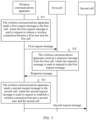
- the first request message includes but is not limited to a meaning or a function in step 301.
- the first request message sent by the wireless communications apparatus may be alternatively used to request to switch a state of the wireless communications apparatus in the first cell, or the first request message sent by the wireless communications apparatus may be alternatively used to request to change the wireless connection between the first user and the first cell.
- the paging signaling may alternatively page the wireless communications apparatus to perform another type of service in the second network. Examples are not described one by one herein.
- the paging signaling may include at least one of service type indication information and service QoS information.
- a service indicated by the service type indication information is at least one of a voice service, a data service, a low-latency service, a high-reliability service, or a low-latency and high-reliability service
- the service QoS information includes at least one of service QCI indication information, service latency requirement indication information, and service reliability requirement indication information.
- steps 301 to 303 are performed, otherwise, steps 301 to 303 may not be performed.
- the wireless communications apparatus Before step 301, in another possible case, the wireless communications apparatus actively initiates a service establishment process to the second cell, and the wireless communications apparatus performs steps 301 to 303.
- a priority of a service to be established in a service establishment process actively initiated by the wireless communications apparatus to the second cell is higher than the priority of the data transmission service that is performed by the wireless communications apparatus in the first network.
- the first request message may be RRC signaling, for example, may be user equipment assistance information (UE Assistance Information) signaling.
- the response message sent by the first cell may be an RRC connection reestablishment message, an RRC connection release message, an RRC connection reconfiguration message, or the like.
- the first request message may use an existing message, an information element (information element, IE) may be added to the first request message, and the added IE is used to indicate a state that the wireless communications apparatus prefers in the first network, or indicate a request for releasing or changing the wireless connection between the first user and the first cell.
- IE information element
- the first request message may be UE Assistance Information signaling in the existing 3rd generation partnership project (the 3rd generation partnership project, 3GPP) 36331 protocol.
- the first request message may include a newly added IE: rrcConnectionPreference -r15.
- the first request message may be as follows:
- rrcConnectionPreference -r15 indicates the state (or referred to as an RRC state) that the wireless communications apparatus prefers in the first network. Values associated with different states are different, and a value of rrcConnectionPreference -r15 is a value associated with the state that the wireless communications apparatus prefers. For example, a value associated with an inactive state is A, a value associated with a light connection state is B, a value associated with an idle state is C, and a value associated with a connected state is D. When the wireless communications apparatus prefers the light connection state, the value of rrcConnectionPreference -r15 in the first request message is B. Details may be as follows:
- the information element rrcConnectionPreference -r15 in the first request message may be alternatively replaced with any one of the following information elements:
- the first request message may alternatively include other content, and rrcConnectionPreference -r15 may alternatively be in another form. Examples are described one by one herein.
- the first request message may be alternatively a connection release request message (connection release request message), a connection change request message (connection change request message), a state change request message (state change request message), or the like.
- connection release request message connection release request message
- connection change request message connection change request message
- state change request message state change request message
- the first request message may be alternatively higher layer signaling such as a media access control (media access control, MAC) control element (control element, CE). Details are not described herein.
- media access control media access control, MAC
- CE control element
- steps 301 and 302 may have different scenarios. The following provides detailed descriptions.
- the wireless communications apparatus after the wireless communications apparatus sends the first request message and receives the response message from the first cell, the wireless communications apparatus enables the first user to switch to a preset state in the first network, where the preset state is an inactive (inactive) state, a light connection (light connection) state, or an idle (idle) state.
- the inactive state may be an RRC inactive state.
- the preset state is agreed on by the wireless communications apparatus and the network side in advance, and how to specifically agree on the preset state is not limited in this embodiment of this application.
- the first request message may include connection release indication information
- the connection release indication information may also be referred to as RRC connection release request indication information (rrcConnectionReleaseRequest, rrcConnRelRequest, or rrcConnRelReq), or referred to as RRC connection assistance indication information (rrcConnectionAssistance, rrcConnAssistance, or rrcConnAssis).
- the connection release indication information includes K bits, and K is an integer greater than 0.
- K is an integer greater than 0.
- a value of the connection release indication information is a first value, it indicates that the wireless connection between the first user and the first cell is requested to be released; or when a value of the connection release indication information is a second value, it indicates that the wireless connection between the first user and the first cell is requested to be maintained (or referred to as "not released").
- the second value is a value other than the first value.
- the connection release indication information includes one bit, the first value is 1, and the second value is 0.
- the value of the connection release indication information is 1, it indicates that the wireless connection between the first user and the first cell is requested to be released; or when the value of the connection release indication information is 0, it indicates that the wireless connection between the first user and the first cell is requested to be maintained.
- a value type of the connection release indication information may be alternatively a Boolean (BOOLEAN) type, which is specifically as follows: When the value of the connection release indication information is 1, it indicates that the wireless connection between the first user and the first cell is requested to be released; or when the value of the connection release indication information is 0, it indicates that the wireless connection between the first user and the first cell is requested to be maintained. Alternatively, when the value of the connection release indication information is 1, it indicates that the wireless connection between the first user and the first cell is requested to be maintained; or when the value of the connection release indication information is 0, it indicates that the wireless connection between the first user and the first cell is requested to be released.
- BOOLEAN Boolean
- the first request message when the first request message includes the connection release indication information, it indicates that the wireless connection between the first user and the first cell is requested to be released; or when the first request message does not include the connection release indication information, it indicates that the wireless connection between the first user and the first cell is requested to be maintained.
- the first request message when the first request message does not include the connection release indication information, it indicates that the wireless connection between the first user and the first cell is requested to be released; or when the first request message includes the connection release indication information, it indicates that the wireless connection between the first user and the first cell is requested to be maintained.
- signaling exchanged between the wireless communications apparatus and the first cell occupies a few resources, and after receiving the response message from the first cell, the wireless communications apparatus may release the wireless connection between the first user and the first cell, to quickly establish the wireless connection to the second cell, thereby reducing a delay of establishing a service in the second cell.
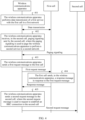
- the response message received by the wireless communications apparatus includes first state indication information, and the first state indication information indicates the first user to switch to the inactive state, the light connection state, or the idle state.
- the first state indication information may also be referred to as RRC connection preference indication information (rrcConnectionPreference, rrcConnPreference, or rrcConnPref).
- the wireless communications apparatus After the wireless communications apparatus receives the response message from the first cell, the wireless communications apparatus enables the first user to switch, in the first network, to the state indicated by the first state indication information.
- the first cell may switch the first user to a corresponding state based on an actual situation, so that implementation is more flexible.
- the first request message sent by the wireless communications apparatus may include second state indication information, and the second state indication information indicates the first user to enter the inactive state, the light connection state, or the idle state.
- the wireless communications apparatus may determine a preferred state based on a factor such as occupation of a current resource, to indicate the preferred state by using the second state indication information.
- the first cell may indicate the wireless communications apparatus to switch the state of the first user in the first cell to the state indicated by the second state indication information, or may indicate the wireless communications apparatus to switch the state of the first user in the first cell to another state. This is not limited in this embodiment of this application.
- the first request message sent by the wireless communications apparatus may further include a state switching request cause.
- the state switching request cause is that the second user performs any one of the following services in the second network: an emergency call, high priority access, mobile terminate-access, mobile originating signaling, mobile originating data, delay tolerant access, and a mobile originating voice call.
- the state switching request cause is that an uplink radio frequency of the wireless communications apparatus is occupied.
- state switching request cause may be another cause. Examples are not described one by one herein.
- the wireless communications apparatus may further start a timing module.
- Timing duration of the timing module is minimum interval duration for the sending module to send the first request message. In this case, before the timing module expires, the wireless communications apparatus no longer sends the first request message to the first cell. If the wireless communications apparatus can send the first request message only once, the wireless communications apparatus no longer sends the first request message to the first cell after the timing module expires.
- the wireless communications apparatus may further increase a count value of a counting module by 1.
- the counting module is configured to count a quantity of first request messages sent by the sending module.
- the wireless communications apparatus stops sending the first request message when the value counted by the counting module is greater than N, where N is a maximum value of a quantity of times that the wireless communications apparatus sends the first request message, and N is an integer greater than 0.
- the wireless communications apparatus no longer sends the first request message to the first cell when the value counted by the counting module is greater than N.
- the wireless communications apparatus may send the first request message to the first cell again when the value counted by the counting module is less than or equal to N.
- timing duration of the timing module and the value of N may be preconfigured by the first cell for the wireless communications apparatus.
- the timing duration of the timing module and the value of N are broadcast to the wireless communications apparatus, or the timing duration of the timing module and the value of N may be sent to the wireless communications apparatus by using RRC signaling. This is not limited in this embodiment of this application.
- the first request message sent by the wireless communications apparatus may be used to request to maintain the wireless connection between the first user and the first cell.
- the wireless communications apparatus cannot enable the first user to send uplink data to the first cell.
- the first network may still notify, by using dedicated signaling, the first user whether there is a new service to be established, thereby improving service establishment efficiency.
- the response message may include an uplink transmission resource (UpLink grant resource) configured for the wireless communications apparatus, and the uplink transmission resource is used to perform uplink data transmission when the first user restores transmission with the first network from the inactive state or the light connection state.
- UpLink grant resource configured for the wireless communications apparatus
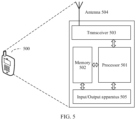
- the processor 501 is mainly configured to: process a communication protocol and communication data, control the entire wireless communications apparatus, execute a software program, and process data of the software program.
- the processor 501 is configured to support the wireless communications apparatus in performing the action described in the foregoing method embodiments, for example, sending a first request message to a first cell.
- the memory 502 is mainly configured to store the software program and data.
- the transceiver 503 is mainly configured to: perform conversion between a baseband signal and a radio frequency signal, and process the radio frequency signal.
- the antenna 504 is mainly configured to receive and send a radio frequency signal in a form of an electromagnetic wave.
- the input/output apparatus 505, such as a touchscreen, a display, or a keyboard, is mainly configured to: receive data input by a user, and output data to the user.
- the transceiver 503 is further configured to send a second request message to the second cell, where the second request message is used to request to establish a wireless connection between the second user and the second cell.
- FIG. 5 shows only one memory and one processor.
- the memory may also be referred to as a storage medium, a storage device, or the like. This is not limited in this embodiment of this application.
- the wireless communications apparatus is in a connected state in the first cell as the identity of the first user
- the wireless communications apparatus may directly determine the state of the first user in the first cell based on the first state indication information, thereby reducing a state switching delay and improving system efficiency.
- the wireless communications apparatus is in a connected state in the first cell as the identity of the first user; and the first request message includes second state indication information, and the second state indication information indicates an inactive state, a light connection state, or an idle state that the first user is to enter.
- the wireless communications apparatus indicates, by using the second state indication information, the state that the first user needs to maintain in the first cell, so that a network side can relatively quickly determine the state that is in the first cell for the wireless communications apparatus, thereby improving system efficiency.
- the wireless communications apparatus is in a connected state in the first cell as the identity of the first user; and after the transceiver 503 receives the response message from the first cell, the first communications module is further configured to enable the first user to switch to a preset state in the first network, where the preset state is an inactive state, a light connection state, or an idle state.
- the first request message includes a state switching request cause; and the state switching request cause is that the second user performs any one of the following services in the second network:
- the wireless communications apparatus further includes a timing module, and after the transceiver 503 sends the first request message to the first cell, the processor 501 is configured to: start the timing module, where timing duration of the timing module is minimum interval duration for the sending module to send the first request message.
- a frequency of sending the first request message can be effectively controlled by starting the timing module, thereby avoiding a signaling storm, and improving system resource utilization.
- the wireless communications apparatus further includes a counting module
- the processor 501 is further configured to: increase a count value of the counting module by 1, where the counting module is configured to count a quantity of sent first request messages; and the wireless communications apparatus stops sending the first request message when the value counted by the counting module is greater than N, where N is a maximum value of a quantity of times of sending the first request message, and N is an integer greater than 0.
- the first request message is user equipment assistance information signaling
- the first request message includes radio resource control RRC connection release request indication information
- the RRC connection release request indication information is used to request to release the wireless connection between the first user and the first cell.
- An embodiment of this application further provides a computer-readable medium.
- the computer-readable medium stores a computer program.
- the computer program is executed by a computer, the method according to any method embodiment is implemented.
- An embodiment of this application further provides a computer program product.
- the computer program product is executed by a computer, the method according to any method embodiment is implemented.
- the processor in the embodiments of this application may be a central processing unit (Central Processing Unit, CPU), or may be another general-purpose processor, a digital signal processor (digital signal processor, DSP), an application-specific integrated circuit (application specific integrated circuit, ASIC), a field programmable gate array (field programmable gate array, FPGA), or another programmable logical device, discrete gate or transistor logical device, discrete hardware component, or the like.
- the general-purpose processor may be a microprocessor, or the processor may be any conventional processor or the like.
- All or some of the foregoing embodiments may be implemented by using software, hardware (for example, a circuit), firmware, or any combination thereof.
- software is used to implement the embodiments, all or some of the foregoing embodiments may be implemented in a form of a computer program product.
- the computer program product includes one or more computer instructions or computer programs. When the program instructions or the computer programs are loaded and executed on the computer, the procedure or functions according to the embodiments of this application are all or partially generated.
- the computer may be a general-purpose computer, a special-purpose computer, a computer network, or another programmable apparatus.
- the computer instructions may be stored in a computer-readable storage medium or may be transmitted from a computer-readable storage medium to another computer-readable storage medium.
- the computer instructions may be transmitted from a website, computer, server, or data center to another website, computer, server, or data center in a wired (for example, infrared, radio, and microwave) manner.
- the computer-readable storage medium may be any usable medium accessible by the computer, or a data storage device, such as a server or a data center, including one or more usable medium sets.
- the usable medium may be a magnetic medium (for example, a floppy disk, a hard disk, or a magnetic tape), an optical medium (for example, a DVD), or a semiconductor medium.
- the semiconductor medium may be a solid-state drive.
- the disclosed system, apparatus, and method may be implemented in other manners.
- the described apparatus embodiment is merely an example.
- division into the units is merely logical function division and may be other division in actual implementation.
- a plurality of units or components may be combined or integrated into another system, or some features may be ignored or not performed.
- the displayed or discussed mutual couplings or direct couplings or communication connections may be implemented by using some interfaces.
- the indirect couplings or communication connections between the apparatuses or units may be implemented in electrical, mechanical, or other forms.
- the units described as separate parts may or may not be physically separate, and parts displayed as units may or may not be physical units, may be located in one position, or may be distributed on a plurality of network units. Some or all of the units may be selected based on actual requirements to achieve the objectives of the solutions of the embodiments.
- the functions When the functions are implemented in the form of a software functional unit and sold or used as an independent product, the functions may be stored in a computer-readable storage medium. Based on such an understanding, the technical solutions of this application essentially, or the part contributing to the prior art, or some of the technical solutions may be implemented in a form of a software product.
- the computer software product is stored in a storage medium, and includes several instructions for instructing a computer device (which may be a personal computer, a server, an access network device, or the like) to perform all or some of the steps of the methods described in the embodiments of this application.
- the foregoing storage medium includes: any medium that can store program code, such as a USB flash drive, a removable hard disk, a read-only memory (Read-Only Memory, ROM), a random access memory (Random Access Memory, RAM), a magnetic disk, or an optical disc.
- program code such as a USB flash drive, a removable hard disk, a read-only memory (Read-Only Memory, ROM), a random access memory (Random Access Memory, RAM), a magnetic disk, or an optical disc.
Landscapes
- Engineering & Computer Science (AREA)
- Signal Processing (AREA)
- Computer Networks & Wireless Communication (AREA)
- Computer Security & Cryptography (AREA)
- Mobile Radio Communication Systems (AREA)
Applications Claiming Priority (3)
| Application Number | Priority Date | Filing Date | Title |
|---|---|---|---|
| CN201810143194.9A CN110149732B (zh) | 2018-02-11 | 2018-02-11 | 一种通信方法及无线通信装置 |
| EP19751697.4A EP3749049B1 (de) | 2018-02-11 | 2019-01-24 | Kommunikationsverfahren und drahtloskommunikationsvorrichtung |
| PCT/CN2019/073014 WO2019154098A1 (zh) | 2018-02-11 | 2019-01-24 | 一种通信方法及无线通信装置 |
Related Parent Applications (2)
| Application Number | Title | Priority Date | Filing Date |
|---|---|---|---|
| EP19751697.4A Division-Into EP3749049B1 (de) | 2018-02-11 | 2019-01-24 | Kommunikationsverfahren und drahtloskommunikationsvorrichtung |
| EP19751697.4A Division EP3749049B1 (de) | 2018-02-11 | 2019-01-24 | Kommunikationsverfahren und drahtloskommunikationsvorrichtung |
Publications (2)
| Publication Number | Publication Date |
|---|---|
| EP4580109A2 true EP4580109A2 (de) | 2025-07-02 |
| EP4580109A3 EP4580109A3 (de) | 2025-08-20 |
Family
ID=67549188
Family Applications (2)
| Application Number | Title | Priority Date | Filing Date |
|---|---|---|---|
| EP25158684.8A Pending EP4580109A3 (de) | 2018-02-11 | 2019-01-24 | Kommunikationsverfahren und drahtlose kommunikationsvorrichtung |
| EP19751697.4A Active EP3749049B1 (de) | 2018-02-11 | 2019-01-24 | Kommunikationsverfahren und drahtloskommunikationsvorrichtung |
Family Applications After (1)
| Application Number | Title | Priority Date | Filing Date |
|---|---|---|---|
| EP19751697.4A Active EP3749049B1 (de) | 2018-02-11 | 2019-01-24 | Kommunikationsverfahren und drahtloskommunikationsvorrichtung |
Country Status (7)
| Country | Link |
|---|---|
| US (1) | US12133281B2 (de) |
| EP (2) | EP4580109A3 (de) |
| JP (2) | JP7106658B2 (de) |
| KR (1) | KR102346477B1 (de) |
| CN (3) | CN110149732B (de) |
| AU (1) | AU2019218060B2 (de) |
| WO (1) | WO2019154098A1 (de) |
Families Citing this family (17)
| Publication number | Priority date | Publication date | Assignee | Title |
|---|---|---|---|---|
| US20230189268A1 (en) * | 2019-08-09 | 2023-06-15 | Lg Electronics Inc. | Operating method for user equipment supporting multiple usim |
| CN112995981A (zh) * | 2019-12-17 | 2021-06-18 | 中国电信股份有限公司 | 网络连接的控制方法、装置和计算机可读存储介质 |
| CN113015260A (zh) * | 2019-12-19 | 2021-06-22 | 中国电信股份有限公司 | 网络连接方法、终端及计算机可读存储介质 |
| WO2021127981A1 (zh) * | 2019-12-24 | 2021-07-01 | 华为技术有限公司 | 无线通信的方法和无线通信装置 |
| US20210337481A1 (en) * | 2020-04-23 | 2021-10-28 | Qualcomm Incorporated | Application information aided fast dormancy |
| CN111343685B (zh) * | 2020-05-21 | 2020-09-18 | 北京小米移动软件有限公司 | 通信处理方法、通信处理装置及存储介质 |
| CN114205919B (zh) * | 2020-09-18 | 2025-06-06 | 维沃移动通信有限公司 | 离开方式确定方法、装置和通信设备 |
| CN114339905B (zh) * | 2020-09-30 | 2023-10-27 | 维沃移动通信有限公司 | 信息处理方法、装置、终端、网络侧设备及存储介质 |
| CN114667748B (zh) * | 2020-10-23 | 2024-04-30 | 北京小米移动软件有限公司 | 连接指示方法和装置、连接调整方法和装置 |
| CN114615753A (zh) * | 2020-12-04 | 2022-06-10 | 夏普株式会社 | 用户设备的连接方法以及用户设备 |
| CN114828296B (zh) * | 2021-01-19 | 2025-04-25 | 维沃移动通信有限公司 | 离开网络的操作方法、装置、设备及可读存储介质 |
| US20220248494A1 (en) * | 2021-01-22 | 2022-08-04 | Qualcomm Incorporated | Methods and systems for transitioning a user equipment to an inactive state |
| WO2022232985A1 (en) * | 2021-05-06 | 2022-11-10 | Qualcomm Incorporated | Multiple subscriber identity module (sim) user equipment (ue) forced radio access technology (rat) selection |
| US20220360664A1 (en) * | 2021-05-10 | 2022-11-10 | Apple Inc. | Obtaining a Caller ID on a Second SIM of a Multi-SIM User Equipment |
| CN115843125B (zh) * | 2023-03-01 | 2023-08-08 | 荣耀终端有限公司 | 通信方法和通信装置 |
| CN120075964A (zh) * | 2023-11-30 | 2025-05-30 | 中兴通讯股份有限公司 | 通信方法、装置及存储介质 |
| CN117858031B (zh) * | 2024-03-07 | 2024-05-28 | 深圳市汇杰芯科技有限公司 | 一种低延时无线对讲和tws无缝切换系统、方法及介质 |
Family Cites Families (22)
| Publication number | Priority date | Publication date | Assignee | Title |
|---|---|---|---|---|
| CN101287236B (zh) * | 2008-05-27 | 2012-09-26 | 德信无线通讯科技(北京)有限公司 | 一种双卡槽手机的连接方法及双卡槽手机 |
| ES2793573T3 (es) * | 2009-06-16 | 2020-11-16 | Blackberry Ltd | Método y aparato para acceder a un servicio no disponible a través de una celda de red |
| CN102045876A (zh) * | 2009-10-12 | 2011-05-04 | 展讯通信(上海)有限公司 | 双待终端来电处理方法及双待终端 |
| CN101801055A (zh) * | 2010-02-05 | 2010-08-11 | 上海顶竹通讯技术有限公司 | 不同网络之间的通信切换方法及其终端设备 |
| CN102348257B (zh) * | 2011-06-30 | 2014-04-09 | 展讯通信(上海)有限公司 | 终端及其冲突处理方法和装置 |
| CN102986261B (zh) * | 2011-07-15 | 2015-11-25 | 华为技术有限公司 | 处理寻呼的方法、用户设备和系统 |
| WO2012106896A1 (zh) * | 2011-07-18 | 2012-08-16 | 华为技术有限公司 | 一种语音回落的方法及设备 |
| WO2013124709A1 (en) * | 2012-02-23 | 2013-08-29 | Nokia Corporation | Method and apparatus for improved multi subscription operation |
| WO2013152477A1 (zh) * | 2012-04-10 | 2013-10-17 | 华为技术有限公司 | 通信网络中业务处理的方法及装置 |
| CN103517454A (zh) * | 2012-06-27 | 2014-01-15 | 联发科技股份有限公司 | 增强信令连接释放指示处理方法 |
| KR101933464B1 (ko) | 2012-09-19 | 2018-12-28 | 삼성전자주식회사 | 네트워크의 연결 상태를 변경할 수 있는 전자 장치 및 방법 |
| US20140274006A1 (en) * | 2013-03-15 | 2014-09-18 | Qualcomm Incorporated | System and methods for avoiding call failures in dual-sim devices |
| US20150023258A1 (en) * | 2013-07-19 | 2015-01-22 | Qualcomm Incorporated | Dual sim dual active subscriber identification module with a single transmit chain and dual or single receive chain |
| US9402241B2 (en) | 2014-03-27 | 2016-07-26 | Google Technology Holdings LLC | Method and apparatus for data stream registration switching |
| CN106465464B (zh) * | 2014-05-30 | 2020-02-28 | 苹果公司 | 支持无线通信设备中多个用户身份并行通信的方法和设备 |
| CN106464611B (zh) * | 2014-05-30 | 2019-11-12 | 苹果公司 | 对于无线通信设备中多个用户身份重复使用无线电路的方法和装置 |
| WO2015180126A1 (en) * | 2014-05-30 | 2015-12-03 | Apple Inc. | Methods and apparatus to support multiple subscriber identities in wireless communication device |
| KR102338394B1 (ko) * | 2015-05-29 | 2021-12-13 | 삼성전자주식회사 | 통신 방법 및 전자 장치 |
| CN105338178B (zh) * | 2015-09-30 | 2019-06-11 | 宇龙计算机通信科技(深圳)有限公司 | 基于双卡双待单通终端的通信方法及装置 |
| CN106922004B (zh) * | 2015-12-28 | 2020-10-16 | 宇龙计算机通信科技(深圳)有限公司 | 一种多sim卡终端呼叫控制方法及装置 |
| CN109076455B (zh) * | 2016-05-12 | 2021-04-30 | 瑞典爱立信有限公司 | 用于处理无线通信网络中的操作模式的通信装置及其中的方法 |
| KR102550591B1 (ko) * | 2016-06-14 | 2023-07-04 | 삼성전자주식회사 | 전자 장치에서 가입자 식별 모듈을 연결하는 방법 및 그에 따른 전자 장치 |
-
2018
- 2018-02-11 CN CN201810143194.9A patent/CN110149732B/zh active Active
-
2019
- 2019-01-24 EP EP25158684.8A patent/EP4580109A3/de active Pending
- 2019-01-24 KR KR1020207025878A patent/KR102346477B1/ko active Active
- 2019-01-24 CN CN201980012846.8A patent/CN111713175B/zh active Active
- 2019-01-24 EP EP19751697.4A patent/EP3749049B1/de active Active
- 2019-01-24 JP JP2020543002A patent/JP7106658B2/ja not_active Expired - Fee Related
- 2019-01-24 AU AU2019218060A patent/AU2019218060B2/en active Active
- 2019-01-24 CN CN202211548253.3A patent/CN116017767A/zh active Pending
- 2019-01-24 WO PCT/CN2019/073014 patent/WO2019154098A1/zh not_active Ceased
-
2020
- 2020-08-10 US US16/989,189 patent/US12133281B2/en active Active
-
2022
- 2022-07-13 JP JP2022112485A patent/JP7615088B2/ja active Active
Also Published As
| Publication number | Publication date |
|---|---|
| EP3749049B1 (de) | 2025-03-26 |
| CN116017767A (zh) | 2023-04-25 |
| JP2022145695A (ja) | 2022-10-04 |
| US12133281B2 (en) | 2024-10-29 |
| CN111713175A (zh) | 2020-09-25 |
| EP3749049A1 (de) | 2020-12-09 |
| CN111713175B (zh) | 2022-12-06 |
| EP3749049A4 (de) | 2021-04-07 |
| AU2019218060B2 (en) | 2023-02-02 |
| US20200374973A1 (en) | 2020-11-26 |
| KR20200116511A (ko) | 2020-10-12 |
| EP4580109A3 (de) | 2025-08-20 |
| EP3749049C0 (de) | 2025-03-26 |
| CN110149732B (zh) | 2021-12-31 |
| KR102346477B1 (ko) | 2022-01-03 |
| JP7615088B2 (ja) | 2025-01-16 |
| AU2019218060A1 (en) | 2020-09-10 |
| WO2019154098A1 (zh) | 2019-08-15 |
| JP2021513294A (ja) | 2021-05-20 |
| JP7106658B2 (ja) | 2022-07-26 |
| CN110149732A (zh) | 2019-08-20 |
Similar Documents
| Publication | Publication Date | Title |
|---|---|---|
| US12133281B2 (en) | Communication method and wireless communications apparatus | |
| US9420533B2 (en) | Discontinuous reception | |
| CN111556589B (zh) | 通信的方法、终端和接入网设备 | |
| US20120322515A1 (en) | Apparatus and Method to Indicate Power Saving Mode of a Network Element | |
| KR102240644B1 (ko) | 데이터 전송/수신 장치 및 방법, 및 통신 시스템 | |
| CN110892762B (zh) | 寻呼的方法、终端设备和网络设备 | |
| CN112888000B (zh) | 一种无线资源控制连接方法及设备、计算机存储介质 | |
| CN102892103B (zh) | 无线通信装置及轮询响应管理方法 | |
| US20200323015A1 (en) | Configuration Method and Apparatus for Beam Failure Recovery and Communication System | |
| CN110784942A (zh) | 一种连接建立方法及装置 | |
| CN103517453A (zh) | 用户设备在pch状态下的释放方法及装置 | |
| US20260067770A1 (en) | Path processing method and apparatus and communication system | |
| GB2574016A (en) | Apparatus, method and computer program | |
| WO2021169821A1 (zh) | 下行控制信道的检测方法及相关装置 | |
| HK1262282B (zh) | 数据传输的方法、接入网设备、终端设备和网络实体 | |
| WO2014012254A1 (zh) | 移动信息处理方法及基站、移动管理设备 | |
| HK1247506B (zh) | 连接建立的方法和装置 |
Legal Events
| Date | Code | Title | Description |
|---|---|---|---|
| PUAI | Public reference made under article 153(3) epc to a published international application that has entered the european phase |
Free format text: ORIGINAL CODE: 0009012 |
|
| STAA | Information on the status of an ep patent application or granted ep patent |
Free format text: STATUS: THE APPLICATION HAS BEEN PUBLISHED |
|
| AC | Divisional application: reference to earlier application |
Ref document number: 3749049 Country of ref document: EP Kind code of ref document: P |
|
| AK | Designated contracting states |
Kind code of ref document: A2 Designated state(s): AL AT BE BG CH CY CZ DE DK EE ES FI FR GB GR HR HU IE IS IT LI LT LU LV MC MK MT NL NO PL PT RO RS SE SI SK SM TR |
|
| REG | Reference to a national code |
Ref country code: DE Ref legal event code: R079 Free format text: PREVIOUS MAIN CLASS: H04L0005000000 Ipc: H04W0076300000 |
|
| PUAL | Search report despatched |
Free format text: ORIGINAL CODE: 0009013 |
|
| AK | Designated contracting states |
Kind code of ref document: A3 Designated state(s): AL AT BE BG CH CY CZ DE DK EE ES FI FR GB GR HR HU IE IS IT LI LT LU LV MC MK MT NL NO PL PT RO RS SE SI SK SM TR |
|
| RIC1 | Information provided on ipc code assigned before grant |
Ipc: H04W 76/30 20180101AFI20250716BHEP Ipc: H04W 48/18 20090101ALI20250716BHEP Ipc: H04W 60/00 20090101ALI20250716BHEP Ipc: H04W 68/00 20090101ALN20250716BHEP Ipc: H04W 76/15 20180101ALN20250716BHEP Ipc: H04W 76/27 20180101ALN20250716BHEP Ipc: H04L 5/00 20060101ALN20250716BHEP |
|
| STAA | Information on the status of an ep patent application or granted ep patent |
Free format text: STATUS: REQUEST FOR EXAMINATION WAS MADE |
|
| 17P | Request for examination filed |
Effective date: 20260220 |