EP4579922A2 - Hydrogelzusammensetzung, hydrogelverstärkter cellulosepapierbatterieseparator und papierbatterie damit - Google Patents
Hydrogelzusammensetzung, hydrogelverstärkter cellulosepapierbatterieseparator und papierbatterie damit Download PDFInfo
- Publication number
- EP4579922A2 EP4579922A2 EP24223440.9A EP24223440A EP4579922A2 EP 4579922 A2 EP4579922 A2 EP 4579922A2 EP 24223440 A EP24223440 A EP 24223440A EP 4579922 A2 EP4579922 A2 EP 4579922A2
- Authority
- EP
- European Patent Office
- Prior art keywords
- hydrogel
- cellulose paper
- paper battery
- acrylamide
- battery separator
- Prior art date
- Legal status (The legal status is an assumption and is not a legal conclusion. Google has not performed a legal analysis and makes no representation as to the accuracy of the status listed.)
- Pending
Links
Images

Classifications
-
- H—ELECTRICITY
- H01—ELECTRIC ELEMENTS
- H01M—PROCESSES OR MEANS, e.g. BATTERIES, FOR THE DIRECT CONVERSION OF CHEMICAL ENERGY INTO ELECTRICAL ENERGY
- H01M50/00—Constructional details or processes of manufacture of the non-active parts of electrochemical cells other than fuel cells, e.g. hybrid cells
- H01M50/40—Separators; Membranes; Diaphragms; Spacing elements inside cells
- H01M50/409—Separators, membranes or diaphragms characterised by the material
- H01M50/44—Fibrous material
-
- C—CHEMISTRY; METALLURGY
- C08—ORGANIC MACROMOLECULAR COMPOUNDS; THEIR PREPARATION OR CHEMICAL WORKING-UP; COMPOSITIONS BASED THEREON
- C08F—MACROMOLECULAR COMPOUNDS OBTAINED BY REACTIONS ONLY INVOLVING CARBON-TO-CARBON UNSATURATED BONDS
- C08F220/00—Copolymers of compounds having one or more unsaturated aliphatic radicals, each having only one carbon-to-carbon double bond, and only one being terminated by only one carboxyl radical or a salt, anhydride ester, amide, imide or nitrile thereof
- C08F220/02—Monocarboxylic acids having less than ten carbon atoms; Derivatives thereof
- C08F220/52—Amides or imides
- C08F220/54—Amides, e.g. N,N-dimethylacrylamide or N-isopropylacrylamide
- C08F220/56—Acrylamide; Methacrylamide
-
- H—ELECTRICITY
- H01—ELECTRIC ELEMENTS
- H01M—PROCESSES OR MEANS, e.g. BATTERIES, FOR THE DIRECT CONVERSION OF CHEMICAL ENERGY INTO ELECTRICAL ENERGY
- H01M50/00—Constructional details or processes of manufacture of the non-active parts of electrochemical cells other than fuel cells, e.g. hybrid cells
- H01M50/40—Separators; Membranes; Diaphragms; Spacing elements inside cells
- H01M50/403—Manufacturing processes of separators, membranes or diaphragms
-
- H—ELECTRICITY
- H01—ELECTRIC ELEMENTS
- H01M—PROCESSES OR MEANS, e.g. BATTERIES, FOR THE DIRECT CONVERSION OF CHEMICAL ENERGY INTO ELECTRICAL ENERGY
- H01M50/00—Constructional details or processes of manufacture of the non-active parts of electrochemical cells other than fuel cells, e.g. hybrid cells
- H01M50/40—Separators; Membranes; Diaphragms; Spacing elements inside cells
- H01M50/409—Separators, membranes or diaphragms characterised by the material
- H01M50/411—Organic material
- H01M50/414—Synthetic resins, e.g. thermoplastics or thermosetting resins
- H01M50/423—Polyamide resins
-
- H—ELECTRICITY
- H01—ELECTRIC ELEMENTS
- H01M—PROCESSES OR MEANS, e.g. BATTERIES, FOR THE DIRECT CONVERSION OF CHEMICAL ENERGY INTO ELECTRICAL ENERGY
- H01M50/00—Constructional details or processes of manufacture of the non-active parts of electrochemical cells other than fuel cells, e.g. hybrid cells
- H01M50/40—Separators; Membranes; Diaphragms; Spacing elements inside cells
- H01M50/409—Separators, membranes or diaphragms characterised by the material
- H01M50/411—Organic material
- H01M50/429—Natural polymers
- H01M50/4295—Natural cotton, cellulose or wood
-
- H—ELECTRICITY
- H01—ELECTRIC ELEMENTS
- H01M—PROCESSES OR MEANS, e.g. BATTERIES, FOR THE DIRECT CONVERSION OF CHEMICAL ENERGY INTO ELECTRICAL ENERGY
- H01M50/00—Constructional details or processes of manufacture of the non-active parts of electrochemical cells other than fuel cells, e.g. hybrid cells
- H01M50/40—Separators; Membranes; Diaphragms; Spacing elements inside cells
- H01M50/46—Separators, membranes or diaphragms characterised by their combination with electrodes
-
- Y—GENERAL TAGGING OF NEW TECHNOLOGICAL DEVELOPMENTS; GENERAL TAGGING OF CROSS-SECTIONAL TECHNOLOGIES SPANNING OVER SEVERAL SECTIONS OF THE IPC; TECHNICAL SUBJECTS COVERED BY FORMER USPC CROSS-REFERENCE ART COLLECTIONS [XRACs] AND DIGESTS
- Y02—TECHNOLOGIES OR APPLICATIONS FOR MITIGATION OR ADAPTATION AGAINST CLIMATE CHANGE
- Y02E—REDUCTION OF GREENHOUSE GAS [GHG] EMISSIONS, RELATED TO ENERGY GENERATION, TRANSMISSION OR DISTRIBUTION
- Y02E60/00—Enabling technologies; Technologies with a potential or indirect contribution to GHG emissions mitigation
- Y02E60/10—Energy storage using batteries
Definitions
- the invention relates to battery technology, specifically to a hydrogel composition, a hydrogel-reinforced cellulose paper separator designed for use in batteries, and a paper battery comprising the hydrogel-reinforced cellulose paper separator.
- a paper battery is a flexible, ultra-thin energy storage and production device formed by combining carbon nanotubes with a conventional sheet of cellulose-based paper.
- a paper battery acts as both a high-energy battery and super capacitor, combining two components that are separate in traditional electronics. This combination allows the battery to provide both long-term, steady power production and bursts of energy.
- Non-toxic, flexible paper batteries have the potential to power the next generation of electronics, medical devices and hybrid vehicles, allowing for radical new designs and medical technologies.
- the battery separator is a thin, polymeric membrane that is placed between a battery's anode and cathode to prevent short circuits and maintain the battery's safety and performance.
- the battery separator prevents electrical conduction while still allowing ionic conduction, and keeps the anode and cathode from touching, which can cause fires, explosions, or other malfunctions.
- separators There are many types of separators, including polyolefin, nonwoven, and ceramic composite separators.
- the material used to make the separator, as well as its structure, must be chemically and electrochemically stable and mechanically strong enough to withstand the high tension during battery construction.
- the present invention provides a hydrogel composition for reinforcing a cellulose paper battery separator, aiming to improve mechanical strength, thermal stability, electrochemical efficiency, and composability of batteries, for example, paper batteries.
- the hydrogel composition comprises a monomer, a cross-linking reagent, an initiator, and a metal salt, where the monomer is one selected from the group consisting of acrylamide, vinyl alcohol, ethylene glycol, and chitosan, the cross-linking reagent is one selected from the group consisting of N,N'-methylenebis(acrylamide), and glutaraldehyde, the initiator is one selected from the group consisting of potassium persulfate, ammonium persulfate, and azobisisobutyronitrile, and the metal salt is zinc salt.
- the zinc salt is one selected from the group consisting of ZnSO 4 , zinc acetate, and zinc chloride.
- the hydrogel composition comprises acrylamide in the range of 0.7M to 2.8M, N, N'-methylenebis(acrylamide) in the range of 0.002M to 0.3M, potassium persulfate in the range of 0.03M to 0.12M, and ZnSO 4 in the range of 1.0M to 3.0M.
- the present invention also provides a hydrogel-reinforced cellulose paper battery separator.
- the hydrogel-reinforced cellulose paper battery separator comprises a cellulose paper, and a hydrogel integrated within the cellulose paper, wherein the hydrogel is derived from the hydrogel composition comprising acrylamide, N,N'-methylenebis(acrylamide), potassium persulfate, and a zinc salt.
- the acrylamide is in the range of 0.7M to 2.8M
- the N, N'-methylenebis(acrylamide) in the range of 0.002M to 0.3M
- the potassium persulfate in the range of 0.03M to 0.12M
- the ZnSO 4 in the range of 1.0M to 3.0M.
- the present invention further provides a method for fabricating a hydrogel-reinforced cellulose paper battery separator.
- the method comprises placing a cellulose paper into a mold, preparing a hydrogel composition by combining acrylamide, N,N'-methylenebis(acrylamide), potassium persulfate, and a zinc salt in deionized water, applying the hydrogel composition into the mold; covering the lid of the mold with a clipper to prevent air entering; and curing at a controlled temperature and pressure to form a hydrogel-reinforced cellulose paper battery separator.
- the curing is done by putting the mold into a vacuum oven for 4-8 hours at 30-90°C.
- the present invention provides a hydrogel composition that can be used to reinforce a cellulose paper to produce a hydrogel-reinforced cellulose paper battery separator.
- the hydrogel-reinforced cellulose paper separator serves to prevent direct contact between the battery's positive and negative electrodes, facilitating ion transport, and thus reducing internal resistance. This results in improved battery performance, safety, and longevity.
- the hydrogel composition comprises a monomer, a cross-linking reagent, an initiator, and a metal salt, where the monomer is one selected from the group consisting of acrylamide, vinyl alcohol, ethylene glycol, and chitosan, the cross-linking reagent is one selected from the group consisting of N,N'-methylenebis(acrylamide), and glutaraldehyde, the initiator is one selected from the group consisting of potassium persulfate, ammonium persulfate, and azobisisobutyronitrile, and the metal salt is zinc salt.
- the zinc salt is one selected from the group consisting of ZnSO 4 , zinc acetate, and zinc chloride.
- the hydrogel composition comprises acrylamide in the range of 0.7M to 2.8M, N, N'-methylenebis(acrylamide) in the range of 0.002M to 0.3M, potassium persulfate in the range of 0.03M to 0.12M, zinc salt (ZnSO 4 ) in the range of 1.0M to 3.0M, and water.
- the present invention provides a hydrogel-reinforced cellulose paper battery separator.
- Cellulose is a natural polymer composed of long chains of glucose units, typically sourced from plants, agricultural waste, or bacterial cellulose. It naturally has a porous structure, allowing for modification to achieve well-defined pore sizes that enhance ionic conductivity.
- the strong hydrogen-bonded network in cellulose contributes to its mechanical stability and flexibility, making it an excellent choice for use in battery separators.
- cellulose is chemically stable, low-cost, and environmentally friendly. Paper made from cellulose fibers thus enhances the mechanical performance of the gel in battery separators, providing both structural support and improved ion flow
- the hydrogel-reinforced cellulose paper battery separator comprises a cellulose paper, and a hydrogel integrated within the cellulose paper, wherein the hydrogel is derived from the hydrogel composition comprising acrylamide, N,N'-methylenebis(acrylamide), potassium persulfate, and a zinc salt.
- the acrylamide is in the range of 0.7M to 2.8M
- the N, N'-methylenebis(acrylamide) in the range of 0.002M to 0.3M
- the potassium persulfate in the range of 0.03M to 0.12M
- the ZnSO 4 in the range of 1.0M to 3.0M.
- the cellulose paper its dimensions are adaptable to any specific application to ensure the hydrogel-reinforced cellulose paper battery separator function properly.
- the cellulose paper can have a length of 4-7 cm, a width of 3-6 cm, a thickness of 150-200 ⁇ m, and a pore size of less than 8 ⁇ m.
- the present invention further provides a method for fabricating a hydrogel-reinforced cellulose paper battery separator.
- the method comprises placing a cellulose paper into a mold, preparing a hydrogel composition by combining acrylamide, N,N'-methylenebis(acrylamide), potassium persulfate, and a zinc salt in deionized water, applying the hydrogel composition into the mold; covering the lid of the mold with a clipper to prevent air entering; and curing at a controlled temperature and pressure to form a hydrogel-reinforced cellulose paper battery separator.
- the curing is done by putting the mold into a vacuum oven for 4-8 hours at 30-90°C.
- the hydrogel composition is prepared by dissolving 2M acrylamide, 0.05M N,N'-methylenebis(acrylamide), 0.05M potassium persulfate, and varying concentrations of ZnSO 4 in deionized water to achieve optimum ionic conductivity in Zn-based paper battery.
- Example 1 Hydrogel composition from 1 M ZnSO4 aqueous solution comprising acrylamide, N,N'-methylenebis(acrylamide), and potassium persulfate.
- the hydrogel composition is prepared by dissolving 1 M ZnSO4, 2 M acrylamide, 0.05 M N,N'-methylenebis(acrylamide), and 0.05 M potassium persulfate in deionized water.
- Example 2 Hydrogel composition from 2 M ZnSO4 aqueous solution comprising acrylamide, N,N'-methylenebis(acrylamide), and potassium persulfate.
- the hydrogel composition is prepared by dissolving 2 M ZnSO4, 2 M acrylamide, 0.05 M N,N'-methylenebis(acrylamide), and 0.05 M potassium persulfate in deionized water.
- Example 3 Hydrogel composition from 3 M ZnSO4 aqueous solution comprising acrylamide, N,N'-methylenebis(acrylamide) , and potassium persulfate .
- the hydrogel composition is prepared by dissolving 3 M ZnSO4, 2 M acrylamide, 0.05 M N,N'-methylenebis(acrylamide), and 0.05 M potassium persulfate in deionized water.
- Table 1 The effect of ZnSO4 concentration on the resistance of hydrogel composition Concentration of ZnSO 4 Resistance 1 M 3.046 ⁇ 2 M 1.738 ⁇ 3 M 2.232 ⁇
- the paper battery with only cellulose paper as separator exhibited 3.7 time higher resistance (6.492 ⁇ ) than that of hydrogel-reinforced cellulose paper separator at 2 M concentration of ZnSO4 because of the poor ion transport through the rigid cellulose paper.
- the hydrogel-reinforced cellulose paper battery separator is fabricated by the following steps:
- Example 1 Hydrogel-reinforced cellulose paper comprising cellulose paper, acrylamide, N,N'-methylenebis(acrylamide), potassium persulfate, and ZnSO4 cured at 30 °C for 6h.
- Example 2 Hydrogel-reinforced cellulose paper comprising cellulose paper, acrylamide, N,N'-methylenebis(acrylamide), potassium persulfate, and ZnSO4 cured at 60 °C for 6h.
- Example 3 Hydrogel-reinforced cellulose paper comprising cellulose paper, acrylamide, N,N'-methylenebis(acrylamide), potassium persulfate, and ZnSO4 cured at 60 °C for 8h. Table 3. The effect of curing time on the resistance of hydrogel- reinforced cellulose paper separator Curing time Resistance 4 h 2.397 ⁇ 6 h 1.738 ⁇ 8 h 2.521 ⁇
- ⁇ L R bulk ⁇ A
- L Thickness of electrolyte or material (cm)
- Rbulk Bulk resistance (ohm)
- A Cross-sectional area (cm 2 ).
- the hydrogel-reinforced cellulose paper battery separator absorbs liquid electrolyte, allowing for ion transport through its structure. This configuration provides mechanical flexibility and minimizes electrolyte leakage, making it advantageous for applications requiring high flexibility and stable ionic conduction.
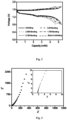
- the tested electrolyte of the hydrogel-reinforced cellulose paper battery separator demonstrates an ionic conductivity of 3.4 ⁇ 10 -3 S/cm at room temperature, indicating effective ion transport through the hydrogel-reinforced cellulose paper battery separator, which is suitable for flexible or wearable applications where robust ionic conductivity is necessary under dynamic conditions.
Landscapes
- Chemical & Material Sciences (AREA)
- Chemical Kinetics & Catalysis (AREA)
- Electrochemistry (AREA)
- General Chemical & Material Sciences (AREA)
- Engineering & Computer Science (AREA)
- Manufacturing & Machinery (AREA)
- Life Sciences & Earth Sciences (AREA)
- Wood Science & Technology (AREA)
- Organic Chemistry (AREA)
- Polymers & Plastics (AREA)
- Medicinal Chemistry (AREA)
- Health & Medical Sciences (AREA)
- Cell Separators (AREA)
- Primary Cells (AREA)
Applications Claiming Priority (1)
| Application Number | Priority Date | Filing Date | Title |
|---|---|---|---|
| SG10202303678T | 2023-12-29 |
Publications (2)
| Publication Number | Publication Date |
|---|---|
| EP4579922A2 true EP4579922A2 (de) | 2025-07-02 |
| EP4579922A3 EP4579922A3 (de) | 2025-08-27 |
Family
ID=95937332
Family Applications (1)
| Application Number | Title | Priority Date | Filing Date |
|---|---|---|---|
| EP24223440.9A Pending EP4579922A3 (de) | 2023-12-29 | 2024-12-27 | Hydrogelzusammensetzung, hydrogelverstärkter cellulosepapierbatterieseparator und papierbatterie damit |
Country Status (4)
| Country | Link |
|---|---|
| US (1) | US20250219246A1 (de) |
| EP (1) | EP4579922A3 (de) |
| AU (1) | AU2024287128A1 (de) |
| WO (1) | WO2025144102A1 (de) |
Families Citing this family (2)
| Publication number | Priority date | Publication date | Assignee | Title |
|---|---|---|---|---|
| CN120767443A (zh) * | 2025-07-14 | 2025-10-10 | 中国铁塔股份有限公司 | 一种水凝胶电解质、水系锌基电池及其制备方法 |
| CN121035383A (zh) * | 2025-10-27 | 2025-11-28 | 深圳大学 | 用于宽温域锌电池的温度响应复合凝胶电解质、制备方法及锌电池 |
Family Cites Families (2)
| Publication number | Priority date | Publication date | Assignee | Title |
|---|---|---|---|---|
| CN114899508A (zh) * | 2022-03-23 | 2022-08-12 | 武汉大学 | 一种超薄电池及其制备方法 |
| CN116103921A (zh) * | 2023-04-14 | 2023-05-12 | 贵州大学 | 一种柔性、抗枝晶水凝胶电解质膜的制备方法及其应用 |
-
2024
- 2024-12-20 AU AU2024287128A patent/AU2024287128A1/en active Pending
- 2024-12-27 EP EP24223440.9A patent/EP4579922A3/de active Pending
- 2024-12-27 US US19/002,778 patent/US20250219246A1/en active Pending
- 2024-12-27 WO PCT/SG2024/050834 patent/WO2025144102A1/en active Pending
Also Published As
| Publication number | Publication date |
|---|---|
| US20250219246A1 (en) | 2025-07-03 |
| WO2025144102A1 (en) | 2025-07-03 |
| EP4579922A3 (de) | 2025-08-27 |
| AU2024287128A1 (en) | 2025-07-17 |
Similar Documents
| Publication | Publication Date | Title |
|---|---|---|
| EP4579922A2 (de) | Hydrogelzusammensetzung, hydrogelverstärkter cellulosepapierbatterieseparator und papierbatterie damit | |
| JP7745567B2 (ja) | メタルフリー高電圧バッテリ | |
| US7006346B2 (en) | Positive electrode of an electric double layer capacitor | |
| CN110176591B (zh) | 一种水系锌离子二次电池及其基于有机电极材料的正极的制备方法 | |
| JP2023521861A (ja) | 水性高電圧亜鉛アノードバッテリ | |
| CN114853942B (zh) | 用于锌锰电池的水凝胶电解质及其制备方法、锌锰电池及其制备方法 | |
| KR102952797B1 (ko) | 금속 기반 배터리의 에너지 밀도를 증가시키기 위한 이중 전해질 접근법 | |
| JP2023523554A5 (de) | ||
| CN114667626A (zh) | 使用聚合物凝胶电解质的水性电化学单元电池 | |
| US9190221B2 (en) | Aqueous-based electric double-layer capacitor | |
| WO2021081394A1 (en) | Dual electrolyte approach for high voltage batteries | |
| CN115911591B (zh) | 一种本征可拉伸聚合物电解质及其制备方法与应用 | |
| CN112952077A (zh) | 柔性锌离子电池及其制备方法 | |
| CN111171185A (zh) | 作为粘结剂的环糊精串接聚苯胺预聚体的制备及使用方法 | |
| US20160042877A1 (en) | Aqueous-based electric double-layer capacitor | |
| CN108511855A (zh) | 一种Li/Na复合金属负极的Li/Na-O2二次电池 | |
| KR102568421B1 (ko) | 막전극접합체 및 이를 포함하는 아연-브롬 슈퍼커패터리 | |
| CN111640933A (zh) | 二氧化锰/碳纳米管泡沫材料、锌锰电池、其制法与应用 | |
| US20260112549A1 (en) | High-performance solid state electrolyte based on solid acid with low self-discharge and exceptional ionic conductivity | |
| KR102591528B1 (ko) | 아연-브롬 전지용 전극 및 이를 포함하는 아연-브롬 전지 | |
| EP4583229A1 (de) | Zweiphasige eutectogelentkopplungselektrolyte sowie herstellungsverfahren und anwendung davon | |
| JPH05178949A (ja) | イオン伝導性高分子化合物 | |
| KR20250110486A (ko) | 셀룰로오스 하이드로 겔을 포함하는 아연-브롬 전지 | |
| CN120824132A (zh) | 一种柔性准固态电解质及储能器件的制备方法 | |
| CN119029143A (zh) | 一种石墨负极及其制备方法和全固态锂离子电池 |
Legal Events
| Date | Code | Title | Description |
|---|---|---|---|
| PUAI | Public reference made under article 153(3) epc to a published international application that has entered the european phase |
Free format text: ORIGINAL CODE: 0009012 |
|
| STAA | Information on the status of an ep patent application or granted ep patent |
Free format text: STATUS: THE APPLICATION HAS BEEN PUBLISHED |
|
| AK | Designated contracting states |
Kind code of ref document: A2 Designated state(s): AL AT BE BG CH CY CZ DE DK EE ES FI FR GB GR HR HU IE IS IT LI LT LU LV MC ME MK MT NL NO PL PT RO RS SE SI SK SM TR |
|
| PUAL | Search report despatched |
Free format text: ORIGINAL CODE: 0009013 |
|
| AK | Designated contracting states |
Kind code of ref document: A3 Designated state(s): AL AT BE BG CH CY CZ DE DK EE ES FI FR GB GR HR HU IE IS IT LI LT LU LV MC ME MK MT NL NO PL PT RO RS SE SI SK SM TR |
|
| RIC1 | Information provided on ipc code assigned before grant |
Ipc: H01M 50/403 20210101AFI20250724BHEP Ipc: H01M 50/429 20210101ALI20250724BHEP Ipc: H01M 50/44 20210101ALI20250724BHEP |
|
| STAA | Information on the status of an ep patent application or granted ep patent |
Free format text: STATUS: REQUEST FOR EXAMINATION WAS MADE |
|
| 17P | Request for examination filed |
Effective date: 20260226 |