EP4576294A1 - Batteriezelle und elektrodenanordnung - Google Patents
Batteriezelle und elektrodenanordnung Download PDFInfo
- Publication number
- EP4576294A1 EP4576294A1 EP24221391.6A EP24221391A EP4576294A1 EP 4576294 A1 EP4576294 A1 EP 4576294A1 EP 24221391 A EP24221391 A EP 24221391A EP 4576294 A1 EP4576294 A1 EP 4576294A1
- Authority
- EP
- European Patent Office
- Prior art keywords
- electrode
- region
- uncoated part
- battery cell
- disposed
- Prior art date
- Legal status (The legal status is an assumption and is not a legal conclusion. Google has not performed a legal analysis and makes no representation as to the accuracy of the status listed.)
- Pending
Links
Images



Classifications
-
- H—ELECTRICITY
- H01—ELECTRIC ELEMENTS
- H01M—PROCESSES OR MEANS, e.g. BATTERIES, FOR THE DIRECT CONVERSION OF CHEMICAL ENERGY INTO ELECTRICAL ENERGY
- H01M50/00—Constructional details or processes of manufacture of the non-active parts of electrochemical cells other than fuel cells, e.g. hybrid cells
- H01M50/50—Current conducting connections for cells or batteries
- H01M50/531—Electrode connections inside a battery casing
- H01M50/538—Connection of several leads or tabs of wound or folded electrode stacks
-
- H—ELECTRICITY
- H01—ELECTRIC ELEMENTS
- H01M—PROCESSES OR MEANS, e.g. BATTERIES, FOR THE DIRECT CONVERSION OF CHEMICAL ENERGY INTO ELECTRICAL ENERGY
- H01M10/00—Secondary cells; Manufacture thereof
- H01M10/04—Construction or manufacture in general
- H01M10/0431—Cells with wound or folded electrodes
-
- H—ELECTRICITY
- H01—ELECTRIC ELEMENTS
- H01M—PROCESSES OR MEANS, e.g. BATTERIES, FOR THE DIRECT CONVERSION OF CHEMICAL ENERGY INTO ELECTRICAL ENERGY
- H01M10/00—Secondary cells; Manufacture thereof
- H01M10/04—Construction or manufacture in general
- H01M10/0422—Cells or battery with cylindrical casing
-
- H—ELECTRICITY
- H01—ELECTRIC ELEMENTS
- H01M—PROCESSES OR MEANS, e.g. BATTERIES, FOR THE DIRECT CONVERSION OF CHEMICAL ENERGY INTO ELECTRICAL ENERGY
- H01M10/00—Secondary cells; Manufacture thereof
- H01M10/05—Accumulators with non-aqueous electrolyte
- H01M10/052—Li-accumulators
-
- H—ELECTRICITY
- H01—ELECTRIC ELEMENTS
- H01M—PROCESSES OR MEANS, e.g. BATTERIES, FOR THE DIRECT CONVERSION OF CHEMICAL ENERGY INTO ELECTRICAL ENERGY
- H01M10/00—Secondary cells; Manufacture thereof
- H01M10/05—Accumulators with non-aqueous electrolyte
- H01M10/052—Li-accumulators
- H01M10/0525—Rocking-chair batteries, i.e. batteries with lithium insertion or intercalation in both electrodes; Lithium-ion batteries
-
- H—ELECTRICITY
- H01—ELECTRIC ELEMENTS
- H01M—PROCESSES OR MEANS, e.g. BATTERIES, FOR THE DIRECT CONVERSION OF CHEMICAL ENERGY INTO ELECTRICAL ENERGY
- H01M10/00—Secondary cells; Manufacture thereof
- H01M10/05—Accumulators with non-aqueous electrolyte
- H01M10/058—Construction or manufacture
- H01M10/0587—Construction or manufacture of accumulators having only wound construction elements, i.e. wound positive electrodes, wound negative electrodes and wound separators
-
- H—ELECTRICITY
- H01—ELECTRIC ELEMENTS
- H01M—PROCESSES OR MEANS, e.g. BATTERIES, FOR THE DIRECT CONVERSION OF CHEMICAL ENERGY INTO ELECTRICAL ENERGY
- H01M50/00—Constructional details or processes of manufacture of the non-active parts of electrochemical cells other than fuel cells, e.g. hybrid cells
- H01M50/10—Primary casings; Jackets or wrappings
- H01M50/102—Primary casings; Jackets or wrappings characterised by their shape or physical structure
- H01M50/107—Primary casings; Jackets or wrappings characterised by their shape or physical structure having curved cross-section, e.g. round or elliptic
-
- H—ELECTRICITY
- H01—ELECTRIC ELEMENTS
- H01M—PROCESSES OR MEANS, e.g. BATTERIES, FOR THE DIRECT CONVERSION OF CHEMICAL ENERGY INTO ELECTRICAL ENERGY
- H01M50/00—Constructional details or processes of manufacture of the non-active parts of electrochemical cells other than fuel cells, e.g. hybrid cells
- H01M50/40—Separators; Membranes; Diaphragms; Spacing elements inside cells
- H01M50/471—Spacing elements inside cells other than separators, membranes or diaphragms; Manufacturing processes thereof
- H01M50/474—Spacing elements inside cells other than separators, membranes or diaphragms; Manufacturing processes thereof characterised by their position inside the cells
-
- H—ELECTRICITY
- H01—ELECTRIC ELEMENTS
- H01M—PROCESSES OR MEANS, e.g. BATTERIES, FOR THE DIRECT CONVERSION OF CHEMICAL ENERGY INTO ELECTRICAL ENERGY
- H01M50/00—Constructional details or processes of manufacture of the non-active parts of electrochemical cells other than fuel cells, e.g. hybrid cells
- H01M50/50—Current conducting connections for cells or batteries
- H01M50/531—Electrode connections inside a battery casing
- H01M50/533—Electrode connections inside a battery casing characterised by the shape of the leads or tabs
-
- H—ELECTRICITY
- H01—ELECTRIC ELEMENTS
- H01M—PROCESSES OR MEANS, e.g. BATTERIES, FOR THE DIRECT CONVERSION OF CHEMICAL ENERGY INTO ELECTRICAL ENERGY
- H01M50/00—Constructional details or processes of manufacture of the non-active parts of electrochemical cells other than fuel cells, e.g. hybrid cells
- H01M50/50—Current conducting connections for cells or batteries
- H01M50/543—Terminals
- H01M50/547—Terminals characterised by the disposition of the terminals on the cells
- H01M50/55—Terminals characterised by the disposition of the terminals on the cells on the same side of the cell
-
- H—ELECTRICITY
- H01—ELECTRIC ELEMENTS
- H01M—PROCESSES OR MEANS, e.g. BATTERIES, FOR THE DIRECT CONVERSION OF CHEMICAL ENERGY INTO ELECTRICAL ENERGY
- H01M50/00—Constructional details or processes of manufacture of the non-active parts of electrochemical cells other than fuel cells, e.g. hybrid cells
- H01M50/50—Current conducting connections for cells or batteries
- H01M50/543—Terminals
- H01M50/552—Terminals characterised by their shape
- H01M50/559—Terminals adapted for cells having curved cross-section, e.g. round, elliptic or button cells
-
- Y—GENERAL TAGGING OF NEW TECHNOLOGICAL DEVELOPMENTS; GENERAL TAGGING OF CROSS-SECTIONAL TECHNOLOGIES SPANNING OVER SEVERAL SECTIONS OF THE IPC; TECHNICAL SUBJECTS COVERED BY FORMER USPC CROSS-REFERENCE ART COLLECTIONS [XRACs] AND DIGESTS
- Y02—TECHNOLOGIES OR APPLICATIONS FOR MITIGATION OR ADAPTATION AGAINST CLIMATE CHANGE
- Y02E—REDUCTION OF GREENHOUSE GAS [GHG] EMISSIONS, RELATED TO ENERGY GENERATION, TRANSMISSION OR DISTRIBUTION
- Y02E60/00—Enabling technologies; Technologies with a potential or indirect contribution to GHG emissions mitigation
- Y02E60/10—Energy storage using batteries
-
- Y—GENERAL TAGGING OF NEW TECHNOLOGICAL DEVELOPMENTS; GENERAL TAGGING OF CROSS-SECTIONAL TECHNOLOGIES SPANNING OVER SEVERAL SECTIONS OF THE IPC; TECHNICAL SUBJECTS COVERED BY FORMER USPC CROSS-REFERENCE ART COLLECTIONS [XRACs] AND DIGESTS
- Y02—TECHNOLOGIES OR APPLICATIONS FOR MITIGATION OR ADAPTATION AGAINST CLIMATE CHANGE
- Y02P—CLIMATE CHANGE MITIGATION TECHNOLOGIES IN THE PRODUCTION OR PROCESSING OF GOODS
- Y02P70/00—Climate change mitigation technologies in the production process for final industrial or consumer products
- Y02P70/50—Manufacturing or production processes characterised by the final manufactured product
Definitions
- Embodiments of the present disclosure relate to a battery cell and an electrode assembly.
- lithium secondary batteries (hereinafter referred to as lithium-ion batteries or lithium batteries) have the advantages of being nearly free from memory effect compared to nickel-based secondary batteries, allowing flexible charging and discharging, exhibiting a very low self-discharge rate, and having a high energy density.
- Types of lithium secondary batteries include cylindrical, square, and pouch type battery cells.
- a cylindrical battery cell forms a jellyroll-type electrode assembly by interposing a separator, which is an insulator, between a cathode and an anode and winding them, and constructs the battery by inserting this along with an electrolyte into a cylindrical case.
- a separator which is an insulator
- Conventional cylindrical battery cells used a structure in which strip-shaped electrode tabs are connected to an uncoated part of the cathode and an uncoated part of the anode, respectively, and the electrode tabs are connected to electrode terminals and a case.
- Battery cells with this structure had problems in that current is concentrated on the strip-shaped electrode tabs connected to the cathode uncoated part and/or the anode uncoated part, resulting in high resistance, high heat generation, and poor current collection efficiency.
- a tab-less battery cell has been proposed in which the cathode uncoated part and the anode uncoated part are disposed at the upper end and lower end of a jellyroll-type electrode assembly, respectively, and a collector plate is welded to the uncoated part.
- the manufacturing process is complicated and the difficulty of assembly is high, as collector plates are welded to the upper end and lower end of the electrode assembly, respectively, and a hole is formed in the case to connect the cathode to an external terminal.
- welding defects are likely to occur due to the high difficulty of welding, and in this case, a problem in which the resistance of the cell increases may occur.
- One of the many tasks of the present disclosure is to provide a battery cell and an electrode assembly capable of lowering the resistance of the cell.
- One of the many tasks of the present disclosure is to provide a battery cell and an electrode assembly capable of maximizing the capacity of the cell.
- One of the many tasks of the present disclosure is to provide a battery cell and an electrode assembly capable of simplifying the manufacturing process of the cell.
- An embodiment of the present disclosure may provide a battery cell including: an electrode assembly in which a first electrode including a first uncoated part, a second electrode including a second uncoated part, and a separator disposed between the first electrode and the second electrode are wound in a roll shape; and a cylindrical case including an opening with one side open, and configured to accommodate the electrode assembly inside through the opening, where the first uncoated part and the second uncoated part are disposed in a direction of the opening.
- the electrode assembly of the battery cell may include a first region located within a predetermined first radius from a center of a winding center and a second region located outside the first region, the first uncoated part may be disposed in the first region, and the second uncoated part may be disposed in the second region.
- a size of the first radius of the battery cell may be 10% or more and 80% or less of a size of the radius of the electrode assembly.
- each of the first uncoated part and the second uncoated part of the battery cell may include a plurality of cut parts formed in the direction of the opening and a plurality of flags partitioned by the cut parts.
- the first uncoated part and the second uncoated part of the battery cell may be bent toward a winding center of the electrode assembly.
- first uncoated part and the second uncoated part may be bent toward the winding center while being spaced apart from each other.
- the battery cell according to the present disclosure may further include an insulator disposed between the bent first uncoated part and the bent second uncoated part.
- the battery cell according to the present disclosure may further include a disk-shaped first electrode collector plate disposed on the first region, and a ring-shaped second electrode collector plate disposed on the second region, wherein the first electrode collector plate may be disposed so as to be spaced apart from the second electrode collector plate in a hollow region of the second electrode collector plate.
- the first electrode collector plate of the battery cell may include a penetration hole penetrating along a central axis.
- the second electrode collector plate and the case of the battery cell according to the present disclosure may be electrically connected by contacting each other.
- a length of the first spacing region (d 1 ) may be 200 mm or less.
- a length of the second spacing region (d 2 ) may be 300 mm or less.
- Another embodiment of the present disclosure may provide an electrode assembly including a first electrode including a first uncoated part, a second electrode including a second uncoated part, and a separator disposed between the first electrode and the second electrode, which is wound in a roll shape, where the first uncoated part and the second uncoated part of the electrode assembly are disposed in a same direction, the electrode assembly includes a first region located within a predetermined first radius from a center of a winding center and a second region located outside the first region, the first uncoated part is disposed in the first region, and the second uncoated part is disposed in the second region.
- a size of the first radius of the battery assembly may be 10% or more and 80% or less of a size of the radius of the electrode assembly.
- a length of the first spacing region (d 1 ) may be 200 mm or less, and a length of the second spacing region (d 2 ) may be 300 mm or less.
- One of the many effects of the present disclosure is that it may provide a battery cell and an electrode assembly capable of lowering the resistance of the cell.
- One of the many effects of the present disclosure is that it may provide a battery cell and an electrode assembly capable of maximizing the capacity of the cell.
- One of the many effects of the present disclosure is that it may provide a battery cell and an electrode assembly capable of simplifying the manufacturing process of the cell.
- the battery cell and electrode assembly according to the present disclosure may be widely applied in green technology fields, such as electric vehicles, battery charging stations, and other solar power generation and wind power generation using batteries.
- the battery cell and electrode assembly of the present disclosure may be used in eco-friendly electric vehicles, hybrid vehicles, etc., to prevent climate change by suppressing air pollution and greenhouse gas emissions.
- the expressions such as “has,” “may have,” “includes,” or “may include” indicate the presence of a given feature (e.g., a number, a function, an operation, or a component such as a part) and do not exclude the presence of additional features.
- the expressions such as “A or B,” “at least one of A or/and B,” or “one or more of A or/and B” may include all possible combinations of the listed items.
- “A or B,” “at least one of A and B,” or “at least one of A or B” may refer to all of (1) including at least one A, (2) including at least one B, or (3) including both at least one A and at least one B.
- the term battery may be used with the same meaning as cell, and the battery or cell may be a general term for a battery cell, which is a unit thereof, and a battery module or battery pack including the battery cell.
- the term electrode may be a term encompassing both a cathode and an anode.
- the term current collector may be a term encompassing both a cathode current collector and an anode current collector.
- the term active material layer may be a term encompassing both a cathode active material layer and an anode active material layer.
- the term active material may be a term encompassing both a cathode active material and an anode active material.
- the term uncoated part may be a term encompassing both a cathode uncoated part and an anode uncoated part.
- an X direction may be defined as a first direction, an L direction, or a length direction, a Y direction as a second direction, a W direction, or a width direction, and a Z direction as a third direction, a T direction, or a thickness direction.
- FIG. 1 is an exploded perspective view schematically illustrating a battery cell according to an embodiment of the present disclosure
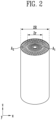
- FIGS. 2 and 3 are schematic perspective views of an electrode assembly of the battery cell.
- a battery cell 1 may include an electrode assembly 10 in which a first electrode 100 including a first uncoated part 101, a second electrode 200 including a second uncoated part 201, and a separator 300 disposed between the first electrode 100 and the second electrode 200 are wound in a roll shape; and a cylindrical case 20 including an opening 21 with one side open, and configured to accommodate the electrode assembly 10 therein through the opening 21.
- first uncoated part 101 and the second uncoated part 201 of the electrode assembly 10 may be disposed in a direction of the opening 21.
- a battery cell using a cylindrical case uses an electrode assembly manufactured by laminating a cathode, a separator, and an anode and winding them.
- a typical cylindrical battery cell has a structure in which a cathode tab attached to a cathode uncoated part is drawn out to the upper part of the electrode assembly, and an anode tab attached to an anode uncoated part is drawn out to the lower part of the electrode assembly.
- a tab-less cell that has improved this structure has a structure in which a cathode uncoated part is drawn out to the upper part of the electrode assembly, an anode uncoated part is drawn out to the lower part of the electrode assembly, and a cathode collector plate is welded on the cathode uncoated part of the upper part of the electrode assembly, and an anode collector plate is welded on the anode uncoated part of the lower part of the electrode assembly.
- a battery cell with the above structure is manufactured by welding and connecting the cathode collector plate welded to the upper part of the electrode assembly to the cathode terminal again, and welding and connecting the anode collector plate welded to the lower part of the electrode assembly to a cap plate and a case.
- the manufacturing process of the cell becomes complicated and the difficulty of welding increases.
- a defect occurs during the welding process of the upper and lower parts, a problem of increased resistance of the cell may occur.
- the battery cell 1 has a structure in which both the first uncoated part 101 and the second uncoated part 201 of the electrode assembly 10 are disposed in the direction of the opening 21 of the case 20, thereby simplifying the manufacturing process.
- the resistance of the cell may be reduced by simplifying the cell structure.
- An electrode assembly of a battery cell may include a first region (A 1 ) located within a predetermined first radius (r) from a center of a winding center and a second region (A 2 ) located outside the first region (A 1 ), the first uncoated part 101 may be disposed in the first region (A 1 ), and the second uncoated part 201 may be disposed in the second region (A 2 ).
- the electrode assembly 10 of the battery cell 1 may include a first region (A 1 ) within a first radius (r) from a winding center and a second region (A 2 ) located outside the first region (A 1 ).
- the first region (A 1 ) may refer to a region where the first uncoated part 101 is disposed, may refer to a region where the first uncoated part 101 is drawn out from the electrode assembly 10, and may refer to a region located at the winding center.
- the second region (A 2 ) may refer to a region where the second uncoated part 201 is disposed, may refer to a region where the second uncoated part 201 is drawn out from the electrode assembly 10, and may refer to a region on the outer edge side of the electrode assembly 10.
- the first region (A 1 ) may have a disk shape
- the second region (A 2 ) may have a ring shape
- the first region (A 1 ) may be disposed in the inner hollow of the second region (A 2 ), but is not limited thereto.
- the battery cell according to the present disclosure is configured such that the first uncoated part 101 and the second uncoated part 201 of the electrode assembly are respectively drawn out together to one side of the electrode assembly 10 through the first region (A 1 ) and the second region (A 2 ), so that the first pole and the second pole may be disposed on a same surface of the electrode assembly.
- the size of the first radius (r) may be 0.1 ⁇ R or more, 0.15 ⁇ R or more, 2.0 ⁇ R or more, 2.5 ⁇ R or more, or 3.0 ⁇ R or more, and may be 0.8 ⁇ R or less, 0.75 ⁇ R or less, 0.7 ⁇ R or less, 0.65 ⁇ R or less, or 0.6 ⁇ R or less, but is not limited thereto.
- both the first electrode 100 and the second electrode 200 may secure a sufficient contact area with the electrode collector plate described below to lower the resistance of the cell.
- the electrode assembly 10 of the battery cell according to the present disclosure may include a laminate having the first electrode 100 including the first uncoated part 101, the second electrode 200 including the second uncoated part 201, and the separator 300 disposed between the first electrode 100 and the second electrode 200.
- FIGS. 4 and 5 are schematic diagrams for explaining a laminate of an electrode assembly of a battery cell according to an embodiment of the present disclosure. Referring to FIGS. 4 and 5 , the laminate of the electrode assembly may have a structure in which a first electrode 100, a separator 300, and a second electrode 200 are laminated.
- the first electrode may include a first current collector, a first active material layer, and a first uncoated part.
- the first current collector may be a metal foil such as copper, aluminum, etc., but is not limited thereto.
- the first active material layer may be formed on at least one surface of the first current collector, and may be disposed in contact with the first current collector.
- the first uncoated part may mean a region on the first current collector of the first electrode where the first active material layer is not disposed.
- the first uncoated part may be disposed on at least one of the two long sides of the first electrode, but is not limited thereto.
- the first uncoated part may perform a role of an electrode tab connected to the first electrode collector plate described below.
- the separator may mean a film that physically separates the first electrode and the second electrode.
- the separator may be an insulating film and may include a polymer film or a porous non-woven fabric, etc., but is not limited thereto.
- the second electrode may include a second current collector, a second active material layer, and a second uncoated part.
- the second current collector may be a metal foil such as copper, aluminum, etc., but is not limited thereto.
- the second active material layer may be formed on at least one surface of the second current collector and may be disposed in contact with the second current collector.
- the second uncoated part may mean a region on the second current collector of the second electrode where the second active material layer is not disposed.
- the second uncoated part may be disposed on at least one of the two long sides of the second electrode, but is not limited thereto.
- the second uncoated part may serve as an electrode tab connected to a second electrode collector plate described below.
- the first electrode of the battery cell according to the present disclosure may be a cathode, and the second electrode may be an anode, but is not limited thereto.
- the first uncoated part 101 and the second uncoated part 201 of the electrode assembly 10 of the battery cell 1 may be disposed on the same surface of the electrode assembly 10.
- the fact that the first uncoated part 101 and the second uncoated part 201 are disposed on the same surface of the electrode assembly 10 may mean that the first uncoated part 101 and the second uncoated part 201 are disposed toward a same direction.
- the first uncoated part 101 and the second uncoated part 201 may both be disposed in the z-axis direction, but are not limited thereto.
- the first uncoated part 101 and the second uncoated part 201 may be disposed toward the opening 21 of the case 20.
- the first uncoated part 101 and the second uncoated part 201 of the battery cell 1 may be disposed to protrude on the same surface of the electrode assembly 10.
- the first uncoated part 101 may extend from the first electrode 100 and protrude toward any one surface of the electrode assembly 10
- the second uncoated part 201 may extend from the second electrode 200 and protrude toward the said surface of the electrode assembly 10.
- the protruding first and second uncoated parts may be disposed to protrude from the electrode assembly toward the same direction.
- the electrode assembly of the battery cell may include a first spacing region (d 1 ), a first uncoated part region (l 1 ), a second spacing region (d 2 ), and a second uncoated part region (lz) that are disposed sequentially from one end part to the other end part.
- a region wound from one end part of the laminate of the battery cell, for example, a winding center (C), toward the other end part, for example, a winding end (O), to the first uncoated part 101 may be referred to as a first spacing region (d 1 ), and a region wound from one end of the first uncoated part 101 to the second uncoated part 201 may be referred to as a second spacing region (d 2 ).
- first uncoated part region (l 1 ) a region where the first uncoated part 101 is disposed between the first spacing region (d 1 ) and the second spacing region (d 2 ) may be referred to as a first uncoated part region (l 1 ), and a region formed from the second spacing region (d 2 ) toward the winding end (O) and where the second uncoated part 201 is arranged may be referred to as a second uncoated part region (l 2 ).
- first spacing region (d 1 ), the first uncoated part region (l 1 ), the second spacing region (d 2 ), and the second uncoated part region (l 2 ) may be disposed sequentially.
- the first spacing region (d 1 ) may be a region that forms a hollow in the core part when the laminate is wound.
- the battery cell according to the present disclosure includes a wound electrode assembly, and a hollow may be formed in the core part during the process of winding the electrode assembly into a cylindrical shape.
- the first uncoated part 101 may be formed to be spaced apart from the winding center by a predetermined distance so as not to cover the hollow, and the region spaced apart by the predetermined distance may become the first spacing region (d 1 ). In this case, the first uncoated part 101 may not protrude from the first spacing region (d 1 ).
- the length of the first spacing region (d1) of the electrode assembly 10 of the battery cell 1 according to the present disclosure may be 200 mm or less.
- the length of the first spacing region (d 1 ) may be 200 mm or less, 190 mm or less, 180 mm or less, 170 mm or less, 160 mm or less, or 150 mm or less.
- the length of the first spacing region (d 1 ) may be 0 mm or more, more than 0 mm, 1 mm or more, 2 mm or more, 3 mm or more, 4 mm or more, or 5 mm or more, but is not limited thereto.
- a hollow of an appropriate size may be formed when the laminate is wound, and an electrolyte injected through the hollow may be uniformly impregnated into the entire area of the electrode assembly.
- the length of the first uncoated part region (l 1 ) of the electrode assembly of the battery cell according to the present disclosure may be in a range of 5 mm or more and/or 1000 mm or less.
- the first region (A 1 ) of the wound electrode assembly may be made to have a sufficient area, and as described below, the resistance of the cell may be reduced by making contact with the first electrode collector plate through a large area.
- the length of the second spacing region (d 2 ) of the electrode assembly of the battery cell according to the present disclosure may be within a range of 300 mm or less.
- the length of the second spacing region (d 2 ) may be 300 mm or less, 290 mm or less, 280 mm or less, 270 mm or less, 260 mm or less, or 250 mm or less, but is not limited thereto.
- the length of the second spacing region (d 2 ) may be 0 mm or more, more than 0 mm, 1 mm or more, 2 mm or more, 3 mm or more, 4 mm or more, or 5 mm or more, but is not limited thereto.
- the second spacing region (d 2 ) may play a role in spacing the first uncoated part 101 and the second uncoated part 201 apart from each other in the wound electrode assembly 10. If the size of the second spacing region (d 2 ) is too small, the first uncoated part 101 and the second uncoated part 201 may come into contact with each other, resulting in a short circuit of the electrode. In addition, if the size of the second spacing region (d 2 ) is too large, the first region (A 1 ) and the second region (A 2 ) may not secure a sufficient area, thereby increasing the resistance of the cell.
- the length of the second uncoated part region (lz) of the electrode assembly of the battery cell according to the present disclosure may be in a range of 5 mm or more and/or 1000 mm or less.
- the second region (A 2 ) of the wound electrode assembly 10 may be made to have a sufficient area, and as described below, the resistance of the cell may be reduced by making contact with the second electrode collector plate through a large area.
- the first uncoated part and the second uncoated part of the battery cell may each include a plurality of cut parts formed in the direction of the opening and a plurality of flags partitioned by the cut parts.
- the first uncoated part and the second uncoated part may each include flags disposed on both sides of the cut part based on the cut part, and such cut parts may be included in a plurality.
- the cut part is illustrated as having a rectangular shape having an area, but is not limited thereto, and may have, for example, a shape of a cutting line.
- first uncoated part and the second uncoated part each have a plurality of flags, when the uncoated part is bent as described below, stress during the bending process may be dispersed. This may prevent the bent uncoated part from being lifted or torn.
- the first uncoated part 101 and the second uncoated part 201 of the battery cell 1 may be bent toward the winding center (C) of the electrode assembly 10.
- the first uncoated part 101 and the second uncoated part 201 may be bent while the electrode assembly 10 is wound, or may be bent simultaneously with the winding.
- the first uncoated part 101 of the wound electrode assembly 10 may be bent toward the winding center axis of the electrode assembly 10 to form the first region (A 1 ) described above, and the second uncoated part 201 bent toward the center axis may form the second region (A 2 ) described above.
- the first uncoated part 101 and the second uncoated part 201 of the battery cell 1 may be bent toward the winding center of the electrode assembly 10, while being spaced apart from each other.
- the first uncoated part 101 and the second uncoated part 201 may be bent toward the winding center as described above to form the first region (A 1 ) and the second region (A 2 ), respectively.
- the bent first uncoated part 101 and the second uncoated part 201 may be disposed to be spaced apart from each other, and the first region (A 1 ) and the second region (A 2 ) formed by the bent first uncoated part 101 and the second uncoated part 201, respectively, may be disposed to be spaced apart from each other.
- the battery cell 1 according to the present disclosure may further include an insulator (not shown) disposed between the bent first uncoated part 101 and the bent second uncoated part 201.
- the insulator may be disposed between the first region (A 1 ) formed by the bent first uncoated part 101 and the second region (A 2 ) formed by the bent second uncoated part 201.
- the insulator may include a material having electrical insulation properties, and may include, for example, a polymer material or a ceramic material, but is not limited thereto.
- the insulator may have, for example, a ring shape, and may serve to electrically separate the first uncoated part 101 and the second uncoated part 201, and may serve to electrically separate the first region (A 1 ) and the second region (A 2 ) described above.
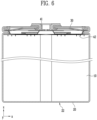
- the battery cell 1 may further include a disk-shaped first electrode collector plate 41 disposed on the first region (A 1 ) and a ring-shaped second electrode collector plate 42 disposed on the second region (A 2 ).
- the second electrode collector plate 42 may be disposed on the outer side of the first electrode collector plate 41.
- the first electrode collector plate 41 may be disposed in the hollow region of the second electrode collector plate 42 to be spaced apart from the second electrode collector plate 42.
- the first electrode collector plate 41 and the second electrode collector plate 42 may be made of a metal material such as aluminum, copper, etc., but are not limited thereto.
- the first electrode collector plate 41 may include a penetration hole extending along the central axis.
- the penetration hole may be disposed in the central part of the first electrode collector plate 41 and may be disposed at a location corresponding to the hollow of the core part of the electrode assembly 10 described above.
- the penetration hole may function as an injection hole for injecting an electrolyte in a process of manufacturing the battery cell.
- the battery cell 1 may include a cylindrical case 20 including an opening 21 with one side open and configured to accommodate the electrode assembly 10 therein through the opening 21.
- the case 20 may include, for example, the opening 21 only at one end part, may include a closed part 22 at a location opposite to the opening 21, and may not have a penetrating part other than the opening 21.
- the case 20 may have a structure in which an area other than the opening 21 is closed.
- the opening 21 may be an area into which the electrode assembly 10 described above is loaded.
- the electrode assembly 10 wound through the opening 21 may be accommodated inside the case.
- the battery cell according to the present disclosure uses a case having a structure in which an opening is formed on one surface, and an area other than the opening is closed, and has a structure in which both the first electrode uncoated part and the second electrode uncoated part of the electrode assembly, which are loaded into the opening, are disposed toward the opening, so that electrodes of the two poles may be connected in one direction, which may simplify the manufacturing process.
- the battery cell 1 according to the present disclosure may further include a cap plate 30 disposed on the opening 21 of the case 20.
- the cap plate 30 may perform a function of sealing the opening 21 of the case 20.
- the cap plate 30 may include an electrode terminal disposed at a central part.
- the electrode terminal may be electrically connected to the first electrode 100 described above.
- One end part of the electrode terminal may be connected to the first electrode collector plate 41 by penetrating the central part of the cap plate.
- the electrode terminal and the first electrode collector plate 41 may be connected by being in direct contact, or may be electrically connected through a separate connecting electrode, but are not limited thereto.
- the other end part of the electrode terminal connected to the first electrode collector plate 41 may be disposed to protrude outwardly of the cap plate and may function as an external terminal.
- the cap plate 30 may further include an insulator disposed between the electrode terminal and the cap plate 30.
- the insulator may be disposed to cover the first electrode collector plate 41 described above, and may prevent the first electrode collector plate 41 from contacting the case 20 and/or the second electrode collector plate 42 with each other to cause a short circuit.
- the case 20 of the battery cell 1 according to the present disclosure may have a beading part formed at an end part on the opening 21 side, and the electrode assembly of the battery cell may be fixed by the beading part.
Landscapes
- Chemical & Material Sciences (AREA)
- Chemical Kinetics & Catalysis (AREA)
- Electrochemistry (AREA)
- General Chemical & Material Sciences (AREA)
- Engineering & Computer Science (AREA)
- Manufacturing & Machinery (AREA)
- Materials Engineering (AREA)
- Secondary Cells (AREA)
Applications Claiming Priority (2)
| Application Number | Priority Date | Filing Date | Title |
|---|---|---|---|
| KR20230186760 | 2023-12-20 | ||
| KR1020240056157A KR20250096525A (ko) | 2023-12-20 | 2024-04-26 | 배터리 셀 및 전극 조립체 |
Publications (1)
| Publication Number | Publication Date |
|---|---|
| EP4576294A1 true EP4576294A1 (de) | 2025-06-25 |
Family
ID=93925775
Family Applications (1)
| Application Number | Title | Priority Date | Filing Date |
|---|---|---|---|
| EP24221391.6A Pending EP4576294A1 (de) | 2023-12-20 | 2024-12-19 | Batteriezelle und elektrodenanordnung |
Country Status (3)
| Country | Link |
|---|---|
| US (1) | US20250210828A1 (de) |
| EP (1) | EP4576294A1 (de) |
| CN (1) | CN120184310A (de) |
Citations (2)
| Publication number | Priority date | Publication date | Assignee | Title |
|---|---|---|---|---|
| WO2023092450A1 (zh) * | 2021-11-26 | 2023-06-01 | 宁德时代新能源科技股份有限公司 | 电池单体及其制造方法和装置、电池、用电装置 |
| WO2023206192A1 (zh) * | 2022-04-28 | 2023-11-02 | 宁德时代新能源科技股份有限公司 | 电池单体、电池、用电设备、电极组件及其制造方法 |
-
2024
- 2024-12-19 CN CN202411882157.1A patent/CN120184310A/zh active Pending
- 2024-12-19 EP EP24221391.6A patent/EP4576294A1/de active Pending
- 2024-12-20 US US18/988,895 patent/US20250210828A1/en active Pending
Patent Citations (4)
| Publication number | Priority date | Publication date | Assignee | Title |
|---|---|---|---|---|
| WO2023092450A1 (zh) * | 2021-11-26 | 2023-06-01 | 宁德时代新能源科技股份有限公司 | 电池单体及其制造方法和装置、电池、用电装置 |
| US20240250283A1 (en) * | 2021-11-26 | 2024-07-25 | Contemporary Amperex Technology Co., Limited | Battery cell, method and device for manufacturing the same, battery and electrical device |
| WO2023206192A1 (zh) * | 2022-04-28 | 2023-11-02 | 宁德时代新能源科技股份有限公司 | 电池单体、电池、用电设备、电极组件及其制造方法 |
| US20240372153A1 (en) * | 2022-04-28 | 2024-11-07 | Contemporary Amperex Technology Co., Limited | Battery cell, battery, electric device, and electrode assembly and manufacturing method thereof |
Also Published As
| Publication number | Publication date |
|---|---|
| US20250210828A1 (en) | 2025-06-26 |
| CN120184310A (zh) | 2025-06-20 |
Similar Documents
| Publication | Publication Date | Title |
|---|---|---|
| KR102188429B1 (ko) | 전극 활물질 미코팅부를 포함하는 젤리-롤형 전극조립체 | |
| KR101147207B1 (ko) | 전극군과 이를 적용한 이차 전지 | |
| US8758917B2 (en) | Secondary battery | |
| KR102141240B1 (ko) | 전극 조립체 및 이를 포함하는 이차전지 | |
| JPH11238528A (ja) | リチウム二次電池 | |
| KR101610431B1 (ko) | 젤리롤 형태의 전극조립체 및 이를 포함하는 이차전지 | |
| KR100515832B1 (ko) | 이차전지의 전극 조립체 | |
| US20230052005A1 (en) | Electrode assembly including disconnection preventing layer and method for manufacturing the same | |
| KR20250096525A (ko) | 배터리 셀 및 전극 조립체 | |
| KR20080047165A (ko) | 전극 조립체 및 이를 구비하는 이차전지 | |
| US20100143774A1 (en) | Rechargeable battery and electrode assembly | |
| KR101515672B1 (ko) | 2 이상의 양극 및 음극을 포함하는 전극 조립체 및 이에 의한 전기 화학 소자 | |
| EP4576294A1 (de) | Batteriezelle und elektrodenanordnung | |
| KR101526513B1 (ko) | 권취형 이차전지 전극 조립체가 직렬 및/또는 병렬로 연결된 일체형 이차전지 | |
| KR20000021401A (ko) | 전극 조립체 제조방법과 전극 조립체 및 이 전극 조립체를 이용한 전지 | |
| KR20250169911A (ko) | 집전판을 포함하는 이차전지와 그 제조방법 | |
| US20250316744A1 (en) | Secondary battery manufacturing device and battery module including secondary battery manufactured by secondary battery manufacturing device | |
| US20260112788A1 (en) | Current collector, battery cell including the same, and method of manufacturing the same | |
| EP4664578A1 (de) | Elektrodenanordnung und batteriezelle damit | |
| US20250364655A1 (en) | Battery cell mounting apparatus, battery pack including the same, and method of manufacturing the battery cell mounting apparatus | |
| KR20250175957A (ko) | 전극 조립체 및 이를 포함하는 배터리 셀 | |
| US20250343330A1 (en) | Battery cell | |
| US20260011874A1 (en) | Busbar assembly and battery module | |
| US20260066445A1 (en) | Secondary battery | |
| KR101199205B1 (ko) | 젤리 롤 및 이를 구비한 전극 조립체 |
Legal Events
| Date | Code | Title | Description |
|---|---|---|---|
| PUAI | Public reference made under article 153(3) epc to a published international application that has entered the european phase |
Free format text: ORIGINAL CODE: 0009012 |
|
| STAA | Information on the status of an ep patent application or granted ep patent |
Free format text: STATUS: REQUEST FOR EXAMINATION WAS MADE |
|
| 17P | Request for examination filed |
Effective date: 20241219 |
|
| AK | Designated contracting states |
Kind code of ref document: A1 Designated state(s): AL AT BE BG CH CY CZ DE DK EE ES FI FR GB GR HR HU IE IS IT LI LT LU LV MC ME MK MT NL NO PL PT RO RS SE SI SK SM TR |