EP4574841A1 - Antibakterielle polypeptide - Google Patents
Antibakterielle polypeptide Download PDFInfo
- Publication number
- EP4574841A1 EP4574841A1 EP23217931.7A EP23217931A EP4574841A1 EP 4574841 A1 EP4574841 A1 EP 4574841A1 EP 23217931 A EP23217931 A EP 23217931A EP 4574841 A1 EP4574841 A1 EP 4574841A1
- Authority
- EP
- European Patent Office
- Prior art keywords
- polypeptide
- region
- binding
- nucleic acid
- cell
- Prior art date
- Legal status (The legal status is an assumption and is not a legal conclusion. Google has not performed a legal analysis and makes no representation as to the accuracy of the status listed.)
- Pending
Links
Images



Classifications
-
- C—CHEMISTRY; METALLURGY
- C07—ORGANIC CHEMISTRY
- C07K—PEPTIDES
- C07K16/00—Immunoglobulins [IG], e.g. monoclonal or polyclonal antibodies
- C07K16/12—Immunoglobulins [IG], e.g. monoclonal or polyclonal antibodies against material from bacteria
- C07K16/1267—Gram-positive bacteria
- C07K16/1271—Micrococcaceae (F); Staphylococcaceae (F), e.g. Staphylococcus (G)
-
- C—CHEMISTRY; METALLURGY
- C07—ORGANIC CHEMISTRY
- C07K—PEPTIDES
- C07K2317/00—Immunoglobulins specific features
- C07K2317/50—Immunoglobulins specific features characterized by immunoglobulin fragments
- C07K2317/52—Constant or Fc region; Isotype
-
- C—CHEMISTRY; METALLURGY
- C07—ORGANIC CHEMISTRY
- C07K—PEPTIDES
- C07K2317/00—Immunoglobulins specific features
- C07K2317/50—Immunoglobulins specific features characterized by immunoglobulin fragments
- C07K2317/52—Constant or Fc region; Isotype
- C07K2317/524—CH2 domain
-
- C—CHEMISTRY; METALLURGY
- C07—ORGANIC CHEMISTRY
- C07K—PEPTIDES
- C07K2317/00—Immunoglobulins specific features
- C07K2317/50—Immunoglobulins specific features characterized by immunoglobulin fragments
- C07K2317/56—Immunoglobulins specific features characterized by immunoglobulin fragments variable (Fv) region, i.e. VH and/or VL
- C07K2317/569—Single domain, e.g. dAb, sdAb, VHH, VNAR or nanobody®
-
- C—CHEMISTRY; METALLURGY
- C07—ORGANIC CHEMISTRY
- C07K—PEPTIDES
- C07K2317/00—Immunoglobulins specific features
- C07K2317/70—Immunoglobulins specific features characterized by effect upon binding to a cell or to an antigen
- C07K2317/73—Inducing cell death, e.g. apoptosis, necrosis or inhibition of cell proliferation
- C07K2317/732—Antibody-dependent cellular cytotoxicity [ADCC]
-
- C—CHEMISTRY; METALLURGY
- C07—ORGANIC CHEMISTRY
- C07K—PEPTIDES
- C07K2317/00—Immunoglobulins specific features
- C07K2317/70—Immunoglobulins specific features characterized by effect upon binding to a cell or to an antigen
- C07K2317/73—Inducing cell death, e.g. apoptosis, necrosis or inhibition of cell proliferation
- C07K2317/734—Complement-dependent cytotoxicity [CDC]
-
- C—CHEMISTRY; METALLURGY
- C07—ORGANIC CHEMISTRY
- C07K—PEPTIDES
- C07K2317/00—Immunoglobulins specific features
- C07K2317/70—Immunoglobulins specific features characterized by effect upon binding to a cell or to an antigen
- C07K2317/76—Antagonist effect on antigen, e.g. neutralization or inhibition of binding
-
- C—CHEMISTRY; METALLURGY
- C07—ORGANIC CHEMISTRY
- C07K—PEPTIDES
- C07K2317/00—Immunoglobulins specific features
- C07K2317/90—Immunoglobulins specific features characterized by (pharmaco)kinetic aspects or by stability of the immunoglobulin
- C07K2317/92—Affinity (KD), association rate (Ka), dissociation rate (Kd) or EC50 value
-
- C—CHEMISTRY; METALLURGY
- C07—ORGANIC CHEMISTRY
- C07K—PEPTIDES
- C07K2317/00—Immunoglobulins specific features
- C07K2317/90—Immunoglobulins specific features characterized by (pharmaco)kinetic aspects or by stability of the immunoglobulin
- C07K2317/94—Stability, e.g. half-life, pH, temperature or enzyme-resistance
-
- C—CHEMISTRY; METALLURGY
- C07—ORGANIC CHEMISTRY
- C07K—PEPTIDES
- C07K2319/00—Fusion polypeptide
Definitions
- the present invention relates to mutated polypeptides comprising a fragment crystallisable (Fc) region with reduced affinity for Staphylococcus aureus protein A (SpA).
- the present invention further relates to the treatment of Staphylococcus aureus infections.
- Staphylococcus aureus is a bacterium commonly found on the skin and mucous membranes of humans, which is a significant concern in healthcare settings. While it can exist harmlessly as a part of the normal microbiota, it is also capable of causing a range of infections and health issues. S . aureus infections can take various forms, including skin and soft tissue infections (such as boils, abscesses, and cellulitis), respiratory infections, bloodstream infections, pneumonia, endocarditis (infection of the heart valves) and sepsis. S. aureus produces a wide array of virulence factors, which contribute to its ability to evade the immune system and cause damage to host tissues. Some of these factors can also reduce the effectiveness of therapeutic antibodies (and other associated immunotherapies).
- S. aureus expresses Staphylococcal Protein A (SpA), an IgG-binding protein that binds human IgG antibodies via their Fc-domain.
- S. aureus further expresses some additional IgG-binding proteins which also bind human IgG-antibodies via their Fc-domain: staphylococcal binder of immunoglobulins (Sbi).
- An equivalent protein in Streptococcus spp. is Streptococcal Protein G (SpG). Due to the abundant surface expression of SpA (and to a lesser extent Sbi), S.
- aureus essentially coats itself in human IgG-antibodies, thereby not only obscuring its own antigens but also effectively inhibiting Fc-mediated effector functions of the antibodies.
- This ability of S. aureus affects proximal human IgG antibodies and other Fc-containing proteins in general.
- S. aureus reduces the effectiveness of therapeutic antibodies and other related Fc-containing immunotherapies. For this reason, for an effective use of a therapeutic antibody (or related immunotherapy) in S. aureus infections, the Fc-mediated capture of the therapeutic antibody etc. must be inhibited.
- Fc mutations and combinations thereof to provide Fc region polypeptides with reduced affinity to SpA, for use against Staphylococcus aureus infections.
- the identification of such Fc mutations and Fc region polypeptides is far from straightforward, as there is a need to balance many different factors such as production capability, stability and reduced SpA affinity.
- the Fc mutants to have advantageous FcRn binding characteristics for antibody half-life (i.e. binding at pH 6 and weak binding at pH 7), as well as maintained Fc effector functions through Fc ⁇ R interactions.
- the present invention relates to mutations in the Fc region of polypeptides for therapeutic or diagnostic use in Staphylococcus aureus infections.
- the present invention provides polypeptides comprising novel substitution mutations and combinations thereof in the Fc region, which are selected from T307I, Q311R, M428L, N434L, Y436K and combinations thereof.
- the polypeptides of the invention have reduced affinity for Staphylococcus aureus protein A (SpA), as well as other advantageous properties such as maintained stability and expressibility.
- Polypeptides of the invention also have favourable properties regarding Fc function, such as a maintained immune response, retained C1q binding and even improved complement component 1q (C1q) recruitment.
- polypeptides of the present invention have favourable properties regarding FcRn binding and antibody half-life.
- the polypeptides of the present invention are useful in treating and/or diagnosing Staphylococcus aureus infections.
- the present invention provides a polypeptide comprising a fragment crystallisable (Fc) region having reduced affinity for Staphylococcus aureus protein A (SpA), wherein the polypeptide sequence of the Fc region comprises one or more of the following substitution mutations: T307I, Q311R, M428L, N434L and Y436K.
- Fc fragment crystallisable
- the present invention provides one or more nucleic acid sequences capable of expressing the polypeptide according to the invention.
- the present invention provides a cell comprising the polypeptide or the one or more nucleic acid sequences according to the invention.
- the present invention provides a composition comprising the polypeptide, the one or more nucleic acid sequences or the cell according to the invention.
- the present invention provides an in vitro method comprising contacting a cell with the polypeptide, the one or more nucleic acid sequences, the cell or the composition of the invention.
- the present invention provides the polypeptide, the one or more nucleic acid sequences, the cell or the composition of the invention for use in a method of therapy or a diagnostic method.
- the present invention provides the polypeptide, the one or more nucleic acid sequences, the cell or the composition of the invention for use in the manufacture of a medicament for a therapy or a diagnostic agent.
- the present invention provides a method of therapy or a diagnostic method comprising administering the polypeptide, the one or more nucleic acid sequences, the cell or the composition of the invention to a subject.
- the present invention provides a method for making the polypeptide according to the invention, comprising expressing one or more nucleic acids capable of expressing the polypeptide.
- the present invention provides a polypeptide comprising a fragment crystallisable (Fc) region having reduced affinity for Staphylococcus aureus protein A (SpA), wherein the polypeptide sequence of the Fc region comprises one or more of the following substitution mutations: T307I, Q311R, M428L, N434L and Y436K.
- Fc fragment crystallisable
- the polypeptide sequence of the Fc region comprises one substitution mutation.
- the substitution mutation is T307I, Q311R, M428L, N434L or Y436K.
- the polypeptide sequence of the Fc region comprises two substitution mutations.
- the polypeptide sequence of the Fc region comprises the substitution mutations T307I and Q311R; T307I and M428L; T307I and N434L; T307I and Y436K; Q311R and M428L; Q311R and N434L; Q311R and Y436K; M428L and N434L; M428L and Y436K, or N434L and Y436K.
- the polypeptide sequence of the Fc region comprises three substitution mutations.
- the polypeptide sequence of the Fc region comprises the substitution mutations T307I, Q311R, and M428L; T307I, Q311R, and N434L; T307I, Q311R, and Y436K; T307I, M428L, and N434L; T307I, M428L, and Y436K; T307I, N434L, and Y436K; Q311R, M428L, and N434L; Q311R, M428L, and Y436K; orQ311R, N434L, and Y436K.
- the polypeptide sequence of the Fc region comprises four substitution mutations.
- the polypeptide sequence of the Fc region comprises the substitution mutations T307I, Q311R, M428L, and N434L; T307I, Q311R, M428L, and Y436K; T307I, Q311R, N434L, and Y436K; T307I, M428L, N434L, and Y436K; or Q311R, M428L, N434L, and Y436K.
- the polypeptide sequence of the Fc region comprises the substitution mutation M428L, and optionally comprises one or more of T307I, Q311R, N434L and Y436K.
- the substitution mutation M428L is of particular interest.
- the polypeptide sequences of the Fc region comprises (at least) the substitution mutation M428L.
- the polypeptide sequence of the Fc region comprises five substitution mutations. In a most preferred embodiment, the polypeptide sequence of the Fc region comprises all of the substitution mutations T307I, Q311R, M428L, N434L and Y436K.
- the polypeptide sequence of the Fc region comprises a sequence having at least 70%, 75%, 80%, 85%, 90%, 95%, 96%, 97%, 98%, 99% or 100% identity to SEQ ID NO: 3.
- the % identity language does not apply to the substitution mutations that are specified in the Fc region of the polypeptide.
- the polypeptide sequence of the Fc region comprises SEQ ID NO: 3.
- the polypeptide of the Fc region does not comprise the substitution mutation H435R. In an embodiment, the polypeptide of the Fc region does not comprise the substitution mutations S254A, Q311E, L432S or N434P. In an embodiment, the polypeptide of the Fc region does not comprise the substitution mutations T307R or A378V. In an embodiment, the polypeptide of the Fc region does not comprise the substitution mutations T307Q, Q311V or A378V. In an embodiment, the polypeptide of the Fc region does not comprise the substitution mutations T256D, N286D, T307R, Q311V or A378V.
- the antibody and Fc amino acid numbering herein corresponds to the EU numbering scheme.
- the amino acid position numbering corresponds to EU numbering.
- the EU numbering scheme including how it compares to other antibody residue numbering schemes, is well-known in the art and can be viewed at e.g. https://www.imqt.orq/IMGTScientificChart/Numbering/Hu IGHGnber.html.
- the mutations are defined simply by the position of the mutation in the Fc region (according to the EU numbering scheme) and the residue which is present.
- the polypeptide having the substitution mutation M428L is simply defined as the polypeptide having the residue "L" at position 428.
- the mutations T307I, Q311R, M428L, N434L and Y436K may alternatively be defined as the polypeptide sequence of the Fc region comprising "I” at EU position 307, "R” at EU position 311, “L” at EU position 428, “L” at EU position 434, and/or "K” at EU position 436 respectively.
- the mutations S254A, T256D, N286D, T307R, T307Q, Q311E, Q311V, A378V, L432S, N434P and H435R may alternatively be defined as the polypeptide sequence of the Fc region which does not comprise "A” at EU position 254, "D” at EU position 256, “D” at EU position 286, “R” at EU position 307, “Q” at EU position 307, "E” at EU position 311, "V” at EU position 311, “V” at EU position 378, "S” at EU position 432, “P” at EU position 434 and/or “R” at EU position 435 respectively.
- the Fc region of the polypeptide has reduced affinity for SpA. In an embodiment, the Fc region of the polypeptide has reduced affinity for the second immunoglobulin-binding protein of Staphylococcus aureus (Sbi). In an embodiment, the Fc region of the polypeptide has reduced affinity for Streptococcal protein G (SpG).
- reduced affinity of a mutant Fc region for SpA, Sbi and/or SpG means that the affinity is reduced relative to the equivalent wild-type Fc region, i.e. the same Fc region polypeptide sequence which does not comprise any of the mutations that are specified in the claim. It will be understood that SpA, Sbi and SpG typically have affinity for and are able to capture the Fc regions of polypeptides which contain such regions (e.g. antibodies).
- an Fc region of the invention with substitution mutations having reduced affinity for SpA, Sbi and/or SpG means that the Fc region has reduced affinity relative to the same Fc region without the substitution mutations.
- an Fc region "without the substitution mutation" M428L does not have the residue "L” at EU position 428, and instead has the residue "M" at EU position 428.
- the Fc region of the polypeptide of the invention has reduced affinity for SpA, Sbi and/or SpG relative to the Fc region of the polypeptide that does not comprise the substitution mutations.
- “reduced” means that SpA, Sbi and/or SpG substantially do not bind to the Fc region of the polypeptide of the present invention. In an embodiment, “reduced” means that SpA, Sbi and/or SpG do not bind to the Fc region of the polypeptide of the present invention. In an embodiment, the Fc region of the polypeptide of the present invention having "reduced affinity" means that the binding of SpA, Sbi and/or SpG to the Fc region is inhibited. In an embodiment, SpA-mediated antibody capture is inhibited. In an embodiment, the reduced affinity for SpA (and/or Sbi) means that Fc effector functions are maintained in the presence of S . aureus or SpA.
- the affinity for SpA, Sbi and/or SpG herein refers to the ability of these proteins to bind to and capture antibodies and other immunoglobulin domain-containing polypeptides by binding to the Fc region (and possibly the VH3 Fab region).
- This affinity does not include the specific antibody binding of the polypeptides of the present invention, e.g. to SpA, where present.
- this affinity does not include the polypeptides of the present invention specifically binding to SpA, Sbi and/or SpG via antibody-like binding, i.e. via the CDRs of one or more variable immunoglobulin domain.
- reduced affinity for SpA, Sbi and/or SpG can be determined by in silico modelling/screening and (if necessary) can be further verified by cellular assays.
- the Fc-mediated effector functions of the polypeptide are not inhibited in the presence of Staphylococcus aureus.
- the Fc region of the polypeptide of the invention binds to the neonatal Fc receptor (FcRn). In an embodiment, the Fc region of the polypeptide binds to FcRn with greater affinity at pH 6 than at pH 7. In an embodiment, the binding of the Fc region of the polypeptide of the invention to FcRn is equivalent, comparable or similar to that of the Fc region of the polypeptide that does not comprise the substitution mutations of the invention. In an embodiment, the binding affinity of the Fc region of the polypeptide of the invention to FcRn is equivalent, comparable or similar to that of the Fc region of the polypeptide that does not comprise the substitution mutations of the invention.
- the binding affinity of the Fc region of the polypeptide of the invention to FcRn at pH 6 and at pH 7 is equivalent, comparable or similar to that of the Fc region of the polypeptide that does not comprise the substitution mutations of the invention. It will be understood that binding to the FcRn receptor can be readily determined and measured, e.g. by ELISA.
- the polypeptide of the invention has an in vivo half-life that is at least equivalent to the in vivo half-life of the polypeptide comprising an Fc region that does not comprise the substitution mutations of the invention. In an embodiment, the polypeptide has an in vivo half-life that is similar to or greater than the in vivo half-life of the polypeptide comprising an Fc region that does not comprise the substitution mutations of the invention. In an embodiment, the polypeptide has an in vivo half-life that is comparable to or greater than the in vivo half-life of the polypeptide comprising an Fc region that does not comprise the substitution mutations of the invention. In an embodiment, the in vivo half-life is in a mouse. In an embodiment, the in vivo half-life is in a human.
- the Fc region of the polypeptide of the invention binds to the Fc-gamma receptor (Fc ⁇ R). In an embodiment, the Fc region of the polypeptide binds to Fc ⁇ Rl. In an embodiment, the Fc region of the polypeptide binds to Fc ⁇ Rlla. In an embodiment, the Fc region of the polypeptide binds to Fc ⁇ Rllb/c. In an embodiment, the Fc region of the polypeptide binds to Fc ⁇ Rllla. In an embodiment, the binding of the Fc region of the polypeptide of the invention to Fc ⁇ R is equivalent to that of the Fc region that does not comprise the substitution mutations of the invention.
- Fc ⁇ R Fc-gamma receptor
- the binding of the Fc region of the polypeptide of the invention to Fc ⁇ Rl, Fc ⁇ Rlla, Fc ⁇ Rllb/c and/or Fc ⁇ RIIIa is equivalent to that of the Fc region that does not comprise the substitution mutations of the invention. It will be understood that binding to Fc ⁇ R receptors can be readily determined and measured, e.g. by ELISA.
- the polypeptide of the invention induces antibody-dependent cellular cytotoxicity (ADCC). In an embodiment, the polypeptide of the invention induces antibody-dependent cellular phagocytosis (ADCP). In an embodiment, the polypeptide of the invention induces complement-dependent cytotoxicity (CDC). In an embodiment, the polypeptide of the invention induces ADCC, ADCP and CDC. In an embodiment, the polypeptide of the invention induces ADCC and/or ADCP that is equivalent to that of the polypeptide that does not comprise the substitution mutations of the invention.
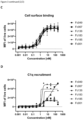
- the polypeptide of the invention induces complement component 1q (C1q) recruitment. In an embodiment, the polypeptide of the invention has improved C1q recruitment. In an embodiment, the polypeptide of the invention has improved C1q recruitment relative to the polypeptide that does not comprise the substitution mutations of the invention. C1q recruitment to target cells bound by IgG antibodies/VHH-Fc fusion proteins etc. initiates the classical pathway of complement, thereby promoting CDC. Accordingly, in an embodiment, the polypeptide of the invention induces CDC. In an embodiment, the polypeptide of the invention has enhanced CDC induction. In an embodiment, the polypeptide of the invention induces greater CDC than the polypeptide that does not comprise the substitution mutations of the invention.
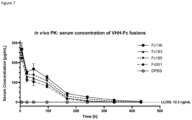
- the polypeptides of the invention have been found to possess an in vivo half-life that is unexpectedly greater than, e.g. substantially greater than, the in vivo half-life of polypeptides comprising an Fc region that does not comprise the substitution mutations of the invention. This also presents a substantial improvement of the polypeptides of the invention over the polypeptides of the prior art.
- the Fc183 control mutant comprises the H435R mutation, but does not possess a substantially greater in vivo half-life compared to the equivalent wild-type polypeptide (Fc001).
- the Fc185 control mutant comprises the H435R, T307R and A378V mutations, but still possesses a lesser in vivo half-life to that of Fc136.
- the Fc136 mutant i.e.
- a polypeptide of the present invention comprises the mutations T307I, Q311R, M428L, N434L and Y436K, and has been determined to possess an in vivo half-life that is substantially greater than all of: the equivalent wild-type polypeptide (Fc001), Fc183 and Fc185.
- the present inventors consider that a further advantage of an improved in vivo half-life is provided by the mutations that are present in the polypeptides of the present invention (e.g. Fc136), relative to the equivalent wild-type polypeptide of Fc001. Moreover, this improvement of in vivo half-life is unexpectedly significantly greater than Fc183 (which shows no difference vis-à-vis Fc001) and Fc185.
- the polypeptide of the invention has an in vivo half-life that is greater than, such as substantially greater than, the in vivo half-life of a 'control' or 'reference' polypeptide. Accordingly, in an embodiment, the polypeptide of the invention has an in vivo half-life that is greater than, such as substantially greater than, the in vivo half-life of the polypeptide comprising an Fc region that does not comprise the substitution mutations of the invention. In an embodiment, the polypeptide of the invention has an in vivo half-life that is greater than, such as substantially greater than, the in vivo half-life of the polypeptide comprising an Fc region that comprises the H435R mutation.
- the polypeptide of the invention has an in vivo half-life that is greater than, such as substantially greater than, the in vivo half-life of the polypeptide comprising an Fc region that comprises the H435R, T307R and A378V mutations.
- the appropriate 'control' or 'reference' polypeptide does not comprise (e.g. any of the) mutations of the invention.
- the appropriate 'control' or 'reference' polypeptide does not comprise any mutations that increase the half-life of the polypeptide relative to the wild-type Fc region, e.g. the equivalent wild-type Fc region to the polypeptide of the invention.
- the appropriate 'control' or 'reference' polypeptide does not comprise any mutations relative to the wild-type Fc region, e.g. the equivalent wild-type Fc region to the polypeptide of the invention.
- the polypeptide of the present invention has an in vivo half-life that is greater than a polypeptide comprising an Fc region having the sequence as set forth in SEQ ID NO: 4. In an embodiment, the polypeptide of the present invention has an in vivo half-life that is greater than that of Fc183. In an embodiment, the polypeptide of the present invention has an in vivo half-life that is greater than a polypeptide comprising an Fc region having the sequence as set forth in SEQ ID NO: 5. In an embodiment, the polypeptide of the present invention has an in vivo half-life that is greater than that of Fc185.
- an in vivo half-life "greater than” means “substantially greater than”. In some embodiments herein, it will be understood that an in vivo half-life "greater than” means that the polypeptide of the invention is capable of having a greater or more prolonged effect in vivo than the relevant 'control' or 'reference' polypeptide.
- a polypeptide of the invention having an in vivo half-life "greater than" a polypeptide comprising an Fc region that does not comprise the substitution mutations of the invention e.g. an equivalent wild-type polypeptide (such as Fc001)
- an equivalent wild-type polypeptide such as Fc001
- a polypeptide of the invention having an in vivo half-life that is "greater than" a polypeptide comprising an Fc region that comprises a H435R mutation but does not comprise the substitution mutations of the invention means at least 5%, 6%, 7%, 8%, 9%, 10%, 11%, 12%, 13%, 14%, 15%, 16%, 17%, 18%, 19%, 20%, 21%, 22%, 23%, 24%, 25%, 26% or 27% greater than a polypeptide comprising an Fc region that comprises a H435R mutation but does not comprise the substitution mutations of the invention (e.g. Fc183).
- an in vivo half-life that is "greater than" a polypeptide comprising an Fc region that comprises H435R, T307R and A378V mutations but does not comprise the substitution mutations of the invention means at least 5%, 6%, 7%, 8%, 9%, 10%, 11% or 12% greater than a polypeptide comprising an Fc region that comprises H435R, T307R and A378V mutations but does not comprise the substitution mutations of the invention (e.g. Fc185).
- the polypeptide of the present invention has an in vivo half-life of at least 71 hours, at least 72 hours, at least 73 hours, at least 74 hours, at least 75 hours, at least 76 hours, at least 77 hours, at least 78 hours, at least 79 hours, at least 80 hours, at least 81 hours, at least 82 hours, at least 83 hours, at least 84 hours, at least 85 hours, at least 86 hours, at least 87 hours, at least 88 hours, at least 89 hours, at least 90 hours, at least 91 hours or at least 92 hours.
- the polypeptide of the present invention has an in vivo half-life that is at least equivalent to, substantially the same as or the same as the in vivo half-life of a polypeptide comprising a Fc region that comprises the T307I, Q311R, M428L, N434L and Y436K mutations.
- the polypeptide of the present invention has an in vivo half-life that is at least equivalent to, substantially the same as or the same as the in vivo half-life of a polypeptide comprising a Fc region that comprises "I" at position 307, "R” at position 311, "L” at position 428, “L” at position 434 and "K” at position 436.
- the polypeptide of the present invention has an in vivo half-life that is at least equivalent to, substantially the same as or the same as the in vivo half-life of a polypeptide comprising an Fc region having the sequence set forth in SEQ ID NO: 3.
- half-life may be considered as a measure of longevity in vivo.
- the reference to " in vivo half-life” is considered a reference to " in vivo longevity".
- a "greater” in vivo half-life is a more prolonged in vivo half-life.
- a "greater” in vivo half-life means that the time taken for the in vivo amount of the polypeptide to drop to half of a pre-determined initial amount is longer.
- the in vivo half-life is in a human.
- the in vivo half-life is in a mouse.
- the in vivo half-life is the serum half-life.
- the in vivo half-life is the serum half-life in a human. In an embodiment, the in vivo half-life is the serum half-life in a mouse. In an embodiment, the in vivo half-life is the serum half-life in a mouse model expressing human FcRn instead of murine FcRn.
- the polypeptide of the present invention has an in vivo half-life that is greater than the equivalent polypeptide that does not comprise T307I, Q311R, M428L, N434L and/or Y436K mutations.
- the equivalent polypeptide comprises the H435R mutation, and optionally further comprises the T307R and A378V mutations.
- the polypeptide of the present invention has an in vivo half-life that is greater than the equivalent polypeptide comprising an Fc region that does not comprise "I" at position 307, "R” at position 311, "L” at position 428, “L” at position 434 and/or "K” at position 436.
- the equivalent polypeptide comprises "R” at position 435, and optionally further comprises “R” at position 307 and "V” at position 378.
- the polypeptide of the invention further comprises a binding moiety that specifically binds to Staphylococcus aureus.
- the Fc region of the polypeptide of the invention is an immunoglobulin G (IgG) Fc region.
- IgG immunoglobulin G
- the polypeptide of the invention is an antibody, an antigen-binding fragment thereof, or a polypeptide comprising a single domain antibody (VHH) fused to an Fc region.
- the polypeptide comprises an Fc region and an antigen-binding domain, such as a domain comprising one or more variable immunoglobulin domains.
- the polypeptide specifically binds to an S . aureus antigen.
- the polypeptide of the present invention comprises one or more VH3 family antibody fragment (Fab) sequences
- SpA does not bind to the VH3 Fab sequences.
- SpA does not bind to the variable region of the polypeptide.
- SpA does not bind to the Fab of the polypeptide.
- SpA does not bind to the VHH domain of the polypeptide. In embodiments, this has no effect on the antibody-like specific binding of the variable region, which may specifically bind to S . aureus.
- the present invention provides one or more nucleic acid sequences capable of expressing the polypeptide according to the invention.
- the nucleic acid is mRNA encoding the polypeptide according to the invention. In an embodiment, the nucleic acid is a vector encoding the polypeptide according to the invention.
- the nucleic acid encodes an antibody. In an embodiment, the nucleic acid encodes a polypeptide comprising a VHH domain and an Fc region.
- the invention provides a nucleic acid particle comprising the construct or nucleic acid sequences according to the invention.
- the nucleic acid particle is a lipid nanoparticle (LNP).
- the present invention provides a cell comprising the polypeptide or the one or more nucleic acid sequences according to the invention.
- the cell is a mammalian cell.
- the cell is a CHO cell.
- the cell is a human cell.
- Methods for engineering such cells include but are not limited to genetic modification of cells e.g. by transduction such as retroviral or lentiviral transduction, transfection (such as transient transfection - DNA or RNA based) including lipofection, polyethylene glycol, calcium phosphate and electroporation. Any suitable method may be used to introduce a nucleic acid sequence into a cell.
- a cell of the present invention may be generated by introducing DNA or RNA coding for the polypeptide of the invention as defined herein by one of many means including transduction with a viral vector, transfection with DNA or RNA.
- the cell of the invention may be made by introducing to a cell (e.g. by transduction or transfection) the one or more nucleic acids sequence according to the present invention.
- the cell of the invention may comprise and/or secrete the polypeptide of the invention.
- the present invention provides a composition comprising the polypeptide, the one or more nucleic acid sequences, the LNP or the cell according to the invention.
- the composition may be a pharmaceutical composition.
- the pharmaceutical composition may additionally comprise a pharmaceutically acceptable carrier, diluent or excipient.
- the pharmaceutical composition may optionally comprise one or more further pharmaceutically active polypeptides and/or compounds.
- Such a formulation may, for example, be in a form suitable for intravenous infusion.
- the present invention provides an in vitro method comprising contacting a cell with the polypeptide, the one or more nucleic acid sequences, the LNP, the cell or the composition of the invention.
- the cell is a mammalian cell.
- the cell is a CHO cell.
- the cell is a human cell.
- the present invention provides the polypeptide, the one or more nucleic acid sequences, the LNP, the cell or the composition of the invention for use in a method of therapy or a diagnostic method.
- the present invention provides the polypeptide, the one or more nucleic acid sequences, the LNP, the cell or the composition of the invention for use in the manufacture of a medicament for a therapy or a diagnostic agent.
- the present invention provides a method of therapy or a diagnostic method comprising administering the polypeptide, the one or more nucleic acid sequences, the LNP, the cell or the composition of the invention to a subject.
- the therapy comprises treating or preventing a Staphylococcus aureus infection. In an embodiment, the therapy comprises treating or preventing a Streptococcal infection, particularly wherein the polypeptide has reduced affinity for SpG. In an embodiment, the S . aureus is resistant to one or more treatments. In some embodiments, the S . aureus is methicillin resistant. In an embodiment, the therapy is treating or preventing infection in a human. In an embodiment, treating or preventing comprises one or more of promoting S. aureus decolonization, preventing invasive disease caused by S. aureus, and improving the outcome of S. aureus bloodstream infections in the subject.
- the antibody is administered intravenously.
- one or more nucleic acids encoding the antibody is/are administered.
- the nucleic acid(s) may be introduced by transduction.
- the nucleic acid(s) may be introduced by transfection.
- the present invention provides a method for making the polypeptide according to the invention, comprising expressing one or more nucleic acids capable of expressing the polypeptide.
- the method comprises i) providing one or more nucleic acids capable of expressing the polypeptide and ii) expressing the nucleic acid(s) capable of expressing the polypeptide.
- polypeptide is used in the conventional sense to mean a series of amino acids, typically L-amino acids, connected one to the other, typically by peptide bonds between the ⁇ -amino and carboxyl groups of adjacent amino acids.
- polypeptide is used interchangeably with the terms “amino acid sequence”, “peptide” and/or “protein”.
- residues is used to refer to amino acids in an amino acid sequence.
- variant in relation to a polypeptide refers to a polypeptide that has an equivalent function to the amino acid sequences described herein, but which includes one or more amino acid substitutions, insertions or deletions.
- antibody refers to an intact immunoglobulin of any isotype, or a fragment thereof that can compete with the intact antibody for specific binding to the target antigen, and includes chimeric, humanized, fully human, and bispecific antibodies.
- antibody or “immunoglobulin” are used interchangeably and refer to any of several classes of structurally related proteins that function as part of the immune response of an animal, including IgG, IgD, IgE, IgA, IgM, and related proteins, as well as polypeptides comprising antibody CDR domains that retain antigen-binding activity.
- Fc region "Fc domain” and “fragment crystallisable” region/domain are used interchangeably herein.
- the Fc region is a well-known part of an antibody, although the same Fc region may be present in other, antibody-like or antibody-derived polypeptides such as VHH-Fc fusion polypeptides.
- antibody residue numbering is according to the EU residue numbering scheme.
- an amino acid residue in an antibody "corresponds" to a given residue when it occupies the same essential structural position within the antibody as the given residue.
- a selected residue in a comparison antibody corresponds to position 428 (according to the EU numbering system as described herein) in an antibody provided herein when the selected residue occupies the same essential spatial or structural relationship to EU position 428 as assessed using applicable methods in the art.
- a comparison antibody may be aligned for maximum sequence homology with the antibody provided herein and the position in the aligned comparison antibody that aligns with EU position 428 may be determined to correspond to it.
- a three dimensional structural alignment can also be used, e.g., where the structure of the comparison antibody is aligned for maximum correspondence with an antibody provided herein and the overall structures compared.
- an amino acid that occupies the same essential position as EU position 428 in the structural model may be said to correspond.
- antigen refers to a molecule or a portion of a molecule capable of being bound by a selective binding agent, such as an antibody.
- An antigen may possess one or more epitopes that are capable of interacting with different antibodies.
- epitope includes any region or portion of molecule capable eliciting an immune response by binding to an immunoglobulin or to a T-cell receptor.
- Epitope determinants may include chemically active surface groups such as amino acids, sugar side chains, phosphoryl or sulfonyl groups, and may have specific three-dimensional structural characteristics and/or specific charge characteristics.
- antibodies specific for a particular target antigen will preferentially recognize an epitope on the target antigen within a complex mixture.
- polynucleotide As used herein, the terms “polynucleotide”, “nucleotide”, “nucleic acid sequence” and “nucleic acid” are intended to be synonymous with each other.
- variant in relation to a nucleotide sequence include any substitution of, variation of, modification of, replacement of, deletion of or addition of one (or more) nucleic acid from or to the sequence.
- Sequence identity between two nucleic acid sequences indicates the percentage of nucleotides that are identical between the sequences.
- the terms “% identical” and “% identity” or similar terms are intended to refer, in particular, to the percentage of nucleotides or amino acids which are identical in an optimal alignment between the sequences to be compared. Said percentage is purely statistical, and the differences between the two sequences may be but are not necessarily randomly distributed over the entire length of the sequences to be compared. Comparisons of two sequences are usually carried out by comparing the sequences, after optimal alignment, with respect to a segment or "window of comparison", in order to identify local regions of corresponding sequences.
- the optimal alignment for a comparison may be carried out manually or with the aid of the local homology algorithm by Smith and Waterman, 1981, Ads App. Math. 2, 482 , with the aid of the local homology algorithm by Neddleman and Wunsch, 1970, J. Mol. Biol. 48, 443 , with the aid of the similarity search algorithm by Pearson and Lipman, 1988, Proc. Natl Acad. Sci. USA 88, 2444 , or with the aid of computer programs using said algorithms (GAP, BESTFIT, FASTA, BLAST P, BLAST N and TFASTA in Wisconsin Genetics Software Package, Genetics Computer Group, 575 Science Drive, Madison, Wis.).
- NCBI National Center for Biotechnology Information
- the algorithm parameters used for BLASTN algorithm on the NCBI website include: (i) Expect Threshold set to 10; (ii) Word Size set to 28; (iii) Max matches in a query range set to 0; (iv) Match/Mismatch Scores set to 1, -2; (v) Gap Costs set to Linear; and (vi) the filter for low complexity regions being used.
- the algorithm parameters used for BLASTP algorithm on the NCBI website include: (i) Expect Threshold set to 10; (ii) Word Size set to 3; (iii) Max matches in a query range set to 0; (iv) Matrix set to BLOSUM62; (v) Gap Costs set to Existence: 11 Extension: 1; and (vi) conditional compositional score matrix adjustment.
- Percentage identity is obtained by determining the number of identical positions at which the sequences to be compared correspond, dividing this number by the number of positions compared (e.g., the number of positions in the reference sequence) and multiplying this result by 100.
- the degree of similarity or identity is given for a region which is at least about 50%, at least about 60%, at least about 70%, at least about 80%, at least about 90% or about 100% of the entire length of the reference sequence.
- the degree of identity is given for at least about 100, at least about 120, at least about 140, at least about 160, at least about 180, or about 200 nucleotides, in some embodiments continuous nucleotides.
- the degree of similarity or identity is given for the entire length of the reference sequence.
- isolated means removed (e.g., purified) from the natural state or from an artificial composition, such as a composition from a production process.
- a nucleic acid, peptide or polypeptide naturally present in a living animal is not “isolated”, but the same nucleic acid, peptide or polypeptide partially or completely separated from the coexisting materials of its natural state is “isolated”.
- An isolated nucleic acid, peptide or polypeptide can exist in substantially purified form, or can exist in a non-native environment such as, for example, a host cell.
- expression is defined as the transcription and/or translation of a particular nucleotide sequence depending on the context. Typically, translation is required.
- transcription relates to a process, wherein the genetic code in a DNA sequence is transcribed into RNA (especially mRNA). Subsequently, the RNA may be translated into peptide or polypeptide.
- RNA With respect to RNA, the term "expression” or “translation” relates to the process in the ribosomes of a cell by which a strand of mRNA directs the assembly of a sequence of amino acids to make a peptide or polypeptide.
- nucleic acid comprises deoxyribonucleic acid (DNA), ribonucleic acid (RNA), combinations thereof, and modified forms thereof.
- the term comprises genomic DNA, cDNA, mRNA, recombinantly produced and chemically synthesized molecules.
- a nucleic acid may be present as a single-stranded or double-stranded and linear or covalently circularly closed molecule.
- a nucleic acid can be isolated.
- isolated nucleic acid means, according to the present disclosure, that the nucleic acid (i) was amplified in vitro, for example via polymerase chain reaction (PCR) for DNA or in vitro transcription (using, e.g., an RNA polymerase) for RNA, (ii) was produced recombinantly by cloning, (iii) was purified, for example, by cleavage and separation by gel electrophoresis, or (iv) was synthesized, for example, by chemical synthesis.
- PCR polymerase chain reaction
- RNA polymerase RNA polymerase
- nucleoside (abbreviated herein as "N") relates to compounds which can be thought of as nucleotides without a phosphate group. While a nucleoside is a nucleobase linked to a sugar (e.g., ribose or deoxyribose), a nucleotide is composed of a nucleoside and one or more phosphate groups. Examples of nucleosides include cytidine, uridine, pseudouridine, adenosine, and guanosine.
- the five standard nucleosides which usually make up naturally occurring nucleic acids are uridine, adenosine, thymidine, cytidine and guanosine.
- the five nucleosides are commonly abbreviated to their one letter codes U, A, T, C and G, respectively.
- thymidine is more commonly written as “dT” ("d” represents “deoxy") as it contains a 2'-deoxyribofuranose moiety rather than the ribofuranose ring found in uridine. This is because thymidine is found in deoxyribonucleic acid (DNA) and not ribonucleic acid (RNA).
- uridine is found in RNA and not DNA.
- the remaining three nucleosides may be found in both RNA and DNA. In RNA, they would be represented as A, C and G, whereas in DNA they would be represented as dA, dC and dG.
- a modified purine (A or G) or pyrimidine (C, T, or U) base moiety is preferably modified by one or more alkyl groups, more preferably one or more C1-4 alkyl groups, even more preferably one or more methyl groups.
- modified purine or pyrimidine base moieties include N7-alkyl-guanine, N6-alkyl-adenine, 5-alkyl-cytosine, 5-alkyl-uracil, and N(1)-alkyl-uracil, such as N7-C1-4 alkyl-guanine, N6-C1-4 alkyl-adenine, 5-C1-4 alkyl-cytosine, 5-C1-4 alkyl-uracil, and N(1)-C1-4 alkyl-uracil, preferably N7-methyl-guanine, N6-methyl-adenine, 5-methyl-cytosine, 5-methyl-uracil, N1-methyl-pseudouridine, and N(1)-methyl-uracil.
- DNA relates to a nucleic acid molecule which includes deoxyribonucleotide residues.
- the DNA contains all or a majority of deoxyribonucleotide residues.
- deoxyribonucleotide refers to a nucleotide which lacks a hydroxyl group at the 2'-position of a ⁇ -D-ribofuranosyl group.
- DNA encompasses without limitation, double stranded DNA, single stranded DNA, isolated DNA such as partially purified DNA, essentially pure DNA, synthetic DNA, recombinantly produced DNA, as well as modified DNA that differs from naturally occurring DNA by the addition, deletion, substitution and/or alteration of one or more nucleotides. Such alterations may refer to addition of non-nucleotide material to internal DNA nucleotides or to the end(s) of DNA. It is also contemplated herein that nucleotides in DNA may be non-standard nucleotides, such as chemically synthesized nucleotides or ribonucleotides. For the present disclosure, these altered DNAs are considered analogs of naturally-occurring DNA.
- a molecule contains "a majority of deoxyribonucleotide residues" if the content of deoxyribonucleotide residues in the molecule is more than 50% (such as at least 55%, at least 60%, at least 65%, at least 70%, at least 75%, at least 80%, at least 85%, at least 90%, at least 95%, at least 96%, at least 97%, at least 98%, at least 99%), based on the total number of nucleotide residues in the molecule.
- the total number of nucleotide residues in a molecule is the sum of all nucleotide residues (irrespective of whether the nucleotide residues are standard (i.e., naturally occurring) nucleotide residues or analogs thereof).
- DNA may be recombinant DNA and may be obtained by cloning of a nucleic acid, in particular cDNA.
- the cDNA may be obtained by reverse transcription of RNA.
- RNA relates to a nucleic acid molecule which includes ribonucleotide residues. In preferred embodiments, the RNA contains all or a majority of ribonucleotide residues.
- ribonucleotide refers to a nucleotide with a hydroxyl group at the 2'-position of a ⁇ -D-ribofuranosyl group.
- RNA encompasses without limitation, double stranded RNA, single stranded RNA, isolated RNA such as partially purified RNA, essentially pure RNA, synthetic RNA, recombinantly produced RNA, as well as modified RNA that differs from naturally occurring RNA by the addition, deletion, substitution and/or alteration of one or more nucleotides. Such alterations may refer to addition of non-nucleotide material to internal RNA nucleotides or to the end(s) of RNA. It is also contemplated herein that nucleotides in RNA may be non-standard nucleotides, such as chemically synthesized nucleotides or deoxynucleotides.
- altered/modified nucleotides can be referred to as analogs of naturally occurring nucleotides, and the corresponding RNAs containing such altered/modified nucleotides (i.e., altered/modified RNAs) can be referred to as analogs of naturally occurring RNAs.
- a molecule contains "a majority of ribonucleotide residues" if the content of ribonucleotide residues in the molecule is more than 50% (such as at least 55%, at least 60%, at least 65%, at least 70%, at least 75%, at least 80%, at least 85%, at least 90%, at least 95%, at least 96%, at least 97%, at least 98%, at least 99%), based on the total number of nucleotide residues in the molecule.
- the total number of nucleotide residues in a molecule is the sum of all nucleotide residues (irrespective of whether the nucleotide residues are standard (i.e., naturally occurring) nucleotide residues or analogs thereof).
- RNA includes mRNA, tRNA, ribosomal RNA (rRNA), small nuclear RNA (snRNA), self-amplifying RNA (saRNA), single-stranded RNA (ssRNA), dsRNA, inhibitory RNA (such as antisense ssRNA, small interfering RNA (siRNA), or microRNA (miRNA)), activating RNA (such as small activating RNA) and immunostimulatory RNA (isRNA).
- RNA refers to mRNA.
- the terms “equivalent to”, “similar to” or “comparable to” as used herein are interchangeable with “not substantially different from” and, in a stricter embodiment, “not different from” or “the same as”. It will be understood herein that the margin allowable within e.g. “substantially” is that which would be understood by the skilled person as not having a significant effect on the function in question.
- the polypeptide of the present invention which has an in vivo half-life that is equivalent to that of a wild-type polypeptide can be considered to have an in vivo half-life that is not substantially different from that of the equivalent wild-type polypeptide.
- any minor difference between the in vivo half-life of the mutant and the wild-type polypeptide is not significant and does not alone make any substantial difference to the in vivo function of the polypeptides.
- references herein to any function or effect in an immune system, in vivo, in a cell or in an organism are preferably in a human or human cell, as applicable.
- the Fc-mediated capture of the antibody must be inhibited.
- the present inventors identified novel mutations in the Fc-domain to inhibit SpA-mediated binding.
- FcRn neonatal Fc receptor
- the 180 identified candidate Fc mutants along with controls from literature ( Chen et al., PNAS 2022 ) were subsequently expressed and characterized in the format of VHH-Fc-fusions with a VHH targeting a placeholder target antigen (i.e. for later replacement with S. aureus-specific VHHs).
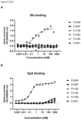
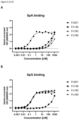
- the characterisation included testing for both SpA- and FcRn-binding.
- 32 proteins were further characterized with respect to their functional capacities. The other candidates did not pass initial testing of SpA- and/or FcRn-binding.
- Fc049 Fc067 and Fc136
- Fc183 and Fc185 Two control mutants from literature. Details of the Fc domains of these proteins are provided in Table 1.
- TABLE 1 Candidate mutants and literature controls after initial screening ID Mutations Fc Domain Amino Acid Sequence Source Fc049 M252S Screening T256N Q311R E382 K Y436K Fc067 Q311R Screening K317S Q386A N434L Y436E Fc136 T307I Screening Q311R M428L N434L Y436K Fc183 H435R Chen et al., PNAS 2022 Fc185 H435R Chen et al., PNAS 2022 T307R A378V
- the candidate mutants identified in Table 1 did not comprise any of the same substitution mutations as the control mutants from the literature (although some of the amino acid positions are the same, the specific substitution mutations are not the same). Notably, none of the candidate mutants identified in Table 1 possessed the H435R mutation of the control mutants. Notably, Fc136 was the sole mutant identified (out of any of the 180 screened mutants) to possess the M428L mutation.
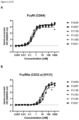
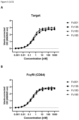
- FcRn binding of the Fc mutants listed in Table 1 was tested via ELISA at pH 6 and at pH 7. Some additional variants from the literature were also tested. For efficient antibody recycling within the cell, it is advantageous for FcRn binding to occur at pH 6, but for binding to be weaker at pH 7.
- Fc182 (“ AESP” from Chen et al. (2022 ), comprising the mutations S254A, Q311E, L432S and N434P) and Fc184 (“ AESP-RV” from Chen et al. (2022 ), comprising the mutations S254A, Q311E, L432S, N434P, T307R and A378V) both exhibited unacceptably weak binding to FcRn at pH 6.
- Fc185 showed strong binding to FcRn at pH 7, to a degree which may negatively impact the antibody half-life of Fc185. This result is shown in Figure 1 .
- Fc186 (“ R-QVV” from Chen et al. (2022 ), comprising the mutations H435R, T307Q, Q311V and A378V) and Fc187 (“ R-DDRVV” from Chen et al. (2022 ), comprising the mutations H435R, T256D, N286D, T307R, Q311V and A378V) both exhibited unacceptably strong binding to FcRn at pH 7, indicative of a shorter serum half-life.
- Antibody effector functions are mostly mediated by the interaction of the Fc-domain with relevant Fc-receptors.
- Fc ⁇ -Receptors Fc ⁇ Rs
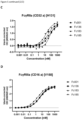
- binding to Fc ⁇ -Receptors was tested via ELISA (see Figure 2 ).
- the literature mutant Fc185 exhibited the lowest maximum effect for both Fc ⁇ Rl and Fc ⁇ Rlla.
- the literature mutant Fc183 exhibited the lowest maximum effect for Fc ⁇ Rllb/c.
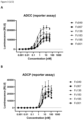
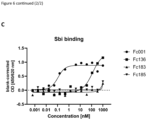
- the Fc mutants listed in Table 1 were subjected to functional testing, including cell binding testing, an ADCC assay, an ADCP assay and a C1q recruitment assay.
- the C1q recruitment assay was designed based on available literature ( Pawluczkowvcz et al., J Immunol 1;183(1):749-58 (2009 ) [Pubmed ID: 19535640]).
Landscapes
- Chemical & Material Sciences (AREA)
- Organic Chemistry (AREA)
- Health & Medical Sciences (AREA)
- General Health & Medical Sciences (AREA)
- Biochemistry (AREA)
- Biophysics (AREA)
- Life Sciences & Earth Sciences (AREA)
- Genetics & Genomics (AREA)
- Medicinal Chemistry (AREA)
- Molecular Biology (AREA)
- Proteomics, Peptides & Aminoacids (AREA)
- Immunology (AREA)
- Peptides Or Proteins (AREA)
- Medicines Containing Antibodies Or Antigens For Use As Internal Diagnostic Agents (AREA)
Priority Applications (2)
| Application Number | Priority Date | Filing Date | Title |
|---|---|---|---|
| EP23217931.7A EP4574841A1 (de) | 2023-12-19 | 2023-12-19 | Antibakterielle polypeptide |
| PCT/EP2024/087745 WO2025133013A1 (en) | 2023-12-19 | 2024-12-19 | Anti-bacterial polypeptides |
Applications Claiming Priority (1)
| Application Number | Priority Date | Filing Date | Title |
|---|---|---|---|
| EP23217931.7A EP4574841A1 (de) | 2023-12-19 | 2023-12-19 | Antibakterielle polypeptide |
Publications (1)
| Publication Number | Publication Date |
|---|---|
| EP4574841A1 true EP4574841A1 (de) | 2025-06-25 |
Family
ID=89224392
Family Applications (1)
| Application Number | Title | Priority Date | Filing Date |
|---|---|---|---|
| EP23217931.7A Pending EP4574841A1 (de) | 2023-12-19 | 2023-12-19 | Antibakterielle polypeptide |
Country Status (2)
| Country | Link |
|---|---|
| EP (1) | EP4574841A1 (de) |
| WO (1) | WO2025133013A1 (de) |
Citations (5)
| Publication number | Priority date | Publication date | Assignee | Title |
|---|---|---|---|---|
| US20180162946A1 (en) * | 2007-07-24 | 2018-06-14 | Xencor, Inc. | Fc VARIANTS WITH ALTERED BINDING TO FcRn |
| EP3608339A1 (de) * | 2017-04-07 | 2020-02-12 | Kookmin University Industry Academy Cooperation Foundation | Antikörper-fc-varianten zur verbesserung der halbwertszeit von blut |
| WO2020106220A1 (en) * | 2018-11-22 | 2020-05-28 | Agency For Science, Technology And Research | Modified fc region |
| US20200291099A1 (en) | 2011-12-23 | 2020-09-17 | Nicholas B. Lydon | Immunoglobulins and variants directed against pathogenic microbes |
| US20230041644A1 (en) | 2019-09-13 | 2023-02-09 | The University Of Chicago | Methods and compositions for treating staphylococcal infections |
Family Cites Families (1)
| Publication number | Priority date | Publication date | Assignee | Title |
|---|---|---|---|---|
| US4816567A (en) | 1983-04-08 | 1989-03-28 | Genentech, Inc. | Recombinant immunoglobin preparations |
-
2023
- 2023-12-19 EP EP23217931.7A patent/EP4574841A1/de active Pending
-
2024
- 2024-12-19 WO PCT/EP2024/087745 patent/WO2025133013A1/en active Pending
Patent Citations (5)
| Publication number | Priority date | Publication date | Assignee | Title |
|---|---|---|---|---|
| US20180162946A1 (en) * | 2007-07-24 | 2018-06-14 | Xencor, Inc. | Fc VARIANTS WITH ALTERED BINDING TO FcRn |
| US20200291099A1 (en) | 2011-12-23 | 2020-09-17 | Nicholas B. Lydon | Immunoglobulins and variants directed against pathogenic microbes |
| EP3608339A1 (de) * | 2017-04-07 | 2020-02-12 | Kookmin University Industry Academy Cooperation Foundation | Antikörper-fc-varianten zur verbesserung der halbwertszeit von blut |
| WO2020106220A1 (en) * | 2018-11-22 | 2020-05-28 | Agency For Science, Technology And Research | Modified fc region |
| US20230041644A1 (en) | 2019-09-13 | 2023-02-09 | The University Of Chicago | Methods and compositions for treating staphylococcal infections |
Non-Patent Citations (6)
| Title |
|---|
| CHEN ET AL., PNAS, vol. 119, no. 4, 2022, pages e2114478119 |
| DATABASE Geneseq [online] 9 August 2018 (2018-08-09), "Mutant human immunoglobulin gamma 1 (N434M/M428L).", XP093185507, retrieved from EBI accession no. GSP:BFJ93965 Database accession no. BFJ93965 * |
| NEDDLEMANWUNSCH, J. MOL. BIOL., vol. 48, 1970, pages 443 |
| PAWLUCZKOWVCZ ET AL., J IMMUNOL, vol. 183, no. 1, 2009, pages 749 - 58 |
| PEARSONLIPMAN, PROC. NATL ACAD. SCI. USA, vol. 88, 1988, pages 2444 |
| SMITHWATERMAN, ADS APP. MATH., vol. 2, 1981, pages 482 |
Also Published As
| Publication number | Publication date |
|---|---|
| WO2025133013A1 (en) | 2025-06-26 |
Similar Documents
| Publication | Publication Date | Title |
|---|---|---|
| US12129309B2 (en) | Heterodimeric antibodies that bind CD3 and CD38 | |
| US11739143B2 (en) | Humanized antibody for treating or preventing cognitive disorders, process for producing the same, and agent for treating or preventing cognitive disorders using the same | |
| EP3476399B1 (de) | Lag-3-antikörper, antigenbindendes fragment davon und medizinische anwendung davon | |
| EP3387013B1 (de) | Cd3 und psma bindende heterodimere antikörper | |
| EP3576789B1 (de) | Monomere humane igg1-fc- und bispezifische antikörper | |
| JP7264383B2 (ja) | 血中半減期の向上のための抗体Fc変異体 | |
| US20180305465A1 (en) | Heterodimeric antibodies that bind cd3 and cd38 | |
| EP4574841A1 (de) | Antibakterielle polypeptide | |
| WO2014160098A2 (en) | Bordetella specific human recombinant antibodies and uses thereof | |
| EP1661911A1 (de) | Protease-resistente seb-variante und diese enthaltender impfstoff | |
| CN114516917A (zh) | 人源化抗TrkA的抗体及其应用 | |
| CN113336847B (zh) | 一种抗pd-1抗体 | |
| US20210388083A1 (en) | Engineered fc | |
| CN120424224A (zh) | 一种抗CD38和CD16a的双特异性抗体及其用途 | |
| CN104341503A (zh) | 对蒙古人种和高加索人种低免疫原性的、抗cd20的人抗体 | |
| CN113336848A (zh) | 一种抗pd-1抗体及其用途 | |
| TW202140556A (zh) | 抗NKp30抗體及使用方法 | |
| HK1261817A1 (en) | Heterodimeric antibodies that bind cd3 and cd38 | |
| HK1261817B (en) | Heterodimeric antibodies that bind cd3 and cd38 |
Legal Events
| Date | Code | Title | Description |
|---|---|---|---|
| PUAI | Public reference made under article 153(3) epc to a published international application that has entered the european phase |
Free format text: ORIGINAL CODE: 0009012 |
|
| STAA | Information on the status of an ep patent application or granted ep patent |
Free format text: STATUS: THE APPLICATION HAS BEEN PUBLISHED |
|
| AK | Designated contracting states |
Kind code of ref document: A1 Designated state(s): AL AT BE BG CH CY CZ DE DK EE ES FI FR GB GR HR HU IE IS IT LI LT LU LV MC ME MK MT NL NO PL PT RO RS SE SI SK SM TR |
|
| RIN1 | Information on inventor provided before grant (corrected) |
Inventor name: SCHUEBEL, MARISA Inventor name: JACOMET, HIPPOLYTE Inventor name: TRAORE, SEYDOU Inventor name: SAHIN, UGUR Inventor name: BECKMANN, KARSTEN Inventor name: CARLE, ANNA Inventor name: GALMES ORDINAS, MIQUEL ANGEL |