EP4564449A1 - Elektrodenanordnung, batterie und elektrische vorrichtung - Google Patents
Elektrodenanordnung, batterie und elektrische vorrichtung Download PDFInfo
- Publication number
- EP4564449A1 EP4564449A1 EP23909296.8A EP23909296A EP4564449A1 EP 4564449 A1 EP4564449 A1 EP 4564449A1 EP 23909296 A EP23909296 A EP 23909296A EP 4564449 A1 EP4564449 A1 EP 4564449A1
- Authority
- EP
- European Patent Office
- Prior art keywords
- negative electrode
- groove
- current collector
- electrode plate
- electrode assembly
- Prior art date
- Legal status (The legal status is an assumption and is not a legal conclusion. Google has not performed a legal analysis and makes no representation as to the accuracy of the status listed.)
- Pending
Links
Images




Classifications
-
- H—ELECTRICITY
- H01—ELECTRIC ELEMENTS
- H01M—PROCESSES OR MEANS, e.g. BATTERIES, FOR THE DIRECT CONVERSION OF CHEMICAL ENERGY INTO ELECTRICAL ENERGY
- H01M50/00—Constructional details or processes of manufacture of the non-active parts of electrochemical cells other than fuel cells, e.g. hybrid cells
- H01M50/40—Separators; Membranes; Diaphragms; Spacing elements inside cells
- H01M50/463—Separators, membranes or diaphragms characterised by their shape
-
- H—ELECTRICITY
- H01—ELECTRIC ELEMENTS
- H01M—PROCESSES OR MEANS, e.g. BATTERIES, FOR THE DIRECT CONVERSION OF CHEMICAL ENERGY INTO ELECTRICAL ENERGY
- H01M10/00—Secondary cells; Manufacture thereof
- H01M10/04—Construction or manufacture in general
-
- H—ELECTRICITY
- H01—ELECTRIC ELEMENTS
- H01M—PROCESSES OR MEANS, e.g. BATTERIES, FOR THE DIRECT CONVERSION OF CHEMICAL ENERGY INTO ELECTRICAL ENERGY
- H01M10/00—Secondary cells; Manufacture thereof
- H01M10/04—Construction or manufacture in general
- H01M10/0413—Large-sized flat cells or batteries for motive or stationary systems with plate-like electrodes
-
- H—ELECTRICITY
- H01—ELECTRIC ELEMENTS
- H01M—PROCESSES OR MEANS, e.g. BATTERIES, FOR THE DIRECT CONVERSION OF CHEMICAL ENERGY INTO ELECTRICAL ENERGY
- H01M10/00—Secondary cells; Manufacture thereof
- H01M10/05—Accumulators with non-aqueous electrolyte
- H01M10/052—Li-accumulators
- H01M10/0525—Rocking-chair batteries, i.e. batteries with lithium insertion or intercalation in both electrodes; Lithium-ion batteries
-
- H—ELECTRICITY
- H01—ELECTRIC ELEMENTS
- H01M—PROCESSES OR MEANS, e.g. BATTERIES, FOR THE DIRECT CONVERSION OF CHEMICAL ENERGY INTO ELECTRICAL ENERGY
- H01M10/00—Secondary cells; Manufacture thereof
- H01M10/05—Accumulators with non-aqueous electrolyte
- H01M10/058—Construction or manufacture
-
- H—ELECTRICITY
- H01—ELECTRIC ELEMENTS
- H01M—PROCESSES OR MEANS, e.g. BATTERIES, FOR THE DIRECT CONVERSION OF CHEMICAL ENERGY INTO ELECTRICAL ENERGY
- H01M10/00—Secondary cells; Manufacture thereof
- H01M10/05—Accumulators with non-aqueous electrolyte
- H01M10/058—Construction or manufacture
- H01M10/0585—Construction or manufacture of accumulators having only flat construction elements, i.e. flat positive electrodes, flat negative electrodes and flat separators
-
- H—ELECTRICITY
- H01—ELECTRIC ELEMENTS
- H01M—PROCESSES OR MEANS, e.g. BATTERIES, FOR THE DIRECT CONVERSION OF CHEMICAL ENERGY INTO ELECTRICAL ENERGY
- H01M4/00—Electrodes
- H01M4/02—Electrodes composed of, or comprising, active material
- H01M4/13—Electrodes for accumulators with non-aqueous electrolyte, e.g. for lithium-accumulators; Processes of manufacture thereof
-
- H—ELECTRICITY
- H01—ELECTRIC ELEMENTS
- H01M—PROCESSES OR MEANS, e.g. BATTERIES, FOR THE DIRECT CONVERSION OF CHEMICAL ENERGY INTO ELECTRICAL ENERGY
- H01M4/00—Electrodes
- H01M4/02—Electrodes composed of, or comprising, active material
- H01M4/64—Carriers or collectors
- H01M4/70—Carriers or collectors characterised by shape or form
-
- H—ELECTRICITY
- H01—ELECTRIC ELEMENTS
- H01M—PROCESSES OR MEANS, e.g. BATTERIES, FOR THE DIRECT CONVERSION OF CHEMICAL ENERGY INTO ELECTRICAL ENERGY
- H01M50/00—Constructional details or processes of manufacture of the non-active parts of electrochemical cells other than fuel cells, e.g. hybrid cells
- H01M50/40—Separators; Membranes; Diaphragms; Spacing elements inside cells
- H01M50/409—Separators, membranes or diaphragms characterised by the material
- H01M50/449—Separators, membranes or diaphragms characterised by the material having a layered structure
- H01M50/457—Separators, membranes or diaphragms characterised by the material having a layered structure comprising three or more layers
-
- H—ELECTRICITY
- H01—ELECTRIC ELEMENTS
- H01M—PROCESSES OR MEANS, e.g. BATTERIES, FOR THE DIRECT CONVERSION OF CHEMICAL ENERGY INTO ELECTRICAL ENERGY
- H01M50/00—Constructional details or processes of manufacture of the non-active parts of electrochemical cells other than fuel cells, e.g. hybrid cells
- H01M50/40—Separators; Membranes; Diaphragms; Spacing elements inside cells
- H01M50/489—Separators, membranes, diaphragms or spacing elements inside the cells, characterised by their physical properties, e.g. swelling degree, hydrophilicity or shut down properties
-
- H—ELECTRICITY
- H01—ELECTRIC ELEMENTS
- H01M—PROCESSES OR MEANS, e.g. BATTERIES, FOR THE DIRECT CONVERSION OF CHEMICAL ENERGY INTO ELECTRICAL ENERGY
- H01M50/00—Constructional details or processes of manufacture of the non-active parts of electrochemical cells other than fuel cells, e.g. hybrid cells
- H01M50/40—Separators; Membranes; Diaphragms; Spacing elements inside cells
- H01M50/489—Separators, membranes, diaphragms or spacing elements inside the cells, characterised by their physical properties, e.g. swelling degree, hydrophilicity or shut down properties
- H01M50/491—Porosity
-
- H—ELECTRICITY
- H01—ELECTRIC ELEMENTS
- H01M—PROCESSES OR MEANS, e.g. BATTERIES, FOR THE DIRECT CONVERSION OF CHEMICAL ENERGY INTO ELECTRICAL ENERGY
- H01M4/00—Electrodes
- H01M4/02—Electrodes composed of, or comprising, active material
- H01M2004/021—Physical characteristics, e.g. porosity, surface area
-
- H—ELECTRICITY
- H01—ELECTRIC ELEMENTS
- H01M—PROCESSES OR MEANS, e.g. BATTERIES, FOR THE DIRECT CONVERSION OF CHEMICAL ENERGY INTO ELECTRICAL ENERGY
- H01M4/00—Electrodes
- H01M4/02—Electrodes composed of, or comprising, active material
- H01M2004/026—Electrodes composed of, or comprising, active material characterised by the polarity
- H01M2004/027—Negative electrodes
-
- H—ELECTRICITY
- H01—ELECTRIC ELEMENTS
- H01M—PROCESSES OR MEANS, e.g. BATTERIES, FOR THE DIRECT CONVERSION OF CHEMICAL ENERGY INTO ELECTRICAL ENERGY
- H01M4/00—Electrodes
- H01M4/02—Electrodes composed of, or comprising, active material
- H01M2004/026—Electrodes composed of, or comprising, active material characterised by the polarity
- H01M2004/028—Positive electrodes
-
- Y—GENERAL TAGGING OF NEW TECHNOLOGICAL DEVELOPMENTS; GENERAL TAGGING OF CROSS-SECTIONAL TECHNOLOGIES SPANNING OVER SEVERAL SECTIONS OF THE IPC; TECHNICAL SUBJECTS COVERED BY FORMER USPC CROSS-REFERENCE ART COLLECTIONS [XRACs] AND DIGESTS
- Y02—TECHNOLOGIES OR APPLICATIONS FOR MITIGATION OR ADAPTATION AGAINST CLIMATE CHANGE
- Y02E—REDUCTION OF GREENHOUSE GAS [GHG] EMISSIONS, RELATED TO ENERGY GENERATION, TRANSMISSION OR DISTRIBUTION
- Y02E60/00—Enabling technologies; Technologies with a potential or indirect contribution to GHG emissions mitigation
- Y02E60/10—Energy storage using batteries
Definitions
- This application relates to the field of secondary batteries, and specifically, to an electrode assembly, a battery, and an electric apparatus.
- this application provides an electrode assembly, aiming to solve the battery capacity loss and safety issues caused by volume swelling of the negative electrode plate during battery cycling.
- the electrode assembly includes a positive electrode plate, a separation member, and a negative electrode plate, where the separation member is disposed between the positive electrode plate and the negative electrode plate, and at least one of the positive electrode plate, the negative electrode plate, and the separation member is provided with a groove on a surface.
- a total volume V a of the groove and a total volume V total of the electrode assembly satisfy a relationship: 0.03 ⁇ V a V tatol ⁇ V a ⁇ 1.2 .
- the groove satisfying such total volume can store a sufficient amount of electrolyte, which can reduce the occurrence of ion disconnection caused by the electrolyte in the electrode assembly being squeezed by volume swelling of the negative electrode plate, reducing the battery capacity loss.
- the positive electrode plate includes a positive electrode current collector and a positive electrode active substance layer, where the positive electrode active substance layer is disposed on at least one side of the positive electrode current collector, and the positive electrode active substance layer is provided with a first groove on a surface; and/or the separation member is provided with a second groove on a surface; and/or the negative electrode plate includes a negative electrode current collector and a negative electrode active substance layer, where the negative electrode active substance layer is disposed on at least one side of the negative electrode current collector, and the negative electrode active substance layer is provided with a third groove on a surface.
- electrolyte retention can be implemented, reducing the occurrence of ion disconnection caused by the electrolyte in the electrode assembly being squeezed by volume swelling of the negative electrode plate.
- the first groove is located in a region of 1/4 to 3/4 of a length of the positive electrode plate.
- an area of a single first groove is B 1 , where 300 ⁇ m 2 ⁇ B 1 ⁇ 1 cm 2 .
- a depth of a single first groove is H 1 , where 10 ⁇ m ⁇ H 1 ⁇ 100 ⁇ m.
- a distance between two adjacent first grooves is D 1 , where 0.5 mm ⁇ D 1 ⁇ 10 mm.
- the second groove is located in a region of 1/4 to 3/4 of a length of the separation member.
- an area of a single second groove is B 2 , where 10 ⁇ m 2 ⁇ B 2 ⁇ 1000 ⁇ m 2 .
- a depth of a single second groove is H 2 , where 1 ⁇ m ⁇ H 2 ⁇ 30 ⁇ m.
- a distance between two adjacent second grooves is D 2 , where 5 ⁇ m ⁇ D 2 ⁇ 100 ⁇ m.
- the third groove is located in a region of 1/4 to 3/4 of a length of the negative electrode plate.
- the groove disposed in the region of 1/4 to 3/4 of the length of the negative electrode plate, the occurrence of ion disconnection caused by the electrolyte in the electrode assembly being squeezed by volume swelling of the negative electrode plate can be reduced.
- metal ions can deposit into the groove, reducing metal dendrites on the surface of the negative electrode plate and improving the battery safety performance.
- an area of a single third groove is B 3 , where 50 ⁇ m 2 ⁇ B 3 ⁇ 1 mm 2 .
- a depth of a single third groove is H 3 , where 1 ⁇ m ⁇ H 3 ⁇ 200 ⁇ m.
- a distance between two adjacent third grooves is D 3 , where 0.5 mm ⁇ D 3 ⁇ 10 mm.
- a surface of at least one of the positive electrode plate, the separation member, and the negative electrode plate is arranged as a rough surface.
- a roughness R 1 of the rough surface of the negative electrode plate satisfies Ra0.2 ⁇ R 1 ⁇ Ra25; and/or a roughness R 2 of the rough surface of the positive electrode plate satisfies Ra0.1 ⁇ R 2 ⁇ Ra50; and/or a roughness R 3 of the rough surface of the separation member satisfies R 3 ⁇ Ra12.5.
- the electrolyte retention effect of the electrode assembly can be improved, reducing the occurrence of ion disconnection caused by the electrolyte in the electrode assembly being squeezed by volume swelling of the negative electrode plate.
- an elastic modulus of the separation member is 200 MPa to 8000 MPa.
- the separation member includes a first separator, a middle separator, and a second separator stacked along a thickness direction of the separation member, and a thickness of the middle separator is not less than a thickness of the first separator or the second separator.
- a pore size of the middle separator is larger than a pore size of the first separator or the second separator; and/or a porosity of the middle separator is larger than a porosity of the first separator or the second separator.
- the pore size of the first separator is 20 nm to 50 nm. This not only improves the electrolyte retention effect of the separation member, but also allows the separation member to have excellent ion conductivity.
- the porosity of the first separator is 30% to 70%.
- the pore size of the middle separator is 30 nm to 100 nm.
- the porosity of the middle separator is 40% to 90%.
- the electrolyte retention effect of the separation member can be improved, reducing the occurrence of ion disconnection caused by the electrolyte in the electrode assembly being squeezed by volume swelling of the negative electrode plate.
- the pore size of the second separator is 20 nm to 50 nm. This not only improves the electrolyte retention effect of the separation member, but also allows the separation member to have excellent ion conductivity.
- the porosity of the second separator is 30% to 70%.
- the negative electrode plate includes a negative electrode current collector, and the negative electrode current collector is provided with a fourth groove on a surface.
- the electrolyte retention effect can be improved, reducing the occurrence of ion disconnection caused by the electrolyte in the electrode assembly being squeezed by volume swelling of the negative electrode plate.
- metal ions can evenly deposit into the groove, reducing the metal dendrites on the surface of the negative electrode plate and the volume swelling of the negative electrode plate, and improving the battery safety performance.
- the fourth groove is located in a region of 1/4 to 3/4 of a length of the negative electrode current collector.
- the groove disposed in the region of 1/4 to 3/4 of the length of the negative electrode current collector, the occurrence of ion disconnection caused by the electrolyte in the electrode assembly being squeezed by volume swelling of the negative electrode plate can be reduced.
- metal ions can deposit into the groove, reducing the metal dendrites on the surface of the negative electrode plate and the volume swelling of the negative electrode plate, and improving the battery safety performance.
- an area of a single fourth groove is B 4 , where 70 ⁇ m 2 ⁇ B 4 ⁇ 2 mm 2 , preferably 300 ⁇ m 2 ⁇ B 4 ⁇ 1 mm 2 .
- a depth of a single fourth groove is H 4 , where 1 ⁇ m ⁇ H 4 ⁇ 20 ⁇ m.
- a distance between two adjacent fourth grooves is D 4 , where 0.01 mm ⁇ D 4 ⁇ 10 mm, preferably 0.5 mm ⁇ D 4 ⁇ 2 mm.
- the fourth groove extends through the negative electrode current collector. This can improve the electrolyte retention effect, reducing the occurrence of ion disconnection caused by the electrolyte in the electrode assembly being squeezed by volume swelling of the negative electrode plate. This also provides sufficient space for deposition of metal ions, reducing the metal dendrites on the surface of the negative electrode plate and the volume swelling of the negative electrode plate, and improving the battery safety performance.
- the negative electrode current collector is provided with the fourth groove on both sides. This can improve the electrolyte retention effect, reducing the occurrence of ion disconnection caused by the electrolyte in the electrode assembly being squeezed by volume swelling of the negative electrode plate. This also provides sufficient space for deposition of metal ions, reducing the metal dendrites on the surface of the negative electrode plate and the volume swelling of the negative electrode plate, and improving the battery safety performance.
- the fourth grooves on two sides of the negative electrode current collector are staggered. This can improve the electrolyte retention effect, reducing the occurrence of ion disconnection caused by the electrolyte in the electrode assembly being squeezed by volume swelling of the negative electrode plate. This also provides sufficient space for deposition of metal ions, reducing the metal dendrites on the surface of the negative electrode plate and the volume swelling of the negative electrode plate, and improving the battery safety performance.
- a ratio of a depth of a single fourth groove to a thickness of the negative electrode current collector is 0.05 to 0.7, preferably 0.05 to 0.5, and more preferably 0.05 to 0.3. This allows for sufficient space for the electrolyte and metal dendrites while maintaining good strength of the negative electrode current collector.
- the fourth grooves on two sides of the negative electrode current collector are arranged opposite each other. This can improve the electrolyte retention effect, reducing the occurrence of ion disconnection caused by the electrolyte in the electrode assembly being squeezed by volume swelling of the negative electrode plate. This also provides sufficient space for deposition of metal ions, reducing the metal dendrites on the surface of the negative electrode plate and the volume swelling of the negative electrode plate, and improving the battery safety performance.
- the ratio of the depth of a single fourth groove to the thickness of the negative electrode current collector is 0.05 to 0.4. This allows for sufficient space for the electrolyte and metal dendrites while maintaining good strength of the negative electrode current collector.
- a protrusion is formed on a surface of the negative electrode current collector.
- the protrusion can provide larger electrolyte storage space for the negative electrode current collector, reducing the occurrence of ion disconnection caused by the electrolyte in the electrode assembly being squeezed by volume swelling of the negative electrode plate.
- the protrusion can provide larger metal deposition space, reducing the metal dendrites on the surface of the negative electrode plate and the volume swelling of the negative electrode plate, and improving the battery safety performance.
- the fourth groove is formed on one side of the negative electrode current collector, and the protrusion is formed at a position corresponding to the fourth groove on the other side of the negative electrode current collector.
- the negative electrode current collector is formed with the protrusion and the fourth groove on both sides, and the fourth groove and the protrusion are alternately arranged on the same side of the negative electrode current collector.
- This can provide larger electrolyte storage space for the negative electrode current collector, reducing the occurrence of ion disconnection caused by the electrolyte in the electrode assembly being squeezed by volume swelling of the negative electrode plate.
- This can also provide larger metal deposition space, reducing the metal dendrites on the surface of the negative electrode plate and the volume swelling of the negative electrode plate, and improving the battery safety performance.
- the fourth groove on one side of the negative electrode current collector is arranged opposite the protrusion on the other side of the negative electrode current collector. This can provide larger electrolyte storage space for the negative electrode current collector, reducing the occurrence of ion disconnection caused by the electrolyte in the electrode assembly being squeezed by volume swelling of the negative electrode plate. This can also provide larger metal deposition space, reducing the metal dendrites on the surface of the negative electrode plate and the volume swelling of the negative electrode plate, and improving the battery safety performance.
- a height of the protrusion is 1 ⁇ m to 20 ⁇ m.
- larger electrolyte storage space can be provided for the negative electrode current collector, reducing the occurrence of ion disconnection caused by the electrolyte in the electrode assembly being squeezed by volume swelling of the negative electrode plate.
- larger metal deposition space can be provided, reducing the metal dendrites on the surface of the negative electrode plate and the volume swelling of the negative electrode plate, and improving the battery safety performance.
- a coverage rate of the fourth groove on a single side of the negative electrode current collector is 10% to 70%.
- a sheet resistance growth rate T of the negative electrode current collector is ⁇ 5%, preferably T ⁇ 2.5%. This can prevent an abrupt increase in resistance caused by tensile deformation of the negative electrode current collector, ensuring good conductivity and current collection performance of the negative electrode current collector. This in turn allows the electrochemical apparatus using the same to have low impedance and small negative electrode polarization, thereby allowing the electrochemical apparatus to have good electrochemical performances such as rate performance, cycling performance, and kinetic performance.
- the fourth groove is provided with metallic dendrites. This can guide metal ions to deposit into the groove, reducing metal dendrites on the surface of the negative electrode plate and improving battery safety performance.
- a second aspect of this application provides a battery including the electrode assembly according to the first aspect.
- the battery has the advantages of small capacity loss and high safety.
- a third aspect of this application provides an electric device including the battery according to the second aspect, where the battery is configured to supply electric energy.
- any lower limit may be combined with any upper limit to form a range not expressly recorded; any lower limit may be combined with any other lower limit to form a range not expressly recorded; and any upper limit may be combined with any other upper limit to form a range not expressly recorded.
- each individually disclosed point or individual single numerical value may itself be a lower limit or an upper limit which can be combined with any other point or individual numerical value or combined with another lower limit or upper limit to form a range not expressly recorded.
- the term "and/or" is only an associative relationship for describing associated objects, indicating that three relationships may be present.
- a and/or B may indicate the following three cases: presence of only A, presence of both A and B, and presence of only B.
- a character "/" in this specification generally indicates an "or" relationship between contextually associated objects.
- the existing batteries undergo significant volume swelling of the negative electrode plate. After this swelling force is transmitted to the separation member and the positive electrode plate, the separation member and the positive electrode plate are squeezed, which causes the electrolyte between the negative electrode plate and the separator and/or between the positive electrode plate and the separator to be extruded, resulting in ion disconnections and affecting the cycle life of the batteries.
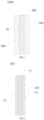
- the electrode assembly 1000 includes a positive electrode plate 100, a separation member 200, and a negative electrode plate 300, where the separation member 200 is disposed between the positive electrode plate 100 and the negative electrode plate 300, and at least one of the positive electrode plate 100, the negative electrode plate 300, and the separation member 200 is provided with a groove 10 on a surface.
- the "surface" of at least one of the positive electrode plate 100, the negative electrode plate 300, and the separation member 200 refers to large surfaces on the positive electrode plate 100, the negative electrode plate 300, and the separation member 200, that is, the surfaces of the positive electrode plate 100, the separation member 200, and the negative electrode plate 300 along a thickness direction.
- arranging the groove 10 on the surface of at least one of the positive electrode plate 100, the negative electrode plate 300, and the separation member 200 can improve the electrolyte retention effect of the electrode assembly 1000, and reduce the occurrence of ion disconnection caused by the electrolyte in the electrode assembly 1000 being squeezed by the volume swelling of the negative electrode plate 300, thereby reducing the battery capacity loss and improving the cycle life of the battery.
- the electrode assembly 1000 of this application meets the above conditions, if it also optionally meets one or more of the following conditions, the battery capacity loss can be further reduced and the battery safety performance can be improved.
- a total volume V a of the groove 10 and a total volume V total of the electrode assembly 1000 satisfy a relationship: 0.03 ⁇ V a V tatol ⁇ V a ⁇ 1.2 , for example, 0.04-1.2, 0.05-1.2, 0.06-1.2, 0.07-1.2, 0.08-1.2, 0.09-1.2, 0.1-1.2, 0.15-1.2, 0.2-1.2, 0.25-1.2, 0.3-1.2, 0.35-1.2, 0.4-1.2, 0.45-1.2, 0.5-1.2, 0.55-1.2, 0.6-1.2, 0.65-1.2, 0.7-1.2, 0.75-1.2, 0.8-1.2, 0.85-1.2, 0.9-1.2, 0.95-1.2, 1-1.2, 1.05-1.2, 1.1-1.2, or 1.15-1.2.
- the groove meeting such total volume can store a sufficient amount of electrolyte, to reduce the occurrence of ion disconnection caused by the electrolyte in the electrode assembly 1000 being squeezed by the volume swelling of the negative electrode plate 300, reducing battery capacity loss and improving the cycle life of the battery.
- the groove 10 is disposed on the surface of the positive electrode plate 100.
- the positive electrode plate 100 includes a positive electrode current collector 11 and a positive electrode active substance layer 12, where the positive electrode active substance layer 12 is disposed on at least one side of the positive electrode current collector 11, and the positive electrode active substance layer 12 is provided with a first groove 101 on a surface, preferably the positive electrode active substance layer 12 being provided with multiple first grooves 101 on the surface.
- the electrolyte retention effect of the positive electrode plate 100 can be improved, reducing the occurrence of ion disconnection caused by the electrolyte in the electrode assembly 1000 being squeezed by the volume swelling of the negative electrode plate 300, reducing the battery capacity loss, and improving the cycle life of the battery.
- the positive electrode current collector 31 may be a common metal foil sheet or a composite current collector (the composite current collector may be made by providing a metal material on a polymer matrix). In an example, an aluminum foil may be used as the positive electrode current collector 31.
- a specific type of the positive electrode active material in the positive electrode active material layer 12 is not limited, and any active material known in the art that can be used for the positive electrode of the battery can be used, and those skilled in the art can select an active material according to actual needs.
- the positive electrode active material may include but is not limited to one or more of lithium transition metal oxide, olivine-structured lithium-containing phosphate, and modified compounds thereof.
- the lithium transition metal oxide may include but are not limited to one or more of lithium cobalt oxide, lithium nickel oxide, lithium manganese oxide, lithium nickel cobalt oxide, lithium manganese cobalt oxide, lithium nickel manganese oxide, lithium nickel cobalt manganese oxide, lithium nickel cobalt aluminum oxide, and modified compounds thereof.
- Examples of the olivine-structured lithium-containing phosphate may include but are not limited to one or more of lithium iron phosphate, a composite material of lithium iron phosphate and carbon, lithium manganese phosphate, a composite material of lithium manganese phosphate and carbon, lithium manganese iron phosphate, a composite material of lithium manganese iron phosphate and carbon, and modified compounds thereof. These materials are all commercially available.
- the positive electrode active material may include but is not limited to at least one of layered transition metal oxide, polyanion compound, and Prussian blue analog.
- Examples of the layered transition metal oxide may include, for example,
- polyanion compound examples include, for example,
- Examples of the Prussian blue analog may include, for example, A u M 6 v [M 7 (CN) 6 ] w ⁇ xH 2 O, where A is one or more of H + , NH 4+ , alkali metal cation, and alkaline-earth metal cation, M 6 and M 7 are each independently one or more of transition metal cations, 0 ⁇ u ⁇ 2, 0 ⁇ v ⁇ 1, 0 ⁇ w ⁇ 1, and 0 ⁇ x ⁇ 6.
- A is one or more of H + , Li + , Na + , K + , NH 4 + , Rb + , Cs + , Fr + , Be 2+ , Mg 2+ , Ca 2+ , Sr 2+ , Ba 2+ , and Ra 2+ , and M 6 and M 7 are each independently a cation of one or more transition metal elements selected from Ti, V, Cr, Mn, Fe, Co, Ni, Cu, Zn, Sn, and W.
- the modified compounds of the foregoing materials may be obtained through doping modification and/or surface coating modification to the materials.
- the positive electrode active material layer 12 usually further optionally includes a binder, a conductive agent, and other optional adjuvants.
- the conductive agent may be one or more of superconducting carbon, acetylene black, carbon black, Ketjen black, carbon dots, carbon nanotubes, Super P (SP), graphene, and carbon nanofibers.
- the binder may be one or more of styrene-butadiene rubber (SBR), water-based acrylic resin (water-based acrylic resin), polyvinylidene fluoride (PVDF), polytetrafluoroethylene (PTFE), ethylene-vinyl acetate copolymer (EVA), polyacrylic acid (PAA), carboxymethyl cellulose (CMC), polyvinyl alcohol (PVA), and polyvinyl butyral (PVB).
- SBR styrene-butadiene rubber
- PVDF polyvinylidene fluoride
- PTFE polytetrafluoroethylene
- EVA ethylene-vinyl acetate copolymer
- PAA polyacrylic acid
- CMC carboxymethyl cellulose
- PVA polyvinyl alcohol
- PVB polyvinyl butyral
- the first groove 101 is located in a region of 1/4 to 3/4, such as a region of 3/8 to 5/8, of a length of the positive electrode plate 100.
- the first groove 101 disposed in such region of the positive electrode plate 100, the occurrence of ion disconnection caused by the electrolyte in the electrode assembly 1000 being squeezed by volume swelling of the negative electrode plate 300 can be reduced.
- an area of a single first groove 101 is B 1 , where 300 ⁇ m 2 ⁇ B 1 ⁇ 1 cm 2 , for example, 500 ⁇ m 2 ⁇ B 1 ⁇ 1 cm 2 , 800 ⁇ m 2 ⁇ B 1 ⁇ 1 cm 2 , 1000 ⁇ m 2 ⁇ B 1 ⁇ 1 cm 2 , 1500 ⁇ m 2 ⁇ B 1 ⁇ 1 cm 2 , 2000 ⁇ m 2 ⁇ B 1 ⁇ 1 cm 2 , 3000 ⁇ m 2 ⁇ B 1 ⁇ 1 cm 2 , 4000 ⁇ m 2 ⁇ B 1 ⁇ 1 cm 2 , 5000 ⁇ m 2 ⁇ B 1 ⁇ 1 cm 2 , 6000 ⁇ m 2 ⁇ B 1 ⁇ 1 cm 2 , 7000 ⁇ m 2 ⁇ B 1 ⁇ 1 cm 2 , 8000 ⁇ m 2 ⁇ B 1 ⁇ 1 cm 2 , 9000 ⁇ m 2 ⁇ B 1 ⁇ 1 cm 2 , 10000 ⁇ m 2 ⁇ B 1 ⁇ 1 cm 2 ,
- the electrolyte retention effect can be improved, reducing the occurrence of ion disconnection caused by the electrolyte in the electrode assembly being squeezed by volume swelling of the negative electrode plate 300.
- a depth of a single first groove 101 is H 1 , where 10 ⁇ m ⁇ H 1 ⁇ 100 ⁇ m, for example, 20 ⁇ m ⁇ H 1 ⁇ 90 ⁇ m, 30 ⁇ m ⁇ H 1 ⁇ 80 ⁇ m, 40 ⁇ m ⁇ H 1 ⁇ 70 ⁇ m, or 50 ⁇ m ⁇ H 1 ⁇ 60 ⁇ m.
- the electrolyte retention effect can be improved, reducing the occurrence of ion disconnection caused by the electrolyte in the electrode assembly 1000 being squeezed by volume swelling of the negative electrode plate 300.
- a distance between two adjacent first grooves 101 is D 1 , 0.5 mm ⁇ D 1 ⁇ 10 mm, for example, 1 mm ⁇ D 1 ⁇ 10 mm, 2 mm ⁇ D 1 ⁇ 9 mm, 3 mm ⁇ D 1 ⁇ 8 mm, 4 mm ⁇ D 1 ⁇ 7 mm, or 5 mm ⁇ D 1 ⁇ 6 mm.
- a groove 10 is disposed on a surface of the separation member 200.
- the separation member 200 is provided with a second groove 201 on a surface, preferably the separation member 200 is provided with multiple second grooves 201 on the surface.
- electrolyte retention can be implemented, reducing the occurrence of ion disconnection caused by the electrolyte in the electrode assembly 1000 being squeezed by volume swelling of the negative electrode plate 300.
- a material of the separation member 200 may include at least one of glass fibers, nanofibers, polyethylene, polypropylene, and non-woven fabrics.
- the second groove 201 is located in a region of 1/4 to 3/4, such as a region of 3/8 to 5/8, of a length of the separation member 200.
- an area of a single second groove 201 is B 2 , where 10 ⁇ m 2 ⁇ B 2 ⁇ 1000 ⁇ m 2 , for example, 20 ⁇ m 2 ⁇ B 2 ⁇ 1000 ⁇ m 2 , 50 ⁇ m 2 ⁇ B 2 ⁇ 1000 ⁇ m 2 , 100 ⁇ m 2 ⁇ B 2 ⁇ 1000 ⁇ m 2 , 200 ⁇ m 2 ⁇ B 2 ⁇ 1000 ⁇ m 2 , 300 ⁇ m 2 ⁇ B 2 ⁇ 1000 ⁇ m 2 , 400 ⁇ m 2 ⁇ B 2 ⁇ 1000 ⁇ m 2 , 500 ⁇ m 2 ⁇ B 2 ⁇ 1000 ⁇ m 2 , 600 ⁇ m 2 ⁇ B 2 ⁇ 1000 ⁇ m 2 , 700 ⁇ m 2 ⁇ B 2 ⁇ 1000 ⁇ m 2 , 800 ⁇ m 2 ⁇ B 2 ⁇ 1000 ⁇ m 2 , or 900 ⁇ m 2 ⁇ B 2 ⁇ 1000 ⁇ m 2 .
- the electrolyte retention effect can be improved, reducing the occurrence of ion disconnection caused by the electrolyte in the electrode assembly 1000 being squeezed by volume swelling of the negative electrode plate 300.
- a depth of a single second groove 201 is H 2 , where 1 ⁇ m ⁇ H 2 ⁇ 30 ⁇ m, for example, 2 ⁇ m ⁇ H 2 ⁇ 28 ⁇ m, 5 ⁇ m ⁇ H 2 ⁇ 25 ⁇ m, 7 ⁇ m ⁇ H 2 ⁇ 23 ⁇ m, 10 ⁇ m ⁇ H 2 ⁇ 20 ⁇ m, 12 ⁇ m ⁇ H 2 ⁇ 18 ⁇ m, or 15 ⁇ m ⁇ H 2 ⁇ 18 ⁇ m.
- the electrolyte retention effect can be improved, reducing the occurrence of ion disconnection caused by the electrolyte in the electrode assembly 1000 being squeezed by volume swelling of the negative electrode plate 300.
- a distance between two adjacent second grooves 201 is D 2 , where 5 ⁇ m ⁇ D 2 ⁇ 100 ⁇ m, for example, 10 ⁇ m ⁇ D 2 ⁇ 95 ⁇ m, 15 ⁇ m ⁇ D 2 ⁇ 90 ⁇ m, 20 ⁇ m ⁇ D 2 ⁇ 85 ⁇ m, 25 ⁇ m ⁇ D 2 ⁇ 80 ⁇ m, 30 ⁇ m ⁇ D 2 ⁇ 75 ⁇ m, 35 ⁇ m ⁇ D 2 ⁇ 70 ⁇ m, 40 ⁇ m ⁇ D 2 ⁇ 65 ⁇ m, 45 ⁇ m ⁇ D 2 ⁇ 60 ⁇ m, or 50 ⁇ m ⁇ D 2 ⁇ 55 ⁇ m.
- the electrolyte retention effect can be improved, reducing the occurrence of ion disconnection caused by the electrolyte in the electrode assembly 1000 being squeezed by volume swelling of the negative electrode plate 300.
- the separation member 200 includes a first separator 21, a middle separator 22, and a second separator 23 stacked along a thickness direction of the separation member 200, and a thickness of the middle separator 22 is not less than a thickness of the first separator 21 or the second separator 23.
- a pore size of the middle separator 22 is larger than a pore size of the first separator 21 or the second separator 22; and/or a porosity of the middle separator 22 is larger than a porosity of the first separator 21 or the second separator 23.
- the middle separator 22 having a relatively large pore size and/or a relatively large porosity, more electrolyte can be stored, so that when the negative electrode plate 300 undergoes volume swelling and squeezes the electrode assembly 1000, the electrolyte stored in the middle separator 22 can promptly replenish the electrolyte in the electrode assembly 1000 in the case of electrolyte shortage.
- the pore size of the first separator 21 is 20 nm-50 nm, for example, 22 nm-48 nm, 25 nm-45 nm, 27 nm-42 nm, 30 nm-40 nm, 32 nm-38 nm, or 32 nm-35 nm.
- the first separator 21 meeting this condition not only has high ionic conductivity but also has excellent electrolyte retention effect, improving the kinetic performance of the battery while reducing the occurrence of ion disconnection caused by the electrolyte in the electrode assembly 1000 being squeezed by volume swelling of the negative electrode plate 300.
- the pore size of the middle separator 22 is 30 nm-100 nm, for example, 30 nm-100 nm, 35 nm-95 nm, 40 nm-90 nm, 45 nm-85 nm, 50 nm-80 nm, 55 nm-75 nm, 60 nm-70 nm, or 65 nm-70 nm.
- the middle separator 22 meeting such pore size can store more electrolyte, so that when the negative electrode plate 300 undergoes volume swelling and squeezes the electrolyte in the electrode assembly 1000, the electrolyte in the electrode assembly 1000 can be promptly replenished in the case of electrolyte shortage.
- the pore size of the second separator 23 is 20 nm-50 nm, for example, 22 nm-48 nm, 25 nm-45 nm, 27 nm-42 nm, 30 nm-40 nm, 32 nm-38 nm, or 32 nm-35 nm.
- the second separation 23 meeting this condition not only has high ionic conductivity but also has excellent electrolyte retention effect, improving the kinetic performance of the battery while reducing the occurrence of ion disconnection caused by the electrolyte in the electrode assembly 1000 being squeezed by volume swelling of the negative electrode plate 300.
- the porosity of the first separator 21 is 30%-70%, for example, 35%-70%, 40%-70%, 45%-70%, 50%-70%, 55%-70%, 60%-70%, or 65%-70%;
- the porosity of the middle separator 22 is 40%-90%, for example, 45%-90%, 50%-90%, 55%-90%, 60%-90%, 65%-90%, 70%-90%, 75%-90%, 80%-90%, or 85%-90%;
- the porosity of the second separator 23 is 30%-70%, for example, 35%-70%, 40%-70%, 45%-70%, 50%-70%, 55%-70%, 60%-70%, or 65%-70%.
- the middle separator 21 meeting such porosity can store more electrolyte, so that when the negative electrode plate 300 undergoes volume swelling and squeezes the electrolyte in the electrode assembly 1000, the electrolyte in the electrode assembly 1000 can be promptly replenished in the case of electrolyte shortage.
- the porosity testing methods for the first separator 100, the middle separator 200, and the second separator 300 reference may be made to GB/T 24586-2009 true density method for porosity test.
- the groove 10 is disposed on the surface of the negative electrode plate 300.
- the negative electrode plate 300 includes a negative electrode current collector 31 and a negative electrode active substance layer 32, where the negative electrode active substance layer 32 is disposed on at least one side of the negative electrode current collector 31, and the negative electrode active substance layer 32 is provided with a third groove 301 on a surface, preferably the negative electrode active substance layer 32 being provided with multiple third grooves 301 on the surface.
- the electrolyte retention effect of the negative electrode plate 300 can be improved, reducing the occurrence of ion disconnection caused by the electrolyte in the electrode assembly 1000 being squeezed by the volume swelling of the negative electrode plate 300, reducing the battery capacity loss, and improving the cycle life of the battery.
- the third groove 301 is located in a region of 1/4 to 3/4, such as a region of 3/8 to 5/8, of a length of the negative electrode plate 300.
- the third groove 301 disposed in such region of the negative electrode plate 300, the occurrence of ion disconnection caused by the electrolyte in the electrode assembly 1000 being squeezed by volume swelling of the negative electrode plate 300 can be reduced.
- metal ions can deposit into the groove 10, reducing metal dendrites on the surface of the negative electrode plate 300 and improving the battery safety performance.
- an area of a single third groove 301 is B 3 , where 50 ⁇ m 2 ⁇ B 3 ⁇ 1 mm 2 , for example, 80 ⁇ m 2 ⁇ B 3 ⁇ 1 mm 2 , 100 ⁇ m 2 ⁇ B 3 ⁇ 1 mm 2 , 300 ⁇ m 2 ⁇ B 3 ⁇ 1 mm 2 , 500 ⁇ m 2 ⁇ B 3 ⁇ 1 mm 2 , 800 ⁇ m 2 ⁇ B 3 ⁇ 1 mm 2 , 1000 ⁇ m 2 ⁇ B 3 ⁇ 1 mm 2 , 1500 ⁇ m 2 ⁇ B 3 ⁇ 1 mm 2 , 2000 ⁇ m 2 ⁇ B 3 ⁇ 1 mm 2 , 3000 ⁇ m 2 ⁇ B 3 ⁇ 1 mm 2 , 4000 ⁇ m 2 ⁇ B 3 ⁇ 1 mm 2 , 5000 ⁇ m 2 ⁇ B 3 ⁇ 1 mm 2 , 6000 ⁇ m 2 ⁇ B 3 ⁇ 1 mm 2 , 7000 ⁇ m 2
- the third groove 301 meeting such area disposed on the negative electrode active material layer 32 of the negative electrode plate 300, the occurrence of ion disconnection caused by the electrolyte in the electrode assembly 1000 being squeezed by volume swelling of the negative electrode plate 300 can be reduced. Moreover, metal ions can deposit into the groove 10, reducing metal dendrites on the surface of the negative electrode plate 300 and improving the battery safety performance.
- a depth of a single third groove 301 is H 3 , where 1 ⁇ m ⁇ H 3 ⁇ 200 ⁇ m, for example, 10 ⁇ m ⁇ H 3 ⁇ 170 ⁇ m, 30 ⁇ m ⁇ H 3 ⁇ 150 ⁇ m, 50 ⁇ m ⁇ H 3 ⁇ 125 ⁇ m, or 75 ⁇ m ⁇ H 3 ⁇ 100 ⁇ m.
- the third groove 301 meeting such depth disposed on the negative electrode plate 300, the occurrence of ion disconnection caused by the electrolyte in the electrode assembly 1000 being squeezed by volume swelling of the negative electrode plate 300 can be reduced.
- metal ions can deposit into the groove 10, reducing metal dendrites on the surface of the negative electrode plate 300 and improving the battery safety performance.
- a distance between two adjacent third grooves 301 is D 3 , 0.5 mm ⁇ D 3 ⁇ 10 mm, for example, 1 mm ⁇ D 3 ⁇ 10 mm, 2 mm ⁇ D 3 ⁇ 9 mm, 3 mm ⁇ D 3 ⁇ 8 mm, 4 mm ⁇ D 3 ⁇ 7 mm, or 5 mm ⁇ D 3 ⁇ 6 mm.
- the second groove 201 meeting such distance disposed on the separation member 200, the occurrence of ion disconnection caused by the electrolyte in the electrode assembly 1000 being squeezed by volume swelling of the negative electrode plate 300 can be reduced.
- metal ions can deposit into the groove 10, reducing metal dendrites on the surface of the negative electrode plate 300 and improving the battery safety performance.
- any one of the positive electrode plate 100, the separation member 200, and the negative electrode plate 300 may be provided with a groove 10 on a surface, or any two of the positive electrode plate 100, the separation member 200, and the negative electrode plate 300 may be provided with a groove 10 on a surface, or all of the positive electrode plate 100, the separation member 200, and the negative electrode plate 300 may be provided with a groove 10 on a surface.
- a surface of at least one of the positive electrode plate 100, the separation member 200, and the negative electrode plate 300 is arranged as a rough surface.
- the electrolyte retention effect of the electrode assembly 1000 can be improved, reducing the occurrence of ion disconnection caused by the electrolyte in the electrode assembly 1000 being squeezed by volume swelling of the negative electrode plate 300.
- the surface of the positive electrode plate 100 arranged as the rough surface is a surface of the positive electrode active layer 12; if the negative electrode plate 300 includes a negative electrode active material layer 32, a surface of the negative electrode active layer 32 is arranged as a rough surface; and if the negative electrode plate 300 is a negative electrode current collector 31, a surface of the negative electrode current collector 31 is arranged as a rough surface.
- a roughness R 1 of the rough surface of the negative electrode plate 300 satisfies Ra0.2 ⁇ R 1 ⁇ Ra25, for example, Ra0.5 ⁇ R 1 ⁇ Ra25, Ra1 ⁇ R 1 ⁇ Ra23, Ra3 ⁇ R 1 ⁇ Ra20, Ra5 ⁇ R 1 ⁇ Ra18, Ra7 ⁇ R 1 ⁇ Ra15, or Ra10 ⁇ R 1 ⁇ Ra13. This can further improve the electrolyte retention effect of the negative electrode plate 300, reducing the occurrence of ion disconnection caused by the electrolyte in the electrode assembly 1000 being squeezed by volume swelling of the negative electrode plate 300.
- a roughness R 2 of the rough surface of the positive electrode plate 100 satisfies Ra0.1 ⁇ R 2 ⁇ Ra50, for example, Ra0.5 ⁇ R 2 ⁇ Ra50, Ra1 ⁇ R 2 ⁇ Ra50, Ra5 ⁇ R 2 ⁇ Ra45, Ra10 ⁇ R 2 ⁇ Ra40, Ra15 ⁇ R 2 ⁇ Ra35, Ra20 ⁇ R 2 ⁇ Ra30, or Ra25 ⁇ R 2 ⁇ Ra30.
- This can further improve the electrolyte retention effect of the positive electrode plate 100, reducing the occurrence of ion disconnection caused by the electrolyte in the electrode assembly 1000 being squeezed by volume swelling of the negative electrode plate 300.
- a roughness R 3 of the rough surface of the separation member 200 satisfies R 3 ⁇ Ra12.5, for example, Ra15, Ra20, Ra25, Ra30, Ra35, Ra40, Ra45, or Ra50.
- R 3 ⁇ Ra12.5, for example, Ra15, Ra20, Ra25, Ra30, Ra35, Ra40, Ra45, or Ra50.
- an elastic modulus of the separation member 200 is 200 MPa-8000 MPa, for example, 200 MPa, 500 MPa, 1000 MPa, 1500 MPa, 2000 MPa, 2500 MPa, 3000 MPa, 4000 MPa, 5000 MPa, 6000 MPa, 7000 MPa, or 8000 MPa.
- 200 MPa-8000 MPa for example, 200 MPa, 500 MPa, 1000 MPa, 1500 MPa, 2000 MPa, 2500 MPa, 3000 MPa, 4000 MPa, 5000 MPa, 6000 MPa, 7000 MPa, or 8000 MPa.
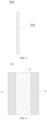
- the negative electrode plate 300 includes a negative electrode current collector 31, and the negative electrode current collector 31 is provided with a fourth groove 302 on a surface, that is, the negative electrode current collector 31 is used as the negative electrode plate 300, preferably the negative electrode current collector 31 being provided with multiple fourth grooves 302 on the surface.
- the electrolyte retention effect can be improved, reducing the occurrence of ion disconnection caused by the electrolyte in the electrode assembly 1000 being squeezed by volume swelling of the negative electrode plate 300.
- metal ions can evenly deposit into the fourth groove 302, reducing the metal dendrites on the surface of the negative electrode plate 300 and the volume swelling of the negative electrode plate 300, and improving the battery safety performance.
- the negative electrode current collector 31 may be a common metal foil sheet or a composite current collector (for example, the composite current collector may be made by providing a metal material on a polymer matrix). In an example, a copper foil may be used as the negative electrode current collector 31.
- the negative electrode active material in the negative electrode active material layer is not limited. Any active material known in the art that can be used as the negative electrode of the battery can be used, and those skilled in the art may select an active material based on actual needs.
- the negative electrode active material may include but is not limited to one or more of artificial graphite, natural graphite, hard carbon, soft carbon, silicon-based material, and tin-based material.
- the silicon-based material may include one or more of elemental silicon, silicon-oxygen compound (for example, silicon monoxide), silicon-carbon composite, silicon-nitrogen composite, and silicon alloy.
- the tin-based material may include one or more of elemental tin, tin-oxygen compound, and tin alloy. These materials are all commercially available.
- the negative electrode active material may include a silicon-based material to further increase the energy density of the battery.
- the negative electrode active material layer 32 usually further optionally includes a binder, a conductive agent, and other optional adjuvants.
- the conductive agent may be one or more of superconducting carbon, acetylene black, carbon black, Ketjen black, carbon dots, carbon nanotubes, graphene, and carbon nanofibers.
- the binder may be one or more of styrene-butadiene rubber (SBR), water-based acrylic resin (water-based acrylic resin), polyvinylidene fluoride (PVDF), polytetrafluoroethylene (PTFE), ethylene-vinyl acetate copolymer (EVA), polyvinyl alcohol (PVA), and polyvinyl butyral (PVB).
- SBR styrene-butadiene rubber
- PVDF polyvinylidene fluoride
- PTFE polytetrafluoroethylene
- EVA ethylene-vinyl acetate copolymer
- PVA polyvinyl alcohol
- PVB polyvinyl butyral
- the other optional adjuvants may be, for example, a thickening and dispersing agent (such as sodium carboxymethyl cellulose CMC-Na) and a PTC thermistor material.
- a thickening and dispersing agent such as sodium carboxymethyl cellulose CMC-Na
- a PTC thermistor material such as sodium carboxymethyl cellulose CMC-Na
- the fourth groove 302 is located in a region of 1/4 to 3/4, such as a region of 3/8 to 5/8, of a length of the negative electrode current collector 31.
- the fourth groove 302 disposed in the region of 1/4 to 3/4 of the length of the negative electrode current collector 31, the occurrence of ion disconnection caused by the electrolyte in the electrode assembly 1000 being squeezed by volume swelling of the negative electrode plate 300 can be reduced.
- metal ions can deposit into the fourth groove 302, reducing the metal dendrites on the surface of the negative electrode plate 300 and the volume swelling of the negative electrode plate 300, and improving the battery safety performance.
- an area of a single fourth groove 302 is B 4 , where 70 ⁇ m 2 ⁇ B 4 ⁇ 2 mm 2 , for example, 100 ⁇ m 2 ⁇ B 4 ⁇ 2 mm 2 , 500 ⁇ m 2 ⁇ B 4 ⁇ 2 mm 2 , 1000 ⁇ m 2 ⁇ B 4 ⁇ 2 mm 2 , 1500 ⁇ m 2 ⁇ B 4 ⁇ 2 mm 2 , 2000 ⁇ m 2 ⁇ B 4 ⁇ 2 mm 2 , 3000 ⁇ m 2 ⁇ B 4 ⁇ 2 mm 2 , 4000 ⁇ m 2 ⁇ B 4 ⁇ 2 mm 2 , 5000 ⁇ m 2 ⁇ B 4 ⁇ 2 mm 2 , 6000 ⁇ m 2 ⁇ B 4 ⁇ 2 mm 2 , 7000 ⁇ m 2 ⁇ B 4 ⁇ 2 mm 2 , 8000 ⁇ m 2 ⁇ B 4 ⁇ 2 mm 2 , 9000 ⁇ m 2 ⁇ B 4 ⁇ 2 mm 2 , 10000
- the fourth groove 302 meeting such area disposed on the negative electrode current collector 31, the occurrence of ion disconnection caused by the electrolyte in the electrode assembly 1000 being squeezed by volume swelling of the negative electrode plate 300 can be reduced. Moreover, metal ions can deposit into the fourth groove 302, reducing the metal dendrites on the surface of the negative electrode plate 300 and the volume swelling of the negative electrode plate 300, and improving the battery safety performance.
- the area of a single fourth groove 302 is B 4 , which is 300 ⁇ m 2 -1 mm 2 .
- a depth of a single fourth groove 302 is H 4 , where 1 ⁇ m ⁇ H 4 ⁇ 20 ⁇ m, for example, 2 ⁇ m ⁇ H 2 ⁇ 18 ⁇ m, 5 ⁇ m ⁇ H 2 ⁇ 15 ⁇ m, 7 ⁇ m ⁇ H 2 ⁇ 13 ⁇ m, or 10 ⁇ m ⁇ H 2 ⁇ 13 ⁇ m.
- the fourth groove meeting such depth disposed on the negative electrode current collector, the occurrence of ion disconnection caused by the electrolyte in the electrode assembly being squeezed by volume swelling of the negative electrode plate can be reduced.
- metal ions can deposit into the groove, reducing the metal dendrites on the surface of the negative electrode plate and the volume swelling of the negative electrode plate, and improving the battery safety performance.
- a distance between two adjacent fourth grooves 302 is D 4 , where 0.01 mm ⁇ D 4 ⁇ 10 mm, for example, 0.05 mm ⁇ D 4 ⁇ 10 mm, 0.08 mm ⁇ D 4 ⁇ 10 mm, 0.1 mm ⁇ D 4 ⁇ 10 mm, 0.3 mm ⁇ D 4 ⁇ 10 mm, 0.5 mm ⁇ D 4 ⁇ 10 mm, 0.7 mm ⁇ D 4 ⁇ 10 mm, 1 mm ⁇ D 4 ⁇ 10 mm, 2 mm ⁇ D 4 ⁇ 9 mm, 3 mm ⁇ D 4 ⁇ 8 mm, 4 mm ⁇ D 4 ⁇ 7 mm, or 5 mm ⁇ D 4 ⁇ 6 mm.
- the fourth groove 302 meeting such distance disposed on the negative electrode current collector 31, the occurrence of ion disconnection caused by the electrolyte in the electrode assembly 1000 being squeezed by volume swelling of the negative electrode plate 300 can be reduced. Moreover, metal ions can deposit into the fourth groove 302, reducing the metal dendrites on the surface of the negative electrode plate 300 and the volume swelling of the negative electrode plate 300, and improving the battery safety performance.
- the distance between two adjacent fourth grooves 302 is D 4 , which is 0.5 mm-2 mm.
- the fourth groove 302 extends through the negative electrode current collector 31. This can improve the electrolyte retention effect, reducing the occurrence of ion disconnection caused by the electrolyte in the electrode assembly 1000 being squeezed by volume swelling of the negative electrode plate 300. This also provides sufficient space for deposition of metal ions, reducing the metal dendrites on the surface of the negative electrode plate 300 and the volume swelling of the negative electrode plate 300, and improving the battery safety performance.
- the negative electrode current collector 31 is provided with the fourth groove 302 on both sides. This can improve the electrolyte retention effect, reducing the occurrence of ion disconnection caused by the electrolyte in the electrode assembly 1000 being squeezed by volume swelling of the negative electrode plate 300. Moreover, both sides of the negative electrode current collector 31 can provide sufficient space for deposition of metal ions, reducing the metal dendrites on the surface of the negative electrode plate 300 and the volume swelling of the negative electrode plate 300, and improving the battery safety performance. In an example, as shown in FIG. 8 , the fourth grooves 302 on two sides of the negative electrode current collector 31 are staggered.
- This also provides sufficient space for deposition of metal ions, reducing the metal dendrites on the surface of the negative electrode plate 300 and the volume swelling of the negative electrode plate 300, and improving the battery safety performance.
- the fourth grooves 302 on two sides of the negative electrode current collector 31 are arranged opposite each other. This can improve the electrolyte retention effect, reducing the occurrence of ion disconnection caused by the electrolyte in the electrode assembly 1000 being squeezed by volume swelling of the negative electrode plate 300. This also provides sufficient space for deposition of metal ions, reducing the metal dendrites on the surface of the negative electrode plate 300 and the volume swelling of the negative electrode plate 300, and improving the battery safety performance.
- the ratio of the depth of a single fourth groove 302 to the thickness of the negative electrode current collector 31 is 0.05-0.4, for example, 0.05-0.35, 0.05-0.3, 0.05-0.25, 0.05-0.2, 0.05-0.15, or 0.05-0.1. This allows for sufficient space for the electrolyte and metal dendrites while maintaining good strength of the negative electrode current collector 31.
- the ratio of the depth of a single fourth groove 302 to the thickness of the negative electrode current collector 32 is preferably 0.05-0.2, more preferably 0.05-0.1.
- a protrusion 303 is formed on a surface of the negative electrode current collector 31.
- the protrusion 303 can provide larger electrolyte storage space for the negative electrode current collector 31, reducing the occurrence of ion disconnection caused by the electrolyte in the electrode assembly 1000 being squeezed by volume swelling of the negative electrode plate 300.
- the protrusion 303 can provide larger metal deposition space, reducing the metal dendrites on the surface of the negative electrode plate 300 and the volume swelling of the negative electrode plate 300, and improving the battery safety performance.
- the fourth groove 302 is formed on one side of the negative electrode current collector 31, and the protrusion 303 is formed at a position corresponding to the fourth groove 302 on the other side of the negative electrode current collector 31.
- both the protrusions 303 and the fourth grooves 302 are formed on two sides of the negative electrode current collector 31, and the fourth groove 302 and the protrusion 303 on the same side of the negative electrode current collector 31 are alternately arranged.
- the fourth groove 302 on one side of the negative electrode current collector 31 is arranged opposite the protrusion 303 on the other side of the negative electrode current collector 31.
- a height of the protrusion 303 is 1 ⁇ m-20 ⁇ m, for example, 2 ⁇ m-18 ⁇ m, 5 ⁇ m-15 ⁇ m, 7 ⁇ m-12 ⁇ m, or 7 ⁇ m-10 ⁇ m.
- larger electrolyte storage space can be provided for the negative electrode current collector 31, reducing the occurrence of ion disconnection caused by the electrolyte in the electrode assembly 1000 being squeezed by volume swelling of the negative electrode plate 300.
- larger metal deposition space can be provided, reducing the metal dendrites on the surface of the negative electrode plate 300 and the volume swelling of the negative electrode plate 300, and improving the battery safety performance.
- the fourth groove 302 is provided with metallic dendrites. This can guide metal ions to deposit into the groove, reducing metal dendrites on the surface of the negative electrode plate 300 and improving battery safety performance.
- a coverage rate of the fourth groove 302 on a single side of the negative electrode current collector 31 is 10%-70%, for example, 15%-65%, 20%-60%, 25%-55%, 30%-50%, 35%-45%, or 35%-40%.
- the coverage rate of the fourth groove 302 on a single side of the negative electrode current collector 31 total area of the fourth groove 302 on a single side/total area of a single negative electrode current collector 31 (excluding tabs).
- shapes of the first groove 101, the second groove 201, the third groove 301, and the fourth groove 302 are not particularly limited, and may be, for example, circular, oval, square, or hexagonal, preferably circular or oval.
- a sheet resistance growth rate T of the negative electrode current collector 31 is ⁇ 5%, for example, T ⁇ 4.5%, T ⁇ 4%, T ⁇ 3.5%, T ⁇ 3%, T ⁇ 2.5%, T ⁇ 2%, T ⁇ 1.5%, preferably T ⁇ 2.5%.
- This can prevent an abrupt increase in resistance caused by tensile deformation of the negative electrode current collector 31, ensuring good conductivity and current collection performance of the negative electrode current collector 31.
- This in turn allows the electrochemical apparatus using the same to have low impedance and small negative electrode polarization, thereby allowing the electrochemical apparatus to have good electrochemical performances such as rate performance, cycling performance, and kinetic performance.
- the sheet resistance growth rate T of the negative electrode current collector 31 can be determined using the method known in the art.
- the method for measuring the sheet resistance of the sample using the four-probe method is as follows: The RTS-9 double electric four-probe tester is used, where the test environment is: normal temperature 23 ⁇ 2°C, 0.1 MPa, and relative humidity ⁇ 65%. During the test, the surface of the sample is cleaned, and then the sample is placed horizontally on the test bench. The four probes are lowered so that the probes are in good contact with the surface of the sample. The automatic test mode is set to calibrate the current range for the sample, and the sheet resistance is measured in a suitable current range. Eight to ten data points are selected on the same sample for data measurement accuracy and error analysis. Finally, the average value is taken and recorded as the sheet resistance value of the sample.
- the electrode assembly 1000 may include an electrolyte.
- the electrolyte transports ions between the positive electrode plate 100 and the negative electrode plate 300.
- the electrolyte may include an electrolytic salt and a solvent.
- the electrolytic salt may include one or more selected from a group consisting of lithium hexafluorophosphate (LiPF 6 ), lithium tetrafluoroborate (LiBF 4 ), lithium perchlorate (LiClO 4 ), lithium hexafluoroarsenate (LiAsF 6 ), lithium bistrifluoromethanesulfonimide (LiFSI), lithium bistrifluoromethanesulfonimide (LiTFSI), lithium trifluoromethanesulfonate (LiTFS), lithium difluoro(oxalato)borate (LiDFOB), lithium dioxalate borate (LiBOB), lithium difluorophosphate (LiPO 2 F 2 ), lithium difluorodioxalate phosphate (LiDFOP), and lithium tetrafluoro oxalato phosphate (LiTFOP).
- LiPF 6 lithium hexafluorophosphate
- the electrolyte sodium salt includes at least one of sodium hexafluorophosphate, sodium difluoro(oxalato)borate, sodium tetrafluoroborate, sodium bis(oxalato)borate, sodium perchlorate, sodium hexafluoroarsenate, sodium bis(fluorosulfonyl)imide, sodium trifluoromethanesulfonate, and sodium bis(trifluoromethanesulfonyl)imide.
- the solvent may include one or more selected from a group consisting of ethylene carbonate (EC), propylene carbonate (PC), ethyl methyl carbonate (EMC), diethyl carbonate (DEC), dimethyl carbonate (DMC), dipropyl carbonate (DPC), methyl propyl carbonate (MPC), ethyl propyl carbonate (EPC), butylene carbonate (BC), fluoroethylene carbonate (FEC), methyl formate (MF), methyl acetate (MA), ethyl acetate (EA), propyl acetate (PA), methyl propionate (MP), ethyl propionate (EP), propyl propionate (PP), methyl butyrate (MB), ethyl butyrate (EB), 1,4-gamma-butyrolactone (GBL), sulfolane (SF), methyl sulfonyl methane (MSM), ethyl methanesulfonate
- the electrolyte further includes an additive.
- the additive may include a negative electrode film-forming additive, or may include a positive electrode film-forming additive, or may include an additive capable of improving some performance of the battery, for example, an additive for improving overcharge resistance performance of the battery, an additive for improving high-temperature performance of the battery, or an additive for improving low-temperature performance of the battery.
- a second aspect of this application provides a battery including the electrode assembly according to the first aspect.
- the battery has the advantages of small capacity loss and high safety.
- FIG. 12 shows a rectangular battery 1 as an example.
- the battery may include an outer package.
- the outer package is used for packaging a positive electrode plate, a negative electrode plate, and an electrolyte.
- the outer package may include a housing and a cover plate.
- the housing may include a base plate and side plates connected onto the base plate, and the base plate and the side plates enclose an accommodating cavity.
- the housing has an opening communicating with the accommodating cavity, and the cover plate can cover the opening to close the accommodating cavity.
- the positive electrode plate, the negative electrode plate, and the separator may be made into an electrode assembly through winding or lamination.
- the electrode assembly is packaged in the accommodating cavity.
- the electrolyte may be a liquid electrolyte, and the liquid electrolyte infiltrates into the electrode assembly.
- the outer package of the battery may be a hard shell, for example, a hard plastic shell, an aluminum shell, or a steel shell.
- the outer package of the battery may alternatively be a soft pack, for example, a soft pouch.
- a material of the soft package may be plastic, for example, may include one or more of polypropylene (PP), polybutylene terephthalate (PBT), and polybutylene succinate (PBS).
- PP polypropylene
- PBT polybutylene terephthalate
- PBS polybutylene succinate
- batteries may be assembled into a battery module, and the battery module may include a plurality of batteries. A specific quantity may be adjusted based on application and capacity of the battery module.
- FIG. 13 shows a battery module 2 as an example.
- a plurality of batteries 1 may be sequentially arranged in a length direction of the battery module 2.
- the batteries may alternatively be arranged in any other manner.
- the plurality of batteries 1 may be fastened through fasteners.
- the battery module 2 may further include a shell with an accommodating space, and the plurality of secondary batteries 1 are accommodated in the accommodating space.
- the battery module may be further assembled into a battery pack, and a quantity of battery modules included in the battery pack may be adjusted based on application and capacity of the battery pack.
- FIG. 14 and FIG. 15 show a battery pack 3 as an example.
- the battery pack 3 may include a battery box and a plurality of battery modules 2 arranged in the battery box.
- the battery box includes an upper box body 4 and a lower box body 5.
- the upper box body 4 can cover the lower box body 5 to form an enclosed space for accommodating the battery modules 2.
- the plurality of battery modules 2 may be arranged in the battery box in any manner.
- the electric apparatus includes the foregoing battery, where the battery is configured to supply electric energy.
- the battery may be used as a power source of the electric apparatus, and may also be used as an energy storage unit of the electric apparatus.
- the electric apparatus may be but is not limited to a mobile device (for example, a mobile phone or a notebook computer), an electric vehicle (for example, a battery electric vehicle, a hybrid electric vehicle, a plug-in hybrid electric vehicle, an electric bicycle, an electric scooter, an electric golf vehicle, or an electric truck), an electric train, a ship, a satellite, or an energy storage system.
- FIG. 16 shows an electric apparatus as an example.
- the electric apparatus is a battery electric vehicle, a hybrid electric vehicle, or a plug-in hybrid electric vehicle.
- the electric apparatus may be a mobile phone, a tablet computer, or a notebook computer.
- Such electric apparatus is generally required to be light and thin and may use a battery as its power source.
- a binder polyvinylidene fluoride was fully dissolved in N-methylpyrrolidone, and then a conductive agent carbon black and a positive electrode active material Na 4 Fe 3 (PO 4 ) 2 P 2 O 7 were added to produce a uniformly dispersed positive electrode slurry (a mass ratio of the polyvinylidene fluoride, conductive agent carbon black, and positive electrode active material Na 4 Fe 3 (PO 4 ) 2 P 2 O 7 was 10:10:80).
- the positive electrode slurry was evenly applied onto two surfaces of the aluminum foil which was then transferred to a vacuum drying oven and fully dried. The obtained electrode plate was rolled and finally punched to obtain a positive electrode plate.
- circular first grooves were created on two surfaces of the positive electrode plate. Table 1 lists related parameters of the first groove.
- a negative electrode active material artificial graphite, a conductive agent carbon black (Super P), a binder styrene-butadiene rubber (SBR), and sodium carboxymethyl cellulose (CMC) were mixed to uniformity at a mass ratio of 96.4:0.7:1.8:1.1 in an appropriate amount of solvent deionized water to obtain a negative electrode slurry.
- the negative electrode slurry was applied on a negative electrode current collector copper foil, followed by processes of drying, cold pressing, slitting, and cutting to obtain a negative electrode plate.
- the separator was a polyethylene film.
- Ethylene carbonate (EC) and ethyl methyl carbonate (EMC) were mixed at a mass ratio of 30:70 to obtain an organic solvent.
- Fully dried electrolytic salt NaPF 6 was dissolved in the above mixed solvent, with a concentration of the electrolytic salt being 1.0 mol/L. Then, the resulting product was well mixed to obtain an electrolyte.
- the positive electrode plate, the separator, and the negative electrode plate were sequentially stacked so that the separator was located between the positive electrode plate and the negative electrode plate to provide separation. Then, the resulting stack was wound to form an electrode assembly.
- the electrode assembly was placed in the outer package and the prepared electrolyte was injected into the lithium-ion battery that was dried, followed by processes including vacuum packaging, standing, formation, and shaping, to obtain a sodium-ion battery.
- Example 1 First groove Arrangement position Area B 1 ( ⁇ m 2 ) Depth H 1 ( ⁇ m) Distance D 1 (mm) V a /(V total - V a )
- Example 1 1/4 to 3/4 of length of positive electrode plate 300 50 1 0.03
- Example 2 1/4 to 3/4 of length of positive electrode plate 300 50 0.8 0.1
- Example 3 1/4 to 3/4 of length of positive electrode plate 500 50 0.8 0.5
- Example 4 1/4 to 3/4 of length of positive electrode plate 500 100 0.8 1
- Example 5 1/4 to 3/4 of length of positive electrode plate 500 100 1 1.2
- Example 6 The preparation methods of the sodium-ion batteries in Examples 6 to 10 are the same as that in Example 1, except that the positive electrode plate has no grooves and the separator is provided with the second groove on both sides.
- Table 2 lists related parameters of the second groove.
- Table 2 Second groove Arrangement position Area B 2 ( ⁇ m 2 ) Depth H 2 ( ⁇ m) Distance D 2 ( ⁇ m) V a /(V total - V a )
- Example 6 1/4 to 3/4 of length of separator 12 2 10 0.03
- Example 7 1/4 to 3/4 of length of separator 20 2 10 0.1
- Example 8 1/4 to 3/4 of length of separator 100 2 10 0.5
- Example 9 1/4 to 3/4 of length of separator 100 5 10 1
- Example 11 to 15 The preparation methods of the sodium-ion batteries in Examples 11 to 15 are the same as that in Example 1, except that the positive electrode plate has no grooves and the negative electrode plate is provided with the third groove on both sides. Table 3 lists related parameters of the third groove. Table 3 Third groove Arrangement position Area B 3 ( ⁇ m 2 ) Depth H 3 ( ⁇ m) Distance D 3 (mm) V a /(V total - V a ) Example 11 1/4 to 3/4 of length of negative electrode plate 100 50 2 0.03 Example 12 1/4 to 3/4 of length of negative electrode plate 150 50 2 0.1 Example 13 1/4 to 3/4 of length of negative electrode plate 150 100 2 0.5 Example 14 1/4 to 3/4 of length of negative electrode plate 150 100 1 1 Example 15 1/4 to 3/4 of length of negative electrode plate 150 100 0.5 1.2
- the preparation methods of the sodium-ion batteries in Examples 16 to 20 are the same as that in Example 1, except that the positive electrode plate has no grooves, the negative electrode current collector is used as the negative electrode plate, and the negative electrode current collector is provided with the fourth grooves opposite each other on two sides without penetrating the two sides.
- Table 4 lists related parameters of the fourth groove.
- the preparation method of the sodium-ion battery in Comparative example is the same as that in Example 1, except that the positive electrode plate has no grooves.
- Battery cycle life The number of cycles when the battery capacity retention rate decays to 80%.
- Example 1 The performance test results of the sodium-ion batteries in Examples 1 to 20 and Comparative example are shown in Table 5.
- Table 5 Battery cycle life (capacity retention rate 80%) (cycle) Example 1 400
- Example 2 500
- Example 3 600
- Example 4 800
- Example 5 1,000
- Example 7 650
- Example 8 1,000
- Example 9 1500
- Example 10 2,000
- Example 11 450
- Example 12 850
- Example 13 1100
- Example 14 750
- Example 15 Example 16 500
- Example 17 1,000
- Example 18 1200 Example 19
- Example 20 Comparative example 380
- the electrode assemblies of the sodium-ion batteries in Examples 1 to 20 are provided with grooves, while the electrode assembly of the sodium-ion battery in Comparative example is not provided with grooves. From the data in Table 5, it can be seen that the cycle life of the sodium-ion batteries in Examples 1 to 20 is significantly better than that in Comparative example, indicating that the solution of providing the groove in the electrode assembly of this application can reduce battery capacity loss and improve battery safety performance compared to the electrode assembly of the prior art.
Landscapes
- Chemical & Material Sciences (AREA)
- Chemical Kinetics & Catalysis (AREA)
- Electrochemistry (AREA)
- General Chemical & Material Sciences (AREA)
- Engineering & Computer Science (AREA)
- Manufacturing & Machinery (AREA)
- Materials Engineering (AREA)
- Secondary Cells (AREA)
- Battery Electrode And Active Subsutance (AREA)
- Primary Cells (AREA)
- Battery Mounting, Suspending (AREA)
Applications Claiming Priority (2)
| Application Number | Priority Date | Filing Date | Title |
|---|---|---|---|
| CN202211678928.6A CN118299584A (zh) | 2022-12-26 | 2022-12-26 | 电极组件、电池和用电装置 |
| PCT/CN2023/116626 WO2024139358A1 (zh) | 2022-12-26 | 2023-09-01 | 电极组件、电池和用电装置 |
Publications (2)
| Publication Number | Publication Date |
|---|---|
| EP4564449A1 true EP4564449A1 (de) | 2025-06-04 |
| EP4564449A4 EP4564449A4 (de) | 2026-03-11 |
Family
ID=91673050
Family Applications (1)
| Application Number | Title | Priority Date | Filing Date |
|---|---|---|---|
| EP23909296.8A Pending EP4564449A4 (de) | 2022-12-26 | 2023-09-01 | Elektrodenanordnung, batterie und elektrische vorrichtung |
Country Status (4)
| Country | Link |
|---|---|
| US (1) | US20250233268A1 (de) |
| EP (1) | EP4564449A4 (de) |
| CN (1) | CN118299584A (de) |
| WO (1) | WO2024139358A1 (de) |
Families Citing this family (1)
| Publication number | Priority date | Publication date | Assignee | Title |
|---|---|---|---|---|
| WO2026065140A1 (zh) * | 2024-09-27 | 2026-04-02 | 宁德时代新能源科技股份有限公司 | 电池单体、电池装置和用电装置 |
Family Cites Families (12)
| Publication number | Priority date | Publication date | Assignee | Title |
|---|---|---|---|---|
| JP3745594B2 (ja) * | 2000-06-29 | 2006-02-15 | 三菱電機株式会社 | 電池及びこの電池の電極成形装置 |
| EP1411533A1 (de) * | 2002-10-09 | 2004-04-21 | Asahi Glass Company, Limited | Elektrischer Doppelschichtkondensator und dessen Herstellungsverfahren |
| KR100590100B1 (ko) * | 2004-06-23 | 2006-06-14 | 삼성에스디아이 주식회사 | 이차 전지와 이에 사용되는 전극 조립체 |
| CN201087907Y (zh) * | 2007-03-23 | 2008-07-16 | 深圳市邦凯电子有限公司 | 锂电池负电极片结构 |
| CN101453008B (zh) * | 2007-11-30 | 2011-01-26 | 比亚迪股份有限公司 | 电池正极极片及制作方法以及具有该电池正极极片的电池 |
| CN104124428A (zh) * | 2014-08-12 | 2014-10-29 | 宁波星锐能源科技有限公司 | 一种卷绕式锂锰电池正极片 |
| CN205900682U (zh) * | 2016-08-17 | 2017-01-18 | 天津力神电池股份有限公司 | 一种聚合物锂离子电池的顶封单面极耳开槽封头 |
| CN209515859U (zh) * | 2019-02-28 | 2019-10-18 | 深圳市水动力环保新能源有限公司 | 一种带有开槽的水电池负极片 |
| CN112186137A (zh) * | 2020-09-18 | 2021-01-05 | 深圳市力可兴电池有限公司 | 电池正极片及电池 |
| JP7385610B2 (ja) * | 2021-02-17 | 2023-11-22 | プライムプラネットエナジー&ソリューションズ株式会社 | 二次電池の製造方法 |
| CN113381058B (zh) * | 2021-06-09 | 2023-10-31 | 珠海冠宇电池股份有限公司 | 一种锂离子电池 |
| CN219180703U (zh) * | 2023-01-09 | 2023-06-13 | 比亚迪股份有限公司 | 异形电池 |
-
2022
- 2022-12-26 CN CN202211678928.6A patent/CN118299584A/zh active Pending
-
2023
- 2023-09-01 WO PCT/CN2023/116626 patent/WO2024139358A1/zh not_active Ceased
- 2023-09-01 EP EP23909296.8A patent/EP4564449A4/de active Pending
-
2025
- 2025-04-07 US US19/172,212 patent/US20250233268A1/en active Pending
Also Published As
| Publication number | Publication date |
|---|---|
| WO2024139358A1 (zh) | 2024-07-04 |
| CN118299584A (zh) | 2024-07-05 |
| EP4564449A4 (de) | 2026-03-11 |
| US20250233268A1 (en) | 2025-07-17 |
Similar Documents
| Publication | Publication Date | Title |
|---|---|---|
| KR102502618B1 (ko) | 이차 전지, 이차 전지를 포함하는 전지 모듈, 전지 팩 및 장치 | |
| US12300810B2 (en) | Secondary battery, process for preparing the same and apparatus containing the secondary battery | |
| US11631852B2 (en) | Secondary battery, preparation method thereof, and battery module, battery pack, and apparatus associated therewith | |
| US11646416B2 (en) | Secondary battery, process for preparing the same and apparatus containing the secondary battery | |
| KR102713120B1 (ko) | 이차 전지 및 이차 전지를 포함하는 장치 | |
| EP4089760A1 (de) | Elektrochemische vorrichtung und elektronische vorrichtung | |
| KR102816342B1 (ko) | 이차 전지 및 이차 전지를 포함하는 장치 | |
| US20250385317A1 (en) | Secondary battery and electric device | |
| US11223050B2 (en) | Spliced lithium strip, preparation method thereof, and related negative electrode plate, battery core, lithium ion battery, battery module, battery pack and apparatus | |
| EP4421916A1 (de) | Lithium-ionen-sekundärbatterie, batteriemodul, batteriepack und elektrische vorrichtung | |
| US20250233268A1 (en) | Electrode assembly, battery, and electric apparatus | |
| US20250226531A1 (en) | Separator, battery, and electric device | |
| US20250239653A1 (en) | Electrolyte, battery, and electric apparatus | |
| US20250364600A1 (en) | Electrolyte solution, secondary battery, and electric device | |
| CN117716551A (zh) | 二次电池、电池模组、电池包及用电装置 | |
| US20240186479A1 (en) | Negative electrode plate, secondary battery, battery module, battery pack, and electric apparatus | |
| KR20220163934A (ko) | 리튬 이온 전지, 전지 모듈, 전지 팩 및 전기 장치 | |
| US20230080029A1 (en) | Secondary battery, preparation method thereof, and apparatus containing same | |
| KR20240023133A (ko) | 캐소드 활물질 및 그의 제조 방법, 극판, 이차 전지 및 전기 장치 | |
| US20250336983A1 (en) | Current collector and preparation method therefor, secondary battery, and electric device | |
| US20250070189A1 (en) | Negative electrode plate and preparation method thereof, secondary battery, and electric apparatus | |
| US20250105366A1 (en) | Battery cell, preparation method therefor, secondary battery, and power consuming device | |
| EP4510212A1 (de) | Negativelektrodenfolie und herstellungsverfahren dafür, sekundärbatterie, batteriepack und elektrische vorrichtung | |
| EP4601024A1 (de) | Sekundärbatterie und vorrichtung | |
| WO2024221262A1 (zh) | 电解液、金属电池及其制备方法和用电装置 |
Legal Events
| Date | Code | Title | Description |
|---|---|---|---|
| STAA | Information on the status of an ep patent application or granted ep patent |
Free format text: STATUS: THE INTERNATIONAL PUBLICATION HAS BEEN MADE |
|
| PUAI | Public reference made under article 153(3) epc to a published international application that has entered the european phase |
Free format text: ORIGINAL CODE: 0009012 |
|
| STAA | Information on the status of an ep patent application or granted ep patent |
Free format text: STATUS: REQUEST FOR EXAMINATION WAS MADE |
|
| 17P | Request for examination filed |
Effective date: 20250226 |
|
| AK | Designated contracting states |
Kind code of ref document: A1 Designated state(s): AL AT BE BG CH CY CZ DE DK EE ES FI FR GB GR HR HU IE IS IT LI LT LU LV MC ME MK MT NL NO PL PT RO RS SE SI SK SM TR |
|
| A4 | Supplementary search report drawn up and despatched |
Effective date: 20260206 |
|
| RIC1 | Information provided on ipc code assigned before grant |
Ipc: H01M 4/13 20100101AFI20260202BHEP Ipc: H01M 4/70 20060101ALI20260202BHEP Ipc: H01M 10/04 20060101ALI20260202BHEP Ipc: H01M 10/0525 20100101ALI20260202BHEP Ipc: H01M 10/058 20100101ALI20260202BHEP Ipc: H01M 50/457 20210101ALI20260202BHEP Ipc: H01M 50/463 20210101ALI20260202BHEP Ipc: H01M 50/489 20210101ALI20260202BHEP Ipc: H01M 50/491 20210101ALI20260202BHEP Ipc: H01M 10/0585 20100101ALI20260202BHEP |
|
| DAV | Request for validation of the european patent (deleted) | ||
| DAX | Request for extension of the european patent (deleted) |