EP4559925A1 - Production method of oligonucleotide - Google Patents
Production method of oligonucleotide Download PDFInfo
- Publication number
- EP4559925A1 EP4559925A1 EP23843060.7A EP23843060A EP4559925A1 EP 4559925 A1 EP4559925 A1 EP 4559925A1 EP 23843060 A EP23843060 A EP 23843060A EP 4559925 A1 EP4559925 A1 EP 4559925A1
- Authority
- EP
- European Patent Office
- Prior art keywords
- group
- formula
- represented
- amidite
- ome
- Prior art date
- Legal status (The legal status is an assumption and is not a legal conclusion. Google has not performed a legal analysis and makes no representation as to the accuracy of the status listed.)
- Pending
Links
Images
Classifications
-
- C—CHEMISTRY; METALLURGY
- C07—ORGANIC CHEMISTRY
- C07H—SUGARS; DERIVATIVES THEREOF; NUCLEOSIDES; NUCLEOTIDES; NUCLEIC ACIDS
- C07H21/00—Compounds containing two or more mononucleotide units having separate phosphate or polyphosphate groups linked by saccharide radicals of nucleoside groups, e.g. nucleic acids
-
- C—CHEMISTRY; METALLURGY
- C07—ORGANIC CHEMISTRY
- C07H—SUGARS; DERIVATIVES THEREOF; NUCLEOSIDES; NUCLEOTIDES; NUCLEIC ACIDS
- C07H1/00—Processes for the preparation of sugar derivatives
- C07H1/02—Phosphorylation
-
- C—CHEMISTRY; METALLURGY
- C07—ORGANIC CHEMISTRY
- C07H—SUGARS; DERIVATIVES THEREOF; NUCLEOSIDES; NUCLEOTIDES; NUCLEIC ACIDS
- C07H1/00—Processes for the preparation of sugar derivatives
-
- C—CHEMISTRY; METALLURGY
- C07—ORGANIC CHEMISTRY
- C07H—SUGARS; DERIVATIVES THEREOF; NUCLEOSIDES; NUCLEOTIDES; NUCLEIC ACIDS
- C07H19/00—Compounds containing a hetero ring sharing one ring hetero atom with a saccharide radical; Nucleosides; Mononucleotides; Anhydro-derivatives thereof
- C07H19/02—Compounds containing a hetero ring sharing one ring hetero atom with a saccharide radical; Nucleosides; Mononucleotides; Anhydro-derivatives thereof sharing nitrogen
- C07H19/04—Heterocyclic radicals containing only nitrogen atoms as ring hetero atom
- C07H19/06—Pyrimidine radicals
- C07H19/067—Pyrimidine radicals with ribosyl as the saccharide radical
-
- C—CHEMISTRY; METALLURGY
- C07—ORGANIC CHEMISTRY
- C07H—SUGARS; DERIVATIVES THEREOF; NUCLEOSIDES; NUCLEOTIDES; NUCLEIC ACIDS
- C07H19/00—Compounds containing a hetero ring sharing one ring hetero atom with a saccharide radical; Nucleosides; Mononucleotides; Anhydro-derivatives thereof
- C07H19/02—Compounds containing a hetero ring sharing one ring hetero atom with a saccharide radical; Nucleosides; Mononucleotides; Anhydro-derivatives thereof sharing nitrogen
- C07H19/04—Heterocyclic radicals containing only nitrogen atoms as ring hetero atom
- C07H19/06—Pyrimidine radicals
- C07H19/10—Pyrimidine radicals with the saccharide radical esterified by phosphoric or polyphosphoric acids
-
- C—CHEMISTRY; METALLURGY
- C07—ORGANIC CHEMISTRY
- C07H—SUGARS; DERIVATIVES THEREOF; NUCLEOSIDES; NUCLEOTIDES; NUCLEIC ACIDS
- C07H21/00—Compounds containing two or more mononucleotide units having separate phosphate or polyphosphate groups linked by saccharide radicals of nucleoside groups, e.g. nucleic acids
- C07H21/02—Compounds containing two or more mononucleotide units having separate phosphate or polyphosphate groups linked by saccharide radicals of nucleoside groups, e.g. nucleic acids with ribosyl as saccharide radical
-
- C—CHEMISTRY; METALLURGY
- C07—ORGANIC CHEMISTRY
- C07H—SUGARS; DERIVATIVES THEREOF; NUCLEOSIDES; NUCLEOTIDES; NUCLEIC ACIDS
- C07H21/00—Compounds containing two or more mononucleotide units having separate phosphate or polyphosphate groups linked by saccharide radicals of nucleoside groups, e.g. nucleic acids
- C07H21/04—Compounds containing two or more mononucleotide units having separate phosphate or polyphosphate groups linked by saccharide radicals of nucleoside groups, e.g. nucleic acids with deoxyribosyl as saccharide radical
-
- Y—GENERAL TAGGING OF NEW TECHNOLOGICAL DEVELOPMENTS; GENERAL TAGGING OF CROSS-SECTIONAL TECHNOLOGIES SPANNING OVER SEVERAL SECTIONS OF THE IPC; TECHNICAL SUBJECTS COVERED BY FORMER USPC CROSS-REFERENCE ART COLLECTIONS [XRACs] AND DIGESTS
- Y02—TECHNOLOGIES OR APPLICATIONS FOR MITIGATION OR ADAPTATION AGAINST CLIMATE CHANGE
- Y02P—CLIMATE CHANGE MITIGATION TECHNOLOGIES IN THE PRODUCTION OR PROCESSING OF GOODS
- Y02P20/00—Technologies relating to chemical industry
- Y02P20/50—Improvements relating to the production of bulk chemicals
- Y02P20/55—Design of synthesis routes, e.g. reducing the use of auxiliary or protecting groups
Definitions
- the present invention relates to a production method of an oligonucleotide using the phosphoramidite method.
- Oligonucleotides which are nucleic acid oligomers, are useful materials utilized in various fields such as nucleic acid probes for gene detection, DNA probes used in PCR, antisense nucleic acids, siRNA, and aptamers as pharmaceuticals.
- Oligonucleotides can be produced by solid-phase synthesis method using the phosphoramidite method.
- a phosphoramidite hereinafter referred to as an "amidite” of a nucleoside, which is a monomer, is sequentially linked on a glass or a resin support to produce an oligonucleotide with desired sequences.
- the specific production step includes a deprotection step of deprotecting a protecting group of a hydroxy group at a 5' terminal of a nucleotide using an acidic solution, a coupling step of reacting the deprotected hydroxy group at the 5' terminal of the nucleotide with an amidite group of an amidite in the presence of an activator, an oxidation step of oxidizing the newly formed bond between nucleosides from a trivalent phosphorus to a pentavalent phosphorus, and a capping step of acylating an unreacted hydroxy group at the 5' terminal.
- amidites are linked in any desired order, and an oligonucleotide with the desired sequence is produced.
- amidites used in the coupling step are dissolved in acetonitrile and used as amidite solutions.
- amidites with low solubility in acetonitrile it is difficult to use this method.
- 2'-OMe-U amidite is exemplified as one of amidites with low solubility in acetonitrile.
- an amidite solution is prepared by adding dichloromethane (Patent Literature 2, Non-Patent Literature 1) in addition to acetonitrile. By adding these solvents, the solubility of 2'-OMe-U amidite is improved.
- N-1 mer impurities are impurities that formed during the production of oligonucleotides and have a chain length that is one unit shorter compared to the target chain length. It is known that these n-1 mer impurities are difficult to be separated from oligonucleotides with the target chain length (Non-Patent Literature 2). Therefore, reducing n-1 mer impurities that formed during production is important for the efficient production of oligonucleotides.
- An object of the present invention is to provide a high-purity production method of an oligonucleotide containing one or more 2'-OMe-U.
- the present inventors have intensively studied to achieve the above object and have provided a nucleic acid production method characterized by using acetonitrile and an aromatic hydrocarbon as solvents for a 2'-OMe-U amidite solution.
- the present invention encompasses the following aspects but are not limited thereto.
- the present invention provides a high-purity production method of an oligonucleotide containing one or more 2'-OMe-U amidite.
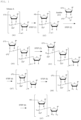
- FIG. 1 is a drawing showing the scheme (Scheme A) of steps (1) to (6) of the production method of the present invention.
- the production method of an oligonucleotide of the present invention involves: A production method of an oligonucleotide comprising a step of coupling a compound represented by formula (2): (wherein,
- the production method of the oligonucleotide may include a step of reacting a 2'-OMe-U amidite solution, in which 2'-OMe-U amidite represented by formula (4) is dissolved in a mixed solution of acetonitrile and an aromatic hydrocarbon represented by formula (3), with an activator.
- a 2'-OMe-U amidite solution in which 2'-OMe-U amidite represented by formula (4) is dissolved in a mixed solution of acetonitrile and an aromatic hydrocarbon represented by formula (3), with an activator.
- the solvent of the 2'-OMe-U amidite solution in the present invention by using a mixed solution containing acetonitrile and an aromatic hydrocarbon represented by formula (3), it is possible to reduce the n-1 mer contained in the oligonucleotide produced.
- the mixing ratio in the mixed solution containing acetonitrile and the aromatic hydrocarbon represented by formula (3) is not particularly limited, but the volume ratio of acetonitrile to the aromatic hydrocarbon is, for example, 99:1 to 1:99, preferably 90:10 to 10:90, more preferably 90:10 to 40:60.
- benzene having substituents selected from the group consisting of a methyl group, an ethyl group, or a halogen atom preferably benzene having one or two substituents selected from the group consisting of a methyl group, an ethyl group, or a halogen atom, more preferably toluene, o-xylene, m-xylene, p-xylene, chlorobenzene, o-dichlorobenzene, m-dichlorobenzene, p-dichlorobenzene, and mixtures of two or more of these can be used.
- Solvents other than acetonitrile and an aromatic hydrocarbon may also be mixed and used in the 2'-OMe-U amidite solution.
- the concentration of 2'-OMe-U amidite in the 2'-OMe-U amidite solution is preferably adjusted to 0.01 M to 0.4 M, more preferably to 0.05 M to 0.2 M.
- a glass container for storing the 2'-OMe-U amidite solution, a glass container, a plastic container, or a metal container can be used.
- a plastic container a container made of polyethylene or polypropylene can be used, and as the metal container, a container made of SUS or Hastelloy can be used.
- a reaction precursor with 2'-OMe-U amidite represented by formula (4) is specifically a compound represented by the following formula (12): (wherein,
- R represents an OQ' group and Q' represents an alkylene group which is bonded to the carbon atom at the 4' position of ribose
- Q' represents an alkylene group which is bonded to the carbon atom at the 4' position of ribose
- specific examples of such structures include the following LNA-1 to LNA-4. (wherein, B a represents a nucleobase which may be protected.)
- the nucleosides (ribose and deoxyribose) contained in the oligonucleotides used in the present invention include DNA, RNA, 2'-O-MOE (2'-O-methoxyethyl), 2'-O-Me, 2'-F RNA, and the aforementioned LNA, but are not limited to these.
- Sp represents a spacer
- the Spacer (Sp) is exemplified by a group having a structure represented by the following formula (19).
- the linker may be, for example, a structure shown in the following formula (20), or a structure in which a hexamethyleneamino group portion in formula (20) is absent and an aminopropyl group is bonded to Si.
- the linker may be a structure shown in the following formula (21). (wherein,
- the method for synthesizing oligonucleotides typically includes the following steps.
- a step of capping a hydroxy group at a 5' position where the coupling reaction with the amidite compound did not proceed may be included following the step (2) or (3), and a capping step may be added at any point during the series of reaction cycles constituting the step (4).
- the step (5) is more specifically conducted in the order of the following reactions (5-1) and (5-2) for the nucleic acid molecule on the solid support produced in the step (4).
- the reaction of step (5-1) may optionally be conducted, and the reaction of step (5-2) may be conducted using the method described in JP 4705716 B2 .
- a nucleic acid compound of formula (A5) can be further elongated to any desired chain length using a nucleotide-type or non-nucleotide-type linker by the amidite method and can be used for the production of a nucleic acid compound represented by formula (A5'). After cleaving only a nucleic acid compound from the nucleic acid compound of formula (A5') bonded to a solid support to obtain an oligonucleotide represented by formula (A6), further deprotection can yield an oligonucleotide represented by formula (A7).
- G 1 it can be used without any particular limitation as long as it can function as a protecting group, and publicly known protecting groups used for amidite compounds can be widely used.
- G 1 is preferably, the protecting group represented by the following formula (14). (wherein, R 1 , R 2 and R 3 are identical to or different from each other, and each independently represents a hydrogen atom or an alkoxy group.)
- R 1 , R 2 and R 3 is a hydrogen atom, and the remaining two thereof are identical to or different from each other (preferably identical) and represents preferably an alkoxy group, and as the alkoxy group, a methoxy group is particularly preferred.
- G 1 is preferably a 4,4'-dimethoxytrityl group (DMTr group), a 4-monomethoxytrityl group, or a 4,4',4''-trimethoxytrityl group, with the 4,4'-dimethoxytrityl group being particularly preferred.
- G 2 it can be used without any particular limitation as long as it can function as a protecting group, and publicly known protecting groups used for amidite compounds can be widely used.
- Examples of G 2 include an alkyl group, an alkenyl group, an alkynyl group, a cycloalkyl group, a haloalkyl group, an aryl group, a heteroaryl group, an arylalkyl group, a cycloalkenyl group, a cycloalkylalkyl group, a cyclylalkyl group, a hydroxyalkyl group, an aminoalkyl group, an alkoxyalkyl group, a heterocyclylalkenyl group, a heterocyclylalkyl group, a heteroarylalkyl group, a silyl group, a silyloxyalkyl group, a mono, di or tri- alkylsilyl group, a mono, di or tri- alkylsilyloxyalkyl group
- G 2 is preferably an alkyl group substituted with an electron-withdrawing group.
- the electron-withdrawing group include a cyano group, a nitro group, an alkylsulfonyl group, a halogen atom, an arylsulfonyl group, a trihalomethyl group, a trialkylamino group, and the others, and preferably a cyano group.
- a 2-cyanoethyl group represented by the following formula
- G 3 is an alkyl group, and two G 3 may be combined with each other to form a cyclic structure.
- both G 3 are an isopropyl group.
- the alkyl group as the definitions of the above R 1 , R 2 , R 3 , G 2 , and G 3 may be a straight chain or a branched chain, and preferably an alkyl group containing 1 to 12 carbon atoms, and more preferably an alkyl group containing 1 to 6 carbon atoms.
- Specific examples of the alkyl group include methyl, ethyl, n-provyl, isopropyl, n-butyl, isobutyl, tert-butyl, n-pentyl, isopentyl, and hexyl.
- An alkyl group part which constitutes the alkoxy group in the definition for above substituents has the same definition as that described in the definition of the alkyl group described here.
- G 4 represents a hydrogen atom, an alkali metal ion, an ammonium ion, an alkylammonium ion, or a hydroxyalkylammonium ion.
- alkali metal ion include sodium ion and lithium ion.
- alkyl ammonium ion specific examples include methyl, ethyl, n-provyl, isopropyl, n-butyl, isobutyl, tert-butyl, n-pentyl, isopentyl, and hexyl, and specific examples thereof include diethyl ammonium ion, triethyl ammonium ion, tetrabutyl ammonium ion, hexyl ammonium ion, and dibutyl ammonium ion, and the others.
- hydroxyalkylammonium ion specific examples include hydroxymethyl, hydroxyethyl, hydroxy-n-provyl, hydroxy isopropyl, hydroxy-n-butyl, trishydroxymethyl and the others, and more specific examples of the hydroxyalkylammonium ion include trishydroxymethylammonium ion and the others.
- G 5 represents a hydrogen atom or a protecting group, and when it represents a protecting group, it represents the same protecting group as G 1 .
- G 5 When G 5 is deprotected, it is a hydrogen atom, and a nucleotide compound in this case is also subjected to a series of nucleic acid elongation reactions.
- an amidite compound can be used in a free state or a salt state.
- the salt of the amidite compound include a base addition salt and an acid addition salt, but which are not particularly limited thereto.
- Specific examples of the base addition salt include salts with inorganic bases such as sodium salts, magnesium salts, potassium salts, calcium salts, aluminum salts and the others; salts with organic bases such as methylamine, ethylamine, ethanolamine and the others; salts with basic amino acids such as lysine, ornithine, arginine and the others; and ammonium salts.
- acid addition salts include mineral acids such as hydrochloric acid, hydrobromic acid, hydroiodic acid, sulfuric acid, nitric acid, phosphoric acid and the others; salts with organic acids such as formic acid, acetic acid, propionic acid, oxalic acid, malonic acid, malic acid, tartaric acid, fumaric acid, succinic acid, lactic acid, maleic acid, citric acid, methanesulfonic acid, trifluoromethansulfonic acid, ethanesulfonic acid and the others; and salts with acidic amino acids such as aspartic acid, glutamic acid and the others.
- the amidite compounds encompass salts, hydrates, solvates, crystal polymorphs, and the others.
- nucleobase refers to a group having a natural type or non-natural type nucleobase backbone.
- the nucleobase also includes modified forms in which the natural type or non-natural type nucleobase backbone is modified.
- a nucleobase represented by B a which may be protected by a protecting group is not particularly limited.
- the nucleobase include adenine, cytosine, guanine, uracil, thymine, 5-methylcytosine, pseudouracil, 1-methylpseudouracil, and the others.
- the nucleobase may be substituted with substituent(s).
- substituents examples include a halogen atom such as a fluoro group, a chloro group, a bromo group, and an iodo group, an acyl group such as an acetyl group, an alkyl group such as a methyl group and an ethyl group, an arylalkyl group such as a benzyl group, an alkoxy group such as a methoxy group, an alkoxyalkyl group such as a methoxyethyl group, a cyanoalkyl group such as a cyanoethyl group, a hydroxy group, a hydroxyalkyl group, an acyloxymethyl group, an amino group, a monoalkylamino group, a dialkylamino group, a carboxy group, a cyano group, a nitro group and the others, as well as combinations of two or more of these substituents.
- a halogen atom such as a fluoro group,
- a protecting group of the amino group is not particularly limited, and publicly known protecting groups used in nucleic acid chemistry can be used, and examples of the protecting group include a benzoyl group, a 4-methoxybenzoyl group, an acetyl group, a propionyl group, a butyryl group, an isobutyryl group, a phenylacetyl group, a phenoxyacetyl group, a 4-tert-butylphenoxyacetyl group, a 4-isopropylphenoxyacetyl group, and (dimethylamino)methylene group, as well as combinations of two or more of these protecting groups.
- B c represents an unprotected nucleobase, but its type is not particularly limited.
- the nucleobase include adenine, cytosine, guanine, uracil, thymine, 5-methylcytosine, pseudouracil, 1-methylpseudouracil and the others.
- the nucleobase may be substituted with substituent(s).
- substituents examples include a halogen atom such as a fluoro group, a chloro group, a bromo group, and an iodo group, an acyl group such as an acetyl group, an alkyl group such as a methyl group and an ethyl group, an arylalkyl group such as a benzyl group, an alkoxy group such as a methoxy group, an alkoxyalkyl group such as a methoxyethyl group, a cyanoalkyl group such as a cyanoethyl group, a hydroxy group, a hydroxyalkyl group, an acyloxymethyl group, an amino group, a monoalkylamino group, a dialkylamino group, a carboxy group, a cyano group, a nitro group and the others, as well as combinations of two or more of these substituents.
- a halogen atom such as a fluoro group,
- the protecting group can be any that can be used in the amidite method, examples include a 2'-tert-butyldimethylsilyl (TBDMS) group, a 2'-bis(2-acetoxy)methyl (ACE) group, a 2'-(triisopropylsilyloxy)methyl (TOM) group, a 2'-(2-cyanoethoxy)ethyl (CEE) group, a 2'-(2-cyanoethoxy)methyl (CEM) group ( WO 2006/022323 A1 ), a 2'-para-toluylsulfonylethoxymethyl (TEM) group, a 2'-EMM group ( WO 2013/027843 A1 ), and those described in WO 2019/208571 A1 .
- TDMS 2'-tert-butyldimethylsilyl
- ACE 2'-bis(2-acetoxy)methyl
- TOM triisopropylsilyloxy)methyl
- CEE
- RNA ribonucleoside
- a protecting group represented by formula (10) is exemplified as a preferred protecting group. More preferably, a protecting group represented by formula (15), having a cyano group as an electron-withdrawing group represented by E W , is exemplified.
- the protecting group represented by formula (15) can be synthesized according to the descriptions in WO 2013/027843 A1 and WO 2019/208571 A1 , for example. Amidite compounds having the protecting group can be used for the production of oligonucleotides.
- Nucleotides and amidites wherein an R group is a substituent other than a hydroxy group can be produced from nucleosides synthesized by known methods described in JP 3745226 B2 and so on, or WO 2001/053528 A1 , JP 2014-221817 A1 , or known methods cited therein. Additionally, they can be produced using commercially available products according to the methods described in the examples below or by appropriately modifying these methods.
- R' represents a hydroxy group, a hydrogen atom, a fluorine atom, a methoxy group, a 2-methoxyethyl group, or an OQ' group
- Q' represents a methylene group which is bonded to the carbon atom at the 4' position of the ribose, an ethylene group which is bonded to the carbon atom at the 4' position of the ribose, or an ethylidene group which is bonded to the carbon atom at the 4' position of the ribose.
- oligonucleotides except for the coupling step using 2'-OMe-U amidite related to the present invention, can generally be conducted by repeating the deprotecting step and the coupling step according to known methods (for example, the methods described in JP 5157168 B2 or JP 5554881 B2 ), thereby performing the nucleic acid elongation reaction.
- known methods for example, the methods described in JP 5157168 B2 or JP 5554881 B2 .
- nucleic acid elongation reaction refers to a reaction that elongates a nucleic acid molecule by sequentially connecting nucleotides via phosphodiester bonds.
- the nucleic acid elongation reaction can be conducted according to the general amidite method (phosphoramidite method).
- the nucleic acid elongation reaction may be conducted using a nucleic acid automatic synthesizer that employs the amidite method or may be conducted in liquid-phase synthesis.
- the chain length of the oligonucleotides can be, for example, 20 mer or more, 40 mer or more, 50 mer or more, 60 mer or more, 80 mer or more, 100 mer or more, 200 mer or more, 2 to 300 mer, 2 to 250 mer, 2 to 200 mer, 10 to 300 mer, 10 to 250 mer, 10 to 200 mer, 10 to 150 mer, 15 to 300 mer, 15 to 250 mer, 15 to 200 mer, 15 to 150 mer, or 15 to 110mer.
- the deprotecting step in the step (1) is a step of deprotecting a protecting group of a 5' hydroxy group at RNA chain terminal which is supported on a solid support (see Scheme A in Figure 1 ).
- a protecting group a 4,4'-dimethoxytrityl group (DMTr group), a 4-monomethoxytrityl group, and a 4,4',4"-trimethoxytrityl group are used. Deprotection can be conducted using an acid.
- Examples of the acid for deprotection include trifluoroacetic acid, dichloroacetic acid, trifluoromethanesulfonic acid, trichloroacetic acid, methanesulfonic acid, hydrochloric acid, acetic acid, p-toluenesulfonic acid, and the others.
- the coupling step in the step (2) is a reaction where a nucleoside phosphoramidite represented by the following formula (A3) described in Scheme A in Figure 1 is attached to the 5' hydroxy group at the oligonucleotide chain terminal deprotected in the above deprotecting step.
- the phosphoramidite represented by following formula (A3) used for the nucleic acid elongation include those where R is a protected hydroxy group, 2'-OMe, 2'-F, 2'-O-tert-butyldimetylsilyl group, 2'-O-methoxyethyl group, 2'-H, 2'-fluoro-2'-deoxy- ⁇ -D-arabinofuranosyl and the others.
- nucleoside phosphoramidite those where 5' hydroxy group is protected with a protecting group (for example, DMTr group) are used.
- the coupling step can be conducted by using an activator which activates the above-mentioned nucleoside phosphoramidite.
- Examples of the activator include 5-benzylthio-1H-tetrazole (BTT), 1H-tetrazole, 4,5-dicyanoimidazole (DCI), 5-ethylthio-1H-tetrazole (ETT), N-methyl benzimidazoliumtriflate (N-MeBIT), benzimidazoliumtriflate (BIT), N-phenylimidazoliumtriflate (N-PhIMT), imidazoliumtriflate (IMT), 5-nitrobenzimidazoliumtriflate (NBT), 1-hydroxybenzotriazole (HOBT), 5-(bis-3,5-trifluoromethylphenyl)-1H-tetrazole, and the others, and 5-benzylthio-1H-tetrazole (BTT) is preferred.
- BTT 5-benzylthio-1H-tetrazole
- DCI 5-ethylthio-1H-tetrazole
- ETT 5-ethy
- nucleoside phosphoramidite represented by the formula (A3) described in Scheme A in Figure 1 (hereinafter referred to as amidite) is as follows.
- 2'-OMe-U amidite compound represented by formula (4)
- a solution in which 2'-OMe-U amidite is dissolved in a mixed solution containing acetonitrile and an aromatic hydrocarbon represented by formula (3) can be used.
- An activator may be added to the mixed solution. The activator may be dissolved in the mixed solution.
- an unreacted 5' hydroxy group may be capped.
- the capping can be conducted by using publicly known capping solutions such as an acetic anhydride-tetrahydrofuran solution, a phenoxyacetic anhydride/N-methylimidazole solution, and the others.
- the oxidizing step in the step (3) is a step of converting a phosphite group which is formed in the above coupling step into a phosphate group or a thiophosphate group.
- This step is a reaction of converting a trivalent phosphorus into a pentavalent phosphorus using an oxidizing agent, which can be conducted by reacting an oxidizing agent with oligonucleic acid derivatives supported on a solid support.
- oxidizing agent for example, iodine can be used.
- the oxidizing agent can be used by adjusting to 0.005 to 2 M concentration.
- Water can be used as the oxygen source for oxidation, and pyridine, N-methylimidazole (NMI), N-methylmorpholine, or triethylamine can be used as the base to proceed the reaction.
- pyridine N-methylimidazole (NMI), N-methylmorpholine, or triethylamine
- solvent it is not particularly limited as long as it does not participate in the reaction, but acetonitrile, tetrahydrofuran (THF), or a mixture of these in any ratio can be used.
- iodine/water/pyridine/acetonitrile iodine/water/pyridine, iodine/water/pyridine/NMI, or iodine/water/pyridine/THF can be used.
- the reaction temperature is preferably 5°C to 50°C.
- the reaction time is usually suitable between 1 minute and 30 minutes.
- the amount of reagent used is preferably 1 to 100 mol per 1 mol of the compound supported on the solid support, more preferably 1 to 10 mol.
- oxidizing agent for example, sulfur, 3H-1,2-benzodithiol-3-one-1,1-dioxide (Beaucage reagent), 3-amino-1,2,4-dithiazole-5-thione (ADTT), 5-phenyl-3H-1,2,4-dithiazole-3-one (POS), [(N,N-dimethylaminomethylidene)amino]-3H-1,2,4-dithiazoline-3-thione (DDTT), and phenylacetyldisulfide (PADS) can be also used.
- oxidizing agent for example, sulfur, 3H-1,2-benzodithiol-3-one-1,1-dioxide (Beaucage reagent), 3-amino-1,2,4-dithiazole-5-thione (ADTT), 5-phenyl-3H-1,2,4-dithiazole-3-one (POS), [(N,N-dimethylaminomethylidene)amin
- the oxidizing agent can be used by diluting it with an appropriate solvent so as to adjust to 0.001 to 2 M concentration.
- the solvent to be used in the reaction is not particularly limited as long as it does not participate in the reaction, and include, for example, dichloromethane, acetonitrile, pyridine, or any mixed solvents of these solvents.
- the oxidizing step may be conducted after the above-mentioned capping procedure, or conversely, the capping procedure may be conducted after the oxidizing step, and the order of the procedures are not limited.
- a step of deprotecting a phosphate protecting group involves applying an amine compound to deprotect a protecting group in the phosphate portion after the synthesis of the nucleic acid with the desired sequence is completed.
- the amine compound include, for example, diethylamine and the others as described in JP 4705716 B2 .
- the protecting group of the 5' hydroxy group of the nucleoside incorporated in the last stage of the elongation may be used for the column purification with the 5' protecting group as a tag after the below-mentioned procedures of cleaving from a solid support and deprotecting of a protecting group, or alternatively, the protecting group of the 5' hydroxy group may be deprotected after the column purification.
- the cleavage of the oligonucleotide, which has been elongated to the desired chain length on the solid support, from the solid support is typically conducted by using concentrated aqueous ammonia as a cleaving agent.
- an oligonucleotide chain is collected by cleaving from a solid support.
- the amine compound include methylamine, ethylamine, isopropylamine, ethylenediamine, diethylamine, and the others.
- the protecting group of the 2'-hydroxy group of the ribose in the nucleic acid compound (A6) cleaved from the solid support in the step (5) can be removed according to the methods described in WO 2006/022323 A1 , WO 2013/027843 A1 , or WO 2019/208571 A1 , to obtain the deprotected oligonucleotide (A7).
- a nucleoside contained in the oligonucleotide is RNA, DNA, RNA containing 2'-O-MOE, 2'-O-Me, or 2'-F, and LNA, which is not limited thereto.
- various nucleosides described in Xiulong, Shen et al., Nucleic Acids Research, 2018, Vol. 46, No.46, 1584-1600 , and Daniel O'Reilly et al., Nucleic Acids Research, 2019, Vol. 47, No.2, 546-558 are included.
- oligonucleotides which can be used in the production method of the present invention, the following examples are indicated in addition to examples described in working examples, which are not limited thereto.
- U represents uridine (ST.25 format)
- C represents cytidine
- A represents adenosine
- G represents guanosine
- T in the ST.26 format represents uridine.
- Oligonucleotides having the following sequences (A) and (B) as described in WO 2019/060442 A1 are exemplified.
- Um represents 2'-O-methyluridine (ST.25 format)
- Tm represents 2'-O-methyluridine (ST.26 format)
- Cm represents 2'-O-methylcytidine
- dT represents thymidine.
- oligonucleotide as described in JP 2017-537626 A1 is exemplified.
- a typical example is an oligonucleotide having the following sequence (C).
- the purity of the oligonucleotide was measured using HPLC.
- FLP stands for the target material (Full Length Product).
- HPLC measurement conditions are shown in Table 1 below.
- OD 260 of the above crude product was measured.
- the sequence (I) represents the following structure (16).
- CPG Controlled Pore Glass
- AKTA oligopilot plus 100 manufactured by GE healthcare
- a nucleic acid synthesizer Using Controlled Pore Glass (CPG) as a solid support and an AKTA oligopilot plus 100 (manufactured by GE healthcare) as a nucleic acid synthesizer, according to the phosphoramidite solid-phase synthesis method, an oligonucleotide composed by the above sequence (I) was synthesized from the 3' side to the 5' side. The synthesis was conducted on a scale of about 53 ⁇ mol.
- CPG Controlled Pore Glass
- AKTA oligopilot plus 100 manufactured by GE healthcare
- oligonucleotides produced by the production method of the present invention are oligonucleotides having sequence (I) shown by sequence No. 4.
- an oligonucleotide shown in sequence (I) was automatically synthesized from the 3' end to the 5' end using an AKTA oligopilot plus 100 (manufactured by GE Healthcare).
- the procedure for automatic synthesis is, first, a 3% dichloroacetic acid toluene solution was liquid-transferred to the CPG to deprotect a trityl protecting group at the 5' position, then, a 2'-OMe-U amidite solution and a 5-benzylmercapto-1H-tetrazole acetonitrile solution as a coupling agent were liquid-transferred to the CPG to proceed with the coupling reaction at the 5' hydroxy group. Next, a 50 mM iodine solution was liquid-transferred to convert a phosphite group to a phosphate group.
- capping was conducted at the reaction sites where the coupling reaction did not proceed. These steps were repeated a total of 24 times to synthesize a nucleic acid oligonucleotide with the sequence shown in sequence (I) on the CPG support. After that, a trityl protecting group at the 5' position was deprotected with a 3% dichloroacetic acid toluene solution.
- Sequence Nos. 1 to 4 in Sequence Listing represent base sequences of oligonucleotides that are produced according to the production method of the present invention. [Sequence Listing]
Landscapes
- Chemical & Material Sciences (AREA)
- Organic Chemistry (AREA)
- Health & Medical Sciences (AREA)
- Life Sciences & Earth Sciences (AREA)
- Biochemistry (AREA)
- Molecular Biology (AREA)
- Engineering & Computer Science (AREA)
- Biotechnology (AREA)
- General Health & Medical Sciences (AREA)
- Genetics & Genomics (AREA)
- Saccharide Compounds (AREA)
Applications Claiming Priority (2)
| Application Number | Priority Date | Filing Date | Title |
|---|---|---|---|
| JP2022117422 | 2022-07-22 | ||
| PCT/JP2023/026733 WO2024019137A1 (ja) | 2022-07-22 | 2023-07-21 | オリゴヌクレオチドの製造方法 |
Publications (1)
| Publication Number | Publication Date |
|---|---|
| EP4559925A1 true EP4559925A1 (en) | 2025-05-28 |
Family
ID=89617881
Family Applications (1)
| Application Number | Title | Priority Date | Filing Date |
|---|---|---|---|
| EP23843060.7A Pending EP4559925A1 (en) | 2022-07-22 | 2023-07-21 | Production method of oligonucleotide |
Country Status (5)
| Country | Link |
|---|---|
| EP (1) | EP4559925A1 (https=) |
| JP (1) | JPWO2024019137A1 (https=) |
| KR (1) | KR20250042734A (https=) |
| CN (1) | CN119403816A (https=) |
| WO (1) | WO2024019137A1 (https=) |
Families Citing this family (1)
| Publication number | Priority date | Publication date | Assignee | Title |
|---|---|---|---|---|
| US12416020B2 (en) | 2024-02-20 | 2025-09-16 | Wyvern Pharmaceuticals Inc. | Plasmid encoding a TLR3 and Fc fusion protein |
Family Cites Families (16)
| Publication number | Priority date | Publication date | Assignee | Title |
|---|---|---|---|---|
| US6077709A (en) | 1998-09-29 | 2000-06-20 | Isis Pharmaceuticals Inc. | Antisense modulation of Survivin expression |
| US6887990B1 (en) | 1999-02-05 | 2005-05-03 | Amersham Biosciences Corp | Method for deprotecting oligonucleotides |
| US6261840B1 (en) | 2000-01-18 | 2001-07-17 | Isis Pharmaceuticals, Inc. | Antisense modulation of PTP1B expression |
| AU2005275801B2 (en) | 2004-08-26 | 2012-05-10 | Nippon Shinyaku Co., Ltd. | Phosphoramidite compound and method for producing oligo-RNA |
| ES2526295T5 (es) | 2006-10-18 | 2021-05-04 | Ionis Pharmaceuticals Inc | Compuestos antisentido |
| MX370398B (es) | 2011-08-25 | 2019-12-11 | Bonac Corp | Compuesto de glicosido, metodo para producir tioeter, eter, metodo para producir eter, metodo para producir un compuesto de glicosido, metodo para producir acido nucleico. |
| DK2951191T3 (en) * | 2013-01-31 | 2019-01-14 | Ionis Pharmaceuticals Inc | PROCEDURE FOR MANUFACTURING OLIGOMERIC COMPOUNDS USING MODIFIED CLUTCH PROTOCOLS |
| WO2015164693A1 (en) * | 2014-04-24 | 2015-10-29 | Isis Pharmaceuticals, Inc. | Oligomeric compounds comprising alpha-beta-constrained nucleic acid |
| CA2969619A1 (en) | 2014-12-03 | 2016-06-09 | Agilent Technologies, Inc. | Guide rna with chemical modifications |
| BR112020005230A2 (pt) | 2017-09-19 | 2020-09-24 | Alnylam Pharmaceuticals, Inc. | composições e métodos para o tratamento da amiloidose mediada por transtiretina (ttr) |
| US11897911B2 (en) | 2018-03-07 | 2024-02-13 | Sanofi | Nucleotide precursors, nucleotide analogs and oligomeric compounds containing the same |
| KR102670605B1 (ko) | 2018-04-24 | 2024-05-29 | 스미또모 가가꾸 가부시끼가이샤 | 아미다이트 화합물 및 그 화합물을 사용한 폴리뉴클레오티드의 제조 방법 |
| EP3950698A4 (en) * | 2019-03-28 | 2023-01-25 | Ajinomoto Co., Inc. | METHOD OF PREPARING AN OLIGONUCLEOTIDE WITH PHOSPHOROTHIOATE SITE |
| CN112007040B (zh) | 2019-05-31 | 2024-01-30 | 苏州瑞博生物技术股份有限公司 | 用于治疗乙型病毒性肝炎的联合用药物 |
| KR20220062517A (ko) * | 2019-08-15 | 2022-05-17 | 아이오니스 파마수티컬즈, 인코포레이티드 | 결합 변형된 올리고머 화합물 및 이의 용도 |
| JP7804434B2 (ja) | 2021-01-29 | 2026-01-22 | 日東電工株式会社 | 光学用粘着テープ |
-
2023
- 2023-07-21 EP EP23843060.7A patent/EP4559925A1/en active Pending
- 2023-07-21 CN CN202380048887.9A patent/CN119403816A/zh active Pending
- 2023-07-21 JP JP2024535147A patent/JPWO2024019137A1/ja active Pending
- 2023-07-21 KR KR1020257000384A patent/KR20250042734A/ko active Pending
- 2023-07-21 WO PCT/JP2023/026733 patent/WO2024019137A1/ja not_active Ceased
Also Published As
| Publication number | Publication date |
|---|---|
| CN119403816A (zh) | 2025-02-07 |
| WO2024019137A1 (ja) | 2024-01-25 |
| JPWO2024019137A1 (https=) | 2024-01-25 |
| KR20250042734A (ko) | 2025-03-27 |
Similar Documents
| Publication | Publication Date | Title |
|---|---|---|
| JP7777452B2 (ja) | 核酸オリゴマーの製造方法 | |
| EP4559925A1 (en) | Production method of oligonucleotide | |
| ES2981209T3 (es) | Proceso de preparación de oligómero de ácido nucleico | |
| JP7759323B2 (ja) | 核酸オリゴマーの製造方法 | |
| JP7698631B2 (ja) | 核酸オリゴマーの製造方法 | |
| EP4563559A1 (en) | Thionizing solution | |
| EP4410770A1 (en) | Production method for purified dichloroacetic acid | |
| US20260125414A1 (en) | Production method of oligonucleotide | |
| EP4477659A1 (en) | Method for producing oligonucleotide | |
| EP4644404A1 (en) | Oligonucleotide production method | |
| WO2025229953A1 (ja) | オリゴヌクレオチドの製造方法 |
Legal Events
| Date | Code | Title | Description |
|---|---|---|---|
| STAA | Information on the status of an ep patent application or granted ep patent |
Free format text: STATUS: THE INTERNATIONAL PUBLICATION HAS BEEN MADE |
|
| PUAI | Public reference made under article 153(3) epc to a published international application that has entered the european phase |
Free format text: ORIGINAL CODE: 0009012 |
|
| STAA | Information on the status of an ep patent application or granted ep patent |
Free format text: STATUS: REQUEST FOR EXAMINATION WAS MADE |
|
| 17P | Request for examination filed |
Effective date: 20241126 |
|
| AK | Designated contracting states |
Kind code of ref document: A1 Designated state(s): AL AT BE BG CH CY CZ DE DK EE ES FI FR GB GR HR HU IE IS IT LI LT LU LV MC ME MK MT NL NO PL PT RO RS SE SI SK SM TR |
|
| DAV | Request for validation of the european patent (deleted) | ||
| DAX | Request for extension of the european patent (deleted) |