EP4559871A1 - Verfahren und vorrichtung zur abtrennung von ammoniak aus ammoniakspaltgas - Google Patents
Verfahren und vorrichtung zur abtrennung von ammoniak aus ammoniakspaltgas Download PDFInfo
- Publication number
- EP4559871A1 EP4559871A1 EP23020522.1A EP23020522A EP4559871A1 EP 4559871 A1 EP4559871 A1 EP 4559871A1 EP 23020522 A EP23020522 A EP 23020522A EP 4559871 A1 EP4559871 A1 EP 4559871A1
- Authority
- EP
- European Patent Office
- Prior art keywords
- ammonia
- gas
- cracking
- forming gas
- cracked
- Prior art date
- Legal status (The legal status is an assumption and is not a legal conclusion. Google has not performed a legal analysis and makes no representation as to the accuracy of the status listed.)
- Pending
Links
Images
Classifications
-
- C—CHEMISTRY; METALLURGY
- C01—INORGANIC CHEMISTRY
- C01B—NON-METALLIC ELEMENTS; COMPOUNDS THEREOF; METALLOIDS OR COMPOUNDS THEREOF NOT COVERED BY SUBCLASS C01C
- C01B3/00—Hydrogen; Gaseous mixtures containing hydrogen; Separation of hydrogen from mixtures containing it; Purification of hydrogen; Reversible storage of hydrogen
- C01B3/02—Production of hydrogen; Production of gaseous mixtures containing hydrogen
- C01B3/04—Production of hydrogen; Production of gaseous mixtures containing hydrogen by decomposition of inorganic compounds
- C01B3/047—Decomposition of ammonia
-
- B—PERFORMING OPERATIONS; TRANSPORTING
- B01—PHYSICAL OR CHEMICAL PROCESSES OR APPARATUS IN GENERAL
- B01D—SEPARATION
- B01D53/00—Separation of gases or vapours; Recovering vapours of volatile solvents from gases; Chemical or biological purification of waste gases, e.g. engine exhaust gases, smoke, fumes, flue gases, aerosols
- B01D53/02—Separation of gases or vapours; Recovering vapours of volatile solvents from gases; Chemical or biological purification of waste gases, e.g. engine exhaust gases, smoke, fumes, flue gases, aerosols by adsorption, e.g. preparative gas chromatography
- B01D53/04—Separation of gases or vapours; Recovering vapours of volatile solvents from gases; Chemical or biological purification of waste gases, e.g. engine exhaust gases, smoke, fumes, flue gases, aerosols by adsorption, e.g. preparative gas chromatography with stationary adsorbents
- B01D53/0462—Temperature swing adsorption
-
- B—PERFORMING OPERATIONS; TRANSPORTING
- B01—PHYSICAL OR CHEMICAL PROCESSES OR APPARATUS IN GENERAL
- B01D—SEPARATION
- B01D53/00—Separation of gases or vapours; Recovering vapours of volatile solvents from gases; Chemical or biological purification of waste gases, e.g. engine exhaust gases, smoke, fumes, flue gases, aerosols
- B01D53/02—Separation of gases or vapours; Recovering vapours of volatile solvents from gases; Chemical or biological purification of waste gases, e.g. engine exhaust gases, smoke, fumes, flue gases, aerosols by adsorption, e.g. preparative gas chromatography
- B01D53/04—Separation of gases or vapours; Recovering vapours of volatile solvents from gases; Chemical or biological purification of waste gases, e.g. engine exhaust gases, smoke, fumes, flue gases, aerosols by adsorption, e.g. preparative gas chromatography with stationary adsorbents
- B01D53/047—Pressure swing adsorption
-
- C—CHEMISTRY; METALLURGY
- C01—INORGANIC CHEMISTRY
- C01B—NON-METALLIC ELEMENTS; COMPOUNDS THEREOF; METALLOIDS OR COMPOUNDS THEREOF NOT COVERED BY SUBCLASS C01C
- C01B3/00—Hydrogen; Gaseous mixtures containing hydrogen; Separation of hydrogen from mixtures containing it; Purification of hydrogen; Reversible storage of hydrogen
- C01B3/50—Separation of hydrogen or hydrogen-containing gases from gaseous mixtures, e.g. purification
- C01B3/508—Separation of hydrogen or hydrogen-containing gases from gaseous mixtures, e.g. purification by using hydrogen storage media
-
- C—CHEMISTRY; METALLURGY
- C01—INORGANIC CHEMISTRY
- C01B—NON-METALLIC ELEMENTS; COMPOUNDS THEREOF; METALLOIDS OR COMPOUNDS THEREOF NOT COVERED BY SUBCLASS C01C
- C01B2203/00—Integrated processes for the production of hydrogen or synthesis gas
- C01B2203/02—Processes for making hydrogen or synthesis gas
- C01B2203/0266—Processes for making hydrogen or synthesis gas containing a decomposition step
- C01B2203/0277—Processes for making hydrogen or synthesis gas containing a decomposition step containing a catalytic decomposition step
-
- C—CHEMISTRY; METALLURGY
- C01—INORGANIC CHEMISTRY
- C01B—NON-METALLIC ELEMENTS; COMPOUNDS THEREOF; METALLOIDS OR COMPOUNDS THEREOF NOT COVERED BY SUBCLASS C01C
- C01B2203/00—Integrated processes for the production of hydrogen or synthesis gas
- C01B2203/04—Integrated processes for the production of hydrogen or synthesis gas containing a purification step for the hydrogen or the synthesis gas
- C01B2203/042—Purification by adsorption on solids
- C01B2203/043—Regenerative adsorption process in two or more beds, one for adsorption, the other for regeneration
-
- C—CHEMISTRY; METALLURGY
- C01—INORGANIC CHEMISTRY
- C01B—NON-METALLIC ELEMENTS; COMPOUNDS THEREOF; METALLOIDS OR COMPOUNDS THEREOF NOT COVERED BY SUBCLASS C01C
- C01B2203/00—Integrated processes for the production of hydrogen or synthesis gas
- C01B2203/04—Integrated processes for the production of hydrogen or synthesis gas containing a purification step for the hydrogen or the synthesis gas
- C01B2203/0465—Composition of the impurity
- C01B2203/0495—Composition of the impurity the impurity being water
-
- C—CHEMISTRY; METALLURGY
- C01—INORGANIC CHEMISTRY
- C01B—NON-METALLIC ELEMENTS; COMPOUNDS THEREOF; METALLOIDS OR COMPOUNDS THEREOF NOT COVERED BY SUBCLASS C01C
- C01B2203/00—Integrated processes for the production of hydrogen or synthesis gas
- C01B2203/08—Methods of heating or cooling
- C01B2203/0805—Methods of heating the process for making hydrogen or synthesis gas
- C01B2203/0811—Methods of heating the process for making hydrogen or synthesis gas by combustion of fuel
- C01B2203/0827—Methods of heating the process for making hydrogen or synthesis gas by combustion of fuel at least part of the fuel being a recycle stream
-
- C—CHEMISTRY; METALLURGY
- C01—INORGANIC CHEMISTRY
- C01B—NON-METALLIC ELEMENTS; COMPOUNDS THEREOF; METALLOIDS OR COMPOUNDS THEREOF NOT COVERED BY SUBCLASS C01C
- C01B2203/00—Integrated processes for the production of hydrogen or synthesis gas
- C01B2203/10—Catalysts for performing the hydrogen forming reactions
- C01B2203/1041—Composition of the catalyst
- C01B2203/1047—Group VIII metal catalysts
- C01B2203/1052—Nickel or cobalt catalysts
- C01B2203/1058—Nickel catalysts
-
- C—CHEMISTRY; METALLURGY
- C01—INORGANIC CHEMISTRY
- C01B—NON-METALLIC ELEMENTS; COMPOUNDS THEREOF; METALLOIDS OR COMPOUNDS THEREOF NOT COVERED BY SUBCLASS C01C
- C01B2203/00—Integrated processes for the production of hydrogen or synthesis gas
- C01B2203/10—Catalysts for performing the hydrogen forming reactions
- C01B2203/1041—Composition of the catalyst
- C01B2203/1047—Group VIII metal catalysts
- C01B2203/1064—Platinum group metal catalysts
-
- C—CHEMISTRY; METALLURGY
- C01—INORGANIC CHEMISTRY
- C01B—NON-METALLIC ELEMENTS; COMPOUNDS THEREOF; METALLOIDS OR COMPOUNDS THEREOF NOT COVERED BY SUBCLASS C01C
- C01B2203/00—Integrated processes for the production of hydrogen or synthesis gas
- C01B2203/14—Details of the flowsheet
- C01B2203/146—At least two purification steps in series
Definitions
- the invention relates to a process for producing a product gas (forming gas) consisting largely of hydrogen and nitrogen, wherein an ammonia-containing feedstock is fed to a cracking reactor in order to thermally crack ammonia with catalytic support and to obtain a cracked gas comprising hydrogen, nitrogen and ammonia, from which ammonia is adsorptively separated in a separation device to form the forming gas.
- a product gas consisting largely of hydrogen and nitrogen
- the invention relates to a device for carrying out the method according to the invention.
- the catalytically assisted thermal decomposition of ammonia is well known and has been state of the art for many years.
- the position of the reaction equilibrium which depends on the catalyst material used, shifts toward the product side with decreasing pressure and increasing temperature.
- Forming gas obtained by ammonia cracking in which hydrogen and nitrogen can be present in varying ratios, is used, for example, as a shielding gas in welding or the heat treatment of metals, or as a reducing gas for activating catalysts. It burns without producing climate-damaging carbon dioxide, which is why it can also be used advantageously as a fuel. Because the nitrogen it contains acts as a temperature moderator and increases the mass flow of the flue gases, it is particularly suitable as a fuel gas for the carbon dioxide-free operation of gas turbines.
- Such plants can be used as those currently used for large-scale synthesis gas production by steam reforming of hydrocarbons.
- Such plants comprise a cracking reactor with a combustion chamber containing cracking tubes filled with catalyst material, as well as a waste heat recovery system.
- the combustion chamber is heated by one or more several burners powered by imported fuel are heated, which provide heat for the endothermic splitting of the ammonia passed through the splitting tubes.
- ammonia cracking is preferably carried out at a pressure (crack pressure) between 20 and 40 bar. This is all the more easily achieved because the ammonia intended for cracking is usually available in liquid form, so its pressure can be increased with little energy input. To achieve a sufficiently high, economically viable conversion rate of the ammonia used under these conditions, it is necessary to carry out the cracking at high temperatures between approximately 500 and 1000°C.
- the fission gas leaving the fission reactor consists largely of hydrogen and nitrogen, but also contains unreacted ammonia and water, which is already present in the ammonia-containing feedstock.
- the aim is to achieve extensive separation of the ammonia not converted during fission, since its combustion produces harmful nitrogen oxides which may only be released into the atmosphere within narrow limits and which can only be removed from the flue gases formed during combustion by means of complex catalytic treatment.
- the fission gas is subjected to a water scrubbing process, in which it is cooled, for example, to below the water dew point, so that water condenses and the highly hygroscopic ammonia is washed out of the fission gas by the condensed water.
- a water scrubbing process in which it is cooled, for example, to below the water dew point, so that water condenses and the highly hygroscopic ammonia is washed out of the fission gas by the condensed water.
- the amount of water contained is usually sufficient to reduce the ammonia content to such an extent that the resulting forming gas can be released as fuel gas.
- a separate supply of scrubbing water is not necessary, at least under normal operating conditions.
- ammonia/water mixture produced during scrubbing must be regenerated at considerable expense or disposed of as wastewater, which has a negative impact on the economic viability of forming gas production.
- EP4112539A1 It is also known that the ammonia/water mixture is not regenerated, but used in the cracking furnace. The majority of the mixture is fed into the cracking tubes to produce hydrogen. To adjust the amount of water introduced into the cracking tubes, a smaller portion is discharged in a controlled manner and used to fire the cracking furnace, forming and releasing nitrogen oxides.
- the object of the invention is to provide a method of the generic type and a device for carrying it out, which are suitable for overcoming the disadvantages of the prior art.
- the stated object is achieved according to the invention in that the cracked gas is treated in the separation device by pressure swing adsorption (PWA) in order to selectively separate ammonia and to obtain a PWA residual gas containing the separated ammonia as well as a cracked gas with a reduced ammonia content, which forms the forming gas or from which the forming gas is obtained by further treatment.
- PWA pressure swing adsorption
- the cooled cracked gas is fed at an inlet pressure to one of several adsorbers of a pressure swing adsorber.
- Each adsorber is filled with a material that adsorbs and retains the ammonia contained in the cracked gas while allowing hydrogen and nitrogen to pass largely unhindered. This means that a cracked gas with a reduced ammonia content leaves the adsorber at a pressure that, apart from flow losses, corresponds to the inlet pressure of the cracked gas. Since the adsorber material has a limited capacity to absorb ammonia, the flow of cracked gas into the adsorber must be interrupted after a certain time before the ammonia content of the cracked gas leaving the adsorber reaches unacceptably high levels.
- the ammonia-laden adsorber is regenerated.
- the pressure in the adsorber is reduced to the so-called regeneration pressure in order to desorb ammonia.
- the adsorber can be purged during and/or after the pressure reduction with a portion of the cracked gas obtained by pressure swing adsorption, which has a reduced ammonia content.
- the lower the regeneration pressure the less regeneration gas is required to desorb the ammonia, thus increasing the forming gas yield.
- the ammonia desorbed during adsorber regeneration is withdrawn from the adsorber as part of a gas mixture known as the PSA residual gas, which may also contain the regeneration gas used, with the residual gas pressure largely corresponding to the regeneration pressure.
- One embodiment of the process according to the invention provides for subjecting the cracked gas obtained by pressure swing adsorption, with its ammonia content reduced, to temperature swing adsorption (TWA) in order to selectively separate ammonia and obtain a TWA residual gas containing the separated ammonia, as well as a cracked gas with a further reduced ammonia content, which forms the forming gas.
- TWA temperature swing adsorption
- Pressure swing adsorption separates most of the ammonia contained in the cracked gas, while temperature swing adsorption performs a fine purification.
- a portion of the forming gas thus obtained is used as regeneration gas to regenerate the adsorbers used in temperature swing adsorption and thus enters the TWA residual gas.
- the selective separation of ammonia in this context means that only small amounts of nitrogen and hydrogen are separated from the cracked gas due to the effect of co-adsorption, while the water contained in the cracked gas, along with ammonia, can pass completely into the PWA and/or TWA residual gas.
- the residual gas obtained from selective ammonia separation preferably has a nitrogen and hydrogen content of less than 99%.
- a further embodiment of the process according to the invention provides that at least a part of the PWA and/or TWA residual gas is fed to the catalytically assisted thermal ammonia cracking as feedstock.
- the water returned with the residual gas(es) also acts as a temperature moderator in the reactor used for ammonia splitting.
- the adsorption step of pressure swing adsorption is carried out at a pressure that, except for line losses, corresponds to the cracking pressure at which the ammonia cracking is carried out.
- the cracking pressure is preferably between 20 and 40 bar, so that the cracked gas with reduced ammonia content is also obtained by pressure swing adsorption at a pressure within this range.
- the ammonia is separated from the cracked gas using suitable adsorbents that adsorb ammonia very well, but not or only very poorly adsorb hydrogen and nitrogen.
- suitable adsorbent is aluminum nail, which is alkali-resistant and excellently adsorbs and desorbs ammonia under pressure swing adsorption conditions.
- Hydrogen and nitrogen on the other hand, only attach to the aluminum nail to a small extent, thereby transferring almost entirely into the cracked gas obtained as a high-pressure product of the PSA, which has a reduced ammonia content.
- the ammonia cleavage is carried out with the support of a catalyst based on nickel or iron or a metal of the platinum group or carbides or nitrides of transition metals or bimetallic transition metals.
- the forming gas produced according to the invention can be used in a variety of applications. Forming gas produced without nitrogen removal following adsorptive separation of water and/or ammonia from the cracked gas is particularly suitable as a fuel for a gas turbine.
- the invention relates to a device for producing a product gas (forming gas) consisting largely of hydrogen and nitrogen from a feedstock containing ammonia, comprising a cracking reactor with which the ammonia contained in the feedstock can be thermally cracked with catalytic support to obtain a cracked gas containing hydrogen, nitrogen and ammonia, and a separation device with which ammonia can be adsorptively separated from the cracked gas in order to obtain the forming gas.
- a device for producing a product gas (forming gas) consisting largely of hydrogen and nitrogen from a feedstock containing ammonia
- a cracking reactor with which the ammonia contained in the feedstock can be thermally cracked with catalytic support to obtain a cracked gas containing hydrogen, nitrogen and ammonia
- a separation device with which ammonia can be adsorptively separated from the cracked gas in order to obtain the forming gas.
- the separation device comprises a pressure swing adsorber which is designed to selectively separate ammonia from the cracked gas, whereby a PWA residual gas containing the separated ammonia and a cracked gas with a reduced ammonia content are produced, which forms the forming gas or from which the forming gas can be obtained by further treatment.
- the separation device comprises a temperature swing adsorber arranged downstream of the pressure swing adsorber, with which ammonia can be selectively separated from the cracked gas reduced in ammonia content in order to obtain the forming gas and a TWA residual gas containing ammonia.
- the cracking reactor comprises at least one burner for providing heat for the catalytically assisted thermal ammonia cracking, which burner is connected to the separation device in such a way that at least a portion of the first and/or the DWA and/or the TWA residual gas can be fed to the burner as fuel.
- the fission reactor contains a catalyst based on nickel or iron or a metal of the platinum group or carbides or nitrides of transition metals or bimetallic transition metals, over which the ammonia-containing feedstock can be passed.
- the device comprises a gas turbine to which at least part of the formable forming gas can be supplied as fuel gas.
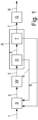
- the Figure 1 shows a preferred embodiment of the invention in which forming gas is produced as fuel for a gas turbine.
- ammonia is selectively separated by pressure swing adsorption (PSA) in a pressure swing adsorber (D), and a PSA residual gas 4 containing the separated ammonia and a cracked gas 5 with a reduced ammonia content are obtained.
- PSA pressure swing adsorption
- D pressure swing adsorber
- the cracked gas 5 which has a reduced ammonia content, is passed on to the temperature swing adsorber T belonging to the separation device A, where further ammonia is selectively separated by temperature swing adsorption (TWA), and a TWA residual gas 6 containing the separated ammonia and a forming gas 7 consisting largely of hydrogen and nitrogen are obtained.
- TWA temperature swing adsorption
- the TWA residual gas is also burned to generate heat in the cracking reactor S.
- the forming gas 7 is used as fuel in the gas turbine G, which is preferably coupled to a power generator (not shown), producing a largely nitrogen oxide-free exhaust gas 8 that can be released into the atmosphere without further treatment.
Landscapes
- Chemical & Material Sciences (AREA)
- Engineering & Computer Science (AREA)
- Organic Chemistry (AREA)
- Chemical Kinetics & Catalysis (AREA)
- Combustion & Propulsion (AREA)
- Oil, Petroleum & Natural Gas (AREA)
- General Chemical & Material Sciences (AREA)
- Inorganic Chemistry (AREA)
- Analytical Chemistry (AREA)
- Health & Medical Sciences (AREA)
- General Health & Medical Sciences (AREA)
- Hydrogen, Water And Hydrids (AREA)
- Separation Of Gases By Adsorption (AREA)
Abstract
Die Erfindung betrifft ein Verfahren sowie eine Vorrichtung zur Erzeugung eines weitgehend aus Wasserstoff und Stickstoff bestehenden Produktgases (Formiergas) (7), wobei ein Ammoniak enthaltender Einsatzstoff (1) einem Spaltreaktor (S) zugeführt wird, um Ammoniak mit katalytischer Unterstützung thermisch zu spalten und ein Wasserstoff, Stickstoff und Ammoniak umfassendes Spaltgas (3) zu erhalten, von dem Ammoniak zur Bildung des Formiergases (7) in einer Trenneinrichtung (T) adsorptiv abgetrennt wird. Kennzeichnend hierbei ist, dass das Spaltgas (3) in der Trenneinrichtung (T) durch Druckwechseladsorption (DWA) (D) behandelt wird, um Ammoniak selektiv abzutrennen und ein, das abgetrennte Ammoniak enthaltendes DWA-Restgas (4) sowie ein im Ammoniakgehalt reduziertes Spaltgas (5) zu gewinnen, das das Formiergas bildet oder aus dem das Formiergas (7) durch weitere Behandlung erhalten wird.
Description
- Die Erfindung betrifft ein Verfahren zur Erzeugung eines weitgehend aus Wasserstoff und Stickstoff bestehenden Produktgases (Formiergas), wobei ein Ammoniak enthaltender Einsatzstoff einem Spaltreaktor zugeführt wird, um Ammoniak mit katalytischer Unterstützung thermisch zu spalten und ein Wasserstoff, Stickstoff und Ammoniak umfassendes Spaltgas zu erhalten, von dem Ammoniak zur Bildung des Formiergases in einer Trenneinrichtung adsorptiv abgetrennt wird.
- Weiterhin betrifft die Erfindung eine Vorrichtung zur Durchführung des erfindungsgemäßen Verfahrens.
- Die katalytisch unterstütze thermische Spaltung von Ammoniak ist bekannt und seit vielen Jahren Stand der Technik. Die dabei ablaufende Reaktion
2NH3 ↔ N2 + 3H2
ist endotherm (ΔH=46,2kJ/mol). Die von dem eingesetzten Katalysatormaterial abhängige Lage des Reaktionsgleichgewichts verschiebt sich mit fallendem Druck und steigender Temperatur zur Produktseite. - Durch Ammoniakspaltung erhältliches Formiergas, in dem Wassersstoff und Stickstoff in unterschiedlichen Verhältnissen vorliegen können, wird beispielsweise als Schutzgas beim Schweißen oder der Wärmebehandlung von Metallen oder als Reduziergas zur Aktivierung von Katalysatoren eingesetzt. Es verbrennt ohne Bildung von klimaschädlichem Kohlendioxid, weshalb es auch vorteilhaft als Brennstoff verwendet werden kann. Da der enthaltene Stickstoff als Temperaturmoderator wirkt und den Massenstrom der Rauchgase erhöht, eignet es sich besonders als Brenngas für den kohlendioxidfreien Betrieb von Gasturbinen.
- Zur industriellen Ammoniakspaltung können ähnliche Anlagen eingesetzt werden, wie sie heute zur großtechnischen Synthesegaserzeugung durch Dampfreformierung von Kohlenwasserstoffen verwendet werden. Derartige Anlagen umfassen einen Spaltreaktor mit einem Feuerraum, in dem mit Katalysatormaterial gefüllte Spaltrohre angeordnet sind, sowie ein Abhitzesystem. Der Feuerraum wird durch einen oder mehrere, mit importiertem Brennstoff betriebene Brenner beheizt, die Wärme für die endotherm ablaufende Spaltung des durch die Spaltrohre geführten Ammoniaks liefern.
- Um das erzeugte Formiergas ohne oder mit nur geringem Verdichtungsaufwand als Produkt abgeben zu können, wird die Ammoniakspaltung zweckmäßigerweise bei einem Druck (Spaltdruck) durchgeführt, der zwischen 20 und 40bar liegt. Dies ist umso einfacher möglich, als das für die Spaltung bestimmte Ammoniak gewöhnlich flüssig zur Verfügung steht, so dass sein Druck mit wenig Energieeinsatz erhöht werden kann. Damit unter diesen Bedingungen ein ausreichend hoher, wirtschaftlich sinnvoller Umsetzungsgrad des eingesetzten Ammoniaks erreicht wird, ist es notwendig, die Spaltung bei hohen Temperaturen zwischen ca. 500 und 1000°C durchzuführen.
- Das aus dem Spaltreaktor austretende Spaltgas besteht zu einem großen Teil aus Wasserstoff und Stickstoff, enthält daneben aber auch nicht umgesetztes Ammoniak sowie Wasser, das bereits in dem Ammoniak enthaltenden Einsatzstoff vorliegt.
- Insbesondere dann, wenn das Formiergas als Brennstoff- beispielsweise in einer Gasturbine - eingesetzt werden soll, wird eine weitgehende Abtrennung des bei der Spaltung nicht umgesetzten Ammoniaks angestrebt, da bei dessen Verbrennung gesundheitsschädliche Stickoxide entstehen, die nur in engen Grenzen in die Atmosphäre freigesetzt werden dürfen und die sich nur durch eine aufwendige katalytische Behandlung aus den bei der Verbrennung gebildeten Rauchgasen entfernen lassen.
- Zur Gewinnung des Formiergases wird das Spaltgas daher nach dem Stand der Technik eine Wasserwäsche unterzogen, bei der es beispielsweise bis unter den Wassertaupunkt abgekühlt wird, so dass Wasser kondensiert und das stark hygroskopische Ammoniak durch das kondensierte Wasser aus dem Spaltgas ausgewaschen wird. Bei einer Abkühlung des Spaltgases auf Temperaturen zwischen 30°C und 70°C, reicht die Menge des enthaltenen Wassers gewöhnlich aus, um den Ammoniakgehalt so weit zu reduzieren, dass eine Abgabe des erhaltenen Formiergases als Brenngas möglich ist. Eine gesonderte Zuführung von Waschwasser ist zumindest unter normalen Betriebsbedingungen nicht notwendig.
- Das bei der Wäsche anfallende Ammoniak/Wasser-Gemisch muss mit erheblichem finanziellem Aufwand regeneriert oder als Abwasser entsorgt werden, was sich negativ auf die Wirtschaftlichkeit der Formiergaserzeugung auswirkt. Aus der
EP4112539A1 ist auch bekannt, das Ammoniak/Wasser-Gemisch nicht zu regenerieren, sondern im Spaltofen einzusetzen, wobei der größte Teil des Gemisches zur Wasserstoffgewinnung in die Spaltrohre geführt wird. Zur Einstellung der in die Spaltrohre eigebrachten Wassermenge wird ein kleinerer Teil geregelt ausgeschleust und unter Bildung und Freisetzung von Stickoxiden zur Befeuerung des Spaltofens verwendet. - Aufgabe der Erfindung ist es, ein Verfahren der gattungsgemäßen Art sowie eine Vorrichtung zu dessen Durchführung anzugeben, die dazu geeignet sind, die Nachteile des Standes der Technik zu überwinden.
- Die gestellte Aufgabe wird verfahrensseitig erfindungsgemäß dadurch gelöst, dass das Spaltgas in der Trenneinrichtung durch Druckwechseladsorption (DWA) behandelt wird, um Ammoniak selektiv abzutrennen und ein, das abgetrennte Ammoniak enthaltendes DWA-Restgas sowie ein im Ammoniakgehalt reduziertes Spaltgas zu gewinnen, das das Formiergas bildet oder aus dem das Formiergas durch weitere Behandlung erhalten wird.
- Bei der Druckwechseladsorption wird das abgekühlte Spaltgas mit einem Eintrittsdruck einem von mehreren Adsorbern eines Druckwechseladsorbers zugeführt, die jeweils mit einem Material gefüllt sind, dass im Spaltgas enthaltenes Ammoniak adsorbiert und festhält, während es Wasserstoff und Stickstoff weitgehend ungehindert passieren lässt, so dass ein im Ammoniakgehalt reduziertes Spaltgas den Adsorber mit einem Druck verlässt, der bis auf Strömungsverluste dem Eintrittsdruck des Spaltgases entspricht. Da die Aufnahmefähigkeit des Adsorbermaterials für Ammoniak begrenzt ist, muss der Spaltgasstrom in den Adsorber nach einer gewissen Zeit unterbrochen werden, ehe der Ammoniakgehalt des aus dem Adsorber austretenden, im Ammoniakgehalt reduzierten Spaltgases inakzeptabel hohe Werte erreicht. Während der Spaltgasstrom zu einem anderen Adsorber des Druckwechseladsorbers mit noch aufnahmefähigem Adsorbermaterial umgelenkt wird, wird der mit Ammoniak beladene Adsorber regeneriert. Hierzu wird der Druck im Adsorber bis auf den sog. Regenerierdruck abgesenkt, um Ammoniak zu desorbieren. Zur möglichst vollständigen Ammoniakentfernung kann der Adsorber während und/oder nach der Druckabsenkung mit einem Teil des durch Druckwechseladsorption erhaltenen, im Ammoniakgehalt reduzierte Spaltgases gespült werden. Je geringer der Regenerierdruck ist, desto weniger Regeneriergas ist nötig, um das Ammoniak zu desorbieren, so dass die Formiergasausbeute steigt. Das bei der Adsorberregenerierung desorbierte Ammoniak wird aus dem Adsorber als Teil eines als DWA-Restgas bezeichneten Gasgemisches abgezogen, das auch das eingesetzte Regeneriergas enthalten kann, wobei der Restgasdruck weitgehend dem Regenerierdruck entspricht.
- Eine Ausgestaltung des erfindungsgemäßen Verfahrens sieht vor, das durch Druckwechseladsorption erhaltene, im Ammoniakgehalt reduzierte Spaltgas einer Temperaturwechseladsorption (TWA) zu unterziehen, um Ammoniak selektiv abzutrennen und ein, das abgetrennte Ammoniak enthaltendes TWA-Restgas sowie ein im Ammoniakgehalt weiter reduziertes Spaltgas zu gewinnen, dass das Formiergas bildet. Durch die Druckwechseladsorption wird dabei der größte Teil des im Spaltgas enthaltenen Ammoniaks abgetrennt, während in der Temperaturwechseladsorption eine Feinreinigung erfolgt. Vorzugsweise wird ein Teil des so erhaltenen Formiergases als Regeneriergas zur Regenerierung der bei der Temperaturwechseladsorption eingesetzten Adsorber verwendet und gelangt auf diese Weise in das TWA-Restgas.
- Sowohl bei der Druck- als auch der Temperaturwechseladsorption gehen neben Ammoniak unvermeidlich auch Wasser, Stickstoff und Wasserstoff durch Co-Adsorption aus dem Spaltgas in das jeweilige Restgas über. Die selektive Abtrennung des Ammoniaks ist in diesem Zusammenhang so zu verstehen, dass insbesondere Stickstoff und Wasserstoff nur zu geringen, dem Effekt der Co-Adsorption geschuldeten Teilen aus dem Spaltgas abgetrennt werden, während das im Spaltgas enthaltene Wasser neben Ammoniak vollständig in das DWA- und/oder das TWA-Restgas übergehen kann. Vorzugsweise weist ein bei der selektiven Ammoniakabtrennung erhaltenes Restgas einen Gehalt an Stickstoff und Wasserstoff von weniger als 99% auf.
- Eine weitere Ausgestaltung des erfindungsgemäßen Verfahrens sieht vor, dass zumindest ein Teil des DWA- und/oder des TWA-Restgases der katalytisch unterstützten thermischen Ammoniakspaltung als Einsatzstoff zugeführt wird.
- Hierdurch ist es möglich, in dem oder den Restgasen enthaltenes Ammoniak in Wasserstoff und Stickstoff zu spalten und die Formiergasausbeute des Verfahrens zu erhöhen. Das mit dem oder den Restgasen zurückgeführte Wasser wirkt darüber hinaus in dem zur Ammoniakspaltung eingesetzten Reaktor als Temperaturmoderator.
- Das erfindungsgemäße Verfahren weiterbildend wird vorgeschlagen, zumindest einen Teil des DWA- und/oder des TWA-Restgases zu verbrennen, um Wärme für die Durchführung der endothermen Ammoniakspaltung zu gewinnen.
- Sinnvollerweise wird der Adsorptionsschritt der Druckwechseladsorption bei einem Druck durchgeführt, der bis auf Leitungsverluste dem Spaltdruck entspricht, bei dem die Ammoniakspaltung durchgeführt wird. Vorzugsweise liegt der Spaltdruck zwischen 20 und 40 bar, so dass auch das im Ammoniakgehalt reduzierte Spaltgas mit einem in diesem Bereich liegenden Druck durch die Druckwechseladsorption erhalten wird.
- Die Abtrennung des Ammoniaks aus dem Spaltgas erfolgt mittels geeigneter Adsorbenzien, die Ammoniak sehr gut, Wasserstoff und Stickstoff dagegen nicht bzw. nur sehr schlecht adsorbieren. Ein geeignetes Adsorbens ist beispielsweise Aluminagel, das laugebeständig ist und unter den Bedingungen einer Druckwechseladsorption Ammoniak ausgezeichnet ad- und auch wieder desorbiert. Wasserstoff und Stickstoff lagern sich dagegen nur in geringem Maß an das Aluminagel an, wodurch sie nahezu vollständig in das als Hochdruckprodukt der DWA erhaltene, im Ammoniakgehalt reduzierte Spaltgas übergehen.
- Vorzugsweise wird die Ammoniakspaltung mit Unterstützung eines Katalysators durchgeführt, der auf Nickel oder Eisen oder einem Metall der Platingruppe oder Karbiden bzw. Nitriden von Übergansmetallen oder bimetallischen Übergansmetallen basiert.
- Das erfindungsgemäß erzeugte Formiergas kann in einer Vielzahl von Anwendungen eingesetzt werden. Insbesondere Formiergas, bei dessen Erzeugung sich an die adsorptive Abtrennung von Wasser und/oder Ammoniak aus dem Spaltgas keine Sticksoffentfernung anschließt, ist als Brennstoff für eine Gasturbine geeignet.
- Weiterhin betrifft die Erfindung eine Vorrichtung zur Erzeugung eines weitgehend aus Wasserstoff und Stickstoff bestehenden Produktgases (Formiergas) aus einem Ammoniak enthaltenden Einsatzstoff, aufweisend einen Spaltreaktor, mit dem das im Einsatzstoff enthaltene Ammoniak zum Erhalt eines Wasserstoff, Stickstoff und Ammoniak enthaltenden Spaltgases mit katalytischer Unterstützung thermisch gespalten werden kann, sowie einer Trenneinrichtung, mit der Ammoniak aus dem Spaltgas adsorptiv abtrennbar ist, um das Formiergas zu erhalten.
- Die gestellte Aufgabe wird vorrichtungsseitig erfindungsgemäß dadurch gelöst, dass die Trenneinrichtung einen Druckwechseladsorber umfasst, der dazu eingerichtet ist, Ammoniak selektiv aus dem Spaltgas abzutrennen, wobei ein, das abgetrennte Ammoniak enthaltendes DWA-Restgas sowie ein im Ammoniakgehalt reduziertes Spaltgas entstehen, dass das Formiergas bildet oder aus dem das Formiergas durch weitere Behandlung erhalten werden kann.
- In einer Ausgestaltung der erfindungsgemäßen Vorrichtung umfasst die Trenneinrichtung einen stromabwärts des Druckwechseladsorbers angeordneten Temperaturwechseladsorber, mit dem Ammoniak selektiv aus dem im Ammoniakgehalt reduzierten Spaltgas abgetrennt werden kann, um das Formiergas sowie ein Ammoniak enthaltendes TWA-Restgas zu erhalten.
- Sinnvollerweise ist der Spaltreaktor mit der Trenneinrichtung so verbunden, dass zumindest ein Teil des DWA- und/oder des TWA-Restgases dem Spaltreaktor als Einsatzstoff zuführbar ist.
- In einer weiteren Ausgestaltung der erfindungsgemäßen Vorrichtung umfasst der Spaltreaktor zumindest einen Brenner zur Bereitstellung von Wärme für die katalytisch unterstützte thermische Ammoniakspaltung, der mit der Trenneinrichtung so verbunden ist, dass zumindest ein Teil des ersten und/oder des DWA- und/oder des TWA-Restgases dem Brenner als Brennstoff zuführbar ist.
- Vorzugsweise enthält der Spaltreaktor einen Katalysator, der auf Nickel oder Eisen oder einem Metall der Platingruppe oder Karbiden bzw. Nitriden von Übergangsmetallen oder bimetallischen Übergangsmetallen basiert und über den der Ammoniak enthaltende Einsatzstoff geführt werden kann.
- In einer bevorzugten Ausgestaltung der erfindungsgemäßen Vorrichtung umfasst sie eine Gasturbine der zumindest ein Teil des bildbaren Formiergases als Brenngas zuführbar ist.
- Im Folgenden soll die Erfindung anhand eines in der
Figur 1 schematisch dargestellten Ausführungsbeispiels näher erläutert werden. - Die
Figur 1 zeigt eine bevorzugte Ausgestaltung der Erfindung, in der Formiergas als Brennstoff für eine Gasturbine erzeugt wird. - Dem brennerbefeuerten Spaltreaktor S wird ein Ammoniak enthaltender Einsatzstoff 1, bei dem es sich beispielsweise um handelsübliches, bereits verdampftes Ammoniak handelt, zugeführt, um Ammoniak mit katalytischer Unterstützung bei einem Druck zwischen 20bar und 40bar und einer Temperatur zwischen 500°C und 1000°C thermisch in Wasserstoff und Stickstoff zu spalten. Das im Spaltreaktor S erhältliche, Wasserstoff, Stickstoff sowie nicht umgesetztes Ammoniak enthaltene Spaltgas 2 wird nach einer Abkühlung in der Abkühleinrichtung W über Leitung 3 in die Trenneinrichtung A geführt. Hier wird in einem Druckwechseladsorber (D) Ammoniak selektiv durch Druckwechseladsorption (DWA) abgetrennt und ein, das abgetrennte Ammoniak enthaltendes DWA-Restgas 4 sowie ein im Ammoniakgehalt reduziertes Spaltgas 5 gewonnen. Während das DWA-Restgas 4 zur Erzeugung von für die Ammoniakspaltung benötigter Wärme im Spaltreaktor S verbrannt wird, wird das im Ammoniakgehalt reduzierte Spaltgas 5 in den zur Trenneinrichtung A gehörenden Temperaturwechseladsorber T weitergeführt, wo durch Temperaturwechseladsorption (TWA) weiters Ammoniak selektiv abgetrennt und ein, das abgetrennte Ammoniak enthaltendes TWA-Restgas 6 sowie ein weitgehend aus Wasserstoff und Stickstoff bestehendes Formiergas 7 erhalten werden. Genauso wie das DWA-Restgas wird auch das TWA-Restgas zur Wärmeerzeugung im Spaltreaktor S verbrannt. Das Formiergas 7 wird als Brennstoff in der vorzugsweise mit einem Stromgenerator (nicht dargestellt) gekoppelten Gasturbine G eingesetzt, wobei ein weitgehend stickoxidfreies Abgas 8 entsteht, das ohne weitere Behandlung in die Atmosphäre freigesetzt werden kann.
Claims (13)
- Verfahren zur Erzeugung eines weitgehend aus Wasserstoff und Stickstoff bestehenden Produktgases (Formiergas) (7), wobei ein Ammoniak enthaltender Einsatzstoff (1) einem Spaltreaktor (S) zugeführt wird, um Ammoniak mit katalytischer Unterstützung thermisch zu spalten und ein Wasserstoff, Stickstoff und Ammoniak umfassendes Spaltgas (3) zu erhalten, von dem Ammoniak zur Bildung des Formiergases (7) in einer Trenneinrichtung (A) adsorptiv abgetrennt wird, dadurch gekennzeichnet, dass das Spaltgas (3) in der Trenneinrichtung (A) durch Druckwechseladsorption (DWA) (D) behandelt wird, um Ammoniak selektiv abzutrennen und ein, das abgetrennte Ammoniak enthaltendes DWA-Restgas (4) sowie ein im Ammoniakgehalt reduziertes Spaltgas (5) zu gewinnen, das das Formiergas bildet oder aus dem das Formiergas (7) durch weitere Behandlung erhalten wird.
- Verfahren nach Anspruch 1, dadurch gekennzeichnet, dass aus dem im Ammoniakgehalt reduzierten Spaltgas (5) Ammoniak selektiv durch Temperaturwechseladsorption (TWA) (T) abgetrennt wird, um das Formiergas (7) sowie ein Ammoniak enthaltendes TWA-Restgas (6) zu erhalten.
- Verfahren nach einem der Ansprüche 1 oder 2, dadurch gekennzeichnet, dass bei der selektiven Abtrennung von Ammoniak (D, T) auch Wasser aus dem Spaltgas abgetrennt wird.
- Verfahren nach einem der Ansprüche 1 bis 3, dadurch gekennzeichnet, dass zumindest ein Teil des DWA- (4) und/oder des TWA-Restgases (6) der katalytisch unterstützten thermischen Ammoniakspaltung als Einsatzstoff zugeführt wird.
- Verfahren nach einem der Ansprüche 1 bis 4, dadurch gekennzeichnet, dass zumindest ein Teil des DWA- (4) und/oder des TWA-Restgases (6) verbrannt wird, um Wärme für die katalytisch unterstützte thermische Ammoniakspaltung zu gewinnen.
- Verfahren nach einem der Ansprüche 1 bis 5, dadurch gekennzeichnet, dass ein Katalysator zur Ammoniakspaltung eingesetzt wird, der auf Nickel oder Eisen oder einem Metall der Platingruppe oder Karbiden bzw. Nitriden von Übergangsmetallen oder bimetallischen Übergangsmetallen basiert.
- Verfahren nach einem der Ansprüche 1 bis 6, dadurch gekennzeichnet, dass das Formiergas (7) einer Gasturbine (G) als Brennstoff zugeführt wird.
- Vorrichtung zur Erzeugung eines weitgehend aus Wasserstoff und Stickstoff bestehenden Produktgases (Formiergas) (7) aus einem Ammoniak enthaltenden Einsatzstoff (1), aufweisend einen Spaltreaktor (S), mit dem das im Einsatzstoff (1) enthaltene Ammoniak zum Erhalt eines Wasserstoff, Stickstoff und Ammoniak enthaltenden Spaltgases (3) mit katalytischer Unterstützung thermisch gespalten werden kann, sowie einer Trenneinrichtung (A), mit der Ammoniak aus dem Spaltgas adsorptiv abtrennbar ist, um das Formiergas zu erhalten, dadurch gekennzeichnet, dass die Trenneinrichtung (A) einen Druckwechseladsorber (D) umfasst, der dazu eingerichtet ist, Ammoniak selektiv aus dem Spaltgas (3) abzutrennen, wobei ein, das abgetrennte Ammoniak enthaltendes DWA-Restgas (4) sowie ein im Ammoniakgehalt reduziertes Spaltgas (5) entstehen, das das Formiergas bildet oder aus dem das Formiergas (7) durch weitere Behandlung erhalten werden kann.
- Vorrichtung nach Anspruch 8, dadurch gekennzeichnet, dass die Trenneinrichtung (T) einen stromabwärts des Druckwechseladsorbers (D) angeordneten Temperaturwechseladsorber (T) umfasst, mit dem Ammoniak selektiv aus dem im Ammoniakgehalt reduzierten Spaltgas (5) abgetrennt werden kann, um das Formiergas (7) sowie ein Ammoniak enthaltendes TWA-Restgas (6) zu erhalten.
- Vorrichtung nach einem der Ansprüche 8 oder 9, dadurch gekennzeichnet, dass der Spaltreaktor (S) mit der Trenneinrichtung (T) so verbunden ist, dass zumindest ein Teil des DWA- (4) und/oder des TWA-Restgases (6) dem Spaltreaktor als Einsatzstoff zuführbar ist.
- Vorrichtung nach einem der Ansprüche 8 bis 10, dadurch gekennzeichnet, dass der Spaltreaktor (S) zumindest einen Brenner zur Bereitstellung von Wärme für die katalytisch unterstützte thermische Ammoniakspaltung umfasst, der mit der Trenneinrichtung (T) so verbunden ist, dass zumindest ein Teil des DWA- (4) und/oder des TWA-Restgases (6) dem Brenner als Brennstoff zuführbar ist.
- Vorrichtung nach einem der Ansprüche 8 bis 11, dadurch gekennzeichnet, dass der Spaltreaktor (S) einen Katalysator enthält, der auf Nickel oder Eisen oder einem Metall der Platingruppe oder Karbiden bzw. Nitriden von Übergangsmetallen oder bimetallischen Übergangsmetallen basiert.
- Vorrichtung nach einem der Ansprüche 8 bis 12, dadurch gekennzeichnet, dass sie eine Gasturbine (G) umfasst, der zumindest ein Teil des bildbaren Formiergases (7) als Brenngas zugeführt werden kann.
Priority Applications (1)
| Application Number | Priority Date | Filing Date | Title |
|---|---|---|---|
| EP23020522.1A EP4559871A1 (de) | 2023-11-27 | 2023-11-27 | Verfahren und vorrichtung zur abtrennung von ammoniak aus ammoniakspaltgas |
Applications Claiming Priority (1)
| Application Number | Priority Date | Filing Date | Title |
|---|---|---|---|
| EP23020522.1A EP4559871A1 (de) | 2023-11-27 | 2023-11-27 | Verfahren und vorrichtung zur abtrennung von ammoniak aus ammoniakspaltgas |
Publications (1)
| Publication Number | Publication Date |
|---|---|
| EP4559871A1 true EP4559871A1 (de) | 2025-05-28 |
Family
ID=88978406
Family Applications (1)
| Application Number | Title | Priority Date | Filing Date |
|---|---|---|---|
| EP23020522.1A Pending EP4559871A1 (de) | 2023-11-27 | 2023-11-27 | Verfahren und vorrichtung zur abtrennung von ammoniak aus ammoniakspaltgas |
Country Status (1)
| Country | Link |
|---|---|
| EP (1) | EP4559871A1 (de) |
Citations (5)
| Publication number | Priority date | Publication date | Assignee | Title |
|---|---|---|---|---|
| CN212283958U (zh) * | 2020-09-03 | 2021-01-05 | 福州大学化肥催化剂国家工程研究中心 | 一种氨分解制氢系统及加氢站系统 |
| WO2022265650A1 (en) * | 2021-06-18 | 2022-12-22 | Air Products And Chemicals, Inc. | Ammonia cracking process |
| EP4112539A1 (de) | 2021-06-30 | 2023-01-04 | Linde GmbH | Verfahren und vorrichtung zur erzeugung von wasserstoff aus ammoniak |
| WO2023138953A1 (en) * | 2022-01-20 | 2023-07-27 | Totalenergies Onetech | Process to conduct an ammonia cracking reaction in a fluidized bed reactor |
| EP3430251B1 (de) * | 2016-03-14 | 2023-08-09 | Equinor Energy AS | Ammoniakspaltung |
-
2023
- 2023-11-27 EP EP23020522.1A patent/EP4559871A1/de active Pending
Patent Citations (5)
| Publication number | Priority date | Publication date | Assignee | Title |
|---|---|---|---|---|
| EP3430251B1 (de) * | 2016-03-14 | 2023-08-09 | Equinor Energy AS | Ammoniakspaltung |
| CN212283958U (zh) * | 2020-09-03 | 2021-01-05 | 福州大学化肥催化剂国家工程研究中心 | 一种氨分解制氢系统及加氢站系统 |
| WO2022265650A1 (en) * | 2021-06-18 | 2022-12-22 | Air Products And Chemicals, Inc. | Ammonia cracking process |
| EP4112539A1 (de) | 2021-06-30 | 2023-01-04 | Linde GmbH | Verfahren und vorrichtung zur erzeugung von wasserstoff aus ammoniak |
| WO2023138953A1 (en) * | 2022-01-20 | 2023-07-27 | Totalenergies Onetech | Process to conduct an ammonia cracking reaction in a fluidized bed reactor |
Similar Documents
| Publication | Publication Date | Title |
|---|---|---|
| EP1648817B1 (de) | Verfahren zur gewinnung von wasserstoff aus einem methanhaltigen gas, insbesondere erdgas und anlage zur durchführung des verfahrens | |
| EP1967491A2 (de) | Verfahren und Vorrichtung zur Wasserstoffabtrennung aus Gasströmen mit Sauerstoffanteil | |
| EP4098610A1 (de) | Verfahren und anlage zum herstellen von reinwasserstoff durch dampfreformierung mit niedriger kohlendioxid-emission | |
| EP2002877A1 (de) | Verfahren und Vorrichtung zur Wasserstoffabtretung aus Gasströmen mittels Druckwechseladsorpiotionsverfahren | |
| DE2024301C3 (de) | Verfahren zur Herstellung von Methanol | |
| EP2445998A1 (de) | System und verfahren zur aufbereitung von gas aus einer biomasse-vergasung | |
| EP3176152A1 (de) | Verfahren zur erzeugung von harnstoff | |
| DE102009043499A1 (de) | Verfahren zum Betrieb eines IGCC-Kraftwerkprozesses mit integrierter CO2-Abtrennung | |
| DE60116459T2 (de) | Verfahren zur Herstellung eines Wasserstoff und Kohlenmonoxid enthaltenden Gemisches | |
| WO2016115582A1 (de) | Verfahren und anlage zur behandlung von verbrennungsabgas | |
| DE69834283T2 (de) | Vorrichtung zur Zurückgewinnung, Raffination und Speicherung von Wasserstoffgas | |
| DE3636024C2 (de) | ||
| DE2711991A1 (de) | Verfahren zur erzeugung eines produktgases mit hoher co-konzentration | |
| DE102022134498B4 (de) | Verfahren zur Herstellung von aufgereinigtem Wasserstoff durch Pyrolyse von Kohlenwasserstoffen | |
| DE2948107A1 (de) | Vorrichtung zur erzeugung von nh (pfeil abwaerts)3(pfeil abwaerts) -synthesegas aus vorgereinigtem kokereigas | |
| EP4208408B1 (de) | Verfahren und vorrichtung zur erzeugung von stickstoffarmem synthesegas aus stickstoffhaltigem erdgas | |
| WO2024078713A1 (de) | Herstellung von wasserstoff-kohlendioxid-gasmischungen | |
| DE1567890C3 (de) | Kontinuierliches Verfahren zur Um Wandlung von Stickstoffoxiden in einem Abgas strom | |
| EP4098609A1 (de) | Verfahren und anlage zum herstellen von reinwasserstoff durch dampfreformierung mit reduzierter kohlendioxid-emission | |
| DE2134632A1 (de) | Anlage zur desorption beladener adsorbentien | |
| EP0300151B1 (de) | Verfahren zur Herstellung von Ammoniak aus Erdgas | |
| WO2014044385A1 (de) | Verfahren zur herstellung von acetylen oder/und ethylen | |
| LU103255B1 (de) | Verfahren und Anlage zur Herstellung eines Synthesegases zur Herstellung von Ammoniak | |
| EP4678269A1 (de) | Verfahren und vorrichtung zur trennung eines ammoniakspaltgases | |
| DE3305299A1 (de) | Verfahren und vorrichtung zur direkten gewinnung eines aus wasserstoff und kohlenmonoxid bestehenden gasgemisches |
Legal Events
| Date | Code | Title | Description |
|---|---|---|---|
| PUAI | Public reference made under article 153(3) epc to a published international application that has entered the european phase |
Free format text: ORIGINAL CODE: 0009012 |
|
| STAA | Information on the status of an ep patent application or granted ep patent |
Free format text: STATUS: THE APPLICATION HAS BEEN PUBLISHED |
|
| AK | Designated contracting states |
Kind code of ref document: A1 Designated state(s): AL AT BE BG CH CY CZ DE DK EE ES FI FR GB GR HR HU IE IS IT LI LT LU LV MC ME MK MT NL NO PL PT RO RS SE SI SK SM TR |
|
| STAA | Information on the status of an ep patent application or granted ep patent |
Free format text: STATUS: REQUEST FOR EXAMINATION WAS MADE |
|
| 17P | Request for examination filed |
Effective date: 20251111 |