EP4553108A2 - Einteilige multifunktionelle nanolaminierte verbundfensterscheibe - Google Patents
Einteilige multifunktionelle nanolaminierte verbundfensterscheibe Download PDFInfo
- Publication number
- EP4553108A2 EP4553108A2 EP25166705.1A EP25166705A EP4553108A2 EP 4553108 A2 EP4553108 A2 EP 4553108A2 EP 25166705 A EP25166705 A EP 25166705A EP 4553108 A2 EP4553108 A2 EP 4553108A2
- Authority
- EP
- European Patent Office
- Prior art keywords
- layer
- layers
- structural
- panel
- graphene
- Prior art date
- Legal status (The legal status is an assumption and is not a legal conclusion. Google has not performed a legal analysis and makes no representation as to the accuracy of the status listed.)
- Pending
Links
Images

Classifications
-
- B—PERFORMING OPERATIONS; TRANSPORTING
- B64—AIRCRAFT; AVIATION; COSMONAUTICS
- B64C—AEROPLANES; HELICOPTERS
- B64C1/00—Fuselages; Constructional features common to fuselages, wings, stabilising surfaces or the like
- B64C1/14—Windows; Doors; Hatch covers or access panels; Surrounding frame structures; Canopies; Windscreens accessories therefor, e.g. pressure sensors, water deflectors, hinges, seals, handles, latches, windscreen wipers
- B64C1/1476—Canopies; Windscreens or similar transparent elements
- B64C1/1492—Structure and mounting of the transparent elements in the window or windscreen
-
- B—PERFORMING OPERATIONS; TRANSPORTING
- B32—LAYERED PRODUCTS
- B32B—LAYERED PRODUCTS, i.e. PRODUCTS BUILT-UP OF STRATA OF FLAT OR NON-FLAT, e.g. CELLULAR OR HONEYCOMB, FORM
- B32B3/00—Layered products comprising a layer with external or internal discontinuities or unevennesses, or a layer of non-planar shape; Layered products comprising a layer having particular features of form
- B32B3/26—Layered products comprising a layer with external or internal discontinuities or unevennesses, or a layer of non-planar shape; Layered products comprising a layer having particular features of form characterised by a particular shape of the outline of the cross-section of a continuous layer; characterised by a layer with cavities or internal voids ; characterised by an apertured layer
- B32B3/263—Layered products comprising a layer with external or internal discontinuities or unevennesses, or a layer of non-planar shape; Layered products comprising a layer having particular features of form characterised by a particular shape of the outline of the cross-section of a continuous layer; characterised by a layer with cavities or internal voids ; characterised by an apertured layer characterised by a layer having non-uniform thickness
-
- B—PERFORMING OPERATIONS; TRANSPORTING
- B64—AIRCRAFT; AVIATION; COSMONAUTICS
- B64F—GROUND OR AIRCRAFT-CARRIER-DECK INSTALLATIONS SPECIALLY ADAPTED FOR USE IN CONNECTION WITH AIRCRAFT; DESIGNING, MANUFACTURING, ASSEMBLING, CLEANING, MAINTAINING OR REPAIRING AIRCRAFT, NOT OTHERWISE PROVIDED FOR; HANDLING, TRANSPORTING, TESTING OR INSPECTING AIRCRAFT COMPONENTS, NOT OTHERWISE PROVIDED FOR
- B64F5/00—Designing, manufacturing, assembling, cleaning, maintaining or repairing aircraft, not otherwise provided for; Handling, transporting, testing or inspecting aircraft components, not otherwise provided for
- B64F5/10—Manufacturing or assembling aircraft, e.g. jigs therefor
-
- C—CHEMISTRY; METALLURGY
- C08—ORGANIC MACROMOLECULAR COMPOUNDS; THEIR PREPARATION OR CHEMICAL WORKING-UP; COMPOSITIONS BASED THEREON
- C08J—WORKING-UP; GENERAL PROCESSES OF COMPOUNDING; AFTER-TREATMENT NOT COVERED BY SUBCLASSES C08B, C08C, C08F, C08G or C08H
- C08J7/00—Chemical treatment or coating of shaped articles made of macromolecular substances
- C08J7/04—Coating
- C08J7/042—Coating with two or more layers, where at least one layer of a composition contains a polymer binder
- C08J7/0423—Coating with two or more layers, where at least one layer of a composition contains a polymer binder with at least one layer of inorganic material and at least one layer of a composition containing a polymer binder
-
- C—CHEMISTRY; METALLURGY
- C08—ORGANIC MACROMOLECULAR COMPOUNDS; THEIR PREPARATION OR CHEMICAL WORKING-UP; COMPOSITIONS BASED THEREON
- C08K—Use of inorganic or non-macromolecular organic substances as compounding ingredients
- C08K3/00—Use of inorganic substances as compounding ingredients
- C08K3/02—Elements
- C08K3/04—Carbon
- C08K3/041—Carbon nanotubes
-
- C—CHEMISTRY; METALLURGY
- C08—ORGANIC MACROMOLECULAR COMPOUNDS; THEIR PREPARATION OR CHEMICAL WORKING-UP; COMPOSITIONS BASED THEREON
- C08K—Use of inorganic or non-macromolecular organic substances as compounding ingredients
- C08K3/00—Use of inorganic substances as compounding ingredients
- C08K3/02—Elements
- C08K3/04—Carbon
- C08K3/042—Graphene or derivatives, e.g. graphene oxides
-
- C—CHEMISTRY; METALLURGY
- C08—ORGANIC MACROMOLECULAR COMPOUNDS; THEIR PREPARATION OR CHEMICAL WORKING-UP; COMPOSITIONS BASED THEREON
- C08K—Use of inorganic or non-macromolecular organic substances as compounding ingredients
- C08K3/00—Use of inorganic substances as compounding ingredients
- C08K3/18—Oxygen-containing compounds, e.g. metal carbonyls
- C08K3/20—Oxides; Hydroxides
- C08K3/22—Oxides; Hydroxides of metals
-
- C—CHEMISTRY; METALLURGY
- C08—ORGANIC MACROMOLECULAR COMPOUNDS; THEIR PREPARATION OR CHEMICAL WORKING-UP; COMPOSITIONS BASED THEREON
- C08K—Use of inorganic or non-macromolecular organic substances as compounding ingredients
- C08K3/00—Use of inorganic substances as compounding ingredients
- C08K3/34—Silicon-containing compounds
- C08K3/36—Silica
-
- C—CHEMISTRY; METALLURGY
- C08—ORGANIC MACROMOLECULAR COMPOUNDS; THEIR PREPARATION OR CHEMICAL WORKING-UP; COMPOSITIONS BASED THEREON
- C08L—COMPOSITIONS OF MACROMOLECULAR COMPOUNDS
- C08L25/00—Compositions of, homopolymers or copolymers of compounds having one or more unsaturated aliphatic radicals, each having only one carbon-to-carbon double bond, and at least one being terminated by an aromatic carbocyclic ring; Compositions of derivatives of such polymers
- C08L25/02—Homopolymers or copolymers of hydrocarbons
- C08L25/04—Homopolymers or copolymers of styrene
- C08L25/06—Polystyrene
-
- B—PERFORMING OPERATIONS; TRANSPORTING
- B32—LAYERED PRODUCTS
- B32B—LAYERED PRODUCTS, i.e. PRODUCTS BUILT-UP OF STRATA OF FLAT OR NON-FLAT, e.g. CELLULAR OR HONEYCOMB, FORM
- B32B2255/00—Coating on the layer surface
- B32B2255/20—Inorganic coating
-
- B—PERFORMING OPERATIONS; TRANSPORTING
- B32—LAYERED PRODUCTS
- B32B—LAYERED PRODUCTS, i.e. PRODUCTS BUILT-UP OF STRATA OF FLAT OR NON-FLAT, e.g. CELLULAR OR HONEYCOMB, FORM
- B32B2255/00—Coating on the layer surface
- B32B2255/26—Polymeric coating
-
- B—PERFORMING OPERATIONS; TRANSPORTING
- B32—LAYERED PRODUCTS
- B32B—LAYERED PRODUCTS, i.e. PRODUCTS BUILT-UP OF STRATA OF FLAT OR NON-FLAT, e.g. CELLULAR OR HONEYCOMB, FORM
- B32B2307/00—Properties of the layers or laminate
- B32B2307/20—Properties of the layers or laminate having particular electrical or magnetic properties, e.g. piezoelectric
- B32B2307/212—Electromagnetic interference shielding
-
- B—PERFORMING OPERATIONS; TRANSPORTING
- B32—LAYERED PRODUCTS
- B32B—LAYERED PRODUCTS, i.e. PRODUCTS BUILT-UP OF STRATA OF FLAT OR NON-FLAT, e.g. CELLULAR OR HONEYCOMB, FORM
- B32B2605/00—Vehicles
- B32B2605/18—Aircraft
-
- C—CHEMISTRY; METALLURGY
- C08—ORGANIC MACROMOLECULAR COMPOUNDS; THEIR PREPARATION OR CHEMICAL WORKING-UP; COMPOSITIONS BASED THEREON
- C08J—WORKING-UP; GENERAL PROCESSES OF COMPOUNDING; AFTER-TREATMENT NOT COVERED BY SUBCLASSES C08B, C08C, C08F, C08G or C08H
- C08J2425/00—Characterised by the use of homopolymers or copolymers of compounds having one or more unsaturated aliphatic radicals, each having only one carbon-to-carbon double bond, and at least one being terminated by an aromatic carbocyclic ring; Derivatives of such polymers
- C08J2425/02—Homopolymers or copolymers of hydrocarbons
- C08J2425/04—Homopolymers or copolymers of styrene
- C08J2425/06—Polystyrene
-
- C—CHEMISTRY; METALLURGY
- C08—ORGANIC MACROMOLECULAR COMPOUNDS; THEIR PREPARATION OR CHEMICAL WORKING-UP; COMPOSITIONS BASED THEREON
- C08J—WORKING-UP; GENERAL PROCESSES OF COMPOUNDING; AFTER-TREATMENT NOT COVERED BY SUBCLASSES C08B, C08C, C08F, C08G or C08H
- C08J2479/00—Characterised by the use of macromolecular compounds obtained by reactions forming in the main chain of the macromolecule a linkage containing nitrogen with or without oxygen, or carbon only, not provided for in groups C08J2461/00 - C08J2477/00
- C08J2479/04—Polycondensates having nitrogen-containing heterocyclic rings in the main chain; Polyhydrazides; Polyamide acids or similar polyimide precursors
- C08J2479/08—Polyimides; Polyester-imides; Polyamide-imides; Polyamide acids or similar polyimide precursors
-
- C—CHEMISTRY; METALLURGY
- C08—ORGANIC MACROMOLECULAR COMPOUNDS; THEIR PREPARATION OR CHEMICAL WORKING-UP; COMPOSITIONS BASED THEREON
- C08K—Use of inorganic or non-macromolecular organic substances as compounding ingredients
- C08K3/00—Use of inorganic substances as compounding ingredients
- C08K3/18—Oxygen-containing compounds, e.g. metal carbonyls
- C08K3/20—Oxides; Hydroxides
- C08K3/22—Oxides; Hydroxides of metals
- C08K2003/2227—Oxides; Hydroxides of metals of aluminium
-
- C—CHEMISTRY; METALLURGY
- C08—ORGANIC MACROMOLECULAR COMPOUNDS; THEIR PREPARATION OR CHEMICAL WORKING-UP; COMPOSITIONS BASED THEREON
- C08K—Use of inorganic or non-macromolecular organic substances as compounding ingredients
- C08K3/00—Use of inorganic substances as compounding ingredients
- C08K3/18—Oxygen-containing compounds, e.g. metal carbonyls
- C08K3/20—Oxides; Hydroxides
- C08K3/22—Oxides; Hydroxides of metals
- C08K2003/2237—Oxides; Hydroxides of metals of titanium
Definitions
- the present disclosure generally relates to window assemblies and, more particularly, to methods and systems for frameless, structural window assemblies.
- Window assemblies for vehicles or structures typically include windows made of glass, plastic, or composite materials mounted in a frame.
- the frame supports the window and reinforces the cutout in the vehicle or structure in which the window is installed.
- an aircraft window assembly generally includes a window formed of two panes of acrylic mounted in a metal frame. The window fits into a cutout in the aircraft skin and the metal frame mechanically attaches to the aircraft skin forming the fuselage. The frame insures that the structural load is born by the frame instead of the acrylic windows.
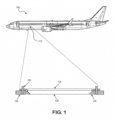
- FIG. 1 depicts an aircraft 100 including an enlarged cross-sectional view of a window assembly 110.
- Window assembly 110 consists of an inner window 120 and an outer window 125 both formed of acrylic. Inner window 120 and outer window 125 and are attached to and supported by a frame 130.
- Frame 130 is attached to an aircraft skin 190 of aircraft 100 by a plurality of fasteners 185.
- Window assemblies that include a frame, however, have several limitations.
- the cutouts can increase the local stress, for example, in the aircraft skin.
- a material property mismatch between the acrylic windows and the metal frame can generate local stress at the cutout.
- the frame provides structural support to the window assembly, it also adds weight and limits window size.
- acrylic windows are not ideal because acrylic has low thermal conductivity and low strength. As a result, window sizes are generally small affecting passenger experience. And, because acrylic windows are not electrically conductive, additional electromagnetic effect (EME) solutions need to be added to the window and frame.
- EME electromagnetic effect
- a window assembly includes a protection panel comprising a protection panel edge and a structural panel disposed on the protection panel.
- the structural panel comprises a structural panel edge that extends beyond the protection panel edge.
- the structural panel may have a tensile stress of about 30 ksi to about 2,000 ksi and the window assembly may have a transmissivity of about 45% to about 99% to visible light.
- the window assembly includes a protection panel comprising a surface barrier layer, and an electromagnetic effect (EME) protection coating disposed on the surface barrier layer.
- the window assembly further includes a structural panel disposed on the protection panel.
- the structural panel comprises a bottom surface protection layer, a structural layer disposed on the bottom surface protection layer, and a transparent conductive coating layer disposed on the structural layer.
- the window assembly may have a transmissivity of about 45% to about 99% to visible light.
- a method for making a frameless, nanolaminated window assembly includes forming a bottom surface protection layer by depositing a first reinforcement layer comprising one or more layers of Al 2 O 3 , one or more layers of graphene, or one or more layers of Al 2 O 3 and graphene and then depositing a first transparent polymer layer comprising a thermoplastic material on the first reinforcement layer.
- the method further includes forming a structural layer disposed on the bottom surface protection layer by depositing a second reinforcement layer comprising one or more layers of Al 2 O 3 , one or more layers of graphene, one or more layers SiO 2 , or a combination thereof, then depositing a second transparent polymer layer comprising a thermoplastic material on the second reinforcement layer, and depositing a third reinforcement layer comprising one or more layers of Al 2 O 3 , one or more layers of graphene, or one or more layers of Al 2 O 3 and graphene on the second transparent polymer layer.
- the method further includes forming a transparent conductive coating layer comprising one or more of ITO and graphene on the third reinforcement layer.
- the method further includes forming a surface barrier layer on the transparent conductive coating layer by depositing a third transparent polymer layer comprising a thermoplastic material on the transparent conductive coating layer and depositing a fourth reinforcement layer comprising one or more layers of Al 2 O 3 , one or more layers of graphene, or one or more layers of Al 2 O 3 and graphene on the third transparent polymer layer.
- the method further includes depositing an electromagnetic effect coating on the fourth reinforcement layer.
- window assemblies include a transparent window mounted in a frame. While the frame provides structural support for the window assembly, it also adds weight and limits the size of the window. Glass, plastics or composite window materials are generally low strength and may also require additional coatings to prevent ice build-up and protect against EME. Implementations of the present disclosure address the need for a one piece structural window that can be directly attached, for example to a vehicle, equipment, or structure, without a frame (or frameless).
- the disclosed nanolaminated window assembly is self-supporting, therefore eliminating the need for a frame for support.
- the self-supporting nature of the nanolaminated window allows direct attachment to the aircraft skin to provide structural support and load bearing capability. Because no frame is needed, the disclosed nanolaminated window can also provide a larger window area with reduced weight.
- the one piece multifunctional design can provide one or more of impact protection, ice buildup prevention, and EME protection.
- nano-laminate and “nanolaminated” refer to a composite material formed by alternating layers of materials having a thickness in a range of about 20 nm to about 1,000 nm.
- Use of nanolaminated layers in the disclosed window assemblies provides the ability to tailor specific properties of the window assembly including one or more of thickness, composition, isotropic stiffness, and strength.
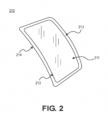
- FIG. 2 depicts a window assembly 210 in accordance with the present teachings.
- window assembly 210 is described with reference to an aircraft window, one of ordinary skill in the art will understand that the disclosed window assembly can be used for other purposes including, but not limited to, vehicles, equipment, and buildings and other structures.
- the one piece design of window assembly 210 includes a protection panel 211 and a structural panel 213.
- Structural panel 213 provides structural support and impact protection for window assembly 210. It further allows mounting without use of a frame. Protection panel 211 provides resistance to one or more of electromagnetic effect (EME), icing, scratching, and corrosion.
- EME electromagnetic effect
- Structural panel 213 is disposed on and attached to protection panel 211.
- Both protection panel 211 and structural panel 213 are formed of a plurality of nanolaminated layers. Structural panel 213 is larger than protection panel 211 so a structural panel edge 214 extends beyond a protection panel edge 212. As further discussed below, a portion of structural panel 213 that extends beyond protection panel edge 212 can be used to attach window assembly 210, for example, to an aircraft skin forming a fuselage without need for a frame. Protection panel 211 is sized to fill a cutout and sit flush, for example, with an outside of the aircraft fuselage. It provides a view through the aircraft fuselage, prevents air drag and provides surface protection from EME, ice, and corrosion. Structural panel 213 provides load bearing capability to window assembly 210 and a location to attach window assembly 210 to, for example, the aircraft skin forming the fuselage.
- window assembly 210 is transparent, for example having a transmissivity of about 45% to about 99% to visible light. It can optionally have a transmissivity of about 55% to about 98%, or about 65% to about 95% to visible light. Transmissivity can be measured, for example, using ASTM-D1003 with a hazemeter (Byk Gardner).
- a shape of window assembly 210 is generally a polygon or a polygon with rounded corners, where the rounded corners have a radius arc r c of about 0.25 inches or more.
- the shape of window assembly 210 can also range from a convex shape with a radius R of about 5 inches or more to an essentially flat shape with an infinite radius. This can allow window assembly 210 to mount flush with, for example, an aircraft fuselage having a curvature or equipment/structure having no curvature.
- protection panel 211 can include a surface barrier layer 330 and an electromagnetic effect (EME) protection layer 320.
- EME protection layer 320 has a thickness of about 50 nm to about 20,000 nm and is formed of carbon nanotubes or indium tin oxide (ITO) with graphene.
- EME protection layer 320 is disposed on surface barrier layer 330.
- Surface barrier layer 330 is formed of a plurality of nanolaminated layers including a surface barrier reinforcement layer 331.
- Surface barrier reinforcement layer 331 is formed of Al 2 O 3 or graphene and has a thickness of about 500 nm to about 50,000 nm.
- Surface barrier reinforcement layer 331 serves as a moisture barrier for corrosion protection and provides protection from impact, scratching, and burn thorough.
- Surface barrier reinforcement layer 331 is disposed on a surface barrier transparent polymer layer 332.
- Surface barrier transparent polymer layer 332 has a thickness of about 20 nm to about 2,000 nm and is formed of a high temperature thermoplastic material having a glass transition temperature Tg of about 120°F to about 750°F, including, but not limited to, polystyrene (PS), polyetherimide (PEI), and mixtures thereof.
- PS polystyrene
- PEI polyetherimide
- Protection panel 211 can optionally include one or more additional surface barrier layers having similar thickness and composition to surface barrier layer 330, as shown in FIG. 3 .
- the additional one or more surface barrier layers can serve as fail safe layers against corrosion, scratching, impact, and burn through.
- protection panel 211 can include two or more surface barrier layers, for example, surface barrier layer 340 and surface barrier layer 350.
- Surface barrier layer 340 can include a surface barrier reinforcement layer 341 formed of Al 2 O 3 or graphene and having a thickness of about 500 nm to about 50,000 nm.
- Surface barrier reinforcement layer 341 can be disposed on surface barrier transparent polymer layer 342, have a thickness of about 20 nm to about 2,000 nm, and be formed of a high temperature thermoplastic material including, but not limited to, polystyrene (PS), polyetherimide (PEI), and mixtures thereof.
- surface barrier layer 350 can include a surface barrier reinforcement layer 351 formed of Al 2 O 3 or graphene, have a thickness of about 500 nm to about 50,000 nm.
- Surface barrier reinforcement layer 351 can be disposed on surface barrier transparent polymer layer 352, have a thickness of about 20 nm to about 2,000 nm, and be formed of a high temperature thermoplastic material including, but not limited to, polystyrene (PS) and polyetherimide (PEI). Protection panel 211 can further optionally include additional surface barrier reinforcement layers or surface barrier transparent polymer layers.
- PS polystyrene
- PEI polyetherimide
- Protection panel 211 has a thickness of about 0.05 to about 0.8 inches and provides resistance to one or more of EME, icing, and corrosion. When window assembly 210 is used in an aircraft, protection panel 211 can be sized to provide an increased view outside of the aircraft and mounted flush to the outside of the fuselage to prevent air drag.
- structural panel 213 can include a transparent conductive coating (TCC) layer 420, a structural layer 430, and a bottom surface protection layer 450.
- TCC transparent conductive coating
- Structural panel 213 is formed of a plurality of nanolaminated layers and has a thickness of about 0.04 inches to about 0.6 inches.
- TCC layer 420 has a thickness of about 50 nm to about 10,000 nm and can be formed of carbon nanotubes or ITO with graphene to provide EME protection. TCC layer 420 is disposed on structural layer 430.
- Structural layer 430 is formed of a plurality of nanolaminated layers and includes one or more first structural reinforcement layers 431, where each first structural reinforcement layer has a thickness of about 20 nm to about 1,000 nm.
- the one or more first structural reinforcement layers 431 are disposed on a structural transparent polymer layer 432 having a thickness of about 20 nm to about 1,000 nm.
- Structural transparent polymer layer 432 is disposed on one or more second structural reinforcement layer 433, where each second structural reinforcement layer has a thickness of about 20 nm to about 1,000 nm.
- First structural reinforcement layer 431 and second structural reinforcement layer 433 can be formed of Al 2 O 3 , SiO 2 , or graphene.
- Structural transparent polymer layer 432 can be formed of a high temperature thermoplastic material including, but not limited to, polystyrene (PS) and polyetherimide (PEI).
- the high temperature thermoplastic material can have a glass transition temperature of at least 120°F or more.
- Structural panel 213 can optionally include one or more additional structural layers.
- Structural panel 213, for example, can include two or more structural layers, such as structural layer 440 as shown in FIG 4 .
- Structural layer 440 can include: i) one or more first structural reinforcement layers 441 each having a thickness of about 20 nm to about 1,000 nm and formed of Al 2 O 3 or graphene or SiO 2 ; ii) a structural transparent polymer layer 442, having a thickness of about 20 nm to about 1,000 nm and formed of a high temperature thermoplastic material including, but not limited to, polystyrene (PS) and polyetherimide (PEI); and, iii) one or more second structural reinforcement layers 443 each having a thickness of about 20 nm to about 1,000 nm and formed of Al 2 O 3 , SiO 2 , or graphene.
- PS polystyrene
- PEI polyetherimide
- Structural panel 213 further includes a bottom surface protection layer 450 formed of a plurality of nanolaminated layers.
- Bottom surface protection layer 450 includes a bottom surface transparent polymer layer 451 formed of a high temperature thermoplastic material including, but not limited to, polystyrene (PS) and polyetherimide (PEI), and having a thickness of about 20 nm to about 1,000 nm.
- Bottom surface transparent polymer layer 451 is disposed on bottom surface reinforcement layer 452.
- Bottom surface reinforcement layer 452 is formed of Al 2 O 3 or graphene and can have a thickness of about 20 nm to about 1,000 nm.
- structural panel 213 When window assembly 210 is attached to a vehicle, equipment, or structure, structural panel 213 bears the load. Accordingly, structural panel 213 can include about 33% to about 90% volume fraction of Al 2 O 3 and/or graphene or SiO 2 with at least about 5% to about 30% volume fraction of Al 2 O 3 . Structural panel 213 can have a tensile strength (which may also be referred to as tensile stress limit, i.e.
- Tensile strength, tensile stress and modulus of structural panel 213 can be measured, for example, using ASTM-D3039-17. Bearing strength can be measured, for example, using ASTM-D5961-17.
- bearing strength may be ultimate bearing strength measured as specified in Fig.1 of ASTM-D5961-17 utilizing procedure A, at room temperature, under ambient conditions and using a steel protruding head fastener.
- structural panel 213 can have a coefficient of thermal expansion of about 5 to about 20 ppm in/in/°F. Coefficient of thermal expansion can be measured, for example, using ASTM-E831-14. Glass transition temperature (Tg) can be measured, for example, using ASTM-D7028-07 (R2015).
- Structural panel 213 can have a von Mises stress of about 10 ksi to about 200 ksi. The von Mises stress can be determined, for example, using Abaqus FEA software available from Dassault Systèmes (Johnstown, RI).
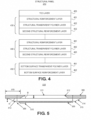
- FIG. 5 depicts a cross sectional view of a window assembly 510 mounted in an aircraft in accordance with the teachings of the present disclosure.
- Window assembly 510 includes a protection panel 511 and a structural panel 513.
- Window assembly 510 is mounted to an aircraft skin 590, for example forming a fuselage, without use of a frame, for example, using one or more fasteners 585 and/or adhesive to attach structural panel 513 to aircraft skin 590.
- Structural panel can include a tapered edge 514 having an angle of about 12 to about 90 degrees. Tapered edge 514 minimizes local stress at and near edges of structural panel 513.
- Protection panel 511 can be sized to fit into a cutout in aircraft skin 590.
- protection panel 511 can include a tapered edge 512 having an angle of about 30 to about 80 degrees. Tapered edge 512 allows window assembly 510 to attach and seal securely to aircraft skin 590. Because aircraft skin 590 has a curved surface, window assembly 510 can have a convex shape and a radius of curvature R to match aircraft skin 590. Both protection panel 511 and structural panel 513 have a polygon shape with multiple edges connected by a radius arc r c of at least 0.25 inches. To enable mounting to aircraft skin 590 without a frame, a distance 519 from edge 512 to edge 514 can be 0.375 inches or more.
- Window assembly 510 can optionally include an electronic shade 599, for example, a smart sensor based electronic shade, to reduce the amount of light that reaches the interior of the aircraft through window assembly 510.
- Electronic shade 599 can be made of electrochromic glass layers deposited onto an inside 515 of window assembly 510 or selfsticking electrochromic films attached to inside 515 of window assembly 510.
- Electronic shade 599 can be controlled by smart light sensors 516 to reduce or increase an amount of sunlight entering through window assembly 510, for example, by turning from clear to dark blue or gray to reduce the amount of sunlight.
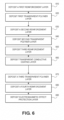
- a method 600 for forming window assembly 510 by depositing a plurality of nanolaminated layers is shown in FIG. 6 .
- Each of the plurality of nanolaminated layers can be deposited using vacuum vapor depositional processes including, but not limited to, physical vapor deposition (PVD), chemical vapor deposition (CVD), pulsed laser deposition (PLD), and/or vacuum spraying.
- PVD physical vapor deposition
- CVD chemical vapor deposition
- PLD pulsed laser deposition
- a structural panel for example, structural panel 213 shown in FIGS. 2 and 3 or structural panel 513 shown in FIG. 5 , can be formed by deposing a plurality of nanolaminated layers to form a bottom surface protection layer, one or more structural layers, and a transparent conductive coating (TCC) layer.
- TCC transparent conductive coating
- a bottom surface protection layer is formed by depositing a first reinforcement layer comprising one or more layers of Al 2 O 3 , one or more layers of graphene, or one or more layers of Al 2 O 3 and graphene.
- a first transparent polymer layer comprising a thermoplastic material is then deposited on the first reinforcement layer.
- one or more structural layers can be formed on the bottom surface protection layer by depositing a second reinforcement layer comprising one or more layers of Al 2 O 3 , one or more layers of graphene, one or more layers SiO 2 , or a combination thereof, on the bottom surface protection layer.
- a second transparent polymer layer comprising a thermoplastic material can be deposited on the second reinforcement layer at 640 of method 600.
- a third reinforcement layer comprising one or more layers of Al 2 O 3 , one or more layers of graphene, or one or more layers of Al 2 O 3 and graphene can be deposited on the second transparent polymer layer at 650 of method 600. Additional structural layers can be formed by repeating 630 to 650 of method 600 shown in FIG. 6 .
- a transparent conductive coating layer comprising one or more of ITO and graphene on the third reinforcement layer is formed on the third reinforcement layer.
- protection panel for example protection panel 211 as shown in FIGS. 2 and 3 or protection panel 511 shown in FIG. 5 can then formed on the structural panel.
- a surface barrier layer is formed by depositing a third transparent polymer layer comprising a thermoplastic material on the transparent conductive coating layer.
- a fourth reinforcement layer comprising one or more layers of Al 2 O 3 , one or more layers of graphene, or one or more layers of Al 2 O 3 and graphene is deposited on the third transparent polymer layer. Additional surface barrier layers can be formed by repeating 670 to 680 of method 600.
- the protection panel is completed by depositing an electromagnetic effect coating on the fourth reinforcement layer as shown at 690 of method 600.
- fabrication of one piece multifunction window assembly 510 using method 600 can be accomplished by forming the structural panel after forming the protection panel.
- 670 to 690 of method 600 can be performed prior 630 to 660 of method 600 being performed.
- fabrication of the structural panel and/ or protection panel can be in a piecemeal manner.
- a first group of several layers can be deposited and a second group of several layers can be separately deposited.
- the first group of layers can then be bonded to the second group of layers.
- a first structural layer composed of a first group of layers can be formed by performing 630 to 650 of method 600 shown in FIG. 6 .
- a second structural layer composed of a second group of layers can then be separately formed by performing 630 to 650 of method 600.
- the first structural layer and the second structural layer can then be bonded together to form a portion of a structural panel, for example, structural panel 513 shown in FIG. 5 .
- Bonding can use, for example, glue that has a similar transparency and a similar or higher glass transition temperature Tg compared to the transparent thermoplastic material forming the structural panel and/or the protection panel.
- method 600 to form one piece multifunction window assembly 510 allows the number of layers, the placement of the layers relative to each other, the composition of the layers, and the thickness of the layers to be controlled. This can result in improved properties, including isotropic stiffness and strength and reduced defects that can be tailored for specific use and environments. Additionally, method 600 can be used to form net-shape or near net shape window assemblies of desired dimensions, so no pre-trimming or post-trimming is needed.
Landscapes
- Chemical & Material Sciences (AREA)
- Engineering & Computer Science (AREA)
- Medicinal Chemistry (AREA)
- Polymers & Plastics (AREA)
- Organic Chemistry (AREA)
- Chemical Kinetics & Catalysis (AREA)
- Health & Medical Sciences (AREA)
- Aviation & Aerospace Engineering (AREA)
- Mechanical Engineering (AREA)
- Manufacturing & Machinery (AREA)
- Transportation (AREA)
- Inorganic Chemistry (AREA)
- Materials Engineering (AREA)
- Nanotechnology (AREA)
- Laminated Bodies (AREA)
- Joining Of Glass To Other Materials (AREA)
- Aiming, Guidance, Guns With A Light Source, Armor, Camouflage, And Targets (AREA)
Applications Claiming Priority (2)
| Application Number | Priority Date | Filing Date | Title |
|---|---|---|---|
| US16/402,034 US11453474B2 (en) | 2019-05-02 | 2019-05-02 | One piece multifunctional nanolaminated composite window panel |
| EP20172622.1A EP3733503B1 (de) | 2019-05-02 | 2020-05-01 | Einteilige multifunktionale nanolaminierte verbundfensterscheibe |
Related Parent Applications (2)
| Application Number | Title | Priority Date | Filing Date |
|---|---|---|---|
| EP20172622.1A Division EP3733503B1 (de) | 2019-05-02 | 2020-05-01 | Einteilige multifunktionale nanolaminierte verbundfensterscheibe |
| EP20172622.1A Division-Into EP3733503B1 (de) | 2019-05-02 | 2020-05-01 | Einteilige multifunktionale nanolaminierte verbundfensterscheibe |
Publications (2)
| Publication Number | Publication Date |
|---|---|
| EP4553108A2 true EP4553108A2 (de) | 2025-05-14 |
| EP4553108A3 EP4553108A3 (de) | 2025-05-21 |
Family
ID=70482505
Family Applications (2)
| Application Number | Title | Priority Date | Filing Date |
|---|---|---|---|
| EP25166705.1A Pending EP4553108A3 (de) | 2019-05-02 | 2020-05-01 | Einteilige multifunktionelle nanolaminierte verbundfensterscheibe |
| EP20172622.1A Active EP3733503B1 (de) | 2019-05-02 | 2020-05-01 | Einteilige multifunktionale nanolaminierte verbundfensterscheibe |
Family Applications After (1)
| Application Number | Title | Priority Date | Filing Date |
|---|---|---|---|
| EP20172622.1A Active EP3733503B1 (de) | 2019-05-02 | 2020-05-01 | Einteilige multifunktionale nanolaminierte verbundfensterscheibe |
Country Status (6)
| Country | Link |
|---|---|
| US (2) | US11453474B2 (de) |
| EP (2) | EP4553108A3 (de) |
| JP (1) | JP7568422B2 (de) |
| CN (1) | CN111874205B (de) |
| CA (1) | CA3079589A1 (de) |
| RU (1) | RU2020114985A (de) |
Families Citing this family (1)
| Publication number | Priority date | Publication date | Assignee | Title |
|---|---|---|---|---|
| CN112706491B (zh) * | 2020-12-22 | 2025-03-14 | 东风越野车有限公司 | 一种防炮火冲击玻璃机构及车辆 |
Family Cites Families (22)
| Publication number | Priority date | Publication date | Assignee | Title |
|---|---|---|---|---|
| GB896060A (en) | 1959-06-15 | 1962-05-09 | Pittsburgh Plate Glass Co | Laminated glass panel |
| DE2228299C3 (de) | 1972-06-09 | 1985-11-14 | Saint-Gobain Industries, Neuilly-sur-Seine | Sicherheitsglasscheibe |
| GB9011855D0 (en) | 1990-05-26 | 1990-07-18 | Triplex Aircraft | Aircraft windshield |
| JP4201458B2 (ja) * | 2000-03-31 | 2008-12-24 | パナソニック株式会社 | 電磁波シールド方法及び電磁波シールド窓、並びに電磁波シールド窓を備えた電子回路基板加工機 |
| US6561460B2 (en) * | 2000-08-03 | 2003-05-13 | Ppg Industries Ohio, Inc. | Switchable electrochromic devices for use in aircraft transparency windows |
| FR2857617B1 (fr) * | 2003-07-16 | 2006-10-27 | Saint Gobain | Vitrage de securite fonctionnalise |
| US8723467B2 (en) * | 2004-05-06 | 2014-05-13 | Mechoshade Systems, Inc. | Automated shade control in connection with electrochromic glass |
| US20090280329A1 (en) | 2004-09-01 | 2009-11-12 | Ppg Industries Ohio, Inc. | Polyurethanes, Articles and Coatings Prepared Therefrom and Methods of Making the Same |
| US7578474B2 (en) * | 2005-06-02 | 2009-08-25 | The Boeing Company | Sealed structural passenger window assembly and method of forming same |
| US8917962B1 (en) * | 2009-06-24 | 2014-12-23 | Flex Lighting Ii, Llc | Method of manufacturing a light input coupler and lightguide |
| US20150237929A1 (en) * | 2010-10-18 | 2015-08-27 | Greenhill Antiballistics Corporation | Gradient nanoparticle-carbon allotrope polymer composite |
| ES2728859T3 (es) * | 2012-08-01 | 2019-10-29 | Ppg Ind Ohio Inc | Sistema de ventana inteligente aeroespacial |
| US9778402B2 (en) * | 2012-08-06 | 2017-10-03 | Konica Minolta, Inc. | Light reflective film and light reflector produced using the same |
| US20140097018A1 (en) * | 2012-10-10 | 2014-04-10 | The Boeing Company | Electromagnetic shielded aircraft passenger window |
| US10202183B2 (en) | 2013-08-06 | 2019-02-12 | Ppg Industries Ohio, Inc. | Deformable aircraft window |
| US10690948B2 (en) | 2015-01-19 | 2020-06-23 | Merck Patent Gmbh | Device for the regulation of light transmission |
| US11660846B2 (en) * | 2015-04-30 | 2023-05-30 | Board Of Trustees Of Michigan State University | Composite article and method of manufacture |
| JP6704229B2 (ja) | 2015-09-14 | 2020-06-03 | リンテック オブ アメリカ インコーポレーテッドLintec of America, Inc. | 柔軟性シート、熱伝導部材、導電性部材、帯電防止部材、発熱体、電磁波遮蔽体、及び柔軟性シートの製造方法 |
| WO2017059364A1 (en) | 2015-10-02 | 2017-04-06 | Heliotrope Technologies, Inc. | Electrochromic device containing distributed bragg reflector configured to selectively reflect uv radiation |
| US10203582B2 (en) | 2016-02-01 | 2019-02-12 | Heliotrope Technologies, Inc. | Electrochromic system containing a Bragg reflector and method for controlling photochromic darkening |
| CN107562251B (zh) * | 2016-06-30 | 2020-09-15 | 宁波科廷光电科技有限公司 | 用于触摸传感器的可转移纳米复合材料 |
| US10331003B2 (en) | 2016-09-26 | 2019-06-25 | Heliotrope Technologies, Inc. | Electrochromic privacy window |
-
2019
- 2019-05-02 US US16/402,034 patent/US11453474B2/en active Active
-
2020
- 2020-04-27 CA CA3079589A patent/CA3079589A1/en active Pending
- 2020-04-28 RU RU2020114985A patent/RU2020114985A/ru unknown
- 2020-04-30 CN CN202010362256.2A patent/CN111874205B/zh active Active
- 2020-05-01 EP EP25166705.1A patent/EP4553108A3/de active Pending
- 2020-05-01 EP EP20172622.1A patent/EP3733503B1/de active Active
- 2020-05-02 JP JP2020081611A patent/JP7568422B2/ja active Active
-
2022
- 2022-08-17 US US17/820,521 patent/US12304613B2/en active Active
Also Published As
| Publication number | Publication date |
|---|---|
| JP7568422B2 (ja) | 2024-10-16 |
| US12304613B2 (en) | 2025-05-20 |
| EP3733503A1 (de) | 2020-11-04 |
| EP4553108A3 (de) | 2025-05-21 |
| CN111874205A (zh) | 2020-11-03 |
| EP3733503B1 (de) | 2025-09-10 |
| US20200346733A1 (en) | 2020-11-05 |
| CN111874205B (zh) | 2024-09-27 |
| US11453474B2 (en) | 2022-09-27 |
| US20220388625A1 (en) | 2022-12-08 |
| RU2020114985A (ru) | 2021-10-28 |
| CA3079589A1 (en) | 2020-11-02 |
| JP2020203667A (ja) | 2020-12-24 |
Similar Documents
| Publication | Publication Date | Title |
|---|---|---|
| US9782949B2 (en) | Glass laminated articles and layered articles | |
| CN1308760C (zh) | 具有可变光学和/或能量性能的电控装置 | |
| CN101960251B (zh) | 冲击式透明体 | |
| CN105452102B (zh) | 可变形的飞行器窗户 | |
| US20160207289A1 (en) | Glass laminated articles and layered articles | |
| JP6110456B2 (ja) | フープ荷重支持の航空機用透明体 | |
| JP2007197288A (ja) | 合わせガラス及びこれを用いたガラス窓構造 | |
| JPH07149548A (ja) | 防弾窓ガラス | |
| WO2009152220A2 (en) | Method of manufacturing an insulated, impact resistant window | |
| WO2017062766A1 (en) | Sunroof incorporating electro-optic element | |
| US12304613B2 (en) | One piece multifunctional nanolaminated composite window panel | |
| US20210163345A1 (en) | Methods of reinforcing openings in glass and products formed therefrom | |
| US20180270912A1 (en) | Heated glass panel for electromagnetic shielding | |
| US12030298B2 (en) | Laminated glazing comprising a peripheral stepped element made of polymer material having a required maximum permeability to water vapor | |
| KR102775329B1 (ko) | 나노클러스터형 복합산화물을 포함하는 옥사이드-금속-옥사이드 구조 필름 및 이의 제조방법 | |
| US11472163B2 (en) | Heating glazing made of a structural plastic material | |
| GB2540345A (en) | Presentation panel and method of manufacturing the same | |
| RU2774766C2 (ru) | Обогреваемое остекление на основе конструкционного пластика | |
| CN118679055A (zh) | 其中整个表面被封装在粘合剂插入层中的坚固薄膜覆盖的航空装配玻璃 | |
| CN121404379A (zh) | 结构复合汽车面板中的光伏电池 |
Legal Events
| Date | Code | Title | Description |
|---|---|---|---|
| PUAI | Public reference made under article 153(3) epc to a published international application that has entered the european phase |
Free format text: ORIGINAL CODE: 0009012 |
|
| STAA | Information on the status of an ep patent application or granted ep patent |
Free format text: STATUS: THE APPLICATION HAS BEEN PUBLISHED |
|
| REG | Reference to a national code |
Ref country code: DE Ref legal event code: R079 Free format text: PREVIOUS MAIN CLASS: C08K0003360000 Ipc: B64C0001140000 |
|
| PUAL | Search report despatched |
Free format text: ORIGINAL CODE: 0009013 |
|
| AC | Divisional application: reference to earlier application |
Ref document number: 3733503 Country of ref document: EP Kind code of ref document: P |
|
| AK | Designated contracting states |
Kind code of ref document: A2 Designated state(s): AL AT BE BG CH CY CZ DE DK EE ES FI FR GB GR HR HU IE IS IT LI LT LU LV MC MK MT NL NO PL PT RO RS SE SI SK SM TR |
|
| AK | Designated contracting states |
Kind code of ref document: A3 Designated state(s): AL AT BE BG CH CY CZ DE DK EE ES FI FR GB GR HR HU IE IS IT LI LT LU LV MC MK MT NL NO PL PT RO RS SE SI SK SM TR |
|
| RIC1 | Information provided on ipc code assigned before grant |
Ipc: C08K 3/36 20060101ALI20250415BHEP Ipc: C08J 7/04 20200101ALI20250415BHEP Ipc: C08F 230/08 20060101ALI20250415BHEP Ipc: B60J 1/00 20060101ALI20250415BHEP Ipc: B32B 27/30 20060101ALI20250415BHEP Ipc: B32B 27/28 20060101ALI20250415BHEP Ipc: B64C 1/14 20060101AFI20250415BHEP |
|
| STAA | Information on the status of an ep patent application or granted ep patent |
Free format text: STATUS: REQUEST FOR EXAMINATION WAS MADE |
|
| 17P | Request for examination filed |
Effective date: 20250909 |
|
| STAA | Information on the status of an ep patent application or granted ep patent |
Free format text: STATUS: EXAMINATION IS IN PROGRESS |
|
| 17Q | First examination report despatched |
Effective date: 20251103 |