EP4550871A2 - Informationsmeldeverfahren, informationsempfangsverfahren, endgerätevorrichtung und netzwerkvorrichtung - Google Patents
Informationsmeldeverfahren, informationsempfangsverfahren, endgerätevorrichtung und netzwerkvorrichtung Download PDFInfo
- Publication number
- EP4550871A2 EP4550871A2 EP25164317.7A EP25164317A EP4550871A2 EP 4550871 A2 EP4550871 A2 EP 4550871A2 EP 25164317 A EP25164317 A EP 25164317A EP 4550871 A2 EP4550871 A2 EP 4550871A2
- Authority
- EP
- European Patent Office
- Prior art keywords
- terminal device
- communication
- communication module
- radio frequency
- communication modules
- Prior art date
- Legal status (The legal status is an assumption and is not a legal conclusion. Google has not performed a legal analysis and makes no representation as to the accuracy of the status listed.)
- Pending
Links
Images

Classifications
-
- H—ELECTRICITY
- H04—ELECTRIC COMMUNICATION TECHNIQUE
- H04W—WIRELESS COMMUNICATION NETWORKS
- H04W68/00—User notification, e.g. alerting and paging, for incoming communication, change of service or the like
- H04W68/005—Transmission of information for alerting of incoming communication
-
- H—ELECTRICITY
- H04—ELECTRIC COMMUNICATION TECHNIQUE
- H04L—TRANSMISSION OF DIGITAL INFORMATION, e.g. TELEGRAPHIC COMMUNICATION
- H04L5/00—Arrangements affording multiple use of the transmission path
- H04L5/0001—Arrangements for dividing the transmission path
- H04L5/0003—Two-dimensional division
- H04L5/0005—Time-frequency
- H04L5/0007—Time-frequency the frequencies being orthogonal, e.g. OFDM(A) or DMT
- H04L5/001—Time-frequency the frequencies being orthogonal, e.g. OFDM(A) or DMT the frequencies being arranged in component carriers
-
- H—ELECTRICITY
- H04—ELECTRIC COMMUNICATION TECHNIQUE
- H04W—WIRELESS COMMUNICATION NETWORKS
- H04W24/00—Supervisory, monitoring or testing arrangements
- H04W24/04—Arrangements for maintaining operational condition
-
- H—ELECTRICITY
- H04—ELECTRIC COMMUNICATION TECHNIQUE
- H04W—WIRELESS COMMUNICATION NETWORKS
- H04W24/00—Supervisory, monitoring or testing arrangements
- H04W24/10—Scheduling measurement reports ; Arrangements for measurement reports
-
- H—ELECTRICITY
- H04—ELECTRIC COMMUNICATION TECHNIQUE
- H04W—WIRELESS COMMUNICATION NETWORKS
- H04W68/00—User notification, e.g. alerting and paging, for incoming communication, change of service or the like
- H04W68/02—Arrangements for increasing efficiency of notification or paging channel
-
- H—ELECTRICITY
- H04—ELECTRIC COMMUNICATION TECHNIQUE
- H04W—WIRELESS COMMUNICATION NETWORKS
- H04W72/00—Local resource management
- H04W72/12—Wireless traffic scheduling
-
- H—ELECTRICITY
- H04—ELECTRIC COMMUNICATION TECHNIQUE
- H04W—WIRELESS COMMUNICATION NETWORKS
- H04W72/00—Local resource management
- H04W72/12—Wireless traffic scheduling
- H04W72/121—Wireless traffic scheduling for groups of terminals or users
-
- H—ELECTRICITY
- H04—ELECTRIC COMMUNICATION TECHNIQUE
- H04W—WIRELESS COMMUNICATION NETWORKS
- H04W76/00—Connection management
- H04W76/10—Connection setup
- H04W76/15—Setup of multiple wireless link connections
-
- H—ELECTRICITY
- H04—ELECTRIC COMMUNICATION TECHNIQUE
- H04W—WIRELESS COMMUNICATION NETWORKS
- H04W88/00—Devices specially adapted for wireless communication networks, e.g. terminals, base stations or access point devices
- H04W88/02—Terminal devices
- H04W88/06—Terminal devices adapted for operation in multiple networks or having at least two operational modes, e.g. multi-mode terminals
-
- H—ELECTRICITY
- H04—ELECTRIC COMMUNICATION TECHNIQUE
- H04W—WIRELESS COMMUNICATION NETWORKS
- H04W24/00—Supervisory, monitoring or testing arrangements
- H04W24/08—Testing, supervising or monitoring using real traffic
-
- H—ELECTRICITY
- H04—ELECTRIC COMMUNICATION TECHNIQUE
- H04W—WIRELESS COMMUNICATION NETWORKS
- H04W72/00—Local resource management
- H04W72/50—Allocation or scheduling criteria for wireless resources
- H04W72/51—Allocation or scheduling criteria for wireless resources based on terminal or device properties
-
- H—ELECTRICITY
- H04—ELECTRIC COMMUNICATION TECHNIQUE
- H04W—WIRELESS COMMUNICATION NETWORKS
- H04W76/00—Connection management
- H04W76/20—Manipulation of established connections
- H04W76/27—Transitions between radio resource control [RRC] states
-
- H—ELECTRICITY
- H04—ELECTRIC COMMUNICATION TECHNIQUE
- H04W—WIRELESS COMMUNICATION NETWORKS
- H04W8/00—Network data management
- H04W8/22—Processing or transfer of terminal data, e.g. status or physical capabilities
- H04W8/24—Transfer of terminal data
-
- Y—GENERAL TAGGING OF NEW TECHNOLOGICAL DEVELOPMENTS; GENERAL TAGGING OF CROSS-SECTIONAL TECHNOLOGIES SPANNING OVER SEVERAL SECTIONS OF THE IPC; TECHNICAL SUBJECTS COVERED BY FORMER USPC CROSS-REFERENCE ART COLLECTIONS [XRACs] AND DIGESTS
- Y02—TECHNOLOGIES OR APPLICATIONS FOR MITIGATION OR ADAPTATION AGAINST CLIMATE CHANGE
- Y02D—CLIMATE CHANGE MITIGATION TECHNOLOGIES IN INFORMATION AND COMMUNICATION TECHNOLOGIES [ICT], I.E. INFORMATION AND COMMUNICATION TECHNOLOGIES AIMING AT THE REDUCTION OF THEIR OWN ENERGY USE
- Y02D30/00—Reducing energy consumption in communication networks
- Y02D30/70—Reducing energy consumption in communication networks in wireless communication networks
Definitions
- the present disclosure relates to the field of communication, and in particular, to an information reporting method, an information receiving method, a terminal device, and a network device.
- the multiple communication modules can share an uplink or a downlink to communicate with a network device.
- the multiple communication modules can share a capability of the terminal device, for example, can share a buffer, maximum uplink power, a radio frequency link (including an uplink or a downlink), and the like of the terminal device.
- the network device For each communication module of the terminal device, the network device considers by default that the communication module can use all capabilities of the terminal device. In this way, when the terminal device has only one radio frequency/radio frequency link or multiple radio frequencies/radio frequency links are occupied by carrier aggregation (CA) or dual connectivity (DC), if one or more communication modules are in a connected state and other communication modules are in an idle state, when the network device pages a communication module that is in an idle state, the terminal device may not receive a paging message, or the terminal device may receive a paging message, but the terminal device cannot communicate with the network device, or the terminal device needs to interrupt a communication module that is in the connected state to be able to respond to a communication module that receives the paging message. As a result, this affects normal communication of the terminal device.
- CA carrier aggregation
- DC dual connectivity
- the embodiments of the present disclosure provide an information reporting method, an information receiving method, a terminal device, and a network device, to solve the problem that when multiple communication modules of the terminal device communicate with the network device at the same time, when the terminal device has only one radio frequency/radio frequency link or multiple radio frequencies/radio frequency links are occupied, the multiple communication modules of the terminal device cannot communicate with the network device normally.
- an information reporting method is provided, applied to a terminal device, where the terminal device includes multiple communication modules.
- the method includes: reporting first information to a network device if a first preset condition is satisfied, where the first preset condition represents that the multiple communication modules have a communication conflict, and the first information represents assistance information for assisting solving the communication conflict.
- a terminal device including: a reporting module, configured to: if a first preset condition is satisfied, report first information to a network device, where the first preset condition represents that the multiple communication modules have a communication conflict, and the first information represents assistance information for assisting solving the communication conflict.
- a terminal device including: a processor, a memory, and a computer program that is stored in the memory and that can run on the processor.
- the computer program is executed by the processor, steps in the method provided in the first aspect are implemented.
- a computer-readable storage medium stores a computer program.
- steps in the method provided in the first aspect are implemented.
- an information receiving method including: receiving first information from a terminal device, where the terminal device includes multiple communication modules, the first information is sent by the terminal device when a first preset condition is satisfied, the first preset condition represents that the multiple communication modules have a communication conflict, and the first information represents assistance information for assisting solving the communication conflict.
- a network device including: a receiving module, configured to receive first information from a terminal device, where the terminal device includes multiple communication modules, the first information is sent by the terminal device when a first preset condition is satisfied, the first preset condition represents that the multiple communication modules have a communication conflict, and the first information represents assistance information for assisting solving the communication conflict.
- a network device including: a processor, a memory, and a computer program that is stored in the memory and that can run on the processor.
- the computer program is executed by the processor, steps in the method provided in the fifth aspect are implemented.
- a computer-readable storage medium stores a computer program, and when the computer program is executed by a processor, steps in the method provided in the fifth aspect are implemented.
- the terminal device reports, to the network device, an assistance message for solving the communication conflict, so that the network device performs reasonable resource scheduling for the terminal device based on the information reported by the terminal device.
- this can improve communication performance of the terminal device.
- this can avoid service loss or interruption of the network device when the communication modules have a communication conflict, to reduce a probability of service loss or interruption.
- the multiple communication modules can share a capability of the terminal device when communicating with a network device. In this way, if the terminal device has only one radio frequency/radio frequency link or multiple radio frequencies/radio frequency links are occupied by CA or DC, when one or more communication modules in the terminal device are in a connected state, when the network device pages another communication module, another communication module cannot communicate with the terminal device normally.
- the network device when downlink radio frequencies/radio frequency links of the terminal device are insufficient, if the network device sends a paging message to the terminal device, the paging may be lost when the terminal device cannot receive the paging message, or the network device can delay sending of the paging message to the terminal device.
- the terminal device can choose, according to a preset priority, whether to abandon the paging message or interrupt a current service to respond to the paging message.
- the preset priority can be a priority of a communication module, a priority of a service, or a priority of a communication object, or the like.
- the embodiments of the present disclosure further provide an information reporting method, an information receiving method, a terminal device, and a network device.
- the information reporting method includes: if a first preset condition is satisfied, reporting first information to a network device, where the first preset condition represents that the multiple communication modules have a communication conflict, and the first information represents assistance information for assisting solving the communication conflict.
- the terminal device reports, to the network device, an assistance message for solving the communication conflict, so that the network device performs reasonable resource scheduling for the terminal device based on the information reported by the terminal device.
- this can improve communication performance of the terminal device.
- this can avoid service loss or interruption of the network device when the communication modules have a communication conflict, to reduce a probability of service loss or interruption.
- GSM global system of mobile communication
- CDMA code division multiple access
- WCDMA wideband code division multiple access
- GPRS general packet radio service
- LTE long term evolution
- LTE-A long term evolution advanced
- NR new radio
- the terminal device in the embodiments of the present disclosure includes multiple communication modules, and each communication module can independently communicate with the network device.
- the multiple communication modules can correspond to a same radio resource control (RRC) state, and can also correspond to different RRC states.
- the RRC state includes an idle state (idle), a connected state (RRC Connected), and an inactive state (inactive).
- the multiple communication modules are all in the idle state or the inactive state.
- one or more of the multiple communication modules are in the connected state, and the remaining communication module is in the idle state or the inactive state.
- the terminal device specifically can be understood as a user end (UE), also known as a mobile terminal, mobile user equipment, or the like, and may communicate with one or more core networks through a radio access network (RAN).
- the user equipment may be a mobile terminal, such as a mobile phone (also referred to as a "cellular" phone) and a computer with a mobile terminal, for example, may be a portable, pocket-sized, handheld, computer built-in, or in-vehicle mobile apparatus, and the user equipment can also be a flying device such as a drone and an aircraft, which exchanges voice and/or data with the radio access network.
- the terminal device can be a smart phone or a feature phone.
- the mobile phone can be a single-card, dual-card, or more-card mobile phone, a single-number, double-number, or more-number mobile phone, a single-standby, dual-standby, or more-standby mobile phone, or a single-pass, dual-pass, or more-pass mobile phone.
- SIM subscriber identity module
- eSIM subscriber identity module
- One SIM card can correspond to one or more phone numbers.
- the phone number can be a real phone number or a virtual phone number.
- the phone number further can be used for connection to multiple same or different networks. This is not specifically limited in the present disclosure.
- the multiple communication modules in the present disclosure can correspond to multiple SIM cards, or multiple phone numbers, or multiple phone numbers of multiple SIM cards; or the same phone number is used for connection to multiple same or different networks.
- the multiple communication modules can also be multiple phone numbers corresponding to one SIM card, which can be a real phone number or a virtual phone number.
- multiple communication modules further can correspond to one phone number, and the multiple communication modules can be used for connection to different networks.
- the network device can be understood as a core network unit or a base station as an access network device.
- the core network can be a mobility management entity (MME), or can be an access and mobility management function (AMF) entity.
- MME mobility management entity
- AMF access and mobility management function
- the base station can be a base transceiver station (BTS) in GSM or CDMA, or a NodeB in WCDMA, and further can be an evolved Node B (eNB or e-NodeB) in LTE, or 5G gNB. This is not limited in the present disclosure. However, for ease of description, the following embodiments use gNB as an example for description.
- FIG 1 is a schematic flowchart of an information reporting method according to an embodiment of the present disclosure.
- the information reporting method is applied to a terminal device, and the terminal device includes multiple communication modules.
- the information reporting method includes the following steps.
- S102 If a first preset condition is satisfied, report first information to a network device, where the first preset condition represents that the multiple communication modules have a communication conflict, and the first information represents assistance information for assisting solving the communication conflict.
- the terminal device can report the first information to the network device.
- the terminal device reports the first information, which may be that a communication module included in the terminal device reports the first information, for example, a communication module that currently has an RRC connection with the network device or another communication module reports the first information.
- the first information may specifically include at least one of the following:
- the multi-communication state may represent that there are communication connections between the multiple communication modules of the terminal device and the network device. There may be communication connections at the same time, and there are connections with the network at the same time through time division, frequency division, space division, or code division.
- the terminal device starts the multi-communication mode.
- the terminal device allows the multiple communication modules inside to communicate with the network device in the multi-communication mode.
- RRC connections There may be RRC connections at the same time as mentioned above, or there are communication connections with the network device in turn.
- the number of uplinks can represent a number of uplinks used for simultaneous transmission in the terminal device.
- the number of downlinks can represent a number of downlinks used for simultaneous transmission in the terminal device.
- the number of uplink radio frequencies can be a sum of a number of available uplink radio frequencies and a number of unavailable uplink radio frequencies of the terminal device.
- (6) A number of uplink radio frequency links of the terminal device.
- the number of uplink radio frequency links can be a sum of a number of available uplink radio frequency links and a number of unavailable uplink radio frequency links of the terminal device. (7) A number of downlink radio frequencies of the terminal device.
- the number of downlink radio frequencies can be a sum of a number of available downlink radio frequencies and a number of unavailable downlink radio frequencies of the terminal device.
- DL RF downlink radio frequencies
- the number of downlink radio frequency link can be a sum of a number of available downlink radio frequency links and a number of unavailable downlink radio frequency links of the terminal device.
- the priority can include at least one of a priority order, a priority of a bearer service, a priority of hardware sharing, and a priority of resource occupation.
- a priority order can be understood as a priority order of a communication module, that is, the communication module has a high priority or a low priority.
- a primary SIM card and a secondary SIM card can be set in the terminal device. Regardless of services, hardware sharing, or resource occupancy of the primary SIM and the secondary SIM, a priority of the primary SIM card is always higher than a priority of the secondary SIM card.
- the priority of the bearer service can be understood as a priority of the service itself, for example, in the terminal device, a priority of a call service is always higher than a priority of other services (such as data services), or a priority of a specific game service is higher than other data services.
- the priority of hardware sharing can be understood as a priority of hardware sharing itself
- the priority of resource occupation can be understood as a priority of resource occupation itself.
- the current communication module can be understood as one or more communication modules in the terminal device that upload the first information to the network device.
- the unreachable state can include at least one of the following four states: a power saving mode (PSM), a discontinuous reception (DRX) state, an extended DRX state; and a detach state.
- PSM power saving mode
- DRX discontinuous reception
- DRX extended DRX
- detach state can be understood as that the terminal device is in a power-off state, or in a non-communication mode (such as a flight mode).
- a communication characteristic of the communication module in the unreachable state can include at least one of the following: being unable to receive a downlink message from the network device; being unable to receive a paging message from the network device; being unable to initiate a service; being unable to respond to a paging message from the network device; and being unable to access the network device.
- the terminal device can report that the current communication module is in the unreachable state. Otherwise, if the current communication module is not in the unreachable state, the terminal device can report communication modules in the terminal device that are in the unreachable state.
- That the terminal device reports this information to the network device can be that an unreachable communication module connects to the network to report that the current communication module is unreachable, or an reachable communication module reports that another communication module is unreachable, or an reachable communication module reports that the current communication module is unreachable later, or a communication module in a connected state reports that the current communication module is unreachable, or a communication module in a connected state reports that another communication module is unreachable.
- An effective time of information that the current communication module or communication modules is/are unreachable reported by the terminal device to the network includes at least one of the following:
- the service in the unreachable state can be a call service, or a game service running in the terminal device, or the like, which can be specifically determined according to an actual situation of the terminal device.
- a communication characteristic of the service in the unreachable state can include at least one of the following: being unable to receive a paging message for the service from the network device; and being unable to respond to a paging message for the service from the network device.
- the terminal device can report services of the current communication module that are in the unreachable state. Otherwise, if the current communication module has no service in the unreachable state, the terminal device can report services of communication modules in the terminal device that are in the unreachable state. (16) Which communication modules of the terminal device or which objects of a current communication module are in an unreachable state.
- the object can be understood as a communication terminal, or a certain type of communication object, or a phone number, or the like.
- Objects that are in the unreachable state can also be determined according to an actual situation of the terminal device.
- a communication characteristic of the object in the unreachable state can include at least one of the following: being unable to receive a paging message for the object from the network device; and being unable to respond to a paging message for the object from the network device.
- the terminal device can report objects of the current communication module that are in the unreachable state. Otherwise, if the current communication module has no object in the unreachable state, the terminal device can report objects of communication modules in the terminal device that are in the unreachable state. (17) Which communication modules of the terminal device are or a current communication module is in an reachable state.
- the reachable state is contrary to the unreachable state.
- a communication characteristic of the communication module in the reachable state can include at least one of the following: being able to receive a downlink message from the network device; being able to receive a paging message from the network device; being able to initiate a service; being able to respond to a paging message from the network device; and being able to access the network device.
- the terminal device can report that the current communication module is in the reachable state. Otherwise, if the current communication module is not in the reachable state, the terminal device can report communication modules in the terminal device that are in the reachable state. (18) Which communication modules of the terminal device or which services of a current communication module are in an reachable state.
- the service in the reachable state can be a call service, or a game service running in the terminal device, or the like, which can be specifically determined according to an actual situation of the terminal device.
- a communication characteristic of the service in the reachable state can include at least one of the following: being able to receive a paging message for the service from the network device; and being able to respond to a paging message for the service from the network device.
- the terminal device can report services of the current communication module that are in the reachable state. Otherwise, if the current communication module has no service in the reachable state, the terminal device can report services of communication modules in the terminal device that are in the reachable state. (19) Which communication modules of the terminal device or which objects of a current communication module are in an reachable state.
- the object can be understood as another terminal device communicating with the terminal device.
- Objects that are in the unreachable state can also be determined according to an actual situation of the terminal device.
- a communication characteristic of the object in the reachable state can include at least one of the following: being able to receive a paging message for the object from the network device; and being able to respond to a paging message for the object from the network device.
- the terminal device can report objects of the current communication module that are in the reachable state. Otherwise, if the current communication module has no object in the reachable state, the terminal device can report objects of communication modules in the terminal device that are in the reachable state. (20) Which communication modules of the terminal device have or a current communication module has no available uplink radio frequency (RF).
- RF radio frequency
- the terminal device can report that the current communication module has no available uplink radio frequency. Otherwise, if the current communication module has an available uplink radio frequency, the terminal device can report communication modules in the terminal device that have no available uplink radio frequency. (21) Which communication modules of the terminal device have or a current communication module has no available uplink radio frequency link (RF Chain).
- RF Chain radio frequency link
- the terminal device can report that the current communication module has no available uplink radio frequency link. Otherwise, if the current communication module has an available uplink radio frequency link, the terminal device can report communication modules in the terminal device that have no available uplink radio frequency link. (22) Which communication modules of the terminal device have or a current communication module has no available downlink radio frequency.
- the terminal device can report that the current communication module has no available downlink radio frequency. Otherwise, if the current communication module has an available downlink radio frequency, the terminal device can report communication modules in the terminal device that have no available downlink radio frequency. (23) Which communication modules of the terminal device have or a current communication module has no available downlink radio frequency link.
- the terminal device can report that the current communication module has no available downlink radio frequency link. Otherwise, if the current communication module has an available downlink radio frequency link, the terminal device can report communication modules in the terminal device that have no available downlink radio frequency link. (24) Which communication modules of the terminal device have or a current communication module has no uplink radio frequency that can be used for carrier aggregation CA or dual connectivity DC.
- the terminal device can report that the current communication module has no uplink radio frequency that can be used for CA or DC. Otherwise, if the current communication module has an uplink radio frequency that can be used for CA or DC, the terminal device can report communication modules in the terminal device that have no uplink radio frequency that can be used for CA or DC. (25) Which communication modules of the terminal device have or a current communication module has no uplink radio frequency link that can be used for CA or DC.
- the terminal device can report that the current communication module has no uplink radio frequency link that can be used for CA or DC. Otherwise, if the current communication module has an uplink radio frequency link that can be used for CA or DC, the terminal device can report communication modules in the terminal device that have no uplink radio frequency link that can be used for CA or DC. (26) Which communication modules of the terminal device have or a current communication module has no downlink radio frequency that can be used for CA or DC.
- the terminal device can report that the current communication module has no downlink radio frequency that can be used for CA or DC. Otherwise, if the current communication module has a downlink radio frequency that can be used for CA or DC, the terminal device can report communication modules in the terminal device that have no downlink radio frequency that can be used for CA or DC. (27) Which communication modules of the terminal device have or a current communication module has no downlink radio frequency link that can be used for CA or DC. If the current communication module has no downlink radio frequency link that can be used for CA or DC, the terminal device can report that the current communication module has no downlink radio frequency link that can be used for CA or DC. Otherwise, if the current communication module has a downlink radio frequency link that can be used for CA or DC, the terminal device can report communication modules in the terminal device that have no downlink radio frequency link that can be used for CA or DC.
- the reporting first information by the terminal device if a first preset condition is satisfied may include at least one of the following: In a first case: If a first communication module in the terminal device is in the connected state, the first communication module can report the first information to the network device. There can be one or more first communication modules. If there are multiple first communication modules, one or more of the first communication modules can report the first information.
- other communication modules in the terminal device can be in the unreachable state, or have a communication conflict with the first communication module.
- the first communication module can report the first information to the network device.
- the second communication module may be one or more communication modules other than the first communication module in the terminal device.
- the second communication module is in the unreachable state, or there is a communication conflict between the first communication module and the second communication module.
- the first communication module may report the first information.
- the second communication module may be one or more communication modules other than the first communication module in the terminal device.
- the second communication module is in the unreachable state, or there is a communication conflict between the first communication module and the second communication module.
- a second communication module in the terminal device receives a paging message from the network device, the second communication module may report the first information. There can be one or more second communication modules. If there are multiple second communication modules, one or more of the second communication modules can report the first information.
- the second communication module is in the unreachable state, and other communication modules in the terminal device can be in the reachable state, or there is a communication conflict between other communication modules and the second communication module.
- the second communication module is in the reachable state, and other communication modules in the terminal device can be in the unreachable state, or there is a communication conflict between other communication modules and the second communication module.
- the first communication module Before the second communication module initiates a network connection, the first communication module reports the first information to the network device. There can be one or more first communication modules. If there are multiple first communication modules, one or more of the first communication modules can report the first information.
- the second communication module may be one or more communication modules other than the first communication module in the terminal device.
- the first communication module is in the unreachable state, and there is a communication conflict between the first communication module and the second communication module.
- first communication module and the second communication module recorded in the above five cases do not specifically refer to specific communication modules in the terminal device, and only intend to facilitate the description of the above five cases. Under the same circumstance, the first communication module is different from the second communication module. Under different circumstances, the first communication modules can be the same or different, the second communication modules can be the same or different, and the first communication module can be the same as or different from the second communication module.
- the terminal device when the terminal device reports the first information to the network device, the terminal device may send a radio resource control (RRC) message to the network device, where the RRC message carries the first information.
- RRC radio resource control
- the message may include at least one of the following:
- the terminal device can choose an RRC message mentioned above to report the first information based on the current communication stage.
- the message Msg1 during random access, or the message Msg3 during random access, or the message Msg5 during random access can be used for reporting.
- the user assistance message, or the customized message used to indicate that a user is unreachable can be used for reporting.
- the response message to an RRC release message, or the response message to an RRC suspend message can be used for reporting.
- the terminal device After the terminal device reports the first information to the network device, if a second preset condition is satisfied, the terminal device further can perform at least one of the following operations:
- the second preset condition includes at least one of the following:
- the second information specifically may include at least one of the following:
- the entering a preset communication process by the terminal device may include at least one of the following:
- the preset timer can be included in the terminal device of this embodiment, to control the unreachable state of the communication module.
- the preset timer can start timing when at least one of the following conditions is satisfied:
- one or more communication modules in the unreachable state in the terminal device can perform at least one of the following:
- the preset timer can further stop timing when at least one of the following conditions is satisfied:
- the preset moment herein can also be agreed on by both the terminal device and the network device, or can be determined according to an actual situation, or can be determined in a protocol, or is fixed duration configured through the network, which is not specifically limited herein.
- the terminal device reports, to the network device, an assistance message for solving the communication conflict, so that the network device performs reasonable resource scheduling for the terminal device based on the information reported by the terminal device.
- this can improve communication performance of the terminal device.
- this can avoid service loss or interruption of the network device when the communication modules have a communication conflict, to reduce a probability of service loss or interruption.
- FIG 2 is a schematic flowchart of an information receiving method according to an embodiment of the present disclosure.
- the information receiving method is applied to a network device.
- the information receiving method includes the following steps.
- S202 Receive first information from a terminal device, where the terminal device includes multiple communication modules, the first information is sent by the terminal device when a first preset condition is satisfied, the first preset condition represents that the multiple communication modules have a communication conflict, and the first information represents assistance information for assisting solving the communication conflict.
- the terminal device when the first preset condition is satisfied, can report the first information to the network device.
- the terminal device For a specific implementation, refer to content of the corresponding step recorded in the embodiment shown in FIG 1 , and descriptions are not repeated herein.
- the network device can receive the first information, where the first information can include at least one of the following:
- the network device can perform first resource scheduling for the terminal device based on the first information. For example, after the network device knows, based on the first information, communication modules that are in the unreachable state in the terminal device, a paging message may not be initiated to these communication modules, to avoid that the paging message cannot be received by a corresponding communication module and paging loss is caused.
- the terminal device when the second preset condition is satisfied in the terminal device, the terminal device can report the second information to the network device.
- the second preset condition can represent that multiple communication modules in the terminal device have no communication conflict or a communication conflict is solved. For details, refer to the description of the second preset condition in the embodiment shown in FIG 1 , and descriptions are not repeated herein.
- the second information may represent information used for normal communication of the terminal device, and may specifically include at least one of the following:
- the network device can perform second resource scheduling for the terminal device based on the second information. For example, after the network device knows, based on the second information, communication modules that switch from the unreachable state to the reachable state in the terminal device, a paging message may be initiated to these communication modules, so that the paging message can be received and responded to by these communication modules.
- the terminal device may report, to the network device, an assistance message for solving the communication conflict, and the network device can receive the information from the terminal device, so that the network device can perform reasonable resource scheduling for the terminal device based on the information reported by the terminal device.
- this can improve communication performance of the terminal device.
- this can avoid service loss or interruption of the network device when the communication modules have a communication conflict, to reduce a probability of service loss or interruption.
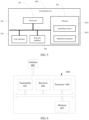
- FIG 3 is a schematic structural diagram of a terminal device according to an embodiment of the present disclosure.
- the terminal device includes: a sending module 31.
- the sending module 31 is configured to: if a first preset condition is satisfied, report first information to a network device, where the first preset condition represents that the multiple communication modules have a communication conflict, and the first information represents assistance information for assisting solving the communication conflict.
- the first information includes at least one of the following:
- a communication characteristic includes at least one of the following: being able to receive a downlink message from the network device; being able to receive a paging message from the network device; being able to initiate a service; being able to respond to a paging message from the network device; and being able to access the network device.
- the unreachable state includes at least one of the following: a power saving mode; a discontinuous reception DRX state; an extended DRX state; and a detach state.
- the sending module 31 reports the first information to the network device when the first preset condition is satisfied in the terminal device includes at least one of the following:
- the reporting the first information to the network device by the sending module 31 includes:
- the sending module 31 reports the first information to the network device
- the second preset condition is satisfied in the terminal device
- at least one of the following operations is performed: the sending module 31 reports second information to the network device; and the terminal device enters a preset communication procedure; where the second preset condition represents that the multiple communication modules have no communication conflict or a communication conflict is solved, and the second information represents information for normal communication of the terminal device.
- the second information includes at least one of the following:
- the entering a preset communication process by the terminal device includes at least one of the following:
- the terminal device includes a preset timer, where the preset timer is configured to control an unreachable state of a communication module.
- the preset timer starts timing when at least one of the following conditions is satisfied:
- one or more communication modules in the unreachable state in the terminal device maintain the unreachable state.
- one or more communication modules in the unreachable state in the terminal device perform at least one of the following: the one or more communication modules in the unreachable state switch to the reachable state; being able to receive a downlink message from the network device; being able to receive a paging message from the network device; being able to initiate a service; being able to respond to a paging message from the network device; and being able to access the network device.
- the preset timer stops timing when at least one of the following conditions is satisfied:
- the terminal device provided in this embodiment of the present disclosure can implement the processes that are implemented by the terminal device in the method embodiment of FIG 1 . To avoid repetition, details are not described herein again.
- the terminal device reports, to the network device, an assistance message for solving the communication conflict, so that the network device performs reasonable resource scheduling for the terminal device based on the information reported by the terminal device.
- this can improve communication performance of the terminal device.
- this can avoid service loss or interruption of the network device when the communication modules have a communication conflict, to reduce a probability of service loss or interruption.
- FIG 4 is a schematic structural diagram of a network device according to an embodiment of the present disclosure.
- the network device includes: a receiving module 41.
- the receiving module 41 is configured to receive first information from a terminal device, where the terminal device includes multiple communication modules, the first information is sent by the terminal device when a first preset condition is satisfied, the first preset condition represents that the multiple communication modules have a communication conflict, and the first information represents assistance information for assisting solving the communication conflict.
- the first information includes at least one of the following:
- the scheduling module 42 is configured to perform first resource scheduling for the terminal device based on the first information.
- the receiving module 41 receives second information from the terminal device, where the second information is sent by the terminal device when a second preset condition is met, the second preset condition represents that the multiple communication modules have no communication conflict or a communication conflict is solved, and the second information represents information for normal communication of the terminal device.
- the second information includes at least one of the following:
- the network device provided in embodiments of the present disclosure can implement the processes implemented by the network device in the method embodiment of FIG 2 . To avoid repetition, details are not described herein again.
- the terminal device may report, to the network device, an assistance message for solving the communication conflict, and the network device can receive the information from the terminal device, so that the network device can perform reasonable resource scheduling for the terminal device based on the information reported by the terminal device.
- this can improve communication performance of the terminal device.
- this can avoid service loss or interruption of the network device when the communication modules have a communication conflict, to reduce a probability of service loss or interruption.
- the communication device may include: a network device and a terminal device.
- FIG 5 is a schematic structural diagram of a terminal device according to an embodiment of the present disclosure.
- the terminal device 500 includes: at least one processor 501, a memory 502, at least one network interface 504, and a user interface 503.
- Various components of the terminal 500 are coupled by using a bus system 505.
- the bus system 505 is configured to implement connection and communication between these components.
- the bus system 505 also includes a power bus, a control bus, and a status signal bus. However, for clarity of description, various buses are marked as the bus system 505 in FIG 5 .
- the user interface 503 may include a display, a keyboard, or a clicking device (for example, a mouse, a trackball), a touch panel, a touchscreen, or the like.
- a clicking device for example, a mouse, a trackball
- a touch panel for example, a touch panel, a touchscreen, or the like.
- the memory 502 in this embodiment of the present disclosure may be a volatile memory or a non-volatile memory, or may include both a volatile memory and a non-volatile memory.
- the non-volatile memory may be a read-only memory (ROM), a programmable read-only memory (Programmable ROM, PROM), an erasable programmable read-only memory (Erasable PROM, EPROM), an electrically erasable programmable read-only memory (Electrically EPROM, EEPROM), or a flash memory.
- the volatile memory may be a random access memory (RAM), used as an external cache.
- RAMs may be used, for example, a static random access memory (Static RAM, SRAM), a dynamic random access memory (Dynamic RAM, DRAM), a synchronous dynamic random access memory (Synchronous DRAM, SDRAM), a double data rate synchronous dynamic random access memory (Double Data Rate SDRAM, DDRSDRAM), an enhanced synchronous dynamic random access memory (Enhanced SDRAM, ESDRAM), a synchlink dynamic random access memory (Synchlink DRAM, SLDRAM), and a direct rambus random access memory (Direct Rambus RAM, DRRAM).
- Static RAM, SRAM static random access memory
- DRAM dynamic random access memory
- DRAM synchronous dynamic random access memory
- SDRAM double data rate synchronous dynamic random access memory
- Double Data Rate SDRAM Double Data Rate SDRAM
- ESDRAM enhanced synchronous dynamic random access memory
- Synchlink DRAM synchlink dynamic random access memory
- SLDRAM direct rambus random access memory
- Direct Rambus RAM Direct Rambus RAM
- the memory 502 stores the following elements: executable modules or data structures, a subset thereof, or an extended set thereof: an operating system 5021 and an application program 5022.
- the operating system 5021 includes various system programs, such as a framework layer, a core library layer, a driver layer, and the like, and is configured to implement various basic services and process hardware-based tasks.
- the application program 5022 includes various application programs, for example, a media player, a browser, and the like, and is configured to implement various application services.
- a program implementing the method in the embodiments of the present disclosure may be included in the application program 5022.
- the terminal device 500 further includes: a computer program stored in the memory 502 and executable on the processor 501.
- the computer program When executed by the processor 501, the following steps are performed: reporting first information to a network device if a first preset condition is satisfied, where the first preset condition represents that the multiple communication modules have a communication conflict, and the first information represents assistance information for assisting solving the communication conflict.
- the information reporting method disclosed in the embodiments of the present disclosure may be applied to the processor 501 or implemented by the processor 501.
- the processor 501 may be an integrated circuit chip having a signal processing capability. During implementation, the steps of the foregoing method may be completed by hardware integrated logic circuits in the processor 501 or instructions in a form of software.
- the foregoing processor 501 may be a general-purpose processor, a digital signal processor (DSP), an application specific integrated circuit (ASIC), a field programmable gate array (FPGA) or another programmable logic component, a discrete gate or a transistor logic component, or a discrete hardware component.
- DSP digital signal processor
- ASIC application specific integrated circuit
- FPGA field programmable gate array
- the processor 501 may implement or execute the methods, steps, and logic block diagrams disclosed in the embodiments of the present disclosure.
- the general-purpose processor may be a microprocessor or may be any conventional processor or the like.
- the steps of the method disclosed in the embodiments of the present disclosure may be directly performed by a hardware decoding processor or by a combination of hardware and software modules in the decoding processor.
- the software module may be located in a mature computer-readable storage medium in this field such as a random access memory, a flash memory, a read-only memory, a programmable read-only memory or an electrically erasable programmable memory, or a register.
- the computer-readable storage medium is located in the memory 502, and the processor 501 reads information from the memory 502 and completes the steps of the foregoing method in combination with hardware of the processor 501.
- the computer-readable storage medium stores a computer program, and when the computer program is executed by the processor 501, the steps of the foregoing embodiment of the information reporting method are performed.
- the processing unit can be implemented in one or more application specific integrated circuits (ASIC), a digital signal processor (DSP), a digital signal processing device (DSP Device, DSPD), a programmable logic device (PLD), a field-programmable gate array (PFGA), general processors, controllers, micro-controllers, microprocessors, and another electronic unit for implementing the functions of the present application, or their combinations.
- ASIC application specific integrated circuits
- DSP digital signal processor
- DSP Device digital signal processing device
- PLD programmable logic device
- PFGA field-programmable gate array
- technologies described in the embodiments of the present disclosure may be implemented by executing functional modules (for example, a process and a function) in the embodiments of the present disclosure.
- Software code can be stored in the memory and executed by the processor.
- the memory can be implemented inside or outside the processor.
- the terminal device 500 can implement each process implemented by the terminal device in the foregoing embodiments. To avoid repetition, details are not described herein again.
- An embodiment of the present disclosure further provides a computer-readable storage medium, where the computer-readable storage medium stores one or more programs.
- the one or more programs include instructions.
- the communication device can be enabled to execute the method of the embodiment shown in FIG 1 , and is specifically configured to execute the step of the information reporting method described above.
- FIG 6 is a schematic structural diagram of a network device according to an embodiment of the present disclosure.
- a schematic structural diagram of a physical apparatus of a network device 600 may be as shown in FIG 6 , including a processor 602, a memory 603, a transmitter 601, and a receiver 604.
- the transmitter 601 and the receiver 604 may be coupled to an antenna 605.
- the memory 603 is configured to store a program.
- the program may include a program code, and the program code includes a computer operation instruction.
- the memory 603 may include a read-only memory and a random access memory, and provides an instruction and data to the processor 602.
- the memory 603 may include a high-speed RAM memory, and may further include a non-volatile memory, for example, at least one magnetic disk storage.
- the processor 602 executes the program stored in the memory 603.
- the processor 602 may perform the following method: receiving first information from a terminal device, where the terminal device includes multiple communication modules, the first information is sent by the terminal device when a first preset condition is satisfied, the first preset condition represents that the multiple communication modules have a communication conflict, and the first information represents assistance information for assisting solving the communication conflict.
- the information receiving method disclosed in the embodiment in FIG 2 of the present disclosure may be applied to the processor 602 or implemented by the processor 602.
- the processor 602 may be an integrated circuit chip having a signal processing capability. During implementation, the steps of the foregoing method may be completed by hardware integrated logic circuits in the processor 602 or instructions in a form of software.
- the foregoing processor 602 may be a general-purpose processor, including a central processing unit (CPU), a network processor (NP), and the like; the foregoing processor 602 may also be a digital signal processor (DSP), an application-specific integrated circuit (ASIC), a field programmable gate array (FPGA) or another programmable logic device, a discrete gate or a transistor logic device, a discrete hardware component.
- DSP digital signal processor
- ASIC application-specific integrated circuit
- FPGA field programmable gate array
- the processor 602 may implement or execute the methods, steps, and logic block diagrams disclosed in the embodiments of the present disclosure.
- the general-purpose processor may be a microprocessor or may be any conventional processor or the like.
- the steps of the method disclosed in the embodiments of the present disclosure may be directly performed by a hardware decoding processor or by a combination of hardware and software modules in the decoding processor.
- the software module may be located in a mature storage medium in this field such as a random access memory, a flash memory, a read-only memory, a programmable read-only memory or an electrically erasable programmable memory, or a register.
- the storage medium is located in the memory 603.
- the processor 602 reads information in the memory 603, and completes steps of the foregoing method in combination with hardware of the processor 602.
- the network device can also perform the method shown in FIG 2 and implement functions of the network device in the embodiment shown in FIG 2 , which is no longer described herein in the embodiment of the present disclosure.
- An embodiment of the present disclosure further provides a computer-readable storage medium, where the computer-readable storage medium stores one or more programs.
- the one or more programs include instructions.
- the communication device can be enabled to execute the method of the embodiment shown in FIG 2 , and is specifically configured to execute the step of the information receiving method described above.
- the system, apparatus, module, or unit explained in the above embodiments may be implemented by a computer chip or entity, or implemented by a product with certain functions.
- Atypical implementation device is a computer.
- the computer may be, for example, a personal computer, a laptop computer, a cellular phone, a camera phone, a smart phone, a personal digital assistant, a media player, a navigation device, an email device, a game console, a tablet computer, a wearable device, or any combination of these devices.
- the computer readable medium includes permanent, non-permanent, removable, and non-removable media and can store information by using any method or technology.
- the information may be computer-readable instructions, data structures, modules of programs, or other data.
- Examples of the computer storage medium include but not limited to: a phase-change memory (PRAM), a static random access memory (SRAM), a dynamic random access memory (DRAM), another type of random access memory (RAM), a read-only memory (ROM), an electrically erasable programmable read-only memory (EEPROM), a flash memory or another memory technology, a compact disc read-only memory (CD-ROM), a digital video disc (DVD) or another optical memory, a magnetic cassette, a magnetic disk storage, another magnetic storage device, and any other non-transmission medium that may be configured to store information that can be accessed by a computing device.
- the computer readable medium does not include computer readable transitory media (transitory media), such as modulated data signals and carriers.
- the terms "include”, “comprise”, or any of their variants are intended to cover a non-exclusive inclusion, such that a process, a method, an article, or an apparatus that includes a list of elements not only includes those elements but also includes other elements that are not expressly listed, or further includes elements inherent to such a process, method, article, or apparatus.
- An element limited by “includes a " does not, without more constraints, preclude the presence of additional identical elements in the process, method, article, or apparatus that includes the element.
- the method in the foregoing embodiment may be implemented by software in addition to a necessary universal hardware platform or by hardware only. In most circumstances, the former is a preferred implementation. Based on such an understanding, the technical solutions of the present disclosure essentially or the part contributing to the prior art may be implemented in a form of a software product.
- the computer software product is stored in a storage medium (such as a ROM/RAM, a magnetic disk, or an optical disc), and includes several instructions for instructing a terminal (which may be a mobile phone, a computer, a server, an air conditioner, a network device, or the like) to perform the methods described in the embodiments of the present disclosure.
Landscapes
- Engineering & Computer Science (AREA)
- Signal Processing (AREA)
- Computer Networks & Wireless Communication (AREA)
- Mobile Radio Communication Systems (AREA)
- Alarm Systems (AREA)
Applications Claiming Priority (3)
| Application Number | Priority Date | Filing Date | Title |
|---|---|---|---|
| CN201910108414.9A CN111263384B (zh) | 2019-01-18 | 2019-01-18 | 一种信息上报、接收方法、终端设备和网络设备 |
| PCT/CN2020/072699 WO2020147821A1 (zh) | 2019-01-18 | 2020-01-17 | 信息上报、接收方法、终端设备和网络设备 |
| EP20742104.1A EP3913959B1 (de) | 2019-01-18 | 2020-01-17 | Informationsmeldeverfahren, empfangsverfahren, endgerät und netzwerkvorrichtung |
Related Parent Applications (2)
| Application Number | Title | Priority Date | Filing Date |
|---|---|---|---|
| EP20742104.1A Division EP3913959B1 (de) | 2019-01-18 | 2020-01-17 | Informationsmeldeverfahren, empfangsverfahren, endgerät und netzwerkvorrichtung |
| EP20742104.1A Division-Into EP3913959B1 (de) | 2019-01-18 | 2020-01-17 | Informationsmeldeverfahren, empfangsverfahren, endgerät und netzwerkvorrichtung |
Publications (2)
| Publication Number | Publication Date |
|---|---|
| EP4550871A2 true EP4550871A2 (de) | 2025-05-07 |
| EP4550871A3 EP4550871A3 (de) | 2025-12-10 |
Family
ID=70953806
Family Applications (2)
| Application Number | Title | Priority Date | Filing Date |
|---|---|---|---|
| EP20742104.1A Active EP3913959B1 (de) | 2019-01-18 | 2020-01-17 | Informationsmeldeverfahren, empfangsverfahren, endgerät und netzwerkvorrichtung |
| EP25164317.7A Pending EP4550871A3 (de) | 2019-01-18 | 2020-01-17 | Informationsmeldeverfahren, informationsempfangsverfahren, endgerätevorrichtung und netzwerkvorrichtung |
Family Applications Before (1)
| Application Number | Title | Priority Date | Filing Date |
|---|---|---|---|
| EP20742104.1A Active EP3913959B1 (de) | 2019-01-18 | 2020-01-17 | Informationsmeldeverfahren, empfangsverfahren, endgerät und netzwerkvorrichtung |
Country Status (6)
| Country | Link |
|---|---|
| US (2) | US12010539B2 (de) |
| EP (2) | EP3913959B1 (de) |
| KR (1) | KR102622293B1 (de) |
| CN (1) | CN111263384B (de) |
| ES (1) | ES3029565T3 (de) |
| WO (1) | WO2020147821A1 (de) |
Families Citing this family (5)
| Publication number | Priority date | Publication date | Assignee | Title |
|---|---|---|---|---|
| US11937113B2 (en) * | 2019-03-20 | 2024-03-19 | Telefonaktiebolaget Lm Ericsson (Publ) | Flexible early measurement reporting |
| CN114079869A (zh) * | 2020-08-13 | 2022-02-22 | 维沃移动通信有限公司 | 上报能力的方法、终端设备和网络设备 |
| KR20220096445A (ko) | 2020-12-31 | 2022-07-07 | 삼성전자주식회사 | 복수의 가입자 식별 모듈을 포함하는 전자 장치 및 그의 동작 방법 |
| CN113259262B (zh) * | 2021-03-29 | 2023-04-14 | 杭州涂鸦信息技术有限公司 | 消息上报方法及相关装置 |
| CN113490201B (zh) * | 2021-06-11 | 2023-08-08 | 展讯半导体(南京)有限公司 | 信息传输方法及装置、终端设备、网络设备及存储介质 |
Family Cites Families (12)
| Publication number | Priority date | Publication date | Assignee | Title |
|---|---|---|---|---|
| US8676253B2 (en) | 2011-05-24 | 2014-03-18 | Spreadtrum Communications (Shanghai) Co., Ltd. | Method and device for ranking frequencies |
| EP2737762B1 (de) * | 2011-07-25 | 2018-05-30 | Telefonaktiebolaget LM Ericsson (publ) | Funkrufempfang bei drahtlosen kommunikationsgeräten mit dual-sim |
| US20150163827A1 (en) * | 2013-12-06 | 2015-06-11 | Broadcom Corporation | Apparatus and Method for Paging for Mutli-Standby Devices |
| WO2015180779A1 (en) * | 2014-05-28 | 2015-12-03 | Telefonaktiebolaget L M Ericsson (Publ) | Terminal dual sim - dual access handling |
| US10708920B2 (en) | 2015-03-03 | 2020-07-07 | Qualcomm Incorporated | Method and apparatus for dynamic device capability signaling in wireless communications |
| US10182456B2 (en) | 2015-10-15 | 2019-01-15 | Qualcomm Incorporated | Collision detection in a shared radio frequency spectrum band |
| EP3456104B1 (de) * | 2016-05-12 | 2021-07-07 | Telefonaktiebolaget LM Ericsson (publ) | Kommunikationsvorrichtung und verfahren darin zur handhabung von betriebsarten in einem drahtloskommunikationsnetzwerk |
| KR102494314B1 (ko) * | 2016-07-18 | 2023-02-06 | 삼성전자 주식회사 | 네트워크 상호 연결의 개선 및 네트워크 상호 연결과 관련된 개선 |
| CN108040367B (zh) * | 2016-11-04 | 2019-09-17 | 电信科学技术研究院 | 一种ue位置区域更新方法、接入网实体、ue及核心网实体 |
| US10568073B2 (en) * | 2016-12-07 | 2020-02-18 | Samsung Electronics Co., Ltd. | Methods and dual SIM dual standby (DSDS) devices for managing data communication |
| CN108811083B (zh) * | 2017-04-28 | 2023-10-24 | 华为技术有限公司 | 一种寻呼指示的传输方法及装置 |
| WO2020111912A1 (ko) * | 2018-11-30 | 2020-06-04 | 엘지전자 주식회사 | 무선 통신 시스템에서 페이징 신호를 송수신하는 방법 및 이를 위한 장치 |
-
2019
- 2019-01-18 CN CN201910108414.9A patent/CN111263384B/zh active Active
-
2020
- 2020-01-17 WO PCT/CN2020/072699 patent/WO2020147821A1/zh not_active Ceased
- 2020-01-17 KR KR1020217025849A patent/KR102622293B1/ko active Active
- 2020-01-17 ES ES20742104T patent/ES3029565T3/es active Active
- 2020-01-17 EP EP20742104.1A patent/EP3913959B1/de active Active
- 2020-01-17 EP EP25164317.7A patent/EP4550871A3/de active Pending
-
2021
- 2021-07-16 US US17/378,150 patent/US12010539B2/en active Active
-
2024
- 2024-05-02 US US18/653,202 patent/US20240284232A1/en active Pending
Also Published As
| Publication number | Publication date |
|---|---|
| CN111263384A (zh) | 2020-06-09 |
| US20240284232A1 (en) | 2024-08-22 |
| EP3913959A4 (de) | 2022-07-27 |
| US20210345151A1 (en) | 2021-11-04 |
| ES3029565T3 (en) | 2025-06-24 |
| EP3913959A1 (de) | 2021-11-24 |
| KR102622293B1 (ko) | 2024-01-08 |
| WO2020147821A1 (zh) | 2020-07-23 |
| CN111263384B (zh) | 2023-03-21 |
| US12010539B2 (en) | 2024-06-11 |
| EP4550871A3 (de) | 2025-12-10 |
| EP3913959B1 (de) | 2025-04-30 |
| KR20210115001A (ko) | 2021-09-24 |
Similar Documents
| Publication | Publication Date | Title |
|---|---|---|
| US20240284232A1 (en) | Information reporting method, information receiving method, terminal device, and network device | |
| JP7331152B2 (ja) | デュアルsim・ueデータ送信方法およびデバイス、記憶媒体、ならびにユーザ機器 | |
| US12075277B2 (en) | Method of processing network slice based congestion, device and system thereof | |
| US12133193B2 (en) | Non-connected-state uplink positioning method and devices | |
| US11463981B2 (en) | Location information reporting method and apparatus | |
| EP3749049B1 (de) | Kommunikationsverfahren und drahtloskommunikationsvorrichtung | |
| US20220015188A1 (en) | Method for configuring information, network device, and terminal device | |
| EP3771246B1 (de) | Drahtloses kommunikationsverfahren, quellknoten und zielknoten | |
| US12069503B2 (en) | Wireless communication method and device | |
| CN116368940B (zh) | 中继ue辅助的ran通知区域更新过程 | |
| EP3379891A1 (de) | Vorrichtung-zu-vorrichtung-kommunikationsverfahren, endgerätevorrichtung und netzwerkvorrichtung | |
| CN116261205A (zh) | 通信方法、装置、终端、网络设备及介质 | |
| JP7565449B2 (ja) | セカンダリセルグループの制御方法、端末及びネットワーク側機器 | |
| JP7612690B2 (ja) | 強化型無線リンク障害回復のための方法 | |
| US20240373314A1 (en) | Communication method and apparatus | |
| CN116963043A (zh) | 辅小区组信息发送方法、接收方法、终端、设备和介质 | |
| US12107691B2 (en) | Duplication transmission maintaining method, terminal and network device | |
| US20230111158A1 (en) | Method and apparatus for suspending secondary cell group | |
| CN114747278B (zh) | 下行控制信道的检测方法及相关装置 | |
| WO2025200919A1 (zh) | 一种通信方法及装置 | |
| CN115734314A (zh) | 切片接入优化方法及相关产品 | |
| CN122002578A (zh) | 一种通信方法及装置 | |
| CN114339813A (zh) | Mbs业务的传输方法及相关装置 |
Legal Events
| Date | Code | Title | Description |
|---|---|---|---|
| PUAI | Public reference made under article 153(3) epc to a published international application that has entered the european phase |
Free format text: ORIGINAL CODE: 0009012 |
|
| STAA | Information on the status of an ep patent application or granted ep patent |
Free format text: STATUS: REQUEST FOR EXAMINATION WAS MADE |
|
| 17P | Request for examination filed |
Effective date: 20250318 |
|
| AC | Divisional application: reference to earlier application |
Ref document number: 3913959 Country of ref document: EP Kind code of ref document: P |
|
| AK | Designated contracting states |
Kind code of ref document: A2 Designated state(s): AL AT BE BG CH CY CZ DE DK EE ES FI FR GB GR HR HU IE IS IT LI LT LU LV MC MK MT NL NO PL PT RO RS SE SI SK SM TR |
|
| REG | Reference to a national code |
Ref country code: DE Ref legal event code: R079 Free format text: PREVIOUS MAIN CLASS: H04W0024040000 Ipc: H04W0024080000 |
|
| PUAL | Search report despatched |
Free format text: ORIGINAL CODE: 0009013 |
|
| AK | Designated contracting states |
Kind code of ref document: A3 Designated state(s): AL AT BE BG CH CY CZ DE DK EE ES FI FR GB GR HR HU IE IS IT LI LT LU LV MC MK MT NL NO PL PT RO RS SE SI SK SM TR |
|
| RIC1 | Information provided on ipc code assigned before grant |
Ipc: H04W 24/08 20090101AFI20251031BHEP Ipc: H04W 68/00 20090101ALN20251031BHEP Ipc: H04W 88/02 20090101ALN20251031BHEP Ipc: H04W 24/04 20090101ALN20251031BHEP |