EP4550801A1 - Verfahren und vorrichtung zum schieben von video und speichermedium - Google Patents
Verfahren und vorrichtung zum schieben von video und speichermedium Download PDFInfo
- Publication number
- EP4550801A1 EP4550801A1 EP23830269.9A EP23830269A EP4550801A1 EP 4550801 A1 EP4550801 A1 EP 4550801A1 EP 23830269 A EP23830269 A EP 23830269A EP 4550801 A1 EP4550801 A1 EP 4550801A1
- Authority
- EP
- European Patent Office
- Prior art keywords
- video
- photosensitive
- videos
- tag
- browsing user
- Prior art date
- Legal status (The legal status is an assumption and is not a legal conclusion. Google has not performed a legal analysis and makes no representation as to the accuracy of the status listed.)
- Pending
Links
Images



Classifications
-
- G—PHYSICS
- G06—COMPUTING OR CALCULATING; COUNTING
- G06F—ELECTRIC DIGITAL DATA PROCESSING
- G06F16/00—Information retrieval; Database structures therefor; File system structures therefor
- G06F16/70—Information retrieval; Database structures therefor; File system structures therefor of video data
- G06F16/74—Browsing; Visualisation therefor
-
- H—ELECTRICITY
- H04—ELECTRIC COMMUNICATION TECHNIQUE
- H04N—PICTORIAL COMMUNICATION, e.g. TELEVISION
- H04N21/00—Selective content distribution, e.g. interactive television or video on demand [VOD]
- H04N21/20—Servers specifically adapted for the distribution of content, e.g. VOD servers; Operations thereof
- H04N21/25—Management operations performed by the server for facilitating the content distribution or administrating data related to end-users or client devices, e.g. end-user or client device authentication, learning user preferences for recommending movies
- H04N21/258—Client or end-user data management, e.g. managing client capabilities, user preferences or demographics, processing of multiple end-users preferences to derive collaborative data
- H04N21/25866—Management of end-user data
- H04N21/25891—Management of end-user data being end-user preferences
-
- G—PHYSICS
- G06—COMPUTING OR CALCULATING; COUNTING
- G06F—ELECTRIC DIGITAL DATA PROCESSING
- G06F16/00—Information retrieval; Database structures therefor; File system structures therefor
- G06F16/70—Information retrieval; Database structures therefor; File system structures therefor of video data
- G06F16/73—Querying
- G06F16/735—Filtering based on additional data, e.g. user or group profiles
-
- G—PHYSICS
- G06—COMPUTING OR CALCULATING; COUNTING
- G06F—ELECTRIC DIGITAL DATA PROCESSING
- G06F16/00—Information retrieval; Database structures therefor; File system structures therefor
- G06F16/70—Information retrieval; Database structures therefor; File system structures therefor of video data
- G06F16/78—Retrieval characterised by using metadata, e.g. metadata not derived from the content or metadata generated manually
- G06F16/783—Retrieval characterised by using metadata, e.g. metadata not derived from the content or metadata generated manually using metadata automatically derived from the content
- G06F16/7847—Retrieval characterised by using metadata, e.g. metadata not derived from the content or metadata generated manually using metadata automatically derived from the content using low-level visual features of the video content
-
- G—PHYSICS
- G06—COMPUTING OR CALCULATING; COUNTING
- G06F—ELECTRIC DIGITAL DATA PROCESSING
- G06F16/00—Information retrieval; Database structures therefor; File system structures therefor
- G06F16/70—Information retrieval; Database structures therefor; File system structures therefor of video data
- G06F16/78—Retrieval characterised by using metadata, e.g. metadata not derived from the content or metadata generated manually
- G06F16/7867—Retrieval characterised by using metadata, e.g. metadata not derived from the content or metadata generated manually using information manually generated, e.g. tags, keywords, comments, title and artist information, manually generated time, location and usage information, user ratings
-
- G—PHYSICS
- G06—COMPUTING OR CALCULATING; COUNTING
- G06V—IMAGE OR VIDEO RECOGNITION OR UNDERSTANDING
- G06V10/00—Arrangements for image or video recognition or understanding
- G06V10/70—Arrangements for image or video recognition or understanding using pattern recognition or machine learning
- G06V10/77—Processing image or video features in feature spaces; using data integration or data reduction, e.g. principal component analysis [PCA] or independent component analysis [ICA] or self-organising maps [SOM]; Blind source separation
- G06V10/774—Generating sets of training patterns; Bootstrap methods, e.g. bagging or boosting
-
- G—PHYSICS
- G06—COMPUTING OR CALCULATING; COUNTING
- G06V—IMAGE OR VIDEO RECOGNITION OR UNDERSTANDING
- G06V10/00—Arrangements for image or video recognition or understanding
- G06V10/70—Arrangements for image or video recognition or understanding using pattern recognition or machine learning
- G06V10/82—Arrangements for image or video recognition or understanding using pattern recognition or machine learning using neural networks
-
- G—PHYSICS
- G06—COMPUTING OR CALCULATING; COUNTING
- G06V—IMAGE OR VIDEO RECOGNITION OR UNDERSTANDING
- G06V10/00—Arrangements for image or video recognition or understanding
- G06V10/94—Hardware or software architectures specially adapted for image or video understanding
- G06V10/945—User interactive design; Environments; Toolboxes
-
- G—PHYSICS
- G06—COMPUTING OR CALCULATING; COUNTING
- G06V—IMAGE OR VIDEO RECOGNITION OR UNDERSTANDING
- G06V20/00—Scenes; Scene-specific elements
- G06V20/40—Scenes; Scene-specific elements in video content
- G06V20/41—Higher-level, semantic clustering, classification or understanding of video scenes, e.g. detection, labelling or Markovian modelling of sport events or news items
-
- H—ELECTRICITY
- H04—ELECTRIC COMMUNICATION TECHNIQUE
- H04N—PICTORIAL COMMUNICATION, e.g. TELEVISION
- H04N21/00—Selective content distribution, e.g. interactive television or video on demand [VOD]
- H04N21/20—Servers specifically adapted for the distribution of content, e.g. VOD servers; Operations thereof
- H04N21/23—Processing of content or additional data; Elementary server operations; Server middleware
- H04N21/234—Processing of video elementary streams, e.g. splicing of video streams or manipulating encoded video stream scene graphs
-
- H—ELECTRICITY
- H04—ELECTRIC COMMUNICATION TECHNIQUE
- H04N—PICTORIAL COMMUNICATION, e.g. TELEVISION
- H04N21/00—Selective content distribution, e.g. interactive television or video on demand [VOD]
- H04N21/20—Servers specifically adapted for the distribution of content, e.g. VOD servers; Operations thereof
- H04N21/23—Processing of content or additional data; Elementary server operations; Server middleware
- H04N21/234—Processing of video elementary streams, e.g. splicing of video streams or manipulating encoded video stream scene graphs
- H04N21/23418—Processing of video elementary streams, e.g. splicing of video streams or manipulating encoded video stream scene graphs involving operations for analysing video streams, e.g. detecting features or characteristics
-
- H—ELECTRICITY
- H04—ELECTRIC COMMUNICATION TECHNIQUE
- H04N—PICTORIAL COMMUNICATION, e.g. TELEVISION
- H04N21/00—Selective content distribution, e.g. interactive television or video on demand [VOD]
- H04N21/20—Servers specifically adapted for the distribution of content, e.g. VOD servers; Operations thereof
- H04N21/27—Server based end-user applications
- H04N21/274—Storing end-user multimedia data in response to end-user request, e.g. network recorder
- H04N21/2743—Video hosting of uploaded data from client
-
- H—ELECTRICITY
- H04—ELECTRIC COMMUNICATION TECHNIQUE
- H04N—PICTORIAL COMMUNICATION, e.g. TELEVISION
- H04N21/00—Selective content distribution, e.g. interactive television or video on demand [VOD]
- H04N21/80—Generation or processing of content or additional data by content creator independently of the distribution process; Content per se
- H04N21/83—Generation or processing of protective or descriptive data associated with content; Content structuring
- H04N21/845—Structuring of content, e.g. decomposing content into time segments
- H04N21/8455—Structuring of content, e.g. decomposing content into time segments involving pointers to the content, e.g. pointers to the I-frames of the video stream
Definitions
- the present disclosure relates to the field of multimedia technologies, and in particular, to a method and an apparatus of video transmission, and a storage medium.
- Photosensitive epilepsy is a disease caused by visual stimuli such as strong light source stimuli and flash stimuli.
- visual stimuli such as strong light source stimuli and flash stimuli.
- game and animation production companies try to reduce the possibility of triggering photosensitive epilepsy by reducing the contrast when making scenes with strong visual stimulation, and photosensitive epilepsy warnings usually need to be added at the beginning of their works.
- Video creators are no longer limited to professional media companies with the popularization of the Internet, terminals and multimedia technologies. Ordinary users can also shoot videos by themselves and publish videos on the network for other users to watch. Some video applications can predict videos that a browsing user may be interested in and push the predicted videos to the browsing user. The simplicity of video production and publishing has resulted in a large number of video creators. However, some video creators do not have a deep understanding of photosensitive epilepsy.
- a method of video transmission comprising: acquiring videos comprising video(s) with a photosensitive tag and video(s) without a photosensitive tag, wherein each video has a photosensitive tag in response to be determined as a photosensitive video by a photosensitive video recognition model; and transmitting video(s) that do not have a photosensitive tag among the videos to a browsing user in response to the browsing user being in a state of photosensitive video filtering.
- the method of video transmission further comprises: acquiring feedback of the browsing user on a browsed video; and marking the browsed video as a photosensitive video and adding the browsed video to a training set in response to the feedback indicating that the browsed video is a photosensitive video, wherein the training set is used to train the photosensitive video recognition model.
- the video has a photosensitive tag in response to a photosensitive effect being added to the video.
- the method of video transmission further comprises: transmitting the videos to the browsing user in response to the browsing user being not in the state of photosensitive video filtering.
- the method of video transmission further comprises: displaying an option control for selecting whether to filter photosensitive videos in response to a video to be played being a video with a photosensitive tag; receiving an operation of the browsing user on the option control; and setting the browsing user to the State of photosensitive video filtering in response to the operation indicating filtering of photosensitive videos.
- an option control for selecting whether to filter photosensitive videos is displayed in response to the video to be played back being a video with a photosensitive tag that the browsing user browses firstly under a same account or on a same terminal.
- the option control is located on a mask layer that is located over the video to be played.
- a method of video transmission comprising: acquiring a video uploaded by a creator; processing the uploaded video using a photosensitive video recognition model to determine whether the uploaded video is a photosensitive video; adding a photosensitive tag to the uploaded video in response to the uploaded video being a photosensitive video; and transmitting a video without a photosensitive tag to a browsing user in response to the browsing user being in a State of photosensitive video filtering.
- the method of video transmission further comprises: sending a notification to the creator after determining that the uploaded video is a photosensitive video.
- the method of video transmission further comprises: receiving feedback sent by the creator after sending the notification to the creator; and marking the uploaded video as a non-photosensitive video and adding it to a training set in response to the feedback indicating that the uploaded video is a not a photosensitive video, wherein the training set is used to train the photosensitive video recognition model.
- the photosensitive video recognition model is a neural network model.
- an apparatus of video transmission comprising: a memory; a processor coupled to the memory, the processor configured to, based on instructions stored in the memory, carry out any one of the foregoing method of video transmission.
- a computer-readable storage medium on which a computer program is stored, wherein the program when executed by a processor carries out any one of the foregoing method of video transmission.
- a computer program product which when executed on a computer causes the computer to implement any one of the foregoing method of video transmission.
- a computer program includes instructions that, when executed by a processor, cause the processor to perform any one of the foregoing method of video transmission.
- a technical problem to be solved by the present disclosure is: how to reduce the impact on users who are sensitive to photosensitive videos in video push, and improve the safety of video viewing.
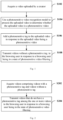
- FIG. 1 shows a schematic flowchart of a method of video transmission according to some embodiments of the present disclosure. This embodiment can be deployed in a server of a video push application. It can also be deployed in other devices as needed, which will not be described in detail herein.
- the method of video transmission of this embodiment comprises steps S102 to S108.
- step S102 a video uploaded by a creator is acquired.
- the creator uploads a video stored in the creator's terminal or stored on the network through an upload interface provided by a video push application.
- the video may be shot by the creator, or generated by editing video materials, which is not limited in the present disclosure.
- step S104 a photosensitive video recognition model is used to process the uploaded video to determine whether the uploaded video is a photosensitive video.
- the photosensitive video recognition model is a neural network model.
- the uploaded video is input into a pre-trained photosensitive video recognition model to obtain a predicted probability calculated by the photosensitive video recognition model, the predicted probability representing the probability that the uploaded video is a photosensitive video or the probability that it is not a photosensitive video.
- a judgment result of whether the uploaded video is a photosensitive video can be obtained.
- step S106 a photosensitive tag is added to the uploaded video if the uploaded video is a photosensitive video.
- the photosensitive tag is stored, for example, in metadata or attribute information of the video.
- a corresponding relationship between an identifier of the video and the photosensitive tag can also be stored using a data table and a key-value pair.
- a notification is sent to the creator upon determining that the uploaded video is a photosensitive video.
- the creator can know that the uploaded video is a photosensitive video.
- the notification can be sent through an In-App message in the video push application, or it can be sent in an Off-App manner such as a short message or an email based on communication information provided by the creator in advance.
- the notification may also comprise relevant knowledge about photosensitive videos and photosensitive epilepsy, so that more and more creators can pay attention to avoiding related visual effects in their subsequent video creation. Thereby, the safety of video viewing can be substantially improved.
- step S108 videos without a photosensitive tag are transmitted to the browsing user in response to a browsing user being in a state of photosensitive video filtering.
- Browsing users can specify whether to filter photosensitive videos according to their needs. Videos with a photosensitive tag cannot be browsed by the browsing user if the browsing user is in the state of photosensitive video filtering.
- a certain user may be the creator of a video, and may also be a browsing user of other videos.
- the transmitted video is located in a video feed, which may be a long video feed or a short video feed. Users can watch different videos transmitted for them by switching operations.
- FIG. 2 shows a schematic flowchart of a method of video transmission according to other embodiments of the present disclosure. This embodiment can be deployed in a server of a video push application. It can also be deployed in other devices as needed, which will not be described in detail herein.
- the method of video transmission of this embodiment includes steps S202 to S204.
- step S202 one or more videos comprising videos with a photosensitive tag and videos without a photosensitive tag are acquired, wherein a video has a photosensitive tag if it is determined as a photosensitive video by a photosensitive video recognition model.
- the acquired one or more videos will be pushed (transmitted) to a user.
- the server determine videos that a user may be interested in through calculation according to a recommendation algorithm, and prepares to push these videos to the user.
- photosensitive videos can be marked by the recognition result of the photosensitive video recognition model, so as to assist the server to further determine whether to push all these videos to the user.
- step S204 videos that do not have a photosensitive tag among the one or more videos are transmitted to the browsing user in a case that a browsing user is in the state of photosensitive video filtering.
- the one or more videos are transmitted to the browsing user if the browsing user is not in the state of photosensitive video filtering. That is, the browsing user can view both videos with a photosensitive tag and videos without a photosensitive tag.
- an uploaded video is recognized by the photosensitive video recognition model, and a photosensitive tag is added to the video if it is determined as a photosensitive video by the model. Therefore, videos without a photosensitive tag are transmitted to a browsing user if the browsing user chooses to filter photosensitive videos, so as to avoid the adverse effect of photosensitive videos on photosensitive epileptics and other users who are sensitive to photosensitive videos, thereby improving the safety of video viewing.
- a model training process will be exemplarily described below.
- a training set is constructed, which comprises photosensitive videos and non-photosensitive videos manually screened and labeled, for example. Then, the videos in the training set are input into the neural network model to obtain prediction results of the model. Finally, a loss value of the model is calculated according to the difference between the prediction results of the model and the labels, and the parameters of the model are adjusted based on the loss value. After several iterations, the training is stopped after a convergence condition has been met, and a photosensitive video recognition model is obtained.
- Some embodiments of the present disclosure also provide a user feedback mechanism, through which the training set can be expanded to further improve the accuracy of the model.
- An embodiment of training a model through user feedback will be described below with reference to FIG. 3 and FIG. 4 , respectively.
- FIG. 3 shows a schematic flowchart of a feedback method of browsing user according to some embodiments of the present disclosure. As shown in FIG. 3 , the feedback method of browsing user of this embodiment comprises steps S302 to S306.
- step S302 videos without a photosensitive tag are transmitted to a browsing user in the state of photosensitive video filtering.
- step S304 feedback of the browsing user on browsed videos is obtained.
- the browsing user can submit feedback indicating that the browsed video is a photosensitive video if a photosensitive video is stilled pushed to the browsing user during his/her browsing process after setting the state of photosensitive video filtering.
- a feedback control can be provided in the video push application. After the browsing user triggers the feedback control, a preset type of feedback indicating the browsing of a photosensitive video can be selected, or feedback contents can be manually input.
- step S306 the browsed video is marked as a photosensitive video and added to a training set if the feedback indicates that the browsed video is a photosensitive video, wherein the training set is used to train a photosensitive video recognition model.
- the feedback information can be further reviewed, and the corresponding video is added to the training set after the review is passed.
- the review may be done manually, or may be done automatically according to preset review rules or a review algorithm.
- FIG. 4 shows a schematic flowchart of a feedback method of creator according to some embodiments of the present disclosure. As shown in FIG. 4 , the feedback method of creator of this embodiment comprises steps S402 to S410.
- a photosensitive video recognition model is used to process a video uploaded by a creator to determine whether the uploaded video is a photosensitive video.
- step S404 a photosensitive tag is added to the uploaded video in response to the uploaded video being a photosensitive video.
- step S406 a notification is sent to the creator upon determining that the uploaded video is a photosensitive video.
- step S408 feedback sent by the creator is received after the notification is sent to the creator.
- the creator can appeal through feedback if the creator believes that the uploaded video is not a photosensitive video.
- step S410 the uploaded video is marked as a non-photosensitive video and added to a training set in response to the feedback indicating that the uploaded video is a not a photosensitive video, wherein the training set is used to train a photosensitive video recognition model.
- the feedback information can be further reviewed, and the corresponding video is added to the training set after the review is passed.
- the review may be done manually, or may be done automatically according to preset review rules or a review algorithm.
- a non-photosensitive video that has been mis-recognized by the model can be marked and added to the training set through the feedback of the creator, which is helpful to improve the accuracy of the model.
- the above two feedback mechanisms can use user feedback to identify mis-recognition of the model, and collect more training data to further optimize the model, thereby improving the prediction accuracy of the model. Therefore, better guarantee of safety can be achieved for users during the video viewing process.
- FIG. 5 shows a schematic flowchart of a user state setting method according to some embodiments of the present disclosure. As shown in FIG. 5 , the user state setting method of this embodiment includes steps S502 to S506.
- step S502 an option control for selecting whether to filter photosensitive videos is displayed in response to a video to be played back being a video with a photosensitive tag.
- the video push application acquires several videos and transmits them to a user for playback in sequence. Before the playback of each video, the video push application checks whether the video to be played has a photosensitive tag. If there is no photosensitive tag, the video will be played normally; if there is a photosensitive tag, an option control will be displayed.
- the option control is only displayed in the situation of the user's "first browsing".
- First browsing refers to first browsing under the same account, or first browsing on the same terminal. That is, if the video to be played is a video with a photosensitive tag that the browsing user firstly browses under the same account or on the same terminal, an option control for selecting whether to filter photosensitive videos is displayed.
- the option control is located on a mask layer that is located over the video to be played back.
- the transparency of the mask layer is lower than a preset value, or has the effect of background blurring to block the underlying photosensitive video, so that the user's attention is focused on the option control.
- step S506 the browsing user is set to a state of photosensitive video filtering in response to the operation indicating filtering of photosensitive videos.
- a user can specify whether to filter photosensitive videos as desired, thereby improving the viewing safety of users who are sensitive to photosensitive videos and the viewing freedom of users who are not sensitive to photosensitive videos. Moreover, since many browsing users are also video creators, this setting process can also play a role in popularizing knowledge about photosensitive videos.
- FIG. 6 shows a schematic structural diagram of a apparatus of video transmission according to some embodiments of the present disclosure.
- the apparatus of video transmission 60 of this embodiment comprises: an acquisition module 610, configured to acquire videos comprising video(s) with a photosensitive tag and video(s) without a photosensitive tag, wherein each video has a photosensitive tag if it is determined as a photosensitive video by a photosensitive video recognition model; and a transmitting module 620, configured to transmitting video(s) that do not have a photosensitive tag among the videos to a browsing user in case that the browsing user is in a state of photosensitive video filtering.
- an acquisition module 610 configured to acquire videos comprising video(s) with a photosensitive tag and video(s) without a photosensitive tag, wherein each video has a photosensitive tag if it is determined as a photosensitive video by a photosensitive video recognition model
- a transmitting module 620 configured to transmitting video(s) that do not have a photosensitive tag among the videos to a browsing user in
- an uploaded video is recognized by the photosensitive video recognition model, and a photosensitive tag is added to the video if it is determined as a photosensitive video by the model. Therefore, videos without a photosensitive tag are transmitted to a browsing user if the browsing user chooses to filter photosensitive videos, so as to avoid the adverse effect of photosensitive videos on photosensitive epileptics and other users who are sensitive to photosensitive videos, thereby improving the safety of video viewing.
- the apparatus of video transmission 60 further comprises: a feedback module 630, configured to acquire feedback of the browsing user on a browsed video; mark the browsed video as a photosensitive video and adding the browsed video to a training set in case that the feedback indicates that the browsed video is a photosensitive video, wherein the training set is used to train the photosensitive video recognition model.
- a feedback module 630 configured to acquire feedback of the browsing user on a browsed video; mark the browsed video as a photosensitive video and adding the browsed video to a training set in case that the feedback indicates that the browsed video is a photosensitive video, wherein the training set is used to train the photosensitive video recognition model.
- the video has a photosensitive tag if a photosensitive effect has been added to the video.
- the transmitting module 620 is further configured to transmit the videos to the browsing user if the browsing user is not in the state of photosensitive video filtering.
- the apparatus of video transmission 60 further comprises: a setting module 640, configured to display an option control for selecting whether to filter photosensitive videos in the case that a video to be played is a video with a photosensitive tag; receive an operation of the browsing user on the option control; and set the browsing user to the State of photosensitive video filtering if the operation indicates filtering of photosensitive videos.
- a setting module 640 configured to display an option control for selecting whether to filter photosensitive videos in the case that a video to be played is a video with a photosensitive tag.
- the setting module 640 is further configured to display an option control for selecting whether to filter photosensitive videos if the video to be played back is a video with a photosensitive tag that the browsing user browses firstly under a same account or on a same terminal.
- the option control is located on a mask layer that is located over the video to be played.
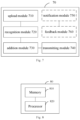
- FIG. 7 shows a schematic structural diagram of an apparatus of video transmission according to other embodiments of the present disclosure.
- the apparatus of video transmission 70 of this embodiment comprises: an upload module 710, configured to acquire a video uploaded by a creator; a recognition module 720, configured to process the uploaded video using a photosensitive video recognition model to determine whether the uploaded video is a photosensitive video; an addition module 730, configured to add a photosensitive tag to the uploaded video in case that the uploaded video is a photosensitive video; a transmitting module 740, configured to transmit a video without a photosensitive tag to a browsing user if the browsing user is in a State of photosensitive video filtering.
- an uploaded video is recognized by the photosensitive video recognition model, and a photosensitive tag is added to the video if it is determined as a photosensitive video by the model. Therefore, videos without a photosensitive tag are transmitted to a browsing user if the browsing user chooses to filter photosensitive videos, so as to avoid the adverse effect of photosensitive videos on photosensitive epileptics and other users who are sensitive to photosensitive videos, thereby improving the safety of video viewing.
- the apparatus of video transmission 70 further comprises: a notification module 750, configured to send a notification to the creator after determining that the uploaded video is a photosensitive video.
- the photosensitive video recognition model is a neural network model.
- the apparatus of video transmission 60 and the apparatus of video transmission 70 may be provided together in the same apparatus, or may be separately provided in different apparatus, which is not limited in the present disclosure.
- FIG. 8 shows a schematic structural diagram of an apparatus of video transmission according to still other embodiments of the present disclosure.
- the apparatus of video transmission 80 of this embodiment comprises: a memory 810 and a processor 820 coupled to the memory 810, the processor 820 configured to, based on instructions stored in the memory 810, carry out the method of video transmission according to any one of the foregoing embodiments.
- the memory 810 may comprise, for example, system memory, a fixed non-volatile storage medium, or the like.
- the system memory stores, for example, an operating system, application programs, a boot loader, and other programs.
- FIG. 9 shows a schematic structural diagram of an apparatus of video transmission according to still other embodiments of the present disclosure.
- the apparatus of video transmission 90 of this embodiment comprises: a memory 910 and a processor 920, and may further include an input-output interface 930, a network interface 940, a storage interface 950, and the like. These interfaces 930, 940, 950 and the memory 910 and the processor 920 may be connected to each other through a bus 960, for example.
- the input-output interface 930 provides a connection interface for input-output devices such as a display, a mouse, a keyboard, and a touch screen.
- the network interface 940 provides a connection interface for various networked devices.
- the storage interface 950 provides a connection interface for external storage devices such as an SD card and a USB flash disk.
- An embodiment of the present invention further provides a computer-readable storage medium on which a computer program is stored, characterized in that the program when executed by a processor implements any one of the foregoing method of video transmission.
- embodiments of this invention may be provided as a method, a system, or a computer program product. Therefore, embodiments of this invention can take the form of an entirely hardware embodiment, an entirely software embodiment or an embodiment containing both hardware and software elements. Moreover, the present invention may take the form of a computer program product embodied on one or more computer-usable non-transitory storage media (including but not limited to disk storage, CD-ROM, optical memory, etc.) having computer-usable program code embodied therein.
- computer-usable non-transitory storage media including but not limited to disk storage, CD-ROM, optical memory, etc.
- the present invention has been described with reference to flow charts and/or block diagrams of methods, apparatuses (systems) and computer program products according to embodiments of the present invention. It should be understood that each process and/or block in the flowcharts and/or block diagrams, and combinations of the processes and/or blocks in the flowcharts and/or block diagrams may be implemented by computer program instructions.
- the computer program instructions may be provided to a processor of a general purpose computer, a special purpose computer, an embedded processor, or other programmable data processing apparatus to generate a machine such that the instructions executed by a processor of a computer or other programmable data processing apparatus to generate means implementing the functions specified in one or more flows of the flowcharts and/or one or more blocks of the block diagrams.
- the computer program instructions may also be stored in a computer readable storage device capable of directing a computer or other programmable data processing apparatus to operate in a specific manner such that the instructions stored in the computer readable storage device produce an article of manufacture including instruction means implementing the functions specified in one or more flows of the flowcharts and/or one or more blocks of the block diagrams.
- These computer program instructions can also be loaded onto a computer or other programmable device to perform a series of operation steps on the computer or other programmable device to generate a computer-implemented process such that the instructions executed on the computer or other programmable device provide steps implementing the functions specified in one or more flows of the flowcharts and/or one or more blocks of the block diagrams.
Landscapes
- Engineering & Computer Science (AREA)
- Theoretical Computer Science (AREA)
- Multimedia (AREA)
- Physics & Mathematics (AREA)
- General Physics & Mathematics (AREA)
- Databases & Information Systems (AREA)
- Software Systems (AREA)
- Data Mining & Analysis (AREA)
- General Engineering & Computer Science (AREA)
- Signal Processing (AREA)
- Evolutionary Computation (AREA)
- Computational Linguistics (AREA)
- Health & Medical Sciences (AREA)
- Artificial Intelligence (AREA)
- Computer Vision & Pattern Recognition (AREA)
- Computing Systems (AREA)
- General Health & Medical Sciences (AREA)
- Medical Informatics (AREA)
- Library & Information Science (AREA)
- Human Computer Interaction (AREA)
- Computer Graphics (AREA)
- Two-Way Televisions, Distribution Of Moving Picture Or The Like (AREA)
- Management Or Editing Of Information On Record Carriers (AREA)
- Signal Processing For Digital Recording And Reproducing (AREA)
Applications Claiming Priority (2)
| Application Number | Priority Date | Filing Date | Title |
|---|---|---|---|
| CN202210769349.6A CN115174969A (zh) | 2022-07-01 | 2022-07-01 | 视频的推送方法、装置和存储介质 |
| PCT/CN2023/102858 WO2024002092A1 (zh) | 2022-07-01 | 2023-06-27 | 视频的推送方法、装置和存储介质 |
Publications (1)
| Publication Number | Publication Date |
|---|---|
| EP4550801A1 true EP4550801A1 (de) | 2025-05-07 |
Family
ID=83490210
Family Applications (1)
| Application Number | Title | Priority Date | Filing Date |
|---|---|---|---|
| EP23830269.9A Pending EP4550801A1 (de) | 2022-07-01 | 2023-06-27 | Verfahren und vorrichtung zum schieben von video und speichermedium |
Country Status (5)
| Country | Link |
|---|---|
| US (1) | US20240004928A1 (de) |
| EP (1) | EP4550801A1 (de) |
| JP (1) | JP2025520794A (de) |
| CN (1) | CN115174969A (de) |
| WO (1) | WO2024002092A1 (de) |
Families Citing this family (2)
| Publication number | Priority date | Publication date | Assignee | Title |
|---|---|---|---|---|
| CN115174969A (zh) * | 2022-07-01 | 2022-10-11 | 抖音视界(北京)有限公司 | 视频的推送方法、装置和存储介质 |
| US12598330B1 (en) * | 2024-11-19 | 2026-04-07 | Sharp Kabushiki Kaisha | Systems and methods for signaling photosensitive content indicator information in video coding |
Family Cites Families (19)
| Publication number | Priority date | Publication date | Assignee | Title |
|---|---|---|---|---|
| KR20050018656A (ko) * | 2002-04-19 | 2005-02-23 | 헨리 제임스 윌리암 디엔 | 광과민성 간질 발작의 방지 시스템 |
| JP2006261892A (ja) * | 2005-03-16 | 2006-09-28 | Sharp Corp | テレビ受像装置、及びその番組再生方法 |
| US8443304B2 (en) * | 2010-08-10 | 2013-05-14 | International Business Machines Corporation | Conditional modification of browser content |
| JP2012227752A (ja) * | 2011-04-20 | 2012-11-15 | Nec Casio Mobile Communications Ltd | 表示装置、表示制御方法及びプログラム |
| US9807445B2 (en) * | 2012-11-29 | 2017-10-31 | Echostar Technologies L.L.C. | Photosensitivity protection for video display |
| JP6582994B2 (ja) * | 2014-01-14 | 2019-10-02 | 日本電気株式会社 | 画像処理装置、画像処理方法及びプログラム |
| GB2530051B (en) * | 2014-09-10 | 2018-09-19 | Telestream Uk Ltd | Method of adjusting video to minimise or remove PSE triggers |
| CN106649316B (zh) * | 2015-10-29 | 2020-11-27 | 北京国双科技有限公司 | 一种视频推送方法及装置 |
| CN105704504B (zh) * | 2016-01-28 | 2021-02-12 | 腾讯科技(深圳)有限公司 | 视频直播中插入推送信息的方法、装置、设备及存储介质 |
| CN109887114A (zh) * | 2018-12-27 | 2019-06-14 | 北京智慧云行科技有限责任公司 | 人脸批量识别考勤系统及方法 |
| CN109784867A (zh) * | 2019-01-18 | 2019-05-21 | 创新奇智(北京)科技有限公司 | 一种自反馈人工智能模型管理系统 |
| CN111327958B (zh) * | 2020-02-28 | 2022-03-25 | 北京百度网讯科技有限公司 | 视频播放方法、装置、电子设备及存储介质 |
| CN111726691A (zh) * | 2020-07-03 | 2020-09-29 | 北京字节跳动网络技术有限公司 | 视频推荐方法、装置、电子设备及计算机可读存储介质 |
| CN112584243A (zh) * | 2020-12-08 | 2021-03-30 | 北京字节跳动网络技术有限公司 | 多媒体数据处理方法、装置及电子设备 |
| CN113206909A (zh) * | 2021-04-30 | 2021-08-03 | 中国银行股份有限公司 | 骚扰电话拦截方法及装置 |
| CN113449773A (zh) * | 2021-05-26 | 2021-09-28 | 北京有竹居网络技术有限公司 | 模型更新方法、装置、存储介质及电子设备 |
| CN114339378B (zh) * | 2021-12-23 | 2025-05-02 | 展讯通信(上海)有限公司 | 一种音视频码流的处理方法、装置和电子设备 |
| CN114630067B (zh) * | 2022-03-02 | 2024-11-26 | 北京奇艺世纪科技有限公司 | 一种视频播放控制方法、装置、设备及存储介质 |
| CN115174969A (zh) * | 2022-07-01 | 2022-10-11 | 抖音视界(北京)有限公司 | 视频的推送方法、装置和存储介质 |
-
2022
- 2022-07-01 CN CN202210769349.6A patent/CN115174969A/zh active Pending
-
2023
- 2023-06-27 EP EP23830269.9A patent/EP4550801A1/de active Pending
- 2023-06-27 WO PCT/CN2023/102858 patent/WO2024002092A1/zh not_active Ceased
- 2023-06-27 JP JP2024576453A patent/JP2025520794A/ja active Pending
- 2023-06-28 US US18/343,330 patent/US20240004928A1/en active Pending
Also Published As
| Publication number | Publication date |
|---|---|
| JP2025520794A (ja) | 2025-07-03 |
| WO2024002092A1 (zh) | 2024-01-04 |
| US20240004928A1 (en) | 2024-01-04 |
| CN115174969A (zh) | 2022-10-11 |
Similar Documents
| Publication | Publication Date | Title |
|---|---|---|
| CN110262715B (zh) | 信息处理方法及装置、计算机可读存储介质和电子设备 | |
| EP4550801A1 (de) | Verfahren und vorrichtung zum schieben von video und speichermedium | |
| US8245124B1 (en) | Content modification and metadata | |
| US8949356B2 (en) | In-product micro-blogging for design sharing | |
| CN114117128B (zh) | 视频标注的方法、系统及设备 | |
| US20150156147A1 (en) | Method, system and apparatus for adding network comment information | |
| CN112307339A (zh) | 基于用户画像的推荐信息生成方法、装置及计算机设备 | |
| EP3042351A1 (de) | System und verfahren zur generierung von personalisiertem kreativen werbematerial | |
| CN107797717B (zh) | 推送方法、显示方法、客户端设备和数据处理系统 | |
| CN112199007A (zh) | 菜单显示方法、装置、电子设备和存储介质 | |
| CN109344273A (zh) | 一种壁纸管理的方法、装置和移动终端 | |
| CN113986087B (zh) | 基于订阅的视频渲染方法 | |
| CN111813929A (zh) | 资讯处理方法、装置及电子设备 | |
| CN113297416A (zh) | 视频数据存储方法、装置、电子设备和可读存储介质 | |
| CN113761281B (zh) | 虚拟资源处理方法、装置、介质及电子设备 | |
| CN113590277B (zh) | 任务状态切换方法、装置和电子系统 | |
| CN114880498A (zh) | 事件信息展示方法及装置、设备和介质 | |
| CN115393554B (zh) | 视频处理方法、装置、电子设备、存储介质及程序产品 | |
| CN117255219A (zh) | 一种评论处理方法、装置、电子设备及存储介质 | |
| CN112966173B (zh) | 一种用于信息评论的分类操作方法及装置 | |
| CN115982453A (zh) | 基于特征工程的内容推荐方法和装置、电子设备、介质 | |
| CN116193206A (zh) | 优质内容筛选方法、装置、终端设备及存储介质 | |
| KR20220042930A (ko) | 컨텐츠 목록 제공 방법, 장치 및 컴퓨터 프로그램 | |
| CN116775913B (zh) | 资源选择方法、系统、电子设备及存储介质 | |
| CN113973234A (zh) | 视频推荐方法及装置 |
Legal Events
| Date | Code | Title | Description |
|---|---|---|---|
| STAA | Information on the status of an ep patent application or granted ep patent |
Free format text: STATUS: THE INTERNATIONAL PUBLICATION HAS BEEN MADE |
|
| PUAI | Public reference made under article 153(3) epc to a published international application that has entered the european phase |
Free format text: ORIGINAL CODE: 0009012 |
|
| STAA | Information on the status of an ep patent application or granted ep patent |
Free format text: STATUS: REQUEST FOR EXAMINATION WAS MADE |
|
| 17P | Request for examination filed |
Effective date: 20241218 |
|
| AK | Designated contracting states |
Kind code of ref document: A1 Designated state(s): AL AT BE BG CH CY CZ DE DK EE ES FI FR GB GR HR HU IE IS IT LI LT LU LV MC ME MK MT NL NO PL PT RO RS SE SI SK SM TR |
|
| DAV | Request for validation of the european patent (deleted) | ||
| DAX | Request for extension of the european patent (deleted) |