EP4543093A2 - Messverfahren, endgerätevorrichtung und netzwerkvorrichtung - Google Patents
Messverfahren, endgerätevorrichtung und netzwerkvorrichtung Download PDFInfo
- Publication number
- EP4543093A2 EP4543093A2 EP25160934.3A EP25160934A EP4543093A2 EP 4543093 A2 EP4543093 A2 EP 4543093A2 EP 25160934 A EP25160934 A EP 25160934A EP 4543093 A2 EP4543093 A2 EP 4543093A2
- Authority
- EP
- European Patent Office
- Prior art keywords
- rrm measurement
- measurement
- rrm
- measurement mode
- mode
- Prior art date
- Legal status (The legal status is an assumption and is not a legal conclusion. Google has not performed a legal analysis and makes no representation as to the accuracy of the status listed.)
- Pending
Links
Images
Classifications
-
- H—ELECTRICITY
- H04—ELECTRIC COMMUNICATION TECHNIQUE
- H04W—WIRELESS COMMUNICATION NETWORKS
- H04W24/00—Supervisory, monitoring or testing arrangements
- H04W24/02—Arrangements for optimising operational condition
-
- H—ELECTRICITY
- H04—ELECTRIC COMMUNICATION TECHNIQUE
- H04W—WIRELESS COMMUNICATION NETWORKS
- H04W72/00—Local resource management
- H04W72/50—Allocation or scheduling criteria for wireless resources
- H04W72/54—Allocation or scheduling criteria for wireless resources based on quality criteria
- H04W72/542—Allocation or scheduling criteria for wireless resources based on quality criteria using measured or perceived quality
-
- H—ELECTRICITY
- H04—ELECTRIC COMMUNICATION TECHNIQUE
- H04L—TRANSMISSION OF DIGITAL INFORMATION, e.g. TELEGRAPHIC COMMUNICATION
- H04L5/00—Arrangements affording multiple use of the transmission path
- H04L5/003—Arrangements for allocating sub-channels of the transmission path
- H04L5/0032—Distributed allocation, i.e. involving a plurality of allocating devices, each making partial allocation
-
- H—ELECTRICITY
- H04—ELECTRIC COMMUNICATION TECHNIQUE
- H04W—WIRELESS COMMUNICATION NETWORKS
- H04W24/00—Supervisory, monitoring or testing arrangements
- H04W24/08—Testing, supervising or monitoring using real traffic
-
- H—ELECTRICITY
- H04—ELECTRIC COMMUNICATION TECHNIQUE
- H04W—WIRELESS COMMUNICATION NETWORKS
- H04W48/00—Access restriction; Network selection; Access point selection
- H04W48/16—Discovering, processing access restriction or access information
-
- H—ELECTRICITY
- H04—ELECTRIC COMMUNICATION TECHNIQUE
- H04W—WIRELESS COMMUNICATION NETWORKS
- H04W52/00—Power management, e.g. Transmission Power Control [TPC] or power classes
- H04W52/02—Power saving arrangements
- H04W52/0209—Power saving arrangements in terminal devices
- H04W52/0225—Power saving arrangements in terminal devices using monitoring of external events, e.g. the presence of a signal
- H04W52/0248—Power saving arrangements in terminal devices using monitoring of external events, e.g. the presence of a signal dependent on the time of the day, e.g. according to expected transmission activity
-
- H—ELECTRICITY
- H04—ELECTRIC COMMUNICATION TECHNIQUE
- H04W—WIRELESS COMMUNICATION NETWORKS
- H04W52/00—Power management, e.g. Transmission Power Control [TPC] or power classes
- H04W52/02—Power saving arrangements
- H04W52/0209—Power saving arrangements in terminal devices
- H04W52/0212—Power saving arrangements in terminal devices managed by the network, e.g. network or access point is leader and terminal is follower
-
- H—ELECTRICITY
- H04—ELECTRIC COMMUNICATION TECHNIQUE
- H04W—WIRELESS COMMUNICATION NETWORKS
- H04W52/00—Power management, e.g. Transmission Power Control [TPC] or power classes
- H04W52/02—Power saving arrangements
- H04W52/0209—Power saving arrangements in terminal devices
- H04W52/0251—Power saving arrangements in terminal devices using monitoring of local events, e.g. events related to user activity
-
- H—ELECTRICITY
- H04—ELECTRIC COMMUNICATION TECHNIQUE
- H04W—WIRELESS COMMUNICATION NETWORKS
- H04W76/00—Connection management
- H04W76/20—Manipulation of established connections
- H04W76/27—Transitions between radio resource control [RRC] states
-
- H—ELECTRICITY
- H04—ELECTRIC COMMUNICATION TECHNIQUE
- H04W—WIRELESS COMMUNICATION NETWORKS
- H04W88/00—Devices specially adapted for wireless communication networks, e.g. terminals, base stations or access point devices
- H04W88/02—Terminal devices
- H04W88/06—Terminal devices adapted for operation in multiple networks or having at least two operational modes, e.g. multi-mode terminals
-
- Y—GENERAL TAGGING OF NEW TECHNOLOGICAL DEVELOPMENTS; GENERAL TAGGING OF CROSS-SECTIONAL TECHNOLOGIES SPANNING OVER SEVERAL SECTIONS OF THE IPC; TECHNICAL SUBJECTS COVERED BY FORMER USPC CROSS-REFERENCE ART COLLECTIONS [XRACs] AND DIGESTS
- Y02—TECHNOLOGIES OR APPLICATIONS FOR MITIGATION OR ADAPTATION AGAINST CLIMATE CHANGE
- Y02D—CLIMATE CHANGE MITIGATION TECHNOLOGIES IN INFORMATION AND COMMUNICATION TECHNOLOGIES [ICT], I.E. INFORMATION AND COMMUNICATION TECHNOLOGIES AIMING AT THE REDUCTION OF THEIR OWN ENERGY USE
- Y02D30/00—Reducing energy consumption in communication networks
- Y02D30/70—Reducing energy consumption in communication networks in wireless communication networks
Definitions
- This disclosure relates to the field of communications technologies, and in particular, to a measurement method, a terminal device, and a network device.
- UE User Equipment
- the UE can accurately perceive whether the UE is in a moving state, and related moving information such as a speed in the moving state.
- the UE can also obtain the moving state of the UE or environment information or beam coverage information by using various sensors included in the UE, so that more control optimization can be performed on the UE based on the foregoing information, such as optimizing radio resource management (Radio Resource Management, RRM) measurement of the UE in an idle state and an inactive state, to achieve an objective of power saving.
- RRM Radio Resource Management
- RRM measurement in the idle state generally complies with a unified condition to trigger measurement of a neighboring cell, and measurement of a current cell or the neighboring cell complies with a unified measurement requirement.
- RRM measurement in the idle state generally complies with a unified condition to trigger measurement of a neighboring cell, and measurement of a current cell or the neighboring cell complies with a unified measurement requirement.
- channel conditions do not change greatly, this is not conducive to power saving of the UE.
- a relaxed RRM measurement mode is introduced to relax RRM measurement of the UE, for example, extend a measurement period and reduce a quantity of samples for layer 1 measurement.
- Whether to enter the relaxed RRM measurement mode from a normal RRM measurement mode may be determined based on a status of the UE or a threshold configured by a network device.
- An objective of embodiments of this disclosure is to provide a measurement method, a terminal device, and a network device, so that UE can effectively adjust an RRM measurement mode to avoid a ping-pong effect of measurement.
- an embodiment of this disclosure provides a measurement method applied to a terminal device, where the method includes:
- an embodiment of this disclosure provides a terminal device, where the terminal device includes:
- an embodiment of this disclosure provides a terminal device, where the terminal device includes a memory, a processor, and a computer program stored in the memory and capable of running on the processor, where when the computer program is executed by the processor, the steps of the method according to the first aspect are implemented.
- an embodiment of this disclosure provides a computer-readable storage medium, where the computer-readable storage medium stores a computer program, and when the computer program is executed by a processor, the steps of the method according to the first aspect are implemented.
- an embodiment of this disclosure provides a measurement method applied to a network device, where the method includes: sending a measurement adjustment related parameter to a terminal device, where the measurement adjustment related parameter is used to adjust a radio resource management RRM measurement mode of the terminal device.
- an embodiment of this disclosure provides a network device, where the network device includes: a sending module, configured to send a measurement adjustment related parameter to a terminal device, where the measurement adjustment related parameter is used to adjust a radio resource management RRM measurement mode of the terminal device.
- an embodiment of this disclosure provides a network device, where the network device includes a memory, a processor, and a computer program stored in the memory and capable of running on the processor, where when the computer program is executed by the processor, the steps of the method according to the fifth aspect are implemented.
- an embodiment of this disclosure provides a computer-readable storage medium, where the computer-readable storage medium stores a computer program, and when the computer program is executed by a processor, the steps of the method according to the fifth aspect are implemented.
- GSM Global System for Mobile communications
- CDMA code division multiple access
- WCDMA wideband code division multiple access
- GPRS General Packet Radio Service
- LTE Long Term Evolution
- LTE-A long term evolution advanced
- NR New Radio
- a user end UE which may also be referred to as a terminal device (Mobile Terminal), mobile user equipment, or the like, may communicate with one or more core networks through a radio access network (Radio Access Network, RAN).
- the user equipment may be a terminal device, such as a mobile phone (or referred to as a "cellular" phone) or a computer with a terminal device.
- the user equipment may be a portable, pocket-sized, handheld, computer built-in, or in-vehicle mobile apparatus, which exchanges voice and/or data with the radio access network.
- a network device which may also be referred to as a base station, may be a base transceiver station (Base Transceiver Station, BTS) in the GSM or CDMA system, or may be a NodeB (NodeB) in the WCDMA system, or may be an evolved NodeB (evolved NodeB, eNB or e-NodeB) in the LTE system or a 5G NodeB (gNB).
- BTS Base Transceiver Station
- NodeB NodeB
- gNB 5G NodeB
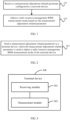
- FIG. 1 is a schematic flowchart of a measurement method according to an embodiment of this disclosure.
- the method may be performed by an electronic device, for example, a terminal device.
- the method may be performed by software or hardware installed on the terminal device.
- the method may include the following steps.
- Step 101 Receive a measurement adjustment related parameter configured by a network device.
- Step 103 Adjust a radio resource management RRM measurement mode based on the measurement adjustment related parameter.
- the radio resource management RRM measurement mode is adjusted by using the measurement adjustment related parameter configured by the network device. Therefore, effective switching or adjustment between different RRM measurement modes can be implemented, and a ping-pong effect of measurement is avoided, while power consumption of the terminal device is reduced. This prevents the terminal device from frequently adjusting the configuration of RRM measurement, and ensures configuration flexibility of the network device.
- the measurement adjustment related parameter includes one of the following:
- step 101 may be specifically performed as follows:
- the method may further include the following content: sending a measurement adjustment request to the network device, where the measurement adjustment request includes a request for obtaining the measurement adjustment related parameter.
- the measurement adjustment related parameter for adjusting the RRM measurement mode is obtained by actively sending the measurement adjustment request to the network device, so that the measurement mode is adjusted based on a specific instruction of the network device.
- the measurement adjustment request may further include a request for obtaining configuration information of the RRM measurement mode, so that RRM measurement is performed based on a related specific configuration.
- the RRM measurement mode may include at least one of a relaxed RRM measurement mode, a normal RRM measurement mode, and an enhanced RRM measurement mode.
- the terminal device may perform switching or adjustment between the foregoing different RRM measurement modes based on the measurement adjustment related parameter.
- the relaxed RRM measurement mode can reduce power consumption of the terminal device.
- the relaxed RRM measurement mode may include at least a relaxed RRM measurement mode in which the terminal device is in the radio resource control (Radio Resource Control, RRC) connected state, the RRC idle state, or the RRC inactive state.
- RRC Radio Resource Control
- a related configuration parameter of the relaxed RRM measurement mode may include one of the following:
- the enhanced RRM measurement mode includes an enhanced RRM measurement mode in which the terminal device is in the radio resource control RRC connected state, the RRC idle state, or the RRC inactive state.
- a related configuration parameter of the enhanced RRM measurement mode may include one of the following:
- the foregoing step 103 may be specifically performed as follows: adjusting an RRM measurement mode of at least one of a current cell and a neighboring cell of the terminal device based on the measurement adjustment related parameter.
- adjusting the RRM measurement mode based on the measurement adjustment related parameter may relate to at least one of the RRM measurement mode of the current cell and the RRM measurement mode of the neighboring cell.
- the relaxed RRM measurement mode when there is RRM measurement of the neighboring cell, may include at least one of a relaxed RRM measurement mode of the current cell and a relaxed RRM measurement mode of the neighboring cell, and the enhanced RRM measurement mode may include at least one of an enhanced RRM measurement mode of the current cell and an enhanced RRM measurement mode of the neighboring cell; or when there is no RRM measurement of the neighboring cell, the relaxed RRM measurement mode includes a relaxed RRM measurement mode of the current cell, and the enhanced RRM measurement mode includes an enhanced RRM measurement mode of the current cell.
- the measurement adjustment related parameters configured by the network device may include a plurality of types of parameters. This enables the terminal device to effectively adjust the RRM measurement mode based on different specific measurement adjustment related parameters, and can also ensure configuration flexibility of the network device.
- the measurement adjustment related parameter may include at least one of a measurement adjustment threshold, a measurement adjustment duration parameter, preset cell coverage, and preset beam coverage.
- the foregoing step 103 may be performed with different content. Details may be described with reference to the following embodiments.
- the foregoing measurement adjustment related parameter includes the measurement adjustment threshold.
- the foregoing step 103 may be specifically performed as follows: adjusting the RRM measurement mode based on the measurement adjustment threshold and an RRM measurement result, where the measurement adjustment threshold includes at least one of a first threshold and a second threshold.
- whether to adjust the RRM measurement mode may be specifically determined based on the measurement adjustment threshold configured by the network device, that is, switching or adjustment between RRM measurement modes is triggered by determining whether a condition based on the measurement adjustment threshold is met, and a ping-pong effect of measurement is avoided. This prevents the terminal device from frequently adjusting the configuration of RRM measurement.
- the RRM measurement result may include at least reference signal received power (Reference Signal Received Power, RSRP), reference signal received quality (Reference Signal Received Quality, RSRQ), a signal to interference plus noise ratio (Signal-to-Noise and Interference Ratio, SINR), and a channel quality indicator (Channel Quality Indicator, CQI).
- RSRP Reference Signal Received Power
- RSRQ reference signal received quality
- SINR Signal to interference plus noise ratio
- CQI Channel Quality Indicator
- the RRM measurement result includes at least one of the following:
- the RRM measurement result includes at least one of an RRM measurement result of the current cell and an RRM measurement result of the neighboring cell.
- the RRM measurement result may include a cell measurement result and a beam measurement result, and the beam measurement result may be obtained by performing RRM measurement based on a synchronization signal and physical broadcast channel signal block (Synchronization Signal and PBCH Block, SSB), a channel state information reference signal (Channel State Information RS, CSI-RS), a demodulation reference signal (Demodulation Reference Signal, DMRS), or other reference signals.
- different thresholds may be used for comparison separately, that is, the RRM measurement result of the current cell and the RRM measurement result of the neighboring cell are used for comparison with different thresholds separately; or only the RRM measurement result of the current cell or the RRM measurement result of the neighboring cell is used for comparison with a corresponding threshold.
- the current cell includes a current serving cell of the terminal device, a cell on which the terminal device camps in the idle state, or a cell on which the terminal device camps in the inactive Inactive state.
- the neighboring cell includes an intra-frequency intra-frequency neighboring cell, an inter-frequency inter-frequency neighboring cell, or an inter-radio access system inter-RAT (Radio Access Technology) cell.
- the measurement adjustment thresholds may be the same or may be different. At least one of the first threshold and the second threshold may be the same as or different from a threshold of an S-measure (S measure) mechanism for controlling RRM measurement of the neighboring cell currently in the connected state or idle state or inactive state.
- S measure S-measure
- the first threshold when the measurement adjustment threshold is used to control adjustment of the RRM measurement mode of the current cell, the first threshold may be higher than or equal to the threshold of the S-measure mechanism, or the first threshold may be lower than or equal to the threshold of the S-measure mechanism threshold.
- both the first threshold and the second threshold are lower than or equal to the threshold of the S-measure mechanism.
- the two thresholds may have different magnitude relationships based on different specific situations.
- the second threshold is lower than the first threshold.
- the solution to adjusting the RRM measurement mode based on the measurement adjustment threshold and the RRM measurement result may be specifically implemented as follows:
- a first RRM measurement mode is used to perform RRM measurement, where the first RRM measurement mode includes the relaxed RRM measurement mode or the normal RRM measurement mode.
- the terminal device may use the relaxed RRM measurement mode to perform RRM measurement, or else, use the normal RRM measurement mode or the enhanced RRM measurement mode to perform RRM measurement; or in a case in which the RRM measurement result is higher than or equal to the first threshold, the terminal device may further use the normal RRM measurement mode to perform RRM measurement, or else, use the enhanced RRM measurement mode to perform RRM measurement.
- a second RRM measurement mode is used to perform RRM measurement, where the second RRM measurement mode includes the normal RRM measurement mode or the enhanced RRM measurement mode.
- the terminal device may use the normal RRM measurement mode to perform RRM measurement, or else, use the relaxed RRM measurement mode to perform RRM measurement; or in a case in which the RRM measurement result is lower than or equal to the second threshold, the terminal device may further use the enhanced RRM measurement mode to perform RRM measurement, or else, use the relaxed RRM measurement mode or the normal RRM measurement mode to perform RRM measurement.
- the measurement adjustment related parameter may further include a first measurement adjustment duration parameter on a basis of the measurement adjustment threshold.
- the foregoing solution to adjusting the RRM measurement mode based on the measurement adjustment threshold and the RRM measurement result may be specifically performed as follows: adjusting the RRM measurement mode based on the measurement adjustment threshold, the RRM measurement result, and the first measurement adjustment duration parameter, where the first measurement adjustment duration parameter includes a first preset time or a second preset time.
- whether to adjust the RRM measurement mode may be specifically determined based on the measurement adjustment threshold and the first measurement adjustment duration parameter that are configured by the network device, that is, switching or adjustment between RRM measurement modes is triggered by determining whether a condition based on the measurement adjustment threshold and the first measurement adjustment duration parameter is met, and a ping-pong effect of measurement is avoided. This prevents the terminal device from frequently adjusting the configuration of RRM measurement.
- the foregoing solution to adjusting the RRM measurement mode based on the measurement adjustment threshold, the RRM measurement result, and the first measurement adjustment duration parameter may be specifically performed as follows:
- a first RRM measurement mode is used to perform RRM measurement, where the first RRM measurement mode includes the relaxed RRM measurement mode or the normal RRM measurement mode.
- the terminal device may use the relaxed RRM measurement mode to perform RRM measurement, or else, use the normal RRM measurement mode or the enhanced RRM measurement mode to perform RRM measurement; or in a case in which the RRM measurement result is higher than or equal to the first threshold within the entire first preset time, the terminal device may further use the normal RRM measurement mode to perform RRM measurement, or else, use the enhanced RRM measurement mode to perform RRM measurement.
- a second RRM measurement mode is used to perform RRM measurement, where the second RRM measurement mode includes the normal RRM measurement mode or the enhanced RRM measurement mode.
- the terminal device may use the normal RRM measurement mode to perform RRM measurement, or else, use the relaxed RRM measurement mode to perform RRM measurement; or in a case in which the RRM measurement result is lower than or equal to the second threshold within the entire second preset time, the terminal device may further use the enhanced RRM measurement mode to perform RRM measurement, or else, use the relaxed RRM measurement mode or the normal RRM measurement mode to perform RRM measurement.
- the measurement adjustment related parameter may further include a first measurement adjustment duration parameter on a basis of the measurement adjustment threshold.
- the foregoing solution to adjusting the RRM measurement mode based on the measurement adjustment threshold, the RRM measurement result, and the first measurement adjustment duration parameter may be specifically further performed as follows:
- a first RRM measurement mode is used to perform RRM measurement, where the first RRM measurement mode includes the relaxed RRM measurement mode or the normal RRM measurement mode.
- the terminal device may use the relaxed RRM measurement mode to perform RRM measurement, or else, use the normal RRM measurement mode or the enhanced RRM measurement mode to perform RRM measurement; or in a case in which the RRM measurement result is higher than or equal to the first threshold, and the RRM measurement result is higher than or equal to the second threshold within the entire first preset time, the terminal device may further use the normal RRM measurement mode to perform RRM measurement, or else, use the enhanced RRM measurement mode to perform RRM measurement.
- a second RRM measurement mode is used to perform RRM measurement, where the second RRM measurement mode includes the normal RRM measurement mode or the enhanced RRM measurement mode.
- the terminal device may use the normal RRM measurement mode to perform RRM measurement, or else, use the relaxed RRM measurement mode to perform RRM measurement; or in a case in which the RRM measurement result is lower than or equal to the second threshold, and the RRM measurement result is lower than or equal to the first threshold within the entire second preset time, the terminal device may further use the enhanced RRM measurement mode to perform RRM measurement, or else, use the relaxed RRM measurement mode or the normal RRM measurement mode to perform RRM measurement.
- the measurement adjustment related parameter includes a second measurement adjustment duration parameter
- the second measurement adjustment duration parameter includes a third preset time.
- the foregoing step 103 may be specifically performed as follows: after starting to use a third RRM measurement mode to perform RRM measurement for the third preset time, switching to use a fourth RRM measurement mode to perform RRM measurement, where the third RRM measurement mode includes the relaxed RRM measurement mode or the enhanced RRM measurement mode, and the fourth RRM measurement mode includes the normal RRM measurement mode.
- whether to adjust the RRM measurement mode may be specifically determined based on the second measurement adjustment duration parameter configured by the network device, that is, switching or adjustment between RRM measurement modes is triggered by determining whether a condition based on the second measurement adjustment duration parameter is met. Specifically, after the terminal device uses the relaxed RRM measurement mode or the enhanced RRM measurement mode to perform RRM measurement for the third preset time, the terminal device may automatically switch back to use the normal RRM measurement mode, and avoid a ping-pong effect of measurement. This prevents the terminal device from frequently adjusting the configuration of RRM measurement.
- the third preset time includes at least one of the following:
- an RRM measurement sample counter may be used to count a total quantity of RRM measurement samples on which RRM measurement is performed by using the relaxed RRM measurement mode or the enhanced RRM measurement mode.
- the third preset time may alternatively be a time parameter value directly configured by the network device in addition to the foregoing case.
- the foregoing measurement adjustment related parameter includes preset cell coverage or preset beam coverage.
- the foregoing step 103 may be specifically performed as follows:
- whether to adjust the RRM measurement mode may be specifically determined based on the preset cell coverage or the preset beam coverage configured by the network device, that is, switching or adjustment between RRM measurement modes is triggered by determining whether a condition based on the preset cell coverage or the preset beam coverage is met, and a ping-pong effect of measurement is avoided. This prevents the terminal device from frequently adjusting the configuration of RRM measurement.
- the terminal device may receive a reference signal corresponding to a cell or a beam within the preset beam coverage.
- a value of each preset time may be set based on an actual situation.
- the terminal device may perform automatic switching or adjustment at least between the relaxed RRM measurement mode and the normal RRM measurement mode, between the relaxed RRM measurement mode and the enhanced RRM measurement mode, or between the normal RRM measurement mode and the enhanced RRM measurement mode based on the measurement adjustment related parameter configured by the network device.
- FIG 2 is a schematic flowchart of a measurement method according to an embodiment of this disclosure.
- the method may be performed by an electronic device, for example, a network device.
- the method may be performed by software or hardware installed on the network device.
- the method may include the following step.
- Step 201 Send a measurement adjustment related parameter to a terminal device, where the measurement adjustment related parameter is used to adjust a radio resource management RRM measurement mode of the terminal device.
- the measurement adjustment related parameter is configured for the terminal device, so that the terminal device can implement effective switching or adjustment between different RRM measurement modes based on the measurement adjustment related parameter. Therefore, a ping-pong effect of measurement is avoided, while power consumption of the terminal device is reduced. This prevents the terminal device from frequently adjusting the configuration of RRM measurement, and ensures configuration flexibility of the network device.
- the foregoing step 201 may be specifically performed as follows:
- the method may specifically further include the following content: receiving a measurement adjustment request sent by the terminal device, where the measurement adjustment request includes a request for obtaining the measurement adjustment related parameter.
- the measurement adjustment related parameter for adjusting the RRM measurement mode is configured for the terminal device based on the measurement adjustment request of the terminal device.
- the measurement adjustment request may further include a request for obtaining configuration information of the RRM measurement mode, so that the terminal device performs RRM measurement based on a related specific configuration.
- the measurement adjustment related parameter is used to adjust an RRM measurement mode of at least one of a current cell and a neighboring cell of the terminal device.
- the measurement adjustment related parameter configured for the terminal device may be used to adjust at least one of the RRM measurement mode of the current cell and the RRM measurement mode of the neighboring cell of the terminal device.
- the measurement adjustment related parameter includes one of the following:
- the measurement adjustment related parameters configured by the network device may include a plurality of types of parameters. This enables the terminal device to effectively adjust the RRM measurement mode based on different specific measurement adjustment related parameters, and can also ensure configuration flexibility of the network device.
- the measurement adjustment related parameter includes at least one of a measurement adjustment threshold, a measurement adjustment duration parameter, preset cell coverage, and preset beam coverage.
- the RRM measurement mode includes at least one of a normal RRM measurement mode, a relaxed RRM measurement mode, and an enhanced RRM measurement mode.
- the relaxed RRM measurement mode can reduce power consumption of the terminal device.
- the relaxed RRM measurement mode may include at least a relaxed RRM measurement mode in which the terminal device is in the radio resource control RRC connected state, the RRC idle state, or the RRC inactive state.
- a related configuration parameter of the relaxed RRM measurement mode may include one of the following:
- the enhanced RRM measurement mode includes an enhanced RRM measurement mode in which the terminal device is in the radio resource control RRC connected state, the RRC idle state, or the RRC inactive state.
- a related configuration parameter of the enhanced RRM measurement mode may include one of the following:
- the terminal device may adjust the RRM measurement mode based on the measurement adjustment threshold and an RRM measurement result, where the measurement adjustment threshold includes at least one of a first threshold and a second threshold.
- the terminal device may determine, based on the measurement adjustment threshold configured by the network device, whether to adjust the RRM measurement mode. In other words, switching or adjustment between RRM measurement modes is triggered by determining whether a condition based on the measurement adjustment threshold is met, and a ping-pong effect of measurement is avoided. This prevents the terminal device from frequently adjusting the configuration of RRM measurement.
- the measurement adjustment thresholds may be the same or may be different. At least one of the first threshold and the second threshold may be the same as or different from a threshold of an S-measure (S measure) mechanism for controlling RRM measurement of the neighboring cell currently in the connected state or idle state or inactive state.
- S measure S-measure
- the first threshold may be higher than or equal to the threshold of the S-measure mechanism, or the first threshold may be lower than or equal to the threshold of the S-measure mechanism threshold.
- both the first threshold and the second threshold are lower than or equal to the threshold of the S-measure mechanism.
- the two thresholds may have different magnitude relationships based on different specific situations.
- the second threshold is lower than the first threshold.
- the terminal device may use the relaxed RRM measurement mode or the normal RRM measurement mode to perform RRM measurement; or in a case in which the RRM measurement result is lower than or equal to the second threshold, the terminal device may use the normal RRM measurement mode or the enhanced RRM measurement mode to perform RRM measurement.
- the terminal device may adjust the RRM measurement mode based on the measurement adjustment threshold, the RRM measurement result, and the first measurement adjustment duration parameter, where the first measurement adjustment duration parameter includes a third preset time or a fourth preset time.
- the terminal device may determine, based on the measurement adjustment threshold and the first measurement adjustment duration parameter that are configured by the network device, whether to adjust the RRM measurement mode. In other words, switching or adjustment between RRM measurement modes is triggered by determining whether a condition based on the measurement adjustment threshold and the first measurement adjustment duration parameter is met, and a ping-pong effect of measurement is avoided. This prevents the terminal device from frequently adjusting the configuration of RRM measurement.
- the terminal device may use the relaxed RRM measurement mode or the normal RRM measurement mode to perform RRM measurement; or in a case in which the RRM measurement result is lower than or equal to the second threshold within the entire fourth preset time, the terminal device may use the normal RRM measurement mode or the enhanced RRM measurement mode to perform RRM measurement; or specifically, in a case in which the RRM measurement result is higher than or equal to the first threshold and the RRM measurement result is higher than or equal to the second threshold within the entire third preset time, the terminal device may use the relaxed RRM measurement mode or the normal RRM measurement mode to perform RRM measurement; or in a case in which the RRM measurement result is lower than or equal to the second threshold and the RRM measurement result is lower than or equal to the first threshold within the entire fourth preset time, the terminal device may use the normal RRM measurement mode or the enhanced RRM measurement mode to perform RRM measurement.
- the terminal device may switch to use the normal RRM measurement mode to perform RRM measurement.
- the fifth preset time includes at least one of the following:
- an RRM measurement sample counter may be used to count a total quantity of RRM measurement samples on which RRM measurement is performed by using the relaxed RRM measurement mode or the enhanced RRM measurement mode.
- the fifth preset time may alternatively be a time parameter value directly configured by the network device in addition to the foregoing case.
- the terminal device may use the relaxed RRM measurement mode or the enhanced RRM measurement mode to perform RRM measurement, or in a case of moving out of the preset cell coverage or the preset beam coverage, the terminal device may use the normal RRM measurement mode to perform RRM measurement.
- a value of each preset time may be set based on an actual situation.
- the network device configures the measurement adjustment related parameter for the terminal device, so that the terminal device can perform automatic switching or adjustment at least between the relaxed RRM measurement mode and the normal RRM measurement mode, between the relaxed RRM measurement mode and the enhanced RRM measurement mode, or between the normal RRM measurement mode and the enhanced RRM measurement mode based on the measurement adjustment related parameter.
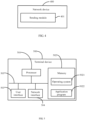
- FIG 3 is a schematic structural diagram of a terminal device according to an embodiment of this disclosure.
- the terminal device 300 includes a receiving module 301 and a measurement module 303.
- the receiving module 301 is configured to receive a measurement adjustment related parameter configured by a network device.
- the measurement module 303 is configured to adjust a radio resource management RRM measurement mode based on the measurement adjustment related parameter.
- the measurement module 303 may be specifically configured to:
- the measurement adjustment related parameter further includes a first measurement adjustment duration parameter; and the measurement module 303 may be specifically configured to: adjust the RRM measurement mode based on the measurement adjustment threshold, the RRM measurement result, and the first measurement adjustment duration parameter, where the first measurement adjustment duration parameter includes a first preset time or a second preset time.
- the measurement module 303 may be specifically configured to:
- the measurement module 303 may be specifically configured to:
- the RRM measurement result includes at least one of the following:
- the measurement adjustment related parameter includes a second measurement adjustment duration parameter, and the second measurement adjustment duration parameter includes a third preset time; and the measurement module 303 may be specifically configured to: after starting to use a third RRM measurement mode to perform RRM measurement for the third preset time, switch to use a fourth RRM measurement mode to perform RRM measurement, where the third RRM measurement mode includes a relaxed RRM measurement mode or an enhanced RRM measurement mode, and the fourth RRM measurement mode includes a normal RRM measurement mode.
- the third preset time includes at least one of the following:
- the measurement adjustment related parameter includes preset cell coverage or preset beam coverage; and the measurement module 303 may be specifically configured to:
- the relaxed RRM measurement mode includes a relaxed RRM measurement mode in which the terminal device is in a radio resource control RRC connected state, an RRC idle state, or an RRC inactive state.
- a measurement period in the relaxed RRM measurement mode is longer than a measurement period in the normal RRM measurement mode
- the enhanced RRM measurement mode includes an enhanced RRM measurement mode in which the terminal device is in a radio resource control RRC connected state, an RRC idle state, or an RRC inactive state.
- a measurement period in the enhanced RRM measurement mode is shorter than a measurement period in the normal RRM measurement mode
- the terminal device 300 in this embodiment of this disclosure may specifically further include: a sending module, configured to send a measurement adjustment request to the network device before the measurement adjustment related parameter configured by the network device is received, where the measurement adjustment request includes a request for obtaining the measurement adjustment related parameter.
- a sending module configured to send a measurement adjustment request to the network device before the measurement adjustment related parameter configured by the network device is received, where the measurement adjustment request includes a request for obtaining the measurement adjustment related parameter.
- the receiving module 301 may be specifically configured to:
- the measurement adjustment related parameter includes one of the following:
- the measurement module 303 may be specifically configured to: adjust an RRM measurement mode of at least one of a current cell and a neighboring cell of the terminal device based on the measurement adjustment related parameter.
- the terminal device 300 provided in this embodiment of this disclosure can implement the foregoing measurement method performed by the terminal device 300.
- Related descriptions about the measurement method are all applicable to the terminal device 300, and are not repeated herein.
- the radio resource management RRM measurement mode is adjusted by using the measurement adjustment related parameter configured by the network device. Therefore, effective switching or adjustment between different RRM measurement modes can be implemented, and a ping-pong effect of measurement is avoided, while power consumption of the terminal device is reduced. This prevents the terminal device from frequently adjusting the configuration of RRM measurement, and ensures configuration flexibility of the network device.
- FIG 4 is a schematic structural diagram of a network device according to an embodiment of this disclosure.
- the network device 400 includes: a sending module 401, configured to send a measurement adjustment related parameter to a terminal device, where the measurement adjustment related parameter is used to adjust a radio resource management RRM measurement mode of the terminal device.
- the measurement adjustment related parameter is used to adjust an RRM measurement mode of at least one of a current cell and a neighboring cell of the terminal device.
- the measurement adjustment related parameter includes one of the following:
- the measurement adjustment related parameter includes at least one of a measurement adjustment threshold, a measurement adjustment duration parameter, preset cell coverage, and preset beam coverage.
- the RRM measurement mode includes at least one of a normal RRM measurement mode, a relaxed RRM measurement mode, and an enhanced RRM measurement mode.
- the relaxed RRM measurement mode includes a relaxed RRM measurement mode in which the terminal device is in a radio resource control RRC connected state, an RRC idle state, or an RRC inactive state.
- a measurement period in the relaxed RRM measurement mode is longer than a measurement period in the normal RRM measurement mode
- the enhanced RRM measurement mode includes an enhanced RRM measurement mode in which the terminal device is in a radio resource control RRC connected state, an RRC idle state, or an RRC inactive state.
- a measurement period in the enhanced RRM measurement mode is shorter than a measurement period in the normal RRM measurement mode
- the sending module 401 may be specifically configured to:
- the network device 400 in this embodiment of this disclosure may further include: a receiving module, configured to receive, before the measurement adjustment related parameter is sent to the terminal device, a measurement adjustment request sent by the terminal device, where the measurement adjustment request includes a request for obtaining the measurement adjustment related parameter.
- a receiving module configured to receive, before the measurement adjustment related parameter is sent to the terminal device, a measurement adjustment request sent by the terminal device, where the measurement adjustment request includes a request for obtaining the measurement adjustment related parameter.
- the network device 400 provided in this embodiment of this disclosure can implement the foregoing measurement method performed by the network device 400.
- Related descriptions about the measurement method are all applicable to the network device 400, and are not repeated herein.
- the measurement adjustment related parameter is configured for the terminal device, so that the terminal device can implement effective switching or adjustment between different RRM measurement modes based on the measurement adjustment related parameter. Therefore, a ping-pong effect of measurement is avoided, while power consumption of the terminal device is reduced. This prevents the terminal device from frequently adjusting the configuration of RRM measurement, and ensures configuration flexibility of the network device.
- FIG 5 is a block diagram of a terminal device according to another embodiment of this disclosure.
- the terminal device 500 shown in FIG 5 includes at least one processor 501, a memory 502, at least one network interface 504, and a user interface 503.
- the components in the terminal device 500 are coupled together through a bus system 505.
- the bus system 505 is configured to implement connection and communication between these components.
- the bus system 505 further includes a power bus, a control bus, and a status signal bus.
- various buses are marked as the bus system 505 in FIG 5 .
- the memory 502 in this embodiment of this disclosure may be a volatile memory or a non-volatile memory, or may include both a volatile memory and a non-volatile memory.
- the non-volatile memory may be a read-only memory (Read-Only Memory, ROM), a programmable read only memory (Programmable ROM, PROM), an erasable programmable read-only memory (Erasable PROM, EPROM), an electrically erasable programmable read-only memory (Electrically EPROM, EEPROM), or a flash memory.
- the volatile memory may be a random access memory (Random Access Memory, RAM), which is used as an external cache.
- RAM random access memory
- SRAM static random access memory
- DRAM dynamic random access memory
- DRAM synchronous dynamic random access memory
- SDRAM double data rate synchronous dynamic random access memory
- Enhanced SDRAM ESDRAM
- Synchlink DRAM SLDRAM
- Direct Rambus RAM Direct Rambus RAM
- the memory 502 stores the following elements: executable modules or data structures, or a subset thereof, or an extended set thereof: an operating system 5021 and an application program 5022.
- the operating system 5021 includes various system programs, such as a framework layer, a core library layer, and a driver layer, for implementing various basic services and processing hardware-based tasks.
- the application program 5022 includes various application programs, such as a media player (Media Player), and a browser (Browser), and is configured to implement various application services.
- a program for implementing the method in the embodiments of this disclosure may be included in the application program 5022.
- the terminal device 500 further includes a computer program stored in the memory 502 and capable of running on the processor 501.
- the computer program is executed by the processor 501, the following steps are implemented:
- the method disclosed in the foregoing embodiment of this disclosure may be applied to the processor 501 or implemented by the processor 501.
- the processor 501 may be an integrated circuit chip that has a signal processing capability. In an implementation process, the steps of the foregoing method may be completed by hardware integrated logic circuits in the processor 501 or instructions in the form of software.
- the processor 501 may be a general-purpose processor, a digital signal processor (Digital Signal Processor, DSP), an application-specific integrated circuit (Application Specific Integrated Circuit, ASIC), a field programmable gate array (Field Programmable Gate Array, FPGA) or another programmable logic device, a discrete gate or transistor logic device, or a discrete hardware component.
- DSP Digital Signal Processor
- ASIC Application Specific Integrated Circuit
- FPGA Field Programmable Gate Array
- the processor 501 may implement or execute the methods, steps, and logical block diagrams disclosed in the embodiments of this disclosure.
- the general-purpose processor may be a microprocessor, or the processor may be any conventional processor or the like.
- the steps of the methods disclosed with reference to the embodiments of this disclosure may be directly implemented by a hardware decoding processor, or may be implemented by a combination of hardware and software modules in a decoding processor.
- the software module may be located in a computer-readable storage medium that is mature in the art, such as a random access memory, a flash memory, a read-only memory, a programmable read-only memory or electrically erasable programmable memory, or a register.
- the computer-readable storage medium is located in the memory 502, and the processor 501 reads information in the memory 502, and completes the steps of the foregoing method in combination with its hardware.
- a computer program is stored in the computer-readable storage medium, and when the computer program is executed by the processor 501, steps of the foregoing measurement method embodiment are implemented.
- the embodiments described in the embodiments of this disclosure may be implemented by hardware, software, firmware, middleware, microcode, or a combination thereof.
- the processing unit may be implemented in one or more application specific integrated circuits (Application Specific Integrated Circuit, ASIC), digital signal processors (Digital Signal Processor, DSP), digital signal processing devices (DSP Device, DSPD), programmable logic devices (Programmable Logic Device, PLD), field-programmable gate arrays (Field-Programmable Gate Array, FPGA), general purpose processors, controllers, microcontrollers, microprocessors, and other electronic units for performing the functions described in this disclosure, or a combination thereof.
- ASIC Application Specific Integrated Circuit
- DSP Digital Signal Processor
- DSP Device digital signal processing devices
- PLD programmable logic devices
- FPGA field-programmable gate array
- general purpose processors controllers, microcontrollers, microprocessors, and other electronic units for performing the functions described in this disclosure, or a combination thereof.
- the technologies described in the embodiments of this disclosure may be implemented by modules (such as processes and functions) that perform the functions described in the embodiments of this disclosure.
- Software code may be stored in the memory and executed by the processor.
- the memory may be implemented in or outside the processor.
- the radio resource management RRM measurement mode is adjusted by using the measurement adjustment related parameter configured by the network device. Therefore, effective switching or adjustment between different RRM measurement modes can be implemented, and a ping-pong effect of measurement is avoided, while power consumption of the terminal device is reduced. This prevents the terminal device from frequently adjusting the configuration of RRM measurement, and ensures configuration flexibility of the network device.
- the terminal device 500 can implement each process implemented by the terminal device in the foregoing embodiment. To avoid repetition, details are not described herein again.
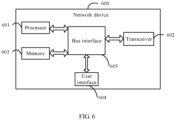
- FIG 6 is a structural diagram of a network device to which the embodiments of this disclosure are applied. Details of the foregoing measurement method performed by the network device can be implemented, with the same effect achieved.
- the network device 600 includes a processor 601, a transceiver 602, a memory 603, a user interface 604, and a bus interface 605.
- the network device 600 further includes a computer program stored in the memory 603 and capable of running on the processor 601.
- the computer program is executed by the processor 601, the following step is implemented: sending a measurement adjustment related parameter to a terminal device, where the measurement adjustment related parameter is used to adjust a radio resource management RRM measurement mode of the terminal device.
- a bus architecture may include any quantity of interconnected buses and bridges, and specifically connect together various circuits of one or more processors represented by the processor 601 and of a memory represented by the memory 603.
- the bus architecture may further interconnect various other circuits such as a peripheral device, a voltage regulator, and a power management circuit. These are all well known in the art, and therefore are not further described in this specification.
- the bus interface 605 provides an interface.
- the transceiver 602 may be a plurality of components, including a transmitter and a receiver, and provides units for communicating with a variety of other apparatuses on a transmission medium.
- the user interface 604 may also be an interface that can be externally or internally connected to a required device.
- the connected device includes but is not limited to a keypad, a display, a speaker, a microphone, a joystick, and the like.
- the processor 601 is responsible for management of the bus architecture and general processing, and the memory 603 is capable of storing data that is used by the processor 601 during an operation.
- the measurement adjustment related parameter is configured for the terminal device, so that the terminal device can implement effective switching or adjustment between different RRM measurement modes based on the measurement adjustment related parameter. Therefore, a ping-pong effect of measurement is avoided, while power consumption of the terminal device is reduced. This prevents the terminal device from frequently adjusting the configuration of RRM measurement, and ensures configuration flexibility of the network device.
- An embodiment of this disclosure further provides a computer-readable storage medium, where a computer program is stored in the computer-readable storage medium.
- a computer program is stored in the computer-readable storage medium.
- the computer-readable storage medium is, for example, a read-only memory (Read-Only Memory, ROM), a random access memory (Random Access Memory, RAM), a magnetic disk, or an optical disc.
- the computer software product is stored in a storage medium (for example, a ROM/RAM, a magnetic disk, or an optical disc), and includes several instructions for instructing a terminal (which may be a mobile phone, a computer, a server, an air conditioner, a network device, or the like) to perform the method described in the embodiments of this disclosure.
- a storage medium for example, a ROM/RAM, a magnetic disk, or an optical disc
- a terminal which may be a mobile phone, a computer, a server, an air conditioner, a network device, or the like
Landscapes
- Engineering & Computer Science (AREA)
- Signal Processing (AREA)
- Computer Networks & Wireless Communication (AREA)
- Quality & Reliability (AREA)
- Computer Security & Cryptography (AREA)
- Mobile Radio Communication Systems (AREA)
Applications Claiming Priority (3)
| Application Number | Priority Date | Filing Date | Title |
|---|---|---|---|
| CN201910755817.2A CN111800800B (zh) | 2019-08-15 | 2019-08-15 | 测量方法、终端设备和网络设备 |
| EP20853399.2A EP4017069B1 (de) | 2019-08-15 | 2020-08-14 | Messverfahren, endgerätevorrichtung und netzwerkvorrichtung |
| PCT/CN2020/109231 WO2021027930A1 (zh) | 2019-08-15 | 2020-08-14 | 测量方法、终端设备和网络设备 |
Related Parent Applications (2)
| Application Number | Title | Priority Date | Filing Date |
|---|---|---|---|
| EP20853399.2A Division EP4017069B1 (de) | 2019-08-15 | 2020-08-14 | Messverfahren, endgerätevorrichtung und netzwerkvorrichtung |
| EP20853399.2A Division-Into EP4017069B1 (de) | 2019-08-15 | 2020-08-14 | Messverfahren, endgerätevorrichtung und netzwerkvorrichtung |
Publications (2)
| Publication Number | Publication Date |
|---|---|
| EP4543093A2 true EP4543093A2 (de) | 2025-04-23 |
| EP4543093A3 EP4543093A3 (de) | 2025-06-18 |
Family
ID=72804935
Family Applications (2)
| Application Number | Title | Priority Date | Filing Date |
|---|---|---|---|
| EP20853399.2A Active EP4017069B1 (de) | 2019-08-15 | 2020-08-14 | Messverfahren, endgerätevorrichtung und netzwerkvorrichtung |
| EP25160934.3A Pending EP4543093A3 (de) | 2019-08-15 | 2020-08-14 | Messverfahren, endgerätevorrichtung und netzwerkvorrichtung |
Family Applications Before (1)
| Application Number | Title | Priority Date | Filing Date |
|---|---|---|---|
| EP20853399.2A Active EP4017069B1 (de) | 2019-08-15 | 2020-08-14 | Messverfahren, endgerätevorrichtung und netzwerkvorrichtung |
Country Status (8)
| Country | Link |
|---|---|
| US (2) | US12185351B2 (de) |
| EP (2) | EP4017069B1 (de) |
| JP (1) | JP7461457B2 (de) |
| KR (1) | KR102880751B1 (de) |
| CN (1) | CN111800800B (de) |
| BR (1) | BR112022002675A2 (de) |
| ES (1) | ES3031894T3 (de) |
| WO (1) | WO2021027930A1 (de) |
Families Citing this family (32)
| Publication number | Priority date | Publication date | Assignee | Title |
|---|---|---|---|---|
| CN114982274B (zh) * | 2019-11-07 | 2024-09-27 | 瑞典爱立信有限公司 | 早期测量报告下的ue节能机制 |
| EP4096271A4 (de) * | 2020-02-12 | 2023-02-01 | Huawei Technologies Co., Ltd. | Messverfahren und -vorrichtung |
| US12549984B2 (en) * | 2020-02-27 | 2026-02-10 | Lenovo (Beijing) Ltd. | Method and apparatus for relaxed radio resource management measurement |
| CN113330768B (zh) * | 2020-05-26 | 2022-12-13 | 深圳传音控股股份有限公司 | 邻小区测量控制方法、装置及存储介质 |
| WO2022067715A1 (en) * | 2020-09-30 | 2022-04-07 | Qualcomm Incorporated | Relay selection and re-selection assisted by discovery information |
| CN118890640A (zh) * | 2020-10-30 | 2024-11-01 | 维沃移动通信有限公司 | 测量调整方法和终端 |
| CN114449527B (zh) * | 2020-11-05 | 2025-12-30 | 维沃移动通信有限公司 | 资源测量的调整方法及装置、终端及可读存储介质 |
| EP3996292A1 (de) * | 2020-11-09 | 2022-05-11 | Nokia Technologies Oy | Messanpassung bei niedriger mobilität |
| CN114697992B (zh) * | 2020-12-31 | 2024-02-09 | 维沃移动通信有限公司 | 监测行为的调整方法、装置及终端 |
| WO2022147772A1 (zh) * | 2021-01-08 | 2022-07-14 | 北京小米移动软件有限公司 | 通信方法及装置、用户设备、网络设备、及存储介质 |
| WO2022165810A1 (zh) * | 2021-02-07 | 2022-08-11 | Oppo广东移动通信有限公司 | 测量方法、终端设备和网络设备 |
| WO2022204903A1 (zh) * | 2021-03-29 | 2022-10-06 | 北京小米移动软件有限公司 | 测量放松配置处理方法及装置、通信设备及存储介质 |
| CN113302967B (zh) * | 2021-04-13 | 2023-02-17 | 北京小米移动软件有限公司 | 测量配置、测量上报方法及装置、存储介质 |
| CN115474448B (zh) * | 2021-04-13 | 2025-10-10 | 北京小米移动软件有限公司 | 测量放松方法、装置及存储介质 |
| US20240365143A1 (en) * | 2021-05-14 | 2024-10-31 | Beijing Xiaomi Mobile Software Co., Ltd. | Relaxation measurement processing method and apparatus, and readable storage medium |
| CN115777212B (zh) * | 2021-07-08 | 2026-01-09 | 北京小米移动软件有限公司 | 一种测量放松指示方法、装置、用户设备、基站及存储介质 |
| CN115696471A (zh) * | 2021-07-21 | 2023-02-03 | 维沃移动通信有限公司 | Rrm测量方法、rrm测量配置方法、终端设备和网络侧设备 |
| CN115696392A (zh) * | 2021-07-28 | 2023-02-03 | 华为技术有限公司 | 通信方法和通信装置 |
| CN115696391A (zh) * | 2021-07-30 | 2023-02-03 | 展讯通信(上海)有限公司 | 邻区测量方法及装置 |
| WO2023010339A1 (zh) * | 2021-08-04 | 2023-02-09 | 北京小米移动软件有限公司 | 测量放松的方法、装置、通信设备及存储介质 |
| CN115943660A (zh) * | 2021-08-05 | 2023-04-07 | 苹果公司 | 用于无线电资源控制连接模式的无线电资源管理松弛 |
| US20240349105A1 (en) * | 2021-08-06 | 2024-10-17 | Beijing Xiaomi Mobile Software Co., Ltd. | Method for controlling triggering of measurement relaxation criterion, communication apparatus and storage medium |
| CN115884282B (zh) * | 2021-09-28 | 2025-09-26 | 中国移动通信有限公司研究院 | 一种测量放松方法、设备及存储介质 |
| CN115967958A (zh) * | 2021-10-13 | 2023-04-14 | 华为技术有限公司 | 通信方法及装置 |
| CN117561741A (zh) * | 2021-10-15 | 2024-02-13 | Oppo广东移动通信有限公司 | 小区测量方法、消息发送方法、装置、设备及存储介质 |
| US12149996B2 (en) | 2022-01-14 | 2024-11-19 | Qualcomm Incorporated | Dynamic idle mode search and measurement scheduling based on reference signal measurement |
| US20240097757A1 (en) * | 2022-09-16 | 2024-03-21 | Qualcomm Incorporated | Techniques for mobility support for user equipment with backscattering radio |
| WO2024187305A1 (en) * | 2023-03-10 | 2024-09-19 | Apple Inc. | Cancellation of measurement occasions |
| US20240323838A1 (en) * | 2023-03-23 | 2024-09-26 | Qualcomm Incorporated | Techniques for uplink and downlink measurement management for low power communicating networks and user equipments |
| WO2025065643A1 (zh) * | 2023-09-28 | 2025-04-03 | 北京小米移动软件有限公司 | Rrm测量方法、终端、网络设备、系统及存储介质 |
| KR20250142695A (ko) * | 2024-03-22 | 2025-09-30 | 삼성전자주식회사 | 무선 통신 시스템에서 단말의 전력 소모 감소를 위한 방법 및 장치 |
| WO2026024079A1 (en) * | 2024-07-24 | 2026-01-29 | Lg Electronics Inc. | Method and apparatus for relaxed measurements based on dual cell selection |
Family Cites Families (22)
| Publication number | Priority date | Publication date | Assignee | Title |
|---|---|---|---|---|
| KR101503926B1 (ko) * | 2007-08-06 | 2015-03-18 | 삼성전자주식회사 | 유휴 모드에 있는 ue의 전력 소비를 줄이는 방법 |
| KR101830738B1 (ko) | 2011-02-22 | 2018-04-04 | 엘지전자 주식회사 | 무선 통신 시스템에서 단말의 상향링크 송신 전력 제어 방법 및 이를 위한 장치 |
| CN104247492B (zh) * | 2013-03-27 | 2020-08-07 | 华为技术有限公司 | 一种测量无线资源管理信息的方法、装置和设备 |
| JP2017512438A (ja) * | 2014-03-04 | 2017-05-18 | エルジー エレクトロニクス インコーポレイティド | 探索信号を受信するために制御情報を受信する方法及び装置 |
| WO2015149337A1 (zh) * | 2014-04-03 | 2015-10-08 | 华为技术有限公司 | 一种tdd系统中rrm测量方法及装置 |
| US10542447B2 (en) * | 2014-12-30 | 2020-01-21 | Lg Electronics Inc. | Method and device for reporting measurement result by terminal in coverage expansion area |
| CN106941658A (zh) * | 2016-01-04 | 2017-07-11 | 中国移动通信集团公司 | 一种无线资源的移动性管理方法及装置 |
| CN107733501A (zh) * | 2016-08-10 | 2018-02-23 | 中兴通讯股份有限公司 | 波束管理方法及装置 |
| CN107950069B (zh) * | 2016-08-12 | 2022-11-22 | 联发科技(新加坡)私人有限公司 | 支持rrm测量的方法、用户设备以及存储器 |
| CN107872819B (zh) * | 2016-09-28 | 2021-07-20 | 华为技术有限公司 | 资源管理指示方法及装置 |
| WO2018087735A1 (en) * | 2016-11-14 | 2018-05-17 | Telefonaktiebolaget Lm Ericsson (Publ) | Measurement configuration for active mode mobility measurements |
| WO2018143760A1 (ko) * | 2017-02-06 | 2018-08-09 | 엘지전자 주식회사 | 측정 수행 방법 및 사용자기기 |
| CN109041098A (zh) * | 2017-06-12 | 2018-12-18 | 维沃移动通信有限公司 | 一种终端测量配置方法、终端及基站 |
| CN111919468B (zh) * | 2018-04-06 | 2024-07-05 | 瑞典爱立信有限公司 | 在存在唤醒信号时减少用户设备功耗的方法和用户设备 |
| US11483895B2 (en) * | 2018-04-13 | 2022-10-25 | Qualcomm Incorporated | Interaction between WUS and RRM measurement |
| EP3845010A4 (de) * | 2018-11-02 | 2022-10-12 | Nokia Technologies Oy | Verfahren zur anpassung der rrm-messungen von benutzergeräten zur energieeinsparung |
| EP3890391B1 (de) * | 2018-12-25 | 2025-10-22 | Guangdong Oppo Mobile Telecommunications Corp., Ltd. | Verfahren und vorrichtung für rrm-messung |
| US12047153B2 (en) * | 2019-02-14 | 2024-07-23 | Sony Group Corporation | Communications device and method for adapting relaxed radio measurement procedure |
| KR102741782B1 (ko) * | 2019-02-15 | 2024-12-11 | 광동 오포 모바일 텔레커뮤니케이션즈 코포레이션 리미티드 | 단말의 측정 방법 및 장치, 단말 |
| CN111757349A (zh) * | 2019-03-29 | 2020-10-09 | 华为技术有限公司 | 一种测量方法及装置 |
| US11363480B2 (en) * | 2019-05-07 | 2022-06-14 | Ofinno, Llc | Conditional radio resource management measurements |
| WO2021142641A1 (zh) * | 2020-01-15 | 2021-07-22 | Oppo广东移动通信有限公司 | 测量放松的方法及装置 |
-
2019
- 2019-08-15 CN CN201910755817.2A patent/CN111800800B/zh active Active
-
2020
- 2020-08-14 JP JP2022509083A patent/JP7461457B2/ja active Active
- 2020-08-14 KR KR1020227007395A patent/KR102880751B1/ko active Active
- 2020-08-14 EP EP20853399.2A patent/EP4017069B1/de active Active
- 2020-08-14 ES ES20853399T patent/ES3031894T3/es active Active
- 2020-08-14 WO PCT/CN2020/109231 patent/WO2021027930A1/zh not_active Ceased
- 2020-08-14 BR BR112022002675A patent/BR112022002675A2/pt unknown
- 2020-08-14 EP EP25160934.3A patent/EP4543093A3/de active Pending
-
2022
- 2022-02-10 US US17/668,655 patent/US12185351B2/en active Active
-
2024
- 2024-11-20 US US18/953,738 patent/US20250081225A1/en active Pending
Also Published As
| Publication number | Publication date |
|---|---|
| EP4017069A4 (de) | 2022-10-19 |
| CN111800800A (zh) | 2020-10-20 |
| US20220167370A1 (en) | 2022-05-26 |
| WO2021027930A1 (zh) | 2021-02-18 |
| KR20220046599A (ko) | 2022-04-14 |
| EP4017069C0 (de) | 2025-04-30 |
| EP4017069A1 (de) | 2022-06-22 |
| JP2022543902A (ja) | 2022-10-14 |
| KR102880751B1 (ko) | 2025-11-04 |
| US12185351B2 (en) | 2024-12-31 |
| ES3031894T3 (en) | 2025-07-11 |
| CN111800800B (zh) | 2022-02-08 |
| US20250081225A1 (en) | 2025-03-06 |
| EP4543093A3 (de) | 2025-06-18 |
| EP4017069B1 (de) | 2025-04-30 |
| BR112022002675A2 (pt) | 2022-05-03 |
| JP7461457B2 (ja) | 2024-04-03 |
Similar Documents
| Publication | Publication Date | Title |
|---|---|---|
| US12185351B2 (en) | Measurement method, terminal device, and network device | |
| US12101654B2 (en) | Measurement method, user equipment, and network side device | |
| EP2183929B1 (de) | Zellenneuauswahl auf der basis der verwendung relativer schwellen in einem mobiltelekommunikationssystem | |
| EP2944129B1 (de) | Verringerung eines stromverbrauchs durch verringerte messfrequenz | |
| US11877310B2 (en) | Information measurement method, terminal device, and network device | |
| EP3739922A1 (de) | Benutzergerätkapazitätsmeldeverfahren und ressourcenplanungsverfahren, benutzergerät und netzwerkvorrichtung | |
| CN114982274B (zh) | 早期测量报告下的ue节能机制 | |
| CN113949421B (zh) | 确定波束信息的方法、装置及电子设备 | |
| CN111757339B (zh) | 用于测量的方法、装置及系统 | |
| WO2010019087A1 (en) | Reporting of multiple if/rat layer restrictions | |
| US11134405B2 (en) | Measurement method and user equipment | |
| US20150296401A1 (en) | Method and apparatus for blocking spurious inter-frequency and inter-system measurement reports | |
| US10674414B2 (en) | Super-cell handover method and apparatus | |
| JP2017175647A (ja) | マルチキャリア環境で測定を実行するための方法及び装置 | |
| US12543052B2 (en) | Method and device for measurement relaxation | |
| JP2021529464A (ja) | Pdcch検出の設定方法及び関連デバイス | |
| US20180242193A1 (en) | Traffic steering between wireless access networks | |
| CN114868456A (zh) | 一种无线资源管理测量方法、电子设备及存储介质 | |
| JP2023516252A (ja) | 測定方法、装置及び端末デバイス | |
| HK40067209B (en) | Measurement method, terminal device, and network device | |
| HK40067209A (en) | Measurement method, terminal device, and network device | |
| US20250039974A1 (en) | Measurement processing method, apparatus and storage medium | |
| KR20240035373A (ko) | 특정 모드에서 musim ue의 지속적인 작동을 위한 방법 및 시스템 | |
| JP2025525118A (ja) | エネルギー節約方法および関連装置 | |
| CN121418840A (zh) | 一种最小化路测mdt方法、装置、网元及终端 |
Legal Events
| Date | Code | Title | Description |
|---|---|---|---|
| PUAI | Public reference made under article 153(3) epc to a published international application that has entered the european phase |
Free format text: ORIGINAL CODE: 0009012 |
|
| STAA | Information on the status of an ep patent application or granted ep patent |
Free format text: STATUS: REQUEST FOR EXAMINATION WAS MADE |
|
| 17P | Request for examination filed |
Effective date: 20250228 |
|
| AC | Divisional application: reference to earlier application |
Ref document number: 4017069 Country of ref document: EP Kind code of ref document: P |
|
| AK | Designated contracting states |
Kind code of ref document: A2 Designated state(s): AL AT BE BG CH CY CZ DE DK EE ES FI FR GB GR HR HU IE IS IT LI LT LU LV MC MK MT NL NO PL PT RO RS SE SI SK SM TR |
|
| REG | Reference to a national code |
Ref country code: DE Ref legal event code: R079 Free format text: PREVIOUS MAIN CLASS: H04W0048160000 Ipc: H04W0024020000 |
|
| PUAL | Search report despatched |
Free format text: ORIGINAL CODE: 0009013 |
|
| AK | Designated contracting states |
Kind code of ref document: A3 Designated state(s): AL AT BE BG CH CY CZ DE DK EE ES FI FR GB GR HR HU IE IS IT LI LT LU LV MC MK MT NL NO PL PT RO RS SE SI SK SM TR |
|
| RIC1 | Information provided on ipc code assigned before grant |
Ipc: H04W 76/27 20180101ALN20250512BHEP Ipc: H04W 52/02 20090101ALN20250512BHEP Ipc: H04B 7/06 20060101ALN20250512BHEP Ipc: H04W 48/16 20090101ALI20250512BHEP Ipc: H04W 24/08 20090101ALI20250512BHEP Ipc: H04W 24/02 20090101AFI20250512BHEP |