EP4541891A1 - Novel lrp1-binding peptide - Google Patents
Novel lrp1-binding peptide Download PDFInfo
- Publication number
- EP4541891A1 EP4541891A1 EP23849801.8A EP23849801A EP4541891A1 EP 4541891 A1 EP4541891 A1 EP 4541891A1 EP 23849801 A EP23849801 A EP 23849801A EP 4541891 A1 EP4541891 A1 EP 4541891A1
- Authority
- EP
- European Patent Office
- Prior art keywords
- group
- peptide
- amino acid
- acid
- phenylalanine
- Prior art date
- Legal status (The legal status is an assumption and is not a legal conclusion. Google has not performed a legal analysis and makes no representation as to the accuracy of the status listed.)
- Pending
Links
Images





Classifications
-
- A—HUMAN NECESSITIES
- A61—MEDICAL OR VETERINARY SCIENCE; HYGIENE
- A61P—SPECIFIC THERAPEUTIC ACTIVITY OF CHEMICAL COMPOUNDS OR MEDICINAL PREPARATIONS
- A61P25/00—Drugs for disorders of the nervous system
- A61P25/18—Antipsychotics, i.e. neuroleptics; Drugs for mania or schizophrenia
-
- A—HUMAN NECESSITIES
- A61—MEDICAL OR VETERINARY SCIENCE; HYGIENE
- A61K—PREPARATIONS FOR MEDICAL, DENTAL OR TOILETRY PURPOSES
- A61K47/00—Medicinal preparations characterised by the non-active ingredients used, e.g. carriers or inert additives; Targeting or modifying agents chemically bound to the active ingredient
- A61K47/50—Medicinal preparations characterised by the non-active ingredients used, e.g. carriers or inert additives; Targeting or modifying agents chemically bound to the active ingredient the non-active ingredient being chemically bound to the active ingredient, e.g. polymer-drug conjugates
- A61K47/51—Medicinal preparations characterised by the non-active ingredients used, e.g. carriers or inert additives; Targeting or modifying agents chemically bound to the active ingredient the non-active ingredient being chemically bound to the active ingredient, e.g. polymer-drug conjugates the non-active ingredient being a modifying agent
- A61K47/62—Medicinal preparations characterised by the non-active ingredients used, e.g. carriers or inert additives; Targeting or modifying agents chemically bound to the active ingredient the non-active ingredient being chemically bound to the active ingredient, e.g. polymer-drug conjugates the non-active ingredient being a modifying agent the modifying agent being a protein, peptide or polyamino acid
- A61K47/64—Drug-peptide, drug-protein or drug-polyamino acid conjugates, i.e. the modifying agent being a peptide, protein or polyamino acid which is covalently bonded or complexed to a therapeutically active agent
-
- C—CHEMISTRY; METALLURGY
- C07—ORGANIC CHEMISTRY
- C07K—PEPTIDES
- C07K7/00—Peptides having 5 to 20 amino acids in a fully defined sequence; Derivatives thereof
- C07K7/04—Linear peptides containing only normal peptide links
- C07K7/08—Linear peptides containing only normal peptide links having 12 to 20 amino acids
-
- A—HUMAN NECESSITIES
- A61—MEDICAL OR VETERINARY SCIENCE; HYGIENE
- A61K—PREPARATIONS FOR MEDICAL, DENTAL OR TOILETRY PURPOSES
- A61K38/00—Medicinal preparations containing peptides
Definitions
- the present invention relates to a novel LRP1-binding peptide.
- the present invention relates to a peptide capable of passing through barrier tissues, for example, the blood-brain barrier (BBB) separating peripheral tissues and brain tissues, when bound to LRP1. More particularly, the present invention relates to a linear or cyclic peptide having a specific amino acid sequence.
- BBB blood-brain barrier
- Non-Patent Document 1 Central nervous system diseases (mental disorder) such as dementia, schizophrenia, and autism spectrum disorder are estimated to affect as many as one billion people worldwide, and account for the largest number of disability-adjusted life years, thereby casting enormous social burdens. For example, the total economic burden in the United States and Europe in 2030 is estimated at six trillion dollars (Non-Patent Document 1). Against this background, successful drug discovery for the central nervous system diseases is expected to lead to a huge market, but such discovery is also known to have the highest failure rate (Non-Patent Document 1).
- the blood-brain barrier is an obstacle to development of new drugs for the central nervous system diseases.
- the blood-brain barrier is a physical barrier formed by pericytes and astrocytes surrounding brain capillary endothelial cells connected by tight junctions, and strictly controls the delivery of substances between the peripheral tissues and the brain tissues (Non-Patent Document 2).
- substances that are passively diffused from the peripheral tissues to the brain tissues preferably have a molecular weight of 400 g/mol or less and are highly liposoluble.
- a molecular weight of 400 g/mol or less preferably have a molecular weight of 400 g/mol or less and are highly liposoluble.
- middle molecules such as peptides and high molecules such as antibodies are easier to control.
- the middle and high molecules have high specificity to drug targets, and fewer side effects due to off-target effects can be expected.
- RMT receptor-mediated transcytosis
- a receptor expressed in the blood-brain barrier for delivering specific nutrients or essential components to the brain
- the receptor include transporters using glucose or amino acids as substrates, and receptors for insulin, transferrin, and lipoprotein (Non-Patent Document 2).
- Non-Patent Document 3 There are already commercially available drugs that attempt to deliver drug molecules to the central tissues by conjugating an antibody that binds to a human transferrin receptor with the drug molecules. This indicates that the concept of RMT has been proved by human clinical trials (Non-Patent Document 3).
- LRP1 Low-density lipoprotein receptor-related protein-1
- CL2 cluster 2
- CL4 cluster 4
- ANG2 Angiopep-2
- the present inventors have searched for molecules that bind to LRP1, and have achieved the present invention.
- the present invention is directed to a linear or cyclic peptide having an amino acid sequence represented by the following formula (1): X N -X 5 -X 6 -X 7 -X 8 -X 9 -X 10 -X 11 -X 12 -X 13 -X 14 -X 15 (1) or a pharmaceutically acceptable salt thereof.
- X N is any of one to four amino acid residues
- X 5 and X 15 each independently represent serine, threonine, cysteine, D-cysteine, or proline
- X 6 represents serine, homoserine, threonine, allothreonine, 2,3-diaminopropionic acid, 2,4-diaminobutanoic acid, ornithine, lysine, arginine, proline, cis-4-hydroxy-proline, or trans-4-hydroxy-proline
- X 7 represents histidine, tyrosine, O-methyl-tyrosine, phenylalanine, 4-amino-phenylalanine, 4-fluoro-phenylalanine, or 4-chloro-phenylalanine
- X 8 represents ornithine, lysine, homolysine, arginine, or homoarginine
- X 9 represents methionine, norleucine, ly
- the present invention includes the following embodiments.
- the present invention provides a linear and cyclic peptide that is novel and useful for delivering a "certain molecule" combined with the peptide to brain tissues by RMT via LRP1 to which the peptide is bound so that the "certain molecule” is used as a pharmaceutical, a diagnostic agent, and/or a research reagent.
- a peptide refers to two or more amino acids bound together by amide bonds (peptide bonds), and can be, for example, 2 to 20 amino acids bound together by amide bonds.
- the left end is the N-terminus (amino terminus) and the right end is the C-terminus (carboxy terminus) according to the peptide notation.
- the first carbon atom adjacent to the carbonyl group forming the peptide bond is referred to as C ⁇ carbon.
- amino acid residue or derivative thereof is used in its broadest sense and encompasses, in addition to natural amino acids, artificial amino acids having non-natural structures, chemically synthesized compounds having properties that are characteristics of amino acids known in the art, and also carboxylic acids having functional groups.
- unnatural amino acids include, but are not limited to, a D-amino acid, an ⁇ / ⁇ -disubstituted amino acid (e.g., ⁇ -methylated amino acids such as 2-aminoisobutyric acid) with a main chain structure different from those of natural amino acids, an N-alkyl-amino acid (e.g., N-methylated amino acid), an N-substituted glycine (peptoid), an amino acid (e.g., ⁇ homoamino acid and ⁇ homoamino acid) with an extended main chain, an amino acid with a side chain structure different from those of natural amino acids (e.g., cyclohexylalanine, allylglycine, 2-(2-pyridyl)-glycine, and 3-(1H-benzimidazol-2-yl)-alanine), an amino acid (e.g., norleucine, diaminopropanoic acid, and 3-(2-pyri
- LRP1 means LRP1 of mammals such as mice, rats, dogs, monkeys, and humans.
- the phrase "having LRP1 binding activity” means that the peptide of the present invention or a combination of the peptide of the present invention and a "certain molecule” binds to full-length protein of LRP1, partial protein such as cluster 4, or a chimera of these proteins and other proteins in a concentration-dependent manner in an in vitro test.
- the presence or absence of the LRP1 binding activity can be checked by any known method by those skilled in the art with reference to Non-Patent Document 5, for example.
- a “barrier tissue” refers to the barrier tissue of mammals such as mice, rats, dogs, monkeys, and humans.
- the phrase "pass through the barrier tissue” means that: (1) the peptide of the present invention or a combination of the peptide of the present invention and a "certain molecule” moves from a blood vessel well to brain well of a blood-brain barrier model used in an in vitro test; (2) the peptide of the present invention or the combination of the peptide of the present invention and the "certain molecule” administered from the periphery is detected in the brain tissue in a pharmacokinetic test by LC-MS/MS; and (3) the peptide of the present invention or the combination of the peptide of the present invention and the "certain molecule" administered from the periphery is detected in the brain in a pharmacokinetic test using an in vivo imaging system.
- the peptide or the combination passes through the barrier tissue. Whether the peptide or the combination has the ability to pass through the barrier tissue can be checked by any known method by those skilled in the art with reference to Non-Patent Documents 6 and 7, for example.
- X N is preferably Lys-Gly-Thr-Pro or Gly-Thr-Pro.
- lysine is at the N-terminus, the peptide is optionally bound to a certain molecule via an ⁇ -amino group of the side chain.
- glycine is at the N-terminus, the peptide is optionally bound to a certain molecule via an ⁇ -amino group.
- X 5 and X 15 are cysteine or D-cysteine and form a covalent bond via a linker such as a disulfide bond or a methylene group between the side chain and the SH group, providing a cyclic structure in the molecule.
- More preferred embodiments of the peptide of the above formula (1) includes an amino acid sequence represented by the following formula (2).
- the amino acid sequence may form a covalent bond between the side chain and the SH group via a linker such as a disulfide bond or a methylene group, forming a cyclic structure in the molecule, or is optionally bound to a certain molecule via an ⁇ -amino group of Lys1.
- X 6 represents serine, threonine, or 2,3-diaminopropionic acid
- X 7 represents histidine, tyrosine, phenylalanine, or tryptophan
- X 9 represents tyrosine, methionine, norleucine, or arginine
- X 10 represents methionine, norleucine, arginine, or lysine
- X 14 represents leucine, isoleucine, methionine, or norleucine.
- the linear and cyclic peptide of another embodiment of the present disclosure has an amino acid sequence represented by the following formula (3): X N -X 5 -X 6 -X 7 -X 8 -X 9 -X 10 -X 11 -X 12 -X 13 -X 14 -Pro-X 16 (3).
- X N is any of one to four amino acid residues
- X 5 and X 16 each independently represent serine, threonine, cysteine, D-cysteine, or proline
- X 6 represents serine, homoserine, threonine, allothreonine, 2,3-diaminopropionic acid, 2,4-diaminobutanoic acid, ornithine, lysine, arginine, proline, cis-4-hydroxy-proline, or trans-4-hydroxy-proline
- X 7 represents histidine, tyrosine, O-methyl-tyrosine, phenylalanine, 4-amino-phenylalanine, 4-fluoro-phenylalanine, or 4-chloro-phenylalanine
- X 8 represents ornithine, lysine, homolysine, arginine, or homoarginine
- X 9 represents methionine, norleucine, ly
- N-terminal amino group and a C-terminal carboxy group is optionally modified or deleted, and X 5 and X 16 are cysteine or D-cysteine when involved in cyclization and form a covalent bond via a linker such as a disulfide bond, a methylene group, an acetyl methylene group, an ethylene group, or a propylene group between a side chain and an SH group, providing one cyclic structure in a molecule of the peptide of the formula (3).
- a linker such as a disulfide bond, a methylene group, an acetyl methylene group, an ethylene group, or a propylene group between a side chain and an SH group, providing one cyclic structure in a molecule of the peptide of the formula (3).
- X N is preferably Lys-Gly-Thr-Pro or Gly-Thr-Pro.
- lysine is at the N-terminus, the peptide is optionally bound to a certain molecule via an ⁇ -amino group of the side chain.
- glycine is at the N-terminus, the peptide is optionally bound to a certain molecule via an ⁇ -amino group.
- X 5 and X 16 are cysteine or D-cysteine and form a covalent bond between the side chain and the SH group via a linker such as a disulfide bond or a methylene group, forming a cyclic structure in the molecule.
- More preferred embodiments of the peptide of the above formula (3) includes an amino acid sequence represented by the following formula (4).
- the amino acid sequence may form a covalent bond between the side chain and the SH group via a linker such as a disulfide bond or a methylene group, forming a cyclic structure in the molecule, or is optionally bound to a certain molecule via an ⁇ -amino group of Lys1.
- X 6 represents serine, threonine, or 2,3-diaminopropionic acid
- X 7 represents histidine, tyrosine, phenylalanine, or tryptophan
- X 9 represents tyrosine, methionine, norleucine, or arginine
- X 10 represents methionine, norleucine, arginine, or lysine
- X 14 represents leucine, isoleucine, methionine, or norleucine.
- a linear and cyclic peptide of another embodiment of the present disclosure has an amino acid sequence represented by the following formula (3): X N -X 5 -X 6 -X 7 -X 8 -X 9 -X 10 -X 11 -X 12 -X 13 -X 14 -Pro-X 16 (3).
- X N is any of one to four amino acid residues
- X 6 and X 16 each independently represent serine, threonine, cysteine, D-cysteine, or proline
- X 5 represents serine, homoserine, threonine, allothreonine, 2,3-diaminopropionic acid, 2,4-diaminobutanoic acid, ornithine, lysine, arginine, proline, cis-4-hydroxy-proline, or trans-4-hydroxy-proline
- X 7 represents histidine, tyrosine, O-methyl-tyrosine, phenylalanine, 4-amino-phenylalanine, 4-fluoro-phenylalanine, or 4-chloro-phenylalanine
- X 8 represents ornithine, lysine, homolysine, arginine, or homoarginine
- X 9 represents methionine, norleucine, ly
- X N is preferably Lys-Gly-Thr-Pro or Gly-Thr-Pro.
- lysine is at the N-terminus, the peptide is optionally bound to a certain molecule via an ⁇ -amino group of the side chain.
- glycine is at the N-terminus, the peptide is optionally bound to a certain molecule via an ⁇ -amino group.
- X 6 and X 16 are cysteine or D-cysteine and form a covalent bond between the side chain and the SH group via a linker such as a disulfide bond or a methylene group, forming a cyclic structure in the molecule.
- More preferred embodiments of the peptide of the above formula (3) includes an amino acid sequence represented by the following formula (5).
- the amino acid sequence may form a covalent bond between the side chain and the SH group via a linker such as a disulfide bond or a methylene group, forming a cyclic structure in the molecule, or is optionally bound to a certain molecule via an ⁇ -amino group of Lys1.
- X 5 represents serine, threonine, or 2,3-diaminopropionic acid
- X 7 represents histidine, tyrosine, phenylalanine, or tryptophan
- X 9 represents tyrosine, methionine, norleucine, or arginine
- X 10 represents methionine, norleucine, arginine, or lysine
- X 14 represents leucine, isoleucine, methionine, or norleucine.
- the peptide according to the present invention encompasses a peptide having binding activity to VRP1 even if the peptide has homology in which one to several amino acids are deleted, added and/or substituted in any of the amino acid sequences [1] to [3].
- the "peptide in which one to several amino acids are deleted, added, and/or substituted” optionally has any number of amino acids deleted, added, and/or substituted as long as the peptide has the LRP1 binding activity, but the number is preferably one to five, more preferably one or two.
- the deletion, addition, and/or substitution may occur at either the end or the middle of the peptide, and may occur at one or more locations.
- amino acid sequence in which one to several amino acids are deleted, added and/or substituted in the amino acid sequence include those having at least 50% or more, preferably 70% or more, more preferably 80% or more, particularly preferably 90% or more of the identity with the amino acid sequence when calculated using Basic Local Alignment Search Tool of National Center for Biological Information (BLAST) (e.g., by using default or initial setup parameters) or the like.
- BLAST Basic Local Alignment Search Tool of National Center for Biological Information
- peptides and protein domains that are less homologous in primary structure but are very similar in three-dimensional structure.
- peptides having at least 50% or more, preferably 70% or more, more preferably 80% or more, and particularly preferably 90% or more homology in three-dimensional structure to the above-mentioned amino acid sequence and having Ras binding activity are also included in the peptide of the present embodiment.
- the homology in three-dimensional structure between the peptides can be determined by predicting the three-dimensional structures of the peptides in the following manner from amino acid sequences of peptides having unknown three-dimensional structures by using, for example, a homology modeling method.
- an amino acid sequence similar to the sequence of the cyclic peptide of the present embodiment (reference peptide)
- reference peptide an alignment (aligned sequences) between the target sequence and the reference sequence.
- an alignment calculated by FASTA, PSI-BLAST, or LIBRA is used, the correspondence between the target sequence and the reference sequence for each amino acid is determined, and the three-dimensional coordinates for each amino acid on the target sequence are generated from the three-dimensional coordinates of the reference peptide based on this correspondence.
- structurally inappropriate gaps, collisions, and distortions may occur between the amino acid residues.
- energy minimization calculation is performed to eliminate these structural distortions.
- Some modeling software does not perform the calculation simultaneously for all the atoms of the peptide, but performs the calculation in stages for smooth elimination of the structural distortions. Specifically, the first calculation is performed for ⁇ -carbon atoms forming the backbone of the peptide, the second calculation is performed for the main chain atoms including the ⁇ -carbon atoms, and then the final calculation is performed for the whole peptide including the side chain atoms.
- the three-dimensional structure can be predicted and constructed.
- the root mean square deviation (RMSD) which is a difference between XYZ-coordinates of the three-dimensional structures optimally superimposed, can be used for comparison.
- the peptide of the present embodiment also includes a salt of the peptide.
- a salt with a physiologically acceptable base or acid is used, and examples thereof include an addition salt of an inorganic acid (such as hydrochloric acid, hydrobromic acid, hydroiodic acid, sulfuric acid, phosphoric acid), an addition salt of an organic acid (such as p-toluenesulfonic acid, methanesulfonic acid, oxalic acid, p-bromophenylsulfonic acid, carboxylic acid, succinic acid, citric acid, benzoic acid, acetic acid), an inorganic base (such as ammonium hydroxide, an alkali or alkaline-earth metal hydroxide, a carbonate, a bicarbonate), and an addition salt of an amino acid.
- an inorganic acid such as hydrochloric acid, hydrobromic acid, hydroiodic acid, sulfuric acid, phosphoric acid
- an addition salt of an organic acid such as
- the peptide of the present embodiment also includes various peptide derivatives and/or peptide modified forms as long as the object of the present invention is achieved.
- the peptide of the present invention includes an amino acid residue having an azide group at the N- or C-terminus.
- a "certain molecule" having an alkyne group can be covalently bound to the N- or C-terminus of the peptide of the present invention by "copper (I)-catalyzed alkyne-azide cycloaddition (CuAAC) reaction” (or “click” reaction for short).
- a linker having an azide group and an N-hydroxysuccinimide (NHS) ester group is reacted with the ⁇ - or ⁇ -amino group of the peptide of the present invention to introduce the azide group.
- the "certain molecule" having the alkyne group can be covalently bound to the peptide of the present invention by the CuAAC reaction.
- the peptide of the present invention includes an amino acid residue having an alkyne group at the N- or C-terminus.
- a "certain molecule” having an azide group can be covalently bound to the N- or C-terminus of the peptide of the present invention by the CuAAC reaction.
- a linker having an alkyne group and an NHS ester group is reacted with the ⁇ - or ⁇ -amino group of the peptide of the present invention to introduce the alkyne group.
- the "certain molecule” having the azide group can be covalently bound to the peptide of the present invention by the CuAAC reaction.
- the CuAAC reaction occurs as shown in Scheme 1 below.
- the CuAAC reaction produces 1,5-disubstituted-1,2,3-triazole.
- the reaction between alkyne and azide is highly selective, and natural biomolecules do not have the alkyne and azide groups. This reaction is rapid and pH-insensitive.
- the alkyne group may be replaced by a cyclooctyne group.
- the peptide of the present invention includes an amino acid residue having an azide group at the N- or C-terminus.
- a "certain molecule" having a cyclooctyne group can be covalently bound to the N- or C-terminus of the peptide of the present invention by "strain-promoted azide-alkyne click chemistry (SPAAC) reaction.”
- SPAAC strain-promoted azide-alkyne click chemistry
- a linker having an azide group and an NHS ester group is reacted with the ⁇ - or ⁇ -amino group of the peptide of the present invention to introduce the azide group.
- the "certain molecule" having the cyclooctyne group can be covalently bound to the peptide of the present invention by the SPAAC reaction.
- the peptide of the present invention includes an amino acid residue having a cyclooctyne group at the N- or C-terminus.
- a "certain molecule” having an azide group can be covalently bound to the N- or C-terminus of the peptide of the present invention by the SPAAC reaction.
- a linker having a cyclooctyne group and an NHS ester group is reacted with the ⁇ - or ⁇ -amino group of the peptide of the present invention to introduce the cyclooctyne group.
- the "certain molecule" having the azide group can be covalently bound to the peptide of the present invention by the SPAAC reaction.
- the SPAAC reaction occurs as shown in Scheme 2 below.
- a "certain molecule" having a tetrazine or cyclooctene group is bound to the corresponding cyclooctene or tetrazine group of a peptide or a linker by "inverse electron-demand Diels-Alder (iEDDA) reaction” as shown in Scheme 3 below.
- iEDDA inverse electron-demand Diels-Alder
- amino acid residue having an azide group examples include L-azidohomoalanine (AHA), 4-azido-L-phenylalanine, 4-azido-D-phenylalanine, 3-azido-L-alanine, 3-azido-D-alanine, 4-azido-L-homoalanine, 4-azido-D-homoalanine, 5-azido-L-ornithine, 5-azido-d-ornithine, and 6-azido-L-lysine, and 6-azido-D-lysine.
- AHA L-azidohomoalanine
- 4-azido-L-phenylalanine 4-azido-D-phenylalanine
- 3-azido-L-alanine 3-azido-D-alanine
- 4-azido-L-homoalanine 4-azido-D-homoalanine
- the strained alkyne group at the free end of the linker can be a cyclooctene group such as a trans-cyclooctene (TCO) group, or a cyclooctyne group such as a dibenzocyclooctyne (DBCO) group, a difluorocyclooctyne (DIFO) group, a bicyclononyne (BCN) group, and a dibenzocyclooctyne (DICO) group.
- TCO trans-cyclooctene
- DBCO dibenzocyclooctyne
- DIFO difluorocyclooctyne
- BCN bicyclononyne
- DICO dibenzocyclooctyne
- the tetrazine group at the free end of the linker includes, but is not limited to, a 1,2,3,4-tetrazine group, a 1,2,3,5-tetrazine group, and a 1,2,4,5-tetrazine group, and derivatives thereof such as a 6-methyltetrazine group.
- the derivatives and modified forms of the peptide have an azide group, an alkyne group, or a tetrazine group at the N- or C-terminus or the amino acid side chain, either directly or via a linker.
- Examples of such derivatives are described below.
- DBCO-PEG4-NHS ester D5922
- BCN-PEG4-NHS ester BP-22851
- peptides having DBCO or BCN added via a PEG linker SEQ ID NOs: 49 and 50
- N3-PEG4-NHS N-succinimidyl 15-azido-4,7,10,13-tetraoxapentadecanoate
- SEQ ID NO: 53 N-succinimidyl 15-azido-4,7,10,13-tetraoxapentadecanoate
- SEQ ID NO: 54 a peptide having an azide group introduced therein
- SEQ ID NO: 55 a peptide having a DBCO group introduced therein at the N-terminus
- the peptide of the present disclosure may be a conjugate.
- the conjugate is a conjugate of the peptide of the present disclosure, a linker bound to the peptide, and a "certain molecule" bound to the linker.
- the conjugate preferably allows at least the "certain molecule” to pass through the barrier tissue.
- the whole conjugate may be capable of passing through the barrier tissue.
- linker examples include, but are not limited to, those composed of about 1 to 15 amino acid residues, those composed of fatty acids, those composed of polyethylene glycol, and derivatives thereof.
- the linker may be one that dissociates or separates in a specific environment or condition or one that maintains a stable structure.
- a "certain molecule” can be any molecule that a person skilled in the art wishes to deliver to the brain. However, passing through the barrier tissue is achieved by RMT via LRP1 to which the molecule is bound, and thus, molecules too large to be transported by this mechanism are not preferred.
- the "certain molecule” include, but are not limited to, fluorescent dyes, low molecular weight compounds, peptides, peptoids, nucleic acids, sugar chains, lipids, antibodies, proteins, enzymes, liposomes, micelles, nanoparticles, carbon nanotubes, carbon nanohorns, carbon nanosheets, and those labeled with radioisotopes.
- the "certain molecule” is a drug, for example, an antibody, a nucleic acid, or a bioactive peptide.
- the conjugate of the peptide of the present disclosure and the "certain molecule" may be a fusion or a graft.
- the peptide of the present invention may be grafted to a loop region fused to the N- and/or C-terminus of an antibody or protein.
- the fusion or the graft may be expressed as part of an ectodomain of a cell, a fungus, or a virus, or may be conjugated to the ectodomain of a cell, a fungus, or a virus.
- the conjugate of the peptide of the present disclosure and the "certain molecule” may be formed via a "molecule having binding activity to the certain molecule.”
- the peptide of the present disclosure and the "molecule having binding activity to the certain molecule” may be any of a conjugate, a fusion, and/or a graft.
- the binding between the "certain molecule” and the "molecule having binding activity to the certain molecule” may be reversible or irreversible.
- the conjugate of the peptide of the present disclosure and the "certain molecule” may be a crystal, and the crystal is encompassed by the peptide of the present invention whether it is a monocrystal or a crystalline mixture.
- the crystal can be produced by crystallization by applying a crystallization method known per se.
- the conjugate of the peptide of the present disclosure and the "certain molecule” may be a pharmaceutically acceptable co-crystal or co-crystal salt.
- the co-crystal or the co-crystal salt is a crystalline substance made of two or more unique solids at room temperature having different physical properties (e.g., structure, melting point, heat of fusion, hygroscopicity, solubility, and stability).
- the co-crystal or the co-crystal salt can be produced by a co-crystallization method known per se.
- Sequences 1 to 46 which are representative examples of the amino acid sequence group of the present embodiment, have the LRP1 binding activity.
- Sequence 2 moves from a blood well to brain well of an in vitro blood-brain barrier model, and has the ability to pass across the blood-brain barrier.
- the amino acid sequence group of the present embodiment has the amino acid sequences and three-dimensional structural characteristics similar to those of the representative examples.
- the amino acid sequence group is highly possible to have the LRP1 binding activity and the ability to pass through the blood-brain barrier.
- the conjugate, the fusion, and the graft with the peptide of the present invention are also highly possible to have the LRP1 binding activity and the ability to pass the blood-brain barrier.
- Sequences 1 to 46 which are representative examples of the amino acid sequence group of the present embodiment, have the LRP1 binding activity. This indicates the following.
- the amino acid sequence of LRP1 cluster 4 is highly conserved among mammals, and Sequence 2, which is a representative example of the peptide of the present invention, shows the capability of passing through the blood-brain barrier in rat and monkey in vitro blood-brain barrier models.
- the peptide group consisting of the amino acid sequences of the present embodiment and the conjugate of the peptide group and the "certain molecule" are highly possible to bind to LRP1 of mammals other than humans such as mice, rats, dogs, and monkeys, and show the capability of passing through the barrier tissue.
- the peptide of the present embodiment can be produced by a known method for producing a peptide, such as a chemical synthesis method including a liquid phase method, a solid phase method, or a hybrid method combining the liquid phase method and the solid phase method.
- a chemical synthesis method including a liquid phase method, a solid phase method, or a hybrid method combining the liquid phase method and the solid phase method.
- a commercially available automatic synthesizer can be used.
- esterification is caused between a hydroxyl group of a resin having the hydroxyl group and a carboxy group of a first amino acid having the ⁇ -amino group protected by a protecting group such as an Fmoc group (generally a C-terminus amino acid of a target peptide).
- a known dehydration condensation agent such as 1-mesitylenesulfonyl-3-nitro-1,2,4-triazole (MSNT), dicyclohexylcarbodiimide (DCC), or diisopropylcarbodiimide (DIPCDI) can be used.
- the protecting group at the ⁇ -amino group of the first amino acid is eliminated, a second amino acid in which all the functional groups other than the carboxy group of the main chain are protected is added, and the carboxy group is activated to bind the first and second amino acids.
- the ⁇ -amino group of the second amino acid is deprotected, a third amino acid in which all the functional groups other than the carboxy group of the main chain are protected is added, and the carboxy group is activated to bind the second and third amino acids.
- This process is repeated to synthesize a peptide of a desired length.
- the linear peptide is cleaved from the resin and purified, and then the functional group for cyclizing the peptide is deprotected to cyclize the peptide according to a conventional method.
- Examples of the resin for solid-phase synthesis include Merrifield resin, MBHA resin, Cl-Trt resin, SASRIN resin, Wang resin, Rink amide resin, HMFS resin, Amino-Merck (PEGA resin), HMPA-PEGA resin (Merck). These resins may be washed with a solvent (e.g., dimethylformamide (DMF), 2-propanol, or methylene chloride) before use.
- a solvent e.g., dimethylformamide (DMF), 2-propanol, or methylene chloride
- Examples of the protecting group for the ⁇ -amino group include a benzyloxycarbonyl (Cbz) group, a tert-butoxycarbonyl (Boc) group, a fluorenylmethoxycarbonyl (Fmoc) group, a benzyl group, an allyl group, and an allyloxycarbonyl (Alloc) group.
- the Cbz group can be deprotected with hydrofluoric acid or by hydrogenation
- the Boc group can be deprotected with trifluoroacetic acid (TFA)
- the Fmoc group can be deprotected by treatment with piperidine.
- the ⁇ -carboxy group can be protected with methyl ester, ethyl ester, benzyl ester, tert-butyl ester, or cyclohexyl ester.
- a hydroxy group such as serine and threonine can be protected with a benzyl group or a tert-butyl group
- a hydroxy group such as tyrosine can be protected with a 2-bromobenzyloxycarbonyl group or a tert-butyl group.
- the amino group of the side chain such as lysine and the carboxy group of glutamic acid or aspartic acid can be protected in the same manner as the ⁇ -amino group and the ⁇ -carboxy group.
- the carboxy group can be activated using a condensing agent.
- the condensing agent include dicyclohexylcarbodiimide (DCC), diisopropylcarbodiimide (DIPCDI), 1-ethyl-3-(3-dimethylaminopropyl) carbodimide (EDC or WSC), (1H-benzotriazol-1-yloxy)tris(dimethylamino) phosphonium hexafluorophosphate (BOP), and 1-[bis(dimethylamino)methyl]-1H-benzotriazolium-3-oxide hexafluorophosphate (HBTU).
- the peptide chain can be cleaved from the resin by treatment with an acid such as TFA or hydrogen fluoride (HF).
- the peptide of the present disclosure may be cyclized.
- cyclization means that two or more amino acids separated by one or more amino acids are covalently bound directly or indirectly via a linker in one peptide to form one or more cyclic structures in the molecule.
- the cyclization can be achieved according to the methods described in Non-Patent Documents 8 and 9.
- the covalent bond for cyclization which is direct or indirect via a linker, may be any of a main chain to main chain bond, a main chain to side chain bond, a side chain to main chain bond, or a side chain to side
- bonds can be used: (1) a disulfide bond formed between thiol groups of cysteine, D-cysteine, homocysteine, and D-homocysteine each having the thiol group and independently defined as amino acid 1 and amino acid 2; (2) a thioether bond formed between amino acid 1 which is an amino acid (e.g., 3-chloroalanine) having a halogen atom (chloro, bromo, or iodo) as a nucleophilic group or a carboxylic acid (e.g., 3-chloropropionic acid) having a halogen atom (chloro, bromo, or iodo) and an amino acid 2 having a thiol group; (3) a thioether bond formed between amino acids 1 and 2 each having a thiol group via a linker having a halogen atom (chloro, bromo
- a pharmaceutical composition of the present disclosure comprises a peptide having the amino acid sequence described above as an active ingredient, and the peptide bound to LRP1 can be transported to central nervous system tissues by RMT via LRP1.
- the pharmaceutical composition may be administered in any form, and may be administered orally or parenterally. Examples of the parenteral administration include injection administration such as intramuscular injection, intravenous injection, and subcutaneous injection, transdermal administration, and transmucosal administration (nasal, transoral, transocular, pulmonary, vaginal, or transrectal administration).
- the peptide in the pharmaceutical composition can be modified in various ways in view of their constitutions to be metabolized and excreted.
- alkyl chains, polyethylene glycols, or sugar chains can be added to the peptide to increase its retention time in the bloodstream and reduce its antigenicity.
- biodegradable polymeric compounds such as polylactic acid/glycol (PLGA), porous hydroxyapatite, liposomes, surface-modified liposomes, emulsions prepared with unsaturated fatty acids, nanoparticles, microparticles, nanospheres, etc. can be used as sustained-release base agents, and the peptides can be encapsulated in them.
- the pharmaceutical composition may be used as the active ingredient as it is, or may be formulated by adding a pharmaceutically acceptable carrier, an excipient, and an additive.
- a pharmaceutically acceptable carrier e.g., injections
- dispersants e.g., dispersants, suspensions, tablets, pills, powders, suppositories, sprays, fine granules, granules, capsules, syrups, lozenges, inhalants, ointments, eye drops, nasal drops, ear drops, and cataplasms.
- These formulations may be controlled release formulations (such as sustained-release microcapsules) such as fast release formulations or sustained-release formulations.
- the formulating can be carried out by a usual method using, for example, an excipient, a binder, a disintegrant, a lubricant, a dissolving agent, a solubilizing agent, a colorant, a flavoring agent, a stabilizing agent, an emulsifier, an absorption promoter, a surfactant, a pH adjusting agent, an antiseptic, and an antioxidant, as appropriate.
- ingredients used in formulating include, but are not limited to, purified water, saline solution, phosphate buffer solution, dextrose, pharmaceutically acceptable organic solvents such as glycerol and ethanol, as well as animal and vegetable oils, lactose, mannitol, glucose, sorbitol, crystal cellulose, hydroxypropyl cellulose, starch, corn starch, silicic anhydride, aluminum magnesium silicate, collagen, polyvinyl alcohol, polyvinylpyrrolidone, carboxyvinyl polymer, sodium carboxymethyl cellulose, sodium polyacrylate, sodium alginate, water-soluble dextran, sodium carboxymethyl starch, pectin, methylcellulose, ethylcellulose, xanthan gum, gum arabic, tragacanth, casein, agar, polyethylene glycol, diglycerin, glycerin, propylene glycol, vaseline, paraffin, octyldodecyl myristate, isopropy
- the following may be used as absorption promoters for improving absorption of poorly absorbable drugs: surfactants such as polyoxyethylene lauryl ethers, sodium lauryl sulfate, and saponin; bile salts such as glycocholic acid, deoxycholic acid, and taurocholic acid; chelating agents such as EDTA and salicylic acids; fatty acids such as caproic acid, capric acid, lauric acid, oleic acid, linoleic acid, and mixed micelles; an enamine derivative, an N-acylcollagen peptide, N-acylamino acid, cyclodextrins, chitosans, and a nitric oxide donor.
- surfactants such as polyoxyethylene lauryl ethers, sodium lauryl sulfate, and saponin
- bile salts such as glycocholic acid, deoxycholic acid, and taurocholic acid
- chelating agents such as EDTA and salicylic acids
- a pill or tablet can also be coated with a sugar coating, a gastrosoluble, or an enteric substance.
- the injection may comprise distilled water for injection, physiological saline, propylene glycol, polyethylene glycol, vegetable oils, alcohols, and the like.
- Humectants, emulsifiers, dispersants, stabilizing agents, dissolving agents, solubilizing agents, antiseptics, and the like may also be added. If necessary, additives such as normal antiseptics, antioxidants, colorants, sweetening agents, adsorbents, and humectants can be used in appropriate amounts.
- the pharmaceutical composition of the present disclosure binds to LRP1 to carry a certain molecule to the central nervous system tissue, and is effective for treating or preventing various diseases targeted by the certain molecule.
- the certain molecule is an anticancer drug
- the target may be brain tumors (e.g., pineal astrocytoma, pilocytic astrocytoma, diffuse astrocytoma, and anaplastic astrocytoma) or nerve sheath tumors.
- the target may be psychiatric disorders (e.g., schizophrenia, schizoaffective disorder, schizophreniform disorder, and delusional disorder), childhood mental disorders (e.g., attention deficit disorder, attention-deficit/hyperactivity disorder, conduct disorder, and autism), neurodegenerative disorder, neural stem cell disorder, neural progenitor disorder, ischemic disorder, neurotraumatic disorder, affective disorder, psychomotor disorder, sleep disorder (e.g., hypersomnia, circadian rhythm sleep disorder, insomnia, parasomnia, and sleep deprivation), mental disorders such as anxiety (e.g., acute stress disorder, generalized anxiety disorder, social anxiety disorder, panic disorder, posttraumatic stress disorder, agoraphobia, and obsessive-compulsive disorder), false psychiatric disorders (e.g., acute hallucinatory mania), impulse control disorders (e.g., compulsive gambling and intermittent explosive disorder), mood disorders (bipolar I disorder, bipolar
- the pharmaceutical composition of the present disclosure may be administered in combination with other pharmaceuticals or therapeutic methods useful for the above diseases.
- the composition may be combined with various kinds of chemotherapy, surgical treatment, and radiotherapy.
- the dosage of the pharmaceutical composition of the present disclosure to mammals varies depending on the symptom, age, sex, body weight, and differences in sensitivities of a patient, administration methods, administration intervals, types of active ingredients, and types of preparations, and is not limited to a particular amount. For example, 30 ⁇ g to 1,000 mg, 100 ⁇ g to 500mg, or 100 ⁇ g to 100 mg of the composition can be administered once or in several doses.
- a polynucleotide encoding the peptide of the present disclosure is provided.
- This polynucleotide can be a polynucleotide encoding an amino acid sequence having only natural amino acids in the amino acid sequence of the peptide of the present disclosure, or a polynucleotide having a base sequence with a predetermined sequence identity to the polynucleotide.
- the degree of the base sequence identity may be about 70% or more, preferably about 80% or more, more preferably about 90% or more, still more preferably about 95% or more.
- the base sequence identity can be determined by a method known per se. For example, the base sequence identity (%) can be determined by the same method as the method for determining the amino acid sequence identity (%) described above.
- the polynucleotide can have a base sequence obtained by one or more modification, which is selected from substitution, addition, deletion, or insertion, of one or more nucleotides in the base sequence of the polynucleotide encoding the amino acid sequence having only the natural amino acids in the amino acid sequence of the peptide of the present disclosure.
- Any number of nucleotides can be modified as long as one or more nucleotides are modified. For example, 1 to about 50, preferably 1 to about 30, more preferably 1 to about 10, and even more preferably 1 to about 5 (e.g., 1 or 2) nucleotides can be modified.
- An expression vector according to an embodiment of the present disclosure may comprise a polynucleotide encoding a target polypeptide to be expressed or a target polynucleotide to be expressed, and a promoter functionally linked to the polynucleotide.
- the "promoter functionally linked to the polynucleotide” means that the promoter is linked to the polynucleotide encoding the gene to allow the expression of the polynucleotide itself or the expression of the polypeptide encoded by the polynucleotide under the control of the promoter.
- the expression vector of the present embodiment optionally has any backbone as long as a target substance can be produced in a predetermined cell.
- the backbone may be, for example, a plasmid vector or a viral vector.
- examples of vectors suitable for administration to mammals include viral vectors of adenovirus, retrovirus, adeno-associated virus, herpesvirus, vaccinia virus, poxvirus, poliovirus, Sindbis virus, and Sendai virus.
- an expression vector that can use the prokaryotic cell as the host cell can be used.
- Such an expression vector may comprise elements such as a promoter-operator region, an initiation codon, a polynucleotide encoding the polypeptide of the present embodiment or its peptide portion, a stop codon, a terminator region, and a replication origin.
- the promoter-operator region for expressing the polypeptide of the invention in bacteria includes a promoter, an operator, and a Shine-Dalgarno (SD) sequence. As these elements, those known per se can be used.
- an expression vector that can use the eukaryotic cell as the host cell can be used.
- any promoter can be used as long as the promotor can function in a eukaryote such as a mammal.
- the promoter may be a viral promoter such as a SV40 early promoter, cytomegalovirus LTR, Rous sarcoma virus LTR, MoMuLV-LTR, and an adenovirus early promoter, and a promoter of mammalian constitutive protein genes such as a ⁇ -actin gene promoter, a PGK gene promoter, and a transferrin gene promoter.
- the promoter can be a pol III promoter (e.g., a tRNA promoter, a U6 promoter, and a H1 promoter).
- the expression vector of the present invention may further comprise sites for transcription initiation and termination, and a ribosome binding site which may be required for translation in a transcription region, an origin of replication, and a selectable marker gene (e.g., ampicillin, tetracycline, kanamycin, spectinomycin, erythromycin, and chloramphenicol).
- a selectable marker gene e.g., ampicillin, tetracycline, kanamycin, spectinomycin, erythromycin, and chloramphenicol.
- the expression vector of the present invention can be prepared by a method known per se (see, e.g., Molecular Cloning described above).
- a cell, liposome, or nanoparticle presenting the peptide of the present disclosure is provided.
- the cell can be produced by isolating a desired cell from a living body and conjugating the peptide of the present disclosure to the cell in vitro, or introducing a vector expressing the peptide of the present disclosure into the cell and allowing the peptide to be presented on the cell surface.
- the liposome or nanoparticle can be produced by conjugating the peptide of the present disclosure or preparing a conjugate of the peptide of the present disclosure and a fatty chain and inserting the conjugate into a lipid membrane via the fatty chain to allow the peptide to be presented on the surface of the liposome or nanoparticle.
- HATU 1-[bis(dimethylamino)methylene]-1H-1,2,3-triazolo[4,5-b]pyridinium 3-oxidehexafluorophosphate
- DIEA diisopropylethylamine
- Tables 1 and 2 show the theoretical molecular weights, measured molecular weights, purity, types of cyclization, and amino acid sequences of the peptides synthesized in this example.
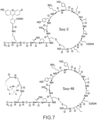
- FIG. 7 shows the structural formulae of Sequences 2 and 46.
- amino acid residues without D indicate L amino acid residues.
- an ELISA-based binding assay was constructed.
- the ELISA method will be briefly described below.
- a goat antihuman IgG-Fc ⁇ polyclonal antibody (Catalog No. 109-0005-008, manufactured by Jackson Immuno Research) was added to a 96-well Maxisorp plate (Catalog No. 439454, manufactured by Nunc) at 1 ⁇ g/50 ⁇ L/well using D-PBS, followed by coating overnight at 4°C.
- 0.5% BSA/D-PBS was further added at 300 ⁇ L/well, and blocking was carried out at room temperature for 30 minutes.
- LRP1 recombinant proteins namely, LRP1 cluster 2-Fc chimeric proteins (Catalog No. 2368-L2-050, manufactured by R & D Systems), LRP1 cluster 3-Fc chimeric proteins (Catalog No. 48248-L3-050, manufactured by R & D Systems), or LRP1 cluster 4-Fc chimeric proteins (Catalog No. 5395-L4-050, manufactured by R & D Systems), were added at 100 ng/50 ⁇ L/well using 0.5% BSA/D-PBS, and allowed to react with the coated antibodies at room temperature for 30 minutes.
- LRP1 cluster 2-Fc chimeric proteins Catalog No. 2368-L2-050, manufactured by R & D Systems
- LRP1 cluster 3-Fc chimeric proteins Catalog No. 48248-L3-050, manufactured by R & D Systems
- LRP1 cluster 4-Fc chimeric proteins Catalog No. 5395-L4-050, manufactured by R & D Systems
- Sequences 45 and 46 which were biotinylated peptides, were prepared at an arbitrary concentration using 0.5% BSA/D-PBS, and added at 50 ⁇ L/well. After causing a reaction at room temperature for 30 minutes, the plate was washed with 0.1% Tween 20/D-PBS. Sequences 45 and 46 bound to the LRP1 recombinant proteins captured on the plate were detected with SA-HRP (Catalog No. ab7403, manufactured by Abeam). For quantification of HRP, TMB ELISA Substrate Solution (Catalog No. 34028, manufactured by Thermo Fisher) was used to measure absorbance at 450 nm.
- the specific binding activity was estimated by subtracting the absorbance obtained by adding the biotinylated peptide to the wells in which no LRP1 recombinant proteins were captured from the absorbance obtained by adding the biotinylated peptide to the wells in which the LRP1 recombinant proteins were captured.
- both of Sequences 45 and 46 bound to the LRP1 cluster 4-Fc chimeric proteins selectively and in a peptide concentration-dependent manner.
- sequences showed little or no binding to the LRP1 cluster 2-Fc chimeric proteins and the LRP1 cluster 3-Fc chimeric proteins.
- the binding EC50 values of Sequences 45 and 46 were calculated as 10.5 nM and 11.0 nM, respectively, indicating that the sequences had similar binding activities whether the cyclic structure is present or not.
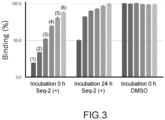
- a competitive binding assay by ELISA shown in FIG. 2 was constructed. Immediately (zero hour) or 24 hours after the mixing of the peptide of Sequence 2 or the amino acid-substituted peptide with mouse plasma at 37°C, the mixture was diluted to sufficiently lower the plasma concentration to any desired final concentration, and mixed with Sequence 46 (500 nM). This mixture was subjected to the competitive binding assay described above.
- Sequence 46 to the LRP1 cluster 4-Fc chimera proteins competes with the binding of Sequence 2 or the amino acid-substituted peptide to the LRP1 cluster 4-Fc chimera proteins, and thus is inhibited depending on the concentration of Sequence 2 or the amino acid-substituted peptide. That is, the binding activity of Sequence 2 or the amino acid-substituted peptide to the LRP1 cluster 4-Fc chimera proteins is detected as competitive inhibitory activity against the binding of Sequence 46.
- Sequence 2 incubated with plasma for zero hour inhibited the binding of Sequence 46 in a concentration-dependent manner.
- the binding of Sequence 46 (500nM) in wells with 500 nM Sequence 2 averaged 52.4%, indicating that Sequences 2 and 46 competed 1: 1 for binding to the LRP1 Cluster 4.
- Sequence 2 incubated with plasma for 24 hours also inhibited the binding of Sequence 46 in a concentration-dependent manner.
- the binding of Sequence 46 (500 nM) in wells loaded with 2,000 nM equivalent Sequence 2 averaged 50.6%.
- the inhibitory activity exhibited was as low as 500 nM although the amount corresponding to 2,000 nM was added to the wells. This indicates that approximately 75% of Sequence 2 was degraded during the 24-hour incubation with the mouse plasma.
- DMSO was tested in the same manner immediately after the mixing with the mouse plasma, the binding of Sequence 46 (500 nM) was not inhibited at all, indicating that the plasma contaminating the binding system did not inhibit the system.
- FIG. 4 shows the results.
- the inhibitory activities of Sequences 1 and 2 were estimated to be 70.7% and 79.4%, respectively.
- the inhibitory activities of Sequences 6, 7, 9, 19, 24, 34, and 43 were 91.9%, 87.6%, 85.8%, 79.1%, 77.4%, 82.0%, and 83.5%, respectively, which were equivalent to or higher than those of Sequences 1 and 2.
- Other sequences tended to have diminished inhibitory activities.
- FIG. 5 is a schematic view of an in vitro blood-brain barrier model for assessing the permeability through the blood-brain barrier.
- Rat BBB Kit catalog No. RBT-24H, manufactured by Pharmacocel Inc.
- monkey BBB Kit catalog No. MBT-24H, manufactured by Pharmacocel Inc.
- These kits retain the characteristics of BBB in vivo (whether various receptors and transporters are expressed and the ability to form tight junctions), and are widely used as an evaluation system for estimating drug transport to the brain (Non-Patent Documents 6 and 7).
- TEER transepithelial electrical resistance value
- FIG. 6 shows the evaluation results of the BBB permeability of Sequence 2, in comparison with ANG2 (Non-Patent Document 4) and L57 (Non-Patent Document 5), which have been reported to have the LRP1 binding activity and the BBB permeability.
- ANG2 Non-Patent Document 4
- L57 Non-Patent Document 5
- Each 5-FAM-labeled peptide was serially diluted with a medium to any concentration to prepare a calibration curve, and the concentration of the 5-FAM-labeled peptide contained in each recovered culture supernatant was calculated.
- the amount (amount by mole) of the peptide transferred to the bottom well (brain side) was calculated as a percentage, regarding the amount (amount by mole) of the peptide added to the insert well (blood vessel side) as 100%.
- TEER transepithelial electric resistance
- the resin was then soaked in dimethylformamide (DMF) and controlled to pH 8 by adding diisopropylethylamine (DIEA).
- DIEA diisopropylethylamine
- N3-PEG4-NHS Cas No. 944251-24-5 , Catalog No. J64834, manufactured by Alfa Aesar
- N 3 - azide group
- the lyophilized product was dissolved in DMSO, and a 0.1 M aqueous NH 4 CO 3 solution was added in small portions, followed by oxidation reaction with stirring at room temperature for one to two days, to form an S-S bond between the side chains of the Cys residues.
- the resulting product was fractionated and purified by RP-HPLC, and lyophilized to obtain the following cyclic peptide.
- N3-PEG4-Gly-Thr-Pro-c(Cys-Thr-Tyr-Lys-Tyr-Nle-Leu-Ala-Glu-Nle-Cys)-OH SEQ ID NO: 54
- KS-487 The purified cyclic peptide and DBCO-PEG5-DBCO ( Cas No. 2363130-04-3 , Catalog No. BP-22450, manufactured by Broad Pharm) were each dissolved in dimethylsulfoxide (DMSO), mixed, and then 50 mM phosphate buffer was added. After the addition, the mixture was reacted at room temperature for two hours. The product was fractionated and purified by RP-HPLC, and lyophilized to obtain DBCO-KS-487 (theoretical molecular weight: 2701.3, measured molecular weight: 2702.0, purity: 95.0%).
- DBCO-PEG5-Taz-PEG4 the cyclic peptide portion excluding the modification at the N-terminus
- KS-487 the cyclic peptide portion excluding the modification at the N-terminus
- FIG. 8 shows the results.
- the graph before the reaction in FIG. 8 shows the peak (10.200 min) derived from DBCO-KS-487, but the peak (10.248 min) derived from DBCO-KS-487 has almost disappeared in the graph after the reaction in FIG. 8 .
- new peaks (7.904 min and 9.285 min) were generated.
- the results (before and after reaction) shown in FIG. 8 indicate that the DBCO group added to the cyclic peptide retains the activity for click reaction.
- the peptide of the present invention has LRP1 binding activity, and when bound to LRP1, the peptide can pass through a barrier tissue separating peripheral tissues and brain tissues, for example, the blood-brain barrier (BBB), by RMT via LRP1.
- BBB blood-brain barrier
- the peptide of the present invention is considered to be useful for delivering any molecule to the brain tissues when combined with the molecule.
Landscapes
- Health & Medical Sciences (AREA)
- Life Sciences & Earth Sciences (AREA)
- Chemical & Material Sciences (AREA)
- Bioinformatics & Cheminformatics (AREA)
- Engineering & Computer Science (AREA)
- Proteomics, Peptides & Aminoacids (AREA)
- Medicinal Chemistry (AREA)
- Organic Chemistry (AREA)
- General Health & Medical Sciences (AREA)
- Molecular Biology (AREA)
- Pharmacology & Pharmacy (AREA)
- Animal Behavior & Ethology (AREA)
- Public Health (AREA)
- Veterinary Medicine (AREA)
- Biochemistry (AREA)
- Biophysics (AREA)
- Genetics & Genomics (AREA)
- Epidemiology (AREA)
- Psychiatry (AREA)
- Biomedical Technology (AREA)
- Neurology (AREA)
- Neurosurgery (AREA)
- Chemical Kinetics & Catalysis (AREA)
- General Chemical & Material Sciences (AREA)
- Nuclear Medicine, Radiotherapy & Molecular Imaging (AREA)
- Peptides Or Proteins (AREA)
- Medicines That Contain Protein Lipid Enzymes And Other Medicines (AREA)
- Micro-Organisms Or Cultivation Processes Thereof (AREA)
Applications Claiming Priority (2)
| Application Number | Priority Date | Filing Date | Title |
|---|---|---|---|
| JP2022125238 | 2022-08-05 | ||
| PCT/JP2023/024137 WO2024029242A1 (ja) | 2022-08-05 | 2023-06-29 | 新規lrp1結合ペプチド |
Publications (1)
| Publication Number | Publication Date |
|---|---|
| EP4541891A1 true EP4541891A1 (en) | 2025-04-23 |
Family
ID=89848802
Family Applications (1)
| Application Number | Title | Priority Date | Filing Date |
|---|---|---|---|
| EP23849801.8A Pending EP4541891A1 (en) | 2022-08-05 | 2023-06-29 | Novel lrp1-binding peptide |
Country Status (4)
| Country | Link |
|---|---|
| EP (1) | EP4541891A1 (https=) |
| JP (2) | JP7665261B2 (https=) |
| CN (1) | CN119630790A (https=) |
| WO (1) | WO2024029242A1 (https=) |
Families Citing this family (1)
| Publication number | Priority date | Publication date | Assignee | Title |
|---|---|---|---|---|
| JP7713129B1 (ja) * | 2023-12-28 | 2025-07-24 | 一丸ファルコス株式会社 | 組成物 |
Family Cites Families (4)
| Publication number | Priority date | Publication date | Assignee | Title |
|---|---|---|---|---|
| JP2015526434A (ja) * | 2012-08-14 | 2015-09-10 | アンジオケム インコーポレーテッド | ペプチド−デンドリマーコンジュゲート及びその使用 |
| JP7110800B2 (ja) | 2018-07-31 | 2022-08-02 | 株式会社三洋物産 | 遊技機 |
| US11644426B2 (en) * | 2020-08-11 | 2023-05-09 | Applied Materials Israel Ltd. | Methods and systems for generating calibration data for wafer analysis |
| CA3128035A1 (en) * | 2020-08-13 | 2022-02-13 | Bioasis Technologies, Inc. | Combination therapies for delivery across the blood brain barrier |
-
2023
- 2023-06-29 CN CN202380056691.4A patent/CN119630790A/zh active Pending
- 2023-06-29 JP JP2024538862A patent/JP7665261B2/ja active Active
- 2023-06-29 EP EP23849801.8A patent/EP4541891A1/en active Pending
- 2023-06-29 WO PCT/JP2023/024137 patent/WO2024029242A1/ja not_active Ceased
-
2025
- 2025-04-02 JP JP2025061336A patent/JP2025102922A/ja active Pending
Also Published As
| Publication number | Publication date |
|---|---|
| JP7665261B2 (ja) | 2025-04-21 |
| JPWO2024029242A1 (https=) | 2024-02-08 |
| WO2024029242A1 (ja) | 2024-02-08 |
| JP2025102922A (ja) | 2025-07-08 |
| CN119630790A (zh) | 2025-03-14 |
Similar Documents
| Publication | Publication Date | Title |
|---|---|---|
| JP7796636B2 (ja) | ヒトトランスフェリンレセプター結合ペプチド | |
| EP4188413A1 (en) | Conjugated hepcidin mimetics | |
| TWI763972B (zh) | 經修飾之脂質化鬆弛素b鏈胜肽及其醫療用途 | |
| US12528846B2 (en) | BH4 stabilized peptides and uses thereof | |
| WO2012055770A1 (en) | Glucose-dependent insulinotropic peptide analogs | |
| EP3630806B1 (en) | Long-acting gip peptide analogues | |
| KR20200135797A (ko) | 콤프스타틴 유사체 및 이들의 의학적 용도 | |
| EP4021921A1 (en) | Compstatin analogues and their medical uses | |
| EP4541891A1 (en) | Novel lrp1-binding peptide | |
| US11975040B2 (en) | Plexin binding regulator | |
| EP4393959A1 (en) | Human transferrin receptor-binding antibody-peptide conjugate | |
| EP4389758A1 (en) | Human transferrin receptor?binding peptide | |
| CA3125383C (en) | Conotoxin peptide analogs and uses for the treatment of pain and inflammatory conditions | |
| EP4667483A1 (en) | Human transferrin receptor-binding peptide | |
| HK40083520A (en) | Human transferrin receptor binding peptide | |
| WO2026060110A1 (en) | Dual- and tri-agonist compounds for obesity & t2dm | |
| CN117136192A (zh) | 缀合的铁调素模拟物 | |
| CN117730089A (zh) | 结合型铁调素模拟物 |
Legal Events
| Date | Code | Title | Description |
|---|---|---|---|
| STAA | Information on the status of an ep patent application or granted ep patent |
Free format text: STATUS: THE INTERNATIONAL PUBLICATION HAS BEEN MADE |
|
| PUAI | Public reference made under article 153(3) epc to a published international application that has entered the european phase |
Free format text: ORIGINAL CODE: 0009012 |
|
| STAA | Information on the status of an ep patent application or granted ep patent |
Free format text: STATUS: REQUEST FOR EXAMINATION WAS MADE |
|
| 17P | Request for examination filed |
Effective date: 20250115 |
|
| AK | Designated contracting states |
Kind code of ref document: A1 Designated state(s): AL AT BE BG CH CY CZ DE DK EE ES FI FR GB GR HR HU IE IS IT LI LT LU LV MC ME MK MT NL NO PL PT RO RS SE SI SK SM TR |
|
| DAV | Request for validation of the european patent (deleted) | ||
| DAX | Request for extension of the european patent (deleted) |