EP4538608A1 - Temperature determination device, air conditioning control system, temperature determination method, and temperature determination program - Google Patents
Temperature determination device, air conditioning control system, temperature determination method, and temperature determination program Download PDFInfo
- Publication number
- EP4538608A1 EP4538608A1 EP22953065.4A EP22953065A EP4538608A1 EP 4538608 A1 EP4538608 A1 EP 4538608A1 EP 22953065 A EP22953065 A EP 22953065A EP 4538608 A1 EP4538608 A1 EP 4538608A1
- Authority
- EP
- European Patent Office
- Prior art keywords
- temperature
- temperature determination
- range information
- object space
- users
- Prior art date
- Legal status (The legal status is an assumption and is not a legal conclusion. Google has not performed a legal analysis and makes no representation as to the accuracy of the status listed.)
- Pending
Links
Images








Classifications
-
- F—MECHANICAL ENGINEERING; LIGHTING; HEATING; WEAPONS; BLASTING
- F24—HEATING; RANGES; VENTILATING
- F24F—AIR-CONDITIONING; AIR-HUMIDIFICATION; VENTILATION; USE OF AIR CURRENTS FOR SCREENING
- F24F11/00—Control or safety arrangements
- F24F11/30—Control or safety arrangements for purposes related to the operation of the system, e.g. for safety or monitoring
-
- F—MECHANICAL ENGINEERING; LIGHTING; HEATING; WEAPONS; BLASTING
- F24—HEATING; RANGES; VENTILATING
- F24F—AIR-CONDITIONING; AIR-HUMIDIFICATION; VENTILATION; USE OF AIR CURRENTS FOR SCREENING
- F24F11/00—Control or safety arrangements
- F24F11/30—Control or safety arrangements for purposes related to the operation of the system, e.g. for safety or monitoring
- F24F11/46—Improving electric energy efficiency or saving
-
- F—MECHANICAL ENGINEERING; LIGHTING; HEATING; WEAPONS; BLASTING
- F24—HEATING; RANGES; VENTILATING
- F24F—AIR-CONDITIONING; AIR-HUMIDIFICATION; VENTILATION; USE OF AIR CURRENTS FOR SCREENING
- F24F11/00—Control or safety arrangements
- F24F11/50—Control or safety arrangements characterised by user interfaces or communication
-
- F—MECHANICAL ENGINEERING; LIGHTING; HEATING; WEAPONS; BLASTING
- F24—HEATING; RANGES; VENTILATING
- F24F—AIR-CONDITIONING; AIR-HUMIDIFICATION; VENTILATION; USE OF AIR CURRENTS FOR SCREENING
- F24F11/00—Control or safety arrangements
- F24F11/62—Control or safety arrangements characterised by the type of control or by internal processing, e.g. using fuzzy logic, adaptive control or estimation of values
-
- F—MECHANICAL ENGINEERING; LIGHTING; HEATING; WEAPONS; BLASTING
- F24—HEATING; RANGES; VENTILATING
- F24F—AIR-CONDITIONING; AIR-HUMIDIFICATION; VENTILATION; USE OF AIR CURRENTS FOR SCREENING
- F24F11/00—Control or safety arrangements
- F24F11/62—Control or safety arrangements characterised by the type of control or by internal processing, e.g. using fuzzy logic, adaptive control or estimation of values
- F24F11/63—Electronic processing
- F24F11/64—Electronic processing using pre-stored data
-
- F—MECHANICAL ENGINEERING; LIGHTING; HEATING; WEAPONS; BLASTING
- F24—HEATING; RANGES; VENTILATING
- F24F—AIR-CONDITIONING; AIR-HUMIDIFICATION; VENTILATION; USE OF AIR CURRENTS FOR SCREENING
- F24F11/00—Control or safety arrangements
- F24F11/70—Control systems characterised by their outputs; Constructional details thereof
- F24F11/80—Control systems characterised by their outputs; Constructional details thereof for controlling the temperature of the supplied air
-
- F—MECHANICAL ENGINEERING; LIGHTING; HEATING; WEAPONS; BLASTING
- F24—HEATING; RANGES; VENTILATING
- F24F—AIR-CONDITIONING; AIR-HUMIDIFICATION; VENTILATION; USE OF AIR CURRENTS FOR SCREENING
- F24F2110/00—Control inputs relating to air properties
- F24F2110/10—Temperature
-
- F—MECHANICAL ENGINEERING; LIGHTING; HEATING; WEAPONS; BLASTING
- F24—HEATING; RANGES; VENTILATING
- F24F—AIR-CONDITIONING; AIR-HUMIDIFICATION; VENTILATION; USE OF AIR CURRENTS FOR SCREENING
- F24F2110/00—Control inputs relating to air properties
- F24F2110/50—Air quality properties
- F24F2110/80—Electric charge
-
- F—MECHANICAL ENGINEERING; LIGHTING; HEATING; WEAPONS; BLASTING
- F24—HEATING; RANGES; VENTILATING
- F24F—AIR-CONDITIONING; AIR-HUMIDIFICATION; VENTILATION; USE OF AIR CURRENTS FOR SCREENING
- F24F2120/00—Control inputs relating to users or occupants
- F24F2120/10—Occupancy
-
- F—MECHANICAL ENGINEERING; LIGHTING; HEATING; WEAPONS; BLASTING
- F24—HEATING; RANGES; VENTILATING
- F24F—AIR-CONDITIONING; AIR-HUMIDIFICATION; VENTILATION; USE OF AIR CURRENTS FOR SCREENING
- F24F2120/00—Control inputs relating to users or occupants
- F24F2120/20—Feedback from users
Definitions
- the present disclosure relates to a technique of determining a set temperature in air-conditioning control.
- Patent Literature 1 describes obtaining air temperature evaluations indicating "hot” or “cold” from users and changing a comfort zone according to the most frequently received temperature evaluation. In this manner, Patent Literature 1 attempts to realize air-conditioning control that provides a temperature that the users find comfortable.
- a temperature determination device includes:
- FIG. 1 A configuration of an air-conditioning control system 100 according to Embodiment 1 will be described with referring to Fig. 1 .
- a configuration of the temperature determination device 10 according to Embodiment 1 will be described with referring to Fig. 2 .
- the temperature determination device 10 is provided with hardware devices which are a processor 11, a memory 12, a storage 13, and a communication interface 14.
- the processor 11 is connected to the other hardware devices via a signal line, and controls the other hardware devices.
- the processor 11 is an IC that performs processing.
- IC stands for Integrated Circuit.
- Specific examples of the processor 11 are a CPU, a DSP, and a GPU.
- CPU stands for Central Processing Unit; DSP for Digital Signal Processor; and GPU for Graphics Processing Unit.
- the storage 13 is a storage device that keeps data.
- a specific example of the storage 13 is an HDD.
- HDD stands for Hard Disk Drive.
- the storage 13 may be a portable recording medium such as an SD (registered trademark) memory card, a CompactFlash (registered trademark), a NAND flash, a flexible disk, an optical disk, a compact disk, a Blu-ray (registered trademark) disc, and a DVD.
- SD stands for Secure Digital
- DVD Digital Versatile Disk.
- the communication interface 14 is an interface to communicate with an external device.
- Specific examples of the communication interface 14 are an Ethernet (registered trademark) port, a USB port, and an HDMI (registered trademark) port.
- Ethernet registered trademark
- USB stands for Universal Serial Bus
- HDMI High-Definition Multimedia Interface.
- processors 11 illustrated in Fig. 2 is only one. However, there may be a plurality of processors 11. The plurality of processors 11 may cooperate with each other to run programs that implement the individual functions.
- An operation procedure of the temperature determination device 10 according to Embodiment 1 corresponds to a temperature determination method according to Embodiment 1.
- a program that implements the operations of the temperature determination device 10 according to Embodiment 1 corresponds to a temperature determination program according to Embodiment 1.
- a user feels dissatisfaction with the temperature of the object space, he or she expresses the dissatisfaction with the input device 101. For example, the user expresses dissatisfaction by, for example, depressing a button to express dissatisfaction. If some user expresses dissatisfaction, the dissatisfaction collection unit 21 advances processing to step S12. On the other hand, if no user expresses dissatisfaction, the dissatisfaction collection unit 21 executes a process of step S11 again at a lapse of a predetermined period of time.
- the temperature determination device 10 is provided with an electronic circuit 15 in place of the processor 11, the memory 12, and the storage 13.
- the electronic circuit 15 is a dedicated circuit that implements the functions of the individual function constituent elements, the function of the memory 12, and the function of the storage 13.
- Embodiment 2 is different from Embodiment 1 in a set temperature determination method. In Embodiment 2, this difference will be explained, and explanation on the same point will be omitted.
- a processing flow of a temperature determination device 10 according to Embodiment 2 will be described with referring to Fig. 9 .
- Processes of step S21 to step S23 are the same as the processes of step S11 to step S13 of Fig. 3 .
- Processes of step S25 to step S26 are the same as the processes of step S15 to step S16 of Fig. 3 .
- a temperature determination unit 24 may take a temperature between the set temperatures determined by the individual determination methods, or the like, as the set temperature. Specifically, the temperature determination unit 24 may take a mean value of the set temperatures determined by the individual determination methods, as the set temperature.
- a configuration of a temperature determination device 10 according to Embodiment 4 will be described with referring to Fig. 12 .
- the temperature determination device 10 is different from the temperature determination device 10 illustrated in Fig. 12 in that it is provided with a user management unit 27 and an attribute information acquisition unit 28 as function constituent elements.
- the range information collection unit 23 stores the past range information 32 by associating it with the attribute information of each user.
- the range information collection unit 23 may also store other information such as date and time by associating it with the past range information 32.
- unit in the above description may be replaced with "circuit", "stage”, “procedure”, "process”, or "processing circuitry”.
Landscapes
- Engineering & Computer Science (AREA)
- Chemical & Material Sciences (AREA)
- Combustion & Propulsion (AREA)
- Mechanical Engineering (AREA)
- General Engineering & Computer Science (AREA)
- Signal Processing (AREA)
- Physics & Mathematics (AREA)
- Fuzzy Systems (AREA)
- Mathematical Physics (AREA)
- Human Computer Interaction (AREA)
- Air Conditioning Control Device (AREA)
Abstract
Description
- The present disclosure relates to a technique of determining a set temperature in air-conditioning control.
- Different users find different temperatures comfortable. Therefore, in a space used by a plurality of users as in an office, it is not easy to determine an appropriate set temperature for an air conditioner.
-
Patent Literature 1 describes obtaining air temperature evaluations indicating "hot" or "cold" from users and changing a comfort zone according to the most frequently received temperature evaluation. In this manner,Patent Literature 1 attempts to realize air-conditioning control that provides a temperature that the users find comfortable. - Patent Literature 1:
JP 2020-180744 A - In
Patent Literature 1, the users are asked whether they feel "hot" or "cold" only, and the comfort zone is changed based on the responses. If a comfort zone is determined as inPatent Literature 1, there is a risk that the temperature may be controlled excessively. - Specifically, if the users are asked whether they feel "hot" or "cold" only, they user respond "hot" if they prefer being much cooler, even if they feel comfortable sufficiently. Therefore, even if all users find the temperature comfortable, if there are many users who wish being cooler, the temperature will be lowered. As a result, some users may find the temperature cold and uncomfortable. In other words, the temperature will be lowered excessively, impairing comfort for some users.
- An objective of the present disclosure is to make it possible to realize air-conditioning control that as many users as possible find comfortable or nearly comfortable.
- A temperature determination device according to the present disclosure includes:
- a range information collection unit to collect range information indicating an allowable temperature range from each of a plurality of users who use an object space; and
- a temperature determination unit to determine a set temperature of the object space on a basis of the range information concerning the plurality of users which is collected by the range information collection unit.
- In the present disclosure, range information indicating allowable temperature ranges are collected from users, and a set temperature is determined on a basis of the allowable range information. By determining the set temperature on the basis of the allowable temperature range, it becomes possible to perform air-conditioning control that provides a state that many users find comfortable or nearly comfortable.
-
-
Fig. 1 is a configuration diagram of an air-conditioning control system 100 according toEmbodiment 1. -
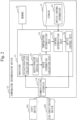
Fig. 2 is a configuration diagram of atemperature determination device 10 according toEmbodiment 1. -
Fig. 3 is a flowchart indicating a processing flow of thetemperature determination device 10 according toEmbodiment 1. -
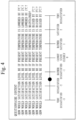
Fig. 4 is an explanatory diagram of a questionnaire according toEmbodiment 1. -
Fig. 5 is an explanatory diagram of responses to the questionnaire according toEmbodiment 1. -
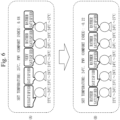
Fig. 6 is an explanatory diagram of effects ofEmbodiment 1. -
Fig. 7 is a configuration diagram of an air-conditioning control system 100 according toModification 1. -
Fig. 8 is a configuration diagram of atemperature determination device 10 according toModification 2. -
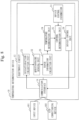
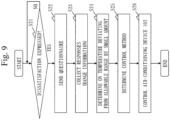
Fig. 9 is a flowchart illustrating a processing flow of atemperature determination device 10 according toEmbodiment 2. -
Fig. 10 is an explanatory diagram of responses to a questionnaire according toEmbodiment 2. -
Fig. 11 is an explanatory diagram of responses to a questionnaire according toEmbodiment 3. -
Fig. 12 is a configuration diagram of atemperature determination device 10 according toEmbodiment 4. -
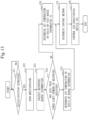
Fig. 13 is a flowchart illustrating a processing flow of thetemperature determination device 10 according toEmbodiment 4. -
Fig. 14 is a configuration diagram of atemperature determination device 10 according toEmbodiment 5. -
Embodiment 1. - A configuration of an air-
conditioning control system 100 according toEmbodiment 1 will be described with referring toFig. 1 . - The air-
conditioning control system 100 is provided with atemperature determination device 10, not less than oneinput device 101, and not less than one air-conditioning device 102. Thetemperature determination device 10 is connected to theinput device 101 and the air-conditioning device 102 via atransmission line 103. - The
temperature determination device 10 is a computer that determines a set temperature as a control target of an object space. Theinput device 101 is a terminal such as a PC used by a user. Note that PC stands for Personal Computer. The air-conditioning device 102 is a device that performs air conditioning of the object space. The object space is a space such as an office used by a plurality of users. - A configuration of the
temperature determination device 10 according toEmbodiment 1 will be described with referring toFig. 2 . - The
temperature determination device 10 is provided with hardware devices which are aprocessor 11, amemory 12, astorage 13, and acommunication interface 14. Theprocessor 11 is connected to the other hardware devices via a signal line, and controls the other hardware devices. - The
processor 11 is an IC that performs processing. Note that IC stands for Integrated Circuit. Specific examples of theprocessor 11 are a CPU, a DSP, and a GPU. Note that CPU stands for Central Processing Unit; DSP for Digital Signal Processor; and GPU for Graphics Processing Unit. - The
memory 12 is a storage device that stores data temporarily. Specific examples of thememory 12 are an SRAM and a DRAM. Note that SRAM stands for Static Random-Access Memory; and DRAM for Dynamic Random-Access Memory. - The
storage 13 is a storage device that keeps data. A specific example of thestorage 13 is an HDD. Note that HDD stands for Hard Disk Drive. Thestorage 13 may be a portable recording medium such as an SD (registered trademark) memory card, a CompactFlash (registered trademark), a NAND flash, a flexible disk, an optical disk, a compact disk, a Blu-ray (registered trademark) disc, and a DVD. Note that SD stands for Secure Digital; and DVD for Digital Versatile Disk. - The
communication interface 14 is an interface to communicate with an external device. Specific examples of thecommunication interface 14 are an Ethernet (registered trademark) port, a USB port, and an HDMI (registered trademark) port. Note that USB stands for Universal Serial Bus; and HDMI for High-Definition Multimedia Interface. - The
temperature determination device 10 is connected to theinput device 101 and the air-conditioning device 102 via thecommunication interface 14. - The
temperature determination device 10 is provided with adissatisfaction collection unit 21, aquestionnaire sending unit 22, a rangeinformation collection unit 23, atemperature determination unit 24, acontrol determination unit 25, and adevice control unit 26, as function constituent elements. Functions of the individual function constituent elements of thetemperature determination device 10 are implemented by software. - The
storage 13 stores a program that implements the functions of the individual function constituent elements of thetemperature determination device 10. This program is read to thememory 12 by theprocessor 11 and run by theprocessor 11. The functions of the individual function constituent elements of thetemperature determination device 10 are thus implemented. - The
storage 13 stores device controlinformation 31. - The number of
processors 11 illustrated inFig. 2 is only one. However, there may be a plurality ofprocessors 11. The plurality ofprocessors 11 may cooperate with each other to run programs that implement the individual functions. - Operations of the
temperature determination device 10 according toEmbodiment 1 will be described with referring toFigs. 3 to 5 . - An operation procedure of the
temperature determination device 10 according toEmbodiment 1 corresponds to a temperature determination method according toEmbodiment 1. A program that implements the operations of thetemperature determination device 10 according toEmbodiment 1 corresponds to a temperature determination program according toEmbodiment 1. - A processing flow of the
temperature determination device 10 according toEmbodiment 1 will be described with referring toFig. 3 . - The
dissatisfaction collection unit 21 decides whether or not any one of the plurality of users who use the object space expresses dissatisfaction about a temperature of an object space. - Specifically, if a user feels dissatisfaction with the temperature of the object space, he or she expresses the dissatisfaction with the
input device 101. For example, the user expresses dissatisfaction by, for example, depressing a button to express dissatisfaction. If some user expresses dissatisfaction, thedissatisfaction collection unit 21 advances processing to step S12. On the other hand, if no user expresses dissatisfaction, thedissatisfaction collection unit 21 executes a process of step S11 again at a lapse of a predetermined period of time. - The
questionnaire sending unit 22 sends a questionnaire concerning an allowable temperature range to each of the plurality of users existing in the object space. - Specifically, the
questionnaire sending unit 22 sends the questionnaire concerning the allowable temperature range to theinput device 101 which is used by each of the plurality of users existing in the object space. - Here, the
questionnaire sending unit 22 sends a questionnaire asking a satisfaction level of a case where the temperature is changed by a predetermined temperature from a present temperature as a standard, as illustrated inFig. 4 . Assume that in the questionnaire ofFig. 4 , a range of 0 (cannot state clearly) to 3 (very satisfied) represents allowable temperatures. - For example, assume that a certain user selects: -2 for lowering by 3 degrees; - 1 for lowering by 2 degrees; 0 for lowering by 1 degree; 1 for maintaining the present temperature; 2 for raising by 1 degree; 3 for raising by 2 degrees; and 2 for raising by 3 degrees. In this case, lowering by 1 degree to raising by 3 degrees form an allowable temperature range.
- The questionnaire to be sent by the
questionnaire sending unit 22 is not limited to one having the format illustrated inFig. 4 . The questionnaire may have another format as far as range information indicating an allowable temperature range can be collected. For example, the questionnaire may have a format for asking a range of from what degree to what degree is allowable. - The range
information collection unit 23 collects responses to the questionnaire sent in step S12 from each of the plurality of users who use the object space. By doing this, the rangeinformation collection unit 23 collects range information indicating the allowable temperature range from each of the plurality of users who use the object space. - The
temperature determination unit 24 determines a set temperature of the object space on a basis of the range information concerning the plurality of users which is collected in step S13. - In
Embodiment 1, thetemperature determination unit 24 determines a temperature allowable to many users, as the set temperature. Specifically, thetemperature determination unit 24 determines a temperature frequently rated at a satisfaction level not smaller than a standard value (here, 0) among a plurality of temperatures, as the set temperature. - For example, assume that responses to the questionnaire are obtained as illustrated in
Fig. 5 . In this case, a maximum number of allowing users is 3 for lowering by 1 degree. Therefore, thetemperature determination unit 24 determines a temperature that is 1 degree lower than the present temperature, as the set temperature. - The
control determination unit 25 refers to thedevice control information 31 to determine a control method that matches the set temperature determined in step S14. Thedevice control information 31 shows control methods that match the set temperatures, heat loads of the object space, operation statuses of the air-conditioning device 102, and so on. - The
device control unit 26 controls the air-conditioning device 102 in accordance with the control method determined in step S15. Specifically, thedevice control unit 26 controls the air-conditioning device 102 by sending to the air-conditioning device 102 a control command according to the control method. - As described above, the
temperature determination device 10 according toEmbodiment 1 collects range information indicating allowable temperature ranges from the users, and determines a temperature allowable to many users, as the set temperature. As a result, it is possible to perform air-conditioning control with which few users feel dissatisfaction and many users feel comfortable. - There is a case where the set temperature is determined using PMV being an index expressing comfort. Note that PMV stands for Predicted Mean Vote. It is evaluated that the closer to 0 the value of PMV, the higher the comfort, and the higher the satisfaction level. Hence, in this case, the set temperature is determined such that PMV is close to 0. PMV is essentially a value calculated from a plurality of elements. However,
Fig. 6 employs a simplified expression so that only a relationship between PMV and the set temperature is focused. Assume an environment as illustrated by (A) where PMV is 0.08 when the set temperature is 25°C. In this case, based on PMV, since the value of PMV is a value very close to 0, a set temperature of 25°C is allowed as providing a good state. However, even when the set temperature is 25°C, one person out of 5 feels dissatisfaction because for this person the allowable temperature range is 22°C to 24°C. - In contrast to this, as illustrated by (B) of
Fig. 6 , with the method according toEmbodiment 1, the set temperature is determined at 24°C. Then, this is a state with which all of 5 people feel no dissatisfaction, although the satisfaction level may be degraded to some people. In fine, it is possible to perform air-conditioning control with which few users feel dissatisfaction and many users feel comfortable. - In
Embodiment 1, thetemperature determination device 10 is internally provided with a control function for the air-conditioning device 102. The control function for the air-conditioning device 102 consists of functions of thecontrol determination unit 25 anddevice control unit 26, and thedevice control information 31. Alternatively, the control function for the air-conditioning device 102 may be provided to a device other than thetemperature determination device 10. - That is, as illustrated in
Fig. 7 , an air-conditioning control system 100 may be constituted to include: atemperature determination device 10 with a function from which a control function for the air-conditioning device 102 is excluded; acontrol device 50 with a control function for the air-conditioning device 102; not less than oneinput device 101; and not less than one air-conditioning device 102. - In
Embodiment 1, the individual function constituent elements are implemented by software. Alternatively,Modification 2 may be possible in which the individual function constituent elements are implemented by hardware.Modification 2 will be described regarding its differences fromEmbodiment 1. - A configuration of a
temperature determination device 10 according toModification 2 will be described with referring toFig. 8 . - In a case where the individual function constituent elements are implemented by hardware, the
temperature determination device 10 is provided with anelectronic circuit 15 in place of theprocessor 11, thememory 12, and thestorage 13. Theelectronic circuit 15 is a dedicated circuit that implements the functions of the individual function constituent elements, the function of thememory 12, and the function of thestorage 13. - The
electronic circuit 15 may be a single circuit, a composite circuit, a programmed processor, a parallel-programmed processor, a logic IC, a GA, an ASIC, and an FPGA. Note that: GA stands for Gate Array; ASIC for Application Specific Integrated Circuit; and FPGA for Field-Programmable Gate Array. - The individual function constituent elements may be implemented by one
electronic circuit 15. The individual function constituent elements may be implemented by a plurality ofelectronic circuits 15 by decentralization. -
Modification 3 may be possible in which some of the individual function constituent elements are implemented by hardware and the remaining individual function constituent elements are implemented by software. - The
processor 11, thememory 12, thestorage 13, and theelectronic circuit 15 are referred to as processing circuitry. That is, the functions of the individual function constituent elements are implemented by processing circuitry. -
Embodiment 2. -
Embodiment 2 is different fromEmbodiment 1 in a set temperature determination method. InEmbodiment 2, this difference will be explained, and explanation on the same point will be omitted. - A processing flow of a
temperature determination device 10 according toEmbodiment 2 will be described with referring toFig. 9 . - Processes of step S21 to step S23 are the same as the processes of step S11 to step S13 of
Fig. 3 . Processes of step S25 to step S26 are the same as the processes of step S15 to step S16 ofFig. 3 . - In
Embodiment 2, a questionnaire to be sent in step S22 has a format for asking a satisfaction level with each of a plurality of temperatures, as indicated inFig. 4 . - A
temperature determination unit 24 determines a set temperature of an object space on a basis of the range information concerning a plurality of users collected in step S23. - In
Embodiment 2, thetemperature determination unit 24 determines a temperature deviating from an allowable temperature range by a small amount, as the set temperature. Specifically, thetemperature determination unit 24 determines a temperature providing a high satisfaction level among lowest marks of the plurality of temperatures, as the set temperature. - For example, assume that responses to the questionnaire are obtained as illustrated in
Fig. 10 . In this case, a lowest mark of -0.3 obtained when lowering by 1 degree is of the highest level. Therefore, thetemperature determination unit 24 determines a temperature that is 1 degree lower than the present temperature, as the set temperature. - As described above, the
temperature determination device 10 according toEmbodiment 2 collects the range information indicating allowable temperature ranges from the users, and determines a temperature deviating from the allowable temperature range by a small amount, as the set temperature. As a result, it is possible to perform air-conditioning control that provides a state with which major dissatisfaction is few. In fine, it is possible to perform air-conditioning control that many users find comfortable or nearly comfortable. -
Embodiment 3 is different fromEmbodiments Embodiments Embodiment 3, this difference will be explained, and explanation on the same point will be omitted. - The temperature determination process (step S14 of
Fig. 3 , step S24 ofFig. 9 ) is different from its counterpart inEmbodiment - With the set temperature determination method described in
Embodiment 1 orEmbodiment 2, there is a possibility that the set temperatures cannot be narrowed down to one temperature. - For example, assume that the set temperature determination method described in
Embodiment 1 is to be employed. At this time, assume that questionnaire responses are obtained as illustrated inFig. 11 . In this case, the maximum number of allowing users is 3 for both lowering the temperature by 1 degree and raising the temperature by 1 degree. Therefore, the set temperatures cannot be narrowed down to one temperature. - In such a case, according to
Embodiment 3, the set temperature determination method described inEmbodiment 2 is employed, and the temperatures narrowed down by the set temperature determination method described inEmbodiment 1 are narrowed down furthermore. That is, in the above-mentioned example, between two settings of lowering by 1 degree and raising by 1 degree, the choices are narrowed down to a setting where a lowest mark is of a higher satisfaction level. As a result, the choices are narrowed down to the setting of lowering by 1 degree, where a lowest mark is of a higher satisfaction level. Hence, thetemperature determination unit 24 determines a temperature that is 1 degree lower than the present temperature, as the set temperature. - There may be a case where the set temperature cannot be determined to one temperature even when narrowing down is performed with the set temperature determination method described in
Embodiment 2. In this case, thetemperature determination unit 24 may determine one temperature as the set temperature by an arbitrary method from among a plurality of narrowed-down temperatures. - So far, the temperatures are narrowed down by the set temperature determination method described in
Embodiment 1, and then further narrowed down by the set temperature determination method described inEmbodiment 2. Conversely, the temperatures may be narrowed down by the set temperature determination method described inEmbodiment 2, and then further narrowed down by the set temperature determination method described inEmbodiment 1. - As described above, a
temperature determination device 10 according toEmbodiment 3 employs the set temperature determination methods described inEmbodiments Embodiment 1 orEmbodiment 2. - The set temperature may be determined between two temperatures, that is, the temperature determined by the set temperature determination method described in
Embodiment 1 and the temperature determined by the set temperature determination method described inEmbodiment 2. - For example, suppose that one set temperature is determined by the set temperature determination method described in
Embodiment 1. Also, one set temperature is determined by the set temperature determination method described inEmbodiment 2. In this case, atemperature determination unit 24 may take a temperature between the set temperatures determined by the individual determination methods, or the like, as the set temperature. Specifically, thetemperature determination unit 24 may take a mean value of the set temperatures determined by the individual determination methods, as the set temperature. -
Embodiment 4 is different fromEmbodiments 1 to 3 in that when, for example, sufficient responses to a questionnaire cannot be obtained, a set temperature is determined in accordance with responses obtained in the past. InEmbodiment 4, this difference will be explained, and explanation on the same point will be omitted. - In
Embodiment 4, a case wherein a function is added toEmbodiment 1 will be explained. It is also possible to add a function toEmbodiment - A configuration of a
temperature determination device 10 according toEmbodiment 4 will be described with referring toFig. 12 . - The
temperature determination device 10 is different from thetemperature determination device 10 illustrated inFig. 2 in thatpast range information 32 is accumulated in astorage 13. Thepast range information 32 consists of responses obtained in the past. That is, thepast range information 32 is range information collected in the past by a rangeinformation collection unit 23. - A processing flow of the
temperature determination device 10 according toEmbodiment 4 will be described with referring toFig. 13 . - Processes of step S31 to step S33 are the same as the processes of step S11 to step S12 of
Fig. 3 . The process of step S35 is the same as the process of step S14 ofFig. 3 . Processes of step S37 to step S38 are the same as the processes of step S15 to step S16 ofFig. 3 . - Note that in step S33, the collected range information is accumulated in the
storage 13 as thepast range information 32. - A
temperature determination unit 24 decides whether not less than a lower limit number of responses are obtained or not in step S33. The lower limit number is a value determined in advance. - If not less than the lower limit number of responses are obtained, the
temperature determination unit 24 advances the processing to step S35. If only less than the lower limit number of responses are obtained, thetemperature determination unit 24 advances the processing to step S36. - The
temperature determination unit 24 determines a set temperature of an object space on a basis of thepast range information 32 accumulated in thestorage 13. - Here, the
temperature determination unit 24 determines the set temperature by the same method as that inEmbodiment 1. Hence, thetemperature determination unit 24 determines, from thepast range information 32, a temperature allowable to many users, as the set temperature. Specifically, thetemperature determination unit 24 determines a temperature frequently providing a satisfaction level not smaller than a standard value (here, 0) among a plurality of temperatures, as the set temperature. - When a function is to be added to
Embodiment temperature determination unit 24 employs the set temperature determination method described described inEmbodiment Embodiment 1. - As described above, when, for example, sufficient responses to the questionnaire cannot be obtained, the
temperature determination device 10 according toEmbodiment 4 determines the set temperature in accordance with responses obtained in the past. Hence, it is possible to prevent a situation where comfort to only some users having responded to the questionnaire is maintained and comfort to many users not having responded to the questionnaire is impaired. - In a case where a number of users existing in the object space can be grasped, the lower limit number may be a value obtained by multiplying the number of users by a coefficient. The coefficient is a value larger than 0 and not larger than 1. For example, the coefficient is 0.3, and the lower limit value is a value obtained by multiplying the number of users by 0.3.
- The number of users existing in the object space can be identified by cooperation with an entrance and exit management system which manages entrance to and exit from the object space. Also, the number of users existing in the object space can be identified from image data obtained by photographing the object space with a camera. The number of users existing in the object space may be identified by any other method.
-
Embodiment 5 is different fromEmbodiment 4 in that an attribute of a user existing in the object space is taken into consideration. InEmbodiment 5, this difference will be explained, and explanation on the same point will be omitted. - A configuration of a
temperature determination device 10 according toEmbodiment 5 will be described with referring toFig. 14 . - The
temperature determination device 10 is different from thetemperature determination device 10 illustrated inFig. 12 in that it is provided with auser management unit 27 and an attributeinformation acquisition unit 28 as function constituent elements. - An operation flow of the
temperature determination device 10 according toEmbodiment 5 will be described with referring toFig. 13 . -
Embodiment 5 is the same asEmbodiment 4 except processes of step S33 and step S36. - A range
information collection unit 23 collects range information from each of a plurality of users who use the object space. The rangeinformation collection unit 23 accumulates the collected range information in astorage 13 aspast range information 32. - At this time, the
user management unit 27 identifies a user existing in the object space. For example, theuser management unit 27 identifies the user existing in the object space by cooperation with an entrance and exist management system which manages entrance to and exit from the object space. The attributeinformation acquisition unit 28 acquires an attribute of the user identified by theuser management unit 27. For example, the attributeinformation acquisition unit 28 acquires the attribute of the user existing in the object space from a system such as a personnel system which manages user attributes. The user attributes are, for example, sex, age, and so on. The attributeinformation acquisition unit 28 may identify user closing as an attribute from image data obtained by photographing the object space with a camera. - The range
information collection unit 23 stores thepast range information 32 by associating it with the attribute information of each user. The rangeinformation collection unit 23 may also store other information such as date and time by associating it with thepast range information 32. - A
temperature determination unit 24 determines the set temperature of the object space on a basis of thepast range information 32 accumulated in thestorage 13. At this time, thetemperature determination unit 24 determines the set temperature of the object space by utilizing the attribute acquired in step S33 of the user currently existing in the object space. - Specifically, the
temperature determination unit 24 identifiespast range information 32 associated with a user attribute similar to the attribute of the user currently existing in the object space. Thetemperature determination unit 24 determines the set temperature of the object space on a basis of the identifiedpast range information 32. For example, thetemperature determination unit 24 calculates a similarity level between the attribute of the user currently existing in the object space and the user attribute associated with individualpast range information 32. Thetemperature determination unit 24 determines the set temperature of the object space on a basis of thepast range information 32 having a similarity level not less than a threshold value. At this time, thetemperature determination unit 24 may also take into consideration a similarity level of other information such as date and time, in addition to the user attribute. - The
temperature determination unit 24 may acquire range information corresponding to the attribute of the user currently existing in the object space, with using an inference model that takes the user attribute as input and outputs range information. Then, thetemperature determination unit 24 may determine the set temperature of the object space on a basis of the acquired range information. - The inference model is generated by machine learning of a set of the
past range information 32 accumulated in thestorage 13 and the user attribute, as learning data. The inference model is a model formed by using, for example, a neural network. - As described above, when, for example, sufficient responses to the questionnaire cannot be obtained, the
temperature determination device 10 according toEmbodiment 5 determines the set temperature with taking into consideration the attribute of the user existing in the object space. Hence, it is possible to determine an appropriate set temperature even when responses to the questionnaire cannot be obtained. - For example, a set temperature in an initial state before the questionnaire is sent may be determined by the method of the second temperature determination process described in
Embodiment 5. - The word "unit" in the above description may be replaced with "circuit", "stage", "procedure", "process", or "processing circuitry".
- The embodiments and modifications of the present disclosure have been described so far. Of these embodiments and modifications, several ones may be practiced in combination. One or several ones of these embodiments and modifications may be practiced partly. The present disclosure is not limited to the above embodiments and modifications and can be changed in various manners as necessary.
- 10: temperature determination device; 11: processor; 12: memory; 13: storage; 14: communication interface; 15: electronic circuit; 21: dissatisfaction collection unit; 22: questionnaire sending unit; 23: range information collection unit; 24: temperature determination unit; 25: control determination unit; 26: device control unit; 27: user management unit; 28: attribute information acquisition unit; 31: device control information; 32: past range information; 50: control device; 100: air-conditioning control system; 101: input device; 102: air-conditioning device; 103: transmission line.
Claims (13)
- A temperature determination device comprising:a range information collection unit to collect range information indicating an allowable temperature range from each of a plurality of users who use an object space; anda temperature determination unit to determine a set temperature of the object space on a basis of the range information concerning the plurality of users which is collected by the range information collection unit.
- The temperature determination device according to claim 1,
wherein the temperature determination unit determines a temperature allowable to many users, as the set temperature. - The temperature determination device according to claim 2,wherein the range information indicates a satisfaction level with each of a plurality of temperatures, andwherein the temperature determination unit determines a temperature frequently providing a satisfaction level not smaller than a standard value among the plurality of temperatures, as the set temperature.
- The temperature determination device according to claim 1,
wherein the temperature determination unit determines a temperature deviating from an allowable temperature range by a small amount, as the set temperature. - The temperature determination device according to claim 4,wherein the range information indicates a satisfaction level with each of a plurality of temperatures, andwherein the temperature determination unit determines a temperature providing a high satisfaction level among lowest marks of the plurality of temperatures, as the set temperature.
- The temperature determination device according to claim 1,
wherein the temperature determination unit determines a temperature deviating from the allowable temperature range by a small amount among a plurality of temperatures allowable to many users, as the set temperature. - The temperature determination device according to claim 1,
wherein the temperature determination unit determines a temperature allowable to many users among a plurality of temperatures deviating from the allowable temperature range by a small amount, as the set temperature. - The temperature determination device according to any one of claims 1 to 7,
wherein if a number of pieces of range information collected by the range information collection unit is less than a lower limit number, the temperature determination unit determines the set temperature on a basis of the range information collected in the past. - The temperature determination device according to any one of claims 1 to 8,
wherein if a number of pieces of range information collected by the range information collection unit is less than a lower limit number, the temperature determination unit determines the set temperature on a basis of an attribute of a user existing in the object space. - The temperature determination device according to any one of claims 1 to 9, further comprising
a device control unit to control an air-conditioning device which air-conditions the object space on a basis of the set temperature determined by the temperature determination unit. - An air-conditioning control system comprising a temperature determination device and an air-conditioning device which air-conditions an object space,
the temperature determination device comprising:a range information collection unit to collect range information indicating an allowable temperature range from each of a plurality of users who use an object space; anda temperature determination unit to determine a set temperature of the object space on a basis of the range information concerning the plurality of users which is collected by the range information collection unit,wherein the air-conditioning device is controlled on a basis of the set temperature determined by the temperature determination unit. - A temperature determination method comprising:by a computer, collecting range information indicating an allowable temperature range from each of a plurality of users who use an object space; andby the computer, determining a set temperature of the object space on a basis of the range information concerning the plurality of users.
- A temperature determination program which causes a computer to function as a temperature determination device that performs:a range information collection process of collecting range information indicating an allowable temperature range from each of a plurality of users who use an object space; anda temperature determination process of determining a set temperature of the object space on a basis of the range information concerning the plurality of users which is collected by the range information collection process.
Applications Claiming Priority (1)
| Application Number | Priority Date | Filing Date | Title |
|---|---|---|---|
| PCT/JP2022/028927 WO2024023970A1 (en) | 2022-07-27 | 2022-07-27 | Temperature determination device, air conditioning control system, temperature determination method, and temperature determination program |
Publications (2)
| Publication Number | Publication Date |
|---|---|
| EP4538608A1 true EP4538608A1 (en) | 2025-04-16 |
| EP4538608A4 EP4538608A4 (en) | 2025-06-11 |
Family
ID=89705661
Family Applications (1)
| Application Number | Title | Priority Date | Filing Date |
|---|---|---|---|
| EP22953065.4A Pending EP4538608A4 (en) | 2022-07-27 | 2022-07-27 | TEMPERATURE DETERMINATION DEVICE, AIR CONDITIONING CONTROL SYSTEM, TEMPERATURE DETERMINATION METHOD AND TEMPERATURE DETERMINATION PROGRAM |
Country Status (4)
| Country | Link |
|---|---|
| US (1) | US20250093063A1 (en) |
| EP (1) | EP4538608A4 (en) |
| JP (1) | JP7558462B2 (en) |
| WO (1) | WO2024023970A1 (en) |
Family Cites Families (8)
| Publication number | Priority date | Publication date | Assignee | Title |
|---|---|---|---|---|
| JP2010025359A (en) * | 2008-07-15 | 2010-02-04 | Fujitsu General Ltd | Air conditioner |
| JP5543792B2 (en) * | 2010-01-26 | 2014-07-09 | パナソニック株式会社 | Air conditioning control device, air conditioning system, and air conditioning control method |
| JP5787858B2 (en) * | 2012-10-05 | 2015-09-30 | 三菱電機株式会社 | Air conditioning control system, air conditioning control method and program |
| JP2015169418A (en) * | 2014-03-10 | 2015-09-28 | 株式会社リコー | Air conditioning control device, air conditioning system, air conditioning control method, and program |
| WO2018163272A1 (en) * | 2017-03-07 | 2018-09-13 | 三菱電機株式会社 | Air conditioning device, air conditioning system, and control method |
| CN112041618A (en) * | 2018-03-13 | 2020-12-04 | 贝利莫控股有限公司 | HVAC system with relative control, HVAC method, and computer program for HVAC system |
| JP6861237B2 (en) * | 2019-04-25 | 2021-04-21 | Tis株式会社 | Air conditioning management server, air conditioning management method, and air conditioning management program |
| JP7258798B2 (en) * | 2020-02-26 | 2023-04-17 | 株式会社東芝 | Information processing device, information processing system, information processing method and program |
-
2022
- 2022-07-27 EP EP22953065.4A patent/EP4538608A4/en active Pending
- 2022-07-27 JP JP2024536635A patent/JP7558462B2/en active Active
- 2022-07-27 WO PCT/JP2022/028927 patent/WO2024023970A1/en not_active Ceased
-
2024
- 2024-12-02 US US18/965,403 patent/US20250093063A1/en active Pending
Also Published As
| Publication number | Publication date |
|---|---|
| EP4538608A4 (en) | 2025-06-11 |
| JP7558462B2 (en) | 2024-09-30 |
| US20250093063A1 (en) | 2025-03-20 |
| JPWO2024023970A1 (en) | 2024-02-01 |
| WO2024023970A1 (en) | 2024-02-01 |
Similar Documents
| Publication | Publication Date | Title |
|---|---|---|
| Gonçalves et al. | ROC curve estimation: An overview | |
| US20120148165A1 (en) | Image evaluation apparatus, image evaluation method, program, and integrated circuit | |
| CN111858969B (en) | Multimedia data recommendation method, device, computer equipment and storage medium | |
| JP6041217B2 (en) | Image evaluation apparatus, image evaluation method, program, integrated circuit | |
| CN102918535A (en) | Content-processing device, content-processing method, content-processing program, and integrated circuit | |
| EP3940306A1 (en) | Air-conditioning control system and air-conditioning control method | |
| CN111651626B (en) | Image classification method, device and readable storage medium | |
| Vucetic et al. | A regression-based approach for scaling-up personalized recommender systems in e-commerce | |
| CN113052025A (en) | Training method of image fusion model, image fusion method and electronic equipment | |
| Kube et al. | Just resource allocation? How algorithmic predictions and human notions of justice interact | |
| EP4538608A1 (en) | Temperature determination device, air conditioning control system, temperature determination method, and temperature determination program | |
| Li et al. | Dynamic prediction of motor diagnosis in Huntington’s disease using a joint modeling approach | |
| Saha et al. | Run sum X control chart with estimated process parameters | |
| KR20220081244A (en) | Apparatus and method for providing customized cosmetic recipes | |
| WO2016203652A1 (en) | System related to data analysis, control method, control program, and recording medium therefor | |
| CN111295715B (en) | Target management system, target management server, target management program, and target management terminal device | |
| CN114926873B (en) | Kinship determination method, device, electronic device and storage medium | |
| US10467258B2 (en) | Data categorizing system, method, program software and recording medium therein | |
| JP7186207B2 (en) | Information processing device, information processing program and information processing system | |
| Chen et al. | Targeted local support vector machine for age-dependent classification | |
| JP7457667B2 (en) | Monitor survey equipment and monitor survey method | |
| Rondina et al. | Facial analysis systems and down syndrome | |
| Gao et al. | A comparison of modeling approaches for static and dynamic prediction of central-line bloodstream infections using electronic health records (part 1): regression models | |
| Reeder et al. | Characterizing quantile-varying covariate effects under the accelerated failure time model | |
| CN116391180A (en) | Equipment control device, program and equipment control method |
Legal Events
| Date | Code | Title | Description |
|---|---|---|---|
| STAA | Information on the status of an ep patent application or granted ep patent |
Free format text: STATUS: THE INTERNATIONAL PUBLICATION HAS BEEN MADE |
|
| PUAI | Public reference made under article 153(3) epc to a published international application that has entered the european phase |
Free format text: ORIGINAL CODE: 0009012 |
|
| STAA | Information on the status of an ep patent application or granted ep patent |
Free format text: STATUS: REQUEST FOR EXAMINATION WAS MADE |
|
| 17P | Request for examination filed |
Effective date: 20241211 |
|
| AK | Designated contracting states |
Kind code of ref document: A1 Designated state(s): AL AT BE BG CH CY CZ DE DK EE ES FI FR GB GR HR HU IE IS IT LI LT LU LV MC MK MT NL NO PL PT RO RS SE SI SK SM TR |
|
| A4 | Supplementary search report drawn up and despatched |
Effective date: 20250512 |
|
| RIC1 | Information provided on ipc code assigned before grant |
Ipc: F24F 11/64 20180101ALI20250506BHEP Ipc: F24F 11/80 20180101AFI20250506BHEP |
|
| STAA | Information on the status of an ep patent application or granted ep patent |
Free format text: STATUS: EXAMINATION IS IN PROGRESS |
|
| 17Q | First examination report despatched |
Effective date: 20250924 |
|
| DAV | Request for validation of the european patent (deleted) | ||
| DAX | Request for extension of the european patent (deleted) |