EP4535518A1 - Soe-sofc-ccs-hybridsystem - Google Patents
Soe-sofc-ccs-hybridsystem Download PDFInfo
- Publication number
- EP4535518A1 EP4535518A1 EP23727191.1A EP23727191A EP4535518A1 EP 4535518 A1 EP4535518 A1 EP 4535518A1 EP 23727191 A EP23727191 A EP 23727191A EP 4535518 A1 EP4535518 A1 EP 4535518A1
- Authority
- EP
- European Patent Office
- Prior art keywords
- heat exchanger
- gas
- burner
- solid oxide
- distributor
- Prior art date
- Legal status (The legal status is an assumption and is not a legal conclusion. Google has not performed a legal analysis and makes no representation as to the accuracy of the status listed.)
- Pending
Links
Images



Classifications
-
- C—CHEMISTRY; METALLURGY
- C25—ELECTROLYTIC OR ELECTROPHORETIC PROCESSES; APPARATUS THEREFOR
- C25B—ELECTROLYTIC OR ELECTROPHORETIC PROCESSES FOR THE PRODUCTION OF COMPOUNDS OR NON-METALS; APPARATUS THEREFOR
- C25B1/00—Electrolytic production of inorganic compounds or non-metals
- C25B1/01—Products
- C25B1/02—Hydrogen or oxygen
- C25B1/04—Hydrogen or oxygen by electrolysis of water
-
- H—ELECTRICITY
- H01—ELECTRIC ELEMENTS
- H01M—PROCESSES OR MEANS, e.g. BATTERIES, FOR THE DIRECT CONVERSION OF CHEMICAL ENERGY INTO ELECTRICAL ENERGY
- H01M8/00—Fuel cells; Manufacture thereof
- H01M8/06—Combination of fuel cells with means for production of reactants or for treatment of residues
- H01M8/0662—Treatment of gaseous reactants or gaseous residues, e.g. cleaning
- H01M8/0668—Removal of carbon monoxide or carbon dioxide
-
- C—CHEMISTRY; METALLURGY
- C25—ELECTROLYTIC OR ELECTROPHORETIC PROCESSES; APPARATUS THEREFOR
- C25B—ELECTROLYTIC OR ELECTROPHORETIC PROCESSES FOR THE PRODUCTION OF COMPOUNDS OR NON-METALS; APPARATUS THEREFOR
- C25B13/00—Diaphragms; Spacing elements
- C25B13/04—Diaphragms; Spacing elements characterised by the material
- C25B13/05—Diaphragms; Spacing elements characterised by the material based on inorganic materials
- C25B13/07—Diaphragms; Spacing elements characterised by the material based on inorganic materials based on ceramics
-
- C—CHEMISTRY; METALLURGY
- C25—ELECTROLYTIC OR ELECTROPHORETIC PROCESSES; APPARATUS THEREFOR
- C25B—ELECTROLYTIC OR ELECTROPHORETIC PROCESSES FOR THE PRODUCTION OF COMPOUNDS OR NON-METALS; APPARATUS THEREFOR
- C25B15/00—Operating or servicing cells
- C25B15/08—Supplying or removing reactants or electrolytes; Regeneration of electrolytes
-
- H—ELECTRICITY
- H01—ELECTRIC ELEMENTS
- H01M—PROCESSES OR MEANS, e.g. BATTERIES, FOR THE DIRECT CONVERSION OF CHEMICAL ENERGY INTO ELECTRICAL ENERGY
- H01M16/00—Structural combinations of different types of electrochemical generators
- H01M16/003—Structural combinations of different types of electrochemical generators of fuel cells with other electrochemical devices, e.g. capacitors, electrolysers
-
- H—ELECTRICITY
- H01—ELECTRIC ELEMENTS
- H01M—PROCESSES OR MEANS, e.g. BATTERIES, FOR THE DIRECT CONVERSION OF CHEMICAL ENERGY INTO ELECTRICAL ENERGY
- H01M8/00—Fuel cells; Manufacture thereof
- H01M8/04—Auxiliary arrangements, e.g. for control of pressure or for circulation of fluids
- H01M8/04007—Auxiliary arrangements, e.g. for control of pressure or for circulation of fluids related to heat exchange
- H01M8/04014—Heat exchange using gaseous fluids; Heat exchange by combustion of reactants
-
- H—ELECTRICITY
- H01—ELECTRIC ELEMENTS
- H01M—PROCESSES OR MEANS, e.g. BATTERIES, FOR THE DIRECT CONVERSION OF CHEMICAL ENERGY INTO ELECTRICAL ENERGY
- H01M8/00—Fuel cells; Manufacture thereof
- H01M8/04—Auxiliary arrangements, e.g. for control of pressure or for circulation of fluids
- H01M8/04007—Auxiliary arrangements, e.g. for control of pressure or for circulation of fluids related to heat exchange
- H01M8/04014—Heat exchange using gaseous fluids; Heat exchange by combustion of reactants
- H01M8/04022—Heating by combustion
-
- H—ELECTRICITY
- H01—ELECTRIC ELEMENTS
- H01M—PROCESSES OR MEANS, e.g. BATTERIES, FOR THE DIRECT CONVERSION OF CHEMICAL ENERGY INTO ELECTRICAL ENERGY
- H01M8/00—Fuel cells; Manufacture thereof
- H01M8/04—Auxiliary arrangements, e.g. for control of pressure or for circulation of fluids
- H01M8/04298—Processes for controlling fuel cells or fuel cell systems
- H01M8/04313—Processes for controlling fuel cells or fuel cell systems characterised by the detection or assessment of variables; characterised by the detection or assessment of failure or abnormal function
- H01M8/0432—Temperature; Ambient temperature
-
- H—ELECTRICITY
- H01—ELECTRIC ELEMENTS
- H01M—PROCESSES OR MEANS, e.g. BATTERIES, FOR THE DIRECT CONVERSION OF CHEMICAL ENERGY INTO ELECTRICAL ENERGY
- H01M8/00—Fuel cells; Manufacture thereof
- H01M8/04—Auxiliary arrangements, e.g. for control of pressure or for circulation of fluids
- H01M8/04298—Processes for controlling fuel cells or fuel cell systems
- H01M8/04313—Processes for controlling fuel cells or fuel cell systems characterised by the detection or assessment of variables; characterised by the detection or assessment of failure or abnormal function
- H01M8/0432—Temperature; Ambient temperature
- H01M8/04373—Temperature; Ambient temperature of auxiliary devices, e.g. reformers, compressors, burners
-
- H—ELECTRICITY
- H01—ELECTRIC ELEMENTS
- H01M—PROCESSES OR MEANS, e.g. BATTERIES, FOR THE DIRECT CONVERSION OF CHEMICAL ENERGY INTO ELECTRICAL ENERGY
- H01M8/00—Fuel cells; Manufacture thereof
- H01M8/04—Auxiliary arrangements, e.g. for control of pressure or for circulation of fluids
- H01M8/04298—Processes for controlling fuel cells or fuel cell systems
- H01M8/04694—Processes for controlling fuel cells or fuel cell systems characterised by variables to be controlled
- H01M8/04746—Pressure; Flow
- H01M8/04761—Pressure; Flow of fuel cell exhausts
-
- H—ELECTRICITY
- H01—ELECTRIC ELEMENTS
- H01M—PROCESSES OR MEANS, e.g. BATTERIES, FOR THE DIRECT CONVERSION OF CHEMICAL ENERGY INTO ELECTRICAL ENERGY
- H01M8/00—Fuel cells; Manufacture thereof
- H01M8/04—Auxiliary arrangements, e.g. for control of pressure or for circulation of fluids
- H01M8/04298—Processes for controlling fuel cells or fuel cell systems
- H01M8/04694—Processes for controlling fuel cells or fuel cell systems characterised by variables to be controlled
- H01M8/04746—Pressure; Flow
- H01M8/04776—Pressure; Flow at auxiliary devices, e.g. reformer, compressor, burner
-
- H—ELECTRICITY
- H01—ELECTRIC ELEMENTS
- H01M—PROCESSES OR MEANS, e.g. BATTERIES, FOR THE DIRECT CONVERSION OF CHEMICAL ENERGY INTO ELECTRICAL ENERGY
- H01M8/00—Fuel cells; Manufacture thereof
- H01M8/06—Combination of fuel cells with means for production of reactants or for treatment of residues
- H01M8/0606—Combination of fuel cells with means for production of reactants or for treatment of residues with means for production of gaseous reactants
- H01M8/0612—Combination of fuel cells with means for production of reactants or for treatment of residues with means for production of gaseous reactants from carbon-containing material
-
- H—ELECTRICITY
- H01—ELECTRIC ELEMENTS
- H01M—PROCESSES OR MEANS, e.g. BATTERIES, FOR THE DIRECT CONVERSION OF CHEMICAL ENERGY INTO ELECTRICAL ENERGY
- H01M8/00—Fuel cells; Manufacture thereof
- H01M8/06—Combination of fuel cells with means for production of reactants or for treatment of residues
- H01M8/0606—Combination of fuel cells with means for production of reactants or for treatment of residues with means for production of gaseous reactants
- H01M8/0612—Combination of fuel cells with means for production of reactants or for treatment of residues with means for production of gaseous reactants from carbon-containing material
- H01M8/0618—Reforming processes, e.g. autothermal, partial oxidation or steam reforming
-
- H—ELECTRICITY
- H01—ELECTRIC ELEMENTS
- H01M—PROCESSES OR MEANS, e.g. BATTERIES, FOR THE DIRECT CONVERSION OF CHEMICAL ENERGY INTO ELECTRICAL ENERGY
- H01M8/00—Fuel cells; Manufacture thereof
- H01M8/06—Combination of fuel cells with means for production of reactants or for treatment of residues
- H01M8/0606—Combination of fuel cells with means for production of reactants or for treatment of residues with means for production of gaseous reactants
- H01M8/0656—Combination of fuel cells with means for production of reactants or for treatment of residues with means for production of gaseous reactants by electrochemical means
-
- H—ELECTRICITY
- H01—ELECTRIC ELEMENTS
- H01M—PROCESSES OR MEANS, e.g. BATTERIES, FOR THE DIRECT CONVERSION OF CHEMICAL ENERGY INTO ELECTRICAL ENERGY
- H01M8/00—Fuel cells; Manufacture thereof
- H01M8/10—Fuel cells with solid electrolytes
- H01M8/12—Fuel cells with solid electrolytes operating at high temperature, e.g. with stabilised ZrO2 electrolyte
-
- H—ELECTRICITY
- H01—ELECTRIC ELEMENTS
- H01M—PROCESSES OR MEANS, e.g. BATTERIES, FOR THE DIRECT CONVERSION OF CHEMICAL ENERGY INTO ELECTRICAL ENERGY
- H01M8/00—Fuel cells; Manufacture thereof
- H01M8/10—Fuel cells with solid electrolytes
- H01M8/12—Fuel cells with solid electrolytes operating at high temperature, e.g. with stabilised ZrO2 electrolyte
- H01M2008/1293—Fuel cells with solid oxide electrolytes
-
- H—ELECTRICITY
- H01—ELECTRIC ELEMENTS
- H01M—PROCESSES OR MEANS, e.g. BATTERIES, FOR THE DIRECT CONVERSION OF CHEMICAL ENERGY INTO ELECTRICAL ENERGY
- H01M2250/00—Fuel cells for particular applications; Specific features of fuel cell system
- H01M2250/10—Fuel cells in stationary systems, e.g. emergency power source in plant
-
- H—ELECTRICITY
- H01—ELECTRIC ELEMENTS
- H01M—PROCESSES OR MEANS, e.g. BATTERIES, FOR THE DIRECT CONVERSION OF CHEMICAL ENERGY INTO ELECTRICAL ENERGY
- H01M2250/00—Fuel cells for particular applications; Specific features of fuel cell system
- H01M2250/40—Combination of fuel cells with other energy production systems
- H01M2250/405—Cogeneration of heat or hot water
-
- Y—GENERAL TAGGING OF NEW TECHNOLOGICAL DEVELOPMENTS; GENERAL TAGGING OF CROSS-SECTIONAL TECHNOLOGIES SPANNING OVER SEVERAL SECTIONS OF THE IPC; TECHNICAL SUBJECTS COVERED BY FORMER USPC CROSS-REFERENCE ART COLLECTIONS [XRACs] AND DIGESTS
- Y02—TECHNOLOGIES OR APPLICATIONS FOR MITIGATION OR ADAPTATION AGAINST CLIMATE CHANGE
- Y02E—REDUCTION OF GREENHOUSE GAS [GHG] EMISSIONS, RELATED TO ENERGY GENERATION, TRANSMISSION OR DISTRIBUTION
- Y02E60/00—Enabling technologies; Technologies with a potential or indirect contribution to GHG emissions mitigation
- Y02E60/30—Hydrogen technology
- Y02E60/50—Fuel cells
Definitions
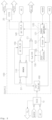
- FIG. 1 is a view showing the construction of an SOE-SOFC-CCS hybrid system according to a first embodiment of the present disclosure.
- the hybrid system includes a solid oxide electrolyzer cell (SOE) 10, a solid oxide fuel cell (SOFC) 100, and a carbon capture system (CCS) 20.
- SOE solid oxide electrolyzer cell
- SOFC solid oxide fuel cell
- CCS carbon capture system
- the solid oxide electrolyzer cell 10 electrolyzes pure water using electrical energy to produce hydrogen.
- the solid oxide electrolyzer cell 10 includes a total of three ceramic layers constituted by a porous anode, a porous cathode, and an impermeable electrolyte.
- a porous anode constituted by a porous anode, a porous cathode, and an impermeable electrolyte.
- oxygen reduction reaction occurs at the cathode, whereby oxygen ions are generated.
- the oxygen ions move to the anode through the electrolyte.
- the oxygen ions react with the hydrogen supplied to the anode, whereby water is generated.
- electrons are generated at the anode, and the electrons are consumed at the cathode. Consequently, current flows between the two electrodes connected to each other, whereby electricity is produced.
- the solid oxide fuel cell 100 may directly use pure hydrogen as a fuel, or may use hydrogen obtained as the result of reforming an outside fuel, such as liquefied petroleum gas (LPG), pipeline natural gas (PNG), compressed natural gas (CNG), or a hydrocarbon-based fuel (e.g. natural gas), as a fuel.
- an outside fuel such as liquefied petroleum gas (LPG), pipeline natural gas (PNG), compressed natural gas (CNG), or a hydrocarbon-based fuel (e.g. natural gas), as a fuel.
- LPG liquefied petroleum gas
- PNG pipeline natural gas
- CNG compressed natural gas
- hydrocarbon-based fuel e.g. natural gas
- the reformer 120 reforms an outside fuel into hydrogen using any one of steam methane reforming, partial oxidation reaction, and auto-thermal reforming.
- steam methane reforming steam is mixed with methane (or natural gas) at a temperature of 700 to 1,100°C, and reaction is performed in a catalyst reactor at a pressure of 3 to 25 bar to produce hydrogen.
- methane or natural gas
- partial oxidation reaction a smaller amount of oxygen than the amount of oxygen necessary to decompose natural gas into water and carbon dioxide is supplied to produce hydrogen, carbon monoxide, and carbon dioxide.
- auto-thermal reforming heat necessary for steam reforming endothermic reaction is supplied during partial oxidation exothermic reaction in order to reform hydrogen.
- the reformer 120 may use a nickel (Ni)-based catalyst.
- the fuel heat exchanger (fuel HX) 130 is disposed between the reformer 120 and an anode input of the stack 110.
- the fuel heat exchanger 130 preheats the production amount of hydrogen from the reformer 130 to a predetermined temperature, and supplies the preheated hydrogen to the anode input of the stack 110.
- the fuel heat exchanger 130 may preheat hydrogen produced by the reformer 130 using thermal energy obtained as the result of heat exchange with cathode off-gas of the stack 110.
- the off-gas heat-exchanged in the fuel heat exchanger 130 is discharged from the solid oxide fuel cell 100.
- the first distributor D1 has one input end and two output ends.
- the first distributor D1 may be provided with a control valve (not shown) configured to automatically or manually adjust the flow direction and the flow rate of a fluid.
- a temperature sensor (not shown) configured to measure the temperature of the outside air heated as the result of heat exchange with the first air heat exchanger 140 may be further provided in the vicinity of the output end of the first air heat exchanger 140 or in the vicinity of the input end of the second air heat exchanger 150.
- the carbon capture system 20 may perform capture using any one of post-combustion capture, pre-combustion capture, oxy-fuel combustion, and pressure swing adsorption.
- the high-temperature off-gas output from the burner 160 may be heat-exchanged in the steam generator 121, may move to the first air heat exchanger 140, and may be heat-exchanged again in the first air heat exchanger 140.
- the off-gas of the burner 160 heat-exchanged in the first air heat exchanger 140 is supplied to the carbon capture system 20, in which the off-gas is divided into carbon dioxide and water.
- the pre-reformer 123 produces hydrogen from a mixture of the steam and the natural gas.
- the hydrogen produced by the pre-reformer 123 is supplied to the fuel heat exchanger 130, in which the temperature of the hydrogen is increased, and the hydrogen is input to the anode of the stack 110.
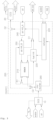
- the second distributor D2 is disposed at the rear of the first air heat exchanger 240.
- the second distributor D2 distributes some of off-gas of the burner 260 heat-exchanged in the reformer 220 and the first air heat exchanger 240 to the carbon capture system 20, and distributes the remainder of the off-gas to the burner 260.
- the off-gas of the burner 260 is cooled as the result of heat exchange while passing through the reformer 220 and the first air heat exchanger 240.
- inert gas such as carbon dioxide
- the off-gas of the burner 260 is recycled to the burner 260, therefore, it is possible to adjust the temperature of the burner 260 or prevent overheating of the burner 260.
- burner off-gas distributed through the second distributor D2 is further input to the burner 260 in addition to off-gas of the SOE and anode off-gas of the stack, compared to the first embodiment configured such that off-gas of the SOE and anode off-gas of the stack are input to the burner 160 as a fuel.
- the flow rate (mass) from the burner 260 to the reformer 220 and the first air heat exchanger 240 is increased, whereby heat exchange efficiency is improved.
- the third embodiment may be a modification in which a third distributor D3 and a third confluence device C3 are further included in the first embodiment or a modification in which a third distributor D3 and a third confluence device C3 are further included in the second embodiment.
- FIG. 4 shows a modification in which a third distributor D3 and a third confluence device C3 are further included in the first embodiment.
- the hybrid system includes a solid oxide electrolyzer cell 10, a solid oxide fuel cell 300, and a carbon capture system 20, wherein the solid oxide fuel cell 300 includes a stack 310, a reformer 320, a fuel heat exchanger 330, a first air heat exchanger 340, a second air heat exchanger 350, a burner 360, a first distributor D1, a third distributor D3, a first confluence device C1, a third confluence device C3, and a controller (not shown).
- the solid oxide electrolyzer cell 10, the stack 310, the reformer 320, the fuel heat exchanger 330, the first air heat exchanger 340, the second air heat exchanger 350, the burner 360, the first distributor D1, the first confluence device C1, the controller (not shown), and the carbon capture system 20 of the third embodiment are basically identical in construction to the solid oxide electrolyzer cell 10, the stack 110, the reformer 120, the fuel heat exchanger 130, the first air heat exchanger 140, the second air heat exchanger 150, the burner 160, the first distributor D1, the first confluence device C1, the controller (not shown), and the carbon capture system 20 of the first embodiment, and therefore only the difference therebetween will hereinafter be described.
- the third distributor D3 is disposed at an output end of the solid oxide electrolyzer cell 10.
- the third distributor D3 distributes some of SOE off-gas of the solid oxide electrolyzer cell 10 to the burner 360, and merges the remainder of the off-gas with outside air introduced into the cathode of the stack.
- the third confluence device C3 is disposed between the first air heat exchanger 340 and the second air heat exchanger 350.
- the third confluence device C3 merges the outside air that has passed through the first air heat exchanger 340 with the SOE off-gas of the solid oxide electrolyzer cell 10 distributed through the third distributor D3.
- the merged gas mixture is input to the cathode of the stack 310 via the second air heat exchanger 350.
- the controller determines the distribution ratio of the burner 360 to the air heat exchanger 340 or 350 based on carbon dioxide capture amount set in the hybrid system or electricity output, and transmits a control signal including the determined distribution ratio to the third distributor D3.
- a fourth embodiment relates to technology for recycling some of off-gas of a burner to a solid oxide electrolyzer cell and supplying the remainder of the off-gas to a reformer, instead of supplying the entirety of the off-gas of the burner to the reformer, unlike the first embodiment to the third embodiment.
- the fourth embodiment may be a modification in which a fourth distributor D4 is further included in the first embodiment or a modification in which a fourth distributor D4 is further included in the second embodiment.
- FIG. 5 shows a modification in which a fourth distributor D4 is further included in the first embodiment.
- the hybrid system includes a solid oxide electrolyzer cell 10, a solid oxide fuel cell 400, and a carbon capture system 20, wherein the solid oxide fuel cell 400 includes a stack 410, a reformer 420, a fuel heat exchanger 430, a first air heat exchanger 440, a second air heat exchanger 450, a burner 460, a first distributor D1, a fourth distributor D4, a first confluence device C1, and a controller (not shown).
- the solid oxide electrolyzer cell 10, the stack 410, the reformer 420, the fuel heat exchanger 430, the first air heat exchanger 440, the second air heat exchanger 450, the burner 460, the first distributor D1, the first confluence device C1, the controller (not shown), and the carbon capture system 20 of the fourth embodiment are basically identical in construction to the solid oxide electrolyzer cell 10, the stack 110, the reformer 120, the fuel heat exchanger 130, the first air heat exchanger 140, the second air heat exchanger 150, the burner 160, the first distributor D1, the first confluence device C1, the controller (not shown), and the carbon capture system 20 of the first embodiment, and therefore only the difference therebetween will be hereinafter described.
- the fourth distributor D4 is disposed at the rear of the burner 460.
- the fourth distributor D4 recycles some of off-gas of the burner 460 to the solid oxide electrolyzer cell 10, and distributes the remainder of the off-gas to the reformer 420.
- the solid oxide electrolyzer cell 10 supplies high-temperature burner off-gas distributed through the fourth distributor D4 to at least one heat exchanger included in the solid oxide electrolyzer cell in order to receive thermal energy.
- the controller determines the distribution ratio of the solid oxide electrolyzer cell 10 to the reformer 420 based on the production amount of hydrogen set in the hybrid system or electricity output, and transmits a control signal including the determined distribution ratio to the fourth distributor D4.
- a fifth embodiment relates to technology for merging the first to fourth embodiments.
- the hybrid system includes a solid oxide electrolyzer cell 10, a solid oxide fuel cell 500, and a carbon capture system 20, wherein the solid oxide fuel cell 500 includes a stack 510, a reformer 520, a fuel heat exchanger 530, a first air heat exchanger 540, a second air heat exchanger 550, a burner 560, a first distributor D1, a second distributor D2, a third distributor D3, a fourth distributor D4, a first confluence device C1, a second confluence device C2, a third confluence device C3, and a controller (not shown).
- the solid oxide fuel cell 500 includes a stack 510, a reformer 520, a fuel heat exchanger 530, a first air heat exchanger 540, a second air heat exchanger 550, a burner 560, a first distributor D1, a second distributor D2, a third distributor D3, a fourth distributor D4, a first confluence device C1, a second confluence device C2, a third confluence device C3, and
- an embodiment of the present disclosure has an effect in that, in a hybrid system including a solid oxide electrolyzer cell and a solid oxide fuel cell, off-gas of the solid oxide electrolyzer cell is not directly discharged but is used for combustion in a burner, whereby it is possible to improve operation efficiency.
Landscapes
- Chemical & Material Sciences (AREA)
- Engineering & Computer Science (AREA)
- Electrochemistry (AREA)
- Chemical Kinetics & Catalysis (AREA)
- General Chemical & Material Sciences (AREA)
- Sustainable Energy (AREA)
- Sustainable Development (AREA)
- Life Sciences & Earth Sciences (AREA)
- Manufacturing & Machinery (AREA)
- Combustion & Propulsion (AREA)
- Materials Engineering (AREA)
- Metallurgy (AREA)
- Organic Chemistry (AREA)
- Inorganic Chemistry (AREA)
- Fuel Cell (AREA)
- Ceramic Engineering (AREA)
- Electrolytic Production Of Non-Metals, Compounds, Apparatuses Therefor (AREA)
Applications Claiming Priority (2)
| Application Number | Priority Date | Filing Date | Title |
|---|---|---|---|
| KR1020220067900A KR102555437B1 (ko) | 2022-06-03 | 2022-06-03 | Soe-sofc-ccs 하이브리드 시스템 |
| PCT/KR2023/005188 WO2023234553A1 (ko) | 2022-06-03 | 2023-04-17 | Soe-sofc-ccs 하이브리드 시스템 |
Publications (2)
| Publication Number | Publication Date |
|---|---|
| EP4535518A1 true EP4535518A1 (de) | 2025-04-09 |
| EP4535518A4 EP4535518A4 (de) | 2026-04-29 |
Family
ID=87160386
Family Applications (1)
| Application Number | Title | Priority Date | Filing Date |
|---|---|---|---|
| EP23727191.1A Pending EP4535518A4 (de) | 2022-06-03 | 2023-04-17 | Soe-sofc-ccs-hybridsystem |
Country Status (6)
| Country | Link |
|---|---|
| US (1) | US20240387907A1 (de) |
| EP (1) | EP4535518A4 (de) |
| JP (1) | JP7694998B2 (de) |
| KR (1) | KR102555437B1 (de) |
| CN (1) | CN117546346A (de) |
| WO (1) | WO2023234553A1 (de) |
Family Cites Families (13)
| Publication number | Priority date | Publication date | Assignee | Title |
|---|---|---|---|---|
| JP2009117054A (ja) * | 2007-11-01 | 2009-05-28 | Tokyo Gas Co Ltd | 高温作動燃料電池による発電方法及びシステム |
| JP5137199B2 (ja) * | 2008-07-07 | 2013-02-06 | 東京瓦斯株式会社 | 大気中二酸化炭素の分離回収処理装置 |
| EP2783413B1 (de) * | 2011-11-21 | 2018-10-17 | Saudi Arabian Oil Company | Verfahren und system zur kombinierten wasserstoff- und elektrizitätsherstellung mithilfe von petroleumbrennstoffen |
| KR101352227B1 (ko) * | 2011-12-27 | 2014-01-16 | 포스코에너지 주식회사 | 고체산화물 연료전지용 연료극 배기가스 재순환 시스템 |
| US10361444B2 (en) * | 2013-12-31 | 2019-07-23 | General Electric Company | Solid-oxide fuel cell systems |
| KR20170034718A (ko) * | 2015-09-21 | 2017-03-29 | 한국전력공사 | 복합발전 시스템 |
| KR20200110501A (ko) | 2019-03-13 | 2020-09-24 | 주식회사 아쿠아덕트파트너즈 | 산소부화장치, 그가 적용된 고체산화물연료전지 및 그의 운전방법 |
| WO2021011591A1 (en) * | 2019-07-15 | 2021-01-21 | Bloom Energy Corporation | Fuel cell system including ato injector and method of operating the same |
| KR102243329B1 (ko) * | 2019-10-30 | 2021-04-22 | 인하대학교 산학협력단 | 4중 결합 하이브리드 발전시스템 |
| JP6755424B1 (ja) * | 2020-02-27 | 2020-09-16 | 東京瓦斯株式会社 | 燃料電池システム |
| JP7373054B2 (ja) * | 2020-03-23 | 2023-11-01 | 株式会社日立製作所 | 製造システム |
| KR102535403B1 (ko) * | 2020-10-30 | 2023-05-24 | 에이치디한국조선해양 주식회사 | 연료전지 및 이를 포함하는 선박 |
| CN213341659U (zh) * | 2020-11-16 | 2021-06-01 | 成都精智艺科技有限责任公司 | 一种近零碳排放的分布式能源供给系统 |
-
2022
- 2022-06-03 KR KR1020220067900A patent/KR102555437B1/ko active Active
-
2023
- 2023-04-17 WO PCT/KR2023/005188 patent/WO2023234553A1/ko not_active Ceased
- 2023-04-17 CN CN202380009339.5A patent/CN117546346A/zh active Pending
- 2023-04-17 JP JP2023530254A patent/JP7694998B2/ja active Active
- 2023-04-17 US US18/266,364 patent/US20240387907A1/en active Pending
- 2023-04-17 EP EP23727191.1A patent/EP4535518A4/de active Pending
Also Published As
| Publication number | Publication date |
|---|---|
| CN117546346A (zh) | 2024-02-09 |
| US20240387907A1 (en) | 2024-11-21 |
| WO2023234553A1 (ko) | 2023-12-07 |
| JP7694998B2 (ja) | 2025-06-18 |
| JP2024526397A (ja) | 2024-07-18 |
| EP4535518A4 (de) | 2026-04-29 |
| KR102555437B1 (ko) | 2023-07-13 |
Similar Documents
| Publication | Publication Date | Title |
|---|---|---|
| TWI467846B (zh) | 燃料電池系統及其操作方法 | |
| TWI464955B (zh) | 燃料電池系統及其操作方法 | |
| JP6397502B2 (ja) | 水素製造のための改質装置・電解装置・精製装置(rep)組立体、同組立体を組み込むシステムおよび水素製造方法 | |
| TWI479729B (zh) | 燃料電池系統及其操作方法 | |
| US20050112425A1 (en) | Fuel cell for hydrogen production, electricity generation and co-production | |
| US8795912B2 (en) | Systems and processes for operating fuel cell systems | |
| CN105579392B (zh) | 用于增强的燃料电池合成气制备的阴极燃烧 | |
| JP3781942B2 (ja) | 固体電解質型燃料電池システム | |
| JP2012530352A5 (de) | ||
| WO2002067351A1 (en) | Fuel cell system | |
| JP2013258004A (ja) | 高温型燃料電池システム | |
| KR20180073714A (ko) | 부분 산화와 함께 rep를 사용한 수소 및 일산화탄소 생성 | |
| CN114930588A (zh) | 具有高电解质填充率的熔融碳酸盐燃料电池的运行 | |
| CN104106166A (zh) | 利用高温燃料电池系统的再循环的方法和装置 | |
| CN101919098A (zh) | 利用燃料电池产生电力的方法 | |
| JP2013211107A (ja) | 高温型燃料電池システム及びその運転方法 | |
| EP4535518A1 (de) | Soe-sofc-ccs-hybridsystem | |
| KR102555438B1 (ko) | 복수의 개질기를 구비하는 고체산화물 연료전지 시스템 | |
| KR102669492B1 (ko) | 순산소 및 이산화탄소 입력의 고체산화물 연료전지 | |
| KR102691665B1 (ko) | Sofc-psa 하이브리드 시스템 | |
| KR102691661B1 (ko) | 공기 분리 유닛을 구비하는 sofc-ccs 하이브리드 시스템 | |
| CN113424344B (zh) | 用于熔融碳酸盐燃料电池阴极的流场挡板 | |
| JP2005174551A (ja) | 固体酸化物形燃料電池 | |
| AU2002229412A1 (en) | Fuel cell system |
Legal Events
| Date | Code | Title | Description |
|---|---|---|---|
| STAA | Information on the status of an ep patent application or granted ep patent |
Free format text: STATUS: UNKNOWN |
|
| STAA | Information on the status of an ep patent application or granted ep patent |
Free format text: STATUS: THE INTERNATIONAL PUBLICATION HAS BEEN MADE |
|
| PUAI | Public reference made under article 153(3) epc to a published international application that has entered the european phase |
Free format text: ORIGINAL CODE: 0009012 |
|
| STAA | Information on the status of an ep patent application or granted ep patent |
Free format text: STATUS: REQUEST FOR EXAMINATION WAS MADE |
|
| 17P | Request for examination filed |
Effective date: 20230607 |
|
| AK | Designated contracting states |
Kind code of ref document: A1 Designated state(s): AL AT BE BG CH CY CZ DE DK EE ES FI FR GB GR HR HU IE IS IT LI LT LU LV MC ME MK MT NL NO PL PT RO RS SE SI SK SM TR |
|
| DAV | Request for validation of the european patent (deleted) | ||
| DAX | Request for extension of the european patent (deleted) | ||
| A4 | Supplementary search report drawn up and despatched |
Effective date: 20260331 |
|
| RIC1 | Information provided on ipc code assigned before grant |
Ipc: H01M 16/00 20060101AFI20260325BHEP Ipc: H01M 8/1246 20160101ALI20260325BHEP Ipc: H01M 8/18 20060101ALI20260325BHEP Ipc: H01M 8/0612 20160101ALI20260325BHEP Ipc: H01M 8/0668 20160101ALI20260325BHEP Ipc: H01M 8/04014 20160101ALI20260325BHEP Ipc: H01M 8/12 20160101ALI20260325BHEP Ipc: C25B 1/04 20210101ALI20260325BHEP Ipc: C25B 15/08 20060101ALI20260325BHEP Ipc: H01M 8/0432 20160101ALI20260325BHEP Ipc: H01M 8/0656 20160101ALI20260325BHEP |