EP4530496A1 - Lageranordnung für ein turbinenmotorgetriebe - Google Patents
Lageranordnung für ein turbinenmotorgetriebe Download PDFInfo
- Publication number
- EP4530496A1 EP4530496A1 EP24203731.5A EP24203731A EP4530496A1 EP 4530496 A1 EP4530496 A1 EP 4530496A1 EP 24203731 A EP24203731 A EP 24203731A EP 4530496 A1 EP4530496 A1 EP 4530496A1
- Authority
- EP
- European Patent Office
- Prior art keywords
- rotor
- carrier
- bearing
- axis
- sun gear
- Prior art date
- Legal status (The legal status is an assumption and is not a legal conclusion. Google has not performed a legal analysis and makes no representation as to the accuracy of the status listed.)
- Pending
Links
Images



Classifications
-
- F—MECHANICAL ENGINEERING; LIGHTING; HEATING; WEAPONS; BLASTING
- F16—ENGINEERING ELEMENTS AND UNITS; GENERAL MEASURES FOR PRODUCING AND MAINTAINING EFFECTIVE FUNCTIONING OF MACHINES OR INSTALLATIONS; THERMAL INSULATION IN GENERAL
- F16H—GEARING
- F16H57/00—General details of gearing
- F16H57/02—Gearboxes; Mounting gearing therein
- F16H57/021—Shaft support structures, e.g. partition walls, bearing eyes, casing walls or covers with bearings
-
- F—MECHANICAL ENGINEERING; LIGHTING; HEATING; WEAPONS; BLASTING
- F02—COMBUSTION ENGINES; HOT-GAS OR COMBUSTION-PRODUCT ENGINE PLANTS
- F02C—GAS-TURBINE PLANTS; AIR INTAKES FOR JET-PROPULSION PLANTS; CONTROLLING FUEL SUPPLY IN AIR-BREATHING JET-PROPULSION PLANTS
- F02C7/00—Features, components parts, details or accessories, not provided for in, or of interest apart form groups F02C1/00 - F02C6/00; Air intakes for jet-propulsion plants
- F02C7/06—Arrangements of bearings; Lubricating
-
- F—MECHANICAL ENGINEERING; LIGHTING; HEATING; WEAPONS; BLASTING
- F16—ENGINEERING ELEMENTS AND UNITS; GENERAL MEASURES FOR PRODUCING AND MAINTAINING EFFECTIVE FUNCTIONING OF MACHINES OR INSTALLATIONS; THERMAL INSULATION IN GENERAL
- F16H—GEARING
- F16H1/00—Toothed gearings for conveying rotary motion
- F16H1/28—Toothed gearings for conveying rotary motion with gears having orbital motion
-
- F—MECHANICAL ENGINEERING; LIGHTING; HEATING; WEAPONS; BLASTING
- F16—ENGINEERING ELEMENTS AND UNITS; GENERAL MEASURES FOR PRODUCING AND MAINTAINING EFFECTIVE FUNCTIONING OF MACHINES OR INSTALLATIONS; THERMAL INSULATION IN GENERAL
- F16H—GEARING
- F16H3/00—Toothed gearings for conveying rotary motion with variable gear ratio or for reversing rotary motion
- F16H3/44—Toothed gearings for conveying rotary motion with variable gear ratio or for reversing rotary motion using gears having orbital motion
-
- F—MECHANICAL ENGINEERING; LIGHTING; HEATING; WEAPONS; BLASTING
- F16—ENGINEERING ELEMENTS AND UNITS; GENERAL MEASURES FOR PRODUCING AND MAINTAINING EFFECTIVE FUNCTIONING OF MACHINES OR INSTALLATIONS; THERMAL INSULATION IN GENERAL
- F16H—GEARING
- F16H57/00—General details of gearing
- F16H57/08—General details of gearing of gearings with members having orbital motion
-
- F—MECHANICAL ENGINEERING; LIGHTING; HEATING; WEAPONS; BLASTING
- F02—COMBUSTION ENGINES; HOT-GAS OR COMBUSTION-PRODUCT ENGINE PLANTS
- F02C—GAS-TURBINE PLANTS; AIR INTAKES FOR JET-PROPULSION PLANTS; CONTROLLING FUEL SUPPLY IN AIR-BREATHING JET-PROPULSION PLANTS
- F02C7/00—Features, components parts, details or accessories, not provided for in, or of interest apart form groups F02C1/00 - F02C6/00; Air intakes for jet-propulsion plants
- F02C7/36—Power transmission arrangements between the different shafts of the gas turbine plant, or between the gas-turbine plant and the power user
-
- F—MECHANICAL ENGINEERING; LIGHTING; HEATING; WEAPONS; BLASTING
- F16—ENGINEERING ELEMENTS AND UNITS; GENERAL MEASURES FOR PRODUCING AND MAINTAINING EFFECTIVE FUNCTIONING OF MACHINES OR INSTALLATIONS; THERMAL INSULATION IN GENERAL
- F16H—GEARING
- F16H57/00—General details of gearing
- F16H57/08—General details of gearing of gearings with members having orbital motion
- F16H2057/085—Bearings for orbital gears
-
- F—MECHANICAL ENGINEERING; LIGHTING; HEATING; WEAPONS; BLASTING
- F16—ENGINEERING ELEMENTS AND UNITS; GENERAL MEASURES FOR PRODUCING AND MAINTAINING EFFECTIVE FUNCTIONING OF MACHINES OR INSTALLATIONS; THERMAL INSULATION IN GENERAL
- F16H—GEARING
- F16H57/00—General details of gearing
- F16H57/08—General details of gearing of gearings with members having orbital motion
- F16H2057/087—Arrangement and support of friction devices in planetary gearings, e.g. support of clutch drums, stacked arrangements of friction devices
Definitions
- This invention relates generally to a turbine engine and, more particularly, to a geartrain for the turbine engine.
- an engine assembly includes a sun gear, a ring gear, a plurality of intermediate gears, a carrier, a first rotating structure, a second rotating structure and a first bearing.
- the ring gear is rotatable about an axis and circumscribes the sun gear.
- the intermediate gears are arranged circumferentially about the axis in an array. Each of the intermediate gears is radially between and meshed with the sun gear and the ring gear.
- the carrier is rotatable about the axis. Each of the intermediate gears is rotatably mounted to the carrier.
- the first rotating structure is configured as or otherwise includes the carrier.
- the second rotating structure is configured as or otherwise includes the ring gear.
- the first bearing is radially between and engaged with the first rotating structure and the second rotating structure.
- another engine assembly includes a sun gear, a ring gear, a plurality of intermediate gears, a carrier, a first rotating structure and a plurality of bearings.
- the sun gear is rotatable about an axis.
- the ring gear is rotatable about the axis and circumscribes the sun gear.
- the intermediate gears are arranged circumferentially about the axis in an array. Each of the intermediate gears is radially between and meshed with the sun gear and the ring gear.
- the carrier is rotatable about the axis.
- Each of the intermediate gears is rotatably mounted to the carrier.
- the first rotating structure is configured as or otherwise include the carrier.
- the bearings are arranged axially along the first rotating structure. Each of the bearings is configured to support rotation of the first rotating structure about the axis.
- another engine assembly includes a propulsor rotor, a geartrain, a rotating assembly, a first rotating structure and a plurality of bearings.
- the geartrain is configured as or otherwise includes an epicyclic gear system.
- the epicyclic gear system includes a carrier.
- the rotating assembly includes a turbine rotor.
- the rotating assembly is coupled to the propulsor rotor through the geartrain.
- the first rotating structure is configured as or otherwise includes the carrier.
- the bearings are arranged axially along the first rotating structure. Each of the bearings is configured to support rotation of the first rotating structure about the axis.
- the engine assembly may include a stationary structure circumscribing the first rotating structure.
- the bearings may include a first bearing.
- the first bearing may be radially between and engaged with the first rotating structure and the stationary structure.
- the engine assembly may also include a second rotating structure rotatable about the axis.
- the bearings may include a first bearing.
- the first bearing may be radially between and engaged with the first rotating structure and the second rotating structure.
- the engine assembly may include a stationary structure and a second bearing.
- the stationary structure may circumscribe the first rotating structure.
- the second bearing may be radially between and engaged with the first rotating structure and the stationary structure.
- the first bearing and the second bearing may be arranged on opposing axial sides of the array of the intermediate gears.
- the first bearing may circumscribe the first rotating structure.
- the second rotating structure may circumscribe the first bearing.
- the sun gear may be rotatable about the axis.
- the engine assembly may also include a first propulsor rotor, a geartrain and a rotating assembly.
- the geartrain may include the sun gear, the ring gear, the intermediate gears and the carrier.
- the rotating assembly may include a turbine rotor. The rotating assembly may be configured to drive the first propulsor rotor through the geartrain.
- the engine assembly may also include an engine core.
- the engine core may include a compressor section, a combustor section, a turbine section and the rotating assembly.
- the turbine section may include the turbine rotor.
- the engine assembly may also include a second propulsor rotor.
- the rotating assembly may be configured to drive rotation of the second propulsor rotor.
- the rotating assembly may be coupled to the second propulsor rotor independent of the geartrain.
- the axis may be a first axis, and the first propulsor rotor may be rotatable about the first axis.
- the second propulsor rotor may be rotatable about a second axis that is angularly offset from the first axis.
- the engine assembly may also include a second sun gear, a second ring gear, a plurality of second intermediate gears and a second carrier.
- the second ring gear may circumscribe the second sun gear.
- the second intermediate gears may be arranged circumferentially about the axis in an array. Each of the second intermediate gears may be radially between and meshed with the second sun gear and the second ring gear.
- the second carrier may be rotatable about the axis. Each of the second intermediate gears may be rotatably mounted to the second carrier.
- the second rotating structure may also include the second carrier.
- the second sun gear may be rotatable about the axis.
- the second ring gear may be rotatable about the axis.
- the engine assembly may also include a geartrain and a rotating assembly.
- the geartrain may include the sun gear, the ring gear, the intermediate gears, the carrier, the second sun gear, the second ring gear, the second intermediate gears and the second carrier.
- the rotating assembly may include a turbine rotor. The rotating assembly may be coupled to the geartrain through the sun gear and/or the second sun gear.
- the engine assembly may also include a first propulsor rotor coupled to the geartrain through the second ring gear.
- the rotating assembly may be configured to drive the first propulsor rotor through the geartrain.
- the first bearing may be disposed axially between the array of the intermediate gears and the array of the second intermediate gears.
- the first bearing may be configured as or otherwise include a rolling element bearing.
- the engine assembly may also include a lock device configured to lock rotation of the first rotating structure or the second rotating structure about the axis.
- the engine assembly may also include a brake configured to brake rotation of the first rotating structure or the second rotating structure about the axis.
- the invention may include any one or more of the individual features disclosed above and/or below alone or in any combination thereof.
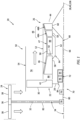
- FIG. 1 schematically illustrates a propulsion system 20 for an aircraft.
- the aircraft may be an airplane, a helicopter, a drone (e.g., an unmanned aerial vehicle (UAV)), a spacecraft or any other manned or unmanned aerial vehicle or system.
- This aircraft may be configured as a vertical take-off and landing (VTOL) aircraft or a short take-off and vertical landing (STOVL) aircraft.
- the first mode may be a horizontal flight mode (e.g., a forward flight mode) where the first direction propulsion is substantially horizontal propulsive thrust; e.g., within five degrees (5°), ten degrees (10°), etc. of a horizontal axis.
- the second mode may be a vertical flight and/or hover mode where the second direction propulsion is substantially vertical propulsive lift; e.g., within five degrees (5°), ten degrees (10°), etc. of a vertical axis.
- the aircraft propulsion system may also be configured to generate both the first direction propulsion (e.g., horizontal propulsion) and the second direction propulsion (e.g., vertical propulsion) during a third mode (e.g., a transition mode) of operation.
- the aircraft propulsion system 20 of FIG. 1 includes one or more bladed propulsor rotors such as, for example, at least one bladed first propulsor rotor 22 and at least one bladed second propulsor rotor 24.
- the aircraft propulsion system 20 of FIG. 1 also includes a gas turbine engine with a core 26 configured to rotatably drive the one or more propulsor rotors - the first propulsor rotor 22 and/or the second propulsor rotor 24.
- the first propulsor rotor 22 may be configured as a ducted rotor such as a fan rotor.
- the first propulsor rotor 22 may alternatively be configured as an open rotor (e.g., an un-ducted rotor) such as a propeller rotor, a pusher fan rotor or the like.
- the first propulsor rotor 22 of FIG. 1 is rotatable about a first rotor axis 28. This first rotor axis 28 is an axial centerline of the first propulsor rotor 22 and may be horizontal when the aircraft is on ground and/or during level aircraft flight.
- the first propulsor rotor 22 includes at least a first rotor disk 29 (or a hub) and a plurality of first rotor blades 30 (one visible in FIG. 1 ); e.g., fan blades.
- the first rotor blades 30 are distributed circumferentially around the first rotor disk 29 in an annular array.
- Each of the first rotor blades 30 is connected to and projects radially (relative to the first rotor axis 28) out from the first rotor disk 29.
- the second propulsor rotor 24 may be configured as an open rotor such as a propeller rotor or a helicopter (e.g., main) rotor.
- the second propulsor rotor 24 may alternatively be configured as a ducted rotor such as a fan rotor; e.g., see dashed line duct.
- the second propulsor rotor 24 of FIG. 1 is rotatable about a second rotor axis 32. This second rotor axis 32 is an axial centerline of the second propulsor rotor 24 and may be vertical when the aircraft is on the ground and/or during level aircraft flight.
- the second rotor axis 32 is angularly offset from the first rotor axis 28 by an included angle 34; e.g., an acute angle or a right angle.
- This included angle 34 may be between sixty degrees (60°) and ninety degrees (90°); however, the present disclosure is not limited to such an exemplary relationship.
- the second propulsor rotor 24 includes at least a second rotor disk 36 (or a hub) and a plurality of second rotor blades 38; e.g., open rotor blades.
- the second rotor blades 38 are distributed circumferentially around the second rotor disk 36 in an annular array. Each of the second rotor blades 38 is connected to and projects radially (relative to the second rotor axis 32) out from the second rotor disk 36.
- the engine core 26 extends axially along a core axis 40 from a forward, upstream airflow inlet 42 into the engine core 26 to an aft, downstream combustion products exhaust 44 from the engine core 26.
- the core axis 40 may be an axial centerline of the engine core 26 and may be horizontal when the aircraft is on the ground and/or during level aircraft flight. This core axis 40 may be parallel (e.g., coaxial) with the first rotor axis 28 and, thus, angularly offset from the second rotor axis 32.
- the engine core 26 of FIG. 1 includes a compressor section 46, a combustor section 47 and a turbine section 48.
- the turbine section 48 of FIG. 1 includes a high pressure turbine (HPT) section 48A and a low pressure turbine (LPT) section 48B (also sometimes referred to as a power turbine section).
- HPPT high pressure turbine
- LPT low pressure turbine
- the engine sections 46-48B may be arranged sequentially along the core axis 40 within an engine housing 50.
- This engine housing 50 includes an inner case 52 (e.g., a core case) and an outer case 54 (e.g., a fan case).
- the inner case 52 may house one or more of the engine sections 46-48B; e.g., the engine core 26.
- the outer case 54 may house the first propulsor rotor 22.
- the outer case 54 of FIG. 1 also axially overlaps and extends circumferentially about (e.g., completely around) the inner case 52 thereby at least partially forming a (e.g., annular) bypass flowpath 56 radially between the inner case 52 and the outer case 54.
- Each of the engine sections 46, 48A, 48B includes a bladed rotor 58-60 within that respective engine section 46, 48A, 48B.
- Each of these engine rotors 58-60 includes a plurality of rotor blades arranged circumferentially around and connected to one or more respective rotor disks (or hubs).
- the rotor blades may be formed integral with or mechanically fastened, welded, brazed and/or otherwise attached to the respective rotor disk(s) (or hub(s)).
- the compressor rotor 58 is connected to the HPT rotor 59 through a high speed shaft 62. At least (or only) these engine components 58, 59 and 62 collectively form a high speed rotating assembly 64; e.g., a high speed spool. This high speed rotating assembly 64 is rotatable about the core axis 40.
- the LPT rotor 60 is connected to a low speed shaft 66. At least (or only) these engine components 60 and 66 collectively form a low speed rotating assembly 68; e.g., a low speed spool. This low speed rotating assembly 68 is rotatable about the core axis 40.
- the low speed rotating assembly 68 and, more particularly, its low speed shaft 66 may project axially through a bore of the high speed rotating assembly 64 and its high speed shaft 62.
- the aircraft propulsion system 20 of FIG. 1 and its turbine engine include a drivetrain 70 that couples the low speed rotating assembly 68 to the first propulsor rotor 22 and that couples the low speed rotating assembly 68 to the second propulsor rotor 24.
- the drivetrain 70 of FIG. 1 includes a geartrain 72, a transmission 76 and a gearing 78; e.g., bevel gearing.
- the drivetrain 70 of FIG. 1 also includes one or more shafts 80 and 82 and/or other intermediate torque transmission devices for coupling the low speed rotating assembly 68 and its low speed shaft 66 to the second propulsor rotor 24.
- the drivetrain 70 may also include one or more intermediate torque transmission devices for coupling the geartrain 72 to the first propulsor rotor 22; e.g., a first propulsor shaft 84.
- An input into the geartrain 72 is coupled to the low speed rotating assembly 68 and its low speed shaft 66, where the low speed rotating assembly 68 forms a power input for the geartrain 72.
- An output from the geartrain 72 is coupled to the first propulsor rotor 22 through the first propulsor shaft 84, where the first propulsor rotor 22 forms a power output (e.g., load) for the geartrain 72.
- An input into the transmission 76 may be coupled to the low speed rotating assembly 68 independent of the geartrain 72.
- the low speed rotating assembly 68 for example, may be coupled to the input of the geartrain 72 and the input of the transmission 76 in parallel.
- the input of the transmission 76 of FIG. 1 is (e.g., directly or indirectly) connected to the LPT rotor 60 through the low speed shaft 66; e.g., without passing through the geartrain 72.
- An output from the transmission 76 is connected to an input into the gearing 78 through the transmission output shaft 80.
- the transmission 76 may be configured to selectively couple (e.g., transfer mechanical power between) the low speed rotating assembly 68 and the transmission output shaft 80.
- the transmission 76 may be configured to decouple the low speed rotating assembly 68 from the transmission output shaft 80, thereby decoupling the low speed rotating assembly 68 from the second propulsor rotor 24.
- the transmission 76 may be configured to couple the low speed rotating assembly 68 with the transmission output shaft 80, thereby coupling the low speed rotating assembly 68 with the second propulsor rotor 24.
- the transmission 76 may be configured as a clutched transmission or a clutchless transmission.
- An output from the gearing 78 is connected to the second propulsor rotor 24 through the second propulsor shaft 82.
- This gearing 78 provides a coupling between the transmission output shaft 80 rotating about the axis 28, 40 and the second propulsor shaft 82 rotating about the second rotor axis 32.
- the gearing 78 may also provide a speed change mechanism between the transmission output shaft 80 and the second propulsor shaft 82.
- the gearing 78 may alternatively provide a 1:1 rotational coupling between the transmission output shaft 80 and the second propulsor shaft 82 such that these shafts 80 and 82 rotate at a common (e.g., the same) rotational velocity.
- the gearing 78 and the transmission output shaft 80 may be omitted where the functionality of the gearing 78 is integrated into the transmission 76.
- the transmission 76 may be omitted where decoupling of the second propulsor rotor 24 is not required and/or where an optional additional speed change between the low speed rotating assembly 68 and the second propulsor rotor 24 is not required.
- core air During operation of the aircraft propulsion system 20, air enters the engine core 26 through the core inlet 42. This air is directed into a (e.g., annular) core flowpath 86, which core flowpath 86 extends sequentially through the compressor section 46, the combustor section 47, the HPT section 48A and the LPT section 48B from the core inlet 42 to the core exhaust 44.
- the air within this core flowpath 86 may be referred to as core air.
- the core air is compressed by the compressor rotor 58 and directed into a (e.g., annular) combustion chamber 88 of a (e.g., annular) combustor 90 in the combustor section 47.
- Fuel is injected into the combustion chamber 88 through one or more fuel injectors 92 (one visible in FIG. 1 ) and mixed with the compressed core air to provide a fuel-air mixture.
- This fuel-air mixture is ignited and combustion products thereof flow through and sequentially cause the HPT rotor 59 and the LPT rotor 60 to rotate.
- the rotation of the HPT rotor 59 drives rotation of the high speed rotating assembly 64 and its compressor rotor 58.
- the rotation of the LPT rotor 60 drives rotation of the low speed rotating assembly 68.
- the rotation of the low speed rotating assembly 68 drives rotation of the first propulsor rotor 22 through the geartrain 72 during one or more modes of operation; e.g., the first, the second and the third modes of operation.
- the rotation of the low speed rotating assembly 68 drives rotation of the second propulsor rotor 24 (e.g., independent of the geartrain 72) during one or more modes of operation; e.g., the second and the third modes of operation.
- the transmission 76 may decouple the low speed rotating assembly 68 from the second propulsor rotor 24 such that the low speed rotating assembly 68 does not drive rotation of the second propulsor rotor 24.
- the second propulsor rotor 24 may thereby be stationary (or windmill) during the first mode of operation.
- the rotation of the first propulsor rotor 22 propels bypass air (separate from the core air) through the aircraft propulsion system 20 and its bypass flowpath 56 to provide the first direction propulsion; e.g., the forward, horizontal thrust.
- the rotation of the second propulsor rotor 24 propels additional air (separate from the core air and the bypass air) to provide the second direction propulsion; e.g., vertical lift.
- the aircraft may thereby takeoff, land and/or otherwise hover during the second and the third modes of operation, and the aircraft may fly forward or otherwise move during the first and the third modes of operation.
- the bypass air may also flow through the bypass flowpath 56 during the second and the third modes of operation; however, a quantity of the bypass air flowing through the bypass flowpath 56 during the second mode of operation may be de minimis as described below in further detail.
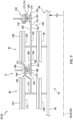
- the geartrain 72 may include multiple (e.g., epicyclic) interconnected gear systems 94 and 96.
- the first gear system 94 has a plurality of first gear system components including a first sun gear 98, a first ring gear 100, a plurality of first intermediate gears 102 and a first carrier 104.
- the first sun gear 98 is rotatable about a rotational axis 106 of the geartrain 72, which rotational axis 106 may be parallel (e.g., coaxial) with the axis 28, 40.
- the first ring gear 100 circumscribes the first sun gear 98 and the first intermediate gears 102.
- the first ring gear 100 is rotatable about the axis 28, 40, 106.
- the first intermediate gears 102 are arranged circumferentially about the axis 28, 40, 106 and the first sun gear 98 in an array.
- Each of the first intermediate gears 102 is disposed radially between and meshed with the first sun gear 98 and the first ring gear 100.
- Each of the first intermediate gears 102 is rotatably mounted to the first carrier 104.
- the first carrier 104 is rotatable about the axis 28, 40, 106.
- the second gear system 96 has a plurality of second gear system components including a second sun gear 108, a second ring gear 110, a plurality of second intermediate gears 112 and a second carrier 114.
- the second sun gear 108 is rotatable about the axis 28, 40, 106.
- the second ring gear 110 circumscribes the second sun gear 108 and the second intermediate gears 112.
- the second ring gear 110 is rotatable about the axis 28, 40, 106.
- the second intermediate gears 112 are arranged circumferentially about the axis 28, 40, 106 and the second sun gear 108 in an array.
- Each of the second intermediate gears 112 is disposed radially between and meshed with the second sun gear 108 and the second ring gear 110.
- Each of the second intermediate gears 112 is rotatably mounted to the second carrier 114.
- the second carrier 114 is rotatable about the axis 28, 40, 106.
- This second carrier 114 of FIG. 2 is coupled to (e.g., via an inter-system shaft 115 and/or another drive element) and rotatable with the first ring gear 100, where the second carrier 114 and the first ring gear 100 are configured to rotate at a common rotational velocity.
- the first propulsor rotor 22 is coupled to the geartrain 72 and its second gear system 96 through the second ring gear 110.
- the first propulsor shaft 84 (and/or another drive element), for example, may couple the first propulsor rotor 22 to the second ring gear 110.
- the first propulsor shaft 84 of FIG. 2 extends between and is connected to the first propulsor rotor 22 and the second ring gear 110.
- the low speed rotating assembly 68 and its low speed shaft 66 are coupled to the geartrain 72 and its first gear system 94 through the first sun gear 98.
- the low speed rotating assembly 68 and its low speed shaft 66 are also coupled to the geartrain 72 and its second gear system 96 through the second sun gear 108.
- the first sun gear 98 and the second sun gear 108 of FIG. 2 are each (e.g., independently) connected to the low speed rotating assembly 68 and its low speed shaft 66.
- the low speed rotating assembly 68 and its LPT rotor 60 are configured to (e.g., independently) drive rotation of the first sun gear 98 and the second sun gear 108, where the first sun gear 98, the second sun gear 108 and the LPT rotor 60 are rotate at a common rotational velocity.
- the aircraft propulsion system 20 and its drivetrain 70 may include one or more brakes 116A and 116B (generally referred to as " 116") and/or one or more lock devices 118A and 118B (generally referred to as "118").
- the first brake 116A and/or the first lock device 118A may be located at a first location 120A, or another suitable location.
- the second brake 116B and/or the second lock device 118B may be located at a second location 120B, or another suitable location.
- the first brake 116A of FIG. 2 is configured to brake (e.g., slow and/or stop) rotation of the first carrier 104 about the axis 28, 40, 106.
- the second lock device 118B is configured to lock (e.g., fix, prevent) rotation of the first ring gear 100 and the second carrier 114 about the axis 28, 40, 106, for example, following the braking of the second carrier 114 to a zero rotational speed about the axis 28, 40, 106 using the second brake 116B.
- the second carrier 114 is rotationally fixed (e.g., during the second mode of operation of FIG. 5 )
- a rotational speed of the first propulsor rotor 22 may decrease (compared to when the second carrier 114 is free to rotate).
- Reducing the rotational speed of the first propulsor rotor 22 during, for example, the second mode of operation reduces or substantially eliminates (e.g., de minimis ) the first direction propulsive thrust generated by the first propulsor rotor 22.
- Reducing first propulsor rotor thrust may, in turn, increase power available for driving rotation of the second propulsor rotor 24 and/or facilitate substantial second direction aircraft movement; e.g., without first direction aircraft movement.
- maintaining some rotation of the first propulsor rotor 22 may maintain lubrication of one or more bearings (e.g., bearings 122 in FIG. 2 ) supporting the first propulsor rotor 22 and/or prevent bearing related damage.
- shock loads may damage one of more internal components of the bearing.
- bearing damage may include, but are not limited to, brinelling and false brinelling.
- Maintaining some rotation of the first propulsor rotor 22 of FIG. 1 may also or alternatively prevent an exhaust backflow through the bypass flowpath 56 into the core inlet 42. Maintaining some rotation of the first propulsor rotor 22 may still also or alternatively prevent debris (e.g., sand, dirt, dust, etc.) from entering the core inlet 42 during the second mode of operation where the aircraft is more likely to be near the ground; e.g., for landing or takeoff.
- debris e.g., sand, dirt, dust, etc.
- the second brake 116B of FIG. 2 is configured to brake (e.g., slow and/or stop) rotation of the first ring gear 100 about the axis 28, 40, 106 and, thus, rotation of the second carrier 114 about the axis 28, 40, 106.
- the first lock device 118A is configured to lock (e.g., fix, prevent) rotation of the first carrier 104 about the axis 28, 40, 106.
- the geartrain 72 and its first gear system 94 and its second gear system 96 are configured to transfer additional power from the low speed rotating assembly 68 and its LPT rotor 60 to the first propulsor rotor 22 and any drivetrain element(s) therebetween (when included).
- This power transfer may be substantially all (e.g., minus losses in the drivetrain 70) of the power output from the low speed rotating assembly 68 and its LPT rotor 60 when the second propulsor rotor 24 is rotationally decoupled from the low speed rotating assembly 68; e.g., using the transmission 76 of FIG. 1 .
- the geartrain 72 may thereby provide a multi-speed transmission between the low speed rotating assembly 68 and the first propulsor rotor 22, where a speed ratio between the low speed rotating assembly 68 and the first propulsor rotor 22 during the second mode is less than a speed ratio between the low speed rotating assembly 68 and the first propulsor rotor 22 during the first mode.
- the first lock device 118A may be disengaged and/or the first brake 116A may be released (if currently applied).
- the second propulsor rotor 24 may thereby begin to rotate along with the already rotating first propulsor rotor 22.
- the second lock device 118B may be disengaged and/or the second brake 116B may be released (if currently applied).
- the first propulsor rotor 22 may thereby begin to rotate faster along with the already rotating second propulsor rotor 24.
- the drivetrain 70 may transfer (e.g., all, minus losses in the drivetrain 70) the power output from the low speed rotating assembly 68 and its LPT rotor 60 to (a) the first propulsor rotor 22 and the drivetrain element(s) therebetween and (b) the second propulsor rotor 24 and the drivetrain element(s) therebetween (e.g., independent of the geartrain 72 and its first gear system 94 and its second gear system 96).
- the drivetrain 70 may transfer (e.g., all, minus losses in the drivetrain 70) the power output from the low speed rotating assembly 68 and its LPT rotor 60 to (a) the first propulsor rotor 22 and the drivetrain element(s) therebetween and (b) the second propulsor rotor 24 and the drivetrain element(s) therebetween (e.g., independent of the geartrain 72 and its first gear system 94 and its second gear system 96).
- the first brake 116A and/or the second brake 116B may each be configured as or otherwise include a disk brake 124.
- the disk brake 124 of FIG. 6 includes a brake rotor 126 and one or more brake pads 128.
- the brake rotor 126 is configured rotatable with the respective geartrain member 104, 100.
- the brake rotor 126 for example, may be connected to and rotatable with the respective geartrain member 104, 100, or another rotating element (directly or indirectly) rotatable with the respective geartrain member 104, 100.
- the brake pads 128 are anchored to a brake housing 130, which may be part of the engine housing 50 (see FIG. 1 ) and/or an airframe of the aircraft.
- the brake pads 128 may be actuated by one or more brake actuators 132 (e.g., hydraulic brake actuators) to move the brake pads 128 from an open position to a closed position.
- the brake pads 128 In the open position, the brake pads 128 are spaced from and do not engage (e.g., contact) the brake rotor 126 (see position of FIG. 6 ).
- the brake pads 128 In the closed position, the brake pads 128 engage (e.g., contact) and clamp onto (e.g., squeeze) the brake rotor 126. Frictional rubbing between the brake pads 128 and the brake rotor 126 is operable to brake rotation of the brake rotor 126 and, thus, the respective geartrain member 104, 100 (or another rotating element) connected thereto.
- first and the second brakes 116 of the present disclosure are not limited to such an exemplary disk brake configuration.
- first and/or the second brake 116B may alternatively be configured as another type of brake such as a drum brake or a set of clutch plates.
- the first lock device 118A and/or the second lock device 118B may each be configured as a splined lock device; e.g., a splined coupling.
- the lock device 118 of FIG. 7 includes an inner lock element 134 (e.g., a splined shaft), an outer lock element 136 (e.g., a splined sleeve) and an actuator 138.
- the inner lock element 134 is rotatable about the axis 28, 40, 106.
- the outer lock element 136 is rotationally fixed about the axis 28, 40, 106.
- the actuator 138 is configured to move (e.g., axially translate) the outer lock element 136 along the axis 28, 40, 106 and the inner lock element 134 between an unlocked position (see dashed line in FIG. 7 ) and a locked position (see solid line in FIG. 7 ; see also FIG. 8 ).
- an unlocked position inner splines 140 of the outer lock element 136 are disengaged (e.g., spaced) from outer splines 142 of the inner lock element 134.
- the inner splines 140 of the outer lock element 136 are engaged (e.g., meshed) with the outer splines 142 of the inner lock element 134 (see also FIG. 8 ).
- the inner lock element 134 may rotate (e.g., freely, unencumbered by the outer lock element 136) about the axis 28, 40, 106.
- the outer lock element 136 is meshed with the inner lock element 134 and prevents rotation of the inner lock element 134 about the axis 28, 40, 106.
- the inner lock element 134 of the first lock device 118A may be configured as part of or may be attached (directly or indirectly) to the first carrier 104, or any other element rotatable therewith.
- the inner lock element 134 of the second lock device 118B may be configured as part of or may be attached (directly or indirectly) to the first ring gear 100, or any other element rotatable therewith. While the inner lock element 134 of FIGS. 7 and 8 is described as the rotating element and the outer lock element 136 is described as the rotationally fixed element, the operation of these elements may be switched in other embodiments.
- the inner lock element 134 may alternatively be configured as the rotationally fixed element and axially translatable by the actuator 138, and the outer lock element 136 may be configured as the rotating element.
- various other types of rotational lock devices are known in the art, and the present disclosure is not limited to any particular ones thereof.
- the geartrain 72 includes one or more bearings 144 and 146 for rotatably supporting and/or locating (e.g., centering) one or more of its geartrain members; e.g., 100, 104 and/or 114.
- the bearings 144 and 146 may be disposed to opposing axial sides of the first gear system 94.
- the bearings 144 and 146 of FIG. 2 are arranged on opposing axial sides of the sun gear 98, opposing axial sides of the first ring gear 100 and/or opposing axial sides of the array of the first intermediate gears 102. More particularly, the carrier bearing 144 of FIG.
- the inter-system bearing 146 of FIG. 2 is disposed forward of the first gear system members 98, 100 and 102, where the first gear system members 98, 100 and 102 are disposed axially between the inter-system bearing 146 and the LPT rotor 60.
- This inter-system bearing 146 is also disposed axially between the first gear system members 98, 100 and 102 and the second gear system members 108, 110 and 112.
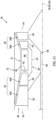
- the carrier bearing 144 is arranged radially between and engaged with a first rotating structure 148 of the geartrain 72 and a stationary structure 150 of the gas turbine engine and its engine core 26 (e.g., a frame, a support, a mount, etc.).
- the first rotating structure 148 may form, or may otherwise be connected to and rotatable with, a first component of the geartrain 72 and its first gear system 94.
- the first rotating structure 148 of FIG. 9 forms the first carrier 104.
- the first rotating structure 148 of FIG. 9 in particular, includes the first carrier 104, a first carrier support shaft 152 and a second carrier support shaft 154.
- the first carrier support shaft 152 is connected to (e.g., formed integral with or otherwise fixedly attached to) and rotatable with the first carrier 104.
- This first carrier support shaft 152 projects axially out (e.g., in an aft direction away from the geartrain 72 and its first gear system 94, and towards the LPT rotor 60 / away from the first propulsor rotor 22 of FIG. 2 ) from the first carrier 104 along the axis 28, 40, 106 to an axial aft distal end 156 of the first rotating structure 148 and its first carrier support shaft 152.
- the first carrier support shaft 152 extends radially from a radial inner side 158 of the first carrier support shaft 152 to a radial outer side 160 of the first carrier support shaft 152.
- This first carrier support shaft 152 includes a (e.g., cylindrical) rotating carrier bearing land 162 at (e.g., on, adjacent or proximate) the outer side 160 of the first carrier support shaft 152.
- the second carrier support shaft 154 is connected to (e.g., formed integral with or otherwise fixedly attached to) and rotatable with the first carrier 104.
- This second carrier support shaft 154 projects axially out (e.g., in a forward direction away from the geartrain 72 and its first gear system 94, and away from the LPT rotor 60 / towards the first propulsor rotor 22 of FIG. 2 ) from the first carrier 104 along the axis 28, 40, 106 to an axial forward distal end 164 of the first rotating structure 148 and its second carrier support shaft 154.
- the second carrier support shaft 154 extends radially from a radial inner side 166 of the second carrier support shaft 154 to a radial outer side 168 of the second carrier support shaft 154.
- This second carrier support shaft 154 includes a (e.g., cylindrical) rotating inner inter-system bearing land 170 at (e.g., on, adjacent or proximate) the outer side 168 of the second carrier support shaft 154.
- the second carrier support shaft 154 may be radially aligned with the first carrier support shaft 152.
- the inner inter-system bearing land 170 of FIG. 9 for example, is radially inline with (e.g., shares a common radius with) the rotating carrier bearing land 162.
- the present disclosure is not limited to such an exemplary arrangement.
- the stationary structure 150 may be part of or otherwise fixedly connected to / anchored to the engine housing 50 (see FIG. 1 ) and/or an airframe of the aircraft.
- the stationary structure 150 extends radially inward to a radial inner side 172 of the stationary structure 150.
- the stationary structure 150 includes a (e.g., cylindrical) stationary carrier bearing land 174 at (e.g., on, adjacent or proximate) the inner side 172 of the stationary structure 150.
- This stationary carrier bearing land 174 is spaced radially outboard of and radially faces the rotating carrier bearing land 162.
- the stationary carrier bearing land 174 extends axially along and is axially aligned with the rotating carrier bearing land 162.
- the stationary carrier bearing land 174 extends circumferentially about the rotating carrier bearing land 162.
- the stationary structure 150 and its stationary carrier bearing land 174 thereby axially overlap and circumscribe the first carrier support shaft 152 and its rotating carrier bearing land 162.
- the carrier bearing 144 is disposed radially between and is engaged with (e.g., is mounted with and/or contacts) the first carrier support shaft 152 and its rotating carrier bearing land 162 and the stationary structure 150 and its stationary carrier bearing land 174.
- This carrier bearing 144 rotatably couples the first rotating structure 148 and its first carrier support shaft 152 to the stationary structure 150.
- the carrier bearing 144 of FIG. 9 is configured as a rolling element bearing.
- This carrier bearing 144 includes a carrier bearing inner race 176, a carrier bearing outer race 178 and a plurality of carrier bearing rolling elements 180.
- the inner race 176 circumscribes and is mounted to the first carrier support shaft 152 and its rotating carrier bearing land 162; however, it is contemplated the inner race 176 may alternatively be configured integral with the first carrier support shaft 152 and its rotating carrier bearing land 162.
- the outer race 178 is nested in a bore of and is mounted to the stationary structure 150 and its stationary carrier bearing land 174; however, it is contemplated the outer race 178 may alternatively be configured integral with the stationary structure 150 and its stationary carrier bearing land 174.
- the rolling elements 180 are arranged circumferentially about the axis 28, 40, 106 in an array, where the array of the rolling elements 180 circumscribes the inner race 176. Each bearing element 180 is disposed radially between and is engaged with (e.g., contacts) the inner race 176 and the outer race 178.
- the inter-system bearing 146 is arranged radially between and engaged with the first rotating structure 148 of the geartrain 72 and a second rotating structure 182 of the geartrain 72.
- the second rotating structure 182 may form, or may otherwise be connected to and rotatable with, a second component of the geartrain 72 and its first gear system 94 and/or a third component of the geartrain 72 and its second gear system 96.
- the second rotating structure 182 of FIG. 9 forms the first ring gear 100 and the second carrier 114.
- the second rotating structure 182 of FIG. 9 in particular, includes the first ring gear 100, the second carrier 114 and the inter-system shaft 115.
- the second rotating structure 182 and its inter-system shaft 115 includes a (e.g., cylindrical) rotating outer inter-system bearing land 184.
- This outer inter-system bearing land 184 is spaced radially outboard of and radially faces the inner inter-system bearing land 170.
- the outer inter-system bearing land 184 extends axially along and is axially aligned with the inner inter-system bearing land 170.
- the outer inter-system bearing land 184 extends circumferentially about the inner inter-system bearing land 170.
- the inter-system shaft 115 and its outer inter-system bearing land 184 thereby axially overlap and circumscribe the second carrier support shaft 154 and its inner inter-system bearing land 170.
- the inter-system bearing 146 is disposed radially between and is engaged with (e.g., is mounted with and/or contacts) the second carrier support shaft 154 and its inner inter-system bearing land 170 and the inter-system shaft 115 and its outer inter-system bearing land 184.
- This inter-system bearing 146 rotatably couples the first rotating structure 148 and its second carrier support shaft 154 to the second rotating structure 182 and its inter-system shaft 115.
- the inter-system bearing 146 of FIG. 9 for example, is configured as a rolling element bearing.
- This inter-system bearing 146 includes an inter-system bearing inner race 186, an inter-system bearing outer race 188 and a plurality of inter-system bearing rolling elements 190.
- the inner race 186 circumscribes and is mounted to the second carrier support shaft 154 and its inner inter-system bearing land 170; however, it is contemplated the inner race 186 may alternatively be configured integral with the second carrier support shaft 154 and its inner inter-system bearing land 170.
- the outer race 188 is nested in a bore of and is mounted to the second rotating structure 182 and its outer inter-system bearing land 184; however, it is contemplated the outer race 188 may alternatively be configured integral with the second rotating structure 182 and its outer inter-system bearing land 184.
- the rolling elements 190 are arranged circumferentially about the axis 28, 40, 106 in an array, where the array of the rolling elements 190 circumscribes the inner race 186. Each rolling element 190 is disposed radially between and is engaged with (e.g., contacts) the inner race 186 and the outer race 188.
- a radial force exerted on the first intermediate gears 102 and, thus, the first carrier 104 through the first sun gear 98 and/or the first ring gear 100 may be substantially balanced. Provision of the carrier bearing 144 and the inter-system bearing 146 may thereby reduce or eliminate a bending moment at a meshed gear interface between the gears 98 and 102 and/or a meshed gear interface between the gears 100 and 102.
- the carrier bearing 144 and the inter-system bearing 146 may support and locate (e.g., center) the rotation of the first rotating structure 148 and its first carrier 104 about the axis 28, 40, 106.
- the inter-system bearing 146 may also support and locate (e.g., center) the rotation of the second rotating structure 182 and its members 100 and 114 about the axis 28, 40, 106.
- the bearings 144 and 146 of FIG. 9 are disposed to opposing axial sides of the first gear system 94.
- the present disclosure is not limited to such an exemplary arrangement.
- the inter-system bearing 146 (see FIG. 9 ) may be replaced by a second carrier bearing 192, which second carrier bearing 192 may have a similar configuration as the first carrier bearing 144.
- both carrier bearings 144 and 192 are mounted to and rotatably couple the first rotating structure 148 and its first carrier support shaft 152 and the stationary structure 150.
- carrier bearings 144 and 192 are arranged axially along the first rotating structure 148 and its first carrier support shaft 152, where the first carrier bearing 144 is disposed axially between and spaced axially from the array of the first intermediate gears 102 and the second carrier bearing 192.
- both of the carrier bearings 144 and 192 are disposed to a common axial side of the first gear system members 98, 100 and 102; e.g., axially between the first gear system members 98, 100 and 102 and the LPT rotor 60 (see FIG. 2 ).
- a radial force exerted on the first intermediate gears 102 and, thus, the first carrier 104 through the first sun gear 98 and/or the first ring gear 100 may be substantially balanced out by reaction forces through the carrier bearings 144 and 192.
- Each of the bearings 144, 146, 192 may be configured as a rolling element bearing as described above. However, in other embodiments, it is contemplated one or more of the bearings 144, 146 and/or 192 may alternatively each be configured as a journal bearing or another type of bearing.
- the first sun gear 98 and the second sun gear 108 may each be independently connected (e.g., connected in parallel) to the low speed rotating assembly 68 and its low speed shaft 66. In other embodiments, however, the second sun gear 108 may be connected to the low speed rotating assembly 68 and its low speed shaft 66 through the first sun gear 98.
- the second sun gear 108 may be rotationally fixed to the first sun gear 98.
- the first sun gear 98 may be connected to the low speed rotating assembly 68 and its low speed shaft 66 through the second sun gear 108.
- the first sun gear 98 for example, may be rotationally fixed to the second sun gear 108.
- the low speed rotating assembly 68 and its low speed shaft 66 may be connected to the transmission 76 (see FIG. 1 ) and, thus, the second propulsor rotor 24 independent of (e.g., in parallel with) geartrain 72.
- the transmission 76 and, thus, the second propulsor rotor 24 may be coupled to the low speed rotating assembly 68 and its low speed shaft 66 through the first sun gear 98 or the second sun gear 108, but not though the rest of the first gear system 94 and the second gear system 96.
- the low speed rotating assembly 68 may be configured without a compressor rotor.
- the low speed rotating assembly 68 may include a low pressure compressor (LPC) rotor 58' arranged within a low pressure compressor (LPC) section 46A of the compressor section 46.
- the compressor rotor 58 may be a high pressure compressor (HPC) rotor 58 within a high pressure compressor (HPC) section 46B of the compressor section 46.
- the engine core 26 may have various configurations other than those described above.
- the engine core 26, for example, may be configured with a single spool, with two spools (e.g., see FIGS. 1 and 11 ), or with more than two spools.
- the engine core 26 may be configured with one or more axial flow compressor sections, one or more radial flow compressor sections, one or more axial flow turbine sections and/or one or more radial flow turbine sections.
- the engine core 26 may be configured with any type or configuration of annular, tubular (e.g., CAN), axial flow and/or reverser flow combustor. The present disclosure therefore is not limited to any particular types or configurations of gas turbine engine cores.
- the engine core 26 of the present disclosure may drive more than the two propulsor rotors 22 and 24, or a single one of the propulsor rotors 22, 24 and/or one or more other mechanical loads; e.g., electric machines, electric generators, electric motors, etc.
- the aircraft propulsion system 20, for example, may include two or more of the first propulsor rotors 22 and/or two or more of the second propulsor rotors 24.
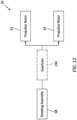
- the aircraft propulsion system 20 of FIG. 12 includes multiple second propulsor rotors 24 rotatably driven by the low speed rotating assembly 68. These second propulsor rotors 24 may rotate about a common axis.
- each second propulsor rotor 24 may rotate about a discrete axis where, for example, the second propulsor rotors 24 are laterally spaced from one another and coupled to the low speed rotating assembly 68 through a power splitting geartrain 194.
Landscapes
- Engineering & Computer Science (AREA)
- General Engineering & Computer Science (AREA)
- Mechanical Engineering (AREA)
- Chemical & Material Sciences (AREA)
- Combustion & Propulsion (AREA)
- Retarders (AREA)
Applications Claiming Priority (1)
| Application Number | Priority Date | Filing Date | Title |
|---|---|---|---|
| US18/375,102 US12331683B2 (en) | 2023-09-29 | 2023-09-29 | Bearing arrangement for turbine engine geartrain |
Publications (1)
| Publication Number | Publication Date |
|---|---|
| EP4530496A1 true EP4530496A1 (de) | 2025-04-02 |
Family
ID=92932857
Family Applications (1)
| Application Number | Title | Priority Date | Filing Date |
|---|---|---|---|
| EP24203731.5A Pending EP4530496A1 (de) | 2023-09-29 | 2024-09-30 | Lageranordnung für ein turbinenmotorgetriebe |
Country Status (2)
| Country | Link |
|---|---|
| US (2) | US12331683B2 (de) |
| EP (1) | EP4530496A1 (de) |
Families Citing this family (1)
| Publication number | Priority date | Publication date | Assignee | Title |
|---|---|---|---|---|
| US12331683B2 (en) * | 2023-09-29 | 2025-06-17 | Rtx Corporation | Bearing arrangement for turbine engine geartrain |
Citations (5)
| Publication number | Priority date | Publication date | Assignee | Title |
|---|---|---|---|---|
| GB2199900A (en) * | 1987-01-15 | 1988-07-20 | Rolls Royce Plc | Starting/clutch arrangement in a turboprop/fan gas turbine engine |
| US4817382A (en) * | 1985-12-31 | 1989-04-04 | The Boeing Company | Turboprop propulsion apparatus |
| US20130045102A1 (en) * | 2011-08-18 | 2013-02-21 | Snecma | Mechanical transmission device for driving in rotation counter-rotating propellers of a dual-propeller turboprop |
| US8967950B2 (en) * | 2009-03-11 | 2015-03-03 | Snecma | Drive mechanism for a pair of contra-rotating propellers through an epicyclic gear train |
| US20190024582A1 (en) * | 2016-11-15 | 2019-01-24 | Pratt & Whitney Canada Corp. | Gearbox for gas turbine engine |
Family Cites Families (85)
| Publication number | Priority date | Publication date | Assignee | Title |
|---|---|---|---|---|
| DE1119675B (de) | 1960-06-14 | 1961-12-14 | M A N Turbomotoren G M B H | Triebwerksanordnung fuer Kurz- oder Senkrechtstart-Flugzeuge mit Hubgeblaese |
| US3678690A (en) | 1970-07-10 | 1972-07-25 | United Aircraft Corp | Convertible composite engine |
| DE2242048A1 (de) | 1972-08-26 | 1974-03-07 | Motoren Turbinen Union | Turbinenstrahltriebwerk in mehrstromund mehrwellen-bauweise |
| SE401711B (sv) * | 1976-09-24 | 1978-05-22 | Kronogard Sven Olof | Gasturbin-transmissionsanleggning |
| US4791783A (en) | 1981-11-27 | 1988-12-20 | General Electric Company | Convertible aircraft engine |
| US4651521A (en) | 1985-11-21 | 1987-03-24 | Avco Corporation | Convertible turbo-fan, turbo-shaft aircraft propulsion system |
| FR2609136B1 (fr) | 1986-12-31 | 1989-12-01 | Camara Alpha | Egalisateur de couple pour arbres contrarotatifs |
| US4936748A (en) | 1988-11-28 | 1990-06-26 | General Electric Company | Auxiliary power source in an unducted fan gas turbine engine |
| US5209428A (en) | 1990-05-07 | 1993-05-11 | Lockheed Corporation | Propulsion system for a vertical and short takeoff and landing aircraft |
| US5452988A (en) | 1994-04-28 | 1995-09-26 | Sundstrand Corporation | Blade pitch change mechanism |
| FR2775734B1 (fr) | 1998-03-05 | 2000-04-07 | Snecma | Procede et dispositif d'inversion de poussee pour moteur a tres grand taux de dilution |
| US6269627B1 (en) | 1998-12-16 | 2001-08-07 | United Technologies Corporation | Rapid thrust response control logic for shaft-driven lift fan STOVL engine |
| US6270037B1 (en) | 1998-12-16 | 2001-08-07 | United Technologies Corporation | Rapid response attitude control logic for shaft-driven lift fan STOVL engine |
| US6619908B2 (en) | 2001-09-10 | 2003-09-16 | Pratt & Whitney Canada Corp. | Axial and radial seal arrangement |
| US7481062B2 (en) | 2005-12-30 | 2009-01-27 | Honeywell International Inc. | More electric aircraft starter-generator multi-speed transmission system |
| US8534074B2 (en) | 2008-05-13 | 2013-09-17 | Rolls-Royce Corporation | Dual clutch arrangement and method |
| FR2942284B1 (fr) * | 2009-02-16 | 2011-03-04 | Snecma | Lubrification et refroidissement d'un reducteur a train d'engrenages epicycloidal |
| FR2942615B1 (fr) * | 2009-02-27 | 2011-04-01 | Snecma | Dispositif a helices contrarotatives ayant un moyen de changement de pas des helices |
| DE102009028612A1 (de) | 2009-08-18 | 2011-02-24 | Zf Friedrichshafen Ag | Windkraftanlage und Verfahren zur Betriebssteuerung einer Windkraftanlage |
| FR2950381B1 (fr) | 2009-09-18 | 2011-10-28 | Snecma | Turbomachine a helices non carenees contrarotatives |
| EP3922822B1 (de) | 2011-06-17 | 2026-04-22 | RTX Corporation | Motorlagerträger |
| US9174741B2 (en) | 2012-07-09 | 2015-11-03 | Mcmaster University | Hybrid powertrain system |
| US10094295B2 (en) | 2013-01-30 | 2018-10-09 | Pratt & Whitney Canada Corp. | Gas turbine engine with transmission |
| US9290266B2 (en) | 2013-03-15 | 2016-03-22 | Bell Helicopter Textron Inc. | Speed control assembly and methods of using same |
| US9452815B2 (en) | 2013-03-15 | 2016-09-27 | Michigan Marine Propulsion Systems, LLC | Contra-rotating propulsor for marine propulsion |
| JP6254683B2 (ja) | 2013-05-08 | 2017-12-27 | ユナイテッド テクノロジーズ コーポレイションUnited Technologies Corporation | アライメント不整が改善されたファン駆動歯車システム |
| FR3008155B1 (fr) | 2013-07-03 | 2016-10-07 | Snecma | Transmission a reducteurs multiples entre un arbre d'entrainement et une paire d'helices coaxiales a cet arbre |
| US10138757B2 (en) | 2013-08-20 | 2018-11-27 | United Technologies Corporation | Bearing system for gas turbine engine |
| WO2015031143A1 (en) | 2013-08-29 | 2015-03-05 | United Technologies Corporation | Three spool geared turbofan with low pressure compressor drive gear system and mechanical controller |
| FR3019224B1 (fr) | 2014-03-27 | 2016-03-18 | Turbomeca | Procede d'assistance d'un turbomoteur en veille d'un helicoptere multi-moteur et architecture d'un systeme propulsif d'un helicoptere comprenant au moins un turbomoteur pouvant etre en veille |
| US9701406B2 (en) | 2014-12-11 | 2017-07-11 | Bell Helicopter Textron Inc. | Convertible tiltrotor aircraft |
| AT516038B1 (de) | 2014-12-12 | 2016-02-15 | Set Sustainable Energy Technologies Gmbh | Antriebsstrang |
| US10215054B2 (en) | 2014-12-16 | 2019-02-26 | United Technologies Corporation | Secondary sealing system |
| US9878798B2 (en) | 2014-12-31 | 2018-01-30 | Rolls-Royce North American Technologies Inc. | Aircraft with counter-rotating turbofan engines |
| US10669946B2 (en) | 2015-06-05 | 2020-06-02 | Raytheon Technologies Corporation | Geared architecture for a gas turbine engine |
| US10578028B2 (en) | 2015-08-18 | 2020-03-03 | General Electric Company | Compressor bleed auxiliary turbine |
| WO2017060628A1 (fr) | 2015-10-05 | 2017-04-13 | Safran Aircraft Engines | Ensemble de propulsion d'un aéronef equipé d'une soufflante principale et d'au moins une soufflante déportée |
| US10107135B2 (en) * | 2015-10-26 | 2018-10-23 | United Technologies Corporation | Gas turbine engine with gearbox health features |
| FR3045759B1 (fr) | 2015-12-21 | 2018-01-19 | Safran Transmission Systems | Mecanisme de transmission comprenant un organe d'accouplement, turbomachine equipee d'un tel mecanisme et procede de fonctionnement dudit mecanisme |
| ITUA20162733A1 (it) | 2016-04-20 | 2017-10-20 | Ge Avio Srl | Unita' di trasferimento d'olio per trasferire olio tra una parte statica ed una parte rotante |
| US11060587B1 (en) | 2016-05-12 | 2021-07-13 | Mitsubishi Heavy Industries Compressor Corporation | Variable-speed speed-up mechanism |
| US20180009536A1 (en) | 2016-07-11 | 2018-01-11 | General Electric Company | Bleed flow extraction system for a gas turbine engine |
| US11073160B2 (en) | 2016-09-08 | 2021-07-27 | The United States Of America As Represented By The Secretary Of The Army | Adaptable articulating axial-flow compressor/turbine rotor blade |
| DE102016221969A1 (de) | 2016-11-09 | 2018-05-09 | Robert Bosch Gmbh | Trägertopf für eine Bremsscheibe, Bremsscheibeneinrichtung |
| US11174782B2 (en) | 2017-02-10 | 2021-11-16 | Pratt & Whitney Canada Corp. | Planetary gearbox for gas turbine engine |
| GB2562246B (en) | 2017-05-09 | 2019-09-25 | Rolls Royce Plc | A Geared gas turbine engine |
| US10822101B2 (en) | 2017-07-21 | 2020-11-03 | General Electric Company | Vertical takeoff and landing aircraft having a forward thrust propulsor |
| US10954813B2 (en) | 2017-08-18 | 2021-03-23 | Rolls-Royce Deutschland Ltd & Co Kg | Planetary gearbox system and method for operating a planetary gearbox system |
| JP6879865B2 (ja) | 2017-08-28 | 2021-06-02 | 本田技研工業株式会社 | マルチコプタ |
| CN107856488B (zh) | 2017-11-16 | 2023-12-19 | 四川省特种设备检验研究院 | 一种可垂直起降插电式混合动力飞行汽车的动力传动系统 |
| FR3075874B1 (fr) | 2017-12-22 | 2019-11-22 | Safran Aircraft Engines | Turbomachine a reducteur pour un aeronef |
| US11168616B2 (en) | 2018-05-16 | 2021-11-09 | Raytheon Technologies Corporation | Hybrid electric fan with improved low pressure compressor |
| US10759545B2 (en) | 2018-06-19 | 2020-09-01 | Raytheon Technologies Corporation | Hybrid electric aircraft system with distributed propulsion |
| BE1026407B1 (fr) | 2018-06-22 | 2020-01-28 | Safran Aero Boosters Sa | Turbomachine a transmission hybride |
| US20200017229A1 (en) | 2018-07-13 | 2020-01-16 | Bell Helicopter Textron Inc. | Fan clutch for convertible engine |
| GB201814869D0 (en) | 2018-09-03 | 2018-10-31 | Rolls Royce Plc | Aircraft Propulsion System |
| US11199103B2 (en) | 2018-09-06 | 2021-12-14 | General Electric Company | Seal assembly for a turbomachine |
| US10830078B2 (en) | 2018-09-14 | 2020-11-10 | Raytheon Technologies Corporation | Shaft seal assembly for a turbine engine |
| EP3853466B1 (de) | 2018-09-21 | 2025-03-05 | Safran Aircraft Engines | Turboreaktor mit einer leistungs-versorgungsvorrichtung |
| US11077949B2 (en) | 2018-10-05 | 2021-08-03 | The Boeing Company | Dual turbine thermal management system (TMS) |
| US11566567B2 (en) | 2018-12-10 | 2023-01-31 | Raytheon Technologies Corporation | Low pressure compressor control for a gas turbine engine |
| DE102018132544A1 (de) | 2018-12-17 | 2020-06-18 | Rolls-Royce Deutschland Ltd & Co Kg | Gasturbinentriebwerk und Luftfahrzeug mit einem Gasturbinentriebwerk |
| US11015533B2 (en) | 2018-12-17 | 2021-05-25 | Raytheon Technologies Corporation | Fan and low pressure compressor geared to low speed spool of gas turbine engine |
| US11186378B2 (en) | 2019-03-29 | 2021-11-30 | Pratt & Whitney Canada Corp. | Hybrid aircraft propulsion power plants |
| US10968748B2 (en) | 2019-04-08 | 2021-04-06 | United Technologies Corporation | Non-axisymmetric end wall contouring with aft mid-passage peak |
| US10876411B2 (en) | 2019-04-08 | 2020-12-29 | United Technologies Corporation | Non-axisymmetric end wall contouring with forward mid-passage peak |
| GB201906526D0 (en) | 2019-05-09 | 2019-06-26 | Rolls Royce Plc | Hybrid electric aircraft propulsion system |
| US11519337B2 (en) | 2019-06-24 | 2022-12-06 | Pratt & Whitney Canada Corp. | Gas turbine auxiliary power unit |
| US10914234B1 (en) | 2019-08-23 | 2021-02-09 | Raytheon Technologies Corporation | Gas turbine engine and method for operating same |
| US11718395B2 (en) | 2019-09-13 | 2023-08-08 | Rolls-Royce Corporation | Electrically controlled vertical takeoff and landing aircraft system and method |
| US11215122B2 (en) * | 2019-11-20 | 2022-01-04 | Raytheon Technologies Corporation | Geared architecture for gas turbine engine |
| US11162575B2 (en) * | 2019-11-20 | 2021-11-02 | Raytheon Technologies Corporation | Geared architecture for gas turbine engine |
| GB201918281D0 (en) | 2019-12-12 | 2020-01-29 | Rolls Royce Plc | Aircraft hybrid propulsion system |
| IT202000000652A1 (it) | 2020-01-15 | 2021-07-15 | Ge Avio Srl | Turbomacchina e gruppo ingranaggi |
| US11377199B2 (en) | 2020-01-28 | 2022-07-05 | Pratt & Whitney Canada Corp. | Planetary gearbox for gas turbine engine |
| US20230228231A1 (en) | 2022-01-19 | 2023-07-20 | General Electric Company | Bleed flow assembly for a gas turbine engine |
| US20230228216A1 (en) | 2022-01-19 | 2023-07-20 | General Electric Company | Bleed flow assembly for a gas turbine engine |
| EP4283106B1 (de) | 2022-05-26 | 2025-11-12 | RTX Corporation | Selektive leistungsverteilung für ein flugzeugantriebssystem |
| US11958624B2 (en) | 2022-05-26 | 2024-04-16 | Rtx Corporation | Selective power distribution for an aircraft propulsion system |
| EP4283162A1 (de) | 2022-05-26 | 2023-11-29 | RTX Corporation | Selektive leistungsverteilung für ein flugzeugantriebssystem |
| EP4321734A1 (de) | 2022-08-12 | 2024-02-14 | RTX Corporation | Anordnung zur abdichtung eines spaltes zwischen rotierenden strukturen eines gasturbinenmotors |
| US11939926B2 (en) | 2022-08-16 | 2024-03-26 | Rtx Corporation | Selective power distribution for an aircraft propulsion system |
| US12129802B2 (en) | 2022-09-06 | 2024-10-29 | Rtx Corporation | Selective power distribution for an aircraft propulsion system |
| US11952949B2 (en) | 2022-09-06 | 2024-04-09 | Rtx Corporation | Selective power distribution for an aircraft propulsion system |
| US12331683B2 (en) * | 2023-09-29 | 2025-06-17 | Rtx Corporation | Bearing arrangement for turbine engine geartrain |
-
2023
- 2023-09-29 US US18/375,102 patent/US12331683B2/en active Active
-
2024
- 2024-09-30 EP EP24203731.5A patent/EP4530496A1/de active Pending
-
2025
- 2025-06-16 US US19/239,567 patent/US20250305451A1/en active Pending
Patent Citations (5)
| Publication number | Priority date | Publication date | Assignee | Title |
|---|---|---|---|---|
| US4817382A (en) * | 1985-12-31 | 1989-04-04 | The Boeing Company | Turboprop propulsion apparatus |
| GB2199900A (en) * | 1987-01-15 | 1988-07-20 | Rolls Royce Plc | Starting/clutch arrangement in a turboprop/fan gas turbine engine |
| US8967950B2 (en) * | 2009-03-11 | 2015-03-03 | Snecma | Drive mechanism for a pair of contra-rotating propellers through an epicyclic gear train |
| US20130045102A1 (en) * | 2011-08-18 | 2013-02-21 | Snecma | Mechanical transmission device for driving in rotation counter-rotating propellers of a dual-propeller turboprop |
| US20190024582A1 (en) * | 2016-11-15 | 2019-01-24 | Pratt & Whitney Canada Corp. | Gearbox for gas turbine engine |
Also Published As
| Publication number | Publication date |
|---|---|
| US20250305451A1 (en) | 2025-10-02 |
| US20250109708A1 (en) | 2025-04-03 |
| US12331683B2 (en) | 2025-06-17 |
Similar Documents
| Publication | Publication Date | Title |
|---|---|---|
| EP4345007B1 (de) | Selektive leistungsverteilung für ein flugzeugantriebssystem | |
| US12492663B2 (en) | Aircraft propulsion system geartrain | |
| US12092040B2 (en) | Selective power distribution for an aircraft propulsion system | |
| US11958624B2 (en) | Selective power distribution for an aircraft propulsion system | |
| EP4336026A1 (de) | Selektive leistungsverteilung für ein flugzeugantriebssystem | |
| EP4283106B1 (de) | Selektive leistungsverteilung für ein flugzeugantriebssystem | |
| EP4325088B1 (de) | Getriebe für ein flugzeugantriebssystem | |
| US20250305451A1 (en) | Bearing arrangement for turbine engine geartrain | |
| EP4365429A1 (de) | Getriebe für ein flugzeugantriebssystem | |
| US12378000B2 (en) | Aircraft propulsion system geartrain | |
| US12135076B1 (en) | Fluid device(s) for supporting rotating structure(s) of a turbine engine | |
| EP4530458A1 (de) | Selektive leistungsverteilung für ein flugzeugantriebssystem | |
| US12188551B1 (en) | Reduced clearance interface between a fluid device and a rotating structure for a geartrain | |
| US12292107B2 (en) | Fluid damper for turbine engine geartrain assembly | |
| EP4530455A1 (de) | Flugzeugantriebssystem mit hilfsturbinensystem | |
| US12158112B1 (en) | Selective power distribution for an aircraft propulsion system |
Legal Events
| Date | Code | Title | Description |
|---|---|---|---|
| PUAI | Public reference made under article 153(3) epc to a published international application that has entered the european phase |
Free format text: ORIGINAL CODE: 0009012 |
|
| STAA | Information on the status of an ep patent application or granted ep patent |
Free format text: STATUS: THE APPLICATION HAS BEEN PUBLISHED |
|
| AK | Designated contracting states |
Kind code of ref document: A1 Designated state(s): AL AT BE BG CH CY CZ DE DK EE ES FI FR GB GR HR HU IE IS IT LI LT LU LV MC ME MK MT NL NO PL PT RO RS SE SI SK SM TR |
|
| STAA | Information on the status of an ep patent application or granted ep patent |
Free format text: STATUS: REQUEST FOR EXAMINATION WAS MADE |
|
| STAA | Information on the status of an ep patent application or granted ep patent |
Free format text: STATUS: EXAMINATION IS IN PROGRESS |
|
| 17P | Request for examination filed |
Effective date: 20251002 |
|
| 17Q | First examination report despatched |
Effective date: 20251016 |