EP4530391A2 - Verfahren zur verstärkung der weichspülerleistung - Google Patents
Verfahren zur verstärkung der weichspülerleistung Download PDFInfo
- Publication number
- EP4530391A2 EP4530391A2 EP25157734.2A EP25157734A EP4530391A2 EP 4530391 A2 EP4530391 A2 EP 4530391A2 EP 25157734 A EP25157734 A EP 25157734A EP 4530391 A2 EP4530391 A2 EP 4530391A2
- Authority
- EP
- European Patent Office
- Prior art keywords
- softening
- booster
- composition
- fabric
- bleach
- Prior art date
- Legal status (The legal status is an assumption and is not a legal conclusion. Google has not performed a legal analysis and makes no representation as to the accuracy of the status listed.)
- Pending
Links
Images















Classifications
-
- C—CHEMISTRY; METALLURGY
- C11—ANIMAL OR VEGETABLE OILS, FATS, FATTY SUBSTANCES OR WAXES; FATTY ACIDS THEREFROM; DETERGENTS; CANDLES
- C11D—DETERGENT COMPOSITIONS; USE OF SINGLE SUBSTANCES AS DETERGENTS; SOAP OR SOAP-MAKING; RESIN SOAPS; RECOVERY OF GLYCEROL
- C11D1/00—Detergent compositions based essentially on surface-active compounds; Use of these compounds as a detergent
- C11D1/38—Cationic compounds
- C11D1/62—Quaternary ammonium compounds
-
- C—CHEMISTRY; METALLURGY
- C11—ANIMAL OR VEGETABLE OILS, FATS, FATTY SUBSTANCES OR WAXES; FATTY ACIDS THEREFROM; DETERGENTS; CANDLES
- C11D—DETERGENT COMPOSITIONS; USE OF SINGLE SUBSTANCES AS DETERGENTS; SOAP OR SOAP-MAKING; RESIN SOAPS; RECOVERY OF GLYCEROL
- C11D1/00—Detergent compositions based essentially on surface-active compounds; Use of these compounds as a detergent
- C11D1/66—Non-ionic compounds
- C11D1/662—Carbohydrates or derivatives
-
- C—CHEMISTRY; METALLURGY
- C11—ANIMAL OR VEGETABLE OILS, FATS, FATTY SUBSTANCES OR WAXES; FATTY ACIDS THEREFROM; DETERGENTS; CANDLES
- C11D—DETERGENT COMPOSITIONS; USE OF SINGLE SUBSTANCES AS DETERGENTS; SOAP OR SOAP-MAKING; RESIN SOAPS; RECOVERY OF GLYCEROL
- C11D1/00—Detergent compositions based essentially on surface-active compounds; Use of these compounds as a detergent
- C11D1/66—Non-ionic compounds
- C11D1/667—Neutral esters, e.g. sorbitan esters
-
- C—CHEMISTRY; METALLURGY
- C11—ANIMAL OR VEGETABLE OILS, FATS, FATTY SUBSTANCES OR WAXES; FATTY ACIDS THEREFROM; DETERGENTS; CANDLES
- C11D—DETERGENT COMPOSITIONS; USE OF SINGLE SUBSTANCES AS DETERGENTS; SOAP OR SOAP-MAKING; RESIN SOAPS; RECOVERY OF GLYCEROL
- C11D3/00—Other compounding ingredients of detergent compositions covered in group C11D1/00
- C11D3/0005—Other compounding ingredients characterised by their effect
- C11D3/001—Softening compositions
-
- C—CHEMISTRY; METALLURGY
- C11—ANIMAL OR VEGETABLE OILS, FATS, FATTY SUBSTANCES OR WAXES; FATTY ACIDS THEREFROM; DETERGENTS; CANDLES
- C11D—DETERGENT COMPOSITIONS; USE OF SINGLE SUBSTANCES AS DETERGENTS; SOAP OR SOAP-MAKING; RESIN SOAPS; RECOVERY OF GLYCEROL
- C11D3/00—Other compounding ingredients of detergent compositions covered in group C11D1/00
- C11D3/02—Inorganic compounds ; Elemental compounds
- C11D3/12—Water-insoluble compounds
- C11D3/124—Silicon containing, e.g. silica, silex, quartz or glass beads
- C11D3/1246—Silicates, e.g. diatomaceous earth
- C11D3/128—Aluminium silicates, e.g. zeolites
-
- C—CHEMISTRY; METALLURGY
- C11—ANIMAL OR VEGETABLE OILS, FATS, FATTY SUBSTANCES OR WAXES; FATTY ACIDS THEREFROM; DETERGENTS; CANDLES
- C11D—DETERGENT COMPOSITIONS; USE OF SINGLE SUBSTANCES AS DETERGENTS; SOAP OR SOAP-MAKING; RESIN SOAPS; RECOVERY OF GLYCEROL
- C11D3/00—Other compounding ingredients of detergent compositions covered in group C11D1/00
- C11D3/16—Organic compounds
- C11D3/37—Polymers
- C11D3/3703—Macromolecular compounds obtained otherwise than by reactions only involving carbon-to-carbon unsaturated bonds
- C11D3/373—Macromolecular compounds obtained otherwise than by reactions only involving carbon-to-carbon unsaturated bonds containing silicones
- C11D3/3742—Nitrogen containing silicones
-
- D—TEXTILES; PAPER
- D06—TREATMENT OF TEXTILES OR THE LIKE; LAUNDERING; FLEXIBLE MATERIALS NOT OTHERWISE PROVIDED FOR
- D06M—TREATMENT, NOT PROVIDED FOR ELSEWHERE IN CLASS D06, OF FIBRES, THREADS, YARNS, FABRICS, FEATHERS OR FIBROUS GOODS MADE FROM SUCH MATERIALS
- D06M11/00—Treating fibres, threads, yarns, fabrics or fibrous goods made from such materials, with inorganic substances or complexes thereof; Such treatment combined with mechanical treatment, e.g. mercerising
- D06M11/32—Treating fibres, threads, yarns, fabrics or fibrous goods made from such materials, with inorganic substances or complexes thereof; Such treatment combined with mechanical treatment, e.g. mercerising with oxygen, ozone, ozonides, oxides, hydroxides or percompounds; Salts derived from anions with an amphoteric element-oxygen bond
- D06M11/36—Treating fibres, threads, yarns, fabrics or fibrous goods made from such materials, with inorganic substances or complexes thereof; Such treatment combined with mechanical treatment, e.g. mercerising with oxygen, ozone, ozonides, oxides, hydroxides or percompounds; Salts derived from anions with an amphoteric element-oxygen bond with oxides, hydroxides or mixed oxides; with salts derived from anions with an amphoteric element-oxygen bond
- D06M11/45—Oxides or hydroxides of elements of Groups 3 or 13 of the Periodic Table; Aluminates
-
- D—TEXTILES; PAPER
- D06—TREATMENT OF TEXTILES OR THE LIKE; LAUNDERING; FLEXIBLE MATERIALS NOT OTHERWISE PROVIDED FOR
- D06M—TREATMENT, NOT PROVIDED FOR ELSEWHERE IN CLASS D06, OF FIBRES, THREADS, YARNS, FABRICS, FEATHERS OR FIBROUS GOODS MADE FROM SUCH MATERIALS
- D06M13/00—Treating fibres, threads, yarns, fabrics or fibrous goods made from such materials, with non-macromolecular organic compounds; Such treatment combined with mechanical treatment
- D06M13/10—Treating fibres, threads, yarns, fabrics or fibrous goods made from such materials, with non-macromolecular organic compounds; Such treatment combined with mechanical treatment with compounds containing oxygen
- D06M13/224—Esters of carboxylic acids; Esters of carbonic acid
-
- D—TEXTILES; PAPER
- D06—TREATMENT OF TEXTILES OR THE LIKE; LAUNDERING; FLEXIBLE MATERIALS NOT OTHERWISE PROVIDED FOR
- D06M—TREATMENT, NOT PROVIDED FOR ELSEWHERE IN CLASS D06, OF FIBRES, THREADS, YARNS, FABRICS, FEATHERS OR FIBROUS GOODS MADE FROM SUCH MATERIALS
- D06M13/00—Treating fibres, threads, yarns, fabrics or fibrous goods made from such materials, with non-macromolecular organic compounds; Such treatment combined with mechanical treatment
- D06M13/322—Treating fibres, threads, yarns, fabrics or fibrous goods made from such materials, with non-macromolecular organic compounds; Such treatment combined with mechanical treatment with compounds containing nitrogen
- D06M13/46—Compounds containing quaternary nitrogen atoms
-
- D—TEXTILES; PAPER
- D06—TREATMENT OF TEXTILES OR THE LIKE; LAUNDERING; FLEXIBLE MATERIALS NOT OTHERWISE PROVIDED FOR
- D06M—TREATMENT, NOT PROVIDED FOR ELSEWHERE IN CLASS D06, OF FIBRES, THREADS, YARNS, FABRICS, FEATHERS OR FIBROUS GOODS MADE FROM SUCH MATERIALS
- D06M15/00—Treating fibres, threads, yarns, fabrics, or fibrous goods made from such materials, with macromolecular compounds; Such treatment combined with mechanical treatment
- D06M15/19—Treating fibres, threads, yarns, fabrics, or fibrous goods made from such materials, with macromolecular compounds; Such treatment combined with mechanical treatment with synthetic macromolecular compounds
- D06M15/37—Macromolecular compounds obtained otherwise than by reactions only involving carbon-to-carbon unsaturated bonds
- D06M15/643—Macromolecular compounds obtained otherwise than by reactions only involving carbon-to-carbon unsaturated bonds containing silicon in the main chain
- D06M15/6436—Macromolecular compounds obtained otherwise than by reactions only involving carbon-to-carbon unsaturated bonds containing silicon in the main chain containing amino groups
-
- D—TEXTILES; PAPER
- D06—TREATMENT OF TEXTILES OR THE LIKE; LAUNDERING; FLEXIBLE MATERIALS NOT OTHERWISE PROVIDED FOR
- D06M—TREATMENT, NOT PROVIDED FOR ELSEWHERE IN CLASS D06, OF FIBRES, THREADS, YARNS, FABRICS, FEATHERS OR FIBROUS GOODS MADE FROM SUCH MATERIALS
- D06M2200/00—Functionality of the treatment composition and/or properties imparted to the textile material
- D06M2200/50—Modified hand or grip properties; Softening compositions
Definitions
- An advantage of the invention is that combined compositions for conditioning fabrics and methods thereof are suitable for boosting fabric conditioning or softness during the rinse cycle of industrial or institutional laundering operations.
- the boosted compositions, and methods of use thereof, according to the invention provide improved softness within a single wash cycle and/or rinse cycle, beneficially imparting to laundered fabrics a texture or hand that is smooth pliable and fluffy to the touch ( i.e. soft).
- the softening boosting according to the invention can be used during a rinse cycle following a wash cycle or used with a rinse cycle alone ( i.e. boosting softness of clean, previously laundered fabrics).
- the methods according to the invention provide softness to treated fabrics at least equivalent to consumer home use or residential softeners.
- the present invention provides systems for softening, including a combination of a fabric conditioning composition comprising one or more softening agents selected from quaternary ammonium components and amino-functionalized silicone compounds, and a softening booster composition comprising a clay-based booster, a quaternary ammonium booster or a sucrose ester booster for use in an industrial and institutional fabric care operation.
- a fabric conditioning composition comprising one or more softening agents selected from quaternary ammonium components and amino-functionalized silicone compounds
- a softening booster composition comprising a clay-based booster, a quaternary ammonium booster or a sucrose ester booster for use in an industrial and institutional fabric care operation.
- the systems of the present invention imparts softness superior to commercial or residential softeners.
- the present invention relates to methods for conditioning fabrics and boosting fabric softness during the rinse cycle of industrial or institutional laundering operations, providing numerous advantages over conventional industrial or institutional laundering operations. For example, softness is imparted within a single wash cycle and is suitable for withstanding the harsh conditions of industrial or institutional laundering operations.
- the embodiments of this invention are not limited to particular preferred methods and/or boosted fabric conditioning compositions, which can vary and are understood by skilled artisans. It is further to be understood that all terminology used herein is for the purpose of describing particular embodiments only, and is not intended to be limiting in any manner or scope. For example, as used in this specification and the appended claims, the singular forms "a,” “an” and “the” can include plural referents unless the content clearly indicates otherwise. Further, all units, prefixes, and symbols may be denoted in its SI accepted form.
- actives or “percent actives” or “percent by weight actives” or “actives concentration” are used interchangeably herein and refers to the concentration of those ingredients involved in cleaning or fabric softening expressed as a percentage minus inert ingredients such as water or salts.
- actives or “percent actives” or “percent by weight actives” or “actives concentration” are used interchangeably herein and refers to the concentration of those ingredients involved in cleaning or fabric softening expressed as a percentage minus inert ingredients such as water or salts.
- percentage of active ingredients is included by the manufacture.
- 100% of a final composition is comprised of emulsion X and if emulsion X contains 60% of the active component X, we would say that the final composition contained 60% active component X.
- laundry refers to items or articles that are cleaned in a laundry washing machine.
- laundry refers to any item or article made from or including textile materials, woven fabrics, non-woven fabrics, and knitted fabrics.
- the textile materials can include natural or synthetic fibers such as silk fibers, linen fibers, cotton fibers, polyester fibers, polyamide fibers such as nylon, acrylic fibers, acetate fibers, and blends thereof including cotton and polyester blends.
- the fibers can be treated or untreated. Exemplary treated fibers include those treated for flame retardency.
- linen is often used to describe certain types of laundry items including bed sheets, pillow cases, towels, table linen, table cloth, bar mops and uniforms.
- the invention additionally provides a composition and method for treating non-laundry articles and surfaces including hard surfaces such as dishes, glasses, and other ware.
- weight percent refers to the concentration of a substance as the weight of that substance divided by the total weight of the composition and multiplied by 100. It is understood that, as used here, “percent,” “%,” and the like are intended to be synonymous with “weight percent,” “wt-%,” etc.
- the use of the softening booster compositions according to the invention provide a soft, non-yellowing, non-greasy feel to treated fabrics and textiles. Beneficially, such results are achieved in a single rinse cycle.
- the softening booster compositions may include concentrate compositions or may be diluted to form use compositions.
- a concentrate refers to a composition that is intended to be diluted with water to provide a use solution that contacts an object to provide the desired softening boost.
- the softening booster compositions that contacts the articles to be washed can be referred to as a concentrate or a use composition (or use solution) dependent upon the formulation employed in methods according to the invention.
- a use solution may be prepared from a concentrate by diluting the concentrate with water at a dilution ratio that provides a use solution having desired detersive properties.
- the water that is used to dilute the concentrate to form the use composition can be referred to as water of dilution or a diluent, and can vary from one location to another.
- the typical dilution factor is between approximately 1 and approximately 10,000.
- the softening booster is a water insoluble clay.
- Clays are generally alumino-silicates which may be crystalized into a variety of mineral structures, differing in chemical and physical properties. Clay minerals usually contain besides the alumino-silicate hydrous silicates of less abundant metal elements, inclusive of Mg, Fe and others.
- Clay softening booster compositions may include kaolin clays (namely heat-treated kaolins), smectite clays (namely multi-layer smectites), hectorite clays, bentonite clays, illite clays and other silicates.
- the clay softening booster compositions provide improved fabric softening characteristics in combination with fabric conditioning compositions within a single wash cycle.
- the clay softening booster compositions may also be referred to as clays or clay minerals.
- the clay softening booster compositions according to the invention provide additional softening improvement over the use of fabric-softening technologies alone.
- the softness achieved requires only a single wash cycle as opposed to multiple wash / rinse cycles expected through additive use of detergents and conditional compositions.
- the addition of the clay as a booster removes the limitations associated with phase instability (e.g . distinct phases), such as commercial or consumer compositions requiring the resuspending of the clay in a formulation.
- the softness is achieved in a single wash cycle as the clay-based softness boosting composition added first to fabric allows the clay to contact the fabric prior to adding the positively-charged quaternary ammonium compound-containing fabric conditioning composition.
- the clay softening booster helps with additional quat deposition, wherein the negative charge of the booster attracts the positive quat from the fabric softening composition.
- smectite clays are preferred clay softening booster compositions.
- Smectite clays include alkali and alkaline earth metal montmorillonites, saponites and hectorites.
- Bentonite clays include alkali and alkaline earth metal bentonites, including aluminum phyllosilicate (consisting mostly of montmorillonites).
- the clay softening booster compositions may be heat treated. In another aspect, the clay softening booster compositions may be purified and/or refined. In another aspect, the clay softening booster compositions may be crystalized in multi-layer clays. In preferred aspect, the clay softening booster compositions provide thixotrpy, viscosity control and are stable in suspension.
- the clays have an ion-exchange capacity of at least 50 meq per 100 grams of clay, generally 70 meq/100g, and are inpalpable in terms of particle size (from about 5-50 microns).
- Examples of commercially-available clay softening booster compositions include: Gelwhite GP (sodium montmorillonite), and Gelwhite L (highly pure calcium montmorillonite), both available from Southern Clay Products (Gonzales, TX). Additional disclosure of suitable clay softening booster compositions is set forth, for example, in U.S. Patent No. 4,632,768 , EP 0150531 , EP 0164797 , DE 2,334,899 , and UK 1,400,898 each of which are herein incorporated by reference in its entirety.
- Clay softening booster compositions can also be provided in the form of clay agglomerates, including variations in particle size.
- Clay softening booster compositions are preferably added to a rinse cycle prior to the dosing of additional softening compositions.
- the clay softening booster compositions can also be added simultaneously with additional softening compositions, or alternatively after such dosing.
- a single rinse cycle with the fabric softening compositions disclosed herein is employed to achieve the beneficial softening, wherein the clay softening booster compositions are 10% active solutions that are added at an actives concentration level of at least about 1% to about 25% to fabric softening composition dose.
- the clay softening booster compositions are provided at an actives level of about 5% to about 20% to fabric softening composition dose, or about 10% to about 20% to fabric softening composition dose.
- the softening booster is a quaternary ammonium compound.
- the quaternary ammonium compound may be based on a hydrogenated tallow amine.
- the quaternary ammonium compound is an alkylated quaternary ammonium compound.
- the compound is a dialkyl quaternary ammonium compound.
- the dialkyl quaternary compound has the general formula [R-N(CH 3 ) 2 -R] wherein R is a straight alkyl chain (C16-C18).
- the softening booster is a di(hydrogenated tallowalkyl)dimethyl ammonium chloride (DHTDMAC), such as Arquad ® 2HT-75 available from AkzoNobel Chemicals Inc.
- DHTDMAC di(hydrogenated tallowalkyl)dimethyl ammonium chloride
- the quaternary ammonium softening booster is particularly suitable for boosting softness when used in combination with the fabric conditioning compositions disclosed herein.
- the quaternary ammonium softening booster unexpectedly provides improved softening when used with an ester quaternary ammonium compound fabric softening composition.
- Quaternary ammonium softening booster compositions are preferably added to a wash cycle, more preferably a single wash cycle with the fabric softening compositions disclosed herein, at an actives concentration level in use of at least about 0.1% to about 40% to fabric softening composition dose, from about 1% to about 40% to fabric softening composition dose.
- the clay softening booster compositions are provided at an actives level of about 5% to about 40%, or about 5% to about 30%, or about 5% to about 25% to fabric softening composition dose.
- the softening booster is a sucrose fatty acid ester.
- the sucrose fatty acid esters are preferably non-ionic emulsifiers based on sucrose and a combination of stearate, palmitate, laurate, distearate, and/or tetrastearate triacetate.
- the sucrose fatty acid ester is both non-ionic and non-PEG.
- sucrose fatty acid esters include sucrose laurate, sucrose palmitate, sucrose stearate, sucrose distearate, sucrose polystearate, sucrose tetrastearate triacetate, polyglycerol monostearate, sorbitan monostearate, sorbitan palmitate, polyglycerol and the like.
- the sucrose fatty acid ester softening booster is particularly suitable for boosting softening when used in combination with the fabric conditioning compositions disclosed herein.
- the sucrose fatty acid ester softening booster unexpectedly provides improved softening when used in sequence after the quaternary ammonium fabric softening composition.
- the step of contacting the fabric with a fatty acid ester softness boosting compositions is a second dosing for softness after contacting the fabric with the fabric conditioning composition.
- the subsequent dosing may take place a few seconds to a few minutes after the fabric conditioning composition, such as from about 1 minute to about 5 minutes, or preferably from about 2 minutes to about 3 minutes.
- the softening booster compositions and/or fabric conditioning compositions including additional functional ingredients.
- the softening booster compositions and/or fabric conditioning compositions including additional functional ingredients.
- few or no additional functional ingredients are disposed therein the softening booster compositions and/or fabric conditioning compositions.
- additional functional ingredients may be employed within the detergent compositions, bleaching compositions or the like employed within the laundering process.
- Fabrics that can be processed according to the methods of the invention include any textile or fabric material that can be processed in an industrial dryer for the removal of water. Fabrics are often referred to as laundry in the case of industrial laundry operations. While the invention is characterized in the context of softening "fabric," it should be understood that items or articles that include fabric could similarly be treated. In addition, it should be understood that items such as towels, sheets, and clothing are often referred to as laundry and are types of fabrics.
- the softening booster compositions according to the invention are added at a point of use to boost or improve softening in comparison to laundering application employing a fabric conditioning composition alone.
- the softening booster compositions are added either before or after the fabric softening composition ( i.e. separate dosing into a machine).
- Exemplary methods of use may include the following general steps: (a) washing the fabrics in an alkaline detergent composition; (b) contacting the fabric with an optional bleaching composition; (c) contacting the fabric with the fabric conditioning agent and/or the softness boosting composition, such that the two composition are preferably dosed separately into the machine within the same rinse cycle, preferably in the last final rinse solution; (d) optionally rinsing the fabric and draining the fabric; and (e) drying the fabric.
- previously laundered and/or bleached fabrics may be softened according to the invention.
- the step of washing the fabrics in a detergent includes the use of a detergent having a pH range of about 7 to about 14.
- the washing of fabric has a wash pH greater than 9, or great than 10.
- the alkaline detergent may include additional bleaching and/or rinsing aid components as are customary in the field of industrial or intuitional laundering applications.
- the present invention is not limited with respect to the detergency step of the application of use.
- the step of contacting the fabric with a liquid or solid fabric conditioning composition includes adding the composition to a dryer containing washed fabrics after the first step of washing the fabrics.
- the fabric conditioning composition may comprise, consist of and/or consist essentially of (i) a silicone compound, preferably an amino-functional silicone, (i) an quaternary ammonium compound, and (iii) optionally one or more agents selected from the group consisting of water, surfactant, viscosity controlling agent, fragrance, anti-static agent, dye transfer inhibition/color protection agent, odor removal/odor capturing agent, soil shielding/soil releasing agent, ultraviolet light protection agents, sanitizing agent, disinfecting agent, water repellency agents, insect repellency agent, anti-pilling agents, souring agent, mildew removing agent, enzyme, allergicide agent, starch agent, bleaching agent, optical brightness agent, dye scavengers, molecular chelants, sequestering agents and mixtures thereof.
- the dosing of the softness boosting composition and the fabric conditioning composition can be in a liquid, powder or solid composition (or combinations of the same as between the two compositions).
- the compositions can be delivered via various methods as are customary for industrial and institutional laundering operations. Both liquid and solid capsules and/or blocks are preferred delivery methods. While all delivery methods work to deliver the compositions to the fabric, it is believed that liquid delivery methods lead to higher levels of deposition of the compositions on the fabric.
- the methods do not require a rinse and/or draining step before drying.
- the step of adding the softness boosting composition and the fabric conditioning composition in a rinse cycle include the combining of the compositions having a use pH from about 2 to about 8 (fabric conditioning composition) and from a pH of about 2 to about 10 (the softness boosting composition).
- the step of drying the fabric brings the fabric temperature to about 200 degrees Fahrenheit or greater. In other aspects, the drying step increases the softness of the fabric in comparison to a control. In other aspects the drying step provides a ⁇ b* of fabric greater (more negative) than the ⁇ b* of a control when subjected to at least 6 cycles washing cycles (includes wash step followed by a conditioning/softening step and drying). 2. The method of conditioning fabric according to claim 1 comprising a step of washing the fabric in a wash pH greater than 9 before contacting the fabric with the fabric conditioning composition.
- the softening booster compositions are intended for use in combination with fabric conditioning compositions for improved softness.
- the methods of the invention are not limited to softening.
- the benefits of the present invention can also include reduced yellowing and/or maintained whiteness. It is generally desirable for laundry that is dried to remain white even after multiple drying cycles. That is, it is desirable that the fabric not yellow after repeated cycles of drying in the presence of the fabric conditioning composition. Whiteness retention can be measured according to ⁇ b, for example, using a Hunter Lab instrument. In general, it is desirable to exhibit a lower ⁇ b (less yellow) for the fabric treated with the composition of the invention and dried at elevated temperatures, after 6 wash, soften, and drying cycles.
- the softening boosters and/or fabric conditioning compositions can include at least one of anti-static agents, anti-wrinkling agents, improved absorbency, dye transfer inhibition/color protection agents, odor removal/odor capturing agents, soil shielding/soil releasing agents, ease of drying, ultraviolet light protection agents, fragrances, sanitizing agents, disinfecting agents, water repellency agents, insect repellency agents, anti-pilling agents, souring agents, mildew removing agents, enzymes, starch agents, bleaching agents, optical brightness agents, allergicide agents, dye scavengers, molecular chelants, sequestering agents and mixtures thereof.
- Embodiments of the present invention are further defined in the following nonlimiting Examples. It should be understood that these Examples, while indicating certain embodiments of the invention, are given by way of illustration only. From the above discussion and these Examples, one skilled in the art can ascertain the essential characteristics of this invention, and without departing from the spirit and scope thereof, can make various changes and modifications of the embodiments of the invention to adapt it to various usages and conditions. Thus, various modifications of the embodiments of the invention, in addition to those shown and described herein, will be apparent to those skilled in the art from the foregoing description. Such modifications are also intended to fall within the scope of the appended claims.
- Softness Panel Testing It is generally desirable for fabric treated in a dryer using the fabric conditioning composition of the invention to possess a softness preference that is at least comparable to the softness preference exhibited by commercially available solid fabric softeners.
- the softness preference is derived from a panel test with one-on-one comparisons of fabric (such as towels) treated with the fabric treatment composition according to the invention or with a commercially available solid fabric softener.
- a first low water level wash of about 12 gallons was undertaken for 20 minutes at 130 degrees Fahrenheit. 70 grams L2000XP detergent available from Ecolab of St. Paul, Minn. was used for the first low water level wash. The L2000XP detergent is an alkaline detergent. The water was drained from the wash tub.
- a second low water level wash of about 12 gallons was undertaken for 10 minutes at 120 degrees Fahrenheit using 70 g L2000XP detergent. The wash water was drained from the tub.
- a first high water level rinse of about 15 gallons was undertaken for 3 minutes. The water rinse water temperature was 120 degrees Fahrenheit. The water was drained from the wash tub.
- Step one is repeated to provide a 2X scouring procedure.
- Substeps (a) and (b) from Step One were repeated without the addition of the L2000XP detergent.
- Substeps (c) through (g)--rinse through extract--from Step One were repeated.
- the wet towels were placed in a Huebsch dryer, Stack 30 Pound (300 L) Capacity and the towels were dried on the high setting for 50 to 60 minutes such that the fabric temperature reached about 200 degrees Fahrenheit. If a larger load of towels was scoured, the time was increased. Towels had no remaining free water after Step Three was completed.
- Washers The washers were cycled through a high temperature 'rinse' cycle to remove any detergent residue before the softness testing begins. A minimum of 5 cycles are needed for detectable differences in softness.
- Towels are stored prior to the softness evaluation such that the last cycle of the experiment is completed the day before panel testing. Towels are folded in a consistent manner and placed inside a sealed container immediately following removal from dryer. The temperature of the sealed container is between 65 degrees Fahrenheit and 75 degrees Fahrenheit with a relative humidity of 40%-50%. The towels are equilibrated by remaining at these settings for about 24 hours prior to the panel testing.
- Towels are paired by weight; difference of no more than / no less than 0.25 g to 0.5 g in weight from towel to towel within each pair.
- a minimum of 20 panelists are employed to obtain statistically significant data points. Panelists thoroughly wash and dry their hands (or use alcohol based hand sanitizer) immediately prior to panel testing, without using any lotion or other moisturizers.
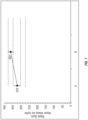
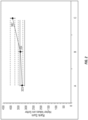
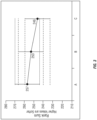
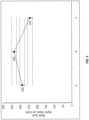
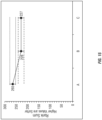
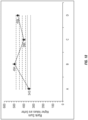
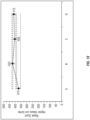
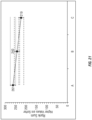
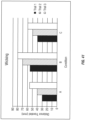
- the GelWhite GP provided the most preferred softening between the various clay compounds employed as the softening boosters.
- TABLE 29 Sample Product Grams Booster Grams of Booster A L2000/Bleach/ Clearly Soft 90/70/52 Clearly Soft as booster at 5% actives 26 B L2000/Bleach/ Clearly Soft 90/70/52 Gelwhite GP (10%) clay added at 5% actives before CS dosing 26 C L2000/Bleach/ Clearly Soft 90/70/52 Barlox 16S (6%) added at 5% actives 43.3
- the addition of the softening booster (Gelwhite GP with Clearly Soft) provided preferred softening.
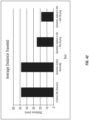
- the HunterLab Color Quest Spectrophotometer was conducted after the 6 th cycle employing the softening booster compositions according to the invention were added
- Reading Towels on the Hunterlab The purpose is to measure reflectance oftowels.
- the HunterLab Colorquest XE spectrophotometer is employed. As shown in Table 44, the data generated appear as L*, a*, b*, WI 313, YI 313, and Z %.
- WI 313--Whiteness Index This an index of overall whiteness that also takes the "b" number into account. The higher the number, the whiter the sample.
- YI 313--Yellowness Index This an index of overall yellowness that also takes the "b" number into account. The higher the number, the yellower the sample.
- the softening boosters provide desired softness without imparting any detrimental yellowing of the treated linens.
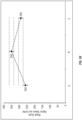
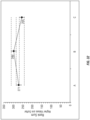
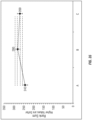
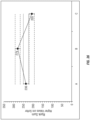
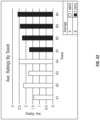
- Wicking testing was conducted to assess absorption of water from evaluated towels treated with softening boosters.
- the absorbency of towels from the softness panel in Example 2 were evaluated to determine how different fabric treatments affect the wicking/absorption volume of a fabric.
- test swatches (approximately 4"x7") are cut.
- the swatches are marked with a line 10 mm from the bottom and placed in the colored dye solution (water soluble dye of any concentration) using a wicking apparatus.
- One test swatch is suspended from the top of the wicking apparatus using a large paper binder clamp.
- the test swatch is lowered into the colored dye solution up to the scored line and let to sit undisturbed for 6 minutes. Thereafter, the test swatch is raised from the dye solution and the highest point reached by the dye solution is marked by a dot (using a permanent marker). The distance from the 10 mm line to the dot (in millimeters) is measured and recorded.
- Example 3 Additional wicking testing was conducted after the evaluation of Example 3 using the conditions set forth in Table 46.
- the Conditions C and D each refer, respectively, to the booster added in an additional 6 th cycle where they towels were either not dried or dried prior to the 6 th cycle. All towels were dried after completing the cycles in the washer to build up the appropriate amount of chemistry (with or without softening booster).
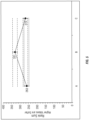
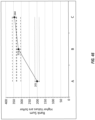
- the test conditions where the liquid traveled farthest were the control an Gelwhite GP added during the 5 th cycle.
- the two conditions where an additional 6 th cycle was added to provide Clearly Soft and Gelwhite GP demonstrated considerably lower wicking ability.
- only the condition D with a drying step before the 6 th cycle provided wicking below the threshold level of 20 mm (conventional wicking standard).
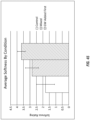
- the softness evaluation was conducted as shown in Table 48.
- a softness panel (varying number of participates with average score) completed one-on-one sensory comparisons of evalulated towels treated with the fabric treatment composition according to the invention.
- the towel with the preferred softness based on the touch (sensory) evaluation of the panelist was ranked numerically based on a standard towel as a comparison (tanked 1 to 5).
- a high panel testing number correlates to softer panel evaluation results.
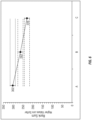
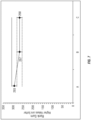
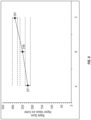
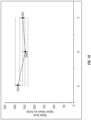
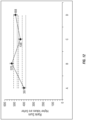
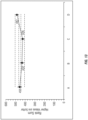
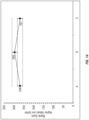
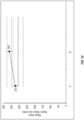
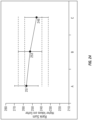
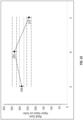
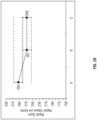
- the panel results show that the 2x/2x combination was equally soft as the 1x/1x combination.
- the highest softness rating was achieved for the 1x/2x combination (1x softening booster composition / 2x fabric softening composition)
- a limitation of the testing was the lack of consistency among the fill towels (not equal in treatment or age which may have introduced variability into the test results).
- the boosting agent provided significant improvement in softening.
- the present invention refers to the following aspects:
Landscapes
- Chemical & Material Sciences (AREA)
- Engineering & Computer Science (AREA)
- Life Sciences & Earth Sciences (AREA)
- Organic Chemistry (AREA)
- Oil, Petroleum & Natural Gas (AREA)
- Wood Science & Technology (AREA)
- Chemical Kinetics & Catalysis (AREA)
- Textile Engineering (AREA)
- Inorganic Chemistry (AREA)
- Health & Medical Sciences (AREA)
- Molecular Biology (AREA)
- Treatments For Attaching Organic Compounds To Fibrous Goods (AREA)
- Detergent Compositions (AREA)
Applications Claiming Priority (5)
| Application Number | Priority Date | Filing Date | Title |
|---|---|---|---|
| US14/550,481 US9688945B2 (en) | 2014-11-21 | 2014-11-21 | Compositions to boost fabric softener performance |
| US14/550,225 US9725679B2 (en) | 2014-11-21 | 2014-11-21 | Compositions to boost fabric softener performance |
| US14/550,283 US9506015B2 (en) | 2014-11-21 | 2014-11-21 | Compositions to boost fabric softener performance |
| EP15861757.1A EP3221506B1 (de) | 2014-11-21 | 2015-10-06 | Verfahren zur verstärkung der weichspülerleistung |
| PCT/US2015/054169 WO2016081079A1 (en) | 2014-11-21 | 2015-10-06 | Compositions to boost fabric softener performance |
Related Parent Applications (2)
| Application Number | Title | Priority Date | Filing Date |
|---|---|---|---|
| EP15861757.1A Division EP3221506B1 (de) | 2014-11-21 | 2015-10-06 | Verfahren zur verstärkung der weichspülerleistung |
| EP15861757.1A Division-Into EP3221506B1 (de) | 2014-11-21 | 2015-10-06 | Verfahren zur verstärkung der weichspülerleistung |
Publications (2)
| Publication Number | Publication Date |
|---|---|
| EP4530391A2 true EP4530391A2 (de) | 2025-04-02 |
| EP4530391A3 EP4530391A3 (de) | 2025-06-25 |
Family
ID=56014378
Family Applications (2)
| Application Number | Title | Priority Date | Filing Date |
|---|---|---|---|
| EP15861757.1A Active EP3221506B1 (de) | 2014-11-21 | 2015-10-06 | Verfahren zur verstärkung der weichspülerleistung |
| EP25157734.2A Pending EP4530391A3 (de) | 2014-11-21 | 2015-10-06 | Verfahren zur verstärkung der weichspülerleistung |
Family Applications Before (1)
| Application Number | Title | Priority Date | Filing Date |
|---|---|---|---|
| EP15861757.1A Active EP3221506B1 (de) | 2014-11-21 | 2015-10-06 | Verfahren zur verstärkung der weichspülerleistung |
Country Status (6)
| Country | Link |
|---|---|
| EP (2) | EP3221506B1 (de) |
| CN (1) | CN107001986B (de) |
| BR (1) | BR112017010709B8 (de) |
| CA (1) | CA2968071C (de) |
| MX (1) | MX2017006656A (de) |
| WO (1) | WO2016081079A1 (de) |
Families Citing this family (3)
| Publication number | Priority date | Publication date | Assignee | Title |
|---|---|---|---|---|
| CN108676628A (zh) * | 2018-06-26 | 2018-10-19 | 上海显雷日用品有限公司 | 一种布艺消毒清洁剂 |
| EP3969555A1 (de) | 2019-06-21 | 2022-03-23 | Ecolab USA, Inc. | Feste nichtionische tensidzusammensetzungen |
| WO2022140518A1 (en) * | 2020-12-23 | 2022-06-30 | Ecolab Usa Inc. | Non-cationic softeners and methods of use |
Citations (8)
| Publication number | Priority date | Publication date | Assignee | Title |
|---|---|---|---|---|
| DE2334899A1 (de) | 1972-07-14 | 1974-01-24 | Procter & Gamble | Koernige waschmittelzusammensetzung |
| EP0150531A1 (de) | 1983-12-20 | 1985-08-07 | The Procter & Gamble Company | Ton enthaltende Gewebeweichspülmittel |
| EP0164797A2 (de) | 1984-06-11 | 1985-12-18 | THE PROCTER & GAMBLE COMPANY | Das Gewebe weichmachende Agglomerate |
| EP0258500A1 (de) * | 1986-09-02 | 1988-03-09 | Akzo N.V. | Wäscheweichmacher und diese enthaltende Reinigungsmittel |
| EP0459822A2 (de) * | 1990-06-01 | 1991-12-04 | Unilever Plc | Konditionierungsblatt für Gewebetrockner, enthaltend kompatible Silikone |
| WO2004111167A1 (en) * | 2003-06-12 | 2004-12-23 | The Procter & Gamble Company | Softening-through-the-wash composition and process of manufacture |
| WO2006029746A1 (de) * | 2004-09-14 | 2006-03-23 | Clariant Produkte (Deutschland) Gmbh | Wasch-, pflege- und konditioniermittel für textilmaterial |
| US20110239379A1 (en) | 2007-06-15 | 2011-10-06 | Ecolab Usa Inc. | Liquid fabric conditioner composition and method of use |
Family Cites Families (11)
| Publication number | Priority date | Publication date | Assignee | Title |
|---|---|---|---|---|
| US4292035A (en) * | 1978-11-13 | 1981-09-29 | The Procter & Gamble Company | Fabric softening compositions |
| US6492322B1 (en) * | 1996-09-19 | 2002-12-10 | The Procter & Gamble Company | Concentrated quaternary ammonium fabric softener compositions containing cationic polymers |
| US6083899A (en) | 1996-09-19 | 2000-07-04 | The Procter & Gamble Company | Fabric softeners having increased performance |
| GB0124456D0 (en) * | 2001-10-11 | 2001-12-05 | Unilever Plc | Improvements relating to fabric treatment compositions |
| CN1649989A (zh) * | 2002-05-16 | 2005-08-03 | 宝洁公司 | 包含用于增强漂洗溶液外观的试剂的织物调理组合物 |
| GB2388610A (en) * | 2002-05-17 | 2003-11-19 | Procter & Gamble | Detergent composition containing silicone and fatty acid |
| GB0422244D0 (en) * | 2004-10-07 | 2004-11-10 | Reckitt Benckiser Nv | Improvements in or relating to products |
| US7749952B2 (en) * | 2006-12-05 | 2010-07-06 | The Procter & Gamble Company | Fabric care compositions for softening, static control and fragrance benefits |
| JP5938774B2 (ja) | 2009-10-03 | 2016-06-22 | ハダシット メディカル リサーチ サービシズ アンド デベロップメント リミテッド | 経皮アンテナ |
| WO2011143321A1 (en) * | 2010-05-12 | 2011-11-17 | The Procter & Gamble Company | Care polymers |
| CA2847546C (en) * | 2011-09-06 | 2017-05-09 | The Sun Products Corporation | Solid and liquid textile-treating compositions |
-
2015
- 2015-10-06 EP EP15861757.1A patent/EP3221506B1/de active Active
- 2015-10-06 CA CA2968071A patent/CA2968071C/en active Active
- 2015-10-06 BR BR112017010709A patent/BR112017010709B8/pt active IP Right Grant
- 2015-10-06 WO PCT/US2015/054169 patent/WO2016081079A1/en not_active Ceased
- 2015-10-06 MX MX2017006656A patent/MX2017006656A/es unknown
- 2015-10-06 EP EP25157734.2A patent/EP4530391A3/de active Pending
- 2015-10-06 CN CN201580062862.XA patent/CN107001986B/zh active Active
Patent Citations (12)
| Publication number | Priority date | Publication date | Assignee | Title |
|---|---|---|---|---|
| DE2334899A1 (de) | 1972-07-14 | 1974-01-24 | Procter & Gamble | Koernige waschmittelzusammensetzung |
| GB1400898A (en) | 1972-07-14 | 1975-07-16 | Procter & Gamble | Detergent compositions |
| EP0150531A1 (de) | 1983-12-20 | 1985-08-07 | The Procter & Gamble Company | Ton enthaltende Gewebeweichspülmittel |
| EP0164797A2 (de) | 1984-06-11 | 1985-12-18 | THE PROCTER & GAMBLE COMPANY | Das Gewebe weichmachende Agglomerate |
| US4632768A (en) | 1984-06-11 | 1986-12-30 | The Procter & Gamble Company | Clay fabric softener agglomerates |
| EP0258500A1 (de) * | 1986-09-02 | 1988-03-09 | Akzo N.V. | Wäscheweichmacher und diese enthaltende Reinigungsmittel |
| EP0459822A2 (de) * | 1990-06-01 | 1991-12-04 | Unilever Plc | Konditionierungsblatt für Gewebetrockner, enthaltend kompatible Silikone |
| WO2004111167A1 (en) * | 2003-06-12 | 2004-12-23 | The Procter & Gamble Company | Softening-through-the-wash composition and process of manufacture |
| WO2006029746A1 (de) * | 2004-09-14 | 2006-03-23 | Clariant Produkte (Deutschland) Gmbh | Wasch-, pflege- und konditioniermittel für textilmaterial |
| US20110239379A1 (en) | 2007-06-15 | 2011-10-06 | Ecolab Usa Inc. | Liquid fabric conditioner composition and method of use |
| US8038729B2 (en) | 2007-06-15 | 2011-10-18 | Ecolab Usa Inc. | Liquid fabric conditioner composition and method of use |
| US20120030882A1 (en) | 2007-06-15 | 2012-02-09 | Ecolab Usa Inc. | Solid fabric conditioner composition and method of use |
Non-Patent Citations (1)
| Title |
|---|
| KIRK-OTHMER, ENCYCLOPEDIA OF CHEMICAL TECHNOLOGY, vol. 8, pages 900 - 912 |
Also Published As
| Publication number | Publication date |
|---|---|
| EP3221506A4 (de) | 2018-07-11 |
| BR112017010709A2 (pt) | 2017-12-26 |
| CA2968071A1 (en) | 2016-05-26 |
| CA2968071C (en) | 2019-12-03 |
| EP4530391A3 (de) | 2025-06-25 |
| MX2017006656A (es) | 2017-10-04 |
| WO2016081079A1 (en) | 2016-05-26 |
| BR112017010709B8 (pt) | 2023-10-17 |
| CN107001986B (zh) | 2020-11-06 |
| CN107001986A (zh) | 2017-08-01 |
| EP3221506A1 (de) | 2017-09-27 |
| BR112017010709B1 (pt) | 2023-06-20 |
| EP3221506B1 (de) | 2025-04-09 |
Similar Documents
| Publication | Publication Date | Title |
|---|---|---|
| US9688945B2 (en) | Compositions to boost fabric softener performance | |
| US10113139B2 (en) | Solid fabric conditioner composition and method of use | |
| US9725679B2 (en) | Compositions to boost fabric softener performance | |
| US11466233B2 (en) | Compositions to boost fabric softener performance | |
| EP3541914B1 (de) | Stoffbehandlungszusammensetzungen mit polymeren und stoffweichmachern und verfahren zur verleihung einer vorteilhaften wirkung | |
| US20210087494A1 (en) | Fabric treatment compositions having low calculated cationic charge density polymers and fabric softening actives and methods for providing a benefit | |
| EP3221506B1 (de) | Verfahren zur verstärkung der weichspülerleistung | |
| CN104769090B (zh) | 用于处理基底的组合物和方法 | |
| WO2023014672A1 (en) | Compositions comprising guanidine compounds, process for preparing the same and methods of use thereof |
Legal Events
| Date | Code | Title | Description |
|---|---|---|---|
| PUAI | Public reference made under article 153(3) epc to a published international application that has entered the european phase |
Free format text: ORIGINAL CODE: 0009012 |
|
| STAA | Information on the status of an ep patent application or granted ep patent |
Free format text: STATUS: THE APPLICATION HAS BEEN PUBLISHED |
|
| AC | Divisional application: reference to earlier application |
Ref document number: 3221506 Country of ref document: EP Kind code of ref document: P |
|
| AK | Designated contracting states |
Kind code of ref document: A2 Designated state(s): AL AT BE BG CH CY CZ DE DK EE ES FI FR GB GR HR HU IE IS IT LI LT LU LV MC MK MT NL NO PL PT RO RS SE SI SK SM TR |
|
| REG | Reference to a national code |
Ref country code: DE Ref legal event code: R079 Free format text: PREVIOUS MAIN CLASS: D06M0013460000 Ipc: D06L0001080000 |
|
| PUAL | Search report despatched |
Free format text: ORIGINAL CODE: 0009013 |
|
| AK | Designated contracting states |
Kind code of ref document: A3 Designated state(s): AL AT BE BG CH CY CZ DE DK EE ES FI FR GB GR HR HU IE IS IT LI LT LU LV MC MK MT NL NO PL PT RO RS SE SI SK SM TR |
|
| RIC1 | Information provided on ipc code assigned before grant |
Ipc: C11D 3/37 20060101ALI20250520BHEP Ipc: C11D 1/66 20060101ALI20250520BHEP Ipc: C11D 3/08 20060101ALI20250520BHEP Ipc: D06L 1/08 20060101AFI20250520BHEP |
|
| STAA | Information on the status of an ep patent application or granted ep patent |
Free format text: STATUS: REQUEST FOR EXAMINATION WAS MADE |
|
| 17P | Request for examination filed |
Effective date: 20250820 |
|
| STAA | Information on the status of an ep patent application or granted ep patent |
Free format text: STATUS: EXAMINATION IS IN PROGRESS |
|
| 17Q | First examination report despatched |
Effective date: 20260210 |