EP4528697A1 - Faltschirmvorrichtung - Google Patents
Faltschirmvorrichtung Download PDFInfo
- Publication number
- EP4528697A1 EP4528697A1 EP23870397.9A EP23870397A EP4528697A1 EP 4528697 A1 EP4528697 A1 EP 4528697A1 EP 23870397 A EP23870397 A EP 23870397A EP 4528697 A1 EP4528697 A1 EP 4528697A1
- Authority
- EP
- European Patent Office
- Prior art keywords
- housing
- thickness
- hinge
- display device
- foldable display
- Prior art date
- Legal status (The legal status is an assumption and is not a legal conclusion. Google has not performed a legal analysis and makes no representation as to the accuracy of the status listed.)
- Pending
Links
Images






Classifications
-
- G—PHYSICS
- G06—COMPUTING OR CALCULATING; COUNTING
- G06F—ELECTRIC DIGITAL DATA PROCESSING
- G06F1/00—Details not covered by groups G06F3/00 - G06F13/00 and G06F21/00
- G06F1/16—Constructional details or arrangements
- G06F1/1613—Constructional details or arrangements for portable computers
- G06F1/1633—Constructional details or arrangements of portable computers not specific to the type of enclosures covered by groups G06F1/1615 - G06F1/1626
- G06F1/1637—Details related to the display arrangement, including those related to the mounting of the display in the housing
- G06F1/1652—Details related to the display arrangement, including those related to the mounting of the display in the housing the display being flexible, e.g. mimicking a sheet of paper, or rollable
-
- G—PHYSICS
- G06—COMPUTING OR CALCULATING; COUNTING
- G06F—ELECTRIC DIGITAL DATA PROCESSING
- G06F1/00—Details not covered by groups G06F3/00 - G06F13/00 and G06F21/00
- G06F1/16—Constructional details or arrangements
- G06F1/1613—Constructional details or arrangements for portable computers
- G06F1/1615—Constructional details or arrangements for portable computers with several enclosures having relative motions, each enclosure supporting at least one I/O or computing function
-
- G—PHYSICS
- G06—COMPUTING OR CALCULATING; COUNTING
- G06F—ELECTRIC DIGITAL DATA PROCESSING
- G06F1/00—Details not covered by groups G06F3/00 - G06F13/00 and G06F21/00
- G06F1/16—Constructional details or arrangements
- G06F1/1613—Constructional details or arrangements for portable computers
- G06F1/1633—Constructional details or arrangements of portable computers not specific to the type of enclosures covered by groups G06F1/1615 - G06F1/1626
- G06F1/1635—Details related to the integration of battery packs and other power supplies such as fuel cells or integrated AC adapter
-
- G—PHYSICS
- G06—COMPUTING OR CALCULATING; COUNTING
- G06F—ELECTRIC DIGITAL DATA PROCESSING
- G06F1/00—Details not covered by groups G06F3/00 - G06F13/00 and G06F21/00
- G06F1/16—Constructional details or arrangements
- G06F1/1613—Constructional details or arrangements for portable computers
- G06F1/1633—Constructional details or arrangements of portable computers not specific to the type of enclosures covered by groups G06F1/1615 - G06F1/1626
- G06F1/1637—Details related to the display arrangement, including those related to the mounting of the display in the housing
- G06F1/1641—Details related to the display arrangement, including those related to the mounting of the display in the housing the display being formed by a plurality of foldable display components
-
- G—PHYSICS
- G06—COMPUTING OR CALCULATING; COUNTING
- G06F—ELECTRIC DIGITAL DATA PROCESSING
- G06F1/00—Details not covered by groups G06F3/00 - G06F13/00 and G06F21/00
- G06F1/16—Constructional details or arrangements
- G06F1/1613—Constructional details or arrangements for portable computers
- G06F1/1633—Constructional details or arrangements of portable computers not specific to the type of enclosures covered by groups G06F1/1615 - G06F1/1626
- G06F1/1656—Details related to functional adaptations of the enclosure, e.g. to provide protection against EMI, shock, water, or to host detachable peripherals like a mouse or removable expansions units like PCMCIA cards, or to provide access to internal components for maintenance or to removable storage supports like CDs or DVDs, or to mechanically mount accessories
-
- G—PHYSICS
- G06—COMPUTING OR CALCULATING; COUNTING
- G06F—ELECTRIC DIGITAL DATA PROCESSING
- G06F1/00—Details not covered by groups G06F3/00 - G06F13/00 and G06F21/00
- G06F1/16—Constructional details or arrangements
- G06F1/1613—Constructional details or arrangements for portable computers
- G06F1/1633—Constructional details or arrangements of portable computers not specific to the type of enclosures covered by groups G06F1/1615 - G06F1/1626
- G06F1/1675—Miscellaneous details related to the relative movement between the different enclosures or enclosure parts
- G06F1/1679—Miscellaneous details related to the relative movement between the different enclosures or enclosure parts for locking or maintaining the movable parts of the enclosure in a fixed position, e.g. latching mechanism at the edge of the display in a laptop or for the screen protective cover of a PDA
-
- G—PHYSICS
- G06—COMPUTING OR CALCULATING; COUNTING
- G06F—ELECTRIC DIGITAL DATA PROCESSING
- G06F1/00—Details not covered by groups G06F3/00 - G06F13/00 and G06F21/00
- G06F1/16—Constructional details or arrangements
- G06F1/1613—Constructional details or arrangements for portable computers
- G06F1/1633—Constructional details or arrangements of portable computers not specific to the type of enclosures covered by groups G06F1/1615 - G06F1/1626
- G06F1/1675—Miscellaneous details related to the relative movement between the different enclosures or enclosure parts
- G06F1/1681—Details related solely to hinges
-
- G—PHYSICS
- G06—COMPUTING OR CALCULATING; COUNTING
- G06F—ELECTRIC DIGITAL DATA PROCESSING
- G06F1/00—Details not covered by groups G06F3/00 - G06F13/00 and G06F21/00
- G06F1/16—Constructional details or arrangements
- G06F1/1613—Constructional details or arrangements for portable computers
- G06F1/1633—Constructional details or arrangements of portable computers not specific to the type of enclosures covered by groups G06F1/1615 - G06F1/1626
- G06F1/1675—Miscellaneous details related to the relative movement between the different enclosures or enclosure parts
- G06F1/1683—Miscellaneous details related to the relative movement between the different enclosures or enclosure parts for the transmission of signal or power between the different housings, e.g. details of wired or wireless communication, passage of cabling
-
- G—PHYSICS
- G06—COMPUTING OR CALCULATING; COUNTING
- G06F—ELECTRIC DIGITAL DATA PROCESSING
- G06F1/00—Details not covered by groups G06F3/00 - G06F13/00 and G06F21/00
- G06F1/16—Constructional details or arrangements
- G06F1/1613—Constructional details or arrangements for portable computers
- G06F1/1633—Constructional details or arrangements of portable computers not specific to the type of enclosures covered by groups G06F1/1615 - G06F1/1626
- G06F1/1684—Constructional details or arrangements related to integrated I/O peripherals not covered by groups G06F1/1635 - G06F1/1675
- G06F1/1686—Constructional details or arrangements related to integrated I/O peripherals not covered by groups G06F1/1635 - G06F1/1675 the I/O peripheral being an integrated camera
-
- G—PHYSICS
- G09—EDUCATION; CRYPTOGRAPHY; DISPLAY; ADVERTISING; SEALS
- G09F—DISPLAYING; ADVERTISING; SIGNS; LABELS OR NAME-PLATES; SEALS
- G09F9/00—Indicating arrangements for variable information in which the information is built-up on a support by selection or combination of individual elements
- G09F9/30—Indicating arrangements for variable information in which the information is built-up on a support by selection or combination of individual elements in which the desired character or characters are formed by combining individual elements
- G09F9/301—Indicating arrangements for variable information in which the information is built-up on a support by selection or combination of individual elements in which the desired character or characters are formed by combining individual elements flexible foldable or roll-able electronic displays, e.g. thin LCD, OLED
Definitions
- This application relates to the field of electronic device technologies, and in particular, to a foldable display device.
- foldable display devices gradually become a development trend of future electronic products.
- the existing foldable display device still has some disadvantages.
- an aspect ratio of the foldable display device in an unfolded state, cannot well adapt to many application scenarios (for example, playing a video, playing a game, reading an e-book, and reading a paper).
- an aspect ratio of the video when a video is played, an aspect ratio of the video is generally 16:9 while the aspect ratio of the foldable display device is close to 1:1 in the unfolded state. Consequently, this leads to poor user experience.
- the foldable display device is thick in a folded state, and consequently, a user has a poor hand holding feeling.
- This application provides a foldable display device, to improve an existing foldable display device.
- a foldable display device including a first housing, a second housing, a third housing, a first hinge, a second hinge, and a flexible display, where two opposite ends of the first hinge are respectively connected to the first housing and the second housing, two opposite ends of the second hinge are respectively connected to the second housing and the third housing, and the flexible display is connected to the first housing, the second housing, and the third housing;
- the first hinge is capable of deforming for folding or unfolding of the first housing relative to the second housing
- the second hinge is capable of deforming for folding or unfolding of the second housing relative to the third housing;
- a thickness of the third housing is greater than a thickness of the first housing and/or a thickness of the second housing, and the thickness of the first housing is different from the thickness of the second housing.
- a plurality of housings of the foldable display device are large in thickness, resulting in a poor hand feeling of the entire foldable display device.
- the thickness of the third housing is greater than the thickness of the first housing and/or the thickness of the second housing, and the thickness of the first housing is different from the thickness of the second housing, that is, the plurality of housings may be unequal in thickness
- the foldable display device may be thinner. This reduces a thickness of the foldable display device in a folded state, and reduces a weight of the foldable display device, thereby providing a user a better holding feeling.
- the magnet is disposed in the housing for electric unfolding of the foldable display device, thereby bringing better experience to the user.
- the flat parts of the flexible display may be different in thickness.
- the thickness of the first flat part may be greater than the thickness of the second flat part and greater than the thickness of the third flat part, to improve performance of the first flat part in the folded state.
- install and “connect” should be understood in a broad sense.
- the terms may indicate a fixed connection, a detachable connection, or an integral connection, may indicate a mechanical connection or an electrical connection, or may indicate a direct interconnection, or an indirect interconnection through an intermediate medium.
- install and “connect” should be understood in a broad sense.
- the terms may indicate a fixed connection, a detachable connection, or an integral connection, may indicate a mechanical connection or an electrical connection, or may indicate a direct interconnection, or an indirect interconnection through an intermediate medium.
- the foldable display device may be any device having a communication and/or storage function, for example, may be an intelligent device like a mobile phone, a tablet computer, a watch, an e-reader, a notebook computer, an in-vehicle device, a web television, or a wearable device.
- the foldable display device may be folded twice.
- the foldable display device can be folded into three layers.
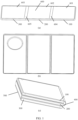
- the foldable display device includes a first housing 100, a second housing 200, a third housing 300, a first hinge 400, a second hinge 500, and a flexible display 600.
- Two opposite ends of the first hinge 400 are respectively connected to the first housing 100 and the second housing 200
- two opposite ends of the second hinge 500 are respectively connected to the second housing 200 and the third housing 300
- the flexible display 600 is connected to the first housing 100, the second housing 200, and the third housing 300.
- the flexible display 600 may include a first flat part 601, a second flat part 602, a third flat part 603, a first bent part 604, and a second bent part 605.
- the first flat part 601 is connected to the first housing 100
- the second flat part 602 is connected to the second housing 200
- the third flat part 603 is connected to the third housing 300.
- the first hinge 400 is capable of deforming for folding or unfolding of the first housing 100 relative to the second housing 200
- the second hinge 500 is capable of deforming for folding or unfolding of the second housing 200 relative to the third housing 300.
- an included angle between the first housing 100 and the second housing 200 may be denoted as ⁇ . If ⁇ ranges from 0° to 180°, the first housing 100 and the second housing 200 are in a folded state. In some implementations, when the first housing 100 and the second housing 200 are in the folded state, an included angle between the first housing 100 and the second housing 200 may also have a slight deviation relative to 0°, for example, may be 15° or 25°. If ⁇ ranges from 180° to 205°, the first housing 100 and the second housing 200 are in an unfolded state.
- an included angle between the first housing 100 and the second housing 200 may also have a slight deviation relative to 180°, for example, may be 165°, 177°, or 185°. If the included angle between the first housing 100 and the second housing 200 is between an angle range in the folded state and an angle range in the unfolded state, the first housing 100 and the second housing 200 are not completely folded, or the first housing 100 and the second housing 200 are not completely unfolded, or the first housing 100 and the second housing 200 are in a transition state from the folded state to the unfolded state.
- an included angle between the second housing 200 and the third housing 300 may be denoted as ⁇ . If ⁇ ranges from 0° to 180°, the second housing 200 and the third housing 300 are in a folded state. In some implementations, when the second housing 200 and the third housing 300 are in the folded state, an included angle between the second housing 200 and the third housing 300 may also have a slight deviation relative to 0°, for example, may be 15° or 25°. If ⁇ ranges from 165° to 185°, the second housing 200 and the third housing 300 are in an unfolded state.
- an included angle between the second housing 200 and the third housing 300 may also have a slight deviation relative to 180°, for example, may be 165°, 177°, or 185°. If the included angle between the second housing 200 and the third housing 300 is between an angle range in the folded state and an angle range in the unfolded state, the second housing 200 and the third housing 300 are not completely folded, or the second housing 200 and the third housing 300 are not completely unfolded, or the second housing 200 and the third housing 300 are in a transition state from the folded state to the unfolded state.
- the foldable display device if the first housing 100 and the second housing 200 are in the folded state, and the second housing 200 and the third housing 300 are in the folded state, the foldable display device is in a folded state. If the first housing 100 and the second housing 200 are in the unfolded state, and the second housing 200 and the third housing 300 are in the unfolded state, the foldable display device is in an unfolded state. If the foldable display device is between the folded state and the unfolded state, it may be considered that the foldable display device is not completely folded, or the foldable display device is not completely unfolded, or the foldable display device is in a transition state from the folded state to the unfolded state.
- the foldable display device may be folded twice, so that an aspect ratio of the foldable display device in the unfolded state can better adapt to a plurality of application scenarios.
- the following first describes a hinge of the foldable display device.
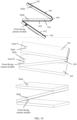
- the first hinge 400 is an outward-foldable hinge
- the second hinge 500 is an inward-foldable hinge.
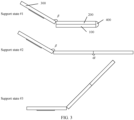
- a support state #1 may be formed.
- a support state #2 may be formed.
- a support state #3 may be formed.
- a flexible display may be folded outward through the outward-foldable hinge, and is exposed after being folded.
- the flexible display may be folded inward through the inward-foldable hinge, and is hidden inside after being folded.
- the first housing 100 and the second housing 200 are connected through the outward-foldable hinge, and the second housing 200 and the third housing 300 are connected through the inward-foldable hinge, when the foldable display device is in the folded state, the first flat part 601 and the first bent part 604 of the flexible display 600 are exposed, and the second flat part 602 and the third flat part 603 of the flexible display 600 are hidden inside.
- first hinge 400 is an inward-foldable hinge
- second hinge 500 is an outward-foldable hinge
- the foldable display device may also form a plurality of support states, which are not described herein again.
- first hinge 400 and the second hinge 500 may have corresponding structures, to implement folding and unfolding of the flexible display 600.
- both the first hinge 400 and the second hinge 500 may be symmetrical hinges.
- the first hinge 400 may be a symmetrical door plate outward-foldable hinge
- the second hinge 500 may be a symmetrical inward-foldable hinge.
- a shape of the flexible display 600 in the folded state may be a water-drop shape.
- the inward-foldable hinge may alternatively be a golf-type hinge.
- a shape of the flexible display 600 in the folded state may be a golf shape.
- the inward-foldable hinge may be an asymmetrical hinge.
- the shape of the flexible display 600 in the folded state may be an asymmetrical water drop shape (or referred to as a bias water drop shape).
- the first housing 100, the second housing 200, and the third housing 300 may all be used as a carrier of the flexible display 600.
- a cushion layer may be added to a screen of the first bent part 604.
- the first housing 100 includes a first top surface 101 and a first back surface 102, and the first top surface 101 and the first back surface 102 are respectively located at two opposite ends in the thickness direction.
- a distance from a position on the first top surface 101 to a corresponding position on the first back surface 102 may be referred to as a thickness of the first housing 100 at the position.
- the second housing 200 includes a second top surface 201 and a second back surface 202, and the second top surface 201 and the second back surface 202 are respectively located at two opposite ends in the thickness direction.
- a distance from a position on the second top surface 201 to a corresponding position on the second back surface 202 may be referred to as a thickness of the second housing 200 at the position.
- the third housing 300 includes a third top surface 301 and a third back surface 302, and the third top surface 301 and the third back surface 302 are respectively located at two opposite ends in the thickness direction. In the thickness direction, a distance from a position on the third top surface 301 to a corresponding position on the third back surface 302 may be referred to as a thickness of the third housing 300 at the position.
- the thickness of the third housing 300 is greater than the thickness of the first housing 100 and/or the thickness of the second housing 200.
- the thickness of the housing may be understood as a thickness of the housing as a whole, or an average thickness of the housing at all positions.
- the first housing 100 has a same thickness in all positions
- the second housing 200 has a same thickness in all positions
- the third housing 300 has a same thickness in all positions.
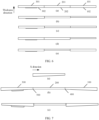
- the thickness of the third housing 300 is greater than the thickness of the second housing 200, and the thickness of the second housing 200 is greater than the thickness of the first housing 100.
- the third housing 300, the second housing 200, and the first housing 100 may be in a thick-medium-thin thickness relationship.
- the foldable display device may include two batteries, which are respectively disposed inside the second housing 200 and the third housing 300. Because no battery is disposed inside the first housing 100, the first housing 100 may be thinner, thereby reducing a thickness of the foldable display device in the folded state.
- the thickness of the third housing 300 is greater than the thickness of the second housing 200, and the thickness of the second housing 200 is equal to the thickness of the first housing 100.
- the third housing 300, the second housing 200, and the first housing 100 may be in a thick-medium-medium thickness relationship.
- the foldable display device may include three batteries, which are respectively disposed inside the three housings. Compared with case 1, in case 2, a battery is also disposed inside the first housing 100, so that a battery life of the foldable display device can be prolonged.
- the thickness of the third housing 300 is equal to the thickness of the second housing 200, and the thickness of the second housing 200 is greater than the thickness of the first housing 100.
- the third housing 300, the second housing 200, and the first housing 100 may be in a thick-thick-thin thickness relationship.
- the foldable display device may include two batteries, which are respectively disposed inside the second housing 200 and the third housing 300.
- the thickness of the third housing 300 is greater than the thickness of the second housing 200, and the thickness of the third housing 300 is equal to the thickness of the first housing 100.
- the third housing 300, the second housing 200, and the first housing 100 may be in a thick-thin-thick thickness relationship.
- the foldable display device may include two batteries, which are respectively disposed inside the first housing 100 and the third housing 300.
- first housing 100 and the third housing 300 are wedge-shaped.
- the first housing and the third housing are set to be wedge-shaped, so that the foldable display device has a better hand feeling.
- a hand feeling of the foldable display device is further improved.
- a front-facing camera module may be disposed at a position away from a hinge, so that the front-facing camera module does not conflict with hinge space of the hinge.
- the thickness of the housing may also change abruptly.
- first hinge 400 is an inward-foldable hinge
- second hinge 500 is an outward-foldable hinge
- the thickness of the third housing 300 changes abruptly.
- One or more of a front-facing camera module, a rear-facing camera module, a battery, and a charging interface may be disposed in a thick area of the third housing 300, and a mainboard may be disposed in a thin area of the third housing 300.
- the following describes the front-facing camera module of the foldable display device.
- the foldable display device includes at least one front-facing camera module.
- the front-facing camera module is installed inside the first housing, and/or the second housing, and/or the third housing.
- the front-facing camera module may be disposed on one or more of the first flat part 601, the second flat part 602, and the third flat part 603 of the flexible display 600.
- a hole that is of the flexible display and that corresponds to the front-facing camera module may be in a circular shape, a square shape, or a capsule shape (also referred to as a pill shape or a runway shape). This is not limited in this application.
- the front-facing camera module may be disposed on the first flat part 601.
- the front-facing camera module may be used when the foldable display device is in a folded state; or the front-facing camera module may be used in the support state #3 shown in FIG. 3 .
- the front-facing camera module may be disposed at any position of the first flat part 601.
- the front-facing camera module may be disposed at an upper-right corner of the first flat part 601 or at a middle position of an upper end, to avoid a conflict between the front-facing camera module and hinge space of the first hinge.
- the front-facing camera module may be disposed on the second flat part 602.
- the front-facing camera module may be used when the foldable display device is in an unfolded state.
- the front-facing camera module may be disposed at any position of the second flat part 602.
- the front-facing camera module may be disposed at a middle position of an upper end of the second flat part 602.
- the front-facing camera module is disposed at a position that is of the second flat part 602 and that is away from the first hinge and the second hinge, so that a conflict between the front-facing camera module, and the hinge space of the first hinge and the hinge space of the second hinge can be avoided.
- the front-facing camera module may be disposed on the third flat part 603.
- the front-facing camera module may be used in the support state #1 and the support state #2 shown in FIG. 3 .
- the front-facing camera module may be disposed at any position of the third flat part 603.
- the front-facing camera module may be disposed at an upper-left corner of the third flat part 603 or at a middle position of an upper end of the third flat part 603, to avoid a conflict between the front-facing camera module and the hinge space of the second hinge.
- holes may be provided on the first housing 100 and the second housing 200, to use the front-facing camera module in the case shown in (c) in FIG. 1 .
- a transmittance of an area #1 on the first flat part 601 and a transmittance of an area #2 on the second flat part 602 may be increased (for example, the area #1 and the area #2 are set to be transparent), so that light can pass through the first flat part 601 and the second flat part 602 to enter the front-facing camera module.
- display in the area #1 and the area #2 may be normal.
- the foldable display device may include a processing module. For example, when a user makes a video call or a user takes a selfie, a corresponding instruction (or an electrical signal) may be triggered, and the processing module may set the area #1 and the area #2 to be transparent based on the instruction.
- the flexible display 600 may be an organic light-emitting diode (organic light-emitting diode, OLED) display.
- OLED organic light-emitting diode
- the front-facing camera module may be disposed on the first flat part 601 and the third flat part 603.
- the front-facing camera module is disposed on an upper-right corner of the first flat part 601, and is disposed on an upper-left corner of the third flat part 603.
- the front-facing camera module is disposed in a middle part of an upper end of the first flat part 601, and is disposed in a middle part of an upper end of the third flat part 603, to implement a binocular vision function.
- an arrangement manner of the front-facing camera module is not limited to the foregoing four manners.
- the front-facing camera module may be alternatively arranged on the first flat part 601, the second flat part 602, and the third flat part 603.
- a size of a front-facing camera module of some models is large in a thickness direction, in a manner, a corresponding protrusion part may be disposed on a housing, to install the front-facing camera module.
- a recessed part may be disposed on another housing.
- a protrusion part may be disposed on the first housing 100, and a recessed part may be disposed at a corresponding position of the second housing 200. It may be understood that, in a folded state, the protrusion part may be folded to the recessed part.
- the front-facing camera module may be installed at a thick position of the housing.
- the front-facing camera module when the front-facing camera module is installed on the first housing 100, the front-facing camera module may be installed on a side that is of the first housing 100 and that is away from the first hinge 400; or when the front-facing camera module is installed on the third housing 300, the front-facing camera module may be installed on a side that is of the third housing 300 and that is away from the second hinge 500.
- the front-facing camera module when the front-facing camera module is installed on the first housing 100, the front-facing camera module may be installed on a side that is of the first housing 100 and that is close to the first hinge 400; or when the front-facing camera module is installed on the third housing 300, the front-facing camera module may be installed on a side that is of the third housing 300 and that is close to the second hinge 500.
- the following describes a partial internal structure of the foldable display device.
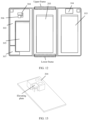
- both the mainboard 303 and the rear-facing camera module 304 are disposed inside the third housing 300.
- the foldable display device includes three batteries.
- a first battery 103 is disposed inside the first housing 100
- a second battery 203 is disposed inside the second housing 200
- a third battery 305 is disposed inside the third housing 300.
- a flexible printed board (flexible printed circuit, FPC) (not shown in FIG. 12 ) of the flexible display 600 may also be disposed inside the third housing 300.
- appearance dimensions of the first battery 103, the second battery 203, and the third battery 305 are not limited in this application.
- the appearance dimensions of the three batteries may be the same or different.
- a thickness of the battery may match a thickness of the housing. That is, a larger thickness of the battery indicates a larger thickness of the housing correspondingly.
- the foldable display device may have only two batteries. Appearance dimensions of the two batteries may be the same or different.
- the foldable display device may have only one battery, for example, only a battery is disposed inside the third housing 300.
- both the FPC of the flexible display 600 and the mainboard 303 are disposed in the third housing 300, and the FPC of the flexible display 600 may be connected to the mainboard 303 in the third housing 300. This avoids passing through a shaft.
- the mainboard 303 may be disposed in an L shape, and the mainboard 303 and the third battery 305 may be arranged left and right inside the third housing 300.
- a system on chip (system on chip, SoC) chip 306 may be electrically connected to the mainboard 303.
- the SoC chip 306 is disposed at a position away from a frame of the third housing 300.
- the SoC chip 306 and the FPC of the flexible display 600 do not overlap in a thickness direction, so that a thickness of the foldable display device can be reduced, and impact of heat generated when the SoC chip 306 works on the flexible display 600 can also be reduced.
- an elevating plate may be disposed near the rear-facing camera module 304.
- the elevating plate is configured to install a SoC chip, and another component may be further installed in space under the elevating plate. This saves internal space.
- the foldable display device may further include at least one speaker.
- the foldable display device may further include at least one speaker.
- stereo sound effect may be implemented.
- the foldable display device includes two speakers. As shown in FIG. 12 , a first speaker 104 may be disposed inside the first housing 100, and a second speaker 307 may be disposed inside the third housing 300. The first speaker 104 and the second speaker 307 are respectively located at two opposite ends. For example, the first speaker 104 is located at an upper end of the first housing 100, and the second speaker 307 is located at a lower end of the third housing 300.
- the first speaker 104 may be connected to the mainboard 303 in the third housing 300 through an FPC (not shown in FIG. 12 ).
- the FPC passes through the first hinge 400 and the second hinge 500.
- the following describes an antenna layout of the foldable display device.
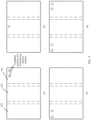
- a plurality of gaps may be provided on a frame of the third housing 300, and the plurality of gaps are used to separate different antennas. For example, seven gaps may be provided on the frame of the third housing 300.
- a gap may be further disposed on a frame of the first housing 100 and/or a frame of the second housing 200, to install an antenna. This further improves a communication capability of the foldable display device. It may be understood that, if antennas are installed on the frame of the first housing 100 and/or the frame of the second housing 200, when the antennas are electrically connected to the mainboard 303 in the third housing 300, the antennas need to pass through a hinge (or need to pass through a shaft).
- an antenna may be disposed on the frame of the second housing.
- antennas may be respectively disposed on an upper frame and a lower frame of the second housing 200.
- a user can manually unfold or fold the foldable display device.
- the foldable display device is unfolded by combining electric unfolding and manual unfolding.
- the foldable display device is folded by manual folding.
- the electric unfolding is implemented based on a magnetic pole. Specifically, when magnetic poles that have opposite polarities and that are of two magnetic components face each other, the two magnetic components attract each other; and when magnetic poles that have same polarities and that are of two magnetic components face each other, the two magnetic components repulse each other.
- the magnetic component in this application may be a magnetic component like an electromagnet or a permanent magnet.
- each magnetic induction coil includes two magnetic poles (a north (north, N) pole and a south (south, S) pole).
- a first magnetic induction coil and a second magnetic induction coil attract each other, and the second magnetic induction coil and a third magnetic induction coil attract each other. If the first magnetic induction coil is disposed in a first housing, the second magnetic induction coil is disposed in a second housing, and the third magnetic induction coil is disposed in a third housing, the first housing and the second housing attract each other, and the second housing and the third housing attract each other.
- the first magnetic induction coil and the second magnetic induction coil may repulse each other, and the second magnetic induction coil and the third magnetic induction coil may repulse each other by changing a current direction of the second magnetic induction coil. If the first magnetic induction coil is disposed in the first housing, the second magnetic induction coil is disposed in the second housing, and the third magnetic induction coil is disposed in the third housing, the first housing and the second housing repulse each other, and the second housing and the third housing repulse each other.
- each magnet includes two magnetic pole (an N pole and an S pole).
- a first magnet and a second magnet attract each other, and the second magnet and a third magnet attract each other. If the first magnet is disposed in a first housing, the second magnet and a fourth magnet are disposed in a second housing, and the third magnet is disposed in a third housing, the first housing and the second housing attract each other, and the second housing and the third housing attract each other.
- the second magnet and the fourth magnet are pushed through the electric mechanism, so that the first magnet and the fourth magnet repulse each other, and the fourth magnet and the third magnet repulse each other. If the first magnet is disposed in the first housing, the second magnet and the fourth magnet are disposed in the second housing, and the third magnet is disposed in the third housing, the first housing and the second housing repulse each other, and the second housing and the third housing repulse each other.
- each magnet includes two magnetic pole (an N pole and an S pole).
- a first magnet and a second magnet attract each other, and the second magnet and a third magnet attract each other. If the first magnet is disposed in a first housing, the second magnet is disposed in a second housing, and the third magnet is disposed in a third housing, the first housing and the second housing attract each other, and the second housing and the third housing attract each other.
- the second magnet is pushed through the electric mechanism, so that the first magnet and the second magnet repulse each other, and the second magnet and the third magnet repulse each other. If the first magnet is disposed in the first housing, the second magnet is disposed in the second housing, and the third magnet is disposed in the third housing, the first housing and the second housing repulse each other, and the second housing and the third housing repulse each other.
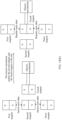
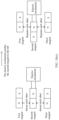
- a first magnet 105 is disposed in the first housing 100
- a second magnet 204 is disposed in the second housing 200
- a third magnet 308 is disposed in the third housing 300.
- a switch (not shown in FIG. 15 ) is disposed on the foldable display device.
- a position of the first magnet 105 in the first housing 100 is fixed, and a position of the third magnet 308 in the third housing 300 is also fixed.
- the second magnet 104 is connected to the electric mechanism.
- the electric mechanism may alternatively be disposed in the second housing 200.
- the switch is configured to adjust a position of the second magnet 204 in the second housing 200 through the electric mechanism, in other words, the position of the second magnet 204 in the second housing 200 may be changed.
- the second magnet 204 may move in the X direction.
- the connection lines between the N poles and the S poles of the three magnets are all parallel to a Y direction
- the second magnet 204 may move in the Y direction. This example is not shown in FIG. 15 .
- the first magnet 105 and the second magnet 204 attract each other, and the second magnet 204 and the third magnet 308 attract each other.
- the user may control the electric mechanism through the switch, so that the electric mechanism drives the second magnet 204 to move for staggering the second magnet 204 from the first magnet 105 and the third magnet 308.
- the N pole of the first magnet is opposite to the N pole of the second magnet, and the N pole of the second magnet is opposite to the N pole of the third magnet; or the S pole of the first magnet is opposite to the S pole of the second magnet, and the S pole of the second magnet is opposite to the S pole of the third magnet, so that the foldable display device is unfolded into a Z shape by using mutually-repulsive magnetic forces between the magnets. Further, the user manually unfolds the foldable display device.
- the switch may be a physical switch or a virtual switch.
- a physical switch is disposed on the third housing 300, the user can unfold the foldable display device into a Z shape through the physical switch.
- a virtual switch may be disposed in an outward-foldable hinge area, and the user may slide the outward-foldable hinge area by using a finger, to unfold the foldable display device into a Z shape.
Landscapes
- Engineering & Computer Science (AREA)
- Theoretical Computer Science (AREA)
- Computer Hardware Design (AREA)
- Physics & Mathematics (AREA)
- General Engineering & Computer Science (AREA)
- General Physics & Mathematics (AREA)
- Human Computer Interaction (AREA)
- Computer Networks & Wireless Communication (AREA)
- Power Engineering (AREA)
- Mathematical Physics (AREA)
- Telephone Set Structure (AREA)
- Devices For Indicating Variable Information By Combining Individual Elements (AREA)
Applications Claiming Priority (3)
| Application Number | Priority Date | Filing Date | Title |
|---|---|---|---|
| CN202211183546 | 2022-09-27 | ||
| CN202310180076.6A CN117789596A (zh) | 2022-09-27 | 2023-02-21 | 折叠屏设备 |
| PCT/CN2023/119094 WO2024067163A1 (zh) | 2022-09-27 | 2023-09-15 | 折叠屏设备 |
Publications (2)
| Publication Number | Publication Date |
|---|---|
| EP4528697A1 true EP4528697A1 (de) | 2025-03-26 |
| EP4528697A4 EP4528697A4 (de) | 2025-10-08 |
Family
ID=90393310
Family Applications (1)
| Application Number | Title | Priority Date | Filing Date |
|---|---|---|---|
| EP23870397.9A Pending EP4528697A4 (de) | 2022-09-27 | 2023-09-15 | Faltschirmvorrichtung |
Country Status (4)
| Country | Link |
|---|---|
| US (1) | US20250224771A1 (de) |
| EP (1) | EP4528697A4 (de) |
| CN (2) | CN117789596A (de) |
| WO (1) | WO2024067163A1 (de) |
Families Citing this family (3)
| Publication number | Priority date | Publication date | Assignee | Title |
|---|---|---|---|---|
| CN121459682A (zh) * | 2024-07-26 | 2026-02-03 | 荣耀终端股份有限公司 | 折叠屏设备 |
| WO2026043088A1 (ko) * | 2024-08-21 | 2026-02-26 | 삼성전자 주식회사 | 스피커를 포함하는 멀티 폴더블 전자 장치 |
| CN119967077B (zh) * | 2025-04-10 | 2025-06-10 | 瑞声光电科技(常州)有限公司 | 折叠驱动装置及折叠屏设备 |
Family Cites Families (10)
| Publication number | Priority date | Publication date | Assignee | Title |
|---|---|---|---|---|
| KR20150060278A (ko) * | 2013-11-26 | 2015-06-03 | 삼성전자주식회사 | 다단 절첩형 디스플레이장치 및 그 기능 제어방법 |
| KR102595230B1 (ko) * | 2016-10-13 | 2023-10-30 | 삼성전자주식회사 | 플렉서블 디스플레이를 포함하는 폴더블 전자 장치 |
| WO2018110749A1 (ko) * | 2016-12-16 | 2018-06-21 | 엘지전자 주식회사 | 이동 단말기 |
| KR102793559B1 (ko) * | 2019-05-14 | 2025-04-11 | 삼성전자 주식회사 | 멀티 폴더블 전자 장치 |
| CN110557481B (zh) * | 2019-08-28 | 2021-06-15 | 华为技术有限公司 | 电子设备 |
| CN211702082U (zh) * | 2019-11-07 | 2020-10-16 | 华为技术有限公司 | 一种折叠终端 |
| KR102806287B1 (ko) * | 2019-11-26 | 2025-05-14 | 삼성전자 주식회사 | 전자 장치 및 폴더블 디스플레이를 제어 및 운영하는 방법 |
| CN213585854U (zh) * | 2020-10-13 | 2021-06-29 | 恩利克(浙江)智能装备有限公司 | 一种内三折的折叠屏手机结构 |
| CN113497843B (zh) * | 2021-07-29 | 2023-06-20 | 京东方科技集团股份有限公司 | 一种可折叠移动终端 |
| CN114627761B (zh) * | 2022-03-01 | 2023-10-13 | 苏州华星光电技术有限公司 | 折叠屏及显示装置 |
-
2023
- 2023-02-21 CN CN202310180076.6A patent/CN117789596A/zh active Pending
- 2023-09-15 WO PCT/CN2023/119094 patent/WO2024067163A1/zh not_active Ceased
- 2023-09-15 CN CN202380048930.1A patent/CN119487563B/zh active Active
- 2023-09-15 EP EP23870397.9A patent/EP4528697A4/de active Pending
-
2025
- 2025-03-27 US US19/092,961 patent/US20250224771A1/en active Pending
Also Published As
| Publication number | Publication date |
|---|---|
| EP4528697A4 (de) | 2025-10-08 |
| CN117789596A (zh) | 2024-03-29 |
| CN119487563B (zh) | 2026-01-13 |
| CN119487563A (zh) | 2025-02-18 |
| US20250224771A1 (en) | 2025-07-10 |
| WO2024067163A1 (zh) | 2024-04-04 |
Similar Documents
| Publication | Publication Date | Title |
|---|---|---|
| EP4528697A1 (de) | Faltschirmvorrichtung | |
| US10671121B2 (en) | Magnetic layout in electronic devices and accessory devices for electronic devices | |
| EP3364635B1 (de) | Faltbares mobiles endgerät | |
| KR20130095084A (ko) | 이동 단말기 | |
| EP2271060A2 (de) | Mobiles Endgerät | |
| EP4184283B1 (de) | Elektronische vorrichtung mit scharniermodul | |
| WO2021254071A1 (zh) | 一种电子设备 | |
| CN110727143B (zh) | 显示装置和电子设备 | |
| EP4604561A1 (de) | Bildstabilisierungsanordnung, kameramodul und elektronische vorrichtung | |
| KR20240054830A (ko) | 폴더블 전자 장치 | |
| WO2023011173A1 (zh) | 防抖机构、拍摄装置以及电子设备 | |
| CN209980127U (zh) | 用于电子设备的附件设备 | |
| CN209134471U (zh) | 电子装置 | |
| CN207782862U (zh) | 功能组件及移动终端 | |
| CN207782859U (zh) | 功能组件及移动终端 | |
| WO2021164715A1 (zh) | 电子设备 | |
| WO2021129778A1 (zh) | 电子设备 | |
| US11218581B2 (en) | Display apparatus | |
| CN209728573U (zh) | 一种具有可滑动屏幕的护眼平板 | |
| CN108418917A (zh) | 电子组件和电子设备 | |
| CN223796885U (zh) | 支撑装置、输入设备及电子设备 | |
| KR20170034529A (ko) | 디스플레이 장치 | |
| CN224067124U (zh) | 一种3d立体全景相机屏幕的驱动结构 | |
| CN114698313A (zh) | 电子设备 | |
| WO2026007557A1 (zh) | 可折叠电子设备 |
Legal Events
| Date | Code | Title | Description |
|---|---|---|---|
| STAA | Information on the status of an ep patent application or granted ep patent |
Free format text: STATUS: THE INTERNATIONAL PUBLICATION HAS BEEN MADE |
|
| PUAI | Public reference made under article 153(3) epc to a published international application that has entered the european phase |
Free format text: ORIGINAL CODE: 0009012 |
|
| STAA | Information on the status of an ep patent application or granted ep patent |
Free format text: STATUS: REQUEST FOR EXAMINATION WAS MADE |
|
| 17P | Request for examination filed |
Effective date: 20241219 |
|
| AK | Designated contracting states |
Kind code of ref document: A1 Designated state(s): AL AT BE BG CH CY CZ DE DK EE ES FI FR GB GR HR HU IE IS IT LI LT LU LV MC ME MK MT NL NO PL PT RO RS SE SI SK SM TR |
|
| A4 | Supplementary search report drawn up and despatched |
Effective date: 20250908 |
|
| RIC1 | Information provided on ipc code assigned before grant |
Ipc: G09F 9/30 20060101AFI20250902BHEP |
|
| DAV | Request for validation of the european patent (deleted) | ||
| DAX | Request for extension of the european patent (deleted) |