EP4525136A1 - Behandlungsverfahren für eine abfallbatterie - Google Patents
Behandlungsverfahren für eine abfallbatterie Download PDFInfo
- Publication number
- EP4525136A1 EP4525136A1 EP23939894.4A EP23939894A EP4525136A1 EP 4525136 A1 EP4525136 A1 EP 4525136A1 EP 23939894 A EP23939894 A EP 23939894A EP 4525136 A1 EP4525136 A1 EP 4525136A1
- Authority
- EP
- European Patent Office
- Prior art keywords
- waste battery
- battery
- lithium
- discharging
- shredding
- Prior art date
- Legal status (The legal status is an assumption and is not a legal conclusion. Google has not performed a legal analysis and makes no representation as to the accuracy of the status listed.)
- Pending
Links
Images

Classifications
-
- C—CHEMISTRY; METALLURGY
- C22—METALLURGY; FERROUS OR NON-FERROUS ALLOYS; TREATMENT OF ALLOYS OR NON-FERROUS METALS
- C22B—PRODUCTION AND REFINING OF METALS; PRETREATMENT OF RAW MATERIALS
- C22B1/00—Preliminary treatment of ores or scrap
- C22B1/005—Preliminary treatment of scrap
-
- C—CHEMISTRY; METALLURGY
- C22—METALLURGY; FERROUS OR NON-FERROUS ALLOYS; TREATMENT OF ALLOYS OR NON-FERROUS METALS
- C22B—PRODUCTION AND REFINING OF METALS; PRETREATMENT OF RAW MATERIALS
- C22B1/00—Preliminary treatment of ores or scrap
- C22B1/02—Roasting processes
-
- C—CHEMISTRY; METALLURGY
- C22—METALLURGY; FERROUS OR NON-FERROUS ALLOYS; TREATMENT OF ALLOYS OR NON-FERROUS METALS
- C22B—PRODUCTION AND REFINING OF METALS; PRETREATMENT OF RAW MATERIALS
- C22B15/00—Obtaining copper
-
- C—CHEMISTRY; METALLURGY
- C22—METALLURGY; FERROUS OR NON-FERROUS ALLOYS; TREATMENT OF ALLOYS OR NON-FERROUS METALS
- C22B—PRODUCTION AND REFINING OF METALS; PRETREATMENT OF RAW MATERIALS
- C22B23/00—Obtaining nickel or cobalt
- C22B23/04—Obtaining nickel or cobalt by wet processes
- C22B23/0407—Leaching processes
- C22B23/0415—Leaching processes with acids or salt solutions except ammonium salts solutions
- C22B23/043—Sulfurated acids or salts thereof
-
- C—CHEMISTRY; METALLURGY
- C22—METALLURGY; FERROUS OR NON-FERROUS ALLOYS; TREATMENT OF ALLOYS OR NON-FERROUS METALS
- C22B—PRODUCTION AND REFINING OF METALS; PRETREATMENT OF RAW MATERIALS
- C22B23/00—Obtaining nickel or cobalt
- C22B23/04—Obtaining nickel or cobalt by wet processes
- C22B23/0453—Treatment or purification of solutions, e.g. obtained by leaching
- C22B23/0461—Treatment or purification of solutions, e.g. obtained by leaching by chemical methods
-
- C—CHEMISTRY; METALLURGY
- C22—METALLURGY; FERROUS OR NON-FERROUS ALLOYS; TREATMENT OF ALLOYS OR NON-FERROUS METALS
- C22B—PRODUCTION AND REFINING OF METALS; PRETREATMENT OF RAW MATERIALS
- C22B26/00—Obtaining alkali, alkaline earth metals or magnesium
- C22B26/10—Obtaining alkali metals
- C22B26/12—Obtaining lithium
-
- C—CHEMISTRY; METALLURGY
- C22—METALLURGY; FERROUS OR NON-FERROUS ALLOYS; TREATMENT OF ALLOYS OR NON-FERROUS METALS
- C22B—PRODUCTION AND REFINING OF METALS; PRETREATMENT OF RAW MATERIALS
- C22B3/00—Extraction of metal compounds from ores or concentrates by wet processes
- C22B3/04—Extraction of metal compounds from ores or concentrates by wet processes by leaching
- C22B3/06—Extraction of metal compounds from ores or concentrates by wet processes by leaching in inorganic acid solutions, e.g. with acids generated in situ; in inorganic salt solutions other than ammonium salt solutions
- C22B3/08—Sulfuric acid, other sulfurated acids or salts thereof
-
- C—CHEMISTRY; METALLURGY
- C22—METALLURGY; FERROUS OR NON-FERROUS ALLOYS; TREATMENT OF ALLOYS OR NON-FERROUS METALS
- C22B—PRODUCTION AND REFINING OF METALS; PRETREATMENT OF RAW MATERIALS
- C22B3/00—Extraction of metal compounds from ores or concentrates by wet processes
- C22B3/20—Treatment or purification of solutions, e.g. obtained by leaching
- C22B3/26—Treatment or purification of solutions, e.g. obtained by leaching by liquid-liquid extraction using organic compounds
-
- C—CHEMISTRY; METALLURGY
- C22—METALLURGY; FERROUS OR NON-FERROUS ALLOYS; TREATMENT OF ALLOYS OR NON-FERROUS METALS
- C22B—PRODUCTION AND REFINING OF METALS; PRETREATMENT OF RAW MATERIALS
- C22B3/00—Extraction of metal compounds from ores or concentrates by wet processes
- C22B3/20—Treatment or purification of solutions, e.g. obtained by leaching
- C22B3/42—Treatment or purification of solutions, e.g. obtained by leaching by ion-exchange extraction
-
- C—CHEMISTRY; METALLURGY
- C22—METALLURGY; FERROUS OR NON-FERROUS ALLOYS; TREATMENT OF ALLOYS OR NON-FERROUS METALS
- C22B—PRODUCTION AND REFINING OF METALS; PRETREATMENT OF RAW MATERIALS
- C22B3/00—Extraction of metal compounds from ores or concentrates by wet processes
- C22B3/20—Treatment or purification of solutions, e.g. obtained by leaching
- C22B3/44—Treatment or purification of solutions, e.g. obtained by leaching by chemical processes
-
- C—CHEMISTRY; METALLURGY
- C22—METALLURGY; FERROUS OR NON-FERROUS ALLOYS; TREATMENT OF ALLOYS OR NON-FERROUS METALS
- C22B—PRODUCTION AND REFINING OF METALS; PRETREATMENT OF RAW MATERIALS
- C22B47/00—Obtaining manganese
-
- C—CHEMISTRY; METALLURGY
- C22—METALLURGY; FERROUS OR NON-FERROUS ALLOYS; TREATMENT OF ALLOYS OR NON-FERROUS METALS
- C22B—PRODUCTION AND REFINING OF METALS; PRETREATMENT OF RAW MATERIALS
- C22B7/00—Working up raw materials other than ores, e.g. scrap, to produce non-ferrous metals and compounds thereof; Methods of a general interest or applied to the winning of more than two metals
- C22B7/005—Separation by a physical processing technique only, e.g. by mechanical breaking
-
- H—ELECTRICITY
- H01—ELECTRIC ELEMENTS
- H01M—PROCESSES OR MEANS, e.g. BATTERIES, FOR THE DIRECT CONVERSION OF CHEMICAL ENERGY INTO ELECTRICAL ENERGY
- H01M10/00—Secondary cells; Manufacture thereof
- H01M10/54—Reclaiming serviceable parts of waste accumulators
-
- H—ELECTRICITY
- H01—ELECTRIC ELEMENTS
- H01M—PROCESSES OR MEANS, e.g. BATTERIES, FOR THE DIRECT CONVERSION OF CHEMICAL ENERGY INTO ELECTRICAL ENERGY
- H01M4/00—Electrodes
- H01M4/02—Electrodes composed of, or comprising, active material
- H01M4/36—Selection of substances as active materials, active masses, active liquids
- H01M4/48—Selection of substances as active materials, active masses, active liquids of inorganic oxides or hydroxides
- H01M4/52—Selection of substances as active materials, active masses, active liquids of inorganic oxides or hydroxides of nickel, cobalt or iron
- H01M4/525—Selection of substances as active materials, active masses, active liquids of inorganic oxides or hydroxides of nickel, cobalt or iron of mixed oxides or hydroxides containing iron, cobalt or nickel for inserting or intercalating light metals, e.g. LiNiO2, LiCoO2 or LiCoOxFy
-
- H—ELECTRICITY
- H01—ELECTRIC ELEMENTS
- H01M—PROCESSES OR MEANS, e.g. BATTERIES, FOR THE DIRECT CONVERSION OF CHEMICAL ENERGY INTO ELECTRICAL ENERGY
- H01M6/00—Primary cells; Manufacture thereof
- H01M6/52—Reclaiming serviceable parts of waste cells or batteries, e.g. recycling
-
- Y—GENERAL TAGGING OF NEW TECHNOLOGICAL DEVELOPMENTS; GENERAL TAGGING OF CROSS-SECTIONAL TECHNOLOGIES SPANNING OVER SEVERAL SECTIONS OF THE IPC; TECHNICAL SUBJECTS COVERED BY FORMER USPC CROSS-REFERENCE ART COLLECTIONS [XRACs] AND DIGESTS
- Y02—TECHNOLOGIES OR APPLICATIONS FOR MITIGATION OR ADAPTATION AGAINST CLIMATE CHANGE
- Y02P—CLIMATE CHANGE MITIGATION TECHNOLOGIES IN THE PRODUCTION OR PROCESSING OF GOODS
- Y02P10/00—Technologies related to metal processing
- Y02P10/20—Recycling
-
- Y—GENERAL TAGGING OF NEW TECHNOLOGICAL DEVELOPMENTS; GENERAL TAGGING OF CROSS-SECTIONAL TECHNOLOGIES SPANNING OVER SEVERAL SECTIONS OF THE IPC; TECHNICAL SUBJECTS COVERED BY FORMER USPC CROSS-REFERENCE ART COLLECTIONS [XRACs] AND DIGESTS
- Y02—TECHNOLOGIES OR APPLICATIONS FOR MITIGATION OR ADAPTATION AGAINST CLIMATE CHANGE
- Y02W—CLIMATE CHANGE MITIGATION TECHNOLOGIES RELATED TO WASTEWATER TREATMENT OR WASTE MANAGEMENT
- Y02W30/00—Technologies for solid waste management
- Y02W30/50—Reuse, recycling or recovery technologies
- Y02W30/84—Recycling of batteries or fuel cells
Definitions
- the present disclosure relates to a waste battery processing method, and more specifically, to a method of recovering metal in the form of a compound from a pack-type battery that has reached the end of its life.
- Various embodiments of the present disclosure provide a waste battery processing method capable of efficiently recovering metals in the form of compounds from a pack-type battery that has reached the end of its life, through a discharging process, a dismantling process, a shredding process, a roasting process, a pulverizing process, and a hydrometallurgical process.
- a waste battery processing method includes: a discharging process of discharging a waste battery; a dismantling process of dismantling the discharged waste battery into battery cell units; a shredding process of shredding the dismantled waste battery; a roasting process of roasting the shredded wasted battery; a pulverizing process of pulverizing the fired waste battery; and a hydrometallurgical process of extracting and recovering metals from the pulverized waste battery.
- the waste battery may be a pack-type battery that has reached the end of its life.
- the waste battery may be discharged through the discharging process so that the voltage of the waste battery becomes 30 V or less.
- the battery cell units may be shredded into a size of 20 cm or less through the shredding process.
- a process of separating a black mass from the pulverized waste battery may be omitted.
- the discharging process, the dismantling process, the shredding process, the roasting process, and the pulverizing process may be performed continuously by an automated facility.
- the discharging process, the dismantling process, and the shredding process may be performed by an automated facility using a robot.
- Metal compounds may be recovered through the hydrometallurgical process.
- the metal compounds may include at least one selected from the group consisting of lithium hydroxide, lithium carbonate and lithium phosphate.
- the metal compounds may include one type of sulfate containing one selected from the group consisting of nickel cobalt, and manganese.
- the metal compounds may include a nickel-cobalt-manganese-based compound in a solution state.
- the time required to recover metals in the form of compounds from the waste battery can be shortened by dismantling a discharged waste battery into battery cell units and then performing a hydrometallurgical process, and the metal recovery rate can be increased by reducing the by-products produced during a process operation.
- metals are recovered through the hydrometallurgical process without going through a process of separating a black mass, immediately after pulverizing the battery cell units. Therefore, it is possible to minimize the loss rate of metal components present in the pack-type battery.
- the waste battery processing method includes a discharging process of discharging a waste battery, a dismantling process of dismantling the discharged waste battery into battery cell units, a shredding process of shredding the dismantled waste battery, a roasting process of roasting the shredded waste battery, a pulverizing process of pulverizing the fired waste battery, and a hydrometallurgical process of extracting and recovering metals from the pulverized waste battery.
- FIG. 1 is an overall process diagram of the waste battery processing method according to the present disclosure.
- the waste battery processing method according to an embodiment of the present disclosure includes a discharging process (S100), a dismantling process (S200), a shredding process (S300), a roasting process (S400), a pulverizing process (S500), and a hydrometallurgical process (S600).
- the discharging process (S100) is a process of discharging the power accumulated in the waste battery to prevent explosion of the waste battery that may occur during the subsequent process.
- the waste battery may be connected to a discharger and may be discharged so that the voltage of the waste battery is 30 V or less, preferably 0.2 V or less.
- the waste battery processing method according to the present disclosure may be performed on medium to large-sized batteries used in electric vehicles.
- the waste battery discharged through the discharging process (S100) may be a pack-type battery that has reached the end of its life.
- the discharging process (S100) may be performed through mechanical discharging using a discharger, or saltwater discharging using saltwater.
- the discharging process (S100) may be performed through the mechanical discharging.
- the dismantling process (S200) is a process of dismantling the waste battery in pack units into smaller units.
- the waste battery in the form of a pack is dismantled into battery cell units.
- the pack-type waste battery can be dismantled into battery module units and then into battery cell units.
- the present disclosure is characterized by disassembling a pack-type waste battery into battery cell units rather than battery module units. According to the present disclosure, unlike a case of dismantling a pack-type waste battery into battery module units, a pack-type waste battery is dismantled into battery cell units, which makes it possible to significantly reduce the introduction of impurities (e.g., Al and Fe) in the recovered metals. In addition, since the amount of aluminum introduced into the recovered metals is quite small, there is an advantage in that an additional process for aluminum removal can be minimized when recovering the metals.
- impurities e.g., Al and Fe
- a pyrometallurgical process (roasting process) is performed at a high temperature of at least 1200 °C. Therefore, manganese (Mn) is discharged as slag in the form of manganese oxide (MnO), making it difficult to recover manganese. Lithium is volatilized into a gaseous state, which may reduce the lithium recovery rate.
- the temperature in the pyrometallurgical process can be set to be relatively low. Therefore, unlike the case where a pack-type waste battery is dismantled into battery module units, it is possible to recover manganese and significantly increase the lithium (Li) recovery rate.
- the dismantling process (S200) may be performed after the discharging process (S100).
- the present disclosure is not limited thereto.
- the dismantling process (S200) may be performed first, and then the discharging process (S100) may be performed.
- the shredding process (S300) is a process of shredding the dismantled waste battery.
- the shredding process (S300) can shred the battery cell units into a size of 20 cm or less, specifically 15 cm or less, and more specifically 10 cm or less.
- the shredded waste battery can be reduced and fired more uniformly in the roasting process (S400).
- the shredding process (S300) may be carried out while spraying water under a nitrogen (N 2 ) atmosphere to prevent sparks and explosions.
- N 2 nitrogen
- the sprayed water and the electrolyte flowing out from the waste battery may be removed.
- the water and the electrolyte may be removed by centrifugation using a rotary barrel.
- the shredding process (S300) may include a drying process (not shown) of drying the shredded waste battery.
- the discharging process (S100), the dismantling process (S200), and the shredding process (S300) may be performed by an automated facility using a robot, thereby significantly reducing the time required to recover metals from the waste battery.
- the roasting process (S400) is a process of dry-processing the shredded waste battery.
- the roasting process (S400) may be a process (IAR: Inert Atmospheric Roaster) of reducing and roasting the shredded waste battery in an inert gas atmosphere.
- IAR Inert Atmospheric Roaster
- the waste battery shredded in to a size of 5 cm to 10 cm may be reduced and fired at a temperature of 800 °C to 900 °C in a nitrogen (N 2 ) atmosphere for 1 hour to 3 hours.
- N 2 nitrogen
- By roasting the shredded waste battery in an inert gas atmosphere lithium (Li) can be converted into water-soluble Li 2 CO 3 .
- the pulverizing process (S500) is a process of pulverizing the waste battery dry-processed through the roasting process (S400).
- the reduction-fired battery may be classified through a ball mill so that the reduction-fired battery having a size of 200 mesh or less is 80% or more.
- the pulverizing process may be performed while spraying water under a nitrogen (N 2 ) atmosphere to prevent sparks and explosions.
- N 2 nitrogen
- the sprayed water and the electrolyte flowing out from the waste battery may be removed.
- water and electrolyte can be removed by centrifugation using a rotary barrel.
- an additional process of separating a black mass after shredding and pulverizing the battery cell units is omitted. According to the present disclosure, since metals are recovered through the hydrometallurgical process without going through a process of separating a black mass, it is possible to minimize the loss rate of metal components present in the pack-type battery.
- the discharging process (S100), the dismantling process (S200), the shredding process (S300), the roasting process (S400), and the pulverizing process (S500) according to the present disclosure can be performed continuously by an automated facility. Therefore, it is possible to implement an integrated recycling process technique from a pack-type waste battery to final target metal compounds, which makes it possible to significantly reduce and the time required to recover metals from a waste battery.
- the hydrometallurgical process (S600) is a process for recovering metals using the pulverized battery.
- the metals recovered through the hydrometallurgical process (S600) may be in the form of compounds.
- the hydrometallurgical process (S600) can recover metals in a compound form from the pulverized battery after the pulverizing process (S500).
- the metal compounds recovered through the hydrometallurgical process (S600) may include at least one selected from the group consisting of lithium hydroxide, lithium carbonate and lithium phosphate.
- the hydrometallurgical process (S600) of the present disclosure it is possible to produce high-purity lithium carbonate (Li 2 CO 3 ) and high-purity lithium hydroxide (LiOH ⁇ H 2 O) which show an excellent lithium recovery rate.
- lithium hydroxide may be produced through a pre-separation process (S610), a weak acid leaching process (S612), a post-separation process (S614), a lithium phosphate production process (S616), a lithium sulfate solution production process (S618), a lithium carbonate production process (S620), a lithium hydroxide solution production process (S622), and an ion exchange resin process (S624).
- the metal compounds recovered through the hydrometallurgical process (S600) may include copper(II) sulfide (CuS).
- the metal compounds recovered through the hydrometallurgical process (S600) may include one type of sulfate containing one metal selected from the group consisting of nickel, cobalt and manganese.
- the metal compounds recovered through the hydrometallurgical process (S600) may include a nickel-cobalt-manganese-based compound in a solution state, for example, a NCM (Ni, Co, Mn) solution.
- nickel sulfate may be produced through a pre-separation process (S610), a weak acid leaching process (S612), a post-separation process (S614), a two-stage leaching process (S626), a first solvent extraction process (S628), and a first impurity removal process (S630).
- cobalt sulfate may be produced through a pre-separation process (S610), a weak acid leaching process (S612), a post-separation process (S614), a two-stage leaching process (S626), a first solvent extraction process (S628), a second solvent extraction process (S632), and a second impurity removal process (S634).
- manganese sulfate may be produced through a pre-separation process (S610), a weak acid leaching process (S612), a post-separation process (S614), a two-stage leaching process (S626), a first solvent extraction process (S628), a second solvent extraction process (S632), and a third impurity removal process (S636).
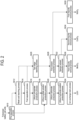
- FIG. 2 is a process diagram of the hydrometallurgical process (S600) of the waste battery processing method according to the present disclosure.
- the pre-separation process (S610) is a process of leaching and separating lithium (Li) by adding water to the fired and pulverized battery.
- the pulverized battery subjected to the pulverizing process (S500) may be dissolved in water, and a lithium (Li) solution may be leached at 10 °C to 30 °C for 1 to 3 hours to produce a lithium carbonate (Li 2 CO 3 ) solution and separate a cake.
- the operating costs and auxiliary material costs in the lithium phosphate production process (S616) which will be described later, can be reduced, the mixing of impurities can be minimized when producing high-purity lithium hydroxide, and the processing costs can be reduced when producing lithium hydroxide.
- the first evaporation concentration process is a process of producing lithium carbonate (Li 2 CO 3 ) crystals by evaporating and concentrating the lithium (Li) solution (filtrate) generated in the pre-separation process (S610).
- the amount of phosphoric acid (H 3 PO 4 ) and sodium hydroxide (NaOH) used in the lithium phosphate production process (S616) can be reduced by more than 50%, and the loss of lithium (Li) distributed to the filtrate in the lithium phosphate production process (S616) can be significantly reduced.
- the weak acid leaching process (S612) is a process in which the cake separated in the pre-separation process (S610) is leached using sulfuric acid (H 2 SO 4 ).
- the weak acid leaching process (S612) is a process in which the cake produced after pre-separating lithium in the pre-separation process (S610) is reduced and leached with sulfuric acid and hydrogen peroxide (H 2 O 2 ) at 80 °C to 85 °C for 1 to 4 hours.
- Ni nickel
- Co cobalt
- Mn manganese
- the post-separation process (S614) is a process of neutralizing the leach filtrate generated in the weak acid leaching process (S612) to separate a lithium (Li) solution and a nickel cobalt manganese cake (hereinafter referred to as NCM cake).
- the leaching filtrate obtained in the weak acid leaching process (S612) is neutralized (to pH 10 to pH 12) with sodium hydroxide (NaOH) and reacted at 70 °C to 85 °C for 4 to 8 hours, so that nickel (Ni), cobalt (Co) and manganese (Mn) can be recovered by precipitation, and lithium (Li) can be separated by distributing it as a filtrate.
- the precipitation rate of nickel (Ni), cobalt (Co) and manganese (Mn) may be 99.9% or more.
- the filtered NCM cake may be repulped two or more times to remove residual sodium salt (Na Salt).
- Na (Na) content in the NCM cake can be removed by 3.43% to 0.4%.
- the repulping process refers to a process of repulping a solid cake with water to wash the filtrate components (for example, residual sodium salt) present in the cake.
- the lithium phosphate production process (S616) is a process of generating a lithium phosphate (Li 3 PO 4 ) cake by adding phosphoric acid (H 3 PO 4 ) and sodium hydroxide (NaOH) to the lithium (Li) solution separated in the post-separation process (S614).
- phosphoric acid (H 3 PO 4 ) may be added to the lithium (Li) solution separated in the post-separation process (S614) and reacted at 70 °C to 85 °C for 1 to 4 hours to precipitate and recover lithium (Li) in the form of lithium phosphate (Li 3 PO 4 ).
- sodium hydroxide (NaOH) may be added to neutralize the lithium (Li) solution to pH 10.0 to pH 12.0.
- the lithium sulfate solution production process (S618) is a process in which a lithium sulfate (Li 2 SO 4 ) solution is produced by dissolving the lithium carbonate (Li 2 CO 3 ) crystals recovered by evaporating and concentrating the solution (lithium carbonate (Li 2 CO 3 ) solution) produced in the pre-separation process (S610), and the lithium phosphate (Li 3 PO 4 ) cake produced in the lithium phosphate production process (S616), with sulfuric acid.
- the temperature is 60 °C to 80 °C
- the reaction time is 0.5 to 3 hours
- the pH is 2.0 or less.
- a second evaporation concentration process (not shown) may be performed.
- the second evaporation concentration process is a process of evaporating and concentrating the lithium sulfate solution produced in the lithium sulfate solution production process (S618) to separate lithium sulfate (Li 2 SO 4 ) crystals and phosphoric acid (H 3 PO 4 ) filtrate.
- the phosphoric acid (H 3 PO 4 ) filtrate may be recycled in the lithium phosphate production process (S616) and used as a lithium precipitation auxiliary material.
- the evaporation condensate generated in the second evaporation concentration process may be recycled as a process solution in the lithium (Li) pre-separation process (S610).
- Li lithium
- S610 lithium
- a first phosphorus removal process is a process in which the lithium sulfate (Li 2 SO 4 ) crystals produced in the second evaporation concentration process are dissolved in pure water and then phosphorus (P) is removed by using aluminum sulfate (Al 2 (SO 4 ) 3 ) and caustic soda (NaOH).
- aluminum sulfate (Al 2 (SO 4 ) 3 ) may be added to the solution produced in the lithium sulfate solution production process (S618) to adjust the pH to 5.0 to 6.0 and reaction may be performed at 50 °C to 70 °C for 4 to 8 hours. By doing so, most phosphorus (P) can be removed by precipitation, and iron (Fe) and other impurities can also be coprecipitated.
- the lithium carbonate production process (S620) is a process of precipitating lithium carbonate (Li 2 CO 3 ) by adding sodium carbonate (Na 2 CO 3 ) to the lithium sulfate (Li 2 SO 4 ) produced in the lithium sulfate solution production process (S618).
- sodium carbonate (Na 2 CO 3 ) may be added to the filtrate produced in the first phosphorus removal process, and reaction may be performed at 80 °C to 85 °C for 1 to 6 hours to precipitate lithium carbonate.
- a repulping process may be performed to remove residual sodium (Na) salt in the cake remaining in the lithium carbonate production process (S620).
- repulping may be performed at 80 °C to minimize the loss of lithium (Li).
- the filtrate obtained in the lithium carbonate production process (S620) may be recycled in the lithium phosphate production process (S616).
- the lithium hydroxide solution production process (S622) is a process in which a lithium hydroxide (LiOH) solution is produced by dissolving the lithium carbonate cake produced in the lithium carbonate production process in pure water and then adding calcium oxide (CaO).
- CaO calcium oxide
- CaO calcium oxide
- water may be added to the lithium carbonate cake produced in the lithium carbonate production process (S620), and reaction may be performed at 80 °C to 100 °C for 3 hours or less, and then at 80 °C to 100 °C for 2 hours or less to produce a lithium hydroxide (LiOH) solution.
- a repulping process may be performed to recover lithium contained in the calcium carbonate (CaCO 3 ) residue produced in the lithium hydroxide solution production process (S622).
- the ion exchange resin process (S624) is a process of removing calcium (Ca) and magnesium (Mg), which are impurities contained in the lithium hydroxide (LiOH) solution produced as above.
- a third evaporation concentration process is a process in which lithium hydroxide (LiOH) crystals are produced by evaporating and concentrating the lithium hydroxide (LiOH) solution produced in the lithium hydroxide solution production process (S622) and/or the ion exchange resin treatment solution from which impurities are removed through the ion exchange resin process (S624).
- a LiOH ⁇ H 2 O product can be produced by evaporating and concentrating the lithium hydroxide (LiOH) solution and/or the ion exchange resin treatment solution.
- the two-stage leaching process (S626) is a process in which the weak acid leaching process cake produced in the weak acid leaching process (S612) and the NCM cake produced in the post-separation process (S614) are leached using sulfuric acid and hydrogen peroxide (H 2 O 2 ).
- the weak acid leaching process cake and the NCM cake from which lithium is separated may be dissolved (to pH 1.5 to 2.5) with sulfuric acid (H 2 SO 4 ) at 60 °C to 80 °C for 2 to 4 hours.
- a small amount of reducing agent may be added.
- hydrogen peroxide (H 2 O 2 ) may be used as the reducing agent.
- an impurity removal process may be performed to remove impurities from the filtrate produced in the two-stage leaching process (S626).
- the impurity removal process may include a first copper removal process and a first aluminum & phosphorus removal process.
- the first copper removal process (not shown) is a process of adding NaSH to remove copper (Cu) as an impurity from the filtrate produced in the two-stage leaching process (S626).
- the first aluminum & phosphorus removal process (not shown) is a process of adding caustic soda (NaOH) and oxygen gas (O 2 ) to remove additional impurities, aluminum (Al) and phosphorus (P), from the filtrate produced in the first copper removal process.
- the first solvent extraction process (S628) is a process of extracting cobalt by an extractant from the filtrate produced in the two-stage leaching process (S626) and/or the filtrate produced in the above-described impurity removal process.
- a nickel hydroxide production process and a nickel weak acid leaching process may be performed on the filtrate produced in the first solvent extraction process (S628).
- the nickel hydroxide production process (not shown) may be a process of producing nickel hydroxide (Ni(OH) 2 ) by adding caustic soda (NaOH) to the filtrate produced in the first solvent extraction process (S628).
- the nickel weak acid leaching process (not shown) may be a process in which water, sulfuric acid (H 2 SO 4 ), and hydrogen peroxide (H 2 O 2 ) are added to the cake produced in the nickel hydroxide production process to dissolve the cake.
- the first impurity removal process (S630) is a process of removing impurities from the filtrate produced in the first solvent extraction process (S628) and/or the filtrates produced in the nickel hydroxide production process and the nickel weak acid leaching process.
- the first impurity removal process (S630) may include a second copper removal process and a first aluminum removal process.
- the second copper removal process may be a process of adding sodium hydrogen sulfide (NaSH) to remove copper (Cu) as an impurity from the filtrate produced in the nickel weak acid leaching process.
- the first aluminum removal process is a process of adding caustic soda (NaOH) and oxygen gas (O 2 ) to the filtrate produced in the second copper removal process to remove aluminum (Al) as an additional impurity.
- a fourth evaporation concentration process is a process of producing nickel sulfate (NiSO 4 ) crystals by evaporating and concentrating the solution produced in the first impurity removal process (S630).
- the second solvent extraction process (S632) is a process of extracting manganese by an extractant from the stripping liquid produced in the first solvent extraction process (S628).
- a first cobalt extraction process (not shown) may be performed on the filtrate produced in the second solvent extraction process (S632).
- the first cobalt extraction process is a process of extracting cobalt by an extractant from the filtrate produced in the second solvent extraction process (S632).
- the second impurity removal process (S634) is a process of removing impurities from the filtrate produced in the second solvent extraction process (S632) and/or the filtrate produced in the first cobalt extraction process.
- the second impurity removal process (S634) may include a third copper removal process (not shown) and a second aluminum removal process (not shown).
- the third copper removal process is a process of adding sodium hydrogen sulfide (NaSH) to remove copper (Cu) as an impurity from the stripping liquid produced in the first cobalt extraction process.
- the second aluminum removal process is a process of adding caustic soda (NaOH) and oxygen gas (O 2 ) to remove aluminum (Al) as an additional impurity from the filtrate produced in the third copper removal process.
- a fifth evaporation concentration process is a process of producing cobalt sulfate (CoSO 4 ) crystals by evaporating and concentrating the filtrate generated in the second impurity removal process (S634).
- the third impurity removal process (S636) is a process of removing impurities from the stripping liquid produced in the second solvent extraction process (S632).
- the third impurity removal process (S636) may include a fourth copper removal process (not shown) and a third aluminum removal process (not shown).
- the fourth copper removal process is a process of adding sodium hydrogen sulfide (NaSH) to remove copper (Cu) from the stripping liquid produced in the second solvent extraction process (S632).
- the third aluminum removal process is a process of adding caustic soda (NaOH) and oxygen gas (O 2 ) to remove aluminum (Al) an additional impurity from the filtrate produced in the fourth copper removal process.
- a sixth evaporation concentration process is a process of producing manganese sulfate (MnSO 4 ) crystals by evaporating and concentrating the filtrate produced in the third impurity removal process (S636).
- the introduction amounts of impurities in the materials recovered in the example and the comparative example are shown in Table 1 below.
- the introduction amount of impurities is calculated by the following method. Specifically, the amount of NCM622 waste batteries processed per day was 285.7 tons based on packs, 205.5 tons based on modules excluding other parts after dismantling the packs, and 168.2 tons based on cells excluding other parts after dismantling the modules. At this time, the introduction amounts of impurities were calculated by deriving the ratio of aluminum (Al) and iron (Fe) among the materials recovered from waste battery modules.
- the recovery rates of individual valuable metals refer to values calculated by excluding losses in the process of recovering target metals (e.g., Li) in commercial forms (e.g., LiOH).
- target metals e.g., Li
- the weights of the raw materials (and slag) containing the target metals were measured using a scale, and the concentrations of the leached metals in the form of compounds were measured using ICP-AES spectroscopic analysis, from which the recovery rates of individual metals were calculated.
Landscapes
- Chemical & Material Sciences (AREA)
- Engineering & Computer Science (AREA)
- Manufacturing & Machinery (AREA)
- Materials Engineering (AREA)
- Organic Chemistry (AREA)
- Metallurgy (AREA)
- Mechanical Engineering (AREA)
- Life Sciences & Earth Sciences (AREA)
- Environmental & Geological Engineering (AREA)
- General Life Sciences & Earth Sciences (AREA)
- Geology (AREA)
- Geochemistry & Mineralogy (AREA)
- General Chemical & Material Sciences (AREA)
- Chemical Kinetics & Catalysis (AREA)
- Electrochemistry (AREA)
- Inorganic Chemistry (AREA)
- Sustainable Development (AREA)
- Manufacture And Refinement Of Metals (AREA)
- Processing Of Solid Wastes (AREA)
- Secondary Cells (AREA)
Applications Claiming Priority (3)
| Application Number | Priority Date | Filing Date | Title |
|---|---|---|---|
| KR20230070401 | 2023-05-31 | ||
| KR1020230107115A KR102803807B1 (ko) | 2023-05-31 | 2023-08-16 | 폐전지 처리 방법 |
| PCT/KR2023/020320 WO2024248255A1 (ko) | 2023-05-31 | 2023-12-11 | 폐전지 처리 방법 |
Publications (2)
| Publication Number | Publication Date |
|---|---|
| EP4525136A1 true EP4525136A1 (de) | 2025-03-19 |
| EP4525136A4 EP4525136A4 (de) | 2026-01-14 |
Family
ID=93658250
Family Applications (1)
| Application Number | Title | Priority Date | Filing Date |
|---|---|---|---|
| EP23939894.4A Pending EP4525136A4 (de) | 2023-05-31 | 2023-12-11 | Behandlungsverfahren für eine abfallbatterie |
Country Status (9)
| Country | Link |
|---|---|
| EP (1) | EP4525136A4 (de) |
| JP (1) | JP2025523283A (de) |
| CN (1) | CN119790524A (de) |
| AR (1) | AR132801A1 (de) |
| AU (1) | AU2023452503B2 (de) |
| CA (1) | CA3260692A1 (de) |
| CL (1) | CL2025000196A1 (de) |
| MX (1) | MX2025002263A (de) |
| WO (1) | WO2024248255A1 (de) |
Cited By (1)
| Publication number | Priority date | Publication date | Assignee | Title |
|---|---|---|---|---|
| RU2854809C1 (ru) * | 2025-04-21 | 2026-01-19 | Общество с ограниченной ответственностью "Институт Гипроникель" (ООО "Институт Гипроникель") | Способ комплексной переработки никель- и кобальтсодержащей черной массы |
Family Cites Families (8)
| Publication number | Priority date | Publication date | Assignee | Title |
|---|---|---|---|---|
| EP3604567B1 (de) * | 2017-03-31 | 2024-10-23 | JX Metals Circular Solutions Co., Ltd. | Verfahren zur behandlung von schrott von lithium-ionen-batterien |
| KR102699968B1 (ko) * | 2017-09-28 | 2024-08-27 | 리싸이클리지 리티온 인코포레이티드 | 리튬-이온 배터리 재활용 방법 |
| TWI888394B (zh) * | 2019-07-26 | 2025-07-01 | 德商巴斯夫歐洲公司 | 自廢鋰離子電池中回收鋰和其他金屬之方法 |
| AU2021413240A1 (en) * | 2020-12-31 | 2023-07-06 | Cytec Industries Inc. | Recovering mixed-metal ions from aqueous solutions |
| CN113897488A (zh) * | 2021-09-01 | 2022-01-07 | 格林美股份有限公司 | 一种从废旧锂离子电池中回收有价金属的方法 |
| KR102407105B1 (ko) * | 2021-11-19 | 2022-06-13 | 주식회사 어스앤배터리 | 폐배터리 모듈 절단장치 및 이를 이용한 폐배터리 재활용 전처리 방법 |
| KR102447931B1 (ko) * | 2022-01-04 | 2022-09-28 | (주)에코프로머티리얼즈 | 폐전지 친환경 재활용 방법 |
| KR102512096B1 (ko) * | 2022-09-02 | 2023-03-20 | 에스아이에스 주식회사 | 폐리튬이온배터리팩 해체시스템 |
-
2023
- 2023-12-11 JP JP2024527792A patent/JP2025523283A/ja active Pending
- 2023-12-11 CA CA3260692A patent/CA3260692A1/en active Pending
- 2023-12-11 WO PCT/KR2023/020320 patent/WO2024248255A1/ko not_active Ceased
- 2023-12-11 CN CN202380060646.6A patent/CN119790524A/zh active Pending
- 2023-12-11 EP EP23939894.4A patent/EP4525136A4/de active Pending
- 2023-12-11 AU AU2023452503A patent/AU2023452503B2/en active Active
-
2024
- 2024-05-29 AR ARP240101353A patent/AR132801A1/es unknown
-
2025
- 2025-01-22 CL CL2025000196A patent/CL2025000196A1/es unknown
- 2025-02-25 MX MX2025002263A patent/MX2025002263A/es unknown
Cited By (1)
| Publication number | Priority date | Publication date | Assignee | Title |
|---|---|---|---|---|
| RU2854809C1 (ru) * | 2025-04-21 | 2026-01-19 | Общество с ограниченной ответственностью "Институт Гипроникель" (ООО "Институт Гипроникель") | Способ комплексной переработки никель- и кобальтсодержащей черной массы |
Also Published As
| Publication number | Publication date |
|---|---|
| CA3260692A1 (en) | 2025-04-04 |
| AU2023452503A1 (en) | 2025-01-23 |
| WO2024248255A1 (ko) | 2024-12-05 |
| CL2025000196A1 (es) | 2025-06-06 |
| JP2025523283A (ja) | 2025-07-18 |
| AU2023452503B2 (en) | 2025-04-24 |
| EP4525136A4 (de) | 2026-01-14 |
| TW202450163A (zh) | 2024-12-16 |
| CN119790524A (zh) | 2025-04-08 |
| AR132801A1 (es) | 2025-07-30 |
| MX2025002263A (es) | 2025-04-02 |
Similar Documents
| Publication | Publication Date | Title |
|---|---|---|
| EP3899071B1 (de) | Batterierecyclingverfahren | |
| EP3688834B1 (de) | Recyclingverfahren für lithium-ionen-batterien | |
| EP3956485B1 (de) | Verfahren zur herstellung von vorläuferverbindungen für lithiumbatteriekathoden | |
| KR102905380B1 (ko) | 리튬 배터리를 재활용하는 방법 | |
| KR102154599B1 (ko) | 양극활물질의 유가금속 분리회수방법 | |
| US12359280B2 (en) | Method for recovering lithium from a waste lithium secondary battery using a pyrometallugical process | |
| AU2023452503B2 (en) | Treatment method of waste battery | |
| AU2024213154C1 (en) | Method for preparing nickel sulfate aqueous solution from nickel- containing raw material | |
| KR102803807B1 (ko) | 폐전지 처리 방법 | |
| TWI921754B (zh) | 廢電池的處理方法 | |
| RU2849165C2 (ru) | Способ обработки отработанной батареи | |
| KR102742452B1 (ko) | 유가 금속 회수 방법 | |
| RU2860922C2 (ru) | Способ извлечения металлов из материала отработанной аккумуляторной батареи | |
| HK40077482A (en) | A process, apparatus, and system for recovering materials from batteries | |
| US20250154627A1 (en) | Process for the recovery of li, ni and co | |
| AU2024290734A1 (en) | Lithium recovery method and lithium recovery device | |
| HK40077483A (en) | A process, apparatus, and system for recovering materials from batteries | |
| HK40077483B (en) | A process, apparatus, and system for recovering materials from batteries | |
| HK40077481A (en) | A process, apparatus, and system for recovering materials from batteries | |
| HK40063630A (en) | Battery recycling process | |
| HK40063630B (en) | Battery recycling process | |
| HK40011269A (en) | A process, apparatus, and system for recovering materials from batteries | |
| HK40011269B (en) | A process, apparatus, and system for recovering materials from batteries |
Legal Events
| Date | Code | Title | Description |
|---|---|---|---|
| STAA | Information on the status of an ep patent application or granted ep patent |
Free format text: STATUS: THE INTERNATIONAL PUBLICATION HAS BEEN MADE |
|
| PUAI | Public reference made under article 153(3) epc to a published international application that has entered the european phase |
Free format text: ORIGINAL CODE: 0009012 |
|
| STAA | Information on the status of an ep patent application or granted ep patent |
Free format text: STATUS: REQUEST FOR EXAMINATION WAS MADE |
|
| 17P | Request for examination filed |
Effective date: 20241212 |
|
| AK | Designated contracting states |
Kind code of ref document: A1 Designated state(s): AL AT BE BG CH CY CZ DE DK EE ES FI FR GB GR HR HU IE IS IT LI LT LU LV MC ME MK MT NL NO PL PT RO RS SE SI SK SM TR |
|
| A4 | Supplementary search report drawn up and despatched |
Effective date: 20251211 |
|
| RIC1 | Information provided on ipc code assigned before grant |
Ipc: H01M 10/54 20060101AFI20251205BHEP Ipc: C22B 1/00 20060101ALI20251205BHEP Ipc: C22B 3/08 20060101ALI20251205BHEP Ipc: C22B 3/42 20060101ALI20251205BHEP Ipc: C22B 26/12 20060101ALI20251205BHEP Ipc: C22B 1/02 20060101ALN20251205BHEP Ipc: C22B 3/26 20060101ALN20251205BHEP Ipc: C22B 15/00 20060101ALN20251205BHEP Ipc: C22B 7/00 20060101ALN20251205BHEP Ipc: C22B 3/44 20060101ALN20251205BHEP Ipc: C22B 47/00 20060101ALN20251205BHEP Ipc: C22B 3/00 20060101ALN20251205BHEP Ipc: H01M 4/525 20100101ALN20251205BHEP Ipc: H01M 6/52 20060101ALN20251205BHEP |