EP4524972A2 - Analyse genetischer varianten - Google Patents
Analyse genetischer varianten Download PDFInfo
- Publication number
- EP4524972A2 EP4524972A2 EP25155115.6A EP25155115A EP4524972A2 EP 4524972 A2 EP4524972 A2 EP 4524972A2 EP 25155115 A EP25155115 A EP 25155115A EP 4524972 A2 EP4524972 A2 EP 4524972A2
- Authority
- EP
- European Patent Office
- Prior art keywords
- variant
- copy number
- tumor
- germline
- somatic
- Prior art date
- Legal status (The legal status is an assumption and is not a legal conclusion. Google has not performed a legal analysis and makes no representation as to the accuracy of the status listed.)
- Pending
Links
Images



Classifications
-
- G—PHYSICS
- G16—INFORMATION AND COMMUNICATION TECHNOLOGY [ICT] SPECIALLY ADAPTED FOR SPECIFIC APPLICATION FIELDS
- G16B—BIOINFORMATICS, i.e. INFORMATION AND COMMUNICATION TECHNOLOGY [ICT] SPECIALLY ADAPTED FOR GENETIC OR PROTEIN-RELATED DATA PROCESSING IN COMPUTATIONAL MOLECULAR BIOLOGY
- G16B20/00—ICT specially adapted for functional genomics or proteomics, e.g. genotype-phenotype associations
-
- G—PHYSICS
- G16—INFORMATION AND COMMUNICATION TECHNOLOGY [ICT] SPECIALLY ADAPTED FOR SPECIFIC APPLICATION FIELDS
- G16B—BIOINFORMATICS, i.e. INFORMATION AND COMMUNICATION TECHNOLOGY [ICT] SPECIALLY ADAPTED FOR GENETIC OR PROTEIN-RELATED DATA PROCESSING IN COMPUTATIONAL MOLECULAR BIOLOGY
- G16B20/00—ICT specially adapted for functional genomics or proteomics, e.g. genotype-phenotype associations
- G16B20/10—Ploidy or copy number detection
-
- G—PHYSICS
- G16—INFORMATION AND COMMUNICATION TECHNOLOGY [ICT] SPECIALLY ADAPTED FOR SPECIFIC APPLICATION FIELDS
- G16B—BIOINFORMATICS, i.e. INFORMATION AND COMMUNICATION TECHNOLOGY [ICT] SPECIALLY ADAPTED FOR GENETIC OR PROTEIN-RELATED DATA PROCESSING IN COMPUTATIONAL MOLECULAR BIOLOGY
- G16B20/00—ICT specially adapted for functional genomics or proteomics, e.g. genotype-phenotype associations
- G16B20/20—Allele or variant detection, e.g. single nucleotide polymorphism [SNP] detection
Definitions
- the disclosure relates to the analysis of genetic variants.
- cancer tissues are characterized by genetic lesions which are, at least in part, responsible for the occurrence or phenotype of the disorder.
- Many cancers are characterized by one or more genetic aberrations, including gene copy number changes, somatic and germline mutations. The need still exists for analyzing genetic variants associated with cancer.
- the minimum number of germline SNPs comprises at least 10, 25, 50, 100, 150, 200, 250, 300, 350, 400, 450, 500, 1,000, 2,000, 3,000, 4,000, 5000, 6000, 7000, 8000, 9000, 10,000, or 15,000 germline SNPs.
- the at least one processor when executing is configured to calculate C, M, and p.
- values of C, M, and p fit a plurality of genome-wide copy number model inputs of the SCI and the SAFI.
- the at least one processor when executing is configured to determine an indication of zygosity for said variant (e.g., mutation).
- the at least one processor when executing is configured to determine the indication of zygosity for said variant is heterozygous when 0 ⁇ M ⁇ C.
- the at least one processor when executing is configured to require the sample purity is greater than about 80%, e.g., between about 90% and 100%, e.g., between about 90% and 95%, or between about 95% and 100%, when determining the zygosity.
- the at least one processor when executing in configured to process-match control values using values obtained where the control is a sample of euploid (e.g., diploid) tissue from a subject other than the subject from which the tumor sample is from, or a sample of mixed euploid (e.g., diploid) tissues from one or more ( e.g., at least 2, 3, 4, or 5) subjects other than the subject from which the tumor sample is from.
- euploid e.g., diploid
- mixed euploid e.g., diploid
- the at least one processor when executing is configured to sequence each of the selected subgenomic intervals and each of the selected germline SNPs, e.g., by next generation sequencing (NGS).
- NGS next generation sequencing
- the at least one processor when executing is configured to determine sequence coverage prior to normalization is at least about 10x, 20x, 30x, 50x, 100x, 250x, 500x, 750x, or 1000x the depth of the sequencing.
- the subject has received an anti-cancer therapy.
- the subject has received an anti-cancer therapy and is resistant to the therapy or exhibits disease progression.
- the subject has received an anti-cancer therapy which is selected from: a therapeutic agent that has been approved by the FDA, EMEA, or other regulatory agency; or a therapeutic agent that has been not been approved by the FDA, EMEA, or other regulatory agency.
- the subject has received an anti-cancer therapy in the course of a clinical trial, e.g., a Phase I, Phase II, or Phase III clinical trial (or in an ex-US equivalent of such a trial).
- a clinical trial e.g., a Phase I, Phase II, or Phase III clinical trial (or in an ex-US equivalent of such a trial).
- the variant is positively associated with the type of tumor present in the subject, e.g ., with occurrence of, or resistance to treatment.
- the variant is not positively associated with the type of tumor present in the subject.
- the variant is positively associated with a tumor other than the type of tumor present in the subject.
- values of C, M, and p fit a plurality of genome-wide copy number model inputs of the SCI and the SAFI.
- a genomic segment comprises at least 10, 20, 30, 40, 50, 60, 70, 80, 90, 100, 125, 150, 175, 200, 225, 250, 275, 300, 400, or 500 subgenomic intervals, e.g ., exons.
- a genomic segment comprises 10 to 1,000, 20 to 900, 30 to 700, 40 to 600, 50 to 500, 60 to 400, 70 to 300, 80 to 200, 80 to 150, or 80 to 120, 90 to 110, or about 100, subgenomic intervals, e.g ., exons.
- a genomic segment comprises between 100 and 10,000, 100 and 5,000, 100 and 4,000, 100 and 3,000, 100 and 2,000, or 100 and 1,000, subgenomic intervals, e.g., exons.
- a genomic segment comprises 10 to 1,000, 20 to 900, 30 to 700, 40 to 600, 50 to 500, 60 to 400, 70 to 300, 80 to 200, 80 to 150, or 80 to 120, 90 to 110, or about 100 genomic SNPs, which have been assigned a SAFI value.
- a genomic segment comprises between 100 and 10,000, 100 and 5,000, 100 and 4,000, 100 and 3,000, 100 and 2,000, or 100 and 1,000, genomic SNPs which have been assigned a SAFI value.
- each of a plurality of genomic segments are characterized by having one or both of:
- the number of subgenomic intervals, e.g ., exons, that are contained in, or are combined to form, a genomic segment is at least 2, 5, 10, 15, 20, 50, or 100 times the number of genomic segments.
- the number of subgenomic intervals e.g ., exons, is at least 3, 4, 5, 6, 7, 8, 9, 10, 11, 12, 13, 14, or 15 times the number of genomic segments.
- a boundary for a genomic segment is provided.
- the method comprises assembling sequences for subgenomic intervals, e.g ., exons, into genetic segments.
- ⁇ ( ⁇ i l i C i )/ ⁇ i l i , let l i be the length of a genomic segment.
- sample purity (p) is global purity, e.g ., is the same for all genomic segments.
- a value of g that is close to 0, e.g., does not differ significantly from 0, indicates the variant is a somatic variant.
- a value of g that is close to 1, e.g., does not differ significantly from 1, indicates the variant is a germline variant.
- a value of g is less than 1 but more than 0, e.g., if it is less than 1 by a predetermined amount and more than 0 by a predetermined amount, e.g. , if g is between 0.4 and 0.6, it indicates an indistinguishable result.
- the somatic/germline status is determined, e.g ., when the sample purity is below about 40%, e.g., between about 10% and 30%, e.g., between about 10% and 20%, or between about 20% and 30%.
- the subject has received an anti-cancer therapy and is resistant to the therapy or exhibits disease progression.
- an anti-cancer therapy which is selected from: a therapeutic agent that has been approved by the FDA, EMEA, or other regulatory agency; or a therapeutic agent that has been not been approved by the FDA, EMEA, or other regulatory agency.
- the variant is positively associated with the type of tumor present in the subject, e.g ., with occurrence of, or resistance to treatment.
- the variant is positively associated with a tumor other than the type of tumor present in the subject.
- the method can memorialize, e.g., in a database, e.g., a machine readable database, provide a report containing, or transmit, a descriptor for one or more of: the presence, absence, or frequency, of other mutations in the tumor, e.g., other mutations associated with the tumor type in the sample, other mutations not associated with the tumor type in the sample, or other mutations associated with a tumor other than the tumor type in the sample; the characterization of the variant; the allele or gene; or the tumor type, e.g., the name of the type of tumor, whether the tumor is primary or secondary; a subject characteristic; or therapeutic alternatives, recommendations, or choices.
- a database e.g., a machine readable database
- a descriptor relating to the characterization of the variant comprises a descriptor for zygosity or germline vs somatic status.
- “About” and “approximately” shall generally mean an acceptable degree of error for the quantity measured given the nature or precision of the measurements. Exemplary degrees of error are within 20 percent (%), typically, within 10%, and more typically, within 5% of a given value or range of values.
- Directly acquiring a value includes performing a process that includes a physical change in a sample or another substance, e.g ., performing an analytical process which includes a physical change in a substance, e.g ., a sample, analyte, or reagent (sometimes referred to herein as "physical analysis"), performing an analytical method, e.g., a method which includes one or more of the following: separating or purifying a substance, e.g.
- an analyte, or a fragment or other derivative thereof from another substance; combining an analyte, or fragment or other derivative thereof, with another substance, e.g., a buffer, solvent, or reactant; or changing the structure of an analyte, or a fragment or other derivative thereof, e.g., by breaking or forming a covalent or non covalent bond, between a first and a second atom of the analyte; or by changing the structure of a reagent, or a fragment or other derivative thereof, e.g., by breaking or forming a covalent or non covalent bond, between a first and a second atom of the reagent.
- Indirectly acquiring refers to receiving the physical entity or value from another party or source (e.g., a third party laboratory that directly acquired the physical entity or value).
- a first party may acquire a value from a second party (indirectly acquiring) which said second party directly acquired or acquired by calculation.
- Acquiring by calculation refers to acquiring a value by calculation or computation, e.g ., as performed on a machine, e.g ., a computer.
- a sample refers to obtaining possession of a sample, e.g., a tissue sample or nucleic acid sample, by “directly acquiring” or “indirectly acquiring” the sample.
- Directly acquiring a sample means performing a process (e.g ., performing a physical method such as a surgery or extraction) to obtain the sample.
- Indirectly acquiring a sample refers to receiving the sample from another party or source (e.g., a third party laboratory that directly acquired the sample).
- “Sequencing" a nucleic acid molecule requires determining the identity of at least one nucleotide in the molecule. In embodiments the identity of less than all of the nucleotides in a molecule are determined. In other embodiments, the identity of a majority or all of the nucleotides in the molecule is determined.
- a genomic segment comprises a subgenomic interval, e.g ., an exon, and other genomic sequence, e.g ., one or a plurality of other subgenomic intervals.
- a genomic interval will include a plurality of subgenomic intervals, e.g ., exons, which are characterized by having one or both of:
- genomic sequences into genomic segments can in cases be viewed as a data reduction step.
- E.g., several thousand exons may amount to many fewer, e.g., a hundred or fewer, genomic segments.
- the number of subgenomic intervals, e.g ., exons, that are contained in, or are combined to form, the genomic segments can at least 2, 5, 10, 15, 20, 50 or 100 times the number of genomic segments.
- the number of subgenomic intervals, e.g ., exons is at least 3, 4, 5, 6, 7, 8, 9, 10, 11, 12, 13, 14, or 15 times the number of genomic segments.
- Genome-wide copy number, as well as copy number and LOH estimates for each chromosomal segment, can be determined by fitting a statistical model, e.g., a statistical model described herein.
- a subclonal somatic mutation at segment i can have expected AF: AFsomatic ⁇ pMi pCi + 2 1 ⁇ p .
- FIG. 8 is an exemplary expected allele frequency table for copy numbers, given purity (p), copy number (C), and alternative allele count (M).
- low purity (e.g., ⁇ 20%) samples are relatively be easier for assessing somatic status, but more difficult in assessing tumor LOH.
- high purity (e.g., >90%) samples are easier for assessing tumor LOH, but more difficult in assessing somatic status.
- Tumor samples that are well-admixed with surrounding normal tissue e.g., many clinical cancer specimens
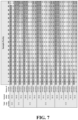
- a more comprehensive table for expected allele frequencies is depicted in FIG. 7 .
- the methods described herein can be used to characterize variants found anywhere in the genome including in exons, introns, 5'-UTRs, and inter-gene regions.
- the method comprises characterizing a variant, e.g ., a mutation, in a tumor suppressor gene. In another embodiment, the method comprises characterizing a variant, e.g., a mutation, in an oncogene.
- the method comprises acquiring an SCI for subgenomic intervals from at least five, six, seven, eight, nine, ten, fifteen, twenty, twenty-five, thirty or more genes from the sample, wherein the genes are chosen from: Table 1, Table 2, or Table 3.
- the method comprises acquiring an SCI for a plurality, e.g., at least 2, 3, 4, 5, 6, 7, 8, 9, 10, 15, 20, of subgenomic intervals, e.g ., exons, a gene chosen from: Table 1, Table 2, or Table 3.
- the method comprises acquiring an SAFI for a SNP from at least five, six, seven, eight, nine, ten, fifteen, twenty, twenty-five, thirty or more genes from the sample, wherein the genes or gene products are chosen from: Table 1, Table 2, or Table 3.
- Table 1 Exemplary Genes for Analysis ABL1, AKT1, AKT2, AKT3, ALK, APC, AR, BRAF, CCND1, CDK4, CDKN2A, CEBPA, CTNNB1, EGFR, ERBB2, ESR1, FGFR1, FGFR2, FGFR3, FLT3, HRAS, JAK2, KIT, KRAS, MAP2K1, MAP2K2, MET, MLL, MYC, NF1, NOTCH1, NPM1, NRAS, NTRK3, PDGFRA, PIK3CA, PIK3CG, PIK3R1, PTCH1, PTCH2, PTEN, RB1, RET, SMO, STK11, SUFU, and TP53.
- Table 2 Exemplary Genes for Analysis ABL2, ARAF, ARFRP1, ARID1A, ATM, ATR, AURKA, AURKB, BAP1, BCL2, BCL2A1, BCL2L1, BCL2L2, BCL6, BRCA1, BRCA2, CBL, CARD11, CBL, CCND2, CCND3, CCNE1, CD79A, CD79B, CDH1, CDH2, CDH20, CDH5, CDK6, CDK8, CDKN2B, CDKN2C, CHEK1, CHEK2, CRKL, CRLF2, DNMT3A, DOT1L, EPHA3, EPHA5, EPHA6, EPHA7, EPHB1, EPHB4, EPHB6, ERBB3, ERBB4, ERG, ETV1, ETV4, ETV5, ETV6, EWSR1, EZH2, FANCA, FBXW7, FGFR4, FLT1, FLT4, FOXP4, GATA1, GNA11, GNAQ, GNAS, GPR124, GUCY
- Table 3 Exemplary Genes for Analysis ABCB1, ABCC2, ABCC4, ABCG2, ABL1, ABL2, AKT1, AKT2, AKT3, ALK, APC, AR, ARAF, ARFRP1, ARID1A, ATM, ATR, AURKA, AURKB, BCL2, BCL2A1, BCL2L1, BCL2L2, BCL6, BRAF, BRCA1, BRCA2, C1orf144, CARD11, CBL, CCND1, CCND2, CCND3, CCNE1, CDH1, CDH2, CDH20, CDH5, CDK4, CDK6, CDK8, CDKN2A, CDKN2B, CDKN2C, CEBPA, CHEK1, CHEK2, CRKL, CRLF2, CTNNB1, CYP1B1, CYP2C19, CYP2C8, CYP2D6, CYP3A4, CYP3A5, DNMT3A, DOT1L, DPYD, EGFR, EPHA3, EP
- the method can be used to analyze variants in subjects having cancer.
- Cancers include, but are not limited to, B cell cancer, e.g ., multiple myeloma, melanomas, breast cancer, lung cancer (such as non-small cell lung carcinoma or NSCLC), bronchus cancer, colorectal cancer, prostate cancer, pancreatic cancer, stomach cancer, ovarian cancer, urinary bladder cancer, brain or central nervous system cancer, peripheral nervous system cancer, esophageal cancer, cervical cancer, uterine or endometrial cancer, cancer of the oral cavity or pharynx, liver cancer, kidney cancer, testicular cancer, biliary tract cancer, small bowel or appendix cancer, salivary gland cancer, thyroid gland cancer, adrenal gland cancer, osteosarcoma, chondrosarcoma, cancer of hematological tissues, adenocarcinomas, inflammatory myofibroblastic tumors, gastrointestinal stromal tumor (GIST), colon cancer, multiple myeloma (MM), myelodysplastic syndrome (MDS), myeloproliferative disorder (
- the cancer is a primary cancer, e.g., a cancer is named after the part of the body where it first started to grow.
- the cancer is a secondary cancer (or a metastasis), e.g ., when cancer cells spread from the primary cancer to another part of the body (e.g., lymph nodes, lungs, liver, brain, and bones).
- a secondary cancer can contain cancer cells originated from the primary cancer site.
- the specimens can be processed and analyzed using NGS-based cancer assay, e.g ., as described in Frampton et al. Nat Biotechnol. 31(11):1023-1031 (2013 ).
- the method includes, e.g ., DNA extraction, sequencing, analysis and interpretation.
- DNA can be extracted from FFPE tumor samples.
- Typical sample requirements include, e.g ., surface area ⁇ 25 mm 2 , sample volume ⁇ 1 mm 3 , nucleated cellularity ⁇ 80% or 30,000 cells, tumor content ⁇ 20%.
- Sequencing library can be prepared using "with-bead” library construction.
- DNA can be fragmented by sonication and ⁇ 50 ng of dsRNA (e.g., quantified by PicoGreen) may be required for library preparation.
- DNA fragments can be captured by biotinylated DNA oligonucleotides during hybridization.
- Sequencing can be performed, e.g., to > 500x average unique coverage (e.g., with > 100x at > 99% exons), e.g., on a HiSeq platform (Illumina) using 49 x 49 paired-end sequencing.
- CNAs copy number alterations
- the methods described herein can be sensitive, e.g ., to variants present at any mutant allele frequency. Detection of long (e.g., 1-40 bp) indel variants can be achieved using Bruijin graph-based local assembly. CGH-like analysis of read-depth can be used for assessment of CNAs.
- the methods described herein allow for clinical interpretation without a matched normal.
- the reporting approach can include, e.g., removal of germline variants (e.g., from 1000 Genome Project (dbSNP135)) and highlighting known driver alterations (e.g., COSMIC v62) as biologically significant.
- dbSNP135 1000 Genome Project
- driver alterations e.g., COSMIC v62
- specially configured computer systems can be configured to perform the analysis discussed herein, e.g., to generate characterization models of genetic variants appearing in tumor samples.
- the characterization models can specify, for example, a tumor type (e.g., somatic, germline, subclonal somatic, and not-distinguishable) and/or a tumor zygosity (e.g., homozygous, heterozygous, and absent) for a genetic variant based on sequencing information obtained on the sample.
- Various embodiments of characterization systems can be configured to operate on testing data (e.g., genetic sequencing information) provided from genetic screening systems and/or methods.
- the characterization systems can also be configured to perform genetic testing on tumor samples directly to generate, for example, genetic sequencing information.
- characterization models can be generated by system components that interact with system components for sequencing and/or testing tumor samples. The results generated by sequencing components can be accessed by characterization system components to generate characterization models of genetic variants.
- characterization systems can provide user or collaborator (e.g., physicians, researches, clinicians, and other medical personnel) access to genomic sequencing data or information on variants through user interfaces. Responsive to selection in the user interface, the system can accept definition of subgenomic intervals and/or germline single nucleotide polymorphisms (SNPs) within a tumor sample on which to provide a characterization model. In other embodiments, the characterization system can automatically define the subgenomic intervals and/or germline SNPs on which to develop classification analysis.
- SNPs single nucleotide polymorphisms
- a characterization system is configured to capture data on a genomic sequence coverage for specified subgenomic intervals.
- the system can define a variable for a sequence coverage input ("SCI" discussed herein) based on the values for sequence coverage at the specified subgenomic intervals.
- the system includes a user interface display configured to accept user input to define the specified subgenomic intervals.
- the subgenomic intervals can be pre-defined as part of genetic testing and/or analysis.
- the system can also be configured to identify the subgenomic intervals to analyze automatically (e.g., based on segmentation analysis, etc).
- the system captures a value for sequence coverage for each of a plurality of specified subgenomic intervals.
- the captured values can be normalized, averaged, or weighted to prevent outlier values from skewing subsequent calculations.
- a normalized value for sequence coverage is used in generating a characterization model for a tumor sample.
- the characterization system can also be configured to derive an allele frequency value according to specification of germline SNPs in the tumor sample.
- the system can define a variable for an SNP allele frequency input ("SAFI" as discussed herein) based on the values for allele frequency for the selected germline SNPs.
- SAFI SNP allele frequency input
- the system specifies the germline SNPs on which to capture values for allele frequency (e.g., based on pre-specified selection, automatically based on analysis of the tumor sample, etc.).
- the user interface can also be configured to accept selection of germline SNPs within genetic sequencing information obtained on, for example, a tumor sample.
- the system can be configured to capture and/or calculate additional values from genetic sequence information (including, e.g ., captured from testing systems and/or components or generated by the characterization system directly).
- the system can capture allele frequency in a tumor sample ("VAFI" - variant allele frequency as discussed herein) for a given variant ( e.g., a mutation) from testing data.
- the system can generate the data for capturing the allele frequency responsive to genetic sequence testing performed on the sample.
- the additional values which can be captured and/or acquired can also include any one or more of genomic segment total copy number ("C" - discussed herein) for a plurality of genomic segments; a genomic segment minor allele copy number (“M" - discussed herein) for a plurality of genomic segments; and a sample purity value ("p" - discussed herein).
- C genomic segment total copy number
- M genomic segment minor allele copy number
- p sample purity value
- the characterization system can determine a tumor type (e.g., somatic, germline, subclonal somatic, and not-distinguishable), a tumor zygosity (e.g., homozygous, heterozygous, and absent) responsive to the genetic sequencing data. In embodiments this is achieved without resort to physical analysis of a control sample to determine for example purity.
- a tumor type e.g., somatic, germline, subclonal somatic, and not-distinguishable
- a tumor zygosity e.g., homozygous, heterozygous, and absent
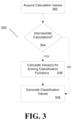
- the system can calculate a value for a variant type, e.g ., mutation type ("g" - e.g., a value that is indicative of a variant being somatic, germline, subclonal somatic, or not-distinguishable) by executing a function on the acquired and/or calculated values for VAFI, p, C, and M.
- the system can classify the variant type, e.g ., mutation type.
- a g value equal or approximately equal to 0 is classified by the system as somatic variant.
- a g value equal or approximately equal to 1 is classified by the system as a germline variant. Values of g between 0 and 1 ( e.g., 0.4 - 0.6) are classified by the system as not-determinable.
- the system can calculate a value indicative of the zygosity of the variant in the sample as a function of the acquired and/or calculated values for C and M. For example, a value of M equal to 0 not equal to C is indicative of absence of the variant, a non-zero value of M equal to C is indicative of homozygosity of the variant (e.g., LOH), a value of M equal to 0 equal to C is indicative of homozygous deletion of the variant, and a non-zero value of M not equal to C is indicative of heterozygosity of the variant.
- a value of M equal to 0 not equal to C is indicative of absence of the variant
- a non-zero value of M equal to C is indicative of homozygosity of the variant (e.g., LOH)
- a value of M equal to 0 equal to C is indicative of homozygous deletion of the variant
- a non-zero value of M not equal to C is indicative of heterozygosity of the variant.
- the system can also be configured to determine a confidence level associated with any calculation and/or calculated value (e.g., based on statistical analysis of the input(s) and computational values used to derive an output).
- the system can use determinations on the confidence of calculations and/or calculated values in interpreting classification outputs.
- the not-determinable range of values can be increased where the degree of confidence associated with the calculation of g is low. In another example, the not-determinable range of values can be decreased where the degree of confidence associated with the calculation of g is high.
- the system includes system components specially configured calculate C, M, and/or p responsive to fitting a genome-wide copy number model to one or both of the SCI and the SAFI.
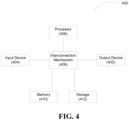
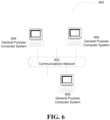
- the system can be a distributed system (e.g., client server, multi-tier system) comprising multiple general-purpose computer systems.
- the system includes software processes executing on a system for generating a characterization model.
- Various system embodiments can execute operations such as accepting a tumor sample, executing genomic sequencing, generating and displaying classification/characterization information on the sample, generating user interfaces for displaying classification information, accepting user input regarding genomic segments and/or boundary definition, among other options.
- the system embodiments may operate as "black box" systems where an input sample is classified without further interaction, and other system embodiments may permit user interaction to specify genomic segments, genomic intervals, etc., on which analysis is performed.
- this BRCA1 I600fs*7 variant is a somatic variant that is homozygous (2 of 2 copies) in the tumor.
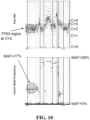
- p-arm of chromosome 1 is under copy-neutral LOH (LOHx), while the entire chromosome 13 is under copy-loss LOH (LOH1). Somatic status of certain functional mutations is also reported in Table 4.
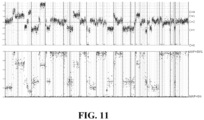
- a "CGH”-like aneuploidy profile was obtained by normalizing against a process-matched control. This profile is segmented and modeled using allele frequencies at >3,500 SNPs to estimate the genome-wide tumor purity (p), copy number (C), and minor allele count (M) at each segment.
- f somatic pM pC + 2 1 ⁇ p .
- measured allele frequency is compared to expectation, and a prediction is made with statistical confidence assessed based on read depth and local variability of SNP measurements in each segment.
- specimens from 30 lung and colon cancer patients were examined by sequencing the primary tumor, the metastatic tumor, and a matched-normal control. A total of 305 unique variants with known somatic status were assessed.
- a characterization model can be captured and tracked over time.
- the system can be configured to analyze and store characterization information on multiple tissue samples taken from a subject.
- the characterization model developed over time provides information on changes to the characterization model (including e.g., variant type, zygosity, etc.).
- the system can analyze the characterization model to identify relationships between different variants (e.g., tumors) based, for example, on similarity in characterization models.
- the system can identify related variants in different tumors, different patients, etc.
Landscapes
- Bioinformatics & Cheminformatics (AREA)
- Health & Medical Sciences (AREA)
- Life Sciences & Earth Sciences (AREA)
- Physics & Mathematics (AREA)
- Engineering & Computer Science (AREA)
- Genetics & Genomics (AREA)
- Biotechnology (AREA)
- Biophysics (AREA)
- Chemical & Material Sciences (AREA)
- Molecular Biology (AREA)
- Proteomics, Peptides & Aminoacids (AREA)
- Bioinformatics & Computational Biology (AREA)
- Analytical Chemistry (AREA)
- Evolutionary Biology (AREA)
- General Health & Medical Sciences (AREA)
- Medical Informatics (AREA)
- Spectroscopy & Molecular Physics (AREA)
- Theoretical Computer Science (AREA)
- Measuring Or Testing Involving Enzymes Or Micro-Organisms (AREA)
Applications Claiming Priority (4)
| Application Number | Priority Date | Filing Date | Title |
|---|---|---|---|
| US201361821920P | 2013-05-10 | 2013-05-10 | |
| US201461939936P | 2014-02-14 | 2014-02-14 | |
| EP14795352.5A EP2994847B1 (de) | 2013-05-10 | 2014-05-09 | Analyse von genetischen varianten |
| PCT/US2014/037569 WO2014183078A1 (en) | 2013-05-10 | 2014-05-09 | Analysis of genetic variants |
Related Parent Applications (1)
| Application Number | Title | Priority Date | Filing Date |
|---|---|---|---|
| EP14795352.5A Division EP2994847B1 (de) | 2013-05-10 | 2014-05-09 | Analyse von genetischen varianten |
Publications (2)
| Publication Number | Publication Date |
|---|---|
| EP4524972A2 true EP4524972A2 (de) | 2025-03-19 |
| EP4524972A3 EP4524972A3 (de) | 2025-06-18 |
Family
ID=51865422
Family Applications (2)
| Application Number | Title | Priority Date | Filing Date |
|---|---|---|---|
| EP25155115.6A Pending EP4524972A3 (de) | 2013-05-10 | 2014-05-09 | Analyse genetischer varianten |
| EP14795352.5A Active EP2994847B1 (de) | 2013-05-10 | 2014-05-09 | Analyse von genetischen varianten |
Family Applications After (1)
| Application Number | Title | Priority Date | Filing Date |
|---|---|---|---|
| EP14795352.5A Active EP2994847B1 (de) | 2013-05-10 | 2014-05-09 | Analyse von genetischen varianten |
Country Status (7)
| Country | Link |
|---|---|
| US (3) | US9792403B2 (de) |
| EP (2) | EP4524972A3 (de) |
| AU (3) | AU2014262481A1 (de) |
| CA (1) | CA2912059A1 (de) |
| ES (1) | ES3022582T3 (de) |
| HK (1) | HK1222466A1 (de) |
| WO (1) | WO2014183078A1 (de) |
Families Citing this family (40)
| Publication number | Priority date | Publication date | Assignee | Title |
|---|---|---|---|---|
| KR102759126B1 (ko) | 2010-12-30 | 2025-01-24 | 파운데이션 메디신 인코포레이티드 | 종양 샘플의 다유전자 분석의 최적화 |
| EP3246416B1 (de) | 2011-04-15 | 2024-06-05 | The Johns Hopkins University | Sicheres sortierungssystem |
| ES2701742T3 (es) | 2012-10-29 | 2019-02-25 | Univ Johns Hopkins | Prueba de Papanicolaou para cánceres de ovario y de endometrio |
| EP3561072A1 (de) | 2012-12-10 | 2019-10-30 | Resolution Bioscience, Inc. | Verfahren zur gezielten genomanalyse |
| EP4524972A3 (de) | 2013-05-10 | 2025-06-18 | Foundation Medicine, Inc. | Analyse genetischer varianten |
| US20160053301A1 (en) | 2014-08-22 | 2016-02-25 | Clearfork Bioscience, Inc. | Methods for quantitative genetic analysis of cell free dna |
| EP3227464B1 (de) | 2014-12-05 | 2022-04-20 | Foundation Medicine, Inc. | Multigenanalyse von tumorproben |
| CA2986810C (en) | 2015-05-22 | 2024-01-02 | Csts Health Care Inc. | Thermodynamic measures on protein-protein interaction networks for cancer therapy |
| US11286531B2 (en) | 2015-08-11 | 2022-03-29 | The Johns Hopkins University | Assaying ovarian cyst fluid |
| EP3374525B1 (de) | 2015-11-11 | 2021-01-20 | Resolution Bioscience, Inc. | Hocheffiziente konstruktion von dna-bibliotheken |
| AU2017225869A1 (en) | 2016-02-29 | 2018-09-06 | Foundation Medicine, Inc. | Methods of treating cancer |
| CN114395624A (zh) | 2016-02-29 | 2022-04-26 | 基因泰克公司 | 用于癌症的治疗和诊断方法 |
| MX2018010362A (es) * | 2016-02-29 | 2019-03-28 | Found Medicine Inc | Metodos y sistemas para evaluar carga mutacional de tumores. |
| IL264971B2 (en) | 2016-08-25 | 2024-10-01 | Resolution Bioscience Inc | Methods for identifying changes in a genomic copy in DNA samples |
| AU2017339517B2 (en) | 2016-10-06 | 2024-03-14 | Foundation Medicine, Inc. | Therapeutic and diagnostic methods for cancer |
| US11101019B2 (en) | 2016-12-08 | 2021-08-24 | Life Technologies Corporation | Methods for detecting mutation load from a tumor sample |
| US11978535B2 (en) * | 2017-02-01 | 2024-05-07 | The Translational Genomics Research Institute | Methods of detecting somatic and germline variants in impure tumors |
| KR20190126930A (ko) * | 2017-03-29 | 2019-11-12 | 난토믹스, 엘엘씨 | 다중-염기서열 파일을 위한 서명-해시 (signature-hash for multi-sequence files) |
| JPWO2019009431A1 (ja) * | 2017-07-07 | 2020-05-21 | 株式会社Dnaチップ研究所 | 腫瘍細胞で生じた突然変異を高精度に識別する方法 |
| AU2018304458B2 (en) | 2017-07-21 | 2021-12-09 | Foundation Medicine, Inc. | Therapeutic and diagnostic methods for cancer |
| WO2019020652A1 (en) | 2017-07-25 | 2019-01-31 | Sophia Genetics Sa | METHODS FOR DETECTION OF BIELELIC LOSS OF A FUNCTION IN GENOMIC GENERATION NEGATIVE GENERATION DATA |
| CN111868260B (zh) | 2017-08-07 | 2025-02-21 | 约翰斯霍普金斯大学 | 用于评估和治疗癌症的方法和材料 |
| US11773449B2 (en) | 2017-09-01 | 2023-10-03 | The Hospital For Sick Children | Profiling and treatment of hypermutant cancer |
| EP3704268B1 (de) | 2017-11-03 | 2025-01-22 | Guardant Health, Inc. | Normalisierung einer tumormutationslast |
| CN108733975B (zh) * | 2018-03-29 | 2021-09-07 | 深圳裕策生物科技有限公司 | 基于二代测序的肿瘤克隆变异检测方法、装置和存储介质 |
| CA3102460A1 (en) | 2018-06-11 | 2019-12-19 | Foundation Medicine, Inc. | Compositions and methods for evaluating genomic alterations |
| WO2020023420A2 (en) | 2018-07-23 | 2020-01-30 | Guardant Health, Inc. | Methods and systems for adjusting tumor mutational burden by tumor fraction and coverage |
| KR20210132139A (ko) | 2019-02-27 | 2021-11-03 | 가던트 헬쓰, 인크. | 대립유전자 빈도에 기초한 기능 손실의 컴퓨터 모델링 |
| US20230167505A1 (en) * | 2020-01-13 | 2023-06-01 | Cardiff Oncology, Inc. | Circulating tumor dna as a biomarker for leukemia treatment |
| IL295297A (en) | 2020-02-14 | 2022-10-01 | Univ Johns Hopkins | Methods and materials for assessing nucleic acids |
| CN112885406B (zh) * | 2020-04-16 | 2023-01-31 | 深圳裕策生物科技有限公司 | 检测hla杂合性缺失的方法及系统 |
| KR20230037069A (ko) | 2020-04-22 | 2023-03-15 | 이오반스 바이오테라퓨틱스, 인크. | 환자-특이적 면역요법을 위해 세포의 제조를 조정하기 위한 시스템 및 방법 |
| US20230372397A1 (en) | 2020-10-06 | 2023-11-23 | Iovance Biotherapeutics, Inc. | Treatment of nsclc patients with tumor infiltrating lymphocyte therapies |
| CN114517223B (zh) * | 2020-11-20 | 2023-09-12 | 福建和瑞基因科技有限公司 | 一种用于筛选snp位点的方法及其应用 |
| EP4123653A1 (de) | 2021-07-22 | 2023-01-25 | QIAGEN GmbH | Verfahren zur bewertung einer mutationslast |
| CN113278706B (zh) * | 2021-07-23 | 2021-11-12 | 广州燃石医学检验所有限公司 | 一种用于区分体细胞突变和种系突变的方法 |
| CN113658638B (zh) * | 2021-08-20 | 2022-06-03 | 江苏先声医学诊断有限公司 | 一种基于ngs平台的同源重组缺陷的检测方法和质控体系 |
| EP4427226A4 (de) * | 2021-11-03 | 2025-11-12 | Found Medicine Inc | System und verfahren zur identifizierung von kopienzahländerungen |
| CN113990389B (zh) * | 2021-12-27 | 2022-04-22 | 北京优迅医疗器械有限公司 | 推断肿瘤纯度和倍性的方法和装置 |
| EP4713928A1 (de) * | 2023-05-16 | 2026-03-25 | Foundation Medicine, Inc. | Verfahren und systeme zur vorhersage neuer pathogener mutationen |
Family Cites Families (16)
| Publication number | Priority date | Publication date | Assignee | Title |
|---|---|---|---|---|
| JP2009529876A (ja) | 2006-03-14 | 2009-08-27 | ゲニゾン バイオサイエンシス インコーポレイテッド | 核酸を配列決定するための方法および手段 |
| US20110098193A1 (en) * | 2009-10-22 | 2011-04-28 | Kingsmore Stephen F | Methods and Systems for Medical Sequencing Analysis |
| US8725422B2 (en) * | 2010-10-13 | 2014-05-13 | Complete Genomics, Inc. | Methods for estimating genome-wide copy number variations |
| KR102759126B1 (ko) | 2010-12-30 | 2025-01-24 | 파운데이션 메디신 인코포레이티드 | 종양 샘플의 다유전자 분석의 최적화 |
| EP2861734A4 (de) | 2012-05-31 | 2016-06-15 | Broad Inst Inc | Linie krebsassoziierter keime sowie somatische marker und verwendung davon |
| EP4524972A3 (de) | 2013-05-10 | 2025-06-18 | Foundation Medicine, Inc. | Analyse genetischer varianten |
| EP3227464B1 (de) | 2014-12-05 | 2022-04-20 | Foundation Medicine, Inc. | Multigenanalyse von tumorproben |
| MX2018010362A (es) | 2016-02-29 | 2019-03-28 | Found Medicine Inc | Metodos y sistemas para evaluar carga mutacional de tumores. |
| US11978535B2 (en) | 2017-02-01 | 2024-05-07 | The Translational Genomics Research Institute | Methods of detecting somatic and germline variants in impure tumors |
| JP7123975B2 (ja) | 2017-05-16 | 2022-08-23 | ガーダント ヘルス, インコーポレイテッド | 無細胞dnaについての体細胞起源または生殖系列起源の識別 |
| EP3685386A1 (de) | 2017-09-20 | 2020-07-29 | Guardant Health, Inc. | Verfahren und systeme zur differenzierung von somatischen und keimbahnvarianten |
| EP3781714B1 (de) | 2018-04-14 | 2026-01-07 | Natera, Inc. | Verfahren zur krebserkennung und -überwachung durch personalisierte detektion zirkulierender tumor-dna |
| US12234509B2 (en) | 2018-07-03 | 2025-02-25 | Natera, Inc. | Methods for detection of donor-derived cell-free DNA |
| KR20220011140A (ko) | 2019-05-20 | 2022-01-27 | 파운데이션 메디신 인코포레이티드 | 종양 분획 평가를 위한 시스템 및 방법 |
| JP2023529838A (ja) | 2020-06-05 | 2023-07-12 | ファウンデーション・メディシン・インコーポレイテッド | 生殖系列ゲノム配列から体細胞ゲノム配列を区別するための方法及びシステム |
| WO2023114667A1 (en) | 2021-12-13 | 2023-06-22 | Foundation Medicine, Inc. | Methods and systems for predicting the reliability of somatic/germline calls for variant sequences |
-
2014
- 2014-05-09 EP EP25155115.6A patent/EP4524972A3/de active Pending
- 2014-05-09 WO PCT/US2014/037569 patent/WO2014183078A1/en not_active Ceased
- 2014-05-09 CA CA2912059A patent/CA2912059A1/en active Pending
- 2014-05-09 ES ES14795352T patent/ES3022582T3/es active Active
- 2014-05-09 AU AU2014262481A patent/AU2014262481A1/en not_active Abandoned
- 2014-05-09 HK HK16110725.3A patent/HK1222466A1/zh unknown
- 2014-05-09 EP EP14795352.5A patent/EP2994847B1/de active Active
- 2014-05-09 US US14/274,525 patent/US9792403B2/en active Active
-
2017
- 2017-09-19 US US15/708,475 patent/US10847249B2/en active Active
-
2020
- 2020-02-24 AU AU2020201325A patent/AU2020201325B2/en active Active
- 2020-10-22 US US17/077,967 patent/US12456541B2/en active Active
-
2022
- 2022-02-23 AU AU2022201252A patent/AU2022201252A1/en not_active Abandoned
Non-Patent Citations (7)
| Title |
|---|
| FRAMPTON ET AL., NAT BIOTECHNOL., vol. 31, no. 11, 2013, pages 1023 - 1031 |
| FRIDLYAND ET AL., JOURNAL OF MULTIVARIATE ANALYSIS, vol. 90, 2004, pages 132 - 153 |
| METZKER, M., NATURE BIOTECHNOLOGY REVIEWS, vol. 11, 2010, pages 31 - 46 |
| MEYER L.R. ET AL.: "The UCSC Genome Browser database: extensions and updates 2013", NUCLEIC ACIDS RES., vol. 41, 2013, pages 64 - 69 |
| OLSHEN ET AL., BIOSTATISTICS, vol. 5, no. 4, 2004, pages 557 - 572 |
| SHERRY S.T. ET AL.: "dbSNP: the NCBI database of genetic variation", NUCLEIC ACIDS RES., vol. 29, no. 1, 2001, pages 308 - 311, XP055125042, DOI: 10.1093/nar/29.1.308 |
| WANG ET AL., BIOSTATISTICS., vol. 6, no. 1, 2005, pages 211 - 226 |
Also Published As
| Publication number | Publication date |
|---|---|
| WO2014183078A1 (en) | 2014-11-13 |
| EP2994847A4 (de) | 2017-04-19 |
| EP2994847B1 (de) | 2025-02-12 |
| US20140336996A1 (en) | 2014-11-13 |
| US12456541B2 (en) | 2025-10-28 |
| AU2020201325B2 (en) | 2021-12-09 |
| US9792403B2 (en) | 2017-10-17 |
| AU2022201252A1 (en) | 2022-03-17 |
| AU2014262481A1 (en) | 2015-11-26 |
| AU2020201325A1 (en) | 2020-03-12 |
| EP4524972A3 (de) | 2025-06-18 |
| EP2994847A1 (de) | 2016-03-16 |
| US20180218113A1 (en) | 2018-08-02 |
| US20210043274A1 (en) | 2021-02-11 |
| ES3022582T3 (en) | 2025-05-28 |
| CA2912059A1 (en) | 2014-11-13 |
| HK1222466A1 (zh) | 2017-06-30 |
| US10847249B2 (en) | 2020-11-24 |
Similar Documents
| Publication | Publication Date | Title |
|---|---|---|
| US12456541B2 (en) | Analysis of genetic variants | |
| JP7458360B2 (ja) | 疾患細胞不均一性を示す疾患の検出および処置、ならびに通信試験結果のためのシステムおよび方法 | |
| Pleasance et al. | Pan-cancer analysis of advanced patient tumors reveals interactions between therapy and genomic landscapes | |
| US11475981B2 (en) | Methods and systems for dynamic variant thresholding in a liquid biopsy assay | |
| Singhi et al. | Real-time targeted genome profile analysis of pancreatic ductal adenocarcinomas identifies genetic alterations that might be targeted with existing drugs or used as biomarkers | |
| US20220328133A1 (en) | Estimation of circulating tumor fraction using off-target reads of targeted-panel sequencing | |
| US20230242975A1 (en) | Methods and systems for distinguishing somatic genomic sequences from germline genomic sequences | |
| US20240013858A1 (en) | Methods for determining variant frequency and monitoring disease progression | |
| US20250095775A1 (en) | Methods for determining variant frequency and monitoring disease progression | |
| US20240052419A1 (en) | Methods and systems for detecting genetic variants | |
| CA2972433C (en) | Detection and treatment of disease exhibiting disease cell heterogeneity and systems and methods for communicating test results |
Legal Events
| Date | Code | Title | Description |
|---|---|---|---|
| PUAI | Public reference made under article 153(3) epc to a published international application that has entered the european phase |
Free format text: ORIGINAL CODE: 0009012 |
|
| STAA | Information on the status of an ep patent application or granted ep patent |
Free format text: STATUS: THE APPLICATION HAS BEEN PUBLISHED |
|
| AC | Divisional application: reference to earlier application |
Ref document number: 2994847 Country of ref document: EP Kind code of ref document: P |
|
| AK | Designated contracting states |
Kind code of ref document: A2 Designated state(s): AL AT BE BG CH CY CZ DE DK EE ES FI FR GB GR HR HU IE IS IT LI LT LU LV MC MK MT NL NO PL PT RO RS SE SI SK SM TR |
|
| REG | Reference to a national code |
Ref country code: DE Ref legal event code: R079 Free format text: PREVIOUS MAIN CLASS: G16B0020200000 Ipc: G16B0020000000 |
|
| PUAL | Search report despatched |
Free format text: ORIGINAL CODE: 0009013 |
|
| AK | Designated contracting states |
Kind code of ref document: A3 Designated state(s): AL AT BE BG CH CY CZ DE DK EE ES FI FR GB GR HR HU IE IS IT LI LT LU LV MC MK MT NL NO PL PT RO RS SE SI SK SM TR |
|
| RIC1 | Information provided on ipc code assigned before grant |
Ipc: G16B 20/00 20190101AFI20250512BHEP |
|
| STAA | Information on the status of an ep patent application or granted ep patent |
Free format text: STATUS: REQUEST FOR EXAMINATION WAS MADE |
|
| 17P | Request for examination filed |
Effective date: 20251217 |