EP4524248A1 - Anti-taa/anti-cd3 multispecific antibody - Google Patents
Anti-taa/anti-cd3 multispecific antibody Download PDFInfo
- Publication number
- EP4524248A1 EP4524248A1 EP23803596.8A EP23803596A EP4524248A1 EP 4524248 A1 EP4524248 A1 EP 4524248A1 EP 23803596 A EP23803596 A EP 23803596A EP 4524248 A1 EP4524248 A1 EP 4524248A1
- Authority
- EP
- European Patent Office
- Prior art keywords
- amino acid
- seq
- acid sequence
- antibody
- acid positions
- Prior art date
- Legal status (The legal status is an assumption and is not a legal conclusion. Google has not performed a legal analysis and makes no representation as to the accuracy of the status listed.)
- Pending
Links
Images





Classifications
-
- C—CHEMISTRY; METALLURGY
- C07—ORGANIC CHEMISTRY
- C07K—PEPTIDES
- C07K16/00—Immunoglobulins [IGs], e.g. monoclonal or polyclonal antibodies
- C07K16/18—Immunoglobulins [IGs], e.g. monoclonal or polyclonal antibodies against material from animals or humans
- C07K16/28—Immunoglobulins [IGs], e.g. monoclonal or polyclonal antibodies against material from animals or humans against receptors, cell surface antigens or cell surface determinants
- C07K16/30—Immunoglobulins [IGs], e.g. monoclonal or polyclonal antibodies against material from animals or humans against receptors, cell surface antigens or cell surface determinants from tumour cells
-
- C—CHEMISTRY; METALLURGY
- C07—ORGANIC CHEMISTRY
- C07K—PEPTIDES
- C07K16/00—Immunoglobulins [IGs], e.g. monoclonal or polyclonal antibodies
- C07K16/18—Immunoglobulins [IGs], e.g. monoclonal or polyclonal antibodies against material from animals or humans
- C07K16/28—Immunoglobulins [IGs], e.g. monoclonal or polyclonal antibodies against material from animals or humans against receptors, cell surface antigens or cell surface determinants
- C07K16/2878—Immunoglobulins [IGs], e.g. monoclonal or polyclonal antibodies against material from animals or humans against receptors, cell surface antigens or cell surface determinants against the NGF-receptor/TNF-receptor superfamily, e.g. CD27, CD30, CD40, CD95
-
- A—HUMAN NECESSITIES
- A61—MEDICAL OR VETERINARY SCIENCE; HYGIENE
- A61P—SPECIFIC THERAPEUTIC ACTIVITY OF CHEMICAL COMPOUNDS OR MEDICINAL PREPARATIONS
- A61P35/00—Antineoplastic agents
-
- A—HUMAN NECESSITIES
- A61—MEDICAL OR VETERINARY SCIENCE; HYGIENE
- A61P—SPECIFIC THERAPEUTIC ACTIVITY OF CHEMICAL COMPOUNDS OR MEDICINAL PREPARATIONS
- A61P35/00—Antineoplastic agents
- A61P35/02—Antineoplastic agents specific for leukemia
-
- C—CHEMISTRY; METALLURGY
- C07—ORGANIC CHEMISTRY
- C07K—PEPTIDES
- C07K16/00—Immunoglobulins [IGs], e.g. monoclonal or polyclonal antibodies
- C07K16/18—Immunoglobulins [IGs], e.g. monoclonal or polyclonal antibodies against material from animals or humans
- C07K16/28—Immunoglobulins [IGs], e.g. monoclonal or polyclonal antibodies against material from animals or humans against receptors, cell surface antigens or cell surface determinants
-
- C—CHEMISTRY; METALLURGY
- C07—ORGANIC CHEMISTRY
- C07K—PEPTIDES
- C07K16/00—Immunoglobulins [IGs], e.g. monoclonal or polyclonal antibodies
- C07K16/18—Immunoglobulins [IGs], e.g. monoclonal or polyclonal antibodies against material from animals or humans
- C07K16/28—Immunoglobulins [IGs], e.g. monoclonal or polyclonal antibodies against material from animals or humans against receptors, cell surface antigens or cell surface determinants
- C07K16/2803—Immunoglobulins [IGs], e.g. monoclonal or polyclonal antibodies against material from animals or humans against receptors, cell surface antigens or cell surface determinants against the immunoglobulin superfamily
- C07K16/2809—Immunoglobulins [IGs], e.g. monoclonal or polyclonal antibodies against material from animals or humans against receptors, cell surface antigens or cell surface determinants against the immunoglobulin superfamily against the T-cell receptor (TcR)-CD3 complex
-
- C—CHEMISTRY; METALLURGY
- C07—ORGANIC CHEMISTRY
- C07K—PEPTIDES
- C07K16/00—Immunoglobulins [IGs], e.g. monoclonal or polyclonal antibodies
- C07K16/18—Immunoglobulins [IGs], e.g. monoclonal or polyclonal antibodies against material from animals or humans
- C07K16/28—Immunoglobulins [IGs], e.g. monoclonal or polyclonal antibodies against material from animals or humans against receptors, cell surface antigens or cell surface determinants
- C07K16/2803—Immunoglobulins [IGs], e.g. monoclonal or polyclonal antibodies against material from animals or humans against receptors, cell surface antigens or cell surface determinants against the immunoglobulin superfamily
- C07K16/2827—Immunoglobulins [IGs], e.g. monoclonal or polyclonal antibodies against material from animals or humans against receptors, cell surface antigens or cell surface determinants against the immunoglobulin superfamily against B7 molecules, e.g. CD80, CD86
-
- C—CHEMISTRY; METALLURGY
- C07—ORGANIC CHEMISTRY
- C07K—PEPTIDES
- C07K16/00—Immunoglobulins [IGs], e.g. monoclonal or polyclonal antibodies
- C07K16/18—Immunoglobulins [IGs], e.g. monoclonal or polyclonal antibodies against material from animals or humans
- C07K16/28—Immunoglobulins [IGs], e.g. monoclonal or polyclonal antibodies against material from animals or humans against receptors, cell surface antigens or cell surface determinants
- C07K16/2896—Immunoglobulins [IGs], e.g. monoclonal or polyclonal antibodies against material from animals or humans against receptors, cell surface antigens or cell surface determinants against molecules with a "CD"-designation, not provided for elsewhere
-
- A—HUMAN NECESSITIES
- A61—MEDICAL OR VETERINARY SCIENCE; HYGIENE
- A61K—PREPARATIONS FOR MEDICAL, DENTAL OR TOILETRY PURPOSES
- A61K39/00—Medicinal preparations containing antigens or antibodies
- A61K2039/505—Medicinal preparations containing antigens or antibodies comprising antibodies
-
- C—CHEMISTRY; METALLURGY
- C07—ORGANIC CHEMISTRY
- C07K—PEPTIDES
- C07K2317/00—Immunoglobulins specific features
- C07K2317/30—Immunoglobulins specific features characterized by aspects of specificity or valency
- C07K2317/31—Immunoglobulins specific features characterized by aspects of specificity or valency multispecific
-
- C—CHEMISTRY; METALLURGY
- C07—ORGANIC CHEMISTRY
- C07K—PEPTIDES
- C07K2317/00—Immunoglobulins specific features
- C07K2317/50—Immunoglobulins specific features characterized by immunoglobulin fragments
- C07K2317/52—Constant or Fc region; Isotype
- C07K2317/53—Hinge
-
- C—CHEMISTRY; METALLURGY
- C07—ORGANIC CHEMISTRY
- C07K—PEPTIDES
- C07K2317/00—Immunoglobulins specific features
- C07K2317/50—Immunoglobulins specific features characterized by immunoglobulin fragments
- C07K2317/55—Fab or Fab'
-
- C—CHEMISTRY; METALLURGY
- C07—ORGANIC CHEMISTRY
- C07K—PEPTIDES
- C07K2317/00—Immunoglobulins specific features
- C07K2317/50—Immunoglobulins specific features characterized by immunoglobulin fragments
- C07K2317/56—Immunoglobulins specific features characterized by immunoglobulin fragments variable (Fv) region, i.e. VH and/or VL
-
- C—CHEMISTRY; METALLURGY
- C07—ORGANIC CHEMISTRY
- C07K—PEPTIDES
- C07K2317/00—Immunoglobulins specific features
- C07K2317/60—Immunoglobulins specific features characterized by non-natural combinations of immunoglobulin fragments
- C07K2317/62—Immunoglobulins specific features characterized by non-natural combinations of immunoglobulin fragments comprising only variable region components
- C07K2317/622—Single chain antibody (scFv)
-
- C—CHEMISTRY; METALLURGY
- C07—ORGANIC CHEMISTRY
- C07K—PEPTIDES
- C07K2317/00—Immunoglobulins specific features
- C07K2317/70—Immunoglobulins specific features characterized by effect upon binding to a cell or to an antigen
- C07K2317/73—Inducing cell death, e.g. apoptosis, necrosis or inhibition of cell proliferation
-
- C—CHEMISTRY; METALLURGY
- C07—ORGANIC CHEMISTRY
- C07K—PEPTIDES
- C07K2317/00—Immunoglobulins specific features
- C07K2317/70—Immunoglobulins specific features characterized by effect upon binding to a cell or to an antigen
- C07K2317/73—Inducing cell death, e.g. apoptosis, necrosis or inhibition of cell proliferation
- C07K2317/732—Antibody-dependent cellular cytotoxicity [ADCC]
-
- C—CHEMISTRY; METALLURGY
- C07—ORGANIC CHEMISTRY
- C07K—PEPTIDES
- C07K2317/00—Immunoglobulins specific features
- C07K2317/70—Immunoglobulins specific features characterized by effect upon binding to a cell or to an antigen
- C07K2317/73—Inducing cell death, e.g. apoptosis, necrosis or inhibition of cell proliferation
- C07K2317/734—Complement-dependent cytotoxicity [CDC]
-
- C—CHEMISTRY; METALLURGY
- C07—ORGANIC CHEMISTRY
- C07K—PEPTIDES
- C07K2317/00—Immunoglobulins specific features
- C07K2317/70—Immunoglobulins specific features characterized by effect upon binding to a cell or to an antigen
- C07K2317/74—Inducing cell proliferation
-
- C—CHEMISTRY; METALLURGY
- C07—ORGANIC CHEMISTRY
- C07K—PEPTIDES
- C07K2317/00—Immunoglobulins specific features
- C07K2317/90—Immunoglobulins specific features characterized by (pharmaco)kinetic aspects or by stability of the immunoglobulin
- C07K2317/92—Affinity (KD), association rate (Ka), dissociation rate (Kd) or EC50 value
-
- C—CHEMISTRY; METALLURGY
- C07—ORGANIC CHEMISTRY
- C07K—PEPTIDES
- C07K2317/00—Immunoglobulins specific features
- C07K2317/90—Immunoglobulins specific features characterized by (pharmaco)kinetic aspects or by stability of the immunoglobulin
- C07K2317/94—Stability, e.g. half-life, pH, temperature or enzyme-resistance
Definitions
- the present invention relates to an anti-TAA/anti-CD3 multispecific antibody useful as an active ingredient in a pharmaceutical composition to be used in treatment of a human.
- CD3 Cluster of differentiation 3
- TCR T cell receptor
- the CD3 is a complex consisting of five subunits of gamma ( ⁇ ), delta ( ⁇ ), epsilon ( ⁇ ), zeta ( ⁇ ) and eta ( ⁇ ) chains, and the subunits form three dimers, ⁇ , ⁇ , and ⁇ .
- CD3 expression is specific to T cells and occurs at all stages of T cell differentiation.
- the CD3 is expressed in both a normal T cell and a tumor T cell, and hence is widely used as a T cell marker (NPL 1).
- CD137 Cluster of differentiation 137
- 4-1BB Cluster of differentiation 137
- TNFRSF tumor necrosis factor receptor superfamily
- CD137 on a T cell is known to bind to a CD137 ligand on an antigen presenting cell and to be involved in activation and survival of the T cell as a costimulatory molecule (NPL 2).
- bispecific T-cell recruiting antibody As a novel cancer therapy using in vivo immune system, a bispecific T-cell recruiting antibody has been developed.
- the most common aspect of the bispecific T-cell recruiting antibody involves simultaneous binding to a tumor associated antigen (TAA) expressed on a cancer cell and CD3 expressed on a T cell, thereby reducing the physical distance between the T cell and the cancer cell and simultaneously inputting a CD3-mediated activation signal to the T cell to induce a cytotoxic effect of the T cell on the cancer cell.
- TAA tumor associated antigen
- CD3 cluster of differentiation 19
- ALL refractory acute lymphoblastic leukemia
- bispecific T-cell recruiting antibody that binds to both TAA expressed on a cancer cell and CD137 expressed on a T cell has also been developed (NPL 3).
- TAAs are known as targets of the bispecific T-cell recruiting antibody, and for example, bispecific T-cell recruiting antibodies targeting TAAs such as CD33, BCMA, PSMA, and EGFRvIII have been studied and developed as therapeutic agents for various cancers (NPL 4).
- the bioactivity of the bispecific T-cell recruiting antibody is known to be affected by various factors, such as formats of the antibody, expression levels of targeted TAAs, epitopes on TAAs recognized by the antibody, affinities to TAA and CD3, and in vivo kinetics, and it is considered essential to appropriately control these factors in order to develop a bispecific T-cell recruiting antibody that achieves both efficacy and safety (NPL 5).
- NPL 5 efficacy and safety
- issues common to bispecific T-cell recruiting antibodies include side effects (on-target/ off-tumor toxicities) resulting from expression of the targeted TAA in normal tissue other than tumors and cytokine release syndrome (CRS), which is based on activation of the immune system.
- Potential avenues for avoiding the on-target/off-tumor toxicities include, for example, targeting a molecule, a variant, a post-translational modification, or the like specifically present in cancer tissue as an antigen; providing an antibody with a plurality of binding sites for TAA to increase selectivity for cancer cells expressing an antigen at high density through an avidity effect; and developing an antibody that can be locally activated by a protease or the like present in tumor tissue.
- a potential way to reduce the risk of CRS has been proposed which involves modulating the affinity of bispecific T-cell recruiting antibodies to CD3 to reduce cytokine production while maintaining cytotoxic activity (NPL 5), for example,and there are reports on the development of anti-CD3 antibodies with different affinities (PTLs 2 to 4).
- a trispecific T-cell recruiting antibody that binds to two different TAAs and one antigen on T cells
- a trispecific T-cell recruiting antibody that binds to one TAA and two different antigens on T cells
- a trispecific antibody that binds to antigens on one TAA and respective antigens on T cells and NK cells
- An object of the present invention is to provide an anti-TAA/anti-CD3 multispecific antibody that can be used in treatment of a human.
- anti-CD3 single chain variable fragment hereafter referred to as "anti-CD3 scFv"
- the present inventors obtained anti-CD3 scFv antibodies having diverse affinity by using public information and their own techniques for analyzing protein structure information, which were combined with anti-TSPAN8 antibodies to obtain multiple anti-TSPAN8/anti-CD3 bispecific antibodies (Example 1), and also introduced multiple mutations to improve the stability of anti-CD3 scFv to obtain anti-CD3 scFv having both diverse affinity and stability, thus successfully obtaining multiple anti-TSPAN8/anti-CD3 bispecific antibodies having various binding activities to CD3 and stability (Example 2).
- the present invention relates to [1] to [25].
- the anti-CD3 scFv of the present invention can be combined with an antibody for an arbitrary TAA (anti-TAA antibody) to provide an anti-TAA/anti-CD3 multispecific antibody (including a bispecific antibody or a trispecific antibody), which can bind to both an arbitrary TAA and CD3 and enhance a killing effect of a T cell on a cancer cell by reducing the physical distance between the cancer cell and the T cell.
- anti-TAA/anti-CD3 multispecific antibody of the present invention and a pharmaceutical composition containing the multispecific antibody can be used for treating cancer.
- An antibody refers to a glycoprotein having a four-chain structure of a symmetric Y-shaped structure consisting of two heavy chains having a single sequence and two light chains having a single sequence as a basic structure.
- An antibody is divided into five classes IgG, IgM, IgA, IgD, and IgE.
- the basic structure of an antibody molecule is common among the classes, and two heavy chains having a molecular weight of 50,000 to 70,000 and two light chains having a molecular weight of 20,000 to 30,000 are bonded through a disulfide bond or a noncovalent bond to form an antibody molecule having the Y-shaped four chain structure having a molecular weight of 150,000 to 190,000.
- a heavy chain is composed of a polypeptide chain usually containing about 440 amino acids with a structure characteristic to each class and is designated as Ig ⁇ , Ig ⁇ , Ig ⁇ , Ig ⁇ , and Ig ⁇ corresponding to IgG, IgM, IgA, IgD, and IgE, respectively.
- IgG is further divided into subclasses IgG1, IgG2, IgG3, and IgG4, and heavy chains corresponding to these subclasses are respectively designated as Ig ⁇ 1, Ig ⁇ 2, Ig ⁇ 3, and Ig ⁇ 4.
- a light chain is composed of a polypeptide chain usually containing about 220 amino acids and known to be divided into two types, ⁇ light chain and ⁇ light chain, which are respectively designated as Ig ⁇ , and Ig ⁇ . The two types of light chains can pair with any type of heavy chains.
- a heavy chain has four (five in Ig ⁇ , and Ig ⁇ ) intrachain disulfide bonds of an antibody molecule, and a light chain has two intrachain disulfide bonds, and one loop is formed with every 100 to 110 amino acid residues.
- the three-dimensional structure is similar among loops, which is designated as a structural unit or a domain.
- a domain positioned at the N-terminal is designated as a variable region, which is known to have various amino acid sequences even when the antibody is produced from the same class (or subclass) of animals of the same species and to be involved in antibody-antigen binding specificity.
- An amino acid sequence of a domain on the C-terminal side downstream from the variable region is substantially constant in each class or subclass, and the domain is designated as a constant region.
- the heavy chain has, from the N-terminal toward the C-terminal, a heavy chain variable region (VH) and a heavy chain constant region (CH).
- the CH is further divided into three domains of CH1 domain, CH2 domain and CH3 domain disposed in this order from the N-terminal side.
- the light chain has, from the N-terminal toward the C-terminal, a light chain variable region (VL) and a light chain constant region (CL).
- Fab region refers to a region consisting of the VH and the CH1 domain of the heavy chain and the light chain (VL and CL), which binds to an antigen at a tip portion in an antigen-binding site formed by the Fab region.
- heavy chain fragment refers to a fragment consisting of the VH and the CH1 domain of the heavy chain composing the Fab region.
- Fc polypeptide refers to a polypeptide consisting of the CH2 domain and the CH3 domain of the heavy chain
- Fc region refers to a complex consisting of two Fc polypeptides.
- the heavy chain fragment and the Fc polypeptide are linked via a portion designated as a hinge region. Furthermore, the two heavy chains of the antibody are bound together by a disulfide bond in the hinge region.
- the term "antigen-binding fragment” refers to a molecule having antigen binding activity derived from an antibody and including at least one polypeptide chain.
- Representative examples of the antigen-binding fragment include a single-chain variable region fragment (scFv), a Fab fragment, a Fab' fragment, and a F(ab') 2 fragment.
- the scFv is a monovalent antigen-binding fragment composed of the VH and the VL linked via a linker.
- the Fab fragment is a monovalent antigen-binding fragment composed of a fragment containing the light chain and the VH and the CH1 domain of the heavy chain.
- the Fab' fragment is a monovalent antigen-binding fragment composed of a fragment containing the light chain, the VH and the CH1 domain of the heavy chain, and a part of the hinge region, and in this part of the hinge region, a cysteine residue forming a S-S bond between the heavy chains is included.
- the F(ab') 2 fragment is a bivalent molecule in which Fab' fragments are linked to each other via a disulfide bond.
- the term "monovalent” means that one antigen binding site is included, and the term “bivalent” means that two antigen binding sites are included.
- scFv region refers to a region including scFv.
- polypeptide means a plurality of amino acid linked to each other with peptide bonds.
- the amino acids used in the polypeptide may be either natural or artificial amino acids.
- the number of amino acid residues contained in the polypeptide may be 2 or more, preferably 10 or more.
- multispecific antibody refers to an antibody capable of specifically binding to two or more different antigens, which is, for example, referred to as a bispecific antibody or a trispecific antibody depending on the number of antigens to be bound.
- Multispecific antibodies include a complex of two or more antibodies and/or antigen-binding fragments each capable of binding to a different antigen, and the term “antibodies” used herein comprises multispecific antibodies, unless otherwise specified in the context.
- bispecific antibody refers to an antibody capable of specifically binding to two different antigens
- trispecific antibody refers to an antibody capable of specifically binding to three different antigens.
- human antibody refers to an antibody having a human immunoglobulin amino acid sequence.
- humanized antibody refers to an antibody in which a part of, most of, or all of amino acid residues excluding the CDRs have been replaced with amino acid residues derived from a human immunoglobulin molecule.
- a humanizing method is not particularly limited, and a humanized antibody can be produced with reference to, for example, U.S. Patent Nos. 5225539 and 6180370 .
- post-translational modification means that an antibody undergoes a post-translational modification when the antibody is expressed in a cell.
- post-translational modification include modification such as pyroglutamylation, glycosylation, oxidation, deamidation, and glycation of glutamine or glutamic acid at a heavy chain N-terminal, and lysine deletion by cleavage of lysine at a heavy chain C-terminal with carboxypeptidase. It is known that such post-translational modification is caused in various antibodies ( J. Pharm. Sci., 2008, Vol. 97, p. 2426-2447 ).
- polynucleotide refers to a polymer of nucleotides and comprises RNA or DNA.
- RNA or DNA to be used may be naturally occurring or artificially synthesized.
- An amino acid residue number of the antibody to be used herein can be prescribed by specifying Kabat numbering or EU index ( Kabat et al., Sequences of Proteins of Immunological Interest, 5th Ed., 1991, NIH Publication No. 91-3242 ) according to these numbering systems.
- first or second is used for conveniently distinguishing two or more portions. Use of such a term does not intend to impart a specific order or meaning unless clearly mentioned.
- link means that a plurality of components (e.g., a Fab region and an Fc polypeptide) are linked to one another directly or via one or more intermediaries (examples of which include, but are not limited to, a peptide linker and a hinge region).
- peptide linker means one or more arbitrary amino acid residues that can be introduced by genetic engineering for linking variable regions to each other.
- a length of the peptide linker to be used in the present invention is not particularly limited but can be appropriately selected depending on purpose by those skilled in the art.
- identity means a value of identity obtained using EMBOSS Needle ( Nucleic Acids Res., 2015, Vol. 43, p. W580-W584 ) with parameters prepared as default. The parameters are as follows:
- the term "subject” means a human or other animals in need of prevention or treatment and is, in one aspect, a human in need of treatment or prevention.
- Tetraspanin-8 is a four-pass transmembrane protein belonging to the tetraspanin family with two extracellular loop regions and three cytoplasmic domains. TSPAN8 is known to be involved in cell adhesion, cell motility, and cell activation and growth, and is expressed at a high level in gastric cancer, pancreatic cancer, colorectal cancer, liver cancer, and other cancer. For example, an association between increased expression of TSPAN8 and progression or metastasis of cancer has been reported ( Biomolecules, 2020, Vol. 10, p. 383 ).
- CD37 Cluster of differentiation 37
- CD37 is a four-pass transmembrane protein belonging to the tetraspanin family with two extracellular regions and three cytoplasmic regions. Analysis using knockout mice has revealed that CD37 is also involved in immune functions such as antibody production and regulation of T-cell functions ( Int. J Mol. Sci., 2020, Vol. 21, p. 9531 ). Expression of the CD37 in normal tissue is limited to blood cells, particularly at high levels in mature B cells. Furthermore, CD37 is also known to be frequently and highly expressed in blood cancers, such as non-Hodgkin's lymphoma and chronic lymphocytic leukemia, which are derived from mature B cells ( Blood Adv., 2019, Vol. 3, p. 1230 ).
- Solute carrier family 34 member 2 (SLC34A2, also known as NaPi2b) is a pH-sensitive sodium-dependent phosphate transporter, which is expressed, for example, in the lung, salivary gland, mammary gland, and small intestine, and involved in the absorption of dietary phosphate. Furthermore, abnormalities in SLC34A2 genes are known to cause alveolar microlithiasis ( Pflugers Arch., 2019, Vol. 471, p. 165 ). SLC34A2, which is highly expressed in lung cancer and ovarian cancer, has attracted attention as a target molecule of therapeutic agents for these cancers ( Mol. Cancer Ther., 2021, Vol. 20, p. 896 ).
- Claudin-4 is a four-pass transmembrane protein belonging to the claudin family, which is expressed in an epithelial cell and an endothelial cell, and plays a significant role as a main molecule composing a tight junction.
- CLDN4 is highly expressed in cancer tissue of, for example, colorectal cancer, bladder cancer, and ovarian cancer, suggesting that an anti-CLDN4 antibody may be applicable to treatment or diagnosis of cancer ( Cancer Science, 2009, Vol. 100, p. 1623-1630 ).
- Programmed death-ligand 1 is a ligand of programmed cell death-1 (PD-1).
- PD-1 expression of which is induced in T cells with sustained activation, regulates T cell activation in an inhibitory manner by binding to the ligand PD-L1 or programmed death-ligand 2 (PD-L2) ( Annu. Rev. Immunol., 2008, Vol. 26, p. 677-704 ).
- PD-L1 programmed death-ligand 2
- an immune checkpoint is designated as one of the negative feedback mechanisms to prevent excessive immune responses.
- the present invention provides a bispecific antibody that binds to CD37 and CD3 (also referred to as the "anti-CD37/anti-CD3 bispecific antibody”) with structures (a) to (c).
- the bispecific antibody that binds to CD37 and CD3 comprises:
- the anti-CD37/anti-CD3 bispecific antibody of the present invention comprises an anti-CD3 scFV region comprising a heavy chain variable region and a light chain variable region of an anti-CD3 antibody.
- An anti-CD3 scFv region known in this technical field or an anti-CD3 scFv region produced based on sequence information on the heavy chain variable region and the light chain variable region of an anti-CD3 antibody known in this technical field can be used for the anti-CD37/anti-CD3 bispecific antibody of the present invention.
- the known anti-CD3 antibody include clones such as OKT3, UTCH1, L2K, and TR66, sequences of which are used as bispecific antibodies ( Pharmacol. Ther., 2018, Vol. 182, p. 161-175 ).
- the heavy chain variable region and the light chain variable region of the anti-CD3 antibody in the anti-CD37/anti-CD3 bispecific antibody of the present invention are any one of (1) to (3):
- the type and the length of a peptide linker linking the heavy chain variable region and the light chain variable region of the anti-CD3 antibody are not particularly limited but can be appropriately selected by those skilled in the art.
- the length is preferably 5 or more amino acids (the upper limit is not particularly limited but is usually 30 or less amino acids, and preferably 20 or less amino acids), particularly preferably 15 amino acids.
- a glycine-serine linker (GS linker) or a glycine-lysine-proline-glycine-serine linker (GKPGS linker) can be used. Examples of such a linker include the following:
- n an integer of 1 or more.
- the length and the sequence of the peptide linker can be appropriately selected depending on purpose by those skilled in the art.
- the linker used for the anti-CD3 scFv region is a linker having the sequence (Gly-Lys-Pro-Gly-Ser) n . In one embodiment, the linker used for the anti-CD3 scFv region is preferably a linker having the sequence (Gly-Lys-Pro-Gly-Ser) 4 .
- the anti-CD3 scFv region is any one of (1) to (3):
- the heavy chain variable region of the anti-CD37 antibody comprises a CDR1 consisting of an amino acid sequence at amino acid positions 31 to 35 of SEQ ID NO: 10, a CDR2 consisting of an amino acid sequence at amino acid positions 50 to 65 of SEQ ID NO: 10, and a CDR3 consisting of an amino acid sequence at amino acid positions 98 to 104 of SEQ ID NO: 10; and the light chain variable region of the anti-CD37 antibody comprises a CDR1 consisting of an amino acid sequence at amino acid positions 24 to 34 of SEQ ID NO: 12, a CDR2 consisting of an amino acid sequence at amino acid positions 50 to 56 of SEQ ID NO: 12, and a CDR3 consisting of an amino acid sequence at amino acid positions 89 to 95 of SEQ ID NO: 12.
- the heavy chain variable region of the anti-CD37 antibody comprises NO: 10
- the light chain variable region of the anti-CD37 antibody consists of an amino acid sequence at amino acid positions 1 to 105 of SEQ ID NO: 12.
- any one of the constant regions Ig ⁇ , Ig ⁇ Ig ⁇ , Ig ⁇ , and Ig ⁇ can be selected.
- the Ig ⁇ can be selected from, for example, Ig ⁇ 1, Ig ⁇ 2, Ig ⁇ 3, and Ig ⁇ 4.
- the heavy chain fragment of the anti-CD37 antibody Fab region comprises a CH1 domain derived from human Ig ⁇ 1 constant region.
- the constant region of either Ig ⁇ or Ig ⁇ can be selected.
- the light chain of the anti-CD37 antibody Fab region comprises a CL.
- the light chain of the anti-CD37 antibody Fab region comprises a human Ig ⁇ constant region, CL.
- the anti-CD37 antibody Fab region is composed of a heavy chain fragment consisting of an amino acid sequence at amino acid positions 1 to 213 of SEQ ID NO: 10 and a light chain consisting of an amino acid sequence of SEQ ID NO: 12.
- a polypeptide in which a heavy chain fragment including the heavy chain variable region of an ant-CD37 antibody and a first Fc polypeptide are linked is also referred to as the "heavy chain of an anti CD37 antibody".
- the heavy chain fragment of the heavy chain variable region of the anti-CD37 antibody and the Fc polypeptide (first Fc polypeptide) may be linkeddirectly or via a peptide linker or a hinge region.
- the anti-CD3 scFv region and the Fc polypeptide may be linkeddirectly or via a peptide linker or a hinge region.
- the anti-CD37/anti-CD3 bispecific antibody of the present invention is an anti-CD37/anti-CD3 bispecific antibody according to any one of (a) to (c):
- the anti-CD37/anti-CD3 bispecific antibody of the present invention is an anti-CD37/anti-CD3 bispecific antibody according to any one of (a) to (c):
- the anti-CD37/anti-CD3 bispecific antibody of the present invention is an anti-CD37/anti-CD3 bispecific antibody according to any one of (a) to (c):
- any one of the constant regions Ig ⁇ , Ig ⁇ Ig ⁇ , Ig ⁇ , and Ig ⁇ can be selected as a heavy chain constant region from which the first Fc polypeptide and the second Fc polypeptide composing the Fc region are derived.
- the Ig ⁇ can be selected from, for example, Ig ⁇ 1, Ig ⁇ 2, Ig ⁇ 3, and Ig ⁇ 4.
- the first Fc polypeptide and the second Fc polypeptide are Fc polypeptides derived from the human Ig ⁇ 1 constant region.
- the Fc region of the anti-CD37/anti-CD3 bispecific antibody of the present invention may contain mutation that reduces antibody-dependent cytotoxicity (ADCC) or complement-dependent cytotoxicity (CDC).
- L234A is a replacement of leucine with alanine at amino acid position 234 in human Igyl constant region according to EU index.
- L235A is a replacement of leucine with alanine at amino acid position 235 in human Igyl constant region according to EU index.
- the amino acid mutation of L234A and L235A of human Igyl constant region is designated as "LALA mutation". This mutation is known to reduce antibody-dependent cytotoxicity and complement-dependent cytotoxicity of an antibody ( Mol. Immunol., 1992, Vol. 29, p. 633-639 ).
- the Fc region in the anti-CD37/anti-CD3 bispecific antibody of the present invention may further contain mutation based on another known technique.
- the Fc region may contain P329A mutation ( J Biol Chem., 2001, Vol. 276, Issue 9, p. 6591-6604 ) or mutation based on knobs-into-holes technique (hereinafter also referred to as "knobs-into-holes mutation").
- the P329A mutation has the effect of keeping ADCC and CDC activities low by attenuating the binding to FcyR and C1q.
- knobs-into-holes technique an amino acid side chain present in the CH3 region of one heavy chain is replaced with a larger side chain (knob), and an amino acid side chain present in the CH3 region of another heavy chain is replaced with a smaller side chain (hole), and thus, heterodimerization of the heavy chains is accelerated with the knob disposed within the hole, and in this manner, a heterodimerized antibody molecule of interest can be efficiently obtained ( Nature, 1994, Vol. 372, p. 379-383 ).
- the anti-CD37/anti-CD3 bispecific antibody of the present invention include an Fc region comprising LALA mutation. In one embodiment, the anti-CD37/anti-CD3 bispecific antibody of the present invention include an Fc region comprising P329A mutation. In one embodiment, the anti-TAA/anti-CD3 bispecific antibody of the present invention include an Fc region comprising knobs-into-holes mutation. In one embodiment, the anti-CD37/anti-CD3 bispecific antibody of the present invention include an Fc region comprising one or more mutations of LALA mutation, P329A mutation, and knobs-into-holes mutation.
- the anti-CD37/anti-CD3 bispecific antibody of the present invention include an Fc region comprising LALA mutation and knobs-into-holes mutation.
- the knobs-into-holes mutation contained in the anti-CD37/anti-CD3 bispecific antibody of the present invention comprises T366W mutation in one Fc polypeptide forming the Fc region, and T366S, L368A, and Y407V mutations in another Fc polypeptide forming the Fc region (see, International Publication No. WO 1998/050431 ).
- the anti-CD37/anti-CD3 bispecific antibody of the present invention comprises a first Fc polypeptide consisting of an amino acid sequence at amino acid positions 229 to 445 of SEQ ID NO: 10. In one embodiment, the anti-CD37/anti-CD3 bispecific antibody of the present invention comprises a second Fc polypeptide consisting of an amino acid sequence at amino acid positions 270 to 486 of SEQ ID NO: 14, an amino acid sequence at amino acid positions 270 to 486 of SEQ ID NO: 16, or an amino acid sequence at amino acid positions 270 to 486 of SEQ ID NO: 18.
- the anti-CD37/anti-CD3 bispecific antibody of the present invention comprises a polynucleotide described in any one of (a) to (c):
- the heavy chain fragment comprising the heavy chain variable region of the anti-CD37 antibody and the first Fc polypeptide may be linked via a hinge region to form a heavy chain of the anti-CD37 antibody.
- the anti-CD3 scFv region and the second Fc polypeptide may be linked via a hinge region.
- the anti-CD37/anti-CD3 bispecific antibody of the present invention comprises a heavy chain of an anti-CD37 antibody in which the heavy chain fragment of the Fab region of the anti-CD37 antibody and the first Fc polypeptide is linked via a hinge region.
- the anti-CD37/anti-CD3 bispecific antibody of the present invention comprises a polypeptide in which the anti-CD3 scFv region and the second Fc polypeptide are linked via a hinge region.
- the anti-CD37/anti-CD3 bispecific antibody of the present invention comprises a heavy chain of an anti-CD37 antibody in which a heavy chain fragment of the Fab region of the anti-CD37 antibody and the first Fc polypeptide are linked via a hinge region; and a polypeptide in which the anti-CD3 scFv region and the second Fc polypeptide are linked via a hinge region.
- the anti-CD37/anti-CD3 bispecific antibody of the present invention comprises a heavy chain in which the heavy chain fragment of the Fab region of the anti-CD37 antibody and the first Fc polypeptide are linked via a hinge region; a light chain of the anti-CD37 scFv region; and a polypeptide in which the anti-CD3 scFv region and the second Fc polypeptide are linked via a hinge region.
- the anti-CD37/anti-CD3 bispecific antibody of the present invention may contain a mutation in the hinge region based on a known technique.
- the hinge region may contain C220S mutation ( Methods, 2019, Vol. 154, p. 38-50 ).
- the C220S mutation aims to remove the cysteine at position 220, which has become free as a result of loss of the paired cysteine due to loss of the cysteine present in the light chain constant region.
- the anti-CD37/anti-CD3 bispecific antibody of the present invention comprises a hinge region, in one embodiment, the hinge region linking the anti-CD3 scFv region to the second Fc polypeptide.
- the Fc region comprises LALA mutation, P329A mutation, and knobs-into-holes mutation
- the hinge region linking the anti-CD3 scFv region to the second Fc polypeptide comprises C220S mutation.
- the anti-CD37/anti-CD3 bispecific antibody of the present invention comprises a polypeptide comprising a hinge region consisting of the amino acid sequence at amino acid positions 214 to 445 of SEQ ID NO: 10 and the first Fc polypeptide.
- the anti-CD37/anti-CD3 bispecific antibody of the present invention comprises a polypeptide comprising a hinge region consisting of an amino acid sequence at amino acid positions 255 to 486 of SEQ ID NO: 14, an amino acid sequence at amino acid positions 255 to 486 of SEQ ID NO: 16, or an amino acid sequence at amino acid positions 255 to 486 of SEQ ID NO: 18; and the second polypeptide.
- the anti-CD37/anti-CD3 bispecific antibody of the present invention comprises polypeptides described in any one of (a) to (c):
- amino acid mutations such as LALA mutation, P329A mutation, knobs-into-holes mutation, and C220S mutation are described based on amino acid positions in human Igyl constant region according to EU index.
- L234A is a replacement of leucine with alanine at amino acid position 234 in human Igyl constant region according to EU index.
- the anti-CD37/anti-CD3 bispecific antibody of the present invention is any one of (a) to (c):
- the anti-CD37/anti-CD3 bispecific antibody of the present invention is a bispecific antibody comprising a heavy chain of an anti-CD37 antibody consisting of an amino acid sequence of SEQ ID NO: 10; a light chain of an anti-CD37 antibody consisting of an amino acid sequence of SEQ ID NO: 12; and a polypeptide consisting of an amino acid sequence of SEQ ID NO: 14 in which the anti-CD3 scFv region and the second Fc polypeptide are linked.
- the anti-CD37/anti-CD3 bispecific antibody of the present invention is a bispecific antibody comprising a heavy chain of an anti-CD37 antibody consisting of an amino acid sequence of SEQ ID NO: 10; a light chain of an anti-CD37 antibody consisting of an amino acid sequence of SEQ ID NO: 12; and a polypeptide consisting of an amino acid sequence of SEQ ID NO: 16 in which the anti-CD3 scFv region and the second Fc polypeptide are linked.
- the anti-CD37/anti-CD3 bispecific antibody of the present invention is a bispecific antibody comprising a heavy chain of an anti-CD37 antibody consisting of an amino acid sequence of SEQ ID NO: 10; a light chain of an anti-CD37 antibody consisting of an amino acid sequence of SEQ ID NO: 12; and a polypeptide consisting of an amino acid sequence of SEQ ID NO: 18 in which the anti-CD3 scFv region and the second Fc polypeptide are linked.
- the anti-CD37/anti-CD3 bispecific antibody of the present ⁇ invention may be post-translationally modified.
- the post-translational modification is pyroglutamylation at the N-terminal of the heavy chain variable region and/or lysine deletion at the heavy chain C-terminal. It is known in the art that the post-translational modification by pyroglutamylation at the N-terminal or lysine deletion at the C-terminal does not affect the activity of the antibody ( Analytical Biochemistry, 2006, Vol. 348, p. 24-39 ).
- the anti-CD37/anti-CD3 bispecific antibody of the present invention binds to human CD37 (GenBank Accession No. NM_001774.3) and human CD3 ⁇ complex protein (CD3 ⁇ : GenBank Accession No. NM_000733.3 and CD3 ⁇ : GenBank Accession No. NM_000732.4 or NM_001040651.1). It is possible to confirm whether the antibody binds to human CD37 and human CD3 ⁇ complex protein using a known binding activity measurement method. Examples of a method of measuring binding activity include Enzyme-Linked ImmunoSorbent Assay (ELISA) and flow cytometry. In the case of using ELISA, for example, a method described in Example 1-4 can be employed.
- ELISA Enzyme-Linked ImmunoSorbent Assay
- the anti-CD37/anti-CD3 bispecific antibody of the present invention can be produced by those skilled in the art by a method known in the art based on sequence information and the like on the anti-CD37 antibody and the heavy chain variable region and the light chain variable region of the anti-CD3 scFv region disclosed herein. Furthermore, the anti-CD3 scFv region of the anti-CD37/anti-CD3 bispecific antibody of the present invention can be produced by those skilled in the art by a method known in the art based on sequence information and the like on the heavy chain variable region and the light chain variable region of a known anti-CD3 antibody.
- the anti-CD37/anti-CD3 bispecific antibody of the present invention is a humanized antibody or a human antibody.
- a back mutation may be appropriately introduced by employing a method well known to those skilled in the art ( Bioinformatics, 2015, Vol. 31, p. 434-435 ).
- the anti-CD37/anti-CD3 bispecific antibody of the present invention can be produced by, but not particularly limited to, a method described later in the section of ⁇ Method for Producing Bispecific Antibody of Invention and Bispecific Antibody of Invention Produced by the Method>, for example.
- the present invention also provides a polynucleotide for use in the production of the anti-CD37/anti-CD3 bispecific antibody of the present invention (also referred to as the "polynucleotide of the anti-CD37/anti-CD3 bispecific antibody of the present invention").
- polynucleotide of the anti-CD37/anti-CD3 bispecific antibody of the present invention is selected from the group consisting of (a) to (j):
- the polynucleotide of the anti-CD37/anti-CD3 bispecific antibody of the present invention which encodes the Fab region of an anti-CD37 antibody, comprises a polynucleotide having a nucleotide sequence encoding a heavy chain fragment of an anti-CD37 antibody comprising a heavy chain variable region consisting of an amino acid sequence at amino acid positions 1 to 115 of SEQ ID NO: 10; and a polynucleotide having a nucleotide sequence encoding a light chain of an anti-CD37 antibody comprising a light chain variable region consisting of an amino acid sequence at amino acid positions 1 to 105 of SEQ ID NO: 12.
- polynucleotide of the anti-CD37/anti-CD3 bispecific antibody of the present invention is selected from the group consisting of (k) to (p):
- polynucleotides of the anti-CD37/anti-CD3 bispecific antibody of the present invention are selected from the group consisting of (a) to (c):
- polynucleotides of the anti-CD37/anti-CD3 bispecific antibody of the present invention are selected from the group consisting of (a) to (c):
- the polynucleotide of the anti-CD37/anti-CD3 bispecific antibody of the present invention can be produced by those skilled in the art based on the nucleotide sequence thereof by employing a method known in this technical field.
- the polynucleotide of the anti-CD37/anti-CD3 bispecific antibody of the present invention can be synthesized by employing a gene synthesis method known in this technical field.
- the gene synthesis method any of various methods known to those skilled in the art such as a synthesis method for an antibody gene described in International Publication No. WO 90/07861 can be employed.
- the present invention also provides an expression vector comprising polynucleotides of the anti-CD37/anti-CD3 bispecific antibody of the present invention (also referred to as the "expression vector for the anti-CD37/anti-CD3 bispecific antibody of the present invention") described in (a) to (j).
- polynucleotides of the anti-CD37/anti-CD3 bispecific antibody of the present invention also referred to as the "expression vector for the anti-CD37/anti-CD3 bispecific antibody of the present invention” described in (a) to (j).
- These polynucleotides may be each contained in different vectors, or a plurality of the polynucleotides may be contained in one vector:
- the expression vector for the anti-CD37/anti-CD3 bispecific antibody of the present invention comprises a polynucleotide having a nucleotide sequence encoding a heavy chain fragment of an anti-CD37 antibody comprising a heavy chain variable region consisting of amino acid sequence at amino acid positions 1 to 115 of SEQ ID NO: 10 and a polynucleotide having a nucleotide sequence encoding a light chain of an anti-CD37 antibody comprising a light chain variable region consisting of an amino acid sequence at amino acid positions 1 to 105 of SEQ ID NO: 12.
- the expression vector for the anti-CD37/anti-CD3 bispecific antibody of the present invention comprises a polynucleotide described in any one of (k) to (p):
- the expression vector for the anti-CD37/anti-CD3 bispecific antibody of the present invention comprises a polynucleotide described in any one of (a) to (c):
- the expression vector for the anti-CD37/anti-CD3 bispecific antibody of the present invention comprises a polynucleotide described in any one of (a) to (c):
- the expression vector for the anti-CD37/anti-CD3 bispecific antibody of the present invention comprises a polynucleotide described in any one of (a) to (c):
- the expression vector for the anti-CD37/anti-CD3 bispecific antibody of the present invention is not particularly limited as long as it can produce a polynucleotide in various host cells such as a eukaryotic cell (e.g., an animal cell, an insect cell, a plant cell, or a yeast) and/or a prokaryotic cell (such as E. coli ).
- a eukaryotic cell e.g., an animal cell, an insect cell, a plant cell, or a yeast
- a prokaryotic cell such as E. coli
- Examples of the expression vector include a plasmid vector and a virus vector.
- plasmid vector for example, pcDNA series (Thermo Fisher Scientific), pALTER(R)-MAX (Promega Corporation), pHEK293 Ultra Expression Vector (Takara Bio Inc.), or pEE 6.4 or pEE 12.4 (Lonza Biologics) can be used.
- virus vector for example, a lentivirus, an adenovirus, a retrovirus, or an adeno-associated virus can be used.
- pLVSIN-CMV/EF1 ⁇ vector (Takara Bio Inc.) or pLenti vector (Thermo Fisher Scientific) can be used as the lentivirus.
- a vector used in the expression vector for the bispecific antibody of the present invention is pcDNA TM 3.4-TOPO(R) (Thermo Fisher Scientific) or pcDNA TM 3.1 (Thermo Fisher Scientific).
- the expression vector for the anti-CD37/anti-CD3 bispecific antibody of the present invention may contain a promoter operably linked to the polynucleotide.
- the promoter for expressing the polynucleotide in an animal cell include a virus-derived promoter such as CMV, RSV and SV40, an actin promoter, an EF (elongation factor) 1 ⁇ promoter, and a heat shock promoter.
- the promoter for expressing the polynucleotide in a bacterium include a trp promoter, a lac promoter, a ⁇ PL promoter, and a tac promoter.
- Examples of the promoter for expressing the polynucleotide in a yeast include a GAL1 promoter, a GAL10 promoter, a PHO5 promoter, a PGK promoter, a GAP promoter, and an ADH promoter.
- the expression vector for the bispecific antibody of the present invention can include a start codon and a stop codon.
- an enhancer sequence, the 5'- and 3'-untranslated regions of a gene encoding the antibody of the present invention, or the heavy chain or light chain thereof, a secretory signal sequence, a splice joint, a polyadenylation site, or a replicable unit may be included.
- the expression vector of the present invention can include a start codon, a stop codon, a terminator region, and a replicable unit.
- the expression vector of the present invention may contain a drug selection marker gene usually used depending on purpose (such as a tetracycline resistance gene, an ampicillin resistance gene, a kanamycin resistance gene, a neomycin resistance gene, and a dihydrofolate reductase gene).
- a drug selection marker gene usually used depending on purpose (such as a tetracycline resistance gene, an ampicillin resistance gene, a kanamycin resistance gene, a neomycin resistance gene, and a dihydrofolate reductase gene).
- the present invention also provides a host cell that has been transformed by the expression vector of the anti-CD37/anti-CD3 bispecific antibody of the present invention or comprises the polynucleotide of the anti-CD37/anti-CD3 bispecific antibody in the cell (collectively also referred to as the "host cell comprising the polynucleotide of the anti-CD37/anti-CD3 bispecific antibody of the present invention").
- the host cell comprises not only a cell to be cultured in vitro but also a cell that constitutes a tissue in vivo.
- the host cells comprising the polynucleotide of the anti-CD37/anti-CD3 bispecific antibody of the present invention comprises a polynucleotide of the anti-CD37/anti-CD3 bispecific antibody of the present invention described in (a) to (j) or an expression vector of the anti-CD37/anti-CD3 bispecific antibody of the present invention comprising the polynucleotide:
- the host cell comprising the polynucleotide of the anti-CD37/anti-CD3 bispecific antibody of the present invention comprises a polynucleotide having a nucleotide sequence encoding a heavy chain fragment of an anti-CD37 antibody comprising a heavy chain variable region consisting of an amino acid sequence at amino acid positions 1 to 115 of SEQ ID NO: 10 and a polynucleotide having a nucleotide sequence encoding a light chain of an anti-CD37 antibody comprising a light chain variable region consisting of an amino acid sequence at amino acid positions 1 to 105 of SEQ ID NO: 12.
- the host cell comprising the polynucleotide of the anti-CD37/anti-CD3 bispecific antibody of the present invention comprises a polynucleotide of the anti-CD37/anti-CD3 bispecific antibody of the present invention described in any one of (k) to (p):
- the host cell comprising the polynucleotide of the anti-CD37/anti-CD3 bispecific antibody of the present invention comprises polynucleotides described in any one of (a) to (c):
- the host cell comprising the polynucleotide of an anti-CD37/anti-CD3 bispecific antibody of the present invention comprises polynucleotides described in any one of (a) to (c):
- the host cell comprising the polynucleotide of the anti-CD37/anti-CD3 bispecific antibody of the present invention comprises polynucleotides described in any one of (a) to (c):
- the host cell comprising the polynucleotide of the anti-CD37/anti-CD3 bispecific antibody of the present invention is not particularly limited as long as it is compatible with the expression vector or gene transfer method used and can express the polypeptide encoded by the polynucleotide.
- the host cell examples include various cells such as conventional cells usually used in this technical field and artificially established cells (e.g., animal cells (such as a CHO-K1 cell, an ExpiCHO-S (R) cell, a CHOK1SV cell, a CHO-DG44 cell, a HEK293 cell, and a NS0 cell), insect cells (such as Sf9), bacteria (such as Escherichia ), and yeasts (such as Saccharomyces and Pichia ) .
- the host cell of the present invention is a CHO-K1 cell or an ExpiCHO-S (R) cell.
- the method of introducing the polynucleotide of the anti-CD37/anti-CD3 bispecific antibody of the present invention or the expression vector of the anti-CD37/anti-CD3 bispecific antibody of the present invention into the host cell is not particularly limited, and for example, a method generally used by those skilled in the art, such as the calcium phosphate method, the electroporation method, and the lipofection method, can be used.
- a method generally used by those skilled in the art such as the calcium phosphate method, the electroporation method, and the lipofection method
- Generally known delivery systems for polynucleotides such as liposomes, lipid nanoparticles, and exosomes can be used as lipofection methods.
- Selection of the host cell comprising polynucleotide of the anti-CD37/anti-CD3 bispecific antibody of the present invention can be performed by a method usually used by those skilled in the art.
- the selection method available include a drug selection method using a drug selection marker gene and a drug such as tetracycline, ampicillin, neomycin and hygromycin; and a cell isolation method such as a limiting dilution method, a single cell sorting method, and a colony pick-up method.
- the present invention also provides a method for producing the anti-CD37/anti-CD3 bispecific antibody of the present invention (also referred to as the "production method of the anti-CD37/anti-CD3 bispecific antibody of the present invention").
- the production method of the anti-CD37/anti-CD3 bispecific antibody of the present invention can include culturing the host cell comprising the polynucleotide of the anti-CD37/anti-CD3 bispecific antibody described in the section of ⁇ Host Cell Comprising Polynucleotide of Anti-CD37/Anti-CD3 Bispecific Antibody of Invention> to express the antibody in the cell or a culture supernatant, and a method for collecting, isolating and purifying the antibody, for example, but is not limited to such a method as long as the anti-CD37/anti-CD3 bispecific antibody of the present invention can be produced.
- the host cell comprising the polynucleotide of the anti-CD37/anti-CD3 bispecific antibody of the present invention can be cultured by a known method. Culture conditions such as a temperature, pH of a medium and a culture time can be appropriately selected by those skilled in the art.
- the host cell is an animal cell, for example, MEM medium ( Science, 1959, Vol. 130, p. 432-437 ), DMEM medium ( Virol., 1959, Vol. 8, p. 396 ), RPMI-1640 medium ( J. Am. Med. Assoc., 1967, Vol. 199, p. 519 ), or 199 medium ( Exp. Biol. Med., 1950, Vol. 73, p.
- the medium comprising about 5 to 20% of fetal bovine serum can be used as the medium.
- the pH of the medium is, for example, about 6 to 8, and the culture is performed usually at about 30 to 40°C for about 15 to 336 hours with aeration or stirring, if necessary.
- the host cell is an insect cell, for example, Grace's medium ( Proc. Natl. Acad. Sci. USA., 1985, Vol. 82, p. 8404 ) comprising fetal bovine serum or the like can be used as the medium.
- the pH of the medium is, for example, about 5 to 8, and the culture is performed usually at about 20 to 40°C for about 15 to 100 hours with aeration or stirring, if necessary.
- the host cell is E.
- the nutrient medium comprises, for example, a carbon source, an inorganic nitrogen source, or an organic nitrogen source necessary for growth of the transformed host cell.
- the carbon source include glucose, dextran, soluble starch, and sucrose
- examples of the inorganic nitrogen source or organic nitrogen source include ammonium salts, nitric acid salts, amino acids, a corn steep liquor, peptone, casein, a meat extract, a soybean cake, and a potato extract.
- the pH of the medium is, for example, about 5 to 8.
- E. coli for example, LB medium, M9 medium ( Molecular Cloning, Cold Spring Harbor Laboratory, Vol. 3, A2.2 ) or the like can be used as the medium.
- the culture is performed usually at about 14 to 43°C for about 3 to 24 hours with aeration or stirring, if necessary.
- yeast for example, Burkholder minimum medium ( Proce. Natl.
- the medium can be used as the medium.
- the culture is performed usually at about 20 to 35°C for about 14 to 144 hours with aeration or stirring, if necessary. Through such culture, the anti-CD37/anti-CD3 bispecific antibody of the present invention can be expressed.
- the production method of the anti-CD37/anti-CD3 bispecific antibody of the present invention can include, in addition to culturing the host cell comprising a polynucleotide of the anti-CD37/anti-CD3 bispecific antibody of the present invention to express the anti-CD37/anti-CD3 bispecific antibody, collecting, isolating or purifying the anti-CD37/anti-CD3 bispecific antibody from the transformed host cell.
- an isolation or purification method examples include a method utilizing solubility such as salting-out and a solvent precipitation method; a method utilizing a difference in a molecular weight such as dialysis, ultrafiltration, and gel filtration; a method utilizing charge such as ion exchange chromatography and hydroxyapatite chromatography; a method utilizing specific affinity such as affinity chromatography; a method utilizing a difference in hydrophobicity such as reverse phase high performance liquid chromatography; and a method utilizing a difference in an isoelectric point such as isoelectric focusing.
- the antibody secreted into a culture supernatant can be purified by various chromatography such as column chromatography using a protein A column or a protein G column.
- the anti-CD37/anti-CD3 bispecific antibody of the present invention also comprises an anti-CD37/anti-CD3 bispecific antibody produced by the production method of the anti-CD37/anti-CD3 bispecific antibody of the present invention.
- the present invention also provides a pharmaceutical composition of the anti-CD37/anti-CD3 bispecific antibody (also referred to as the "pharmaceutical composition of the anti-CD37/anti-CD3 bispecific antibody of the present invention").
- the pharmaceutical composition of the anti-CD37/anti-CD3 bispecific antibody of the present invention comprises a pharmaceutical composition comprising the anti-CD37/anti-CD3 bispecific antibody of the present invention and a pharmaceutically acceptable excipient.
- the pharmaceutical composition of the present invention can be prepared by a method usually used with an excipient usually used in this technical field, i.e., a pharmaceutical excipient, a pharmaceutical carrier, or the like.
- Examples of a dosage form of such a pharmaceutical composition include parenteral agents, such as an injection and a drop, which can be administered by intravenous administration, subcutaneous administration, intraperitoneal administration, or the like.
- parenteral agents such as an injection and a drop
- intravenous administration subcutaneous administration, intraperitoneal administration, or the like.
- an excipient, a carrier, an additive, or the like suitable to the dosage form can be used in a pharmaceutically acceptable range.
- the pharmaceutical composition of the present invention can contain a post-translationally modified product of the anti-CD37/anti-CD3 bispecific antibody of the present invention.
- a pharmaceutical composition comprising an antibody or the like which has undergone both of or one of lysine deletion at the C-terminal and pyroglutamylation at the N-terminal can be embraced in the present invention.
- the pharmaceutical composition of the anti-CD37/anti-CD3 bispecific antibody of the present invention is a pharmaceutical composition comprising an anti-CD37/anti-CD3 bispecific antibody of the present invention selected from any one of (a) to (c) and/or a post-translationally modified product of the antibody:
- the pharmaceutical composition of the present invention is a pharmaceutical composition comprising an anti-CD37/anti-CD3 bispecific antibody of the present invention selected from any one of (a) to (c) and/or a post-translationally modified product of the antibody:
- the pharmaceutical composition of the present invention is a pharmaceutical composition comprising a bispecific antibody comprising a heavy chain of an anti-CD37 antibody consisting of an amino acid sequence of SEQ ID NO: 10, a light chain of an anti-CD37 antibody consisting of an amino acid sequence of SEQ ID NO: 12, and a polypeptide consisting of an amino acid sequence of SEQ ID NO: 14 in which the anti-CD3 scFv region and the second Fc polypeptide are linked, and/or a post-translationally modified product of the antibody.
- the pharmaceutical composition of the present invention is a pharmaceutical composition comprising a bispecific antibody comprising a heavy chain of an anti-CD37 antibody consisting of an amino acid sequence of SEQ ID NO: 10, a light chain of an anti-CD37 antibody consisting of an amino acid sequence of SEQ ID NO: 12, and a polypeptide consisting of an amino acid sequence of SEQ ID NO: 16 in which the anti-CD3 scFv region and the second Fc polypeptide are linked, and/or a post-translationally modified product of the antibody.
- the pharmaceutical composition of the present invention is a pharmaceutical composition comprising a bispecific antibody comprising a heavy chain of an anti-CD37 antibody consisting of an amino acid sequence of SEQ ID NO: 10, a light chain of an anti-CD37 antibody consisting of an amino acid sequence of SEQ ID NO: 12, and a polypeptide consisting of an amino acid sequence of SEQ ID NO: 18 in which the anti-CD3 scFv region and the second Fc polypeptide are linked, and/or a post-translationally modified product of the antibody.
- the amounts of the anti- CD37/anti-CD3 bispecific antibody of the present invention added in formulation are varied depending on the degree of symptom and the age of a patient, a dosage form of the formulation to be used, a binding titer of the antibody, or the like, and for example, can be approximately 0.001 mg/kg to 100 mg/kg.
- the anti-CD37/anti-CD3 bispecific antibody of the present invention and a pharmaceutical composition comprising the same can be used for treating cancer.
- the present invention comprises a method for treating cancer, the method comprising administering, to a subject, a therapeutically effective amount of the anti-CD37/anti-CD3 bispecific antibody of the present invention.
- the present invention comprises the anti-CD37/anti-CD3 bispecific antibody for treating cancer.
- the present invention comprises use of the anti-CD37/anti-CD3 bispecific antibody of the present invention in production of a pharmaceutical composition for treating cancer.
- Examples of the cancer to be treated by the present invention include, but are not particularly limited to, peritoneal dissemination of various cancer cells; gastric cancer; lung cancer; blood cancers such as acute lymphoblastic leukemia (ALL), acute myelogenous leukemia (AML), chronic myelogenous leukemia (CML), chronic lymphocytic leukemia (CLL), Hodgkin's lymphoma, non-Hodgkin lymphoma, B cell lymphoma, multiple myeloma, T cell lymphoma, and myelodysplastic syndromes; solid cancers such as adenocarcinoma, squamous cell carcinoma, adenosquamous carcinoma, undifferentiated carcinoma, large cell carcinoma, non-small cell lung cancer, small cell lung cancer, mesothelioma, skin cancer, skin T cell lymphoma, breast cancer, prostate cancer, bladder cancer, vaginal cancer, cervix cancer, head and neck cancer, uterine cancer, cervical cancer, liver
- the cancer to be treated by the present invention is non-Hodgkin lymphoma, B cell lymphoma, CLL, AML, or T cell lymphoma. In one embodiment, the cancer to be treated by the present invention is preferably non-Hodgkin lymphoma, B cell lymphoma, or CLL.
- the present invention also provides an anti-tumor associated antigen (TAA)/anti-CD3 multispecific antibody (also referred to as the "anti-TAA/anti-CD3 multispecific antibody of the present invention") comprising a heavy chain variable region and a light chain variable region of an anti-TAA antibody that binds to TAA; and an anti-CD3 scFv region comprising a heavy chain variable region and a light chain variable region of an anti-CD3 antibody that binds to CD3.
- TAA anti-tumor associated antigen
- anti-CD3 multispecific antibody also referred to as the "anti-TAA/anti-CD3 multispecific antibody of the present invention”
- an anti-CD3 scFv region comprising a heavy chain variable region and a light chain variable region of an anti-CD3 antibody that binds to CD3.
- the anti-CD3 scFv region of the anti-TAA/anti-CD3 multispecific antibody of the present invention is any one of (1) to (16):
- the anti-CD3 scFv region of the anti-TAA/anti-CD3 multispecific antibody of the present invention is any one of (1) to (16):
- the anti-TAA/anti-CD3 multispecific antibody of the present invention provides an anti-TAA/anti-CD3 bispecific antibody.
- Various formats of a bispecific antibody comprising a scFv region are known in this technical field, and any of these formats can be used for a bispecific antibody, the anti-TAA/anti-CD3 multispecific antibody of the present invention ( mAbs, 2017, Vol. 9, p. 182-212 ).
- the anti-TAA/anti-CD3 multispecific antibody of the present invention is a bispecific antibody (also referred to as the "anti-TAA/anti-CD3 bispecific antibody of the present invention") having structures according to (a) to (c):
- any one of the constant regions Igy, Ig ⁇ , Ig ⁇ , Ig ⁇ , and Ig ⁇ can be selected as the Fc region.
- the Igy can be selected from, for example, Ig ⁇ 1, Ig ⁇ 2, Ig ⁇ 3, and Ig ⁇ 4.
- the first Fc polypeptide and the second Fc polypeptide are Fc polypeptides derived from the human Ig ⁇ 1 constant region.
- the Fc region may have, for example, a knobs-into holes-mutation.
- knobs-into-holes mutation examples include, but are not limited to, T366W mutation in one Fc polypeptide forming the Fc region, and T366S, L368A, and Y407V mutations in another Fc polypeptide forming the Fc region (see International Publication No. WO 1998/050431 ).
- the knobs-into-holes mutation contained in the anti-TAA/anti-CD3 multispecific antibody of the present invention is T366W mutation in one Fc polypeptide forming the Fc region, and T366S, L368A, and Y407V mutations in another Fc polypeptide forming the Fc region.
- the Fc region in the anti-TAA/anti-CD3 bispecific antibody of the present invention may contain mutation that deteriorates ACCC or CDC described in the section of ⁇ Anti-CD37/Anti-CD3 Bispecific Antibody of Invention>.
- Examples of the mutation that deteriorates ADCC or CDC include, but are not limited to, LALA mutation.
- the Fc region in the anti-TAA/anti-CD3 bispecific antibody of the present invention may further contain mutation based on another known technique.
- the Fc region may contain P329A mutation, P331G mutation, or P331S mutation.
- the P329A mutation is a replacement of proline with alanine at amino acid position 329 in human Ig ⁇ 1 constant region
- the P331G mutation and P331S mutation are each a replacement of proline with glycine or serine at amino acid position 331 in human Ig ⁇ 1 constant region.
- the P329A mutation is known to deteriorate the ADCC activity of the antibodies
- the P329A mutation, P331G mutation, and P331S mutation are known to deteriorate the CDC of the antibodies ( J Immunol., 2000, Vol. 164 (8). p. 4049-4184 ).
- the positions 329 and 331 are amino acid positions in human Igyl constant region according to EU index.
- the anti-TAA/anti-CD3 bispecific antibody of the present invention comprises an Fc region comprising knobs-into-holes mutation.
- the anti-TAA/anti-CD3 multispecific antibody of the present invention comprises an Fc region comprising amino acid mutations of L234A and L235A (LALA mutation).
- the anti-TAA/anti-CD3 bispecific antibody of the present invention comprises an Fc region comprising knobs-into-holes mutation or LALA mutation.
- the anti-TAA/anti-CD3 bispecific antibody of the present invention comprises an Fc region comprising knobs-into-holes mutation and LALA mutation.
- the anti-TAA/anti-CD3 bispecific antibody of the present invention comprises an Fc region comprising P329A mutation. In one embodiment, the anti-TAA/anti-CD3 bispecific antibody of the present invention comprises an Fc region comprising P331G mutation or P331S mutation. In one embodiment, the anti-TAA/anti-CD3 bispecific antibody of the present invention comprises an Fc region comprising one or more mutations of the knobs-into-holes mutation, LALA mutation, P329A mutation, P331G mutation, and P331S mutation.
- the anti-TAA/anti-CD3 bispecific antibody of the present invention comprises an Fc region comprising a knobs-Into-holes mutation and/or LALA mutation, and P329A mutation and/or P331G mutation or P331S mutation. In one embodiment, the anti-TAA/anti-CD3 bispecific antibody of the present invention comprises an Fc region comprising knobs-into-holes mutation and/or LALA mutation, and P329A mutation and/or P331G mutation.
- the heavy chain fragment of the Fab region of the anti-TAA antibody and the first Fc polypeptide may be linked via a hinge region.
- the anti-CD3 scFv region and the second Fc polypeptide may be linked via a hinge region.
- the anti-TAA/anti-CD3 bispecific antibody of the present invention comprises a heavy chain fragment of the Fab region of the anti-TAA antibody and the first Fc polypeptide which are linked via a hinge region, and the anti-CD3 scFv region and the second Fc polypeptide which are linked via a hinge region.
- the anti-TAA/anti-CD3 bispecific antibody of the present invention may contain a mutation in the hinge region based on a known technique.
- the hinge region may contain C220S mutation ( Methods, 2019, Vol. 154, p. 38-50 ).
- the C220S mutation aims to remove the cysteine at position 220, which has become free as a result of loss of the paired cysteine due to loss of the cysteine present in the light chain constant region.
- the anti-TAA/anti-CD3 bispecific antibody of the present invention comprises C220S mutation in the hinge region linking the anti-CD3 scFv region to the second Fc polypeptide.
- the anti-TAA/anti-CD3 bispecific antibody of the present invention comprises knobs-into-holes mutation, LALA mutation, and P329A mutation and/or P331G mutation in the Fc region, and C220S mutation in the hinge region linking the anti-CD3 scFv region to the second Fc polypeptide.
- the anti-TAA/anti-CD3 multispecific antibody of the present invention is a multispecific antibody which is an anti-TAA/anti-CD3 bispecific antibody, comprising: a heavy chain of an anti-TAA antibody in which the first Fc polypeptide is linked to a heavy chain fragment comprising a heavy chain variable region of the anti-TAA antibody; a light chain comprising a light chain variable region of the anti-TAA antibody; and a polypeptide in which the anti-CD3 scFv region comprising a heavy chain variable region and a light chain variable region of an anti-CD3 antibody that binds to CD3 and a second Fc polypeptide are linked, wherein the polypeptide, in which the anti-CD3 scFv region and the second Fc polypeptide are linked, is any one of (1) to (16):
- cytokines produced e.g., IFN-y and TNF- ⁇
- attenuation of cytotoxic activity in a high antibody concentration range are considered the result of inhibition of the formation of the trimers described above.
- results cannot be obtained when anti-TAA or anti-CD3 antibodies are each independently assayed, and the properties become apparent only after preparation of bispecific T-cell recruiting antibodies.
- the above properties apply not only to bispecific antibodies, but also to trispecific antibodies and other multispecific antibodies.
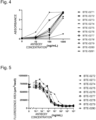
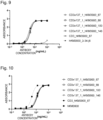
- results obtained by the Redirected T Cell Cytotoxicity (RTCC) assay or cytokine production evaluation described in Example 4 can be used, for example.
- RTCC Redirected T Cell Cytotoxicity
- the anti-TAA/anti-CD3 multispecific antibody of the present invention may be an anti-TAA/anti-CD3/anti-CD137 trispecific antibody (also referred to as the "anti-TAA/anti-CD3/anti-CD137 trispecific antibody of the present invention") in which an anti-CD137 scFv region comprising the heavy chain variable region and the light chain variable region of the anti-CD137 antibody that binds to CD137 is further linked to the anti-TAA/anti-CD3 bispecific antibody of the present invention.
- the anti-TAA/anti-CD3 multispecific antibody of the present invention is an anti-TAA/anti-CD3/anti-CD137 trispecific antibody in which an anti-CD137 scFv region that binds to CD137 is further added to the anti-TAA/anti-CD3 bispecific antibody of the present invention.
- the anti-TAA/anti-CD3/anti-CD137 trispecific antibody of the present invention comprises an anti-CD137 scFV region according to any one of (a) to (e):
- the anti-TAA/anti-CD3/anti-CD137 trispecific antibody of the present invention comprises an anti-CD137 scFV region according to any one of (a) to (e):
- the anti-TAA/anti-CD3/anti-CD137 trispecific antibody of the present invention comprises an anti-CD137 scFV region according to any one of (a) to (e):
- the number of anti-CD137 scFv regions and fusion sites are not particularly limited, and, for example, the anti-CD137 scFv region is linked to the carboxy terminal of the first Fc polypeptide or second Fc polypeptide, or to the amino terminal or carboxy terminal of the light chain of the anti-TAA/anti-CD3 bispecific antibody.
- the anti-TAA/anti-CD3/anti-CD137 trispecific antibody of the present invention comprises an anti-CD137 scFv region that is linked to the carboxy terminal of the first Fc polypeptide or the second Fc polypeptide of the anti-TAA/anti-CD3 bispecific antibody.
- the anti-TAA/anti-CD3/anti-CD137 trispecific antibody of the present invention comprises an anti-CD 137 scFv region that is linked to the carboxy terminals of the first Fc polypeptide and the second Fc polypeptide of the anti-TAA/anti-CD3 bispecific antibody.
- the anti-TAA/anti-CD3/anti-CD137 multispecific antibody of the present invention is a trispecific antibody having structures according to (a) to (d):
- the anti-TAA/anti-CD3/anti-CD137 trispecific antibody of the present invention is an anti-TAA/anti-CD3/anti-CD 137 trispecific antibody comprising a heavy chain of an anti-TAA antibody in which a first Fc polypeptide is linked to a heavy chain fragment comprising a heavy chain variable region of the anti-TAA antibody; a light chain comprising a light chain variable region of the anti-TAA antibody; and a polypeptide in which an anti-CD3 scFv region comprising a heavy chain variable region and a light chain variable region of an anti-CD3 antibody that binds to CD3 and a second Fc polypeptide are linked, wherein an anti-CD137 scFv region comprising a heavy chain variable region and a light chain variable region of an anti-CD137 antibody is also linked to one or both of carboxy terminals of the first Fc polypeptide and the second Fc polypeptide.
- the anti-TAA/anti-CD3/anti-CD137 trispecific antibody of the present invention is an anti-TAA/anti-CD3/anti-CD 137 trispecific antibody comprising a heavy chain in which a first Fc polypeptide is linked to a heavy chain fragment comprising a heavy chain variable region of the anti-TAA antibody; a light chain comprising a light chain variable region of the anti-TAA antibody; and a polypeptide in which an anti-CD3 scFv region comprising a heavy chain variable region and a light chain variable region of an anti-CD3 antibody that binds to CD3 and a second Fc polypeptide are linked, wherein an anti-CD137 scFv region comprising a heavy chain variable region and a light chain variable region of an anti-CD137 antibody is also linked to one or both of carboxy terminals of the first Fc polypeptide and the second Fc polypeptide,
- the anti-TAA antibody to be used in the anti-TAA/anti-CD3 multispecific antibody of the present invention is not particularly limited as long as it comprises a heavy chain variable region and a light chain variable region that bind to TAA expressed on the surface of human cancer cells.
- the TAA is desirably an antigen that is expressed only in cancer cells or is overexpressed in cancer cells.
- the anti-TAA antibody to be used in the anti-TAA/anti-CD3 multispecific antibody of the present invention is an anti-TAA antibody that binds to any one of TAAs: HER2, HER3, HER4, CD19, CD20, CD22, CD33, CD38, CD40, CD44, CD70, CD123, CD138, CXCR3, CXCR5, CCR3, CCR4, CCR9, CRTH2, PMCH, CD4, CD25, CD200, endoplasmin, BCMA, CD276, TSPAN8, CLDN4, CLDN6, CLDN18.2, ENPP3, SLC34A2, TROP2, MerTK, Nectin-4, ASGR1, mesothelin, PSMA, LIV-1, MUC1, MUC2, MUC4, MUC16, CDH6, CEACAM1, CEACAM3, CEACAM4, CEACAM5, CEACAM6, CEACAM7, CEACAM16, CEACAM18, CEACAM19, CEACAM20, CEACAM21, URLC10,
- the anti-TAA/anti-CD3 multispecific antibody of the present invention may be post-translationally modified.
- the post-translational modification is pyroglutamylation at the N-terminal of the heavy chain variable region and/or lysine deletion at the heavy chain C-terminal. It is known in technical field that the post-translational modification by pyroglutamylation at the N-terminal or lysine deletion at the C-terminal does not affect the activity of the antibody ( Analytical Biochemistry, 2006, Vol. 348, p. 24-39 ).
- the present invention provides a polynucleotide for use in the production of the anti-TAA/anti-CD3 multispecific antibody of the present invention (also referred to as the "polynucleotide of the anti-TAA/anti-CD3 multispecific antibody of the present invention").
- the polynucleotide for use in the production of the anti-TAA/anti-CD3 multispecific antibody of the present invention is a polynucleotide selected from the group consisting of (1) to (16):
- the polynucleotide for use in the production of the anti-TAA/anti-CD3/anti-CD137 trispecific antibody of the present invention is a polynucleotide encoding an anti-CD137 scFv region selected from the group consisting of (a) to (e):
- polynucleotide of the anti-TAA/anti-CD3 multispecific antibody of the present invention can be easily produced by those skilled in the art with reference to the section of ⁇ Polynucleotide of Anti-CD37/Anti-CD3 Bispecific Antibody of Invention>.
- the present invention also provides an expression vector comprising polynucleotides encoding the anti-TAA/anti-CD3 multispecific antibody of the present invention (also referred to as the "expression vector of the anti-TAA/anti-CD3 multispecific antibody of the present invention").
- the expression vector can be easily produced by those skilled in the art with reference to the section of ⁇ Expression Vector of Anti-CD37/Anti-CD3 Bispecific Antibody of Invention>.
- the polynucleotides of the anti-TAA/anti-CD3 multispecific antibody of the present invention may be each contained in different vectors, or a plurality of the polynucleotides may be contained in one vector.
- the present invention also provides a host cell comprising a polynucleotide encoding the anti-TAA/anti-CD3 multispecific antibody of the present invention (also referred to as the "host cell of the anti-TAA/anti-CD3 multispecific antibody of the present invention").
- the host cell comprising a polynucleotide encoding the anti-TAA/anti-CD3 multispecific antibody of the present invention can be easily produced by those skilled in the art with reference to the section of ⁇ Host Cell of Anti-CD37/Anti-CD3 Bispecific Antibody of Invention>.
- the present invention also provides a method for producing the anti-TAA/anti-CD3 multispecific antibody of the present invention (also referred to as the "production method of the anti-TAA/anti-CD3 multispecific antibody of the present invention").
- the anti-TAA/anti-CD3 multispecific antibody of the present invention can be easily produced by those skilled in the art with reference to the section of ⁇ Production Method of Anti-CD37/Anti-CD3 Bispecific Antibody of Invention>.
- the present invention also provides a pharmaceutical composition comprising the anti-TAA/anti-CD3 multispecific antibody of the present invention and a pharmaceutically acceptable excipient (also referred to as the "pharmaceutical composition of the anti-TAA/anti-CD3 multispecific antibody of the present invention").
- a pharmaceutically acceptable excipient also referred to as the "pharmaceutical composition of the anti-TAA/anti-CD3 multispecific antibody of the present invention”
- Examples of the dosage form, excipient, carrier, additive, and the like in the pharmaceutical composition of the anti-TAA/anti-CD3 multispecific antibody of the present invention include those described in the section of ⁇ Pharmaceutical Composition or the like of Anti-CD37/Anti-CD3 Bispecific Antibody of Invention>.
- the amounts of the anti-TAA/anti-CD3 multispecific antibody of the present invention added in formulation are varied depending on the degree of symptom and the age of a patient, a dosage form of the formulation to be used, a binding titer of the antibody, or the like, and for example, can be approximately 0.001 mg/kg to 100 mg/kg.
- the pharmaceutical composition of the anti-TAA/anti-CD3 multispecific antibody of the present invention can be used for treating cancer of a subject. In one embodiment, the pharmaceutical composition of the anti-TAA/anti-CD3 multispecific antibody of the present invention is used for treating cancer of a subject.
- the pharmaceutical composition of the anti-TAA/anti-CD3 multispecific antibody of the present invention can be easily prepared by those skilled in the art with reference to the section of ⁇ Anti-CD37/Anti-CD3 Bispecific Antibody of Invention>.
- a pharmaceutical composition comprising an antibody or the like which has undergone both of or one of lysine deletion at the C-terminal and pyroglutamylation at the N-terminal can be embraced in the present invention.
- the anti-TAA/anti-CD3 multispecific antibody of the present invention and a pharmaceutical composition comprising the same can be used for treating cancer.
- the present invention comprises a method for treating cancer, the method comprising administering, to a subject, a therapeutically effective amount of the anti-TAA/anti-CD3 bispecific antibody of the present invention.
- the present invention comprises the anti-TAA/anti-CD3 multispecific antibody for treating cancer.
- the present invention comprises use of the anti-TAA/anti-CD3 multispecific antibody of the present invention in production of a pharmaceutical composition for treating cancer.
- the present invention further provides a method for treating cancer, the method comprising administering, to a subject, a therapeutically effective amount of the anti-TAA/anti-CD3 multispecific antibody of the present invention or the pharmaceutical composition of the anti-TAA/anti-CD3 multispecific antibody of the present invention; an anti-TAA/anti-CD3 multispecific antibody for treating cancer; and use of the anti-TAA/anti-CD3 multispecific antibody of the present invention in production of a pharmaceutical composition for treating cancer (all of which are together referred to as the "pharmaceutical use of the anti-TAA/anti-CD3 multispecific antibody of the present invention").
- Examples of the cancer to be treated in the pharmaceutical use of the anti-TAA/anti-CD37 antibody and the like of the present invention include cancers described in the section of ⁇ Pharmaceutical Composition of Anti-CD37/Anti-CD3 Bispecific Antibody of Invention>.
- the pharmaceutical use of the anti-TAA/anti-CD3 multispecific antibody of the present invention can be performed by those skilled in the art with reference to the section of ⁇ Pharmaceutical Use of Anti-CD37/Anti-CD3 Bispecific Antibody of Invention>.
- the present invention further provides anti-CD3 scFv according to any one of (1) to (16):
- the anti-CD3 scFv of the present invention is any one of (1) to (16):
- the present invention also provides a polynucleotide encoding the anti-CD3 scFv described above, an expression vector comprising the polynucleotide, and a host cell comprising the polynucleotide or the expression vector.
- the anti-CD3 scFv of the present invention is also available as an anti-TAA/anti-CD3 multispecific antibody comprising the anti-TAA antibody that binds to TAA and the anti-CD3 scFv region of the present invention.
- the anti-CD3 scFv of the present invention provides cells, viral vectors, or plasmid vectors in which the anti-CD3 scFv is expressed on the cell surface. Such cells, viral vectors, or plasmid vectors can be produced by those skilled in the art using the anti-CD3 scFv of the present invention or a polynucleotide encoding the anti-CD3 scFv.
- bispecific T-cell recruiting antibodies The bioactivity of bispecific T-cell recruiting antibodies is known to be affected by various factors, such as formats of the antibodies, expression levels of targeted TAAs, epitopes recognized by the antibodies, affinities to TAA and CD3, and in vivo kinetics. From the viewpoint of efficacy and safety, the present inventors considered that the optimal affinity of anti-CD3 scFv for the CD3 would vary depending on the expression level of the TAA to be combined and the affinity of an anti-TAA antibody for the TAA, and therefore conducted the following studies under the assumption that a bispecific T-cell recruiting antibody with an optimal balance of affinity could be obtained by preparing multiple anti-CD3 scFvs having diverse affinity and searching for an optimal combination of any anti-TAA antibody and anti-CD3 scFv.
- Example 1 Obtaining Anti-TSPAN8/Anti-CD3 Bispecific Antibody Having Diverse CD3 Binding Affinity
- This construct contains LALA mutation, N297G mutation, and knobs-into-holes mutation.
- the LALA mutation refers to the amino acid mutation of L234A and L235A of human Igyl constant region.
- the N297G mutation is replacement of asparagine with glycine at amino acid position 297 in human Igyl constant region according to EU index ( Protein cell, 2018, Vol. 9, p. 63-73 ).
- the knobs-into-holes mutation is T366W mutation in one Fc polypeptide (corresponding to the amino acid sequence at amino acid positions 255 to 486 of SEQ ID NO: 6) forming the Fc region, and T366S, L368A, and Y407V mutations in another Fc polypeptide (corresponding to the amino acid sequence at amino acid positions 220 to 451 of SEQ ID NO: 2) forming the Fc region.
- the positions of the mutations are amino acid positions in human Ig ⁇ 1 constant region according to EU index.
- Example 1-1 Sequence Design of Anti-CD3 scFv Having Diverse CD3 Binding Affinity
- PTL 4 discloses that replacement of the 58th (H58) amino acid in the Kabat Numbering of the heavy chain variable region, tyrosine (Tyr), with alanine (Ala) causes a decrease in the binding activity of anti-CD3 scFv to CD3. Since the amino acid of H58 in SEQ ID NO: 6 is also Tyr, replacement with another amino acid was assumed to change the binding activity. However, since the mechanism of the decrease in binding activity was unclear, the structural information on the 5FCS registered in the PDB was used for further discussion.
- the replacement of H58 with Glu or Ala would reduce the risk of high antigenicity in clinical practice.
- the candidate amino acid for substitution in the H58 would be any one of Asp, Ile, Lys, Asn, Arg, Ser, Thr, Glu, and Ala.
- amino acids to be substituted were determined for each of the amino acids H30 to 31, H30 to 32, H31, H35, H52C, H52C&54, H58, H73, H100A, H101, H49, H100E, L89, L89&91, L91, L96, and L36.
- sequences of the 66 variants were designed (Table 1).
- Example 1-2 Obtaining Anti-TSPAN8/Anti-CD3 scFv Bispecific Antibody Group Having Diverse CD3 Binding Affinity
- DNA encoding a polypeptide in which the anti-CD3 scFv region set forth in SEQ ID NO: 5 and the second Fc polypeptide were linked was synthesized according to a conventional method and inserted into a pcDNA3.4 TOPO vector (A14697, available from Thermo Fisher Scientific) (hereinafter, the polypeptide in which the anti-CD3 scFv region and the second Fc polypeptide were linked is referred to as "anti-CD3 scFv-Fc").
- the thus produced vector is designated as ApiD00000.
- DNA encoding the amino acid sequences of 66 variants was synthesized by a conventional method and inserted into a pcDNA 3.4 TOPO vector.
- the thus produced vectors are designated as ApiD00001 to ApiD00066.
- DNA was synthesized based on the nucleotide sequences (SEQ ID NO: 1 and SEQ ID NO: 3) encoding the anti-TSPAN8 antibody to be inserted into a pcDNA3.4 TOPO vector.
- the thus prepared vectors are designated as ApiD00067 and ApiD00068, respectively.
- anti-TSPAN8/anti-CD3 bispecific antibodies containing anti-CD3 scFv before modification ExpiCHO-S (R) cells (A29127, available from Thermo Fisher Scientific) were also transfected with ApiD00067, ApiD00068, and ApiD00000 encoding anti-CD3 scFv. According to a conventional method, culture supernatants were purified using MabSelect SuRe (17-5438-02, available from GE Healthcare) to obtain purified antibodies. The resulting anti-TSPAN8/anti-CD3 bispecific antibody is designated as BTE-0001.
- anti-TSPAN8/anti-CD3 bispecific antibodies containing 66 anti-CD3 scFv variants ExpiCHO-S (R) cells were also transfected with ApiD00067, ApiD00068, and any one of ApiD00001 to ApiD00066 encoding anti-CD3 scFv. According to a conventional method, culture supernatants were purified using MabSelect SuRe to obtain 66 purified antibodies. The resulting anti-TSPAN8/anti-CD3 bispecific antibodies are designated as BTE-0002 to BTE-0067.
- CD3 ⁇ complex protein was obtained by introducing two expression vectors containing CD3 ⁇ or CD3 ⁇ into cells.
- pcDNA3.4 TOPO vector was used as the expression vector.
- DNA was synthesized according to a conventional method.
- the two vectors thus prepared were transfected into ExpiCHO-S (R) cells. Culture supernatants were purified by affinity purification using MabSelect SuRe and anion-exchange method using HiTrap(R) Q High Performance (17-1154-01, available from GE Healthcare) to obtain CD3 ⁇ complex protein.
- the EC50 values calculated from the measured absorbance are shown in Table 2.
- the EC50 values were calculated using variable slope model (four parameters) in GraphPad Prism with the maximum value in the same plate fixed at the top and the minimum value in the blank in the same plate fixed at the bottom. Since BTE-0001 was always measured in each plate as a control, only the EC50 value of BTE-0001 was expressed as the average value of a plurality of plates.
- TSA thermal shift assay
- Each antibody was mixed with a fluorescent dye attached to the Kit according to the protocol of the Kit, dispensed into a 96 well PCR plate (4346907, available from Applied Biosystems), and measured using StepOnePlus Real-time PCR System (available from Applied Biosystems). The measurement of TSA was taken by raising the temperature from 25°C to 99°C. Protein Thermal Shift Software (4466038, available from Applied biosystems) was used for the analysis.
- N.D. indicates not determined, and N.T. Indicates not tested.
- DNA encoding the amino acid sequences of anti-CD3 scFv-Fc of the 66 anti-TSPAN8/anti-CD3 bispecific antibodies was synthesized according to a conventional method and inserted into a pcDNA3.4 TOPO vector.
- the thus prepared vectors are designated as ApiD00078 to ApiD00088, ApiD00100 to ApiD00132, and ApiD00136 to ApiD00157 (hereinafter also referred to as "66 anti-CD3 scFv vectors”) (Table 3).
- ExpiCHO-S (R) cells were transfected with any one of the 66 anti-CD3 scFv vectors, ApiD00067, and ApiD00068.
- culture supernatants were purified using MabSelect SuRe to obtain 66 anti-TSPAN8/anti-CD3 antibodies of BTE-0070 to BTE-135.
- the names of the vectors used for the production of the anti-TSPAN8/anti-CD3 bispecific antibodies and information on the modification sites and substituted amino acids of the anti-CD3 scFv are shown in Table 3.
- Binding activities of the 66 anti-TSPAN8/anti-CD3 bispecific antibodies to CD3 were evaluated by the ELISA described in Example 1-4. As a result, even when various modifications were made to the anti-CD3 scFv to improve the stability, various binding activities to CD3 were not significantly impaired, and the original binding activities were mostly maintained.
- the ratios of the EC50 values for binding to CD3 and the EC50 values for BTE-0001 are shown in Table 4.
- Stabilities of the 66 anti-TSPAN8/anti-CD3 bispecific antibodies were evaluated by the TSA described in Example 1-5.
- the resulting Tm and the difference dTm from Tm of BTE-0001 are shown in Table 4.
- An antibody having ELISA EC50 of 1250 ng/mL or less and Tm of 63°C or higher in TSA was defined as an antibody with improved stability.
- an antibody was selected with which the amount of antibody produced (yield) relative to the medium volume during protein preparation was 1 mg/mL or more.
- selected 34 anti-TSPAN8/anti-CD3 scFv bispecific antibodies allowed to stand at 40°C for a week to evaluate their stabilities.
- the stabilities of the antibodies were evaluated by measuring CD3 binding activities of the antibodies before and after static incubation using surface plasmon resonance (SPR).
- Biacore T-200 (Cytiva) was used for the measurements.
- a chip used for the Biacore measurements was prepared by immobilizing an anti-His antibody on the Series S Sensor Chip CM5 (29104988, available from Cytiva) using the His Capture Kit ( 28995056, available from Cytiva) and Amine Coupling Kit (BR100050, available from Cytiva), followed by binding of Human CD3 epsilon & CD3 delta Heterodimer Protein, His Tag & Tag Free (MALS verifies) (CDD-H52W1, available from AcroBiosystems).
- the CD3 binding activity after static incubation (Biacore40C1W) was calculated with the CD3 binding activity before static incubation as 100% (Table 4). The lower the relative values in the Biacore40C1W, the poorer the static storage stability. As a result, antibodies BTE-0079, 0080, 0090, 0091, 0092, 0097 to 0102, 0111 to 0113, 0134, 0135 with a Tm of 63°C or higher and a residual activity of 78% or more retained were found.
- the anti-CD3 scFvs used in the 16 antibodies are also referred to as "16 anti-CD3 scFvs".
- BTE-0090 120 63.7 3.7 103.4 BTE-0091 623 64.1 4.1 103.3 BTE-0092 187 64.6 4.6 89.3 BTE-0093 90.3 66.9 6.9 N.D.
- BTE-0124 378 63.7 3.7 69.7 BTE-0125 163 63.1 3.1 51.8
- N.D. indicates not determined, and N.T. Indicates not tested.
- Example 2-4 To confirm whether the 16 anti-CD3 scFvs obtained in Example 2-4 could also be used for bispecific antibodies with any anti-TAA antibody, an attempt was made to obtain an anti-CD37/anti-CD3 bispecific antibody using a CD37 antibody.
- anti-CD37 antibodies As the anti-CD37 antibodies, anti-CD37 antibodies set forth in SEQ ID NOs: 10 and 12 derived from International Publication No. WO 2015017552 were used. DNA was synthesized based on the DNA sequence encoding the anti-CD37 antibody described in SEQ ID NO: 9 and SEQ ID NO: 11 of International Publication No. WO 2015017552 and inserted into the pcDNA3.4 TOPO vector. The thus prepared vectors are designated as ApiD00158 and ApiD00159.
- ExpiCHO-S (R) cells were transfected with ApiD00087, ApiD00088, ApiD00145, ApiD00146, ApiD00100, ApiD00105 to ApiD00110, ApiD00119 to ApiD00121, ApiD00156, and ApiD00157 encoding anti-CD3 scFv.
- culture supernatants were purified using MabSelect SuRe.
- the resulting 16 anti-CD37/anti-CD3 bispecific antibodies are referred to as BTE-0136 to 0149, 0151, and 0152 (hereinafter, also referred to as the "16 anti-CD37/anti-CD3 bispecific antibodies").
- Binding activities of the 16 anti-CD37/anti-CD3 bispecific antibodies to CD3 were evaluated by the ELISA described in Example 1-4. As a result, it was confirmed that the 16 anti-CD3 bispecific antibodies substantially maintained their various binding activities to CD3 even in the bispecific antibodies with anti-CD37 antibodies. EC50 values for the binding activities of the 16 anti-CD37/anti-CD3 bispecific antibodies to CD3 are shown in Table 6.
- Stabilities of the 16 anti-CD37/anti-CD3 bispecific antibodies were evaluated by the TSA described in Example 1-5. Tm and the difference dTm from Tm of BTE-0001 are shown in Table 6. After the antibodies were allowed to stand at 40°C for a week, the residual rates of anti-CD3 binding activities were measured (Table 6). All of the 16 anti-CD37/anti-CD3 bispecific antibodies exhibited approximately 70% or more stability in Biacore40C1W. In particular, BTE-0136, 0138, 0141, 0142, 0144, 0145, 0148, and 0151 showed a residual rate of 80% or more, suggesting that these antibodies were highly stable.
- CHO-K1_human CD37/GFPSpark cells were prepared by the following method: A human CD37 expression vector was constructed by inserting DNA encoding human CD37 (NCBI Accession No. NP_001765.1) into a pcDNA3.4 TOPO vector according to a conventional method. A GFPSpark expression vector was constructed by removing the PD-L1 sequence from the PD-L1-GFPSpark expression vector (HG10084-ACG, available from SinoBiological) according to a conventional method.
- CHO-K1 cells American Type Culture Collection, CCL-61
- Lipofectamine 3000 Transfection Reagent L3000015, available from Thermo Fisher Scientific
- Hygromycin B Gold ant-hg-5, available from InvivoGen
- Pan T cells including both CD4T cells and CD8T cells were isolated from human PBMC (PB003F, available from ALLCELLS) using Pan T Cell Isolation Kit, human (130-096-535, available from Miltenyi Biotec) according to the attached protocol.
- the isolated pan T cells were diluted to 1 ⁇ 10 6 cells/mL, Dynabeads Human T-Activator CD3/CD28 for T Cell Expansion and Activation (11131D, available from Thermo Fisher Scientific) in the same number as the pan T cells and human IL-2 (200-02, available from PeproTech) at a final concentration of 30 U/mL were added thereto, and the cells were cultured in a 5% CO 2 incubator at 37°C, which were passaged at a concentration of 5 ⁇ 10 5 cells/mL at 4 days, 6 days, and 8 days after the start of culture. Human IL-2 was added at a final concentration of 30 U/mL at the time of passage 4 and 6 days after the start of culture.
- the cells were collected 11 days after the start of culture, cleared of Dynabeads Human T-Activator CD3/CD28 for T Cell Expansion and Activation with a magnet, and then suspended in CELLBANKER1 (CB011, available from Nihon Zenyaku Kogyo Co., Ltd.) and cryopreserved.
- the prepared cells are referred to as expanded pan T cells.
- the suspension of the CHO-K1_human CD37/GFPSpark cells prepared at 5 ⁇ 10 4 cells/mL in the culture medium was seeded in a flat bottom 384 well plate (781182, available from Greiner) in an amount of 20 ⁇ L (1 ⁇ 10 3 cells) for each and cultured in a 5% CO 2 incubator at 37°C for 3 hours.
- BTE-0136, 0138, 0141 to 0145, 0147, 0148, and 0151 were each diluted to 2.9 pg/mL at a 4-fold common ratio with a maximum final concentration of 3.0 ⁇ g/mL (converted to a final concentration of 0.95 pg/mL to 1.0 ⁇ g/mL).
- BTE-0137, 0139, 0140, 0146, 0149, and 0152 were each diluted to 29 pg/mL at a 4-fold common ratio with a maximum final concentration of 30 ⁇ g/mL (converted to a final concentration of 9.5 pg/mL to 10 ⁇ g/mL).
- the diluted antibodies were added to the 384 well plate under cultivation in an amount of 20 ⁇ L for each, to which the expanded pan T cells prepared at 5 ⁇ 10 5 cells/mL in the culture medium were added in an amount of 20 ⁇ L for each and cultured in a 5% CO 2 incubator at 37°C for 3 days.
- the GFPSpark fluorescence area of each well was then measured as an indicator of viable cell count using IncuCyte(R) ZOOM (available from Sartorius AG).
- the relationship between the concentrations of various anti-CD37/anti-CD3 bispecific antibodies and GFPSpark fluorescence areas is shown in Figs. 1-1 and 1-2 .
- the results showed that 15 anti-CD37/anti-CD3 bispecific antibodies, except for BTE-0137, reduced the viable cell count of CHO-K1_human CD37/GFPSpark cells.
- IFN-y and TNF- ⁇ contained in the culture supernatant of the RTCC assay of Example 4-3-3 were measured by ELISA to evaluate the T cell activation effect of the anti-CD37/anti-CD3 bispecific antibodies.
- BD OptEIA Human IFN-y ELISA (555142, available from BD Biosciences) and Human TNF-alpha DuoSet ELISA (DY210-5, available from R&D Systems) were used for the measurement.
- Graphs plotting the amount of detected IFN-y and TNF- ⁇ against the concentration of added anti-CD37/anti-CD3 bispecific antibody are shown in Fig. 2-1 to 2-4 .
- a decrease in the amount of IFN-y and TNF- ⁇ produced in the high antibody concentration range is a result of such inhibition of intercellular crosslink formation, and antibodies with such characteristics are considered to be antibodies that are likely to attenuate the cytotoxic effect of T cells, and are therefore not preferable as antibodies to be used for treating human cancer.
- BTE-0136, 0142, 0148 were selected as candidate antibodies for use in human therapy as a result of a comprehensive selection of antibodies with diverse CD3 binding affinities, stability, and a small reduction rate in IFN-y and TNF- ⁇ production even at high concentrations in the RTCC assay.
- anti-TAA-anti-CD3 scFv bispecific antibodies can be prepared by combination with 16 anti-CD3 scFvs having diverse binding affinity for CD3, thereby obtaining anti-TAA/anti-CD3 scFv bispecific antibodies having preferred profiles for use in human therapy.
- mice Six-week-old NOD/Shi-scid, IL-2R ⁇ KO (NOG) female mice (available from In-Vivo Science Inc.) were transplanted with 2.5 ⁇ 10 6 cells/100 ⁇ L of human PBMC (33000-10M, available from Precision for Medicine) suspended in PBS from the tail vein. Subsequently, 13 days after transplantation of the human PBMC, 2 ⁇ 10 6 cells/100 ⁇ L of SU-DHL-6 cells (CRL-2959, available from American Type Culture Collection) suspended in Corning Matrigel Basement Membrane Matrix, Phenol Red-Free (356237, available from Corning) were transplanted subcutaneously into mice.
- SU-DHL-6 cells CRL-2959, available from American Type Culture Collection
- Tumor volume and body weight were measured 8 days after transplantation of the SU-DHL-6 cells, and the mice were divided into groups so that the tumor volume became equal in each group.
- BTE-0136, 0142, and 0148 diluted in PBS were administered from the tail vein at doses of 5, 1, 0.1, 0.01, and 0.001 mg/kg on the day of and 7 days after grouping. PBS was administered to the control group. Tumor volumes were measured on the day of and 4, 7, and 11 days after grouping. The test was carried out with 8 mice in each group. However, one case in each of the 0.001 mg/kg BTE-0136 and 0.001 mg/kg BTE-0148 treated groups that died before 11 days after the start of antibody administration was excluded from the analysis. The results are shown in Figs. 3-1 to 3-3 .
- Tumor volume [mm 3 ] was calculated by the following formula: (Length [mm] of long axis of tumor) ⁇ (length [mm] of short axis of tumor) 2 ⁇ 0.5
- the present inventors prepared an expression vector carrying a polynucleotide encoding human SLC34A2 or monkey SLC34A2 to prepare human SLC34A2 or monkey SLC34A2 expressing cells using the expression vector.
- AlivaMab mice (available from Ablexis, US Patent No. 9346873 ) were immunized with the expression vector or expression cells to prepare hybridomas according to a conventional method.
- Antibodies produced by the hybridomas were screened using binding to SLC34A2 expressing cells as an indicator to obtain a plurality of SLC34A2 antibodies.
- Anti-SLC34A2/anti-CD3 bispecific antibodies were prepared using the anti-SLC34A2 antibodies consisting of the amino acid sequences of SEQ ID NO: 65 and SEQ ID NO: 67, which were obtained by the method described in Example 6-1.
- DNA was synthesized based on the DNA sequences of SEQ ID NO: 64 and SEQ ID NO: 66) and inserted into a pcDNA3.4 TOPO vector.
- the thus prepared vectors are designated as SLC_32O14A_HC and SLC_32O14A_LC.
- ExpiCHO-S (R) cells were transfected with SLC_32O14A_HC, SLC_32O14A_LC, and one of ApiD00087, ApiD00145, ApiD00100, ApiD00105 to ApiD00109, and ApiD00119 to ApiD00121 encoding anti-CD3 scFv.
- the culture supernatant was purified using Protein A cartridges (G5496-60018, available from Agilent) according to a conventional method.
- the resulting 11 anti-SLC34A2/anti-CD3 bispecific antibodies are referred to as BTE-0271 to 0281 (hereinafter, also referred to as the "11 anti-SLC34A2/anti-CD3 bispecific antibodies").
- the names of the vectors used for the production of the anti-SLC34A2/anti-CD3 bispecific antibodies, the modified amino acid number of the anti-CD3 scFv, and mutation information are shown in Table 7.
- Stabilities of the 11 anti-SLC34A2/anti-CD3 bispecific antibodies were evaluated by the TSA described in Example 1-5. Tm and the difference dTm from Tm of BTE-0001 are shown in Table 8. All of the 11 antibodies exhibited higher stability than BTE-0001.
- the GFPSpark expression vector prepared in Example 4-3 was transfected into OVCAR-3 cells endogenously expressing SLC34A2 using Lipofectamine LTX Reagent with PLUS Reagent (15338100, available from Thermo Fisher Scientific). Cells in which expression of GFPSpark was confirmed by flow cytometry after isolation of single clonal cells are referred to as "OVCAR-3_GFPSpark cells”.
- the OVCAR-3_GFPSpark cells were suspended in a culture medium to give 5 ⁇ 10 4 cells/mL.
- the suspension was seeded in a flat bottom 384 well plate (781182, available from Greiner) in an amount of 20 ⁇ L (1 ⁇ 10 3 cells) for each and cultured in a 5% CO 2 incubator at 37°C for 2 hours.
- Example 7-1 Obtaining Anti-CLDN4/Anti-CD3 Bispecific Antibody and Anti-PD-L1/Anti-CD3 Bispecific antibody
- an anti-TAA/anti-CD3/anti-CD137 tri-specific antibody was first produced.
- An anti-CLDN4-anti-CD3 bispecific antibody was designed in the same manner as in Example 3, based on the amino acid sequence of the anti-CLDN4 antibody described in SEQ ID NO: 6 and 8 and International Publication No. WO 2022/224997 .
- An anti-PD-L1./anti-CD3 bispecific antibody was designed based on the amino acid sequence of the anti-PD-L1 antibody described in SEQ ID NO: 22 and 23 of International Publication No. WO 2012/155019 .
- DNA encoding anti-CLDN4-anti-CD3 and anti-PD-L1-anti-CD3 bispecific antibodies was synthesized according to a conventional method and inserted into the pcDNA3.4 TOPO vector.
- the vector with the DNA encoding the heavy chain of the anti-CLDN4 antibody was called hKM3900(-)
- the vector with the DNA encoding the light chain of the anti-CLDN4 antibody was called hKM3900_k
- the vector with the DNA encoding the heavy chain of atezolizumab was called atezolizumab_HC (-)
- the vector with the DNA encoding the light chain of atezolizumab was called atezolizumab _LC.
- ExpiCHO-S(R) cells were transfected with hKM3900(-), hKM3900_k, and any one of ApiD00087, ApiD00088, ApiD00100, and ApiD00146 encoding anti-CD3 scFv. According to a conventional method, culture supernatants were purified using MabSelect SuRe to obtain 4 anti-CLDN4/anti-CD3 antibodies.
- ExpiCHO-S (R) cells were transfected with atezolizumab_HC(-), atezolizumab_LC, and any one of ApiD00087, ApiD00088, ApiD00100, and ApiD00146 encoding anti-CD3 scFv. According to a conventional method, culture supernatants were purified using MabSelect SuRe to obtain 4 anti-PD-L1/anti-CD3 antibodies.
- anti-CLDN4/anti-CD3 and anti-PD-L1/anti-CD3 bispecific antibodies are also referred to collectively as "anti-TAA/anti-CD3 bispecific antibodies”.
- anti-TAA/anti-CD3 bispecific antibodies The combinations of vectors used for the production of the anti-TAA-anti CD3 bispecific antibodies are shown in Table 9.
- the anti-TAA/anti-CD3 bispecific antibody was analyzed by SDS-PAGE using NuPAGE 4 to 12%, Bis-Tris, 1.0-1.5 mm, Mini Protein Gels (NP0322BOX or NP0329BOX, available from Thermo Fisher Scientific).
- the anti-TAA/anti-CD3 bispecific antibodies obtained in Example 7-1 were treated with or without addition of NuPAGESample Reducing Agent (10X) (Thermo Fisher Scientific, NP0009), run at 200 V for an appropriate time, and stained with SimplyBlue SafeStain (LC6065, available from Thermo Fisher Scientific), followed by imaging with Gel Doc EZ Imager (available from BioRad) or ChemiDoc Imager (available from BioRad).
- An anti-TAA/anti-CD3/anti-CD137 trispecific antibody was designed in which a GS linker and the anti-CD 137 scFv antibody described in SEQ ID NO: 26 of International Publication No. WO 2022/224997 were linked in series to the heavy chain carboxyl terminal of the anti-TAA antibody of the anti-TAA/anti-CD3 bispecific antibody described in Example 7-1.
- DNA encoding the designed polypeptide was synthesized by a conventional method and inserted into a pcDNA 3.4 TOPO vector.
- the thus prepared vectors are designated as hKM3900(-)_3-34-j6 and atezolizumab(-)_3-34-j6.
- the vectors were transfected into ExpiCHO-S (R) cells based on combinations shown in Table 10. According to a conventional method, culture supernatants were purified using MabSelect SuRe.
- the anti-TAA/anti-CD3/anti-CD137 trispecific antibodies were analyzed by SDS-PAGE according to the method described in Example 7-1. In all of the anti-TAA/anti-CD3/anti-CD137 trispecific antibodies, a band with mobility corresponding to the molecular weight of interest was observed ( Figs. 7-1 and 7-2 ).
- Binding activities of the anti-CLDN4/anti-CD3/anti-CD137 trispecific antibodies to human CD137 were evaluated by the ELISA described in Example 5-2 of International Publication No. WO 2022/224997 . All of the anti-CLDN4/anti-CD3/anti-CD137 trispecific antibodies maintained the binding activity to CD137 ( Fig. 9 ).
- Binding activities of the anti-CLDN4/anti-CD3/anti-CD137 trispecific antibodies to human CLDN4 were evaluated by cell-based ELISA.
- Human CLDN4 expressing CHO-K1 described in Example 5-1 of International Publication No. WO 2022/224997 was suspended in MEM ⁇ (32571036, available from Thermo Fisher Scientific) containing 10% FBS and 1.5 mg/mL Geneticin (10131027, available from Thermo Fisher Scientific), seeded in a 384 well plate (356662, available from Corning) at 2 ⁇ 10 4 cells/100 uL/well, and cultured overnight.
- HBSS containing 0.1% BSA and 10 mM HEPES was used as a wash solution
- Goat AntiHuman IgG Fc, Multi-Species SP ads-HRP was used as a secondary antibody
- TMB Dako, S1601
- 1 mol/L sulfuric acid 198-0959, available from FUJIFILM Wako Pure Chemical Corporation
- Absorbance was measured at 450 nm and 570 nm using an Infinite M200PRO (available from TECAN). All of the anti-CLDN4/anti-CD3/anti-CD137 trispecific antibodies maintained the binding activity to CLDN4 ( Fig. 10 ).
- the anti-TAA/anti-CD3 multispecific antibody of the present invention is expected to be useful for treating cancer.
- the polynucleotide, the expression vector, the host cell containing the expression vector, and the method for producing the antibody of the present invention are also useful for producing the anti-TAA/anti-CD3 multispecific antibody.
- SEQ ID NOs: 2 and 8 represent heavy chain amino acid sequences of the anti-TSPAN8 antibody
- the nucleotide sequences set forth in SEQ ID NOs: 1 and 7 are nucleotide sequences encoding the heavy chain amino acid sequences of the anti-TSPAN8 antibody set forth in SEQ ID NOs: 2 and 8.
- SEQ ID NO: 4 represents a light chain amino acid sequence of the anti-TSPAN8 antibody
- the nucleotide sequence set forth in SEQ ID NO: 3 is a nucleotide sequence encoding the light chain amino acid sequence of the anti-TSPAN8 antibody set forth in SEQ ID NO: 4.
- SEQ ID NO: 10 represents a heavy chain amino acid sequence of the anti-CD37 antibody
- the nucleotide sequence set forth in SEQ ID NO: 9 is a nucleotide sequence encoding the heavy chain amino acid sequence of the anti-CD37 antibody set forth in SEQ ID NO: 10.
- SEQ ID NO: 12 represents a light chain amino acid sequence of the anti-CD37 antibody
- the nucleotide sequence set forth in SEQ ID NO: 11 is a nucleotide sequence encoding the light chain amino acid sequence of the anti-CD37 antibody set forth in SEQ ID NO: 12.
- SEQ ID NO: 6, 14, 16, 18, 20, 22, 24, 26, 28, 30, 32, 34, 36, 38, 40, 42, or 44 is an amino acid sequence of a polypeptide in which the anti-CD3 scFv region and the second Fc polypeptide are linked
- the nucleotide sequence set forth in SEQ ID NO: 5, 13, 15, 17, 19, 21, 23, 25, 27, 29, 31, 33, 35, 37, 39, 41, or 43 is a nucleotide sequence encoding the amino acid sequence of the polypeptide, set forth in SEQ ID NO: 6, 14, 16, 18, 20, 22, 24, 26, 28, 30, 32, 34, 36, 38, 40, 42, or 44, in which the anti-CD3 scFv region and the second Fc polypeptide are linked.
- SEQ ID NO: 46, 48, 50, 52, or 54 is an amino acid sequence of the anti-CD 137 scFv region
- the nucleotide sequence set forth in SEQ ID NO: 45, 47, 49, 51, or 53 is a nucleotide sequence encoding the amino acid sequence of the anti-CD 137 scFv region set forth in SEQ ID NO: 46, 48, 50, 52, or 54.
- SEQ ID NOs: 55 to 63 are amino acid sequences of the various linkers described in the detailed description of the invention.
- SEQ ID NO: 65 or 67 is an amino acid sequence of the anti-SLC34A2 antibody
- the nucleotide sequence set forth in SEQ ID NO: 64 or 66 is a nucleotide sequence encoding the amino acid sequence of the anti-SLC34A2 antibody set forth in SEQ ID NO: 65 or 67.
Landscapes
- Health & Medical Sciences (AREA)
- Chemical & Material Sciences (AREA)
- Immunology (AREA)
- Organic Chemistry (AREA)
- Life Sciences & Earth Sciences (AREA)
- General Health & Medical Sciences (AREA)
- Medicinal Chemistry (AREA)
- Biochemistry (AREA)
- Biophysics (AREA)
- Genetics & Genomics (AREA)
- Molecular Biology (AREA)
- Proteomics, Peptides & Aminoacids (AREA)
- Chemical Kinetics & Catalysis (AREA)
- General Chemical & Material Sciences (AREA)
- Nuclear Medicine, Radiotherapy & Molecular Imaging (AREA)
- Pharmacology & Pharmacy (AREA)
- Animal Behavior & Ethology (AREA)
- Public Health (AREA)
- Veterinary Medicine (AREA)
- Cell Biology (AREA)
- Hematology (AREA)
- Oncology (AREA)
- Peptides Or Proteins (AREA)
- Medicines Containing Antibodies Or Antigens For Use As Internal Diagnostic Agents (AREA)
- Medicines That Contain Protein Lipid Enzymes And Other Medicines (AREA)
Applications Claiming Priority (2)
| Application Number | Priority Date | Filing Date | Title |
|---|---|---|---|
| JP2022078632 | 2022-05-12 | ||
| PCT/JP2023/017663 WO2023219121A1 (ja) | 2022-05-12 | 2023-05-11 | 抗taa-抗cd3多重特異性抗体 |
Publications (1)
| Publication Number | Publication Date |
|---|---|
| EP4524248A1 true EP4524248A1 (en) | 2025-03-19 |
Family
ID=88730321
Family Applications (1)
| Application Number | Title | Priority Date | Filing Date |
|---|---|---|---|
| EP23803596.8A Pending EP4524248A1 (en) | 2022-05-12 | 2023-05-11 | Anti-taa/anti-cd3 multispecific antibody |
Country Status (11)
| Country | Link |
|---|---|
| US (1) | US20250304706A1 (enExample) |
| EP (1) | EP4524248A1 (enExample) |
| JP (1) | JPWO2023219121A1 (enExample) |
| KR (1) | KR20250010005A (enExample) |
| CN (1) | CN119173633A (enExample) |
| AU (1) | AU2023268258A1 (enExample) |
| CA (1) | CA3256973A1 (enExample) |
| CO (1) | CO2024016725A2 (enExample) |
| MX (1) | MX2024013928A (enExample) |
| TW (2) | TW202413430A (enExample) |
| WO (2) | WO2023219120A1 (enExample) |
Family Cites Families (21)
| Publication number | Priority date | Publication date | Assignee | Title |
|---|---|---|---|---|
| JPS5686953U (enExample) | 1979-12-08 | 1981-07-11 | ||
| US5225539A (en) | 1986-03-27 | 1993-07-06 | Medical Research Council | Recombinant altered antibodies and methods of making altered antibodies |
| US5530101A (en) | 1988-12-28 | 1996-06-25 | Protein Design Labs, Inc. | Humanized immunoglobulins |
| IL162181A (en) | 1988-12-28 | 2006-04-10 | Pdl Biopharma Inc | A method of producing humanized immunoglubulin, and polynucleotides encoding the same |
| AU751659B2 (en) * | 1997-05-02 | 2002-08-22 | Genentech Inc. | A method for making multispecific antibodies having heteromultimeric and common components |
| DK1940881T3 (en) * | 2005-10-11 | 2017-02-20 | Amgen Res Munich Gmbh | COMPOSITIONS WITH ARTICLE CROSS-SPECIFIC ANTIBODIES AND APPLICATIONS THEREOF |
| WO2010039900A2 (en) | 2008-09-30 | 2010-04-08 | Aliva Biopharmaceuticals, Inc. | Non-human mammals for the production of chimeric antibodies |
| US8679767B2 (en) | 2011-05-12 | 2014-03-25 | Genentech, Inc. | Multiple reaction monitoring LC-MS/MS method to detect therapeutic antibodies in animal samples using framework signature peptides |
| SG195072A1 (en) | 2011-05-21 | 2013-12-30 | Macrogenics Inc | Cd3-binding molecules capable of binding to human and non-human cd3 |
| US9701759B2 (en) | 2013-01-14 | 2017-07-11 | Xencor, Inc. | Heterodimeric proteins |
| WO2014151438A1 (en) * | 2013-03-15 | 2014-09-25 | Emergent Product Development Seattle, Llc | Multispecific anti-cd37 antibodies and related compositions and methods |
| CN105722534B (zh) | 2013-08-01 | 2019-05-31 | 艾更斯司股份有限公司 | 结合cd37蛋白的抗体药物偶联物(adc) |
| CN112390883A (zh) * | 2013-12-17 | 2021-02-23 | 基因泰克公司 | 抗cd3抗体及使用方法 |
| WO2016019969A1 (en) * | 2014-08-08 | 2016-02-11 | Ludwig-Maximilians-Universität München | Subcutaneously administered bispecific antibodies for use in the treatment of cancer |
| US10259887B2 (en) | 2014-11-26 | 2019-04-16 | Xencor, Inc. | Heterodimeric antibodies that bind CD3 and tumor antigens |
| KR102669762B1 (ko) * | 2016-12-19 | 2024-05-30 | 에프. 호프만-라 로슈 아게 | 표적화된 4-1bb(cd137) 작용물질과의 병용 요법 |
| IL273217B2 (en) * | 2017-09-22 | 2025-04-01 | Wuxi Biologics Ireland Ltd | Novel bispecific polypeptide complexes |
| EP3502140A1 (en) * | 2017-12-21 | 2019-06-26 | F. Hoffmann-La Roche AG | Combination therapy of tumor targeted icos agonists with t-cell bispecific molecules |
| CN113811546B (zh) * | 2019-05-07 | 2025-03-11 | 免疫里森公司 | 前体三特异性抗体构建体及其使用方法 |
| CR20230244A (es) | 2020-11-16 | 2023-07-12 | Astellas Pharma Inc | Anticuerpo biespecífico anti-tspan8/anti-cd3 y anticuerpo anti-tspan8 |
| AR125398A1 (es) | 2021-04-22 | 2023-07-12 | Astellas Pharma Inc | Anticuerpo biespecífico anti-cldn4 / anti-cd137 |
-
2023
- 2023-05-11 US US18/864,299 patent/US20250304706A1/en active Pending
- 2023-05-11 JP JP2024520481A patent/JPWO2023219121A1/ja active Pending
- 2023-05-11 CN CN202380039614.8A patent/CN119173633A/zh active Pending
- 2023-05-11 WO PCT/JP2023/017658 patent/WO2023219120A1/ja not_active Ceased
- 2023-05-11 CA CA3256973A patent/CA3256973A1/en active Pending
- 2023-05-11 KR KR1020247039775A patent/KR20250010005A/ko active Pending
- 2023-05-11 WO PCT/JP2023/017663 patent/WO2023219121A1/ja not_active Ceased
- 2023-05-11 TW TW112117454A patent/TW202413430A/zh unknown
- 2023-05-11 AU AU2023268258A patent/AU2023268258A1/en active Pending
- 2023-05-11 EP EP23803596.8A patent/EP4524248A1/en active Pending
- 2023-05-11 TW TW112117497A patent/TW202413431A/zh unknown
-
2024
- 2024-11-11 MX MX2024013928A patent/MX2024013928A/es unknown
- 2024-12-05 CO CONC2024/0016725A patent/CO2024016725A2/es unknown
Also Published As
| Publication number | Publication date |
|---|---|
| CO2024016725A2 (es) | 2024-12-19 |
| CN119173633A (zh) | 2024-12-20 |
| MX2024013928A (es) | 2024-12-06 |
| CA3256973A1 (en) | 2025-06-17 |
| WO2023219121A1 (ja) | 2023-11-16 |
| AU2023268258A1 (en) | 2024-11-28 |
| WO2023219120A1 (ja) | 2023-11-16 |
| TW202413431A (zh) | 2024-04-01 |
| JPWO2023219121A1 (enExample) | 2023-11-16 |
| US20250304706A1 (en) | 2025-10-02 |
| TW202413430A (zh) | 2024-04-01 |
| KR20250010005A (ko) | 2025-01-20 |
Similar Documents
| Publication | Publication Date | Title |
|---|---|---|
| US20220251214A1 (en) | Bispecific Antibodies for Activation of Immune Cells | |
| EP3733715A1 (en) | Triabody, preparation method and use thereof | |
| KR20220071263A (ko) | Cd3을 표적으로 하는 항체, 이중 특이성 항체 및 이의 용도 | |
| CN112867734A (zh) | 包含IL-15/IL-15Ra Fc融合蛋白和PD-1抗原结合结构域的靶向PD-1的异源二聚体融合蛋白及其用途 | |
| US20240034804A1 (en) | ANTI-SIRPa ANTIBODY AND APPLICATION THEREOF | |
| EP4406965A1 (en) | Interleukin-2 mutant and fusion protein thereof | |
| TWI797609B (zh) | 抗pd-1和pd-l1的四價雙特異性抗體 | |
| JP2024538669A (ja) | 抗lag3二重特異性抗体、医薬組成物、及び使用 | |
| US20250154272A1 (en) | Anti-cldn4/anti-cd137 bispecific antibody | |
| CN117355540A (zh) | 抗cd137抗体和使用方法 | |
| EP4524248A1 (en) | Anti-taa/anti-cd3 multispecific antibody | |
| CN119894934A (zh) | 结合lilrb4和cd3的抗体及其用途 | |
| EP4640715A1 (en) | Multi-specific polypeptide complex targeting gprc5d | |
| WO2025103456A1 (en) | Gprc5d-binding moieties, chimeric antigen receptors and uses thereof | |
| WO2025157223A1 (en) | Multispecific antibodies and uses thereof | |
| WO2023199927A1 (ja) | がん治療におけるpd-1シグナル阻害剤との組み合わせによる抗tspan8-抗cd3二重特異性抗体の使用 | |
| WO2025162198A1 (zh) | 双抗细胞因子融合蛋白及其用途 | |
| CN120225562A (zh) | 抗cd137抗体和使用方法 | |
| CN121086061A (zh) | 抗pd-1抗体与细胞因子il-12突变蛋白的免疫缀合物以及其应用 | |
| CA3034849A1 (en) | Anti-pd1 monoclonal antibody, pharmaceutical composition thereof and use thereof |
Legal Events
| Date | Code | Title | Description |
|---|---|---|---|
| STAA | Information on the status of an ep patent application or granted ep patent |
Free format text: STATUS: THE INTERNATIONAL PUBLICATION HAS BEEN MADE |
|
| PUAI | Public reference made under article 153(3) epc to a published international application that has entered the european phase |
Free format text: ORIGINAL CODE: 0009012 |
|
| STAA | Information on the status of an ep patent application or granted ep patent |
Free format text: STATUS: REQUEST FOR EXAMINATION WAS MADE |
|
| 17P | Request for examination filed |
Effective date: 20241205 |
|
| AK | Designated contracting states |
Kind code of ref document: A1 Designated state(s): AL AT BE BG CH CY CZ DE DK EE ES FI FR GB GR HR HU IE IS IT LI LT LU LV MC ME MK MT NL NO PL PT RO RS SE SI SK SM TR |
|
| RAP3 | Party data changed (applicant data changed or rights of an application transferred) |
Owner name: ASTELLAS PHARMA INC. |
|
| DAV | Request for validation of the european patent (deleted) | ||
| DAX | Request for extension of the european patent (deleted) |