EP4521799A2 - Elektronische vorrichtung und steuerungsverfahren für elektronische vorrichtung - Google Patents
Elektronische vorrichtung und steuerungsverfahren für elektronische vorrichtung Download PDFInfo
- Publication number
- EP4521799A2 EP4521799A2 EP25153656.1A EP25153656A EP4521799A2 EP 4521799 A2 EP4521799 A2 EP 4521799A2 EP 25153656 A EP25153656 A EP 25153656A EP 4521799 A2 EP4521799 A2 EP 4521799A2
- Authority
- EP
- European Patent Office
- Prior art keywords
- information
- electronic device
- external device
- basis
- rssi
- Prior art date
- Legal status (The legal status is an assumption and is not a legal conclusion. Google has not performed a legal analysis and makes no representation as to the accuracy of the status listed.)
- Pending
Links
Images





Classifications
-
- H—ELECTRICITY
- H04—ELECTRIC COMMUNICATION TECHNIQUE
- H04L—TRANSMISSION OF DIGITAL INFORMATION, e.g. TELEGRAPHIC COMMUNICATION
- H04L63/00—Network architectures or network communication protocols for network security
- H04L63/04—Network architectures or network communication protocols for network security for providing a confidential data exchange among entities communicating through data packet networks
- H04L63/0428—Network architectures or network communication protocols for network security for providing a confidential data exchange among entities communicating through data packet networks wherein the data content is protected, e.g. by encrypting or encapsulating the payload
- H04L63/0492—Network architectures or network communication protocols for network security for providing a confidential data exchange among entities communicating through data packet networks wherein the data content is protected, e.g. by encrypting or encapsulating the payload by using a location-limited connection, e.g. near-field communication or limited proximity of entities
-
- H—ELECTRICITY
- H04—ELECTRIC COMMUNICATION TECHNIQUE
- H04L—TRANSMISSION OF DIGITAL INFORMATION, e.g. TELEGRAPHIC COMMUNICATION
- H04L9/00—Cryptographic mechanisms or cryptographic arrangements for secret or secure communications; Network security protocols
- H04L9/40—Network security protocols
-
- H—ELECTRICITY
- H04—ELECTRIC COMMUNICATION TECHNIQUE
- H04L—TRANSMISSION OF DIGITAL INFORMATION, e.g. TELEGRAPHIC COMMUNICATION
- H04L63/00—Network architectures or network communication protocols for network security
- H04L63/04—Network architectures or network communication protocols for network security for providing a confidential data exchange among entities communicating through data packet networks
- H04L63/0428—Network architectures or network communication protocols for network security for providing a confidential data exchange among entities communicating through data packet networks wherein the data content is protected, e.g. by encrypting or encapsulating the payload
-
- H—ELECTRICITY
- H04—ELECTRIC COMMUNICATION TECHNIQUE
- H04L—TRANSMISSION OF DIGITAL INFORMATION, e.g. TELEGRAPHIC COMMUNICATION
- H04L63/00—Network architectures or network communication protocols for network security
- H04L63/08—Network architectures or network communication protocols for network security for authentication of entities
- H04L63/0876—Network architectures or network communication protocols for network security for authentication of entities based on the identity of the terminal or configuration, e.g. MAC address, hardware or software configuration or device fingerprint
-
- H—ELECTRICITY
- H04—ELECTRIC COMMUNICATION TECHNIQUE
- H04L—TRANSMISSION OF DIGITAL INFORMATION, e.g. TELEGRAPHIC COMMUNICATION
- H04L63/00—Network architectures or network communication protocols for network security
- H04L63/10—Network architectures or network communication protocols for network security for controlling access to devices or network resources
- H04L63/107—Network architectures or network communication protocols for network security for controlling access to devices or network resources wherein the security policies are location-dependent, e.g. entities privileges depend on current location or allowing specific operations only from locally connected terminals
-
- H—ELECTRICITY
- H04—ELECTRIC COMMUNICATION TECHNIQUE
- H04W—WIRELESS COMMUNICATION NETWORKS
- H04W12/00—Security arrangements; Authentication; Protecting privacy or anonymity
- H04W12/06—Authentication
-
- H—ELECTRICITY
- H04—ELECTRIC COMMUNICATION TECHNIQUE
- H04W—WIRELESS COMMUNICATION NETWORKS
- H04W12/00—Security arrangements; Authentication; Protecting privacy or anonymity
- H04W12/08—Access security
-
- H—ELECTRICITY
- H04—ELECTRIC COMMUNICATION TECHNIQUE
- H04W—WIRELESS COMMUNICATION NETWORKS
- H04W12/00—Security arrangements; Authentication; Protecting privacy or anonymity
- H04W12/10—Integrity
-
- H—ELECTRICITY
- H04—ELECTRIC COMMUNICATION TECHNIQUE
- H04W—WIRELESS COMMUNICATION NETWORKS
- H04W12/00—Security arrangements; Authentication; Protecting privacy or anonymity
- H04W12/60—Context-dependent security
- H04W12/63—Location-dependent; Proximity-dependent
-
- H—ELECTRICITY
- H04—ELECTRIC COMMUNICATION TECHNIQUE
- H04W—WIRELESS COMMUNICATION NETWORKS
- H04W12/00—Security arrangements; Authentication; Protecting privacy or anonymity
- H04W12/60—Context-dependent security
- H04W12/69—Identity-dependent
- H04W12/79—Radio fingerprint
-
- H—ELECTRICITY
- H04—ELECTRIC COMMUNICATION TECHNIQUE
- H04W—WIRELESS COMMUNICATION NETWORKS
- H04W4/00—Services specially adapted for wireless communication networks; Facilities therefor
- H04W4/80—Services using short range communication, e.g. near-field communication [NFC], radio-frequency identification [RFID] or low energy communication
-
- H—ELECTRICITY
- H04—ELECTRIC COMMUNICATION TECHNIQUE
- H04L—TRANSMISSION OF DIGITAL INFORMATION, e.g. TELEGRAPHIC COMMUNICATION
- H04L2209/00—Additional information or applications relating to cryptographic mechanisms or cryptographic arrangements for secret or secure communication H04L9/00
- H04L2209/80—Wireless
Definitions
- the present disclosure relates to an electronic device and a control method therefor, and more particularly, to an electronic device capable of acquiring a reliable received signal strength indicator (RSSI) and a control method therefor.
- RSSI reliable received signal strength indicator
- the prior art includes technology for automatically unlocking the electronic device when a reliable external device is positioned close to the electronic device, and technology for automatically locking the electronic device when the reliable external device is moved away from the electronic device.
- the RSSI information acquired according to the prior art may have security vulnerabilities pointed out for the following reasons: the RSSI information has no guaranteed integrity unlike data received through authentication/encryption, the RSSI information has no binding with the data received through authentication/encryption, and the RSSI information received from the external device has no guaranteed reliability because the external device has no guaranteed reliability in case that the external device's MAC address is spoofed.
- the prior art also includes technology for increasing security by additionally checking the presence or absence of an encrypted connection in consideration of the fact that the connection between the electronic device and the external device alone may not guarantee the security.
- this technology may only be an indirect solution rather than a fundamental solution in that it is difficult to cover a scenario of every time point when a mutual switching of locking and unlocking is performed.
- the present disclosure provides an electronic device capable of acquiring a reliable received signal strength indicator (RSSI) and a control method therefor.
- RSSI reliable received signal strength indicator
- an electronic device includes: a communicator including a circuit; a memory storing at least one instruction; and a processor configured to execute the at least one instruction, wherein the processor Identifies whether one or more packets are encrypted when the one or more packets are received from an external device connected to the electronic device, allows first information on whether each of the one or more packets is encrypted and second information on a received signal strength indicator (RSSI) of each of the one or more packets to be acquired, and identifies RSSI information of an encrypted first packet on the basis of the first information and the second information when an instruction for acquiring authenticated RSSI information of the external device is executed.
- RSSI received signal strength indicator
- the processor may allow third information on reception time of each of the one or more packets to be acquired together with the first information and the second information, identify the one or more packets received from the external device through the communicator for a predetermined period on the basis of the third information when the instruction for acquiring the authenticated RSSI information of the external device is executed, and identify the RSSI information of the first packet among the one or more packets identified as being received for the predetermined period on the basis of the first information and the second information.
- the predetermined period may be a period from second time before a predetermined time interval to first time based on the first time when the instruction for acquiring the authenticated RSSI information is executed.
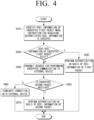
- the processor may control the communicator to transmit a request for performing encrypted communication to the external device when the RSSI information of the packet encrypted is not identified on the basis of the first information and the second information; and control RSSI information of a second packet to be acquired when the encrypted second packet is received from the external device through the communicator in response to the request for performing the encrypted communication.
- the processor may allow connection of the electronic device with the external device to be terminated when the second packet is not received from the external device through the communicator in response to the request for performing the encrypted communication.
- the processor may allow information on a distance between the electronic device and the external device to be acquired on the basis of the RSSI information of the first packet or the RSSI information of the second packet; and allow proximity authentication for the external device to be performed on the basis of the information on the distance between the electronic device and the external device.
- the processor may allow the electronic device to be unlocked when it is identified that the external device is positioned within a predetermined distance from the electronic device on the basis of the information on the distance between the electronic device and the external device; and allow the electronic device to be locked when it is identified that the external device is positioned beyond the predetermined distance from the electronic device on the basis of the information on the distance between the electronic device and the external device.
- a control method for an electronic device includes: identifying whether one or more packets are encrypted when the one or more packets are received from an external device connected to the electronic device; acquiring first information on whether each of the one or more packets is encrypted and second information on a received signal strength indicator (RSSI) of each of the one or more packets; and identifying RSSI information of an encrypted first packet on the basis of the first information and the second information when an instruction for acquiring authenticated RSSI information of the external device is executed.
- RSSI received signal strength indicator
- the method may further include: transmitting a request for performing encrypted communication to the external device when the RSSI information of the packet encrypted is not identified on the basis of the first information and the second information; and acquiring RSSI information of a second packet when the encrypted second packet is received from the external device through the communicator in response to the request for performing the encrypted communication.
- the method may further include: acquiring information on a distance between the electronic device and the external device on the basis of the RSSI information of the first packet or the RSSI information of the second packet; and performing proximity authentication for the external device on the basis of the information on the distance between the electronic device and the external device.
- the method includes: identifying whether one or more packets are encrypted when the one or more packets are received from an external device connected to the electronic device; acquiring first information on whether each of the one or more packets is encrypted and second information on a received signal strength indicator (RSSI) of each of the one or more packets; and identifying RSSI information of an encrypted first packet on the basis of the first information and the second information when an instruction for acquiring authenticated RSSI information of the external device is executed.
- RSSI received signal strength indicator
- the expression “have,” “may have,” “include,” “may include” or the like indicates existence of a corresponding feature (for example, a numerical value, a function, an operation or a component such as a part), and does not exclude existence of an additional feature.
- any component for example, the first component
- another component for example, the second component
- the other component for example, the third component
- an expression “an apparatus configured to” may indicate that the apparatus may "perform-" together with other apparatuses or components.
- a processor configured (or set) to perform A, B, and C may indicate a dedicated processor (for example, an embedded processor) for performing the corresponding operations or a generic-purpose processor (for example, a central processing unit (CPU) or an application processor) that may perform the corresponding operations by executing one or more software programs stored in a memory apparatus.
- a "module” or a “-er/or” may perform at least one function or operation, and be implemented by hardware or software or be implemented by a combination of hardware and software.
- a plurality of “modules” or a plurality of “ ⁇ ers/ors” may be integrated in at least one module and be implemented by at least one processor except for a "module” or an "-er/or” that needs to be implemented by specific hardware.
- an electronic device and an external device may include, for example, at least one of a smartphone, a tablet personal computer (PC), a desktop PC, a laptop PC or a wearable device.
- the wearable device may include at least one of an accessory type wearable device (for example, a watch, a ring, a bracelet, an anklet, a necklace, a glasses, a contact lens, or a head-mounted-device (HMD), a textile or clothing integral type wearable device (for example, an electronic clothing), a body attachment type wearable device (for example, a skin pad or a tattoo), or a living body implantation type circuit.
- an accessory type wearable device for example, a watch, a ring, a bracelet, an anklet, a necklace, a glasses, a contact lens, or a head-mounted-device (HMD)
- a textile or clothing integral type wearable device for example, an electronic clothing
- a body attachment type wearable device for example, a skin pad or a tattoo
- the electronic device may include, for example, at least one of a television, a digital video disk (DVD) player, an audio player, a refrigerator, an air conditioner, a vacuum cleaner, an oven, a microwave oven, a washing machine, an air purifier, a set-top box, a home automation control panel, a security control panel, a media box (e.g., Samsung HomeSync TM , Apple TV TM or Google TV TM ), a game console (e.g., Xbox TM or PlayStation TM ), an electronic dictionary, an electronic key, a camcorder or an electronic picture frame.
- a television e.g., a digital video disk (DVD) player, an audio player, a refrigerator, an air conditioner, a vacuum cleaner, an oven, a microwave oven, a washing machine, an air purifier, a set-top box, a home automation control panel, a security control panel, a media box (e.g., Samsung HomeSync TM , Apple TV TM or Google TV TM ),
- the electronic device 100 may include at least one of various medical devices (e.g., various portable medical devices (such as a blood glucose monitor, a heart rate monitor, a blood pressure monitor or a body temperature monitor), a magnetic resonance angiography (MRA), a magnetic resonance imaging (MRI), a computed tomography (CT), a camera or a ultrasonicator), a navigation device, a global positioning system (i.e., global navigation satellite system (GNSS)), an event data recorder (EDR), a flight data recorder (FDR), an automotive infotainment device, marine electronic equipment (e.g., a marine navigation system or a gyro compass), an avionics, a security device, a vehicle head unit, an industrial or home robot, a drone, an automated teller machine (ATM) in a financial institution, a point of sales (POS) in a store or an internet of things device (e.g., a light bulb, various sensors, a sprinkler device,
- ATM automated
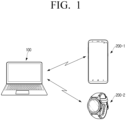
- FIG. 1 is a conceptual diagram for briefly explaining communication connection between an electronic device 100 and an external device 200 according to an embodiment of the present disclosure
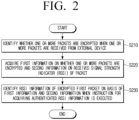
- FIG. 2 is a flowchart for explaining an example of a control method for an electronic device 100 according to another embodiment of the present disclosure.
- embodiments of the present disclosure are described with reference to FIGS. 1 and 2 .
- the electronic device 100 may be implemented as a laptop computer, and the external device 200-1 or 200-2 may be implemented as a smartphone or a smart watch.
- the present disclosure is not limited thereto. That is, in case that a device may perform a function of a master device or a slave device in Bluetooth communication connection, the device may be the electronic device 100 or the external device 200-1 or 200-2 according to the present disclosure. Meanwhile, as shown in FIG. 1 , the electronic device 100 may be connected to the plurality of external devices 200-1 and 200-2 to perform the communication.
- one external device 200 is specifically described for convenience of explanation.
- the electronic device 100 may receive one or more packets from the external device 200.
- the electronic device 100 may also transmit the one or more packets to the external device 200.
- packet is used as a general term for a unit of information exchanged between the electronic device 100 and the external device 200. Accordingly, the term “packet” may be interpreted to include the meaning of data, message, signal or the like.
- an electronic device 100 may identify whether received one or more packets are encrypted when the one or more packets are received from an external device 200 (S210). The electronic device 100 may then acquire first information on whether each of the received one or more packets are encrypted and second information on a received signal strength indicator (RSSI) of each of the received one or more packets and store the information in a memory (S220).
- RSSI received signal strength indicator
- the electronic device 100 may acquire the first information by identifying whether each of the received one or more packets are encrypted.
- the electronic device 100 may acquire the second information by measuring the RSSI of each of the received one or more packets.
- the electronic device 100 may correlate the first and second information corresponding to each packet with each other and then store the information in the memory of the electronic device 100.
- the electronic device 100 may identify the external device 200 that transmits one or more packets on the basis of identification information of the external device 200 such as a media access control address (MAC) address, and manage the first information and the second information for each external device 200.
- MAC media access control address
- the electronic device 100 may identify RSSI information of an encrypted first packet on the basis of the first information and the second information when an instruction for acquiring authenticated RSSI information of the external device 200 is executed (S230).
- the electronic device 100 may identify the encrypted first packet among the received one or more packets on the basis of the first information stored in the memory, and identify the RSSI information corresponding to the first packet on the basis of the second information stored in the memory when the instruction for acquiring the authenticated RSSI information of the external device 200 is executed.
- the term "first packet" is used for specifying any encrypted packet among the one or more packets received from the external device 200 before the instruction for acquiring the authenticated RSSI information is executed.
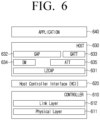
- the instruction for acquiring the authenticated RSSI information of the external device 200 may be implemented by a host controller interface (HCl) function (or method) in which a Bluetooth host (hereinafter referred to as a host) requests RSSI information of an encrypted packet from the controller.
- HCl host controller interface
- the controller may identify the RSSI information of the encrypted first packet on the basis of the first information and the second information as described above when the host requests the RSSI information of the encrypted packet from the controller, and then transmit the identified information to the host.
- a process of identifying the RSSI information of the encrypted first packet on the basis of the first information and the second information under the Bluetooth architecture is described in more detail with reference to FIG. 8 .
- the electronic device 100 may perform various operations on the basis of the RSSI information of the first packet when the RSSI information of the first packet is identified as described above.
- the electronic device 100 may perform authentication for the external device 200 on the basis of the identified RSSI information of the first packet. That is, the identified RSSI information of the first packet as described above may be acquired through the encrypted packet, and thus be referred to as reliable RSSI information of a packet received from a reliable device.
- reliable RSSI information is referred to as "authenticated RSSI information.”
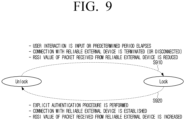
- the electronic device 100 may acquire information on a distance between the electronic device 100 and the external device 200 on the basis of the RSSI information of the first packet. That is, the electronic device 100 may acquire the information on the distance between the electronic device 100 and the external device 200 by using a principle that a strength of a signal transmitted from the external device 200 has a decreased strength and then received by the electronic device 100 as the distance between the electronic device 100 and the external device 200 is increased when the RSSI information of the first packet is acquired, and perform proximity authentication for the external device 200. Specific processes of acquiring the information on the distance between the electronic device 100 and the external device 200 and performing the proximity authentication for the external device 200 are described in more detail with reference to FIG. 9 .
- the electronic device 100 may store the RSSI information of the encrypted packet among the packets received from the external device 200 as the authenticated RSSI information, and perform the proximity authentication for the external device 200 on the basis of the authenticated RSSI information when the authenticated RSSI information is required, thereby improving security of the proximity authentication for the external device 200.
- FIGS. 2 and 3 Another embodiment of the present disclosure is described with reference to FIGS. 2 and 3 .
- FIG. 3 is a flowchart for explaining another example of the control method for an electronic device 100 according to another embodiment of the present disclosure.
- the description provided with reference to FIG. 2 does not consider a case where position of at least one of the electronic device 100 or the external device 200 is changed. However, in reality, the position of at least one of the electronic device 100 or the external device 200 may be changed. Accordingly, it may be impossible to guarantee the reliability of the RSSI information of a packet received before a considerable period of time based on time when the instruction for acquiring the authenticated RSSI information is executed. Accordingly, as described in detail below with reference to FIG. 3 , the electronic device 100 may additionally consider information on the time when the packet is received in acquiring the authenticated RSSI information.
- the electronic device 100 may acquire third information on the reception time of each of the received one or more packets together with the first information and the second information as described above (S310). That is, as described with reference to FIG. 1 , the electronic device 100 may acquire the first information on whether the packet is encrypted and the second information on the RSSI and store the information in the memory, as well as acquire the third information on the reception time of each packet, correlate the third information corresponding to each packet with the first information and the second information, and store the same in the memory.
- the electronic device 100 may identify the one or more packets received from the external device 200 for a predetermined period on the basis of the third information when the instruction for acquiring the authenticated RSSI information of the external device 200 is executed (S320).
- the "predetermined period” may be a period from second time to first time when the first time refers to time when the instruction for acquiring the authenticated RSSI information is executed, and the second time refers to time before a predetermined time interval based on the first time.
- the first time may refer to the time when the instruction for acquiring the authenticated RSSI information is executed
- the second time may refer to the time before the predetermined period based on the first time.
- the electronic device 100 may identify the one or more packets received from the second time to the first time, and may identify the encrypted first packet and the RSSI information of the first packet among the packets.
- the predetermined period may be changed by setting of the developer or user of the electronic device 100.
- the electronic device 100 may identify the RSSI information of the first packet among the one or more packets identified as being received from the external device 200 for the predetermined period when the one or more packets received from the external device 200 are identified for the predetermined period (S330). In other words, the electronic device 100 may target only the one or more packets received from the external device 200 for the predetermined period to identify the encrypted first packet on the basis of the first information, and identify the RSSI information of the first packet on the basis of the second information.
- the electronic device 100 may perform the authentication for the external device 200 on the basis of the RSSI information of the first packet when the RSSI information of the first packet is identified (S340). A description thereof is not different from the description provided with reference to FIG. 1 , and a redundant description is thus omitted.
- the third information on the reception time of each packet may be used together with the second information on the RSSI of each packet to acquire information on a change in the distance between the electronic device 100 and the external device 200 or a change in the position of the electronic device 100 or the external device 200.
- the controller 810 may identify the RSSI information of the encrypted packet on the basis of the first information and the second information when the application 840 requests the RSSI information of the encrypted packet from the controller 810 through the host 830, and allow the identified RSSI information to be transmitted to the application 840 through the host 830.
- the present disclosure is not limited thereto. That is, according to another example, the application 840 may receive the RSSI information of both the encrypted packet and a non-encrypted packet from the controller 810 through the host 830, and acquire the authenticated RSSI information by identifying the RSSI information of the encrypted packet.
- FIG. 9 is a view for explaining methods of locking and unlocking the electronic device 100 according to another embodiment of the present disclosure.
- the electronic device 100 may be locked when one or more of the following conditions are satisfied: when a user interaction is input thereto, when the predetermined period elapses, when its connection with the reliable external device 200 is terminated (or disconnected), and when the RSSI value of the packet received from the reliable external device 200 is reduced (S910).
- the electronic device 100 may be unlocked when one or more of the following conditions are satisfied: when an explicit authentication procedure is performed, when the electronic device is connected with the reliable external device 200, and when the RSSI value of the packet received from the reliable external device 200 is increased (S920).
- a significant security problem may not occur when the electronic device 100 is locked by the user interaction or the elapse of the predetermined period, or when the electronic device 100 is unlocked by performing the explicit authentication procedure.
- d indicates the distance between the electronic device 100 and the external device 200
- TxPower indicates the strength of a signal transmitted from the external device 200
- RSSI indicates the RSSI value of the packet received from the external device 200.
- the electronic device 100 may perform the proximity authentication for the external device 200 on the basis of the information on the distance between the electronic device 100 and the external device 200.
- the electronic device 100 may be unlocked when it is identified that the external device 200 is positioned within a predetermined distance from the electronic device 100 on the basis of the information on the distance between the electronic device 100 and the external device 200.
- the electronic device 100 may be locked when it is identified that the external device 200 is positioned beyond the predetermined distance from the electronic device 100 on the basis of the information on the distance between the electronic device 100 and the external device 200.
- the authenticated RSSI information according to the present disclosure may be used in various ways as a method for acquiring the information on the position of the external device.
- the main characteristic of present disclosure may lie in the method itself for acquiring the reliable RSSI information, and how to utilize the acquired RSSI information may depend on various embodiments of present disclosure.
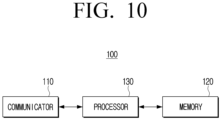
- FIG. 10 is a block diagram briefly showing a configuration of the electronic device 100 according to an embodiment of the present disclosure
- FIG. 11 is a block diagram specifically showing the configuration of the electronic device 100 according to an embodiment of the present disclosure.
- the electronic device 100 may include a communicator 110, a memory 120 and a processor 130.
- the electronic device 100 according to an embodiment of the present disclosure may further include an output 140 and an input 150.
- this configuration is an example, and a new configuration may be added or some configuration may be omitted in addition to this configuration when the present disclosure is performed.
- the communicator 110 may include a circuit and may perform communication with a server or the external device 200.
- the processor 130 may allow various data or information to be received from the server or the external device 200, connected through the communicator 110, and allow the various data or information to be transmitted to the server or the external device 200.
- the communicator 110 may include at least one of a Bluetooth module 111, a WiFi module 112, a wireless communication module 113 or a near field communication (NFC) module 114.
- the Bluetooth module 111 and the WiFi module 112 may respectively perform the communication in a Bluetooth method and a WiFi method.
- various connection information such as a service set identifier (SSID) may be first transmitted and received, the communication connection may be established using this connection information, and various types of information may then be transmitted and received.
- SSID service set identifier
- a detailed description of the Bluetooth module 111 is replaced with the description of the Bluetooth architecture and the connection process of the Bluetooth communication described with reference to FIGS. 5 to 7 .
- the wireless communication module 113 may perform the communication according to various communication standards such as IEEE, Zigbee, 3rd Generation (3G), 3rd generation partnership project (3GPP), long term evolution (LTE), 5th Generation (5G), etc.
- the NFC module 114 may perform the communication by using an NFC method that uses a 13.56 MHz band among various radio frequency identification (RF-ID) frequency bands such as 135 kHz, 13.56 MHz, 433 MHz, 860 to 960 MHz, 2.45 GHz, etc.
- RFID radio frequency identification
- the communicator 110 may receive one or more packets from the external device 200.
- the processor 130 may control the communicator 110 to transmit the one or more packets to the external device 200.
- the electronic device 100 according to the present disclosure may be connected to the external device 200 through the Bluetooth communication method.
- the memory 120 may store at least one instruction related to the electronic device 100.
- the memory 120 may store the operating system (O/S) for driving the electronic device 100.
- the memory 120 may store various software programs or applications for operating the electronic device 100 according to the various embodiments of the present disclosure.
- the memory 120 may include a semiconductor memory such as a flash memory, or a magnetic storing medium such as a hard disk, or the like.
- the memory 120 may store various software modules for operating the electronic device 100 according to the various embodiments of the present disclosure, and the processor 130 may allow the various software modules stored in the memory 120 to be executed to control the operation of the electronic device 100. That is, the memory 120 may be accessed by the processor 130, and readout, recording, correction, deletion, update and the like of data may be performed by the processor 130.
- the term “memory” may include the memory 120, a read only memory (ROM, not shown) or a random access memory (RAM, not shown) in the processor 130, or a memory card (not shown) mounted on the electronic device 100 (e.g., micro secure digital (SD) card or memory stick).
- ROM read only memory
- RAM random access memory
- SD micro secure digital
- the memory 120 may store the first information on whether each of one or more packets received from the external device 200 is encrypted, the second information on the RSSI of each packet, and the third information on the reception time of each packet.
- the memory 120 may store various information necessary within a scope to achieve the purpose of the present disclosure, and the information stored in the memory 120 may be received from the server or the external device 200, or input by the user to be updated.
- the processor 130 may control an overall operation of the electronic device 100.
- the processor 130 may be connected to the components of the electronic device 100 such as the communicator and the memory 120 as described above, and control the overall operation of the electronic device 100 by allowing at least one instruction stored in the memory 120 to be executed as described above.
- the processor 130 may be implemented in various schemes.
- the processor 130 may be implemented as at least one of an application specific integrated circuit (ASIC), an embedded processor, a microprocessor, a hardware control logic, a hardware finite state machine (FSM) or a digital signal processor (DSP).
- ASIC application specific integrated circuit
- FSM hardware finite state machine
- DSP digital signal processor
- the term the "processor” may be used to include a central processing unit (CPU), a graphic processing unit (GPU), a main processing unit (MPU) or the like.
- the processor 130 may identify whether one or more packets are encrypted when the one or more packets are received from the external device 200 connected to the electronic device 100, allow the first information on whether each of the one or more packets is encrypted and the second information on the RSSI of each of the one or more packets to be acquired, and identify the RSSI information of an encrypted first packet on the basis of the first information and the second information when an instruction for acquiring the authenticated RSSI information of the external device 200 is executed.
- the various embodiments according to the present disclosure are described above with reference to FIGS. 1 through 9 , and a redundant description is thus omitted.
- the output 140 may include a circuit, and the processor 130 may allow various functions that the electronic device 100 may perform to be output by the output 140.
- the output 140 may include at least one of a display 141, a speaker or an indicator.
- the display 141 may output image data under control of the processor 130.
- the display 141 may output an image pre-stored in the memory 120 under the control of the processor 130.
- the display 141 according to an embodiment of the present disclosure may display a user interface stored in the memory 120.
- the display 141 may be implemented as a liquid crystal display panel (LCD), an organic light emitting diode (OLED) or the like, and the display 141 may be implemented as a flexible display, a transparent display or the like in some cases.
- the display according to the present disclosure is not limited to a specific type.
- a speaker 142 may output audio data under the control of the processor 130, and an indicator 143 may be lit under the control of the processor 130.
- the output 140 may output a user notification for the connection process of the electronic device 100 with the external device 200 and the data transmission/reception.
- the processor 130 may determine that an attacker's intervention exists and allow the user notification for the security to be provided by the output 140 when the encrypted packet is not received from the external device 200 despite the request for performing the encrypted communication.
- the user notification may be provided visually through the display 141 or the indicator 143, or may be provided aurally through the speaker 142.
- the processor 130 may also allow the user interface for receiving a user command on whether to terminate the communication connection of the electronic device 100 with the external device 200 and the user notification for the security to be provided by the output 140.
- the input 150 may include a circuit, and the processor 130 may allow the user command for controlling the operation of the electronic device 100 to be received by the input 150.
- the input 150 may include a component such as a microphone, a camera or a remote control signal receiver.
- the input 150 may be implemented as a touch screen included in the display 141.
- the input 150 may receive the user command for establishing the communication connection with the external device 200 or terminating the communication connection with the external device 200.
- the electronic device 100 may store the RSSI information of the encrypted packet among the packets received from the external device 200 as the authenticated RSSI information, and perform the proximity authentication for the external device 200 on the basis of the authenticated RSSI information when the authenticated RSSI information is required.
- the electronic device 100 may perform the proximity authentication for the external device 200 in consideration of only the RSSI information of the packet received within the period to guarantee the reliability based on the time when the instruction for acquiring the RSSI information is executed. Accordingly, the electronic device 100 may perform the high-security proximity authentication even when the position of at least one of the electronic device 100 and the external device 200 is changed.
- the electronic device 100 may acquire the authenticated RSSI information by requesting the encrypted communication from the external device 200 and receiving the encrypted packet in case that the authenticated RSSI information does not exist when the authenticated RSSI information is required. In addition, it is thus possible to further improve the security of the proximity authentication for the external device 200.
- Each of components may include a single entity or a plurality of entities, and some of the corresponding sub-components described above may be omitted or other sub-components may be further included in the various embodiments.
- some of the components may be integrated into one entity, and may perform functions performed by the respective corresponding components before being integrated in the same or similar manner.
- Operations performed by the modules, the programs, or other components according to the various embodiments may be executed in a sequential manner, a parallel manner, an iterative manner or a heuristic manner, at least some of the operations may be performed in a different order or be omitted, or other operations may be added.
- the term “part” or “module” used in the present disclosure may include a unit including hardware, software or firmware, and may be used interchangeably with the term, for example, a logic, a logic block, a component or a circuit.
- the "part” or “module” may be an integrally formed component or a minimum unit or part performing one or more functions.
- the module may include an application-specific integrated circuit (ASIC).
- ASIC application-specific integrated circuit
- the various embodiments of the present disclosure may be implemented by software including an instruction stored in a machine-readable storage medium (for example, a computer-readable storage medium).
- a machine may be an apparatus that invokes the stored instruction from the storage medium, may be operated based on the invoked instruction, and may include the electronic device (for example, electronic device 100) according to the disclosed embodiments.
- the processor may directly perform a function corresponding to the instruction or allow other components to perform the function corresponding to the instruction.
- the instruction may include codes provided or executed by a compiler or an interpreter.
- the machine-readable storage medium may be provided in the form of a non-transitory storage medium.
- the "non-transitory storage medium” is a tangible device and may only indicate that this storage medium does not include a signal (e.g., electromagnetic wave), and this term does not distinguish a case where data is stored semi-permanently in the storage medium and a case where data is temporarily stored in the storage medium from each other.
- the "non-transitory storage medium” may include a buffer in which data is temporarily stored.
- the method according to the various examples disclosed in the present disclosure may be included and provided in a computer program product.
- the computer program product may be traded as a product between a seller and a purchaser.
- the computer program product may be distributed in a form of a storage medium (for example, a compact disc read only memory (CD-ROM)) that may be read by the machine, or may be distributed online (for example, downloaded or uploaded) through an application store (for example, PlayStoreTM) or directly between two user devices (for example, smartphones).
- an application store for example, PlayStoreTM
- at least a portion of the computer program product may be at least temporarily stored in a machine-readable storage medium such as a memory of a server of a manufacturer, a server of an application store or a relay server, or be temporarily provided.
Landscapes
- Engineering & Computer Science (AREA)
- Computer Security & Cryptography (AREA)
- Computer Networks & Wireless Communication (AREA)
- Signal Processing (AREA)
- Computer Hardware Design (AREA)
- Computing Systems (AREA)
- General Engineering & Computer Science (AREA)
- Power Engineering (AREA)
- Mobile Radio Communication Systems (AREA)
- Quality & Reliability (AREA)
- Physics & Mathematics (AREA)
- Electromagnetism (AREA)
- Telephone Function (AREA)
Applications Claiming Priority (3)
| Application Number | Priority Date | Filing Date | Title |
|---|---|---|---|
| KR1020200035285A KR102777451B1 (ko) | 2020-03-23 | 2020-03-23 | 전자 장치 및 전자 장치의 제어 방법 |
| PCT/KR2021/000896 WO2021194076A1 (ko) | 2020-03-23 | 2021-01-22 | 전자 장치 및 전자 장치의 제어 방법 |
| EP21774863.1A EP4123982B1 (de) | 2020-03-23 | 2021-01-22 | Elektronische vorrichtung und steuerungsverfahren für elektronische vorrichtung |
Related Parent Applications (2)
| Application Number | Title | Priority Date | Filing Date |
|---|---|---|---|
| EP21774863.1A Division EP4123982B1 (de) | 2020-03-23 | 2021-01-22 | Elektronische vorrichtung und steuerungsverfahren für elektronische vorrichtung |
| EP21774863.1A Division-Into EP4123982B1 (de) | 2020-03-23 | 2021-01-22 | Elektronische vorrichtung und steuerungsverfahren für elektronische vorrichtung |
Publications (2)
| Publication Number | Publication Date |
|---|---|
| EP4521799A2 true EP4521799A2 (de) | 2025-03-12 |
| EP4521799A3 EP4521799A3 (de) | 2025-03-26 |
Family
ID=77891975
Family Applications (2)
| Application Number | Title | Priority Date | Filing Date |
|---|---|---|---|
| EP21774863.1A Active EP4123982B1 (de) | 2020-03-23 | 2021-01-22 | Elektronische vorrichtung und steuerungsverfahren für elektronische vorrichtung |
| EP25153656.1A Pending EP4521799A3 (de) | 2020-03-23 | 2021-01-22 | Elektronische vorrichtung und steuerungsverfahren für elektronische vorrichtung |
Family Applications Before (1)
| Application Number | Title | Priority Date | Filing Date |
|---|---|---|---|
| EP21774863.1A Active EP4123982B1 (de) | 2020-03-23 | 2021-01-22 | Elektronische vorrichtung und steuerungsverfahren für elektronische vorrichtung |
Country Status (4)
| Country | Link |
|---|---|
| US (1) | US12418425B2 (de) |
| EP (2) | EP4123982B1 (de) |
| KR (2) | KR102777451B1 (de) |
| WO (1) | WO2021194076A1 (de) |
Families Citing this family (1)
| Publication number | Priority date | Publication date | Assignee | Title |
|---|---|---|---|---|
| US20250310742A1 (en) * | 2024-03-29 | 2025-10-02 | Motorola Mobility Llc | Locking a device using bluetooth channel sounding in a connected device context |
Family Cites Families (18)
| Publication number | Priority date | Publication date | Assignee | Title |
|---|---|---|---|---|
| KR100773944B1 (ko) | 2005-12-29 | 2007-11-07 | 주식회사 코웰테크 | 응용장치 잠금 장치 |
| EP2002671A4 (de) | 2006-04-03 | 2015-07-15 | Eckey Corp | Verfahren zur bestimmung der nähe zwischen hf-geräten und steuerschaltern |
| US20110110521A1 (en) * | 2009-11-11 | 2011-05-12 | Samsung Electronics Co., Ltd. | Electronic device and network accessing method thereof |
| KR20120086428A (ko) | 2011-01-26 | 2012-08-03 | 이무상 | 개인용 컴퓨터의 무선 잠금 보안 방법 및 장치 |
| KR102069863B1 (ko) | 2012-11-12 | 2020-01-23 | 삼성전자주식회사 | 입력 수단의 결제 기능을 제어하는 전자 장치 및 방법 |
| US9967713B2 (en) * | 2012-11-15 | 2018-05-08 | SSI America, Inc. | Locator beacon and radar application for mobile device |
| KR101455801B1 (ko) * | 2013-11-22 | 2014-11-03 | 주식회사 대동 | 차량의 스마트키 시스템의 릴레이 어택 방지 방법 |
| KR102117028B1 (ko) * | 2014-10-07 | 2020-06-09 | 삼성전자주식회사 | 무선 통신 시스템에서 페어링 방법 및 장치 |
| KR101692993B1 (ko) | 2015-05-06 | 2017-01-12 | (주)아이엘비에스 | 스마트 도어락 |
| US10122685B2 (en) * | 2015-08-26 | 2018-11-06 | Tatung Company | Method for automatically establishing wireless connection, gateway device and client device for internet of things using the same |
| KR101928901B1 (ko) * | 2015-11-09 | 2018-12-13 | 주식회사 케이티 | 에이전트 앱을 이용하여 비콘 서비스를 제공하는 사용자 단말 및 시스템 |
| US10039145B2 (en) * | 2015-11-19 | 2018-07-31 | Nike, Inc. | System, apparatus, and method for received signal strength indicator (RSSI) based authentication |
| KR102493721B1 (ko) | 2016-02-04 | 2023-02-01 | 삼성전자주식회사 | 외부 전자 장치와 연결을 수립하는 방법 및 전자 장치 |
| US10645559B2 (en) | 2016-06-27 | 2020-05-05 | Huawei Technologies Co., Ltd. | Bluetooth connection method and terminal |
| JP6832794B2 (ja) * | 2017-06-05 | 2021-02-24 | ルネサスエレクトロニクス株式会社 | 無線通信システム |
| EP3477600B1 (de) | 2017-10-27 | 2020-02-26 | Axis AB | Verfahren zur zugriffssteuerung in einem system mit einer tragbaren vorrichtung, die einem benutzer und einer zugangskontrollvorrichtung zugeordnet ist |
| JP7032201B2 (ja) | 2018-03-29 | 2022-03-08 | セコム株式会社 | 認証システム及び携帯端末 |
| US10427643B1 (en) * | 2018-07-13 | 2019-10-01 | Nxp B.V. | Defense against relay attack in passive keyless entry systems |
-
2020
- 2020-03-23 KR KR1020200035285A patent/KR102777451B1/ko active Active
-
2021
- 2021-01-22 WO PCT/KR2021/000896 patent/WO2021194076A1/ko not_active Ceased
- 2021-01-22 EP EP21774863.1A patent/EP4123982B1/de active Active
- 2021-01-22 EP EP25153656.1A patent/EP4521799A3/de active Pending
-
2022
- 2022-09-23 US US17/951,802 patent/US12418425B2/en active Active
-
2025
- 2025-02-28 KR KR1020250027083A patent/KR20250036100A/ko active Pending
Also Published As
| Publication number | Publication date |
|---|---|
| EP4123982A4 (de) | 2023-03-22 |
| US12418425B2 (en) | 2025-09-16 |
| EP4123982C0 (de) | 2025-02-26 |
| KR20250036100A (ko) | 2025-03-13 |
| KR102777451B1 (ko) | 2025-03-10 |
| US20230015612A1 (en) | 2023-01-19 |
| EP4123982B1 (de) | 2025-02-26 |
| WO2021194076A1 (ko) | 2021-09-30 |
| KR20210118703A (ko) | 2021-10-01 |
| EP4123982A1 (de) | 2023-01-25 |
| EP4521799A3 (de) | 2025-03-26 |
Similar Documents
| Publication | Publication Date | Title |
|---|---|---|
| US10070313B2 (en) | Wireless token device | |
| US9781586B2 (en) | Method of transmitting/receiving signal in proximity network and electronic device thereof | |
| US9547761B2 (en) | Wireless token device | |
| KR102265658B1 (ko) | 전자장치 및 전자장치의 네트워크 검색방법 | |
| EP3069255B1 (de) | Verfahren und vorrichtung zur kommunikationsverbindung elektronischer vorrichtungen | |
| US9900917B2 (en) | Electronic device for performing a communication connection and method for establishing a communication connection | |
| US20130268767A1 (en) | Wireless token authentication | |
| WO2020233538A1 (zh) | 一种接入无线局域网的方法和终端 | |
| KR102206351B1 (ko) | 전자 장치 및 이의 작업 연계 방법 | |
| US11463449B2 (en) | Authentication for key access | |
| US20130171935A1 (en) | Method for establishing connection between wireless communication devices | |
| US12101832B2 (en) | Connectivity session between devices based on a connectivity trigger | |
| KR102348078B1 (ko) | 사용자 단말 장치, 전자 장치, 이를 포함하는 시스템 및 제어 방법 | |
| US11304076B2 (en) | Electronic apparatus and method for controlling the electronic apparatus | |
| KR20180121178A (ko) | 무선 연결을 위한 방법 및 그 전자 장치 | |
| KR20250036100A (ko) | 전자 장치 및 전자 장치의 제어 방법 | |
| US9832804B2 (en) | Device and method for wireless communication | |
| US11727094B2 (en) | Mobile device, user authentication method and user authentication system of mobile device | |
| US20170353761A1 (en) | Information processing device and information processing method | |
| US11063929B2 (en) | Body area network for authentication and service provision | |
| KR20150001681A (ko) | 전자 장치의 보안 연결 방법 및 장치 | |
| US11337073B2 (en) | Electronic apparatus and method of controlling thereof | |
| CN119815337A (zh) | 蓝牙连接方法、装置、设备及存储介质 | |
| CN118870547A (zh) | 一种WiFi通信方法及电子设备 | |
| CN120980640A (zh) | 终端配网系统及方法 |
Legal Events
| Date | Code | Title | Description |
|---|---|---|---|
| PUAI | Public reference made under article 153(3) epc to a published international application that has entered the european phase |
Free format text: ORIGINAL CODE: 0009012 |
|
| STAA | Information on the status of an ep patent application or granted ep patent |
Free format text: STATUS: THE APPLICATION HAS BEEN PUBLISHED |
|
| PUAL | Search report despatched |
Free format text: ORIGINAL CODE: 0009013 |
|
| AC | Divisional application: reference to earlier application |
Ref document number: 4123982 Country of ref document: EP Kind code of ref document: P |
|
| AK | Designated contracting states |
Kind code of ref document: A2 Designated state(s): AL AT BE BG CH CY CZ DE DK EE ES FI FR GB GR HR HU IE IS IT LI LT LU LV MC MK MT NL NO PL PT RO RS SE SI SK SM TR |
|
| AK | Designated contracting states |
Kind code of ref document: A3 Designated state(s): AL AT BE BG CH CY CZ DE DK EE ES FI FR GB GR HR HU IE IS IT LI LT LU LV MC MK MT NL NO PL PT RO RS SE SI SK SM TR |
|
| RIC1 | Information provided on ipc code assigned before grant |
Ipc: H04W 12/63 20210101ALI20250214BHEP Ipc: H04W 12/10 20210101ALI20250214BHEP Ipc: H04W 12/08 20210101ALI20250214BHEP Ipc: H04W 12/06 20210101ALI20250214BHEP Ipc: H04L 9/40 20220101ALI20250214BHEP Ipc: H04W 12/79 20210101AFI20250214BHEP |
|
| STAA | Information on the status of an ep patent application or granted ep patent |
Free format text: STATUS: REQUEST FOR EXAMINATION WAS MADE |
|
| 17P | Request for examination filed |
Effective date: 20250616 |
|
| GRAP | Despatch of communication of intention to grant a patent |
Free format text: ORIGINAL CODE: EPIDOSNIGR1 |
|
| STAA | Information on the status of an ep patent application or granted ep patent |
Free format text: STATUS: GRANT OF PATENT IS INTENDED |