EP4494697A2 - Behandlung von patienten mit schwerer von-willebrand-krankheit, die sich einem chirurgischen eingriff unterziehen durch verabreichung von rekombinantem vwf - Google Patents
Behandlung von patienten mit schwerer von-willebrand-krankheit, die sich einem chirurgischen eingriff unterziehen durch verabreichung von rekombinantem vwf Download PDFInfo
- Publication number
- EP4494697A2 EP4494697A2 EP24209444.9A EP24209444A EP4494697A2 EP 4494697 A2 EP4494697 A2 EP 4494697A2 EP 24209444 A EP24209444 A EP 24209444A EP 4494697 A2 EP4494697 A2 EP 4494697A2
- Authority
- EP
- European Patent Office
- Prior art keywords
- var
- surgical procedure
- rvwf
- administered
- vwf
- Prior art date
- Legal status (The legal status is an assumption and is not a legal conclusion. Google has not performed a legal analysis and makes no representation as to the accuracy of the status listed.)
- Withdrawn
Links
Images












Classifications
-
- A—HUMAN NECESSITIES
- A61—MEDICAL OR VETERINARY SCIENCE; HYGIENE
- A61K—PREPARATIONS FOR MEDICAL, DENTAL OR TOILETRY PURPOSES
- A61K38/00—Medicinal preparations containing peptides
- A61K38/16—Peptides having more than 20 amino acids; Gastrins; Somatostatins; Melanotropins; Derivatives thereof
- A61K38/17—Peptides having more than 20 amino acids; Gastrins; Somatostatins; Melanotropins; Derivatives thereof from animals; from humans
- A61K38/36—Blood coagulation or fibrinolysis factors
-
- A—HUMAN NECESSITIES
- A61—MEDICAL OR VETERINARY SCIENCE; HYGIENE
- A61P—SPECIFIC THERAPEUTIC ACTIVITY OF CHEMICAL COMPOUNDS OR MEDICINAL PREPARATIONS
- A61P7/00—Drugs for disorders of the blood or the extracellular fluid
- A61P7/04—Antihaemorrhagics; Procoagulants; Haemostatic agents; Antifibrinolytic agents
Definitions
- VWD von Willebrand Disease
- VWD refers to the group of diseases caused by a deficiency of von Willebrand factor. Von Willebrand factor helps blood platelets clump together and stick to the blood vessel wall, which is necessary for normal blood clotting.
- VWD von Willebrand disease
- Multimerized VWF binds to the platelet surface glycoprotein Gp1b ⁇ , through an interaction in the A1 domain of VWF, facilitating platelet adhesion. Other sites on VWF mediate binding to the blood vessel wall. Thus, VWF forms a bridge between the platelet and the vessel wall that is essential to platelet adhesion and primary hemostasis under conditions of high shear stress.
- endothelial cells secrete large polymeric forms of VWF and those forms of VWF that have a lower molecular weight arise from proteolytic cleavage.
- the multimers of exceptionally large molecular masses are stored in the Weibel-Pallade bodies of the endothelial cells and liberated upon stimulation by agonists such as thrombin and histamine.
- VWF von Willebrand factor
- the present invention provides methods of pre-treatment for a patient with severe von Willebrand disease prior to surgery by administering 20-60 IU/kg recombinant von Willebrand Factor (rVWF) to the patient between 12 hours and 24 hours, e.g., 12 hours, 13 hours, 14 hours, 15 hours, 16 hours, 17 hours, 18 hours, 19 hours, 20 hours, 21 hours, 22 hours, 23 hours, 24 hours, 12 hours and 24 hours, 14 hours and 24 hours, 16 and 24 hours, 18 hours and 24 hours, or 20 hours and 24 hours prior to the surgical procedure, and not administering Factor VIII (FVIII) with the rVWF prior to the surgical procedure.
- rVWF von Willebrand Factor
- the method of pre-treating further comprises administering to the subject 5-90 IU/kg rVWF 1 hour prior to surgery.
- the subject is administered 70-200 IU rVWF after the surgery, either with or without the pre-treatment described above.
- the surgical procedure is selected from a group consisting of major surgery, minor surgery, and oral surgery.
- the subject is administered 35-60 IU/kg rVWF between 12 hours and 24 hours prior to a major surgical procedure. In other embodiments, the subject is administered 15-90 IU/kg rVWF 1 hour prior to major surgical procedure. In another embodiment, the subject is administered 150-220 IU/kg rVWF after a major surgical procedure. In some instances, the subject undergoing a major surgical procedure is administered a total dosage of 220-320 IU/kg. In some instances, when the surgical procedure is a major surgical procedure and the pre-treatment comprises administering at least two approximately equal doses of rVWF prior to the surgical procedure.
- the subject is administered 50-60 IU/kg rVWF between 12 hours and 24 hours prior a minor surgical procedure. In other embodiments, the subject is administered 5-50 IU/kg rVWF 1 hour prior to minor surgery. In another embodiment, the subject is administered 70-150 IU/kg rVWF after a minor surgical procedure. In some instances, the subject undergoing a minor surgical procedure is administered a total dosage of 100-220 IU/kg. In some instances, when the surgical procedure is a minor surgical procedure, the pre-treatment comprises administering at least two doses of rVWF prior to the surgical procedure, wherein the first dose is larger than the second dose.
- the subject is administered 20-40 IU/kg rVWF between 12 hours and 24 hours prior to an oral surgical procedure. In other embodiments, the subject is administered 20-50 IU/kg rVWF 1 hour prior to the oral surgical procedure. In another embodiment, the subject is administered 10-50 IU/kg rVWF during the oral surgical procedure. In another embodiment, the subject is administered 70-150 IU/kg rVWF after an oral surgical procedure. In some instances, the subject undergoing an oral surgical procedure is administered a total dosage of 70-190 IU/kg. In some instances, when the surgical procedure is an oral surgical procedure and the pre-treatment comprises administering at least two approximately equal doses of rVWF prior to the surgical procedure.
- the present invention provides methods for pretreating a patient with severe von Willebrand disease prior to surgery by administering recombinant von Willebrand Factor (rVWF) to the patient 45-60 IG/kg rVWF without administering Factor VIII with the rVWF prior to the surgical procedure.
- the surgical procedure is selected from a group consisting of major surgery, minor surgery, and oral surgery.
- pre-propeptide VWF refers to a non-mature VWF polypeptide comprising a signal peptide of about 22 amino acid residues, a VWF propeptide of about 741 amino acid residues, and a mature VWF subunit of about 2050 amino acid residues.
- Pro-VWF subunits can dimerize through disulfide bonds near their carboxyl termini in the endoplasmic reticulum to form tail-to tail dimers which are then transported to the Golgi. In the Golgi, additional head-to-head disulfide bonds are formed near the amino-termini of the subunits, thereby forming multimers.
- VWF propeptide Proteolytic cleavage of the VWF propeptide occurs via the processing protease furin, thus producing a mature VWF/VWF-PP complex.
- r refers to the recombinant version.
- the methods described herein apply to recombinant VWF (rVWF).
- VWF complex or "mat-VWF/VWF-PP complex” refers to a non-covalently linked heterodimeric structure comprising a mature VWF subunit and VWF propeptide.
- the VWF complex can be generated as a product of furin cleavage between the propeptide portion and mature VWF portion of the pre-propeptide VWF.
- r refers to the recombinant version.
- the methods described herein apply to recombinant VWF (rVWF).
- rVWF refers to recombinant VWF.
- rFVIII refers to recombinant FVIII.
- recombinant when used with reference, e.g., to a cell, or nucleic acid, protein, or vector, indicates that the cell, nucleic acid, protein or vector, has been modified by the introduction of a heterologous nucleic acid or protein or the alteration of a native nucleic acid or protein, or that the cell is derived from a cell so modified.
- recombinant cells express genes that are not found within the native (non-recombinant) form of the cell or express native genes that are otherwise abnormally expressed, under expressed or not expressed at all.
- VWF proteins of the invention can comprise a construct, for example, prepared as in WO 1986/06096 published on Oct. 23, 1986 and U.S. patent application Ser. No. 07/559,509, filed on Jul. 23, 1990, in the name of Ginsburg et al. , which is incorporated herein by reference with respect to the methods of producing recombinant VWF.
- the VWF in the present invention can include all potential forms, including the monomeric and multimeric forms. It should also be understood that the present invention encompasses different forms of VWF to be used in combination.
- the VWF of the present invention may include different multimers, different derivatives and both biologically active derivatives and derivatives not biologically active.
- the recombinant VWF embraces any member of the VWF family from, for example, a mammal such as a primate, human, monkey, rabbit, pig, rodent, mouse, rat, hamster, gerbil, canine, feline, and biologically active derivatives thereof.
- Mutant and variant VWF proteins having activity are also embraced, as are functional fragments and fusion proteins of the VWF proteins.
- the VWF of the invention may further comprise tags that facilitate purification, detection, or both.
- the VWF described herein may further be modified with a therapeutic moiety or a moiety suitable imaging in vitro or in vivo.
- Plasmid-derived VWF includes all forms of the protein found in blood including the mature VWF obtained from a mammal having the property of in vivo-stabilizing, e.g. binding, of at least one FVIII molecule.
- highly multimeric VWF or “high molecular weight VWF” refers to VWF comprising at least 10 subunits, or 12, 14, or 16 subunits, to about 20, 22, 24 or 26 subunits or more.
- subunit refers to a monomer of VWF. As is known in the art, it is generally dimers of VWF that polymerize to form the larger order multimers (see Turecek et al., Semin. Thromb. Hemost. 2010, 36(5): 510-521 which is hereby incorporated by reference in its entirety for all purposes and in particular for all teachings regarding multimer analysis of VWF).
- factor VIII refers to any form of factor VIII molecule with the typical characteristics of blood coagulation factor VIII, whether endogenous to a patient, derived from blood plasma, or produced through the use of recombinant DNA techniques, and including all modified forms of factor VIII.
- Factor VIII (FVIII) exists naturally and in therapeutic preparations as a heterogeneous distribution of polypeptides arising from a single gene product (see, e.g., Andersson et al., Proc. Natl. Acad. Sci. USA, 83:2979-2983 (1986 )).
- therapeutic preparations containing Factor VIII include those sold under the trade names of HEMOFIL M, ADVATE, and RECOMBINATE (available from Baxter Healthcare Corporation, Deerfield, Ill., U.S.A.).
- Plasmid FVIII activity and "in vivo FVIII activity” are used interchangeably.
- the in vivo FVIII activity measured using standard assays may be endogenous FVIII activity, the activity of a therapeutically administered FVIII (recombinant or plasma derived), or both endogenous and administered FVIII activity.
- plasma FVIII refers to endogenous FVIII or administered recombinant or plasma derived FVIII.
- von Willebrand Disease refers to the group of diseases caused by a deficiency of von Willebrand factor. Von Willebrand factor helps blood platelets clump together and stick to the blood vessel wall, which is necessary for normal blood clotting. As described in further detail herein, there are several types of Von Willebrand disease including type 1, 2A, 2B, 2M and 3.
- isolated refers to material that is substantially or essentially free from components that normally accompany it as found in its native state. Purity and homogeneity are typically determined using analytical chemistry techniques such as polyacrylamide gel electrophoresis or high performance liquid chromatography. VWF is the predominant species present in a preparation is substantially purified.
- purified in some embodiments denotes that a nucleic acid or protein gives rise to essentially one band in an electrophoretic gel. In other embodiments, it means that the nucleic acid or protein is at least 50% pure, more preferably at least 60%, 65%, 70%, 75%, 80%, 85%, 90%, 95%, 96%, 97%, 98%, 99% or more pure.
- Purify or “purification” in other embodiments means removing at least one contaminant from the composition to be purified. In this sense, purification does not require that the purified compound be homogenous, e.g., 100% pure.
- administering includes intravenous administration, intramuscular administration, subcutaneous administration, oral administration, administration as a suppository, topical contact, intraperitoneal, intralesional, or intranasal administration, or the implantation of a slow-release device, e.g., a mini-osmotic pump, to a subject.
- Administration is by any route including parenteral, and transmucosal (e.g., oral, nasal, vaginal, rectal, or transdermal).
- Parenteral administration includes, e.g., intravenous, intramuscular, intra-arteriole, intradermal, subcutaneous, intraperitoneal, intraventricular, and intracranial.
- Other modes of delivery include, but are not limited to, the use of liposomal formulations, intravenous infusion, transdermal patches, etc.
- a therapeutically effective amount or dose or “therapeutically sufficient amount or dose” or “effective or sufficient amount or dose” refer to a dose that produces therapeutic effects for which it is administered.
- a therapeutically effective amount of a drug useful for treating hemophilia can be the amount that is capable of preventing or relieving one or more symptoms associated with hemophilia.
- the exact dose will depend on the purpose of the treatment, and will be ascertainable by one skilled in the art using known techniques (see, e.g., Lieberman, Pharmaceutical Dosage Forms (vols.
- the terms "patient” and “subject” are used interchangeably and refer to a mammal (preferably human) that has a disease or has the potential of contracting a disease.
- the term "about” denotes an approximate range of plus or minus 10% from a specified value. For instance, the language “about 20%” encompasses a range of 18-22%.
- the present invention utilizes compositions comprising von Willebrand Factor (rVWF) for pretreatment of subject with severe VWD who are undergoing a surgical procedure, such as, but not limited to, major surgery, minor surgery, or oral surgery.
- VWF von Willebrand Factor
- VWF proteins of the invention may comprise a construct, for example, prepared as in WO 1986/06096 published on Oct. 23, 1986 and U.S. patent application Ser. No. 07/559,509, filed on Jul. 23, 1990, in the name of Ginsburg et al. , which is incorporated herein by reference with respect to the methods of producing recombinant VWF.
- the VWF useful for the present invention includes all potential forms, including the monomeric and multimeric forms.
- One particularly useful form of VWF are homo-multimers of at least two VWFs.
- the VWF proteins may be either a biologically active derivative, or when to be used solely as a stabilizer for FVIII the VWF may be of a form not biologically active.
- the present invention encompasses different forms of VWF to be used in combination.
- a composition useful for the present invention may include different multimers, different derivatives and both biologically active derivatives and derivatives not biologically active.
- VWF serves as a bridge between platelets and specific components of the extracellular matrix, such as collagen.
- the biological activity of VWF in this process can be measured by different in vitro assays ( Turecek et al., Semin. Thromb. Hemost. 28: 149-160, 2002 ).
- the ristocetin cofactor assay is based on the agglutination of fresh or formalin-fixed platelets induced by the antibiotic ristocetin in the presence of VWF.
- the rVWF of the invention has a specific activity of at least about 20, 22.5, 25, 27.5, 30, 32.5, 35, 37.5, 40, 42.5, 45, 47.5, 50, 52.5, 55, 57.5, 60, 62.5, 65, 67.5, 70, 72.5, 75, 77.5, 80, 82.5, 85, 87.5, 90, 92.5, 95, 97.5, 100, 105, 110, 115, 120, 125, 130, 135, 140, 145, 150 or more mU/ ⁇ g.
- the rVWF of the present invention is highly multimeric comprising about 10 to about 40 subunits.
- the multimeric rVWF produced using methods of the present invention comprise about 10-30, 12-28, 14-26, 16-24, 18-22, 20-21 subunits.
- the rVWF is present in multimers varying in size from dimers to multimers of over 40 subunits (>10 million Daltons). The largest multimers provide multiple binding sites that can interact with both platelet receptors and subendothelial matrix sites of injury, and are the most hemostatically active form of VWF.
- ADAMTS13 will cleave the ultra-large rVWF multimers over time, but during production (generally through expression in cell culture), rVWF compositions of the present invention are generally not exposed to ADAMTS13 and retain their highly multimeric structure.
- a rVWF composition used in the methods described herein has a distribution of rVWF oligomers characterized in that 95% of the oligomers have between 6 subunits and 20 subunits.
- the a rVWF composition has a distribution of rVWF oligomers characterized in that 95% of the oligomers have a range of subunits selected from variations 458 to 641 found in Table 2 of WO 2012/171031 , which is herein incorporated by reference in its entirety for all purposes.
- a rVWF composition can be characterized according to the percentage of rVWF molecules that are present in a particular higher order rVWF multimer or larger multimer. For example, in one embodiment, at least 20% of rVWF molecules in a rVWF composition used in the methods described herein are present in an oligomeric complex of at least 10 subunits. In another embodiment, at least 20% of rVWF molecules in a rVWF composition used in the methods described herein are present in an oligomeric complex of at least 12 subunits.
- a rVWF composition used in the methods provided herein has a minimal percentage (e.g., has at least X %) of rVWF molecules present in a particular higher-order rVWF multimer or larger multimer (e.g., a multimer of at least Y subunits) according to any one of variations 134 to 457 found in Table 3 to Table 5, which is herein incorporated by reference in its entirety for all purposes.
- the rVWF composition administered to the subject generally comprises a significant percentage of high molecular weight (HMW) rVWF multimers.
- HMW rVWF multimer composition comprises at least 10%-80% rVWF decamers or higher order multimers.
- the composition comprises about 10-95%, 20-90%, 30-85%, 40-80%, 50-75%, 60-70% decamers or higher order multimers.
- the HMW rVWF multimer composition comprises at least about 10%, 20%, 30%, 40%, 50%, 60%, 70%, 80%, 90% decamers or higher order multimers.
- Assessment of the number and percentage of rVWF multimers can be conducted using methods known in the art, including without limitation methods using electrophoresis and size exclusion chromatography methods to separate VWF multimers by size, for example as discussed by Cumming et al, (J Clin Pathol. 1993 May; 46(5): 470-473 , which is hereby incorporated by reference in its entirety for all purposes and in particular for all teachings related to assessment of VWF multimers).
- Such techniques may further include immunoblotting techniques (such as Western Blot), in which the gel is immunoblotted with a radiolabeled antibody against VWF followed by chemiluminescent detection (see for example Wen et al., (1993), J. Clin. Lab.
- VWF:Antigen VWF:Ag
- VWF:Ristocetin Cofactor VWF:RCof
- VWF:Collagen Binding Activity assay VWF:CBA
- higher order rVWF multimers of the invention are stable for about 1 to about 90 hours post-administration. In still further embodiments, the higher order rVWF multimers are stable for about 5-80, 10-70, 15-60, 20-50, 25-40, 30-35 hours post-administration. In yet further embodiments, the higher order rVWF multimers are stable for at least 3, 6, 12, 18, 24, 36, 48, 72 hours post-administration. In certain embodiments the stability of the rVWF multimers is assessed in vitro.
- the rVWF (recombinant or plasma derived) used in accordance with the present invention are not modified with any conjugation, post-translation or covalent modifications.
- the rVWF of the present invention is not modified with a water soluble polymer, including without limitation, a polyethylene glycol (PEG), a polypropylene glycol, a polyoxyalkylene, a polysialic acid, hydroxyl ethyl starch, a poly-carbohydrate moiety, and the like.
- the rVWF (recombinant or plasma derived) used in accordance with the present invention is modified through conjugation, post-translation modification, or covalent modification, including modifications of the N- or C-terminal residues as well as modifications of selected side chains, for example, at free sulfhydryl-groups, primary amines, and hydroxyl-groups.
- a water soluble polymer is linked to the protein (directly or via a linker) by a lysine group or other primary amine.
- the rVWF proteins of the present invention may be modified by conjugation of a water soluble polymer, including without limitation, a polyethylene glycol (PEG), a polypropylene glycol, a polyoxyalkylene, a polysialic acid, hydroxyl ethyl starch, a poly-carbohydrate moiety, and the like.
- a water soluble polymer including without limitation, a polyethylene glycol (PEG), a polypropylene glycol, a polyoxyalkylene, a polysialic acid, hydroxyl ethyl starch, a poly-carbohydrate moiety, and the like.
- Water soluble polymers that may be used to modify the rVWF and/or FVIII include linear and branched structures.
- the conjugated polymers may be attached directly to the coagulation proteins of the invention, or alternatively may be attached through a linking moiety.
- Non-limiting examples of protein conjugation with water soluble polymers can be found in U.S. Pat. Nos. 4,640,835 ; 4,496,689 ; 4,301,144 ; 4,670,417 ; 4,791,192 , and 4,179,337 , as well as in Abuchowski and Davis "Enzymes as Drugs," Holcenberg and Roberts, Eds., pp. 367 383, John Wiley and Sons, New York (1981 ), and Hermanson G., Bioconjugate Techniques 2nd Ed., Academic Press, Inc. 2008 .
- a coagulation protein of the invention could be conjugated to a water-soluble polymer compound
- a Schiff base between a free amino group on the polymer moiety being reacted with an aldehyde group formed at the non-reducing end of the polymer by periodate oxidation ( Jennings and Lugowski, J. Immunol. 1981; 127:1011-8 ; Femandes and Gregonradis, Biochim Biophys Acta. 1997; 1341; 26-34 ).
- the generated Schiff Base can be stabilized by specific reduction with NaCNBH 3 to form a secondary amine.
- An alternative approach is the generation of terminal free amino groups on the polymer by reductive amination with NH 4 Cl after prior oxidation.
- Bifunctional reagents can be used for linking two amino or two hydroxyl groups.
- a polymer containing an amino group can be coupled to an amino group of the coagulation protein with reagents like BS3 (Bis(sulfosuccinimidyl)suberate/Pierce, Rockford, Ill.).
- reagents like BS3 (Bis(sulfosuccinimidyl)suberate/Pierce, Rockford, Ill.).
- heterobifunctional cross linking reagents like Sulfo-EMCS (N-.epsilon.-Maleimidocaproyloxy) sulfosuccinimide ester/Pierce) can be used for instance to link amine and thiol groups.
- an aldehyde reactive group such as PEG alkoxide plus diethyl acetal of bromoacetaldehyde; PEG plus DMSO and acetic anhydride, and PEG chloride plus the phenoxide of 4-hydroxybenzaldehyde, succinimidyl active esters, activated dithiocarbonate PE.G., 2,4,5-trichlorophenylcloroformate and P-nitrophenylcloroformate activated PE.G., may be used in the conjugation of a coagulation protein.
- the rVWF used in methods of the present invention has been matured in vitro with furin.
- the furin is recombinant furin.
- the rVWF used in the methods of the present invention are produced by expression in a mammalian cell culture using methods known in the art.
- the mammalian culture comprises CHO cells.
- the rVWF of the invention comprises rVWF protein isolated from a CHO cell expression system.
- the propeptide removal is mediated in vitro through exposure of the pro-VWF to furin--in a still further embodiment, the Furin used for propeptide removal is recombinant furin.
- fully glycosylated/ABO blood group glycans are absent.
- the rVWF used in methods and compositions of the present invention by expression in a suitable eukaryotic host system.
- eukaryotic cells include, without limitation, mammalian cells, such as CHO, COS, HEK 293, BHK, SK-Hep, and HepG2; insect cells, e.g., SF9 cells, SF21 cells, S2 cells, and High Five cells; and yeast cells, e.g., Saccharomyces or Schizosaccharomyces cells.
- the VWF can be expressed in yeast cells, insect cells, avian cells, mammalian cells, and the like.
- the cell line is a CHO, BHK, or HEK cell line.
- mammalian cells e.g., CHO cell from a continuous cell line, can be used to express the VWF of the present invention.
- the nucleic acid sequence comprising a sequence coding for VWF can be a vector.
- the vector can be delivered by a virus or can be a plasmid.
- the nucleic acid sequence coding for the protein can be a specific gene or a biologically functional part thereof.
- the protein is at least a biologically active part of VWF.
- vectors can be used for the expression of the VWF and can be selected from eukaryotic expression vectors.
- vectors for eukaryotic expression include: (i) for expression in yeast, vectors such as pAO, pPIC, pYES, pMET, using promoters such as AOX1, GAP, GAL1, AUG1, etc.; (ii) for expression in insect cells, vectors such as pMT, pAc5, pIB, pMIB, pBAC, etc., using promoters such as PH, p10, MT, Ac5, OpIE2, gp64, polh, etc., and (iii) for expression in mammalian cells, vectors such as pSVL, pCMV, pRc/RSV, pcDNA3, pBPV, etc., and vectors derived from viral systems such as vaccinia virus, adeno-associated viruses, herpes viruses, retroviruses, etc., using promoters such as CMV, SV40, EF-1, UbC, RSV, ADV, BPV
- the nucleic acid sequence further comprises other sequences suitable for a controlled expression of a protein such as promoter sequences, enhancers, TATA boxes, transcription initiation sites, polylinkers, restriction sites, poly-A-sequences, protein processing sequences, selection markers, and the like which are generally known to a person of ordinary skill in the art.
- the cell-culture methods of the invention may comprise the use of a microcarrier.
- the cell-cultures of the embodiments can be performed in large bioreactors under conditions suitable for providing high volume-specific culture surface areas to achieve high cell densities and protein expression.
- One means for providing such growth conditions is to use microcarriers for cell-culture in stirred tank bioreactors.
- the concept of cell-growth on microcarriers was first described by van Wezel ( van Wezel, A. L., Nature 216:64-5 (1967 )) and allows for cell attachment on the surface of small solid particles suspended in the growth medium. These methods provide for high surface-to-volume ratios and thus allow for efficient nutrient utilization.
- the cells expressing VWF can be bound to a spherical or a porous microcarrier during cell culture growth.
- the microcarrier can be a microcarrier selected from the group of microcarriers based on dextran, collagen, plastic, gelatine and cellulose and others as described in Butler (1988. In: Spier & Griffiths, Animal Cell Biotechnology 3:283-303 ). It is also possible to grow the cells to a biomass on spherical microcarriers and subculture the cells when they have reached final fermenter biomass and prior to production of the expressed protein on a porous microcarrier or vice versa.
- Suitable spherical microcarriers can include smooth surface microcarriers, such as Cytodex TM 1, Cytodex TM 2, and Cytode TM 3 (GE Healthcare) and macroporous microcarriers such as Cytopore TM . 1, Cytopore TM 2, Cytoline TM 1, and Cytoline TM 2 (GE Healthcare).
- smooth surface microcarriers such as Cytodex TM 1, Cytodex TM 2, and Cytode TM 3 (GE Healthcare)
- macroporous microcarriers such as Cytopore TM . 1, Cytopore TM 2, Cytoline TM 1, and Cytoline TM 2 (GE Healthcare).
- rVWF is expressed in cells cultured in cell culture media that produces high molecular weight rVWF.
- cell culture solution can include cell culture media and cell culture supernatant.
- the cell culture media are externally added to the cell culture solution, optionally together with supplements, to provide nutrients and other components for culturing the cells expressing VWF.
- the cell culture supernatant refers to a cell culture solution comprising the nutrients and other components from the cell culture medium as well as products released, metabolized, and/or excreted from the cells during culture.
- the media can be animal protein-free and chemically defined.
- Methods of preparing animal protein-free and chemically defined culture media are known in the art, for example in US 2008/0009040 and US 2007/0212770 , which are both incorporated herein for all purposes and in particular for all teachings related to cell culture media.
- Protein free and related terms refers to protein that is from a source exogenous to or other than the cells in the culture, which naturally shed proteins during growth.
- the culture medium is polypeptide free.
- the culture medium is serum free.
- the culture medium is animal protein free.
- the culture medium is animal component free.
- the culture medium contains protein, e.g., animal protein from serum such as fetal calf serum.
- the culture has recombinant proteins exogenously added.
- the proteins are from a certified pathogen free animal.
- the term "chemically defined” as used herein shall mean, that the medium does not comprise any undefined supplements, such as, for example, extracts of animal components, organs, glands, plants, or yeast. Accordingly, each component of a chemically defined medium is accurately defined.
- the media are animal-component free and protein free.
- the formulations comprising rVWF is lyophilized prior to administration. Lyophilization is carried out using techniques common in the art and should be optimized for the composition being developed [ Tang et al., Pharm Res. 21:191-200. (2004 ) and Chang et al., Pharm Res. 13:243-9 (1996 )].
- Methods of preparing pharmaceutical formulations can include one or more of the following steps: adding a stabilizing agent as described herein to said mixture prior to lyophilizing, adding at least one agent selected from a bulking agent, an osmolarity regulating agent, and a surfactant, each of which as described herein, to said mixture prior to lyophilization.
- a lyophilized formulation is, in one aspect, at least comprised of one or more of a buffer, a bulking agent, and a stabilizer.
- the utility of a surfactant is evaluated and selected in cases where aggregation during the lyophilization step or during reconstitution becomes an issue.
- An appropriate buffering agent is included to maintain the formulation within stable zones of pH during lyophilization.
- the lyophilized material may be reconstituted as an aqueous solution.
- aqueous carriers e.g., sterile water for injection, water with preservatives for multi dose use, or water with appropriate amounts of surfactants (for example, an aqueous suspension that contains the active compound in admixture with excipients suitable for the manufacture of aqueous suspensions).
- excipients are suspending agents, for example and without limitation, sodium carboxymethylcellulose, methylcellulose, hydroxypropylmethylcellulose, sodium alginate, polyvinylpyrrolidone, gum tragacanth and gum acacia; dispersing or wetting agents are a naturally-occurring phosphatide, for example and without limitation, lecithin, or condensation products of an alkylene oxide with fatty acids, for example and without limitation, polyoxyethylene stearate, or condensation products of ethylene oxide with long chain aliphatic alcohols, for example and without limitation, heptadecaethyleneoxycetanol, or condensation products of ethylene oxide with partial esters derived from fatty acids and a hexitol such as polyoxyethylene sorbitol monooleate, or condensation products of ethylene oxide with partial esters derived from fatty acids and hexitol anhydrides, for example and without limitation, polyethylene sorbitan monooleate.
- the aqueous phosphatide for example and
- compositions of the present invention are liquid formulations for administration with the use of a syringe or other storage vessel.
- these liquid formulations are produced from lyophilized material described herein reconstituted as an aqueous solution.
- compositions of the invention further comprise one or more pharmaceutically acceptable carriers.
- pharmaceutically acceptable carriers include any and all clinically useful solvents, dispersion media, coatings, antibacterial and antifungal agents, isotonic and absorption delaying agents and the like, including those agents disclosed above.
- the free mature recombinant von Willebrand Factor (rVWF) of the present invention can be produced recombinantly.
- rVWF von Willebrand Factor
- One skilled in the art recognizes useful methods for expressing a recombinant protein in a host cell.
- the method includes expressing a nucleic acid sequence encoding rVWF in a host cell such as a CHO cell and culturing the resulting host cell under certain conditions to produce rVWF, prepro-VWF, pro-VWF, and the like.
- the nucleic acid sequence comprising a sequence coding for VWF can be an expression vector.
- the vector can be delivered by a virus or can be a plasmid.
- the nucleic acid sequence coding for the protein can be a specific gene or a biologically functional part thereof.
- the protein is at least a biologically active part of VWF.
- the nucleic acid sequence can further comprise other sequences suitable for a controlled expression of a protein such as promoter sequences, enhancers, TATA boxes, transcription initiation sites, polylinkers, restriction sites, poly-A-sequences, protein processing sequences, selection markers, and the like which are generally known to a person of ordinary skill in the art.
- vectors can be used for the expression of the VWF and can be selected from eukaryotic expression vectors.
- examples of vectors for eukaryotic expression include: (i) for expression in yeast, vectors such as pAO, pPIC, pYES, pMET, using promoters such as AOX1, GAP, GAL1, AUG1, etc; (ii) for expression in insect cells, vectors such as pMT, pAc5, pIB, pMIB, pBAC, etc., using promoters such as PH, p10, MT, Ac5, OpIE2, gp64, polh, etc., and (iii) for expression in mammalian cells, vectors such as pSVL, pCMV, pRc/RSV, pcDNA3, pBPV, etc., and vectors derived from viral systems such as vaccinia virus, adeno-associated viruses, herpes viruses, retroviruses, etc., using
- the rVWF used in the methods of the present invention is produced by expression in a mammalian cell culture using methods known in the art.
- the mammalian culture comprises CHO cells.
- the rVWF is co-expressed with recombinant Factor VIII (rFVIII) in the same culture.
- the rVWF and the rFVIII are purified together (co-purified) or separately using methods known in the art.
- the rVWF is expressed in a culture that does not contain rFVIII.
- rVWF is expressed and isolated from a suitable eukaryotic host system.
- eukaryotic cells include, without limitation, mammalian cells, such as CHO, COS, HEK 293, BHK, SK-Hep, and HepG2; insect cells, e.g., SF9 cells, SF21 cells, S2 cells, and High Five cells; and yeast cells, e.g., Saccharomyces or Schizosaccharomyces cells.
- the VWF can be expressed in yeast cells, insect cells, avian cells, mammalian cells, and the like. For example, in a human cell line, a hamster cell line, or a murine cell line.
- the cell line is a CHO, BHK, or HEK cell line.
- mammalian cells e.g., CHO cell from a continuous cell line, can be used to express the VWF of the present invention.
- VWF protein is expressed and isolated from a CHO cell expression system.
- VWF can be produced in a cell culture system or according to any cell culture method recognized by those in the art.
- the cell cultures can be performed in large bioreactors under conditions suitable for providing high volume-specific culture surface areas to achieve high cell densities and protein expression.
- One means for providing such growth conditions is to use microcarriers for cell-culture in stirred tank bioreactors.
- the concept of cell-growth on microcarriers was first described by van Wezel ( van Wezel, A. L., Nature , 1967, 216:64-5 ) and allows for cell attachment on the surface of small solid particles suspended in the growth medium. These methods provide for high surface-to-volume ratios and thus allow for efficient nutrient utilization.
- the cells expressing VWF can be bound to a spherical or a porous microcarrier during cell culture growth.
- the microcarrier can be a microcarrier selected from the group of microcarriers based on dextran, collagen, plastic, gelatine and cellulose and others as described in Butler (1988. In: Spier & Griffiths, Animal Cell Biotechnology 3:283-303 ). I t is also possible to grow the cells to a biomass on spherical microcarriers and subculture the cells when they have reached final fermenter biomass and prior to production of the expressed protein on a porous microcarrier or vice versa.
- Suitable spherical microcarriers can include smooth surface microcarriers, such as Cytodex TM 1, Cytodex TM 2, and Cytodex TM 3 (GE Healthcare) and macroporous microcarriers such as Cytopore TM 1, Cytopore TM 2, Cytoline TM 1, and Cytoline TM 2 (GE Healthcare).
- smooth surface microcarriers such as Cytodex TM 1, Cytodex TM 2, and Cytodex TM 3 (GE Healthcare)
- macroporous microcarriers such as Cytopore TM 1, Cytopore TM 2, Cytoline TM 1, and Cytoline TM 2 (GE Healthcare).
- the VWF propeptide is cleaved from the non-mature VWF in vitro through exposure of the pro-VWF to furin.
- the furin used for propeptide cleavage is recombinant furin.
- rVWF is expressed in cells cultured in cell culture media that produces high molecular weight rVWF.
- cell culture solution can include cell culture media and cell culture supernatant.
- the cell culture media are externally added to the cell culture solution, optionally together with supplements, to provide nutrients and other components for culturing the cells expressing VWF.
- the cell culture supernatant refers to a cell culture solution comprising the nutrients and other components from the cell culture medium as well as products released, metabolized, and/or excreted from the cells during culture.
- the media can be animal protein-free and chemically defined.
- Methods of preparing animal protein-free and chemically defined culture media are known in the art, for example in US 2006/0094104 , US 2007/0212770 , and US 2008/0009040 , which are both incorporated herein for all purposes and in particular for all teachings related to cell culture media.
- Protein free and related terms refers to protein that is from a source exogenous to or other than the cells in the culture, which naturally shed proteins during growth.
- the culture medium is polypeptide free.
- the culture medium is serum free.
- the culture medium is animal protein free.
- the culture medium is animal component free.
- the culture medium contains protein, e.g., animal protein from serum such as fetal calf serum.
- the culture has recombinant proteins exogenously added.
- the proteins are from a certified pathogen free animal.
- the term "chemically defined” as used herein shall mean, that the medium does not comprise any undefined supplements, such as, for example, extracts of animal components, organs, glands, plants, or yeast. Accordingly, each component of a chemically defined medium is accurately defined.
- the media are animal-component free and protein free.
- the culture of cells expressing VWF can be maintained for at least about 7 days, or at least about 14 days, 21 days, 28 days, or at least about 5 weeks, 6 weeks, 7 weeks, or at least about 2 months, or 3, 4, 5, 6, 7, 8, 9, 10, 11, 12, 13, 14, 15, 16, 17, 18 months or longer.
- the cell density at which a cell-culture is maintained at for production of a recombinant VWF protein will depend upon the culture-conditions and medium used for protein expression. One of skill in the art will readily be able to determine the optimal cell density for a cell-culture producing an VWF.
- the culture is maintained at a cell density of between about 0.5 ⁇ 10 6 and 4 ⁇ 10 7 cells/ml for an extended period of time.
- the cell density is maintained at a concentration of between about 1.0 ⁇ 10 6 and about 1.0 ⁇ 10 7 cells/ml for an extended period of time. In other embodiments, the cell density is maintained at a concentration of between about 1.0 ⁇ 10 6 and about 4.0 ⁇ 10 6 cells/ml for an extended period of time. In other embodiments, the cell density is maintained at a concentration of between about 1.0 ⁇ 10 6 and about 4.0 ⁇ 10 6 cells/ml for an extended period of time.
- the cell density may be maintained at a concentration between about 2.0 ⁇ 10 6 and about 4.0 ⁇ 10 6 , or between about 1.0 ⁇ 10 6 and about 2.5 ⁇ 10 6 , or between about 1.5 ⁇ 10 6 and about 3.5 ⁇ 10 6 , or any other similar range, for an extended period of time.
- the rVWF can be isolated from the expression system using methods known in the art.
- the cell density of the continuous cell culture for production of rVWF is maintained at a concentration of no more than 2.5 ⁇ 10 6 cells/mL for an extended period. In other specific embodiments, the cell density is maintained at no more than 2.0 ⁇ 10 6 cells/mL, 1.5 ⁇ 10 6 cells/mL, 1.0 ⁇ 10 6 cells/mL, 0.5 ⁇ 10 6 cells/mL, or less. In one embodiment, the cell density is maintained at between 1.5 ⁇ 10 6 cells/mL and 2.5 ⁇ 10 6 cells/mL.
- the cell culture solution comprises a medium supplement comprising copper.
- a medium supplement comprising copper.
- Such cell culture solutions are described, for example, in U.S. Patent No. 8,852,888 and U.S. Patent No. 9,409,971 , which is hereby incorporated by reference in its entirety for all purposes and in particular for all teachings related to cell culture methods and compositions for producing recombinant VWF.
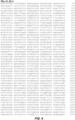
- the polynucleotide and amino acid sequences of prepro-VWF are set out in SEQ ID NO:1 and SEQ ID NO:2, respectively, and are available at GenBank Accession Nos. NM_000552 (Homo sapiens von Willebrand factor (VWF) mRNA) and NP_000543, respectively.
- the amino acid sequence corresponding to the mature VWF protein is set out in SEQ ID NO: 3 (corresponding to amino acids 764-2813 of the full length prepro-VWF amino acid sequence).
- the VWF exhibits at least 80%, at least 85%, at least 90%, at least 95%, at least 96%, at least 97%, at least 98%, at least 99%, or at least 100% identity to the sequence of SEQ ID NO:3.
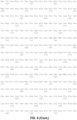
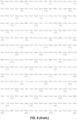
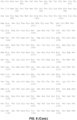
- the rVWF of the invention exhibits at least 80%, at least 85%, at least 90%, at least 95%, at least 96%, at least 97%, at least 98%, at least 99%, or at least 100% identity to the sequence of SEQ ID NO:3. See, for example, U.S. Patent No. 8,597,910 , U.S. Patent Publication No. 2016/0129090 , as well as FIG. 6 .
- One form of useful rVWF has at least the property of in vivo-stabilizing, e.g. binding, of at least one Factor VIII (FVIII) molecule and having optionally a glycosylation pattern which is pharmacologically acceptable.
- FVIII Factor VIII
- Specific examples thereof include VWF without the A2 domain thus resistant to proteolysis ( Lankhof et al., Thromb. Haemost. 77: 1008-1013, 1997 ), and a VWF fragment from Val 449 to Asn 730 including the glycoprotein lb-binding domain and binding sites for collagen and heparin ( Pietu et al., Biochem. Biophys. Res. Commun. 164: 1339-1347, 1989 ).
- the determination of the ability of a VWF to stabilize at least one FVIII molecule is, in one aspect, carried out in VWF-deficient mammals according to methods known in the state in the art.
- the rVWF of the present invention can be produced by any method known in the art.
- One specific example is disclosed in WO86/06096 published on Oct. 23, 1986 and U.S. Patent Application No. 07/559,509, filed on Jul. 23, 1990 , which is incorporated herein by reference with respect to the methods of producing recombinant VWF.
- methods are known in the art for (i) the production of recombinant DNA by genetic engineering, e.g. via reverse transcription of RNA and/or amplification of DNA, (ii) introducing recombinant DNA into prokaryotic or eukaryotic cells by transfection, e.g. via electroporation or microinjection, (iii) cultivating the transformed cells, e.g.
- VWF in one aspect, made in transformed host cells using recombinant DNA techniques well known in the art. For instance, sequences coding for the polypeptide could be excised from DNA using suitable restriction enzymes. Alternatively, the DNA molecule is, in another aspect, synthesized using chemical synthesis techniques, such as the phosphoramidate method. Also, in still another aspect, a combination of these techniques is used.
- the invention also provides vectors encoding polypeptides of the invention in an appropriate host.
- the vector comprises the polynucleotide that encodes the polypeptide operatively linked to appropriate expression control sequences. Methods of effecting this operative linking, either before or after the polynucleotide is inserted into the vector, are well known.
- Expression control sequences include promoters, activators, enhancers, operators, ribosomal binding sites, start signals, stop signals, cap signals, polyadenylation signals, and other signals involved with the control of transcription or translation.
- the resulting vector having the polynucleotide therein is used to transform an appropriate host. This transformation may be performed using methods well known in the art.
- any of a large number of available and well-known host cells are used in the practice of this invention.
- the selection of a particular host is dependent upon a number of factors recognized by the art, including, for example, compatibility with the chosen expression vector, toxicity of the peptides encoded by the DNA molecule, rate of transformation, ease of recovery of the peptides, expression characteristics, bio-safety and costs. A balance of these factors must be struck with the understanding that not all host cells are equally effective for the expression of a particular DNA sequence.
- useful microbial host cells include, without limitation, bacteria, yeast and other fungi, insects, plants, mammalian (including human) cells in culture, or other hosts known in the art.
- Transformed host cells are cultured under conventional fermentation conditions so that the desired compounds are expressed. Such fermentation conditions are well known in the art. Finally, the polypeptides are purified from culture media or the host cells themselves by methods well known in the art.
- carbohydrate (oligosaccharide) groups are optionally attached to sites that are known to be glycosylation sites in proteins.
- O-linked oligosaccharides are attached to serine (Ser) or threonine (Thr) residues while N-linked oligosaccharides are attached to asparagine (Asn) residues when they are part of the sequence Asn-X-Ser/Thr, where X can be any amino acid except proline.
- X is preferably one of the 19 naturally occurring amino acids not counting proline.
- the structures of N-linked and O-linked oligosaccharides and the sugar residues found in each type are different.
- sialic acid is usually the terminal residue of both N-linked and O-linked oligosaccharides and, by virtue of its negative charge, in one aspect, confers acidic properties to the glycosylated compound.
- site(s) may be incorporated in the linker of the compounds of this invention and are preferably glycosylated by a cell during recombinant production of the polypeptide compounds (e.g., in mammalian cells such as CHO, BHK, COS). In other aspects, such sites are glycosylated by synthetic or semi- synthetic procedures known in the art.
- sialysation (also referred to as sialylation), can be performed on the column as part of the purification procedures described herein (including the anion exchange, cation exchange, size exclusion, and/or immunoaffinity methods).
- the sialylation results in increased stability of the rVWF as compared to rVWF that has not undergone sialylation.
- the sialylation results in increased stability of the rVWF in blood circulation (for example, after administration to a subject) as compared to rVWF that has not undergone sialylation.
- the increased stability of salivated rVWF results in an increase of 10%, 20%, 30%, 40%, 50%, 60%, 70%, 80%, 90%, or more as compared rVWF that has not undergone sialylation.
- the sialylation results in increased half-life for the rVWF as compared to rVWF that has not undergone sialylation.
- the sialylation results in increased half-life for the rVWF in blood circulation (for example, after administration to a subject) as compared to rVWF that has not undergone sialylation.
- the increased half-life of sialylated rVWF results in an increase of 10%, 20%, 30%, 40%, 50%, 60%, 70%, 80%, 90%, or more as compared rVWF that has not undergone sialylation.
- the increased half-life of sialylated rVWF results in rVWF that is stable for 1 hour, 2 hours, 3 hours, 4 hours, 6 hours, 12 hours, 24 hours or more in blood circulation (for example, after administration to a subject) as compared to rVWF that has not undergone sialylation.
- sialylation increases the number of 2,3 sialylation and/or 2,6 sialylation.
- sialylation is increased by the addition of 2,3 sialyltransferase and/or 2,6 sialyltransferase and CMP-NANA (Cytidine-5'-monophospho-N-acetylneuraminic acid sodium salt) as an additional buffer step.
- sialylation is increased by the addition of 2,3 sialyltransferase and CMP-NANA (Cytidine-5'-monophospho-N-acetylneuraminic acid sodium salt) as an additional buffer step.
- 2,3 sialylation is increased by the addition of 2,3 sialyltransferase and CMP-NANA (Cytidine-5'-monophospho-N-acetylneuraminic acid sodium salt) as an additional buffer step.
- CMP-NANA Cytidine-5'-monophospho-N-acetylneuraminic acid sodium salt
- 2,6 sialylation is increased by the addition of 2,6 sialyltransferase and CMP-NANA (Cytidine-5'-monophospho-N-acetylneuraminic acid sodium salt) as an additional buffer step.
- 2,3 sialylation and/or 2,6 sialylation are increased by the addition of 2,3 sialyltransferase and/or 2,6 sialyltransferase and CMP-NANA (Cytidine-5'-monophospho-N-acetylneuraminic acid sodium salt) as an additional buffer step.
- CMP-NANA is chemically or enzymatic modified to transfer modified sialic acid to potential free position.
- sialylation is performed by loading rVWF onto the resin, washing with one or more buffers as described herein to deplete unwanted impurities, apply one or more buffers containing sialyltransferase and CMP-NANA at conditions that allow additional sialylation, and washing with one or more buffers to deplete excess of the sialylation reagents, and eluting with one or more buffers the enhanced rVWF ( e.g., the rVWF with increased sialylation).
- the sialylation process is performed as part of a cation exchange method, an anion exchange method, a size exclusion method, or an immunoaffinity purification method, as described herein.
- the compounds are made by synthetic methods using, for example, solid phase synthesis techniques. Suitable techniques are well known in the art, and include those described in Merrifield (1973), Chem. Polypeptides, pp. 335-61 (Katsoyannis and Panayotis eds .); Merrifield (1963), J. Am. Chem. Soc. 85: 2149 ; Davis et al. (1985), Biochem. Intl. 10: 394-414 ; Stewart and Young (1969), Solid Phase Peptide Synthesis ; U.S. Pat. No. 3,941,763 ; Finn et al. (1976), The Proteins (3rd ed.) 2: 105-253 ; and Erickson et al. (1976), The Proteins (3rd ed.) 2: 257-527 '. Solid phase synthesis is the preferred technique of making individual peptides since it is the most cost-effective method of making small peptides
- Fragments, variants and analogs of VWF can be produced according to methods that are well-known in the art. Fragments of a polypeptide can be prepared using, without limitation, enzymatic cleavage (e.g., trypsin, chymotrypsin) and also using recombinant means to generate a polypeptide fragments having a specific amino acid sequence. Polypeptide fragments may be generated comprising a region of the protein having a particular activity, such as a multimerization domain or any other identifiable VWF domain known in the art.
- enzymatic cleavage e.g., trypsin, chymotrypsin
- Polypeptide fragments may be generated comprising a region of the protein having a particular activity, such as a multimerization domain or any other identifiable VWF domain known in the art.
- Amino acid sequence analogs of a polypeptide can be substitutional, insertional, addition or deletion analogs.
- Deletion analogs, including fragments of a polypeptide lack one or more residues of the native protein which are not essential for function or immunogenic activity. Insertional analogs involve the addition of, e.g., amino acid(s) at a non-terminal point in the polypeptide. This analog may include, for example and without limitation, insertion of an immunoreactive epitope or simply a single residue.
- Addition analogs, including fragments of a polypeptide include the addition of one or more amino acids at either or both termini of a protein and include, for example, fusion proteins. Combinations of the aforementioned analogs are also contemplated.
- substitutional analogs typically exchange one amino acid of the wild-type for another at one or more sites within the protein, and may be designed to modulate one or more properties of the polypeptide without the complete loss of other functions or properties.
- substitutions are conservative substitutions.
- Constant amino acid substitution is substitution of an amino acid with an amino acid having a side chain or a similar chemical character.
- Similar amino acids for making conservative substitutions include those having an acidic side chain (glutamic acid, aspartic acid); a basic side chain (arginine, lysine, histidine); a polar amide side chain (glutamine, asparagine); a hydrophobic, aliphatic side chain (leucine, isoleucine, valine, alanine, glycine); an aromatic side chain (phenylalanine, tryptophan, tyrosine); a small side chain (glycine, alanine, serine, threonine, methionine); or an aliphatic hydroxyl side chain (serine, threonine).
- an acidic side chain glutamic acid, aspartic acid
- a basic side chain arginine, lysine, histidine
- a polar amide side chain glutamine, asparagine
- a hydrophobic, aliphatic side chain leucine, isoleucine, valine
- analogs are substantially homologous or substantially identical to the recombinant VWF from which they are derived.
- Analogs include those which retain at least some of the biological activity of the wild-type polypeptide, e.g. blood clotting activity.
- Polypeptide variants contemplated include, without limitation, polypeptides chemically modified by such techniques as ubiquitination, glycosylation, including polysialation (or polysialylation), conjugation to therapeutic or diagnostic agents, labeling, covalent polymer attachment such as pegylation (derivatization with polyethylene glycol), introduction of non-hydrolyzable bonds, and insertion or substitution by chemical synthesis of amino acids such as omithine, which do not normally occur in human proteins. Variants retain the same or essentially the same binding properties of non-modified molecules of the invention.
- Such chemical modification may include direct or indirect ( e.g., via a linker) attachment of an agent to the VWF polypeptide. In the case of indirect attachment, it is contemplated that the linker may be hydrolyzable or non-hydrolyzable.
- Preparing pegylated polypeptide analogs will in one aspect comprise the steps of (a) reacting the polypeptide with polyethylene glycol (such as a reactive ester or aldehyde derivative of PEG) under conditions whereby the binding construct polypeptide becomes attached to one or more PEG groups, and (b) obtaining the reaction product(s).
- polyethylene glycol such as a reactive ester or aldehyde derivative of PEG
- the optimal reaction conditions for the acylation reactions are determined based on known parameters and the desired result. For example, the larger the ratio of PEG: protein, the greater the percentage of poly-pegylated product.
- the binding construct has a single PEG moiety at the N-terminus.
- Polyethylene glycol may be attached to the blood clotting factor to, for example, provide a longer half-life in vivo.
- the PEG group may be of any convenient molecular weight and is linear or branched.
- the average molecular weight of the PEG ranges from about 2 kiloDalton ("kD") to about 100 kDa, from about 5 kDa to about 50 kDa, or from about 5 kDa to about 10 kDa.
- the PEG groups are attached to the blood clotting factor via acylation or reductive alkylation through a natural or engineered reactive group on the PEG moiety (e.g., an aldehyde, amino, thiol, or ester group) to a reactive group on the blood clotting factor (e.g., an aldehyde, amino, or ester group) or by any other technique known in the art.
- a natural or engineered reactive group on the PEG moiety e.g., an aldehyde, amino, thiol, or ester group
- a reactive group on the blood clotting factor e.g., an aldehyde, amino, or ester group
- Patent Publication 20060160948 Fernandes et Gregoriadis; Biochim. Biophys. Acta 1341: 26-34, 1997 , and Saenko et al., Haemophilia 12:42-51, 2006 .
- CA colominic acid
- the activated CA solution is dialyzed against, e.g., 0.05 M sodium phosphate buffer, pH 7.2 in the dark and this solution was added to a rVWF solution and incubated for 18 h at room temperature in the dark under gentle shaking.
- Free reagents are optionally be separated from the rVWF-polysialic acid conjugate by, for example, ultrafiltration/diafiltration. Conjugation of rVWF with polysialic acid is achieved using glutaraldehyde as cross-linking reagent ( Migneault et al., Biotechniques 37: 790-796, 2004 ).
- prepro-VWF and pro-VWF polypeptides will provide a therapeutic benefit in the formulations of the present invention.
- US Patent No. 7,005,502 describes a pharmaceutical preparation comprising substantial amounts of pro-VWF that induces thrombin generation in vitro.
- the present invention contemplates the use of recombinant biologically active fragments, variants, or analogs of the prepro-VWF (set out in SEQ ID NO:2) or pro-VWF polypeptides (amino acid residues 23 to 764 of SEQ ID NO: 2) in the formulations described herein.
- Polynucleotides encoding fragments, variants and analogs may be readily generated by a worker of skill to encode biologically active fragments, variants, or analogs of the naturally-occurring molecule that possess the same or similar biological activity to the naturally-occurring molecule.
- these polynucleotides are prepared using PCR techniques, digestion/ligation of DNA encoding molecule, and the like.
- one of skill in the art will be able to generate single base changes in the DNA strand to result in an altered codon and a missense mutation, using any method known in the art, including, but not limited to site- specific mutagenesis.
- the phrase "moderately stringent hybridization conditions” means, for example, hybridization at 42 ° C in 50% formamide and washing at 60°C in 0.1 ⁇ SSC, 0.1% SDS. It is understood by those of skill in the art that variation in these conditions occurs based on the length and GC nucleotide base content of the sequences to be hybridized. Formulas standard in the art are appropriate for determining exact hybridization conditions. See Sambrook et al., 9.47-9.51 in Molecular Cloning, Cold Spring Harbor Laboratory Press, Cold Spring Harbor, New York (1989 ).
- Assessment of the number and percentage of rVWF multimers can be conducted using methods known in the art, including without limitation methods using electrophoresis and size exclusion chromatography methods to separate VWF multimers by size, for example as discussed by Cumming et al., (J Clin Pathol., 1993 May; 46(5): 470-473 , which is hereby incorporated by reference in its entirety for all purposes and in particular for all teachings related to assessment of VWF multimers).
- Such techniques may further include immunoblotting techniques (such as Western Blot), in which the gel is immunoblotted with a radiolabeled antibody against VWF followed by chemiluminescent detection (see, for example, Wen et al., J. Clin. Lab.
- VWF:Antigen VWF:Ag
- VWF:Ristocetin Cofactor VWF:RCof
- VWF:Collagen Binding Activity assay VWF:CBA
- the rVWF obtained using the present methods includes any multimer pattern present in the loading sample of the rVWF. In some embodiments, the rVWF obtained using the present methods includes physiologically occurring multimer patters as well as ultralarge VWF-multimer patterns.
- VWF serves as a bridge between platelets and specific components of the extracellular matrix, such as collagen.
- the biological activity of VWF in this process can be measured by different in vitro assays ( Turecek et al., Semin Thromb Hemost, 2010, 36: 510-521 ).
- the VWF:Ristocetin Cofactor (VWF:RCof) assay is based on the agglutination of fresh or formalin-fixed platelets induced by the antibiotic ristocetin in the presence of VWF.
- the degree of platelet agglutination depends on the VWF concentration and can be measured by the turbidimetric method, e.g., by use of an aggregometer ( Weiss et al., J. Clin. Invest., 1973, 52: 2708-2716 ; Macfarlane et al., Thromb. Diath. Haemorrh., 1975, 34: 306-308 ).
- the specific ristocetin cofactor activity of the VWF (VWF:RCo) of the present invention is generally described in terms of mU/ ⁇ g of VWF, as measured using in vitro assays.
- the rVWF purified according to the methods of the present invention has a specific activity of at least about 20, 22.5, 25, 27,5, 30, 32.5, 35, 37.5, 40, 42.5, 45, 47.5, 50, 52.5, 55, 57.5, 60, 62.5, 65, 67.5, 70, 72.5, 75, 77.5, 80, 82.5, 85, 87.5, 90, 92.5, 95, 97.5, 100, 105, 110, 1 15, 120, 125, 130, 135, 140, 145, 150 or more mU/ ⁇ g.
- rVWF used in the methods described herein has a specific activity of from 20 mU/ ⁇ g to 150 mU / ⁇ g.
- the rVWF has a specific activity of from 30 mU/ ⁇ g to 120 mU/ ⁇ g. In some embodiments, the rVWF has a specific activity from 40 mU/ ⁇ g to 90 mU/ ⁇ g. In some embodiments, the rVWF has a specific activity selected from variations 1 to 133 found in Table 3, below. Table 3. Exemplary embodiments for the specific activity of rVWF found in the compositions and used in the methods provided herein. (mU/ ⁇ g) (mU/ ⁇ g ) (mU/ ⁇ g ) (mU/ ⁇ g ) 20 Var. 1 110 Var. 35 40-150 Var. 68 70-120 Var. 101 22.5 Var. 2 115 Var.
- Var. 11 20-140 Var. 45 40-50 Var. 78 80-100 Var. 111 47.5 Var. 12 20-130 Var. 46 50-150 Var. 79 80-90 Var. 112 50 Var. 13 20-120 Var. 47 50-140 Var. 80 90-150 Var. 113 52.5 Var. 14 20-110 Var. 48 50-130 Var. 81 90-140 Var. 114 55 Var. 15 20-100 Var. 49 50-120 Var. 82 90-130 Var. 115 57.5 Var. 16 20-90 Var. 50 50-110 Var. 83 90-120 Var. 116 60 Var. 17 20-80 Var. 51 50-100 Var. 84 90-110 Var. 117 62.5 Var. 18 20-70 Var.
- Var. 52 50-90 Var. 85 90-100 Var. 118 65 Var. 19 20-60 Var. 53 50-80 Var. 86 100-150 Var. 119 67.5 Var. 20 20-50 Var. 54 50-70 Var. 87 100-140 Var. 120 70 Var. 21 20-40 Var. 55 50-60 Var. 88 100-130 Var. 121 72.5 Var. 22 30-150 Var. 56 60-150 Var. 89 100-120 Var. 122 75 Var. 23 30-140 Var. 57 60-140 Var. 90 100-110 Var. 123 77.5 Var. 24 30-130 Var. 58 60-130 Var. 91 110-150 Var. 124 80 Var. 25 30-120 Var. 59 60-120 Var. 92 110-140 Var. 125 82.5 Var. 26 30-110 Var.
- the rVWF of the present invention is highly multimeric comprising about 10 to about 40 subunits.
- the multimeric rVWF produced using methods of the present invention comprise about 10-30, 12-28, 14-26, 16-24, 18-22, 20-21 subunits.
- the rVWF is present in multimers varying in size from dimers to multimers of over 40 subunits (> 10 million Daltons). The largest multimers provide multiple binding sites that can interact with both platelet receptors and subendothelial matrix sites of injury, and are the most hemostatically active form of VWF.
- the rVWF of the present invention comprises ultralarge multimers (ULMs).
- the rVWF is between 500 kDa and 20,000 kDa.
- any desired multimer pattern can be obtained using the methods described.
- the pH, conductivity, and/or counterion concentration of the buffers in the one or more wash step(s) or the gradient buffers can be manipulated to obtain the desired multimer pattern.
- the collection criteria can be employed to obtain the desired multimer pattern.
- the described multimer pattern comprises ultralarge multimers.
- the ultralarge multimers are at least 10,000 kDa, at least 11,000 kDa, at least 12,000 kDa, at least 13,000 kDa, at least 14,000 kDa, at least 15,000 kDa, at least 16,000 kDa, at least 17,000 kDa, at least 18,000 kDa, at least 19,000 kDa, at least 20,000 kDa.
- the ultralarge multimers are between about 10,000 kDa and 20,000 kDa.
- the ultralarge multimers are between about 11,000 kDa and 20,000 kDa. In some embodiments, the ultralarge multimers are between about 12,000 kDa and 20,000 kDa. In some embodiments, the ultralarge multimers are between about 13,000 kDa and 20,000 kDa. In some embodiments, the ultralarge multimers are between about 14,000 kDa and 20,000 kDa. In some embodiments, the ultralarge multimers are between about 15,000 kDa and 20,000 kDa. In some embodiments, the ultralarge multimers are between about 16,000 kDa and 20,000 kDa. In some embodiments, the ultralarge multimers are between about 17,000 kDa and 20,000 kDa.
- the ultralarge multimers are between about 18,000 kDa and 20,000 kDa. In some embodiments, the ultralarge multimers are between about 19,000 kDa and 20,000 kDa. In some embodiments, the rVWF obtained using the present methods includes any multimer pattern present in the loading sample of the rVWF. In some embodiments, the rVWF obtained using the present methods includes physiolocical occurring multimer patters as well as ultra large VWF-multimer patterns.
- the rVWF composition prepared by the purification method described herein has a distribution of rVWF oligomers characterized in that 95% of the oligomers have between 6 subunits and 20 subunits. In some embodiments, the rVWF composition has a distribution of rVWF oligomers characterized in that 95% of the oligomers have a range of subunits selected from variations 458 to 641 found in 4. Table 4. Exemplary embodiments for the distribution of rVWF oligomers found in the compositions and used in the methods provided herein. Subunit s Subunit s Subunit s Subunit s Subunit s Subunit s 2-40 Var. 458 6-16 Var. 504 12-20 Var. 550 20-28 Var.
- Var. 619 4-26 Var. 482 10-34 Var. 528 16-26 Var. 574 26-34 Var. 620 4-24 Var. 483 10-32 Var. 529 16-24 Var. 575 26-32 Var. 621 4-22 Var. 484 10-30 Var. 530 16-22 Var. 576 26-30 Var. 622 4-20 Var. 485 10-28 Var. 531 16-20 Var. 577 26-28 Var. 623 4-18 Var. 486 10-26 Var. 532 16-18 Var. 578 28-40 Var. 624 4-16 Var. 487 10-24 Var. 533 18-40 Var. 579 28-38 Var. 625 4-14 Var. 488 10-22 Var. 534 18-38 Var. 580 28-36 Var. 626 4-12 Var.
- Var. 535 18-36 Var. 581 28-34 Var. 627 4-10 Var. 490 10-18 Var. 536 18-34 Var. 582 28-32 Var. 628 4-8 Var. 491 10-16 Var. 537 18-32 Var. 583 28-30 Var. 629 6-40 Var. 492 10-14 Var. 538 18-30 Var. 584 30-40 Var. 630 6-38 Var. 493 10-12 Var. 539 18-28 Var. 585 30-38 Var. 631 6-36 Var. 494 12-40 Var. 540 18-26 Var. 586 30-36 Var. 632 6-34 Var. 495 12-38 Var. 541 18-24 Var. 587 30-34 Var. 633 6-32 Var. 496 12-36 Var. 542 18-22 Var.
- the rVWF composition prepared by the methods provided herein can be characterized according to the percentage of rVWF molecules that are present in a particular higher order rVWF multimer or larger multimer. For example, in one embodiment, at least 20% of rVWF molecules in a rVWF composition used in the methods described herein are present in an oligomeric complex of at least 10 subunits. In another embodiment, at least 20% of rVWF molecules in a rVWF composition used in the methods described herein are present in an oligomeric complex of at least 12 subunits.
- a rVWF composition used in the methods provided herein has a minimal percentage (e.g., has at least X%) of rVWF molecules present in a particular higher-order rVWF multimer or larger multimer (e.g., a multimer of at least Y subunits) according to any one of variations 134 to 457 found in Table 5 to Table 7.
- the rVWF comprises a significant percentage of high molecular weight (HMW) rVWF multimers.
- the HMW rVWF multimer composition comprises at least 10% - 80% rVWF decamers or higher order multimers.
- the composition comprises about 10-95%, 20-90%, 30-85%, 40-80%, 50-75%, 60-70% decamers or higher order multimers.
- the HMW rVWF multimer composition comprises at least about 10%, 20%, 30%, 40%, 50%, 60%, 70%, 80%, 90% decamers or higher order multimers.
- rVWF multimers can be conducted using methods known in the art, including without limitation methods using electrophoresis and size exclusion chromatography methods to separate rVWF multimers by size, for example as discussed by Cumming et al, (J Clin Pathol. 1993 May; 46(5): 470-473 , which is hereby incorporated by reference in its entirety for all purposes and in particular for all teachings related to assessment of rVWF multimers).
- Such techniques may further include immunoblotting techniques (such as Western Blot), in which the gel is immunoblotted with a radiolabeled antibody against VWF followed by chemiluminescent detection (see for example Wen et al., (1993), J. Clin. Lab.
- VWF:Antigen VWF:Ag
- VWF:Ristocetin Cofactor VWF:RCof
- VWF:Collagen Binding Activity assay VWF:CBA
- the ratio of rFVIII procoagulant activity (IU rFVIII:C) to rVWF Ristocetin cofactor activity (IU rVWF:RCo) for the rVWF prepared according to the methods of the present invention is between 3:1 and 1:5. In further embodiments, the ratio is between 2:1 and 1:4. In still further embodiments, the ratio is between 5:2 and 1:4. In further embodiments, the ratio is between 3:2 and 1:3. In still further embodiments, the ratio is about 1:1, 1:2, 1:3, 1:4, 1:5, 2:1, 2:3, 2:4, 2:5, 3:1, 3:2, 3:4, or 3:5. In further embodiments, the ratio is between 1:1 and 1:2.
- the ratio is 1.1:1, 1.2:1, 1.3:1, 1.4:1, 1.5:1, 1.6:1, 1.7:1, 1.8:1, 1.9:1, or 2:1.
- the ratio of rFVIII procoagulant activity (IU rFVIII:C) to rVWF Ristocetin cofactor activity (IU rVWF:RCo) in a composition useful for a method described herein is selected from variations 1988 to 2140 found in Table 8. Table 8.
- Var. 2058 4:5-1:6 Var. 2096 2:5-1:3 Var. 2134 4:1-3:1 Var. 2020 3:2-4:5 Var. 2059 4:5-1:5 Var. 2097 1:3-1:6 Var. 2135 3:1-1:6 Var. 2021 3:2-5:6 Var. 2060 4:5-1:4 Var. 2098 1:3-1:5 Var. 2136 3:1-1:5 Var. 2022 3:2-1:1 Var. 2061 4:5-1:3 Var. 2099 1:3-1:4 Var. 2137 3:1-1:4 Var. 2023 3:2-4:3 Var. 2062 4:5-2:5 Var. 2100 1:4-1:6 Var. 2138 3:1-1:3 Var.
- higher order rVWF multimers of the invention are stable for about 1 to about 90 hours post-administration. In still further embodiments, the higher order rVWF multimers are stable for about 5-80, 10-70, 15-60, 20-50, 25-40, 30-35 hours post-administration. In yet further embodiments, the higher order rVWF multimers are stable for at least 3, 6, 12, 18, 24, 36, 48, 72 hours post-administration. In certain embodiments the stability of the rVWF multimers is assessed in vitro.
- higher order rVWF multimers used in the compositions and methods provided herein have a half-life of at least 12 hour post administration. In another embodiment, the higher order rVWF multimers have a half-life of at least 24 hour post administration. In yet other embodiments, the higher order rVWF multimers have a half-life selected from variations 642 to 1045 found in Table 9. Table 9. Exemplary embodiments for the half-life of higher order rVWF multimers found in the compositions prepared by the methods provided herein. Hours Hours Hours Hours at least 1 Var. 642 4-22 Var. 743 14-78 Var. 844 24-30 Var. 945 at least 2 Var. 643 4-20 Var. 744 14-72 Var. 845 24-27 Var.
- Var. 946 at least 3 Var. 644 4-18 Var. 745 14-66 Var. 846 27-90 Var. 947 at least 4 Var. 645 4-16 Var. 746 14-60 Var. 847 27-84 Var. 948 at least 5 Var. 646 4-14 Var. 747 14-54 Var. 848 27-78 Var. 949 at least 6 Var. 647 4-12 Var. 748 14-48 Var. 849 27-72 Var. 950 at least 7 Var. 648 4-10 Var. 749 14-45 Var. 850 27-66 Var. 951 at least 8 Var. 649 4-8 Var. 750 14-42 Var. 851 27-60 Var. 952 at least 9 Var. 650 4-6 Var. 751 14-39 Var. 852 27-54 Var.
- Var. 961 at least 24 Var. 659 6-45 Var. 760 14-16 Var. 861 30-48 Var. 962 at least 27 Var. 660 6-42 Var. 761 16-90 Var. 862 30-45 Var. 963 at least 30 Var. 661 6-39 Var. 762 16-84 Var. 863 30-42 Var. 964 at least 33 Var. 662 6-36 Var. 763 16-78 Var. 864 30-39 Var. 965 at least 36 Var. 663 6-33 Var. 764 16-72 Var. 865 30-36 Var. 966 at least 39 Var. 664 6-30 Var. 765 16-66 Var. 866 30-33 Var. 967 at least 42 Var. 665 6-27 Var. 766 16-60 Var.
- Var. 968 at least 45 Var. 666 6-24 Var. 767 16-54 Var. 868 33-84 Var. 969 at least 48 Var. 667 6-22 Var. 768 16-48 Var. 869 33-78 Var. 970 at least 54 Var. 668 6-20 Var. 769 16-45 Var. 870 33-72 Var. 971 at least 60 Var. 669 6-18 Var. 770 16-42 Var. 871 33-66 Var. 972 at least 66 Var. 670 6-16 Var. 771 16-39 Var. 872 33-60 Var. 973 at least 72 Var. 671 6-14 Var. 772 16-36 Var. 873 33-54 Var. 974 at least 78 Var. 672 6-12 Var. 773 16-33 Var.
- Var. 975 at least 84 Var. 673 6-10 Var. 774 16-30 Var. 875 33-45 Var. 976 at least 90 Var. 674 6-8 Var. 775 16-27 Var. 876 33-42 Var. 977 2-90 Var. 675 8-90 Var. 776 16-24 Var. 877 33-29 Var. 978 2-84 Var. 676 8-84 Var. 777 16-22 Var. 878 33-36 Var. 979 2-78 Var. 677 8-78 Var. 778 16-20 Var. 879 36-90 Var. 980 2-72 Var. 678 8-72 Var. 779 16-18 Var. 880 36-84 Var. 981 2-66 Var. 679 8-66 Var. 780 18-90 Var. 881 36-78 Var.
- Var. 991 2-27 Var. 689 8-27 Var. 790 18-39 Var. 891 39-84 Var. 992 2-24 Var. 690 8-24 Var. 791 18-36 Var. 892 39-78 Var. 993 2-22 Var. 691 8-22 Var. 792 18-33 Var. 893 39-72 Var. 994 2-20 Var. 692 8-20 Var. 793 18-30 Var. 894 39-66 Var. 995 2-18 Var. 693 8-18 Var. 794 18-27 Var. 895 39-60 Var. 996 2-16 Var. 694 8-16 Var.
- Var. 896 39-54 Var. 997 2-14 Var. 695 8-14 Var. 796 18-22 Var. 897 39-48 Var. 998 2-12 Var. 696 8-12 Var. 797 18-20 Var. 898 39-45 Var. 999 2-10 Var. 697 8-10 Var. 798 20-90 Var. 899 39-42 Var. 1000 2-8 Var. 698 10-90 Var. 799 20-84 Var. 900 42-90 Var. 1001 2-6 Var. 699 10-84 Var. 800 20-78 Var. 901 42-84 Var. 1002 2-4 Var. 700 10-78 Var. 801 20-72 Var. 902 42-78 Var. 1003 3-90 Var. 701 10-72 Var. 802 20-66 Var. 903 42-72 Var.
- Var. 926 54-78 Var. 1027 3-6 Var. 725 12-60 Var. 826 22-36 Var. 927 54-72 Var. 1028 3-4 Var. 726 12-54 Var. 827 22-33 Var. 928 54-66 Var. 1029 4-90 Var. 727 12-48 Var. 828 22-30 Var. 929 54-60 Var. 1030 4-84 Var. 728 12-45 Var. 829 22-27 Var. 930 60-90 Var. 1031 4-78 Var. 729 12-42 Var. 830 22-24 Var. 931 60-84 Var. 1032 4-72 Var. 730 12-39 Var. 831 24-90 Var. 932 60-78 Var. 1033 4-66 Var. 731 12-36 Var. 832 24-84 Var. 933 60-72 Var.
- the pro-VWF and/or purified rVWF purified in accordance with the present invention is not modified with any conjugation, post-translation or covalent modifications.
- the pro-VWF and/or purified rVWF of the present invention is not modified with a water soluble polymer, including without limitation, a polyethylene glycol (PEG), a polypropylene glycol, a polyoxyalkylene, a polysialic acid, hydroxyl ethyl starch, a poly-carbohydrate moiety, and the like.
- the pro-VWF and/or purified rVWF purified in accordance with the present invention is modified through conjugation, post-translation modification, or covalent modification, including modifications of the N- or C- terminal residues as well as modifications of selected side chains, for example, at free sulfhydryl-groups, primary amines, and hydroxyl-groups.
- a water soluble polymer is linked to the protein (directly or via a linker) by a lysine group or other primary amine.
- the pro-VWF and/or purified rVWF of the present invention may be modified by conjugation of a water soluble polymer, including without limitation, a polyethylene glycol (PEG), a polypropylene glycol, a polyoxyalkylene, a polysialic acid, hydroxyl ethyl starch, a poly-carbohydrate moiety, and the like.
- a water soluble polymer including without limitation, a polyethylene glycol (PEG), a polypropylene glycol, a polyoxyalkylene, a polysialic acid, hydroxyl ethyl starch, a poly-carbohydrate moiety, and the like.
- Water soluble polymers that may be used to modify the pro-VWF and/or purified rVWF include linear and branched structures.
- the conjugated polymers may be attached directly to the coagulation proteins of the invention, or alternatively may be attached through a linking moiety.
- Non-limiting examples of protein conjugation with water soluble polymers can be found in U.S. Patent Nos. 4,640,835 ; 4,496,689 ; 4,301,144 ; 4,670,417 ; 4,791,192 , and 4,179,337 , as well as in Abuchowski and Davis "Enzymes as Drugs," Holcenberg and Roberts, Eds., pp. 367 383, John Wiley and Sons, New York (1981 ), and Hermanson G., Bioconjugate Techniques 2nd Ed., Academic Press, Inc. 2008 .
- Protein conjugation may be performed by a number of well-known techniques in the art, for example, see Hermanson G., Bioconjugate Techniques 2nd Ed., Academic Press, Inc. 2008 . Examples include linkage through the peptide bond between a carboxyl group on one of either the coagulation protein or water-soluble polymer moiety and an amine group of the other, or an ester linkage between a carboxyl group of one and a hydroxyl group of the other.
- a coagulation protein of the invention could be conjugated to a water-soluble polymer compound
- a Schiff base between a free amino group on the polymer moiety being reacted with an aldehyde group formed at the non-reducing end of the polymer by periodate oxidation ( Jennings and Lugowski, J. Immunol. 1981; 127:1011-8 ; Femandes and Gregonradis, Biochim Biophys Acta. 1997; 1341; 26-34 ).
- the generated Schiff Base can be stabilized by specific reduction with NaCNBH 3 to form a secondary amine.
- An alternative approach is the generation of terminal free amino groups on the polymer by reductive amination with NH 4 Cl after prior oxidation.
- Bifunctional reagents can be used for linking two amino or two hydroxyl groups.
- a polymer containing an amino group can be coupled to an amino group of the coagulation protein with reagents like BS3 (Bis(sulfosuccinimidyl)suberate/Pierce, Rockford, Ill.).
- reagents like BS3 (Bis(sulfosuccinimidyl)suberate/Pierce, Rockford, Ill.).
- heterobifunctional cross linking reagents like Sulfo-EMCS (N- ⁇ -Maleimidocaproyloxy) sulfosuccinimide ester/Pierce) can be used for instance to link amine and thiol groups.
- an aldehyde reactive group such as PEG alkoxide plus diethyl acetal of bromoacetaldehyde; PEG plus DMSO and acetic anhydride, and PEG chloride plus the phenoxide of 4-hydroxybenzaldehyde, succinimidyl active esters, activated dithiocarbonate PE.G., 2,4,5-trichlorophenylcloroformate and P-nitrophenylcloroformate activated P E . G ., may be used in the conjugation of a coagulation protein.
- Another method for measuring the biological activity of VWF is the collagen binding assay, which is based on ELISA technology ( Brown and Bosak, Thromb. Res., 1986, 43:303-311 ; Favaloro, Thromb. Haemost., 2000, 83 127-135 ).
- a microtiter plate is coated with type I or III collagen. Then the VWF is bound to the collagen surface and subsequently detected with an enzyme-labeled polyclonal antibody.
- the last step is a substrate reaction, which can be photometrically monitored with an ELISA reader.
- VWF:Ag Immunological assays of von Willebrand factors
- VWF:Ag are immunoassays that measure the concentration of the VWF protein in plasma. They give no indication as to VWF function.
- ELISA enzyme-linked immunosorbent assay
- LIA automated latex immunoassays
- kits which comprise one or more lyophilized compositions packaged in a manner which facilitates their use for administration to subjects.
- a kit includes pharmaceutical formulation described herein (e.g., a composition comprising a therapeutic protein or peptide), packaged in a container such as a sealed bottle or vessel, with a label affixed to the container or included in the package that describes use of the compound or composition in practicing the method.
- the pharmaceutical formulation is packaged in the container such that the amount of headspace in the container (e.g., the amount of air between the liquid formulation and the top of the container) is very small.
- the amount of headspace is negligible (e.g., almost none).
- the kit contains a first container having a therapeutic protein or peptide composition and a second container having a physiologically acceptable reconstitution solution for the composition.
- the pharmaceutical formulation is packaged in a unit dosage form.
- the kit may further include a device suitable for administering the pharmaceutical formulation according to a specific route of administration.
- the kit contains a label that describes use of the pharmaceutical formulations.
- the co-administered FVIII may be recombinant or plasma derived
- Single or multiple administrations of rVWF are carried out with the dose levels and pattern being selected by the treating physician.
- the appropriate dosage depends on the type of disease to be treated (e.g., von Willebrand disease), the severity and course of the disease, whether drug is administered for preventive or therapeutic purposes, previous therapy, the patient's clinical history and response to the drug, and the discretion of the attending physician.
- rVWF is administered prior to a surgical procedure to a subject at a range from 20-60 IU/kg, e.g., 20, 21, 22, 23, 24, 25, 26, 27, 28, 29, 30, 31, 32, 33, 34, 35, 36, 37, 38, 39, 40, 41, 42, 43, 44, 45, 46, 47, 48, 49, 50, 51, 52, 53, 54, 55, 56, 57, 58, 59, 60, 20-60, 35-70, 20-40, 35-60, 45-60, 45-55, 45-50, 50-60, 55-60, or 50-55 IU/kg.
- rVWF is administered between 12 hours and 24 hours, e.g., 12 hours, 13 hours, 14 hours, 15 hours, 16 hours, 17 hours, 18 hours, 19 hours, 20 hours, 21 hours, 22 hours, 23 hours, 24 hours, 12 hours and 24 hours, 14 hours and 24 hours, 16 and 24 hours, 18 hours and 24 hours, or 20 hours and 24 hours prior to the surgical procedure.
- Factor VIII FVIII is not administered with the rVWF prior to the surgical procedure.
- rVWF is administered to the subject at a range of 5-90 IU/kg, e.g., 5-90, 5-50, 10-90, 15-90, 20-90, 30-90, 40-90, 50-90, 60-90, 70-90, 80-90, 5-80, 10-70, 20-60, 30-50, 35-60, 5-50, 5-40, 5-30. 5-20, 10-90, 10-50, or 20-40 IU/kg 1 hour prior to surgery.
- rVWF is administered at a dose of 70-200 IU/kg, e.g., 70-200, 80-200-, 90-200, 100-200, 110-200, 120-200, 130-200, 130-200, 140-200, 150-200, 160-200, 170-200, 180-200, 190-200, 70-170, 80-180, 60-160, 50-150, 40-140, 30, 130, 20-120, 10-110, 70-100, or 70-90 IU/kg after the surgery.
- the surgical procedure is selected from a group consisting of major surgery, minor surgery, and oral surgery.
- the subject is administered 35-60 IU/kg rVWF between 12 hours and 24 hours prior to major surgery. In other embodiments, the subject is administered 15-90 IU/kg rVWF 1 hour prior to major surgery. In another embodiment, the subject is administered 150-220 IU/kg rVWF after major surgery. In some instances, the subject undergoing major surgery is administered a total dosage of 220-320 IU/kg.
- the subject is administered 50-60 IU/kg rVWF between 12 hours and 24 hours prior to minor surgery. In other embodiments, the subject is administered 5-50 IU/kg rVWF 1 hour prior to minor surgery. In another embodiment, the subject is administered 70-150 IU/kg rVWF after minor surgery. In some instances, the subject undergoing minor surgery is administered a total dosage of 100-220 IU/kg.
- the subject is administered 20-40 IU/kg rVWF between 12 hours and 24 hours prior to oral surgery. In other embodiments, the subject is administered 20-50 IU/kg rVWF 1 hour prior to oral surgery. In another embodiment, the subject is administered 10-50 IU/kg rVWF during oral surgery. In another embodiment, the subject is administered 20-50 IU/kg rVWF after oral surgery. In some instances, the subject undergoing oral surgery is administered a total dosage of 70-190 IU/kg.
- compositions of rVWF can be contained in pharmaceutical formulations, as described herein. Such formulations can be administered orally, topically, transdermally, parenterally, by inhalation spray, vaginally, rectally, or by intracranial injection.
- parenteral as used herein includes subcutaneous injections, intravenous, intramuscular, intracisternal injection, or infusion techniques. Administration by intravenous, intradermal, intramuscular, intramammary, intraperitoneal, intrathecal, retrobulbar, intrapulmonary injection and or surgical implantation at a particular site is contemplated as well.
- compositions are essentially free of pyrogens, as well as other impurities that could be harmful to the recipient.
- formulations of the invention are administered by an initial bolus followed by a continuous infusion to maintain therapeutic circulating levels of drug product.
- the inventive compound is administered as a one-time dose.
- the route of administration can be, but is not limited to, by intravenous, intraperitoneal, subcutaneous, or intramuscular administration.
- the frequency of dosing depends on the pharmacokinetic parameters of the agents and the route of administration.
- the optimal pharmaceutical formulation is determined by one skilled in the art depending upon the route of administration and desired dosage. See for example, Remington's Pharmaceutical Sciences, 18th Ed., 1990, Mack Publishing Co., Easton, Pa.
- a typical dose of a recombinant VWF of the present invention is approximately 50 IU/kg, equal to 500 ⁇ g/kg.
- the practice of the present invention may employ, unless otherwise indicated, conventional techniques and descriptions of organic chemistry, polymer technology, molecular biology (including recombinant techniques), cell biology, biochemistry, and immunology, which are within the skill of the art.
- Such conventional techniques include polymer array synthesis, hybridization, ligation, and detection of hybridization using a label. Specific illustrations of suitable techniques can be had by reference to the example herein below. However, other equivalent conventional procedures can, of course, also be used.
- Such conventional techniques and descriptions can be found in standard laboratory manuals such as Genome Analysis: A Laboratory Manual Series (Vols.
- the present method also provides formulations of rVWF for use in the treatment methods provided herein.
- the rVWF composition is used for the production of a pharmaceutical composition.
- the rVWF can be formulated into a lyophilized formulation.
- the formulations comprising a VWF polypeptide of the invention are lyophilized after purification and prior to administration to a subject. Lyophilization is carried out using techniques common in the art and should be optimized for the composition being developed ( Tang et al., Pharm Res. 21:191-200, (2004 ) and Chang et al., Pharm Res. 13:243-9 (1996 )).
- a lyophilization cycle is, in one aspect, composed of three steps: freezing, primary drying, and secondary drying ( A. P. Mackenzie, Phil Trans R Soc London, Ser B, Biol 278:167 (1977 )).
- freezing step the solution is cooled to initiate ice formation.
- this step induces the crystallization of the bulking agent.
- the ice sublimes in the primary drying stage, which is conducted by reducing chamber pressure below the vapor pressure of the ice, using a vacuum and introducing heat to promote sublimation.
- adsorbed or bound water is removed at the secondary drying stage under reduced chamber pressure and at an elevated shelf temperature.
- the process produces a material known as a lyophilized cake. Thereafter the cake can be reconstituted with either sterile water or suitable diluent for injection.
- the lyophilization cycle not only determines the final physical state of excipients but also affects other parameters such as reconstitution time, appearance, stability and final moisture content.
- the composition structure in the frozen state proceeds through several transitions (e.g., glass transitions, wettings, and crystallizations) that occur at specific temperatures and the structure may be used to understand and optimize the lyophilization process.
- the glass transition temperature can provide information about the physical state of a solute and can be determined by differential scanning calorimetry (DSC).
- DSC differential scanning calorimetry
- Tg and Tg' are an important parameter that must be taken into account when designing the lyophilization cycle. For example, Tg' is important for primary drying.
- the glass transition temperature provides information on the storage temperature of the final product.
- Excipients are additives that either impart or enhance the stability and delivery of a drug product (e.g., protein). Regardless of the reason for their inclusion, excipients are an integral component of a formulation and therefore need to be safe and well tolerated by patients. For protein drugs, the choice of excipients is particularly important because they can affect both efficacy and immunogenicity of the drug. Hence, protein formulations need to be developed with appropriate selection of excipients that afford suitable stability, safety, and marketability.
- a lyophilized formulation is, in one aspect, at least comprised of one or more of a buffer, a bulking agent, and a stabilizer.
- a buffer In this aspect, the utility of a surfactant is evaluated and selected in cases where aggregation during the lyophilization step or during reconstitution becomes an issue.
- An appropriate buffering agent is included to maintain the formulation within stable zones of pH during lyophilization.
- Table 10 A comparison of the excipient components contemplated for liquid and lyophilized protein formulations is provided in Table 10.
- excipients The principal challenge in developing formulations for proteins is stabilizing the product against the stresses of manufacturing, shipping and storage.
- the role of formulation excipients is to provide stabilization against these stresses.
- Excipients are also be employed to reduce viscosity of high concentration protein formulations in order to enable their delivery and enhance patient convenience.
- excipients can be classified on the basis of the mechanisms by which they stabilize proteins against various chemical and physical stresses. Some excipients are used to alleviate the effects of a specific stress or to regulate a particular susceptibility of a specific protein. Other excipients have more general effects on the physical and covalent stabilities of proteins.
- the excipients described herein are organized either by their chemical type or their functional role in formulations. Brief descriptions of the modes of stabilization are provided when discussing each excipient type.
- the amount or range of excipient can be included in any particular formulation to achieve a biopharmaceutical formulation of the invention that promotes retention in stability of the biopharmaceutical (e.g., a protein).
- the amount and type of a salt to be included in a biopharmaceutical formulation of the invention is selected based on the desired osmolality (e.g., isotonic, hypotonic or hypertonic) of the final solution as well as the amounts and osmolality of other components to be included in the formulation.
- inclusion of about 5% sorbitol can achieve isotonicity while about 9% of a sucrose excipient is needed to achieve isotonicity.
- Selection of the amount or range of concentrations of one or more excipients that can be included within a biopharmaceutical formulation of the invention has been exemplified above by reference to salts, polyols and sugars.
- excipients including, for example, salts, amino acids, other tonicity agents, surfactants, stabilizers, bulking agents, cryoprotectants, lyoprotectants, anti-oxidants, metal ions, chelating agents and/or preservatives.
- concentrations of the excipients described herein share an interdependency within a particular formulation.
- concentration of a bulking agent may be lowered where, e.g. , there is a high protein concentration or where, e.g. , there is a high stabilizing agent concentration.
- concentration of a stabilizing agent would be adjusted accordingly (e.g ., a "tonicifying" amount of stabilizer would be used).
- Common excipients are known in the art and can be found in Powell et al., Compendium of Excipients fir Parenteral Formulations (1998), PDA J. Pharm. Sci. Technology, 52:238-311 .
- the stability of a pharmacologically active protein formulation is usually observed to be maximal in a narrow pH range. This pH range of optimal stability needs to be identified early during pre-formulation studies. Several approaches, such as accelerated stability studies and calorimetric screening studies, are useful in this endeavor ( Remmele R.L. Jr., et al., Biochemistry, 38(16): 5241-7 (1999 )). Once a formulation is finalized, the protein must be manufactured and maintained throughout its shelf-life. Hence, buffering agents are almost always employed to control pH in the formulation.
- the buffer capacity of the buffering species is maximal at a pH equal to the pKa and decreases as pH increases or decreases away from this value. Ninety percent of the buffering capacity exists within one pH unit of its pKa. Buffer capacity also increases proportionally with increasing buffer concentration.
- the buffer species and its concentration need to be defined based on its pKa and the desired formulation pH. Equally important is to ensure that the buffer is compatible with the protein and other formulation excipients, and does not catalyze any degradation reactions.
- a third important aspect to be considered is the sensation of stinging and irritation the buffer may induce upon administration. For example, citrate is known to cause stinging upon injection ( Laursen T, et al., Basic Clin Pharmacol Toxicol., 98(2): 218-21 (2006 )).
- the potential for stinging and irritation is greater for drugs that are administered via the subcutaneous (SC) or intramuscular (IM) routes, where the drug solution remains at the site for a relatively longer period of time than when administered by the IV route where the formulation gets diluted rapidly into the blood upon administration.
- SC subcutaneous
- IM intramuscular
- the total amount of buffer (and any other formulation component) needs to be monitored.
- Buffers for lyophilized formulations need additional consideration. Some buffers like sodium phosphate can crystallize out of the protein amorphous phase during freezing resulting in shifts in pH. Other common buffers such as acetate and imidazole may sublime or evaporate during the lyophilization process, thereby shifting the pH of formulation during lyophilization or after reconstitution.
- the buffer system present in the compositions is selected to be physiologically compatible and to maintain a desired pH of the pharmaceutical formulation.
- the pH of the solution is between pH 2.0 and pH 12.0.
- the pH of the solution may be 2.0, 2.3, 2.5, 2.7, 3.0, 3.3, 3.5, 3.7, 4.0, 4.3, 4.5, 4.7, 5.0, 5.3, 5.5, 5.7, 6.0, 6.3, 6.5, 6.7, 7.0, 7.3, 7.5, 7.7, 8.0, 8.3, 8.5, 8.7, 9.0, 9.3, 9.5, 9.7, 10.0, 10.3, 10.5, 10.7, 11.0, 11.3, 11.5, 11.7, or 12.0.
- the pH buffering compound may be present in any amount suitable to maintain the pH of the formulation at a predetermined level.
- the pH buffering concentration is between 0.1 mM and 500 mM (1 M).
- the pH buffering agent is at least 0.1, 0.5, 0.7, 0.8 0.9, 1.0, 1.2, 1.5, 1.7, 2, 3, 4, 5, 6, 7, 8, 9, 10, 11, 12, 13, 14, 15, 16, 17, 18, 19, 20, 25, 30, 40, 50, 60, 70, 80, 90, 100, 200, or 500 mM.
- Exemplary pH buffering agents used to buffer the formulation as set out herein include, but are not limited to organic acids, glycine, histidine, glutamate, succinate, phosphate, acetate, citrate, Tris, HEPES, and amino acids or mixtures of amino acids, including, but not limited to aspartate, histidine, and glycine.
- the buffering agent is citrate.
- a stabilizer (or a combination of stabilizers) is added to prevent or reduce storage-induced aggregation and chemical degradation.
- a hazy or turbid solution upon reconstitution indicates that the protein has precipitated or at least aggregated.
- stabilizer means an excipient capable of preventing aggregation or physical degradation, including chemical degradation (for example, autolysis, deamidation, oxidation, etc.) in an aqueous state.
- Stabilizers contemplated include, but are not limited to, sucrose, trehalose, mannose, maltose, lactose, glucose, raffinose, cellobiose, gentiobiose, isomaltose, arabinose, glucosamine, fructose, mannitol, sorbitol, glycine, arginine HCL, poly-hydroxy compounds, including polysaccharides such as dextran, starch, hydroxyethyl starch, cyclodextrins, N-methyl pyrollidene, cellulose and hyaluronic acid, sodium chloride, ( Carpenter et al., Develop. Biol. Standard 74:225, (1991 )).
- the stabilizer is incorporated in a concentration of about 0.1, 0.5, 0.7, 0.8 0.9, 1.0, 1.2, 1.5, 1.7, 2, 3, 4, 5, 6, 7, 8, 9, 10, 11, 12, 13, 14, 15, 16, 17, 18, 19, 20, 30, 40, 50, 60, 70, 80, 90, 100, 200, 500, 700, 900, or 1000 mM.
- mannitol and trehalose are used as stabilizing agents.
- the formulations also include appropriate amounts of bulking and osmolality regulating agents.
- Bulking agents include, for example and without limitation, mannitol, glycine, sucrose, polymers such as dextran, polyvinylpyrolidone, carboxymethylcellulose, lactose, sorbitol, trehalose, or xylitol.
- the bulking agent is mannitol.
- Proteins have a high propensity to interact with surfaces making them susceptible to adsorption and denaturation at air-liquid, vial-liquid, and liquid-liquid (silicone oil) interfaces. This degradation pathway has been observed to be inversely dependent on protein concentration and results in either the formation of soluble and insoluble protein aggregates or the loss of protein from solution via adsorption to surfaces. In addition to container surface adsorption, surface-induced degradation is exacerbated with physical agitation, as would be experienced during shipping and handling of the product.
- Surfactants are commonly used in protein formulations to prevent surface-induced degradation.
- Surfactants are amphipathic molecules with the capability of out-competing proteins for interfacial positions. Hydrophobic portions of the surfactant molecules occupy interfacial positions (e.g ., air/liquid), while hydrophilic portions of the molecules remain oriented towards the bulk solvent.
- a surface layer of surfactant molecules serves to prevent protein molecules from adsorbing at the interface. Thereby, surface-induced degradation is minimized.
- Surfactants contemplated herein include, without limitation, fatty acid esters of sorbitan polyethoxylates, e.g ., polysorbate 20 and polysorbate 80. The two differ only in the length of the aliphatic chain that imparts hydrophobic character to the molecules, C-12 and C-18, respectively. Accordingly, polysorbate-80 is more surface- active and has a lower critical micellar concentration than polysorbate-20.
- Detergents can also affect the thermodynamic conformational stability of proteins.
- the effects of a given detergent excipient will be protein specific.
- polysorbates have been shown to reduce the stability of some proteins and increase the stability of others.
- Detergent destabilization of proteins can be rationalized in terms of the hydrophobic tails of the detergent molecules that can engage in specific binding with partially or wholly unfolded protein states. These types of interactions could cause a shift in the conformational equilibrium towards the more expanded protein states (e.g . increasing the exposure of hydrophobic portions of the protein molecule in complement to binding polysorbate).
- detergent binding to the native state may stabilize that conformation.
- polysorbates are inherently susceptible to oxidative degradation. Often, as raw materials, they contain sufficient quantities of peroxides to cause oxidation of protein residue side-chains, especially methionine. The potential for oxidative damage arising from the addition of stabilizer emphasizes the point that the lowest effective concentrations of excipients should be used in formulations. For surfactants, the effective concentration for a given protein will depend on the mechanism of stabilization.
- exemplary surfactants include, without limitation, anionic, cationic, nonionic, zwitterionic, and amphoteric surfactants including surfactants derived from naturally-occurring amino acids.
- Anionic surfactants include, but are not limited to, sodium lauryl sulfate, dioctyl sodium sulfo succinate and dioctyl sodium sulfonate, chenodeoxycholic acid, N-lauroylsarcosine sodium salt, lithium dodecyl sulfate, 1-octanesulfonic acid sodium salt, sodium cholate hydrate, sodium deoxycholate, and glycodeoxycholic acid sodium salt.
- Cationic surfactants include, but are not limited to, benzalkonium chloride or benzethonium chloride, cetylpyridinium chloride monohydrate, and hexadecyltrimethylammonium bromide.
- Surfactants also include, but are not limited to lauromacrogol 400, polyoxyl 40 stearate, polyoxyethylene hydrogenated castor oil 10, 40, 50 and 60, glycerol monostearate, polysorbate 40, 60, 65 and 80, soy lecithin and other phospholipids such as dioleyl phosphatidyl choline (DOPC), dimyristoylphosphatidyl glycerol (DMPG), dimyristoylphosphatidyl choline (DMPC), and (dioleyl phosphatidyl glycerol) DOPG; sucrose fatty acid ester, methyl cellulose and carboxymethyl cellulose.
- DOPC dioleyl phosphatidyl choline
- DMPG dimyristoylphosphatidyl glycerol
- DMPC dimyristoylphosphatidyl choline
- DOPG dimyristoylphosphatidyl choline
- DOPG sucrose fatty acid este
- compositions comprising these surfactants, either individually or as a mixture in different ratios, are therefore further provided.
- the surfactant is TWEEN-80.
- the surfactant is incorporated in a concentration of about 0.01 to about 0.5 g/L.
- the surfactant concentration is 0.005, 0.01, 0.02, 0.03, 0.05, 0.06, 0.07, 0.08, 0.09, 0.1, 0.2, 0.3, 0.4, 0.5, 0.6, 0.7, 0.8, 0.9 or 1.0 g/L.
- Salts are often added to increase the ionic strength of the formulation, which can be important for protein solubility, physical stability, and isotonicity.
- Salts can affect the physical stability of proteins in a variety of ways. Ions can stabilize the native state of proteins by binding to charged residues on the protein's surface. Alternatively, salts can stabilize the denatured state by binding to peptide groups along the protein backbone (-CONH-). Salts can also stabilize the protein native conformation by shielding repulsive electrostatic interactions between residues within a protein molecule. Salts in protein formulations can also shield attractive electrostatic interactions between protein molecules that can lead to protein aggregation and insolubility. In formulations provided, the salt concentration is between 0.1, 1, 10, 20, 30, 40, 50, 80, 100, 120, 150, 200, 300, and 500 mM.
- Amino acids have found versatile use in protein formulations as buffers, bulking agents, stabilizers and antioxidants.
- histidine and glutamic acid are employed to buffer protein formulations in the pH range of 5.5 - 6.5 and 4.0 - 5.5 respectively.
- Glutamic acid is particularly useful in such cases.
- Histidine is commonly found in marketed protein formulations, and this amino acid provides an alternative to citrate, a buffer known to sting upon injection.
- histidine has also been reported to have a stabilizing effect, with respect to aggregation when used at high concentrations in both liquid and lyophilized presentations ( Chen B, et al., Pharm Res., 20(12): 1952-60 (2003 )). Histidine was also observed by others to reduce the viscosity of a high protein concentration formulation. However, in the same study, the authors observed increased aggregation and discoloration in histidine containing formulations during freeze-thaw studies of the antibody in stainless steel containers. Another note of caution with histidine is that it undergoes photo-oxidation in the presence of metal ions ( Tomita M, et al., Biochemistry, 8(12): 5149-60 (1969 )).
- formulations which include one or more of the amino acids glycine, proline, serine, arginine and alanine have been shown to stabilize proteins by the mechanism of preferential exclusion.
- Glycine is also a commonly used bulking agent in lyophilized formulations.
- Arginine has been shown to be an effective agent in inhibiting aggregation and has been used in both liquid and lyophilized formulations.
- the amino acid concentration is between 0.1, 1, 10, 20, 30, 40, 50, 80, 100, 120, 150, 200, 300, and 500 mM.
- the amino acid is glycine.
- Oxidation of protein residues arises from a number of different sources. Beyond the addition of specific antioxidants, the prevention of oxidative protein damage involves the careful control of a number of factors throughout the manufacturing process and storage of the product such as atmospheric oxygen, temperature, light exposure, and chemical contamination.
- the invention therefore contemplates the use of the pharmaceutical antioxidants including, without limitation, reducing agents, oxygen/free-radical scavengers, or chelating agents.
- Antioxidants in therapeutic protein formulations are, in one aspect, water-soluble and remain active throughout the product shelf -life. Reducing agents and oxygen/free-radical scavengers work by ablating active oxygen species in solution.
- Chelating agents such as EDTA are effective by binding trace metal contaminants that promote free-radical formation. For example, EDTA was utilized in the liquid formulation of acidic fibroblast growth factor to inhibit the metal ion catalyzed oxidation of cysteine residues.
- antioxidants themselves to induce other covalent or physical changes to the protein is of concern.
- reducing agents can cause disruption of intramolecular disulfide linkages, which can lead to disulfide shuffling.
- ascorbic acid and EDTA have been shown to promote methionine oxidation in a number of proteins and peptides ( Akers MJ, and Defelippis MR. Peptides and Proteins as Parenteral Solutions. In: Pharmaceutical Formulation Development of Peptides and Proteins. Sven Frokjaer, Lars Hovgaard, editors. Pharmaceutical Science.
- transition metal ions are undesired in protein formulations because they can catalyze physical and chemical degradation reactions in proteins.
- specific metal ions are included in formulations when they are co-factors to proteins and in suspension formulations of proteins where they form coordination complexes (e.g ., zinc suspension of insulin).
- magnesium ions (10 - 120 mM) has been proposed to inhibit the isomerization of aspartic acid to isoaspartic acid ( WO 2004039337 ).
- rhDNase human deoxyribonuclease
- Pulmozyme ® Pulmozyme ®
- Factor VIII Factor VIII.
- Ca +2 ions up to 100 mM
- increases the stability of the enzyme through a specific binding site Chen B, et al., / Pharm Sci., 88(4): 477-82 (1999 )
- removal of calcium ions from the solution with EGTA caused an increase in deamidation and aggregation.
- this effect was observed only with Ca +2 ions; other divalent cations Mg +2 , Mn +2 and Zn +2 were observed to destabilize rhDNase.
- Preservatives are necessary when developing multi-use parenteral formulations that involve more than one extraction from the same container. Their primary function is to inhibit microbial growth and ensure product sterility throughout the shelf- life or term of use of the drug product. Commonly used preservatives include, without limitation, benzyl alcohol, phenol and m-cresol. Although preservatives have a long history of use, the development of protein formulations that includes preservatives can be challenging. Preservatives almost always have a destabilizing effect (aggregation) on proteins, and this has become a major factor in limiting their use in multi-dose protein formulations ( Roy S, et al., J Pharm ScL, 94(2): 382-96 (2005 )).
- the effective preservative concentration in the drug product must be optimized. This requires testing a given preservative in the dosage form with concentration ranges that confer anti-microbial effectiveness without compromising protein stability. For example, three preservatives were successfully screened in the development of a liquid formulation for interleukin-1 receptor (Type I), using differential scanning calorimetry (DSC). The preservatives were rank ordered based on their impact on stability at concentrations commonly used in marketed products ( Remmele RL Jr., et al., Pharm Res., 15(2): 200-8 (1998 )).
- preservatives can cause injection site reactions, which is another factor that needs consideration when choosing a preservative.
- pain perception was observed to be lower in formulations containing phenol and benzyl alcohol as compared to a formulation containing m-cresol ( Kappelgaard A.M., Horm Res. 62 Suppl 3:98-103 (2004 )).
- benzyl alcohol possesses anesthetic properties ( Minogue SC, and Sun DA., AnesthAnalg., 100(3): 683-6 (2005 )).
- preservatives provide a benefit that outweighs any side effects.
- the present invention further contemplates methods for the preparation of pharmaceutical formulations.
- the present methods further comprise one or more of the following steps: adding a stabilizing agent as described herein to said mixture prior to lyophilizing, adding at least one agent selected from a bulking agent, an osmolality regulating agent, and a surfactant, each of which as described herein, to said mixture prior to lyophilization.
- lyophilized material is to add back a volume of pure water or sterile water for injection (WFI) (typically equivalent to the volume removed during lyophilization), although dilute solutions of antibacterial agents are sometimes used in the production of pharmaceuticals for parenteral administration ( Chen, Drug Development and Industrial Pharmacy, 18:1311-1354 (1992 )). Accordingly, methods are provided for preparation of reconstituted rVWF compositions comprising the step of adding a diluent to a lyophilized rVWF composition of the invention.
- WFI sterile water for injection
- the lyophilized material may be reconstituted as an aqueous solution.
- aqueous carriers e.g. , sterile water for injection, water with preservatives for multi dose use, or water with appropriate amounts of surfactants (for example, an aqueous suspension that contains the active compound in admixture with excipients suitable for the manufacture of aqueous suspensions).
- excipients are suspending agents, for example and without limitation, sodium carboxymethylcellulose, methylcellulose, hydroxypropylmethylcellulose, sodium alginate, polyvinylpyrrolidone, gum tragacanth and gum acacia; dispersing or wetting agents are a naturally-occurring phosphatide, for example and without limitation, lecithin, or condensation products of an alkylene oxide with fatty acids, for example and without limitation, polyoxyethylene stearate, or condensation products of ethylene oxide with long chain aliphatic alcohols, for example and without limitation, heptadecaethyl-eneoxycetanol, or condensation products of ethylene oxide with partial esters derived from fatty acids and a hexitol such as polyoxyethylene sorbitol monooleate, or condensation products of ethylene oxide with partial esters derived from fatty acids and hexitol anhydrides, for example and without limitation, polyethylene sorbitan monooleate.
- the present methods provide for an enhanced formulation that allows a final product with high potency (high rVWF concentration and enhanced long term stability) in order to reduce the volume for the treatment (100 IU/ml to 10000 IU/ml).
- the rVWF concentration in the formulation for administration is about 100 IU/ml to 10000 IU/ml.
- the rVWF concentration in the formulation for administration is about 500 IU/ml to 10000 IU/ml.
- the rVWF concentration in the formulation for administration is about 1000 IU/ml to 10000 IU/ml.
- the rVWF concentration in the formulation for administration is about 2000 IU/ml to 10000 IU/ml. In some embodiments, the rVWF concentration in the formulation for administration is about 3000 IU/ml to 10000 IU/ml. In some embodiments, the rVWF concentration in the formulation for administration is about 4000 IU/ml to 10000 IU/ml. In some embodiments, the rVWF concentration in the formulation for administration is about 5000 IU/ml to 10000 IU/ml. In some embodiments, the rVWF concentration in the formulation for administration is about 6000 IU/ml to 10000 IU/ml.
- the rVWF concentration in the formulation for administration is about 7000 IU/ml to 10000 IU/ml. In some embodiments, the rVWF concentration in the formulation for administration is about 8000 IU/ml to 10000 IU/ml. In some embodiments, the rVWF concentration in the formulation for administration is about 9000 IU/ml to 10000 IU/ml.
- the formulation for administration comprises one or more zwitterionic compounds, including for example, amino acids like Histidine, Glycine, Arginine.
- the formulation for administration comprises a component with amphipathic characteristic having a minimum of one hydrophobic and one hydrophilic group, including for example polysorbate 80, octylpyranosid, dipeptides, and/or amphipathic peptides.
- the formulation for administration comprises a non reducing sugar or sugar alcohol or disaccharides, including for example, sorbitol, mannitol, sucrose, or trehalose.
- the formulation for administration comprises a nontoxic water soluble salt, including for example, sodium chloride, that results in a physiological osmolality.
- the formulation for administration comprises a pH in a range from 6.0 to 8.0.
- the formulation for administration comprises a pH of about 6.0, about 6.5, about 7, about 7.5 or about 8.0.
- the formulation for administration comprises one or more bivalent cations that stabilize rVWF, including for example, Ca2+, Mg2+, Zn2+, Mn2+ and/or combinations thereof.
- the formulation for administration comprises about 1 mM to about 50 mM Glycine, about 1 mM to about 50 mM Histidine, about zero to about 300 mM sodium chloride ( e.g ., less than 300 mM sodium), about 0.01 % to about 0.05% polysorbate 20 (or polysorbate 80), and about 0.5 % to about 20% (w/w) sucrose with a pH of about 7.0 and having a physiological osmolarity at the time point of administration.
- the formulation for administration can be freeze dried. In some embodiments, the formulation for administration is stable and can be stored in liquid state at about 2°C to about 8°C, as well as at about 18°C to about 25°C. In some embodiments, the formulation for administration is stable and can be stored in liquid state at about 2°C to about 8°C. In some embodiments, the formulation for administration is stable and can be stored in liquid state at about 18°C to about 25°C.
- compositions comprises one or more pharmaceutically acceptable carriers.
- pharmaceutically acceptable carriers include any and all clinically useful solvents, dispersion media, coatings, antibacterial and antifungal agents, isotonic and absorption delaying agents and the like, including those agents disclosed above.
- compositions are administered orally, topically, transdermally, parenterally, by inhalation spray, vaginally, rectally, or by intracranial injection.
- parenteral as used herein includes subcutaneous injections, intravenous, intramuscular, intracisternal injection, or infusion techniques. Administration by intravenous, intradermal, intramuscular, intramammary, intraperitoneal, intrathecal, retrobulbar, and/or intrapulmonary injection at a particular site is contemplated as well.
- compositions are essentially free of pyrogens, as well as other impurities that could be harmful to the recipient.
- rVWF is administered in the absence of Factor VIII (FVIII). In some embodiments, FVIII is not administered.
- the rVWF is administered prior to the surgical procedure, as discussed herein. In some embodiments, the rVWF is administered at least 12 hours, at least 13 hours, at least 14 hours, at least 15 hours, at least 16 hours, at least 17 hours, at least 18 hours, at least 19 hours, at least 20 hours, at least 21 hours, at least 22 hours, at least 23 hours, or at least 24 hours, prior to the surgical procedure. In some embodiments, the surgical procedure is a minor surgical procedure. In some embodiments, the surgical procedure is a major surgical procedure. In some embodiments, FVIII is not administered.
- 35-60 IU/kg rVWF is administered at least 12 hours, at least 13 hours, at least 14 hours, at least 15 hours, at least 16 hours, at least 17 hours, at least 18 hours, at least 19 hours, at least 20 hours, at least 21 hours, at least 22 hours, at least 23 hours, or at least 24 hours, prior to the surgical procedure.
- 50-60 IU/kg rVWF is administered at least 12 hours, at least 13 hours, at least 14 hours, at least 15 hours, at least 16 hours, at least 17 hours, at least 18 hours, at least 19 hours, at least 20 hours, at least 21 hours, at least 22 hours, at least 23 hours, or at least 24 hours, prior to the surgical procedure.
- 20-40 IU/kg rVWF is administered at least 12 hours, at least 13 hours, at least 14 hours, at least 15 hours, at least 16 hours, at least 17 hours, at least 18 hours, at least 19 hours, at least 20 hours, at least 21 hours, at least 22 hours, at least 23 hours, or at least 24 hours, prior to the surgical procedure.
- the surgical procedure is a major surgical procedure.
- the surgical procedure is a minor surgical procedure.
- the surgical procedure is an oral surgical procedure.
- FVIII is not administered.
- about 50-60 IU/kg rVWF is administered between 12 hours and 24 hours prior to the surgical procedure. In some embodiments, 50-60 IU/kg rVWF is administered between 12 hours and 24 hours prior to the surgical procedure and the surgical procedure is a minor surgical procedure. In some embodiments, about 55-60 IU/kg rVWF is administered between 12 hours and 24 hours prior to the surgical procedure and the surgical procedure is a minor surgical procedure. In some embodiments, about 50-55 IU/kg rVWF is administered between 12 hours and 24 hours prior to the surgical procedure and the surgical procedure is a minor surgical procedure.
- about 50 IU/kg, about 52 IU/kg, about 54 IU/kg, about 56 IU/kg, about 58 IU/kg, or about 60 IU/kg rVWF is administered between 12 hours and 24 hours prior to the surgical procedure and the surgical procedure is a minor surgical procedure. In some embodiments, FVIII is not administered.
- about 35-60 IU/kg rVWF is administered between 12 hours and 24 hours prior to the surgical procedure. In some embodiments, about 35-55 IU/kg rVWF is administered between 12 hours and 24 hours prior to the surgical procedure and the surgical procedure is a major surgical procedure. In some embodiments, about 30-60 IU/kg rVWF is administered between 12 hours and 24 hours prior to the surgical procedure and the surgical procedure is a major surgical procedure. In some embodiments, about 40-60 IU/kg rVWF is administered between 12 hours and 24 hours prior to the surgical procedure and the surgical procedure is a major surgical procedure.
- about 45-60 IU/kg rVWF is administered between 12 hours and 24 hours prior to the surgical procedure and the surgical procedure is a major surgical procedure.
- about 50-60 IU/kg rVWF is administered between 12 hours and 24 hours prior to the surgical procedure and the surgical procedure is a major surgical procedure.
- about 35 IU/kg, about 40 IU/kg, about 45 IU/kg, about 50 IU/kg, about 55 IU/kg, or about 60 IU/kg rVWF is administered between 12 hours and 24 hours prior to the surgical procedure and the surgical procedure is a major surgical procedure.
- FVIII is not administered.
- about 20-40 IU/kg rVWF between 12 hours and 24 hours prior to said surgical procedure and said surgical procedure is an oral surgical procedure. In some embodiments, about 20 IU/kg rVWF between 12 hours and 24 hours prior to said surgical procedure and said surgical procedure is an oral surgical procedure. In some embodiments, about 25 IU/kg rVWF between 12 hours and 24 hours prior to said surgical procedure and said surgical procedure is an oral surgical procedure. In some embodiments, about 30 IU/kg rVWF between 12 hours and 24 hours prior to said surgical procedure and said surgical procedure is an oral surgical procedure. In some embodiments, about 35 IU/kg rVWF between 12 hours and 24 hours prior to said surgical procedure and said surgical procedure is an oral surgical procedure. In some embodiments, about 40 IU/kg rVWF between 12 hours and 24 hours prior to said surgical procedure and said surgical procedure is an oral surgical procedure. In some embodiments, FVIII is not administered.
- the method comprises a second pre-treatment step of administering rVWF 1 hour prior to the surgical procedure.
- about 5-50 IU/kg rVWF is administered 1 hour prior to the surgical procedure when the surgical procedure is a minor surgical procedure.
- about 5 IU/kg rVWF is administered 1 hour prior to the surgical procedure when the surgical procedure is a minor surgical procedure.
- about 10 IU/kg rVWF is administered 1 hour prior to the surgical procedure when the surgical procedure is a minor surgical procedure.
- about 15 IU/kg rVWF is administered 1 hour prior to the surgical procedure when the surgical procedure is a minor surgical procedure.
- about 20 IU/kg rVWF is administered 1 hour prior to the surgical procedure when the surgical procedure is a minor surgical procedure. In some embodiments, about 25 IU/kg rVWF is administered 1 hour prior to the surgical procedure when the surgical procedure is a minor surgical procedure. In some embodiments, about 30 IU/kg rVWF is administered 1 hour prior to the surgical procedure when the surgical procedure is a minor surgical procedure. In some embodiments, about 35 IU/kg rVWF is administered 1 hour prior to the surgical procedure when the surgical procedure is a minor surgical procedure. In some embodiments, about 40 IU/kg rVWF is administered 1 hour prior to the surgical procedure when the surgical procedure is a minor surgical procedure.
- about 45 IU/kg rVWF is administered 1 hour prior to the surgical procedure when the surgical procedure is a minor surgical procedure. In some embodiments, about 50 IU/kg rVWF is administered 1 hour prior to the surgical procedure when the surgical procedure is a minor surgical procedure. In some embodiments, FVIII is not administered.
- about 15-90 IU/kg rVWF is administered 1 hour prior to the surgical procedure when the surgical procedure is a major surgical procedure. In some embodiments, about 15 IU/kg rVWF is administered 1 hour prior to the surgical procedure when the surgical procedure is a major surgical procedure. In some embodiments, about 20 IU/kg rVWF is administered 1 hour prior to the surgical procedure when the surgical procedure is a major surgical procedure. In some embodiments, about 25 IU/kg rVWF is administered 1 hour prior to the surgical procedure when the surgical procedure is a major surgical procedure. In some embodiments, about 30 IU/kg rVWF is administered 1 hour prior to the surgical procedure when the surgical procedure is a major surgical procedure.
- about 35 IU/kg rVWF is administered 1 hour prior to the surgical procedure when the surgical procedure is a major surgical procedure. In some embodiments, about 40 IU/kg rVWF is administered 1 hour prior to the surgical procedure when the surgical procedure is a major surgical procedure. In some embodiments, about 45 IU/kg rVWF is administered 1 hour prior to the surgical procedure when the surgical procedure is a major surgical procedure. In some embodiments, about 50 IU/kg rVWF is administered 1 hour prior to the surgical procedure when the surgical procedure is a major surgical procedure. In some embodiments, about 55 IU/kg rVWF is administered 1 hour prior to the surgical procedure when the surgical procedure is a major surgical procedure.
- about 60 IU/kg rVWF is administered 1 hour prior to the surgical procedure when the surgical procedure is a major surgical procedure. In some embodiments, about 65 IU/kg rVWF is administered 1 hour prior to the surgical procedure when the surgical procedure is a major surgical procedure. In some embodiments, about 70 IU/kg rVWF is administered 1 hour prior to the surgical procedure when the surgical procedure is a major surgical procedure. In some embodiments, about 75 IU/kg rVWF is administered 1 hour prior to the surgical procedure when the surgical procedure is a major surgical procedure. In some embodiments, about 80 IU/kg rVWF is administered 1 hour prior to the surgical procedure when the surgical procedure is a major surgical procedure.
- about 85 IU/kg rVWF is administered 1 hour prior to the surgical procedure when the surgical procedure is a major surgical procedure. In some embodiments, about 90 IU/kg rVWF is administered 1 hour prior to the surgical procedure when the surgical procedure is a major surgical procedure. In some embodiments, FVIII is not administered.
- about 20-50 IU/kg rVWF is administered 1 hour prior to the surgical procedure when the surgical procedure is an oral surgical procedure. In some embodiments, about 25-50 IU/kg rVWF is administered 1 hour prior to the surgical procedure when the surgical procedure is an oral surgical procedure. In some embodiments, about 30-50 IU/kg rVWF is administered 1 hour prior to the surgical procedure when the surgical procedure is an oral surgical procedure. In some embodiments, about 25-40 IU/kg rVWF is administered 1 hour prior to the surgical procedure when the surgical procedure is an oral surgical procedure. In some embodiments, about 40-50 IU/kg rVWF is administered 1 hour prior to the surgical procedure when the surgical procedure is an oral surgical procedure.
- about 20 IU/kg rVWF is administered 1 hour prior to the surgical procedure when the surgical procedure is an oral surgical procedure. In some embodiments, about 25 IU/kg rVWF is administered 1 hour prior to the surgical procedure when the surgical procedure is an oral surgical procedure. In some embodiments, about 30 IU/kg rVWF is administered 1 hour prior to the surgical procedure when the surgical procedure is an oral surgical procedure. In some embodiments, about 35 IU/kg rVWF is administered 1 hour prior to the surgical procedure when the surgical procedure is an oral surgical procedure. In some embodiments, about 40 IU/kg rVWF is administered 1 hour prior to the surgical procedure when the surgical procedure is an oral surgical procedure.
- about 45 IU/kg rVWF is administered 1 hour prior to the surgical procedure when the surgical procedure is an oral surgical procedure. In some embodiments, about 50 IU/kg rVWF is administered 1 hour prior to the surgical procedure when the surgical procedure is an oral surgical procedure. In some embodiments, FVIII is not administered.
- the method comprises administration of rVWF during the surgical procedure.
- about 10-50 IU/kg rVWF is administered during said surgical procedure and said surgical procedure is an oral surgical procedure.
- about 20-50 IU/kg rVWF is administered during said surgical procedure and said surgical procedure is an oral surgical procedure.
- about 30-50 IU/kg rVWF is administered during said surgical procedure and said surgical procedure is an oral surgical procedure.
- about 40-50 IU/kg rVWF is administered during said surgical procedure and said surgical procedure is an oral surgical procedure.
- about 20-40 IU/kg rVWF is administered during said surgical procedure and said surgical procedure is an oral surgical procedure.
- about 30-40 IU/kg rVWF is administered during said surgical procedure and said surgical procedure is an oral surgical procedure.
- 10 IU/kg rVWF is administered during said surgical procedure and said surgical procedure is an oral surgical procedure.
- about 15 IU/kg rVWF is administered during said surgical procedure and said surgical procedure is an oral surgical procedure.
- about 20 IU/kg rVWF is administered during said surgical procedure and said surgical procedure is an oral surgical procedure.
- about 25 IU/kg rVWF is administered during said surgical procedure and said surgical procedure is an oral surgical procedure.
- about 30 IU/kg rVWF is administered during said surgical procedure and said surgical procedure is an oral surgical procedure.
- about 35 IU/kg rVWF is administered during said surgical procedure and said surgical procedure is an oral surgical procedure.
- about 40 IU/kg rVWF is administered during said surgical procedure and said surgical procedure is an oral surgical procedure.
- about 45 IU/kg rVWF is administered during said surgical procedure and said surgical procedure is an oral surgical procedure.
- about 50 IU/kg rVWF is administered during said surgical procedure and said surgical procedure is an oral surgical procedure.
- FVIII is not administered.
- about 70-220 IU/kg rVWF is administered after the surgical procedure. In some embodiments, about 90-220 IU/kg rVWF is administered after the surgical procedure. In some embodiments, about 110-220 IU/kg rVWF is administered after the surgical procedure. In some embodiments, about 120-220 IU/kg rVWF is administered after the surgical procedure. In some embodiments, about 140-220 IU/kg rVWF is administered after the surgical procedure. In some embodiments, about 150-200 IU/kg rVWF is administered after the surgical procedure. In some embodiments, about 160-220 IU/kg rVWF is administered after the surgical procedure.
- about 180-220 IU/kg rVWF is administered after the surgical procedure. In some embodiments, about 180-200 IU/kg rVWF is administered after the surgical procedure. In some embodiments, about 180-190 IU/kg rVWF is administered after the surgical procedure. In some embodiments, about 190-220 IU/kg rVWF is administered after the surgical procedure. In some embodiments, about 190-210 IU/kg rVWF is administered after the surgical procedure. In some embodiments, about 200-220 IU/kg rVWF is administered after the surgical procedure. In some embodiments, about 210-220 IU/kg rVWF is administered after the surgical procedure.
- about 80 IU/kg rVWF is administered after the surgical procedure. In some embodiments, about 90 IU/kg rVWF is administered after the surgical procedure. In some embodiments, about 100 IU/kg rVWF is administered after the surgical procedure. In some embodiments, about 110 IU/kg rVWF is administered after the surgical procedure. In some embodiments, about 120 IU/kg rVWF is administered after the surgical procedure. In some embodiments, about 130 IU/kg rVWF is administered after the surgical procedure. In some embodiments, about 140 IU/kg rVWF is administered after the surgical procedure. In some embodiments, about 150 IU/kg rVWF is administered after the surgical procedure.
- about 160 IU/kg rVWF is administered after the surgical procedure. In some embodiments, about 170 IU/kg rVWF is administered after the surgical procedure. In some embodiments, about 180 IU/kg rVWF is administered after the surgical procedure. In some embodiments, about 190 IU/kg rVWF is administered after the surgical procedure. In some embodiments, about 200 IU/kg rVWF is administered after the surgical procedure. In some embodiments, about 210 IU/kg rVWF is administered after the surgical procedure. In some embodiments, about 220 IU/kg rVWF is administered after the surgical procedure. In some embodiments, FVIII is not administered.
- about 70-150 IU/kg rVWF is administered after the surgical procedure when the surgical procedure is a minor surgical procedure. In some embodiments, about 80-150 IU/kg rVWF is administered after the surgical procedure when the surgical procedure is a minor surgical procedure. In some embodiments, about 90-150 IU/kg rVWF is administered after the surgical procedure when the surgical procedure is a minor surgical procedure. In some embodiments, about 100-150 IU/kg rVWF is administered after the surgical procedure when the surgical procedure is a minor surgical procedure. In some embodiments, about 110-150 IU/kg rVWF is administered after the surgical procedure when the surgical procedure is a minor surgical procedure.
- about 120-150 IU/kg rVWF is administered after the surgical procedure when the surgical procedure is a minor surgical procedure. In some embodiments, about 130-150 IU/kg rVWF is administered after the surgical procedure when the surgical procedure is a minor surgical procedure. In some embodiments, about 100-140 IU/kg rVWF is administered after the surgical procedure when the surgical procedure is a minor surgical procedure. In some embodiments, about 90-140 IU/kg rVWF is administered after the surgical procedure when the surgical procedure is a minor surgical procedure. In some embodiments, about 140-150 IU/kg rVWF is administered after the surgical procedure when the surgical procedure is a minor surgical procedure.
- about 70 IU/kg rVWF is administered after the surgical procedure when the surgical procedure is a minor surgical procedure. In some embodiments, about 80 IU/kg rVWF is administered after the surgical procedure when the surgical procedure is a minor surgical procedure. In some embodiments, about 90 IU/kg rVWF is administered after the surgical procedure when the surgical procedure is a minor surgical procedure. In some embodiments, about 100 IU/kg rVWF is administered after the surgical procedure when the surgical procedure is a minor surgical procedure. In some embodiments, about 110 IU/kg rVWF is administered after the surgical procedure when the surgical procedure is a minor surgical procedure.
- about 120 IU/kg rVWF is administered after the surgical procedure when the surgical procedure is a minor surgical procedure. In some embodiments, about 130 IU/kg rVWF is administered after the surgical procedure when the surgical procedure is a minor surgical procedure. In some embodiments, about 140 IU/kg rVWF is administered after the surgical procedure when the surgical procedure is a minor surgical procedure. In some embodiments, about 150 IU/kg rVWF is administered after the surgical procedure when the surgical procedure is a minor surgical procedure. In some embodiments, when the surgical procedure is a minor surgical procedure, the pre-treatment comprises administering at least two doses of rVWF prior to the surgical procedure.
- the pre-treatment comprises administering at least two doses of rVWF prior to the surgical procedure, wherein the first dose is larger than the second dose.
- FVIII is not administered.
- about 150-220 IU/kg rVWF is administered after the surgical procedure when the surgical procedure is a major surgical procedure. In some embodiments, about 160-220 IU/kg rVWF is administered after the surgical procedure when the surgical procedure is a major surgical procedure. In some embodiments, about 170-220 IU/kg rVWF is administered after the surgical procedure when the surgical procedure is a major surgical procedure. In some embodiments, about 180-220 IU/kg rVWF is administered after the surgical procedure when the surgical procedure is a major surgical procedure. In some embodiments, about 180-210 IU/kg rVWF is administered after the surgical procedure when the surgical procedure is a major surgical procedure.
- about 190-220 IU/kg rVWF is administered after the surgical procedure when the surgical procedure is a major surgical procedure. In some embodiments, about 190-210 IU/kg rVWF is administered after the surgical procedure when the surgical procedure is a major surgical procedure. In some embodiments, about 200-220 IU/kg rVWF is administered after the surgical procedure when the surgical procedure is a major surgical procedure. In some embodiments, about 150 IU/kg rVWF is administered after the surgical procedure when the surgical procedure is a major surgical procedure. In some embodiments, about 160 IU/kg rVWF is administered after the surgical procedure when the surgical procedure is a major surgical procedure.
- about 170 IU/kg rVWF is administered after the surgical procedure when the surgical procedure is a major surgical procedure. In some embodiments, about 180 IU/kg rVWF is administered after the surgical procedure when the surgical procedure is a major surgical procedure. In some embodiments, about 190 IU/kg rVWF is administered after the surgical procedure when the surgical procedure is a major surgical procedure. In some embodiments, about 200 IU/kg rVWF is administered after the surgical procedure when the surgical procedure is a major surgical procedure. In some embodiments, about 210 IU/kg rVWF is administered after the surgical procedure when the surgical procedure is a major surgical procedure.
- rVWF is administered after the surgical procedure when the surgical procedure is a major surgical procedure.
- the pre-treatment comprises administering at least two approximately equal doses of rVWF prior to the surgical procedure.
- FVIII is not administered.
- about 20-50 IU/kg rVWF is administered after the surgical procedure when the surgical procedure is an oral surgical procedure. In some embodiments, about 25-50 IU/kg rVWF is administered after the surgical procedure when the surgical procedure is an oral surgical procedure. In some embodiments, about 30-50 IU/kg rVWF is administered after the surgical procedure when the surgical procedure is an oral surgical procedure. In some embodiments, about 25-40 IU/kg rVWF is administered after the surgical procedure when the surgical procedure is an oral surgical procedure. In some embodiments, about 30-40 IU/kg rVWF is administered after the surgical procedure when the surgical procedure is an oral surgical procedure.
- about 40-50 IU/kg rVWF is administered after the surgical procedure when the surgical procedure is an oral surgical procedure. In some embodiments, about 45-50 IU/kg rVWF is administered after the surgical procedure when the surgical procedure is an oral surgical procedure. In some embodiments, about 20 IU/kg rVWF is administered after the surgical procedure when the surgical procedure is an oral surgical procedure. In some embodiments, about 25 IU/kg rVWF is administered after the surgical procedure when the surgical procedure is an oral surgical procedure. In some embodiments, about 30 IU/kg rVWF is administered after the surgical procedure when the surgical procedure is an oral surgical procedure.
- about 35 IU/kg rVWF is administered after the surgical procedure when the surgical procedure is an oral surgical procedure. In some embodiments, about 40 IU/kg rVWF is administered after the surgical procedure when the surgical procedure is an oral surgical procedure. In some embodiments, about 45 IU/kg rVWF is administered after the surgical procedure when the surgical procedure is an oral surgical procedure. In some embodiments, about 50 IU/kg rVWF is administered after the surgical procedure when the surgical procedure is an oral surgical procedure. In some embodiments, the surgical procedure is an oral surgical procedure and the pre-treatment comprises administering at least two approximately equal doses of rVWF prior to the surgical procedure. In some embodiments, FVIII is not administered.
- a total dosage of about 100-220 IU/kg rVWF is administered when the surgical procedure is a minor surgical procedure. In some embodiments, a total dosage of about 110-220 IU/kg rVWF is administered when the surgical procedure is a minor surgical procedure. In some embodiments, a total dosage of about 120-220 IU/kg rVWF is administered when the surgical procedure is a minor surgical procedure. In some embodiments, a total dosage of about 130-220 IU/kg rVWF is administered when the surgical procedure is a minor surgical procedure. In some embodiments, a total dosage of about 140-220 IU/kg rVWF is administered when the surgical procedure is a minor surgical procedure.
- a total dosage of about 150-220 IU/kg rVWF is administered when the surgical procedure is a minor surgical procedure. In some embodiments, a total dosage of about 160-220 IU/kg rVWF is administered when the surgical procedure is a minor surgical procedure. In some embodiments, a total dosage of about 170-220 IU/kg rVWF is administered when the surgical procedure is a minor surgical procedure. In some embodiments, a total dosage of about 180-220 IU/kg rVWF is administered when the surgical procedure is a minor surgical procedure. In some embodiments, a total dosage of about 190-220 IU/kg rVWF is administered when the surgical procedure is a minor surgical procedure.
- a total dosage of about 180-210 IU/kg rVWF is administered when the surgical procedure is a minor surgical procedure. In some embodiments, a total dosage of about 190-210 IU/kg rVWF is administered when the surgical procedure is a minor surgical procedure. In some embodiments, a total dosage of about 200-220 IU/kg rVWF is administered when the surgical procedure is a minor surgical procedure. In some embodiments, a total dosage of about 210-220 IU/kg rVWF is administered when the surgical procedure is a minor surgical procedure. In some embodiments, a total dosage of about 100 IU/kg rVWF is administered when the surgical procedure is a minor surgical procedure.
- a total dosage of about 110 IU/kg rVWF is administered when the surgical procedure is a minor surgical procedure. In some embodiments, a total dosage of about 120 IU/kg rVWF is administered when the surgical procedure is a minor surgical procedure. In some embodiments, a total dosage of about 130 IU/kg rVWF is administered when the surgical procedure is a minor surgical procedure. In some embodiments, a total dosage of about 140 IU/kg rVWF is administered when the surgical procedure is a minor surgical procedure. In some embodiments, a total dosage of about 150 IU/kg rVWF is administered when the surgical procedure is a minor surgical procedure.
- a total dosage of about 160 IU/kg rVWF is administered when the surgical procedure is a minor surgical procedure. In some embodiments, a total dosage of about 170 IU/kg rVWF is administered when the surgical procedure is a minor surgical procedure. In some embodiments, a total dosage of about 180 IU/kg rVWF is administered when the surgical procedure is a minor surgical procedure. In some embodiments, a total dosage of about 190 IU/kg rVWF is administered when the surgical procedure is a minor surgical procedure. In some embodiments, a total dosage of about 200 IU/kg rVWF is administered when the surgical procedure is a minor surgical procedure.
- a total dosage of about 210 IU/kg rVWF is administered when the surgical procedure is a minor surgical procedure. In some embodiments, a total dosage of about 220 IU/kg rVWF is administered when the surgical procedure is a minor surgical procedure. In some embodiments, FVIII is not administered.
- a total dosage of about 220-320 IU/kg rVWF is administered when the surgical procedure is a major surgical procedure. In some embodiments, a total dosage of about 230-320 IU/kg rVWF is administered when the surgical procedure is a major surgical procedure. In some embodiments, a total dosage of about 240-320 IU/kg rVWF is administered when the surgical procedure is a major surgical procedure. In some embodiments, a total dosage of about 250-320 IU/kg rVWF is administered when the surgical procedure is a major surgical procedure. In some embodiments, a total dosage of about 260-320 IU/kg rVWF is administered when the surgical procedure is a major surgical procedure.
- a total dosage of about 270-320 IU/kg rVWF is administered when the surgical procedure is a major surgical procedure. In some embodiments, a total dosage of about 280-320 IU/kg rVWF is administered when the surgical procedure is a major surgical procedure. In some embodiments, a total dosage of about 280-310 IU/kg rVWF is administered when the surgical procedure is a major surgical procedure. In some embodiments, a total dosage of about 290-310 IU/kg rVWF is administered when the surgical procedure is a major surgical procedure. In some embodiments, a total dosage of about 290-320 IU/kg rVWF is administered when the surgical procedure is a major surgical procedure.
- a total dosage of about 300-320 IU/kg rVWF is administered when the surgical procedure is a major surgical procedure. In some embodiments, a total dosage of about 300-310 IU/kg rVWF is administered when the surgical procedure is a major surgical procedure. In some embodiments, a total dosage of about 220 IU/kg rVWF is administered when the surgical procedure is a major surgical procedure. In some embodiments, a total dosage of about 230 IU/kg rVWF is administered when the surgical procedure is a major surgical procedure. In some embodiments, a total dosage of about 240 IU/kg rVWF is administered when the surgical procedure is a major surgical procedure.
- a total dosage of about 250 IU/kg rVWF is administered when the surgical procedure is a major surgical procedure. In some embodiments, a total dosage of about 260 IU/kg rVWF is administered when the surgical procedure is a major surgical procedure. In some embodiments, a total dosage of about 270 IU/kg rVWF is administered when the surgical procedure is a major surgical procedure. In some embodiments, a total dosage of about 280 IU/kg rVWF is administered when the surgical procedure is a major surgical procedure. In some embodiments, a total dosage of about 290 IU/kg rVWF is administered when the surgical procedure is a major surgical procedure.
- a total dosage of about 300 IU/kg rVWF is administered when the surgical procedure is a major surgical procedure. In some embodiments, a total dosage of about 310 IU/kg rVWF is administered when the surgical procedure is a major surgical procedure. In some embodiments, a total dosage of about 320 IU/kg rVWF is administered when the surgical procedure is a major surgical procedure. In some embodiments, FVIII is not administered.
- a total dosage of about 70-190 IU/kg rVWF is administered when the surgical procedure is an oral surgical procedure. In some embodiments, a total dosage of about 80-190 IU/kg rVWF is administered when the surgical procedure is an oral surgical procedure. In some embodiments, a total dosage of 9 about 0-190 IU/kg rVWF is administered when the surgical procedure is an oral surgical procedure. In some embodiments, a total dosage of about 100-190 IU/kg rVWF is administered when the surgical procedure is an oral surgical procedure. In some embodiments, a total dosage of about 110-190 IU/kg rVWF is administered when the surgical procedure is an oral surgical procedure.
- a total dosage of about 120-190 IU/kg rVWF is administered when the surgical procedure is an oral surgical procedure. In some embodiments, a total dosage of about 130-190 IU/kg rVWF is administered when the surgical procedure is an oral surgical procedure. In some embodiments, a total dosage of about 140-190 IU/kg rVWF is administered when the surgical procedure is an oral surgical procedure. In some embodiments, a total dosage of about 150-190 IU/kg rVWF is administered when the surgical procedure is an oral surgical procedure. In some embodiments, a total dosage of about 160-190 IU/kg rVWF is administered when the surgical procedure is an oral surgical procedure.
- a total dosage of about 170-190 IU/kg rVWF is administered when the surgical procedure is an oral surgical procedure. In some embodiments, a total dosage of about 180-190 IU/kg rVWF is administered when the surgical procedure is an oral surgical procedure. In some embodiments, a total dosage of about 70 IU/kg rVWF is administered when the surgical procedure is an oral surgical procedure. In some embodiments, a total dosage of about 80 IU/kg rVWF is administered when the surgical procedure is an oral surgical procedure. In some embodiments, a total dosage of about 90 IU/kg rVWF is administered when the surgical procedure is an oral surgical procedure.
- a total dosage of about 100 IU/kg rVWF is administered when the surgical procedure is an oral surgical procedure. In some embodiments, a total dosage of about 110 IU/kg rVWF is administered when the surgical procedure is an oral surgical procedure. In some embodiments, a total dosage of about 120 IU/kg rVWF is administered when the surgical procedure is an oral surgical procedure. In some embodiments, a total dosage of about 130 IU/kg rVWF is administered when the surgical procedure is an oral surgical procedure. In some embodiments, a total dosage of about 140 IU/kg rVWF is administered when the surgical procedure is an oral surgical procedure.
- a total dosage of about 150 IU/kg rVWF is administered when the surgical procedure is an oral surgical procedure. In some embodiments, a total dosage of about 160 IU/kg rVWF is administered when the surgical procedure is an oral surgical procedure. In some embodiments, a total dosage of about 170 IU/kg rVWF is administered when the surgical procedure is an oral surgical procedure. In some embodiments, a total dosage of about 180 IU/kg rVWF is administered when the surgical procedure is an oral surgical procedure. In some embodiments, a total dosage of about 190 IU/kg rVWF is administered when the surgical procedure is an oral surgical procedure. In some embodiments, FVIII is not administered.
- the pre-treatment comprises administering at least two approximately equal doses of rVWF prior to the surgical procedure. In some embodiments, the dosage is a dosage as listed above. In some embodiments, FVIII is not administered. In some embodiments, when the surgical procedure is a minor surgical procedure, the pre-treatment comprises administering at least two doses of rVWF prior to the surgical procedure. In some embodiments, when the surgical procedure is a minor surgical procedure, the pre-treatment comprises administering at least two doses of rVWF prior to the surgical procedure, wherein the first dose is larger than the second dose. In some embodiments, the dosage is a dosage as listed above. In some embodiments, FVIII is not administered.
- the surgical procedure is an oral surgical procedure and the pre-treatment comprises administering at least two approximately equal doses of rVWF prior to the surgical procedure.
- the dosage is a dosage as listed above.
- FVIII is not administered.
- Type 1 VWD is indicated by ⁇ 30 IU/dL VWF:RCo, ⁇ 30 IU/dL VWF:Ag, low or normal FVIII, and >0.5-0.7 IU/dLVWF:RCo/VWF:Ag Ratio.
- Type 2A VWD is indicated by ⁇ 30 IU/dL VWF:RCo, ⁇ 30-200 IU/dL VWF:Ag, low or normal FVIII, and ⁇ 0.5-0.7 IU/dLVWF:RCo/VWF:Ag Ratio.
- Type 2B VWD is indicated by ⁇ 30-200 IU/dL VWF:RCo, ⁇ 30 IU/dL VWF:Ag, low or normal FVIII, and usually ⁇ 0.5-0.7 IU/dLVWF:RCo/VWF:Ag Ratio.
- Type 2M VWD is indicated by ⁇ 30 IU/dL VWF:RCo, ⁇ 30-200 IU/dL VWF:Ag, low or normal FVIII, and ⁇ 0.5-0.7 IU/dLVWF:RCo/VWF:Ag Ratio.
- Type 2N VWD is indicated by 30-2000 IU/dL VWF:RCo, 30-200 IU/dL VWF:Ag, very low FVIII, and >0.5-0.7 IU/dLVWF:RCo/VWF:Ag Ratio.
- Type 3 VWD is indicated by ⁇ 3 IU/dL VWF:RCo, ⁇ 3 IU/dL VWF:Ag, extremely low ( ⁇ 10 IU/dL) FVIII, and the VWF:RCo/VWF:Ag Ratio is not applicable.
- Normal is indicated by 50-200 IU/dL VWF:RCo, 50-200 IU/dL VWF:Ag, normal FVIII, and >0.5-0.7 IU/dLVWF:RCo/VWF:Ag Ratio.
- the subject has Type 3 VWD.
- the subject has severe type 1 VWD.
- the subject has severe type 2 VWD.
- the surgical procedure according to the methods of the present invention can be a major surgical procedure or a minor surgical procedure.
- major surgery includes any invasive operative procedure in which a more extensive resection is performed, e.g ., a body cavity is entered, organs are removed, or normal anatomy is altered. Generally, if a mesenchymal barrier is opened (for example, pleural cavity, peritoneum, meninges), the surgery is considered major. In some embodiments, a major surgery is one in which there is an expected blood loss of greater than 500 mL, significant fluid shifts and typically, at least one night in hospital.
- Exemplary major surgical procedures include but are not limited to bariatric surgeries/gastric bypass, septal myotomy, pancreatectomy, thoracic aortic dissection repair, esophagectomy, bladder cystectomy, coronary revascularization, spinal osteomyelitis surgery, surgical ventricular restoration, craniectomy, laparoscopic surgery (except cholecystectomy and tubal ligation), open resection of organs, large joint replacements, mastectomy with reconstruction, and/or spine, thoracic, vascular, and/or intracranial surgery.
- major surgeries include but are not limited to maxillary or mandibular osteotomy, laryngectomy, resection of large benign or malignant mass and/or lymph node dissection requiring overnight stay in hospital (with or without reconstructive surgery), mastectomy with immediate tissue reconstruction (with or without lymph node biopsy or axillary dissection), laparoscopic or open repair or resection (of, for example, stomach, small bowel, colon, liver, pancreas, spleen, adrenals or liver), open cholecystectomy, large incisional, epigastric or ventral hernia repairs, hysteroscopic resection or ablation, hysterectomy and/or adnexal surgery, laparoscopy for extensive endometriosis, abdominal or transvaginal pelvic floor surgery, intracranial surgery, spinal laminectomy and/or fusion, knee replacement, hip replacement, shoulder replacement, elbow joint replacement, hardware removal or revision for infection or failure, amputation, spinal laminectomy and/ or fusion,
- Minor surgery is any invasive operative procedure in which only skin or mucus membranes and connective tissue is resected e.g . vascular cutdown for catheter placement, implanting pumps in subcutaneous tissue.
- a minor surgical procedure typically includes any procedure that can be safely performed in an outpatient setting, without the use of general anesthesia or the need for respiratory assistance.
- a minor surgery is one in which there is an expected blood loss of less than 500 mL, minimal fluid shifts and is typically done on an ambulatory basis (day surgery/same day discharge).
- Such outpatient surgical procedures can include but are not limited to cataract surgery, breast surgery without reconstruction, laparoscopic cholecystectomy and tubal ligation, and most cutaneous, superficial, endoscopic and arthroscopic procedures.
- minor surgeries include but are not limited to tooth extraction, tonsillectomy, adenoidectomy, septoplasty, turbinectomy, rhinoplasty, pharyngeal biopsy, laryngeal biopsy, minor excision by laser or other means, middle ear surgery, mastoidectomy, cochlear implantation, endoscopic sinus surgery, small resections of benign and malignant masses (done on an ambulatory basis; i.e.
- Oral surgical procedures include, but are not limited to, various dental procedures and oral surgeries, including for example tooth extractions.
- the surgical procedure is a major surgical procedure. In some embodiments, the surgical procedure is a minor surgical procedure. In some embodiments, the surgical procedure is an oral surgical procedure.
- rVWF 40-60 IU/kg rVWF:RCo was given intravenously to allow endogenous FVIII:C levels to increase to ⁇ 30 IU/dL (minor/oral surgery) or ⁇ 60 IU/dL (major surgery). FVIII:C levels were assessed within 3 h of initiation of surgery. If target FVIII:C levels were achieved, rVWF alone was administered 1 h before surgery to achieve the peak levels described in Table 2. If target FVIII:C levels were achieved, rVWF alone was administered 1 h before surgery to achieve the peak levels described in Table 2.
- Descriptive analyses included point estimates and 90% CIs for the number of patients with hemostatic efficacy rated "excellent/good” using a Clopper Pearson test. PK/PD and safety were summarized using descriptive statistics.
- Intraoperative hemostatic efficacy was rated “excellent” or "good” for all 15 patients (90% CI: 81.9-100.0) ( Figure 2 ). Among the 8 patients with type 3 VWD, overall and intraoperative hemostatic efficacy were both rated “excellent” for 7 patients and "good” for 1 patient. Mean ⁇ SD intraoperative actual blood loss relative to predicted blood loss was 70% ⁇ 45% and was rated “excellent” for 13 patients and "good” for 2 patients.
- the serious DVT occurred on postoperative day 8 (initially reported as a nonserious DVT on postoperative day 4).
- the event was asymptomatic and observed after routine duplex scan.
- the event was assessed as unlikely related to rVWF and not related to rFVIII or the study procedures; causally associated with the patient's major surgery (total hip replacement) and ongoing history of obesity.
- Postoperative levels of FVIII:C never exceeded 150 IU/dL.
- the PK parameters for VWF:RCo for the patients who underwent PK analysis are shown in FIG. 4 .
- Mean concentrations of VWF:RCo, VWF:Ag, and VWF collagen binding activity (VWF:CB) reached peak levels by 30 min and gradually declined over a period of 72 h post-infusion ( FIG. 4 ).
- This example provides the study results from a study examining treatment of subjects with severe von Willebrand Disease (VWD) undergoing surgery.
- VWD von Willebrand Disease
- VWF Von Willebrand Factor
- FVIII Inhibitory Antibodies to Factor VIII [ Time Frame: Testing occurred throughout the study at screening, prior PK infusion, pre-surgery, post-surgery in case of excessive bleeding or unexplained bleeding, at postoperative day 7 and at study completion visit (ie. 14 ( ⁇ 2) days post-surgery)]. Participants were treated with recombinant van Willebrand Factor (rVWF) with or without ADVATE.
- rVWF van Willebrand Factor
- VWF Ristocetin Cofactor Activity VWF:RCo
- VWF Antigen Activity VWF:Ag
- VWF Collagen Binding Activity VWF:CB
- VWF Activity Measured INNOVANCE VWF Ac Assay VWF:Ac
- FVIII Coagulation Activity FVIII:C
- the area under the plasma concentration/time curve from time 0 to infinity and the area under the first moment curve from time 0 to infinity was calculated as the sum of AUC or AUMC from time 0 to the time of last quantifiable concentration plus a tail area correction calculated as Ct/ ⁇ z and Ct/ ⁇ z(t+1/ ⁇ z), respectively, where Ct was the last quantifiable concentration, t was the time of last quantifiable concentration and ⁇ z was the terminal or disposition rate constant.
- VWF Ristocetin Cofactor Activity VWF:RCo
- VWF Antigen Activity VWF:Ag
- VWF Collagen Binding Activity VWF:CB
- VWF Activity Measured INNOVANCE VWF Ac Assay VWF:Ac
- FVIII Coagulation Activity FVIII:C
- VWF Ristocetin Cofactor Activity VWF:RCo
- VWF Antigen Activity VWF:Ag
- VWF Collagen Binding Activity VWF:CB
- VWF Activity Measured INNOVANCE VWF Ac Assay VWF:Ac
- VWF Ristocetin Cofactor Activity VWF:RCo
- VWF Antigen Activity VWF:Ag
- VWF Collagen Binding Activity VWF:CB
- VWF Activity Measured INNOVANCE VWF Ac Assay VWF:Ac
- VWF Ristocetin Cofactor Activity VWF:RCo
- VWF Antigen Activity VWF:Ag
- VWF Collagen Binding Activity VWF:CB
- VWF Activity Measured INNOVANCE VWF Ac Assay VWF:Ac
- T1/2 Elimination Phase Half-life
- time Frame PK measurements were done within 30 minutes pre-infusion, and post infusion at 30 ( ⁇ 5) minutes, 60 ( ⁇ 5) minutes, 6 ( ⁇ 1) hours, 12 ( ⁇ 1) hours, 24 ( ⁇ 2) hours, 48 ( ⁇ 2) hours and 72 ( ⁇ 2) hours.] This assessment is only required for subjects undergoing major surgery. Subjects received a PK infusion at a dose of 50 ⁇ 5 IU/kg rVWF:RCo within 42 days prior to surgery. Terminal or disposition half-life (T1/2) was calculated as ln2/ ⁇ z where ⁇ z was the terminal elimination rate constant as calculated in WinNonlin NCA using at least three quantifiable concentrations.
- VWF Ristocetin Cofactor Activity VWF:RCo
- VWF Antigen Activity VWF:Ag
- VWF Collagen Binding Activity VWF:CB
- VWF Activity Measured INNOVANCE VWF Ac Assay VWF:Ac
- Vss Volume of Distribution at Steady State
- Time Frame PK measurements were done within 30 minutes pre-infusion, and post infusion at 30 ( ⁇ 5) minutes, 60 ( ⁇ 5) minutes, 6 ( ⁇ 1) hours, 12 ( ⁇ 1) hours, 24 ( ⁇ 2) hours, 48 ( ⁇ 2) hours and 72 ( ⁇ 2) hours.] This assessment is only required for subjects undergoing major surgery. Subjects received a PK infusion at a dose of 50 ⁇ 5 IU/kg rVWF:RCo within 42 days prior to surgery. Vss was calculated as the clearance multiplied with the mean residence time.
- VWF Ristocetin Cofactor Activity VWF:RCo
- VWF Antigen Activity VWF:Ag
- VWF Collagen Binding Activity VWF:CB
- VWF Activity Measured INNOVANCE VWF Ac Assay VWF:Ac
- VWD severe von Willebrand disease
- VWF von Willebrand factor
- participant has a medical history of at least 20 exposure days to VWF/FVIII coagulation factor concentrates (including cryoprecipitate or fresh frozen plasma).
- type 1 or type 2 VWD participant has a medical history of 5 exposure days or a past major surgery requiring VWF/FVIII coagulation factor concentrates (including cryoprecipitate or fresh frozen plasma).
- Participant was at least 18 years of age.
- participant agrees to employ adequate birth control measures for the duration of the study.
- Participant is willing and able to comply with the requirements of the protocol.
- Diagnosis of pseudo VWD or another hereditary or acquired coagulation disorder e.g., qualitative and quantitative platelet disorders or elevated prothrombin time [PT] / international normalized ratio [INR] > 1.4.
- liver cirrhosis Diagnosis of significant liver disease, as evidenced by, but not limited to, any of the following: serum alanine aminotransferase (ALT) 5 times the upper limit of normal; hypoalbuminemia; portal vein hypertension (e.g., presence of otherwise unexplained splenomegaly, history of esophageal varices) or liver cirrhosis classified as Child B or C.
- serum alanine aminotransferase ALT 5 times the upper limit of normal
- hypoalbuminemia e.g., presence of otherwise unexplained splenomegaly, history of esophageal varices
- Participant had been treated with an immunomodulatory drug, excluding topical treatment (e.g ., ointments, nasal sprays), within 30 days prior to signing the informed consent.
- topical treatment e.g ., ointments, nasal sprays
- Participant had participated in another clinical study involving an investigational product (IP), other than rVWF with or without ADVATE, or investigational device within 30 days prior to enrollment or was scheduled to participate in another clinical study involving an IP or investigational device during the course of this study.
- IP investigational product
- eligible patients participating in the rVWF Prophylaxis Study (071301) may be enrolled.
- Intra-, and postoperative hemostasis achieved with rVWF with or without ADVATE was probably as good as that expected for the type of surgical procedure performed in a hemostatically normal subject.
- Moderate Intra-, and postoperative hemostasis with rVWF with or without ADVATE was clearly less than optimal for the type of procedure performed but was maintained without the need to change the rVWF concentrate. None: Participant experienced uncontrolled bleeding that was the result of inadequate therapeutic response despite proper dosing, necessitating a change of rVWF concentrate. Time Frame 24 hours after last peri-operative infusion or at completion of Day 14 ( ⁇ 2 days) visit, whichever occurs earlier
- Intraoperative blood loss was up to 50% more than the maximum expected blood loss for the type of procedure performed in a hemostatically normal subject (101-150%)
- Moderate Intraoperative blood loss was more than 50% of the maximum expected blood loss for the type of procedure performed in a hemostatically normal subject (>150%).
- None Uncontrolled hemorrhage that was the result of inadequate therapeutic response despite proper dosing, necessitating a change of clotting factor replacement regimen.
- Table 18 Population Description Outcome #4 Number of participants with major, minor and oral surgery and number of participant with Von Willebrand Type 1, 2A, 2B, 2M and 3 do sum up to the overall number of participants analyzed.
- Table 40 Reporting Groups Outcome #6 Description Recombinant Von Willebrand Factor (rVWF) Surgery participants treated with Recombinant von Willebrand Factor (rVWF) Table 26 Measured Values Outcome #6 Recombinant Von Willebrand Factor (rVWF) Participants Analyzed 15 Daily Intra- and Postoperative Weight-adjusted Dose of rVWF With or Without ADVATE [Units: IU/kg] Median (Inter-Quartile Range) intraoperative Participants Analyzed 1 intraoperative 18.1 (18.1 to 18.1) postoperative day 1 Participants Analyzed 3 postoperative day 1 23.5 (16.9 to 47.2) postoperative day 2 Participants Analyzed 11 postoperative day 2 42.3 (23.2 to 50.6) postoperative day 3 Participants Analyzed 12 postoperative day 3 28.6 (20.6 to 48.9) postoperative day 4 Participants Analyzed 9 postoperative day 4 33.9 (23.2 to 44.3) postoperative day 5 Participants Analyzed 7 31.5 postoperative day 5 (18.
- Table 29 Reporting Groups Outcome #7 Description Recombinant Von Willebrand Factor (rVWF) Surgery participants treated with Recombinant von Willebrand Factor (rVWF) Table 30: Measured Values Recombinant Von Willebrand Factor (rVWF) Participants Analyzed 15 Occurrence of Adverse Events [Units: Adverse Events] Treatment emergent Adverse Events (TEAEs) 12 Severe TEAEs 1 TEAEs related to rVWF 0 TEAEs related to ADVATE 0 TEAEs related to both rVWF and ADVATE 0 Treatment emergent Serious Adverse Events (TESAEs) 2 TESAEs related to rVWF 0 TESAEs related to ADVATE 0 TESAEs related to both rVWF and ADVATE 0 TEAEs leading to discontinuation of rVWF 0 TEAEs leading to discontinuation of ADVATE 0 TEAEs leading to discontinuation of study
- Table 33 Reporting Groups Description Recombinant Von Willebrand Factor (rVWF) Surgery participants treated with Recombinant von Willebrand Factor (rVWF) Table 34: Measured Values Outcome #8 Recombinant Von Willebrand Factor (rVWF) Participants Analyzed 15 Occurrence of Thrombotic Events [Units: Adverse Events] Thrombotic TEAEs 2 Thrombotic TESAEs 1
- Table 36 Population Description Outcome #9 The safety analysis data set, including all participants who received any amount of investigational product, was used for analysis of this outcome measure.
- Table 37 Reporting Groups Outcome #9 Description Recombinant Von Willebrand Factor (rVWF) Surgery participants treated with Recombinant von Willebrand Factor (rVWF) Table 38: Measured Values Outcome #9 Recombinant Von Willebrand Factor (rVWF) Participants Analyzed 15 Occurrence of Severe Allergic Reactions ( e.g ., Anaphylaxis) [Units: Adverse Events] Severe allergic reaction TEAEs 0 Severe allergic reaction TESAEs 0
- VWF Von Willebrand Factor
- FVIII Inhibitory Antibodies to Factor VIII
- Table 39 Population Description Outcome #10 Measure Type Secondary Measure Title Number of Participants Who Developed Inhibitory and Total Binding Antibodies to Von Willebrand Factor (VWF) and Inhibitory Antibodies to Factor VIII (FVIII) Measure Description Participants were treated with recombinant van Willebrand Factor (rVWF) with or without ADVATE. Time Frame Testing occurred throughout the study at screening, prior PK infusion, pre-surgery, post-surgery in case of excessive bleeding or unexplained bleeding, at postoperative day 7 and at study completion visit (ie. 14 ( ⁇ 2) days post-surgery).
- VWF Von Willebrand Factor
- FVIII Inhibitory Antibodies to Factor VIII
- Table 40 Population Description Outcome #10 The safety analysis data set, including all participants who received any amount of investigational product, was used for analysis of this outcome measure.
- Table 41 Reporting Groups Outcome #10 Description Recombinant Von Willebrand Factor (rVWF) Surgery participants treated with Recombinant von Willebrand Factor (rVWF)
- Table 55 Measured Values Outcome #10 Recombinant Von Willebrand Factor (rVWF) Participants Analyzed 15 Number of Participants Who Developed Inhibitory and Total Binding Antibodies to Von Willebrand Factor (VWF) and Inhibitory Antibodies to Factor VIII (FVIII) [Units: Participants] Count of Participants Development of inhibitory antibodies to VWF 0 Development of total binding antibodies to VWF 1 Development of inhibitory antibodies to FVIII 0
- VWF Von Willebrand Factor
- FVIII Inhibitory Antibodies to Factor VIII
- Table 42 Outcome #11 Measure Type Secondary Measure Title Number of Participants Who Developed Antibodies to Chinese Hamster Ovary (CHO) Proteins, Mouse Immunoglobulin G (IgG) or Recombinant Furin (rFurin) Measure Description Participants were treated with recombinant von Willebrand Factor (rVWF) with or without ADVATE. Time Frame Testing occurred throughout the study at screening, prior PK infusion, pre-surgery, post-surgery in case of excessive bleeding or unexplained bleeding, at postoperative day 7 and at study completion visit (ie. 14 ( ⁇ 2) days post-surgery).
- rVWF von Willebrand Factor
- Table 43 Population Description Outcome #11 The safety analysis data set, including all participants who received any amount of investigational product, was used for analysis of this outcome measure.
- Table 44 Reporting Groups Outcome #11 Description Recombinant Von Willebrand Factor (rVWF) Surgery participants treated with Recombinant von Willebrand Factor (rVWF)
- Table 59 Measured Values Outcome #11 Recombinant Von Willebrand Factor (rVWF) Participants Analyzed 15 Number of Participants Who Developed Antibodies to Chinese Hamster Ovary (CHO) Proteins, Mouse Immunoglobulin G (IgG) or Recombinant Furin (rFurin) 0 [Units: Participants] Count of Participants
- AUC(0-72h) the levels at 72 hours was linearly interpolated/extrapolated from the 2 nearest sampling time points.
- VWF Ristocetin Cofactor Activity VWF:RCo
- VWF Antigen Activity VWF:Ag
- VWF Collagen Binding Activity VWF:CB
- VWF Activity Measured INNOVANCE VWF Ac Assay VWF:Ac
- FVIII Coagulation Activity FVIII:C
- Table 46 Population Description Outcome #12 The PK analysis data set, including all participants who underwent PK assessment with data collected at the relevant time points, was used for analysis of this outcome measure.
- Table 47 Reporting Groups Outcome #12 Description Recombinant Von Willebrand Factor (rVWF) Surgery participants treated with Recombinant von Willebrand Factor (rVWF)
- Table 48 Measured Values Outcome #12 Recombinant Von Willebrand Factor (rVWF) Participants Analyzed 11 Pharmacokinetics: Area Under the Plasma Concentration Versus Time Curve From 0 to 72 Hours Post-infusion (AUC 0-72 h/Dose) [Units: hours*IU/dL] Geometric Mean (Geometric Coefficient of Variation) VWF:RCo Participants Analyzed 11 31.91 VWF:RCo (37.5%) VWF:Ag Participants Analyzed 11 57.08 VWF:Ag (25.6%) VWF:CB Participants Analyzed 11 63.91 VW
- the area under the plasma concentration/time curve from time 0 to infinity and the area under the first moment curve from time 0 to infinity was calculated as the sum of AUC or AUMC from time 0 to the time of last quantifiable concentration plus a tail area correction calculated as Ct/ ⁇ z and Ct/ ⁇ z(t+1/ ⁇ z), respectively, where Ct was the last quantifiable concentration, t was the time of last quantifiable concentration and ⁇ z was the terminal or disposition rate constant.
- Table 54 Population Description Outcome #14 The PK analysis data set, including all participants who underwent PK assessment with data collected at the relevant time points, was used for analysis of this outcome measure.
- Table 55 Reporting Groups Outcome #14 Description Recombinant Von Willebrand Factor (rVWF) Surgery participants treated with Recombinant von Willebrand Factor (rVWF)
- Table 56 Measured Values Recombinant Von Willebrand Factor (rVWF) Participants Analyzed 11 Pharmacokinetics: Mean Residence Time (MRT) [Units: Hours] Geometric Mean (Geometric Coefficient of Variation) VWF:RCo 22.69 (41.3%) VWF:Ag 37.92 (28.4%) VWF:CB 29.35 (31.1%) VWF:Ac 29.75 (28.6%)
- VWF Ristocetin Cofactor Activity VWF:RCo
- VWF Antigen Activity VWF:Ag
- VWF Collagen Binding Activity VWF:CB
- VWF Activity Measured INNOVANCE VWF Ac Assay VWF:Ac
- Time Frame PK measurements were done within 30 minutes pre-infusion, and post infusion at 30 ( ⁇ 5) minutes, 60 ( ⁇ 5) minutes, 6 ( ⁇ 1) hours, 12 ( ⁇ 1) hours, 24 ( ⁇ 2) hours, 48 ( ⁇ 2) hours and 72 ( ⁇ 2) hours.
- Table 58 Population Description Outcome #15 The PK analysis data set, including all participants who underwent PK assessment with data collected at the relevant time points, was used for analysis of this outcome measure.
- Incremental recovery was calculated as (Cmax minus Cpreinfusion) divided by the dose (IU/kg) where kg refers to the body weight at the time of dosing and Cmax was the observed maximum concentration before correction for pre-infusion values.
- PK analysis was performed for the following analytes: VWF Ristocetin Cofactor Activity (VWF:RCo), VWF Antigen Activity (VWF:Ag), VWF Collagen Binding Activity (VWF:CB), VWF Activity Measured INNOVANCE VWF Ac Assay (VWF:Ac) Time Frame PK measurements were done within 30 minutes pre-infusion, and post infusion at 30 ( ⁇ 5) minutes, 60 ( ⁇ 5) minutes, 6 ( ⁇ 1) hours, 12 ( ⁇ 1) hours, 24 ( ⁇ 2) hours, 48 ( ⁇ 2) hours and 72 ( ⁇ 2) hours.
- Terminal or disposition half-life was calculated as ln2/ ⁇ z where ⁇ z was the terminal elimination rate constant as calculated in WinNonlin NCA using at least three quantifiable concentrations.
- PK analysis was performed for the following analytes: VWF Ristocetin Cofactor Activity (VWF:RCo), VWF Antigen Activity (VWF:Ag), VWF Collagen Binding Activity (VWF:CB), VWF Activity Measured INNOVANCE VWF Ac Assay (VWF:Ac) Time Frame PK measurements were done within 30 minutes pre-infusion, and post infusion at 30 ( ⁇ 5) minutes, 60 ( ⁇ 5) minutes, 6 ( ⁇ 1) hours, 12 ( ⁇ 1) hours, 24 ( ⁇ 2) hours, 48 ( ⁇ 2) hours and 72 ( ⁇ 2) hours.
- VWF Ristocetin Cofactor Activity VWF:RCo
- VWF Antigen Activity VWF:Ag
- VWF Collagen Binding Activity VWF:CB
- VWF Activity Measured INNOVANCE VWF Ac Assay VWF:Ac
- Table 68 Population Description Outcome #18 The PK analysis data set, including all participants who underwent PK assessment with data collected at the relevant time points, was used for analysis of this outcome measure.
- Vss Volume of Distribution at Steady State
Landscapes
- Health & Medical Sciences (AREA)
- Life Sciences & Earth Sciences (AREA)
- Engineering & Computer Science (AREA)
- Bioinformatics & Cheminformatics (AREA)
- Veterinary Medicine (AREA)
- Hematology (AREA)
- Chemical & Material Sciences (AREA)
- Public Health (AREA)
- Medicinal Chemistry (AREA)
- General Health & Medical Sciences (AREA)
- Animal Behavior & Ethology (AREA)
- Pharmacology & Pharmacy (AREA)
- Chemical Kinetics & Catalysis (AREA)
- Immunology (AREA)
- Nuclear Medicine, Radiotherapy & Molecular Imaging (AREA)
- General Chemical & Material Sciences (AREA)
- Diabetes (AREA)
- Zoology (AREA)
- Gastroenterology & Hepatology (AREA)
- Organic Chemistry (AREA)
- Proteomics, Peptides & Aminoacids (AREA)
- Epidemiology (AREA)
- Medicines That Contain Protein Lipid Enzymes And Other Medicines (AREA)
- Peptides Or Proteins (AREA)
- Medicines Containing Material From Animals Or Micro-Organisms (AREA)
- Pharmaceuticals Containing Other Organic And Inorganic Compounds (AREA)
Applications Claiming Priority (4)
| Application Number | Priority Date | Filing Date | Title |
|---|---|---|---|
| US201762530024P | 2017-07-07 | 2017-07-07 | |
| US201762546999P | 2017-08-17 | 2017-08-17 | |
| PCT/US2018/041319 WO2019010496A1 (en) | 2017-07-07 | 2018-07-09 | TREATMENT OF PATIENTS WITH A SERIOUS FORM OF VON WILLEBRAND'S DISEASE UNRESENGING SURGICAL INTERVENTION BY RECOMBINANT VWF ADMINISTRATION |
| EP18746457.3A EP3648787B1 (de) | 2017-07-07 | 2018-07-09 | Behandlung von patienten mit schwerer von-willebrand-krankheit, die sich einem chirurgischen eingriff unterziehen durch verabreichung von rekombinantem vwf |
Related Parent Applications (1)
| Application Number | Title | Priority Date | Filing Date |
|---|---|---|---|
| EP18746457.3A Division EP3648787B1 (de) | 2017-07-07 | 2018-07-09 | Behandlung von patienten mit schwerer von-willebrand-krankheit, die sich einem chirurgischen eingriff unterziehen durch verabreichung von rekombinantem vwf |
Publications (2)
| Publication Number | Publication Date |
|---|---|
| EP4494697A2 true EP4494697A2 (de) | 2025-01-22 |
| EP4494697A3 EP4494697A3 (de) | 2025-04-09 |
Family
ID=63036432
Family Applications (2)
| Application Number | Title | Priority Date | Filing Date |
|---|---|---|---|
| EP24209444.9A Withdrawn EP4494697A3 (de) | 2017-07-07 | 2018-07-09 | Behandlung von patienten mit schwerer von-willebrand-krankheit, die sich einem chirurgischen eingriff unterziehen durch verabreichung von rekombinantem vwf |
| EP18746457.3A Active EP3648787B1 (de) | 2017-07-07 | 2018-07-09 | Behandlung von patienten mit schwerer von-willebrand-krankheit, die sich einem chirurgischen eingriff unterziehen durch verabreichung von rekombinantem vwf |
Family Applications After (1)
| Application Number | Title | Priority Date | Filing Date |
|---|---|---|---|
| EP18746457.3A Active EP3648787B1 (de) | 2017-07-07 | 2018-07-09 | Behandlung von patienten mit schwerer von-willebrand-krankheit, die sich einem chirurgischen eingriff unterziehen durch verabreichung von rekombinantem vwf |
Country Status (15)
| Country | Link |
|---|---|
| US (3) | US20190091298A1 (de) |
| EP (2) | EP4494697A3 (de) |
| JP (2) | JP7326246B2 (de) |
| KR (1) | KR102788331B1 (de) |
| CN (1) | CN111565741A (de) |
| AU (2) | AU2018298232B2 (de) |
| BR (1) | BR112020000322A2 (de) |
| CA (1) | CA3069256A1 (de) |
| CO (1) | CO2020001314A2 (de) |
| DK (1) | DK3648787T3 (de) |
| ES (1) | ES3004108T3 (de) |
| FI (1) | FI3648787T3 (de) |
| PT (1) | PT3648787T (de) |
| RU (1) | RU2766118C2 (de) |
| WO (1) | WO2019010496A1 (de) |
Families Citing this family (2)
| Publication number | Priority date | Publication date | Assignee | Title |
|---|---|---|---|---|
| CN115335074A (zh) * | 2020-02-04 | 2022-11-11 | 武田药品工业株式会社 | 通过施用重组vwf来治疗患有重度冯维勒布兰德病的患者的月经过多 |
| CN112195177B (zh) * | 2020-10-28 | 2021-08-06 | 上海慕柏生物医学科技有限公司 | 一种核酸提取方法及试剂盒 |
Citations (17)
| Publication number | Priority date | Publication date | Assignee | Title |
|---|---|---|---|---|
| US3941763A (en) | 1975-03-28 | 1976-03-02 | American Home Products Corporation | PGlu-D-Met-Trp-Ser-Tyr-D-Ala-Leu-Arg-Pro-Gly-NH2 and intermediates |
| US4179337A (en) | 1973-07-20 | 1979-12-18 | Davis Frank F | Non-immunogenic polypeptides |
| US4301144A (en) | 1979-07-11 | 1981-11-17 | Ajinomoto Company, Incorporated | Blood substitute containing modified hemoglobin |
| US4496689A (en) | 1983-12-27 | 1985-01-29 | Miles Laboratories, Inc. | Covalently attached complex of alpha-1-proteinase inhibitor with a water soluble polymer |
| WO1986006096A1 (en) | 1985-04-11 | 1986-10-23 | The Children's Medical Center Corporation | Von willebrand factor |
| US4640835A (en) | 1981-10-30 | 1987-02-03 | Nippon Chemiphar Company, Ltd. | Plasminogen activator derivatives |
| US4670417A (en) | 1985-06-19 | 1987-06-02 | Ajinomoto Co., Inc. | Hemoglobin combined with a poly(alkylene oxide) |
| US4791192A (en) | 1986-06-26 | 1988-12-13 | Takeda Chemical Industries, Ltd. | Chemically modified protein with polyethyleneglycol |
| WO2004039337A2 (en) | 2002-10-31 | 2004-05-13 | Protein Design Labs, Inc. | Stable liquid pharmaceutical formulation of antibodies that are prone to isomerization |
| US7005502B1 (en) | 1997-05-28 | 2006-02-28 | Baxter Aktiengesellschaft | Pharmaceutical preparation comprising vWF propeptide |
| US20060094104A1 (en) | 2004-10-29 | 2006-05-04 | Leopold Grillberger | Animal protein-free media for cultivation of cells |
| US20060160948A1 (en) | 2004-12-27 | 2006-07-20 | Friedrich Scheiflinger | Polymer-von Willebrand factor-conjugates |
| US20070212770A1 (en) | 2006-01-04 | 2007-09-13 | Baxter International Inc. | Oligopeptide-free cell culture media |
| WO2012171031A1 (en) | 2011-06-10 | 2012-12-13 | Baxter International Inc. | Treatment of coagulation disease by administration of recombinant vwf |
| US8597910B1 (en) | 1985-04-11 | 2013-12-03 | Children's Medical Center Corporation | DNA encoding Von Willebrand Factor (VWF) and methods and cells for producing VFW, and VFW produced by the DNA, methods and cells |
| US8852888B2 (en) | 2010-07-08 | 2014-10-07 | Baxter International Inc. | Method of producing recombinant high molecular weight vWF in cell culture |
| US20160129090A1 (en) | 2008-10-21 | 2016-05-12 | Baxalta Incorporated | Lyophilized recombinant vwf formulations |
Family Cites Families (7)
| Publication number | Priority date | Publication date | Assignee | Title |
|---|---|---|---|---|
| US6005077A (en) * | 1995-11-10 | 1999-12-21 | Immuno Aktiengesellschaft | Use of von willebrand factor and pharmaceutical formulation |
| EP1593388A1 (de) * | 2004-05-05 | 2005-11-09 | ZLB Behring GmbH | Therapeutische Plasmaproteinkonzentrate mit von-Willebrand-Faktor als Multimere mit hohem Molekulargewicht |
| JP2010529155A (ja) * | 2007-06-13 | 2010-08-26 | ツェー・エス・エル・ベーリング・ゲー・エム・ベー・ハー | 出血性疾患の治療及び予防的処置における血管外投与のためのvwf安定化fviii製剤及びfviiiなしのvwf製剤の使用 |
| KR20100095441A (ko) | 2007-11-09 | 2010-08-30 | 백스터 인터내셔널 인코포레이티드 | 변형된 재조합 인자 ⅷ 및 폰 빌레브란트 인자 및 사용 방법 |
| PL2291523T3 (pl) * | 2008-06-24 | 2015-05-29 | Csl Behring Gmbh | Czynnik VIII, czynnik von Willebranda lub ich kompleksy o wydłużonym okresie półtrwania in vivo |
| WO2011060242A2 (en) * | 2009-11-13 | 2011-05-19 | Talecris Biotherapeutics, Inc. | Von willebrand factor (vwf)-containing preparations, and methods, kits, and uses related thereto |
| FR3034669B1 (fr) * | 2015-04-07 | 2020-02-14 | Laboratoire Francais Du Fractionnement Et Des Biotechnologies | Nouvelle utilisation du facteur von willebrand |
-
2018
- 2018-07-09 KR KR1020207003691A patent/KR102788331B1/ko active Active
- 2018-07-09 CA CA3069256A patent/CA3069256A1/en active Pending
- 2018-07-09 JP JP2020500622A patent/JP7326246B2/ja active Active
- 2018-07-09 EP EP24209444.9A patent/EP4494697A3/de not_active Withdrawn
- 2018-07-09 FI FIEP18746457.3T patent/FI3648787T3/fi active
- 2018-07-09 CN CN201880057973.5A patent/CN111565741A/zh active Pending
- 2018-07-09 ES ES18746457T patent/ES3004108T3/es active Active
- 2018-07-09 DK DK18746457.3T patent/DK3648787T3/da active
- 2018-07-09 EP EP18746457.3A patent/EP3648787B1/de active Active
- 2018-07-09 BR BR112020000322-0A patent/BR112020000322A2/pt unknown
- 2018-07-09 RU RU2020105681A patent/RU2766118C2/ru active
- 2018-07-09 AU AU2018298232A patent/AU2018298232B2/en active Active
- 2018-07-09 WO PCT/US2018/041319 patent/WO2019010496A1/en not_active Ceased
- 2018-07-09 US US16/030,653 patent/US20190091298A1/en not_active Abandoned
- 2018-07-09 PT PT187464573T patent/PT3648787T/pt unknown
-
2020
- 2020-02-06 CO CONC2020/0001314A patent/CO2020001314A2/es unknown
-
2021
- 2021-12-08 US US17/545,870 patent/US20220168397A1/en active Pending
-
2023
- 2023-04-10 JP JP2023063117A patent/JP2023085513A/ja active Pending
- 2023-05-12 US US18/316,988 patent/US20240009279A1/en active Pending
-
2025
- 2025-07-02 AU AU2025205070A patent/AU2025205070A1/en active Pending
Patent Citations (19)
| Publication number | Priority date | Publication date | Assignee | Title |
|---|---|---|---|---|
| US4179337A (en) | 1973-07-20 | 1979-12-18 | Davis Frank F | Non-immunogenic polypeptides |
| US3941763A (en) | 1975-03-28 | 1976-03-02 | American Home Products Corporation | PGlu-D-Met-Trp-Ser-Tyr-D-Ala-Leu-Arg-Pro-Gly-NH2 and intermediates |
| US4301144A (en) | 1979-07-11 | 1981-11-17 | Ajinomoto Company, Incorporated | Blood substitute containing modified hemoglobin |
| US4640835A (en) | 1981-10-30 | 1987-02-03 | Nippon Chemiphar Company, Ltd. | Plasminogen activator derivatives |
| US4496689A (en) | 1983-12-27 | 1985-01-29 | Miles Laboratories, Inc. | Covalently attached complex of alpha-1-proteinase inhibitor with a water soluble polymer |
| US8597910B1 (en) | 1985-04-11 | 2013-12-03 | Children's Medical Center Corporation | DNA encoding Von Willebrand Factor (VWF) and methods and cells for producing VFW, and VFW produced by the DNA, methods and cells |
| WO1986006096A1 (en) | 1985-04-11 | 1986-10-23 | The Children's Medical Center Corporation | Von willebrand factor |
| US4670417A (en) | 1985-06-19 | 1987-06-02 | Ajinomoto Co., Inc. | Hemoglobin combined with a poly(alkylene oxide) |
| US4791192A (en) | 1986-06-26 | 1988-12-13 | Takeda Chemical Industries, Ltd. | Chemically modified protein with polyethyleneglycol |
| US7005502B1 (en) | 1997-05-28 | 2006-02-28 | Baxter Aktiengesellschaft | Pharmaceutical preparation comprising vWF propeptide |
| WO2004039337A2 (en) | 2002-10-31 | 2004-05-13 | Protein Design Labs, Inc. | Stable liquid pharmaceutical formulation of antibodies that are prone to isomerization |
| US20080009040A1 (en) | 2004-10-29 | 2008-01-10 | Baxter Healthcare Corporation | Animal protein-free media for cultivation of cells |
| US20060094104A1 (en) | 2004-10-29 | 2006-05-04 | Leopold Grillberger | Animal protein-free media for cultivation of cells |
| US20060160948A1 (en) | 2004-12-27 | 2006-07-20 | Friedrich Scheiflinger | Polymer-von Willebrand factor-conjugates |
| US20070212770A1 (en) | 2006-01-04 | 2007-09-13 | Baxter International Inc. | Oligopeptide-free cell culture media |
| US20160129090A1 (en) | 2008-10-21 | 2016-05-12 | Baxalta Incorporated | Lyophilized recombinant vwf formulations |
| US8852888B2 (en) | 2010-07-08 | 2014-10-07 | Baxter International Inc. | Method of producing recombinant high molecular weight vWF in cell culture |
| US9409971B2 (en) | 2010-07-08 | 2016-08-09 | Baxalta Incorporated | Method of producing recombinant high molecular weight vWF in cell culture |
| WO2012171031A1 (en) | 2011-06-10 | 2012-12-13 | Baxter International Inc. | Treatment of coagulation disease by administration of recombinant vwf |
Non-Patent Citations (65)
| Title |
|---|
| "GenBank", Database accession no. NM_000552 |
| "Remington's Pharmaceutical Sciences", 1990, MACK PUBLISHING CO., pages: 1435 - 1712 |
| A. P. MACKENZIE, PHIL TRANS R SOC LONDON, SER B, BIOL, vol. 278, 1977, pages 167 |
| AKERS MJDEFELIPPIS MR: "Pharmaceutical Formulation Development of Peptides and Proteins", 1999, TAYLOR AND FRANCIS, article "Peptides and Proteins as Parenteral Solutions" |
| ANDERSSON ET AL., PROC. NATL. ACAD. SCI. USA, vol. 83, 1986, pages 2979 - 2983 |
| BERG ET AL.: "Biochemistry", 2002, W. H. FREEMAN PUB. |
| BROWNBOSAK, THROMB. RES., vol. 43, 1986, pages 303 - 311 |
| BUTLER, SPIER & GRIFFITHS, ANIMAL CELL BIOTECHNOLOGY, vol. 3, 1988, pages 283 - 303 |
| CARPENTER ET AL., DEVELOP. BIOL. STANDARD, vol. 74, 1991, pages 225 |
| CHANG ET AL., PHARM RES., vol. 13, 1996, pages 243 - 9 |
| CHANG, B, J. PHARM. SCI., vol. 85, 1996, pages 1325 |
| CHEN B ET AL., PHARM RES., vol. 20, no. 12, 2003, pages 1952 - 60 |
| CHEN B ET AL., PHARM SCI., vol. 88, no. 4, 1999, pages 477 - 82 |
| CHEN, DRUG DEVELOPMENT AND INDUSTRIAL PHARMACY, vol. 1-3, 1992, pages 1311 - 1354 |
| CUMMING ET AL., J CLIN PATHOL., vol. 46, no. 5, May 1993 (1993-05-01), pages 470 - 473 |
| DAVIS ET AL., BIOCHEM. INTL., vol. 10, 1985, pages 394 - 414 |
| DERRICK TS ET AL., PHARM. SCI., vol. 93, no. 10, 2004, pages 2549 - 57 |
| EIKENBOOM ET AL., HAEMOPHILIA, vol. 1, no. 77, 1995, pages 90 |
| ERICKSON ET AL.: "The Proteins", vol. 2, 1976, pages: 257 - 527 |
| FATOUROS, A. ET AL., INT. J. PHARM., vol. 155, 1997, pages 121 - 131 |
| FAVALORO ET AL., PATHOLOGY, vol. 29, no. 4, 1997, pages 341 - 456 |
| FAVALORO, THROMB. HAEMOST., vol. 83, 2000, pages 127 - 135 |
| FEMANDESGREGONRADIS, BIOCHIM BIOPHYS ACTA, vol. 1341, 1997, pages 26 - 34 |
| FEMANDESGREGORIADIS, BIOCHIM. BIOPHYS. ACTA, vol. 1341, 1997, pages 26 - 34 |
| FRANSSON J.R., PHARM. SCI., vol. 86, no. 9, 1997, pages 4046 - 1050 |
| GAIT: "Oligonucleotide Synthesis: A Practical Approach", 1984, IRL PRESS |
| GILL JC ET AL., BLOOD, vol. 126, no. 17, 2015, pages 2038 - 2046 |
| HERMANSON G.: "Bioconjugate Techniques", 2008, ACADEMIC PRESS, INC. |
| HOLLANDER-RODRIGUEZ JC ET AL., AM. FAM. PHYSICIAN., vol. 73, no. 2, 2006, pages 283 - 90 |
| JENNINGSLUGOWSKI, J. IMMUNOL., vol. 127, 1981, pages 367 383 - 8 |
| KAPPELGAARD A.M., HORM RES., vol. 62, 2004, pages 98 - 103 |
| LAM XM ET AL., J PHARM SCL, vol. 86, no. 11, 1997, pages 1250 - 5 |
| LAM XMYANG JY ET AL., J PHARM SCI., vol. 86, no. 11, 1997, pages 1250 - 5 |
| LANKHOF ET AL., THROMB. HAEMOST., vol. 77, 1997, pages 1008 - 1013 |
| LAURSEN T ET AL., BASIC CLIN PHARMACOL TOXICOL., vol. 98, no. 2, 2006, pages 218 - 21 |
| MACFARLANE ET AL., THROMB. DIATH. HAEMORRH., vol. 34, 1975, pages 306 - 308 |
| MANNUCCI PM ET AL., BLOOD, vol. 122, no. 5, 2013, pages 648 - 657 |
| MANNUCCI PMFRANCHINI M., HAEMOPHILIA, vol. 23, no. 2, 2017, pages 182 - 187 |
| MERRIFIELD, J. AM. CHEM. SOC., vol. 85, 1963, pages 2149 |
| MERRIFIELD: "Chem. Polypeptides", 1973, pages: 335 - 61 |
| MIGNEAULT ET AL., BIOTECHNIQUES, vol. 37, 2004, pages 790 - 796 |
| MINOGUE SCSUN DA., ANESTHANALG., vol. 100, no. 3, 2005, pages 683 - 6 |
| NELSONCOX: "Lehninger, Principles of Biochemistry", 2000, W. H. FREEMAN PUB. |
| PICKAR, DOSAGE CALCULATIONS, 1999 |
| PIETU ET AL., BIOCHEM. BIOPHYS. RES. COMMUN., vol. 164, 1989, pages 1339 - 1347 |
| POWELL ET AL.: "Compendium of Excipients fir Parenteral Formulations", PDA J. PHARM. SCI. TECHNOLOGY, vol. 52, 1998, pages 238 - 311, XP009119027 |
| REMMELE R.L. JR. ET AL., BIOCHEMISTRY, vol. 38, no. 16, 1999, pages 5241 - 7 |
| REMMELE RL JR. ET AL., PHARM RES., vol. 15, no. 2, 1998, pages 200 - 8 |
| ROY S ET AL., J PHARM SCL, vol. 94, no. 2, 2005, pages 382 - 96 |
| SADLER, JE, ANNU REV BIOCHEM, vol. 67, 1998, pages 395 - 424 |
| SAENKO ET AL., HAEMOPHILIA, vol. 12, 2006, pages 42 - 51 |
| SAMBROOK ET AL.: "Molecular Cloning", 1989, COLD SPRING HARBOR LABORATORY PRESS, pages: 47 - 51 |
| STEWARTYOUNG, SOLID PHASE PEPTIDE SYNTHESIS, 1969 |
| STRYER, L.: "Using Antibodies: A Laboratory Manual, Cells: A Laboratory Manual, PCR Primer: A Laboratory Manual, and Molecular Cloning: A Laboratory Manual", vol. I-IV, 1995, COLD SPRING HARBOR LABORATORY PRESS |
| TOMITA M ET AL., BIOCHEMISTRY, vol. 8, no. 12, 1969, pages 5149 - 60 |
| TURECEK ET AL., SEMIN THROMB HEMOST, vol. 36, 2010, pages 510 - 521 |
| TURECEK ET AL., SEMIN. THROMB. HEMOST., vol. 28, 2002, pages 149 - 160 |
| TURECEK ET AL., SEMIN. THROMB. HEMOST., vol. 36, no. 5, 2010, pages 510 - 521 |
| TURECEK PL ET AL., HAMOSTASEOLOGIE, vol. 29, 2009, pages S32 - 38 |
| TURECEK, P., HDMOSTASEOLOGIE, vol. 37, 2017, pages S15 - S25 |
| VAN WEZEL, A. L., NATURE, vol. 216, 1967, pages 64 - 5 |
| VEYRADIER A ET AL., MEDICINE, vol. 95, no. 11, 2016, pages e3038 |
| WEISS ET AL., J. CLIN. INVEST., vol. 52, 1973, pages 2708 - 2716 |
| WEN ET AL., J. CLIN. LAB. ANAL., vol. 7, 1993, pages 317 - 323 |
| YIN J ET AL., PHARM RES., vol. 21, no. 12, 2004, pages 2377 - 200 |
Also Published As
| Publication number | Publication date |
|---|---|
| AU2018298232B2 (en) | 2025-04-03 |
| DK3648787T3 (da) | 2025-01-20 |
| PT3648787T (pt) | 2025-01-20 |
| CO2020001314A2 (es) | 2020-02-18 |
| RU2020105681A (ru) | 2021-08-10 |
| EP3648787B1 (de) | 2024-10-30 |
| JP2020526527A (ja) | 2020-08-31 |
| CN111565741A (zh) | 2020-08-21 |
| RU2020105681A3 (de) | 2021-11-19 |
| KR20200037251A (ko) | 2020-04-08 |
| US20240009279A1 (en) | 2024-01-11 |
| AU2018298232A1 (en) | 2020-01-30 |
| US20220168397A1 (en) | 2022-06-02 |
| BR112020000322A2 (pt) | 2020-07-14 |
| JP2023085513A (ja) | 2023-06-20 |
| JP7326246B2 (ja) | 2023-08-15 |
| RU2766118C2 (ru) | 2022-02-08 |
| CA3069256A1 (en) | 2019-01-10 |
| EP4494697A3 (de) | 2025-04-09 |
| FI3648787T3 (fi) | 2025-01-20 |
| WO2019010496A1 (en) | 2019-01-10 |
| ES3004108T3 (en) | 2025-03-11 |
| KR102788331B1 (ko) | 2025-03-27 |
| EP3648787A1 (de) | 2020-05-13 |
| US20190091298A1 (en) | 2019-03-28 |
| AU2025205070A1 (en) | 2025-09-11 |
Similar Documents
| Publication | Publication Date | Title |
|---|---|---|
| US12016904B2 (en) | Treatment of gastrointestinal bleeding in patients with severe von Willebrand disease by administration of recombinant VWF | |
| AU2025205070A1 (en) | Treatment Of Patients With Severe Von Willebrand Disease Undergoing Elective Surgery By Administration Of Recombinant VWF | |
| US12128090B2 (en) | Methods of prophylactic treatment using recombinant VWF (rVWF) | |
| US20220395560A1 (en) | METHODS OF PROPHYLACTIC TREATMENT USING RECOMBINANT VWF (rVWF) | |
| RU2851973C2 (ru) | Лечение пациентов с тяжелой формой болезни фон виллебранда, подвергающихся плановому хирургическому вмешательству, путем введения рекомбинантного ффв | |
| RU2844131C1 (ru) | Лечение меноррагии у больных с тяжелой формой болезни фон виллебранда путем введения рекомбинтного vwf | |
| HK40029186A (en) | Treatment of patients with severe von willebrand disease undergoing elective surgery by administration of recombinant vwf | |
| HK40029186B (en) | Treatment of patients with severe von willebrand disease undergoing elective surgery by administration of recombinant vwf | |
| US20230398188A1 (en) | Treatment of menorrhagia in patients with severe von willebrand disease by administration of recombinant vwf | |
| HK40115617A (en) | Treatment of gastrointestinal bleeding in patients with severe von willebrand disease by administration of recombinant vwf | |
| RU2774720C2 (ru) | ЛЕЧЕНИЕ ЖЕЛУДОЧНО-КИШЕЧНОГО КРОВОТЕЧЕНИЯ У ПАЦИЕНТОВ С ТЯЖЕЛОЙ ФОРМОЙ БОЛЕЗНИ ФОН ВИЛЛЕБРАНДА ПУТЕМ ВВЕДЕНИЯ РЕКОМБИНАНТНОГО ФфВ | |
| EA047451B1 (ru) | СПОСОБЫ ПРОФИЛАКТИЧЕСКОГО ЛЕЧЕНИЯ РЕКОМБИНАНТНЫМ ФВ (рФВ) | |
| HK40029176A (en) | Treatment of gastrointestinal bleeding in patients with severe von willebrand disease by administration of recombinant vwf | |
| HK40029176B (en) | Treatment of gastrointestinal bleeding in patients with severe von willebrand disease by administration of recombinant vwf | |
| HK40031159A (en) | Treatment of patients with severe von willebrand disease undergoing elective surgery by administration of recombinant vwf |
Legal Events
| Date | Code | Title | Description |
|---|---|---|---|
| PUAI | Public reference made under article 153(3) epc to a published international application that has entered the european phase |
Free format text: ORIGINAL CODE: 0009012 |
|
| STAA | Information on the status of an ep patent application or granted ep patent |
Free format text: STATUS: THE APPLICATION HAS BEEN PUBLISHED |
|
| AC | Divisional application: reference to earlier application |
Ref document number: 3648787 Country of ref document: EP Kind code of ref document: P |
|
| AK | Designated contracting states |
Kind code of ref document: A2 Designated state(s): AL AT BE BG CH CY CZ DE DK EE ES FI FR GB GR HR HU IE IS IT LI LT LU LV MC MK MT NL NO PL PT RO RS SE SI SK SM TR |
|
| REG | Reference to a national code |
Ref country code: DE Ref legal event code: R079 Free format text: PREVIOUS MAIN CLASS: A61P0007040000 Ipc: A61K0038360000 |
|
| PUAL | Search report despatched |
Free format text: ORIGINAL CODE: 0009013 |
|
| AK | Designated contracting states |
Kind code of ref document: A3 Designated state(s): AL AT BE BG CH CY CZ DE DK EE ES FI FR GB GR HR HU IE IS IT LI LT LU LV MC MK MT NL NO PL PT RO RS SE SI SK SM TR |
|
| RIC1 | Information provided on ipc code assigned before grant |
Ipc: A61P 7/04 20060101ALI20250306BHEP Ipc: A61K 38/36 20060101AFI20250306BHEP |
|
| REG | Reference to a national code |
Ref country code: HK Ref legal event code: DE Ref document number: 40123430 Country of ref document: HK |
|
| STAA | Information on the status of an ep patent application or granted ep patent |
Free format text: STATUS: THE APPLICATION IS DEEMED TO BE WITHDRAWN |
|
| 18D | Application deemed to be withdrawn |
Effective date: 20251010 |