EP4491723A1 - Cytosine deaminase and use thereof in base editing - Google Patents
Cytosine deaminase and use thereof in base editing Download PDFInfo
- Publication number
- EP4491723A1 EP4491723A1 EP23765988.3A EP23765988A EP4491723A1 EP 4491723 A1 EP4491723 A1 EP 4491723A1 EP 23765988 A EP23765988 A EP 23765988A EP 4491723 A1 EP4491723 A1 EP 4491723A1
- Authority
- EP
- European Patent Office
- Prior art keywords
- cytosine deaminase
- protein
- sequence
- seq
- cytosine
- Prior art date
- Legal status (The legal status is an assumption and is not a legal conclusion. Google has not performed a legal analysis and makes no representation as to the accuracy of the status listed.)
- Pending
Links
Images














Classifications
-
- C—CHEMISTRY; METALLURGY
- C12—BIOCHEMISTRY; BEER; SPIRITS; WINE; VINEGAR; MICROBIOLOGY; ENZYMOLOGY; MUTATION OR GENETIC ENGINEERING
- C12N—MICROORGANISMS OR ENZYMES; COMPOSITIONS THEREOF; PROPAGATING, PRESERVING, OR MAINTAINING MICROORGANISMS; MUTATION OR GENETIC ENGINEERING; CULTURE MEDIA
- C12N9/00—Enzymes; Proenzymes; Compositions thereof; Processes for preparing, activating, inhibiting, separating or purifying enzymes
- C12N9/14—Hydrolases (3)
- C12N9/78—Hydrolases (3) acting on carbon to nitrogen bonds other than peptide bonds (3.5)
-
- A—HUMAN NECESSITIES
- A61—MEDICAL OR VETERINARY SCIENCE; HYGIENE
- A61K—PREPARATIONS FOR MEDICAL, DENTAL OR TOILETRY PURPOSES
- A61K48/00—Medicinal preparations containing genetic material which is inserted into cells of the living body to treat genetic diseases; Gene therapy
- A61K48/005—Medicinal preparations containing genetic material which is inserted into cells of the living body to treat genetic diseases; Gene therapy characterised by an aspect of the 'active' part of the composition delivered, i.e. the nucleic acid delivered
-
- A—HUMAN NECESSITIES
- A61—MEDICAL OR VETERINARY SCIENCE; HYGIENE
- A61P—SPECIFIC THERAPEUTIC ACTIVITY OF CHEMICAL COMPOUNDS OR MEDICINAL PREPARATIONS
- A61P1/00—Drugs for disorders of the alimentary tract or the digestive system
-
- A—HUMAN NECESSITIES
- A61—MEDICAL OR VETERINARY SCIENCE; HYGIENE
- A61P—SPECIFIC THERAPEUTIC ACTIVITY OF CHEMICAL COMPOUNDS OR MEDICINAL PREPARATIONS
- A61P1/00—Drugs for disorders of the alimentary tract or the digestive system
- A61P1/16—Drugs for disorders of the alimentary tract or the digestive system for liver or gallbladder disorders, e.g. hepatoprotective agents, cholagogues, litholytics
-
- A—HUMAN NECESSITIES
- A61—MEDICAL OR VETERINARY SCIENCE; HYGIENE
- A61P—SPECIFIC THERAPEUTIC ACTIVITY OF CHEMICAL COMPOUNDS OR MEDICINAL PREPARATIONS
- A61P11/00—Drugs for disorders of the respiratory system
-
- A—HUMAN NECESSITIES
- A61—MEDICAL OR VETERINARY SCIENCE; HYGIENE
- A61P—SPECIFIC THERAPEUTIC ACTIVITY OF CHEMICAL COMPOUNDS OR MEDICINAL PREPARATIONS
- A61P21/00—Drugs for disorders of the muscular or neuromuscular system
-
- A—HUMAN NECESSITIES
- A61—MEDICAL OR VETERINARY SCIENCE; HYGIENE
- A61P—SPECIFIC THERAPEUTIC ACTIVITY OF CHEMICAL COMPOUNDS OR MEDICINAL PREPARATIONS
- A61P25/00—Drugs for disorders of the nervous system
-
- A—HUMAN NECESSITIES
- A61—MEDICAL OR VETERINARY SCIENCE; HYGIENE
- A61P—SPECIFIC THERAPEUTIC ACTIVITY OF CHEMICAL COMPOUNDS OR MEDICINAL PREPARATIONS
- A61P25/00—Drugs for disorders of the nervous system
- A61P25/08—Antiepileptics; Anticonvulsants
-
- A—HUMAN NECESSITIES
- A61—MEDICAL OR VETERINARY SCIENCE; HYGIENE
- A61P—SPECIFIC THERAPEUTIC ACTIVITY OF CHEMICAL COMPOUNDS OR MEDICINAL PREPARATIONS
- A61P25/00—Drugs for disorders of the nervous system
- A61P25/18—Antipsychotics, i.e. neuroleptics; Drugs for mania or schizophrenia
-
- A—HUMAN NECESSITIES
- A61—MEDICAL OR VETERINARY SCIENCE; HYGIENE
- A61P—SPECIFIC THERAPEUTIC ACTIVITY OF CHEMICAL COMPOUNDS OR MEDICINAL PREPARATIONS
- A61P25/00—Drugs for disorders of the nervous system
- A61P25/28—Drugs for disorders of the nervous system for treating neurodegenerative disorders of the central nervous system, e.g. nootropic agents, cognition enhancers, drugs for treating Alzheimer's disease or other forms of dementia
-
- A—HUMAN NECESSITIES
- A61—MEDICAL OR VETERINARY SCIENCE; HYGIENE
- A61P—SPECIFIC THERAPEUTIC ACTIVITY OF CHEMICAL COMPOUNDS OR MEDICINAL PREPARATIONS
- A61P25/00—Drugs for disorders of the nervous system
- A61P25/30—Drugs for disorders of the nervous system for treating abuse or dependence
-
- A—HUMAN NECESSITIES
- A61—MEDICAL OR VETERINARY SCIENCE; HYGIENE
- A61P—SPECIFIC THERAPEUTIC ACTIVITY OF CHEMICAL COMPOUNDS OR MEDICINAL PREPARATIONS
- A61P27/00—Drugs for disorders of the senses
- A61P27/02—Ophthalmic agents
-
- A—HUMAN NECESSITIES
- A61—MEDICAL OR VETERINARY SCIENCE; HYGIENE
- A61P—SPECIFIC THERAPEUTIC ACTIVITY OF CHEMICAL COMPOUNDS OR MEDICINAL PREPARATIONS
- A61P27/00—Drugs for disorders of the senses
- A61P27/16—Otologicals
-
- A—HUMAN NECESSITIES
- A61—MEDICAL OR VETERINARY SCIENCE; HYGIENE
- A61P—SPECIFIC THERAPEUTIC ACTIVITY OF CHEMICAL COMPOUNDS OR MEDICINAL PREPARATIONS
- A61P3/00—Drugs for disorders of the metabolism
- A61P3/08—Drugs for disorders of the metabolism for glucose homeostasis
- A61P3/10—Drugs for disorders of the metabolism for glucose homeostasis for hyperglycaemia, e.g. antidiabetics
-
- A—HUMAN NECESSITIES
- A61—MEDICAL OR VETERINARY SCIENCE; HYGIENE
- A61P—SPECIFIC THERAPEUTIC ACTIVITY OF CHEMICAL COMPOUNDS OR MEDICINAL PREPARATIONS
- A61P31/00—Antiinfectives, i.e. antibiotics, antiseptics, chemotherapeutics
- A61P31/12—Antivirals
- A61P31/20—Antivirals for DNA viruses
- A61P31/22—Antivirals for DNA viruses for herpes viruses
-
- A—HUMAN NECESSITIES
- A61—MEDICAL OR VETERINARY SCIENCE; HYGIENE
- A61P—SPECIFIC THERAPEUTIC ACTIVITY OF CHEMICAL COMPOUNDS OR MEDICINAL PREPARATIONS
- A61P35/00—Antineoplastic agents
-
- A—HUMAN NECESSITIES
- A61—MEDICAL OR VETERINARY SCIENCE; HYGIENE
- A61P—SPECIFIC THERAPEUTIC ACTIVITY OF CHEMICAL COMPOUNDS OR MEDICINAL PREPARATIONS
- A61P39/00—General protective or antinoxious agents
- A61P39/02—Antidotes
-
- A—HUMAN NECESSITIES
- A61—MEDICAL OR VETERINARY SCIENCE; HYGIENE
- A61P—SPECIFIC THERAPEUTIC ACTIVITY OF CHEMICAL COMPOUNDS OR MEDICINAL PREPARATIONS
- A61P7/00—Drugs for disorders of the blood or the extracellular fluid
- A61P7/06—Antianaemics
-
- A—HUMAN NECESSITIES
- A61—MEDICAL OR VETERINARY SCIENCE; HYGIENE
- A61P—SPECIFIC THERAPEUTIC ACTIVITY OF CHEMICAL COMPOUNDS OR MEDICINAL PREPARATIONS
- A61P9/00—Drugs for disorders of the cardiovascular system
-
- C—CHEMISTRY; METALLURGY
- C12—BIOCHEMISTRY; BEER; SPIRITS; WINE; VINEGAR; MICROBIOLOGY; ENZYMOLOGY; MUTATION OR GENETIC ENGINEERING
- C12N—MICROORGANISMS OR ENZYMES; COMPOSITIONS THEREOF; PROPAGATING, PRESERVING, OR MAINTAINING MICROORGANISMS; MUTATION OR GENETIC ENGINEERING; CULTURE MEDIA
- C12N15/00—Mutation or genetic engineering; DNA or RNA concerning genetic engineering, vectors, e.g. plasmids, or their isolation, preparation or purification; Use of hosts therefor
- C12N15/09—Recombinant DNA-technology
- C12N15/10—Processes for the isolation, preparation or purification of DNA or RNA
- C12N15/102—Mutagenizing nucleic acids
-
- C—CHEMISTRY; METALLURGY
- C12—BIOCHEMISTRY; BEER; SPIRITS; WINE; VINEGAR; MICROBIOLOGY; ENZYMOLOGY; MUTATION OR GENETIC ENGINEERING
- C12N—MICROORGANISMS OR ENZYMES; COMPOSITIONS THEREOF; PROPAGATING, PRESERVING, OR MAINTAINING MICROORGANISMS; MUTATION OR GENETIC ENGINEERING; CULTURE MEDIA
- C12N15/00—Mutation or genetic engineering; DNA or RNA concerning genetic engineering, vectors, e.g. plasmids, or their isolation, preparation or purification; Use of hosts therefor
- C12N15/09—Recombinant DNA-technology
- C12N15/11—DNA or RNA fragments; Modified forms thereof; Non-coding nucleic acids having a biological activity
- C12N15/111—General methods applicable to biologically active non-coding nucleic acids
-
- C—CHEMISTRY; METALLURGY
- C12—BIOCHEMISTRY; BEER; SPIRITS; WINE; VINEGAR; MICROBIOLOGY; ENZYMOLOGY; MUTATION OR GENETIC ENGINEERING
- C12N—MICROORGANISMS OR ENZYMES; COMPOSITIONS THEREOF; PROPAGATING, PRESERVING, OR MAINTAINING MICROORGANISMS; MUTATION OR GENETIC ENGINEERING; CULTURE MEDIA
- C12N15/00—Mutation or genetic engineering; DNA or RNA concerning genetic engineering, vectors, e.g. plasmids, or their isolation, preparation or purification; Use of hosts therefor
- C12N15/09—Recombinant DNA-technology
- C12N15/11—DNA or RNA fragments; Modified forms thereof; Non-coding nucleic acids having a biological activity
- C12N15/113—Non-coding nucleic acids modulating the expression of genes, e.g. antisense oligonucleotides; Antisense DNA or RNA; Triplex- forming oligonucleotides; Catalytic nucleic acids, e.g. ribozymes; Nucleic acids used in co-suppression or gene silencing
-
- C—CHEMISTRY; METALLURGY
- C12—BIOCHEMISTRY; BEER; SPIRITS; WINE; VINEGAR; MICROBIOLOGY; ENZYMOLOGY; MUTATION OR GENETIC ENGINEERING
- C12N—MICROORGANISMS OR ENZYMES; COMPOSITIONS THEREOF; PROPAGATING, PRESERVING, OR MAINTAINING MICROORGANISMS; MUTATION OR GENETIC ENGINEERING; CULTURE MEDIA
- C12N15/00—Mutation or genetic engineering; DNA or RNA concerning genetic engineering, vectors, e.g. plasmids, or their isolation, preparation or purification; Use of hosts therefor
- C12N15/09—Recombinant DNA-technology
- C12N15/63—Introduction of foreign genetic material using vectors; Vectors; Use of hosts therefor; Regulation of expression
- C12N15/79—Vectors or expression systems specially adapted for eukaryotic hosts
- C12N15/82—Vectors or expression systems specially adapted for eukaryotic hosts for plant cells, e.g. plant artificial chromosomes (PACs)
- C12N15/8201—Methods for introducing genetic material into plant cells, e.g. DNA, RNA, stable or transient incorporation, tissue culture methods adapted for transformation
-
- C—CHEMISTRY; METALLURGY
- C12—BIOCHEMISTRY; BEER; SPIRITS; WINE; VINEGAR; MICROBIOLOGY; ENZYMOLOGY; MUTATION OR GENETIC ENGINEERING
- C12N—MICROORGANISMS OR ENZYMES; COMPOSITIONS THEREOF; PROPAGATING, PRESERVING, OR MAINTAINING MICROORGANISMS; MUTATION OR GENETIC ENGINEERING; CULTURE MEDIA
- C12N15/00—Mutation or genetic engineering; DNA or RNA concerning genetic engineering, vectors, e.g. plasmids, or their isolation, preparation or purification; Use of hosts therefor
- C12N15/09—Recombinant DNA-technology
- C12N15/63—Introduction of foreign genetic material using vectors; Vectors; Use of hosts therefor; Regulation of expression
- C12N15/79—Vectors or expression systems specially adapted for eukaryotic hosts
- C12N15/82—Vectors or expression systems specially adapted for eukaryotic hosts for plant cells, e.g. plant artificial chromosomes (PACs)
- C12N15/8241—Phenotypically and genetically modified plants via recombinant DNA technology
-
- C—CHEMISTRY; METALLURGY
- C12—BIOCHEMISTRY; BEER; SPIRITS; WINE; VINEGAR; MICROBIOLOGY; ENZYMOLOGY; MUTATION OR GENETIC ENGINEERING
- C12N—MICROORGANISMS OR ENZYMES; COMPOSITIONS THEREOF; PROPAGATING, PRESERVING, OR MAINTAINING MICROORGANISMS; MUTATION OR GENETIC ENGINEERING; CULTURE MEDIA
- C12N15/00—Mutation or genetic engineering; DNA or RNA concerning genetic engineering, vectors, e.g. plasmids, or their isolation, preparation or purification; Use of hosts therefor
- C12N15/09—Recombinant DNA-technology
- C12N15/63—Introduction of foreign genetic material using vectors; Vectors; Use of hosts therefor; Regulation of expression
- C12N15/79—Vectors or expression systems specially adapted for eukaryotic hosts
- C12N15/85—Vectors or expression systems specially adapted for eukaryotic hosts for animal cells
- C12N15/86—Viral vectors
-
- C—CHEMISTRY; METALLURGY
- C12—BIOCHEMISTRY; BEER; SPIRITS; WINE; VINEGAR; MICROBIOLOGY; ENZYMOLOGY; MUTATION OR GENETIC ENGINEERING
- C12N—MICROORGANISMS OR ENZYMES; COMPOSITIONS THEREOF; PROPAGATING, PRESERVING, OR MAINTAINING MICROORGANISMS; MUTATION OR GENETIC ENGINEERING; CULTURE MEDIA
- C12N15/00—Mutation or genetic engineering; DNA or RNA concerning genetic engineering, vectors, e.g. plasmids, or their isolation, preparation or purification; Use of hosts therefor
- C12N15/09—Recombinant DNA-technology
- C12N15/87—Introduction of foreign genetic material using processes not otherwise provided for, e.g. co-transformation
- C12N15/90—Stable introduction of foreign DNA into chromosome
- C12N15/902—Stable introduction of foreign DNA into chromosome using homologous recombination
-
- C—CHEMISTRY; METALLURGY
- C12—BIOCHEMISTRY; BEER; SPIRITS; WINE; VINEGAR; MICROBIOLOGY; ENZYMOLOGY; MUTATION OR GENETIC ENGINEERING
- C12N—MICROORGANISMS OR ENZYMES; COMPOSITIONS THEREOF; PROPAGATING, PRESERVING, OR MAINTAINING MICROORGANISMS; MUTATION OR GENETIC ENGINEERING; CULTURE MEDIA
- C12N15/00—Mutation or genetic engineering; DNA or RNA concerning genetic engineering, vectors, e.g. plasmids, or their isolation, preparation or purification; Use of hosts therefor
- C12N15/09—Recombinant DNA-technology
- C12N15/87—Introduction of foreign genetic material using processes not otherwise provided for, e.g. co-transformation
- C12N15/90—Stable introduction of foreign DNA into chromosome
- C12N15/902—Stable introduction of foreign DNA into chromosome using homologous recombination
- C12N15/907—Stable introduction of foreign DNA into chromosome using homologous recombination in mammalian cells
-
- C—CHEMISTRY; METALLURGY
- C12—BIOCHEMISTRY; BEER; SPIRITS; WINE; VINEGAR; MICROBIOLOGY; ENZYMOLOGY; MUTATION OR GENETIC ENGINEERING
- C12N—MICROORGANISMS OR ENZYMES; COMPOSITIONS THEREOF; PROPAGATING, PRESERVING, OR MAINTAINING MICROORGANISMS; MUTATION OR GENETIC ENGINEERING; CULTURE MEDIA
- C12N9/00—Enzymes; Proenzymes; Compositions thereof; Processes for preparing, activating, inhibiting, separating or purifying enzymes
- C12N9/14—Hydrolases (3)
-
- C—CHEMISTRY; METALLURGY
- C12—BIOCHEMISTRY; BEER; SPIRITS; WINE; VINEGAR; MICROBIOLOGY; ENZYMOLOGY; MUTATION OR GENETIC ENGINEERING
- C12N—MICROORGANISMS OR ENZYMES; COMPOSITIONS THEREOF; PROPAGATING, PRESERVING, OR MAINTAINING MICROORGANISMS; MUTATION OR GENETIC ENGINEERING; CULTURE MEDIA
- C12N9/00—Enzymes; Proenzymes; Compositions thereof; Processes for preparing, activating, inhibiting, separating or purifying enzymes
- C12N9/14—Hydrolases (3)
- C12N9/16—Hydrolases (3) acting on ester bonds (3.1)
- C12N9/22—Ribonucleases [RNase]; Deoxyribonucleases [DNase]
-
- C—CHEMISTRY; METALLURGY
- C12—BIOCHEMISTRY; BEER; SPIRITS; WINE; VINEGAR; MICROBIOLOGY; ENZYMOLOGY; MUTATION OR GENETIC ENGINEERING
- C12Y—ENZYMES
- C12Y305/00—Hydrolases acting on carbon-nitrogen bonds, other than peptide bonds (3.5)
- C12Y305/04—Hydrolases acting on carbon-nitrogen bonds, other than peptide bonds (3.5) in cyclic amidines (3.5.4)
- C12Y305/04005—Cytidine deaminase (3.5.4.5)
-
- G—PHYSICS
- G16—INFORMATION AND COMMUNICATION TECHNOLOGY [ICT] SPECIALLY ADAPTED FOR SPECIFIC APPLICATION FIELDS
- G16B—BIOINFORMATICS, i.e. INFORMATION AND COMMUNICATION TECHNOLOGY [ICT] SPECIALLY ADAPTED FOR GENETIC OR PROTEIN-RELATED DATA PROCESSING IN COMPUTATIONAL MOLECULAR BIOLOGY
- G16B10/00—ICT specially adapted for evolutionary bioinformatics, e.g. phylogenetic tree construction or analysis
-
- G—PHYSICS
- G16—INFORMATION AND COMMUNICATION TECHNOLOGY [ICT] SPECIALLY ADAPTED FOR SPECIFIC APPLICATION FIELDS
- G16B—BIOINFORMATICS, i.e. INFORMATION AND COMMUNICATION TECHNOLOGY [ICT] SPECIALLY ADAPTED FOR GENETIC OR PROTEIN-RELATED DATA PROCESSING IN COMPUTATIONAL MOLECULAR BIOLOGY
- G16B15/00—ICT specially adapted for analysing two-dimensional [2D] or three-dimensional [3D] molecular structures, e.g. structural or functional relations or structure alignment
- G16B15/20—Protein or domain folding
-
- G—PHYSICS
- G16—INFORMATION AND COMMUNICATION TECHNOLOGY [ICT] SPECIALLY ADAPTED FOR SPECIFIC APPLICATION FIELDS
- G16B—BIOINFORMATICS, i.e. INFORMATION AND COMMUNICATION TECHNOLOGY [ICT] SPECIALLY ADAPTED FOR GENETIC OR PROTEIN-RELATED DATA PROCESSING IN COMPUTATIONAL MOLECULAR BIOLOGY
- G16B20/00—ICT specially adapted for functional genomics or proteomics, e.g. genotype-phenotype associations
-
- A—HUMAN NECESSITIES
- A61—MEDICAL OR VETERINARY SCIENCE; HYGIENE
- A61K—PREPARATIONS FOR MEDICAL, DENTAL OR TOILETRY PURPOSES
- A61K38/00—Medicinal preparations containing peptides
-
- C—CHEMISTRY; METALLURGY
- C07—ORGANIC CHEMISTRY
- C07K—PEPTIDES
- C07K2319/00—Fusion polypeptide
-
- C—CHEMISTRY; METALLURGY
- C07—ORGANIC CHEMISTRY
- C07K—PEPTIDES
- C07K2319/00—Fusion polypeptide
- C07K2319/01—Fusion polypeptide containing a localisation/targetting motif
-
- C—CHEMISTRY; METALLURGY
- C07—ORGANIC CHEMISTRY
- C07K—PEPTIDES
- C07K2319/00—Fusion polypeptide
- C07K2319/01—Fusion polypeptide containing a localisation/targetting motif
- C07K2319/09—Fusion polypeptide containing a localisation/targetting motif containing a nuclear localisation signal
-
- C—CHEMISTRY; METALLURGY
- C12—BIOCHEMISTRY; BEER; SPIRITS; WINE; VINEGAR; MICROBIOLOGY; ENZYMOLOGY; MUTATION OR GENETIC ENGINEERING
- C12N—MICROORGANISMS OR ENZYMES; COMPOSITIONS THEREOF; PROPAGATING, PRESERVING, OR MAINTAINING MICROORGANISMS; MUTATION OR GENETIC ENGINEERING; CULTURE MEDIA
- C12N2300/00—Indexing codes associated with general methodologies in the field of biologically active non-coding nucleic acids
-
- C—CHEMISTRY; METALLURGY
- C12—BIOCHEMISTRY; BEER; SPIRITS; WINE; VINEGAR; MICROBIOLOGY; ENZYMOLOGY; MUTATION OR GENETIC ENGINEERING
- C12N—MICROORGANISMS OR ENZYMES; COMPOSITIONS THEREOF; PROPAGATING, PRESERVING, OR MAINTAINING MICROORGANISMS; MUTATION OR GENETIC ENGINEERING; CULTURE MEDIA
- C12N2310/00—Structure or type of the nucleic acid
- C12N2310/10—Type of nucleic acid
- C12N2310/20—Type of nucleic acid involving clustered regularly interspaced short palindromic repeats [CRISPR]
-
- C—CHEMISTRY; METALLURGY
- C12—BIOCHEMISTRY; BEER; SPIRITS; WINE; VINEGAR; MICROBIOLOGY; ENZYMOLOGY; MUTATION OR GENETIC ENGINEERING
- C12N—MICROORGANISMS OR ENZYMES; COMPOSITIONS THEREOF; PROPAGATING, PRESERVING, OR MAINTAINING MICROORGANISMS; MUTATION OR GENETIC ENGINEERING; CULTURE MEDIA
- C12N2750/00—MICROORGANISMS OR ENZYMES; COMPOSITIONS THEREOF; PROPAGATING, PRESERVING, OR MAINTAINING MICROORGANISMS; MUTATION OR GENETIC ENGINEERING; CULTURE MEDIA ssDNA viruses
- C12N2750/00011—Details
- C12N2750/14011—Parvoviridae
- C12N2750/14111—Dependovirus, e.g. adenoassociated viruses
- C12N2750/14141—Use of virus, viral particle or viral elements as a vector
- C12N2750/14143—Use of virus, viral particle or viral elements as a vector viral genome or elements thereof as genetic vector
-
- C—CHEMISTRY; METALLURGY
- C12—BIOCHEMISTRY; BEER; SPIRITS; WINE; VINEGAR; MICROBIOLOGY; ENZYMOLOGY; MUTATION OR GENETIC ENGINEERING
- C12Y—ENZYMES
- C12Y305/00—Hydrolases acting on carbon-nitrogen bonds, other than peptide bonds (3.5)
- C12Y305/04—Hydrolases acting on carbon-nitrogen bonds, other than peptide bonds (3.5) in cyclic amidines (3.5.4)
- C12Y305/04001—Cytosine deaminase (3.5.4.1)
Definitions
- the present invention relates to the field of genetic engineering. Specifically, the present invention relates to cytosine deaminase and use thereof in base editing. More specifically, the present invention relates to a base editing system based on a newly identified cytosine deaminase, a method for base editing a target sequence in the genome of an organism (e.g., a plant) using the base editing system, and a genetically modified organism (e.g., a plant) produced by the method and progenies thereof.
- an organism e.g., a plant
- a genetically modified organism e.g., a plant
- Sequence-specific modifications to an organism's genome can confer new, stably heritable traits to the organism.
- single nucleotide variation at a specific site may lead to changes in the amino acid sequence of the gene or early termination, or may lead to changes in the regulatory sequence, thereby leading to the production of elite traits.
- Genome editing technologies such as the CRISPR/Cas9 system, can achieve the function of targeting genome target sequences.
- the base editing system developed by taking advantage of the ability of the genome editing system to bind to target sequence and its combination with deaminase, can accurately deaminate target nucleotides on the genome.
- the cytosine base editing system can achieve the conversion of cytosine (C) to uracil (U) at the target site by fusion with APOBEC/AID family and APOBEC/AID family-like deaminase, and then conversion of cytosine to thymine (T) is achieved through related repair pathways in the cell.
- the efficiency of base editing can be significantly improved by introducing a nick into the single strand that has not undergone deamination on the opposite side to allow its cleavage.
- Iyer et al. searched for proteins with potential deamination functions and classified the proteins into at least 20 clades ( Iyer, L. M., Zhang, D., Rogozin, I. B., & Aravind, L. (2011). Evolution of the deaminase fold and multiple origins of eukaryotic editing and mutagenic nucleic acid deaminases from bacterial toxin systems. Nucleic acids research, 39(22), 9473-9497 .). They found that the deaminases of different clades were very different in structure and sequence.
- the functions of some clades have been resolved, including the "dCMP deaminase and ComE” clade that can convert dCMP into dUMP, the "Guanine deaminase” clade that can convert guanine (G) into xanthine (I), the "RibD-like” clade with diaminohydroxyphosphoribosylamidopyrimidine deaminase function, the "Tad1/ADAR” clade with RNA editing enzyme function that converts RNA adenine (A) into xanthine (I), and the "PurH/AICAR transformylase” clade with formyl transferase activity.
- clades such as whether they have deamination activity or what kind of substrates they can deaminize, have not yet been resolved or confirmed, such as the SCP1.201 clade, XOO2897 clade, MafB19 clade, and Pput_2613 clade from bacteria.
- deaminases including APOBEC1, APOBEC3, CDA, AID, CDA1L1 and CDA1L2, from the APOBEC/AID clade have been shown to act on single-stranded DNA and can therefore be applied to cytosine base editing systems.
- the term “and/or” encompasses all combinations of items connected by the term, and each combination should be regarded as individually listed herein.
- “A and/or B” covers “A”, “A and B”, and “B”.
- “A, B, and/or C” covers “A”, “B”, “C”, “A and B”, “A and C”, “B and C”, and “A and B and C”.
- Cytosine deaminase refers to a deaminase that can accept a nucleic acid, such as single-stranded DNA, as a substrate and can catalyze the deamination of cytidine or deoxycytidine to uracil or deoxyuracil, respectively.
- Gene as used herein encompasses not only chromosomal DNA present in the nucleus, but also organelle DNA present in the subcellular components (e.g., mitochondria, plastids) of the cell.
- an "organism” includes any organism suitable for genome editing, preferably, a eukaryote.
- An example of an organism includes but is not limited to, a mammal such as human, mouse, rat, monkey, dog, pig, sheep, cattle, cat; poultry such as chicken, duck, goose; a plant, including a monocotyledonous plant or a dicotyledonous plant such as rice, corn, wheat, sorghum, barley, soybean, peanut, Arabidopsis and the like.
- a “genetically modified organism” or a “genetically modified cell” means an organism or a cell which comprises an exogenous polynucleotide or comprises a modified gene or expression regulatory sequence within its genome.
- the exogenous polynucleotide can be stably integrated into the genome of the organism or cell and inherited in successive generations.
- the exogenous polynucleotide may be integrated into the genome alone or as a part of a recombinant DNA construct.
- the modified gene or expression regulatory sequence is a gene or expression regulatory sequence comprising one or more nucleotide substitutions, deletions and additions in the genome of the organism or cell.
- exogenous with respect to sequence means a sequence that originates from a foreign species, or, if from the same species, is substantially modified from its native form in composition and/or genomic locus by deliberate human intervention.
- nucleic acid sequence refers to a polymer of RNA or DNA that is single- or double-stranded, optionally containing synthetic, non-natural or altered nucleotide bases.
- Nucleotides are referred to by their single letter designation as follows: “A” for adenosine or deoxyadenosine (for RNA or DNA, respectively), “C” for cytidine or deoxycytidine, “G” for guanosine or deoxyguanosine, “U” for uridine, “T” for deoxythymidine, “R” for purines (A or G), “Y” for pyrimidines (C or T), “K” for G or T, “H” for A or C or T, “I” for inosine, and “N” for any nucleotide.
- Polypeptide”, “peptide”, “amino acid sequence” and “protein” are used interchangeably herein to refer to a polymer of amino acid residues. The terms apply to amino acid polymers in which one or more amino acid residue is an artificial chemical analogue of a corresponding naturally occurring amino acid, as well as to polymers of naturally occurring amino acids.
- polypeptide”, “peptide”, “amino acid sequence” and “protein” are also inclusive of modifications including, but not limited to, glycosylation, lipid attachment, sulfation, gamma-carboxylation of glutamic acid residues, hydroxylation and ADP-ribosylation.
- Sequence identity has recognized meaning in the art, and the percentage of sequence identity between two nucleic acids or polypeptide molecules or regions can be calculated using the disclosed techniques. Sequence identity can be measured along the entire length of a polynucleotide or polypeptide or along a region of the molecule.
- the protein or nucleic acid may consist of the sequence or may have additional amino acids or nucleotides at one or both ends of the protein or nucleic acid, but still have the activity described in this invention.
- those skilled in the art know that the methionine encoded by the start codon at the N-terminus of the polypeptide will be retained under certain practical conditions (for example, when expressed in a specific expression system), but does not substantially affect the function of the polypeptide.
- Suitable conserved amino acid substitutions in peptides or proteins are known to those skilled in the art and can generally be carried out without altering the biological activity of the resulting molecule.
- one skilled in the art recognizes that a single amino acid substitution in a non-essential region of a polypeptide does not substantially alter the biological activity (See, for example, Watson et al., Molecular Biology of the Gene, 4th Edition, 1987, The Benjamin/Cummings Pub. co., p.224 ).
- an "expression construct” refers to a vector suitable for expression of a nucleotide sequence of interest in an organism, such as a recombinant vector. "Expression” refers to the production of a functional product.
- the expression of a nucleotide sequence may refer to transcription of a nucleotide sequence (such as transcribing to produce an mRNA or a functional RNA) and/or translation of RNA into a protein precursor or a mature protein.
- “Expression construct” of the invention may be a linear nucleic acid fragment, a circular plasmid, a viral vector, or, in some embodiments, an RNA that can be translated (such as an mRNA) .
- “Expression construct” of the invention may comprise regulatory sequences and nucleotide sequences of interest that are derived from different sources, or regulatory sequences and nucleotide sequences of interest derived from the same source but arranged in a manner different from that normally found in nature.
- regulatory sequence or “regulatory element” are used interchangeably and refer to nucleotide sequences located upstream (5' non-coding sequences), within, or downstream (3' non-coding sequences) of a coding sequence, and which influence the transcription, RNA processing or stability, or translation of the associated coding sequence. Regulatory sequences may include, but are not limited to, promoters, translation leader sequences, introns, and polyadenylation recognition sequences.
- Promoter refers to a nucleic acid fragment capable of controlling the transcription of another nucleic acid fragment.
- the promoter is a promoter capable of controlling the transcription of a gene in a cell, whether or not it is derived from the cell.
- the promoter may be a constitutive promoter or a tissue-specific promoter or a developmentally regulated promoter or an inducible promoter.
- Constant promoter refers to a promoter that may cause expression of a gene in most circumstances in most cell types.
- tissue-specific promoter and “tissue-preferred promoter” are used interchangeably and refer to a promoter that is expressed predominantly but not necessarily exclusively in one tissue or organ, but that may also be expressed in one specific cell or cell type.
- Developmentally regulated promoter refers to a promoter whose activity is determined by developmental events.
- Inducible promoter selectively expresses a DNA sequence operably linked to it in response to an endogenous or exogenous stimulus (environment, hormones, or chemical signals, and so on).
- promoters include, but are not limited to, polymerase (pol) I, pol II or pol III promoters.
- pol I promoters include chicken RNA pol I promoter.
- pol II promoters include, but are not limited to, cytomegalovirus immediate early (CMV) promoter, Rous sarcoma virus long terminal repeat (RSV-LTR) promoter, and simian virus 40 (SV40) immediate early promoter.
- pol III promoters include U6 and H1 promoters. Inducible promoters such as metallothionein promoters can be used.
- promoters include T7 phage promoter, T3 phage promoter, ⁇ -galactosidase promoter, and Sp6 phage promoter.
- the promoter can be a cauliflower mosaic virus 35S promoter, a corn Ubi-1 promoter, a wheat U6 promoter, a rice U3 promoter, a corn U3 promoter, a rice actin promoter.
- operably linked means that a regulatory element (for example but not limited to, a promoter sequence, a transcription termination sequence, and so on) is associated to a nucleic acid sequence (such as a coding sequence or an open reading frame), such that the transcription of the nucleotide sequence is controlled and regulated by the transcriptional regulatory element.
- a regulatory element for example but not limited to, a promoter sequence, a transcription termination sequence, and so on
- a nucleic acid sequence such as a coding sequence or an open reading frame
- “Introduction" of a nucleic acid molecule (e.g., plasmid, linear nucleic acid fragment, RNA, etc.) or protein into an organism means that the nucleic acid or protein is used to transform a cell of the organism such that the nucleic acid or protein functions in the cell.
- “transformation” includes both stable transformation and transient transformation.
- “Stable transformation” refers to the introduction of an exogenous nucleotide sequence into the genome, resulting in the stable inheritance of the exogenous nucleotide sequence. Once stably transformed, the exogenous nucleotide sequence is stably integrated into the genome of the organism and any of its successive generations.
- Transient transformation refers to the introduction of a nucleic acid molecule or protein into a cell, executing its function without the stable inheritance of an exogenous nucleotide sequence. In transient transformation, the exogenous nucleotide sequence is not integrated into the genome.
- the present invention provides a protein clustering method, which comprises:
- the sequences of the plurality of candidate proteins are obtained through the annotation information in the database. For example, if deaminases are to be clustered, the sequences of a plurality of candidate proteins annotated as "deaminase" can be selected from the database.
- the sequences of the plurality of candidate proteins are obtained by searching in a database based on sequence identity/similarity using the sequence of a reference protein.
- the sequences of the plurality of candidate proteins can be obtained by searching in a database based on the sequence of a reference protein with known function using a BLAST program.
- the plurality of candidate proteins have at least 20%, at least 30%, at least 40%, at least 50%, at least 60%, at least 70%, at least 80%, at least 90%, at least 95% sequence identity with the sequence of the reference protein.
- the candidate protein is a deaminase. In some preferred embodiments, the candidate protein is a cytosine deaminase.
- the database is the InterPro database.
- the protein structure prediction program in step (2) is selected from AlphaFold2, RoseTT or other programs that can predict protein structures. ( John Jumper and others, 'Highly Accurate Protein Structure Prediction with AlphaFold', Nature, 596.7873 (2021), 583-89 )
- the scoring function used in step (3) includes TM-score, RMSD, LDDT, GDT score, QSC, FAPE or other scoring functions that can score for protein structure similarity. ( John Jumper and others, 'Highly Accurate Protein Structure Prediction with AlphaFold', Nature, 596.7873 (2021), 583-89 )
- the scoring function is TM-score
- the TM-score is at least 0.6, at least 0.7, at least 0.75, at least 0.8, at least 0.85 or higher.
- the calculation of TM-score can refer to the formula and method described in the "Materials and Methods" section of the examples of the present application.
- the phylogenetic tree construction method in step (4) is the Unweighted Pair Group Method with Arithmetic Mean (UPGMA) ( C. P. Kurtzman, Jack W. Fell, and T. Boekhout, The Yeasts: A Taxonomic Study, 5th ed (Amsterdam: Elsevier, 2011 ); ⁇ A Statistical Method for Evaluating Systematic Relationships - Robert Reuven Sokal, Charles Duncan Michener - Google Books').
- UGMA Unweighted Pair Group Method with Arithmetic Mean
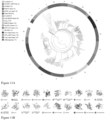
- a clustering dendrogram of the plurality of candidate proteins is obtained in step (4).
- the present invention provides a method for predicting the function of a protein based on three-dimensional structure, the method comprising clustering a plurality of candidate proteins according to the protein clustering method of the present invention, and then predicting the function of the candidate proteins according to the clustering result.
- the plurality of candidate proteins includes at least one reference protein with known function.
- the functions of other candidate proteins in the same clade or subclade are predicted by the position of the reference protein with known function in the cluster (dendrogram). In some embodiments, other candidate proteins located in the same clade or subclade as the reference protein are predicted to have the same or similar function as the reference protein. In some embodiments, the TM-score between different candidate proteins in the same clade or subclade is at least 0.6, at least 0.7, at least 0.75, at least 0.8, at least 0.85 or higher. In some embodiments, the TM-score between candidate proteins in different clades or subclade is less than 0.85, less than 0.8, less than 0.75, less than 0.7, less than 0.6 or less.
- the reference protein is a deaminase. In some preferred embodiments, the reference protein is a cytosine deaminase. In some embodiments, the reference protein is a reference cytosine deaminase, the reference cytosine deaminase is rAPOBEC1 having a sequence shown in SEQ ID No: 64 or DddA having a sequence shown in SEQ No: 65. In some embodiments, the TM-score between a different candidate protein in the same clade or subclade as the reference protein or the TM-score between a different candidate protein and the reference protein is at least 0.7. In some embodiments, the TM-score of a candidate protein in a different clade or subclade from the reference protein is less than 0.7.
- the present invention provides a method for identifying a minimal functional domain of a protein based on the three-dimensional structure, comprising:
- minimal functional domain refers to the smallest portion of a protein that can substantially maintain the function of the full-length protein.
- the plurality of candidate proteins includes at least one reference protein with known function.
- the reference protein is a deaminase. In some preferred embodiments, the reference protein is a cytosine deaminase. In some embodiments, the reference protein is a reference cytosine deaminase, and the reference cytosine deaminase is rAPOBEC1 having a sequence shown in SEQ ID No: 64 or DddA having a sequence shown in SEQ No: 65.
- the present invention provides a cytosine deaminase identified by the method of the present invention for predicting the function of a protein.
- the present invention provides a truncated cytosine deaminase comprising or consisting of the minimal functional domain of cytosine deaminase identified by the method of the present invention.
- the present invention also provides use of the cytosine deaminase or truncated cytosine deaminase for gene editing, such as base editing, in an organism or a cell of an organism.
- the present invention provides a cytosine deaminase, wherein the cytosine deaminase is capable of deaminating the cytosine base of deoxycytidine in DNA.
- the cytosine deaminase is from bacteria.
- the TM-score of the AlphaFold2 three-dimensional structure between the cytosine deaminase and the reference cytosine deaminase is not less than 0.6, not less than 0.7, not less than 0.75, not less than 0.8, not less than 0.85, and the cytosine deaminase comprises an amino acid sequence having 20-70%, 20-60%, 20-50%, 20-45%, 20-40%, 20-35% sequence identity or at least 20%, at least 30%, at least 40%, at least 50%, at least 60%, at least 70%, at least 75%, at least 80%, at least 85%, at least 90%, at least 91%, at least 92%, 93%, at least 94%, at least 95%, at least 96%, at least 97%, at least 98%, at least 99% sequence identity with the amino acid sequence of the reference cytosine deaminase; the cytosine deaminase has the function of deaminating the cytosine base of the de
- the reference cytosine deaminase is:
- the TM-score of the AlphaFold2 three-dimensional structure between the cytosine deaminase and rAPOBEC1 having a sequence shown in SEQ ID No: 64 is not less than 0.6, not less than 0.7, not less than 0.75, not less than 0.8, not less than 0.85, and the cytosine deaminase comprises an amino acid sequence having 20-70%, 20-60%, 20-50%, 20-45%, 20-40%, 20-35% sequence identity or at least 20%, at least 30%, at least 40%, at least 50%, at least 60%, at least 70%, at least 75%, at least 80%, at least 85%, at least 90%, at least 91%, at least 92%, 93%, at least 94%, at least 95%, at least 96%, at least 97%, at least 98%, at least 99% sequence identity with SEQ ID No: 64; the cytosine deaminase has the function of deaminating the cytosine base of deoxycytidine in
- the TM-score score of the AlphaFold2 three-dimensional structure between the cytosine deaminase and DddA having a sequence shown in SEQ ID No: 65 is not less than 0.6, not less than 0.7, not less than 0.75, not less than 0.8, not less than 0.85, and the cytosine deaminase comprises an amino acid sequence having 20-70%, 20-60%, 20-50%, 20-45%, 20-40%, 20-35% sequence identity or at least 20%, at least 30%, at least 40%, at least 50%, at least 60%, at least 70%, at least 75%, at least 80%, at least 85%, at least 90%, at least 91%, at least 92%, 93%, at least 94%, at least 95%, at least 96%, at least 97%, at least 98%, at least 99% sequence identity with SEQ ID No: 65; the cytosine deaminase has the function of deaminating the cytosine base of deoxycytidine in DNA
- the TM-score score of the AlphaFold2 three-dimensional structure between the cytosine deaminase and Sdd7 having a sequence shown in SEQ ID No: 4 is not less than 0.6, not less than 0.7, not less than 0.75, not less than 0.8, not less than 0.85, and the cytosine deaminase comprises an amino acid sequence having 20-70%, 20-60%, 20-50%, 20-45%, 20-40%, 20-35% sequence identity or at least 20%, at least 30%, at least 40%, at least 50%, at least 60%, at least 70%, at least 75%, at least 80%, at least 85%, at least 90%, at least 91%, at least 92%, 93%, at least 94%, at least 95%, at least 96%, at least 97%, at least 98%, at least 99% sequence identity with SEQ ID No: 4; the cytosine deaminase has the function of deaminating the cytosine base of deoxycytidine in DNA
- the cytosine deaminase is from the AID/APOBEC clade, SCP1.201 clade, MafB19 clade, Novel AID/APOBEC-like clade, TM1506 clade, or XOO2897 clade.
- the cytosine deaminase clade is determined according to the contents described in Iyer, L. M., Zhang, D., Rogozin, I. B., & Aravind, L. (2011). Evolution of the deaminase fold and multiple origins of eukaryotic editing and mutagenic nucleic acid deaminases from bacterial toxin systems. Nucleic acids research, 39(22), 9473-9497 .
- the cytosine deaminase is from the AID/APOBEC clade and comprises an amino acid sequence having at least 50%, at least 60%, at least 70%, at least 75%, at least 80%, at least 85%, at least 90%, at least 91%, at least 92%, 93%, at least 94%, at least 95%, at least 96%, at least 97%, at least 98%, at least 99%, or even 100% sequence identity to SEQ ID NO: 1.
- the cytosine deaminase is from the SCP1.201 clade, and comprises an amino acid sequence having at least 50%, at least 60%, at least 70%, at least 75%, at least 80%, at least 85%, at least 90%, at least 91%, at least 92%, 93%, at least 94%, at least 95%, at least 96%, at least 97%, at least 98%, at least 99%, or even 100% sequence identity with any one of SEQ ID No: 28-40.
- the cytosine deaminase is capable of deaminating the cytosine base of double-stranded DNA.
- the amino acid sequence of the cytosine deaminase consists of the amino acid sequence of any one of SEQ ID No: 28-40. In some embodiments, the amino acid sequence of the cytosine deaminase consists of the amino acid sequence of any one of SEQ ID No: 28, 33, 34, 35.
- the cytosine deaminase is from the SCP1.201 clade and comprises an amino acid sequence having at least 50%, at least 60%, at least 70%, at least 75%, at least 80%, at least 85%, at least 90%, at least 91%, at least 92%, 93%, at least 94%, at least 95%, at least 96%, at least 97%, at least 98%, at least 99%, or even 100% sequence identity with any one of SEQ ID No: 2-18, 41-49.
- the cytosine deaminase is capable of deaminating the cytosine base of single-stranded DNA.
- the amino acid sequence of the cytosine deaminase consists of the amino acid sequence of any one of SEQ ID No: 2-18, 41-49. In some embodiments, the amino acid sequence of the cytosine deaminase consists of the amino acid sequence of any one of SEQ ID No: 2-7, 12, 17.
- the cytosine deaminase is a truncated cytosine deaminase, which is capable of deaminating the cytosine base of deoxycytidine of DNA.
- the length of the truncated cytosine deaminase ranges from 130 to 160 amino acids.
- the truncated cytosine deaminase can be packaged entirely in one AAV particle.
- the truncated cytosine deaminase comprises an amino acid sequence having at least 50%, at least 60%, at least 70%, at least 75%, at least 80%, at least 85%, at least 90%, at least 91%, at least 92%, 93%, at least 94%, at least 95%, at least 96%, at least 97%, at least 98%, at least 99%, or even 100% sequence identity to any one of SEQ ID Nos: 50-55.
- the truncated cytosine deaminase is capable of deaminating cytosine bases of single-stranded DNA.
- the truncated cytosine deaminase consists of the amino acid sequence of any one of SEQ ID Nos: 50-55.
- the cytosine deaminase is from the MafB19 clade and comprises an amino acid sequence having at least 50%, at least 60%, at least 70%, at least 75%, at least 80%, at least 85%, at least 90%, at least 91%, at least 92%, 93%, at least 94%, at least 95%, at least 96%, at least 97%, at least 98%, at least 99%, or even 100% sequence identity to any one of SEQ ID Nos: 19, 56, 57, and 58.
- the cytosine deaminase is from the Novel AID/APOBEC-like clade and comprises an amino acid sequence having at least 50%, at least 60%, at least 70%, at least 75%, at least 80%, at least 85%, at least 90%, at least 91%, at least 92%, 93%, at least 94%, at least 95%, at least 96%, at least 97%, at least 98%, at least 99%, or even 100% sequence identity to any one of SEQ ID No: 20, 21.
- the cytosine deaminase is from the TM1506 clade and comprises an amino acid sequence having at least 50%, at least 60%, at least 70%, at least 75%, at least 80%, at least 85%, at least 90%, at least 91%, at least 92%, 93%, at least 94%, at least 95%, at least 96%, at least 97%, at least 98%, at least 99%, or even 100% sequence identity to SEQ ID No: 22.
- the cytosine deaminase is from the XOO2897 clade and comprises an amino acid sequence having at least 50%, at least 60%, at least 70%, at least 75%, at least 80%, at least 85%, at least 90%, at least 91%, at least 92%, 93%, at least 94%, at least 95%, at least 96%, at least 97%, at least 98%, at least 99%, or even 100% sequence identity to SEQ ID Nos: 23, 24, 59-62.
- the cytosine deaminase is from the Toxin deam clade and comprises an amino acid sequence having at least 50%, at least 60%, at least 70%, at least 75%, at least 80%, at least 85%, at least 90%, at least 91%, at least 92%, 93%, at least 94%, at least 95%, at least 96%, at least 97%, at least 98%, at least 99%, or even 100% sequence identity to SEQ ID No: 74 or 75.
- the present application relates to use of the cytosine deaminase of the present invention for gene editing, such as base editing, in an organism or a cell of an organism.
- the cytosine deaminase is used for preparing a base editing fusion protein or a base editing system, which is used to perform base editing in an organism or a cell of an organism.
- the present invention provides a base editing fusion protein comprising a nucleic acid targeting domain and a cytosine deamination domain, wherein the cytosine deamination domain comprises at least one (e.g., one or two) cytosine deaminase polypeptide of the present invention.
- fusion protein base editing fusion protein
- base editor is used interchangeably to refer to a protein that can mediate one or more nucleotide substitutions of a target sequence in a genome in a sequence-specific manner.
- the one or more nucleotide substitutions are, for example, C to T substitutions.
- nucleic acid targeting domain refers to a domain that can mediate the attachment of the base editing fusion protein to a specific target sequence in the genome in a sequence-specific manner (e.g., through a guide RNA).
- the nucleic acid targeting domain may include one or more zinc finger protein domains (ZFP) or transcription factor effector domains (TALE) against a specific target sequence.
- ZFP zinc finger protein domains
- TALE transcription factor effector domains
- the nucleic acid targeting domain comprises at least one (e.g., one) CRISPR effector protein (CRISPR effector) polypeptide.
- ZFP Zinc finger protein domain
- ZFP usually contains 3-6 individual zinc finger repeat sequences, each of which can recognize a unique sequence of, for example, 3 bp. By combining different zinc finger repeat sequences, different genomic sequences can be targeted.
- transcription activator-like effector domain is the DNA binding domain of a transcription activator-like effector (TALE).
- TALEs can be engineered to bind to almost any desired DNA sequence.
- CRISPR effector protein generally refers to a nuclease (CRISPR nuclease) or a functional variant thereof present in a naturally occurring CRISPR system.
- the term encompasses any effector protein based on the CRISPR system that is capable of achieving sequence-specific targeting within a cell.
- a "functional variant" with respect to a CRISPR nuclease means that it at least retains the sequence-specific targeting ability mediated by a guide RNA.
- the functional variant is a nuclease-inactivated variant, i.e., it lacks double-stranded nucleic acid cleavage activity.
- CRISPR nucleases lacking double-stranded nucleic acid cleavage activity also encompass nickases, which form a nick in a double-stranded nucleic acid molecule but do not completely cut off the double-stranded nucleic acid.
- the CRISPR effector protein of the present invention has nickase activity.
- the functional variant recognizes a different PAM (protospacer adjacent motif) sequence relative to the wild-type nuclease.
- CRISPR effector protein can be derived from Cas9 nuclease, including Cas9 nuclease or its functional variant.
- the Cas9 nuclease can be a Cas9 nuclease from different species, such as spCas9 from Streptococcus pyogenes ( S. pyogenes) or SaCas9 derived from Staphylococcus aureus (S. aureus).
- Cas9 nuclease and “Cas9” are used interchangeably herein and refer to RNA-guided nucleases including Cas9 proteins or fragments thereof (e.g., proteins comprising active DNA cleavage domains of Cas9 and/or gRNA binding domains of Cas9).
- Cas9 is a component of the CRISPR/Cas (clustered regularly interspaced short palindromic repeats and CRISPR associated) genome editing system, which can target and cut DNA target sequences under the guidance of guide RNA to form DNA double-strand breaks (DSBs).
- DSBs DNA double-strand breaks
- An exemplary amino acid sequence of wild-type SpCas9 is shown in SEQ ID NO:25.
- the "CRISPR effector protein” can also be derived from a Cpf1 nuclease, including a Cpf1 nuclease or a functional variant thereof.
- the Cpf1 nuclease can be a Cpf1 nuclease from different species, such as a Cpf1 nuclease from Francisella novicida U112, Acidaminococcus sp. BV3L6, and Lachnospiraceae bacterium ND2006.
- CRISPR effector proteins can also be derived from nucleases such as Cas3, Cas8a, Cas5, Cas8b, Cas8c, Cas10d, Cse1, Cse2, Csy1, Csy2, Csy3, GSU0054, Cas10, Csm2, Cmr5, Cas10, Csx11, Csx10, Csf1, Csn2, Cas4, C2c1 (Cas12b), C2c3, C2c2, Cas12c, Cas12d (i.e., CasY), Cas12e (i.e., CasX), Cas12f (i.e., Cas14), Cas12g, Cas12h, Cas12i, Cas12j (i.e., Cas ⁇ ), Cas12k, Cas12l, Cas12m, etc., for example, including these nucleases or functional variants thereof.
- nucleases such as Cas3, Cas8a, Cas5, Ca
- the CRISPR effector protein is a nuclease-inactivated Cas9.
- the DNA cleavage domain of the Cas9 nuclease is known to contain two subdomains: the HNH nuclease subdomain and the RuvC subdomain.
- the HNH subdomain cuts the strand complementary to the gRNA, while the RuvC subdomain cuts the non-complementary strand. Mutations in these subdomains can inactivate the nuclease activity of Cas9, forming a "nuclease-inactivated Cas9".
- the nuclease-inactivated Cas9 still retains the DNA binding ability guided by the gRNA.
- the nuclease-inactivated Cas9 of the present invention can be derived from Cas9 of different species, for example, derived from Streptococcus pyogenes (S. pyogenes) Cas9 (SpCas9), or derived from Staphylococcus aureus (S. aureus) Cas9 (SaCas9). Mutating the HNH nuclease subdomain and the RuvC subdomain of Cas9 (for example, comprising mutations D10A and H840A) simultaneously inactivates the nuclease of Cas9 and becomes nuclease-dead Cas9 (dCas9).
- Mutation-inactivation of one of the subdomains can enable Cas9 to have nickase activity, i.e., Cas9 nickase (nCas9), for example, nCas9 with only the mutation D10A.
- Cas9 nickase i.e., Cas9 nickase (nCas9)
- nCas9 Cas9 nickase
- the nuclease-inactivated Cas9 variant of the present invention comprises an amino acid substitution D10A and/or H840A relative to wild-type Cas9, wherein the amino acid numbering refers to SEQ ID NO: 25.
- the nuclease-inactivated Cas9 comprises an amino acid substitution D10A relative to wild-type Cas9, wherein the amino acid numbering refers to SEQ ID NO: 25.
- the nuclease-inactivated Cas9 comprises the amino acid sequence shown in SEQ ID NO: 26 (nCas9 (D10A)).
- Cas9 nuclease When Cas9 nuclease is used for gene editing, it is usually required that the target sequence has a PAM (protospacer adjacent motif) sequence of 5'-NGG-3' at its 3' end.
- PAM protospacer adjacent motif
- CRISPR effector proteins that recognize different PAM sequences are preferably used in the present invention, such as functional variants of Cas9 nucleases with different PAM sequences.
- the cytidine deamination domain in the fusion protein is capable of converting the cytidine of the single-stranded DNA generated during the formation of the fusion protein-guide RNA-DNA complex into U by deamination, and then achieving base substitution from C to T through base mismatch repair.
- the nucleic acid targeting domain and the cytosine deamination domain are fused via a linker.
- a “linker” can be a non-functional amino acid sequence having a length of 1-50 (e.g., 1, 2, 3, 4, 5, 6, 7, 8, 9, 10, 11, 12, 13, 14, 15, 16, 17, 18, 19, 20 or 20-25, 25-50) or more amino acids and having no secondary or higher structure.
- the linker can be a flexible linker.
- the base editing fusion protein comprises, in the following order from N-terminus to C-terminus: a cytosine deamination domain and a nucleic acid targeting domain.
- uracil DNA glycosylase catalyzes the removal of U from DNA and initiates base excision repair (BER), resulting in the repair of U:G to C:G. Therefore, without being limited by any theory, combining a uracil DNA glycosylase inhibitor (UGI) with the base editing fusion protein of the present invention will be able to increase the efficiency of C to T base editing.
- UMI uracil DNA glycosylase inhibitor
- the base editor fusion protein is co-expressed with a uracil DNA glycosylase inhibitor (UGI).
- UMI uracil DNA glycosylase inhibitor
- the base editor fusion protein further comprises a uracil DNA glycosylase inhibitor (UGI).
- UMI uracil DNA glycosylase inhibitor
- UGI is connected to other parts of the base editing fusion protein through a linker.
- UGI is connected to other parts of the base editing fusion protein through a "self-cleaving peptide”.
- self-cleaving peptide means a peptide that can achieve self-cleavage in a cell.
- the self-cleaving peptide may include a protease recognition site, thereby being recognized and specifically cleaved by a protease in the cell.
- the self-cleaving peptide may be a 2A polypeptide.
- 2A polypeptides are a class of short peptides from viruses, and their self-cleavage occurs during translation. When two different target polypeptides are expressed in the same reading frame by connecting them with a 2A polypeptide, two target polypeptides are generated at a ratio of almost 1:1.
- 2A polypeptides may be P2A from porcine techovirus-1, T2A from Thosea asigna virus, E2A from equine rhinitis A virus, and F2A from foot-and-mouth disease virus.
- T2A porcine techovirus-1
- T2A from Thosea asigna virus
- E2A from equine rhinitis A virus
- F2A foot-and-mouth disease virus.
- a variety of functional variants of these 2A polypeptides are also known in the art, and these variants may also be used in the present invention.
- the self-cleaving peptide does not exist between or within the nucleic acid targeting domain and the cytosine deamination domain.
- the UGI is located at the N-terminus or C-terminus of the base editing fusion protein, preferably at the C-terminus.
- the uracil DNA glycosylase inhibitor comprises the amino acid sequence shown in SEQ ID NO:27.
- the fusion protein of the present invention may further include a nuclear localization sequence (NLS).
- NLS nuclear localization sequence
- one or more NLSs in the fusion protein should have sufficient strength to drive the fusion protein in the nucleus of the cell to accumulate in an amount that can realize its base editing function.
- the intensity of nuclear localization activity is determined by the number, position, one or more specific NLSs used in the fusion protein, or a combination of these factors.
- the NLSs of the fusion protein of the present invention may be located at the N-terminus and/or the C-terminus. In some embodiments of the present invention, the NLSs of the fusion protein of the present invention may be located between the cytosine deamination domain, the nucleic acid targeting domain and/or the UGI. In some embodiments, the fusion protein comprises about 1, 2, 3, 4, 5, 6, 7, 8, 9, 10 or more NLSs. In some embodiments, the fusion protein comprises about 1, 2, 3, 4, 5, 6, 7, 8, 9, 10 or more NLS at or close to the N-terminus. In some embodiments, the fusion protein comprises about 1, 2, 3, 4, 5, 6, 7, 8, 9, 10 or more NLS at or close to the C-terminus.
- the polypeptide comprises a combination of these, such as one or more NLSs at the N-terminus and one or more NLSs at the C-terminus.
- each can be selected to be independent of other NLSs.
- NLS consists of one or more short sequences of positively charged lysine or arginine exposed on the surface of the protein, but other types of NLSs are also known.
- Nonlimiting examples of NLSs include: KKRKV, PKKKRKV or KRPAATKKAGQAKKKK.
- the fusion protein of the present invention may also include other localization sequences, such as cytoplasmic localization sequences, chloroplast localization sequences, mitochondrial localization sequences, etc.
- the present invention provides a base editing system comprising: i) a cytosine deaminase or a base editing fusion protein of the present invention, and/or an expression construct containing a nucleotide sequence encoding the cytosine deaminase or the base editing fusion protein.
- the base editing system is used to modify a target nucleic acid region.
- the base editing system further comprises ii) at least one guide RNA and/or at least one expression construct comprising a nucleotide sequence encoding the at least one guide RNA.
- the base editing fusion protein is not based on a CRISPR effector protein, the system may not require a guide RNA or an expression construct encoding the same.
- the at least one guide RNA can bind to the nucleic acid targeting domain of the fusion protein. In some embodiments, the guide RNA is directed to at least one target sequence within the target nucleic acid region.
- a “base editing system” refers to a combination of components required for base editing a nucleic acid sequence such as a genomic sequence in a cell or an organism.
- the individual components of the system such as cytosine deaminase, base editing fusion protein, and one or more guide RNAs, may exist independently of each other, or may exist in any combination as a composition.
- the system comprises a cytosine deaminase of the present invention or a fusion protein of the present invention and a guide RNA that can targeted bind to a nucleic acid.
- guide RNA and "gRNA” are used interchangeably and refer to an RNA molecule that is capable of forming a complex with a CRISPR effector protein and is capable of targeting the complex to a target sequence due to certain identity with the target sequence.
- the gRNA used by Cas9 nuclease or its variants is usually composed of crRNA and tracrRNA molecules that are partially complementary to form a complex, where the crRNA contains sufficient identity to the target sequence to hybridize to the complementary strand of the target sequence and guide the CRISPR complex (Cas9+crRNA+tracrRNA) to specifically bind to the target sequence.
- single guide RNAs can be designed that contain characteristics of both crRNA and tracrRNA.
- the gRNA used by Cpf1 nuclease or its variants is usually composed only of a mature crRNA molecule, which can also be called sgRNA. It is within the ability of those skilled in the art to design a suitable gRNA based on the CRISPR nuclease or variant thereof as used and the target sequence to be edited.
- the guide RNA is 15-100 nucleotides in length and comprises a sequence having at least 10, at least 15, or at least 20 consecutive nucleotides complementary to the target sequence.
- the guide RNA comprises a sequence of 15 to 40 consecutive nucleotides complementary to the target sequence.
- the guide RNA is 15-50 nucleotides in length.
- the target sequence is a DNA sequence.
- the target sequence is within the genome of an organism.
- the organism is a prokaryote.
- the prokaryote is a bacterium.
- the organism is a eukaryote.
- the organism is a plant or a fungus.
- the organism is a vertebrate.
- the vertebrate is a mammal.
- the mammal is a mouse, a rat, or a human.
- the organism is a cell.
- wherein the cell is a mouse cell, a rat cell, or a human cell.
- the cell is a HEK-293 cell.
- the base editing fusion protein and the guide RNA are capable of forming a complex, and the complex specifically targets the target sequence under the mediation of the guide RNA, and results in one or more C in the target sequence being substituted by T and/or one or more A being substituted by G.
- the at least one guide RNA may be directed to a target sequence on a sense strand (e.g., a protein coding strand) and/or an antisense strand located within a genomic target nucleic acid region.
- a target sequence on a sense strand e.g., a protein coding strand
- the base editing composition of the present invention may result in one or more C in the target sequence on the sense strand (e.g., a protein coding strand) being substituted by T and/or one or more A being substituted by G.
- the base editing composition of the present invention may result in one or more Gs in the target sequence on the sense strand (e.g., a protein coding strand) being substituted by A and/or one or more T being substituted by C.
- the nucleotide sequence encoding the cytosine deaminase or base editing fusion protein is codon-optimized against the organism whose genome is to be modified.
- the codon optimization refers to a method for replacing at least one codon in the natural sequence (for example, about or more than about 1, 2, 3, 4, 5, 10, 15, 20, 25, 50 or more codons) with a codon used more frequently or most frequently in the gene of the host cell, and maintaining the natural amino acid sequence while modifying the nucleic acid sequence to enhance expression in the host cell of interest.
- Different species exhibit specific preferences for certain codons of specific amino acids. Codon preference (difference in codon usage between organisms) is often related to the translation efficiency of messenger RNA (mRNA), which is considered as depending on the nature of the codon being translated and the availability of the specific transfer RNA (tRNA) molecule.
- mRNA messenger RNA
- tRNA transfer RNA
- codon usage tables may be easily obtained, for example, in the codon usage database ("Codon Usage Database") available at www.kazusa.orjp/codon/, and these tables may be adjusted and applied in different ways. See Nakamura Y. et al., "Codon usage tabulated from the international DNA sequence databases: status for the year 2000”. Nucl. Acids Res., 28: 292 (2000 ).
- Organisms that can be subjected to genome modification by the base editing system of the present invention include any organisms suitable for base editing, preferably eukaryotic organisms.
- organisms include, but are not limited to, mammals such as human, mouse, rat, monkey, dog, pig, sheep, cattle, cat; poultry such as chicken, duck, goose; plants, including monocots and dicots, for example, the plants are crop plants, including but not limited to wheat, rice, corn, soybean, sunflowers, sorghum, rapeseed, alfalfa, cotton, barley, millet, sugarcane, tomato, tobacco, cassava and potato.
- the present invention provides a base editing method, which comprises contacting the base editing system of the present invention with a target sequence of a nucleic acid molecule.
- the nucleic acid molecule is a DNA molecule. In some preferred embodiments, the nucleic acid molecule is a double-stranded DNA molecule or a single-stranded DNA molecule.
- the target sequence of the nucleic acid molecule comprises a sequence associated with a plant trait or expression.
- the target sequence of the nucleic acid molecule comprises a sequence or a point mutation associated with a disease or condition.
- the base editing system exert the deamination by contacting with the target sequence of the nucleic acid molecule to, and the deamination results in one or more nucleotides of the target sequence being substituted.
- the target sequence comprises a DNA sequence 5'-MCN-3', wherein M is A, T, C or G; N is A, T, C or G; wherein the C in the middle of the 5'-MCN-3' sequence is deaminated.
- the deamination results in the introduction or removal of a splicing site.
- the deamination results in the introduction of a mutation in a gene promoter, the mutation resulting in an increase or decrease in transcription of a gene operably linked to the gene promoter.
- the deamination results in the introduction of a mutation in a gene repressor, the mutation resulting in an increase or decrease in transcription of a gene operably linked to the gene repressor.
- the contacting is performed in vivo.
- the contacting is performed in vitro.
- the present invention also provides a method for producing at least one genetically modified cell, comprising introducing the base editing system of the present invention into at least one said cell, thereby causing one or more nucleotide substitutions in the target nucleic acid region of the at least one cell.
- the one or more nucleotide substitutions are C to T substitution.
- the method further comprises a step of screening for a cell having the desired one or more nucleotide substitutions from the at least one cell.
- the method of the present invention is performed in vitro.
- the cell is an isolated cell, or a cell within an isolated tissue or organ.
- the present invention also provides a genetically modified organism comprising a genetically modified cell produced by the method of the present invention or a progeny cell thereof.
- the genetically modified cell or a progeny cell thereof has one or more desired nucleotide substitutions.
- the target nucleic acid region to be modified can be located at any position of the genome, for example, in a functional gene such as a protein coding gene, or, for example, in a gene expression regulatory region such as a promoter region or an enhancer region, thereby achieving modification of the gene function or modification of gene expression.
- a functional gene such as a protein coding gene
- a gene expression regulatory region such as a promoter region or an enhancer region
- the desired nucleotide substitution results in a desired gene function modification or gene expression modification.
- the target nucleic acid region is related to the proterties of the cell or organism. In some embodiments, the mutation in the target nucleic acid region results in a change in the proterties of the cell or organism. In some embodiments, the target nucleic acid region is located in the coding region of protein. In some embodiments, the target nucleic acid region encods the function-related motif or domain of a protein. In some preferred embodiments, one or more nucleotide substitutions in the target nucleic acid region results in amino acid substitution in the amino acid sequence of the protein. In some embodiments, the one or more nucleotide substitutions results in change of the protein function.
- the base editing system can be introduced into the cell by various methods well known to those skilled in the art.
- Methods that can be used to introduce the base editing system of the present invention into a cell include, but are not limited to, calcium phosphate transfection, protoplast fusion, electroporation, liposome transfection, microinjection, viral infection (such as baculovirus, vaccinia virus, adenovirus, adeno-associated virus, lentivirus and other viruses), gene gun technique, PEG-mediated protoplast transformation, and Agrobacterium-mediated transformation.
- the cell that can be base edited by the method of the present invention can be from, for example, mammals such as human, mouse, rat, monkey, dog, pig, sheep, cattle, cat; poultry such as chicken, duck, goose; plants, including monocots and dicots, preferably crop plants, including but not limited to wheat, rice, corn, soybean, sunflower, sorghum, rapeseed, alfalfa, cotton, barley, millet, sugarcane, tomato, tobacco, cassava and potato.
- mammals such as human, mouse, rat, monkey, dog, pig, sheep, cattle, cat
- poultry such as chicken, duck, goose
- plants including monocots and dicots, preferably crop plants, including but not limited to wheat, rice, corn, soybean, sunflower, sorghum, rapeseed, alfalfa, cotton, barley, millet, sugarcane, tomato, tobacco, cassava and potato.
- the base editing fusion protein, base editing system and method for producing a genetically modified cell of the present invention are particularly suitable for genetically modifying plants.
- the plant is a crop plant, including but not limited to wheat, rice, corn, soybean, sunflower, sorghum, rapeseed, alfalfa, cotton, barley, millet, sugarcane, tomato, tobacco, cassava and potato. More preferably, the plant is rice.
- the present invention provides a method for producing a genetically modified plant, comprising introducing the base editing system of the present invention into at least one plant, thereby causing one or more nucleotide substitutions within a target nucleic acid region in the genome of the at least one plant.
- the method further comprises screening for a plant having one or more desired nucleotide substitutions from the at least one plant.
- the base editing composition can be introduced into plants by various methods well known to those skilled in the art.
- Methods that can be used to introduce the base editing system of the present invention into plants include, but are not limited to, gene gun method, PEG-mediated protoplast transformation, Agrobacterium-mediated transformation, plant virus-mediated transformation, pollen tube channel method, and ovary injection method.
- the base editing composition is introduced into the plant by transient transformation.
- the modification of the target sequence can be achieved by simply introducing or producing the base editing fusion protein and guide RNA in the plant cell, and the modification can be stably inherited without the need to stably transform the exogenous polynucleotides encoding the components of the base editing system into the plant.
- This avoids the potential off-target effects of the stably existing (continuously produced) base editing composition and also avoids the integration of exogenous nucleotide sequences into the plant genome, thereby having higher biosafety.
- the introduction is carried out in the absence of selection pressure to avoid integration of the exogenous nucleotide sequence into the plant genome.
- the introduction comprises transforming the base editing system of the present invention into an isolated plant cell or tissue and then regenerating the transformed plant cell or tissue into an intact plant.
- the regeneration is carried out in the absence of selection pressure, i.e., no selection agent for the selectable gene on the expression vector is used during tissue culture. Avoiding the use of a selection agent can increase the plant regeneration efficiency, obtaining a modified plant free of exogenous nucleotide sequences.
- the base editing system of the present invention can be transformed into a specific part of an intact plant, such as leave, shoot tip, pollen tube, young ear or hypocotyl. This is particularly suitable for the transformation of plants that are difficult to regenerate in tissue culture.
- in vitro expressed protein and/or in vitro transcribed RNA molecule are directly transformed into the plant.
- the protein and/or RNA molecule is capable of performing base editing in the plant cell and is subsequently degraded by the cell, avoiding integration of the exogenous nucleotide sequence in the plant genome.
- using the method of the present invention for plant genetic modification and breeding can obtain a plant with the genome free of exogenous polynucleotide integration, namely a transgene-free modified plant.
- the modified target nucleic acid region is associated with a plant trait, such as a agronomic trait, so that modification results in a plant having an altered (preferably improved) trait, such as an agronomic trait, relative to a wild type plant.
- a plant trait such as a agronomic trait
- the method further comprises the step of screening for a plant having the desired modification and/or desired trait, such as agronomic trait.
- the method further comprises the step of obtaining progenies of the genetically modified plant.
- the genetically modified plant or progenies thereof have the desired modification and/or the desired trait, such as agronomic trait.
- the invention also provides a genetically modified plant or progenies or a part thereof, wherein the plant is obtained by the method according to the present invention as described above.
- the genetically modified plant or the progenies or a part thereof is transgene-free.
- the genetically modified plant or progenies thereof have the desired genetic modification and/or the desired trait, such as agronomic trait.
- the present invention provides a method of plant breeding comprising crossing a first genetically modified plant containing one or more nucleotide substitutions in the target nucleic acid region obtained by the above method of the present invention with a second plant not containing one or more nucleotide substitutions, thereby the one or more nucleotide substitutions are introduced into the second plant.
- the first genetically modified plant has a desired trait, such as an agronomic trait.
- the present invention also emcompases the use of the base editing system of the present invention in disease treatment.
- the target nucleic acid region described in the present invention can be located in the protein coding region of a disease-related gene, or can be located in a gene expression regulatory region such as a promoter region or enhancer region, thereby achieving functional modification or expression modification of the disease-related gene. Therefore, modification of disease-related genes described herein includes modification to the disease-related genes themselves (such as protein coding regions), as well as modification to their expression regulatory regions (such as promoters, enhancers, introns, etc.).
- a “disease- related" gene refers to any gene that produces a transcription or translation product at abnormal levels or in an abnormal form in cells derived from disease-affected tissue as compared to non-disease control tissues or cells. Where altered expression is associated with the emergence and/or progression of a disease, it may be a gene that is expressed at an abnormally high level; or it may be a gene that is expressed at an abnormally low level.
- Disease- related genes also refer to genes that have one or more mutations or genetic variants that are directly responsible for or in linkage disequilibrium with one or more genes responsible for the etiology of the disease. The mutation or genetic variation is, for example, a single nucleotide variation (SNV).
- SNV single nucleotide variation
- the invention also provides a method of treating a disease in a subject in need thereof, comprising delivering to said subject an effective amount of the base editing system of the invention to modify a gene related to said disease (e.g., deamination of mitochondrial DNA by a fusion protein or multiple fusion proteins).
- the invention also provides the use of the base editing system for the preparation of a pharmaceutical composition for treating a disease in a subject in need thereof, wherein the base editing system is used to modify a gene related to said disease.
- the present invention also provides a pharmaceutical composition for treating a disease in a subject in need thereof, comprising the base editing system of the present invention, and optionally a pharmaceutically acceptable carrier, wherein the base editing system is used to modify a gene related to said disease.
- the fusion protein or base editing system described herein are used to introduce point mutations into nucleic acids by deaminating target nucleobases (e.g., C residues).
- deamination of target nucleobases results in correction of genetic defects, such as in correction of point mutations that result in loss of function in gene products.
- the genetic defect is associated with a disease or condition (e.g., a lysosomal storage disease or a metabolic disease, such as, for example, Type I diabete).
- the method provided herein can be used to introduce an inactivating point mutation into a gene or allele encoding a gene product associated with a disease or disorder.
- the purpose of the embodiment described in the present invention is to restore the function of dysfunctional genes via genome editing.
- the nucleobase editing protein provided herein is used for in vitro gene editing of human cells, such as correcting disease-related mutations in human cell cultures.
- the nucleobase editing protein provided herein such as fusion protein containing nucleic acid editable DNA protein (e.g., CRISPR effector protein Cas9) and cytosine deaminase domain, can be used to correct any single-point T to C or A to G mutations.
- CRISPR effector protein Cas9 e.g., CRISPR effector protein Cas9
- cytosine deaminase domain can be used to correct any single-point T to C or A to G mutations.
- the C of the mutant is corrected by deamination
- the C paired with the mutant A is corrected by deamination and a subsequent round of replication.
- the embodiments described herein are intended for the treatment of patients with diseases associated with or caused by point mutations that can be corrected by the DNA base editing fusion protein provided herein.
- the disease is a proliferative disease.
- the disease is a genetic disease.
- the disease is a neoplastic disease.
- the disease is a metabolic disease.
- the disease is a lysosomal storage disease.
- mitochondrial diseases or disorders refers to diseases caused by abnormal mitochondria, such as mitochondrial gene mutations, enzymatic pathways, etc.
- disorders include, but are not limited to: neurological disorders, loss of motor control, muscle weakness and pain, gastrointestinal disorders and difficulty swallowing, poor growth, heart disease, liver disease, diabetes, respiratory complications, epilepsy, vision/hearing problems, lactic acidosis, developmental delay, and susceptibility to infection.
- diseases described in the present invention include, but are not limited to, genetic diseases, circulatory system diseases, muscle diseases, brain, central nervous system and immune system diseases, Alzheimer's disease, secretase disorders, amyotrophic lateral sclerosis (ALS) ), autism, trinucleotide repeat expansion disorders, hearing disorders, gene-targeted therapy of non-dividing cells (neurons, muscles), liver and kidney diseases, epithelial cell and lung diseases, cancer, Usher syndrome or retinitis pigmentosa-39, cystic fibrosis, HIV and AIDS, beta thalassemia, sickle cell disease, herpes simplex virus, autism, drug addiction, age-related macular degeneration, schizophrenia.
- genetic diseases include, but are not limited to, genetic diseases, circulatory system diseases, muscle diseases, brain, central nervous system and immune system diseases, Alzheimer's disease, secretase disorders, amyotrophic lateral sclerosis (ALS) ), autism, trinucleotide repeat expansion disorders, hearing disorders, gene-targeted therapy of
- WO2015089465A1 PCT/US2014/070135
- WO2016205711A1 PCT/US2016/038181
- WO2018141835A1 PCT/EP2018/052491
- WO2020191234A1 PCT/US2 020/023713
- WO2020191233A1 PCT/ US2020/023712
- WO2019079347Al PCT/US2018/056146
- WO2021155065A1 PCT/US2021/015580 .
- Administration of the base editing system or pharmaceutical composition of the invention can be tailored to the weight and species of the patient or subject.
- the frequency of administration is within the limits permitted by medical or veterinary medicine. It depends on general factors including the patient or subject's age, gender, general health, other conditions, and the specific condition or symptom to be addressed.
- AAV Adeno-associated virus
- the base editing fusion protein provided by the present invention and/or the expression construct containing the nucleotide sequence encoding the base editing fusion protein, or one or more gRNAs contained in the base editing system of the present invention can be delivered using adeno-associated virus (AAV), lentivirus, adenovirus, or other plasmid or viral vector types.
- AAV has a packaging limit of 4.5-4.75Kb which indicates that both the promoter and the transcription terminator must be integrated into a same viral vector. Constructs larger than 4.5-4.75Kb will result in a significant reduction in viral delivery efficiency.
- the large size of cytosine deaminase makes it difficult to be packaged into AAV. Therefore, embodiments of the present invention provide the use of truncated cytosine deaminases for packaging into AAV to achieve base editing.
- the present invention provides a nucleic acid molecule, which encodes the cytosine deaminase of the present invention, or the fusion protein of the present invention.
- the present invention provides a cell comprising the cytosine deaminase of the present invention, or the fusion protein of the present invention, or the base editing system of the present invention, or the nucleic acid molecule of the present invention.
- the present invention provides a composition comprising the cytosine deaminase of the present invention, or the fusion protein of the present invention, or the base editing system of the present invention, or the nucleic acid molecule of the present invention.
- the cytosine deaminase, fusion protein, base editing system or nucleic acid molecule is packaged into a virus, a virus-like particle, a virosome, a liposome, a vesicle, an exosome, a liposomal nanoparticle (LNP).
- LNP liposomal nanoparticle
- the virus is an adeno-associated virus (AAV) or a recombinant adeno-associated virus (rAAV).
- AAV adeno-associated virus
- rAAV recombinant adeno-associated virus
- the present invention also includes a kit for the method of the present invention, the kit comprising the base editing fusion protein of the present invention and/or an expression construct containing a nucleotide sequence encoding the base editing fusion protein, or comprising the base editing system of the present invention.
- the kit generally includes a label indicating the intended use and/or method for use of the contents of the kit.
- the term label includes any written or recorded material provided on or with the kit or otherwise provided with the kit.
- the kit of the present invention may also include suitable materials for constructing an expression vector in the base editing system of the present invention.
- the kit of the present invention may also include reagents suitable for transforming the base editing fusion protein or base editing composition of the present invention into a cell.
- the present invention provides a kit containing a nucleic acid construct, wherein the nucleic acid construct comprises:
- the present invention provides a kit containing a nucleic acid construct, wherein the nucleic acid construct comprises:
- the expression construct further comprises an expression construct encoding a guide RNA backbone, wherein the construct comprises a cloning site that allows a nucleic acid sequence identical or complementary to a target sequence to be cloned into the guide RNA backbone.
- the sequences of the new deaminases identified were codon-optimized by Nanjing GenScript against both rice and wheat and constructed into the pJIT63-nCas9-PBE backbone (Addgene number #98164).
- the plasmids of the reporter system used in the examples were constructed by our laboratory previously.
- pOsU3 vector (Addgene number #170132) was used for sgRNA expression.
- the protoplasts used in the present invention were derived from rice variety Zhonghua 11.
- Rice seeds were first rinsed with 75% ethanol for 1 minute, then treated with 4% sodium hypochlorite for 30 minutes, and washed with sterile water for more than 5 times; cultured on M6 medium for 3-4 weeks at 26°C in the dark.
- the FACSAria III (BD Biosciences) instrument was used to analyze the GFP-negative and -positive populations of protoplasts.
- Protoplasts were collected in 2 mL centrifuge tubes, protoplast DNA ( ⁇ 30 ⁇ L) was extracted using the CTAB method, and its concentration (30-60 ng/ ⁇ L) was measured using a NanoDrop ultra-micro spectrophotometer, and DNA was stored at -20°C.
- PCR amplification of protoplast DNA template was performed using genomic primers specific for the target sites.
- the 20 ⁇ L amplification system contained 4 ⁇ L 5 ⁇ Fastpfu buffer, 1.6 ⁇ L dNTPs (2.5 mM), 0.4 ⁇ L Forward primer (10 ⁇ M), 0.4 ⁇ L Reverse primer (10 ⁇ M), 0.4 ⁇ L FastPfu polymerase (2.5U/ ⁇ L), and 2 ⁇ L DNA template ( ⁇ 60 ng).
- Amplification conditions 95°C pre-denaturation for 5 min; 95°C denaturation for 30 s, 50-64°C annealing for 30 s, 72°C extension for 30 s, 35 cycles; 72°C full extension for 5 min, and storage at 12°C.
- the above amplification product was diluted 10 times, and 1 ⁇ L was taken as the second round of PCR amplification template.
- the amplification primer was a sequencing primer containing a barcode.
- the 50 ⁇ L amplification system contained 10 ⁇ L 5 ⁇ Fastpfu buffer, 4 ⁇ L dNTPs (2.5 mM), 1 ⁇ L Forward primer (10 ⁇ M), 1 ⁇ L Reverse primer (10 ⁇ M), 1 ⁇ L FastPfu polymerase (2.5U/ ⁇ L), and 1 ⁇ L DNA template.
- the amplification conditions were the same as above, and the number of amplification cycles was 35.
- PCR products were separated by 2% agarose gel electrophoresis, and the target fragments were recovered by gel extraction using AxyPrep DNA Gel Extraction kit. The recovered products were quantitatively analyzed using NanoDrop ultra-micro spectrophotometer. 100 ng of the recovered products were mixed and sent to Novogene for amplicon sequencing library construction and amplicon sequencing analysis.
- HEK293T cells ATCC, CRL-3216
- mouse N2a cells ATCC, CCL131
- DMEM Dulbecco's Modified Eagle's Medium
- FBS fetal bovine serum
- Cibco penicillin-streptomycin
- sgRNA 12K-TRAPseq library for evaluation of properties of the cytosine deaminase base editing system.
- For each base editor we seeded 2 ⁇ 10 6 cells into 6-plates 24-hours before transfection.
- genomic DNA was extracted with Lysis Buffer and Proteinase K with a Triumfi Mouse Tissue Direct PCR Kit (Beijing Genesand Biotech).
- genomic DNA was extracted with a Plant Genomic DNA Kit (Tiangen Biotech) after 72 hours' incubation. All DNA samples were quantified with a NanoDrop 2000 spectrophotometer (Thermo Scientific).
- AlphaFold v2.2.0 was used to analyze protein structure ( John Jumper and others, 'Highly Accurate Protein Structure Prediction with AlphaFold', Nature, 596.7873 (2021), 583-89 ).
- TM-align software was used to calculate the TM-score for the analysis results.
- the specific calculation formula of TM-score is as follows (reference: Zhang, Yang, and Jeffrey Skolnick. (2004). Scoring function for automated assessment of protein structure template quality. Proteins 57(4), 702-710 .)
- L N is the length of the amino acid sequence of the target protein
- LT is the length of the amino acid sequence that appears in both the template and the target structure
- di is the distance between the i -th pair of residues in the template and the target structure
- d0 is the scale of the normalized matching difference.
- “Max” indicates the maximum value after optimal spatial superposition.
- Example 1 Identification of novel deaminases in the APOBEC/AID clade that can be used for base editing
- No.182 deaminase (SEQ ID NO: 1) has very low similarity with the existing deaminases, and its amino acid sequence has only 34% sequence identity with the most similar mouse rAPOBEC1.
- Deaminase 182 was constructed onto the pJIT163-nCas9-PBE backbone, that is, deaminase 182 was used to replace rAPOBEC1 and fused to nCas9. Through evaluation by the reporter system, it was found that 182-PBE could undergo base editing in cells ( Figures 1 , 6 , and 7 ).
- the 182-PBE construct and the endogenous-targeting sgRNA construct were co-transformed into rice protoplasts. Analysis of the editing results of six endogenous sites found that 182-PBE can effectively achieve base editing, and its editing window is significantly larger than the commonly used rAPOBEC1-based cytosine base editing system ( Figure 2 , Figure 6 and Figure 7 ). Therefore, protein 182 has the function of deaminating cytosine on single-stranded DNA, and a new cytosine base editing system can be established based on this protein.
- Example 2 Detection of cytosine deamination activity of deaminases in different clades
- Iyer et al. searched for proteins with similar folding patterns to known deaminases in the database and divided the above proteins into at least 21 clades according to different structural domains (Table 1).
- the cytosine deaminases APOBEC1, APOBEC3, AID, and CDA1 which are currently widely used in base editing, are all classified into the APOBEC/AID-like clade.
- clades with proven functions such as the "dCMP deaminase and ComE” clade that can convert dCMP into dUMP, the "Guanine deaminase” clade that can convert guanine (G) into xanthine (I), the "RibD-like” clade with diaminohydroxyphosphoribosylamidopyrimidine deaminase function, the "Tad1/ADAR” clade with RNA editing enzyme function that converts RNA adenine (A) to xanthine (I), and the "PurH/AICAR transformylase” clade with formyl transferase activity.
- the "dCMP deaminase and ComE” clade that can convert dCMP into dUMP the "Guanine deaminase” clade that can convert guanine (G) into xanthine (I)
- a total of 48 deaminase proteins were selected from the representative deaminase list listed by Iyer et al., except for the APOBEC/AID clade, distributed in 14 clades: Bd3614, CDD/CDA-like, DYW-like, FdhD, MafB19, Novel AID/APOBEC-like, OTT1508, PurH/AICAR transformylase, RibD-like, TM1506, SCP1.201, Imm1 immunity protein associated with SCP1.201 deaminases, YwqJ and XOO2897.
- the bacterial SCP1.201 clade (No.69, No.55, No.57, No.64, No.76, No.2-1146, No.2-1160, No.54, No.56, No.59, No.60, No.61, No.72, No.74, No.75, No.63, No.2-1158), the XOO2897 clade (No.2-1429, No.2-1442), the TM1506 clade (No.2-39) and the MafB19 clade (No.101m).
- 18 of the 19 proteins tested had cytosine deaminase activity.
- candidate deaminase No. 69 was selected for testing from the group that enables the reporter system to emit fluorescence.
- This protein belongs to the SCP1.201 clade.
- the 69-PBE construct and the endogenous-targeting sgRNA construct were co-transformed into rice protoplasts. Analysis of the editing results of six endogenous sites found that 69-PBE can effectively achieve base editing, and its editing efficiency is significantly greater than the commonly used rAPOBEC1-based cytosine base editing system ( Figure 3 ). Therefore, the newly identified proteins can have the function of deaminating cytosine on single-stranded DNA, and new cytosine base editing systems can be established based on these proteins.
- Example 3 Clustering and discovery of new cytidine deaminases via protein structures
- an effective method for protein enzyme function identification and screening needs to be proposed in order to efficiently analyze protein functions.
- comparative analysis and classification clustering of known or predicted protein structures may be an effective method for classifying deaminases into functional clades. Therefore, we combined AI-assisted protein structure prediction, structure calibration and clustering to generate new protein classification relationships between deaminases ( Figure 8 ).
- L N is the length of the amino acid sequence of the target protein
- L T is the length of the amino acid sequence that appears in both the template and the target structure
- d i is the distance between the i -th pair of residues in the template and the target structure
- d 0 is the scale of the normalized matching difference.
- Max indicates the maximum value after optimal spatial superposition.
- this structure-based clustering method is more effective than traditional one-dimensional amino acid sequence clustering methods in ranking functional similarity.
- adenine deaminases (A_deamin, PFO2137 in the InterPro database) involved in purine metabolism were divided into different clades, while in the structure-based clustering method, they were classified into one deaminase clade.
- Example 4 Using a three-dimensional structure tree to identify the function of deaminases that can be used for base editing in the SCP1.201 clade
- DddA enzyme is a deaminase that has recently been used in a non-CRISPR double-stranded DNA cytosine base editor (CRISPR-free double-stranded DNA cytosine base editor, DdCBE), which can be used to deaminate double-stranded DNA cytosine bases (NCBI Reference Sequence: WP_006498588.1) ( B. Y. Mok, M. H. de Moraes, J. Zeng, D. E. Bosch, A. V. Kotrys, A. Raguram, F. Hsu, M. C. Radey, S. B. Peterson, V. K. Mootha, J. D. Mougous, D. R.
- DddA double-stranded DNA deaminases
- Example 3 Based on this problem, we used the three-dimensional structure protein function prediction in Example 3 and performed the following work. In order to re-analyze this SCP1.201 clade, we selected all 489 SCP1.201 deaminases from the InterPro database. We also included 7 other proteins that were found to have 35% to 50% similarity with DddA by BLAST alignment but were described separately in InterPro. After identification and coverage screening, we performed a new artificial intelligence-assisted protein structure classification on 332 SCP1.201 deaminases. The results of structural clustering analysis showed that SCP1.201 deaminases were clustered into different subclades with their own unique core domain motifs ( Figures 13A-E ).
- DddA and 10 other proteins were clustered in a subclade of SCP1.201.
- DddA and 10 other proteins were clustered in a subclade of SCP1.201.
- DdCBEs comprising each deaminase alone or split in half at a residue similar to the site where DddA was split by protein structure alignment and joined together using a dual transcription activator-like effector (TALE) system (the method can be seen in: B. Y. Mok, M. H. de Moraes, J. Zeng, D. E. Bosch, A. V. Kotrys, A. Raguram, F. Hsu, M. C. Radey, S. B. Peterson, V.
- TALE transcription activator-like effector
- this experiment further evaluated the deamination of other SCP1.201 candidate proteins that were not from the DddA subclade.
- these proteins were previously annotated as DddA-like proteins
- the experimental results showed that these proteins only showed cytosine base editing activity on ssDNA ( Figure 13A , Figure 16A and Table 3), but did not show activity on dsDNA ( Figure 16B ).
- we hereafter referred to these ssDNA-targeting proteins from the SCP1.201 clade as single-stranded DNA deaminases (Sdd).
- the obtained subclade has the same or similar catalytic function as the reference protein.
- the method of the present invention significantly improves the identification and prediction efficiency.
- Table 3 Catalytic activity of proteins in the subclade where DddA is not located Name Gene ID SEQ ID No.
- DddA-based dsDNA base editors Due to the strict preference of DddA for the 5'-TC motif, the application of DddA-based dsDNA base editors is mainly limited to TC targets ( B. Y. Mok, M. H. de Moraes, J. Zeng, D. E. Bosch, A. V. Kotrys, A. Raguram, F. Hsu, M. C. Radey, S. B. Peterson, V. K. Mootha, J. D. Mougous, D. R. Liu, A bacterial cytidine deaminase toxin enables CRISPR-free mitochondrial base editing. Nature 583, 631-637 (2020 )).
- H A, C or T
- the editing efficiency of AC, CC and GC targets still needs to be improved
- Ddd1 and Ddd9 preferred to edit substrates with 5'-GC motifs
- Targeted Reporter Anchored Positional Sequencing (TRAP-seq), a high-throughput approach for parallel quantification of base editing outcomes ( Xi Xiang, Kunli Qu, Xue Liang, Xiaoguang Pan, Jun Wang, Peng Han, Zhanying Dong, Lijun Liu, Jiayan Zhong, Tao Ma, Yiqing Wang, Jiaying Yu, Xiaoying Zhao, Siyuan Li, Zhe Xu, Jinbao Wang, Xiuqing Zhang, Hui Jiang, Fengping Xu, Lijin Zou, Huajing Teng, Xin Liu, Xun Xu, Jian Wang, Huanming Yang, Lars Bolund, George M.
- TRIP-seq Targeted Reporter Anchored Positional Sequencing
- a 12K TRAP-seq library comprised of 12,000 TRAP constructs, each containing a unique gRNA expression cassette and the corresponding surrogate target site, was stably integrated into HEK293T cells by lentiviral transduction. Following cell culture and antibody selection, base editors were stably transfected into this 12K-TRAP cell line followed by 10 days of blasticidin selection ( Figure 25A ).
- Sdd6 and Sdd3 had different editing windows and preferred to edit positions +1 to +3 distal to the PAM, as compared with rAPOBEC1 and Sdd7 ( Figure 25B ).
- the newly identified Sdd base editors show unique base editing properties such as increased editing efficiencies, disparate deamination preferences, and altered editing windows, compared with conventional cytosine base editors.
- Sdd6 had the highest on-target off-target editing ratios, which were calculated to be 2.8-, 2.1-, and 2.5-fold higher than that of rAPOBEC1, YE1, and YEE, respectively, and 10.4-fold higher than that of hA3A ( Figures 26C and Figure 28 ).
- the on-target activity of Sdd6 was comparable to that of rAPOBEC1 and much higher than that of YE1 and YEE ( Figure 28 ).
- the SCP1.201 clade contains unique and more precise Sdd proteins to be used as high-fidelity base editors.
- SCP1.201 deaminases are canonically compact and conserved, we thought that they might be the ideal protein for developing single-AAV packaged CBEs.
- the present invention attempts to use artificial intelligence-assisted three-dimensional structural protein modeling to further design and shorten the size of the newly discovered Sdd proteins.
- mini-Sdd7, mini-Sdd6, mini-Sdd3, mini-Sdd9, mini-Sdd10, and mini-Sdd4 as newly minimized deaminases that are small ( ⁇ 130-160 aa) and have comparable or higher editing efficiencies, compared with their full-length proteins, both in rice protoplasts and human cells ( Figures 30A ). Strikingly, all six mini deaminases would permit the construction of single-AAV-packaged SaCas9-based CBEs ( ⁇ 4.7 kb) ( Figures 30B ).
- Example 12 Base editing capability of CBEs based on new Sdds
- Soybean is one of the most important staple crops grown around the world, serving as an essential source of vegetable oil and protein.
- base editing has been proven in soybean, it remains challenging and poorly efficient across most sites tested in soybean crops.
- Sdd-based CBEs would result in superior cytosine base editing in soybeans.
- Example 3 based on the clustering classification of artificial intelligence-assisted three-dimensional protein structures, we found that there are two clades with completely different structures in the MafB19 deaminase family ( Figures 11B and 12 ). Using the deaminase screening and identification method of the present invention, we found that three proteins in the MafB19 family (No.2-1241, No.2-1231, and No.99) also have Sdd catalytic activity, and obtained the motif preference of their base editing sequences (Table 5). The various new cytosine base deaminases with different editing characteristics screened by the method of the present invention enrich the base editing tools, expand the base editing systems, and enhance the ability to accurately manipulate target DNA sequences. Table 5.
- CBEs based on traditional deaminases have the disadvantages of low editing efficiency, small editing window, obvious preference, etc.
- a series of new cytosine deaminases were obtained by using the three-dimensional structure-based protein function prediction method of the present invention.
- cytosine deaminases have been shown to have good application potential and broad application scenarios.
- the editing activity of APOBEC/AID deaminases was low across all five evaluated sites, including the GmALS1-T2 and GmPPO2 sites, which are particularly difficult to be edited by other CBEs in soybean.
- mini-Sdd7 showed 26.3-fold, 28.2-fold, and 10.8-fold higher cytosine base editing levels at the five sites compared with rAPOBEC1, hA3A, and hAID, respectively, with an editing efficiency of up to 67.4%.
- Sdd7 was able to perform efficient editing in soybean plants, where editing of cytosine bases has previously been difficult in soybean plants (plant genes generally have high GC sequence content).
- Sdd7 derived from the bacterium Actinosynnema minim, may possess high activity at temperatures suitable for soybean growth, in contrast to the mammalian APOBEC/AID-like deaminases. While profiling Sdd6, we found that this deaminase was by default more specific than the other deaminases, while maintaining high on-target editing activity.
- AlphaFold2-based modeling further enabled our protein engineering efforts to minimize protein size, which is critical for viral delivery for using these editing technologies in in vivo therapeutic applications.
Landscapes
- Health & Medical Sciences (AREA)
- Life Sciences & Earth Sciences (AREA)
- Engineering & Computer Science (AREA)
- Chemical & Material Sciences (AREA)
- Genetics & Genomics (AREA)
- Bioinformatics & Cheminformatics (AREA)
- Organic Chemistry (AREA)
- General Health & Medical Sciences (AREA)
- Zoology (AREA)
- Wood Science & Technology (AREA)
- Biomedical Technology (AREA)
- Biotechnology (AREA)
- General Engineering & Computer Science (AREA)
- Molecular Biology (AREA)
- Medicinal Chemistry (AREA)
- Physics & Mathematics (AREA)
- Biochemistry (AREA)
- Animal Behavior & Ethology (AREA)
- Microbiology (AREA)
- Public Health (AREA)
- Pharmacology & Pharmacy (AREA)
- Veterinary Medicine (AREA)
- Biophysics (AREA)
- Chemical Kinetics & Catalysis (AREA)
- Nuclear Medicine, Radiotherapy & Molecular Imaging (AREA)
- General Chemical & Material Sciences (AREA)
- Plant Pathology (AREA)
- Spectroscopy & Molecular Physics (AREA)
- Neurology (AREA)
- Evolutionary Biology (AREA)
- Theoretical Computer Science (AREA)
- Medical Informatics (AREA)
- Bioinformatics & Computational Biology (AREA)
- Neurosurgery (AREA)
- Crystallography & Structural Chemistry (AREA)
- Virology (AREA)
- Diabetes (AREA)
- Cell Biology (AREA)
- Psychiatry (AREA)
- Proteomics, Peptides & Aminoacids (AREA)
Applications Claiming Priority (2)
| Application Number | Priority Date | Filing Date | Title |
|---|---|---|---|
| CN202210220832 | 2022-03-08 | ||
| PCT/CN2023/080052 WO2023169410A1 (zh) | 2022-03-08 | 2023-03-07 | 胞嘧啶脱氨酶及其在碱基编辑中的用途 |
Publications (1)
| Publication Number | Publication Date |
|---|---|
| EP4491723A1 true EP4491723A1 (en) | 2025-01-15 |
Family
ID=87495405
Family Applications (1)
| Application Number | Title | Priority Date | Filing Date |
|---|---|---|---|
| EP23765988.3A Pending EP4491723A1 (en) | 2022-03-08 | 2023-03-07 | Cytosine deaminase and use thereof in base editing |
Country Status (6)
| Country | Link |
|---|---|
| US (1) | US20250263684A1 (https=) |
| EP (1) | EP4491723A1 (https=) |
| JP (1) | JP2025510586A (https=) |
| KR (1) | KR20250007507A (https=) |
| CN (2) | CN116555237A (https=) |
| WO (1) | WO2023169410A1 (https=) |
Families Citing this family (13)
| Publication number | Priority date | Publication date | Assignee | Title |
|---|---|---|---|---|
| CN116721700B (zh) * | 2023-08-08 | 2024-01-12 | 中国人民解放军军事科学院军事医学研究院 | 鉴定新型双链dna胞苷脱氨酶的方法、装置及应用 |
| CN117210445A (zh) * | 2023-08-29 | 2023-12-12 | 苏州湃芮生物科技有限公司 | 一种基于rna特异性脱氨酶突变体及其应用 |
| CN117659210A (zh) * | 2023-11-30 | 2024-03-08 | 华南农业大学 | 一种用作植物双碱基编辑器的重组融合蛋白及其应用 |
| WO2025119306A1 (zh) * | 2023-12-06 | 2025-06-12 | 北京齐禾生科生物科技有限公司 | 优化工程化t细胞的碱基编辑系统及其应用 |
| KR20250140037A (ko) * | 2024-03-14 | 2025-09-24 | 재단법인 아산사회복지재단 | 박테리아 톡신 변이체 및 이의 용도 |
| WO2025213929A1 (zh) * | 2024-04-11 | 2025-10-16 | 上海交通大学医学院附属松江医院 | 一种工程化胞嘧啶脱氨酶及其制备方法和用途 |
| CN119912582B (zh) * | 2024-06-17 | 2025-11-04 | 中国农业大学 | 单碱基编辑器及其所用脱氨酶与应用 |
| CN119913132B (zh) * | 2024-06-17 | 2025-11-04 | 中国农业大学 | 胞嘧啶脱氨酶及其相关生物材料与应用 |
| CN121237206A (zh) * | 2024-09-19 | 2025-12-30 | 中国科学院遗传与发育生物学研究所 | 一种基于人工智能的酶工程方法、系统、设备及介质 |
| CN119517174B (zh) * | 2024-10-28 | 2025-11-21 | 南京大学 | 基于进化生物学与计算生物的rna进化前体筛选方法 |
| CN119286832A (zh) * | 2024-10-30 | 2025-01-10 | 安徽农业大学 | 一种胞嘧啶脱氨酶突变体及其碱基编辑系统和应用 |
| CN121518574B (zh) * | 2026-01-14 | 2026-04-24 | 中国农业科学院北京畜牧兽医研究所 | 胞嘧啶碱基编辑器介导的猪zscan4基因敲除方法及体系和应用 |
| CN121555485B (zh) * | 2026-01-21 | 2026-04-24 | 中国农业大学 | 源于宏基因组挖掘的胞嘧啶脱氨酶及其生物材料与应用 |
Family Cites Families (19)
| Publication number | Priority date | Publication date | Assignee | Title |
|---|---|---|---|---|
| US2371320A (en) | 1945-03-13 | Temt office | ||
| EP1887081A2 (en) * | 1999-02-25 | 2008-02-13 | Ceres Incorporated | DNA Sequences |
| EP2414507B1 (en) * | 2009-04-03 | 2014-07-02 | Medical Research Council | Mutants of activation-induced cytidine deaminase (aid) and methods of use |
| SG10201804975PA (en) | 2013-12-12 | 2018-07-30 | Broad Inst Inc | Delivery, Use and Therapeutic Applications of the Crispr-Cas Systems and Compositions for HBV and Viral Diseases and Disorders |
| US9790490B2 (en) | 2015-06-18 | 2017-10-17 | The Broad Institute Inc. | CRISPR enzymes and systems |
| EP3530737A4 (en) * | 2016-09-13 | 2020-04-29 | Toolgen Incorporated | METHOD FOR IDENTIFYING DNA BASE EDITING USING CYTOSINE DEAMINASE |
| US20200385753A1 (en) * | 2016-12-23 | 2020-12-10 | Institute For Basic Science | Composition for base editing for animal embryo and base editing method |
| WO2018141835A1 (en) | 2017-02-03 | 2018-08-09 | The Broad Institute, Inc. | Compounds, compositions and methods for cancer treatment |
| EP3712272A4 (en) * | 2017-07-25 | 2021-10-13 | Shanghai Institutes for Biological Sciences, Chinese Academy of Sciences | METHOD FOR MODULATION OF RNA SPLICE BY INDUCTION OF A BASE MUTATION AT THE SPLICE POINT OR A BASE SUBSTITUTION IN THE POLYPYRIMIDINE REGION |
| KR20250107288A (ko) | 2017-10-16 | 2025-07-11 | 더 브로드 인스티튜트, 인코퍼레이티드 | 아데노신 염기 편집제의 용도 |
| CN112805385B (zh) * | 2018-07-24 | 2023-05-30 | 苏州齐禾生科生物科技有限公司 | 基于人apobec3a脱氨酶的碱基编辑器及其用途 |
| WO2020191233A1 (en) | 2019-03-19 | 2020-09-24 | The Broad Institute, Inc. | Methods and compositions for editing nucleotide sequences |
| EP3739065A1 (en) * | 2019-05-16 | 2020-11-18 | Fundació Centre de Regulació Genòmica | Somatic mutation-based classification of cancers |
| CN112239756B (zh) * | 2019-07-01 | 2022-04-19 | 科稷达隆(北京)生物技术有限公司 | 一组来源于植物的胞嘧啶脱氨酶和其在碱基编辑系统中的应用 |
| US20220411777A1 (en) * | 2019-08-30 | 2022-12-29 | The General Hospital Corporation | C-to-G Transversion DNA Base Editors |
| CN110734900B (zh) * | 2019-11-06 | 2022-09-30 | 上海科技大学 | 一种胞嘧啶碱基编辑工具及其用途 |
| US20250011748A1 (en) | 2020-01-28 | 2025-01-09 | The Broad Institute, Inc. | Base editors, compositions, and methods for modifying the mitochondrial genome |
| CN119842677A (zh) * | 2023-10-11 | 2025-04-18 | 中国农业科学院深圳农业基因组研究所(岭南现代农业科学与技术广东省实验室深圳分中心) | 结构导向挖掘的具有高编辑活性和无序列偏好性的胞嘧啶脱氨酶及其应用 |
| CN119889461A (zh) * | 2024-12-31 | 2025-04-25 | 中国农业科学院农业基因组研究所 | 一种基于机器学习模型预测胞嘧啶脱氨酶功能的方法及应用 |
-
2023
- 2023-03-07 US US18/845,255 patent/US20250263684A1/en active Pending
- 2023-03-07 KR KR1020247033542A patent/KR20250007507A/ko active Pending
- 2023-03-07 WO PCT/CN2023/080052 patent/WO2023169410A1/zh not_active Ceased
- 2023-03-07 EP EP23765988.3A patent/EP4491723A1/en active Pending
- 2023-03-07 CN CN202310220057.1A patent/CN116555237A/zh active Pending
- 2023-03-07 CN CN202511062015.5A patent/CN120944860A/zh active Pending
- 2023-03-07 JP JP2024553739A patent/JP2025510586A/ja active Pending
Also Published As
| Publication number | Publication date |
|---|---|
| WO2023169410A1 (zh) | 2023-09-14 |
| CN120944860A (zh) | 2025-11-14 |
| US20250263684A1 (en) | 2025-08-21 |
| CN116555237A (zh) | 2023-08-08 |
| JP2025510586A (ja) | 2025-04-15 |
| KR20250007507A (ko) | 2025-01-14 |
Similar Documents
| Publication | Publication Date | Title |
|---|---|---|
| EP4491723A1 (en) | Cytosine deaminase and use thereof in base editing | |
| EP3526324B1 (en) | Crispr-associated (cas) protein | |
| CN116209755A (zh) | 可编程核酸酶和使用方法 | |
| EP4130257A1 (en) | Improved cytosine base editing system | |
| WO2021032155A1 (zh) | 一种碱基编辑系统和其使用方法 | |
| JP2025532113A (ja) | 新規のアデニン脱アミノ酵素変異体及びこれを用いた塩基編集方法 | |
| US12018297B2 (en) | Nuclease-mediated nucleic acid modification | |
| WO2023169454A1 (zh) | 腺嘌呤脱氨酶及其在碱基编辑中的用途 | |
| US20210155948A1 (en) | Method for increasing the expression level of a nucleic acid molecule of interest in a cell | |
| WO2023232109A1 (zh) | 新的crispr基因编辑系统 | |
| Song et al. | Generation of new β-conglycinin-deficient soybean lines by editing the lincRNA lincCG1 using the CRISPR/Cas9 system | |
| JP7361109B2 (ja) | C2c1ヌクレアーゼに基づくゲノム編集のためのシステムおよび方法 | |
| JP2024501892A (ja) | 新規の核酸誘導型ヌクレアーゼ | |
| WO2024051850A1 (zh) | 基于dna聚合酶的基因组编辑系统和方法 | |
| WO2022188816A1 (zh) | 改进的cg碱基编辑系统 | |
| Parvathy | Genome editing: a safe alternative to genetic engineering of crops | |
| IL300563A (en) | Nuclease-mediated nucleic acid modification | |
| US20250308637A1 (en) | Systems and methods for assessing risk of genome editing events | |
| US20230279442A1 (en) | Engineered cas9-nucleases and method of use thereof | |
| Basturea | Base editing | |
| WO2024230760A1 (zh) | 一种可作用于dna的腺苷脱氨酶及其应用 | |
| Barenghi et al. | Iterative engineering of a compact Cas9 ortholog for in vivo gene editing via single AAV delivery | |
| HK40073630A (en) | Crispr-associated (cas) protein | |
| CA3268573A1 (en) | Novel adenine deaminase variants and a method for base editing using the same | |
| WO2025166237A1 (en) | Nucleases and compositions, systems, and methods thereof |
Legal Events
| Date | Code | Title | Description |
|---|---|---|---|
| STAA | Information on the status of an ep patent application or granted ep patent |
Free format text: STATUS: THE INTERNATIONAL PUBLICATION HAS BEEN MADE |
|
| PUAI | Public reference made under article 153(3) epc to a published international application that has entered the european phase |
Free format text: ORIGINAL CODE: 0009012 |
|
| STAA | Information on the status of an ep patent application or granted ep patent |
Free format text: STATUS: REQUEST FOR EXAMINATION WAS MADE |
|
| 17P | Request for examination filed |
Effective date: 20241008 |
|
| AK | Designated contracting states |
Kind code of ref document: A1 Designated state(s): AL AT BE BG CH CY CZ DE DK EE ES FI FR GB GR HR HU IE IS IT LI LT LU LV MC ME MK MT NL NO PL PT RO RS SE SI SK SM TR |
|
| DAV | Request for validation of the european patent (deleted) | ||
| DAX | Request for extension of the european patent (deleted) | ||
| RIC1 | Information provided on ipc code assigned before grant |
Ipc: C12N 9/78 20060101AFI20260130BHEP Ipc: C07K 19/00 20060101ALI20260130BHEP Ipc: C12N 15/113 20100101ALI20260130BHEP Ipc: C12N 7/00 20060101ALI20260130BHEP Ipc: C12N 5/10 20060101ALI20260130BHEP Ipc: C12N 15/79 20060101ALI20260130BHEP |