EP4485992A1 - Selbstsende-/selbstempfangserfassungsverfahren und zugehöriges produkt - Google Patents
Selbstsende-/selbstempfangserfassungsverfahren und zugehöriges produkt Download PDFInfo
- Publication number
- EP4485992A1 EP4485992A1 EP23773685.5A EP23773685A EP4485992A1 EP 4485992 A1 EP4485992 A1 EP 4485992A1 EP 23773685 A EP23773685 A EP 23773685A EP 4485992 A1 EP4485992 A1 EP 4485992A1
- Authority
- EP
- European Patent Office
- Prior art keywords
- frame
- information
- request
- sensing
- monostatic
- Prior art date
- Legal status (The legal status is an assumption and is not a legal conclusion. Google has not performed a legal analysis and makes no representation as to the accuracy of the status listed.)
- Pending
Links
Images






Classifications
-
- H—ELECTRICITY
- H04—ELECTRIC COMMUNICATION TECHNIQUE
- H04B—TRANSMISSION
- H04B7/00—Radio transmission systems, i.e. using radiation field
- H04B7/02—Diversity systems; Multi-antenna system, i.e. transmission or reception using multiple antennas
- H04B7/04—Diversity systems; Multi-antenna system, i.e. transmission or reception using multiple antennas using two or more spaced independent antennas
- H04B7/06—Diversity systems; Multi-antenna system, i.e. transmission or reception using multiple antennas using two or more spaced independent antennas at the transmitting station
- H04B7/0613—Diversity systems; Multi-antenna system, i.e. transmission or reception using multiple antennas using two or more spaced independent antennas at the transmitting station using simultaneous transmission
- H04B7/0615—Diversity systems; Multi-antenna system, i.e. transmission or reception using multiple antennas using two or more spaced independent antennas at the transmitting station using simultaneous transmission of weighted versions of same signal
- H04B7/0617—Diversity systems; Multi-antenna system, i.e. transmission or reception using multiple antennas using two or more spaced independent antennas at the transmitting station using simultaneous transmission of weighted versions of same signal for beam forming
-
- H—ELECTRICITY
- H04—ELECTRIC COMMUNICATION TECHNIQUE
- H04W—WIRELESS COMMUNICATION NETWORKS
- H04W64/00—Locating users or terminals or network equipment for network management purposes, e.g. mobility management
-
- H—ELECTRICITY
- H04—ELECTRIC COMMUNICATION TECHNIQUE
- H04B—TRANSMISSION
- H04B7/00—Radio transmission systems, i.e. using radiation field
- H04B7/02—Diversity systems; Multi-antenna system, i.e. transmission or reception using multiple antennas
- H04B7/04—Diversity systems; Multi-antenna system, i.e. transmission or reception using multiple antennas using two or more spaced independent antennas
- H04B7/06—Diversity systems; Multi-antenna system, i.e. transmission or reception using multiple antennas using two or more spaced independent antennas at the transmitting station
- H04B7/0686—Hybrid systems, i.e. switching and simultaneous transmission
- H04B7/0695—Hybrid systems, i.e. switching and simultaneous transmission using beam selection
-
- H—ELECTRICITY
- H04—ELECTRIC COMMUNICATION TECHNIQUE
- H04W—WIRELESS COMMUNICATION NETWORKS
- H04W16/00—Network planning, e.g. coverage or traffic planning tools; Network deployment, e.g. resource partitioning or cells structures
- H04W16/24—Cell structures
- H04W16/28—Cell structures using beam steering
-
- H—ELECTRICITY
- H04—ELECTRIC COMMUNICATION TECHNIQUE
- H04W—WIRELESS COMMUNICATION NETWORKS
- H04W24/00—Supervisory, monitoring or testing arrangements
- H04W24/02—Arrangements for optimising operational condition
-
- H—ELECTRICITY
- H04—ELECTRIC COMMUNICATION TECHNIQUE
- H04W—WIRELESS COMMUNICATION NETWORKS
- H04W24/00—Supervisory, monitoring or testing arrangements
- H04W24/08—Testing, supervising or monitoring using real traffic
-
- H—ELECTRICITY
- H04—ELECTRIC COMMUNICATION TECHNIQUE
- H04W—WIRELESS COMMUNICATION NETWORKS
- H04W56/00—Synchronisation arrangements
-
- H—ELECTRICITY
- H04—ELECTRIC COMMUNICATION TECHNIQUE
- H04W—WIRELESS COMMUNICATION NETWORKS
- H04W8/00—Network data management
- H04W8/22—Processing or transfer of terminal data, e.g. status or physical capabilities
-
- H—ELECTRICITY
- H04—ELECTRIC COMMUNICATION TECHNIQUE
- H04W—WIRELESS COMMUNICATION NETWORKS
- H04W84/00—Network topologies
- H04W84/02—Hierarchically pre-organised networks, e.g. paging networks, cellular networks, WLAN [Wireless Local Area Network] or WLL [Wireless Local Loop]
- H04W84/10—Small scale networks; Flat hierarchical networks
- H04W84/12—WLAN [Wireless Local Area Networks]
Definitions
- monostatic sensing may be implemented by using a plurality of types of frame structures.
- the first device sends the location information and beam sending information to the second device, which can be used to simultaneously interpret results of both passive sensing and monostatic sensing. In this way, sensing efficiency is improved. In addition, passive sensing and monostatic sensing are performed based on a same frame structure, so that sensing performance is improved.
- the third information and the fourth information are included in a second frame structure.
- the method further includes: sending fifth information, where the fifth information is used to announce that the first device performs monostatic sensing based on the first frame structure.
- the first device may actively initiate a monostatic sensing procedure, and does not need to be bound to passive sensing, so that usage is flexible.
- the first frame structure is a DMG beacon frame in a current or next BTI, or the first frame structure is a data frame in a current or next data transmission interval (data transmission interval, DTI), or the first frame structure is a BRP in a current or next DTI; or if the first device is the station, the first frame structure is an SSW or a short SSW in current or next association beamforming training (association beamforming training, A-BFT), or the first frame structure is a data frame in a current or next DTI, or the first frame structure is a BRP in a current or next DTI.
- association beamforming training association beamforming training
- the fifth information is included in a third frame structure.
- the first request frame is further used to request to obtain target beam information and target location information
- the target beam information is beam information for sending the first frame structure by the first device
- the target location information is information about a location of the first device for sending the first frame structure
- the method further includes: sending the target beam information and the target location information to the second device based on the first request frame.
- both the target beam information and the target location information may be requested by using a same request frame, and monostatic sensing may be requested, so that transmission resources are saved.
- the method further includes:
- the information and the monostatic sensing behavior may be requested by using different request frames.
- an embodiment of this application provides a monostatic sensing method applied to a second device.
- the method includes:
- the first frame structure includes one of the following: a DMG beacon frame, a data frame, or a beam refinement protocol BRP; or if the first device is a station, the first frame structure includes one of the following: a sector sweep SSW, a short SSW, a BRP, or a data frame.
- the method further includes:
- the method further includes:
- the method further includes:
- the first frame structure is a DMG beacon frame in a current or next beacon transmission interval (beacon transmission interval, BTI), or the first frame structure is a data frame in a current or next DTI, or the first frame structure is a BRP in a current or next DTI; or if the first device is the station, the first frame structure is an SSW or a short SSW in current or next A-BFT, or the first frame structure is a data frame in a current or next DTI, or the first frame structure is a BRP in a current or next DTI.
- BTI beacon transmission interval
- the fifth information is included in a third frame structure.
- the first request frame is further used to request to obtain target beam information and target location information
- the target beam information is beam information for sending the first frame structure by the first device
- the target location information is information about a location of the first device for sending the first frame structure
- the method further includes:
- the method further includes:
- an embodiment of this application provides a communication apparatus, where the communication apparatus is applied to a first device.
- the apparatus includes:
- the first frame structure includes one of the following: a DMG beacon frame, a data frame, or a beam refinement protocol BRP; or if the first device is a station, the first frame structure includes one of the following: a sector sweep SSW, a short SSW, a BRP, or a data frame.
- the transceiver module is further configured to receive first information and second information sent by the second device, where the first information is used to request the first device to perform monostatic sensing, the second information is used to request to obtain target beam information and target location information, the target beam information is beam information for sending the first frame structure by the first device, and the target location information is information about a location of the first device for sending the first frame structure;
- the transceiver module is further configured to send third information and fourth information, where the third information is used to announce that the first device has a monostatic sensing capability, and the fourth information is used to announce that the first device has a passive sensing capability.
- the third information and the fourth information are included in a second frame structure.
- the transceiver module is further configured to send fifth information, where the fifth information is used to announce that the first device performs monostatic sensing based on the first frame structure.
- the first frame structure is a DMG beacon frame in a current or next BTI, or the first frame structure is a data frame in a current or next DTI, or the first frame structure is a BRP in a current or next DTI; or if the first device is the station, the first frame structure is an SSW or a short SSW in current or next A-BFT, or the first frame structure is a data frame in a current or next DTI, or the first frame structure is a BRP in a current or next DTI.
- the fifth information is included in a third frame structure.
- the first request frame is further used to request to obtain target beam information and target location information
- the target beam information is beam information for sending the first frame structure by the first device
- the target location information is information about a location of the first device for sending the first frame structure
- the transceiver module is further configured to send the target beam information and the target location information to the second device based on the first request frame.
- the transceiver module is further configured to receive a second request frame sent by the first device, where the second request frame is used to request to obtain target beam information and target location information, the target beam information is beam information for sending the first frame structure by the first device, and the target location information is information about a location of the first device for sending the first frame structure; and the transceiver module is further configured to send the target beam information and the target location information to the second device based on the second request frame.
- an embodiment of this application provides a communication apparatus, where the communication apparatus is applied to a second device.
- the apparatus includes:
- the first frame structure includes one of the following: a DMG beacon frame, a data frame, or a beam refinement protocol BRP; or if the first device is a station, the first frame structure includes one of the following: a sector sweep SSW, a short SSW, a BRP, or a data frame.
- the transceiver module is further configured to send first information and second information to the first device, where the first information is used to request the first device to perform monostatic sensing, the second information is used to request to obtain target beam information and target location information, the target beam information is beam information for sending the first frame structure by the first device, and the target location information is information about a location of the first device for sending the first frame structure;
- the transceiver module is further configured to receive third information and fourth information that are sent by the first device, where the third information is used to announce that the first device has a capability of monostatic sensing based on the first frame structure, and the fourth information is used to announce that the first device has a capability of passive sensing based on the first frame structure.
- the transceiver module is further configured to send the first information to the first device based on the third information; and the transceiver module is further configured to send the second information to the first device based on the third information and/or the fourth information.
- the third information and the fourth information are included in a second frame structure.
- the transceiver module is further configured to receive fifth information sent by the first device, where the fifth information is used to announce that the first device performs monostatic sensing based on the first frame structure.
- the transceiver module is specifically configured to send the first request frame to the first device based on the fifth information.
- the first frame structure is a DMG beacon frame in a current or next BTI, or the first frame structure is a data frame in a current or next DTI, or the first frame structure is a BRP in a current or next DTI; or if the first device is the station, the first frame structure is an SSW or a short SSW in current or next A-BFT, or the first frame structure is a data frame in a current or next DTI, or the first frame structure is a BRP in a current or next DTI.
- the fifth information is included in a third frame structure.
- the first request frame is further used to request to obtain target beam information and target location information
- the target beam information is beam information for sending the first frame structure by the first device
- the target location information is information about a location of the first device for sending the first frame structure
- the transceiver module is further configured to send a second request frame to the first device, where the second request frame is used to request to obtain target beam information and target location information, the target beam information is beam information for sending the first frame structure by the first device, and the target location information is information about a location of the first device for sending the first frame structure;
- an embodiment of this application provides a communication apparatus, where the communication apparatus includes a processor, configured to perform the method according to the first aspect, the second aspect, or any possible implementation of the first aspect and the second aspect.
- a process of information sending and a process of information reception in the foregoing methods may be understood as a process of outputting the information by the processor and a process of receiving the input information by the processor.
- the processor When outputting the information, the processor outputs the information to a transceiver, so that the transceiver transmits the information. After the information is output by the processor, other processing may further need to be performed on the information before the information arrives at the transceiver.
- the transceiver receives the information, and inputs the information to the processor. Further, after the transceiver receives the foregoing information, other processing may need to be performed on the information before the information is input into the processor.
- the sending request frame mentioned in the foregoing method may be understood as outputting the request frame by the processor.
- receiving the response frame may be understood as receiving the input response frame by the processor.
- operations such as transmission, sending, and reception related to the processor may be more generally understood as operations such as output, reception, and input of the processor if the operations do not conflict with actual functions or internal logic of the operations in related descriptions.
- the processor may be a processor specially configured to perform these methods, or a processor, for example, a general-purpose processor, that executes computer instructions in a memory to perform these methods.
- the memory may be a non-transitory (non-transitory) memory, for example, a read-only memory (read-only memory, ROM).
- the memory and the processor may be integrated on a same chip, or may be separately disposed on different chips. A type of the memory and a manner of disposing the memory and the processor are not limited in this embodiment of this application.
- the memory is located outside the communication apparatus.
- an embodiment of this application provides a communication system, where the communication system includes a first device and a second device.
- the first device is configured to perform the method according to the first aspect or any possible implementation of the first aspect
- the second device is configured to perform the method according to the second aspect or any possible implementation of the second aspect.
- IEEE 802.11bf is a next-generation wireless standard that focuses on sensing of a passive object (that is, a target does not carry any device). According to 11bf, based on a received signal, corresponding parameters (such as a speed, a distance, and an angle) of the target are estimated and a subsequent action/behavior is recognized. 802. 11bf includes two main types of standards: a standard for a low frequency (sub-7 GHz, where implementation of the standard is mainly based on 11ac, 11ax, 11be, a next-generation standard, and the like) and a standard for a high frequency (60 GHz, where implementation of the standard is mainly based on 11ad, 11ay, a next-generation standard, and the like). The technical solutions of this application are applicable to the high frequency (11ad/DMG and 11ay/EDMG), or applicable to the low frequency (the standard corresponding to sub-7 GHz).
- a directional beam is usually used for sending and reception. This is a huge difference between the high-frequency standard and the standard of the low-frequency sub-7 GHz.
- the high frequency has a larger bandwidth, a higher carrier frequency, and better sensing performance.
- some angle information may be provided, and interference may be reduced to some extent. This helps improve sensing performance.
- the monostatic mode is a sensing mode in which a same device is used for transmission and reception. In this mode, both transmission and reception are performed by a same device. Therefore, better (time and frequency) synchronization can be achieved, and sensing performance is good.
- the bistatic mode is a sensing mode in which transmission and reception are separated, and may also be referred to as passive sensing. That is, transmission and reception are performed by two devices that operate independently. In this mode, transmission and the reception are not performed by a same device, and sensing performance may be potentially affected (by asynchronization).
- the multistatic mode is a sensing mode that includes one transmitter/multiple transmitters and multiple receivers, or includes multiple transmitters and one receiver/multiple receivers. In this mode, a plurality of devices operate together. That is, this mode is a hybrid operating mode including a plurality of monostatic modes/bistatic modes.
- Beacon interval (beacon interval, BI) in 802.11ad/ay
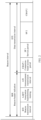
- FIG. 2 is a diagram of a structure of a beacon interval BI.
- the beacon interval is divided into a beacon header indication (beacon header indication, BHI) and a data transmission interval (data transmission interval, DTI).
- the BHI further includes a beacon transmission interval (beacon transmission interval, BTI), an association beamforming training (association beamforming training, A-BFT) interval, and an announcement transmission interval (announcement transmission interval, ATI).
- a PCP/AP sends a plurality of beacon (beacon) frames in the BTI based on a sector number.
- the beacon frames are used for downlink sector sweep.
- A-BFT is used by a STA for association and uplink sector sweep.
- An ATI is used by the PCP/AP to poll the STA for buffered data information and allocate a resource in the data transmission interval (data transmission interval, DTI) to the STA.
- the entire DTI is divided into several subintervals, and the subintervals are divided into a contention-based access period (contention-based access period, CBAP) and a service period (service period, SP) based on an access manner. In the service period, transmission scheduling is performed without contention.
- CBAP contention-based access period
- SP service period
- An AP first carries a sensing short capability element in a beacon. This indicates that the AP supports passive sensing. If a STA in an environment is to use, for sensing, beacon information sent by the AP, the STA may send an information request frame to the AP, to request the AP to send information related to the beacon. The AP sends sending information (such as a sending time and a sending beam direction) of the beacon to the STA by using an information response frame. The STA may receive, by using the information, the beacon sent by the AP, and perform passive sensing based on the sending information of the beacon.
- sending information such as a sending time and a sending beam direction
- Beam training in 802.11ad is mainly performed during association beamforming training (Association BFT, A-BFT).
- a PCP/AP sends a beacon frame in each direction.
- An A-BFT length field in the frame indicates a total slot length of an A-BFT phase.
- STAs receiving the frame randomly select a slot from [0, A-BFT Length-1] in a next A-BFT phase for access, and then sequentially send SSW frames through directional antennas (that is, RXSS).
- the PCP/AP uses a quasi-omnidirectional antenna to receive beams from all directions and records optimal transmission beams of the STAs.
- a sector sweep feedback (SSW Feedback) phase the PCP/AP feeds back training information of the previous phase (RSS) to the STAs through directional beams.
- the feedback information is an initiator transmit sector list obtained through sorting by sector quality, and includes an optimal sector of a responder in the previous phase. In this case, the responder is in a quasi-omnidirectional reception mode.
- a sector sweep acknowledgment (SSW ACK) phase is the final phase.
- the SSW ACK phase may not exist when SLS is performed before a data transmission phase (DTI), but the SSW ACK phase is required when SLS is performed in the DTI phase.
- DTI data transmission phase
- the SSW ACK phase is required when SLS is performed in the DTI phase.
- the STAs feed back a responder transmit sector list obtained through sorting by quality.
- an EDGM STA type is added to 802.11ay.
- a difference between the EDGM STA type in 802.1 1ay and a conventional DGM STA in 802.11ad lies in that the EDGM STA can transmit both an SSW frame and a short SSW frame in an A-BFT slot planned in an A-BFT phase.
- the short SSW frame has a shorter frame length, so that the EDGM STA can transmit more data in one slot.
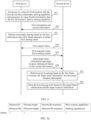
- FIG. 3 is a flowchart diagram of a monostatic sensing method according to an embodiment of this application.
- the monostatic sensing method may be applied to the communication system shown in FIG. 1 .
- a first device may be the PCP/AP shown in FIG. 1 , or the first device may be the STA shown in FIG. 1 .
- the method includes the following steps.
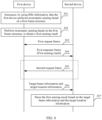
- the first device performs monostatic sensing based on a first frame structure, to obtain a first sensing result.
- a second device sends a first request frame to the first device, where the first request frame is used to request to obtain a monostatic sensing result, and correspondingly, the first device receives the first request frame.
- the first device sends a first response frame to the second device based on the first request frame, where the first response frame includes the first sensing result.
- the second device receives the first response frame.
- the first device may be the PCP/AP or the STA. If the first device is the PCP/AP, the first frame structure includes one of the following: a DMG beacon frame, a data frame, or a BRP. If the first device is the STA, the first frame structure is one of the following: a sector sweep SSW, a short SSW, a BRP, or a data frame.
- a training field (training field, TRN) may be carried at the end of the first frame structure, and sensing is facilitated because the TRN is used for sweep.
- the PCP/AP may perform monostatic sensing based on the DMG beacon frame, the data frame, or the BRP, to obtain the first sensing result.
- the STA may perform monostatic sensing based on the SSW, the short SSW, the data frame, or the BRP, to obtain the first sensing result.
- the first device may perform, to obtain the first sensing result, monostatic sensing based on the first frame structure sent by the first device, and send the first sensing result to the second device.
- the second device may request, by using the first request frame, to obtain the monostatic sensing result from the first device, and the first device sends the first sensing result to the second device by using the first response frame.
- the first request frame may be a DMG sensing poll frame or an information request frame.
- the second device may perform passive sensing based on the first frame structure sent by the first device. The second device may request, from the first device, target beam information for sending the first frame structure by the first device and information about a target location of the first device for sending the first frame structure.
- the target beam information includes but is not limited to a horizontal beam direction, a vertical direction, a horizontal beam width, a vertical beam width, a beam gain, and other information.
- the target location information includes but is not limited to information about an orientation posture of the first device for sending the first frame structure. It should be noted that the location information may be location coordinates determined by using the first device as an origin of coordinates or by using other coordinates as an origin of coordinates. Correspondingly, the first device sends the target beam information and the target location information to the second device.
- the second device may not only perform passive sensing based on the first frame structure, the target beam information, and the target location information, but also parse or interpret the obtained first sensing result by using the target beam information and the target location information, to implement passive sensing and monostatic sensing based on a same procedure. In this way, sensing efficiency is improved, and repeated transmission of the beam information and the location information is avoided. Further, the second device may further perform comprehensive sensing based on the monostatic sensing result and a passive sensing result that are sent by the first device. In this way, sensing diversity gains at a same moment are increased and sensing performance improved.
- the first device may announce that monostatic sensing is to be performed based on the first frame structure, and the second device may request, by using the first request frame, the first sensing result of monostatic sensing from the first device.
- the first request frame may be the DMG sensing poll frame.
- the first frame structure may be a DMG beacon frame in a current or next BTI. That is, the PCP or the AP announces that monostatic sensing is being performed based on the DMG beacon frame in the current BTI, or monostatic sensing is to be performed based on the DMG beacon frame in the next BTI.
- the second device may further request, from the first device, the target beam information for sending the first frame structure and the information about the target location of the first device for sending the first frame structure.
- the second device may perform passive sensing, or may not perform passive sensing, that is, monostatic sensing is not bound to passive sensing. In this way, flexibility of a monostatic sensing manner is improved.
- FIG. 4 is a flowchart diagram of another monostatic sensing method according to an embodiment of this application.
- a method procedure in FIG. 4 is a possible implementation of the method in FIG. 3 .
- the method includes the following steps.
- the first device sends the third information and the fourth information, where the third information is used to announce that the first device has the monostatic sensing capability, or the third information indicates that the first device supports monostatic sensing.
- the fourth information is used to announce that the first device has the passive sensing capability, or the fourth information indicates that the first device supports passive sensing, and another device may request sending beam information and location information from the first device.
- the first device may send the third information and the fourth information through broadcasting, multicasting, or unicasting.
- the second device receives the third information and the fourth information.
- the third information and the fourth information may be included in a second frame structure.
- the third information and the fourth information may be included in a capability element field of the second frame structure, for example, a DMG short sensing capability element field.
- the first device is the PCP/AP, and the PCP/AP performs monostatic sensing based on the beacon frame or the BRP, that is, the first frame structure is the DMG beacon frame or the BRP.
- the PCP/AP may announce that the PCP/AP has the monostatic sensing capability.
- the second frame structure may be an association request frame (Association Request Frame), an association response frame (Association Response Frame), a reassociation request frame (Reassociation Request Frame), a reassociation response frame (Reassociation Response Frame), a DMG beacon frame, an information request frame (Information Request Frame), an information response frame (Information Response Frame), a probe request (Probe Request) frame, a probe response (Probe Response) frame, or the like.
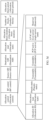
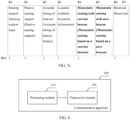
- a structure of the DMG sensing short capabilities element field may have a structure shown in FIG. 5a .
- the third information and the fourth information may be included in a short sensing capabilities field in the DMG sensing short capabilities element field.
- FIG. 5b and FIG. 5c are diagrams of structures of two optional short sensing capabilities fields.
- a monostatic sensing support subfield carries the third information, in other words, the third information is included in the monostatic sensing support subfield.
- a passive sensing support subfield carries the fourth information, in other words, the fourth information is included in the passive sensing support subfield.
- the monostatic sensing support subfield is added to the short sensing capabilities field for determining whether the AP supports monostatic sensing. If passive sensing support is 1 and monostatic sensing support is 1, the bit combination indicates that the AP supports beacon passive sensing and may provide a beacon-based monostatic sensing result. It may be understood that, after the monostatic sensing support subfield is added, a sensing support field in the short sensing capabilities field indicates that any sensing mode other than passive sensing and monostatic sensing is supported.
- the first device is the PCP/AP
- the PCP/AP performs monostatic sensing based on the data frame, that is, the first frame structure is the data frame.
- the PCP/AP may announce that the PCP/AP has the monostatic sensing capability.
- the second frame structure may be an association request frame (Association Request Frame), an association response frame (Association Response Frame), a reassociation request frame (Reassociation Request Frame), a reassociation response frame (Reassociation Response Frame), a DMG beacon frame, an information request frame (Information Request Frame), an information response frame (Information Response Frame), a data frame, a probe request (Probe Request) frame, a probe response (Probe Response) frame, or the like.
- the third information and the fourth information may be included in a short sensing capabilities field in the DMG short sensing capability element. For details, refer to the first optional implementation.
- At least one bit may be further used in an allocation field corresponding to an extended schedule element of a DMG beacon frame, to indicate that the allocation is used for/supports passive sensing and monostatic sensing.
- the second frame structure is the DMG beacon frame.
- FIG. 5d and FIG. 5e are diagrams of two structures of the allocation field. As shown in the figure, a reserved bit in an allocation control subfield may be used to carry the third information and the fourth information. It may be understood that the PCP/AP may also announce, by using the DMG short sensing capability element, that the PCP/AP supports passive sensing, and indicate, by using the bit in the allocation field corresponding to the extended schedule element of the beacon, that the allocation supports monostatic sensing.
- At least one bit may alternatively be added to the data frame to indicate that the PCP/AP supports passive sensing and monostatic sensing, or indicate that the PCP/AP has the passive sensing capability and the monostatic sensing capability. That is, the second frame structure is the data frame. For example, any at least one reserved bit in a PHY header or a MAC header may be used to carry the third information and the fourth information. It may be understood that the PCP/AP may also announce, by using the DMG short sensing capability element, that the PCP/AP supports passive sensing, and indicate, by using the one bit added to the data frame, that the PCP/AP supports monostatic sensing.
- the first device is the STA, and the STA performs monostatic sensing based on the SSW, the short SSW, or the BRP.
- the first frame structure is the SSW, the short SSW, or the BRP.
- the STA may announce that the STA has the monostatic sensing capability, or announce that the STA supports monostatic sensing.
- the second frame structure may be an association request frame (Association Request Frame), an association response frame (Association Response Frame), a reassociation request frame (Reassociation Request Frame), a reassociation response frame (Reassociation Response Frame), an information request frame (Information Request Frame), an information response frame (Information Response Frame), an SSW frame, a short SSW frame, a probe request (Probe Request) frame, a probe response (Probe Response) frame, or the like.
- a structure of the DMG sensing short capabilities element field may have a structure shown in FIG. 5a .
- the third information and the fourth information may be included in a short sensing capabilities field in the DMG sensing short capabilities element field.
- FIG. 5b and FIG. 5c are diagrams of structures of two optional short sensing capabilities fields.
- a monostatic sensing support subfield carries the third information, in other words, the third information is included in the monostatic sensing support subfield.
- a passive sensing support subfield carries the fourth information, in other words, the fourth information is included in the passive sensing support subfield.
- the bit combination indicates that the STA supports passive sensing and may provide a monostatic sensing result.
- the STA may send the SSW or the short SSW in an A-BFT process, and may use a reserved bit in the SSW or the short SSW to indicate that the STA supports monostatic sensing, or indicate that the STA has the monostatic sensing capability.
- FIG. 5f is a diagram of a structure of the SSW according to this application.
- the reserved bit in an SSW feedback field of the SSW may indicate that the STA supports monostatic sensing, or indicate that the STA has the monostatic sensing capability.
- FIG. 5g is a diagram of a structure of the short SSW according to this application.
- the reserved bit in the short SSW may indicate that the STA supports monostatic sensing, or indicate that the STA has the monostatic sensing capability.
- the reserved bit in the SSW or the short SSW is used to carry or represent the third information.
- the first device is the STA, and the STA performs monostatic sensing based on the data frame, that is, the first frame structure is the data frame.
- the STA may announce that the STA has the monostatic sensing capability.
- the second frame structure may be an association request frame (Association Request Frame), an association response frame (Association Response Frame), a reassociation request frame (Reassociation Request Frame), a reassociation response frame (Reassociation Response Frame), an information request frame (Information Request Frame), an information response frame (Information Response Frame), an SSW frame, a short SSW frame, a probe request (Probe Request) frame, a probe response (Probe Response) frame, a data frame, or the like.
- the third information and the fourth information may be included in a short sensing capabilities field in the DMG short sensing capability element. For details, refer to the first optional implementation. It should be noted that, if the device is the STA, passive sensing support is 1, and monostatic sensing support is 1, the bit combination indicates that the STA supports passive sensing and may provide a monostatic sensing result.
- the STA may send the SSW frame or the short SSW frame in an A-BFT process, and may use a reserved bit in the SSW frame or the short SSW frame to indicate that the STA supports monostatic sensing, or indicate that the STA has the monostatic sensing capability.
- FIG. 5f is a diagram of a structure of the SSW according to this application.
- the reserved bit in an SSW feedback field of the SSW may indicate that the STA supports monostatic sensing, or indicate that the STA has the monostatic sensing capability.
- FIG. 5g is a diagram of a structure of the short SSW according to this application.
- the reserved bit in the short SSW may indicate that the STA supports monostatic sensing, or indicate that the STA has the monostatic sensing capability.
- At least one bit may be added to the data frame to indicate that the STA supports passive sensing and monostatic sensing, or indicate that the STA has the passive sensing capability and the monostatic sensing capability. That is, the second frame structure is the data frame. For example, any at least one reserved bit in a PHY header or a MAC header may be used to carry the third information and the fourth information. It may be understood that the STA may also announce, by using the DMG short sensing capability element, that the STA supports passive sensing, and indicate, by using the one bit added to the data frame, that the STA supports monostatic sensing.
- the second device sends first information and second information to the first device, where the first information is used to request the first device to perform monostatic sensing, the second information is used to request to obtain the target beam information and the target location information, the target beam information is beam information for sending the first frame structure by the first device, and the target location information is the information about the location of the first device for sending the first frame structure.
- the first device receives the first information and the second information.
- the first device performs monostatic sensing based on the first information and the first frame structure, to obtain the first sensing result.
- the second device sends the first request frame to the first device, where the first request frame is used to request to obtain the monostatic sensing result, and correspondingly, the first device receives the first request frame.
- the first device sends the first response frame to the second device, where the first response frame includes the first sensing result.
- the second device receives the first response frame.
- the first device sends the target beam information and the target location information based on the second information.
- the second device performs passive sensing based on the first frame structure, the target beam information, and the target location information.
- the second device parses the first sensing result based on the target beam information and the target location information.
- the second device parses related information in the second frame structure, for example, the third information and the fourth information.
- the second device determines, by using the third information, that the first device supports monostatic sensing.
- the second device may request, by using the first information, the first device to perform monostatic sensing.
- the second device determines, by using the fourth information, that the first device supports passive sensing, and the second device may request the target beam information and the target location information from the first device by using the second information. It may be understood that, to help the second device parse the monostatic sensing result of the first device, the second device also needs to request the target beam information and the target location information from the first device.
- the first information and the second information may be included in an information requestt frame.
- the first information and the second information are separately included in different elements of the information request frame, or the first information and the second information may be included in a passive sensing information element (for example, a DMG passive sensing beacon info element/DMG passive sensing SSW info element/DMG passive sensing short SSW info element/DMG passive sensing info element) of the information request frame, or the first information and the second information may be separately included in different request frames.
- the second information is included in an information request frame
- the first information is included in another request frame (for example, a DMG sensing measurement setup request/DMG sensing measurement instance request/DMG sensing request). This is not limited in this application.
- the second device sends the information request frame to the first device, to request the target location information of the first device (including the information about the orientation posture for sending the first frame structure) and the target beam information (including information such as the horizontal beam direction, the vertical direction, the horizontal beam width, the vertical beam width, and the beam gain) for sending the first frame structure by the first device, to perform passive sensing based on the first frame structure subsequently sent by the first device.
- the second device may request the first device to perform monostatic sensing based on the first frame structure when the first device subsequently sends the first frame structure. After sensing is completed, the second device may request, from the first device, the first sensing result of monostatic sensing based on the first frame structure. It may be understood that the target location information of the first device and the target beam information for sending the first frame structure that are requested by the second device may also be used to interpret or parse the first sensing result.
- the first device is the AP or the PCP
- the second device is the STA
- the first frame structure is a beacon.
- the STA may request, by using a DMG passive sensing beacon info element included in the information request frame, the AP to send information such as target beam information for the beacon and target location information of the AP.
- the AP sends the information response frame to the STA, where the information response frame includes a DMG passive sensing beacon info element (describing a sending time of the beacon, the location of the AP, and other information) and one or more DMG beacon sector descriptors elements (describing beam information for beacon sending and the like).
- the first information used to request the AP to perform monostatic sensing may be included in the DMG passive sensing beacon info element of the information request frame.
- the DMG passive sensing beacon info element additionally includes indication information (that is, the first information) to request the AP to perform monostatic sensing based on the beacon.
- FIG. 5h is a diagram of a structure of the DMG passive sensing beacon info element.
- the first information in this application may be included in a beacon info control field, or may be included in another field of the DMG passive sensing beacon info element.
- FIG. 5i is a diagram of a possible structure of a beacon info control field. A monostatic sensing request bit is added to the beacon info control field to request the AP to perform monostatic sensing.
- the monostatic sensing request includes the first information, where the first information is carried in the monostatic sensing request bit.
- FIG. 5j is a diagram of another possible structure of a beacon info control field. Compared with that in FIG. 5i , the beacon info control field in FIG. 5j includes a "the next beacon" field. The field indicates that the target beam information subsequently sent by the AP is used to describe a beacon in a current BTI or a beacon in a next BTI. It may be understood that a monostatic sensing request bit in FIG. 5j is also used to request the AP to perform monostatic sensing. To be specific, the monostatic sensing request bit includes the first information, and the first information is carried in the monostatic sensing request bit.
- the STA requests, by using the information request frame, the target location information of the AP and related information of a target beam for sending the beacon, and requests, in the information request frame, the AP to perform monostatic sensing based on the beacon.
- the STA based on the target location information and the related information of the target beam for sending the beacon that are sent by the AP, the STA performs passive sensing by using the beacon sent by the AP, and the AP performs monostatic sensing based on the beacon at the request of the STA. Subsequently, the STA may request, from the AP, a beacon-based monostatic sensing result, that is, the first sensing result. The AP feeds back the first sensing result by using the first response frame. After receiving the first sensing result, the STA performs analysis in combination with a passive sensing result.
- the monostatic sensing request bit used to carry the first information may alternatively be included in a new element.
- the information request frame includes two elements. One element requests information related to passive sensing (that is, the DMG passive sensing beacon info element), and the other element requests monostatic sensing.
- the requesting the target beam information and the target location information and the requesting the AP to perform monostatic sensing may be implemented separately by using two frames.
- the information request/response is used to exchange the sending beam information for the beacon and the target location information of the AP, and the STA requests, by using another request frame (for example, the DMG sensing measurement setup request/DMG sensing measurement instance request/DMG sensing request), the AP to perform monostatic sensing based on the beacon.
- the AP feeds back a monostatic sensing result based on a response frame corresponding to the another request frame.
- the first frame structure is the BRP
- the beacon in the foregoing interaction procedure may be replaced with the BRP.
- a monostatic sensing device is a STA, that is, the first device is the STA, and the second device is the AP or the PCP.
- a corresponding procedure may be used to complete interaction of related information request and feedback.
- the information request/response frame includes a corresponding DMG passive sensing (SSW/Short SSW/BRP) info element.
- SSW/Short SSW/BRP DMG passive sensing
- information in the element is mainly used to describe information about the SSW/Short SSW/BRP sent by the STA in A-BFT.
- a monostatic sensing request bit may be added to the DMG passive sensing (SSW/Short SSW/BRP) info element to request the STA to perform monostatic sensing.
- the bit may be located in an (SSW/Short SSW/BRP) info control field.
- the information request frame may include the DMG passive sensing (SSW/Short SSW/BRP) info element and another element, and the another element includes the monostatic sensing request bit and is used to request the STA to perform monostatic sensing.
- the information request frame may be used to request the STA to send target beam information for the SSW/Short SSWBRP and target location information of the STA, and the AP requests, by using another request frame (for example, a DMG sensing measurement setup request/DMG sensing measurement instance request/DMG sensing request), the STA to perform monostatic sensing based on (SSW/Short SSWBRP).
- the information request/response frame includes a corresponding DMG passive sensing (data PPDU) info element.
- information in the element is mainly used to describe related information of a data frame data PPDU sent by the PCP/AP or the STA.
- the target beam information for the first frame structure and the information about the target location of the first device for sending the first frame structure that are sent by the first device to the second device may be used to simultaneously interpret results of both passive sensing and monostatic sensing. This improves sensing efficiency, and reduces overheads for exchanging the location information and the beam sending information.
- simultaneous passive sensing and monostatic sensing based on a same beacon/SSW/Short SSW/data frame are implemented. In this way, sensing diversity gains at a same moment are increased. Compared with performance of independent sensing, sensing performance can be improved.
- FIG. 6 is a flowchart diagram of still another monostatic sensing method according to an embodiment of this application.
- a method procedure in FIG. 6 is a possible implementation of the method in FIG. 3 .
- the method includes the following steps.
- the first device announces, by using fifth information, that the first device performs monostatic sensing based on the first frame structure.
- the first device performs monostatic sensing based on the first frame structure, to obtain the first sensing result.
- the second device sends the first request frame to the first device, where the first request frame is used to request to obtain the monostatic sensing result.
- the first device sends the first response frame to the second device, where the first response frame includes the first sensing result.
- the method may further include step 305.
- the second device sends a second request frame to the first device, where the second request frame is used to request to obtain the target beam information and the target location information.
- the first device sends the target beam information and the target location information to the second device, where the target beam information is the beam information for sending the first frame structure by the first device, and the target location information is the information about the location of the first device for sending the first frame structure.
- the second device parses the first sensing result based on the target beam information and the target location information.
- the first device sends the fifth information, where the fifth information is used to announce that the first device is to perform monostatic sensing based on the first frame structure, or the fifth information is used to announce that the first device is performing monostatic sensing based on the first frame structure.
- the first device may send the fifth information through broadcasting, multicasting, or unicasting.
- the second device receives the fifth information.
- the first frame structure may be a DMG beacon frame in a current or next BTI, and the PCP or the AP announces, by using the fifth information, that the PCP or the AP is performing monostatic sensing based on the beacon in the current BTI, or the PCP or the AP announces, by using the fifth information, that the PCP or the AP is to perform monostatic sensing based on the beacon in the next BTI.
- the STA may request the first sensing result of monostatic sensing from the PCP or the AP.
- the STA may also request, from the PCP or the AP, target beam information for sending the beacon by the PCP or the AP and information about a target location of the PCP or the AP for sending the beacon in the process of monostatic sensing.
- the first frame structure may be a data frame in a current or next DTI
- the PCP or the AP announces, by using the fifth information, that the PCP or the AP is performing monostatic sensing based on the data frame in the current DTI, or the PCP or the AP announces, by using the fifth information, that the PCP or the AP is to perform monostatic sensing based on the data frame in the next DTI.
- the STA may request the first sensing result of monostatic sensing from the PCP or the AP.
- the STA may also request, from the PCP or the AP, target beam information for sending the data frame by the PCP or the AP and information about a target location of the PCP or the AP for sending the data frame in the process of monostatic sensing.
- the first frame structure may be a BRP in a current or next DTI
- the PCP or the AP announces, by using the fifth information, that the PCP or the AP is performing monostatic sensing based on the BRP in the current DTI, or the PCP or the AP announces, by using the fifth information, that the PCP or the AP is to perform monostatic sensing based on the BRP in the next DTI.
- the STA may request the first sensing result of monostatic sensing from the PCP or the AP.
- the STA may also request, from the PCP or the AP, target beam information for sending the BRP by the PCP or the AP and information about a target location of the PCP or the AP for sending the BRP in the process of monostatic sensing.
- the first frame structure may be an SSW or a short SSW in current or next A-BFT, and the STA announces, by using the fifth information, that the STA is performing monostatic sensing based on the SSW/short SSW in the current A-BFT, or the STA announces, by using the fifth information, that the STA is to perform monostatic sensing based on the SSW/short SSW in the nextA-BFT.
- the AP may request, from the STA, the first sensing result of monostatic sensing performed by the STA.
- the AP may also request, from the STA, target beam information for sending the SSW/Short SSW by the STA and information about a target location of the STA for sending the SSW/Short SSW in the process of monostatic sensing.
- the first device is the STA
- the first frame structure is a data frame in a current or next DTI
- the STA announces, by using the fifth information, that the STA is performing monostatic sensing based on the data frame in the current DTI
- the STA announces, by using the fifth information, that the STA is to perform monostatic sensing based on the SSW/short SSW in the next A-BFT.
- the AP may request, from the STA, the first sensing result of monostatic sensing performed by the STA.
- the AP may also request, from the STA, target beam information for sending the data frame by the STA and information about a target location of the STA for sending the data frame in the process of monostatic sensing.
- the first device is the STA
- the first frame structure is a BRP in a current or next DTI
- the STA announces, by using the fifth information, that the STA is performing monostatic sensing based on the BRP in the current DTI
- the STA announces, by using the fifth information, that the STA is to perform monostatic sensing based on the BRP in the next DTI.
- the AP may request, from the STA, the first sensing result of monostatic sensing performed by the STA.
- the AP may also request, from the STA, target beam information for sending the BRP by the STA and information about a target location of the STA for sending the data frame in the process of monostatic sensing.
- the second device may request, by using the first request frame, to obtain the monostatic sensing result from the first device, and the first device sends the first sensing result of monostatic sensing to the second device by using the first response frame.
- the first request frame is further used to request to obtain the target beam information and the target location information.
- the first request frame may be an information request frame.
- the first request frame may be used to request to obtain the monostatic sensing result
- the second device requests, by using the second request frame, to obtain the target beam information and the target location information.
- the first request frame may be a DMG sensing poll frame
- the second request frame may be an information request frame.
- the second device parses the first sensing result of the first device based on the obtained target beam information and the obtained target location information.
- the fifth information may be included in a third frame structure.
- the third frame structure is one or more of the following: an association request frame, an association response frame, a reassociation request frame, a reassociation response frame, a DMG beacon frame, an information request frame, an information response frame, a probe request (Probe Request) frame, a probe response (Probe Response) frame, a data frame, or the like.
- the third frame structure is one or more of the following: an association request frame, an association response frame, a reassociation request frame, a reassociation response frame, an information request frame, an information response frame, a probe request (Probe Request) frame, a probe response (Probe Response) frame, an SSW frame, a short SSW frame, a data frame, or the like.
- the fifth information may be included in a capability element field of the third frame structure, for example, included in a DMG short sensing capability element field.
- the fifth information may be included in a short sensing capabilities field in the DMG short sensing capability element.
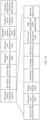
- FIG. 7a, FIG. 7b , and FIG. 7c are diagrams of structures of the short sensing capabilities field according to this application.
- a monostatic sensing field may be added to the short sensing capabilities field to carry the fifth information. That is, the monostatic sensing field indicates whether a related device is performing monostatic sensing based on a current transmission, or whether monostatic sensing is to be performed based on a next transmission.
- the monostatic sensing field may only indicate that the related device is performing monostatic sensing based on the current transmission, or the monostatic sensing field may only indicate that the related device is to perform monostatic sensing based on the next transmission. This is not limited in this application. Alternatively, the monostatic sensing field may indicate that the related device is performing monostatic sensing based on a current transmission or that the related device is to perform monostatic sensing based on a next transmission.
- a first field for example, monostatic sensing with current beacon
- a second field for example, monostatic sensing with next beacon
- the first field indicates that monostatic sensing is being performed based on a first frame structure in a current transmission (for example, a beacon in a current BTI, or an SSW or a Short SSW in currentA-BFT).
- the second field indicates that monostatic sensing is to be performed based on a first frame structure in a next transmission (for example, a beacon in a next BTI, or an SSW or a short SSW in next A-BFT).
- the fifth information is included in the first field or the second field.
- the PCP/AP performs monostatic sensing based on the data frame, that is, the first frame structure is the data frame.
- the PCP/AP may announce, in the DMG short sensing capability element field of the third frame structure, that the PCP/AP is performing monostatic sensing based on a data frame in a current DTI, or is to perform monostatic sensing based on a data frame in a next DTI.
- the third frame structure may be an association request frame (Association Request Frame), an association response frame (Association Response Frame), a reassociation request frame (Reassociation Request Frame), a reassociation response frame (Reassociation Response Frame), a beacon frame, an information request frame (Information Request Frame), an information response frame (Information Response Frame), a data frame, a probe request (Probe Request) frame, a probe response (Probe Response) frame, or the like.
- the PCP/AP may also use at least one bit in an allocation field corresponding to an extended schedule element of a DMG beacon frame, to indicate that the allocation is performing monostatic sensing based on a data frame in a current DTI, or is to perform monostatic sensing based on a data frame in a next DTI.
- the PCP/AP may also add at least one bit to the data frame to indicate that the PCP/AP is performing monostatic sensing based on a data frame in a current DTI, or is to perform monostatic sensing based on a data frame in a next DTI. For example, any at least one reserved bit in a PHY header or a MAC header may be used for indication.
- the STA performs monostatic sensing based on the data frame, that is, the first frame structure is the data frame.
- the STA may announce, in the DMG short sensing capability element field of the third frame structure, that the STA is performing monostatic sensing based on a data frame in a current DTI, or is to perform monostatic sensing based on a data frame in a next DTI.
- the third frame structure may be an association request frame (Association Request Frame), an association response frame (Association Response Frame), a reassociation request frame (Reassociation Request Frame), a reassociation response frame (Reassociation Response Frame), an information request frame (Information Request Frame), a probe request (Probe Request) frame, a probe response (Probe Response) frame, an information response frame (Information Response Frame), an SSW frame, a short SSW frame, a data frame, or the like.
- the STA may use a reserved bit in an SSW frame or a short SSW sent in an A-BFT process to indicate that the STA is performing monostatic sensing based on a data frame in a current DTI, or is to perform monostatic sensing based on a data frame in a next DTI.
- the STA may also add at least one bit to the data frame to indicate that the STA is performing monostatic sensing based on a data frame in a current DTI, or is to perform monostatic sensing based on a data frame in a next DTI.
- at least one reserved bit in a PHY header or a MAC header may be used for indication.
- a communication apparatus provided in an embodiment of this application is described below.
- the communication apparatus is divided into functional modules based on the foregoing method embodiments.
- division of the functional modules may be based on respective functions, or two or more functions may be integrated in one processing module.
- the integrated module may be implemented in a form of hardware, or may be implemented in a form of a software functional module.
- module division is an example, and is merely a logical function division. In actual implementation, another division manner may be used. The following describes in detail communication apparatuses in embodiments of this application with reference to FIG. 8 to FIG. 10 .
- FIG. 8 is a diagram of a structure of a communication apparatus 100 according to an embodiment of this application.
- the communication apparatus 100 may correspondingly implement functions or steps implemented by the communication apparatuses (for example, the first device and the second device) in the foregoing method embodiments.
- the communication apparatus may include a processing module 110 and a transceiver module 120.
- a storage unit may be further included.
- the storage unit may be configured to store instructions (code or a program) and/or data.
- the processing module 110 and the transceiver module 120 may be coupled to the storage unit.
- the processing module 110 may read the instructions (the code or the program) and/or the data in the storage unit, to implement a corresponding method.
- the transceiver module 120 may further include a sending module and a receiving module.
- the sending module may be a transmitter
- the receiving module may be a receiver.
- An entity corresponding to the transceiver module 120 may be a transceiver.
- the communication apparatus 100 can correspondingly implement the behavior and functions of the first device in the foregoing method embodiments.
- the communication apparatus 100 may be a first device, or may be a component (for example, a chip or a circuit) applied to the first device.
- the transceiver module 120 may be configured to perform all reception or sending operations performed by the first device in embodiments in FIG. 3 , FIG. 4 , and FIG. 6 , for example, step 102 and step 103 in the embodiment shown in FIG. 3 , steps 202, 204, 205, and 206 in the embodiment shown in FIG. 4 , steps 303, 304, 305, and 306 in the embodiment shown in FIG.
- the processing module 110 is configured to perform all operations other than sending and reception operations performed by the first device in embodiments in FIG. 3 , FIG. 4 , and FIG. 6 , for example, step 101 in the embodiment shown in FIG. 3 , steps 201 and 203 in the embodiment shown in FIG. 4 , and steps 301 and 302 in the embodiment shown in FIG. 6 .
- the communication apparatus 100 can correspondingly implement the behavior and functions of the second device in the foregoing method embodiments.
- the communication apparatus 100 may be the second device, or may be a component (for example, a chip or a circuit) applied to the second device.
- the transceiver module 120 may be configured to perform all reception or sending operations performed by the second device in embodiments in FIG. 3 , FIG. 4 , and FIG. 6 , for example, step 102 and step 103 in the embodiment shown in FIG. 3 , steps 202, 204, 205, and 206 in the embodiment shown in FIG. 4 , steps 303, 304, 305, and 306 in the embodiment shown in FIG.
- the processing module 110 is configured to perform all operations other than sending and reception operations performed by the second device in embodiments in FIG. 3 , FIG. 4 , and FIG. 6 , for example, steps 207 and 208 in the embodiment shown in FIG. 4 and step 307 in the embodiment shown in FIG. 6 .
- the processing module 110 may be one or more processors, and the transceiver module 120 may be a transceiver, or the transceiver module 120 may be a sending unit and a receiving unit.
- the sending unit may be a transmitter, and the receiving unit may be a receiver.
- the sending unit and the receiving unit are integrated into one component, for example, a transceiver.
- the processor and the transceiver may be coupled, or the like. A manner of connecting the processor and the transceiver is not limited in this embodiment of this application.
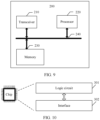
- FIG. 9 is a diagram of a structure of another communication apparatus 200 according to an embodiment of this application.
- the communication apparatus in FIG. 9 may be the foregoing first device, or may be the foregoing second device.
- the communication apparatus 200 includes one or more processors 220 and transceivers 210.
- the transceiver 210 may implement a function of a transceiver module 120, and the processor 220 may implement a function of a processing module 110.
- the transceiver may include a receiver and a transmitter.
- the receiver is configured to perform a reception function (or operation)
- the transmitter is configured to perform a transmitting function (or operation).
- the transceiver is configured to communicate with another device/apparatus through a transmission medium.
- the communication apparatus 200 may further include one or more memories 230, configured to store program instructions and/or data.
- the memory 230 is coupled to the processor 220.
- the coupling in this embodiment of this application may be indirect coupling or a communication connection between apparatuses, units, or modules in an electrical form, a mechanical form, or another form, and is used for information exchange between the apparatuses, the units, or the modules.
- the processor 220 may perform an operation in cooperation with the memory 230.
- the processor 220 may execute the program instructions stored in the memory 230.
- a specific connection medium between the transceiver 210, the processor 220, and the memory 230 is not limited in this embodiment of this application.
- the memory 230, the processor 220, and the transceiver 210 are connected by using a bus 240.
- the bus is indicated by using a thick line in FIG. 9 .
- a connection manner of other components is merely an example for description, and imposes no limitations.
- the bus may be classified into an address bus, a data bus, a control bus, and the like. For ease of representation, only one thick line is used to represent the bus in FIG. 9 , but this does not mean that there is only one bus or only one type of bus.
- the processor may be a general-purpose processor, a digital signal processor, an application-specific integrated circuit, a field programmable gate array or another programmable logic device, a discrete gate or transistor logic device, a discrete hardware component, or the like.
- the processor can implement or execute the methods, the steps, and the logical block diagrams disclosed in embodiments of this application.
- the general-purpose processor may be a microprocessor, or may be any conventional processor or the like.
- the steps in the methods disclosed with reference to embodiments of this application may be directly performed by a hardware processor, or may be performed by a combination of hardware and a software module in the processor, and the like.
- the memory may include but is not limited to a nonvolatile memory like a hard disk drive (hard disk drive, HDD) or a solid-state drive (solid-state drive, SSD), a random access memory (Random Access Memory, RAM), an erasable programmable read-only memory (Erasable Programmable ROM, EPROM), a read-only memory (Read-Only Memory, ROM), or a compact disc read-only memory (Compact Disc Read-Only Memory, CD-ROM).
- the memory is any storage medium that can be used to carry or store program code in a form of an instruction or a data structure and that can be read and/or written by a computer (for example, the communication apparatus shown in this application). However, this application is not limited thereto.
- the memory in embodiments of this application may alternatively be a circuit or any other apparatus that can implement a storage function, and is configured to store program instructions and/or data.
- the processor 220 is mainly configured to: process a communication protocol and communication data, control the entire communication apparatus, execute a software program, and process data of a software program.
- the memory 230 is mainly configured to store software program and data.
- the transceiver 210 may include a control circuit and an antenna.
- the control circuit is mainly configured to convert a baseband signal and a radio frequency signal and process a radio frequency signal.
- the antenna is mainly configured to receive and send a radio frequency signal in a form of an electromagnetic wave.
- An input/output apparatus for example, a touchscreen, a display, or a keyboard, is mainly configured to receive data input by a user and output data to the user.
- the processor 220 can read a software program in the memory 230, interpret and execute instructions of the software program, and process data of the software program.
- the processor 220 outputs a baseband signal to the radio frequency circuit; and the radio frequency circuit performs radio frequency processing on the baseband signal and then sends the radio frequency signal to the outside in a form of an electromagnetic wave through the antenna.
- the radio frequency circuit receives the radio frequency signal through the antenna, converts the radio frequency signal into the baseband signal, and outputs the baseband signal to the processor 220.
- the processor 220 converts the baseband signal into data and processes the data.
- the radio frequency circuit and the antenna may be disposed independent of the processor that performs baseband processing.
- the radio frequency circuit and the antenna may be remotely disposed independent of the communication apparatus.
- the communication apparatus shown in this embodiment of this application may further have more components and the like than those in FIG. 9 . This is not limited in this embodiment of this application.
- the foregoing methods performed by the processor and the transceiver are merely examples. For specific steps performed by the processor and the transceiver, refer to the methods described above.
- the processing module 110 may be one or more logic circuits, and the transceiver module 120 may be an input/output interface, which is also referred to as a communication interface, an interface circuit, an interface, or the like.
- the transceiver module 120 may be a sending unit and a receiving unit.
- the sending unit may be an output interface
- the receiving unit may be an input interface.
- the sending unit and the receiving unit are integrated into one unit, for example, an input/output interface.
- the communication apparatus shown in FIG. 10 includes a logic circuit 301 and an interface 302.
- the processing module 110 may be implemented by using the logic circuit 301
- the transceiver module 120 may be implemented by using the interface 302.
- the logic circuit 301 may be a chip, a processing circuit, an integrated circuit, a system on chip (system on chip, SoC), or the like.
- the interface 302 may be a communication interface, an input/output interface, a pin, or the like.
- FIG. 10 shows an example in which the communication apparatus is a chip.
- the chip includes a logic circuit 301 and an interface 302.
- the logic circuit and the interface may be coupled to each other.
- a specific manner of connection between the logic circuit and the interface is not limited in this embodiment of this application.
- the logic circuit 301 is configured to perform monostatic sensing based on the first frame structure, to obtain a first sensing result.
- the interface 302 is configured to receive the first request frame, and send the first response frame to the second device.
- the interface 302 is configured to: send the first request frame to the first device and receive the first response frame sent by the first device, and the logic circuit 301 is configured to generate the first request frame.
- the communication apparatus shown in embodiments of this application may implement the methods provided in embodiments of this application in a form of hardware, or may implement the methods provided in embodiments of this application in a form of software. This is not limited in embodiments of this application.
- a wireless communication system is further provided.
- the wireless communication system includes a first device and a second device.
- the first device and the second device may perform the methods in any of the foregoing embodiments (for example, FIG. 3 , FIG. 4 , and FIG. 6 ).
- this application further provides a computer-readable storage medium.
- the computer-readable storage medium stores computer code.
- the computer code When the computer code is run on a computer, the computer is enabled to perform operations and/or processing performed by the first device in the methods provided in this application.
- This application further provides a computer-readable storage medium.
- the computer-readable storage medium stores computer code.
- the computer code When the computer code is run on a computer, the computer is enabled to perform the operations and/or the processing performed by the second device in the methods provided in this application.
- the computer program product includes computer code or a computer program.
- the computer code or the computer program is run on a computer, the operations and/or processing performed by the first device in the methods provided in this application is performed.
- the computer program product includes computer code or a computer program.
- the computer code or the computer program is run on a computer, the operations and/or processing performed by the second device in the method provided in this application is performed.
- the disclosed system, apparatus, and method may be implemented in other manners.
- the described apparatus embodiment is merely an example.
- division of the units is merely logical function division and may be other division in actual implementation.
- a plurality of units or components may be combined or integrated into another system, or some features may be ignored or not performed.
- the displayed or discussed mutual coupling or direct coupling or a communication connection may be implemented through some interfaces, indirect coupling or a communication connection between apparatuses or units is implemented in an electrical form, a mechanical form, or another form
- the units described as separate parts may or may not be physically separate, and parts displayed as units may or may not be physical units, may be located in one place, or may be distributed on a plurality of network units. Some or all of the units may be selected based on an actual requirement to implement the technical effect of the solutions provided in embodiments of this application.
- each of the units may exist alone physically, or two or more units may be integrated into one unit.
- the integrated unit may be implemented in a form of hardware, or may be implemented in a form of a software functional unit.
- the integrated unit When the integrated unit is implemented in the form of the software functional unit and sold or used as an independent product, the integrated unit may be stored in a computer-readable storage medium. Based on such an understanding, the technical solutions of this application essentially, or the part contributing to the conventional technologies, or all or some of the technical solutions may be implemented in a form of a software product.
- the computer software product is stored in a readable storage medium and includes a plurality of instructions for instructing a computer device (which may be a personal computer, a server, or a network device) to perform all or some of the steps of the methods described in embodiments of this application.
- the readable storage medium includes any medium that can store program code, for example, a USB flash drive, a removable hard disk, a read-only memory (read-only memory, ROM), a random access memory (random access memory, RAM), a magnetic disk, or an optical disc.
- program code for example, a USB flash drive, a removable hard disk, a read-only memory (read-only memory, ROM), a random access memory (random access memory, RAM), a magnetic disk, or an optical disc.
Landscapes
- Engineering & Computer Science (AREA)
- Computer Networks & Wireless Communication (AREA)
- Signal Processing (AREA)
- Databases & Information Systems (AREA)
- Mobile Radio Communication Systems (AREA)
- Catching Or Destruction (AREA)
- Arrangements For Transmission Of Measured Signals (AREA)
Applications Claiming Priority (2)
| Application Number | Priority Date | Filing Date | Title |
|---|---|---|---|
| CN202210279157.7A CN116828520A (zh) | 2022-03-21 | 2022-03-21 | 自发自收感知方法及相关产品 |
| PCT/CN2023/081769 WO2023179437A1 (zh) | 2022-03-21 | 2023-03-16 | 自发自收感知方法及相关产品 |
Publications (2)
| Publication Number | Publication Date |
|---|---|
| EP4485992A1 true EP4485992A1 (de) | 2025-01-01 |
| EP4485992A4 EP4485992A4 (de) | 2025-06-25 |
Family
ID=88099832
Family Applications (1)
| Application Number | Title | Priority Date | Filing Date |
|---|---|---|---|
| EP23773685.5A Pending EP4485992A4 (de) | 2022-03-21 | 2023-03-16 | Selbstsende-/selbstempfangserfassungsverfahren und zugehöriges produkt |
Country Status (9)
| Country | Link |
|---|---|
| US (1) | US20250016726A1 (de) |
| EP (1) | EP4485992A4 (de) |
| JP (1) | JP2025510027A (de) |
| KR (1) | KR20240161143A (de) |
| CN (1) | CN116828520A (de) |
| AU (1) | AU2023237288A1 (de) |
| CA (1) | CA3255119A1 (de) |
| MX (1) | MX2024011495A (de) |
| WO (1) | WO2023179437A1 (de) |
Families Citing this family (3)
| Publication number | Priority date | Publication date | Assignee | Title |
|---|---|---|---|---|
| CN118695371A (zh) * | 2023-03-24 | 2024-09-24 | 华为技术有限公司 | 通信方法及通信装置 |
| US20250193877A1 (en) * | 2023-12-08 | 2025-06-12 | Qualcomm Incorporated | Selectively repurposing communication resources for radio frequency (rf) sensing |
| CN120238894A (zh) * | 2023-12-29 | 2025-07-01 | 华为技术有限公司 | 感知通信方法及装置 |
Family Cites Families (5)
| Publication number | Priority date | Publication date | Assignee | Title |
|---|---|---|---|---|
| CN113453355B (zh) * | 2020-03-27 | 2024-09-06 | 华为技术有限公司 | 无线局域网感知方法、网络设备及芯片 |
| CN113747461B (zh) * | 2020-05-30 | 2025-05-27 | 华为技术有限公司 | 一种感知目标物体的方法及装置 |
| US12047869B2 (en) * | 2020-09-16 | 2024-07-23 | Intel Corporation | Position information aided Wi-Fi sensing |
| CN112804662B (zh) * | 2021-03-18 | 2021-07-30 | 成都极米科技股份有限公司 | 提供无线感知业务的方法、装置、终端设备及存储介质 |
| CN115696369B (zh) * | 2021-07-23 | 2025-09-26 | 维沃移动通信有限公司 | 感知方法、装置及网络设备 |
-
2022
- 2022-03-21 CN CN202210279157.7A patent/CN116828520A/zh active Pending
-
2023
- 2023-03-16 JP JP2024556236A patent/JP2025510027A/ja active Pending
- 2023-03-16 KR KR1020247033313A patent/KR20240161143A/ko active Pending
- 2023-03-16 CA CA3255119A patent/CA3255119A1/en active Pending
- 2023-03-16 AU AU2023237288A patent/AU2023237288A1/en active Pending
- 2023-03-16 MX MX2024011495A patent/MX2024011495A/es unknown
- 2023-03-16 WO PCT/CN2023/081769 patent/WO2023179437A1/zh not_active Ceased
- 2023-03-16 EP EP23773685.5A patent/EP4485992A4/de active Pending
-
2024
- 2024-09-20 US US18/891,295 patent/US20250016726A1/en active Pending
Also Published As
| Publication number | Publication date |
|---|---|
| US20250016726A1 (en) | 2025-01-09 |
| JP2025510027A (ja) | 2025-04-14 |
| CA3255119A1 (en) | 2025-03-31 |
| MX2024011495A (es) | 2024-09-26 |
| EP4485992A4 (de) | 2025-06-25 |
| AU2023237288A1 (en) | 2024-10-03 |
| KR20240161143A (ko) | 2024-11-12 |
| CN116828520A (zh) | 2023-09-29 |
| WO2023179437A1 (zh) | 2023-09-28 |
Similar Documents
| Publication | Publication Date | Title |
|---|---|---|
| EP4485992A1 (de) | Selbstsende-/selbstempfangserfassungsverfahren und zugehöriges produkt | |
| KR101409916B1 (ko) | 지향성 안테나를 이용한 무선 통신 시스템 내에서의 빔포밍 트레이닝 | |
| WO2020164601A1 (zh) | 传输配置编号状态指示的方法和通信装置 | |
| US20120122392A1 (en) | Communication apparatus and communication method, computer program, and communication system | |
| US20190123991A1 (en) | Systems and Methods for a Sounding Frame in an IEEE 802.11AX Compliant Network | |
| CN101873156A (zh) | 无线通信装置、无线通信方法以及无线通信系统 | |
| JP2022539974A (ja) | ビーム構成方法および装置 | |
| US12028907B2 (en) | Rach-based Tx beam refinement procedure | |
| EP3852281A1 (de) | Verfahren und vorrichtung zum strahlentraining | |
| CN107645323A (zh) | 用于在基本服务集发现中进行波束成形训练的方法和装置 | |
| KR20230079223A (ko) | 다중링크 통신 프로브 요청 방법 및 장치 | |
| CN115276894A (zh) | 非同时收发能力的指示方法、装置及系统 | |
| CN108024376A (zh) | 无线局域网中的调度方法、接入点和站点 | |
| WO2020125635A1 (zh) | 一种通信方法及装置 | |
| CN107204796A (zh) | 无线通信系统、无线控制方法及虚拟基站装置 | |
| CN118921087A (zh) | 无线网络的空间重用 | |
| US20250330853A1 (en) | Beam measurement method and related apparatus | |
| WO2022166662A1 (zh) | 射频感知方法及相关装置 | |
| WO2018149346A1 (zh) | 确定和用于确定doa的方法以及接入网设备和终端 | |
| CN104105215A (zh) | 一种数据发送方法和站点设备 | |
| CN117062229A (zh) | 一种信息指示方法和装置 | |
| US20250119799A1 (en) | Communication method and apparatus | |
| EP4568133A1 (de) | Kommunikationsverfahren und -vorrichtung | |
| US20250227634A1 (en) | Communication Method and Apparatus | |
| US20240380464A1 (en) | Channel characteristic obtaining method and related apparatus |
Legal Events
| Date | Code | Title | Description |
|---|---|---|---|
| STAA | Information on the status of an ep patent application or granted ep patent |
Free format text: STATUS: THE INTERNATIONAL PUBLICATION HAS BEEN MADE |
|
| PUAI | Public reference made under article 153(3) epc to a published international application that has entered the european phase |
Free format text: ORIGINAL CODE: 0009012 |
|
| STAA | Information on the status of an ep patent application or granted ep patent |
Free format text: STATUS: REQUEST FOR EXAMINATION WAS MADE |
|
| 17P | Request for examination filed |
Effective date: 20240925 |
|
| AK | Designated contracting states |
Kind code of ref document: A1 Designated state(s): AL AT BE BG CH CY CZ DE DK EE ES FI FR GB GR HR HU IE IS IT LI LT LU LV MC ME MK MT NL NO PL PT RO RS SE SI SK SM TR |
|
| A4 | Supplementary search report drawn up and despatched |
Effective date: 20250526 |
|
| DAV | Request for validation of the european patent (deleted) | ||
| DAX | Request for extension of the european patent (deleted) | ||
| RIC1 | Information provided on ipc code assigned before grant |
Ipc: H04W 24/02 20090101ALI20250520BHEP Ipc: H04W 24/08 20090101AFI20250520BHEP |