EP4484573A2 - Zusammensetzungen und verfahren für genomische dna und genexpressionsanalyse in einzelzellen - Google Patents
Zusammensetzungen und verfahren für genomische dna und genexpressionsanalyse in einzelzellen Download PDFInfo
- Publication number
- EP4484573A2 EP4484573A2 EP24211484.1A EP24211484A EP4484573A2 EP 4484573 A2 EP4484573 A2 EP 4484573A2 EP 24211484 A EP24211484 A EP 24211484A EP 4484573 A2 EP4484573 A2 EP 4484573A2
- Authority
- EP
- European Patent Office
- Prior art keywords
- cell
- seq
- dna
- chromatin
- chex
- Prior art date
- Legal status (The legal status is an assumption and is not a legal conclusion. Google has not performed a legal analysis and makes no representation as to the accuracy of the status listed.)
- Pending
Links
Images







Classifications
-
- C—CHEMISTRY; METALLURGY
- C12—BIOCHEMISTRY; BEER; SPIRITS; WINE; VINEGAR; MICROBIOLOGY; ENZYMOLOGY; MUTATION OR GENETIC ENGINEERING
- C12Q—MEASURING OR TESTING PROCESSES INVOLVING ENZYMES, NUCLEIC ACIDS OR MICROORGANISMS; COMPOSITIONS OR TEST PAPERS THEREFOR; PROCESSES OF PREPARING SUCH COMPOSITIONS; CONDITION-RESPONSIVE CONTROL IN MICROBIOLOGICAL OR ENZYMOLOGICAL PROCESSES
- C12Q1/00—Measuring or testing processes involving enzymes, nucleic acids or microorganisms; Compositions therefor; Processes of preparing such compositions
- C12Q1/68—Measuring or testing processes involving enzymes, nucleic acids or microorganisms; Compositions therefor; Processes of preparing such compositions involving nucleic acids
- C12Q1/6806—Preparing nucleic acids for analysis, e.g. for polymerase chain reaction [PCR] assay
-
- C—CHEMISTRY; METALLURGY
- C12—BIOCHEMISTRY; BEER; SPIRITS; WINE; VINEGAR; MICROBIOLOGY; ENZYMOLOGY; MUTATION OR GENETIC ENGINEERING
- C12N—MICROORGANISMS OR ENZYMES; COMPOSITIONS THEREOF; PROPAGATING, PRESERVING, OR MAINTAINING MICROORGANISMS; MUTATION OR GENETIC ENGINEERING; CULTURE MEDIA
- C12N15/00—Mutation or genetic engineering; DNA or RNA concerning genetic engineering, vectors, e.g. plasmids, or their isolation, preparation or purification; Use of hosts therefor
- C12N15/09—Recombinant DNA-technology
- C12N15/11—DNA or RNA fragments; Modified forms thereof; Non-coding nucleic acids having a biological activity
-
- C—CHEMISTRY; METALLURGY
- C07—ORGANIC CHEMISTRY
- C07H—SUGARS; DERIVATIVES THEREOF; NUCLEOSIDES; NUCLEOTIDES; NUCLEIC ACIDS
- C07H19/00—Compounds containing a hetero ring sharing one ring hetero atom with a saccharide radical; Nucleosides; Mononucleotides; Anhydro-derivatives thereof
- C07H19/02—Compounds containing a hetero ring sharing one ring hetero atom with a saccharide radical; Nucleosides; Mononucleotides; Anhydro-derivatives thereof sharing nitrogen
- C07H19/04—Heterocyclic radicals containing only nitrogen atoms as ring hetero atom
- C07H19/06—Pyrimidine radicals
- C07H19/10—Pyrimidine radicals with the saccharide radical esterified by phosphoric or polyphosphoric acids
-
- C—CHEMISTRY; METALLURGY
- C12—BIOCHEMISTRY; BEER; SPIRITS; WINE; VINEGAR; MICROBIOLOGY; ENZYMOLOGY; MUTATION OR GENETIC ENGINEERING
- C12Q—MEASURING OR TESTING PROCESSES INVOLVING ENZYMES, NUCLEIC ACIDS OR MICROORGANISMS; COMPOSITIONS OR TEST PAPERS THEREFOR; PROCESSES OF PREPARING SUCH COMPOSITIONS; CONDITION-RESPONSIVE CONTROL IN MICROBIOLOGICAL OR ENZYMOLOGICAL PROCESSES
- C12Q1/00—Measuring or testing processes involving enzymes, nucleic acids or microorganisms; Compositions therefor; Processes of preparing such compositions
- C12Q1/68—Measuring or testing processes involving enzymes, nucleic acids or microorganisms; Compositions therefor; Processes of preparing such compositions involving nucleic acids
- C12Q1/6809—Methods for determination or identification of nucleic acids involving differential detection
-
- C—CHEMISTRY; METALLURGY
- C12—BIOCHEMISTRY; BEER; SPIRITS; WINE; VINEGAR; MICROBIOLOGY; ENZYMOLOGY; MUTATION OR GENETIC ENGINEERING
- C12Q—MEASURING OR TESTING PROCESSES INVOLVING ENZYMES, NUCLEIC ACIDS OR MICROORGANISMS; COMPOSITIONS OR TEST PAPERS THEREFOR; PROCESSES OF PREPARING SUCH COMPOSITIONS; CONDITION-RESPONSIVE CONTROL IN MICROBIOLOGICAL OR ENZYMOLOGICAL PROCESSES
- C12Q1/00—Measuring or testing processes involving enzymes, nucleic acids or microorganisms; Compositions therefor; Processes of preparing such compositions
- C12Q1/68—Measuring or testing processes involving enzymes, nucleic acids or microorganisms; Compositions therefor; Processes of preparing such compositions involving nucleic acids
- C12Q1/6813—Hybridisation assays
- C12Q1/6816—Hybridisation assays characterised by the detection means
-
- C—CHEMISTRY; METALLURGY
- C12—BIOCHEMISTRY; BEER; SPIRITS; WINE; VINEGAR; MICROBIOLOGY; ENZYMOLOGY; MUTATION OR GENETIC ENGINEERING
- C12Q—MEASURING OR TESTING PROCESSES INVOLVING ENZYMES, NUCLEIC ACIDS OR MICROORGANISMS; COMPOSITIONS OR TEST PAPERS THEREFOR; PROCESSES OF PREPARING SUCH COMPOSITIONS; CONDITION-RESPONSIVE CONTROL IN MICROBIOLOGICAL OR ENZYMOLOGICAL PROCESSES
- C12Q1/00—Measuring or testing processes involving enzymes, nucleic acids or microorganisms; Compositions therefor; Processes of preparing such compositions
- C12Q1/68—Measuring or testing processes involving enzymes, nucleic acids or microorganisms; Compositions therefor; Processes of preparing such compositions involving nucleic acids
- C12Q1/6844—Nucleic acid amplification reactions
- C12Q1/6851—Quantitative amplification
-
- C—CHEMISTRY; METALLURGY
- C12—BIOCHEMISTRY; BEER; SPIRITS; WINE; VINEGAR; MICROBIOLOGY; ENZYMOLOGY; MUTATION OR GENETIC ENGINEERING
- C12Q—MEASURING OR TESTING PROCESSES INVOLVING ENZYMES, NUCLEIC ACIDS OR MICROORGANISMS; COMPOSITIONS OR TEST PAPERS THEREFOR; PROCESSES OF PREPARING SUCH COMPOSITIONS; CONDITION-RESPONSIVE CONTROL IN MICROBIOLOGICAL OR ENZYMOLOGICAL PROCESSES
- C12Q1/00—Measuring or testing processes involving enzymes, nucleic acids or microorganisms; Compositions therefor; Processes of preparing such compositions
- C12Q1/68—Measuring or testing processes involving enzymes, nucleic acids or microorganisms; Compositions therefor; Processes of preparing such compositions involving nucleic acids
- C12Q1/6844—Nucleic acid amplification reactions
- C12Q1/6865—Promoter-based amplification, e.g. nucleic acid sequence amplification [NASBA], self-sustained sequence replication [3SR] or transcription-based amplification system [TAS]
-
- C—CHEMISTRY; METALLURGY
- C07—ORGANIC CHEMISTRY
- C07H—SUGARS; DERIVATIVES THEREOF; NUCLEOSIDES; NUCLEOTIDES; NUCLEIC ACIDS
- C07H21/00—Compounds containing two or more mononucleotide units having separate phosphate or polyphosphate groups linked by saccharide radicals of nucleoside groups, e.g. nucleic acids
- C07H21/02—Compounds containing two or more mononucleotide units having separate phosphate or polyphosphate groups linked by saccharide radicals of nucleoside groups, e.g. nucleic acids with ribosyl as saccharide radical
-
- C—CHEMISTRY; METALLURGY
- C07—ORGANIC CHEMISTRY
- C07H—SUGARS; DERIVATIVES THEREOF; NUCLEOSIDES; NUCLEOTIDES; NUCLEIC ACIDS
- C07H21/00—Compounds containing two or more mononucleotide units having separate phosphate or polyphosphate groups linked by saccharide radicals of nucleoside groups, e.g. nucleic acids
- C07H21/04—Compounds containing two or more mononucleotide units having separate phosphate or polyphosphate groups linked by saccharide radicals of nucleoside groups, e.g. nucleic acids with deoxyribosyl as saccharide radical
-
- C—CHEMISTRY; METALLURGY
- C12—BIOCHEMISTRY; BEER; SPIRITS; WINE; VINEGAR; MICROBIOLOGY; ENZYMOLOGY; MUTATION OR GENETIC ENGINEERING
- C12Y—ENZYMES
- C12Y207/00—Transferases transferring phosphorus-containing groups (2.7)
- C12Y207/07—Nucleotidyltransferases (2.7.7)
- C12Y207/07006—DNA-directed RNA polymerase (2.7.7.6)
-
- C—CHEMISTRY; METALLURGY
- C12—BIOCHEMISTRY; BEER; SPIRITS; WINE; VINEGAR; MICROBIOLOGY; ENZYMOLOGY; MUTATION OR GENETIC ENGINEERING
- C12Y—ENZYMES
- C12Y207/00—Transferases transferring phosphorus-containing groups (2.7)
- C12Y207/07—Nucleotidyltransferases (2.7.7)
- C12Y207/07007—DNA-directed DNA polymerase (2.7.7.7), i.e. DNA replicase
-
- C—CHEMISTRY; METALLURGY
- C12—BIOCHEMISTRY; BEER; SPIRITS; WINE; VINEGAR; MICROBIOLOGY; ENZYMOLOGY; MUTATION OR GENETIC ENGINEERING
- C12Y—ENZYMES
- C12Y207/00—Transferases transferring phosphorus-containing groups (2.7)
- C12Y207/07—Nucleotidyltransferases (2.7.7)
- C12Y207/07049—RNA-directed DNA polymerase (2.7.7.49), i.e. telomerase or reverse-transcriptase
Definitions
- the present disclosure relates generally to methods and compositions for detecting open chromatin and/or RNA in a single cell as well as methods and compositions for detecting the 3D structure of chromatin at targeted locations.
- Chromatin structure is controlled by epigenetic methylation of DNA, modification of DNA binding proteins, and the dynamics of distal cis- and trans-chromosomal regions.
- the organization of the genome is complex and dynamic. For example, through changes in chromatin folding, distal enhancers are brought into close proximity to the promoter of regulated genes with various groups estimating that millions of such potential enhancer interactions exist in the genome (Lai et al., 2015).
- chromatin interactions have been mapped for a number of genes mostly using populations of cells in which isolated nuclei are chemically cross-linked to preserve proximal promoter interactions. After cross-linking, the site of interest is often identified using antibodies to transcription factors or modified proteins (such as histones) or simply by PCR for particular sites of interest (Simonis et al., 2006).
- the analysis of higher-level chromatin structure has been made easier with the development of chromatin mapping procedures (chromosome-conformation-capture), including 3C, 4C, 5C, and HiC (de Wit & de Laat, 2012; Dekker et al., 2013).
- a recent approach to identifying open chromatin in single cells exploits an assay for transposase-accessible chromatin (ATACseq) (Buenrostro et al., 2013).
- This methodology uses Tn5 transposase to tag accessible regions of the genome. While used on single cells, single cell ATACseq data is presented as merged data from multiple cells as each transposon insertion provides only for detection of a single allelic region for each transposon prohibiting it from being detected a second time except through summation of multiple cells data. This procedure allows for mapping of some regulatory sites but is reported to miss many previously identified by 3C/4C on larger numbers of cells. Indeed only 9.4% of promoters are represented in an ATAC.
- Tn5 into the genome is not completely random, so some sequences will be missed.
- ATAC permits analysis on a genome wide scale with little ability to drive gene-specific analysis except through random discovery. To assess such 3D structures on a cellular level, methods are needed to assess the open-conformational status of an individual cell's genome.
- Some embodiments provided herein relate to methods to assess the multimodal genomics landscape of fixed cells using light activated oligonucleotides that can be directed to the nucleus or cytoplasm of fixed cells and that, upon activation, can be extended in situ, thereby copying nuclear single-stranded DNA (open chromatin) and/or cytoplasmic RNA into complementary DNA, such as barcoded complementary DNA.
- Isolation, amplification, and sequencing of these in situ transcribed cDNAs may provide information as to how RNAs are processed from the transcriptional potential of open genomic DNA to cytoplasmic steady-state RNA abundances in the context of individual cell's interactions with their microenvironment.
- These methods also provide for gene specific 3D chromatin structural niche analysis, which may be used to identify spatially-defined, biologically relevant, and functional gene-specific enhancers.
- oligonucleotide molecules comprising, from 5' to 3', an amplification segment, a hybridization segment, and a reversibly terminating nucleotide.
- the amplification segment is an RNA polymerase promoter.
- the amplification segment is a primer binding site.
- the amplification segment comprises between about seven and about fifty nucleotides.
- the hybridization segment comprises a random nucleotide sequence.
- the hybridization segment comprises a known nucleotide sequence.
- the known nucleotide sequence is complementary to a target genomic or mitochondrial DNA sequence.
- the known nucleotide sequence is complementary to a target RNA sequence.
- the hybridization segment comprises a poly-T sequence. In some aspects, the hybridization segment comprises between about seven and about thirty nucleotides. In some aspects, the hybridization segment comprises about fifteen nucleotides.
- the oligonucleotides further comprise an index barcode segment positioned between the amplification segment and the hybridization segment. In certain aspects, the oligonucleotides further comprise a spacer segment positioned between the amplification segment and the index barcode segment.
- the reversibly terminating nucleotide comprises a nitrobenzyl group. In some aspects, the reversibly terminating nucleotide comprises a fluorescent label.
- the photoactivatable terminating nucleotide comprises a structure of the formula: wherein:
- R 7 is methoxy.
- the photoactivatable terminating nucleotide comprises a structure of the formula: wherein R 5 is a -linker-reporter. In some aspects, the photoactivatable terminating nucleotide comprises a structure of the formula:
- populations of oligonucleotide molecules each comprising, from 5' to 3', an amplification segment, a hybridization segment, and a reversibly terminating nucleotide.
- the amplification segment is an RNA polymerase promoter.
- the amplification segment is a primer binding site.
- the amplification segment comprises between about seven and about fifty nucleotides.
- the hybridization segments comprise a degenerate nucleotide sequence.
- each nucleic acid molecule in the population comprises a unique hybridization segment sequence.
- the hybridization segments comprise one or more known nucleotide sequence.
- each known nucleotide sequence is complementary to a target genomic or mitochondrial DNA sequence. In certain aspects, each known nucleotide sequence is complementary to a target RNA sequence. In some aspects, the hybridization segments comprise a poly-T sequence. In some aspects, the hybridization segments comprise between about seven and about thirty nucleotides. In some aspects, the hybridization segments comprise about fifteen nucleotides. In some aspects, the oligonucleotides of the populations further comprise an index barcode segment positioned between the amplification segment and the hybridization segment. In some aspects, the oligonucleotides of the populations further comprise a spacer segment positioned between the RNA polymerase promoter segment and the index barcode segment. In some aspects, the reversibly terminating nucleotide comprises a nitrobenzyl group. In some aspects, the reversibly terminating nucleotide comprises a fluorescent label.
- the photoactivatable terminating nucleotide comprises a structure of the formula: wherein:
- R 7 is methoxy.
- the photoactivatable terminating nucleotide comprises a structure of the formula: wherein R 5 is a -linker-reporter. In some aspects, the photoactivatable terminating nucleotide comprises a structure of the formula:
- methods for identifying regions of open DNA in a cell comprising: (a) introducing a population of oligonucleotide molecules into the cell, wherein each molecule comprises, from 5' to 3', an amplification segment, an index barcode segment, a hybridization segment, and a reversibly terminating nucleotide; (b) incubating the cell under conditions to allow for the hybridization segments of the population of oligonucleotide molecules to anneal to regions of open DNA; (c) activating at least a portion of the annealed oligonucleotide molecules to expose an extendable 3' hydroxy group; and (d) synthesizing cDNAs from the open DNA by extending the activated oligonucleotide molecules from their extendable 3' hydroxy groups.
- the amplification segment is an RNA polymerase promoter. In some aspects, the amplification segment is a primer binding site. In some aspects, the amplification segment comprises between about seven and about fifty nucleotides.
- the hybridization segments of the population of oligonucleotides comprise a degenerate nucleotide sequence. In some aspects, each nucleic acid molecule in the population comprises a unique hybridization segment sequence. In some aspects, the hybridization segments comprise one or more known nucleotide sequence. In certain aspects, each known nucleotide sequence is complementary to a target genomic or mitochondrial DNA sequence. In some aspects, the hybridization segments comprise between about seven and about thirty nucleotides.
- the hybridization segments comprise about fifteen nucleotides.
- the oligonucleotides of the population further comprise a spacer segment positioned between the amplification segment and the index barcode segment.
- the photoactivatable terminating nucleotide comprises a structure of the formula: wherein:
- R 7 is methoxy.
- the photoactivatable terminating nucleotide comprises a structure of the formula: wherein R 5 is a -linker-reporter. In some aspects, the photoactivatable terminating nucleotide comprises a structure of the formula:
- the population of oligonucleotide molecules introduced in process (a) are a population of oligonucleotide molecules of any one of the present embodiments.
- the cell is fixed.
- activation comprises photoactivations.
- the open DNA is open chromatin and activation comprises exposing the nucleus to ultraviolet light.
- activation is performed throughout the nucleus.
- the open DNA is open mitochondrial DNA and activation comprises exposing at least one mitochondrion in the cell to ultraviolet light.
- activation is performed throughout more than one mitochondrion in the cell.
- activation is performed at a particular site within the nucleus or mitochondrion.
- the particular site is identified based on localization of a gene of interest.
- the particular site is the transcription start site of the gene of interest.
- the particular site is localized using in situ hybridization.
- activation at the particular site comprises exposing the particular site to multi-photon excitation based on the in situ hybridization signal.
- synthesizing cDNAs comprises adding a DNA-dependent DNA polymerase.
- the methods further comprise processing the synthesized cDNAs to generate double-stranded cDNAs comprising the index barcode segment and the amplification segment of the oligonucleotides.
- the methods further comprise amplifying the double-stranded cDNAs.
- amplifying comprises PCR, rolling circle amplification, or RNA amplification.
- the methods further comprise obtaining a sequence of at least a portion of the double-stranded cDNAs.
- the methods further comprise aligning the sequences with genomic or mitochondrial sequences, thereby identifying regions of open DNA.
- the methods are multiplex methods, wherein the methods are performed sequentially on two or more cells in a sample. In some aspects, the methods are multiplex methods, wherein the methods are performed sequentially on two or more particular sites in the cell. In certain aspects, the populations of oligonucleotide molecules introduced during each round of multiplexing comprise unique index barcode segments.
- the methods are methods of categorizing a cell. In some aspects, the methods are methods of predicting or determining a subtype of a cell.
- the methods further comprise determining whether regions of open DNA are transcriptionally active, wherein the method further comprises, after process (d): (e) incubating the cell under conditions which substantially allow only unextended oligonucleotides to denature from the open DNA; (f) inactivating or removing the denatured unextended oligonucleotides; (g) introducing a second population of oligonucleotide molecules into the cell, wherein each molecule comprises, from 5' to 3', an amplification segment, an index barcode segment that is distinct from the index barcode segment of the oligonucleotide molecules introduced in process (a), a hybridization segment, and a reversibly terminating nucleotide; (h) incubating the cell under conditions to allow for the hybridization segments of the population of oligonucleotide molecules to anneal to expressed RNAs; (i) activating at least a portion of the annealed oligonucleotide molecules to expose an extend
- the amplification segment is an RNA polymerase promoter. In some aspects, the amplification segment is a primer binding site. In some aspects, the amplification segment comprises between about seven and about fifty nucleotides.
- the hybridization segments of the second population of oligonucleotide molecules comprise a poly-T sequence. In some aspects, the hybridization segments of the second population of oligonucleotide molecules comprise one or more known nucleotide sequence. In certain aspects, each known nucleotide sequence is complementary to a target RNA sequence.
- the hybridization segments of the second population of oligonucleotide molecules comprise between about seven and about thirty nucleotides. In some aspects, the hybridization segments of the second population of oligonucleotide molecules comprise about fifteen nucleotides. In some aspects, the oligonucleotides of the population further comprise a spacer segment positioned between the amplification segment and the index barcode segment. In some aspects, the photoactivatable terminating nucleotide comprises a structure of the formula: wherein:
- R 7 is methoxy.
- the photoactivatable terminating nucleotide comprises a structure of the formula: wherein R 5 is a -linker-reporter. In some aspects, the photoactivatable terminating nucleotide comprises a structure of the formula:
- the second population of oligonucleotide molecules introduced in process (g) are a population of oligonucleotide molecules of any one of the present embodiments.
- the cell is fixed.
- activation comprises photoactivation.
- activation comprises exposing the cytoplasm to ultraviolet light.
- activation is performed throughout the cytoplasm.
- activation is performed at a particular site within the cytoplasm.
- the particular site is an axon or a dendrite.
- synthesizing cDNAs comprises adding an RNA-dependent DNA polymerase.
- the methods further comprise processing the synthesized cDNAs to generate double-stranded cDNAs comprising the index barcode segment and the promoter region segment of the oligonucleotides.
- the methods further comprise amplifying the double-stranded cDNAs.
- amplifying comprises PCR, rolling circle amplification, or RNA amplification.
- the methods further comprise obtaining a sequence of at least a portion of the double-stranded cDNAs, thereby identifying the expressed RNAs.
- the methods are multiplex methods, wherein the methods are performed sequentially on two or more particular sites in the cell. In some aspects, the methods are multiplex methods, wherein the methods are performed sequentially on two or more cells in a sample. In certain aspects, the populations of oligonucleotide molecules introduced during each round of multiplexing comprise unique index barcode segments.
- RNAs in one embodiment, provided herein are methods for identifying the expressed RNAs in a cell, the method comprising: (a) introducing a population of oligonucleotide molecules into the cell, wherein each molecule comprises, from 5' to 3', an amplification segment, an index barcode segment, a hybridization segment, and a reversibly terminating nucleotide; (b) incubating the cell under conditions to allow for the hybridization segments of the population of oligonucleotide molecules to anneal to expressed RNAs; (c) activating at least a portion of the annealed oligonucleotide molecules to expose an extendable 3' hydroxy group; and (d) synthesizing cDNAs from the expressed RNAs by extending the activating oligonucleotide molecules from their extendable 3' hydroxy groups.
- the amplification segment is an RNA polymerase promoter. In some aspects, the amplification segment is a primer binding site. In some aspects, the amplification segment comprises between about seven and about fifty nucleotides. In some aspects, the hybridization segments comprise a poly-T sequence. In some aspects, the hybridization segments comprise one or more known nucleotide sequence. In certain aspects, each known nucleotide sequence is complementary to a target RNA sequence. In some aspects, the hybridization segments comprise between about seven and about thirty nucleotides. In some aspects, the hybridization segments comprise about fifteen nucleotides. In some aspects, the oligonucleotides of the population further comprise a spacer segment positioned between the amplification segment and the index barcode segment. In some aspects, the photoactivatable terminating nucleotide comprises a structure of the formula: wherein:
- R 7 is methoxy.
- the photoactivatable terminating nucleotide comprises a structure of the formula: wherein R 5 is a -linker-reporter. In some aspects, the photoactivatable terminating nucleotide comprises a structure of the formula:
- the population of oligonucleotide molecules introduced in process (a) are a population of oligonucleotide molecules of any one of the present embodiments.
- the cell is fixed.
- activation comprises photoactivation.
- activation comprises exposing the cytoplasm to ultraviolet light.
- activation is performed throughout the cytoplasm.
- activation is performed at a particular site within the cytoplasm. In certain aspects, the particular site is an axon or a dendrite.
- synthesizing cDNAs comprises adding an RNA-dependent DNA polymerase.
- the methods further comprise processing the synthesized cDNAs to generate a double-stranded cDNAs comprising the index barcode segment and the amplification segment of the oligonucleotides.
- the methods further comprise amplifying the double-stranded cDNAs.
- amplifying comprises PCR, rolling circle amplification, or RNA amplification.
- the methods further comprise obtaining a sequence of at least a portion of the double-stranded cDNAs, thereby identifying the expressed RNAs.
- the methods are multiplex methods, wherein the methods are performed sequentially on two or more particular sites in the cell. In some aspects, the methods are multiplex methods, wherein the methods are performed sequentially on two or more cells in a sample. In certain aspects, the populations of oligonucleotide molecules introduced during each round of multiplexing comprise unique index barcode segments.
- kits comprising a population of oligonucleotides according to any one of the present embodiments and at least one of a DNA polymerase, an RNA polymerase, a reverse transcriptase, deoxyribonucleotides, and/or ribonucleotides.
- RNA transcription requires a cell's genomic DNA to be in an open-chromatin conformation, where there is less nucleosome packing, so that the transcription regulatory proteins can bind and function. Likewise, mitochondrial DNA must be in an open conformation for transcription to occur. It is clear that chromatin structure is dynamic and regulated by a number of factors including development, stress and pharmacological challenge (Fullard et al., 2017; Kozlenkov et al., 2014; Kozlenkov et al., 2016). Most chromatin modeling studies have relied upon the use of multiple cells to generate genomic DNA/chromatin for analysis.
- chromatin analysis procedures include DNase-seq, FAIRE-seq, and ChIP-seq as well as other approaches. Recently, these methods have been extended to single cells (Cusanovich et al., 2015; Buenrostro et al., 2015; Rotem et al., 2015; Clark et al., 2018). For example, the recent ATAC-seq approach to mapping chromatin in single cells exploits an assay for detecting transposase-accessible chromatin (Buenrostro et al., 2013). This methodology uses Tn5 transposase to tag and purify accessible nucleosome-free double-stranded DNA regions in the genome.
- CHeX-seq is complimentary to ATAC-seq as CHeX-seq queries single-stranded DNA while ATAC-seq assesses double-stranded DNA.
- Open chromatin is composed of both double- and single-stranded DNA (Bjursell et al., 1979; Scheer et al., 1987; Kouzine et al., 2017).
- the open state of chromatin is necessary for many cell functions, such as replication, homologous recombination, DNA repair as well as transcription. While the open state of chromatin is necessary for transcription to occur, "openness" may not correlate directly with transcription, as other trans-acting factors are also required (Yu et al., 2017).
- Single-stranded DNA is necessary for transcription in the form of the single-stranded "transcription bubble" which has been reported to be as large as ⁇ 200 bases (Barnes et al., 2015; Bieberstein et al., 2012). Further in concert with the transcription bubble, transcriptionally active chromatin contains long stretches of single-stranded areas greater than a kilobase in length (Kouzine et al., 2017; Bieberstein et al., 2012; Zhou & Paull, 2015). The amount of single-stranded DNA in the genome is estimated to vary from ⁇ 0.2% to 2.5%, depending upon the physiological state of the cell (Zhou & Paull, 2015).
- CHeX-seq utilizes the resolution of light to limit reagent action and chromatin analysis to an individual cell's nucleus.
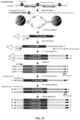
- an oligonucleotide FIG. 13A
- FIG. 13A an oligonucleotide
- the oligonucleotide serves as a primer for DNA polymerase-mediated complementary DNA synthesis ( FIG. 13A ). This is DNA-directed in situ transcription (Eberwine et al., 1992; Tecott et al., 1988).
- the resolution of primer activation is determined by the diffraction limit of the activating light's wavelength and the numerical aperture of the lens.
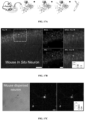
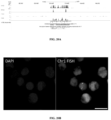
- the CHeX-seq oligonucleotide was engineered to contain a sample-specific barcode: a T7 RNA polymerase promoter site along with a degenerate DNA sequence that is terminated with a fluorescently tagged, photo-reversibly blocked nucleotide ( FIGS. 3A &13A).
- the complementary DNA is removed with 0.1 N NaOH, copied into double-stranded DNA, and linearly amplified using T7 RNA polymerase (aRNA amplification) (Van Gelder et al., 1990; Eberwine et al., 1992).
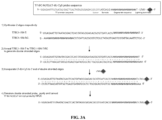
- the aRNA is subsequently reverse transcribed to 1 st and 2 nd strand DNA with custom primers, converted into a sequencing library, and sequenced ( FIGS. 3A &19).
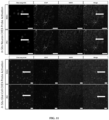
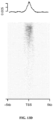
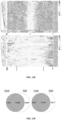
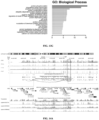
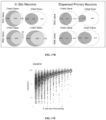
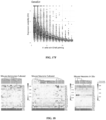
- CHeX-seq has been benchmarked against the ENCODE-analyzed human K562 cells, which demonstrated its utility in dispersed mouse and human primary brain cells. These data highlight significant correlations between open-chromatin status and mRNA expression. These data show a DNA strand preference that suggests protein binding domains in single-stranded chromatin. CHeX-seq also provides evidence for genomic DNA regions that exhibit single-strandedness but are not transcribed, potentially including areas of DNA repair and sites of replication in dividing cells (Yu et al., 2017; Vasquez et al., 2001). In addition, human neurons and astrocytes were generally found to have more open chromatin than their mouse counterparts.
- CHeX-seq can be used with single immunostained cells in fixed brain tissue sections.
- CHeX-seq queries single-stranded DNA the openness of mitochondria in single cells was able to be examined and the DNA in mitochondria present in in situ neurons was found to be more open than those in dispersed cells, suggesting a difference in metabolic status.
- the chromosomal landscape of single-stranded open-chromatin can be used to categorize cells and to predict subtypes of cells.
- CHeX-seq enables the analysis of chromatin structure in fixed immunostained single cells, opening up new avenues for examining the role of neuronal circuitry in modulating an individual cell's chromatin landscape in the natural tissue context.
- Some embodiments provided herein relate to methods that allow for the study of the dynamics of chromatin structure and its correspondence with cytoplasmic RNA pools simultaneously in single cells. Also provided are methods to assess higher order chromatin structural dynamics around any single gene or multiple genes in anatomically and spatially defined single cells. Integration of chromatin structure determination with the same cell's cytoplasmic transcriptome in response to external (e.g., pharmacological) stimulation will enable the dynamics of the cell's transcriptional responses to be quantified.
- essentially free in terms of a specified component, is used herein to mean that none of the specified component has been purposefully formulated into a composition and/or is present only as a contaminant or in trace amounts.
- the total amount of the specified component resulting from any unintended contamination of a composition is therefore well below 0.05%, preferably below 0.01 %.
- Most preferred is a composition in which no amount of the specified component can be detected with standard analytical methods.
- Amplification refers to any means by which a polynucleotide sequence is copied and thus expanded into a larger number of polynucleotide molecules, for example, by reverse transcription, T7 RNA amplification, polymerase chain reaction, and ligase chain reaction, among other methods.
- Sense refers to the nucleic acid sequence of the coding strand of a double stranded DNA molecule encoding a protein, or to a sequence which is substantially homologous to the coding strand. As defined herein, a sense sequence is complementary to the sequence of an expressed RNA molecule encoding a protein. It is not necessary that the sense sequence be complementary solely to the coding portion of the expressed RNA molecule.
- the sense sequence includes regulatory sequences specified on the coding strand of a DNA molecule encoding a protein, which regulatory sequences control expression of the coding sequences.
- Binding is used herein to mean that a first moiety interacts with a second moiety.
- Bio sample means a sample obtained from a single-cellular or multi-cellular organism that can be used to assess the level of expression of a nucleic acid, the status of a chromatin state, or both. Such a sample includes, but is not limited to, a cell, a blood sample, a tissue sample, a neural tissue sample, a brain sample, and a cerebrospinal fluid sample.
- a "pathological sample” is a biological sample from a subject having or suspected of having a disease, disorder, or condition.
- Pathological samples include, but are not limited to, histological tissue sections and/or other biological preparations, such as tissue culture cells. Pathological samples are commonly used in diagnostic pathology.
- a "fixed sample” is a sample that has been treated so as to preserve the structural organization of cells and tissues in the sample in as close a life-like state as possible for subsequent examination, for instance, by light microscope. Fixation typically arrests autolysis and bacterial decomposition and stabilizes the structural organization of cellular and tissue constituents so that they withstand the subsequent stages of tissue processing.
- “Complementary” as used herein refers to the broad concept of subunit sequence complementarity between two nucleic acids, e.g., two DNA molecules or a DNA molecule and an RNA molecule.
- nucleic acids When a nucleotide position in both of the molecules is occupied by nucleotides normally capable of base pairing with each other, then the nucleic acids are considered to be complementary to each other at this position.
- two nucleic acids are complementary to each other when a substantial number (at least 50%) of corresponding positions in each of the molecules are occupied by nucleotides which normally base pair with each other (e.g., A:T and G:C nucleotide pairs).
- a "coding region" of a gene includes the nucleotide residues of the coding strand of the gene and the nucleotides of the non-coding strand of the gene that are homologous with or complementary to, respectively, the coding region of an mRNA molecule that is produced by transcription of the gene.
- a "coding region" of an mRNA molecule also includes the nucleotide residues of the mRNA molecule that are matched with an anticodon region of a transfer RNA molecule during translation of the mRNA molecule or that encode a stop codon.
- the coding region may thus include nucleotide residues corresponding to amino acid residues that are not present in the mature protein encoded by the mRNA molecule (e.g. amino acid residues in a protein export signal sequence).
- a “degenerate sequence” refers to sequence in which at one or more of the nucleotide positions in a polynucleotide, there are two or more types of nucleotides. In the context of a single polynucleotide, a “degenerate sequence” may be a "random” or "unknown” sequence.
- isolated cell refers to a cell which has been separated from other components and/or cells that naturally accompany the isolated cell in a tissue or organism.
- isolated nucleic acid refers to a nucleic acid (or a segment or fragment thereof) that has been separated from sequences that flank it in a naturally occurring state, for example, an RNA fragment that has been removed from the sequences that are normally adjacent to the fragment.
- isolated nucleic acid also applies to nucleic acids that have been substantially purified from other components that naturally accompany the nucleic acid, e.g., RNA or DNA or proteins, in the cell.
- A refers to adenosine
- C refers to cytidine
- G refers to guanosine
- T refers to thymidine
- U refers to uridine.
- nucleotide sequence encoding an amino acid sequence includes all nucleotide sequences that are degenerate versions of each other and that encode the same amino acid sequence. Nucleotide sequences that encode proteins and RNA may include introns.
- a "polynucleotide” means a single strand or parallel and anti-parallel strands of a nucleic acid.
- a polynucleotide may be either a single-stranded or a double-stranded nucleic acid.
- nucleic acid typically refers to large polynucleotides.
- oligonucleotide typically refers to short polynucleotides, generally no greater than about 50 nucleotides.
- nucleotide sequence is represented by a DNA sequence (i.e., A, T, G, C)
- this also includes an RNA sequence (i.e., A, U, G, C) in which "U" replaces "T.”
- Wild/Crick base-pairing and “Watson/Crick complementarity” refer to the pattern of specific pairs of nucleotides, and analogs thereof, that bind together through hydrogen bonds, for example A pairs with T or U, and G pairs with C.
- the act of specific base-pairing is "hybridization” or “hybridizing.”
- a hybrid forms when two, or more, complementary strands of nucleic acids undergo base-pairing.
- the DNA strand having the same sequence as an mRNA is referred to as the "coding strand”; sequences on the DNA strand which are located 5' to a reference point on the DNA are referred to as “upstream sequences”; sequences on the DNA strand which are 3' to a reference point on the DNA are referred to as "downstream sequences.”
- a "permeabilization agent” is a chemical that enables an oligonucleotide or other molecule access to the intracellular constituents of a cell.
- a photocleavable moiety or “photoactivatable moiety” refers to a moiety that is cleaved or activated upon irradiation of the moiety with light energy.
- Light energy useful for activating such labels includes, but is not limited to, visible light, ultraviolet (UV) light, infrared (IR) light, among others.
- a photocleavable moiety or photoactivatable moiety is "incorporated into” a nucleic acid when the moiety is attached to, incorporated within, integrated into, or linked to the nucleic acid. This includes coupling of a moiety to the terminus of a nucleic acid as well as incorporating the moiety into a nucleic acid by including a nucleobase that contains such a label.
- Primer refers to a polynucleotide that is capable of specifically hybridizing to a polynucleotide template and providing a point of initiation for synthesis of a complementary polynucleotide. Such synthesis occurs when the polynucleotide primer is placed under conditions in which synthesis is induced, i.e., in the presence of nucleotides, a complementary polynucleotide template, and an agent for polymerization such as DNA polymerase.
- a primer is typically single stranded, but may be double stranded. Primers are typically deoxyribonucleic acids, but a wide variety of synthetic and naturally occurring primers are useful for many applications.
- a primer is complementary to the template to which it is designed to hybridize to serve as a site for the initiation of synthesis, but need not reflect the exact sequence of the template. In such a case, specific hybridization of the primer to the template depends on the stringency of the hybridization conditions. Primers can be labeled with, e.g., chromogenic, radioactive, or fluorescent moieties and used as detectable moieties.
- Probe refers to a polynucleotide that is capable of specifically hybridizing to a designated sequence of another polynucleotide.
- a probe specifically hybridizes to a target complementary polynucleotide, but need not reflect the exact complementary sequence of the template. In such a case, specific hybridization of the probe to the target depends on the stringency of the hybridization conditions.
- Probes can be labeled with, e.g., chromogenic, radioactive, or fluorescent moieties and used as detectable moieties.
- genomic DNA is a DNA strand that has a nucleotide sequence homologous with a gene as it exists in the natural host.
- a chromosome or a fragment of a chromosome is a genomic DNA.
- mitochondrial DNA is a genomic DNA.
- Homologous refers to the subunit sequence similarity between two polymeric molecules, e.g., between two nucleic acid molecules, e.g., two DNA molecules or two RNA molecules. When a subunit position in both of the two molecules is occupied by the same monomeric subunit, e.g., if a position in each of two DNA molecules is occupied by adenine, then they are completely or 100% homologous at that position.
- the percent homology between two sequences is a direct function of the number of matching or homologous positions, e.g., if half (e.g., five positions in a polymer ten subunits in length) of the positions in two compound sequences are homologous then the two sequences are 50% identical, if 90% of the positions, e.g., 9 of 10, are matched or homologous, the two sequences share 90% homology.
- the DNA sequences 5'ATTGCC3' and 5'TATGGC3' share 50% homology.
- ranges throughout this disclosure, various aspects of the invention can be presented in a range format. It should be understood that the description in range format is merely for convenience and brevity and should not be construed as an inflexible limitation on the scope of the invention. Accordingly, the description of a range should be considered to have specifically disclosed all the possible subranges as well as individual numerical values within that range. For example, description of a range such as from 1 to 6 should be considered to have specifically disclosed subranges such as from 1 to 3, from 1 to 4, from 1 to 5, from 2 to 4, from 2 to 6, from 3 to 6 etc., as well as individual numbers within that range, for example, 1, 2, 2.7, 3, 4, 5, 5.3, and 6. This applies regardless of the breadth of the range.
- the symbol “-” means a single bond
- “ ⁇ ” means triple bond.
- the symbol “_____” represents an optional bond, which if present is either single or double.
- the symbol “ ---- " represents a single bond or a double bond.
- the structure includes the structures As will be understood by a person of skill in the art, no one such ring atom forms part of more than one double bond.
- the symbol “ " ", when drawn perpendicularly across a bond indicates a point of attachment of the group. It is noted that the point of attachment is typically only identified in this manner for larger groups in order to assist the reader in rapidly and unambiguously identifying a point of attachment.
- R may replace any hydrogen atom attached to any of the ring atoms, including a depicted, implied, or expressly defined hydrogen, so long as a stable structure is formed.
- R may replace any hydrogen attached to any of the ring atoms of either of the fused rings unless specified otherwise.
- Replaceable hydrogens include depicted hydrogens (e.g ., the hydrogen attached to the nitrogen in the formula above), implied hydrogens (e.g ., a hydrogen of the formula above that is not shown but understood to be present), expressly defined hydrogens, and optional hydrogens whose presence depends on the identity of a ring atom (e.g ., a hydrogen attached to group X, when X equals -CH-), so long as a stable structure is formed.
- R may reside on either the 5-membered or the 6-membered ring of the fused ring system.
- the subscript letter "y" immediately following the group "R" enclosed in parentheses represents a numeric variable. Unless specified otherwise, this variable can be 0, 1, 2, or any integer greater than 2, only limited by the maximum number of replaceable hydrogen atoms of the ring or ring system.
- (Cn) defines the exact number (n) of carbon atoms in the group/class.
- (C ⁇ n) defines the maximum number (n) of carbon atoms that can be in the group/class, with the minimum number as small as possible for the group in question, e.g ., it is understood that the minimum number of carbon atoms in the group “alkenyl (C ⁇ 8) “ or the class “alkene (C ⁇ 8) " is two.
- alkoxy (C ⁇ 10) designates those alkoxy groups having from 1 to 10 carbon atoms ( e.g.
- alkyl (C2-10) designates those alkyl groups having from 2 to 10 carbon atoms ( e.g., 2, 3, 4, 5, 6, 7, 8, 9, or 10, or any range derivable therein ( e.g., 3 to 10 carbon atoms)).
- saturated means the compound or group so modified has no carbon-carbon double and no carbon-carbon triple bonds, except as noted below.
- the term does not preclude carbon-heteroatom multiple bonds, for example a carbon oxygen double bond or a carbon nitrogen double bond. Moreover, it does not preclude a carbon-carbon double bond that may occur as part of keto-enol tautomerism or imine/enamine tautomerism.
- aliphatic when used without the "substituted” modifier signifies that the compound/group so modified is an acyclic or cyclic, but non-aromatic hydrocarbon compound or group.
- the carbon atoms can be joined together in straight chains, branched chains, or non-aromatic rings (alicyclic).
- Aliphatic compounds/groups can be saturated, that is joined by single bonds (alkanes/alkyl), or unsaturated, with one or more double bonds (alkenes/alkenyl) or with one or more triple bonds (alkynes/alkynyl). Where the term "aliphatic” is used without the "substituted” modifier, then only carbon and hydrogen atoms are present.
- one or more hydrogen atom has been independently replaced by -OH, -F, -Cl, -Br, -I, -NH 2 , -NO 2 , -CO 2 H, -CO 2 CH 3 , -CN, -SH, -OCH 3 , -OCH 2 CH 3 , -C(O)CH 3 , -NHCH 3 , -NHCH 2 CH 3 , -N(CH 3 ) 2 , -C(O)NH 2 , -OC(O)CH 3 , or -S(O) 2 NH 2 .
- alkyl when used without the "substituted” modifier refers to a monovalent saturated aliphatic group with a carbon atom as the point of attachment, a linear or branched, cyclo, cyclic or acyclic structure, and no atoms other than carbon and hydrogen.
- cycloalkyl is a subset of alkyl.
- the groups -CH 3 (Me), -CH 2 CH 3 (Et), -CH 2 CH 2 CH 3 ( n -Pr or propyl), -CH(CH 3 ) 2 ( i -Pr, i Pr or isopropyl), -CH(CH 2 ) 2 (cyclopropyl), -CH 2 CH 2 CH 2 CH 3 ( n -Bu), -CH(CH 3 )CH 2 CH 3 ( sec -butyl), -CH 2 CH(CH 3 ) 2 (isobutyl), -C(CH 3 ) 3 ( tert -butyl, t -butyl, t -Bu or t Bu), -CH 2 C(CH 3 ) 3 ( neo -pentyl), cyclobutyl, cyclopentyl, cyclohexyl, and cyclohexylmethyl are non-limiting examples of alkyl groups.
- alkanediyl when used without the "substituted” modifier refers to a divalent saturated aliphatic group, with one or two saturated carbon atom(s) as the point(s) of attachment, a linear or branched, cyclo, cyclic or acyclic structure, no carbon-carbon double or triple bonds, and no atoms other than carbon and hydrogen.
- one or more hydrogen atom has been independently replaced by -OH, -F, -Cl, -Br, -I, -NH 2 , -NO 2 , -CO 2 H, -CO 2 CH 3 , -CN, -SH, -OCH 3 , -OCH 2 CH 3 , -C(O)CH 3 , -NHCH 3 , -NHCH 2 CH 3 , -N(CH 3 ) 2 , -C(O)NH 2 , -OC(O)CH 3 , or -S(O) 2 NH 2 .
- the following groups are non-limiting examples of substituted alkyl groups: -CH 2 OH, -CH 2 Cl, -CF 3 , -CH 2 CN, -CH 2 C(O)OH, -CH 2 C(O)OCH 3 , -CH 2 C(O)NH 2 , -CH 2 C(O)CH 3 , -CH 2 OCH 3 , -CH 2 OC(O)CH 3 , -CH 2 NH 2 , -CH 2 N(CH 3 ) 2 , and -CH 2 CH 2 Cl.
- haloalkyl is a subset of substituted alkyl, in which one or more hydrogen atoms has been substituted with a halo group and no other atoms aside from carbon, hydrogen and halogen are present.
- the group, -CH 2 Cl is a non-limiting example of a haloalkyl.
- An “alkane” refers to the compound H-R, wherein R is alkyl.
- the term “fluoroalkyl” is a subset of substituted alkyl, in which one or more hydrogen has been substituted with a fluoro group and no other atoms aside from carbon, hydrogen and fluorine are present.
- the groups, -CH 2 F, -CF 3 , and -CH 2 CF 3 are non-limiting examples of fluoroalkyl groups.
- An “alkane” refers to the compound H-R, wherein R is alkyl.
- alkenyl when used without the "substituted” modifier refers to an monovalent unsaturated aliphatic group with a carbon atom as the point of attachment, a linear or branched, cyclo, cyclic or acyclic structure, at least one nonaromatic carbon-carbon double bond, no carbon-carbon triple bonds, and no atoms other than carbon and hydrogen.
- alkenediyl when used without the "substituted” modifier refers to a divalent unsaturated aliphatic group, with two carbon atoms as points of attachment, a linear or branched, cyclo, cyclic or acyclic structure, at least one nonaromatic carbon-carbon double bond, no carbon-carbon triple bonds, and no atoms other than carbon and hydrogen.
- one or more hydrogen atom has been independently replaced by -OH, -F, -Cl, -Br, -I, -NH 2 , -NO 2 , -CO 2 H, -CO 2 CH 3 , -CN, -SH, -OCH 3 , -OCH 2 CH 3 , -C(O)CH 3 , -NHCH 3 , -NHCH 2 CH 3 , -N(CH 3 ) 2 , -C(O)NH 2 , -OC(O)CH 3 , or -S(O) 2 NH 2 .
- alkene refers to the compound H-R, wherein R is alkenyl.
- alkynyl when used without the "substituted” modifier refers to an monovalent unsaturated aliphatic group with a carbon atom as the point of attachment, a linear or branched, cyclo, cyclic or acyclic structure, at least one carbon-carbon triple bond, and no atoms other than carbon and hydrogen.
- alkynyl does not preclude the presence of one or more non-aromatic carbon-carbon double bonds.
- alkynyl When alkynyl is used with the "substituted" modifier one or more hydrogen atom has been independently replaced by -OH, -F, -Cl, -Br, -I, -NH 2 , -NO 2 , -CO 2 H, -CO 2 CH 3 , -CN, -SH, -OCH 3 , -OCH 2 CH 3 , -C(O)CH 3 , -NHCH 3 , -NHCH 2 CH 3 , -N(CH 3 ) 2 , -C(O)NH 2 , -OC(O)CH 3 , or -S(O) 2 NH 2 .
- An "alkyne” refers to the compound H-R, wherein R is alkynyl.
- aryl when used without the "substituted” modifier refers to a monovalent unsaturated aromatic group with an aromatic carbon atom as the point of attachment, said carbon atom forming part of a one or more six-membered aromatic ring structure, wherein the ring atoms are all carbon, and wherein the group consists of no atoms other than carbon and hydrogen. If more than one ring is present, the rings may be fused or unfused. As used herein, the term does not preclude the presence of one or more alkyl group (carbon number limitation permitting) attached to the first aromatic ring or any additional aromatic ring present.
- Non-limiting examples of aryl groups include phenyl (Ph), methylphenyl, (dimethyl)phenyl, -C 6 H 4 CH 2 CH 3 (ethylphenyl), naphthyl, and the monovalent group derived from biphenyl.
- aromaticiyl when used without the "substituted” modifier refers to a divalent aromatic group with two aromatic carbon atoms as points of attachment, said carbon atoms forming part of one or more six-membered aromatic ring structure(s) wherein the ring atoms are all carbon, and wherein the monovalent group consists of no atoms other than carbon and hydrogen.
- the term does not preclude the presence of one or more alkyl group (carbon number limitation permitting) attached to the first aromatic ring or any additional aromatic ring present. If more than one ring is present, the rings may be fused or unfused.
- arenediyl groups include: When these terms are used with the "substituted" modifier one or more hydrogen atom has been independently replaced by -OH, -F, -Cl, -Br, -I, -NH 2 , -NO 2 , -CO 2 H, -CO 2 CH 3 , -CN, -SH, -OCH 3 , -OCH 2 CH 3 , -C(O)CH 3 , -NHCH 3 , -NHCH 2 CH 3 , -N(CH 3 ) 2 , -C(O)NH 2 , -OC(O)CH 3 , or -S(O) 2 NH 2 .
- An "arene” refers to the compound H
- aralkyl when used without the “substituted” modifier refers to the monovalent group -alkanediyl-aryl, in which the terms alkanediyl and aryl are each used in a manner consistent with the definitions provided above.
- Non-limiting examples of aralkyls are: phenylmethyl (benzyl, Bn) and 2-phenyl-ethyl.
- substituted aralkyls are: (3-chlorophenyl)-methyl, and 2-chloro-2-phenyl-eth-1-yl.
- heteroaryl when used without the "substituted” modifier refers to a monovalent aromatic group with an aromatic carbon atom or nitrogen atom as the point of attachment, said carbon atom or nitrogen atom forming part of one or more aromatic ring structures wherein at least one of the ring atoms is nitrogen, oxygen or sulfur, and wherein the heteroaryl group consists of no atoms other than carbon, hydrogen, aromatic nitrogen, aromatic oxygen and aromatic sulfur.
- the term does not preclude the presence of one or more alkyl, aryl, and/or aralkyl groups (carbon number limitation permitting) attached to the aromatic ring or aromatic ring system. If more than one ring is present, the rings may be fused or unfused.
- heteroaryl groups include furanyl, imidazolyl, indolyl, indazolyl (Im), isoxazolyl, methylpyridinyl, oxazolyl, phenylpyridinyl, pyridinyl, pyrrolyl, pyrimidinyl, pyrazinyl, quinolyl, quinazolyl, quinoxalinyl, triazinyl, tetrazolyl, thiazolyl, thienyl, and triazolyl.
- N -heteroaryl refers to a heteroaryl group with a nitrogen atom as the point of attachment.
- heteroaryl when used without the "substituted” modifier refers to an divalent aromatic group, with two aromatic carbon atoms, two aromatic nitrogen atoms, or one aromatic carbon atom and one aromatic nitrogen atom as the two points of attachment, said atoms forming part of one or more aromatic ring structure(s) wherein at least one of the ring atoms is nitrogen, oxygen or sulfur, and wherein the divalent group consists of no atoms other than carbon, hydrogen, aromatic nitrogen, aromatic oxygen and aromatic sulfur.
- the term does not preclude the presence of one or more alkyl, aryl, and/or aralkyl groups (carbon number limitation permitting) attached to the aromatic ring or aromatic ring system.
- heteroarenediyl groups include: When these terms are used with the "substituted" modifier one or more hydrogen atom has been independently replaced by -OH, -F, -Cl, -Br, -I, -NH 2 , -NO 2 , -CO 2 H, -CO 2 CH 3 , -CN, -SH, -OCH 3 , -OCH 2 CH 3 , -C(O)CH 3 , -NHCH 3 , -NHCH 2 CH 3 , -N(CH 3 ) 2 , -C(O)NH 2 , -OC(O)CH 3 , or -S(O) 2 NH 2 .
- heterocycloalkyl when used without the "substituted” modifier refers to a monovalent non-aromatic group with a carbon atom or nitrogen atom as the point of attachment, said carbon atom or nitrogen atom forming part of one or more non-aromatic ring structures wherein at least one of the ring atoms is nitrogen, oxygen or sulfur, and wherein the heterocycloalkyl group consists of no atoms other than carbon, hydrogen, nitrogen, oxygen and sulfur.
- the term does not preclude the presence of one or more alkyl groups (carbon number limitation permitting) attached to the ring or ring system.
- heterocycloalkyl groups include aziridinyl, azetidinyl, pyrrolidinyl, piperidinyl, piperazinyl, morpholinyl, thiomorpholinyl, tetrahydrofuranyl, tetrahydrothiofuranyl, tetrahydropyranyl, pyranyl, oxiranyl, and oxetanyl.
- N -heterocycloalkyl refers to a heterocycloalkyl group with a nitrogen atom as the point of attachment.
- heterocycloalkyl used with the "substituted” modifier one or more hydrogen atom has been independently replaced by -OH, -F, -Cl, -Br, -I, -NH 2 , -NO 2 , -CO 2 H, -CO 2 CH 3 , -CN, -SH, -OCH 3 , -OCH 2 CH 3 , -C(O)CH 3 , -NHCH 3 , -NHCH 2 CH 3 , -N(CH 3 ) 2 , -C(O)NH 2 , -OC(O)CH 3 , -S(O) 2 NH 2 , or -C(O)OC(CH 3 ) 3 ( tert -butyloxycarbonyl, BOC).
- acyl when used without the “substituted” modifier refers to the group -C(O)R, in which R is a hydrogen, alkyl, aryl, aralkyl or heteroaryl, as those terms are defined above.
- the groups, -CHO, -C(O)CH 3 (acetyl, Ac), -C(O)CH 2 CH 3 , -C(O)CH 2 CH 2 CH 3 , -C(O)CH(CH 3 ) 2 , -C(O)CH(CH 2 ) 2 , -C(O)C 6 H 5 , -C(O)C 6 H 4 CH 3 , -C(O)CH 2 C 6 H 5 , -C(O)(imidazolyl) are non-limiting examples of acyl groups.
- a "thioacyl" is defined in an analogous manner, except that the oxygen atom of the group -C(O)R has been replaced with a sulfur atom, -C(S)R.
- one or more hydrogen atom (including a hydrogen atom directly attached the carbonyl or thiocarbonyl group, if any) has been independently replaced by -OH, -F, -Cl, -Br, -I, -NH 2 , -NO 2 , -CO 2 H, -CO 2 CH 3 , -CN, -SH, -OCH 3 , -OCH 2 CH 3 , -C(O)CH 3 , -NHCH 3 , -NHCH 2 CH 3 , -N(CH 3 ) 2 , -C(O)NH 2 , -OC(O)CH 3 , or -S(O) 2 NH 2 .
- the groups, -C(O)CH 2 CF 3 , -CO 2 H (carboxyl), -CO 2 CH 3 (methylcarboxyl), -CO 2 CH 2 CH 3 , -C(O)NH 2 (carbamoyl), and -CON(CH 3 ) 2 are non-limiting examples of substituted acyl groups.
- alkoxy when used without the "substituted” modifier refers to the group -OR, in which R is an alkyl, as that term is defined above.
- alkoxy groups include: -OCH 3 (methoxy), -OCH 2 CH 3 (ethoxy), -OCH 2 CH 2 CH 3 , -OCH(CH 3 ) 2 (isopropoxy), -O(CH 3 ) 3 ( tert -butoxy), -OCH(CH 2 ) 2 , -O-cyclopentyl, and -O-cyclohexyl.
- alkenyloxy when used without the “substituted” modifier, refers to groups, defined as -OR, in which R is alkenyl, alkynyl, aryl, aralkyl, heteroaryl, heterocycloalkyl, and acyl, respectively.
- alkoxydiyl refers to the divalent group -O-alkanediyl-, -O-alkanediyl-O-, or -alkanediyl-O-alkanediyl-.
- alkylthio and acylthio when used without the "substituted” modifier refers to the group -SR, in which R is an alkyl and acyl, respectively.
- R is an alkyl and acyl, respectively.
- one or more hydrogen atom has been independently replaced by -OH, -F, -Cl, -Br, -I, -NH 2 , -NO 2 , -CO 2 H, -CO 2 CH 3 , -CN, -SH, -OCH 3 , -OCH 2 CH 3 , -C(O)CH 3 , -NHCH 3 , -NHCH 2 CH 3 , -N(CH 3 ) 2 , -C(O)NH 2 , -OC(O)CH 3 , or -S(O) 2 NH 2 .
- alcohol corresponds to an alkane, as defined above, wherein at least one of the hydrogen atoms has been replaced
- alkylamino when used without the "substituted” modifier refers to the group -NHR, in which R is an alkyl, as that term is defined above.
- alkylamino groups include: -NHCH 3 and -NHCH 2 CH 3 .
- dialkylamino when used without the "substituted” modifier refers to the group -NRR', in which R and R' can be the same or different alkyl groups, or R and R' can be taken together to represent an alkanediyl.
- Non-limiting examples of dialkylamino groups include: -N(CH 3 ) 2 , -N(CH 3 )(CH 2 CH 3 ), and N- pyrrolidinyl.
- dialkylamino groups include: -N(CH 3 ) 2 , -N(CH 3 )(CH 2 CH 3 ), and N- pyrrolidinyl.
- alkoxyamino refers to groups, defined as -NHR, in which R is alkoxy, alkenyl, alkynyl, aryl, aralkyl, heteroaryl, heterocycloalkyl, and alkylsulfonyl, respectively.
- a non-limiting example of an arylamino group is -NHC 6 H 5 .
- a non-limiting example of an amido group is -NHC(O)CH 3 .
- alkylaminodiyl refers to the divalent group -NH-alkanediyl-, -NH-alkanediyl-NH-, or -alkanediyl-NH-alkanediyl-.
- alkylphosphate when used without the "substituted” modifier refers to the group -OP(O)(OH)(OR), in which R is an alkyl, as that term is defined above.
- alkylphosphate groups include: -OP(O)(OH)(OMe) and -OP(O)(OH)(OEt).
- dialkylphosphate when used without the "substituted” modifier refers to the group -OP(O)(OR)(OR'), in which R and R' can be the same or different alkyl groups, or R and R' can be taken together to represent an alkanediyl.
- Non-limiting examples of dialkylphosphate groups include: -OP(O)(OMe) 2 , -OP(O)(OEt)(OMe) and -OP(O)(OEt) 2 .
- -OP(O)(OMe) 2 When any of these terms is used with the "substituted" modifier one or more hydrogen atom has been independently replaced by -OH, -F, -Cl, -Br, -I, -NH 2 , -NO 2 , -CO 2 H, -CO 2 CH 3 , -CN, -SH, -OCH 3 , -OCH 2 CH 3 , -C(O)CH 3 , -NHCH 3 , -NHCH 2 CH 3 , -N(CH 3 ) 2 , -C(O)NH 2 , -OC(O)CH 3 , or -S(O) 2 NH 2 .
- alkylsulfonyl and alkylsulfinyl when used without the “substituted” modifier refers to the groups -S(O) 2 R and -S(O)R, respectively, in which R is an alkyl, as that term is defined above.
- alkenylsulfonyl “alkynylsulfonyl”, “arylsulfonyl”, “aralkylsulfonyl”, “heteroarylsulfonyl”, and “heterocycloalkylsulfonyl” are defined in an analogous manner.
- one or more hydrogen atom has been independently replaced by -OH, -F, -Cl, -Br, -I, -NH 2 , -NO 2 , -CO 2 H, -CO 2 CH 3 , -CN, -SH, -OCH 3 , -OCH 2 CH 3 , -C(O)CH 3 , -NHCH 3 , -NHCH 2 CH 3 , -N(CH 3 ) 2 , -C(O)NH 2 , -OC(O)CH 3 , or -S(O) 2 NH 2 .
- a "chiral auxiliary” refers to a removable chiral group that is capable of influencing the stereoselectivity of a reaction. Persons of skill in the art are familiar with such compounds, and many are commercially available.
- An "isomer" of a first compound is a separate compound in which each molecule contains the same constituent atoms as the first compound, but where the configuration of those atoms in three dimensions differs.
- hydrate when used as a modifier to a compound means that the compound has less than one (e.g., hemihydrate), one ( e.g., monohydrate), or more than one (e.g., dihydrate) water molecules associated with each compound molecule, such as in solid forms of the compound.
- a “stereoisomer” or “optical isomer” is an isomer of a given compound in which the same atoms are bonded to the same other atoms, but where the configuration of those atoms in three dimensions differs.
- “Enantiomers” are stereoisomers of a given compound that are mirror images of each other, like left and right hands.
- “Diastereomers” are stereoisomers of a given compound that are not enantiomers.
- Chiral molecules contain a chiral center, also referred to as a stereocenter or stereogenic center, which is any point, though not necessarily an atom, in a molecule bearing groups such that an interchanging of any two groups leads to a stereoisomer.
- the chiral center is typically a carbon, phosphorus or sulfur atom, though it is also possible for other atoms to be stereocenters in organic and inorganic compounds.
- a molecule can have multiple stereocenters, giving it many stereoisomers.
- the total number of hypothetically possible stereoisomers will not exceed 2n, where n is the number of tetrahedral stereocenters.
- Molecules with symmetry frequently have fewer than the maximum possible number of stereoisomers.
- a 50:50 mixture of enantiomers is referred to as a racemic mixture.
- a mixture of enantiomers can be enantiomerically enriched so that one enantiomer is present in an amount greater than 50%.
- enantiomers and/or diasteromers can be resolved or separated using techniques known in the art. It is contemplated that that for any stereocenter or axis of chirality for which stereochemistry has not been defined, that stereocenter or axis of chirality can be present in its R form, S form, or as a mixture of the R and S forms, including racemic and non-racemic mixtures.
- the phrase "substantially free from other stereoisomers” means that the composition contains ⁇ 15%, more preferably ⁇ 10%, even more preferably ⁇ 5%, or most preferably ⁇ 1 % of another stereoisomer(s).
- chromatin underlies a cells ability to transcriptionally respond to its local microenvironment and stimulation. This is important for normal cellular function as well as modulated changes in function. Knowledge of these subcellular sites of transcriptional regulation is required to understand a cells ability to respond to stimuli as well as the actual response.
- Transcriptional analysis of single cells shows that a significant degree of cell-to-cell heterogeneity is influenced by the cell's microenvironment. These variations in the transcriptional states depend in part upon the open-chromatin status of nuclear genomic DNA or the open conformation of mitochondrial genomic DNA. While there are single cell approaches for analysis of chromatin structure, they require isolation of chromatin from the cell, at which point nearest neighbor chromosomal interactions are lost. For example, ATACseq has been used to assess open chromatin in multiple single cells (population studies at the single cell level, not just a single cell), but it is not very sensitive and assesses only ⁇ 3% of the open chromatin sites in any particular cell. Furthermore, ATACseq requires chromatin to be isolated from the cells of interest.
- CHeX-seq Ch romatin eX posed
- CHeX-seq uses the resolution of light to limit chromatin analysis to an individual cell's nucleus.
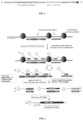
- CHeX-seq oligonucleotides have been engineered to contain index barcodes, an amplification segment, and a light-activated reporter-tagged reversibly terminating nucleotide ( FIG. 1 ). These oligonucleotides can anneal, via their hybridization segment, in either a random or targeted fashion, to single-stranded genomic DNA but remain inactive until triggered.
- In situ activation of the light-activated reporter-tagged reversibly terminating nucleotide by laser in selected cells allows the CHeX-seq oligonucleotides to act as primers. This primer is used to prime DNA copying of single-stranded DNA in situ in those specific cells, which is then amplified and sequenced.
- the oligonucleotides contain short degenerate sequences that can anneal anywhere they can hybridize with the genomic DNA. This provides many more oligos in the degenerate mix that can bind, effectively increasing the oligonucleotide concentration over the course of the annealing time (e.g., 45 sec).
- the annealing time may be about 10 sec, about 15 sec, about 20 sec, about 25 sec, about 30 sec, about 35 sec, about 40 sec, about 45 sec, about 50 sec, about 55 sec, about 60 sec, about 65 sec, about 70 sec, about 75 sec, about 80 sec, about 85 sec, about 90 sec, about 2 min, about 3 min, about 4 min, about 5 min, about 6 min, about 7 min, about 8 min, about 9 min, about 10 min, about 15 min, about 20 min, about 25 min, or about 30 min.
- the progression of annealing can be monitored using fluorescence microscopy to detect the fluorescent signal of the fluorescent tag in the nucleus of the cells.
- the hybridization between the degenerate sequence in the oligonucleotides and genomic DNA may not be stringent. For example, there may be one or more, two or more, three or more, four or more, five or more, six or more, seven or more, eight or more, nine or more, or ten or more mismatches between the degenerate sequence in the oligonucleotide and the genomic DNA region to which it hybridizes.
- the number of mismatches that can be tolerated while still allowing for hybridization to any given genomic DNA sequence depends on the length of the degenerate sequence, the thermodynamics of the hybridization as dictated by the sequence of the degenerate sequence, and the annealing temperature.
- the thermodynamics of a hybridization event can be estimated using the methods described in SantaLucia & Hicks (2004).
- the mismatches may be in one or more continuous stretch(es), or the mismatches may be spaced out throughout the hybridized region in any configuration.
- the hybridized region may comprise a stretch of two, three, four, five, six, seven, or eight mismatches in a row that create a bubble in the hybridized region.
- the hybridized region may comprise both a bubble in a first part and a single mismatch in a second part.
- the hybridized region may comprise both a first bubble in a first part and a second bubble in a second part.
- the length of the degenerate sequence may vary.
- the generate sequence in any given CHeX-seq oligonucleotide may have a sequence that is at least 7, 8, 9, 10, 11, 12, 13, 14, 15, 16, 17, 18, 19, 20, 21, 22, 23, 24, 25, 26, 27, 28, 29, 30, 31, 32, 33, 34, 35, 36, 37, 38, 39, 40, 41, 42, 43, 44, 45, 46, 47, 48, 49, or 50 nucleotides long.
- a population of CHeX-seq oligonucleotides may consist of oligonucleotides all having the same length degenerate sequence.
- a population of CHeX-seq oligonucleotides may comprise oligonucleotides having degenerate sequences of various lengths.
- the degenerate sequence will remain in the later amplified polynucleotide pool that is analyzed using sequencing, such as next-generation sequencing.
- the degenerate sequence associated with each detected hybridization event may be used as a molecular barcode, or unique molecular identifier (UMI), to allow for analysis of whether only one locus of a gene is in an open chromatin state or whether both loci of that gene are in an open chromatin state.
- UMI unique molecular identifier
- the oligonucleotides contain short, known sequences in place of the short degenerate sequences.
- the short, known sequences can be designed to anneal to any location in the genomic DNA where it is desirable to analyze whether the chromatin is in an open or closed state.
- a panel of oligonucleotides may be designed to comprise short known sequences that are defined for one or more specific gene(s).
- a panel of oligonucleotides may be designed to comprise short known sequences that can hybridize to genomic regions near all known SNPs or open genomic DNA regions that correlate with schizophrenia. Such a panel may be used in diagnostic methods.
- the CHeX-seq oligonucleotides may have a reporter-tagged reversibly terminating nucleotide on their 3' ends.
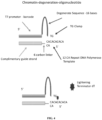
- Two exemplary embodiments of methods to enzymatically synthesize an oligonucleotide comprising the reporter-tagged reversibly terminating nucleotide are shown in FIGS. 3A , 3B , & 4 . These methods comprise annealing the oligonucleotide to its reverse complement, where the reverse complement comprises a poly-A tail on its 5' end. Once annealed, the duplex is incubated with a fluorescently tagged photoactivatable terminating deoxyuridine analog that is incorporated into the oligonucleotide by DNA polymerase.
- the synthesized oligonucleotide can then be denatured from its reverse complement and purified.
- the method can be performed with the full oligonucleotide and its full reverse complement ( FIG. 3A ).
- it can be performed with a segment comprising the degenerate sequence following by ligation of the double-stranded degenerate sequence with a segment comprising the amplification segment, spacer, and barcode ( FIG. 3B ).
- This method allows for the generation of many different populations each comprising a unique barcode without having to synthesize the double-stranded degenerate sequence for each population.
- a further alternative method uses a reverse complement that has a 6 carbon linker in place of the degenerate sequence ( FIG. 4 ).
- the oligonucleotide has a TG clamp in its 3' end in order to facilitate hybridization with the reverse complement strand in order to allow addition of the photoactivatable terminating nucleotide.
- the reporter-tagged reversibly terminating nucleotide compounds comprise a nucleotide with a photocleavable group labeled with a reporter group, such as a fluorescent dye group, colorimetric dye group, radioactive label, or groups affecting a signal through chemiluminescent or bioluminescent means.
- a reporter group such as a fluorescent dye group, colorimetric dye group, radioactive label, or groups affecting a signal through chemiluminescent or bioluminescent means.
- reporter or label refers to a chemical moiety that is able to produce a detectable signal directly or indirectly.
- the terminating nucleotides comprise removable protecting groups that are designed to terminate DNA synthesis. Examples of such nucleotide compounds include those disclosed in PCT Publn. Nos.
- WO 2003/006625 WO 2005/084367 , WO 2008/070749 , WO 2009/152353 , WO 2013/040257 , which are each incorporated herein by reference in their entirety.
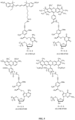
- Specific examples of such nucleotide compounds include those shown in FIG. 5 .
- Examples of indirectly detectable reporters include small tags, such as biotin, haptens (for example, digoxigenin), or magnetic particles, which may be detected by the binding of another protein or antibody, such that the reporter may be detected and visualized under a microscope.
- Examples of directly detectable reporters include fluorescent dye groups.
- fluorescent dye groups include xanthene derivate dyes (e.g ., fluorescein and its derivatives, fluorescein isothiocyanate [FITC], carboxyfluorescein succinimidyl ester [CFSE], carboxy fluorescein diacetate succinimidyl ester [CFDA-SE], eosin Y, eosin B, rhodamine B, rhodamine 6G, rhodamine 123, rhodamine red-X [RRX], carboxytetramethylrhodamine [TAMRA], tetramethylrhodamine [TMR], isothiocyanate-derivative of rhodamine [TRITC], sulforhodamine 101, sulfonyl chloride derivative of sulforhodamine 101 [Texas Red], Oregon Green), BODIPY derivative dyes (e.g ., BODIPY FL, BODIPY
- the first process in performing CHeX-seq is obtaining and fixing a sample to be assayed, which may be a cell line, a primary cell culture, or a tissue section.
- the sample may comprise any type of cell, such as a eukaryotic cell or a prokaryotic cell.
- the cell is preferably a mammalian cell, including but not limited to human, non-human primate, mouse, rabbit, rat, goat, guinea pig, horse cell, and the like.
- a non-mammalian eukaryotic cell includes a yeast cell, a plant cell, an insect cell, a protozoan cell and a fungal cell, including filamentous and non-filamentous fungi.
- the cell is a prokaryotic cell
- the cell is a bacterial cell.
- a cell may be a differentiated cell and/or a non-dividing cell.
- the cell may also be a progenitor cell or a stem cell.
- the cell is a tissue-specific cell, more preferably a mammalian tissue-specific cell and more preferably still, a human tissue-specific cell.
- Non-limiting examples of cells suitable as a recipient cell include epithelial cells, neurons, fibroblasts, embryonic fibroblasts, keratinocytes, adult stem cells, embryonic stem cells, and cardiomyocytes.
- the methods provided herein may be performed on a cell comprising a cellular process.
- a cellular process includes, but is not limited to, a dendrite, an axon, a microvilli, a cilia, a stereocilia, a process, an astrocytic process, and the like. Any tissue sample from a subject may be used in the method of the invention.
- tissue examples include, but are not limited to, breast, prostate, ovary, colon, lung, endometrium, stomach, salivary gland and pancreas.
- the tissue sample can be obtained by a variety of procedures including, but not limited to surgical excision, aspiration or biopsy.
- the tissue may be embedded in paraffin or frozen.
- the tissue sample may be stained to differentiate between cell types within the sample, such as, for example, between neurons and glia in a brain sample.
- the sample may be exposed to a permeabilization agent to allow for entry of the oligonucleotides into the cell.
- a permeabilization agent include, but are not limited to Triton X-100, Tween-20, saponin, SDS, NP40, streptolysin O, proteinase K, pronase and triethanolamine, and organic solvents, such as methanol and acetone.
- fixation conditions For example, the use of low percentage fixative (for example, 0.25%, 0.5%, 0.75%, 1%, 2%, 3%, 4%, 5%, 6%, 7%, or 8%) for 30 sec, 45 sec, 1 min, 1.5 min, 2 min, 2.5 min, 3 min, 3.5 min, 4 min, 4.5 min, 5 min, 5.5 min, 6 min, 6.5 min, 7 min, 7.5 min, 8 min, 8.5 min, 9 min, 9.5 min, or 10 min may provide for the detection of open genomic DNA for ⁇ 80% of expressed RNAs, which is ⁇ 8 ⁇ better than reported for ATACseq coverage.
- the fixative may be formalin, glutaraldehyde, xylene a precipitating fixative (for example, methanol or ethanol), or
- the oligonucleotides are given time to anneal to regions of open genomic DNA.
- the annealing time may be about 10 sec, about 15 sec, about 20 sec, about 25 sec, about 30 sec, about 35 sec, about 40 sec, about 45 sec, about 50 sec, about 55 sec, about 60 sec, about 65 sec, about 70 sec, about 75 sec, about 80 sec, about 85 sec, or about 90 sec.
- the annealing temperature may be about 25 °C, 26 °C, 27 °C, 28 °C, 29 °C, 30 °C, 31 °C, 32 °C, 33 °C, 34 °C, 35 °C, 36 °C, 37 °C, 38 °C, 39 °C, 40 °C, 41 °C, 42 °C, 43 °C, 44 °C, or 45 °C.
- the progression of annealing can be monitored using fluorescence microscopy to detect the fluorescent signal of the fluorescent tag in the nucleus of the cells.
- reporter-tagged reversibly terminating oligonucleotides are reversibly terminating due to the presence of a site that can be photocleaved, resulting in an extendable 3' hydroxy group.
- the photocleavable moiety may comprise a 2-nitrobenzyl or substituted 2-nitrobenzyl group, which may be efficiently photochemically cleaved, for example, with UV light. See U.S. Patent Appl. Publ. 2010/0041041 , which is incorporated herein by reference in its entirety.
- wavelengths >300 nm are used to minimize damage to DNA and proteins (Corrie, 2005) with several specific exemplary wavelengths other than 365 nm being 340 nm and 355 nm (Seo, 2005).
- photocleaving or “photocleave,” as used herein, are meant to refer generally to the act of exposing a sample to a wavelength of light >300 nm, e.g., 365 nm, 370 nm, 375 nm, 380 nm, 385 nm, 390 nm, 395 nm, 400 nm, 405 nm, 410 nm, or 415 nm, so as to effect the cleavage of the photocleavable bond.
- a photoactivatable terminating nucleotide has a structure of the formula: wherein:
- the photoactivatable terminating nucleotides are further defined as a compound of formulas I, II, III, IV, V, VI or VII.
- R 1 is hydroxy, monophosphate, diphosphate, triphosphate, ⁇ -thiotriphosphate, or polyphosphate.
- R 2 is hydrogen, hydroxy.
- R 3 is alkyl (C ⁇ 8) , for example, alkyl (C3-4) , including isopropyl or tert -butyl.
- R 4 is hydrogen, nitro.
- R 5 is hydrogen, iodo, or alkoxy (C ⁇ 6) , including, for example, methoxy.
- R 5 is a group of formula: wherein Xis
- Y is -CH 2 -.
- n is zero.
- m is zero.
- R 5 is a -linker-reporter.
- the linker is: wherein
- Y is -CH 2 -.
- n is zero.
- m is zero.
- the reporter is based on a dye, wherein the dye is zanthene, fluorescein, rhodamine, BODIPY, cyanine, coumarin, pyrene, phthalocyanine, phycobiliprotein, or a squaraine dye.
- R 6 is hydrogen. In some embodiments, the starred carbon atom is in the S configuration. In some embodiments, the starred carbon atom is in the R configuration. In some embodiments, R 7 is methoxy.
- the photoactivatable terminating nucleotide is further defined as: or a salt and/or protonated form of any of these formulas.
- the photoactivatable terminating nucleotide is further defined as: or or a salt and/or protonated form of any of these formulas.
- the reporter-tagged photoactivatable terminating oligonucleotides are photoactivated with a laser at, for example, 405 nm.
- the resolution of photoactivation which is removal of the terminating moiety on the nucleotide compounds, is determined by the diffraction limit of the activating-light wavelength and the numerical aperture of the lens.
- the area to be photoactivated can be a 10 nm sphere (see FIG. 6 ) when using multi-photon activation.
- ultra-high-resolution activation in fixed cells may be accomplished using an evanescence wave from near-field fiber optics providing a 10-50 nm resolution.
- the laser photoactivation will have to occur throughout the volume of the nucleus, which may be achieved by moving the photoactivation laser to different positions within the nucleus. If activation of the CHeX-seq oligonucleotides occurs outside of the nucleus, there should be little effect as the CHeX-seq polymerase is DNA polymerase, which will only make a DNA copy if DNA is the template. As such, CHeX-seq oligonucleotides that anneal to RNA, in either the nucleus or the cytoplasm, will not be extended to generate complementary DNA.
- reporter-tagged reversibly terminating oligonucleotides are reversibly terminating due to the presence of a site that can be enzymatically cleaved, resulting in removal of a non-extendable 3' end and creation of an extendable 3' hydroxy group.
- the non-extendable 3' end may be a 3' terminal phosphate, a 2',3'-cyclic phosphate, a 2'-O-methyl group, a base modification, or a backbone sugar or phosphate modification.
- the cleavable site may be positioned towards the 3' end of the oligonucleotide
- the site that can be enzymatically cleaved may be a specific sequence that is known to be a target of an endonuclease enzyme. Incubation with the endonuclease may cause the annealed oligonucleotide to be cleaved at the site.
- the site may be a specific nucleotide, such as a cleavable base.
- “Cleavable base,” as used herein, refers to a nucleotide that is generally not found in a sequence of DNA. For most DNA samples, deoxyuridine is an example of a cleavable base.
- deoxyuridine Although the triphosphate form of deoxyuridine, dUTP, is present in living organisms as a metabolic intermediate, it is rarely incorporated into DNA. When dUTP is incorporated into DNA, the resulting deoxyuridine is promptly removed in vivo by normal processes, e.g ., processes involving the enzyme uracil-DNA glycosylase (UDG) ( U.S. Patent No. 4,873,192 ; Duncan, 1981; both references incorporated herein by reference in their entirety). Thus, deoxyuridine occurs rarely or never in natural DNA.
- UDG uracil-DNA glycosylase
- Non-limiting examples of other cleavable bases include deoxyinosine, bromodeoxyuridine, 7-methylguanine, 5,6-dihyro-5,6 dihydroxy deoxy thymidine, 3-methyldeoxadenosine, etc. (see, Duncan, 1981).
- DNA glycosylase refers to any enzyme with glycosylase activity that causes excision of a modified nitrogenous heterocyclic component of a nucleotide from a polynucleotide molecule, thereby creating an abasic site.
- DNA N-glycosylases include the following enzymes and their homologues in higher eukaryotes, including human homologues: uracil-DNA glycosylase (UDG), 3-methyladenine DNA glycosylase II (e.g. , AlkA), TagI glycosylase, and MUG glycosylase.
- Uracil-DNA glycosylases recognize uracils present in single-stranded or double-stranded DNA and cleave the N-glycosidic bond between the uracil base and the deoxyribose of the DNA sugar-phosphate backbone, leaving an abasic site. See, e.g. , U.S. Pat. No. 6,713,294 .
- the loss of the uracil creates an apyrimidinic site in the DNA. The enzyme does not, however, cleave the phosphodiester backbone of the DNA molecule.
- Uracil-DNA glycosylases include mitochondrial UNG1, nuclear UNG2, SMUG1 (single-strand-selective uracil-DNA glycosylase), TDG (TU mismatch DNA glycosylase), MBD4 (uracil-DNA glycosylase with a methyl-binding domain), and other eukaryotic and prokaryotic enzymes.
- An enzyme possessing this activity does not act upon free dUTP, free deoxyuridine, or RNA.
- An additional example of UDG enzymes for creating one or more abasic sites is a thermostable homolog of the E . coli UDG from Archaeoglobus fulgidus.
- Afu UDG catalyzes the release of free uracil from uracil-containing DNA.
- Afu UDG efficiently hydrolyzes uracil from single-stranded or double-stranded DNA.
- Another example includes Antarctic thermolabile UDG, which catalyzes the release of free uracil from uracil-containing single-stranded or double-stranded DNA.
- the Antarctic thermolabile UDG enzyme is sensitive to heat and can be rapidly and completely inactivated at temperatures above 50°C.
- Non-limiting examples of additional cleavable bases and their respective nicking agents are as follows: AlkA glycosylase recognizes and cleaves deoxyinosine residues; DNA-7-methylguanine glycosylases recognize and cleave 7-methylguanine residues; hypoxanthine-NDA glycosylase recognizes and cleaves hypoxanthine residues; 3-methyladenine-DNA glycosylase I ( e.g., TagI) and 3-methyladenine-DNA glycosylase II (e.g.
- AlkA recognize and cleave 3-methyladenine residues
- Fpg recognizes and cleaves 8-oxo-guanine residues
- Mug recognizes and cleaves 3,N(4)-ethenocytosine and uracil residues from DNA.
- abasic DNA or “DNA with an abasic site” refers to a DNA molecule, either single-stranded or double-stranded, that contains at least one abasic nucleotide, sometimes called an "abasic site.”
- An "abasic nucleotide” is a nucleotide that lacks a base in the 1' position of the deoxyribose.
- AP endonuclease or “AP lyase” means an enzyme capable of breaking a phosphodiester backbone of a nucleic acid at an abasic site. The term includes enzymes capable of breaking the backbone both 5' and 3' of the abasic site.
- the DNA sugar-phosphate backbone that remains after, for example, UDG cleavage of the glycosidic bond can then be cleaved, for example, by alkaline hydrolysis, elevated temperature, tripeptides containing aromatic residues between basic ones, such as Lys-Trp-Lys and Lys-Tyr-Lys, and AP endonucleases, such as endonuclease IV, endonuclease V, endonuclease III, endonuclease VI, endonuclease VII, human endonuclease II, and the like.
- an enzyme such as APE I may be used in conjunction with UDG to remove dU resides from and then nick a nucleic acid molecule.
- enzymes for creating a nick at an abasic site include apurinic/apyrimidinic (AP) endonucleases, such as APE 1 (also known as HAP 1 or Ref-1), which shares homology with E. coli exonuclease III protein.
- APE 1 cleaves the phosphodiester backbone immediately 5' to an AP site, via a hydrolytic mechanism, to generate a single-strand DNA break leaving a 3'-hydroxyl and 5'-deoxyribose phosphate terminus.
- An artificial nicking agent may be created by combining a DNA N-glycosylase and an AP endonuclease, for example by combining UDG glycosylase with APE I endonuclease or AlkA glycosylase with EndoIV endonuclease to achieve single-stranded cleavage at a cleavable nucleotide.
- nicking agents described herein that are capable of excising modified nucleotides include: (i) for excising deoxyuridine - UDG glycosylase in a mixture with EndoIV endonuclease; UDG glycosylase in a mixture with FPG glycosylase/AP lyase; UDG glycosylase in a mixture with EndoVIII glycosylase/AP lyase; a mixture containing UDG glycosylase, EndoIV endonuclease, and EndoVIII glycosylaseJAP lysase; (ii) for excising 8-oxo-guanine and deoxyuridine - a mixture containing UDG glycosylase, FPG glycosylase/AP lyase, and EndoIV endonuclease; UDG glycosylase in a mixture with FPG glycosylase/AP lyase; and (iii) for excising deoxyinosine - AlkA
- Endonuclease VIII from E. coli acts as both an N-glycosylase and an AP lyase.
- the N-glycosylase activity releases degraded pyrimidines from double-stranded DNA, generating an abasic site.
- the AP lyase activity cleaves 3' to the abasic site leaving a 5' phosphate and a 3' phosphate.
- Degraded bases recognized and removed by Endonuclease VIII include urea, 5,6-dihydroxythymine, thymine glycol, 5-hydroxy-5-methylhydantoin, uracil glycol, 6-hydroxy-5,6-dihydrothymine, and methyltartronylurea. While Endonuclease VIII is similar to Endonuclease III, Endonuclease VIII has ⁇ and ⁇ lyase activity while Endonuclease III has ⁇ lyase activity.
- Fpg (formamidopyrimidine [fapy]-DNA glycosylase) (also known as 8-oxoguanine DNA glycosylase) acts both as an N-glycosylase and an AP lyase.
- the N-glycosylase activity releases degraded purines from double stranded DNA, generating an apurinic site.
- the AP lyase activity cleaves both 3' and 5' to the apurinic site thereby removing the apurinic site and leaving a one base gap.
- Some of the degraded bases recognized and removed by Fpg include 7,8-dihydro-8-oxoguanine (8-oxoguanine), 8-oxoadenine, fapy-guanine, methyl-fapy-guanine, fapy-adenine, aflatoxin Bl-fapy-guanine, 5-hydroxy-cytosine, and 5-hydroxy-uracil.
- USER TM Enzyme specifically nicks target molecules at deoxyuridine
- USER TM Enzyme 2 specifically nicks target molecules at both deoxyuridine and 8-oxo-guanine both leaving a 5' phosphate at the nick location
- USER TM Enzyme is a mixture of uracil-DNA glycosylase (UDG) and the DNA glycosylase-lyase Endonuclease VIII.
- UDG catalyzes the excision of a uracil base, forming an abasic (apyrimidinic) site while leaving the phosphodiester backbone intact.
- the lyase activity of Endonuclease VIII breaks the phosphodiester backbone at the 3' and 5' sides of the abasic site so that base-free deoxyribose is released.
- DNA Polymerase I can use the terminal 3' hydroxy of each annealed oligonucleotide to in situ synthesize complementary DNA from the open genomic DNA.
- the complementary DNA is dehybridized from the genomic DNA (for example, by heating the sample), removed, copied into double-stranded DNA, and amplified. Amplification may comprise PCR amplification, rolling circle amplification, or RNA amplification.
- the CHeX-seq oligonucleotides may comprise a first primer binding site in their amplification segments, and a second primer binding site may be added to the 3' end of the extended cDNA by ligation of a single-stranded primer sequence.
- the CHeX-seq oligonucleotides may comprise, for example, an Sp6, T3, or T7 promoter sequence and amplification performed using Sp6, T3, or T7 RNA polymerase, respectively.
- the amplified polynucleotides can then be made into a cDNA library that can be sequenced, for example using next-generation sequencing. It is also possible to multiplex CHeX-seq oligonucleotides by synthesizing multiply barcoded oligonucleotides that can be iteratively diffused into the fixed cells. This would allow the assay to be adapted for high throughput analysis.
- RNA sequencing from single cells has revealed heterogeneity across different cells in transcript forms, such as splice products and 5' sequences (Dueck et al., 2015). This variability suggests that regulatory control processes that govern an individual cell's fate may be obscured when measured using pools of cells, even if the cell phenotypes are homogeneous. This individual cell variability may be necessary for tissue level system function (e.g., creating and maintaining neuronal diversity) (Dueck et al., 2016).
- Mer-FISH permits iterative hybridization of oligonucleotide FISH probes that permit localization of transcripts to many cells to be identified.
- Seq-FISH is similar to Mer-FISH with the exception that an iterative HCR (Choi et al., 2016; Choi et al., 2010) hybridization probe protocol is used, which provides a much stronger signal.
- Published Mer-FISH protocols permit identification of hundreds of RNAs in cells while Seq-FISH has been used to identify ⁇ 100 RNAs. As hybridization-based detection protocols they cannot easily report on splice variants or be easily quantified as background increases with each annealing.
- FISSEQ is an approach for sequencing RNA directly in fixed tissue sections where the RNA has been in situ copied into cDNA (using in situ transcription technology (Crino et al., 1996)) and linearly amplified with rolling circle amplification.
- the protocol is limited to ⁇ 400 RNAs by virtue of rolling circle amplification issues.
- the first unbiased process in FISSEQ is in situ transcription, which requires the hybridization of an oligonucleotide to the RNA to initiate cDNA synthesis, which can then be removed from the fixed cell, amplified, and sequenced.
- Provided herein are methods that modify, optimize, and utilize in situ transcription to assess the RNA complement of fixed cells. This may be performed simultaneously with CHeX-seq in the same cell.
- TISA can be performed with any oligonucleotide that has a free 3'-OH to achieve specific cell or subcellular activation
- oligonucleotides may be synthesized that will bind to the polyA tail of RNA.
- the oligonucleotide may have an amplification segment, such as a primer binding site or an RNA polymerase promoter, on the 5'end, a specific barcode, and a poly-dT stretch that has a photoactivatable 3' terminating nucleotide on the 3'end (LT-TISA oligonucleotides).
- an amplification segment such as a primer binding site or an RNA polymerase promoter
- the oligonucleotides are added to the fixed cells as an in situ hybridization oligonucleotides and anneal to the 3' poly-A tail of single-stranded RNA in the cell (Tecott et al., 1988; Crino et al., 1996; Lee et al., 2015; Miyashiro & Eberwine, 2015).
- the LT-TISA oligonucleotide may comprise a target-specific hybridization segment in place of the poly-dT stretch. As such, a panel of LT-TISA oligonucleotides may be generated that specifically hybridize to any desired selection of target RNAs.
- the LT-TISA oligonucleotides are laser activated in the cytoplasm of the fixed cell (thereby eliminating genomic DNA contamination) and reverse transcriptase is added allowing the activated LT-TISA oligonucleotide to prime cDNA using the annealed RNA as a template.
- this iteration of TISA will be multiplexed so that multiple cells can be separately analyzed by synthesizing LT-TISA degenerate sequence oligonucleotides with different barcodes (BCs) (also used for multiplexing cells see below).
- BCs barcodes
- LT-TISA oligonucleotide with BC1 is annealed to fixed cells and activated in the cellular cytoplasm of a single cell (or type of cell, such as inhibitory neuron), the unactivated LT-TISA oligonucleotide is removed from other cells by optical washing (see discussion of optical washing).
- a second LT-TISA oligonucleotide with BC2 is annealed to cells and activated only in the cytoplasm of a second cell.
- the enzyme reverse transcriptase is added and cDNA is synthesized by extension of the 3' hydroxy group and using the annealed RNA as a template.
- all of the cDNAs can be removed by alkaline denaturation, simultaneously amplified, and made into sequencing libraries.
- Each cell's transcriptome is uniquely identified by the presence of the BC on the reads associated with that particular subcellular region.
- the LT-TISA methodology may be optimized for simultaneous detection of pools of RNA from different subcellular regions by testing cellular fixation conditions (types of fixatives, time of fixation, etc), photoactivation parameters (optimal wavelength determination, energy requirements), and molecular biological processes to create subregion-specific TISA libraries.
- cytoplasmic RNA abundances but also the structural dynamics of the chromatin that gives rise to the RNA.
- these measures must occur in the same cell so that dynamic processes influencing the flow of information from the chromatin to cytoplasmic RNA can be assessed without the dilution effect of other non- or differentially responsive cells.
- Quantitative assessment of all three in the same cell may be used to provide a detailed view of the transcriptional regulatory pathways that may be useful in manipulating the pathway to enhance cellular responses to various local stimuli including those leading to disease.
- cytoplasmic RNA a product of transcription
- Simultaneous measurement of chromatin dynamics with cytoplasmic RNA populations in the same cell will detail the fine-tuning of transcriptome regulatory pathways across co-regulated genes.
- LT-TISA procedures harmonize LT-TISA procedures with CHeX-seq procedures, which both use in situ cDNA synthesis and aRNA amplification, so that chromatin landscape determination and cytoplasmic RNA pool characterization can be accomplished in single fixed cells.
- CHeX-seq will be performed first with DNA polymerase it may be preferable to remove unactivated CHeX-seq oligonucleotides prior to LT-TISA so that LT-TISA oligonucleotides can anneal to the RNA.
- Any unactivated CHeX-seq oligonucleotides will be removed using, for example, heat denaturation such that short 16 base annealed sequences will unhybridized while the longer double-stranded CHeX-seq oligonucleotide-primed DNA will remain annealed. This will allow the extended CHeX-seq oligonucleotides to stay associated with the chromatin until after the subsequent LT-TISA reactions.
- the optical washing protocol and on microscope stage multiplexing of CHeX-seq and LT-TISA analysis in immuno-specified cells can be performed.
- Time estimates for performing CHeX-seq and LT-TISA oligonucleotide addition and optical washing to place specifically barcoded oligonucleotides in the nucleus and cytoplasm of multiple individual cells is 1 min per population of barcoded oligonucleotides. This suggests that 300 individual immuno-identified cells with different barcodes in the nucleus (CHeX-seq) and cytoplasm (LT-TISA) can be completed in 10 hrs.
- This may be sped up by, for example, using a multi-barrel pipet spritzer with six barrels so that six different oligonucleotides can be applied in a space-limited fashion thus targeting 1,800 cells all with different barcoded oligonucleotides in each cell's nucleus and cytoplasm over 10 hrs.
- the methods allow for the promoter regulatory mechanisms, including locally utilized enhancers in spatially defined single cells and other genomic/chromatin regulatory regions that modulate the selected genes, to be identified in vivo because such regulatory elements are expected to be close to the gene being regulated.
- chromosome packing can position genes from distant chromosomal areas including different chromosomes near a gene of interest it is important to define the chromosomal areas near a gene of regulatory interest.
- the chromatin landscape for the expressed genome and 3D "chromatin niche" around specific genes may be variable from cell to cell but more similar in cells resident in similar microenviroments.
- monitoring of chromatin niche dynamics over time may be used to detail how these important regulatory niches change over time and in response to external stimuli.
- fixed cells/tissue may be used for fluorescent in situ hybridization to detect the location of the specific gene(s).
- This specific gene FISH signal will be used to target the nucleus using multi-photon activation of the CHeX-seq oligonucleotides only at the FISH spotlighted gene(s).
- a FISH probe directed to the open genomic DNA region near the transcription start site (TSS) of the selected gene may be used to produce a fluorescent signal at the gene's TSS, which can be imaged. These probes may be sense in direction so that the genomic DNA sequence is annealed to rather than the RNA.
- the CHeX-seq oligonucleotide may be added, which will diffuse throughout the fixed cells/tissue and bind to open areas of the cellular chromatin.
- the FISH probe signal will be used to direct multi-photon irradiation to locally activate the CHeX-seq oligonucleotides at the site of the gene's TSS ( FIG. 6 ).
- the CHeX-seq oligonucleotide activated near the selected gene can be extended for cDNA synthesis at single stranded open genomic DNA sites near the gene's TSS.
- This gene niche specific CHeX-seq procedure can identify sequences, corresponding to chromatin regions near the site of the FISH probe, which may be genomic modulator elements (including enhancers) of the selected gene's transcription. These methods may be used to study any specified genomic DNA site. Furthermore, these methods may be made higher throughput using optical washing.
- the methods for characterizing chromatin and cytoplasmic RNA may be transitioned to a moderate/high throughput data production platform.
- methods that allows iterative addressing of specific oligonucleotides are provided.
- Mer-FISH and Seq-FISH this was achieved by chemical dehybridization and more recently photobleaching.
- these methods are inadequate for differentially removing unactivated oligonucleotides from between cells and within a cell for subcellular analysis.
- oligonucleotides used for CHeX-seq and LT-TISA are short and their hybridization can be easily controlled.
- a fully automated picospritzer and aspiration system can be used to locally apply the oligonucleotides with selected barcodes to a limited space over the fixed cells or in a tissue.
- a cell of interest can be identified by immunofluorescence and oligonucleotide hybridization in that cell can be monitored by increased fluorescence signals as the CHeX-seq and LT-TISA oligonucleotides hybridizes and becomes fluorescently labeled by the addition of a fluorescently tagged photoactivatable terminating nucleotide (e.g., lightening terminator).
- a fluorescently tagged photoactivatable terminating nucleotide e.g., lightening terminator
- p -Ak(dT/dL)
- p thermal power
- A heated area
- k thermal conductivity
- dT temperature gradient
- Heating of the solution surrounding the annealed oligonucleotide to 50 °C will dehybridize >95% of the unactivated oligonucleotides.
- a 50 °C temperature can be achieved instantaneously at focused pixels using 30 mW energy. Dehybridization and the efficiency of oligonucleotide clearing (for example, by washing) may be easily monitored by fluorescence signal decrease.
- oligonucleotide hybridization will be slower
- denaturing of all areas except the cells of interest can be achieved by optical washing based upon immunofluorescence image masking that protects areas from heating thereby allowed selective heating of unstained cells ( FIG. 7 ). This process may be incorporated into custom imaging software.
- RNA populations e.g., mRNA, noncoding RNA, total RNA.
- chromatin remodeling has been relatively understudied when contrasted with its important role in neurodevelopment and age-related plasticity (Borrelli et al., 2008; Ziller et al., 2015).
- an important plasticity modulator of these biologies is BDNF whose influence upon neuronal differentiation and local protein synthesis has been well documented (Martinowich et al., 2003; Berton et al., 2006).
- Other plasticity related phenomena that have been linked to chromatin changes include the influence of strong depolarizing stimuli upon dendritic morphology (Ellis et al., 2016; de la Torre-Ubieta & Bonni, 2011; Seifuddin et al., 2013).
- GWAS genome wide association studies
- ASD autism spectrum disorders
- changes in chromatin remodeling and dendritic morphology have been linked to activation of NMDA glutamate receptors, voltage sensitive Ca++ channels and GABAb receptors (Varodayan & Harrison, 2013; Costa et al., 2006; Guidotti et al., 2011), which under normal conditions mediate hyperpolarization.
- RNA transcription requires DNA of a particular conformation (i.e., open) where there is less nucleosome packing so that the transcription regulatory enzymes can function.
- Chromatin variation has also been noted between neurons and other cell types (Fullard et al., 2017) specifically including differences in genomic DNA methylation between neurons and astrocytes (Kozlenkov et al., 2014; Kozlenkov et al., 2016). Such epigenetic methylation differences have been seen between cells in other cell types as well (Mo et al., 2015).
- SSRIs which are the most prevalent antidepressants
- D2 antagonists that are the most commonly used antipsychotics
- transcriptome states This variability reflects a many-to-one relationship between transcriptome states and a cell's phenotype (Kim & Eberwine, 2010).
- molecular ratios of the subsets of RNA are determined by the cell systems' stoichiometric constraints, which underdetermine the transcriptome state.
- transcriptome phenotypes are defined as subsets of RNAs comprising selected RNA systems, which exist in balance with each other to produce the associated cellular function.
- CNS neurons are situated in brain structures where they receive synaptic input from many presynaptic neurons. During neuronal development the neurons migrate to the position where they become "hard-wired" or interconnected both synaptically and stearically with surrounding cells ( FIG. 9 , top). These neurons can modify their synaptic connectivity but are limited in their ability to move or reposition themselves.
- the nucleus in the neuron is relatively immobile, with neuronal cytoskeleton associations holding the nucleus in place. As these neurons are post-mitotic, there is little gross movement of chromosomes, for example: chromosome one cannot acutely change position with chromosome five ( FIG. 9 , middle). However, cis- and trans-regulatory regions that control chromatin openness and expression do move. Any two neighboring cells may have overlapping higher order chromatin structures giving rise to common cellular characteristics as well as variable structures giving rise to cellular distinctness.
- the methods provided herein may be used to identify changes in chromatin state and/or the cytoplasmic transcriptome resulting from clinically relevant manipulation, for example antidepressant drug action (Tsankova et al., 2007; Sharma et al., 2006; Ellis et al., 2016).
- Clinical depression is a psychiatric illness for which therapeutic treatment can be difficult because of long onboard time for the drugs to be effective and the need to adjust dosages to be effective.
- the molecular basis for these issues likely results in part from the genomic variability that exists between cells as well as the need to change the epigenetic state of the adult neuronal genome.
- drugs that treat depression may be tested for their ability to modulate chromatin structure and cytoplasmic RNA abundances in the context of the variability that exists between cells. Because "cell to cell” differences in chromosomal organization may underlie cell-to-cell variability in transcriptional responses to antidepressant drug, analysis of the 3D structure of open chromatin around selected genes may provide further insight. This knowledge may promote development of new methods to manipulate higher order chromatin structure to enhance the therapeutic efficacy of these drugs.
- the CHeX-seq protocol may be used to generate single neuron open chromatin datasets for dispersed mouse and human cortical neurons.
- the combined CHeX-seq and LT-TISA protocol may be used to generate quantitative single neuron transcriptional biology datasets from open chromatin analysis to steady state levels of cytoplasmic RNA pools for dispersed mouse and human cortical neurons. Simultaneous measurement of cytoplasmic RNA pools with chromatin structure may show what areas of the transcriptional pathway are most closely associated with antidepressant pharmaco-responsiveness.
- the time course of chromatin niche remodeling around specific genes will provide the first insights into how conserved a process chromatin remodeling is for genes associated with psychiatric illnesses. This information will be useful in assessing the functional interplay between time for niche development and phenotypic outcome.
- the present methods may be used to assess on the "regulated transcriptome” effects of single cell cortical neuronal chromatin remodeling in response to the antidepressant fluoxetine.
- Simultaneous measurement of cytoplasmic RNA pool with chromatin structure can be used to reveal what areas of the transcriptional pathway are most closely associated with antidepressant pharmaco-responsiveness (Tsankova et al., 2007).
- the time course of chromatin niche remodeling around specific genes can be examined to provide the first insights into how conserved of a process chromatin remodeling is for genes associated with psychiatric illnesses. This information will be useful in assessing the functional interplay between time for niche development and phenotypic outcome.
- the single gene chromatin niche analysis can concentrate upon pharmacological modulation of the chromatin structure around genes encoding chromatin remodeling proteins, such as AXTR, HSF1 and H3.3 (which must be active during remodeling), as well as pharmacologically responsive target genes, including the glutamate and GABAb receptors and members of the CREB 2 nd messenger activation system, which are involved in GPCR mediated cellular events (Ruzicka et al., 2015; Huang & Akbarian, 2007; Chen et al., 2014).
- chromatin remodeling proteins such as AXTR, HSF1 and H3.3 (which must be active during remodeling)
- pharmacologically responsive target genes including the glutamate and GABAb receptors and members of the CREB 2 nd messenger activation system, which are involved in GPCR mediated cellular events (Ruzicka et al., 2015; Huang & Akbarian, 2007; Chen et al., 2014).
- CNS cell culture An experimental system that is often used to assess cell biological mechanisms is primary dispersed CNS cell culture. Long-term (2-3 months) mouse cultures require that the neurons come from fetal/newbom mice since mature neurons do not usually remain viable in culture for extended times. Short-term mouse primary cell culture from adult brain can be done acutely for up to 3 days. Previously it was assumed that the same would be true for human neuronal cells, but to test this, the inventors have collected and characterized live human brain tissue from patients. The brain tissues were obtained from consented patients undergoing neurosurgery (typically for tumor removal). The laboratory staff waits during the surgical process and delivers the appropriate tissue to the lab, typically within 20 minutes of resection.
- the cells have been enzymatically dissociated from small amounts of tissue and dispersed adult neuronal primary cell culture has successfully been performed for 3 months and longer.
- Primary cell culture models are useful in predicting and isolating the factors involved in various physiological events including RBP interactions with mRNA, which can subsequently be tested in vivo.
- the utility of these long-term human cell cultures is reflected in that cells of a particular type tend to reveal their distinct class only within a subset of genes. For example, RNAseq analysis of ⁇ 300 human brain-derived cells followed by pathway analysis showed the presence of neurons, astrocytes, endothelial cells, microglia, and oligodendrocytes in the human brain cell cultures.
- Kits according to the invention provide at least one component that is useful for practicing at least one embodiment of a method of the invention.
- a kit may provide some or all of the components necessary to practice at least one embodiment of a method according to the invention.
- a kit may comprise at least one container that contains an oligonucleotide of the invention.
- a kit may comprise all of the oligonucleotides needed to perform at least one embodiment of a method according to the invention, such as, for example, a panel of oligonucleotides for the analysis of open genomic DNA and/or expression for selected genes or a panel of degenerate oligonucleotides for genome-wide analysis of open genomic DNA.
- Kits are generally defined as packages containing one or more containers containing one or more oligonucleotides or compositions of the invention.
- the kits themselves may be fabricated out of any suitable material, including, but not limited to, cardboard, metal, glass, plastic, or some other polymeric material known to be useful for packaging and storing biological samples, research reagents, or substances.
- the kits may be designed to hold one or more containers, each of such containers being designed to hold one or more nucleic acids, compositions, or samples of the invention.
- the containers may be fabricated out of any suitable material including, but not limited to, glass, metal, plastic, or some other suitable polymeric material. Each container may be selected independently for material, shape, and size.
- Non-limiting examples of containers include tubes (e.g., microfuge tubes), vials, ampules, bottles, jars, bags, and the like. Each container may be sealed with a permanent seal or a recloseable seal, such as a screw cap. One or more of the containers in the kit may be sterilized prior to or after inclusion in the kit.
- kits of the invention may include one or more other components or substances useful in practicing the methods of the invention, such as sterile water or aqueous solutions, buffers for performing the various reactions involved in the methods of the invention, and/or reagents for detection of amplification products.
- a kit may comprise one or more polymerase for amplification of a cDNA or RNA molecule.
- a kit may comprise one or more reverse transcriptases for cDNA synthesis from a RNA template. It also can comprise some or all of the components, reagents, and supplies for performing reverse transcription and amplification according to embodiments of the invention.
- kits in addition to one or more oligonucleotides comprising the photoactivatable terminator, may include nucleotides for reverse transcription and/or amplification with or without one or more polymerases. In embodiments, it includes some or all of the reagents necessary for library preparation and next-generation sequencing analysis.
- HPLC-purified oligonucleotides and their complementary oligonucleotides were purchased from Integrated DNA Technologies (IDT).
- IDTT Integrated DNA Technologies
- a template-dependent DNA polymerase incorporation assay was employed to incorporate a fluorescently tagged photoactivatable terminating nucleotide analog onto the 3' end of oligonucleotide: (1) 5 ⁇ M of oligonucleotide, 25 ⁇ M of complementary oligonucleotide, 50 ⁇ M of a fluorescently tagged photoactivatable terminating nucleotide analog, 4 mM MgSO 4 , and 0.1 U/ ⁇ L.
- Therminator New England Biolabs
- Therminator New England Biolabs
- ThermoPol buffer 2 ⁇ ThermoPol buffer
- ThermoPol buffer 2 ⁇ ThermoPol buffer
- ThermoPol buffer 2 ⁇ ThermoPol buffer
- ThermoPol buffer 2 ⁇ ThermoPol buffer
- ThermoPol buffer 2 ⁇ ThermoPol buffer
- ThermoPol buffer 2 ⁇ ThermoPol buffer
- Therminator was heated to 80°C for 45 seconds
- the mix was incubated for 5 minutes at each of 60°C, 55°C, 50°C, 45°C, 40°C, 35°C, 30°C, and 25°C.
- the incorporation product was purified on the Agilent 1260 Infinity reverse phase HPLC using the XTerra MS C18 Prep column (Waters).
- the purified product solution volume was concentrated to approximately 250 ⁇ L using the Eppendorf Vacufuge followed by denaturation into single-stranded oli
- FIG. 10 shows a summary of alignments of the reads for individual cells. The alignments are mapped in relation to different genomic features, transcription start sites (TSS), coding sequences (CDS), 3'UTR, and intergenic regions. The reads showed peaks at expected proximity to the TSS and across coding sequences. Interestingly, peaks were also seen at both ends of intergenic regions.
- Human brain tissue Human brain tissue was collected at the Hospital of the University of Pennsylvania (IRB#816223) using standard operating procedures for enrollment and consent of patients. Briefly, an en bloc sample of brain (typically 5x5x5 mm) was obtained from cortex that was resected as part of neurosurgical procedures for the treatment of epilepsy or brain tumors. This tissue was immediately transferred to a container with ice-cold oxygenated artificial CSF (in mM: KCl 3, NaH 2 PO 4 2.5, NaHCO 3 26, glucose 10, MgCl 2 -6H 2 O 1, CaCl 2 -2H 2 O 2, sucrose 202, with 5% CO 2 and 95% O 2 gas mixture) for transfer to the laboratory. Tissues arrived in the laboratory ⁇ 10 minutes post excision. The brain tissues were then processed for cell culturing and fixation.
- CSF ice-cold oxygenated artificial CSF
- K562 cells were obtained from ATCC and cultured in RPMI 1640 medium (Invitrogen) with 10% FBS and penicillin-streptomycin in a T75 flask at 37 °C in 5% CO 2 for 2-3 days.
- the cultured cells were transferred to a 50 ml tube and 16% paraformaldehyde (final 1%) was added for 10 mins at room temperature to fix the cells.
- 1 M glycine (final 200 mM) with RPMI 1640 medium was used to quench for 10 mins followed by centrifugation at 300 ⁇ g for 5 mins.
- the supernatant was discarded and 3 mL of PBS were added to the pellet and then mixed by gently pipetting up and down 10-15 times using a fire-polished glass-pipette, to prevent cell clumping, and centrifuged at 300 rpm for 5 mins.
- the 100 ⁇ l cell pellet was attached to 18 mm gridded coverslips by incubating them for 2 h at room temperature.
- the samples were treated with PBS (w/o Ca ++ , Mg ++ ) containing 0.01% Triton X-100 for 10 mins and then washed with PBS (w/o Ca ++ , Mg ++ ) 3 times for 3 mins.
- Cells were plated on poly-L-lysine-coated (0.1 mg/ml, Sigma-Aldrich) 12-mm coverslips at a density of 3 ⁇ 10 4 cells/coverslip. Cultures were incubated at 37 °C, 95% humidity, and 5% CO 2 in neuronal basal medium (Neurobasal A, Gibco), serum-free supplement (B-27, Gibco) and 1% penicillin/streptomycin (Thermo-Fisher Scientific). Dispersed mouse neuron/astrocyte cultures were prepared following published protocols (Buchhalter & Dichter, 1991). Dispersed cells were fixed using 4% paraformaldehyde for 10 min at room temperature. This was followed by three washes with 1 ⁇ PBS. The cells were permeabilized with 0.1% Triton-X100 for 10 min at room temperature followed by three washes with 1x PBS.
- Mouse brain tissue section preparation A 3-month old male mouse was anaesthetized with halothane, euthanized by thoracotomy, then subjected to cardiac perfusion with 5 ml PBS followed by 20 ml PBS/4% paraformaldehyde. The brain was removed and post fixed at 4 °C for 16 h, then rinsed in PBS and sectioned in the coronal plane at 100 pm on a vibratome (Leica VT-1000s). Sections including the hippocampus were then subjected to immunofluorescence labeling with chicken anti-MAP2 antisera (1:1000; Ab 5392; Abeam) followed by Alexa 488 conjugated goat anti-chicken secondary antibody (1:400; ab150169; Abeam).
- the incorporation product was purified on the 1260 Infinity reverse phase HPLC (Agilent Technologies) using the XTerra MS C18 Prep column (Waters).
- the purified product solution was concentrated to approximately 250 ⁇ L using the Vacufuge (Eppendorf) followed by denaturation into single-stranded oligo with equal volume of 0.2 M NaOH.
- HPLC purification and concentration were repeated using the same conditions for collection of the Lighting Terminator-labeled single-stranded probe.
- the final product was dissolved into 1x PBS and the concentration was determined by measuring Cy5 absorbance at 647 nm (FIG. S1).
- CHeX-seq probe application After fixation and permeabilization, the cells and brain slices were incubated with CHeX-seq probe (170 nM) in TES buffer (10 mM Tris, 1 mM EDTA, 150 mM NaCl) for 1 h at room temperature. The samples were then washed with 1x PBS (w/o Ca ++ , Mg ++ ) 3 times for 3 min.
- GRO-seq K562 GRO-seq was downloaded from SRA (accession GSE60454) (Core et al., 2014) in FASTQ format; raw reads were processed using the SCAP-T pipeline (available on the world wide web at scap-t.org); POL2 engaged transcripts were inferred by HOMER (Heinz et al., 2010); ATAC-seq: 1. Single-cell untreated K562 ATAC-seq data were downloaded from SRA (accession GSE65360) (Buenrostro et al., 2015 in raw FASTQ format. The alignment and peak calling methods in Buenrostro et al. (2015) were followed; 2.
- Mouse brain ATAC-seq data were downloaded from ENCODE (Davis et al. 2018) in BAM format; narrow and broad peaks were called using MACS2 (Feng et al., 2012); DNase-seq: 1. K562 DNase-seq narrow and broad peaks were downloaded from ENCODE in bigBed format; 2.
- TFBSs transcription factor binding sites
- Hi-C K562 Hi-C data were downloaded from GSE63535 (Rao et al., 2014) in genome build hg19.
- Enhancer and super-enhancer Human and mouse experimentally validated enhancers were downloaded from the VISTA database (Visel et al., 2007); Super-enhancer data were downloaded from dbSUPER (Khan et al., 2016); DNA replication origin: K562 DNA replication origin data was downloaded from GEO (accession GSE46189), in BED format with pre-called peaks by the authors. The original genome build is hg19, which was converted to hg38 by CrossMap. Enhancer/promoter interactions: in UCSC Genome Browser, enhancers, promoters and regulatory interactions were loaded from database GeneHancer v4.11 (Fishilevich et al., 2017), using only high-confidence ("double elite”) data.
- HK562 cells were selected for benchmarking the CHeX-seq procedure as this cell line was chosen by ENCODE for extensive analyses (The ENCODE Project Consortium. 2012). After fixation. K562 cells were gravity deposited onto poly-1,-lysine-coated cover slips and then permeabilized and washed in PBS. Annealing of the CHeX-seq fluorescently labeled primer to the chemically fixed cells shows the probe concentrating in the nucleus of the cell ( FIG. 13B ). The CHeX-seq primer was activated by illuminating with 405 nm (UV) laser at 60% power and 30 ⁇ s per pixel, whereupon a 45 ⁇ 80% decrease in fluorescence was observed ( FIG. 13B inset). This decrease is due to the loss of the fluorescent moiety and freeing of a 3'-hydroxyl group to prime DNA synthesis.
- UV 405 nm
- CHeX-seq reads were first preprocessed by a customized SCAP-T Next Generation Sequencing pipeline (available at github.com/safisher/ngs), then mapped back to the UCSC hg38 (human) or UCSC mm10 (mouse) genome. Finally, an additional QC procedure was applied to filter for good-quality reads. The percentage of CHeX-seq reads that map to various regions of the gene models were assessed along the length of the gene and its flanking regions, starting with the 5' promoter region, through the transcription start sites (TSS), the 5' untranslated region (UTR). the exons and introns, the 3' UTR, and 3'-proximal areas of all genes ( FIG. 13C ).
- TSS transcription start sites
- UTR 5' untranslated region
- K562 cells show the highest proportion of CHeX-seq reads in the intergenic regions (>50%), then to introns ( ⁇ 30%) and then proximal promoters less then 1kb from the transcriptional start site (TSS) ( ⁇ 6%).
- the promoter proximal region ( ⁇ 1kb) of genes had 3 times more reads than distal regions (4-5kb), consistent with the opening of chromatin near the TSS. More specifically, TSS enrichment was observed in most single-cell samples, with weak or no enrichment in negative controls Combining the signal across all non-control samples shows a distinct peak centered at TSS ( FIG.
- FIG. 13D shows a propensity for chromatin to be open near the start of the CDS (coding sequence) with a higher density of CHeX reads with a lower density within the CDS. This may be due to the observed high G-C content of CDS regions that may maintain the double-stranded state of DNA within an open genomic region. It may also reflect the dynamics of single-strand opening during transcriptional activity.
- the genome coverage of CHeX-seq data compared with other open-chromatin as well as epigenome assays is presented in UCSC Genome Browser (Kent et al., 20(2) ( FIGS. 14A-B ).
- the OTUDS gene region shows the mapping of CHeX-seq reads to three open-chromatin assays (ATAC-, DNase-, FAIRE-seq), highlighting that each assay has both overlapping open-chromatin regions as well as regions unique to the method of analysis ( FIG. 14A ).
- OTUD5's promoter a regulatory interaction between OTUD5's promoter and one of its 3' introns is noted, which is shared by all four open chromatin assays (purple rectangle).
- Different epigenomic assays have different genomic scales due to both the biological nature of the signals detected by each technique and to the different chemistry of the assays.
- signal concordance was computed in two different window sizes for 27 different assays and the results clustered ( FIG. 14B ).
- the open-chromatin assays (FAIRE-, DNase-, and ATAC-seq) cluster together, while CHeX-seq is in the same cluster but at a larger distance; this cluster also includes histone methylation assays and the replication of origin assay.
- CHeX-seq, ATAC-seq, and DNase-seq assays form a tight cluster with FAIRE-seq outside the cluster.
- the CHeX-seq signals may be sparser due to limited numbers of analyzed cells, but these data highlight that both double-stranded and single-stranded DNA exist within the open-chromatin region and complement each other in the open-chromatin landscape of a cell.
- K562 CHeX-seq priming sites were stratified with respect to their distance to the cognate genes' TSS and this distance was compared with RNA expression level, from the same gene ( FIG. 15 ).
- RNA sources ... population RNA (GSE32213).
- GRO-seq RNA GSE60454
- scRNA single-cell RNA
- FIG. 16A shows the ratio of antisense to sense reads for different annotated regions of the gene model. The results show a bias towards a higher ratio of reads in the transcribed as opposed to nontranscribed regions of the genome. with slightly increasing bias from 5' UTR towards 3' UTR.
- the promoter region exhibited an opposite bias towards sense-strand CHeX-seq products ( FIG. 16B ). This may be reflective of the antisense-strand being bound to proteins including Pol2 as it copies the antisense template, leaving the sense-strand more available for CHeX-seq primer binding (Wang et al., 2014; Louder et al., 2016). This opposite trend in promoters may be related to bidirectional promoter activity (Wei et al.. 2011).
- Example 5 In situ mouse brain tissue section and dispersed single neuron analysis
- FIG. 17A shows the CA1 region of the hippocampus labeled for MAP2 immunofluorescence (green) and the CHeX-seq probe (red).
- the CHeX-seq probe was activated (confirmed by the loss of fluorescent signal) in an individual nucleus (arrow in boxed area of FIG. 17B ) after which in situ copying of DNA from single-stranded genomic DNA was performed.
- the CHeX-primed DNA was removed, amplified, and sequenced.
- FIG. 17D In comparing the open-chromatin CHeX-seq sites from section-localized neurons with the expressed transcriptome from single cells ( FIG. 17D ), there is a 59% overlap of CHeX-seq sites with expressed RNA. while 88% of the transcriptome overlaps with CHeX-seq reads.
- FIG. 17C In order to assess the pattern of single-stranded open-chromatin regions in dispersed neuronal cells, single fixed cultured mouse neurons were also examined ( FIG. 17C ). As adult mouse neurons cannot be cultured and hippocampal cells are difficult to culture, open-chromatin sites were assessed in mouse neonate cortical neurons that were in primary culture for two weeks, during which time they developed dendrites. The dispersed mouse cortical neurons had TSS peaks similar to those observed for K562 cells ( FIG. 13D ) as well as other cell types ( FIGS. 22A-F ), showing that they show the same TSS open-chromatin conformation.
- CHeX-seq positive regions show evidence of transcription in dispersed cortical neurons as compared to in situ hippocampal cells while a markedly lower percentage of transcribed RNA show CHeX-seq evidence in dispersed culture compared to section. While it is difficult to discern the relative contribution of cell type (although cortical and hippocampal cell transcriptomes are very similar (Zeisel et al., 2018)) and cell age to these data, one potential interpretation is that there are more non-transcription associated open-chromatin sites in brain section neurons than in dispersed neurons.
- the CHeX-seq unique genes show a high propensity for pathways corresponding to regulation of RNA transcription (RNA Polymerase II core promoter, p-value: 1.3 ⁇ 10 -4 ; transcriptional activation activity, p-value: 4.0 ⁇ 10 -3 ; enhancer sequence-specific DNA binding, p ⁇ value: 6.1 ⁇ 10 -4 ) and oxidative state regulation (oxidoreductase activity, p-value: 3.2 ⁇ 10 -4 ; heme binding, p-value: 1.3x10 -4 ). These sites likely need to be open, even when there is little transcribed RNA, so that the cell is ready to rapidly transcribe these RNAs at a time of need.
- RNA Polymerase II core promoter p-value: 1.3 ⁇ 10 -4 ; transcriptional activation activity, p-value: 4.0 ⁇ 10 -3 ; enhancer sequence-specific DNA binding, p ⁇ value: 6.1 ⁇ 10 -4
- oxidative state regulation oxygenoreductase
- the pathways that are enriched in the transcriptome unique genes include several involved in regulation of translation (structural constituent of ribosome, p-value: 4.0 ⁇ 10 -40 ; rRNA binding, p-value: 1.8x10 -7 : translation initiation factor activity, p-value: 6.5 ⁇ 10 -9 ) and protein fidelity (ubiquitin protein ligase binding, p-value: 1.1 ⁇ 10 -6 ; unfolded protein binding, p-value: 9.5 ⁇ 10 -7 ; ubiquitin binding, p-value: 5.8 ⁇ 10 -6 ), all in keeping with the need of cells for functional protein.
- the large number of open-chromatin single-stranded sites in highly expressed genes of cells in the tissue section may be reflective of a higher level of activity where a gene is bursting transcriptional activity more frequently and the open-chromatin single-stranded state is maintained for an extended period of time.
- This is consistent with data showing that the variability in gene expression decreases when there are more CHeX-seq priming sites ( FIG. 17F ).
- mean-scaled variability of expression may be inversely related to the quantitative degree and base-pair span of single-stranded DNA regions.
- the CHeX-seq priming measure may correlate with temporal constancy of transcription as well as overall production levels, which would be reflective of the cells' higher metabolic needs and requirement for constant high levels of expressed RNAs.
- priming rates i.e., single-stranded regions
- priming rates i.e., single-stranded regions
- the 50 genic regions with greater priming rates for cortical neurons in dispersed culture included a diverse set of gene functions. It appears that there is a shift in biology upon dispersion, with dispersed cell genes showing more single-strandedness for GO-annotated genes associated with cilium function, membrane function, and nucleotide binding. Since many genes in these functional classes are involved in cell shape in yeast (Hayles et al., 2013), these data suggest that upon cell dispersion, shape-altering genes might be activated.
- ACOX3 Acyl-coenzyme A oxidase 3,an enzyme that functions in the peroxisome (Vanhooren et al.. 1996)
- SUDS3 a subunit of HDAC1-dependent SIN3A corepressor complex (Fleischer et al.. 2003)
- SUDS3 is thought to repress transcription by augmenting HDAC1 activity through modulation of chromatin structure. It is possible that SUDS3 protein is increased in dispersed cells and would function to decrease the number of open-chromatin sites upon dispersion. This may be especially true for the large number of nontranscribed CHeX-seq accessible single-stranded open-chromatin sites identified in section hippocampal neurons.
- Mitochondrial DNA has been noted in other open-chromatin assays but has generally been removed for nuclear DNA analysis (Montefiori et al., 2017). Mitochondrial DNA is not organized into chromatin, as nuclear DNA is, but rather has a nucleoid structure (containing single-stranded DNA regions) that is dynamically regulated and transcribed (Marom et al., 2019; Kucej et al., 2008; Tomaska et al., 2001).
- the neurons from the fixed section showed an average of 15.7 CHeX-seq priming events per gene per cell, ranging from 6.8 events/cell to 32.1 events/cell. Compared to these values, only 0.016 average priming events per cell per mitochondrial-encoded gene were found for neurons from culture. Since CHeX-seq priming is limited by the interval of single-stranded regions, a very large number of priming events per genic region was not expected in general, and these events are hypothesized to represent the single-stranded DNA found in multiple mitochondria in a given cell. These results indicate that mitochondrial activity, mitochondria replication, and/or gene transcription, may be reduced in neurons in culture. There were four cells (single-cell samples) in tissue sections that also had almost no CHeX-seq priming in these 27 mitochondrial gene regions, while showing strong signal from other genic regions suggesting that the mitochondrial DNA activity states are heterogeneous between individual cells.
- Tables 2A&B Genes that are differentially primed in single mouse neurons analyzed in tissue sections and dispersed cell culture. The proportional test was used to identify differentially CHeX-primer primed genes with BH corrected p-value of ⁇ 0.05. For each gene, the group-wise sum is computed, and then compared with the grand sum where all genes are pooled. The Fisher exact test was applied to the contingency table to test the proportions.
- the assay was further performed on neonatal mouse and adult human astrocytes that were in culture for two weeks to compare against neurons of the same species and age ( FIG. 23A ). Mapping the CHeX-seq reads to the annotated gene model, astrocytes have a higher proportion of CHeX-seq reads in the promoter region of genes than neurons from the same species ( FIG. 23B ). These data are in accord with earlier studies (Thurman et al., 2012) showing that the chromatin landscape of dividing cells (astrocytes) has more DNase I sensitive open chromatin around the promoter region of genes than terminally differentiated cells (neurons).
- CHeX-seq provides a whole genome view of single-stranded open-chromatin. whether there was differential chromosome accessibility between mouse neurons and astrocytes was tested.
- FIG. 18 the CHeX-seq read density for all of the chromosomes (rows) for each of the individual cells (columns) is plotted as a heatmap. Two things come to the fore in looking at these data: 1 ) the different cell types show different single-stranded open-chromatin densities across the chromosomes, and 2) within a cell type there are groupings of cells that likely correspond to subtypes of the parent cell type.
- the in situ localized hippocampal neurons FIG.
- Example 8 CHeX-seq and LT-TISA in immunologically identified cells in fixed tissue sections
- Tissue sections through the mouse brain were used in the performance of the CHeX-seq and LT-TISA procedures upon cells in the fixed slice.
- Three cell types were assessed including neurons (all neurons with MAP2 (Izant & McIntosh, 1980) staining, inhibitory neurons identified by GAD (Xu et al., 2010) staining, and cholinergic neurons identified by choline acetyltransferase (ChAT) (Houser et al., 1985) staining), glial cells identified by GFAP (Eng et al., 2000) staining, and endothelial cells identified by immunostaining with endothelial barrier antigen (EBA) (Ghabriel et al., 2000).
- EBA endothelial barrier antigen
- Antibodies to each of these antigens are readily available and have proven to be useful in staining the outline and cytoplasm of their designated cell types. As shown in FIG. 11 sections were stained with antibodies to two or more antigens simultaneously followed by CHeX-seq and/or LT-TISA oligonucleotide hybridization. Shown in FIG. 11 , three fluorophores (two for the MAP2 and GFAP antibodies and one for the CHeX-seq oligonucleotide) were used, and as such the fluorescence emission spectrum was distinct for the different fluorophores so that they could be distinguished.
- Some embodiments include analysis of the chromatin landscape using CHeX-seq analysis in neurons and glia under control conditions followed by fluoxetine treated cells. Pooled cells of a particular cell type are initially assessed followed by single cells to assess variation in responsiveness between cells. These same treatments are performed by multiplexing LT-TISA of cytoplasmic RNA with CHeX-seq, so that both chromatin status and cytoplasmic RNA abundances will be determined. For this, primary cell cultures are be made from mice treated with fluoxetine for 14 days, which is the time required for the clinical effects to be apparent. Single neurons from these primary cultures are taken through CHeX-seq.
- CHeX-seq are combined with LT-TISA cytoplasmic RNA detection to assess the correlation between RNA abundances and the open-single stranded chromatin status of the treated cells.
- time courses of 3D chromatin change around specific genes associated with depression and known to be fluoxetine responsive may be assessed ( FIG. 12 ). Enhancer elements and other genomic/chromatin regulatory regions that modulate these particular genes will be detectable, as their effects are thought to be exerted by virtue of the genomic organization positioning the regulatory elements close to the gene being regulated.
- specifically responsive genes are selected for more detailed analysis of the time-course for 3D chromatin niche modification around those genes. Total CHeX-seq highlights all of the open areas of chromatin but it is impossible to map what open areas are near one another other than through cis-gene localization.
- chromosome packing can position genes from distant chromosomal areas including different chromosomes near a gene of interest it is important to define the chromosomal areas near a gene of regulatory interest. Further, monitoring of chromatin niche dynamics over time from initiation of fluoxetine treatment through 2 weeks will detail how these important regulatory niches change over time.
- This gene specific iteration of CHeX-seq fixed cells/tissue is used for fluorescent in situ hybridization to detect the location of specific neuronal genes.
- This specific gene FISH signal is used to target the multi-photon activation of the CHeX-seq oligonucleotides only at the FISH spotlighted gene.
- a FISH probe directed to the open chromatin region near the TSS of the CREB gene, which others have shown is regulated by antidepressant activity, is used (Zhang et al., 2015; Duman, 2013). This probe will produce a fluorescent signal at the CREB TSS that can be imaged.
- the CHeX-seq oligonucleotides is added that will diffuse throughout the tissue and bind to open areas of the cellular chromatin.
- the CREB FISH is imaged followed by use of two-photon irradiation to locally activate the CHeX-seq oligonucleotides at the site of CREB TSS FISH fluorescence ( FIG. 6 ).
- the CHeX-seq oligonucleotides activated near the CREB gene be extended from its 3' hydroxyl, thereby allowing for DNA synthesis at single-stranded open chromatin sites near the CREB TSS.
- This gene niche specific CHeX-seq procedure will identify sequences corresponding to chromatin regions near the site of CREB FISH, which will be candidates for genomic modulator elements (including enhancers) of CREB gene transcription.
- This approach is generalizable to any in situ hybridization specified genomic DNA site. In addition, it is amenable to higher throughput data generation using optical washing.
- This assay may also developed for other genetic loci associated with antidepressant drug effects.
- the invention is further embodied by the following items
Landscapes
- Chemical & Material Sciences (AREA)
- Life Sciences & Earth Sciences (AREA)
- Organic Chemistry (AREA)
- Health & Medical Sciences (AREA)
- Engineering & Computer Science (AREA)
- Zoology (AREA)
- Wood Science & Technology (AREA)
- Genetics & Genomics (AREA)
- Proteomics, Peptides & Aminoacids (AREA)
- Molecular Biology (AREA)
- Biotechnology (AREA)
- Biochemistry (AREA)
- General Health & Medical Sciences (AREA)
- General Engineering & Computer Science (AREA)
- Bioinformatics & Cheminformatics (AREA)
- Analytical Chemistry (AREA)
- Physics & Mathematics (AREA)
- Microbiology (AREA)
- Biophysics (AREA)
- Immunology (AREA)
- Biomedical Technology (AREA)
- Chemical Kinetics & Catalysis (AREA)
- Plant Pathology (AREA)
- Measuring Or Testing Involving Enzymes Or Micro-Organisms (AREA)
Applications Claiming Priority (4)
| Application Number | Priority Date | Filing Date | Title |
|---|---|---|---|
| US201962789073P | 2019-01-07 | 2019-01-07 | |
| US201962898824P | 2019-09-11 | 2019-09-11 | |
| EP20703598.1A EP3908673B1 (de) | 2019-01-07 | 2020-01-07 | Zusammensetzungen und verfahren für genomische dna und genexpressionsanalyse in einzelzellen |
| PCT/US2020/012482 WO2020146312A1 (en) | 2019-01-07 | 2020-01-07 | Compositions and methods for genomic dna and gene expression analysis in single cells |
Related Parent Applications (2)
| Application Number | Title | Priority Date | Filing Date |
|---|---|---|---|
| EP20703598.1A Division-Into EP3908673B1 (de) | 2019-01-07 | 2020-01-07 | Zusammensetzungen und verfahren für genomische dna und genexpressionsanalyse in einzelzellen |
| EP20703598.1A Division EP3908673B1 (de) | 2019-01-07 | 2020-01-07 | Zusammensetzungen und verfahren für genomische dna und genexpressionsanalyse in einzelzellen |
Publications (2)
| Publication Number | Publication Date |
|---|---|
| EP4484573A2 true EP4484573A2 (de) | 2025-01-01 |
| EP4484573A3 EP4484573A3 (de) | 2025-03-26 |
Family
ID=69467725
Family Applications (2)
| Application Number | Title | Priority Date | Filing Date |
|---|---|---|---|
| EP24211484.1A Pending EP4484573A3 (de) | 2019-01-07 | 2020-01-07 | Zusammensetzungen und verfahren für genomische dna und genexpressionsanalyse in einzelzellen |
| EP20703598.1A Active EP3908673B1 (de) | 2019-01-07 | 2020-01-07 | Zusammensetzungen und verfahren für genomische dna und genexpressionsanalyse in einzelzellen |
Family Applications After (1)
| Application Number | Title | Priority Date | Filing Date |
|---|---|---|---|
| EP20703598.1A Active EP3908673B1 (de) | 2019-01-07 | 2020-01-07 | Zusammensetzungen und verfahren für genomische dna und genexpressionsanalyse in einzelzellen |
Country Status (6)
| Country | Link |
|---|---|
| US (2) | US11739321B2 (de) |
| EP (2) | EP4484573A3 (de) |
| CN (1) | CN113272443B (de) |
| AU (1) | AU2020206999B2 (de) |
| CA (1) | CA3125920A1 (de) |
| WO (1) | WO2020146312A1 (de) |
Families Citing this family (5)
| Publication number | Priority date | Publication date | Assignee | Title |
|---|---|---|---|---|
| WO2022266416A1 (en) * | 2021-06-17 | 2022-12-22 | Nanostring Technologies, Inc. | Compositions and methods for in situ single cell analysis using enzymatic nucleic acid extension |
| IL309368A (en) | 2021-06-29 | 2024-02-01 | Agilent Technologies Inc | polymerase mutants and use with 3'-OH UNBLOCKED REVERSIBLE TERMINATORS |
| CN118460688A (zh) * | 2023-02-09 | 2024-08-09 | 中国人民解放军军事科学院军事医学研究院 | 多聚甲醛固定细胞的单细胞转录组及多重靶向蛋白质同时检测方法的建立 |
| CN116705175B (zh) * | 2023-06-08 | 2023-12-29 | 南京农业大学 | 一种跨物种比较基因组学数据库及其构建和分析方法 |
| WO2024259301A1 (en) * | 2023-06-15 | 2024-12-19 | Waypoint Bio, Inc. | Methods for specific detection of nucleic acid sequences using in vitro transcription and in situ sequencing |
Citations (8)
| Publication number | Priority date | Publication date | Assignee | Title |
|---|---|---|---|---|
| US4873192A (en) | 1987-02-17 | 1989-10-10 | The United States Of America As Represented By The Department Of Health And Human Services | Process for site specific mutagenesis without phenotypic selection |
| WO2003006625A2 (en) | 2001-07-13 | 2003-01-23 | Ambergen, Inc. | Nucleotide compositions comprising photocleavable markers and methods of preparation thereof |
| US6713294B1 (en) | 1996-01-09 | 2004-03-30 | Hans E. Krokan | DNA glycosylases and their use |
| WO2005084367A2 (en) | 2004-03-03 | 2005-09-15 | The Trustees Of Columbia University In The City Of New York | Photocleavable fluorescent nucleotides for dna sequencing on chip constructed by site-specific coupling chemistry |
| WO2008070749A2 (en) | 2006-12-05 | 2008-06-12 | Lasergen, Inc. | Photocleavable labeled nucleotides and nucleosides and labeled nucleotides and nucleosides and methods for their use in dna sequencing |
| US7435572B2 (en) | 2002-04-12 | 2008-10-14 | New England Biolabs, Inc. | Methods and compositions for DNA manipulation |
| WO2009152353A2 (en) | 2008-06-11 | 2009-12-17 | Lasergen, Inc. | Nucleotides and nucleosides and methods for their use in dna sequencing |
| WO2013040257A1 (en) | 2011-09-13 | 2013-03-21 | Lasergen, Inc. | 5-methoxy. 3'-oh unblocked, fast photocleavable terminating nucleotides and methods for nucleic acid sequencing |
Family Cites Families (20)
| Publication number | Priority date | Publication date | Assignee | Title |
|---|---|---|---|---|
| US6358689B1 (en) | 1994-05-11 | 2002-03-19 | Boston University | Detection of markers in nascent proteins |
| US6589736B1 (en) | 1994-11-22 | 2003-07-08 | The Trustees Of Boston University | Photocleavable agents and conjugates for the detection and isolation of biomolecules |
| US7154598B2 (en) | 2002-07-12 | 2006-12-26 | Decision Biomarkers, Inc. | Excitation and imaging of fluorescent arrays |
| EP1968641B1 (de) | 2005-12-12 | 2014-06-11 | Innova Biosciences Limited | Herstellung von konjugaten |
| US7897737B2 (en) | 2006-12-05 | 2011-03-01 | Lasergen, Inc. | 3′-OH unblocked, nucleotides and nucleosides, base modified with photocleavable, terminating groups and methods for their use in DNA sequencing |
| US7893227B2 (en) | 2006-12-05 | 2011-02-22 | Lasergen, Inc. | 3′-OH unblocked nucleotides and nucleosides base modified with non-cleavable, terminating groups and methods for their use in DNA sequencing |
| US20090203023A1 (en) | 2008-02-11 | 2009-08-13 | University Of Wyoming | Concentrating Microorganisms in Aqueous Solution Prior to Selective Staining and Detection |
| DE102008062372B3 (de) | 2008-12-17 | 2010-06-17 | Medizinische Hochschule Hannover | Nachweiskonjugat und Verfahren zur Analyse |
| US20110311963A1 (en) | 2010-03-16 | 2011-12-22 | Life Technologies Corporation | Method and Apparatus for Addressable Flow Cells in Single Molecule Sequencing |
| CN102230895B (zh) | 2011-03-31 | 2014-10-29 | 中国科学院合肥物质科学研究院 | 一种利用荧光蛋白作为荧光探针测量电离辐射下细胞氧化胁迫损伤的方法 |
| DK3511423T4 (da) * | 2012-10-17 | 2024-07-29 | Spatial Transcriptomics Ab | Fremgangsmåder og produkt til optimering af lokaliseret eller rumlig detektion af genekspression i en vævsprøve |
| KR101969847B1 (ko) | 2012-10-30 | 2019-04-17 | 삼성전자주식회사 | 동일 검체에서 여러 항원을 검출하기 위한 순차적 다중 면역염색법 |
| US10036013B2 (en) * | 2013-08-19 | 2018-07-31 | Abbott Molecular Inc. | Next-generation sequencing libraries |
| US20180119214A1 (en) * | 2015-03-31 | 2018-05-03 | Fred Hutchinson Cancer Research Center | Compositions and methods for target nucleic acid molecule enrichment |
| GB2539675B (en) * | 2015-06-23 | 2017-11-22 | Cs Genetics Ltd | Libraries of multimeric barcoding reagents and kits thereof for labelling nucleic acids for sequencing |
| AU2016304599A1 (en) | 2015-08-06 | 2018-02-15 | Agilent Technologies, Inc. | Antigen detection using photocleavable labels |
| US11479805B2 (en) * | 2015-08-21 | 2022-10-25 | The General Hospital Corporation | Combinatorial single molecule analysis of chromatin |
| WO2017075265A1 (en) * | 2015-10-28 | 2017-05-04 | The Broad Institute, Inc. | Multiplex analysis of single cell constituents |
| ES2922281T3 (es) | 2016-12-07 | 2022-09-12 | Mgi Tech Co Ltd | Método para construir una biblioteca de secuenciación de una célula individual y uso del mismo |
| US12018325B2 (en) * | 2017-03-28 | 2024-06-25 | The Trustees Of Columbia University In The City Of New York | 3′-O-modified nucleotide analogues with different cleavable linkers for attaching fluorescent labels to the base for DNA sequencing by synthesis |
-
2020
- 2020-01-07 EP EP24211484.1A patent/EP4484573A3/de active Pending
- 2020-01-07 EP EP20703598.1A patent/EP3908673B1/de active Active
- 2020-01-07 AU AU2020206999A patent/AU2020206999B2/en active Active
- 2020-01-07 CA CA3125920A patent/CA3125920A1/en active Pending
- 2020-01-07 US US16/736,085 patent/US11739321B2/en active Active
- 2020-01-07 WO PCT/US2020/012482 patent/WO2020146312A1/en not_active Ceased
- 2020-01-07 CN CN202080008396.8A patent/CN113272443B/zh active Active
-
2023
- 2023-06-15 US US18/335,896 patent/US20240011025A1/en active Pending
Patent Citations (8)
| Publication number | Priority date | Publication date | Assignee | Title |
|---|---|---|---|---|
| US4873192A (en) | 1987-02-17 | 1989-10-10 | The United States Of America As Represented By The Department Of Health And Human Services | Process for site specific mutagenesis without phenotypic selection |
| US6713294B1 (en) | 1996-01-09 | 2004-03-30 | Hans E. Krokan | DNA glycosylases and their use |
| WO2003006625A2 (en) | 2001-07-13 | 2003-01-23 | Ambergen, Inc. | Nucleotide compositions comprising photocleavable markers and methods of preparation thereof |
| US7435572B2 (en) | 2002-04-12 | 2008-10-14 | New England Biolabs, Inc. | Methods and compositions for DNA manipulation |
| WO2005084367A2 (en) | 2004-03-03 | 2005-09-15 | The Trustees Of Columbia University In The City Of New York | Photocleavable fluorescent nucleotides for dna sequencing on chip constructed by site-specific coupling chemistry |
| WO2008070749A2 (en) | 2006-12-05 | 2008-06-12 | Lasergen, Inc. | Photocleavable labeled nucleotides and nucleosides and labeled nucleotides and nucleosides and methods for their use in dna sequencing |
| WO2009152353A2 (en) | 2008-06-11 | 2009-12-17 | Lasergen, Inc. | Nucleotides and nucleosides and methods for their use in dna sequencing |
| WO2013040257A1 (en) | 2011-09-13 | 2013-03-21 | Lasergen, Inc. | 5-methoxy. 3'-oh unblocked, fast photocleavable terminating nucleotides and methods for nucleic acid sequencing |
Non-Patent Citations (109)
Also Published As
| Publication number | Publication date |
|---|---|
| AU2020206999B2 (en) | 2025-10-02 |
| EP3908673B1 (de) | 2024-12-11 |
| US20240011025A1 (en) | 2024-01-11 |
| US20200216841A1 (en) | 2020-07-09 |
| US11739321B2 (en) | 2023-08-29 |
| AU2020206999A1 (en) | 2021-07-29 |
| CA3125920A1 (en) | 2020-07-16 |
| CN113272443B (zh) | 2025-01-10 |
| EP3908673A1 (de) | 2021-11-17 |
| EP4484573A3 (de) | 2025-03-26 |
| WO2020146312A1 (en) | 2020-07-16 |
| CN113272443A (zh) | 2021-08-17 |
Similar Documents
| Publication | Publication Date | Title |
|---|---|---|
| EP3908673B1 (de) | Zusammensetzungen und verfahren für genomische dna und genexpressionsanalyse in einzelzellen | |
| US20220042090A1 (en) | PROGRAMMABLE RNA-TEMPLATED SEQUENCING BY LIGATION (rSBL) | |
| US12188084B2 (en) | Method for highly sensitive DNA methylation analysis | |
| US9163329B2 (en) | RNA labeling method | |
| US8815782B2 (en) | Use of DNAzymes for analysis of an RNA sample | |
| US8143001B2 (en) | Methods for analysis of nucleic acid methylation status and methods for fragmentation, labeling and immobilization of nucleic acids | |
| KR102592367B1 (ko) | 게놈 및 치료학적 적용을 위한 핵산 분자의 클론 복제 및 증폭을 위한 시스템 및 방법 | |
| EP2722401B1 (de) | Zugabe eines Adaptors durch invasive Spaltung | |
| US8927245B2 (en) | Ligation method employing eukaryotic tRNA ligase | |
| US9074203B2 (en) | Ligation method employing RtcB | |
| US20230183818A1 (en) | Antibiotic susceptibility of microorganisms and related markers, compositions, methods and systems | |
| Joo et al. | Highly selective FRET-aided single-molecule counting of microRNAs labeled by splinted ligation | |
| Li et al. | Construction of bioluminescent sensors for label-free, template-free, separation-free, and sequence-independent detection of both clustered and isolated damage in genomic DNA | |
| Wang | CRISPR/Cas9 mechanism and its application in genome imaging | |
| Lee et al. | Single Cell Spatial Chromatin Analysis of Fixed Immunocytochemically Identified Neuronal Cells | |
| US20120122713A1 (en) | Rna labeling method | |
| HK40027672B (zh) | 用於甲基化测序的单细胞全基因组文库 | |
| GB2497480A (en) | Nucleic acid libraries depleted in unwanted nucleic acid sequences |
Legal Events
| Date | Code | Title | Description |
|---|---|---|---|
| PUAI | Public reference made under article 153(3) epc to a published international application that has entered the european phase |
Free format text: ORIGINAL CODE: 0009012 |
|
| STAA | Information on the status of an ep patent application or granted ep patent |
Free format text: STATUS: REQUEST FOR EXAMINATION WAS MADE |
|
| 17P | Request for examination filed |
Effective date: 20241107 |
|
| AC | Divisional application: reference to earlier application |
Ref document number: 3908673 Country of ref document: EP Kind code of ref document: P |
|
| AK | Designated contracting states |
Kind code of ref document: A2 Designated state(s): AL AT BE BG CH CY CZ DE DK EE ES FI FR GB GR HR HU IE IS IT LI LT LU LV MC MK MT NL NO PL PT RO RS SE SI SK SM TR |
|
| REG | Reference to a national code |
Ref country code: DE Ref legal event code: R079 Free format text: PREVIOUS MAIN CLASS: C12Q0001686500 Ipc: C12Q0001680600 |
|
| PUAL | Search report despatched |
Free format text: ORIGINAL CODE: 0009013 |
|
| AK | Designated contracting states |
Kind code of ref document: A3 Designated state(s): AL AT BE BG CH CY CZ DE DK EE ES FI FR GB GR HR HU IE IS IT LI LT LU LV MC MK MT NL NO PL PT RO RS SE SI SK SM TR |
|
| RIC1 | Information provided on ipc code assigned before grant |
Ipc: C12Q 1/6865 20180101ALI20250218BHEP Ipc: C12Q 1/6851 20180101ALI20250218BHEP Ipc: C12Q 1/6809 20180101ALI20250218BHEP Ipc: C12Q 1/6806 20180101AFI20250218BHEP |