EP4484559A2 - Synthetische oligosaccharide hergestellt aus polysacchariden - Google Patents
Synthetische oligosaccharide hergestellt aus polysacchariden Download PDFInfo
- Publication number
- EP4484559A2 EP4484559A2 EP24212995.5A EP24212995A EP4484559A2 EP 4484559 A2 EP4484559 A2 EP 4484559A2 EP 24212995 A EP24212995 A EP 24212995A EP 4484559 A2 EP4484559 A2 EP 4484559A2
- Authority
- EP
- European Patent Office
- Prior art keywords
- araα1
- oligosaccharides
- xylβ1
- manβ1
- 4glc1
- Prior art date
- Legal status (The legal status is an assumption and is not a legal conclusion. Google has not performed a legal analysis and makes no representation as to the accuracy of the status listed.)
- Pending
Links
Images





Classifications
-
- A—HUMAN NECESSITIES
- A61—MEDICAL OR VETERINARY SCIENCE; HYGIENE
- A61K—PREPARATIONS FOR MEDICAL, DENTAL OR TOILETRY PURPOSES
- A61K31/00—Medicinal preparations containing organic active ingredients
- A61K31/70—Carbohydrates; Sugars; Derivatives thereof
- A61K31/702—Oligosaccharides, i.e. having three to five saccharide radicals attached to each other by glycosidic linkages
-
- A—HUMAN NECESSITIES
- A23—FOODS OR FOODSTUFFS; TREATMENT THEREOF, NOT COVERED BY OTHER CLASSES
- A23L—FOODS, FOODSTUFFS OR NON-ALCOHOLIC BEVERAGES, NOT OTHERWISE PROVIDED FOR; PREPARATION OR TREATMENT THEREOF
- A23L33/00—Modifying nutritive qualities of foods; Dietetic products; Preparation or treatment thereof
- A23L33/20—Reducing nutritive value; Dietetic products with reduced nutritive value
- A23L33/21—Addition of substantially indigestible substances, e.g. dietary fibres
-
- A—HUMAN NECESSITIES
- A61—MEDICAL OR VETERINARY SCIENCE; HYGIENE
- A61K—PREPARATIONS FOR MEDICAL, DENTAL OR TOILETRY PURPOSES
- A61K31/00—Medicinal preparations containing organic active ingredients
- A61K31/70—Carbohydrates; Sugars; Derivatives thereof
- A61K31/715—Polysaccharides, i.e. having more than five saccharide radicals attached to each other by glycosidic linkages; Derivatives thereof, e.g. ethers, esters
-
- A—HUMAN NECESSITIES
- A61—MEDICAL OR VETERINARY SCIENCE; HYGIENE
- A61P—SPECIFIC THERAPEUTIC ACTIVITY OF CHEMICAL COMPOUNDS OR MEDICINAL PREPARATIONS
- A61P1/00—Drugs for disorders of the alimentary tract or the digestive system
- A61P1/14—Prodigestives, e.g. acids, enzymes, appetite stimulants, antidyspeptics, tonics, antiflatulents
-
- C—CHEMISTRY; METALLURGY
- C07—ORGANIC CHEMISTRY
- C07H—SUGARS; DERIVATIVES THEREOF; NUCLEOSIDES; NUCLEOTIDES; NUCLEIC ACIDS
- C07H3/00—Compounds containing only hydrogen atoms and saccharide radicals having only carbon, hydrogen, and oxygen atoms
- C07H3/06—Oligosaccharides, i.e. having three to five saccharide radicals attached to each other by glycosidic linkages
-
- C—CHEMISTRY; METALLURGY
- C08—ORGANIC MACROMOLECULAR COMPOUNDS; THEIR PREPARATION OR CHEMICAL WORKING-UP; COMPOSITIONS BASED THEREON
- C08B—POLYSACCHARIDES; DERIVATIVES THEREOF
- C08B37/00—Preparation of polysaccharides not provided for in groups C08B1/00 - C08B35/00; Derivatives thereof
- C08B37/0006—Homoglycans, i.e. polysaccharides having a main chain consisting of one single sugar, e.g. colominic acid
- C08B37/0024—Homoglycans, i.e. polysaccharides having a main chain consisting of one single sugar, e.g. colominic acid beta-D-Glucans; (beta-1,3)-D-Glucans, e.g. paramylon, coriolan, sclerotan, pachyman, callose, scleroglucan, schizophyllan, laminaran, lentinan or curdlan; (beta-1,6)-D-Glucans, e.g. pustulan; (beta-1,4)-D-Glucans; (beta-1,3)(beta-1,4)-D-Glucans, e.g. lichenan; Derivatives thereof
-
- C—CHEMISTRY; METALLURGY
- C08—ORGANIC MACROMOLECULAR COMPOUNDS; THEIR PREPARATION OR CHEMICAL WORKING-UP; COMPOSITIONS BASED THEREON
- C08B—POLYSACCHARIDES; DERIVATIVES THEREOF
- C08B37/00—Preparation of polysaccharides not provided for in groups C08B1/00 - C08B35/00; Derivatives thereof
- C08B37/0006—Homoglycans, i.e. polysaccharides having a main chain consisting of one single sugar, e.g. colominic acid
- C08B37/0036—Galactans; Derivatives thereof
-
- C—CHEMISTRY; METALLURGY
- C08—ORGANIC MACROMOLECULAR COMPOUNDS; THEIR PREPARATION OR CHEMICAL WORKING-UP; COMPOSITIONS BASED THEREON
- C08B—POLYSACCHARIDES; DERIVATIVES THEREOF
- C08B37/00—Preparation of polysaccharides not provided for in groups C08B1/00 - C08B35/00; Derivatives thereof
- C08B37/0006—Homoglycans, i.e. polysaccharides having a main chain consisting of one single sugar, e.g. colominic acid
- C08B37/0057—Homoglycans, i.e. polysaccharides having a main chain consisting of one single sugar, e.g. colominic acid beta-D-Xylans, i.e. xylosaccharide, e.g. arabinoxylan, arabinofuronan, pentosans; (beta-1,3)(beta-1,4)-D-Xylans, e.g. rhodymenans; Hemicellulose; Derivatives thereof
-
- C—CHEMISTRY; METALLURGY
- C08—ORGANIC MACROMOLECULAR COMPOUNDS; THEIR PREPARATION OR CHEMICAL WORKING-UP; COMPOSITIONS BASED THEREON
- C08B—POLYSACCHARIDES; DERIVATIVES THEREOF
- C08B37/00—Preparation of polysaccharides not provided for in groups C08B1/00 - C08B35/00; Derivatives thereof
- C08B37/006—Heteroglycans, i.e. polysaccharides having more than one sugar residue in the main chain in either alternating or less regular sequence; Gellans; Succinoglycans; Arabinogalactans; Tragacanth or gum tragacanth or traganth from Astragalus; Gum Karaya from Sterculia urens; Gum Ghatti from Anogeissus latifolia; Derivatives thereof
- C08B37/0087—Glucomannans or galactomannans; Tara or tara gum, i.e. D-mannose and D-galactose units, e.g. from Cesalpinia spinosa; Tamarind gum, i.e. D-galactose, D-glucose and D-xylose units, e.g. from Tamarindus indica; Gum Arabic, i.e. L-arabinose, L-rhamnose, D-galactose and D-glucuronic acid units, e.g. from Acacia Senegal or Acacia Seyal; Derivatives thereof
-
- C—CHEMISTRY; METALLURGY
- C08—ORGANIC MACROMOLECULAR COMPOUNDS; THEIR PREPARATION OR CHEMICAL WORKING-UP; COMPOSITIONS BASED THEREON
- C08L—COMPOSITIONS OF MACROMOLECULAR COMPOUNDS
- C08L5/00—Compositions of polysaccharides or of their derivatives not provided for in groups C08L1/00 or C08L3/00
Definitions
- Oligosaccharides are carbohydrates that generally contain 3-20 covalently linked monosaccharide units. Due to the possibility of many monosaccharide constituents, variable glycosidic bond positions and associated stereochemistry, branching, and functional group modification, oligosaccharides can have highly variable structures that elicit a host of different bioactivities. The bioactivity of many oligosaccharides has not yet been studied or determined.
- oligosaccharides particularly those in human milk 1-4 , bovine milk, 5 and galactooligosaccharides produced by the trans-galactosylation of lactose 6 , are well studied and have shown to act as prebiotics, immunomodulators, anti-diarrheal, pathogen protectants, and mineral absorption stimulators. Oligosaccharides from other sources are therefore expected to elicit similar bioactivities. Polysaccharides are large biomolecules that reach up to and possibly over 1 million monosaccharide residues. 7 Polysaccharides make up the cell walls of plants, bacteria, yeast, fungi, and in a more limited manner, animals.
- Polysaccharides are largely known for their physical and rheological properties, which include providing structural rigidity, water binding, and antioxidant capabilities. Conversely, the bioactivities of polysaccharides are much less understood than oligosaccharides, but, in some cases, can provide similar prebiotic and immunomodulating benefits. 10-12 The difference in bioactivities despite similar structural components can be attributed to their low solubility and their limited intracellular transport.
- oligosaccharides can be found in high abundance in animals, the majority of plant matter is comprised of polysaccharides with little to no oligosaccharide contribution. Polysaccharides are generally synthesized by the addition of UDP-activated monosaccharides to carbohydrate primer material that is often protein or lipid bound. 11-14 This leaves no direct mechanism for oligosaccharide biosynthesis, which results in few endogenous oligosaccharides. The most abundant plant polysaccharides found in nature include amylose, amylopectin, and cellulose. However, plants contain a number of other polysaccharides that can be grouped based upon their structural functions.
- Pectins refer to negatively charged anionic polymers such as rhamnogalacturonan I, rhamnogalacturonan II, and polygalacturonan
- hemicelluloses refer to neutral polymers that bind together cellulose fibrils such as xyloglucan, glucomannan, and arabinogalactan. Additionally, plant secondary cell walls largely contain arabinans and xylans. 15-17
- Oligosaccharides are generally produced in three ways and are subsequently ordered by the frequency of use: 1) de novo synthesis using chemical and/or enzymatic and/or biosynthetic approaches to construct oligosaccharides 18-20 , 2) enzymatic or chemical release from proteins and/or lipids 21 , 3) through the depolymerization of polysaccharides using enzymes 22 . Due to the high development cost of the de novo synthesis of oligosaccharides, this strategy is currently only being applied to mammalian oligosaccharides. Additionally, plants do not have high amounts of protein and lipid bound oligosaccharides that can be released.
- synthetic oligosaccharides and mixtures thereof which resemble polysaccharides produced by plants, yeast and other fungi, bacteria, and algae are described.
- the synthetic oligosaccharide includes a backbone containing glucose monomers, wherein each glucose monomer is optionally bonded to a pendant xylose monomer. In some embodiments, the synthetic oligosaccharide includes a backbone containing mannose monomers, wherein each mannose monomer is optionally bonded to a pendant galactose monomer. In some embodiments, the synthetic oligosaccharide contains mannose monomers and glucose monomers. In some embodiments, the synthetic oligosaccharide includes a backbone containing arabinose monomers, wherein each arabinose monomer is optionally bonded to a pendant arabinose monomer.
- the synthetic oligosaccharide includes ⁇ 1-4 linked glucose monomers and ⁇ 1-3 linked glucose monomers. In some embodiments, the synthetic oligosaccharide includes a backbone containing xylose monomers, wherein each xylose monomer is optionally bonded to a pendant arabinose monomer or a pendant glucuronic acid (e.g., a 4- O methylated GlcA). In some embodiments, the total number of monomers in the synthetic oligosaccharide ranges from 3 to 30.
- oligosaccharides and compositions provided herein are useful as synbiotics, prebiotics, immune modulators, digestion aids, food additives, supplements, pharmaceutical excipients, and analytical standards.
- novel synthetic oligosaccharides which, when co-formulated with each other, resemble polysaccharides produced by plants, yeast and other fungi, bacteria, and algae.
- the oligosaccharides can be used for numerous applications including prebiotics, immune modulation, gut health, and analytical standards.
- the oligosaccharides which range from 3-20 monosaccharides in length, maintain the same recognizable epitopes that constitute their parent polysaccharides and thus can provide wide ranging bioactivities. The reduction in size enables them to be more easily recognized and internalized by cells.
- synthetic oligosaccharide refers to an oligosaccharide produced by the depolymerization of a polysaccharide.
- Synthetic oligosaccharides according to the present invention can be obtained by depolymerizing heteropolymer polysaccharides and homopolymer polysaccharides according to the methods described herein.
- heteropolymer polysaccharide refers to a polysaccharide containing two or more kinds of monosaccharide subunits linked together by the same type of glycosidic bond or different types of glycosidic bonds; heteropolymer polysaccharides also include polysaccharides containing repeating monosaccharide subunits of the same kind linked together by different types of glycosidic bonds.
- the glycosidic bonds in a heteropolymer polysaccharide may be ⁇ 1-2 bonds, ⁇ 1-3 bonds, ⁇ 1-4 bonds, ⁇ 1-6 bonds, ⁇ 1-3 bonds, ⁇ 1-4 bonds, ⁇ 1-6 bonds, or a combination thereof.
- heteropolymer polysaccharides include, but are not limited to, xyloglucan, lichenan, ⁇ -glucan, glucomannan, galactomannan, arabinan, xylan, and arabinoxylan.
- Some embodiments of the present disclosure provide synthetic oligosaccharides comprising a backbone containing glucose monomers, wherein each glucose monomer is optionally bonded to a pendant xylose monomer, and wherein the total number of monomers in the synthetic oligosaccharide ranges from 3 to 30.
- Such synthetic oligosaccharides can be obtained, for example, by depolymerizing xyloglucan according to the methods described herein.
- Xyloglucan is known to contain a glucose backbone with single-unit xylose branches, where the xylose branches may be modified with a galactose endcap or an arabinose endcap.
- Tamarind xyloglucan for example, contains a ⁇ 1,4-linked glucose backbone with frequent single-unit branches of ⁇ 1,6-linked xylose that can occasionally be further attached to a single ⁇ 1,2-linked galactose endcap.
- arabinose can be ⁇ 1,2 linked to the xylose residue.
- Xyloglucan from other sources may contain a single fucose residue ⁇ 1,2 linked to the galactose.
- the oligosaccharides comprise 2, 3, 4, 5, or 6 hexose residues. In some embodiments, the oligosaccharides contain 1, 2, 3, or more pentose residues. In some embodiments, the oligosaccharides contain an equal number of hexose and pentose residues. In some embodiments the oligosaccharides contain fewer pentose residues than hexose residues.
- the glucose monomers in the backbone of the synthetic oligosaccharide are ⁇ 1-4 linked glucose monomers.
- each pendant xylose monomer is bonded to a glucose monomer in the backbone by an ⁇ 1-6 linkage.
- the synthetic oligosaccharide further includes one galactose monomer bonded to one or more pendant xylose monomers. In some embodiments, each galactose monomer is bonded to the pendant xylose monomer via a ⁇ 1-2 linkage. In some embodiments, the synthetic oligosaccharide further includes one fucose monomer bonded to one or more galactose monomers. In some embodiments, each fucose monomer is bonded to the galactose monomer via an ⁇ 1-2 linkage.
- the synthetic oligosaccharide further includes one arabinose monomer bonded to one or more pendant xylose monomers.
- the arabinose monomer is bonded to the pendant xylose monomer via an ⁇ 1-2 linkage.
- the synthetic oligosaccharide contains 2 to 4 glucose monomer in the backbone, 1 to 2 pendant xylose monomers bonded to different glucose monomers in the backbone, and 0 to 2 galactose monomers bonded to different xylose monomers.
- the synthetic oligosaccharide is selected from a compound set forth in Table 4 below. In some embodiments, the synthetic oligosaccharide is selected from a group consisting of any 1, 2, 3, 4, 5, 6, 7, 8, 9, 10, 11, 12, 13, 14, 15, 16, 17, 18, 19, 20, 21, 22, 23, 24, 25, 26, 27, 28, 29, 30, 31, 32, 33, or 34 of the following compounds:
- Some embodiments of the present disclosure provide synthetic oligosaccharides having a backbone containing mannose monomers, wherein each mannose monomer is optionally bonded to a pendant galactose monomer, and wherein the total number of monomers in the synthetic oligosaccharide ranges from 3 to 30.
- Such synthetic oligosaccharides can be obtained, for example, by depolymerizing galactomannan according to the methods described herein.
- Galactomannan produced by sources such as Aspergillus molds, contains a ⁇ 1-4 mannose backbone with frequent ⁇ 1-6 galactose branches containing a single unit (34).
- the synthetic oligosaccharide is selected from a compound set forth in Table 5-9 below. In some embodiments, the synthetic oligosaccharide is selected from a group consisting of any 1, 2, 3, 4, 5, 6, 7, 8, 9, 10, 11, 12, 13, 14, 15, 16, 17, 18, 19, 20, 21, 22, 23, 24, 25, 26, 27, 28, 29, or 30 of the following compounds:
- Some embodiments of the present disclosure provide synthetic oligosaccharides containing mannose monomers and glucose monomers, wherein the total number of monomers in the synthetic oligosaccharide ranges from 3 to 30.
- Such synthetic oligosaccharides can be obtained, for example, by depolymerizing glucomannan according to the methods described herein.
- Glucomannan is a polysaccharide largely known to be found in konjac root. The polymer contains ⁇ 1-4-linked glucose and mannose residues that are thought to be randomly distributed in a non-reoccurring pattern (38).
- the synthetic oligosaccharide is selected from a compound set forth in Table 5-8 below. In some embodiments, the synthetic oligosaccharide is selected from a group consisting of any 1, 2, 3, 4, 5, 6, 7, 8, 9, 10, 11, 12, 13, 14, 15, 16, 17, 18, 19, 20, 21, 22, 23, 24, 25 of the following compounds:
- Some embodiments of the present disclosure provide synthetic oligosaccharides having a backbone containing arabinose monomers, wherein each arabinose monomer is optionally bonded to a pendant arabinose monomer, and wherein the total number of monomers in the synthetic oligosaccharide ranges from 3 to 30.
- Such synthetic oligosaccharides can be obtained, for example, by depolymerizing arabinan according to the methods described herein.
- Arabinans exist as sidechains on the pectin polysaccharide rhamnogalacturonan I and also in the cell walls of some mycobacteria (37). Arabinan contains an ⁇ 1-5 arabinose backbone with short ⁇ 1-3 arabinose branches.
- the synthetic oligosaccharide is selected from a compound set forth in Table 5-12 below. In some embodiments, the synthetic oligosaccharide is selected from a group consisting of any 1, 2, 3, 4, 5, 6, or 7 of the following compounds:
- ⁇ -Glucans found in cereals consist of a ⁇ 1-4 linked glucose backbone with single ⁇ 1-3 glucose residues dispersed between every 2-3 ⁇ 1-4 linked glucose residues (31).
- Lichenan is a polysaccharide found in lichen, having a structure is similar to ⁇ -glucan where the linkages consist of ⁇ 1-4 and ⁇ 1-3 glucose residues (32). However, unlike ⁇ -glucan, lichenan has much more frequent ⁇ 1-3 linkages.
- the synthetic oligosaccharide is selected from a compound set forth in Table 5-6 or Table 5-7 below. In some embodiments, the synthetic oligosaccharide is selected from a group consisting of any 1, 2, 3, 4, 5, 6, 7, 8, 9, 10, 11, 12, 13, 14, 15, 16, or 17 of the following compounds:
- Some embodiments of the present disclosure provide synthetic oligosaccharides having a backbone containing xylose monomers, wherein each xylose monomer is optionally bonded to a pendant arabinose monomer or a pendant gluronic acid (e.g., a 4- O methylated GlcA), and wherein the total number of monomers in the synthetic oligosaccharide ranges from 3 to 30.
- Such synthetic oligosaccharides can be obtained, for example, by depolymerizing xylan and/or arabinoxylan according to the methods described herein.
- Xylan is a polysaccharide commonly found in the secondary cell walls of dicots and in the cell walls of most grasses.
- the structure contains a ⁇ 1-4 xylose backbone and often times contains ⁇ 1-2 glucuronic acid branches, which may contain a single methyl group.
- beechwood xylan was used which is known to contain large amounts of 4-O-methyl-glucuronic acid branches (35).
- Arabinoxylan is a polysaccharide commonly found in cereals grains that contains a ⁇ 1-4 xylose backbone with ⁇ 1-2 and ⁇ 1-3 arabinose branches (36).
- the synthetic oligosaccharide is selected from a compound set forth in Table 5-10 below. In some embodiments, the synthetic oligosaccharide is selected from a group consisting of any 1, 2, 3, 4, 5, 6, 7, 8, 9, 10, 11, 12, 13, 14, 15, 16, 17, 18, 19, 20, 21, 22, 23, or 24 of the following compounds:
- the synthetic oligosaccharide is selected from a compound set forth in Table 5-11 below. In some embodiments, the synthetic oligosaccharide is selected from a group consisting of any 1, 2, 3, 4, 5, 6, 7, 8, 9, 10, 11, 12, 13, 14, or 15 of the following compounds:
- Synthetic oligosaccharides can be also be obtained by depolymerizing homopolymer polysaccharides according to the methods described herein.
- the term "homopolymer polysaccharide” refers to a polysaccharide containing repeating monosaccharide subunits of the same kind, linked together by the same type of glycosidic bond including, but not limited to, a combination of ⁇ 1-3 bonds, ⁇ 1-4 bonds, ⁇ 1-6 bonds, ⁇ 1-3 bonds, ⁇ 1-4 bonds, and ⁇ 1-6 bonds.
- homo polymers include, but are not limited to, curdlan, galactan, and mannan.
- Homopolymers include, but are not limited to, curdlan (a linear polymer of ⁇ 1-3 linked glucose found as an exopolysaccharide of Agrobacterium; 28), galactan (a linear polymer of ⁇ 1-4 linked galactose that has been isolated in the form of arabinogalactan before subsequent arabinofuranosidase treatment to remove the arabinose units; 29), and mannan (a linear polymer of ⁇ 1-3 linked glucose found as an exopolysaccharide of Agrobacterium and also some nuts; 30).
- curdlan a linear polymer of ⁇ 1-3 linked glucose found as an exopolysaccharide of Agrobacterium
- galactan a linear polymer of ⁇ 1-4 linked galactose that has been isolated in the form of arabinogalactan before subsequent arabinofuranosidase treatment to remove the arabinose units
- mannan a linear polymer of ⁇ 1-3 linked glucose found as an exopolysaccharide of Agrobacterium
- the synthetic oligosaccharide is selected from a compound set forth in Table 5-3, Table 5-4, and Table 5-5 below. In some embodiments, the synthetic oligosaccharide is selected from a group consisting of any 1, 2, 3, 4, 5, 6, 7, 8, 9, 10, 11, 12, 13, 14, 15, 16, 17, or 18 of the following compounds:
- the synthetic oligosaccharides can be prepared by any suitable method including, but not limited to, Fenton's Initiation Toward Defined Oligosaccharide Groups (FITDOG) which is a method for the controlled degradation of polysaccharides into oligosaccharides.
- FITDOG Fenton's Initiation Toward Defined Oligosaccharide Groups
- Exemplary FITDOG procedures are described, for example, in US Pat. Appl. Pub. No. 2018/0363016 A1 , which is incorporated herein by reference in its entirety.
- the crude polysaccharides first undergo initial oxidative treatment with the hydrogen peroxide and a transition metal or alkaline earth metal (e.g., iron(III) sulfate) catalyst to render the glycosidic linkages more labile.
- a transition metal or alkaline earth metal e.g., iron(III) sulfate
- NaOH or other base is then used for base induced cleavage, which results in a variety of oligosaccharides. Immediate neutralization takes place to reduce the peeling reaction.
- This method has the ability to generate large amounts of biologically active oligosaccharides from a variety of carbohydrate sources.
- the polysaccharide can be optionally treated with one or more polysaccharide-degrading enzyme to reduce the average size or complexity of the polysaccharide before the resulting polysaccharides are treated with the oxidative treatment and metal catalyst.
- polysaccharide enzymes include for example, amylase, isoamylase, cellulase, maltase, glucanase, or a combination thereof.
- the initial oxidative treatment can include hydrogen peroxide and a transition metal or an alkaline earth metal.
- Metals with different oxidation states, sizes, periodic groups, and coordination numbers have been tested to understand the application with the FITDOG process. Each of the different metals has shown activity in the FITDOG reaction. While these metals work with any polysaccharide, different metals can be used to produce oligosaccharides with preferential degrees of polymerization.
- the oxidative treatment is followed by a base treatment. The method is capable of generating oligosaccharides from polysaccharides having varying degrees of branching, and having a variety of monosaccharide compositions, including natural and modified polysaccharides.
- mixtures containing two or more different synthetic oligosaccharides as described herein are also provided.
- Unpurified or semi-purified depolymerization products may be used for preparation of oligosaccharide mixtures or, alternatively, oligosaccharides can be purified to produce specially formulated pools.
- the synthetic oligosaccharides in the mixtures may be obtained, for example, by depolymerizing a polysaccharide homopolymer, a polysaccharide heteropolymer or a combination thereof.
- At least one of the synthetic oligosaccharides in the mixture is obtained via depolymerization of xyloglucan, curdlan, galactan, mannan, lichenan, ⁇ -glucan, glucomannan, galactomannan, arabinan, xylan, arabinoxylan, or a combination thereof.
- the compositions may include any number of synthetic oligosaccharides as set forth in Tables 4-1, 5-3, 5-4, 5-5, 5-6, 5-7, 5-8, 5-9, 5-10, 5-11, and 5-12.
- the amount of at least one of the synthetic oligosaccharides in the mixture is at least 1 %, based on the total amount of oligosaccharides in the mixture.
- the synthetic oligosaccharide may be present, for example, in an amount ranging from about 1 % to about 99 %, or from about 5 % to about 95 %, or from about 10 % to about 90%, or from about 20 % to about 80 %, or from about 30 % to about 70 %.
- the synthetic oligosaccharide may be present, for example, in an amount ranging from about 1 % to about 10 %, or from about 10 % to about 20 %, or from about 20 % to about 30 %, or from about 30 % to about 40 %, or from about 40 % to about 50 %, or from about 50 % to about 60 %, or from about 60 % to about 70 %, or from about 70% to about 80 %, or from about 80 % to about 90 %, or from about 90 % to about 99 %.
- the percentage may be a mol%, based on the total number of moles of oligosaccharides in the mixture, or a weight %, based on the total weight of oligosaccharides in the mixture. In some embodiments, the amount of at least one of synthetic oligosaccharides is at least 5 mol%.
- the terms “about” and “around” indicate a close range around a numerical value when used to modify that specific value. If “X” were the value, for example, “about X” or “around X” would indicate a value from 0.9X to 1.1X, e.g., a value from 0.95X to 1.05X, or a value from 0.98X to 1.02X, or a value from 0.99X to 1.01X.
- any reference to "about X” or “around X” specifically indicates at least the values X, 0.9X, 0.91X, 0.92X, 0.93X, 0.94X, 0.95X, 0.96X, 0.97X, 0.98X, 0.99X, 1.01X, 1.02X, 1.03X, 1.04X, 1.05X, 1.06X, 1.07X, 1.08X, 1.09X, and 1.1X, and values within this range.
- the synthetic oligosaccharides and compositions described herein are useful as synbiotics, prebiotics, immune modulators, digestion aids, food additives, pharmaceutical excipients, or analytical standards.
- the synthetic oligosaccharides can be combined with other ingredients to produce foodstuffs and supplements including infant formula, geriatric supplements, baking flours, and snack foods.
- the synthetic oligosaccharides can be combined with beneficial bacteria to form synbiotics.
- the synthetic oligosaccharides can also be used as pharmaceutical products.
- the synthetic oligosaccharides can be used as for growth or maintenance of specific microorganism in humans, other mammals, or in the rhizosphere of plants.
- the synthetic oligosaccharides may contain specific glycosidic linkages not able to be digested by the particular host (e.g., a person, livestock animal, or companion animal) but able to be metabolized by specific groups of commensal microorganism or probiotics.
- the synthetic oligosaccharides can function as a carrier to transport exogenous microorganisms (probiotic or bio therapeutic) to a specific niche, or as a nutritional source for microorganisms already present in the host.
- Xyloglucan can be used for the selective growth of specific Bacteroides species, like B. ovatus (39). It has been demonstrated that the xyloglycan utilization loci, with glycoside hydrolase genes, belongs to the families GH5 and GH31 which can be found in B. ovatus. The presence of these genes allow the growth of this species when used as a sole carbon source. Other major Bacteroides species in the gut like B. thetaiotaomicron, B. caccae or B. fragilis, lack this loci or part of it in their genomes, and, thusly, are unable to metabolize xyloglucan.
- Curdlan can be used for the selective growth of specific Bacteroides species, like B. thetaiotaomicron or B. distasonis, when their genomes encode a specific type of glycoside hydrolase belonging to the family GH16. Orthologs of this gene are absent in the genomes of other Bacteroides species like B. caccae or B. ovatus, and are unable to grow on curdlan (40).
- ⁇ -glucan or lichenin can be used for the selective growth of specific Bacteroides species, like B. ovatus. This species encodes in its genome a specific type of GH16, with ⁇ 1-3,4 glucan activity (41). It has been demonstrated that this polysaccharides enhances the growth of species of Firmicutes like Enterococcus faecium, Clostridium perfingens, Roseburia inulinivorans, and R. faecis (42, 43).
- Galactan can select for the growth of specific Bacteroides species, such as B. thetaiotaomicron, B. dorei and B. ovatus. Different types of endo-galactanases can be responsible for this selective growth, which belong to the families GH53 and GH147 (44; 45). The ability to consume galactan has also been described in some Bifidobacterial species ( Bif. breve, Bif. longum, Bif long subsp. Infantis ) (46)
- Mannan can selectively growth specific Bacteroides species, like B. fragilis or B. ovatus, which encode a GH26 endo- ⁇ 1-4 -mannosidase (48). This gene is absent in the genome of maj or intestinal species like B. thetaiotamicron, which are unable to grow on mannan or glucomannan. R. intestinalis and R. faecis can deplete mannan linkages (49), as well as members of Clostridium cluster XIVa (47, 43), with GH26 encoded in their genomes. Also, GH26 has been characterized in specific species of Bifidobacteria, such as Bif.
- adolescentis (50), confirming the ability of this species to grow on mannan.
- Galactomannan is consumed only by microorganism that encode endo- ⁇ 1-4 -mannosidase GH26 and alpha-galactosidase GH27 in their genomes, like B. ovatus, B. xylanisolvens (51) or Roseburia intestinalis (47, 49).
- Xylan, arabinan and arabinoxylan can be used to selectively grow specific species of Bacteroides.
- Xylan can be metabolized by B. ovatus and B. uniformis, while B. thetaiotaomicron or B. caccae are unable to grow in this substrate.
- Arabinan promotes the growth of B. thetaiotaomicron and B. ovatus, while arabinoxylan shows high selection for B. ovatus growth (52, 47). It has been shown that strains of R. intestinalis, E. rectale and R. faecis can consume xylan or arabinoxylan as the sole carbon source (47, 43).
- Certain bifidobacteria have the capacity to ferment xylan or arabinofuranosyl-containing oligosaccharides. Selective growth of B. adolescentis on xylose and arabinoxylan derived glycans was shown in vitro (53). Also, additional experiment confirmed that B. longum subsp. longum was also able to metabolize arabinoxylan (54)
- Microcrystalline cellulose was purchased from ACROS Organics. Formic Acid (FA) was purchased from Fisher Scientific (Belgium, UK). Acetonitrile (HPLC grade) was purchased from Honeywell (Muskegon, MI). Nanopure water was used for all experiments.
- FA Formic Acid
- HPLC grade Acetonitrile
- Oligosaccharides via Fenton's Initiation Towards Defined Oligosaccharide Groups (FITDOG).
- a solution was prepared containing 95% (v/v) 40 mM sodium acetate buffer adjusted to pH 5 with glacial acetic acid, 5% (v/v) hydrogen peroxide (30% v/v), and 65 nM iron(III) sulfate. This mixture was vortexed and added to dry polysaccharide standards to make a final solution of 1 mg/ml. The reaction was incubated at 100°C for one hour. The reaction was quenched by adding half of the reaction volume of cold 2 M NaOH. Glacial acetic acid was added for neutralization.
- Oligosaccharides were reduced by incubation with 1 M NaBH 4 for one hour at 65 °C. Oligosaccharides were isolated using nonporous graphitized carbon cartridges. Cartridges were washed with 80% acetonitrile and 0.1% (v/v) TFA in water. The oligosaccharides were loaded and washed with five column volumes of water. The oligosaccharides were eluted with 40 % acetonitrile with 0.05% (v/v) TFA. Samples were completely dried by evaporative centrifugation and stored at -20 °C until analysis.
- MALDI MS Analysis For analysis by MALDI-MS, 1 ⁇ l was plated directly onto a stainless steel MALDI plate. To this, 0.3 ⁇ l of 0.01M NaCl and 0.7 ⁇ l of 25mg/ml 2, 5-dihydroxybenzoic acid was added and mixed within the pipet tip. The samples were dried under vacuum and analyzed on a Bruker UltraFlextreme MALDI-tandem time-of-flight (MALDI-TOF/TOF) instrument. The instrument was operated in positive mode and 95% of max laser power.
- MALDI-TOF/TOF Bruker UltraFlextreme MALDI-tandem time-of-flight
- Nano-HPLC-chip/Q-TOF Analysis Samples were reconstituted in nano-pure water before analysis by nano-HPLC-chip/Q-TOF MS.
- the system includes two pumps, a capillary pump for sample loading and a nano pump for analytical separation.
- an Agilent 1200 series HPLC is coupled to an Agilent 6520 Q-TOF mass spectrometer through a chip cube interface.
- the chip contains a 40 nl enrichment column, and a 75 ⁇ m ⁇ 43 mm analytical column; both columns have PGC as the stationary phase.
- Sample loading was done with 3 % (v/v) acetonitrile/water + 0.1 % formic acid at a flow rate of 4 ⁇ l/min.
- Chromatographic separation was performed with a binary gradient of solvent A: (3 % (v/v) acetonitrile/water + 0.1 % formic acid) and solvent B: (90 % acetonitrile/ water + 0.1 % formic acid) with a flow rate of 0.4 ⁇ l/min.
- the gradient was run for 60 minutes, 1-5 % B, 0-2 min; 5-30 %, 2-33 min; 30- 99 %, 33-38 min; 99- 99 %, 38-48 min; 99-1 %, 48-50 min; 1-1 %, 50-60 min before starting the next run.
- HPLC Q-TOF Analysis Samples were reconstituted in nano-pure water before HPLC Q-TOF MS analysis.
- the analytical separation was carried out using an Agilent 1260 Infinity II HPLC coupled to an Agilent 6530 Accurate-Mass Q-TOF MS. Chromatographic separation was performed on a 150 mm ⁇ 1 mm Hypercarb column from Thermo Scientific with a 5 ⁇ m particle size. A binary gradient was employed which consisted of solvent A: (3 % (v/v) acetonitrile/water + 0.1 % formic acid) and solvent B: (90 % acetonitrile/water + 0.1 % formic acid).
- a 45 min gradient with a flow rate of 0.150 mL/min was used for chromatographic separation: 3-25 % B, 0-15 min; 25-25 % B, 15-18 min; 25-99 % B, 18-30 min; 99-99 %B, 30-32 min; 99-3 % B, 32-34 min; 3-3 % B, 34-45 min.
- Samples were run in the positive mode.
- Internal calibrant ions ranged from m/z 121.051 to m/z 2421.914.
- Drying gas temperature and flow rate were set to 150 °C and 11 l/min, respectively.
- Operation voltages for the fragment, skimmer, and octupole 1 RF were 175, 60, and 750 V, respectively.
- the fecal sample was collected from a healthy, term 6-month-old infant who completed the UC Davis Infant Microbiome Nutrition and Development (Infant MiND) Study. The infant was exclusively breastfed at enrollment. The infant was assigned to consume pear (Earth's Best Stage 1) concurrently with breast milk for seven days. After seven days, parents were instructed to scrape the soiled diaper with sterile utensils, to place the fecal samples into sterile tubes, and to seal and store the samples in their kitchen freezers. The fecal samples were transported back to University of California Davis campus on dry ice and stored in -80°C before being analyzed. The University of California Davis Institutional Review Board approved all aspects of this study and written informed consent was obtained from the participants. This study was registered on clinicaltrials.gov (NCT01817127).
- Monosaccharide Analysis Monosaccharides were analyzed in the manner of Amicucci et al. 24 Briefly, the oligosaccharides were hydrolyzed using trifluoroacetic acid (TFA) and derivatized with 3-methyl-1-phenyl-pyrazoline-5-one (PMP). The derivatized oligosaccharides were extracted twice with chloroform and water and analyzed by UHPLC/QqQ MS as described by Xu et al. 25
- Glycosidic Linkage Analysis Glycosidic Linkages were analyzed in the manner of Galermo et al. 26 Briefly, the oligosaccharides were first permethylated with iodomethane in the presence of sodium hydroxide and dimethylsulfoxide. The permethylated oligosaccharides were extracted with water and DCM to remove the dimethylsulfoxide. Next, the oligosaccharides were hydrolyzed with TFA and derivatized with PMP. The partially permethylated monosaccharides were then analyzed by UHPLC-QqQ MS under the same conditions described by Galermo et al. 26
- xyloglucan A polysaccharide with a known structure, xyloglucan, was used to determine the characteristics of the method.
- Xyloglucan was comprised of a ⁇ (1 ⁇ 4) backbone with frequent ⁇ (1 ⁇ 6) xylose branches that were often terminated with a single ⁇ (1 ⁇ 2) galactose residue. 13,30-32
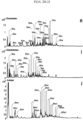
- the reaction of xyloglucan yielded over 20 structurally unique oligosaccharides as determined by nano-HPLC-chip/Q-TOF MS. The most abundant oligosaccharides are shown in FIG. 1A .
- the nanoLC-MS profile of xyloglucan oligosaccharides ranged from disaccharides to hexasaccharides.
- the product mixture was first reduced using sodium borohydride to yield an alditol if a reducing sugar were present.
- the mixture was enriched and purified as described in the Methods Section.
- the accurate mass analysis and tandem MS of the products indicated that the reaction produced primarily intact oligosaccharide species.
- the fragmentation mass spectra obtained through CID were interpreted and yielded the inset structures in FIG. 1A .
- a combination of oligosaccharides with several degrees of polymerization (DP) were present in the chromatograms.
- the relatively small numbers of oligosaccharides indicated a degree of specificity in the FITDOG reaction.
- the compounds eluting at 16.0 ( I ) and 18.9 ( II ) minutes were determined to contain a 2Hex backbone, due to the lack of a peak representing three hexoses with a reducing monosaccharide (m/z 507.19), as well as the presence of a peak representing two hexoses without a reducing monosaccharide ( m / z 325.11).
- Both isomers contained the peak representing two hexoses, two pentoses, and a reducing end (m / z 609.22), but no peak were present representing two pentoses without a reducing end (m / z 265.09). This suggested that there is one pentose branching from each hexose.
- Isomer ( III ) showed a peak that corresponded to two hexoses, two pentoses, and a reducing end ( m/ z 609.22), which suggested that the second pentose was localized on the hexose adjacent to the reducing end hexose.
- Isomer ( IV ) lacked the fragment m/z 609.22 and thus, the second pentose was assigned to the hexose farthest from the reducing end. This rigorous approach was employed to characterize all of the oligosaccharides shown in this report.
- the derived oligosaccharides were found to be primarily composed of hexose backbones with frequent pentose branches that were occasionally terminated by a hexose.
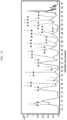
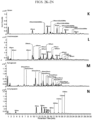
- polysaccharide standards were also subjected to FITDOG and all yielded representative oligosaccharides ( FIGS. 2A-2N ).
- the polysaccharide standards were composed of many monosaccharide combinations, linkage types, and branching patterns. Some contained monosaccharide modifications.
- the standards included amylose, amylopectin, cellulose, curdlan, lichenan, ⁇ -glucan, arabinan, xylan, arabinoxylan, mannan, galactomannan, glucomannan, galactan, and xyloglucan.
- Annotated chromatograms for each polysaccharide after treatment with FITDOG are shown in FIGS. 2A-2N . Prominent peaks were labeled with the DP and an abbreviation of their monosaccharide components (Hexose/Hex, Pentose/Pent, Hexuronic Acid/HexA).
- polysaccharides were homopolysaccharides, which are composed of a single monosaccharide and glycosidic linkage.
- the resulting oligosaccharides from these polysaccharides are expected and were observed to have one structure per DP.
- curdlan a linear ⁇ (1 ⁇ 3) linked glucose polymer yielded oligosaccharides with compositions corresponding to 3Hex (RT 12.56 min), 4Hex (19.28 min), and 5Hex (26.44 min) ( FIG. 2A ).
- Other homopolysaccharides, such as cellulose and amylose also produced one oligomer per DP indicative of their uniform monosaccharide and linkage composition ( FIGS. 2B and 2C ).
- Linear heteropolysaccharides contain more than one monosaccharide or glycosidic linkage.
- the structural heterogeneity contributed to the production of several oligosaccharide isomers for each DP.
- both ⁇ -glucan and lichenan were similar in structure and comprise of ⁇ (1 ⁇ 3) and ⁇ (1 ⁇ 4) linked glucose residues, but in differing ratios.
- LC-MS analysis yielded several isomers associated with each DP.
- the composition corresponding to 6Hex was observed to generate eight isomers from lichenan and four isomers from ⁇ -glucan ( FIGS. 2F and 2G ).
- Branched heteropolysaccharides contained an additional layer of complexity that originated from the frequency of branching and/or variations in the glycosidic linkages and monosaccharide constituents. As expected, variations in the positions and frequency of the branches produced many isomers for each DP.
- galactomannan contained a ⁇ (1 ⁇ 4) linked mannose backbone with terminal galactose branches which produced three 3Hex isomers.
- the monosaccharide arrangement resembled that of mannan.
- the three isomers of 3Hex could be produced from either the mannose backbone or from the mannose backbone with galactose branches.
- the 3Hex that eluted at 1.51 min was comprised of three ⁇ (1 ⁇ 4) linked mannose residues because it was produced from both sources ( FIG. 2I ).
- the 3Hex oligosaccharides eluting at 1.78 min and 2.55 min originated from two ⁇ (1 ⁇ 4) linked mannose constituents with a galactose branch ( FIG. 2J ).
- branched heteropolysaccharides such as arabinan, xylan, arabinoxylan, and xyloglucan were successfully dissociated and similarly generated several isomers per DP ( FIGS. 2J-2M ).
- the depolymerization of such diverse structures further demonstrates the method's reactivity towards pentose containing polysaccharides.
- amylopectin another branched heteropolysaccharide containing an ⁇ (1 ⁇ 4) linked glucose backbone with ⁇ (1 ⁇ 4,6) bisecting glucose branches produced only one structure per DP, which may be due to the high oxidative lability that has been reported for (1 ⁇ 6) linkages ( FIG. 2N ). 33
- Xylan was a ⁇ (1 ⁇ 4)-linked xylose polysaccharide with terminal 4-O-methyl glucuronic acid (GlcAOMe) residues.
- oligosaccharide compositions for each polysaccharide we examined whether the oligosaccharides could be used as diagnostic markers for polysaccharide identification in complicated mixtures such as those found in common foods.
- the oligosaccharide products were used as unique identifiers for the respective parent polysaccharides.
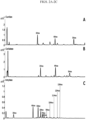
- An oligosaccharide reference library was created from the polysaccharide standards with nearly 400 unique oligosaccharides. A pool containing all the oligosaccharides was run alongside unknown samples for retention time alignment ( FIG. 3A ).
- Wheat and oat bran were selected to validate the oligosaccharide fingerprinting method as they were known to contain large amounts of non-starch polysaccharides including arabinoxylans 34 , mixed linkage ⁇ -glucans 35 , and cellulose 36 . Oat and wheat bran each produced over 50 distinct oligosaccharides with a large fraction matching entries in the reference library ( FIGS. 3B and 3C ).
- wheat bran was found to contain amylose/amylopectin (20 peaks, 100% coverage), cellulose (3 peaks, 75%), ⁇ -glucan (11 peaks, 34%) and lichenan (9 peaks (24%).
- Oat bran was composed of amylose/amylopectin (20 peaks, 100% coverage), cellulose (3 peaks, 75%), ⁇ -glucan (12 peaks, 38%) and lichenan (9 peaks 24%).
- Oat bran also contained arabinoxylan (5 peaks, 20%) and xylan (7 peaks, 32%).
- bran contained unmatched pentose oligomers (3 peaks) and mixed hexose and pentose containing oligomers (7 peaks) suggesting a polysaccharide that had not yet been identified. Nonetheless, the results matched the general expected polysaccharide composition of the brans. 34-36
- Xyloglucan polysaccharide was extracted from tamarind and underwent the FITDOG process to produce oligosaccharides that resemble its structure.
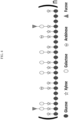
- Tamarind xyloglucan is known to comprise a ⁇ 1,4 glucose backbone with frequent single unit branches of ⁇ 1,6 xylose that can occasionally be further attached to a single ⁇ 1,2 linked galactose endcap.
- Xyloglucan from other sources may contain a single fucose residue ⁇ 1,2 linked to the galactose. In other sources of xyloglucan, arabinose can be ⁇ 1,2 linked to the xylose residue.
- xyloglucan resembling oligosaccharides are those that can be described by chains of 3-30 monosaccharides with a fundamental structure that contains a ⁇ 1,4-linked glucose and between 1 and n branching xylose residues, where n is the number of glucoses in the oligosaccharide.
- the xylose can be linked to any glucose through an ⁇ 1,6 linkage.
- the xylose may be, but is not required to be, further linked to a galactose residue primarily through a ⁇ 1,2 linkage.
- the xylose may be, but is not required to be, further linked to an arabinose residue primarily through an ⁇ 1,2 linkage.
- the galactose may be, but is not required to be, further linked to a fucose residue primarily through an ⁇ 1,2 linkage.
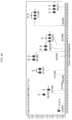
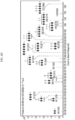
- An example of xyloglucan structure is shown in FIG. 4 .
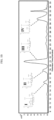
- the oligosaccharides observed by HPLC/Q-TOF MS are summarized in Table 4 .
- the oligosaccharides observed ranged from a degree of polymerization (DP) of 3-9 and contained combinations of hexoses, which can be derived from glucose or galactose, and pentoses, which are derived from xylose.
- DP degree of polymerization
- each subunit labeled "Hex” is independently selected from unsubstituted ⁇ 1-linked Glu, 6-substituted ⁇ 1-linked Glu (e.g., (Xyl ⁇ 1-6)Glu), and unsubstituted ⁇ 1-linked Gal.
- Each unsubstituted ⁇ 1-linked Glu or 6-substituted ⁇ 1-linked Glu is linked to the 4 position of a neighboring Glu or 6-substituted Glu, and each Gal is linked to the 2-position of a neighboring Xyl.
- each subunit labeled "Pent” is independently selected from unsubstituted ⁇ -linked Xyl and 2-substituted ⁇ -linked Xyl ( e.g., (Gal ⁇ 1-2)Xyl). Table 4.
- the oligosaccharide fragmentation was used in the elucidation of the oligosaccharide secondary structure.
- the sodium borohydrate reduction was used to reduce the aldehyde to an alditol, which can be observed as an increased m/z 2.014 in the fragmentation spectrum. This additional mass allowed the reducing end residue to be clearly identified and provided additional evidence for determining regiospecific monosaccharide arrangements.
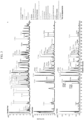
- FIG. 5 An HPLC-MS chromatogram of the peaks described in Table 4 is shown in FIG. 5 .
- the mixture of oligosaccharides were analyzed for broad attributes including monosaccharide and glycosidic linkage analysis.
- the monosaccharide analysis confirmed that the FITDOG process did not drastically change the monosaccharide composition of the polysaccharide during processing.
- the monosaccharide analysis showed that glucose, galactose, and xylose were the three major building blocks of the xyloglucan-resembling oligosaccharides.
- the glycosidic linkage analysis of the pool further confirmed that the FITDOG process did not greatly change alter the composition.
- terminal glucose, 4-linked glucose, 4,6-branched glucose, terminal xylose, 2-linked xylose, and terminal galactose were the major glycosidic linkages.
- the observed monosaccharide and glycosidic linkage analyses was used alongside the MS/MS annotations to deduce absolute oligosaccharide structure.
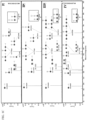
- FIG. 6A shows the annotated mass spectrum of a smaller oligosaccharide with a DP of three.
- This oligosaccharide corresponded with oligosaccharide #3 from Table 4.
- the fragment m/z 345.14 confirmed that there were two hexoses in the backbone of the oligosaccharides. This was further characterized as a ⁇ 1,4 glucose backbone because the 4-linked glucose was the only linked hexose to be found from the glycosidic linkage analysis.
- the fragment m/z 315.13 showed a pentose moiety was linked to the reducing end glucose.
- Xylose was the primary pentose in the monosaccharide analysis and is known to be linked directly to the glucose backbone through an ⁇ 1,6 glycosidic bond in xyloglucan.
- the annotated tandem mass spectrum shown in FIG. 6B corresponds to oligosaccharide #12 in Table 4, which has a DP of five.
- the fragment m/z 345.14 showed a two-hexose backbone corresponding to two ⁇ 1,4 linked glucose residues, where the m/z 315.13 corresponded to a xylose on the reducing end glucose.
- the fragment m/z 609.22 corresponded to xyloses attached to two glucose.
- a lack of a peak at m/z 265.08 indicates that the two pentoses are not linked together and must be situated with one pentose on each hexose.
- the annotated fragmentation spectrum in FIG. 6C corresponds to oligosaccharide #20 in Table 4 , which is a highly branched DP six oligosaccharide.
- oligosaccharide #20 in Table 4 which is a highly branched DP six oligosaccharide.
- Several key fragments aided in the elucidation of this oligosaccharide.
- fragments with m/z 295.10 and m/z 315.13 correspond to a non-reducing end hexose linked to a pentose and a reducing end hexose linked to a pentose, respectively.
- this peak corresponds to an oligosaccharide with three ⁇ 1,4 linked glucose residues, each with their own ⁇ 1,6 branched xylose residue.
- the annotated fragmentation spectrum in FIG. 6D corresponds to oligosaccharide #42 from Table 4 , which is highly branched and has an DP of eight.
- the backbone of this oligosaccharide can be deduced from the peak at m/z 831.29, which represents a backbone with five hexoses and a reducing end.
- This oligosaccharide lacks a peak at m/z 315.13, which corresponds to one reducing end hexoses with a pentose. This means that the oligosaccharide lacks a pentose branching from the reducing end hexose.
- peak m/z 883.29 which represents three hexoses non-reducing end hexoses and three pentoses, and further corroborates the lack of a pentose on the reducing end. Furthermore, peak m/z 883.29 suggests that all three pentoses are linked to adjacent hexose residues. Lastly, the pentose regio-location can be confined to the 2 nd , 3 rd , and 4 th hexoses from the reducing end by the presence of the peak m/z 477.21, which corresponds to two hexoses with a reducing end and a pentose.
- the peak m/z 477.21 can be deduced as representing a two-hexose backbone with the pentose linked to the non-reducing hexose due to the above-explained evidence for pentoses not being linked to the reducing end.
- This oligosaccharide was therefore determined to contain five ⁇ 1,4 linked glucoses, with the three middle glucoses containing ⁇ 1,6 branched xylose residues.
- the monosaccharide composition of polysaccharides prior to FITDOG depolymerization is shown below in Table 5-1.
- the notation "--" represents a monosaccharide that exists an amount less than 2% of the total polymer weight. Table 5-1.
- glycosidic linkage composition of polysaccharides prior to FITDOG depolymerization is shown below in Table 5-2.
- the notation "--" represents a monosaccharide that exists an amount less than 2% of the total polymer weight. Table 5-2.
- Curdlan Due to the structure of curdlan being a homopolysaccharide, meaning both the linkage and monomers are consistent and non-varied, only one isomer for each degree of polymerization (DP) is expected. Indeed, at least four oligosaccharides were produced without any isomers as shown in Table 5-3. Likely, oligosaccharides with higher degrees of polymerization were produced; however, they were not within the chromatographic range. Table 5-3.
- Galactan Due to galactan being a homopolysaccharide, only one isomer for each degree of polymerization (DP) is expected. Indeed, at least seven oligosaccharides were produced without any isomers ( Table 5-4 ). Likely, oligosaccharides with higher degrees of polymerization were produced; however, they were not within the chromatographic range.
- Mannan Due to the structure of mannan being a homopolysaccharide, meaning both the linkage and monomers are consistent and non-varied, only one isomer for each degree of polymerization (DP) is expected. Indeed, at least seven oligosaccharides were produced without any isomers ( Table 5-5 ). Likely, oligosaccharides with higher degrees of polymerization were produced; however, they were not within the chromatographic range. Table 5-5.
- Cereal Beta-Glucan The FITDOG process produced oligosaccharides that are consistent with the polysaccharide structure of ⁇ -glucans as described above.
- a trisaccharide can have three possible structural combinations: Glc ⁇ 1-4Glc ⁇ 1-4Glc, Glc ⁇ 1-4Glc ⁇ 1-3Glc, Glc ⁇ 1-3Glc ⁇ 1-4Glc.
- RT retention time
- each subunit labeled "Hex” is independently selected from unsubstituted, ⁇ 1-linked Glu which is linked to the 3-position or the 4-position of a neighboring unsubstituted Glu.
- Table 5-6 # Mass (m/z) Neutral Mass Retention Time (min) Composition Compound 1 507.19 504.17 11.38 3Hex Glc ⁇ 1-4Glc ⁇ 1-3Glc or Glc ⁇ 1-3Glc ⁇ 1-4Glc 2 507.19 504.17 13.73 3Hex 3 507.19 504.17 15.17 3Hex Glc ⁇ 1-4Glc ⁇ 1-3Glc or Glc ⁇ 1-3Glc ⁇ 1-4Glc 4 669.25 666.22 17.46 4Hex Glc ⁇ 1-3Glc ⁇ 1-4Glc1-4Glc, Glc ⁇ 1-4Glc ⁇ 1-3Glc1-4Glc, or Glc ⁇ 1-4Glc ⁇ 1-4Glc1-3Glc 5 669.25 666.22 19.46 4Hex 6 6 6
- each subunit labeled "Hex” is independently selected from unsubstituted, ⁇ 1-linked Glu which is linked to the 3-position or the 4-position of a neighboring unsubstituted Glu.
- Table 5-7 # Mass (m/z) Neutral Mass Retention Time (min) Composition # Mass (m/z) Neutral Mass Retention Time (min) Composition 1 507.19 504.17 5.98 3Hex 25 993.35 990.33 39.26 6Hex 2 507.19 504.17 11.58 3Hex 26 993.35 990.33 40.70 6Hex 3 507.19 504.17 13.73 3Hex 27 1155.40 1152.38 9.59 7Hex 4 507.19 504.17 15.24 3Hex 28 1155.40 1152.38 9.99 7Hex 5 669.25 666.22 14.13 4Hex 29 1155.40 1152.38 10.50 7Hex 6 669.25 666.22 17.58 4Hex 30 1155.40 1152.38 11.19
- Compound 6 in Table 5-7 was identified as Glc ⁇ 1-3Glc ⁇ 1-4Glc1-3Glc.
- Compounds 8 and 9 in Table 5-7 were determined to be Glc ⁇ 1-3Glc ⁇ 1-4Glc1-4Glc, Glc ⁇ 1-4Glc ⁇ 1-3Glc1-4Glc or Glc ⁇ 1-4Glc ⁇ 1-4Glc1-3Glc, although the correlation of the specific peak to the specific oligosaccharide was not yet determined.
- Compound 15 in Table 5-7 was determined to be Glc ⁇ 1-3Glc ⁇ 1-4Glc1-4Glc1-4Glc1-4Glc, Glc ⁇ 1-4Glc ⁇ 1-3Glc1-4Glc1-4Glc, Glc ⁇ 1-4Glc ⁇ 1-4Glc1-3Glc1-4Glc, or Glc ⁇ 1-4Glc ⁇ 1-4Glc1-4Glc1-3Glc.
- each subunit labeled "Hex” is independently selected from unsubstituted, ⁇ 1-linked Glu or unsubstituted, ⁇ 1-linked Man, each of which is linked to the 4-position of a neighboring unsubstituted Glu or unsubstituted Man. Table 5-8.
- each subunit labeled "Hex” is independently selected from unsubstituted, ⁇ 1-linked Man or ⁇ 1-linked (Gal ⁇ 1-6)Man, each of which is linked to the 4-position of a neighboring unsubstituted Man or (Gal ⁇ 1-6)Man.
- Xylan The mass heterogeneity between xylose and glucuronic acid residues in xylan provided for convenient determination of linear and branched structures. For example, the tetrasaccharide Xyl ⁇ 1-4Xyl ⁇ 1-4Xyl ⁇ 1-4Xyl was found to have a mass of 546.18 daltons, and the three possible branched trisaccharides had a mass of 604.19 daltons and were observed at RT 14.00, 15.33, and 16.47 minutes. Similar logic was used to confirm the creation of 27 other oligosaccharides ( Table 5-10 ).
- each subunit labeled "Pent” is independently selected from unsubstituted, ⁇ 1-linked Xyl or ⁇ 1-linked (GlcAOMe ⁇ 1-2)Xyl, each of which is linked to the 4-position of a neighboring unsubstituted Xyl or (GlcAOMe ⁇ 1-2)Xyl.
- Each "GlcAOMe” represents a glucuronic acid, which is methylated at the 4- O position.
- Arabinoxylan was expected to have four trisaccharide isomers based on its polysaccharide structure.
- three more isomers at RT 2.00, 4.40, and 12.78 were observed and corresponded to the three expected structures (Ara ⁇ 1-3)Xyl ⁇ 1-4Xyl, Xyl ⁇ 1-4(Ara ⁇ 1-3)Xyl, ((Ara ⁇ 1-2)(Ara ⁇ 1-3))Xyl. Similar logic was used to confirm the production of 39 other oligosaccharides (Table 5-11).
- each subunit labeled "Pent” is independently selected from unsubstituted, ⁇ 1-linked Xyl, ⁇ 1-linked (Ara ⁇ 1-3)Xyl, and ⁇ 1-linked (Ara ⁇ 1-2)(Ara ⁇ 1-3)Xyl, each of which is linked to the 4-position of a neighboring Xyl, (Ara ⁇ 1-3)Xyl, or (Ara ⁇ 1-2)(Ara ⁇ 1-3)Xyl.
- Arabinan The arabinan used for depolymerization was sourced from beet root. Arabinan was proposed to produce three trisaccharide isomers, Ara ⁇ 1-5Ara ⁇ 1-5Ara, (Ara ⁇ 1-3)Ara ⁇ 1-5Ara, and Ara ⁇ 1-5(Ara ⁇ 1-3)Ara. Indeed, three isomers were observed in the chromatogram at RT 2.97, 3.94, and 4.77 minutes.
- each subunit labeled "Pent” is independently selected from unsubstituted, ⁇ 1-linked Ara and ⁇ 1-linked (Ara ⁇ 1-3)Ara, each of which is linked to the 5-position of a neighboring Ara or (Ara ⁇ 1-3)Ara.
- Compounds 1-3 in Table 5-12 were determined to be Ara ⁇ 1-5Ara ⁇ 1-5Ara, (Ara ⁇ 1-3)Ara ⁇ 1-5Ara, and Ara ⁇ 1-5(Ara ⁇ 1-3)Ara, although the specific oligosaccharide corresponding to each peak was not yet definitively determined.
- Compounds 4-7 were determined to be Ara ⁇ 1-5Ara ⁇ 1-5Ara ⁇ 1-5Ara, (Ara ⁇ 1-3)Ara ⁇ 1-5Ara1-5Ara, Ara ⁇ 1-5(Ara ⁇ 1-3)Ara1-5Ara, and Ara ⁇ 1-5Ara1-5(Ara ⁇ 1-3)Ara, although the specific oligosaccharide corresponding to each peak was not yet definitively determined.
- Oligosaccharides prepared according to the present disclosure fall into different categories, e.g., 1) oligosaccharides derived from homopolymeric polysaccharides, containing a single type of monosaccharide and a single type of glycosidic linkage (e.g., amylose, galactan, mannan, curdlan, and cellulose); 2) oligosaccharides derived from heteropolymeric polymeric polysaccharides, containing non-isomeric monomers of various molecular weights and different glycosidic linkages (xylan, and xyloglucan); 3) oligosaccharides derived from heteropolymeric polysaccharides, containing different types of iosomeric monomers having the same molecular weight and/or different types of glycosidic linkages (glucomannan,
- Homopolymers are the simplest oligosaccharides to characterize. Homopolymers were identified by the presence of a single monomer unit, when determined by a monosaccharide analysis, and only terminal and one type of linear linkage, when determined by a glycosidic linkage analysis. Once a homopolymer was determined, oligosaccharide analysis by HPLC-MS was performed to determine the degree of polymerization. For example, galactan contained 88% galactose ( Table 5-1 ) and only two major glycosidic linkages, 58.84% 4-linked and 30.53% terminal ( Table 5-2 ), which indicates it is a homopolymer. The HPLC-MS oligosaccharide analysis showed seven peaks corresponding to DPs of 3-9. Thus, the oligosaccharides were assigned to be polymers of Gal ⁇ 1-4Gal ( Table 5-4 ).
- Heteropolymers with hetero-mass monomers can be the most structurally complicated oligosaccharides, however, the heterogeneity in mass results in oligosaccharides that can be differentiated by fragmentation in a mass spectrometer.
- Xyloglucan is an example of a heteropolymer with hetero-mass monomers because it contains glucose and galactose (180.16 Da) and xylose (150.13 Da).
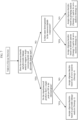
- a full description of characterization with fragmentation-based logic flows is shown in Example 4 and FIG. 6 .
- Heteropolymers with homo-mass monomers are the most complicated oligosaccharides to structurally elucidate because of the high number of possible structures but also the lack of information that can be obtained by MS fragmentation.
- One strategy that can be used to characterize the oligosaccharides is by a grouping strategy where groups of oligosaccharide isomers are assigned to groups of chromatographic peaks with the same mass. This strategy is particularly useful when the number of isomers per DP is consistent with the number of possible isomers dictated by the monomeric and glycosidic linkage profiles. For example, this strategy was used with beta-glucan, which contains mixtures of ⁇ 1-3 and ⁇ 1-4 glucose polymers ( Example 5, Table 5-2, 5-3 ). When grouping oligosaccharides is not sufficient, de novo characterization methods can be used for structural characterization as described below in Example 6, Strategy 4.
- oligosaccharides Fractionation and detection of oligosaccharides was performed on an Agilent 1260 Infinity II series HPLC coupled to an Agilent 6530 Q-TOF mass spectrometer and a Teledyne Isco Foxy 200 fraction collector. Oligosaccharides were first separated on a 150 mm x 4.6 mm Hypercarb column from Thermo Scientific with a 5 ⁇ m particle size. A binary gradient was employed and consisted of solvent A: (3 % (v/v) acetonitrile/water + 0.1 % formic acid) and solvent B: (90 % acetonitrile/water + 0.1 % formic acid).
- a 90-minute gradient with a flow rate of 1 ml/min was used for chromatographic separation: 5-12 % B, 0-90 min; 12-99 % B, 90-90.01 minutes; 99-99 % B, 90.01-110 min; 99-5 % B, 110- 110.01 min; 5-5 % B, 110.01-120 min.
- Post column a 90:10 flow splitter partitioned the larger stream to the fraction collector and the smaller to the Q-TOF mass spectrometer. Data from the QTOF was collected in the positive mode and calibrated with internal calibrant ions ranging from m/z 118.086-2721.895. Drying gas was set to 150 °C and with a flow rate of 11 l/min.
- fractionated oligosaccharides underwent acid hydrolysis with 4 M TFA for 2 hours at 100°C. The samples were dried to completion by vacuum centrifugation. Samples and monosaccharide standards (0.001-100 ⁇ g/ml) underwent derivatization with 0.2 M PMP in methanol and 28% NH 4 OH at 70°C for 30 minutes. Derivatized products were dried to completion under vacuum centrifugation and reconstituted in nano-pure water. Excess PMP was removed with chloroform extraction. The aqueous layer was analyzed by an Agilent 1290 infinity II UHPLC coupled to an Agilent 6495A QqQ MS employing dynamic multiple reaction monitoring (dMRM) mode.
- dMRM dynamic multiple reaction monitoring
- An external standard curve comprised of monosaccharide standards (fructose, mannose, allose, glucose, galactose, rhamnose, fucose, ribose, xylose, arabinose, glucuronic acid, galacturonic acid, N-acetylglucosamine, N-acetylgalactosamine) ranging from 0.001-100 ⁇ g/ml was used for absolute quantitation of each monosaccharide in the fractions. Detailed descriptions of the method can be found in Xu et al. 25 and Amicucci et al. 24
- NMR spectra were recorded at 303 K on a Bruker AVANCE III 800 MHz spectrometer equipped with a 5-mm Bruker CPTCI cryoprobe. Samples were obtained by combining ten collections of fractionated oligosaccharides of the same components verified with HPLC-QTOF MS and MS/MS data. Based on the monosaccharide and linkage information, the most abundant oligosaccharides were selected for NMR analysis.
- Each of these selected pooled fractions were dried with vacuum centrifugation before being reconstituted in 0.4 mL of D 2 O, and measured using 1D 1H (relaxation delay (D1) 2 s; number of scans (NS) 128), 13C NMR (D1 1.5 s; NS 6000-15000), and 2D 1H-1H COSY (D1 1.5 s; NS 8), 1H-13C HSQC (D1 2 s; NS 4), HMBC (D1 1.5 s; NS 16), and H2BC (D1 1.5 s; NS 16).
- the spectra were then processed with Bruker TopSpin 3.2 and analyzed with MestReNova.
- the experimental chemical shifts, along with the required monosaccharide and linkage data, were calculated using the CASPER program, where the oligosaccharide structures, including anomeric characters of linkages, were predicted with ranking scores.
- the QTOF MS and MS/MS mass spectra provides the structural information pertaining to monosaccharide compositions and the degree of oligosaccharide polymerization of the compounds collected at unique retention times.
- sole use of the QTOF MS and MS/MS mass spectra data may not identify monosaccharide constituents, linkages, or the anomeric character of the linkage (alpha versus beta).
- the collected fractions e.g., about 200
- the galactomannan polysaccharide was used to illustrate the capabilities of these workflows.
- the LC-MS chromatogram yielded primarily hexose polymers with unknown monosaccharide compositions (combinations of galactose and mannose), linkage, or branching ( FIG. 8A ).
- Fractions from the LC-MS were collected in 30 second increments leading to a total of 192 fractions. Each fraction was analyzed for monosaccharide compositions as described above under " monosaccharide composition analysis of fractionated oligosaccharides", and the results are shown in ( FIG. 8B ).
- the linkage information was similarly obtained using a separate workflow for comprehensive linkage analysis as described above under " linkage analysis of fractionated oligosaccharides" .
- the three workflows monosaccharide, glycosidic linkage, and oligosaccharide analysis
- they yielded structural information describing oligosaccharides with monosaccharide compositions and glycosidic linkage information.
- the anomeric character of the linkages, the isolated oligosaccharide fractions were selected for NMR analysis using 1H, 13C NMR and a combination of techniques including COSY, HSQC, HMBC, and H2BC described above under " NMR Analysis of Fractionated Oligosaccharides", and the results are shown in FIG. 8C .
- the MS-obtained linkages and monosaccharide compositions greatly facilitated the NMR interpretation by limiting the resolution needed to determine the exact structures.
- This multi-workflow approach yielded absolute oligosaccharide structures, which were also used to recapitulate the parent polymeric structure ( FIG. 8D ).
- oligosaccharides 1-24 in Table 4 were characterized by Strategy 2
- oligosaccharides 25-35 in the same table were characterized by Strategy 3 and could be further characterized by Strategy 4.
- All oligosaccharides in Tables 5-3, 5-4, and 5-5 were characterized by Strategy 2.
- Oligosaccharides in Table 5-6 were characterized by Strategy 3 and can further be characterized by Strategy 4.
- oligosaccharides 2, 5, 10, and 18 were characterized as homologous compounds to compounds identified in curdlan because they had the same mass and retention time.
- the oligosaccharides in Table 5-7 were characterized by Strategy 3, and can be further characterized by Strategy 4.
- oligosaccharides 1, 9, 27, 47, and 79 in Table 5-8 were characterized by their homology to structures found in mannan; oligosaccharides 2-7, and 10-23 were characterized by Strategy 3 and can be further characterized by Strategy 4; oligosaccharides 8, 24-26, 28-46, 48-78, and 80-164 can be characterized by Strategy 4.
- Oligosaccharides 1, 4, 17, 26, 36, and 43 in Table 5-9 were characterized by their homology to the same structures in mannan; oligosaccharides 2, 3, 5-7, 10-16, 18-22, and 27-32 were characterized by Strategy 3 and can be further characterized by Strategy 4; oligosaccharides 23-25, 27-35, 37-42, and 44-47 can be characterized by Strategy 4.
- Oligosaccharides 1, 2, 6, 11, 17, and 24 in Table 5-10 were characterized by Strategy 2; oligosaccharides 3-5, 7-10, 12-16, and 18-23, were characterized by Strategy 3 and can be further characterized by Strategy 4; oligosaccharides 25-27 can be characterized by Strategy 4.
- Oligosaccharides 3, 11, 19, 25, 30, and 35 in Table 5-11 were characterized by homology with structures found in xylan; oligosaccharides 1, 2, 4, and 5-10, were characterized by Strategy 3 and can be further characterized by Strategy 4; oligosaccharides 12-18, 20-24, 26-29, 31-34 can be characterized by Strategy 4.
- Oligosaccharides 1-3, and 4-7, in Table 5-12 were characterized by Strategy 3 and can be further characterized by Strategy 4; oligosaccharides 8-34 can be characterized by Strategy 4.
Landscapes
- Chemical & Material Sciences (AREA)
- Health & Medical Sciences (AREA)
- Life Sciences & Earth Sciences (AREA)
- Organic Chemistry (AREA)
- Engineering & Computer Science (AREA)
- General Health & Medical Sciences (AREA)
- Molecular Biology (AREA)
- Medicinal Chemistry (AREA)
- Polymers & Plastics (AREA)
- Biochemistry (AREA)
- Chemical Kinetics & Catalysis (AREA)
- Materials Engineering (AREA)
- Nutrition Science (AREA)
- Pharmacology & Pharmacy (AREA)
- Animal Behavior & Ethology (AREA)
- Veterinary Medicine (AREA)
- Public Health (AREA)
- Genetics & Genomics (AREA)
- Biotechnology (AREA)
- Food Science & Technology (AREA)
- Mycology (AREA)
- Epidemiology (AREA)
- Bioinformatics & Cheminformatics (AREA)
- General Chemical & Material Sciences (AREA)
- Nuclear Medicine, Radiotherapy & Molecular Imaging (AREA)
- Emergency Medicine (AREA)
- Pharmaceuticals Containing Other Organic And Inorganic Compounds (AREA)
- Saccharide Compounds (AREA)
- Preparation Of Compounds By Using Micro-Organisms (AREA)
Applications Claiming Priority (4)
| Application Number | Priority Date | Filing Date | Title |
|---|---|---|---|
| US201962857685P | 2019-06-05 | 2019-06-05 | |
| US201962950483P | 2019-12-19 | 2019-12-19 | |
| PCT/US2020/035748 WO2020247389A1 (en) | 2019-06-05 | 2020-06-02 | Production of oligosaccharides from polysaccharides |
| EP20817695.8A EP3980024B1 (de) | 2019-06-05 | 2020-06-02 | Synthetische oligosacchariden hergestellt aus polysacchariden |
Related Parent Applications (2)
| Application Number | Title | Priority Date | Filing Date |
|---|---|---|---|
| EP20817695.8A Division-Into EP3980024B1 (de) | 2019-06-05 | 2020-06-02 | Synthetische oligosacchariden hergestellt aus polysacchariden |
| EP20817695.8A Division EP3980024B1 (de) | 2019-06-05 | 2020-06-02 | Synthetische oligosacchariden hergestellt aus polysacchariden |
Publications (2)
| Publication Number | Publication Date |
|---|---|
| EP4484559A2 true EP4484559A2 (de) | 2025-01-01 |
| EP4484559A3 EP4484559A3 (de) | 2025-02-19 |
Family
ID=73652169
Family Applications (2)
| Application Number | Title | Priority Date | Filing Date |
|---|---|---|---|
| EP24212995.5A Pending EP4484559A3 (de) | 2019-06-05 | 2020-06-02 | Synthetische oligosaccharide hergestellt aus polysacchariden |
| EP20817695.8A Active EP3980024B1 (de) | 2019-06-05 | 2020-06-02 | Synthetische oligosacchariden hergestellt aus polysacchariden |
Family Applications After (1)
| Application Number | Title | Priority Date | Filing Date |
|---|---|---|---|
| EP20817695.8A Active EP3980024B1 (de) | 2019-06-05 | 2020-06-02 | Synthetische oligosacchariden hergestellt aus polysacchariden |
Country Status (6)
| Country | Link |
|---|---|
| US (2) | US12492219B2 (de) |
| EP (2) | EP4484559A3 (de) |
| CN (1) | CN114206350A (de) |
| CA (1) | CA3142437A1 (de) |
| ES (1) | ES3003383T3 (de) |
| WO (1) | WO2020247389A1 (de) |
Families Citing this family (4)
| Publication number | Priority date | Publication date | Assignee | Title |
|---|---|---|---|---|
| US20240309408A1 (en) * | 2021-05-13 | 2024-09-19 | Bcd Bioscience, Inc. | Methods of Use of Oligosaccharide Compositions for Modulating Microbiota and their Metabolic Products, and as Therapeutics for Health Applications |
| KR102930432B1 (ko) * | 2022-09-06 | 2026-02-26 | 고려대학교 산학협력단 | 콜라닉산으로부터 퓨코실화 올리고당의 생산 방법 |
| CN115656409B (zh) * | 2022-09-21 | 2025-08-19 | 安徽中医药大学 | 一种多糖中单糖组成的分析方法 |
| WO2024103044A1 (en) * | 2022-11-11 | 2024-05-16 | Board Of Regents, The University Of Texas System | Methods and compositions concerning bacteroides ovatus |
Citations (1)
| Publication number | Priority date | Publication date | Assignee | Title |
|---|---|---|---|---|
| US20180363016A1 (en) | 2017-06-20 | 2018-12-20 | The Regents Of The University Of California | Production of bioactive oligosaccharides |
Family Cites Families (9)
| Publication number | Priority date | Publication date | Assignee | Title |
|---|---|---|---|---|
| DE19961182B4 (de) | 1999-12-18 | 2006-01-12 | Südzucker AG Mannheim/Ochsenfurt | Galactomannan-Oligosaccharide und Verfahren zu deren Herstellung sowie deren Verwendung |
| GB0805360D0 (en) | 2008-03-25 | 2008-04-30 | Univ Leuven Kath | Arabinoxylan oligosaccharide preparation |
| GB2485953B (en) * | 2009-08-27 | 2014-07-23 | Temple Inland | Methods of making and using a ruminant gas reduction composition |
| US9804163B2 (en) * | 2010-08-06 | 2017-10-31 | The United States Of America, As Represented By The Secretary, Department Of Health And Human Services | Biomarkers for prostate cancer and methods for their detection |
| US9492473B2 (en) * | 2015-01-26 | 2016-11-15 | Kaleido Biosciences, Inc. | Glycan therapeutics and related methods thereof |
| JP6722697B2 (ja) | 2015-01-26 | 2020-07-15 | カデナ・バイオ・インコーポレイテッド | 動物飼料として使用するためのオリゴ糖組成物及びその生成方法 |
| CN108291244A (zh) * | 2015-09-11 | 2018-07-17 | 普发博有限公司 | 具有支化寡糖的低分子量阿拉伯木聚糖 |
| JP2020513410A (ja) | 2016-12-06 | 2020-05-14 | カレイド・バイオサイエンシズ・インコーポレイテッド | グリカンポリマーおよびその関連方法 |
| EP3488854A1 (de) * | 2017-11-22 | 2019-05-29 | Technische Universität München | Verfahren zur herstellung von xyloglucan-oligosacchariden |
-
2020
- 2020-06-02 EP EP24212995.5A patent/EP4484559A3/de active Pending
- 2020-06-02 CA CA3142437A patent/CA3142437A1/en active Pending
- 2020-06-02 US US17/616,554 patent/US12492219B2/en active Active
- 2020-06-02 EP EP20817695.8A patent/EP3980024B1/de active Active
- 2020-06-02 WO PCT/US2020/035748 patent/WO2020247389A1/en not_active Ceased
- 2020-06-02 ES ES20817695T patent/ES3003383T3/es active Active
- 2020-06-02 CN CN202080056080.6A patent/CN114206350A/zh active Pending
-
2025
- 2025-10-30 US US19/374,925 patent/US20260055129A1/en active Pending
Patent Citations (1)
| Publication number | Priority date | Publication date | Assignee | Title |
|---|---|---|---|---|
| US20180363016A1 (en) | 2017-06-20 | 2018-12-20 | The Regents Of The University Of California | Production of bioactive oligosaccharides |
Non-Patent Citations (55)
| Title |
|---|
| AMICUCCI, M. J.GALERMO, A. G.NANDITA, E.VO, T.-T. T.LIU, Y.LEE, M.XU, G.LEBRILLA, C. B.: "A rapid-throughput adaptable method for determining the monosaccharide composition of polysaccharides", INTERNATIONAL JOURNAL OF MASS SPECTROMETRY, vol. 438, 2019, pages 22 - 28, XP085591308, DOI: 10.1016/j.ijms.2018.12.009 |
| AMICUCCI, M. J.PARK, D.GALERMO, A. G.MILLS, D. A.GERMAN, J. B.LEBRILLA, C. B.: "Production of bioactive oligosaccharides", GOOGLE PATENTS, 2018 |
| BARDALAYE, PROMODE C.JOHN H. NORDIN: "Chemical structure of the galactomannan from the cell wall of Aspergillus niger", JOURNAL OF BIOLOGICAL CHEMISTRY, vol. 252, no. 8, 1977, pages 2584 - 2591 |
| BARILE, D.RASTALL, R. A.: "Human milk and related oligosaccharides as prebiotics", CURRENT OPINION IN BIOTECHNOLOGY, vol. 24, no. 2, 2013, pages 214 - 219, XP055783522, DOI: 10.1016/j.copbio.2013.01.008 |
| BAUER, W. D.TALMADGE, K. W.KEEGSTRA, K.ALBERSHEIM, P.: "The structure of plant cell walls: II. The hemicellulose of the walls of suspension-cultured sycamore cells", PLANT PHYSIOLOGY, vol. 51, no. 1, 1973, pages 174 - 187 |
| BECKMANN ET AL.: "Isolation and identification of mixed linked beta -glucan degrading bacteria in the intestine of broiler chickens and partial characterization of respective 1,3-1,4-beta -glucanase activities", J. BASIC MICROBIOL, vol. 46, 2006, pages 175 |
| BUCKE, C.: "Review Oligosaccharide Synthesis Using Glycosidases", JOURNAL OF CHEMICAL TECHNOLOGY & BIOTECHNOLOGY: INTERNATIONAL RESEARCH IN PROCESS, ENVIRONMENTAL AND CLEAN TECHNOLOGY, vol. 67, no. 3, 1996, pages 217 - 220, XP000638936 |
| COPPA, G. V.ZAMPINI, L.GALEAZZI, T.FACINELLI, B.FERRANTE, L.CAPRETTI, R.ORAZIO, G.: "Human milk oligosaccharides inhibit the adhesion to Caco-2 cells of diarrheal pathogens: Escherichia coli, Vibrio cholerae, and Salmonella fyris", PEDIATRIC RESEARCH, vol. 59, no. 3, 2006, pages 377, XP009156919, DOI: 10.1203/01.pdr.0000200805.45593.17 |
| CUI, STEVE W.QI WANG: "Cell wall polysaccharides in cereals: chemical structures and functional properties", STRUCTURAL CHEMISTRY, vol. 20, no. 2, 2009, pages 291 - 297, XP019688892 |
| DARVILL, J. E.MCNEIL, M.DARVILL, A. G.ALBERSHEIM, P.: "Structure of Plant Cell Walls: XI. Glucuronoarabinoxylan, a second hemicellulose in the primary cell walls of suspension-cultured sycamore cells", PLANT PHYSIOLOGY, vol. 66, no. 6, 1980, pages 1135 - 1139 |
| DESAI ET AL.: "A dietary fiber-deprived gut microbiota degrades the colonic mucus barrier and enhances pathogen susceptibility", CELL, vol. 17, 2016, pages 1339 |
| FRY, S. C.: "The structure and functions of xyloglucan", JOURNAL OF EXPERIMENTAL BOTANY, vol. 40, no. 1, 1989, pages 1 - 11 |
| GALERMO, A. G.NANDITA, E.BARBOZA, M.AMICUCCI, M. J.VO, T.-T. T.LEBRILLA, C. B.: "An LC-MS/MS Approach for Determining Glycosidic Linkages", ANALYTICAL CHEMISTRY, 2018 |
| GALERMO, A.G. ET AL.: "Development of an Extensive Linkage Library for Characterization of Carbohydrates", ANALYTICAL CHEMISTRY, vol. 91, 2019, pages 13022 - 13031 |
| HINZ ET AL.: "Bifidobacterium longum endogalactanase liberate galactotriose from Type galactans", APPL ENVIRON MICROBIOL, vol. 71, 2005, pages 5501, XP055541271, DOI: 10.1128/AEM.71.9.5501-5510.2005 |
| IZYDORCZYK, MARTA S.COSTAS G. BILIADERIS: "Cereal arabinoxylans: advances in structure and physicochemical properties", CARBOHYDRATE POLYMERS, vol. 28, no. 1, 1995, pages 33 - 48, XP004034428, DOI: 10.1016/0144-8617(95)00077-1 |
| JANSSON, P ET AL.: "Sequence determination of oligosaccharides and regular polysaccharides using NMR spectroscopy and a novel Web-based version of the computer program CASPER", CARBOHYDRATE RESEARCH, vol. 341, 2006, pages 1003 - 1010, XP025010273, DOI: 10.1016/j.carres.2006.02.034 |
| KAČURÁKOVÁ, M. ET AL.: "Characterisation of xylan-type polysaccharides and associated cell wall components by FT-IR and FT-Raman spectroscopies", FOOD HYDROCOLLOIDS, vol. 13, no. 1 |
| KARAV, S.LE PARC, A.DE MOURA, J. M. L. N.FRESE, S. A.KIRMIZ, N.BLOCK, D. E.BARILE, D.MILLS, D. A.: "Oligosaccharides released from milk glycoproteins are selective growth substrates for infant-associated bifidobacteria", APPL. ENVIRON. MICROBIOL., vol. 82, no. 12, 2016, pages 3622 - 3630 |
| KATSURAYA, KANAME ET AL.: "Constitution of konjac glucomannan: chemical analysis and 13C NMR spectroscopy", CARBOHYDRATE POLYMERS, vol. 53, no. 2, 2003, pages 183 - 189, XP004421214, DOI: 10.1016/S0144-8617(03)00039-0 |
| KAWAGUCHI ET AL.: "The mannobiose-forming exo-mannanase involved in a new mannan catabolic pathway in Bacteroides fragilis", ARCH MICROBIOL, vol. 196, 2014, pages 17 |
| KEEGSTRA, K.: "Plant cell walls", PLANT PHYSIOLOGY, vol. 154, no. 2, 2010, pages 483 - 486 |
| KIM, YEONG-SUYU-RI LIMDEOK-KUN OH: "L-Arabinose production from sugar beet arabinan by immobilized endo-and exo-arabinanases from Caldicellulosiruptor saccharolyticus in a packed-bed reactor", JOURNAL OF BIOSCIENCE AND BIOENGINEERING, vol. 113, no. 2, 2012, pages 239 - 241 |
| KULCINSKAJA ET AL.: "Expression and characterization of a Bifidobacterium adolescentis beta-mannanase carrying mannan-binding and cell association motifs", APPL ENVIRON MICROBIOL, vol. 79, 2013, pages 133 |
| LAMMERTS VAN BUEREN ET AL.: "Prebiotic galactoligosaccharides activate mucin and pectin galactan utilization pathways in the human gut symbiont Bacteroides thetaiotaomicron", SCIENTIFIC REPORTS, vol. 7, 2017, pages 40478 |
| LAMSAL, B. P.: "Production, health aspects and potential food uses of dairy prebiotic galactooligosaccharides", JOURNAL OF THE SCIENCE OF FOOD AND AGRICULTURE, vol. 92, no. 10, 2012, pages 2020 - 2028 |
| LARSBRINK ET AL.: "A discrete genetic locus confers xyloglucan metabolism in select human gut Bacteroidetes", NATURE, vol. 506, 2014, pages 489 |
| LEANTI LA ROSA ET AL.: "The human gut Firmicute Roseburia intestinalis is a primary degrader of dietary β-mannans", NAT COMMUN, vol. 10, 2019, pages 905 |
| LEROUXEL, O.CAVALIER, D. M.LIEPMAN, A. H.KEEGSTRA, K.: "Biosynthesis of plant cell wall polysaccharides-a complex process", CURRENT OPINION IN PLANT BIOLOGY, vol. 9, no. 6, 2006, pages 621 - 630, XP028014975, DOI: 10.1016/j.pbi.2006.09.009 |
| LUIS ET AL.: "Dietary pectin glycans are degraded by coordinated enzyme pathways in human colonic Bacteroides", NAT MICROBIOL, vol. 3, 2018, pages 210 |
| MARGOLLES ET AL.: "Purification and functional characterization of a novel alpha-L-arabinofuranosidase from Bifidobacterium longum B667", APPL ENVIRONM MICROBIOL, vol. 69, 2003, pages 5 - 59 |
| MARTENS ET AL.: "Recognition and Degradation of Plant Cell Wall Polysaccharides by Two Human Gut Symbionts", PLOS BIOL., vol. 9, 2011 |
| MARTENS, E. C.; KELLY, A. G.; TAUZIN, A. S.; BRUMER, H.: " The devil lies in the details: how variations in polysaccharide fine-structure impact the physiology and evolution of gut microbes", JOURNAL OF MOLECULAR BIOLOGY, vol. 426, no. 23, 2014, pages 3851 - 3865 |
| MARTENS, E. C.LOWE, E. C.CHIANG, H.PUDLO, N. A.WU, M.MCNULTY, N. P.ABBOTT, D. W.HENRISSAT, B.GILBERT, H. J.BOLAM, D. N.: "Recognition and degradation of plant cell wall polysaccharides by two human gut symbionts", PLOS BIOLOGY, vol. 9, no. 12, 2011, pages e1001221 |
| MEIERHANS: "On the structure of cell walls and cell wall mannans from ivory nuts and from dates", BIOCHIMICA ET BIOPHYSICA ACTA, vol. 28, 1958, pages 229 - 240 |
| MEREDITH-DENNIS, L.XU, G.GOONATILLEKE, E.LEBRILLA, C. B.UNDERWOOD, M. A.SMILOWITZ, J. T.: "Composition and variation of macro nutrients, immune proteins, and human milk oligosaccharides in human milk from nonprofit and commercial milk banks", JOURNAL OF HUMAN LACTATION, vol. 34, no. 1, 2018, pages 120 - 129 |
| MICHALAK, MALWINA ET AL.: "Expression and characterization of an endo-1, 4-β-galactanase from Emericella nidulans in Pichia pastoris for enzymatic design of potentially prebiotic oligosaccharides from potato galactans", ENZYME AND MICROBIAL TECHNOLOGY, vol. 50, no. 2, 2012, pages 121 - 129 |
| MORRIS, E.POWELL, D.GIDLEY, M.REES, D.: "Conformations and interactions of pectins: I. Polymorphism between gel and solid states of calcium polygalacturonate", JOURNAL OF MOLECULAR BIOLOGY, vol. 155, no. 4, 1982, pages 507 - 516, XP024020767, DOI: 10.1016/0022-2836(82)90484-3 |
| OLAFSDOTTIR, ELIN S.KRISTIN INGΔLFSDOTTIR: "Polysaccharides from lichens: structural characteristics and biological activity", PLANTA MEDICA, vol. 67, no. 03, 2001, pages 199 - 208, XP008105173, DOI: 10.1055/s-2001-12012 |
| PRESTON, R. D.: "The physical biology of plant cell walls", 1974, CHAPMAN & HALL |
| PULLICIN, A. J.FERREIRA, A. J.BEAUDRY, C. M.LIM, J.PENNER, M. H.: "Preparation and characterization of isolated low degree of polymerization food-grade maltooligosaccharides", FOOD CHEMISTRY, vol. 246, 2018, pages 115 - 120, XP085322172, DOI: 10.1016/j.foodchem.2017.10.039 |
| REDDY ET AL.: "A β-mannan utilization locus in Bacteroides ovatus involves a GH36 α-galactosidase active on galactomannans", FEBS LETT, vol. 590, 2016, pages 2106 |
| ROBBINS, P.WRIGHT, A.DANKERT, M.: "Polysaccharide biosynthesis", THE JOURNAL OF GENERAL PHYSIOLOGY, vol. 49, no. 6, 1966, pages 331 - 346 |
| SAITO, HIROSHIAKIRA MISAKITOKUYA HARADA: "A comparison of the structure of curdlan and pachyman", AGRICULTURAL AND BIOLOGICAL CHEMISTRY, vol. 32, no. 10, 1968, pages 1261 - 1269 |
| SALYERS ET AL.: "Fermentation of mucin and plant polysaccharides by strains of Bacteroides from the human colon", APP ENVIRONM MICROBIOL, vol. 33, 1977, pages 319 |
| SHERIDAN ET AL.: "Polysaccharide utilization loci and nutrition specialization in a dominant group of butyrate-producing human colonic Firmicutes", MICROBIAL GENOMICS, vol. 2, no. 1, 2016 |
| TAMURA ET AL.: "Molecular Mechanism by which Prominent Human Gut Bacteroidetes Utilize Mixed-Linkage P-Glucans, Major Health-Promoting Cereal Polysaccharides", CELL REPORTS, vol. 21, 2017, pages 2030 |
| VAN LAERE ET AL.: "Transglycosidew activity of Bifidobacterium adolescents DSM 20083 alpha-galactosidase", APPL MICROBIAL BIOTECHNOL, vol. 52, 1999, pages 681 |
| WANG, M.LI, M.WU, S.LEBRILLA, C. B.CHAPKIN, R. S.IVANOV, I.DONOVAN, S. M.: "Fecal microbiota composition of breast-fed infants is correlated with human milk oligosaccharides consumed", JOURNAL OF PEDIATRIC GASTROENTEROLOGY AND NUTRITION, vol. 60, no. 6, 2015, pages 825, XP055415934, DOI: 10.1097/MPG.0000000000000752 |
| XU, G.AMICUCCI, M. J.CHENG, Z.GALERMO, A. G.LEBRILLA, C. B.: "Revisiting monosaccharide analysis-quantitation of a comprehensive set of monosaccharides using dynamic multiple reaction monitoring", ANALYST, vol. 143, no. 1, 2018, pages 200 - 207 |
| XU, Y.MASUKO, S.TAKIEDDIN, M.XU, H.LIU, R.JING, J.MOUSA, S. A.LINHARDT, R. J.LIU, J.: "Chemoenzymatic synthesis of homogeneous ultralow molecular weight heparins", SCIENCE, vol. 334, no. 6055, 2011, pages 498 - 501, XP055126707, DOI: 10.1126/science.1207478 |
| YAMAGUCHI, M.KAINUMA, K.FRENCH, D.: "Electron microscopic observations of waxy maize starch", JOURNAL OF ULTRASTRUCTURE RESEARCH, vol. 69, no. 2, 1979, pages 249 - 261, XP024873158, DOI: 10.1016/S0022-5320(79)90114-X |
| ZHANG, Z.OLLMANN, I. R.YE, X.-S.WISCHNAT, R.BAASOV, T.WONG, C.-H.: "Programmable one-pot oligosaccharide synthesis", JOURNAL OF THE AMERICAN CHEMICAL SOCIETY, vol. 121, no. 4, 1999, pages 734 - 753 |
| ZHOU, L.-B.CHEN, B.: "Bioactivities of water-soluble polysaccharides from Jisongrong mushroom: anti-breast carcinoma cell and antioxidant potential", INTERNATIONAL JOURNAL OF BIOLOGICAL MACROMOLECULES, vol. 48, no. 1, 2011, pages 1 - 4, XP027564727 |
| ZIVKOVIC, A. M.BARILE, D.: "Bovine milk as a source of functional oligosaccharides for improving human health", ADVANCES IN NUTRITION, vol. 2, no. 3, 2011, pages 284 - 289, XP055242848, DOI: 10.3945/an.111.000455 |
Also Published As
| Publication number | Publication date |
|---|---|
| US20260055129A1 (en) | 2026-02-26 |
| EP3980024B1 (de) | 2024-12-18 |
| CA3142437A1 (en) | 2020-12-10 |
| CN114206350A (zh) | 2022-03-18 |
| US20220235084A1 (en) | 2022-07-28 |
| US12492219B2 (en) | 2025-12-09 |
| EP3980024A4 (de) | 2023-06-28 |
| EP3980024C0 (de) | 2024-12-18 |
| EP3980024A1 (de) | 2022-04-13 |
| WO2020247389A1 (en) | 2020-12-10 |
| ES3003383T3 (en) | 2025-03-10 |
| EP4484559A3 (de) | 2025-02-19 |
Similar Documents
| Publication | Publication Date | Title |
|---|---|---|
| US20260055129A1 (en) | Production of oligosaccharides from polysaccharides | |
| Zhang et al. | Structural characterization and rheological properties of β-D-glucan from hull-less barley (Hordeum vulgare L. var. nudum Hook. f.) | |
| McCleary et al. | Measurement of total dietary fiber using AOAC Method 2009.01 (AACC International Approved Method 32‐45.01): evaluation and updates | |
| O’Neill et al. | The composition and structure of plant primary cell | |
| Srivastava et al. | Structural characterization and in vitro fermentation of β-mannooligosaccharides produced from locust bean gum by GH-26 endo-β-1, 4-mannanase (ManB-1601) | |
| Peña et al. | Moss and liverwort xyloglucans contain galacturonic acid and are structurally distinct from the xyloglucans synthesized by hornworts and vascular plants | |
| Martínez-Abad et al. | Influence of the molecular motifs of mannan and xylan populations on their recalcitrance and organization in spruce softwoods | |
| Serna Saldívar et al. | Chemical composition and biosynthesis of dietary fiber components | |
| Shi et al. | Optimization of isomaltooligosaccharide size distribution by acceptor reaction of Weissella confusa dextransucrase and characterization of novel α-(1→ 2)-branched isomaltooligosaccharides | |
| Rong et al. | Sequencing analysis of β-glucan from highland barley with high performance anion exchange chromatography coupled to quadrupole time–Of–Flight mass spectrometry | |
| CN114727643A (zh) | 高产过氧化物淬灭控制的多糖解聚及其组合物 | |
| Chambat et al. | Variation of xyloglucan substitution pattern affects the sorption on celluloses with different degrees of crystallinity | |
| Ubiparip et al. | β-Glucan phosphorylases in carbohydrate synthesis | |
| Yang et al. | Functional carbohydrate polymers: prebiotics | |
| Yiasmin et al. | Purification, isolation, and structure characterization of water soluble and insoluble polysaccharides from Maitake fruiting body | |
| Do et al. | Decoding the capability of Lactobacillus plantarum W1 isolated from soybean whey in producing an exopolysaccharide | |
| EP2167674B1 (de) | Ernährungszusammensetzung | |
| Wu et al. | In vitro cholesterol-lowering bioactivity, synthetic pathway, and structural characterization of exopolysaccharide synthesized by Schleiferilactobacillus harbinensis Z171 | |
| Neri et al. | Characterization of galactooligosaccharides produced by β-galactosidase immobilized onto magnetized Dacron | |
| Ito et al. | Structural features conserved in subclass of type II arabinogalactan | |
| Kratchanova et al. | Characteristics of pectic polysaccharides from leek obtained through consecutive extraction with various reaction agents | |
| Shirasugi et al. | Isolation, characterization, and antitumor activities of the cell wall polysaccharides from Elsinoë leucospila | |
| Suzuki et al. | Recent advances in research on the biosynthetic pathways of arabinoxylan and its health functionality | |
| Fuso | Strategies for extraction, characterization and enzymatic modification of dietary fibre | |
| Huang et al. | Alteration of cell wall polysaccharides through transgenic expression of UDP-Glc 4-epimerase-encoding genes in potato tubers |
Legal Events
| Date | Code | Title | Description |
|---|---|---|---|
| PUAI | Public reference made under article 153(3) epc to a published international application that has entered the european phase |
Free format text: ORIGINAL CODE: 0009012 |
|
| STAA | Information on the status of an ep patent application or granted ep patent |
Free format text: STATUS: THE APPLICATION HAS BEEN PUBLISHED |
|
| AC | Divisional application: reference to earlier application |
Ref document number: 3980024 Country of ref document: EP Kind code of ref document: P |
|
| AK | Designated contracting states |
Kind code of ref document: A2 Designated state(s): AL AT BE BG CH CY CZ DE DK EE ES FI FR GB GR HR HU IE IS IT LI LT LU LV MC MK MT NL NO PL PT RO RS SE SI SK SM TR |
|
| REG | Reference to a national code |
Ref country code: DE Ref legal event code: R079 Free format text: PREVIOUS MAIN CLASS: C12N0009240000 Ipc: A61K0031702000 |
|
| PUAL | Search report despatched |
Free format text: ORIGINAL CODE: 0009013 |
|
| AK | Designated contracting states |
Kind code of ref document: A3 Designated state(s): AL AT BE BG CH CY CZ DE DK EE ES FI FR GB GR HR HU IE IS IT LI LT LU LV MC MK MT NL NO PL PT RO RS SE SI SK SM TR |
|
| RIC1 | Information provided on ipc code assigned before grant |
Ipc: C12N 9/24 20060101ALI20250116BHEP Ipc: C08L 5/00 20060101ALI20250116BHEP Ipc: C08B 37/00 20060101ALI20250116BHEP Ipc: C07H 3/06 20060101ALI20250116BHEP Ipc: A23L 33/21 20160101ALI20250116BHEP Ipc: A61P 1/14 20060101ALI20250116BHEP Ipc: A61K 31/715 20060101ALI20250116BHEP Ipc: A61K 31/702 20060101AFI20250116BHEP |
|
| STAA | Information on the status of an ep patent application or granted ep patent |
Free format text: STATUS: REQUEST FOR EXAMINATION WAS MADE |
|
| 17P | Request for examination filed |
Effective date: 20250819 |
|
| STAA | Information on the status of an ep patent application or granted ep patent |
Free format text: STATUS: EXAMINATION IS IN PROGRESS |
|
| 17Q | First examination report despatched |
Effective date: 20260302 |