EP4484445A1 - Hcmv neutralisierende antikörper - Google Patents
Hcmv neutralisierende antikörper Download PDFInfo
- Publication number
- EP4484445A1 EP4484445A1 EP23181563.0A EP23181563A EP4484445A1 EP 4484445 A1 EP4484445 A1 EP 4484445A1 EP 23181563 A EP23181563 A EP 23181563A EP 4484445 A1 EP4484445 A1 EP 4484445A1
- Authority
- EP
- European Patent Office
- Prior art keywords
- amino acid
- seq
- acid sequence
- cdr
- antibody
- Prior art date
- Legal status (The legal status is an assumption and is not a legal conclusion. Google has not performed a legal analysis and makes no representation as to the accuracy of the status listed.)
- Withdrawn
Links
Images


Classifications
-
- C—CHEMISTRY; METALLURGY
- C07—ORGANIC CHEMISTRY
- C07K—PEPTIDES
- C07K16/00—Immunoglobulins [IGs], e.g. monoclonal or polyclonal antibodies
- C07K16/08—Immunoglobulins [IGs], e.g. monoclonal or polyclonal antibodies against material from viruses
- C07K16/081—Immunoglobulins [IGs], e.g. monoclonal or polyclonal antibodies against material from viruses from DNA viruses
- C07K16/085—Herpetoviridae, e.g. pseudorabies virus, Epstein-Barr virus
- C07K16/089—Cytomegalovirus
-
- C—CHEMISTRY; METALLURGY
- C07—ORGANIC CHEMISTRY
- C07K—PEPTIDES
- C07K14/00—Peptides having more than 20 amino acids; Gastrins; Somatostatins; Melanotropins; Derivatives thereof
- C07K14/005—Peptides having more than 20 amino acids; Gastrins; Somatostatins; Melanotropins; Derivatives thereof from viruses
-
- C—CHEMISTRY; METALLURGY
- C07—ORGANIC CHEMISTRY
- C07K—PEPTIDES
- C07K14/00—Peptides having more than 20 amino acids; Gastrins; Somatostatins; Melanotropins; Derivatives thereof
- C07K14/435—Peptides having more than 20 amino acids; Gastrins; Somatostatins; Melanotropins; Derivatives thereof from animals; from humans
- C07K14/705—Receptors; Cell surface antigens; Cell surface determinants
-
- A—HUMAN NECESSITIES
- A61—MEDICAL OR VETERINARY SCIENCE; HYGIENE
- A61K—PREPARATIONS FOR MEDICAL, DENTAL OR TOILETRY PURPOSES
- A61K39/00—Medicinal preparations containing antigens or antibodies
- A61K2039/505—Medicinal preparations containing antigens or antibodies comprising antibodies
- A61K2039/507—Comprising a combination of two or more separate antibodies
-
- A—HUMAN NECESSITIES
- A61—MEDICAL OR VETERINARY SCIENCE; HYGIENE
- A61K—PREPARATIONS FOR MEDICAL, DENTAL OR TOILETRY PURPOSES
- A61K39/00—Medicinal preparations containing antigens or antibodies
- A61K39/395—Antibodies; Immunoglobulins; Immune serum, e.g. antilymphocytic serum
- A61K39/42—Antibodies; Immunoglobulins; Immune serum, e.g. antilymphocytic serum viral
-
- A—HUMAN NECESSITIES
- A61—MEDICAL OR VETERINARY SCIENCE; HYGIENE
- A61P—SPECIFIC THERAPEUTIC ACTIVITY OF CHEMICAL COMPOUNDS OR MEDICINAL PREPARATIONS
- A61P31/00—Antiinfectives, i.e. antibiotics, antiseptics, chemotherapeutics
- A61P31/12—Antivirals
- A61P31/20—Antivirals for DNA viruses
- A61P31/22—Antivirals for DNA viruses for herpes viruses
-
- C—CHEMISTRY; METALLURGY
- C07—ORGANIC CHEMISTRY
- C07K—PEPTIDES
- C07K2317/00—Immunoglobulins specific features
- C07K2317/20—Immunoglobulins specific features characterized by taxonomic origin
- C07K2317/21—Immunoglobulins specific features characterized by taxonomic origin from primates, e.g. man
-
- C—CHEMISTRY; METALLURGY
- C07—ORGANIC CHEMISTRY
- C07K—PEPTIDES
- C07K2317/00—Immunoglobulins specific features
- C07K2317/30—Immunoglobulins specific features characterized by aspects of specificity or valency
- C07K2317/32—Immunoglobulins specific features characterized by aspects of specificity or valency specific for a neo-epitope on a complex, e.g. antibody-antigen or ligand-receptor
-
- C—CHEMISTRY; METALLURGY
- C07—ORGANIC CHEMISTRY
- C07K—PEPTIDES
- C07K2317/00—Immunoglobulins specific features
- C07K2317/70—Immunoglobulins specific features characterized by effect upon binding to a cell or to an antigen
- C07K2317/76—Antagonist effect on antigen, e.g. neutralization or inhibition of binding
-
- C—CHEMISTRY; METALLURGY
- C07—ORGANIC CHEMISTRY
- C07K—PEPTIDES
- C07K2317/00—Immunoglobulins specific features
- C07K2317/90—Immunoglobulins specific features characterized by (pharmaco)kinetic aspects or by stability of the immunoglobulin
- C07K2317/92—Affinity (KD), association rate (Ka), dissociation rate (Kd) or EC50 value
-
- C—CHEMISTRY; METALLURGY
- C07—ORGANIC CHEMISTRY
- C07K—PEPTIDES
- C07K2319/00—Fusion polypeptide
- C07K2319/01—Fusion polypeptide containing a localisation/targetting motif
- C07K2319/03—Fusion polypeptide containing a localisation/targetting motif containing a transmembrane segment
Definitions
- the present invention relates to antibodies or antigen-binding fragments thereof against Human Cytomegalovirus (HCMV), pharmaceutical compositions comprising such antibodies or antigen-binding fragments thereof, kits comprising such antibodies or antigen-binding fragments thereof, and the antibodies or antigen-binding fragments thereof, the pharmaceutical compositions and the kits for use as a medicament, and in the treatment or prevention of an infection with Human Cytomegalovirus.
- the present invention further relates to nucleic acids encoding such antibodies or antigen-binding fragments thereof, expression vectors comprising such nucleic acids, host cells comprising such nucleic acids or expression vectors, and methods for the production of such antibodies or antigen-binding fragments thereof.
- HCMV Human cytomegalovirus
- HCMV uses a complex machinery of multiple proteins for the infection of different target cells.
- the Trimer complex gH/gL/gO
- the Pentamer complex gH/gL/UL 128/130/131A
- PDGFR ⁇ platelet-derived growth factor receptor alpha
- TGFBR3 transforming growth factor beta receptor 3
- NRP2 neutralropilin-2
- THBD thrombomodulin
- the Trimer is required for viral entry into most target cells such as epithelial and endothelial cells, and fibroblasts.
- the Pentamer induces endocytosis of HCMV particles and determines viral tropism for epithelial- and endothelial cells, as well as leukocytes.
- nAbs targeting gB or gH have been reported to diminish HCMV infections of the majority of target cells, but the neutralization potency of these nAbs was moderate.
- nAbs directed against UL 128/130/131A -subunits of the Pentamer were demonstrated to potently neutralize the infection of epithelial- and endothelial cells, but failed to suppress HCMV fibroblast infection (Gerna et al., 2016).
- HCMV viremia was reduced and delayed in RG7667-treated patients. Moreover, the incidence of CMV disease was reduced, highlighting the potential of HCMV-antibody treatment (Ishida et al., 2017). However, in order to fully utilize the capabilities of antibodies and derive benefits in the battle against HCMV, improved antibody-mediated HCMV neutralization is required.
- an antibody or antigen-binding fragment thereof directed against Human Cytomegalovirus (HCMV; Human Betaherpesvirus 5) is provided, wherein the antibody or antigen-binding fragment thereof comprises the combination of the heavy chain CDR1 to CDR3 and the light chain CDR1 to CDR3 amino acid sequence of one antibody selected from the group comprising CS2it1p2_F7K (having a CDR-H1 amino acid sequence of SEQ ID No. 1, a CDR-H2 amino acid sequence of SEQ ID No. 2, a CDR-H3 amino acid sequence of SEQ ID No. 3, a CDR-L1 amino acid sequence of SEQ ID No. 4, a CDR-L2 amino acid sequence of SEQ ID No.
- HCMV Human Cytomegalovirus 5
- CS4tt1p1_E3K having a CDR-H1 amino acid sequence of SEQ ID No. 7, a CDR-H2 amino acid sequence of SEQ ID No. 8, a CDR-H3 amino acid sequence of SEQ ID No. 9, a CDR-L1 amino acid sequence of SEQ ID No. 10, a CDR-L2 amino acid sequence of SEQ ID No. 11, a CDR-L3 amino acid sequence of SEQ ID No. 12
- CS1pt2p3_E1K having a CDR-H1 amino acid sequence of SEQ ID No. 13, a CDR-H2 amino acid sequence of SEQ ID No.
- a CDR-H3 amino acid sequence of SEQ ID No. 15 a CDR-L1 amino acid sequence of SEQ ID No. 16, a CDR-L2 amino acid sequence of SEQ ID No. 17, a CDR-L3 amino acid sequence of SEQ ID No. 18
- CS2pt1p2_E12K having a CDR-H1 amino acid sequence of SEQ ID No. 19, a CDR-H2 amino acid sequence of SEQ ID No. 20, a CDR-H3 amino acid sequence of SEQ ID No. 21, a CDR-L1 amino acid sequence of SEQ ID No. 22, a CDR-L2 amino acid sequence of SEQ ID No. 23, a CDR-L3 amino acid sequence of SEQ ID No.
- CS2pt1p2_A10L having a CDR-H1 amino acid sequence of SEQ ID No. 25, a CDR-H2 amino acid sequence of SEQ ID No. 26, a CDR-H3 amino acid sequence of SEQ ID No. 27, a CDR-L1 amino acid sequence of SEQ ID No. 28, a CDR-L2 amino acid sequence of SEQ ID No. 29, a CDR-L3 amino acid sequence of SEQ ID No. 30
- CS2tt1p1_C11L having a CDR-H1 amino acid sequence of SEQ ID No. 31, a CDR-H2 amino acid sequence of SEQ ID No. 32, a CDR-H3 amino acid sequence of SEQ ID No.
- a CDR-L1 amino acid sequence of SEQ ID No. 34 a CDR-L2 amino acid sequence of SEQ ID No. 35, a CDR-L3 amino acid sequence of SEQ ID No. 36
- CS3tt1p3_A12K having a CDR-H1 amino acid sequence of SEQ ID No. 37, a CDR-H2 amino acid sequence of SEQ ID No. 38, a CDR-H3 amino acid sequence of SEQ ID No. 39, a CDR-L1 amino acid sequence of SEQ ID No. 40, a CDR-L2 amino acid sequence of SEQ ID No. 41, a CDR-L3 amino acid sequence of SEQ ID No.
- CS3pt1p1_E4K having a CDR-H1 amino acid sequence of SEQ ID No. 43, a CDR-H2 amino acid sequence of SEQ ID No. 44, a CDR-H3 amino acid sequence of SEQ ID No. 45, a CDR-L1 amino acid sequence of SEQ ID No. 46, a CDR-L2 amino acid sequence of SEQ ID No. 47, a CDR-L3 amino acid sequence of SEQ ID No. 48
- CS2tt1p3_C3K having a CDR-H1 amino acid sequence of SEQ ID No. 49, a CDR-H2 amino acid sequence of SEQ ID No. 50, a CDR-H3 amino acid sequence of SEQ ID No.
- CS2pt1p3_E12K having a CDR-H1 amino acid sequence of SEQ ID No. 55, a CDR-H2 amino acid sequence of SEQ ID No. 56, a CDR-H3 amino acid sequence of SEQ ID No. 57, a CDR-L1 amino acid sequence of SEQ ID No. 58, a CDR-L2 amino acid sequence of SEQ ID No. 59, a CDR-L3 amino acid sequence of SEQ ID No.
- CS3tt1p1_G9K having a CDR-H1 amino acid sequence of SEQ ID No. 61, a CDR-H2 amino acid sequence of SEQ ID No. 62, a CDR-H3 amino acid sequence of SEQ ID No. 63, a CDR-L1 amino acid sequence of SEQ ID No. 64, a CDR-L2 amino acid sequence of SEQ ID No. 65, a CDR-L3 amino acid sequence of SEQ ID No. 66
- CS3tt1p4_G2K having a CDR-H1 amino acid sequence of SEQ ID No. 67, a CDR-H2 amino acid sequence of SEQ ID No.
- CS2pt1p1_E1K having a CDR-H1 amino acid sequence of SEQ ID No. 79, a CDR-H2 amino acid sequence of SEQ ID No. 80, a CDR-H3 amino acid sequence of SEQ ID No. 81, a CDR-L1 amino acid sequence of SEQ ID No. 82, a CDR-L2 amino acid sequence of SEQ ID No. 83, a CDR-L3 amino acid sequence of SEQ ID No. 84), and CS3pt1p4 _ C1L (having a CDR-H1 amino acid sequence of SEQ ID No.
- the antibody or antigen-binding fragment thereof comprises the combination of the variable region heavy chain amino acid sequence and of the variable region light chain amino acid sequence of one antibody selected from the group comprising CS2it1p2_F7K (having the variable region heavy chain amino acid sequence of SEQ ID No. 85 and the variable region light chain amino acid sequence of SEQ ID No. 86), CS4tt1p1_E3K (having the variable region heavy chain amino acid sequence of SEQ ID No. 87 and the variable region light chain amino acid sequence of SEQ ID No. 88), CS1pt2p3_E1K (having the variable region heavy chain amino acid sequence of SEQ ID No.
- CS2pt1p2_E12K having the variable region heavy chain amino acid sequence of SEQ ID No. 91 and the variable region light chain amino acid sequence of SEQ ID No. 92
- CS2pt1p2_A10L having the variable region heavy chain amino acid sequence of SEQ ID No. 93 and the variable region light chain amino acid sequence of SEQ ID No. 94
- CS2tt1p1_C11L having the variable region heavy chain amino acid sequence of SEQ ID No. 95 and the variable region light chain amino acid sequence of SEQ ID No.
- CS3tt1p3_A12K having the variable region heavy chain amino acid sequence of SEQ ID No. 97 and the variable region light chain amino acid sequence of SEQ ID No. 98
- CS3pt1p1_E4K having the variable region heavy chain amino acid sequence of SEQ ID No. 99 and the variable region light chain amino acid sequence of SEQ ID No. 100
- CS2tt1p3_C3K having the variable region heavy chain amino acid sequence of SEQ ID No. 101 and the variable region light chain amino acid sequence of SEQ ID No. 102
- CS2pt1p3_E12K having the variable region heavy chain amino acid sequence of SEQ ID No.
- CS3tt1p1_G9K having the variable region heavy chain amino acid sequence of SEQ ID No. 105 and the variable region light chain amino acid sequence of SEQ ID No. 106
- CS3tt1p4_G2K having the variable region heavy chain amino acid sequence of SEQ ID No. 107 and the variable region light chain amino acid sequence of SEQ ID No. 108
- CS3tt1p1_A9K having the variable region heavy chain amino acid sequence of SEQ ID No. 109 and the variable region light chain amino acid sequence of SEQ ID No.
- CS2pt1p1_E1K having the variable region heavy chain amino acid sequence of SEQ ID No. 111 and the variable region light chain amino acid sequence of SEQ ID No. 112
- CS3pt1p4_C1L having the variable region heavy chain amino acid sequence of SEQ ID No. 119 and the variable region light chain amino acid sequence of SEQ ID No. 120.
- the amino acid sequences comprised are of one antibody selected from the group comprising CS2it1p2_F7K, CS4tt1p1_E3K, CS1pt2p3_E1K, CS2pt1p2_E12K, CS2pt1p2_A10L, CS2tt1p1_C11L, CS3tt1p3_A12K, and CS3pt1p1_E4K, preferably of one antibody from the group comprising CS2it1p2_F7K, CS4tt1p1_E3K, CS1pt2p3_E1K, CS2pt1p2_E12K, CS2pt1p2_A10L, and CS2tt1p1_C11L, more preferably of one antibody from the group comprising CS2it1p2_F7K, CS4tt1p1_E3K
- an antibody or antigen-binding fragment thereof that specifically binds to the gO glycoprotein of Human Cytomegalovirus.
- the antibody or antigen-binding fragment thereof competes with an antibody comprising the combination of the variable region heavy chain amino acid sequence of SEQ ID No. 85 and of the variable region light chain amino acid sequence of SEQ ID No. 86 of antibody CS2it1p2_F7K for binding to Human Cytomegalovirus.
- an antibody or antigen-binding fragment thereof that competes with an antibody comprising the combination of the variable region heavy chain amino acid sequence of SEQ ID No. 87 and of the variable region light chain amino acid sequence of SEQ ID No. 88 of antibody CS4tt1p1_E3K for binding to Human Cytomegalovirus, or
- the amino acid sequences of the CDRs or of the variable regions comprised therein are from an antibody which is able to neutralize Human Cytomegalovirus at a lower IC50 than reference antibody MCMV5322A (as described in Deng et al., 2018).
- the amino acid sequences of the CDRs or of the variable regions comprised therein are from an antibody which is able to neutralize Human Cytomegalovirus at a lower IC50 than reference antibody 4I22 (as described in Macagno et al., 2009).
- neutralization potency as IC50 is determined in cells infected with any one of HCMV strains TB40/E or VHL/E.
- neutralization potency as IC50 is determined in any one of cell lines HFF-1, ARPE-19 or HEC-LTT.
- the neutralization potency of the antibody or antigen-binding fragment thereof in fibroblasts, in particular in HFF-1 cells has an IC50 of at most 150 ng/ml, preferably at most 100 ng/ml, more preferably at most 50 ng/ml.
- the neutralization potency of the antibody or antigen-binding fragment thereof in epithelial cells in particular in ARPE-19 cells, has an IC50 of less than 50 ng/ml, preferably at most 30 ng/ml, more preferably at most 20 ng/ml.
- the neutralization potency of the antibody or antigen-binding fragment thereof in endothelial cells in particular HEC-LTT cells, has an IC50 of less than 40 ng/ml, preferably at most 30 ng/ml, more preferably at most 20 ng/ml.
- a pharmaceutical composition comprising an antibody or antigen-binding fragment thereof according to any one of the first, second or third aspects of the present invention, and at least one pharmaceutically acceptable excipient.
- a kit comprising an antibody or antigen-binding fragment thereof according to any one of the first, second or third aspects of the present invention, and a container.
- an antibody or antigen-binding fragment thereof according to any one of the first, second or third aspects, a pharmaceutical composition according to the fourth aspect, or a kit according to the fifth aspect of the present invention is provided for use as a medicament.
- an antibody or antigen-binding fragment thereof according to any one of the first, second or third aspects, a pharmaceutical composition according to the fourth aspect, or a kit according to the fifth aspect of the present invention is provided for use in the treatment or prevention of an infection with Human Cytomegalovirus in mammalian subjects, preferably in human subjects.
- a nucleic acid is provided encoding an antibody or antigen-binding fragment thereof according to any one of the first, second or third aspects of the present invention.
- an expression vector comprising the nucleic acid according to the eighth aspect of the present invention in functional association with an expression control sequence.
- a host cell comprising a nucleic acid according to the eighth aspect of the present invention or the expression vector according to the ninth aspect of the present invention.
- a method of production of an antibody or antigen-binding fragment thereof according to any one of the first, second or third aspects of the present invention comprising cultivating the host cell according to the tenth aspect of the present invention under conditions allowing expression of the antibody or antigen-binding fragment thereof, and recovering the antibody or antigen-binding fragment thereof.
- a or “an” entity refers to one or more of that entity; for example, “a nucleotide sequence,” is understood to represent one or more nucleotide sequences.
- the terms “a” (or “an”), “one or more,” and “at least one” can be used interchangeably herein.
- antibody is used herein in the broadest sense to refer to molecules with an immunoglobulin-like domain (for example IgG, IgM, IgA, IgD or IgE) and includes monoclonal, recombinant, polyclonal, chimeric, human, humanized, multispecific antibodies, including bispecific antibodies, and heteroconjugate antibodies; a single variable domain (e.g., VH, VHH, VL, domain antibody), antigen binding antibody fragments, Fab, F(ab')2, Fv, disulphide linked Fv, single chain Fv, disulphide-linked scFv, diabodies, etc. and modified versions of any of the foregoing.
- immunoglobulin-like domain for example IgG, IgM, IgA, IgD or IgE
- a single variable domain e.g., VH, VHH, VL, domain antibody
- antigen binding antibody fragments Fab, F(ab')2, Fv, disulphide linked Fv,
- antibody refers to a protein which is capable of specifically binding to an antigen or an antigen-binding portion thereof.
- the term includes full length antibodies of any class or isotype and any single chain or fragment thereof.
- An antibody that specifically binds to an antigen, or antigen-binding portion thereof may bind exclusively to that antigen, or portion thereof, or it may bind to a limited number of homologous antigens, or portions thereof.
- Full-length antibodies usually comprise at least four polypeptide chains: two heavy (H) chains and two light (L) chains that are interconnected by disulfide bonds.
- IgG immunoglobulin sub-class of particular pharmaceutical interest
- the IgG class may be sub-divided into 4 sub-classes: IgG1, IgG2, IgG3 and IgG4, based on the sequence of their heavy chain constant regions.
- the light chains can be divided into two types, kappa and lambda, based on differences in their sequence composition.
- IgG molecules are composed of two heavy chains, interlinked by two or more disulfide bonds, and two light chains, each attached to a heavy chain by a disulfide bond.
- a heavy chain may comprise a heavy chain variable region (VH) and up to three heavy chain constant (CH) regions: CH1, CH2 and CH3.
- a light chain may comprise a light chain variable region (VL) and a light chain constant region (CL).
- VH and VL regions can be further subdivided into regions of hypervariability, termed complementarity determining regions (CDRs), interspersed with regions that are more conserved, termed framework regions (FR).
- CDRs complementarity determining regions
- FR framework regions
- VH and VL regions are typically composed of three CDRs and four FRs, arranged from amino-terminus to carboxy-terminus in the following order: FR1, CDR1, FR2, CDR2, FR3, CDR3, FR4.
- the hypervariable regions of the heavy and light chains form a binding domain that is capable of interacting with an antigen, while the constant region of an antibody may mediate binding of the immunoglobulin to host tissues or factors, including but not limited to various cells of the immune system (effector cells), Fc receptors and the first component (C1q) of the classical complement system.
- Antibodies of the current invention may be isolated.
- isolated antibody refers to an antibody that has been separated and/or recovered from (an)other component(s) in the environment in which it was produced and/or that has been purified from a mixture of components present in the environment in which it was produced.
- Certain antigen-binding fragments of antibodies may be suitable in the context of the current invention, as it has been shown that the antigen-binding function of an antibody can be performed by fragments of a full-length antibody.
- binding fragment or "antigen-binding fragment” of an antibody refers to one or more fragment(s) of an antibody that retain the ability to specifically bind to an antigen, such as the HCMV as a whole or parts thereof, as described herein.
- antigen-binding fragments include Fab, Fab', F(ab)2, F(ab')2, F(ab)S, Fv (typically the VL and VH domains of a single arm of an antibody), single-chain Fv (scFv; see, e.g., Bird et al., Science 242:42S-426 (1988 ); Huston et al., PNAS 85: 5879-5883 (1988 )), dsFv, Fd (typically the VH and CH1 domain), and dAb (typically a VH domain) fragments; VH, VL, VHH, and V-NAR domains; monovalent molecules comprising a single VH and a single VL chain; minibodies, diabodies, triabodies, tetrabodies, and kappa bodies (see, e.g., III et al., 1997); camel IgG; IgNAR; as well as one or more isolated CDRs or
- antibody fragments have been described or reviewed in, e.g., Holliger and Hudson, 2005; International Publ. No. WO 2005/040219 , and U.S. Publ. Nos. 2005/0238646 and 2002/0161201 . These antibody fragments may be obtained using conventional techniques known to those of skill in the art, and the fragments may be screened for utility in the same manner as intact antibodies.
- a “human” antibody refers to an antibody having variable regions in which both the framework and CDR regions are derived from human germline immunoglobulin sequences. Furthermore, if the antibody contains a constant region, the constant region also is derived from human germline immunoglobulin sequences.
- the HCMV antibodies described herein can include amino acid residues not encoded by human germline immunoglobulin sequences (e.g., mutations introduced by random or site-specific mutagenesis in vitro or by somatic mutation in vivo).
- human antibody is not intended to include antibodies in which CDR sequences derived from the germline of another mammalian species, such as a mouse, have been grafted onto human framework sequences.
- human antibodies and “fully human” antibodies are used synonymously.
- a “recombinant human antibody” refers to all human antibodies that are prepared, expressed, created or isolated by recombinant means, such as (a) antibodies isolated from an animal (e.g., a mouse) that is transgenic or transchromosomal for human immunoglobulin genes or a hybridoma prepared therefrom, (b) antibodies isolated from a host cell transformed to express the antibody, e.g., from a transfectoma, (c) antibodies isolated from a recombinant, combinatorial human antibody library, and (d) antibodies prepared, expressed, created or isolated by any other means that involve splicing of human immunoglobulin gene sequences to other DNA sequences.
- recombinant means such as (a) antibodies isolated from an animal (e.g., a mouse) that is transgenic or transchromosomal for human immunoglobulin genes or a hybridoma prepared therefrom, (b) antibodies isolated from a host cell transformed to express the antibody, e.g., from a transfectom
- variable and constant regions that utilize particular human germline immunoglobulin sequences are encoded by the germline genes, but include subsequent rearrangements and mutations which occur, for example, during antibody maturation.
- the variable region contains the antigen binding domain, which is encoded by various genes that rearrange to form an antibody specific for a foreign antigen.
- the variable region can be further modified by multiple single amino acid changes (referred to as somatic mutation or hypermutation) to increase the affinity of the antibody to the foreign antigen.
- the constant region will change in further response to an antigen (i.e., isotype switch).
- the rearranged and somatically mutated nucleic acid molecules that encode the light chain and heavy chain immunoglobulin polypeptides in response to an antigen cannot have sequence identity with the original nucleic acid molecules, but instead will be substantially identical or similar (i.e., have at least 80% identity).
- a “chimeric antibody” refers to an antibody in which the variable regions are derived from one species and the constant regions are derived from another species, such as an antibody in which the variable regions are derived from a mouse antibody and the constant regions are derived from a human antibody.
- Alternative antibody formats include alternative scaffolds in which the one or more CDRs of the antigen-binding portion can be arranged onto a suitable non-immunoglobulin protein scaffold or skeleton, such as an affibody, a SpA scaffold, an LDL receptor class A domain, an avimer or an EGF domain.
- a suitable non-immunoglobulin protein scaffold or skeleton such as an affibody, a SpA scaffold, an LDL receptor class A domain, an avimer or an EGF domain.
- domain refers to a folded protein structure which retains its tertiary structure independent of the rest of the protein. Generally, domains are responsible for discrete functional properties of proteins and in many cases may be added, removed or transferred to other proteins without loss of function of the remainder of the protein and/or of the domain.
- variable domain refers to a folded polypeptide domain comprising sequences characteristic of antibody variable domains. It, therefore, includes complete antibody variable domains such as VH, VHH and VL and modified antibody variable domains, for example, in which one or more loops have been replaced by sequences which are not characteristic of antibody variable domains, or antibody variable domains which have been truncated or comprise N- or C-terminal extensions, as well as folded fragments of variable domains which retain at least the binding activity and specificity of the full-length domain.
- a single variable (V) domain is capable of binding an antigen or epitope independently of a different variable region or domain.
- a “domain antibody” or “dAbTM” may be considered the same as a “single variable domain”.
- a single variable domain may be a human single variable domain, but also includes single variable domains from other species such as rodent nurse shark and Camelid VHH dAbsTM.
- Camelid VHH are immunoglobulin single variable domain polypeptides that are derived from species including camel, llama, alpaca, dromedary, and guanaco, which produce heavy chain antibodies naturally devoid of light chains.
- Such VHH domains may be humanized according to standard techniques available in the art, and such domains are considered to be "single variable domains”.
- An antigen-binding fragment may be provided by means of arrangement of one or more CDRs on non-antibody protein scaffolds.
- Protein Scaffold may include an immunoglobulin (Ig) scaffold, for example an IgG scaffold, which may be a four chain or two chain antibody, or which may comprise only the Fc region of an antibody, or which may comprise one or more constant regions from an antibody, which constant regions may be of human or primate origin, or which may be an artificial chimera of human and primate constant regions.
- Ig immunoglobulin
- phrases like "an antibody recognizing an antigen” and “an antibody specific for an antigen” may be used interchangeably herein with the term “an antibody which binds specifically to an antigen.”
- treat By the terms “treat,” “treating,” or “treatment of” (or grammatically equivalent terms) it is meant that the severity of the subject's condition is reduced or at least partially improved or ameliorated and/or that some alleviation, mitigation or decrease in at least one clinical symptom is achieved and/or there is a delay in the progression of the condition.
- the terms “prevent,” “prevents,” or “prevention” and “inhibit,” “inhibits,” or “inhibition” are not meant to imply complete abolition of disease and encompasses any type of prophylactic treatment that reduces the incidence of the condition, delays the onset of the condition, and/or reduces the symptoms associated with the condition after onset.
- an “effective,” “prophylactically effective,” or “therapeutically effective” amount as used herein is an amount that is sufficient to provide some improvement or benefit to the subject.
- an “effective,” “prophylactically effective,” or “therapeutically effective” amount is an amount that will provide some delay, alleviation, mitigation, or decrease in at least one clinical symptom in the subject.
- a “neutralizing antibody” may refer to any antibody or antigen-binding fragment thereof that binds to a pathogen and interferes with the ability of the pathogen to infect a cell and/or cause disease in a subject.
- polypeptides the term "substantial homology" indicates that two polypeptides, or designated sequences thereof, when optimally aligned and compared, are identical, with appropriate amino acid insertions or deletions, in at least about 80% of the amino acids, at least about 90% to 95%, or at least about 98% to 99.5% of the amino acids.
- the comparison of sequences and determination of percent identity between two sequences can be accomplished using a mathematical algorithm, as described in the non-limiting examples below.
- the nucleic acids can be present in whole cells, in a cell lysate, or in a partially purified or substantially pure form.
- a nucleic acid is "isolated” or “rendered substantially pure” when purified away from other cellular components or other contaminants, e.g., other cellular nucleic acids (e.g., the other parts of the chromosome) or proteins, by standard techniques, including alkaline/SDS treatment, CsCI banding, column chromatography, agarose gel electrophoresis and others well known in the art. See, Ausubel et al., 1987.
- Nucleic acids e.g., cDNA
- cDNA can be mutated, in accordance with standard techniques to provide gene sequences. For coding sequences, these mutations, can affect amino acid sequence as desired.
- DNA sequences substantially homologous to or derived from native V, D, J, constant, switches and other such sequences described herein are contemplated (where "derived" indicates that a sequence is identical or modified from another sequence).
- vector is intended to refer to a nucleic acid molecule capable of transporting another nucleic acid to which it has been linked.
- plasmid refers to a circular double stranded DNA loop into which additional DNA segments can be ligated.
- viral vector Another type of vector is a viral vector, wherein additional DNA or RNA segments can be ligated into the viral genome.
- Certain vectors are capable of autonomous replication in a host cell into which they are introduced (e.g., bacterial vectors having a bacterial origin of replication and episomal mammalian vectors).
- vectors e.g., non-episomal mammalian vectors
- vectors can be integrated into the genome of a host cell upon introduction into the host cell, and thereby are replicated along with the host genome.
- certain vectors are capable of directing the expression of genes to which they are operatively linked.
- Such vectors are referred to herein as "recombinant expression vectors" (or simply, "expression vectors”).
- expression vectors of utility in recombinant DNA techniques are often in the form of plasmids.
- plasmid and vector can be used interchangeably as the plasmid is the most commonly used form of vector.
- viral vectors e.g., replication defective retroviruses, adenoviruses and adeno-associated viruses
- recombinant host cell (or simply “host cell”), as used herein, is intended to refer to a cell that comprises a nucleic acid that is not naturally present in the cell, and can be a cell into which a recombinant expression vector has been introduced. It should be understood that such terms are intended to refer not only to the particular subject cell but to the progeny of such a cell. Because certain modifications can occur in succeeding generations due to either mutation or environmental influences, such progeny cannot, in fact, be identical to the parent cell, but are still included within the scope of the term "host cell” as used herein.
- linkage refers to the association of two or more molecules.
- the linkage can be covalent or non-covalent.
- the linkage also can be genetic (i.e., recombinantly fused). Such linkages can be achieved using a wide variety of art recognized techniques, such as chemical conjugation and recombinant protein production.
- Fc receptor or “FcR” is a receptor that binds to the Fc region of an immunoglobulin.
- FcRs that bind to an IgG antibody comprise receptors of the Fc ⁇ R family, including allelic variants and alternatively spliced forms of these receptors.
- the Fc ⁇ R family consists of three activating (Fc ⁇ RI, FcyRIII, and Fc.RIV in mice; FcyRIA, FcyRIIA, and Fc ⁇ RIIIA in humans) and one inhibitory (Fc ⁇ RIIB) receptor.
- Various properties of human FcyRs are known in the art.
- NK cells selectively express one activating Fc receptor (FcyRIII in mice and Fc ⁇ RIIIA in humans) but not the inhibitory Fc ⁇ RIIB in mice and humans.
- Human IgG1 binds to most human Fc receptors and is considered equivalent to murine IgG2a with respect to the types of activating Fc receptors that it binds to.
- Fc region fragment crystallizable region
- Fc domain Fc domain
- Fc refers to the C-terminal region of the heavy chain of an antibody that mediates the binding of the immunoglobulin to host tissues or factors, including binding to Fc receptors located on various cells of the immune system (e.g., effector cells) or to the first component (C1q) of the classical complement system.
- an Fc region comprises the constant region of an antibody excluding the first constant region immunoglobulin domain (e.g., CH1 or CL).
- the constant region may be modified to stabilize the antibody, e.g., to reduce the risk of a bivalent antibody separating into two monovalent VH-VL fragments.
- residue S228 residue numbering according to the EU index
- P proline
- Antibodies or fragments thereof can also be defined in terms of their complementarity-determining regions (CDRs).
- complementarity-determining region or “hypervariable region”, when used herein, refers to the regions of an antibody in which amino acid residues involved in antigen binding are situated.
- the region of hypervariability or CDRs can be identified as the regions with the highest variability in amino acid alignments of antibody variable domains.
- databases can be used for CDR identification such as the Kabat database, the CDRs e.g., being defined as comprising amino acid residues 24-34 (CDR1), 50-59 (CDR2) and 89-97 (CDR3) of the light-chain variable region, and 31-35 (CDR1), 50-65 (CDR2) and 95-102 (CDR3) in the heavy-chain variable region; (Kabat et al. 1991).
- CDRs can generally be defined as those residues from a "hypervariable loop" (residues 26-33 (L1), 50-52 (L2) and 91-96 (L3) in the light-chain variable region and 26-32 (H1), 53-55 (H2) and 96-101 (H3) in the heavy-chain variable region (Chothia and Lesk, 1987).
- the CDR regions of the antibody sequences described herein are preferably defined according to the numbering scheme of IMGT which is an adaptation of the numbering scheme of Chothia ( ImMunoGeneTics information system®; Lefranc et al., 1999.; http://imgt.org ).
- the terms “specific binding,” “selective binding,” “selectively binds,” and “specifically binds,” refer to antibody binding to an epitope on a predetermined antigen.
- the antibody binds to the predetermined antigen with an affinity that is at least two-fold greater than its affinity for binding to a non-specific antigen (e.g., BSA, casein) other than the predetermined antigen or a closely-related antigen.
- a non-specific antigen e.g., BSA, casein
- binding affinity refers to a measurement of the strength of a non-covalent interaction between two molecules, e.g. an antibody, or fragment thereof, and an antigen.
- binding affinity is used to describe monovalent interactions (intrinsic activity).
- the binding affinity between two molecules, e.g. an antibody, or fragment thereof, and an antigen, through a monovalent interaction may be quantified by determination of the equilibrium dissociation constant (KD).
- KD can be determined by measurement of the kinetics of complex formation and dissociation, e.g. by the SPR method.
- the rate constants corresponding to the association and the dissociation of a monovalent complex are referred to as the association rate constant ka (or kon) and dissociation rate constant kd (or koff), respectively.
- binding specificity refers to the interaction of a molecule such as an antibody, or fragment thereof, with a single exclusive antigen, or with a limited number of highly homologous antigens (or epitopes). In contrast, antibodies that are capable of specifically binding HCMV are not capable of binding dissimilar molecules.
- Standard assays to evaluate the ability of ligands (such as antibodies) to bind their targets are known in the art and include, for example, ELISAs, Western blots, RIAs, and flow cytometry analysis.
- the binding kinetics and binding affinity of the antibody also can be assessed by standard assays known in the art, such as SPR.
- a “polypeptide” refers to a chain comprising at least two consecutively linked amino acid residues, with no upper limit on the length of the chain.
- One or more amino acid residues in the protein can contain a modification such as, but not limited to, glycosylation, phosphorylation or disulfide bond formation.
- a “protein” can comprise one or more polypeptides.
- nucleic acid or “nucleic acid molecule,” as used herein, is intended to include DNA molecules and RNA molecules.
- a nucleic acid molecule can be single-stranded or double-stranded, and can be cDNA.
- subject includes human and other mammalian subjects that receive either prophylactic or therapeutic treatment.
- subject includes any human or non-human animal.
- non-human animal includes all vertebrates, e.g., mammals and non-mammals, such as non-human primates, sheep, dog, cow, chickens, amphibians, reptiles, etc.
- ug and uM are used interchangeably with “ ⁇ g” and “ ⁇ M,” respectively.
- administering refers to the physical introduction of a composition comprising a therapeutic agent to a subject, using any of the various methods and delivery systems known to those skilled in the art.
- Different routes of administration for the antibodies described herein include intravenous, intraperitoneal, intramuscular, subcutaneous, spinal or other parenteral routes of administration, for example by injection or infusion.
- parenteral administration means modes of administration other than enteral and topical administration, usually by injection, and includes, without limitation, intravenous, intraperitoneal, intramuscular, intraarterial, intrathecal, intralymphatic, intralesional, intracapsular, intraorbital, intracardiac, intradermal, transtracheal, subcutaneous, subcuticular, intraarticular, subcapsular, subarachnoid, intraspinal, epidural and intrasternal injection and infusion, as well as in vivo electroporation.
- an antibody described herein can be administered via a non-parenteral route, such as a topical, epidermal or mucosal route of administration, for example, intranasally, orally, vaginally, rectally, sublingually or topically.
- Administering can also be performed, for example, once, a plurality of times, and/or over one or more extended periods.
- vaccination composition means a pharmaceutical composition comprising at least one antibody or antigen-binding portion thereof of the present invention which is capable of providing active and/or passive immunity.
- Active immunity as used herein means inducing or enhancing a subject's immune response to an antigen.
- Passive immunity as used and preferred herein means supplementing a subject's immune response to an antigen or pathogen by providing antibodies and/or antigen-binding portions thereof which neutralize an antigen.
- the present inventors have dedicated themselves to solving the problem of the present invention and were successful to find novel human monoclonal antibodies against Human Cytomegalovirus (HCMV; also commonly referred to as Human Betaherpesvirus 5 ) having superior neutralization potency against the virus, and most importantly able to neutralize infection of epithelial cells and endothelial cells as well as to suppress fibroblast infection unline any other antibody of the prior art.
- HCMV Human Cytomegalovirus
- Human Betaherpesvirus 5 Human Betaherpesvirus 5
- Antibodies of the prior art suffered from several problems including an unsatisfactory neutralization potency and failure to neutralize infections in different cell types. Such weaknesses could potentially be overcome when combining antibodies binding to different target proteins or epitopes which may cause complementary neutralization abilities.
- antibodies binding to epitopes that are different to the ones recognized by antibodies of the prior art can be used to improve virus neutralization when combined with antibodies of the prior art. Accordingly, antibodies binding to such epitopes enable the skilled person to identify these epitopes, which in turn enables the skilled person to generate additional antibodies specifically binding to these epitopes by using technology commonly known in the art, such as antibody phage display or hybridoma technology.
- the present inventors addressed the need for human monoclonal antibodies with improved neutralization strength, novel binding targets and different effects observed on HCMV infection in different cell types.
- the inventors screened 9,000 HCMV-seropositive blood donors, identified 58 individuals with highly potent HCMV neutralizing activity and finally arrived at four different donors which exhibited a desired response profile to likely be able to provide promising monoclonal HCMV antibodies of interest. From these donors, 146 monoclonal antibodies were isolated and studied further.
- mAbs monoclonal antibodies
- the Trimer complex made up of gH/gL/gO
- the Pentamer complex made up of gH/gL/UL128/130/131A
- the Dimer is an artificially created, soluble construct comprised of the two subunits common to Trimer and Pentamer (gH/gL).
- the antibodies of the present invention comprise novel monoclonal antibodies against HCMV that interact with novel target sites essential for HCMV infection, and demonstrate superior neutralizing activity compared to current antibodies in clinical trials. These inventive antibodies have been isolated from individuals exhibiting exceptional neutralization activity against fibroblasts, which individuals are particularly vulnerable to CMV infection because they often suffer from inadequate protection by the host induced immune response.
- CS2it1p2_F7K interacts with the gO subunit of the trimer, which plays an essential role during fibroblast infection and is assumed to be involved in HCMV infection of all other cell types.
- this antibody binds to a subunit for which only a single antibody has been mentioned in the literature before (however without any disclosure of its CDR or any other amino acid sequence, and thus not made available to the public), and none are available in clinical studies, this antibody is an ideal candidate for future monotherapies as well as antibody cocktail approaches.
- the second key aspect of the present invention involves antibodies that target the gH/gL complex of CMV. Although gH/gL does not show direct receptor interaction, the inventors have identified antibodies that bind to new, previously undescribed epitopes on this complex, and lead to impaired receptor interaction (CS3pt1p1_E4K, CS2pt1p2_E12K, CS2tt1p4_A1K, CS3tt1 p1_A9K, CS3tt1p2_B1K blocking PDGFRa and TGFBR3; CS4tt1p1_E3K, CS2tt1p2_G2K blocking TGFBR3 only, and CS2pt1p1_E1K blocking NRP2).
- impaired receptor interaction CS3pt1p1_E4K, CS2pt1p2_E12K, CS2tt1p4_A1K, CS3tt1 p1_A9K, CS3t
- CS4tt1 p1_E3K which as a single antibody exhibits comparable to slightly superior neutralization efficacy compared to the clinically tested antibody cocktail RG7667, owing to its broad reactivity.
- the present invention further encompasses three antibodies that recognize the previously known antibody target sites on gH/gL but exhibit 9 to 20 times greater neutralization capacity against certain HCMV strains in fibroblasts than the previously described antibodies with comparable binding sites.
- this invention comprises two additional antibodies against the pentameric complex.
- an antibody (CS2pt1 p2_A10L) that exhibits comparable neutralization activity to the most potent clinically tested antibodies, but recognizes a new epitope, making it ideal for combination therapies to prevent escape mutations and obtain additive effects with other antibodies.
- this antibody is suitable for inhibiting an important step of HCMV infection, namely, the dimerization of the pentamer during THBC-receptor interaction.
- Another candidate targeting the pentamer (CS3pt1p4_C1L) demonstrates superior activity in protecting endothelial and epithelial cells compared to the antibodies of the prior art MCMV3068A and 4I22 which are currently used in clinical studies.
- this invention provides novel monoclonal antibodies against HCMV that exhibit superior neutralizing activity compared to current antibodies in clinical trials. These antibodies target novel epitopes essential for HCMV infection, offering potential for combination therapies and a deeper understanding of HCMV infection mechanisms.
- the invention also includes antibodies that recognize previously known target sites but possess significantly enhanced neutralization capabilities against specific HCMV strains in fibroblasts. Additionally, antibodies targeting the pentameric complex show comparable or superior neutralization activity while recognizing new epitopes, making them valuable candidates for combination therapies and preventing escape mutations.
- the present invention provides antibodies or antigen-binding fragments directed against Human Cytomegalovirus (HCMV; Human Betaherpesvirus 5) is provided, wherein the antibody or antigen-binding fragment thereof comprises the combination of the heavy chain CDR1 to CDR3 and the light chain CDR1 to CDR3 amino acid sequence of one antibody selected from the group comprising CS2it1p2_F7K (having a CDR-H1 amino acid sequence of SEQ ID No. 1, a CDR-H2 amino acid sequence of SEQ ID No. 2, a CDR-H3 amino acid sequence of SEQ ID No. 3, a CDR-L1 amino acid sequence of SEQ ID No. 4, a CDR-L2 amino acid sequence of SEQ ID No.
- HCMV Human Cytomegalovirus 5
- the antibody or antigen-binding fragment thereof comprises the combination of the heavy chain CDR1 to CDR3 and the light chain CDR1 to CDR3 amino acid sequence of one antibody selected from the group comprising CS2it1p2_
- CS4tt1p1_E3K having a CDR-H1 amino acid sequence of SEQ ID No. 7, a CDR-H2 amino acid sequence of SEQ ID No. 8, a CDR-H3 amino acid sequence of SEQ ID No. 9, a CDR-L1 amino acid sequence of SEQ ID No. 10, a CDR-L2 amino acid sequence of SEQ ID No. 11, a CDR-L3 amino acid sequence of SEQ ID No. 12
- CS1pt2p3_E1K having a CDR-H1 amino acid sequence of SEQ ID No. 13, a CDR-H2 amino acid sequence of SEQ ID No.
- a CDR-H3 amino acid sequence of SEQ ID No. 15 a CDR-L1 amino acid sequence of SEQ ID No. 16, a CDR-L2 amino acid sequence of SEQ ID No. 17, a CDR-L3 amino acid sequence of SEQ ID No. 18
- CS2pt1p2_E12K having a CDR-H1 amino acid sequence of SEQ ID No. 19, a CDR-H2 amino acid sequence of SEQ ID No. 20, a CDR-H3 amino acid sequence of SEQ ID No. 21, a CDR-L1 amino acid sequence of SEQ ID No. 22, a CDR-L2 amino acid sequence of SEQ ID No. 23, a CDR-L3 amino acid sequence of SEQ ID No.
- CS2pt1p2_A10L having a CDR-H1 amino acid sequence of SEQ ID No. 25, a CDR-H2 amino acid sequence of SEQ ID No. 26, a CDR-H3 amino acid sequence of SEQ ID No. 27, a CDR-L1 amino acid sequence of SEQ ID No. 28, a CDR-L2 amino acid sequence of SEQ ID No. 29, a CDR-L3 amino acid sequence of SEQ ID No. 30
- CS2tt1p1_C11L having a CDR-H1 amino acid sequence of SEQ ID No. 31, a CDR-H2 amino acid sequence of SEQ ID No. 32, a CDR-H3 amino acid sequence of SEQ ID No.
- a CDR-L1 amino acid sequence of SEQ ID No. 34 a CDR-L2 amino acid sequence of SEQ ID No. 35, a CDR-L3 amino acid sequence of SEQ ID No. 36
- CS3tt1p3_A12K having a CDR-H1 amino acid sequence of SEQ ID No. 37, a CDR-H2 amino acid sequence of SEQ ID No. 38, a CDR-H3 amino acid sequence of SEQ ID No. 39, a CDR-L1 amino acid sequence of SEQ ID No. 40, a CDR-L2 amino acid sequence of SEQ ID No. 41, a CDR-L3 amino acid sequence of SEQ ID No.
- CS3pt1p1_E4K having a CDR-H1 amino acid sequence of SEQ ID No. 43, a CDR-H2 amino acid sequence of SEQ ID No. 44, a CDR-H3 amino acid sequence of SEQ ID No. 45, a CDR-L1 amino acid sequence of SEQ ID No. 46, a CDR-L2 amino acid sequence of SEQ ID No. 47, a CDR-L3 amino acid sequence of SEQ ID No. 48
- CS2tt1p3_C3K having a CDR-H1 amino acid sequence of SEQ ID No. 49, a CDR-H2 amino acid sequence of SEQ ID No. 50, a CDR-H3 amino acid sequence of SEQ ID No.
- CS2pt1p3_E12K having a CDR-H1 amino acid sequence of SEQ ID No. 55, a CDR-H2 amino acid sequence of SEQ ID No. 56, a CDR-H3 amino acid sequence of SEQ ID No. 57, a CDR-L1 amino acid sequence of SEQ ID No. 58, a CDR-L2 amino acid sequence of SEQ ID No. 59, a CDR-L3 amino acid sequence of SEQ ID No.
- CS3tt1p1_G9K having a CDR-H1 amino acid sequence of SEQ ID No. 61, a CDR-H2 amino acid sequence of SEQ ID No. 62, a CDR-H3 amino acid sequence of SEQ ID No. 63, a CDR-L1 amino acid sequence of SEQ ID No. 64, a CDR-L2 amino acid sequence of SEQ ID No. 65, a CDR-L3 amino acid sequence of SEQ ID No. 66
- CS3tt1p4_G2K having a CDR-H1 amino acid sequence of SEQ ID No. 67, a CDR-H2 amino acid sequence of SEQ ID No.
- CS2pt1p1_E1K having a CDR-H1 amino acid sequence of SEQ ID No. 79, a CDR-H2 amino acid sequence of SEQ ID No. 80, a CDR-H3 amino acid sequence of SEQ ID No. 81, a CDR-L1 amino acid sequence of SEQ ID No. 82, a CDR-L2 amino acid sequence of SEQ ID No. 83, a CDR-L3 amino acid sequence of SEQ ID No. 84).
- one preferred embodiment of the present invention provides antibodies or antigen-binding fragments directed against Human Cytomegalovirus (HCMV; Human Betaherpesvirus 5), wherein the antibody or antigen-binding fragment thereof comprises the combination of the heavy chain CDR1 to CDR3 and the light chain CDR1 to CDR3 amino acid sequence of the antibody CS3pt1p4_C1L (having a CDR-H1 amino acid sequence of SEQ ID No. 113, a CDR-H2 amino acid sequence of SEQ ID No. 114, a CDR-H3 amino acid sequence of SEQ ID No. 115, a CDR-L1 amino acid sequence of SEQ ID No. 116, a CDR-L2 amino acid sequence of SEQ ID No. 117, a CDR-L3 amino acid sequence of SEQ ID No. 118).
- HCMV Human Cytomegalovirus
- 5 Human Betaherpesvirus 5
- the antibody or antigen-binding fragment thereof comprises the combination of the heavy chain CDR1
- the antibodies which have been generated and described herein, may be used and claimed as the complete monoclonal human antibody or as any functional or antigen-binding fragment thereof.
- the antibody or any kind of functional or antigen-binding fragment thereof should at least comprise the CDR 1 to 3 of the heavy chain and CDR 1 to 3 of the light chain of the antibody.
- the CDR regions of the antibody sequences described herein are preferably defined according to the numbering scheme of IMGT which is an adaptation of the numbering scheme of Chothia (ImMunoGeneTics information system ® ; Lefranc et al., 1999; http://imgt.org ).
- the CDRs can be easily and unambiguously determined by a skilled person.
- the CDR sequences of the light and heavy chain variable region sequences of the antibodies and antigen-binding fragments thereof described herein are as follows: Source CDR1 SEQ ID CDR1 CDR2 SEQ ID CDR2 CDR3 SEQ ID CDR3 Heavy chain CS2it1p2_F7K GYTLTDLS 1 FDPEHGEI 2 3 Light chain CS2it1p2_F7K QTINTN 4 GTF 5 QQSHSPPHT 6 Heavy chain CS4tt1p1_E3K GYTFDQYS 7 ISSNGGSR 8 9 Light chain CS4tt1p1_E3K QNIYNW 10 DAS 11 QHYYNYPPWT 12 Heavy chain CS1pt2p3_E1K GYSFNTYP 13 INTYKGDT 14 15 Light chain CS1pt2p3_E1K QGISSY 16 GAS 17 QQYSTYAYT 18 Heavy chain CS2pt1 p2_E12K
- the antibody or antigen-binding fragment thereof comprises the combination of the variable region heavy chain amino acid sequence and of the variable region light chain amino acid sequence of one antibody selected from the group comprising CS2it1p2_F7K (having the variable region heavy chain amino acid sequence of SEQ ID No. 85 and the variable region light chain amino acid sequence of SEQ ID No. 86), CS4tt1p1_E3K (having the variable region heavy chain amino acid sequence of SEQ ID No. 87 and the variable region light chain amino acid sequence of SEQ ID No. 88), CS1pt2p3_E1K (having the variable region heavy chain amino acid sequence of SEQ ID No.
- CS2pt1p2_E12K having the variable region heavy chain amino acid sequence of SEQ ID No. 91 and the variable region light chain amino acid sequence of SEQ ID No. 92
- CS2pt1p2_A10L having the variable region heavy chain amino acid sequence of SEQ ID No. 93 and the variable region light chain amino acid sequence of SEQ ID No. 94
- CS2tt1p1_C11L having the variable region heavy chain amino acid sequence of SEQ ID No. 95 and the variable region light chain amino acid sequence of SEQ ID No.
- CS3tt1p3_A12K having the variable region heavy chain amino acid sequence of SEQ ID No. 97 and the variable region light chain amino acid sequence of SEQ ID No. 98
- CS3pt1p1_E4K having the variable region heavy chain amino acid sequence of SEQ ID No. 99 and the variable region light chain amino acid sequence of SEQ ID No. 100
- CS2tt1p3_C3K having the variable region heavy chain amino acid sequence of SEQ ID No. 101 and the variable region light chain amino acid sequence of SEQ ID No. 102
- CS2pt1p3_E12K having the variable region heavy chain amino acid sequence of SEQ ID No.
- CS3tt1p1_G9K having the variable region heavy chain amino acid sequence of SEQ ID No. 105 and the variable region light chain amino acid sequence of SEQ ID No. 106
- CS3tt1p4_G2K having the variable region heavy chain amino acid sequence of SEQ ID No. 107 and the variable region light chain amino acid sequence of SEQ ID No. 108
- CS3tt1p1_A9K having the variable region heavy chain amino acid sequence of SEQ ID No. 109 and the variable region light chain amino acid sequence of SEQ ID No. 110
- CS2pt1p1_E1K having the variable region heavy chain amino acid sequence of SEQ ID No. 111 and the variable region light chain amino acid sequence of SEQ ID No. 112).
- one preferred embodiment of the present invention provides antibodies or antigen-binding fragments directed against Human Cytomegalovirus (HCMV; Human Betaherpesvirus 5), wherein the antibody or antigen-binding fragment thereof comprises the combination of the variable region heavy chain amino acid sequence and of the variable region light chain amino acid sequence of the antibody CS3pt1p4_C1L (having the variable region heavy chain amino acid sequence of SEQ ID No. 119 and the variable region light chain amino acid sequence of SEQ ID No. 120).
- HCMV Human Cytomegalovirus
- Human Betaherpesvirus 5 Human Betaherpesvirus 5
- the antibody or antigen-binding fragment thereof comprises the combination of the variable region heavy chain amino acid sequence and of the variable region light chain amino acid sequence of the antibody CS3pt1p4_C1L (having the variable region heavy chain amino acid sequence of SEQ ID No. 119 and the variable region light chain amino acid sequence of SEQ ID No. 120).
- the light and heavy chain variable region sequences of the preferred antibodies and antigen-binding fragments thereof described herein with the internal designations CS2it1 p2_F7K, CS4tt1 p1_E3K, CS1 pt2p3_E1K, CS2pt1 p2_E12K, CS2pt1 p2_A10L, CS2tt1 p1_C11L, CS3tt1 p3_A12K, CS3pt1 p1_E4K, CS2tt1 p3_C3K, CS2pt1 p3_E12K, CS3tt1 p1_G9K, CS3tt1 p4_G2K, CS3tt1 p1_A9K, CS2pt1 p1_E1K, and CS3pt1 p4_C1L are as follows: SEQ ID NO Source Sequ
- the antibody or antigen-binding fragment thereof comprises a heavy chain variable region amino acid sequence of antibody CS2it1p2_F7K (SEQ ID No. 85), or a heavy chain variable region amino acid sequence of antibody CS4tt1p1_E3K (SEQ ID No. 87), or a heavy chain variable region amino acid sequence of antibody CS1pt2p3_E1K (SEQ ID No. 89), or a heavy chain variable region amino acid sequence of antibody CS2pt1p2_E12K (SEQ ID No. 91), or a heavy chain variable region amino acid sequence of antibody CS2pt1p2_A10L (SEQ ID No.
- the antibody or antigen-binding fragment thereof comprises a light chain variable region amino acid sequence of antibody CS2it1p2_F7K (SEQ ID No. 86), or a light chain variable region amino acid sequence of antibody CS4tt1p1_E3K (SEQ ID No. 88), or a light chain variable region amino acid sequence of antibody CS1pt2p3_E1K (SEQ ID No. 90), or a light chain variable region amino acid sequence of antibody CS2pt1p2_E12K (SEQ ID No. 92), or a light chain variable region amino acid sequence of antibody CS2pt1p2_A10L (SEQ ID No.
- the antibody comprises a heavy chain variable region amino acid sequence of SEQ ID No. 85 and a light chain variable region amino acid sequence of SEQ ID No. 86, or the antibody comprises a heavy chain variable region amino acid sequence of SEQ ID No. 87 and a light chain variable region amino acid sequence of SEQ ID No. 88, or the antibody comprises a heavy chain variable region amino acid sequence of SEQ ID No. 89 and a light chain variable region amino acid sequence of SEQ ID No. 90, or the antibody comprises a heavy chain variable region amino acid sequence of SEQ ID No. 91 and a light chain variable region amino acid sequence of SEQ ID No. 92, or the antibody comprises a heavy chain variable region amino acid sequence of SEQ ID No.
- the antibody comprises a heavy chain variable region amino acid sequence of SEQ ID No. 95 and a light chain variable region amino acid sequence of SEQ ID No. 96, or the antibody comprises a heavy chain variable region amino acid sequence of SEQ ID No. 97 and a light chain variable region amino acid sequence of SEQ ID No. 98, or the antibody comprises a heavy chain variable region amino acid sequence of SEQ ID No. 99 and a light chain variable region amino acid sequence of SEQ ID No. 100, or the antibody comprises a heavy chain variable region amino acid sequence of SEQ ID No. 101 and a light chain variable region amino acid sequence of SEQ ID No.
- the antibody comprises a heavy chain variable region amino acid sequence of SEQ ID No. 103 and a light chain variable region amino acid sequence of SEQ ID No. 104, or the antibody comprises a heavy chain variable region amino acid sequence of SEQ ID No. 105 and a light chain variable region amino acid sequence of SEQ ID No. 106, or the antibody comprises a heavy chain variable region amino acid sequence of SEQ ID No. 107 and a light chain variable region amino acid sequence of SEQ ID No. 108, or the antibody comprises a heavy chain variable region amino acid sequence of SEQ ID No. 109 and a light chain variable region amino acid sequence of SEQ ID No. 110, or the antibody comprises a heavy chain variable region amino acid sequence of SEQ ID No. 111 and a light chain variable region amino acid sequence of SEQ ID No. 112, or the antibody comprises a heavy chain variable region amino acid sequence of SEQ ID No. 119 and a light chain variable region amino acid sequence of SEQ ID No. 120.
- the antibody used as a source for sequences comprised in the antibody or antigen-binding fragment thereof according to the present invention is selected from the group comprising CS2it1p2_F7K, CS4tt1p1_E3K, CS1pt2p3_E1K, CS2pt1p2_E12K, CS2pt1p2_A10L, CS2tt1p1_C11L, CS3tt1p3_A12K, and CS3pt1p1_E4K, preferably of one antibody from the group comprising CS2it1p2_F7K, CS4tt1p1_E3K, CS1pt2p3_E1K, CS2pt1p2_E12K, CS2pt1p2_A10L, and CS2tt1p1_C11L, more preferably of one antibody from the group comprising CS2it1p
- the antibody used as a source for sequences comprised in the antibody of the invention is CS2it1p2_F7K. In another embodiment of the present invention, the antibody used as a source for sequences comprised in the antibody of the invention is CS4tt1p1_E3K. In one embodiment of the present invention, the antibody used as a source for sequences comprised in the antibody of the invention is CS1pt2p3_E1K. In another embodiment of the present invention, the antibody used as a source for sequences comprised in the antibody of the invention is CS2pt1p2_E12K.
- the antibody used as a source for sequences comprised in the antibody of the invention is CS2pt1p2_A10L. In another embodiment of the present invention, the antibody used as a source for sequences comprised in the antibody of the invention is CS2tt1p1_C11L. In one embodiment of the present invention, the antibody used as a source for sequences comprised in the antibody of the invention is CS3tt1p3_A12K. In another embodiment of the present invention, the antibody used as a source for sequences comprised in the antibody of the invention is CS3pt1p1_E4K.
- the antibody used as a source for sequences comprised in the antibody of the invention is CS2tt1p3_C3K. In another embodiment of the present invention, the antibody used as a source for sequences comprised in the antibody of the invention is CS2pt1p3_E12K. In one embodiment of the present invention, the antibody used as a source for sequences comprised in the antibody of the invention is CS3tt1p1_G9K. In another embodiment of the present invention, the antibody used as a source for sequences comprised in the antibody of the invention is CS3tt1p4_G2K.
- the antibody used as a source for sequences comprised in the antibody of the invention is CS3tt1p1_A9K. In another embodiment of the present invention, the antibody used as a source for sequences comprised in the antibody of the invention is CS2pt1p1_E1K.. In another embodiment of the present invention, the antibody used as a source for sequences comprised in the antibody of the invention is CS3pt1p4_C1L
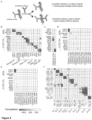
- One important achievement of the present invention lies in the identification of novel monoclonal antibodies which are specifically binding to target proteins or epitopes which have not previously been known as potential targets for antibodies directed against HCMV. As confirmed by competition experiments with relevant HCMV antibodies of the prior art, these antibodies apparently bind to novel targets (cf. Figure 5 ) and are thus able to complement and additively improve neutralization strength of any known antibody of the prior art binding to different targets.
- an antibody or antigen-binding fragment that specifically binds to the gO glycoprotein of Human Cytomegalovirus, preferably wherein the antibody or antigen-binding fragment thereof competes with an antibody comprising the combination of the variable region heavy chain amino acid sequence of SEQ ID No. 85 and of the variable region light chain amino acid sequence of SEQ ID No. 86 of antibody CS2it1p2_F7K for binding to Human Cytomegalovirus.
- monoclonal antibodies binding to these epitopes made available by the present invention can be prepared using a wide variety of techniques known in the art including the use of hybridoma, recombinant, and phage display technologies, or a combination thereof.
- monoclonal antibodies can be produced using hybridoma techniques including those known in the art and taught, for example, in Harlow et al. 1988; Hammerling, et al., 1981).
- monoclonal antibody refers to an antibody that is derived from a single clone, including any eukaryotic, prokaryotic, or phage clone, not being restricted to any method by which it is produced.
- One exemplary method may comprise culturing a hybridoma cell secreting an antibody wherein, preferably, the hybridoma is generated by fusing splenocytes isolated from an animal, e.g., a rat or a mouse, immunized with said novel epitope to which an antibody according to the invention binds, with myeloma cells and then screening the hybridomas resulting from the fusion for hybridoma clones that secrete an antibody able to bind to said epitope.
- antibodies and/or antibody-producing cells may be obtained from the animal by bleeding or sacrificing the animal.
- the rat spleen is harvested and splenocytes isolated.
- the splenocytes are then fused by well-known techniques to any suitable myeloma cells, for example, cells from cell line SP20 available from the American Type Culture Collection (ATCC, Manassas, Va., US).
- Hybridomas are selected and cloned by limited dilution. The hybridoma clones are then assayed by methods known in the art for cells that secrete antibodies capable of binding to any such novel epitopes to which the inventive antibodies bind. Ascites fluid, which generally contains high levels of antibodies, can be generated by immunizing rats with positive hybridoma clones.
- antibody-producing immortalized hybridomas may be prepared from the immunized animal. After immunization, the animal is sacrificed and the splenic B cells are fused to immortalized myeloma cells as is well known in the art. See, e.g., Harlow and Lane, supra. In a preferred embodiment, the myeloma cells do not secrete immunoglobulin polypeptides (a non-secretory cell line). After fusion and antibiotic selection, the hybridomas are screened using the novel epitope of interest.
- the initial screening is performed using an enzyme-linked immunosorbent assay (ELISA) or a radioimmunoassay (RIA), preferably an ELISA.
- ELISA enzyme-linked immunosorbent assay
- RIA radioimmunoassay
- PCT Publication No. WO 00/37504 An example of ELISA screening is provided in PCT Publication No. WO 00/37504 .
- Antibody-producing hybridomas which produce antibodies binding to the epitope of interest are selected, cloned, and further screened for desirable characteristics, including robust hybridoma growth, high antibody production, and desirable antibody characteristics.
- Hybridomas may be cultured and expanded in vivo in syngeneic animals, in animals that lack an immune system, e.g., nude mice, or in cell culture in vitro. Methods of selecting, cloning and expanding hybridomas are well known to those of ordinary skill in the art.
- antibodies of the present invention which bind to the same epitope as the antibodies described herein can also be generated using various phage display methods known in the art.
- phage display methods functional antibody domains are displayed on the surface of phage particles which carry the polynucleotide sequences encoding them.
- Such phage can be utilized to display antigen-binding domains expressed from a repertoire or combinatorial antibody library (e.g., human or murine).
- Phages expressing an antigen-binding domain that binds the antigen of interest can be selected or identified with antigen, e.g., using labeled antigen or antigen bound or captured to a solid surface or bead. Phage used in these methods are typically filamentous phage including fd, f1, and M13 binding domains expressed from phage with Fab, Fv, or disulfide stabilized Fv antibody domains recombinantly fused to either the phage gene III or gene VIII protein.
- the antibody coding regions from the phage can be isolated and used to generate whole antibodies including human antibodies or any other desired antigen binding fragment, and expressed in any desired host, including mammalian cells, insect cells, plant cells, yeast, and bacteria, e.g., as described in detail below.
- techniques to recombinantly produce Fab, Fab', and F(ab')2 fragments can also be employed using methods known in the art such as those disclosed in PCT publication No. WO 92/22324 ; Mullinax et al., 1992; Sawai et al., 1995; and Better et al. 1988.
- an antibody or antigen-binding fragment thereof that competes with an antibody comprising the combination of the variable region heavy chain amino acid sequence of SEQ ID No. 87 and of the variable region light chain amino acid sequence of SEQ ID No. 88 of antibody CS4tt1p1_E3K for binding to Human Cytomegalovirus, or
- amino acid sequences of the CDRs or of the variable regions comprised therein are from an antibody which is able to neutralize Human Cytomegalovirus at a lower IC 50 than reference antibody MCMV5322A.
- amino acid sequences of the CDRs or of the variable regions comprised therein are from an antibody which is able to neutralize Human Cytomegalovirus at a lower IC 50 than reference antibody 4I22.
- the assay(s) for determining IC 50 values is/are to be carried out as described in the section " Virus neutralization tests " below.
- neutralization potency as IC 50 is determined in cells infected with any one of HCMV strains TB40/E or VHL/E. In one preferred embodiment, neutralization potency as IC 50 is determined in any one of cell lines HFF-1, ARPE-19 or HEC-LTT.
- an antibody or antigen-binding fragment thereof is provided, wherein the neutralization potency in epithelial cells, in particular in HFF-1 cells, has an IC 50 of at most 150 ng/ml, preferably at most 100 ng/ml, more preferably at most 50 ng/ml.
- an antibody or antigen-binding fragment thereof is provided, wherein the neutralization potency in epithelial cells, in particular in ARPE-19 cells, has an IC 50 of less than 50 ng/ml, preferably at most 30 ng/ml, more preferably at most 20 ng/ml.
- an antibody or antigen-binding fragment thereof is provided, wherein the neutralization potency in endothelial cells, in particular HEC-LTT cells, has an IC50 of less than 40 ng/ml, preferably at most 30 ng/ml, more preferably at most 20 ng/ml.
- antibody designations may be used. It is pointed out that the antibodies consist of heavy and light chains which also form part of the present description. If reference is made to an antibody by its designation or to a SEQ ID NO., it should be understood that these ways of reference are interchangeable.
- the present invention further relates to a pharmaceutical composition
- a pharmaceutical composition comprising an antibody or antigen-binding fragment thereof according to the invention as defined and further described herein and at least one pharmaceutically acceptable excipient.
- the pharmaceutical composition is a vaccination composition for a human and/or animal subject.
- the present invention also encompasses a kit comprising an antibody or antigen-binding fragment thereof according to the invention as defined and further described herein and a container.
- the present invention is also directed to the antibody or antigen-binding fragment thereof according to the invention as defined and further described herein, the pharmaceutical composition as described herein and the kit for use as a medicament, preferably for use as a vaccine.
- the present invention is also directed to the antibody or antigen-binding fragment thereof according to the invention as defined and further described herein, the pharmaceutical composition as described herein and the kit for use in the treatment or prevention of an infection with Human Cytomegalovirus in mammalian subjects, preferably in human subjects.
- the present invention is directed to a method of treating or preventing an infection with Human Cytomegalovirus in mammalian subjects, preferably in human subjects, comprising administering a therapeutically effective amount of at least one antibody and/or antigen-binding fragment thereof as described herein to said subject.
- an antibody and/or antigen-binding fragment thereof according to the invention is administered to a patient in need thereof by intravenous injection or infusion, subcutaneous injection, intramuscular injection, or inhalative application, preferably by intravenous injection.
- a pharmaceutical composition of the invention is formulated to be compatible with its intended route of administration.
- routes of administration include, but are not limited to, parenteral, e.g., intravenous, intradermal, subcutaneous, oral, intranasal (e.g., inhalation and inhaled through the mouth), transdermal (e.g., topical), transmucosal, and rectal administration.
- the composition is formulated in accordance with routine procedures as a pharmaceutical composition adapted for intravenous, subcutaneous, intramuscular, oral, intranasal, or topical administration to human beings.
- compositions for intravenous administration are solutions in sterile isotonic aqueous buffer.
- the composition may also include a solubilizing agent and a local anesthetic such as lignocaine to ease pain at the site of the injection.
- the methods of the invention may comprise pulmonary administration, e.g., by use of an inhaler or nebulizer, of a composition formulated with an aerosolizing agent.
- pulmonary administration e.g., by use of an inhaler or nebulizer, of a composition formulated with an aerosolizing agent.
- the methods of the invention may also comprise administration of a composition formulated for parenteral administration by injection (e.g., by bolus injection or continuous infusion).
- a composition formulated for parenteral administration by injection e.g., by bolus injection or continuous infusion.
- the pharmaceutical formulation of the present invention may be provided in liquid form or may be provided in lyophilized form.
- the present invention relates to a nucleic acid encoding an antibody or antigen-binding fragment thereof as described herein.
- the present invention relates to an expression vector comprising the nucleic acid as described herein in functional association with an expression control sequence.
- the present invention relates to a host cell comprising a nucleic acid as described herein. In one aspect, the present invention relates to a host cell comprising an expression vector as described herein.
- the present invention relates to a method of production of an antibody or antigen-binding fragment as described herein, comprising (a) cultivating a host cell as described herein under conditions allowing expression of the antibody or antigen-binding fragment thereof, and (b) recovering the antibody or antigen-binding fragment thereof.
- the present invention relates to an antibody or antigen-binding fragment thereof against Human Cytomegalovirus as described herein for use in medicine in combination with at least one further antibody directed against Human Cytomegalovirus, wherein said further antibody has a different binding specificity.
- the present invention is also directed to the use of the antibody or antigen-binding fragment thereof according to the invention or a pharmaceutical composition of the invention in the manufacture of a medicament for treatment or prevention of an infection with Human Cytomegalovirus in mammalian subjects, preferably in human subjects.
- PBMCs peripheral blood mononuclear cells
- PBMCs For the blood draw, collection into EDTA-containing tubes was performed.
- Leucosep centrifuge tubes (Greiner Bio-one) prefilled with density gradient separation medium (Histopaque; Sigma-Aldrich) were used according to the manufacturer's instructions.
- Plasma was collected and stored separately.
- the buffer exchange to PBS was performed with 30 kDa Amicon spin membranes (Millipore) and the purified IgG concentration was measured using a Nanodrop One Spectrophotometer (A280). The samples were stored at 4°C until use for further experiments.
- the Pentamer was purchased from "The NativeAntigen Company", aliquoted and stored by -80°C. Trimer and gH/gL are not commercially available and were generated using replication-defective adenoviral vectors encoding for TR gH-His, gL, plus gO (first described in Siddiquey et al. Jvirol 2021; doi: 10.1128/JVI.02207-20 ) to infect retinal epithelial cells (ARPE-19). After 24h, the inocula were replaced with medium containing 2% FBS.
- the protein containing supernatants were collected, prefiltered using DEAE resin and purified with Ni-NTA columns (HisTrap HP Cytiva) followed by size exclusion chromatography in PBS (Superdex 200 10/300 GL). The proteins were concentrated over 100kDa filters, flash frozen and stored at -80°C.
- Variable regions of the antibodies 4I22, 15D8, 8I21, and 8J16 were cloned into a vector containing the heavy and light chain constant regions (pMX-plasmid; Gieselmann et al., 2021.
- pMX-plasmid a construct with an EBOV-specific antibody was used (mAb100; Corti et al., 2016.
- the heavy and light chains were separated by a self-splicing 2A signal sequence and the constant region of the heavy chain fused with a platelet-derived growth factor receptor (PDGFR) transmembrane domain.
- PDGFR platelet-derived growth factor receptor
- HEK293T cells were transfected by CaCl 2 precipitation with the antibody construct, harvested two days post-transfection and resuspended in PBS with 2% FBS (Merk) and 2mM EDTA.
- cells were stained by 4',6-Diamidino-2-phenylindole (DAPI; Thermo Fisher Scientific), anti-hulgG-APC (BD), and the Pentamer protein labeled with DyLight 488 (Microscale Antibody Kit, Thermo Fisher Scientific) and analyzed by flow cytometry (Becton Dickinson).
- Successfully transfected cells were identified by mCherry encoded by the used pMX vectors.
- B cells were isolated from PBMCs using CD19-microbeads (Miltenyi Biotec) according to the manufacturer's instructions. To identify HCMV-specific B cells, pentameric or trimeric complexes were coupled with fluorescent dyes and used to stain B cells combined with 4',6-Diamidin-2-phenylindol (DAPI; Thermo Fisher Scientific), anti-human CD20-Alexa Fluor 700 (BD), anti-human IgG-APC (BD) and anti-human CD27-PE (BD).
- DAPI 4',6-Diamidin-2-phenylindol
- BD anti-human CD20-Alexa Fluor 700
- BD anti-human IgG-APC
- BD anti-human CD27-PE
- DAPI - , CD20 + , IgG + and bait protein positive cells were sorted using a FACSAria Fusion (Becton Dickinson) in a single-cell manner into 96-well plates. All wells contained 4 ⁇ l buffer, consisting of 0.5x PBS, 0.5 U/ ⁇ l RNAsin (Promega), 0.5 U/ ⁇ l RNaseOUT (Thermo Fisher Scientific), and 10 mM DTT (Thermo Fisher Scientific). Plates with sorted cells were stored at -80°C until further processing.
- enriched CD19+ cells were stained with AF700-CD20 (BD), APC-IgG (BD) and DAPI (Thermo Fisher Scientific), and 159,540 to 240,000 DAPI-CD20+IgG+ cells were sorted into FBS containing tubes per donor. After sorting, cells were collected by centrifugation for 5 minutes at 400 ⁇ g, supernatant was removed and cell pellets were frozen at -80°C.
- BD AF700-CD20
- APC-IgG BD
- DAPI Thermo Fisher Scientific
- Single-cell amplification of the heavy and light chains of the B cell receptors was performed as previously described (Gieselmann et al., 2021; supra ). Briefly, reverse transcription was done with Random Hexamers (Invitrogen), and Superscript IV (Thermo Fisher Scientific). RNA degradation was blocked by the presence of RNaseOUT (Thermo Fisher Sicentific) and RNasin (Promega). The cDNA was generated, and heavy and light chains were amplified using PlatinumTaq HotStart polymerase (Thermo Fisher Scientific) with 6% KB extender combined with an optimized V-gene-specific primer mixes 66 in a sequential semi-nested approach.
- PCR products were validated by gel electrophoresis for correct sizes and subjected to Sanger sequencing.
- base calls with a Phred score ⁇ 16 were masked and only sequences with a mean Phred score of 28, less than 15 masked nucleotides and a length of at least 240 nucleotides (nt) were included.
- Filtered sequences were annotated with IgBLAST (Ye et al., 2013) and trimmed to the variable region from FWR1 to the end of the J-gene.
- IgG + memory B cells were isolated by binding to CD19 microbeads (Miltenyi) followed by depletion of cells carrying IgM, IgD and IgA by cell sorting.
- Memory B cells were seeded at 50 cells per well in 96 U-bottom microplates in RPMI medium containing 2.5 ⁇ g/ml CpG 2006, 50 U/ml interleucin IL-2, 100 U/ml IL-4, 50 U/ml IL-6 and 25 ng/ml IL-21 in the presence of EBV (30% supernatant of B95-8 cells) and irradiated allogeneic mononuclear cells (20000 per well). After a few weeks positive growing cultures were preceded by single-cell sorting and further analyzed.
- 96-well ELISA plates (Corning) were coated with 3 ⁇ g/ml target protein in PBS at 4°C overnight, washed 3x with PBST (PBS, 0.05% Tween-20) and blocked with PBST / 5% Nonfat dried milk powder (Panreac AppliChem) for 60 min at RT.
- PBST PBS, 0.05% Tween-20
- PBST Nonfat dried milk powder
- supernatant of HCMV TB40/E-infected HFF cells was used instead of target protein.
- Antibodies were tested at 5-fold dilutions with starting concentrations of 30 ⁇ g/ml for monoclonal antibodies and 500 ⁇ g/ml for plgG.
- NRP2 Sesino Biological
- PDGFR ⁇ Stino Biological
- TGF ⁇ R3 Stino Biological
- PBST PBS, 0.05% Tween-20
- PBST Nonfat dried milk powder
- Biotin-labeled Trimer, Dimer or Pentamer constructs were added at 5-fold dilutions with starting concentrations of 10 ⁇ g/ml for PDGFR ⁇ and TGF ⁇ R3 or 100 ⁇ g/ml for NRP2 and incubated for 90 min at RT.
- biotinylated Trimer or Pentamer at EC50 concentration were preincubated with 30 ⁇ g/ml of investigated antibody for 60 min at RT before addition to coated respective cellular receptors. Detection of receptor-protein interaction was measured by staining with Streptavidin-HRP (Jackson ImmunoResearch, 1 :5000 in PBST / 5% Nonfat dried milk powder) as described for antibody competition experiments. Positive competition was defined by a signal reduction of 40% compared to signal without antibody competitor. Results of competition experiments are shown in Figure 5 .
- HFFs, ARPE 19 or HEC-LTTs were seeded in 96-well plates at 1.5 ⁇ 10 4 cells per well.
- Antibody samples were serially diluted, mixed with TB40/E or other virus stock (VHL/E; Towne; TR; AD169; Toledo; VR18; Merlin) at an infection multiplicity (MOI) of 1 infectious unit per cell or below, and preincubated for 2 hours at 37 °C. Subsequently, the virus-antibody mixtures were added to the target cell and incubated overnight at 37 °C.
- VHL/E TB40/E or other virus stock
- MOI infection multiplicity
- the cells were then fixed with 80% acetone (Sigma Aldrich) and stained with a monoclonal antibody against HCMV immediate early antigen [E13, (Argene Biosoft), CH160 (Abcam), or clone63-27 ( Plachter B et al.. Analysis of proteins encoded by IE regions 1 and 2 of human cytomegalovirus using monoclonal antibodies generated against recombinant antigens. Virology. 1993 Apr;193(2):642-52. doi: 10.1006/viro.1993.1172. PMID: 7681609 .)] and a Cy3-conjugated secondary antibody (Goat Anti-Mouse IgG (H+L), Jackson ImmunoResearch).
- HCMV immediate early antigen [E13, (Argene Biosoft), CH160 (Abcam), or clone63-27 ( Plachter B et al.. Analysis of proteins encoded by IE regions 1 and 2 of human cytomegalovirus using monoclonal antibodies generated
- Infection rates were measured and calculated by ImageXpress Pico and the corresponding dose-response curves were analyzed by non-linear regression to determine the antibody concentration at which the infection rate is reduced to 50 % of the maximum. This concentration is given as the half-maximal neutralization concentration (IC 50 ).
- IC 50 half-maximal neutralization concentration
- fibroblast cultures in which such isolates were growing, were treated with siRNAs against the viral genes RL13 and UL128 as previously described (Weiler et al., 2022). Cell-free supernatants were then harvested after 6 days and used for neutralization assays. Infection multiplicities reached with these supernatants were always below 1 infectious unit per cell.
- T throat washing
- P pediatric
- H hematologic
- the purified IgGs were screened using a dual-fluorescent HCMV strain TB40-BACKL7-UL32EGFP-UL100mCherry as previously described (Laib Sampaio et al., 2021) and non-neutralizing HCMV-negative IgG was used as a negative control.
- HFFs were seeded on gelatin-coated 8-well ⁇ -slide (lbidi) at a density of 4 ⁇ 10 ⁇ 4 cells/well and fresh virus was preincubated with IgG samples at concentrations of at least 3 times the NT50 for 2 hours at 37°C to ensure a significant reduction of infectivity.
- the mixtures of virus and IgG were then added to HFFs and incubated for additional 2 hours, washed with medium and incubated for additional 20 min at 37 °C.
- the cells were then fixed with 4% paraformaldehyde and permeabilized with PBS containing 1% fetal bovine serum (PAN Biotech), 10% sucrose (Sigma-Aldrich) and 0.5% Nonidet P40 (Sigma-Aldrich), and nuclei were then stained with DAPI (Sigma-Aldrich). Pictures of each condition were taken using a fluorescence microscope and evaluated for green and red dot-like fluorescence signals.
- Combined green and red fluorescence signals indicate intact enveloped virions that are attached to cells, while isolated green fluorescence without red indicates virions that have penetrated cells.
- twenty cells were randomly taken for each condition, and the numbers of particles with green and red fluorescence or green fluorescence without red were counted. Each setup was independently repeated at least five times.
- Serum was collected from longitudinally acquired blood samples by centrifugation at 10,000 g for 5 min at room temperature (RT) and stored at -20°C until the determination of human serum IgG levels by ELISA.
- high-binding ELISA plates (Corning) were coated overnight with goat anti-human IgG (Jackson Immunoresearch). After blocking with 2% bovine serum albumin (Carl Roth), 1 ⁇ M EDTA (Thermo Fisher), and 0.1% Tween-20 (Carl Roth) in PBS (blocking buffer), a 1:3 dilution series of each serum sample in PBS (starting at 1:20) was added and incubated at RT for 90 min.
- HRP-conjugated goat anti-human IgG Jackson Immunoresearch
- blocking buffer was added and incubated for at least 90 min.
- ABTS Thermo Fisher
- optical density was determined using a microplate reader (Tecan). Between each step, the plate was washed with 0.05% Tween-20 in PBS.
- Human serum IgG levels were calculated based on plate-specific antibody standard curves determined by duplicate dilution series of the SARS-CoV-2 neutralizing monoclonal human antibody R568-1G9 included on each plate (Vanshylla et al., 2022).
- IgG at 1 mg/ml in PBS (CS2it1p2_F7K, CS4tt1p1_E3K, CS3pt1p4_C1L, or CS2pt1p2_A10L) was incubated overnight at 37°C with 1:2000 (wt/wt) Lys-C Endoproteinase (ThermoFisher). To inactivate the Lys-C, 1X complete EDTA-free protease inhibitor cocktail (Roche) was added to each reaction. Fabs were then purified using CaptureSelect IgG-CH1 affinity resin according to the manufacturer's instructions (ThermoFisher)
Landscapes
- Chemical & Material Sciences (AREA)
- Health & Medical Sciences (AREA)
- Life Sciences & Earth Sciences (AREA)
- Organic Chemistry (AREA)
- Molecular Biology (AREA)
- Biophysics (AREA)
- General Health & Medical Sciences (AREA)
- Genetics & Genomics (AREA)
- Medicinal Chemistry (AREA)
- Proteomics, Peptides & Aminoacids (AREA)
- Biochemistry (AREA)
- Immunology (AREA)
- Gastroenterology & Hepatology (AREA)
- Virology (AREA)
- Cell Biology (AREA)
- Toxicology (AREA)
- Zoology (AREA)
- Tropical Medicine & Parasitology (AREA)
- Peptides Or Proteins (AREA)
- Medicines That Contain Protein Lipid Enzymes And Other Medicines (AREA)
- Pharmaceuticals Containing Other Organic And Inorganic Compounds (AREA)
Priority Applications (2)
| Application Number | Priority Date | Filing Date | Title |
|---|---|---|---|
| EP23181563.0A EP4484445A1 (de) | 2023-06-26 | 2023-06-26 | Hcmv neutralisierende antikörper |
| PCT/EP2024/068025 WO2025003275A2 (en) | 2023-06-26 | 2024-06-26 | Hcmv neutralizing antibodies |
Applications Claiming Priority (1)
| Application Number | Priority Date | Filing Date | Title |
|---|---|---|---|
| EP23181563.0A EP4484445A1 (de) | 2023-06-26 | 2023-06-26 | Hcmv neutralisierende antikörper |
Publications (1)
| Publication Number | Publication Date |
|---|---|
| EP4484445A1 true EP4484445A1 (de) | 2025-01-01 |
Family
ID=87047685
Family Applications (1)
| Application Number | Title | Priority Date | Filing Date |
|---|---|---|---|
| EP23181563.0A Withdrawn EP4484445A1 (de) | 2023-06-26 | 2023-06-26 | Hcmv neutralisierende antikörper |
Country Status (2)
| Country | Link |
|---|---|
| EP (1) | EP4484445A1 (de) |
| WO (1) | WO2025003275A2 (de) |
Citations (33)
| Publication number | Priority date | Publication date | Assignee | Title |
|---|---|---|---|---|
| US4880078A (en) | 1987-06-29 | 1989-11-14 | Honda Giken Kogyo Kabushiki Kaisha | Exhaust muffler |
| WO1990002809A1 (en) | 1988-09-02 | 1990-03-22 | Protein Engineering Corporation | Generation and selection of recombinant varied binding proteins |
| US4946778A (en) | 1987-09-21 | 1990-08-07 | Genex Corporation | Single polypeptide chain binding molecules |
| WO1991010737A1 (en) | 1990-01-11 | 1991-07-25 | Molecular Affinities Corporation | Production of antibodies using gene libraries |
| WO1992001047A1 (en) | 1990-07-10 | 1992-01-23 | Cambridge Antibody Technology Limited | Methods for producing members of specific binding pairs |
| WO1992018619A1 (en) | 1991-04-10 | 1992-10-29 | The Scripps Research Institute | Heterodimeric receptor libraries using phagemids |
| WO1992019244A2 (en) | 1991-05-01 | 1992-11-12 | Henry M. Jackson Foundation For The Advancement Of Military Medicine | A method for treating infectious respiratory diseases |
| WO1992022324A1 (en) | 1991-06-14 | 1992-12-23 | Xoma Corporation | Microbially-produced antibody fragments and their conjugates |
| WO1993011236A1 (en) | 1991-12-02 | 1993-06-10 | Medical Research Council | Production of anti-self antibodies from antibody segment repertoires and displayed on phage |
| US5223409A (en) | 1988-09-02 | 1993-06-29 | Protein Engineering Corp. | Directed evolution of novel binding proteins |
| US5258498A (en) | 1987-05-21 | 1993-11-02 | Creative Biomolecules, Inc. | Polypeptide linkers for production of biosynthetic proteins |
| WO1995015982A2 (en) | 1993-12-08 | 1995-06-15 | Genzyme Corporation | Process for generating specific antibodies |
| US5427908A (en) | 1990-05-01 | 1995-06-27 | Affymax Technologies N.V. | Recombinant library screening methods |
| WO1995020401A1 (en) | 1994-01-31 | 1995-08-03 | Trustees Of Boston University | Polyclonal antibody libraries |
| US5516637A (en) | 1994-06-10 | 1996-05-14 | Dade International Inc. | Method involving display of protein binding pairs on the surface of bacterial pili and bacteriophage |
| WO1997032572A2 (en) | 1996-03-04 | 1997-09-12 | The Penn State Research Foundation | Materials and methods for enhancing cellular internalization |
| WO1997044013A1 (en) | 1996-05-24 | 1997-11-27 | Massachusetts Institute Of Technology | Aerodynamically light particles for pulmonary drug delivery |
| US5698426A (en) | 1990-09-28 | 1997-12-16 | Ixsys, Incorporated | Surface expression libraries of heteromeric receptors |
| US5733743A (en) | 1992-03-24 | 1998-03-31 | Cambridge Antibody Technology Limited | Methods for producing members of specific binding pairs |
| US5750753A (en) | 1996-01-24 | 1998-05-12 | Chisso Corporation | Method for manufacturing acryloxypropysilane |
| US5780225A (en) | 1990-01-12 | 1998-07-14 | Stratagene | Method for generating libaries of antibody genes comprising amplification of diverse antibody DNAs and methods for using these libraries for the production of diverse antigen combining molecules |
| WO1998031346A1 (en) | 1997-01-16 | 1998-07-23 | Massachusetts Institute Of Technology | Preparation of particles for inhalation |
| US5821047A (en) | 1990-12-03 | 1998-10-13 | Genentech, Inc. | Monovalent phage display |
| US5855913A (en) | 1997-01-16 | 1999-01-05 | Massachusetts Instite Of Technology | Particles incorporating surfactants for pulmonary drug delivery |
| US5934272A (en) | 1993-01-29 | 1999-08-10 | Aradigm Corporation | Device and method of creating aerosolized mist of respiratory drug |
| US5985309A (en) | 1996-05-24 | 1999-11-16 | Massachusetts Institute Of Technology | Preparation of particles for inhalation |
| WO1999066903A2 (en) | 1998-06-24 | 1999-12-29 | Advanced Inhalation Research, Inc. | Large porous particles emitted from an inhaler |
| US6019968A (en) | 1995-04-14 | 2000-02-01 | Inhale Therapeutic Systems, Inc. | Dispersible antibody compositions and methods for their preparation and use |
| WO2000037504A2 (en) | 1998-12-23 | 2000-06-29 | Pfizer Inc. | Human monoclonal antibodies to ctla-4 |
| US20020161201A1 (en) | 1997-04-30 | 2002-10-31 | Enzon, Inc. | Single-chain antigen-binding proteins capable of glycosylation, production and uses thereof |
| WO2005040219A1 (en) | 2003-10-28 | 2005-05-06 | Novo Nordisk A/S | Laminin-5 gamma2-binding peptides, related compositions, and use thereof |
| US20050238646A1 (en) | 2001-01-17 | 2005-10-27 | Trubion Pharmaceuticals, Inc. | Binding domain-immunoglobulin fusion proteins |
| WO2023034950A2 (en) * | 2021-09-03 | 2023-03-09 | Icahn School Of Medicine At Mount Sinai | Anti-hcmv antibodies and antigen-binding fragments thereof |
-
2023
- 2023-06-26 EP EP23181563.0A patent/EP4484445A1/de not_active Withdrawn
-
2024
- 2024-06-26 WO PCT/EP2024/068025 patent/WO2025003275A2/en active Pending
Patent Citations (41)
| Publication number | Priority date | Publication date | Assignee | Title |
|---|---|---|---|---|
| US5258498A (en) | 1987-05-21 | 1993-11-02 | Creative Biomolecules, Inc. | Polypeptide linkers for production of biosynthetic proteins |
| US4880078A (en) | 1987-06-29 | 1989-11-14 | Honda Giken Kogyo Kabushiki Kaisha | Exhaust muffler |
| US4946778A (en) | 1987-09-21 | 1990-08-07 | Genex Corporation | Single polypeptide chain binding molecules |
| US5571698A (en) | 1988-09-02 | 1996-11-05 | Protein Engineering Corporation | Directed evolution of novel binding proteins |
| US5223409A (en) | 1988-09-02 | 1993-06-29 | Protein Engineering Corp. | Directed evolution of novel binding proteins |
| US5403484A (en) | 1988-09-02 | 1995-04-04 | Protein Engineering Corporation | Viruses expressing chimeric binding proteins |
| WO1990002809A1 (en) | 1988-09-02 | 1990-03-22 | Protein Engineering Corporation | Generation and selection of recombinant varied binding proteins |
| WO1991010737A1 (en) | 1990-01-11 | 1991-07-25 | Molecular Affinities Corporation | Production of antibodies using gene libraries |
| US5780225A (en) | 1990-01-12 | 1998-07-14 | Stratagene | Method for generating libaries of antibody genes comprising amplification of diverse antibody DNAs and methods for using these libraries for the production of diverse antigen combining molecules |
| US5580717A (en) | 1990-05-01 | 1996-12-03 | Affymax Technologies N.V. | Recombinant library screening methods |
| US5427908A (en) | 1990-05-01 | 1995-06-27 | Affymax Technologies N.V. | Recombinant library screening methods |
| US5969108A (en) | 1990-07-10 | 1999-10-19 | Medical Research Council | Methods for producing members of specific binding pairs |
| WO1992001047A1 (en) | 1990-07-10 | 1992-01-23 | Cambridge Antibody Technology Limited | Methods for producing members of specific binding pairs |
| US5698426A (en) | 1990-09-28 | 1997-12-16 | Ixsys, Incorporated | Surface expression libraries of heteromeric receptors |
| US5821047A (en) | 1990-12-03 | 1998-10-13 | Genentech, Inc. | Monovalent phage display |
| US5658727A (en) | 1991-04-10 | 1997-08-19 | The Scripps Research Institute | Heterodimeric receptor libraries using phagemids |
| WO1992018619A1 (en) | 1991-04-10 | 1992-10-29 | The Scripps Research Institute | Heterodimeric receptor libraries using phagemids |
| US5290540A (en) | 1991-05-01 | 1994-03-01 | Henry M. Jackson Foundation For The Advancement Of Military Medicine | Method for treating infectious respiratory diseases |
| WO1992019244A2 (en) | 1991-05-01 | 1992-11-12 | Henry M. Jackson Foundation For The Advancement Of Military Medicine | A method for treating infectious respiratory diseases |
| WO1992022324A1 (en) | 1991-06-14 | 1992-12-23 | Xoma Corporation | Microbially-produced antibody fragments and their conjugates |
| WO1993011236A1 (en) | 1991-12-02 | 1993-06-10 | Medical Research Council | Production of anti-self antibodies from antibody segment repertoires and displayed on phage |
| US5733743A (en) | 1992-03-24 | 1998-03-31 | Cambridge Antibody Technology Limited | Methods for producing members of specific binding pairs |
| US5934272A (en) | 1993-01-29 | 1999-08-10 | Aradigm Corporation | Device and method of creating aerosolized mist of respiratory drug |
| WO1995015982A2 (en) | 1993-12-08 | 1995-06-15 | Genzyme Corporation | Process for generating specific antibodies |
| WO1995020401A1 (en) | 1994-01-31 | 1995-08-03 | Trustees Of Boston University | Polyclonal antibody libraries |
| US5516637A (en) | 1994-06-10 | 1996-05-14 | Dade International Inc. | Method involving display of protein binding pairs on the surface of bacterial pili and bacteriophage |
| US6019968A (en) | 1995-04-14 | 2000-02-01 | Inhale Therapeutic Systems, Inc. | Dispersible antibody compositions and methods for their preparation and use |
| US5750753A (en) | 1996-01-24 | 1998-05-12 | Chisso Corporation | Method for manufacturing acryloxypropysilane |
| WO1997032572A2 (en) | 1996-03-04 | 1997-09-12 | The Penn State Research Foundation | Materials and methods for enhancing cellular internalization |
| US5985320A (en) | 1996-03-04 | 1999-11-16 | The Penn State Research Foundation | Materials and methods for enhancing cellular internalization |
| US5874064A (en) | 1996-05-24 | 1999-02-23 | Massachusetts Institute Of Technology | Aerodynamically light particles for pulmonary drug delivery |
| US5985309A (en) | 1996-05-24 | 1999-11-16 | Massachusetts Institute Of Technology | Preparation of particles for inhalation |
| WO1997044013A1 (en) | 1996-05-24 | 1997-11-27 | Massachusetts Institute Of Technology | Aerodynamically light particles for pulmonary drug delivery |
| WO1998031346A1 (en) | 1997-01-16 | 1998-07-23 | Massachusetts Institute Of Technology | Preparation of particles for inhalation |
| US5855913A (en) | 1997-01-16 | 1999-01-05 | Massachusetts Instite Of Technology | Particles incorporating surfactants for pulmonary drug delivery |
| US20020161201A1 (en) | 1997-04-30 | 2002-10-31 | Enzon, Inc. | Single-chain antigen-binding proteins capable of glycosylation, production and uses thereof |
| WO1999066903A2 (en) | 1998-06-24 | 1999-12-29 | Advanced Inhalation Research, Inc. | Large porous particles emitted from an inhaler |
| WO2000037504A2 (en) | 1998-12-23 | 2000-06-29 | Pfizer Inc. | Human monoclonal antibodies to ctla-4 |
| US20050238646A1 (en) | 2001-01-17 | 2005-10-27 | Trubion Pharmaceuticals, Inc. | Binding domain-immunoglobulin fusion proteins |
| WO2005040219A1 (en) | 2003-10-28 | 2005-05-06 | Novo Nordisk A/S | Laminin-5 gamma2-binding peptides, related compositions, and use thereof |
| WO2023034950A2 (en) * | 2021-09-03 | 2023-03-09 | Icahn School Of Medicine At Mount Sinai | Anti-hcmv antibodies and antigen-binding fragments thereof |
Non-Patent Citations (46)
| Title |
|---|
| "Oxford Dictionary Of Biochemistry And Molecular Biology", 2000, OXFORD UNIVERSITY PRESS |
| AI YUANBAO ET AL: "Neutralization Epitopes in Trimer and Pentamer Complexes Recognized by Potent Cytomegalovirus-Neutralizing Human Monoclonal Antibodies", MICROBIOLOGY SPECTRUM, vol. 10, no. 6, 21 December 2022 (2022-12-21), XP093105275, Retrieved from the Internet <URL:https://journals.asm.org/doi/pdf/10.1128/spectrum.01393-22> DOI: 10.1128/spectrum.01393-22 * |
| AMES, ROBERT S. ET AL.: "Conversion of murine Fabs isolated from a combinatorial phage display library to full length immunoglobulins", JOURNAL OF IMMUNOLOGICAL METHODS, vol. 184, no. 2, 1995, pages 177 - 186, XP004020985, DOI: 10.1016/0022-1759(95)00086-P |
| ANGAL, S. ET AL.: "A single amino acid substitution abolishes the heterogeneity of chimeric mouse/human (IgG4) antibody", MOLECULAR IMMUNOLOGY, vol. 30, no. 1, 1993, pages 105 - 108, XP023683005, DOI: 10.1016/0161-5890(93)90432-B |
| BETTERMARC ET AL.: "Escherichia coli secretion of an active chimeric antibody fragment", SCIENCE, vol. 240, no. 4855, 1988, pages 1041 - 1043 |
| BRINKMANNULRICH ET AL.: "Phage display of disulfide-stabilized Fv fragments", JOURNAL OF IMMUNOLOGICAL METHODS, vol. 182, no. 1, 1995, pages 41 - 50 |
| BURTON, DENNIS R.CARLOS F. BARBAS III: "Human antibodies from combinatorial libraries", ADVANCES IN IMMUNOLOGY, vol. 57, 1994, pages 191 - 280 |
| CHOTHIACYRUSARTHUR M. LESK: "Canonical structures for the hypervariable regions of immunoglobulins", JOURNAL OF MOLECULAR BIOLOGY, vol. 196, no. 4, 1987, pages 901 - 917 |
| CORTIDAVIDE ET AL.: "Protective monotherapy against lethal Ebola virus infection by a potently neutralizing antibody", SCIENCE, vol. 351, no. 6279, 2016, pages 1339 - 1342, XP055651508, DOI: 10.1126/science.aad5224 |
| DENGRONG ET AL.: "Pharmacokinetics and exposure-response analysis of RG7667, a combination of two anticytomegalovirus monoclonal antibodies, in a phase 2a randomized trial to prevent cytomegalovirus infection in high-risk kidney transplant recipients", ANTIMICROBIAL AGENTS AND CHEMOTHERAPY, vol. 62, no. 2, 2018, pages e01108 - 17 |
| EL HELOU, GUYRAYMUND R. RAZONABLE: "Safety considerations with current and emerging antiviral therapies for cytomegalovirus infection in transplantation", EXPERT OPINION ON DRUG SAFETY, vol. 18, no. 11, 2019, pages 1017 - 1030 |
| GERNA GIUSEPPE ET AL: "Monoclonal Antibodies to Different Components of the Human Cytomegalovirus (HCMV) Pentamer gH/gL/pUL128L and Trimer gH/gL/gO as well as Antibodies Elicited during Primary HCMV Infection Prevent Epithelial Cell Syncytium Formation", JOURNAL OF VIROLOGY, vol. 90, no. 14, 15 July 2016 (2016-07-15), US, pages 6216 - 6223, XP055898413, ISSN: 0022-538X, Retrieved from the Internet <URL:https://www.ncbi.nlm.nih.gov/pmc/articles/PMC4936130/pdf/zjv6216.pdf> DOI: 10.1128/JVI.00121-16 * |
| GERNAGIUSEPPE ET AL.: "Monoclonal antibodies to different components of the human cytomegalovirus (HCMV) pentamer gH/gL/pUL128L and trimer gH/gL/gO as well as antibodies elicited during primary HCMV infection prevent epithelial cell syncytium formation", JOURNAL OF VIROLOGY, vol. 90, no. 14, 2016, pages 6216 - 6223, XP055898413, DOI: 10.1128/JVI.00121-16 |
| GIESELMANNLUTZ ET AL.: "Effective high-throughput isolation of fully human antibodies targeting infectious pathogens", NATURE PROTOCOLS, vol. 16, no. 7, 2021, pages 3639 - 3671, XP037501971, DOI: 10.1038/s41596-021-00554-w |
| HAMMERLING, G. J. ET AL.: "In Monoclonal Antibodies and T-Cell Hybridomas", RESEARCH MONOGRAPHS IN IMMUNOLOGY, no. 3, 1981 |
| HOLLIGERPHILIPPPETER J. HUDSON: "Engineered antibody fragments and the rise of single domains", NATURE BIOTECHNOLOGY, vol. 23, no. 9, 2005, pages 1126 - 1136, XP008076746, DOI: 10.1038/nbt1142 |
| HUSTON ET AL., PNAS, vol. 85, 1988, pages 5879 - 5883 |
| HUSTON, JAMES S. ET AL.: "Sequences of Proteins of Immunological Interest", vol. 203, 1991, NATIONAL INSTITUTES OF HEALTH, article "3] Protein engineering of single-chain Fv analogs and fusion proteins", pages: 46 - 88 |
| III, C. R. ET AL.: "Design and construction of a hybrid immunoglobulin domain with properties of both heavy and light chain variable regions", PROTEIN ENGINEERING, DESIGN AND SELECTION, vol. 10, 1997, pages 949 - 957 |
| ISHIDA JULIE H. ET AL: "Phase 1 Randomized, Double-Blind, Placebo-Controlled Study of RG7667, an Anticytomegalovirus Combination Monoclonal Antibody Therapy, in Healthy Adults", ANTIMICROBIAL AGENTS AND CHEMOTHERAPY, vol. 59, no. 8, 1 August 2015 (2015-08-01), US, pages 4919 - 4929, XP055908759, ISSN: 0066-4804, Retrieved from the Internet <URL:https://journals.asm.org/doi/pdf/10.1128/AAC.00523-15> DOI: 10.1128/AAC.00523-15 * |
| ISHIDAJULIE H. ET AL.: "Phase 2 randomized, double-blind, placebo-controlled trial of RG7667, a combination monoclonal antibody, for prevention of cytomegalovirus infection in high-risk kidney transplant recipients", ANTIMICROBIAL AGENTS AND CHEMOTHERAPY, vol. 61, no. 2, 2017, pages e01794 - 16, XP055908669, DOI: 10.1128/AAC.01794-16 |
| JEFFERISROYMARIE-PAULE LEFRANC: "MAbs", vol. 1, 2009, TAYLOR & FRANCIS, article "Human immunoglobulin allotypes: possible implications for immunogenicity" |
| JUO, PEI-SHOW: "Concise Dictionary of Biomedicine and Molecular Biology", 2002, CRC PRESS |
| KETTLEBOROUGH, CATHERINE A. ET AL.: "Isolation of tumor cell-specific single-chain Fv from immunized mice using phage-antibody libraries and the re-construction of whole antibodies from these antibody fragments", EUROPEAN JOURNAL OF IMMUNOLOGY, vol. 24, no. 4, 1994, pages 952 - 958, XP000570464, DOI: 10.1002/eji.1830240426 |
| LAIB SAMPAIOKERSTIN ET AL.: "Selection of Human Cytomegalovirus Mutants with Resistance against PDGFRa-Derived Entry Inhibitors", VIRUSES, vol. 13, no. 6, 2021, pages 1094 |
| LEFRANC, MARIE-PAULE ET AL.: "IMGT, the international ImMunoGeneTics database", NUCLEIC ACIDS RESEARCH, vol. 27, no. 1, 1999, pages 209 - 212, XP002637025, DOI: 10.1093/nar/27.1.209 |
| LONBERGNILS: "Human antibodies from transgenic animals", NATURE BIOTECHNOLOGY, vol. 23, no. 9, 2005, pages 1117 - 1125 |
| MACAGNO ANNALISA ET AL: "Isolation of Human Monoclonal Antibodies That Potently Neutralize Human Cytomegalovirus Infection by Targeting Different Epitopes on the gH/gL/UL128-131A Complex", JOURNAL OF VIROLOGY, THE AMERICAN SOCIETY FOR MICROBIOLOGY, US, vol. 84, no. 2, 15 January 2010 (2010-01-15), pages 1005 - 1013, XP009129527, ISSN: 0022-538X, DOI: 10.1128/JVI.01809-09 * |
| MACAGNOANNALISA ET AL.: "Isolation of human monoclonal antibodies that potently neutralize human cytomegalovirus infection by targeting different epitopes on the gH/gL/UL128-131A complex", JOURNAL OF VIROLOGY, vol. 84, no. 2, 2010, pages 1005 - 1013, XP009129527, DOI: 10.1128/JVI.01809-09 |
| MENDOZAPILAR ET AL.: "Combination therapy with anti-HIV-1 antibodies maintains viral suppression", NATURE, vol. 561, no. 7724, 2018, pages 479 - 484, XP036600611, DOI: 10.1038/s41586-018-0531-2 |
| MOUQUETHUGO ET AL.: "Complex-type N-glycan recognition by potent broadly neutralizing HIV antibodies", PROCEEDINGS OF THE NATIONAL ACADEMY OF SCIENCES, vol. 109, no. 47, 2012, pages E3268 - E3277 |
| MULLINAX, R. L. ET AL.: "Expression of a heterodimeric Fab antibody protein in one cloning step", BIOTECHNIQUES, vol. 12, no. 6, 1992, pages 864 - 869, XP002309250 |
| OKAMOTO MIWA ET AL: "A fully human neutralizing monoclonal antibody targeting a highly conserved epitope of the human cytomegalovirus glycoprotein B", PLOS ONE, vol. 18, no. 5, 16 May 2023 (2023-05-16), pages e0285672, XP093105277, DOI: 10.1371/journal.pone.0285672 * |
| PARSONS ANDREA J. ET AL: "Development of broadly neutralizing antibodies targeting the cytomegalovirus subdominant antigen gH", COMMUNICATIONS BIOLOGY, vol. 5, no. 1, 25 April 2022 (2022-04-25), XP093105272, Retrieved from the Internet <URL:https://www.nature.com/articles/s42003-022-03294-z> DOI: 10.1038/s42003-022-03294-z * |
| PERSICLIDIJA ET AL.: "An integrated vector system for the eukaryotic expression of antibodies or their fragments after selection from phage display libraries", GENE, vol. 187, no. 1, 1997, pages 9 - 18 |
| PLACHTER B ET AL.: "Analysis of proteins encoded by IE regions 1 and 2 of human cytomegalovirus using monoclonal antibodies generated against recombinant antigens", VIROLOGY, vol. 193, no. 2, April 1993 (1993-04-01), pages 642 - 52 |
| SANDONIS, VIRGINIA ET AL.: "Role of neutralizing antibodies in CMV infection: implications for new therapeutic approaches", TRENDS IN MICROBIOLOGY, vol. 28, no. 11, 2020, pages 900 - 912, XP086291321, DOI: 10.1016/j.tim.2020.04.003 |
| SAWAIHIDEAKI ET AL.: "Direct production of the fab fragment derived from the sperm immobilizing antibody using polymerase chain reaction and cDNA expression vectors", AMERICAN JOURNAL OF REPRODUCTIVE IMMUNOLOGY, vol. 34, no. 1, 1995, pages 26 - 34 |
| SCHEID, JOHANNES F. ET AL.: "Sequence and structural convergence of broad and potent HIV antibodies that mimic CD4 binding", SCIENCE, vol. 333, no. 6049, 2011, pages 1633 - 1637 |
| SHULIMING ET AL.: "Secretion of a single-gene-encoded immunoglobulin from myeloma cells", PROCEEDINGS OF THE NATIONAL ACADEMY OF SCIENCES, vol. 90, no. 17, 1993, pages 7995 - 7999, XP002982148, DOI: 10.1073/pnas.90.17.7995 |
| SIDDIQUEY ET AL., JVIROL, 2021 |
| SKERRAARNEANDREAS PLUCKTHUN: "Assembly of a functional immunoglobulin Fv fragment in Escherichia coli", SCIENCE, vol. 240, no. 4855, 1988, pages 1038 - 1041 |
| VANSHYLLAKANIKA ET AL.: "Discovery of ultrapotent broadly neutralizing antibodies from SARS-CoV-2 elite neutralizers", CELL HOST & MICROBE, vol. 30, no. 1, 2022, pages 69 - 82 |
| WEILERNINA ET AL.: "Combined knockdown of RL13 and UL128 for release of cell-free infectivity from recent HCMV isolates", JOURNAL OF VIROLOGICALMETHODS, vol. 305, 2022, pages 114537 |
| YEJIAN ET AL.: "IgBLAST: an immunoglobulin variable domain sequence analysis tool", NUCLEIC ACIDS RESEARCH, vol. 41, no. W1, 2013, pages W34 - W40 |
| ZHOUMOMEIJEAN-MARC LANCHYBRENT J. RYCKMAN: "Human cytomegalovirus gH/gL/gO promotes the fusion step of entry into all cell types, whereas gH/gL/UL128-131 broadens virus tropism through a distinct mechanism", JOURNAL OF VIROLOGY, vol. 89, no. 17, 2015, pages 8999 - 9009 |
Also Published As
| Publication number | Publication date |
|---|---|
| WO2025003275A3 (en) | 2025-03-20 |
| WO2025003275A2 (en) | 2025-01-02 |
Similar Documents
| Publication | Publication Date | Title |
|---|---|---|
| CA2888659C (en) | Broadly-neutralizing anti-hiv antibodies | |
| CA2809837C (en) | Human immunodeficiency virus (hiv)-neutralizing antibodies | |
| CN116096412A (zh) | 对冠状病毒s蛋白质具有特异性的化合物及其用途 | |
| JP2018512863A (ja) | 多価ヒト免疫不全ウイルス抗原結合分子およびその使用方法 | |
| US20230242624A1 (en) | HUMAN ANTIBODIES AGAINST SEVERE ACUTE RESPIRATORY SYNDROME CORONAVIRUS-2 (SARS-CoV-2) | |
| US20240336672A1 (en) | Human neutralizing monoclonal antibodies against sars-cov-2 and uses thereof | |
| JP2023530274A (ja) | SARS-CoV-2感染の抗体療法 | |
| US20230084102A1 (en) | Antibodies binding to plasmodium circumsporozoite protein and uses thereof | |
| US20240101645A1 (en) | Monoclonal antibodies against coronaviruses and uses thereof | |
| WO2022153212A1 (en) | Antibodies neutralizing sars-cov-2 | |
| EP4484445A1 (de) | Hcmv neutralisierende antikörper | |
| CN116096402A (zh) | 与抗人冠状病毒的中和抗体相关的方法和组合物 | |
| TW202440626A (zh) | Sars-cov-2中和抗體 | |
| US20250154230A1 (en) | Neutralizing antibodies against sars-related coronavirus | |
| KR20220117267A (ko) | Tgf-베타-rii 결합 단백질 | |
| CN115768800A (zh) | 抗苗勒管激素受体2抗体和使用方法 | |
| EP4190810A1 (de) | Neutralisierende antikörper gegen das mit sars-verwandte coronavirus | |
| US20240034772A1 (en) | Antibodies binding to f-protein of metapneumovirus and uses thereof | |
| RU2832110C1 (ru) | Поливалентная векторная вакцина hvt | |
| US20240409617A1 (en) | Multispecific coronavirus antibodies | |
| CN118660905A (zh) | 针对sars相关冠状病毒的中和抗体 | |
| CN116848133A (zh) | 结合偏肺病毒f蛋白的抗体及其用途 | |
| KR20250080883A (ko) | 암 치료에 사용하기 위한 BTN3A 활성화 항체, Bcl-2 억제제 및 저메틸화제의 조합 | |
| WO2025003381A1 (en) | Neutralizing human monoclonal antibodies against p. aeruginosa |
Legal Events
| Date | Code | Title | Description |
|---|---|---|---|
| PUAI | Public reference made under article 153(3) epc to a published international application that has entered the european phase |
Free format text: ORIGINAL CODE: 0009012 |
|
| STAA | Information on the status of an ep patent application or granted ep patent |
Free format text: STATUS: THE APPLICATION HAS BEEN PUBLISHED |
|
| AK | Designated contracting states |
Kind code of ref document: A1 Designated state(s): AL AT BE BG CH CY CZ DE DK EE ES FI FR GB GR HR HU IE IS IT LI LT LU LV MC ME MK MT NL NO PL PT RO RS SE SI SK SM TR |
|
| STAA | Information on the status of an ep patent application or granted ep patent |
Free format text: STATUS: THE APPLICATION IS DEEMED TO BE WITHDRAWN |
|
| 18D | Application deemed to be withdrawn |
Effective date: 20250702 |