EP4484374A2 - Verfahren zur herstellung von synthetischem graphitmaterial - Google Patents
Verfahren zur herstellung von synthetischem graphitmaterial Download PDFInfo
- Publication number
- EP4484374A2 EP4484374A2 EP24180621.5A EP24180621A EP4484374A2 EP 4484374 A2 EP4484374 A2 EP 4484374A2 EP 24180621 A EP24180621 A EP 24180621A EP 4484374 A2 EP4484374 A2 EP 4484374A2
- Authority
- EP
- European Patent Office
- Prior art keywords
- acid
- graphite
- graphitization
- furan
- silicon
- Prior art date
- Legal status (The legal status is an assumption and is not a legal conclusion. Google has not performed a legal analysis and makes no representation as to the accuracy of the status listed.)
- Pending
Links
Images


Classifications
-
- C—CHEMISTRY; METALLURGY
- C01—INORGANIC CHEMISTRY
- C01B—NON-METALLIC ELEMENTS; COMPOUNDS THEREOF; METALLOIDS OR COMPOUNDS THEREOF NOT COVERED BY SUBCLASS C01C
- C01B32/00—Carbon; Compounds thereof
- C01B32/20—Graphite
- C01B32/205—Preparation
-
- H—ELECTRICITY
- H01—ELECTRIC ELEMENTS
- H01M—PROCESSES OR MEANS, e.g. BATTERIES, FOR THE DIRECT CONVERSION OF CHEMICAL ENERGY INTO ELECTRICAL ENERGY
- H01M4/00—Electrodes
- H01M4/02—Electrodes composed of, or comprising, active material
- H01M4/36—Selection of substances as active materials, active masses, active liquids
- H01M4/58—Selection of substances as active materials, active masses, active liquids of inorganic compounds other than oxides or hydroxides, e.g. sulfides, selenides, tellurides, halogenides or LiCoFy; of polyanionic structures, e.g. phosphates, silicates or borates
- H01M4/583—Carbonaceous material, e.g. graphite-intercalation compounds or CFx
- H01M4/587—Carbonaceous material, e.g. graphite-intercalation compounds or CFx for inserting or intercalating light metals
Definitions
- This disclosure describes a highly pure ( ⁇ 100ppm impurity levels) synthetic graphitized carbonaceous material that is suitable for use as electrodes in rechargeable energy-storage devices like lithium-ion batteries (LIBs), and that is made from precursors that are non-sulfur containing and that are extracted from plant-based biomass using a process that is significantly less polluting than the process in current practice.
- LIBs lithium-ion batteries
- the LIB manufacturing industry uses graphite extensively to fabricate anodes for use with a number of different cathode compositions (including lithium-containing nickel/manganese /cobalt oxides (NMC), iron phosphates (LFP), manganese oxides (LMO), cobalt oxides (LCO)).
- NMC lithium-containing nickel/manganese /cobalt oxides
- LFP iron phosphates
- LMO manganese oxides
- LCO cobalt oxides
- the current process to manufacture battery-grade graphite starts with (i) a purification step (which is different for the mined graphite ore and the synthetic coke- and pitch-based precursors); (ii) a carbonization step wherein the material is heated up to around 1000°C in an inert atmosphere to drive out most of the non-carbon elements in the precursors and form a hard-carbon, and (iii) a graphitization step which involves heating the hard-carbon material up to around 3000°C to re-arrange the disordered structure of the hard carbon into the ordered hexagonal structure of graphite.
- a desirable alternative source for graphite is biomass, especially agricultural waste derived biomass.
- Yee, W.P., et. al [2023] have reported on a large number of potential sources: coconut shell macadamia nut shell, coconut coir, kenaf (hemp), rice husk, oil palm frond, palm kernel shell, Chinese chestnut shell, bamboo, jatropha shell, cotton stalk, saw dust, raw straw, apricot kernel shell, and macadamia nutshell. Conversion of these sources into graphite, using some form of high temperature treatment (ideally in the presence of graphitization catalysts) has been known for a while. However, the fact that none of these sources have become popular in the LIB anode industry - which is currently dominated by the coke- and pitch-based precursors - belies the fact that they are fraught with several issues. Key amongst these are:
- Precursors are liquid - allowing some control over the solid formed from these precursors (e.g. can make graphite with a range of specific surface area)
- Precursors are solid - making material-handling difficult during production
- Precursors are liquid - making materials transfer easier during production Low yield process Higher yield process Higher impurity levels in the final graphite (since raw materials have high impurity levels) Lower impurity levels in final graphite since precursors themselves are already purified (furfural is made by a distillation process)
- any alternative synthetic battery-grade graphite must also have a high degree of graphitization, a low level of impurities and the ability to change the specific surface area to address different battery applications (high energy density or fast charging/discharging applications).
- This invention disclosure addresses these points by using biomass-derived precursors to produce a synthetic battery-grade graphite. There is a need for less expensive and simpler process to make purer graphite for battery technology.
- a method for making a synthetic graphitized carbonaceous material by mixing a furan-ring containing precursor compound with a polymerization catalyst and one or more of an additive to form a mixture, wherein the furan-ring compounds are characterized by a 5-membered ring comprising four carbon atoms and one oxygen atom; polymerizing the mixture of furan-ring compounds, additives and catalyst into a solid polymer at temperatures between 20°C and 200°C; heating the solid polymer up to a temperature of 1500°C to form a carbonized solid; and further heating the carbonized solid up to a temperature of 3000°C under an inert atmosphere to form the synthetic graphitized carbonaceous material.
- the present invention is described further in the detailed description to illustrate the various aspects of the present invention.
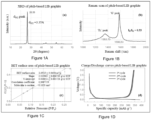
- Our instant disclosure describes a method of producing a battery-grade graphite with similar or better characteristics compared to those described in Figure 1 , but synthesized from renewable sources with lower impurity content, using a process that is substantially less polluting than the current practice.
- Synthetic Graphite Common practice in the art today involves carbonizing the coke- and pitch-based precursors at temperatures of around 1000°C. There are several issues with this approach (Table 1): The sources for synthetic graphite are not renewable.
- Typical heating cycles involve relatively fast heating, up to around 1000°C (+/- 200°C) - since the materials have already been exposed to this temperature during the carbonizing phase.
- the material is heated up to the final graphitization temperature - either directly or after holding for several hours at an intermediate temperature between 1000°C and 3000°C, typically between 1500°C and 2500°C.
- the coke- and pitch-derived carbonized materials are held at the final graphitization temperature of 2800°C to 3000°C for several hours, followed by a slow cool-down cycle (which is required with the large capability graphitization furnaces). The entire process currently takes up to 72 hours.
- Coke- and pitch-based precursors used in the current practice not only have significant levels of sulfur, but also contribute to an impurity profile in the carbonized material that typically comprises >700 ppm of impurities like sodium, silicon, potassium, calcium, chromium, titanium, iron and others.
- ICP-OES optical emission spectroscopy
- the carbon atoms in the carbonized material realign themselves into hexagonal crystalline structures, forming graphite.
- One of the techniques used to characterize the graphite is X-ray diffraction (XRD) spectroscopy which measures the inter-planar spacing between the individual graphene layers ('c/2', where 'c' is the lattice parameter in the direction perpendicular to the graphene planes).
- XRD X-ray diffraction
- the corresponding d 002 peak in the powder x-ray diffraction pattern is a very sharp peak at a 2theta (2 ⁇ ) value of around 26.5° (when measured with Cu K ⁇ sources).
- the extent of graphite-like features in the carbonized material can be projected from the XRD plots - specifically the d 002 peak position.
- the d 002 peaks in the carbonized material typically range between 23° and 25°, with the larger values (closer to graphite's 26.5° d 002 peak) depicting a higher proportion of graphite-like features in the carbonized material.
- Current hard carbons carbonized from coke- and pitch-based precursors
- a carbonized material with a higher d 002 2 ⁇ angle in the XRD plot is desired since it is closer to the final peak position of the d 002 peak in a fully graphitized material. This can be achieved with our invention.
- Raman spectroscopy which measures the scattering of monochromatic light by molecular vibrations and phonons of the carbon solid.
- the Raman spectrum for graphite exhibits two main modes, at 1355 cm -1 (D-band) and 1579 cm -1 (G-band) - for a source radiation of 532 nm [Kondratowicz, I., et al., 2015].
- the peak at 1579 cm -1 is a 'G'raphitic band corresponding to in-plane C-C vibrations; while the peak at -1355 cm -1 is a 'D'isordered band corresponding to a mode that is present only when symmetry is broken (i.e.
- the D peak tends to be much smaller than the G peak and has been measured to be as low as 0.113 [Tianchan, J., et al., 2017].
- SSA specific surface area
- carbons is typically measured by nitrogen adsorption isotherms using the BET method [Brunauer, S., et al., 1938].
- BET measurements of commercially available synthetic battery-grade graphite range between 1 and 5 m 2 /gm. This low level of surface porosity results in a large first cycle efficiency (FCE) of >90%, but also limits the LIB cell to a relatively low 'C'-rate of up to 1C to 2C (larger C-rates result in large drops in capacity, rendering the cell not useful).
- FCE first cycle efficiency
- the specific capacity of the currently available synthetic graphite anode materials that are synthesized from coke- and coke- and pitch-based precursors is around 350 mAh/gm (while current practice typically involves testing with a 0.1 C -rate against lithium counter electrodes with standard electrolyte solutions of LiPF 6 salt in a mixture of ethylene carbonate, propylene carbonate, dimethyl carbonate and ethyl methyl carbonate solvents - several other configurations and compositions of cathode and electrolyte have been reduced to practice).
- furan-ring containing compounds furan rings are characterized by a 5-atom with 4 carbon & 1 oxygen atom
- the most common furan chemicals are furfuraldehyde (C 5 H 4 O 2 ), and furfuryl alcohol (C 5 H 6 O 2 ). Both these precursors are readily available and are liquid at room temperature.
- Other biomass sources can also be used for this purpose but as additives to the furan-compounds. These additives can include rice straw, rice husk, lignin, etc.
- the process comprises the following steps:
- the catalysts described in those disclosures were organic acids with pKa values >1.2, and include like oxalic acid, acetic acid, formic acid, benzoic acid, citric acid, lactic acid, malic acid, maleic acid and tartaric acid, although additional organic acids with pKa >1.2, were also included in the group of catalysts. These acid catalysts were typically added in a 1% to 3% (by weight) range.
- step (i) of this disclosure we have mixed the furfuraldehyde and furfuryl alcohol precursors in ratios ranging from 0:1 (furfuryl alcohol only) to 1:0 (furfural only).
- Furfuraldehyde is typically polymerized in the presence of a phenol (i.e. a variation of the well-known formaldehyde/resorcinol [ Pekala, R.W., US4997804 ] reaction).
- Phenol is, however, a toxic substance and its elimination from the precursor mixture is desirable.
- An acid catalyst is also required for the furfural polymerization reaction and can be an organic or inorganic acid.
- Furfuryl alcohol on the other hand, undergoes a self-condensation reaction (i.e. no second compound needed), in the presence of a polymerization catalyst.
- the furfuryl alcohol polymerization reaction is highly exothermic in nature and can undergo thermal runaway - if the concentration of the catalyst (also an acid - either a soluble solid or a solution) is too high.
- One approach to mitigating this is to use weak acids (like the organic acids, typically with ⁇ dissociation constant' (pKa) values of >1.2, corresponding to the pKa1 value of oxalic acid).
- weak acids like the organic acids, typically with ⁇ dissociation constant' (pKa) values of >1.2, corresponding to the pKa1 value of oxalic acid).
- dilute solutions of inorganic acids are also suitable for this application.
- furan chemicals like Acetylfuran, poly furfuryl alcohol resin, hydroxymethylfurfural, alkyl furans and their derivatives are also candidates to be used as additives for this reaction as they also participate in the polymerization and cross-linking reactions.
- furfural, furfuryl alcohol, catalyst and additives carbonaceous and other furan chemicals
- room temperature room temperature' refers to no additional heating being applied to the precursor mixture.
- This step is critical, as it establishes the viability of the rest of the process with respect to process yield, outgassing and waste streams and the characteristics of the carbonized and graphitized materials, including the heating profile needed to graphitize the carbonized materials.
- the ratio of furfural to furfuryl alcohol is also important, since any unreacted furan compound adds to the waste stream further up the process.
- An optional heating step - under air - at temperatures between 25°C and 200°C can be undertaken for 1 to 4 hours to advance the polymerization reaction and produce a hard solid polymer. Longer soak times can also be used, but this will eventually reduce the yield of the overall process, and is not preferred.
- inorganic acids Unlike our previous disclosures of furan chemical polymerization reactions, we can use inorganic acids here since the materials ultimately experience a high temperature soak (at ⁇ 3000°C) and any concerns regarding a residual contamination by inorganic elemental impurities from these catalysts are annulled due to their removal during this step.
- Furan precursor Additive Additive Catalyst (acid) Furfuryl alcohol only X Carbon black, Lignin, Graphite Organic: maleic Inorganic: HNO 3 Furfural Phenol, Urea Carbon black, Lignin, Graphite Organic: oxalic Inorganic: HNO 3 Furfuryl alcohol + furfural X Carbon black, Lignin, Graphite Organic: oxalic Inorganic: HNO 3 Furfuryl alcohol + furfural Hydroxymethyl furfural Carbon black, Furoic acid Inorganic: HNO 3
- Step (ii) of our current disclosure involves heating the solid polymer in an inert atmosphere up to around 1500°C (although 1000°C is often sufficient) to carbonize it. During this step, the material loses weight due to outgassing of syngas.
- the heating ramp rate affects the specific surface area of the carbonized material, which in turn determines the density of our carbonized materials. We have measured tap density between 1 gm/cc and 1.1 gm/cc.
- the density of the solid polymer from step (i) affects the d 002 spacing (from XRD plots) of the carbonized materials, with a harder polymer resulting in d 002 spacing closer to 25°, and lower hardness polymers showing d 002 spacings closer to 24°.
- Figure 2a, 2b, and 2c shows XRD plots of carbonized materials (using CuK ⁇ ); ( figure 2a ) pitch-based (commercially available) ( figure 2b ) furfural/phenol-based (our disclosure) ( figure 2c ) furfuryl alcohol-based (our disclosure).
- FIG. 3 shows the DTAMS results for a furfuryl alcohol precursor (with maleic acid catalyst), carbonized up to 1500°C under nitrogen.
- the outgassed components that were identified are: CO, CO 2 , H 2 O, CH 2 O and CH 4 . This contrasts with the NO x and SO x outgassed components reported for the coke- and pitch-based percussors used in the current practice.
- Furfuryl alcohol + furfural precursor combinations also showed similar outgassed components, with additional acetone and excess furfural outgassed components.
- the list of outgassed materials consists of: CO 2 , CO, H 2 , H 2 O, acetone, CH 4 , furfural (excess from polymerization) and in one case trace amounts of formaldehyde. In all cases, the largest component of the outgassing was CO 2 . Unsurprisingly, no trace of NO x or SO x was detected in any of the precursor combinations that we evaluated.
- Step (iii) of our disclosure teaches the use of a high temperature (2800°C to 3000°C) heat treatment to graphitize the carbonized material.
- Graphitization of coke- and pitch-based precursors in the current practice utilize modified Acheson or graphite heating element based furnaces - under an inert atmosphere (usually argon).
- the current practice uses a heating/cooling cycle of 72 hours, with 5 to 12 hours at the peak hold temperature. This profile has been optimized to the particular precursors (coke and pitch), and is necessary to achieve an acceptably high degree of graphitization.
- Figure 4 shows a sample of the XRD plots used to calculate the degree of graphitization in Table 5.
- X-ray diffraction was performed on a Bruker powder X-ray diffraction instrument.
- Graphitization temperatures for these embodiments varied between 1 hour and 5 hours at 3000°C.
- SSA values were measured on a Quantachrome NovaTouch LX 2 instrument using ultra-pure nitrogen as an adsorbent gas to obtain isotherms that were fitted to the BET equation for surface area determination.
- Table 6 shows the SSA values for the different embodiments of graphite synthesized using our method disclosed here.
- TABLE 6 BET specific surface area of graphite synthesized from furan precursors.
- Graphitization profile Furfural + Phenol Furfuryl alcohol Furfuryl alcohol + Furfural Furfuryl alcohol + Furfural + SiO x 1 hr.
- the instant disclosure teaches that the furan compound mixture and the graphitization conditions determine the SSA of the graphitized material produced by this method.
- the range of SSA values of the furan-based graphite covers the range of SSA values possessed by the natural and synthetic graphites in the current practice.
- Particle-induced Xray emission spectroscopy is a powerful technique used to measure impurity levels of elements (sodium and above on the periodic table) - at a ⁇ ppm' level. We teach that our method disclosed here results in total impurity levels of ⁇ 100ppm, usually ⁇ 50 ppm in the graphitized carbons. Table 7 shows the results of PIXE measurements on carbonized and graphitized materials synthesized using the methods of the instant disclosure. TABLE 7: Impurities in furan-derived graphite (measured with PIXE).
- the as-carbonized materials using (furfuryl alcohol + furfural) precursors have a total impurity level of ⁇ 400 ppm, which is reduced to ⁇ 50 ppm following graphitization.
- Other graphitized materials measured impurity levels significantly lower than 50 ppm.
- the zirconium impurity measured in all the graphitized materials is likely an impurity introduced by the graphitization furnace, and not attributable to the furan compound precursors.
- GRAPHITIZATION CATALYSTS We also disclose the use of graphitization catalysts to improve the degree of graphitization of the furan compound-based graphitized materials.
- Nugroho, A., et. al [ (Nugroho, A., e al. 2021) demonstrated the use of iron-based catalysts for graphitization of petroleum coke.
- Oya, A et al. [Oya, A et al. 1979] studied the use of metal catalysts in graphitizing dimethylphenol-formaldehyde resin by heating up to 3000°C in the presence of Al, Cr, Mn, Fe, Co, Ni and Ca, Ti, V, Mo, W - under an argon atmosphere. Farid, M, et al.
- silicon compounds are also candidates for catalyzing the graphitization reaction. These include nanometer scale silicon powder, silicon dioxide, quartz (SiO 2 ), silanes (SiH 4 and derivatives), silicone (polysiloxanes), silicates (Na 2 SiO 3 , K 2 SiO 3 ), zeolites, silica gel, silicon nitride (Si 3 N 4 ), silicic acid and derivatives (H 2 SiO 3 , H 4 SiO 4 ), ferrosilicon (FeSi), and titanium disilicide (TiSi 2 ).
- nanometer scale silicon powder silicon dioxide, quartz (SiO 2 ), silanes (SiH 4 and derivatives), silicone (polysiloxanes), silicates (Na 2 SiO 3 , K 2 SiO 3 ), zeolites, silica gel, silicon nitride (Si 3 N 4 ), silicic acid and derivatives (H 2 SiO 3 , H 4 SiO 4 ), ferrosilicon
- metallic graphitization catalysts are added to the precursor mixture prior to polymerization. These metal catalysts can be similar to those described in the prior art [Yap, Y. W., et al., 2023], but are used in a different manner by mixing them with the liquid precursors - prior to the start of the polymerization process.
- these metal catalysts are added to the carbonized material and then graphitized. In all cases, the graphitization temperature has to be higher than the boiling point of the metal catalysts to ensure the removal of the catalysts for use in LIB anode applications.
- the metallic catalysts are common compounds of the metals, and include graphitization catalysts used in current practice (Al, Cr, Mn, Fe, Co, Ni, Ca, Ti, V, Mo and W).
- SILICON ADDITIVES FOR LIB PERFORMANCE IMPROVEMENT We also disclose here a method to improve the electrochemical performance of the furan-based graphite by mixing the graphitized materials with silicon compounds to form a graphite/silicon composite. Recently, there has also been a lot of interest in the development of these silicon-containing composites to improve LIB anode capacity. Si has a high theoretical capacity of 4200 mAh/g (when lithiated to Li 4.4 Si). Graphite/Si composites can be generally grouped into 3 categories: (i) deposition/growth of one of these materials on the other (e.g.
- the SiO x component is replaced with pure silicon (Si) that ranges in size from micron-sized to nanometer sized-powders.
- ADVANTAGE OF FURAN-DERIVED GRAPHITE The commercially available coke- and pitch-derived graphite must be graphitized at 3000°C for several hours (typically up to 12 hours at 3000°C to achieve a >80% degree of graphitization or up to 120 hours to achieve an impurity level of ⁇ 10ppm). The reasons for this are (i) low degree of graphitization (as seen from the 2 ⁇ position of the d 002 peaks in XRD plots) and (ii) the high degree of contamination (ash content and elemental impurities >700 ppm) in the carbonized coke- and pitch-based materials following the carbonization treatment at ⁇ 1000°C.
- the advantage in using a biomass derived carbonized material is its higher degree of purity ( ⁇ 400 ppm) and graphitization (higher 2 ⁇ position of the d 002 peaks in XRD plots) after the 1000°C treatment. This allows the use of a shorter graphitization soaking time at 3000°C and potentially also a lower graphitization temperature.
- a graphitization temperature of 2000°C is used.
- a temperature of 2500°C is used.
- a temperature of 2800°C is used.
- the soak time must be adjusted to be longer as the soaking temperature decreases - to ensure an acceptable degree of graphitization (typically >80%, preferably >90%).
- the degree of graphitization developed by these embodiments of our method is also expected to be less than that achieved by soaking at 3000°C.
- These embodiments will then result in lower 2 ⁇ values of the d 002 graphite peak (XRD) compared to fully graphitized materials.
- the LIB anode specific capacity values of these embodiments will be lower than that of fully graphitized materials.
- specific capacity can be enhanced to exceed that of coke- and pitch-derived graphite by mixing capacity-enhancing additives like silicon powders and non-stoichiometric silicon oxide (SiO x ) to the furan-based graphite - as described above.
- a combination of biomass extracts comprising one or more furan chemicals is mixed with one or more variations of lignins- a family of complex organic polymers (phenolic compounds) that are also extracted from plant-based biomass.
- the lignin compound powders are added to the initial mixture of furan chemicals, prior to polymerization.
- Polymerization is carried out using a polymerization catalyst at temperatures between 25°C and 200°C. After carbonization, the materials are soaked at temperatures up to 3000°C to graphitize them. Following the cooling of the material, it is ground and jet milled into a fine powder (typically with d 50 of 5 to 10 microns) for use as an LIB anode material.
- silicon-containing powders are mixed with graphitized material derived from furan and lignin precursors, to make a silicon-containing graphite composite for use as an LIB anode material.
- silicon-containing powders are mixed with the furan chemicals and the lignin powders - prior to polymerization of the furan chemicals.
- Polymerization is carried out using a polymerization catalyst at temperatures between 25°C and 200°C.
- the polymer composite is then heated to temperatures of less than the melting point of silicon oxide (1600°C) to carbonize the material.
- it is ground and jet milled into a fine powder (typically with d 50 of 5 to 10 microns) for use as an LIB anode material.
- a combination of biomass extracts comprising one or more furan chemicals is mixed with at least one of a group comprising plant biomass extracts, agricultural waste, and forestry waste.
- the additives comprise at least one of a rice straw, rice husk, grape waste and wheat straw.
- the additives comprise at least one of a lignin, lignosulfonate, cashew nut shell oil, cardanol, cardol, Flavanols, Flavan-3-ols, Anthocyanins, Resveratrol, hydroxycinnamic acids, hydroxybenzoic acids, and anacardic acid.
- the additives comprise at least one of a soft wood chip waste, hard wood chips waste, sawdust waste and forest waste.
- the additives are added to the initial mixture of furan chemicals, prior to polymerization. Polymerization is carried out using a polymerization catalyst at temperatures between 25°C and 200°C. Following carbonization, the materials are soaked at temperatures up to 3000°C to graphitize them. Following the cooling of the material, it is ground and jet milled into a fine powder (typically with d 50 of 5 to 10 microns) for use as an LIB anode material.
- the resulting carbonized material when rice straw is used as the agricultural component that is added to the furan chemicals, the resulting carbonized material will have a percentage of silicon-containing compounds, typically in the range of 1 to 10%. This is due to the presence of silica in the original rice straw. Carbonization at temperatures up to 1100°C will remove volatiles from the rice straw, but will maintain the silicon-containing compounds. Further heating during the graphitization step reduces some of the silica into partially oxidized silicon and silicon. Depending on the temperature of the graphitization, the silicon-containing material either remains in the solid state or is converted into a liquid state - and remains in the final graphitic material after cooling.
- the majority of the mixture comprises the agricultural waste component, with the furan chemical or the furan chemical/lignin combination comprising the remainder of the original mixture, prior to polymerization.
- silicon-containing powders are mixed with the j et-milled/ground graphitized material derived from furan chemicals and agricultural waste products, to make a silicon-containing graphitic material composite for use as an LIB anode material.
- silicon-containing powders are added to the mixture of furan chemicals and agricultural waste products - prior to polymerization of the furan chemicals.
- Polymerization is carried out using a polymerization catalyst at temperatures between 25°C and 200°C.
- the polymer composite is then heated to temperatures of less than the melting point of silicon oxide (1600°C) to graphitize the carbon.
- it is ground and jet milled into a fine powder (typically with d 50 of 5 to 10 microns) to make a silicon-containing graphitic material composite for use as an LIB anode material.
- EXAMPLE 1 In this embodiment, 50 gm. of furfural (CAS 98-01-1, Fischer Scientific ) were mixed with 40 gm. of phenol ( CAS 108-95-2, Fischer Scientific ) and 20 gm. of urea ( CAS 57-13-6 Fisher Scientific ) and stirred at room temperature to dissolve the urea. Next we added 5 gm. of maleic acid as the polymerization catalyst. The mixture was allowed to stand at room temperature for 8 hours, and was then heated at 120°C for 8 hours, under air. Carbonization was carried out under nitrogen at 1000°C for 2 hours. Graphitization was carried out at 3000°C for 1 hour under argon. The XRD plot of this graphite is shown in Figure 4 (b) .
- EXAMPLE 2 In this embodiment, 100 gm. of furfuryl alcohol (CAS 90-00-0 ) were mixed with 40 g. of furfural ( CAS 98-01-1, Fischer Scientific ), 20 gm. of lignin powder (bamboo derived) and 15cc of 18% HNO3 acid solution. The mixture was allowed to stand at room temperature for 2 hours, and was then heated at 120°C for 12 hours, under air. Carbonization was carried out under nitrogen at 1000°C for 2 hours. Graphitization was carried out at 3000°C for 5 hours under argon. The XRD plot of this graphite is shown in Figure 4 (c) .
- EXAMPLE 3 In this embodiment, 500 gm. of poly furfuryl alcohol (TransFuran Chemicals, Geel, Belgium) were mixed with 2 gm. of carbon black and 10cc of 18% HNO 3 solution as the catalyst. The mixture was soaked at room temperature for 4 hours and further heated at 120°C for 24 hours. The polymer was then carbonized under nitrogen at 1000°C for 2 hours. Graphitization was carried out at 3000°C for 5 hours under argon. The XRD plot of this graphite is shown in Figure 4 (a) .
- EXAMPLE 4 In this embodiment, the graphite from Example 3 was ground on a Retsch RM200 automated mortar-pestle grinder for 4 hours. Next, the 33 gm. of this graphite were mixed with 67 gm. of SiO x powder (#EPC2263, Daejoo, Korea). The first cycle efficiency of this SiO x is reported by the manufacturer to be 82%. Mixing was also performed in Retsch RM200 automated mortar-pestle grinder for an additional 1 hour - under the lowest settings (to prevent further grinding and promote mixing). The composite material was then used to make electrodes using a 91:5:4 ratio for the active material:binder:conductive agent (carbon black). Electrode loading was 2.8 mg/cm 2 . Testing was performed in a coin cell configuration with 1M LiPF6 in EC/PC/EMC electrolyte. Results are shown in Figure 6 .
- EXAMPLE 5 In another embodiment, 30 gm. of furfuryl alcohol (CAS 90-00-0 ) were mixed with 50 g. of furfural ( CAS 98-01-1, Fischer Scientific ), 1 gm. of carbon black (Imerys, C-45) and 8cc of 18% HNO 3 acid solution. The mixture was allowed to stand at room temperature for 2 hours, and was then heated at 120°C for 12 hours, under air. Carbonization was carried out under nitrogen at 1000°C for 2 hours. Graphitization was carried out at 3000°C for 1 hour under argon. The XRD plot of this graphite is shown in Figure 7 . The d002 peak is located at 26.42o, resulting in a calculated degree of graphitization of 80%.
- Electrodes were fabricated using this graphite using a CMC/SBR binder (5% w/w) and a conductive carbon additive (4% w/w, Imerys C45).
- Coin cell testing was performed using Li counter electrodes and a 1M LiPF6 electrolyte in EC/PC/EMC solvent. Charge/discharge cycles are shown in Figure 8 . The specific capacity is measured to be >300 mAh/gm.
- EXAMPLE 6 In this embodiment, 100 gm. of furfuryl alcohol (CAS 90-00-0 ) were mixed with 40 g. of furfural ( CAS 98-01-1, Fischer Scientific ), 10 gm. of SiO x powder (#EPC2263, Daejoo, Korea) and 8cc of 18% HNO 3 acid solution. The mixture was allowed to stand at room temperature for 2 hours, and was then heated at 120°C for 4 hours, under air. Carbonization was carried out under nitrogen at 1000°C for 2 hours. Graphitization was carried out at 3000°C for 1 hour under argon. The XRD plots of the carbonized and graphitized material are shown in Figure 9 .
- Figure 9(b) shows a 98% degree of graphitization.
- Figure 9(a) shows the XRD plot after carbonizing. Peaks associated with the presence of the Si compound are seen. Also, the d 002 carbon peak is located at 24.66°. This is grater than the carbonized d 002 peaks of the other non-SiO x containing embodiments, indicating that the presence of the silicon compound has also catalyzed the carbonization reaction. This allows the graphitization step to be reduced to only 1hr. at 3000°C for a 98% degree of graphitization.
- EXAMPLE 7 In another embodiment, 40 gm. of furfuryl alcohol (CAS 90-00-0 ) were mixed with 100 g. of furfural (CAS 98-01-1, Fischer Scientific ), 20 gm. of rice husk powder (rice hulls, www.amazon.com) and 10cc of 18% HNO 3 acid solution. The mixture was allowed to stand at room temperature for 12 hours, and was then heated at 120°C for 8 hours, under air. Carbonization was carried out under nitrogen at 1000°C for 2 hours. Graphitization was carried out at 3000°C for 5 hours under argon. The XRD plots of the carbonized and graphitized material are shown in Figure 10 .
- the d 002 peak position in Figure 10(b) indicates a >90% degree of graphitization.
- the d 002 carbon peak in Figure 10(a) is located at 24.82°, indicating a higher degree of initial graphitization compared to non-rice-husk containing furan precursor mixtures after carbonization.
- EXAMPLE 8 In this embodiment, 40 gm. of furfuryl alcohol (CAS 90-00-0 ) were mixed with 50 g. of furfural ( CAS 98-01-1, Fischer Scientific ), 50 gm. of hydroxymethylfurfural ( CAS 75-47-0, Transfuran Chemicals, Geel, Belgium ), 5 gm. of furoic acid ( CAS 88-14-2, Fisher Scientific ), 2 gm. carbon black (Imerys, C-45) and 5cc of 18% HNO 3 acid solution. The mixture was allowed to stand at room temperature for 12 hours, and was then heated at 120°C for 12 hours, under air. Carbonization was carried out under nitrogen at 1000°C for 2 hours and a hard carbonized solid was obtained.
- furfural CAS 98-01-1, Fischer Scientific
- hydroxymethylfurfural CAS 75-47-0, Transfuran Chemicals, Geel, Belgium
- furoic acid CAS 88-14-2, Fisher Scientific
- carbon black Imerys, C
Landscapes
- Chemical & Material Sciences (AREA)
- Inorganic Chemistry (AREA)
- Organic Chemistry (AREA)
- Chemical Kinetics & Catalysis (AREA)
- Electrochemistry (AREA)
- General Chemical & Material Sciences (AREA)
- Life Sciences & Earth Sciences (AREA)
- General Life Sciences & Earth Sciences (AREA)
- Geology (AREA)
- Carbon And Carbon Compounds (AREA)
- Battery Electrode And Active Subsutance (AREA)
Applications Claiming Priority (2)
| Application Number | Priority Date | Filing Date | Title |
|---|---|---|---|
| US202363577945P | 2023-06-06 | 2023-06-06 | |
| US18/735,114 US20240409415A1 (en) | 2023-06-06 | 2024-06-05 | Method to Produce Synthetic Graphitic Material |
Publications (2)
| Publication Number | Publication Date |
|---|---|
| EP4484374A2 true EP4484374A2 (de) | 2025-01-01 |
| EP4484374A3 EP4484374A3 (de) | 2025-10-08 |
Family
ID=91465218
Family Applications (1)
| Application Number | Title | Priority Date | Filing Date |
|---|---|---|---|
| EP24180621.5A Pending EP4484374A3 (de) | 2023-06-06 | 2024-06-06 | Verfahren zur herstellung von synthetischem graphitmaterial |
Country Status (1)
| Country | Link |
|---|---|
| EP (1) | EP4484374A3 (de) |
Cited By (1)
| Publication number | Priority date | Publication date | Assignee | Title |
|---|---|---|---|---|
| CN116924386A (zh) * | 2023-07-25 | 2023-10-24 | 湖南宸宇富基新能源科技有限公司 | 一种废旧石墨箱板改性并再生制备锂离子电池负极材料的方法 |
Citations (10)
| Publication number | Priority date | Publication date | Assignee | Title |
|---|---|---|---|---|
| US568323A (en) | 1896-09-29 | Manufacture of graphite | ||
| US4997804A (en) | 1988-05-26 | 1991-03-05 | The United States Of America As Represented By The United States Department Of Energy | Low density, resorcinol-formaldehyde aerogels |
| US8450012B2 (en) | 2009-05-27 | 2013-05-28 | Amprius, Inc. | Interconnected hollow nanostructures containing high capacity active materials for use in rechargeable batteries |
| US20130252082A1 (en) | 2012-01-11 | 2013-09-26 | Energ2 Technologies, Inc. | Hard carbon materials |
| US9553304B2 (en) | 2009-05-07 | 2017-01-24 | Nexeon Limited | Method of making silicon anode material for rechargeable cells |
| US9553303B2 (en) | 2010-01-18 | 2017-01-24 | Enevate Corporation | Silicon particles for battery electrodes |
| US9634315B2 (en) | 2014-08-01 | 2017-04-25 | SiNode Systems, Inc. | Carbon containing binderless electrode formation |
| US9812699B2 (en) | 2011-10-05 | 2017-11-07 | Oned Material Llc | Silicon nanostructure active materials for lithium ion batteries and processes, compositions, components and devices related thereto |
| US9938152B2 (en) | 2014-07-25 | 2018-04-10 | Farad Power, Inc. | Method of making activated nano-porous carbon |
| US10910638B2 (en) | 2016-07-12 | 2021-02-02 | Farad Power, Inc | Method of making hard carbon materials |
Family Cites Families (2)
| Publication number | Priority date | Publication date | Assignee | Title |
|---|---|---|---|---|
| CN104709898A (zh) * | 2013-12-17 | 2015-06-17 | 青岛胜利锅炉有限公司 | 一种新型合成石墨的制备工艺 |
| PL3408225T3 (pl) * | 2016-01-29 | 2024-10-14 | Sgl Carbon Se | Aktywne katalitycznie dodatki do koksu naftowego lub węglowego |
-
2024
- 2024-06-06 EP EP24180621.5A patent/EP4484374A3/de active Pending
Patent Citations (10)
| Publication number | Priority date | Publication date | Assignee | Title |
|---|---|---|---|---|
| US568323A (en) | 1896-09-29 | Manufacture of graphite | ||
| US4997804A (en) | 1988-05-26 | 1991-03-05 | The United States Of America As Represented By The United States Department Of Energy | Low density, resorcinol-formaldehyde aerogels |
| US9553304B2 (en) | 2009-05-07 | 2017-01-24 | Nexeon Limited | Method of making silicon anode material for rechargeable cells |
| US8450012B2 (en) | 2009-05-27 | 2013-05-28 | Amprius, Inc. | Interconnected hollow nanostructures containing high capacity active materials for use in rechargeable batteries |
| US9553303B2 (en) | 2010-01-18 | 2017-01-24 | Enevate Corporation | Silicon particles for battery electrodes |
| US9812699B2 (en) | 2011-10-05 | 2017-11-07 | Oned Material Llc | Silicon nanostructure active materials for lithium ion batteries and processes, compositions, components and devices related thereto |
| US20130252082A1 (en) | 2012-01-11 | 2013-09-26 | Energ2 Technologies, Inc. | Hard carbon materials |
| US9938152B2 (en) | 2014-07-25 | 2018-04-10 | Farad Power, Inc. | Method of making activated nano-porous carbon |
| US9634315B2 (en) | 2014-08-01 | 2017-04-25 | SiNode Systems, Inc. | Carbon containing binderless electrode formation |
| US10910638B2 (en) | 2016-07-12 | 2021-02-02 | Farad Power, Inc | Method of making hard carbon materials |
Non-Patent Citations (1)
| Title |
|---|
| no. 88-14-2 |
Cited By (1)
| Publication number | Priority date | Publication date | Assignee | Title |
|---|---|---|---|---|
| CN116924386A (zh) * | 2023-07-25 | 2023-10-24 | 湖南宸宇富基新能源科技有限公司 | 一种废旧石墨箱板改性并再生制备锂离子电池负极材料的方法 |
Also Published As
| Publication number | Publication date |
|---|---|
| EP4484374A3 (de) | 2025-10-08 |
Similar Documents
| Publication | Publication Date | Title |
|---|---|---|
| CN107851737B (zh) | 具有雪球样形态的碳质复合材料 | |
| US11831009B2 (en) | Method of making hard-carbon composite material | |
| JPH1021919A (ja) | 非水溶媒系二次電池の電極用炭素質材料およびその製造方法、並びに非水溶媒系二次電池 | |
| KR20240050475A (ko) | X선 회절에 의해 추정된 탄소 도메인 크기를 특징으로 하는 탄소 및 선택적으로 규소를 포함하는 배터리 애노드 | |
| JPWO2016121711A1 (ja) | リチウムイオン二次電池負極材用黒鉛粉の製造方法、リチウムイオン二次電池用負極及びリチウムイオン二次電池 | |
| EP4484374A2 (de) | Verfahren zur herstellung von synthetischem graphitmaterial | |
| Aini et al. | Para grass-derived porous carbon-rich SiO x/C as a stable anode for lithium-ion batteries | |
| JP2014132562A (ja) | 負極材料、負極活物質、リチウムイオン電池用負極およびリチウムイオン電池 | |
| Jeong et al. | Iron-catalyzed graphitization of lignocellulose: A pathway to develop artificial graphite as anode materials for lithium-ion batteries applications | |
| Hanhart et al. | Insights into the impact of activators on the ‘catalytic’graphitization to design anode materials for lithium ion batteries | |
| Chitraningrum et al. | Nitrogen-doped activated carbon derived from oil palm empty fruit bunch (OPEFB) for sustainable lithium-ion battery | |
| US20240409415A1 (en) | Method to Produce Synthetic Graphitic Material | |
| KR20240055042A (ko) | 탄소열 환원을 제어하기 위해 나노구조의 탄화규소, 질화규소, 산화질화규소 나노 복합체 형성하는 왕겨 회분(rha) 부산물의 탄소 및 실리카 함량을 조정하는 방법 | |
| US20240199429A1 (en) | Composition of matter for the production of graphite powder | |
| CN118630204B (zh) | 负极活性材料及其制备方法和应用 | |
| WO2024259052A1 (en) | Pitch-based composite powders containing a graphitization catalyst and methods for production and use thereof | |
| MG et al. | Hard carbon derived from pomegranate peels as anode material for sodium-ion batteries | |
| Lee et al. | Lithium intercalation in graphites precipitated from pig iron melts | |
| JP2006024374A (ja) | リチウムイオン二次電池用負極材、その製造方法、及びリチウムイオン二次電池 | |
| HK40081867A (en) | Composition of matter for the production of graphite powder | |
| HK40081867B (en) | Composition of matter for the production of graphite powder | |
| Dirayanti et al. | The electrochemical performance comparison of the bagasse derived carbon electrode materials prepared from different applied catalyst loading techniques for the iron catalytic graphitization | |
| Triana et al. | Comprehensive characterization of SiO₂-doped activated carbon from OPEFB and geothermal silica with varying concentrations for lithium-ion coin cell anodes | |
| TW202248123A (zh) | 用於生產石墨粉的物質組合物 | |
| Gomez-Martin et al. | Iron Catalysis in Metal-Ion Batteries |
Legal Events
| Date | Code | Title | Description |
|---|---|---|---|
| PUAI | Public reference made under article 153(3) epc to a published international application that has entered the european phase |
Free format text: ORIGINAL CODE: 0009012 |
|
| STAA | Information on the status of an ep patent application or granted ep patent |
Free format text: STATUS: THE APPLICATION HAS BEEN PUBLISHED |
|
| AK | Designated contracting states |
Kind code of ref document: A2 Designated state(s): AL AT BE BG CH CY CZ DE DK EE ES FI FR GB GR HR HU IE IS IT LI LT LU LV MC ME MK MT NL NO PL PT RO RS SE SI SK SM TR |
|
| PUAL | Search report despatched |
Free format text: ORIGINAL CODE: 0009013 |
|
| AK | Designated contracting states |
Kind code of ref document: A3 Designated state(s): AL AT BE BG CH CY CZ DE DK EE ES FI FR GB GR HR HU IE IS IT LI LT LU LV MC ME MK MT NL NO PL PT RO RS SE SI SK SM TR |
|
| RIC1 | Information provided on ipc code assigned before grant |
Ipc: C01B 32/205 20170101AFI20250902BHEP Ipc: H01M 4/587 20100101ALI20250902BHEP |