EP4478024A1 - Method, measuring device and use of a heating plate, a particle counter and an aerosol quality sensor for determining the quality of aerosol particles in a gas mixture - Google Patents
Method, measuring device and use of a heating plate, a particle counter and an aerosol quality sensor for determining the quality of aerosol particles in a gas mixture Download PDFInfo
- Publication number
- EP4478024A1 EP4478024A1 EP24181769.1A EP24181769A EP4478024A1 EP 4478024 A1 EP4478024 A1 EP 4478024A1 EP 24181769 A EP24181769 A EP 24181769A EP 4478024 A1 EP4478024 A1 EP 4478024A1
- Authority
- EP
- European Patent Office
- Prior art keywords
- measuring device
- air quality
- gas mixture
- aerosol particles
- quality determination
- Prior art date
- Legal status (The legal status is an assumption and is not a legal conclusion. Google has not performed a legal analysis and makes no representation as to the accuracy of the status listed.)
- Pending
Links
- 239000002245 particle Substances 0.000 title claims abstract description 111
- 239000000203 mixture Substances 0.000 title claims abstract description 94
- 238000010438 heat treatment Methods 0.000 title claims abstract description 87
- 239000000443 aerosol Substances 0.000 title claims abstract description 83
- 238000000034 method Methods 0.000 title claims abstract description 30
- OKTJSMMVPCPJKN-UHFFFAOYSA-N Carbon Chemical compound [C] OKTJSMMVPCPJKN-UHFFFAOYSA-N 0.000 claims description 13
- 239000006096 absorbing agent Substances 0.000 claims description 6
- 230000003197 catalytic effect Effects 0.000 claims description 6
- 239000000463 material Substances 0.000 claims description 6
- 239000004065 semiconductor Substances 0.000 claims description 5
- 238000003380 quartz crystal microbalance Methods 0.000 claims description 4
- 238000011144 upstream manufacturing Methods 0.000 claims description 3
- 239000007789 gas Substances 0.000 description 84
- 150000002894 organic compounds Chemical class 0.000 description 16
- 239000012855 volatile organic compound Substances 0.000 description 14
- 238000005259 measurement Methods 0.000 description 12
- 150000001875 compounds Chemical class 0.000 description 11
- 230000035945 sensitivity Effects 0.000 description 8
- 238000001514 detection method Methods 0.000 description 6
- MWUXSHHQAYIFBG-UHFFFAOYSA-N nitrogen oxide Inorganic materials O=[N] MWUXSHHQAYIFBG-UHFFFAOYSA-N 0.000 description 6
- 238000005299 abrasion Methods 0.000 description 4
- 238000002485 combustion reaction Methods 0.000 description 4
- 230000036541 health Effects 0.000 description 4
- 230000008569 process Effects 0.000 description 3
- 239000004071 soot Substances 0.000 description 3
- UFHFLCQGNIYNRP-UHFFFAOYSA-N Hydrogen Chemical compound [H][H] UFHFLCQGNIYNRP-UHFFFAOYSA-N 0.000 description 2
- 230000008901 benefit Effects 0.000 description 2
- 239000003344 environmental pollutant Substances 0.000 description 2
- 239000001257 hydrogen Substances 0.000 description 2
- 229910052739 hydrogen Inorganic materials 0.000 description 2
- 150000002484 inorganic compounds Chemical class 0.000 description 2
- 229910001872 inorganic gas Inorganic materials 0.000 description 2
- 229910010272 inorganic material Inorganic materials 0.000 description 2
- 239000000314 lubricant Substances 0.000 description 2
- 231100000719 pollutant Toxicity 0.000 description 2
- 230000008439 repair process Effects 0.000 description 2
- 150000003839 salts Chemical class 0.000 description 2
- 239000003566 sealing material Substances 0.000 description 2
- UGFAIRIUMAVXCW-UHFFFAOYSA-N Carbon monoxide Chemical compound [O+]#[C-] UGFAIRIUMAVXCW-UHFFFAOYSA-N 0.000 description 1
- CBENFWSGALASAD-UHFFFAOYSA-N Ozone Chemical compound [O-][O+]=O CBENFWSGALASAD-UHFFFAOYSA-N 0.000 description 1
- -1 PID sensor Chemical class 0.000 description 1
- 230000035508 accumulation Effects 0.000 description 1
- 238000009825 accumulation Methods 0.000 description 1
- 238000013473 artificial intelligence Methods 0.000 description 1
- 230000009286 beneficial effect Effects 0.000 description 1
- 238000009835 boiling Methods 0.000 description 1
- 229910052799 carbon Inorganic materials 0.000 description 1
- 229910002091 carbon monoxide Inorganic materials 0.000 description 1
- 239000000567 combustion gas Substances 0.000 description 1
- 239000012141 concentrate Substances 0.000 description 1
- 238000010276 construction Methods 0.000 description 1
- 239000013078 crystal Substances 0.000 description 1
- 239000000428 dust Substances 0.000 description 1
- 238000010348 incorporation Methods 0.000 description 1
- 238000007373 indentation Methods 0.000 description 1
- 238000010801 machine learning Methods 0.000 description 1
- 238000004519 manufacturing process Methods 0.000 description 1
- 239000011368 organic material Substances 0.000 description 1
- 230000000704 physical effect Effects 0.000 description 1
- 238000001303 quality assessment method Methods 0.000 description 1
- 239000010453 quartz Substances 0.000 description 1
- 230000000630 rising effect Effects 0.000 description 1
- VYPSYNLAJGMNEJ-UHFFFAOYSA-N silicon dioxide Inorganic materials O=[Si]=O VYPSYNLAJGMNEJ-UHFFFAOYSA-N 0.000 description 1
- 239000002023 wood Substances 0.000 description 1
Images

Classifications
-
- G—PHYSICS
- G01—MEASURING; TESTING
- G01N—INVESTIGATING OR ANALYSING MATERIALS BY DETERMINING THEIR CHEMICAL OR PHYSICAL PROPERTIES
- G01N15/00—Investigating characteristics of particles; Investigating permeability, pore-volume or surface-area of porous materials
- G01N15/06—Investigating concentration of particle suspensions
- G01N15/0606—Investigating concentration of particle suspensions by collecting particles on a support
-
- G—PHYSICS
- G01—MEASURING; TESTING
- G01N—INVESTIGATING OR ANALYSING MATERIALS BY DETERMINING THEIR CHEMICAL OR PHYSICAL PROPERTIES
- G01N1/00—Sampling; Preparing specimens for investigation
- G01N1/28—Preparing specimens for investigation including physical details of (bio-)chemical methods covered elsewhere, e.g. G01N33/50, C12Q
- G01N1/40—Concentrating samples
- G01N1/405—Concentrating samples by adsorption or absorption
-
- G—PHYSICS
- G01—MEASURING; TESTING
- G01N—INVESTIGATING OR ANALYSING MATERIALS BY DETERMINING THEIR CHEMICAL OR PHYSICAL PROPERTIES
- G01N33/00—Investigating or analysing materials by specific methods not covered by groups G01N1/00 - G01N31/00
- G01N33/0004—Gaseous mixtures, e.g. polluted air
- G01N33/0009—General constructional details of gas analysers, e.g. portable test equipment
- G01N33/0011—Sample conditioning
- G01N33/0019—Sample conditioning by preconcentration
-
- G—PHYSICS
- G01—MEASURING; TESTING
- G01N—INVESTIGATING OR ANALYSING MATERIALS BY DETERMINING THEIR CHEMICAL OR PHYSICAL PROPERTIES
- G01N5/00—Analysing materials by weighing, e.g. weighing small particles separated from a gas or liquid
- G01N5/04—Analysing materials by weighing, e.g. weighing small particles separated from a gas or liquid by removing a component, e.g. by evaporation, and weighing the remainder
-
- G—PHYSICS
- G01—MEASURING; TESTING
- G01N—INVESTIGATING OR ANALYSING MATERIALS BY DETERMINING THEIR CHEMICAL OR PHYSICAL PROPERTIES
- G01N1/00—Sampling; Preparing specimens for investigation
- G01N1/02—Devices for withdrawing samples
- G01N1/22—Devices for withdrawing samples in the gaseous state
- G01N1/2202—Devices for withdrawing samples in the gaseous state involving separation of sample components during sampling
- G01N2001/222—Other features
- G01N2001/2223—Other features aerosol sampling devices
-
- G—PHYSICS
- G01—MEASURING; TESTING
- G01N—INVESTIGATING OR ANALYSING MATERIALS BY DETERMINING THEIR CHEMICAL OR PHYSICAL PROPERTIES
- G01N15/00—Investigating characteristics of particles; Investigating permeability, pore-volume or surface-area of porous materials
- G01N2015/0042—Investigating dispersion of solids
- G01N2015/0046—Investigating dispersion of solids in gas, e.g. smoke
Definitions
- the invention relates to a method for determining air quality using aerosol particles in a gas mixture.
- gas mixtures e.g. room air
- concentration of gaseous organic compounds and the number of particles are determined in addition to the proportion of CO2 .
- Gaseous organic compounds can be volatile (medium to low vapor pressure) or semi-volatile (very low vapor pressure).
- Semi-volatile organic gaseous compounds are often bound to particles and can be inhaled via them.
- semi-volatile organic gaseous compounds are usually not recorded. Gaseous organic compounds are traditionally recorded and analyzed in a multi-stage and time-consuming process.
- Particles can be inorganic (carbon-free; e.g. salts, dust) or organic (carbon-based; e.g. soot, tire wear) in nature. Particles suspended in a gas mixture are often referred to as aerosol particles.
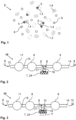
- a schematic representation of a gas mixture is shown in Fig. 1 and will be described in the further course of the description, following the list of figures.
- the inhalation of aerosol particles can be beneficial to health (salts) or harmful to health (soot, tire abrasion).
- the detection of aerosol particles is usually carried out by measuring the number and/or mass of particles per volume of a certain size fraction of a gas mixture to be examined. A distinction between inorganic and organic aerosol particles is usually not made in indoor air quality measurements.
- organic, gaseous compounds and aerosol particles can be determined separately and in different measuring devices.
- the invention further relates to a measuring device for determining air quality with the aid of aerosol particles in a gas mixture.
- the invention further relates to a use of a heating plate, a particle counter and an air quality determination sensor, in particular a VOC sensor, for air quality determination with the aid of aerosol particles in a gas mixture.
- the features of claim 1 are provided according to the invention.
- the invention proposes that aerosol particles are concentrated and heated by a heating element, and a particle counter determines a number of aerosol particles and at least one air quality determination sensor determines at least organic components of the aerosol particles before and after heating. This allows volatile and semi-volatile organic, gaseous compounds and the composition of aerosol particles in a gas mixture can be detected. This allows a quality determination of a gas mixture to be made, which generally improves the analysis of a gas mixture.
- Heating out is understood here as a controlled heating of the aerosol particles of a gas mixture by a heating element over a defined period of time. This advantageously allows the concentrated aerosol particles and/or the semi-volatile gaseous organic compounds adhering to them to evaporate or (partially) oxidize, whereupon their combustion products are analyzed by at least one air quality determination sensor.
- An air quality determination sensor is understood to be any sensor that can detect at least organic compounds (e.g. PID sensor, pellistor, GSS sensor, semiconductor gas sensor).
- a VOC sensor Volatile Organic Compounds
- a VOC sensor is particularly suitable for determining air quality by detecting organic components of the aerosol particles.
- the air quality determination sensor also detects inorganic components of the aerosol particles or inorganic gases before and/or after heating.
- broadband semiconductor gas sensors can detect inorganic gases such as hydrogen and/or carbon monoxide and/or ozone and/or nitrogen oxides. The complexity of the composition of a gas mixture can thus be determined even better, so that air quality determination can be particularly improved.
- the invention can provide that the at least one air quality determination sensor determines a signal pattern of the gas mixture before and/or after heating.
- certain signal patterns for example changes in the concentration of components in the gas mixture, can be detected.
- certain signal patterns can be used to indicate a certain gas mixture, for example a source of pollutants such as diesel exhaust or wood combustion gases.
- An air quality determination is then carried out in particular from the signal pattern. In this way, air determinations can advantageously be carried out in locations that do not allow optimal and stable air quality determinations.
- the determination is particularly advantageous if at least two air quality determination sensors as described herein, preferably a sensor array, are used to determine the air quality.
- This can increase the sensitivity and/or selectivity for certain organic and/or inorganic compounds both when detecting organic, gaseous compounds in particular (in particular semi-volatile organic, gaseous compounds) and when detecting the composition of the aerosol particles and/or the gas components of the gas mixture.
- An air quality determination based on the signal pattern is even more sensitive or selective and thus improved if the air quality determination is carried out using machine learning and/or artificial intelligence, as may be intended. This allows the determined signal patterns to be compared and quickly recognized and used promptly to determine the air quality.
- Air quality determination sensors can be used for quality determination, whereby the sensitivity and/or selectivity to certain organic compounds can be increased both in the detection of organic, gaseous compounds (especially semi-volatile organic, gaseous compounds) and in the detection of the composition of the aerosol particles.
- the aerosol particles can be concentrated in such a way that the sensitivity of the quality determination of the gas mixture is increased, whereby even less abundant organic compounds can be detected.
- a further advantage is that the proportion of inorganic and organic components of the aerosol particles can be determined by comparing the measurement signals of the at least one air quality determination sensor before (determination of a base signal) and after heating.
- a method according to the invention can be carried out on site, which saves time and money, since the measurements do not have to take place in a remote laboratory.
- the aerosol particles are preferably concentrated on the heating element before heating. This can increase the efficiency of heating the aerosol particles, which can advantageously result in more combustion products being produced per time interval. This can further increase the sensitivity for detecting certain organic compounds.
- the heating takes place abruptly or gradually.
- Different boiling points of different organic compounds can thus be used to separate different compounds, which can advantageously increase the sensitivity and/or selectivity in air quality determination using aerosol particles.
- the quality determination of a gas mixture can be further improved by an even increased sensitivity and/or selectivity.
- the gas mixture in order to determine organic components before heating, is fed through a secondary inlet to the at least one air quality determination sensor and that, in order to determine organic components after heating, the gas mixture is fed through an inlet to the at least one air quality determination sensor.
- the gas mixture can be fed behind the heating element. This means that undesirable accumulations of aerosol particles on the heating plate during the measurement of the base signal can be reduced or avoided. This makes the measurements after heating even more precise, which can increase the quality determination of a gas mixture.
- valves can be used to prevent unwanted supply of the gas mixture when detecting the base signal (closed valve on the inlet) or when detecting organic compounds after heating (closed valve on the secondary inlet).
- the inflowing gas mixture can be filtered through a filter construction, in particular through an activated carbon filter. a catalytic heating element or a combination of the elements just mentioned. This determines an even more precise base signal, which can further improve the quality determination of a gas mixture.
- a mass loss of the aerosol particles is determined during and/or after the heating.
- the mass loss of the aerosol particles can thus advantageously be used as an additional parameter for determining the quality of a gas mixture.
- the detection of a mass or a loss of mass can provide information about the purity of the measuring device used, which is particularly important for the accuracy of subsequent measurements.
- a loss of mass of the aerosol particles at the heating element is determined.
- the heating element can be designed directly as a microbalance. This is particularly advantageous if the aerosol particles are concentrated at the heating element.
- a partial quantity or the total quantity of a gas mixture is supplied to the at least one air quality determination sensor.
- a defined quantity of a gas mixture can thus be supplied to the air quality determination sensor. For example, half of the total quantity can be supplied to the air quality determination sensor for determining the base signal and the second half of the total quantity for determining a signal after heating.
- the optimal amount of a gas mixture is supplied to the air quality determination sensor.
- the features of the independent claim directed to a measuring device are provided according to the invention.
- the invention proposes that the measuring device has a heating element, a particle counter and at least one air quality determination sensor, wherein the heating element is arranged upstream of the at least one air quality determination sensor.
- the proportion of gaseous organic compounds, a number of aerosol particles in a gas mixture and a proportion of aerosol particles of organic origin can thus advantageously be recorded simultaneously.
- a measuring device according to the invention can in particular be designed to carry out a method as described above or claimed below.
- a further advantage of a measuring device according to the invention is that organic, gaseous compounds and aerosol particles can be measured and analyzed in one measuring device, whereby the quality of a gas mixture can be determined more quickly and cost-effectively.
- a measuring device can be designed in such a way that a measurement can be taken on site and not in a laboratory. This is particularly advantageous if the indoor air quality of a workshop, a kitchen or another place where organic aerosol particles are generated is to be determined. This makes it possible to react more quickly to excessive aerosol particle or pollutant levels.
- a measuring device according to the invention can be designed inexpensively since it only requires a heating element, a particle counter and at least one air quality determination sensor. A cost-effective measuring device can thus be sold to private customers or small businesses (car repair shop operators, restaurant owners).
- the heating element is located upstream of the air quality determination sensor, as the combustion products can thus be easily transported with the gas flow from the heating element to the air quality determination sensor. This means that aerosol particles are not fed to the air quality determination sensor in an uncontrolled manner before the heating process, which could distort the quality determination of a gas mixture.
- the particle counter is arranged downstream of the heating element and/or the at least one air quality determination sensor. This allows the carryover of organic compounds to the particle counter to be minimized or even prevented, which is advantageous for the longevity of the particle counter or the measuring device.
- the heating element can be equipped with an absorber material.
- the absorber material can lead to a more efficient concentration of the aerosol particles, whereby more organic material can be burned, which can further improve the quality determination of a gas mixture.
- the concentration should additionally or alternatively be carried out at another point of the measuring device, this point can also have an absorber material.
- the heating element can be designed as a microbalance. This makes it possible to advantageously record the loss of mass of the aerosol particles when determining the organic components of the aerosol particles.
- the heating element can be designed as a quartz crystal microbalance. Quartz crystal microbalances can be particularly stable at high temperatures, which means that the measuring device can be designed to last longer. In addition to mass determination, quartz crystal microbalances can also be used as sensors for other parameters.
- the measuring device has at least two air quality determination sensors.
- the sensitivity (when using air quality determination sensors of the same type) and/or the selectivity (when using air quality determination sensors of different types) of organic compounds to be measured can be increased.
- the or a" in particular the second of the at least two air quality determination sensors in particular a VOC sensor and/or a photoionization detector and/or a pellistor and/or a semiconductor gas sensor.
- air quality determination sensors are commercially available and inexpensive for incorporation into a measuring device. Thus, manufacturing and repair costs of a measuring device can be kept low.
- air quality determination sensors are designed to be thermostable so that they can be used without risk for the analysis of gas mixtures under heating.
- the measuring device has at least one pump for supplying the gas mixture to the particle counter.
- the gas mixture can thus be supplied to the particle counter independently by the pump.
- a pump can be used to establish and/or maintain a defined gas flow.
- the pump can supply a defined volume of a gas mixture to the measuring device.
- the pump is downstream of the air quality determination sensor.
- the influence of the pump on the VOC sensor can be reduced or even avoided.
- the entry of lubricants and/or abrasion of sealing material from the pump into the air quality determination sensor can be reduced or even avoided, so that measurements from the air quality determination sensor can be particularly accurate.
- the measuring device has an inlet and a secondary inlet for the gas mixture or a gas mixture.
- the gas mixture can thus be made available to the measuring device via the secondary inlet to determine the base signal.
- the main line (including the inlet) can be blocked in particular by a valve, which increases the measuring accuracy of the measuring device for determining the quality of a gas mixture.
- the secondary inlet preferably has a filter, the filter being particularly preferably designed as a catalytic heating element and/or as an activated carbon filter.
- a gas mixture can be cleaned by means of such filters or other filters known to those skilled in the art, whereby an even more precise determination of the base signal and thus an even better quality determination can be achieved.
- the measuring device can have at least two main lines.
- Each main line has at least one particle counter and one air quality determination sensor.
- only one main line has a heating element for detecting a signal after heating.
- the features of the independent claim directed to a use are provided according to the invention.
- the invention proposes that an aerosol particle number and a proportion of organic components of aerosol particles of a gas mixture are determined preferably simultaneously. This allows the quality of a gas mixture to be determined quickly and inexpensively, which is advantageous.
- Aerosol particles 1 can be inorganic 3 or organic 4, whereby organic aerosol particles 1, 4 (such as soot or tire abrasion) are particularly harmful to health.
- Semi-volatile organic compounds 5 can adhere to aerosol particles 1, 3, 4 and be inhaled via them, also affecting health.
- Highly volatile organic compounds 6 usually float in the gas mixture 2, detached from aerosol particles 1, 3, 4.
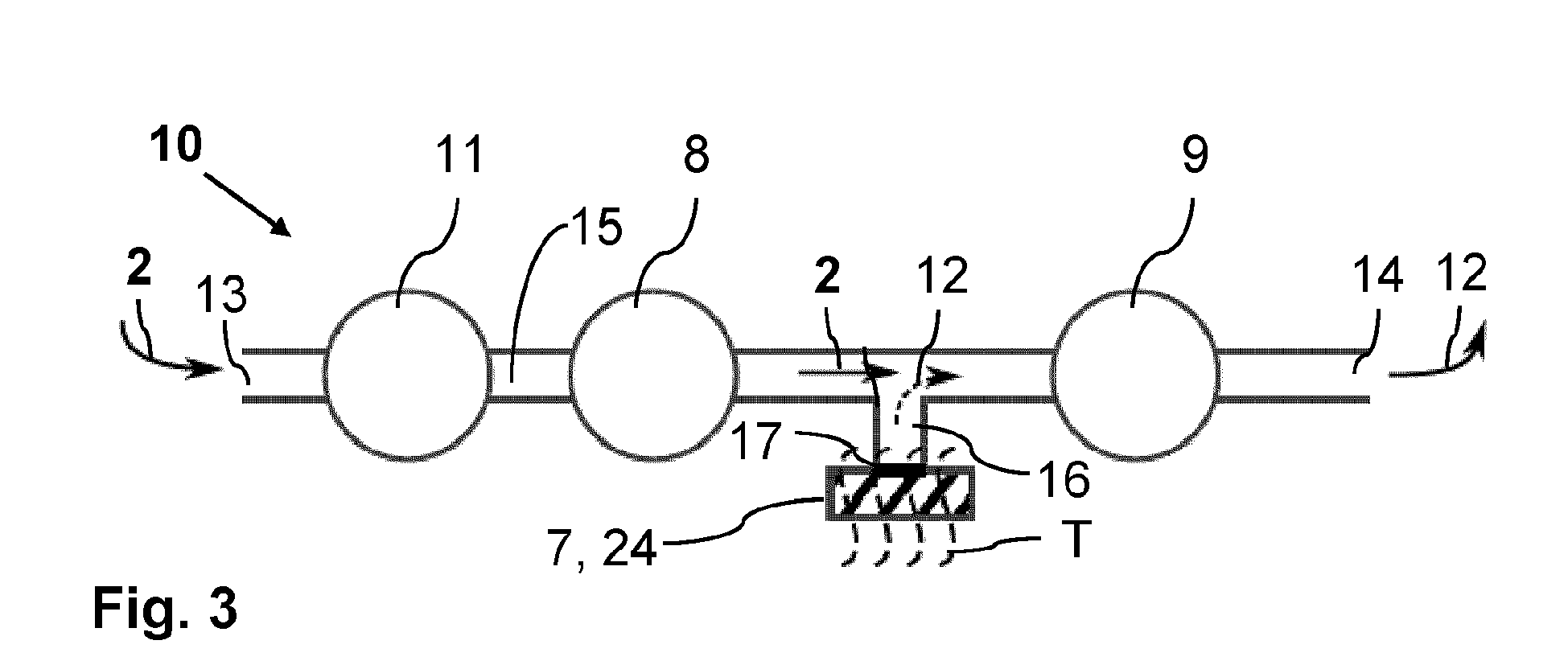
- Fig. 2 and Fig. 3 show an embodiment of a measuring device 10 according to the invention ( Fig. 2 ) and during the heating ( Fig. 3 ) of a gas mixture 2.
- the process shown in these figures can proceed as follows.
- a defined gas mixture 2 for example a defined volume of the gas mixture 2, is led by means of a pump 11 from an inlet 13 through a main line 15 to a particle counter 8, which registers the number of aerosol particles 1, 3, 4 of the gas mixture 2.
- the measuring device 10 has a recess 16 leading to the heating element 7.
- the recess 16 can be designed such that a gas mixture 2, in particular a partial amount of a gas mixture 2, can be supplied to the heating element 7, 24 so that aerosol particles 1, 3, 4 can be concentrated.
- a partial amount or the entire amount of the defined gas mixture 2 is supplied to the heating element 7, 24 so that aerosol particles 1, 3, 4 can adhere to the heating element 7, 24.
- the heating element 7, 24 can be heated as in Fig. 2 and Fig. 3 shown, have an absorber material 17 which further increases the adhesion of the aerosol particles 1, 3, 4.
- a part of the main line 15 can be roughened or designed in such a way that the aerosol particles 1, 3, 4 adhere to it.
- this part of the main line 15 can be designed partially or completely as a heating element 7, 24.
- the microbalance 24 shown here is a quartz crystal balance, but can also be any other microbalance 24 known to the person skilled in the art.
- the gas mixture 2 is guided past at least one air quality determination sensor 9 during or after heating 12 (dashed arrow), where organic components are detected.
- the air quality determination sensors 9 can be in particular a photoionization detector and/or a pellistor and/or a preferably oxidic semiconductor gas sensor can be used.
- At least one VOC sensor is used as air quality determination sensor 9.
- the one in Fig. 2 The method step shown takes place without heating, which is why the at least one air quality determination sensor 9 mainly detects the volatile organic compounds 6 and possibly inorganic compounds. Before heating, this method step determines a base signal which includes, among other things, a number of aerosol particles 1, 3, 4 and a concentration of volatile organic compounds 6.
- the gas mixture 2 is discharged or passed on from the measuring device 10 via an outlet 14.
- the heating element 7 After a certain registration interval (base signal), the heating element 7 is heated ( Fig. 3 ). Over a certain period of time and at rising or increased temperature T, organic compounds of the aerosol particles 1, 4 or the semi-volatile organic compounds 5 of the gas mixture 2 evaporate. Their combustion products are then detected by the at least one air quality determination sensor 9.
- the measuring device 10 can be set up so that the increase in temperature T occurs gradually or abruptly. Due to different physical properties of various organic components, a higher selectivity or sensitivity of the method or of a measuring device 10 can thus be achieved. Signal patterns of the gas mixture can and will also be determined during the method.
- the proportion of organic, gaseous compounds 5 in the aerosol particles 1, 3, 4 can be determined.
- the determination of the organic components of the aerosol particles 1, 3, 4 is determined even more precisely.
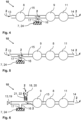
- FIG. 4 to 8 are alternative measuring devices 10 to the one in the Figures 2 and 3
- the measuring device 10 shown in FIG. 1 is disclosed in the drawing.
- These alternative measuring devices 10 can also carry out the method just described or the methods previously described or subsequently claimed.
- Components and functional units that are functionally and/or structurally similar or identical to the previous embodiment are designated with the same reference numerals and are not described separately again.
- the explanations for the Figures 2 and 3 are therefore among the Figures 4 to 8 accordingly.
- the embodiment according to Fig. 4 differs from the previous embodiment (the Figures 2 and 3 ) in that the pump 11 is located downstream of the air quality determination sensor 9.
- the heating element 7, 24 is positioned between the particle counter 8 and the air quality determination sensor 9.
- the pump 11 downstream of the air quality determination sensor 9 prevents lubricants and abrasion of sealing material of the pump 11 from entering the air quality determination sensor 9, so that the measurements of the air quality determination sensor 9 are particularly accurate.
- the entrainment of aerosol particles 1, 3, 4 to the particle sensor 8 can be reduced or avoided if the particle counter 8 is located downstream of the heating element 7, 24 ( Fig. 5 ).
- the measuring devices 10 shown offer alternative possibilities for determining a base signal compared to the previously described measuring devices 10.
- the gas mixture 2 is fed to the air quality determination sensor 9 through a secondary inlet 18.
- the secondary inlet 18 is positioned between the heating element 7, 24 and the air quality determination sensor 9.
- the inlet 13 is closed by a main valve 19.
- a valve 20 of the secondary inlet 18 serves to regulate the supply of the gas mixture 2.
- the gas mixture 2 can be cleaned by a filter 21 before heating.
- This filter 21 can have a catalytic heating element 22 ( Fig. 6 ), an activated carbon filter 23 ( Fig. 7 ), a combination of both previously described filters 21, or another filter 21 known to the person skilled in the art.
- Such a filter 21 can also be integrated in measuring devices 10 without a secondary inlet 18, as in the Figures 2 to 5 and Fig. 8 are shown.
- a base signal can also be determined by a measuring device 10 with at least two preferably separated main lines 15, each of which has at least one particle counter 8 and one air quality determination sensor 9 ( Fig. 8 ).
- a first main line 15 is used to determine of the base signal, while a second main line 15 records measurement signals of organic components of the gas mixture 2 after heating has taken place.
- the first main line 15 shown here has no heating element 7, 24, whereby the measuring device 10 can be designed more cost-effectively.
- the signals of the at least one air quality determination sensor 9 positioned in the first main line 15 are compared with that of the at least one air quality determination sensor 9 of the second main line 15.
- a base signal and a signal after heating a gas mixture 2 can be measured in parallel, whereby the quality of a gas mixture 2 can be determined even faster.
- inorganic components of the gas mixture 2 are also measured by the measuring device 10, such as nitrogen oxides and/or hydrogen.
- the invention therefore generally proposes a method and a measuring device 10 for determining the quality of aerosol particles 1 in a gas mixture 2, wherein aerosol particles 1 are concentrated and heated by a heating element 7, and wherein a particle counter 8 determines a number of aerosol particles 1 and at least one air quality determination sensor 9 determines at least organic components of the aerosol particles 1 and/or signal patterns of the gas mixture 2 before and after heating.
- This method and the measuring device are particularly suitable for determining the quality of room air, but are not limited to this application.
Landscapes
- Chemical & Material Sciences (AREA)
- Health & Medical Sciences (AREA)
- Life Sciences & Earth Sciences (AREA)
- Immunology (AREA)
- Analytical Chemistry (AREA)
- Biochemistry (AREA)
- General Health & Medical Sciences (AREA)
- General Physics & Mathematics (AREA)
- Physics & Mathematics (AREA)
- Pathology (AREA)
- Engineering & Computer Science (AREA)
- Combustion & Propulsion (AREA)
- Food Science & Technology (AREA)
- Medicinal Chemistry (AREA)
- Dispersion Chemistry (AREA)
- Sampling And Sample Adjustment (AREA)
Abstract
Die Erfindung schlägt allgemein ein Verfahren sowie eine Messvorrichtung (10) zur Luftqualitätsbestimmung mit Hilfe von Aerosolpartikeln (1) in einem Gasgemisch (2) vor, wobei Aerosolpartikel (1) aufkonzentriert und durch ein Heizelement (7) ausgeheizt werden, und wobei ein Partikelzähler (8) eine Anzahl der Aerosolpartikel (1) bestimmt und wenigstens ein Luftqualitätsbestimmungs-Sensor (9) zumindest organische Bestandteile der Aerosolpartikel (1) und/oder Signalmuster des Gasgemischs (2) vor und nach der Ausheizung ermittelt (Fig. 3) .
Description
Die Erfindung betrifft ein Verfahren zur Luftqualitätsbestimmung mit Hilfe von Aerosolpartikeln in einem Gasgemisch.The invention relates to a method for determining air quality using aerosol particles in a gas mixture.
Bekanntermaßen werden zur vollständigen Analyse von Gasgemischen (z.B. von Raumluft) verschiedene Parameter erfasst. So werden zur vollständigen Bewertung einer Raumluftqualität neben dem Anteil an CO2 auch die Konzentration der gasförmigen, organischen Verbindungen sowie eine Partikelanzahl ermittelt. Gasförmige, organische Verbindungen können leicht-flüchtig (mittlerer bis niedriger Dampfdruck) oder semi-flüchtig (sehr niedriger Dampfdruck) sein. Semi-flüchtige organische, gasförmige Verbindungen sind oft an Partikeln gebunden und können über diese eingeatmet werden. Bei einer vollständigen Bewertung einer Raumluftqualität werden die semi-flüchtigen organischen, gasförmigen Verbindungen zumeist nicht erfasst. Herkömmlicherweise erfolgt die Erfassung und Analyse gasförmiger, organischer Verbindungen in einem mehrstufigen und zeitintensiven Prozess.As is well known, various parameters are recorded for the complete analysis of gas mixtures (e.g. room air). For a complete assessment of room air quality, the concentration of gaseous organic compounds and the number of particles are determined in addition to the proportion of CO2 . Gaseous organic compounds can be volatile (medium to low vapor pressure) or semi-volatile (very low vapor pressure). Semi-volatile organic gaseous compounds are often bound to particles and can be inhaled via them. In a complete assessment of room air quality, semi-volatile organic gaseous compounds are usually not recorded. Gaseous organic compounds are traditionally recorded and analyzed in a multi-stage and time-consuming process.
Partikel können anorganischer (kohlenstofffrei; z.B. Salze, Staub) oder organischer (kohlenstoffbasierend; z.B. Ruß, Reifenabrieb) Natur sein. Als Schwebepartikel in einem Gasgemisch werden Partikel häufig als Aerosolpartikel bezeichnet. Eine schematische Darstellung eines Gasgemisches ist in
Zur Bewertung einer Raumluftqualität können beispielsweise organische, gasförmige Verbindungen und Aerosolpartikel separat und in unterschiedlichen Messvorrichtungen bestimmt werden.To evaluate indoor air quality, for example, organic, gaseous compounds and aerosol particles can be determined separately and in different measuring devices.
Die Erfindung betrifft weiterhin eine Messvorrichtung zur Luftqualitätsbestimmung mit Hilfe von Aerosolpartikeln in einem Gasgemisch.The invention further relates to a measuring device for determining air quality with the aid of aerosol particles in a gas mixture.
Die Erfindung betrifft weiter eine Verwendung einer Heizplatte, eines Partikelzählers und eines Luftqualitätsbestimmungs-Sensors, insbesondere eines VOC-Sensors, zur Luftqualitätsbestimmung mit Hilfe von Aerosolpartikeln in einem Gasgemisch.The invention further relates to a use of a heating plate, a particle counter and an air quality determination sensor, in particular a VOC sensor, for air quality determination with the aid of aerosol particles in a gas mixture.
Es ist daher Aufgabe der Erfindung, die Analyse von Gasgemischen zu verbessern.It is therefore an object of the invention to improve the analysis of gas mixtures.
Zur Lösung der genannten Aufgabe sind erfindungsgemäß die Merkmale des Anspruchs 1 vorgesehen. Insbesondere wird somit zur Lösung der genannten Aufgabe bei einem Verfahren der eingangs beschriebenen Art erfindungsgemäß vorgeschlagen, dass Aerosolpartikel aufkonzentriert und durch ein Heizelement ausgeheizt werden, und wobei ein Partikelzähler eine Anzahl der Aerosolpartikel bestimmt und wenigstens ein Luftqualitätsbestimmungs-Sensor zumindest organische Bestandteile der Aerosolpartikel vor und nach der Ausheizung ermittelt. Hierdurch können gleichzeitig flüchtige und semi-flüchtige organische, gasförmige Verbindungen und die Zusammensetzung von Aerosolpartikeln in einem Gasgemisch erfasst werden. Somit kann eine Qualitätsbestimmung eines Gasgemisches vorgenommen werden, was die Analyse eines Gasgemisches allgemein verbessert.To achieve the stated object, the features of claim 1 are provided according to the invention. In particular, to achieve the stated object, in a method of the type described at the outset, the invention proposes that aerosol particles are concentrated and heated by a heating element, and a particle counter determines a number of aerosol particles and at least one air quality determination sensor determines at least organic components of the aerosol particles before and after heating. This allows volatile and semi-volatile organic, gaseous compounds and the composition of aerosol particles in a gas mixture can be detected. This allows a quality determination of a gas mixture to be made, which generally improves the analysis of a gas mixture.
Mit Ausheizung wird hier ein kontrolliertes Erhitzen der Aerosolpartikel eines Gasgemisches durch ein Heizelement über einen definierten Zeitraum verstanden. Somit können vorteilhaft die aufkonzentrierten Aerosolpartikel und/oder die daran anhaftenden semi-flüchtigen gasförmigen, organischen Verbindungen verdampfen oder (teilweise) oxidieren, woraufhin deren Verbrennungsprodukte durch wenigstens einen Luftqualitätsbestimmungs-Sensor analysiert werden. Als Luftqualitätsbestimmungs-Sensor ist jeder Sensor zu verstehen, der zumindest organische Verbindungen detektieren kann (z.B. PID-Sensor, Pellistor, GSS-Sensor, Halbleiter-Gassensor).Heating out is understood here as a controlled heating of the aerosol particles of a gas mixture by a heating element over a defined period of time. This advantageously allows the concentrated aerosol particles and/or the semi-volatile gaseous organic compounds adhering to them to evaporate or (partially) oxidize, whereupon their combustion products are analyzed by at least one air quality determination sensor. An air quality determination sensor is understood to be any sensor that can detect at least organic compounds (e.g. PID sensor, pellistor, GSS sensor, semiconductor gas sensor).
Bei einer besonders bevorzugten Ausführungsform ist ein VOC-Sensor (Volatile Organic Compounds) als Luftqualitätsbestimmungs-Sensor. Ein VOC-Sensor eignet sich besonders gut zur Luftqualitätsbestimmung durch Ermittlung organische Bestandteile der Aerosolpartikel.In a particularly preferred embodiment, a VOC sensor (Volatile Organic Compounds) is used as an air quality determination sensor. A VOC sensor is particularly suitable for determining air quality by detecting organic components of the aerosol particles.
Es kann vorteilhaft vorgesehen sein, dass der Luftqualitätsbestimmungs-Sensor auch anorganische Bestandteile der Aerosolpartikel bzw. anorganische Gase vor und/oder nach der Ausheizung ermittelt. So können beispielsweise durch breitbandige Halbleiter-Gassensoren anorganische Gase wie beispielsweise Wasserstoff und/oder Kohlenstoffmonoxid und/oder Ozon und/oder Stickoxide ermittelt werden. Somit kann die Komplexität der Zusammensetzung eines Gasgemischs noch besser ermittelt werden, sodass eine Luftqualitätsbestimmung besonders verbessert sein kann.It can be advantageously provided that the air quality determination sensor also detects inorganic components of the aerosol particles or inorganic gases before and/or after heating. For example, broadband semiconductor gas sensors can detect inorganic gases such as hydrogen and/or carbon monoxide and/or ozone and/or nitrogen oxides. The complexity of the composition of a gas mixture can thus be determined even better, so that air quality determination can be particularly improved.
Alternativ oder zusätzlich kann erfindungsgemäß vorgesehen sein, dass der wenigstens eine Luftqualitätsbestimmungs-Sensor ein Signalmuster des Gasgemisches vor und/oder nach der Ausheizung ermittelt. So können bestimmte Signalmuster, beispielsweise Konzentrationsveränderungen von im Gasgemisch befindlicher Komponenten, erfasst werden. So können bestimmte Signalmuster dazu dienen, um ein bestimmtes Gasgemisch, beispielsweise eine Schadstoffquelle wie Dieselabgas oder Holzverbrennungsgase, zu indizieren. Aus dem Signalmuster wird dann insbesondere eine Luftqualitätsbestimmung durchgeführt. Somit können vorteilhaft Luftbestimmungen an Orten, welche keine optimalen und stabilen Luftqualitätsbestimmungen erlauben, durchgeführt werden.Alternatively or additionally, the invention can provide that the at least one air quality determination sensor determines a signal pattern of the gas mixture before and/or after heating. In this way, certain signal patterns, for example changes in the concentration of components in the gas mixture, can be detected. In this way, certain signal patterns can be used to indicate a certain gas mixture, for example a source of pollutants such as diesel exhaust or wood combustion gases. An air quality determination is then carried out in particular from the signal pattern. In this way, air determinations can advantageously be carried out in locations that do not allow optimal and stable air quality determinations.
Insbesondere von Vorteil ist die Ermittlung, wenn wenigstens zwei wie hierin beschriebene Luftqualitätsbestimmungs-Sensoren, vorzugsweise ein Sensor-array, zur Luftqualitätsbestimmung verwendet werden. Hierdurch kann die Sensitivität und/oder Selektivität auf bestimmte organische und/oder anorganische Verbindungen sowohl bei der Erfassung insbesondere organischer, gasförmiger Verbindungen (insbesondere semi-flüchtige organische, gasförmige Verbindungen) als auch bei der Erfassung der Zusammensetzung der Aerosolpartikel und/oder der Gaskomponenten des Gasgemisches erhöht werden.The determination is particularly advantageous if at least two air quality determination sensors as described herein, preferably a sensor array, are used to determine the air quality. This can increase the sensitivity and/or selectivity for certain organic and/or inorganic compounds both when detecting organic, gaseous compounds in particular (in particular semi-volatile organic, gaseous compounds) and when detecting the composition of the aerosol particles and/or the gas components of the gas mixture.
Eine aus dem Signalmuster erfolgende Luftqualitätsbestimmung ist noch sensitiver bzw. selektiver und somit verbessert, wenn die Luftqualitätsbestimmung, wie vorgesehen sein kann, unter Verwendung von Maschinellem Lernen und/oder Künstlicher Intelligenz erfolgt. Hierdurch können die ermittelten Signalmuster abgeglichen und schnell erkannt und zur Luftqualitätsbestimmung zeitnah verwendet werden.An air quality determination based on the signal pattern is even more sensitive or selective and thus improved if the air quality determination is carried out using machine learning and/or artificial intelligence, as may be intended. This allows the determined signal patterns to be compared and quickly recognized and used promptly to determine the air quality.
Alternativ können auch mehrere (unterschiedliche) Luftqualitätsbestimmungs-Sensoren (Sensor-Array) zur Qualitätsbestimmung verwendet werden, wodurch die Sensitivität und/oder Selektivität auf bestimmte organische Verbindungen sowohl bei der Erfassung organischer, gasförmiger Verbindungen (insbesondere semi-flüchtige organische, gasförmige Verbindungen) als auch bei der Erfassung der Zusammensetzung der Aerosolpartikel erhöht werden kann.Alternatively, several (different) Air quality determination sensors (sensor array) can be used for quality determination, whereby the sensitivity and/or selectivity to certain organic compounds can be increased both in the detection of organic, gaseous compounds (especially semi-volatile organic, gaseous compounds) and in the detection of the composition of the aerosol particles.
Bei einem erfindungsgemäßen Verfahren können die Aerosolpartikel so aufkonzentriert werden, dass die Sensitivität der Qualitätsbestimmung des Gasgemisches erhöht wird, wodurch auch wenig abundante organische Verbindungen detektiert werden können.In a method according to the invention, the aerosol particles can be concentrated in such a way that the sensitivity of the quality determination of the gas mixture is increased, whereby even less abundant organic compounds can be detected.
Ferner von Vorteil ist, dass durch einen Vergleich der Messsignale des wenigstens einen Luftqualitätsbestimmungs-Sensor vor (Bestimmung eines Basissignals) und nach Ausheizung der Anteil der anorganischen und organischen Bestandteile der Aerosolpartikeln bestimmt werden kann.A further advantage is that the proportion of inorganic and organic components of the aerosol particles can be determined by comparing the measurement signals of the at least one air quality determination sensor before (determination of a base signal) and after heating.
Weiterhin kann ein erfindungsgemäßes Verfahren vor Ort durchgeführt werden, was zeit- und kostensparend ist, da die Messungen nicht in einem ortsfernen Labor stattfinden müssen.Furthermore, a method according to the invention can be carried out on site, which saves time and money, since the measurements do not have to take place in a remote laboratory.
Bei einer vorteilhaften Ausgestaltung kann vorgesehen sein, dass die Aerosolpartikel vorzugsweise vor der Ausheizung an dem Heizelement aufkonzentriert werden. Somit kann die Effizienz der Ausheizung der Aerosolpartikel gesteigert werden, wodurch vorteilhaft mehr Verbrennungsprodukte pro Zeitintervall entstehen können. Hierdurch kann die Sensitivität zur Erfassung bestimmter organischer Verbindungen noch weiter erhöht werden.In an advantageous embodiment, it can be provided that the aerosol particles are preferably concentrated on the heating element before heating. This can increase the efficiency of heating the aerosol particles, which can advantageously result in more combustion products being produced per time interval. This can further increase the sensitivity for detecting certain organic compounds.
Bei einer vorteilhaften Ausgestaltung kann vorgesehen sein, dass die Ausheizung sprunghaft oder graduell erfolgt. Aufgrund unterschiedlicher Siedepunkte verschiedener organischer Verbindungen kann somit eine Trennung unterschiedlicher Verbindungen erfolgen, welche vorteilhaft die Sensitivität und/oder Selektivität bei der Luftqualitätsbestimmung mit Hilfe der Aerosolpartikel erhöhen kann.In an advantageous embodiment, it can be provided that the heating takes place abruptly or gradually. Different boiling points of different organic compounds can thus be used to separate different compounds, which can advantageously increase the sensitivity and/or selectivity in air quality determination using aerosol particles.
Finden bei einem Verfahren mehrere (verschiedene) Luftqualitätsbestimmungs-Sensoren Verwendung, kann die Qualitätsbestimmung eines Gasgemisches durch eine noch gesteigerte Sensitivität und/oder Selektivität weiter verbessert werden.If several (different) air quality determination sensors are used in a process, the quality determination of a gas mixture can be further improved by an even increased sensitivity and/or selectivity.
Bei einer vorteilhaften Ausgestaltung kann vorgesehen sein, dass zur Bestimmung organischer Bestandteile vor der Ausheizung das Gasgemisch durch einen Nebenzulauf zu dem wenigstens einen Luftqualitätsbestimmungs-Sensor zugeführt wird und dass zur Bestimmung organischer Bestandteile nach der Ausheizung das Gasgemisch durch einen Zulauf zu dem wenigstens einen Luftqualitätsbestimmungs-Sensor zugeführt wird. Hierbei kann die Zufuhr des Gasgemisches hinter dem Heizelement erfolgen. Somit können unerwünschte Akkumulationen von Aerosolpartikeln an der Heizplatte während der Messung des Basissignals vermindert oder vermieden werden. Dadurch werden die Messungen nach der Ausheizung noch genauer, wodurch die Qualitätsbestimmung eines Gasgemisches erhöht werden kann.In an advantageous embodiment, it can be provided that, in order to determine organic components before heating, the gas mixture is fed through a secondary inlet to the at least one air quality determination sensor and that, in order to determine organic components after heating, the gas mixture is fed through an inlet to the at least one air quality determination sensor. In this case, the gas mixture can be fed behind the heating element. This means that undesirable accumulations of aerosol particles on the heating plate during the measurement of the base signal can be reduced or avoided. This makes the measurements after heating even more precise, which can increase the quality determination of a gas mixture.
Durch beispielsweise Ventile kann eine unerwünschte Zufuhr des Gasgemisches bei der Erfassung des Basissignals (geschlossenes Ventil an dem Zulauf) oder bei der Erfassung organischer Verbindung nach Ausheizung (geschlossenes Ventil an dem Nebenzulauf) verhindert werden.For example, valves can be used to prevent unwanted supply of the gas mixture when detecting the base signal (closed valve on the inlet) or when detecting organic compounds after heating (closed valve on the secondary inlet).
Alternativ oder zusätzlich kann zur Bestimmung des Basissignals das einströmende Gasgemisch durch eine Filterkonstruktion, insbesondere durch einen Aktivkohlefilter, einem katalytischen Heizelement oder einer Kombination der soeben genannten Elemente, gereinigt werden. Hierdurch wird ein noch genaueres Basissignal bestimmt, wodurch die Qualitätsbestimmung eines Gasgemisches noch weiter verbessert werden kann.Alternatively or additionally, to determine the base signal, the inflowing gas mixture can be filtered through a filter construction, in particular through an activated carbon filter. a catalytic heating element or a combination of the elements just mentioned. This determines an even more precise base signal, which can further improve the quality determination of a gas mixture.
Bei einer vorteilhaften Ausgestaltung kann vorgesehen sein, dass während und/oder nach der Ausheizung ein Masseverlust der Aerosolpartikel ermittelt wird. Der Masseverlust der Aerosolpartikel kann somit vorteilhaft als zusätzlicher Parameter zur Qualitätsbestimmung eines Gasgemisches herangezogen werden.In an advantageous embodiment, it can be provided that a mass loss of the aerosol particles is determined during and/or after the heating. The mass loss of the aerosol particles can thus advantageously be used as an additional parameter for determining the quality of a gas mixture.
Ferner kann vorteilhaft sein, dass die Erfassung einer Masse bzw. eines Masseverlusts Aufschluss über die Reinheit der verwendeten Messvorrichtung geben kann, was insbesondere für die Genauigkeit für nachfolgende Messungen wichtig ist.Furthermore, it can be advantageous that the detection of a mass or a loss of mass can provide information about the purity of the measuring device used, which is particularly important for the accuracy of subsequent measurements.
Insbesondere wird ein Masseverlust der Aerosolpartikel an dem Heizelement ermittelt. Hierbei kann das Heizelement direkt als Mikrowaage ausgebildet sein. Vorteilhaft ist dies insbesondere dann, wenn die Aerosolpartikel an dem Heizelement aufkonzentriert werden.In particular, a loss of mass of the aerosol particles at the heating element is determined. The heating element can be designed directly as a microbalance. This is particularly advantageous if the aerosol particles are concentrated at the heating element.
Bei einer vorteilhaften Ausgestaltung kann vorgesehen sein, dass eine Teilmenge oder die Gesamtmenge eines Gasgemisches dem wenigstens einen Luftqualitätsbestimmungs-Sensor zugeführt wird. Somit kann dem Luftqualitätsbestimmungs-Sensor eine definierte Menge eines Gasgemisches zugeführt werden. Beispielsweise kann dem Luftqualitätsbestimmungs-Sensor zur Bestimmung des Basissignals eine Hälfte der Gesamtmenge und für die Bestimmung eines Signals nach Ausheizung die zweite Hälfte der Gesamtmenge zugeführt werden. Somit kann zur exakten Bestimmung der Qualität eines Gasgemisches die optimale Menge eines Gasgemisches dem oder einem Luftqualitätsbestimmungs-Sensor zugeführt werden.In an advantageous embodiment, it can be provided that a partial quantity or the total quantity of a gas mixture is supplied to the at least one air quality determination sensor. A defined quantity of a gas mixture can thus be supplied to the air quality determination sensor. For example, half of the total quantity can be supplied to the air quality determination sensor for determining the base signal and the second half of the total quantity for determining a signal after heating. Thus, for the exact determination of the quality of a gas mixture, the optimal amount of a gas mixture is supplied to the air quality determination sensor.
Zur Lösung der genannten Aufgabe sind erfindungsgemäß die Merkmale des nebengeordneten, auf eine Messvorrichtung gerichteten Anspruchs vorgesehen. Insbesondere wird somit zur Lösung der genannten Aufgabe bei einer Messvorrichtung der eingangs beschriebenen Art erfindungsgemäß vorgeschlagen, dass die Messvorrichtung ein Heizelement, einen Partikelzähler und wenigstens einen Luftqualitätsbestimmungs-Sensor aufweist, wobei das Heizelement dem wenigstens einen Luftqualitätsbestimmungs-Sensor vorgelagert ist. Somit können vorteilhaft gleichzeitig der Anteil gasförmiger, organischer Verbindungen, eine Aerosolpartikelanzahl in einem Gasgemisch sowie ein Anteil von Aerosolpartikeln organischen Ursprungs erfasst werden. Eine erfindungsgemäße Messvorrichtung kann insbesondere dazu ausgebildet sein, ein wie zuvor beschriebenes oder nachfolgend beanspruchtes Verfahren durchzuführen.To achieve the stated object, the features of the independent claim directed to a measuring device are provided according to the invention. In particular, to achieve the stated object in a measuring device of the type described at the outset, the invention proposes that the measuring device has a heating element, a particle counter and at least one air quality determination sensor, wherein the heating element is arranged upstream of the at least one air quality determination sensor. The proportion of gaseous organic compounds, a number of aerosol particles in a gas mixture and a proportion of aerosol particles of organic origin can thus advantageously be recorded simultaneously. A measuring device according to the invention can in particular be designed to carry out a method as described above or claimed below.
Bei einer erfindungsgemäßen Messvorrichtung ist ferner von Vorteil, dass organische, gasförmige Verbindungen und Aerosolpartikel in einer Messvorrichtung gemessen und analysiert werden können, wodurch die Qualitätsbestimmung eines Gasgemisches schneller und kostengünstiger ermittelt werden kann.A further advantage of a measuring device according to the invention is that organic, gaseous compounds and aerosol particles can be measured and analyzed in one measuring device, whereby the quality of a gas mixture can be determined more quickly and cost-effectively.
Weiterhin kann eine Messvorrichtung derart ausgestaltet sein, dass eine Messung vor Ort und nicht in einem Labor stattfinden kann. Dies ist insbesondere dann von Vorteil, wenn die Raumluftqualität einer Werkstätte, einer Küche oder eines anderen Ortes, an dem organische Aerosolpartikel entstehen, ermittelt werden sollen. Somit kann schneller auf eine zu hohe Aerosolpartikel- bzw. Schadstoffbelastung reagiert werden. Eine erfindungsgemäße Messvorrichtung kann kostengünstig ausgestaltet sein, da sie lediglich ein Heizelement, einen Partikelzähler und wenigstens einen Luftqualitätsbestimmungs-Sensor benötigt. Eine kostengünstige Messvorrichtung kann somit an Privatkunden oder Kleinunternehmer (Autowerkstattbetreiber, Restaurantbesitzer) vertrieben werden.Furthermore, a measuring device can be designed in such a way that a measurement can be taken on site and not in a laboratory. This is particularly advantageous if the indoor air quality of a workshop, a kitchen or another place where organic aerosol particles are generated is to be determined. This makes it possible to react more quickly to excessive aerosol particle or pollutant levels. A measuring device according to the invention can be designed inexpensively since it only requires a heating element, a particle counter and at least one air quality determination sensor. A cost-effective measuring device can thus be sold to private customers or small businesses (car repair shop operators, restaurant owners).
Das Heizelement ist dem Luftqualitätsbestimmungs-Sensor vorgelagert, da die Verbrennungsprodukte somit einfach mit dem Gasstrom von dem Heizelement zu dem Luftqualitätsbestimmungs-Sensor hingeführt werden können. Somit werden dem Luftqualitätsbestimmungs-Sensor nicht schon vor der Ausheizung unkontrolliert Aerosolpartikel zugeführt, was eine Qualitätsbestimmung eines Gasgemisches verfälschen könnte.The heating element is located upstream of the air quality determination sensor, as the combustion products can thus be easily transported with the gas flow from the heating element to the air quality determination sensor. This means that aerosol particles are not fed to the air quality determination sensor in an uncontrolled manner before the heating process, which could distort the quality determination of a gas mixture.
Bei einer vorteilhaften Ausgestaltung kann vorgesehen sein, dass der Partikelzähler dem Heizelement und/oder dem wenigstens einen Luftqualitätsbestimmungs-Sensor nachgelagert ist. Hierdurch können Verschleppungen organischer Verbindungen zu dem Partikelzähler minimiert oder gar verhindert werden, was für die Langlebigkeit des Partikelzählers bzw. der Messvorrichtung von Vorteil ist.In an advantageous embodiment, it can be provided that the particle counter is arranged downstream of the heating element and/or the at least one air quality determination sensor. This allows the carryover of organic compounds to the particle counter to be minimized or even prevented, which is advantageous for the longevity of the particle counter or the measuring device.
Bei einer vorteilhaften Ausgestaltung kann vorgesehen sein, dass das Heizelement mit einem Absorbermaterial ausgestattet ist. Das Absorbermaterial kann zu einer effizienteren Aufkonzentrierung der Aerosolpartikel führen, wodurch mehr organisches Material verbrannt werden kann, was die Qualitätsbestimmung eines Gasgemisches noch weiter verbessern kann.In an advantageous embodiment, the heating element can be equipped with an absorber material. The absorber material can lead to a more efficient concentration of the aerosol particles, whereby more organic material can be burned, which can further improve the quality determination of a gas mixture.
Sollte in einer weiteren Ausführungsform die Aufkonzentrierung zusätzlich oder alternativ an einer anderen Stelle der Messvorrichtung stattfinden, kann auch diese Stelle ein Absorbermaterial aufweisen.If in a further embodiment the concentration should additionally or alternatively be carried out at another point of the measuring device, this point can also have an absorber material.
Bei einer vorteilhaften Ausgestaltung kann vorgesehen sein, dass das Heizelement als Mikrowaage ausgebildet ist. Somit kann vorteilhaft der Masseverlust der Aerosolpartikel bei der Bestimmung der organischen Bestandteile der Aerosolpartikel registriert werden.In an advantageous embodiment, the heating element can be designed as a microbalance. This makes it possible to advantageously record the loss of mass of the aerosol particles when determining the organic components of the aerosol particles.
Insbesondere kann das Heizelement als Quarzkristall-Mikrowaage ausgebildet sein. Quarzkristall-Mikrowaagen können besonders stabil bei hohen Temperaturen sein, wodurch die Messvorrichtung langlebiger ausgebildet sein kann. Ferner können Quarzkristall-Mikrowaagen nebst Massebestimmung als Sensoren für weitere Parameter verwendet werden.In particular, the heating element can be designed as a quartz crystal microbalance. Quartz crystal microbalances can be particularly stable at high temperatures, which means that the measuring device can be designed to last longer. In addition to mass determination, quartz crystal microbalances can also be used as sensors for other parameters.
Bei einer vorteilhaften Ausgestaltung kann vorgesehen sein, dass die Messvorrichtung wenigstens zwei Luftqualitätsbestimmungs-Sensoren aufweist. Durch die Verwendung mehrerer Luftqualitätsbestimmungs-Sensoren kann die Sensitivität (bei Verwendung von Luftqualitätsbestimmungs-Sensoren gleichen Bautyps) und/oder die Selektivität (bei Verwendung von Luftqualitätsbestimmungs-Sensoren unterschiedlichen Bautyps) von zu messenden organischen Verbindungen erhöht werden.In an advantageous embodiment, it can be provided that the measuring device has at least two air quality determination sensors. By using several air quality determination sensors, the sensitivity (when using air quality determination sensors of the same type) and/or the selectivity (when using air quality determination sensors of different types) of organic compounds to be measured can be increased.
Alternativ oder zusätzlich kann dabei vorgesehen sein, dass der oder ein", insbesondere der zweite der wenigstens zwei Luftqualitätsbestimmungs-Sensoren, insbesondere VOC-Sensor und/oder ein Photoionisationsdetektor und/oder ein Pellistor und/oder ein Halbleiter-Gassensor ist. Derartige Luftqualitätsbestimmungs-Sensoren sind kommerziell und kostengünstig für die Einbringung in eine Messvorrichtung verfügbar. Somit können Herstellungs- und Reparaturkosten einer Messvorrichtung gering gehalten werden. Ferner sind derartige Luftqualitätsbestimmungs-Sensoren thermostabil ausgebildet, um risikofrei zur Analyse von Gasgemischen unter Erhitzung verwendet werden zu können.Alternatively or additionally, it can be provided that the or a", in particular the second of the at least two air quality determination sensors, in particular a VOC sensor and/or a photoionization detector and/or a pellistor and/or a semiconductor gas sensor. Such air quality determination sensors are commercially available and inexpensive for incorporation into a measuring device. Thus, manufacturing and repair costs of a measuring device can be kept low. Furthermore, Such air quality determination sensors are designed to be thermostable so that they can be used without risk for the analysis of gas mixtures under heating.
Bei einer vorteilhaften Ausgestaltung kann vorgesehen sein, dass die Messvorrichtung wenigstens eine Pumpe zur Zuführung des Gasgemisches zum Partikelzähler hin aufweist. Somit kann autark durch die Pumpe das Gasgemisch dem Partikelzähler zugeführt werden.In an advantageous embodiment, it can be provided that the measuring device has at least one pump for supplying the gas mixture to the particle counter. The gas mixture can thus be supplied to the particle counter independently by the pump.
Eine Pumpe kann zum Aufbau und/oder zur Aufrechterhaltung eines definierten Gasstroms verwendet werden. Beispielsweise kann die Pumpe ein definiertes Volumen eines Gasgemisches der Messvorrichtung zuführen.A pump can be used to establish and/or maintain a defined gas flow. For example, the pump can supply a defined volume of a gas mixture to the measuring device.
Insbesondere kann dabei vorgesehen sein, dass die Pumpe dem Luftqualitätsbestimmungs-Sensor nachgelagert ist. Somit kann ein Einfluss der Pumpe auf den VOC-Sensor verringert oder gar vermieden werden. Beispielsweise kann somit ein Eintrag von Schmierstoffen und/ oder Abrieb von Dichtungsmaterial der Pumpe in den Luftqualitätsbestimmungs-Sensor verringert oder gar vermieden werden, sodass Messungen des Luftqualitätsbestimmungs-Sensors besonders genau sein können.In particular, it can be provided that the pump is downstream of the air quality determination sensor. In this way, the influence of the pump on the VOC sensor can be reduced or even avoided. For example, the entry of lubricants and/or abrasion of sealing material from the pump into the air quality determination sensor can be reduced or even avoided, so that measurements from the air quality determination sensor can be particularly accurate.
Bei einer vorteilhaften Ausgestaltung kann vorgesehen sein, dass die Messvorrichtung einen Zulauf und einen Nebenzulauf für das oder ein Gasgemisch aufweist. Somit kann zur Bestimmung des Basissignals das Gasgemisch der Messvorrichtung über den Nebenzulauf zur Verfügung gestellt werden. Dabei kann die Hauptleitung (mitsamt Zulauf) insbesondere durch ein Ventil versperrt sein, wodurch die Messgenauigkeit der Messvorrichtung zur Qualitätsbestimmung eines Gasgemisches erhöht wird.In an advantageous embodiment, it can be provided that the measuring device has an inlet and a secondary inlet for the gas mixture or a gas mixture. The gas mixture can thus be made available to the measuring device via the secondary inlet to determine the base signal. The main line (including the inlet) can be blocked in particular by a valve, which increases the measuring accuracy of the measuring device for determining the quality of a gas mixture.
Dabei weist der Nebenzulauf vorzugsweise einen Filter auf, wobei der Filter besonders bevorzugt als ein katalytisches Heizelement und/oder als ein Aktivkohlefilter ausgebildet ist. Durch derartige oder weitere dem Fachmann bekannte Filter kann ein Gasgemisch gereinigt werden, wodurch eine noch präzisere Bestimmung des Basissignals und somit eine noch verbesserte Qualitätsbestimmung erreicht werden kann.The secondary inlet preferably has a filter, the filter being particularly preferably designed as a catalytic heating element and/or as an activated carbon filter. A gas mixture can be cleaned by means of such filters or other filters known to those skilled in the art, whereby an even more precise determination of the base signal and thus an even better quality determination can be achieved.
Bei einer vorteilhaften Ausgestaltung kann vorgesehen sein, dass die Messvorrichtung wenigstens zwei Hauptleitungen aufweist. Dabei weist jede Hauptleitung wenigstens einen Partikelzähler und einen Luftqualitätsbestimmungs-Sensor auf. Somit können die Erfassung eins Basissignals und die Erfassung eines Signals nach Ausheizung parallel erfolgen, wodurch Messungen noch genauer und schneller ausgeführt werden können.In an advantageous embodiment, the measuring device can have at least two main lines. Each main line has at least one particle counter and one air quality determination sensor. Thus, the detection of a base signal and the detection of a signal after heating can take place in parallel, whereby measurements can be carried out even more precisely and quickly.
Zur Kosteneinsparung verfügt vorzugsweise lediglich eine Hauptleitung zur Erfassung eines Signals nach Ausheizung über ein Heizelement.To save costs, preferably only one main line has a heating element for detecting a signal after heating.
Zur Lösung der genannten Aufgabe sind erfindungsgemäß die Merkmale des nebengeordneten, auf eine Verwendung gerichteten Anspruchs vorgesehen. Insbesondere wird somit zur Lösung der genannten Aufgabe bei einer Verwendung der eingangs beschriebenen Art erfindungsgemäß vorgeschlagen, dass vorzugsweise gleichzeitig eine Aerosolpartikelanzahl und ein Anteil organischer Bestandteile von Aerosolpartikeln eines Gasgemisches bestimmt werden. Hierdurch kann schnell und kostengünstig die Qualität eines Gasgemisches ermittelt werden, was von Vorteil ist.To solve the problem mentioned, the features of the independent claim directed to a use are provided according to the invention. In particular, to solve the problem mentioned when using the type described at the beginning, the invention proposes that an aerosol particle number and a proportion of organic components of aerosol particles of a gas mixture are determined preferably simultaneously. This allows the quality of a gas mixture to be determined quickly and inexpensively, which is advantageous.
Die Erfindung wird nun anhand von Ausführungsbeispielen näher beschrieben, ist jedoch nicht auf die Ausführungsbeispiele beschränkt. Weitere Ausführungsbeispiele ergeben sich durch Kombination der Merkmale einzelner oder mehrerer Ansprüche untereinander und/oder mit einzelnen oder mehreren Merkmalen der Ausführungsbeispiele.The invention will now be described in more detail using embodiments, but is not limited to the embodiments. Further embodiments result from combining the features of individual or multiple claims. with each other and/or with individual or multiple features of the embodiments.
Es zeigen:
- Fig. 1
- ein Ausschnitt eines Gasgemisches,
- Fig. 2
- eine erfindungsgemäße Messvorrichtung während der Erfassung des Basissignals,
- Fig. 3
- eine erfindungsgemäße Messvorrichtung während der Ausheizung,
- Fig. 4
- eine alternative Ausführungsform einer erfindungsgemäßen Messvorrichtung,
- Fig. 5
- eine weitere alternative Ausführungsform einer erfindungsgemäßen Messvorrichtung,
- Fig. 6
- eine alternative Ausführungsform einer erfindungsgemäßen Messvorrichtung mit einem Nebenzulauf und einem katalytischen Heizelement,
- Fig. 7
- eine alternative Ausführungsform einer erfindungsgemäßen Messvorrichtung mit einem Nebenzulauf und einem Aktivkohlefilter,
- Fig. 8
- eine alternative Ausführungsform einer erfindungsgemäßen Messvorrichtung mit zwei Hauptleitungen.
- Fig. 1
- a section of a gas mixture,
- Fig. 2
- a measuring device according to the invention during the acquisition of the base signal,
- Fig. 3
- a measuring device according to the invention during the bake-out,
- Fig. 4
- an alternative embodiment of a measuring device according to the invention,
- Fig. 5
- another alternative embodiment of a measuring device according to the invention,
- Fig. 6
- an alternative embodiment of a measuring device according to the invention with a secondary inlet and a catalytic heating element,
- Fig. 7
- an alternative embodiment of a measuring device according to the invention with a secondary inlet and an activated carbon filter,
- Fig. 8
- an alternative embodiment of a measuring device according to the invention with two main lines.
Ein Ausschnitt eines zu untersuchenden Gasgemisches 2 ist in
Das in den
Ein definiertes Gasgemisch 2, beispielsweise ein definiertes Volumen des Gasgemisches 2, wird mit Hilfe einer Pumpe 11 von einem Zugang 13 durch eine Hauptleitung 15 zu einem Partikelzähler 8 geführt, welcher die Anzahl an Aerosolpartikeln 1, 3, 4 des Gasgemisches 2 registriert.A defined
Die Messvorrichtung 10 weist eine Einbuchtung 16, zu dem Heizelement 7 hinführend, auf. Die Einbuchtung 16 kann so ausgebildet sein, dass ein Gasgemisch 2, insbesondere eine Teilmenge eines Gasgemisches 2, dem Heizelement 7, 24 zugeführt werden kann, sodass Aerosolpartikel 1, 3, 4 aufkonzentriert werden können.The measuring
Dem Heizelement 7, 24 wird eine Teilmenge oder die Gesamtmenge des definierten Gasgemisches 2 zugeführt, sodass Aerosolpartikel 1, 3, 4 an dem Heizelement 7, 24 anhaften können. Dabei kann das Heizelement 7, 24, wie in
Zur Aufkonzentrierung der Aerosolpartikel 1, 3, 4 können auch zusätzliche oder alternative Anhaftungstechniken Verwendung finden. So kann ein Teil der Hauptleitung 15 angeraut bzw. so ausgebildet sein, dass die Aerosolpartikel 1, 3, 4 daran haften. Zusätzlich kann dieser Teil der Hauptleitung 15 teilweise oder vollständig als Heizelement 7, 24 ausgebildet sein.Additional or alternative adhesion techniques can also be used to concentrate the aerosol particles 1, 3, 4. For example, a part of the
Im Falle des in den
Das Gasgemisch 2 wird während bzw. nach Ausheizung 12 (gestrichelter Pfeil) an wenigstens einem Luftqualitätsbestimmungs-Sensor 9 vorbeigeführt, wo organische Komponenten detektiert werden. Als Luftqualitätsbestimmungs-Sensoren 9 können insbesondere ein Photoionisationsdetektor und/oder ein Pellistor und/oder ein vorzugsweise oxidischer Halbleiter-Gasensor eingesetzt werden.The
In den Ausführungen gezeigt ist zumindest ein VOC-Sensor als Luftqualitätsbestimmungssensor 9.In the embodiments shown, at least one VOC sensor is used as air
Der in
Über einen Ablauf 14 wird das Gasgemisch 2 von der Messvorrichtung 10 ab- bzw. weitergeführt.The
Nach einem bestimmten Registrierungsintervall (Basissignal) wird das Heizelement 7 erwärmt (
Je nach Applikationsbereich kann die Messvorrichtung 10 so eingerichtet sein, dass der Anstieg der Temperatur T graduell oder sprunghaft erfolgt. Aufgrund unterschiedlicher physikalischer Eigenschaften verschiedener organischer Komponenten kann somit eine höhere Selektivität bzw. Sensitivität des Verfahrens bzw. einer Messvorrichtung 10 erreicht werden. Somit können und werden auch Signalmuster des Gasgemisches während des Verfahrens ermittelt.Depending on the application area, the measuring
Durch Vergleich der Signale des wenigstens einen Luftqualitätsbestimmungs-Sensors 9 vor (
In den
Das Ausführungsbeispiel nach
In den Ausführungsbeispielen nach den
Ebenso kann eine Verschleppung von Aerosolpartikeln 1, 3, 4 zum Partikelsensor 8 verringert bzw. vermieden werden, wenn der Partikelzähler 8 dem Heizelement 7, 24 nachgelagert ist (
Die in den
Um ein noch genaueres Basissignal zu bestimmen, welches zu einer noch exakteren Qualitätsbestimmung eines Gasgemisches 2 führen kann, kann das Gasgemisch 2 vor der Ausheizung durch einen Filter 21 gereinigt werden. Dieser Filter 21 kann ein katalytisches Heizelement 22 (
Alternativ kann ein Basissignal auch durch eine Messvorrichtung 10 mit wenigstens zwei vorzugsweise voneinander separierten Hauptleitungen 15, welche jeweils wenigstens einen Partikelzähler 8 und einen Luftqualitätsbestimmungs-Sensor 9 aufweisen, bestimmt werden (
In den beschriebenen Verfahren werden auch anorganische Komponenten des Gasgemisch 2 durch die Messvorrichtung 10 gemessen, wie beispielsweise Stickoxide und/oder Wasserstoff.In the described methods, inorganic components of the
Die Erfindung schlägt somit allgemein ein Verfahren sowie eine Messvorrichtung 10 zur Qualitätsbestimmung von Aerosolpartikeln 1 in einem Gasgemisch 2 vor, wobei Aerosolpartikel 1 aufkonzentriert und durch ein Heizelement 7 ausgeheizt werden, und wobei ein Partikelzähler 8 eine Anzahl der Aerosolpartikel 1 bestimmt und wenigstens ein Luftqualitätsbestimmungs-Sensor 9 zumindest organische Bestandteile der Aerosolpartikel 1 und/oder Signalmuster des Gasgemischs 2 vor und nach der Ausheizung ermittelt. Dieses Verfahren sowie die Messvorrichtung sind insbesondere zur Qualitätsbestimmung einer Raumluftqualität geeignet, jedoch nicht auf diese Anwendung beschränkt.The invention therefore generally proposes a method and a measuring
- 11
- Aerosolpartikelaerosol particles
- 22
- Gasgemischgas mixture
- 33
- anorganische Aerosolpartikelinorganic aerosol particles
- 44
- organische Aerosolpartikelorganic aerosol particles
- 55
- semi-flüchtige organische Verbindungensemi-volatile organic compounds
- 66
- leicht-flüchtige organische Verbindungenvolatile organic compounds
- 77
- Heizelementheating element
- 88
- Partikelzählerparticle counter
- 99
- Luftqualitätsbestimmungs-Sensorair quality determination sensor
- 1010
- Messvorrichtungmeasuring device
- 1111
- Pumpepump
- 1212
- Gasgemisch während Ausheizunggas mixture during heating
- 1313
- Zulaufinflow
- 1414
- AblaufSequence
- 1515
- Hauptleitungmain line
- 1616
- Einbuchtungindentation
- 1717
- Absorbermaterialabsorber material
- 1818
- Nebenzulaufsecondary inlet
- 1919
- Hauptventilmain valve
- 2020
- Ventil des Nebenzulaufs 18valve of the secondary inlet 18
- 2121
- Filterfilter
- 2222
- katalytisches Heizelementcatalytic heating element
- 2323
- Aktivkohlefilteractivated carbon filter
- 2424
- Mikrowaagemicrobalance
- TT
- Temperaturtemperature
Claims (15)
Applications Claiming Priority (1)
| Application Number | Priority Date | Filing Date | Title |
|---|---|---|---|
| DE102023115387.0A DE102023115387A1 (en) | 2023-06-13 | 2023-06-13 | Method, measuring device and use of a heating plate, a particle counter and an air quality determination sensor for air quality determination using aerosol particles in a gas mixture |
Publications (1)
| Publication Number | Publication Date |
|---|---|
| EP4478024A1 true EP4478024A1 (en) | 2024-12-18 |
Family
ID=91530277
Family Applications (1)
| Application Number | Title | Priority Date | Filing Date |
|---|---|---|---|
| EP24181769.1A Pending EP4478024A1 (en) | 2023-06-13 | 2024-06-12 | Method, measuring device and use of a heating plate, a particle counter and an aerosol quality sensor for determining the quality of aerosol particles in a gas mixture |
Country Status (2)
| Country | Link |
|---|---|
| EP (1) | EP4478024A1 (en) |
| DE (1) | DE102023115387A1 (en) |
Citations (1)
| Publication number | Priority date | Publication date | Assignee | Title |
|---|---|---|---|---|
| US20170097255A1 (en) * | 2014-06-10 | 2017-04-06 | Koninklijke Philips N.V. | Aerosol mass sensor and sensing method |
Family Cites Families (5)
| Publication number | Priority date | Publication date | Assignee | Title |
|---|---|---|---|---|
| DE102008001906A1 (en) * | 2008-05-21 | 2009-11-26 | Robert Bosch Gmbh | Fuel-type detecting method for use in e.g. diesel internal combustion engine of vehicle, involves detecting conductivity of sensor during heating of sensor, and concluding fuel-type used for operating engine from changing conductivity |
| DE102012017185B3 (en) * | 2012-08-30 | 2013-12-24 | Testo Ag | sensor arrangement |
| DE102015112977B4 (en) * | 2015-08-06 | 2022-05-05 | Ivat Gmbh | Method and device for treating room air, in particular by stratified filtration |
| US11112395B2 (en) * | 2017-02-24 | 2021-09-07 | Particles Plus, Inc. | Networked air quality monitoring system |
| EP4317938A1 (en) * | 2022-08-03 | 2024-02-07 | Leibniz-Institut für Troposphärenforschung e.V. | Mobile system and method for temporally and spatially resolved characterization of particulate air pollutants |
-
2023
- 2023-06-13 DE DE102023115387.0A patent/DE102023115387A1/en active Pending
-
2024
- 2024-06-12 EP EP24181769.1A patent/EP4478024A1/en active Pending
Patent Citations (1)
| Publication number | Priority date | Publication date | Assignee | Title |
|---|---|---|---|---|
| US20170097255A1 (en) * | 2014-06-10 | 2017-04-06 | Koninklijke Philips N.V. | Aerosol mass sensor and sensing method |
Also Published As
| Publication number | Publication date |
|---|---|
| DE102023115387A1 (en) | 2024-12-19 |
Similar Documents
| Publication | Publication Date | Title |
|---|---|---|
| DE69128794T2 (en) | PARTICLE MONITORING DEVICE IN DIESEL EXHAUST | |
| DE69223160T2 (en) | SOOT PARTICLE CONTROL DEVICE | |
| DE102009004278A1 (en) | Meter for low hydrocarbon concentrations | |
| EP1502016B1 (en) | Device and method for determining a malfunction in a filter | |
| DE3224506C1 (en) | Device for determining the proportions of condensable and non-condensable gases or damping in process gas streams | |
| EP2730916B1 (en) | Method and device for calibrating an exhaust gas sensor | |
| DE2446404C3 (en) | Device for sampling in flowing exhaust gases | |
| DE19859788C1 (en) | Apparatus for monitoring the effectiveness of a gas mask comprises comparing a range of pollution readings rather than relying on a calibrated sensor | |
| DE3935149A1 (en) | METHOD AND MEASURING ARRANGEMENT FOR DETERMINING THE SOOT CONTENT IN EXHAUST GASES | |
| EP1100611B1 (en) | Method for purifying a gas stream | |
| EP0272507B1 (en) | Method and apparatus for the determination of at least one component of a test gas | |
| EP4478024A1 (en) | Method, measuring device and use of a heating plate, a particle counter and an aerosol quality sensor for determining the quality of aerosol particles in a gas mixture | |
| DE102007012701B4 (en) | Method for monitoring the function of an oxidation catalyst | |
| EP3693718B1 (en) | Apparatus and method for the extractive continuous measurement of particles | |
| DE202004000483U1 (en) | Arrangement for the determination of water contents | |
| AT521017A4 (en) | Method for calibrating a mass flow meter in a Constant Volume Sampling (CVS) exhaust analysis system | |
| DE102010020110A1 (en) | Apparatus for measuring and diluting content of oil, hydrocarbons and oxidizable gases in air or compressed air, has solenoid valve for allowing passage of compressed air through oxidation catalyst to photoionization detector | |
| WO1996001998A1 (en) | Process and arrangement for processing exhaust gases, especially from internal combustion engines | |
| DE102018220729A1 (en) | Method and device for determining a particle loading of a particle filter | |
| WO1996012953A1 (en) | Process and device for treating exhaust gases, especially from internal combustion engines, for analysis | |
| WO2011003720A1 (en) | Measuring device for measuring exhaust gas | |
| AT525893B1 (en) | Device for continuously determining the origin of a mixed test gas obtained from a fuel | |
| WO2000047990A2 (en) | Gas analyser and the use thereof in medical diagnostics | |
| DE2713622C3 (en) | ||
| EP0752096B1 (en) | Process and device for monitoring and determining the concentration of harmful organic substances |
Legal Events
| Date | Code | Title | Description |
|---|---|---|---|
| PUAI | Public reference made under article 153(3) epc to a published international application that has entered the european phase |
Free format text: ORIGINAL CODE: 0009012 |
|
| STAA | Information on the status of an ep patent application or granted ep patent |
Free format text: STATUS: THE APPLICATION HAS BEEN PUBLISHED |
|
| AK | Designated contracting states |
Kind code of ref document: A1 Designated state(s): AL AT BE BG CH CY CZ DE DK EE ES FI FR GB GR HR HU IE IS IT LI LT LU LV MC ME MK MT NL NO PL PT RO RS SE SI SK SM TR |
|
| STAA | Information on the status of an ep patent application or granted ep patent |
Free format text: STATUS: REQUEST FOR EXAMINATION WAS MADE |
|
| 17P | Request for examination filed |
Effective date: 20250124 |