EP4475844B1 - Verfahren zur herstellung von maribavir - Google Patents
Verfahren zur herstellung von maribavir Download PDFInfo
- Publication number
- EP4475844B1 EP4475844B1 EP23801994.7A EP23801994A EP4475844B1 EP 4475844 B1 EP4475844 B1 EP 4475844B1 EP 23801994 A EP23801994 A EP 23801994A EP 4475844 B1 EP4475844 B1 EP 4475844B1
- Authority
- EP
- European Patent Office
- Prior art keywords
- compound
- salt
- solvent
- amount
- temperature
- Prior art date
- Legal status (The legal status is an assumption and is not a legal conclusion. Google has not performed a legal analysis and makes no representation as to the accuracy of the status listed.)
- Active
Links
Images
Classifications
-
- A—HUMAN NECESSITIES
- A61—MEDICAL OR VETERINARY SCIENCE; HYGIENE
- A61K—PREPARATIONS FOR MEDICAL, DENTAL OR TOILETRY PURPOSES
- A61K31/00—Medicinal preparations containing organic active ingredients
- A61K31/70—Carbohydrates; Sugars; Derivatives thereof
- A61K31/7042—Compounds having saccharide radicals and heterocyclic rings
- A61K31/7052—Compounds having saccharide radicals and heterocyclic rings having nitrogen as a ring hetero atom, e.g. nucleosides, nucleotides
- A61K31/7056—Compounds having saccharide radicals and heterocyclic rings having nitrogen as a ring hetero atom, e.g. nucleosides, nucleotides containing five-membered rings with nitrogen as a ring hetero atom
-
- A—HUMAN NECESSITIES
- A61—MEDICAL OR VETERINARY SCIENCE; HYGIENE
- A61K—PREPARATIONS FOR MEDICAL, DENTAL OR TOILETRY PURPOSES
- A61K31/00—Medicinal preparations containing organic active ingredients
- A61K31/33—Heterocyclic compounds
- A61K31/395—Heterocyclic compounds having nitrogen as a ring hetero atom, e.g. guanethidine or rifamycins
- A61K31/41—Heterocyclic compounds having nitrogen as a ring hetero atom, e.g. guanethidine or rifamycins having five-membered rings with two or more ring hetero atoms, at least one of which being nitrogen, e.g. tetrazole
- A61K31/4164—1,3-Diazoles
- A61K31/4184—1,3-Diazoles condensed with carbocyclic rings, e.g. benzimidazoles
-
- A—HUMAN NECESSITIES
- A61—MEDICAL OR VETERINARY SCIENCE; HYGIENE
- A61K—PREPARATIONS FOR MEDICAL, DENTAL OR TOILETRY PURPOSES
- A61K9/00—Medicinal preparations characterised by special physical form
- A61K9/0012—Galenical forms characterised by the site of application
- A61K9/0053—Mouth and digestive tract, i.e. intraoral and peroral administration
-
- A—HUMAN NECESSITIES
- A61—MEDICAL OR VETERINARY SCIENCE; HYGIENE
- A61P—SPECIFIC THERAPEUTIC ACTIVITY OF CHEMICAL COMPOUNDS OR MEDICINAL PREPARATIONS
- A61P31/00—Antiinfectives, i.e. antibiotics, antiseptics, chemotherapeutics
- A61P31/12—Antivirals
- A61P31/20—Antivirals for DNA viruses
- A61P31/22—Antivirals for DNA viruses for herpes viruses
-
- C—CHEMISTRY; METALLURGY
- C07—ORGANIC CHEMISTRY
- C07H—SUGARS; DERIVATIVES THEREOF; NUCLEOSIDES; NUCLEOTIDES; NUCLEIC ACIDS
- C07H1/00—Processes for the preparation of sugar derivatives
-
- C—CHEMISTRY; METALLURGY
- C07—ORGANIC CHEMISTRY
- C07H—SUGARS; DERIVATIVES THEREOF; NUCLEOSIDES; NUCLEOTIDES; NUCLEIC ACIDS
- C07H19/00—Compounds containing a hetero ring sharing one ring hetero atom with a saccharide radical; Nucleosides; Mononucleotides; Anhydro-derivatives thereof
- C07H19/02—Compounds containing a hetero ring sharing one ring hetero atom with a saccharide radical; Nucleosides; Mononucleotides; Anhydro-derivatives thereof sharing nitrogen
- C07H19/04—Heterocyclic radicals containing only nitrogen atoms as ring hetero atom
-
- C—CHEMISTRY; METALLURGY
- C07—ORGANIC CHEMISTRY
- C07H—SUGARS; DERIVATIVES THEREOF; NUCLEOSIDES; NUCLEOTIDES; NUCLEIC ACIDS
- C07H19/00—Compounds containing a hetero ring sharing one ring hetero atom with a saccharide radical; Nucleosides; Mononucleotides; Anhydro-derivatives thereof
- C07H19/02—Compounds containing a hetero ring sharing one ring hetero atom with a saccharide radical; Nucleosides; Mononucleotides; Anhydro-derivatives thereof sharing nitrogen
- C07H19/04—Heterocyclic radicals containing only nitrogen atoms as ring hetero atom
- C07H19/052—Imidazole radicals
-
- A—HUMAN NECESSITIES
- A61—MEDICAL OR VETERINARY SCIENCE; HYGIENE
- A61K—PREPARATIONS FOR MEDICAL, DENTAL OR TOILETRY PURPOSES
- A61K2300/00—Mixtures or combinations of active ingredients, wherein at least one active ingredient is fully defined in groups A61K31/00 - A61K41/00
Definitions
- the present invention relates to methods of making compounds useful as antivirals and compositions thereof.
- Cytomegalovirus is a member of the herpes virus family. Human cytomegalovirus (HCMV) infection is common, with serologic evidence of prior infection in 40% to 100% of various adult populations. However, serious HCMV disease occurs almost exclusively in individuals with compromised or immature immune systems. Cytomegalovirus remains a significant problem for patients undergoing various types of transplants that are associated with the use of potent immunosuppressive chemotherapy, including hematopoietic stem cell transplants (HSCTs) and solid organ transplants (SOTs).
- HSCTs hematopoietic stem cell transplants
- SOTs solid organ transplants
- WO9835977A1 is said to disclose certain benzimidazole derivatives and their use in medical therapy particularly for the treatment or prophylaxis of virus infections such as those caused by herpes viruses.
- Kristjan S. Gudmundsson et al "dicyclohexyl carbodiimide or 1-cyclohexyl-3-(2-morpholinoethyl)carbodiimide metho-p-toluenesulphonate", Journal of Medicinal Chemistry, Vol.
- WO9951618A1 is said to disclose physical forms of 5,6,-dichloro-2-(isopropylamino)-1- beta -L-ribofuranosyl-1H-benzimidazole, pharmaceutical compositions, and their use in medical therapy.
- Maribavir is a benzimidazole riboside, and is an orally available antiviral medication against CMV. Maribavir is also known under its trade name LIVTENCITY TM . Maribavir ((2S,3S,4R,5S)-2-(5,6-dichloro-2-(isopropylamino)-1H-benzo[d]imidazol-1-yl)-5-(hydroxymethyl)tetrahydrofuran-3,4-diol), a compound having the chemical structure: is a potent and orally bioavailable antiviral for the treatment of CMV infection and disease in transplant recipients. Transplant recipients are at significant risk of CMV infection.
- US 6,617,315 discloses an alternative route: synthesis of 2-(alkylamino)-1H-benzimidazoles using 1-cyclohexyl-3-(2-morpholinoethyl)carbodiimde metho-p-toluenesulfonate as a desulfurizing agent; coupling 2-(alkylamino)-1H-benzimidazoles with 1,2,3,5-tri-O-acetyl-ribofuranose; and deprotection of 2-(alkylamino)-1-(2,3,5-tri-O-acetyl-beta-L-ribofuranosyl-1H-benzimidazoles. See General Procedures I, II, and III at columns 27-28 of the '315 patent. Specifically, the '315 patent discloses the synthesis of the acetyl-protected intermediate in Scheme 3 at Examples 24 and 25:
- the '315 patent does not exemplify deacetylation of 5,6-dichloro-2-(isopropylamino)-1-(2,3,5-tri-O-acetyl-betal-L-ribofuranosyl)-1H-benzimidazole to afford maribavir.
- the present invention encompasses the recognition that the synthesis of maribavir can be modified to increase the overall yield.
- Maribavir or a pharmaceutically acceptable salt thereof, can be prepared according to Scheme 4 or Scheme 5, set forth below:
- the present disclosure provides an improved synthesis of maribavir in Scheme 5 with overall yields of at least 45%. It will be appreciated that the physical and/or chemical properties of certain intermediate compounds (e.g., compounds 2-3 or 5-8 ), solvents and/or reagents, as well as reaction conditions may contribute to the overall yield of maribavir and/or help control impurities, particularly when scaling-up the synthesis.
- certain intermediate compounds e.g., compounds 2-3 or 5-8
- solvents and/or reagents as well as reaction conditions may contribute to the overall yield of maribavir and/or help control impurities, particularly when scaling-up the synthesis.
- the present disclosure also provides the recognition that maribavir of acceptable quality is important to be properly milled and formulated into a tablet.
- a particular polymorphic form of maribavir e.g., Form VI as disclosed in US 6,482,939
- the present disclosure provides methods of preparing maribavir in a particular polymorphic form (e.g., Form VI as disclosed in US 6,482,939 ), free of other crystal forms, solvates, or hydrates.
- the particular size distribution of maribavir is important for tablet manufacture.
- the present disclosure provides methods of preparing maribavir with particular particle size distributions that are amenable for milling and formulating into a tablet. Additionally or alternatively, in some embodiments, the particular size distribution of maribavir is important for manufacturing an oral solid formulation. In some embodiments, the present disclosure provides methods of preparing maribavir with particular particle size distributions that are amenable for formulating into an oral solid formulation. Additionally or alternatively, in some embodiments, the particular size distribution of maribavir may affect bioavailability of maribavir.
- Solid oral formulation comprising maribavir polymorphic Form VI can be made having particular particle size distributions (e.g., d(50) is between about 50 and about 400 ⁇ m). Methods of crystallization of maribavir can provide polymorphic Form VI having particular particle size distributions (e.g., d(50) is between about 50 and about 400 ⁇ m).
- the present disclosure provides the recognition that minimizing certain impurities is important when manufacturing a drug product.
- impurity profiles should be consistent to maintain consistency of efficacy and minimize potential adverse effects.
- impurities formed in an early step may be carried through subsequent steps to form additional impurities. Therefore, reducing impurities at each step in the synthesis of maribavir (e.g., Steps 1, 2, or 3) is important to maintain consistency in the manufactured drug product.
- compositions comprising maribavir, or a pharmaceutically acceptable salt thereof.
- provided compositions comprise maribavir and one or more compounds selected from: or pharmaceutically acceptable salts thereof.
- provided compositions are prepared according to methods disclosed herein (e.g., Steps 1-3).
- provided composition comprise at least 90%, 95%, 99%, 99.5%, or 99.9% by weight of maribavir.
- provided composition comprise maribavir substantially free of impurities.
- substantially free of impurities means that the composition or compound contains no significant amount of extraneous matter. Such extraneous matter may include starting materials, residual solvents, or other impurities that may result from the preparation of, and/or isolation of maribavir.
- provided compositions comprise maribavir, or a pharmaceutically acceptable salt thereof, and compound 2, 3, and/or 4 in an amount of less than 0.10% (w/w HPLC), relative to maribavir. In some embodiments, provided compositions comprise maribavir, or a pharmaceutically acceptable salt thereof, and compound 2, 3, and/or 4 in an amount of less than 0.10% (w/w HPLC), relative to maribavir. In some embodiments, provided compositions comprise maribavir, or a pharmaceutically acceptable salt thereof, and compound 2, 3, and/or 4 in an amount of less than 0.10% (a/a HPLC), relative to maribavir.
- provided compositions comprise maribavir, or a pharmaceutically acceptable salt thereof, and compound 2, 3, and/or 4 in an amount not detectable by HPLC.
- provided compositions comprise maribavir as Form VI, as described in US 6,482,939 .
- provided compositions comprise at least 90%, 95%, 99%, 99.5%, or 99.9% by weight of Form VI maribavir.
- provided compositions comprise maribavir substantially free of other polymorphic forms, e.g., as described in US 6,482,939 , US 8,546,344 , or US 11,130,777 . US 8,546,344 , or US 11,130,777 .
- provided compositions comprise maribavir having a particular size distribution as defined and described herein.
- Impurities e.g., intermediates, enantiomeric impurities
- Any references in the description to methods of treatment refer to the compounds, pharmaceutical compositions and medicaments of the present invention for use in the method for treatment.
- aliphatic or "aliphatic group”, as used herein, means a straight-chain (i.e., unbranched) or branched, substituted or unsubstituted hydrocarbon chain that is completely saturated or that contains one or more units of unsaturation, or a monocyclic hydrocarbon or bicyclic hydrocarbon that is completely saturated or that contains one or more units of unsaturation, but which is not aromatic (also referred to herein as "carbocycle,” “carbocyclic”, “cycloaliphatic” or “cycloalkyl”), that has a single point of attachment to the rest of the molecule.
- aliphatic groups contain 1-6 aliphatic carbon atoms.
- aliphatic groups contain 1-5 aliphatic carbon atoms. In other embodiments, aliphatic groups contain 1-4 aliphatic carbon atoms. In still other embodiments, aliphatic groups contain 1-3 aliphatic carbon atoms, and in yet other embodiments, aliphatic groups contain 1-2 aliphatic carbon atoms.
- “carbocyclic” refers to a monocyclic C 3 -C 8 hydrocarbon that is completely saturated or that contains one or more units of unsaturation, but which is not aromatic, that has a single point of attachment to the rest of the molecule.
- Suitable aliphatic groups include, but are not limited to, linear or branched, substituted or unsubstituted alkyl, alkenyl, alkynyl groups and hybrids thereof such as (cycloalkyl)alkyl, (cycloalkenyl)alkyl or (cycloalkyl)alkenyl.
- halogen means F, Cl, Br, or I.
- aryl used alone or as part of a larger moiety as in “aralkyl,” “aralkoxy,” or “aryloxyalkyl,” refers to monocyclic or bicyclic ring systems having a total of five to fourteen ring members, wherein at least one ring in the system is aromatic and wherein each ring in the system contains 3 to 7 ring members.
- aryl may be used interchangeably with the term “aryl ring.”
- aryl refers to an aromatic ring system and exemplary groups include phenyl, biphenyl, naphthyl, anthracyl and the like, which may bear one or more substituents.
- aryl is a group in which an aromatic ring is fused to one or more non-aromatic rings, such as indanyl, phthalimidyl, naphthimidyl, phenanthridinyl, or tetrahydronaphthyl, and the like.
- heteroaryl and “heteroar-,” used alone or as part of a larger moiety, e.g., “heteroaralkyl,” or “heteroaralkoxy,” refer to groups having 5 to 10 ring atoms, preferably 5, 6, or 9 ring atoms; having 6, 10, or 14 p electrons shared in a cyclic array; and having, in addition to carbon atoms, from one to five heteroatoms.
- heteroatom refers to nitrogen, oxygen, or sulfur, and includes any oxidized form of nitrogen or sulfur, and any quaternized form of a basic nitrogen.
- heteroaryl groups include thienyl, furanyl, pyrrolyl, imidazolyl, pyrazolyl, triazolyl, tetrazolyl, oxazolyl, isoxazolyl, oxadiazolyl, thiazolyl, isothiazolyl, thiadiazolyl, pyridyl, pyridazinyl, pyrimidinyl, pyrazinyl, indolizinyl, purinyl, naphthyridinyl, and pteridinyl.
- heteroaryl and “heteroar-”, as used herein, also include groups in which a heteroaromatic ring is fused to one or more aryl, cycloaliphatic, or heterocyclyl rings, where the radical or point of attachment is on the heteroaromatic ring.
- Exemplary groups include indolyl, isoindolyl, benzothienyl, benzofuranyl, dibenzofuranyl, indazolyl, benzimidazolyl, benzthiazolyl, quinolyl, isoquinolyl, cinnolinyl, phthalazinyl, quinazolinyl, quinoxalinyl, 4 H -quinolizinyl, carbazolyl, acridinyl, phenazinyl, phenothiazinyl, phenoxazinyl, tetrahydroquinolinyl, tetrahydroisoquinolinyl, and pyrido[2,3-b]-1,4-oxazin-3(4H)-one.
- heteroaryl group may be mono- or bicyclic.
- heteroaryl may be used interchangeably with the terms “heteroaryl ring,” “heteroaryl group,” or “heteroaromatic,” any of which terms include rings that are optionally substituted.
- heteroarylkyl refers to an alkyl group substituted by a heteroaryl, wherein the alkyl and heteroaryl portions independently are optionally substituted.
- heterocycle As used herein, the terms “heterocycle,” “heterocyclyl,” “heterocyclic radical,” and “heterocyclic ring” are used interchangeably and refer to a stable 5- to 7-membered monocyclic or 7-10-membered bicyclic heterocyclic moiety that is either saturated or partially unsaturated, and having, in addition to carbon atoms, one or more, preferably one to four, heteroatoms, as defined above.
- nitrogen includes a substituted nitrogen.
- the nitrogen may be N (as in 3,4-dihydro-2 H -pyrrolyl), NH (as in pyrrolidinyl), or + NR (as in N -substituted pyrrolidinyl).
- a heterocyclic ring can be attached to its pendant group at any heteroatom or carbon atom that results in a stable structure and any of the ring atoms can be optionally substituted.
- saturated or partially unsaturated heterocyclic radicals include tetrahydrofuranyl, tetrahydrothiophenyl pyrrolidinyl, piperidinyl, pyrrolinyl, tetrahydroquinolinyl, tetrahydroisoquinolinyl, decahydroquinolinyl, oxazolidinyl, piperazinyl, dioxanyl, dioxolanyl, diazepinyl, oxazepinyl, thiazepinyl, morpholinyl, and quinuclidinyl.
- heterocycle refers to an alkyl group substituted by a heterocyclyl, wherein the alkyl and heterocyclyl portions independently are optionally substituted.
- compounds may contain "optionally substituted” moieties.
- substituted whether preceded by the term “optionally” or not, means that one or more hydrogens of the designated moiety of compounds are replaced with a suitable substituent.
- “Substituted” applies to one or more hydrogens that are either explicit or implicit from the structure (e.g., refers to at least refers to at least Unless otherwise indicated, an "optionally substituted” group may have a suitable substituent at each substitutable position of the group, and when more than one position in any given structure may be substituted with more than one substituent selected from a specified group, the substituent may be either the same or different at every position.
- Suitable monovalent substituents on R° are independently halogen, -(CH 2 ) 0-2 R • , -(haloR • ), -(CH 2 ) 0-2 OH, -(CH 2 ) 0-2 OR • , -(CH 2 ) 0-2 CH(OR • ) 2 ; -O(haloR • ), -CN, -N 3 , -(CH 2 ) 0-2 C(O)R • , -(CH 2 ) 0-2 C(O)OH, -(CH 2 ) 0-2 C(O)OR • , -(CH 2 ) 0-2 SR • , -(CH 2 ) 0-2 SH, -(CH 2 ) 0-2 NH 2 , -(CH 2 ) 0-2 NHR • , -(CH 2 ) 0-2 NR • 2 ,
- Suitable divalent substituents that are bound to vicinal substitutable carbons of an "optionally substituted" group of a compound of Formula I, and subgenera thereof, include: -O(CR * 2 ) 2-3 O-, wherein each independent occurrence of R * is selected from hydrogen, C 1-6 aliphatic which may be substituted as defined below, or an unsubstituted 5-6-membered saturated, partially unsaturated, or aryl ring having 0-4 heteroatoms independently selected from nitrogen, oxygen, or sulfur.
- Suitable substituents on the aliphatic group of R * include halogen, -R • , -(haloR • ), -OH, -OR • , -O(haloR • ), -CN, -C(O)OH, -C(O)OR • , -NH 2 , -NHR • , -NR • 2 , or -NO 2 , wherein each R • is unsubstituted or where preceded by "halo" is substituted only with one or more halogens, and is independently C 1-4 aliphatic, -CH 2 Ph, -O(CH 2 ) 0-1 Ph, or a 5-6-membered saturated, partially unsaturated, or aryl ring having 0-4 heteroatoms independently selected from nitrogen, oxygen, or sulfur.
- Suitable substituents on a substitutable nitrogen of an "optionally substituted" group include -R ⁇ , -NR ⁇ 2 , -C(O)R ⁇ , -C(O)OR ⁇ , -C(O)C(O)R ⁇ , -C(O)CH 2 C(O)R ⁇ , -S(O) 2 R ⁇ , -S(O) 2 NR ⁇ 2 , -C(S)NR ⁇ 2 , -C(NH)NR ⁇ 2 , or -N(R ⁇ )S(O) 2 R ⁇ ; wherein each R ⁇ is independently hydrogen, C 1-6 aliphatic which may be substituted as defined below, unsubstituted -OPh, or an unsubstituted 5-6-membered saturated, partially unsaturated, or aryl ring having 0-4 heteroatoms independently selected from nitrogen, oxygen, or sulfur, or, notwithstanding the definition above, two independent occurrence
- Suitable substituents on the aliphatic group of R ⁇ are independently halogen, -R • , -(haloR • ), -OH, -OR • , -O(haloR • ), -CN, -C(O)OH, -C(O)OR • , -NH 2 , -NHR • , -NR • 2 , or -NO 2 , wherein each R • is unsubstituted or where preceded by "halo" is substituted only with one or more halogens, and is independently C 1-4 aliphatic, -CH 2 Ph, -O(CH 2 ) 0-1 Ph, or a 5-6-membered saturated, partially unsaturated, or aryl ring having 0-4 heteroatoms independently selected from nitrogen, oxygen, or sulfur.
- salts include adipate, alginate, ascorbate, aspartate, benzenesulfonate, benzoate, bisulfate, borate, butyrate, camphorate, camphorsulfonate, citrate, cyclopentanepropionate, digluconate, dodecylsulfate, ethanesulfonate, formate, fumarate, glucoheptonate, glycerophosphate, gluconate, hemisulfate, heptanoate, hexanoate, hydroiodide, 2-hydroxy-ethanesulfonate, lactobionate, lactate, laurate, lauryl sulfate, malate, maleate, malonate, methanesulfonate, 2-naphthalenesulfonate, nicotinate, nitrate, oleate, oxalate, palmitate, pamoate, pectinate,
- treat refers to partially or completely alleviating, inhibiting, ameliorating and/or relieving a disorder or condition, or one or more symptoms of the disorder or condition.
- treatment refers to partially or completely alleviating, inhibiting, ameliorating and/or relieving a disorder or condition, or one or more symptoms of the disorder or condition, as described herein.
- treatment may be administered after one or more symptoms have developed.
- treating includes halting the progression of a disease or disorder. Treatment may also be continued after symptoms have resolved, for example to prevent or delay their recurrence. Thus, in some embodiments, the term “treating” includes preventing relapse or recurrence of a disease or disorder.
- unit ratios of L/kg, kg/kg, etc. are expressions that, for each reagent/component/etc. described, are relative to the mass (in kilograms) of the limiting reagent (e.g., in each of Steps 1, 2, or 3 as defined and described herein).
- any intermediate depicted in Schemes 4 or 5 may be isolated and/or purified prior to each subsequent step.
- any intermediate depicted in Schemes 4 or 5 may be utilized in subsequent steps without isolation and/or purification. Such telescoping of steps is contemplated in the present disclosure.
- compounds described herein may be purified by any means known in the art.
- purification of a compound described herein comprises filtration, chromatography, distillation, crystallization, or a combination thereof.
- chromatography comprises high performance liquid chromatography (HPLC).
- HPLC high performance liquid chromatography
- chromatography comprises normal phase, reverse phase, or ion-exchange elution over a cartridge comprising suitable sorbent media. Purification via chromatography methods typically utilizes one or more solvents, which are known to the skilled artisan or determined by routine experimentation.
- Step 1 is the first of three steps for preparing maribavir as disclosed herein. Any byproducts formed within Step 1 may be present in a provided composition, may further react to form additional byproducts, and/or may lower the overall yield or quality of maribavir.
- the present disclosure provides methods of preparing compound 2, or a salt thereof, with reduced and/or low levels of impurities.
- a lower volume of reaction solvent e.g., 1,4-dioxane
- provided crystallization step(s) can result in compound 2 with reduced and/or low levels of impurities.
- compositions comprising compound 2, or a salt thereof, and one or more of the following compounds: or salts thereof.
- provided compositions comprise compound 2, or a salt thereof, and compound 9, 10, 11, and/or 12, or salts thereof, in an amount of less than 1.00%, 0.5%, 0.1%, 0.05%, or 0.02% (w/w HPLC), relative to maribavir.
- provided compositions comprise compound 2, or a salt thereof, and compound 9, 10, 11, and/or 12, or salts thereof, in an amount of less than 1.00%, 0.5%, 0.1%, 0.05%, or 0.02% (a/a HPLC), relative to maribavir.
- provided compositions comprise compound 2, or a salt thereof, and compound 9, or a salt thereof. In some embodiments, provided compositions comprise compound 2, or a salt thereof, and compound 9, or a salt thereof, in an amount of less than 1.00%, 0.5%, 0.1%, 0.05%, or 0.02% (w/w HPLC), relative to maribavir. In some embodiments, provided compositions comprise compound 2, or a salt thereof, and compound 9, or a salt thereof, in an amount of less than 1.00%, 0.5%, 0.1%, 0.05%, or 0.02% (a/a HPLC), relative to maribavir. In some embodiments, provided compositions comprise compound 2, or a salt thereof, wherein compound 9, or a salt thereof, is not detectable (e.g., by HPLC or 1 H NMR).
- provided compositions comprise compound 2, or a salt thereof, and compound 10, or a salt thereof. In some embodiments, provided compositions comprise compound 2, or a salt thereof, and compound 10, or a salt thereof, in an amount of less than 1.00%, 0.5%, 0.1%, 0.05%, or 0.02% (w/w HPLC), relative to maribavir. In some embodiments, provided compositions comprise compound 2, or a salt thereof, and compound 10, or a salt thereof, in an amount of less than 1.00%, 0.5%, 0.1%, 0.05%, or 0.02% (a/a HPLC), relative to maribavir. In some embodiments, provided compositions comprise compound 2, or a salt thereof, wherein compound 10, or a salt thereof, is not detectable (e.g., by HPLC or 1 H NMR).
- provided compositions comprise compound 2, or a salt thereof, and compound 11, or a salt thereof. In some embodiments, provided compositions comprise compound 2, or a salt thereof, and compound 11, or a salt thereof, in an amount of less than 1.00%, 0.5%, 0.1%, 0.05%, or 0.02% (w/w HPLC), relative to maribavir. In some embodiments, provided compositions comprise compound 2, or a salt thereof, and compound 11, or a salt thereof, in an amount of less than 1.00%, 0.5%, 0.1%, 0.05%, or 0.02% (a/a HPLC), relative to maribavir. In some embodiments, provided compositions comprise compound 2, or a salt thereof, wherein compound 11, or a salt thereof, is not detectable (e.g., by HPLC or 1 H NMR).
- provided compositions comprise compound 2, or a salt thereof, and compound 12, or a salt thereof. In some embodiments, provided compositions comprise compound 2, or a salt thereof, and compound 12, or a salt thereof, in an amount of less than 1.00%, 0.5%, 0.1%, 0.05%, or 0.02% (w/w HPLC), relative to maribavir. In some embodiments, provided compositions comprise compound 2, or a salt thereof, and compound 12, or a salt thereof, in an amount of less than 1.00%, 0.5%, 0.1%, 0.05%, or 0.02% (a/a HPLC), relative to maribavir. In some embodiments, provided compositions comprise compound 2, or a salt thereof, wherein compound 12, or a salt thereof, is not detectable (e.g., by HPLC or 1 H NMR).
- the present disclosure provides the recognition that incorporation of a crystallization and/or recrystallization into Step 1 may improve the yield, purity, and/or reduce the formation of byproducts (e.g., compounds 9, 10, 11, and 12 ).
- Compound 2a, or a salt thereof may be prepared as shown in Step 1 of Scheme 4.
- Step 1 compound 2a, or a salt thereof, may be prepared by a method comprising:
- each R 1 is independently an optionally substituted group selected from C 1-6 aliphatic, 3- to 7-membered saturated or partially unsaturated carbocyclyl, 3- to 7-membered saturated or partially unsaturated heterocyclyl having 1-3 heteroatoms independently selected from nitrogen, oxygen, or sulfur, phenyl, or 5- to 6-membered heteroaryl having 1-3 heteroatoms independently selected from nitrogen, oxygen, or sulfur.
- each R 1 is independently an optionally substituted group selected from C 1-6 aliphatic or 3- to 7-membered saturated or partially unsaturated carbocyclyl.
- R 1 is an optionally substituted C 1-6 aliphatic.
- R 1 is an optionally substituted C 1-3 aliphatic. In some embodiments, R 1 is an optionally substituted methyl, ethyl, n-propyl, isopropyl, n-butyl, s-butyl, or t-butyl. In some embodiments, R 1 is methyl, ethyl, n-propyl, isopropyl, n-butyl, s-butyl, or t-butyl. In some embodiments, R 1 is isopropyl. In some embodiments, R 1 is an optionally substituted group 3- to 7-membered saturated or partially unsaturated carbocyclyl.
- R 1 is an optionally substituted cyclopropyl, cyclobutyl, cyclopentyl, or cyclohexyl. In some embodiments, R 1 is cyclopropyl, cyclobutyl, cyclopentyl, or cyclohexyl.
- Step 1 provides a composition comprising less than 1.00%, 0.5%, 0.1%, 0.05%, or 0.02% w/w of compound 9, relative to compound 2 (e.g., as measured by HPLC or 1 H NMR). In some embodiments, Step 1 provides a composition comprising about 1.1%, about 0.9%, about 0.8%, about 0.7%, about 0.6%, about 0.5%, about 0.4%, about 0.3%, about 0.2%, about 0.1%, about 0.05%, or about 0.02% w/w of compound 9, relative to compound 2 (e.g., as measured by HPLC or 1 H NMR).
- Step 1 provides a composition comprising less than 1.00%, 0.5%, 0.1%, 0.05%, or 0.02% a/a of compound 9, relative to compound 2 (e.g., as measured by HPLC or 1 H NMR). In some embodiments, Step 1 provides a composition comprising about 1.1%, about 0.9%, about 0.8%, about 0.7%, about 0.6%, about 0.5%, about 0.4%, about 0.3%, about 0.2%, about 0.1%, about 0.05%, or about 0.02% a/a of compound 9, relative to compound 2 (e.g., as measured by HPLC or 1 H NMR). In some embodiments, Step 1 provides a composition wherein compound 9, or a salt thereof, is not detectable (e.g., by HPLC or 1 H NMR).
- Step 1 provides a composition comprising less than 1.00%, 0.5%, 0.1%, 0.05%, or 0.02% (w/w HPLC) of compound 10, relative to compound 2. In some embodiments, Step 1 provides a composition comprising about 0.63%, about 0.5%, about 0.4%, about 0.3%, about 0.2%, about 0.11%, about 0.1%, about 0.08%, or about 0.05% (w/w HPLC) of compound 10, relative to compound 2. In some embodiments, Step 1 provides a composition comprising less than 1.00%, 0.5%, 0.1%, 0.05%, or 0.02% (a/a HPLC) of compound 10, relative to compound 2.
- Step 1 provides a composition comprising less than 1.00%, 0.5%, 0.1%, 0.05%, or 0.02% (w/w HPLC) of compound 11, relative to compound 2. In some embodiments, Step 1 provides a composition comprising about 1.00%, about 0.5%, about 0.1%, about 0.05%, or about 0.02% (w/w HPLC) of compound 11, relative to compound 2. In some embodiments, Step 1 provides a composition comprising less than 1.00%, 0.5%, 0.1%, 0.05%, or 0.02% (a/a HPLC) of compound 11, relative to compound 2.
- Step 1 provides a composition comprising less than 1.00%, 0.5%, 0.1%, 0.05%, or 0.02% (w/w HPLC) of compound 12, relative to compound 2. In some embodiments, Step 1 provides a composition comprising about 1.00%, about 0.5%, about 0.1%, about 0.05%, or about 0.02% (w/w HPLC) of compound 12, relative to compound 2. In some embodiments, Step 1 provides a composition comprising less than 1.00%, 0.5%, 0.1%, 0.05%, or 0.02% (a/a HPLC) of compound 12, relative to compound 2.
- Step 1 provides a composition comprising about 1.00%, about 0.5%, about 0.1%, about 0.05%, or about 0.02% (a/a HPLC) of compound 12, relative to compound 2. In some embodiments, Step 1 provides a composition wherein compound 12, or a salt thereof, is not detectable (e.g., by HPLC or 1 H NMR).
- compound 6, or a salt thereof is present in an amount between about 0.50 to 1.50 equivalents relative to compound 5, or a salt thereof. In some embodiments, compound 6, or a salt thereof, is present in an amount between about 0.70 to 1.30 equivalents relative to compound 5, or a salt thereof. In some embodiments, compound 6, or a salt thereof, is present in an amount between about 0.70 to 1.10 equivalents relative to compound 5, or a salt thereof. In some embodiments, compound 6, or a salt thereof, is present in an amount between about 0.70 to 0.90 equivalents relative to compound 5, or a salt thereof. In some embodiments, compound 6, or a salt thereof, is present in an amount between about 0.90 to 1.30 equivalents relative to compound 5, or a salt thereof.
- compound 6, or a salt thereof is present at an amount of about 0.90 to about 1.09 equivalents relative to compound 5, or a salt thereof. In some embodiments, compound 6, or a salt thereof, is present at an amount of about 1.00 equivalents relative to compound 5, or a salt thereof. In some embodiments, compound 6, or a salt thereof, is present at an amount of about 0.99, 1.00, 1.01, 1.02, 1.03, 1.04, 1.05, 1.06, 1.07, 1.08, or 1.09 equivalents relative to compound 5, or a salt thereof. In some embodiments, compound 6, or a salt thereof, is present at an amount of about 1.02 equivalents relative to compound 5, or a salt thereof.
- compound 7, or a salt thereof is present in an amount between about 0.50 to 1.50 equivalents relative to compound 5, or a salt thereof. In some embodiments, compound 7, or a salt thereof, is present in an amount between about 0.70 to 1.30 equivalents relative to compound 5, or a salt thereof. In some embodiments, compound 7, or a salt thereof, is present in an amount between about 0.70 to 1.10 equivalents relative to compound 5, or a salt thereof. In some embodiments, compound 7, or a salt thereof, is present in an amount between about 0.70 to 0.90 equivalents relative to compound 5, or a salt thereof. In some embodiments, compound 7, or a salt thereof, is present in an amount between about 0.90 to 1.30 equivalents relative to compound 5, or a salt thereof.
- compound 7, or a salt thereof is present in an amount between about 0.95 to 1.15 equivalents relative to compound 5, or a salt thereof. In some embodiments, compound 7, or a salt thereof, is present in an amount between about 0.90 to 1.20 equivalents relative to compound 5, or a salt thereof. In some embodiments, compound 7, or a salt thereof, is present in an amount between about 1.00 to 1.15 equivalents relative to compound 5, or a salt thereof. In some embodiments, compound 7, or a salt thereof, is present at an amount of about 1.03 to about 1.13 equivalents relative to compound 5, or a salt thereof. In some embodiments, compound 7, or a salt thereof, is present in an amount between about 1.05 to 1.10 equivalents relative to compound 5, or a salt thereof.
- compound 7, or a salt thereof is present at an amount of about 1.05, 1.06, 1.07, 1.08, 1.09, 1.10, 1.11, or 1.12 equivalents relative to compound 5, or a salt thereof. In some embodiments, compound 7, or a salt thereof, is present at an amount of about 1.06 equivalents relative to compound 5, or a salt thereof. In some embodiments, compound 7, or a salt thereof, is present at an amount of about 1.08 equivalents relative to compound 5, or a salt thereof. In some embodiments, compound 7, or a salt thereof, is present at an amount of about 1.10 equivalents relative to compound 5, or a salt thereof.
- the solvent is or comprises acetone. In some embodiments, the solvent is or comprises acetonitrile. In some embodiments, the solvent is or comprises 1,2-dimethoxyethane. In some embodiments, the solvent is or comprises N,N-dimethylformamide. In some embodiments, the solvent is or comprises N,N-dimethylacetamide. In some embodiments, the solvent is or comprises N-methylpyrrolidinone. In some embodiments, the solvent is or comprises dimethylsulfoxide. In some embodiments, the solvent is or comprises ethyl acetate. In some embodiments, the solvent is or comprises isopropyl acetate. In some embodiments, the solvent is or comprises pyridine.
- the solvent is or comprises sulfolane. In some embodiments, the solvent is or comprises tetrahydrofuran. In some embodiments, the solvent is or comprises 2-methyltetrahydrofuran. In some embodiments, the solvent is or comprises toluene. In some embodiments, the solvent is or comprises benzene. In some embodiments, the solvent is or comprises ⁇ , ⁇ , ⁇ -trifluorotoluene. In some embodiments, the solvent is or comprises chlorobenzene. In some embodiments, the solvent is or comprises xylene. In some embodiments, the solvent is or comprises tert-butyl methyl ether. In some embodiments, the solvent is or comprises cyclopentyl methyl ether. In some embodiments, the solvent is or comprises 1,4-dioxane.
- the solvent is present in an amount between about 1.0 L/kg and about 5.0 L/kg. In some embodiments, the solvent is present in an amount between about 2.0 L/kg and about 5.0 L/kg. In some embodiments, the solvent is present in an amount between about 3.0 L/kg and about 5.0 L/kg. In some embodiments, the solvent is present in an amount between about 4.0 L/kg and about 5.0 L/kg. In some embodiments, the solvent is present in an amount between about 2.0 L/kg and about 8.0 L/kg. In some embodiments, the solvent is present in an amount between about 3.0 L/kg and about 7.0 L/kg. In some embodiments, the solvent is present in an amount between about 4.0 L/kg and about 6.0 L/kg.
- the solvent is present in an amount of about 1.0 L/kg, 2.0 L/kg, 3.0 L/kg, 4.0 L/kg, 5.0 L/kg, 6.0 L/kg, 7 L/kg, 8 L/kg, 9 L/kg, or 10 L/kg. In some embodiments, the solvent is present in an amount of about 5.0 L/kg. In some embodiments, the solvent is present in an amount of about 4.0 L/kg. In some embodiments, the solvent is present in an amount of about 6.0 L/kg.
- reaction conditions comprise heating to a temperature T 7 .
- the temperature T 7 is between about 50 °C and about 150 °C. In embodiments, the temperature T 7 is between about 50 °C and about 130 °C. In embodiments, the temperature T 7 is between about 50 °C and about 110 °C. In embodiments, the temperature T 7 is between about 50 °C and about 100 °C. In embodiments, the temperature T 7 is between about 60 °C and about 150 °C. In embodiments, the temperature T 7 is between about 80 °C and about 150 °C. In embodiments, the temperature T 7 is between about 100 °C and about 150 °C.
- the temperature T 7 is about 50 °C, 55 °C, 60 °C, 65 °C, 70 °C, 75 °C, 80 °C, 85 °C, 90 °C, 95 °C, 105 °C, 110 °C, 115 °C, 120 °C, 125 °C, 130 °C, 135 °C, 140 °C, 145 °C, or 150 °C.
- the temperature T 7 is about 90 °C.
- the temperature T 7 is about 95 °C.
- the temperature T 7 is about 100 °C.
- the temperature T 7 is about 105 °C.
- the temperature T 7 is about 110 °C.
- the temperature T 7 is about 115 °C.
- the temperature T 7 is about 120 °C.
- reaction conditions comprise maintaining the reaction at temperature T 7 for a period of time.
- the period of time is at least 12 hrs. In some embodiments, the period of time is at least 24 hrs. In some embodiments, the period of time is at least 48 hrs. In some embodiments, the period of time is between about 2 hrs and about 20 hrs. In some embodiments, the period of time is between about 3 hrs and about 20 hrs. In some embodiments, the period of time is between about 4 hrs and about 20 hrs. In some embodiments, the period of time is between about 5 hrs and about 20 hrs. In some embodiments, the period of time is between about 7.5 hrs and about 20 hrs.
- the period of time is between about 10 hrs and about 20 hrs. In some embodiments, the period of time is between about 11 hrs and about 20 hrs. In some embodiments, the period of time is between about 12 hrs and about 20 hrs. In some embodiments, the period of time is between about 13 hrs and about 20 hrs. In some embodiments, the period of time is between about 14 hrs and about 20 hrs. In some embodiments, the period of time is between about 14 hrs and about 19 hrs. In some embodiments, the period of time is between about 14 hrs and about 18 hrs. In some embodiments, the period of time is between about 14 hrs and about 17 hrs. In some embodiments, the period of time is between about 14 hrs and about 16 hrs. In some embodiments, the period of time is between about 14 hrs and about 15 hrs.
- Step 1 further comprises (b) cooling the reaction mixture.
- the reaction conditions further comprise cooling to a temperature T 8 .
- the temperature T 8 is between about 50 °C and about 110 °C. In some embodiments, the temperature T 8 is between about 50 °C and about 100 °C. In some embodiments, the temperature T 8 is between about 50 °C and about 90 °C. In some embodiments, the temperature T 8 is between about 50 °C and about 85 °C. In some embodiments, the temperature T 8 is between about 50 °C and about 80 °C. In some embodiments, the temperature T 8 is between about 65 °C and about 110 °C. In some embodiments, the temperature T 8 is between about 75 °C and about 110 °C.
- a reaction mixture is cooled to temperature T 8 at a rate of between about 2 °C/hr and about 20 °C/hr. In some embodiments, a reaction mixture is cooled to temperature T 8 at a rate of between about 2 °C/hr and about 17.5 °C/hr. In some embodiments, a reaction mixture is cooled to temperature T 8 at a rate of between about 2 °C/hr and about 15 °C/hr. In some embodiments, a reaction mixture is cooled to temperature T 8 at a rate of between about 2 °C/hr and about 12.5 °C/hr.
- a reaction mixture is cooled to temperature T 8 at a rate of between about 2 °C/hr and about 10 °C/hr. In some embodiments, a reaction mixture is cooled to temperature T 8 at a rate of between about 2 °C/hr and about 7.5 °C/hr. In some embodiments, a reaction mixture is cooled to temperature T 8 at a rate of between about 5 °C/hr and about 20 °C/hr. In some embodiments, a reaction mixture is cooled to temperature T 8 at a rate of between about 7.5 °C/hr and about 20 °C/hr.
- a reaction mixture is cooled to temperature T 8 at a rate of between about 10 °C/hr and about 20 °C/hr. In some embodiments, a reaction mixture is cooled to temperature T 8 at a rate of between about 4 °C/hr and about 17.5 °C/hr. In some embodiments, a reaction mixture is cooled to temperature T 8 at a rate of between about 4 °C/hr and about 15 °C/hr. In some embodiments, a reaction mixture is cooled to temperature T 8 at a rate of between about 4 °C/hr and about 12.5 °C/hr.
- a reaction mixture is cooled to temperature T 8 at a rate of about 6.5 °C/hr. In some embodiments, a reaction mixture is cooled to temperature T 8 at a rate of about 6.5 °C/hr. In some embodiments, a reaction mixture is cooled to temperature T 8 at a rate of about 7.0 °C/hr.
- a reaction e.g., presence of compound 5 or compound 2
- a reaction is monitored for completion by HPLC.
- a reaction is monitored for presence of compound 5 or compound 2 (e.g., a/a by HPLC).
- a reaction is determined to be complete when less than 25% a/a of compound 5, or a salt thereof, is detected (e.g., by HPLC). In some embodiments, a reaction is determined to be complete when less than 10% a/a of compound 5, or a salt thereof, is detected (e.g., by HPLC). In some embodiments, a reaction is determined to be complete when less than 5% a/a of compound 5, or a salt thereof, is detected (e.g., by HPLC). In some embodiments, a reaction is determined to be complete when less than 4% a/a of compound 5, or a salt thereof, is detected (e.g., by HPLC).
- a reaction is determined to be complete when less than 3% a/a of compound 5, or a salt thereof, is detected (e.g., by HPLC). In some embodiments, a reaction is determined to be complete when less than 2% a/a of compound 5, or a salt thereof, is detected (e.g., by HPLC). In some embodiments, a reaction is determined to be complete when less than 1% a/a of compound 5, or a salt thereof, is detected (e.g., by HPLC).
- Step 1 further comprises a step of (c) crystallization of compound 2, or a salt thereof (e.g., from the reaction mixture).
- a crystallization may provide a higher yield and/or purity of compound 2, or a salt thereof, and/or provide compound 2, or a salt thereof, e.g., with low levels or undetectable levels of byproducts (e.g., compounds 9, 10, 11, or 12, or salts thereof), in particular when the reaction is scaled-up.
- byproducts e.g., compounds 9, 10, 11, or 12, or salts thereof
- performing the crystallization at particular temperatures and/or controlling the cooling rate of the reaction may provide a higher yield and/or purity of compound 2, or a salt thereof, and/or provide compound 2, or a salt thereof, e.g., with reduced or undetectable levels of byproducts (e.g., compounds 9, 10, 11, or 12, or salts thereof).
- crystallization of compound 2, or a salt thereof comprises providing a primary mixture, wherein the primary mixture comprises compound 2, or a salt thereof, and a primary solvent.
- the primary mixture is provided at temperature T 8 .
- the primary solvent is or comprises acetone, acetonitrile, dichloromethane, 1,2-dichloroethane, 1,2-dimethoxyethane, 1,4-dioxane, N,N-dimethylformamide, N,N-dimethylacetamide, N-methylpyrrolidinone, dimethylsulfoxide, ethyl acetate, isopropyl acetate, pyridine, sulfolane, tetrahydrofuran, 2-methyltetrahydrofuran, toluene, benzene, ⁇ , ⁇ , ⁇ -trifluorotoluene, chlorobenzene, xylene, tert-butyl methyl ether, or cyclopentyl methyl ether.
- the primary solvent is or comprises ethyl acetate. In some embodiments, the primary solvent is or comprises isopropyl acetate. In some embodiments, the solvent is or comprises pyridine. In some embodiments, the primary solvent is or comprises sulfolane. In some embodiments, the solvent is or comprises tetrahydrofuran. In some embodiments, the primary solvent is or comprises 2-methyltetrahydrofuran. In some embodiments, the primary solvent is or comprises toluene. In some embodiments, the primary solvent is benzene. In some embodiments, the primary solvent is or comprises ⁇ , ⁇ , ⁇ -trifluorotoluene. In some embodiments, the primary solvent is or comprises chlorobenzene.
- the primary solvent is present at an amount of about 1.0 L/kg to 10.0 L/kg of solute. In some embodiments, the primary solvent is present at an amount of about 1.0 L/kg to 8.0 L/kg of solute. In some embodiments, the primary solvent is present at an amount of about 1.0 L/kg to 6.0 L/kg of solute. In some embodiments, the primary solvent is present at an amount of about 1.0 L/kg to 4.0 L/kg of solute. In some embodiments, the primary solvent is present at an amount of about 2.0 L/kg to 10.0 L/kg of solute. In some embodiments, the primary solvent is present at an amount of about 4.0 L/kg to 10 L/kg of solute.
- the primary solvent is present at an amount of about 6.0 L/kg to 10 L/kg of solute. In some embodiments, the primary solvent is present at an amount of about 2.0 L/kg to 8.0 L/kg of solute. In some embodiments, the primary solvent is present at an amount of about 4.0 L/kg to 6.0 L/kg of solute. In some embodiments, the primary solvent is present at an amount of about 1.0 L/kg, 2.0 L/kg, 3.0 L/kg, 4.0 L/kg, 5.0 L/kg, 6.0 L/kg, 7.0 L/kg, 8.0 L/kg, 9.0 L/kg, or 10.0 L/kg.
- the primary solvent is present at an amount of about 3.0 L/kg, 4.0 L/kg, 5.0 L/kg, 6.0, or 7.0 L/kg. In some embodiments, the primary solvent is present at an amount of about 3.0 L/kg of solute. In some embodiments, the primary solvent is present at an amount of about 4.0 L/kg of solute. In some embodiments, the primary solvent is present at an amount of about 4.9 L/kg of solute. In some embodiments, the primary solvent is present at an amount of about 5.0 L/kg of solute. In some embodiments, the primary solvent is present at an amount of about 6.0 L/kg of solute.
- crystallization of compound 2, or a salt thereof comprises adding a seed crystal to the primary mixture.
- the seed crystal is added in an amount between about 0.01 wt% and about 5.0 wt% of compound 5, or a salt thereof.
- the seed crystal is added in an amount between about 0.1 wt% and about 5.0 wt% of compound 5, or a salt thereof.
- the seed crystal is added in an amount between about 0.1 wt% and about 4.0 wt% of compound 5, or a salt thereof.
- the seed crystal is added in an amount between about 0.1 wt% and about 3.0 wt% of compound 5, or a salt thereof.
- the seed crystal is added in an amount between about 0.1 wt% and about 0.40 wt% of compound 5, or a salt thereof. In some embodiments, the seed crystal is added in an amount between about 0.1 wt% and about 0.30 wt% of compound 5, or a salt thereof. In some embodiments, the seed crystal is added in an amount between about 0.1 wt% and about 0.25 wt% of compound 5, or a salt thereof. In some embodiments, the seed crystal is added in an amount between about 0.20 wt% and about 1.00 wt% of compound 5, or a salt thereof. In some embodiments, the seed crystal is added in an amount between about 0.25 wt% and about 1.00 wt% of compound 5, or a salt thereof.
- the seed crystal is added in an amount between about 0.50 wt% and about 1.00 wt% of compound 5, or a salt thereof. In some embodiments, the seed crystal is added in an amount of about 0.10 wt%, 0.15 wt%, 0.20 wt%, 0.25 wt%, 0.30 wt%, 0.35 wt%, 0.40 wt%, 0.45 wt%, or 0.50 wt% of compound 5, or a salt thereof.
- the seed crystal is added in an amount of about 0.05 wt% of compound 5, or a salt thereof. In some embodiments, the seed crystal is added in an amount of about 0.10 wt% of compound 5, or a salt thereof. In some embodiments, the seed crystal is added in an amount of about 0.15 wt% of compound 5, or a salt thereof. In some embodiments, the seed crystal is added in an amount of about 0.20 wt% of compound 5, or a salt thereof. In some embodiments, the seed crystal is added in an amount of about 0.25 wt% of compound 5, or a salt thereof. In some embodiments, the seed crystal is added in an amount of about 0.30 wt% of compound 5, or a salt thereof.
- the seed crystal is added in an amount of about 0.35 wt% of compound 5, or a salt thereof. In some embodiments, the seed crystal is added in an amount of about 0.45 wt% of compound 5, or a salt thereof. In some embodiments, the seed crystal is compound 2, or a salt thereof.
- crystallization of compound 2, or a salt thereof comprises cooling the primary mixture to a temperature T 9 .
- temperature T 9 is between about 0 °C and about 50 °C. In some embodiments, temperature T 9 is between about 0 °C and about 45 °C. In some embodiments, temperature T 9 is between about 0 °C and about 40 °C. In some embodiments, temperature T 9 is between about 0 °C and about 35 °C. In some embodiments, temperature T 9 is between about 0 °C and about 30 °C. In some embodiments, temperature T 9 is between about 0 °C and about 25 °C. In some embodiments, temperature T 9 is between about 10 °C and about 50 °C.
- temperature T 9 is between about 15 °C and about 50 °C. In some embodiments, temperature T 9 is between about 20 °C and about 50 °C. In some embodiments, temperature T 9 is between about 25 °C and about 50 °C. In some embodiments, temperature T 9 is between about 15 °C and about 40 °C. In some embodiments, temperature T 9 is between about 20 °C and about 35 °C. In some embodiments, temperature T 9 is between about 18 °C and about 32 °C. In some embodiments, temperature T 9 is between about 20 °C and about 35 °C. In some embodiments, temperature T 9 is between about 25 °C and about 30 °C.
- the reaction mixture is cooled to temperature T 9 at a rate of between about 2.0 °C/hr and about 10 °C/hr. In some embodiments, the reaction mixture is cooled to temperature T 9 at a rate of between about 2.0 °C/hr and about 8.0 °C/hr. In some embodiments, the reaction mixture is cooled to temperature T 9 at a rate of between about 4.0 °C/hr and about 12.0 °C/hr. In some embodiments, the reaction mixture is cooled to temperature T 9 at a rate of between about 5.0 °C/hr and about 12.0 °C/hr.
- the reaction mixture is cooled to temperature T 9 at a rate of about 2.0 °C/hr, 3.0 °C/hr, 4.0 °C/hr, 5.0 °C/hr, 6.0 °C/hr, 7.0 °C/hr, 8.0 °C/hr, 9.0 °C/hr, or 10.0 °C/hr.
- the reaction mixture is cooled to temperature T 9 at a rate of about 5.5 °C/hr.
- the reaction mixture is cooled to temperature T 9 at a rate of about 6.0 °C/hr.
- the primary mixture is cooled to temperature T 9 at a rate of about 6.5 °C/hr.
- the reaction mixture is cooled to temperature T 9 at a rate of about 7.0 °C/hr.
- the reaction mixture is cooled to temperature T 9 at a rate of about 7.5 °C/hr.
- recrystallization conditions provided herein may provide a higher yield and/or purity of compound 2, or a salt thereof, and/or provide compound 2, or a salt thereof, e.g., with reduced or undetectable levels of byproducts (e.g., compounds 9, 10, 11, and/or 12, or salts thereof).
- recrystallization of compound 2, or a salt thereof comprises (i) providing a primary mixture, wherein the primary mixture comprises compound 2, or a salt thereof, and a primary solvent, wherein the primary solvent is as described above and herein.
- the primary solvent is as described above and herein.
- the secondary solvent is or comprises pentane. In some embodiments, the secondary solvent is or comprises diethyl ether. In some embodiments, the secondary solvent is or comprises ethyl acetate. In some embodiments, the secondary solvent is or comprises isopropyl acetate. In some embodiments, the secondary solvent is or comprises tert-butyl methyl ether. In some embodiments, the secondary solvent is or comprises cyclopentyl methyl ether. In some embodiments, the secondary solvent is or comprises toluene. In some embodiments, the secondary solvent is or comprises benzene. In some embodiments, the secondary solvent is or comprises ⁇ , ⁇ , ⁇ -trifluorotoluene. In some embodiments, the secondary solvent is or comprises chlorobenzene. In some embodiments, the secondary solvent is or comprises xylene. In some embodiments, the secondary solvent is or comprises dichloromethane.
- the secondary solvent is present at an amount of about 5 L/kg, 6 L/kg, 7 L/kg, 8 L/kg, 9 L/kg, 10 L/kg, 11 L/kg, 12 L/kg, 13 L/kg, 14 L/kg, or 15 L/kg, of solute. In some embodiments, the secondary solvent is present at an amount of about 8 L/kg of solute. In some embodiments, the secondary solvent is present at an amount of about 9 L/kg of solute. In some embodiments, the secondary solvent is present at an amount of about 10 L/kg of solute. In some embodiments, the secondary solvent is present at an amount of about 11 L/kg of solute. In some embodiments, the secondary solvent is present at an amount of about 12 L/kg of solute.
- recrystallization of compound 2, or a salt thereof further comprises (iii) holding and optionally agitating the secondary mixture at temperature T 9 for a period of time.
- the secondary mixture is agitated at temperature T 9 for the period of time.
- the period of time is at least 1 hr. In some embodiments, the period of time is at least 3 hrs. In some embodiments, the period of time is at least 6 hrs. In some embodiments, the period of time is between about 1 hr and about 8 hrs. In some embodiments, the period of time is between about 2 hrs and about 6 hrs. In some embodiments, the period of time is between about 2 hrs and about 5 hrs.
- Step 1 further comprises a step of (e) filtering (e.g., the reaction mixture, primary mixture, or secondary mixture) to provide a filtered mixture.
- filtering e.g., the reaction mixture, primary mixture, or secondary mixture
- the secondary mixture is filtered at a temperature T 10 .
- temperature T 10 is between about 0 °C and about 60 °C. In some embodiments, temperature T 10 is between about 0 °C and about 50 °C. In some embodiments, temperature T 10 is between about 0 °C and about 40 °C. In some embodiments, temperature T 10 is between about 0 °C and about 30 °C. In some embodiments, temperature T 10 is between about 10 °C and about 60 °C. In some embodiments, temperature T 10 is between about 20 °C and about 60 °C. In some embodiments, temperature T 10 is between about 10 °C and about 50 °C.
- temperature T 10 is between about 15 °C and about 45 °C. In some embodiments, temperature T 10 is between about 20 °C and about 40 °C. In some embodiments, temperature T 10 is between about 25 °C and about 35 °C. In some embodiments, temperature T 10 is between about 24 °C and about 32 °C. In some embodiments, temperature T 10 is between about 26 °C and about 28 °C. In some embodiments, temperature T 10 is about 20 °C, 21 °C, 22 °C, 23 °C, 24 °C, 25 °C, 26 °C, 27 °C, 28 °C, 29 °C, 30 °C, 31 °C, or 32 °C.
- temperature T 10 is about 24 °C. In some embodiments, temperature T 10 is about 26 °C. In some embodiments, temperature T 10 is about 27 °C. In some embodiments, temperature T 10 is about 28 °C. In some embodiments, temperature T 10 is about 30 °C.
- Step 1 further comprises a step of (f) washing (e.g. the filtered mixture or secondary mixture), to provide a final mixture.
- wash solvent 1 is or comprises acetone. In some embodiments, wash solvent 1 is or comprises acetonitrile. In some embodiments, wash solvent 1 is or comprises dichloromethane. In some embodiments, wash solvent 1 is or comprises 1,2-dichloroethane. In some embodiments, wash solvent 1 is or comprises 1,2-dimethoxyethane. In some embodiments, wash solvent 1 is or comprises N,N-dimethylformamide. In some embodiments, wash solvent 1 is or comprises N,N-dimethylacetamide. In some embodiments, wash solvent 1 is or comprises N-methylpyrrolidinone. In some embodiments, wash solvent 1 is or comprises dimethylsulfoxide.
- wash solvent 1 is or comprises xylene. In some embodiments, wash solvent 1 is or comprises tert-butyl methyl ether. In some embodiments, wash solvent 1 is or comprises cyclopentyl methyl ether. In some embodiments, wash solvent 1 is or comprises 1,4-dioxane. In some embodiments, wash solvent 1 is or comprises dichloromethane. In some embodiments, wash solvent 1 comprises 1,4-dioxane and dichloromethane.
- wash solvent 1 comprises 1,4-dioxane in an amount between about 0.6 L/kg and about 1.3 L/kg. In some embodiments, wash solvent 1 comprises 1,4-dioxane in an amount between about 0.8 L/kg and about 0.9 L/kg. In some embodiments, wash solvent 1 comprises 1,4-dioxane in an amount of about 0.60 L/kg, 0.70 L/kg, 0.80 L/kg, 0.90 L/kg, or 1.00 L/kg. In some embodiments, wash solvent 1 comprises 1,4-dioxane in an amount of about 0.60 L/kg. In some embodiments, wash solvent 1 comprises 1,4-dioxane in an amount of about 0.70 L/kg.
- wash solvent 1 comprises 1,4-dioxane in an amount of about 0.80 L/kg. In some embodiments, wash solvent 1 comprises 1,4-dioxane in an amount of about 0.90 L/kg. In some embodiments, wash solvent 1 comprises 1,4-dioxane in an amount of about 1.00 L/kg.
- wash solvent 1 comprises 1,4-dioxane in an amount between about 0.4 L/kg and about 1.5 L/kg, and dichloromethane in an amount between about 1.0 L/kg and about 3.2 L/kg. In some embodiments, wash solvent 1 comprises 1,4-dioxane in an amount between about 0.8 L/kg and about 0.9 L/kg, and dichloromethane in an amount between about 1.5 L/kg and about 1.7 L/kg.
- wash solvent 1 is provided at between about 20 °C and 30 °C. In some embodiments, wash solvent 1 is provided at between about 23 °C and 27 °C. In some embodiments, wash solvent 1 is provided at about 20 °C, 22 °C, 24 °C, 25 °C, 26 °C, 28 °C, or 30 °C. In some embodiments, wash solvent 1 is provided at or about 23 °C. In some embodiments, wash solvent 1 is provided at or about 25 °C. In some embodiments, wash solvent 1 is provided at or about 27 °C. In some embodiments, Wash 1 comprises agitating, e.g., the filtered mixture. In some embodiments, Wash 1 further comprises removing wash solvent 1.
- washing comprises Wash 2.
- Wash 2 comprises adding a wash solvent 2 to, e.g., the filtered mixture.
- wash solvent 2 is or comprises chloroform, hexane, pentane, 1,4-dioxane, diethyl ether, ethyl acetate, isopropyl acetate, tert-butyl methyl ether, cyclopentyl methyl ether, toluene, benzene, ⁇ , ⁇ , ⁇ -trifluorotoluene, chlorobenzene, xylene, or dichloromethane.
- wash solvent 2 is or comprises chloroform.
- wash solvent 2 is or comprises ⁇ , ⁇ , ⁇ -trifluorotoluene. In some embodiments, wash solvent 2 is or comprises chlorobenzene. In some embodiments, wash solvent 2 is or comprises xylene. In some embodiments, wash solvent 2 is or comprises 1,4-dioxane.
- wash solvent 2 is provided in an amount between about 0.5 L/kg and 5.0 L/kg. In some embodiments, wash solvent 2 is provided in an amount between about 0.5 L/kg and 4.0 L/kg. In some embodiments, wash solvent 2 is provided in an amount between about 0.5 L/kg and 3.0 L/kg. In some embodiments, wash solvent 2 is provided in an amount between about 1.0 L/kg and 5.0 L/kg. In some embodiments, wash solvent 2 is provided in an amount between about 2.5 L/kg and 5.0 L/kg. In some embodiments, wash solvent 2 is provided in an amount between about 1.0 L/kg and 4.0 L/kg. In some embodiments, wash solvent 2 is provided in an amount between about 1.0 L/kg and 3.0 L/kg.
- wash solvent 2 is provided in an amount between about 2.0 L/kg and 2.5 L/kg. In some embodiments, wash solvent 2 is provided in an amount between about 2.3 L/kg and 2.7 L/kg. In some embodiments, wash solvent 2 is provided in an amount of about 1.0 L/kg, 1.5 L/kg, 2.0 L/kg, 2.5 L/kg, 3.0, 3.5, 4.0, 4.5, or 5.0 L/kg. In some embodiments, wash solvent 2 is provided in an amount of about 2.0 L/kg. In some embodiments, wash solvent 2 is provided in an amount of about 2.5 L/kg. In some embodiments, wash solvent 2 is provided in an amount of about 3.0 L/kg.
- wash solvent 2 is provided at between about 20 °C and 30 °C. In some embodiments, wash solvent 2 is provided at between about 23 °C and 27 °C. In some embodiments, wash solvent 2 is provided at about 20 °C, 22 °C, 24 °C, 25 °C, 26 °C, 28 °C, or 30 °C. In some embodiments, wash solvent 2 is provided at or about 23 °C. In some embodiments, wash solvent 2 is provided at or about 25 °C. In some embodiments, wash solvent 2 is provided at or about 27 °C. In some embodiments, Wash 2 further comprises agitating, e.g., the filtered mixture. In some embodiments, Wash 2 further comprises removing wash solvent 2.
- washing comprises Wash 3 or Wash 4. In some embodiments, Wash 3 or Wash 4 is the same as Wash 2. In some embodiments, Wash 3 comprises adding a wash solvent 3 to, e.g., the filtered mixture. In some embodiments, wash solvent 3 is or comprises chloroform, hexane, pentane, 1,4-dioxane, diethyl ether, ethyl acetate, isopropyl acetate, tert-butyl methyl ether, cyclopentyl methyl ether, toluene, benzene, ⁇ , ⁇ , ⁇ -trifluorotoluene, chlorobenzene, xylene, chlorobenzene, or dichloromethane.
- wash solvent 3 is or comprises chloroform, hexane, pentane, 1,4-dioxane, diethyl ether, ethyl acetate, isopropyl acetate, tert-butyl methyl
- wash solvent 3 is provided in an amount between about 0.5 L/kg and 5.0 L/kg. In some embodiments, wash solvent 3 is provided in an amount between about 0.5 L/kg and 4.0 L/kg. In some embodiments, wash solvent 3 is provided in an amount between about 0.5 L/kg and 3.0 L/kg. In some embodiments, wash solvent 3 is provided in an amount between about 1.0 L/kg and 5.0 L/kg. In some embodiments, wash solvent 3 is provided in an amount between about 2.5 L/kg and 5.0 L/kg. In some embodiments, wash solvent 3 is provided in an amount between about 1.0 L/kg and 4.0 L/kg. In some embodiments, wash solvent 3 is provided in an amount between about 1.0 L/kg and 3.0 L/kg.
- wash solvent 3 is provided in an amount between about 1.5 L/kg and 3.0 L/kg. In some embodiments, wash solvent 3 is provided in an amount between about 2.0 L/kg and 2.8 L/kg. In some embodiments, wash solvent 3 is provided in an amount between about 2.3 L/kg and 2.7 L/kg. In some embodiments, wash solvent 3 is provided in an amount of about 1.0 L/kg, 1.5 L/kg, 2.0 L/kg, 2.5 L/kg, 3.0 L/kg. In some embodiments, wash solvent 3 is provided in an amount of about 2.0 L/kg. In some embodiments, wash solvent 3 is provided in an amount of about 2.5 L/kg. In some embodiments, wash solvent 3 is provided in an amount of about 3.0 L/kg.
- Wash 4 comprises adding a wash solvent 4 to, e.g., the filtered mixture.
- wash solvent 4 is or comprises chloroform, hexane, pentane, 1,4-dioxane, diethyl ether, ethyl acetate, isopropyl acetate, tert-butyl methyl ether, cyclopentyl methyl ether, toluene, benzene, ⁇ , ⁇ , ⁇ -trifluorotoluene, chlorobenzene, xylene, or dichloromethane.
- wash solvent 4 is or comprises chloroform.
- wash solvent 4 is or comprises hexane.
- wash solvent 4 is provided in an amount between about 1.5 L/kg and 3.0 L/kg. In some embodiments, wash solvent 4 is provided in an amount between about 2.0 L/kg and 2.8 L/kg. In some embodiments, wash solvent 4 is provided in an amount between about 2.3 L/kg and 2.7 L/kg. In some embodiments, wash solvent 4 is provided in an amount between about 2.4 L/kg and 2.5 L/kg. In some embodiments, wash solvent 4 is provided in an amount of about 1.0 L/kg, 1.5 L/kg, 2.0 L/kg, 2.5 L/kg, 3.0 L/kg. In some embodiments, wash solvent 4 is provided in an amount of about 2.0 L/kg. In some embodiments, wash solvent 4 is provided in an amount of about 2.5 L/kg. In some embodiments, wash solvent 4 is provided in an amount of about 3.0 L/kg.
- wash solvent 4 is provided at between about 0 °C and 50 °C. In some embodiments, wash solvent 4 is provided at between about 0 °C and 40 °C. In some embodiments, wash solvent 4 is provided at between about 0 °C and 30 °C. In some embodiments, wash solvent 4 is provided at between about 10 °C and 20 °C. In some embodiments, wash solvent 4 is provided at between about 20 °C and 50 °C. In some embodiments, wash solvent 4 is provided at between about 30 °C and 50 °C. In some embodiments, wash solvent 4 is provided at between about 10 °C and 40 °C. In some embodiments, wash solvent 4 is provided at between about 18 °C and 32 °C.
- wash solvent 4 is provided at between about 20 °C and 30 °C. In some embodiments, wash solvent 4 is provided at between about 23 °C and 27 °C. In some embodiments, wash solvent 4 is provided at about 20 °C, 22 °C, 24 °C, 25 °C, 26 °C, 28 °C, or 30 °C. In some embodiments, wash solvent 4 is provided at or about 25 °C. In some embodiments, Wash 4 further comprises agitating, e.g., the filtered mixture. In some embodiments, Wash 4 further comprises removing wash solvent 4.
- washing comprises Wash 5.
- Wash 5 comprises adding a wash solvent 5 to, e.g., the filtered mixture.
- wash solvent 5 is or comprises chloroform, hexane, pentane, 1,4-dioxane, diethyl ether, ethyl acetate, isopropyl acetate, tert-butyl methyl ether, cyclopentyl methyl ether, toluene, benzene, ⁇ , ⁇ , ⁇ -trifluorotoluene, chlorobenzene, xylene, or dichloromethane.
- wash solvent 5 is or comprises chloroform.
- wash solvent 5 is or comprises hexane. In some embodiments, wash solvent 5 is or comprises pentane. In some embodiments, wash solvent 5 is or comprises diethyl ether. In some embodiments, wash solvent 5 is or comprises ethyl acetate. In some embodiments, wash solvent 5 is or comprises isopropyl acetate. In some embodiments, wash solvent 5 is or comprises cyclopentyl methyl ether. In some embodiments, wash solvent 5 is or comprises toluene. In some embodiments, wash solvent 5 is or comprises benzene. In some embodiments, wash solvent 5 is or comprises ⁇ , ⁇ , ⁇ -trifluorotoluene. In some embodiments, wash solvent 5 is or comprises chlorobenzene. In some embodiments, wash solvent 5 is or comprises xylene. In some embodiments, wash solvent 5 is or comprises tert-butyl methyl ether.
- wash solvent 5 is provided in an amount of about 1.0 L/kg, 1.5 L/kg, 2.0 L/kg, 2.5 L/kg, 3.0, 3.5, or 4.0 L/kg. In some embodiments, wash solvent 5 is provided in an amount of about 1.5 L/kg. In some embodiments, wash solvent 5 is provided in an amount of about 2.0 L/kg. In some embodiments, wash solvent 5 is provided in an amount of about 2.5 L/kg.
- wash solvent 5 is provided at between about 0 °C and 50 °C. In some embodiments, wash solvent 5 is provided at between about 0 °C and 40 °C. In some embodiments, wash solvent 5 is provided at between about 0 °C and 30 °C. In some embodiments, wash solvent 5 is provided at between about 20 °C and 50 °C. In some embodiments, wash solvent 5 is provided at between about 30 °C and 50 °C. In some embodiments, wash solvent 5 is provided at between about 10 °C and 40 °C. In some embodiments, wash solvent 5 is provided at between about 18 °C and 32 °C. In some embodiments, wash solvent 5 is provided at between about 20 °C and 30 °C.
- wash solvent 5 is provided at between about 23 °C and 37 °C. In some embodiments, wash solvent 5 is provided at about 20 °C, 22 °C, 24 °C, 25 °C, 26 °C, 28 °C, or 30 °C. In some embodiments, wash solvent 5 is provided at or about 25 °C. In some embodiments, Wash 5 further comprises agitating, e.g., the filtered mixture. In some embodiments, Wash 5 further comprises removing wash solvent 5.
- washing further comprises Wash 6.
- Wash 6 comprises adding a wash solvent 6 to, e.g., the filtered mixture.
- wash solvent 6 is or comprises pentane, hexane, or heptane.
- wash solvent 6 is or comprises n-pentane, n-hexane, or n-heptane.
- wash solvent 6 is or comprises pentane.
- wash solvent 6 is or comprises n-pentane.
- wash solvent 6 is or comprises hexane.
- wash solvent 6 is or comprises n-hexane.
- wash solvent 6 is or comprises heptane.
- wash solvent 6 is or comprises n-heptane.
- wash solvent 6 is provided at between 0.5 L/kg and 4.0 L/kg. In some embodiments, wash solvent 6 is provided at between 0.5 L/kg and 3.0 L/kg. In some embodiments, wash solvent 6 is provided at between 1.0 L/kg and 4.0 L/kg. In some embodiments, wash solvent 6 is provided at between 1.5 L/kg and 4.0 L/kg. In some embodiments, wash solvent 6 is provided at between 2.0 L/kg and 4.0 L/kg. In some embodiments, wash solvent 6 is provided at between 2.25 L/kg and 3.0 L/kg. In some embodiments, wash solvent 6 is provided at between 2.3 L/kg and 2.75 L/kg.
- wash solvent 6 is provided in an amount of about 1.0 L/kg, 1.5 L/kg, 2.0 L/kg, 2.5 L/kg, or 3.0 L/kg. In some embodiments, wash solvent 6 is provided in an amount of about 2.0 L/kg. In some embodiments, wash solvent 6 is provided in an amount of about 2.5 L/kg. In some embodiments, wash solvent 6 is provided in an amount of about 3.0 L/kg.
- wash solvent 6 is provided at between about 0 °C and 50 °C. In some embodiments, wash solvent 6 is provided at between about 0 °C and 40 °C. In some embodiments, wash solvent 6 is provided at between about 0 °C and 30 °C. In some embodiments, wash solvent 6 is provided at between about 10 °C and 20 °C. In some embodiments, wash solvent 6 is provided at between about 20 °C and 50 °C. In some embodiments, wash solvent 6 is provided at between about 30 °C and 50 °C. In some embodiments, wash solvent 6 is provided at between about 10 °C and 40 °C. In some embodiments, wash solvent 6 is provided at between about 18 °C and 32 °C.
- wash solvent 6 is provided at between about 20 °C and 30 °C. In some embodiments, wash solvent 6 is provided at between about 23 °C and 27 °C. In some embodiments, wash solvent 6 is provided at about 20 °C, 22 °C, 24 °C, 25 °C, 26 °C, 28 °C, or 30 °C. In some embodiments, wash solvent 6 is provided at or about 25 °C. In some embodiments, Wash 6 further comprises agitating, e.g., the filtered mixture. In some embodiments, Wash 6 further comprises removing wash solvent 6.
- Step 1 further comprises a step of (g) deliquoring, drying, and/or isolating compound 2, or a salt thereof.
- compositions comprising compound 3, or a salt thereof, and one or more of the following compounds: or salts thereof.
- compound 14 may exist in a mixture of ⁇ and ⁇ isomers, with the ⁇ isomer being predominant.
- compound 15 can be a mixture of four stereoisomers: ⁇ , ⁇ isomer; ⁇ , ⁇ isomer; ⁇ , ⁇ isomer; and ⁇ , ⁇ isomer.
- provided compositions comprise compound 3, or a salt thereof, and compound 2, 8, 13, 14, and/or 15, or salts thereof, in an amount of less than 7%, 5%, 3%, 2%, 1%, 0.75%, 0.5%, 0.4%, 0.3%, 0.2%, 0.1%, 0.05%, or 0.02% (w/w HPLC), relative to maribavir.
- provided compositions comprise compound 3, or a salt thereof, and compound 2, 8, 13, 14, and/or 15, or salts thereof, in an amount of less than 7%, 5%, 3%, 2%, 1%, 0.75%, 0.5%, 0.4%, 0.3%, 0.2%, 0.1%, 0.05%, or 0.02% (a/a HPLC), relative to maribavir.
- provided compositions comprise compound 3, or a salt thereof, and compound 13, 14, and/or 15, or salts thereof, in an amount of less than 7%, 5%, 3%, 2%, 1%, 0.75%, 0.5%, 0.4%, 0.3%, 0.2%, 0.1%, 0.05%, or 0.02% (w/w HPLC), relative to maribavir.
- provided compositions comprise compound 3, or a salt thereof, and compound 13, 14, and/or 15, or salts thereof, in an amount of less than 7%, 5%, 3%, 2%, 1%, 0.75%, 0.5%, 0.4%, 0.3%, 0.2%, 0.1%, 0.05%, or 0.02% (a/a HPLC), relative to maribavir.
- provided compositions comprise compound 3, or a salt thereof, and compound 2, or a salt thereof. In some embodiments, provided compositions comprise compound 3, or a salt thereof, and compound 2, or a salt thereof, in an amount of less than 7%, 5%, 3%, 2%, 1%, 0.75%, 0.5%, 0.4%, 0.3%, 0.2%, 0.1%, 0.05%, or 0.02% (w/w HPLC), relative to maribavir.
- provided compositions comprise compound 3, or a salt thereof, and compound 2, or a salt thereof, in an amount of less than 7%, 5%, 3%, 2%, 1%, 0.75%, 0.5%, 0.4%, 0.3%, 0.2%, 0.1%, 0.05%, or 0.02% (a/a HPLC), relative to maribavir.
- provided compositions comprise compound 3, or a salt thereof, wherein compound 2, or a salt thereof, is not detectable (e.g., by HPLC or 1 H NMR).
- provided compositions comprise compound 3, or a salt thereof, and compound 8, or a salt thereof. In some embodiments, provided compositions comprise compound 3, or a salt thereof, and compound 8, or a salt thereof, in an amount of less than 7%, 5%, 3%, 2%, 1%, 0.75%, 0.5%, 0.4%, 0.3%, 0.2%, 0.1%, 0.05%, or 0.02% (w/w HPLC), relative to maribavir.
- provided compositions comprise compound 3, or a salt thereof, and compound 8, or a salt thereof, in an amount of less than 7%, 5%, 3%, 2%, 1%, 0.75%, 0.5%, 0.4%, 0.3%, 0.2%, 0.1%, 0.05%, or 0.02% (a/a HPLC), relative to maribavir.
- provided compositions comprise compound 3, or a salt thereof, wherein compound 8, or a salt thereof, is not detectable (e.g., by HPLC or 1 H NMR).
- provided compositions comprise compound 3, or a salt thereof, and compound 13, or a salt thereof. In some embodiments, provided compositions comprise compound 3, or a salt thereof, and compound 13, or a salt thereof, in an amount of less than 7%, 5%, 3%, 2%, 1%, 0.75%, 0.5%, 0.4%, 0.3%, 0.2%, 0.1%, 0.05%, or 0.02% (w/w HPLC), relative to maribavir.
- provided compositions comprise compound 3, or a salt thereof, and compound 13, or a salt thereof, in an amount of less than 7%, 5%, 3%, 2%, 1%, 0.75%, 0.5%, 0.4%, 0.3%, 0.2%, 0.1%, 0.05%, or 0.02% (a/a HPLC), relative to maribavir.
- provided compositions comprise compound 3, or a salt thereof, wherein compound 13, or a salt thereof, is not detectable (e.g., by HPLC or 1 H NMR).
- provided compositions comprise compound 3, or a salt thereof, and compound 14, or a salt thereof. In some embodiments, provided compositions comprise compound 3, or a salt thereof, and compound 14, or a salt thereof, in an amount of less than 7%, 5%, 3%, 2%, 1%, 0.75%, 0.5%, 0.4%, 0.3%, 0.2%, 0.1%, 0.05%, or 0.02% (w/w HPLC), relative to maribavir.
- provided compositions comprise compound 3, or a salt thereof, and compound 14, or a salt thereof, in an amount of less than 7%, 5%, 3%, 2%, 1%, 0.75%, 0.5%, 0.4%, 0.3%, 0.2%, 0.1%, 0.05%, or 0.02% (a/a HPLC), relative to maribavir.
- provided compositions comprise compound 3, or a salt thereof, wherein compound 14, or a salt thereof, is not detectable (e.g., by HPLC or 1 H NMR).
- provided compositions comprise compound 3, or a salt thereof, and compound 15, or a salt thereof.
- compositions comprising compound 3, or salt thereof are prepared as described herein.
- the present disclosure also provides the recognition that certain reagents (and amounts thereof) and/or reaction conditions may provide improved quality compound 3, or a salt thereof (e.g., with higher purity and/or minimal byproducts), and/or improve the yield and/or purity of compound 3, or a salt thereof.
- improvements in yield or quality of compound 3, or a salt thereof may also improve the yield or quality of maribavir.
- Compound 3a, or a salt thereof may be prepared as shown in Step 2 of Scheme 4.
- compound 3a, or a salt thereof may be prepared by a method comprising:
- each PG 1 is independently a suitable oxygen protecting group.
- Various methods and conditions for protecting and deprotecting alcohols are known in the chemical arts.
- methods and conditions for protecting and deprotecting alcohols are well known in the art and include those described in detail in Protecting Groups in Organic Synthesis, T. W. Green and P. G. M. Wuts, 3rd edition, John Wiley & Sons, 1999 .
- X represents a salt of compound 3a.
- Suitable salts are well known in the art, e.g., see generally, March's Advanced Organic Chemistry: Reactions, Mechanisms, and Structure, M. B. Smith and J. March, 5th Edition, John Wiley & Sons, 2001 .
- compound 3, or a salt thereof is prepared as shown in Step 2 of Scheme 5.
- compound 3, or a salt thereof is prepared by a method comprising:
- Step 2 provides a composition comprising less than 7%, 5%, 3%, 2%, 1%, 0.75%, 0.5%, 0.4%, 0.3%, 0.2%, 0.1%, 0.05%, or 0.02% (w/w HPLC) of compound 2, relative to compound 3. In some embodiments, Step 2 provides a composition comprising about 0.12%, about 0.1%, about 0.09%, about 0.08%, about 0.07%, about 0.05%, or about 0.02% (w/w HPLC) of compound 2, relative to compound 3.
- Step 2 provides a composition comprising less than 7%, 5%, 3%, 2%, 1%, 0.75%, 0.5%, 0.4%, 0.3%, 0.2%, 0.1%, 0.05%, or 0.02% (a/a HPLC) of compound 2 relative to compound 3.
- Step 2 provides a composition comprising about 0.12%, about 0.1%, about 0.09%, about 0.08%, about 0.07%, about 0.05%, or about 0.02% (a/a HPLC) of compound 2, relative to compound 3.
- Step 2 provides a composition wherein compound 2, or a salt thereof, is not detectable (e.g., by HPLC or 1 H NMR).
- Step 2 provides a composition comprising less than 7%, 5%, 3%, 2%, 1%, 0.75%, 0.5%, 0.4%, 0.3%, 0.2%, 0.1%, 0.05%, or 0.02% (w/w HPLC) of compound 8, relative to compound 3.
- Step 2 provides a composition comprising about 1%, about 0.75%, about 0.5%, about 0.4%, about 0.3%, about 0.2%, about 0.1%, about 0.05%, or about 0.02% (w/w HPLC) of compound 8, relative to compound 3.
- Step 2 provides a composition comprising less than 7%, 5%, 3%, 2%, 1%, 0.75%, 0.5%, 0.4%, 0.3%, 0.2%, 0.1%, 0.05%, or 0.02% (a/a HPLC) of compound 8 relative to compound 3.
- Step 2 provides a composition comprising about 1%, about 0.75%, about 0.5%, about 0.4%, about 0.3%, about 0.2%, about 0.1%, about 0.05%, or about 0.02% (a/a HPLC) of compound 8, relative to compound 3.
- Step 2 provides a composition wherein compound 8, or a salt thereof, is not detectable (e.g., by HPLC or 1 H NMR).
- Step 2 provides a composition comprising less than 7%, 5%, 3%, 2%, 1%, 0.75%, 0.5%, 0.4%, 0.3%, 0.2%, 0.1%, 0.05%, or 0.02% (w/w HPLC) of compound 13, relative to compound 3.
- Step 2 provides a composition comprising about 1%, about 0.75%, about 0.5%, about 0.4%, about 0.3%, about 0.2%, about 0.1%, about 0.05%, or about 0.02% (w/w HPLC) of compound 13, relative to compound 3.
- Step 2 provides a composition comprising less than 7%, 5%, 3%, 2%, 1%, 0.75%, 0.5%, 0.4%, 0.3%, 0.2%, 0.1%, 0.05%, or 0.02% (w/w HPLC) of compound 15, relative to compound 3.
- Step 2 provides a composition comprising about 1%, about 0.75%, about 0.5%, about 0.4%, about 0.3%, about 0.2%, about 0.1%, about 0.05%, or about 0.02% (w/w HPLC) of compound 15, relative to compound 3.
- Step 2 provides a composition as provided in any one of Tables 4-7 to 4-11 in Example 4.
- compound 2, or a salt thereof is provided in an amount between about 0.50 and about 1.50 equivalents relative to compound 8, or a salt thereof. In some embodiments, compound 2, or a salt thereof, is provided in an amount between about 0.75 and about 1.25 equivalents relative to compound 8, or a salt thereof. In some embodiments, compound 2, or a salt thereof, is provided in an amount between about 0.90 and about 1.51 equivalents relative to compound 8, or a salt thereof. In some embodiments, compound 2, or a salt thereof, is provided in an amount between about 0.99 and about 1.01 equivalents relative to compound 8, or a salt thereof.
- compound 2, or a salt thereof is provided in an amount of about 0.90, 0.95, 1.0, 1.05, or 1.10 equivalent relative to compound 8, or a salt thereof. In some embodiments, compound 2, or a salt thereof, is provided in an amount of about 0.90 equivalent relative to compound 8, or a salt thereof. In some embodiments, compound 2, or a salt thereof, is provided in an amount of about 0.95 equivalent relative to compound 8, or a salt thereof. In some embodiments, compound 2, or a salt thereof, is provided in an amount of about 1.0 equivalent relative to compound 8, or a salt thereof. In some embodiments, compound 2, or a salt thereof, is provided in an amount of about 1.05 equivalent relative to compound 8, or a salt thereof. In some embodiments, compound 2, or a salt thereof, is provided in an amount of about 1.10 equivalent relative to compound 8, or a salt thereof.
- compound 8, or a salt thereof is provided in an amount between about 0.50 and about 2.0 equivalents relative to compound 2, or a salt thereof. In some embodiments, compound 8, or a salt thereof, is provided in an amount between about 1.00 and about 1.50 equivalents relative to compound 2, or a salt thereof. In some embodiments, compound 8, or a salt thereof, is provided in an amount between about 1.10 and about 1.40 equivalents relative to compound 2, or a salt thereof. In some embodiments, compound 8, or a salt thereof, is provided in an amount between about 1.1, 1.2, 1.3, 1.4 or 1.5 equivalents relative to compound 2, or a salt thereof. In some embodiments, compound 8, or a salt thereof, is provided in an amount between about 1.0 equivalents relative to compound 2, or a salt thereof.
- compound 8, or a salt thereof is provided in an amount between about 1.1 equivalents relative to compound 2, or a salt thereof. In some embodiments, compound 8, or a salt thereof, is provided in an amount between about 1.2 equivalents relative to compound 2, or a salt thereof. In some embodiments, compound 8, or a salt thereof, is provided in an amount between about 1.3 equivalents relative to compound 2, or a salt thereof. In some embodiments, compound 8, or a salt thereof, is provided in an amount between about 1.4 equivalents relative to compound 2, or a salt thereof.
- reaction conditions comprise a solvent.
- the solvent is or comprises acetone, acetonitrile, dichloromethane, 1,2-dichloroethane, 1,2-dimethoxyethane, 1,4-dioxane, ethyl acetate, isopropyl acetate, tetrahydrofuran, 2-methyltetrahydrofuran, toluene, benzene, ⁇ , ⁇ , ⁇ -trifluorotoluene, chlorobenzene, xylene, tert-butyl methyl ether, or cyclopentyl methyl ether.
- the solvent is or comprises acetone.
- the solvent is or comprises chlorobenzene. In some embodiments, the solvent is or comprises xylene. In some embodiments, the solvent is or comprises tert-butyl methyl ether. In some embodiments, the solvent is or comprises cyclopentyl methyl ether. In some embodiments, the solvent is or comprises 1,4-dioxane. In some embodiments, the solvent is ethyl acetate.
- the solvent is present in an amount between about 2.8 kg/kg and about 16.0 kg/kg. In some embodiments, the solvent is present in an amount between about 2.8 kg/kg and about 14.0 kg/kg. In some embodiments, the solvent is present in an amount between about 2.8 kg/kg and about 10.0 kg/kg. In some embodiments, the solvent is present in an amount between about 2.8 kg/kg and about 8.0 kg/kg. In some embodiments, the solvent is present in an amount between about 3.6 kg/kg and about 10.0 kg/kg. In some embodiments, the solvent is present in an amount between about 4.4 kg/kg and about 10.0 kg/kg. In some embodiments, the solvent is present in an amount between about 5.2 kg/kg and about 10.0 kg/kg.
- the solvent is present in an amount between about 5.2 kg/kg and about 8.0 kg/kg. In some embodiments, the solvent is present in an amount between about 5.5 kg/kg and about 7.5 kg/kg. In some embodiments, the solvent is present in an amount between about 6.0 kg/kg and about 7.4 kg/kg. In some embodiments, the solvent is present in an amount between about 6.5 kg/kg and about 7.3 kg/kg. In some embodiments, the solvent is present in an amount between about 6.0 kg/kg and about 7.5 kg/kg.
- the solvent is present in an amount of about 6.5 kg/kg, 6.6 kg/kg, 6.7 kg/kg, 6.8 kg/kg, 6.89 kg/kg, 7.0 kg/kg, 7.1 kg/kg, or 7.2 kg/kg. In some embodiments, the solvent is present in an amount of about 6.7 kg/kg. In some embodiments, the solvent is present in an amount of about 6.8 kg/kg. In some embodiments, the solvent is present in an amount of about 6.89 kg/kg. In some embodiments, the solvent is present in an amount of about 7.0 kg/kg. In some embodiments, the solvent is present in an amount of about 7.1 kg/kg.
- the reaction conditions comprise a desiccant.
- the desiccant is or comprises N,O-bis(trimethylsilyl)-acetamide, N,O-bis(trimethylsilyl)trifluoroacetamide, N-(trimethylsilyl)acetamide, molecular sieves.
- the desiccant is or comprises N,O-bis(trimethylsilyl)-acetamide.
- the desiccant is or comprises N,O-bis(trimethylsilyl)trifluoroacetamide.
- the desiccant is or comprises N-(trimethylsilyl)acetamide.
- the desiccant is or comprises molecular sieves.
- the desiccant is present in an amount between about 0.25 and about 1.50 equivalents. In some embodiments, the desiccant is present in an amount between about 0.55 and about 1.25 equivalents. In some embodiments, the desiccant is present in an amount between about 0.25 and about 1.00 equivalents. In some embodiments, the desiccant is present in an amount between about 0.25 and about 0.75 equivalents. In some embodiments, the desiccant is present in an amount between about 0.50 and about 1.00 equivalents. In some embodiments, the desiccant is present in an amount between about 0.45 and about 0.75 equivalents. In some embodiments, the desiccant is present in an amount between about 0.50 and about 0.65 equivalents.
- the desiccant is present in an amount between about 0.55 and about 0.63 equivalents. In some embodiments, the desiccant is present in an amount of about 0.56, 0.57, 0.58, 0.59, 0.60, 0.61, 0.62, 0.63, 0.64 or 0.65 equivalents. In some embodiments, the desiccant is present in an amount of about 0.56 equivalents. In some embodiments, the desiccant is present in an amount of about 0.58 equivalents. In some embodiments, the desiccant is present in an amount of about 0.59 equivalents. In some embodiments, the desiccant is present in an amount of about 0.593 equivalents. In some embodiments, the desiccant is present in an amount of about 0.60 equivalents. In some embodiments, the desiccant is present in an amount of about 0.62 equivalents. In some embodiments, desiccant is present in an amount of about 0.65 equivalents.
- reaction conditions comprise agitation for a period of time. In some embodiments, the reaction is agitated for about 25 minutes to about 5 days. In some embodiments, the reaction is agitated for about 25 minutes to about 1 day. In some embodiments, the reaction is agitated for about 25 minutes to about 12 hrs. In some embodiments, the reaction is agitated for about 25 minutes to about 6 hrs. In some embodiments, the reaction is agitated for about 25 minutes to about 3 hrs. In some embodiments, the reaction is agitated for at least 15 minutes. In some embodiments, the reaction is agitated for at least 25 minutes. In some embodiments, the reaction is agitated for at least 45 minutes. In some embodiments, the reaction is agitated for at least 60 minutes. In some embodiments, the reaction is agitated for at least 120 minutes.
- the catalyst is present in an amount between about 0.05 and about 0.40 equivalents relative to compound 2, or a salt thereof. In some embodiments, the catalyst is present in an amount between about 0.10 and about 0.60 equivalents relative to compound 2, or a salt thereof. In some embodiments, the catalyst is present in an amount between about 0.20 and about 0.60 equivalents relative to compound 2, or a salt thereof. In some embodiments, the catalyst is present in an amount between about 0.30 and about 0.60 equivalents relative to compound 2, or a salt thereof. In some embodiments, the catalyst is present in an amount between about 0.25 and about 0.40 equivalents relative to compound 2 , or a salt thereof.
- the catalyst is present in an amount between about 0.30 and about 0.38 equivalents relative to compound 2, or a salt thereof. In some embodiments, the catalyst is present in an amount between about 0.32 and about 0.366 equivalents relative to compound 2, or a salt thereof. In some embodiments, the catalyst is present in an amount between about 0.34 and about 0.35 equivalents relative to compound 2, or a salt thereof. In some embodiments, the catalyst is present in an amount of about 0.32, 0.33, 0.34, 0.35, 0.36, 0.37, or 0.38 equivalents relative to compound 2, or a salt thereof. In some embodiments, the catalyst is present in an amount of about 0.32 equivalents relative to compound 2, or a salt thereof.
- the catalyst is present in an amount of about 0.33 equivalents relative to compound 2, or a salt thereof. In some embodiments, the catalyst is present in an amount of about 0.34 equivalents relative to compound 2, or a salt thereof. In some embodiments, the catalyst is present in an amount of about 0.349 equivalents relative to compound 2, or a salt thereof. In some embodiments, the catalyst is present in an amount of about 0.35 equivalents relative to compound 2, or a salt thereof. In some embodiments, the catalyst is present in an amount of about 0.36 equivalents relative to compound 2, or a salt thereof. In some embodiments, the catalyst is present in an amount of about 0.37 equivalents relative to compound 2, or a salt thereof. In some embodiments, the catalyst is present in an amount of about 0.38 equivalents relative to compound 2, or a salt thereof.
- suitable reaction conditions comprise providing compounds 2 and 8 at a temperature T a .
- temperature T a is between about 0 °C and about 50 °C. In some embodiments, temperature T a is between about 0 °C and about 35 °C. In some embodiments, temperature T a is between about 0 °C and about 25 °C. In some embodiments, temperature T a is between about 10°C and about 50 °C. In some embodiments, temperature T a is between about 15 °C and about 50 °C. In some embodiments, temperature T a is between about 5 °C and about 35 °C. In some embodiments, temperature T a is between about 10 °C and about 30 °C.
- temperature T c is about 19 °C, 20 °C, 21 °C, 22 °C, 23 °C, or 24 °C. In some embodiments, temperature T c is about 19 °C. In some embodiments, temperature T c is about 20 °C. In some embodiments, temperature T c is about 21 °C. In some embodiments, temperature T c is about 22 °C. In some embodiments, temperature T c is about 23 °C. In some embodiments, temperature T c is about 24 °C.
- the reaction (e.g., presence of compound 3 or compound 2) is monitored for completion by HPLC. In some embodiments, the reaction is monitored for the presence of compound 3. In some embodiments, the reaction is monitored for the presence of compound 2 in an amount less than or equal to about 50.0% (a/a) (e.g., as measured by HPLC). In some embodiments, the reaction is monitored for the presence of compound 2 in an amount less than or equal to about 25.0% (a/a) (e.g., as measured by HPLC). In some embodiments, the reaction is monitored for the presence of compound 2 in an amount less than or equal to about 15.0% (a/a) (e.g., as measured by HPLC).
- the reaction is monitored for the presence of compound 2 in an amount less than or equal to about 10.0% (a/a) (e.g., as measured by HPLC). In some embodiments, the reaction is monitored for the presence of compound 2 in an amount less than or equal to about 5.0% (a/a) (e.g., as measured by HPLC). In some embodiments, the reaction is monitored for the presence of compound 2 in an amount less than or equal to about 4.0% (a/a) (e.g., as measured by HPLC). In some embodiments, the reaction is monitored for the presence of compound 2 in an amount less than or equal to about 3.0% (a/a) (e.g., as measured by HPLC).
- the reaction is monitored for the presence of compound 2 in an amount less than or equal to about 2.0% (a/a) (e.g., as measured by HPLC). In some embodiments, the reaction is monitored for the presence of compound 2 in an amount less than or equal to about 1.0% (a/a) (e.g., as measured by HPLC).
- Step 2 further comprises a step of (d) washing and/or quenching the reaction mixture, e.g., to provide a first resulting mixture. In some embodiments, Step 2 further comprises a step of washing the reaction mixture. In some embodiments, Step 2 further comprises a step of quenching the reaction mixture.
- washing and/or quenching comprises a base wash 1.
- the base wash 1 is or comprises washing the reaction mixture with an aqueous base.
- the aqueous base is or comprises LiOH, NaOH, KOH, Li 2 CO 3 , Na 2 CO 3 , K 2 CO 3 , LiHCO 3 , NaHCO 3 , or KHCO 3 .
- the aqueous base is or comprises KHCO 3 .
- the aqueous base concentration is between about 5% and about 30% wt base. In some embodiments, the aqueous base concentration is between about 10% and 25% wt base. In some embodiments, the aqueous base concentration is between about 15% and about 25% base. In some embodiments, the aqueous base concentration is about 10%, 15%, 20%, 25%, 30% or 35% wt base. In some embodiments, the aqueous base concentration is about 10% wt base. In some embodiments, the aqueous base concentration is about 15% wt base. In some embodiments, the aqueous base concentration is about 20% wt base. In some embodiments, the aqueous base concentration is about 25% wt base.
- the aqueous base concentration is about 30% wt base. In some embodiments, the aqueous base concentration is about 35% wt base. In some embodiments the aqueous base comprises potassium hydrogen carbonate (e.g., between about 0.811 kg/kg and 1.02 kg/kg, such as 1.02 kg/kg) and water (e.g., between about 3.672 kg/kg and about 4.488 kg/kg, such as 4.08 kg/kg). In some such embodiments, these amounts are split between two separate washes with the aqueous base.
- potassium hydrogen carbonate e.g., between about 0.811 kg/kg and 1.02 kg/kg, such as 1.02 kg/kg
- water e.g., between about 3.672 kg/kg and about 4.488 kg/kg, such as 4.08 kg/kg. In some such embodiments, these amounts are split between two separate washes with the aqueous base.
- the base wash 1 is performed at temperature T d .
- temperature T d is between about 0 °C and about 50 °C. In some embodiments, temperature T d is between about 0 °C and about 40 °C. In some embodiments, temperature T d is between about 10 °C and about 40 °C. In some embodiments, temperature T d is between about 10 °C and about 30 °C. In some embodiments, temperature T d is between about 15 °C and about 25 °C. In some embodiments, temperature T d is about 17 °C, 18 °C, 19 °C, 20 °C, 21 °C, 22 °C, or 23 °C. In some embodiments, temperature T d is about 18 °C. In some embodiments, temperature T d is about 20 °C. In some embodiments, temperature T d is about 22 °C.
- washing and/or quenching comprises a brine wash 2.
- brine wash 2 comprises washing the reaction mixture with brine (i.e., an aqueous NaCl solution).
- the aqueous NaCl solution is between about 1% and 100% NaCl by weight. In some embodiments, the aqueous NaCl solution is between about 1% and 50% NaCl by weight. In some embodiments, the aqueous NaCl solution is between about 1% and 10% NaCl by weight. In some embodiments, the aqueous NaCl solution is about 0.1%, 0.5%, 1%, 5%, 10%, 15%, 20%, or 25% NaCl by weight.
- the aqueous NaCl solution is prepared from NaCl (e.g., between about 0.41 kg/kg and 0.69 kg/kg, such as 0.628 kg/kg) and water (e.g., between about 1.835 kg/kg and about 2.243 kg/kg, such as 2.039 kg/kg).
- brine wash 2 proceeds at temperature T d as described above and herein.
- each of base wash 1 and brine wash 2 independently comprises agitation for a period of time.
- the period of time is for between about 5 minutes to about 5 days. In some embodiments, the period of time is for between about 5 minutes to about 1 day. In some embodiments, the period of time is for between about 5 minutes to about 12 hrs. In some embodiments, the period of time is for between about 5 minutes to about 6 hrs. In some embodiments, the period of time is for between about 5 minutes to about 3 hrs. In some embodiments, the period of time is for at least 5 minutes. In some embodiments, the period of time is for at least 15 minutes. In some embodiments, the period of time is for at least 45 minutes. In some embodiments, the period of time is for at least 60 minutes. In some embodiments, the period of time is for at least 120 minutes.
- Step 2 further comprises a step of (e) distillation and/or solvent exchange of the reaction mixture or first resulting mixture to provide a second resulting mixture comprising compound 3, or a pharmaceutically acceptable salt thereof, and a solvent.
- distillation and/or solvent exchange comprises (i) removing a solvent (e.g., the reaction solvent as described above and herein) from the reaction mixture and/or the first resulting mixture.
- removing the solvent comprises heating the reaction mixture and/or the first resulting mixture to a temperature T e .
- the temperature T e is between about 0 °C and about 100 °C. In some embodiments, the temperature T e is between about 0 °C and about 60 °C. In some embodiments, the temperature T e is between about 0 °C and about 40 °C.
- the reaction mixture and/or the first resulting mixture is maintained at temperature T e for a period of time.
- the period of time is until a certain volume of solvent is collected from the reaction mixture or first resulting mixture.
- the collected volume of solvent is between about 388 L and about 430 L, such as about 409 L.
- the distillation solvent is or comprises ethyl acetate. In some embodiments, the distillation solvent is or comprises isopropyl acetate. In some embodiments, the distillation solvent is or comprises cyclopentyl methyl ether. In some embodiments, the distillation solvent is or comprises toluene. In some embodiments, the distillation solvent is or comprises benzene. In some embodiments, the distillation solvent is or comprises ⁇ , ⁇ , ⁇ -trifluorotoluene. In some embodiments, the distillation solvent is or comprises chlorobenzene. In some embodiments, the distillation solvent is or comprises xylene. In some embodiments, the distillation solvent is or comprises dichloromethane. In some embodiments, the distillation solvent is or comprises tert-butyl methyl ether.
- the solution containing compound 3, or salt thereof is charged with an amount of distillation solvent.
- the amount of distillation solvent is between about 100 kg and about 1000 kg. In some embodiments, the amount of distillation solvent is between about 100 kg and about 800 kg. In some embodiments, the amount of distillation solvent is between about 100 kg and about 600 kg. In some embodiments, the amount of distillation solvent is between about 100 kg and about 400 kg. In some embodiments, the amount of distillation solvent is between about 200 kg and about 1000 kg. In some embodiments, the amount of distillation solvent is between about 300 kg and about 1000 kg. In some embodiments, the amount of distillation solvent is between about 400 kg and about 1000 kg. In some embodiments, the amount of distillation solvent is between about 200 kg and about 600 kg.
- the amount of distillation solvent is between about 300 kg and about 500 kg. In some embodiments, the amount of distillation solvent is between about 350 kg and about 450 kg. In some embodiments, the amount of distillation solvent is between about 367 kg and 407 kg. In some embodiments, the amount of distillation solvent is between about 375 kg and about 400 kg. In some embodiments, the amount of distillation solvent is about 375 kg, 382 kg, 387 kg, 392 kg or 400 kg. In some embodiments, the amount of distillation solvent is about 375 kg. In some embodiments, the amount of distillation solvent is about 387 kg. In some embodiments, the amount of distillation solvent is about 400 kg.
- the distillation solvent is added at temperature T f .
- the temperature T f is between about 0 °C and about 50 °C. In some embodiments, the temperature T f is between about 0 °C and about 40 °C. In some embodiments, the temperature T f is between about 0 °C and about 30 °C. In some embodiments, the temperature T f is between about 0°C and about 20 °C. In some embodiments, the temperature T f is between about 10 °C and about 40 °C. In some embodiments, the temperature T f is between about 15 °C and about 40 °C. In some embodiments, the temperature T f is between about 20 °C and about 40 °C.
- the temperature T f is between about 10 °C and about 35 °C. In some embodiments, the temperature T f is between about 15 °C and about 30 °C. In some embodiments, the temperature T f is between about 18 °C and about 23 °C. In some embodiments, the temperature T f is about 18 °C, 19 °C, 20 °C, 21 °C, 22 °C, or 23 °C. In some embodiments, the temperature T f is about 18 °C. In some embodiments, the temperature T f is about 20 °C. In some embodiments, the temperature T f is about 21 °C. In some embodiments, the temperature T f is about 22 °C.
- the second resulting mixture is agitated at temperature T f (as described above and herein).
- Step 2 further comprises a step of (f) crystallization of compound 3, or a pharmaceutically acceptable salt thereof (e.g., from the reaction mixture, first resulting mixture, or second resulting mixture).
- crystallization comprises formation of a salt of compound 3 (e.g. a salt as described above and herein).
- crystallization comprises providing a crystallization mixture comprising compound 3, or a pharmaceutically acceptable salt thereof, and a crystallization solvent.
- the crystallization solvent is or comprises chloroform, diethyl ether, ethyl acetate, isopropyl acetate, tert-butyl methyl ether, cyclopentyl methyl ether, toluene, benzene, ⁇ , ⁇ , ⁇ -trifluorotoluene, chlorobenzene, xylene, or dichloromethane.
- the crystallization solvent is or comprises chloroform.
- the crystallization solvent is or comprises diethyl ether.
- the crystallization solvent is or comprises ethyl acetate. In some embodiments, the crystallization solvent is or comprises cyclopentyl methyl ether. In some embodiments, the crystallization solvent is or comprises toluene. In some embodiments, the crystallization solvent is or comprises benzene. In some embodiments, the crystallization solvent is or comprises ⁇ , ⁇ , ⁇ -trifluorotoluene. In some embodiments, the crystallization solvent is or comprises chlorobenzene. In some embodiments, the crystallization solvent is or comprises xylene. In some embodiments, the crystallization solvent is or comprises dichloromethane. In some embodiments, the crystallization solvent is or comprises isopropyl acetate.
- the crystallization mixture further comprises an acid.
- the acid is camphorsulfonic acid (CSA), benzenesulfonic acid (PhSO 3 H), methanesulfonic acid (MsOH), toluenesulfonic acid (TsOH), 1,5-naphthalenedisulfonic acid (napsic acid), 1,2-ethanedisulfonic acid (edisic acid), ethanesulfonic acid (esic acid), 4-chlorobenzenesulfonic acid (closic acid), 6,7-dihydroxycoumarin-4-methanesulfonic acid (cromesic acid), or trifluoromethanesulfonic acid (HOTf).
- the acid is hydrochloric acid ("HCl").
- the crystallization mixture comprises compound 3 as a salt of the acid described above and herein. In some embodiments, the crystallization mixture comprises compound 3 as a hydrohalide salt. In some embodiments, the crystallization mixture comprises compound 3 as an HCl salt. In some embodiments, the crystallization mixture comprises compound 3 as an HBr salt.
- the acid is provided in an amount between about 0.5 and 1.5 equivalents relative to compound 3, or a salt thereof. In some embodiments, the acid is provided in an amount between about 0.75 and 1.5 equivalents relative to compound 3, or a salt thereof. In some embodiments, the acid is provided in an amount between about 0.95 and 1.5 equivalents relative to compound 3, or a salt thereof. In some embodiments, the acid is provided in an amount between about 1.05 and 1.5 equivalents relative to compound 3, or a salt thereof. In some embodiments, the acid is provided in an amount between about 0.5 and 1.25 equivalents relative to compound 3, or a salt thereof. In some embodiments, the acid is provided in an amount between about 0.5 and 1.15 equivalents relative to compound 3, or a salt thereof.
- the acid is provided in an amount between about 0.5 and 1.05 equivalents relative to compound 3, or a salt thereof. In some embodiments, the acid is provided in an amount between about 0.6 and 1.4 equivalents relative to compound 3, or a salt thereof. In some embodiments, the acid is provided in an amount between about 0.8 and 1.2 equivalents relative to compound 3, or a salt thereof. In some embodiments, the acid is provided in an amount between about 0.95 and 1.05 equivalents relative to compound 3, or a salt thereof. . In some embodiments, the acid is present in an amount of about 0.95, 0.98, 1.01, 1.03, 1.04, 1.05, 1.06, or 1.07 equivalents relative to compound 3, or a salt thereof.
- the acid is present in an amount of about 1.01 equivalents relative to compound 3, or a salt thereof. In some embodiments, the acid is present in an amount of about 1.037 equivalents relative to compound 3, or a salt thereof. In some embodiments, the acid is present in an amount of about 1.05 equivalents relative to compound 3, or a salt thereof.
- the acid provided is a hydrochloric acid solution.
- the acid is provided as an ethyl acetate solution of hydrochloric acid.
- the acid is provided as an aqueous solution of hydrochloric acid.
- the acid is provided as a methanolic solution of hydrochloric acid.
- the acid is provided as a dioxane solution of hydrochloric acid.
- the acid is provided as a diethyl ether solution of hydrochloric acid.
- the crystallization mixture is provided at a temperature T g .
- temperature T g is between about 0 °C and about 50 °C.
- temperature T g is between about 10 °C and about 50 °C.
- temperature T g is between about 20 °C and about 50 °C.
- temperature T g is between about 0 °C and about 30 °C.
- temperature T g is between about 5 °C and about 40 °C.
- temperature T g is between about 10 °C and about 30 °C.
- temperature T g is between about 15 °C and about 25 °C.
- temperature T g is about 18 °C, 20 °C, 22 °C, or 24 °C. In some embodiments, temperature T g is about 20 °C. In some embodiments, temperature T g is about 22 °C. In some embodiments, temperature T g is about 24 °C.
- crystallization comprises adding the acid to the crystallization mixture over a period of time.
- the period of time is between about 5 and about 120 minutes. In some embodiments, the period of time between about 5 and about 90 minutes. In some embodiments, the period of time between about 5 and about 60 minutes. In some embodiments, the period of time between about 5 and about 30 minutes. In some embodiments, the period of time between about 15 and about 120 minutes. In some embodiments, the period of time between about 30 and about 120 minutes. In some embodiments, the period of time of at least 15 minutes. In some embodiments, the period of time of at least 30 minutes. In some embodiments, the period of time of at least 60 minutes. In some embodiments, the period of time of at least 120 minutes.
- crystallization comprising adding the acid to the crystallization mixture at temperature T g , wherein temperature T g is as described above and herein.
- a seed crystal is added to the crystallization mixture.
- the seed crystal is compound 3, or a salt thereof.
- the seed crystal is added in an amount between about 0.01% and about 0.12% w/w relative to compound 2, or a salt thereof.
- the seed crystal is added in an amount between about 0.01% and about 0.10% w/w relative to compound 2, or a salt thereof.
- the seed crystal is added in an amount between about 0.01% and about 0.08% w/w relative to compound 2, or a salt thereof.
- the seed crystal is added in an amount between about 0.01% and about 0.07% w/w relative to compound 2, or a salt thereof.
- the seed crystal is added in an amount between about 0.01% and about 0.06% w/w relative to compound 2, or a salt thereof. In some embodiments, the seed crystal is added in an amount between about 0.03% and about 0.10% w/w relative to compound 2, or a salt thereof. In some embodiments, the seed crystal is added in an amount between about 0.04% and about 0.10% w/w relative to compound 2, or a salt thereof. In some embodiments, the seed crystal is added in an amount between about 0.05% and about 0.10% w/w relative to compound 2, or a salt thereof. In some embodiments, the seed crystal is added in an amount between about 0.06% and about 0.10% w/w relative to compound 2, or a salt thereof.
- the seed crystal is added in an amount between about 0.03% and about 0.08% w/w relative to compound 2, or a salt thereof. In some embodiments, the seed crystal is added in an amount between about 0.05% and about 0.07% w/w relative to compound 2, or a salt thereof. In some embodiments, the seed crystal is added in an amount of about 0.04%, 0.05%, 0.06%, 0.07%, or 0.08% w/w relative to compound 2, or a salt thereof. In some embodiments, the seed crystal is added in an amount of about 0.04% w/w relative to compound 2, or a salt thereof. In some embodiments, the seed crystal is added in an amount of about 0.05% w/w relative to compound 2, or a salt thereof.
- the seed crystal is added in an amount of about 0.06% w/w relative to compound 2, or a salt thereof. In some embodiments, the seed crystal is added in an amount of about 0.07% w/w relative to compound 2, or a salt thereof. In some embodiments, the seed crystal is added in an amount of about 0.08% w/w relative to compound 2, or a salt thereof.
- the seed crystal is provided in a seed crystal solvent (e.g., the crystallization solvent, as described above and herein).
- the seed crystal solvent is or comprises an amount between about 0 kg and about 0.41 kg.
- the seed crystal solvent suspension is or comprises an amount between about 0 kg and about 0.31 kg.
- the seed crystal solvent suspension is or comprises an amount between about 0 kg and about 0.21 kg.
- the seed crystal solvent suspension is or comprises an amount between about 0 kg and about 0.16 kg.
- the seed crystal solvent suspension is or comprises an amount between about 0 kg and about 0.11 kg.
- the seed crystal solvent suspension is or comprises an amount between about 0 kg and about 0.60 kg.
- the seed crystal solvent suspension is or comprises an amount between about 0.10 kg and about 0.21 kg. In some embodiments, the seed crystal solvent suspension is or comprises an amount between about 0.16 kg and about 0.21 kg. In some embodiments, the seed crystal solvent suspension is or comprises an amount of about 0.10 kg, 0.15 kg, 0.20 kg, or 0.25 kg. In some embodiments, the seed crystal solvent suspension is or comprises an amount of about 0.10 kg. In some embodiments, the seed crystal solvent suspension is or comprises an amount of about 0.15 kg. In some embodiments, the seed crystal solvent suspension is or comprises an amount of about 0.20 kg. In some embodiments, the seed crystal solvent suspension is or comprises an amount of about 0.25 kg.
- the crystallization mixture is aged for a period of time at temperature T g , wherein temperature T g is as described above and herein.
- the period of time is between about 5 and about 300 minutes. In some embodiments, the period of time is between about 5 and about 240 minutes. In some embodiments, the period of time is between about 10 and about 180 minutes. In some embodiments, the period of time is between about 30 and about 120 minutes. In some embodiments, the period of time is between about 60 and about 100 minutes. In some embodiments, the period of time is about 30, 60, 90, or 120 minutes. In some embodiments, the period of time is about 90 minutes. In some embodiments, the period of time is at least 10 minutes.
- the period of time is at least 30 minutes. In some embodiments, the period of time is at least 60 minutes. In some embodiments, the period of time is at least 90 minutes. In some embodiments, the crystallization mixture is aged for a period of time of at least 120 minutes.
- the crystallization mixture is cooled to temperature T i over a period of time.
- the period of time is between about 15 minutes and about 240 minutes. In some embodiments, the period of time is between about 15 minutes and about 200 minutes. In some embodiments, the period of time is between about 15 minutes and about 180 minutes. In some embodiments, the period of time is between about 15 minutes and about 150 minutes. In some embodiments, the period of time is between about 15 minutes and about 120 minutes. In some embodiments, the period of time is between about 15 minutes and about 90 minutes. In some embodiments, the period of time is between about 30 minutes and about 180 minutes. In some embodiments, the period of time is between about 60 minutes and about 180 minutes.
- the period of time is between about 90 minutes and about 180 minutes. In some embodiments, the period of time is between about 30 minutes and about 150 minutes. In some embodiments, the period of time is between about 60 minutes and about 120 minutes. In some embodiments, the period of time is between about 80 minutes and about 100 minutes. In some embodiments, the period of time is about 90 minutes. In some embodiments, the period of time is about 100 minutes. In some embodiments, the period of time is about 120 minutes. In some embodiments, the period of time is about 150 minutes. In some embodiments, the period of time is at least 30 minutes. In some embodiments, the period of time is at least 60 minutes. In some embodiments, the period of time is at least 90 minutes. In some embodiments, the period of time is at least 120 minutes.
- the temperature T i is between about -40 °C and about 40 °C. In some embodiments, the temperature T i is between about -40 °C and about 30 °C. In some embodiments, the temperature T i is between about -40 °C and about 20 °C. In some embodiments, the temperature T i is between about -40 °C and about 10 °C. In some embodiments, the temperature T i is between about -20 °C and about 40 °C. In some embodiments, the temperature T i is between about -10 °C and about 40 °C. In some embodiments, the temperature T i is between about 0 °C and about 40 °C.
- the temperature T i is between about -30 °C and about 30 °C. In some embodiments, the temperature T i is between about -20 °C and about 20 °C. In some embodiments, the temperature T i is between about -10 °C and about 10 °C. In some embodiments, the temperature T i is between about -5 °C and about 5 °C. In some embodiments, the temperature T i is about -2 °C, 0 °C, 2 °C, 4 °C, or 6 °C. In some embodiments, the temperature T i is about -2 °C. In some embodiments, the temperature T i is about 0 °C. In some embodiments, the temperature T i is about 2 °C. In some embodiments, the temperature T i is about 4 °C.
- the crystallization mixture is aged at temperature T i for a period of time.
- the period of time is between about 30 minutes and 7 days. In some embodiments, the period of time is between about 30 minutes and 1 days. In some embodiments, the period of time is between about 30 minutes and 12 hrs. In some embodiments, the period of time is between about 30 minutes and 6 hrs. In some embodiments, the period of time is between about 30 minutes and 3 hrs. In some embodiments, the period of time is between about 30 minutes and 2 hrs. In some embodiments, the period of time is about 30 minutes. In some embodiments, the period time is about 60 minutes. In some embodiments, the crystallization mixture is aged for a period time is about 90 minutes.
- the crystallization mixture is aged for a period time is about 120 minutes. In some embodiments, the period of time is at least 30 minutes. In some embodiments, the period of time is at least 60 minutes. In some embodiments, the period of time is at least 90 minutes. In some embodiments, the period of time is at least 120 minutes. In some embodiments, the period of time is at least 5 minutes. In some embodiments, the period of time is less than 7 days.
- Step 2 further comprises a step of (g) optionally filtering or washing the crystallization mixture to provide a filtered mixture. In some embodiments, Step 2 further comprises filtering the crystallization mixture to provide the filtered mixture. In some embodiments, Step 2 further comprises washing the crystallization mixture to provide the filtered mixture.
- filtering is performed at temperature T i , wherein temperature T i is as described above and herein.
- filtrating is performed over a period of time.
- the period of time is between about 10 minutes and about 4 days. In some embodiments, the period of time is between about 10 minutes and about 1 day. In some embodiments, the period of time is between about 10 minutes and about 12 hrs. In some embodiments, the period of time is between about 10 minutes and about 6 hrs. In some embodiments, the period of time is between about 10 minutes and about 1 hr. In some embodiments, the period of time is between about 10 minutes and about 30 minutes. In some embodiments, the period of time is at least 10 minutes. In some embodiments, the period of time is at least 20 minutes. In some embodiments, the period of time is at least 30 minutes. In some embodiments, the period of time is at least 60 minutes.
- washing comprises Wash A.
- Wash A comprises washing with wash solvent A.
- wash solvent A is or comprises chloroform, diethyl ether, ethyl acetate, isopropyl acetate, tert-butyl methyl ether, cyclopentyl methyl ether, toluene, benzene, ⁇ , ⁇ , ⁇ -trifluorotoluene, chlorobenzene, xylene, or dichloromethane.
- wash solvent A is or comprises chloroform.
- the wash solvent A is or comprises diethyl ether.
- wash solvent A is or comprises ethyl acetate.
- wash solvent A is present in an amount between about 0.30 kg/kg and about 5.0 kg/kg. In some embodiments, wash solvent A is present in an amount between about 0.30 kg/kg and about 4.0 kg/kg. In some embodiments, wash solvent A is present in an amount between about 0.30 kg/kg and about 3.0 kg/kg. In some embodiments, wash solvent A is present in an amount between about 0.30 kg/kg and about 2.0 kg/kg. In some embodiments, wash solvent A is present in an amount between about 0.50 kg/kg and about 5.0 kg/kg. In some embodiments, wash solvent A is present in an amount between about 1.00 kg/kg and about 5.0 kg/kg.
- wash solvent A is present in an amount between about 1.25 kg/kg and about 5.0 kg/kg. In some embodiments, wash solvent A is present in an amount between about 0.25 kg/kg and about 4.0 kg/kg. In some embodiments, wash solvent A is present in an amount between about 0.50 kg/kg and about 3.0 kg/kg. In some embodiments, wash solvent A is present in an amount between about 0.69 kg/kg and about 2.5 kg/kg. In some embodiments, wash solvent A is present in an amount between about 0.95 kg/kg and about 1.75 kg/kg. In some embodiments, wash solvent A is present in an amount between about 1.25 kg/kg and about 1.5 kg/kg.
- wash solvent A is present in an amount of about 1.15 kg/kg, 1.25 kg/kg, 1.35 kg/kg, 1.55 kg/kg, or 1.75 kg/kg. In some embodiments, wash solvent A is present in an amount of about 1.15 kg/kg. In some embodiments, wash solvent A is present in an amount of about 1.35 kg/kg. In some embodiments, wash solvent A is present in an amount of about 1.55 kg/kg.
- wash solvent A is present at a temperature T i , wherein Ti is as described above and herein.
- the filtered mixture is agitated for a period of time.
- the period of time between about 5 minutes and about 60 minutes. In some embodiments, the period of time between about 5 minutes and about 45 minutes. In some embodiments, the period of time between about 5 minutes and about 30 minutes. In some embodiments, the period of time between about 5 minutes and about 15 minutes. In some embodiments, the period of time of about 5 minutes or more. In some embodiments, the period of time of about 10 minutes or more. In some embodiments, the period of time of about 15 minutes or more. In some embodiments, the period of time of about 20 minutes or more. In some embodiments, the period of time of about 30 minutes or more. In some embodiments, the period of time of about 60 minutes or more.
- washing comprises Wash B.
- Wash B comprises washing with wash solvent B.
- wash solvent B is or comprises chloroform, diethyl ether, ethyl acetate, isopropyl acetate, tert-butyl methyl ether, cyclopentyl methyl ether, toluene, benzene, ⁇ , ⁇ , ⁇ -trifluorotoluene, chlorobenzene, xylene, or dichloromethane.
- wash solvent B is or comprises chloroform.
- the wash solvent B is or comprises diethyl ether.
- wash solvent B is or comprises ethyl acetate.
- wash solvent B is or comprises cyclopentyl methyl ether. In some embodiments, wash solvent B is or comprises toluene. In some embodiments, wash solvent B is or comprises benzene. In some embodiments, wash solvent B is or comprises ⁇ , ⁇ , ⁇ -trifluorotoluene In some embodiments, wash solvent B is or comprises chlorobenzene. In some embodiments, wash solvent B is or comprises xylene. In some embodiments, wash solvent B is or comprises dichloromethane. In some embodiments, wash solvent B is or comprises isopropyl acetate. In some embodiments, wash solvent B is or comprises tert-butyl methyl ether.
- wash solvent B is present in an amount between about 0.50 kg/kg and 4.0 kg/kg. In some embodiments, wash solvent B is present in an amount between about 0.50 kg/kg and 3.0 kg/kg. In some embodiments, wash solvent B is present in an amount between about 0.50 kg/kg and 2.0 kg/kg. In some embodiments, wash solvent B is present in an amount between about 1.0 kg/kg and 4.0 kg/kg. In some embodiments, wash solvent B is present in an amount between about 1.50 kg/kg and 4.0 kg/kg. In some embodiments, wash solvent B is present in an amount between about 1.75 kg/kg and 4.0 kg/kg. In some embodiments, wash solvent B is present in an amount between about 1.0 kg/kg and 3.0 kg/kg.
- wash solvent B is present in an amount between about 1.25 kg/kg and 2.55 kg/kg. In some embodiments, wash solvent B is present in an amount between about 1.50 kg/kg and 2.05 kg/kg. In some embodiments, wash solvent B is present in an amount between about 1.75 kg/kg and 1.85 kg/kg. In some embodiments, wash solvent B is present in an amount of about 1.65 kg/kg, 1.70 kg/kg, 1.75 kg/kg, 1.80 kg/kg, or 1.85 kg/kg. In some embodiments, wash solvent B is present in an amount of about 1.65 kg/kg. In some embodiments, wash solvent B is present in an amount of about 1.70 kg/kg. In some embodiments, wash solvent B is present in an amount of about 1.75 kg/kg. In some embodiments, wash solvent B is present in an amount of about 1.80 kg/kg. In some embodiments, wash solvent B is present in an amount of about 1.85 kg/kg.
- wash solvent B is present at a temperature T i , wherein Ti is as described above and herein.
- the filtered mixture is agitated for a period of time, e.g., as described above and herein with respect to wash A.
- washing comprises Wash C.
- Wash C is the same as Wash B, as described above and herein.
- Step 2 further comprises a step of (h) drying the filtered mixture.
- drying comprises heating the filtered mixture to temperature T m for a period of time.
- temperature T m is between about 0 °C and about 60 °C.
- temperature T m is between about 0 °C and about 50 °C.
- temperature T m is between about 0 °C and about 40 °C.
- temperature T m is between about 0 °C and about 30 °C.
- temperature T m is between about 10 °C and about 40 °C.
- temperature T m is between about 20 °C and about 40 °C.
- temperature T m is between about 30 °C and about 40°C.
- temperature T m is less than or about 10 °C. In some embodiments, temperature T m is less than or about 20 °C. In some embodiments, temperature T m is less than or about 25 °C. In some embodiments, temperature T m is less than or about 30 °C. In some embodiments, temperature T m is less than or about 35 °C. In some embodiments, temperature T m is less than or about 40 °C. In some embodiments, temperature T m is less than or about 100 °C. In some embodiments, the filtered mixture is agitated for the period of time.
- the filtered mixture is held at temperature T m for a period of time. In some embodiments, the period of time is until minimal condensate is visible in the filter drier.
- the filtered mixture is agitated at temperature T m (as described above and herein).
- the filtered mixture is dried at a temperature T n between about 0 °C and about 80 °C. In some embodiments, the filtered mixture is dried at a temperature T n between about 20 °C and about 80 °C. In some embodiments, the filtered mixture is dried at a temperature T n between about 40 °C and about 80 °C. In some embodiments, the filtered mixture is dried at a temperature T n between about 60 °C and about 80 °C. In some embodiments, the filtered mixture is dried at a temperature T n between about 10 °C and about 60 °C. In some embodiments, the filtered mixture is dried at a temperature T n between about 20 °C and about 50 °C.
- the filtered mixture is dried at a temperature T n between about 40 °C and about 50 °C. In some embodiments, the filtered mixture is dried at a temperature T n between about 25 °C and about 60 °C. In some embodiments, the filtered mixture is dried at a temperature T n less than or about 45 °C. In some embodiments, the filtered mixture is dried at a temperature T n less than or about 50 °C. In some embodiments, the filtered mixture is dried at a temperature T n less than or about 55 °C. In some embodiments, the filtered mixture is dried at a temperature T n less than or about 60 °C. In some embodiments, the filtered mixture is dried at a temperature T n less than or about 65 °C. In some embodiments, the filtered mixture is dried at a temperature T n less than or about 70 °C.
- the filtered mixture is held at temperature T n for a period of time.
- the period of time is until total solvent content is below 1.5% w/w (e.g., as measured by GCHS).
- the period of time is until total solvent content is below 1.3% w/w (e.g., as measured by GCHS).
- the period of time is until total solvent content is below 1.1% w/w (e.g., as measured by GCHS).
- the period of time is until total solvent content is below 0.8% w/w (e.g., as measured by GCHS).
- the period of time is until total solvent content is below 0.5% w/w (e.g., as measured by GCHS). In some embodiments, the period of time is until total solvent content is below 0.2% w/w (e.g., as measured by GCHS). In some embodiments, the period of time is until total solvent content is below 0.1% w/w (e.g., as measured by GCHS).
- the filtered mixture is held at temperature T n for a period of time.
- the period of time is until water content is below 1.5% w/w (e.g., as measured by Karl Fischer). In some embodiments, the period of time is until water content is below 1.3% w/w (e.g., as measured by Karl Fischer). In some embodiments, the period of time is until water content is below 1.1% w/w (e.g., as measured by Karl Fischer). In some embodiments, the period of time is until water content is below 0.8% w/w (e.g., as measured by Karl Fischer). In some embodiments, the period of time is until water content is below 0.5% w/w (e.g., as measured by Karl Fischer).
- the period of time is until water content is below 0.2% w/w (e.g., as measured by Karl Fischer). In some embodiments, the period of time is until water content is below 0.1% w/w (e.g., as measured by Karl Fischer).
- the present disclosure provides an improved synthesis of maribavir, as set out in the appended claims: or a pharmaceutically salt thereof.
- Step 3 is the last of three steps for preparing maribavir as disclosed herein. Any byproducts formed within Steps 1, 2, or 3 (or derivatives thereof) may be present in a provided composition comprising maribavir and/or may lower the overall yield or quality of maribavir.
- the present disclosure provides methods of preparing maribavir, or a pharmaceutically acceptable salt thereof with reduced and/or low levels of impurities (e.g., as described herein).
- the present disclosure provides a composition comprising maribavir, or a pharmaceutically acceptable salt thereof, and one or more of the following compounds: or salts thereof.
- compositions comprising maribavir are as described herein.
- the present disclosure also provides the recognition that certain reagents (and amounts thereof) and/or reaction conditions may provide improved quality maribavir, or a pharmaceutically salt thereof (e.g., with higher purity and/or minimal byproducts), and/or improve the yield of maribavir, or a pharmaceutically salt thereof.
- certain reagents (and amounts thereof) and/or reaction conditions may provide improved quality maribavir, or a pharmaceutically salt thereof (e.g., with higher purity and/or minimal byproducts), and/or improve the yield of maribavir, or a pharmaceutically salt thereof.
- incorporation of a crystallization into Step 3 may improve the yield and/or reduce the formation of byproducts (e.g., compounds 2, 3, or 4, or salts thereof).
- the present disclosure provides the recognition that the amount of maribavir, or a salt thereof, and/or water in the crystallization mixture may affect the yield and/or quality of maribavir (e.g., particle size distribution). Additionally or alternatively, the present disclosure provides the recognition that incorporation of a phase separation and/or extraction into Step 3 at particular pH's may improve the yield and/or reduce the formation of byproducts (e.g., compounds 2, 3, or 4, or salts thereof).
- byproducts e.g., compounds 2, 3, or 4, or salts thereof.
- Compound 1, or a pharmaceutically salt thereof may be prepared as shown in Step 3 of Scheme 4.
- compound 1, or a pharmaceutically salt thereof is prepared by a method comprising a step of:
- maribavir, or a pharmaceutically salt thereof is prepared as shown in Step 3 of Scheme 5.
- maribavir, or a pharmaceutically salt thereof is prepared by a method comprising a step of:
- Step 3 further provides one or more of the following compounds: or salts thereof.
- Step 2 provides a composition comprising 0.01-0.10% (w/w HPLC) of compound 2, relative to maribavir. In some embodiments, Step 2 provides a composition comprising 0.01-0.05% (w/w HPLC) of compound 2, relative to maribavir. In some embodiments, Step 2 provides a composition comprising 0.02-0.05% (w/w HPLC) of compound 2, relative to maribavir. In some embodiments, Step 2 provides a composition comprising less than 1%, 0.5%, 0.1%, 0.05%, 0.02%, or 0.01% (w/w HPLC) of compound 2, relative to maribavir.
- Step 2 provides a composition comprising 0.01-0.10% (a/a HPLC) of compound 2, relative to maribavir. In some embodiments, Step 2 provides a composition comprising 0.01-0.05% (a/a HPLC) of compound 2, relative to maribavir. In some embodiments, Step 2 provides a composition comprising 0.02-0.05% (a/a HPLC) of compound 2, relative to maribavir. In some embodiments, Step 2 provides a composition comprising less than 1%, 0.5%, 0.1%, 0.05%, 0.02%, or 0.01% (a/a HPLC) of compound 2, relative to maribavir.
- Step 2 provides a composition comprising about 1%, about 0.5%, about 0.1%, about 0.05%, about 0.02%, or about 0.01% (a/a HPLC) of compound 2, relative to maribavir. In some embodiments, Step 2 provides a composition comprising about 1%, about 0.5%, about 0.1%, about 0.05%, about 0.02%, or about 0.01% (w/w HPLC) of compound 2, relative to maribavir. In some embodiments, Step 3 provides a composition, wherein compound 2, or a salt thereof, is not detectable (e.g., by HPLC or 1 H NMR).
- Step 2 provides a composition comprising 0.01-0.10% (w/w HPLC) of compound 3, relative to maribavir. In some embodiments, Step 2 provides a composition comprising 0.01-0.05% (w/w HPLC) of compound 3, relative to maribavir. In some embodiments, Step 2 provides a composition comprising 0.02-0.05% (w/w HPLC) of compound 3, relative to maribavir. In some embodiments, Step 2 provides a composition comprising less than 1%, 0.5%, 0.1%, 0.05%, 0.02%, or 0.01% (w/w HPLC) of compound 3, relative to maribavir.
- Step 2 provides a composition comprising 0.01-0.10% (a/a HPLC) of compound 3, relative to maribavir. In some embodiments, Step 2 provides a composition comprising 0.01-0.05% (a/a HPLC) of compound 3, relative to maribavir. In some embodiments, Step 2 provides a composition comprising 0.02-0.05% (a/a HPLC) of compound 3, relative to maribavir. In some embodiments, Step 2 provides a composition comprising less than 1%, 0.5%, 0.1%, 0.05%, 0.02%, or 0.01% (a/a HPLC) of compound 3, relative to maribavir.
- Step 2 provides a composition comprising 0.01-0.10% (a/a HPLC) of compound 4, relative to maribavir. In some embodiments, Step 2 provides a composition comprising 0.01-0.05% (a/a HPLC) of compound 4, relative to maribavir. In some embodiments, Step 2 provides a composition comprising 0.02-0.05% (a/a HPLC) of compound 4, relative to maribavir. In some embodiments, Step 2 provides a composition comprising less than 1%, 0.5%, 0.1%, 0.05%, 0.02%, or 0.01% (a/a HPLC) of compound 4, relative to maribavir.
- Step 2 provides a composition comprising about 1%, about 0.5%, about 0.1%, about 0.05%, about 0.02%, or about 0.01% (a/a HPLC) of compound 4, relative to maribavir. In some embodiments, Step 2 provides a composition comprising about 1%, about 0.5%, about 0.1%, about 0.05%, about 0.02%, or about 0.01% (w/w HPLC) of compound 4, relative to maribavir. In some embodiments, Step 3 provides a composition, wherein compound 4, or a salt thereof, is not detectable (e.g., by HPLC or 1 H NMR).
- Step 3 provides a composition comprising 0.01-0.10% (w/w HPLC) of compound 2, relative to maribavir. In some embodiments, Step 3 provides a composition comprising 0.01-0.05% (w/w HPLC) of compound 2, relative to maribavir. In some embodiments, Step 3 provides a composition comprising 0.02-0.05% (w/w HPLC) of compound 2, relative to maribavir. In some embodiments, Step 3 provides a composition comprising less than 1%, 0.5%, 0.1%, 0.05%, 0.02%, or 0.01% (w/w HPLC) of compound 2, relative to maribavir.
- Step 3 provides a composition comprising 0.01-0.10% (a/a HPLC) of compound 2, relative to maribavir. In some embodiments, Step 3 provides a composition comprising 0.01-0.05% (a/a HPLC) of compound 2, relative to maribavir. In some embodiments, Step 3 provides a composition comprising 0.02-0.05% (a/a HPLC) of compound 2, relative to maribavir. In some embodiments, Step 3 provides a composition comprising less than 1%, 0.5%, 0.1%, 0.05%, 0.02%, or 0.01% (a/a HPLC) of compound 2, relative to maribavir.
- Step 3 provides a composition comprising 0.01-0.10% (w/w HPLC) of compound 3, relative to maribavir. In some embodiments, Step 3 provides a composition comprising 0.01-0.05% (w/w HPLC) of compound 3, relative to maribavir. In some embodiments, Step 3 provides a composition comprising 0.02-0.05% (w/w HPLC) of compound 3, relative to maribavir. In some embodiments, Step 3 provides a composition comprising less than 1%, 0.5%, 0.1%, 0.05%, 0.02%, or 0.01% (w/w HPLC) of compound 3, relative to maribavir.
- Step 3 provides a composition comprising 0.01-0.10% (a/a HPLC) of compound 3, relative to maribavir. In some embodiments, Step 3 provides a composition comprising 0.01-0.05% (a/a HPLC) of compound 3, relative to maribavir. In some embodiments, Step 3 provides a composition comprising 0.02-0.05% (a/a HPLC) of compound 3, relative to maribavir. In some embodiments, Step 3 provides a composition comprising less than 1%, 0.5%, 0.1%, 0.05%, 0.02%, or 0.01% (a/a HPLC) of compound 3, relative to maribavir.
- Step 3 provides a composition comprising 0.01-0.10% (w/w HPLC) of compound 4, relative to maribavir. In some embodiments, Step 3 provides a composition comprising 0.01-0.05% (w/w HPLC) of compound 4, relative to maribavir. In some embodiments, Step 3 provides a composition comprising 0.02-0.05% (w/w HPLC) of compound 4, relative to maribavir. In some embodiments, Step 3 provides a composition comprising less than 1%, 0.5%, 0.1%, 0.05%, 0.02%, or 0.01% (w/w HPLC) of compound 4, relative to maribavir.
- Step 3 provides a composition comprising 0.01-0.10% (a/a HPLC) of compound 4, relative to maribavir. In some embodiments, Step 3 provides a composition comprising 0.01-0.05% (a/a HPLC) of compound 4, relative to maribavir. In some embodiments, Step 3 provides a composition comprising 0.02-0.05% (a/a HPLC) of compound 4, relative to maribavir. In some embodiments, Step 3 provides a composition comprising less than 1%, 0.5%, 0.1%, 0.05%, 0.02%, or 0.01% (a/a HPLC) of compound 4, relative to maribavir.
- Step 3 provides a composition comprising about 1%, about 0.5%, about 0.1%, about 0.05%, about 0.02%, or about 0.01% (a/a HPLC) of compound 4, relative to maribavir. In some embodiments, Step 3 provides a composition comprising about 1%, about 0.5%, about 0.1%, about 0.05%, about 0.02%, or about 0.01% (w/w HPLC) of compound 4, relative to maribavir. In some embodiments, Step 3 provides a composition, wherein compound 4, or a salt thereof, is not detectable (e.g., by HPLC or 1 H NMR).
- Step 3 provides a composition as provided in any of Tables 4-12 to 4-21 in Example 4.
- reaction conditions comprise a solvent.
- the solvent is or comprises methanol, ethanol, isopropranol, tert-butanol, tert-butyl methyl ether, dimethyl sulfoxide, dimethylformamide, tetrahydrofuran, cyclopentyl methyl ether, 2-methyl tetrahydrofuran, or water.
- the solvent is or comprises methanol.
- the solvent is or comprises ethanol.
- the solvent is or comprises isopropanol.
- the solvent is or comprises tert-butanol.
- the solvent is or comprises dimethyl sulfoxide.
- the solvent is or comprises dimethylformamide. In some embodiments, the solvent is or comprises tetrahydrofuran. In some embodiments, the solvent is or comprises cyclopentyl methyl ether. In some embodiments, the solvent is or comprises 2-methyl tetrahydrofuran. In some embodiments, the solvent is or comprises water. In some embodiments, the solvent is or comprises tert-butyl methyl ether. In some embodiments, the solvent comprises methanol and tert-butyl methyl ether.
- the solvent is provided in an amount between about 1 L/kg and about 12 L/kg. In some embodiments, the solvent is provided in an amount between about 2 L/kg and about 12 L/kg. In some embodiments, the solvent is provided in an amount between about 4 L/kg and about 12 L/kg. In some embodiments, the solvent is provided in an amount between about 1 L/kg and about 8 L/kg. In some embodiments, the solvent is provided in an amount between about 1 L/kg and about 6 L/kg. In some embodiments, the solvent is provided in an amount between about 1 L/kg and about 4 L/kg. In some embodiments, the solvent is provided in an amount between about 3 L/kg and about 9 L/kg.
- the solvent is provided in an amount between about 4 L/kg and about 8 L/kg. In some embodiments, the solvent is provided in an amount between about 5 L/kg and about 7 L/kg. In some embodiments, the solvent is provided in an amount of about 1 L/kg, 2 L/kg, 3 L/kg, 4 L/kg, 5 L/kg, 6 L/kg, 7 L/kg, 8 L/kg, 9 L/kg, 10 L/kg, 11 L/kg, or 12 L/kg. In some embodiments, the solvent is provided in an amount of about 3 L/kg. In some embodiments, the solvent is provided in an amount of about 4 L/kg. In some embodiments, the solvent is provided in an amount of about 5 L/kg. In some embodiments, the solvent is provided in an amount of about 6 L/kg. In some embodiments, the solvent is provided in an amount of about 7 L/kg.
- methanol is provided in an amount of between about 0.10 L/kg and about 2.0 L/kg. In some embodiments, methanol is provided in an amount of between about 0.25 L/kg and about 2.0 L/kg. In some embodiments, methanol is provided in an amount of between about 0.50 L/kg and about 2.0 L/kg. In some embodiments, methanol is provided in an amount of between about 0.10 L/kg and about 1.5 L/kg. In some embodiments, methanol is provided in an amount of between about 0.10 L/kg and about 1.0 L/kg. In some embodiments, methanol is provided in an amount of between about 0.10 L/kg and about 0.5 L/kg.
- methanol is provided in an amount of between about 0.20 L/kg and about 1.0 L/kg. In some embodiments, methanol is provided in an amount of between about 0.3 L/kg and about 0.7 L/kg. In some embodiments, methanol is provided in an amount of between about 0.4 L/kg and about 0.6 L/kg. In some embodiments, methanol is provided in an amount of about 0.2 L/kg, 0.3 L/kg, 0.4 L/kg, 0.5 L/kg, 0.6 L/kg, 0.7 L/kg, or about 0.8 L/kg. In some embodiments, methanol is provided in an amount of about 0.3 L/kg. In some embodiments, methanol is provided in an amount of about 0.4 L/kg. In some embodiments, methanol is provided in an amount of about 0.5 L/kg. In some embodiments, methanol is provided in an amount of about 0.6 L/kg. In some embodiments, methanol is provided in an amount of about 0.7 L/kg.
- tert-butyl methyl ether is provided in an amount of between about 2 L/kg and about 12 L/kg. In some embodiments, tert-butyl methyl ether is provided in an amount of between about 4 L/kg and about 12 L/kg. In some embodiments, tert-butyl methyl ether is provided in an amount of between about 6 L/kg and about 12 L/kg. In some embodiments, tert-butyl methyl ether is provided in an amount of between about 2 L/kg and about 8 L/kg. In some embodiments, tert-butyl methyl ether is provided in an amount of between about 2 L/kg and about 6 L/kg.
- tert-butyl methyl ether is provided in an amount of between about 3 L/kg and about 7 L/kg. In some embodiments, tert-butyl methyl ether is provided in an amount of between about 4 L/kg and about 6 L/kg. In some embodiments, tert-butyl methyl ether is provided in an amount of about 3 L/kg, 4 L/kg, 5 L/kg, 6 L/kg, or about 7 L/kg. In some embodiments, tert-butyl methyl ether is provided in an amount of about 3 L/kg. In some embodiments, tert-butyl methyl ether is provided in an amount of about 4 L/kg.
- tert-butyl methyl ether is provided in an amount of about 5 L/kg. In some embodiments, tert-butyl methyl ether is provided in an amount of about 6 L/kg. In some embodiments, tert-butyl methyl ether is provided in an amount of about 7 L/kg.
- methanol is provided in an amount of between about 0.10 L/kg and about 2.0 L/kg, and tert-butyl methyl ether is provided in an amount of between about 2 L/kg and about 12 L/kg. In some embodiments, methanol is provided in an amount of between about 0.4 L/kg and about 0.6 L/kg, and tert-butyl methyl ether is provided in an amount of between about 4 L/kg and about 6 L/kg. In some embodiments, methanol is provided in an amount of between about 0.34 L/kg and about 0.56 L/kg, and tert-butyl methyl ether is provided in an amount of between about 3.65 L/kg and about 6.35 L/kg. In some embodiments, methanol is provided in an amount of about 0.48 L/kg, and tert-butyl methyl ether is provided in an amount of about 5.3 L/kg.
- reaction conditions comprise a base.
- the base is or comprises LiOH, NaOH, or KOH.
- the base is LiOH.
- the base is NaOH.
- the base is KOH.
- the base is aqueous LiOH.
- the base is aqueous NaOH.
- the base is aqueous KOH.
- the aqueous base is between about 5% and about 50%.
- the aqueous base is between about 10% and about 50%.
- the aqueous base is between about 15% and about 50%.
- the aqueous base is between about 20% and about 50%.
- the aqueous base is between about 25% and about 50%. In some embodiments, the aqueous base is between about 30% and about 50%. In some embodiments, the aqueous base is between about 5% and about 45%. In some embodiments, the aqueous base is between about 5% and about 40%. In some embodiments, the aqueous base is between about 5% and about 35%. In some embodiments, the aqueous base is between about 5% and about 30%. In some embodiments, the aqueous base is between about 20% and about 45%. In some embodiments, the aqueous base is between about 25% and about 40%. In some embodiments, the aqueous base is between about 28% and about 34%.
- the aqueous base is about 5%, 10%, 15%, 20%, 25%, 30%, 35%, or 40% w/w. In some embodiments, the aqueous base is about 5% w/w. In some embodiments, the aqueous base is about 10% w/w. In some embodiments, the aqueous base is about 10% w/w. In some embodiments, the aqueous base is about 15% w/w. In some embodiments, the aqueous base is about 25% w/w. In some embodiments, the aqueous base is about 30% w/w. In some embodiments, the aqueous base is about 35% w/w. In some embodiments, the aqueous base is about 40% w/w.
- the base is LiOR, NaOR, or KOR, wherein R is optionally substituted C 1-6 aliphatic or aryl.
- the base is an alkoxide such as LiOR, NaOR, or KOR, wherein R is optionally substituted C 1-6 aliphatic.
- the base is an alkoxide such as LiOR, NaOR, or KOR, wherein R is methyl.
- the base is an alkoxide such as LiOR, NaOR, or KOR, wherein R is ethyl.
- the base is an alkoxide such as LiOR, NaOR, or KOR, wherein R is propyl.
- the base is an alkoxide such as LiOR, NaOR, or KOR, wherein R is butyl. In some embodiments, the base is an alkoxide such as LiOR, NaOR, or KOR, wherein R is pentyl. In some embodiments, the base is an alkoxide such as LiOR, NaOR, or KOR, wherein R is hexyl. In some embodiments, the base is LiOMe. In some embodiments, the base is NaOMe. In some embodiments, the base is KOMe. In some embodiments, the base is LiOEt. In some embodiments, the base is NaOEt. In some embodiments, the base is KOEt. In some embodiments, the base is LiOtBu. In some embodiments, the base is NaOtBu. In some embodiments, the base is KOtBu.
- the reaction conditions comprise performing the reaction at a temperature T 1 (e.g., heating to a temperature T 1 ).
- temperature T 1 is between about 0 °C and 60 °C.
- temperature T 1 is between about 20 °C and 60 °C.
- temperature T 1 is between about 24 °C and 45 °C.
- temperature T 1 is between about 24 °C and 40 °C.
- temperature T 1 is between about 24 °C and 35 °C.
- temperature T 1 is between about 24 °C and 30 °C.
- temperature T 1 is about 25 °C, 26 °C, 27 °C, 28 °C, 29 °C, 30 °C, 31 °C, 32 °C, 33 °C, 34 °C, or 35 °C. In some embodiments, temperature T 1 is about 30 °C.
- the reaction is allowed proceed for a period of time. In some embodiments, the reaction is agitated for a period of time. In some embodiments, the period of time is greater than 1 hr. In some embodiments, the period of time is greater than 4 hrs. In some embodiments, the period of time is greater than 8 hrs. In some embodiments, the period of time is between about 2 and about 8 hrs. In some embodiments, the period of time is between about 1 and about 12 hrs. In some embodiments, the period of time is between about 2.5 and about 4 hrs. In some embodiments, the period of time is less than 4 hrs. In some embodiments, the period of time is less than 2 hrs. In some embodiments, the period of time is less than 1 hr.
- the reaction conditions comprising cooling the reaction mixture to a temperature T 2 .
- temperature T 2 is between about 0 °C and about 60 °C. In some embodiments, temperature T 2 is between about 0 °C and about 50 °C. In some embodiments, temperature T 2 is between about 0 °C and about 40 °C. In some embodiments, temperature T 2 is between about 0 °C and about 30 °C. In some embodiments, temperature T 2 is between about 10 °C and about 60 °C. In some embodiments, temperature T 2 is between about 20 °C and about 60 °C. In some embodiments, temperature T 2 is between about 20 °C and about 30 °C.
- temperature T 2 is between about 15 °C and about 25 °C. In some embodiments, temperature T 2 is between about 20 °C and about 25 °C. In some embodiments, temperature T 2 is about 18 °C, 19 °C, 20 °C, 21 °C, 22 °C, 23 °C, 24 °C, or 25 °C. In some embodiments, temperature T 2 is about 21 °C. In some embodiments, temperature T 2 is about 22 °C. In some embodiments, temperature T 2 is about 23 °C.
- the reaction is monitored for completion (e.g., presence of maribavir or compound 3). In some embodiments, the reaction is monitored for presence of maribavir or compound 3 (e.g., by HPLC). In some embodiments, the reaction is monitored for the presence of maribavir in an amount greater than 95.0% a/a (e.g., by HPLC). In some embodiments, the reaction is monitored for the presence of maribavir in an amount greater than 96.0% a/a (e.g., by HPLC). In some embodiments, the reaction is monitored for the presence of maribavir in an amount greater than 97.0% a/a (e.g., by HPLC).
- the reaction is monitored for the presence of maribavir in an amount greater than 97.5% a/a (e.g., by HPLC). In some embodiments, the reaction is monitored for the presence of maribavir in an amount greater than 98.0% a/a (e.g., by HPLC). In some embodiments, the reaction is monitored for the presence of maribavir in an amount greater than 98.1% a/a (e.g., by HPLC). In some embodiments, the reaction is monitored for the presence of maribavir in an amount greater than 98.2% a/a (e.g., by HPLC).
- the reaction is monitored for the presence of maribavir in an amount greater than 98.3% a/a (e.g., by HPLC). In some embodiments, the reaction is monitored for the presence of maribavir in an amount greater than 98.4% a/a (e.g., by HPLC). In some embodiments, the reaction is monitored for the presence of maribavir in an amount greater than 98.5% a/a (e.g., by HPLC). In some embodiments, the reaction is monitored for the presence of maribavir in an amount greater than 99.0% a/a (e.g., by HPLC).
- Step 3 further comprises a step of (b) phase separation and/or extraction of maribavir, or a pharmaceutically acceptable salt thereof, from the reaction mixture to provide a first resulting mixture.
- phase separation and/or extraction of maribavir, or a pharmaceutically acceptable salt thereof comprises adding a first phase separation solvent.
- the first phase separation solvent is or comprises chloroform, diethyl ether, ethyl acetate, isopropyl acetate, tert-butyl methyl ether, cyclopentyl methyl ether, toluene, benzene, ⁇ , ⁇ , ⁇ -trifluorotoluene, chlorobenzene, xylene, or dichloromethane.
- the first phase separation solvent is or comprises chloroform.
- the first phase separation solvent is or comprises diethyl ether.
- the first phase separation solvent is or comprises ethyl acetate. In some embodiments, the first phase separation solvent is or comprises isopropyl acetate. In some embodiments, the first phase separation solvent is or comprises cyclopentyl methyl ether. In some embodiments, the first phase separation solvent is or comprises toluene. In some embodiments, the first phase separation solvent is or comprises benzene. In some embodiments, the first phase separation solvent is or comprises ⁇ , ⁇ , ⁇ -trifluorotoluene. In some embodiments, the first phase separation solvent is or comprises chlorobenzene. In some embodiments, the first phase separation solvent is or comprises xylene. In some embodiments, the first phase separation solvent is or comprises dichloromethane. In some embodiments, the first phase separation solvent is or comprises tert-butyl methyl ether.
- phase separation and/or extraction of maribavir, or a pharmaceutically acceptable salt thereof comprises adding a second phase separation solvent.
- the second phase separation solvent is aqueous sodium chloride, aqueous lithium chloride, aqueous calcium chloride, or aqueous potassium chloride.
- the second phase separation solvent is aqueous sodium chloride.
- the second phase separation solvent is aqueous lithium chloride.
- the second phase separation solvent is aqueous calcium chloride.
- the second phase separation solvent is aqueous potassium chloride.
- phase separation and/or extraction of maribavir, or a pharmaceutically acceptable salt thereof comprises adjusting the pH of the reaction mixture to between about 4.0 to about 14.0. In some embodiments, phase separation and/or extraction of maribavir, or a pharmaceutically acceptable salt thereof, comprises adjusting the pH of the reaction mixture to between about 6.0 to about 10.0. In some embodiments, phase separation and/or extraction of maribavir, or a pharmaceutically acceptable salt thereof, comprises adjusting the pH of the reaction mixture to between about 6.0 to about 9.0. In some embodiments, phase separation and/or extraction of maribavir, or a pharmaceutically acceptable salt thereof, comprises adjusting the pH of the reaction mixture to between about 6.0 to about 8.0.
- phase separation and/or extraction of maribavir, or a pharmaceutically acceptable salt thereof comprises adjusting the pH of the reaction mixture to between about 6.0 to about 7.5. In some embodiments, phase separation and/or extraction of maribavir, or a pharmaceutically acceptable salt thereof, comprises adjusting the pH of the reaction mixture to between about 6.0 to about 7.0. In some embodiments, phase separation and/or extraction of maribavir, or a pharmaceutically acceptable salt thereof, comprises adjusting the pH of the reaction mixture to between about 6.5 to about 10.0. In some embodiments, phase separation and/or extraction of maribavir, or a pharmaceutically acceptable salt thereof, comprises adjusting the pH of the reaction mixture to between about 7.5 to about 10.0.
- phase separation and/or extraction of maribavir, or a pharmaceutically acceptable salt thereof comprises adjusting the pH of the reaction mixture to between about 6.8 to about 7.5. In some embodiments, phase separation and/or extraction of maribavir, or a pharmaceutically acceptable salt thereof, comprises adjusting the pH of the reaction mixture to about 6.0, 6.2, 6.4, 6.6, 6.8, 7.0, 7.2, 7.4, 7.6, 7.8, or 8.0. In some embodiments, phase separation and/or extraction of maribavir, or a pharmaceutically acceptable salt thereof, comprises adjusting the pH of the reaction mixture to about 6.8. In some embodiments, phase separation and/or extraction of maribavir, or a pharmaceutically acceptable salt thereof, comprises adjusting the pH of the reaction mixture to about 7.0.
- phase separation and/or extraction of maribavir, or a pharmaceutically acceptable salt thereof comprises adjusting the pH of the reaction mixture to about 7.2. In some embodiments, phase separation and/or extraction of maribavir, or a pharmaceutically acceptable salt thereof, comprises adjusting the pH of the reaction mixture to about 7.4. In some embodiments, phase separation and/or extraction of maribavir, or a pharmaceutically acceptable salt thereof, comprises adjusting the pH of the reaction mixture to about 7.6.
- Step 3 further comprises a step of (c) distillation and/or solvent exchange of the reaction mixture or first resulting mixture to provide a second resulting mixture comprising maribavir, or a pharmaceutically acceptable salt thereof, and a solvent.
- the reaction mixture or first resulting mixture comprises a first solvent.
- the first solvent is or comprises chloroform, diethyl ether, ethyl acetate, isopropyl acetate, tert-butyl methyl ether, cyclopentyl methyl ether, toluene, benzene, ⁇ , ⁇ , ⁇ -trifluorotoluene, chlorobenzene, xylene, or dichloromethane.
- the first solvent is or comprises chloroform.
- the first solvent is or comprises diethyl ether.
- the first solvent is or comprises ethyl acetate.
- the first solvent is or comprises isopropyl acetate. In some embodiments, the first solvent is or comprises cyclopentyl methyl ether. In some embodiments, the first solvent is or comprises toluene. In some embodiments, the first solvent is or comprises benzene. In some embodiments, the first solvent is or comprises ⁇ , ⁇ , ⁇ -trifluorotoluene. In some embodiments, the first solvent is or comprises chlorobenzene. In some embodiments, the first solvent is or comprises xylene. In some embodiments, the first solvent is or comprises dichloromethane. In some embodiments, the first solvent is tert-butyl methyl ether. In some embodiments, the first solvent is removed from the reaction mixture or first resulting mixture. In some embodiments, the first solvent is removed by distillation.
- a second solvent is added to the reaction mixture or first resulting mixture.
- the second solvent is or comprises isopropyl alcohol, methanol, ethanol, n-propanol, n-butanol, sec-butanol, tert-butanol, chloroform, diethyl ether, ethyl acetate, isopropyl acetate, tert-butyl methyl ether, cyclopentyl methyl ether, toluene, benzene, ⁇ , ⁇ , ⁇ -trifluorotoluene, chlorobenzene, xylene, or dichloromethane.
- the second solvent is or comprises methanol.
- the second solvent is or comprises ethanol. In some embodiments, the second solvent is or comprises n-propanol. In some embodiments, the second solvent is or comprises n-butanol. In some embodiments, the second solvent is or comprises sec-butanol. In some embodiments, the second solvent is or comprises tert-butanol. In some embodiments, the second solvent is or comprises chloroform. In some embodiments, the second solvent is or comprises diethyl ether. In some embodiments, the second solvent is or comprises ethyl acetate. In some embodiments, the second solvent is or comprises isopropanol. In some embodiments, the second solvent is or comprises cyclopentyl methyl ether.
- the second solvent is or comprises toluene. In some embodiments, the second solvent is or comprises benzene. In some embodiments, the second solvent is or comprises ⁇ , ⁇ , ⁇ -trifluorotoluene. In some embodiments, the second solvent is or comprises chlorobenzene. In some embodiments, the second solvent is or comprises xylene. In some embodiments, the second solvent is or comprises dichloromethane. In some embodiments, the second solvent is tert-butyl methyl ether. In some embodiments, the second solvent is or comprises isopropyl acetate.
- the second resulting mixture comprises less than 1.0% w/w of water (e.g., as measured by 1 H NMR or Karl Fischer). In some embodiments, the second resulting mixture comprises less than 0.75% w/w of water (e.g., as measured by 1 H NMR or Karl Fischer). In some embodiments, the second resulting mixture comprises less than 0.50% w/w of water (e.g., as measured by 1 H NMR or Karl Fischer). In some embodiments, the second resulting mixture comprises less than 0.25% w/w of water (e.g., as measured by 1 H NMR or Karl Fischer).
- the second resulting mixture comprises between about 10-30% w/w of maribavir, or a pharmaceutically acceptable salt thereof (e.g., as measured by 1 H NMR). In some embodiments, the second resulting mixture comprises between about 13-25% w/w of maribavir, or a pharmaceutically acceptable salt thereof (e.g., as measured by 1 H NMR). In some embodiments, the second resulting mixture comprises between about 15-22% w/w of maribavir, or a pharmaceutically acceptable salt thereof (e.g., as measured by 1 H NMR). In some embodiments, the second resulting mixture comprises between about 16-20% w/w of maribavir, or a pharmaceutically acceptable salt thereof (e.g., as measured by 1 H NMR).
- the second resulting mixture comprises about 15% w/w of maribavir, or a pharmaceutically acceptable salt thereof (e.g., as measured by 1 H NMR). In some embodiments, the second resulting mixture comprises about 16% w/w of maribavir, or a pharmaceutically acceptable salt thereof (e.g., as measured by 1 H NMR). In some embodiments, the second resulting mixture comprises about 17% w/w of maribavir, or a pharmaceutically acceptable salt thereof (e.g., as measured by 1 H NMR). In some embodiments, the second resulting mixture comprises about 18% w/w of maribavir, or a pharmaceutically acceptable salt thereof (e.g., as measured by 1 H NMR).
- Step 3 further comprises a step of (d) crystallization of maribavir, or a pharmaceutically acceptable salt thereof (e.g., from the reaction mixture, first resulting mixture, or second resulting mixture).
- crystallization comprises providing a crystallization mixture comprising maribavir, or a pharmaceutically acceptable salt thereof, and a primary solvent.
- the primary solvent is or comprises chloroform, diethyl ether, ethyl acetate, isopropyl acetate, tert-butyl methyl ether, cyclopentyl methyl ether, toluene, benzene, ⁇ , ⁇ , ⁇ -trifluorotoluene, chlorobenzene, xylene, or dichloromethane.
- the primary solvent is or comprises chloroform.
- the primary solvent is or comprises diethyl ether.
- the primary solvent is or comprises ethyl acetate. In some embodiments, the primary solvent is or comprises cyclopentyl methyl ether. In some embodiments, the primary solvent is or comprises toluene. In some embodiments, the primary solvent is or comprises benzene. In some embodiments, the primary solvent is or comprises ⁇ , ⁇ , ⁇ -trifluorotoluene. In some embodiments, the primary solvent is or comprises chlorobenzene. In some embodiments, the primary solvent is or comprises xylene. In some embodiments, the primary solvent is or comprises dichloromethane. In some embodiments, the primary solvent is or comprises isopropyl acetate.
- the crystallization mixture comprises less than 0.2% w/w of water (e.g., as measured by 1 H NMR). In some embodiments, the crystallization mixture comprises less than 0.09% w/w of water (e.g., as measured by 1 H NMR). In some embodiments, the crystallization mixture comprises less than 1.0% w/w of water (e.g., as measured by 1 H NMR or Karl Fischer). In some embodiments, the crystallization mixture comprises less than 0.75% w/w of water (e.g., as measured by 1 H NMR or Karl Fischer). In some embodiments, the crystallization mixture comprises less than 0.50% w/w of water (e.g., as measured by 1 H NMR or Karl Fischer).
- the crystallization mixture comprises less than 0.25% w/w of water (e.g., as measured by 1 H NMR or Karl Fischer). In some embodiments, the crystallization mixture comprises less than 1.0% w/w of water (e.g., as measured by 1 H NMR or Karl Fischer). In some embodiments, the crystallization mixture comprises less than 0.2% w/w of water (e.g., as measured by 1 H NMR or Karl Fischer). In some embodiments, the crystallization mixture comprises less than 0.09% w/w of water (e.g., as measured by 1 H NMR or Karl Fischer).
- the crystallization mixture comprises less than 0.05% w/w of water (e.g., as measured by 1 H NMR or Karl Fischer).
- the second resulting mixture comprises an undetectable amount of water (e.g., as measured by 1 H NMR or Karl Fischer).
- the amount of water within the crystallization mixture is measured by 1 H NMR. In some embodiments, the amount of water within the crystallization mixture is measured by Karl Fischer.
- the crystallization mixture comprises between about 10-30% w/w of maribavir, or a pharmaceutically acceptable salt thereof (e.g., as measured by 1 H NMR).
- the crystallization mixture comprises between about 13-25% w/w of maribavir, or a pharmaceutically acceptable salt thereof (e.g., as measured by 1 H NMR). In some embodiments, the crystallization mixture comprises between about 15-22% w/w of maribavir, or a pharmaceutically acceptable salt thereof (e.g., as measured by 1 H NMR). In some embodiments, the crystallization mixture comprises between about 16-20% w/w of maribavir, or a pharmaceutically acceptable salt thereof (e.g., as measured by 1 H NMR). In some embodiments, the crystallization mixture comprises between about 17-20% w/w of maribavir, or a pharmaceutically acceptable salt thereof (e.g., as measured by 1 H NMR).
- the crystallization mixture comprises between about 17-19% w/w of maribavir, or a pharmaceutically acceptable salt thereof (e.g., as measured by 1 H NMR). In some embodiments, the crystallization mixture comprises about 15%, 16%, 17%, 18%, 19%, 20%, 21%, or 22% w/w of maribavir, or a pharmaceutically acceptable salt thereof (e.g., as measured by 1 H NMR). In some embodiments, the crystallization mixture comprises about 15% w/w of maribavir, or a pharmaceutically acceptable salt thereof (e.g., as measured by 1 H NMR).
- the crystallization mixture comprises about 16% w/w of maribavir, or a pharmaceutically acceptable salt thereof (e.g., as measured by 1 H NMR). In some embodiments, the crystallization mixture comprises about 17% w/w of maribavir, or a pharmaceutically acceptable salt thereof (e.g., as measured by 1 H NMR). In some embodiments, the crystallization mixture comprises about 18% w/w of maribavir, or a pharmaceutically acceptable salt thereof (e.g., as measured by 1 H NMR). In some embodiments, the crystallization mixture comprises about 19% w/w of maribavir, or a pharmaceutically acceptable salt thereof (e.g., as measured by 1 H NMR).
- the crystallization mixture comprises about 20% w/w of maribavir, or a pharmaceutically acceptable salt thereof (e.g., as measured by 1 H NMR). In some embodiments, the crystallization mixture comprises about 21% w/w of maribavir, or a pharmaceutically acceptable salt thereof (e.g., as measured by 1 H NMR). In some embodiments, the crystallization mixture comprises about 22% w/w of maribavir, or a pharmaceutically acceptable salt thereof (e.g., as measured by 1 H NMR).
- crystallization further comprising heating the crystallization mixture to a temperature T 3 .
- temperature T 3 is greater than about 60 °C. In some embodiments, temperature T 3 is greater than about 25 °C. In some embodiments, temperature T 3 is less than about 100 °C. In some embodiments, temperature T 3 is between about 50 °C and about 150 °C. In some embodiments, temperature T 3 is between about 50 °C and about 100 °C. In some embodiments, temperature T 3 is between about 50 °C and about 90 °C. In some embodiments, temperature T 3 is between about 50 °C and about 85 °C. In some embodiments, temperature T 3 is between about 60 °C and about 110 °C.
- temperature T 3 is between about 70 °C and about 110 °C. In some embodiments, temperature T 3 is between about 80 °C and about 110 °C. In some embodiments, temperature T 3 is between about 60 °C and about 100 °C. In some embodiments, temperature T 3 is between about 70 °C and about 90 °C. In some embodiments, temperature T 3 is between about 74 °C and about 90 °C. In some embodiments, temperature T 3 is between about 77 °C and about 88 °C. In some embodiments, temperature T 3 is between about 82 °C and about 86 °C. In some embodiments, temperature T 3 is between about 83 °C and about 85 °C.
- temperature T 3 is about 77 °C, 78 °C, 79 °C, 80 °C, 81 °C, 82 °C, 83 °C, 84 °C, 85 °C, 86 °C, 87 °C, 88 °C. In some embodiments, temperature T 3 is about 81 °C. In some embodiments, temperature T 3 is about 82 °C. In some embodiments, temperature T 3 is about 83 °C. In some embodiments, temperature T 3 is about 84 °C. In some embodiments, temperature T 3 is about 85 °C. In some embodiments, temperature T 3 is about 86 °C.
- a secondary solvent is added to the crystallization mixture.
- the secondary solvent is or comprises chloroform, diethyl ether, ethyl acetate, isopropyl acetate, tert-butyl methyl ether, cyclopentyl methyl ether, toluene, benzene, ⁇ , ⁇ , ⁇ -trifluorotoluene, chlorobenzene, xylene, or dichloromethane.
- the secondary solvent is or comprises chloroform.
- the secondary solvent is or comprises diethyl ether.
- the secondary solvent is or comprises ethyl acetate.
- the secondary solvent is or comprises isopropyl acetate. In some embodiments, the secondary solvent is or comprises cyclopentyl methyl ether. In some embodiments, the secondary solvent is or comprises benzene. In some embodiments, the secondary solvent is or comprises ⁇ , ⁇ , ⁇ -trifluorotoluene. In some embodiments, the secondary solvent is or comprises chlorobenzene. In some embodiments, the secondary solvent is or comprises xylene. In some embodiments, the secondary solvent is or comprises dichloromethane. In some embodiments, the secondary solvent is or comprises toluene.
- the crystallization mixture is aged for an amount of time between 10 minutes and 2 hrs. In some embodiments, after the addition of the secondary solvent, the crystallization mixture is aged for an amount of time between 10 minutes and 1.5 hrs. In some embodiments, after the addition of the secondary solvent, the crystallization mixture is aged for an amount of time between 10 minutes and 1 hr. In some embodiments, after the addition of the secondary solvent, the crystallization mixture is aged for an amount of time between 10 minutes and 45 minutes. In some embodiments, after the addition of the secondary solvent, the crystallization mixture is aged for an amount of time between 10 minutes and 30 minutes. In some embodiments, after the addition of the secondary solvent, the crystallization mixture is aged for less than about two hrs.
- the crystallization mixture is aged for less than about 60 minutes. In some embodiments, after the addition of the secondary solvent, the crystallization mixture is aged for less than about 30 minutes. In some embodiments, after the addition of the secondary solvent, the crystallization mixture is aged for less than about 10 minutes. In some embodiments, after the addition of the secondary solvent, the crystallization mixture is aged for less than about 5 minutes. In some embodiments, after the addition of the secondary solvent, the crystallization mixture is aged for at least about 30 minutes.
- a seed crystal is added to the crystallization mixture. Without wishing to be bound by a particular theory, it was thought that too low amounts of seed crystal may permit spontaneous/uncontrolled crystallization, which may impact particle size. In addition, it was thought that higher amounts of seed crystals may adversely affect particle size.
- the seed crystal is maribavir, or a pharmaceutically acceptable salt thereof. In some embodiments, the seed crystal is added in an amount of between about 0.01% and 0.50% w/w relative to compound 3, or a salt thereof. In some embodiments, the seed crystal is added in an amount of between about 0.01% and 0.15% w/w relative to compound 3, or a salt thereof. In some embodiments, the seed crystal is added in an amount of between about 0.15% and 0.30% w/w relative to compound 3, or a salt thereof. In some embodiments, the seed crystal is added in an amount of between about 0.05% and 0.30% w/w relative to compound 3, or a salt thereof.
- the seed crystal is added in an amount of between about 0.10% and 0.20% w/w relative to compound 3, or a salt thereof. In some embodiments, the seed crystal is added in an amount of between about 0.12% and 0.18% w/w relative to compound 3, or a salt thereof. In some embodiments, the seed crystal is added in an amount of between about 0.14% and 0.16% w/w relative to compound 3, or a salt thereof. In some embodiments, the seed crystal is added in an amount of about 0.13% w/w relative to compound 3, or a salt thereof. In some embodiments, the seed crystal is added in an amount of about 0.14% w/w relative to compound 3, or a salt thereof.
- the seed crystal is added in an amount of about 0.15% w/w relative to compound 3, or a salt thereof. In some embodiments, the seed crystal is added in an amount of about 0.16% w/w relative to compound 3, or a salt thereof. In some embodiments, the seed crystal is added in an amount of about 0.17% w/w relative to compound 3, or a salt thereof.
- the size of the seed crystals may affect particle size of maribavir (e.g., too small seed crystals may result in smaller particle size of maribavir, and too large seed crystals may result in larger particle size of maribavir).
- the size of a seed crystal may be characterized by its d(50) value or Specific Surface Area ("SSA") value.
- SSA Specific Surface Area
- the size of a seed crystal may be characterized by its d(50) value. It will be understood that "d(50) value” refers to the median particle size of a sample (e.g., 50% of the particles are smaller than the d(50) value and 50% of the particles are larger than the d(50) value).
- seed crystals comprise a d(50) value between about 1.00 ⁇ m and about 10.00 ⁇ m. In some embodiments, seed crystals comprise a d(50) value between about 1.00 ⁇ m and about 9.00 ⁇ m. In some embodiments, seed crystals comprise a d(50) value between about 1.00 ⁇ m and about 8.00 ⁇ m. In some embodiments, seed crystals comprise a d(50) value between about 1.00 ⁇ m and about 7.00 ⁇ m. In some embodiments, seed crystals comprise a d(50) value between about 1.00 ⁇ m and about 6.00 ⁇ m. In some embodiments, seed crystals comprise a d(50) value between about 1.00 ⁇ m and about 5.00 ⁇ m.
- seed crystals comprise a d(50) value between about 1.00 ⁇ m and about 4.00 ⁇ m. In some embodiments, seed crystals comprise a d(50) value between about 1.00 ⁇ m and about 3.00 ⁇ m. In some embodiments, seed crystals comprise a d(50) value between about 2.00 ⁇ m and about 10.00 ⁇ m. In some embodiments, seed crystals comprise a d(50) value between about 3.00 ⁇ m and about 10.00 ⁇ m. In some embodiments, seed crystals comprise a d(50) value between about 4.00 ⁇ m and about 10.00 ⁇ m. In some embodiments, seed crystals comprise a d(50) value between about 5.00 ⁇ m and about 10.00 ⁇ m.
- seed crystals comprise a d(50) value between about 6.00 ⁇ m and about 10.00 ⁇ m. In some embodiments, seed crystals comprise a d(50) value between about 7.00 ⁇ m and about 10.00 ⁇ m. In some embodiments, seed crystals comprise a d(50) value between about 1.25 ⁇ m and 9.00 ⁇ m. In some embodiments, seed crystals comprise a d(50) value between about 1.75 ⁇ m and about 8.00 ⁇ m. In some embodiments, seed crystals comprise a d(50) value between about 2.25 ⁇ m and about 7.00 ⁇ m. In some embodiments, seed crystals comprise a d(50) value between about 2.75 ⁇ m and about 6.25 ⁇ m.
- seed crystals comprise a d(50) value between about 3.00 ⁇ m and 6.00 ⁇ m. In some embodiments, seed crystals comprise a d(50) value of about 1.25 ⁇ m, about 1.75 ⁇ m, about 2.25 ⁇ m, about 2.75 ⁇ m, about 3.00 ⁇ m, about 4.00 ⁇ m, about 5.00 ⁇ m, about 6.00 ⁇ m, about 6.25 ⁇ m, about 7.00 ⁇ m, about 8.00 ⁇ m, about 9.00 ⁇ m, or about 10.00 ⁇ m. In some embodiments, seed crystals comprise a d(50) value of about 1.25 ⁇ m. In some embodiments, seed crystals comprise a d(50) value of about 1.75 ⁇ m.
- seed crystals comprise a d(50) value of about 2.25 ⁇ m. In some embodiments, seed crystals comprise a d(50) value of about 2.75 ⁇ m. In some embodiments, seed crystals comprise a d(50) value of about 3.00 ⁇ m. In some embodiments, seed crystals comprise a d(50) value of about 4.00 ⁇ m. In some embodiments, seed crystals comprise a d(50) value of about 5.00 ⁇ m. In some embodiments, seed crystals comprise a d(50) value of about 6.00 ⁇ m. In some embodiments, seed crystals comprise a d(50) value of about 6.25 ⁇ m.
- seed crystals comprise a d(50) value of about 7.00 ⁇ m. In some embodiments, seed crystals comprise a d(50) value of about 8.00 ⁇ m. In some embodiments, seed crystals comprise a d(50) value of about 9.00 ⁇ m. In some embodiments, seed crystals comprise a d(50) value of about 10.00 ⁇ m.
- the crystallization mixture is aged between about 15 minutes and about 120 minutes. In some embodiments, after the seed crystal is added, the crystallization mixture is aged between about 30 minutes and about 90 minutes. In some embodiments, after the seed crystal is added, the crystallization mixture is aged between about 30 minutes and about 60 minutes. In some embodiments, after the seed crystal is added, the crystallization mixture is aged between about 60 minutes and about 90 minutes. In some embodiments, after the seed crystal is added, the crystallization mixture is aged between about 90 minutes and about 120 minutes. In some embodiments, after the seed crystal is added, the crystallization mixture is aged for at least about 5 minutes. In some embodiments, after the seed crystal is added, the crystallization mixture is aged for at least about 15 minutes.
- the crystallization mixture is aged for at least about 30 minutes. In some embodiments, after the seed crystal is added, the crystallization mixture is aged for at least about 60 minutes. In some embodiments, after the seed crystal is added, the crystallization mixture is aged for at least about 90 minutes. In some embodiments, after the seed crystal is added, the crystallization mixture is aged for at least about 120 minutes. In some embodiments, after the seed crystal is added, the crystallization mixture is aged for about 30 minutes. In some embodiments, after the seed crystal is added, the crystallization mixture is aged for about 60 minutes. In some embodiments, after the seed crystal is added, the crystallization mixture is aged for about 90 minutes. In some embodiments, after the seed crystal is added, the crystallization mixture is aged for about 120 minutes.
- additional secondary solvent is added to the crystallization mixture.
- the additional secondary solvent is added in an amount of between about 5/1 and about 1/5 of total primary solvent (kg/kg). In some embodiments, the additional secondary solvent is added in an amount of between about 2/1 and about 1/2 of total primary solvent (kg/kg). In some embodiments, the additional secondary solvent is added in an amount of between about 24/7 and about 2/7 of total primary solvent (kg/kg). In some embodiments, the additional secondary solvent is added in an amount of between about 16/7 and about 4/7 of total primary solvent (kg/kg). In some embodiments, the additional secondary solvent is added in an amount of about 8/7 of total primary solvent (kg/kg).
- the additional secondary solvent is added in an amount of about 9/7 of total primary solvent (kg/kg). In some embodiments, the additional secondary solvent is added in an amount of about 10/7 of total primary solvent (kg/kg). In some embodiments, the additional secondary solvent is added in an amount of about 11/7 of total primary solvent (kg/kg). In some embodiments, the additional secondary solvent is added in an amount of about 12/7 of total primary solvent (kg/kg). In some embodiments, the additional secondary solvent is added in an amount of about 13/7 of total primary solvent (kg/kg). In some embodiments, the additional secondary solvent is added in an amount of about 15/7 of total primary solvent (kg/kg).
- the crystallization mixture is agitated for a period of time.
- the period of time is at least 30 minutes. In some embodiments, the period of time is at least 60 mins. In some embodiments, the period of time is between about 15 minutes and 120 minutes. In some embodiments, the period of time is between about 15 minutes and 90 minutes. In some embodiments, the period of time is between about 15 minutes and 60 minutes. In some embodiments, the period of time is between about 30 minutes and 90 minutes. In some embodiments, the period of time is between about 45 minutes and 90 minutes. In some embodiments, the period of time is between about 60 minutes and 90 minutes. In some embodiments, the period of time is about 15 minutes. In some embodiments, the period of time is about 30 minutes. In some embodiments, the period of time is about 45 minutes. In some embodiments, the period of time is about 60 minutes. In some embodiments, the period of time is about 60 minutes. In some embodiments, the period of time is about 30 minutes. In some embodiments, the period of time is about 45 minutes. In some embodiments
- temperature T 3 is between about 50 °C and about 150 °C. In some embodiments, temperature T 3 is between about 50 °C and about 100 °C. In some embodiments, temperature T 3 is between about 50 °C and about 90 °C. In some embodiments, temperature T 3 is between about 50 °C and about 80 °C. In some embodiments, temperature T 3 is between about 70 °C and about 115 °C. In some embodiments, temperature T 3 is between about 80 °C and about 115 °C. In some embodiments, temperature T 3 is between about 60 °C and about 105 °C.
- temperature T 3 is between about 70 °C and about 95 °C. In some embodiments, temperature T 3 is between about 75 °C and about 90 °C. In some embodiments, temperature T 3 is between about 77 °C and about 88 °C. In some embodiments, temperature T 3 is between about 81 °C and about 87 °C. In some embodiments, temperature T 3 is between about 81 °C and about 86 °C. In some embodiments, temperature T 3 is about 80 °C, 81 °C, 82 °C, 84 °C, 85 °C, 86 °C, 87 °C, 88 °C, 89 °C, or 90 °C. In some embodiments, temperature T 3 is about 83 °C. In some embodiments, temperature T 3 is about 84 °C. In some embodiments, temperature T 3 is about 85 °C.
- the crystallization mixture is cooled to temperature T 4 .
- temperature T 4 is between about -20 °C and about 25 °C. In some embodiments, temperature T 4 is between about -15 °C and about 20 °C. In some embodiments, temperature T 4 is between about -15 °C and about 15 °C. In some embodiments, temperature T 4 is between about -15 °C and about 10 °C. In some embodiments, temperature T 4 is between about -15 °C and about 5 °C. In some embodiments, temperature T 4 is between about -15 °C and about 0 °C. In some embodiments, temperature T 4 is between about -5 °C and about 25 °C.
- the crystallization mixture is cooled to temperature T 4 over between about 0.5 hrs and about 8 hrs. In some embodiments, the crystallization mixture is cooled to temperature T 4 over between about 1 hr and about 5 hrs. In some embodiments, the crystallization mixture is cooled to temperature T 4 over between about 2 hrs and about 4 hrs. In some embodiments, the crystallization mixture is cooled to temperature T 4 over at least 1 hr. In some embodiments, the crystallization mixture is cooled to temperature T 4 over at least 3 hrs. In some embodiments, the crystallization mixture is cooled to temperature T 4 over about 0.5, 1, 2, 3, 4, 5, 6, 7, or 8 hrs.
- the crystallization mixture is agitated at temperature T 4 for a period of time.
- the period of time is between about 3 hrs and about 30 hrs. In some embodiments, the period of time is between about 3 hrs and about 18 hrs. In some embodiments, the period of time is between about 3 hrs and about 15 hrs. In some embodiments, the period of time is between about 3 hrs and about 12 hrs. In some embodiments, the period of time is between about 3 hrs and about 8 hrs. In some embodiments, the period of time is between about 3 hrs and about 5 hrs. In some embodiments, the period of time is less than about 18 hrs. In some embodiments, the period of time is less than about than 12 hrs. In some embodiments, the period of time is less than about 6 hrs. In some embodiments, the period of time is less than about 3 hrs.
- the crystallization mixture is washed with chloroform, diethyl ether, ethyl acetate, isopropyl acetate, tert-butyl methyl ether, cyclopentyl methyl ether, toluene, benzene, ⁇ , ⁇ , ⁇ -trifluorotoluene, chlorobenzene, xylene, or dichloromethane.
- the crystallization mixture is washed with chloroform.
- the crystallization mixture is washed with diethyl ether.
- the crystallization mixture is washed with ethyl acetate.
- the crystallization wash solvent is provided in an amount between about 0.30 L/kg and about 2.00 L/kg. In some embodiments, the crystallization wash solvent is provided in an amount between about 0.30 L/kg and about 1.50 L/kg. In some embodiments, the crystallization wash solvent is provided in an amount between about 0.30 L/kg and about 1.25 g/g. In some embodiments, the crystallization wash solvent is provided in an amount between about 0.30 L/kg and about 1.00 L/kg. In some embodiments, the crystallization wash solvent is provided in an amount between about 0.30 L/kg and about 0.9 L/kg. In some embodiments, the crystallization wash solvent is provided in an amount between about 0.50 L/kg and about 2.00 L/kg.
- the crystallization wash solvent is provided in an amount between about 0.75 L/kg and about 2.00 L/kg. In some embodiments, the crystallization wash solvent is provided in an amount between about 0.85 L/kg and about 2.00 L/kg. In some embodiments, the crystallization wash solvent is provided in an amount between about 0.30 L/kg and about 2.00 L/kg. In some embodiments, the crystallization wash solvent is provided in an amount between about 0.40 L/kg and about 1.75 L/kg. In some embodiments, the crystallization wash solvent is provided in an amount between about 0.50 L/kg and about 1.50 L/kg. In some embodiments, the crystallization wash solvent is provided in an amount between about 0.60 L/kg and about 1.25 L/kg.
- the crystallization wash solvent is provided in an amount between about 0.67 L/kg and about 1.00 L/kg. In some embodiments, the crystallization wash solvent is provided in an amount between about 0.75 L/kg and about 0.90 L/kg. In some embodiments, the crystallization wash solvent is provided in an amount between about 0.80 L/kg and about 0.85 L/kg. In some embodiments, the crystallization wash solvent is provided in an amount of about 0.60 L/kg, 0.65 L/kg, 0.70 L/kg, 0.75 L/kg, 0.80 L/kg, 0.84 L/kg, 0.90 L/kg, or 0.95 L/kg. In some embodiments, the crystallization wash solvent is provided in an amount of about 0.75 L/kg.
- the crystallization wash solvent is provided in an amount of about 0.80 L/kg. In some embodiments, the crystallization wash solvent is provided in an amount of about 0.84 L/kg. In some embodiments, the crystallization wash solvent is provided in an amount of about 0.90 L/kg. In some embodiments, the crystallization wash solvent is provided in an amount of about 0.95 L/kg.
- the crystallization wash solvent is provided at a temperature between about -20 °C and about 60 °C. In some embodiments, the crystallization wash solvent is provided at a temperature between about -10 °C and about 30 °C. In some embodiments, the crystallization wash solvent is provided at a temperature between about -10 °C and about 20 °C. In some embodiments, the crystallization wash solvent is provided at a temperature between about -10 °C and about 10 °C. In some embodiments, the crystallization wash solvent is provided at a temperature between about -5 °C and about 40 °C. In some embodiments, the crystallization wash solvent is provided at a temperature between about 0 °C and about 40 °C.
- the crystallization wash solvent is provided at a temperature between about 5 °C and about 40 °C. In some embodiments, the crystallization wash solvent is provided at a temperature between about -5 °C and about 30 °C. In some embodiments, the crystallization wash solvent is provided at a temperature between about -5 °C and about 20 °C. In some embodiments, the crystallization wash solvent is provided at a temperature between about 0 °C and about 20 °C. In some embodiments, the crystallization wash solvent is provided at a temperature between about 0 °C and about 15 °C. In some embodiments, the crystallization wash solvent is provided at a temperature between about 0 °C and about 10 °C.
- the crystallization wash solvent is provided at a temperature between about 2 °C and about 8 °C. In some embodiments, the crystallization wash solvent is provided at a temperature between about 4 °C and about 6 °C. In some embodiments, the crystallization wash solvent is provided at a temperature of about 1 °C, 2 °C, 3 °C, 4 °C, 5 °C, 6 °C, 7 °C, 8 °C, or 9 °C. In some embodiments, the crystallization wash solvent is provided at a temperature of about 4 °C. In some embodiments, the crystallization wash solvent is provided at a temperature of about 5 °C. In some embodiments, the crystallization wash solvent is provided at a temperature of about 6 °C.
- the crystallization wash solvent is provided for a period of time, that period of time is less than 5 days. In some embodiments, the crystallization wash solvent is provided for a period of time, that period of time is between about 1 minute and about 5 days. In some embodiments, the crystallization wash solvent is provided for a period of time, that period of time is between about 1 minute and about 24 hrs. In some embodiments, the crystallization wash solvent is provided for a period of time, that period of time is between about 1 minute and about 12 hrs. In some embodiments, the crystallization wash solvent is provided for a period of time, that period of time is between about 1 minute and about 8 hrs.
- the crystallization wash solvent is provided for a period of time, that period of time is between about 1 minute and about 6 hrs. In some embodiments, the crystallization wash solvent is provided for a period of time, that period of time is between about 1 minute and about 4 hrs. In some embodiments, the crystallization wash solvent is provided for a period of time, that period of time is between about 1 minute and about 2 hrs. In some embodiments, the crystallization wash solvent is provided for a period of time, that period of time is between about 1 minute and about 1 hr. In some embodiments, the crystallization wash solvent is provided for a period of time, that period of time is between about 1 minute and about 45 minutes.
- the crystallization wash solvent is provided for a period of time, that period of time is between about 1 minute and about 30 minutes. In some embodiments, the crystallization wash solvent is provided for a period of time, that period of time is between about 1 minute and about 30 minutes. In some embodiments, the crystallization wash solvent is provided for a period of time, that period of time is about 15 minutes. In some embodiments, the crystallization wash solvent is provided for a period of time, that period of time is at least 15 minutes. In some embodiments, the crystallization wash solvent is provided for a period of time, that period of time is at least 30 minutes. In some embodiments, the crystallization wash solvent is provided for a period of time, that period of time is at least 60 minutes. In some embodiments, the crystallization wash solvent is provided for a period of time, that period of time is at least 90 minutes. In some embodiments, the crystallization wash solvent is provided for a period of time, that period of time is at least 1 day.
- Step 3 further comprises a step of (f) drying the filtered mixture.
- drying comprises heating the filtered mixture to temperature T 5 without agitation for a period of time.
- temperature T 5 is between about 20 °C and about 100 °C. In some embodiments, temperature T 5 is between about 20 °C and about 70 °C. In some embodiments, temperature T 5 is between about 20 °C and about 50 °C. In some embodiments, temperature T 5 is between about 30 °C and about 80 °C. In some embodiments, temperature T 5 is between about 40 °C and about 80 °C. In some embodiments, temperature T 5 is between about 50 °C and about 80 °C. In some embodiments, temperature T 5 is between about 35 °C and about 60 °C.
- temperature T 5 is between about 40 °C and about 50 °C. In some embodiments, temperature T 5 is less than or equal to 20 °C. In some embodiments, temperature T 5 is less than or equal to about 20 °C, 30 °C, 40 °C, 50 °C, 60 °C, 70 °C, 80 °C, 90 °C, or 100 °C. In some embodiments, temperature T 5 is less than or equal to 40 °C. In some embodiments, temperature T 5 is less than or equal to 50 °C. In some embodiments, temperature T 5 is less than or equal to 60 °C.
- the filtered mixture is held at temperature T 5 for a period of time.
- the period of time is at least 1 hr. In some embodiments, the period of time is at least 2 hrs. In some embodiments, the period of time is at least 3 hrs. In some embodiments, the period of time is at least 4 hrs. In some embodiments, the period of time is at least 5 hrs. In some embodiments, the period of time is at least 6 hrs. In some embodiments, the period of time is at least 7 hrs. In some embodiments, the period of time is at least 8 hrs. In some embodiments, the period of time is at least 9 hrs. In some embodiments, the period of time is at least 10 hrs.
- drying further comprises heating the filtered mixture to temperature T 6 without agitation for a period of time.
- temperature T 6 is between about 20 °C and about 100 °C. In some embodiments, temperature T 6 is between about 40 °C and about 100 °C. In some embodiments, temperature T 6 is between about 20 °C and about 80 °C. In some embodiments, temperature T 6 is between about 20 °C and about 70 °C. In some embodiments, temperature T 6 is between about 20 °C and about 60 °C. In some embodiments, temperature T 6 is between about 30 °C and about 60 °C. In some embodiments, temperature T 6 is between about 40 °C and about 60 °C.
- temperature T 6 is between about 45 °C and about 55 °C. In some embodiments, temperature T 6 is between about 45 °C and about 50 °C. In some embodiments, temperature T 6 is less than or equal to 25 °C, 30 °C, 40 °C, 45 °C, 50 °C, 55 °C, 60 °C. In some embodiments, temperature T 6 is less than or equal to 90 °C. In some embodiments, temperature T 6 is less than or equal to 70 °C. In some embodiments, temperature T 6 is less than or equal to 60 °C. In some embodiments, temperature T 6 is less than or equal to 55 °C. In some embodiments, temperature T 6 is less than or equal to 50 °C. In some embodiments, temperature T 6 is less than or equal to 45 °C. In some embodiments, temperature T 6 is less than or equal to 40 °C.
- the filtered mixture is held at temperature T 6 for a period of time.
- the period of time is between about 1 hr and 5 days. In some embodiments, the period of time is between about 1 hr and 2 days. In some embodiments, the period of time is between about 1 hr and 1 day. In some embodiments, the period of time is between about 1 hr and 12 hrs. In some embodiments, the period of time is between about 1 hr and 6 hrs. In some embodiments, the period of time is at least 1 hr. In some embodiments, the period of time is at least 2 hrs. In some embodiments, the period of time is at least 3 hrs. In some embodiments, the period of time is at least 4 hrs. In some embodiments, the period of time is at least 5 hrs. In some embodiments, the period of time is at least 6 hrs. In some embodiments, the period of time is until the filtered mixture appears dry.
- the period of time is until between about 100 ppm and about 1600 ppm of toluene is present (e.g., as measured by GCHS). In some embodiments, the period of time is until between about 100 ppm and about 1400 ppm of toluene is present (e.g., as measured by GCHS). In some embodiments, the period of time is until between about 100 ppm and about 1200 ppm of toluene is present (e.g., as measured by GCHS). In some embodiments, the period of time is until between about 100 ppm and about 1000 ppm of toluene is present (e.g., as measured by GCHS).
- the period of time is until between about 100 ppm and about 800 ppm of toluene is present (e.g., as measured by GCHS). In some embodiments, the period of time is until between about 100 ppm and about 700 ppm of toluene is present (e.g., as measured by GCHS). In some embodiments, the period of time is until between about 300 ppm and about 1400 ppm of toluene is present (e.g., as measured by GCHS). In some embodiments, the period of time is until between about 500 ppm and about 1400 ppm of toluene is present (e.g., as measured by GCHS).
- the period of time is until between about 700 ppm and about 1400 ppm of toluene is present (e.g., as measured by GCHS). In some embodiments, the period of time is until between about 300 ppm and about 1200 ppm of toluene is present (e.g., as measured by GCHS). In some embodiments, the period of time is until between about 500 ppm and about 1000 ppm of toluene is present (e.g., as measured by GCHS). In some embodiments, the period of time is until between about 600 ppm and about 800 ppm of toluene is present (e.g., as measured by GCHS).
- the period of time is until between about 650 ppm and about 750 ppm of toluene is present (e.g., as measured by GCHS). In some embodiments, the period of time is until less than 1500 ppm of toluene is present (e.g., as measured by GCHS). In some embodiments, the period of time is until less than 1200 ppm of toluene is present (e.g., as measured by GCHS). In some embodiments, the period of time is until less than 1000 ppm of toluene is present (e.g., as measured by GCHS).
- the period of time is until less than 800 ppm of toluene is present (e.g., as measured by GCHS). In some embodiments, the period of time is until less than 700 ppm of toluene is present (e.g., as measured by GCHS). In some embodiments, the period of time is until less than 600 ppm of toluene is present (e.g., as measured by GCHS). In some embodiments, the period of time is until less than 500 ppm of toluene is present (e.g., as measured by GCHS). In some embodiments, the period of time is until less than 400 ppm of toluene is present (e.g., as measured by GCHS). In some embodiments, the period of time is until less than 300 ppm of toluene is present (e.g., as measured by GCHS).
- the period of time is until between about 1,000 ppm and about 10,000 ppm of isopropyl acetate is present (e.g., as measured by GCHS). In some embodiments, the period of time is until between about 1,000 ppm and about 8,000 ppm of isopropyl acetate is present (e.g., as measured by GCHS). In some embodiments, the period of time is until between about 1,000 ppm and about 6,000 ppm of isopropyl acetate is present (e.g., as measured by GCHS). In some embodiments, the period of time is until between about 1,000 ppm and about 5,000 ppm of isopropyl acetate is present (e.g., as measured by GCHS).
- the period of time is until between about 1,000 ppm and about 4,000 ppm of isopropyl acetate is present (e.g., as measured by GCHS). In some embodiments, the period of time is until between about 1,000 ppm and about 3,000 ppm of isopropyl acetate is present (e.g., as measured by GCHS). In some embodiments, the period of time is until between about 3,000 ppm and about 10,000 ppm of isopropyl acetate is present (e.g., as measured by GCHS). In some embodiments, the period of time is until between about 4,000 ppm and about 10,000 ppm of isopropyl acetate is present (e.g., as measured by GCHS).
- the period of time is until between about 5,000 ppm and about 10,000 ppm of isopropyl acetate is present (e.g., as measured by GCHS). In some embodiments, the period of time is until between about 2,000 ppm and about 8,000 ppm of isopropyl acetate is present (e.g., as measured by GCHS). In some embodiments, the period of time is until between about 3,000 ppm and about 6,000 ppm of isopropyl acetate is present (e.g., as measured by GCHS).
- the period of time is until between about 4,000 ppm and about 5,000 ppm of isopropyl acetate is present (e.g., as measured by GCHS). In some embodiments, the period of time is until less than 10,000 ppm of isopropyl acetate is present (e.g., as measured by GCHS). In some embodiments, the period of time is until less than 8,000 ppm of isopropyl acetate is present (e.g., as measured by GCHS). In some embodiments, the period of time is until less than 6,000 ppm of isopropyl acetate is present (e.g., as measured by GCHS).
- the period of time is until less than 5,000 ppm of isopropyl acetate is present (e.g., as measured by GCHS). In some embodiments, the period of time is until less than 4,000 ppm of isopropyl acetate is present (e.g., as measured by GCHS). In some embodiments, the period of time is until less than 3,000 ppm of isopropyl acetate is present (e.g., as measured by GCHS). In some embodiments, the period of time is until less than 2,000 ppm of isopropyl acetate is present (e.g., as measured by GCHS). In some embodiments, the period of time is until less than 1,000 ppm of isopropyl acetate is present (e.g., as measured by GCHS).
- Step 3 provides unmilled maribavir, or a pharmaceutically acceptable salt thereof.
- Step 3 further comprises a step of (g) milling the unmilled maribavir, or a pharmaceutically acceptable salt thereof, to provide milled maribavir, or a pharmaceutically acceptable salt thereof.
- milling comprises formulating into a tablet (e.g., a 200 mg tablet).
- provided compositions comprise at least 90% by weight of maribavir. In some embodiments, provided compositions comprise at least 95% by weight of maribavir. In some embodiments, provided compositions comprise at least 99% by weight of maribavir. In some embodiments, provided compositions comprise at least 99.5% by weight of maribavir. In some embodiments, provided compositions comprise at least 99.6% by weight of maribavir. In some embodiments, provided compositions comprise at least 99.7% by weight of maribavir. In some embodiments, provided compositions comprise at least 99.8% by weight of maribavir. In some embodiments, provided compositions comprise at least 99.9% by weight of maribavir.
- provided composition comprise maribavir substantially free of impurities.
- substantially free of impurities means that the composition or compound contains no significant amount of extraneous matter. Such extraneous matter may include starting materials, residual solvents, or other impurities that may result from the preparation of, and/or isolation of maribavir.
- the present disclosure provides a composition comprising maribavir and one or more compound selected from compound 2, compound 3, and compound 4.
- such compositions comprise 0.01-0.05% (w/w) of compound 2, 0.01-0.05% (w/w) compound 3, and/or 0.01-0.05% (w/w) compound 4.
- such compositions comprise 0.01-0.05% (a/a) of compound 2, 0.01-0.05% (a/a) compound 3, and/or 0.01-0.05% (a/a) compound 4, as measured by HPLC.
- the present disclosure provides a composition comprising maribavir and 0.01-0.5% ent-maribavir (i.e., D-maribavir):
- the present disclosure provides a composition as set forth in any of Tables 4-12 to 4-20 in Example 4.
- Steps 1-3 provide a particular polymorphic form of maribavir.
- Steps 1-3 provide Form VI of maribavir (e.g., at least 90%, 95%, or 99% by weight of Form VI of maribavir), as described in US 6,482,939 .
- Steps 1-3 provide Form VI of maribavir substantially free of other polymorphic forms of maribavir.
- polymorphic forms includes solvates and hydrates.
- provided compositions comprises Form VI of maribavir, as described in described in US 6,482,939 (e.g., at least 90%, 95%, or 99% by weight of Form VI of maribavir).
- provided compositions comprises Form VI of maribavir (e.g., at least 90%, 95%, or 99% by weight of Form VI of maribavir), as described in described in US 6,482,939 , and another polymorphic form of maribavir, e.g., as described in US 6,482,939 , US 8,546,344 , or US 11,130,777 .
- provided compositions comprises Form VI of maribavir, as described in described in US 6,482,939 , and an isopropyl acetate solvate of maribavir (e.g., as described in US 6,482,939 , US 8,546,344 , or US 11,130,777 ).
- provided composition comprise Form VI of maribavir, and less than 10%, 5%, 1%, or 0.5% by weight of another polymorphic form of maribavir, e.g., as described in US 6,482,939 , US 8,546,344 , or US 11,130,777 .
- provided composition comprise Form VI of maribavir, and less than 10%, 5%, 1%, or 0.5% by weight of another polymorphic form of maribavir, e.g., as described in US 6,482,939 , US 8,546,344 , or US 11,130,777 .
- provided composition comprise Form VI of maribavir substantially free of other polymorphic forms, e.g., as described in US 6,482,939 , US 8,546,344 , or US 11,130,777 .
- maribavir e.g., Form VI
- a tablet e.g., a 200 mg tablet
- PSD Particle size distribution
- Steps 1, 2, 3, and/or milling provide maribavir with a PSD that permits manufacture of tablets with uniformity.
- Steps 3 provides maribavir Form VI particle with a desirable PSD.
- the present disclosure provides compositions comprising maribavir Form VI particle with a PSD of d(50) as between about 100 and about 400 ⁇ m.
- the present disclosure provides compositions comprising maribavir Form VI particle with a PSD of d(50) as between about 100 and about 400 ⁇ m wherein such maribavir Form VI is manufactured by using maribavir seed with a PSD of d(50) between about between about 1 and about 10 ⁇ m.
- the present disclosure provides methods of manufacturing maribavir Form VI particle by using maribavir Form VI seed with a PSD of d(50) between about between about 1 and about 10 ⁇ m.
- maribavir, or a pharmaceutically acceptable salt thereof has a PSD of d(50) as between about 50 and about 500 ⁇ m. In some embodiments, maribavir, or a pharmaceutically acceptable salt thereof, has a PSD of d(50) as between about 100 and about 400 ⁇ m. In some embodiments, maribavir, or a pharmaceutically acceptable salt thereof, has a PSD of d(50) as between about 170 and about 350 ⁇ m. In some embodiments, maribavir, or a pharmaceutically acceptable salt thereof, has a PSD of d(50) as between about 170 and about 226 ⁇ m.
- maribavir, or a pharmaceutically acceptable salt thereof has a PSD of d(50) as between about 227 and about 280 ⁇ m. In some embodiments, maribavir, or a pharmaceutically acceptable salt thereof, has a PSD of d(50) as between about 281 and about 336 ⁇ m.
- compositions made by a method disclosed here (e.g., Steps 1-3), according to the appended claims.
- the present disclosure provides compositions comprising maribavir, or a pharmaceutically acceptable salt thereof, and one or more compounds selected from: or pharmaceutically acceptable salts thereof.
- the present disclosure provides compositions comprising 0.01-0.10% (w/w HPLC) of compound 2, relative to maribavir. In some embodiments, the present disclosure provides compositions comprising 0.01-0.05% w/w (e.g., as measured by HPLC) of compound 2, relative to maribavir. In some embodiments, the present disclosure provides compositions comprising 0.02-0.05% w/w (e.g., as measured by HPLC) of compound 2, relative to maribavir. In some embodiments, the present disclosure provides compositions comprising less than 1%, 0.5%, 0.1%, 0.05%, 0.02%, or 0.01% w/w (e.g., as measured by HPLC) of compound 2, relative to maribavir.
- the present disclosure provides compositions comprising 0.01-0.10% a/a (e.g., as measured by HPLC) of compound 2, relative to maribavir. In some embodiments, the present disclosure provides compositions comprising 0.01-0.05% a/a (e.g., as measured by HPLC) of compound 2, relative to maribavir. In some embodiments, the present disclosure provides compositions comprising 0.02-0.05% a/a (e.g., as measured by HPLC) of compound 2, relative to maribavir.
- the present disclosure provides compositions comprising less than 1%, 0.5%, 0.1%, 0.05%, 0.02%, or 0.01% a/a (e.g., as measured by HPLC) of compound 2, relative to maribavir.
- the present disclosure provides compositions, wherein compound 2, or a salt thereof, is not detectable (e.g., by HPLC or 1 H NMR).
- the present disclosure provides compositions comprising 0.01-0.10% (w/w HPLC) of compound 3, relative to maribavir. In some embodiments, the present disclosure provides compositions comprising 0.01-0.05% w/w (e.g., as measured by HPLC) of compound 3, relative to maribavir. In some embodiments, the present disclosure provides compositions comprising 0.02-0.05% w/w (e.g., as measured by HPLC) of compound 3, relative to maribavir. In some embodiments, the present disclosure provides compositions composition comprising less than 1%, 0.5%, 0.1%, 0.05%, 0.02%, or 0.01% w/w (e.g., as measured by HPLC) of compound 3, relative to maribavir.
- the present disclosure provides compositions comprising 0.01-0.10% a/a (e.g., as measured by HPLC) of compound 3, relative to maribavir. In some embodiments, the present disclosure provides compositions comprising 0.01-0.05% a/a (e.g., as measured by HPLC) of compound 3, relative to maribavir. In some embodiments, the present disclosure provides compositions comprising 0.02-0.05% a/a (e.g., as measured by HPLC) of compound 3, relative to maribavir.
- the present disclosure provides compositions comprising less than 1%, 0.5%, 0.1%, 0.05%, 0.02%, or 0.01% a/a (e.g., as measured by HPLC) of compound 3, relative to maribavir.
- the present disclosure provides compositions, wherein compound 3, or a salt thereof, is not detectable (e.g., by HPLC or 1 H NMR).
- the present disclosure provides compositions comprising 0.01-0.10% (w/w HPLC) of compound 4, relative to maribavir. In some embodiments, the present disclosure provides compositions comprising 0.01-0.05% w/w (e.g., as measured by HPLC) of compound 4, relative to maribavir. In some embodiments, the present disclosure provides compositions comprising 0.02-0.05% w/w (e.g., as measured by HPLC) of compound 4, relative to maribavir. In some embodiments, the present disclosure provides compositions composition comprising less than 1%, 0.5%, 0.1%, 0.05%, 0.02%, or 0.01% w/w (e.g., as measured by HPLC) of compound 4, relative to maribavir.
- the present disclosure provides compositions comprising 0.01-0.10% a/a (e.g., as measured by HPLC) of compound 4, relative to maribavir. In some embodiments, the present disclosure provides compositions comprising 0.01-0.05% a/a (e.g., as measured by HPLC) of compound 4, relative to maribavir. In some embodiments, the present disclosure provides compositions comprising 0.02-0.05% a/a (e.g., as measured by HPLC) of compound 4, relative to maribavir.
- the present disclosure provides compositions comprising less than 1%, 0.5%, 0.1%, 0.05%, 0.02%, or 0.01% a/a (e.g., as measured by HPLC) of compound 4, relative to maribavir.
- the present disclosure provides compositions, wherein compound 4, or a salt thereof, is not detectable (e.g., by HPLC or 1 H NMR).
- Maribavir can be for use in methods of treating a patient suffering from CMV, comprising administering maribavir (e.g., by administering a composition that comprises and/or delivers maribavir as described herein) to the patient.
- Methods may comprise administering about 400 mg of maribavir orally to the patient twice daily.
- Methods may comprise administering about 200 mg of maribavir orally to the patient twice daily.
- Maribavir can administered with or without food. Maribavir may be administered as 200 mg tablets. Maribavir may be administered as 400 mg tablets. Maribavir may be administered as 200 mg oral solid composition. Maribavir may be administered as 400 mg oral solid composition.
- Maribavir can be for use in methods of treating patients with post-transplant CMV infection or disease that is refractory to treatment with ganciclovir, valganciclovir, cidofovir or foscarnet comprising orally administering maribavir or a salt thereof to said patients in an amount of 400 mg twice a day, wherein maribavir is administered as an oral solid composition, wherein such composition comprises (i) maribavir Form VI having a PSD of d(50) less than about 400 ⁇ m, (ii) less than 0.05% of Compound 2 or a salt thereof, (iii) less than 0.05% of Compound 3 or a salt thereof, (iv) less than 0.05% of Compound 4 or a salt thereof, and (v) pharmaceutically acceptable excipients.
- maribavir Form VI having a PSD of d(50) less than about 400 ⁇ m, (ii) less than 0.05% of Compound 2 or a salt thereof, (iii) less than 0.0
- Maribavir can be for use in methods of treating patients with post-transplant CMV infection or disease that is intolerant to treatment with ganciclovir, valganciclovir, cidofovir or foscarnet comprising orally administering maribavir or a salt thereof to said patients in an amount of 400 mg twice a day, wherein maribavir is administered as an oral solid composition, wherein such composition comprises (i) maribavir Form VI having a PSD of d(50) less than about 400 ⁇ m, (ii) less than 0.05% of Compound 2 or a salt thereof, (iii) less than 0.05% of Compound 3 or a salt thereof, (iv) less than 0.05% of Compound 4 or a salt thereof, and (v) pharmaceutically acceptable excipients.
- maribavir Form VI having a PSD of d(50) less than about 400 ⁇ m, (ii) less than 0.05% of Compound 2 or a salt thereof, (iii) less than 0.05% of
- Maribavir can be for use in methods of treating patients with post-transplant CMV infection or disease that is refractory to treatment with ganciclovir, valganciclovir, cidofovir or foscarnet comprising orally administering maribavir or a salt thereof to said patients in an amount of 400 mg twice a day, wherein maribavir is administered as an oral solid composition, wherein such composition comprises (i) maribavir Form VI having a PSD of d(50) less than about 400 ⁇ m, (ii) less than 0.05% of Compound 2 or a salt thereof, (iii) less than 0.05% of Compound 3 or a salt thereof, (iv) less than 0.05% of Compound 4 or a salt thereof, (v) less than 0.05 % of D-maribavir or a salt thereof, and (v) pharmaceutically acceptable excipients.
- maribavir Form VI having a PSD of d(50) less than about 400 ⁇ m, (ii) less than
- Maribavir can be for use in methods of treating patients with post-transplant CMV infection or disease that is refractory to treatment with ganciclovir, valganciclovir, cidofovir or foscarnet comprising orally administering maribavir or a salt thereof to said patients in an amount of 400 mg twice a day, wherein maribavir is administered as an oral solid composition, wherein such composition comprises (i) maribavir Form VI having a PSD of d(50) less than about 400 ⁇ m, (ii) less than 0.05% of Compound 2 or a salt thereof, (iii) less than 0.05% of Compound 3 or a salt thereof, (iv) less than 0.05% of Compound 4 or a salt thereof, and (v) pharmaceutically acceptable excipients, wherein said patients are administered immunosuppressant drugs that are CYP3A4 and/or P-gp substrates including tacrolimus, cyclosporine, sirolimus and everolimus.
- Maribavir can be for use in methods of controlling drug concentrations of maribavir and immunosuppressant in patients with post-transplant CMV infection or disease comprising orally administering maribavir or a salt thereof to said patients in an amount of 400 mg twice a day, wherein maribavir is administered as an oral solid composition, wherein such composition comprises (i) maribavir Form VI having a PSD of d(50) less than about 400 ⁇ m, (ii) less than 0.05% of Compound 2 or a salt thereof, (iii) less than 0.05% of Compound 3 or a salt thereof, (iv) less than 0.05% of Compound 4 or a salt thereof, and (v) pharmaceutically acceptable excipients, wherein said patients are administered immunosuppressant drugs.
- Maribavir can be for use in methods of controlling drug concentrations of maribavir and immunosuppressant in patients with post-transplant CMV infection or disease that is refractory to treatment with ganciclovir, valganciclovir, cidofovir or foscarnet comprising orally administering maribavir or a salt thereof to said patients in an amount of 400 mg twice a day, wherein maribavir is administered as an oral solid composition, wherein such composition comprises (i) maribavir Form VI having a PSD of d(50) less than about 400 ⁇ m, (ii) less than 0.05% of Compound 2 or a salt thereof, (iii) less than 0.05% of Compound 3 or a salt thereof, (iv) less than 0.05% of Compound 4 or a salt thereof, and (v) pharmaceutically acceptable excipients, wherein said patients are administered immunosuppressant drugs that are CYP3A4 and/or P-gp substrates including tacrolimus, cyclospor
- Maribavir can be for use in methods of treating patients with post-transplant CMV infection or disease that is refractory to treatment with ganciclovir, valganciclovir, cidofovir or foscarnet comprising orally administering maribavir or a salt thereof to said patients in an amount of 400 mg twice a day, wherein maribavir is administered as an oral solid composition, wherein such composition comprises (i) maribavir Form VI having a PSD of d(50) less than about 400 ⁇ m, (ii) less than 0.05% of Compound 2 or a salt thereof, (iii) less than 0.05% of Compound 3 or a salt thereof, (iv) less than 0.05% of Compound 4 or a salt thereof, and (v) pharmaceutically acceptable excipients, wherein said patients are administered immunosuppressant drugs that are CYP3A4 and/or P-gp substrates including tacrolimus, cyclosporine, sirolimus and everolimus, wherein immunos
- Maribavir can be for use in methods of treating patients with post-transplant CMV infection or disease that is refractory to treatment with ganciclovir, valganciclovir, cidofovir or foscarnet comprising orally administering maribavir or a salt thereof to said patients in an amount of 800 mg twice a day, wherein maribavir is administered as an oral solid composition, wherein such composition comprises (i) maribavir Form VI particle having a PSD of d(50) less than about 400 ⁇ m, (ii) less than 0.05% of Compound 2 or a salt thereof, (iii) less than 0.05% of Compound 3 or a salt thereof, (iv) less than 0.05% of Compound 4 or a salt thereof, and (v) pharmaceutically acceptable excipients, wherein said patients have received carbamazepine before the administration of maribavir.
- Maribavir can be for use in methods of treating patients with post-transplant CMV infection or disease that is refractory to treatment with ganciclovir, valganciclovir, cidofovir or foscarnet comprising orally administering maribavir or a salt thereof to said patients in an amount of 1200 mg twice a day, wherein maribavir is administered as an oral solid composition, wherein such composition comprises (i) maribavir Form VI having a PSD of d(50) less than about 400 ⁇ m, (ii) less than 0.05% of Compound 2 or a salt thereof, (iii) less than 0.05% of Compound 3 or a salt thereof, (iv) less than 0.05% of Compound 4 or a salt thereof, and (v) pharmaceutically acceptable excipients, wherein said patients have received phenytoin or phenobarbital before the administration of maribavir.
- Maribavir can be for use in methods of treating patients with post-transplant CMV infection or disease that is refractory to treatment with ganciclovir, valganciclovir, cidofovir or foscarnet comprising orally administering maribavir or a salt thereof to said patients in an amount of 400 mg twice a day for more than 6 months, wherein maribavir is administered as an oral solid composition, wherein such composition comprises (i) maribavir Form VI having a PSD of d(50) less than about 400 ⁇ m, (ii) less than 0.05% of Compound 2 or a salt thereof, (iii) less than 0.05% of Compound 3 or a salt thereof, (iv) less than 0.05% of Compound 4 or a salt thereof, and (v) pharmaceutically acceptable excipients.
- maribavir Form VI having a PSD of d(50) less than about 400 ⁇ m, (ii) less than 0.05% of Compound 2 or a salt thereof, (iii
- Maribavir can be for use in methods of treating patients with post-transplant CMV infection or disease that is refractory to treatment with ganciclovir, valganciclovir, cidofovir or foscarnet comprising orally administering maribavir or a salt thereof to said patients in an amount of 400 mg twice a day for more than 12 months, wherein maribavir is administered as an oral solid composition, wherein such composition comprises (i) maribavir Form VI having a PSD of d(50) less than about 400 ⁇ m, (ii) less than 0.05% of Compound 2 or a salt thereof, (iii) less than 0.05% of Compound 3 or a salt thereof, (iv) less than 0.05% of Compound 4 or a salt thereof, and (v) pharmaceutically acceptable excipients.
- maribavir Form VI having a PSD of d(50) less than about 400 ⁇ m, (ii) less than 0.05% of Compound 2 or a salt thereof, (iii
- Maribavir can be for use in methods of treating patients with post-transplant CMV infection or disease that is refractory to treatment with ganciclovir, valganciclovir, cidofovir or foscarnet comprising orally administering maribavir or a salt thereof to said patients in an amount of 400 mg twice a day, wherein maribavir is administered as an oral solid composition, wherein such composition comprises (i) maribavir Form VI having a PSD of d(50) between about 50 and about 400 ⁇ m, (ii) less than 0.1% of Compound 2 or a salt thereof, (iii) less than 0.15% of Compound 3 or a salt thereof, (iv) less than 0.1% of Compound 4 or a salt thereof, and (v) pharmaceutically acceptable excipients.
- maribavir Form VI having a PSD of d(50) between about 50 and about 400 ⁇ m, (ii) less than 0.1% of Compound 2 or a salt thereof, (iii) less than
- Maribavir can be for use in methods of treating patients with post-transplant CMV infection or disease that is refractory to treatment with ganciclovir, valganciclovir, cidofovir or foscarnet comprising orally administering maribavir or a salt thereof to said patients in an amount of 400 mg twice a day, wherein maribavir is administered as an oral solid composition, wherein such composition comprises (i) maribavir Form VI having a PSD of d(50) between about 50 and about 400 ⁇ m, (ii) less than 0.1% of intermediate impurities, (iii) less than 0.1% of enantiomeric impurities, (iv) less than 0.1% of unspecified impurities, and (v) pharmaceutically acceptable excipients.
- the batch is reheated to about 103 °C, held at that temperature a minimum of 2 hours, and then re-cooled to about 80 °C using about the same cooling rate as above and resampled. The process is repeated until criteria are met. These criteria were met.
- Crystallization Upon meeting the criteria, the batch was examined to ascertain if crystallization had started. If crystallization had not started, a Compound 2 seed slurry (Compound 2, 0.25 kg and 1,4-dioxane, 2 kg) would be charged to the batch. In this exemplary synthesis, Compound 2 seed slurry was not added as crystallization started spontaneously. After crystallization had started, the batch was cooled from 79.5 °C to a temperature of 27.0 °C over 8 hours, 31 mins (cooling rate 6.2 °C/hour).
- Compound 2 seed slurry Compound 2, 0.25 kg and 1,4-dioxane, 2 kg
- Methyl-t-butyl ether (184.9 kg) was charged to the reactor. Batch temperature and the jacket temperature of the filter/dryer were adjusted to 27.0 °C and resultant solvent was transferred onto the Compound 2 wetcake in the filter/drier in one portion. The slurry was agitated on the filter/drier for about 20 minutes, allowed to settle, and the solvent was then pushed through the cake with inert gas pressure.
- n-Heptane 250.0 L was charged to the reactor.
- Batch temperature and the jacket temperature of the filter/dryer were adjusted to about 27.0 °C and resultant solvent was transferred onto the Compound 2 wetcake in the filter/drier in one portion. The solvent was then pushed through the cake with inert gas pressure.
- Process characterization studies were performed in order to ensure consistent production of Compound 2 with a defined impurity profile.
- a defined impurity profile of Compound 2 allows for more consistent impurity profiles in downstream reactions involved in the formation of maribavir.
- DCM 8.0 L/kg 10 L/kg 12 L/kg Agitation time for DCM/1,4-dioxane 2 hrs 3.5 hrs 72 hrs slurry temperature 18 °C 27 °C 32 °C Filtration Jacket temperature 18 °C 27 °C 32 °C Washing Wash 1 DCM for wash 0 1.64 L/kg 1.95 L/kg 1,4-dioxane for wash 0 0.86 L/kg 1.05 L/kg Temperature of DCM/1,4-dioxane wash 18 °C 25 °C 32 °C DCM/1,4-dioxane wash contact time N/A N/A N/A Wash 2 1,4-dioxane for wash 2 L/kg 2.5 L/kg 3 L/
- the first samples examined equivalents of Compound 6 (1.04, 1.08, and 1.12); equivalents of Compound 7 (1.04, 1.08, and 1.12) and reaction time (10, 14, and 18 hrs). Analysis indicated that lower levels of reagents (i.e., Compounds 6 and 7 less than 1.12 equivalents) were superior to higher levels of reagents, and in particular the lower levels of Compound 6 resulted in lower levels of the impurity Compound 11, and that a reaction time of 14 hrs ensured complete conversion and lower levels of impurities.
- Example 1-2 Optimization of Dioxane volume, Crystallization Temperature, Crystallization hold time, Temperature Ramp Rate, DCM Volume, Recrystallization Temperature, and Agitation Time.
- Table 1-2 outlines the parameters examined in this example. After final recrystallized materials were filtered, they were washed with: (i) dioxane 1.5 volumes, (ii) dioxane 1.0 volumes, and (iii) MTBE 1.5 volumes, and the solid material was then analyzed. Samples were prepared according to Table 1-2.
- Example 1-3 Optimization of Washing and Drying Operation.
- Table 1-2 outlines the parameters examined in this Example. Parameters for "Marginal” and “Good” input are provided in Table 1-11.
- wash 1 dioxane
- wash 2 dioxane
- wash 3 dioxane
- wash 3 MBTE
- wash 5 heptane
- the solvent washes were kept constant for all samples.
- the solvent wash volumes were kept consistent and constant for all washes of a given sample (e.g., a solvent volume of two means that all five washes used two solvent volumes). Table 1-3.
- Marginal Quality Input Settings Good Quality Input Settings Reaction Stoichiometry
- Compound 6 - 1.04 equiv Compound 6 - 1.04 equiv
- Compound 7 - 1.08 equiv Compound 7 - 1.08 equiv
- Ramp Cooling Rate 10 °C/hour 10 °C/hour Final crystallization, recrystallization, and first filtration temperatures 24 °C 32 °C DCM Volumes added 8.5 12.0 Recrystallization agitation time 2.0 hrs 3.0 hrs
- Figure 1 displays a plot of Compound 2 purity as a function of input quality, after filtration of the recrystallized Compound 2 (i.e., before the wash steps).
- Good quality input afforded high purity material in a fairly narrow range of Compound 2 purity between 80.89% and 90.84%, indicating that "Good” quality input conditions were robust.
- "Marginal” quality input afforded much lower quality material at this stage with a wide distribution of Compound 2 purity ranging from 18.13% to 72.19%, indicating that "Marginal” quality input was less robust.
- Product quality as a function of observed crystallization temperature was analyzed as shown in Figure 2 .
- Product quality was lower when Compound 2 spontaneously crystalized at lower temperatures (see Figure 2 ).
- an interval plot of Compound 2 versus the recrystallization temperature shows higher recrystallization temperatures (i.e., preferably above 24 °C) are preferred (see Figure 3 ).
- Phase separation/Extraction Upon meeting the reaction criteria, agitation was stopped, and the phases were allowed to separate. After transferring the aqueous layer into a separate reactor, MTBE (96 L) was added, and the mixture was stirred for at least 20 minutes. Agitation was stopped, the phases were allowed to separate, and the lower aqueous layer was discarded. A solution of sodium chloride was added to the combined organic phases and stirred. 1% w/w aqueous HCl (24.6 kg) was added while stirring to adjust the pH of the solution to 6.8 - 7.5. If needed, the pH was adjusted with 1% aqueous NaOH. The organic phase was washed two additional times with a solution of sodium chloride with adjustment of the pH after each wash. Aqueous phase was discarded, and the organic phase was transferred to a distillation reactor.
- a second charge of IPAc ( ⁇ 1.32 L/kg) was added to the reactor with stirring in two portions ( ⁇ 0.83 L/kg and ⁇ 0.49 L/kg) to ensure homogeneous solution, and vacuum distillation was resumed at a jacket temperature of ⁇ 65 °C and batch temperature of ⁇ 60 °C to distill about 93 L of distillate.
- the reactor was cooled, and a sample to determine the water content is drawn.
- the process of charging IPAc ( ⁇ 1.32 L/kg) and azeotropic vacuum distillation and testing criteria is repeated until the water content is ⁇ 0.09% w/w by Karl-Fischer, after which, the same sample is tested for concentration of crude maribavir in IPAc by 1 H NMR (17-20% w/w).
- the concentration of crude maribavir in IPAc was adjusted to the required target of about 18% (w/w) [17-19% (w/w)] either by dilution with additional IPAc or by distillation to an amount of about 243.6 kg.
- the resulting solution was heated to a batch temperature of about 84 °C, and toluene in the amount of about 3/7 of total IPAc (kg/kg) (104.4 kg) was charged to the reactor in about 30 minutes.
- a slurry of micronized maribavir seed crystals (about 121 g, 0.15% (w/w) of Compound 3) in about 185 g of toluene (seed slurry) was prepared.
- the seed slurry was added via a sampler to the reactor at batch temperature of about 84 °C.
- the bottle was rinsed with about 185 g of toluene, and the rinsate was added to the reactor. Seeding was completed in not more than 30 minutes after addition of toluene.
- a second charge of toluene in the amount of about 11/7 of total IPAc (kg/kg) (382.7 kg) was charged to the reactor.
- the contents of the reactor were stirred at medium speed for about 1 hour at a batch temperature of about 84 °C.
- the contents were then cooled to a batch temperature of about 5 °C over a period of about 3 hours and were stirred at medium speed for 3-18 hours at about 5 °C.
- the cake was pre-dried for at least 5 hours without stirring at a filter/drier jacket temperature of ⁇ 40 °C and a partial vacuum such that no condensation was visible in the agitated pressure filter.
- jacket temperature of the filter/drier was set to ⁇ 50 °C with best possible vacuum.
- the cake was dried without stirring for at least 3 hours or until the material meets the reaction criteria for Loss on Drying ( ⁇ 0.4% by gravimetric). Afterwards, the filter cake was agitated for one minute at medium speed for homogenization and a sample for residual solvent by GCHS was taken.
- Intermittent agitation of the filter cake with a stirring time of 1 minute and pause time of 60 minutes was continued for at least 2.5 hours or until the material meets the reaction criteria for residual toluene and IPAc ( ⁇ 700 ppm toluene and ⁇ 4000 ppm IPAc by GC).
- the filter/drier was cooled to a jacket temperature of 10 °C, and the filter cake was subjected to intermittent agitation with a stirring time of 1 minute and pause time of 20 minutes for at least 1 hour before discharging.
- the yield was 84.7%.
- Example 3-1 Optimization of amount of MeOH, MTBE, water, NaOH, and reaction temperature / time.
- This example focuses on the following six factors: (i) amount of MeOH, (ii) amount of MBTE, (iii) amount of water, (iv), amount of NaOH, (v) reaction time, and (vi) reaction temperature.
- the amounts of Compound 3 HCl were adapted accordingly. The reactions were carried until reaction criteria were met and not worked up. Samples were tested in accordance with the solvent and temperature ranges shown in Table 3-2. The six factors focused on within this example were determined to have no impact on the quality or yield of maribavir.
- the amount of maribavir in the organic layer was checked by HPLC after every phase separation operation. The amount of 99.23% a/a was reached after re-extraction of the alkaline aqueous layer and did not change any further during NaCl washes where the pH was adjusted to 6.8-7.5. The remaining 0.50% a/a of partially de-acetylated intermediate was identified as the 3-mono acetate of maribavir. Accordingly, this example demonstrates that >99.0% a/a of maribavir ensures delivery of maribavir in the desired yield and quality. This example also demonstrates that a failed reaction criteria can be corrected by a prolonged hold time of the biphasic alkaline reaction mixture at 20 °C
- Example 3-4 Influence of the amount of tert-butylmethyl ether for extraction
- a lower or higher amount of TBME for extraction did not have an impact on the purity of maribavir in solution or the solvent composition after distillation.
- the water content after distillation was slightly higher, but still lower than the desired ⁇ 0.1% w/w, and the altered amounts of TBME only had a minor impact on crude yield in solution after distillation, which is within the error range.
- a lower amount of TBME led to a higher concentration of crude maribavir in iPrOAc after distillation (e.g., 24.58% by NMR; typical concentrations in range of 19-23% w/w), but even with this higher concentration, the filtration was feasible without precipitation of maribavir. Accordingly, it was found that these amounts of TMBE for extraction did not impact the yield or quality of maribavir.
- Example 3-7 Influence of lower or higher pH after aqueous work-up
- ranges were tested in accordance with Table 3-2.
- a sample was performed simulating a worst-case solvent-swap: using a lower amount of iPrOAc as feed and a lower amount of distillate. After the distillation, the concentration was adjusted as described in the exemplary synthesis provided above.
- This reaction mixture was subjected to a 400 mL scale crystallization. Concomitantly, another part of the reaction mixture was spiked with TBME and water to simulate a worst-case distillation outcome with 95:5 w:w ratio iPrOAc:TBME and 0.20% w/w water in total and crystallized accordingly.
- Example 3-10 Influence of higher water-content before crystallization.
- a higher water content (without a higher TBME content) is highly unrealistic for the following reasons, for example: a) an unsuccessful solvent exchange could lead to an elevated water content, and would also likely result in an elevated level of TBME; b) water up-take by the added solvents (e. g. iPrOAc for feed or dilution) is unlikely since water contents are controlled by raw material specifications ( ⁇ 0.05% water specified); and c) the water content is controlled and can be corrected by another distillation step.
- the higher water content by spiking had no impact on product purity, PSD, or XRPD. Therefore, it was assessed that the amount of water did not impact quality of maribavir, but could impact yield.
- Example 3-11 Influence of hold time after 1 st toluene addition and pre-seeding
- the stability of the supersaturated solution of maribavir with respect to self-nucleation was investigated by allowing the iPrOAc/toluene solution at 77 °C to stir for a period of time without seeding.
- the solution was stirred before seeding for 1 hour, a very low trace amount of solid particles was spotted in the reaction mixture before the seeds were added. Nevertheless, the resulting PSD still matched the specifications.
- the reaction mixture was then used to test the impact of 0.5% wt seeds (see Example 3-15). The resulting PSD still matched the specifications.
- Samples were performed evaluating a lower and higher temperature during toluene addition and seeding (temperature was maintained during seeding, 2 nd addition of toluene and stirring time prior to cooling to 5 °C). Samples were prepared in according to Table 3-2.
- Example 3-13 Influence of lower or higher amounts of toluene for crystallization.
- the amount of toluene for crystallization had no impact on product yield and purity for the range examined.
- the PSD was not impacted significantly when the toluene amounts were altered and the correct polymorph was obtained. Therefore, it was assessed that the amount of toluene had no impact on the yield and quality for maribavir.
- Example 3-14 Influence of shorter or longer dosing times of toluene before and after seeding
- Example 3-15 Influence of lower or higher amount of seeds for crystallization
- Example 3-16 Influence of shorter or longer stirring time post-seeding before addition of 2 nd amount of toluene.
- stirring time post-seeding had no significant impact on product and crystal quality. Therefore, it was assessed that stirring time post-seeding had no impact on the quality or yield of maribavir.
- Example 3-17 Influence of shorter or longer stirring time after addition of 2 nd amount of toluene
- Example 3-18 Influence of shorter or longer cooling time during crystallization.
- the crystallization mixture is typically cooled to 3 - 7°C.
- a lower temperature may lead to precipitation of impurities while a higher temperature could lead to dissolution of product and a lower yield. Therefore, examples were performed to assess the impact of a lower or higher final temperature in accordance with Table 3-2.
- Example 3-20 Influence of temperature during filtration and washing.
- the filtration/slurry wash is typically performed at 5°C. Without wishing to be bound to a particular theory, it was thought that a lower temperature could lead to precipitation of impurities while a higher temperature could lead to a lower yield. Therefore, samples with filtration/washing at a lower temperature or higher temperature where examined in accordance with Table 3-2.
- Example 3-21 Influence of the amount of toluene for washing.
- Maribavir showed a good solubility in iPrOAc below 30 °C leading to a low risk of spontaneous crystallization in solution.
- Scaled-up reactions were performed as outlined in Table 3-2. Additional lab-scale runs were also performed and confirmed to be successful since the PSD followed the same trends at the scaled-up runs. The scaled-up samples are shown in Table 3-6. Table 3-6. Scaled-Up Samples and Results. Sample: 1 2 3 4 5 6 7 8 Crystallization Temperature (°C) 77 77 77 88 88 85 88 85 Concentration maribavir in IPAC (wt%) 17.5 17.5 17.5 17.5 17.5 17.5 17.5 19.5 17.5 Seed loading rel.
- Step III synthesis of maribavir Table 4-12 Unmilled Maribavir Batch Analysis Batch No. 1 2 3 4 5 6 Size (kg) 22.5 22.6 25.5 26.9 44.2 49.4 Test Results Description Almost white solid Almost white solid White solid White solid White solid White solid Chromatographic Purity a Compound 2 (w/w) ⁇ 0.05 ⁇ 0.05 ⁇ 0.05 ⁇ 0.05 ⁇ 0.05 Compound 3 (w/w) ⁇ 0.05 ⁇ 0.05 ⁇ 0.05 ⁇ 0.05 ⁇ 0.05 ⁇ 0.05 ⁇ 0.05 Compound 4 (w/w) ⁇ 0.05 ⁇ 0.05 ⁇ 0.05 ⁇ 0.05 ⁇ 0.05 ⁇ 0.05 ⁇ 0.05 Unspecified Impurities (w/w) ⁇ 0.05 ⁇ 0.05 ⁇ 0.05 ⁇ 0.05 ⁇ 0.05 ⁇ 0.05 ⁇ 0.05 ⁇ 0.05 ⁇ 0.05 ⁇ 0.05 ⁇ 0.05 Unspecified Impurities (w/w) ⁇ 0.05 ⁇ 0.05 ⁇ 0.05 ⁇ 0.05 ⁇ 0.05 ⁇ 0.05 ⁇ 0.05 ⁇ 0.05 ⁇ 0.05 ⁇ 0.05 ⁇ 0.05 ⁇ 0.05 ⁇ 0.05 ⁇ 0.05
Landscapes
- Health & Medical Sciences (AREA)
- Chemical & Material Sciences (AREA)
- Life Sciences & Earth Sciences (AREA)
- General Health & Medical Sciences (AREA)
- Organic Chemistry (AREA)
- Molecular Biology (AREA)
- Veterinary Medicine (AREA)
- Medicinal Chemistry (AREA)
- Pharmacology & Pharmacy (AREA)
- Animal Behavior & Ethology (AREA)
- Public Health (AREA)
- Epidemiology (AREA)
- Biotechnology (AREA)
- Engineering & Computer Science (AREA)
- Virology (AREA)
- Genetics & Genomics (AREA)
- Biochemistry (AREA)
- General Chemical & Material Sciences (AREA)
- Communicable Diseases (AREA)
- Oncology (AREA)
- Chemical Kinetics & Catalysis (AREA)
- Nuclear Medicine, Radiotherapy & Molecular Imaging (AREA)
- Physiology (AREA)
- Nutrition Science (AREA)
- Pharmaceuticals Containing Other Organic And Inorganic Compounds (AREA)
- Plural Heterocyclic Compounds (AREA)
- Hydrogenated Pyridines (AREA)
- Saccharide Compounds (AREA)
- Medicines That Contain Protein Lipid Enzymes And Other Medicines (AREA)
- Organic Low-Molecular-Weight Compounds And Preparation Thereof (AREA)
Claims (15)
- Verfahren des Herstellens der Verbindung 2:
 (a) Umsetzens der Verbindung 5:
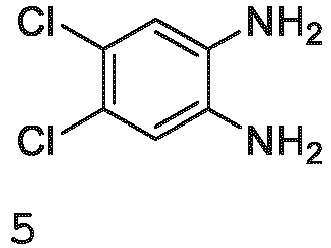 oder eines Salzes davonmit den Verbindungen 6 und 7:
 oder Salzen davonunter geeigneten Umsetzungsbedingungen, um die Verbindung 2 oder ein Salz davon bereitzustellen.
 - Verfahren nach Anspruch 1, ferner bereitstellend eine oder mehrere der folgenden Verbindungen:


- Verfahren nach Anspruch 2, wobei:a) die Verbindung 9 in einer Menge von weniger als 1,00 Gew.-%, 0,5 Gew.-%, 0,1 Gew.-%, 0,05 Gew.-% oder 0,02 Gew.-% relativ zu der Verbindung 2 bereitgestellt ist;b) die Verbindung 10 in einer Menge von weniger als 1,00 Gew.- %, 0,5 Gew.-%, 0,1 Gew.-%, 0,05 Gew.-% oder 0,02 Gew.-% relativ zu der Verbindung 2 bereitgestellt ist;c) die Verbindung 11 in einer Menge von weniger als 1,00 Gew.- %, 0,5 Gew.-%, 0,1 Gew.-%, 0,05 Gew.-% oder 0,02 Gew.-% relativ zu der Verbindung 2 bereitgestellt ist; und/oderd) die Verbindung 12 in einer Menge von weniger als 1,00 Gew.- %, 0,5 Gew.-%, 0,1 Gew.-%, 0,05 Gew.-% oder 0,02 Gew.-% relativ zu der Verbindung 2 bereitgestellt ist.
- Verfahren nach einem der Ansprüche 1 bis 3, wobei die Verbindung 6 oder ein Salz davon in einer Menge von 0,90 bis 1,09 Äquivalenten relativ zu der Verbindung 5 oder einem Salz davon präsent ist; wobei optional die Verbindung 6 oder ein Salz davon in einer Menge von 1,00 Äquivalenten relativ zu der Verbindung 5 oder einem Salz davon präsent ist oder wobei die Verbindung 6 oder ein Salz davon in einer Menge von 1,04 Äquivalenten relativ zu der Verbindung 5 oder einem Salz davon präsent ist.
- Verfahren nach einem der Ansprüche 1 bis 4, wobei die Verbindung 7 oder ein Salz davon in einer Menge von 1,03 bis 1,13 Äquivalenten relativ zu der Verbindung 5 oder einem Salz davon präsent ist; wobei optional die Verbindung 7 oder ein Salz davon in einer Menge von 1,08 Äquivalenten relativ zu der Verbindung 5 oder einem Salz davon präsent ist.
- Verfahren nach einem der Ansprüche 1 bis 5, wobei die Umsetzungsbedingungen ein Lösungsmittel umfassen, wobei das Lösungsmittel 1,4-Dioxan ist.
- Verfahren nach einem der Ansprüche 1 bis 6, wobei die Umsetzungsbedingungen ein Erhitzen auf die Temperatur T7 umfassen; wobei die Temperatur T7 100 °C ist; und wobei die Umsetzungsbedingungen ein Aufrechterhalten der Umsetzung bei der Temperatur T7 für eine Zeitspanne umfassen; wobei die Zeitspanne zwischen 14 und 15 Stunden ist.
- Verfahren nach Anspruch 7, wobei die Umsetzungsbedingungen nach dem Erhitzen auf die Temperatur T7 ferner (b) ein Abkühlen der Umsetzungsmischung auf die Temperatur T8 umfassen; wobei die Temperatur T8 zwischen 60 °C und 90 °C ist; und wobei die Umsetzungsmischung mit einer Geschwindigkeit zwischen 5 °C/h und 10 °C/h auf die Temperatur T8 abgekühlt wird.
- Verfahren des Herstellens von Maribavir:
 (a) Umsetzens der Verbindung 3:
 oder eines Salzes davonunter geeigneten Umsetzungsbedingungen, um Maribavir oder ein pharmazeutisch verträgliches Salz davon bereitzustellen; wobei die Verbindung 3 oder ein Salz davon durch ein Verfahren hergestellt ist, umfassend Folgendes:Bereitstellen der Verbindung
 oder eines Salzes davon undder Verbindung 8:
 oder eines Salzes davonunter geeigneten Umsetzungsbedingungen, um die Verbindung 3 oder ein Salz davon zu erhalten; und wobei die Verbindung 2 oder ein Salz davon durch ein Verfahren hergestellt ist, umfassend Folgendes:Umsetzen der Verbindung 5:
 oder eines Salzes davonmit den Verbindungen 6 und 7:
 unter geeigneten Umsetzungsbedingungen, um die Verbindung 2 oder ein Salz davon bereitzustellen.
 - Verfahren nach Anspruch 9, ferner umfassend einen Schritt einer (b) Phasentrennung und/oder Extraktion von Maribavir oder eines pharmazeutisch verträglichen Salzes davon aus der Umsetzungsmischung, um eine erste resultierende Mischung bereitzustellen, wobei optional (A) die Phasentrennung und/oder Extraktion von Maribavir oder eines pharmazeutisch verträglichen Salzes davon ein Zugeben eines ersten Phasentrennungslösungsmittels und eines zweiten Phasentrennungslösungsmittels umfasst und/oder (B) die Phasentrennung und/oder Extraktion ein Einstellen des pH-Werts der Umsetzungsmischung auf zwischen 6,0 und 10,0 umfasst.
- Verfahren nach Anspruch 9 oder 10, ferner umfassend einen Schritt (c) einer Destillation und/oder eines Lösungsmittelaustauschs der Umsetzungsmischung oder der ersten resultierenden Mischung, um eine zweite resultierende Mischung, umfassend Maribavir, oder ein pharmazeutisch verträgliches Salz davon bereitzustellen, und/oder ferner umfassend einen Schritt (d) einer Kristallisation von Maribavir oder einem pharmazeutisch verträglichen Salz davon.
- Verfahren nach einem der Ansprüche 9 bis 11, wobei die Umsetzungsbedingungen für die Umsetzung der Verbindung 2 oder eines Salzes davon mit der Verbindung 8 oder einem Salz davon, um die Verbindung 3 oder ein Salz davon bereitzustellen, Folgendes umfassen:a) Erhitzen auf die Temperatur Tb, wobei Tb zwischen 65 °C und 80 °C ist; oderb) Lagern und/oder Rühren der Umsetzungsmischung bei der Temperatur Tb für eine Zeitspanne von 1 Stunde und 48 Stunden; oderc) Lagern und/oder Rühren der Umsetzungsmischung bei der Temperatur Tb für eine Zeitspanne, wobei die Umsetzungsbedingungen, nachdem ermöglicht wurde, dass die Umsetzung bei der Temperatur Tb für die Zeitspanne fortschreitet, ferner einen Schritt eines Abkühlens der Umsetzungsmischung auf die Temperatur Tc umfassen; wobei die Temperatur Tc zwischen 16 °C und 30 °C ist.
- Verfahren nach einem der Ansprüche 9 bis 11, wobei die Umsetzungsbedingungen für die Umsetzung der Verbindung 2 oder eines Salzes davon mit der Verbindung 8 oder einem Salz davon, um die Verbindung 3 oder ein Salz davon bereitzustellen, ferner Folgendes umfassen: (A) Waschen und/oder Quenchen der Umsetzungsmischung, optional um eine erste resultierende Mischung bereitzustellen, wobei das Waschen und/oder Quenchen eine Basenwäsche umfasst, umfassend ein Waschen der Umsetzungsmischung mit einer wässrigen Base, oder (B) eine Destillation und/oder einen Lösungsmittelaustausch der Umsetzungsmischung oder der ersten resultierenden Mischung, um eine zweite resultierende Mischung, umfassend die Verbindung 3 oder ein pharmazeutisch verträgliches Salz davon, und ein Lösungsmittel bereitzustellen.
- Verfahren nach einem der Ansprüche 9 bis 13, wobei die Verbindung 3 als ein HCl-Salz hergestellt ist.
- Verfahren nach einem der Ansprüche 9 bis 14, wobei die Umsetzungsbedingungen für die Umsetzung der Verbindung 3 oder eines Salzes davon, um Maribavir oder ein Salz davon bereitzustellen, eine Base umfassen; wobei optional die Base NaOH ist.
Priority Applications (2)
| Application Number | Priority Date | Filing Date | Title |
|---|---|---|---|
| RS20250935A RS67224B1 (sr) | 2022-10-12 | 2023-10-11 | Postupak pripreme maribavira |
| EP24200362.2A EP4480956A3 (de) | 2022-10-12 | 2023-10-11 | Virale inhibitoren, deren synthese und zwischenprodukte |
Applications Claiming Priority (2)
| Application Number | Priority Date | Filing Date | Title |
|---|---|---|---|
| US202263415438P | 2022-10-12 | 2022-10-12 | |
| PCT/US2023/034933 WO2024081308A1 (en) | 2022-10-12 | 2023-10-11 | Method of preparing maribavir |
Related Child Applications (2)
| Application Number | Title | Priority Date | Filing Date |
|---|---|---|---|
| EP24200362.2A Division EP4480956A3 (de) | 2022-10-12 | 2023-10-11 | Virale inhibitoren, deren synthese und zwischenprodukte |
| EP24200362.2A Division-Into EP4480956A3 (de) | 2022-10-12 | 2023-10-11 | Virale inhibitoren, deren synthese und zwischenprodukte |
Publications (3)
| Publication Number | Publication Date |
|---|---|
| EP4475844A1 EP4475844A1 (de) | 2024-12-18 |
| EP4475844C0 EP4475844C0 (de) | 2025-06-25 |
| EP4475844B1 true EP4475844B1 (de) | 2025-06-25 |
Family
ID=88731258
Family Applications (2)
| Application Number | Title | Priority Date | Filing Date |
|---|---|---|---|
| EP23801994.7A Active EP4475844B1 (de) | 2022-10-12 | 2023-10-11 | Verfahren zur herstellung von maribavir |
| EP24200362.2A Pending EP4480956A3 (de) | 2022-10-12 | 2023-10-11 | Virale inhibitoren, deren synthese und zwischenprodukte |
Family Applications After (1)
| Application Number | Title | Priority Date | Filing Date |
|---|---|---|---|
| EP24200362.2A Pending EP4480956A3 (de) | 2022-10-12 | 2023-10-11 | Virale inhibitoren, deren synthese und zwischenprodukte |
Country Status (15)
| Country | Link |
|---|---|
| US (6) | US20240277748A1 (de) |
| EP (2) | EP4475844B1 (de) |
| JP (1) | JP2025534685A (de) |
| KR (1) | KR20250107159A (de) |
| CN (4) | CN119136799A (de) |
| AR (1) | AR130743A1 (de) |
| AU (1) | AU2023361470B2 (de) |
| CO (1) | CO2025005303A2 (de) |
| ES (1) | ES3041645T3 (de) |
| IL (1) | IL319923A (de) |
| MX (1) | MX2025004326A (de) |
| PL (1) | PL4475844T3 (de) |
| RS (1) | RS67224B1 (de) |
| TW (1) | TW202430155A (de) |
| WO (1) | WO2024081308A1 (de) |
Families Citing this family (1)
| Publication number | Priority date | Publication date | Assignee | Title |
|---|---|---|---|---|
| CN119119151A (zh) * | 2024-09-04 | 2024-12-13 | 斯坦德药典标准物质研发(湖北)有限公司 | 一种马立巴韦的制备方法 |
Family Cites Families (8)
| Publication number | Priority date | Publication date | Assignee | Title |
|---|---|---|---|---|
| GB9413724D0 (en) | 1994-07-07 | 1994-08-24 | Wellcome Found | Therapeutic nucleosides |
| GB9600143D0 (en) | 1996-01-05 | 1996-03-06 | Wellcome Found | Therapeutic compounds |
| US6413938B1 (en) * | 1997-02-13 | 2002-07-02 | The Regents Of The University Of Michigan | Benzimidazole derivatives for the treatment of viral infections |
| GB9807354D0 (en) * | 1998-04-07 | 1998-06-03 | Glaxo Group Ltd | Antiviral compound |
| GB9807355D0 (en) | 1998-04-07 | 1998-06-03 | Glaxo Group Ltd | Antiviral compound |
| GB0008939D0 (en) | 2000-04-11 | 2000-05-31 | Glaxo Group Ltd | Process for preparing substituted benzimidazole compounds |
| US8541391B2 (en) * | 2010-10-28 | 2013-09-24 | Viropharma Incorporated | Crystalline phases of 5,6-dichloro-2-(isopropylamino)-1-β-L-ribofuranosyl-1H-benzimidazole |
| US8546344B2 (en) | 2010-10-28 | 2013-10-01 | Viropharma Incorporated | Crystalline phases of 5,6-dichloro-2-(isopropylamino)-1-β-L-ribofuranosyl)-1H-benzimidazole |
-
2023
- 2023-10-11 PL PL23801994.7T patent/PL4475844T3/pl unknown
- 2023-10-11 CN CN202380037727.4A patent/CN119136799A/zh active Pending
- 2023-10-11 RS RS20250935A patent/RS67224B1/sr unknown
- 2023-10-11 ES ES23801994T patent/ES3041645T3/es active Active
- 2023-10-11 EP EP23801994.7A patent/EP4475844B1/de active Active
- 2023-10-11 TW TW112138828A patent/TW202430155A/zh unknown
- 2023-10-11 IL IL319923A patent/IL319923A/en unknown
- 2023-10-11 CN CN202411701644.3A patent/CN119751358A/zh active Pending
- 2023-10-11 JP JP2025521019A patent/JP2025534685A/ja active Pending
- 2023-10-11 US US18/379,047 patent/US20240277748A1/en active Pending
- 2023-10-11 EP EP24200362.2A patent/EP4480956A3/de active Pending
- 2023-10-11 WO PCT/US2023/034933 patent/WO2024081308A1/en not_active Ceased
- 2023-10-11 KR KR1020257013641A patent/KR20250107159A/ko active Pending
- 2023-10-11 CN CN202411701649.6A patent/CN119745908A/zh active Pending
- 2023-10-11 CN CN202411701641.XA patent/CN119751518A/zh active Pending
- 2023-10-11 AU AU2023361470A patent/AU2023361470B2/en active Active
- 2023-10-12 AR ARP230102727A patent/AR130743A1/es unknown
- 2023-12-29 US US18/400,344 patent/US20240189286A1/en not_active Abandoned
-
2024
- 2024-07-18 US US18/777,489 patent/US12377078B2/en active Active
- 2024-07-18 US US18/777,473 patent/US12295940B2/en active Active
- 2024-07-18 US US18/777,501 patent/US12295941B2/en active Active
-
2025
- 2025-04-11 MX MX2025004326A patent/MX2025004326A/es unknown
- 2025-04-25 CO CONC2025/0005303A patent/CO2025005303A2/es unknown
- 2025-07-07 US US19/261,756 patent/US20250332146A1/en active Pending
Also Published As
| Publication number | Publication date |
|---|---|
| TW202430155A (zh) | 2024-08-01 |
| US20240366647A1 (en) | 2024-11-07 |
| WO2024081308A1 (en) | 2024-04-18 |
| ES3041645T3 (en) | 2025-11-13 |
| JP2025534685A (ja) | 2025-10-17 |
| US20240366645A1 (en) | 2024-11-07 |
| US20240189286A1 (en) | 2024-06-13 |
| CN119751518A (zh) | 2025-04-04 |
| IL319923A (en) | 2025-05-01 |
| US12295941B2 (en) | 2025-05-13 |
| EP4480956A2 (de) | 2024-12-25 |
| AU2023361470B2 (en) | 2025-09-25 |
| EP4475844C0 (de) | 2025-06-25 |
| MX2025004326A (es) | 2025-05-02 |
| KR20250107159A (ko) | 2025-07-11 |
| US20240366646A1 (en) | 2024-11-07 |
| CN119745908A (zh) | 2025-04-04 |
| CN119136799A (zh) | 2024-12-13 |
| EP4475844A1 (de) | 2024-12-18 |
| AR130743A1 (es) | 2025-01-15 |
| CN119751358A (zh) | 2025-04-04 |
| US12377078B2 (en) | 2025-08-05 |
| US12295940B2 (en) | 2025-05-13 |
| PL4475844T3 (pl) | 2025-11-12 |
| CO2025005303A2 (es) | 2025-05-19 |
| US20240277748A1 (en) | 2024-08-22 |
| EP4480956A3 (de) | 2025-02-19 |
| AU2023361470A1 (en) | 2024-09-19 |
| RS67224B1 (sr) | 2025-10-31 |
| US20250332146A1 (en) | 2025-10-30 |
Similar Documents
| Publication | Publication Date | Title |
|---|---|---|
| CN107428791B (zh) | 烟酰胺核苷的结晶形式 | |
| US9315523B2 (en) | Cyclic dinucleosides | |
| KR20180051523A (ko) | Lsd1 저해제의 염 | |
| EP3497096B1 (de) | Antimikrobielle verbindung | |
| WO2023076556A1 (en) | Irak4 degraders and synthesis thereof | |
| US20250332146A1 (en) | Viral inhibitors, the synthesis thereof, and intermediates thereto | |
| WO2014145600A1 (en) | Ach-0142684 sodium salt polymorphs, composition including the same, and method of manufacture thereof | |
| EP3360858A1 (de) | Verfahren zur herstellung einer aminopyrrolidin-derivate | |
| HK40121262A (en) | Viral inhibitors, the synthesis thereof, and intermediates thereto | |
| EP3696178B1 (de) | Heterocyclische verbindung und ihre verwendung in der medizin | |
| US20110218224A1 (en) | Crystalline alkoxyimidazol-1-ylmethyl biphenyl carboxylic acid and methods for preparing thereof | |
| CN110128359B (zh) | 一种尿酸转运体1抑制剂的晶体及其制备方法和用途 | |
| EP4640679A1 (de) | Salzform und kristallform einer mehrfach substituierten pyridinverbindung und herstellungsverfahren dafür | |
| CN110903291B (zh) | 一种杂芳基并[4,3-c]嘧啶-5-胺类衍生物的盐、盐的晶型及制备方法 | |
| EP4527837A1 (de) | Kristalline formen eines triazindionderivats und herstellungsverfahren dafür | |
| EP4071154B1 (de) | Kristallform als acc1- und acc2-inhibitor, verfahren zu ihrer herstellung und ihre verwendung | |
| CN116514796A (zh) | 3CLpro蛋白酶抑制剂的盐、晶型及其制备方法 | |
| CN116947891A (zh) | 一种作为免疫调节剂的联苯类化合物的盐型、晶型及其制备方法 | |
| HK1184163A (en) | Amorphous form of beta- l-2'-deoxythymidine |
Legal Events
| Date | Code | Title | Description |
|---|---|---|---|
| STAA | Information on the status of an ep patent application or granted ep patent |
Free format text: STATUS: UNKNOWN |
|
| STAA | Information on the status of an ep patent application or granted ep patent |
Free format text: STATUS: THE INTERNATIONAL PUBLICATION HAS BEEN MADE |
|
| PUAI | Public reference made under article 153(3) epc to a published international application that has entered the european phase |
Free format text: ORIGINAL CODE: 0009012 |
|
| STAA | Information on the status of an ep patent application or granted ep patent |
Free format text: STATUS: REQUEST FOR EXAMINATION WAS MADE |
|
| 17P | Request for examination filed |
Effective date: 20240911 |
|
| AK | Designated contracting states |
Kind code of ref document: A1 Designated state(s): AL AT BE BG CH CY CZ DE DK EE ES FI FR GB GR HR HU IE IS IT LI LT LU LV MC ME MK MT NL NO PL PT RO RS SE SI SK SM TR |
|
| GRAP | Despatch of communication of intention to grant a patent |
Free format text: ORIGINAL CODE: EPIDOSNIGR1 |
|
| STAA | Information on the status of an ep patent application or granted ep patent |
Free format text: STATUS: GRANT OF PATENT IS INTENDED |
|
| RIC1 | Information provided on ipc code assigned before grant |
Ipc: C07H 19/04 20060101ALI20241213BHEP Ipc: C07H 1/00 20060101ALI20241213BHEP Ipc: C07H 19/052 20060101ALI20241213BHEP Ipc: A61P 31/22 20060101ALI20241213BHEP Ipc: A61K 31/7056 20060101ALI20241213BHEP Ipc: A61K 31/4184 20060101AFI20241213BHEP |
|
| DAV | Request for validation of the european patent (deleted) | ||
| DAX | Request for extension of the european patent (deleted) | ||
| INTG | Intention to grant announced |
Effective date: 20250121 |
|
| GRAS | Grant fee paid |
Free format text: ORIGINAL CODE: EPIDOSNIGR3 |
|
| GRAA | (expected) grant |
Free format text: ORIGINAL CODE: 0009210 |
|
| STAA | Information on the status of an ep patent application or granted ep patent |
Free format text: STATUS: THE PATENT HAS BEEN GRANTED |
|
| AK | Designated contracting states |
Kind code of ref document: B1 Designated state(s): AL AT BE BG CH CY CZ DE DK EE ES FI FR GB GR HR HU IE IS IT LI LT LU LV MC ME MK MT NL NO PL PT RO RS SE SI SK SM TR |
|
| REG | Reference to a national code |
Ref country code: GB Ref legal event code: FG4D |
|
| REG | Reference to a national code |
Ref country code: CH Ref legal event code: EP |
|
| REG | Reference to a national code |
Ref country code: CH Ref legal event code: EP |
|
| REG | Reference to a national code |
Ref country code: IE Ref legal event code: FG4D |
|
| REG | Reference to a national code |
Ref country code: DE Ref legal event code: R096 Ref document number: 602023004359 Country of ref document: DE |
|
| REG | Reference to a national code |
Ref country code: HK Ref legal event code: DE Ref document number: 40120108 Country of ref document: HK |
|
| U01 | Request for unitary effect filed |
Effective date: 20250725 |
|
| U07 | Unitary effect registered |
Designated state(s): AT BE BG DE DK EE FI FR IT LT LU LV MT NL PT RO SE SI Effective date: 20250731 |
|
| PGFP | Annual fee paid to national office [announced via postgrant information from national office to epo] |
Ref country code: NO Payment date: 20250919 Year of fee payment: 3 |
|
| PGFP | Annual fee paid to national office [announced via postgrant information from national office to epo] |
Ref country code: TR Payment date: 20250919 Year of fee payment: 3 |
|
| PG25 | Lapsed in a contracting state [announced via postgrant information from national office to epo] |
Ref country code: HR Free format text: LAPSE BECAUSE OF FAILURE TO SUBMIT A TRANSLATION OF THE DESCRIPTION OR TO PAY THE FEE WITHIN THE PRESCRIBED TIME-LIMIT Effective date: 20250625 |
|
| PGFP | Annual fee paid to national office [announced via postgrant information from national office to epo] |
Ref country code: AL Payment date: 20250923 Year of fee payment: 3 |
|
| PGFP | Annual fee paid to national office [announced via postgrant information from national office to epo] |
Ref country code: IE Payment date: 20250911 Year of fee payment: 3 Ref country code: RS Payment date: 20250910 Year of fee payment: 3 |
|
| PGFP | Annual fee paid to national office [announced via postgrant information from national office to epo] |
Ref country code: IS Payment date: 20250925 Year of fee payment: 3 |
|
| U20 | Renewal fee for the european patent with unitary effect paid |
Year of fee payment: 3 Effective date: 20250919 |
|
| PGFP | Annual fee paid to national office [announced via postgrant information from national office to epo] |
Ref country code: MK Payment date: 20250924 Year of fee payment: 3 |
|
| REG | Reference to a national code |
Ref country code: SK Ref legal event code: T3 Ref document number: E 47125 Country of ref document: SK |
|
| PGFP | Annual fee paid to national office [announced via postgrant information from national office to epo] |
Ref country code: HU Payment date: 20250910 Year of fee payment: 3 |
|
| REG | Reference to a national code |
Ref country code: ES Ref legal event code: FG2A Ref document number: 3041645 Country of ref document: ES Kind code of ref document: T3 Effective date: 20251113 |