EP4475513A2 - Datenspeicherungs- und -abrufsystem für betriebsdaten einer nicht benachbarten medizinischen vorrichtung - Google Patents
Datenspeicherungs- und -abrufsystem für betriebsdaten einer nicht benachbarten medizinischen vorrichtung Download PDFInfo
- Publication number
- EP4475513A2 EP4475513A2 EP24208984.5A EP24208984A EP4475513A2 EP 4475513 A2 EP4475513 A2 EP 4475513A2 EP 24208984 A EP24208984 A EP 24208984A EP 4475513 A2 EP4475513 A2 EP 4475513A2
- Authority
- EP
- European Patent Office
- Prior art keywords
- medical device
- computer network
- file
- media
- stored
- Prior art date
- Legal status (The legal status is an assumption and is not a legal conclusion. Google has not performed a legal analysis and makes no representation as to the accuracy of the status listed.)
- Pending
Links
Images





Classifications
-
- G—PHYSICS
- G16—INFORMATION AND COMMUNICATION TECHNOLOGY [ICT] SPECIALLY ADAPTED FOR SPECIFIC APPLICATION FIELDS
- G16H—HEALTHCARE INFORMATICS, i.e. INFORMATION AND COMMUNICATION TECHNOLOGY [ICT] SPECIALLY ADAPTED FOR THE HANDLING OR PROCESSING OF MEDICAL OR HEALTHCARE DATA
- G16H40/00—ICT specially adapted for the management or administration of healthcare resources or facilities; ICT specially adapted for the management or operation of medical equipment or devices
- G16H40/60—ICT specially adapted for the management or administration of healthcare resources or facilities; ICT specially adapted for the management or operation of medical equipment or devices for the operation of medical equipment or devices
- G16H40/67—ICT specially adapted for the management or administration of healthcare resources or facilities; ICT specially adapted for the management or operation of medical equipment or devices for the operation of medical equipment or devices for remote operation
-
- G—PHYSICS
- G06—COMPUTING OR CALCULATING; COUNTING
- G06F—ELECTRIC DIGITAL DATA PROCESSING
- G06F16/00—Information retrieval; Database structures therefor; File system structures therefor
- G06F16/40—Information retrieval; Database structures therefor; File system structures therefor of multimedia data, e.g. slideshows comprising image and additional audio data
- G06F16/41—Indexing; Data structures therefor; Storage structures
-
- G—PHYSICS
- G16—INFORMATION AND COMMUNICATION TECHNOLOGY [ICT] SPECIALLY ADAPTED FOR SPECIFIC APPLICATION FIELDS
- G16H—HEALTHCARE INFORMATICS, i.e. INFORMATION AND COMMUNICATION TECHNOLOGY [ICT] SPECIALLY ADAPTED FOR THE HANDLING OR PROCESSING OF MEDICAL OR HEALTHCARE DATA
- G16H10/00—ICT specially adapted for the handling or processing of patient-related medical or healthcare data
- G16H10/60—ICT specially adapted for the handling or processing of patient-related medical or healthcare data for patient-specific data, e.g. for electronic patient records
-
- G—PHYSICS
- G16—INFORMATION AND COMMUNICATION TECHNOLOGY [ICT] SPECIALLY ADAPTED FOR SPECIFIC APPLICATION FIELDS
- G16H—HEALTHCARE INFORMATICS, i.e. INFORMATION AND COMMUNICATION TECHNOLOGY [ICT] SPECIALLY ADAPTED FOR THE HANDLING OR PROCESSING OF MEDICAL OR HEALTHCARE DATA
- G16H40/00—ICT specially adapted for the management or administration of healthcare resources or facilities; ICT specially adapted for the management or operation of medical equipment or devices
- G16H40/40—ICT specially adapted for the management or administration of healthcare resources or facilities; ICT specially adapted for the management or operation of medical equipment or devices for the management of medical equipment or devices, e.g. scheduling maintenance or upgrades
-
- H—ELECTRICITY
- H04—ELECTRIC COMMUNICATION TECHNIQUE
- H04L—TRANSMISSION OF DIGITAL INFORMATION, e.g. TELEGRAPHIC COMMUNICATION
- H04L43/00—Arrangements for monitoring or testing data switching networks
- H04L43/08—Monitoring or testing based on specific metrics, e.g. QoS, energy consumption or environmental parameters
- H04L43/0805—Monitoring or testing based on specific metrics, e.g. QoS, energy consumption or environmental parameters by checking availability
- H04L43/0811—Monitoring or testing based on specific metrics, e.g. QoS, energy consumption or environmental parameters by checking availability by checking connectivity
-
- H—ELECTRICITY
- H04—ELECTRIC COMMUNICATION TECHNIQUE
- H04L—TRANSMISSION OF DIGITAL INFORMATION, e.g. TELEGRAPHIC COMMUNICATION
- H04L67/00—Network arrangements or protocols for supporting network services or applications
- H04L67/01—Protocols
- H04L67/06—Protocols specially adapted for file transfer, e.g. file transfer protocol [FTP]
-
- H—ELECTRICITY
- H04—ELECTRIC COMMUNICATION TECHNIQUE
- H04L—TRANSMISSION OF DIGITAL INFORMATION, e.g. TELEGRAPHIC COMMUNICATION
- H04L67/00—Network arrangements or protocols for supporting network services or applications
- H04L67/01—Protocols
- H04L67/10—Protocols in which an application is distributed across nodes in the network
- H04L67/1095—Replication or mirroring of data, e.g. scheduling or transport for data synchronisation between network nodes
-
- H—ELECTRICITY
- H04—ELECTRIC COMMUNICATION TECHNIQUE
- H04L—TRANSMISSION OF DIGITAL INFORMATION, e.g. TELEGRAPHIC COMMUNICATION
- H04L67/00—Network arrangements or protocols for supporting network services or applications
- H04L67/01—Protocols
- H04L67/10—Protocols in which an application is distributed across nodes in the network
- H04L67/1097—Protocols in which an application is distributed across nodes in the network for distributed storage of data in networks, e.g. transport arrangements for network file system [NFS], storage area networks [SAN] or network attached storage [NAS]
-
- H—ELECTRICITY
- H04—ELECTRIC COMMUNICATION TECHNIQUE
- H04L—TRANSMISSION OF DIGITAL INFORMATION, e.g. TELEGRAPHIC COMMUNICATION
- H04L67/00—Network arrangements or protocols for supporting network services or applications
- H04L67/01—Protocols
- H04L67/12—Protocols specially adapted for proprietary or special-purpose networking environments, e.g. medical networks, sensor networks, networks in vehicles or remote metering networks
Definitions
- the media server is also configured to automatically request a portion of the stored media file beginning at the calculated index.
- the media server is further configured to automatically provide the portion of the stored media file beginning at the calculated index.
- the network connectivity log may be further configured to automatically record, for each period of connectivity to the computer network, information identifying one of the media file and the archive file where the digital media data is stored.
- the media server may be further configured to request a portion of the stored archive file beginning at the calculated index. In any embodiment, the media server may be further configured to provide the portion of the stored archive file beginning at the calculated index.
- the e-mail message may include a URL of a web page that contains additional information about the status of the medical device.
- the method further includes storing, in a data store, digital media data in a media file.
- the method further includes providing, by the data store, a requested portion, less than all, of the stored media file in response to a provision request.
- the provision request includes an index, relative to an end of the media file, that corresponds to the requested portion.
- the method further includes receiving, by a media server, the messages via the computer network.
- the method further includes storing, by the media server, status information from received messages into the data store. Status information from consecutive received messages is stored contiguously in the data store, notwithstanding the occasional gaps in connectivity between the medical device and the computer network.
- the method further includes receiving, by the media server, a status request that includes a time at which requested status information was captured.
- the method further includes accessing, by the media server, the network connectivity log and calculating an index, relative to an end of the media file.
- the requested status information is stored, taking into account the occasional gaps in connectivity between the medical device and the computer network as represented in the network connectivity log.
- the method further includes requesting, by the media server, a portion of the stored media file beginning at the calculated index.
- the method further includes providing, by the media server, the portion of the stored media file beginning at the calculated index.
- the network connectivity log may be accessed by the media server and an index may be calculated, relative to an end of the archive file, where the requested status information is stored, taking into account the occasional gaps in connectivity between the medical device and the computer network as represented in the network connectivity log.
- a portion of the stored archive file beginning at the calculated index may be requested by the media server.
- the portion of the stored archive file beginning at the calculated index may be provided by the media server.
- the e-mail message may include a URL of a web page that contains additional information about the status of the medical device.
- Yet another embodiment of the present invention includes a non-transitory computer-readable medium encoded with instructions.
- the instructions When executed by a processor, the instructions establish processes for performing a computer-implemented method for storing and retrieving non-contiguous medical device data.
- the processes include a process configured to connect a medical device to a computer network, subject to occasional gaps in connectivity to the computer network.
- a process is configured to automatically repeatedly capture, by the medical device, status information about the medical device and send, by the medical device, messages containing the status information via the computer network.
- a process is configured to automatically record in a network connectivity log (a) times at which the medical device connects to the computer network and (b) times at which the medical device disconnects from the computer network.
- a process is configured to store, in a data store, digital media data in a media file.
- a process is configured to provide, by the data store, a requested portion, less than all, of the stored media file in response to a provision request, wherein the provision request includes an index, relative to an end of the media file, that corresponds to the requested portion.
- a process is configured to receive, by a media server, the messages via the computer network.
- a process is configured to store, by the media server, status information from received messages into the data store, wherein status information from consecutive received messages is stored contiguously in the data store, notwithstanding the occasional gaps in connectivity between the medical device and the computer network.
- a process is configured to receive, by the media server, a status request that includes a time at which requested status information was captured.
- a process is configured to access, by the media server, the network connectivity log and calculate an index, relative to an end of the media file, where the requested status information is stored, taking into account the occasional gaps in connectivity between the medical device and the computer network as represented in the network connectivity log.
- a process is configured to request, by the media server, a portion of the stored media file beginning at the calculated index.
- a process is configured to provide, by the media server, the portion of the stored media file beginning at the calculated index.
- Embodiments of the present invention provide data storage and retrieval systems and methods for non-contiguous medical device operational data.
- a web-based interface enables medical personnel to remotely monitor medical devices, such as implanted heart pumps.
- a monitoring system records operational data, such as battery temperature and alarms from the medical devices, in a file.
- the file does not contain a contiguous stream of data for each medical device. Instead, the file simply records data when data is available. The file pauses recording during gaps in the data, i.e., during gaps in network connectivity.
- the file may be in the form of a video file, such as an MP4 file, although other suitable file formats may be used.
- the system displays current, or most recently available, data, as well as a list of alarms. If medical personnel wish to view more detail about an earlier time or one of the alarms, the system calculates where in the file the medical device data was recorded. This calculation is novel and not obvious, due to the discontiguous nature of the data. For each medical device, the system records times the medical device connects via the network ("network connect events") and times the medical device network connection breaks (“network disconnect events"). The system uses these times to calculate an index into the file that corresponds to the time of the user-selected alarm.
- the system notifies users of alarms by sending e-mail messages and/or text messages and/or by displaying pop-up windows in browsers.
- the messages or pop-up windows may include links, such as URLs, to web pages that display information about the alarms. Users may click on the URL to open the web pages.
- Data such as records, blocks, video frames, etc., that are stored contiguously are stored without space between consecutive elements.
- Data such as records, blocks, video frames, messages, etc., that are stored discontiguously have space between consecutive elements.
- Disconnect from a computer network lose, including temporarily, a connection to the computer network.
- a connection to the computer network For example, in a wireless computer network link, electrical noise, a strong signal from another station, a change in propagation characteristics, such as due to movement or change in orientation of an antenna, or interposition, between a transmitting antenna and a receiving antenna, of a material that attenuates or reflects electromagnetic waves, may temporarily cause loss of connectivity.
- Digital media data digital data that represent imagery, video and/or sound.
- Consecutive - one element after another like element without a third element between. For example, with two consecutive messages, one message follows the other, without a third message in between, although there may be a gap in time between the two messages.
- Time - a time may include a date and a time within the date, for example 2018-9-12 3:52.
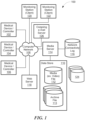
- Fig. 1 is a schematic block diagram of major components of a data storage and retrieval system 100 for collecting, storing and retrieving operational data from and about medical devices, represented by exemplary medical devices 102, 104 and 106. Although three medical devices 102-106 are shown, other numbers of medical devices may be used. Each medical device 102-106 is connectable to a computer network 108. Each medical device 102-106 is configured to automatically repeatedly capture status information about the medical device 102-106 and send messages containing the status information via the computer network 108. In some embodiments, the status information is sent in the messages encoded as a video frame or a sequence of video frames. The video frame(s) may, for example, contain copies of images displayed on display screens of the medical devices 102-106.
- the computer network 108 may include wired and/or wireless segments. Each medical device 102-106 is, therefore, subject to occasional gaps in connectivity to or through the computer network 108.
- a data store 110 includes a media file 112, such as an MP4 video or other suitable type of media file. As described in more detail below, the data store 110 records the status information about the medical devices 102-106. The data store 110 is configured to automatically store digital media data, such as frames of video, in the media file 112.
- the data store 110 is also configured to provide a requested portion, less than all, of the stored media file 112 in response to a provision request.
- the data store 110 thereby supports playback of the medical device status information, as described in more detail below.
- the data store 110 may provide one or more frames of video stored in the media file 112, for display to a user.
- Such a provision request includes an index, relative to the beginning or the end of the media file 112.
- the index corresponds to the beginning of the requested portion, i.e., how far into the media file 112 the data store 110 must seek to reach the beginning of the requested portion.
- the index may indicate an amount of time, or a number of video frames, from the beginning or the end of the media file 112 to where the requested portion begins.
- a provision request may request a video frame that begins 7 minutes and 15 seconds (7:15) from the beginning of the media file 112.
- a provision request may request a sequence of video frames that begins 3,872 frames from the end of the media file 112.
- the data store 110 is configured to create and maintain one or more archive files, represented by archive file 113. Although three archive files 113 are shown, any number of archive files 113 may be used. In some embodiments that are configured to maintain the archive files 113, when the media file 112 reaches a predetermined size, such as about five hours' worth of status information, the data store 110 makes an archive copy 113 of the media file 112 and begins recording from the beginning of the media file 112, thereby overwriting previously stored status information in the media file 112. In some embodiments, after the media file 112 reaches the predetermined size, the data store 110 closes the media file 112, renames the media file 112 to the next available archive file 113 name and creates a new media file 112. Copying the contents of the media file 112 into the archive file 113 and closing and renaming the media file 112 to the next available archive file 113 are collectively herein referred to as copying the digital media data stored in the media file to the at least one archive file.
- a predetermined size such as
- a media server 114 is connectable to the computer network 108 and is configured to automatically receive, via the computer network 108, the messages containing the status information from the medical devices 102-106.
- the media server 114 may parse the messages to extract the status information from the messages.
- the media server 114 includes an optical character recognizer (OCR) to recognize text in video frames sent by the medical devices 102-106.
- OCR optical character recognizer
- the media server 114 is communicably coupled to a separate OCR (not shown).
- the media server 114 may then use the recognized text to automatically ascertain serial numbers or other identifiers of the medical devices 102-106, operating parameters of the medical device 102-106, whether an alarm has been raised by one of the medical devices 102-106, etc.
- the media server 114 is further configured to store the status information from received messages into the data store 110, typically in the form of video frames.
- the media server 114 facilitates playing back (displaying to a user) requested portions of the recorded medical device status information.
- the media server 114 stores received status information into the data store 110 as the media server 114 receives the status information. However, the media server 114 does not receive messages from a given medical device 102-106 during the occasional gaps in connectivity to the computer network 108 experienced by the medical device 102-106. The media server 114 pauses storing status information about the given medical device 102-106 into the data store 110 during each gap in network connectivity. Thus, status information from consecutive received messages may be stored contiguously in the data store, even if there is a time gap, represented by a network connectivity gap, between the consecutive received messages. Consequently, contiguous data in the media file 112 does not necessarily represent continuous time, i.e., status information continuously collected by a medical device 102-106.
- the status information from consecutive received messages is stored contiguously in the data store, notwithstanding the occasional gaps in connectivity between the medical device 102-106 and the computer network 108. Additional components, which are described below, solve the problem of correctly indexing into the media file 112 to retrieve status information associated with a requested time, i.e., accounting for the non-contiguous nature of the status information conveyed by the received messages.
- a network connectivity log 116 is configured to automatically record: (a) times at which each medical device 102-106 connects to the computer network 108 and (b) times at which each medical device 102-106 disconnects from the computer network 108.
- a time at which a first message is received by the media server 114 from a given medical device 102-106 may be taken as the time the medical device 102-106 connects to the computer network 108. If no message has been received by the media server 114 from a given medical device 102-106 for a predetermined timeout period, the medical device 102-106 may be assumed to have lost network connectivity, and the time at which the timeout is detected, minus the timeout period, may be taken as the time the medical device 102-106 disconnected from the computer network 108.
- the medical device 102-106 may be assumed to have again connected to the computer network 108, and a time at which the message is received by the media server 114 from the given medical device 102-106 may be taken as the time the medical device 102-106 reconnects to the computer network 108.
- the medical devices 102-106 periodically transmit or broadcast messages, without necessarily including any device status information. These messages are sent to indicate the respective medical devices 102-106 are operational. Receipt of these messages indicates the respective sending medical device 102-106 is connected, via the computer network 108, to the recipient. Therefore, a cessation of receipt of these messages may be used as an indication the respective medical device 102-106 has lost computer network connectivity, i.e., the beginning of a gap in computer network connectivity. A time of this loss may be stored in the network connectivity log 116.
- the respective medical device 102-106 may be assumed to again be connected to the computer network 108, and a time of this reconnection may be stored in the network connectivity log 116. More detailed descriptions of several embodiments of the network connectivity log 116 are provided herein.
- All the messages from a given medical device 102-106 to the media server 114 may be carried over a single network session, despite gaps in the network connectivity.
- each or some of the gaps may cause termination of a network session, and resumption of network connectivity may cause creation of a new network session.
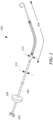
- Fig. 2 is an isometric view of an exemplary medical device 200.
- the exemplary medical device 200 is an intravascular blood pump. However, many other kinds of suitable medical devices may be used as each of the medical devices 102-106 in Fig. 1 .
- the pump 200 includes a pump handle 202, a pump head 204, a catheter 206 connecting the pump handle 202 to the pump head 204, and a connecting hub 208.
- the catheter 206 is tubular and has a substantially uniform outer diameter 210. The catheter 206 enables the pump head 204 to be in electro-mechanical communication with the pump handle 202.
- the pump handle 202 is in communication with control circuitry (described below), which allows control of the pump head 204.
- the pump head 204 contains electro-mechanical components that enable the device to perform various tasks within the body of a human patient, such as pump blood from a location within the body.
- the pump head 204 has a diameter 212 that is larger than the diameter 210 of the catheter 206.
- An example of such a percutaneous pump 200 is the Impella 2.5 ® blood pump system available from Abiomed, Inc., Danvers, Massachusetts. This blood pump system includes the pump 200 and an Automatic Impella Controller (AIC) controller for the pump 200.
- AIC Automatic Impella Controller
- the media file 1018 (112) may be accessed using an index, for example a time index or a frame index, represented by exemplary index 1024.
- the index 1024 indicates how far from the beginning of the media file 1018 (112) data of interest begins, i.e., the index 1024 is a pointer, relative to the beginning of the media file 1018 (112).
- any of the archive files 113 may be accessed using an index 1024.
- the index 1026 may indicate how far from the end of the media file 1018 data of interest begins.
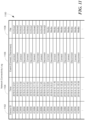
- Each record includes: a field 1102 that identifies a medical device, such as by a medical device serial number; a time field 1104 that identifies a time at which the medical device identified in field 1102 experiences an event; an event type field 1106 that indicates whether the corresponding event is a connect event or a disconnect event; and a field 1108 that indicates in which file (media file 112 or one of the archive files 113) status information, for example video frames, from the event is stored.
- a field 1102 that identifies a medical device, such as by a medical device serial number
- a time field 1104 that identifies a time at which the medical device identified in field 1102 experiences an event
- an event type field 1106 that indicates whether the corresponding event is a connect event or a disconnect event
- a field 1108 that indicates in which file (media file 112 or one of the archive files 113) status information, for example video frames, from the event is stored.
- the hypothetical exemplary contents of the data fields 1100 include information about only one medical device (IC2958). However, information about other medical devices may be interspersed in the network connectivity log 116. That is, records for a variety of medical devices 102-106 may be stored in a single network connectivity log 116.
- the media server 114 When a user commands playback of non-live, i.e., recorded, medical device status information, the media server 114 ( Fig. 1 ) automatically ascertains which file, i.e., the media file 112 or one of the archive files 113, contains the desired medical device status information, and the media server 114 calculates the index 1024 or 1026 ( Fig. 10 ), relative to the beginning or end of the appropriate file 1018, where the requested status information is stored.
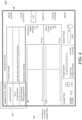
- the user may command playback of non-live medical device status information through the web pages 800 and 900 ( Figs. 8 and 9 ). For example, the user may click on an alert 804 ( Fig. 8 ) or 918 ( Fig.
- the media server 114 uses the network connectivity log 116 fields 1100 ( Fig. 11 ) to automatically ascertain which file, i.e., the media file 112 or one of the archive files 113, contains the desired medical device status information.
- the media server 114 calculates the index 1024 or 1026 ( Fig. 10 ), relative to the beginning or end of the appropriate file 1018, where the requested status information is stored.
- Fig. 12 contains a flowchart schematically illustrating a process 1200 for calculating the index 1024 ( Fig. 10 ).
- the process 1200 accepts two input parameters: a time of interest (Time) and a medical device identifier (Device ID), i.e., an identifier of one of the medical devices 102-106.
- the time of interest (Time) may be a time implicitly or explicitly specified by the user, such as by selecting a particular alert in an Alert Summary 804 or 918 ( Figs. 8 or 9 ), or by clicking the "back up 10 seconds" button 912.
- a duration of the computer network connection (the segment) is calculated by subtracting the Segment Connect Time from the Segment Disconnect Time, and the result of the calculation is stored in a third temporary variable (Segment Duration).
- the time of interest (Time) is compared to the Segment Connect Time and to the Segment Disconnect Time to ascertain whether the time of interest (Time) is between the Segment Connect Time and the Segment Disconnect Time, i.e., whether the time of interest (Time) occurs during the current segment (period of network connectivity).
- the time of interest (Time) is between the Segment Connect Time and the Segment Disconnect Time
- control passes to 1214.
- another temporary variable (Offset within Segment) is calculated by subtracting Segment Connect Time from the time of interest (Time). The Offset within Segment indicates how far into the current segment (period of network connectivity) the time of interest occurs.
- a graphic example of a hypothetical Offset within Segment value is shown at 1028 ( Fig. 10 ).
- a return value is calculated by adding the Offset within Segment to the Offset within Media File. This return value (Index) corresponds to the index 1024 exemplified in Fig. 10 . Control returns to the caller of the procedure 1200.
- the time of interest (Time) does not occur during the current segment (period of network connectivity).
- the time of interest (Time) is compared to the Segment Connect Time. If the time of interest (Time) is before, i.e., less than, the Segment Connect Time, the time of interest (Time) occurred before the next segment of network connectivity, i.e., during a gap in network connectivity. Consequently, the media or archive file 112 or 113 does not contain status information for the time of interest (Time). Control passes to 1222, where an error (Time not in Media/Archive File) is returned, and control returns to the caller of the procedure 1200.
- an error Time not in Media/Archive File
- a subsequent segment may include the time of interest (Time).
- the Offset within Media File is increased by the Segment Duration, shifting the Offset within Media File to the beginning of the next segment in the media or archive file. Control returns to the beginning of the loop, i.e., to 1204, where the next network connect event entry is fetched from the network connectivity log 116.
- a monitoring station 120-122 is displaying recent information, such as the "previous 5 hours" web page 900 ( Fig. 9 ), it may be more convenient to use an index 1026 ( Fig. 10 ) relative to the end of a media file 1018, rather than the index 1024 from the beginning of the media file 1018.
- index 1026 Fig. 10
- the end of the media file 1018 contains the most recent status information.
- a user is interested in the most recent status information, and the user interface controls 910-916 enable the user to back up or skip forward, relative to the displayed information.
- calculating the index relative to the end of the media file 1018, rather than relative to the beginning of the media file 1018 may be advantageous, at least in certain circumstances.
- the process 1200 may be easily modified to calculate the index relative to the end of the media file 1018.
- the Offset within Segment is calculated by subtracting the time of interest (Time) from the Segment Disconnect Time.
- the time of interest (Time) is compared to the Segment Disconnect Time. If the time of interest (Time) is greater than, i.e., later than, the Segment Disconnect Time, control passes to 1222, otherwise control passes to 1224.
- an end of the media file refers to either the beginning of the media file or the end opposite the beginning of the media file. In other words, an end of the media file refers to either end of the media file.
- the web server 118 sends a status request, including a time of interest, to the media server 114 ( Fig. 1 ).
- the media server 114 automatically ascertains which file, i.e., the media file 112 or one of the archive files 113, contains the desired medical device status information, and the media server 114 calculates the index 1024 or 1026 ( Fig. 10 ), relative to the beginning or end of the appropriate file 1018, where the requested status information is stored.
- the media server 114 uses the process 1200 of Fig. 12 to calculate the index 1024 or 1026.
- the media server 114 then fetches stored status information stored in the media file 112 or archive file 113, as the case may be, that begins at the calculated index.
- the media server 114 provides the fetched status information to the web server 118, and the web server 118 provides the status information to the appropriate client 120 or 122.
- the media server 114 is configured to receive a status request that includes a time at which requested status information was captured.
- the media server 114 is also configured to access the network connectivity log 116 and calculate the index 1024 ( Fig. 10 ), relative to the beginning or end of the media or archive file 1018, where the requested status information is stored, taking into account the occasional gaps 1010, 1011, etc., in computer network connectivity between the medical device 102-106 and the computer network 108, as represented in the network connectivity log 116.
- the media server 114 is also configured to request a portion of the stored media file 112 or archive file 113 beginning at the calculated index 1024.
- the media server 114 is further configured to provide the portion of the stored media file 112 or archive file 113 beginning at the calculated index 1024.
- the web server 118 displays pop-up message, exemplified by a hypothetical pop-up message 1300 in Fig. 13 , on one or more of the monitoring stations 120-122 when a new alert is raised.
- a web application executed in conjunction with the media server 114 and/or the web server 118 may create the pop-up message.
- the pop-up message may include a clickable link that includes a URL which, if invoked, transfers to a web page similar to the web page of Fig. 9 , as though the user clicked on the corresponding alert in region 918 or 804 ( Fig. 8 ).
- an outgoing e-mail server (SMTP server) 126 sends an e-mail message to one or more predefined e-mail addresses whenever an alert is raised.
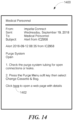
- Fig. 14 illustrates an exemplary hypothetical e-mail message 1400.
- the e-mail message 1400 may include information about the alert, as well as a link 1402 that includes a URL which, if invoked, opens a web page similar to the web page of Fig. 9 , as though the user clicked on the corresponding alert in region 918 or 804 ( Fig. 8 ).
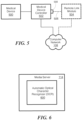
- the media server 114, web server 118 and data store 110 may be implemented by a processor executing instructions stored in a memory.
- the instructions may include instructions for implementing the process 1200 described with reference to Fig. 12 , as well as processes described with reference to Figs. 1 , 7-11 , 13 and 14 .
- the network connectivity log 116 may be implemented with a relational database and may include a front end (load balancer) that distributes access requests across multiple copies of the database to support a high volume of requests.
- the data store 110 may include a front end (load balancer) that distributes load across multiple copies of the media file 112 and/or the archive files 113.
- the web server 118 and/or the media server 114 may include respective front ends (load balancers) that distribute load across multiple copies of the web server 118 and/or the media server 114.
- one media file 112 stores status information from only one of the medical devices 102-106, i.e., each medical device has an associated media file 112. However, in other embodiments, one media file 112 stores status information from multiple medical devices 102-106. Similarly, one archive file 113 may service one or multiple medical devices 102-106.
- the term "and/or,” used in connection with a list of items means one or more of the items in the list, i.e., at least one of the items in the list, but not necessarily all the items in the list.
- the term "or,” used in connection with a list of items means one or more of the items in the list, i.e., at least one of the items in the list, but not necessarily all the items in the list. "Or" does not mean "exclusive or.”
- each block, module or combination thereof may be implemented as computer program instructions (such as software), hardware (such as combinatorial logic, Application Specific Integrated Circuits (ASICs), Field-Programmable Gate Arrays (FPGAs), processor or other hardware), firmware or combinations thereof.
- ASICs Application Specific Integrated Circuits
- FPGAs Field-Programmable Gate Arrays
- the media server 114, data store 110, web server 118 and/or network connectivity log 116, or portions thereof, may be implemented by one or more processors executing, or controlled by, instructions stored in a memory.
- processors may be a general purpose processor, such as a central processing unit (CPU), a graphic processing unit (GPU), digital signal processor (DSP), a special purpose processor, etc., as appropriate, or combination thereof.
- the memory may be random access memory (RAM), read-only memory (ROM), flash memory or any other memory, or combination thereof, suitable for storing control software or other instructions and data.
- Instructions defining the functions of the present invention may be delivered to a processor in many forms, including, but not limited to, information permanently stored on tangible non-transitory non-writable storage media (e.g., read-only memory devices within a computer, such as ROM, or devices readable by a computer I/O attachment, such as CD-ROM or DVD disks), information alterably stored on tangible non-transitory writable storage media (e.g., floppy disks, removable flash memory and hard drives) or information conveyed to a computer through a communication medium, including wired or wireless computer networks.
- RAM random access memory
- ROM read-only memory
- flash memory any other memory, or combination thereof, suitable for storing control software or other instructions and data.
- Instructions defining the functions of the present invention may be delivered to a processor in many forms, including
- a given embodiment may include only a second local variable and a third local variable.
Landscapes
- Engineering & Computer Science (AREA)
- Health & Medical Sciences (AREA)
- Computer Networks & Wireless Communication (AREA)
- Signal Processing (AREA)
- Biomedical Technology (AREA)
- General Health & Medical Sciences (AREA)
- Medical Informatics (AREA)
- Business, Economics & Management (AREA)
- General Business, Economics & Management (AREA)
- Primary Health Care (AREA)
- Epidemiology (AREA)
- Public Health (AREA)
- Theoretical Computer Science (AREA)
- Environmental & Geological Engineering (AREA)
- Physics & Mathematics (AREA)
- Multimedia (AREA)
- Data Mining & Analysis (AREA)
- Databases & Information Systems (AREA)
- General Engineering & Computer Science (AREA)
- General Physics & Mathematics (AREA)
- Software Systems (AREA)
- Computing Systems (AREA)
- Medical Treatment And Welfare Office Work (AREA)
- Measuring And Recording Apparatus For Diagnosis (AREA)
- Information Retrieval, Db Structures And Fs Structures Therefor (AREA)
- Data Exchanges In Wide-Area Networks (AREA)
Applications Claiming Priority (3)
| Application Number | Priority Date | Filing Date | Title |
|---|---|---|---|
| US16/137,053 US11120908B2 (en) | 2018-09-20 | 2018-09-20 | Data storage and retrieval system for non-contiguous medical device operational data |
| PCT/US2018/066483 WO2020060579A1 (en) | 2018-09-20 | 2018-12-19 | Data storage and retrieval system for non-contiguous medical device operational data |
| EP18834173.9A EP3853866B1 (de) | 2018-09-20 | 2018-12-19 | Datenspeicher- und -abrufsystem für nicht-zusammenhängende betriebsdaten einer medizinischen vorrichtung |
Related Parent Applications (1)
| Application Number | Title | Priority Date | Filing Date |
|---|---|---|---|
| EP18834173.9A Division EP3853866B1 (de) | 2018-09-20 | 2018-12-19 | Datenspeicher- und -abrufsystem für nicht-zusammenhängende betriebsdaten einer medizinischen vorrichtung |
Publications (2)
| Publication Number | Publication Date |
|---|---|
| EP4475513A2 true EP4475513A2 (de) | 2024-12-11 |
| EP4475513A3 EP4475513A3 (de) | 2025-03-12 |
Family
ID=65024058
Family Applications (2)
| Application Number | Title | Priority Date | Filing Date |
|---|---|---|---|
| EP24208984.5A Pending EP4475513A3 (de) | 2018-09-20 | 2018-12-19 | Datenspeicherungs- und -abrufsystem für betriebsdaten einer nicht benachbarten medizinischen vorrichtung |
| EP18834173.9A Active EP3853866B1 (de) | 2018-09-20 | 2018-12-19 | Datenspeicher- und -abrufsystem für nicht-zusammenhängende betriebsdaten einer medizinischen vorrichtung |
Family Applications After (1)
| Application Number | Title | Priority Date | Filing Date |
|---|---|---|---|
| EP18834173.9A Active EP3853866B1 (de) | 2018-09-20 | 2018-12-19 | Datenspeicher- und -abrufsystem für nicht-zusammenhängende betriebsdaten einer medizinischen vorrichtung |
Country Status (12)
| Country | Link |
|---|---|
| US (4) | US11120908B2 (de) |
| EP (2) | EP4475513A3 (de) |
| JP (2) | JP7561119B2 (de) |
| KR (2) | KR102659702B1 (de) |
| CN (2) | CN112771624B (de) |
| AU (1) | AU2018442000B2 (de) |
| CA (1) | CA3110461A1 (de) |
| DK (1) | DK3853866T3 (de) |
| ES (1) | ES3008884T3 (de) |
| IL (2) | IL318218A (de) |
| SG (1) | SG11202102177RA (de) |
| WO (1) | WO2020060579A1 (de) |
Families Citing this family (20)
| Publication number | Priority date | Publication date | Assignee | Title |
|---|---|---|---|---|
| DE102018208538A1 (de) | 2018-05-30 | 2019-12-05 | Kardion Gmbh | Intravasale Blutpumpe und Verfahren zur Herstellung von elektrischen Leiterbahnen |
| DE102018208945A1 (de) | 2018-06-06 | 2019-12-12 | Kardion Gmbh | Analysevorrichtung und Verfahren zum Analysieren einer Viskosität eines Fluids |
| DE102018208913A1 (de) | 2018-06-06 | 2019-12-12 | Kardion Gmbh | Verfahren zum Betreiben eines implantierten, ventrikulären Unterstützungssystems |
| DE102018208892A1 (de) | 2018-06-06 | 2019-12-12 | Kardion Gmbh | Sensorkopfvorrichtung für ein minimalinvasives Herzunterstützungssystem und Verfahren zum Herstellen einer Sensorkopfvorrichtung für ein Herzunterstützungssystem |
| DE102018208929A1 (de) | 2018-06-06 | 2019-12-12 | Kardion Gmbh | Verfahren zur Bestimmung einer Strömungsgeschwindigkeit eines durch ein implantiertes, vaskuläres Unterstützungssystem strömenden Fluids |
| DE102018208936A1 (de) | 2018-06-06 | 2019-12-12 | Kardion Gmbh | Bestimmvorrichtung und Verfahren zum Bestimmen einer Viskosität eines Fluids |
| DE102018208933A1 (de) | 2018-06-06 | 2019-12-12 | Kardion Gmbh | Verfahren zur Bestimmung einer Strömungsgeschwindigkeit eines durch ein implantiertes, vaskuläres Unterstützungssystem strömenden Fluids |
| DE102018208870A1 (de) | 2018-06-06 | 2019-12-12 | Kardion Gmbh | Verfahren zur Bestimmung eines Fluid-Volumenstroms durch ein implantiertes, vaskuläres Unterstützungssystem |
| DE102018208899A1 (de) | 2018-06-06 | 2019-12-12 | Kardion Gmbh | Verfahren zum Ermitteln der Schallgeschwindigkeit in einem Fluid im Bereich eines implantierten, vaskulären Unterstützungssystems |
| DE102018208879A1 (de) | 2018-06-06 | 2020-01-30 | Kardion Gmbh | Verfahren zur Bestimmung eines Fluid-Gesamtvolumenstroms im Bereich eines implantierten, vaskuläres Unterstützungssystems |
| DE102018208931A1 (de) | 2018-06-06 | 2019-12-12 | Kardion Gmbh | Vorrichtung zum Bestimmen eines Herzzeitvolumens für ein Herzunterstützungssystem, Herzunterstützungssystem und Verfahren zum Bestimmen eines Herzzeitvolumens |
| DE102018208862A1 (de) | 2018-06-06 | 2019-12-12 | Kardion Gmbh | Implantierbares, vaskuläres Unterstützungssystem |
| DE102018210076A1 (de) | 2018-06-21 | 2019-12-24 | Kardion Gmbh | Verfahren und Vorrichtung zum Erkennen eines Verschleißzustands eines Herzunterstützungssystems, Verfahren und Vorrichtung zum Betreiben eines Herzunterstützungssystems und Herzunterstützungssystem |
| DE102018213350A1 (de) | 2018-08-08 | 2020-02-13 | Kardion Gmbh | Vorrichtung und Verfahren zur Überwachung eines Gesundheitszustands des Patienten |
| CA3121850A1 (en) | 2019-01-03 | 2020-07-09 | Avive Solutions, Inc. | Defibrillator communications architecture |
| US10824898B2 (en) * | 2019-03-21 | 2020-11-03 | Abiomed, Inc. | Intelligent image segmentation prior to optical character recognition (OCR) |
| US11759110B2 (en) * | 2019-11-18 | 2023-09-19 | Koninklijke Philips N.V. | Camera view and screen scraping for information extraction from imaging scanner consoles |
| WO2021234920A1 (ja) * | 2020-05-21 | 2021-11-25 | 日本電信電話株式会社 | 生体情報解析システム、非一時的記憶媒体及び生体情報解析方法 |
| KR20240024080A (ko) | 2021-06-30 | 2024-02-23 | 아비오메드, 인크. | 심장 펌프 컨트롤러 데이터베이스와 병원 간의 인터페이스 |
| EP4723127A1 (de) * | 2024-10-04 | 2026-04-08 | B. Braun Melsungen AG | Vorrichtung zur überwachung eines verteilten alarmsystems |
Family Cites Families (23)
| Publication number | Priority date | Publication date | Assignee | Title |
|---|---|---|---|---|
| JP4561739B2 (ja) | 2004-04-08 | 2010-10-13 | Tdk株式会社 | 人工指紋付着方法及び人工指紋付着装置 |
| CA2564322A1 (en) * | 2004-04-30 | 2005-11-24 | Becton, Dickinson And Company | System and apparatus for medical error monitoring |
| US7454491B2 (en) * | 2004-10-14 | 2008-11-18 | International Business Machines Corporation | Method and system for efficiently transferring a self-defined non-contiguous message in a one-sided communication model |
| JP4765734B2 (ja) * | 2006-04-06 | 2011-09-07 | ソニー株式会社 | 情報処理装置、情報処理方法および情報処理プログラム、ならびに、表示制御装置 |
| JP4337849B2 (ja) | 2006-07-26 | 2009-09-30 | ソニー株式会社 | 記録装置、記録方法および記録プログラム、ならびに、撮像装置、撮像方法および撮像プログラム |
| JP2008287544A (ja) * | 2007-05-18 | 2008-11-27 | Panasonic Corp | 映像信号検索方法及び検索用2分木生成方法 |
| US7978062B2 (en) * | 2007-08-31 | 2011-07-12 | Cardiac Pacemakers, Inc. | Medical data transport over wireless life critical network |
| US9848058B2 (en) * | 2007-08-31 | 2017-12-19 | Cardiac Pacemakers, Inc. | Medical data transport over wireless life critical network employing dynamic communication link mapping |
| JP5513400B2 (ja) * | 2007-11-16 | 2014-06-04 | ソニック アイピー, インコーポレイテッド | マルチメディアファイルのための階層的で簡略なインデックス構造体 |
| RU2015123307A (ru) | 2008-03-26 | 2015-11-27 | Теранос, Инк. | Способ и система для прогнозирования клинических исходов |
| US8379851B2 (en) * | 2008-05-12 | 2013-02-19 | Microsoft Corporation | Optimized client side rate control and indexed file layout for streaming media |
| US8694600B2 (en) | 2011-03-01 | 2014-04-08 | Covidien Lp | Remote monitoring systems for monitoring medical devices via wireless communication networks |
| JP6011421B2 (ja) * | 2013-03-29 | 2016-10-19 | 富士通株式会社 | ストレージシステム、情報処理装置の制御プログラム及びストレージシステムの制御方法 |
| CN104301360B (zh) * | 2013-07-19 | 2019-03-12 | 阿里巴巴集团控股有限公司 | 一种日志数据记录的方法、日志服务器及系统 |
| US20150317751A1 (en) | 2014-05-01 | 2015-11-05 | retail2social LLC | Method of Posting Information Regarding Sales Transactions to Social Networks |
| JP6390196B2 (ja) * | 2014-06-19 | 2018-09-19 | 日本電気株式会社 | ストレージシステム、ストレージ方法、および、プログラム |
| US10433030B2 (en) | 2014-10-09 | 2019-10-01 | Thuuz, Inc. | Generating a customized highlight sequence depicting multiple events |
| CN104394380A (zh) * | 2014-12-09 | 2015-03-04 | 浙江省公众信息产业有限公司 | 视频监控管理系统以及视频监控录像的回放方法 |
| CN105306860B (zh) * | 2015-10-12 | 2019-01-22 | 东方网力科技股份有限公司 | 一种录像数据存储方法及装置 |
| AU2017216289A1 (en) | 2016-02-04 | 2018-09-27 | Nasdaq Technology Ab | Systems and methods for storing and sharing transactional data using distributed computer systems |
| JP6703892B2 (ja) * | 2016-05-10 | 2020-06-03 | 株式会社まもるーの | 情報処理装置及び情報処理プログラム |
| JP2017204248A (ja) * | 2016-05-13 | 2017-11-16 | 株式会社Z−Works | 介護支援システム |
| KR102401553B1 (ko) * | 2018-11-23 | 2022-05-24 | 주식회사 케이티앤지 | 궐련 및 궐련용 에어로졸 생성 장치 |
-
2018
- 2018-09-20 US US16/137,053 patent/US11120908B2/en active Active
- 2018-12-19 JP JP2021515562A patent/JP7561119B2/ja active Active
- 2018-12-19 WO PCT/US2018/066483 patent/WO2020060579A1/en not_active Ceased
- 2018-12-19 EP EP24208984.5A patent/EP4475513A3/de active Pending
- 2018-12-19 SG SG11202102177RA patent/SG11202102177RA/en unknown
- 2018-12-19 KR KR1020217011743A patent/KR102659702B1/ko active Active
- 2018-12-19 IL IL318218A patent/IL318218A/en unknown
- 2018-12-19 KR KR1020247012815A patent/KR20240055893A/ko active Pending
- 2018-12-19 DK DK18834173.9T patent/DK3853866T3/da active
- 2018-12-19 ES ES18834173T patent/ES3008884T3/es active Active
- 2018-12-19 IL IL281659A patent/IL281659B2/en unknown
- 2018-12-19 CN CN201880097860.8A patent/CN112771624B/zh active Active
- 2018-12-19 AU AU2018442000A patent/AU2018442000B2/en active Active
- 2018-12-19 CN CN202510107299.9A patent/CN120032855A/zh active Pending
- 2018-12-19 CA CA3110461A patent/CA3110461A1/en active Pending
- 2018-12-19 EP EP18834173.9A patent/EP3853866B1/de active Active
-
2021
- 2021-08-10 US US17/398,303 patent/US11676718B2/en active Active
-
2023
- 2023-04-28 US US18/140,673 patent/US12183459B2/en active Active
-
2024
- 2024-09-20 JP JP2024163478A patent/JP2025003445A/ja active Pending
- 2024-11-19 US US18/952,312 patent/US20250191749A1/en active Pending
Also Published As
| Publication number | Publication date |
|---|---|
| CN120032855A (zh) | 2025-05-23 |
| US11120908B2 (en) | 2021-09-14 |
| JP7561119B2 (ja) | 2024-10-03 |
| SG11202102177RA (en) | 2021-04-29 |
| EP3853866B1 (de) | 2024-11-06 |
| JP2022501722A (ja) | 2022-01-06 |
| EP4475513A3 (de) | 2025-03-12 |
| CN112771624A (zh) | 2021-05-07 |
| DK3853866T3 (da) | 2025-01-20 |
| ES3008884T3 (en) | 2025-03-25 |
| KR20210060594A (ko) | 2021-05-26 |
| CA3110461A1 (en) | 2020-03-26 |
| IL281659B2 (en) | 2025-06-01 |
| WO2020060579A1 (en) | 2020-03-26 |
| US20230386658A1 (en) | 2023-11-30 |
| US20250191749A1 (en) | 2025-06-12 |
| US20200098473A1 (en) | 2020-03-26 |
| US11676718B2 (en) | 2023-06-13 |
| US12183459B2 (en) | 2024-12-31 |
| KR20240055893A (ko) | 2024-04-29 |
| EP3853866A1 (de) | 2021-07-28 |
| IL318218A (en) | 2025-03-01 |
| US20220068474A1 (en) | 2022-03-03 |
| CN112771624B (zh) | 2025-02-25 |
| JP2025003445A (ja) | 2025-01-09 |
| IL281659A (en) | 2021-05-31 |
| IL281659B1 (en) | 2025-02-01 |
| KR102659702B1 (ko) | 2024-04-22 |
| AU2018442000B2 (en) | 2025-05-08 |
| AU2018442000A1 (en) | 2021-04-15 |
Similar Documents
| Publication | Publication Date | Title |
|---|---|---|
| US12183459B2 (en) | Data storage and retrieval system for non-contiguous medical device | |
| US11636880B2 (en) | System and method for event data collection and video alignment | |
| JP4612906B2 (ja) | シーケンスを送信する方法、装置、及びコンピュータ・プログラム | |
| US7792256B1 (en) | System and method for remotely monitoring, controlling, and managing devices at one or more premises | |
| CN102244774B (zh) | 具有直接数据库服务存储器的监视系统 | |
| GB2434461A (en) | System for monitoring the performance of the components of a software system by detecting the messages between the components and decoding them | |
| US12368903B1 (en) | Cloud storage backend | |
| US9191630B2 (en) | Dynamic layouts | |
| US20100033566A1 (en) | Digital logging vcr meta data based system construct | |
| HK40058194B (en) | Data storage and retrieval system for non-contiguous medical device operational data | |
| HK40058194A (en) | Data storage and retrieval system for non-contiguous medical device operational data | |
| US20140136733A1 (en) | System and method for the collaborative recording, uploading and sharing of multimedia content over a computer network |
Legal Events
| Date | Code | Title | Description |
|---|---|---|---|
| PUAI | Public reference made under article 153(3) epc to a published international application that has entered the european phase |
Free format text: ORIGINAL CODE: 0009012 |
|
| STAA | Information on the status of an ep patent application or granted ep patent |
Free format text: STATUS: THE APPLICATION HAS BEEN PUBLISHED |
|
| AC | Divisional application: reference to earlier application |
Ref document number: 3853866 Country of ref document: EP Kind code of ref document: P |
|
| AK | Designated contracting states |
Kind code of ref document: A2 Designated state(s): AL AT BE BG CH CY CZ DE DK EE ES FI FR GB GR HR HU IE IS IT LI LT LU LV MC MK MT NL NO PL PT RO RS SE SI SK SM TR |
|
| REG | Reference to a national code |
Ref country code: DE Ref legal event code: R079 Free format text: PREVIOUS MAIN CLASS: H04L0067060000 Ipc: G16H0010600000 |
|
| PUAL | Search report despatched |
Free format text: ORIGINAL CODE: 0009013 |
|
| P01 | Opt-out of the competence of the unified patent court (upc) registered |
Free format text: CASE NUMBER: APP_3336/2025 Effective date: 20250121 |
|
| AK | Designated contracting states |
Kind code of ref document: A3 Designated state(s): AL AT BE BG CH CY CZ DE DK EE ES FI FR GB GR HR HU IE IS IT LI LT LU LV MC MK MT NL NO PL PT RO RS SE SI SK SM TR |
|
| RIC1 | Information provided on ipc code assigned before grant |
Ipc: H04L 67/06 20220101ALI20250203BHEP Ipc: H04L 43/0811 20220101ALI20250203BHEP Ipc: G16H 40/67 20180101ALI20250203BHEP Ipc: G16H 10/60 20180101AFI20250203BHEP |
|
| STAA | Information on the status of an ep patent application or granted ep patent |
Free format text: STATUS: REQUEST FOR EXAMINATION WAS MADE |
|
| 17P | Request for examination filed |
Effective date: 20250912 |