EP4474530A1 - Électrode d'électrolyse et son procédé de production - Google Patents
Électrode d'électrolyse et son procédé de production Download PDFInfo
- Publication number
- EP4474530A1 EP4474530A1 EP23779377.3A EP23779377A EP4474530A1 EP 4474530 A1 EP4474530 A1 EP 4474530A1 EP 23779377 A EP23779377 A EP 23779377A EP 4474530 A1 EP4474530 A1 EP 4474530A1
- Authority
- EP
- European Patent Office
- Prior art keywords
- iridium
- nickel
- electrolysis electrode
- mass
- component
- Prior art date
- Legal status (The legal status is an assumption and is not a legal conclusion. Google has not performed a legal analysis and makes no representation as to the accuracy of the status listed.)
- Pending
Links
Images

Classifications
-
- B—PERFORMING OPERATIONS; TRANSPORTING
- B01—PHYSICAL OR CHEMICAL PROCESSES OR APPARATUS IN GENERAL
- B01J—CHEMICAL OR PHYSICAL PROCESSES, e.g. CATALYSIS OR COLLOID CHEMISTRY; THEIR RELEVANT APPARATUS
- B01J23/00—Catalysts comprising metals or metal oxides or hydroxides, not provided for in group B01J21/00
- B01J23/70—Catalysts comprising metals or metal oxides or hydroxides, not provided for in group B01J21/00 of the iron group metals or copper
- B01J23/89—Catalysts comprising metals or metal oxides or hydroxides, not provided for in group B01J21/00 of the iron group metals or copper combined with noble metals
-
- C—CHEMISTRY; METALLURGY
- C25—ELECTROLYTIC OR ELECTROPHORETIC PROCESSES; APPARATUS THEREFOR
- C25B—ELECTROLYTIC OR ELECTROPHORETIC PROCESSES FOR THE PRODUCTION OF COMPOUNDS OR NON-METALS; APPARATUS THEREFOR
- C25B11/00—Electrodes; Manufacture thereof not otherwise provided for
- C25B11/04—Electrodes; Manufacture thereof not otherwise provided for characterised by the material
- C25B11/042—Electrodes formed of a single material
- C25B11/046—Alloys
-
- B—PERFORMING OPERATIONS; TRANSPORTING
- B01—PHYSICAL OR CHEMICAL PROCESSES OR APPARATUS IN GENERAL
- B01J—CHEMICAL OR PHYSICAL PROCESSES, e.g. CATALYSIS OR COLLOID CHEMISTRY; THEIR RELEVANT APPARATUS
- B01J37/00—Processes, in general, for preparing catalysts; Processes, in general, for activation of catalysts
- B01J37/02—Impregnation, coating or precipitation
-
- B—PERFORMING OPERATIONS; TRANSPORTING
- B01—PHYSICAL OR CHEMICAL PROCESSES OR APPARATUS IN GENERAL
- B01J—CHEMICAL OR PHYSICAL PROCESSES, e.g. CATALYSIS OR COLLOID CHEMISTRY; THEIR RELEVANT APPARATUS
- B01J37/00—Processes, in general, for preparing catalysts; Processes, in general, for activation of catalysts
- B01J37/08—Heat treatment
-
- C—CHEMISTRY; METALLURGY
- C25—ELECTROLYTIC OR ELECTROPHORETIC PROCESSES; APPARATUS THEREFOR
- C25B—ELECTROLYTIC OR ELECTROPHORETIC PROCESSES FOR THE PRODUCTION OF COMPOUNDS OR NON-METALS; APPARATUS THEREFOR
- C25B1/00—Electrolytic production of inorganic compounds or non-metals
- C25B1/01—Products
- C25B1/02—Hydrogen or oxygen
- C25B1/04—Hydrogen or oxygen by electrolysis of water
-
- C—CHEMISTRY; METALLURGY
- C25—ELECTROLYTIC OR ELECTROPHORETIC PROCESSES; APPARATUS THEREFOR
- C25B—ELECTROLYTIC OR ELECTROPHORETIC PROCESSES FOR THE PRODUCTION OF COMPOUNDS OR NON-METALS; APPARATUS THEREFOR
- C25B11/00—Electrodes; Manufacture thereof not otherwise provided for
- C25B11/04—Electrodes; Manufacture thereof not otherwise provided for characterised by the material
- C25B11/051—Electrodes formed of electrocatalysts on a substrate or carrier
- C25B11/052—Electrodes comprising one or more electrocatalytic coatings on a substrate
-
- C—CHEMISTRY; METALLURGY
- C25—ELECTROLYTIC OR ELECTROPHORETIC PROCESSES; APPARATUS THEREFOR
- C25B—ELECTROLYTIC OR ELECTROPHORETIC PROCESSES FOR THE PRODUCTION OF COMPOUNDS OR NON-METALS; APPARATUS THEREFOR
- C25B11/00—Electrodes; Manufacture thereof not otherwise provided for
- C25B11/04—Electrodes; Manufacture thereof not otherwise provided for characterised by the material
- C25B11/051—Electrodes formed of electrocatalysts on a substrate or carrier
- C25B11/055—Electrodes formed of electrocatalysts on a substrate or carrier characterised by the substrate or carrier material
- C25B11/057—Electrodes formed of electrocatalysts on a substrate or carrier characterised by the substrate or carrier material consisting of a single element or compound
- C25B11/061—Metal or alloy
-
- C—CHEMISTRY; METALLURGY
- C25—ELECTROLYTIC OR ELECTROPHORETIC PROCESSES; APPARATUS THEREFOR
- C25B—ELECTROLYTIC OR ELECTROPHORETIC PROCESSES FOR THE PRODUCTION OF COMPOUNDS OR NON-METALS; APPARATUS THEREFOR
- C25B11/00—Electrodes; Manufacture thereof not otherwise provided for
- C25B11/04—Electrodes; Manufacture thereof not otherwise provided for characterised by the material
- C25B11/051—Electrodes formed of electrocatalysts on a substrate or carrier
- C25B11/073—Electrodes formed of electrocatalysts on a substrate or carrier characterised by the electrocatalyst material
- C25B11/091—Electrodes formed of electrocatalysts on a substrate or carrier characterised by the electrocatalyst material consisting of at least one catalytic element and at least one catalytic compound; consisting of two or more catalytic elements or catalytic compounds
- C25B11/093—Electrodes formed of electrocatalysts on a substrate or carrier characterised by the electrocatalyst material consisting of at least one catalytic element and at least one catalytic compound; consisting of two or more catalytic elements or catalytic compounds at least one noble metal or noble metal oxide and at least one non-noble metal oxide
-
- Y—GENERAL TAGGING OF NEW TECHNOLOGICAL DEVELOPMENTS; GENERAL TAGGING OF CROSS-SECTIONAL TECHNOLOGIES SPANNING OVER SEVERAL SECTIONS OF THE IPC; TECHNICAL SUBJECTS COVERED BY FORMER USPC CROSS-REFERENCE ART COLLECTIONS [XRACs] AND DIGESTS
- Y02—TECHNOLOGIES OR APPLICATIONS FOR MITIGATION OR ADAPTATION AGAINST CLIMATE CHANGE
- Y02E—REDUCTION OF GREENHOUSE GAS [GHG] EMISSIONS, RELATED TO ENERGY GENERATION, TRANSMISSION OR DISTRIBUTION
- Y02E60/00—Enabling technologies; Technologies with a potential or indirect contribution to GHG emissions mitigation
- Y02E60/30—Hydrogen technology
- Y02E60/36—Hydrogen production from non-carbon containing sources, e.g. by water electrolysis
Definitions
- the present invention relates to an electrolysis electrode and a method for producing an electrolysis electrode.
- Hydrogen is secondary energy which is suitable for storage and transportation and has small environmental load, and therefore a hydrogen energy system using hydrogen as an energy carrier has been attracting attention.
- hydrogen is mainly produced by steam reforming of fossil fuel, or the like, and from the viewpoint of problems of global warming and exhaustion of fossil fuel, an importance of alkaline water electrolysis using renewable energy as a power source has become increased.
- alkaline water electrolysis in which a high-concentration aqueous alkali solution is used for an electrolyte.
- solid polymer electrolyte water electrolysis in which a solid polymer electrolyte (SPE) membrane is used for an electrolyte.
- SPE solid polymer electrolyte
- the upper limit of the operation temperature is controlled to about 80 to about 90°C.
- the electrolysis performance has been improved to about 1.7 to about 1.9 V (efficiency 78 to 87%) at a current density of 0.3 to 0.4 Acm -2 by the development of constituent materials and various piping materials for an electrolytic cell, which are hightemperature resistant and resistant to a high-concentration aqueous alkali solution, and the development of a lowresistivity separator and an electrode which has an enlarged surface area and has a catalyst applied thereon.
- a nickel-based material which is stable in a high-concentration aqueous alkali solution is used as an alkaline water electrolysis anode, and it has been known that in the case of alkaline water electrolysis using a stable power source, a nickel-based anode has a life of several decades or longer.
- severe conditions, such as sudden start/shutdown and abrupt load fluctuation are frequent, and therefore deterioration in performance of the nickel-based anode has been problematic.
- platinum group metals platinum group metal oxides, valve metal oxides, iron group oxides, lanthanide group metal oxides, and the like have been utilized as a catalyst for an oxygen evolution anode (anode catalyst) which is used for alkaline water electrolysis.
- alloy-based anode catalysts using nickel as a base such as Ni-Co and Ni-Fe; nickel having an enlarged surface area; electrically conductive oxides (ceramic materials) including spinel-based anode catalysts, such as Co 3 O 4 and NiCo 2 O 4 , and perovskite-based anode catalysts, such as LaCoO 3 and LaNiO 3 ; noble metal oxides; oxides composed of a lanthanide group metal and a noble metal; and the like have also been known.
- an alkaline water electrolysis anode obtained by forming a catalyst layer containing a nickel-cobalt-based oxide, and an iridium oxide or a ruthenium oxide on the surface of a nickel substrate (Patent Literature 1).
- an alkaline water electrolysis anode obtained by forming a catalyst layer composed of a lithium-containing nickel oxide on the surface of a nickel substrate Patent Literature 2.
- the present invention has been completed in view of such problems of the conventional techniques, and an object of the present invention is to provide an electrolysis electrode having excellent catalytic activity such as low oxygen overpotential and including a catalyst having excellent stability such as reducing loss of a catalyst component such as iridium (Ir), and another object of the present invention is to provide a method for producing the electrolysis electrode.
- an object of the present invention is to provide an electrolysis electrode having excellent catalytic activity such as low oxygen overpotential and including a catalyst having excellent stability such as reducing loss of a catalyst component such as iridium (Ir), and another object of the present invention is to provide a method for producing the electrolysis electrode.
- an electrolysis electrode having excellent catalytic activity such as low oxygen overpotential and including a catalyst having excellent stability such as reducing loss of a catalyst component such as iridium (Ir), and a method for producing the electrolysis electrode can be provided.
- a catalyst having excellent stability such as reducing loss of a catalyst component such as iridium (Ir)
- a method for producing the electrolysis electrode can be provided.
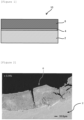
- FIG. 1 is a section view schematically showing one embodiment of an electrolysis electrode of the present invention.
- an electrolysis electrode 10 of the present embodiment includes an electrically conductive substrate 2 and a catalyst layer 6 formed on a surface of the electrically conductive substrate 2.
- details on the electrolysis electrode of the present invention will be described.
- the electrically conductive substrate 2 is an electric conductor that conducts electricity for electrolysis and is an element having a function as a carrier that carries the catalyst layer 6. At least a surface of the electrically conductive substrate 2 (the surface on which the catalyst layer 6 is formed) is formed with nickel or a nickel base alloy. That is, the whole of the electrically conductive substrate 2 may be formed with nickel or a nickel base alloy, or only the surface of the electrically conductive substrate 2 may be formed with nickel or a nickel base alloy. Specifically, the electrically conductive substrate 2 may be such that a coating of nickel or a nickel base alloy is formed on the surface of a metal material, such as iron, stainless steel, aluminum, or titanium, by plating or the like.
- a metal material such as iron, stainless steel, aluminum, or titanium
- the thickness of the electrically conductive substrate is preferably 0.05 to 5 mm.
- the shape of the electrically conductive substrate is preferably a shape having an opening for removing bubbles of oxygen, hydrogen, and the like to be produced.
- an expanded mesh or a porous expanded mesh can be used as the electrically conductive substrate.
- the aperture ratio of the electrically conductive substrate is preferably 10 to 95%.
- the catalyst layer 6 is a layer that is formed on the surface of the electrically conductive substrate 2 and has catalytic ability. As shown in Figure 1 , the catalyst layer 6 may be formed on the surface of the electrically conductive substrate 2 with a nickel oxide layer 4 interposed therebetween in order to protect the electrically conductive substrate 2. Th catalyst layer 6 contains a nickel cobalt spinel oxide (NiCo 2 O 4 ) and an iridium oxide. Therefore, the electrolysis electrode 10 of the present embodiment is useful as an alkaline water electrolysis electrode and is particularly suitable as an alkaline water electrolysis anode. The thickness, density, and the like of the catalyst layer are not particularly limited and can appropriately be set according to the application or the like of the electrode.
- the electrolysis electrode of the present embodiment is produced by a particular production method, which will be described later. It is inferred that the electrolysis electrode of the present embodiment produced by the particular production method is different from electrolysis electrodes produced by methods other than the particular production method in that the state and composition (for example, crystal state, crystal structure, and the types, compositions, and contents of trace elements) of the formed catalyst layers are different. However, it is extremely difficult or substantially impossible to check the differences by analyzing the state, composition, and the like as described above of the catalyst layers.
- One embodiment of a method for producing an electrolysis electrode of the present invention includes: a step (hereinafter, also referred to as “coating step”) of directly or indirectly coating a catalyst precursor composition containing a nickel component, a cobalt component, and an iridium component on a surface of an electrically conductive substrate; a step (hereinafter, also referred to as “thermal treatment step”) of obtaining a primary baked product by thermal treating the electrically conductive substrate coated with the catalyst precursor composition at 320 to 600°C; and a step (hereinafter, also referred to as "post-bake step)" of forming a catalyst layer containing a nickel cobalt spinel oxide and an iridium oxide directly or indirectly on the surface of the electrically conductive substrate by thermal treating the primary baked product at 350 to 600°C .
- the iridium component in the catalyst precursor composition is an iridium compound containing a carboxy group.
- the content of nickel (Ni) is 10 to 35% by mass
- the content of cobalt (Co) is 25 to 55% by mass
- the electrically conductive substrate is preferably subjected to a chemical etching treatment in advance for the purpose of removing contamination particles of a metal, an organic substance, and the like on the surface before carrying out the coating step.
- the consumption of the electrically conductive substrate by the chemical etching treatment is preferably set to about 30 g/m 2 or more and about 400 g/m 2 or less.
- the surface of the electrically conductive substrate is preferably subjected to a roughening treatment in advance for the purpose of enhancing the adhesion to an intermediate layer. Examples of the roughening treatment include a blast treatment in which a powder is sprayed; an etching treatment using an acid that can dissolve the substrate; and plasma spraying.
- the nickel oxide layer 4 may be formed on the surface of the electrically conductive substrate 2 in advance in order to protect the electrically conductive substrate 2.
- the nickel oxide layer 4 can be formed by, for example, baking the electrically conductive substrate 2 in the air at 450 to 550°C for 5 to 60 minutes.
- an intermediate layer may be formed on the electrically conductive substrate by coating a solution obtained by dissolving nickel carboxylate in a solvent, such as water, on the surface of the electrically conductive substrate and then subjecting the electrically conductive substrate coated with the solution to a thermal treatment at a temperature of 450°C or higher and 600°C or lower.
- the catalyst layer is formed on the electrically conductive substrate with the intermediate layer interposed therebetween.
- the catalyst precursor composition containing a nickel component, a cobalt component, and an iridium component is coated on the surface of the electrically conductive substrate directly, or indirectly with another layer, such as the above-described intermediate layer, interposed therebetween.
- the iridium component an iridium compound containing a carboxy group is used.
- the catalyst precursor composition that contains, as the iridium component, the iridium compound containing a carboxy group and employing a so-called pyrolysis method, it is made possible to form, directly on the electrically conductive substrate, a catalyst layer that gives a lower oxygen overpotential, reduces the loss of a catalyst component such as iridium (Ir) more, and is more excellent in stability than in the case where a catalyst precursor composition containing another iridium compound, such as, for example, iridium nitrate (Ir-nitrate) as the iridium component is used, or it is made possible to form such a catalyst layer indirectly on the electrically conductive substrate with an another layer, such as an intermediate layer, interposed between the catalyst layer and the electrically conductive substrate.
- a catalyst layer that gives a lower oxygen overpotential, reduces the loss of a catalyst component such as iridium (Ir) more, and is more excellent in stability than in the case where a catalyst precursor composition containing another irid
- iridium compound containing a carboxy group examples include an iridium hydroxyacetyl chloride complex (IrHAC), and iridium acetate (Ir-acetate).
- IrHAC iridium hydroxyacetyl chloride complex
- Ir-acetate iridium acetate
- at least any one of the iridium hydroxyacetyl chloride complex and iridium acetate is preferably used as the iridium compound.
- nickel component and the cobalt component any of inorganic acid salts and organic acid salts that can generate a nickel ion and a cobalt ion can be used.
- nickel nitrate is preferably used as the nickel component
- cobalt nitrate is preferably used as the cobalt component.
- the catalyst precursor composition is, for example, an aqueous solution containing a nickel component, a cobalt component, and an iridium component.
- the content of nickel (Ni) is 10 to 35% by mass, preferably 15 to 30% by mass.
- the content of cobalt (Co) is 25 to 55% by mass, preferably 30 to 55% by mass.
- the catalyst precursor composition wherein the contents of nickel (Ni), cobalt (Co), and iridium (Ir) are within the above-described ranges, it is made possible to form a catalyst layer that gives a lower oxygen overpotential, reduces the loss of a catalyst component such as iridium (Ir), and is more excellent in stability.
- the mass ratio ((Ni + Co)/Ir) of the total content of nickel (Ni) and cobalt (Co) to the content of iridium (Ir) is preferably 0.9 to 4.1, more preferably 0.9 to 3.5, particularly preferably 1.0 to 2.8.
- the method of coating the catalyst precursor composition on the surface of the electrically conductive substrate known methods, such as brush coating, roller coating, spin coating, and electrostatic coating, can be utilized. Subsequently, the electrically conductive substrate coated with the catalyst precursor composition is dried as necessary.
- the drying temperature is preferably set to a temperature where rapid vaporization of the solvent is avoided (for example, about 60 to about 80°C).
- the electrically conductive substrate coated with the catalyst precursor composition is subjected to a thermal treatment (baking) at 320 to 600°C, preferably 330 to 550°C, more preferably 340 to 520°C.
- a thermal treatment (baking) at 320 to 600°C, preferably 330 to 550°C, more preferably 340 to 520°C.
- the thermal treatment time may appropriately be set taking the reaction rate, the productivity, the oxidation resistance at the surface of the catalyst layer to be formed, and the like into consideration.
- the thickness of the catalyst layer to be formed can be controlled. Note that the coating and drying of the catalyst precursor composition may be repeated for every layer until the uppermost layer is formed, and thereafter the thermal treatment may be performed on the whole layers, or the coating of the catalyst precursor composition and the thermal treatment may be repeated for every layer until the uppermost layer is formed, and thereafter the thermal treatment may be performed on the whole layers.
- the method for producing an electrolysis electrode of the present embodiment preferably further includes a step (alkali treatment step) of bringing the primary baked product obtained in the above-described thermal treatment step into contact with an alkali component to treat the primary baked product.
- a step (alkali treatment step) of bringing the primary baked product obtained in the above-described thermal treatment step into contact with an alkali component to treat the primary baked product impurities and the like produced by the thermal treatment can effectively be removed, and it is made possible to form a catalyst layer that gives a lower oxygen overpotential and is more excellent in stability.
- the catalyst precursor composition containing an iridium hydroxyacetyl chloride complex (IrHAC) as the iridium component is used, an acid component produced from IrHAC is left in the primary baked product in some cases. Therefore, it is preferable to bring the primary baked product into contact with the alkali component to treat the primary baked product because the produced acid component can effectively be removed and it is made possible to form a catalyst layer that gives a lower oxygen
- Specific examples of the method for bringing the primary baked product into contact with the alkali component to treat the primary calcified product includes a method of immersing the primary baked product in an aqueous solution of the alkali component.
- alkali component alkali metal hydroxides, such as sodium hydroxide (NaOH) and potassium hydroxide (KOH), and the like can be used.
- concentration of the alkali component in the aqueous solution of the alkali component may appropriately be set within a range of, for example, 4 to 8% by mass.
- the temperature of the aqueous solution of the alkali component may appropriately be set within a range of, for example, 20 to 40°C.
- the time for immersing the primary baked product in the aqueous solution of the alkali component may appropriately be set within a range of, for example, 1 to 5 hours.
- the primary baked product is preferably rinsed and dried after the primary baked product is immersed in the aqueous solution of the alkali component.
- the primary baked product is subjected to a thermal treatment at 350 to 600°C, preferably 380 to 580°C, more preferably 400 to 560°C.
- the primary baked product is left standing to cool and then subjected to a thermal treatment (post-bake) again under a predetermined temperature condition, thereby the catalyst layer containing a nickel cobalt spinel oxide and an iridium oxide can be formed on the surface of the electrically conductive substrate, and thus the intended electrolysis electrode can be obtained.
- this post-bake is not carried out (if the primary baked product as produced is used as an electrolysis electrode), iridium is likely to be lost from the catalyst layer due to repeats of electrolysis, so that a catalyst layer excellent in stability cannot be formed.
- the electrolysis electrode of the present embodiment can be used as, for example, not only an electrolysis anode but also an electrolysis cathode. Further, the electrolysis electrode of the present embodiment can also be used as an alkaline water electrolysis anode as well as an alkaline water electrolysis cathode. That is, the use of the electrolysis electrode of the present embodiment makes it possible to form an electrolytic cell, such as an alkaline water electrolysis cell.
- a substrate made of a material that is bearable to alkaline water electrolysis and a catalyst having a small cathode overpotential are preferably selected and used.
- a nickel substrate, or a cathode substrate obtained by forming an active cathode by coating the nickel substrate can be used.
- Examples of the shape of the cathode substrate include an expanded mesh and a porous expanded mesh in addition to a plate shape.
- the cathode material includes porous nickel having a large surface area, a Ni-Mo-based material, and the like.
- the cathode material includes Raney nickel-based materials, such as Ni-Al, Ni-Zn, and Ni-Co-Zn; sulfidebased materials, such as Ni-S; and hydrogen absorbing alloy-based materials, such as Ti 2 Ni; and the like.
- the catalyst preferably has characteristics of low hydrogen overpotential, high stability against short-circuit, high poisoning resistance, and the like.
- metals such as platinum, palladium, ruthenium, and iridium, and oxides thereof are preferable.
- asbestos, nonwoven fabric, an ion-exchange membrane, a porous polymer membrane, and a composite membrane of an inorganic substance and an organic polymer, and the like can be used.
- an ion-permeable separator such that organic fiber cloth is incorporated in a mixture of a hydrophilic inorganic material, such as a calcium phosphate compound and calcium fluoride, and an organic binding material, such as polysulfone, polypropylene, and polyvinylidene fluoride, can be used.
- an ion-permeable separator such that stretched organic fiber cloth is incorporated in a filmforming mixture of an inorganic hydrophilic substance in the form of particles, such as oxides and hydroxides of antimony and zirconium, and an organic binder, such as a fluorocarbon polymer, polysulfone, polypropylene, polyvinyl chloride, and polyvinyl butyral, can be used.
- an organic binder such as a fluorocarbon polymer, polysulfone, polypropylene, polyvinyl chloride, and polyvinyl butyral
- the use of the alkaline water electrolysis cell using the electrolysis electrode of the present embodiment as a constituent element makes it possible to electrolyze a high-concentration aqueous alkali solution.
- the aqueous alkali solution that is used as the electrolyte is preferably an aqueous solution of an alkali metal hydroxide, such as sodium hydroxide (NaOH) or potassium hydroxide (KOH).
- the concentration of the aqueous alkali solution is preferably 1.5 to 40% by mass.
- the concentration of the aqueous alkali solution is preferably 15 to 40% by mass because the electric conductivity is large and the electric power consumption can be suppressed.
- the concentration of the aqueous alkali solution is preferably 20 to 30% by mass.
- a nickel expanded mesh was subjected to a blast treatment with alumina particles and then immersed in 20% by mass hydrochloric acid to subject the nickel expanded mesh to an etching treatment near the boiling point for 3 minutes. Subsequently, the nickel expanded mesh was baked at 500°C for 30 minutes to obtain an anode substrate having a nickel oxide (NiOx) layer formed on the surface thereof.
- NiOx nickel oxide
- the obtained coating solution was coated on the surface of the nickel oxide layer of the above-described anode substrate such that the amount of metals per coating was 1.5 g/m 2 .
- pyrolysis was conducted, in which a thermal treatment (baking) was performed at 350°C for 10 minutes in an air-circulating electric furnace.
- the treatment from the coating of the coating solution to the pyrolysis was repeated 4 times to obtain a primary baked product.
- the primary baked product thus obtained was subjected to an alkali treatment of immersing the primary baked product for 3 hours in a 6% aqueous sodium hydroxide solution whose temperature was controlled to 30°C.
- the primary baked product after the alkali treatment was rinsed with pure water and dried with an air blow gun, then placed in an air-circulating electric furnace, and subjected to post-bake of performing a thermal treatment at 500°C for 60 minutes.
- an alkaline water electrolysis anode electrolysis electrode
- the alkaline water electrolysis anode was such that a catalyst layer containing a nickel cobalt spinel oxide and an iridium oxide was formed on the surface of the anode substrate.
- the amount of metals in the formed catalyst layer was 6 g/m 2 .
- An alkaline water electrolysis anode (electrolysis electrode) was obtained in the same manner as in Example 1, described above, except that the conditions shown in Table 1 were employed. Note that in Comparative Examples 1 to 5, the primary baked product as produced was used as the anode. SEM images of sections of the electrolysis electrodes produced in Example 3 and Comparative Example 1 were shown in Figures 2 and 3 , respectively.
- Table 1 Production of electrolysis electrode Catalyst precursor composition Baking temperature (°C) Alkali treatment Post-bake Compound Composition (%) of metal elements Temperature (°C) Time (min) Ni Co Ir 1 Ni(NO 3 ) 2 ⁇ 6H 2 O 27 53 20 350 Performed 500 60 Co(NO 3 ) 2 ⁇ 6H 2 O IrHAC 2 Ni(NO 3 ) 2 ⁇ 6H 2 O 25 50 25 350 Performed 500 60 Co(NO 3 ) 2 ⁇ 6H 2 O IrHAC Examples 3 Ni(NO 3 ) 2 ⁇ 6H 2 O 22 44 33 350 Performed 500 60 Co(NO 3 ) 2 ⁇ 6H 2 O IrHAC 4 Ni(NO 3 ) 2 ⁇ 6H 2 O 17 33 50 350 Performed 500 60 Co(NO 3 ) 2 ⁇ 6H 2 O IrHAC 5 Ni(NO 3 ) 2 ⁇ 6H 2 O 22 44 33 350 Not performed 500 60 Co(NO 3 ) 2 ⁇ 6H 2 O Ir-acetate 1 Ni(NO 3
- the oxygen overpotential (mV) was measured for the produced electrolysis electrodes using a 30% aqueous potassium hydroxide solution under conditions of 80°C and a current density of 10 kA/m 2 . The results are shown in Table 2.
- the fluorescence X-ray intensity of iridium (Ir) in the catalyst layer was measured for the electrolysis electrodes before and after the measurement of the oxygen overpotential using a fluorescence X-ray analyzer. Then, the residual amount (%) of iridium (Ir) based on the amount of iridium (Ir) before the measurement of the oxygen overpotential was calculated from the ratio of the measured fluorescence X-ray intensities of iridium (Ir). The results are shown in Table 2.
- Nickel acetate tetrahydrate (Ni(CH 3 COO) 2 ⁇ 4H 2 O) was dissolved in pure water to obtain an aqueous solution in which the concentration of nickel acetate was 0.57 mol/L.
- a nickel expanded mesh was subjected to a blast treatment with alumina particles and then immersed in 20% by mass hydrochloric acid to subject the nickel expanded mesh to an etching treatment near the boiling point for 3 minutes, and thus an anode substrate was obtained.
- the aqueous solution of nickel acetate was coated on the surface of the obtained anode substrate with a brush and then dried at 60°C for 10 minutes. Subsequently, the anode substrate was subjected to a thermal treatment at 500°C for 10 minutes in the air atmosphere.
- the oxygen overpotential (current density: 10 kA/m 2 ) of the obtained electrolysis electrode was 240 mV.
- the residual amount of iridium (Ir) in the catalyst layer of the electrolysis electrode after the measurement of the oxygen overpotential was 100%, and therefore it was ascertained that iridium (Ir) was substantially free from being consumed, which was the same as in the electrolysis electrodes of Examples 1 to 5.
- the electrolysis electrode of the present invention is suitable as an alkaline water electrolysis anode for example.
Landscapes
- Chemical & Material Sciences (AREA)
- Engineering & Computer Science (AREA)
- Chemical Kinetics & Catalysis (AREA)
- Materials Engineering (AREA)
- Organic Chemistry (AREA)
- Electrochemistry (AREA)
- Metallurgy (AREA)
- Physics & Mathematics (AREA)
- Thermal Sciences (AREA)
- Inorganic Chemistry (AREA)
- Electrodes For Compound Or Non-Metal Manufacture (AREA)
Applications Claiming Priority (2)
| Application Number | Priority Date | Filing Date | Title |
|---|---|---|---|
| JP2022059464 | 2022-03-31 | ||
| PCT/JP2023/009039 WO2023189350A1 (fr) | 2022-03-31 | 2023-03-09 | Électrode d'électrolyse et son procédé de production |
Publications (2)
| Publication Number | Publication Date |
|---|---|
| EP4474530A1 true EP4474530A1 (fr) | 2024-12-11 |
| EP4474530A4 EP4474530A4 (fr) | 2025-09-10 |
Family
ID=88200724
Family Applications (1)
| Application Number | Title | Priority Date | Filing Date |
|---|---|---|---|
| EP23779377.3A Pending EP4474530A4 (fr) | 2022-03-31 | 2023-03-09 | Électrode d'électrolyse et son procédé de production |
Country Status (8)
| Country | Link |
|---|---|
| US (1) | US20250382713A1 (fr) |
| EP (1) | EP4474530A4 (fr) |
| JP (1) | JP7621553B2 (fr) |
| KR (1) | KR20240113932A (fr) |
| CN (1) | CN118900938B (fr) |
| AU (1) | AU2023245260B2 (fr) |
| CA (1) | CA3250850A1 (fr) |
| WO (1) | WO2023189350A1 (fr) |
Family Cites Families (5)
| Publication number | Priority date | Publication date | Assignee | Title |
|---|---|---|---|---|
| JP5686455B2 (ja) * | 2011-12-26 | 2015-03-18 | ペルメレック電極株式会社 | 耐高負荷用酸素発生用陽極の製造方法 |
| JP6615682B2 (ja) | 2016-04-12 | 2019-12-04 | デノラ・ペルメレック株式会社 | アルカリ水電解用陽極及びアルカリ水電解用陽極の製造方法 |
| CN109689937B (zh) | 2016-09-09 | 2020-03-03 | 迪诺拉永久电极股份有限公司 | 碱性水电解用阳极的制造方法和碱性水电解用阳极 |
| ES2934123T3 (es) * | 2018-03-07 | 2023-02-17 | De Nora Permelec Ltd | Electrodo de electrólisis y método para la fabricación del mismo |
| IT202000020587A1 (it) * | 2020-08-28 | 2022-02-28 | Industrie De Nora Spa | Electrode with enhanced shutdown tolerance- elettrodo con tolleranza agli arresti migliorata |
-
2023
- 2023-03-09 EP EP23779377.3A patent/EP4474530A4/fr active Pending
- 2023-03-09 JP JP2024511634A patent/JP7621553B2/ja active Active
- 2023-03-09 US US18/839,123 patent/US20250382713A1/en active Pending
- 2023-03-09 KR KR1020247021143A patent/KR20240113932A/ko active Pending
- 2023-03-09 CA CA3250850A patent/CA3250850A1/fr active Pending
- 2023-03-09 CN CN202380025482.3A patent/CN118900938B/zh active Active
- 2023-03-09 WO PCT/JP2023/009039 patent/WO2023189350A1/fr not_active Ceased
- 2023-03-09 AU AU2023245260A patent/AU2023245260B2/en active Active
Also Published As
| Publication number | Publication date |
|---|---|
| US20250382713A1 (en) | 2025-12-18 |
| WO2023189350A1 (fr) | 2023-10-05 |
| AU2023245260B2 (en) | 2024-10-24 |
| CN118900938A (zh) | 2024-11-05 |
| CA3250850A1 (fr) | 2025-07-10 |
| JPWO2023189350A1 (fr) | 2023-10-05 |
| EP4474530A4 (fr) | 2025-09-10 |
| KR20240113932A (ko) | 2024-07-23 |
| AU2023245260A1 (en) | 2024-08-22 |
| CN118900938B (zh) | 2025-06-10 |
| JP7621553B2 (ja) | 2025-01-24 |
Similar Documents
| Publication | Publication Date | Title |
|---|---|---|
| EP3763849B1 (fr) | Électrode d'électrolyse et son procédé de fabrication | |
| US11390958B2 (en) | Alkaline water electrolysis method and alkaline water electrolysis anode | |
| EP3511443B1 (fr) | Procede de fabrication d'une anode pour l'électrolyse d'eau alcaline et anode pour l'électrolyse d'eau alcaline | |
| EP4230772B1 (fr) | Anode pour électrolyse alcaline de l'eau et son procédé de production | |
| EP4190944B1 (fr) | Anode pour électrolyse d'eau alcaline et son procédé de production | |
| EP4204608A1 (fr) | Électrode pour dégagement de gaz dans des procédés électrolytiques | |
| EP4474530A1 (fr) | Électrode d'électrolyse et son procédé de production | |
| TWI858988B (zh) | 電解用陽極及其製造方法 | |
| CA3186983C (fr) | Anode pour l'electrolyse a l'eau alcaline et methode de production connexe |
Legal Events
| Date | Code | Title | Description |
|---|---|---|---|
| STAA | Information on the status of an ep patent application or granted ep patent |
Free format text: STATUS: THE INTERNATIONAL PUBLICATION HAS BEEN MADE |
|
| PUAI | Public reference made under article 153(3) epc to a published international application that has entered the european phase |
Free format text: ORIGINAL CODE: 0009012 |
|
| STAA | Information on the status of an ep patent application or granted ep patent |
Free format text: STATUS: REQUEST FOR EXAMINATION WAS MADE |
|
| 17P | Request for examination filed |
Effective date: 20240902 |
|
| AK | Designated contracting states |
Kind code of ref document: A1 Designated state(s): AL AT BE BG CH CY CZ DE DK EE ES FI FR GB GR HR HU IE IS IT LI LT LU LV MC ME MK MT NL NO PL PT RO RS SE SI SK SM TR |
|
| DAV | Request for validation of the european patent (deleted) | ||
| DAX | Request for extension of the european patent (deleted) | ||
| A4 | Supplementary search report drawn up and despatched |
Effective date: 20250812 |
|
| RIC1 | Information provided on ipc code assigned before grant |
Ipc: C25B 11/093 20210101AFI20250806BHEP Ipc: B01J 23/89 20060101ALI20250806BHEP Ipc: B01J 37/02 20060101ALI20250806BHEP Ipc: B01J 37/025 20060101ALI20250806BHEP Ipc: B01J 37/08 20060101ALI20250806BHEP Ipc: C25B 1/04 20210101ALI20250806BHEP Ipc: C25B 9/00 20210101ALI20250806BHEP Ipc: C25B 11/052 20210101ALI20250806BHEP Ipc: C25B 11/061 20210101ALI20250806BHEP |