EP4470764A1 - Gerollter papierschlauch - Google Patents
Gerollter papierschlauch Download PDFInfo
- Publication number
- EP4470764A1 EP4470764A1 EP23176886.2A EP23176886A EP4470764A1 EP 4470764 A1 EP4470764 A1 EP 4470764A1 EP 23176886 A EP23176886 A EP 23176886A EP 4470764 A1 EP4470764 A1 EP 4470764A1
- Authority
- EP
- European Patent Office
- Prior art keywords
- paper tube
- tube
- paper
- coating
- rolled paper
- Prior art date
- Legal status (The legal status is an assumption and is not a legal conclusion. Google has not performed a legal analysis and makes no representation as to the accuracy of the status listed.)
- Pending
Links
Images

Classifications
-
- B—PERFORMING OPERATIONS; TRANSPORTING
- B31—MAKING ARTICLES OF PAPER, CARDBOARD OR MATERIAL WORKED IN A MANNER ANALOGOUS TO PAPER; WORKING PAPER, CARDBOARD OR MATERIAL WORKED IN A MANNER ANALOGOUS TO PAPER
- B31B—MAKING CONTAINERS OF PAPER, CARDBOARD OR MATERIAL WORKED IN A MANNER ANALOGOUS TO PAPER
- B31B70/00—Making flexible containers, e.g. envelopes or bags
- B31B70/02—Feeding or positioning sheets, blanks or webs
- B31B70/10—Feeding or positioning webs
-
- B—PERFORMING OPERATIONS; TRANSPORTING
- B31—MAKING ARTICLES OF PAPER, CARDBOARD OR MATERIAL WORKED IN A MANNER ANALOGOUS TO PAPER; WORKING PAPER, CARDBOARD OR MATERIAL WORKED IN A MANNER ANALOGOUS TO PAPER
- B31B—MAKING CONTAINERS OF PAPER, CARDBOARD OR MATERIAL WORKED IN A MANNER ANALOGOUS TO PAPER
- B31B70/00—Making flexible containers, e.g. envelopes or bags
- B31B70/14—Cutting, e.g. perforating, punching, slitting or trimming
- B31B70/16—Cutting webs
-
- B—PERFORMING OPERATIONS; TRANSPORTING
- B31—MAKING ARTICLES OF PAPER, CARDBOARD OR MATERIAL WORKED IN A MANNER ANALOGOUS TO PAPER; WORKING PAPER, CARDBOARD OR MATERIAL WORKED IN A MANNER ANALOGOUS TO PAPER
- B31B—MAKING CONTAINERS OF PAPER, CARDBOARD OR MATERIAL WORKED IN A MANNER ANALOGOUS TO PAPER
- B31B70/00—Making flexible containers, e.g. envelopes or bags
- B31B70/26—Folding sheets, blanks or webs
- B31B70/262—Folding sheets, blanks or webs involving longitudinally folding, i.e. along a line parallel to the direction of movement
-
- B—PERFORMING OPERATIONS; TRANSPORTING
- B31—MAKING ARTICLES OF PAPER, CARDBOARD OR MATERIAL WORKED IN A MANNER ANALOGOUS TO PAPER; WORKING PAPER, CARDBOARD OR MATERIAL WORKED IN A MANNER ANALOGOUS TO PAPER
- B31B—MAKING CONTAINERS OF PAPER, CARDBOARD OR MATERIAL WORKED IN A MANNER ANALOGOUS TO PAPER
- B31B70/00—Making flexible containers, e.g. envelopes or bags
- B31B70/60—Uniting opposed surfaces or edges; Taping
- B31B70/64—Uniting opposed surfaces or edges; Taping by applying heat or pressure
- B31B70/644—Making seals parallel to the direction of movement, i.e. longitudinal sealing
-
- B—PERFORMING OPERATIONS; TRANSPORTING
- B31—MAKING ARTICLES OF PAPER, CARDBOARD OR MATERIAL WORKED IN A MANNER ANALOGOUS TO PAPER; WORKING PAPER, CARDBOARD OR MATERIAL WORKED IN A MANNER ANALOGOUS TO PAPER
- B31B—MAKING CONTAINERS OF PAPER, CARDBOARD OR MATERIAL WORKED IN A MANNER ANALOGOUS TO PAPER
- B31B70/00—Making flexible containers, e.g. envelopes or bags
- B31B70/60—Uniting opposed surfaces or edges; Taping
- B31B70/64—Uniting opposed surfaces or edges; Taping by applying heat or pressure
- B31B70/645—Making seals transversally to the direction of movement
-
- B—PERFORMING OPERATIONS; TRANSPORTING
- B65—CONVEYING; PACKING; STORING; HANDLING THIN OR FILAMENTARY MATERIAL
- B65B—MACHINES, APPARATUS OR DEVICES FOR, OR METHODS OF, PACKAGING ARTICLES OR MATERIALS; UNPACKING
- B65B43/00—Forming, feeding, opening or setting-up containers or receptacles in association with packaging
- B65B43/04—Forming flat bags from webs
-
- B—PERFORMING OPERATIONS; TRANSPORTING
- B65—CONVEYING; PACKING; STORING; HANDLING THIN OR FILAMENTARY MATERIAL
- B65B—MACHINES, APPARATUS OR DEVICES FOR, OR METHODS OF, PACKAGING ARTICLES OR MATERIALS; UNPACKING
- B65B5/00—Packaging individual articles in containers or receptacles, e.g. bags, sacks, boxes, cartons, cans, jars
- B65B5/02—Machines characterised by incorporation of means for making the containers or receptacles
- B65B5/022—Machines characterised by incorporation of means for making the containers or receptacles for making bags
-
- B—PERFORMING OPERATIONS; TRANSPORTING
- B65—CONVEYING; PACKING; STORING; HANDLING THIN OR FILAMENTARY MATERIAL
- B65B—MACHINES, APPARATUS OR DEVICES FOR, OR METHODS OF, PACKAGING ARTICLES OR MATERIALS; UNPACKING
- B65B5/00—Packaging individual articles in containers or receptacles, e.g. bags, sacks, boxes, cartons, cans, jars
- B65B5/04—Packaging single articles
- B65B5/045—Packaging single articles in bags
-
- B—PERFORMING OPERATIONS; TRANSPORTING
- B31—MAKING ARTICLES OF PAPER, CARDBOARD OR MATERIAL WORKED IN A MANNER ANALOGOUS TO PAPER; WORKING PAPER, CARDBOARD OR MATERIAL WORKED IN A MANNER ANALOGOUS TO PAPER
- B31B—MAKING CONTAINERS OF PAPER, CARDBOARD OR MATERIAL WORKED IN A MANNER ANALOGOUS TO PAPER
- B31B2155/00—Flexible containers made from webs
- B31B2155/001—Flexible containers made from webs by folding webs longitudinally
- B31B2155/0012—Flexible containers made from webs by folding webs longitudinally having their openings facing in the direction of movement
-
- B—PERFORMING OPERATIONS; TRANSPORTING
- B31—MAKING ARTICLES OF PAPER, CARDBOARD OR MATERIAL WORKED IN A MANNER ANALOGOUS TO PAPER; WORKING PAPER, CARDBOARD OR MATERIAL WORKED IN A MANNER ANALOGOUS TO PAPER
- B31B—MAKING CONTAINERS OF PAPER, CARDBOARD OR MATERIAL WORKED IN A MANNER ANALOGOUS TO PAPER
- B31B2155/00—Flexible containers made from webs
- B31B2155/003—Flexible containers made from webs starting from tubular webs
-
- B—PERFORMING OPERATIONS; TRANSPORTING
- B31—MAKING ARTICLES OF PAPER, CARDBOARD OR MATERIAL WORKED IN A MANNER ANALOGOUS TO PAPER; WORKING PAPER, CARDBOARD OR MATERIAL WORKED IN A MANNER ANALOGOUS TO PAPER
- B31B—MAKING CONTAINERS OF PAPER, CARDBOARD OR MATERIAL WORKED IN A MANNER ANALOGOUS TO PAPER
- B31B2160/00—Shape of flexible containers
- B31B2160/10—Shape of flexible containers rectangular and flat, i.e. without structural provision for thickness of contents
Definitions
- the present disclosure relates to the field of packaging.
- Plastics is still the predominant packaging material in the world. However, due to the enormous problems of plastic waste and the concern about carbon dioxide emissions, there is a great demand for alternative packaging solutions.
- Paper is a very attractive alternative to plastics since it is easily recyclable, biodegradable and formed from a renewable material.
- properties of paper are very different from those of plastics, which means that replacing plastics with paper typically requires new package designs and/or significant investments in new machinery. The unwillingness to adopt new designs and make the necessary investments has hampered the transformation to eco-friendly packaging.
- the present inventors have found that the plastic material used to package products like pillows and duvets can be replaced with paper if a rolled paper tube is employed.
- the inventors first formed a tube from a flat paper material and then, after flattening the tube, rolled it around a core.
- the rolled paper tube obtained thereby could be used in existing packaging machinery after only minor modifications of the unwinding arrangement. This is a significant achievement since it enables replacement of plastic packaging material with paper without a substantial investment in new machinery.
- an inside of the paper of the tube is preferably coated with a sealing layer, such as a heat-sealable layer.
- a sealing layer such as a heat-sealable layer.
- sealing techniques that do not require a sealing layer, such as gluing, ultrasonic sealing (see e.g. US9399330 B2 ) and pressure sealing (e.g. using the pressure seal module from HDG-Verpackungsmaschinen).
- the paper of the rolled paper tube advantageously has a strain-at-break in the machine direction (i.e. the longitudinal direction of the tube) of 3.0%-6.9%, such as 3.2%-6.0%.
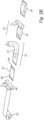
- the tube forming is preferably achieved with a lap seal, which is significantly stronger than a fin seal. Further, a lap seal results in a thinner structure than a folded fin seal (see Fig. 1 ), which means that a lap seal results in more even rolls and that a longer tube (i.e. more packaging material) fits on a roll of a given diameter. Uneven rolls are less stable and more difficult to handle.
- the overlap of the lap seal may be in the range of 20-50 mm.
- a lap seal still results in a portion of a flattened tube being three layers tick, whereas the rest of the flattened tube is two layers thick.
- the rolling of the tube is preferably oscillated.
- the present disclosure also provides a method of forming a pillow bag containing a product, said method comprising the steps of:
- the rolled paper tube described above is advantageously used in this method.
- the present disclosure further provides a coated paper that is specifically developed for the packaging application discussed above.
- This coated paper comprises a kraft paper substrate, a pre-coating and a heat-sealable coating provided on the pre-coating, wherein:
- a rolled paper tube As a first aspect of the present disclosure, there is provided a rolled paper tube.
- the rolled paper tube is formed by rolling in the longitudinal direction of the tube.
- the paper tube is flattened to facilitate rolling.
- the rolled paper tube preferably comprises a lap seal.
- the paper of the rolled paper tube is sealed to itself by this lap seal.
- the lap seal may be obtained by applying glue.
- heat-sealing may be used to obtain the lap seal.
- the paper is coated with a heat-sealable layer (discussed below).
- the tube may be gusseted or non-gusseted.
- the rolling of the tube is oscillated, which stabilizes the roll. This stabilizing effect is particularly advantageous in case of a non-gusseted tube.
- Benefits of a gusseted tube are that thicker packages can be obtained and that the width of the roll can be reduced. Gussets also have a stabilizing effect. Hence a gusseted tube is typically not oscillated.
- the depth of a gusset of a gusseted tube is typically in the range of 30-130 cm.
- the rolled paper tube is typically wound around a core. Accordingly, the present disclosure also provides a product comprising the rolled paper tube and a core, wherein the paper tube is wound around a core.
- the core is typically pipe-shaped. However, it could also be cylinder-shaped for example.
- the pipe-shaped core is preferably a paperboard tube.
- the core suitably has a diameter of 50-100 mm, such as 60-90 mm.
- the rolled paper tube is typically a roll having a width of 170-800 mm, such as 185-720 mm.
- the exact width depends on the width of the packaging machine and the package size.
- the diameter of the roll is typically in the range of 300 to 2000 mm, such as 450 to 1900 mm. A larger diameter is advantageous since it fits a longer tube and hence facilitates longer periods of operation without interruption for roll changes.
- the space available for the roll is however typically limited, which sets an upper limit for the diameter.
- the length of the paper tube is preferably at least 800 m, such as at least 1000 m. As discussed above, the upper limit for the length is typically decided by the space available in the machine for the roll.
- the paper tube typically has a circumference of 300-1500 mm, such as 370-1440 mm.
- the circumference depends to the width of the packaging machine and the package size. If the width of the packaging machine is limited, gussets may enable a greater circumference.
- the paper of the rolled paper tube preferably has a strain-at-break in the machine direction (MD) of 3.0%-6.9%, more preferably 3.2%-6.0%.
- MD machine direction
- the strain-at-break in the MD is 3.5%-5.0%.
- strain-at-break is measured according to ISO 1924-3:2005.
- the paper may (in particular when it is coated with a sealing layer) have a bending resistance index of 85-130 Nm 6 /kg 3 , preferably 95-120 Nm 6 /kg 3 , in the MD and/or 55-85 Nm 6 /kg 3 , preferably 59-82 Nm 6 /kg 3 , in the cross direction (CD).
- bending resistance is measured according to ISO 2493-1:2010 using a bending angle of 15° and a test span length of 10 mm.
- the paper of the rolled paper tube may (in particular when it is coated with a sealing layer) have a tensile energy absorption (TEA) index of 1.5-2.9 J/g in the MD and/or 2.5-3.5 J/g in the CD.
- TEA index in the MD is 1.7-2.5 J/g.
- TEA is measured according to ISO 1924-3:2005.
- the grammage of the paper of the tube is typically in the range of 40-110 g/m 2 , preferably 70-100 g/m 2 .
- the grammage of the paper of the tube is typically in the sage of 50-125 g/m 2 , preferably 85-115 g/m 2 .
- grammage is measured according to ISO 536:2019.
- an inside of the paper of the tube is preferably coated with a sealing layer, such as a heat-sealable layer.
- the sealing layer may be provided on a pre-coating layer.
- the pre-coating layer typically comprises at least 78% by dry weight of inorganic pigment, such as 80% by dry weight of inorganic pigment.
- the pigment of the pre-coating advantageously comprises calcium carbonate pigment and/or clay pigment.
- the base paper on which the sealing layer is coated is preferably calendered.
- the sealing layer typically comprises a polymeric binder.
- the polymeric binder is preferably an ethylene acrylic acid-based (EAA-based).
- EAA-based polymeric binder may be an ethylene (meth)acrylic acid copolymer (EAA/EMAA), an ethylene-acrylic acid-methacrylic acid terpolymer (EAAMAA) or a mixture thereof.
- the polymeric binder may amount to at least 51% of the dry weight of the heat-sealable layer, such as 51%-85% of the dry weight of the heat-sealable layer. Such proportion of polymeric binder is particularly preferred when the sealing layer is a heat-sealable layer.
- the sealing layer typically comprises pigment, preferably talc and/or calcium carbonate pigment.
- Pigment may for example amount to 15%-45%, such as 20%-40%, such as 25%-35%, of the dry weight of the sealing layer.
- the polymeric binder and the pigment typically amount to at least 90%, such as at least 95% of the dry weight of the sealing layer.
- Fig. 2A is simplified illustration of the principal steps of a method of forming a rolled paper tube 25 according to the first aspect.
- This method starts by unwinding paper 20 from a paper roll 21. After unwinding, the paper 20 is tubed 22 and lap-sealed. The lap-sealing is preferably heat-sealing. Accordingly, the paper of the tube is preferably coated with a heat-sealable layer on the side facing the interior of the tube. The paper tube is then flattened 23. Finally, the flattened tube is rolled around a core 24 to obtain the rolled paper tube 25.
- the pillow bag formed according to the second aspect is preferably containing a product. Embodiments of such a product are discussed below in connection with the third aspect.
- a method of forming a pillow bag containing a product is particularly advantageous in case of a compressible product, such as a pillow, a duvet or insulation.
- the method of the third aspect comprises the steps of:
- the product is preferably compressed when inserted into the bag.
- the method of the third aspect is preferably initiated by providing a rolled paper tube according to the first aspect and then unwinding the paper tube from such a roll.
- the cross-sealings of the method are preferably achieved by heat-sealing.
- the paper tube used in the method is preferably formed from a paper coated with a heat-sealable layer, as described herein.
- Fig. 2B is a simplified illustration of an embodiment of the method of the third aspect, in which a rolled paper tube 25 formed according to fig. 2A is used.
- Fig. 2B shows unwinding of the paper tube from the rolled paper tube 25 followed by cutting and cross-sealing 26 the paper tube to form a bag 27 having a sealed end portion 28 and a non-sealed end portion 29.
- the non-sealed end portion 29 is then opened and the bag 27 is filled 30 with a product to obtain a filled bag 32.
- the opened non-sealed end portion 29 of the bag 27 may be arranged on a pipe 31 through which the product is delivered into the bag 27, e.g. by means of compressed air.
- the pipe 31 is curved for illustrative purposes. In practice, it may however be preferred to use a straight pipe to facilitate the delivery of the product.
- the non-sealed end portion of the filled bag 32 is then cross-sealed 33 to form the pillow bag 34 containing the product.
- ME-306 from Merello Packaging Machines (Spain). This machine is designed to pack pillows and quilts in polyethylene bags, but it has surprisingly been shown that it can be operated with rolled paper tubes according to the present disclosure after a simple modification of the unwinding arrangement.
- a coated paper comprising a kraft paper substrate, a pre-coating and a heat-sealable coating provided on the pre-coating.
- This coated paper is particularly advantageous in the tube of the first aspect, the use of the second aspect and the method of the third aspect.
- the paper substrate of the fourth aspect is a kraft paper having a grammage of 70-100 g/m 2 .
- the kraft paper substrate may for example be formed from a pulp comprising at least 80% by dry weight of virgin softwood pulp.
- the pre-coating of the fourth aspect comprises binder and pigment.
- Pigment amounts to at least 78% of the dry weight of the pre-coating, such as at least 80% of the dry weight of the pre-coating. In one embodiment, pigment amounts to 81%-87% of the dry weight of the pre-coating.
- the binder of the pre-coating is typically a polymeric binder, such as starch, a styrene-butadiene copolymer, a styrene/acrylate copolymer or another acrylic polymer.
- the coat weight of the pre-coating is preferably 5.0-17 g/m 2 , such as 6.0-15 g/m 2 , such as 6.0-12 g/m 2 .
- the heat-sealable coating of the fourth aspect comprises
- b) amounts to 15%-45%, such as 20%-40%, such as 25%-35%, of the dry weight of the heat-sealable coating.
- a) and b) together preferably amount to at least 90%, such as at least 95 %, of the dry weight of the heat-sealable coating.
- the coat weight of the heat-sealable coating is preferably 2.5-10 g/m 2 , such as 3.0-8.0 g/m 2 , such as 3.5-7.5 g/m 2 .
- the combined coat weight of the pre-coating and the heat-sealable coating is preferably 10-19 g/m 2 , such as 11-18 g/m 2 .
- the coated paper of the fourth aspect has a strain-at-break in the machine (MD) direction of 3.0%-6.9%, such as 3.2-6.0 %.
- the strain-at-break value in the MD is in the range of 3.5%-5.0%.
- the TEA index in the MD of the coated paper may be 1.5-2.9 J/g, such as 1.7-2.5 J/g.
- the bending resistance index in the MD of the coated paper is typically in the range of 85-130 Nm 6 /kg 3 , preferably 95-120 Nm 6 /kg3.
- the bending resistance index in the CD of the coated paper is typically in the range of 55-85 Nm 6 /kg 3 , preferably 59-82 Nm 6 /kg 3 .
- the tear index of the coated paper may be in the range of 9.5-13.5 mNm 2 /g in the MD and/or in the range of 10.5-14.5 mNm 2 /g in the CD. In the present disclosure, the tear index is measured according to ISO 1974:2012.
- the paper of the tube is a coated paper according to the fourth aspect.
- a non-calendered kraft paper formed from bleached virgin softwood pulp was provided.
- a Clupak unit had been used to obtain the desired strain-at-break value.
- the grammage of the paper was about 80 g/m 2 .
- the paper was coated with of a pre-coating composition comprising (by dry weight) 100 parts of CaCO 3 pigment (Hydrocarb ® 60 from OMYA), 19 parts of styrene butadiene latex (from Trinseo) and 0.62 parts of CMC rheology modifier (Finnfix 10 from Nouryon) to form a pre-coating layer.
- CaCO 3 pigment Hydrocarb ® 60 from OMYA
- styrene butadiene latex from Trinseo
- CMC rheology modifier Feinnfix 10 from Nouryon
- the coat weight of the pre-coating layer was 8 g/m 2 .
- the pre-coated paper substrate was then coated with a top coating composition comprising EAA-based polymeric binder and talc pigment in a 70:30 dry weight ratio to form a heat-sealable layer.
- the top coat composition further comprised 0.45% by dry weight of rheology modifier (Rheocoat 66 from Arkema) and a minor amount of a tenside.
- the coat weight of the heat-sealable layer was 6 g/m 2 .
- the back side of the paper was coated with 1 g/m 2 of starch.
- Typical properties the resulting coated paper is shown in table 1 below. Table 1.
- Table 1 Typical properties of the coated paper.
- CS means coated side.
- BS means back/uncoated side.
- Property Unit Value Method Grammage g/m 2 95 ISO 536 Thickness ⁇ m 115 ISO 534
- Tensile strength kN/m MD 6.9 ISO 1924-3 kN/m CD 4.5
- Strain-at-break % MD 4.5 ISO 1924-3 % CD 9.0 TEA J/m 2 MD 190 ISO 1924-3 J/m 2 CD 280 TEA Index J/g MD 2.0 ISO 1924-3 J/g CD 2.9 TEA index geometric J/g 2.4 Tear strength mN MD 895 ISO 1974 mN CD 1020 Tear index mNm 2 /g MD 9.4 ISO 1974 mNm 2 /g CD 10.7 Brightness % 83 ISO 2470 Opacity
- a roll of the coated paper was produced.
- the roll had a width of 450 mm and a diameter of 800 mm.
- a tube was then formed from the roll of the coated paper in a Windmöller & Hölscher POLYTEX machine. In the tubing, a lap seal was formed by applying glue. The overlap was 30 mm.
- the rolled paper tube was then used in a packaging machine (ME-306 from Merello Packaging Machines (Spain)), in which the unwinding arrangement had been modified. Pillow bags containing a compressible product were successfully produced in the machine.
Landscapes
- Engineering & Computer Science (AREA)
- Mechanical Engineering (AREA)
- Wrappers (AREA)
Priority Applications (4)
| Application Number | Priority Date | Filing Date | Title |
|---|---|---|---|
| EP23176886.2A EP4470764A1 (de) | 2023-06-02 | 2023-06-02 | Gerollter papierschlauch |
| EP25197144.6A EP4772447A2 (de) | 2023-06-02 | 2023-06-02 | Gerollter papierschlauch |
| PCT/EP2024/064789 WO2024246135A1 (en) | 2023-06-02 | 2024-05-29 | Method of forming a pillow bag using a rolled paper tube |
| EP24730647.5A EP4719757A1 (de) | 2023-06-02 | 2024-05-29 | Verfahren zur herstellung eines kissenbeutels mit einem gerollten papierschlauch |
Applications Claiming Priority (1)
| Application Number | Priority Date | Filing Date | Title |
|---|---|---|---|
| EP23176886.2A EP4470764A1 (de) | 2023-06-02 | 2023-06-02 | Gerollter papierschlauch |
Related Child Applications (1)
| Application Number | Title | Priority Date | Filing Date |
|---|---|---|---|
| EP25197144.6A Division EP4772447A2 (de) | 2023-06-02 | 2023-06-02 | Gerollter papierschlauch |
Publications (1)
| Publication Number | Publication Date |
|---|---|
| EP4470764A1 true EP4470764A1 (de) | 2024-12-04 |
Family
ID=86688726
Family Applications (3)
| Application Number | Title | Priority Date | Filing Date |
|---|---|---|---|
| EP23176886.2A Pending EP4470764A1 (de) | 2023-06-02 | 2023-06-02 | Gerollter papierschlauch |
| EP25197144.6A Pending EP4772447A2 (de) | 2023-06-02 | 2023-06-02 | Gerollter papierschlauch |
| EP24730647.5A Pending EP4719757A1 (de) | 2023-06-02 | 2024-05-29 | Verfahren zur herstellung eines kissenbeutels mit einem gerollten papierschlauch |
Family Applications After (2)
| Application Number | Title | Priority Date | Filing Date |
|---|---|---|---|
| EP25197144.6A Pending EP4772447A2 (de) | 2023-06-02 | 2023-06-02 | Gerollter papierschlauch |
| EP24730647.5A Pending EP4719757A1 (de) | 2023-06-02 | 2024-05-29 | Verfahren zur herstellung eines kissenbeutels mit einem gerollten papierschlauch |
Country Status (2)
| Country | Link |
|---|---|
| EP (3) | EP4470764A1 (de) |
| WO (1) | WO2024246135A1 (de) |
Citations (5)
| Publication number | Priority date | Publication date | Assignee | Title |
|---|---|---|---|---|
| US5814382A (en) * | 1994-07-22 | 1998-09-29 | American Packaging Corporation | Bag and method of making the same |
| US20030141405A1 (en) * | 2002-01-29 | 2003-07-31 | Keel Donald Wayne | Spiral winder wrinkle remover |
| US20060113421A1 (en) * | 2004-11-30 | 2006-06-01 | Stanford Products Llc | Method and apparatus for forming a roll of material |
| DE102014206792A1 (de) * | 2014-04-08 | 2015-10-08 | Windmöller & Hölscher Kg | Packmittel sowie Verfahren und Vorrichtung zur Herstellung eines Packmittels |
| DE102019213476A1 (de) * | 2019-09-05 | 2021-03-11 | Windmöller & Hölscher Kg | Kreuzbodensack aus beschichtetem Papier sowie Verfahren zur Herstellung eines Kreuzbodensacks |
Family Cites Families (3)
| Publication number | Priority date | Publication date | Assignee | Title |
|---|---|---|---|---|
| US2643496A (en) * | 1947-03-15 | 1953-06-30 | William S Cloud | Enclosing articles in tubular wrappers |
| DE102013225743A1 (de) | 2013-12-12 | 2015-06-18 | Robert Bosch Gmbh | Utraschallfügeverfahren und Ultraschallfügevorrichtung |
| US11603226B2 (en) * | 2020-09-13 | 2023-03-14 | Westrock Shared Services, Llc | Pack to pouch systems |
-
2023
- 2023-06-02 EP EP23176886.2A patent/EP4470764A1/de active Pending
- 2023-06-02 EP EP25197144.6A patent/EP4772447A2/de active Pending
-
2024
- 2024-05-29 WO PCT/EP2024/064789 patent/WO2024246135A1/en not_active Ceased
- 2024-05-29 EP EP24730647.5A patent/EP4719757A1/de active Pending
Patent Citations (5)
| Publication number | Priority date | Publication date | Assignee | Title |
|---|---|---|---|---|
| US5814382A (en) * | 1994-07-22 | 1998-09-29 | American Packaging Corporation | Bag and method of making the same |
| US20030141405A1 (en) * | 2002-01-29 | 2003-07-31 | Keel Donald Wayne | Spiral winder wrinkle remover |
| US20060113421A1 (en) * | 2004-11-30 | 2006-06-01 | Stanford Products Llc | Method and apparatus for forming a roll of material |
| DE102014206792A1 (de) * | 2014-04-08 | 2015-10-08 | Windmöller & Hölscher Kg | Packmittel sowie Verfahren und Vorrichtung zur Herstellung eines Packmittels |
| DE102019213476A1 (de) * | 2019-09-05 | 2021-03-11 | Windmöller & Hölscher Kg | Kreuzbodensack aus beschichtetem Papier sowie Verfahren zur Herstellung eines Kreuzbodensacks |
Also Published As
| Publication number | Publication date |
|---|---|
| EP4772447A2 (de) | 2026-07-08 |
| EP4719757A1 (de) | 2026-04-08 |
| WO2024246135A1 (en) | 2024-12-05 |
Similar Documents
| Publication | Publication Date | Title |
|---|---|---|
| ES2974244T3 (es) | Uso de un sustrato de papel de alta densidad, el sustrato de alta densidad revestido y un material de envasado estratificado y recipiente de envasado que lo comprende | |
| RU2721850C1 (ru) | Слоистый упаковочный материал, упаковочные контейнеры, изготовленные из него, и способ изготовления слоистого материала | |
| RU2721834C1 (ru) | Слоистый упаковочный материал, упаковочные контейнеры, изготовленные из него, и способ изготовления слоистого материала | |
| ES2926482T3 (es) | Material de envasado laminado, recipientes de envasado fabricados a partir del mismo | |
| ES3009543T3 (en) | Laminated packaging material and packaging container comprising a barrier-coated cellulose-based substrate | |
| CN120035702A (zh) | 纸基材的用途、经阻隔物涂覆的纸基材、包含该基材的层压包装材料及包装容器 | |
| JP7698105B2 (ja) | ヒートシール紙及び包装材 | |
| CN103958198A (zh) | 用于包装容器的包装层合材料以及由该包装层合材料制成的包装容器 | |
| CN118541521A (zh) | 经阻隔涂覆的纤维素基基材 | |
| JP7406452B2 (ja) | 紙製品用包装体 | |
| JP7406401B2 (ja) | 紙製品用包装体 | |
| AU2021350425A9 (en) | Paper product for flow wrapping | |
| ES3009542T3 (en) | Barrier-coated cellulose-based substrate for laminated packaging material | |
| JP7481826B2 (ja) | 包装体 | |
| JP7470509B2 (ja) | 紙製品用包装体 | |
| EP4719757A1 (de) | Verfahren zur herstellung eines kissenbeutels mit einem gerollten papierschlauch | |
| JP2008280063A (ja) | 包装材料 | |
| JP7436190B2 (ja) | 紙製品用包装体 | |
| EP4640421A1 (de) | Ultraschallversiegelung von beschichtetem papier oder beschichteter pappe | |
| EP4653190A1 (de) | Mehrschichtiges verpackungsmaterial und daraus hergestellte verpackungsbehälter | |
| EP4481112A1 (de) | Ultraschallversiegelung von papier oder pappe | |
| JP7392244B1 (ja) | ヒートシール紙、および包装体 | |
| WO2025133300A1 (en) | Paperboard-based container | |
| JP7481827B2 (ja) | 包装体 | |
| JP2024013309A (ja) | ヒートシール紙、および包装体 |
Legal Events
| Date | Code | Title | Description |
|---|---|---|---|
| PUAI | Public reference made under article 153(3) epc to a published international application that has entered the european phase |
Free format text: ORIGINAL CODE: 0009012 |
|
| STAA | Information on the status of an ep patent application or granted ep patent |
Free format text: STATUS: REQUEST FOR EXAMINATION WAS MADE |
|
| 17P | Request for examination filed |
Effective date: 20241028 |
|
| AK | Designated contracting states |
Kind code of ref document: A1 Designated state(s): AL AT BE BG CH CY CZ DE DK EE ES FI FR GB GR HR HU IE IS IT LI LT LU LV MC ME MK MT NL NO PL PT RO RS SE SI SK SM TR |
|
| STAA | Information on the status of an ep patent application or granted ep patent |
Free format text: STATUS: EXAMINATION IS IN PROGRESS |
|
| 17Q | First examination report despatched |
Effective date: 20250506 |