EP4466035B1 - Biokompatibles und bioabsorbierbares verbundmaterial zur vollständigen absorption in vivo bei kontakt mit menschlichem oder tierischem gewebe und verfahren zur herstellung dieses verbundmaterials - Google Patents
Biokompatibles und bioabsorbierbares verbundmaterial zur vollständigen absorption in vivo bei kontakt mit menschlichem oder tierischem gewebe und verfahren zur herstellung dieses verbundmaterials Download PDFInfo
- Publication number
- EP4466035B1 EP4466035B1 EP23718370.2A EP23718370A EP4466035B1 EP 4466035 B1 EP4466035 B1 EP 4466035B1 EP 23718370 A EP23718370 A EP 23718370A EP 4466035 B1 EP4466035 B1 EP 4466035B1
- Authority
- EP
- European Patent Office
- Prior art keywords
- powder
- zno
- biocompatible
- matrix composite
- metal matrix
- Prior art date
- Legal status (The legal status is an assumption and is not a legal conclusion. Google has not performed a legal analysis and makes no representation as to the accuracy of the status listed.)
- Active
Links
Images


Classifications
-
- A—HUMAN NECESSITIES
- A61—MEDICAL OR VETERINARY SCIENCE; HYGIENE
- A61L—METHODS OR APPARATUS FOR STERILISING MATERIALS OR OBJECTS IN GENERAL; DISINFECTION, STERILISATION OR DEODORISATION OF AIR; CHEMICAL ASPECTS OF BANDAGES, DRESSINGS, ABSORBENT PADS OR SURGICAL ARTICLES; MATERIALS FOR BANDAGES, DRESSINGS, ABSORBENT PADS OR SURGICAL ARTICLES
- A61L27/00—Materials for grafts or prostheses or for coating grafts or prostheses
- A61L27/02—Inorganic materials
- A61L27/04—Metals or alloys
- A61L27/047—Other specific metals or alloys not covered by A61L27/042 - A61L27/045 or A61L27/06
-
- A—HUMAN NECESSITIES
- A61—MEDICAL OR VETERINARY SCIENCE; HYGIENE
- A61L—METHODS OR APPARATUS FOR STERILISING MATERIALS OR OBJECTS IN GENERAL; DISINFECTION, STERILISATION OR DEODORISATION OF AIR; CHEMICAL ASPECTS OF BANDAGES, DRESSINGS, ABSORBENT PADS OR SURGICAL ARTICLES; MATERIALS FOR BANDAGES, DRESSINGS, ABSORBENT PADS OR SURGICAL ARTICLES
- A61L31/00—Materials for other surgical articles, e.g. stents, stent-grafts, shunts, surgical drapes, guide wires, materials for adhesion prevention, occluding devices, surgical gloves, tissue fixation devices
- A61L31/02—Inorganic materials
- A61L31/022—Metals or alloys
-
- A—HUMAN NECESSITIES
- A61—MEDICAL OR VETERINARY SCIENCE; HYGIENE
- A61L—METHODS OR APPARATUS FOR STERILISING MATERIALS OR OBJECTS IN GENERAL; DISINFECTION, STERILISATION OR DEODORISATION OF AIR; CHEMICAL ASPECTS OF BANDAGES, DRESSINGS, ABSORBENT PADS OR SURGICAL ARTICLES; MATERIALS FOR BANDAGES, DRESSINGS, ABSORBENT PADS OR SURGICAL ARTICLES
- A61L31/00—Materials for other surgical articles, e.g. stents, stent-grafts, shunts, surgical drapes, guide wires, materials for adhesion prevention, occluding devices, surgical gloves, tissue fixation devices
- A61L31/14—Materials characterised by their function or physical properties, e.g. injectable or lubricating compositions, shape-memory materials, surface modified materials
- A61L31/148—Materials at least partially resorbable by the body
-
- B—PERFORMING OPERATIONS; TRANSPORTING
- B22—CASTING; POWDER METALLURGY
- B22F—WORKING METALLIC POWDER; MANUFACTURE OF ARTICLES FROM METALLIC POWDER; MAKING METALLIC POWDER; APPARATUS OR DEVICES SPECIALLY ADAPTED FOR METALLIC POWDER
- B22F1/00—Metallic powder; Treatment of metallic powder, e.g. to facilitate working or to improve properties
- B22F1/05—Metallic powder characterised by the size or surface area of the particles
- B22F1/052—Metallic powder characterised by the size or surface area of the particles characterised by a mixture of particles of different sizes or by the particle size distribution
-
- B—PERFORMING OPERATIONS; TRANSPORTING
- B22—CASTING; POWDER METALLURGY
- B22F—WORKING METALLIC POWDER; MANUFACTURE OF ARTICLES FROM METALLIC POWDER; MAKING METALLIC POWDER; APPARATUS OR DEVICES SPECIALLY ADAPTED FOR METALLIC POWDER
- B22F3/00—Manufacture of workpieces or articles from metallic powder characterised by the manner of compacting or sintering; Apparatus specially adapted therefor ; Presses and furnaces
- B22F3/20—Manufacture of workpieces or articles from metallic powder characterised by the manner of compacting or sintering; Apparatus specially adapted therefor ; Presses and furnaces by extruding
-
- C—CHEMISTRY; METALLURGY
- C22—METALLURGY; FERROUS OR NON-FERROUS ALLOYS; TREATMENT OF ALLOYS OR NON-FERROUS METALS
- C22C—ALLOYS
- C22C1/00—Making non-ferrous alloys
- C22C1/04—Making non-ferrous alloys by powder metallurgy
- C22C1/0483—Alloys based on the low melting point metals Zn, Pb, Sn, Cd, In or Ga
-
- C—CHEMISTRY; METALLURGY
- C22—METALLURGY; FERROUS OR NON-FERROUS ALLOYS; TREATMENT OF ALLOYS OR NON-FERROUS METALS
- C22C—ALLOYS
- C22C1/00—Making non-ferrous alloys
- C22C1/10—Alloys containing non-metals
-
- C—CHEMISTRY; METALLURGY
- C22—METALLURGY; FERROUS OR NON-FERROUS ALLOYS; TREATMENT OF ALLOYS OR NON-FERROUS METALS
- C22C—ALLOYS
- C22C18/00—Alloys based on zinc
-
- C—CHEMISTRY; METALLURGY
- C22—METALLURGY; FERROUS OR NON-FERROUS ALLOYS; TREATMENT OF ALLOYS OR NON-FERROUS METALS
- C22C—ALLOYS
- C22C32/00—Non-ferrous alloys containing at least 5% by weight but less than 50% by weight of oxides, carbides, borides, nitrides, silicides or other metal compounds, e.g. oxynitrides, sulfides, whether added as such or formed in situ
- C22C32/001—Non-ferrous alloys containing at least 5% by weight but less than 50% by weight of oxides, carbides, borides, nitrides, silicides or other metal compounds, e.g. oxynitrides, sulfides, whether added as such or formed in situ with only oxides
- C22C32/0015—Non-ferrous alloys containing at least 5% by weight but less than 50% by weight of oxides, carbides, borides, nitrides, silicides or other metal compounds, e.g. oxynitrides, sulfides, whether added as such or formed in situ with only oxides with only single oxides as main non-metallic constituents
- C22C32/0042—Matrix based on low melting metals, Pb, Sn, In, Zn, Cd or alloys thereof
-
- B—PERFORMING OPERATIONS; TRANSPORTING
- B22—CASTING; POWDER METALLURGY
- B22F—WORKING METALLIC POWDER; MANUFACTURE OF ARTICLES FROM METALLIC POWDER; MAKING METALLIC POWDER; APPARATUS OR DEVICES SPECIALLY ADAPTED FOR METALLIC POWDER
- B22F3/00—Manufacture of workpieces or articles from metallic powder characterised by the manner of compacting or sintering; Apparatus specially adapted therefor ; Presses and furnaces
- B22F3/24—After-treatment of workpieces or articles
- B22F2003/247—Removing material: carving, cleaning, grinding, hobbing, honing, lapping, polishing, milling, shaving, skiving, turning the surface
-
- C—CHEMISTRY; METALLURGY
- C22—METALLURGY; FERROUS OR NON-FERROUS ALLOYS; TREATMENT OF ALLOYS OR NON-FERROUS METALS
- C22C—ALLOYS
- C22C1/00—Making non-ferrous alloys
- C22C1/04—Making non-ferrous alloys by powder metallurgy
- C22C1/0433—Nickel- or cobalt-based alloys
- C22C1/0441—Alloys based on intermetallic compounds of the type rare earth - Co, Ni
-
- C—CHEMISTRY; METALLURGY
- C22—METALLURGY; FERROUS OR NON-FERROUS ALLOYS; TREATMENT OF ALLOYS OR NON-FERROUS METALS
- C22C—ALLOYS
- C22C1/00—Making non-ferrous alloys
- C22C1/10—Alloys containing non-metals
- C22C1/1094—Alloys containing non-metals comprising an after-treatment
Definitions
- the invention relates to bioabsorable zinc (Zn)-based composite materials for biomedical applications.
- Coronary artery disease is the foremost cause of death worldwide, creating a major economic burden on patients' quality of life and public health systems [1].
- Common way to treat CAD is stenting by traditional inert metals (stainless steel or cobalt-chromium alloys).
- Inert endovascular stents (ES) stay in the human body for many years and causes long-term health risks such as impaired coronary vasomotion, development of early neoatherosclerosis, late-stage thrombosis, chronic inflammation, etc. [2].
- ES Inert endovascular stents
- orthopedic internal fixators become redundant; its long-term retention becomes problematic e.g., the refracture rate increases and has to be removed.
- a secondary operation is most stressful to a patient, and brings economical burdens.
- metals represent traditionally an appealing option for bioabsorbable implant applications in particular low profile OIF and ES with a thin strut section.
- bioabsorbable metals namely magnesium (Mg) and iron (Fe)
- Zn has attracted considerable increase in scientific interest recently as it addresses some of the major issues related with using of Mg and Fe biometals [3].
- Zn which is considered as a nutrition essential trace element in the human body, plays structural, regulatory, and catalytic roles in the human cell [4]. Zn resorbs at the rate, which falls between: i) the difficult to control high corrosion rate of Mg and ii) the degradation rate of Fe, which is too slow [3].
- the intermediate corrosion rate of Zn provides an engineering advantage to design a low-profile ES (with a requested penetration rate ( ⁇ 20 ⁇ m ⁇ y -1 ) and OIF (0.5 ⁇ m ⁇ y -1 ), which retain mech. integrity and full absorption for required times of 3-6 months and 1-2 years, respectively [3, 5]. Owing to a low melting point (T m ) and low reactivity, Zn can be processed easily and simply by conventional techniques of casting and wrought processing.
- bioabsorbable Zn materials are not without shortcomings. Most importantly pure Zn shows rather low mechanical performance compared to Fe and Mg, which may jeopardize mechanical integrity namely of low-profile ES [3].
- US 2021/0353835 A1 discloses a biomedical device that includes a Zn-based matrix and nanostructures dispersed in the matrix and a method of its production. It discloses a broad family of bioresorbable Zn based metal matrix composites (MMC) with fine grained Zn grain structure (1-1000 ⁇ m) stiffened, stabilized and strengthened by nanocomponent ( ⁇ 1 ⁇ m) of a broad range of ceramic particles (carbides, oxides, etc.) with the content >2.5vol.% fabricated by combination of solid state and molten routes mostly for biomedical applications.
- MMC bioresorbable Zn based metal matrix composites
- the aim of this invention is to provide a Zn-based bioabsorbable MMC capable of dissolving fully and safely in the body at a moderate absorption rate, with improved mechanical properties due to better stability of composite grains.
- Dispersoids are of discrete irregular platelets-like form, as they originate from outer layers existing/formed on the surface of Zn or Zn-alloy cores of powder particles.
- nanoscale platelet-like fragments of the outer layer distributed by the above-mentioned process within the UFG Zn structure have a significant stabilizing effect on the UFG Zn based matrix structure - they prevent further growth of the grains of the matrix structure. It has an advantage that the matrix structure does not coarsen during production, or subsequent storage, or during its service in the human body. By preserving the UFG structure of the composite, the long-term mechanical properties of the material are maintained.
- the powder is HE.
- the extrusion is carried out at the temperature below melting point of the powder, preferably in the range from 4 °C up to melting point of the powder, more preferably in the range from 4 °C to 100 °C, the most preferably at a room temperature.
- the reduction ratio of the extrusion is 5:1 to 100:1, preferably 10:1 to 20:1, the most preferably 12:1.
- the powder has to have a mean particle size in the range from 50 to 10000 nm, preferably from 500 to 10000 nm, more preferably from 1000 to 7000 nm, the most preferably around 3000 nm. It is important that a fine powder is used.
- Such powder consolidated by the method according to the present invention, at the appropriate reduction ratio, results in UFG (grain size ⁇ 1 ⁇ m, preferably from 50 to 950 nm) matrix structure of the final composite, which determines its positive properties, especially the mechanical properties, but also the corrosion and biological properties of the final MMC.
- the MMC has to comprise a sufficient amount of the material of the outer layer (0.1 to 10 vol. % of the composite/powder particles), preferably 0.1 to 8 vol. %, or 1 to 7 vol. %, the most preferably 3 to 5 vol. %. of the powder particles.
- a sufficient amount of the material of the outer layer 0.1 to 10 vol. % of the composite/powder particles, preferably 0.1 to 8 vol. %, or 1 to 7 vol. %, the most preferably 3 to 5 vol. %. of the powder particles.
- the amount of outer layer material below 0.1 vol. % results in insufficient number of dispersoids that translates into deterioration of the stabilizing effect.
- the content of the outer layer exceeds 10 vol.
- Dispersoids larger than 500 nm may act as stress concentrators, promoting formation and propagation of cracks. With large dispersoids, the homogeneity of their distribution also decreases, which also negatively affects the mechanical, corrosion, and biological properties of the material.
- the dispersoids have to be evenly distributed in a specific way within the matrix.
- the shape and distribution of the dispersoids are very specific and we believe that it significantly contributes to the stability of the composite material.
- the method according to the present invention ensures that dispersoids of the appropriate size and shape are formed in the appropriate number, and are specifically distributed within the UFG Zn matrix structure.
- the powder can be cold compacted by a cold isostatic pressing at a pressure from 100 to 300 MPa.
- the bioabsorbable MMC is machined or formed to a shape and dimensions of an implant.
- the material of the core can be either Zn, ZnMg alloy or ZnCa alloy.
- the amount of Mg or Ca in the Zn alloy is up to 5 wt.%, preferably 0.5 to 2 wt.%.
- the material of the outer layer can be ZnO, MgO or ZnHPO 4 .
- the outer layer can be technologically created. In case of the ZnO outer layer, it can be also naturally occurring.
- Such composite material is suitable for use in surgery as a biomedical implant such as ES or OIF.
- a biomedical implant such as ES or OIF.
- Further possible applications of the bioabsorbable MMC according the subject invention are e.g., different purpose stents, bioresorbable dental membranes, functional biodegradable electronics and sensors.
- the advantage of the method according to the invention is that it, in an elegant and simple manner, introduces in situ at low processing temperature rather small amount of nanometric second phase (dispersoids), which is very fine and dispersed evenly in principle within the matrix. On the top of that, it uses widely available powder component. That all results in low production costs.
- the second phase is biocompatible and bioresorbable in principle, while it improves osseointegration and antibacterial properties at the same time. Refined composite grain structure, fine nature of in-situ introduced second phase, its relatively low content and homogeneity across the volume of composite yields superior mechanical performance, incl. fatigue and creep strengths and life, stability of the microstructure pinned by the second phase, hence assures the microstructural stability upon processing, storage and service and its performance, homogenous corrosion at desired rates, non-toxicity, etc.
- a primary role of disperoids is stabilization of a refined Zn/Zn-alloy grain structure during processing, post-processing, storage, and service of the MMC.
- a post-deformation stability of the attractive mechanical properties of MMC against grain coarsening and age-hardening, which may take place during storing and service is maintained.
- Dispersoids located in the matrix suppress a grain boundary rotation and sliding creep deformation mechanisms, which in turn improves creep and fatigue performance.
- a small fraction of dispersoids, which are homogenously dispersed in Zn matrix pose no major deteriorating effect as stress concentrators and crack initiators on obtained mechanical properties.
- Gas atomized 4 N Zn powder (d 10 , d 50 and d 90 powder particle size values of 1.35, 3.21 and 7.45 ⁇ m) was used.
- the Zn powder having naturally formed ZnO passivating layer on the surface of individual powder particles.
- the Zn powder was pre-compacted by cold isostatic pressing at a pressure of 200 MPa and consolidated by HE, which was carried out at room temperature into rod bars with a diameter of 10 mm at a reduction ratio of ⁇ 12:1 and a ram speed of 15 mm.s -1 .
- a part of the profile was further annealed at 100 °C for 24 h in argon.
- the annealing at 100 °C for 24 h may be considered as an accelerated thermal treatment, which simulates long term service of biomedical device at THB.
- Gas atomized 4 N Zn powder (d 10 , d 50 and d 90 powder particle size values of 1.35, 3.21 and 7.45 ⁇ m) was used.
- the Zn powder having naturally formed ZnO passivating layer on the surface of individual powder particles.
- the Zn powder was pre-compacted by cold isostatic pressing at a pressure of 200 MPa and consolidated by conventional extrusion, which was carried out at room temperature into rod bars with a diameter of 10 mm at a reduction ratio of ⁇ 12:1 and a ram speed of 15 mm.s -1 .
- the cast 4N Zn material was used.
- the cast Zn of comparative Example 1 was pre-compacted by cold isostatic pressing at a pressure of 200 MPa and consolidated by hydro-extrusion, which was carried out at room temperature into rod bars with a diameter of 10 mm at a reduction ratio of ⁇ 12:1 and a ram speed of 15 mm.s -1 .
- Table 1 The designation of Zn+ZnO and Zn samples.
- Density was determined by Archimedes' principle.
- the oxygen (O) content was determined by hot gas fusion analysis.
- the microstructure was examined using a scanning electron microscope.
- the structure was studied by X-ray diffraction (XRD).
- HE Zn+ZnO Hydro-extrusion process resulted in almost full densification of Zn powder into a sound material.
- a measured density of HE Zn+ZnO was 7.014 g.cm -3 , which represented 98.7% of the theoretical density of Zn composite with the content of ZnO being 2.13 vol.%.
- the ZnO content was calculated from measured O (0.33 ⁇ 0.03 wt.%), whereas all O was attributed to the presence of ZnO component.
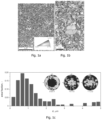
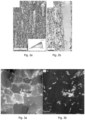
- Figs. 1a , b and 2a, b show the grain orientation EBSD IPF maps of HE Zn+ZnO collected in the transversal and longitudinal directions, respectively.
- Zn grain structure was characterized by a mixture of equiaxed grains and those elongated along the extrusion direction ( Fig. 2a , b ).
- the equiaxed grains tended to have a finer size.
- elongated grains were mostly larger, had fragmented structure and were often part of the bands.
- the GOS map proved that equiaxed fine grains were more uniform, while elongated coarser grains had larger GOS parameter mostly.
- the existence of the bands might be attributed to shearing induced during HE, as often observed for highly deformed Zn-based materials.
- HE Zn+ZnO was significantly textured with the basal planes being parallel with the extrusion direction, which is common for the extruded Zn.
- the basal planes were inclined from the L direction to the T direction by a relatively large angle, with the maximum intensity at approximately 20°, which was attributed to the activity of the 2 nd order pyramidal slip.
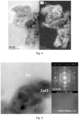
- HE Zn+ZnO showed fully recrystallized and fine Zn grains decorated with ZnO nanoscale dispersoids.
- HE was proven to enhance significantly the mechanical properties of the cast Zn. It was explained by an efficient grain refinement induced during low-temperature straining and partial suppression of DRX. In the present invention we confirmed that the poor mechanical properties, strengths, as well as ⁇ of cast Zn improved noticeably, more than by an order of magnitude, after the application of HE deformation ( Fig. 6 , Tab. 2).
- GB worked as efficient obstacles, which impeded dislocation slip and promoted GB sliding, allowing for strengthening and greater plasticity at the same time.
- the mechanical properties of HE Zn+ZnO manufactured under the same conditions as HE Zn were superior to those of the HE Zn counterpart.
- the stress-strain curve of HE Zn+ZnO differed markedly from the one seen for HE Zn ( Fig. 6 ).
- a concept of stabilization by stable and fine dispersoids evenly distributed in the metallic matrix is effective up to high homologous temperatures of 0.93-0.99.
- the annealing at 100 °C for 24 h may be considered as an accelerated thermal treatment, which simulates long-term application of biomedical device at THB. Annealing didn't lead to microstructural change and grain growth, which would be accompanied by a strength decline inevitably. Conversely, the strengths, as well as ⁇ improved slightly further for HE+A Zn+ZnO. Compared to HE Zn+ZnO YS 0.2 increased by 11 % after annealing. This behaviour contradicted with ZnO free HE+A Zn subjected to the same thermal treatment, where an obvious deterioration of the mechanical properties took place.
- HE Zn+ZnO reached E of 89.6 GPa, what was significantly less than the value of the cast Zn (99 ⁇ 1.9 GPa), Tab. 2. The difference was attributed to a microstructural anisotropy, namely a pronounced texture in HE Zn+ZnO.
- HE Zn showed E of 85.7 GPa, which was ⁇ 5% less compared to that of the ZnO dispersoids containing counterpart.
- the increased E of HE Zn+ZnO compared to the one of HE Zn can likely be attributed to the presence of ZnO dispersoids, with a higher E of 140 GPa than that of the pure Zn.
- E plays a crucial role in the functioning of OIF and ES.
- E ought to be as high as possible to avoid ES recoil after balloon deflation and to meet allowable elastic recoil on the expansion ( ⁇ 4%), eventually.
- An alternative criterion of expected recoil upon deflation of the balloon is defined by YS 0.2 to E ratio and shall be in the range of 0.16-0.32% [10], while for HE+A Zn+ZnO this value (0.17%) fulfils this criterion.
- ZnO dispersoids pinning Zener pressure was exerted on high angle grain boundaries (HAGB) and the driving force for migrating grain boundaries (GB) was balanced by the pinning action of ZnO dispersoids.
- stable nano-scaled ZnO dispersoids with the average size of 136 nm and 4.75 vol.% content, which were homogenously distributed in Zn matrix provided stabilization of a grain structure down with the grain size of 0.75 ⁇ m.
- the actual stabilization effect induced by ZnO dispersoids was further demonstrated for Zn+ZnO annealed at 100 °C for 24 h.
- the testing temperature of 100 °C represented a homologous temperature (HT) of 0.54.
- the annealing at 100 °C for 24 h may be considered as an accelerated thermal treatment, which simulates a long-term application of biomedical device at THB.
- EBSD analyses confirmed that annealing didn't lead to major microstructural changes when compared to as-extruded Zn+ZnO. All these findings pointed to an effective stabilization of the refined Zn grain structure by introduced ZnO dispersoids that inhibited grain growth during and after the hydro-extrusion (HE) process.
- HE hydro-extrusion
- the biocompatibility of the HE Zn+ZnO samples were evaluated via cytotoxicity, genotoxicity, oxidative stress, and bactericidal activity assays according to ISO 10993-5. The results were compared directly to cast Zn, of which in-vitro and in-vivo responses are well known and have been studied in details.
- the indirect contact cytotoxicity of the studied samples was evaluated using a colorimetric MTT assay. According to the ISO 10993-5 criteria, cell viability values above 70% are considered a non-cytotoxic response. The test was done in pentaplicates and repeated three times to assure reproducible results. The potential cytotoxic responses of the extraction media of the HE Zn+ZnO and cast Zn materials are shown in Fig. 11 . In general, both materials exhibited rather comparable responses. The 100% extracts of both materials imposed a strong cytotoxic effect on the L929 cells after 24 and 72 h treatments.
- the genotoxic potential of the studied samples was determined by an alkaline comet assay (single-cell gel electrophoresis, SCGE). This method was performed to detect DNA damage in the incubated cells. The percentage of DNA in the tail (% tail DNA) was used as a parameter to detect DNA damage (DNA strand breaks). Six hundred comets were scored per sample in one electrophoresis run. In this analysis, the cells were treated with 500 ⁇ M H 2 O 2 and serviced as a positive control (PC). As is shown in Fig. 12 , the incubation with the 100% extracts of both materials for 24 and 72 h resulted in a considerable percentage of DNA in the tail, and this behavior was comparable to that obtained for PC.
- SCGE single-cell gel electrophoresis
- ROS reactive oxygen species
- the antibacterial activity was assessed using Staphylococcus aureus (ATCC 6538).
- the bacterial suspension with a 10 ⁇ L volume containing ten colony forming units (CFU) was inoculated into 1 mL of the diluted (25 and 10%) extracts of HE Zn+ZnO and cast Zn specimens. Then it was incubated for 24 h at 37 °C. Subsequently, the bacterial suspension was diluted using the plating gradient dilution method from 10 -1 to 10 -6, and 100 ⁇ L of each dilution was inoculated onto a Petri dish with tryptone soya agar (TSA) plates in duplicates.
- TSA tryptone soya agar
- Novel biomedical Zn+ZnO MMC was manufactured by PM approach using HE compaction of fine gas-atomized high purity Zn powder feedstock.
- the microstructure, mechanical properties, post-production stability, corrosion behaviour and in-vitro biological evaluation were pursued.
- Example 3 The composite materials shown in Tab. 3 were prepared by the method described in Example 1. The composites were subjected to similar characterization and testing as in Example 1 with the following results:
- Example 4 The composite materials shown in Tab. 4 were prepared by the method described in Example 1. The composites were subjected to similar characterization and testing as in Example 1 with the following results:
Landscapes
- Chemical & Material Sciences (AREA)
- Health & Medical Sciences (AREA)
- Mechanical Engineering (AREA)
- Engineering & Computer Science (AREA)
- Organic Chemistry (AREA)
- Metallurgy (AREA)
- Materials Engineering (AREA)
- Animal Behavior & Ethology (AREA)
- Veterinary Medicine (AREA)
- General Health & Medical Sciences (AREA)
- Life Sciences & Earth Sciences (AREA)
- Epidemiology (AREA)
- Public Health (AREA)
- Inorganic Chemistry (AREA)
- Vascular Medicine (AREA)
- Surgery (AREA)
- Heart & Thoracic Surgery (AREA)
- Manufacturing & Machinery (AREA)
- Dermatology (AREA)
- Medicinal Chemistry (AREA)
- Oral & Maxillofacial Surgery (AREA)
- Transplantation (AREA)
- Materials For Medical Uses (AREA)
- Powder Metallurgy (AREA)
Claims (15)
- Ein biokompatibles und bioresorbierbares Metall-Matrix-Komposit zur Herstellung biomedizinischer Elemente zur vollständigen Resorption in vivo bei Kontakt mit menschlichem oder tierischem Gewebe, erhältlich durch ein Verfahren, bei dem ein Pulver:- eine mittlere Partikelgröße im Bereich von 50 bis 10000 nm aufweist, wobei die Pulverpartikel aus einem Kern und einer Außenschicht bestehen und wobei der Kern aus einer Gruppe ausgewählt ist, die aus Zn, ZnMg-Legierung, ZnCa-Legierung besteht; und die Außenschicht aus einer Gruppe ausgewählt ist, die aus ZnO, MgO, ZnHPO4 besteht; und wobei die Außenschicht 0,1 bis 10 Vol.-% der Pulverpartikel ausmacht;durch kaltisostatisches Pressen bei einem Druck von 20 bis 400 MPa verdichtet und anschließend bei einer Temperatur unterhalb des Schmelzpunkts des Pulvers bei einem Reduktionsverhältnis von 5:1 bis 100:1 extrudiert wird, wobei die mittlere Partikelgröße des Pulvers und das Reduktionsverhältnis so beschaffen sind, dass eine ultrafeinkörnige Matrixstruktur des verarbeiteten Kernmaterials erhalten wird.
- Ein biokompatibles und bioresorbierbares Metall-Matrix-Komposit nach Anspruch 1, wobei das Pulver bei einer Temperatur im Bereich von 4 °C bis zum Schmelzpunkt des Pulvers, vorzugsweise von 4 °C bis 100 °C, am bevorzugtesten bei Raumtemperatur extrudiert wird.
- Ein biokompatibles und bioresorbierbares Metall-Matrix-Komposit nach Anspruch 1 oder 2, wobei das Pulver durch kaltisostatisches Pressen bei einem Druck von 100 bis 300 MPa, vorzugsweise bei 200 MPa, kalt verdichtet wird.
- Ein biokompatibles und bioresorbierbares Metall-Matrix-Komposit nach einem der Ansprüche 1 bis 3, wobei das Pulver eine mittlere Partikelgröße im Bereich von 500 bis 10000 nm, vorzugsweise 1000 bis 5000 nm, am bevorzugtesten 3000 nm aufweist.
- Ein biokompatibles und bioresorbierbares Metall-Matrix-Komposit nach einem der Ansprüche 1 bis 4, wobei die Außenschicht 0,1 bis 8 Vol.-%, vorzugsweise 1 bis 7 Vol.-% der Pulverpartikel, am bevorzugtesten 3 bis 5 Vol.-% der Pulverpartikel ausmacht.
- Ein biokompatibles und bioresorbierbares Metall-Matrix-Komposit nach einem der Ansprüche 1 bis 5, wobei das Pulver mit einem Reduktionsverhältnis von 10:1 bis 20:1, vorzugsweise 12:1, extrudiert wird.
- Ein biokompatibles und bioresorbierbares Metall-Matrix-Komposit nach einem der Ansprüche 1 bis 6, wobei die Extrusion eine Hydroextrusion ist.
- Endovaskulärer Stent oder orthopädischer interner Fixateur, bestehend aus dem Metall-Matrix-Komposit nach einem der vorhergehenden Ansprüche.
- Verfahren zur Herstellung eines biokompatiblen und bioresorbierbaren Metall-Matrix-Komposits nach einem der Ansprüche 1 bis 7, das für biomedizinische Elemente zur vollständigen Resorption in vivo bei Kontakt mit menschlichem oder tierischem Gewebe geeignet ist, wobei ein Pulver:- eine mittlere Partikelgröße im Bereich von 50 bis 10000 nm aufweist, wobei die Pulverpartikel aus einem Kern und einer Außenschicht bestehen und wobei der Kern aus einer Gruppe ausgewählt ist, die aus Zn, ZnMg-Legierung, ZnCa-Legierung besteht; und die Außenschicht aus einer Gruppe ausgewählt ist, die aus ZnO, MgO, ZnHPO4 besteht; und wobei die Außenschicht 0,1 bis 10 Vol.-% der Pulverpartikel ausmacht;durch kaltisostatisches Pressen bei einem Druck von 20 bis 400 MPa verdichtet und anschließend bei einer Temperatur unterhalb des Schmelzpunkts des Pulvers bei einem Reduktionsverhältnis von 5:1 bis 100:1 extrudiert wird, wobei die mittlere Partikelgröße des Pulvers und das Reduktionsverhältnis so beschaffen sind, dass eine ultrafeinkörnige Matrixstruktur des verarbeiteten Kernmaterials erhalten wird.
- Verfahren nach Anspruch 9, wobei das Pulver bei einer Temperatur im Bereich von 4 °C bis zum Schmelzpunkt des Pulvers, vorzugsweise von 4 °C bis 100 °C, am bevorzugtesten bei Raumtemperatur extrudiert wird.
- Verfahren nach einem der Ansprüche 9 oder 10, wobei das Pulver durch kaltisostatisches Pressen bei einem Druck von 100 bis 300 MPa, vorzugsweise bei 200 MPa, kalt verdichtet wird.
- Verfahren nach einem der Ansprüche 9 bis 11, wobei das Pulver eine mittlere Partikelgröße im Bereich von 500 bis 10000 nm, vorzugsweise 1000 bis 5000 nm, am bevorzugtesten 3000 nm aufweist.
- Verfahren nach einem der Ansprüche 9 bis 12, wobei die Außenschicht 0,1 bis 8 Vol.-%, vorzugsweise 1 bis 7 Vol.-% der Pulverpartikel, am bevorzugtesten 3 bis 5 Vol.-% der Pulverpartikel ausmacht.
- Verfahren nach einem der Ansprüche 9 bis 13, wobei das Pulver mit einem Reduktionsverhältnis von 10:1 bis 20:1, vorzugsweise 12:1, extrudiert wird.
- Verfahren nach einem der Ansprüche 9 bis 14, wobei die Extrusion eine Hydroextrusion ist.
Applications Claiming Priority (2)
| Application Number | Priority Date | Filing Date | Title |
|---|---|---|---|
| EP22191338.7A EP4324489A1 (de) | 2022-08-19 | 2022-08-19 | Biokompatibles und bioabsorbierbares verbundmaterial zur vollständigen absorption in vivo bei kontakt mit menschlichem oder tierischem gewebe und verfahren zur herstellung dieses verbundmaterials |
| PCT/SK2023/050007 WO2024039303A1 (en) | 2022-08-19 | 2023-04-17 | A biocompatible and bioabsorbable metal matrix composite for manufacturing biomedical elements and method of manufacture of the same |
Publications (3)
| Publication Number | Publication Date |
|---|---|
| EP4466035A1 EP4466035A1 (de) | 2024-11-27 |
| EP4466035B1 true EP4466035B1 (de) | 2025-03-05 |
| EP4466035C0 EP4466035C0 (de) | 2025-03-05 |
Family
ID=83005988
Family Applications (2)
| Application Number | Title | Priority Date | Filing Date |
|---|---|---|---|
| EP22191338.7A Withdrawn EP4324489A1 (de) | 2022-08-19 | 2022-08-19 | Biokompatibles und bioabsorbierbares verbundmaterial zur vollständigen absorption in vivo bei kontakt mit menschlichem oder tierischem gewebe und verfahren zur herstellung dieses verbundmaterials |
| EP23718370.2A Active EP4466035B1 (de) | 2022-08-19 | 2023-04-17 | Biokompatibles und bioabsorbierbares verbundmaterial zur vollständigen absorption in vivo bei kontakt mit menschlichem oder tierischem gewebe und verfahren zur herstellung dieses verbundmaterials |
Family Applications Before (1)
| Application Number | Title | Priority Date | Filing Date |
|---|---|---|---|
| EP22191338.7A Withdrawn EP4324489A1 (de) | 2022-08-19 | 2022-08-19 | Biokompatibles und bioabsorbierbares verbundmaterial zur vollständigen absorption in vivo bei kontakt mit menschlichem oder tierischem gewebe und verfahren zur herstellung dieses verbundmaterials |
Country Status (2)
| Country | Link |
|---|---|
| EP (2) | EP4324489A1 (de) |
| WO (1) | WO2024039303A1 (de) |
Family Cites Families (4)
| Publication number | Priority date | Publication date | Assignee | Title |
|---|---|---|---|---|
| US353835A (en) | 1886-12-07 | aveiss | ||
| WO2020028643A1 (en) * | 2018-08-02 | 2020-02-06 | The Regents Of The University Of California | Biodegradable zinc-based materials including dispersed nanostructures for biomedical applications |
| WO2021243398A1 (en) * | 2020-06-01 | 2021-12-09 | Deakin University | Zinc-based alloys for bioresorbable medical implants |
| CN114411014B (zh) * | 2022-01-22 | 2022-09-23 | 湘潭大学 | GPa级高压作用下原位自生ZnO增强复合材料及其制备方法 |
-
2022
- 2022-08-19 EP EP22191338.7A patent/EP4324489A1/de not_active Withdrawn
-
2023
- 2023-04-17 WO PCT/SK2023/050007 patent/WO2024039303A1/en not_active Ceased
- 2023-04-17 EP EP23718370.2A patent/EP4466035B1/de active Active
Also Published As
| Publication number | Publication date |
|---|---|
| EP4324489A1 (de) | 2024-02-21 |
| EP4466035A1 (de) | 2024-11-27 |
| WO2024039303A1 (en) | 2024-02-22 |
| EP4466035C0 (de) | 2025-03-05 |
Similar Documents
| Publication | Publication Date | Title |
|---|---|---|
| Bryła et al. | Microstructure, mechanical properties, and degradation of Mg-Ag alloy after equal-channel angular pressing | |
| Wątroba et al. | Design of novel Zn-Ag-Zr alloy with enhanced strength as a potential biodegradable implant material | |
| Ma et al. | Effect of heat treatment on Cu distribution, antibacterial performance and cytotoxicity of Ti–6Al–4V–5Cu alloy | |
| JP5536789B2 (ja) | 生体臨床医学用のナノ組織化純チタンとそれを利用したロッド制作方法 | |
| Yi et al. | Antibacterial Ti-35Nb-7Zr-xCu alloy with excellent mechanical properties generated with a spark plasma sintering method for biological applications | |
| Knapek et al. | Corrosion and mechanical properties of a novel biomedical WN43 magnesium alloy prepared by spark plasma sintering | |
| CN108754232B (zh) | 一种高强高塑可生物降解Zn-Mn-Li系锌合金及其用途 | |
| CN104120320B (zh) | 一种可降解稀土镁合金医用生物材料及制备方法 | |
| US9828655B2 (en) | Titanium alloys for biomedical applications and fabrication methods thereof | |
| Szaraniec et al. | Structure and properties of Ti-Ag alloys produced by powder metallurgy | |
| CN109966568B (zh) | 一种Zn-Ge-X三元生物医用材料及其制备方法 | |
| CN107557633B (zh) | 一种微合金化医用可降解镁合金及其制备方法 | |
| CN113234983B (zh) | 一种NbTaTiZr双相等原子比高熵合金及其制备方法 | |
| Li et al. | Characteristics of Ti-Nb-Mg alloy by powder metallurgy for biomedical applications | |
| Luo et al. | Novel function-structure-integrated Ti-Mo-Cu alloy combined with excellent antibacterial properties and mechanical compatibility as implant application | |
| Marek et al. | Powder metallurgy preparation of Co-based alloys for biomedical applications | |
| Xiao et al. | Morphology and mechanical, corrosive, and antibacterial behaviors of indirectly extruded Zn-0.05 wt.% Mg-(0.5, 1 wt.%) Ag alloys | |
| US20220275477A1 (en) | Magnesium alloy based objects and methods of making and use thereof | |
| Song et al. | In situ alloying Ti–Ag antibacterial biomaterials via laser powder bed fusion: Microstructure, mechanical properties and bioperformance | |
| WO2021243398A1 (en) | Zinc-based alloys for bioresorbable medical implants | |
| Balog et al. | Suppression of mechanical instability in bioabsorbable ultrafine-grained Zn through in-situ stabilization by ZnO nanodispersoids | |
| Fang et al. | Fabrication and characterization of new hot extruded ZK60/CNTs+ AgNPs nanocomposites for biomedical applications | |
| Motavallian et al. | Augmenting the performance of friction stir back extruded AZ91 alloy using the gradient composite design technology | |
| CN111621655B (zh) | 一种基于微区原电池理论的抗菌钛合金制备方法及应用 | |
| CN114214550A (zh) | 一种医用镁合金及其制备方法 |
Legal Events
| Date | Code | Title | Description |
|---|---|---|---|
| STAA | Information on the status of an ep patent application or granted ep patent |
Free format text: STATUS: UNKNOWN |
|
| STAA | Information on the status of an ep patent application or granted ep patent |
Free format text: STATUS: THE INTERNATIONAL PUBLICATION HAS BEEN MADE |
|
| PUAI | Public reference made under article 153(3) epc to a published international application that has entered the european phase |
Free format text: ORIGINAL CODE: 0009012 |
|
| STAA | Information on the status of an ep patent application or granted ep patent |
Free format text: STATUS: REQUEST FOR EXAMINATION WAS MADE |
|
| GRAP | Despatch of communication of intention to grant a patent |
Free format text: ORIGINAL CODE: EPIDOSNIGR1 |
|
| STAA | Information on the status of an ep patent application or granted ep patent |
Free format text: STATUS: GRANT OF PATENT IS INTENDED |
|
| 17P | Request for examination filed |
Effective date: 20240820 |
|
| AK | Designated contracting states |
Kind code of ref document: A1 Designated state(s): AL AT BE BG CH CY CZ DE DK EE ES FI FR GB GR HR HU IE IS IT LI LT LU LV MC ME MK MT NL NO PL PT RO RS SE SI SK SM TR |
|
| GRAS | Grant fee paid |
Free format text: ORIGINAL CODE: EPIDOSNIGR3 |
|
| GRAA | (expected) grant |
Free format text: ORIGINAL CODE: 0009210 |
|
| STAA | Information on the status of an ep patent application or granted ep patent |
Free format text: STATUS: THE PATENT HAS BEEN GRANTED |
|
| AK | Designated contracting states |
Kind code of ref document: B1 Designated state(s): AL AT BE BG CH CY CZ DE DK EE ES FI FR GB GR HR HU IE IS IT LI LT LU LV MC ME MK MT NL NO PL PT RO RS SE SI SK SM TR |
|
| DAV | Request for validation of the european patent (deleted) | ||
| DAX | Request for extension of the european patent (deleted) | ||
| REG | Reference to a national code |
Ref country code: GB Ref legal event code: FG4D |
|
| REG | Reference to a national code |
Ref country code: CH Ref legal event code: EP |
|
| REG | Reference to a national code |
Ref country code: DE Ref legal event code: R096 Ref document number: 602023002321 Country of ref document: DE |
|
| REG | Reference to a national code |
Ref country code: IE Ref legal event code: FG4D |
|
| U01 | Request for unitary effect filed |
Effective date: 20250328 |
|
| U07 | Unitary effect registered |
Designated state(s): AT BE BG DE DK EE FI FR IT LT LU LV MT NL PT RO SE SI Effective date: 20250403 |
|
| U20 | Renewal fee for the european patent with unitary effect paid |
Year of fee payment: 3 Effective date: 20250502 |
|
| PG25 | Lapsed in a contracting state [announced via postgrant information from national office to epo] |
Ref country code: RS Free format text: LAPSE BECAUSE OF FAILURE TO SUBMIT A TRANSLATION OF THE DESCRIPTION OR TO PAY THE FEE WITHIN THE PRESCRIBED TIME-LIMIT Effective date: 20250605 |
|
| PG25 | Lapsed in a contracting state [announced via postgrant information from national office to epo] |
Ref country code: ES Free format text: LAPSE BECAUSE OF FAILURE TO SUBMIT A TRANSLATION OF THE DESCRIPTION OR TO PAY THE FEE WITHIN THE PRESCRIBED TIME-LIMIT Effective date: 20250305 |
|
| PG25 | Lapsed in a contracting state [announced via postgrant information from national office to epo] |
Ref country code: NO Free format text: LAPSE BECAUSE OF FAILURE TO SUBMIT A TRANSLATION OF THE DESCRIPTION OR TO PAY THE FEE WITHIN THE PRESCRIBED TIME-LIMIT Effective date: 20250605 |
|
| PG25 | Lapsed in a contracting state [announced via postgrant information from national office to epo] |
Ref country code: HR Free format text: LAPSE BECAUSE OF FAILURE TO SUBMIT A TRANSLATION OF THE DESCRIPTION OR TO PAY THE FEE WITHIN THE PRESCRIBED TIME-LIMIT Effective date: 20250305 |
|
| PG25 | Lapsed in a contracting state [announced via postgrant information from national office to epo] |
Ref country code: GR Free format text: LAPSE BECAUSE OF FAILURE TO SUBMIT A TRANSLATION OF THE DESCRIPTION OR TO PAY THE FEE WITHIN THE PRESCRIBED TIME-LIMIT Effective date: 20250606 |
|
| PG25 | Lapsed in a contracting state [announced via postgrant information from national office to epo] |
Ref country code: SM Free format text: LAPSE BECAUSE OF FAILURE TO SUBMIT A TRANSLATION OF THE DESCRIPTION OR TO PAY THE FEE WITHIN THE PRESCRIBED TIME-LIMIT Effective date: 20250305 |
|
| PG25 | Lapsed in a contracting state [announced via postgrant information from national office to epo] |
Ref country code: PL Free format text: LAPSE BECAUSE OF FAILURE TO SUBMIT A TRANSLATION OF THE DESCRIPTION OR TO PAY THE FEE WITHIN THE PRESCRIBED TIME-LIMIT Effective date: 20250305 |
|
| PG25 | Lapsed in a contracting state [announced via postgrant information from national office to epo] |
Ref country code: CZ Free format text: LAPSE BECAUSE OF FAILURE TO SUBMIT A TRANSLATION OF THE DESCRIPTION OR TO PAY THE FEE WITHIN THE PRESCRIBED TIME-LIMIT Effective date: 20250305 |
|
| PG25 | Lapsed in a contracting state [announced via postgrant information from national office to epo] |
Ref country code: SK Free format text: LAPSE BECAUSE OF FAILURE TO SUBMIT A TRANSLATION OF THE DESCRIPTION OR TO PAY THE FEE WITHIN THE PRESCRIBED TIME-LIMIT Effective date: 20250305 |
|
| PG25 | Lapsed in a contracting state [announced via postgrant information from national office to epo] |
Ref country code: IS Free format text: LAPSE BECAUSE OF FAILURE TO SUBMIT A TRANSLATION OF THE DESCRIPTION OR TO PAY THE FEE WITHIN THE PRESCRIBED TIME-LIMIT Effective date: 20250705 |
|
| PG25 | Lapsed in a contracting state [announced via postgrant information from national office to epo] |
Ref country code: MC Free format text: LAPSE BECAUSE OF FAILURE TO SUBMIT A TRANSLATION OF THE DESCRIPTION OR TO PAY THE FEE WITHIN THE PRESCRIBED TIME-LIMIT Effective date: 20250305 |
|
| PLBE | No opposition filed within time limit |
Free format text: ORIGINAL CODE: 0009261 |
|
| STAA | Information on the status of an ep patent application or granted ep patent |
Free format text: STATUS: NO OPPOSITION FILED WITHIN TIME LIMIT |
|
| REG | Reference to a national code |
Ref country code: CH Ref legal event code: L10 Free format text: ST27 STATUS EVENT CODE: U-0-0-L10-L00 (AS PROVIDED BY THE NATIONAL OFFICE) Effective date: 20260114 |
|
| 26N | No opposition filed |
Effective date: 20251208 |
|
| PG25 | Lapsed in a contracting state [announced via postgrant information from national office to epo] |
Ref country code: IE Free format text: LAPSE BECAUSE OF NON-PAYMENT OF DUE FEES Effective date: 20250417 |