EP4465718A1 - Verfahren und vorrichtung zur bestimmung eines kanalzugangsmodus und speichermedium - Google Patents
Verfahren und vorrichtung zur bestimmung eines kanalzugangsmodus und speichermedium Download PDFInfo
- Publication number
- EP4465718A1 EP4465718A1 EP22917939.5A EP22917939A EP4465718A1 EP 4465718 A1 EP4465718 A1 EP 4465718A1 EP 22917939 A EP22917939 A EP 22917939A EP 4465718 A1 EP4465718 A1 EP 4465718A1
- Authority
- EP
- European Patent Office
- Prior art keywords
- configuration information
- channel access
- pieces
- access mode
- carrying
- Prior art date
- Legal status (The legal status is an assumption and is not a legal conclusion. Google has not performed a legal analysis and makes no representation as to the accuracy of the status listed.)
- Pending
Links
- 238000000034 method Methods 0.000 title claims abstract description 103
- 238000004891 communication Methods 0.000 claims abstract description 63
- 230000011664 signaling Effects 0.000 claims description 62
- 230000004044 response Effects 0.000 claims description 30
- 238000012544 monitoring process Methods 0.000 claims description 22
- 238000012545 processing Methods 0.000 claims description 21
- 238000004590 computer program Methods 0.000 claims description 10
- 238000005516 engineering process Methods 0.000 abstract description 9
- 230000006870 function Effects 0.000 description 14
- 238000013461 design Methods 0.000 description 6
- 238000010586 diagram Methods 0.000 description 5
- 230000003287 optical effect Effects 0.000 description 5
- 230000005236 sound signal Effects 0.000 description 4
- 238000007726 management method Methods 0.000 description 3
- 230000001133 acceleration Effects 0.000 description 2
- 230000009471 action Effects 0.000 description 2
- 230000008859 change Effects 0.000 description 2
- 230000003993 interaction Effects 0.000 description 2
- 230000004048 modification Effects 0.000 description 2
- 238000012986 modification Methods 0.000 description 2
- 230000008569 process Effects 0.000 description 2
- 238000001228 spectrum Methods 0.000 description 2
- 230000006978 adaptation Effects 0.000 description 1
- 230000002776 aggregation Effects 0.000 description 1
- 238000004220 aggregation Methods 0.000 description 1
- 238000003491 array Methods 0.000 description 1
- 230000005540 biological transmission Effects 0.000 description 1
- 230000001413 cellular effect Effects 0.000 description 1
- 238000006243 chemical reaction Methods 0.000 description 1
- 239000003795 chemical substances by application Substances 0.000 description 1
- 238000013500 data storage Methods 0.000 description 1
- 238000003384 imaging method Methods 0.000 description 1
- 230000000977 initiatory effect Effects 0.000 description 1
- 239000004973 liquid crystal related substance Substances 0.000 description 1
- 230000007774 longterm Effects 0.000 description 1
- 230000007246 mechanism Effects 0.000 description 1
- 238000010295 mobile communication Methods 0.000 description 1
- 230000002093 peripheral effect Effects 0.000 description 1
- 230000003068 static effect Effects 0.000 description 1
Images



Classifications
-
- H—ELECTRICITY
- H04—ELECTRIC COMMUNICATION TECHNIQUE
- H04W—WIRELESS COMMUNICATION NETWORKS
- H04W74/00—Wireless channel access
- H04W74/08—Non-scheduled access, e.g. ALOHA
- H04W74/0808—Non-scheduled access, e.g. ALOHA using carrier sensing, e.g. carrier sense multiple access [CSMA]
-
- H—ELECTRICITY
- H04—ELECTRIC COMMUNICATION TECHNIQUE
- H04W—WIRELESS COMMUNICATION NETWORKS
- H04W74/00—Wireless channel access
- H04W74/002—Transmission of channel access control information
- H04W74/006—Transmission of channel access control information in the downlink, i.e. towards the terminal
Definitions
- the present disclosure relates to a field of wireless communication technologies, and in particular relates to a method and an apparatus for determining a channel access mode, and a readable storage medium.
- a transmitting end In wireless communication technology, for example, in a 5th generation mobile communication technology (5G for short), on an unlicensed spectrum, a transmitting end generally needs to monitor a channel before occupying the channel to send data, that is, performing a clear channel assessment (CCA). After the transmitting end performs the clear channel assessment, if it determines that the channel is idle, it can occupy the channel to send and receive data.
- a maximum channel occupy time (MCOT) is stipulated by a protocol or configured/indicated by a base station; if it is determined that the channel is already occupied, the channel cannot be occupied.
- This process is generally referred to as a channel access mechanism of listen before talk (LBT) on an unlicensed frequency band.
- LBT listen before talk
- the LBT can also be divided into different types according to specific channel access parameters.
- a LBT-free channel access mode can also be used, that is, the transmitting end can directly occupy the channel without channel monitoring.
- a network device can use different methods to indicate a channel access mode adopted by a UE.
- the network device indicates multiple channel access modes, how the UE determines the channel access mode is a problem that needs to be solved.
- the present disclosure provides a method, an apparatus for determining a channel access mode, and a readable storage medium.
- a method for determining a channel access mode is performed by a user equipment, and includes:
- the user equipment when the user equipment receives the multiple pieces of configuration information carrying channel access modes, it selects a piece of configuration information among the multiple pieces of configuration information based on the multiple pieces of configuration information, and determines that the channel access mode of the user equipment is the channel access mode carried in the selected configuration information, so that when the user equipment receives the multiple channel access modes indicated by the network device, it can determine the reasonable channel access mode, and use the reasonable channel access mode for channel access, which saves the power consumption of the user equipment on the basis of ensuring saving and improving communication efficiency.
- determining the first configuration information in the at least two pieces of configuration information based on the at least two pieces of configuration information includes: determining the first configuration information in the at least two pieces of configuration information based on priorities of the at least two pieces of configuration information.
- determining the first configuration information in the at least two pieces of configuration information based on the priorities of the at least two pieces of configuration information includes: determining that configuration information with a highest priority in the at least two pieces of configuration information is the first configuration information.
- determining the first configuration information in the at least two pieces of configuration information based on the at least two pieces of configuration information includes: in response to the at least two pieces of configuration information including second configuration information, determining that the second configuration information is the first configuration information.
- determining the first configuration information in the at least two pieces of configuration information based on the at least two pieces of configuration information includes: in response to the at least two pieces of configuration information including downlink control information (DCI) carrying a channel access mode, determining that the DCI is the first configuration information.
- DCI downlink control information
- determining the first configuration information in the at least two pieces of configuration information based on the at least two pieces of configuration information includes: in response to the at least two pieces of configuration information including third configuration information carrying a channel access mode different from a channel access mode carried by at least one piece of other configuration information, determining the first configuration information in the at least two pieces of configuration information based on configuration information other than the third configuration information in the at least two pieces of configuration information.
- the third configuration information is configuration information with a lowest priority.
- the third configuration information is system information carrying a channel access mode.
- the at least two pieces of configuration information including system information and an RRC dedicated signaling, and in a case that a channel access mode carried in the system information is different from a channel access mode carried in the RRC dedicated signaling, the channel access mode carried in the system information is ignored.
- the at least two pieces of configuration information include at least two of:
- the at least two pieces of configuration information include a DCI carrying a channel access mode and an RRC dedicated signaling carrying a channel access mode; and a priority of the DCI carrying the channel access mode is higher than a priority of the RRC dedicated signaling carrying the channel access mode.
- the at least two pieces of configuration information include a DCI carrying a channel access mode and system information carrying a channel access mode; and a priority of the DCI carrying the channel access mode is higher than that of the system information carrying the channel access mode.
- the at least two pieces of configuration information include an RRC dedicated signaling carrying a channel access mode and system information carrying a channel access mode; and a priority of the RRC dedicated signaling carrying the channel access mode is higher than that of the system information carrying the channel access mode.
- the channel access mode includes at least one of:
- a method for determining a channel access mode is performed by a user equipment, and includes: sending at least two pieces of configuration information carrying channel access modes to a user equipment; the at least two pieces of configuration information being configured to instruct the user equipment to determine first configuration information in the at least two pieces of configuration information based on the at least two pieces of configuration information, and to determine that a channel access mode of the user equipment is a channel access mode carried in the first configuration information.
- determining the first configuration information in the at least two pieces of configuration information based on the at least two pieces of configuration information includes: determining the first configuration information in the at least two pieces of configuration information based on priorities of the at least two pieces of configuration information.
- determining the first configuration information in the at least two pieces of configuration information based on the at least two pieces of configuration information includes: in response to the at least two pieces of configuration information including downlink control information (DCI) carrying a channel access mode, determining that the DCI is the first configuration information.
- DCI downlink control information
- determining the first configuration information in the at least two pieces of configuration information based on the at least two pieces of configuration information includes: in response to the at least two pieces of configuration information including second configuration information, determining that the second configuration information is the first configuration information.
- determining the first configuration information in the at least two pieces of configuration information based on the at least two pieces of configuration information includes: in response to the at least two pieces of configuration information including third configuration information carrying a channel access mode different from a channel access mode carried by at least one piece of other configuration information, determining the first configuration information in the at least two pieces of configuration information based on configuration information other than the third configuration information in the at least two pieces of configuration information.
- determining the first configuration information in the at least two pieces of configuration information based on the at least two pieces of configuration information includes: the at least two pieces of configuration information including system information and an RRC dedicated signaling, and in a case that a channel access mode carried in the system information is different from a channel access mode carried in the RRC dedicated signaling, ignoring the channel access mode carried in the system information.
- a communication apparatus configured to perform the steps performed by the user equipment in the above first aspect or any possible design of the first aspect.
- the user equipment can implement each function in the above methods in the form of a hardware structure, a software module, or a hardware structure together with a software module.
- the communication apparatus may include a transceiver module.
- the transceiver module is configured to receive at least two pieces of configuration information carrying channel access modes from a network device; and a processing module is configured to determine first configuration information in the at least two pieces of configuration information based on the at least two pieces of configuration information; and determine that a channel access mode of the user equipment is a channel access mode carried in the first configuration information.
- a communication apparatus may be configured to perform the steps executed by the network device in the above first aspect or any possible design of the first aspect.
- the network device can implement each function in the above-mentioned methods in the form of a hardware structure, a software module, or a hardware structure together with a software module.
- the communication apparatus may include a transceiver module.
- the transceiver module is configured to send at least two pieces of configuration information carrying channel access modes to a user equipment; the at least two pieces of configuration information being configured to instruct the user equipment to determine first configuration information in the at least two pieces of configuration information based on the at least two pieces of configuration information, and to determine that a channel access mode of the user equipment is a channel access mode carried in the first configuration information.
- a communication apparatus including a processor and a memory.
- the memory is configured to store a computer program; and the processor is configured to execute the computer program, so as to implement the first aspect or any possible design of the first aspect.
- a communication apparatus including a processor and a memory.
- the memory is configured to store a computer program; and the processor is configured to execute the computer program, so as to implement the second aspect or any possible design of the second aspect.
- a computer-readable storage medium In a seventh aspect, there is provided a computer-readable storage medium. Instructions (or computer programs, programs) are stored in the computer-readable storage medium, and when the instructions are invoked and executed on a computer, the computer is caused to perform the above-mentioned first aspect or any possible design of the first aspect.
- a computer-readable storage medium In an eighth aspect, there is provided a computer-readable storage medium. Instructions (or computer programs, programs) are stored in the computer-readable storage medium, and when the instructions are invoked and executed on a computer, the computer is caused to perform the above-mentioned second aspect or any possible design of the second aspect.
- first, second, third, etc. may use the terms first, second, third, etc. to describe various information, the information should not be limited to these terms. These terms are only used to distinguish information of the same type from one another. For example, without departing from the scope of the embodiments of the present disclosure, first information may also be called second information, and similarly, second information may also be called first information.
- first information may also be called second information
- second information may also be called first information.
- the words “if' and "in case” as used herein may be interpreted as “when” or “in a case that” or “in response to determining that”.
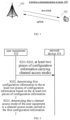
- a method for determining a channel access mode may be applied to a wireless communication system 100.
- the wireless communication system may include but not limited to a network device 101 and a user equipment 102.
- the user equipment 102 is configured to support carrier aggregation, and the user equipment 102 may be connected to multiple carrier units of the network device 101, including a primary carrier unit and one or more secondary carrier units.
- the user equipment 102 shown above may be a user equipment (UE), a terminal, an access terminal, a terminal unit, a terminal station, a mobile station (MS), a remote station, a remote terminal, a mobile terminal, a wireless communication equipment, a terminal agent or a user equipment, etc.
- the user equipment 102 may have a wireless transceiver function, which can communicate with one or more network devices 101 of one or more communication systems (such as wireless communication), and accept a network service provided by the network device 101, in which the network device 101 includes but is not limited to the illustrated base station.
- the user equipment 102 may be a cellular phone, a cordless phone, a session initiation protocol (SIP) phone, a wireless local loop (WLL) station, a personal digital assistant (PDA) device, a handheld device with wireless communication functions, a computing device or other processing devices connected to wireless modems, a vehicle-mounted device, a wearable device, a user equipment in a future 5G network or a user equipment in a future evolved PLMN networks, etc.
- SIP session initiation protocol
- WLL wireless local loop
- PDA personal digital assistant
- the network device 101 may be an access network device (or called an access network site).
- the access network device refers to a device that provides a network access function, such as a radio access network (RAN) base station and the like.
- the network device may include a base station (BS) device, or include a base station device and a radio resource management device for controlling the base station device, and the like.
- the network device may also include a relay station (relay device), an access point, and a base station in a future 5G network, a base station in a future evolved PLMN network or an NR base station, and the like.
- the network device may be a wearable device or in-vehicle device.
- the network device may also be a communication chip with a communication module.
- the network device 101 includes but is not limited to: a next-generation base station (gNB) in 5G, an evolved node B (eNB) or a radio network controller (RNC) in an LTE system, a node B (NB) in WCDMA system, a wireless controller or a base station controller (BSC) in a CRAN system, a base transceiver station (BTS), a home base station (for example, a home evolved nodeB, or a home node B, HNB), a baseband unit (BBU), a transmitting and receiving point (TRP), a transmitting point (TP) or a mobile switching center in a GSM system or CDMA system, etc.
- gNB next-generation base station
- eNB evolved node B
- RNC radio network controller
- NB node B
- BSC base station controller
- BTS base transceiver station
- BBU baseband unit
- TRP transmitting and receiving point
- TP transmitting point
- TP transmitting point
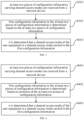
- FIG. 2 is a flowchart of a method for determining a channel access mode according to an exemplary embodiment. As shown in FIG. 2 , the method includes the following steps.
- step S201 the network device 101 sends at least two pieces of configuration information carrying channel access modes to the user equipment 102.
- step S202 the user equipment 102 receives from the network equipment 101 the at least two pieces of configuration information carrying the channel access modes.
- step S203 the user equipment 102 determines first configuration information in the at least two pieces of configuration information based on the at least two pieces of configuration information.
- step S204 the user equipment 102 determines that a channel access mode of the user equipment is a channel access mode carried in the first configuration information.
- the channel access mode includes at least one of the following types.
- a first type of channel access mode corresponds to a channel access mode that performs N times of channel monitoring, in which N is an initial value generated by the UE according to the specification of the first type of channel access mode, and N is an integer greater than zero.
- the value of N may be 1 or a value of 1 or more.
- a second type of channel access mode corresponds to a channel access mode that only performs channel monitoring once.
- a third type of channel access mode corresponds to a channel access mode without channel monitoring. That is, the channel monitoring is not required, and the channel can be directly accessed.
- determining the first configuration information in the at least two pieces of configuration information based on the at least two pieces of configuration information in step S203 includes: determining the first configuration information in the at least two pieces of configuration information based on priorities of the at least two pieces of configuration information.
- configuration information with a highest priority in the at least two pieces of configuration information is the first configuration information.
- determining the first configuration information in the at least two pieces of configuration information based on the at least two pieces of configuration information in step S203 includes: in response to the at least two pieces of configuration information including second configuration information, determining that the second configuration information is the first configuration information.
- determining the first configuration information in the at least two pieces of configuration information based on the at least two pieces of configuration information in step S203 includes: in response to the at least two pieces of configuration information including third configuration information, in which a channel access mode carried by the third configuration information is different from a channel access mode carried by at least one piece of other configuration information, determining the first configuration information in the at least two pieces of configuration information based on configuration information other than the third configuration information in the at least two pieces of configuration information.
- the at least two pieces of configuration information include at least two of:
- the user equipment when the user equipment receives the multiple pieces of configuration information carrying the channel access modes, it selects one piece of configuration information among the multiple pieces of configuration information based on the multiple pieces of configuration information, and determines that the channel access mode of the user equipment is a channel access mode carried in the selected configuration information, so that the user equipment can determine a reasonable channel access mode when receiving the multiple channel access modes indicated by the network device, and use the reasonable channel access mode for channel access, which saves power consumption of the user equipment on the basis of ensuring saving and improving communication efficiency.
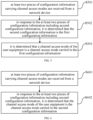
- FIG. 3 is a flowchart of a method for determining a channel access mode according to an exemplary embodiment. As shown in FIG. 3 , the method includes the following steps.
- step S301 at least two pieces of configuration information carrying channel access modes are received from a network device.
- step S302 first configuration information in the at least two pieces of configuration information is determined based on the at least two pieces of configuration information.
- step S303 it is determined that a channel access mode of the user equipment is a channel access mode carried in the first configuration information.
- the channel access mode includes at least one of the following types.
- a first type of channel access mode corresponds to a channel access mode that performs N times of channel monitoring, in which N is an initial value generated by the UE according to the specification of the first type of channel access mode, and N is an integer greater than zero.
- the value of N may be 1 or a value of 1 or more.
- a second type of channel access mode corresponds to a channel access mode that only performs channel monitoring once.
- a third type of channel access mode corresponds to a channel access mode without channel monitoring. That is, the channel monitoring is not required, and the channel can be directly accessed.
- determining the first configuration information in the at least two pieces of configuration information based on the at least two pieces of configuration information in step S302 includes: determining the first configuration information in the at least two pieces of configuration information based on priorities of the at least two pieces of configuration information.
- configuration information with a highest priority in the at least two pieces of configuration information is the first configuration information.
- determining the first configuration information in the at least two pieces of configuration information based on the at least two pieces of configuration information in step S302 includes: in response to the at least two pieces of configuration information including second configuration information, determining that the second configuration information is the first configuration information.
- determining the first configuration information in the at least two pieces of configuration information based on the at least two pieces of configuration information in step S302 includes: in response to the at least two pieces of configuration information including third configuration information, in which a channel access mode carried by the third configuration information is different from a channel access mode carried by at least one piece of other configuration information, determining the first configuration information in the at least two pieces of configuration information based on configuration information other than the third configuration information in the at least two pieces of configuration information.
- the at least two pieces of configuration information include at least two of:
- the user equipment when the user equipment receives the multiple pieces of configuration information carrying the channel access modes, it selects one piece of configuration information among the multiple pieces of configuration information based on the multiple pieces of configuration information, and determines that the channel access mode of the user equipment is a channel access mode carried in the selected configuration information, so that the user equipment can determine a reasonable channel access mode when receiving the multiple channel access modes indicated by the network device, and use the reasonable channel access mode for channel access, which saves power consumption of the user equipment on the basis of ensuring saving and improving communication efficiency.
- FIG. 4 is a flowchart of a method for determining a channel access mode according to an exemplary embodiment. As shown in FIG. 4 , the method includes the following steps.
- step S401 at least two pieces of configuration information carrying channel access modes are received from a network device.
- step S402 first configuration information in the at least two pieces of configuration information is determined based on priorities of the at least two pieces of configuration information.
- step S403 it is determined that a channel access mode of the user equipment is a channel access mode carried in the first configuration information.
- determining the first configuration information in the at least two pieces of configuration information based on the priorities of the at least two pieces of configuration information in step S402 includes: determining that configuration information with a highest priority in the at least two pieces of configuration information is the first configuration information.
- determining the first configuration information in the at least two pieces of configuration information based on the priorities of the at least two pieces of configuration information in step S402 includes: determining that configuration information with a second highest priority in the at least two pieces of configuration information is the first configuration information.
- the channel access mode includes at least one of the following types.
- a first type of channel access mode corresponds to a channel access mode that performs N times of channel monitoring, in which N is an initial value generated by the UE according to the specification of the first type of channel access mode, and N is an integer greater than zero.
- the value of N may be 1 or a value of 1 or more.
- a second type of channel access mode corresponds to a channel access mode that only performs channel monitoring once.
- a third type of channel access mode corresponds to a channel access mode without channel monitoring. That is, the channel monitoring is not required, and the channel can be directly accessed.
- the at least two pieces of configuration information include at least two of:
- the above solution may also include default configuration information of the UE.
- the default configuration information may be configuration information with a lowest priority, and the default configuration information is used only when the UE does not receive the configuration information sent by the base station.
- a priority of the DCI carrying the channel access mode is higher than a priority of the RRC dedicated signaling carrying the channel access mode.
- the user equipment receives two configuration information carrying the channel access modes from the network device, which are respectively the DCI carrying the channel access mode and the RRC dedicated signaling carrying the channel access mode, and then determines that the DCI is the first configuration information, thereby determining that the channel access mode carried by the DCI is the channel access mode of the user equipment.
- the user equipment receives an RRC dedicated signaling carrying the second channel access mode (Type 2 channel access) and a DCI for scheduling a PUSCH carrying the third channel access mode (No-LBT) from the network device, and determines that the DCI is the first configuration information and determines that the third channel access mode (No-LBT) carried in the DCI is the channel access mode of the user equipment.
- RRC dedicated signaling carrying the second channel access mode (Type 2 channel access) and a DCI for scheduling a PUSCH carrying the third channel access mode (No-LBT) from the network device
- No-LBT third channel access mode
- a priority of the DCI carrying the channel access mode is higher than that of the system information carrying the channel access mode.
- the user equipment receives two configuration information carrying the channel access modes from the network device, which are respectively the DCI carrying the channel access mode and the system information carrying the channel access mode, and then determines that the DCI is the first configuration information, thereby determining the channel access mode carried in the DCI is the channel access mode of the user equipment.
- the user equipment receives broadcast system information carrying the third channel access mode (No-LBT) and a DCI for scheduling a PUSCH carrying the first channel access mode (Type 1 channel access) from the network device, and determines the DCI as the first configuration information, and determines that the first channel access mode (Type 1 channel access) carried in the DCI is the channel access mode of the user equipment.
- No-LBT third channel access mode
- Type 1 channel access the first channel access mode
- a priority of the RRC dedicated signaling carrying the channel access mode is higher than that of the system information carrying the channel access mode.
- the user equipment receives two configuration information carrying the channel access modes from the network device, which are respectively the RRC dedicated signaling carrying the channel access mode and the system information carrying the channel access mode, and then determines that the RRC dedicated signaling is the first configuration information, thereby determining that the channel access mode carried in the RRC dedicated signaling is the channel access mode of the user equipment.
- the user equipment receives system information carrying the first channel access mode (Type 1 channel access) and an RRC dedicated signaling carrying the third channel access mode (No-LBT) from the network device, and determines that the RRC dedicated signaling is the first configuration information and determines that the third channel access mode (No-LBT) carried in the RRC dedicated signaling is the channel access mode of the user equipment.
- system information carrying the first channel access mode (Type 1 channel access) and an RRC dedicated signaling carrying the third channel access mode (No-LBT) from the network device, and determines that the RRC dedicated signaling is the first configuration information and determines that the third channel access mode (No-LBT) carried in the RRC dedicated signaling is the channel access mode of the user equipment.
- No-LBT third channel access mode
- the user equipment receives system information carrying a second channel access mode (Type 2 channel access) and an RRC dedicated signaling carrying a third channel access mode (No-LBT) from the network device, and determines that the RRC dedicated signaling is the first configuration information and determines that the third channel access mode (No-LBT) carried in the RRC dedicated signaling is the channel access mode of the user equipment.
- system information carrying a second channel access mode (Type 2 channel access) and an RRC dedicated signaling carrying a third channel access mode (No-LBT) from the network device, and determines that the RRC dedicated signaling is the first configuration information and determines that the third channel access mode (No-LBT) carried in the RRC dedicated signaling is the channel access mode of the user equipment.
- No-LBT third channel access mode
- a priority of the DCI carrying the channel access mode is higher than a priority of the RRC dedicated signaling carrying the channel access mode, and a priority of the RRC dedicated signaling carrying the channel access mode is higher than that of the system information carrying the channel access mode.
- an order of the priorities of the three configuration information from high to low is: the DCI carrying the channel access mode, the RRC dedicated signaling carrying the channel access mode, and the system information carrying the channel access mode.
- the user equipment receives three configuration information carrying the channel access modes from the network device, which are respectively the DCI carrying the channel access mode, the RRC dedicated signaling carrying the channel access mode, and the system information carrying the channel access mode, and determines that the DCI is the first configuration information, thereby determining that the channel access mode carried in the DCI is the channel access mode of the user equipment.
- the user equipment receives a DCI for scheduling a PUSCH carrying the first channel access mode (Type 1 channel access), an RRC dedicated signaling carrying the second channel access mode (Type 2 channel access) and system information carrying the third channel access mode (No-LBT) from the network device, and determines that the DCI is the first configuration information, and determines that the first channel access mode (Type 1 channel access) carried in the DCI is the channel access mode of the user equipment.
- FIG. 5 is a flowchart of a method for determining a channel access mode according to an exemplary embodiment. As shown in FIG. 5 , the method includes the following steps.
- step S501 at least two pieces of configuration information carrying channel access modes are received from a network device.
- step S502 in response to the at least two pieces of configuration information including second configuration information, it is determined that the second configuration information is the first configuration information.
- step S503 it is determined that a channel access mode of the user equipment is a channel access mode carried in the first configuration information.
- the second configuration information is set, and when the multiple pieces of configuration information received by the user equipment include the second configuration information, the second configuration information is used as reference information to determine that the second configuration information is the first configuration information, and to determine that the channel access mode of the user equipment is the channel access mode carried in the first configuration information. or, As shown in Figure 6 , the method includes the following steps.
- step S601 at least two pieces of configuration information carrying channel access modes are received from a network device.
- step S602 in response to the at least two pieces of configuration information including second configuration information, it is determined that the channel access mode of the user equipment is the channel access mode carried in the second configuration information.
- the second configuration information is set, and when the multiple pieces of configuration information received by the user equipment include the second configuration information, the second configuration information is used as reference information to determine that the channel access mode of the user equipment is the channel access mode carried in the second configuration information.
- the at least two pieces of configuration information include at least two of:
- the second configuration information is preset configuration information. That is, which configuration information is the second configuration information is pre-configured for the UE; when the UE receives at least two pieces of configuration information, it can determine which configuration information is the second configuration information.
- the second configuration information is configuration information determined by a protocol. That is, the UE can determine which configuration information is the second configuration information according to the communication protocol. When the UE receives at least two pieces of configuration information, it can determine which configuration information is the second configuration information.
- the second configuration information is configuration information with a highest priority.
- the second configuration information is the configuration information with the highest priority among the downlink control information (DCI) carrying the channel access mode, the RRC dedicated signaling carrying the channel access mode, and the system information carrying the channel access mode.
- the above solution may also include default configuration information of the UE.
- the default configuration information may be the configuration information with the highest priority, and the default configuration information is used only when the UE does not receive the configuration information sent by the base station.
- the second configuration information is the DCI carrying the channel access mode. Therefore, when the at least two pieces of configuration information include the DCI carrying the channel access mode, it is determined that the DCI carrying the channel access mode is the first configuration information, and it is determined that the channel access mode of the user equipment is the channel access mode carried in the DCI.
- the DCI downlink control information
- the user equipment receives the DCI carrying the channel access mode and the RRC dedicated signaling carrying the channel access mode, and determines that the DCI carrying the channel access mode is the first configuration information, and determines that the channel access mode of the user equipment is the channel access mode carried in the DCI.
- FIG. 7 is a flowchart of a method for determining a channel access mode according to an exemplary embodiment. As shown in FIG. 7 , the method includes the following steps.
- step S701 at least two pieces of configuration information carrying channel access modes are received from a network device.
- step S702 in response to the at least two pieces of configuration information including third configuration information, in which the channel access mode carried by the third configuration information is different from a channel access mode carried by at least one piece of other configuration information, the first configuration information in the at least two pieces of configuration information is determined based on configuration information other than the third configuration information in the at least two pieces of configuration information.
- step S703 it is determined that a channel access mode of the user equipment is a channel access mode carried in the first configuration information.
- the at least two pieces of configuration information include at least two of:
- the third configuration information is preset configuration information. That is, which configuration information is the third configuration information is pre-configured for the UE. When the UE receives at least two pieces of configuration information, it can determine which configuration information is the third configuration information. In some other possible implementations, the third configuration information is configuration information determined by a protocol. That is, the UE can determine which configuration information is the third configuration information according to the communication protocol; and when the UE receives at least two pieces of configuration information, it can determine which configuration information is the third configuration information. In some possible implementations, the third configuration information is configuration information with a lowest priority. In some possible implementations, the above solution may further include default configuration information of the UE. The default configuration information may be configuration information with a lowest priority, and the default configuration information is used only when the UE does not receive the configuration information sent by the base station.
- the third configuration information is configuration information with a lowest priority among the downlink control information DCI carrying the channel access mode, the RRC dedicated signaling carrying the channel access mode, and the system information carrying the channel access mode.
- the third configuration information is the system information carrying the channel access mode. Therefore, when the at least two pieces of configuration information include the system information carrying the channel access mode, and the channel access mode carried in the system information is different from the channel access mode carried in at least one piece of other configuration information, the first configuration information in the at least two pieces of configuration information is determined based on configuration information other than the third configuration information in the at least two pieces of configuration information.
- the user equipment receives the DCI carrying the channel access mode and the system information carrying the channel access mode, the channel access mode carried in the DCI is different from the channel access mode carried in the system information, and the channel access mode carried in the system information is ignored. It is determined that the DCI is the first configuration information, and it is determined that the channel access mode of the user equipment is the channel access mode carried in the DCI.
- the user equipment receives the DCI carrying the channel access mode, the RRC dedicated signaling carrying the channel access mode, and the system information carrying the channel access mode, and the channel access mode carried in the DCI is different from the channel access mode carried in the system information, and the channel access mode carried in the system information is ignored. It is determined that the DCI or the RRC dedicated signaling is the first configuration information, and it is determined that the channel access mode of the user equipment is the channel access mode carried in the DCI.
- the third configuration information is set, and when the third configuration information is included in the multiple pieces of configuration information received by the user equipment, the third configuration information is ignored, the first configuration information is determined based on configuration information other than the third configuration information in the multiple pieces of configuration information, and it is determined that the channel access mode of the user equipment is the channel access mode carried in the first configuration information.
- FIG. 8 is a flowchart of a method for determining a channel access mode according to an exemplary embodiment. As shown in FIG. 8 , the method includes the following steps.
- step S801 at least two pieces of configuration information carrying channel access modes are received from a network device.
- step S802 in response to the at least two pieces of configuration information including third configuration information, in which a channel access mode carried by the third configuration information is different from a channel access mode carried by at least one piece of other configuration information, the third configuration information is ignored.
- the at least two pieces of configuration information include at least two of:
- the third configuration information is preset configuration information. That is, which configuration information is the third configuration information is pre-configured for the UE. When the UE receives at least two pieces of configuration information, it can determine which configuration information is the third configuration information. In some other possible implementations, the third configuration information is configuration information determined by a protocol. That is, the UE can determine which configuration information is the third configuration information according to the communication protocol; and when the UE receives at least two pieces of configuration information, it can determine which configuration information is the third configuration information. In some possible implementations, the third configuration information is configuration information with a lowest priority.
- the third configuration information is configuration information with a lowest priority among the downlink control information DCI carrying the channel access mode, the RRC dedicated signaling carrying the channel access mode, and the system information carrying the channel access mode.
- the at least two pieces of configuration information include the system information and the RRC dedicated signaling. If the channel access mode carried in the system information is different from the channel access mode carried in the RRC dedicated signaling, the channel access mode carried in the system information is ignored.
- the method also includes the following steps.
- step S803 the first configuration information in the at least two pieces of configuration information is determined based on configuration information other than the third configuration information in the at least two pieces of configuration information.
- step S804 it is determined that a channel access mode of the user equipment is a channel access mode carried in the first configuration information.
- An embodiment of the present disclosure provides a method for determining a channel access mode, which is performed by a network device, and the method includes:
- the UE determines that the network equipment does not indicate the No-LBT mode in the DCI. That is, only when the network device is configured with the no-LBT mode, it can instruct the UE to use the No-LBT mode in the DCI.
- FIG. 9 is a flowchart of a method for determining a channel access mode according to an exemplary embodiment. As shown in FIG. 9 , the method includes the following step.
- step S901 at least two pieces of configuration information carrying channel access modes are sent to a user equipment; the at least two pieces of configuration information is configured to instruct the user equipment to determine first configuration information in the at least two pieces of configuration information based on the at least two pieces of configuration information, and to determine that a channel access mode of the user equipment is a channel access mode carried in the first configuration information.
- FIG. 10 is a flowchart of a method for determining a channel access mode according to an exemplary embodiment. As shown in FIG. 10 , the method includes the following step.
- step S1001 at least two pieces of configuration information carrying channel access modes are sent to a user equipment; the at least two pieces of configuration information are configured to instruct the user equipment to determine first configuration information in the at least two pieces of configuration information based on priorities of the at least two pieces of configuration information, and to determine that a channel access mode of the user equipment is a channel access mode carried in the first configuration information.
- An embodiment of the present disclosure provides a method for determining a channel access mode, which is performed by a network device, and the method includes:
- An embodiment of the present disclosure provides a method for determining a channel access mode, which is performed by a network device, and the method includes:
- An embodiment of the present disclosure provides a method for determining a channel access mode, which is performed by a network device, and the method includes:
- the second configuration information is configuration information with a highest priority.
- DCI carries a channel access mode.
- An embodiment of the present disclosure provides a method for determining a channel access mode, which is performed by a network device, and the method includes: sending at least two pieces of configuration information carrying channel access modes to a user equipment; the at least two pieces of configuration information are configured to instruct the user equipment to determine first configuration information in the at least two pieces of configuration information based on configuration information other than third configuration information in the at least two pieces of configuration information, in response to the at least two pieces of configuration information including the third configuration information carrying a channel access mode different from a channel access mode carried by at least one piece of other configuration information, and to determine that a channel access mode of the user equipment is a channel access mode carried in the first configuration information.
- An embodiment of the present disclosure provides a method for determining a channel access mode, which is performed by a network device, and the method includes: sending at least two pieces of configuration information carrying channel access modes to a user equipment; the at least two pieces of configuration information are configured to instruct the user equipment to ignore third configuration information, in response to the at least two pieces of configuration information including third configuration information carrying a channel access mode different from a channel access mode carried by at least one piece of other configuration information.
- the at least two pieces of configuration information include system information and an RRC dedicated signaling. If a channel access mode carried in the system information is different from a channel access mode carried in the RRC dedicated signaling, the channel access mode carried in the system information is ignored.
- the embodiments of the present disclosure also provide a communication apparatus, which can have the functions of the user equipment 102 in the above method embodiments, and is configured to perform the steps performed by user equipment 102 provided by the above embodiments.
- the functions can be implemented by hardware, and can also be implemented by software or executing the corresponding software by the hardware.
- the hardware or software includes one or more modules corresponding to the above functions.
- the communication apparatus 1100 shown in FIG. 11 may serve as the user equipment 102 involved in the above method embodiments, and performs the steps performed by the user equipment 102 in the above method embodiment.
- the communication apparatus 1100 includes: a transceiver module 1101, configured to receive at least two pieces of configuration information carrying channel access modes from a network device; and a processing module 1102, configured to determine first configuration information in the at least two pieces of configuration information based on the at least two pieces of configuration information; and determine that a channel access mode of the user equipment is a channel access mode carried in the first configuration information.
- the processing module 1102 is further configured to determine first configuration information in the at least two pieces of configuration information based on priorities of the at least two pieces of configuration information.
- the processing module 1102 is further configured to determine that configuration information with a highest priority in the at least two pieces of configuration information is the first configuration information.
- the processing module 1102 is further configured to, in response to the at least two pieces of configuration information including second configuration information, determine that the second configuration information is the first configuration information.
- the processing module 1102 is further configured to, in response to the at least two pieces of configuration information including downlink control information (DCI) carrying a channel access mode, determine that the DCI is the first configuration information.
- DCI downlink control information
- the processing module 1102 is further configured to, in response to the at least two pieces of configuration information including third configuration information carrying a channel access mode different from a channel access mode carried by at least one piece of other configuration information, determine the first configuration information in the at least two pieces of configuration information based on configuration information other than the third configuration information in the at least two pieces of configuration information.
- the third configuration information is configuration information with a lowest priority.
- the third configuration information is system information carrying a channel access mode.
- the processing module 1102 is further configured to, in a case that the at least two pieces of configuration information include system information and an RRC dedicated signaling and a channel access mode carried in the system information is different from a channel access mode carried in the RRC dedicated signaling, ignore the channel access mode carried in the system information.
- the at least two pieces of configuration information include at least two of:
- the at least two pieces of configuration information include a DCI carrying a channel access mode and an RRC dedicated signaling carrying a channel access mode; and a priority of the DCI carrying the channel access mode is higher than a priority of the RRC dedicated signaling carrying the channel access mode.
- the at least two pieces of configuration information include a DCI carrying a channel access mode and system information carrying a channel access mode; and a priority of the DCI carrying the channel access mode is higher than that of the system information carrying the channel access mode.
- the at least two pieces of configuration information include an RRC dedicated signaling carrying a channel access mode and system information carrying a channel access mode.
- a priority of the RRC dedicated signaling carrying the channel access mode is higher than that of the system information carrying the channel access mode.
- the channel access mode includes at least one of:
- the communication apparatus is a user equipment
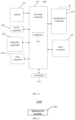
- its structure may also be as shown in FIG. 12 .
- an apparatus 1200 may include one or more of: a processing component 1202, a memory 1204, a power component 1206, a multimedia component 1208, an audio component 1210, an input/output (I/O) interface 1212, a sensor component 1214, and a communication component 1216.
- a processing component 1202 a memory 1204, a power component 1206, a multimedia component 1208, an audio component 1210, an input/output (I/O) interface 1212, a sensor component 1214, and a communication component 1216.
- the processing component 1202 generally controls the overall operations of the apparatus 1200, such as those associated with display, telephone calls, data communications, camera operations, and recording operations.
- the processing component 1202 may include one or more processors 1220 to execute instructions to complete all or part of the steps of the above method. Additionally, processing component 1202 may include one or more modules that facilitate interaction between processing component 1202 and other components. For example, processing component 1202 may include a multimedia module to facilitate interaction between multimedia component 1208 and processing component 1202.
- the memory 1204 is configured to store various types of data to support operations at the apparatus 1200. Examples of such data include instructions for any application or method operating on apparatus 1200, contact data, phonebook data, messages, pictures, videos, and the like.
- the memory 1204 can be implemented by any type of volatile or non-volatile storage device or their combination, such as a static random access memory (SRAM), an electrically erasable programmable read-only memory (EEPROM), an erasable programmable read only memory (EPROM), a programmable read only memory (PROM), a read only memory (ROM), a magnetic memory, a flash memory, a magnetic or an optical disk.
- SRAM static random access memory
- EEPROM electrically erasable programmable read-only memory
- EPROM erasable programmable read only memory
- PROM programmable read only memory
- ROM read only memory
- magnetic memory a magnetic memory
- flash memory a flash memory
- magnetic or an optical disk a magnetic or an optical disk.
- the power component 1206 provides power to various components of the apparatus 1200.
- Power components 1206 may include a power management system, one or more power supplies, and other components associated with generating, managing, and distributing power for apparatus 1200.
- the multimedia component 1208 includes a screen that provides an output interface between the apparatus 1200 and the user.
- the screen may include a liquid crystal display (LCD) and a touch panel (TP). If the screen includes a touch panel, the screen may be implemented as a touch screen to receive input signals from a user.
- the touch panel includes one or more touch sensors to sense touches, swipes, and gestures on the touch panel. The touch sensor may not only sense a boundary of a touch or swipe action, but also detect duration and pressure associated with the touch or swipe action.
- the multimedia component 1208 includes a front camera and/or a rear camera. When the apparatus 1200 is in an operation mode, such as a shooting mode or a video mode, the front camera and/or the rear camera can receive external multimedia data. Each front camera and rear camera can be a fixed optical lens system or have focal length and optical zoom capability.
- the audio component 1210 is configured to output and/or input audio signals.
- the audio component 1210 includes a microphone (MIC), which is configured to receive external audio signals when the apparatus 1200 is in operation modes, such as call mode, recording mode and voice recognition mode.
- the received audio signals may be further stored in the memory 1204 or sent via the communication component 1216.
- the audio component 1210 also includes a speaker for outputting audio signals.
- the I/O interface 1212 provides an interface between the processing component 1202 and a peripheral interface module, which may be a keyboard, a click wheel, a button, and the like. These buttons may include, but are not limited to: a home button, volume buttons, start button, and lock button.
- the sensor component 1214 includes one or more sensors for providing status assessments of various aspects of apparatus 1200.
- the sensor component 1214 can detect the open/closed state of the apparatus 1200, the relative positioning of components, such as the display and keypad of the apparatus 1200, and the sensor component 1214 can also detect a change in the position of the apparatus 1200 or a component of the apparatus 1200, the presence or absence of user contact with the apparatus 1200, the apparatus 1200 orientation or acceleration/deceleration and the temperature change of the apparatus 1200.
- the sensor component 1214 may include a proximity sensor configured to detect the presence of nearby objects in the absence of any physical contact.
- the sensor component 1214 may also include an optical sensor, such as a CMOS or CCD image sensor, for use in imaging applications.
- the sensor component 1214 may also include an acceleration sensor, a gyroscope sensor, a magnetic sensor, a pressure sensor or a temperature sensor.
- the communication component 1216 is configured to facilitate wired or wireless communication between the apparatus 1200 and other devices.
- the apparatus 1200 can access wireless networks based on communication standards, such as Wi-Fi, 4G or 5G, or their combination.
- the communication component 1216 receives broadcast signals or broadcast related information from an external broadcast management system via a broadcast channel.
- the communication component 1216 also includes a near field communication (NFC) module to facilitate short-range communication.
- NFC near field communication
- the NFC module may be implemented based on radio frequency identification (RFID) technology, infrared data association (IrDA) technology, ultra wide band (UWB) technology, bluetooth (BT) technology and other technologies.
- RFID radio frequency identification
- IrDA infrared data association
- UWB ultra wide band
- BT bluetooth
- apparatus 1200 may be implemented by one or more application specific integrated circuits (ASICs), digital signal processors (DSPs), digital signal processing devices (DSPDs), programmable logic devices (PLDs), field programmable gate arrays (FPGAs), controllers, microcontrollers, microprocessors or other electronic components, for performing the methods described above.
- ASICs application specific integrated circuits
- DSPs digital signal processors
- DSPDs digital signal processing devices
- PLDs programmable logic devices
- FPGAs field programmable gate arrays
- controllers microcontrollers, microprocessors or other electronic components, for performing the methods described above.
- non-transitory computer-readable storage medium including instructions, such as the memory 1204 including instructions.
- the above instructions can be executed by the processor 1220 of the apparatus 1200 to implement the above methods.
- the non-transitory computer readable storage medium may be a ROM, a random access memory (RAM), a CD-ROM, a magnetic tape, a floppy disk, an optical data storage device, and the like.
- the embodiments of the present disclosure also provide a communication apparatus, which can have the functions of the network device 101 in the above method embodiments, and is configured to performed the steps performed by the network device 101 provided by the above embodiment.
- the functions can be implemented by hardware, and can also be implemented by software or executing the corresponding software by the hardware.
- the hardware or the software includes one or more modules corresponding to the above functions.
- the communication apparatus 1300 shown in FIG. 13 may serve as the network device 101 involved in the above method embodiments, and perform the steps performed by the network device 101 in the above method embodiment.
- the communication apparatus 1300 shown in FIG. 13 includes a transceiver module 1302 for performing the steps performed by the network device 101 in the above method embodiments.
- an apparatus 1400 includes a memory 1401, a processor 1402, a transceiver component 1403, and a power component 1406.
- the memory 1401 is coupled with the processor 1402 and may be configured to store programs and data necessary for the communication apparatus 1400 to realize various functions.
- the processor 1402 is configured to support the communication apparatus 1400 to execute corresponding functions in the above method, and the functions can be realized by invoking the programs stored in the memory 1401.
- the transceiver component 1403 may be a wireless transceiver, and may be configured to support the communication apparatus 1400 to receive a signaling and/or data and send a signaling and/or data through a wireless air interface.
- the transceiver component 1403 may also be called a transceiver unit or a communication unit, and the transceiver component 1403 may include a radio frequency component 1404 and one or more antennas 1405, in which the radio frequency component 1404 may be a remote radio unit (RRU), which may be specifically used for transmission of radio frequency signals and conversion of radio frequency signals and baseband signals, and the one or more antennas 1405 may be specifically used for radiating and receiving radio frequency signals.
- RRU remote radio unit
- the processor 1402 can perform baseband processing on the data to be sent, and output the baseband signal to the radio frequency unit, and the radio frequency unit performs radio frequency processing on the baseband signal, and sends the radio frequency signal through an antenna in the form of electromagnetic waves.
- the radio frequency unit receives the radio frequency signal through an antenna, converts the radio frequency signal into a baseband signal, and outputs the baseband signal to the processor 1402, and the processor 1402 converts the baseband signal into data and processes the data.
- the user equipment When the user equipment receives the multiple pieces of configuration information carrying channel access modes, it selects a piece of configuration information among the multiple pieces of configuration information based on the multiple pieces of configuration information, and determines that the channel access mode of the user equipment is the channel access mode carried in the selected configuration information, so that when the user equipment receives the multiple channel access modes indicated by the network device, it can determine the reasonable channel access mode, and use the reasonable channel access mode for channel access, which saves the power consumption of the user equipment on the basis of ensuring saving and improving communication efficiency.
Landscapes
- Engineering & Computer Science (AREA)
- Computer Networks & Wireless Communication (AREA)
- Signal Processing (AREA)
- Mobile Radio Communication Systems (AREA)
Applications Claiming Priority (1)
| Application Number | Priority Date | Filing Date | Title |
|---|---|---|---|
| PCT/CN2022/071108 WO2023130469A1 (zh) | 2022-01-10 | 2022-01-10 | 一个确定信道接入方式的方法、装置及存储介质 |
Publications (2)
| Publication Number | Publication Date |
|---|---|
| EP4465718A1 true EP4465718A1 (de) | 2024-11-20 |
| EP4465718A4 EP4465718A4 (de) | 2025-02-26 |
Family
ID=87072978
Family Applications (1)
| Application Number | Title | Priority Date | Filing Date |
|---|---|---|---|
| EP22917939.5A Pending EP4465718A4 (de) | 2022-01-10 | 2022-01-10 | Verfahren und vorrichtung zur bestimmung eines kanalzugangsmodus und speichermedium |
Country Status (4)
| Country | Link |
|---|---|
| US (1) | US20250081234A1 (de) |
| EP (1) | EP4465718A4 (de) |
| CN (1) | CN116746258B (de) |
| WO (1) | WO2023130469A1 (de) |
Family Cites Families (11)
| Publication number | Priority date | Publication date | Assignee | Title |
|---|---|---|---|---|
| CN110740025B (zh) * | 2018-07-20 | 2021-03-02 | 维沃移动通信有限公司 | 一种信道检测指示方法、终端及网络设备 |
| CN110972105B (zh) * | 2018-09-28 | 2023-02-17 | 北京紫光展锐通信技术有限公司 | 通信方法、通信装置及用户设备 |
| CN111263440B (zh) * | 2018-11-30 | 2024-06-04 | 华为技术有限公司 | 一种防护频带指示方法及装置 |
| JP7317968B2 (ja) * | 2018-12-21 | 2023-07-31 | テレフオンアクチーボラゲット エルエム エリクソン(パブル) | アンライセンススペクトルで動作する方法およびデバイス |
| CN113228785B (zh) * | 2019-01-09 | 2024-07-05 | 富士通株式会社 | 上行控制信息的发送和接收方法以及装置 |
| CN112738905B (zh) * | 2019-02-21 | 2022-04-29 | 华为技术有限公司 | 随机接入的方法和装置 |
| JP7250958B2 (ja) * | 2019-04-29 | 2023-04-03 | アップル インコーポレイテッド | 無認可スペクトル上で動作する新無線システムにおけるアップリンク送信 |
| CN112312463A (zh) * | 2019-07-31 | 2021-02-02 | 华为技术有限公司 | 上报信道状态信息的方法和装置 |
| WO2021016973A1 (zh) * | 2019-07-31 | 2021-02-04 | Oppo广东移动通信有限公司 | 一种信息传输方法、电子设备及存储介质 |
| US11737135B2 (en) * | 2019-09-13 | 2023-08-22 | Samsung Electronics Co., Ltd. | Method and apparatus for uplink transmissions in frame-based equipment NR unlicensed |
| EP4164320A4 (de) * | 2020-06-05 | 2024-01-24 | Beijing Xiaomi Mobile Software Co., Ltd. | Kanalzugriffsverfahren, kanalzugriffsvorrichtung und speichermedium |
-
2022
- 2022-01-10 WO PCT/CN2022/071108 patent/WO2023130469A1/zh not_active Ceased
- 2022-01-10 US US18/727,326 patent/US20250081234A1/en active Pending
- 2022-01-10 EP EP22917939.5A patent/EP4465718A4/de active Pending
- 2022-01-10 CN CN202280000030.5A patent/CN116746258B/zh active Active
Also Published As
| Publication number | Publication date |
|---|---|
| WO2023130469A1 (zh) | 2023-07-13 |
| CN116746258B (zh) | 2025-04-22 |
| EP4465718A4 (de) | 2025-02-26 |
| CN116746258A (zh) | 2023-09-12 |
| US20250081234A1 (en) | 2025-03-06 |
Similar Documents
| Publication | Publication Date | Title |
|---|---|---|
| EP4625864A1 (de) | Verfahren und vorrichtung zur übertragung von kapazitätsinformationen und lesbares speichermedium | |
| US20250150810A1 (en) | Terminal capability transmission method and apparatus, and readable storage medium | |
| WO2023201730A1 (zh) | 一种传输用户设备能力的方法、装置及可读存储介质 | |
| CN115004822B (zh) | 一种上行切换的方法、装置及可读存储介质 | |
| EP4507390A1 (de) | Verfahren und vorrichtung zur übertragung von leistungsinformationen eines synchronisationssignals und lesbares speichermedium | |
| US20250220459A1 (en) | Method for transmitting measurement configuration information, apparatus and readable storage medium | |
| US20240357562A1 (en) | Method for transmitting time-frequency resource configuration information, communication apparatus and non-transitory computer-readable storage medium | |
| EP4513917A1 (de) | Verfahren und vorrichtung zur übertragung der fähigkeit einer benutzervorrichtung und lesbares speichermedium | |
| EP4554288A1 (de) | Verfahren und vorrichtung zur übertragung von anweisungsinformationen und lesbares speichermedium | |
| EP4465718A1 (de) | Verfahren und vorrichtung zur bestimmung eines kanalzugangsmodus und speichermedium | |
| EP4351077A1 (de) | Verfahren und vorrichtung zur übertragung der fähigkeit eines benutzergeräts und speichermedium | |
| WO2024000281A1 (zh) | 一种传输能力信息或配置信息的方法、装置及可读存储介质 | |
| WO2023193197A1 (zh) | 一种传输用户设备能力的方法、装置及可读存储介质 | |
| EP4554153A1 (de) | Messverfahren und -vorrichtung sowie vorrichtung und lesbares speichermedium | |
| CN115244890B (zh) | 一种传输配置信息的方法、装置及可读存储介质 | |
| US20250081203A1 (en) | Monitoring method and device, and readable storage medium | |
| EP4456631A1 (de) | Verfahren und vorrichtung zur bestimmung des timing-wertes und lesbares speichermedium | |
| US20250150944A1 (en) | Method and apparatus for monitoring downlink bandwidth part, and readable storage medium | |
| EP4618629A1 (de) | Aufweckverfahren und -vorrichtung für netzwerkvorrichtung, vorrichtung und speichermedium | |
| EP4529312A1 (de) | Messspaltkonfigurationsverfahren, vorrichtung und lesbares speichermedium | |
| US20250062873A1 (en) | Method and apparatus for determining pilot, and readable storage medium | |
| US20250240079A1 (en) | Method and apparatus for determining detection beam of unlicensed uplink channel | |
| EP4319368A1 (de) | Verfahren und vorrichtung zur übertragung von planungsintervallinformationen und lesbares speichermedium | |
| WO2023245627A1 (zh) | 一种传输配置信息的方法、装置、设备及可读存储介质 | |
| EP4654706A1 (de) | Verfahren und vorrichtung zur übertragung von anzeigeinformationen und lesbares speichermedium |
Legal Events
| Date | Code | Title | Description |
|---|---|---|---|
| STAA | Information on the status of an ep patent application or granted ep patent |
Free format text: STATUS: THE INTERNATIONAL PUBLICATION HAS BEEN MADE |
|
| PUAI | Public reference made under article 153(3) epc to a published international application that has entered the european phase |
Free format text: ORIGINAL CODE: 0009012 |
|
| STAA | Information on the status of an ep patent application or granted ep patent |
Free format text: STATUS: REQUEST FOR EXAMINATION WAS MADE |
|
| 17P | Request for examination filed |
Effective date: 20240731 |
|
| AK | Designated contracting states |
Kind code of ref document: A1 Designated state(s): AL AT BE BG CH CY CZ DE DK EE ES FI FR GB GR HR HU IE IS IT LI LT LU LV MC MK MT NL NO PL PT RO RS SE SI SK SM TR |
|
| REG | Reference to a national code |
Ref country code: DE Ref legal event code: R079 Free format text: PREVIOUS MAIN CLASS: H04W0072040000 Ipc: H04W0074000000 |
|
| A4 | Supplementary search report drawn up and despatched |
Effective date: 20250128 |
|
| RIC1 | Information provided on ipc code assigned before grant |
Ipc: H04W 74/0808 20240101ALI20250122BHEP Ipc: H04W 74/00 20090101AFI20250122BHEP |
|
| DAV | Request for validation of the european patent (deleted) | ||
| DAX | Request for extension of the european patent (deleted) |