EP4456631A1 - Verfahren und vorrichtung zur bestimmung des timing-wertes und lesbares speichermedium - Google Patents
Verfahren und vorrichtung zur bestimmung des timing-wertes und lesbares speichermedium Download PDFInfo
- Publication number
- EP4456631A1 EP4456631A1 EP21968559.1A EP21968559A EP4456631A1 EP 4456631 A1 EP4456631 A1 EP 4456631A1 EP 21968559 A EP21968559 A EP 21968559A EP 4456631 A1 EP4456631 A1 EP 4456631A1
- Authority
- EP
- European Patent Office
- Prior art keywords
- scs
- timer
- value
- candidate values
- sssg
- Prior art date
- Legal status (The legal status is an assumption and is not a legal conclusion. Google has not performed a legal analysis and makes no representation as to the accuracy of the status listed.)
- Pending
Links
Images

Classifications
-
- H—ELECTRICITY
- H04—ELECTRIC COMMUNICATION TECHNIQUE
- H04W—WIRELESS COMMUNICATION NETWORKS
- H04W52/00—Power management, e.g. Transmission Power Control [TPC] or power classes
- H04W52/02—Power saving arrangements
- H04W52/0209—Power saving arrangements in terminal devices
- H04W52/0261—Power saving arrangements in terminal devices managing power supply demand, e.g. depending on battery level
-
- H—ELECTRICITY
- H04—ELECTRIC COMMUNICATION TECHNIQUE
- H04W—WIRELESS COMMUNICATION NETWORKS
- H04W56/00—Synchronisation arrangements
-
- H—ELECTRICITY
- H04—ELECTRIC COMMUNICATION TECHNIQUE
- H04W—WIRELESS COMMUNICATION NETWORKS
- H04W52/00—Power management, e.g. Transmission Power Control [TPC] or power classes
- H04W52/02—Power saving arrangements
- H04W52/0209—Power saving arrangements in terminal devices
- H04W52/0212—Power saving arrangements in terminal devices managed by the network, e.g. network or access point is leader and terminal is follower
- H04W52/0216—Power saving arrangements in terminal devices managed by the network, e.g. network or access point is leader and terminal is follower using a pre-established activity schedule, e.g. traffic indication frame
-
- H—ELECTRICITY
- H04—ELECTRIC COMMUNICATION TECHNIQUE
- H04L—TRANSMISSION OF DIGITAL INFORMATION, e.g. TELEGRAPHIC COMMUNICATION
- H04L5/00—Arrangements affording multiple use of the transmission path
- H04L5/003—Arrangements for allocating sub-channels of the transmission path
- H04L5/0053—Allocation of signalling, i.e. of overhead other than pilot signals
-
- H—ELECTRICITY
- H04—ELECTRIC COMMUNICATION TECHNIQUE
- H04L—TRANSMISSION OF DIGITAL INFORMATION, e.g. TELEGRAPHIC COMMUNICATION
- H04L5/00—Arrangements affording multiple use of the transmission path
- H04L5/0091—Signalling for the administration of the divided path, e.g. signalling of configuration information
- H04L5/0094—Indication of how sub-channels of the path are allocated
-
- H—ELECTRICITY
- H04—ELECTRIC COMMUNICATION TECHNIQUE
- H04W—WIRELESS COMMUNICATION NETWORKS
- H04W76/00—Connection management
- H04W76/20—Manipulation of established connections
- H04W76/28—Discontinuous transmission [DTX]; Discontinuous reception [DRX]
-
- Y—GENERAL TAGGING OF NEW TECHNOLOGICAL DEVELOPMENTS; GENERAL TAGGING OF CROSS-SECTIONAL TECHNOLOGIES SPANNING OVER SEVERAL SECTIONS OF THE IPC; TECHNICAL SUBJECTS COVERED BY FORMER USPC CROSS-REFERENCE ART COLLECTIONS [XRACs] AND DIGESTS
- Y02—TECHNOLOGIES OR APPLICATIONS FOR MITIGATION OR ADAPTATION AGAINST CLIMATE CHANGE
- Y02D—CLIMATE CHANGE MITIGATION TECHNOLOGIES IN INFORMATION AND COMMUNICATION TECHNOLOGIES [ICT], I.E. INFORMATION AND COMMUNICATION TECHNOLOGIES AIMING AT THE REDUCTION OF THEIR OWN ENERGY USE
- Y02D30/00—Reducing energy consumption in communication networks
- Y02D30/70—Reducing energy consumption in communication networks in wireless communication networks
Definitions
- the present disclosure relates to the field of wireless communication technology, and in particular to a method and an apparatus for determining a timer value, and a readable storage medium.
- a timer value for monitoring a physical downlink control channel (PDCCH) in an active downlink bandwidth part (DL BWP) is selected from candidate timer values.
- PDCCH physical downlink control channel
- DL BWP active downlink bandwidth part
- the present disclosure provides a method and an apparatus for determining a timer value, and a readable storage medium.
- a method for determining a timer candidate value is provided, performed by a user equipment (UE).
- the method includes: determining, based on a first subcarrier spacing (SCS), timer candidate values for search space set group (SSSG) switch corresponding to the first SCS, in which the first SCS is greater than or equal to 240KHz.
- SCS subcarrier spacing
- SSSG search space set group
- the UE may independently determine, based on the first SCS, the candidate timer values for SSSG switch corresponding to the first SCS, which thus obtains a premise for determining the timer value for monitoring the downlink channel. After successfully selecting a reasonable timer value for monitoring the downlink channel, energy can be effectively saved.
- a maximum value among the timer candidate values is greater than a first value
- the first value is a maximum timer duration for SSSG switch corresponding to a second SCS
- the second SCS is smaller than the first SCS
- a maximum value among the timer candidate values is N times a maximum timer candidate value corresponding to a second SCS, and the second SCS is smaller than the first SCS.
- the timer candidate values include N times of all or part of timer candidate values corresponding to a second SCS, and the second SCS is smaller than the first SCS.
- N is a ratio of the first SCS to the second SCS.
- the second SCS is 120KHz.
- corresponding timer candidate values for SSSG switch are the same or different.
- a method for determining a timer candidate value is provided, performed by a network device.
- the method includes: determining, based on a first SCS, timer candidate values for SSSG switch corresponding to the first SCS, in which the first SCS is greater than or equal to 240KHz.
- the network device may independently determine, based on the first SCS, the candidate timer values for SSSG switch corresponding to the first SCS, which thus obtains the premise for determining the timer value for monitoring the downlink channel. After successfully selecting a reasonable timer value for monitoring the downlink channel, energy may be effectively saved.
- a maximum value among the timer candidate values is greater than a first value
- the first value is a maximum timer duration for SSSG switch corresponding to a second SCS
- the second SCS is smaller than the first SCS
- a maximum value among the timer candidate values is N times a maximum timer candidate value corresponding to a second SCS, and the second SCS is smaller than the first SCS.
- the timer candidate values include N times of all or part of timer candidate values corresponding to a second SCS, and the second SCS is smaller than the first SCS.
- N is a ratio of the first SCS to the second SCS.
- the second SCS is 120KHz.
- corresponding timer candidate values for SSSG switch are the same or different.
- a method for determining a timer value for monitoring a downlink channel includes: receiving timer value indication information from a network device, in which the timer value indication information indicates a timer value for monitoring the downlink channel.
- the timer value is one of timer candidate values for SSSG switch corresponding to a first SCS, the timer candidate values are determined by the network device based on the first SCS, and the first SCS is greater than or equal to 240KHz.
- a maximum value among the timer candidate values is greater than a first value
- the first value is a maximum timer duration corresponding to a second SCS for SSSG switch
- the second SCS is smaller than the first SCS
- a maximum value among the timer candidate values is N times a maximum timer candidate value corresponding to the second SCS.
- the timer candidate values include N times of all or part of timer candidate values corresponding to the second SCS.
- N is a ratio of the first SCS to the second SCS.
- the second SCS is 120KHz.
- corresponding timer candidate values for SSSG switch are the same or different.
- the first SCS is 480KHz.
- the first SCS is 960KHz.
- the downlink channel is a physical downlink control channel (PDCCH).
- PDCH physical downlink control channel
- a method for determining a timer value for monitoring a downlink channel includes: determining, based on a first SCS, timer candidate values for SSSG switch corresponding to the first SCS; selecting a timer candidate value from the timer candidate values; and sending timer value indication information to a UE, in which the timer value indication information indicates a timer value for monitoring the downlink channel, the timer value indication information corresponds to the timer candidate value selected.
- the first SCS is greater than or equal to 240KHz.
- a maximum value among the timer candidate values is greater than a first value
- the first value is a maximum timer duration corresponding to a second SCS for SSSG switch
- the second SCS is smaller than the first SCS
- a maximum value among the timer candidate values is N times a maximum timer candidate value corresponding to a second SCS.
- the timer candidate values include N times of all or part of timer candidate values corresponding to the second SCS.
- N is a ratio of the first SCS to the second SCS.
- the second SCS is 120KHz.
- corresponding timer candidate values for SSSG switch are the same or different.
- the first SCS is 480KHz.
- the first SCS is 960KHz.
- the downlink channel is a PDCCH.
- a communication apparatus may be used to execute the steps performed by the UE in the above-mentioned first aspect or any possible design of the first aspect.
- the UE may implement the functions in the above methods in the form of a hardware structure, a software module, or the hardware structure plus the software module.
- the communication apparatus includes a processing module.
- the processing module is configured to determine, based on a first SCS, timer candidate values for SSSG switch corresponding to the first SCS, in which the first SCS is greater than or equal to 240KHz.
- a communication apparatus may be used to execute the steps performed by the network device in the above-mentioned third aspect or any possible design of the third aspect.
- the network device may implement the functions in the above methods in the form of a hardware structure, a software module, or the hardware structure plus the software module.
- the communication apparatus includes a transceiver module and a processing module.
- the transceiver module is configured to receive timer value indication information from a network device, in which the timer value indication information indicates a timer value for monitoring the downlink channel.
- the timer value is one of timer candidate values for SSSG switch corresponding to a first SCS, the timer candidate values are determined by the network device based on the first SCS, and the first SCS is greater than or equal to 240KHz.
- a communication apparatus may be used to execute the steps performed by the network device in the above-mentioned second aspect or any possible design of the second aspect.
- the network device may implement the functions in the above methods in the form of a hardware structure, a software module, or the hardware structure plus the software module.
- the communication apparatus includes a processing module.
- the processing module is configured to determine, based on a first SCS, timer candidate values for SSSG switch corresponding to the first SCS, in which the first SCS is greater than or equal to 240KHz.
- a communication apparatus may be used to execute the steps performed by the network device in the above-mentioned fourth aspect or any possible design of the fourth aspect.
- the network device may implement the functions in the above methods in the form of a hardware structure, a software module, or the hardware structure plus the software module.
- the communication apparatus includes a transceiver module and a processing module.
- the processing module is configured to determine, based on a first SCS, timer candidate values for SSSG switch corresponding to the first SCS; and select a timer candidate value from the timer candidate values.
- the transceiver module is configured to send timer value indication information to a user equipment, in which the timer value indication information indicates a timer value for monitoring the downlink channel, and the timer value indication information corresponds to the timer candidate value selected.
- the first SCS is greater than or equal to 240KHz.
- a communication device including: a processor, and a memory storing computer programs.
- the computer programs are executed by the processor, the steps according to any possible design of the first or third aspect (which is performed by the UE) are implemented.
- a communication device including: a processor, and a memory storing computer programs.
- the computer programs are executed by the processor, the steps according to any possible design of the second or fourth aspect (which is performed by the network device) are implemented.
- a computer-readable storage medium having stored instructions (or computer programs, programs) which when called and executed by a computer, enable the computer to execute the first aspect or any possible design of the first aspect, or execute the third aspect or any possible design of the third aspect.
- a computer-readable storage medium having stored instructions (or computer programs, programs) which when called and executed by a computer, enable the computer to execute the second aspect or any possible design of the second aspect, or execute the fourth aspect or any possible design of the fourth aspect.
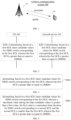
- a method for determining a timer value may be applied to a wireless communication system 100, which may include but is not limited to a network device 101 and a UE 102.
- the UE 102 is configured to support carrier aggregation.
- the UE 102 may be connected to multiple carrier components of the network device 101, including a primary carrier component and one or more secondary carrier components.
- the application scenarios of the wireless communication system 100 include but are not limited to a long term evolution (LTE) system, a LTE frequency division duplex (FDD) system, a LTE time division duplex (TDD) system, a worldwide interoperability for micro wave access (WiMAX) communication system, a cloud radio access network (CRAN) system, a future fifth-generation (5G) system, a new radio (NR) communication system or a future evolved public land mobile network (PLMN) system, etc.
- LTE long term evolution
- FDD frequency division duplex
- TDD LTE time division duplex
- WiMAX worldwide interoperability for micro wave access
- CDRF cloud radio access network
- 5G fifth-generation
- NR new radio
- PLMN future evolved public land mobile network
- the UE 102 shown above may be a user device, a terminal, an access terminal, a terminal unit, a terminal station, a mobile station (MS), a remote station, a remote terminal, a mobile terminal, a wireless communication device, a terminal agent or a customer equipment, etc.
- the UE 102 may have a wireless transceiver function, and may communicate (such as wireless communication) with one or more network devices 101 of one or more communication systems, and receive network services provided by the network device 101.
- the network device 101 here includes but is not limited to the base station shown in the figure.
- the UE 102 may be a cellular phone, a cordless phone, a session initiation protocol (SIP) phone, a wireless local loop (WLL) station, a personal digital assistant (PDA) device, a handheld device with a wireless communication function, a computing device or other processing device connected to a wireless modem, a vehicle-mounted device, a wearable device, a user device in a future 5G network, or a user device in a future evolved PLMN network, etc.
- SIP session initiation protocol
- WLL wireless local loop
- PDA personal digital assistant
- the network device 101 may be an access network device (or an access network node).
- the access network device refers to a device that provides network access functions, such as a radio access network (RAN) base station and the like.
- the network device may specifically include a base station (BS) device, or include a BS device and a radio resource management device for controlling the BS device, etc.
- the network device may also include a relay station (relay device), an access point, a base station in a future 5G network, a base station in a future evolved PLMN network, or an NR base station, etc.
- the network device may be a wearable device or a vehicle-mounted device.
- the network device may also be a communication chip having a communication module.
- the network device 101 includes but is not limited to: a next-generation base station (gnodeB, gNB) in 5G, an evolved node B (eNB) in an LTE system, a radio network controller (RNC), a node B (NB) in a WCDMA system, a wireless controller under a CRAN system, a base station controller (BSC), a base transceiver station (BTS) in a GSM system or a CDMA system, a home base station (for example, home evolved nodeB, or home node B, HNB), a baseband unit (BBU), a transmitting and receiving point (TRP), a transmitting point (TP) or a mobile switching center, etc.
- a next-generation base station eNB
- eNB evolved node B
- RNC radio network controller
- NB node B
- BSC base station controller
- BTS base transceiver station
- TP transmitting point
- mobile switching center etc.
- the corresponding candidate timer values for SSSG switch when the SCS is 15 KHz, include: ⁇ 1, 2, 3, ... , 20, 30, 40, 50, 60, 80, 100 ⁇ , where the ⁇ ...' represents all integer values between 4 and 19.
- the corresponding candidate timer values for SSSG switch include: ⁇ 1, 2, 3, ... , 40, 60, 80, 100, 100, 160, 200 ⁇ , where the ⁇ ...' represents all values between 4 and 39.
- the corresponding candidate timer values for SSSG switch include: ⁇ 1, 2, 3, ..., 80, 120, 160, 200, 240, 320, 400 ⁇ , where the ⁇ ...' represents all values between 4 and 79.
- the corresponding candidate timer values for SSSG switch when the SCS is 120 KHz, include: ⁇ 1, 2, 3, ..., 160, 240, 320, 400, 480, 640, 800 ⁇ , where the ⁇ ...' represents all values between 4 and 159.
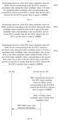
- FIG. 2 is a flowchart illustrating a method for determining a timer candidate value according to an exemplary embodiment. As shown in FIG. 2 , the method includes the following steps 201-202.
- the network device 101 determines, based on a first SCS, timer candidate values for SSSG switch corresponding to the first SCS.
- the first SCS is greater than or equal to 240KHz.
- the UE101 determines, based on a first SCS, timer candidate values for SSSG switch corresponding to the first SCS.
- the first SCS is greater than or equal to 240KHz.
- the downlink channel is a PDCCH.
- the first SCS is 240KHz.
- the first SCS is 480KHz.
- the first SCS is 960KHz.
- the first SCS is greater than 960 KHz.
- a maximum value among the timer candidate values is greater than a first value, the first value is a maximum timer duration corresponding to a second SCS for SSSG switch.
- the second SCS is 120KHz
- a maximum timer duration for SSSG switch corresponding to 120KHz is 800 slots
- the first value is 800 slots.
- the maximum value among the timer candidate values corresponding to the first SCS is greater than 800 slots.
- the first SCS is 960KHz
- the maximum value among the timer candidate values corresponding to the first SCS is greater than 800 slots.
- the maximum value among the timer candidate values is N times the maximum timer candidate value corresponding to the second SCS.
- N is 2. In another example, N is four. In yet another example, N is 8. In yet another example, N is 16.
- the second SCS is 120KHz
- the maximum timer duration for SSSG switch corresponding to 120KHz is 800 slots.
- the maximum value among the timer candidate values corresponding to the first SCS may be 1600 slots, 3200 slots, 6400 slots, etc.
- the maximum value among the timer candidate values corresponding to the first SCS may be 1600 slots, 3200 slots, 6400 slots, etc.
- the timer candidate values include N times of all timer candidate values corresponding to the second SCS, and the second SCS is smaller than the first SCS.
- a number of timer candidate values for SSSG switch corresponding to the first SCS is the same as a number of timer candidate values for SSSG switch corresponding to the second SCS, and the timer candidate values for SSSG switch corresponding to the first SCS include N times of each timer candidate value for SSSG switch corresponding to the second SCS.
- the timer candidate values include N times of a part of timer candidate values corresponding to a second SCS, and the second SCS is smaller than the first SCS.
- a number of timer candidate values for SSSG switch corresponding to the first SCS is smaller than a number of timer candidate values for SSSG switch corresponding to the second SCS, and the timer candidate values for SSSG switch corresponding to the first SCS are a part of the timer candidate values for SSSG switch corresponding to the second SCS.
- the timer candidate values for SSSG switch corresponding to the first SCS include N times of a part of the timer candidate values for SSSG switch corresponding to the second SCS.
- the timer candidate values for SSSG switch corresponding to the first SCS includes 4 times of the timer candidate values for SSSG switch corresponding to the second SCS.
- the second SCS is 120KHz and the first SCS is 480KHz.
- the timer candidate values for SSSG switch corresponding to the second SCS include: ⁇ 1, 2, 3, ..., 160, 240, 320, 400, 480, 640, 800 ⁇ , where the ⁇ ...' represents all values between 4 and 159.
- the timer candidate values for SSSG switch corresponding to the first SCS may be selected from ⁇ 4, 8, 12, ..., 640, 960, 1280, 1600, 1920, 2560, 3200 ⁇ .
- the timer candidate values for SSSG switch corresponding to the first SCS may include ⁇ 4, 160, 640, 960, 1280, 1600, 2560, 3200 ⁇ .
- the timer candidate values for SSSG switch corresponding to the first SCS include 8 times of the timer candidate values for SSSG switch corresponding to the second SCS.
- the second SCS is 120KHz and the first SCS is 960KHz.
- the timer candidate values for SSSG switch corresponding to the second SCS include: ⁇ 1, 2, 3, ..., 160, 240, 320, 400, 480, 640, 800 ⁇ , where the ⁇ ...' represents all values between 4 and 159.
- the timer candidate values for SSSG switch corresponding to the first SCS may be selected from ⁇ 8, 16, 24, ... , 1280, 1920, 2560, 3200, 5120, 6400 ⁇ .
- the timer candidate values for SSSG switch corresponding to the first SCS may include ⁇ 8, 320, 1280, 1920, 2560, 3200, 5120, 6400 ⁇ .
- N is a ratio of the first SCS to the second SCS.
- the second SCS is 120KHz, and N is 4 when the first SCS is 480KHz; N is 8 when the first SCS is 960KHz.
- the corresponding timer candidate values for SSSG switch are the same or different.
- both the network device and the UE determine, based on the first SCS, the timer candidate values for SSSG switch corresponding to the first SCS, according to the same agreement in a protocol, so that the timer candidate values determined by the network device and the UE are the same.
- the network device and the UE may independently determine, based on the first SCS, the timer candidate values for SSSG switch corresponding to the first SCS, which thus obtains the premise for determining the timer value for monitoring the downlink channel. After successfully selecting a reasonable timer value for monitoring the downlink channel, energy saving may be effectively achieved.
- FIG. 3 is a flowchart illustrating a method for determining a timer value according to an exemplary embodiment. As shown in FIG. 3 , the method includes the following step S301.
- timer candidate values for SSSG switch corresponding to a first SCS are determined based on the first SCS, in which he first SCS is greater than or equal to 240KHz.
- the downlink channel is a PDCCH.
- the first SCS is 240KHz.
- the first SCS is 480KHz.
- the first SCS is 960KHz.
- the first SCS is greater than 960 KHz.
- a maximum value among the timer candidate values is greater than a first value.
- the first value is a maximum timer duration for SSSG switch corresponding to a second SCS, and the second SCS is smaller than the first SCS.
- the second SCS is 120KHz
- the maximum timer duration for SSSG switch corresponding to 120KHz is 800 slots
- the first value is 800 slots.
- the first SCS is 480KHz
- the maximum value among the timer candidate values corresponding to the first SCS is greater than 800 slots.
- the first SCS is 960KHz
- the maximum value among the timer candidate values corresponding to the first SCS is greater than 800 slots.
- the second SCS is 120 KHz
- the corresponding timer candidate values for SSSG switch include: ⁇ 1, 2, 3, ..., 160, 240, 320, 400, 480, 640, 800 ⁇ , where the ⁇ ...' represents all values between 4 and 159.
- the maximum timer duration corresponding to 120KHz for SSSG switch is 800 slots, and the first value is 800.
- the maximum value among the timer candidate values for SSSG switch corresponding to the first SCS is greater than said first value.
- the first SCS is 480KHz
- the corresponding timer candidate values for SSSG switch include ⁇ 4,160,640,960,1280,1600,2560,3200 ⁇ , where the maximum value 3200 among the timer candidate values for SSSG switch corresponding to the first SCS is greater than the first value 800, which complies with the limitation that "the maximum value among the timer candidate values for SSSG switch corresponding to the first SCS is greater than said first value".
- the second SCS is 120 KHz
- the corresponding timer candidate values for SSSG switch include: ⁇ 1, 2, 3, ..., 160, 240, 320, 400, 480, 640, 800 ⁇ , where the ⁇ ...' represents all values between 4 and 159.
- the maximum timer duration for SSSG switch corresponding to 120KHz is 800 slots, and the first value is 800.
- the maximum value among the timer candidate values for SSSG switch corresponding to the first SCS is greater than said first value.
- the first SCS is 960KHz
- the corresponding timer candidate values for SSSG switch include ⁇ 8, 320, 1280, 1920, 2560, 3200, 5120, 6400 ⁇ , where the maximum value 6400 among the timer candidate values for SSSG switch corresponding to the first SCS is greater than the first value 800, which complies with the limitation that "the maximum value among the timer candidate values for SSSG switch corresponding to the first SCS is greater than said first value".
- a maximum value among the timer candidate values is N times a maximum timer candidate value corresponding to a second SCS, and the second SCS is smaller than the first SCS.
- N is 2. In another example, N is four. In yet another example, N is 8. In yet another example, N is 16.
- the second SCS is 120KHz
- the maximum timer duration for SSSG switch corresponding to 120KHz is 800 slots.
- the maximum value among the timer candidate values corresponding to the first SCS may be 1600 slots, 3200 slots, 6400 slots, etc.
- the maximum value among the timer candidate values corresponding to the first SCS may be 1600 slots, 3200 slots, 6400 slots, etc.
- the timer candidate values include N times of all or part of timer candidate values corresponding to a second SCS, and the second SCS is smaller than the first SCS.
- a number of timer candidate values for SSSG switch corresponding to the first SCS is the same as a number of timer candidate values for SSSG switch corresponding to the second SCS, and the timer candidate values for SSSG switch corresponding to the first SCS include N times of each timer candidate value for SSSG switch corresponding to the second SCS.
- the timer candidate values include N times of a part of timer candidate values corresponding to a second SCS, and the second SCS is smaller than the first SCS.
- a number of timer candidate values for SSSG switch corresponding to the first SCS is smaller than a number of timer candidate values for SSSG switch corresponding to the second SCS, and the timer candidate values for SSSG switch corresponding to the first SCS are part of the timer candidate values for SSSG switch corresponding to the second SCS.
- the timer candidate values for SSSG switch corresponding to the first SCS include N times of a part of the timer candidate values for SSSG switch corresponding to the second SCS.
- the timer candidate values for SSSG switch corresponding to the first SCS include 4 times of the timer candidate values for SSSG switch corresponding to the second SCS.
- the second SCS is 120KHz and the first SCS is 480KHz.
- the timer candidate values for SSSG switch corresponding to the second SCS include: ⁇ 1, 2, 3, ..., 160, 240, 320, 400, 480, 640, 800 ⁇ , where the ⁇ ...' represents all values between 4 and 159.
- the timer candidate values for SSSG switch corresponding to the first SCS may be selected from ⁇ 4, 8, 12,..., 640, 960, 1280, 1600, 1920, 2560, 3200 ⁇ .
- the timer candidate values for SSSG switch corresponding to the first SCS may include ⁇ 4, 160, 640, 960, 1280, 1600, 2560, 3200 ⁇ .
- the timer candidate values for SSSG switch corresponding to the first SCS include 8 times of the timer candidate values for SSSG switch corresponding to the second SCS.
- the second SCS is 120KHz and the first SCS is 960KHz.
- the timer candidate values for SSSG switch corresponding to the second SCS include: ⁇ 1, 2, 3, ..., 160, 240, 320, 400, 480, 640, 800 ⁇ , where the ⁇ ...' represents all values between 4 and 159.
- the timer candidate values for SSSG switch corresponding to the first SCS may be selected from ⁇ 8, 16, 24,..., 1280, 1920, 2560, 3200, 5120, 6400 ⁇ .
- the timer candidate values for SSSG switch corresponding to the first SCS may include ⁇ 8, 320, 1280, 1920, 2560, 3200, 5120, 6400 ⁇ .
- N is the ratio of the first SCS to the second SCS.
- the second SCS is 120KHz, and N is 4 when the first SCS is 480KHz; N is 8 when the first SCS is 960KHz.
- the corresponding timer candidate values for SSSG switch are the same or different.
- the network device and the UE may independently determine, based on the first SCS, the timer candidate values for SSSG switch corresponding to the first SCS, which thus obtains the premise for determining the timer value for monitoring the downlink channel. After successfully selecting a reasonable timer value for monitoring the downlink channel, energy saving may be effectively achieved.
- FIG. 4 is a flowchart illustrating a method for determining a timer candidate value according to an exemplary embodiment. As shown in FIG. 4 , the method includes the following step S401.
- timer candidate values for SSSG switch corresponding to a first SCS are determined based on the first SCS, in which a maximum value among the timer candidate values is greater than a first value, the first value is a maximum timer duration for SSSG switch corresponding to a second SCS, and the second SCS is smaller than the first SCS; the first SCS is greater than or equal to 240KHz
- the second SCS is 120 KHz
- the maximum timer duration for SSSG switch corresponding to 120 KHz is 800 slots, so the first value is 800.
- the first SCS is 480KHz
- the maximum value among the timer candidate values corresponding to the first SCS is greater than 800 slots.
- the first SCS is 960KHz
- the maximum value among the timer candidate values corresponding to the first SCS is greater than 800 slots.
- the second SCS is 60 KHz
- the maximum timer duration for SSSG switch corresponding to 60 KHz is 400 slots, so the first value is 400.
- the first SCS is 480KHz
- the maximum value among the timer candidate values corresponding to the first SCS is greater than 400 slots.
- the first SCS is 960KHz
- the maximum value among the timer candidate values corresponding to the first SCS is greater than 400 slots.
- the second SCS is 120 KHz
- the corresponding timer candidate values for SSSG switch include: ⁇ 1, 2, 3, ..., 160, 240, 320, 400, 480, 640, 800 ⁇ , where the ⁇ ...' represents all values between 4 and 159.
- the maximum timer duration for SSSG switch corresponding to 120KHz is 800 slots, and the first value is 800.
- the maximum value among the timer candidate values for SSSG switch corresponding to the first SCS is greater than said first value.
- the first SCS is 480KHz
- the corresponding timer candidate values for SSSG switch include ⁇ 4,160,640,960,1280,1600,2560,3200 ⁇ , where the maximum value 3200 among the timer candidate values for SSSG switch corresponding to the first SCS is greater than the first value 800, which complies with the limitation that "the maximum value among the timer candidate values for SSSG switch corresponding to the first SCS is greater than said first value".
- the second SCS is 120 KHz
- the corresponding timer candidate values for SSSG switch include: ⁇ 1, 2, 3, ..., 160, 240, 320, 400, 480, 640, 800 ⁇ , where the ⁇ ...' represents all values between 4 and 159.
- the maximum timer duration corresponding to 120KHz for SSSG switch is 800 slots, and the first value is 800.
- the maximum value among the timer candidate values for SSSG switch corresponding to the first SCS is greater than said first value.
- the first SCS is 960KHz
- the corresponding timer candidate values for SSSG switch include ⁇ 8, 320, 1280, 1920, 2560, 3200, 5120, 6400 ⁇ , where the maximum value 6400 among the timer candidate values for SSSG switch corresponding to the first SCS is greater than the first value 800, which complies with the limitation that "the maximum value among the timer candidate values for SSSG switch corresponding to the first SCS is greater than said first value".
- the downlink channel is a PDCCH.
- the first SCS is 240KHz.
- the first SCS is 480KHz.
- the first SCS is 960KHz.
- the first SCS is greater than 960 KHz.
- a maximum value among the timer candidate values is N times a maximum timer candidate value corresponding to a second SCS, and the second SCS is smaller than the first SCS.
- N is 2. In another example, N is four. In yet another example, N is 8. In yet another example, N is 16.
- the second SCS is 120KHz
- the maximum timer duration for SSSG switch corresponding to 120KHz is 800 slots.
- the maximum value among the timer candidate values corresponding to the first SCS may be 1600 slots, 3200 slots, 6400 slots, etc.
- the maximum value among the timer candidate values corresponding to the first SCS may be 1600 slots, 3200 slots, 6400 slots, etc.
- the timer candidate values include N times of all timer candidate values corresponding to a second SCS, and the second SCS is smaller than the first SCS.
- a number of timer candidate values for SSSG switch corresponding to the first SCS is the same as a number of timer candidate values for SSSG switch corresponding to the second SCS, and the timer candidate values for SSSG switch corresponding to the first SCS include N times of each timer candidate value for SSSG switch corresponding to the second SCS.
- the timer candidate values include N times of a part of timer candidate values corresponding to a second SCS, and the second SCS is smaller than the first SCS.
- a number of timer candidate values for SSSG switch corresponding to the first SCS is smaller than a number of timer candidate values for SSSG switch corresponding to the second SCS, and the timer candidate values for SSSG switch corresponding to the first SCS are part of the timer candidate values for SSSG switch corresponding to the second SCS.
- the timer candidate values for SSSG switch corresponding to the first SCS include N times of a part of the timer candidate values for SSSG switch corresponding to the second SCS.
- the timer candidate value for SSSG switch corresponding to the first SCS includes 4 times the timer candidate values for SSSG switch corresponding to the second SCS.
- the second SCS is 120KHz and the first SCS is 480KHz.
- the timer candidate values for SSSG switch corresponding to the second SCS include: ⁇ 1, 2, 3, ..., 160, 240, 320, 400, 480, 640, 800 ⁇ , where the ⁇ ...' represents all values between 4 and 159.
- the timer candidate values for SSSG switch corresponding to the first SCS may be selected from ⁇ 4, 8, 12,..., 640, 960, 1280, 1600, 1920, 2560, 3200 ⁇ .
- the timer candidate values for SSSG switch corresponding to the first SCS may include ⁇ 4, 160, 640, 960, 1280, 1600, 2560, 3200 ⁇ .
- the timer candidate values for SSSG switch corresponding to the first SCS include 8 times of the timer candidate values for SSSG switch corresponding to the second SCS.
- the second SCS is 120KHz and the first SCS is 960KHz.
- the timer candidate values for SSSG switch corresponding to the second SCS include: ⁇ 1, 2, 3, ..., 160, 240, 320, 400, 480, 640, 800 ⁇ , where the ⁇ ...' represents all values between 4 and 159.
- the timer candidate values for SSSG switch corresponding to the first SCS may be selected from ⁇ 8, 16, 24,..., 1280, 1920, 2560, 3200, 5120, 6400 ⁇ .
- the timer candidate values for SSSG switch corresponding to the first SCS may include ⁇ 8, 320, 1280, 1920, 2560, 3200, 5120, 6400 ⁇ .
- N is a ratio of the first SCS to the second SCS.
- N is 2. In another example, N is four. In yet another example, N is 8. In yet another example, N is 16.
- the second SCS is 120KHz, and N is 4 when the first SCS is 480KHz; N is 8 when the first SCS is 960KHz.
- the corresponding timer candidate values for SSSG switch are the same or different.
- the network device and the user device can independently determine, based on the first SCS, the timer candidate values for SSSG switch corresponding to the first SCS, and the maximum value among the timer candidate values is greater than the maximum timer duration for SSSG switch corresponding to the second SCS, thus maintaining a reasonable rule that the larger the SCS, the larger the maximum value among the timer candidate values, obtaining the premise for determining the timer value for monitoring the downlink channel. After successfully selecting a reasonable timer value for monitoring the downlink channel, effective energy saving may be achieved.
- FIG. 5 is a flowchart illustrating a method for determining a timer candidate value according to an exemplary embodiment. As shown in FIG. 5 , the method includes the following step S501.
- timer candidate values for SSSG switch corresponding to a first SCS are determined based on the first SCS, in which a maximum value among the timer candidate values is N times of a maximum timer candidate value corresponding to the second SCS, and the second SCS is smaller than the first SCS; the first SCS is greater than or equal to 240KHz.
- the second SCS is 120KHz.
- the second SCS is 60KHz.
- the downlink channel is a PDCCH.
- the first SCS is 240KHz.
- the first SCS is 480KHz.
- the first SCS is 960KHz.
- the first SCS is greater than 960 KHz.
- the second SCS is 120 KHz
- the maximum timer duration for SSSG switch corresponding to 120 KHz is 800 slots
- the timer candidate value for SSSG switch corresponding to the first SCS is N times of 800 slots.
- the second SCS is 60KHz
- the maximum timer duration for SSSG switch corresponding to 120KHz is 400 slots
- the timer candidate value for SSSG switch corresponding to the first SCS is N times of 400 slots.
- N is 2. In another example, N is 4. In yet another example, N is 8. In yet another example, N is 16.
- the second SCS is 120KHz
- the maximum timer duration for SSSG switch corresponding to 120KHz is 800 slots.
- the maximum value among the timer candidate values corresponding to the first SCS may be 1600 slots, 3200 slots, 6400 slots, etc.
- the maximum value among the timer candidate values corresponding to the first SCS may be 1600 slots, 3200 slots, 6400 slots, etc.
- the second SCS is 120KHz
- the timer candidate values corresponding to the second SCS for SSSG switch include: ⁇ 1, 2, 3, ... ,160, 240, 320, 400, 480, 640, 800 ⁇ , where the ⁇ ...' represents all values between 4 and 159.
- the first SCS is 480KHz
- the maximum value among the timer candidate values for SSSG switch corresponding to the first SCS may be 3200 slots
- the timer candidate value for SSSG switch corresponding to the first SCS may include ⁇ 4, 160, 640, 960, 1280, 1600, 2560, 3200 ⁇ .
- the maximum value among the timer candidate values is greater than a first value
- the first value is a maximum timer duration corresponding to the second SCS for SSSG switch.
- the second SCS is 120KHz
- the maximum timer duration for SSSG switch corresponding to 120KHz is 800 slots
- the first value is 800 slots.
- the maximum value among the timer candidate values corresponding to the first SCS is greater than 800 slots.
- the maximum value among the timer candidate values corresponding to the first SCS is greater than 800 slots.
- the timer candidate values include N times of all timer candidate values corresponding to the second SCS, and the second SCS is smaller than the first SCS.
- a number of timer candidate values for SSSG switch corresponding to the first SCS is the same as a number of timer candidate values for SSSG switch corresponding to the second SCS, and the timer candidate values for SSSG switch corresponding to the first SCS include N times of each timer candidate value for SSSG switch corresponding to the second SCS.
- the timer candidate value includes N times of a part of timer candidate values corresponding to a second SCS, and the second SCS is smaller than the first SCS.
- a number of timer candidate values for SSSG switch corresponding to the first SCS is smaller than a number of timer candidate values for SSSG switch corresponding to the second SCS, and the timer candidate values for SSSG switch corresponding to the first SCS are part of the timer candidate values for SSSG switch corresponding to the second SCS.
- the timer candidate values for SSSG switch corresponding to the first SCS include N times of a part of the timer candidate values for SSSG switch corresponding to the second SCS.
- the timer candidate values for SSSG switch corresponding to the first SCS include 4 times of the timer candidate values for SSSG switch corresponding to the second SCS.
- the second SCS is 120KHz and the first SCS is 480KHz.
- the timer candidate values for SSSG switch corresponding to the second SCS include: ⁇ 1, 2, 3, ..., 160, 240, 320, 400, 480, 640, 800 ⁇ , where the ⁇ ...' represents all values between 4 and 159.
- the timer candidate values for SSSG switch corresponding to the first SCS may be selected from ⁇ 4, 8, 12,..., 640, 960, 1280, 1600, 1920, 2560, 3200 ⁇ .
- the timer candidate values for SSSG switch corresponding to the first SCS may include ⁇ 4, 160, 640, 960, 1280, 1600, 2560, 3200 ⁇ .
- the timer candidate values for SSSG switch corresponding to the first SCS include 8 times of the timer candidate values for SSSG switch corresponding to the second SCS.
- the second SCS is 120KHz and the first SCS is 960KHz.
- the timer candidate values for SSSG switch corresponding to the second SCS include: ⁇ 1, 2, 3, ..., 160, 240, 320, 400, 480, 640, 800 ⁇ , where the '...' represents all values between 4 and 159.
- the timer candidate values for SSSG switch corresponding to the first SCS may be selected from ⁇ 8, 16, 24,..., 1280, 1920, 2560, 3200, 5120, 6400 ⁇ .
- the timer candidate values for SSSG switch corresponding to the first SCS may include ⁇ 8, 320, 1280, 1920, 2560, 3200, 5120, 6400 ⁇ .
- N is a ratio of the first SCS to the second SCS.
- the second SCS is 120KHz, and N is 4 when the first SCS is 480KHz; N is 8 when the first SCS is 960KHz.
- the corresponding timer candidate values for SSSG switch are the same or different.
- the network device and the UE may independently determine, based on the first SCS, the timer candidate values for SSSG switch corresponding to the first SCS, and the maximum value among the timer candidate values is N times the maximum timer candidate value corresponding to the second SCS, so that the maximum value among the timer candidate values of the higher SCS and the maximum value among the timer candidate values of the lower SCS are in a multiple relationship, thus obtaining the premise for determining the timer value for monitoring the downlink channel. After successfully selecting a reasonable timer value for monitoring the downlink channel, effective energy saving may be achieved.
- FIG. 6 is a flowchart illustrating a method for determining a timer candidate value according to an exemplary embodiment. As shown in FIG. 6 , the method includes the following step S601.
- timer candidate values for SSSG switch corresponding to a first SCS are determined based on the first SCS, in which the timer candidate values include N times of all or part of the timer candidate value corresponding to the second SCS, and the second SCS is smaller than the first SCS; the first SCS is greater than or equal to 240KHz.
- the second SCS is 120KHz.
- the second SCS is 60KHz.
- the downlink channel is a PDCCH.
- the first SCS is 240KHz.
- the first SCS is 480KHz.
- the first SCS is 960KHz.
- the first SCS is greater than 960 KHz.
- N is 2. In another example, N is four. In yet another example, N is 8. In yet another example, N is 16.
- the timer candidate values include N times of all timer candidate values corresponding to a second SCS, and the second SCS is smaller than the first SCS.
- a number of timer candidate values for SSSG switch corresponding to the first SCS is the same as a number of timer candidate values for SSSG switch corresponding to the second SCS, and the timer candidate values for SSSG switch corresponding to the first SCS include N times of each timer candidate value for SSSG switch corresponding to the second SCS.
- the timer candidate value includes N times of a part of timer candidate values corresponding to a second SCS, and the second SCS is smaller than the first SCS.
- a number of timer candidate values for SSSG switch corresponding to the first SCS is smaller than a number of timer candidate values for SSSG switch corresponding to the second SCS, and the timer candidate values for SSSG switch corresponding to the first SCS are part of the timer candidate values for SSSG switch corresponding to the second SCS.
- the timer candidate values for SSSG switch corresponding to the first SCS include N times of a part of the timer candidate values for SSSG switch corresponding to the second SCS.
- the timer candidate values for SSSG switch corresponding to the first SCS include 4 times of the timer candidate values for SSSG switch corresponding to the second SCS.
- the second SCS is 120KHz and the first SCS is 480KHz.
- the timer candidate values for SSSG switch corresponding to the second SCS include: ⁇ 1, 2, 3, ..., 160, 240, 320, 400, 480, 640, 800 ⁇ , where the ⁇ ...' represents all values between 4 and 159.
- the timer candidate values for SSSG switch corresponding to the first SCS may be selected from ⁇ 4, 8, 12,..., 640, 960, 1280, 1600, 1920, 2560, 3200 ⁇ .
- the timer candidate values for SSSG switch corresponding to the first SCS may include ⁇ 4, 160, 640, 960, 1280, 1600, 2560, 3200 ⁇ .
- the timer candidate values for SSSG switch corresponding to the first SCS include 8 times of the timer candidate values for SSSG switch corresponding to the second SCS.
- the second SCS is 120KHz and the first SCS is 960KHz.
- the timer candidate values for SSSG switch corresponding to the second SCS include: ⁇ 1, 2, 3, ..., 160, 240, 320, 400, 480, 640, 800 ⁇ , where the '...' represents all values between 4 and 159.
- the timer candidate values for SSSG switch corresponding to the first SCS may be selected from ⁇ 8, 16, 24,..., 1280, 1920, 2560, 3200, 5120, 6400 ⁇ .
- the timer candidate values for SSSG switch corresponding to the first SCS may include ⁇ 8, 320, 1280, 1920, 2560, 3200, 5120, 6400 ⁇ .
- the maximum value among the timer candidate values is greater than a first value
- the first value is a maximum timer duration corresponding to a second SCS for SSSG switch
- the second SCS is smaller than the first SCS
- the second SCS is 120KHz
- the maximum timer duration for SSSG switch corresponding to 120KHz is 800 slots
- the first value is 800 slots.
- the maximum value among the timer candidate values corresponding to the first SCS is greater than 800 slots.
- the maximum value among the timer candidate values corresponding to the first SCS is greater than 800 slots.
- the maximum value among the timer candidate values is N times the maximum timer candidate value corresponding to the second SCS, and the second SCS is smaller than the first SCS.
- N is 2. In another example, N is four. In yet another example, N is 8. In yet another example, N is 16.
- the second SCS is 120KHz
- the maximum timer duration for SSSG switch corresponding to 120KHz is 800 slots.
- the maximum value among the timer candidate values corresponding to the first SCS may be 1600 slots, 3200 slots, 6400 slots, etc.
- the maximum value among the timer candidate values corresponding to the first SCS can be 1600 slots, 3200 slots, 6400 slots, etc.
- N is a ratio of the first SCS to the second SCS.
- the second SCS is 120KHz
- N is 4 when the first SCS is 480KHz
- N is 8when the first SCS is 960KHz
- the corresponding timer candidate values for SSSG switch are the same or different.
- the network device and the UE may independently determine, based on the first SCS, the timer candidate values for SSSG switch corresponding to the first SCS, and maintain a multiple relationship between the timer candidate values of the higher SCS and the timer candidate values of the lower SCS, thus obtaining the premise for determining the timer value for monitoring the downlink channel. After successfully selecting a reasonable timer value for monitoring the downlink channel, effective energy saving may be achieved.
- FIG. 7 is a flowchart illustrating a method for determining a timer candidate value according to an exemplary embodiment. As shown in FIG. 7 , the method includes the following step S701.
- timer candidate values for SSSG switch corresponding to a first SCS are determined based on the first SCS, in which a maximum value among the timer candidate values is N times a maximum timer candidate value corresponding to the second SCS, or the timer candidate values include N times of all or part of the timer candidate values corresponding to the second SCS, where N is a ratio of the first SCS to the second SCS, and the second SCS is smaller than the first SCS; the first SCS is greater than or equal to 240KHz.
- the second SCS is 120KHz, when the first SCS is 480KHz, N is 4; when the first SCS is 960KHz, N is 8.
- the second SCS is 120KHz.
- the second SCS is 60KHz.
- the downlink channel is a PDCCH.
- the first SCS is 240KHz.
- the first SCS is 480KHz.
- the first SCS is 960KHz.
- the first SCS is greater than 960 KHz.
- a maximum value among the timer candidate values is greater than a first value
- the first value is a maximum timer duration corresponding to a second SCS for SSSG switch
- the second SCS is smaller than the first SCS
- the second SCS is 120 KHz
- a maximum timer duration for SSSG switch corresponding to 120 KHz is 800 slots
- the first value is 800 slots.
- the corresponding timer candidate values for SSSG switch are the same or different.
- the network device and the UE may independently determine, based on the first SCS, the timer candidate values for SSSG switch corresponding to the first SCS, thus obtaining the premise for determining the timer value for monitoring the downlink channel. After successfully selecting a reasonable timer value for monitoring the downlink channel, energy saving may be effectively achieved.
- FIG. 8 is a flowchart illustrating a method for determining a timer value according to an exemplary embodiment. As shown in FIG. 8 , the method includes the following steps S801-S804.
- the network device 101 determines a timer candidate value for SSSG switch corresponding to a first SCS based on the first SCS, in which the first SCS is greater than or equal to 240KHz.
- the network device 101 selects a timer candidate value from the timer candidate values.
- the network device 101 sends timer value indication information to the UE, in which the timer value indication information indicates a timer value for monitoring the downlink channel; the timer value indication information corresponds to the timer candidate value selected; and the first SCS is greater than or equal to 240KHz.
- the UE 102 receives the timer value indication information from the network device, in which the timer value indication information indicates a timer value for monitoring the downlink channel; the timer value is one of timer candidate values for SSSG switch corresponding to the first SCS, the timer candidate values are determined by the network device based on the first SCS; and the first SCS is greater than or equal to 240KHz.
- the downlink channel is a PDCCH.
- the first SCS is 240KHz.
- the first SCS is 480KHz.
- the first SCS is 960KHz.
- the first SCS is greater than 960 KHz.
- a maximum value among the timer candidate values is greater than a first value, the first value is a maximum timer duration corresponding to a second SCS for SSSG switch.
- the second SCS is 120 KHz
- the maximum timer duration for SSSG switch corresponding to 120 KHz is 800 slots
- the first value is 800 slots.
- a maximum value among the timer candidate values is N times a maximum timer candidate value corresponding to the second SCS.
- N is 2. In another example, N is 4. In yet another example, N is 8. In yet another example, N is 16.
- N is a ratio of the first SCS to the second SCS.
- the corresponding timer candidate values for SSSG switch are the same or different.
- the network device determines timer candidate values for SSSG switch corresponding to the first SCS, selects a timer candidate value from the timer candidate values, and informs the UE that the selected timer candidate value is the timer value for monitoring the downlink channel, thus facilitating smooth monitoring of the UE.
- timer candidate values for the first SCS has been described in detail in the previous embodiments, which will not be repeated here.
- FIG. 9 is a flowchart illustrating a method for determining a timer value according to an exemplary embodiment. As shown in FIG. 9 , the method includes the following step S901.
- timer value indication information is received from a network device, in which the timer value indication information indicates a timer value for monitoring a downlink channel;
- the timer value is one of the timer candidate values for SSSG switch corresponding to the first SCS, determined by the network device based on the first SCS.
- the first SCS is greater than or equal to 240KHz.
- the downlink channel is a PDCCH.
- the first SCS is 240KHz.
- the first SCS is 480KHz.
- the first SCS is 960KHz.
- the first SCS is greater than 960 KHz.
- a maximum value among the timer candidate values is greater than a first value
- the first value is a maximum timer duration corresponding to a second SCS for SSSG switch
- the second SCS is smaller than the first SCS
- the second SCS is 120 KHz
- the maximum timer duration for SSSG switch corresponding to 120 KHz is 800 slots
- the first value is 800 slots.
- a maximum value among the timer candidate values is N times a maximum timer candidate value corresponding to a second SCS, and the second SCS is smaller than the first SCS.
- the timer candidate values include N times of all or part of the timer candidate values corresponding to a second SCS, and the second SCS is smaller than the first SCS.
- N is 2. In another example, N is 4. In yet another example, N is 8. In yet another example, N is 16.
- N is a ratio of the first SCS to the second SCS.
- the corresponding timer candidate values for SSSG switch are the same or different.
- timer candidate values for the first SCS has been described in detail in the previous embodiments, which will not be repeated here.
- FIG. 10 is a flowchart illustrating a method for determining a timer value according to an exemplary embodiment. As shown in FIG. 10 , the method includes the following steps S1001-S1004.
- timer candidate values for SSSG switch corresponding to a first SCS are determined based on the first SCS.
- a timer candidate value is selected from the timer candidate values.
- timer value indication information is sent to a UE, in which the timer value indication information indicates a timer value for monitoring a downlink channel, and the timer value indication information corresponds to the timer candidate value selected.
- the first SCS is greater than or equal to 240KHz.
- the downlink channel is a PDCCH.
- the first SCS is 240KHz.
- the first SCS is 480KHz.
- the first SCS is 960KHz.
- the first SCS is greater than 960 KHz.
- a maximum value among the timer candidate values is greater than a first value
- the first value is a maximum timer duration corresponding to a second SCS for SSSG switch
- the second SCS is smaller than the first SCS
- the second SCS is 120 KHz
- the maximum timer duration for SSSG switch corresponding to 120 KHz is 800 slots
- the first value is 800 slots.
- a maximum value among the timer candidate values is N times a maximum timer candidate value corresponding to a second SCS, and the second SCS is smaller than the first SCS.
- the timer candidate values include N times of all or part of the timer candidate value corresponding to a second SCS, and the second SCS is smaller than the first SCS.
- N is a ratio of the first SCS to the second SCS.
- the corresponding timer candidate values for SSSG switch are the same or different.
- timer candidate values for the first SCS has been described in detail in the previous embodiments, which will not be repeated here.
- the embodiments of the present disclosure also provide a communication apparatus, which may have the functions of the UE 102 in the above method embodiments and may be used to perform the steps performed by the UE 102 in the above method embodiments.
- the functions may be implemented in hardware, or software, or hardware executing corresponding software.
- the hardware or software includes one or more modules corresponding to the above functions.
- the communication apparatus 1100 shown in FIG. 11 may be used as the UE involved in the above method embodiments, and execute the steps performed by the UE in the above method embodiments.
- the communication apparatus 1100 may include a processing module 1102, and the processing module 1102 may be used to support the communication apparatus 1100 in performing processing actions in the above method embodiments.
- the processing module is configured to determine based on a first SCS, timer candidate values for SSSG switch corresponding to the first SCS.
- the first SCS is greater than or equal to 240KHz.
- a communication apparatus 1200 shown in FIG. 12 may be used as the UE involved in the above method embodiments, and execute the steps performed by the UE in the above method embodiments.
- the communication apparatus 1200 may include a transceiver module 1201 and a processing module 1202.
- the transceiver module 1201 and the processing module 1202 are coupled to each other.
- the transceiver module 1201 may be used to support the communication apparatus 1200 to communicate.
- the transceiver module 1201 may have a wireless communication function, for example, it may be able to communicate wirelessly with other communication devices through a radio interface.
- the processing module 1202 may be used to support the communication apparatus 1200 to perform processing actions in the above method embodiments, including but not limited to, generating information and messages sent by the transceiver module 1201, and/or demodulating and decoding the signal received by the transceiver module 1201, etc.
- the transceiver module 1201 is configured to receive timer value indication information from a network device.
- the timer value indication information indicates a timer value for monitoring a downlink channel.
- the timer value is one of the timer candidate values for SSSG switch corresponding to the first SCS, determined by the network device based on the first SCS.
- the first SCS is greater than or equal to 240KHz.
- a maximum value among the timer candidate values is greater than a first value
- the first value is a maximum timer duration corresponding to a second SCS for SSSG switch
- the second SCS is smaller than the first SCS
- a maximum value among the timer candidate values is N times a maximum timer candidate value corresponding to a second SCS, and the second SCS is smaller than the first SCS.
- the timer candidate values include N times of all or part of the timer candidate values corresponding to the second SCS, and the second SCS is smaller than the first SCS.
- N is a ratio of the first SCS to the second SCS.
- the second SCS is 120KHz.
- the corresponding timer candidate values for SSSG switch are the same or different.
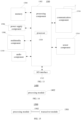
- the device 1300 may include one or more of the following components: a processing component 1302, a memory 1304, a power component 1306, a multimedia component 1308, an audio component 1310, an input/output (I/O) interface 1312, a sensor component 1314, and a communication component 1316.
- a processing component 1302 a memory 1304, a power component 1306, a multimedia component 1308, an audio component 1310, an input/output (I/O) interface 1312, a sensor component 1314, and a communication component 1316.
- the processing component 1302 generally controls overall operation of the device 1300, such as operations associated with display, telephone calls, data communications, camera operations, and recording operations.
- the processing component 1302 may include one or more processors 1320 to execute instructions to complete all or part of the steps of the above methods.
- the processing component 1302 may include one or more modules to facilitate interactions between the processing component 1302 and other components.
- the processing component 1302 may include a multimedia module to facilitate interactions between the multimedia component 1308 and the processing component 1302.
- the memory 1304 is configured to store various types of data to support operations at the device 1300. Examples of such data include instructions for any application or method operating on the device 1300, contact data, phonebook data, messages, pictures, videos, etc.
- the memory 1304 may be implemented by any type of volatile or non-volatile storage device or their combination, such as a static random access memory (SRAM), an electrically erasable programmable read-only memory (EEPROM), an erasable programmable read-only memory (EPROM), a programmable read-only memory (PROM), a read-only memory (ROM), a magnetic storage, a flash memory, a magnetic disk or an optical disk.
- SRAM static random access memory
- EEPROM electrically erasable programmable read-only memory
- EPROM erasable programmable read-only memory
- PROM programmable read-only memory
- ROM read-only memory
- magnetic storage a magnetic storage
- flash memory a magnetic disk or an optical disk.
- the power component 1306 provides powers to various components of the device 1300.
- the power component 1306 may include a power management system, one or more power supplies, and other components associated with generating, managing, and distributing powers for the device 1300.
- the multimedia component 1308 includes a screen that provides an output interface between the device 1300 and the user.
- the screen may include a liquid crystal display (LCD) and a touch panel (TP). If the screen includes a touch panel, the screen may be implemented as a touch screen to receive an input signal from a user.
- the touch panel includes one or more touch sensors to sense touches, slides, and gestures on the touch panel. The touch sensor may not only sense a boundary of a touch or sliding action, but also detect a duration and pressure associated with the touch or sliding operation.
- the multimedia component 1308 includes a front-facing camera and/or a rear-facing camera.
- the front camera and/or the rear camera may receive external multimedia data.
- the front-facing camera and the rear-facing camera may be a fixed optical lens system or may have variable focal length and optical zoom capabilities.
- the audio component 1310 is configured to output and/or input audio signals.
- the audio component 1310 includes a microphone (MIC), which is configured to receive external audio signals when the device 1300 is in an operating mode, such as a call mode, a recording mode, and a voice recognition mode.
- the received audio signal may be further stored in the memory 1304 or transmitted via the communication component 1316.
- the audio component 1310 also includes a speaker for outputting audio signals.
- the I/O interface 1312 provides an interface between the processing component 1202 and a peripheral interface module, which may be a keyboard, a click wheel, a button, etc.
- a peripheral interface module which may be a keyboard, a click wheel, a button, etc.
- the button may include, but is not limited to: a home button, volume buttons, a start button, and a lock button.
- the sensor component 1314 includes one or more sensors for providing status assessment of various aspects for the device 1300.
- the sensor component 1314 may detect an open/closed state of the device 1300, a relative positioning of components, such as a display and a keypad of device 1300.
- the sensor component 1314 may also detect position changes of the device 1300 or a component of the device 1300, a presence or absence of user contacts with the device 1300, an orientation or an acceleration/deceleration of the device 1300 and temperature changes of the device 1300.
- the sensor component 1314 may include a proximity sensor configured to detect a presence of a nearby object without any physical contact.
- the sensor component 1314 may also include a light sensor, such as a CMOS or CCD image sensor, for use in imaging applications.
- the sensor component 1314 may also include an acceleration sensor, a gyroscope sensor, a magnetic sensor, a pressure sensor, or a temperature sensor.
- the communication component 1316 is configured to facilitate wired or wireless communication between the device 1300 and other devices.
- the device 1300 may access a wireless network based on a communication standard, such as WiFi, 4G or 5G, or their combination.
- the communication component 1316 receives a broadcast signal or broadcast-related information from an external broadcast management system via a broadcast channel.
- the communication component 1316 also includes a near field communication (NFC) module to facilitate short-range communications.
- the NFC module may be implemented based on radio frequency identification (RFID) technology, infrared data association (IrDA) technology, ultra wideband (UWB) technology, Bluetooth (BT) technology, and other technologies.
- RFID radio frequency identification
- IrDA infrared data association
- UWB ultra wideband
- Bluetooth Bluetooth
- the device 1300 may be implemented by one or more application-specific integrated circuits (ASICs), digital signal processors (DSPs), digital signal processing devices (DSPDs), programmable logic devices (PLDs), field programmable gate arrays (FPGAs), controllers, microcontrollers, microprocessors or other electronic components to perform the above-mentioned methods.
- ASICs application-specific integrated circuits
- DSPs digital signal processors
- DSPDs digital signal processing devices
- PLDs programmable logic devices
- FPGAs field programmable gate arrays
- controllers microcontrollers, microprocessors or other electronic components to perform the above-mentioned methods.
- a non-transitory computer-readable storage medium including instructions is also provided, such as the memory 1304 including instructions.
- the above instructions may be executed by the processor 1320 of the device 1300 to perform the above methods.
- the non-transitory computer-readable storage medium may be a ROM, a random access memory (RAM), a CD-ROM, a magnetic tape, a floppy disk, an optical data storage device, and the like.
- the embodiments of the present disclosure also provide a communication apparatus, which may have the functions of the network device 101 in the above method embodiments and may be used to execute the steps performed by the network device 101 in the above method embodiments.
- the functions may be implemented in hardware, or software or hardware executing corresponding software.
- the hardware or software includes one or more modules corresponding to the above functions.
- the communication apparatus 1400 shown in FIG. 14 may be used as the network device involved in the above method embodiments, and execute the steps performed by the network device in the above method embodiments.
- the communication apparatus 1400 may include a processing module 1402.
- the processing module 1402 may be used to support the communication apparatus 1400 in performing processing actions in the above method embodiments.
- the processing module is configured to determine based on a first SCS, timer candidate values for SSSG switch corresponding to the first SCS.
- the first SCS is greater than or equal to 240KHz.
- a communication apparatus 1500 shown in FIG. 15 may be used as the network device involved in the above method embodiments, and execute the steps performed by the network device in the above method embodiments.
- the communication apparatus 1500 may include a transceiver module 1501 and a processing module 1502.
- the transceiver module 1501 and the processing module 1502 are coupled to each other.
- the transceiver module 1501 may be used to support the communication apparatus 1500 to communicate.
- the transceiver module 1501 may have a wireless communication function, for example, it may be able to communicate wirelessly with other communication devices through a radio interface.
- the processing module 1502 may be used to support the communication apparatus 1500 to perform processing actions in the above method embodiments, including but not limited to, generating information and messages sent by the transceiver module 1501, and/or demodulating and decoding the signal received by the transceiver module 1501, etc.
- the processing module is configured to determine, based on a first SCS, timer candidate values for SSSG switch corresponding to the first SCS; and further configured to select a timer candidate value from the timer candidate values.
- the transceiver module is configured to send timer value indication information to a UE.
- the timer value indication information indicates a timer value for monitoring a downlink channel.
- the timer value indication information corresponds to the timer candidate value selected.
- the first SCS is greater than or equal to 240KHz.
- a maximum value among the timer candidate values is greater than a first value
- the first value is a maximum timer duration corresponding to a second SCS for SSSG switch
- the second SCS is smaller than the first SCS
- a maximum value among the timer candidate values is N times a maximum timer candidate value corresponding to a second SCS, and the second SCS is smaller than the first SCS.
- the timer candidate values include N times of all or part of timer candidate values corresponding to a second SCS, and the second SCS is smaller than the first SCS.
- N is a ratio of the first SCS to the second SCS.
- the second SCS is 120KHz.
- the corresponding timer candidate values for SSSG switch are the same or different.
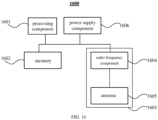
- the communication apparatus When the communication apparatus is the network device 102, its structure may also be as shown in FIG. 16 .
- the structure of the communication device is described by taking a base station as an example.
- the device 1600 includes a memory 1601, a processor 1602, a transceiver component 1603, and a power supply component 1606.
- the memory 1601 is coupled to the processor 1602 and may be used to store programs and data necessary for the communication device 1600 to implement various functions.
- the processor 1602 is configured to support the communication device 1600 to execute corresponding functions in the above methods, and the functions may be implemented by calling the programs stored in the memory 1601.
- the transceiver component 1603 may be a wireless transceiver, which may be used to support the communication device 1600 to receive signaling and/or data, and send signaling and/or data through a radio interface.
- the transceiver component 1603 may also be referred to as a transceiver unit or a communication unit.
- the transceiver component 1603 may include a radio frequency component 1604 and one or more antennas 1605.
- the radio frequency component 1604 may be a remote radio unit (RRU), which may be specifically used for transmission of radio frequency signals and conversion of radio frequency signals into baseband signals.
- the one or more antennas 1605 may be specifically used for radiation and reception of radio frequency signals.
- the processor 1602 may perform baseband processing on data to be sent and output a baseband signal to the RF unit.
- the RF unit performs RF processing on the baseband signal and then sends a RF signal in the form of electromagnetic waves through the antenna.
- the RF unit receives a RF signal through the antenna, converts the RF signal into a baseband signal, and outputs the baseband signal to the processor 1602.
- the processor 1602 converts the baseband signal into data and processes the data.
- the network device and the UE may independently determine based on the first SCS, the timer candidate values for SSSG switch corresponding to the first SCS, thus obtaining the premise for determining the timer value for monitoring the downlink channel. After successfully selecting a reasonable timer value for monitoring the downlink channel, energy may be effectively saved.
Landscapes
- Engineering & Computer Science (AREA)
- Signal Processing (AREA)
- Computer Networks & Wireless Communication (AREA)
- Mobile Radio Communication Systems (AREA)
Applications Claiming Priority (1)
| Application Number | Priority Date | Filing Date | Title |
|---|---|---|---|
| PCT/CN2021/140596 WO2023115410A1 (zh) | 2021-12-22 | 2021-12-22 | 一种确定定时值的方法、装置及可读存储介质 |
Publications (2)
| Publication Number | Publication Date |
|---|---|
| EP4456631A1 true EP4456631A1 (de) | 2024-10-30 |
| EP4456631A4 EP4456631A4 (de) | 2025-02-19 |
Family
ID=84114395
Family Applications (1)
| Application Number | Title | Priority Date | Filing Date |
|---|---|---|---|
| EP21968559.1A Pending EP4456631A4 (de) | 2021-12-22 | 2021-12-22 | Verfahren und vorrichtung zur bestimmung des timing-wertes und lesbares speichermedium |
Country Status (4)
| Country | Link |
|---|---|
| US (1) | US20250063501A1 (de) |
| EP (1) | EP4456631A4 (de) |
| CN (1) | CN115398990B (de) |
| WO (1) | WO2023115410A1 (de) |
Family Cites Families (6)
| Publication number | Priority date | Publication date | Assignee | Title |
|---|---|---|---|---|
| EP3879911B1 (de) * | 2018-11-09 | 2025-06-18 | Ntt Docomo, Inc. | Endgerät, funkkommunikationsverfahren, und basisstation |
| CN111372293B (zh) * | 2018-12-26 | 2021-12-21 | 华为技术有限公司 | 通信方法和通信装置 |
| US11375476B2 (en) * | 2019-10-01 | 2022-06-28 | Qualcomm Incorporated | Sidelink feedback transmission with multiple feedback timelines |
| CN113395773B (zh) * | 2020-03-13 | 2024-04-09 | 大唐移动通信设备有限公司 | 一种子载波间隔指示方法、终端及基站 |
| WO2021184140A1 (zh) * | 2020-03-14 | 2021-09-23 | 华为技术有限公司 | 一种信息处理方法及装置 |
| WO2021243691A1 (en) * | 2020-06-05 | 2021-12-09 | Qualcomm Incorporated | Fast switching between radio access technologies in wireless communication |
-
2021
- 2021-12-22 WO PCT/CN2021/140596 patent/WO2023115410A1/zh not_active Ceased
- 2021-12-22 CN CN202180004545.8A patent/CN115398990B/zh active Active
- 2021-12-22 EP EP21968559.1A patent/EP4456631A4/de active Pending
- 2021-12-22 US US18/721,081 patent/US20250063501A1/en active Pending
Also Published As
| Publication number | Publication date |
|---|---|
| CN115398990B (zh) | 2025-12-12 |
| EP4456631A4 (de) | 2025-02-19 |
| CN115398990A (zh) | 2022-11-25 |
| US20250063501A1 (en) | 2025-02-20 |
| WO2023115410A1 (zh) | 2023-06-29 |
Similar Documents
| Publication | Publication Date | Title |
|---|---|---|
| US20250150810A1 (en) | Terminal capability transmission method and apparatus, and readable storage medium | |
| US20250159610A1 (en) | Method and apparatus for transmitting wake-up signal, and readable storage medium | |
| US20250220581A1 (en) | Method and device for monitoring wake-up signal and readable storage medium | |
| CN115004822B (zh) | 一种上行切换的方法、装置及可读存储介质 | |
| US20250240725A1 (en) | Method and apparatus for transmitting power information of synchronization signal, and readable storage medium | |
| US20250220459A1 (en) | Method for transmitting measurement configuration information, apparatus and readable storage medium | |
| US20250097993A1 (en) | Resource conflict handling method and apparatus, and readable storage medium | |
| WO2023201730A1 (zh) | 一种传输用户设备能力的方法、装置及可读存储介质 | |
| CN115349268B (zh) | 一种传输能力信息或配置信息的方法、装置及可读存储介质 | |
| US20250267532A1 (en) | User equipment capability transmission method and apparatus, and readable storage medium | |
| CN115191138B (zh) | 一种传输时域资源配置信息的方法、装置及可读存储介质 | |
| US20250203575A1 (en) | Method and apparatus for transmitting paging search space configuration information, and storage medium | |
| EP4456631A1 (de) | Verfahren und vorrichtung zur bestimmung des timing-wertes und lesbares speichermedium | |
| US20240407000A1 (en) | Method for using unlicensed channel, apparatus, device, and storage medium | |
| WO2023193197A1 (zh) | 一种传输用户设备能力的方法、装置及可读存储介质 | |
| WO2022246709A1 (zh) | 一种传输用户设备能力的方法、装置及存储介质 | |
| US20250081234A1 (en) | Method and apparatus for determining channel access mode, and storage medium | |
| WO2022193219A1 (zh) | 传输物理下行控制信道配置信息的方法、装置及存储介质 | |
| CN115244890B (zh) | 一种传输配置信息的方法、装置及可读存储介质 | |
| EP4618629A1 (de) | Aufweckverfahren und -vorrichtung für netzwerkvorrichtung, vorrichtung und speichermedium | |
| US20260012830A1 (en) | Measurement method and apparatus, and device and readable storage medium | |
| US20250081203A1 (en) | Monitoring method and device, and readable storage medium | |
| WO2023092362A1 (zh) | 一种确定监听能力的时长单位的方法、装置及存储介质 | |
| WO2024059977A1 (zh) | 一种执行或发送指示信息的方法、装置、设备及存储介质 | |
| WO2023225922A1 (zh) | 一种传输频段信息的方法、装置及可读存储介质 |
Legal Events
| Date | Code | Title | Description |
|---|---|---|---|
| STAA | Information on the status of an ep patent application or granted ep patent |
Free format text: STATUS: THE INTERNATIONAL PUBLICATION HAS BEEN MADE |
|
| PUAI | Public reference made under article 153(3) epc to a published international application that has entered the european phase |
Free format text: ORIGINAL CODE: 0009012 |
|
| STAA | Information on the status of an ep patent application or granted ep patent |
Free format text: STATUS: REQUEST FOR EXAMINATION WAS MADE |
|
| 17P | Request for examination filed |
Effective date: 20240716 |
|
| AK | Designated contracting states |
Kind code of ref document: A1 Designated state(s): AL AT BE BG CH CY CZ DE DK EE ES FI FR GB GR HR HU IE IS IT LI LT LU LV MC MK MT NL NO PL PT RO RS SE SI SK SM TR |
|
| REG | Reference to a national code |
Ref country code: DE Ref legal event code: R079 Free format text: PREVIOUS MAIN CLASS: H04W0072040000 Ipc: H04L0005000000 |
|
| A4 | Supplementary search report drawn up and despatched |
Effective date: 20250122 |
|
| RIC1 | Information provided on ipc code assigned before grant |
Ipc: H04W 52/02 20090101ALI20250116BHEP Ipc: H04W 76/28 20180101ALI20250116BHEP Ipc: H04W 56/00 20090101ALI20250116BHEP Ipc: H04W 72/04 20230101ALI20250116BHEP Ipc: H04L 5/00 20060101AFI20250116BHEP |
|
| DAV | Request for validation of the european patent (deleted) | ||
| DAX | Request for extension of the european patent (deleted) |