EP4465302A1 - Systems and methods for identifying a user interface - Google Patents
Systems and methods for identifying a user interface Download PDFInfo
- Publication number
- EP4465302A1 EP4465302A1 EP24188044.2A EP24188044A EP4465302A1 EP 4465302 A1 EP4465302 A1 EP 4465302A1 EP 24188044 A EP24188044 A EP 24188044A EP 4465302 A1 EP4465302 A1 EP 4465302A1
- Authority
- EP
- European Patent Office
- Prior art keywords
- user
- user interface
- data
- sleep
- mask
- Prior art date
- Legal status (The legal status is an assumption and is not a legal conclusion. Google has not performed a legal analysis and makes no representation as to the accuracy of the status listed.)
- Pending
Links
Images






Classifications
-
- A—HUMAN NECESSITIES
- A61—MEDICAL OR VETERINARY SCIENCE; HYGIENE
- A61M—DEVICES FOR INTRODUCING MEDIA INTO, OR ONTO, THE BODY; DEVICES FOR TRANSDUCING BODY MEDIA OR FOR TAKING MEDIA FROM THE BODY; DEVICES FOR PRODUCING OR ENDING SLEEP OR STUPOR
- A61M16/00—Devices for influencing the respiratory system of patients by gas treatment, e.g. ventilators; Tracheal tubes
- A61M16/06—Respiratory or anaesthetic masks
- A61M16/0605—Means for improving the adaptation of the mask to the patient
-
- G—PHYSICS
- G16—INFORMATION AND COMMUNICATION TECHNOLOGY [ICT] SPECIALLY ADAPTED FOR SPECIFIC APPLICATION FIELDS
- G16H—HEALTHCARE INFORMATICS, i.e. INFORMATION AND COMMUNICATION TECHNOLOGY [ICT] SPECIALLY ADAPTED FOR THE HANDLING OR PROCESSING OF MEDICAL OR HEALTHCARE DATA
- G16H20/00—ICT specially adapted for therapies or health-improving plans, e.g. for handling prescriptions, for steering therapy or for monitoring patient compliance
- G16H20/40—ICT specially adapted for therapies or health-improving plans, e.g. for handling prescriptions, for steering therapy or for monitoring patient compliance relating to mechanical, radiation or invasive therapies, e.g. surgery, laser therapy, dialysis or acupuncture
-
- A—HUMAN NECESSITIES
- A61—MEDICAL OR VETERINARY SCIENCE; HYGIENE
- A61M—DEVICES FOR INTRODUCING MEDIA INTO, OR ONTO, THE BODY; DEVICES FOR TRANSDUCING BODY MEDIA OR FOR TAKING MEDIA FROM THE BODY; DEVICES FOR PRODUCING OR ENDING SLEEP OR STUPOR
- A61M16/00—Devices for influencing the respiratory system of patients by gas treatment, e.g. ventilators; Tracheal tubes
- A61M16/0057—Pumps therefor
- A61M16/0066—Blowers or centrifugal pumps
- A61M16/0069—Blowers or centrifugal pumps the speed thereof being controlled by respiratory parameters, e.g. by inhalation
-
- A—HUMAN NECESSITIES
- A61—MEDICAL OR VETERINARY SCIENCE; HYGIENE
- A61M—DEVICES FOR INTRODUCING MEDIA INTO, OR ONTO, THE BODY; DEVICES FOR TRANSDUCING BODY MEDIA OR FOR TAKING MEDIA FROM THE BODY; DEVICES FOR PRODUCING OR ENDING SLEEP OR STUPOR
- A61M16/00—Devices for influencing the respiratory system of patients by gas treatment, e.g. ventilators; Tracheal tubes
- A61M16/021—Devices for influencing the respiratory system of patients by gas treatment, e.g. ventilators; Tracheal tubes operated by electrical means
- A61M16/022—Control means therefor
- A61M16/024—Control means therefor including calculation means, e.g. using a processor
-
- G—PHYSICS
- G16—INFORMATION AND COMMUNICATION TECHNOLOGY [ICT] SPECIALLY ADAPTED FOR SPECIFIC APPLICATION FIELDS
- G16H—HEALTHCARE INFORMATICS, i.e. INFORMATION AND COMMUNICATION TECHNOLOGY [ICT] SPECIALLY ADAPTED FOR THE HANDLING OR PROCESSING OF MEDICAL OR HEALTHCARE DATA
- G16H50/00—ICT specially adapted for medical diagnosis, medical simulation or medical data mining; ICT specially adapted for detecting, monitoring or modelling epidemics or pandemics
- G16H50/30—ICT specially adapted for medical diagnosis, medical simulation or medical data mining; ICT specially adapted for detecting, monitoring or modelling epidemics or pandemics for calculating health indices; for individual health risk assessment
-
- A—HUMAN NECESSITIES
- A61—MEDICAL OR VETERINARY SCIENCE; HYGIENE
- A61M—DEVICES FOR INTRODUCING MEDIA INTO, OR ONTO, THE BODY; DEVICES FOR TRANSDUCING BODY MEDIA OR FOR TAKING MEDIA FROM THE BODY; DEVICES FOR PRODUCING OR ENDING SLEEP OR STUPOR
- A61M16/00—Devices for influencing the respiratory system of patients by gas treatment, e.g. ventilators; Tracheal tubes
- A61M16/0057—Pumps therefor
- A61M16/0066—Blowers or centrifugal pumps
-
- A—HUMAN NECESSITIES
- A61—MEDICAL OR VETERINARY SCIENCE; HYGIENE
- A61M—DEVICES FOR INTRODUCING MEDIA INTO, OR ONTO, THE BODY; DEVICES FOR TRANSDUCING BODY MEDIA OR FOR TAKING MEDIA FROM THE BODY; DEVICES FOR PRODUCING OR ENDING SLEEP OR STUPOR
- A61M16/00—Devices for influencing the respiratory system of patients by gas treatment, e.g. ventilators; Tracheal tubes
- A61M16/06—Respiratory or anaesthetic masks
-
- A—HUMAN NECESSITIES
- A61—MEDICAL OR VETERINARY SCIENCE; HYGIENE
- A61M—DEVICES FOR INTRODUCING MEDIA INTO, OR ONTO, THE BODY; DEVICES FOR TRANSDUCING BODY MEDIA OR FOR TAKING MEDIA FROM THE BODY; DEVICES FOR PRODUCING OR ENDING SLEEP OR STUPOR
- A61M16/00—Devices for influencing the respiratory system of patients by gas treatment, e.g. ventilators; Tracheal tubes
- A61M16/10—Preparation of respiratory gases or vapours
- A61M16/1075—Preparation of respiratory gases or vapours by influencing the temperature
- A61M16/109—Preparation of respiratory gases or vapours by influencing the temperature the humidifying liquid or the beneficial agent
-
- A—HUMAN NECESSITIES
- A61—MEDICAL OR VETERINARY SCIENCE; HYGIENE
- A61M—DEVICES FOR INTRODUCING MEDIA INTO, OR ONTO, THE BODY; DEVICES FOR TRANSDUCING BODY MEDIA OR FOR TAKING MEDIA FROM THE BODY; DEVICES FOR PRODUCING OR ENDING SLEEP OR STUPOR
- A61M16/00—Devices for influencing the respiratory system of patients by gas treatment, e.g. ventilators; Tracheal tubes
- A61M16/10—Preparation of respiratory gases or vapours
- A61M16/1075—Preparation of respiratory gases or vapours by influencing the temperature
- A61M16/1095—Preparation of respiratory gases or vapours by influencing the temperature in the connecting tubes
-
- A—HUMAN NECESSITIES
- A61—MEDICAL OR VETERINARY SCIENCE; HYGIENE
- A61M—DEVICES FOR INTRODUCING MEDIA INTO, OR ONTO, THE BODY; DEVICES FOR TRANSDUCING BODY MEDIA OR FOR TAKING MEDIA FROM THE BODY; DEVICES FOR PRODUCING OR ENDING SLEEP OR STUPOR
- A61M16/00—Devices for influencing the respiratory system of patients by gas treatment, e.g. ventilators; Tracheal tubes
- A61M16/10—Preparation of respiratory gases or vapours
- A61M16/14—Preparation of respiratory gases or vapours by mixing different fluids, one of them being in a liquid phase
- A61M16/16—Devices to humidify the respiration air
-
- A—HUMAN NECESSITIES
- A61—MEDICAL OR VETERINARY SCIENCE; HYGIENE
- A61M—DEVICES FOR INTRODUCING MEDIA INTO, OR ONTO, THE BODY; DEVICES FOR TRANSDUCING BODY MEDIA OR FOR TAKING MEDIA FROM THE BODY; DEVICES FOR PRODUCING OR ENDING SLEEP OR STUPOR
- A61M16/00—Devices for influencing the respiratory system of patients by gas treatment, e.g. ventilators; Tracheal tubes
- A61M16/10—Preparation of respiratory gases or vapours
- A61M16/14—Preparation of respiratory gases or vapours by mixing different fluids, one of them being in a liquid phase
- A61M16/16—Devices to humidify the respiration air
- A61M16/161—Devices to humidify the respiration air with means for measuring the humidity
-
- A—HUMAN NECESSITIES
- A61—MEDICAL OR VETERINARY SCIENCE; HYGIENE
- A61M—DEVICES FOR INTRODUCING MEDIA INTO, OR ONTO, THE BODY; DEVICES FOR TRANSDUCING BODY MEDIA OR FOR TAKING MEDIA FROM THE BODY; DEVICES FOR PRODUCING OR ENDING SLEEP OR STUPOR
- A61M16/00—Devices for influencing the respiratory system of patients by gas treatment, e.g. ventilators; Tracheal tubes
- A61M16/0003—Accessories therefor, e.g. sensors, vibrators, negative pressure
- A61M2016/0027—Accessories therefor, e.g. sensors, vibrators, negative pressure pressure meter
-
- A—HUMAN NECESSITIES
- A61—MEDICAL OR VETERINARY SCIENCE; HYGIENE
- A61M—DEVICES FOR INTRODUCING MEDIA INTO, OR ONTO, THE BODY; DEVICES FOR TRANSDUCING BODY MEDIA OR FOR TAKING MEDIA FROM THE BODY; DEVICES FOR PRODUCING OR ENDING SLEEP OR STUPOR
- A61M16/00—Devices for influencing the respiratory system of patients by gas treatment, e.g. ventilators; Tracheal tubes
- A61M16/0003—Accessories therefor, e.g. sensors, vibrators, negative pressure
- A61M2016/003—Accessories therefor, e.g. sensors, vibrators, negative pressure with a flowmeter
- A61M2016/0033—Accessories therefor, e.g. sensors, vibrators, negative pressure with a flowmeter electrical
- A61M2016/0039—Accessories therefor, e.g. sensors, vibrators, negative pressure with a flowmeter electrical in the inspiratory circuit
-
- A—HUMAN NECESSITIES
- A61—MEDICAL OR VETERINARY SCIENCE; HYGIENE
- A61M—DEVICES FOR INTRODUCING MEDIA INTO, OR ONTO, THE BODY; DEVICES FOR TRANSDUCING BODY MEDIA OR FOR TAKING MEDIA FROM THE BODY; DEVICES FOR PRODUCING OR ENDING SLEEP OR STUPOR
- A61M16/00—Devices for influencing the respiratory system of patients by gas treatment, e.g. ventilators; Tracheal tubes
- A61M16/06—Respiratory or anaesthetic masks
- A61M2016/0661—Respiratory or anaesthetic masks with customised shape
-
- A—HUMAN NECESSITIES
- A61—MEDICAL OR VETERINARY SCIENCE; HYGIENE
- A61M—DEVICES FOR INTRODUCING MEDIA INTO, OR ONTO, THE BODY; DEVICES FOR TRANSDUCING BODY MEDIA OR FOR TAKING MEDIA FROM THE BODY; DEVICES FOR PRODUCING OR ENDING SLEEP OR STUPOR
- A61M16/00—Devices for influencing the respiratory system of patients by gas treatment, e.g. ventilators; Tracheal tubes
- A61M16/10—Preparation of respiratory gases or vapours
- A61M16/1005—Preparation of respiratory gases or vapours with O2 features or with parameter measurement
- A61M2016/102—Measuring a parameter of the content of the delivered gas
- A61M2016/1025—Measuring a parameter of the content of the delivered gas the O2 concentration
-
- A—HUMAN NECESSITIES
- A61—MEDICAL OR VETERINARY SCIENCE; HYGIENE
- A61M—DEVICES FOR INTRODUCING MEDIA INTO, OR ONTO, THE BODY; DEVICES FOR TRANSDUCING BODY MEDIA OR FOR TAKING MEDIA FROM THE BODY; DEVICES FOR PRODUCING OR ENDING SLEEP OR STUPOR
- A61M21/00—Other devices or methods to cause a change in the state of consciousness; Devices for producing or ending sleep by mechanical, optical, or acoustical means, e.g. for hypnosis
- A61M2021/0005—Other devices or methods to cause a change in the state of consciousness; Devices for producing or ending sleep by mechanical, optical, or acoustical means, e.g. for hypnosis by the use of a particular sense, or stimulus
- A61M2021/0083—Other devices or methods to cause a change in the state of consciousness; Devices for producing or ending sleep by mechanical, optical, or acoustical means, e.g. for hypnosis by the use of a particular sense, or stimulus especially for waking up
-
- A—HUMAN NECESSITIES
- A61—MEDICAL OR VETERINARY SCIENCE; HYGIENE
- A61M—DEVICES FOR INTRODUCING MEDIA INTO, OR ONTO, THE BODY; DEVICES FOR TRANSDUCING BODY MEDIA OR FOR TAKING MEDIA FROM THE BODY; DEVICES FOR PRODUCING OR ENDING SLEEP OR STUPOR
- A61M2205/00—General characteristics of the apparatus
- A61M2205/15—Detection of leaks
-
- A—HUMAN NECESSITIES
- A61—MEDICAL OR VETERINARY SCIENCE; HYGIENE
- A61M—DEVICES FOR INTRODUCING MEDIA INTO, OR ONTO, THE BODY; DEVICES FOR TRANSDUCING BODY MEDIA OR FOR TAKING MEDIA FROM THE BODY; DEVICES FOR PRODUCING OR ENDING SLEEP OR STUPOR
- A61M2205/00—General characteristics of the apparatus
- A61M2205/18—General characteristics of the apparatus with alarm
-
- A—HUMAN NECESSITIES
- A61—MEDICAL OR VETERINARY SCIENCE; HYGIENE
- A61M—DEVICES FOR INTRODUCING MEDIA INTO, OR ONTO, THE BODY; DEVICES FOR TRANSDUCING BODY MEDIA OR FOR TAKING MEDIA FROM THE BODY; DEVICES FOR PRODUCING OR ENDING SLEEP OR STUPOR
- A61M2205/00—General characteristics of the apparatus
- A61M2205/21—General characteristics of the apparatus insensitive to tilting or inclination, e.g. spill-over prevention
- A61M2205/215—Tilt detection, e.g. for warning or shut-off
-
- A—HUMAN NECESSITIES
- A61—MEDICAL OR VETERINARY SCIENCE; HYGIENE
- A61M—DEVICES FOR INTRODUCING MEDIA INTO, OR ONTO, THE BODY; DEVICES FOR TRANSDUCING BODY MEDIA OR FOR TAKING MEDIA FROM THE BODY; DEVICES FOR PRODUCING OR ENDING SLEEP OR STUPOR
- A61M2205/00—General characteristics of the apparatus
- A61M2205/33—Controlling, regulating or measuring
- A61M2205/3303—Using a biosensor
-
- A—HUMAN NECESSITIES
- A61—MEDICAL OR VETERINARY SCIENCE; HYGIENE
- A61M—DEVICES FOR INTRODUCING MEDIA INTO, OR ONTO, THE BODY; DEVICES FOR TRANSDUCING BODY MEDIA OR FOR TAKING MEDIA FROM THE BODY; DEVICES FOR PRODUCING OR ENDING SLEEP OR STUPOR
- A61M2205/00—General characteristics of the apparatus
- A61M2205/33—Controlling, regulating or measuring
- A61M2205/3306—Optical measuring means
-
- A—HUMAN NECESSITIES
- A61—MEDICAL OR VETERINARY SCIENCE; HYGIENE
- A61M—DEVICES FOR INTRODUCING MEDIA INTO, OR ONTO, THE BODY; DEVICES FOR TRANSDUCING BODY MEDIA OR FOR TAKING MEDIA FROM THE BODY; DEVICES FOR PRODUCING OR ENDING SLEEP OR STUPOR
- A61M2205/00—General characteristics of the apparatus
- A61M2205/33—Controlling, regulating or measuring
- A61M2205/332—Force measuring means
-
- A—HUMAN NECESSITIES
- A61—MEDICAL OR VETERINARY SCIENCE; HYGIENE
- A61M—DEVICES FOR INTRODUCING MEDIA INTO, OR ONTO, THE BODY; DEVICES FOR TRANSDUCING BODY MEDIA OR FOR TAKING MEDIA FROM THE BODY; DEVICES FOR PRODUCING OR ENDING SLEEP OR STUPOR
- A61M2205/00—General characteristics of the apparatus
- A61M2205/33—Controlling, regulating or measuring
- A61M2205/3331—Pressure; Flow
-
- A—HUMAN NECESSITIES
- A61—MEDICAL OR VETERINARY SCIENCE; HYGIENE
- A61M—DEVICES FOR INTRODUCING MEDIA INTO, OR ONTO, THE BODY; DEVICES FOR TRANSDUCING BODY MEDIA OR FOR TAKING MEDIA FROM THE BODY; DEVICES FOR PRODUCING OR ENDING SLEEP OR STUPOR
- A61M2205/00—General characteristics of the apparatus
- A61M2205/33—Controlling, regulating or measuring
- A61M2205/3368—Temperature
-
- A—HUMAN NECESSITIES
- A61—MEDICAL OR VETERINARY SCIENCE; HYGIENE
- A61M—DEVICES FOR INTRODUCING MEDIA INTO, OR ONTO, THE BODY; DEVICES FOR TRANSDUCING BODY MEDIA OR FOR TAKING MEDIA FROM THE BODY; DEVICES FOR PRODUCING OR ENDING SLEEP OR STUPOR
- A61M2205/00—General characteristics of the apparatus
- A61M2205/33—Controlling, regulating or measuring
- A61M2205/3375—Acoustical, e.g. ultrasonic, measuring means
-
- A—HUMAN NECESSITIES
- A61—MEDICAL OR VETERINARY SCIENCE; HYGIENE
- A61M—DEVICES FOR INTRODUCING MEDIA INTO, OR ONTO, THE BODY; DEVICES FOR TRANSDUCING BODY MEDIA OR FOR TAKING MEDIA FROM THE BODY; DEVICES FOR PRODUCING OR ENDING SLEEP OR STUPOR
- A61M2205/00—General characteristics of the apparatus
- A61M2205/35—Communication
- A61M2205/3546—Range
- A61M2205/3553—Range remote, e.g. between patient's home and doctor's office
-
- A—HUMAN NECESSITIES
- A61—MEDICAL OR VETERINARY SCIENCE; HYGIENE
- A61M—DEVICES FOR INTRODUCING MEDIA INTO, OR ONTO, THE BODY; DEVICES FOR TRANSDUCING BODY MEDIA OR FOR TAKING MEDIA FROM THE BODY; DEVICES FOR PRODUCING OR ENDING SLEEP OR STUPOR
- A61M2205/00—General characteristics of the apparatus
- A61M2205/35—Communication
- A61M2205/3546—Range
- A61M2205/3569—Range sublocal, e.g. between console and disposable
-
- A—HUMAN NECESSITIES
- A61—MEDICAL OR VETERINARY SCIENCE; HYGIENE
- A61M—DEVICES FOR INTRODUCING MEDIA INTO, OR ONTO, THE BODY; DEVICES FOR TRANSDUCING BODY MEDIA OR FOR TAKING MEDIA FROM THE BODY; DEVICES FOR PRODUCING OR ENDING SLEEP OR STUPOR
- A61M2205/00—General characteristics of the apparatus
- A61M2205/35—Communication
- A61M2205/3576—Communication with non implanted data transmission devices, e.g. using external transmitter or receiver
- A61M2205/3584—Communication with non implanted data transmission devices, e.g. using external transmitter or receiver using modem, internet or Bluetooth®
-
- A—HUMAN NECESSITIES
- A61—MEDICAL OR VETERINARY SCIENCE; HYGIENE
- A61M—DEVICES FOR INTRODUCING MEDIA INTO, OR ONTO, THE BODY; DEVICES FOR TRANSDUCING BODY MEDIA OR FOR TAKING MEDIA FROM THE BODY; DEVICES FOR PRODUCING OR ENDING SLEEP OR STUPOR
- A61M2205/00—General characteristics of the apparatus
- A61M2205/35—Communication
- A61M2205/3576—Communication with non implanted data transmission devices, e.g. using external transmitter or receiver
- A61M2205/3592—Communication with non implanted data transmission devices, e.g. using external transmitter or receiver using telemetric means, e.g. radio or optical transmission
-
- A—HUMAN NECESSITIES
- A61—MEDICAL OR VETERINARY SCIENCE; HYGIENE
- A61M—DEVICES FOR INTRODUCING MEDIA INTO, OR ONTO, THE BODY; DEVICES FOR TRANSDUCING BODY MEDIA OR FOR TAKING MEDIA FROM THE BODY; DEVICES FOR PRODUCING OR ENDING SLEEP OR STUPOR
- A61M2205/00—General characteristics of the apparatus
- A61M2205/50—General characteristics of the apparatus with microprocessors or computers
- A61M2205/502—User interfaces, e.g. screens or keyboards
- A61M2205/505—Touch-screens; Virtual keyboard or keypads; Virtual buttons; Soft keys; Mouse touches
-
- A—HUMAN NECESSITIES
- A61—MEDICAL OR VETERINARY SCIENCE; HYGIENE
- A61M—DEVICES FOR INTRODUCING MEDIA INTO, OR ONTO, THE BODY; DEVICES FOR TRANSDUCING BODY MEDIA OR FOR TAKING MEDIA FROM THE BODY; DEVICES FOR PRODUCING OR ENDING SLEEP OR STUPOR
- A61M2205/00—General characteristics of the apparatus
- A61M2205/50—General characteristics of the apparatus with microprocessors or computers
- A61M2205/52—General characteristics of the apparatus with microprocessors or computers with memories providing a history of measured variating parameters of apparatus or patient
-
- A—HUMAN NECESSITIES
- A61—MEDICAL OR VETERINARY SCIENCE; HYGIENE
- A61M—DEVICES FOR INTRODUCING MEDIA INTO, OR ONTO, THE BODY; DEVICES FOR TRANSDUCING BODY MEDIA OR FOR TAKING MEDIA FROM THE BODY; DEVICES FOR PRODUCING OR ENDING SLEEP OR STUPOR
- A61M2205/00—General characteristics of the apparatus
- A61M2205/58—Means for facilitating use, e.g. by people with impaired vision
- A61M2205/581—Means for facilitating use, e.g. by people with impaired vision by audible feedback
-
- A—HUMAN NECESSITIES
- A61—MEDICAL OR VETERINARY SCIENCE; HYGIENE
- A61M—DEVICES FOR INTRODUCING MEDIA INTO, OR ONTO, THE BODY; DEVICES FOR TRANSDUCING BODY MEDIA OR FOR TAKING MEDIA FROM THE BODY; DEVICES FOR PRODUCING OR ENDING SLEEP OR STUPOR
- A61M2205/00—General characteristics of the apparatus
- A61M2205/58—Means for facilitating use, e.g. by people with impaired vision
- A61M2205/582—Means for facilitating use, e.g. by people with impaired vision by tactile feedback
-
- A—HUMAN NECESSITIES
- A61—MEDICAL OR VETERINARY SCIENCE; HYGIENE
- A61M—DEVICES FOR INTRODUCING MEDIA INTO, OR ONTO, THE BODY; DEVICES FOR TRANSDUCING BODY MEDIA OR FOR TAKING MEDIA FROM THE BODY; DEVICES FOR PRODUCING OR ENDING SLEEP OR STUPOR
- A61M2205/00—General characteristics of the apparatus
- A61M2205/58—Means for facilitating use, e.g. by people with impaired vision
- A61M2205/583—Means for facilitating use, e.g. by people with impaired vision by visual feedback
-
- A—HUMAN NECESSITIES
- A61—MEDICAL OR VETERINARY SCIENCE; HYGIENE
- A61M—DEVICES FOR INTRODUCING MEDIA INTO, OR ONTO, THE BODY; DEVICES FOR TRANSDUCING BODY MEDIA OR FOR TAKING MEDIA FROM THE BODY; DEVICES FOR PRODUCING OR ENDING SLEEP OR STUPOR
- A61M2230/00—Measuring parameters of the user
- A61M2230/04—Heartbeat characteristics, e.g. ECG, blood pressure modulation
-
- A—HUMAN NECESSITIES
- A61—MEDICAL OR VETERINARY SCIENCE; HYGIENE
- A61M—DEVICES FOR INTRODUCING MEDIA INTO, OR ONTO, THE BODY; DEVICES FOR TRANSDUCING BODY MEDIA OR FOR TAKING MEDIA FROM THE BODY; DEVICES FOR PRODUCING OR ENDING SLEEP OR STUPOR
- A61M2230/00—Measuring parameters of the user
- A61M2230/08—Other bio-electrical signals
- A61M2230/10—Electroencephalographic signals
-
- A—HUMAN NECESSITIES
- A61—MEDICAL OR VETERINARY SCIENCE; HYGIENE
- A61M—DEVICES FOR INTRODUCING MEDIA INTO, OR ONTO, THE BODY; DEVICES FOR TRANSDUCING BODY MEDIA OR FOR TAKING MEDIA FROM THE BODY; DEVICES FOR PRODUCING OR ENDING SLEEP OR STUPOR
- A61M2230/00—Measuring parameters of the user
- A61M2230/20—Blood composition characteristics
- A61M2230/201—Glucose concentration
-
- A—HUMAN NECESSITIES
- A61—MEDICAL OR VETERINARY SCIENCE; HYGIENE
- A61M—DEVICES FOR INTRODUCING MEDIA INTO, OR ONTO, THE BODY; DEVICES FOR TRANSDUCING BODY MEDIA OR FOR TAKING MEDIA FROM THE BODY; DEVICES FOR PRODUCING OR ENDING SLEEP OR STUPOR
- A61M2230/00—Measuring parameters of the user
- A61M2230/20—Blood composition characteristics
- A61M2230/205—Blood composition characteristics partial oxygen pressure (P-O2)
-
- A—HUMAN NECESSITIES
- A61—MEDICAL OR VETERINARY SCIENCE; HYGIENE
- A61M—DEVICES FOR INTRODUCING MEDIA INTO, OR ONTO, THE BODY; DEVICES FOR TRANSDUCING BODY MEDIA OR FOR TAKING MEDIA FROM THE BODY; DEVICES FOR PRODUCING OR ENDING SLEEP OR STUPOR
- A61M2230/00—Measuring parameters of the user
- A61M2230/20—Blood composition characteristics
- A61M2230/208—Blood composition characteristics pH-value
-
- A—HUMAN NECESSITIES
- A61—MEDICAL OR VETERINARY SCIENCE; HYGIENE
- A61M—DEVICES FOR INTRODUCING MEDIA INTO, OR ONTO, THE BODY; DEVICES FOR TRANSDUCING BODY MEDIA OR FOR TAKING MEDIA FROM THE BODY; DEVICES FOR PRODUCING OR ENDING SLEEP OR STUPOR
- A61M2230/00—Measuring parameters of the user
- A61M2230/30—Blood pressure
-
- A—HUMAN NECESSITIES
- A61—MEDICAL OR VETERINARY SCIENCE; HYGIENE
- A61M—DEVICES FOR INTRODUCING MEDIA INTO, OR ONTO, THE BODY; DEVICES FOR TRANSDUCING BODY MEDIA OR FOR TAKING MEDIA FROM THE BODY; DEVICES FOR PRODUCING OR ENDING SLEEP OR STUPOR
- A61M2230/00—Measuring parameters of the user
- A61M2230/40—Respiratory characteristics
-
- A—HUMAN NECESSITIES
- A61—MEDICAL OR VETERINARY SCIENCE; HYGIENE
- A61M—DEVICES FOR INTRODUCING MEDIA INTO, OR ONTO, THE BODY; DEVICES FOR TRANSDUCING BODY MEDIA OR FOR TAKING MEDIA FROM THE BODY; DEVICES FOR PRODUCING OR ENDING SLEEP OR STUPOR
- A61M2230/00—Measuring parameters of the user
- A61M2230/40—Respiratory characteristics
- A61M2230/42—Rate
-
- A—HUMAN NECESSITIES
- A61—MEDICAL OR VETERINARY SCIENCE; HYGIENE
- A61M—DEVICES FOR INTRODUCING MEDIA INTO, OR ONTO, THE BODY; DEVICES FOR TRANSDUCING BODY MEDIA OR FOR TAKING MEDIA FROM THE BODY; DEVICES FOR PRODUCING OR ENDING SLEEP OR STUPOR
- A61M2230/00—Measuring parameters of the user
- A61M2230/40—Respiratory characteristics
- A61M2230/43—Composition of exhalation
-
- A—HUMAN NECESSITIES
- A61—MEDICAL OR VETERINARY SCIENCE; HYGIENE
- A61M—DEVICES FOR INTRODUCING MEDIA INTO, OR ONTO, THE BODY; DEVICES FOR TRANSDUCING BODY MEDIA OR FOR TAKING MEDIA FROM THE BODY; DEVICES FOR PRODUCING OR ENDING SLEEP OR STUPOR
- A61M2230/00—Measuring parameters of the user
- A61M2230/50—Temperature
-
- A—HUMAN NECESSITIES
- A61—MEDICAL OR VETERINARY SCIENCE; HYGIENE
- A61M—DEVICES FOR INTRODUCING MEDIA INTO, OR ONTO, THE BODY; DEVICES FOR TRANSDUCING BODY MEDIA OR FOR TAKING MEDIA FROM THE BODY; DEVICES FOR PRODUCING OR ENDING SLEEP OR STUPOR
- A61M2230/00—Measuring parameters of the user
- A61M2230/60—Muscle strain, i.e. measured on the user
-
- A—HUMAN NECESSITIES
- A61—MEDICAL OR VETERINARY SCIENCE; HYGIENE
- A61M—DEVICES FOR INTRODUCING MEDIA INTO, OR ONTO, THE BODY; DEVICES FOR TRANSDUCING BODY MEDIA OR FOR TAKING MEDIA FROM THE BODY; DEVICES FOR PRODUCING OR ENDING SLEEP OR STUPOR
- A61M2230/00—Measuring parameters of the user
- A61M2230/63—Motion, e.g. physical activity
-
- A—HUMAN NECESSITIES
- A61—MEDICAL OR VETERINARY SCIENCE; HYGIENE
- A61M—DEVICES FOR INTRODUCING MEDIA INTO, OR ONTO, THE BODY; DEVICES FOR TRANSDUCING BODY MEDIA OR FOR TAKING MEDIA FROM THE BODY; DEVICES FOR PRODUCING OR ENDING SLEEP OR STUPOR
- A61M2230/00—Measuring parameters of the user
- A61M2230/65—Impedance, e.g. conductivity, capacity
Definitions
- the present disclosure relates generally to systems and methods for identifying a user interface, and more particularly, to systems and methods for determining a mask type for the user interface.
- PLMD Periodic Limb Movement Disorder
- RLS Restless Leg Syndrome
- SDB Sleep-Disordered Breathing
- OSA Obstructive Sleep Apnea
- CSA Central Sleep Apnea
- RERA Respiratory Effort Related Arousal
- CSR Cheyne-Stokes Respiration
- OLS Obesity Hyperventilation Syndrome
- COPD Chronic Obstructive Pulmonary Disease
- NMD Neuromuscular Disease
- REM rapid eye movement
- DEB dream enactment behavior
- hypertension diabetes, stroke, insomnia, and chest wall disorders.
- each respiratory therapy system generally has a respiratory therapy device connected to a user interface (sometimes referred to as a mask) via a conduit.
- the user wears the user interface and is supplied a flow of pressurized air from the respiratory therapy device via the conduit.
- the user interface generally is a specific category and type of user interface for the user, such as direct connections (e.g., conduit connected to cushion and/or frame of user interface) or indirect connections (e.g., conduit connected into a chamber formed by cushion and/or frame) for the category of user interface, and full face mask, a partial face mask (e.g., a mask which covers the mouth but does not cover the nose or only covers a portion of the nose), nasal mask, or nasal pillows for the type of user interface.
- the user interface generally is a specific model made by a specific manufacturer.
- each type of user interface can have different models made by the same manufacturer, with each model varying in shape, size, aesthetic style, manufacturing date, etc.
- different forms of air delivery conduit may also be used. It is advantageous to know the user interface and conduit connected to a respiratory therapy device for providing improved control of therapy delivered to the user. For instance, it may be advantageous in the measurement or estimation of treatment parameters, such as pressure in the mask and vent flow. Accordingly, knowledge, or confirmation, of what user interface is being used can enhance therapy.
- respiratory devices may include a menu system that allows a user to enter the type of user interface being used, e.g., by type, model, manufacturer, etc., the user may enter incorrect or incomplete information.
- a need exists for systems and methods for identifying the specific type of mask associated with the respiratory therapy system. The present disclosure is directed to solving these problems and addressing other needs.
- a method for identifying a user interface is described.
- Flow data associated with air flowing in a respiratory therapy system is received.
- Acoustic data associated with the respiratory therapy system is received.
- the received flow data and the received acoustic data are analyzed. Based at least in part on the analysis, a mask type for the user interface is determined.
- a system includes a control system having one or more processors, and a memory having stored thereon machine readable instructions.
- the control system is coupled to the memory.
- the method disclosed above is implemented when the machine executable instructions in the memory are executed by at least one of the one or more processors of the control system.
- a system for identifying a user interface includes a control system having one or more processors configured to implement the method disclosed above.
- a computer program product includes instructions which, when executed by a computer, cause the computerto carry out the method disclosed above.
- the computer program product is a non-transitory computer readable medium.
- a method for identifying a user interface comprising:
- determining the mask type for the user interface includes determining the mask type based at least in part on the determined flow-based mask type and the determined acoustic-based mask type.
- spectral analysis includes a fast Fourier transform (FFT) with a sliding window, a spectrogram, a short time Fourier transform (STFT), a wavelet-based analysis, or a combination thereof.
- FFT fast Fourier transform
- STFT short time Fourier transform
- a system comprising:
- a system for identifying a user interface including a control system having one or more processors configured to implement the method of any one of embodiments E1 to E35.
- a computer program product comprising instructions which, when executed by a computer, cause the computer to carry out the method of any one of embodiments E1 to E35.
- a system determining a sleep stage of an individual comprising:
- PLMD Periodic Limb Movement Disorder
- RLS Restless Leg Syndrome
- SDB Sleep-Disordered Breathing
- OSA Obstructive Sleep Apnea
- CSA Central Sleep Apnea
- RERA Respiratory Effort Related Arousal
- CSR Cheyne-Stokes Respiration
- OLS Obesity Hyperventilation Syndrome
- COPD Chronic Obstructive Pulmonary Disease
- NMD Neuromuscular Disease
- REM rapid eye movement
- DEB dream enactment behavior
- hyper tension diabetes, stroke, insomnia, and chest wall disorders.
- Obstructive Sleep Apnea is a form of Sleep Disordered Breathing (SDB), and is characterized by events including occlusion or obstruction of the upper air passage during sleep resulting from a combination of an abnormally small upper airway and the normal loss of muscle tone in the region of the tongue, soft palate and posterior oropharyngeal wall.
- Central Sleep Apnea is another form of SDB that results when the brain temporarily stops sending signals to the muscles that control breathing. More generally, an apnea generally refers to the cessation of breathing caused by blockage ofthe air or the stopping of the breathing function. Typically, the individual will stop breathing for between about 15 seconds and about 30 seconds during an obstructive sleep apnea event.
- Mixed sleep apnea is another form of SDB that is a combination of OSA and CSA.
- hypopnea is generally characterized by slow or shallow breathing caused by a narrowed airway, as opposed to a blocked airway.
- Hyperpnea is generally characterized by an increase depth and/or rate of breathing.
- Hypercapnia is generally characterized by elevated or excessive carbon dioxide in the bloodstream, typically caused by inadequate respiration.
- a Respiratory Effort Related Arousal (RERA) event is typically characterized by an increased respiratory effort for 10 seconds or longer leading to arousal from sleep and which does not fulfill the criteria for an apnea or hypopnea event.
- the AASM Task Force defined RERAs as "a sequence of breaths characterized by increasing respiratory effort leading to an arousal from sleep, but which does not meet criteria for an apnea or hypopnea. These events must fulfil both of the following criteria: 1. pattern of progressively more negative esophageal pressure, terminated by a sudden change in pressure to a less negative level and an arousal; 2. the event lasts 10 seconds or longer.
- a RERA detector may be based on a real flow signal derived from a respiratory therapy (e,g, PAP) device.
- a flow limitation measure may be determined based on a flow signal.
- a measure of arousal may then be derived as a function of the flow limitation measure and a measure of sudden increase in ventilation.
- CSR Cheyne-Stokes Respiration
- Obesity Hyperventilation Syndrome is defined as the combination of severe obesity and awake chronic hypercapnia, in the absence of other known causes for hypoventilation. Symptoms include dyspnea, morning headache and excessive daytime sleepiness.
- COPD Chronic Obstructive Pulmonary Disease
- Neuromuscular Disease encompasses many diseases and ailments that impair the functioning of the muscles either directly via intrinsic muscle pathology, or indirectly via nerve pathology. Chest wall disorders are a group of thoracic deformities that result in inefficient coupling between the respiratory muscles and the thoracic cage.
- disorders are characterized by particular events (e.g., snoring, an apnea, a hypopnea, a restless leg, a sleeping disorder, choking, an increased heart rate, labored breathing, an asthma attack, an epileptic episode, a seizure, or any combination thereof) that occur when the individual is sleeping.
- events e.g., snoring, an apnea, a hypopnea, a restless leg, a sleeping disorder, choking, an increased heart rate, labored breathing, an asthma attack, an epileptic episode, a seizure, or any combination thereof.
- the Apnea-Hypopnea Index is an index used to indicate the severity of sleep apnea during a sleep session.
- the AHI is calculated by dividing the number of apnea and/or hypopnea events experienced by the user during the sleep session by the total number of hours of sleep in the sleep session. The event can be, for example, a pause in breathing that lasts for at least 10 seconds.
- An AHI that is less than 5 is considered normal.
- An AHI that is greater than or equal to 5, but less than 15 is considered indicative of mild sleep apnea.
- An AHI that is greater than or equal to 15, but less than 30 is considered indicative of moderate sleep apnea.
- An AHI that is greater than or equal to 30 is considered indicative of severe sleep apnea. In children, an AHI that is greater than 1 is considered abnormal. Sleep apnea can be considered "controlled" when the AHI is normal, or when the AHI is normal or mild. The AHI can also be used in combination with oxygen desaturation levels to indicate the severity of Obstructive Sleep Apnea.
- a user who is prescribed usage of a respiratory therapy system will tend to experience higher quality sleep and less fatigue during the day after using the respiratory therapy system during the sleep compared to not using the respiratory therapy system (especially when the user suffers from sleep apnea or other sleep related disorders).
- many users do not conform to their prescribed usage because the user interface is uncomfortable or cumbersome (e.g., due to improperly fitted user interface and/or wrong settings associated with the user interface), or due to other side effects (e.g., dry mouth, dry lips, dry throat, discomfort, etc.). Users are more likely to fail to use the respiratory therapy system as prescribed (or discontinue usage altogether) if they fail to perceive that they are experiencing any benefits (e.g., less fatigue during the day).
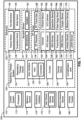
- the system 100 can be used to identify a user interface used by a user, among other uses.
- the system 100 includes a control system 110, a memory device 114, an electronic interface 119, one or more sensors 130, and optionally one or more user devices 170.
- the system 100 further includes a respiratory therapy system 120 that includes a respiratory therapy device 122.
- the system 100 can be used to detect and/or identify a user interface 124, as disclosed in further detail herein.
- the control system 110 includes one or more processors 112 (hereinafter, processor 112).
- the control system 110 is generally used to control (e.g., actuate) the various components of the system 100 and/or analyze data obtained and/or generated by the components of the system 100.
- the processor 112 can be a general or special purpose processor or microprocessor. While one processor 112 is shown in FIG. 1 , the control system 110 can include any suitable number of processors(e.g., one processor, two processors, five processors, ten processors, etc.) that can be in a single housing, or located remotely from each other.
- the control system 110 (or any other control system) or a portion of the control system 110 such as the processor 112 (or any other processor(s) orportion(s) of any other control system), can be used to carry out one or more steps of any of the methods described and/or claimed herein.
- the control system 110 can be coupled to and/or positioned within, for example, a housing of the user device 170, and/or within a housing of one or more of the sensors 130.
- the control system 110 can be centralized (within one such housing) or decentralized (within two or more of such housings, which are physically distinct). In such implementations including two or more housings containing the control system 110, such housings can be located proximately and/or remotely from each other.
- the memory device 114 stores machine-readable instructions that are executable by the processor 112 of the control system 110.
- the memory device 114 can be any suitable computer readable storage device or media, such as, for example, a random or serial access memory device, a hard drive, a solid state drive, a flash memory device, etc. While one memory device 114 is shown in FIG. 1 , the system 100 can include any suitable number of memory devices 114 (e.g., one memory device, two memory devices, five memory devices, ten memory devices, etc.).
- the memory device 114 can be coupled to and/or positioned within a housing of the respiratory therapy device 122 of the respiratory therapy system 120, within a housing of the user device 170, within a housing of one or more of the sensors 130, or any combination thereof. Like the control system 110, the memory device 114 can be centralized (within one such housing) or decentralized (within two or more of such housings, which are physically distinct).
- the memory device 114 stores a user profile associated with the user.
- the user profile can include, for example, demographic information associated with the user, biometric information associated with the user, medical information associated with the user, self-reported user feedback, sleep parameters associated with the user (e.g., sleep-related parameters recorded from one or more earlier sleep sessions), or any combination thereof.
- the demographic information can include, for example, information indicative of an age of the user, a gender of the user, a race of the user, a family medical history (such as a family history of insomnia or sleep apnea), an employment status of the user, an educational status of the user, a socioeconomic status of the user, or any combination thereof.
- the medical information can include, for example, information indicative of one or more medical conditions associated with the user, medication usage by the user, or both.
- the medical information data can further include a fall risk assessment associated with the user (e.g., a fall risk score using the Morse fall scale), a multiple sleep latency test (MSLT) result or score and/or a Pittsburgh Sleep Quality Index (PSQI) score or value.
- the self-reported user feedback can include information indicative of a self-reported subjective sleep score (e.g., poor, average, excellent), a self-reported subjective stress level of the user, a self-reported subjective fatigue level of the user, a self-reported subjective health status of the user, a recent life event experienced by the user, or any combination thereof.
- the electronic interface 119 is configured to receive data (e.g., physiological data and/or acoustic data) from the one or more sensors 130 such that the data can be stored in the memory device 114 and/or analyzed by the processor 112 of the control system 110.
- the electronic interface 119 can communicate with the one or more sensors 130 using a wired connection or a wireless connection (e.g., using an RF communication protocol, a WiFi communication protocol, a Bluetooth communication protocol, an IR communication protocol, over a cellular network, over any other optical communication protocol, etc.).
- the electronic interface 119 can include an antenna, a receiver (e.g., an RF receiver), a transmitter (e.g., an RF transmitter), a transceiver, or any combination thereof.
- the electronic interface 119 can also include one more processors and/or one more memory devices that are the same as, or similar to, the processor 112 and the memory device 114 described herein. In some implementations, the electronic interface 119 is coupled to or integrated in the user device 170. In other implementations, the electronic interface 119 is coupled to or integrated (e.g., in a housing) with the control system 110 and/or the memory device 114.
- the system 100 optionally includes a respiratory therapy system 120 (also referred to as a respiratory pressure therapy system).
- the respiratory therapy system 120 can include a respiratory therapy device 122 (also referred to as a respiratory pressure device), a user interface 124 (also referred to as a mask or a patient interface), a conduit 126 (also referred to as a tube or an air circuit), a display device 128, a humidification tank 129, or any combination thereof.
- the control system 110, the memory device 114, the display device 128, one or more of the sensors 130, and the humidification tank 129 are part of the respiratory therapy device 122.
- the respiratory therapy device 122 is generally used to generate pressurized air that is delivered to a user (e.g., using one or more motors that drive one or more compressors). In some implementations, the respiratory therapy device 122 generates continuous constant air pressure that is delivered to the user. In other implementations, the respiratory therapy device 122 generates two or more predetermined pressures (e.g., a first predetermined air pressure and a second predetermined air pressure). In still other implementations, the respiratory therapy device 122 is configured to generate a variety of different air pressures within a predetermined range.
- the user interface 124 engages a portion of the user's face and delivers pressurized air from the respiratory therapy device 122 to the user's airway to aid in preventing the airway from narrowing and/or collapsing during sleep. This may also increase the user's oxygen intake during sleep.
- the user interface 124 may form a seal, for example, with a region or portion of the user's face, to facilitate the delivery of gas at a pressure at sufficient variance with ambient pressure to effect therapy, for example, at a positive pressure of about 10 cm H 2 O relative to ambient pressure.
- the user interface may not include a seal sufficient to facilitate delivery to the airways of a supply of gas at a positive pressure of about 10 cmH 2 O.
- the user interface 124 is or includes a facial mask that covers the nose and mouth of the user (as shown, for example, in FIG. 2 ).
- the user interface 124 is or includes a nasal mask that provides air to the nose of the user or a nasal pillow mask that delivers air directly to the nostrils of the user.
- the user interface 124 can include a strap assembly that has a plurality of straps (e.g., including hook and loop fasteners) for positioning and/or stabilizing the user interface 124 on a portion of the user interface 124 on a desired location of the user (e.g., the face), and a conformal cushion (e.g., silicone, plastic, foam, etc.) that aids in providing an air-tight seal between the user interface 124 and the user.
- the user interface 124 may include a connector 127 and one or more vents 125. The one or more vents 125 can be used to permit the escape of carbon dioxide and other gases exhaled by the user.
- the conduit 126 allows the flow of air between two components of a respiratory therapy system 120, such as the respiratory therapy device 122 and the user interface 124.
- a respiratory therapy system 120 forms an air pathway that extends between a motor of the respiratory therapy device 122 and the user and/or the user's airway.
- the air pathway generally includes at least a motor of the respiratory therapy device 122, the user interface 124, and the conduit 126.
- One or more of the respiratory therapy device 122, the user interface 124, the conduit 126, the display device 128, and the humidification tank 129 can contain one or more sensors (e.g., a pressure sensor, a flow rate sensor, or more generally any of the other sensors 130 described herein). These one or more sensors can be used, for example, to measure the air pressure and/or flow rate of pressurized air supplied by the respiratory therapy device 122.
- sensors e.g., a pressure sensor, a flow rate sensor, or more generally any of the other sensors 130 described herein.
- the display device 128 is generally used to display image(s) including still images, video images, or both and/or information regarding the respiratory therapy device 122.
- the display device 128 can provide information regarding the status of the respiratory therapy device 122 (e.g., whether the respiratory therapy device 122 is on/off, the pressure of the air being delivered by the respiratory therapy device 122, the temperature of the air being delivered by the respiratory therapy device 122, etc.) and/or other information (e.g., a sleep score or a therapy score (such as a my Air TM score, such as described in WO 2016/061629 and US 2017/0311879 , each of which is hereby incorporated by reference herein in its entirety), the current date/time, personal information for the user, a questionnaire for the user, etc.).
- a sleep score or a therapy score such as a my Air TM score, such as described in WO 2016/061629 and US 2017/0311879 , each of which is hereby incorporated by reference herein in its entirety
- the display device 128 acts as a human-machine interface (HMI) that includes a graphic user interface (GUI) configured to display the image(s) as an input interface.
- HMI human-machine interface
- GUI graphic user interface
- the display device 128 can be an LED display, an OLED display, an LCD display, or the like.
- the input interface can be, for example, a touchscreen or touch-sensitive substrate, a mouse, a keyboard, or any sensor system configured to sense inputs made by a human user interacting with the respiratory therapy device 122.
- the humidification tank 129 is coupled to or integrated in the respiratory therapy device 122 and includes a reservoir of water that can be used to humidify the pressurized air delivered from the respiratory therapy device 122.
- the respiratory therapy device 122 can include a heater to heat the water in the humidification tank 129 in order to humidify the pressurized air provided to the user.
- the conduit 126 can also include a heating element (e.g., coupled to and/or imbedded in the conduit 126) that heats the pressurized air delivered to the user.
- the humidification tank 129 can be fluidly coupled to a water vapor inlet of the air pathway and deliver water vapor into the air pathway via the water vapor inlet, or can be formed in-line with the air pathway as part of the air pathway itself.
- the respiratory therapy device 122 or the conduit 126 can include a waterless humidifier.
- the waterless humidifier can incorporate sensors that interface with other sensor positioned elsewhere in system 100.
- the respiratory therapy system 120 can be used, for example, as a ventilator or a positive airway pressure (PAP) system, such as a continuous positive airway pressure (CPAP) system, an automatic positive airway pressure system (APAP), a bi-level or variable positive airway pressure system (BPAP or VPAP), or any combination thereof.
- PAP positive airway pressure
- CPAP continuous positive airway pressure
- APAP automatic positive airway pressure system
- BPAP or VPAP bi-level or variable positive airway pressure system
- the CPAP system delivers a predetermined air pressure (e.g., determined by a sleep physician) to the user.
- the APAP system automatically varies the air pressure delivered to the user based at least in part on, for example, respiration data associated with the user.
- a user 210 of the respiratory therapy system 120 and a bed partner 220 are located in a bed 230 and are laying on a mattress 232.
- the user interface 124 (e.g., a full facial mask) can be worn by the user 210 during a sleep session.
- the user interface 124 is fluidly coupled and/or connected to the respiratory therapy device 122 via the conduit 126.
- the respiratory therapy device 122 delivers pressurized air to the user 210 via the conduit 126 and the user interface 124 to increase the air pressure in the throat of the user 210 to aid in preventing the airway from closing and/or narrowing during sleep.
- the respiratory therapy device 122 can include the display device 128, which can allow the user to interact with the respiratory therapy device 122.
- the respiratory therapy device 122 can also include the humidification tank 129, which stores the water used to humidify the pressurized air.
- the respiratory therapy device 122 can be positioned on a nightstand 240 that is directly adjacent to the bed 230 as shown in FIG. 2 , or more generally, on any surface or structure that is generally adjacentto the bed 230 and/or the user 210.
- the user can also wear the blood pressure device 180 and the activity tracker 190 while lying on the mattress 232 in the bed 230.
- the one or more sensors 130 of the system 100 include a pressure sensor 132, a flow rate sensor 134, temperature sensor 136, a motion sensor 138, a microphone 140, a speaker 142, a radio-frequency (RF) receiver 146, an RF transmitter 148, a camera 150, an infrared (IR) sensor 152, a photoplethysmogram (PPG) sensor 154, an electrocardiogram (ECG) sensor 156, an electroencephalography (EEG) sensor 158, a capacitive sensor 160, a force sensor 162, a strain gauge sensor 164, an electromyography (EMG) sensor 166, an oxygen sensor 168, an analyte sensor 174, a moisture sensor 176, a light detection and ranging (LiDAR) sensor 178, or any combination thereof.
- IR infrared
- PPG photoplethysmogram
- ECG electrocardiogram
- EEG electroencephalography
- capacitive sensor 160 a force sensor 162
- each of the one or sensors 130 are configured to output sensor data that is received and stored in the memory device 114 or one or more other memory devices.
- the sensors 130 can also include, an electrooculography (EOG) sensor, a peripheral oxygen saturation (SpO 2 ) sensor, a galvanic skin response (GSR) sensor, a carbon dioxide (CO 2 ) sensor, or any combination thereof.
- EOG electrooculography
- SpO 2 peripheral oxygen saturation
- GSR galvanic skin response
- CO 2 carbon dioxide
- the one or more sensors 130 are shown and described as including each of the pressure sensor 132, the flow rate sensor 134, the temperature sensor 136, the motion sensor 138, the microphone 140, the speaker 142, the RF receiver 146, the RF transmitter 148, the camera 150, the IR sensor 152, the PPG sensor 154, the ECG sensor 156, the EEG sensor 158, the capacitive sensor 160, the force sensor 162, the strain gauge sensor 164, the EMG sensor 166, the oxygen sensor 168, the analyte sensor 174, the moisture sensor 176, and the LiDAR sensor 178, more generally, the one or more sensors 130 can include any combination and any number of each of the sensors described and/or shown herein.
- the one or more sensors 130 can be used to generate, for example physiological data, acoustic data, or both, that is associated with a user of the respiratory therapy system 120 (such as the user 210 of FIG. 2 ), the respiratory therapy system 120, both the user and the respiratory therapy system 120, or other entities, objects, activities, etc.
- Physiological data generated by one or more of the sensors 130 can be used by the control system 110 to determine a sleep-wake signal associated with the user during the sleep session and one or more sleep-related parameters.
- the sleep-wake signal can be indicative of one or more sleep stages (sometimes referred to as sleep states), including sleep, wakefulness, relaxed wakefulness, micro-awakenings, or distinct sleep stages such as a rapid eye movement (REM) stage (which can include both a typical REM stage and an atypical REM stage), a first non-REM stage (often referred to as "N1"), a second non-REM stage (often referred to as "N2”), a third non-REM stage (often referred to as "N3”), or any combination thereof.
- REM rapid eye movement
- N1 first non-REM stage
- N2 second non-REM stage
- N3 third non-REM stage
- the sleep-wake signal can also be timestamped to indicate a time that the user enters the bed, a time that the user exits the bed, a time that the user attempts to fall asleep, etc.
- the sleep-wake signal can be measured one or more of the sensors 130 during the sleep session at a predetermined sampling rate, such as, for example, one sample per second, one sample per 30 seconds, one sample per minute, etc.
- Examples of the one or more sleep-related parameters that can be determined for the user during the sleep session based at least in part on the sleep-wake signal include a total time in bed, a total sleep time, a total wake time, a sleep onset latency, a wake-after-sleep-onset parameter, a sleep efficiency, a fragmentation index, an amount of time to fall asleep, a consistency of breathing rate, a fall asleep time, a wake time, a rate of sleep disturbances, a number of movements, or any combination thereof.
- Physiological data and/or acoustic data generated by the one or more sensors 130 can also be used to determine a respiration signal associated with the user during a sleep session.
- the respiration signal is generally indicative of respiration or breathing of the user during the sleep session.
- the respiration signal can be indicative of, for example, a respiration rate, a respiration rate variability, an inspiration amplitude, an expiration amplitude, an inspiration-expiration amplitude ratio, an inspiration-expiration duration ratio, a number of events per hour, a pattern of events, pressure settings of the respiratory therapy device 122, or any combination thereof.
- the event(s) can include snoring, apneas, central apneas, obstructive apneas, mixed apneas, hypopneas, RERAs, a flow limitation (e.g., an event that results in the absence of the increase in flow despite an elevation in negative intrathoracic pressure indicating increased effort), a mask leak (e.g., from the user interface 124), a restless leg, a sleeping disorder, choking, an increased heart rate, a heart rate variation, labored breathing, an asthma attack, an epileptic episode, a seizure, a fever, a cough, a sneeze, a snore, a gasp, the presence of an illness such as the common cold or the flu, an elevated stress level, etc.
- a flow limitation e.g., an event that results in the absence of the increase in flow despite an elevation in negative intrathoracic pressure indicating increased effort
- the pressure sensor 132 outputs pressure data that can be stored in the memory device 114 and/or analyzed by the processor 112 of the control system 110.
- the pressure sensor 132 is an air pressure sensor (e.g., barometric pressure sensor) that generates sensor data indicative of the respiration (e.g., inhaling and/or exhaling) of the user of the respiratory therapy system 120 and/or ambient pressure.
- the pressure sensor 132 can be coupled to or integrated in the respiratory therapy device 122.
- the pressure sensor 132 can be, for example, a capacitive sensor, an electromagnetic sensor, an inductive sensor, a resistive sensor, a piezoelectric sensor, a strain-gauge sensor, an optical sensor, a potentiometric sensor, or any combination thereof. In one example, the pressure sensor 132 can be used to determine a blood pressure of the user.
- the flow rate sensor 134 outputs flow rate data that can be stored in the memory device 114 and/or analyzed by the processor 112 of the control system 110.
- the flow rate sensor 134 is used to determine an air flow rate from the respiratory therapy device 122, an air flow rate through the conduit 126, an air flow rate through the user interface 124, or any combination thereof.
- the flow rate sensor 134 can be coupled to or integrated in the respiratory therapy device 122, the user interface 124, or the conduit 126.
- the flow rate sensor 134 can be a mass flow rate sensor such as, for example, a rotary flow meter (e.g., Hall effect flow meters), a turbine flow meter, an orifice flow meter, an ultrasonic flow meter, a hot wire sensor, a vortex sensor, a membrane sensor, or any combination thereof.
- a rotary flow meter e.g., Hall effect flow meters
- turbine flow meter e.g., a turbine flow meter
- an orifice flow meter e.g., an ultrasonic flow meter
- a hot wire sensor e.g., a hot wire sensor
- vortex sensor e.g., a vortex sensor
- membrane sensor e.g., a membrane sensor
- the temperature sensor 136 outputs temperature data that can be stored in the memory device 114 and/or analyzed by the processor 112 of the control system 110. In some implementations, the temperature sensor 136 generates temperatures data indicative of a core body temperature of the user, a skin temperature of the user 210, a temperature of the air flowing from the respiratory therapy device 122 and/or through the conduit 126, a temperature in the user interface 124, an ambient temperature, or any combination thereof.
- the temperature sensor 136 can be, for example, a thermocouple sensor, a thermistor sensor, a silicon band gap temperature sensor or semiconductor-based sensor, a resistance temperature detector, or any combination thereof.
- the motion sensor 138 outputs motion data that can be stored in the memory device 114 and/or analyzed by the processor 112 of the control system 110.
- the motion sensor 138 can be used to detect movement of the user during the sleep session, and/or detect movement of any of the components of the respiratory therapy system 120, such as the respiratory therapy device 122, the user interface 124, or the conduit 126.
- the motion sensor 138 can include one or more inertial sensors, such as accelerometers, gyroscopes, and magnetometers.
- the motion sensor 138 can be used to detect motion or acceleration associated with arterial pulses, such as pulses in or around the face of the user and proximal to the user interface 124, and configured to detect features of the pulse shape, speed, amplitude, or volume.
- the motion sensor 138 alternatively or additionally generates one or more signals representing bodily movement of the user, from which may be obtained a signal representing a sleep state of the user; for example, via a respiratory movement of the user.
- the microphone 140 outputs acoustic data that can be stored in the memory device 114 and/or analyzed by the processor 112 of the control system 110.
- the acoustic data generated by the microphone 140 is reproducible as one or more sound(s) during a sleep session (e.g., sounds from the user) to determine (e.g., using the control system 110) one or more sleep-related parameters, as described in further detail herein.
- the acoustic data from the microphone 140 can also be used to identify (e.g., using the control system 110) an event experienced by the user during the sleep session, as describedin further detail herein.
- the acoustic data from the microphone 140 is representative of noise associated with the respiratory therapy system 120.
- the system 100 includes a plurality of microphones (e.g., two or more microphones and/or an array of microphones with beamforming) such that sound data generated by each of the plurality of microphones can be used to discriminate the sound data generated by another of the plurality of microphones.
- the microphone 140 can be coupled to or integrated in the respiratory therapy system 120 (or the system 100) generally in any configuration.
- the microphone 140 can be disposed inside the respiratory therapy device 122, the user interface 124, the conduit 126, or other components.
- the microphone 140 can also be positioned adjacent to or coupled to the outside of the respiratory therapy device 122, the outside of the user interface 124, the outside of the conduit 126, or outside of any other components.
- the microphone 140 could also be a component of the user device 170 (e.g., the microphone 140 is a microphone of a smartphone).
- the microphone 140 can be integrated into the user interface 124, the conduit 126, the respiratory therapy device 122, or any combination thereof.
- the microphone 140 can be located at any point within or adjacent to the air pathway of the respiratory therapy system 120, which includes at least the motor of the respiratory therapy device 122, the user interface 124, and the conduit 126.
- the air pathway can also be referred to as the acoustic pathway.
- the speaker 142 outputs sound waves that are audible to the user.
- the sound waves can be audible to a user of the system 100 or inaudible to the user of the system (e.g., ultrasonic sound waves).
- the speaker 142 can be used, for example, as an alarm clock or to play an alert or message to the user (e.g., in response to an event).
- the speaker 142 can be used to communicate the acoustic data generated by the microphone 140 to the user.
- the speaker 142 can be coupled to or integrated in the respiratory therapy device 122, the user interface 124, the conduit 126, or the user device 170.
- the systems and methods described herein can include generating or analyzing a hypnogram including a sleep-wake signal to determine or identify the enter bed time (t bed ), the go-to-sleep time (I GTS ), the initial sleep time (t sleep ), one or more first micro-awakenings (e.g., MA 1 and MA 2 ), the wake-up time (t wake ), the rising time (t rise ), or any combination thereof based at least in part on the sleep-wake signal of a hypnogram.
- a sleep-wake signal to determine or identify the enter bed time (t bed ), the go-to-sleep time (I GTS ), the initial sleep time (t sleep ), one or more first micro-awakenings (e.g., MA 1 and MA 2 ), the wake-up time (t wake ), the rising time (t rise ), or any combination thereof based at least in part on the sleep-wake signal of a hypnogram.
- one or more of the sensors 130 can be used to determine or identify the enter bed time (t bed ), the go-to-sleep time (I GTS ), the initial sleep time (t sleep ), one or more first micro-awakenings (e.g., MA 1 and MA 2 ), the wake-up time (t wake ), the rising time (t rise ), or any combination thereof, which in turn define the sleep session.
- the enter bed time t bed can be determined based at least in part on, for example, data generated by the motion sensor 138, the microphone 140, the camera 150, or any combination thereof.
- the go-to-sleep time can be determined based at least in part on, for example, data from the motion sensor 138 (e.g., data indicative of no movement by the user), data from the camera 150 (e.g, data indicative of no movement by the user and/or that the user has turned off the lights), data from the microphone 140 (e.g., data indicative of the using turning off a TV), data from the user device 170 (e.g., data indicative of the user no longer using the user device 170), data from the pressure sensor 132 and/or the flowrate sensor 134 (e.g., data indicative of the user turning on the respiratory therapy device 122, data indicative of the user donning the user interface 124, etc.), or any combination thereof.
- data from the motion sensor 138 e.g., data indicative of no movement by the user
- data from the camera 150 e.g, data indicative of no movement by the user and/or that the user has turned off the lights
- data from the microphone 140 e.g., data indicative of the using
- FIG. 5 illustrates the generation of acoustic data in response to an acoustic reflection indicative of one or more features of a user interface, according to aspects of the present disclosure.
- the generation of the acoustic data includes the acoustic sensor 141, which includes the microphone 140 (or any type of audio transducer) and a speaker 142.
- the speaker 142 can instead be replaced by another device that can generate an acoustic signal, such as the motor of the respiratory therapy device 122.
- the microphone 140 and speaker 142 are shown in specific locations relative to the conduit 126, which is connected to the respiratory therapy device 122 (not shown). However, the locations of the microphone 140 and the speaker 142 can vary from what is shown, as discussed above.
- the speaker 142 emits an acoustic signal 502 within the conduit 126.
- the acoustic signal 502 is in the form of a sound.
- the sound can be one or more of a standard sound (e.g, an original, unmodified sound from an off-the-shelf sound application), a custom sound, an inaudible frequency, a white noise sound, a broad band impulse, a continuous sinusoidal waveform, a square waveform, a sawtooth waveform, and a frequency modulated sinusoid (e.g., chirp).
- the acoustic signal 502 can be in the form of one or more of an audible sound or an ultrasonic sound.
- the microphone 140 detects the acoustic reflection 510 and generates acoustic data in response to the acoustic reflection 510.
- the generated acoustic data is sub sequently analyzed for categorizing and/or characterizing the user interface, as further discussed below with respect to FIG. 7 .
- the acoustic signal 502 can continue beyond the feature 504 and into the user interface 124.
- the user interface 124 can include one or more additional features that change the acoustic impedance of the acoustic signal 502, which further generates the acoustic reflection 510.
- the feature 504 is illustrated and described as causing the acoustic reflection 510, there can be multiple features of the user interface 124 that can all contribute to the acoustic reflection 510.
- the system 100 is configured to generate acoustic data, which is in turn analyzed by the control system 110.
- the acoustic data includes reflected sound waves received by a microphone (e.g., the microphone 140 of the system 100) that are transmitted from a speaker (e.g., the speaker 142 of the system 100, or an external speaker).
- the reflected sound waves are indicative of shapes and dimensions of the components in the sound waves' path(s).
- the acoustic data includes sound(s) from the user that is indicative of one or more sleep-related parameters (e.g., breathing through the nose, breathing through the mouth, snoring, sniffling).
- Such a method may be understood in terms of the property of convolution.
- the convolution of f and g can be written as f * g .
- This operation can be the integral of the product of the two functions (f and g) after one is reversed and shifted.
- the convolution formula can be described as a weighted average of the function f( ⁇ ) at the moment t where the weighting is given by g(- ⁇ ) simply shifted by amount t. As t changes, the weighting function emphasizes different parts of the input function.
- a mathematical model that can relate an acoustic system output to the input for a time-invariant linear system, such as one involving conduits of a respiratory treatment apparatus, (which may include some human or other unknown part of the system) can be based on this convolution.
- the Impulse Response Function (IRF) is the system response to a unit impulse input.
- DFT discrete Fourier Transform
- FFT fast Fourier transform
- Equation 4 A logarithm of Equation 4 may be applied so that the multiplication is converted into an addition, resulting in Equation 5:
- Equation 5 may then be converted back into the time domain, by an Inverse Fourier Transform (IFT) (e.g., an inverse DFT or inverse FFT), which results in a complex cepstrum (K( ⁇ )) (complex because one can work from the complex spectrum) - the inverse Fourier Transform of the logarithm of the spectrum; Equation 6.
- IFT Inverse Fourier Transform
- K( ⁇ ) complex cepstrum
- Consideration of the data from a cepstrum analysis may provide information about the system. For example, by comparing cepstrum data of a system from a prior or known baseline of cepstrum data for the system, the comparison, such as a difference, can be used to recognize differences or similarities in the system that may then be used to implement varying functions or purposes disclosed herein.
- the following disclosure can utilize the methodologies of such an analysis, as herein explained, to implement the identification of the user interface.
- analysis of the acoustic data using cepstrum can be used to measure the cross-sectional area, and change(s) in the cross-sectional area of the user interface 124, the nasal passages, the estimated dimensions of sinuses.
- the changes in the nasal passages and the estimated dimensions of the sinuses may be indicative of inflammation and/or congestion.
- direct spectral methods can be implemented to analyze the acoustic data.
- Some examples of direct spectral methods include processing discrete Fourier transform (DFT), fast Fourier transform (FFT) with a sliding window, short time Fourier transform (STFT), wavelets, wavelet-based cepstrum calculation, deep neural networks (e.g, using imaging methods applied to spectrograms), Hilbert-Huang transform (HHT), empirical mode decomposition (EMD), blind source separation (BSS), Kalman filters, or a combination thereof.
- DFT discrete Fourier transform
- FFT fast Fourier transform
- STFT short time Fourier transform
- wavelets wavelets
- wavelet-based cepstrum calculation e.g, deep neural networks (e.g, using imaging methods applied to spectrograms), Hilbert-Huang transform (HHT), empirical mode decomposition (EMD), blind source separation (BSS), Kalman filters, or a combination thereof.
- HHT Hilbert-Huang transform
- EMD empirical mode decomposition
- cepstral coefficients such as mel-frequency cepstral coefficients (MFCCs) may be used, for example, by treating the acoustic data analysis as a speech recognition problem and using a machine learning / classification system.
- the system of the present disclosure includes a flow rate sensor (e.g., the flow rate sensor 134 of FIG. 1 ) and/or a pressure sensor (e.g., the pressure sensor 132 of FIG. 1 ).
- the flow rate sensor 134 can be used to generate flow data associated with the user 210 ( FIG. 2 ) of the respiratory therapy device 122 during the sleep session.
- Examples of flow sensors (such as, for example, the flow rate sensor 134) are described in International Publication No. WO 2012/012835 , which is hereby incorporated by reference herein in its entirety.
- the flow rate sensor 134 is configured to measure a vent flow (e.g., intentional "leak"), an unintentional leak (e.g., mouth leak (e.g., a leak from the mouth when using a nasal mask or a nasal pillow mask) and/or mask leak), a patient flow (e.g., air into and/or out of lungs), or a combination thereof.
- a vent flow e.g., intentional "leak”
- an unintentional leak e.g., mouth leak (e.g., a leak from the mouth when using a nasal mask or a nasal pillow mask) and/or mask leak
- a patient flow e.g., air into and/or out of lungs
- the flow data can be analyzed to determine cardiogenic oscillations of the user.
- the flow rate sensor and/or a pressure sensor is configured to generate flow data over a period of therapy time.
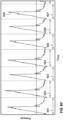
- FIG. 6A illustrates a portion of such flow data associated with a user (e.g., the user 210 of FIG. 2 ) of a respiratory therapy system (e.g., the respiratory therapy system 120 of FIG. 1 ), accordingto some implementations of the present disclosure.
- a plurality of flow rate values measured over about seven full breathing cycles (601-607) is plotted as a continuous curve 610.
- the pressure sensor is configured to generate pressure data over a period of therapy time.
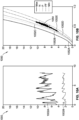
- FIG. 6B illustrates pressure data associated with a user of a CPAP system, according to some implementations of the present disclosure.
- the pressure data shown in FIG. 6B was generated over the same period of therapy time as that of FIG. 6A .
- a plurality of pressure values measured over about seven full breathing cycles (601-607) is plotted as a continuous curve 620. Because a CPAP system is used, the continuous pressure curve of FIG. 6B exhibits a generally sinusoidal pattern with a relatively small amplitude, because the CPAP system attempts to maintain the constant predetermined air pressure for the system during the seven full breathing cycles.
- FIG. 6C pressure data associated with a user of a respiratory therapy system with an expiratory pressure relief (EPR) module is illustrated, according to some implementations of the present disclosure.
- the pressure data shown in FIG. 6C was generated over the same period of therapy time as that of FIG. 6A .
- a plurality of pressure values measured over about seven full breathing cycles (601-607) is plotted as a continuous curve 630.
- the continuous curve 630 of FIG. 6C is different from the continuous curve 620 of FIG. 6B , because the EPR (Expository Pressure Relief) module (used for the pressure data in FIG. 6C ) can have different settings for an EPR level, which is associated with a difference between a pressure level during inspiration and a reduced pressure level during expiration.
- EPR Expository Pressure Relief
- a flow diagram for a method 700 for identifying a user interface is disclosed.
- method 700 can be used to characterize the type of vent that the user interface has, in order to categorize the user interface as a specific type that is known to have thatvent.
- One or more steps of the method 700 can be implemented using any element or aspect of the system 100 ( FIGS. 1-2 ) described herein.
- flow data associated with air flowing in a respiratory therapy system is received.
- the flow data can include flow rate data and/or pressure data.
- the flow data can be generated using one or more sensors 130 of the system 100, such as the flow rate sensor 134 and/or the pressure sensor 132.
- acoustic data associated with the respiratory therapy system is received.
- the acoustic data can be generated using one or more sensors 130 of the system 100, such as the microphone 140 and/or the speaker 142.
- the microphone 140 can be external to the respiratory therapy system. Additionally or alternatively, the microphone 140 can be coupled to a smart device, a smart phone, a smart speaker, or any combination thereof.
- the microphone 140 can be an integrated microphone coupled to (i) a conduit of a respiratory therapy device of the respiratory therapy system, (ii) a circuit board of the respiratory therapy device of the respiratory therapy system, (iii) a connector of the respiratory therapy system, (iv) the user interface of the respiratory therapy system, or (v) any other component of the respiratory therapy system.
- the flow data received at step 710 and the acoustic data received at step 720 are received when the user is wearing the user interface during the sleep session. In other implementations, the flow data and the acoustic data are received when the user is not wearing the user interface. In further implementations, the flow data and the acoustic data are received during a dedicated period of time, which may be prior to the beginning of the sleep session, or at the beginning of the sleep session before the user falls asleep. During this dedicated period of time, the user may be wearing the user interface, not wearing the user interface, or wearing the user interface for a first set of one or more portions and not wearing the user interface for a second set of one or more portions. The collection of the flow data and the acoustic data can be initiated in response to receiving instructions and/or input from the user.
- the received flow data and the received acoustic data are analyzed.
- the analyzed acoustic data includes Cepstrum data and/or an acoustic spectral signature as discussed above with reference to FIG. 5 .
- analyzing the received acoustic data includes a Cepstrum analysis, an autocepstrum analysis, an auto-correlation analysis, a spectral analysis, or a combination thereof.
- the spectral analysis can include a fast Fourier transform (FFT) with a sliding window, a spectrogram, a short time Fourier transform (STFT), a wavelet-based analysis, or a combination thereof.
- FFT fast Fourier transform
- STFT short time Fourier transform
- the analyzing the received flow data and the received acoustic data includes processing the received flow data (step 710) and/or the received acoustic data (step 720) to identify one or more features.
- the features can include a maximum magnitude of the cepstrum, a minimum magnitude of the cepstrum, a standard deviation of the cepstrum, a skewness of the cepstrum, a kurtosis of the cepstrum, a median of an absolute value of the cepstrum, a sum of the absolute value of the cepstrum, a sum of a positive area of the cepstrum, a sum of a negative area of the cepstrum, a fundamental frequency, an energy corresponding to the fundamental frequency, a mean energy, at least one resonant frequency of a combination of the conduit and the user interface, a change in the at least one resonant frequency, a number of peaks within a range, a peak prominence, a distance
- a mask type for the user interface is determined based at least in part on the analysis.
- the mask type for the user interface includes a mask family, such as (i) full face, (ii) partial face, (iii) nasal, and (iv) nasal pillows.
- the masktype could also include atotal-face mask, whichmay cover, in addition to the user's mouth and nose, some or all of the user's eyes and/or ears.
- the mask type for the user interface includes a mask size.
- the mask size includes extra-small, small, medium, large, extra-large or any reasonable intermediary size such as small/medium, etc.
- the mask type for the user interface includes a mask model of the user interface. Additionally, or alternatively, in some implementations, the mask type for the user interface includes a mask manufacturer of the user interface.
- the mask type for the user interface includes a mask style.
- the mask style can include face-mounted style, conduit style, or both.
- a face-mounted style mask generally refers to a mask that is generally positioned on the front of the user's face, with the conduit attached to the front of the mask at the front of the user's face.
- the face-mounted style mask may include one or more straps that extend around the user's head to secure the mask to the user's head.
- a face-mounted style mask is generally illustrated in FIG. 2 .
- a conduit style mask also referred to as a headgear mask or a headgear user interface, is a mask that includes its own conduit that extends around the user's head.
- the conduit from the respiratory therapy device is coupled to the conduit of the conduit style mask at the top of the user's head.
- the conduit of the conduit style mask then extends to the front of the user's face and are positioned in front of the user's mouth and/or nose, to provide air to the user's airway.
- the conduit style mask has a single conduit that extends on one side of the user's face. In other implementations, the conduit style mask has two conduits that extend on either side of the user's face.
- the method 700 further includes step 740, where a flow-based mask type of the user interface is determined based at least in part on the analyzed flow data.
- a corresponding likelihood e.g., in the forms of a confidence interval, a probability, a score, a percentage, a ranking, Yes/No, descriptive words, etc.
- analyzing the received flow data (at step 730) and determining the flow-based mask type of the user interface (at step 740) can include determining a pressure versus flow rate curve for the user interface.
- Method 700 can include receiving pressure data associated with the respiratory therapy system, which may be received with the flow rate data (or in some implementations as an alternative to the flow rate data).
- the pressure versus flow rate curve can be used to determine the ratio of the pressure to the flow rate for various different pressures and flow rates.
- the ratio between pressure and flow rate can then be mapped to known ratios of pressure and flow rates for a plurality of different mask types. This mapping can be part of step 740, step 760, or a stand-alone step.
- a pathway is formed by a respiratory therapy device (e.g., the respiratory therapy device 122), a mask (e.g., the user interface 124), and a conduit (e.g., the conduit 126).
- the conduit creates a first impedance Z1 (humidifier tub, tube, and mask impedance), which in turn causes a pressure drop ⁇ P that is a function of the total flow rate Qt.
- the user interface (e.g., mask) pressure Pm is the device pressure Pd less the pressure drop ⁇ P through the conduit.
- Pm Pd ⁇ ⁇ P where ⁇ P is the pressure drop, characteristic of the conduit.
- the vent of the mask creates a second impedance Z2 (vent impedance).
- the fourth impedance includes (i) the patient airway resistance Z4, (ii) the patient lung compliance Clung, and/or (iii) the variable pressure source Plung, each of which represents characteristics of the user's respiratory circuit.
- the process of averaging may be implemented by low-pass filtering with a time constant long enough to contain the plurality of respiratory cycles.
- the time constant can be of any suitable duration, such as five seconds, ten seconds, thirty seconds, one minute, etc. However, other time intervals are also contemplated.
- the first curve 910 is associated with a first mask; the second curve 920 is associated with a second mask; and the third curve 930 is associated with a third mask.
- a ratio between a pressure value and a flow rate value can be mapped to standard characteristic curves.
- a point 950 representative of the ratio is mapped to the X-Y plot 900, and fits closest to the first curve 910.
- the system 100 and/or the method 700 assigns the likelihood for each mask type.
- the first mask is the most likely
- the third mask is the least likely.
- curves 1052A and 1052E can serve to establish the outer bounds for masks made by a specific manufacturer. If the data points 1054 fall outside of these outer bounds, it can be determined that the user is wearing a mask from a different manufacturer. As shown in FIG. 10B , a majority of the data points 1054 fall along curve 1052D, which is the pressure versus flow rate curve for a full-face mask. Thus, by analyzing the flow rate data and the pressure data to generate the data points 1054, it can be determined that there is a high likelihood that the user's current mask is a full-face mask.
- method 700 may not include comparing the data points 1054 to the outer bounds established by curves 1052A and 1052E. In other implementations, method 700 may use curves that correspond to additional mask types, such as partial-face masks.
- the method 700 further includes step 750, where an acoustic-based mask type of the user interface is determined based at least in part on the analyzed acoustic data.
- a corresponding likelihood e.g., in the forms of a confidence interval, a probability, a score, a percentage, a ranking, Yes/No, descriptive words, etc.
- a corresponding likelihood e.g., in the forms of a confidence interval, a probability, a score, a percentage, a ranking, Yes/No, descriptive words, etc.
- analyzing the received acoustic data (at step 730) and determining the acoustic-based mask type of the user interface (at step 750) can include performing a variety of different analyses of the acoustic data to determine features or characteristics representative of the mask type.
- the analysis can include windowing the generated acoustic data based, at least in part, on at least one feature of the respiratory therapy system, such as at least one feature of the user interface, at least one feature of the conduit, etc.
- the at least one feature of the user interface can be, for example, the expansion from the connection of the conduit to the chamber formed by the cushion of a full face mask against a user's face.
- the at least one feature of the conduit can be, for example, the length of the conduit.
- the length can be the distance from the acoustic sensor to where the conduit connects to the user interface.
- the windowing can be based, atleast in part, on at least one feature of the one or more features of the user interface.
- the windowing is a selection of a portion of the generated acoustic data that is used for additional analysis and/or for characterizing the user interface, as discussed below.
- the windowing focuses in on the generated acoustic data that can differentiate and distinguish between the various user interfaces that exist for respiratory therapy systems. Accordingly, the windowing can focus in on the generated acoustic data that is indicative of the user interface.
- the windowing can beneficially allow regions of the signal that may otherwise confound the estimation of the user interface, such as varying conduit lengths, differences in respiratory therapy systems, such as different respiratory therapy devices, etc. to be ignored.
- windowing the generated acoustic data selects only the region of the acoustic signal, and the corresponding data, thatis associated with the user interface.
- the windowing allows for ignoring regions of the acoustic signal, and the corresponding data, that may otherwise confound the estimation of the user interface, such as the factors discussed above.
- the at least one feature has a corresponding point in the generated acoustic data that acts as fiducial point.
- the fiducial point provides a basis for analyzing the generated acoustic data for different types of user interfaces, conduits, respiratory therapy devices, etc.
- the fiducial point acts as a reference for further analysis of the generated acoustic data, and provides for consistency between different acoustic data generated under different circumstances.
- the fiducial point can correspond to a location of the one or more features along a pathway formed, at least in part, by the conduit and the user interface.
- the fiducial point can correspondto a feature of the conduit or a feature of the connection between the conduit and the user interface.
- the fiducial point can correspond to a feature of the user interface itself.
- the fiducial point is the same for a given user interface.
- the fiducial point is the same for all of the different possible user interfaces.
- the feature can be generic to different types of user interfaces so that the feature, or at least a variation of the feature, is present in all respiratory therapy systems that include a user interface connected to a conduit.
- the feature can be the expansion of the acoustic pathway that occurs at the connection between a conduit and a user interface.
- an expansion may not be identical for every combination of the conduit and different user interface, every combination of the conduit with a user interface can include such an expansion.
- the expansion at the connection between the conduit and the user interface can be the feature that corresponds to the fiducial point user in widowing of the generated acoustic data.
- the fiducial point can be any feature that causes a change in acoustic impedance and, therefore, is present in the generated acoustic data from the acoustic reflection.
- the change in the acoustic impedance can be based, at least in part, on a narrowing of the pathway formed by the conduit and the user interface and at (i) the user interface, (ii) a connection of the conduit and the user interface, or (iii) a combination thereof.
- the change in the acoustic impedance can be based, at least in part, on a widening of the pathway at (i) the user interface, (ii) a connection of the conduit and the user interface, or (iii) a combination thereof.
- the analysis of the generated acoustic data can include performing a deconvolution on the generated acoustic data, such as calculating the cepstrum of the generated acoustic data.
- the fiducial point can be a minimum point within a predetermined section of the deconvolution of the generated acoustic data.
- the fiducial point can be a maximum point within a predetermined section of the deconvolution of the generated acoustic data.
- the fiducial point can be based on the connection between the user interface and the conduit, and the predetermined section can be based on the length of the conduit. More specifically, the predetermined section can be based on the distance between the acoustic sensor and the connection between the conduit and the user interface.
- the two cepstrums 1 100A and 1100B are shown merely for descriptive convenience and are not meant to be limiting.
- a single cepstrum can be calculated for generated acoustic data for characterizing a user interface.
- the two cepstrums 1100A and 1100B are two cepstrums calculated from different generated acoustic data for the same user interface.
- the plots are shown with quefrency in the X-axis and amplitude in the Y-axis.
- the quefrency is similar to time or distance, but the units of the X-axis are simply samplesor sample numbers of the acoustic reflection.
- the units of the Y-axis can be any unit that measures the amplitude.
- Around the 250 value in the X-axis are large minima 1102A and 1102B, which can be used as fiducial points for analyzing the generated acoustic data. These correspond to a widening of the pathway in the conduit, such as the connection point between the conduit and the user interface.
- the windowing can include a first windowing of the generated acoustic data and a second windowing of the generated acoustic data.
- the first windowing can identify or locate a feature of the user interface correspondingto the fiducial point.
- the second windowing can identify or locate further features of the user interface.
- the first windowing of the generated acoustic data can vary from the second windowing of the generated acoustic data by an amount of the generated acoustic data that is selected before the fiducial point in the generated acoustic data, after the fiducial point in the generated acoustic data, or a combination thereof.
- the first windowing can capture only about 10 cm before and after the fiducial point, e.g., about 10 cm before and after connection pointbetween the conduit and the user interface.
- the second windowing can capture about 35 cm before the fiducial point and about 50 cm after the fiducial point.
- the amount of data captured by the windowing can vary based on the amount of the generated acoustic data that is required for a specific analysis related to the windowing.
- the first windowing may be merely to identify the fiducial point.
- the size of the resulting window of the windowing can be smaller because it is focused purely on determining the fiducial point.
- the second windowing can occur, which can result in a larger second window. The larger second window can capture the generated acoustic data that is sent to the characterizing step discussed below.
- the characterizing step may benefit from additional data, which is why the second window generated from the second windowing can be larger than the first window generated from the first windowing, with the larger window capturing more features for characterizing the user interface compared to the first window.
- the size of the windows generated during the first and second windowing can be reversed, with the first window being large than the second window. The first window being large may assist in determining the correct fiducial point for the analysis.
- the windowed cepstrums 1200A and 1200B corresponding to cepstrums 1100A and 1100B, respectively, are shown after the windowing is performed as described above.
- the windowing removed the generated acoustic data after about the 350 value in the X-axis in FIG. 11 , and removed the generated acoustic data before about the 200 value in the X-axis in FIG. 11 .
- the windowing is performed to eliminate the generated acoustic data that is not used for characterizing the user interface, and that could potentially disrupt the additional analysis and characterization of the acoustic data for determining the user interface.
- the generated acoustic data that remains is about 80 on either side of the fiducial points 1102A and 1102B.
- a further result of the windowing is an alignment based on the fiducial points 1102A and 1102B.
- the alignment allows for further consistency in the additional analysis of the generated acoustic data and the characterizing of the analyzed acoustic data, as described below.
- the respiratory therapy system 120 analyzing the generated acoustic data can include a deconvolution of the generated acoustic data prior to the windowing of the generated acoustic data.
- the deconvolution of the generated acoustic data can include calculating a cepstrum of the generated acoustic data. The cepstrum identifies a distance associated with the acoustic reflection, and the distance indicates a location of the one or more features of the user interface.
- Calculating the cepstrum can be achieved by processing the acoustic reflection in a series of stages: calculate the frequency spectrum of the acoustic reflection via a fast Fourier transform; take the natural logarithm of the absolute magnitude of this frequency spectrum; and perform the inverse Fourier transform and calculate the real part of the signal to produce a cepstrum. This process may be repeated over multiple time intervals and an average cepstrum may be estimated.
- the resulting cepstrum signal transforms the acoustic reflection into the quefrency domain which is analogous to separating reflections in time and/or distance.
- the cepstrum canbe calculated using a fast Fourier transform of 4096 samples of the acoustic reflection with, optionally, 50% overlap of the samples. These 4096 samples represent about 0.2 seconds of generated acoustic data.
- the analyzing of the generated acoustic data can include calculating a derivative of the cepstrum to determine a rate of change of the cepstrum signal.
- the derivative of the cepstrum can provide additional information that is used to characterize the user interface.
- the derivative of the cepstrum also allows the network to find alternate features from the same input.
- the respiratory therapy system 120 analyzing the generated acoustic data can include normalizing the generated acoustic data. Normalizing the generated acoustic data can account for confounding conditions. The confounding conditions can be, for example, microphone gain, breathing amplitude, therapy pressure, varying conduit length, curled or stretched conduit, different therapy pressures, ambient temperature, or a combination thereof. In one or more implementations, the normalizing of the generated acoustic data can include subtracting a mean value from the generated acoustic data, dividing by a standard deviation of the generated acoustic data, or a combination thereof.
- the aim of the normalizing is to make all incoming of the cepstrums of the analyzed acoustic data of similar and magnitude and in a range that is natural for characterization, as further described below.
- the aim of the normalizing is to have the average of the cepstrum always be zero.
- FIG. 14 illustrated are the normalized cepstrums 1400A and 1400B, corresponding to cepstrums 1100A and 1100B, respectively. As shown by the values of the Y-axis in FIG. 14 relative to FIG. 13 , the amplitudes have been adjusted so that the cepstrums are of similar magnitude and in a range that is natural characterization, as described below.
- step 750 can include determining the mask type of the user interface based, at least in part, on the analyzed acoustic data.
- the determination can include inputting the analyzed acoustic data into a supervised machine learning model (e.g. a (deep) neural network such as a convolutional neural network) to determine the user interface.
- determining the user interface includes determining a form factor or type of the user interface (e.g. full face, nasal, pillow, etc.), a model of the user interface (e.g AirFit TM F20 mask manufactured by ResMed), a size of one or more elements of the user interface, or a combination thereof.
- the convolutional neural network can include one or more convolutional and max pooling layers.
- the CNN can include one or more convolutional layers.
- the CNN can include N features. Each of the N features can be L samples in width. The CNN can further allow for a max pooling of M samples. Each feature of the N features is a unique plot or wave within the analyzed acoustic data, such as within the cepstrum. In one or more implementations, N can equal 64, such that the CNN can account for 64 unique plots or features within the analyzed acoustic data. Each sample of the L samples in width represents a data point generated based on the acoustic reflection.
- L samples represents L data points generated in response to the acoustic reflection.
- the L samples is matched roughly to the expected size of the features within the acoustic reflection.
- the L samples can be roughly correspond to about 25 cm in length.
- the M samples can be, for example, 20 samples, which allows for some natural time-invariance in the model to account for shifts between the different mask reflections.
- the ratio of N to M can be 1:1 to 4:1.
- the outputs of the convolutional layers can be fed into one or more fully-connected dense layers before a classification is made.
- the CNN can be trained based on augment training set by adding random circular shift 20 samples to the features that are used to train the CNN.
- a transformation can be applied to the features within the data set that is used to train the CNN, which makes for a more robust to time parts of the acoustic signal shifting shifting the acoustic data in the windows, adding noise, and other types of shift for a more robust system.
- the analyzed acoustic data can be used to identify the conduit based on the same methods disclosed for identifying the user interface. For example, different conduits (e.g., different diameters, lengths, materials, etc.) can be used within the respiratory therapy system. The systems and methods can be used to determine the different conduits.
- different conduits e.g., different diameters, lengths, materials, etc.
- the systems and methods can be used to determine the different conduits.
- the conduit can be identified instead of the user interface. In one or more implementations, the conduit can be identified along with identifying the user interface. Where both are identified, the order of identification and include both being identified at the same time, or one being identified first (e.g., the conduit or the user interface) followed by the other.
- identifying the conduit interface can narrow down the possible choices from whichto identify the user interface. For example, a specific conduit may be compatible with only a subset of all user interfaces for respiratory therapy systems. Accordingly, identifying the conduit can limit the sub sequent identification of the user interface from among only the user interfaces within the subset.
- a single type of user interface is selected based on the analyzed acoustic data.
- the likelihood that the user interface corresponds to each type of known user interface is determined.
- the likelihood is expressed as a percentage, for example as a whole number between 1 and 100 or as a decimal number between 0 and 1.
- each type of know user interface can be assigned a likelihood score between 0 and 10.
- analyzing the acoustic data can also include identifying one or more features to determine an acoustic signature of the mask.
- the analysis of the acoustic data can include generated a spectrum, generating a cepstrum, generating various different transforms or other operations of the spectrum and/or cepstrum, and other techniques.
- One or more can form an acoustic signature of the mask that the user is currently using. This acoustic signature can then be compared to known acoustic signatures of a variety of different types of masks, to aid in identify the mask that the user is currently using
- a weighted likelihood can be generated for each of a plurality of mask types, based at least in part on the determined flow-based mask type (step 740) and the determined acoustic-based mask type (step 750), which may be a part of step 760 or its standalone step. Then, one of the plurality of mask types with a highest weighted likelihood can be selected as the mask type for the user interface (step 760).
- the flow determination is weighted at 40%, while the acoustic determination is weighted at 60%.
- the likelihood of the flow-based determinations of the mask type are multiplied by 0.4, and the likelihood of the acoustic-based determinations of the mask type are multiple by 0.6.
- the modified likelihoods can be added together to obtain the weighted likelihood for each mask type.
- Type BB has the highest weighted likelihood. Therefore, it can be determined that the mask type for the user interface is Type BB (step 760).
- the method 700 further includes determining and/or estimating, for the flow-based mask type, a flow signal quality associated with the received flow data.
- the flow signal quality can be determined and/or estimated based at least in part on the received flow data (step 710) or the analyzed flow data (step 730).
- the method 700 further includes determining and/or estimating, for the acoustic-based mask type, an acoustic signal quality associated with the received acoustic data.
- the acoustic signal quality can be determined and/or estimated based at least in part on the received acoustic data (step 720) or the analyzed acoustic data (step 730).
- the flow data and the acoustic data can be generated and/or received for a plurality of periods and/or sections over a sleep session.
- the flow data and the acoustic data build up, if the signal quality of either data in a period / section is poor, the data from that period /section can be ignored in the analysis step (530) or determination step (760).
- causes for poor signal qualify include: a leak in the respiratory therapy system, a movement associated with the user and/or one or more components of the respiratory therapy system, sensor issues (such as one or more sensor faults), one or more blocked vents, one or more damaged vents, etc.
- the weighted confidence interval discussedherein may be determined and/or modified based at least in part the flow signal quality and/or the acoustic signal quality. Then, in some implementations, one of the plurality of mask types with a highest modified weighted likelihood can be selected as the mask type for the user interface (step 760).
- the method 700 ( FIG. 7 ) further includes estimating a suitability of the determined mask type for a particular user. For example, the mask types tried by a particular user can be ranked. In some implementations, the method 700 can observe data collected during the transitioning from a full face mask to a nasal mask (or the reverse), and/or from a fabric mask to a silicone mask, etc., and determine which one is more suitable, e.g., works best, for the particular user.
- the suitability for a specific mask can be estimated, based at least in part on, for example, one or more measured sleep-related parameters as described herein, such as the measured AHI scores, measured leaks (e.g., unintentional leaks such as mask leaks or mouth leaks), or user comfort (based on, for example, subject feedback from the user for each mask type tested).
- measured sleep-related parameters such as the measured AHI scores, measured leaks (e.g., unintentional leaks such as mask leaks or mouth leaks), or user comfort (based on, for example, subject feedback from the user for each mask type tested).
- the suitability for a specific mask can be estimated based on one or more sleep-related parameters (such as AHI score) measured in respect of a specific mask worn by the user.
- the suitability may be assessed in comparison to other mask type(s) worn by the user, such as during the same or different sleep sessions or a mask-fitting session, and the one or more sleep-related parameters measured in respect of those other mask type(s) wherein the more (or most) favorable the sleep-related parameters, the more suitable the mask.
- the one or more sleep-related parameters includes a AHI score
- the mask type resulting in the lowest AHI score for a user may be deemed the most suitable mask type for the user.
- the most suitable mask type may be based on the identified mask resulting in a lower (or lowest) unintentional leak, a lower (or lowest) mouth leak, a longer (or longest) usage of respiratory therapy during the night, a higher/more favorable (or highest/most favorable) sleep quality metric, or any combination thereof.
- method 700 can be used to categorize the mask as a specific mask type, e.g., full-face, partial face, nasal, or nasal pillows. In some implementations, method 700 is used to further identify the mask, for example by identifying the specific type and model of the mask.
- a specific mask type e.g., full-face, partial face, nasal, or nasal pillows.
- system 100 and method 700 have been described herein with reference to a single user, more generally, the system 100 and the method 700 can be used with a plurality of users simultaneously (e.g., two users, five users, 10 users, 20 users, etc.). For example, the system 100 and method 700 can be used in a cloud monitoring setting.
Landscapes
- Health & Medical Sciences (AREA)
- Public Health (AREA)
- Engineering & Computer Science (AREA)
- General Health & Medical Sciences (AREA)
- Biomedical Technology (AREA)
- Veterinary Medicine (AREA)
- Hematology (AREA)
- Life Sciences & Earth Sciences (AREA)
- Animal Behavior & Ethology (AREA)
- Anesthesiology (AREA)
- Pulmonology (AREA)
- Emergency Medicine (AREA)
- Heart & Thoracic Surgery (AREA)
- Medical Informatics (AREA)
- Primary Health Care (AREA)
- Epidemiology (AREA)
- Databases & Information Systems (AREA)
- Pathology (AREA)
- Data Mining & Analysis (AREA)
- Nuclear Medicine, Radiotherapy & Molecular Imaging (AREA)
- Surgery (AREA)
- Urology & Nephrology (AREA)
- Measurement Of The Respiration, Hearing Ability, Form, And Blood Characteristics Of Living Organisms (AREA)
- Medical Treatment And Welfare Office Work (AREA)
Applications Claiming Priority (3)
| Application Number | Priority Date | Filing Date | Title |
|---|---|---|---|
| US202063035497P | 2020-06-05 | 2020-06-05 | |
| EP21732558.8A EP4162499B1 (en) | 2020-06-05 | 2021-06-07 | Systems and methods for identifying a user interface |
| PCT/IB2021/055002 WO2021245637A1 (en) | 2020-06-05 | 2021-06-07 | Systems and methods for identifying a user interface |
Related Parent Applications (1)
| Application Number | Title | Priority Date | Filing Date |
|---|---|---|---|
| EP21732558.8A Division EP4162499B1 (en) | 2020-06-05 | 2021-06-07 | Systems and methods for identifying a user interface |
Publications (1)
| Publication Number | Publication Date |
|---|---|
| EP4465302A1 true EP4465302A1 (en) | 2024-11-20 |
Family
ID=76444486
Family Applications (2)
| Application Number | Title | Priority Date | Filing Date |
|---|---|---|---|
| EP24188044.2A Pending EP4465302A1 (en) | 2020-06-05 | 2021-06-07 | Systems and methods for identifying a user interface |
| EP21732558.8A Active EP4162499B1 (en) | 2020-06-05 | 2021-06-07 | Systems and methods for identifying a user interface |
Family Applications After (1)
| Application Number | Title | Priority Date | Filing Date |
|---|---|---|---|
| EP21732558.8A Active EP4162499B1 (en) | 2020-06-05 | 2021-06-07 | Systems and methods for identifying a user interface |
Country Status (5)
| Country | Link |
|---|---|
| US (2) | US11878118B2 (https=) |
| EP (2) | EP4465302A1 (https=) |
| JP (1) | JP7529811B2 (https=) |
| CN (1) | CN116601721A (https=) |
| WO (1) | WO2021245637A1 (https=) |
Families Citing this family (8)
| Publication number | Priority date | Publication date | Assignee | Title |
|---|---|---|---|---|
| EP4237793A1 (en) * | 2020-10-30 | 2023-09-06 | ResMed Sensor Technologies Limited | Systems and methods for determining a length and/or a diameter of a conduit |
| US20240075225A1 (en) * | 2021-01-29 | 2024-03-07 | Resmed Sensor Technologies Limited | Systems and methods for leak detection in a respiratory therapy system |
| US20230162850A1 (en) * | 2021-11-23 | 2023-05-25 | GE Precision Healthcare LLC | Methods and systems for ventilators |
| WO2024023743A1 (en) | 2022-07-28 | 2024-02-01 | Resmed Sensor Technologies Limited | Systems for detecting a leak in a respiratory therapy system |
| FR3139994A1 (fr) | 2022-09-22 | 2024-03-29 | Oso-Ai | Procédé de détection d’une anomalie dans le port d’un masque respiratoire |
| US12558549B2 (en) | 2022-10-28 | 2026-02-24 | Medtronic, Inc. | Lead based measurements for tongue movement determination |
| CN117017323B (zh) * | 2023-09-14 | 2024-03-29 | 中国科学技术大学 | 基于盲源分离的高密度表面膈肌肌电采集与预处理方法 |
| WO2025201927A1 (en) * | 2024-03-25 | 2025-10-02 | Koninklijke Philips N.V. | Mask auto-identification via breathing sound classification |
Citations (15)
| Publication number | Priority date | Publication date | Assignee | Title |
|---|---|---|---|---|
| US5245995A (en) | 1987-06-26 | 1993-09-21 | Rescare Limited | Device and method for monitoring breathing during sleep, control of CPAP treatment, and preventing of apnea |
| US6502572B1 (en) | 1997-11-07 | 2003-01-07 | Resmed, Ltd. | Administration of CPAP treatment pressure in presence of apnea |
| WO2008138040A1 (en) | 2007-05-11 | 2008-11-20 | Resmed Ltd | Automated control for detection of flow limitation |
| WO2012012835A2 (en) | 2010-07-30 | 2012-02-02 | Resmed Limited | Methods and devices with leak detection |
| WO2014047310A1 (en) | 2012-09-19 | 2014-03-27 | Resmed Sensor Technologies Limited | System and method for determining sleep stage |
| AU2014271343A1 (en) * | 2009-02-11 | 2015-01-15 | Resmed Limited | Acoustic Detection for Respiratory Treatment Apparatus |
| WO2016061629A1 (en) | 2014-10-24 | 2016-04-28 | Resmed Limited | Respiratory pressure therapy system |
| WO2017132726A1 (en) | 2016-02-02 | 2017-08-10 | Resmed Limited | Methods and apparatus for treating respiratory disorders |
| WO2018050913A1 (en) | 2016-09-19 | 2018-03-22 | Resmed Sensor Technologies Limited | Apparatus, system, and method for detecting physiological movement from audio and multimodal signals |
| WO2019122413A1 (en) | 2017-12-22 | 2019-06-27 | Resmed Sensor Technologies Limited | Apparatus, system, and method for motion sensing |
| WO2019122414A1 (en) | 2017-12-22 | 2019-06-27 | Resmed Sensor Technologies Limited | Apparatus, system, and method for physiological sensing in vehicles |
| US10492720B2 (en) | 2012-09-19 | 2019-12-03 | Resmed Sensor Technologies Limited | System and method for determining sleep stage |
| WO2020092701A2 (en) * | 2018-10-31 | 2020-05-07 | Resmed Inc. | System and method for varying data volume transmitted to external source |
| WO2020104465A2 (en) | 2018-11-19 | 2020-05-28 | Resmed Sensor Technologies Limited | Methods and apparatus for detection of disordered breathing |
| WO2021051884A1 (zh) | 2019-09-17 | 2021-03-25 | 创新先进技术有限公司 | 身份认证方法、实现免登授权组件的方法及各自装置 |
Family Cites Families (7)
| Publication number | Priority date | Publication date | Assignee | Title |
|---|---|---|---|---|
| US10773038B2 (en) * | 2009-02-11 | 2020-09-15 | ResMed Pty Ltd | Acoustic detection for respiratory treatment apparatus |
| EP3811859B1 (en) * | 2009-07-16 | 2024-12-11 | ResMed Pty Ltd | Detection of sleep condition |
| CN102665809B (zh) * | 2009-12-21 | 2016-01-06 | 皇家飞利浦电子股份有限公司 | 压力支持系统中的患者接口装置的自动标识 |
| WO2014053010A1 (en) | 2012-10-01 | 2014-04-10 | Resmed Limited | System and method for medical device identifier |
| WO2019122412A1 (en) * | 2017-12-22 | 2019-06-27 | Resmed Sensor Technologies Limited | Apparatus, system, and method for health and medical sensing |
| US11638795B2 (en) * | 2018-06-29 | 2023-05-02 | Koninklijke Philips N.V. | System and method for providing enhanced PAP metrics |
| US11724051B2 (en) | 2020-03-06 | 2023-08-15 | Resmed Sensor Technologies Limited | Systems and methods for detecting an intentional leak characteristic curve for a respiratory therapy system |
-
2021
- 2021-06-07 US US18/000,746 patent/US11878118B2/en active Active
- 2021-06-07 CN CN202180056648.9A patent/CN116601721A/zh active Pending
- 2021-06-07 EP EP24188044.2A patent/EP4465302A1/en active Pending
- 2021-06-07 WO PCT/IB2021/055002 patent/WO2021245637A1/en not_active Ceased
- 2021-06-07 EP EP21732558.8A patent/EP4162499B1/en active Active
- 2021-06-07 JP JP2022574845A patent/JP7529811B2/ja active Active
-
2023
- 2023-12-06 US US18/531,080 patent/US20240173504A1/en active Pending
Patent Citations (23)
| Publication number | Priority date | Publication date | Assignee | Title |
|---|---|---|---|---|
| US5245995A (en) | 1987-06-26 | 1993-09-21 | Rescare Limited | Device and method for monitoring breathing during sleep, control of CPAP treatment, and preventing of apnea |
| US6502572B1 (en) | 1997-11-07 | 2003-01-07 | Resmed, Ltd. | Administration of CPAP treatment pressure in presence of apnea |
| US20200197640A1 (en) | 2007-05-11 | 2020-06-25 | ResMed Pty Ltd | Automated control for detection of flow limitation |
| WO2008138040A1 (en) | 2007-05-11 | 2008-11-20 | Resmed Ltd | Automated control for detection of flow limitation |
| US9358353B2 (en) | 2007-05-11 | 2016-06-07 | Resmed Limited | Automated control for detection of flow limitation |
| US10549053B2 (en) | 2007-05-11 | 2020-02-04 | ResMed Pty Ltd | Automated control for detection of flow limitation |
| AU2014271343A1 (en) * | 2009-02-11 | 2015-01-15 | Resmed Limited | Acoustic Detection for Respiratory Treatment Apparatus |
| WO2012012835A2 (en) | 2010-07-30 | 2012-02-02 | Resmed Limited | Methods and devices with leak detection |
| WO2014047310A1 (en) | 2012-09-19 | 2014-03-27 | Resmed Sensor Technologies Limited | System and method for determining sleep stage |
| US10660563B2 (en) | 2012-09-19 | 2020-05-26 | Resmed Sensor Technologies Limited | System and method for determining sleep stage |
| US10492720B2 (en) | 2012-09-19 | 2019-12-03 | Resmed Sensor Technologies Limited | System and method for determining sleep stage |
| US20200337634A1 (en) | 2012-09-19 | 2020-10-29 | Resmed Sensor Technologies Limited | System and method for determining sleep stage |
| WO2016061629A1 (en) | 2014-10-24 | 2016-04-28 | Resmed Limited | Respiratory pressure therapy system |
| US20170311879A1 (en) | 2014-10-24 | 2017-11-02 | Resmed Limited | Respiratory pressure therapy system |
| WO2017132726A1 (en) | 2016-02-02 | 2017-08-10 | Resmed Limited | Methods and apparatus for treating respiratory disorders |
| WO2018050913A1 (en) | 2016-09-19 | 2018-03-22 | Resmed Sensor Technologies Limited | Apparatus, system, and method for detecting physiological movement from audio and multimodal signals |
| WO2019122414A1 (en) | 2017-12-22 | 2019-06-27 | Resmed Sensor Technologies Limited | Apparatus, system, and method for physiological sensing in vehicles |
| WO2019122413A1 (en) | 2017-12-22 | 2019-06-27 | Resmed Sensor Technologies Limited | Apparatus, system, and method for motion sensing |
| US20200383580A1 (en) | 2017-12-22 | 2020-12-10 | Resmed Sensor Technologies Limited | Apparatus, system, and method for physiological sensing in vehicles |
| US20210150873A1 (en) | 2017-12-22 | 2021-05-20 | Resmed Sensor Technologies Limited | Apparatus, system, and method for motion sensing |
| WO2020092701A2 (en) * | 2018-10-31 | 2020-05-07 | Resmed Inc. | System and method for varying data volume transmitted to external source |
| WO2020104465A2 (en) | 2018-11-19 | 2020-05-28 | Resmed Sensor Technologies Limited | Methods and apparatus for detection of disordered breathing |
| WO2021051884A1 (zh) | 2019-09-17 | 2021-03-25 | 创新先进技术有限公司 | 身份认证方法、实现免登授权组件的方法及各自装置 |
Non-Patent Citations (3)
| Title |
|---|
| "Non-Invasive Detection of Respiratory Effort-Related Arousals (RERAs) by a Nasal Cannula/Pressure Transducer System", SLEEP, vol. 23, no. 6, 2000, pages 763 - 771 |
| CHILDERS ET AL.: "The Cepstrum: A Guide to Processing", PROCEEDINGS OF THE IEEE, vol. 65, no. 10, October 1977 (1977-10-01), XP055013137, DOI: 10.1109/PROC.1977.10747 |
| RANDALL RB: "Frequency Analysis", 1977, BRUEL & KJAER, pages: 344 |
Also Published As
| Publication number | Publication date |
|---|---|
| CN116601721A (zh) | 2023-08-15 |
| JP2023532186A (ja) | 2023-07-27 |
| EP4162499B1 (en) | 2024-07-31 |
| US11878118B2 (en) | 2024-01-23 |
| US20230191063A1 (en) | 2023-06-22 |
| WO2021245637A1 (en) | 2021-12-09 |
| US20240173504A1 (en) | 2024-05-30 |
| EP4162499A1 (en) | 2023-04-12 |
| JP7529811B2 (ja) | 2024-08-06 |
Similar Documents
| Publication | Publication Date | Title |
|---|---|---|
| AU2021214974B2 (en) | Systems and methods for detecting mouth leak | |
| EP4162499B1 (en) | Systems and methods for identifying a user interface | |
| JP7777580B2 (ja) | 呼吸治療中の動きの決定システムおよび方法 | |
| EP4379737B1 (en) | Systems and methods for categorizing and/or characterizing a user interface | |
| US12546590B2 (en) | Systems and methods for determining a length and/or a diameter of a conduit | |
| US20240033459A1 (en) | Systems and methods for detecting rainout in a respiratory therapy system | |
| US20240075225A1 (en) | Systems and methods for leak detection in a respiratory therapy system | |
| WO2024069436A1 (en) | Systems and methods for analyzing sounds made by an individual during a sleep session | |
| WO2024023743A1 (en) | Systems for detecting a leak in a respiratory therapy system |
Legal Events
| Date | Code | Title | Description |
|---|---|---|---|
| PUAI | Public reference made under article 153(3) epc to a published international application that has entered the european phase |
Free format text: ORIGINAL CODE: 0009012 |
|
| STAA | Information on the status of an ep patent application or granted ep patent |
Free format text: STATUS: THE APPLICATION HAS BEEN PUBLISHED |
|
| AC | Divisional application: reference to earlier application |
Ref document number: 4162499 Country of ref document: EP Kind code of ref document: P |
|
| AK | Designated contracting states |
Kind code of ref document: A1 Designated state(s): AL AT BE BG CH CY CZ DE DK EE ES FI FR GB GR HR HU IE IS IT LI LT LU LV MC MK MT NL NO PL PT RO RS SE SI SK SM TR |
|
| STAA | Information on the status of an ep patent application or granted ep patent |
Free format text: STATUS: REQUEST FOR EXAMINATION WAS MADE |
|
| 17P | Request for examination filed |
Effective date: 20250430 |