EP4464826A1 - Verfahren zur herstellung hexagonaler tio2-nanoröhren auf titansubstrat - Google Patents
Verfahren zur herstellung hexagonaler tio2-nanoröhren auf titansubstrat Download PDFInfo
- Publication number
- EP4464826A1 EP4464826A1 EP23461585.4A EP23461585A EP4464826A1 EP 4464826 A1 EP4464826 A1 EP 4464826A1 EP 23461585 A EP23461585 A EP 23461585A EP 4464826 A1 EP4464826 A1 EP 4464826A1
- Authority
- EP
- European Patent Office
- Prior art keywords
- minutes
- hexagonal
- anodising
- anodic oxidation
- nanotubes
- Prior art date
- Legal status (The legal status is an assumption and is not a legal conclusion. Google has not performed a legal analysis and makes no representation as to the accuracy of the status listed.)
- Pending
Links
Images


Classifications
-
- C—CHEMISTRY; METALLURGY
- C25—ELECTROLYTIC OR ELECTROPHORETIC PROCESSES; APPARATUS THEREFOR
- C25D—PROCESSES FOR THE ELECTROLYTIC OR ELECTROPHORETIC PRODUCTION OF COATINGS; ELECTROFORMING; APPARATUS THEREFOR
- C25D11/00—Electrolytic coating by surface reaction, i.e. forming conversion layers
- C25D11/02—Anodisation
- C25D11/26—Anodisation of refractory metals or alloys based thereon
Definitions
- the present invention relates to a method for producing hexagonal TiO 2 nanotubes on a titanium substrate.
- US patent application US2010269894A1 discloses a method in which a titanium substrate is anodised to form an array of titanium dioxide nanotubes on the surface of the substrate.
- the nanotubes have a hexagonal pore structure, are inherently hexagonal along their length and are tightly packed.
- the electrolyte solution used in the anodising process contains the complexing agent Na 2 [H 2 EDTA].
- Titanium dioxide nanotubes are formed at a rate of approximately 40 ⁇ m/hr.
- the titanium dioxide nanotube array is detached from the substrate, leaving the array at room temperature or applying heat to the array.
- the resulting titanium dioxide membrane has a barrier layer on the back side of the membrane that encloses one end of the constituent nanotubes.
- the barrier layer can be removed by chemical etching to form a membrane containing nanotubes with open ends.
- the document discloses conducting the process at a voltage of at least 80 V.
- Chinese patent application CN112156202A discloses a method for producing TiO 2 nanotubes, which have a circular shape, their alignment form is hexagonal and the resulting layer is highly heterogeneous.
- Chinese patent application CN102191529A discloses a method for producing TiO 2 nanotubes, which have a circular shape and the form of their arrangement is hexagonal.
- the aim of the present invention was to develop a method of producing hexagonal TiO 2 nanotubes on a titanium substrate that allows the diameter (circle circumscribed about a regular hexagon) of the hexagonal titanium dioxide nanotubes, as well as the height of the resulting nanotubes, to be effectively adjusted by simply changing the process conditions.
- the subject matter of the present invention is a method for producing hexagonal TiO 2 nanotubes on a titanium substrate using an anodic oxidation process in the presence of a chelating agent and ultrasound, wherein the anodic oxidation process is carried out: in a two-electrode system, where the working electrode is a titanium foil, preferably 99.7% pure and 0.25 mm thick, and the reference electrode is a platinum foil, preferably 99.95% pure and 0.05 mm thick; in a single step at a constant anodising voltage in the range 10 to 100 V, preferably 20 to 80 V; in the presence of ultrasound with a frequency of 45 kHz and a power of 200 W; in an electrolyte containing: 90-97.5% ethylene glycol, 2.5-10% deionised water, 0.1-0.5% by weight of ammonium fluoride, and 0.09% by weight of disodium edetate Na 2 [H 2 EDTA]; between 10 and 180 minutes, preferably between 40 and 90 minutes.
- Sonochemical-assisted chelating agent-controlled anodisation was performed to produce a layer of hexagonal titanium dioxide nanotubes (hTNTs) on a titanium substrate.
- the anodisation was performed in a two-electrode system, where the working electrode was a titanium foil of 99.7% purity and 0.25 mm thickness, and the reference electrode was a platinum foil of 25x25x0.05 mm and 99.95% purity - foils purchased from Sigma-Aldrich.
- the titanium foil was cut into 20x5x0.25 mm samples and then subjected to cleaning in acetone and distilled water for 10 minutes each, respectively, in a 300 W ultrasonic cleaner. After cleaning, the titanium substrates were dried in a stream of nitrogen.
- a STAMOS S-LS-100 laboratory power supply unit was used for anodising.
- the anodising processes were carried out in a single step under potentiostatic conditions using ultrasound generated by a VWR.
- USC-T ultrasonic cleaner with an ultrasound frequency of 45 kHz and a power of 200 W.
- the 100 ml electrolyte consisted of ethylene glycol with ammonium fluoride and disodium edetate.
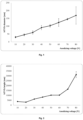
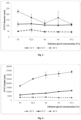
- a field emission scanning microscope (FESEM, JEOL JSM-7600F) was used to study the morphology of the hTNTs produced, whereby the diameter and height values were determined and the production of hTNTs was confirmed by anodising with the set parameters.
- the anodising time and voltage, as well as the ethylene glycol concentration, were determined as controlling parameters for the diameter and height values of the hTNTs produced by anodising.
- the effect of fluorine ion concentration from ammonium fluoride was analysed.
- the present invention uses simple electrochemical equipment and low-cost one-step electrochemical anodic oxidation technology to synthesise an ordered matrix of hexagonal titanium dioxide nanotubes with controlled structural parameters such as the diameter of the titanium dioxide nanotubes and the height of the titanium dioxide layer produced.
- the proposed method is used to produce a titanium dioxide-based nanomaterial with a hexagonal shape, and the structural parameters can be effectively controlled by varying the anodic oxidation voltage and time, as well as the concentrations of ethylene glycol and ammonium fluoride, which are components of the electrolyte used in the anodic oxidation process.
- the electrolyte used for anodic oxidation contains the following components: 0.1-0.5% by weight of ammonium fluoride, 2.5-10% deionised water, 90-97.5% ethylene glycol and 0.09% by weight of disodium edetate.
- the anodic oxidation process takes place in a single step, during which the pure titanium substrate is anodised at 10-80 V for 40-90 minutes with ultrasound.
- the surface of the high-purity titanium substrate was ultrasonically treated successively in acetone and distilled water for 10 minutes.
- the anodising device uses a two-electrode system, where the cathode is platinum sheet and the anode is pure titanium.
- the area of pure titanium exposed to the electrolyte is a 5x5 mm square area and the distance between the electrodes is 21 mm.
Landscapes
- Chemical & Material Sciences (AREA)
- Engineering & Computer Science (AREA)
- Chemical Kinetics & Catalysis (AREA)
- Electrochemistry (AREA)
- Materials Engineering (AREA)
- Metallurgy (AREA)
- Organic Chemistry (AREA)
- Inorganic Compounds Of Heavy Metals (AREA)
Priority Applications (1)
| Application Number | Priority Date | Filing Date | Title |
|---|---|---|---|
| EP23461585.4A EP4464826A1 (de) | 2023-05-14 | 2023-05-14 | Verfahren zur herstellung hexagonaler tio2-nanoröhren auf titansubstrat |
Applications Claiming Priority (1)
| Application Number | Priority Date | Filing Date | Title |
|---|---|---|---|
| EP23461585.4A EP4464826A1 (de) | 2023-05-14 | 2023-05-14 | Verfahren zur herstellung hexagonaler tio2-nanoröhren auf titansubstrat |
Publications (1)
| Publication Number | Publication Date |
|---|---|
| EP4464826A1 true EP4464826A1 (de) | 2024-11-20 |
Family
ID=86383022
Family Applications (1)
| Application Number | Title | Priority Date | Filing Date |
|---|---|---|---|
| EP23461585.4A Pending EP4464826A1 (de) | 2023-05-14 | 2023-05-14 | Verfahren zur herstellung hexagonaler tio2-nanoröhren auf titansubstrat |
Country Status (1)
| Country | Link |
|---|---|
| EP (1) | EP4464826A1 (de) |
Citations (5)
| Publication number | Priority date | Publication date | Assignee | Title |
|---|---|---|---|---|
| US20100269894A1 (en) | 2009-04-28 | 2010-10-28 | Board Of Regents Of The Nevada System Of Higher Education, On Behalf Of The University Of Nevada | Titanium dioxide nanotubes and their use in photovoltaic devices |
| US20100320089A1 (en) * | 2006-12-12 | 2010-12-23 | Manoranjan Misra | Self-ordered nanotubes of titanium oxides and titanium alloy oxides for energy storage and battery applications |
| CN102191529A (zh) | 2011-04-29 | 2011-09-21 | 中国科学院合肥物质科学研究院 | 一种蜂窝状有序的二氧化钛纳米管阵列膜及其制备方法 |
| CN112156202A (zh) | 2020-03-27 | 2021-01-01 | 南开大学 | 二氧化钛纳米管紫外光高效病毒消杀系统 |
| WO2021093785A1 (zh) | 2019-11-14 | 2021-05-20 | 中国科学院深圳先进技术研究院 | 一种具有二氧化钛纳米管阵列的结构件及其制备方法和应用 |
-
2023
- 2023-05-14 EP EP23461585.4A patent/EP4464826A1/de active Pending
Patent Citations (5)
| Publication number | Priority date | Publication date | Assignee | Title |
|---|---|---|---|---|
| US20100320089A1 (en) * | 2006-12-12 | 2010-12-23 | Manoranjan Misra | Self-ordered nanotubes of titanium oxides and titanium alloy oxides for energy storage and battery applications |
| US20100269894A1 (en) | 2009-04-28 | 2010-10-28 | Board Of Regents Of The Nevada System Of Higher Education, On Behalf Of The University Of Nevada | Titanium dioxide nanotubes and their use in photovoltaic devices |
| CN102191529A (zh) | 2011-04-29 | 2011-09-21 | 中国科学院合肥物质科学研究院 | 一种蜂窝状有序的二氧化钛纳米管阵列膜及其制备方法 |
| WO2021093785A1 (zh) | 2019-11-14 | 2021-05-20 | 中国科学院深圳先进技术研究院 | 一种具有二氧化钛纳米管阵列的结构件及其制备方法和应用 |
| CN112156202A (zh) | 2020-03-27 | 2021-01-01 | 南开大学 | 二氧化钛纳米管紫外光高效病毒消杀系统 |
Non-Patent Citations (1)
| Title |
|---|
| PEIGHAMBARDOUST NAEIMEH-SADAT ET AL: "Improved performance of anodic titanium oxide nanotube arrays synthesized by sonoelectrochemical anodization method for dye-sensitized solar cells", APPLIED PHYSICS A, SPRINGER BERLIN HEIDELBERG, BERLIN/HEIDELBERG, vol. 123, no. 5, 12 April 2017 (2017-04-12), pages 1 - 10, XP036240760, ISSN: 0947-8396, [retrieved on 20170412], DOI: 10.1007/S00339-017-0925-2 * |
Similar Documents
| Publication | Publication Date | Title |
|---|---|---|
| Su et al. | Formation, morphology control and applications of anodic TiO 2 nanotube arrays | |
| Sopha et al. | Effect of electrolyte age and potential changes on the morphology of TiO2 nanotubes | |
| Yu et al. | Formation of nanoporous titanium oxide films on silicon substrates using an anodization process | |
| CN102191529B (zh) | 一种蜂窝状有序的二氧化钛纳米管阵列膜及其制备方法 | |
| CN100507096C (zh) | 一种多孔状三氧化钨纳米材料的制备方法 | |
| Jo et al. | Fabrication of through-hole TiO2 nanotubes by potential shock | |
| Ng et al. | Titanium dioxide nanotubes in chloride based electrolyte: an alternative to fluoride based electrolyte | |
| Fraoucene et al. | TiO2 Nanotubes with Nanograss Structure: The Effect of the Anodizing Voltage on the Formation Mechanism and Structure Properties: Fraoucene, Hatem, Vacandio, and Pasquinelli | |
| Lai et al. | Photoelectrochemical behaviour of uniform growth TiO2 nanotubes via bubble blowing synthesised in ethylene glycol with hydrogen peroxide | |
| EP4464826A1 (de) | Verfahren zur herstellung hexagonaler tio2-nanoröhren auf titansubstrat | |
| WO2012026799A1 (en) | An apparatus and method for rapid rate of titanium dioxide (tio2) nanotubes arrays formation | |
| Yuan et al. | High-speed growth of TiO2 nanotube arrays with gradient pore diameter and ultrathin tube wall under high-field anodization | |
| JP6512257B1 (ja) | 微細孔を有するチタン又はチタン合金の酸化薄膜の製造方法 | |
| Dong et al. | TiO2 with hybrid nanostructures via anodization: fabrication and its mechanism | |
| CN101244462A (zh) | 在纯钛表面产生多级尺寸的微/纳米结构层的方法 | |
| Al-Saady et al. | Improvement the corrosion Behavior of Titanium by Nanotubular Oxide in a simulated saliva solution | |
| Ismail et al. | Effect of voltage on TiO2 nanotubes formation in ethylene glycol solution | |
| Jagminas et al. | A new route of alumina template modification into dense-packed fibrilous material | |
| Shi | Formation mechanism of anodic TiO2 nanotubes | |
| Hossen et al. | Latest progress on the influencing factors affecting the formation of TiO2 nanotubes (TNTs) in electrochemical anodization-A minireview | |
| Talip et al. | Mechanism of nanotubular Ta2O5 via anodization in NH4F/H2SO4/H2O solution | |
| JP4344620B2 (ja) | 電解コンデンサ用エッチング箔の製造方法 | |
| CN108754575B (zh) | 一种利用紫外光照射辅助制备纳米管钛材的方法以及由该方法制得的钛材 | |
| Chin et al. | Fabrication of highly ordered TiO2 nanotubes from fluoride containing aqueous electrolyte by anodic oxidation and their photoelectrochemical response | |
| Sklar et al. | Nanoporous titanium oxide morphologies produced by anodizing of titanium |
Legal Events
| Date | Code | Title | Description |
|---|---|---|---|
| PUAI | Public reference made under article 153(3) epc to a published international application that has entered the european phase |
Free format text: ORIGINAL CODE: 0009012 |
|
| STAA | Information on the status of an ep patent application or granted ep patent |
Free format text: STATUS: THE APPLICATION HAS BEEN PUBLISHED |
|
| AK | Designated contracting states |
Kind code of ref document: A1 Designated state(s): AL AT BE BG CH CY CZ DE DK EE ES FI FR GB GR HR HU IE IS IT LI LT LU LV MC ME MK MT NL NO PL PT RO RS SE SI SK SM TR |
|
| STAA | Information on the status of an ep patent application or granted ep patent |
Free format text: STATUS: REQUEST FOR EXAMINATION WAS MADE |
|
| 17P | Request for examination filed |
Effective date: 20250514 |
|
| STAA | Information on the status of an ep patent application or granted ep patent |
Free format text: STATUS: EXAMINATION IS IN PROGRESS |
|
| 17Q | First examination report despatched |
Effective date: 20251218 |