EP4464311A2 - Verwendung von mannose-6-phosphat und modifikationen davon zur gedächtnisverbesserung und minderung von gedächtnisschwäche - Google Patents
Verwendung von mannose-6-phosphat und modifikationen davon zur gedächtnisverbesserung und minderung von gedächtnisschwäche Download PDFInfo
- Publication number
- EP4464311A2 EP4464311A2 EP24191622.0A EP24191622A EP4464311A2 EP 4464311 A2 EP4464311 A2 EP 4464311A2 EP 24191622 A EP24191622 A EP 24191622A EP 4464311 A2 EP4464311 A2 EP 4464311A2
- Authority
- EP
- European Patent Office
- Prior art keywords
- memory
- derivative
- pharmaceutically acceptable
- acceptable salt
- enhancement
- Prior art date
- Legal status (The legal status is an assumption and is not a legal conclusion. Google has not performed a legal analysis and makes no representation as to the accuracy of the status listed.)
- Pending
Links
Images



Classifications
-
- A—HUMAN NECESSITIES
- A61—MEDICAL OR VETERINARY SCIENCE; HYGIENE
- A61P—SPECIFIC THERAPEUTIC ACTIVITY OF CHEMICAL COMPOUNDS OR MEDICINAL PREPARATIONS
- A61P25/00—Drugs for disorders of the nervous system
- A61P25/26—Psychostimulants, e.g. nicotine, cocaine
-
- A—HUMAN NECESSITIES
- A61—MEDICAL OR VETERINARY SCIENCE; HYGIENE
- A61K—PREPARATIONS FOR MEDICAL, DENTAL OR TOILETRY PURPOSES
- A61K31/00—Medicinal preparations containing organic active ingredients
- A61K31/66—Phosphorus compounds
- A61K31/661—Phosphorus acids or esters thereof not having P—C bonds, e.g. fosfosal, dichlorvos, malathion or mevinphos
-
- A—HUMAN NECESSITIES
- A61—MEDICAL OR VETERINARY SCIENCE; HYGIENE
- A61K—PREPARATIONS FOR MEDICAL, DENTAL OR TOILETRY PURPOSES
- A61K31/00—Medicinal preparations containing organic active ingredients
- A61K31/70—Carbohydrates; Sugars; Derivatives thereof
- A61K31/7028—Compounds having saccharide radicals attached to non-saccharide compounds by glycosidic linkages
-
- A—HUMAN NECESSITIES
- A61—MEDICAL OR VETERINARY SCIENCE; HYGIENE
- A61K—PREPARATIONS FOR MEDICAL, DENTAL OR TOILETRY PURPOSES
- A61K47/00—Medicinal preparations characterised by the non-active ingredients used, e.g. carriers or inert additives; Targeting or modifying agents chemically bound to the active ingredient
- A61K47/06—Organic compounds, e.g. natural or synthetic hydrocarbons, polyolefins, mineral oil, petrolatum or ozokerite
- A61K47/26—Carbohydrates, e.g. sugar alcohols, amino sugars, nucleic acids, mono-, di- or oligo-saccharides; Derivatives thereof, e.g. polysorbates, sorbitan fatty acid esters or glycyrrhizin
-
- A—HUMAN NECESSITIES
- A61—MEDICAL OR VETERINARY SCIENCE; HYGIENE
- A61K—PREPARATIONS FOR MEDICAL, DENTAL OR TOILETRY PURPOSES
- A61K9/00—Medicinal preparations characterised by special physical form
- A61K9/0012—Galenical forms characterised by the site of application
- A61K9/0019—Injectable compositions; Intramuscular, intravenous, arterial, subcutaneous administration; Compositions to be administered through the skin in an invasive manner
-
- A—HUMAN NECESSITIES
- A61—MEDICAL OR VETERINARY SCIENCE; HYGIENE
- A61P—SPECIFIC THERAPEUTIC ACTIVITY OF CHEMICAL COMPOUNDS OR MEDICINAL PREPARATIONS
- A61P25/00—Drugs for disorders of the nervous system
- A61P25/28—Drugs for disorders of the nervous system for treating neurodegenerative disorders of the central nervous system, e.g. nootropic agents, cognition enhancers, drugs for treating Alzheimer's disease or other forms of dementia
Definitions
- Memory enhancement may be desirable under pathogenic situations where memory retention and recall have been adversely affected as well under non-pathological situations.
- diseases where memory loss can occur include neurodegenerative diseases, mild cognitive impairments, cerebrovascular diseases, Lewy body disease, frontotemporal degeneration, developmental cognitive disorders, traumatic brain injury, delirium, infections, alcohol abuse or cancer.
- neurodegenerative diseases include neurodegenerative diseases, mild cognitive impairments, cerebrovascular diseases, Lewy body disease, frontotemporal degeneration, developmental cognitive disorders, traumatic brain injury, delirium, infections, alcohol abuse or cancer.
- This disclosure provides a method for memory enhancement and recovery of memory impairments.
- the method comprises administering to a subject in whom memory enhancement or recovery of memory impairment is desired, or a subject seeking memory enhancement or recovery of memory impairment, a composition comprising, or consisting essentially of, a therapeutically effect amount of an agonist or activator of IGF-2 receptor other than IGF-2.
- the agonist is mannose-6-phosphate (M6P) or a derivative of mannose-6-phosphate (also referred to herein as "modifications”), or a derivative or modification of IGF-2 (e.g., IGF-2 analogs).
- a composition comprising, or consisting essentially of, M6P or M6P derivatives may be used for treatment of any neurodegenerative diseases in which there is protein aggregation (leading to synaptopathies), including diseases such as Alzheimer's disease, Parkinson's disease, Lewy body disease and the like.
- a composition comprising, or consisting essentially of, M6P or derivatives of M6P may be used for reducing memory impairment.
- IGF-2 modifications e.g., IGF-2 analogs
- IGF-2 may be used for enhancement of memory or reducing memory impairment.
- compositions and methods for memory enhancement or treatment of memory impairment using agonist activators of IGF-2 receptor other than IGF-2 For example, M6P or a derivative thereof may be used.
- treatment refers to reduction or delay in one or more symptoms or features associated with the presence of the particular condition being treated Treatment does not mean complete cure.
- Treatment in reference to memory enhancement means increased memory retention, increased memory strength, and/or reduced memory decay.
- terapéuticaally effective amount is the amount sufficient to achieve, in a single or multiple doses, the intended purpose of treatment.
- an effective amount to achieve memory enhancement is an amount sufficient to achieve a measurable increase in memory (which may be tested by e.g., standard tests that can test learning and memory performance).
- the exact amount desired or required will vary depending on the mode of administration, patient specifics and the like. Appropriate effective amounts can be determined by one of ordinary skill in the art (such as a clinician) with the benefit of the present disclosure.
- memory loss refers to a complete or partial loss of memory.
- memory retention is a measure of memory strength. Therefore, “enhancing memory strength” can be measured by a subject's ability to retain a particular memory.
- short-term memory is a memory that lasts for seconds or several minutes.
- working memory refers to a memory that is responsible for temporarily holding information available for processing. Working memory is important for reasoning and the guidance of decision-making and behavior.
- long-term memory refers to a memory that can last at least for several hours, at least a day, at least a year, at least a decade, or a lifetime.
- this disclosure describes the effects of M6P and M6P derivatives on memory enhancement.
- this disclosure provides a method of enhancement of memory comprising administering to a subject in need of treatment or in whom memory enhancement is desired (such as an individual seeking memory enhancement), a composition comprising, or consisting essentially of, M6P or a modification thereof.
- Phosphonate and sulfonate derivatives of M6P are known in the art ( U.S. Patent No. 6,140,307 to Ferguson , the description of which modifications is incorporated herein by reference).
- Memory enhancement can be in the form of memory recall and retention (short or long term) and/or memory strength.
- IGF-2 modifications e.g., IGF-2 analogs
- IGF-2 with amino acid substitutions such as human Leu 27 ( Armitaj et al., Neuroscience, 2010 Oct 27;170(3):722-30 ) may be used.
- the molecules (also referred to herein as agents) of the present disclosure include M6P (referred to herein as L1).
- M6P (also referred to herein as modifications) can be made by modifications to carbon 1 and/or carbon 6 of mannose. Methods of performing chemistry at carbon 1 and carbon 6 are known in the art. Examples of derivatives include examples where carbon 1 is functionalized with an alkoxy group (e.g., methoxy, ethoxy, and the like) or an alkyne and carbon 6 is functionalized with a phosphonate, an ethyl ester, a methyl malonate, a phosphonic acid, a carboxylate, or a malonate.
- an alkoxy group e.g., methoxy, ethoxy, and the like
- carbon 6 is functionalized with a phosphonate, an ethyl ester, a methyl malonate, a phosphonic acid, a carboxylate, or a malonate.
- carbon 1 is functionalized with an alkoxy (e.g., a methoxy) and carbon 6 is functionalized with a phosphonate (referred to herein as L2), an ethyl ester (referred to herein as L3), a methyl malonate (referred to herein as L4), a phosphonic acid (referred to herein as L5), a carboxylate (e.g., the sodium salt of a carboxylate) (referred to herein as L6), or a malonate (referred to herein as L7) and carbon 1 is functionalized with alkyne and carbon 6 is functionalized with a phosphonic acid (referred to as L8) or a phosphonate (referred to as L9).
- L2 phosphonate
- L3 e.g., a methoxy
- L4 ethyl ester
- L4 a methyl malonate
- L5 a phosphonic acid
- carboxylate e.g., the sodium salt of a carboxy
- M6P or M6P derivatives may be used at from about 1 to 2,000 ⁇ g/kg body weight and all values and ranges therebetween.
- M6P and/or derivatives thereof may be used at from 1 to 2,000 ⁇ g/kg, 1 to 1,500 ⁇ g/kg, 1 to 1,000 ⁇ g/kg, 1 to 500 ⁇ g/kg, 1 to 100 ⁇ g/kg, 10 to 2,000 ⁇ g/kg, 10 to 1,500 ⁇ g/kg 10 to 1,000 ⁇ g/kg, 10 to 500 ⁇ g/kg, and 10 to 100 ⁇ g/kg, 50 to 2,000 ⁇ g/kg, 50 to 1,500 ⁇ g/kg, 50 to 1,000 ⁇ g/kg, 50 to 500 ⁇ g/kg, and 50 to 100 ⁇ g/kg body weight and all values between the aforementioned ranges.
- M6P and/or derivatives thereof can be used at 850 ⁇ g/kg administered subcutaneously. In an embodiment, M6P and/or derivatives thereof can be used at 100 to 1,000 ⁇ g/kg. In specific embodiments, M6P and/or derivatives thereof can be used at 50, 100, 150, 200, 250, 300, 350, 400, 450, 500, 550, 600, 650, 700, 750, 800, 850, 900, 950, 1000, 1,250, 1,500, 1,750, and 2,000 ⁇ g/kg body weight. Further, based on the data provided herein on animals, one skilled in the art can obtain relevant human dosage. Guidance for such conversions is known in the art (See, for example, Nair et al., J. Basic Clin. Pharma. v.7(2), March 2016- May 2016; 27-31 , incorporated herein by reference).
- M6P may be present in the form of the free phosphoric acid or a pharmaceutically acceptable mono- or di- salt thereof, such as, for example as sodium, calcium, magnesium or barium salt. It may also be provided as a M6P containing compound from which it may be released in vivo, or it may be provided as a precursor from which it may be produced in vivo. M6P derivatives may also be present (where applicable (e.g., L3, L7, and L8)) as free acids or as salts thereof (e.g., monosodium or disodium salts thereof).
- this disclosure provides a method of memory enhancement in a subject in whom enhancement of memory is needed or desired, comprising administering to the subject, a composition comprising, or consisting essentially of, M6P or derivatives thereof.
- the subject may be a human.
- the subject may be of any age or gender.
- the subject may or may not have been diagnosed with a memory related condition.
- the present invention provides compositions comprising or consisting essentially of M6P or derivatives thereof for ameliorating memory diseases or memory impairment, or for enhancement of normal memory.
- M6P or dervatives thereof is the only agent in the composition that specifically binds to the IGF-2 receptor.
- the compositions and methods of the present disclosure can be used to enhance memory or prevent, delay onset, or treat memory impairment.
- the present method can increase mental registration, retention or recall of past experiences, knowledge, ideas, sensations, thoughts or impressions.
- the present compositions comprising M6P or dervatives thereof increase short and/or long-term information retention, working memory, facility with spatial relationships, memory (rehearsal) strategies, and verbal retrieval and production.
- the present compositions comprising, or consisting essentially of M6P or derivatives thereof can improve hippocampal-dependent learning, associative learning, short-term memory, working memory and/or spatial memory. These responses can be measured by standard memory and/or cognitive tests known in the art.
- the present disclosure provides a method of treatment of diseases in which there is protein aggregation in the brain, such as, for example, neurodegenerative diseases such as Alzheimer's disease, Parkinson's disease, Lewy body disease, and the like.
- the method comprises administering to a subject in need of treatment a composition comprising, or consisting essentially of, M6P or derivatives thereof.
- this disclosure provides a method of treating a neurodegenerative disease, including Huntington's disease, Parkinson's disease, amyotrophic lateral sclerosis (ALS), and neurodegeneration due to aging comprising administering to a subject in need of treatment a composition comprising, or consisting essentially of, M6P or derivatives thereof.
- ALS amyotrophic lateral sclerosis
- this disclosure provides a method of treating memory impairment associated with head injury, spinal cord injury, seizure, stroke, epilepsy, ischemia, neuropsychiatric syndromes, CNS damage resulting from viral encephalitis, CNS damage resulting from meningitis, or CNS damage resulting from a tumor comprising administering to a subject in need of treatment a composition comprising, or consisting essentially of, M6P.
- this disclosure provides a method of enhancement of memory retention in a normal subject that is not afflicted with a neurodegenerative disease or pathological condition affecting neurological function comprising administering to a subject in need of treatment a composition comprising, or consisting essentially of, M6P or derivatives thereof.
- the agents of the present disclosure can be provided in pharmaceutical compositions for administration by combining them with suitable pharmaceutically acceptable carriers, excipients and/or stabilizers.
- suitable pharmaceutically acceptable carriers, excipients and stabilizer can be found in Remington: The Science and Practice of Pharmacy (2005) 21st Edition, Philadelphia, PA. Lippincott Williams & Wilkins .
- M6P can be used in a suspension, solution, gel or solid form.
- Suitable carriers include excipients, or stabilizers which are nontoxic to recipients at the dosages and concentrations employed, and include buffers such as acetate, Tris, phosphate, citrate, and other organic acids; antioxidants including ascorbic acid and methionine; preservatives such as octadecyldimethylbenzyl ammonium chloride; hexamethonium chloride; benzalkonium chloride, benzethonium chloride; phenol, butyl or benzyl alcohol; alkyl parabens such as methyl or propyl paraben; catechol; resorcinol; cyclohexanol; 3-pentanol; and m-cresol; amino acids such as glycine, glutamine, asparagine, histidine, arginine, or lysine; monosaccharides, disaccharides, and other carbohydrates including glucose, mannose, or dextrins; chelating agents such as EDTA
- compositions can be carried out using any suitable route of administration known in the art.
- the compositions may be administered via intravenous, intramuscular, intraperitoneal, intracerebrospinal, subcutaneous, intra-articular, intrasynovial, oral, topical, or inhalation routes.
- the compositions may be administered parenterally or enterically.
- the compositions of the present disclosure can be administered orally, such as, for example, in the form of a tablet, capsule, pill, powder, paste, granules, elixir, solution, suspension, dispersion, gel, syrup or any other ingestible form.
- M6P or derivatives may be delivered via liposomes, microparticles, microcapsules.
- compositions may be introduced as a single administration or as multiple administrations or may be introduced in a continuous manner over a period of time.
- the administration(s) can be a pre-specified number of administrations or daily, weekly or monthly administrations, which may be continuous or intermittent, as may be clinically needed and/or therapeutically indicated.
- M6P or an M6P derivative in the composition is not linked (e.g., is not covalently bound either directly or via linker) to any other moiety and does not act as a carrier for any other moiety or agent.
- this disclosure provides M6P derivatives and compositions comprising mannose derivatives.
- Derivatives of M6P can be made by performing chemistry at carbon 1 and/or carbon 6 of M6P.
- Various methods of performing chemistry at carbon 1 and/or carbon 6 of hexoses are known in the art.
- M6P derivatives include, but are not limited to, phosphonate (L2), ethyl ester (L3), methyl malonate (L4), phosphonic acid (L5), carboxylate (L6), malonate (L7), alkyne (L8), and alkyne prodrug (L9).
- this disclosure provides a compound selected from the group consisting of L2, L3, L4, L5, L6, L7, L8 and L9. In an embodiment, this disclosure provides a composition comprising one or more of L1, L2, L3, L4, L5, L6, L7, L8 and L9.
- M6P mannose-6-phosphate
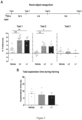
- mice we used the novel object recognition (nOR) paradigm in mice to assess non-aversive episodic memory.
- nOR novel object recognition
- the innate preference for novelty of the rodent is used.
- the mouse is allowed to explore 2 identical objects.
- one of the training objects is replaced with a novel object. Because mice have an innate preference for novelty, if the mouse recognizes the familiar object, it will spend more time at the novel object.
- mice injected with M6P showed a significant memory enhancement compared to mice injected with vehicle, indicating that M6P is a potent memory-enhancer in normal animals.
- both control and AS mice injected with vehicle showed little or no memory for the old object.
- an injection of M6P significantly increased memory retention in both groups, further supporting the conclusion that the activation of the IGF-2 receptor, via M6P during learning is very effective in enhancing memory retention and persistence.
- M6P significantly enhances memory retention in rats when injected bilaterally into the hippocampus of rats.
- adult rats were trained in the inhibitory avoidance (IA) paradigm. In this paradigm the animals learn to avoid a chamber paired with a foot-shock.
- IA inhibitory avoidance
- rats that received a bilateral injection into the hippocampus of M6P immediately after training had a significant increase in avoidance memory tested 1 day after training compared to rats that received vehicle injection. The effect persisted at another testing repeated 6 days later.
- the memory-enhancing effect of M6P was dose dependent.
- mice We found that an M6P derivative, phosphonate M6P, PnM6P (also called IGF-2R.L2 or L2), significantly enhances memory when injected subcutaneously (s.c.) in mice.
- PnM6P(L2) showed a significant memory enhancement compared to mice injected with vehicle, indicating that L2 is a potent memory-enhancer in normal animals ( Figure 4 ).
- L2 is a potent memory-enhancer in normal animals.
- mice injected with vehicle showed little or no memory for the old object.
- an injection of L2 significantly increased memory retention at both timepoints after training, indicating that L2 significantly increases memory retention and persistence.
- the memory enhancement was no longer seen when the mice were tested again 9 days later (at 14 days after training). At this timepoint both vehicle-injected and L2-injected mice showed chance preference (no memory).
- This example describes the synthesis and characterization of M6P derivatives.
- TLC Thin-layer chromatography
- Flash-column chromatography was performed at room temperature under pressure of nitrogen with silica gel (60 ⁇ , 40-63 ⁇ m, Silicycle or Merck) using glass columns or a Teledyne Isco MPLC Combi Flash ® Rf+.
- Multiplicities are abbreviated as: s, singlet; d, doublet; t, triplet; q, quartet; quint, quintet; sext, sextet; hept, heptet; br, broad; m, multiplet; or combinations thereof.
- HRMS High-resolution mass spectrometry
- TOF Accurate-Mass time-of-flight
- LC/MS liquid-chromatography mass spectrometer
- APCI atmospheric pressure chemical ionization
- ESI electrospray ionization
- FT-IR Fourier-transform infrared
- HPLC High-performance liquid chromatography purification was performed on an Agilent 1260 Infinity II LC with a reverse-phase (RP) Phenomenex Semipreparative Column (00D-4439-E0 Gemini, C18 phase, 3 ⁇ m particle size, 110 ⁇ pore size) with a flow rate of 8 mL/min and solvent mixtures of 0.1% formic acid (FA) in (A) acetonitrile (HPLC grade) and (B) water (HPLC grade).
- FA formic acid
- A acetonitrile
- HPLC grade acetonitrile
- PMT photomultiplier tube
- Trityl ether 2 was prepared following modified published procedures ( Traboni et al., ChemistrySelect 2017, 2, 4906-4911 ; Tennant-Eyles et al., J. Tetrahedron: Asymmetry 2000, 11, 231-243 ). To a mixture of methyl- ⁇ -D-mannopyranoside (5.02 g, 25.8 mmol, 1.0 equiv) and trityl chloride (7.91 g, 28.4 mmol, 1.1 equiv) was added pyridine (5.2 mL, 64.6 mmol, 2.5 equiv). The reaction mixture was heated to 100 °C and stirred for 30 min.
- Benzyl ether 3 was prepared according to a modified published procedure ( Hofmann et al., Carbohydr. Res. 2015, 412, 34-42 ). Trityl ether 2 (2.01 g, 4.61 mmol) was dissolved in anhydrous DMF (115 mL) and to this solution was added portion-wise a suspension of NaH (60% in mineral oil, 14.8 g, 371 mmol, 7.2 equiv) at 0 °C.
- Alcohol 4 was prepared according to a modified published procedure ( Jaramillo et al., J. Org. Chem. 1994, 59, 3135-3141 ). Benzyl ether 3 was dissolved in MeOH-CH 2 Cl 2 (2:1, 6 mL) and p -TsOH was added until pH ⁇ 4. The reaction mixture was stirred at rt for 20 h then neutralized with Et 3 N and concentrated under reduced pressure. The residue was dissolved in CH 2 Cl 2 and washed with distilled water and brine. The organic layer was dried over anhydrous sodium sulfate and concentrated under reduced pressure.
- Aldehyde 5 was prepared according to a general procedure for oxidation of primary alcohols ( Tojo et al., Oxidation of alcohols to aldehydes and ketones: a guide to current common practice. Springer Science & Business Media: 2006 ).
- a solution of 4 (0.334 g, 0.72 mmol, 0.4 M) was prepared in anhydrous DMSO (1.8 mL) under nitrogen.
- Et 3 N 1.0 mL, 7.2 mmol, 10 equiv
- Phosphonate 7 was prepared according to a modified published procedure ( Vidil et al., Eur. J. Org. Chem. 1999, 447-450 ). To a suspension of NaH (60% in mineral oil, 37.8 mg, 0.945 mmol, 2.2 equiv) in anhydrous toluene (2 mL) was added dropwise tetraethyl methylenediphosphonate (0.27 mL, 1.08 mmol, 2.5 equiv) and stirred 30 min at rt. A solution of 5 in anhydrous toluene (5 mL) was added dropwise to this mixture under nitrogen and stirred at rt for 2 h.
- Phosphonic acid 8 was prepared according to a published procedure ( Vidil et al., Eur. J. Org. Chem. 1999, 447-450 ). To a solution of 7 (0.146 g, 0.245 mmol, 1 equiv) in anhydrous CH 3 CN (5.6 mL) under nitrogen was added pyridine (31 ⁇ L, 0.392 mmol, 1.6 equiv) and trimethylsilyl bromide (0.32 mL, 2.45 mmol, 10 equiv) with stirring at room temperature.
- reaction mixture was cooled to 0 °C and was added pyridine (51 ⁇ L, 0.634 mmol, 2.6 equiv) and H 2 O (185 ⁇ L, 10.3 mmol, 42 equiv) then warmed to rt and stirred.
- reaction mixture was diluted with CH 2 Cl 2 and 2 M HCl (4 mL) and H 2 O (4 mL).
- the organic layer was extracted with CH 2 Cl 2 , dried over anhydrous sodium sulfate, and concentrated under reduced pressure to yield 8 as a brown oil.
- the crude residue was used directly in the following procedure.
- Phosphonate 10 was prepared following a modified procedure ( Graham et al., (2017). International Patent Appl. Publication No. WO2017/87256 ).
- a mixture of 8 in anhydrous CH 3 CN under nitrogen was treated with DIPEA (0.480 mL, 2.76 mmol, 9.9 equiv), TBAB (93.1 mg, 0.289 mmol, 1.0 equiv), and chloromethyl isopropyl carbonate (0.30 mL, 2.24 mmol, 8.1 equiv) then was heated to 60 °C. After stirring for 16 h, the reaction mixture was concentrated under reduced pressure.
Landscapes
- Health & Medical Sciences (AREA)
- Life Sciences & Earth Sciences (AREA)
- Chemical & Material Sciences (AREA)
- Medicinal Chemistry (AREA)
- Pharmacology & Pharmacy (AREA)
- Animal Behavior & Ethology (AREA)
- General Health & Medical Sciences (AREA)
- Public Health (AREA)
- Veterinary Medicine (AREA)
- Engineering & Computer Science (AREA)
- Neurology (AREA)
- Neurosurgery (AREA)
- Bioinformatics & Cheminformatics (AREA)
- Biomedical Technology (AREA)
- Epidemiology (AREA)
- Chemical Kinetics & Catalysis (AREA)
- General Chemical & Material Sciences (AREA)
- Psychiatry (AREA)
- Nuclear Medicine, Radiotherapy & Molecular Imaging (AREA)
- Organic Chemistry (AREA)
- Hospice & Palliative Care (AREA)
- Molecular Biology (AREA)
- Biochemistry (AREA)
- Oil, Petroleum & Natural Gas (AREA)
- Dermatology (AREA)
- Pharmaceuticals Containing Other Organic And Inorganic Compounds (AREA)
- Medicines That Contain Protein Lipid Enzymes And Other Medicines (AREA)
Applications Claiming Priority (4)
| Application Number | Priority Date | Filing Date | Title |
|---|---|---|---|
| US201862717405P | 2018-08-10 | 2018-08-10 | |
| US201962871453P | 2019-07-08 | 2019-07-08 | |
| PCT/US2019/046228 WO2020033972A1 (en) | 2018-08-10 | 2019-08-12 | Use of mannose 6 phosphate and modifications thereof for memory enhancement and reducing memory impairment |
| EP19848161.6A EP3833380B1 (de) | 2018-08-10 | 2019-08-12 | Verwendung von mannose-6-phosphat und modifikationen davon zur gedächtnisverbesserung und minderung von gedächtnisschwäche |
Related Parent Applications (1)
| Application Number | Title | Priority Date | Filing Date |
|---|---|---|---|
| EP19848161.6A Division EP3833380B1 (de) | 2018-08-10 | 2019-08-12 | Verwendung von mannose-6-phosphat und modifikationen davon zur gedächtnisverbesserung und minderung von gedächtnisschwäche |
Publications (2)
| Publication Number | Publication Date |
|---|---|
| EP4464311A2 true EP4464311A2 (de) | 2024-11-20 |
| EP4464311A3 EP4464311A3 (de) | 2025-02-19 |
Family
ID=69415308
Family Applications (2)
| Application Number | Title | Priority Date | Filing Date |
|---|---|---|---|
| EP19848161.6A Active EP3833380B1 (de) | 2018-08-10 | 2019-08-12 | Verwendung von mannose-6-phosphat und modifikationen davon zur gedächtnisverbesserung und minderung von gedächtnisschwäche |
| EP24191622.0A Pending EP4464311A3 (de) | 2018-08-10 | 2019-08-12 | Verwendung von mannose-6-phosphat und modifikationen davon zur gedächtnisverbesserung und minderung von gedächtnisschwäche |
Family Applications Before (1)
| Application Number | Title | Priority Date | Filing Date |
|---|---|---|---|
| EP19848161.6A Active EP3833380B1 (de) | 2018-08-10 | 2019-08-12 | Verwendung von mannose-6-phosphat und modifikationen davon zur gedächtnisverbesserung und minderung von gedächtnisschwäche |
Country Status (10)
| Country | Link |
|---|---|
| US (1) | US12491203B2 (de) |
| EP (2) | EP3833380B1 (de) |
| JP (1) | JP7521813B2 (de) |
| KR (1) | KR20210075069A (de) |
| CN (1) | CN112912102A (de) |
| AU (1) | AU2019320099A1 (de) |
| BR (1) | BR112021002449A2 (de) |
| CA (1) | CA3109141A1 (de) |
| MX (1) | MX2021001596A (de) |
| WO (1) | WO2020033972A1 (de) |
Families Citing this family (1)
| Publication number | Priority date | Publication date | Assignee | Title |
|---|---|---|---|---|
| MX2021001595A (es) | 2018-08-10 | 2021-06-08 | Univ New York | Uso de ligandos agonistas del receptor igf-2 para el tratamiento del sindrome de angelman y autismo. |
Citations (2)
| Publication number | Priority date | Publication date | Assignee | Title |
|---|---|---|---|---|
| US6140307A (en) | 1995-08-04 | 2000-10-31 | The Victoria University Of Manchester | Pharmaceutical composition |
| WO2017087256A1 (en) | 2015-11-17 | 2017-05-26 | Merck Sharp & Dohme Corp. | Spirocyclic pyridotriazine derivatives useful as hiv integrase inhibitors |
Family Cites Families (21)
| Publication number | Priority date | Publication date | Assignee | Title |
|---|---|---|---|---|
| JP3009164B2 (ja) * | 1988-08-19 | 2000-02-14 | ジ オーストラリアン ナショナル ユニバーシティー | 燐糖基剤の抗炎症剤及び/または免疫抑制剤 |
| EP0429522B1 (de) | 1988-08-19 | 1996-06-26 | The Australian National University | Auf phosphozucker basierende antientzündliche und/oder immunitätsunterdrückende arzneimittel |
| US6093388A (en) | 1996-08-12 | 2000-07-25 | Btg International Limited | Mannose-6-phosphate composition and its use in treating fibrotic disorders |
| AUPO309896A0 (en) | 1996-10-18 | 1996-11-14 | Australian National University, The | Novel phosphosugars and phosphosugar-containing compounds having anti-inflammatory activity |
| US7560424B2 (en) | 2001-04-30 | 2009-07-14 | Zystor Therapeutics, Inc. | Targeted therapeutic proteins |
| CA2499170A1 (en) | 2002-09-27 | 2004-04-08 | Children's Medical Center Corporation | Methods and compositions for treatment of neurological disorder |
| CN1660125A (zh) * | 2004-12-16 | 2005-08-31 | 南开大学 | 大豆异黄酮增强和改善记忆的新性能及其应用 |
| GB0516722D0 (en) | 2005-08-15 | 2005-09-21 | Cancer Rec Tech Ltd | Methods and materials |
| DK2019683T4 (da) | 2006-04-25 | 2022-08-29 | Univ California | Indgivelse af vækstfaktorer til behandling af CNS-lidelser |
| US20100081613A1 (en) * | 2006-10-11 | 2010-04-01 | The Trustees Of Columbia University In The City Of New York | Methods and compositions for enhancing memory |
| AR064464A1 (es) | 2006-12-22 | 2009-04-01 | Genentech Inc | Anticuerpos anti - receptor del factor de crecimiento insulinico |
| FR2930942B1 (fr) | 2008-05-07 | 2011-03-04 | Centre Nat Rech Scient | Nouvelles utilisations de derives de d-mannopyranose activateurs de l'angiogenese |
| US8557783B2 (en) | 2009-04-28 | 2013-10-15 | Pharmaxis Pty Limited | Phosphotetrahydropyran compounds for the treatment of wounds and fibrotic disorders |
| US8962573B2 (en) * | 2009-07-03 | 2015-02-24 | Inserm (Institut National De La Sante Et De La Recherche Medicale) | Compounds targeting the cation-independent mannose 6-phosphate receptor |
| GB0916332D0 (en) * | 2009-09-17 | 2009-10-28 | Renovo Ltd | Medicaments |
| WO2011047204A1 (en) * | 2009-10-14 | 2011-04-21 | Mount Sinai School Of Medicine | Method of treating memory disorders and enhancing memory using igf-ii compounds |
| EP2558622A4 (de) | 2010-04-06 | 2013-07-24 | Univ George Washington | Zusammensetzungen und verfahren zur identifikation von störungen aus dem autismusspektrum |
| WO2013119964A2 (en) | 2012-02-08 | 2013-08-15 | Stem Centrx, Inc. | Identification and enrichment of cell subpopulations |
| AU2013352294A1 (en) | 2012-11-28 | 2015-07-09 | Neuren Pharmaceuticals Limited | Treatment of Autism Spectrum Disorders using glycyl-l-2-methylprolyl-l-glutamic acid |
| US20150224164A1 (en) | 2013-11-26 | 2015-08-13 | Neuren Pharmaceuticals Limited | Treatment of autism spectrum disorders using glycyl-l-2-methylprolyl-l-glumatic acid |
| MX2021001595A (es) | 2018-08-10 | 2021-06-08 | Univ New York | Uso de ligandos agonistas del receptor igf-2 para el tratamiento del sindrome de angelman y autismo. |
-
2019
- 2019-08-12 CA CA3109141A patent/CA3109141A1/en active Pending
- 2019-08-12 BR BR112021002449-2A patent/BR112021002449A2/pt unknown
- 2019-08-12 CN CN201980066502.5A patent/CN112912102A/zh active Pending
- 2019-08-12 US US17/267,721 patent/US12491203B2/en active Active
- 2019-08-12 JP JP2021506942A patent/JP7521813B2/ja active Active
- 2019-08-12 EP EP19848161.6A patent/EP3833380B1/de active Active
- 2019-08-12 MX MX2021001596A patent/MX2021001596A/es unknown
- 2019-08-12 WO PCT/US2019/046228 patent/WO2020033972A1/en not_active Ceased
- 2019-08-12 EP EP24191622.0A patent/EP4464311A3/de active Pending
- 2019-08-12 KR KR1020217007051A patent/KR20210075069A/ko not_active Ceased
- 2019-08-12 AU AU2019320099A patent/AU2019320099A1/en not_active Abandoned
Patent Citations (2)
| Publication number | Priority date | Publication date | Assignee | Title |
|---|---|---|---|---|
| US6140307A (en) | 1995-08-04 | 2000-10-31 | The Victoria University Of Manchester | Pharmaceutical composition |
| WO2017087256A1 (en) | 2015-11-17 | 2017-05-26 | Merck Sharp & Dohme Corp. | Spirocyclic pyridotriazine derivatives useful as hiv integrase inhibitors |
Non-Patent Citations (13)
| Title |
|---|
| "Remington: The Science and Practice of Pharmacy", 2005, LIPPINCOTT WILLIAMS & WILKINS |
| ARMITAJ ET AL., NEUROSCIENCE, vol. 170, no. 3, 27 October 2010 (2010-10-27), pages 722 - 30 |
| BUCHANAN ET AL., CAN. J. CHEM, vol. 54, 1976, pages 231 - 237 |
| HOFMANN ET AL., CARBOHYDR. RES, vol. 412, 2015, pages 34 - 42 |
| JARAMILLO ET AL., J. ORG. CHEM., vol. 59, 1994, pages 3135 - 3141 |
| JEANJEAN ET AL., BIOORG. MED. CHEM. LETT, vol. 18, 2008, pages 6240 - 6243 |
| NAIR ET AL., J. BASIC CLIN. PHARMA, vol. 7, no. 2, 20 March 2016 (2016-03-20), pages 27 - 31 |
| NORBERG ET AL., CARBOHYDR. RES, vol. 452, 2017, pages 35 - 42 |
| TENNANT-EYLES ET AL., J. TETRAHEDRON: ASYMMETRY, vol. 11, 2000, pages 231 - 243 |
| TOJO ET AL.: "Springer Science & Business Media", 2006, article "Oxidation of alcohols to aldehydes and ketones: a guide to current common practice" |
| TRABONI ET AL., CHEMISTRYSELECT, vol. 2, 2017, pages 4906 - 4911 |
| VIDIL ET AL., EUR. J. ORG. CHEM, 1999, pages 447 - 450 |
| VIDIL ET AL., EUR. J. ORG. CHEM., 1999, pages 447 - 450 |
Also Published As
| Publication number | Publication date |
|---|---|
| EP4464311A3 (de) | 2025-02-19 |
| JP7521813B2 (ja) | 2024-07-24 |
| EP3833380A1 (de) | 2021-06-16 |
| CN112912102A (zh) | 2021-06-04 |
| EP3833380B1 (de) | 2024-07-31 |
| AU2019320099A1 (en) | 2021-04-01 |
| JP2021534126A (ja) | 2021-12-09 |
| CA3109141A1 (en) | 2020-02-13 |
| KR20210075069A (ko) | 2021-06-22 |
| EP3833380A4 (de) | 2022-04-13 |
| WO2020033972A1 (en) | 2020-02-13 |
| BR112021002449A2 (pt) | 2021-05-04 |
| MX2021001596A (es) | 2021-06-08 |
| US12491203B2 (en) | 2025-12-09 |
| US20210322451A1 (en) | 2021-10-21 |
Similar Documents
| Publication | Publication Date | Title |
|---|---|---|
| US20240390405A1 (en) | Use of igf-2 receptor agonist ligands for treatment of angelman syndrome and autism | |
| KR101990605B1 (ko) | 아미노피리미딘 키나아제 억제제 | |
| RS58062B1 (sr) | Biaril inhibitori kinaze | |
| ES3009675T3 (en) | Antibiotic compounds, methods of manufacturing the same, pharmaceutical compositions containing the same and uses thereof | |
| AU2018342105A1 (en) | Use of metformin and analogs thereof to reduce ran protein levels in the treatment of neurological disorders | |
| US20170349540A1 (en) | Histone deacetylase inhibitors | |
| CN114591315A (zh) | 一种组织蛋白酶c小分子抑制剂 | |
| EP3833380B1 (de) | Verwendung von mannose-6-phosphat und modifikationen davon zur gedächtnisverbesserung und minderung von gedächtnisschwäche | |
| AU2019385480B2 (en) | Compositions and methods for treating neurodegenerative, myodegenerative, and lysosomal storage disorders | |
| HK40053109B (en) | Use of igf-2 receptor agonist ligands for treatment of angelman syndrome and autism | |
| US20190184022A1 (en) | Boryl ethers, carbonates, and cyclic acetals as oxidatively-triggered drug delivery vehicles | |
| JP7337855B2 (ja) | (2,2-ビスヒドロキシメチル)メチレンシクロプロパンヌクレオチドを用いたがんの治療 | |
| WO2022010539A1 (en) | Cancer cell modulators | |
| US20220356187A1 (en) | Novel compounds |
Legal Events
| Date | Code | Title | Description |
|---|---|---|---|
| PUAI | Public reference made under article 153(3) epc to a published international application that has entered the european phase |
Free format text: ORIGINAL CODE: 0009012 |
|
| STAA | Information on the status of an ep patent application or granted ep patent |
Free format text: STATUS: THE APPLICATION HAS BEEN PUBLISHED |
|
| AC | Divisional application: reference to earlier application |
Ref document number: 3833380 Country of ref document: EP Kind code of ref document: P |
|
| AK | Designated contracting states |
Kind code of ref document: A2 Designated state(s): AL AT BE BG CH CY CZ DE DK EE ES FI FR GB GR HR HU IE IS IT LI LT LU LV MC MK MT NL NO PL PT RO RS SE SI SK SM TR |
|
| REG | Reference to a national code |
Ref country code: DE Ref legal event code: R079 Free format text: PREVIOUS MAIN CLASS: A61K0009000000 Ipc: A61K0031702800 |
|
| PUAL | Search report despatched |
Free format text: ORIGINAL CODE: 0009013 |
|
| AK | Designated contracting states |
Kind code of ref document: A3 Designated state(s): AL AT BE BG CH CY CZ DE DK EE ES FI FR GB GR HR HU IE IS IT LI LT LU LV MC MK MT NL NO PL PT RO RS SE SI SK SM TR |
|
| RIC1 | Information provided on ipc code assigned before grant |
Ipc: A61P 25/26 20060101ALI20250110BHEP Ipc: A61K 9/00 20060101ALI20250110BHEP Ipc: C12P 21/00 20060101ALI20250110BHEP Ipc: A61K 47/26 20060101ALI20250110BHEP Ipc: A61K 38/47 20060101ALI20250110BHEP Ipc: A61P 25/28 20060101ALI20250110BHEP Ipc: A61K 31/7028 20060101AFI20250110BHEP |
|
| STAA | Information on the status of an ep patent application or granted ep patent |
Free format text: STATUS: REQUEST FOR EXAMINATION WAS MADE |
|
| 17P | Request for examination filed |
Effective date: 20250819 |