EP4461184A1 - Steuerungsverfahren und steuerungsvorrichtung für reinigungsvorrichtung und reinigungsvorrichtung - Google Patents
Steuerungsverfahren und steuerungsvorrichtung für reinigungsvorrichtung und reinigungsvorrichtung Download PDFInfo
- Publication number
- EP4461184A1 EP4461184A1 EP23841580.6A EP23841580A EP4461184A1 EP 4461184 A1 EP4461184 A1 EP 4461184A1 EP 23841580 A EP23841580 A EP 23841580A EP 4461184 A1 EP4461184 A1 EP 4461184A1
- Authority
- EP
- European Patent Office
- Prior art keywords
- working
- cleaner
- controlling
- functional component
- request
- Prior art date
- Legal status (The legal status is an assumption and is not a legal conclusion. Google has not performed a legal analysis and makes no representation as to the accuracy of the status listed.)
- Pending
Links
Images



Classifications
-
- D—TEXTILES; PAPER
- D06—TREATMENT OF TEXTILES OR THE LIKE; LAUNDERING; FLEXIBLE MATERIALS NOT OTHERWISE PROVIDED FOR
- D06F—LAUNDERING, DRYING, IRONING, PRESSING OR FOLDING TEXTILE ARTICLES
- D06F34/00—Details of control systems for washing machines, washer-dryers or laundry dryers
-
- A—HUMAN NECESSITIES
- A47—FURNITURE; DOMESTIC ARTICLES OR APPLIANCES; COFFEE MILLS; SPICE MILLS; SUCTION CLEANERS IN GENERAL
- A47L—DOMESTIC WASHING OR CLEANING; SUCTION CLEANERS IN GENERAL
- A47L11/00—Machines for cleaning floors, carpets, furniture, walls, or wall coverings
- A47L11/28—Floor-scrubbing machines, motor-driven
-
- D—TEXTILES; PAPER
- D06—TREATMENT OF TEXTILES OR THE LIKE; LAUNDERING; FLEXIBLE MATERIALS NOT OTHERWISE PROVIDED FOR
- D06F—LAUNDERING, DRYING, IRONING, PRESSING OR FOLDING TEXTILE ARTICLES
- D06F58/00—Domestic laundry dryers
- D06F58/32—Control of operations performed in domestic laundry dryers
- D06F58/34—Control of operations performed in domestic laundry dryers characterised by the purpose or target of the control
- D06F58/48—Control of the energy consumption
-
- A—HUMAN NECESSITIES
- A47—FURNITURE; DOMESTIC ARTICLES OR APPLIANCES; COFFEE MILLS; SPICE MILLS; SUCTION CLEANERS IN GENERAL
- A47L—DOMESTIC WASHING OR CLEANING; SUCTION CLEANERS IN GENERAL
- A47L11/00—Machines for cleaning floors, carpets, furniture, walls, or wall coverings
- A47L11/40—Parts or details of machines not provided for in groups A47L11/02 - A47L11/38, or not restricted to one of these groups, e.g. handles, arrangements of switches, skirts, buffers, levers
- A47L11/4002—Installations of electric equipment
-
- A—HUMAN NECESSITIES
- A47—FURNITURE; DOMESTIC ARTICLES OR APPLIANCES; COFFEE MILLS; SPICE MILLS; SUCTION CLEANERS IN GENERAL
- A47L—DOMESTIC WASHING OR CLEANING; SUCTION CLEANERS IN GENERAL
- A47L11/00—Machines for cleaning floors, carpets, furniture, walls, or wall coverings
- A47L11/40—Parts or details of machines not provided for in groups A47L11/02 - A47L11/38, or not restricted to one of these groups, e.g. handles, arrangements of switches, skirts, buffers, levers
- A47L11/4011—Regulation of the cleaning machine by electric means; Control systems and remote control systems therefor
-
- D—TEXTILES; PAPER
- D06—TREATMENT OF TEXTILES OR THE LIKE; LAUNDERING; FLEXIBLE MATERIALS NOT OTHERWISE PROVIDED FOR
- D06F—LAUNDERING, DRYING, IRONING, PRESSING OR FOLDING TEXTILE ARTICLES
- D06F29/00—Combinations of a washing machine with other separate apparatus in a common frame or the like, e.g. with rinsing apparatus
-
- D—TEXTILES; PAPER
- D06—TREATMENT OF TEXTILES OR THE LIKE; LAUNDERING; FLEXIBLE MATERIALS NOT OTHERWISE PROVIDED FOR
- D06F—LAUNDERING, DRYING, IRONING, PRESSING OR FOLDING TEXTILE ARTICLES
- D06F33/00—Control of operations performed in washing machines or washer-dryers
- D06F33/30—Control of washing machines characterised by the purpose or target of the control
- D06F33/46—Control of the energy or water consumption
-
- D—TEXTILES; PAPER
- D06—TREATMENT OF TEXTILES OR THE LIKE; LAUNDERING; FLEXIBLE MATERIALS NOT OTHERWISE PROVIDED FOR
- D06F—LAUNDERING, DRYING, IRONING, PRESSING OR FOLDING TEXTILE ARTICLES
- D06F33/00—Control of operations performed in washing machines or washer-dryers
- D06F33/50—Control of washer-dryers characterised by the purpose or target of the control
-
- D—TEXTILES; PAPER
- D06—TREATMENT OF TEXTILES OR THE LIKE; LAUNDERING; FLEXIBLE MATERIALS NOT OTHERWISE PROVIDED FOR
- D06F—LAUNDERING, DRYING, IRONING, PRESSING OR FOLDING TEXTILE ARTICLES
- D06F33/00—Control of operations performed in washing machines or washer-dryers
- D06F33/50—Control of washer-dryers characterised by the purpose or target of the control
- D06F33/72—Control of the energy or water consumption
-
- D—TEXTILES; PAPER
- D06—TREATMENT OF TEXTILES OR THE LIKE; LAUNDERING; FLEXIBLE MATERIALS NOT OTHERWISE PROVIDED FOR
- D06F—LAUNDERING, DRYING, IRONING, PRESSING OR FOLDING TEXTILE ARTICLES
- D06F58/00—Domestic laundry dryers
- D06F58/20—General details of domestic laundry dryers
- D06F58/203—Laundry conditioning arrangements
-
- D—TEXTILES; PAPER
- D06—TREATMENT OF TEXTILES OR THE LIKE; LAUNDERING; FLEXIBLE MATERIALS NOT OTHERWISE PROVIDED FOR
- D06F—LAUNDERING, DRYING, IRONING, PRESSING OR FOLDING TEXTILE ARTICLES
- D06F58/00—Domestic laundry dryers
- D06F58/32—Control of operations performed in domestic laundry dryers
- D06F58/34—Control of operations performed in domestic laundry dryers characterised by the purpose or target of the control
- D06F58/36—Control of operational steps, e.g. for optimisation or improvement of operational steps depending on the condition of the laundry
- D06F58/38—Control of operational steps, e.g. for optimisation or improvement of operational steps depending on the condition of the laundry of drying, e.g. to achieve the target humidity
-
- D—TEXTILES; PAPER
- D06—TREATMENT OF TEXTILES OR THE LIKE; LAUNDERING; FLEXIBLE MATERIALS NOT OTHERWISE PROVIDED FOR
- D06F—LAUNDERING, DRYING, IRONING, PRESSING OR FOLDING TEXTILE ARTICLES
- D06F58/00—Domestic laundry dryers
- D06F58/32—Control of operations performed in domestic laundry dryers
- D06F58/34—Control of operations performed in domestic laundry dryers characterised by the purpose or target of the control
- D06F58/36—Control of operational steps, e.g. for optimisation or improvement of operational steps depending on the condition of the laundry
- D06F58/44—Control of operational steps, e.g. for optimisation or improvement of operational steps depending on the condition of the laundry of conditioning or finishing, e.g. for smoothing or removing creases
-
- A—HUMAN NECESSITIES
- A47—FURNITURE; DOMESTIC ARTICLES OR APPLIANCES; COFFEE MILLS; SPICE MILLS; SUCTION CLEANERS IN GENERAL
- A47L—DOMESTIC WASHING OR CLEANING; SUCTION CLEANERS IN GENERAL
- A47L2201/00—Robotic cleaning machines, i.e. with automatic control of the travelling movement or the cleaning operation
-
- A—HUMAN NECESSITIES
- A47—FURNITURE; DOMESTIC ARTICLES OR APPLIANCES; COFFEE MILLS; SPICE MILLS; SUCTION CLEANERS IN GENERAL
- A47L—DOMESTIC WASHING OR CLEANING; SUCTION CLEANERS IN GENERAL
- A47L2201/00—Robotic cleaning machines, i.e. with automatic control of the travelling movement or the cleaning operation
- A47L2201/02—Docking stations; Docking operations
- A47L2201/028—Refurbishing floor engaging tools, e.g. cleaning of beating brushes
-
- D—TEXTILES; PAPER
- D06—TREATMENT OF TEXTILES OR THE LIKE; LAUNDERING; FLEXIBLE MATERIALS NOT OTHERWISE PROVIDED FOR
- D06F—LAUNDERING, DRYING, IRONING, PRESSING OR FOLDING TEXTILE ARTICLES
- D06F2103/00—Parameters monitored or detected for the control of domestic laundry washing machines, washer-dryers or laundry dryers
- D06F2103/44—Current or voltage
- D06F2103/48—Current or voltage of the motor driving the pump
-
- D—TEXTILES; PAPER
- D06—TREATMENT OF TEXTILES OR THE LIKE; LAUNDERING; FLEXIBLE MATERIALS NOT OTHERWISE PROVIDED FOR
- D06F—LAUNDERING, DRYING, IRONING, PRESSING OR FOLDING TEXTILE ARTICLES
- D06F2103/00—Parameters monitored or detected for the control of domestic laundry washing machines, washer-dryers or laundry dryers
- D06F2103/52—Parameters monitored or detected for the control of domestic laundry washing machines, washer-dryers or laundry dryers related to electric heating means, e.g. temperature or voltage
-
- D—TEXTILES; PAPER
- D06—TREATMENT OF TEXTILES OR THE LIKE; LAUNDERING; FLEXIBLE MATERIALS NOT OTHERWISE PROVIDED FOR
- D06F—LAUNDERING, DRYING, IRONING, PRESSING OR FOLDING TEXTILE ARTICLES
- D06F2105/00—Systems or parameters controlled or affected by the control systems of washing machines, washer-dryers or laundry dryers
- D06F2105/28—Electric heating
-
- D—TEXTILES; PAPER
- D06—TREATMENT OF TEXTILES OR THE LIKE; LAUNDERING; FLEXIBLE MATERIALS NOT OTHERWISE PROVIDED FOR
- D06F—LAUNDERING, DRYING, IRONING, PRESSING OR FOLDING TEXTILE ARTICLES
- D06F2105/00—Systems or parameters controlled or affected by the control systems of washing machines, washer-dryers or laundry dryers
- D06F2105/38—Conditioning or finishing, e.g. control of perfume injection
- D06F2105/40—Conditioning or finishing, e.g. control of perfume injection using water or steam
-
- D—TEXTILES; PAPER
- D06—TREATMENT OF TEXTILES OR THE LIKE; LAUNDERING; FLEXIBLE MATERIALS NOT OTHERWISE PROVIDED FOR
- D06F—LAUNDERING, DRYING, IRONING, PRESSING OR FOLDING TEXTILE ARTICLES
- D06F2105/00—Systems or parameters controlled or affected by the control systems of washing machines, washer-dryers or laundry dryers
- D06F2105/54—Changing between normal operation mode and special operation modes, e.g. service mode, component cleaning mode or stand-by mode
-
- D—TEXTILES; PAPER
- D06—TREATMENT OF TEXTILES OR THE LIKE; LAUNDERING; FLEXIBLE MATERIALS NOT OTHERWISE PROVIDED FOR
- D06F—LAUNDERING, DRYING, IRONING, PRESSING OR FOLDING TEXTILE ARTICLES
- D06F2105/00—Systems or parameters controlled or affected by the control systems of washing machines, washer-dryers or laundry dryers
- D06F2105/62—Stopping or disabling machine operation
-
- Y—GENERAL TAGGING OF NEW TECHNOLOGICAL DEVELOPMENTS; GENERAL TAGGING OF CROSS-SECTIONAL TECHNOLOGIES SPANNING OVER SEVERAL SECTIONS OF THE IPC; TECHNICAL SUBJECTS COVERED BY FORMER USPC CROSS-REFERENCE ART COLLECTIONS [XRACs] AND DIGESTS
- Y02—TECHNOLOGIES OR APPLICATIONS FOR MITIGATION OR ADAPTATION AGAINST CLIMATE CHANGE
- Y02B—CLIMATE CHANGE MITIGATION TECHNOLOGIES RELATED TO BUILDINGS, e.g. HOUSING, HOUSE APPLIANCES OR RELATED END-USER APPLICATIONS
- Y02B40/00—Technologies aiming at improving the efficiency of home appliances, e.g. induction cooking or efficient technologies for refrigerators, freezers or dish washers
Definitions
- the application relates to the technical field of cleaners, and more particularly to a method for controlling a cleaner, a control device for a cleaner, and a cleaner.
- a plurality of cleaners may perform work simultaneously.
- the two cleaners of the plurality of cleaners interferes with each other, the two cleaners influence each other when they perform the work simultaneously.
- the technical problems to be solved by the application are to solve the problems that when a plurality of cleaners perform work simultaneously, the work performed simultaneously by two cleaners of the plurality of cleaners interferes with each other, and the two cleaners influence each other when they perform the work simultaneously.
- the application provides a method for controlling a cleaner, a control device for a cleaner, and a cleaner.
- an embodiment of the application provides a method for controlling a cleaner.
- the cleaner includes a first apparatus and a second apparatus, one of the first apparatus and the second apparatus is a floor cleaner, and another one of the first apparatus and the second apparatus is a laundry treatment apparatus.
- the method includes the following operations.
- a working request of the first apparatus is acquired.
- a working state of the second apparatus is acquired.
- At least one part of a first functional component corresponding to the working request of the first apparatus is controlled to be in a deactivated state, and/or at least one part of a second functional component corresponding to the working state of the second apparatus is controlled to be in a deactivated state.
- the first functional component at least includes two components
- the second functional component at least includes two components
- the first apparatus is the laundry treatment apparatus
- the second apparatus is the floor cleaner.
- the first functional component at least includes a drying assembly and a steam generating assembly
- the second functional component at least includes a heating assembly for washing water and a pump assembly.
- the operation that it is determined that the working state of the second apparatus and the working request of the first apparatus meet the preset interference condition includes the following operation.
- a sum of a working power corresponding to the working state of the second apparatus and a working power corresponding to the working request of the first apparatus is greater than a preset power.
- the operation that it is determined that the working state of the second apparatus and the working request of the first apparatus meet the preset interference condition includes the following operation.
- a task corresponding to the working state of the second apparatus and a task corresponding to the working request of the first apparatus are a preset interference task.
- the method includes the following operation.
- the first apparatus is controlled to perform a remaining task in the working request.
- the remaining task is a task in the working request except a task for operating the at least one part of the first functional component.
- the method includes the following operation.
- the first apparatus is controlled to perform a task corresponding to the working request.
- the first apparatus is the floor cleaner
- the second apparatus is the laundry treatment apparatus.
- the working request of the floor cleaner is a washing operation
- the working state of the laundry treatment apparatus is a drying working state.
- the first functional component includes a heating assembly for washing water.
- the operation that at least one partthe at least one part of the first functional component corresponding to the working request of the first apparatus is controlled to be in the deactivated state includes the following operation.
- the heating assembly for the washing water is controlled to be in the deactivated state.
- the first apparatus is the floor cleaner
- the second apparatus is the laundry treatment apparatus.
- the working request of the floor cleaner is a washing operation
- the working state of the laundry treatment apparatus is a drying working state.
- the second functional component includes a steam generating assembly.
- the operation that at least one partthe at least one part of the second functional component corresponding to the working state of the second apparatus is controlled to be in the deactivated state includes the following operation.
- the steam generating assembly is controlled to be in the deactivated state.
- the second apparatus is the floor cleaner
- the first apparatus is the laundry treatment apparatus
- the working request of the laundry treatment apparatus is a drying operation
- the working state of the floor cleaner is a washing working state.
- the first functional component includes a steam generating assembly.
- the operation that the first functional component corresponding to the working request of the first apparatus is controlled to be in the deactivated state includes the following operation.
- the steam generating assembly is controlled to be in the deactivated state.
- the second apparatus is the floor cleaner
- the first apparatus is the laundry treatment apparatus
- the working request of the laundry treatment apparatus is a drying operation
- the working state of the floor cleaner is a washing working state.
- the second functional component includes a heating assembly for washing water.
- the operation that at least one partthe at least one part of the second functional component corresponding to the working state of the second apparatus is controlled to be in the deactivated state includes the following operation.
- the heating assembly for the washing water is controlled to be in the deactivated state.
- an embodiment of the application also provides a control device for a cleaner.
- the control device for the cleaner includes a first acquisition module, a second acquisition module, and a control module.
- the first acquisition module is configured to acquire a working request of a first apparatus.
- the second acquisition module is configured to acquire a working state of a second apparatus.
- the control module is configured to determine that the working state of the second apparatus and the working request of the first apparatus meet a preset interference condition, control at least one part of a first functional component corresponding to the working request of the first apparatus to be in a deactivated state, and/or control at least one part of a second functional component corresponding to the working state of the second apparatus to be in a deactivated state.
- an embodiment of the application also provides a computer-readable storage medium.
- the computer-readable storage medium has stored thereon a program or an instruction that, when executed by a computer, performs the operations of the method according to any one of the first aspect.
- an embodiment of the application also provides a cleaner.
- the cleaner includes a processor and a memory, and the processor is configured to call a program or an instruction stored in the memory to perform the operations of the method according to any one of the first aspect.
- the application provides a method for controlling a cleaner.
- the cleaner includes a first apparatus and a second apparatus, one of the first apparatus and the second apparatus is a floor cleaner, and another one of the first apparatus and the second apparatus is a laundry treatment apparatus.
- the method includes the following operations.
- a working request of the first apparatus is acquired.
- a working state of the second apparatus is acquired. It is determined that the working state of the second apparatus and the working request of the first apparatus meet a preset interference condition, at least one part of a first functional component corresponding to the working request of the first apparatus is controlled to be in a deactivated state, and/or at least one part of a second functional component corresponding to the working state of the second apparatus is controlled to be in a deactivated state.
- the first functional component corresponding to the working request of the first apparatus is controlled to be in the deactivated state to reduce a working power of the first apparatus
- the second functional component corresponding to the working state of the second apparatus is controlled to be in the deactivated state to reduce a working power of the second apparatus.
- the first apparatus and the second apparatus may perform work simultaneously, to improve the cleaning efficiency of the cleaner, and the problems that the work performed simultaneously by the first apparatus and the second apparatus interferes with each other, and the first apparatus and the second apparatus influence each other when they perform the work simultaneously may be avoided.
- two cleaners with the same function or different work in integrated form may perform work simultaneously. If the work performed simultaneously by the two cleaners interferes with each other, the two cleaners influence each other when they perform the work simultaneously.
- an embodiment of the application provides a method for controlling a cleaner.
- the method for controlling the cleaner may be performed by a first apparatus, which is configured to acquire a working request of the first apparatus and acquire a working state of a second apparatus.
- the method for controlling the cleaner may be performed by the second apparatus, which is configured to acquire the working request of the first apparatus and acquire the working state of the second apparatus.
- the method for controlling the cleaner may also be performed by a control device, such as an intelligent terminal, which is independent of the first apparatus and the second apparatus.
- the intelligent terminal is configured to acquire the working request of the first apparatus and acquire the working state of the second apparatus.
- FIG. 1 is a schematic flowchart of a method for controlling a cleaner according to an embodiment of the application. As shown in FIG. 1 , the method includes the following operations.
- the cleaner includes the first apparatus and a second apparatus, one of the first apparatus and the second apparatus is a floor cleaner, and another one of the first apparatus and the second apparatus is a laundry treatment apparatus.
- the working request of the first apparatus may, for example, be sent by the first apparatus or by an intelligent terminal in communication with the first apparatus.
- An apparatus for sending the working request of the first apparatus is not limited in the embodiment of the application.
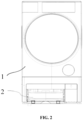
- FIG. 2 is a front view of a cleaner according to an embodiment of the application.
- FIG. 2 exemplarily shows that one of the first apparatus and the second apparatus is a floor cleaner 2, and another one of the first apparatus and the second apparatus is a laundry treatment apparatus 1.
- the floor cleaner 2 is arranged below the laundry treatment apparatus 1, and a space below the laundry treatment apparatus 1 provides a floor space for the floor cleaner 2, to prevent the floor cleaner 2 from occupying an additional space.
- the first apparatus and the second apparatus may be independently and separately arranged.
- the embodiment of the application is not limited thereto.
- each of the first apparatus and the second apparatus is an apparatus with cleaning requirements.
- the first apparatus may, for example, be provided as a floor cleaner
- the second apparatus may, for example, be provided as a laundry treatment apparatus.
- the first apparatus may, for example, be provided as a laundry treatment apparatus
- the second apparatus may, for example, be provided as a floor cleaner.
- the embodiment of the application is not limited thereto.
- the working state of the second apparatus may, for example, be sent by the second apparatus or by an intelligent terminal in communication with the second apparatus.
- An apparatus for sending the working state of the second apparatus is not limited in the embodiment of the application.
- At S103 it is determined that the working state of the second apparatus and the working request of the first apparatus meet a preset interference condition, at least one part of a first functional component corresponding to the working request of the first apparatus is controlled to be in a deactivated state, and/or at least one part of a second functional component corresponding to the working state of the second apparatus is controlled to be in a deactivated state.
- the working state of the second apparatus may be acquired, and it is determined whether the working state of the second apparatus and the working request of the first apparatus meet the preset interference condition.
- the first apparatus is provided as the floor cleaner
- the second apparatus is provided as the laundry treatment apparatus. After the floor cleaner cleans floor, a cleaning element of the floor cleaner becomes dirty, and the floor cleaner returns to a base station to allow the cleaning element of the floor cleaner to be washed. If the cleaning element of the floor cleaner needs to be washed while the laundry treatment apparatus is performing drying work, an electrical power in homes may not meet the requirements for the laundry treatment apparatus to perform the drying work and the base station to perform washing work simultaneously, and the floor cleaner and the laundry treatment apparatus cannot perform work simultaneously. Therefore, the washing work of the floor cleaner and the drying work of the laundry treatment apparatus are provided as interference work, and the working state of the second apparatus and the working request of the first apparatus meet the preset interference condition.
- the first apparatus is for example the floor cleaner.
- a plurality of functional components such as a pump assembly and a heating assembly for washing water, need to be activated to realize the washing of the cleaning element.
- the heating assembly for the washing water is configured to heat the washing water to improve the washing efficiency and the washing effect of the cleaning element
- the pump assembly is configured to drive the cleaning element to rotate to realize the washing.
- each of the components that enable the cleaning element of the floor cleaner to be washed such as the heating assembly for the washing water and the pump assembly, may be provided as the first functional component corresponding to a washing working request of the floor cleaner.
- the second apparatus is for example the laundry treatment apparatus.
- a plurality of functional components such as a drying assembly and a steam generating assembly, need to be activated to realize the drying of the laundries.
- the drying assembly is configured to dry the laundries
- the steam generating assembly is configured to iron the laundries after generating steam, to avoid the appearance of wrinkles of the dried laundries.
- each of the components that enable the laundry treatment apparatus to dry the laundries such as the steam generating assembly and the drying assembly, may be provided as the second functional component corresponding to a drying working state of the laundry treatment apparatus.
- the heating assembly for the washing water of the floor cleaner may be in the deactivated state to reduce a working power of the floor cleaner, and only the cleaning element of the floor cleaner may be washed with room temperature water.
- the steam generating assembly of the laundry treatment apparatus may also be deactivated to reduce a working power of the laundry treatment apparatus, and the laundry treatment apparatus may perform drying task except ironing task of the steam generating assembly.
- the heating assembly for the washing water of the floor cleaner and the steam generating assembly of the laundry treatment apparatus may also be controlled to be in the deactivated state, to reduce the working power of the floor cleaner and the working power of the laundry treatment apparatus.
- At least one partthe at least one part of the first functional component corresponding to the working request of the first apparatus is controlled to be in the deactivated state to reduce the working power of the first apparatus
- at least one partthe at least one part of the second functional component corresponding to the working state of the second apparatus is controlled to be in the deactivated state to reduce the working power of the second apparatus.
- the first apparatus and the second apparatus may perform the work simultaneously, to improve the cleaning efficiency of the cleaner, and the problems that the work performed simultaneously by the first apparatus and the second apparatus interferes with each other, and the first apparatus and the second apparatus influence each other when they perform the work simultaneously may be avoided.
- the first functional component at least includes two components
- the second functional component at least includes two components
- the first apparatus is for example the laundry treatment apparatus
- the second apparatus is for example the floor cleaner.
- the laundry treatment apparatus needs to dry the laundries, not only the drying function may be realized, but also the function such as the ironing function may be realized.
- the first functional component at least may include two components.
- the cleaning element of the floor cleaner When the cleaning element of the floor cleaner is washed, the cleaning element may be rotated to realize the washing of the cleaning element, and the washing water may also be heated to improve the washing efficiency and the washing effect.
- the cleaning element When the cleaning element is washed, a plurality of components corresponding to different functions need to be activated in order to realize the different functions. Therefore, for example, the second functional component at least may include two components.
- the first apparatus is the laundry treatment apparatus
- the second apparatus is the floor cleaner.
- the first functional component at least includes a drying assembly and a steam generating assembly
- the second functional component at least includes a heating assembly for washing water and a pump assembly.
- the first apparatus is for example the laundry treatment apparatus
- the second apparatus is for example the floor cleaner.
- the first functional component at least includes the drying assembly and the steam generating assembly.
- gas generated by the steam generating assembly may, for example, be steam generated by heating or spray generated by ultrasound. The embodiment of the application is not limited thereto.
- the second functional component at least includes the pump assembly and the heating assembly for the washing water.
- the operation that it is determined that the working state of the second apparatus and the working request of the first apparatus meet the preset interference condition includes the following operation.
- a sum of a working power corresponding to the working state of the second apparatus and a working power corresponding to the working request of the first apparatus is greater than a preset power.
- a socket for supplying power to the first apparatus and the second apparatus may not meet the requirements for the working power of the first apparatus and the working power of the second apparatus. In this way, the working efficiency of the cleaner is reduced.
- the working power corresponding to the working request of the first apparatus and the working power corresponding to the working state of the second apparatus is greater than the preset power
- at least one partthe at least one part of the first functional component corresponding to the working request of the first apparatus is controlled to be in the deactivated state
- at least one partthe at least one part of the second functional component corresponding to the working state of the second apparatus is controlled to be in the deactivated state.
- the operation that it is determined that the working state of the second apparatus and the working request of the first apparatus meet the preset interference condition includes the following operation.
- task corresponding to the working state of the second apparatus and task corresponding to the working request of the first apparatus are a preset interference task.
- the first apparatus is for example the floor cleaner
- the second apparatus is for example the laundry treatment apparatus.
- the laundry treatment apparatus is configured to perform a plurality of work, such as soaking work, washing work, rinsing work and drying work
- the floor cleaner is also configured to perform a plurality of work, such as floor cleaning work, washing work and charging work.
- the washing work of the floor cleaner and the drying work of the laundry treatment apparatus may be pre-set as the preset interference task.
- the task corresponding to the working state of the laundry treatment apparatus is the drying work and the task corresponding to the working request of the floor cleaner is the washing work, it is determined that the working state of the second apparatus and the working request of the first apparatus meet the preset interference condition.
- the method includes the following operation.
- the first apparatus is controlled to perform a remaining task in the working request.
- the remaining task is a task except a task for operating the first functional component.
- the first apparatus is for example the floor cleaner
- the second apparatus is for example the laundry treatment apparatus.
- the first functional component in the floor cleaner is for example the heating assembly for the washing water.
- the heating assembly for the washing water may be controlled to be deactivated to reduce the working power of the floor cleaner
- the base station is controlled to wash the cleaning element with the room temperature water to realize the washing of the cleaning element. Therefore, the laundry treatment apparatus and the floor cleaner may perform the work simultaneously without affecting the normal washing of the cleaning element of the floor cleaner. In this way, the problem that the cleaning efficiency of the cleaner is reduced after the floor cleaner or the laundry treatment apparatus is deactivated is avoided, and the cleaning efficiency of the cleaner is improved.
- the method includes the following operation.
- the first apparatus is controlled to perform a task corresponding to the working request.
- the first apparatus is for example the floor cleaner
- the second apparatus is for example the laundry treatment apparatus.
- the laundry treatment apparatus is performing the drying work
- the second functional component such as the steam generating assembly is activated to iron the laundries, at this time the cleaning element of the floor cleaner needs to be washed.
- the steam generating assembly of the laundry treatment apparatus may be controlled to be deactivated to reduce the working power of the laundry treatment apparatus, the laundry treatment apparatus performs a task except a task for ironing the wrinkles, and the floor cleaner is controlled to perform the washing task of the cleaning element. Therefore, the floor cleaner and the laundry treatment apparatus may perform the task simultaneously without affecting the drying effect of the laundries by the laundry treatment apparatus and the washing effect of the cleaning element of the floor cleaner. In this way, the cleaning efficiency of the cleaner is improved.
- the first apparatus is the floor cleaner
- the second apparatus is the laundry treatment apparatus.
- the working request of the floor cleaner is a washing operation
- the working state of the laundry treatment apparatus is a drying working state.
- the first functional component includes a heating assembly for washing water.
- the operation that at least one partthe at least one part of the first functional component corresponding to the working request of the first apparatus is controlled to be in the deactivated state includes the following operation.
- the heating assembly for the washing water is controlled to be in the deactivated state.
- the first apparatus is for example the floor cleaner
- the second apparatus is for example the laundry treatment apparatus.
- the cleaning element of the floor cleaner becomes dirty.
- the socket for supplying the power to the floor cleaner and the laundry treatment apparatus may not meet the requirements for the floor cleaner to perform the washing operation and the laundry treatment apparatus to perform the drying work simultaneously.
- the heating assembly for the washing water of the floor cleaner may be controlled to be deactivated, that is, the washing water is not heated, and the cleaning element of the floor cleaner is washed with the room temperature water. Therefore, the working power of the floor cleaner is reduced, and the sum of the working power of the laundry treatment apparatus and the working power of the floor cleaner is less than or equal to the preset power without affecting the washing effect of the floor cleaner. In this way, the floor cleaner and the laundry treatment apparatus may perform the work simultaneously, to ensure the electricity safety and improve the cleaning efficiency of the cleaner.
- the second functional component of the laundry treatment apparatus may be in the deactivated state or in an activated state, which may be set according to an actual use power of the cleaner.
- the embodiment of the application is not limited thereto.
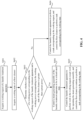
- FIG. 3 is a detailed schematic flowchart of a method for controlling a cleaner according to an embodiment of the application. As shown in FIG. 3 , the method includes the following operations.
- a sum of a working power corresponding to the working request of the floor cleaner and a working power corresponding to the working state of the laundry treatment apparatus is greater than a preset power. If the sum of the working power corresponding to the working request of the floor cleaner and the working power corresponding to the working state of the laundry treatment apparatus is greater than the preset power, S304 is performed. If the sum of the working power corresponding to the working request of the floor cleaner and the working power corresponding to the working state of the laundry treatment apparatus is less than or equal to the preset power, S306 is performed.
- a heating assembly for washing water of the floor cleaner is controlled to be in a deactivated state.
- the floor cleaner is controlled to perform work in the working request except work for operating the heating assembly for the washing water, and the laundry treatment apparatus is controlled to continue to perform a task corresponding to the working state.
- the floor cleaner is controlled to perform a task corresponding to the working request
- the laundry treatment apparatus is controlled to perform a task corresponding to the working state.
- a first apparatus is the floor cleaner
- a second apparatus is the laundry treatment apparatus.
- the working request of the floor cleaner is a washing operation
- the working state of the laundry treatment apparatus is a drying working state.
- a second functional component includes a steam generating assembly.
- the operation that at least one part of the second functional component corresponding to the working state of the second apparatus is controlled to be in the deactivated state includes the following operation.
- the steam generating assembly is controlled to be in the deactivated state.
- the first apparatus is for example the floor cleaner
- the second apparatus is for example the laundry treatment apparatus.
- a cleaning element of the floor cleaner needs to be washed, since the sum of the working power corresponding to the washing operation of the floor cleaner and the working power corresponding to the drying working state of the laundry treatment apparatus is greater than the preset power, a socket for supplying power to the floor cleaner and the laundry treatment apparatus may not meet the requirements for the floor cleaner to perform the washing operation and the laundry treatment apparatus to perform drying work simultaneously.
- the steam generating assembly of the laundry treatment apparatus may be controlled to be in the deactivated state, and the laundry treatment apparatus performs drying work except ironing work.
- the floor cleaner may perform the washing operation when the laundry treatment apparatus performs the drying work, to improve the cleaning efficiency of the cleaner.
- the heating assembly for the washing water of the floor cleaner may be in the deactivated state or in an activated state, which may be set according to an actual use power of the cleaner.
- the embodiment of the application is not limited thereto.
- the second apparatus is the floor cleaner
- the first apparatus is the laundry treatment apparatus
- a working request of the laundry treatment apparatus is a drying operation, and a working state of the floor cleaner is a washing working state.
- a first functional component includes the steam generating assembly.
- the operation that the first functional component corresponding to the working request of the first apparatus is controlled to be in the deactivated state includes the following operation.
- the steam generating assembly is controlled to be in the deactivated state.
- the first apparatus is for example the laundry treatment apparatus
- the second apparatus is for example the floor cleaner.
- the cleaning element of the floor cleaner When the cleaning element of the floor cleaner is being washed, the laundry treatment apparatus needs to dry the laundries.
- the steam generating assembly of the laundry treatment apparatus may be kept in the deactivated state, and the laundry treatment apparatus may be controlled to perform drying work except work for operating the steam generating assembly. For example, when the laundries are dried, the laundries are not ironed, and only moisture on the laundries is removed.
- the working power of the laundry treatment apparatus is reduced, and the sum of the working power of the laundry treatment apparatus and the working power of the floor cleaner is less than or equal to the preset power without affecting the drying effect of the laundry treatment apparatus, to ensure the electricity safety.
- the laundry treatment apparatus may perform the drying operation when the floor cleaner performs the washing operation, to improve the cleaning efficiency of the cleaner.
- FIG. 4 is a detailed schematic flowchart of another method for controlling a cleaner according to an embodiment of the application. As shown in FIG. 4 , the method includes the following operations.
- a sum of a working power corresponding to the working request of the laundry treatment apparatus and a working power corresponding to the working state of the floor cleaner is greater than a preset power. If the sum of the working power corresponding to the working request of the laundry treatment apparatus and the working power corresponding to the working state of the floor cleaner is greater than the preset power, S404 is performed. If the sum of the working power corresponding to the working request of the laundry treatment apparatus and the working power corresponding to the working state of the floor cleaner is less than or equal to the preset power, S406 is performed.
- a steam generating assembly of the laundry treatment apparatus is controlled to be in a deactivated state.
- the laundry treatment apparatus is controlled to perform work in the working request except work for operating the steam generating assembly, and the floor cleaner is controlled to continue to perform a task corresponding to the working state.
- the laundry treatment apparatus is controlled to perform a task corresponding to the working request, and the floor cleaner is controlled to perform a task corresponding to the working state.
- a second apparatus is the floor cleaner, and a first apparatus is the laundry treatment apparatus.
- the working request of the laundry treatment apparatus is a drying operation, and the working state of the floor cleaner is a washing working state.
- a second functional component includes a heating assembly for washing water.
- the operation that at least one part of the second functional component corresponding to the working state of the second apparatus is controlled to be in the deactivated state includes the following operation.
- the heating assembly for the washing water is controlled to be in the deactivated state.
- the first apparatus is for example the laundry treatment apparatus
- the second apparatus is for example the floor cleaner.
- the laundry treatment apparatus needs to dry laundries. Since the sum of the working power corresponding to washing work of the floor cleaner and the working power corresponding to the drying operation of the laundry treatment apparatus is greater than the preset power, in order to continue to enable the cleaning element of the floor cleaner to be washed without being affected by the working request of the laundry treatment apparatus, the heating assembly for the washing water of the floor cleaner may be controlled to be deactivated, and only the cleaning element is washed with room temperature water.
- the working power of the floor cleaner is reduced, and the sum of the working power of the laundry treatment apparatus and the working power of the floor cleaner is less than or equal to the preset power without affecting the washing of the cleaning element of the floor cleaner, to ensure the electricity safety.
- the laundry treatment apparatus may perform the drying operation when the floor cleaner performs a washing operation, to improve the cleaning efficiency of the cleaner, and avoid the problem that the laundry treatment apparatus performs drying work after the washing operation of the floor cleaner is ended which affects the user experience.
- the first functional component corresponding to the working request of the first apparatus is controlled to be in the deactivated state to reduce the working power of the first apparatus
- the second functional component corresponding to the working state of the second apparatus is controlled to be in the deactivated state to reduce the working power of the second apparatus.
- the first apparatus and the second apparatus may perform the work simultaneously, to improve the cleaning efficiency of the cleaner, and avoid the problems that the work performed simultaneously by the first apparatus and the second apparatus interferes with each other, and the first apparatus and the second apparatus influence each other when they perform the work simultaneously.
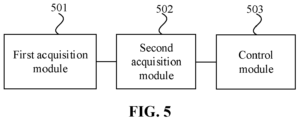
- FIG. 5 is a schematic diagram of a control device for a cleaner according to an embodiment of the application.
- the control device for the cleaner includes a first acquisition module 501, a second acquisition module 502 and a control module 503.
- the first acquisition module 501 is configured to acquire a working request of a first apparatus.
- the second acquisition module 502 is configured to acquire a working state of a second apparatus.
- the control module 503 is configured to determine that the working state of the second apparatus and the working request of the first apparatus meet a preset interference condition, control at least one part of a first functional component corresponding to the working request of the first apparatus to be in a deactivated state, and/or control at least one part of a second functional component corresponding to the working state of the second apparatus to be in a deactivated state.
- the device according to the embodiment of the application and the method according to the embodiment of the application have the same inventive concept and have the same beneficial effects, which will not be repeated herein.
- An embodiment of the application also provides a computer-readable storage medium.
- the computer-readable storage medium has stored thereon a program or an instruction that, when executed by a computer, performs the operations of the method according to any one of the above embodiments.
- computer-executable instructions when executed by a computer processor, may also perform the technical solutions of the method according to any one of the above embodiments of the application, to realize corresponding beneficial effects.
- the technical solutions of the application in essence or parts of the technical solutions of the application which contribute to the related art may be embodied in the form of software product, and the computer software product may be stored in a computer-readable storage medium, such as a floppy disk of a computer, a read only memory, ROM, a random access memory, RAM, a flash memory, a hard disk or an optical disk and the like, including several instructions to enable a computer device (which may be a personal computer, a server or a network device and the like) to perform the method according to any one of various embodiments of the application.
- a computer-readable storage medium such as a floppy disk of a computer, a read only memory, ROM, a random access memory, RAM, a flash memory, a hard disk or an optical disk and the like, including several instructions to enable a computer device (which may be a personal computer, a server or a network device and the like) to perform the method according to any one of various embodiments of the application.
- FIG. 6 is a schematic diagram of a cleaner according to an embodiment of the application.
- the cleaner includes a processor 601 and a memory 602, and the processor 601 is configured to call a program or an instruction stored in the memory 602 to perform the operations of the method according to any one of the above various embodiments, to realize the beneficial effects of the above embodiments, which will not be repeated herein.
- the cleaner may include at least one processor 601, at least one memory 602 and at least one communication interface 603.
- Various components in the cleaner are coupled to each other by a bus system 604.
- the communication interface 603 is configured for information transmission with external devices. It can be understood that the bus system 604 is configured to implement communication among these components.
- the bus system 604 includes a power bus, a control bus and a status signal bus in addition to a data bus. However, for clarity of illustration, various buses are designated as the bus system 604 in FIG. 6 .
- the memory 602 in the embodiment may be a volatile memory or a non-volatile memory, or may include a volatile memory and a non-volatile memory.
- the memory 602 is configured to store the following elements: an executable unit or a data structure, or a subset thereof, or an extended set operating system and an application program thereof.
- the processor 601 is configured to call the program or instruction stored in the memory 602 to perform the operations of the method according to the embodiment of the application.
- the method according to the embodiment of the application may be applied to or implemented by the processor 601.
- the processor 601 may be an integrated circuit chip with signal processing capability. In the implementation process, each operation of the above method may be completed by the instructions in the form of integrated logic circuit of hardware or software in the processor 601.
- the above processor 601 may be a general purpose processor, a digital signal processor, DSP, an application specific integrated circuit, ASIC, a field programmable gate array, FPGA, or another programmable logic device, a discrete gate or transistor logic device, or a discrete hardware component.
- the general purpose processor may be a microprocessor, or the processor may be any conventional processor and the like.
- the operations of the method according to the embodiment of the application may be directly embodied as being executed by a hardware decoding processor, or by the combination of the hardware and software units in the decoding processor.
- the software units may be located in a storage medium in the art, such as a random access memory, a flash memory, a read only memory, a programmable read only memory, an electrically erasable programmable memory, a register and the like.
- the storage medium is located in the memory 602, and the processor 601 is configured to read the information in the memory 602 and execute the operations of the method in combination with the hardware of the processor.
- the cleaner may also include an entity component or a plurality of entity components, to generate the instructions according to the processor 601 when performing the method according to the embodiment of application.
- entity components may be provided inside or outside the cleaner, such as a cloud server.
- Each of the entity components cooperates with the processor 601 and the memory 602, to implement the function of the cleaner in the embodiment.
- the application provides a method for controlling a cleaner.
- a working request of the first apparatus is acquired.
- a working state of the second apparatus is acquired. It is determined that the working state of the second apparatus and the working request of the first apparatus meet a preset interference condition, at least one part of a first functional component corresponding to the working request of the first apparatus is controlled to be in a deactivated state, and/or at least one part of a second functional component corresponding to the working state of the second apparatus is controlled to be in a deactivated state.
- the first apparatus and the second apparatus may perform work simultaneously, to improve the cleaning efficiency of the cleaner, and avoid the problems that a sum of a working power of the first apparatus and a working power of the second apparatus is too large, and the first apparatus and the second apparatus influence each other when they perform the work simultaneously. Therefore, the application has strong industrial applicability.
Landscapes
- Engineering & Computer Science (AREA)
- Textile Engineering (AREA)
- Control Of Washing Machine And Dryer (AREA)
Applications Claiming Priority (2)
| Application Number | Priority Date | Filing Date | Title |
|---|---|---|---|
| CN202310339622.6A CN116509257A (zh) | 2023-03-30 | 2023-03-30 | 清洁设备的控制方法、控制装置以及清洁设备 |
| PCT/CN2023/116348 WO2024198231A1 (zh) | 2023-03-30 | 2023-08-31 | 清洁设备的控制方法、控制装置以及清洁设备 |
Publications (2)
| Publication Number | Publication Date |
|---|---|
| EP4461184A1 true EP4461184A1 (de) | 2024-11-13 |
| EP4461184A4 EP4461184A4 (de) | 2025-07-16 |
Family
ID=87400250
Family Applications (1)
| Application Number | Title | Priority Date | Filing Date |
|---|---|---|---|
| EP23841580.6A Pending EP4461184A4 (de) | 2023-03-30 | 2023-08-31 | Steuerungsverfahren und steuerungsvorrichtung für reinigungsvorrichtung und reinigungsvorrichtung |
Country Status (4)
| Country | Link |
|---|---|
| US (1) | US20250237000A1 (de) |
| EP (1) | EP4461184A4 (de) |
| CN (1) | CN116509257A (de) |
| WO (1) | WO2024198231A1 (de) |
Cited By (1)
| Publication number | Priority date | Publication date | Assignee | Title |
|---|---|---|---|---|
| EP4620368A1 (de) * | 2024-03-22 | 2025-09-24 | BSH Hausgeräte GmbH | Verfahren zum durchführen einer servicefunktion |
Families Citing this family (2)
| Publication number | Priority date | Publication date | Assignee | Title |
|---|---|---|---|---|
| CN116509257A (zh) * | 2023-03-30 | 2023-08-01 | 无锡小天鹅电器有限公司 | 清洁设备的控制方法、控制装置以及清洁设备 |
| CN118087226B (zh) * | 2024-04-17 | 2024-09-24 | 追觅创新科技(苏州)有限公司 | 清洁设备的烘干控制方法以及清洁设备 |
Family Cites Families (11)
| Publication number | Priority date | Publication date | Assignee | Title |
|---|---|---|---|---|
| KR101075227B1 (ko) * | 2006-07-25 | 2011-10-19 | 삼성전자주식회사 | 2조식 세탁기의 운전제어방법 |
| KR20080035539A (ko) * | 2008-03-21 | 2008-04-23 | 양기철 | 이층 세탁기 (이중세탁기) |
| KR101940070B1 (ko) * | 2017-03-20 | 2019-04-10 | 엘지전자 주식회사 | 로봇 청소기 및 그의 제어방법 |
| CN110130043B (zh) * | 2018-02-09 | 2022-04-22 | 青岛海尔洗涤电器有限公司 | 一种衣物处理设备及其控制方法 |
| CN113440075A (zh) * | 2021-07-20 | 2021-09-28 | 四川启睿克科技有限公司 | 一种自动清洗清洁机器人拖布的方法和设备 |
| CN115012170B (zh) * | 2022-05-31 | 2024-07-23 | 无锡小天鹅电器有限公司 | 双洗机的水路控制方法、电器及双洗机 |
| CN114995237A (zh) * | 2022-05-31 | 2022-09-02 | 无锡小天鹅电器有限公司 | 双洗机的运行控制方法、电器及双洗机 |
| CN116509271A (zh) * | 2022-12-30 | 2023-08-01 | 无锡飞翎电子有限公司 | 清洁设备的控制方法、装置以及清洁设备 |
| CN116509273A (zh) * | 2022-12-30 | 2023-08-01 | 无锡小天鹅电器有限公司 | 清洁设备的控制方法、装置以及清洁设备 |
| CN116509272A (zh) * | 2022-12-30 | 2023-08-01 | 无锡小天鹅电器有限公司 | 清洁设备的控制方法、装置以及清洁设备 |
| CN116509257A (zh) * | 2023-03-30 | 2023-08-01 | 无锡小天鹅电器有限公司 | 清洁设备的控制方法、控制装置以及清洁设备 |
-
2023
- 2023-03-30 CN CN202310339622.6A patent/CN116509257A/zh active Pending
- 2023-08-31 US US18/685,302 patent/US20250237000A1/en active Pending
- 2023-08-31 WO PCT/CN2023/116348 patent/WO2024198231A1/zh active Pending
- 2023-08-31 EP EP23841580.6A patent/EP4461184A4/de active Pending
Cited By (1)
| Publication number | Priority date | Publication date | Assignee | Title |
|---|---|---|---|---|
| EP4620368A1 (de) * | 2024-03-22 | 2025-09-24 | BSH Hausgeräte GmbH | Verfahren zum durchführen einer servicefunktion |
Also Published As
| Publication number | Publication date |
|---|---|
| US20250237000A1 (en) | 2025-07-24 |
| CN116509257A (zh) | 2023-08-01 |
| EP4461184A4 (de) | 2025-07-16 |
| WO2024198231A1 (zh) | 2024-10-03 |
Similar Documents
| Publication | Publication Date | Title |
|---|---|---|
| EP4461184A1 (de) | Steuerungsverfahren und steuerungsvorrichtung für reinigungsvorrichtung und reinigungsvorrichtung | |
| US7574269B2 (en) | Domestic appliance assembly with integrated functioning | |
| CN116560257A (zh) | 双洗机的运行控制方法、电器及双洗机 | |
| CN116509271A (zh) | 清洁设备的控制方法、装置以及清洁设备 | |
| CN116556016B (zh) | 双洗机的控制方法、电器及双衣机 | |
| CN114882882B (zh) | 一种语音指令执行方法、装置、家用电器及存储介质 | |
| RU2836957C1 (ru) | Способ управления уборщиком и управляющее устройство для уборщика | |
| EP4417101A1 (de) | Verfahren und vorrichtung zur steuerung einer reinigungsvorrichtung und reinigungsvorrichtung | |
| RU2851955C2 (ru) | Чистящее устройство, способ управления чистящим устройством и прибор управления чистящим устройством | |
| CN110016780A (zh) | 用于洗衣机的加急控制方法 | |
| CN108315946A (zh) | 一种防止衣物起皱的方法、介质、装置及洗衣机 | |
| CN116509273A (zh) | 清洁设备的控制方法、装置以及清洁设备 | |
| EP4353899A1 (de) | Verfahren und vorrichtung zur behandlung von kleidung, betriebssteuerungsvorrichtung und speichermedium | |
| CN114541087A (zh) | 一种衣物处理设备及其控制方法 | |
| RU2837973C2 (ru) | Способ контроля работы сдвоенной моечной машины, электроприбор и сдвоенная моечная машина | |
| CN113089264A (zh) | 一种洗衣机的控制方法和装置、存储介质、洗衣机 | |
| KR20220083445A (ko) | 세탁 건조 시스템 | |
| CN218497381U (zh) | 一种控制电路以及衣物处理装置 | |
| CN115491851B (zh) | 一种洗衣机及其控制方法 | |
| CN116289097B (zh) | 一种洗衣机的用电控制方法、计算机可读存储介质 | |
| CN114250575B (zh) | 进水控制方法、装置、设备和存储介质 | |
| CN111424395A (zh) | 用于洗衣机的预洗控制方法及设备 | |
| CN111424397A (zh) | 用于洗衣机的预洗控制方法及设备 | |
| CN111472133A (zh) | 用于洗衣机的预洗控制方法及设备 | |
| CN116509282A (zh) | 清洁处理设备及其控制方法、装置、存储介质 |
Legal Events
| Date | Code | Title | Description |
|---|---|---|---|
| STAA | Information on the status of an ep patent application or granted ep patent |
Free format text: STATUS: UNKNOWN |
|
| STAA | Information on the status of an ep patent application or granted ep patent |
Free format text: STATUS: THE INTERNATIONAL PUBLICATION HAS BEEN MADE |
|
| PUAI | Public reference made under article 153(3) epc to a published international application that has entered the european phase |
Free format text: ORIGINAL CODE: 0009012 |
|
| STAA | Information on the status of an ep patent application or granted ep patent |
Free format text: STATUS: REQUEST FOR EXAMINATION WAS MADE |
|
| 17P | Request for examination filed |
Effective date: 20240126 |
|
| AK | Designated contracting states |
Kind code of ref document: A1 Designated state(s): AL AT BE BG CH CY CZ DE DK EE ES FI FR GB GR HR HU IE IS IT LI LT LU LV MC ME MK MT NL NO PL PT RO RS SE SI SK SM TR |
|
| A4 | Supplementary search report drawn up and despatched |
Effective date: 20250613 |
|
| RIC1 | Information provided on ipc code assigned before grant |
Ipc: A47L 11/28 20060101AFI20250606BHEP Ipc: A47L 11/40 20060101ALI20250606BHEP Ipc: D06F 33/50 20200101ALI20250606BHEP |