EP4460488B1 - Kristalline form des natriumsalzes von 2-acrylamido-2-methylpropansulfonsäure - Google Patents
Kristalline form des natriumsalzes von 2-acrylamido-2-methylpropansulfonsäure Download PDFInfo
- Publication number
- EP4460488B1 EP4460488B1 EP24710125.6A EP24710125A EP4460488B1 EP 4460488 B1 EP4460488 B1 EP 4460488B1 EP 24710125 A EP24710125 A EP 24710125A EP 4460488 B1 EP4460488 B1 EP 4460488B1
- Authority
- EP
- European Patent Office
- Prior art keywords
- atbs
- suspension
- aqueous solution
- sodium salt
- crystalline form
- Prior art date
- Legal status (The legal status is an assumption and is not a legal conclusion. Google has not performed a legal analysis and makes no representation as to the accuracy of the status listed.)
- Active
Links
Images







Classifications
-
- C—CHEMISTRY; METALLURGY
- C07—ORGANIC CHEMISTRY
- C07C—ACYCLIC OR CARBOCYCLIC COMPOUNDS
- C07C309/00—Sulfonic acids; Halides, esters, or anhydrides thereof
- C07C309/01—Sulfonic acids
- C07C309/02—Sulfonic acids having sulfo groups bound to acyclic carbon atoms
- C07C309/03—Sulfonic acids having sulfo groups bound to acyclic carbon atoms of an acyclic saturated carbon skeleton
- C07C309/13—Sulfonic acids having sulfo groups bound to acyclic carbon atoms of an acyclic saturated carbon skeleton containing nitrogen atoms, not being part of nitro or nitroso groups, bound to the carbon skeleton
- C07C309/14—Sulfonic acids having sulfo groups bound to acyclic carbon atoms of an acyclic saturated carbon skeleton containing nitrogen atoms, not being part of nitro or nitroso groups, bound to the carbon skeleton containing amino groups bound to the carbon skeleton
- C07C309/15—Sulfonic acids having sulfo groups bound to acyclic carbon atoms of an acyclic saturated carbon skeleton containing nitrogen atoms, not being part of nitro or nitroso groups, bound to the carbon skeleton containing amino groups bound to the carbon skeleton the nitrogen atom of at least one of the amino groups being part of any of the groups, X being a hetero atom, Y being any atom
-
- C—CHEMISTRY; METALLURGY
- C08—ORGANIC MACROMOLECULAR COMPOUNDS; THEIR PREPARATION OR CHEMICAL WORKING-UP; COMPOSITIONS BASED THEREON
- C08F—MACROMOLECULAR COMPOUNDS OBTAINED BY REACTIONS ONLY INVOLVING CARBON-TO-CARBON UNSATURATED BONDS
- C08F20/00—Homopolymers and copolymers of compounds having one or more unsaturated aliphatic radicals, each having only one carbon-to-carbon double bond, and only one being terminated by only one carboxyl radical or a salt, anhydride, ester, amide, imide or nitrile thereof
- C08F20/02—Monocarboxylic acids having less than ten carbon atoms, Derivatives thereof
- C08F20/52—Amides or imides
- C08F20/54—Amides, e.g. N,N-dimethylacrylamide or N-isopropylacrylamide
- C08F20/58—Amides, e.g. N,N-dimethylacrylamide or N-isopropylacrylamide containing oxygen in addition to the carbonamido oxygen, e.g. N-methylolacrylamide, N-acryloylmorpholine
-
- C—CHEMISTRY; METALLURGY
- C08—ORGANIC MACROMOLECULAR COMPOUNDS; THEIR PREPARATION OR CHEMICAL WORKING-UP; COMPOSITIONS BASED THEREON
- C08F—MACROMOLECULAR COMPOUNDS OBTAINED BY REACTIONS ONLY INVOLVING CARBON-TO-CARBON UNSATURATED BONDS
- C08F220/00—Copolymers of compounds having one or more unsaturated aliphatic radicals, each having only one carbon-to-carbon double bond, and only one being terminated by only one carboxyl radical or a salt, anhydride ester, amide, imide or nitrile thereof
- C08F220/02—Monocarboxylic acids having less than ten carbon atoms; Derivatives thereof
- C08F220/52—Amides or imides
- C08F220/54—Amides, e.g. N,N-dimethylacrylamide or N-isopropylacrylamide
- C08F220/56—Acrylamide; Methacrylamide
-
- C—CHEMISTRY; METALLURGY
- C07—ORGANIC CHEMISTRY
- C07B—GENERAL METHODS OF ORGANIC CHEMISTRY; APPARATUS THEREFOR
- C07B2200/00—Indexing scheme relating to specific properties of organic compounds
- C07B2200/13—Crystalline forms, e.g. polymorphs
Definitions
- the present invention relates to a crystalline form of 2-acrylamido-2-methylpropanesulphonic acid. More specifically, the present invention relates to a crystalline form of 2-acrylamido-2-methylpropanesulphonic acid sodium salt. The invention also relates to the method for obtaining the crystalline form of 2-acrylamido-2-methylpropanesulphonic acid sodium salt.
- 2-acrylamido-2-methylpropanesulphonic acid which is also referred to as ATBS, is widely used as an additive in acrylic fibers, or as a raw material for producing polymers used as dispersants, thickeners, friction reducers, flocculants or superabsorbents in various sectors including the oil and gas industry, mining, construction, textiles, water treatment (seawater desalination, mineral industry, etc.) or cosmetics.
- the reaction carried out in the method for preparing ATBS corresponds to the reaction scheme below, in which acrylonitrile is present in excess so as to be both the reaction solvent and a reagent.
- the acrylonitrile is brought into contact with fuming sulphuric acid (oleum) and isobutylene.
- One by-product that may be produced during this synthesis is acrylamide.
- ATBS is not soluble in acrylonitrile solvent.
- the reaction product is in the form of a suspension of crystals in the reaction solvent.
- documents US 6,448,347 and CN 102351744 describe a method for the continuous production of ATBS.
- the ATBS is then separated from the acrylonitrile, generally by filtration, and then dried.
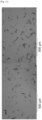
- ATBS crystals have a crystallographic arrangement that produces a needle-shaped solid.
- Needle-shaped crystals are known to a person skilled in the art to have macroscopic properties that pose difficulties in solid handling and transport operations (poor solid flowability, caking, low resistance to shear stress), and processing operations (poor filterability, drying difficulties, attrition).
- Needle-shape crystals have a high specific surface area.
- Patents WO 2009/072480 , JP 2008/307822 and JP 2003/137857 describe that ATBS needle-shape crystals are obtained.
- the aqueous phase may be used as it is, i.e., in acid form, or in a salt form obtained by reaction of the acid with an alkali metal, an alkaline-earth metal or a molecule containing an unsubstituted or substituted amine function.
- the shelf life of this aqueous solution is generally short because of self-polymerization phenomena caused by exposure to temperature, UV light or pollutants such as iron or its oxidized forms, which can be produced by the corrosion of metal pipes or containers caused by the acid form of ATBS.
- the increase in temperature generated by the self-polymerization of ATBS is well above the boiling point of water, which can lead to an increase in pressure in the container and cause an explosion. Therefore, self-polymerization phenomena present a certain risk to the safety of people and installations.
- the Applicant has discovered a novel form of ATBS referred to as a "crystalline form of the 2-acrylamido-2-methylpropanesulphonic acid sodium salt".
- This novel form offers improved physico-chemical and application properties (as with the "hydrated crystalline” form) while avoiding the intermediate step of forming the ATBS salt from the acid. The risks of burning, corrosion and self-polymerization are also reduced.
- the crystalline form of the sodium salt has a longer shelf life than an aqueous solution of the sodium salt of 2-acrylamido-2-methylpropanesulphonic acid.
- the sodium salt of 2-acrylamido-2-methylpropanesulphonic acid is hereinafter referred to as ATBS.Na.
- the novel form of the product means that it is safer for handlers to use and reduces the energy impact due to the salification step (salifying ATBS) that is no longer necessary during the polymerization of 2-acrylamido-2-methylpropanesulphonic acid and due to the powder form, which allows more active ingredient to be transported (100% for the powder compared with a maximum of 50% for a solution).
- the improved shelf life of the product also means less waste resulting from the increased product dosage required as a result of the reduced performance of a product that is too old.
- the improved performances of the polymers obtained from the crystalline form of the sodium salt of the invention help reduce the quantity of product necessary for the applications in which they are used, reducing the overall water consumption and emissions of greenhouse gases such as the CO 2 .
- the object of the present invention is a specific form of 2-acrylamido-2-methylpropanesulphonic acid referred to hereinafter as a "crystalline form of the 2-acrylamido-2-methylpropanesulphonic acid sodium salt".
- the present invention also relates to a method for producing the crystalline form of the 2-acrylamido-2-methylpropanesulphonic acid sodium salt (ATBS.Na).
- polymer should be understood to mean a homopolymer or a copolymer.
- copolymer should be understood to mean a polymer obtained from at least two different monomers. It may therefore be a copolymer of at least two monomers chosen from hydrophilic anionic monomers, hydrophilic cationic monomers, hydrophilic non-ionic monomers, hydrophilic zwitterionic monomers, hydrophobic monomers and the mixtures thereof.
- hydrophilic monomer should be understood to mean a monomer that has an octanol-water partition coefficient, K ow , equal or less than 1, in which the partition coefficient K ow is determined at 25°C in an octanol-water mixture with a volume ratio of 1/1, at a pH of between 6 and 8.
- hydrophobic monomer should be understood to mean a monomer that has an octanol-water partition coefficient, K ow , greater than 1, in which the partition coefficient K ow is determined at 25°C in an octanol-water mixture with a volume ratio of 1/1, at a pH of between 6 and 8.
- crystal or "crystalline form” refers to a solid material whose constituents (such as atoms, molecules, or ions) are arranged in a highly ordered microscopic structure, forming a crystal lattice that extends in all directions. It does not encompass amorphous solid.
- a water-soluble polymer is a polymer that gives an aqueous solution when it is dissolved while stirring at 25°C and with a concentration of 10 g.L -1 in water.
- X and/or Y should be understood to mean “X”, or “Y”, or “X and Y”.
- the invention also includes all possible combinations of the various embodiments disclosed, whether they are preferred embodiments or given by way of example. Furthermore, when ranges of values are indicated, the limit values are included in these ranges. The disclosure also includes all of the combinations between the limit values of these ranges of values. For example, the ranges of values "1-20, preferably 5-15” imply disclosure of the ranges “1-5", “1-15", “5-20” and “15-20” and the values 1, 5, 15 and 20.
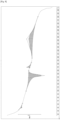
- the present invention relates to a crystalline form of the 2-acrylamido-2-methylpropanesulphonic acid sodium salt having an X-ray powder diffraction pattern comprising peaks at 11.7°; 12,2°; 13,2°; 13,5°; 15,6°; 16,8°; 17,8°; 18,5°; 19,1°; 20,6°; 21,4°; 23,3°; 25,1°; 25,8°; 26,9°; 29,1°; 29,5°; 31,0°; 33,0°; 33,6°; 34,4°; 35,2°; 35,9°; 37,1°; 38,4°; 39,6°; 41,1°; 42,9°; 45,1°; 46,0°; 47,2°; 47,6 2-theta angles.
- the uncertainty of these peaks is generally of the order of +/- 0.1°.
- X-ray crystallography, radiocrystallography or X-ray diffractometry is an analytical technique used to study the structure of crystalline matter on an atomic scale. It is based on the physical phenomenon of X-ray diffraction. A diffractometer with a copper source can be used.
- a powder formed from a given crystalline phase always gives rise to diffraction peaks in the same directions. This diffraction pattern thus forms a true signature of the crystalline phase. It is therefore possible to determine the nature of each crystalline phase within a mixture or a pure product.
- This signature is specific to each organic or inorganic compound, and is in the form of a list of peaks positioned at an angle of 2 ⁇ (2-theta).
- This technique is used to characterize matter, in particular the different crystalline forms that can exist for the same chemical molecule, also known as polymorphs.
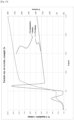
- Another aspect of the invention relates to a crystalline form of ATBS.Na having a Fourier-transform infrared spectrum comprising peaks at 3576 cm -1 , 3485 cm -1 , 3310 cm -1 , 3079 cm -1 , 2975 cm -1 , 1658 cm -1 , 1629 cm -1 , 1543 cm -1 , 1403 cm -1 , 1321 cm -1 , 1301 cm -1 , 1205 cm -1 , 1187 cm -1 , 1163 cm -1 , 1046 cm -1 , 980 cm -1 , 629 cm -1 .
- the uncertainty of these peaks is generally of the order of +/- 8 cm -1 .
- the infrared measurement is carried out by Fourier transform, for example using a Perkin Elmer Spectrum 100 spectrometer fitted with a single reflection ATR polarization accessory, with an accuracy of 8 cm -1 .
- Fourier-transform infrared spectroscopy is the analysis of the vibrations emitted, absorbed or scattered by molecules. This technique is sensitive to so-called short interactions (influence of the unit mesh on the bonds). In most cases, the Fourier-transform infrared spectra of different crystalline systems differ significantly. The Fourier-transform infrared spectrum therefore reflects the details of the crystalline structure of an organic compound.
- the X-ray diffraction pattern and the infrared spectrum are obtained at 20°C and at a pressure of 1 atmosphere absolute (101,325 Pa).
- Another aspect of the invention relates to a crystalline form of ATBS.Na having a minimum ignition energy greater than 500 mJ, and preferably greater than 1000 mJ.
- the minimum ignition energy represents the minimum energy that must be supplied to a compound to cause an ignite.
- the energy may be electrical or thermal.
- the minimum ignition energy is an essential piece of information when considering the risk of explosion during product handling (transfer, storage, reaction, shaping, etc.).
- the minimum ignition energy depends on the properties of the powder (composition) and its macromolecular structure (particle size, crystalline form, specific surface area).
- this energy is the minimum energy of an electric spark likely to ignite a cloud of dust.
- the minimum ignition energy is measured in accordance with standard NF EN 13821.
- Another aspect of the present invention relates to a crystalline form of ATBS.Na exhibiting 4 thermal phenomena with the differential scanning calorimetry technique, at 49.8°C; 144.8°C; 169.8°C and 254.3°C.
- the uncertainty relating to the observation of these phenomena is generally of the order of 10°C (+/-10°C), advantageously 5°C or less.
- DSC differential scanning calorimetry
- the present invention also relates to the method for producing the crystalline form of ATBS.Na comprising at least the following successive steps:
- the crystals obtained are in the crystalline form of the sodium salt of 2-acrylamido-2-methylpropanesulphonic acid.
- Sodium salt(s) base in step 1), should be understood to mean at least one inorganic sodium salt Br ⁇ nsted base, for example sodium hydroxide, sodium carbonate, sodium bicarbonate or mixtures thereof.
- the temperature and the mixing time of step 1) may vary as a function, in particular, of the concentration of ATBS.
- a person skilled in the art knows how to adapt the temperature and the mixing time to optimize the formation of the crystals.
- the method for producing the crystalline form of ATBS.Na can be carried out on any form of ATBS, such as, for example, the needle-shape form or the hydrated form.
- the production method may be carried out on ATBS of any degree of purity.
- the method may be carried out downstream of any type of method for producing ATBS. It may also be carried out on any forms of ATBS i.e. amorphous or crystalline that have already been obtained.
- ATBS is produced by a production method as previously described (acrylonitrile, fuming sulphuric acid and isobutylene).
- the ATBS may be in the form of fine powder or shaped in a controlled manner by a method such as compaction, granulation or extrusion.
- the ATBS may be added to an aqueous solution SA1 before, after or in parallel with the sodium salt base, and preferably in parallel.
- the aqueous solution SA1 is water.
- the sodium salt base may be added as an aqueous solution, in this case, the aqueous solution of sodium salt base can be partially or totally the aqueous solution SA1.
- the concentration of ATBS sodium salt in the aqueous solution or in the aqueous suspension SA 2 is between 1% by weight and saturation, preferably between 10% by weight and saturation, more preferably between 20% by weight and saturation, more preferably between 30% by weight and saturation, more preferably between 40% by weight and saturation, and even more preferably between 50% by weight and saturation, by weight relative to the weight of the aqueous solution or of the aqueous suspension SA 2 .
- the ATBS and the sodium base may be added all at once or in several stages. They are preferably added all at once.
- the ATBS and the sodium salt base are added in fractions.
- the ATBS and the sodium salt base are added in fractions, there is no limit to the number of fractions, advantageously there are at least two fractions, and preferably at least three fractions.
- the ATBS and the sodium salt base may be added at the same time (i.e., in parallel), one after the other (the ATBS first, then the sodium salt base, or vice versa), or alternately (a first fraction of ATBS, then a first fraction of the sodium salt base, followed by a second fraction of ATBS then a second fraction of the sodium salt base, and so on); they are preferably added at the same time.
- the second compound (whether it is the ATBS or the sodium salt base) can start being added before the first compound has finished being added.
- a first fraction F1 of ATBS advantageously represents at least 1 mol% of the total of the ATBS present in the aqueous solution or the aqueous suspension SA 2 , preferably at least 5 mol%, more preferably at least 10 mol%, even more preferably at least 15 mol% and even more preferably at least 20 mol%.
- a second fraction F2 of ATBS advantageously represents at least 1 mol% of the total of the ATBS present in the aqueous solution or the aqueous suspension SA 2 , preferably at least 5 mol%, more preferably at least 10 mol%, even more preferably at least 15 mol% and even more preferably at least 20 mol%.
- a third fraction F3 of ATBS advantageously represents at least 1 mol% of the total of the ATBS present in the aqueous solution or the aqueous suspension SA 2 , preferably at least 5 mol%, more preferably at least 10 mol%, even more preferably at least 15 mol% and even more preferably at least 20 mol%.
- the method is carried out continuously, in which case the ATBS and the sodium salt base are added continuously.
- the quantity of ATBS in the aqueous solution or the aqueous suspension SA 2 is advantageously between 10 and 90% by weight relative to the total weight of the aqueous solution or of the aqueous suspension SA 2 , preferably between 20 and 85% by weight, more preferably between 30 and 80% by weight.
- step 1) (ATBS + sodium salt base) is advantageously carried out at a temperature of between 0 and 90°C, preferably between 5 and 60°C, more preferably between 10 and 40°C, in order to obtain the aqueous solution or the aqueous suspension SA 2 .
- the aqueous solution or the aqueous suspension SA 2 may comprise one or more organic solvents.
- the aqueous solution SA 1 may comprise one or more organic solvents.
- the quantity of organic solvent may vary as a function of the temperature and the quantity of ATBS or sodium salt base. This quantity is not limited, provided it does not prevent the crystalline form of the sodium salt of ATBS from being obtained. A person skilled in the art knows how to determine this limit, which is a routine task.
- the aqueous solution or the aqueous suspension SA 2 comprises more water (by volume) than organic solvent.
- the temperature may be adjusted so that the solvent + water mixture remains in liquid form.
- the organic solvent is preferably chosen from acrylonitrile, isopropanol, acrylic acid, acetic acid or mixtures thereof.
- the organic solvent is preferably acrylonitrile.
- the organic solvent is generally in liquid form at the temperature at which steps 2) and 3) are carried out. Furthermore, it is advantageously partially miscible in water, and preferably completely miscible in water.
- the organic solvent may, if necessary, be used to solubilize any impurities or by-products present with the ATBS used to form the aqueous solution or the aqueous suspension SA 2 .
- ATBS is not necessarily soluble in the solvent.
- the aqueous solution or the aqueous suspension SA 2 does not contain organic solvent.
- the aqueous solution SA 1 does not contain organic solvent.
- the time allowed for mixing the aqueous solution SA 1 and the ATBS is advantageously at least 1 minute, preferably between 1 minute and 600 minutes, more preferably between 5 minutes and 400 minutes, and even more preferably between 10 minutes and 240 minutes.
- the compounds of step 1) can be mixed using various technologies. Examples include, but are not limited to, reactors with stirrers, loop reactors, static mixers, microreactors, piston reactors, agitated filter dryers, for example by Nutsche, paddle mixers, twin-cone mixers, ploughshare mixers and disc mixers.
- the pH in step 1) is advantageously controlled between 6 and 14, preferably between 8 and 14, more preferably between 10 and 14, even more preferably between 12 and 14, and even more preferably between 13 and 14.
- the quantity of ATBS.Na in the aqueous solution or the aqueous suspension SA 2 is advantageously between 10 and 90% by weight relative to the total weight of the aqueous solution or of the aqueous suspension SA 2 , preferably 20 and 90%, preferably between 30 and 90% by weight, preferably between 50 and 90% by weight, preferably between 20 and 85% by weight, more preferably between 30 and 80% by weight.
- Step 2) of the method for producing the crystalline form of ATBS sodium salt
- the distillation of the aqueous solution or of the aqueous suspension SA 2 takes place at a pressure of 700 mbar or less. It generally takes place in a vacuum distillation device, which is typically an evaporator. It is therefore also referred to here as "vacuum distillation”.
- the aqueous solution or the aqueous suspension SA 2 can be distilled using an evaporator.
- This may be a falling film evaporator, or a rising film evaporator, or a scraped thin film evaporator, or a short path evaporator, or a forced circulation evaporator, or a spiral tube evaporator, or a flash evaporator. It may also be a continuously stirred reactor.
- distillation takes place in a scraped thin film evaporator, a short path evaporator or a forced circulation evaporator. Even more preferably, distillation takes place in a scraped thin film evaporator.
- an evaporator is a device comprising an inlet for solution to be treated (aqueous solution or aqueous suspension SA 2 ), an outlet for discharging the distilled solvent (the water and any organic solvents) and an outlet for discharging the suspension S 1 .
- the residence time of the aqueous solution or of the aqueous suspension SA 2 in the distillation device which is advantageously an evaporator, in other words the distillation time at a pressure of 700 mbar or less, is advantageously comprised between 1 second and 600 seconds, preferably between 3 seconds and 300 seconds, more preferably between 30 seconds and 100 seconds.
- the residence time corresponds to the time necessary to carry out step 2), i.e., the time required to prepare the suspension S 1 by distillation of the aqueous solution or of the aqueous suspension SA 2 .
- an evaporator it is the residence time of the ATBS (and/or the crystalline form of its sodium salt) between the inlet and the outlet of the device.
- This residence time depends on the quantity of water (and any organic solvents), ATBS.Na and sodium salt base present in the aqueous solution or the aqueous suspension SA 2 .
- a person skilled in the art knows how to adapt this residence time in order to obtain ATBS.Na in the crystalline form depending on the quantity of the constituents of the aqueous solution or of the aqueous suspension SA 2 .
- the distillation can be carried out in a vertical or horizontal evaporator. Preferably, it is carried out in a vertical evaporator.
- the aqueous solution or the aqueous suspension SA 2 can circulate co-current or counter-current to the vapours generated by the evaporation. Preferably, it circulates counter-current to the vapours in the distillation device.
- the aqueous solution or the aqueous suspension SA 2 is preferably introduced into the distillation device, advantageously an evaporator, co-current or counter-current to the distilled solvent.
- the aqueous solution SA 2 or the aqueous suspension SA 2 may circulate in one or more evaporators in series before obtaining the suspension S 1 . Preferably, it circulates in a single evaporator.
- the absolute pressure corresponds to the pressure relative to zero pressure (vacuum).
- the pressure during distillation is preferably comprised between 10 and 700 mbar, preferably between 20 and 700 mbar, preferably between 40 and 700 mbar more preferably between 40 and 600 mbar, more preferably between 40 and 500 mbar, more preferably between 40 and 400 mbar, more preferably between 40 and 300 mbar, more preferably between 40 and 200 mbar, more preferably between 40 and 100 mbar.
- step 2) comprises a step 2') (optional) for helping the solvent to evaporate.
- Step 2') consists in increasing the temperature of the aqueous solution or of the aqueous suspension SA 2 , in other words the distillation according to step 2') is carried out under heat.
- step 2) the aqueous solution or the aqueous suspension SA 2 is heated, advantageously at a temperature of between 5°C and 95°C, preferably between more than 10°C and 60°C, more preferably between more than 20°C and 40°C.
- the heating during distillation may be carried out by various technologies. Examples include, but are not limited to, heating with steam, with hot water, with electricity, by steam compression, or indeed by using a heat pump.
- the distillation device may be of the double-walled type, with a hot heat-transfer fluid circulating between the two walls.
- the aqueous solution or the aqueous suspension SA 2 is advantageously heated to a temperature between more than 5°C and 95°C, preferably between more than 10°C and 60°C, more preferably between more than 20°C and 40°C.
- the temperature is advantageously greater than the temperature of step 1).
- the temperature of the aqueous solution or of the aqueous suspension SA 2 advantageously increases at a ramp of between 0.1 and 10°C/hour, preferably between 0.2 and 9°C/hour, more preferably between 0.3 and 8°C/hour, and even more preferably between 0.5 and 5°C/hour.
- the temperature of the aqueous solution or of the aqueous suspension SA 2 advantageously increases at a ramp of between 10 and 150°C/hour, preferably between 30 and 110°C/hour, more preferably between 50 and 100°C/hour, and even more preferably between 60 and 90°C/hour.
- the increase in temperature may not be constant throughout the whole process.
- the aqueous solution or the aqueous suspension SA 2 may be heated by 5°C per hour for the first three hours, and then heated at a speed of 10°C per hour until the final temperature is reached.
- step 2) comprises a step 2"), after step 2'), or instead of step 2'), that helps to increase the productivity and the profitability of the method of the invention by accelerating the crystallization of the ATBS into the crystalline form of its sodium salt.
- Step 2" consists in decreasing the temperature of the aqueous solution or of the aqueous suspension SA 2 or the suspension S1.
- the aqueous solution or the aqueous suspension SA 2 is advantageously cooled to a temperature of between 5 and less than 95°C, preferably between 10 and less than 60°C, more preferably between 20 and less than 40°C and even more preferably between 10 and 40°C.
- Step 2) further comprises a cooling step.
- the cooling step is advantageously carried out at a temperature of between 5°C and 95°C, preferably between more than 10°C and 60°C, more preferably between more than 10°C and 40°C.
- the temperature of the cooling step is decreased at a ramp of between 0.1 and 8°C/hour, preferably between 0.2 and 8°C/hour, more preferably between 0.3 and 8°C/hour, and even more preferably between 0.5 and 5°C/hour.
- the temperature of the cooling step is advantageously inferior to the temperature of heating of step 2) and/or step 1).
- the cooling step is carried out on the aqueous solution or the aqueous suspension SA 2 and/or the concentrated aqueous solution or the aqueous suspension SA 2 and/or the suspension S 1 .
- the temperature is advantageously less than the temperature of step 2) and optionally 2').
- the temperature of step 2" is the same or less than the temperature of step 1).
- step 2'' no organic solvent or aqueous solution is added in step 2'' for obtaining the crystals of ATBS.Na.
- the temperature of the aqueous solution or of the aqueous suspension SA 2 decreases at a ramp of between 0.1 and 8°C/hour, preferably between 0.2 and 8°C/hour, more preferably between 0.3 and 8°C/hour, and even more preferably between 0.5 and 5°C/hour.
- the decrease in temperature may not be constant throughout the whole process.
- the aqueous solution or the aqueous suspension SA 2 may be cooled by 5°C per hour for the first three hours, and then cooled at a speed of 8°C per hour until the final temperature is reached.
- previously obtained crystals of sodium salt of ATBS may be added during this step in order to modify the formation of the suspension S 1 , a process referred to as crystal seeding which makes it possible to better control the crystallization temperature, the particle size of the crystals, the particle size distribution, the purity of the end product and, possibly, the yield.
- the crystals of sodium salt of ATBS have advantageously an X-ray powder diffraction pattern comprising peaks at 11.7°; 12,2°; 13,2°; 13,5°; 15,6°; 16,8°; 17,8°; 18,5°; 19,1°; 20,6°; 21,4°; 23,3°; 25,1°; 25,8°; 26,9°; 29,1°; 29,5°; 31,0°; 33,0°; 33,6°; 34,4°; 35,2°; 35,9°; 37,1°; 38,4°; 39,6°; 41,1°; 42,9°; 45,1°; 46,0°; 47,2°; 47,6° 2-theta angles (+/- 0.1°).
- the solvent distilled in step 2) may be partially or totally recycled in order to form the aqueous solution SA 1 of ATBS in step 1).
- the distilled solvent is advantageously at least partially recycled in the aqueous solution SA 1 of ATBS.
- the distilled solvent may be partially or totally recycled, generally to wash the crystals of sodium salt of ATBS obtained after step 3) of solid-liquid separation, in an optional step 4), with or without a prior treatment step.
- the obtained suspension S 1 advantageously comprises between 30 and 90% by weight of crystalline form of ATBS.Na, relative to the total weight of the suspension S 1 , preferably between 50 and 90% by weight, more preferably between 30 and 80% by weight, and preferably between 50 and 60% by weight.
- the pH is advantageously greater than 10, preferably greater than 11, more preferably greater than 12, and the pH is even more preferably between 13 and 14.
- Step 3 of the method for producing the crystalline form of ATBS sodium salt:
- the crystals ATBS.Na contained in the suspension S 1 obtained at the end of step 2) are isolated in a solid-liquid separation step and are in the form of a composition C 1 .
- the solid-liquid separation step can be carried out using various technologies. Examples include, but are not limited to, the use of a centrifuge, a decanter, a filter press, an agitated filter, a belt filter, a disc filter or a rotary drum filter.
- the solid-liquid separation is preferably carried out using a centrifuge.
- the solid-liquid separation may also be carried out by gravitational settling.
- Step 3) is advantageously carried out at a temperature of between -20 and 40°C, and preferably between -5 and 30°C.
- the crystals of sodium salt of ATBS are preferably not dried.
- the isolated composition C 1 has a content of crystals of sodium salt of ATBS advantageously between 40 and 99%, preferably between 60 and 99% by weight, more preferably between 60 and 98% and even more preferably between 80 and 99% by weight relative to the weight of the composition C 1 .
- the remainder of the composition C 1 may be water and/or solubilized sodium salt of ATBS, and possibly sodium salt base introduced in step 1).
- the crystals are characterized as being crystals of ATBS sodium salt (ATBS.Na).
- all or part of the liquid phase obtained following the solid-liquid separation is used in the aqueous solution SA 1 of step 1).
- the pH is advantageously controlled between 6 and 14, preferably between 8 and 14, more preferably between 10 and 14, even more preferably between 12 and 14, and even more preferably between 13 and 14.
- step 4 the composition C 1 containing the crystals of ATBS.Na obtained at the end of step 3) is washed using a washing solution.
- the washing solution may be water, an aqueous solution of a sodium salt base (which may or may not be saturated), or a solution (which may or may not be saturated) of ATBS sodium salt (advantageously in the crystalline form of ATBS.Na), and it is preferably a saturated solution of ATBS.Na.
- solutions of sodium salt base include a solution of sodium hydroxide, sodium carbonate, sodium bicarbonate or mixtures thereof.
- the washing solution may comprise one or more organic solvents.
- the washing solution does not comprise organic solvent.
- the organic solvent is advantageously chosen from organic acids, amides, alcohols, ketones, ethers, esters, alkanes, halogenated hydrocarbon compounds, nitriles, or mixtures thereof.
- the organic solvent is preferably chosen from acrylonitrile, isopropanol, acetic acid or mixtures thereof. More preferably, the organic solvent is acrylonitrile.
- the composition C 1 obtained at the end of step 3) is washed by spraying washing solution over said composition C 1 .
- the composition C 1 obtained at the end of step 3) is washed by placing the composition C 1 in suspension in the washing solution.
- the weight ratio of the aqueous washing solution to the composition C 1 obtained at the end of step 3) is advantageously between 0.05:1 and 10:1 and more preferably between 0.1:1 and 5:1.
- This washing step is advantageously carried out at a temperature of between -5 and 40°C, and preferably between 0 and 30°C.
- a person skilled in the art knows how to adjust the temperature so as not to solubilize the crystals of ATBS.Na.
- the crystals of ATBS.Na obtained at the end of this optional step 4) can be isolated from the washing solution by a solid-liquid separation step, in the form of a composition C 2 .
- the solid-liquid separation step can be carried out using various technologies. Examples include, but are not limited to, the use of a vertical or horizontal centrifuge, a decanter, a filter press, a belt filter, a disc filter, a push filter or a rotary drum filter.
- the solid-liquid separation may also be carried out by gravitational settling.
- all or part of the recovered washing solution may be used again in step 4), with or without a prior treatment step.
- all or part of the recovered washing solution may be used in the aqueous solution SA 1 in step 1), with or without a prior treatment step.
- the pH of the washing solution of step 5 is advantageously controlled between 6 and 14, and preferably between 8 and 14.
- Step 5 of the method for producing the crystalline form of ATBS.Na:
- step 5 the composition C 1 obtained at the end of step 3) or the composition C 2 obtained at the end of step 4) is dried.
- the drying step can be carried out using various technologies. Examples include, but are not limited to, the use of all convection, conduction or radiation drying technologies (fluidized bed dryer, through-bed dryer, drying by conveyor belt, microwave, heated agitated filter, high-frequency radiation, infrared radiation, spraying).
- the drying operation may be carried out at atmospheric pressure or else under vacuum.
- the drying step may be carried out discontinuously (batch drying) or continuously.
- At least one polymerization inhibitor may be introduced in order to prevent the possible polymerization of the ATBS or its salt.
- This polymerization inhibitor may be chosen, in a non-limiting manner, from hydroquinone, paramethoxyphenol, phenothiazine, 2,2,6,6-tetramethyl(piperidin-1-yl)oxyl, 4-hydroxy-2,2,6,6-tetramethyl(piperidin-1-yl)oxyl, phenylene diamine derivatives, or mixtures thereof.
- the inhibitor is preferably paramethoxyphenol or 4-hydroxy-2,2,6,6-tetramethyl(piperidin-1-yl)oxyl.
- the quantity of polymerization inhibitor that is introduced relative to the quantity of ATBS introduced in step 1) is advantageously between 0.001% and 5% by weight, and more preferably between 0.01% and 1% by weight.
- the polymerization inhibitor may be introduced during any one or more of the steps of the method. An additional quantity of it is preferably introduced during step 1). More preferably, the polymerization inhibitor is part of the aqueous solution SA 1 introduced in step 1).
- the production method (steps 1) to 5)) may be carried out continuously or discontinuously (batch production).
- the novel crystalline form of ATBS.Na is used for producing polymers.
- the polymer is obtained at least from ATBS, which is at least partially in the crystalline form of ATBS.Na having an X-ray powder diffraction pattern comprising peaks at 11,7°; 12,2°; 13,2°; 13,5°; 15,6°; 16,8°; 17,8°; 18,5°; 19,1°; 20,6°; 21,4°; 23,3°; 25,1°; 25,8°; 26,9°; 29,1°; 29,5°; 31,0°; 33,0°; 33,6°; 34,4°; 35,2°; 35,9°; 37,1°; 38,4°; 39,6°; 41,1°; 42,9°; 45,1°; 46,0°; 47,2°; 47,6° 2-theta angles (+/- 0.1°).
- the polymer is obtained at least partially from the crystalline form of ATBS.Na, and advantageously from at least one other monomer chosen from: hydrophilic non-ionic monomers, hydrophilic anionic monomers (distinct from the crystalline form of ATBS.Na), hydrophilic cationic monomers, hydrophilic zwitterionic monomers and hydrophobic monomers.
- It may therefore be a polymer of several distinct monomers or a homopolymer.
- At least 10 mol%, preferably at least 30 mol%, more preferably at least 50 mol%, and even more preferably at least 70 mol% of the ATBS used to obtain the polymer is the crystalline form of ATBS.Na according to the invention. Even more preferably, 100 mol% of the ATBS is the crystalline form of ATBS.Na according to the invention.
- the polymer advantageously comprises between 1 and 100 mol% of ATBS, preferably between 2 and 60 mol%, more preferably between 3 and 25 mol% and, advantageously, at least 10 mol%, preferably at least 30 mol%, more preferably at least 50 mol%, and even more preferably at least 70 mol% is the crystalline form of ATBS.Na. Even more preferably, 100 mol% of the ATBS that is used is the crystalline form of ATBS.Na according to the invention.
- the polymer advantageously comprises at least 10 mol% of ATBS, preferably at least 20 mol%, more preferably at least 30 mol%, more preferably at least 40 mol%, more preferably at least 50 mol%, more preferably at least 60 mol%, more preferably at least 70 mol%, more preferably at least 80 mol%, more preferably at least 90 mol% and, advantageously, at least 10 mol%, preferably at least 30 mol%, more preferably at least 50 mol%, and even more preferably at least 70 mol% is the crystalline form of ATBS.Na and, even more preferably, 100% of the ATBS that is used is the crystalline form of ATBS.Na according to the invention.
- the polymer is a homopolymer of ATBS and, advantageously, at least 10 mol%, preferably at least 30 mol%, more preferably at least 50 mol%, and even more preferably at least 70 mol% is in the crystalline form of ATBS.Na, and even more preferably 100% of the ATBS that is used is the crystalline form of ATBS.Na according to the invention.
- the polymer is a homopolymer of the crystalline form of ATBS.Na.
- the polymer is a polymer obtained from ATBS (at least 10 mol% of which is advantageously in the crystalline form of ATBS.Na ) and at least one non-ionic monomer.
- the polymer is obtained from the crystalline form of ATBS.Na, and advantageously from at least one other monomer which may be chosen from hydrophilic non-ionic monomers and/or hydrophilic anionic monomers and/or hydrophilic cationic monomers and/or hydrophilic zwitterionic monomers and/or hydrophobic monomers and mixtures thereof. It may be a polymer of several distinct monomers or a homopolymer.
- the hydrophilic non-ionic monomer or monomers that can be used in the invention are chosen, in particular, from the group comprising water-soluble vinyl monomers such as acrylamide, methacrylamide, N-alkylacrylamides, N-alkylmethacrylamides, N,N-dialkylacrylamides (for example N,N-dimethylacrylamide or N,N-diethylacrylamide), N,N-dialkylmethacrylamides, alkoxylated esters of acrylic acid, alkoxylated esters of methacrylic acid, N-vinylpyrrolidone, N-vinyl caprolactam, N-vinylformamide (NVF), N-vinylacetamide, N-vinylimidazole, N-vinyl succinimide, acryloyl morpholine (ACMO), glycidyl methacrylate, glyceryl methacrylate, vinyl acetate, diacetone acrylamide, methacrylic anyhydr
- the alkyl groups are advantageously C 1 -C 5 , and more advantageously C 1 -C 3 . They are preferably linear alkyls.
- the hydrophilic non-ionic monomer is acrylamide.
- the polymer advantageously comprises between 0 and 99 mol% of hydrophilic non-ionic monomer(s), preferably between 40 and 98 mol%, and more preferably between 75 and 97 mol%.
- the hydrophilic anionic monomer or monomers which can be used in the invention can be chosen from a large group.
- These monomers may have vinyl functions (advantageously acrylic, maleic, fumaric, malonic, itaconic, or allylic), and contain a carboxylate, phosphonate, phosphate, sulphate or sulphonate group, or another anionically charged group.
- Suitable monomers include acrylic acid; methacrylic acid; dimethylacrylic acid; itaconic acid; C 1 -C 3 hemiesters of itaconic acid, crotonic acid; maleic acid; fumaric acid; acryloyl chloride, 3-acrylamido-3-methylbutanoic acid; maleic anhydride; strong acid monomers having, for example, a sulphonic acid or phosphonic acid function, such as vinylsulphonic acid, vinylphosphonic acid, allylsulphonic acid, methallylsulphonic acid, 2-methylidenepropane-1, 3-disulphonic acid, 2-sulphoethylmethacrylate, sulphopropylmethacrylate, sulphopropylacrylate, allylphosphonic acid, styrene sulphonic acid, ethylene glycol methacrylate phosphate, 2-acrylamido-2-methylpropanesulphonic acid (ATBS), 2-acrylamido-2-methylpropane disulph
- the polymer advantageously comprises between 0 and 99 mol% of hydrophilic non-ionic monomer(s) (distinct from the crystalline form of ATBS.Na), preferably between 5 and 70 mol%, more preferably between 10 and 50 mol%. Above 5 mol%, these percentages also include the monomer in crystalline form of ATBS.Na according to the invention.
- the hydrophilic anionic monomer or monomers, apart from ATBS.Na in crystalline form, may be salified.
- the salification of the acid functions of the branched water-soluble polymer can be partial or total.
- the salified form advantageously corresponds to the salts of alkali metals (Li, Na, K, etc.), alkaline-earth metals (Ca, Mg, etc.) or ammonium (for example the ammonium ion or a tertiary ammonium).
- the preferred salt is sodium salt.
- the salification may take place before, during or after polymerization.
- the polymer advantageously comprises between 1 and 100 mol% of hydrophilic anionic monomer(s) in salified form, preferably between 50 and 100 mol%. These percentages include the monomer in crystalline form of ATBS.Na according to the invention.
- the hydrophilic cationic monomer or monomers that can be used in the invention are chosen from monomers derived from vinyl-type units (advantageously acrylamide, acrylic, allylic or maleic), these monomers having a phosphonium or quaternary ammonium function. Mention may be made, in particular and in non-limiting manner, of diallyldialkyl ammonium salts such as diallyl dimethyl ammonium chloride (DADMAC); acidified or quaternized salts of dialkylaminoalkyl(meth)acrylamides, e.g.
- DADMAC diallyl dimethyl ammonium chloride
- methacrylamido-propyl trimethyl ammonium chloride MATAC
- ATAC acrylamido-propyl trimethyl ammonium chloride
- DAEA dimethylaminoethyl acrylate
- DMAEMA dimethylaminoethyl methacrylate
- N,N-dimethylallylamine acidified or quaternized salts of diallylmethylamine
- diallylamine polyvinylamine resulting from the hydrolysis (basic or acid) of an amide group -N(R2)-CO-R1 with R1 and R2 being, independently, a hydrogen atom or an alkylated chain of 1 to 6 carbons
- the alkyl groups are C 1 -C 7 , preferably C 1 -C 3 , and can be linear, cyclic, saturated or unsaturated chains.
- quaternized dimethylaminoethyl acrylate Preferably, quaternized dimethylaminoethyl acrylate.
- a person skilled in the art knows how to prepare quaternized monomers, for example using a quaternizing agent of the R-X type, where R is an alkyl group and X is a halogen or sulfate.
- quaternizing agent refers to a molecule capable of alkylating a tertiary amine.
- the quaternizing agent may be chosen from dialkyl sulfates containing from 1 to 6 carbon atoms or alkyl halides containing from 1 to 6 carbon atoms.
- the quaternizing agent is chosen from methyl chloride, benzyl chloride, dimethyl sulfate or diethyl sulfate.
- the present invention also covers DADMAC, APTAC and MAPTAC monomers in which the counterion is a sulfate, fluoride, bromide or iodide instead of chloride.
- the polymer advantageously comprises between 0 and 20 mol% hydrophilic cationic monomer(s), and preferably between 0 and 6 mol%.
- the hydrophilic zwitterionic monomer or monomers may be a derivative of a vinyl-type unit (advantageously acrylamide, acrylic, allylic or maleic), this monomer having a quaternary amine or ammonium function and a carboxylic (or carboxylate), sulphonic (or sulphonate) or phosphoric (or phosphate) acid function.
- dimethylaminoethyl acrylate derivatives such as 2-((2-(acryloyloxy)ethyl) dimethylammonio) dimethylammonio) ethane-1-sulphonate, 3-((2-(acryloyloxy)ethyl) dimethylammonio) propane-1-sulphonate, 4-((2-(acryloyloxy)ethyl) dimethylammonio) butane-1-sulphonate, [2-(acryloyloxy)ethyl] (dimethylammonio) acetate, dimethylaminoethyl methacrylate derivatives, such as 2-((2-(methacryloyloxy) ethyl) dimethylammonio) ethane-1-sulphonate, 3-((2-(methacryloyloxy) ethyl) dimethylammonio) propane-1-sulphonate, 4-((2-(methacryloyloxy) ethyl) dimethylammonio
- hydrophilic zwitterionic monomers can be used, in particular those described by the Applicant in document WO2021/123599 .
- the polymer advantageously comprises between 0 and 20 mol% hydrophilic zwitterionic monomer(s), more preferably between 0 and 10 mol%.
- Hydrophobic monomers with a coefficient partition K ow greater than 1 can also be used in the preparation of the polymer according to the invention. They are preferably chosen from the following list: (meth)acrylic acid esters with a (i) C 4 -C 30 alkyl, or (ii) arylalkyl (C 4 -C 30 alkyl, C 4 -C 30 aryl), or (iii) propoxylated, or (iv) ethoxylated, or (v) ethoxylated and propoxylated chain; alkyl aryl sulfonates (C 4 -C 30 alkyl, C 4 -C 30 aryl) ; mono- or disubstituted (meth)acrylamide amides bearing a (i) C 4 -C 30 alkyl, or (ii) arylalkyl (C 4 -C 30 alkyl, C 4 -C 30 aryl), or (iii) propoxylated, or (i
- Preferred hydrophobic monomers belonging to these classes are, for example:
- the polymer When the polymer is water soluble, it advantageously comprises less than 5 mol% of hydrophobic monomers and the quantity thereof is adjusted in order for the polymer to remain soluble in water.
- Monomers having a fluorescent function can also be used in the invention.
- a monomer with a fluorescent function may be detected by any suitable method, for example by fluorometry with a fixed wavelength fluorometer. Generally, the monomer with a fluorescent function is detected at the excitation and emission maxima, which can be determined using a scanning fluorometer.
- Monomers with a fluorescent function are chosen, for example, from the following monomers: sodium or potassium styrene sulfonate, styrene sulfonic acid, vinylimidazole and its derivatives, 9-vinyl anthracene and its derivatives, N-9-xanthenylacrylamide and its derivatives, allyl dibenzosuberenol and its derivatives, chinconicin and its derivatives, quininone and its derivatives, cinchoninone and its derivatives, N,N-dimethyl-N-[3-[N'-(4-m'thoxy naphthalimide)]]propyl-N-(2-hydroxy-3-allyloxy)propyl ammonium hydroxide and mixtures thereof.
- fluorescent compounds can be used when functionalized with an allyl, vinyl or acrylic double bond, such as pyranine and its derivatives, coumarin and its derivatives, quinolaxine and its derivatives, pinacyanol and its derivatives, xanthydrol and its derivatives, dabsyl and its derivatives, 3-hydroxy-2-methylene-3-(1-naphthyl)propionic acid and its derivatives, rhodamine and its derivatives, N-dibenzosuberylacrylamide and its derivatives, naphthalic derivatives, fluorescein and its derivatives, pyrene and its derivatives, carbostyril and its derivatives, pyrazoline and its derivatives and mixtures thereof.
- pyranine and its derivatives coumarin and its derivatives, quinolaxine and its derivatives, pinacyanol and its derivatives, xanthydrol and its derivatives, dabsyl and its derivatives, 3-hydroxy-2-methylene-3-(1-
- the polymer does not comprise a monomer with a fluorescent function.
- the polymer may comprise at least one cyclic monomer with a hydrolyzable function.
- the or the cyclic monomers with a hydrolyzable function are chosen from cyclic ketene acetals, thionolactones and mixtures thereof.
- the cyclic ketene acetal is advantageously chosen from: 2-methylene-1,3-dioxepane (MDO), 5,6-benzo-2-methylene-1,3-dioxepane (BMDO), 2-methylene-4-phenyl-1,3-dioxolane (MPDL), 2-methylene-1,3,6-trioxocane (MTC), and mixtures thereof.
- MDO 2-methylene-1,3-dioxepane
- BMDO 5,6-benzo-2-methylene-1,3-dioxepane
- MPDL 2-methylene-4-phenyl-1,3-dioxolane
- MTC 2-methylene-1,3,6-trioxocane
- MDO 2-methylene-1,3-dioxepane
- the thionolactone is advantageously chosen from: dibenzo[c,e]oxepine(7H)-5-thione (DOT), ⁇ -thionocaprolactone, 3,3-dimethyl-2,3-dihydro-5H-benzo[e][1,4]dioxepine-5-thione (DBT) and mixtures thereof.
- DOT dibenzo[c,e]oxepine(7H)-5-thione
- DBT 3,3-dimethyl-2,3-dihydro-5H-benzo[e][1,4]dioxepine-5-thione
- DBT 3,3-dimethyl-2,3-dihydro-5Hbenzo[e][1,4]dioxepine-5-thione.
- the polymer may comprise at least one group with an LCST.
- a group with an LCST corresponds to a group whose water solubility, for a given concentration, is modified above a certain temperature and as a function of salinity. It is a group with a heating transition temperature that defines its lack of affinity with the solvent medium. The lack of affinity with the solvent results in opacification or loss of transparency, which may be due to precipitation, aggregation, gelation or viscosification of the medium.
- the minimum transition temperature is known as the LCST (Lower Critical Solution Temperature).
- LCST Lower Critical Solution Temperature
- the polymer may comprise at least one group with an UCST.
- a group with a UCST corresponds to a group whose water solubility, for a given concentration, is modified below a certain temperature and as a function of salinity. It is a group with a cooling transition temperature that defines its lack of affinity with the solvent medium. The lack of affinity with the solvent results in opacification or loss of transparency, which may be due to precipitation, aggregation, gelation or viscosification of the medium.
- the maximum transition temperature is known as the UCST (Upper Critical Solution Temperature).
- UCST Upper Critical Solution Temperature
- the quantities of the different monomer(s) will be adjusted by a person skilled in the art in order not to exceed 100 mol% when preparing the polymer according to the invention.
- the polymer may have a linear, branched, cross-linked, star-shaped or comb-shaped structure.
- This structure can be obtained, according to the general knowledge of a person skilled in the art, for example by selecting the initiator, the transfer agent, the polymerization technique such as Reversible Addition Fragmentation chain Transfer (RAFT) polymerization, Nitroxide Mediated Polymerization (NMP) or Atom Transfer Radical Polymerization (ATRP), the incorporation of structural monomers, or the concentration.
- RAFT Reversible Addition Fragmentation chain Transfer
- NMP Nitroxide Mediated Polymerization
- ATRP Atom Transfer Radical Polymerization
- the polymer may further by structured by a crosslinking agent.
- a structured polymer is a non-linear polymer that has side chains such that, when dissolved in water, the polymer has a high degree of entanglement leading to very high low-gradient viscosities.
- the quantity of branching agent in the polymer is advantageously less than 40,000 ppm by weight relative to the total weight of the monomers of the polymer, preferably less than 10,000 ppm by weight, and more preferably less than 5,000 ppm by weight.
- the quantity of branching agent is at least equal to 0.1 ppm by weight relative to the total weight of the monomers of the polymer, preferably at least 1 ppm by weight, more preferably at least 10 ppm by weight, more preferably at least 100 ppm by weight and even more preferably at least 1 000 ppm by weight.
- the polymer When the polymer is water soluble and comprises a branching agent, the polymer remains soluble in water. A person skilled in the art knows how to adjust the quantity of branching agent and, possibly, the quantity of transfer agent needed to obtain this result.
- the polymer is a water-soluble polymer comprising no branching agent.
- the polymer may comprise a transfer agent.
- the transfer agent is advantageously chosen from methanol; isopropyl alcohol; sodium hypophosphite; calcium hypophosphite; magnesium hypophosphite; potassium hypophosphite; ammonium hypophosphite; formic acid; sodium formate; calcium formate; magnesium formate; potassium formate; ammonium formate; 2-mercaptoethanol; 3-mercaptopropanol; dithiopropylene glycol; thioglycerol; thioglycolic acid; thiohydracrylic acid; thiolactic acid; thiomalic acid; cysteine; aminoethanethiol; thioglycolates; allyl phosphites; allyl mercaptans, such as n-dodecyl mercaptan; sodium methallysulfonate; calcium methallysulfonate; magnesium methallysulfonate; potassium methallysulfonate; ammonium methallysulfon
- the quantity of transfer agent in the polymer is advantageously between 0 and 100,000 ppm by weight relative to the total weight of the monomers of the polymer, preferably between 0 and 10,000 ppm by weight, more preferably between 0 and 1,000 ppm by weight, and even more preferably between 0 and 100 ppm by weight.
- the transfer agent represents at least 0.1 ppm by weight relative to the total weight of the monomers of the polymer, and preferably at least 1 ppm by weight.
- the polymer comprises no transfer agent.
- the polymer does not require the development of any particular polymerization method. Indeed, it may be obtained using any of the polymerization techniques that are well known to a person skilled in the art. These include solution polymerization; gel polymerization; precipitation polymerization; emulsion polymerization (aqueous or inverse); suspension polymerization; reactive extrusion polymerization; water-in-water polymerization; or micellar polymerization.
- the polymerization is generally radical polymerization, preferably by inverse emulsion polymerization or gel polymerization.
- Radical polymerization includes free radical polymerization using UV, azo, redox or thermal initiators, as well as controlled radical polymerization (CRP) or matrix polymerization techniques.
- Controlled radical polymerization techniques include, but are not limited to, techniques such as Iodine Transfer Polymerization (ITP), Nitroxide Mediated Polymerization (NMP), Atom Transfer Radical Polymerization (ATRP), Reversible Addition Fragmentation chain Transfer (RAFT) Polymerization, which includes MADIX (MAcromolecular Design by Interchange of Xanthates) technology, various variations of Organometallic Mediated Radical Polymerization (OMRP), and OrganoHeteroatom-mediated Radical Polymerization (OHRP).
- IIP Iodine Transfer Polymerization
- NMP Nitroxide Mediated Polymerization
- ATRP Atom Transfer Radical Polymerization
- RAFT Reversible Addition Fragmentation chain Transfer
- MADIX Micromolecular Design by Interchange of Xanthates
- OMRP Organometallic Mediated Radical Polymerization
- OHRP OrganoHeteroatom-mediated Radical Polymerization
- the polymer may be partially or totally post-hydrolyzed.
- Post-hydrolysis is the hydrolysis reaction of the polymer after it has been formed by polymerization of the monomer(s).
- This step consists in reacting hydrolysable functional groups of monomers, advantageously non-ionic functional groups, more advantageously amide or ester functional groups, with a hydrolysis agent.
- This hydrolysis agent may, for example, be an enzyme, an ion-exchange resin, or a Br ⁇ nsted acid metal (for example a hydrohalogenic acid) or a Br ⁇ nsted base (for example an alkali hydroxide or an alkaline-earth hydroxide).
- the hydrolysis agent is a Br ⁇ nsted base.
- the polymer may be in liquid, gel or solid form when its preparation includes a drying step such as spray drying, drum drying, radiation drying such as microwave drying, or drying in a fluidized bed.
- a drying step such as spray drying, drum drying, radiation drying such as microwave drying, or drying in a fluidized bed.
- the polymer advantageously has a molecular weight of at least 0.5 million g/mol, preferably between 0.5 and 40 million g/mol, more preferably between 5 and 30 million g/mol. Molecular weight is defined as weight-average molecular weight.
- the polymer may also have a molecular weight of between 5,000 and 100,000 g/mol or between 100,000 and 500,000 g/mol.
- the molecular weight is determined by the intrinsic viscosity of the polymer.
- the intrinsic viscosity can be measured by methods known to a person skilled in the art and can be calculated from the reduced viscosity values for different polymer concentrations by a graphical method consisting in plotting the reduced viscosity values (y-axis) against the concentration (x-axis) and extrapolating the curve to zero concentration.
- the intrinsic viscosity value is plotted on the y-axis or using the least-squares method.
- the polymer may be used in: drilling or cementing wells; conformance, diversion; open, closed or semi-closed circuit water treatment; treatment of fermentation broth; sludge treatment; construction; paper or cardboard manufacture; batteries; wood treatment; treatment of hydraulic compositions (concrete, cement, mortar and aggregates); formulation of cosmetic products; formulation of detergents; textile manufacture; geothermal energy; manufacture of diapers; or agriculture.
- the polymer may be used as a coagulant, binding agent, absorbent agent, draining agent, filler retention agent, dehydrating agent, conditioning agent, stabilising agent, fixing agent, film-forming agent, sizing agent, superplasticizing agent, clay inhibitor or dispersant.
- the temperature of the mixture is controlled at 45°C when the isobutylene is added.
- the particles of the 2-acrylamido-2-methylpropanesulphonic acid precipitate out of the mixture and the solids content is approximately 20% by weight.
- the reaction mixture is filtered through a Büchner funnel and dried under vacuum at 50°C.
- the solid obtained is 2-acrylamido-2-methylpropanesulphonic acid (ATBS A H ) in the form of a very fine white powder.
- Example 2a Formation of the crystalline form of the 2-acrylamido-2-methylpropanesulphonic acid sodium salt (ATBS.Na A Na 2a) (according to the invention)
- the mixture is stirred for 30 min, at 10°C, to form an aqueous solution SA 2 .
- the aqueous solution SA 2 is heated to a temperature of 40°C under vacuum of 50 mbar, for 20 min, then the temperature is maintained for 30 min under a vacuum of 50 mbar and cooled to a temperature of 10°C.
- the cooling time between 40°C and 10°C is 6 h.
- a suspension S 1 of crystals of the ATBS.Na is obtained.
- the suspension S 1 is filtered on a Robatel vertical centrifuge.
- a solid of composition C 1 is obtained, containing 80% by weight of crystals of the ATBS.Na A Na 2a.
- Example 2b Formation of the crystalline form of the ATBS sodium salt (ATBS.Na A Na 2b)
- Example 2c Formation of the crystalline form of the ATBS sodium salt (ATBS.Na A Na 2c)
- the crystals of ATBS.Na A Na 2c are prepared according to the procedure described in Example 2a except that the cooling time is reduced to 3h45.
- the aqueous solution SA 2 does not allow the formation of a suspension S1, and no filtration or centrifuging operation can be carried out to isolate crystals of ATBS sodium salt.
- ATBS A H 632 g of ATBS A H are added to the previous mixture. The mixture is stirred for 30 min, at 10°C, to form an aqueous solution of sodium salt of 2-acrylamido-2-methylpropanesulfonate.
- the aqueous solution obtained is filtered in a 3 000 ml reactor equipped for distillation and containing an air purge tube.
- the content is heated and stirred while air is blown belon the surface at 0.5 cubic feet per h.
- the content is heated to 50°C while under a vacuum of 933 mbar ( ⁇ 700 millimeters of mercury).
- 933 mbar ⁇ 700 millimeters of mercury.
- the product is then transfer to a Robatel vertical centrifuge, but no solid was recovered.
- reaction was carried out according to the conditions described in example 3 of patent application WO2013079507 .
- ATBS.Na solution 50 g of solvent (mixture of acrylonitrile and methanol) are removed from the ATBS.Na solution at room temperature under reduced pressure (less than 700 mbar) while introducing air into the ATBS.Na solution.
- a solid of ATBS.Na CE-A Na 2c is formed and is filtered and washed with acrylonitrile/methanol and then dried at 50°C overnight.
- Comparative example 2d Preparation of ATBS.Na CE-A Na 2d (not according to the invention)
- a solid of composition C1 is obtained, containing 80% by weight of crystals of the ATBS.Na CE-AN a 2d .
- Comparative example 2e Preparation of ATBS.Na CE-A Na 2e (not according to the invention)
- the reaction is carried out according to the procedure described in Example 2a except that the cooling time is 3h20.
- composition C 1 A solid of composition C 1 is obtained, containing 80% by weight of crystals of the ATBS.Na CE-A Na 2e .
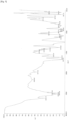
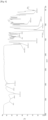
- Example 3 NMR analysis of the products of ATBS A H and ATBS.Na A Na 2a from examples 1 and 2a
- the samples are dissolved in D 2 O.
- the NMR machine is a Bruker model with a frequency of 400 MHz and is fitted with a 5 mm BBO BB- 1 H.
- Example 4 Analysis by X-ray diffraction of products of ATBS A H and ATBS.Na A Na 2a from examples 1 and 2a
- ATBS A H and crystals of ATBS.Na A Na 2a are ground beforehand to form powders to be analysed by X-ray diffraction over an angular range of 10 to 90°.
- the equipment used is a Rigaku MiniFlex II diffractometer equipped with a copper source.
- Crystals of ATBS.Na A Na 2a ( Figure 4 ) present an X-ray diffraction pattern with the following characteristic peaks: 11.7°; 12.2°; 13.2°; 13.5°; 15.6°; 16.8°; 17.8°; 18.5°; 19.1°; 20.6°; 21.4°; 23.3°; 25.1°; 25.8°; 26.9°; 29.1°; 29.5°; 31.0°; 33.0°; 33.6°; 34.4°; 35.2°; 35.9°; 37.1°; 38.4°; 39.6°; 41.1°; 42.9°; 45.1°; 46.0°; 47.2°; 47.6° 2-theta angles (+/- 0.1°).
- the X-ray diffraction pattern of the ATBS A H does not have the same peaks.
- Example 5 Fourier-transform infrared measurement of ATBS A H and ATBS.Na A Na 2a
- the equipment used for the Fourier transform infrared measurement is the Perkin Elmer Spectrum 100 fitted with a single reflection ATR polarization accessory, with an accuracy of 8 cm -1 .
- ATBS A H and crystals of ATBS.Na A Na 2a are sieved to 100 ⁇ m. The particles remaining on the sieve are dried and placed in an oven at 60°C for at least 4 h.
- a few hundred milligram of solid are placed on the diamond of the ATR accessory and pressure is applied manually using the accessory.
- the following bands are characteristic of the crystalline form of the ATBS.Na A Na 2a : 3576cm -1 , 3485 cm -1 , 3310 cm -1 , 3079 cm -1 , 2975 cm -1 , 1658 cm -1 , 1629 cm -1 , 1543 cm -1 , 1403 cm -1 , 1321 cm -1 , 1301 cm -1 , 1205 cm -1 , 1187 cm -1 , 1163 cm -1 , 1046 cm -1 , 980 cm -1 , 629 cm -1 .
- Example 6 Differential Scanning Calorimetry (DSC) of ATBS A H and ATBS.Na A Na 2a products from Examples 1 and 2a
- the equipment used is a Mettler DSC 3.
- ATBS A H and crystals of ATBS.Na A Na 2a are analysed with a heating ramp of 10°C/min under a flow of nitrogen. The initial temperature is 30°C, and the product is heated to 350°C.
- thermogram of ATBS A H shows a thermal effect at a temperature of 195.15°C, which is generally considered to be the melting/degradation point of ATBS, followed by two exothermic degradation phenomena at 212.8°C and 288.4°C.
- thermogram of the crystals of ATBS.Na A Na 2a shows 4 thermal phenomena at 49.8°C; 144.8°C; 169.8°C; and 254.3°C.
- Example 7 Measurement of the minimum ignition energy (MIE) of ATBS A H and ATBS.Na A Na 2a products from Examples 1 and 2a
- the minimum ignition energy is measured in accordance with standard NF EN 13821.
- the explosimeter is a vertical Hartmann tube.
- the dust dispersion system is of the mushroom type.
- Discharge voltage is between 5 kV and 15 kV.
- the electrodes are made of brass and spaced apart by a minimum distance of 6 mm.
- Example 8 Particle-size measurement of ATBS A H and ATBS.Na A Na 2a products from Examples 1 and 2a
- the ATBS A H and crystals of ATBS.Na A Na 2a are analysed by laser diffraction to determine their particle-size distribution.
- the laser diffraction equipment used is a Cilas 1190.
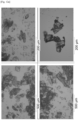
- the crystals of ATBS A H have a d 50 value of approximately 40 ⁇ m and 90% of the particles are smaller than 100 ⁇ m ( Figure 9 ).
- the crystals of ATBS.Na A Na 2a have a d 50 value of approximately 600 ⁇ m and 90% of the particles are smaller than approximately 1500 ⁇ m ( Figure 10 ).
- the crystals of ATBS.Na A Na 2a contain less than 10% of particles smaller than 325 ⁇ m.
- Example 9 Evaluation of the corrosivity of different forms of ATBS on carbon steel
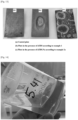
- each ATBS A H and A Na 2a and ATBS CE-A Na 2c to 2e are deposited on two carbon steel plates measuring 20 x 50 mm.
- the coated plates are placed in an oven at 50°C for 15 days.
- a control plate is left uncoated but placed under the same temperature conditions.
- Photographs of the plates in this situation show visually more pronounced corrosion on the plate that had been in contact with ATBS A H compared to the crystals of A Na 2a. Weighing the plates before and after the contact period confirms these observations.
- Example 10 a Preparation of a solution of ATBS.Na A Na 2a
- the mixture has a pH greater than 12.
- the mixture obtained is a solution of ATBS.Na at a concentration of 50% by weight in water.
- Example 10 b Preparation of a solution of ATBS.Na CE-A Na 2c
- Example 10 c Preparation of a solution of ATBS.Na CE-A Na 2d
- Example 10 d Preparation of a solution of ATBS.Na CE-A Na 2e
- a 50% by weight sodium hydroxide in water solution is prepared in a dropping funnel.
- the caustic solution is added to the reaction mixture over 120 min.
- the temperature is controlled to less than 30°C.
- the final pH of the solution is between 8 and 10.
- the mixture obtained is a solution of ATBS.Na at a concentration of 50% by weight in water.
- Example 12 Influence of the form and structure of the ATBS on storage
- Stability of the solid products was also assessed by monitoring the amount of homopolymers of ATBS.Na present after that time.
- Example 13 Preparation of a polymer P1-A Na 2a of AM/ATBS (75/25 mol%)
- the resulting solution is cooled to between 0 and 5°C and transferred to an adiabatic polymerization reactor, where it is bubbled with nitrogen for 30 min to remove all traces of dissolved oxygen.
- the nitrogen inlet is shut off and the reactor is closed.
- the polymerization reaction takes place for 1 to 5 h until a temperature peak is reached.
- the rubbery gel obtained is chopped into particles of between 1 and 6 mm in size.
- the gel is then dried and ground to obtain polymer P1-A Na 2a in powder form.
- Example 14 Preparation of comparative polymers P1 of AM/ATBS (75/25 mol%)
- 93.90 g of 50% (by weight in water) sodium hydroxide solution are prepared in a dropping funnel. As soon as a complete dissolution of the crystals is obtained, the caustic solution is added to the reaction mixture over 120 min. The temperature is controlled to be below 30°C. The final pH of the solution is between 8 and 10.
- the resulting solution is cooled to between 0 and 5°C and transferred to an adiabatic polymerization reactor, where it is bubbled with nitrogen for 30 min to remove all traces of dissolved oxygen.
- the nitrogen inlet is shut off and the reactor is closed.
- the polymerization reaction takes place for 1 to 5 h until a temperature peak is reached.
- the rubbery gel obtained is chopped into particles of between 1 and 6 mm in size.
- the gel is then dried and ground to obtain the polymer P1-A H in powder form.
- Example 15 Preparation of a homopolymer P2-A Na 2a of ATBS.Na A Na 2a
- the resulting solution is cooled to between 5 and 10°C and transferred to an adiabatic polymerization reactor, where it is bubbled with nitrogen for 30 min to remove all traces of dissolved oxygen.
- the nitrogen inlet is shut off and the reactor is closed.
- the polymerization reaction takes place for 2 to 5 h until a temperature peak is reached.
- the rubbery gel obtained is chopped and dried to obtain a coarse powder which is itself ground and sieved to obtain the polymer P2-A Na 2a in powder form.
- the resulting solution is cooled to between 5 and 10°C and transferred to an adiabatic polymerization reactor, where it is bubbled with nitrogen for 30 min to remove all traces of dissolved oxygen.
- the nitrogen inlet is shut off and the reactor is closed.
- the polymerization reaction takes place for 2 to 5 h until a temperature peak is reached.
- the rubbery gel obtained is chopped and dried to obtain a coarse powder which is itself ground and sieved to obtain the polymer P2-A H in powder form.
- Example 16a Preparation of polymers P3 of AM/AA/ATBS (75/10/15 mol%)
- Polymers P3-A H is prepared using ATBS A H .
- Polymers P3-CEA Na 2c is prepared using ATBS.Na CE-A Na 2c .
- Polymers P3-CEA Na 2d is prepared using ATBS.Na CE-A Na 2d .
- Polymers P3-CEA Na 2e is prepared using ATBS.Na CE-A Na 2e .
- Example 16b Preparation of polymers P4 of AM/DMEA.MeCl/ATBS (60/5/35 mol%)
- Polymers P4-A Na 2a , P'4-A H , P4-CEA Na 2c , P4-CEA Na 2d and P4-CEA Na 2e are prepared according to the preparation process described in Example 16a.
- Example 16c Preparation of polymers P5 of AM/DADMAC/ATBS (75/5/20 mol%)
- Polymers P5-A Na 2a , P5-A H , P5-CEA Na 2c , P5-CEA Na 2d and P5-CEA Na 2e are prepared according to the preparation process described in Example 16a.
- Example 17 Viscosity measurement of polymers P1 to P5
- the reduced viscosity of the polymers prepared in examples 13 to 16 is measured at 25°C in a 0.5 M aqueous sodium chloride solution using a Brookfield LVT viscometer fitted with a UL adapter at 60 rpm.
- 500 mg of dried polymers are dissolved in a beaker containing 290 ml of deionized water at a stirring speed of 500 rpm.
- the prepared solutions are filtered through a 200 ⁇ m mesh.
- Polymers comprising the novel crystalline form of the ATBS.Na have a higher viscosity than polymers prepared from the conventional form of ATBS.Na, or those obtained from other crystalline forms.
Landscapes
- Chemical & Material Sciences (AREA)
- Organic Chemistry (AREA)
- Health & Medical Sciences (AREA)
- Chemical Kinetics & Catalysis (AREA)
- Medicinal Chemistry (AREA)
- Polymers & Plastics (AREA)
- Organic Low-Molecular-Weight Compounds And Preparation Thereof (AREA)
- Addition Polymer Or Copolymer, Post-Treatments, Or Chemical Modifications (AREA)
Claims (10)
- Kristallines ATBS.Na, Natriumsalz der 2-Acrylamido-2-methylpropansulfonsäure, das ein Röntgenpulverdiffraktogramm mit Spitzen bei 11,7°; 12,2°; 13,2°; 13,5°; 15,6°; 16,8°; 17,8°; 18,5°; 19,1°; 20,6°; 21,4°; 23,3°; 25,1°; 25,8°; 26,9°; 29,1°; 29,5°; 31,0°; 33,0°; 33,6°; 34,4°; 35,2°; 35,9°; 37,1°; 38,4°; 39,6°; 41,1°; 42,9°; 45,1°; 46,0°; 47,2°; 47,6° 2-Theta-Winkel (+/-0,1°) aufweist.
- ATBS.Na in kristalliner Form nach Anspruch 1, dadurch gekennzeichnet, dass es ein Infrarotspektrum der Fourier-Transformation mit Spitzen bei 3576 cm-1, 3485 cm-1, 3310 cm-1, 3079 cm-1, 2975 cm-1, 1658 cm-1, 1629 cm-1, 1543 cm-1, 1403 cm-1, 1321 cm-1, 1301 cm-1, 1205 cm-1, 1187 cm-1, 1163 cm-1, 1046 cm-1, 980 cm-1, 629 cm-1 (+/-8 cm-1) aufweist.
- ATBS.Na in kristalliner Form nach Anspruch 1 oder 2, dadurch gekennzeichnet, dass es eine Mindestzündenergie von mehr als 500 mJ aufweist.
- Natriumsalz ATBS.Na in kristalliner Form nach einem der Ansprüche 1 bis 3, dadurch gekennzeichnet, dass es 4 thermische Phänomene mit dem Verfahren der dynamischen Differenzkalometrie bei 49,8 °C; 144,8 °C; 169,8 °C und 254,3 °C (+/-10 °C) aufweist.
- Verfahren zur Herstellung der kristallinen 2-Acylamido-2-methylpropansulfonsäure des Natriumsalzes ATBS.Na nach einem der Ansprüche 1 bis 4, das mindestens folgende aufeinanderfolgende Schritte umfasst:1) Mischen von 2-Acrylamido-2-methylpropansulfonsäure mit einer wässrigen Lösung SA1 und mindestens einer Natriumsalzbase, um eine wässrige Lösung oder eine wässrige Suspension SA2 zu bilden;2) Destillation der wässrigen Lösung oder der wässrigen Suspension SA2 bei einem Druck von 700 mbar oder weniger, um eine Suspension S1 zu bilden, und Abkühlung der wässrigen Lösung oder der wässrigen Suspension SA2 oder einer Suspension S1, wobei die Temperatur des Abkühlungsschritts mit einer Rampe zwischen 0,1 und 8 °C/Stunde verringert wird;3) Fest-Flüssig-Trennung der Suspension S1 und Isolierung der Kristalle der am Ende von Schritt 2) erhaltenen Suspension S1 in Form einer Zusammensetzung C1.
- Verfahren nach Anspruch 5, dadurch gekennzeichnet, dass die Menge an ATBS.Na in der wässrigen Lösung oder der wässrigen Suspension SA2 zwischen 10 und 90 Gew.-% bezogen auf das Gesamtgewicht der wässrigen Lösung oder der wässrigen Suspension SA2 beträgt.
- Verfahren nach Anspruch 5 oder 6, dadurch gekennzeichnet, dass die wässrige Lösung oder die wässrige Suspension SA2 in Schritt 2) erhitzt wird, zweckmäßigerweise auf eine Temperatur zwischen 5 °C und 95 °C.
- Verfahren nach einem der Ansprüche 5 bis 7, dadurch gekennzeichnet, dass der Schritt der Abkühlung von Schritt 2) bei einer Temperatur zwischen 5 °C und 95 °C durchgeführt wird.
- Verfahren nach einem der Ansprüche 5 bis 8, dadurch gekennzeichnet, dass die Suspension S1 zwischen 30 und 90 Gew.-% der kristallinen Form von ATBS.Na, bezogen auf das Gesamtgewicht der Suspension S1, enthält.
- Verfahren nach einem der Ansprüche 5 bis 9, dadurch gekennzeichnet, dass die Natriumsalzbase aus Natriumhydroxid, Natriumcarbonat, Natriumbicarbonat oder deren Mischungen ausgewählt ist.
Priority Applications (1)
| Application Number | Priority Date | Filing Date | Title |
|---|---|---|---|
| EP25172390.4A EP4567024A3 (de) | 2023-03-13 | 2024-03-13 | Kristalline form des natriumsalzes von 2-acrylamido-2-methylpropansulfonsäure |
Applications Claiming Priority (2)
| Application Number | Priority Date | Filing Date | Title |
|---|---|---|---|
| FR2302303A FR3146680B1 (fr) | 2023-03-13 | 2023-03-13 | Forme cristalline du sel de sodium de l’acide 2-acrylamido-2-methylpropane sulfonique |
| PCT/EP2024/056691 WO2024189091A1 (en) | 2023-03-13 | 2024-03-13 | Crystalline form of 2-acrylamido-2-methylpropanesulphonic acid sodium salt |
Related Child Applications (2)
| Application Number | Title | Priority Date | Filing Date |
|---|---|---|---|
| EP25172390.4A Division EP4567024A3 (de) | 2023-03-13 | 2024-03-13 | Kristalline form des natriumsalzes von 2-acrylamido-2-methylpropansulfonsäure |
| EP25172390.4A Division-Into EP4567024A3 (de) | 2023-03-13 | 2024-03-13 | Kristalline form des natriumsalzes von 2-acrylamido-2-methylpropansulfonsäure |
Publications (2)
| Publication Number | Publication Date |
|---|---|
| EP4460488A1 EP4460488A1 (de) | 2024-11-13 |
| EP4460488B1 true EP4460488B1 (de) | 2025-06-04 |
Family
ID=86851883
Family Applications (2)
| Application Number | Title | Priority Date | Filing Date |
|---|---|---|---|
| EP24710125.6A Active EP4460488B1 (de) | 2023-03-13 | 2024-03-13 | Kristalline form des natriumsalzes von 2-acrylamido-2-methylpropansulfonsäure |
| EP25172390.4A Pending EP4567024A3 (de) | 2023-03-13 | 2024-03-13 | Kristalline form des natriumsalzes von 2-acrylamido-2-methylpropansulfonsäure |
Family Applications After (1)
| Application Number | Title | Priority Date | Filing Date |
|---|---|---|---|
| EP25172390.4A Pending EP4567024A3 (de) | 2023-03-13 | 2024-03-13 | Kristalline form des natriumsalzes von 2-acrylamido-2-methylpropansulfonsäure |
Country Status (7)
| Country | Link |
|---|---|
| EP (2) | EP4460488B1 (de) |
| JP (1) | JP2026510046A (de) |
| CN (1) | CN120882694A (de) |
| ES (1) | ES3031973T3 (de) |
| FI (1) | FI4460488T3 (de) |
| FR (1) | FR3146680B1 (de) |
| WO (1) | WO2024189091A1 (de) |
Family Cites Families (10)
| Publication number | Priority date | Publication date | Assignee | Title |
|---|---|---|---|---|
| ES2077421T3 (es) * | 1991-06-03 | 1995-11-16 | Lubrizol Corp | Proceso para la preparacion de un derivado monomerico de acido acrilamidosulfonico purificado. |
| US6448347B1 (en) | 1998-12-11 | 2002-09-10 | The Lubrizol Corporation | Continuous production of 2-acrylamido-2-methylpropane-sulfonic acid in a small reactor integrated with acrylic polymer fiber production |
| JP3885555B2 (ja) | 2001-10-31 | 2007-02-21 | 東亞合成株式会社 | 2−アクリルアミド−2−メチルプロパンスルホン酸の製造方法 |
| JP2008307822A (ja) | 2007-06-15 | 2008-12-25 | Toppan Forms Co Ltd | 配送用ラベル |
| US8247601B2 (en) | 2007-12-06 | 2012-08-21 | Toagosei Co., Ltd. | 2-acrylamide-2-methylpropanesulfonic acid and process for producing the same |
| CN102351744A (zh) | 2011-08-25 | 2012-02-15 | 潍坊泉鑫化工有限公司 | 2-丙烯酰胺基-2-甲基丙磺酸连续法合成工艺 |
| CA2857230A1 (en) * | 2011-11-29 | 2013-06-06 | Basf Se | Process for preparing and purifying salts of acrylamido-2-methylpropanesulfonic acid |
| CN103086929B (zh) * | 2013-02-04 | 2014-11-05 | 梅龙毅 | 一种制备固体丙烯酰胺基烷基磺酸盐的方法 |
| FR3064004B1 (fr) | 2017-03-20 | 2019-03-29 | S.P.C.M. Sa | Forme cristalline hydratee de l'acide 2-acrylamido-2-methylpropane sulfonique |
| FR3104578B1 (fr) | 2019-12-16 | 2022-07-15 | S N F Sa | Nouveaux monomeres sulfobetaine, procede de preparation et leurs utilisations |
-
2023
- 2023-03-13 FR FR2302303A patent/FR3146680B1/fr active Active
-
2024
- 2024-03-13 WO PCT/EP2024/056691 patent/WO2024189091A1/en not_active Ceased
- 2024-03-13 FI FIEP24710125.6T patent/FI4460488T3/fi active
- 2024-03-13 ES ES24710125T patent/ES3031973T3/es active Active
- 2024-03-13 CN CN202480019136.9A patent/CN120882694A/zh active Pending
- 2024-03-13 EP EP24710125.6A patent/EP4460488B1/de active Active
- 2024-03-13 JP JP2025553880A patent/JP2026510046A/ja active Pending
- 2024-03-13 EP EP25172390.4A patent/EP4567024A3/de active Pending
Also Published As
| Publication number | Publication date |
|---|---|
| WO2024189091A1 (en) | 2024-09-19 |
| CN120882694A (zh) | 2025-10-31 |
| EP4567024A2 (de) | 2025-06-11 |
| EP4460488A1 (de) | 2024-11-13 |
| FI4460488T3 (fi) | 2025-07-23 |
| FR3146680A1 (fr) | 2024-09-20 |
| ES3031973T3 (en) | 2025-07-14 |
| JP2026510046A (ja) | 2026-03-27 |
| FR3146680B1 (fr) | 2026-02-20 |
| EP4567024A3 (de) | 2025-08-27 |
Similar Documents
| Publication | Publication Date | Title |
|---|---|---|
| US11535588B2 (en) | Hydrated crystalline form of 2-acrylamido-2-methylpropane sulfonic acid | |
| EP4460488B1 (de) | Kristalline form des natriumsalzes von 2-acrylamido-2-methylpropansulfonsäure | |
| EP4453127B1 (de) | Verfahren zur verbesserten gewinnung von kohlenwasserstoffen unter verwendung eines polymers einer kristallinen form von 2-acrylamido-2-methylpropansulfonsäure-natriumsalz | |
| EP4496786B1 (de) | Kristalline form des kaliumsalzes der 2-acrylamido-2-methylpropansulfonsäure | |
| EP4457253B1 (de) | Frakturierungsflüssigkeit mit einem polymer in kristalliner form von 2-acrylamido-2-methylpropansulfonsäurenatriumsalz und verfahren zur hydraulischen frakturierung | |
| WO2024189103A1 (en) | Method for treating a suspension of solid particles in water using a polymer in a crystalline form of 2-acrylamido-2-methylpropanesulphonic acid sodium salt |
Legal Events
| Date | Code | Title | Description |
|---|---|---|---|
| STAA | Information on the status of an ep patent application or granted ep patent |
Free format text: STATUS: UNKNOWN |
|
| STAA | Information on the status of an ep patent application or granted ep patent |
Free format text: STATUS: THE INTERNATIONAL PUBLICATION HAS BEEN MADE |
|
| PUAI | Public reference made under article 153(3) epc to a published international application that has entered the european phase |
Free format text: ORIGINAL CODE: 0009012 |
|
| STAA | Information on the status of an ep patent application or granted ep patent |
Free format text: STATUS: REQUEST FOR EXAMINATION WAS MADE |
|
| 17P | Request for examination filed |
Effective date: 20240807 |
|
| AK | Designated contracting states |
Kind code of ref document: A1 Designated state(s): AL AT BE BG CH CY CZ DE DK EE ES FI FR GB GR HR HU IE IS IT LI LT LU LV MC ME MK MT NL NO PL PT RO RS SE SI SK SM TR |
|
| STAA | Information on the status of an ep patent application or granted ep patent |
Free format text: STATUS: EXAMINATION IS IN PROGRESS |
|
| 17Q | First examination report despatched |
Effective date: 20241118 |
|
| GRAP | Despatch of communication of intention to grant a patent |
Free format text: ORIGINAL CODE: EPIDOSNIGR1 |
|
| STAA | Information on the status of an ep patent application or granted ep patent |
Free format text: STATUS: GRANT OF PATENT IS INTENDED |
|
| INTG | Intention to grant announced |
Effective date: 20250218 |
|
| GRAS | Grant fee paid |
Free format text: ORIGINAL CODE: EPIDOSNIGR3 |
|
| GRAA | (expected) grant |
Free format text: ORIGINAL CODE: 0009210 |
|
| STAA | Information on the status of an ep patent application or granted ep patent |
Free format text: STATUS: THE PATENT HAS BEEN GRANTED |
|
| AK | Designated contracting states |
Kind code of ref document: B1 Designated state(s): AL AT BE BG CH CY CZ DE DK EE ES FI FR GB GR HR HU IE IS IT LI LT LU LV MC ME MK MT NL NO PL PT RO RS SE SI SK SM TR |
|
| DAV | Request for validation of the european patent (deleted) | ||
| DAX | Request for extension of the european patent (deleted) | ||
| REG | Reference to a national code |
Ref country code: GB Ref legal event code: FG4D |
|
| REG | Reference to a national code |
Ref country code: CH Ref legal event code: EP |
|
| REG | Reference to a national code |
Ref country code: DE Ref legal event code: R096 Ref document number: 602024000178 Country of ref document: DE |
|
| REG | Reference to a national code |
Ref country code: NL Ref legal event code: FP Ref country code: IE Ref legal event code: FG4D |
|
| REG | Reference to a national code |
Ref country code: ES Ref legal event code: FG2A Ref document number: 3031973 Country of ref document: ES Kind code of ref document: T3 Effective date: 20250714 |
|
| REG | Reference to a national code |
Ref country code: FI Ref legal event code: FGE |
|
| REG | Reference to a national code |
Ref country code: DE Ref legal event code: R082 Ref document number: 602024000178 Country of ref document: DE Representative=s name: VUILLERMOZ, BRUNO, FR |
|
| REG | Reference to a national code |
Ref country code: LT Ref legal event code: MG9D |
|
| PG25 | Lapsed in a contracting state [announced via postgrant information from national office to epo] |
Ref country code: GR Free format text: LAPSE BECAUSE OF FAILURE TO SUBMIT A TRANSLATION OF THE DESCRIPTION OR TO PAY THE FEE WITHIN THE PRESCRIBED TIME-LIMIT Effective date: 20250905 Ref country code: NO Free format text: LAPSE BECAUSE OF FAILURE TO SUBMIT A TRANSLATION OF THE DESCRIPTION OR TO PAY THE FEE WITHIN THE PRESCRIBED TIME-LIMIT Effective date: 20250904 |
|
| PG25 | Lapsed in a contracting state [announced via postgrant information from national office to epo] |
Ref country code: PL Free format text: LAPSE BECAUSE OF FAILURE TO SUBMIT A TRANSLATION OF THE DESCRIPTION OR TO PAY THE FEE WITHIN THE PRESCRIBED TIME-LIMIT Effective date: 20250604 |
|
| PG25 | Lapsed in a contracting state [announced via postgrant information from national office to epo] |
Ref country code: BG Free format text: LAPSE BECAUSE OF FAILURE TO SUBMIT A TRANSLATION OF THE DESCRIPTION OR TO PAY THE FEE WITHIN THE PRESCRIBED TIME-LIMIT Effective date: 20250604 |
|
| PG25 | Lapsed in a contracting state [announced via postgrant information from national office to epo] |
Ref country code: HR Free format text: LAPSE BECAUSE OF FAILURE TO SUBMIT A TRANSLATION OF THE DESCRIPTION OR TO PAY THE FEE WITHIN THE PRESCRIBED TIME-LIMIT Effective date: 20250604 |
|
| PG25 | Lapsed in a contracting state [announced via postgrant information from national office to epo] |
Ref country code: RS Free format text: LAPSE BECAUSE OF FAILURE TO SUBMIT A TRANSLATION OF THE DESCRIPTION OR TO PAY THE FEE WITHIN THE PRESCRIBED TIME-LIMIT Effective date: 20250904 |
|
| PG25 | Lapsed in a contracting state [announced via postgrant information from national office to epo] |
Ref country code: LV Free format text: LAPSE BECAUSE OF FAILURE TO SUBMIT A TRANSLATION OF THE DESCRIPTION OR TO PAY THE FEE WITHIN THE PRESCRIBED TIME-LIMIT Effective date: 20250604 |
|
| PG25 | Lapsed in a contracting state [announced via postgrant information from national office to epo] |
Ref country code: PT Free format text: LAPSE BECAUSE OF FAILURE TO SUBMIT A TRANSLATION OF THE DESCRIPTION OR TO PAY THE FEE WITHIN THE PRESCRIBED TIME-LIMIT Effective date: 20251006 |
|
| REG | Reference to a national code |
Ref country code: AT Ref legal event code: MK05 Ref document number: 1800262 Country of ref document: AT Kind code of ref document: T Effective date: 20250604 |
|
| PG25 | Lapsed in a contracting state [announced via postgrant information from national office to epo] |
Ref country code: IS Free format text: LAPSE BECAUSE OF FAILURE TO SUBMIT A TRANSLATION OF THE DESCRIPTION OR TO PAY THE FEE WITHIN THE PRESCRIBED TIME-LIMIT Effective date: 20251004 |
|
| PG25 | Lapsed in a contracting state [announced via postgrant information from national office to epo] |
Ref country code: AT Free format text: LAPSE BECAUSE OF FAILURE TO SUBMIT A TRANSLATION OF THE DESCRIPTION OR TO PAY THE FEE WITHIN THE PRESCRIBED TIME-LIMIT Effective date: 20250604 Ref country code: SM Free format text: LAPSE BECAUSE OF FAILURE TO SUBMIT A TRANSLATION OF THE DESCRIPTION OR TO PAY THE FEE WITHIN THE PRESCRIBED TIME-LIMIT Effective date: 20250604 |
|
| PG25 | Lapsed in a contracting state [announced via postgrant information from national office to epo] |
Ref country code: CZ Free format text: LAPSE BECAUSE OF FAILURE TO SUBMIT A TRANSLATION OF THE DESCRIPTION OR TO PAY THE FEE WITHIN THE PRESCRIBED TIME-LIMIT Effective date: 20250604 |
|
| PG25 | Lapsed in a contracting state [announced via postgrant information from national office to epo] |
Ref country code: EE Free format text: LAPSE BECAUSE OF FAILURE TO SUBMIT A TRANSLATION OF THE DESCRIPTION OR TO PAY THE FEE WITHIN THE PRESCRIBED TIME-LIMIT Effective date: 20250604 |
|
| PG25 | Lapsed in a contracting state [announced via postgrant information from national office to epo] |
Ref country code: SK Free format text: LAPSE BECAUSE OF FAILURE TO SUBMIT A TRANSLATION OF THE DESCRIPTION OR TO PAY THE FEE WITHIN THE PRESCRIBED TIME-LIMIT Effective date: 20250604 |
|
| REG | Reference to a national code |
Ref country code: DE Ref legal event code: R097 Ref document number: 602024000178 Country of ref document: DE |
|
| REG | Reference to a national code |
Ref country code: DE Ref legal event code: R082 Ref document number: 602024000178 Country of ref document: DE Representative=s name: VUILLERMOZ, BRUNO, FR |
|
| PLBE | No opposition filed within time limit |
Free format text: ORIGINAL CODE: 0009261 |
|
| STAA | Information on the status of an ep patent application or granted ep patent |
Free format text: STATUS: NO OPPOSITION FILED WITHIN TIME LIMIT |
|
| PG25 | Lapsed in a contracting state [announced via postgrant information from national office to epo] |
Ref country code: DK Free format text: LAPSE BECAUSE OF FAILURE TO SUBMIT A TRANSLATION OF THE DESCRIPTION OR TO PAY THE FEE WITHIN THE PRESCRIBED TIME-LIMIT Effective date: 20250604 |
|
| PGFP | Annual fee paid to national office [announced via postgrant information from national office to epo] |
Ref country code: IE Payment date: 20260224 Year of fee payment: 3 Ref country code: DE Payment date: 20260313 Year of fee payment: 3 |
|
| PGFP | Annual fee paid to national office [announced via postgrant information from national office to epo] |
Ref country code: BE Payment date: 20260324 Year of fee payment: 3 Ref country code: FI Payment date: 20260224 Year of fee payment: 3 |
|
| REG | Reference to a national code |
Ref country code: CH Ref legal event code: L10 Free format text: ST27 STATUS EVENT CODE: U-0-0-L10-L00 (AS PROVIDED BY THE NATIONAL OFFICE) Effective date: 20260416 |
|
| PGFP | Annual fee paid to national office [announced via postgrant information from national office to epo] |
Ref country code: FR Payment date: 20260324 Year of fee payment: 3 |
|
| PGFP | Annual fee paid to national office [announced via postgrant information from national office to epo] |
Ref country code: TR Payment date: 20260304 Year of fee payment: 3 |