EP4459557A1 - Procédés et appareils d'affichage d'animation, dispositif électronique, support et produit-programme - Google Patents
Procédés et appareils d'affichage d'animation, dispositif électronique, support et produit-programme Download PDFInfo
- Publication number
- EP4459557A1 EP4459557A1 EP23742844.6A EP23742844A EP4459557A1 EP 4459557 A1 EP4459557 A1 EP 4459557A1 EP 23742844 A EP23742844 A EP 23742844A EP 4459557 A1 EP4459557 A1 EP 4459557A1
- Authority
- EP
- European Patent Office
- Prior art keywords
- animation
- sending
- receiving
- target
- track
- Prior art date
- Legal status (The legal status is an assumption and is not a legal conclusion. Google has not performed a legal analysis and makes no representation as to the accuracy of the status listed.)
- Pending
Links
Images
Classifications
-
- G—PHYSICS
- G06—COMPUTING OR CALCULATING; COUNTING
- G06T—IMAGE DATA PROCESSING OR GENERATION, IN GENERAL
- G06T13/00—Animation
-
- G—PHYSICS
- G06—COMPUTING OR CALCULATING; COUNTING
- G06F—ELECTRIC DIGITAL DATA PROCESSING
- G06F9/00—Arrangements for program control, e.g. control units
- G06F9/06—Arrangements for program control, e.g. control units using stored programs, i.e. using an internal store of processing equipment to receive or retain programs
- G06F9/44—Arrangements for executing specific programs
- G06F9/451—Execution arrangements for user interfaces
-
- G—PHYSICS
- G06—COMPUTING OR CALCULATING; COUNTING
- G06T—IMAGE DATA PROCESSING OR GENERATION, IN GENERAL
- G06T13/00—Animation
- G06T13/20—3D [Three Dimensional] animation
- G06T13/40—3D [Three Dimensional] animation of characters, e.g. humans, animals or virtual beings
-
- G—PHYSICS
- G06—COMPUTING OR CALCULATING; COUNTING
- G06F—ELECTRIC DIGITAL DATA PROCESSING
- G06F3/00—Input arrangements for transferring data to be processed into a form capable of being handled by the computer; Output arrangements for transferring data from processing unit to output unit, e.g. interface arrangements
- G06F3/01—Input arrangements or combined input and output arrangements for interaction between user and computer
- G06F3/048—Interaction techniques based on graphical user interfaces [GUI]
-
- G—PHYSICS
- G06—COMPUTING OR CALCULATING; COUNTING
- G06T—IMAGE DATA PROCESSING OR GENERATION, IN GENERAL
- G06T19/00—Manipulating 3D models or images for computer graphics
- G06T19/20—Editing of 3D images, e.g. changing shapes or colours, aligning objects or positioning parts
-
- H—ELECTRICITY
- H04—ELECTRIC COMMUNICATION TECHNIQUE
- H04L—TRANSMISSION OF DIGITAL INFORMATION, e.g. TELEGRAPHIC COMMUNICATION
- H04L51/00—User-to-user messaging in packet-switching networks, transmitted according to store-and-forward or real-time protocols, e.g. e-mail
- H04L51/04—Real-time or near real-time messaging, e.g. instant messaging [IM]
- H04L51/046—Interoperability with other network applications or services
-
- H—ELECTRICITY
- H04—ELECTRIC COMMUNICATION TECHNIQUE
- H04L—TRANSMISSION OF DIGITAL INFORMATION, e.g. TELEGRAPHIC COMMUNICATION
- H04L51/00—User-to-user messaging in packet-switching networks, transmitted according to store-and-forward or real-time protocols, e.g. e-mail
- H04L51/07—User-to-user messaging in packet-switching networks, transmitted according to store-and-forward or real-time protocols, e.g. e-mail characterised by the inclusion of specific contents
- H04L51/10—Multimedia information
-
- G—PHYSICS
- G06—COMPUTING OR CALCULATING; COUNTING
- G06T—IMAGE DATA PROCESSING OR GENERATION, IN GENERAL
- G06T2219/00—Indexing scheme for manipulating 3D models or images for computer graphics
- G06T2219/20—Indexing scheme for editing of 3D models
- G06T2219/2004—Aligning objects, relative positioning of parts
-
- G—PHYSICS
- G06—COMPUTING OR CALCULATING; COUNTING
- G06T—IMAGE DATA PROCESSING OR GENERATION, IN GENERAL
- G06T2219/00—Indexing scheme for manipulating 3D models or images for computer graphics
- G06T2219/20—Indexing scheme for editing of 3D models
- G06T2219/2016—Rotation, translation, scaling
Definitions
- the present disclosure relates to a field of computer technology, for example, to methods, apparatuses, an electronic device, a medium and a program product for presenting an animation.
- a user may send an instant messaging message containing interactive pictures.
- the way of presenting the interactive pictures is relatively simple, and cannot meet the diverse needs of users.
- the present disclosure provides methods, apparatuses, an electronic device, a medium, and a program product for presenting an animation to enable presentation of an animation of interactive pictures, enriching the presenting ways of the interactive pictures.
- An embodiment of the present disclosure further provides a computer-readable storage medium having stored thereon a computer program which, when executed by a processor, implements a method for presenting an animation as described in an embodiment of the present disclosure.
- An embodiment of the present disclosure further provides a computer program product which, when executed by a computer, causes the computer to implement a method for presenting an animation as described in an embodiment of the present disclosure.
- the terms “comprises”, “comprising”, and variations thereof are open-ended terms, i.e. “including, but not limited to”.
- the term “based on” is “based, at least in part, on”.
- the term “one embodiment” means “at least one embodiment”; the term “another embodiment” means “at least one further embodiment”; the term “some embodiments” means “at least some embodiments”. Relevant definitions of other terms will be given in the following description.
- references in the disclosure to "first”, “second”, and the like are merely used to distinguish one from another device, module or unit, and are not intended to limit the order or interdependence of the functions performed by the devices, modules or units.
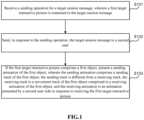
- Fig. 1 is a flow diagram of a method for presenting an animation provided by an embodiment of the present disclosure.
- the method may be performed by an apparatus for presenting an animation, wherein the apparatus may be implemented by software and/or hardware, configurable in an electronic device, and configurable in a mobile phone or a tablet computer.
- the method for presenting an animation provided by the embodiment of the present disclosure is applicable to a scenario in which a sending animation of an interactive picture is presented when the interactive picture is sent.
- the method for presenting an animation provided by the present embodiment may include the following steps.
- the sending operation may be an operation of sending a session message containing the first target interactive picture, such as an operation of triggering a sending control after editing the target session message is completed, or an operation of triggering the sending of the first target interactive picture.
- the target session message may be a session message to which the sending operation is directed, which may contain the first target interactive picture, and may or may not contain a text.
- the first target interactive picture may be an interactive picture containing an object preset with different sending and receiving animations, a preset interactive picture preset with at least two candidate interactive animations, or an interactive picture containing a preset object contained in the preset interactive picture.
- the first user can trigger a sending control after editing the session message it wants to send; alternatively, when the first user wants to send an interactive picture, the interactive picture being displayed in an interactive panel may be triggered. Accordingly, upon detecting that the sending control or one interactive picture is triggered by the first user, the electronic device can decide whether the session message contains the first target interactive picture, or decide whether the interactive picture triggered by the first user is the first target interactive picture, and in a case that the first target interactive picture is contained in the session message or the interactive picture triggered by the first user is the first target interactive picture, take the session message/the interactive picture as a target session message, and determine that a sending operation for the target session message is received.
- the second user may be one or more other users included in a current session except the first user, and may be all other users contained in the current session except the first user. Only the first user and one second user may be included in the current session , or the first user and a plurality of second users may be included in the current session, which is not limiting in the present embodiment.
- the electronic device may send and present the target session message in the current session on which the sending operation functions, i.e., in the current session, send the target session message to the second user(s) in the current session and present the target session message in the current session.
- the sending animation comprises a sending track of the first object, the sending track being different from a receiving track, the receiving track being a movement track of the first object comprised in a receiving animation of the first object, and the receiving animation being an animation presented by a second user side in response to receiving the first target interactive picture.
- the first object may be an object preset with different sending and receiving animations, such as a snowball, a water drop, etc.
- the sending animation may be understood as an animation presented upon sending the interactive picture containing the first object
- the receiving animation may be understood as an animation presented upon receiving the interactive picture containing the first object. That is, the sending animation may be presented at the side of the user sending the interactive picture when the interactive picture containing the first object is sent, and the receiving animation may be presented at the side of the user receiving the interactive picture when the interactive picture containing the first object is received.
- the first object may have different movement tracks, i.e., the sending track of the first object in its sending animation and the receiving track of the first object in its receiving animation may be different. Accordingly, the sending track may be a movement track of the first object in its sending animation, and the receiving track may be a movement track of the first object in its receiving animation.
- the sending animation of the first object can be acquired, and the sending animation of the first object is presented.
- the sending animation of the first object is presented on an upper layer of a plurality of session messages in a current session presented on a current page, and when the presentation of the sending animation is completed, the presentation of the sending animation is stopped.
- different sending and receiving animations may be set for the first object in advance.
- a sending animation of the first object can be presented, and when the interactive picture containing the first object is received, a receiving animation of the first object can be presented, thereby enriching the presentation form of the interactive picture at the time of being sent and received, and improving the experience of a user at the time of sending and receiving the interactive picture.
- the sending track and the receiving track of the first object may be different.
- the first object may have different moving directions and/or moving routes in its sending and receiving animations.
- the moving direction of the first object in its sending animation and the moving direction of the first object in its receiving animation may be at an angle, and/or the moving route of the first object in its sending animation and the moving route of the first object in its receiving animation may not completely overlap.
- the sending track being different from the receiving track comprises a moving direction corresponding to the sending track being opposite to a moving direction corresponding to the receiving track, so as to present a visual effect of the first object moving away from the first user and moving to the second user.
- the first object may move from left to right/from right to left in its sending animation, and from right to left/from left to right in its receiving animation; alternatively, the first object may move from near to far in its sending animation, and from far to near in its receiving animation, etc.
- the following description is illustrated with reference to the example that the first object can move from near to far in its sending animation and from far to near in its receiving animation.
- a sending visual characteristic of sending the first object in a three-dimensional space is presented in the sending animation, the sending visual characteristic being different from a receiving visual characteristic, and the receiving visual characteristic being a visual characteristic of receiving the first object in the three-dimensional space presented in the receiving animation.
- the sending visual characteristic may be a visual characteristic presented by the first object in its sending animation.
- the receiving visual characteristic may be a visual characteristic presented by the first object in its receiving animation.
- the first object in addition to having different movement tracks in the sending and receiving animations of the first object, the first object may have a visual difference of sending and receiving in the three-dimensional space.
- the first object may present, in its sending animation, a sending visual characteristic of sending the first object in the three-dimensional space, and present, in its receiving animation, a receiving visual characteristic of receiving the first object in the three-dimensional space, so as to present, in the sending animation of the first object, a visual effect of sending the first object in the three-dimensional space, and present, in the receiving animation of the first object, a visual effect of receiving the first object in the three-dimensional space.
- the sending visual characteristic and the receiving visual characteristic of the first object can be flexibly set based on a three-dimensional visual effect, and optionally, the sending visual characteristic comprises a gradual decrease in size of the first object; the receiving visual characteristic comprises a gradual increase in size of the first object. That is, in a process of controlling the first object to move along the sending track in its sending animation, the display size of the first object may be gradually reduced; in a process of controlling the first object to move along the receiving track in its receiving animation, the display size of the first object may be gradually increased.
- the sending visual characteristic of the first object may include a visual characteristic of throwing the first object towards a distant place
- the receiving visual characteristic of the first object may include a visual characteristic of throwing the first object towards the second user from far to near.
- the first object may be controlled to move along a parabola from near to far and gradually fall (or rise first and then fall); and during the movement, the display size of the first object is gradually reduced from an original display size of the first object in accordance with a distance of the first object moving in a horizontal direction.
- the first object may be controlled to move along a parabola from far to near and gradually fall (or rise first and then fall); and during the movement, the display size of the first object is gradually increased to its original display size in accordance with the distance of the first object moving in the horizontal direction.
- the first target interactive picture further comprises a second object, the second object having a same movement track in the sending animation and the receiving animation, or a position of the second object remaining unchanged in the sending animation and the receiving animation.
- the second object having the same movement track in the sending and receiving animations or whose position remaining unchanged in the sending and receiving animations, such as an image or a character having the same movement track in the sending and receiving animations or whose position remaining unchanged in the sending and receiving animations, or the like, may be contained in the first target interactive picture.
- the second object may be displayed in the sending/receiving animation, wherein the first object moves along a sending/receiving track in the sending/receiving animation; the second object moves along the same movement track in the sending and receiving animations, or the second object remains its position unchanged in both the sending and receiving animations, e.g., remains the display of the second object or displays the second object with a certain display frequency at a preset display position.
- the method for presenting an animation receives a sending operation for a target session message, wherein the target session message contains a first target interactive picture; in response to the sending operation, sends the target session message to the second user; if a first object is contained in the first target interactive picture, presents a sending animation of the first object, wherein the sending animation comprises a sending track of the first object, the sending track being different from a receiving track of the first object comprised in a receiving animation of the first object, and the receiving animation being an animation presented by a second user side in response to receiving the first target interactive picture.
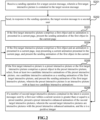
- Fig. 2 is a flow diagram of another method for presenting an animation provided by an embodiment of the present disclosure.
- the solution in this embodiment may be combined with one or more alternatives in the embodiments described above.
- presenting a sending animation of the first object comprises: if no animation is presented in a current page, presenting a sending animation of the first object in the current page; alternatively, if an animation is presented in a current page, stopping presenting the current animation presented in the current page, and presenting the sending animation of the first object in the current page.
- the method for presenting an animation further comprises: if the first target interactive picture is a preset interactive picture or the first target interactive picture comprises a preset object in the preset interactive picture, selecting, from at least two candidate interactive animations of the preset interactive picture, one candidate interactive animation as a sending animation of the first target interactive picture, and presenting the sending animation of the first target interactive picture, wherein the preset interactive picture is an interactive picture with at least two candidate interactive animations.
- the method for presenting an animation further comprises: if second target interactive pictures whose number is greater than or equal to a preset number are contained in the latest n session messages sent by a first user within a current session, presenting a preset interactive enhanced animation of the second target interactive pictures, wherein the second target interactive pictures are interactive pictures with the preset interactive enhanced animation, and the n is a positive integer.
- the method for presenting an animation provided by the present embodiment may comprise the following steps.
- the sending animation comprises a sending track of the first object, the sending track being different from a receiving track, the receiving track being a movement track of the first object comprised in a receiving animation of the first object, and the receiving animation being an animation presented by a second user side in response to receiving the first target interactive picture.
- an animation when an animation is being presented in the current page, for example, when a sending animation or a receiving animation of an object is being presented in the current page, or when a preset interactive enhanced animation of an interactive picture is being presented in the current page, if the first object is included in the first target interactive picture, the presentation of the animation presented in the current page may be terminated, and the sending animation of the first object is presented in the current page.
- the present embodiment may also continue to present the animation presented in the current page, and cancel the presentation of the sending animation of the first object; alternatively, continue to present the animation presented in the current page, and present the sending animation of the first object in the current page after the animation is presented, which is not limiting in the present embodiment.
- the first target interactive picture is a preset interactive picture or the first target interactive picture comprises a preset object in the preset interactive picture, selecting, from at least two candidate interactive animations of the preset interactive picture, one candidate interactive animation as a sending animation of the first target interactive picture, and presenting the sending animation of the first target interactive picture, wherein the preset interactive picture is an interactive picture with at least two candidate interactive animations.
- the preset interactive picture may be an interactive picture with at least two candidate interactive animations, and each of the at least two candidate interactive animations may be used for presenting as a sending/receiving animation of the preset interactive picture.
- the preset interactive picture may comprise a preset object, and the preset object may have different visual characteristics and/or movement tracks in different candidate interactive animations.
- the preset object may be the same or different object as the first object.
- the first target interactive picture is the preset interactive picture or contains the preset object in the preset interactive picture
- at least one candidate interactive animation of the preset interactive picture can be acquired, and one candidate interactive animation can be selected, from the candidate interactive animations, as a sending animation of the first target interactive picture.
- one candidate interactive animation is randomly selected from the candidate interactive animations as a sending animation of the first target interactive picture.
- a candidate interactive animation which is located after the animation presented upon the last sending and/or receiving of the first target interactive picture and is adjacent to the animation, is selected, from the candidate interactive animations, as the sending animation of the first target interactive picture.
- the sending animation of the first target interactive picture is presented in the current page.
- the sending animation of the first target interactive picture can be directly presented in the current page; when an animation is presented in the current page, the presentation of the animation can be terminated and the sending animation of the first target interactive picture is presented in the current page, or the currently presented animation is continued to be presented in the current page and the presentation of the sending animation of the first target interactive picture is cancelled, or the currently presented animation is continued to be presented in the current page and the sending animation of the first target interactive picture is presented in the current page after the presentation of the animation is completed.
- the second target interactive pictures may be interactive pictures with the preset interactive enhanced animation, which may be the same or different interactive pictures as the first target interactive picture.
- the n and the preset number both can be set as required.
- the n can be set to a numerical value of 3 or 5, etc.
- the preset number can be set to a numerical value of 5 or 10, etc.
- whether the session message contains the second target interactive pictures can be determined. If the session message contains the second target interactive pictures, the number of the second target interactive pictures contained in the latest n session messages sent by the first user in the current session is counted. If the number is greater than or equal to a preset number, a preset interactive enhanced animation of the second target interactive pictures is presented in the current page. If the number is less than the preset number, the example returns to perform the operation of determining whether the session message contains the second target interactive pictures after the session message is sent in the current session based on the sending operation of the first user. If the session message does not contain the second target interactive pictures, the example returns to perform the operation of determining whether the session message contains the second target interactive pictures after the session message is sent in the current session based on the sending operation of the first user.
- the presenting way of the preset interactive enhanced animation of the second target interactive pictures can be flexibly set. For example, when no animation is presented in the current page, the preset interactive enhanced animation of the second target interactive pictures is directly presented in the current page; and/or when an animation is presented in the current page, the presentation of the animation presented in the current page is terminated and the preset interactive enhanced animation of the second target interactive pictures is presented in the current page, or the animation is continued to be presented in the current page and when the presentation of the animation is completed, the preset interactive enhanced animation of the second target interactive pictures is presented in the current page.
- the method for presenting an animation provided in the present embodiment when different interactive pictures are sent or received, adopts different ways to present the animation of the different interactive pictures, which can enrich the presentation forms of the interactive pictures and improve the user's experience.
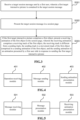
- Fig. 3 is a flow diagram of a method for presenting an animation provided by an embodiment of the present disclosure.
- the method may be performed by an apparatus for presenting an animation, wherein the apparatus may be implemented by software and/or hardware, configurable in an electronic device, and configurable in a mobile phone or a tablet computer.
- the method for presenting an animation provided by the embodiment of the present disclosure is applicable to a scenario in which a receiving animation of an interactive picture is presented when the interactive picture is receiving.
- the method for presenting an animation provided by the present embodiment may include the following steps.
- the electronic device at the second user side may receive the target session message sent by the first user.
- the target session message may be a session message sent by the first user, which may contain a first target interactive picture, and may or may not contain a text.
- the first target interactive picture may be an interactive picture containing an object preset with different sending and receiving animations, a preset interactive picture preset with at least two candidate interactive animations, or an interactive picture containing a preset object contained in the preset interactive picture.
- the first user may be a user that sends the target session message in the current session.
- the current session may include only the first user and one second user, or may include the first user and a plurality of second users, which is not limiting in the present embodiment.
- the target session message when the target session message sent by the first user is received, the target session message may be presented in a session page of the current session.
- the first target interactive picture comprises a first object
- presenting a receiving animation of the first object in the session page wherein the receiving animation comprises a receiving track of the first object, the receiving track is different from a sending track, the sending track is a movement track of the first object comprised in a sending animation of the first object, and the sending animation is an animation presented by a first user side in response to sending the first target interactive picture.
- the first object may be an object preset with different sending and receiving animations, such as a snowball, a water drop, etc.
- the receiving animation may be understood as an animation presented upon receiving the interactive picture containing the first object
- the sending animation may be understood as an animation presented upon sending the interactive picture containing the first object. That is, the receiving animation may be presented at the user side receiving the interactive picture when the interactive picture containing the first object is received, and the sending animation may be presented at the user side sending the interactive picture when the interactive picture containing the first object is sent.
- the first object may have different movement tracks, i.e., the receiving track of the first object in its receiving animation and the sending track of the first object in its sending animation may be different. Accordingly, the receiving track may be a movement track of the first object in its receiving animation, and the sending track may be a movement track of the first object in its sending animation.
- the receiving animation of the first object can be acquired, and the receiving animation of the first object is presented.
- the receiving animation of the first object is presented on an upper layer of a plurality of session messages in a current session presented on a session page, and when the presentation of the receiving animation is completed, the presentation of the receiving animation is stopped.
- the presenting way of the receiving animation of the first object can be flexibly set. For example, when no animation is presented in a session page at which the current session is located, the receiving animation of the first object can be directly presented in the session page; when an animation is presented in the session page, the presentation of the animation can be terminated and the receiving animation of the first object is presented in the session page, or the currently presented animation is continued to be presented in the session page and the presentation of the receiving animation of the first object is cancelled, or the currently presented animation is continued to be presented in the session page and the receiving animation of the first object is presented in the session page after the presentation of the animation is completed, which is not limiting in this embodiment.
- different receiving and sending animations may be preset for the first object.
- a receiving animation of the first object can be presented, and when the interactive picture containing the first object is sent, a sending animation of the first object can be presented, thereby can enrich the presentation form of the interactive picture at the time of being sent and received and improve the experience of a user at the time of sending and receiving the interactive picture.
- the receiving track and the sending track of the first object may be different.
- the first object may have different moving directions and/or moving routes in its receiving animation and sending animation.
- the moving direction of the first object in its receiving animation and the moving direction of the first object in its sending animation may be at an angle, and/or the moving route of the first object in its receiving animation and the moving route of the first object in its sending animation may not completely overlap.
- the receiving track being different from the sending track may comprise: a moving direction corresponding to the receiving track being opposite to a moving direction corresponding to the sending track, so as to present a visual effect of the first object moving away from the first user and moving to the second user.
- the first object may move from left to right/from right to left in its sending animation, and move from right to left/from left to right in its receiving animation; alternatively, the first object may move from near to far in its sending animation, and move from far to near in its receiving animation, etc.
- the following description is illustrated with reference to the example that the first object can move from near to far in its sending animation and from far to near in its receiving animation.
- a receiving visual characteristic of sending the first object in a three-dimensional space is presented in the receiving animation, the receiving visual characteristic is different from a sending visual characteristic, and the sending visual characteristic is a visual characteristic of sending the first object in the three-dimensional space presented in the sending animation.
- the receiving visual characteristic may be a visual characteristic exhibited by the first object in its receiving animation.
- the sending visual characteristic may be a visual characteristic exhibited by the first object in its sending animation.
- the first object in addition to having different movement tracks in the receiving animation and the sending animation of the first object, the first object may have a visual difference between receiving and sending in the three-dimensional space.
- the first object may present, in its receiving animation, a receiving visual characteristic of receiving the first object in the three-dimensional space, and present, in its sending animation, a sending visual characteristic of sending the first object in the three-dimensional space, so as to present, in the receiving animation of the first object, a visual effect of receiving the first object in the three-dimensional space, and present, in the sending animation of the first object, a visual effect of sending the first object in the three-dimensional space.
- the receiving visual characteristic and the sending visual characteristic of the first object can be flexibly set based on a three-dimensional visual effect, and optionally, the receiving visual characteristic comprises a gradual increase in size of the first object; the sending visual characteristic comprises a gradual decrease in size of the first object. That is, in a process of controlling the first object to move along the receiving track in its receiving animation, the display size of the first object may be gradually increased; in a process of controlling the first object to move along the sending track in its sending animation, the display size of the first object may be gradually reduced.
- the receiving visual characteristic of the first object may include a visual characteristic of the first object being thrown toward the second user from far to near
- the sending visual characteristic of the first object may include a visual characteristic of throwing the first object far away.
- the first object may be controlled to move along a parabola from far to near and gradually fall (or rise first and then fall); and during the movement, the display size of the first object is gradually increased to its original display size in accordance with a distance of the first object moving in a horizontal direction.
- the first object may be controlled to move along a parabola from near to far and gradually fall (or rise first and then fall); and during the movement, the display size of the first object is gradually reduced from an original display size of the first object in accordance with the distance of the first object moving in the horizontal direction.
- the first target interactive picture further comprises a second object, the second object having a same movement track in the receiving animation and the sending animation, or a position of the second object remaining unchanged in both the receiving animation and the sending animation.
- the second object having the same movement track in the receiving and sending animations or whose position remaining unchanged in the receiving and sending animations, such as an image or a character having the same movement track in the receiving and sending animations or whose position remaining unchanged in the receiving and sending animations, or the like, may be contained in the first object interactive picture.
- the second object may be displayed in the receiving/sending animation, wherein the first object moves along a receiving/sending track in the receiving/sending animation; the second object moves along the same movement track in the receiving and sending animations, or the second object remains its position unchanged in both the receiving and sending animations, e.g., remains the display of the second object or displays the second object with a certain display frequency at a preset display position.
- the method for presenting an animation provided by the present embodiment further comprises: if the first target interactive picture is a preset interactive picture or the first target interactive picture comprises a preset object in the preset interactive picture, selecting, from candidate interactive animations of the preset interactive picture and in accordance with a preset selection rule, one candidate interactive animation as a receiving animation of the first target interactive picture, and presenting the receiving animation of the first target interactive picture, wherein the preset interactive picture is an interactive picture with at least two candidate interactive animations.
- the preset interactive picture may be an interactive picture with at least two candidate interactive animations, and each of the at least two candidate interactive animations may be used for presenting as a receiving/sending animation of the preset interactive picture.
- the preset interactive picture may comprise a preset object, and the preset object may have different visual characteristics and/or movement tracks in different candidate interactive animations.
- the preset object may be the same or different object as the first object.
- one candidate interactive animation can be selected, from the candidate interactive animations of the preset interactive picture and in accordance with the preset selection rule, as a receiving animation of the first target interactive picture.
- one candidate interactive animation is randomly selected, from at least two candidate interactive animations, as a receiving animation of the first target interactive picture; or in accordance with a preset sequence, a candidate interactive animation, which is located after the animation presented upon the last sending and/or receiving of the first target interactive picture and is adjacent to the animation, is selected, from at least two candidate interactive animations, as a receiving animation of the first target interactive picture; or a candidate interactive animation presented when the first user side sends the first target interactive picture is selected as a receiving animation of the first target interactive picture.
- the receiving animation of the first target interactive picture is presented in a session page where the current session is located.
- the receiving animation of the first target interactive picture can be directly presented in the session page; when an animation is presented in the session page, the presentation of the animation may be terminated and the receiving animation of the first target interactive picture may be presented in the session page, or the currently presented animation may be continued to be presented in the session page and the presentation of the receiving animation of the first target interactive picture may be cancelled, or the currently presented animation may be continued to be presented in the session page and the receiving animation of the first target interactive picture may be presented in the session page after the presentation of the animation is completed.
- the method for presenting an animation provided by the present embodiment further comprises: if second target interactive pictures whose number is greater than or equal to a preset number are contained in the latest n session messages received within the current session, presenting a preset interactive enhanced animation of the second target interactive pictures, wherein the second target interactive pictures are interactive pictures with the preset interactive enhanced animation, and the n is a positive integer.
- the second target interactive pictures may be interactive pictures with the preset interactive enhanced animation, which may be the same or different interactive pictures as the first target interactive picture.
- the n and the preset number both can be set as required.
- the n can be set to a numerical value of 3 or 5, etc.
- the preset number can be set to a numerical value of 5 or 10, etc.
- the session message when a session message sent by a user (including the first user) other than the second user is received in the current session, whether the session message contains the second target interactive pictures can be determined. If the session message contains the second target interactive pictures, the number of the second target interactive pictures contained in the latest n session messages received by the second user in the current session is counted. If the number is greater than or equal to a preset number, a preset interactive enhancement animation of the second target interactive pictures is presented in a session page where the current session is located. If the number is less than the preset number, the example returns to perform an operation of determining, when a session message sent by other user(s) is received in the current session, whether the session message contains second target interactive pictures. If the session message does not contain the second target interactive pictures, the example returns to perform an operation of determining, when a session message sent by other user(s) is received in the current session, whether the session message contains the second target interactive pictures.
- the presenting way of the preset interactive enhanced animation of the second target interactive pictures can be flexibly set. For example, when no animation is presented in the currently presented session page, the preset interactive enhanced animation of the second target interactive pictures is directly presented in the session page; and/or when an animation is presented in the session page, the presentation of the animation presented in the session page is terminated and the preset interactive enhanced animation of the second target interactive pictures is presented in the session page, or the animation is continued to be presented in the session page and when the presentation of the animation is completed, the preset interactive enhanced animation of the second target interactive pictures is presented in the session page.
- the method for presenting an animation receives a target session message sent by a first user, wherein the target session message contains a first target interactive picture; presents the target session message in a session page; if a first object is contained in the first target interactive picture, a receiving animation of the first object is presented in the session page, wherein the receiving animation comprises a receiving track of the first object, the receiving track being different from a sending track of the first object comprised in a sending animation of the first object, the sending animation being an animation presented by a first user side in response to sending the first target interactive picture.
- Fig. 4 is a block diagram of an apparatus for presenting an animation provided by an embodiment of the present disclosure.
- the apparatus may be implemented by software and/or hardware, may be configured in an electronic device, may be configured in a mobile phone or a tablet computer, and may present, when the interactive picture is sent, a sending animation of an interactive picture by performing a method for presenting an animation.
- the apparatus for presenting an animation provided by the present embodiment may include: an operation receiving module 401, a message sending module 402, and a sending animation presentation module 403.
- the operation receiving module 401 is configured to receive a sending operation for a target session message, wherein a first target interactive picture is included in the target session message.
- the message sending module 402 is configured to send, in response to the sending operation, the target session message to a second user.
- the sending animation presentation module 403 is configured to when the first target interactive picture comprises a first object, present a sending animation of the first object, wherein the sending animation comprises a sending track of the first object, the sending track being different from a receiving track, the receiving track being a movement track of the first object comprised in a receiving animation of the first object, and the receiving animation being an animation presented by a second user side in response to receiving the first target interactive picture.
- the apparatus for presenting an animation receives a sending operation for a target session message via the operation receiving module 401, wherein the target session message contains a first target interactive picture; in response to the sending operation, the message sending module 402 sends the target session message to the second user; when a first object is contained in the first target interactive picture, a sending animation of the first object is presented by the sending animation presentation module 403, wherein the sending animation comprises a sending track of the first object, and the sending track is different from a receiving track of the first object comprised in a receiving animation of the first object, and the receiving animation is an animation presented by a second user side in response to receiving the first target interactive picture.
- the sending track being different from the receiving track may comprise: a moving direction corresponding to the sending track being opposite to a moving direction corresponding to the receiving track.
- a sending visual characteristic of sending the first object in a three-dimensional space may be presented in the sending animation, the sending visual characteristic may be different from a receiving visual characteristic, and the receiving visual characteristic may be a visual characteristic of receiving the first object in the three-dimensional space presented in the receiving animation.
- the sending visual characteristic may comprise a gradual decrease in size of the first object; the receiving visual characteristic comprises a gradual increase in size of the first object.
- the first target interactive picture may further comprise a second object, the second object may have a same movement track in the sending animation and the receiving animation, or a position of the second object may remain unchanged in the sending animation and the receiving animation.
- the sending animation presentation module 403 may be configured to: if no animation is presented in a current page, present the sending animation of the first object in the current page; or if an animation is presented in a current page, stop presenting a current animation presented in the current page, and present the sending animation of the first object in the current page.
- the apparatus for presenting an animation may further comprise: an animation selection module configured to when the first target interactive picture is a preset interactive picture or the first target interactive picture comprises a preset object in the preset interactive picture, select, from at least two candidate interactive animations of the preset interactive picture, one candidate interactive animation as a sending animation of the first target interactive picture, and present the sending animation of the first target interactive picture, wherein the preset interactive picture is an interactive picture with at least two candidate interactive animations.
- the apparatus for presenting an animation may further comprise: an enhanced animation presentation module configured to when second target interactive pictures whose number is greater than or equal to a preset number are contained in the latest n session messages sent by a first user within a current session, present a preset interactive enhanced animation of the second target interactive pictures, wherein the second target interactive pictures are interactive pictures with the preset interactive enhanced animation, and the n is a positive integer.
- the apparatus for presenting an animation provided by an embodiment of the present disclosure can perform a method for presenting an animation which is applied to a first user side in the present disclosure, and has corresponding functional modules and effects for performing the method for presenting an animation.
- the technical details not described in detail in the present embodiment can be referred to the method for presenting an animation which is applied to the first user side provided by the embodiments of the present disclosure.
- Fig. 5 is a block diagram of an apparatus for presenting an animation provided by an embodiment of the present disclosure.
- the apparatus may be implemented by software and/or hardware, may be configured in an electronic device, may be configured in a mobile phone or a tablet computer, and may present, when the interactive picture is received, a receiving animation of an interactive picture by performing a method for presenting an animation.
- the apparatus for presenting an animation provided by the present embodiment may include: a message receiving module 501, a message presentation module 502, and a receiving animation presentation module 503.
- the message receiving module 501 configured to receive a target session message sent by a first user, wherein a first target interactive picture is included in the target session message;
- the message presentation module 502 configured to present the target session message in a session page
- the receiving animation presentation module 503 configured to when the first target interactive picture comprises a first object, present a receiving animation of the first object in the session page, wherein the receiving animation comprises a receiving track of the first object, the receiving track is different from a sending track, the sending track is a movement track of the first object comprised in a sending animation of the first object, and the sending animation is an animation presented by a first user side in response to sending the first target interactive picture.
- the apparatus for presenting an animation receives a target session message sent by a first user via the message receiving module 501, wherein the target session message contains a first target interactive picture; presents the target session message in a session page via the message presentation module 502; when a first object is included in the first target interactive picture, a receiving animation of the first object is presented in the session page by the receiving animation presentation module 503, wherein the receiving animation comprises a receiving track of the first object, the receiving track is different from a sending track of the first object comprised in the sending animation of the first object, and the sending animation is an animation presented by a first user side in response to sending the first target interactive picture.
- the apparatus for presenting an animation provided by an embodiment of the present disclosure can perform a method for presenting an animation which is applied to a second user side in the present disclosure, and has corresponding functional modules and effects for performing the method for presenting an animation.
- the technical details not described in detail in the present embodiment can be referred to the method for presenting an animation which is applied to the second user side provided by the embodiments of the present disclosure.
- the terminal device in the embodiments of the present disclosure may include a mobile terminal such as a mobile phone, a notebook computer, a digital broadcast receiver, a Personal Digital Assistant (PDA), a Portable Android Device (PAD), a Portable Multimedia Player (PMP), an in-vehicle terminal (e.g. an in-vehicle navigation terminal), etc. and a fixed terminal such as a television (TV), a desktop computer, etc.
- PDA Personal Digital Assistant
- PAD Portable Android Device
- PMP Portable Multimedia Player
- TV television
- desktop computer a desktop computer
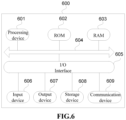
- the electronic device 600 may include a processing device (e.g. a central processing unit, a graphics processor, etc.) 601 that may perform a variety of suitable actions and processes in accordance with programs stored in Read-only Memory (ROM) 602 or loaded from a storage device 608 into a Random Access Memory (RAM) 603. In the RAM 603, various programs and data necessary for the operation(s) of the electronic device 600 are also stored.
- the processing device 601, the ROM 602, and the RAM 603 are connected to each other via a bus 604.
- An Input/Output (I/O) interface 605 is also coupled to the bus 604.
- the following devices may be connected to the I/O interface 605: an input device 606 including, for example, a touch screen, a touch pad, a keyboard, a mouse, a camera, a microphone, an accelerometer, a gyroscope, etc.; an output device 607 including, for example, a Liquid Crystal Display (LCD), a speaker, a vibrator etc.; the storage device 608 including, for example, a magnetic tape, a hard disk, etc.; and a communication device 609.
- the communication device 609 may allow the electronic device 600 to communicate wirelessly or wired with other devices to exchange data.
- Fig. 6 illustrates an electronic device 600 having multiple devices, it is not required to implement or have all of the illustrated devices. More or fewer devices may alternatively be implemented or provided.
- embodiments of the present disclosure include a computer program product comprising a computer program embodied on a non-transitory computer-readable medium, the computer program comprising program code for performing the method illustrated by the flowchart.
- the computer program may be downloaded and installed from a network via the communication device 609, or installed from the storage device 608, or installed from the ROM 602.
- the processing device 601 the above-described functions defined in a method of an embodiment of the present disclosure are performed.
- the computer-readable medium described above in the present disclosure can be a computer-readable signal medium or a computer-readable storage medium or any combination thereof.
- the computer-readable storage medium can be, for example, an electronic, magnetic, optical, electromagnetic, infrared, or semiconductor system, apparatus, or device, or any combination thereof.
- the computer readable storage medium may include: an electrical connection having one or more wires, a portable computer diskette, a hard disk, a RAM, a ROM, an Erasable Programmable Read-Only Memory (EPROM), a flash memory, an optical fiber, a Compact Disc Read-Only Memory (CD-ROM), an optical storage device, a magnetic storage device, or any suitable combination thereof.
- the computer-readable storage medium can be any tangible medium that contains or stores a program that can be used by or in connection with an instruction execution system, apparatus, or device.
- the computer-readable signal medium may comprise a data signal embodied in baseband or propagated as part of a carrier wave carrying computer-readable program code. This propagated data signal may take many forms, including an electromagnetic signal, an optical signal, or any suitable combination thereof.
- the computer-readable signal medium can also be any computer-readable medium other than the computer-readable storage medium, which can send, propagate, or transport the program for use by or in connection with the instruction execution system, apparatus, or device.
- the program code embodied on the computer-readable medium may be transmitted over any suitable medium, including: electric wire, optic cable, Radio Frequency (RF), and the like, or any suitable combination thereof.
- RF Radio Frequency
- clients, servers may communicate using any currently known or future developed network protocol, such as the HyperText Transfer Protocol (HTTP), and may be interconnected with any form or medium of digital data communication (e.g. a communication network).
- HTTP HyperText Transfer Protocol
- Examples of the communication network include a Local Area Network (LAN), a Wide Area Network (WAN), an Internetwork (e.g. the Internet), and a peer-to-peer network (e.g. an ad hoc peer-to-peer network), as well as any currently known or future developed network.
- LAN Local Area Network
- WAN Wide Area Network
- Internetwork e.g. the Internet
- peer-to-peer network e.g. an ad hoc peer-to-peer network
- the computer readable medium may be contained in the electronic device; it may also be present separately and not fitted into the electronic device.
- the computer-readable medium carries one or more programs that, when executed by the electronic device, cause the electronic device to: receive a sending operation for a target session message, wherein the target session message contains a first target interactive picture; in response to the sending operation, send the target session message to a second user; if the first target interactive picture comprises a first object, present a sending animation of the first object, wherein the sending animation comprises a sending track of the first object, the sending track is different from a receiving track, the receiving track is a movement track of the first object comprised in a receiving animation of the first object, and the receiving animation is an animation presented by a second user side in response to receiving the first target interactive picture.
- a target session message sent by a first user wherein a first target interactive picture is included in the target session message; present the target session message in a session page; if the first target interactive picture comprises a first object, present a receiving animation of the first object in the session page, wherein the receiving animation comprises a receiving track of the first object, the receiving track is different from a sending track, the sending track is a movement track of the first object comprised in a sending animation of the first object, and the sending animation is an animation presented by a first user side in response to sending the first target interactive picture.
- Computer program code for carrying out operations of the present disclosure may be written in one or more programming languages, including object oriented programming languages such as Java, smalltalk, C ++ and conventional procedural programming languages such as the "C" language or similar programming languages, or a combination thereof.
- the program code may execute entirely on a user's computer, partly on the user's computer, as a stand-alone software package, partly on the user's computer and partly on a remote computer, or entirely on the remote computer or server.
- the remote computer may be connected to the user's computer through any kind of network, including a LAN or a WAN, or may be connected to an external computer (e.g. through the Internet using an Internet Service Provider).
- each block in the flow diagrams or block diagrams may represent a module, segment, or portion of code, which comprises one or more executable instructions for implementing the specified logical function(s).
- the functions noted in the blocks may occur out of the order noted in the figures. For example, two blocks shown in succession may in fact be executed substantially concurrently or the blocks may sometimes be executed in the reverse order, depending upon the functionality involved.
- Each block of the block diagrams and/or flow diagrams, as well as a combination of blocks in the block diagrams and/or flow diagrams, can be implemented by a special purpose hardware-based system which performs the specified functions or operations, or a combination of special purpose hardware and computer instructions.
- FPGA Field Programmable Gate Array
- ASIC Application Specific Integrated Circuit
- ASSP Application Specific Standard Parts
- SOC System on Chip
- CPLD Complex Programmable Logic Device
- the machine-readable medium can be a tangible medium that can contain or store a program for use by or in connection with an instruction execution system, apparatus, or device.
- the machine-readable medium may be a machine-readable signal medium or a machine-readable storage medium.
- the machine-readable medium may include an electronic, magnetic, optical, electromagnetic, infrared, or semiconductor system, apparatus, or device, or any suitable combination thereof.
- the machine-readable storage medium includes an electrical connection based on one or more wires, a portable computer diskette, a hard disk, a RAM, a ROM, an EPROM, a flash memory, an optical fiber, a portable CD-ROM, an optical storage device, a magnetic storage device, or any suitable combination thereof.
- the storage medium may be a non-transitory storage medium.
- Example 1 provides a method for presenting an animation, the method being applied to a first user side, the method comprising:
- Example 2 provides a method according to Example 1, wherein the sending track being different from the receiving track comprises: a moving direction corresponding to the sending track being opposite to a moving direction corresponding to the receiving track.
- Example 3 provides a method according to Example 1, wherein a sending visual characteristic of sending the first object in a three-dimensional space is presented in the sending animation, the sending visual characteristic is different from a receiving visual characteristic, and the receiving visual characteristic is a visual characteristic of receiving the first object in the three-dimensional space presented in the receiving animation.
- Example 4 provides a method according to Example 3, wherein the sending visual characteristic comprises a gradual decrease in size of the first object; the receiving visual characteristic comprises a gradual increase in size of the first object.
- Example 5 provides a method according to Example 1, wherein the first target interactive picture further comprises a second object, the second object has a same movement track in the sending animation and the receiving animation, or a position of the second object remains unchanged in the sending animation and the receiving animation.
- Example 6 provides a method according to any of Examples 1-5, presenting the sending animation of the first object comprises:
- Example 7 provides a method according to any of Examples 1-5, further comprising: if the first target interactive picture is a preset interactive picture or the first target interactive picture comprises a preset object in the preset interactive picture, selecting, from at least two candidate interactive animations of the preset interactive picture, one candidate interactive animation as a sending animation of the first target interactive picture, and presenting the sending animation of the first target interactive picture, wherein the preset interactive picture is an interactive picture with at least two candidate interactive animations.
- Example 8 provides a method according to any of Examples 1-5, further comprising: if a number of second target interactive pictures contained in the latest n session messages sent by a first user within a current session is greater than or equal to a preset number, presenting a preset interactive enhanced animation of the second target interactive pictures, wherein the second target interactive pictures are interactive pictures with the preset interactive enhanced animation, and the n is a positive integer.
- Example 9 provides a method for presenting an animation, the method being applied to a second user side, and the method comprising:
- Example 10 provides an apparatus for presenting an animation comprising:
- Example 11 provides an apparatus for presenting an animation comprising:
- Example 12 provides an electronic device comprising:
- Example 13 provides a computer-readable storage medium having stored thereon a computer program which, when executed by a processor, implements a method for presenting an animation of any of Examples 1-9.
- Example 14 provides a computer program product which, when executed by a computer, causes the computer to implement a method for presenting an animation of any of Examples 1-9.
Landscapes
- Engineering & Computer Science (AREA)
- Theoretical Computer Science (AREA)
- Software Systems (AREA)
- General Physics & Mathematics (AREA)
- Physics & Mathematics (AREA)
- General Engineering & Computer Science (AREA)
- Human Computer Interaction (AREA)
- Computer Networks & Wireless Communication (AREA)
- Signal Processing (AREA)
- Computer Hardware Design (AREA)
- Computer Graphics (AREA)
- Architecture (AREA)
- Multimedia (AREA)
- User Interface Of Digital Computer (AREA)
- Processing Or Creating Images (AREA)
- Information Transfer Between Computers (AREA)
Applications Claiming Priority (2)
| Application Number | Priority Date | Filing Date | Title |
|---|---|---|---|
| CN202210062063.4A CN114419201B (zh) | 2022-01-19 | 2022-01-19 | 动画的展示方法、装置、电子设备和介质 |
| PCT/CN2023/072338 WO2023138529A1 (fr) | 2022-01-19 | 2023-01-16 | Procédés et appareils d'affichage d'animation, dispositif électronique, support et produit-programme |
Publications (2)
| Publication Number | Publication Date |
|---|---|
| EP4459557A1 true EP4459557A1 (fr) | 2024-11-06 |
| EP4459557A4 EP4459557A4 (fr) | 2025-05-07 |
Family
ID=81276276
Family Applications (1)
| Application Number | Title | Priority Date | Filing Date |
|---|---|---|---|
| EP23742844.6A Pending EP4459557A4 (fr) | 2022-01-19 | 2023-01-16 | Procédés et appareils d'affichage d'animation, dispositif électronique, support et produit-programme |
Country Status (5)
| Country | Link |
|---|---|
| US (1) | US12327306B2 (fr) |
| EP (1) | EP4459557A4 (fr) |
| JP (1) | JP2025505943A (fr) |
| CN (1) | CN114419201B (fr) |
| WO (1) | WO2023138529A1 (fr) |
Families Citing this family (1)
| Publication number | Priority date | Publication date | Assignee | Title |
|---|---|---|---|---|
| CN114419201B (zh) | 2022-01-19 | 2024-06-18 | 北京字跳网络技术有限公司 | 动画的展示方法、装置、电子设备和介质 |
Family Cites Families (18)
| Publication number | Priority date | Publication date | Assignee | Title |
|---|---|---|---|---|
| JP3675008B2 (ja) * | 1995-11-17 | 2005-07-27 | 株式会社日立製作所 | 動画メール作成方法及び動画メールシステム |
| EP2284786A1 (fr) * | 2009-07-31 | 2011-02-16 | Vodafone Group PLC | Gestion de publicités |
| US20110161856A1 (en) * | 2009-12-28 | 2011-06-30 | Nokia Corporation | Directional animation for communications |
| US20140215360A1 (en) * | 2013-01-28 | 2014-07-31 | Quadmanage Ltd. | Systems and methods for animated clip generation |
| CN105282708B (zh) * | 2014-07-17 | 2019-06-21 | 本田技研工业株式会社 | 互通消息的方法以及电子设备 |
| US10395413B2 (en) * | 2015-03-03 | 2019-08-27 | Jeremy Flores | Dynamic user interfaces |
| CN106468998B (zh) * | 2016-09-23 | 2019-10-22 | 华为机器有限公司 | 一种信息的显示方法以及终端 |
| CN108933723B (zh) * | 2017-05-19 | 2020-11-06 | 腾讯科技(深圳)有限公司 | 消息展示方法、装置及终端 |
| US11265270B2 (en) * | 2017-07-07 | 2022-03-01 | Samchat, Inc. | Systems, methods and computer program products for providing enhanced chat services |
| CN110113252B (zh) * | 2019-04-30 | 2021-08-17 | 上海连尚网络科技有限公司 | 一种小程序通知消息的处理方法、设备和计算机存储介质 |
| JP7202981B2 (ja) * | 2019-06-28 | 2023-01-12 | グリー株式会社 | 動画配信システム、プログラム、及び情報処理方法 |
| US20210067476A1 (en) * | 2019-08-28 | 2021-03-04 | Microsoft Technology Licensing, Llc | Intelligent chat object sending animations |
| CN111491174A (zh) * | 2020-05-29 | 2020-08-04 | 广州华多网络科技有限公司 | 虚拟礼物获取及展示方法、装置、设备及存储介质 |
| CN111787411B (zh) * | 2020-06-18 | 2021-11-19 | 广州方硅信息技术有限公司 | 虚拟资源的转移方法、装置、设备及存储介质 |
| CN112764612A (zh) * | 2021-01-21 | 2021-05-07 | 北京字跳网络技术有限公司 | 互动方法、装置、电子设备和存储介质 |
| CN113556278B (zh) * | 2021-07-20 | 2023-04-18 | 网易(杭州)网络有限公司 | 一种表情发送方法和装置 |
| CN113713382B (zh) * | 2021-09-10 | 2023-06-16 | 腾讯科技(深圳)有限公司 | 虚拟道具控制方法、装置、计算机设备及存储介质 |
| CN114419201B (zh) * | 2022-01-19 | 2024-06-18 | 北京字跳网络技术有限公司 | 动画的展示方法、装置、电子设备和介质 |
-
2022
- 2022-01-19 CN CN202210062063.4A patent/CN114419201B/zh active Active
-
2023
- 2023-01-16 EP EP23742844.6A patent/EP4459557A4/fr active Pending
- 2023-01-16 JP JP2024543218A patent/JP2025505943A/ja active Pending
- 2023-01-16 WO PCT/CN2023/072338 patent/WO2023138529A1/fr not_active Ceased
-
2024
- 2024-07-19 US US18/778,794 patent/US12327306B2/en active Active
Also Published As
| Publication number | Publication date |
|---|---|
| US12327306B2 (en) | 2025-06-10 |
| CN114419201A (zh) | 2022-04-29 |
| WO2023138529A1 (fr) | 2023-07-27 |
| EP4459557A4 (fr) | 2025-05-07 |
| JP2025505943A (ja) | 2025-03-05 |
| US20240371065A1 (en) | 2024-11-07 |
| CN114419201B (zh) | 2024-06-18 |
Similar Documents
| Publication | Publication Date | Title |
|---|---|---|
| EP4435595A1 (fr) | Procédé et appareil d'affichage d'informations, dispositif électronique, support d'enregistrement et produit-programme | |
| US12487725B2 (en) | Data interaction method, apparatus, electronic device, storage medium, and program product | |
| US12353704B2 (en) | Page display method and apparatus, electronic device, storage medium and program product | |
| CN111790148B (zh) | 游戏场景中的信息交互方法、设备及计算机可读介质 | |
| US12327015B2 (en) | Method, apparatus, electronic device, and storage medium for dynamic comment controlling | |
| AU2023296433B2 (en) | Live streaming page display method and apparatus, device, storage medium, and program product | |
| US20250130695A1 (en) | Interaction method and apparatus, electronic device, and storage medium | |
| US20250358483A1 (en) | Comment information publishing method and apparatus, electronic device and storage medium | |
| EP4435626A1 (fr) | Procédé et appareil d'invite de commentaires, ainsi que dispositif électronique, support de stockage et produit-programme | |
| CN113934349B (zh) | 交互方法、装置、电子设备和存储介质 | |
| US20250156042A1 (en) | Method and apparatus, electronic device, and storage medium for object interaction | |
| CN117492599A (zh) | 媒体内容的展示方法、装置、电子设备和存储介质 | |
| KR20250004815A (ko) | 미디어 콘텐츠를 제어하는 방법, 장치, 전자 설비 및 저장 매체 | |
| CN113766303B (zh) | 多屏互动方法、装置、设备及存储介质 | |
| EP4528460A1 (fr) | Procédé et appareil d'affichage de contenu multimédia, et dispositif électronique et support de stockage | |
| US12327306B2 (en) | Methods, apparatuses, electronic device, medium and program product for presenting an animation | |
| EP4435596B1 (fr) | Procédé et appareil d'affichage de travail, dispositif électronique, support de stockage et produit de programme | |
| CN117519530A (zh) | 信息展示方法、装置、电子设备、存储介质和程序产品 | |
| EP4270187A1 (fr) | Procédé et appareil d'affichage de travail, ainsi que dispositif électronique et support de stockage | |
| JP2026504132A (ja) | インタラクション方法及び装置、電子機器及び記憶媒体 | |
| CN118779054A (zh) | 会话界面的展示方法、装置、电子设备、存储介质和程序产品 | |
| CN115037988B (zh) | 页面的显示方法、装置及设备 | |
| US20250133252A1 (en) | Method, apparatus, electronic device and storage medium for resource interaction | |
| KR20250067919A (ko) | 미디어 콘텐츠 공유 방법 및 장치, 전자 디바이스 및 저장 매체 | |
| CN120029441A (zh) | 头戴式设备的控制方法、装置、终端和存储介质 |
Legal Events
| Date | Code | Title | Description |
|---|---|---|---|
| STAA | Information on the status of an ep patent application or granted ep patent |
Free format text: STATUS: THE INTERNATIONAL PUBLICATION HAS BEEN MADE |
|
| PUAI | Public reference made under article 153(3) epc to a published international application that has entered the european phase |
Free format text: ORIGINAL CODE: 0009012 |
|
| STAA | Information on the status of an ep patent application or granted ep patent |
Free format text: STATUS: REQUEST FOR EXAMINATION WAS MADE |
|
| 17P | Request for examination filed |
Effective date: 20240802 |
|
| AK | Designated contracting states |
Kind code of ref document: A1 Designated state(s): AL AT BE BG CH CY CZ DE DK EE ES FI FR GB GR HR HU IE IS IT LI LT LU LV MC ME MK MT NL NO PL PT RO RS SE SI SK SM TR |
|
| DAV | Request for validation of the european patent (deleted) | ||
| DAX | Request for extension of the european patent (deleted) | ||
| A4 | Supplementary search report drawn up and despatched |
Effective date: 20250403 |
|
| RIC1 | Information provided on ipc code assigned before grant |
Ipc: H04L 51/10 20220101ALI20250328BHEP Ipc: H04L 51/046 20220101ALI20250328BHEP Ipc: A63F 13/52 20140101ALI20250328BHEP Ipc: G06F 3/0485 20220101ALI20250328BHEP Ipc: G06T 13/00 20110101AFI20250328BHEP |