EP4458368A1 - Verwendung von rekombinantem calreticulin in haarwuchs, haarzüchtung, haarschutz oder haarausfall und verwandtes produkt - Google Patents
Verwendung von rekombinantem calreticulin in haarwuchs, haarzüchtung, haarschutz oder haarausfall und verwandtes produkt Download PDFInfo
- Publication number
- EP4458368A1 EP4458368A1 EP22914852.3A EP22914852A EP4458368A1 EP 4458368 A1 EP4458368 A1 EP 4458368A1 EP 22914852 A EP22914852 A EP 22914852A EP 4458368 A1 EP4458368 A1 EP 4458368A1
- Authority
- EP
- European Patent Office
- Prior art keywords
- hair
- crt
- seq
- protein
- set forth
- Prior art date
- Legal status (The legal status is an assumption and is not a legal conclusion. Google has not performed a legal analysis and makes no representation as to the accuracy of the status listed.)
- Pending
Links
Images





Classifications
-
- C—CHEMISTRY; METALLURGY
- C12—BIOCHEMISTRY; BEER; SPIRITS; WINE; VINEGAR; MICROBIOLOGY; ENZYMOLOGY; MUTATION OR GENETIC ENGINEERING
- C12N—MICROORGANISMS OR ENZYMES; COMPOSITIONS THEREOF; PROPAGATING, PRESERVING, OR MAINTAINING MICROORGANISMS; MUTATION OR GENETIC ENGINEERING; CULTURE MEDIA
- C12N15/00—Mutation or genetic engineering; DNA or RNA concerning genetic engineering, vectors, e.g. plasmids, or their isolation, preparation or purification; Use of hosts therefor
- C12N15/09—Recombinant DNA-technology
- C12N15/63—Introduction of foreign genetic material using vectors; Vectors; Use of hosts therefor; Regulation of expression
- C12N15/79—Vectors or expression systems specially adapted for eukaryotic hosts
- C12N15/80—Vectors or expression systems specially adapted for eukaryotic hosts for fungi
- C12N15/81—Vectors or expression systems specially adapted for eukaryotic hosts for fungi for yeasts
- C12N15/815—Vectors or expression systems specially adapted for eukaryotic hosts for fungi for yeasts for yeasts other than Saccharomyces
-
- A—HUMAN NECESSITIES
- A61—MEDICAL OR VETERINARY SCIENCE; HYGIENE
- A61K—PREPARATIONS FOR MEDICAL, DENTAL OR TOILETRY PURPOSES
- A61K38/00—Medicinal preparations containing peptides
- A61K38/16—Peptides having more than 20 amino acids; Gastrins; Somatostatins; Melanotropins; Derivatives thereof
- A61K38/17—Peptides having more than 20 amino acids; Gastrins; Somatostatins; Melanotropins; Derivatives thereof from animals; from humans
- A61K38/1703—Peptides having more than 20 amino acids; Gastrins; Somatostatins; Melanotropins; Derivatives thereof from animals; from humans from vertebrates
- A61K38/1709—Peptides having more than 20 amino acids; Gastrins; Somatostatins; Melanotropins; Derivatives thereof from animals; from humans from vertebrates from mammals
- A61K38/1738—Calcium binding proteins, e.g. calmodulin
-
- A—HUMAN NECESSITIES
- A61—MEDICAL OR VETERINARY SCIENCE; HYGIENE
- A61K—PREPARATIONS FOR MEDICAL, DENTAL OR TOILETRY PURPOSES
- A61K38/00—Medicinal preparations containing peptides
- A61K38/16—Peptides having more than 20 amino acids; Gastrins; Somatostatins; Melanotropins; Derivatives thereof
- A61K38/17—Peptides having more than 20 amino acids; Gastrins; Somatostatins; Melanotropins; Derivatives thereof from animals; from humans
- A61K38/1703—Peptides having more than 20 amino acids; Gastrins; Somatostatins; Melanotropins; Derivatives thereof from animals; from humans from vertebrates
- A61K38/1709—Peptides having more than 20 amino acids; Gastrins; Somatostatins; Melanotropins; Derivatives thereof from animals; from humans from vertebrates from mammals
-
- A—HUMAN NECESSITIES
- A61—MEDICAL OR VETERINARY SCIENCE; HYGIENE
- A61K—PREPARATIONS FOR MEDICAL, DENTAL OR TOILETRY PURPOSES
- A61K8/00—Cosmetics or similar toiletry preparations
- A61K8/18—Cosmetics or similar toiletry preparations characterised by the composition
- A61K8/30—Cosmetics or similar toiletry preparations characterised by the composition containing organic compounds
- A61K8/64—Proteins; Peptides; Derivatives or degradation products thereof
-
- A—HUMAN NECESSITIES
- A61—MEDICAL OR VETERINARY SCIENCE; HYGIENE
- A61P—SPECIFIC THERAPEUTIC ACTIVITY OF CHEMICAL COMPOUNDS OR MEDICINAL PREPARATIONS
- A61P17/00—Drugs for dermatological disorders
- A61P17/10—Anti-acne agents
-
- A—HUMAN NECESSITIES
- A61—MEDICAL OR VETERINARY SCIENCE; HYGIENE
- A61P—SPECIFIC THERAPEUTIC ACTIVITY OF CHEMICAL COMPOUNDS OR MEDICINAL PREPARATIONS
- A61P17/00—Drugs for dermatological disorders
- A61P17/14—Drugs for dermatological disorders for baldness or alopecia
-
- A—HUMAN NECESSITIES
- A61—MEDICAL OR VETERINARY SCIENCE; HYGIENE
- A61Q—SPECIFIC USE OF COSMETICS OR SIMILAR TOILETRY PREPARATIONS
- A61Q7/00—Preparations for affecting hair growth
-
- C—CHEMISTRY; METALLURGY
- C07—ORGANIC CHEMISTRY
- C07K—PEPTIDES
- C07K14/00—Peptides having more than 20 amino acids; Gastrins; Somatostatins; Melanotropins; Derivatives thereof
- C07K14/435—Peptides having more than 20 amino acids; Gastrins; Somatostatins; Melanotropins; Derivatives thereof from animals; from humans
- C07K14/46—Peptides having more than 20 amino acids; Gastrins; Somatostatins; Melanotropins; Derivatives thereof from animals; from humans from vertebrates
- C07K14/47—Peptides having more than 20 amino acids; Gastrins; Somatostatins; Melanotropins; Derivatives thereof from animals; from humans from vertebrates from mammals
- C07K14/4701—Peptides having more than 20 amino acids; Gastrins; Somatostatins; Melanotropins; Derivatives thereof from animals; from humans from vertebrates from mammals not used
- C07K14/4725—Proteoglycans, e.g. aggreccan
-
- C—CHEMISTRY; METALLURGY
- C07—ORGANIC CHEMISTRY
- C07K—PEPTIDES
- C07K14/00—Peptides having more than 20 amino acids; Gastrins; Somatostatins; Melanotropins; Derivatives thereof
- C07K14/435—Peptides having more than 20 amino acids; Gastrins; Somatostatins; Melanotropins; Derivatives thereof from animals; from humans
- C07K14/46—Peptides having more than 20 amino acids; Gastrins; Somatostatins; Melanotropins; Derivatives thereof from animals; from humans from vertebrates
- C07K14/47—Peptides having more than 20 amino acids; Gastrins; Somatostatins; Melanotropins; Derivatives thereof from animals; from humans from vertebrates from mammals
- C07K14/4701—Peptides having more than 20 amino acids; Gastrins; Somatostatins; Melanotropins; Derivatives thereof from animals; from humans from vertebrates from mammals not used
- C07K14/4728—Calcium binding proteins, e.g. calmodulin
-
- C—CHEMISTRY; METALLURGY
- C12—BIOCHEMISTRY; BEER; SPIRITS; WINE; VINEGAR; MICROBIOLOGY; ENZYMOLOGY; MUTATION OR GENETIC ENGINEERING
- C12N—MICROORGANISMS OR ENZYMES; COMPOSITIONS THEREOF; PROPAGATING, PRESERVING, OR MAINTAINING MICROORGANISMS; MUTATION OR GENETIC ENGINEERING; CULTURE MEDIA
- C12N15/00—Mutation or genetic engineering; DNA or RNA concerning genetic engineering, vectors, e.g. plasmids, or their isolation, preparation or purification; Use of hosts therefor
- C12N15/09—Recombinant DNA-technology
- C12N15/63—Introduction of foreign genetic material using vectors; Vectors; Use of hosts therefor; Regulation of expression
- C12N15/70—Vectors or expression systems specially adapted for E. coli
Definitions
- the present disclosure relates to the field of pharmaceutical biotechnology, and in particular to use of recombinant calreticulin in hair growth, hair maintenance, hair protection or hair loss prevention and related products.
- Hair loss is a common clinical disease, and the cause of hair loss is not yet fully understood. Potential contributing factors include immune status, genetic causes, hormone levels, local inflammatory response, nerves and environmental factors. Common types of hair loss include androgenic alopecia (AGA), alopecia areata, telogen effluvium, senile alopecia, and others. Among these, AGA is the type of hair loss with the highest incidence.
- AGA is the incidence of AGA in 30-year-old white men is 30%, the incidence of AGA in 50-year-old men is as high as 50%, and the incidence of AGA in men and women over 70 years old is 80% and 53%, respectively. The incidence of AGA in China is reported to be 21.3% for men and 6.0% for women.
- Calreticulin was initially identified within the endoplasmic reticulum (ER) of cells and exhibits high conservation during evolution.
- CRT belonging to the heat shock protein family, is primarily located in the endoplasmic reticulum and performs a multitude of biological functions.
- CRT is a Ca 2+ binding protein.
- the molecular weight of human CRT is about 46kDa, and it is divided into three domains: N, P, and C.
- the connection between the N and P regions is an important region for the protein to function as a molecular chaperone.
- the P region has a high affinity for calcium ions, yet the amount of binding is relatively small.
- the C region in contrast, has a low affinity for calcium ions but a large capacity, and is considered to serve as a "calcium store" in the cell.
- CRT also exists in locations other than the endoplasmic reticulum and plays an important biological function, such as participating in antigen processing and presentation of adaptive immunity, anti-tumor immune response, mediating phagocytosis of apoptotic cells, cell adhesion and migration, and proliferation and activation of immune cells.
- CRT is also present in the cell matrix and on the surfaces of almost all immune cells, including monocytes/macrophages, neutrophils, T cells, and dendritic cells, playing an important role in cell activation and the clearance of apoptotic cells and tumor cells.
- Calcium ions are important second messengers in cells. Changes in intracellular calcium ion concentrations have significant effects on numerous cellular functions, including the secretion of various cell active substances, muscle contraction and relaxation, protein modification, and gene expression.
- the endoplasmic reticulum is an important place for most proteins in their folding, modification, and assembly. Protein synthesis inevitably results in the formation of some misfolded proteins. In such circumstances, calreticulin acts as a molecular chaperone, facilitating the completion of protein repair in the presence of various enzymes. CRT can also bind to calnexin to jointly repair glycoproteins that are not synthesized normally.
- the present disclosure provides calreticulin, a DNA sequence encoding the protein, a vector or plasmid comprising the DNA sequence, a host cell, a method for preparing the protein by genetic engineering, and use of the protein in hair growth, hair maintenance, hair loss prevention, promotion or protection of hair growth, etc., overcoming the shortcomings and defects mentioned in the background.
- the purpose of the present disclosure is to provide the calreticulin protein involved, a DNA sequence encoding the protein, a vector or plasmid comprising the DNA sequence, a host cell, a method for preparing the protein by genetic engineering, and application of the protein in hair growth, hair maintenance, hair loss prevention, promotion or protection of hair growth, etc.
- the present disclosure discloses application of calreticulin (CRT) in preparing a product for hair growth, hair maintenance, hair protection or hair loss prevention.
- CRT calreticulin
- the calreticulin CRT is a protein of recombinantly expressed full-length CRT (1-400 aa), rh-CRT-1, and having an amino acid sequence set forth in SEQ ID NO: 1, or a protein having a similarity of at least 85% to the amino acid sequence set forth in SEQ ID NO: 1 and having a similar function.
- the above-mentioned protein includes proteins with CRT-1 homologous sequences with similarities of 85%, 90%, 95%, and 99% (i.e., 340 aa, 360 aa, 380 aa, and 396 aa identical to the full-length CRT protein, respectively).
- the calreticulin CRT is a protein comprising a fragment (1-349 aa) of recombinantly expressed CRT, rh-CRT-2, and having an amino acid sequence set forth in SEQ ID NO: 9, or a protein having a similarity of at least 85% to the amino acid sequence set forth in SEQ ID NO: 9 and having a similar function
- the above-mentioned protein includes proteins with CRT-2 homologous sequences with similarities of 86%, 89%, 95%, and 99% (i.e., 300 aa, 310 aa, 330 aa, and 345 aa identical to the 349 aa fragment of CRT protein, respectively).
- the calreticulin CRT is a protein comprising a fragment (1-291 aa) of recombinantly expressed CRT, rh-CRT-3, and having an amino acid sequence set forth in SEQ ID NO: 12, or a protein having a similarity of at least 85% to the amino acid sequence set forth in SEQ ID NO: 12 and having a similar function
- the above-mentioned protein includes proteins with CRT-3 homologous sequences with similarities of 86%, 91%, 96%, and 99% (i.e., 250 aa, 265 aa, 280 aa, and 288 aa identical to the 291 aa fragment of CRT protein, respectively).
- the present disclosure discloses a recombinant protein related to hair growth, hair maintenance, hair protection or hair loss prevention, wherein the recombinant protein is rh-CRT-1, rh-CRT-2 or rh-CRT-3; wherein rh-CRT-1 has an amino acid sequence set forth in SEQ ID NO: 1, rh-CRT-2 has an amino acid sequence set forth in SEQ ID NO: 9, and rh-CRT-3 has an amino acid sequence set forth in SEQ ID NO: 12.
- the present disclosure discloses a gene encoding the recombinant protein related to hair growth, hair maintenance, hair protection and hair loss prevention, wherein the gene has a nucleotide sequence encoding rh-CRT-1 set forth in SEQ ID NO: 2, a nucleotide sequence encoding rh-CRT-2 set forth in SEQ ID NO: 8, or a nucleotide sequence encoding rh-CRT-3 set forth in SEQ ID NO: 11.
- the present disclosure also discloses a plasmid comprising the gene encoding the recombinant protein related to hair growth, hair maintenance, hair protection and hair loss prevention.
- the present disclosure also discloses a vector comprising the gene encoding the recombinant protein related to hair growth, hair maintenance, hair protection and hair loss prevention as an active ingredient.
- the present disclosure discloses application of the above-mentioned recombinant protein, coding gene, plasmid or vector in the manufacture of a medicament or medical device product for hair growth, hair maintenance, hair protection or hair loss prevention.
- the medicament is utilized to improve the state of hair shaft and hair cuticle.
- the medicament is utilized to increase the number of skin hair follicles.
- the medicament promotes hair growth by reducing the content of androgen.
- the androgen is dihydrotestosterone.
- the present disclosure also discloses a product with the functions of hair growth, hair maintenance, hair protection or hair loss prevention, comprising the above-mentioned recombinant protein, gene, plasmid or vector as an active ingredient;
- the present disclosure also discloses a medicament with the functions of hair growth, hair maintenance, hair protection or hair loss prevention, comprising the above-mentioned recombinant protein, gene, plasmid or vector and a pharmaceutically acceptable adjuvant.
- the medicament further comprises a pharmaceutical preparation that can be used in combination, preferably minoxidil.
- the adjuvant is selected from the group consisting of a diluent, excipient, filler, binder, wetting agent, disintegrant, absorption promoter, surfactant, adsorption carrier, lubricant, and a mixture thereof.
- the medicament is introduced into a body tissue by injection, spraying, penetration, absorption, or a physical or chemical method; or the medicament is introduced into a body after being mixed or encapsulated by other substances.
- the medicament is an external preparation.
- the present disclosure also discloses application of calreticulin CRT in the manufacture of a medicament or medical device product for treating acne, pimples or alopecia areata.
- the calreticulin CRT is a protein of recombinantly expressed full-length CRT and having an amino acid sequence set forth in SEQ ID NO: 1, or a protein having a similarity of at least 85% to the amino acid sequence set forth in SEQ ID NO: 1 and having a similar function.
- the calreticulin CRT is a protein comprising a fragment of recombinantly expressed CRT and having an amino acid sequence set forth in SEQ ID NO: 9, or a protein having a similarity of at least 85% to the amino acid sequence set forth in SEQ ID NO: 9 and having a similar function.
- the calreticulin CRT is a protein comprising a fragment of recombinantly expressed CRT and having an amino acid sequence set forth in SEQ ID NO: 12, or a protein having a similarity of at least 85% to the amino acid sequence set forth in SEQ ID NO: 12 and having a similar function.
- the present disclosure discloses for the first time the application of calreticulin (CRT) in hair growth, hair maintenance, hair protection or hair loss prevention. Further, the present disclosure discloses for the first time a recombinant protein with the above-mentioned functions of hair growth, hair maintenance, hair protection or hair loss prevention, and clarifies the preparation method and application of the recombinant protein.
- the protein is derived from calreticulin or its fragments, and the proteins having a sequence similarity of 95%, 90% or 85% with the above-mentioned recombinant protein and having the functions of hair growth, hair maintenance, hair protection or hair loss prevention.
- the present disclosure has been verified by sufficient experiments that the recombinant protein disclosed in the present disclosure has the function of treating hair loss and improving hair by injection or external application. Therefore, it is anticipated that the CRT protein will be developed as an efficacious method and means for the treatment of hair loss and improvement of hair.
- the human calreticulin gene (CRT, GenBank: M84739.1) is 1958 bp and encodes 417 amino acids, of which amino acids 1-17 are signal peptides.
- the sequence of the mature polypeptide (amino acids 18-417) is set forth in SEQ ID NO: 1.
- the gene sequence of the mature polypeptide is set forth in SEQ ID NO: 2.
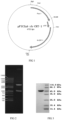
- the amplification was carried out by PCR using the fully synthesized gene SEQ ID NO: 2 as template and pFcrt-1/pRcrt-I as upstream and downstream primers, wherein an XhoI restriction site was introduced upstream and a his-tag (his-his-his-his-his) sequence and a NotI restriction site were introduced downstream.
- the culture media were prepared as follows: LB liquid culture medium: 10.0 g peptone, 5.0 g yeast powder and 5.0 g sodium chloride were mixed, and purified water was added to 1.0 L. The pH was adjusted to 7.2. The medium was aliquoted in Erlenmeyer flasks, and sterilized at 121°C for 20 minutes.
- LB solid culture medium 10.0 g peptone, 5.0 g yeast powder, 5.0 g sodium chloride and 15.0 g agar powder were mixed, and purified water was added to 1.0 L. The pH was adjusted to 7.2. The medium was aliquoted in Erlenmeyer flasks, and sterilized at 121°C for 20 minutes.
- YPD medium formula 20.0 g peptone, 10.0 g yeast powder, 20.0 g glucose and 15.0 g agar powder were mixed, and purified water was added to 1.0 L. The medium was aliquoted in Erlenmeyer flasks, and sterilized at 115°C for 20 minutes.
- BMGY medium 20.0 g peptone, 10.0 g yeast powder, 11.8 g potassium dihydrogen phosphate, 3.0 g potassium dihydrogen phosphate trihydrate and 10.0 mL glycerol were mixed, and 900 mL purified water was added. The medium was sterilized at 115°C for 20 minutes. After cooling, 100 mL of 13.4% YNB solution after filtration and 2.0 mL of 0.02% biotin solution after filtration were added.
- BMMY medium 20.0 g peptone, 10.0 g yeast powder, 11.8 g potassium dihydrogen phosphate and 3.0 g potassium dihydrogen phosphate trihydrate were mixed, and 800 mL purified water was added. The medium was sterilized at 115°C for 20 minutes. After cooling, 100 mL of 13.4% YNB solution after filtration, 2.0 mL of 0.02% biotin solution after filtration, and 5.0 ml of 5.0% methanol solution after filtration were added.
- the chromatography column was filled with a height of 95 cm. After eluting with 10 mM pH7.2 PB buffer containing 0.5% NaCl, the protein peaks were collected. The protein solution was rh-CRT-1, and the SDS-PAGE electrophoresis is shown in FIG 3 .
- the gene sequence of SEQ ID NO: 2 was codon optimized to a gene sequence set forth in SEQ ID NO: 5, and was subcloned (between BamH I/Xho I) into the pET28a plasmid (Novagen) by gene synthesis.
- the plasmid was named pET28a-MCRT.
- the amplification was carried out by PCR using pET28a-MCRT as template and pFcrt-2/pRcrt-2 as upstream and downstream primers, wherein an Nde I restriction site was introduced upstream and an Xho I restriction site was introduced downstream.
- the CRT gene sequence corresponding to rh-CRT-2 is set forth in SEQ ID NO: 8, and the protein sequence is set forth in SEQ ID NO: 9.
- the Phusion high-fidelity DNA polymerase from Thermo Scientific was used for PCR with 30 cycles including 98°C for 10 seconds, 55°C for 30 seconds, and 72°C for 60 seconds, followed by incubation at 72°C for 10 minutes.
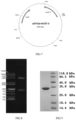
- the resulting PCR product (about 1060 bp) was purified, digested with Nde I/Xho I, and inserted into the plasmid pET42a (Novagen).
- the plasmid was then transformed into competent Escherichia coli TOP10, and positive clones were selected on LB medium containing kanamycin.
- the plasmid was extracted and sequenced for verification.
- the plasmid was named pET42a-rh-CRT-2.
- pET42a-rh-CRT-2 was transformed into competent BL21 (DE3) (Thermo Scientific). Positive clones were selected on LB plates containing kanamycin sulfate (50 ⁇ g/ml). The BL21 (DE3) positive clones obtained by transformation of pET42a-rh-CRT-2 were inoculated into 6.0ml LB liquid medium containing 50 ⁇ g/ml kanamycin sulfate, and cultured with shaking at 37°C, 220 RPM for about 3 hours.
- AMRESCO 1.0 M IPTG
- the protein peaks were concentrated with an ultrafiltration centrifuge tube with a molecular weight cutoff of 5 kDa, and loaded with the AKTA purifier 100 system.
- the XK16/100 chromatography column and Sephactyl S-200 from GE Company were used.
- the chromatography column was filled with a height of 95 cm. After eluting with 10 mM pH7.2 PB buffer containing 0.5% NaCl, the protein peaks were collected.
- the protein solution was rh-CRT-2, and the SDS-PAGE electrophoresis is shown in FIG 6 .
- the amplification was carried out by PCR using pET28a-MCRT as template and pFcrt-3/pRcrt-3 as upstream and downstream primers, wherein an Nde I restriction site was introduced upstream and an Xho I restriction site was introduced downstream.
- the CRT gene sequence corresponding to rh-CRT-3 is set forth in SEQ ID NO: 11, and the protein sequence is set forth in SEQ ID NO: 12.
- the Phusion high-fidelity DNA polymerase from Thermo Scientific was used for PCR with 30 cycles including 98°C for 10 seconds, 55°C for 30 seconds, and 72°C for 60 seconds, followed by incubation at 72°C for 10 minutes.
- the resulting PCR product (about 890 bp) was purified, digested with Nde I/Xho I, and inserted into the plasmid pET42a.
- the plasmid was then transformed into competent Escherichia coli TOP10, and positive clones were selected on LB medium containing kanamycin.
- the plasmid was extracted and sequenced for verification.
- the plasmid was named pET42a-rh-CRT-3.
- pET42a-rh-CRT-3 was transformed into competent BL21 (DE3). Positive clones were selected on LB plates containing kanamycin sulfate (50 ⁇ g/ml). The BL21 (DE3) positive clones obtained by transformation of pET42a-rh-CRT-3 were inoculated into 6ml LB liquid medium containing 50 ⁇ g/ml kanamycin sulfate, and cultured with shaking at 37°C, 220 RPM for about 3 hours.
- the protein peaks were concentrated with an ultrafiltration centrifuge tube with a molecular weight cutoff of 5 kDa, and loaded with the AKTA purifier 100 system.
- the XK16/100 chromatography column and Sephactyl S-200 from GE Company were used.
- the chromatography column was filled with a height of 95 cm. After eluting with 10 mM pH7.2 PB buffer containing 0.5% NaCl, the protein peaks were collected.
- the protein solution was rh-CRT-3, and the SDS-PAGE electrophoresis is shown in FIG 9 .
- mice C57BL/6 male mice, 6-7 weeks old, weighing (20 ⁇ 2) g, were provided by Beijing Vital River Laboratory Animal Technology Co. Ltd., with the animal license number of SCXK (Beijing) 2021-0006. They were kept in a 12 h light/12 h dark environment, with free access to food and water.
- NC NC
- model group Model
- positive control-minoxidil group Minoxidil
- positive control-finasteride group Feinasteride
- experimental group A experimental group B.
- the proteins were stored in a -70°C refrigerator and diluted with physiological saline when used.
- Experimental group A used rh-CRT-1, with a concentration of 0.21 mg/ml.
- Experimental group B used rh-CRT-2, with a concentration of 0.21 mg/ml. There were 6 mice in each group.
- the main reagents used are as follows: 4% paraformaldehyde (Beijing Solarbio Technology Co., Ltd., China), isoflurane (Rayward, China), testosterone (Shanghai Standard Biotechnology Co., Ltd., China), paraffin sectioner (Thermo, USA), small animal anesthesia machine (Rayward, China), and inverted microscope (Olympus, Japan).
- Modeling and drug administration First, the androgenic alopecia model was established. One day before the modeling, the hair in the central part of the back of the experimental animal was removed with a skin preparation knife, and the prepared area was depilated with a depilatory cream. After 24 hours of depilation, the modeling agent (testosterone, 5.0 mg/mL) was subcutaneously injected into the neck of the mice in groups except the NC group, with a total dose of 0.2 mL/mouse. The mice in the NC group were injected with an equal amount of normal saline. After modeling, the mice were administrated with drugs. The NC group was injected with normal saline once a day, 0.15 mL/mouse each time.
- testosterone 5.0 mg/mL
- the experimental group A, experimental group B and positive control group were injected with modeling agent (testosterone), and administrated with drugs after 2 hours, and the dose of modeling agent was 0.2 mL/mouse.
- the experimental group A and experimental group B were injected on the back once a day, 0.15 mL/mouse each time.
- the positive control minoxidil group was applied 5% minoxidil externally, 0.01 mL/mouse, once a day.
- the positive control finasteride group was applied finasteride at a concentration of 13 ⁇ g /mL, 0.2 mL/mouse, once a day.
- the experiment was carried out for 21 days, and the changes in hair in each group were observed by dermatoscope. The results are shown in FIG 10 to FIG 15 .
- the normal control group had smooth hair, while the model group had frizzy hair. Compared with the model group, the hair of experimental group A and experimental group B was smoother.
- the changes of hair shafts and hair cuticles were observed by scanning electron microscopy, and the results are shown in FIG 16 to FIG 21 .
- the hair shafts of the normal control group were covered with overlapping scaly hair cuticles, and some hair shafts of the Model group appeared hollow.
- the hail cuticles of experimental groups A and B were arranged neatly, and the scaly hair cuticles of experimental group B were denser than those of group A.
- the hair cuticles of the positive control group - minoxidil group were scaly and arranged neatly, and the hair cuticles of the positive control group - finasteride group were arranged neatly.
- mice C57BL/6 male mice, 6-7 weeks old, weighing (20 ⁇ 2) g, were provided by Beijing Vital River Laboratory Animal Technology Co. Ltd., with the animal license number of SCXK (Beijing) 2021-0006. They were kept in a 12 h light/12 h dark environment, with free access to food and water.
- the mice were divided into normal control group (normal group, NC), model group (Model), experimental group C (rh-CRT-2, with a concentration of 0.35 mg/ml) including an injection group and an external application group, experimental group D (rh-CRT-3, with a concentration of 0.21 mg/ml) including an injection group and external application group, and positive control-minoxidil group (Minoxidil).
- the proteins were stored in a -70°C refrigerator and diluted with physiological saline when used. There were 6 mice in each group.
- the hair loss model was established. One day before the modeling, the hair in the center of the back of the experimental animal was removed with a skin preparation knife, and the prepared skin area was depilated with a depilatory cream. After 24 hours of depilation, the normal control group was given 75% ethanol, and other groups were injected with testosterone solution (5 mg/mL) prepared with 75% ethanol, 0.01 mL/mouse.
- the injection groups of experimental group C and experimental group D were injected on the back, 0.15 mL/mouse, once a day, for 17 consecutive days; the external application groups of experimental group C and experimental group D were applied on the back, 0.15 mL/mouse, once a day, for 17 consecutive days.
- the normal control group and the model group were externally applied with physiological saline, once a day, 0.15 mL/mouse, for 17 consecutive days.
- all other groups were injected with the modeling agent (testosterone), and administrated with drugs after 2 hours.
- the hair condition was observed with dermatoscope, a color tester, and scanning electron microscope.
- the mouse skin was pathologically sectioned as follows: The skin pathological tissue was fixed in 4% paraformaldehyde, trimmed, dehydrated and transparent, and then embedded. The slices were cut with a thickness of 6 ⁇ m using a paraffin slicer, and further dewaxed, stained, dehydrated, transparent and sealed. The hair follicles in different areas were observed under an optical microscope, and the number of hair follicles was statistically analyzed.
- Hormone content in serum and skin tissue At the end of the experiment, blood was collected from the mice's orbits, kept at room temperature for 30 min, centrifuged at 5,000 r/min for 10 min, and the serum was removed. At the end of the experiment, skin tissue was collected and stored in a -80°C refrigerator. During the experiment, the skin tissue was homogenized, and the changes in testosterone, dihydrotestosterone, and estradiol of the serum and skin tissue in each group were detected by enzyme-linked immunosorbent assay (ELISA).
- ELISA enzyme-linked immunosorbent assay
- the changes in the hair of each group were observed under scanning electron microscopy, and the results are shown in FIG 25 .
- the hair shafts of the normal control group were thick, and the surface of the hair shafts was covered by dense scaly hair cuticles arranged in layers.
- the hair shafts were thin, the hair cuticles were sparse, and the surface was wrinkled.
- the hair shafts became significantly thicker, the hair shafts were smooth, and the superimposed scaly hair cuticles were dense; in the external application group of experimental group D, the hair shafts became thicker and the hair cuticles were dense.
- the pathological section results are shown in FIG 26 .
- the number of hair follicles in the model group was significantly reduced, with statistical significance (P ⁇ 0.01).
- experimental group C and experimental group D both the external application group and the injection group, significantly promoted the expression of the number of hair follicles in androgen alopecia mice, with statistical significance (P ⁇ 0.01).
- the external application group of experimental group C had the most significant effect on increasing the number of hair follicles.
- estradiol levels in serum and skin tissue of the model group did not change (P ⁇ 0.01).
- the estradiol levels in serum and skin tissue of other groups had no statistical significance (P>0.05), that is, there was no significant change in estradiol levels among the groups.
- the external application group of experimental group C can reduce the content of serum dihydrotestosterone, and its effect of promoting hair growth may be related to the reduction of dihydrotestosterone content.
- the experimental mice in experimental group A and experimental group B had smooth hair and neatly arranged hair cuticles. From the comparison of FIG 18 and FIG 19 , the hair shafts of experimental group B (CRT-2, FIG 19 ) were thicker than those of experimental group A (CRT-1, FIG 18 ). Based on the optimization of the AGA (androgenic alopecia) model in mice, this experiment observed the hair growth effects of CRT-2 and CRT-1 in AGA model mice, as well as the effect of the combined use of CRT-2 and the positive control drug minoxidil.
- AGA androgenic alopecia
- mice C57BL/6N male mice, 6-7 weeks old, weighing (18-20) g, 50 mice, with the animal license number of SCXK (Beijing) 2021-0006, were kept in a 12h light/12h dark environment, with free access to food and water. Adaptive feeding was performed for about 1 week.
- the hair in an area of about 2 cm ⁇ 3 cm at the border of the spine was shaved using an electric shaver.
- the depilatory area was applied with 8% sodium sulfide solution. After 90 ⁇ 10s, the depilatory area on the back was cleaned with cotton balls dipped in water, the residual sodium sulfide was washed away with a washing bottle, and then the mice were wiped dry. Because the hair follicle cycle of mice was in the resting phase at this time, the mouse skin was pink.
- Mice were randomly divided into groups using Excel software, 10 mice in each group, and the modeling was established after 24 h and the drug was administered for 17 consecutive days.
- the AGA model was established by injecting dihydrotestosterone into the experimental mice.
- Dihydrotestosterone (DHT) solution was injected subcutaneously at multiple points every day, 100 ⁇ L/mouse (5mg/kg body weight), and then the drug was administered after 3 h of absorption.
- CRT-2 and CRT-1 protein solutions were applied externally. 100 ⁇ L of protein solution was applied, and 100 ⁇ l of minoxidil MNX was applied. The CRT and MNX combination group was first applied with CRT-2 protein solution and then MNX 2 hours later.
- the solvent formula comprised 50% ethanol, 20% propylene glycol, and 30% pure water. Grouping, modeling, and drug administration are shown in Table 1.
- Model 1 Grouping Hair Removal Method Modeling First drug administration Second drug administration Model Group ( Model ) Shaving + sodium sulfide DHT injection 1 mg/mL, 100 ⁇ L 3 hours later, apply 100 ⁇ L of normal saline 2 hours later, apply 100 ⁇ L of solvent CRT-2 Group Shaving + sodium sulfide DHT injection 1 mg/mL, 100 ⁇ L 3 hours later, apply 100 ⁇ L of CRT-2 protein solution (0.35 mg/ml) 2 hours later, apply 100 ⁇ L of solvent Minoxidil group (MNX) Shaving + sodium sulfide DHT injection 1 mg/mL, 100 ⁇ L 3 hours later, apply 100 ⁇ L of normal saline 2 hours later, apply MNX (5 mg/ml) 100 ⁇ L CRT-2 and Minoxidil Shaving + DHT injection 3 hours later, 2 hours later, combination group (CRT-2+MNX) sodium sulfide 1 mg/mL, 100 ⁇ L apply 100 ⁇ L of CRT-2 protein solution (0.
- mice The skin color changes of mice were observed before administration every day.
- the hair removal time of mice was designated as Day 0, the first day of administration was designated as Day 1, and so on.
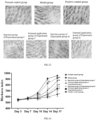
- the hair growth of each mouse was recorded and analyzed on Day 7, Day 9, Day 11, Day 13, Day 15, and Day 17.
- the experimental animals were the same as in the third experiment.
- the AGA model was established in the same manner as the third experiment, and the administration was carried out as follows:
- the AGA model was established by injecting dihydrotestosterone into the experimental mice.
- Dihydrotestosterone (DHT) solution was injected subcutaneously at multiple points every day, 100 ⁇ L/mouse (5mg/kg body weight), and then the drug was administered after 3 h of absorption.
- CRT-3 and CRT-1 protein solutions were applied externally. 100 ⁇ L of protein solution was applied, and 100 ⁇ l of minoxidil MNX was applied.
- the solvent formula comprised 50% ethanol, 20% propylene glycol, and 30% pure water. Grouping, modeling, and drug administration are shown in Table 2.
- Model 2 Grouping Hair Removal Method Modeling First drug administration Second drug administration Model Group ( Model ) Shaving + sodium sulfide DHT injection 1 mg/mL, 100 ⁇ L 3 hours later, apply 100 ⁇ L of normal saline 2 hours later, apply 100 ⁇ L of solvent CRT-3 Group Shaving + sodium sulfide DHT injection 1 mg/mL, 100 ⁇ L 3 hours later, apply 100 ⁇ L of CRT-3 protein solution (0.35 mg/ml) 2 hours later, apply 100 ⁇ L of solvent Minoxidil group (MNX) Shaving + sodium sulfide DHT injection 1 mg/mL, 100 ⁇ L 3 hours later, apply 100 ⁇ L of normal saline 2 hours later, apply MNX (5 mg/ml) 100 ⁇ L CRT-1 Group Shaving + sodium sulfide DHT injection 1 mg/mL, 100 ⁇ L 3 hours later, apply CRT-1 (0.35 mg/ml) 100 ⁇ L 2 hours later, apply 100 ⁇ L of solvent
- mice On the 17th day after the administration of mice (Day17), compared with the model group, the hair of each group had significant growth, and there were statistical differences according to the preset score values. The results are shown in FIG 29 . One-way analysis of variance was used for comparison among the groups. According to the score values, compared with the Model group, the CRT-1, CRT-3, and MNX groups were all significantly higher; the results of the CRT-3 group were better than those of the CRT-1 group.
Landscapes
- Health & Medical Sciences (AREA)
- Life Sciences & Earth Sciences (AREA)
- Chemical & Material Sciences (AREA)
- Organic Chemistry (AREA)
- Engineering & Computer Science (AREA)
- General Health & Medical Sciences (AREA)
- Genetics & Genomics (AREA)
- Bioinformatics & Cheminformatics (AREA)
- Zoology (AREA)
- Medicinal Chemistry (AREA)
- Animal Behavior & Ethology (AREA)
- Public Health (AREA)
- Veterinary Medicine (AREA)
- Pharmacology & Pharmacy (AREA)
- Gastroenterology & Hepatology (AREA)
- Proteomics, Peptides & Aminoacids (AREA)
- Biochemistry (AREA)
- Biophysics (AREA)
- Molecular Biology (AREA)
- Wood Science & Technology (AREA)
- Biomedical Technology (AREA)
- Biotechnology (AREA)
- General Engineering & Computer Science (AREA)
- Dermatology (AREA)
- General Chemical & Material Sciences (AREA)
- Chemical Kinetics & Catalysis (AREA)
- Nuclear Medicine, Radiotherapy & Molecular Imaging (AREA)
- Epidemiology (AREA)
- Toxicology (AREA)
- Marine Sciences & Fisheries (AREA)
- Immunology (AREA)
- Plant Pathology (AREA)
- Physics & Mathematics (AREA)
- Microbiology (AREA)
- Mycology (AREA)
- Birds (AREA)
- Medicines That Contain Protein Lipid Enzymes And Other Medicines (AREA)
- Peptides Or Proteins (AREA)
- Cosmetics (AREA)
Applications Claiming Priority (2)
| Application Number | Priority Date | Filing Date | Title |
|---|---|---|---|
| CN202111668170.3A CN114699506A (zh) | 2021-12-30 | 2021-12-30 | 重组钙网蛋白在生发、育发、保护毛发或防脱发中的用途和相关产品 |
| PCT/CN2022/142604 WO2023125600A1 (zh) | 2021-12-30 | 2022-12-28 | 重组钙网蛋白在生发、育发、保护毛发或防脱发中的用途和相关产品 |
Publications (2)
| Publication Number | Publication Date |
|---|---|
| EP4458368A1 true EP4458368A1 (de) | 2024-11-06 |
| EP4458368A4 EP4458368A4 (de) | 2025-11-26 |
Family
ID=82167606
Family Applications (1)
| Application Number | Title | Priority Date | Filing Date |
|---|---|---|---|
| EP22914852.3A Pending EP4458368A4 (de) | 2021-12-30 | 2022-12-28 | Verwendung von rekombinantem calreticulin in haarwuchs, haarzüchtung, haarschutz oder haarausfall und verwandtes produkt |
Country Status (4)
| Country | Link |
|---|---|
| US (1) | US20250000944A1 (de) |
| EP (1) | EP4458368A4 (de) |
| CN (2) | CN114699506A (de) |
| WO (1) | WO2023125600A1 (de) |
Families Citing this family (1)
| Publication number | Priority date | Publication date | Assignee | Title |
|---|---|---|---|---|
| CN114699506A (zh) * | 2021-12-30 | 2022-07-05 | 北京百华百汇生物科技有限公司 | 重组钙网蛋白在生发、育发、保护毛发或防脱发中的用途和相关产品 |
Family Cites Families (6)
| Publication number | Priority date | Publication date | Assignee | Title |
|---|---|---|---|---|
| EP1863518A2 (de) * | 2005-03-30 | 2007-12-12 | Wyeth | VERFAHREN ZUR STIMULATION DES WAARWACHSTUMS MITTELS VERABREICHUNG VON BMPs |
| US9254310B2 (en) * | 2010-06-17 | 2016-02-09 | New York University | Therapeutic and cosmetic uses and applications of calreticulin |
| CN108434439B (zh) * | 2018-01-23 | 2020-02-07 | 中国人民解放军总医院 | 钙网蛋白的医药用途 |
| KR102242840B1 (ko) * | 2019-04-04 | 2021-04-23 | 주식회사 비알팜 | 탈모 방지 또는 발모 촉진용 조성물 |
| GB201914516D0 (en) * | 2019-10-08 | 2019-11-20 | Uab Baltymas | Treatment of eye disease |
| CN114699506A (zh) * | 2021-12-30 | 2022-07-05 | 北京百华百汇生物科技有限公司 | 重组钙网蛋白在生发、育发、保护毛发或防脱发中的用途和相关产品 |
-
2021
- 2021-12-30 CN CN202111668170.3A patent/CN114699506A/zh active Pending
-
2022
- 2022-12-28 WO PCT/CN2022/142604 patent/WO2023125600A1/zh not_active Ceased
- 2022-12-28 EP EP22914852.3A patent/EP4458368A4/de active Pending
- 2022-12-30 CN CN202211723144.0A patent/CN116440250A/zh active Pending
-
2024
- 2024-06-17 US US18/745,193 patent/US20250000944A1/en active Pending
Also Published As
| Publication number | Publication date |
|---|---|
| CN116440250A (zh) | 2023-07-18 |
| EP4458368A4 (de) | 2025-11-26 |
| WO2023125600A1 (zh) | 2023-07-06 |
| CN114699506A (zh) | 2022-07-05 |
| US20250000944A1 (en) | 2025-01-02 |
Similar Documents
| Publication | Publication Date | Title |
|---|---|---|
| AU2015202010B2 (en) | Hatching fluid enzymes and uses thereof | |
| KR100903984B1 (ko) | Aimp1 폴리펩티드 또는 이의 단편을 유효성분으로 포함하는 피부 노화 방지, 주름 개선, 피부 유연 증진 및 탄력 증진용 화장료 조성물 | |
| US20050187158A1 (en) | Pharmaceutical composition | |
| US20240100123A1 (en) | Novel aimp1 protein fragment and hair growth-promoting composition containing same as active ingredient | |
| CN87101250A (zh) | 伤口治疗 | |
| US20160137697A1 (en) | Cosmetic composition for improving skin conditions comprising fusion protein | |
| US20250000944A1 (en) | Use of recombinant calreticulin in hair growth, hair breeding, hair protection or anti-hair loss and related product | |
| JP2014525394A (ja) | 新規組成物及びその使用 | |
| JP2015000862A (ja) | コラーゲン産生促進剤 | |
| AU2018247928B2 (en) | C4BP-based compounds for treating immunological diseases | |
| JP6516742B2 (ja) | 活性成分としてヒト熱ショックタンパク質90aの断片を含む皮膚状態を改善する組成物 | |
| EP1908779A1 (de) | Thymosin-beta-4-derivate und verwendung davon | |
| EP3305804A1 (de) | Cyclisches peptid sowie medizinisches externes präparat und kosmetikum mit jeweils dem besagten cyclischen peptid | |
| US7314734B2 (en) | Muteins of placental growth factor type 1, preparation method and application thereof | |
| CN119019538A (zh) | 一种重组ⅲ型胶原蛋白colfi结构域及其应用 | |
| WO2024125641A1 (zh) | 一系列多肽/蛋白质及其应用 | |
| CN115837081A (zh) | 一种环状rna分子在制备治疗肌肉损伤的药物中的应用 | |
| CN100535005C (zh) | 长链人胰岛素样生长因子(lr3igf-1)及其制备和应用方法 | |
| MXPA05010790A (es) | Composicion terapeutica para condiciones autoinmunes. | |
| US20200405610A1 (en) | Cosmetic composition | |
| CN114805601A (zh) | 一种多肽类似物在抗皱抗衰老中的应用 | |
| KR20220150018A (ko) | Zag 유래 펩타이드를 포함하는 흉터 및 켈로이드 개선용 조성물 | |
| HRP20040914A2 (en) | Pharmaceutical and cosmetic compositions comprising plgf-1 | |
| JP2002316943A (ja) | 抗ニキビ組成物及びそれを含有するニキビ用化粧料 | |
| CN101077889A (zh) | 类生长因子多肽及其保养品 |
Legal Events
| Date | Code | Title | Description |
|---|---|---|---|
| STAA | Information on the status of an ep patent application or granted ep patent |
Free format text: STATUS: THE INTERNATIONAL PUBLICATION HAS BEEN MADE |
|
| PUAI | Public reference made under article 153(3) epc to a published international application that has entered the european phase |
Free format text: ORIGINAL CODE: 0009012 |
|
| STAA | Information on the status of an ep patent application or granted ep patent |
Free format text: STATUS: REQUEST FOR EXAMINATION WAS MADE |
|
| 17P | Request for examination filed |
Effective date: 20240606 |
|
| AK | Designated contracting states |
Kind code of ref document: A1 Designated state(s): AL AT BE BG CH CY CZ DE DK EE ES FI FR GB GR HR HU IE IS IT LI LT LU LV MC ME MK MT NL NO PL PT RO RS SE SI SK SM TR |
|
| DAV | Request for validation of the european patent (deleted) | ||
| DAX | Request for extension of the european patent (deleted) | ||
| A4 | Supplementary search report drawn up and despatched |
Effective date: 20251027 |
|
| RIC1 | Information provided on ipc code assigned before grant |
Ipc: A61K 38/17 20060101AFI20251021BHEP Ipc: A61K 8/64 20060101ALI20251021BHEP Ipc: A61Q 7/00 20060101ALI20251021BHEP Ipc: C07K 14/47 20060101ALI20251021BHEP Ipc: C12N 15/12 20060101ALI20251021BHEP Ipc: C12N 15/70 20060101ALI20251021BHEP Ipc: A61P 17/14 20060101ALI20251021BHEP Ipc: A61P 17/10 20060101ALI20251021BHEP Ipc: C12N 15/81 20060101ALI20251021BHEP |