EP4456533A1 - Zwischenrahmenvorhersageverfahren und endgerät - Google Patents
Zwischenrahmenvorhersageverfahren und endgerät Download PDFInfo
- Publication number
- EP4456533A1 EP4456533A1 EP22909824.9A EP22909824A EP4456533A1 EP 4456533 A1 EP4456533 A1 EP 4456533A1 EP 22909824 A EP22909824 A EP 22909824A EP 4456533 A1 EP4456533 A1 EP 4456533A1
- Authority
- EP
- European Patent Office
- Prior art keywords
- value
- difference value
- block
- combination
- target
- Prior art date
- Legal status (The legal status is an assumption and is not a legal conclusion. Google has not performed a legal analysis and makes no representation as to the accuracy of the status listed.)
- Pending
Links
Images

Classifications
-
- H—ELECTRICITY
- H04—ELECTRIC COMMUNICATION TECHNIQUE
- H04N—PICTORIAL COMMUNICATION, e.g. TELEVISION
- H04N19/00—Methods or arrangements for coding, decoding, compressing or decompressing digital video signals
- H04N19/50—Methods or arrangements for coding, decoding, compressing or decompressing digital video signals using predictive coding
- H04N19/503—Methods or arrangements for coding, decoding, compressing or decompressing digital video signals using predictive coding involving temporal prediction
- H04N19/51—Motion estimation or motion compensation
- H04N19/513—Processing of motion vectors
- H04N19/517—Processing of motion vectors by encoding
- H04N19/52—Processing of motion vectors by encoding by predictive encoding
-
- H—ELECTRICITY
- H04—ELECTRIC COMMUNICATION TECHNIQUE
- H04N—PICTORIAL COMMUNICATION, e.g. TELEVISION
- H04N19/00—Methods or arrangements for coding, decoding, compressing or decompressing digital video signals
- H04N19/10—Methods or arrangements for coding, decoding, compressing or decompressing digital video signals using adaptive coding
- H04N19/134—Methods or arrangements for coding, decoding, compressing or decompressing digital video signals using adaptive coding characterised by the element, parameter or criterion affecting or controlling the adaptive coding
- H04N19/136—Incoming video signal characteristics or properties
- H04N19/137—Motion inside a coding unit, e.g. average field, frame or block difference
-
- H—ELECTRICITY
- H04—ELECTRIC COMMUNICATION TECHNIQUE
- H04N—PICTORIAL COMMUNICATION, e.g. TELEVISION
- H04N19/00—Methods or arrangements for coding, decoding, compressing or decompressing digital video signals
- H04N19/10—Methods or arrangements for coding, decoding, compressing or decompressing digital video signals using adaptive coding
- H04N19/102—Methods or arrangements for coding, decoding, compressing or decompressing digital video signals using adaptive coding characterised by the element, parameter or selection affected or controlled by the adaptive coding
- H04N19/103—Selection of coding mode or of prediction mode
- H04N19/105—Selection of the reference unit for prediction within a chosen coding or prediction mode, e.g. adaptive choice of position and number of pixels used for prediction
-
- H—ELECTRICITY
- H04—ELECTRIC COMMUNICATION TECHNIQUE
- H04N—PICTORIAL COMMUNICATION, e.g. TELEVISION
- H04N19/00—Methods or arrangements for coding, decoding, compressing or decompressing digital video signals
- H04N19/10—Methods or arrangements for coding, decoding, compressing or decompressing digital video signals using adaptive coding
- H04N19/134—Methods or arrangements for coding, decoding, compressing or decompressing digital video signals using adaptive coding characterised by the element, parameter or criterion affecting or controlling the adaptive coding
- H04N19/136—Incoming video signal characteristics or properties
- H04N19/137—Motion inside a coding unit, e.g. average field, frame or block difference
- H04N19/139—Analysis of motion vectors, e.g. their magnitude, direction, variance or reliability
-
- H—ELECTRICITY
- H04—ELECTRIC COMMUNICATION TECHNIQUE
- H04N—PICTORIAL COMMUNICATION, e.g. TELEVISION
- H04N19/00—Methods or arrangements for coding, decoding, compressing or decompressing digital video signals
- H04N19/10—Methods or arrangements for coding, decoding, compressing or decompressing digital video signals using adaptive coding
- H04N19/134—Methods or arrangements for coding, decoding, compressing or decompressing digital video signals using adaptive coding characterised by the element, parameter or criterion affecting or controlling the adaptive coding
- H04N19/157—Assigned coding mode, i.e. the coding mode being predefined or preselected to be further used for selection of another element or parameter
- H04N19/159—Prediction type, e.g. intra-frame, inter-frame or bidirectional frame prediction
-
- H—ELECTRICITY
- H04—ELECTRIC COMMUNICATION TECHNIQUE
- H04N—PICTORIAL COMMUNICATION, e.g. TELEVISION
- H04N19/00—Methods or arrangements for coding, decoding, compressing or decompressing digital video signals
- H04N19/10—Methods or arrangements for coding, decoding, compressing or decompressing digital video signals using adaptive coding
- H04N19/134—Methods or arrangements for coding, decoding, compressing or decompressing digital video signals using adaptive coding characterised by the element, parameter or criterion affecting or controlling the adaptive coding
- H04N19/167—Position within a video image, e.g. region of interest [ROI]
-
- H—ELECTRICITY
- H04—ELECTRIC COMMUNICATION TECHNIQUE
- H04N—PICTORIAL COMMUNICATION, e.g. TELEVISION
- H04N19/00—Methods or arrangements for coding, decoding, compressing or decompressing digital video signals
- H04N19/10—Methods or arrangements for coding, decoding, compressing or decompressing digital video signals using adaptive coding
- H04N19/169—Methods or arrangements for coding, decoding, compressing or decompressing digital video signals using adaptive coding characterised by the coding unit, i.e. the structural portion or semantic portion of the video signal being the object or the subject of the adaptive coding
- H04N19/17—Methods or arrangements for coding, decoding, compressing or decompressing digital video signals using adaptive coding characterised by the coding unit, i.e. the structural portion or semantic portion of the video signal being the object or the subject of the adaptive coding the unit being an image region, e.g. an object
- H04N19/176—Methods or arrangements for coding, decoding, compressing or decompressing digital video signals using adaptive coding characterised by the coding unit, i.e. the structural portion or semantic portion of the video signal being the object or the subject of the adaptive coding the unit being an image region, e.g. an object the region being a block, e.g. a macroblock
-
- H—ELECTRICITY
- H04—ELECTRIC COMMUNICATION TECHNIQUE
- H04N—PICTORIAL COMMUNICATION, e.g. TELEVISION
- H04N19/00—Methods or arrangements for coding, decoding, compressing or decompressing digital video signals
- H04N19/50—Methods or arrangements for coding, decoding, compressing or decompressing digital video signals using predictive coding
- H04N19/503—Methods or arrangements for coding, decoding, compressing or decompressing digital video signals using predictive coding involving temporal prediction
- H04N19/51—Motion estimation or motion compensation
- H04N19/583—Motion compensation with overlapping blocks
Definitions
- This application pertains to the field of video encoding and decoding technologies and specifically relates to an inter-frame prediction method and a terminal.
- OBMC overlapped block motion compensation
- Embodiments of this application provide an inter-frame prediction method and a terminal, so as to solve the technical problem of inaccurate correction of prediction values of boundary pixel points that leads to reduced efficiency in video encoding and decoding.
- an inter-frame prediction method includes:
- an inter-frame prediction apparatus including:
- a terminal includes a processor and a memory, where the memory stores a program or instructions capable of running on the processor, and when the program or instructions are executed by the processor, the steps of the method according to the first aspect are implemented.
- a readable storage medium stores a program or instructions, and when the program or instructions are executed by a processor, the steps of the method according to the first aspect are implemented.
- a chip includes a processor and a communication interface, the communication interface is coupled to the processor, and the processor is configured to run a program or instructions to implement the method according to the first aspect.
- a computer program/program product is provided.
- the computer program/program product is stored in a storage medium.
- the computer program/program product is executed by at least one processor to implement the steps of the method according to the first aspect.
- first motion information of a first block and second motion information of a second block are obtained; first and second prediction values corresponding to each pixel point in a first pixel region associated with the first block are determined; and a target prediction value corresponding to each pixel point in a second pixel region of the first block is determined based on target information.
- first and second prediction values are determined, where the first prediction value is determined based on the first motion information of the first block, and the second prediction value is determined based on the second motion information of the second block; and then, target prediction values for boundary pixel points are determined based on the target information.
- the target information includes first and second difference values, and a magnitude relationship between the first and second difference values can represent a motion difference between the first and second blocks, thus fully considering the motion difference between the first and second blocks in the process of correcting the prediction values for the boundary pixel points, improving the accuracy of the corrected prediction values for the boundary pixel points, and thereby improving the efficiency of video encoding and decoding.
- first, second, and the like in the specification and claims of this application are used to distinguish between similar objects rather than to describe a specific order or sequence. It should be understood that the terms used in this way are interchangeable in appropriate circumstances such that the embodiments of this application can be implemented in other orders than the order illustrated or described herein.
- objects distinguished by “first” and “second” are generally of a same type, and the quantities of the objects are not limited. For example, there may be one or more first objects.
- “and/or” indicates at least one of the connected objects, and the character “/” generally indicates an "or” relationship between the contextually associated objects.
- Attribute decoding apparatuses corresponding to the inter-frame prediction method in the embodiments of this application can all be terminals.
- the terminal can also be referred to as a terminal device or user equipment (User Equipment, UE).
- the terminal can be a mobile phone, tablet personal computer (Tablet Personal Computer), laptop computer (Laptop Computer) also known as a notebook computer, personal digital assistant (Personal Digital Assistant, PDA), palmtop computer, netbook, ultra-mobile personal computer (Ultra-Mobile Personal Computer, UMPC), mobile internet device (Mobile Internet Device, MID), augmented reality (Augmented Reality, AR)/virtual reality (Virtual Reality, VR) device, robot, wearable device (Wearable Device), vehicle user equipment (Vehicle User Equipment, VUE), pedestrian user equipment (Pedestrian User Equipment, PUE), smart home device (wireless communication-enabled home devices such as refrigerators, televisions, washing machines, or furniture), gaming console, personal computer (Personal Computer, PC), automated teller machine or
- Wearable devices include smartwatches, smart bands, smart earphones, smart glasses, smart jewelry (smart bangles, smart bracelets, smart rings, smart necklaces, smart foot bangles, and smart anklets), smart wristbands, and smart clothing. It should be noted that the specific type of the terminal is not limited in the embodiments of this application.
- motion of boundary pixel points of the current block may be consistent with that of the current block or with an adjacent block. Prediction values of the boundary pixel points determined based on motion information of the current block are significantly different from real prediction values, thereby reducing the efficiency of video encoding and decoding.
- the current block mentioned above can be a block to be encoded, with the adjacent block being an encoded block, or the current block can be a block to be decoded, with the adjacent block being a decoded block.
- OBMC technology can be used for correcting the prediction values of the boundary pixel points of the current block, so as to solve the above technical problem, where OBMC technology is an inter-frame prediction method.
- OBMC technology is specifically elaborated:
- an inter-frame prediction mode of each pixel point of the current block is the same.
- the adjacent block when the adjacent block is in inter-frame prediction mode, not in intra-frame block copy mode, and the motion mode of the adjacent block is inconsistent with the motion mode of the current block, motion information of the adjacent block is obtained.
- the adjacent block can be a block adjacent to the top of the current block or a block adjacent to the left of the current block.
- the motion mode of the adj acent block is determined to be inconsistent with the motion mode of the current block if any one of the following conditions is met:
- a first prediction value is obtained based on the motion information of the current block
- a second prediction value is obtained based on the motion information of the adjacent block.
- the above first and second prediction values are used for correcting the prediction values of the boundary pixels of the current block.
- NewPixel i ,j 26 ⁇ Pixel1 i ,j + 6 ⁇ Pixel2 i ,j + 16 ⁇ 5
- NewPixel i ,j 7 ⁇ Pixel1 i ,j + Pixel2 i ,j + 4 ⁇ 3
- NewPixel i ,j 15 ⁇ Pixel1 i ,j + Pixel2 i ,j + 8 ⁇ 4
- NewPixel i ,j 31 ⁇ Pixel1 i ,j + Pixel2 i ,j + 16 ⁇ 5 ;
- i represents a column coordinate of the boundary pixel point in the current block
- j represents a row coordinate of the boundary pixel point in the current block
- Pixel 1 represents the first prediction value of the boundary pixel point
- Pixel2 the second prediction value of the boundary
- the current block is an encoded block and the inter-frame prediction mode is affine mode, or the current block is a decoded block and the inter-frame prediction mode is motion vector correction mode.
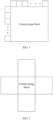
- FIG. 2 shows a positional relationship between the adjacent blocks and the current block in the above cases.
- the first prediction value is obtained based on the motion information of the current block; and the second prediction value is obtained based on the motion information of the adjacent block in a case that any one of the following conditions is met between the current block and the adjacent block.
- the prediction direction of the adjacent block is different from the prediction direction of the current block.
- the prediction direction of the adj acent block is the same as the prediction direction of the current block, but reference frames to which the prediction directions point are different.
- the prediction direction of the adj acent block is the same as the prediction direction of the current block, the reference frames to which the prediction directions point are the same, but an absolute value of a difference between a motion vector of the adj acent block and a motion vector of the current block is greater than a preset threshold.
- the above first and second prediction values are used to correct the prediction values of the boundary pixels of the current block.
- an embodiment of this application provides an inter-frame prediction method.
- the following is a detailed explanation of the inter-frame prediction method provided by some embodiments and their application scenarios in conjunction with the accompanying drawings.
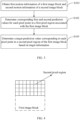
- FIG. 3 is a flowchart of an inter-frame prediction method provided by this application.
- the inter-frame prediction method provided in an embodiment includes the following steps: S101. Obtain first motion information of a first block and second motion information of a second block.
- the first block is a block to be encoded, and the second block is an encoded block adjacent to the first block; or the first block is a block to be decoded, and the second block is a decoded block adjacent to the first block.
- the first block is in inter-frame prediction mode, and the first and second blocks meet any one of the following conditions:
- the first motion information of the first block and the second motion information of the second block are obtained in a case that the first and second blocks meet any one of the above conditions.
- the first pixel region is adjacent to the first block, and the first pixel region may be part of the pixel region of the second block.
- the first pixel region is part of the pixel region of the second block.
- the first pixel region may not be part of the pixel region of the second block.
- motion information includes prediction direction, reference frame information, and motion vector.
- a first reference pixel point can be determined based on the first motion information, where the first reference pixel point is a reconstructed pixel point in the first reference frame located at a same position as the first pixel region; and then, based on the first reference pixel point, a reconstructed value of a pixel point in the first reference frame to which a first motion vector points is determined as a first prediction value.
- a second reference pixel point is determined based on the second motion information, where the second reference pixel point is a reconstructed pixel point in a second reference frame located at a same position as the first pixel region; and then, based on the second reference pixel point, a reconstructed value of a pixel point in the second reference frame to which a second motion vector points is determined as a second prediction value.
- the target information includes a first difference value and a second difference value, where the first difference value is a difference value determined based on a reconstructed value and the first prediction value for each pixel point in the first pixel region, and the second difference value is a second difference value determined based on a reconstructed value and the second prediction value for each pixel point in the first pixel region.
- the first difference value can be a sum of absolute values of differences between the first prediction value and reconstructed values for all pixel points
- the second difference value can be a sum of absolute values of differences between the second prediction value and reconstructed values for all pixel points.
- the first difference value is used to represent a motion mode of the first block
- the second difference value is used to represent a motion mode of the second block.
- the second pixel region is part of the pixel region of the first block, and each pixel point in the second pixel region is also referred to as a boundary pixel point.
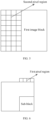
- FIG. 4 shows a position of the second pixel region in a case that the first pixel region is to the top of the first block
- FIG. 5 shows a position of the second pixel region in a case that the first pixel region is to the left of the first block.
- the first pixel region in the second block is adjacent to the second pixel region in the first block.
- the target prediction value for each boundary pixel point can be determined using the first and second difference values corresponding to the first pixel region.
- the target prediction value is a corrected prediction value of the boundary pixel point.
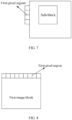
- the inter-frame prediction method provided in this embodiment of this application can also be used to generate prediction values of the boundary pixel points of each sub-block within an encoded or decoded block.
- the first pixel region consists of reconstructed pixels adjacent to the top of an encoded block corresponding to a column where the sub-block is located; or referring to FIG. 7 , the first pixel region consists of reconstructed pixels adjacent to the left of an encoded block corresponding to a row where the sub-block is located.
- the inter-frame prediction method according to this embodiment of this application has higher encoding performance for video than the traditional inter-frame prediction methods.
- Table 1 Y-Channel BD-Rate U-Channel BD-Rate V-Channel BD-Rate Test Category C Test Sequence 1 -0.08% -0.21% -0.11% Test Sequence 2 -0.30% -0.46% -0.23% Test Sequence 3 -0.05% 0.16% 0.05% Test Sequence 4 -0.21% -0.42% -0.21% Test Category D Test Sequence 5 -0.13% 0.43% -0.11% Test Sequence 6 -0.12% -0.36% 0.04% Test Sequence 7 -0.10% -0.05% 0.14% Test Sequence 8 -0.34% -0.67% -0.50% Average for Test Category C -0.16% -0.23% -0.13% Average for Test Category D -0.17% -0.16% -0.11%
- test sequences in Table 1 are encoded using the inter-frame prediction method provided in this embodiment of this application and compared with those encoded using traditional inter-frame prediction methods.
- the Y-channel BD-Rate, U-channel BD-Rate, and V-channel BD-Rate are parameters used for evaluating encoding performance, with a negative BD-Rate indicating higher encoding performance, and higher absolute value of the BD-Rate leads to greater gain brought by the encoding performance. It can be seen from Table 1 that the inter-frame prediction method provided in this embodiment of this application has higher encoding performance for video than traditional inter-frame prediction methods.
- first motion information of a first block and second motion information of a second block are obtained; first and second prediction values corresponding to each pixel point in a first pixel region associated with the first block are determined; and a target prediction value corresponding to each pixel point in a second pixel region of the first block is determined based on target information.
- first and second prediction values are determined, where the first prediction value is determined based on the first motion information of the first block, and the second prediction value is determined based on the second motion information of the second block; and then, target prediction values for boundary pixel points are determined based on the target information.
- the target information includes first and second difference values, and a magnitude relationship between the first and second difference values can represent a motion difference between the first and second blocks, thus fully considering the motion difference between the first and second blocks in the process of correcting the prediction values for the boundary pixel points, improving the accuracy of the corrected prediction values for the boundary pixel points, and thereby improving the efficiency of video encoding and decoding.
- the target information further includes a third difference value, where the third difference value is a difference value, corresponding to the first pixel region, determined based on the first and second prediction values.
- the third difference value is a difference value, corresponding to the first pixel region, determined based on the first and second prediction values.
- the first pixel region satisfies at least one of the following:
- the first pixel region is a pixel region encoded or decoded consisting of M1 rows and N1 columns adjacent to the top of the first block.
- the first pixel region is a pixel region encoded or decoded consisting of 1 row and 8 columns adjacent to the top of the first block.
- the first pixel region is a pixel region encoded or decoded consisting of M2 rows and N2 columns adjacent to the left of the first block.
- the first pixel region is a pixel region encoded or decoded consisting of 8 rows and 1 column adjacent to the left of the first block.
- the first pixel region can be an encoded or decoded pixel region consisting of some pixel points adjacent to the top of the first block or an encoded or decoded pixel region consisting of some pixel points adjacent to the left of the first block.
- the first pixel region is in an "L" shape.
- the first pixel region may be a part of the pixel region adjacent to the top of the first block, or a part of the pixel region adjacent to the left of the first block, or both the part of the pixel region adjacent to the top and the part of the pixel region adjacent to the left of the first block. Therefore, this has motion differences between the first block and adjacent blocks fully considered, improving the accuracy of the corrected prediction values of the boundary pixel points.
- the determining a target prediction value corresponding to each pixel point in a second pixel region of the first block based on target information includes:
- the target weight value combination includes at least one weight group, the weight group includes a first weight value and a second weight value, the first weight value corresponds to a third prediction value for each pixel point in the second pixel region, the second weight value corresponds to a fourth prediction value for each pixel point in the second pixel region, the third prediction value is determined based on the first motion information, and the fourth prediction value is determined based on the second motion information.
- motion information includes prediction direction, reference frame information, and motion vector.
- the first reference frame can be determined based on the first prediction direction and the first reference frame information in the first motion information, where the first reference frame is an encoded frame or decoded frame, and a position to which the first motion vector in the first reference frame points is determined, and a reconstructed value of a pixel point at that position is determined as the third prediction value.
- the second reference frame Based on the second prediction direction and second reference frame information in the second motion information, the second reference frame can be determined, where the second reference frame is an encoded frame or decoded frame, and a position to which the second motion vector in the second reference frame points is determined, and a reconstructed value of a pixel point at that position is determined as the fourth prediction value.
- the determining a target weight value combination based on the target information includes:
- target weight value combination is related to the magnitude relationship between the first difference value, the second difference value, and the third difference value.
- a preset first weight value combination in a case that the first difference value is greater than the second difference value and/or the third difference value, that is, the first difference value is not the smallest, can be determined as the target weight value combination.
- a preset second weight value combination in a case that the third difference value is less than the first difference value and the second difference value, that is, the third difference value is the smallest, can be determined as the target weight value combination.
- this embodiment does not limit the magnitude relationship between the weight values included in the first weight value combination and the second weight value combination.
- the first weight value combination can be the same as a fifth weight value combination in the following.
- the first weight value combination can be the same as a sixth weight value combination in the following.
- the second weight value combination can be the same as a seventh weight value combination in the following.
- the first block is a chrominance block, and the second pixel region consists of 1 row including 4 pixels
- the second weight value combination can be the same as an eighth weight value combination in the following.
- the third prediction value for the boundary pixel points is determined as the target prediction value.
- the fourth prediction value for the boundary pixel points is determined as the target prediction value.
- different weight value combinations are determined based on the magnitude relationship between the first difference value, the second difference value, and the third difference value, where the above magnitude relationship can reflect motion differences between the first and second blocks. Therefore, this has the motion differences between the first and second blocks fully considered in the process of using the weight value combination to correct the prediction values of the boundary pixel points, improving the accuracy of the corrected prediction values of the boundary pixel points, and thereby improving the efficiency of video encoding and decoding.
- the determining the target weight value combination based on the first difference value and the second difference value includes:
- the target weight value combination in a case that the third difference value is the smallest, can be further determined based on the magnitude relationship of the first difference value and the second difference value.
- the preset third weight value combination in a case that the third difference value is less than the first difference value and the second difference value, and the first difference value is less than the second difference value, that is, the third difference value is the smallest and the second difference value is the largest, the preset third weight value combination can be determined as the target weight value combination.
- the preset fourth weight value combination in a case that the third difference value is less than the first difference value and the second difference value, and the first difference value is greater than or equal to the second difference value, the preset fourth weight value combination can be determined as the target weight value combination.
- the third weight value combination can be the same as a twelfth weight value combination in the following.
- the third weight value combination can be the same as a thirteenth weight value combination in the following.
- the fourth weight value combination can be the same as a fourteenth weight value combination in the following.
- the fourth weight value combination can be the same as a fifteenth weight value combination in the following.
- this embodiment does not limit the magnitude relationship between the weight values included in the third weight value combination and the fourth weight value combination.
- different weight value combinations are determined based on the magnitude relationship between the first difference value, the second difference value, and the third difference value, where the above magnitude relationship can reflect motion differences between the first and second blocks. Therefore, this has the motion differences between the first and second blocks fully considered in the process of using the weight value combination to correct the prediction values of the boundary pixel points, improving the accuracy of the corrected prediction values of the boundary pixel points, and thereby improving the efficiency of video encoding and decoding.
- the target information further includes a type of the first block, and the determining a target weight value combination based on the target information includes:
- different target weight value combinations can also be set based on the type of the first block.
- a preset fifth weight value combination can be determined as the target weight value combination.
- an area of the chrominance block is one-fourth of an area of the luminance block; taking the size of the first picture luminance block as 8x8 as an example, the size of the first picture chrominance block is 4x4.
- the second pixel region is adjacent to the top boundary of the first block.
- the above fifth weight value combination can be:
- a preset sixth weight value combination can be determined as the target weight value combination.
- the number of weight values in the weight value combination corresponding to the chrominance block can be less than, greater than, or equal to the number of weight values in the weight value combination corresponding to the luminance block, which is not specifically limited here.
- the weight values in the weight value combination corresponding to the chrominance block can be part of the weight values in the weight value combination corresponding to the luminance block, or other numerical values, which are not specifically limited here.
- a preset seventh weight value combination in a case that the type of the first block is a luminance block, and the third difference value is the smallest, a preset seventh weight value combination can be determined as the target weight value combination.
- the above seventh weight value combination can be:
- a preset eighth weight value combination can be determined as the target weight value combination.
- a preset twelfth weight value combination can be determined as the target weight value combination.
- the above twelfth weight value combination can be:
- a preset thirteenth weight value combination can be determined as the target weight value combination.
- a preset fourteenth weight value combination can be determined as the target weight value combination.
- the above fourteenth weight value combination can be:
- the third difference value is the smallest, and the first difference value is greater than or equal to the second difference value
- a preset fifteenth weight value combination can be determined as the target weight value combination.
- the target weight value combinations corresponding to different types of the first block can be the same, that is, the above fifth weight value combination is the same as the sixth weight value combination, and the above seventh weight value combination is the same as the eighth weight value combination.
- different weight value combinations are based on the magnitude relationship between the first difference value, the second difference value, and the third difference value, where the above magnitude relationship can reflect the motion differences between the first and second blocks. Therefore, this has the motion differences between the first and second blocks fully considered in the process of using the weight value combination to correct the prediction values of the boundary pixel points, improving the accuracy of the corrected prediction values of the boundary pixel points, and thereby improving the efficiency of video encoding and decoding.
- the method further includes:
- Pixel5 represents the fifth prediction value
- w1 1 and w1 2 represent the weight combinations, optionally, w1 1 is 26, and w1 2 is 6
- Pixel 1 represents the first prediction value
- Pixel2 represents the second prediction value.
- the third difference value corresponding to the first pixel region is determined based on the fifth prediction value and the reconstructed value corresponding to each pixel point.
- the determining the third difference value corresponding to the first pixel region based on the fifth prediction value for each pixel point and the reconstructed value corresponding to each pixel point includes:
- an absolute value of a difference between the fifth prediction value and the reconstructed value of that pixel point is calculated, and the above absolute value is determined as a target absolute value corresponding to that pixel point; further, the sum of the target absolute values corresponding to all pixel points is determined as the third difference value corresponding to the first pixel region.
- an average of the target absolute values corresponding to all pixel points in the first pixel region is determined as the third difference value corresponding to the first pixel region.
- the target weight value combination can also be determined based solely on the first difference value and the second difference value:
- the determining a target weight value combination based on the target information includes:
- the third prediction value for the boundary pixel points is determined as the target prediction value.
- a preset ninth weight value combination can be determined as the target weight value combination.
- the above ninth weight value combination can be the same as the above fifth weight value combination.
- the above ninth weight value combination can be the same as the above sixth weight value combination.
- different weight value combinations are determined based on the magnitude relationship between the first difference value and the second difference value, where the above magnitude relationship can reflect the motion differences between the first and second blocks. Therefore, this has the motion differences between the first and second blocks fully considered in the process of using the weight value combination to correct the prediction values of the boundary pixel points, improving the accuracy of the corrected prediction values of the boundary pixel points, and thereby improving the efficiency of video encoding and decoding.
- the determining a target weight value combination based on the target information includes:
- the third prediction value for the boundary pixel points is determined as the target prediction value.
- the target weight value combination can be determined based on the first difference value and the second difference value.
- the target weight value combination is determined based on the first difference value and the second difference value.
- different weight value combinations are determined based on the magnitude relationship between the first difference value and the second difference value, where the above magnitude relationship can reflect the motion differences between the first and second blocks. Therefore, this has the motion differences between the first and second blocks fully considered in the process of using the weight value combination to correct the prediction values of the boundary pixel points, improving the accuracy of the corrected prediction values of the boundary pixel points, and thereby improving the efficiency of video encoding and decoding.
- the determining the target weight value combination based on the first difference value and the second difference value includes:
- a preset calculation formula is used for performing a calculation on the first difference value and the second difference value to obtain a calculation result, which is also referred to as a relationship parameter, and the calculation result is used to represent the difference between the first difference value and the second difference value.
- a first threshold is also preset, which is a non-negative number, optionally, the first threshold is 0. In a case that the calculation result is less than or equal to the first threshold, a preset tenth weight value combination can be determined as the target weight value combination.
- the above tenth weight value combination can be the same as the above fifth weight value combination.
- a preset eleventh weight value combination can be determined as the target weight value combination.
- the above eleventh weight value combination can be the same as the above seventh weight value combination.
- the above eleventh weight value combination can be the same as the above eighth weight value combination.
- the determining a target weight value combination based on the target information includes:
- the third prediction value for the boundary pixel points is determined as the target prediction value.
- a preset ninth weight value combination can be determined as the target weight value combination.
- the target weight value combination can be determined based on the first difference value and the second difference value.
- different weight value combinations are determined based on the magnitude relationship between the first difference value and the second difference value, where the above magnitude relationship can reflect the motion differences between the first and second blocks. Therefore, this has the motion differences between the first and second blocks fully considered in the process of using the weight value combination to correct the prediction values of the boundary pixel points, improving the accuracy of the corrected prediction values of the boundary pixel points, and thereby improving the efficiency of video encoding and decoding.
- the determining the target weight value combination based on the first difference value and the second difference value includes:
- a preset calculation formula is used for performing a calculation on the first difference value and the second difference value to obtain a calculation result, which is also referred to as a relationship parameter.
- a second threshold is also preset, which can be the same as the first threshold.
- a preset tenth weight value combination can be determined as the target weight value combination.
- the above tenth weight value combination can be the same as the fifth weight value combination.
- a preset eleventh weight value combination can be determined as the target weight value combination.
- the above eleventh weight value combination can be the same as the seventh weight value combination; in a case that the first block is a chrominance block, the above eleventh weight value combination can be the same as the eighth weight value combination.
- the determining a target weight value combination based on the target information includes:
- the first difference value and the second difference value can be calculated according to a preset calculation formula to obtain a calculation result.
- the above calculation formula can be subtraction or division operations, that is, the calculation result can be the result of subtraction between the first difference value and the second difference value, or the result of division between the first difference value and the second difference value, or another type of calculation method, which is not specifically limited in this embodiment.
- the target weight value combination is determined based on that calculation result.
- different weight value combinations are determined based on the calculation result between the first difference value and the second difference value, where the above magnitude relationship can reflect the motion differences between the first and second blocks. Therefore, this has the motion differences between the first and second blocks fully considered in the process of using the weight value combination to correct the prediction values of the boundary pixel points, improving the accuracy of the corrected prediction values of the boundary pixel points, and thereby improving the efficiency of video encoding and decoding.
- the determining the target weight value combination based on the calculation result includes:
- a third threshold, a fourth threshold, and a fifth threshold are preset, all of which are non-negative numbers, and the third threshold is less than the fifth threshold, and the fifth threshold is less than the fourth threshold.
- the third prediction value for the boundary pixel points is determined as the target prediction value.
- a preset ninth weight value combination is determined as the target weight value combination.
- the above ninth weight value combination can be the same as the above fifth weight value combination; in a case that the first block is a chrominance block, the above ninth weight value combination can be the same as the above sixth weight value combination.
- a preset tenth weight value combination is determined as the target weight value combination.
- the above tenth weight value combination can be the same as the above fifth weight value combination.
- a preset eleventh weight value combination is determined as the target weight value combination.
- the above eleventh weight value combination can be the same as the seventh weight value combination; in a case that the first block is a chrominance block, the above eleventh weight value combination can be the same as the eighth weight value combination.
- the inter-frame prediction method provided in the embodiments of this application can be executed by an inter-frame prediction apparatus.
- the inter-frame prediction apparatus performing the inter-frame prediction method is used as an example to describe the inter-frame prediction apparatus provided in the embodiments of this application.
- the inter-frame prediction apparatus 1000 includes:
- the second determination module 1003 includes:
- the determination unit is specifically configured to:
- the determination unit is further specifically configured to:
- the determination unit is further specifically configured to:
- the inter-frame prediction apparatus 1000 further includes a third determination module, and the third determination module is configured to:
- the third determination module is further specifically configured to:
- the determination unit is further specifically configured to:
- the determination unit is further specifically configured to:
- the determination unit is further specifically configured to:
- the determination unit is further specifically configured to:
- the determination unit is further specifically configured to:
- the determination unit is further specifically configured to:
- the determination unit is further specifically configured to:
- first and second prediction values are determined, where the first prediction value is determined based on first motion information of a first block, and the second prediction value is determined based on second motion information of a second block; and then, target prediction values for boundary pixel points are determined based on target information.
- the target information includes first and second difference values, and a magnitude relationship between the first and second difference values can represent a motion difference between the first and second blocks, thus fully considering the motion difference between the first and second blocks in the process of correcting the prediction values for the boundary pixel points, improving the accuracy of the corrected prediction values for the boundary pixel points, and thereby improving the efficiency of video encoding and decoding.
- the inter-frame prediction apparatus is capable of implementing all the processes realized by the method embodiment of FIG. 3 and achieving the same technical effects. To avoid repetition, details are not described herein again.
- the inter-frame prediction apparatus in the embodiments of this application may be an electronic device, for example an electronic device having an operating system, or may be a component of an electronic device, for example, an integrated circuit or a chip.
- the electronic device may be a terminal or a device other than terminals.
- the terminal may include but is not limited to the types of the terminal listed above, and the other devices may be servers, network attached storage (Network Attached Storage, NAS), or the like, which are not specifically limited in the embodiments of this application.
- NAS Network Attached Storage
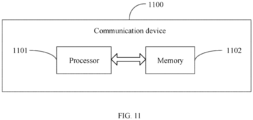
- an embodiment of this application further provides a communication device 1100 including a processor 1101 and a memory 1102, where the memory 1102 stores a program or instructions capable of running on the processor 1101.
- the communication device 1100 is a terminal, and when the program or instructions are executed by the processor 1101, the steps of the foregoing embodiment of the inter-frame prediction method are implemented, with the same technical effects achieved.
- An embodiment of this application further provides a terminal, including a processor and a communication interface.
- the processor is configured to execute the following operations:
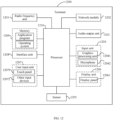
- FIG. 12 is a schematic diagram of a hardware structure of a terminal implementing the embodiments of this application.
- the terminal 1200 includes but is not limited to components such as a radio frequency unit 1201, a network module 1202, an audio output unit 1203, an input unit 1204, a sensor 1205, a display unit 1206, a user input unit 1207, an interface unit 1208, a memory 1209, and a processor 1210.
- the terminal 1200 may further include a power supply (for example, a battery) supplying power to the components.
- the power supply may be logically connected to the processor 1210 via a power management system, so that functions such as charge management, discharge management, and power consumption management are implemented by using the power management system.
- the structure of the terminal shown in FIG. 12 does not constitute a limitation on the terminal.
- the terminal may include more or fewer components than illustrated in the figure, or combine some components, or have a different component arrangement. Details are not described herein.
- the input unit 1204 may include a graphics processing unit (Graphics Processing Unit, GPU) 12041 and a microphone 12042.
- the graphics processing unit 12041 processes picture data of a static picture or a video obtained by a picture capture apparatus (such as a camera) in a video capture mode or a picture capture mode.
- the display unit 1206 may include a display panel 12061.
- the display panel 12061 may be configured in a form of a liquid crystal display, an organic light-emitting diode display, or the like.
- the user input unit 1207 includes at least one of a touch panel 12071 and other input devices 12072.
- the touch panel 12071 is also referred to as a touchscreen.
- the touch panel 12071 may include two parts: a touch detection apparatus and a touch controller.
- the other input devices 12072 may include but are not limited to a physical keyboard, a function button (such as a volume control button or a power button), a trackball, a mouse, and a joystick. Details are not described now.
- the radio frequency unit 1201 receives downlink data from a network-side device and transfers the data to the processor 1210 for processing; and the radio frequency unit 1201 can additionally send uplink data to the network-side device.
- the radio frequency unit 1201 includes but is not limited to an antenna, an amplifier, a transceiver, a coupler, a low noise amplifier, a duplexer, and the like.
- the memory 1209 may be configured to store software programs or instructions and various data.
- the memory 1209 may mainly include a first storage region storing a program or instructions and a second storage region storage data.
- the first storage region may store an operating system, an application program or instructions required by at least one function (for example, sound play function or picture play function), and the like.
- the memory 1209 may include a volatile memory or a non-volatile memory, or may include a volatile memory and a non-volatile memory.
- the non-volatile memory may be a read-only memory (Read-Only Memory, ROM), a programmable read-only memory (Programmable ROM, PROM), an erasable programmable read-only memory (Erasable PROM, EPROM), an electrically erasable programmable read-only memory (Electrically EPROM, EEPROM), or a flash memory.
- ROM Read-Only Memory
- PROM programmable read-only memory
- Erasable PROM Erasable PROM
- EPROM electrically erasable programmable read-only memory
- EEPROM electrically erasable programmable read-only memory
- the volatile memory may be a random access memory (Random Access Memory, SRAM), a static RAM (Static RAM, SRAM), a dynamic random access memory (Dynamic RAM, DRAM), a synchronous dynamic random access memory (Synchronous DRAM, SDRAM), a double data rate synchronous dynamic random access memory (Double Data Rate SDRAM, DDRSDRAM), an enhanced synchronous dynamic random access memory (Enhanced SDRAM, ESDRAM), a synchronous link dynamic random access memory (Synch link DRAM, SLDRAM), and a direct rambus random access memory (Direct Rambus RAM, DRRAM).
- SRAM Random Access Memory
- SRAM Random Access Memory
- static RAM Static RAM, SRAM
- DRAM dynamic random access memory
- DRAM synchronous dynamic random access memory
- SDRAM double data rate synchronous dynamic random access memory
- Enhanced SDRAM, ESDRAM enhanced synchronous dynamic random access memory
- Synch link DRAM, SLDRAM synchronous link dynamic random access memory
- Direct Rambus RAM Direct Rambus RAM
- the processor 1210 may include one or more processing units.
- the processor 1210 may integrate an application processor and a modem processor.
- the application processor primarily processes operations involving an operating system, user interface, application program, or the like.
- the modem processor primarily processes radio communication signals, for example, being a baseband processor. It can be understood that a modem processor may alternatively skip being integrated in the processor 1210.
- the processor 1210 is configured to:
- first and second prediction values are determined, where the first prediction value is determined based on first motion information of a first block, and the second prediction value is determined based on second motion information of a second block; and then, target prediction values for boundary pixel points are determined based on target information.
- the target information includes first and second difference values, and a magnitude relationship between the first and second difference values can represent a motion difference between the first and second blocks, thus fully considering the motion difference between the first and second blocks in the process of correcting the prediction values for the boundary pixel points, improving the accuracy of the corrected prediction values for the boundary pixel points, and thereby improving the efficiency of video encoding and decoding.
- An embodiment of this application also provides a readable storage medium having a program or instructions stored thereon.
- the program or instructions are executed by the processor, the processes in the foregoing inter-frame prediction method embodiment are implemented with the same technical effects achieved. To avoid repetition, details are not described herein again.
- the processor is a processor in the terminal described in the foregoing embodiment.
- the readable storage medium includes a computer-readable storage medium such as a computer read-only memory ROM, a random access memory RAM, a magnetic disk, or an optical disc.
- An embodiment of this application also provides a chip including a processor and a communication interface.
- the communication interface is coupled with the processor, and the processor is configured to execute the program or instructions to implement the processes in the foregoing inter-frame prediction method embodiment with the same technical effects achieved. To avoid repetition, details are not described herein again.
- the chip mentioned in an embodiment of this application may also be referred to as a system-level chip, a system chip, a chip system, a system-on-chip, or the like.
- An embodiment of this application further provides a computer program/program product, where the computer program/program product is stored in a readable storage medium, and the computer program/program product is executed by at least one processor to implement the processes of the foregoing inter-frame prediction method embodiments, with the same technical effects achieved. To avoid repetition, details are not described herein again.
- the technical solutions of this application essentially, or the part contributing to the prior art may be implemented in a form of a computer software product.
- the computer software product is stored in a storage medium (for example, a ROM/RAM, a magnetic disk, or an optical disc), and includes several instructions for instructing a terminal (which may be a mobile phone, a computer, a server, an air conditioner, a network device, or the like) to perform the method described in the embodiments of this application.
Landscapes
- Engineering & Computer Science (AREA)
- Multimedia (AREA)
- Signal Processing (AREA)
- Compression Or Coding Systems Of Tv Signals (AREA)
Applications Claiming Priority (3)
| Application Number | Priority Date | Filing Date | Title |
|---|---|---|---|
| CN202111566761 | 2021-12-20 | ||
| CN202210233750.8A CN116320428A (zh) | 2021-12-20 | 2022-03-10 | 帧间预测方法及终端 |
| PCT/CN2022/138759 WO2023116510A1 (zh) | 2021-12-20 | 2022-12-13 | 帧间预测方法及终端 |
Publications (2)
| Publication Number | Publication Date |
|---|---|
| EP4456533A1 true EP4456533A1 (de) | 2024-10-30 |
| EP4456533A4 EP4456533A4 (de) | 2025-04-09 |
Family
ID=86789275
Family Applications (1)
| Application Number | Title | Priority Date | Filing Date |
|---|---|---|---|
| EP22909824.9A Pending EP4456533A4 (de) | 2021-12-20 | 2022-12-13 | Zwischenrahmenvorhersageverfahren und endgerät |
Country Status (6)
| Country | Link |
|---|---|
| US (2) | US12537959B2 (de) |
| EP (1) | EP4456533A4 (de) |
| JP (2) | JP7799066B2 (de) |
| KR (1) | KR20240113804A (de) |
| CN (1) | CN116320428A (de) |
| WO (1) | WO2023116510A1 (de) |
Family Cites Families (14)
| Publication number | Priority date | Publication date | Assignee | Title |
|---|---|---|---|---|
| JP2015106747A (ja) * | 2013-11-28 | 2015-06-08 | 富士通株式会社 | 動画像符号化装置、動画像符号化方法及び動画像符号化用コンピュータプログラム |
| WO2017035831A1 (en) | 2015-09-06 | 2017-03-09 | Mediatek Inc. | Adaptive inter prediction |
| FI20175006A1 (en) * | 2017-01-03 | 2019-02-15 | Nokia Technologies Oy | Video and image coding using wide-angle intra-prediction |
| CN116886897A (zh) * | 2017-01-16 | 2023-10-13 | 世宗大学校产学协力团 | 影像解码/编码方法以及传送比特流的方法 |
| JP2020145486A (ja) | 2017-07-28 | 2020-09-10 | シャープ株式会社 | 動画像符号化装置及び動画像復号装置 |
| WO2019124191A1 (ja) | 2017-12-18 | 2019-06-27 | パナソニック インテレクチュアル プロパティ コーポレーション オブ アメリカ | 符号化装置、復号装置、符号化方法及び復号方法 |
| CN110121073B (zh) * | 2018-02-06 | 2021-07-09 | 浙江大学 | 一种双向帧间预测方法及装置 |
| CN110337811A (zh) * | 2018-02-14 | 2019-10-15 | 北京大学 | 运动补偿的方法、装置和计算机系统 |
| EP3531701A1 (de) * | 2018-02-26 | 2019-08-28 | InterDigital VC Holdings, Inc. | Verfahren und vorrichtung für generalisierte überlagerte blockbewegungskompensation |
| CN117560505A (zh) * | 2018-03-29 | 2024-02-13 | 华为技术有限公司 | 一种双向帧间预测方法及装置 |
| US11051036B2 (en) * | 2018-07-14 | 2021-06-29 | Mediatek Inc. | Method and apparatus of constrained overlapped block motion compensation in video coding |
| WO2020056767A1 (zh) * | 2018-09-21 | 2020-03-26 | Oppo广东移动通信有限公司 | 视频图像分量的预测方法、装置及计算机存储介质 |
| CN117834872A (zh) | 2019-04-16 | 2024-04-05 | 松下电器(美国)知识产权公司 | 编码装置、解码装置、编码方法、解码方法和记录介质 |
| EP4510579A4 (de) * | 2022-04-12 | 2026-01-21 | Guangdong Oppo Mobile Telecommunications Corp Ltd | Videocodierungsverfahren und -vorrichtung, videodecodierungsverfahren und -vorrichtung sowie vorrichtung, system und speichermedium |
-
2022
- 2022-03-10 CN CN202210233750.8A patent/CN116320428A/zh active Pending
- 2022-12-13 KR KR1020247020794A patent/KR20240113804A/ko active Pending
- 2022-12-13 EP EP22909824.9A patent/EP4456533A4/de active Pending
- 2022-12-13 JP JP2024535913A patent/JP7799066B2/ja active Active
- 2022-12-13 WO PCT/CN2022/138759 patent/WO2023116510A1/zh not_active Ceased
-
2024
- 2024-06-19 US US18/748,006 patent/US12537959B2/en active Active
-
2025
- 2025-09-30 US US19/345,688 patent/US20260025511A1/en active Pending
- 2025-12-25 JP JP2025282739A patent/JP2026053645A/ja active Pending
Also Published As
| Publication number | Publication date |
|---|---|
| WO2023116510A1 (zh) | 2023-06-29 |
| US20240340428A1 (en) | 2024-10-10 |
| CN116320428A (zh) | 2023-06-23 |
| US12537959B2 (en) | 2026-01-27 |
| JP2024544391A (ja) | 2024-11-29 |
| US20260025511A1 (en) | 2026-01-22 |
| EP4456533A4 (de) | 2025-04-09 |
| JP7799066B2 (ja) | 2026-01-14 |
| JP2026053645A (ja) | 2026-03-25 |
| KR20240113804A (ko) | 2024-07-23 |
Similar Documents
| Publication | Publication Date | Title |
|---|---|---|
| KR101620933B1 (ko) | 제스쳐 인식 메커니즘을 제공하는 방법 및 장치 | |
| EP2736011A1 (de) | Verfahren, Vorrichtung und Computerprogrammprodukt zur Erzeugung von superaufgelösten Bildern | |
| WO2013001143A2 (en) | Method, apparatus and computer program product for generating panorama images | |
| US20150262332A1 (en) | Image processing method and electronic device supporting the same | |
| CN103250166A (zh) | 用于提供手部检测的方法和装置 | |
| CN108198146A (zh) | 一种降噪方法、设备和计算机可读存储介质 | |
| CN112199149A (zh) | 界面渲染方法、装置及电子设备 | |
| CN104202448A (zh) | 一种解决移动终端摄像头拍照亮度不均的系统及其方法 | |
| JP6155349B2 (ja) | デコンボリューション画像において色収差を減じる方法、装置及びコンピュータプログラム製品 | |
| EP4456533A1 (de) | Zwischenrahmenvorhersageverfahren und endgerät | |
| US20240223802A1 (en) | Intra-frame prediction method and terminal | |
| US12532000B2 (en) | Inter-frame prediction method and terminal | |
| US20250337892A1 (en) | List construction method and terminal | |
| US20250267279A1 (en) | Chromaticity component prediction method and apparatus, and device | |
| US20240340464A1 (en) | Loop filtering method and terminal | |
| US20060018554A1 (en) | Block-based motion estimation method | |
| CN117915097A (zh) | 帧内预测方法、装置及设备 | |
| US20260113431A1 (en) | Multi-reference line intra prediction method and apparatus, electronic device, and readable storage medium | |
| CN115884263B (zh) | 组合数处理方法、序列确定方法、装置、设备和存储介质 | |
| CN117576300A (zh) | 一种3d渲染方法、装置、设备及可读存储介质 | |
| JP2006060522A (ja) | デジアニメーション計算仕事量の圧縮方法 |
Legal Events
| Date | Code | Title | Description |
|---|---|---|---|
| STAA | Information on the status of an ep patent application or granted ep patent |
Free format text: STATUS: THE INTERNATIONAL PUBLICATION HAS BEEN MADE |
|
| PUAI | Public reference made under article 153(3) epc to a published international application that has entered the european phase |
Free format text: ORIGINAL CODE: 0009012 |
|
| STAA | Information on the status of an ep patent application or granted ep patent |
Free format text: STATUS: REQUEST FOR EXAMINATION WAS MADE |
|
| 17P | Request for examination filed |
Effective date: 20240626 |
|
| AK | Designated contracting states |
Kind code of ref document: A1 Designated state(s): AL AT BE BG CH CY CZ DE DK EE ES FI FR GB GR HR HU IE IS IT LI LT LU LV MC ME MK MT NL NO PL PT RO RS SE SI SK SM TR |
|
| DAV | Request for validation of the european patent (deleted) | ||
| DAX | Request for extension of the european patent (deleted) | ||
| A4 | Supplementary search report drawn up and despatched |
Effective date: 20250310 |
|
| RIC1 | Information provided on ipc code assigned before grant |
Ipc: H04N 19/583 20140101ALI20250304BHEP Ipc: H04N 19/176 20140101ALI20250304BHEP Ipc: H04N 19/167 20140101ALI20250304BHEP Ipc: H04N 19/105 20140101ALI20250304BHEP Ipc: H04N 19/139 20140101AFI20250304BHEP |