EP4456496A1 - Slice-konfigurationsverfahren und -system, server und speichermedium - Google Patents
Slice-konfigurationsverfahren und -system, server und speichermedium Download PDFInfo
- Publication number
- EP4456496A1 EP4456496A1 EP22909950.2A EP22909950A EP4456496A1 EP 4456496 A1 EP4456496 A1 EP 4456496A1 EP 22909950 A EP22909950 A EP 22909950A EP 4456496 A1 EP4456496 A1 EP 4456496A1
- Authority
- EP
- European Patent Office
- Prior art keywords
- slice
- segw
- configuration information
- ipsec
- configuration
- Prior art date
- Legal status (The legal status is an assumption and is not a legal conclusion. Google has not performed a legal analysis and makes no representation as to the accuracy of the status listed.)
- Pending
Links
- 238000000034 method Methods 0.000 title claims abstract description 48
- 238000013507 mapping Methods 0.000 claims abstract description 12
- 230000003993 interaction Effects 0.000 claims description 12
- 230000008859 change Effects 0.000 claims description 11
- 230000011664 signaling Effects 0.000 claims description 10
- 238000004590 computer program Methods 0.000 claims description 6
- 238000004891 communication Methods 0.000 claims description 5
- 230000003068 static effect Effects 0.000 claims description 4
- 230000006870 function Effects 0.000 description 7
- 238000002955 isolation Methods 0.000 description 6
- 230000008569 process Effects 0.000 description 5
- 238000010586 diagram Methods 0.000 description 4
- 244000118350 Andrographis paniculata Species 0.000 description 2
- 238000013461 design Methods 0.000 description 2
- 238000007726 management method Methods 0.000 description 2
- 238000012986 modification Methods 0.000 description 2
- 230000004048 modification Effects 0.000 description 2
- 230000002093 peripheral effect Effects 0.000 description 2
- 238000013459 approach Methods 0.000 description 1
- 230000005540 biological transmission Effects 0.000 description 1
- 238000012217 deletion Methods 0.000 description 1
- 230000037430 deletion Effects 0.000 description 1
- 238000011161 development Methods 0.000 description 1
- 238000005538 encapsulation Methods 0.000 description 1
- 238000005516 engineering process Methods 0.000 description 1
- 230000003287 optical effect Effects 0.000 description 1
- 238000012545 processing Methods 0.000 description 1
Images

Classifications
-
- H—ELECTRICITY
- H04—ELECTRIC COMMUNICATION TECHNIQUE
- H04L—TRANSMISSION OF DIGITAL INFORMATION, e.g. TELEGRAPHIC COMMUNICATION
- H04L9/00—Cryptographic mechanisms or cryptographic arrangements for secret or secure communications; Network security protocols
- H04L9/40—Network security protocols
-
- H—ELECTRICITY
- H04—ELECTRIC COMMUNICATION TECHNIQUE
- H04L—TRANSMISSION OF DIGITAL INFORMATION, e.g. TELEGRAPHIC COMMUNICATION
- H04L41/00—Arrangements for maintenance, administration or management of data switching networks, e.g. of packet switching networks
- H04L41/08—Configuration management of networks or network elements
- H04L41/0803—Configuration setting
- H04L41/0806—Configuration setting for initial configuration or provisioning, e.g. plug-and-play
-
- H—ELECTRICITY
- H04—ELECTRIC COMMUNICATION TECHNIQUE
- H04L—TRANSMISSION OF DIGITAL INFORMATION, e.g. TELEGRAPHIC COMMUNICATION
- H04L41/00—Arrangements for maintenance, administration or management of data switching networks, e.g. of packet switching networks
- H04L41/08—Configuration management of networks or network elements
- H04L41/0893—Assignment of logical groups to network elements
-
- H—ELECTRICITY
- H04—ELECTRIC COMMUNICATION TECHNIQUE
- H04L—TRANSMISSION OF DIGITAL INFORMATION, e.g. TELEGRAPHIC COMMUNICATION
- H04L41/00—Arrangements for maintenance, administration or management of data switching networks, e.g. of packet switching networks
- H04L41/08—Configuration management of networks or network elements
- H04L41/0895—Configuration of virtualised networks or elements, e.g. virtualised network function or OpenFlow elements
-
- H—ELECTRICITY
- H04—ELECTRIC COMMUNICATION TECHNIQUE
- H04L—TRANSMISSION OF DIGITAL INFORMATION, e.g. TELEGRAPHIC COMMUNICATION
- H04L41/00—Arrangements for maintenance, administration or management of data switching networks, e.g. of packet switching networks
- H04L41/40—Arrangements for maintenance, administration or management of data switching networks, e.g. of packet switching networks using virtualisation of network functions or resources, e.g. SDN or NFV entities
-
- H—ELECTRICITY
- H04—ELECTRIC COMMUNICATION TECHNIQUE
- H04L—TRANSMISSION OF DIGITAL INFORMATION, e.g. TELEGRAPHIC COMMUNICATION
- H04L63/00—Network architectures or network communication protocols for network security
- H04L63/02—Network architectures or network communication protocols for network security for separating internal from external traffic, e.g. firewalls
- H04L63/0272—Virtual private networks
-
- H—ELECTRICITY
- H04—ELECTRIC COMMUNICATION TECHNIQUE
- H04L—TRANSMISSION OF DIGITAL INFORMATION, e.g. TELEGRAPHIC COMMUNICATION
- H04L63/00—Network architectures or network communication protocols for network security
- H04L63/04—Network architectures or network communication protocols for network security for providing a confidential data exchange among entities communicating through data packet networks
- H04L63/0428—Network architectures or network communication protocols for network security for providing a confidential data exchange among entities communicating through data packet networks wherein the data content is protected, e.g. by encrypting or encapsulating the payload
- H04L63/0485—Networking architectures for enhanced packet encryption processing, e.g. offloading of IPsec packet processing or efficient security association look-up
-
- H—ELECTRICITY
- H04—ELECTRIC COMMUNICATION TECHNIQUE
- H04W—WIRELESS COMMUNICATION NETWORKS
- H04W12/00—Security arrangements; Authentication; Protecting privacy or anonymity
- H04W12/03—Protecting confidentiality, e.g. by encryption
-
- H—ELECTRICITY
- H04—ELECTRIC COMMUNICATION TECHNIQUE
- H04W—WIRELESS COMMUNICATION NETWORKS
- H04W76/00—Connection management
- H04W76/10—Connection setup
- H04W76/12—Setup of transport tunnels
-
- H—ELECTRICITY
- H04—ELECTRIC COMMUNICATION TECHNIQUE
- H04L—TRANSMISSION OF DIGITAL INFORMATION, e.g. TELEGRAPHIC COMMUNICATION
- H04L63/00—Network architectures or network communication protocols for network security
- H04L63/16—Implementing security features at a particular protocol layer
- H04L63/164—Implementing security features at a particular protocol layer at the network layer
Definitions
- the present invention relates to the technical field of communications, and in particular, to a method and system for slice configuration, server and storage medium.
- the TS23.501 protocol of the 3rd Generation Partnership Project (3GPP) defines the service flow and configuration mode of the network slice in details, and the introduction of network slices allows different logical networks to be segmented on the same hardware network.
- the core of the network slice is isolation of resources, and has been widely applied in fields such as industrial control networks and virtual operators, and is an important technical means for the 5th Generation communication network (5G) to support the development of new services.
- 5G 5th Generation communication network
- Network slices relate to network elements such as a User Equipment (UE), a radio access network, a bearer network and a core network, and network slice identifiers corresponding to network elements and devices in different regions are also different, and isolation techniques used are also different.
- UE User Equipment
- the 3GPP has defined a signaling flow format of a network slice from a terminal side to a core network in detail, but due to the difference in deployment scenarios, the 3GPP has no detailed description about how to protect data flows of different slices or how to isolate data flows of different slices. There are many traditional ways to protect data in the network.
- IPsec Media Access Control Security
- TLS Transport Layer Security
- the deployment method recommended by 3GPP is that the base station or edge access network element establishes an IPsec tunnel through the IPsec protocol and the Security GateWay (SeGW) deployed on the core network side, to protect the security of data from the base station or edge access network element to the core network.
- the traditional SeGWs are all physical devices. When slices change dynamically according to the service requirements, the physical form-based SeGW cannot adapt well to the expansion of current services due to limitations in location and configuration. For example, for low-latency application scenarios where it is necessary to move the core network to the edge cloud of the access network, it is not very convenient to redeploy a SeGW device in the edge cloud and activate it synchronously.
- the 5G core network employs virtualization technology where an orchestrator dynamically creates virtual network elements according to service requirements.
- the Security Gateway (SeGW) is also virtualized, it can be orchestrated with the core network elements under the same orchestrator.
- This approach addresses the issues of flexibility in the deployment and configuration of physical SeGWs.
- IPsec tunnels require cooperation between the base station or edge access network element and the SeGW.
- the core network side SeGW supports dynamic orchestration. It will be very difficult for the base station or the edge access network element to adapt to the core network side dynamic SeGW orchestration policy.
- most of the base stations or edge access network elements are proprietary equipment and do not support virtualization orchestration.
- the base stations or access network elements need to be manually configured to cooperate with the dynamic allocation of the SeGW on the core network side.
- manual configuration consumes a long time and has certain requirements for operators, and cannot implement end-to-end isolation and protection of the slice data in the IPsec tunnel quickly.
- the present invention provides a method and system for slice configuration, server and storage medium.
- the purpose is to automatically establish an IPsec tunnel with a SeGW of a core network slice, and map slice configuration information of a network slice to a corresponding IPsec tunnel, thereby realizing end-to-end isolation and protection of network slice data in an IPsec tunnel.
- An embodiment of the present invention provides a slice configuration method, applied to a base station or an edge access network element.
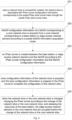
- the method includes: when a network slice is successfully created, associating, through a preset Internet Protocol Security (IPsec) slice tunnel index, the network slice with IPsec tunnel configuration information corresponding to the preset IPsec slice tunnel index; acquiring, from a core network corresponding to the base station or the edge access network element, Security GateWay (SeGW) configuration information of a SeGW corresponding to a core network slice according to a preset SeGW information acquisition mode; creating an IPsec tunnel between the base station or edge access network element and the SeGW according to the IPsec tunnel configuration information and the SeGW configuration information; and acquiring slice configuration information of the network slice, and mapping the slice configuration information to the IPsec tunnel to complete configuration of the network slice.
- IPsec Internet Protocol Security
- An embodiment of the present invention further provides a slice configuration system, applied to a base station or an edge access network element.
- the system includes: an association module, an acquisition module, a creation module and a mapping module.
- the association module is configured to associate, when a network slice is successfully created, the network slice with IPsec tunnel configuration information corresponding to the preset IPsec slice tunnel index.
- the acquisition module is configured to acquire, from a core network corresponding to the base station or the edge access network element, Security GateWay (SeGW) configuration information of a SeGW corresponding to a core network slice according to a preset SeGW information acquisition mode.
- the creation module is configured to creat an IPsec tunnel between the base station or edge access network element and the SeGW according to the IPsec tunnel configuration information and the SeGW configuration information.
- the mapping module is configured to acquire slice configuration information of the network slice, and mapping the slice configuration information to the IPsec tunnel to complete configuration of the network slice.
- An embodiment of the present invention further provides a server, including: at least one processor; and a memory in communication connection with the at least one processor.
- the memory stores instructions which can be executed by the at least one processor, wherein the instructions are executed by the at least one processor, so that the at least one processor can execute the described slice configuration method.
- An embodiment of the present invention further provides a computer readable storage medium, storing a computer program, wherein the computer program implements the slice configuration method when being executed by a processor.
- the application environment of the embodiments of the present invention is as shown in figure 1 , and the embodiments of the present invention can be applied to a base station, especially a 5G base station; or is applied to an edge access network element, wherein the edge access network element may be an IT device having a part of base station functions, such as a Mobile Edge Computing (MEC) or a base station local shunt gateway, and an IPsec function is a protocol module of the base station or the edge access network element; a device connected to a base station or an edge access network element is a core network, especially a 5G core network; these core networks can be deployed in central data centers, as well as in edge clouds or industry application centers.
- the SeGW is a gateway device deployed before the core network and mainly responsible for the IPsec function of the side core network.
- the orchestrator is a controller for arranging and managing the dynamic resources of the virtualized core network.
- One embodiment of the present invention relates to a slice configuration method. As shown in Fig. 2 , the method includes: Step 101: when a network slice is successfully created, the network slice is associated with IPsec tunnel configuration information corresponding to a preset IPsec slice tunnel index through the preset IPsec slice tunnel index.
- a base station or an edge access network element after successfully creating a network slice, acquires a slice identifier of the network slice, wherein the slice identifier can uniquely represent the network slice; by filling the slice identifier into the specified position of the preset IPsec slice tunnel index, the network slice can be associated with the IPsec tunnel configuration information corresponding to the preset IPsec slice tunnel index.
- the IPsec tunnel configuration information may be created after the network slice is created, or may be preset before the network slice is created.
- Step 102 SeGW configuration information of a SeGW corresponding to a core network slice is acquired from a core network corresponding to a base station or edge access network element according to a preset SeGW information acquisition mode.
- the SeGW corresponding to the core network slice may be physically deployed or logically deployed.
- the reason for the need to acquire the configuration information of the Security Gateway (SeGW) is that the IPsec configuration information is not defined within the 3GPP's service signaling, the 3GPP defines the Security Gateway (SeGW) and the IPsec tunnels of the base stations or edge access network elements as external devices or modules. Therefore, when the network slices have dynamic changes, it is necessary to be able to obtain information of the peer SeGW.
- the preset SeGW information acquisition mode in the embodiment of the present invention mainly includes: a static configuration acquisition mode, a primary SeGW acquisition mode, a service signaling acquisition mode, an orchestrator acquisition mode or a domain name acquisition mode.
- the SeGW configuration information of the SeGW corresponding to the core network slice may be acquired from the core network corresponding to the base station or the edge access network element through any one of the described SeGW information acquisition modes.
- the static configuration acquisition mode includes: a user configuring SeGW configuration information of a security gateway (SeGW) corresponding to a core network slice, and synchronizing same to a base station or an edge access network element;
- a primary SeGW acquisition mode includes: acquiring SeGW configuration information from a designated primary SeGW in a core network through a Configuration or Notify load of an IKE protocol of a customized IPsec;
- the service signaling acquisition mode includes: acquiring the SeGW configuration information by receiving service signaling sent by the core network, wherein the core network configures, in the service signaling, the SeGW configuration information of the SeGW corresponding to the core network slice;
- the orchestrator acquisition mode includes: acquiring the SeGW configuration information through interaction information sent by the orchestrator of the core network, wherein the SeGW configuration information is configured in the orchestrator, and the interaction information sent by the orchestrator carries the SeGW configuration information;
- the domain name acquisition mode includes: acquiring, through domain name configuration, an IP address corresponding to a SeGW corresponding
- the acquired SeGW configuration information includes information such as a SeGW address, SeGW service flow information and a SeGW algorithm set
- the SeGW algorithm set refers to some algorithms which are supported by the SeGW and process the service flow, such as an encryption algorithm, a decryption algorithm and an encapsulation algorithm, which is not limited herein; if the SeGW has not configured an algorithm set, the default algorithm set is used by default.
- Step 103 an IPsec tunnel is created between the base station or edge access network element and the SeGW according to the IPsec tunnel configuration information and the SeGW configuration information.
- the IPsec tunnel configuration information refers to information which can be used for describing the created IPsec tunnel, and after the SeGW configuration information is acquired, an IPsec tunnel can be created between a base station or an edge access network element and a security gateway (SeGW) according to the IPsec tunnel configuration information and the SeGW configuration information.
- SeGW security gateway
- Step 104 slice configuration information of the network slice is acquired, and the slice configuration information is mapped to the IPsec tunnel to complete the configuration of the network slice.
- the slice configuration information includes information such as a slice identifier, an IP address of a core network element corresponding to the slice, slice service flow information, and slice service quality requirements, after the slice configuration information is acquired, the slice configuration information is mapped to an IPsec tunnel associated with the slice identifier according to the slice identifier, actually, mapping refers to filling slice configuration information in parameter information of the IPsec tunnel, in this way, the IPsec tunnel can process the service flow of the network slice, and transmit the service flow to the SeGW.
- mapping refers to filling slice configuration information in parameter information of the IPsec tunnel, in this way, the IPsec tunnel can process the service flow of the network slice, and transmit the service flow to the SeGW.
- the network slice in the process of configuring a slice at a base station or an access network element side, when a network slice is successfully created, the network slice is associated with IPsec tunnel configuration information corresponding to the IPsec slice tunnel index by means of a preset IPsec slice tunnel index; SeGW configuration information of a SeGW corresponding to a core network slice is acquired from a core network corresponding to a base station or edge access network element according to a preset SeGW information acquisition mode; an IPsec tunnel is created between the base station or edge access network element and the core network according to the IPsec tunnel configuration information and the SeGW configuration information; slice configuration information of the network slice is acquired, and the slice configuration information is mapped to the IPsec tunnel to complete the configuration of the network slice; by actively interacting with the SeGW corresponding to the core network slice, an IPsec tunnel can be automatically established with the SeGW of the core network slice, and the slice configuration information of the network slice can be mapped to the corresponding IPsec tunnel, thereby quickly realizing end-to-end isolation and protection of network slice data in
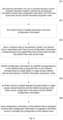
- One embodiment of the present invention relates to a slice configuration method. As shown in Fig. 3 , the method includes:
- the state of the network slice and/or core network slice can be monitored; once a network slice and/or core network slice is changed (the change can be deletion, termination, or other service changes), the change in the network slice and/or core network slice will be recorded, then the same change is made to the IPsec tunnel at the network layer according to the recorded change in the network slice and/or core network slice, and it is also necessary to release the resources of the base station or edge access network element or core network that are occupied before the network slice and/or core network slice is changed.
- the same change is made to the IPsec tunnel as the network slice according to changes in the network slice or core network slice, the consistency of a network slice or a core network slice and an IPsec tunnel is always maintained, and resources of the base station or the access network element at an edge or a core network which are occupied before the change of the network slice or the core network slice are released, improving the resource utilization rate of the base station or the edge access network element or the core network.
- One embodiment of the present invention relates to a slice configuration method. As shown in Fig. 4 , the method includes:
- this step is substantially the same as Step 104 in the embodiment of the present invention, which will not be described repeatedly here.
- interaction with the user can also be carried out through a human-computer interaction interface, so as to acquire the requirements of the user for a network slice and the specific SeGW information acquisition mode, so that the network slice created in the present invention can satisfy the service requirements of the user.
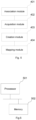
- FIG. 5 is a schematic diagram of the slice configuration system of the present embodiment, including an association module 401, an acquisition module 402, a creation module 403 and a mapping module 404.
- the association module 401 is configured to associate, when a network slice is successfully created, the network slice with IPsec tunnel configuration information corresponding to the preset IPsec slice tunnel index through the preset IPsec slice tunnel index.
- the acquisition module 402 is configured to acquire, from a core network corresponding to a base station or edge access network element, SeGW configuration information of a SeGW corresponding to a core network slice according to a preset security gateway SeGW information acquisition mode.
- the creation module 403 is configured to creat an IPsec tunnel between the base station or edge access network element and the SeGW according to the IPsec tunnel configuration information and the SeGW configuration information.
- the mapping module 404 is configured to acquire slice configuration information of the network slice, and map the slice configuration information to the IPsec tunnel to complete the configuration of the network slice.
- this embodiment is an apparatus embodiment corresponding to the foregoing method embodiments, and this embodiment may be implemented in combination with any one of the foregoing method embodiments.
- the related technical details mentioned in any one of the foregoing embodiments are still valid in this embodiment, and the details will not be repeated here to reduce repetition. Accordingly, the related technical details mentioned in this embodiment can also be applied to the foregoing embodiments.
- this system embodiment is mainly directed to the description of the slice configuration method provided in a method embodiment on a software implementation level, and implementation of the method embodiment further depends on support of hardware.
- functions of related modules may be deployed on a processor, so that the processor runs to implement corresponding functions.
- related data generated by running may be stored in a memory for subsequent checking and usage.
- each module involved in this embodiment is a logic module.
- a logic unit may be a physical unit or a part of a physical unit, or may be implemented by a combination of a plurality of physical units.
- units that are not closely related to the technical problem to be solved in the present invention are not introduced in this embodiment, but this does not mean that there are no other units in this embodiment.
- the server includes: at least one processor 501; a memory 502 in communication connection with the at least one processor 501.
- the memory 502 stores instructions which can be executed by the at least one processor 501, wherein the instructions are executed by the at least one processor 501, so that the at least one processor 501 can execute the slice configuration method in the forgoing embodiment.
- the memory and the processor are connected by a bus.
- the bus may include any number of interconnected buses and bridges.
- the bus connects various circuits of one or more processors and the memory together.
- the bus may also connect a peripheral device, a voltage regulator, a power management circuit, and other circuits, which are well known in the art and therefore will not be detailed herein.
- a bus interface provides an interface between the bus and a transceiver.
- the transceiver may be one element or a plurality of elements, for example, a plurality of receivers and transmitters, and provides a unit for communicating with various other apparatus over a transmission medium.
- Data processed by the processor is transmitted over a wireless medium through an antenna.
- the antenna further receives data and transmits the data to the processor.
- the processor is responsible for managing the bus and general processing and may also provide various functions including timing, peripheral interfaces, voltage regulation, power management and other control functions.
- the memory may be configured to store data used by the processor in performing operations.
- Another embodiment of the present invention relates to a computer readable storage medium, which stores a computer program.
- the computer program implements the foregoing method embodiments when being executed by the processor.
- the program is stored in a storage medium, and includes several instructions to cause a device (which may be a single chip microcomputer, a chip, etc.) or a processor to perform all or some of the operations of the methods described in the embodiments of the present invention.
- the foregoing storage medium includes: any medium that can store program code, such as a USB flash drive, a removable hard disk, a read-only memory (ROM), a Random Access Memory (RAM), a magnetic disk, or an optical disk.
Landscapes
- Engineering & Computer Science (AREA)
- Computer Networks & Wireless Communication (AREA)
- Signal Processing (AREA)
- Computer Security & Cryptography (AREA)
- Computing Systems (AREA)
- Computer Hardware Design (AREA)
- General Engineering & Computer Science (AREA)
- Mobile Radio Communication Systems (AREA)
Applications Claiming Priority (2)
| Application Number | Priority Date | Filing Date | Title |
|---|---|---|---|
| CN202111572338.0A CN116366445A (zh) | 2021-12-21 | 2021-12-21 | 切片配置方法、系统、服务器和存储介质 |
| PCT/CN2022/140095 WO2023116638A1 (zh) | 2021-12-21 | 2022-12-19 | 切片配置方法、系统、服务器和存储介质 |
Publications (2)
| Publication Number | Publication Date |
|---|---|
| EP4456496A1 true EP4456496A1 (de) | 2024-10-30 |
| EP4456496A4 EP4456496A4 (de) | 2025-04-09 |
Family
ID=86901341
Family Applications (1)
| Application Number | Title | Priority Date | Filing Date |
|---|---|---|---|
| EP22909950.2A Pending EP4456496A4 (de) | 2021-12-21 | 2022-12-19 | Slice-konfigurationsverfahren und -system, server und speichermedium |
Country Status (4)
| Country | Link |
|---|---|
| EP (1) | EP4456496A4 (de) |
| JP (1) | JP2025501058A (de) |
| CN (1) | CN116366445A (de) |
| WO (1) | WO2023116638A1 (de) |
Family Cites Families (8)
| Publication number | Priority date | Publication date | Assignee | Title |
|---|---|---|---|---|
| DE112017003741T5 (de) * | 2016-09-22 | 2019-05-09 | Intel IP Corporation | Drahtlose lokalnetzwerkintegration mit internetsicherheitsprotokolltunnel |
| EP3621343B1 (de) * | 2018-04-09 | 2021-06-09 | LG Electronics Inc. | Verfahren und smf zur unterstützung von dienstgüte |
| CN110798437B (zh) * | 2018-08-03 | 2023-02-21 | 中兴通讯股份有限公司 | 一种数据保护方法、装置及计算机存储介质 |
| CN111147273B (zh) * | 2018-11-06 | 2023-03-24 | 中兴通讯股份有限公司 | 一种数据安全的实现方法及相关设备 |
| CN114845294B (zh) * | 2018-12-14 | 2026-01-30 | 维沃移动通信有限公司 | 数据传送的保障方法及通信设备 |
| US10798638B2 (en) * | 2019-02-15 | 2020-10-06 | Netsia, Inc. | Apparatus and method for controller and slice-based security gateway for 5G |
| CN113766534B (zh) * | 2020-06-04 | 2024-01-09 | Oppo广东移动通信有限公司 | 网络切片映射方法及相关装置 |
| CN113472595B (zh) * | 2021-08-10 | 2023-04-18 | 中国联合网络通信集团有限公司 | 核心网子网切片创建方法、功能实体和切片管理系统 |
-
2021
- 2021-12-21 CN CN202111572338.0A patent/CN116366445A/zh active Pending
-
2022
- 2022-12-19 EP EP22909950.2A patent/EP4456496A4/de active Pending
- 2022-12-19 WO PCT/CN2022/140095 patent/WO2023116638A1/zh not_active Ceased
- 2022-12-19 JP JP2024531099A patent/JP2025501058A/ja active Pending
Also Published As
| Publication number | Publication date |
|---|---|
| WO2023116638A1 (zh) | 2023-06-29 |
| EP4456496A4 (de) | 2025-04-09 |
| CN116366445A (zh) | 2023-06-30 |
| JP2025501058A (ja) | 2025-01-17 |
Similar Documents
| Publication | Publication Date | Title |
|---|---|---|
| EP3843440B1 (de) | Netzwerkschichtauswahlverfahren und -vorrichtung | |
| US11297601B2 (en) | Resource allocation method and orchestrator for network slicing in the wireless access network | |
| EP3585095B1 (de) | Verfahren und vorrichtung zur steuerung von qos, smf, upf, ue, pcf, und an | |
| EP3595244B1 (de) | Verfahren, einheit und system zur verwaltung von netzwerk-slices | |
| EP3609161B1 (de) | Netzwerk-slice-erzeugungsverfahren und -vorrichtung und kommunikationssystem | |
| CN112368977B (zh) | 配置网络切片 | |
| US20210320845A1 (en) | Network function nf management method and nf management device | |
| CN109600769B (zh) | 通信方法及装置 | |
| WO2019137516A1 (zh) | 网络切片部署方法及其装置 | |
| US20190230725A1 (en) | Communication Method And Communications Apparatus | |
| US12040979B2 (en) | Communications method, apparatus, and system | |
| CN109120444B (zh) | 云资源管理方法、处理器以及存储介质 | |
| CA3066912A1 (en) | Integrated access system, configuration method, and baseband unit | |
| CN106134141A (zh) | 一种更新网络服务描述器nsd的方法及装置 | |
| CN113839995A (zh) | 跨域资源纳管系统、方法、设备及存储介质 | |
| EP3261299A1 (de) | Verfahren und vorrichtung zur einrichtung einer netzwerkdienstinstanz | |
| CN107347202B (zh) | 一种终端在网络切片架构下的初始接入方法及装置 | |
| US12477324B2 (en) | Device management system for radio access network with interface to hyperscale services portal | |
| US20230056070A1 (en) | Communication system, server, and communication method and apparatus | |
| JP7820419B2 (ja) | 外部接続機器の通信方法、装置、電子機器及び記憶媒体 | |
| EP3712768A1 (de) | Verwaltung von diensten in einem edge-computing-system | |
| US20230199499A1 (en) | Core network node, mec server, external server, communication system, control method, program, and non-transitory recording medium having recorded thereon program | |
| EP3376711B1 (de) | Verwaltungsverfahren und vorrichtung zur verwaltung der übertragung von befehlen zur automatischen vnf-skalierungsfunktion | |
| WO2023116638A1 (zh) | 切片配置方法、系统、服务器和存储介质 | |
| CN117836761A (zh) | 管理数据隔离 |
Legal Events
| Date | Code | Title | Description |
|---|---|---|---|
| STAA | Information on the status of an ep patent application or granted ep patent |
Free format text: STATUS: THE INTERNATIONAL PUBLICATION HAS BEEN MADE |
|
| PUAI | Public reference made under article 153(3) epc to a published international application that has entered the european phase |
Free format text: ORIGINAL CODE: 0009012 |
|
| STAA | Information on the status of an ep patent application or granted ep patent |
Free format text: STATUS: REQUEST FOR EXAMINATION WAS MADE |
|
| 17P | Request for examination filed |
Effective date: 20240625 |
|
| AK | Designated contracting states |
Kind code of ref document: A1 Designated state(s): AL AT BE BG CH CY CZ DE DK EE ES FI FR GB GR HR HU IE IS IT LI LT LU LV MC ME MK MT NL NO PL PT RO RS SE SI SK SM TR |
|
| REG | Reference to a national code |
Ref country code: DE Ref legal event code: R079 Free format text: PREVIOUS MAIN CLASS: H04L0041089300 Ipc: H04L0009400000 |
|
| DAV | Request for validation of the european patent (deleted) | ||
| DAX | Request for extension of the european patent (deleted) | ||
| A4 | Supplementary search report drawn up and despatched |
Effective date: 20250310 |
|
| RIC1 | Information provided on ipc code assigned before grant |
Ipc: H04W 12/03 20210101ALI20250304BHEP Ipc: H04W 76/12 20180101ALI20250304BHEP Ipc: H04L 41/40 20220101ALI20250304BHEP Ipc: H04L 41/0895 20220101ALI20250304BHEP Ipc: H04L 41/0893 20220101ALI20250304BHEP Ipc: H04L 41/0806 20220101ALI20250304BHEP Ipc: H04L 9/40 20220101AFI20250304BHEP |