EP4455175A1 - Polymer compound and application thereof - Google Patents
Polymer compound and application thereof Download PDFInfo
- Publication number
- EP4455175A1 EP4455175A1 EP22911925.0A EP22911925A EP4455175A1 EP 4455175 A1 EP4455175 A1 EP 4455175A1 EP 22911925 A EP22911925 A EP 22911925A EP 4455175 A1 EP4455175 A1 EP 4455175A1
- Authority
- EP
- European Patent Office
- Prior art keywords
- ethyl
- group
- trimethylammonio
- ethyl phosphate
- acryloyloxy
- Prior art date
- Legal status (The legal status is an assumption and is not a legal conclusion. Google has not performed a legal analysis and makes no representation as to the accuracy of the status listed.)
- Pending
Links
Images

Classifications
-
- A—HUMAN NECESSITIES
- A61—MEDICAL OR VETERINARY SCIENCE; HYGIENE
- A61K—PREPARATIONS FOR MEDICAL, DENTAL OR TOILETRY PURPOSES
- A61K8/00—Cosmetics or similar toiletry preparations
- A61K8/02—Cosmetics or similar toiletry preparations characterised by special physical form
- A61K8/0216—Solid or semisolid forms
- A61K8/022—Powders; Compacted Powders
-
- C—CHEMISTRY; METALLURGY
- C08—ORGANIC MACROMOLECULAR COMPOUNDS; THEIR PREPARATION OR CHEMICAL WORKING-UP; COMPOSITIONS BASED THEREON
- C08F—MACROMOLECULAR COMPOUNDS OBTAINED BY REACTIONS ONLY INVOLVING CARBON-TO-CARBON UNSATURATED BONDS
- C08F230/00—Copolymers of compounds having one or more unsaturated aliphatic radicals, each having only one carbon-to-carbon double bond, and containing phosphorus, selenium, tellurium or a metal
- C08F230/04—Copolymers of compounds having one or more unsaturated aliphatic radicals, each having only one carbon-to-carbon double bond, and containing phosphorus, selenium, tellurium or a metal containing a metal
- C08F230/08—Copolymers of compounds having one or more unsaturated aliphatic radicals, each having only one carbon-to-carbon double bond, and containing phosphorus, selenium, tellurium or a metal containing a metal containing silicon
-
- A—HUMAN NECESSITIES
- A61—MEDICAL OR VETERINARY SCIENCE; HYGIENE
- A61K—PREPARATIONS FOR MEDICAL, DENTAL OR TOILETRY PURPOSES
- A61K8/00—Cosmetics or similar toiletry preparations
- A61K8/18—Cosmetics or similar toiletry preparations characterised by the composition
- A61K8/19—Cosmetics or similar toiletry preparations characterised by the composition containing inorganic ingredients
- A61K8/29—Titanium; Compounds thereof
-
- A—HUMAN NECESSITIES
- A61—MEDICAL OR VETERINARY SCIENCE; HYGIENE
- A61K—PREPARATIONS FOR MEDICAL, DENTAL OR TOILETRY PURPOSES
- A61K8/00—Cosmetics or similar toiletry preparations
- A61K8/18—Cosmetics or similar toiletry preparations characterised by the composition
- A61K8/72—Cosmetics or similar toiletry preparations characterised by the composition containing organic macromolecular compounds
- A61K8/81—Cosmetics or similar toiletry preparations characterised by the composition containing organic macromolecular compounds obtained by reactions involving only carbon-to-carbon unsaturated bonds
- A61K8/8141—Compositions of homopolymers or copolymers of compounds having one or more unsaturated aliphatic radicals, each having only one carbon-to-carbon double bond, and at least one being terminated by only one carboxyl radical, or of salts, anhydrides, esters, amides, imides or nitriles thereof; Compositions of derivatives of such polymers
- A61K8/8152—Homopolymers or copolymers of esters, e.g. (meth)acrylic acid esters; Compositions of derivatives of such polymers
-
- A—HUMAN NECESSITIES
- A61—MEDICAL OR VETERINARY SCIENCE; HYGIENE
- A61K—PREPARATIONS FOR MEDICAL, DENTAL OR TOILETRY PURPOSES
- A61K8/00—Cosmetics or similar toiletry preparations
- A61K8/18—Cosmetics or similar toiletry preparations characterised by the composition
- A61K8/72—Cosmetics or similar toiletry preparations characterised by the composition containing organic macromolecular compounds
- A61K8/84—Cosmetics or similar toiletry preparations characterised by the composition containing organic macromolecular compounds obtained by reactions otherwise than those involving only carbon-carbon unsaturated bonds
- A61K8/89—Polysiloxanes
-
- A—HUMAN NECESSITIES
- A61—MEDICAL OR VETERINARY SCIENCE; HYGIENE
- A61Q—SPECIFIC USE OF COSMETICS OR SIMILAR TOILETRY PREPARATIONS
- A61Q1/00—Make-up preparations; Body powders; Preparations for removing make-up
-
- A—HUMAN NECESSITIES
- A61—MEDICAL OR VETERINARY SCIENCE; HYGIENE
- A61Q—SPECIFIC USE OF COSMETICS OR SIMILAR TOILETRY PREPARATIONS
- A61Q17/00—Barrier preparations; Preparations brought into direct contact with the skin for affording protection against external influences, e.g. sunlight, X-rays or other harmful rays, corrosive materials, bacteria or insect stings
- A61Q17/04—Topical preparations for affording protection against sunlight or other radiation; Topical sun tanning preparations
-
- A—HUMAN NECESSITIES
- A61—MEDICAL OR VETERINARY SCIENCE; HYGIENE
- A61Q—SPECIFIC USE OF COSMETICS OR SIMILAR TOILETRY PREPARATIONS
- A61Q19/00—Preparations for care of the skin
-
- C—CHEMISTRY; METALLURGY
- C08—ORGANIC MACROMOLECULAR COMPOUNDS; THEIR PREPARATION OR CHEMICAL WORKING-UP; COMPOSITIONS BASED THEREON
- C08F—MACROMOLECULAR COMPOUNDS OBTAINED BY REACTIONS ONLY INVOLVING CARBON-TO-CARBON UNSATURATED BONDS
- C08F220/00—Copolymers of compounds having one or more unsaturated aliphatic radicals, each having only one carbon-to-carbon double bond, and only one being terminated by only one carboxyl radical or a salt, anhydride ester, amide, imide or nitrile thereof
- C08F220/02—Monocarboxylic acids having less than ten carbon atoms; Derivatives thereof
- C08F220/10—Esters
- C08F220/12—Esters of monohydric alcohols or phenols
- C08F220/16—Esters of monohydric alcohols or phenols of phenols or of alcohols containing two or more carbon atoms
- C08F220/18—Esters of monohydric alcohols or phenols of phenols or of alcohols containing two or more carbon atoms with acrylic or methacrylic acids
-
- C—CHEMISTRY; METALLURGY
- C08—ORGANIC MACROMOLECULAR COMPOUNDS; THEIR PREPARATION OR CHEMICAL WORKING-UP; COMPOSITIONS BASED THEREON
- C08F—MACROMOLECULAR COMPOUNDS OBTAINED BY REACTIONS ONLY INVOLVING CARBON-TO-CARBON UNSATURATED BONDS
- C08F230/00—Copolymers of compounds having one or more unsaturated aliphatic radicals, each having only one carbon-to-carbon double bond, and containing phosphorus, selenium, tellurium or a metal
- C08F230/02—Copolymers of compounds having one or more unsaturated aliphatic radicals, each having only one carbon-to-carbon double bond, and containing phosphorus, selenium, tellurium or a metal containing phosphorus
-
- C—CHEMISTRY; METALLURGY
- C08—ORGANIC MACROMOLECULAR COMPOUNDS; THEIR PREPARATION OR CHEMICAL WORKING-UP; COMPOSITIONS BASED THEREON
- C08F—MACROMOLECULAR COMPOUNDS OBTAINED BY REACTIONS ONLY INVOLVING CARBON-TO-CARBON UNSATURATED BONDS
- C08F230/00—Copolymers of compounds having one or more unsaturated aliphatic radicals, each having only one carbon-to-carbon double bond, and containing phosphorus, selenium, tellurium or a metal
- C08F230/04—Copolymers of compounds having one or more unsaturated aliphatic radicals, each having only one carbon-to-carbon double bond, and containing phosphorus, selenium, tellurium or a metal containing a metal
- C08F230/08—Copolymers of compounds having one or more unsaturated aliphatic radicals, each having only one carbon-to-carbon double bond, and containing phosphorus, selenium, tellurium or a metal containing a metal containing silicon
- C08F230/085—Copolymers of compounds having one or more unsaturated aliphatic radicals, each having only one carbon-to-carbon double bond, and containing phosphorus, selenium, tellurium or a metal containing a metal containing silicon the monomer being a polymerisable silane, e.g. (meth)acryloyloxy trialkoxy silanes or vinyl trialkoxysilanes
-
- C—CHEMISTRY; METALLURGY
- C08—ORGANIC MACROMOLECULAR COMPOUNDS; THEIR PREPARATION OR CHEMICAL WORKING-UP; COMPOSITIONS BASED THEREON
- C08L—COMPOSITIONS OF MACROMOLECULAR COMPOUNDS
- C08L43/00—Compositions of homopolymers or copolymers of compounds having one or more unsaturated aliphatic radicals, each having only one carbon-to-carbon double bond, and containing boron, silicon, phosphorus, selenium, tellurium or a metal; Compositions of derivatives of such polymers
- C08L43/02—Homopolymers or copolymers of monomers containing phosphorus
-
- A—HUMAN NECESSITIES
- A61—MEDICAL OR VETERINARY SCIENCE; HYGIENE
- A61K—PREPARATIONS FOR MEDICAL, DENTAL OR TOILETRY PURPOSES
- A61K2800/00—Properties of cosmetic compositions or active ingredients thereof or formulation aids used therein and process related aspects
- A61K2800/40—Chemical, physico-chemical or functional or structural properties of particular ingredients
- A61K2800/41—Particular ingredients further characterized by their size
- A61K2800/413—Nanosized, i.e. having sizes below 100 nm
-
- A—HUMAN NECESSITIES
- A61—MEDICAL OR VETERINARY SCIENCE; HYGIENE
- A61K—PREPARATIONS FOR MEDICAL, DENTAL OR TOILETRY PURPOSES
- A61K2800/00—Properties of cosmetic compositions or active ingredients thereof or formulation aids used therein and process related aspects
- A61K2800/40—Chemical, physico-chemical or functional or structural properties of particular ingredients
- A61K2800/60—Particulates further characterized by their structure or composition
- A61K2800/61—Surface treated
- A61K2800/614—By macromolecular compounds
Definitions
- the present invention relates to a polymer compound capable of modifying the surface of inorganic nano powder through chemical bonding to the surface and application thereof, and more specifically, a polymer compound which readily and rapidly reacts with and chemically bonds to the surface of inorganic nanoparticle powder, and thus can modify the surface of the inorganic nanoparticle powder and form a polymer coating layer, and also can be prepared economically and efficiently, and application thereof.
- Inorganic nanoparticle powder generally used in cosmetic industry is mainly titanium dioxide (TiO 2 ) or zinc oxide (ZnO). These inorganic nanoparticle powders are used mainly as pigments in tone-up cream formulation that brightens skin tone or inorganic sunscreens in formulation of sunscreen products.
- TiO 2 titanium dioxide
- ZnO zinc oxide
- These inorganic nanoparticle powders are used mainly as pigments in tone-up cream formulation that brightens skin tone or inorganic sunscreens in formulation of sunscreen products.
- Recently global warming caused by ozone layer destruction and skin exposure to ultraviolet rays are rapidly increasing.
- UV-blocking products use a dispersion formulation system based on inorganic nanoparticles and organic UV absorber to protect skin from UV rays.
- UV-blocking products must have effective UV-blocking capabilities and at the same time have light feel, smooth application, and clean finish.
- inorganic nanoparticle powder with high density and strong inter-particle interaction is a key material with ultraviolet scattering ability, it has a negative effect on all other performances. Accordingly, attempts are being made to improve skin stability and dispersibility and enhance product performance through modification of the surface properties of inorganic nanoparticle powder. There are efforts to improve dispersion instability through organic coating or silica coating, but the fundamental problem is not solved. In order to improve the essential properties of inorganic materials, new coating technologies based on organic materials are needed, but coating technologies that satisfy both productivity and product performance are undeveloped.
- inorganic nano powder TiO 2 , ZnO
- approaches using materials such as fatty acids, silicone, amino acids, fluorine compounds, etc. have been attempted, but these materials have some problems in use, such as the following.
- fatty acid coating oil resistance to sebum is reduced, causing shine and discoloration, and in case of silicone coating, it feels dry and rough.
- amino acid coating water/oil resistance is reduced and a heavy feeling occurs, and in case of fluorine compound coating, the make-up appears stuffy or unnatural, resulting in reduced formability.
- attempts are being made to develop new inorganic nano powder coating technology.
- the purpose of the present invention is to provide a polymer compound which readily and rapidly reacts with and chemically bonds to the surface of inorganic nanoparticle powder used in cosmetic formulation, and thus can modify the surface of the inorganic nanoparticle powder and form a polymer coating layer, and also can be prepared economically and efficiently, and application thereof.
- the present invention provides a polymer compound having a structure represented by the following formula 1: wherein
- the present invention provides an inorganic nano powder having a surface to which the polymer compound of the present invention is chemically bonded.
- the present invention provides a powder formulation comprising the inorganic nano powder of the present invention.
- the polymer compound of the present invention readily and rapidly reacts with and chemically bonds to the surface of inorganic nanoparticle powder used in cosmetic formulation, and thus can modify the surface of the inorganic nanoparticle powder and form a polymer coating layer, and the polymer production process is very economical since it requires neither expensive process nor complicated multi-step production processes, contributing to improved productivity.
- the polymer compound of the present invention has a structure represented by the following formula 1: wherein
- R 1 may be a group containing phosphorylcholine-like phospholipid structure represented by the following formula (2): wherein
- the alkyl group may be C1-C20 alkyl group or C3-C20 cycloalkyl group
- the alkoxy group may be C1-C20 alkoxy group or C3-C20 cycloalkoxy group
- the acid functional group may be carboxylic acid group
- the aliphatic hydrocarbon group may be saturated or unsaturated aliphatic hydrocarbon group.
- the functional group substituted for the C1-C20 aliphatic hydrocarbon group or the C6-C20 aromatic hydrocarbon group may be alkoxy group, aryloxy group, ether group, halogen group, isocyanate group, lactone group, hydroxy group, or acid functional group.
- W is 0 to 1, and more concretely, it may be 0.01 or more, 0.05 or more, or 0.1 or more, and also may be 1 or less, 0.99 or less, 0.95 or less, 0.9 or less, 0.85 or less, or 0.8 or less, but it is not limited thereto.
- X is 0 to 1, and more concretely, it may be 0.01 or more, 0.05 or more, or 0.1 or more, and also may be 1 or less, 0.9 or less, 0.8 or less, 0.7 or less, 0.6 or less, or 0.5 or less, but it is not limited thereto.
- Y is 0 to 1, and more concretely, it may be 0.01 or more, 0.05 or more, or 0.1 or more, and also may be 1 or less, 0.95 or less, 0.9 or less, 0.85 or less, or 0.8 or less, but it is not limited thereto.
- Z is 0 to 1, and more concretely, it may be 0.01 or more, 0.02 or more, or 0.05 or more, and also may be 1 or less, 0.9 or less, 0.8 or less, 0.7 or less, 0.6 or less, or 0.5 or less, but it is not limited thereto.
- the unsaturated phospholipid monomer providing the repeat unit represented by the mole fraction W may be one or more selected from the group consisting of, for example, 2-((meth)acryloyloxy)ethyl-2'-(trimethylammonio)ethyl phosphate, 3-((meth)acryloyloxy)propyl-2'-(trimethylammonio)ethyl phosphate, 4-((meth)acryloyloxy)butyl-2'-(trimethylammonio)ethyl phosphate, 5-((meth)acryloyloxy)pentyl-2'-(trimethylammonio)ethyl phosphate, 6-((meth)acryloyloxy)hexyl-2'-(trimethylammonio)ethyl phosphate, 2-((meth)acryloyloxy)ethyl-2'-(triethylammonio)ethyl phosphate, 2-((meth)acryloyloxy)e
- R 2 may be independently selected from the group consisting of, for example, hydrogen, methyl, ethyl, propyl, butyl, pentyl, hexyl, cyclohexyl, heptyl, octyl, nonyl, decyl, lauryl, tetradecyl, hexadecyl, isobornyl, dicyclopentanyl, dicyclopentenyl, benzyl, 2-methoxyethyl, 2-ethoxyethyl, succinyl, monoalkyl succinate, monoalkyl fumarate, glycidyl, 3,4-epoxybutyl, 2,3-epoxycyclohexyl, 3,4-epoxycyclohexylmethyl , 3-methyloxetane-3-methyl, 3-ethyloxetane-3-methyl, NH 2 , NHCH 3 , allyl, 2-
- R 3 may be independently selected from the group consisting of, for example, phenyl, p-methylphenyl, and p-acetoxyphenyl.
- R 4 may be, for example, methylene group or ethylene group.
- R 5 , R 6 and R 7 may be each independently selected from the group consisting of, for example, hydrogen, methyl, ethyl, n-propyl, isopropyl, n-butyl, tert-butyl, phenyl, naphthyl, vinyl, methacryloxymethyl, 2-methacryloxyethyl, 3-methacryloxypropyl, acryloxymethyl, 2-acryloxyethyl, 3-acryloxypropyl, 3-glycidyloxypropyl, 2-epoxycyclohexylethyl, 3-epoxycyclohexylpropyl, and O-R 12 (where R 12 is hydrogen, methyl, ethyl, or propyl).
- the polymer compound of the present invention can be prepared by any one of several commonly known polymerization methods such as radical polymerization, cationic polymerization, anionic polymerization, condensation polymerization, etc. and in terms of the easiness and economics of preparation of polymer compounds, it is preferable to use radical polymerization.
- radical polymerization it can be prepared by mixing monomers with a polymerization solvent, heating the mixture to an appropriate temperature according to the half-life temperature of the thermal initiator used, and then removing oxygen under nitrogen atmosphere.
- polymerization time and temperature may vary depending on the type of thermal initiator used.
- a radical polymerization initiator a generally known thermal initiator can be used, and more concretely, 2,2'-azobisisobutyronitrile, 2,2'-azobis-2,4-dimethyl valeronitrile, 2,2'-azobis-(4-methoxy-2,4-dimethylvaleronitrile), benzoyl peroxide, lauroyl peroxide, t-butyl peroxypivalate, 1,1'-bis-(bis-t-butylperoxy)cyclohexane, 1,1'-azobis(cyclohexane-1-carbonitrile), 4,4'-azobis(4-cyanovaleric acid), dimethyl-2,2'-azobis(2-methylpropionate), 2,2'-azobis[2-methyl-N-(2-hydroxyethyl)propionamide, 2,2'-azobis(N-butyl-2-methyl
- chain transfer agent when preparing the polymer compound, generally known chain transfer agent can be used to control the weight average molecular weight (Mw) of the polymer, and more concretely, 1-dodecanethiol, octadecanethiol, pentaerythol tetrakis(3-mercaptobutyrate), 1,3,5-tris(3-mercaptobutyroethyl)-1,3,5-triazine -2,4,6-trione, thioglycolic acid, 3-mercaptopropyl trimethoxysilane, 3-mercaptopropyl triethoxysilane, 3-mercaptopropyl dimethoxysilane, 3-mercaptopropyl diethoxysilane, 2-mercaptopropionic acid, 3-mercaptopropionic acid, etc. may be used.
- Mw weight average molecular weight
- the weight average molecular weight (Mw, g/mol) of the polymer compound of the present invention may be 1,000 to 200,000 g/mol, and the polydispersity index (PDI) may be 1.0 to 20, and more concretely, the weight average molecular weight (Mw) may be 5,000 to 100,000 g/mol, the polydispersity index (PDI) may be 1.0 to 10, and even more concretely, the weight average molecular weight (Mw) may be 10,000 to 50,000 g/mol, and the polydispersity index (PDI) may be 1.0 to 5.0, but it is not limited thereto.
- the polymer compound of the present invention may be a homopolymer or a random copolymer that is not restricted to the arrangement order of each polymer unit, but it is not limited thereto.
- an appropriate solvent can be used in the polymerization of a polymer compound.
- the solvent may be alcohol such as methanol, ethanol, etc.; ether such as dichloroethyl ether, n-butyl ether, diisoamyl ether, methylphenyl ether, tetrahydrofuran, etc.; glycol ether such as ethylene glycol monomethyl ether, ethylene glycol monoethyl ether, etc.; cellosolve acetate such as methyl cellosolve acetate, ethyl cellosolve acetate, diethyl cellosolve acetate, etc.; carbitol such as methyl ethyl carbitol, diethyl carbitol, diethylene glycol monomethyl ether, diethylene glycol monoethyl ether, diethylene glycol dimethyl ether, diethylene glycol methyl ethyl
- the polymer compound of the present invention readily and rapidly reacts with and chemically bonds to the surface of inorganic nanoparticle powder used in cosmetic formulation, and thus can modify the surface of the inorganic nanoparticle powder and form a polymer coating layer.
- the present invention provides an inorganic nano powder having a surface to which the polymer compound of the present invention is chemically bonded.
- the inorganic nano powder may be an inorganic nano material having a coating layer of the polymer compound of the present invention on its surface (for example, titanium dioxide, zinc oxide, mica, sericite, kaolin, silicic anhydride, boron nitride, or talc with an average particle size of 100 nm or less).
- a coating layer of the polymer compound of the present invention for example, titanium dioxide, zinc oxide, mica, sericite, kaolin, silicic anhydride, boron nitride, or talc with an average particle size of 100 nm or less.
- the present invention provides a powder formulation comprising the inorganic nano powder of the present invention.
- the powder formulation may be UV blocking powder, cosmetic powder, or color powder, but it is not limited thereto.
- Polymerization was carried out using monomers A to E of the types and ratios shown in Table 1 below, and the thermal initiator and chain transfer agent of the types and amounts (parts by weight based on total 100 parts by weight of the monomers) shown in Table 1 below.
- As polymerization conditions a three-neck round bottom flask was used, anhydrous ethanol was used as a polymerization solvent, and the mixture was dissolved to have a solid content of total 35 parts by weight, and then polymerized by applying temperature. After polymerization was completed, 100 ppm of t-butylhydroquinone (t-BHQ) was added as a polymerization inhibitor to prevent further polymerization.
- t-BHQ t-butylhydroquinone
- the weight average molecular weight (Mw) and polydispersity index (PDI) upon completion of polymerization are shown in Table 1 below. At this time, the weight average molecular weight (Mw) and polydispersity index (PDI) were managed using a chain transfer agent.
- Coating was carried out on the surface of titanium dioxide using each of Polymer Compounds 1, 2, 6, 7, 9, 12, 15, and 17 of Table 1 prepared as above under the conditions shown in Table 2 below.
- Commercial titanium dioxide was purchased and used.
- HR-TEM image analysis was conducted to confirm whether a polymer compound layer was formed on the surface of titanium dioxide, and XPS analysis was conducted to confirm the shift in binding energy value. The results are shown in Table 2 below.
- Coating was carried out on the surface of titanium dioxide using each of the polymer compounds of the following formulas 3 and 4, and the results were evaluated in the same manner and are shown in Table 2 below.
- the TiO 2 surface coating and washing process were carried out as follows. First, in the coating process, 97g of TiO 2 was added to a beaker, 100g of anhydrous ethanol solvent was added, and homogenization was done by stirring at room temperature at high speed with a homodisperse, and then 3g of the polymer compound was added four times while stirring with a homodisperse. Homogenization was done by stirring for 10 minutes at room temperature, and the product was dried on aluminum foil at 100°C for 12 hours, pulverized with a hammer mill, and filtered through a 60-mesh mesh.
- XPS X-ray photoelectron spectroscopy
Landscapes
- Health & Medical Sciences (AREA)
- Life Sciences & Earth Sciences (AREA)
- Chemical & Material Sciences (AREA)
- Veterinary Medicine (AREA)
- Public Health (AREA)
- General Health & Medical Sciences (AREA)
- Animal Behavior & Ethology (AREA)
- Epidemiology (AREA)
- Birds (AREA)
- Organic Chemistry (AREA)
- Polymers & Plastics (AREA)
- Medicinal Chemistry (AREA)
- Chemical Kinetics & Catalysis (AREA)
- Dermatology (AREA)
- Inorganic Chemistry (AREA)
- Addition Polymer Or Copolymer, Post-Treatments, Or Chemical Modifications (AREA)
Abstract
Description
- The present invention relates to a polymer compound capable of modifying the surface of inorganic nano powder through chemical bonding to the surface and application thereof, and more specifically, a polymer compound which readily and rapidly reacts with and chemically bonds to the surface of inorganic nanoparticle powder, and thus can modify the surface of the inorganic nanoparticle powder and form a polymer coating layer, and also can be prepared economically and efficiently, and application thereof.
- Inorganic nanoparticle powder generally used in cosmetic industry is mainly titanium dioxide (TiO2) or zinc oxide (ZnO). These inorganic nanoparticle powders are used mainly as pigments in tone-up cream formulation that brightens skin tone or inorganic sunscreens in formulation of sunscreen products. In particular, recently global warming caused by ozone layer destruction and skin exposure to ultraviolet rays are rapidly increasing. In order to protect skin from the increasing ultraviolet rays, the market for sunscreen products is growing rapidly by more than 10% every year. UV-blocking products use a dispersion formulation system based on inorganic nanoparticles and organic UV absorber to protect skin from UV rays. Inh addition, such UV-blocking products must have effective UV-blocking capabilities and at the same time have light feel, smooth application, and clean finish. However, although inorganic nanoparticle powder with high density and strong inter-particle interaction is a key material with ultraviolet scattering ability, it has a negative effect on all other performances. Accordingly, attempts are being made to improve skin stability and dispersibility and enhance product performance through modification of the surface properties of inorganic nanoparticle powder. There are efforts to improve dispersion instability through organic coating or silica coating, but the fundamental problem is not solved. In order to improve the essential properties of inorganic materials, new coating technologies based on organic materials are needed, but coating technologies that satisfy both productivity and product performance are undeveloped.
- For the surface coating of inorganic nano powder (TiO2, ZnO) used in conventional cosmetic formulations used generally, approaches using materials such as fatty acids, silicone, amino acids, fluorine compounds, etc. have been attempted, but these materials have some problems in use, such as the following. In case of fatty acid coating, oil resistance to sebum is reduced, causing shine and discoloration, and in case of silicone coating, it feels dry and rough. In case of amino acid coating, water/oil resistance is reduced and a heavy feeling occurs, and in case of fluorine compound coating, the make-up appears stuffy or unnatural, resulting in reduced formability. In order to improve such disadvantage of low skin compatibility, attempts are being made to develop new inorganic nano powder coating technology.
- In particular, a technology to uniformly form a thin layer of biocompatible molecules on the surface of inorganic nano powder for increasing the preferred feeling of use such as skin adhesion, moisturizing and adhesion, etc. has been reported (for example,
Korean Patent No. 10-1767207 - The purpose of the present invention is to provide a polymer compound which readily and rapidly reacts with and chemically bonds to the surface of inorganic nanoparticle powder used in cosmetic formulation, and thus can modify the surface of the inorganic nanoparticle powder and form a polymer coating layer, and also can be prepared economically and efficiently, and application thereof.
- In order to achieve the above-stated purpose, the present invention provides a polymer compound having a structure represented by the following formula 1:

- R' is the same or different, and each independently represents hydrogen or methyl group,
- R1 is a group containing phosphorylcholine-like phospholipid structure,
- R2 is independently hydrogen; alkoxy group; amino group; epoxy group; or C1-C20 aliphatic hydrocarbon group or C6-C20 aromatic hydrocarbon group unsubstituted or substituted with one or more functional groups,
- R3 is independently C1-C20 aliphatic hydrocarbon group or C6-C20 aromatic hydrocarbon group unsubstituted or substituted with alkyl group, alkoxy group, epoxy group, hydroxy group, or acid functional group,
- R4 is C1-C10 aliphatic hydrocarbon group,
- R5, R6 and R7 are the same or different and are each independently hydrogen; or C1-C20 aliphatic hydrocarbon group or C6-C20 aromatic hydrocarbon group unsubstituted or substituted with alkyl group, alkoxy group, epoxy group, hydroxy group or acid functional group,
- R8 and R9 are the same or different and are each independently hydrogen; or a group containing hydroxy, carboxylic acid or alkoxy functional group, provided that at least one of R8 and R9 contains hydroxy, carboxylic acid or alkoxy functional group,
- W, X, Y and Z are the mole fractions of the corresponding repeating units and are each independently 0 to 1, provided that at least one of W and X is greater than 0, and W+X+Y+Z=1.
- In other aspect, the present invention provides an inorganic nano powder having a surface to which the polymer compound of the present invention is chemically bonded.
- In another aspect, the present invention provides a powder formulation comprising the inorganic nano powder of the present invention.
- The polymer compound of the present invention readily and rapidly reacts with and chemically bonds to the surface of inorganic nanoparticle powder used in cosmetic formulation, and thus can modify the surface of the inorganic nanoparticle powder and form a polymer coating layer, and the polymer production process is very economical since it requires neither expensive process nor complicated multi-step production processes, contributing to improved productivity.
-
-
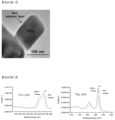
Figure 1 is HR-TEM image of the inorganic nano powder prepared in Coating Example 21 of the present invention, showing that a polymer layer is formed on the TiO2 surface coated usingPolymer Compound 1. -
Figure 2 is XPS analysis results of the inorganic nano powder prepared in Coating Example 21 of the present invention, showing the difference in binding energy (O1S, Ti2p) values of TiO2 surface before and after coating and proving that the chemical bond between the polymer compound and the TiO2 surface is well established. -
Figure 3 is HR-TEM images of inorganic nano powders prepared in Coating Examples 21 to 28 of the present invention and Comparative Examples 1 and 2, respectively. - The present invention will be explained in detail below.
- The polymer compound of the present invention has a structure represented by the following formula 1:

- R' is the same or different, and each independently represents hydrogen or methyl group,
- R1 is a group containing phosphorylcholine-like phospholipid structure,
- R2 is independently hydrogen; alkoxy group; amino group; epoxy group; or C1-C20 aliphatic hydrocarbon group or C6-C20 aromatic hydrocarbon group unsubstituted or substituted with one or more functional groups,
- R3 is independently C1-C20 aliphatic hydrocarbon group or C6-C20 aromatic hydrocarbon group unsubstituted or substituted with alkyl group, alkoxy group, epoxy group, hydroxy group, or acid functional group,
- R4 is C1-C10 aliphatic hydrocarbon group,
- R5, R6 and R7 are the same or different and are each independently hydrogen; or C1-C20 aliphatic hydrocarbon group or C6-C20 aromatic hydrocarbon group unsubstituted or substituted with alkyl group, alkoxy group, epoxy group, hydroxy group or acid functional group,
- R8 and R9 are the same or different and are each independently hydrogen; or a group containing hydroxy, carboxylic acid or alkoxy functional group, provided that at least one of R8 and R9 contains hydroxy, carboxylic acid or alkoxy functional group,
- W, X, Y and Z are the mole fractions of the corresponding repeating units and are each independently 0 to 1, provided that at least one of W and X is greater than 0, and W+X+Y+Z=1.
- In an embodiment, in the
above formula 1, R1 may be a group containing phosphorylcholine-like phospholipid structure represented by the following formula (2):
- a is an integer of 0 to 2,
- b is an integer of 2 to 4,
- R10, R11 and R12 are the same or different, and each independently represents hydrogen, C1-C6 hydrocarbon group, or -(CH2)n-OH group, where n is an integer of 1 to 6.
- In an embodiment, in the
above formula 1, the alkyl group may be C1-C20 alkyl group or C3-C20 cycloalkyl group, the alkoxy group may be C1-C20 alkoxy group or C3-C20 cycloalkoxy group, the acid functional group may be carboxylic acid group, and the aliphatic hydrocarbon group may be saturated or unsaturated aliphatic hydrocarbon group. - In an embodiment, in the
above formula 1, the functional group substituted for the C1-C20 aliphatic hydrocarbon group or the C6-C20 aromatic hydrocarbon group may be alkoxy group, aryloxy group, ether group, halogen group, isocyanate group, lactone group, hydroxy group, or acid functional group. - In the
above formula 1, W is 0 to 1, and more concretely, it may be 0.01 or more, 0.05 or more, or 0.1 or more, and also may be 1 or less, 0.99 or less, 0.95 or less, 0.9 or less, 0.85 or less, or 0.8 or less, but it is not limited thereto. - In the
above formula 1, X is 0 to 1, and more concretely, it may be 0.01 or more, 0.05 or more, or 0.1 or more, and also may be 1 or less, 0.9 or less, 0.8 or less, 0.7 or less, 0.6 or less, or 0.5 or less, but it is not limited thereto. - In the
above formula 1, Y is 0 to 1, and more concretely, it may be 0.01 or more, 0.05 or more, or 0.1 or more, and also may be 1 or less, 0.95 or less, 0.9 or less, 0.85 or less, or 0.8 or less, but it is not limited thereto. - In the
above formula 1, Z is 0 to 1, and more concretely, it may be 0.01 or more, 0.02 or more, or 0.05 or more, and also may be 1 or less, 0.9 or less, 0.8 or less, 0.7 or less, 0.6 or less, or 0.5 or less, but it is not limited thereto. - In an embodiment, in the
above formula 1, the unsaturated phospholipid monomer providing the repeat unit represented by the mole fraction W may be one or more selected from the group consisting of, for example, 2-((meth)acryloyloxy)ethyl-2'-(trimethylammonio)ethyl phosphate, 3-((meth)acryloyloxy)propyl-2'-(trimethylammonio)ethyl phosphate, 4-((meth)acryloyloxy)butyl-2'-(trimethylammonio)ethyl phosphate, 5-((meth)acryloyloxy)pentyl-2'-(trimethylammonio)ethyl phosphate, 6-((meth)acryloyloxy)hexyl-2'-(trimethylammonio)ethyl phosphate, 2-((meth)acryloyloxy)ethyl-2'-(triethylammonio)ethyl phosphate, 2-((meth)acryloyloxy)ethyl-2'-(tripropylammonio)ethyl phosphate, 2-((meth)acryloyloxy)ethyl-2'-(tributylammonio)ethyl phosphate, 2-((meth)acryloyloxy)propyl-2'-(trimethylammonio)ethyl phosphate, 2-((meth)acryloyloxy)butyl-2'-(trimethylammonio)ethyl phosphate, 2-((meth)acryloyloxy)pentyl-2'-(trimethylammonio)ethyl phosphate, 2-((meth)acryloyloxy)hexyl-2'-(trimethylammonio)ethyl phosphate, 2-(vinyloxy)ethyl-2'-(trimethylammonio)ethyl phosphate, 2-(allyloxy)ethyl-2'-(trimethylammonio)ethyl phosphate, 2-(p-vinylbenzyloxy)ethyl-2'-(trimethylammonio)ethyl phosphate, 2-(p-vinylbenzoyloxy)ethyl-2' -(trimethylammonio)ethyl phosphate, 2-(styryloxy)ethyl-2'-(trimethylammonio)ethyl phosphate, 2-(p-vinylbenzyl)ethyl-2'-(trimethylammonio)ethyl phosphate, 2-(vinyloxycarbonyl)ethyl-2'-(trimethyl ammonio)ethylphosphate, 2-(allyloxycarbonyl)ethyl-2'-(trimethylammonio)ethyl phosphate, 2-(acryloylamino)ethyl-2'-(trimethylammonio)ethyl phosphate, 2-(vinylcarbonylamino)ethyl-2'-(trimethylammonio)ethyl phosphate, 2-(allyloxycarbonylamino)ethyl-2'-(trimethylammonio)ethyl phosphate, 2-(buteroyloxy)ethyl-2'-(trimethylammonio)ethyl phosphate, 2-(crotonoyloxy)ethyl-2' -(trimethylammonio)ethyl phosphate, ethyl-(2' - trimethylammonioethylphosphorylethyl)fumarate, butyl-(2'-trimethylammonioethylphosphorylethyl)fumarate, hydroxyethyl-(2'-trimethylammonioethylphosphorylethyl)fumarate, ethyl-(2'-trimethylammonioethylphosphorylethyl)fumarate, butyl-(2'-trimethylammonioethylphosphorylethyl)fumarate, and hydroxyethyl-(2'-trimethylammonioethylphosphorylethyl)fumarate. - In an embodiment, in the
above formula 1, R2 may be independently selected from the group consisting of, for example, hydrogen, methyl, ethyl, propyl, butyl, pentyl, hexyl, cyclohexyl, heptyl, octyl, nonyl, decyl, lauryl, tetradecyl, hexadecyl, isobornyl, dicyclopentanyl, dicyclopentenyl, benzyl, 2-methoxyethyl, 2-ethoxyethyl, succinyl, monoalkyl succinate, monoalkyl fumarate, glycidyl, 3,4-epoxybutyl, 2,3-epoxycyclohexyl, 3,4-epoxycyclohexylmethyl , 3-methyloxetane-3-methyl, 3-ethyloxetane-3-methyl, NH2, NHCH3, allyl, 2-hydroxyethyl, 3-oxypropyl methyldimethoxysilane, tetrahydrofurfuryl, ethylene glycol dicyclopentenyl ether, 2-ethyl-2-methyl-1,3-dioxoreynylmethyl, 2-isocyanatoethyl, 4-morpholine, phenylglycidylether, phenoxydiethyleneglycol, methoxypolyethyleneglycol, 2-[4-(1-methyl-1-phenylethyl)-phenoxy]ethyl, t-butyl, 2-oxypropyl hexahydrophthalate, gamma-butyrolactone, propoxyethyl, n-isobutoxymethyl, 2-oxy ethylphthalate, 1,1,1,3,3,3-hexafluoroisopropyl, octafluoropentyl, tetrafluoropropyl, heptadecafluorodecyl, and tribromophenyl. - In an embodiment, in the
above formula 1, R3 may be independently selected from the group consisting of, for example, phenyl, p-methylphenyl, and p-acetoxyphenyl. - In an embodiment, in the
above formula 1, R4 may be, for example, methylene group or ethylene group. - In an embodiment, in the
above formula 1, R5, R6 and R7 may be each independently selected from the group consisting of, for example, hydrogen, methyl, ethyl, n-propyl, isopropyl, n-butyl, tert-butyl, phenyl, naphthyl, vinyl, methacryloxymethyl, 2-methacryloxyethyl, 3-methacryloxypropyl, acryloxymethyl, 2-acryloxyethyl, 3-acryloxypropyl, 3-glycidyloxypropyl, 2-epoxycyclohexylethyl, 3-epoxycyclohexylpropyl, and O-R12 (where R12 is hydrogen, methyl, ethyl, or propyl). - The polymer compound of the present invention can be prepared by any one of several commonly known polymerization methods such as radical polymerization, cationic polymerization, anionic polymerization, condensation polymerization, etc. and in terms of the easiness and economics of preparation of polymer compounds, it is preferable to use radical polymerization. In addition, it can be prepared by mixing monomers with a polymerization solvent, heating the mixture to an appropriate temperature according to the half-life temperature of the thermal initiator used, and then removing oxygen under nitrogen atmosphere.
- As conditions for polymerization of polymer compound, polymerization time and temperature may vary depending on the type of thermal initiator used. As a radical polymerization initiator, a generally known thermal initiator can be used, and more concretely, 2,2'-azobisisobutyronitrile, 2,2'-azobis-2,4-dimethyl valeronitrile, 2,2'-azobis-(4-methoxy-2,4-dimethylvaleronitrile), benzoyl peroxide, lauroyl peroxide, t-butyl peroxypivalate, 1,1'-bis-(bis-t-butylperoxy)cyclohexane, 1,1'-azobis(cyclohexane-1-carbonitrile), 4,4'-azobis(4-cyanovaleric acid), dimethyl-2,2'-azobis(2-methylpropionate), 2,2'-azobis[2-methyl-N-(2-hydroxyethyl)propionamide, 2,2'-azobis(N-butyl-2-methylpropionamide, 2,2' -azobis[2-(2-imidazolinyl)propane]dihydrochloride, 2,2'-azobis[2-(2-imidazolinyl)propane], 2,2'-azobis[2-methyl-N-(2-hydroxyethyl)propionamide], 4,4'-azobis(4-cyanovaleric acid), 2,2'-azobis[N-(2-carboxyethyl)-2-methylpropionamidine]tetrahydrite, dimethyl-2,2'-azobis(2-methylpropionate), 2,2'-azobis(4-methoxy-2,4-dimethylvaleronitrile), etc. may be used alone or in combination of two or more.
- In an embodiment, when preparing the polymer compound, generally known chain transfer agent can be used to control the weight average molecular weight (Mw) of the polymer, and more concretely, 1-dodecanethiol, octadecanethiol, pentaerythol tetrakis(3-mercaptobutyrate), 1,3,5-tris(3-mercaptobutyroethyl)-1,3,5-triazine -2,4,6-trione, thioglycolic acid, 3-mercaptopropyl trimethoxysilane, 3-mercaptopropyl triethoxysilane, 3-mercaptopropyl dimethoxysilane, 3-mercaptopropyl diethoxysilane, 2-mercaptopropionic acid, 3-mercaptopropionic acid, etc. may be used.
- In an embodiment, the weight average molecular weight (Mw, g/mol) of the polymer compound of the present invention may be 1,000 to 200,000 g/mol, and the polydispersity index (PDI) may be 1.0 to 20, and more concretely, the weight average molecular weight (Mw) may be 5,000 to 100,000 g/mol, the polydispersity index (PDI) may be 1.0 to 10, and even more concretely, the weight average molecular weight (Mw) may be 10,000 to 50,000 g/mol, and the polydispersity index (PDI) may be 1.0 to 5.0, but it is not limited thereto. In addition, the polymer compound of the present invention may be a homopolymer or a random copolymer that is not restricted to the arrangement order of each polymer unit, but it is not limited thereto.
- In consideration of usability with monomer, initiator, chain transfer agent, and other additive, an appropriate solvent can be used in the polymerization of a polymer compound. For example, the solvent may be alcohol such as methanol, ethanol, etc.; ether such as dichloroethyl ether, n-butyl ether, diisoamyl ether, methylphenyl ether, tetrahydrofuran, etc.; glycol ether such as ethylene glycol monomethyl ether, ethylene glycol monoethyl ether, etc.; cellosolve acetate such as methyl cellosolve acetate, ethyl cellosolve acetate, diethyl cellosolve acetate, etc.; carbitol such as methyl ethyl carbitol, diethyl carbitol, diethylene glycol monomethyl ether, diethylene glycol monoethyl ether, diethylene glycol dimethyl ether, diethylene glycol methyl ethyl ether, diethylene glycol diethyl ether, etc.; propylene glycol alkyl ether acetate such as propylene glycol methyl ether acetate, propylene glycol propyl ether acetate, etc.; aromatic hydrocarbon such as toluene, xylene, etc.; ketone such as methyl ethyl ketone, cyclohexanone, 4-hydroxy-4-methyl-2-pentanone, methyl-n-propyl ketone, methyl-n-butyl ketone, methyl-n-amyl ketone, 2-heptanone, etc.; saturated aliphatic monocarboxylic acid alkyl ester such as ethyl acetate, n-butyl acetate, isobutyl acetate, etc.; lactic acid esters such as methyl lactate, ethyl lactate, etc.; oxyacetic acid alkyl ester such as methyl oxyacetate, ethyl oxyacetate, butyl oxyacetate, etc.; alkoxy acetate alkyl ester such as methoxy methyl acetate, methoxy ethyl acetate, methoxy butyl acetate, ethoxy methyl acetate, ethoxy ethyl acetate, etc.; 3-oxypropionic acid alkyl ester such as methyl 3-oxypropionate, ethyl 3-oxypropionate, etc.; 3-alkoxy propionic acid alkyl ester such as 3-methoxy methyl propionate, 3-methoxy ethyl propionate, 3-ethoxy ethyl propionate, 3-ethoxy methyl propionate, etc.; 2-oxypropionic acid alkyl ester such as methyl 2-oxypropionate, ethyl 2-oxypropionate, propyl 2-oxypropionate, etc.; 2-alkoxy propionic acid alkyl ester such as 2-methoxy methyl propionate, 2-methoxy ethyl propionate, 2-ethoxy ethyl propionate, 2-ethoxy methyl propionate, etc.; 2-oxy-2-methylpropionate ester such as methyl 2-oxy-2-methyl propionate, ethyl 2-oxy-2-methyl propionate, etc.; monooxy monocarboxylic acid alkyl ester of alkyl 2-alkoxy-2-methyl propionate such as methyl 2-methoxy-2-methyl propionate, ethyl 2-ethoxy-2-methyl propionate, etc.; ester such as ethyl 2-hydroxy propionate, ethyl 2-hydroxy-2-methyl propionate, ethyl hydroxy acetate, and methyl 2-hydroxy-3-methyl butanoate, etc.; ketonic acid ester such as ethyl pyruvate, etc.; and it is also possible to use a single solvent selected from, or a mixture solvent of two or more selected from, N-methylformamide, N,N-dimethylformamide, N-methylformanilide, N-methylacetamide, N,N-dimethylacetamide, N-methylpyrrolidone, dimethylsulfoxide, benzyl ethyl ether, dihexyl ether, acetyl acetone, isophorone, caproic acid, caprylic acid, 1-octanol, 1-nonanol, benzyl alcohol, benzyl acetate, ethyl benzoate, diethyl oxalate, diethyl maleate, γ-butyrolactone, ethylene carbonate, propylene carbonate, phenyl cellosolve acetate and the like.
- The polymer compound of the present invention readily and rapidly reacts with and chemically bonds to the surface of inorganic nanoparticle powder used in cosmetic formulation, and thus can modify the surface of the inorganic nanoparticle powder and form a polymer coating layer.
- Therefore, in other aspect, the present invention provides an inorganic nano powder having a surface to which the polymer compound of the present invention is chemically bonded.
- In an embodiment, the inorganic nano powder may be an inorganic nano material having a coating layer of the polymer compound of the present invention on its surface (for example, titanium dioxide, zinc oxide, mica, sericite, kaolin, silicic anhydride, boron nitride, or talc with an average particle size of 100 nm or less).
- In another aspect, the present invention provides a powder formulation comprising the inorganic nano powder of the present invention.
- In an embodiment, the powder formulation may be UV blocking powder, cosmetic powder, or color powder, but it is not limited thereto.
- The present invention will be explained below in more detail with reference to the following Examples and Comparative Examples. However, the scope of the present invention is not limited thereby in any manner.
- Polymerization was carried out using monomers A to E of the types and ratios shown in Table 1 below, and the thermal initiator and chain transfer agent of the types and amounts (parts by weight based on total 100 parts by weight of the monomers) shown in Table 1 below. As polymerization conditions, a three-neck round bottom flask was used, anhydrous ethanol was used as a polymerization solvent, and the mixture was dissolved to have a solid content of total 35 parts by weight, and then polymerized by applying temperature. After polymerization was completed, 100 ppm of t-butylhydroquinone (t-BHQ) was added as a polymerization inhibitor to prevent further polymerization. The weight average molecular weight (Mw) and polydispersity index (PDI) upon completion of polymerization are shown in Table 1 below. At this time, the weight average molecular weight (Mw) and polydispersity index (PDI) were managed using a chain transfer agent.
-
- A: 2-methacryloyloxyethyl phosphorylcholine
- B: 3-trimethoxypropyl methacrylate
- C: tert-butyl methacylate
- D: methyl methacrylate
- E: allyl triethoxysilane
- F: 2,2'-azobisisobutyronitrile
- G: 4,4'-azobis(4-cyanovaleric acid)
- H: 3-mercaptopropyltrimethoxysilane
- I: 1-dodecanethiol
- Coating was carried out on the surface of titanium dioxide using each of
Polymer Compounds - Coating was carried out on the surface of titanium dioxide using each of the polymer compounds of the following formulas 3 and 4, and the results were evaluated in the same manner and are shown in Table 2 below.


- The TiO2 surface coating and washing process were carried out as follows. First, in the coating process, 97g of TiO2 was added to a beaker, 100g of anhydrous ethanol solvent was added, and homogenization was done by stirring at room temperature at high speed with a homodisperse, and then 3g of the polymer compound was added four times while stirring with a homodisperse. Homogenization was done by stirring for 10 minutes at room temperature, and the product was dried on aluminum foil at 100°C for 12 hours, pulverized with a hammer mill, and filtered through a 60-mesh mesh. After the coating process was completed, in the washing process, 30g of coated TiO2 was added to 120g of ionized water in a 200 ml PET sample bottle, stirred at high speed for 1 hour, and then centrifuged (3000 rpm, 10 min) to precipitate the inorganic powder. Then, the clear upper layer solution was removed, and the solid precipitate in the lower layer was transferred to aluminum foil and dried at 100°C for 12 hours, and the dried TiO2 powder was finely ground in a bowl and stored.
- In order to confirm whether the coating of the polymer compound proceeded well on the surface of the inorganic nano powder (TiO2) that had undergone the coating and washing processes, measurements were made using HR-TEM equipment. Meanwhile, cases where a polymer layer was formed and observed in the TEM image even after a strong washing process are indicated as "O" whereas cases where the polymer layer was not formed but washed away and no polymer layer was observed are indicated as "X."
- It was confirmed through XPS analysis whether the prepared polymer compound was chemically well bonded to the TiO2 surface through a chemical reaction. X-ray photoelectron spectroscopy (XPS) is one of the most widely used analytical techniques in surface analysis. Since the binding energy measured using XPS is the unique energy of the element, the element in the analysis sample can be analyzed, and since the binding energy changes depending on the chemical bond state, information about the chemical bond state can be obtained. The binding energy of the O1S level and the binding energy of the Ti2p level of TiO2 were confirmed. Changes in surface modification through chemical bonding are expressed as a shift in the binding energy value of each level, through which the presence or absence of surface coating can be confirmed. In the case of the binding energy value, if it appears above 0.3 eV, it is considered a meaningful shift. Cases where a shift in the binding energy value was observed are indicated as "O" whereas cases where no shift was observed are indicated as "X."
[Table 2] Coating conditions Coating results Polymer Compound No. Polymer amount (g) TiO2 amount (g) Solvent (g) Coating time (min) Coating thickness (nm) Polymer compound coating layer formation (TEM image) Binding energy shift after coating (XPS, OS1, Ti2p) Examples 21 1 3 97 100 10 4.0 O O 22 2 3 97 100 10 5.6 O O 23 6 3 97 100 10 6.4 O O 24 7 3 97 100 10 5.2 O O 25 9 3 97 100 10 4.5 O O 26 12 3 97 100 10 6.6 O O 27 15 3 97 100 10 4.6 O O 28 17 3 97 100 10 5.7 O O Comparative Examples 1 Formula 3 3 97 100 10 Not observed X X 2 Formula 4 3 97 100 10 Not observed X X
| Example | Monomers for polymerization (mol%) | Total | Initiator (parts by weight) | Chain transfer agent (parts by weight) | GPC | Compound No. | |||||||
| A | B | C | D | E | F | G | H | | Mw | PDI | |||
| 1 | 50 | 20 | 15 | 10 | 5 | 100 | 1.0 | 3.0 | 2.0 | - | 24,232 | 4.3 | 1 |
| 2 | 80 | 20 | 0 | 0 | 0 | 100 | - | 3.0 | 1.0 | 1.0 | 46,231 | 5.5 | 2 |
| 3 | 80 | 0 | 20 | 0 | 0 | 100 | 0.5 | 1.5 | 1.0 | 0.5 | 37,816 | 4.7 | 3 |
| 4 | 60 | 10 | 20 | 5 | 5 | 100 | 1.0 | 3.0 | 0.5 | - | 58,556 | 4,0 | 4 |
| 5 | 10 | 50 | 20 | 20 | 0 | 100 | - | 4.0 | 1.0 | 0.5 | 60,362 | 3.2 | 5 |
| 6 | 100 | 0 | 0 | 0 | 0 | 100 | 2.0 | 2.0 | 1.0 | 1.5 | 25,943 | 4.6 | 6 |
| 7 | 80 | 0 | 20 | 0 | 0 | 100 | 2.5 | - | 1.0 | 0.5 | 32,215 | 4.2 | 7 |
| 8 | 50 | 30 | 0 | 10 | 10 | 100 | 2.5 | 0.5 | - | 2.0 | 37,426 | 3.6 | 8 |
| 9 | 30 | 25 | 20 | 5 | 20 | 100 | 3.0 | 1.0 | - | 1.5 | 29,843 | 4. | 9 |
| 10 | 10 | 30 | 20 | 40 | 0 | 100 | 2.0 | 1.5 | 2.5 | - | 45,345 | 3.4 | 10 |
| 11 | 60 | 0 | 25 | 10 | 5 | 100 | 1.0 | 1.0 | - | 1.0 | 53,076 | 4.3 | 11 |
| 12 | 50 | 25 | 0 | 25 | 0 | 100 | 4.0 | - | 3.0 | - | 27,843 | 3.6 | 12 |
| 13 | 50 | 25 | 0 | 0 | 25 | 100 | 2.0 | 1.5 | 1.0 | 0.5 | 44,235 | 4.8 | 13 |
| 14 | 10 | 40 | 30 | 10 | 10 | 100 | 1.0 | 1.0 | 2.0 | - | 40,674 | 3.9 | 14 |
| 15 | 0 | 20 | 50 | 30 | 0 | 100 | 0.5 | 1.5 | - | 1.0 | 33,238 | 3.6 | 15 |
| 16 | 10 | 0 | 15 | 35 | 40 | 100 | 2.5 | - | - | 1.5 | 36,842 | 4.2 | 16 |
| 17 | 10 | 30 | 15 | 0 | 45 | 100 | 2.5 | - | - | 1.5 | 32,760 | 4.5 | 17 |
| 18 | 50 | 0 | 50 | 0 | 0 | 100 | 3.5 | - | 2.5 | - | 41,838 | 3.7 | 18 |
| 19 | 10 | 20 | 30 | 40 | 0 | 100 | 2.0 | - | 2.0 | 1.0 | 31,522 | 4.6 | 19 |
| 20 | 10 | 40 | 30 | 20 | 0 | 100 | 2.0 | 2.0 | - | 2.0 | 21,532 | 2.4 | 20 |
Claims (10)
- A polymer compound having a structure represented by the following formula 1:
 R' is the same or different, and each independently represents hydrogen or methyl group,R1 is a group containing phosphorylcholine-like phospholipid structure,R2 is independently hydrogen; alkoxy group; amino group; epoxy group; or C1-C20 aliphatic hydrocarbon group or C6-C20 aromatic hydrocarbon group unsubstituted or substituted with one or more functional groups,R3 is independently C1-C20 aliphatic hydrocarbon group or C6-C20 aromatic hydrocarbon group unsubstituted or substituted with alkyl group, alkoxy group, epoxy group, hydroxy group, or acid functional group,R4 is C1-C10 aliphatic hydrocarbon group,R5, R6 and R7 are the same or different and are each independently hydrogen; or C1-C20 aliphatic hydrocarbon group or C6-C20 aromatic hydrocarbon group unsubstituted or substituted with alkyl group, alkoxy group, epoxy group, hydroxy group or acid functional group,R8 and R9 are the same or different and are each independently hydrogen; or a group containing hydroxy, carboxylic acid or alkoxy functional group, provided that at least one of R8 and R9 contains hydroxy, carboxylic acid or alkoxy functional group,W, X, Y and Z are the mole fractions of the corresponding repeating units and are each independently 0 to 1, provided that at least one of W and X is greater than 0, and W+X+Y+Z=1.
 - The polymer compound of Claim 1, wherein R1 is a group containing phosphorylcholine-like phospholipid structure represented by the following formula (2):
 a is an integer of 0 to 2,b is an integer of 2 to 4,R10, R11 and R12 are the same or different, and each independently represents hydrogen, C1-C6 hydrocarbon group, or -(CH2)n-OH group, where n is an integer of 1 to 6.
 - The polymer compound of Claim 1, wherein the unsaturated phospholipid monomer providing the repeat unit represented by the mole fraction W is one or more selected from the group consisting of:2-((meth)acryloyloxy)ethyl-2'-(trimethylammonio)ethyl phosphate,3-((meth)acryloyloxy)propyl-2'-(trimethylammonio)ethyl phosphate,4-((meth)acryloyloxy)butyl-2'-(trimethylammonio)ethyl phosphate,5-((meth)acryloyloxy)pentyl-2'-(trimethylammonio)ethyl phosphate,6-((meth)acryloyloxy)hexyl-2'-(trimethylammonio)ethyl phosphate,2-((meth)acryloyloxy)ethyl-2'-(triethylammonio)ethyl phosphate,2-((meth)acryloyloxy)ethyl-2'-(tripropylammonio)ethyl phosphate,2-((meth)acryloyloxy)ethyl-2'-(tributylammonio)ethyl phosphate,2-((meth)acryloyloxy)propyl-2'-(trimethylammonio)ethyl phosphate,2-((meth)acryloyloxy)butyl-2'-(trimethylammonio)ethyl phosphate,2-((meth)acryloyloxy)pentyl-2'-(trimethylammonio)ethyl phosphate,2-((meth)acryloyloxy)hexyl-2'-(trimethylammonio)ethyl phosphate,2-(vinyloxy)ethyl-2'-(trimethylammonio)ethyl phosphate,2-(allyloxy)ethyl-2'-(trimethylammonio)ethyl phosphate,2-(p-vinylbenzyloxy)ethyl-2'-(trimethylammonio)ethyl phosphate,2-(p-vinylbenzoyloxy)ethyl-2'-(trimethylammonio)ethyl phosphate,2-(styryloxy)ethyl-2'-(trimethylammonio)ethyl phosphate,2-(p-vinylbenzyl)ethyl-2'-(trimethylammonio)ethyl phosphate,2-(vinyloxycarbonyl)ethyl-2'-(trimethyl ammonio)ethylphosphate,2-(allyloxycarbonyl)ethyl-2'-(trimethylammonio)ethyl phosphate,2-(acryloylamino)ethyl-2'-(trimethylammonio)ethyl phosphate,2-(vinylcarbonylamino)ethyl-2'-(trimethylammonio)ethyl phosphate,2-(allyloxycarbonylamino)ethyl-2'-(trimethylammonio)ethyl phosphate,2-(buteroyloxy)ethyl-2'-(trimethylammonio)ethyl phosphate,2-(crotonoyloxy)ethyl-2'-(trimethylammonio)ethyl phosphate,ethyl-(2'-trimethylammonioethylphosphorylethyl)fumarate,butyl-(2'-trimethylammonioethylphosphorylethyl)fumarate,hydroxyethyl-(2'-trimethylammonioethylphosphorylethyl)fumarate,ethyl-(2'-trimethylammonioethylphosphorylethyl)fumarate,butyl-(2'-trimethylammonioethylphosphorylethyl)fumarate, andhydroxyethyl-(2'-trimethylammonioethylphosphorylethyl)fumarate.
- The polymer compound of Claim 1, wherein R2 is independently selected from the group consisting of hydrogen, methyl, ethyl, propyl, butyl, pentyl, hexyl, cyclohexyl, heptyl, octyl, nonyl, decyl, lauryl, tetradecyl, hexadecyl, isobornyl, dicyclopentanyl, dicyclopentenyl, benzyl, 2-methoxyethyl, 2-ethoxyethyl, succinyl, monoalkyl succinate, monoalkyl fumarate, glycidyl, 3,4-epoxybutyl, 2,3-epoxycyclohexyl, 3,4-epoxycyclohexylmethyl , 3-methyloxetane-3-methyl, 3-ethyloxetane-3-methyl, NH2, NHCH3, allyl, 2-hydroxyethyl, 3-oxypropyl methyldimethoxysilane, tetrahydrofurfuryl, ethylene glycol dicyclopentenyl ether, 2-ethyl-2-methyl-1,3-dioxoreynylmethyl, 2-isocyanatoethyl, 4-morpholine, phenylglycidylether, phenoxydiethyleneglycol, methoxypolyethyleneglycol, 2-[4-(1-methyl-1-phenylethyl)-phenoxy]ethyl, t-butyl, 2-oxypropyl hexahydrophthalate, gamma-butyrolactone, propoxyethyl, n-isobutoxymethyl, 2-oxy ethylphthalate, 1,1,1,3,3,3-hexafluoroisopropyl, octafluoropentyl, tetrafluoropropyl, heptadecafluorodecyl, and tribromophenyl.
- The polymer compound of Claim 1, wherein R3 is independently selected from the group consisting of phenyl, p-methylphenyl, and p-acetoxyphenyl.
- The polymer compound of Claim 1, wherein R4 is methylene group or ethylene group.
- The polymer compound of Claim 1, wherein R5, R6 and R7 is each independently selected from the group consisting of hydrogen, methyl, ethyl, n-propyl, isopropyl, n-butyl, tert-butyl, phenyl, naphthyl, vinyl, methacryloxymethyl, 2-methacryloxyethyl, 3-methacryloxypropyl, acryloxymethyl, 2-acryloxyethyl, 3-acryloxypropyl, 3-glycidyloxypropyl, 2-epoxycyclohexylethyl, 3-epoxycyclohexylpropyl, and O-R12 (where R12 is hydrogen, methyl, ethyl, or propyl).
- An inorganic nano powder having a surface to which the polymer compound of any one of Claims 1 to 7 is chemically bonded.
- A powder formulation comprising the inorganic nano powder of Claim 8.
- The powder formulation of Claim 9, wherein the powder formulation is UV blocking powder, cosmetic powder, or color powder.
Applications Claiming Priority (2)
| Application Number | Priority Date | Filing Date | Title |
|---|---|---|---|
| KR1020210185097A KR102936471B1 (en) | 2021-12-22 | 2021-12-22 | Polymer compounds and application thereof |
| PCT/KR2022/020960 WO2023121292A1 (en) | 2021-12-22 | 2022-12-21 | Polymer compound and application thereof |
Publications (2)
| Publication Number | Publication Date |
|---|---|
| EP4455175A1 true EP4455175A1 (en) | 2024-10-30 |
| EP4455175A4 EP4455175A4 (en) | 2026-01-07 |
Family
ID=86903056
Family Applications (1)
| Application Number | Title | Priority Date | Filing Date |
|---|---|---|---|
| EP22911925.0A Pending EP4455175A4 (en) | 2021-12-22 | 2022-12-21 | POLYMER COMPOUND AND ITS APPLICATION |
Country Status (6)
| Country | Link |
|---|---|
| US (1) | US20250325456A1 (en) |
| EP (1) | EP4455175A4 (en) |
| JP (1) | JP7827859B2 (en) |
| KR (1) | KR102936471B1 (en) |
| CN (1) | CN118234766A (en) |
| WO (1) | WO2023121292A1 (en) |
Family Cites Families (14)
| Publication number | Priority date | Publication date | Assignee | Title |
|---|---|---|---|---|
| JP2890316B2 (en) * | 1989-07-07 | 1999-05-10 | 科学技術振興事業団 | Materials for biocompatible medical devices |
| JPH06313009A (en) * | 1993-04-30 | 1994-11-08 | Nippon Oil & Fats Co Ltd | Terminal-functional polymer containing phosphoryl choline group |
| JP3178950B2 (en) * | 1993-10-19 | 2001-06-25 | ポーラ化成工業株式会社 | Powder for cosmetics and cosmetics containing the same |
| JPH09183819A (en) * | 1995-12-28 | 1997-07-15 | Nippon Oil & Fats Co Ltd | Copolymer having phospholipid-like structure and medical material |
| JP3825502B2 (en) * | 1996-06-11 | 2006-09-27 | 日本油脂株式会社 | Modified protein production method and contact lens dirt remover |
| JP4824151B2 (en) | 2000-03-14 | 2011-11-30 | 日油株式会社 | Glass substrate and film forming agent having polymer film containing terminal functional phosphorylcholine-like group |
| JP4248366B2 (en) * | 2003-10-21 | 2009-04-02 | ポーラ化成工業株式会社 | Makeup for sensitive skin |
| EP2161304B1 (en) * | 2008-09-04 | 2014-04-23 | Rohm and Haas Company | Opacifying pigment particle |
| JP5273400B2 (en) | 2009-03-27 | 2013-08-28 | 荒川化学工業株式会社 | Antistatic optical film, conductive layer, and composition for forming conductive layer |
| WO2012166691A1 (en) * | 2011-06-02 | 2012-12-06 | Rohm And Haas Company | Amphoteric polymer composition |
| KR101767207B1 (en) * | 2012-11-30 | 2017-08-11 | (주)아모레퍼시픽 | Inorganic powder coated by bio-compatible polymer and the cosmetic composition containing thereof |
| BR112017008968B1 (en) * | 2014-11-13 | 2021-08-24 | Rohm And Haas Company | DISPERSION OF POLYMER PARTICLES, AND, PAINT |
| MX2020008153A (en) * | 2018-02-09 | 2020-09-18 | Rynan Tech Pte Ltd | Smart release potash fertilizer granules. |
| CN111234598A (en) * | 2020-02-23 | 2020-06-05 | 湖南七纬科技有限公司 | Alcohol-resistant flame-retardant ink |
-
2021
- 2021-12-22 KR KR1020210185097A patent/KR102936471B1/en active Active
-
2022
- 2022-12-21 EP EP22911925.0A patent/EP4455175A4/en active Pending
- 2022-12-21 CN CN202280075774.3A patent/CN118234766A/en active Pending
- 2022-12-21 JP JP2024535212A patent/JP7827859B2/en active Active
- 2022-12-21 US US18/722,918 patent/US20250325456A1/en active Pending
- 2022-12-21 WO PCT/KR2022/020960 patent/WO2023121292A1/en not_active Ceased
Also Published As
| Publication number | Publication date |
|---|---|
| WO2023121292A1 (en) | 2023-06-29 |
| JP2025502642A (en) | 2025-01-28 |
| KR102936471B1 (en) | 2026-03-10 |
| EP4455175A4 (en) | 2026-01-07 |
| US20250325456A1 (en) | 2025-10-23 |
| CN118234766A (en) | 2024-06-21 |
| KR20230096197A (en) | 2023-06-30 |
| JP7827859B2 (en) | 2026-03-10 |
Similar Documents
| Publication | Publication Date | Title |
|---|---|---|
| EP2063855B1 (en) | Ultraviolet screening agent for cosmetics and cosmetics using the same | |
| TWI465507B (en) | A block copolymer containing an alkoxysilyl group, a method for producing the block copolymer, a resin-treated pigment, and a pigment dispersion | |
| KR101908638B1 (en) | Copolymers which can be obtained from urethane-based, polysiloxanecontaining macromonomers, processes for the preparation thereof and their use | |
| JP5072820B2 (en) | Silicone resin composition | |
| KR101587933B1 (en) | High-refractive index powder and production method and application of same | |
| JP2020019958A (en) | Inorganic particle dispersion, inorganic particle-containing composition, coating film, plastic substrate with coating film, and display device | |
| WO2012133432A1 (en) | Organopolysiloxane, method for producing same, and curable resin composition containing organopolysiloxane | |
| Mellon et al. | Block copolymers of γ-methacryloxypropyltrimethoxysilane and methyl methacrylate by raft polymerization. A new class of polymeric precursors for the sol− gel process | |
| WO2014109308A1 (en) | Dispersant for inorganic particles, composition containing dispersant for inorganic particles, curable composition, cured product and thin film | |
| CN113166343A (en) | Reactive silicone composition and cured product thereof | |
| JP3848434B2 (en) | Curable resin composition | |
| KR20150042235A (en) | Organic-inorganic composite particles, dispersion liquid containing same, resin composition containing same, and method for producing organic-inorganic composite particles | |
| JP2021165400A (en) | Siloxane resin composition, microlens or transparent pixel using this, solid-state image sensor | |
| US20250325456A1 (en) | Polymer compounds and application thereof | |
| KR20130061683A (en) | High refractive index composition | |
| WO2019017196A1 (en) | Zirconium oxide particle dispersion composition and cured product thereof | |
| JPH08311115A (en) | Curable composite, composite filler, and restorative dental material | |
| JP5656546B2 (en) | Organic-inorganic composite fine particles, dispersion thereof, method for producing the dispersion, and coating composition | |
| WO2005092991A1 (en) | Active energy ray-curable coating composition and molding thereof | |
| JP7254475B2 (en) | Surface-treated silica particles, dispersions and resin compositions containing the same, and cured products of resin compositions | |
| JP2022053373A (en) | Resin composition | |
| JP5747746B2 (en) | Method for producing nano-particle composite | |
| JPH04254406A (en) | Polymerizable silica sol and its admantane derivative and hardened resin thereof | |
| JP7796506B2 (en) | Radical polymerizable polymer and photosensitive composition | |
| JP6015809B2 (en) | Polymerizable dispersion stabilizer, polymerizable dispersion stabilizer solution, and nanoparticle composite |
Legal Events
| Date | Code | Title | Description |
|---|---|---|---|
| STAA | Information on the status of an ep patent application or granted ep patent |
Free format text: STATUS: THE INTERNATIONAL PUBLICATION HAS BEEN MADE |
|
| PUAI | Public reference made under article 153(3) epc to a published international application that has entered the european phase |
Free format text: ORIGINAL CODE: 0009012 |
|
| STAA | Information on the status of an ep patent application or granted ep patent |
Free format text: STATUS: REQUEST FOR EXAMINATION WAS MADE |
|
| 17P | Request for examination filed |
Effective date: 20240521 |
|
| AK | Designated contracting states |
Kind code of ref document: A1 Designated state(s): AL AT BE BG CH CY CZ DE DK EE ES FI FR GB GR HR HU IE IS IT LI LT LU LV MC ME MK MT NL NO PL PT RO RS SE SI SK SM TR |
|
| DAV | Request for validation of the european patent (deleted) | ||
| DAX | Request for extension of the european patent (deleted) | ||
| REG | Reference to a national code |
Ref country code: DE Ref legal event code: R079 Free format text: PREVIOUS MAIN CLASS: C08F0230080000 Ipc: C08F0230020000 |
|
| A4 | Supplementary search report drawn up and despatched |
Effective date: 20251209 |
|
| RIC1 | Information provided on ipc code assigned before grant |
Ipc: C08F 230/02 20060101AFI20251203BHEP Ipc: C08F 230/08 20060101ALI20251203BHEP Ipc: C08F 220/18 20060101ALI20251203BHEP Ipc: A61K 8/89 20060101ALI20251203BHEP Ipc: A61K 8/29 20060101ALI20251203BHEP Ipc: A61K 8/02 20060101ALI20251203BHEP Ipc: A61Q 17/04 20060101ALI20251203BHEP Ipc: A61Q 19/00 20060101ALI20251203BHEP Ipc: A61Q 1/00 20060101ALI20251203BHEP |